2026 Vol. 52, No. 6

Display Method:
Volume 6 Issue E-journal
Volume 52 Issue62026
iconDownload (37497) 436 iconPreview
Small unmanned aerial vehicles path planning method considering urban low-altitude wind fields
ZHAO Yifei, GU Ruijia, REN Xinhui
2026, 52(6): 1777-1788. doi: 10.13700/j.bh.1001-5965.2024.0281
Abstract:

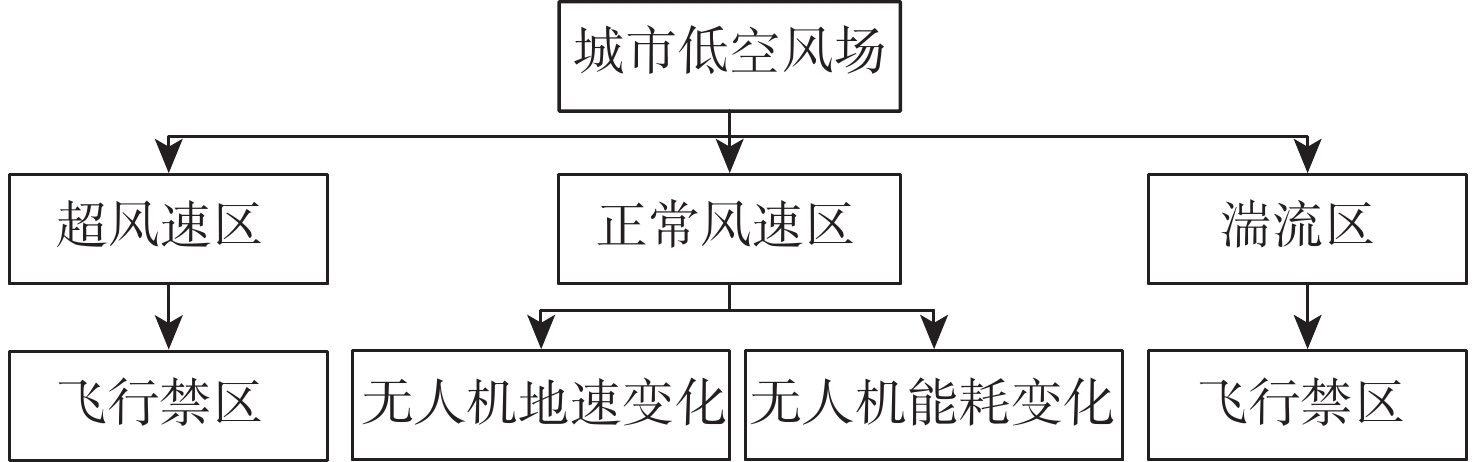
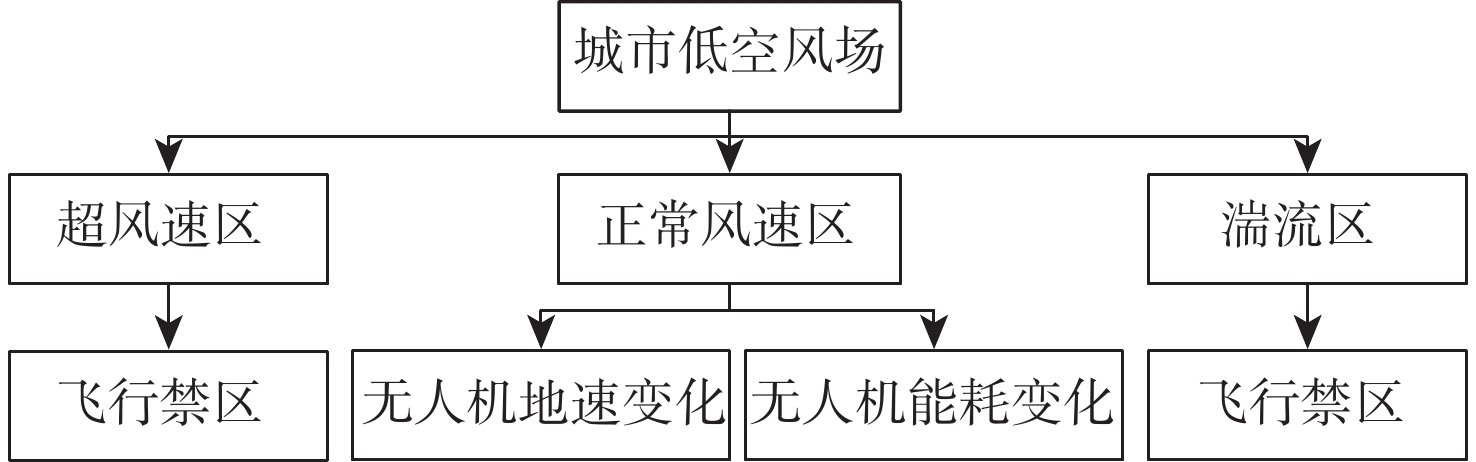
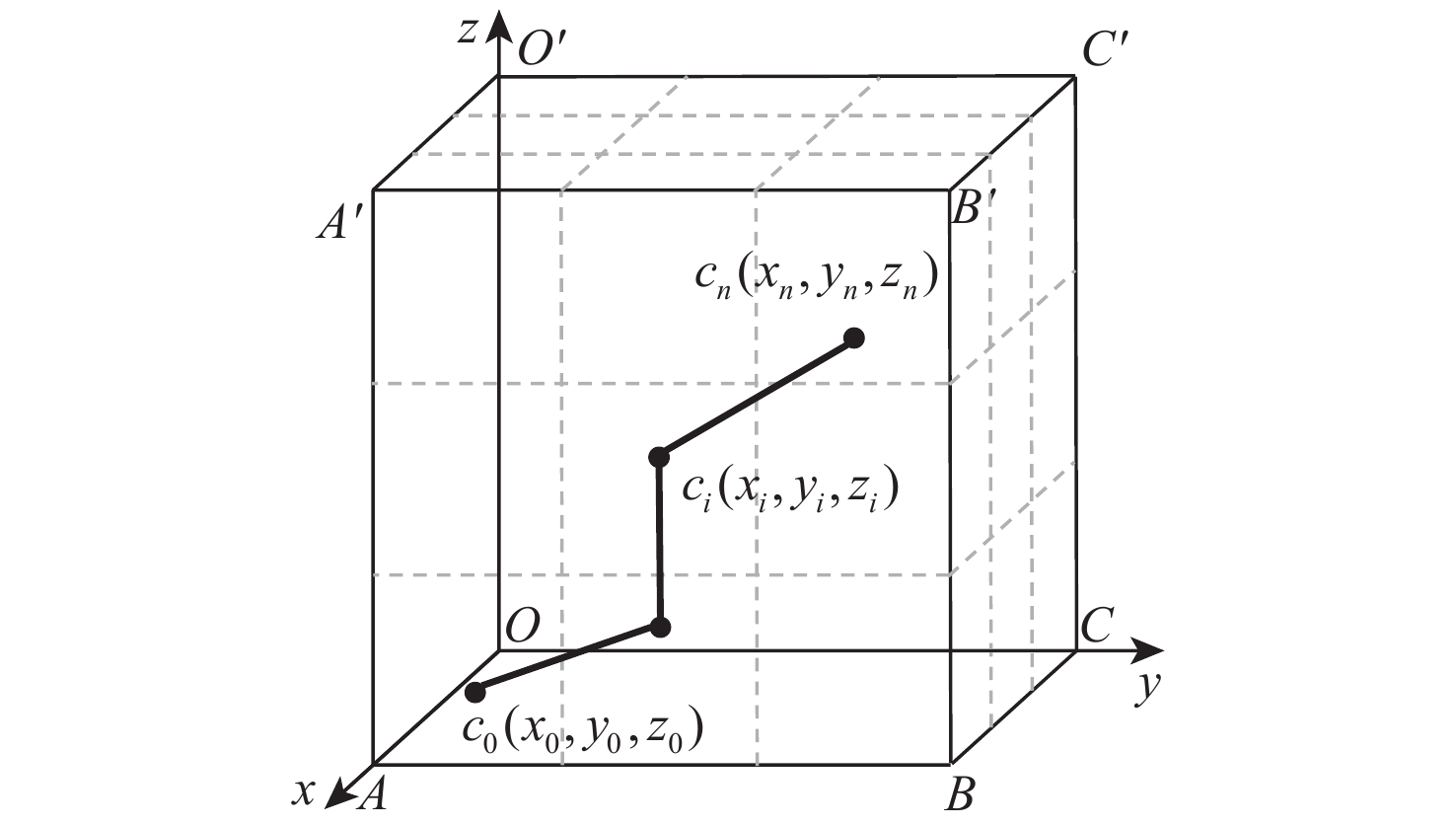
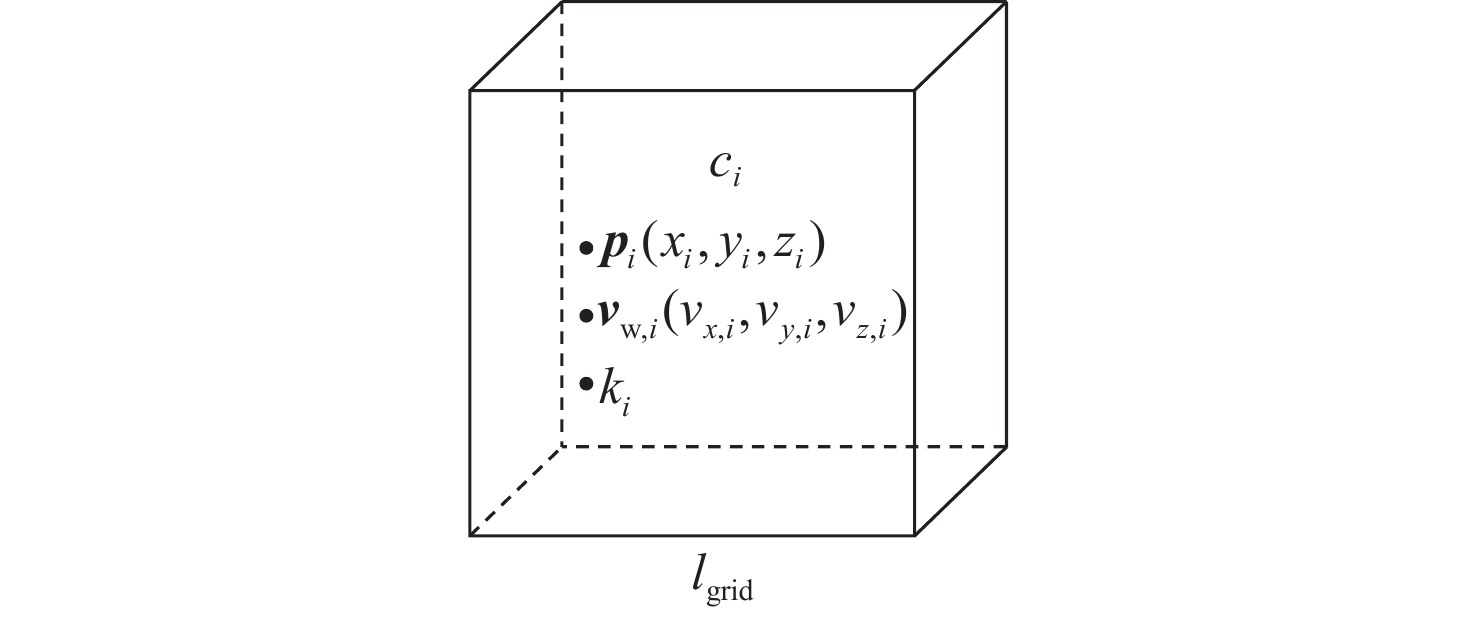
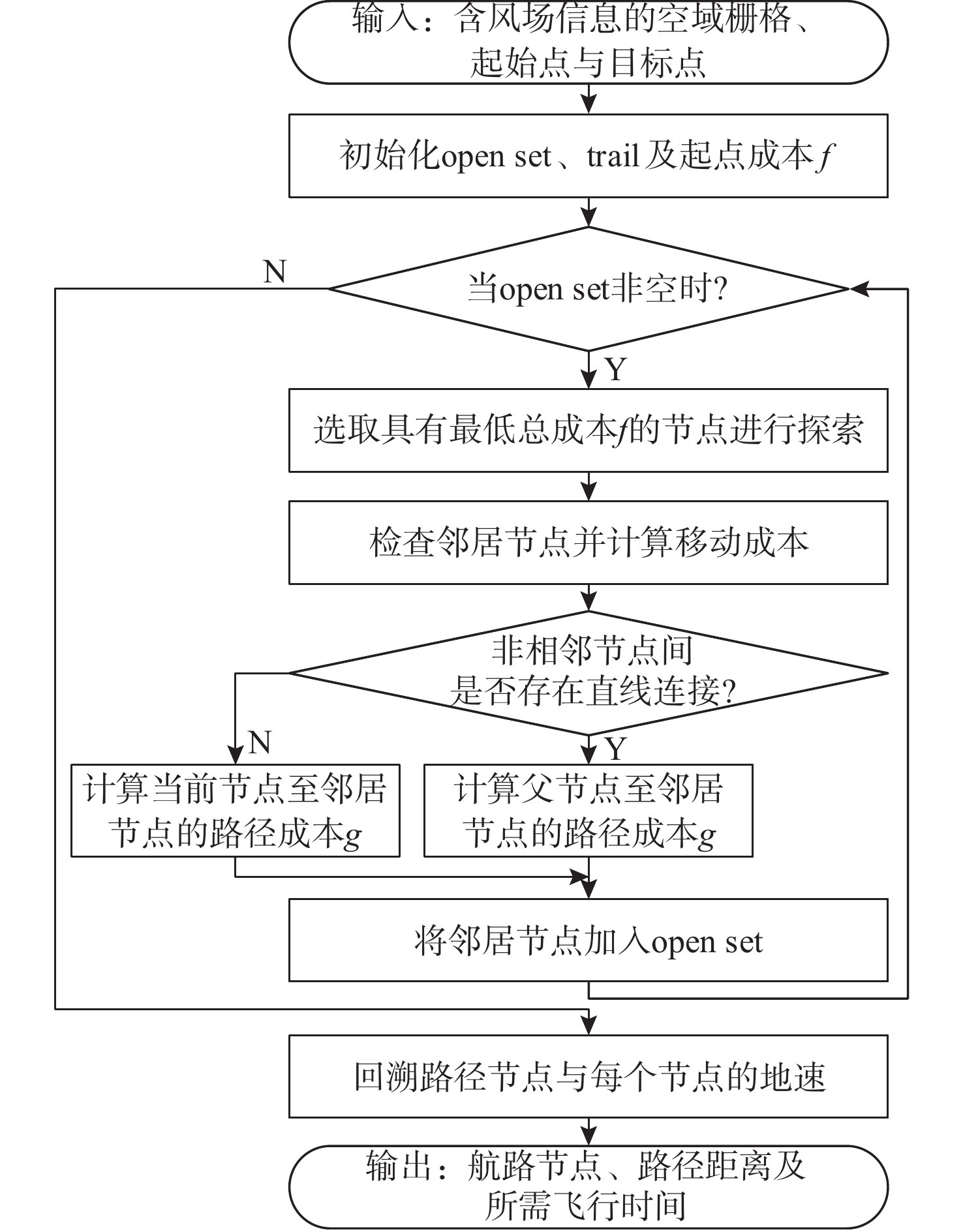
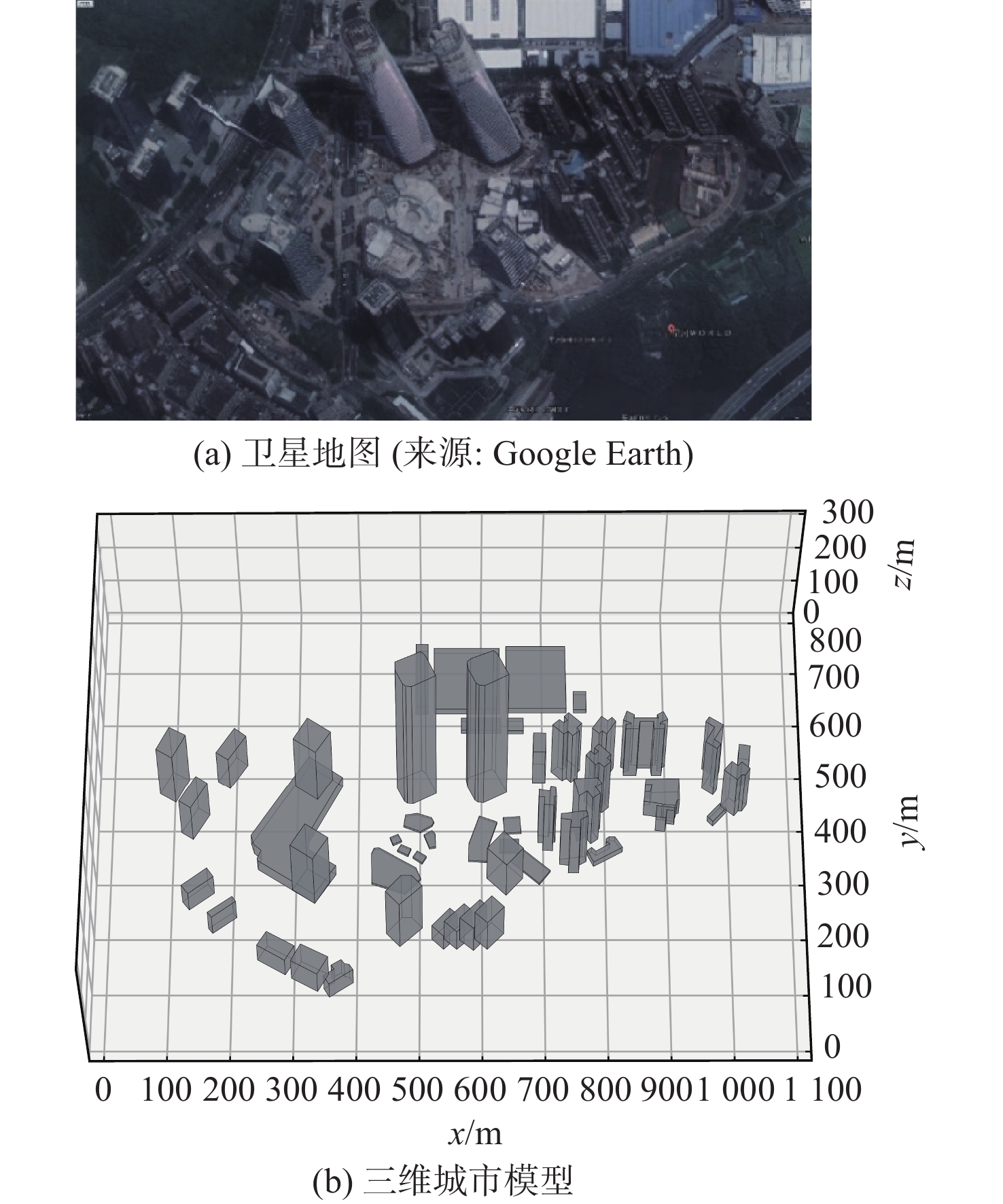
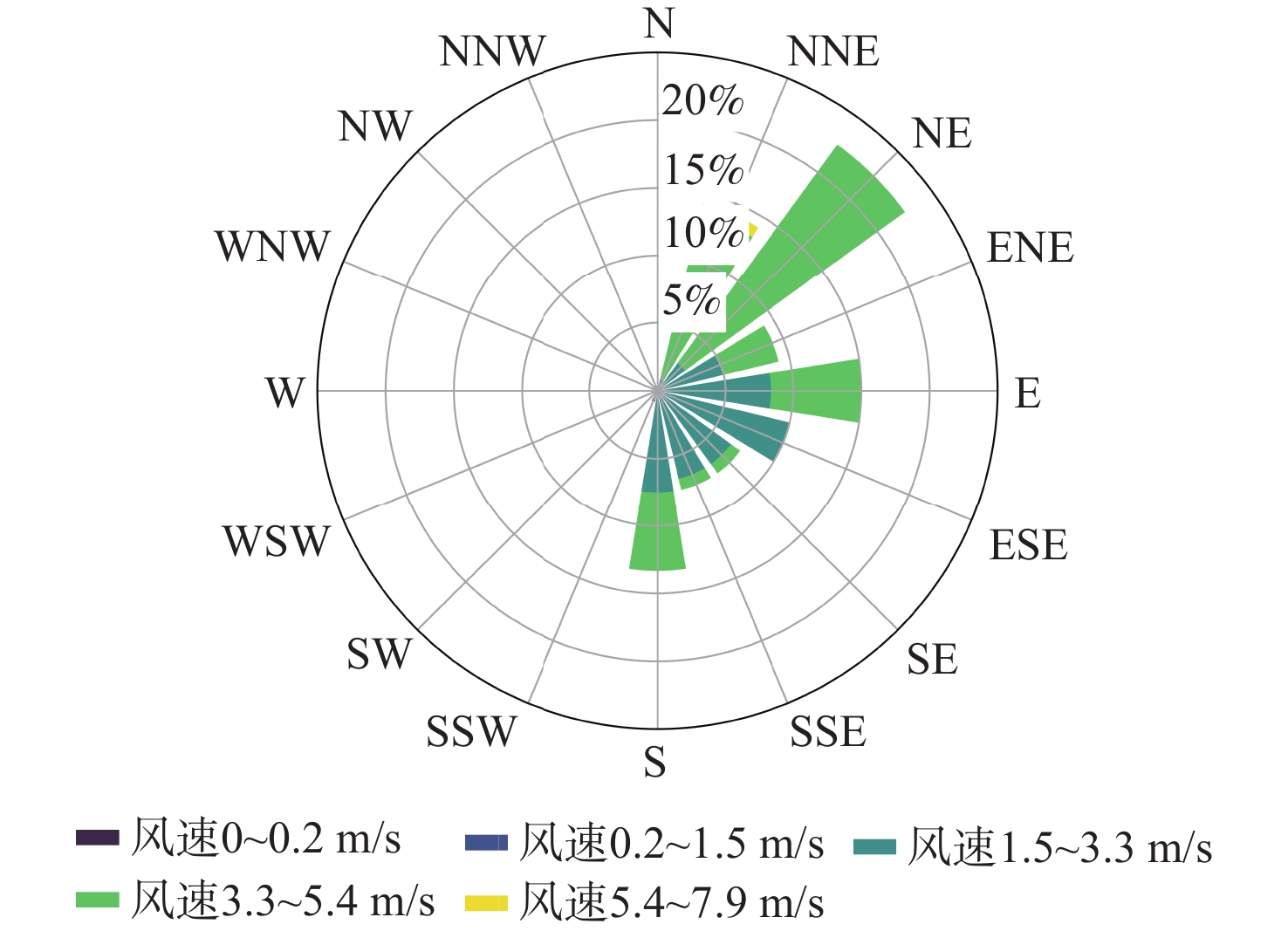
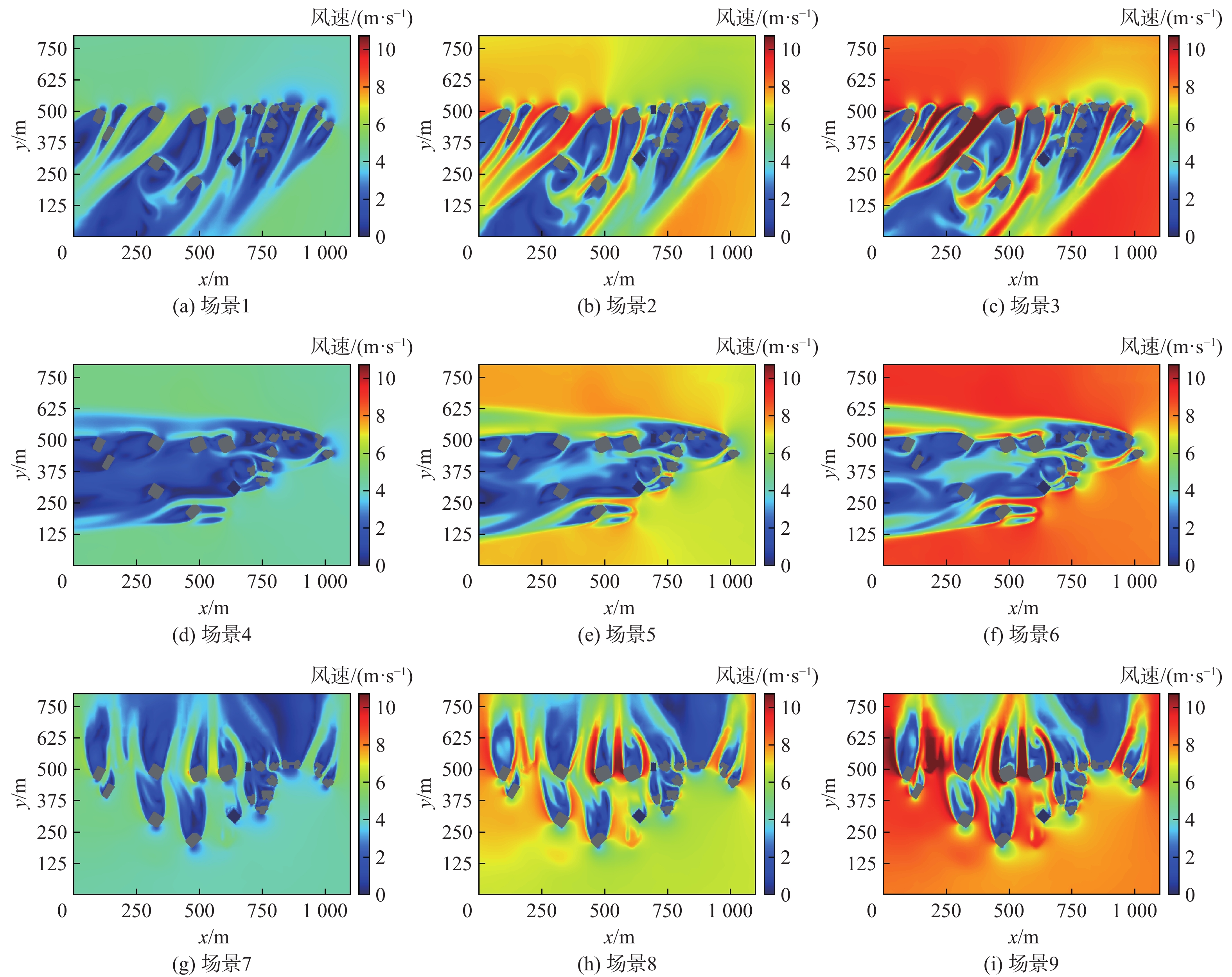
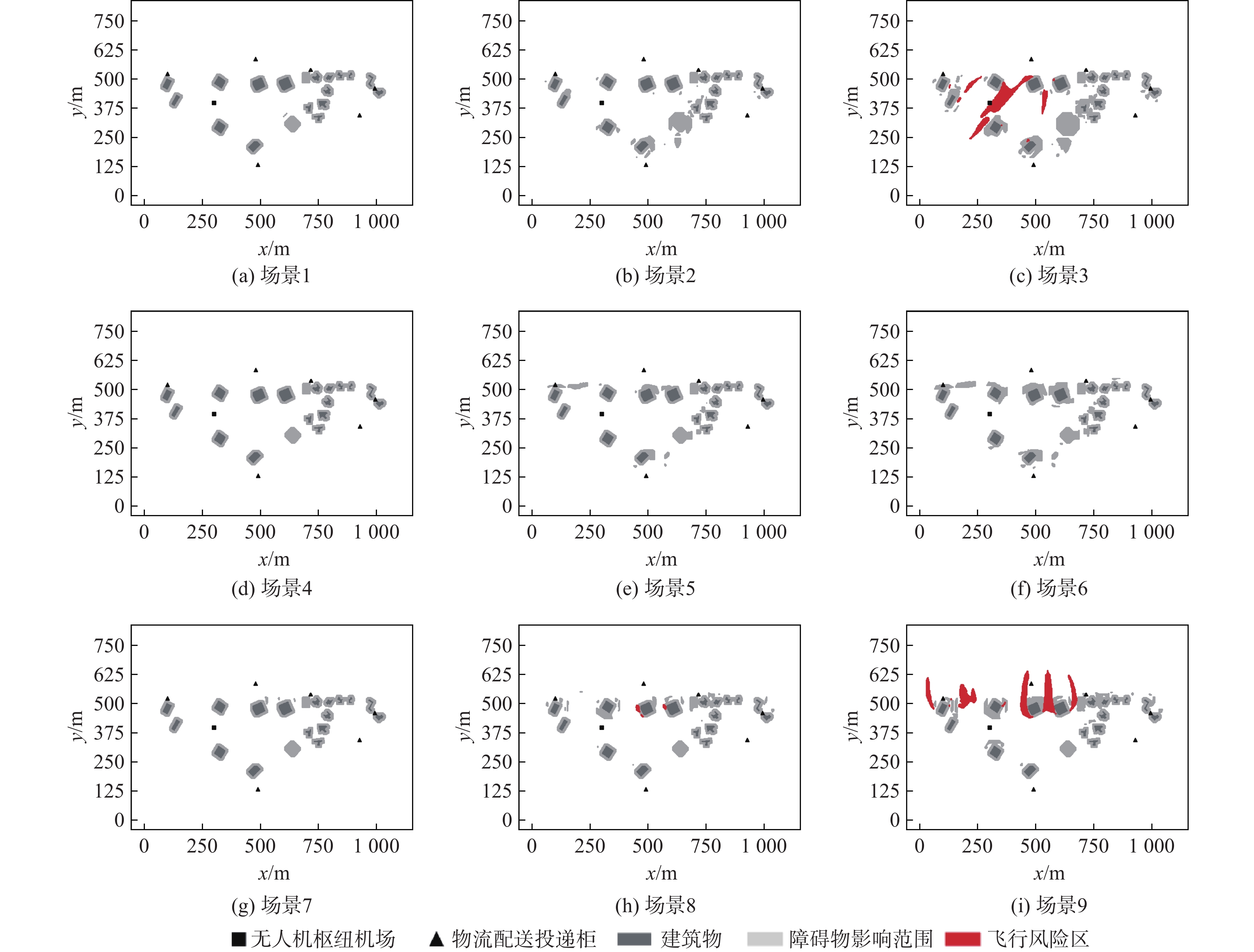
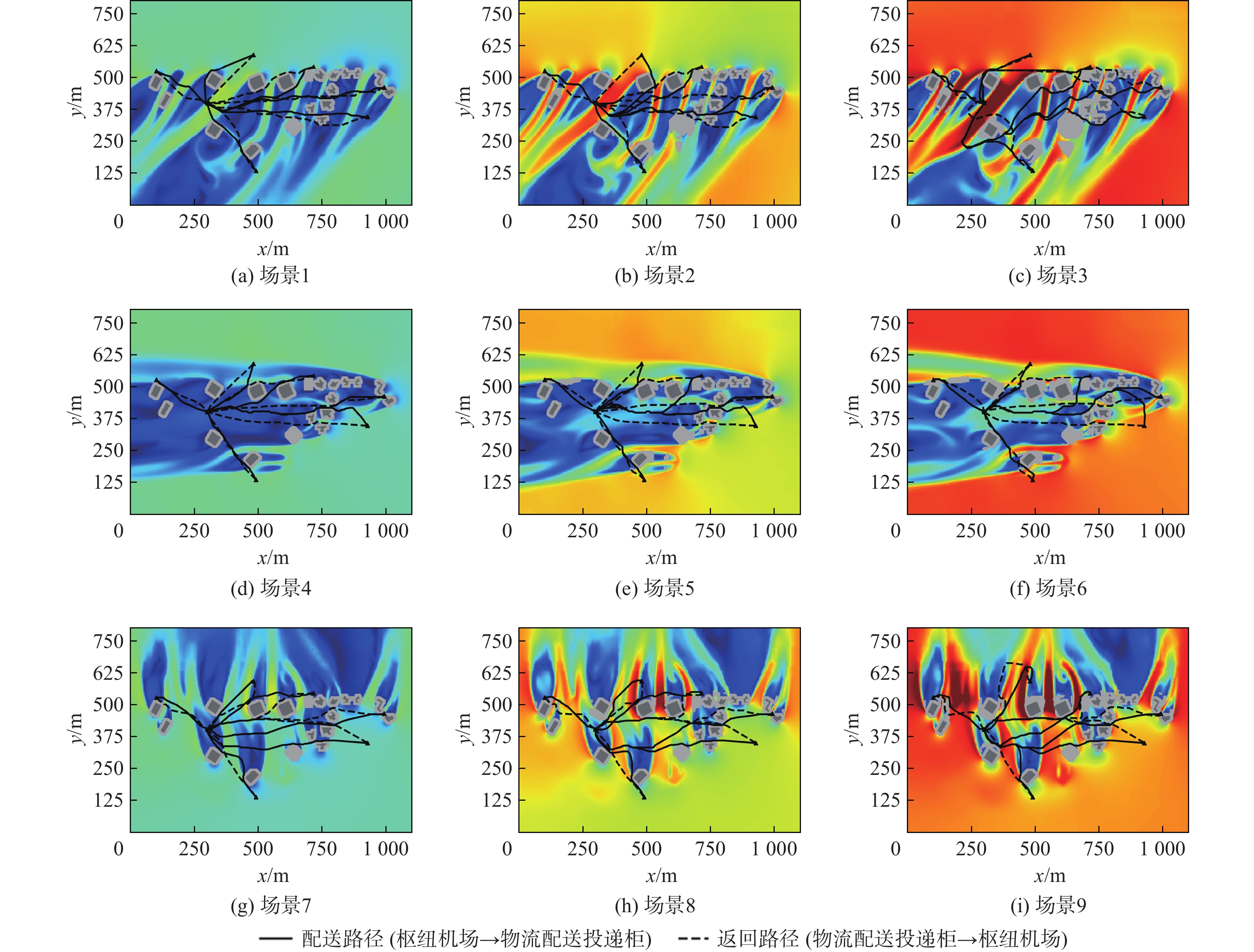
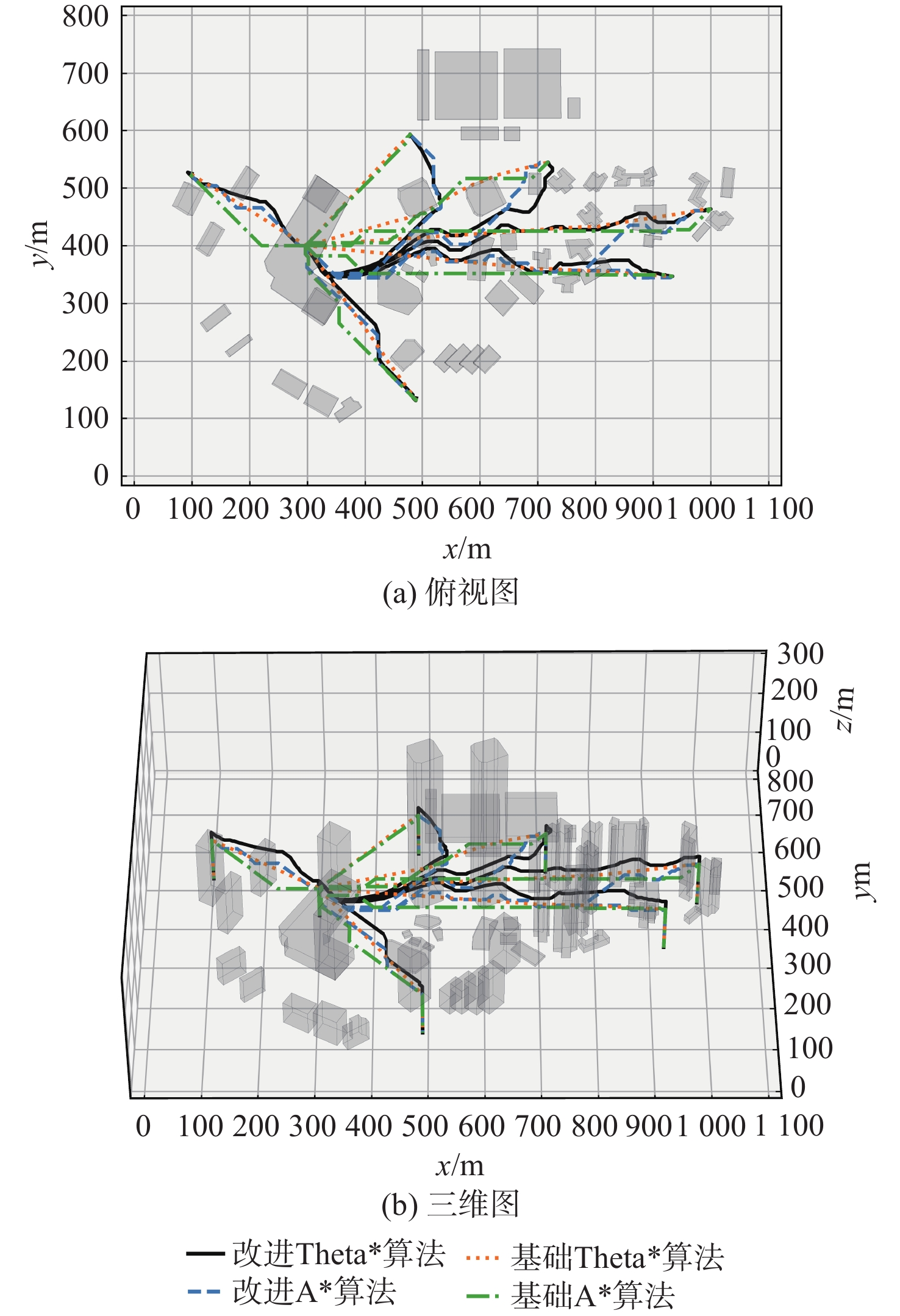
The operational safety of drone routes has gained more attention as unmanned aerial vehicles (UAVs) are used extensively in urban logistics. Addressing the safety and efficiency issues caused by urban wind fields, this paper integrates the operational characteristics of logistics drones and employs computational fluid dynamics (CFD) to estimate urban wind fields. The impact of wind fields on UAVs is analyzed from the perspectives of flight safety, variations in drone speed, and turbulence zones around buildings. A path planning model is constructed, and an improved Theta* algorithm is proposed. The study takes the central business district of Longgang District, Shenzhen, as the research scenario. Simulations of urban wind fields are conducted based on historical prevailing winds to delineate hazardous flight regions and the influence range of obstacles within the wind field. The proposed method is then used to plan drone routes under different wind field conditions. Results show that the constructed path planning model effectively identifies high wind speed and turbulent areas within the airspace. When compared to routes designed to minimize distance, the drone route saves flying time by 9.27% by taking into account how wind fields affect drone speed and avoiding no-fly zones. Additionally, the proposed algorithm outperforms traditional algorithms in terms of route distance and flight time, and reduces the number of turns by 31.78% and computation time by 62.63%.

Simplified S-mode signal pulse structure with kernel function constraints and TOA accuracy study
GONG Fengxun, LIU Tao
2026, 52(6): 1789-1802. doi: 10.13700/j.bh.1001-5965.2024.0204
Abstract:

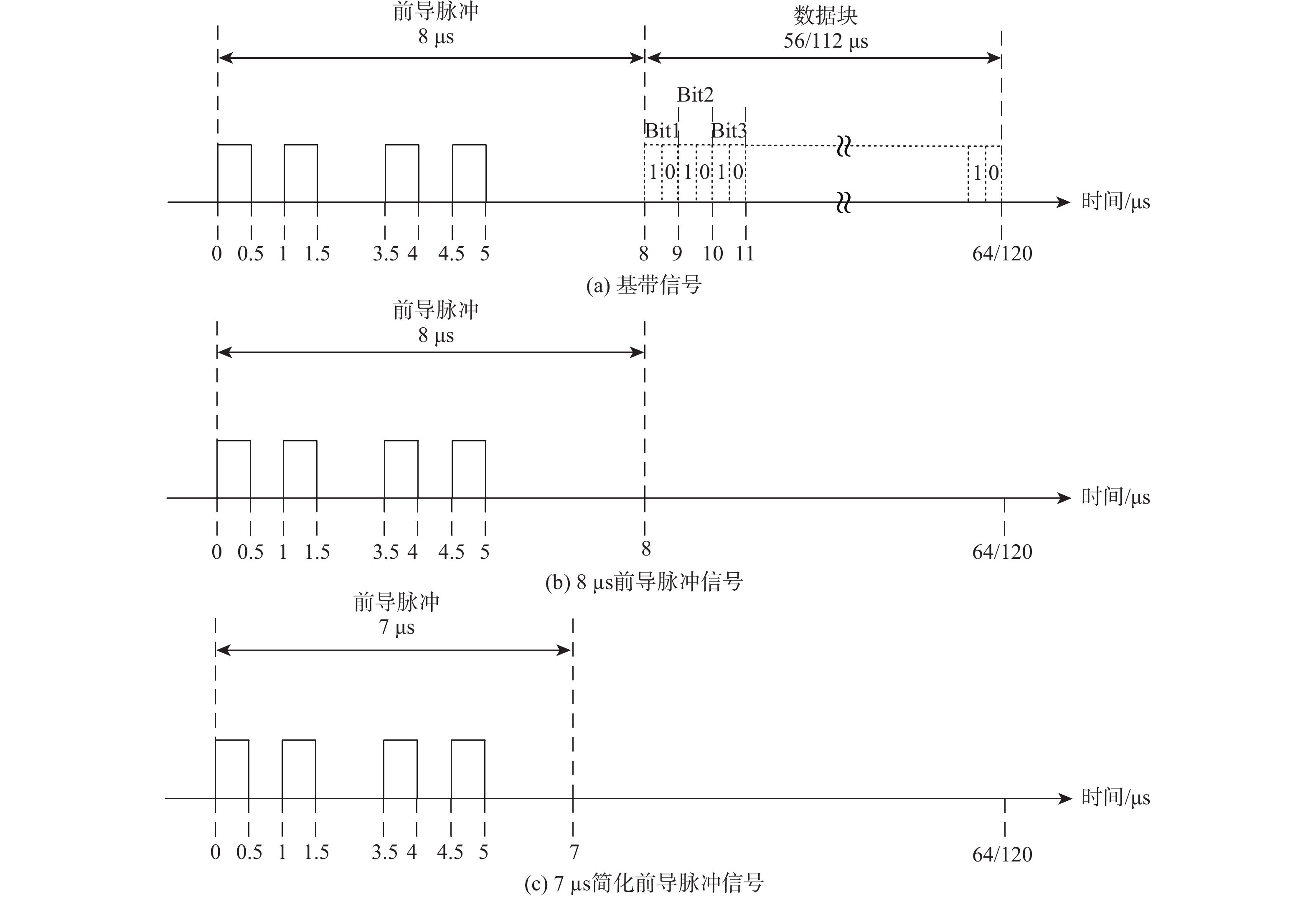
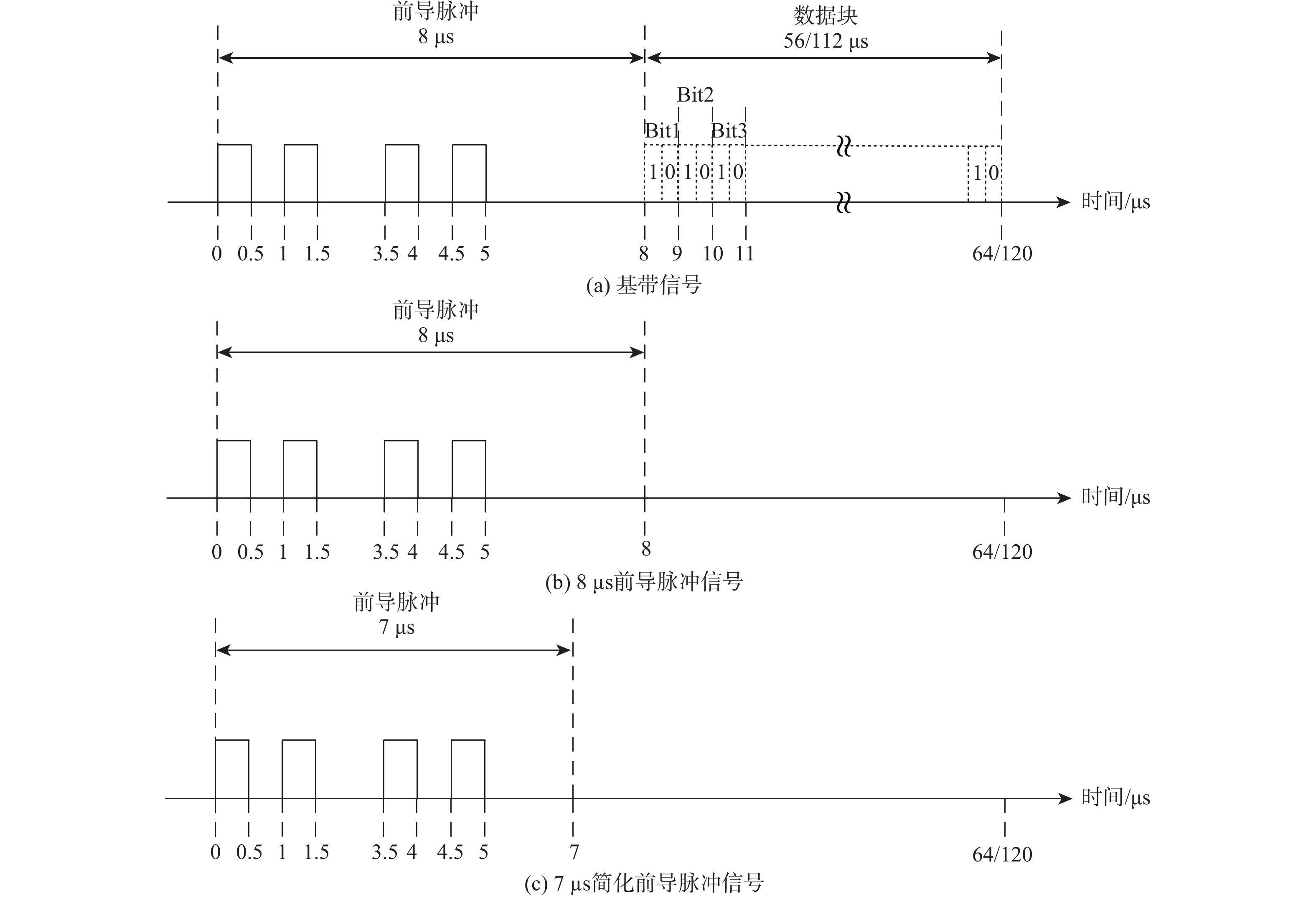
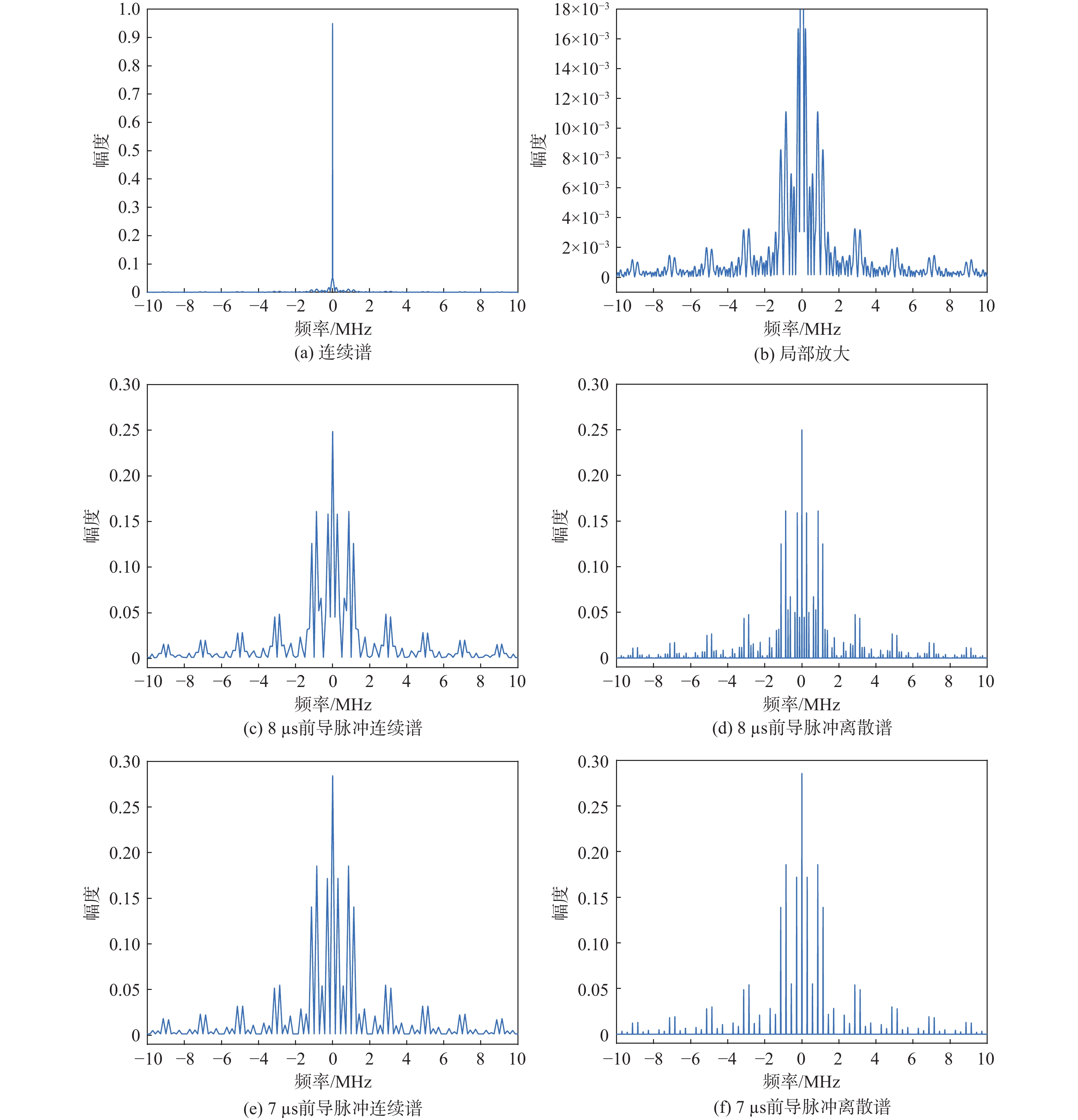
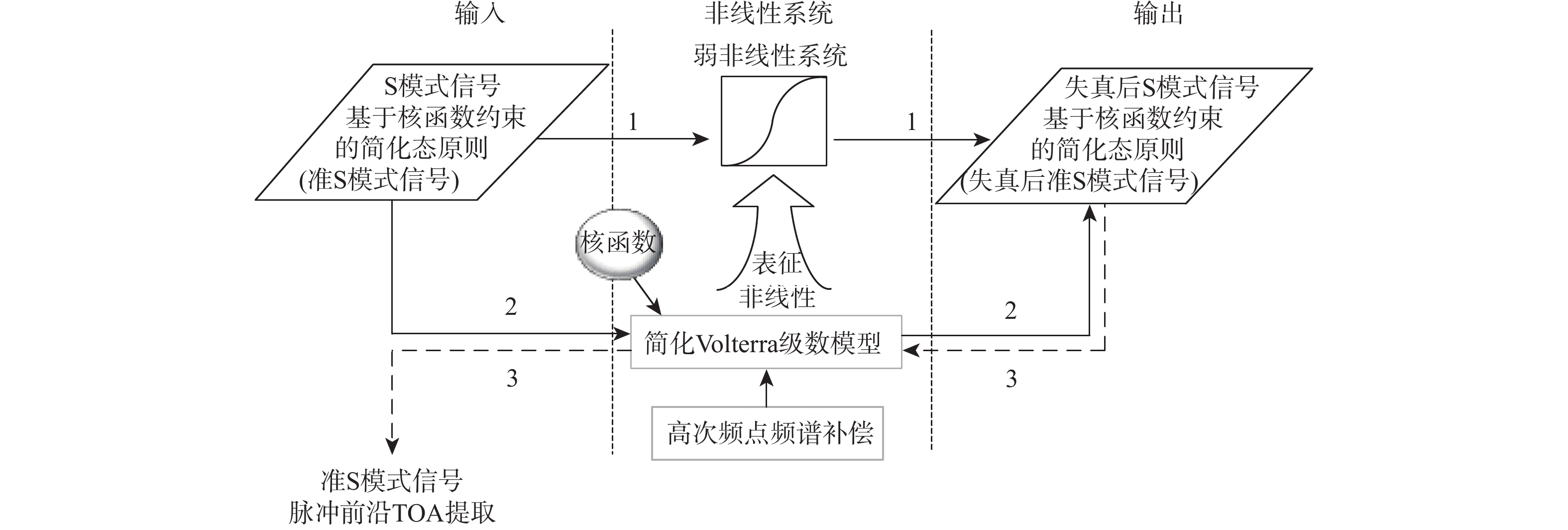
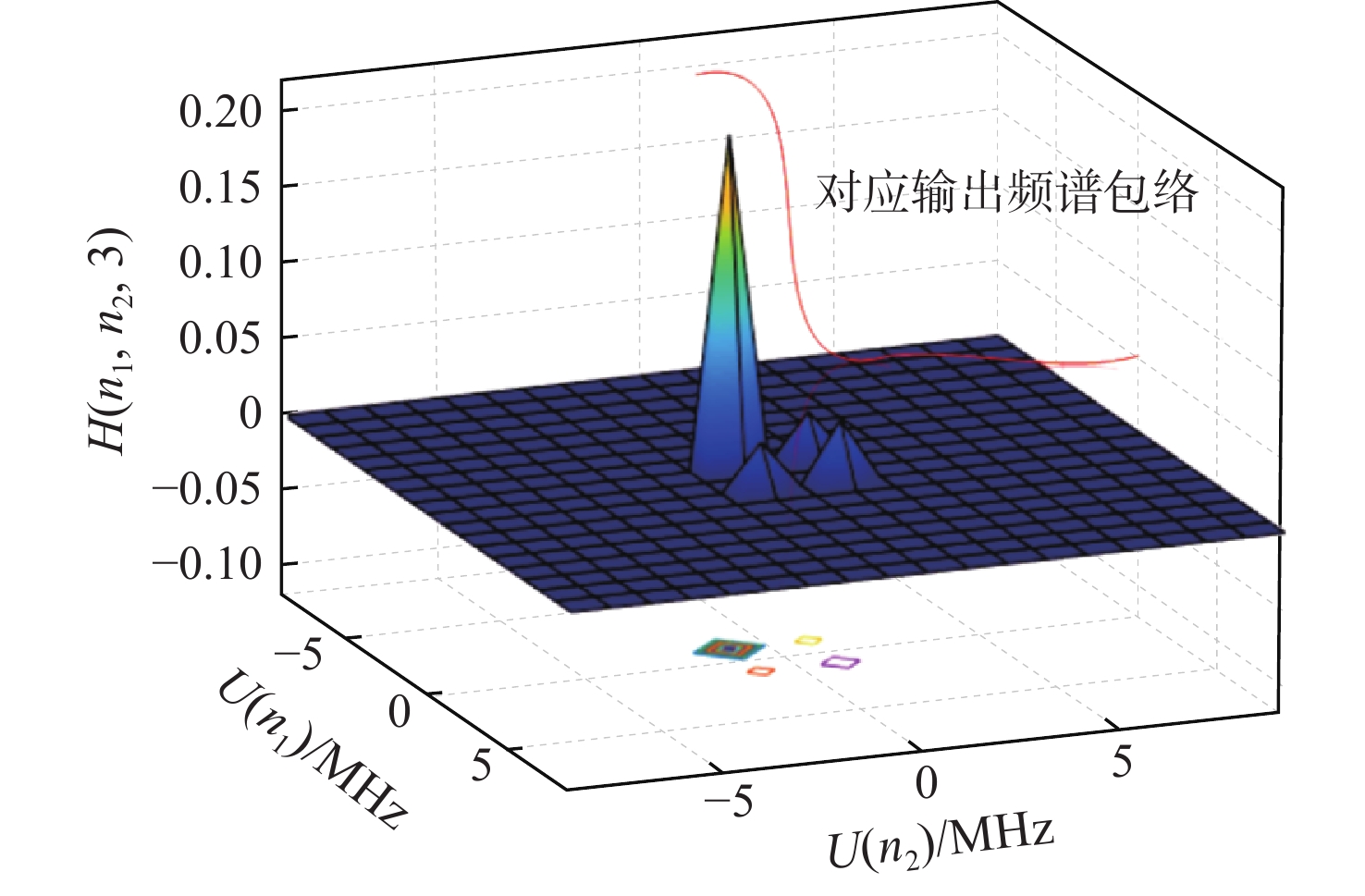
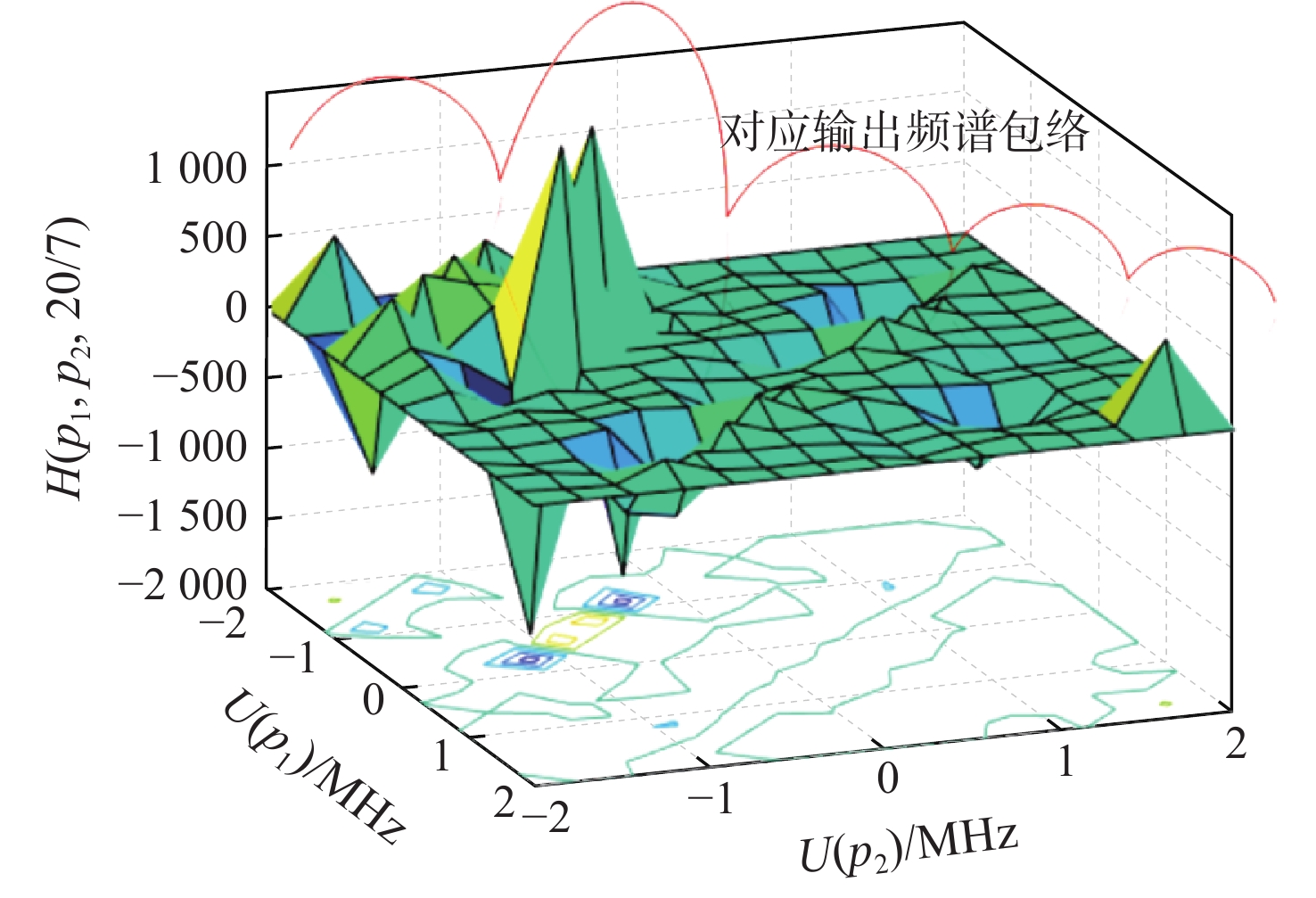
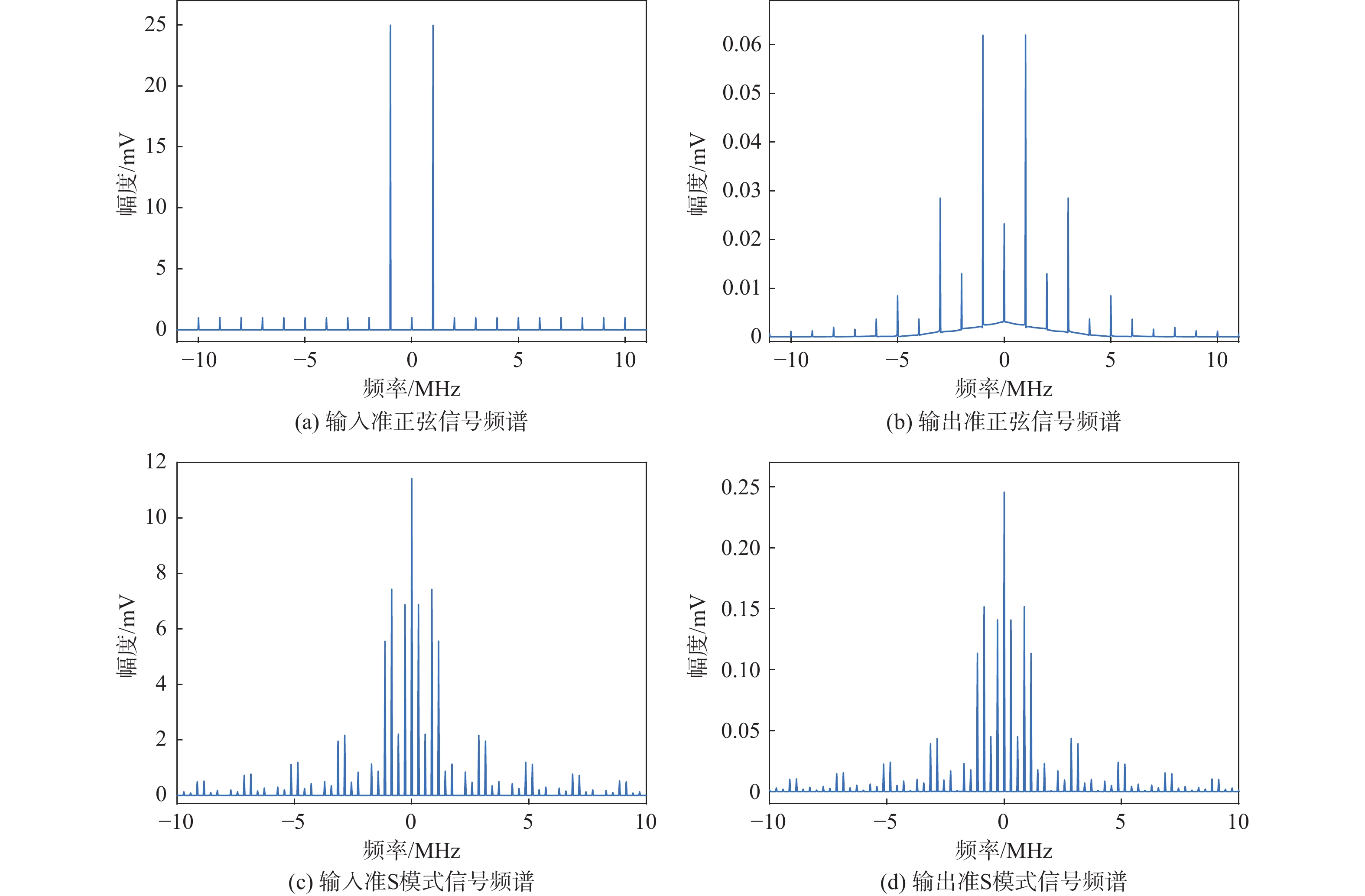
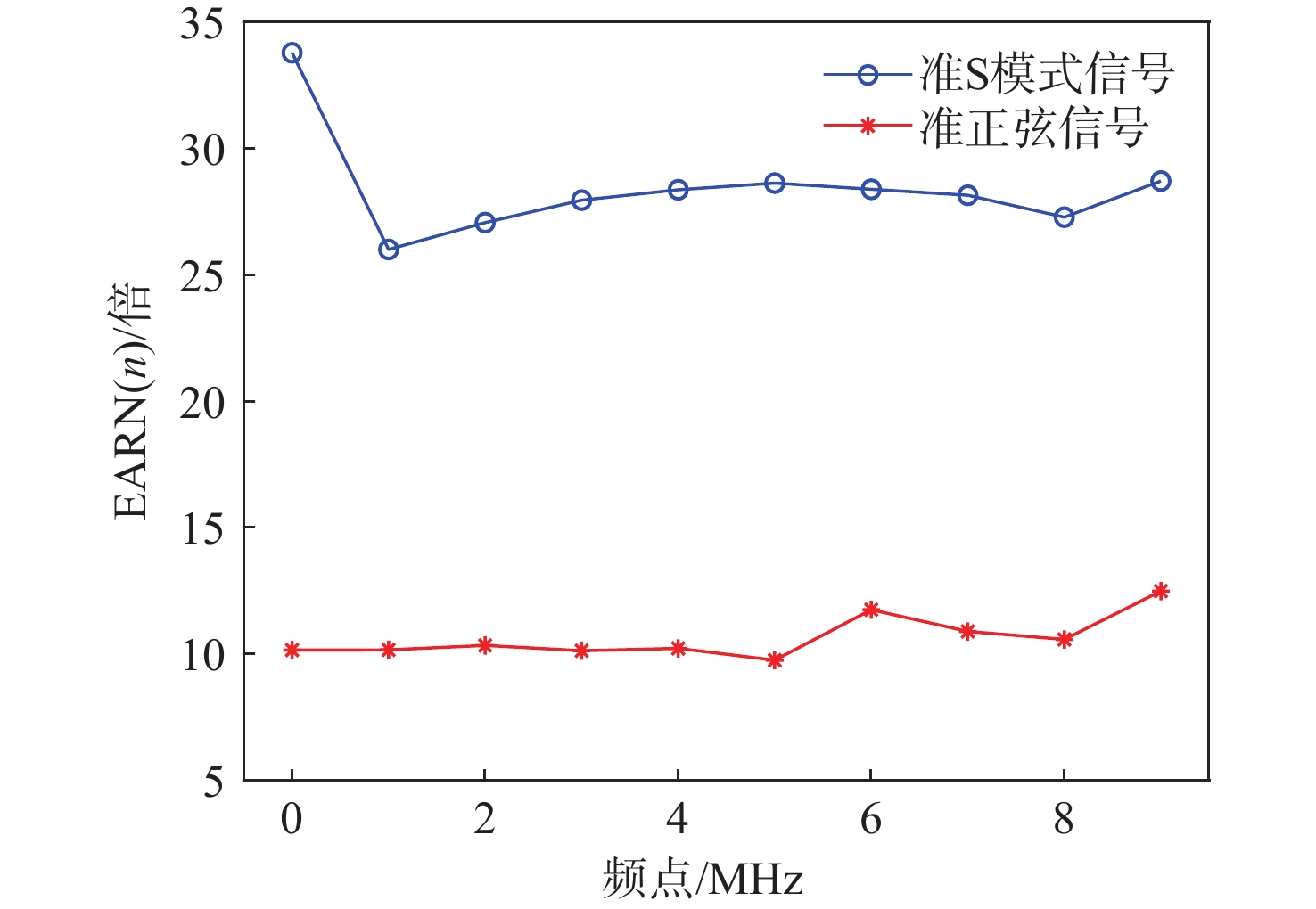
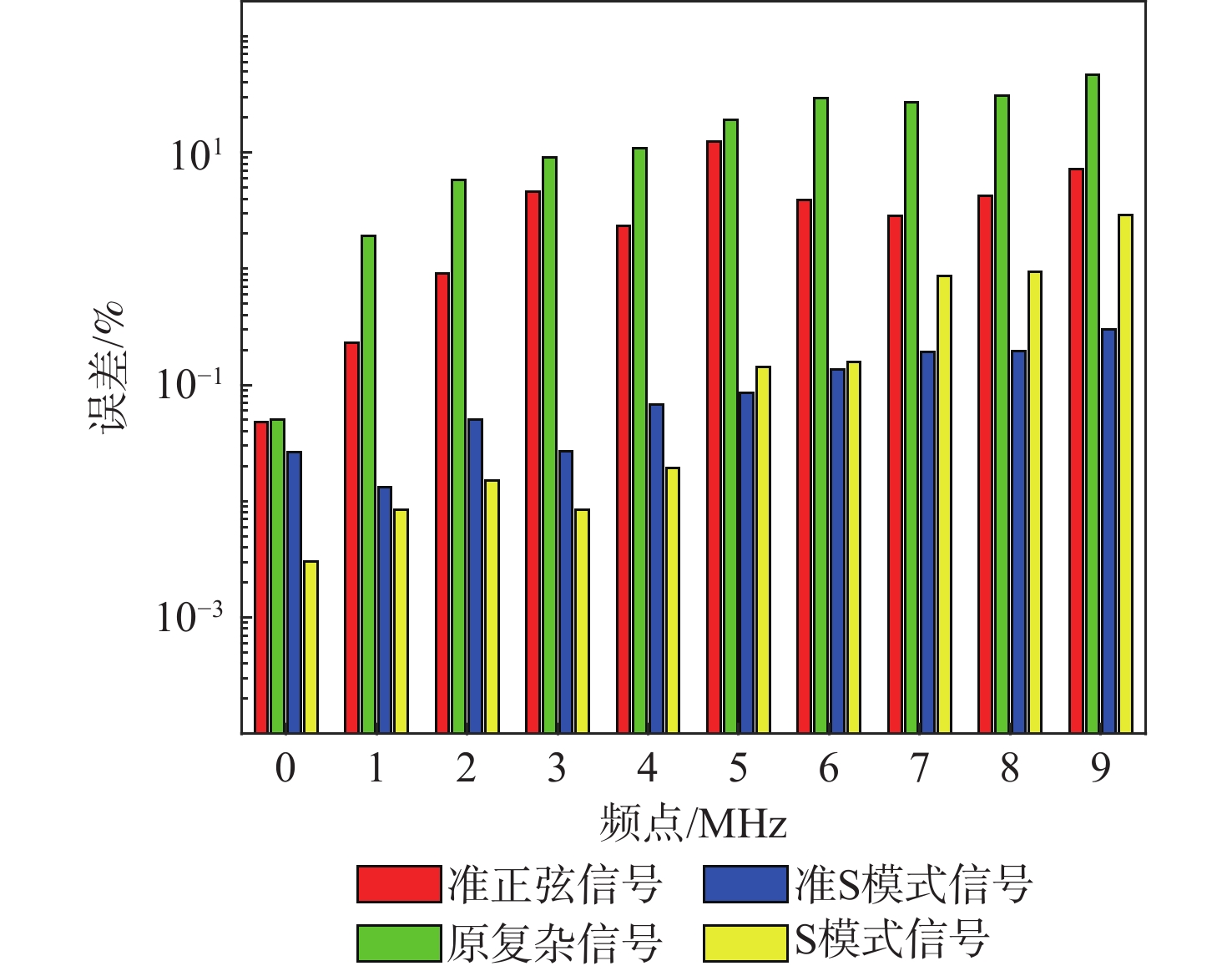
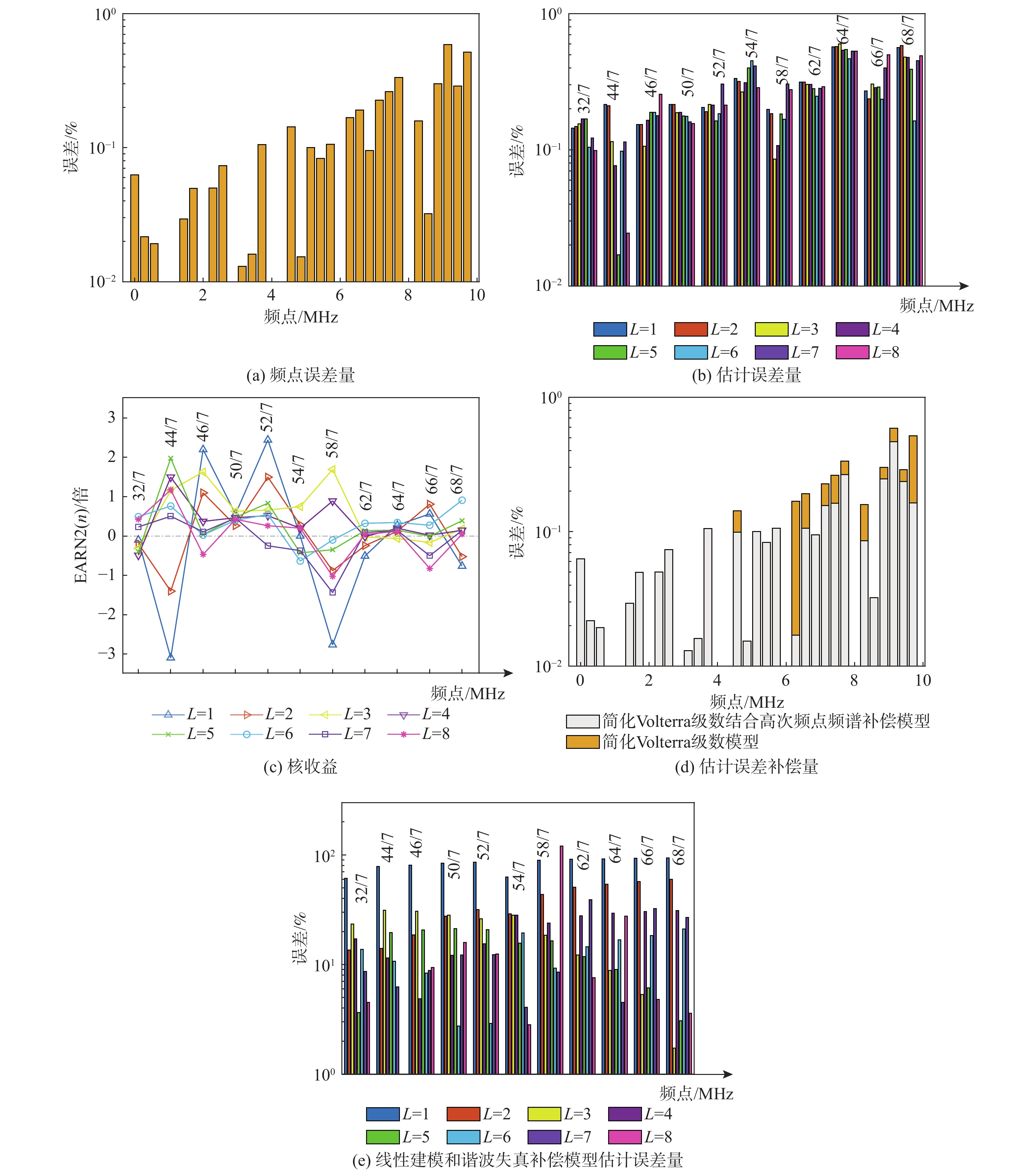
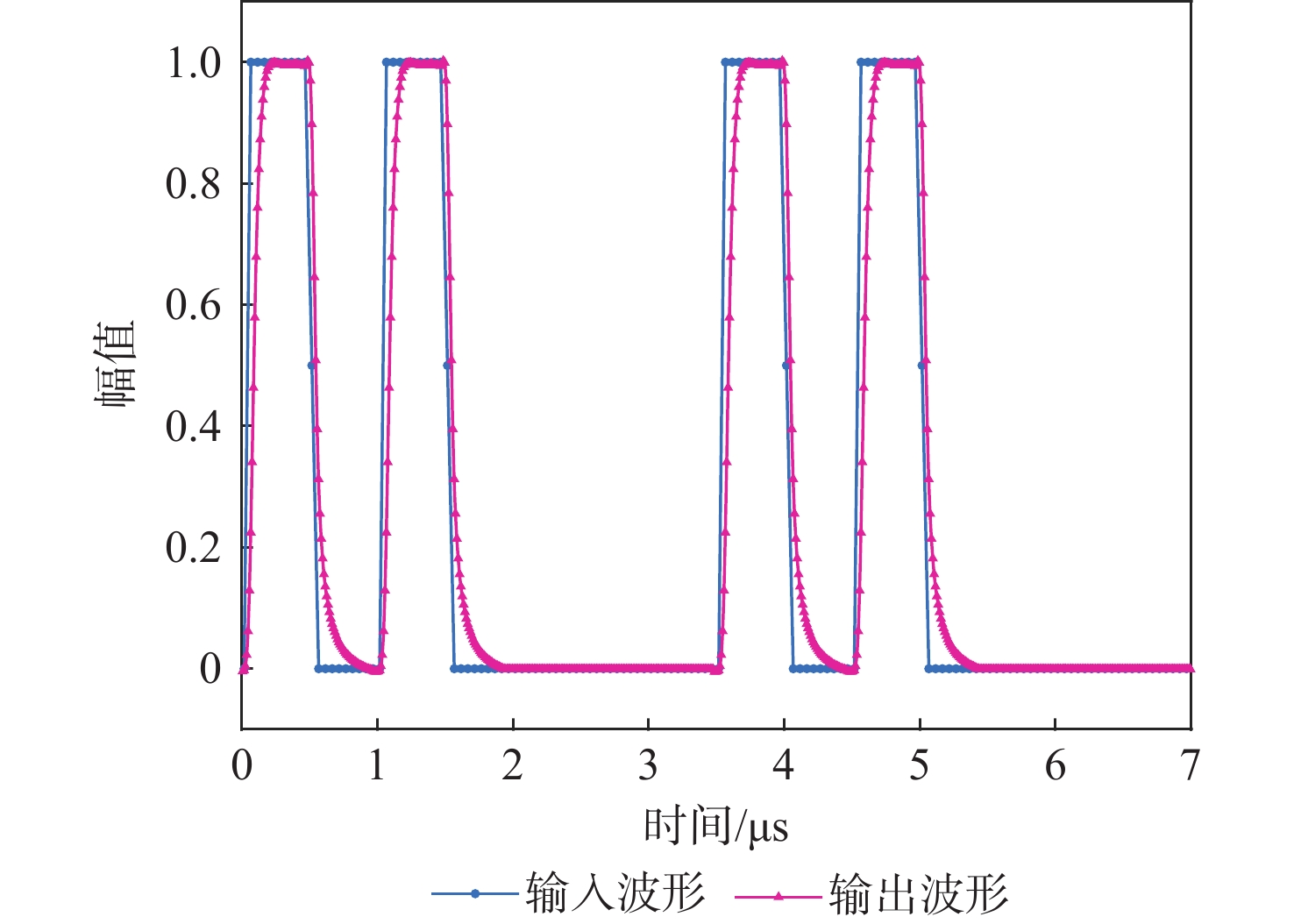
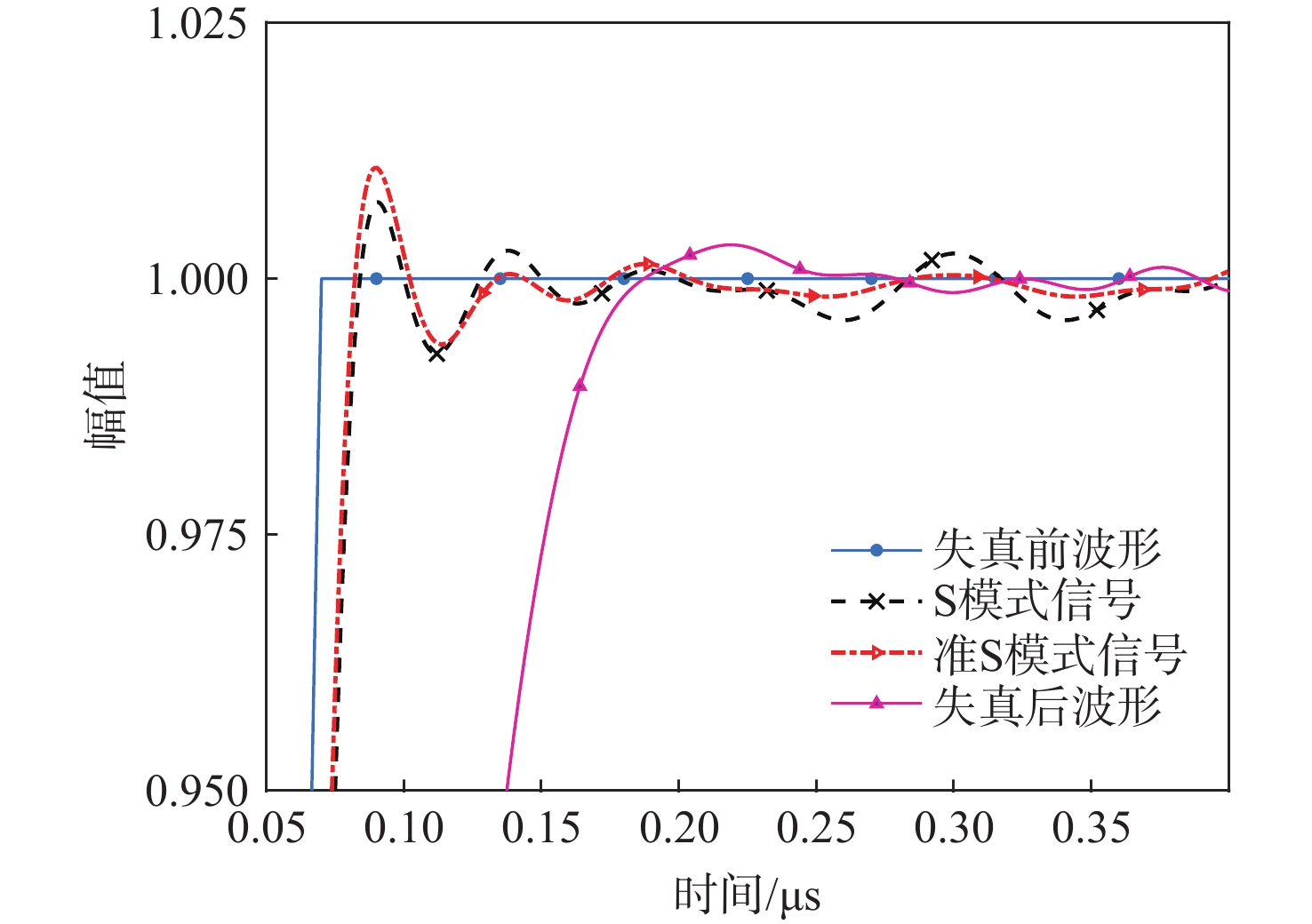
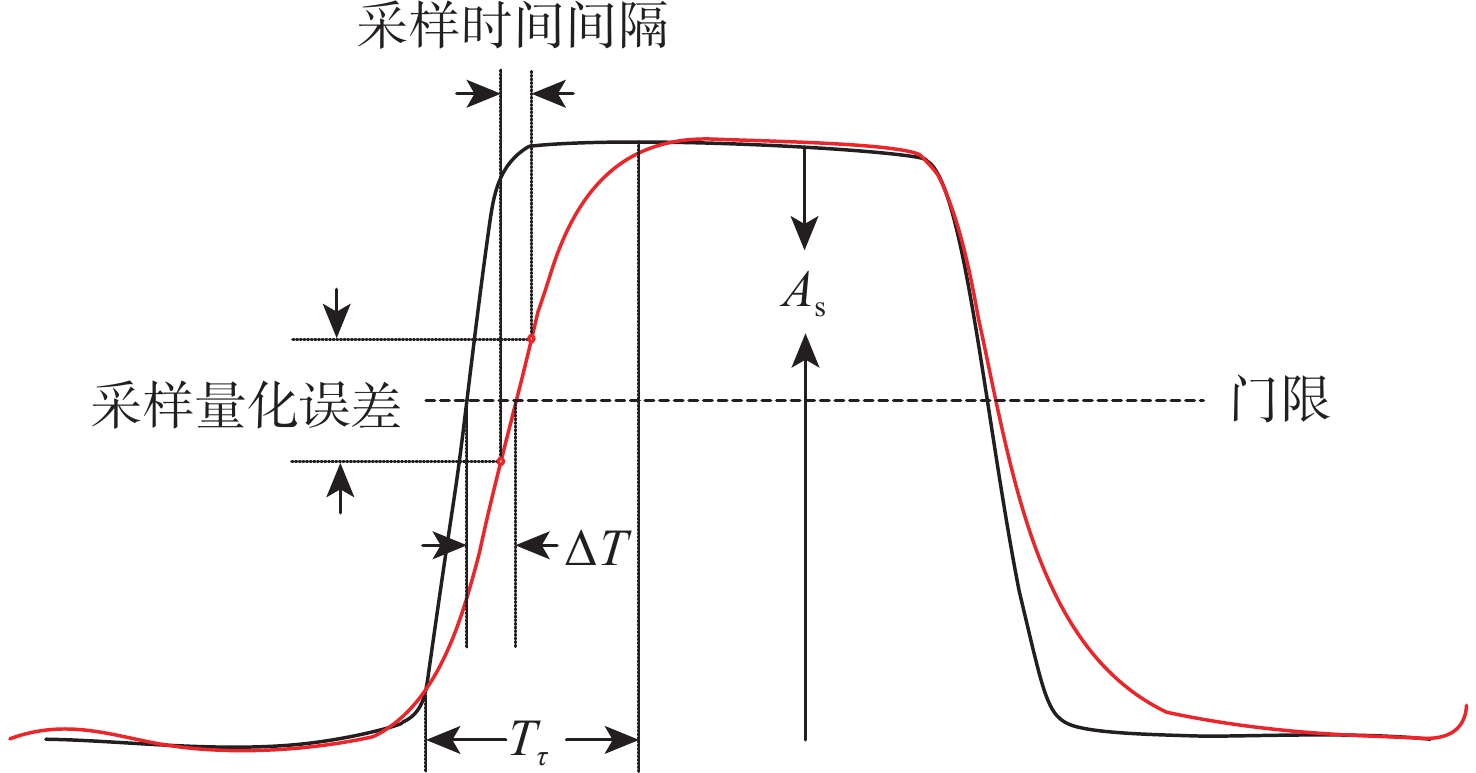
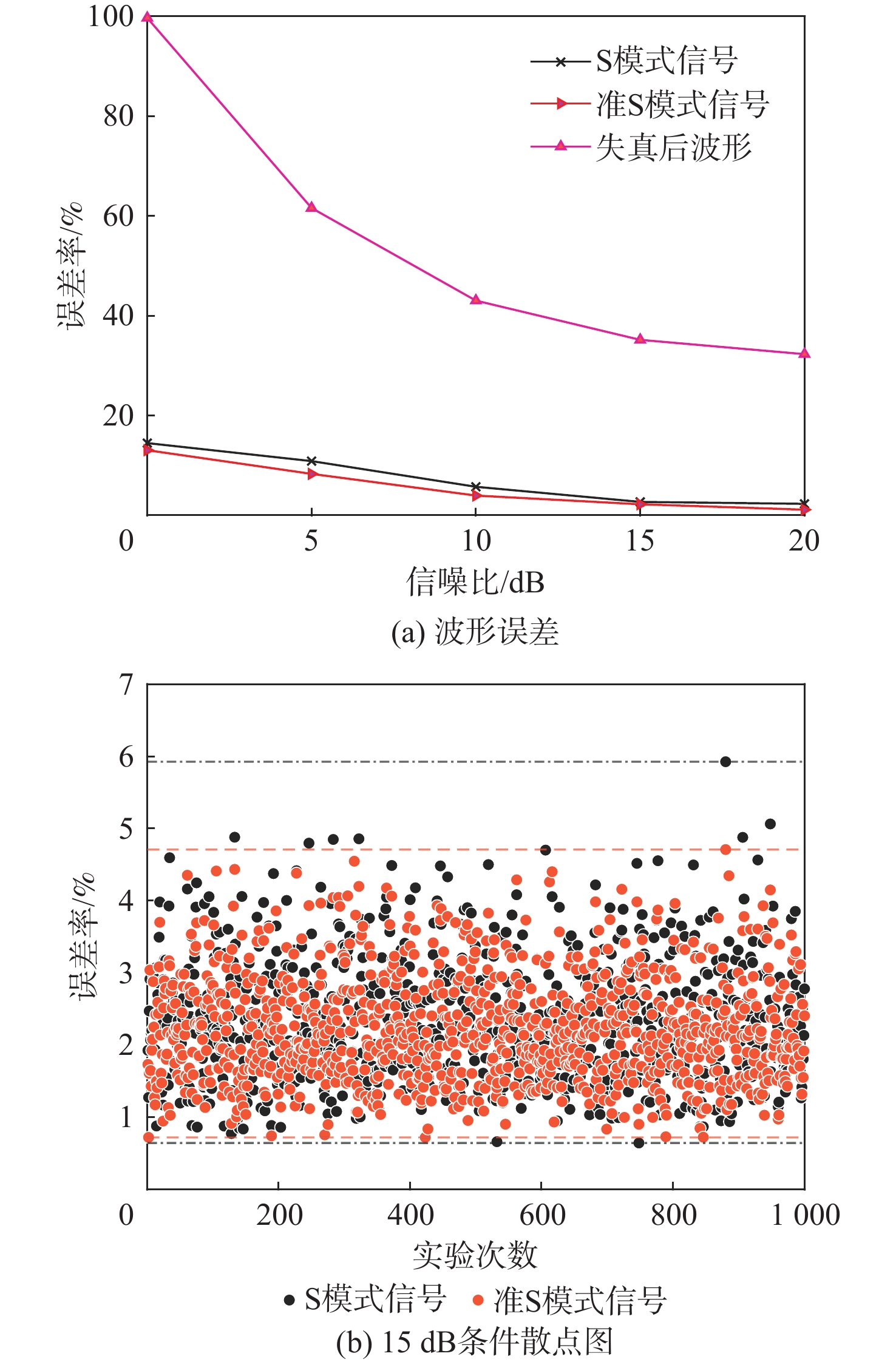
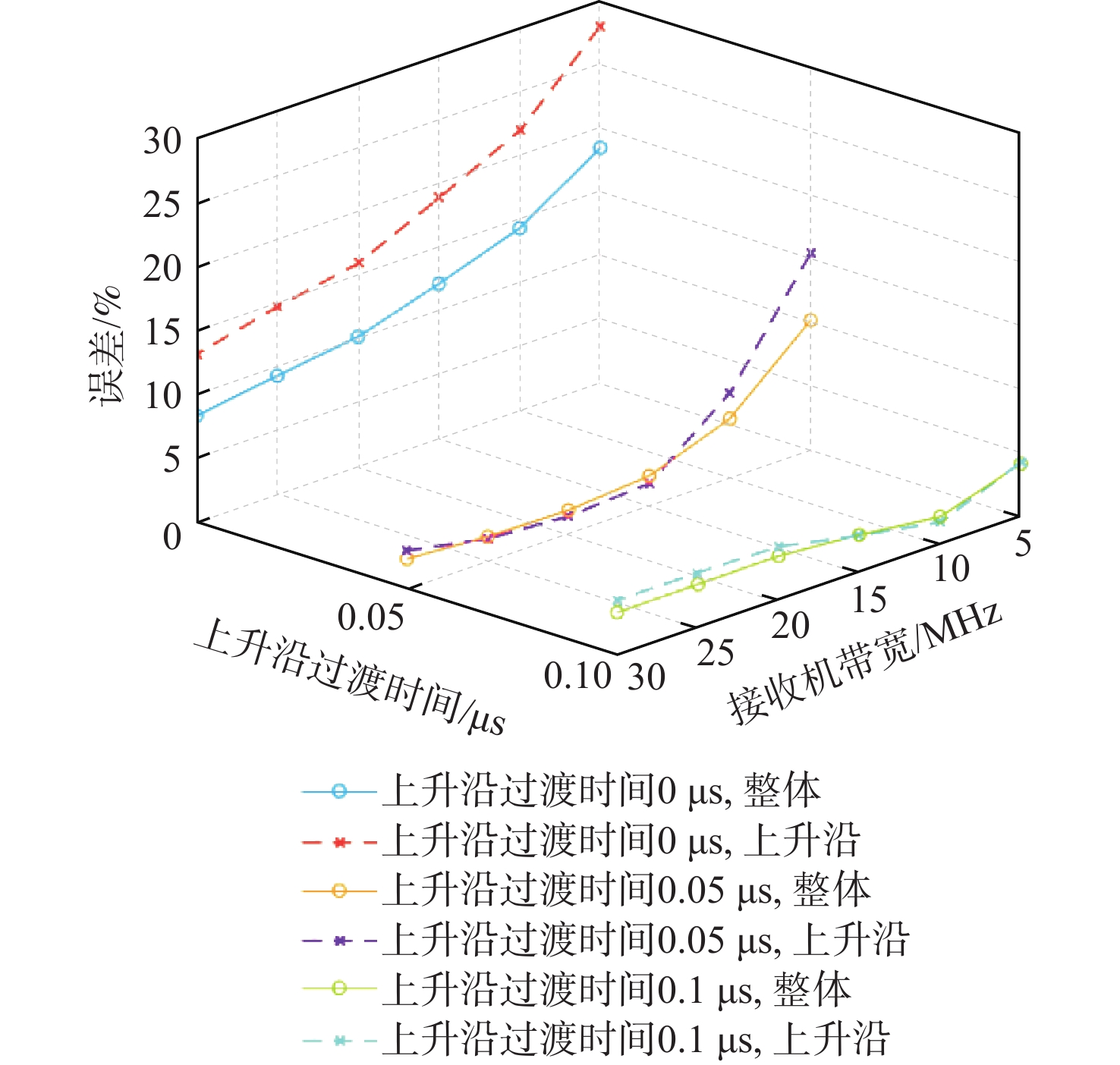
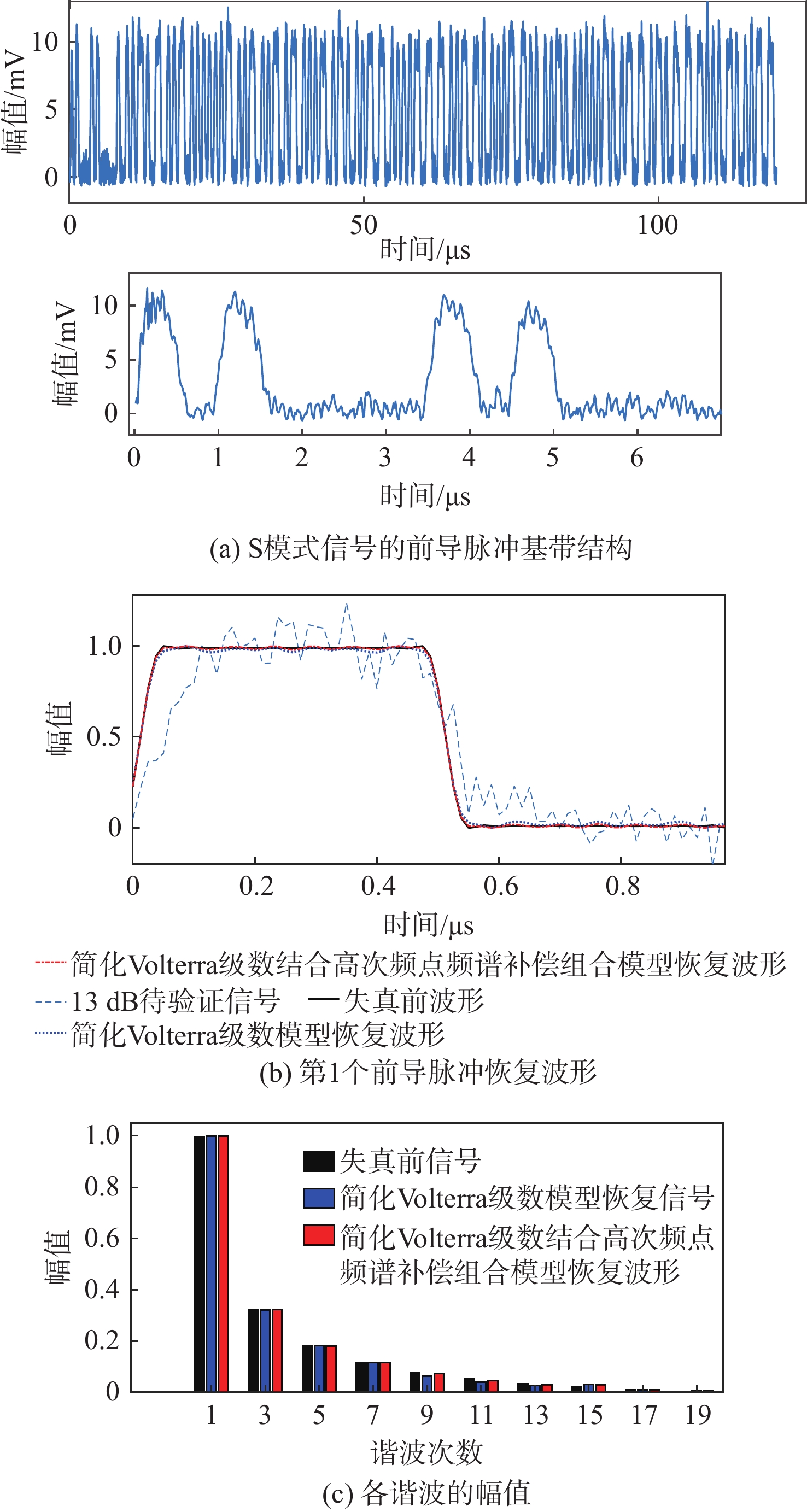
The very accurate time-of-arrival (TOA) extraction is significantly impacted by the complicated space-time structure of the civil aviation S-mode transponder signal, which is also vulnerable to neighboring electromagnetic interference and transmission link nonlinearities. Based on the air-time structure and spectral analysis of the civil aviation S-mode transponder signal, a quasi-S-mode signal definition model is proposed to simplify the pulse structure of the S-mode signal, and a simplified Volterra level model is constructed based on the quasi-S-mode signal, the kernel function of the inversion constraints of the weak nonlinear system characteristics. Simulation results show that the kernel function gain multiplier of the simplified Volterra level model based on the quasi-S-mode signal is not less than 27 times. Finally, the quasi-S-mode recovery of an interfered S-mode signal with a measured signal-to-noise ratio of about 13 dB is achieved by using a combination of the 3rd-order simplified Volterra level model and spectral compensation at high sub-frequency points, and the waveform recovery error of about 1.54% is obtained with the computation of about 8.8% of the standard S-mode signal model. Additionally, the accuracy of the recovered signal is improved by more than 73% over the TOA extracted from the disturbed signal. Consequently, the reduced Volterra level model of quasi-S-mode signal based on kernel function constraints has significant theoretical significance for improving localization accuracy and accurately estimating the arrival time of S-mode signals in civil aviation.

Displacement sensorless control of electromagnetic linear actuator based on an improved sliding mode observer
GE Wenqing, LI Detong, SONG Yadong, TAN Cao, LI Bo
2026, 52(6): 1803-1809. doi: 10.13700/j.bh.1001-5965.2024.0291
Abstract:

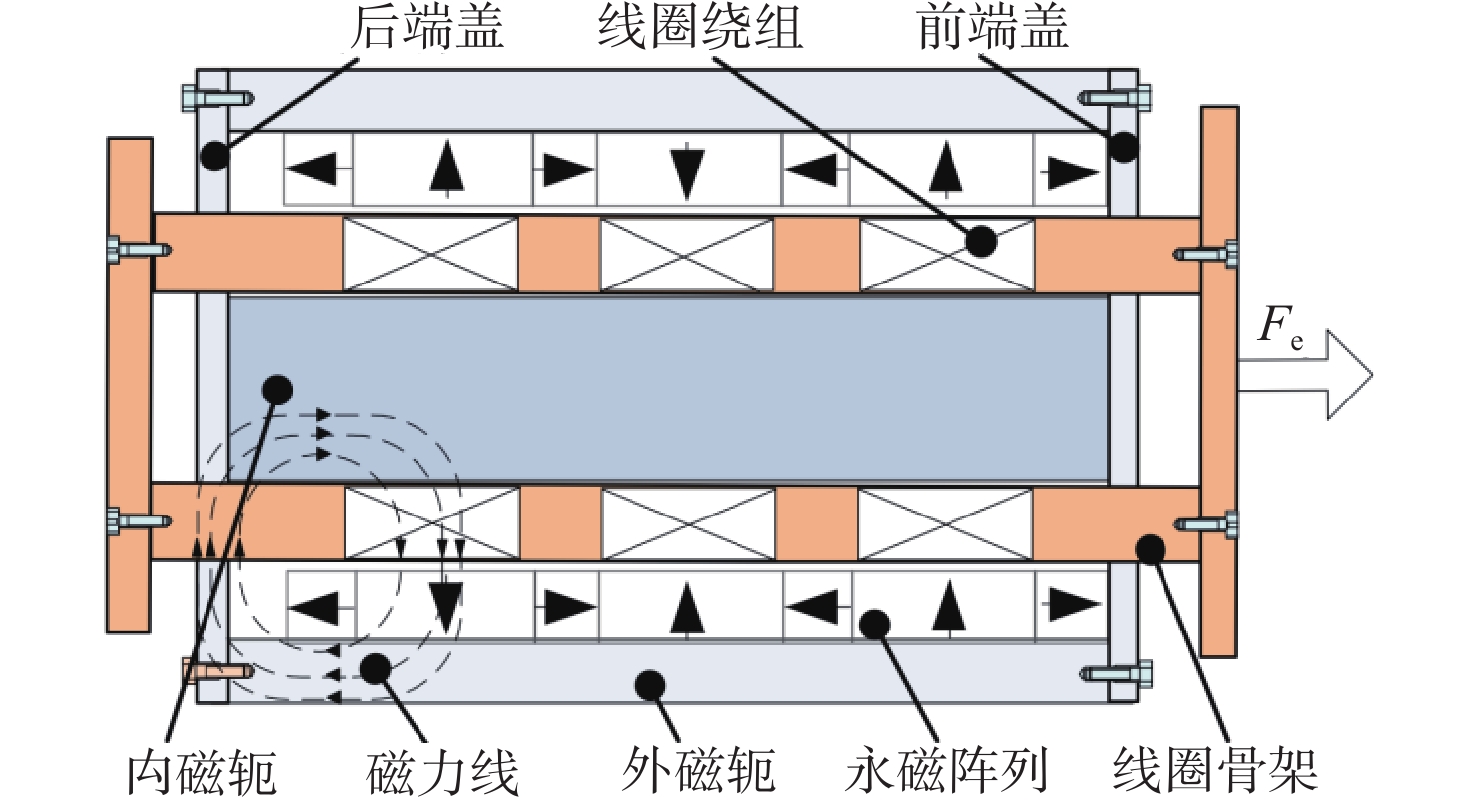
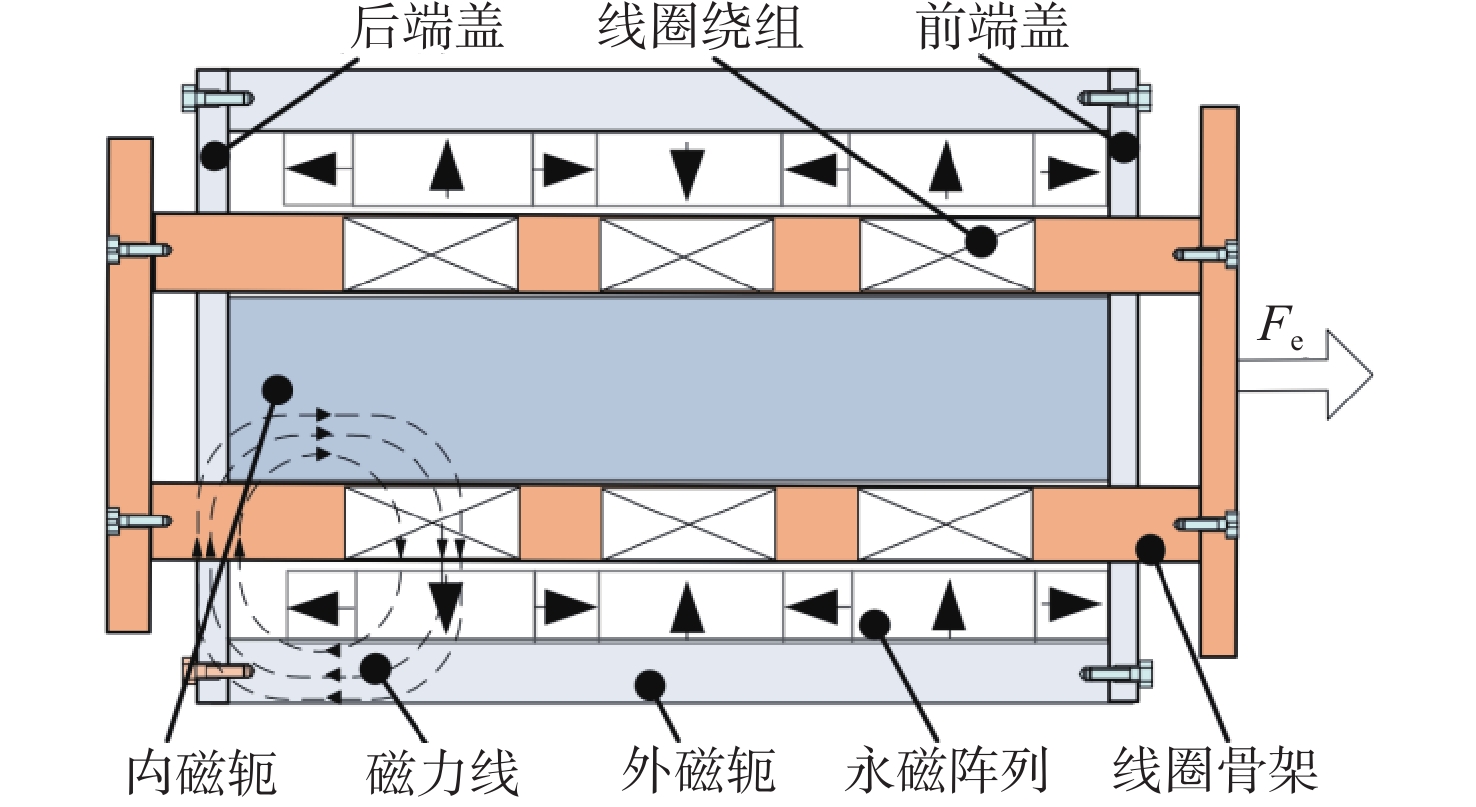
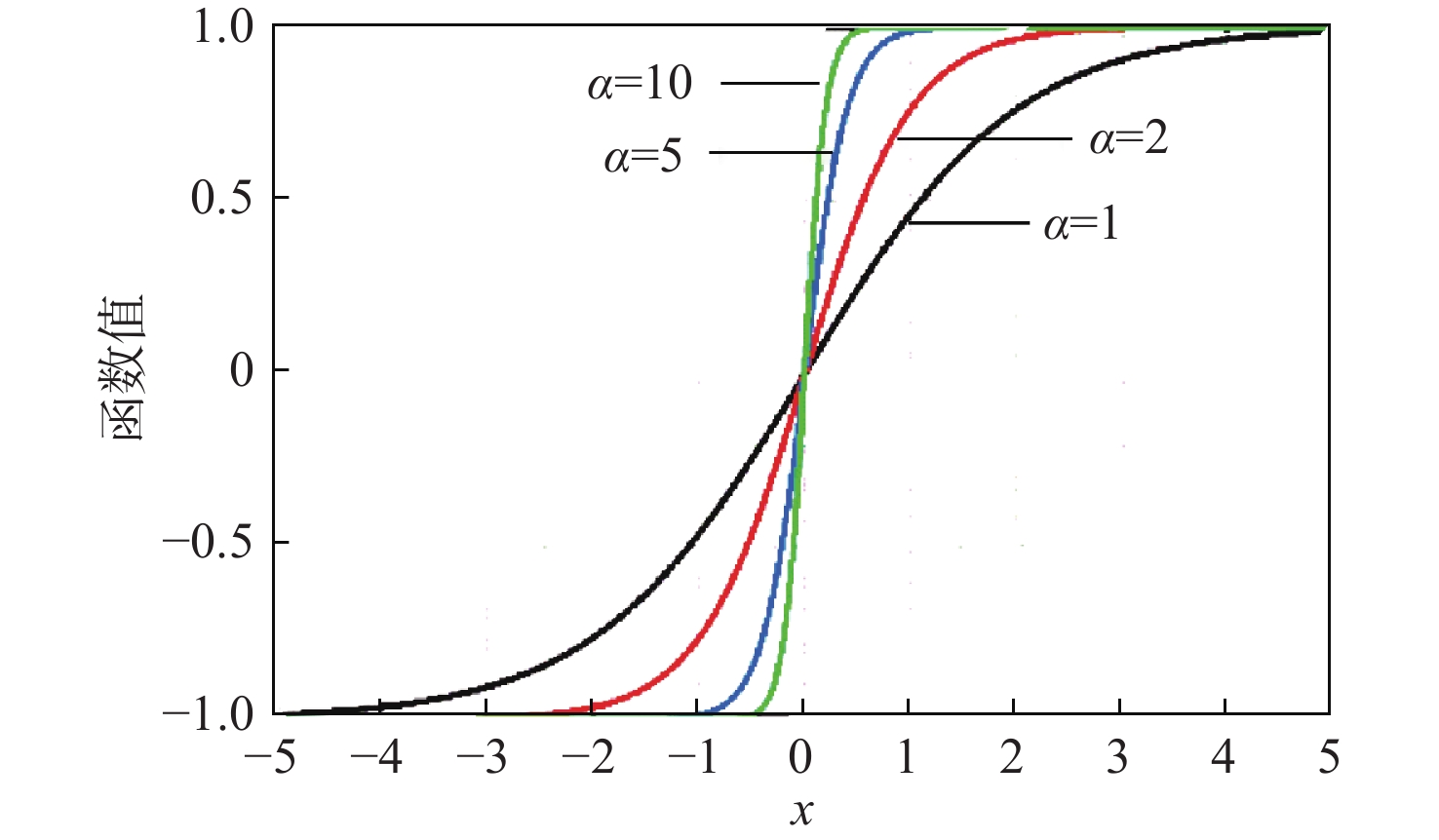
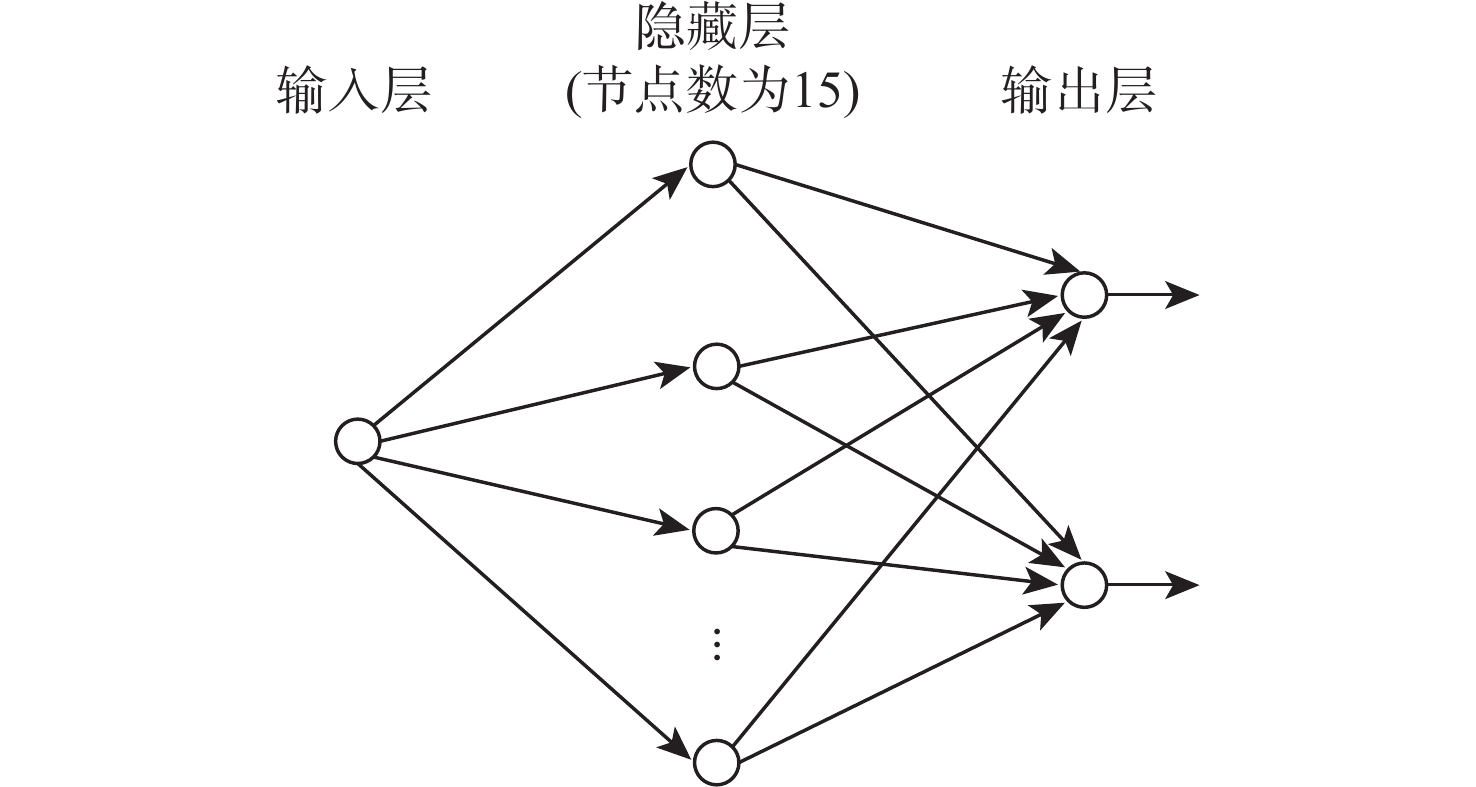
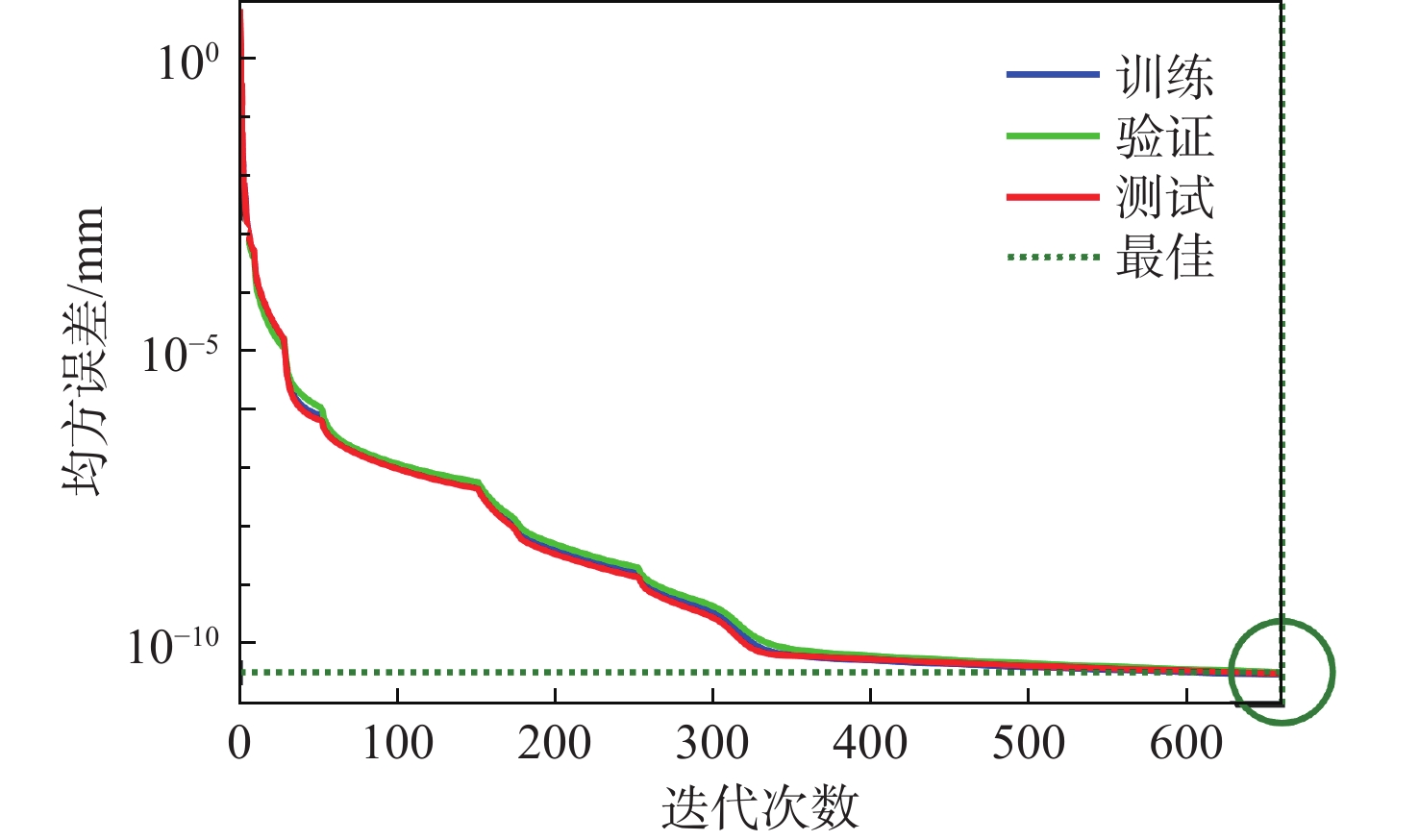
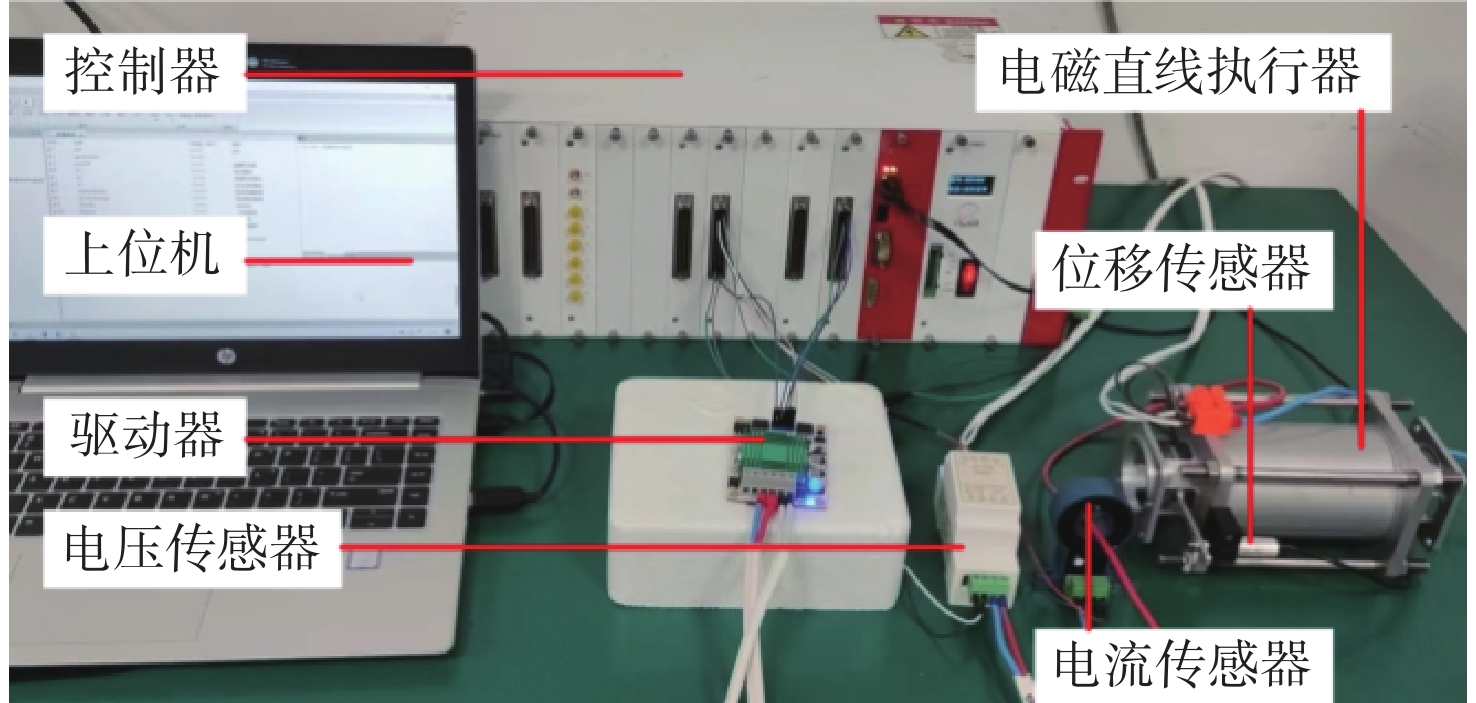
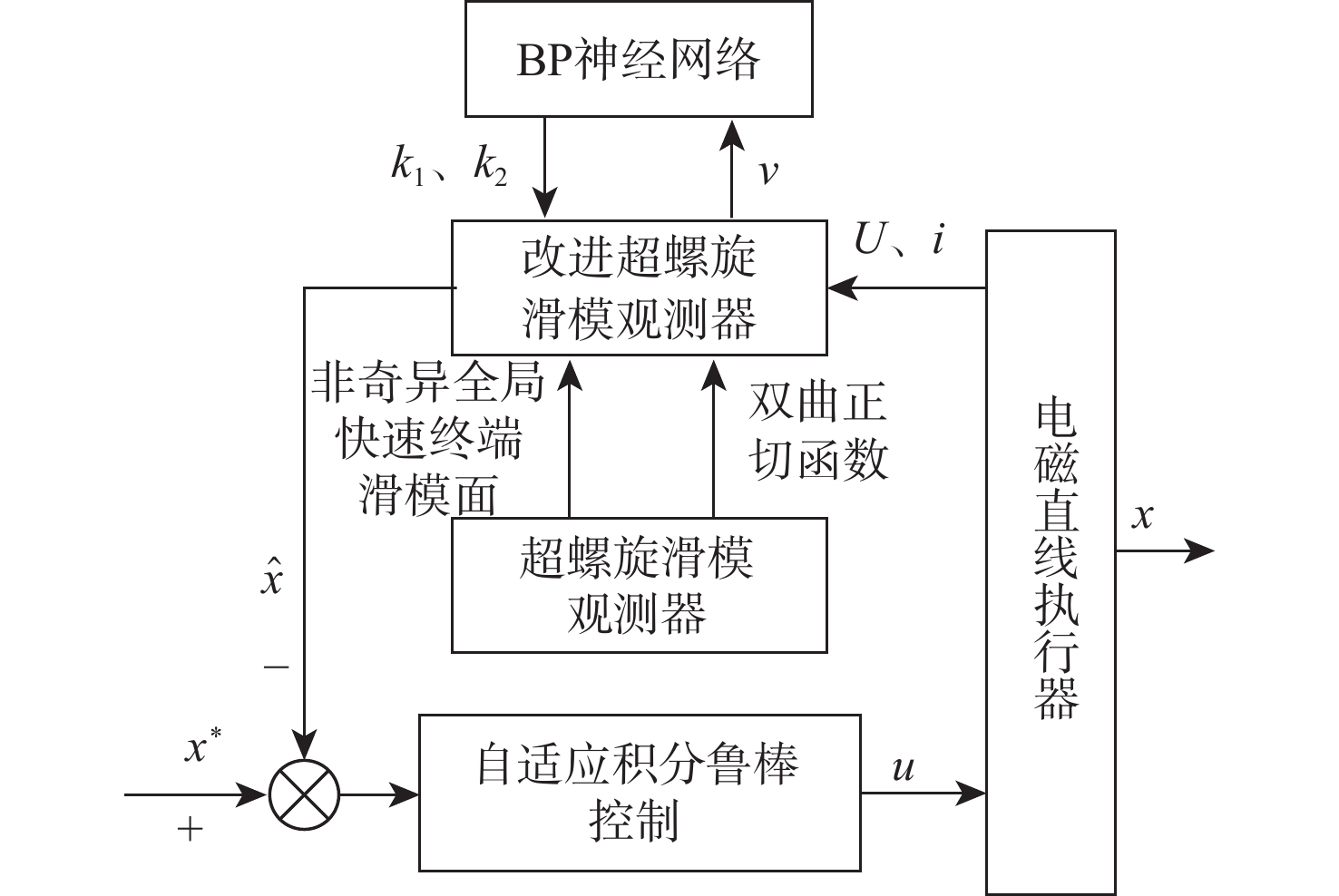
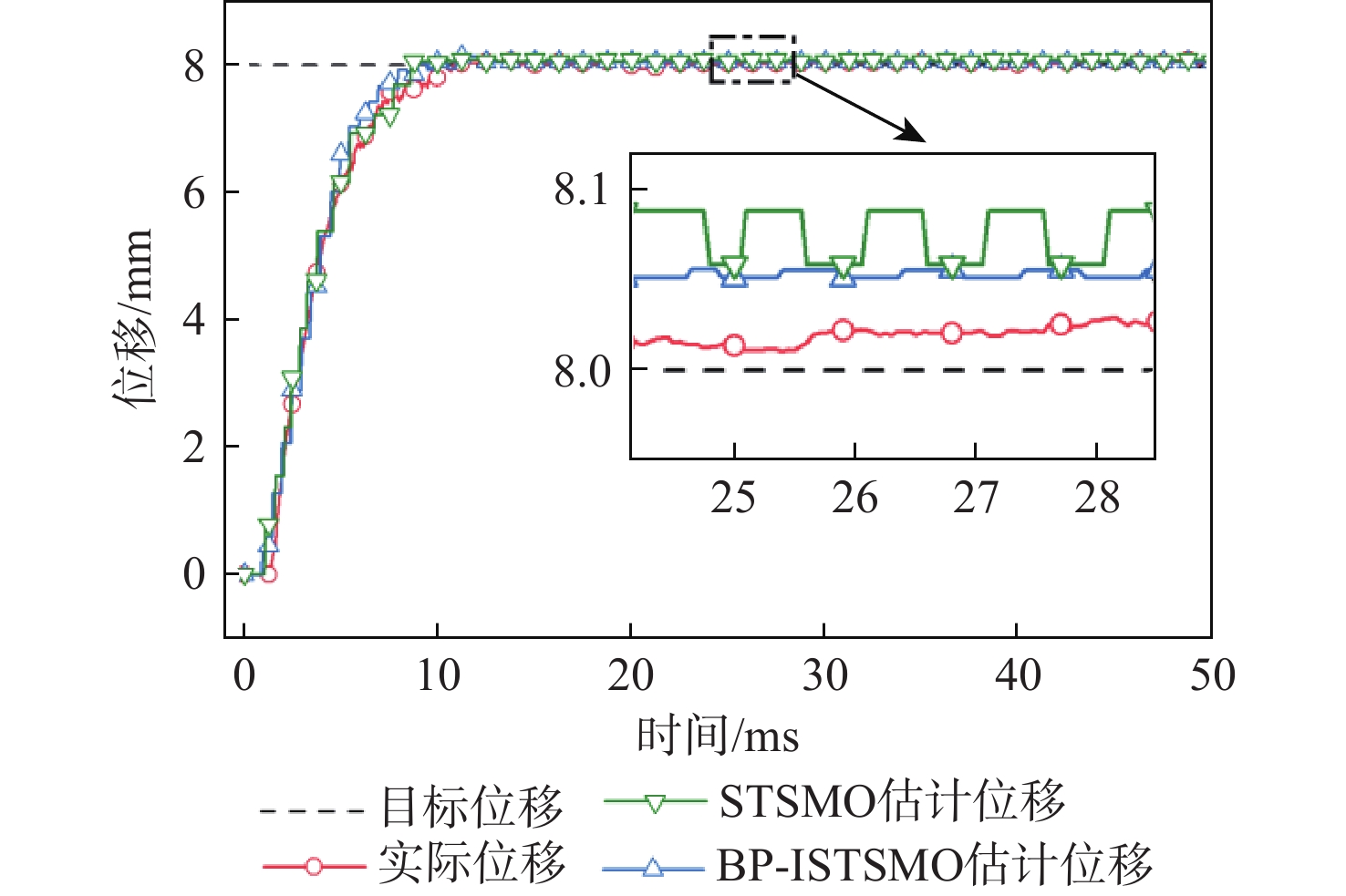
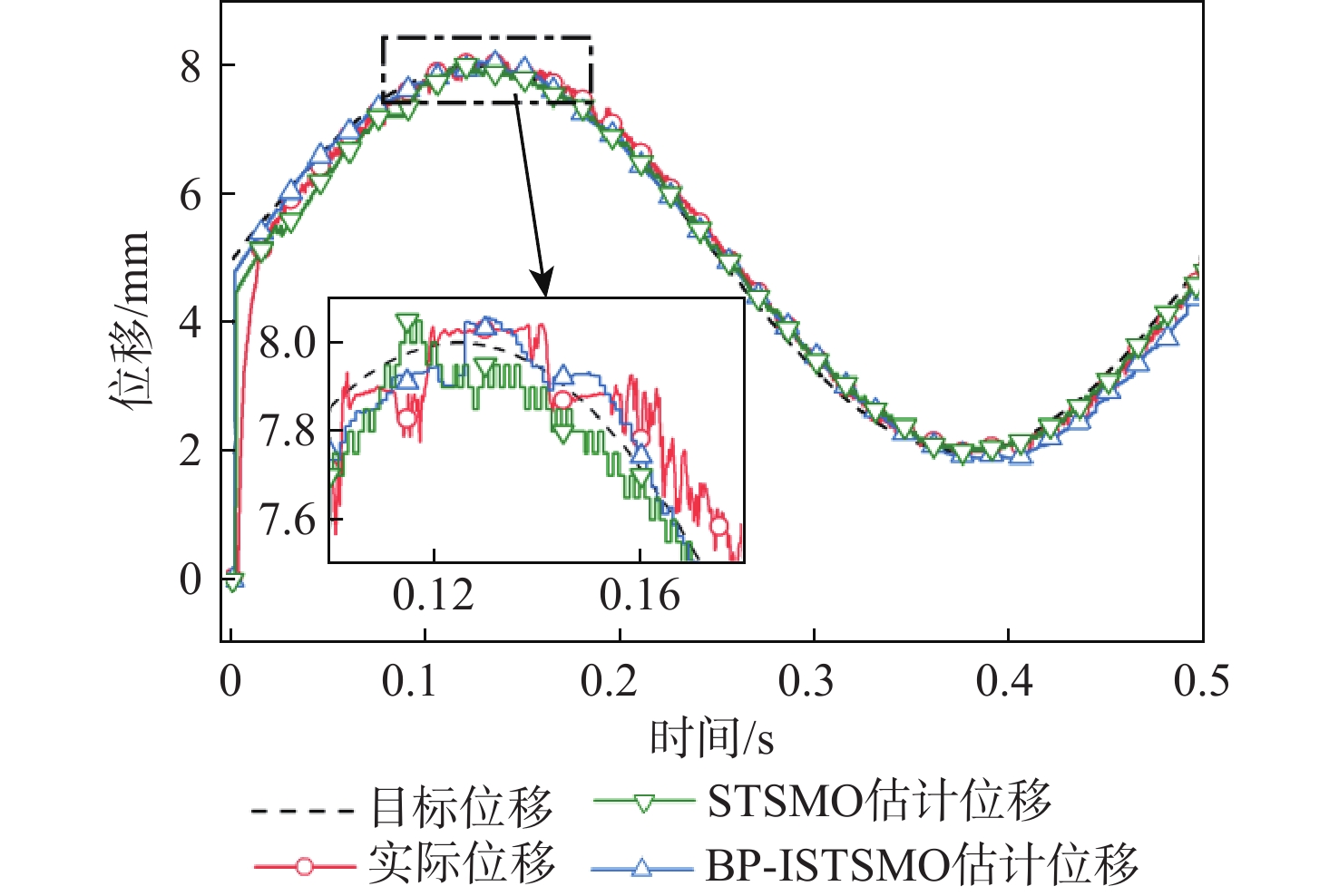
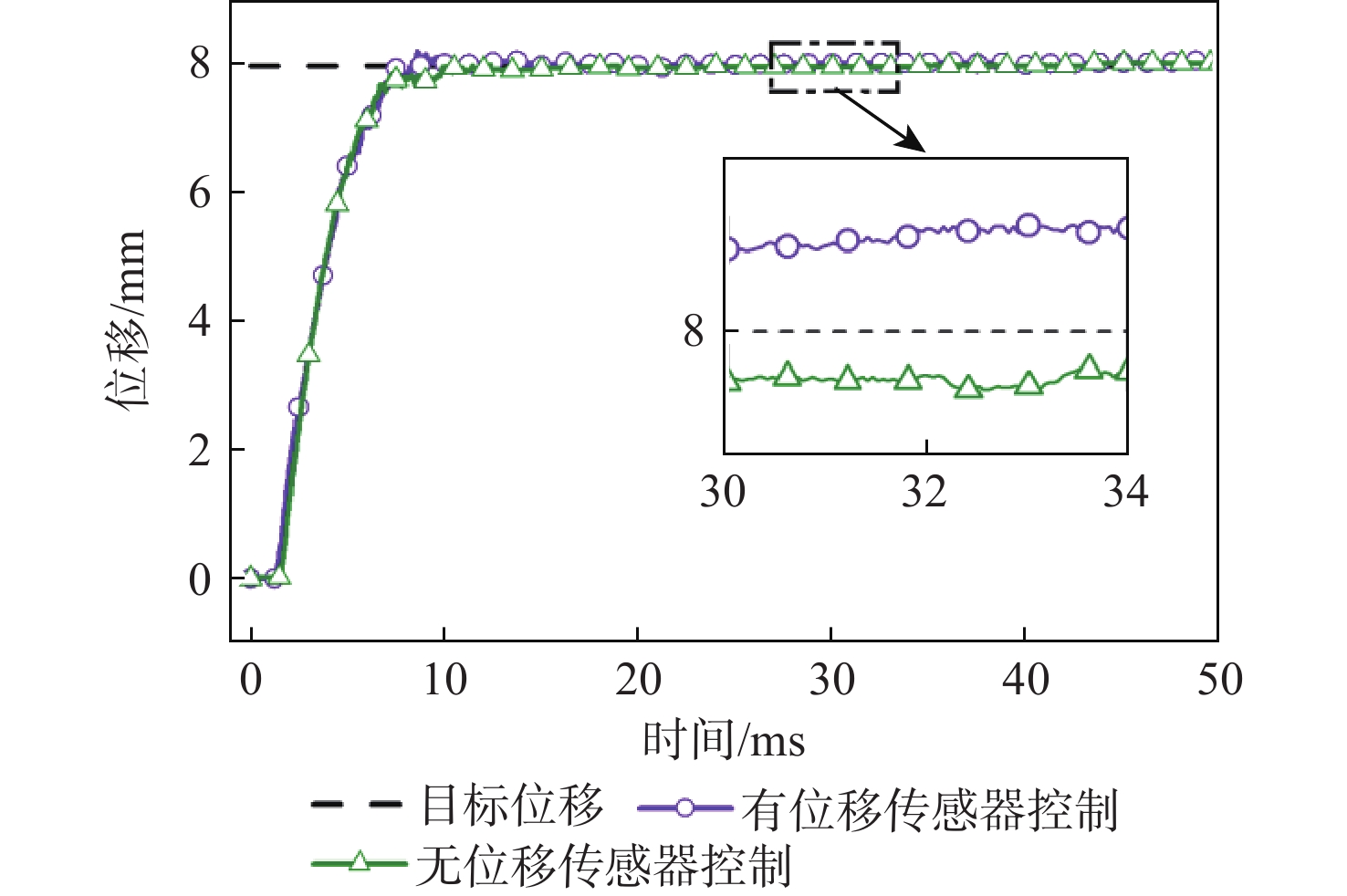
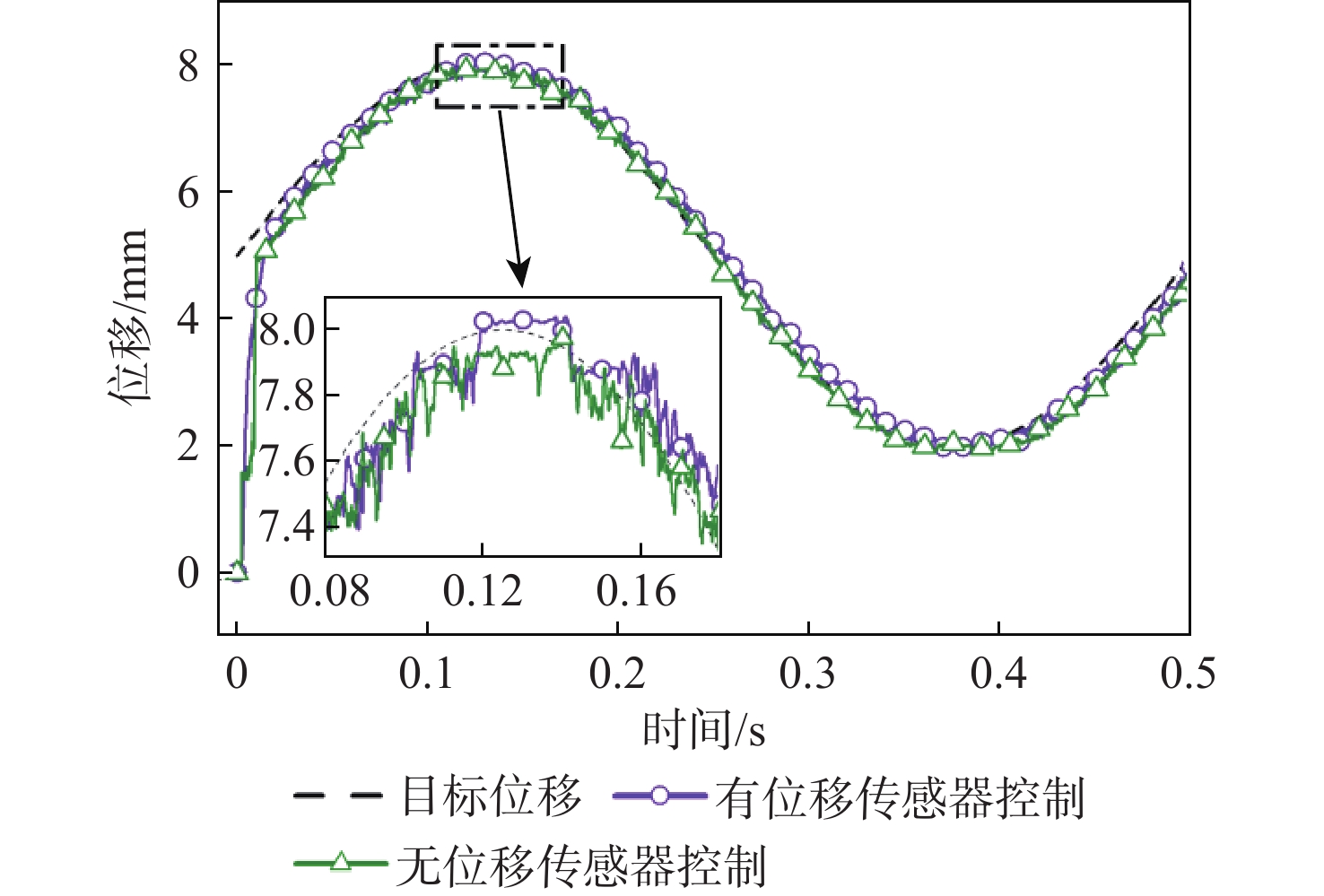
A displacement estimation technique based on BP neural networks is suggested to enhance the super-twisting sliding mode observer in order to address the installation challenges, cost rise, and stability reduction of electromagnetic linear actuators induced by the usage of displacement sensors. Combined with an adaptive integral robust control algorithm, the displacement sensorless control of the electromagnetic linear actuator is realized. A non-singular fast terminal sliding mode surface is designed with the continuous hyperbolic tangent function as the switching function in order to reduce the buffeting phenomenon and enhance the displacement estimation performance of the super-twisting sliding mode observer; in terms of the observer’s parameter adjustment, the BP neural network is designed to dynamically adjust the super-twisting sliding mode observer’s gain using the input of the mover speed. The motion control performance test platform of the electromagnetic linear actuator is established, and the displacement estimation and feedback control results are analyzed. The results show that the maximum displacement estimation error of the improved sliding mode observer is reduced by 16.22% under the step condition and 9.10% under the sine condition with the frequency of 2 Hz compared with the super-twisting sliding mode observer; the control performance of displacement sensorless control is equivalent to that of displacement sensor control. The steady state error of the two is 0.03 mm under the 8 mm step condition, and the maximum error is 0.43 mm under the sinusoidal condition with the frequency of 2 Hz. This proves the effectiveness and practicability of the displacement sensorless control of the electromagnetic linear actuator based on an improved super-twisting sliding mode observer.

Marine predator algorithm incorporating hybrid search operators and competitive learning and applications
XU Zhonghui, RAO Zhenyuan, MA Yanli, TANG Zejing, HUANG Xiaodong
2026, 52(6): 1810-1826. doi: 10.13700/j.bh.1001-5965.2024.0243
Abstract:

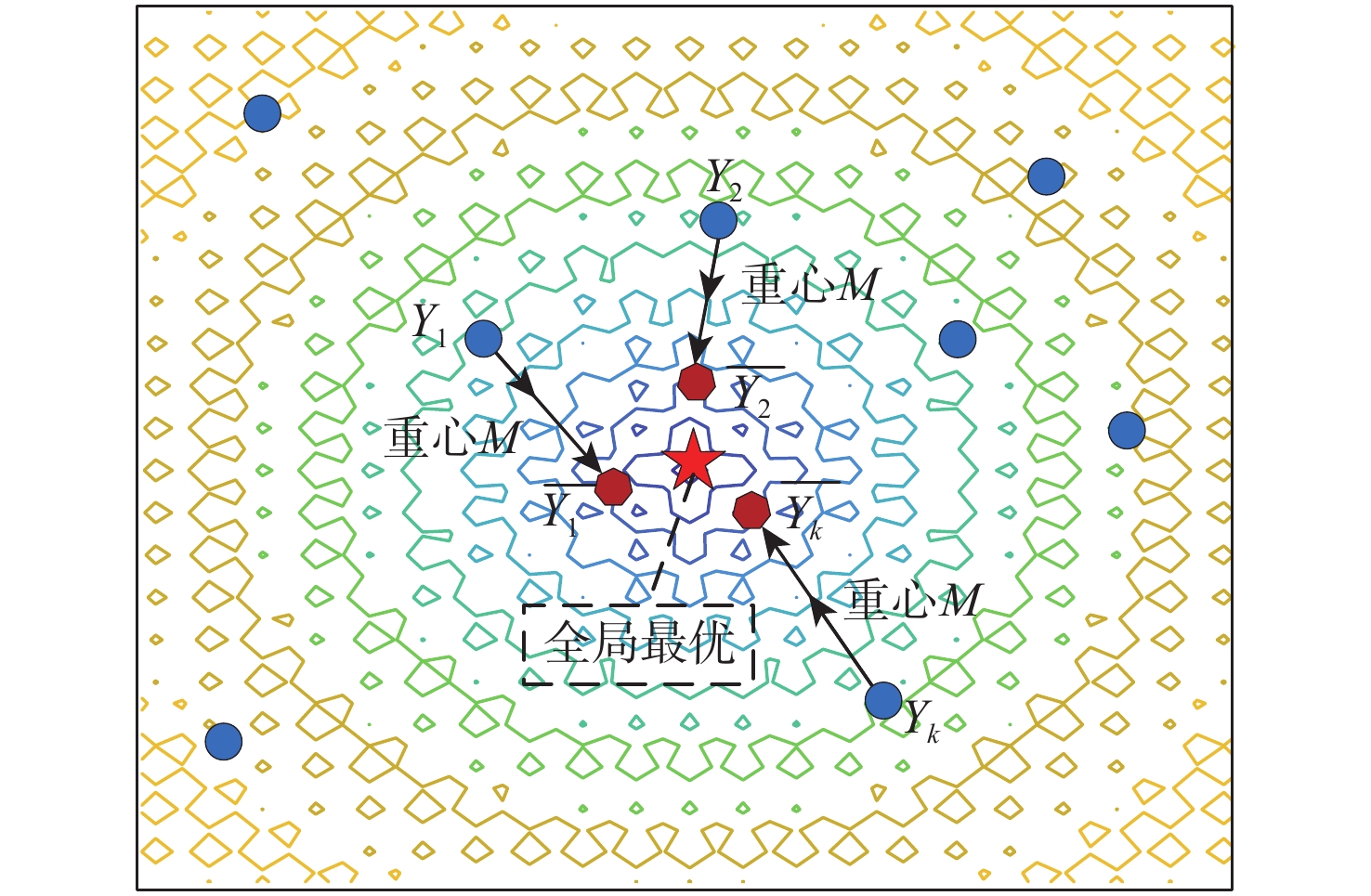
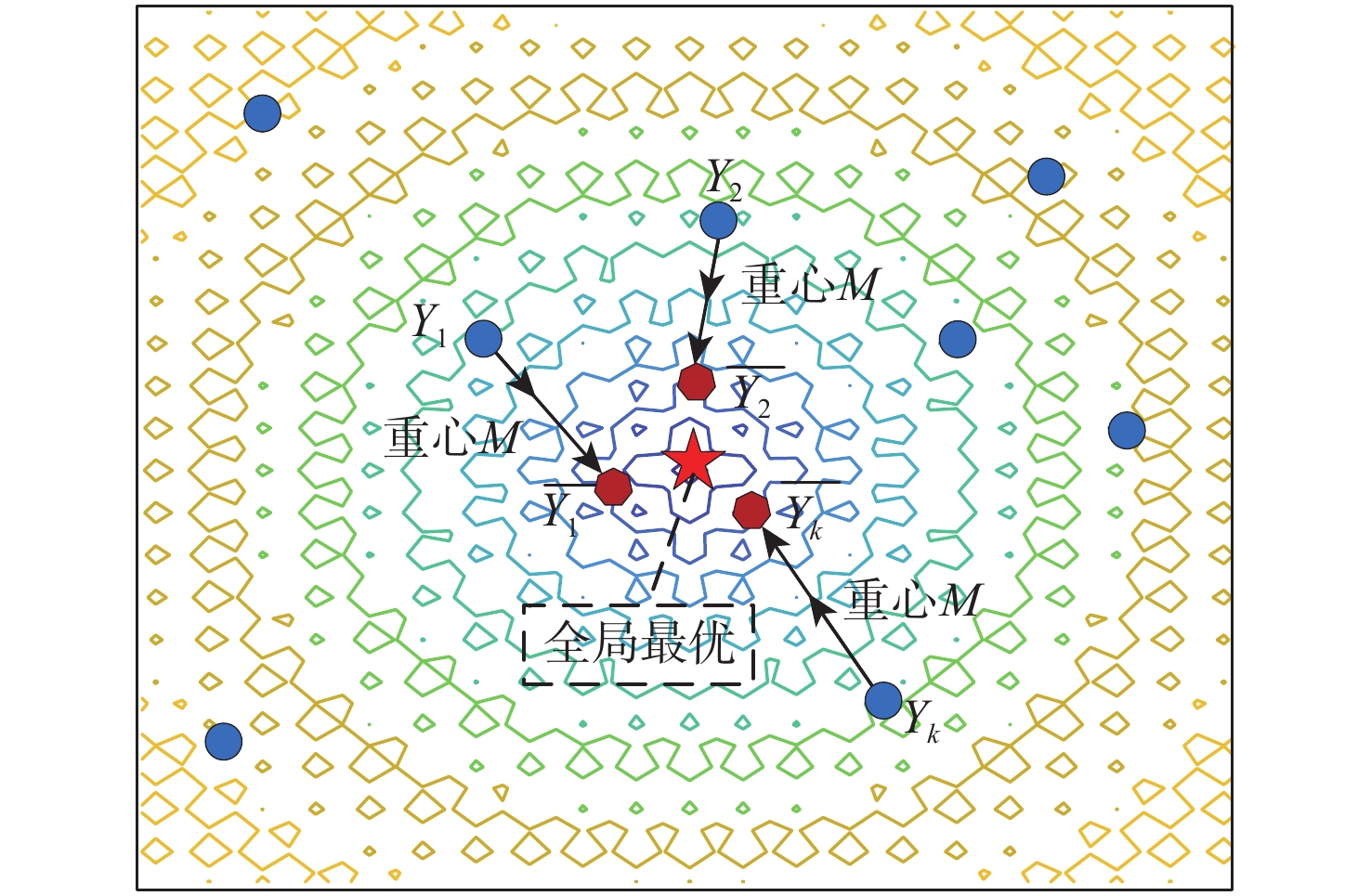
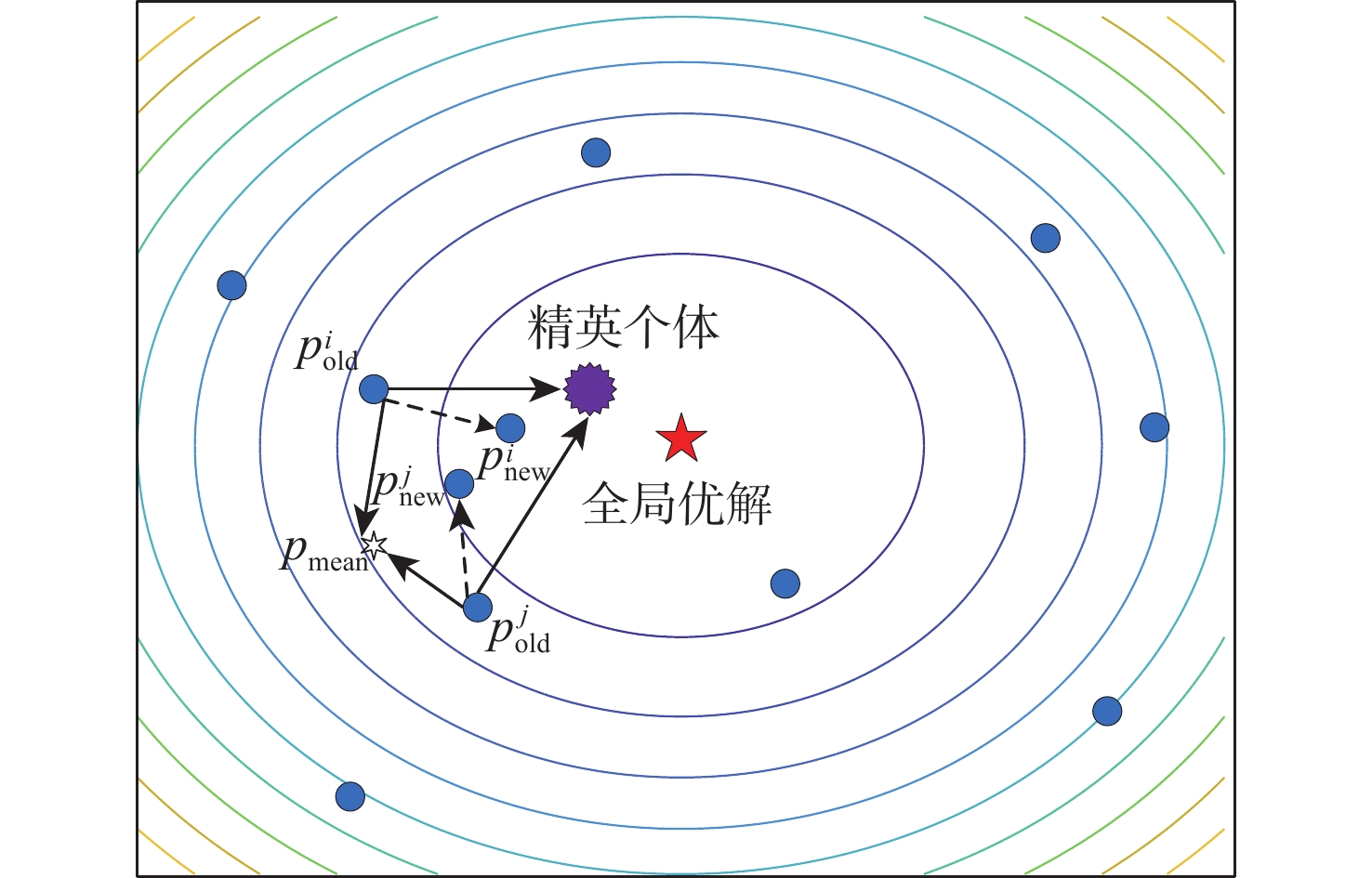
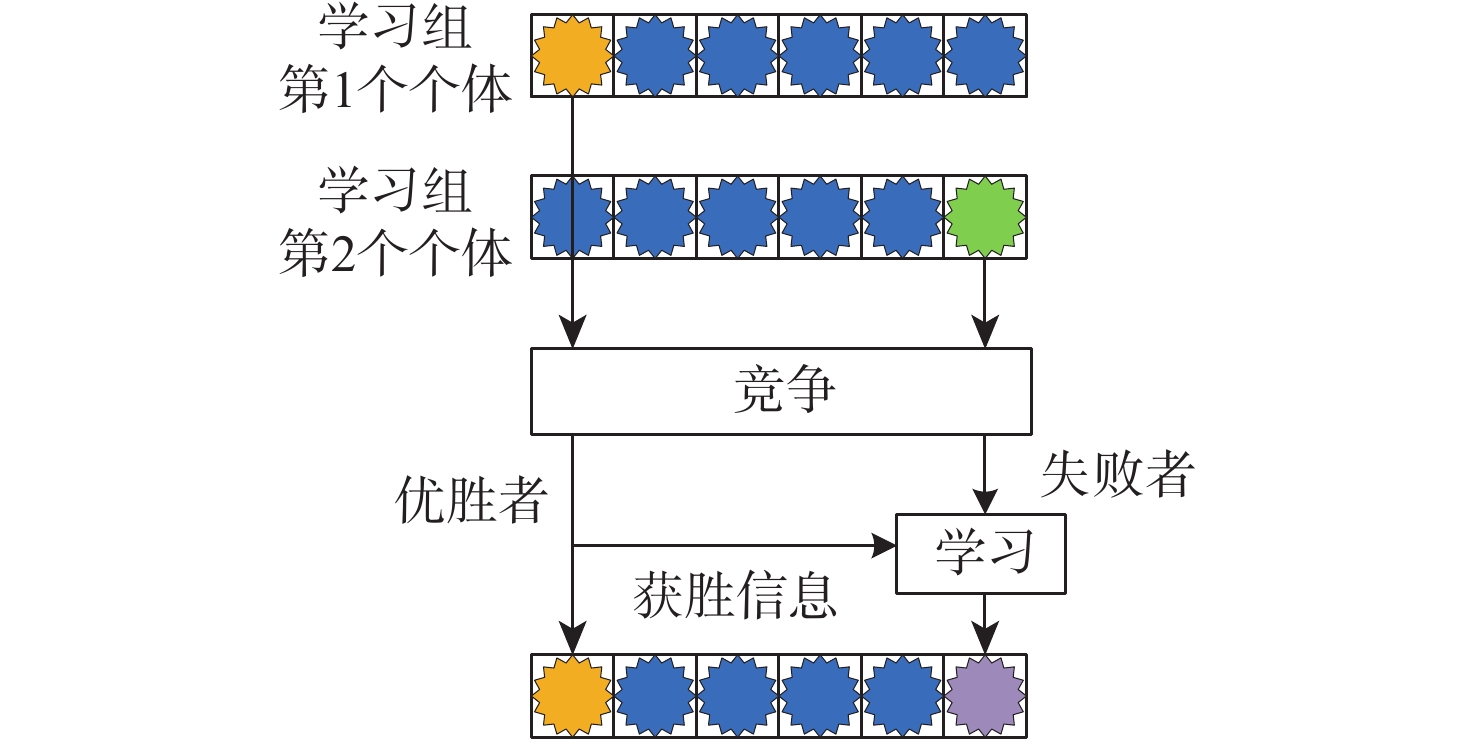
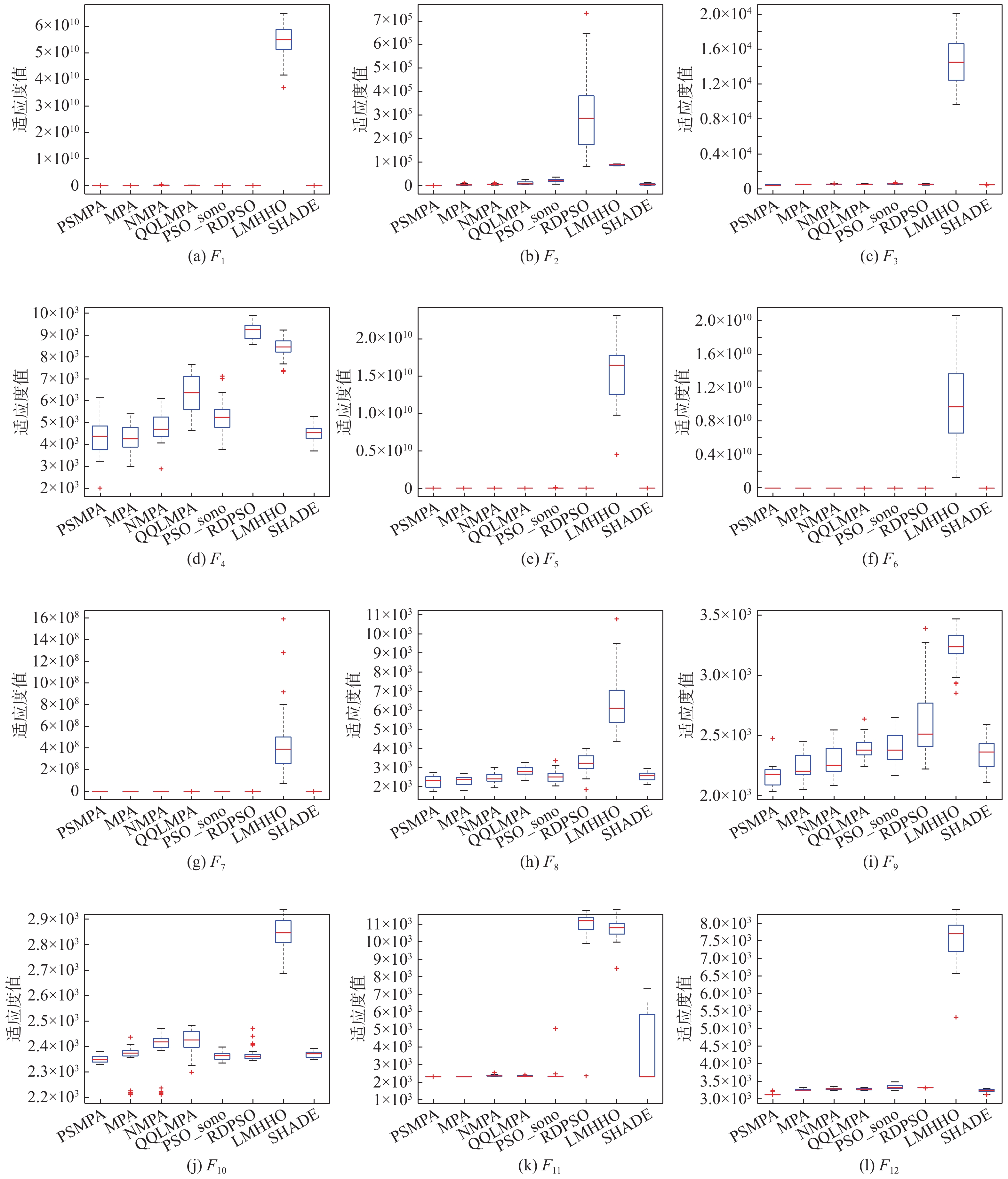
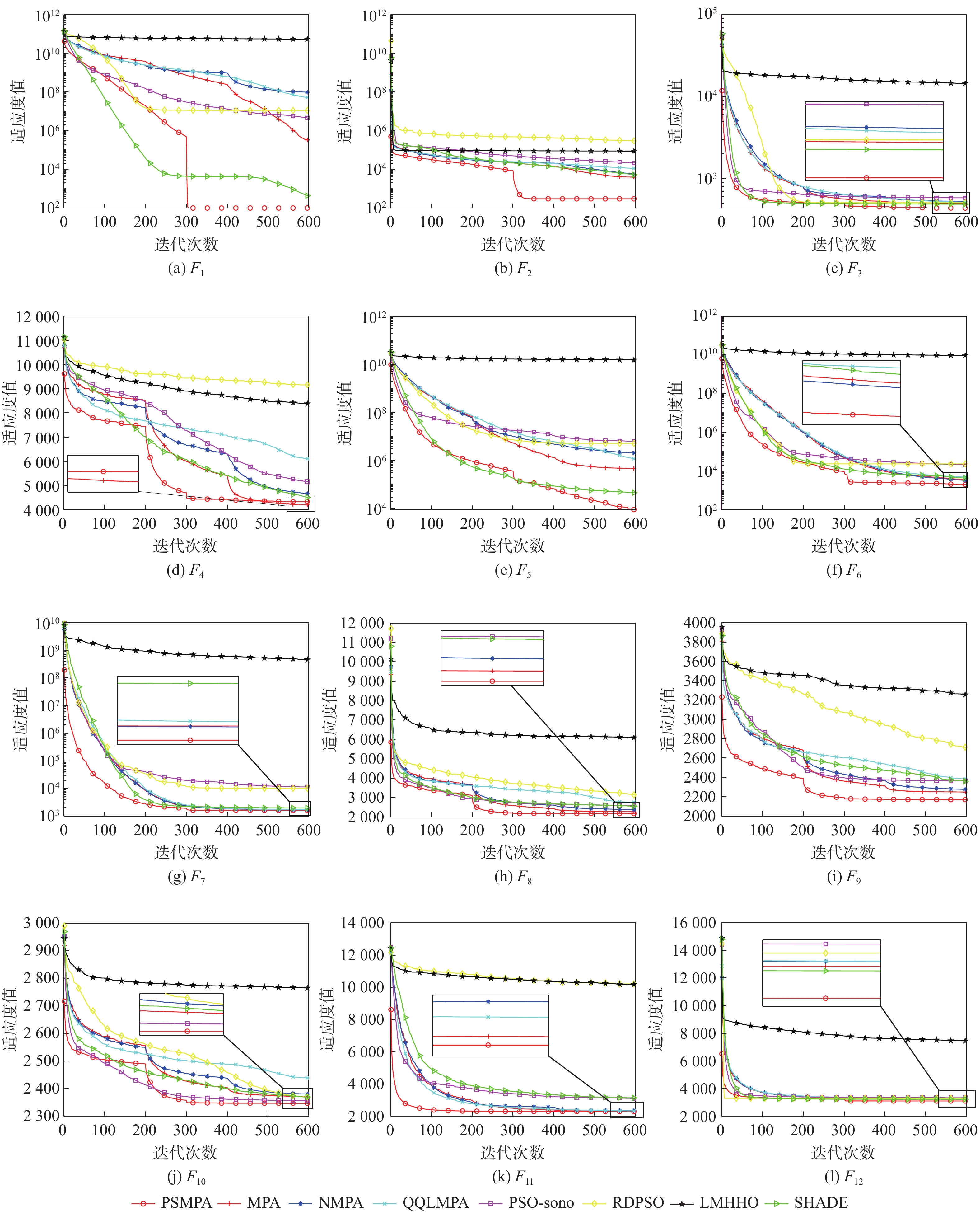
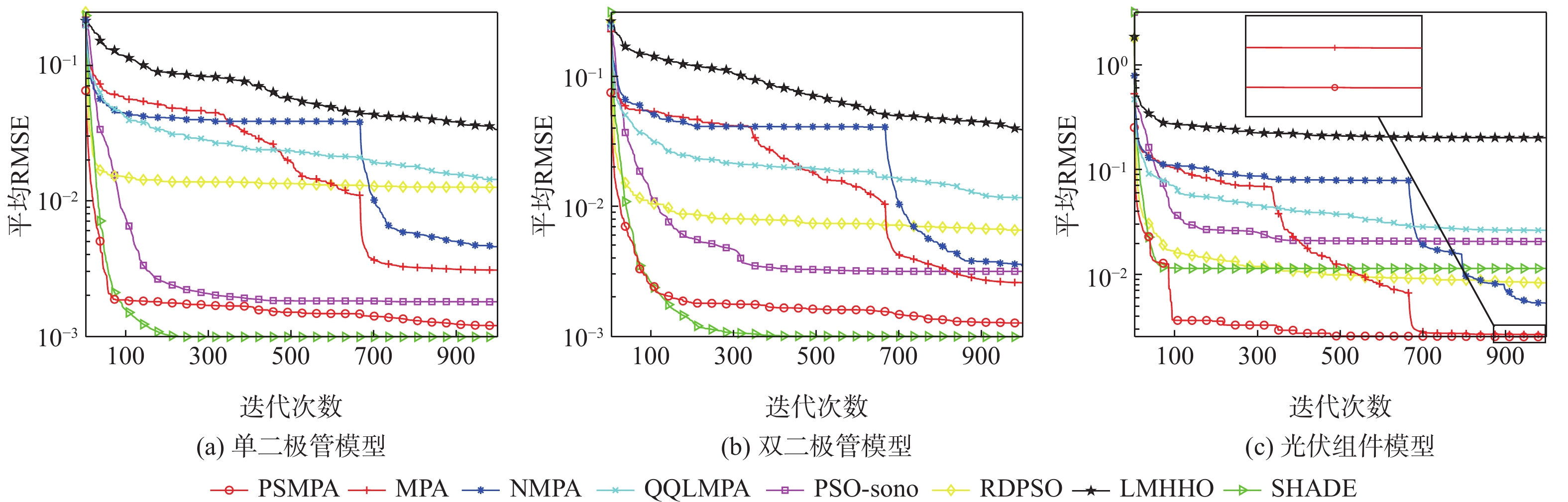
The predator search marine predators algorithm PSMPA is a new algorithm that incorporates hybrid search operators and competitive learning to address the problems of population diversity loss, low solution precision, and difficulty escaping local optima in the later iterations of the classic marine predator algorithm (MPA). The introduction of a stochastic dynamic centroid opposition-based learning mechanism enhances population diversity in the later stages of the algorithm, expands the search space, and improves the algorithm’s ability to escape local optima and accelerate convergence. By combining random search and pattern search as hybrid search operators, the algorithm’s local search capability is enhanced. The average population fitness is increased when predators engage in competitive learning behavior, which effectively promotes rapid convergence and greatly enhances solution quality. Simulations using 12 CEC2017 benchmark functions demonstrate that PSMPA achieves substantial improvements in optimization performance, convergence speed, and stability. Furthermore, its application in optimizing parameters for solar photovoltaic models further validates PSMPA’s practical value and effectiveness in solving real-world engineering optimization problems.

A fault propagation path identification method for A320 air conditioning system based on improved Bayesian network
CHEN Jiusheng, YU Zhuoyang, GUO Runxia, WU Jun
2026, 52(6): 1827-1838. doi: 10.13700/j.bh.1001-5965.2024.0224
Abstract:

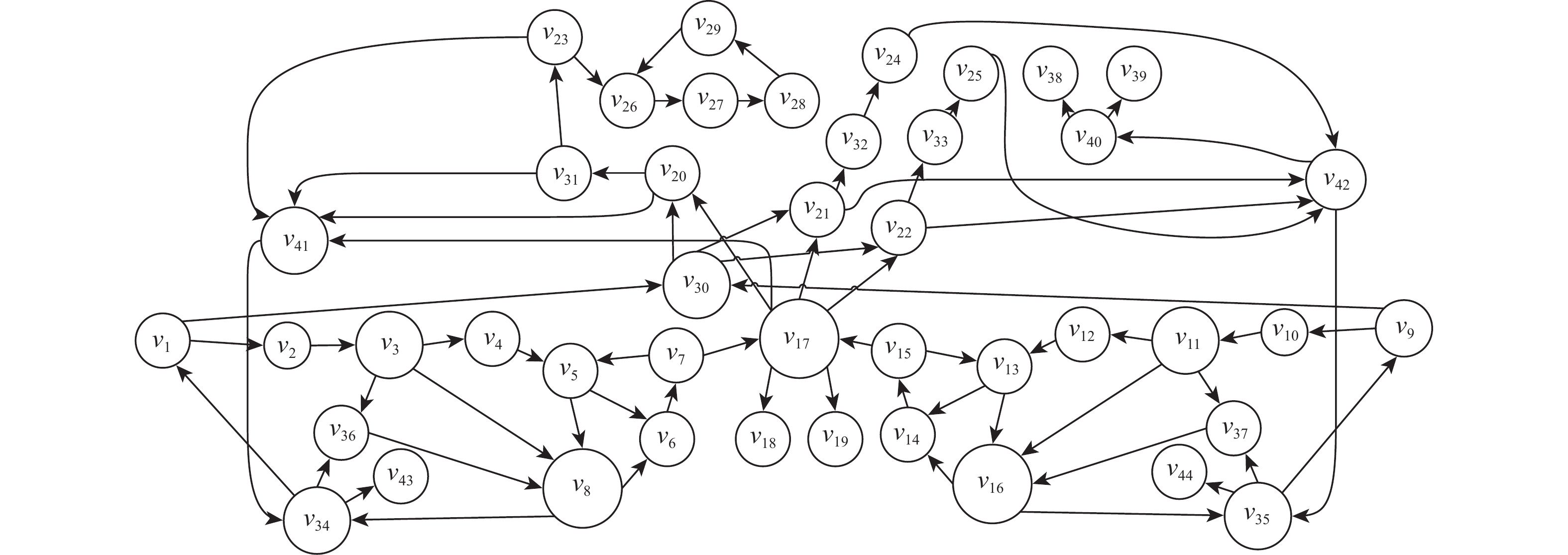
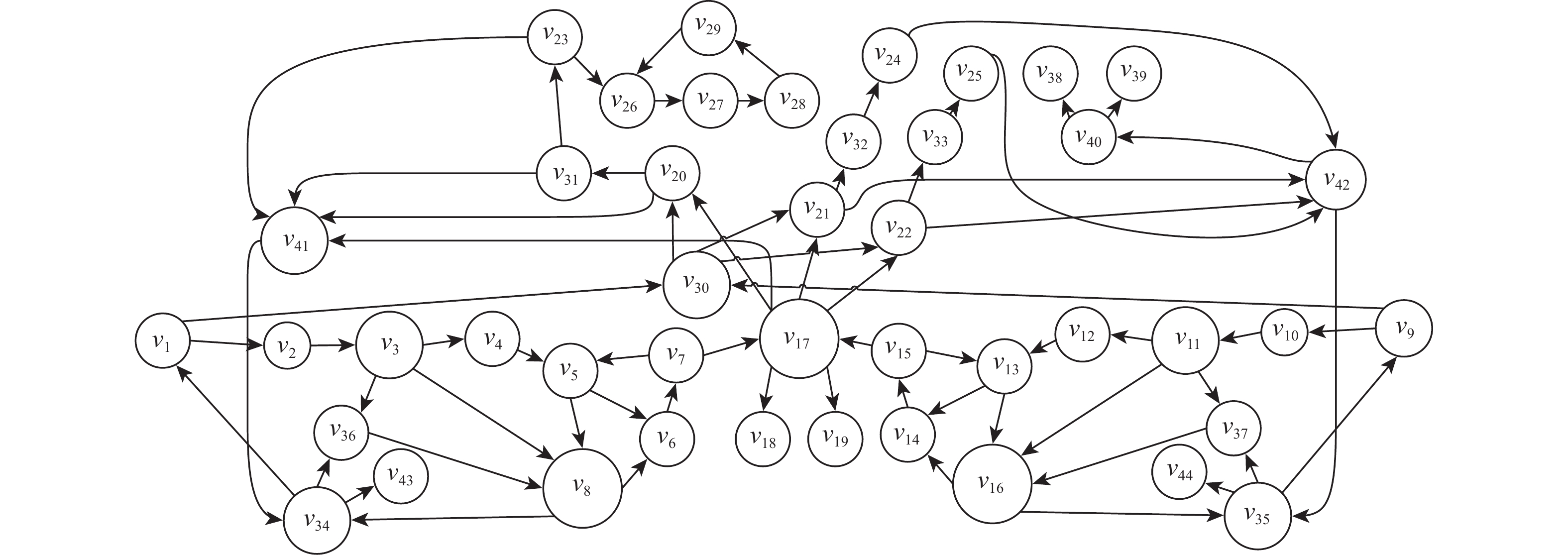
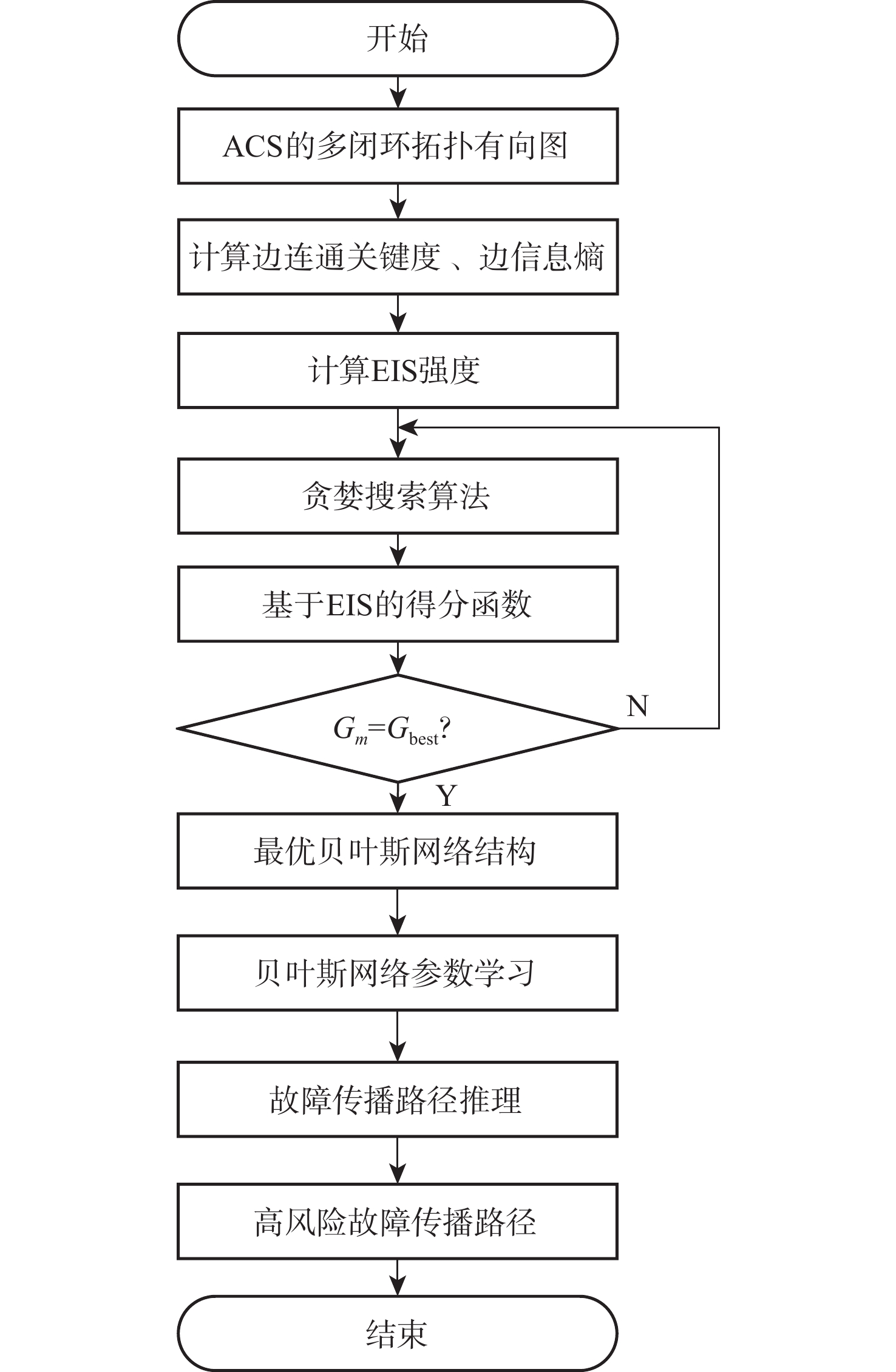
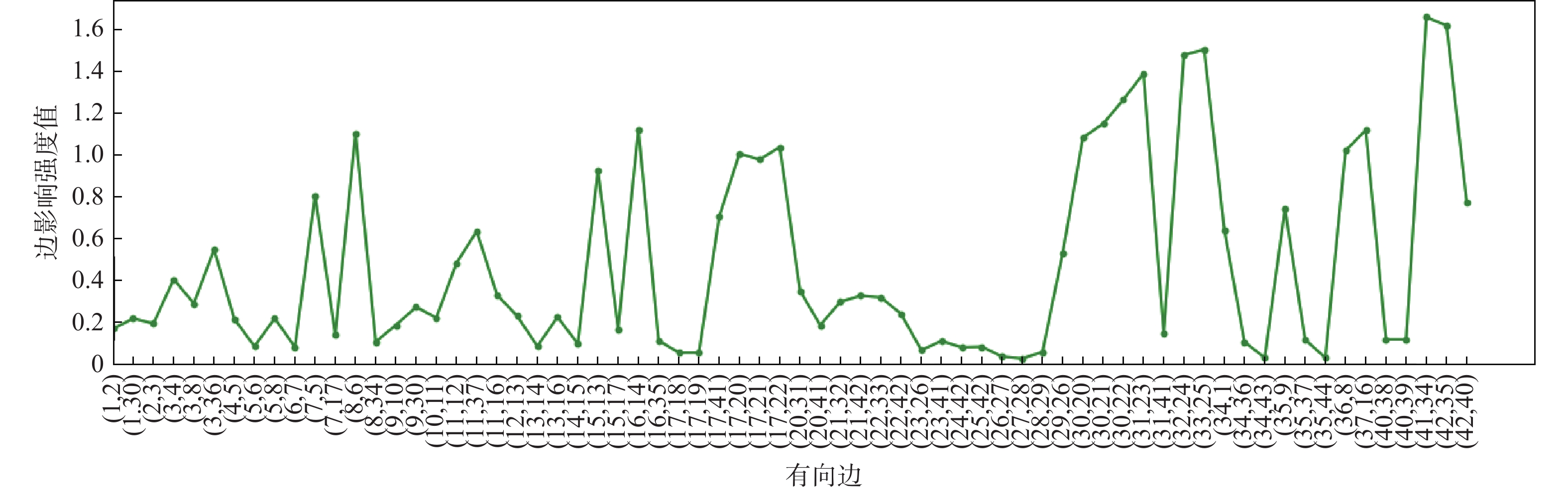
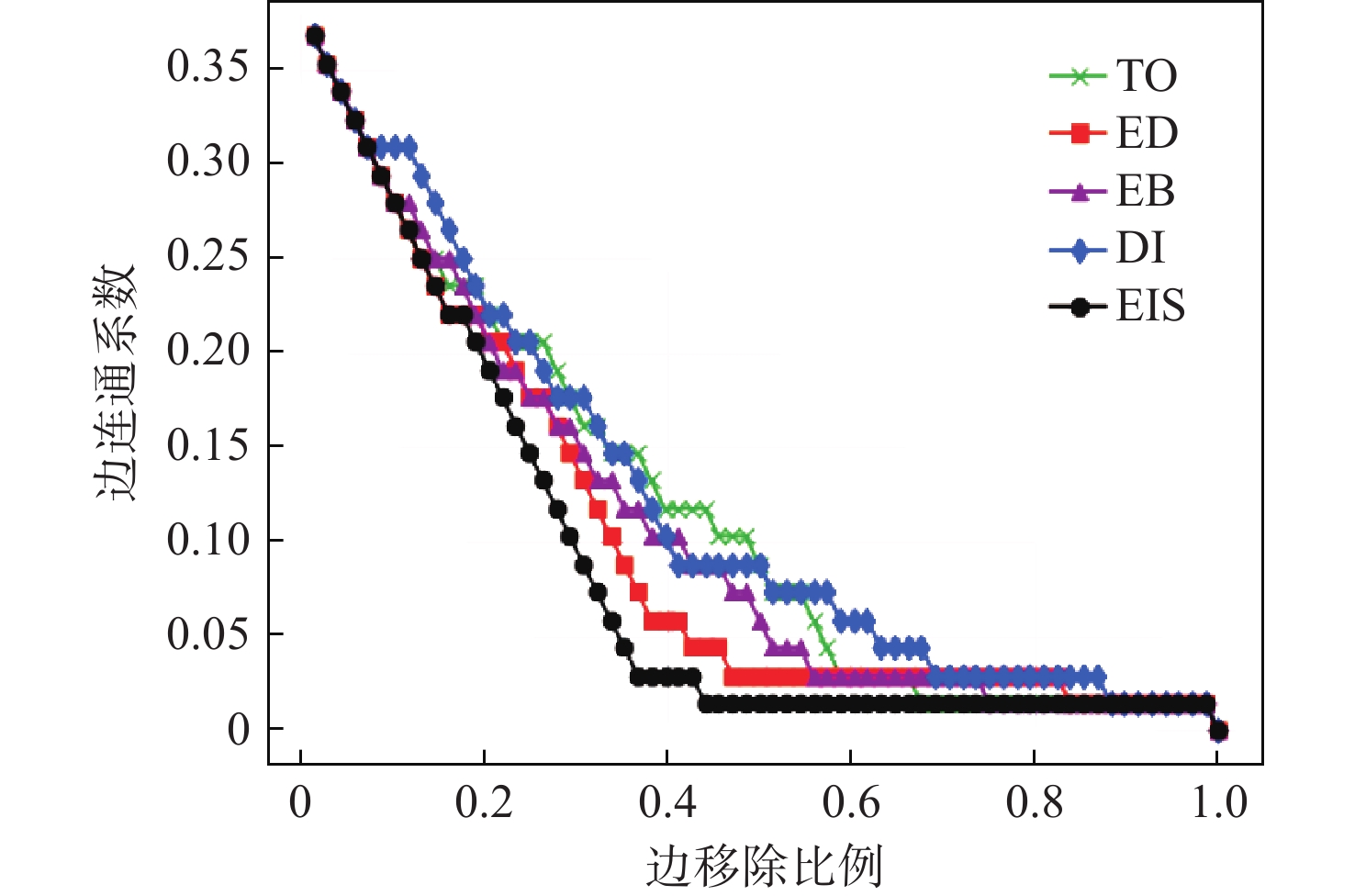
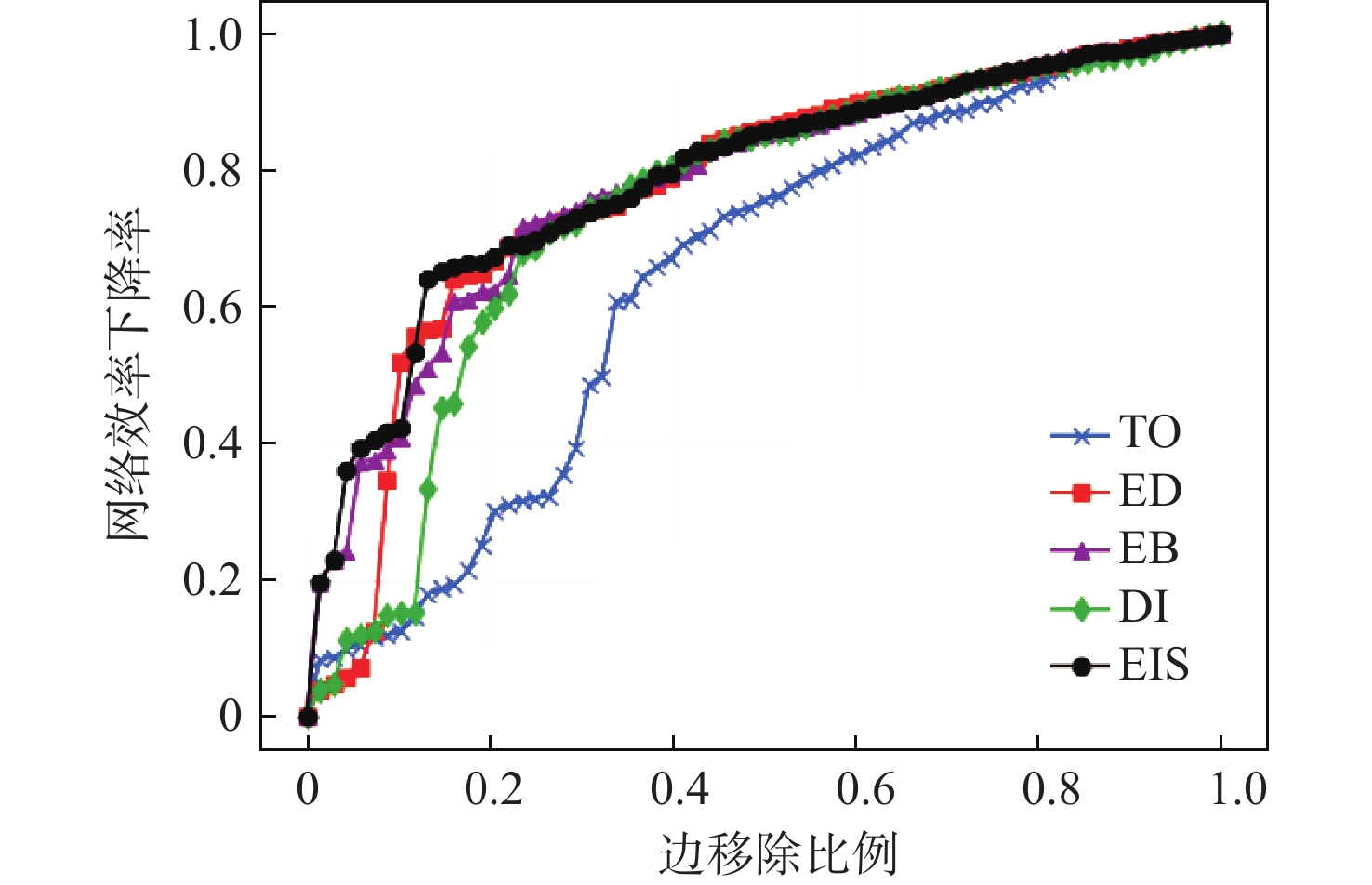
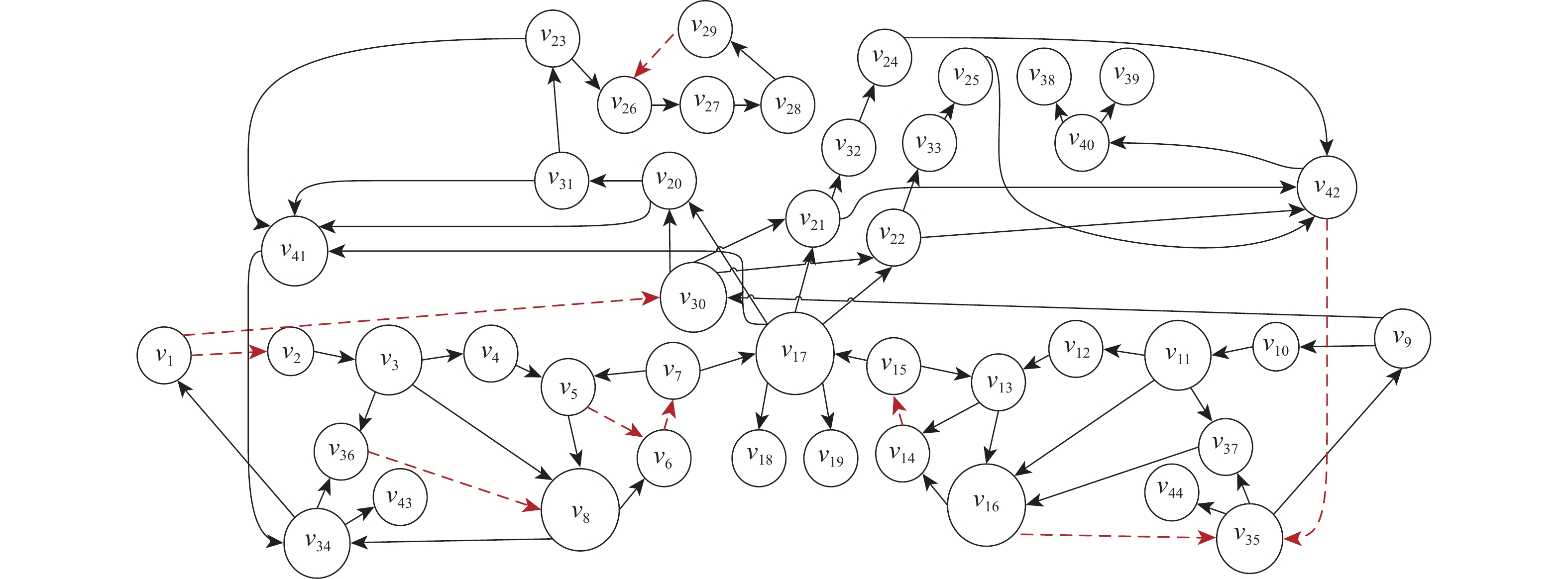
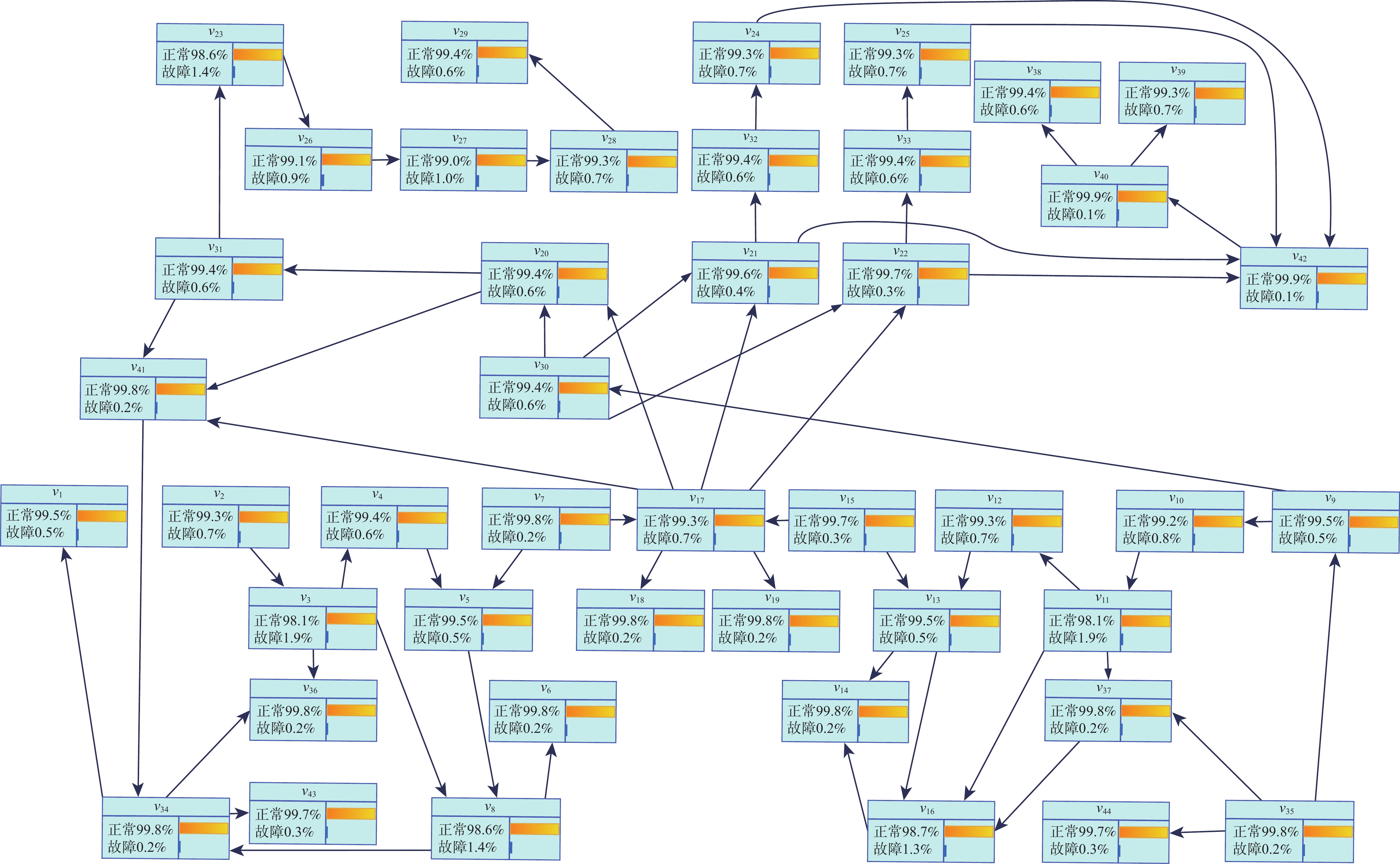
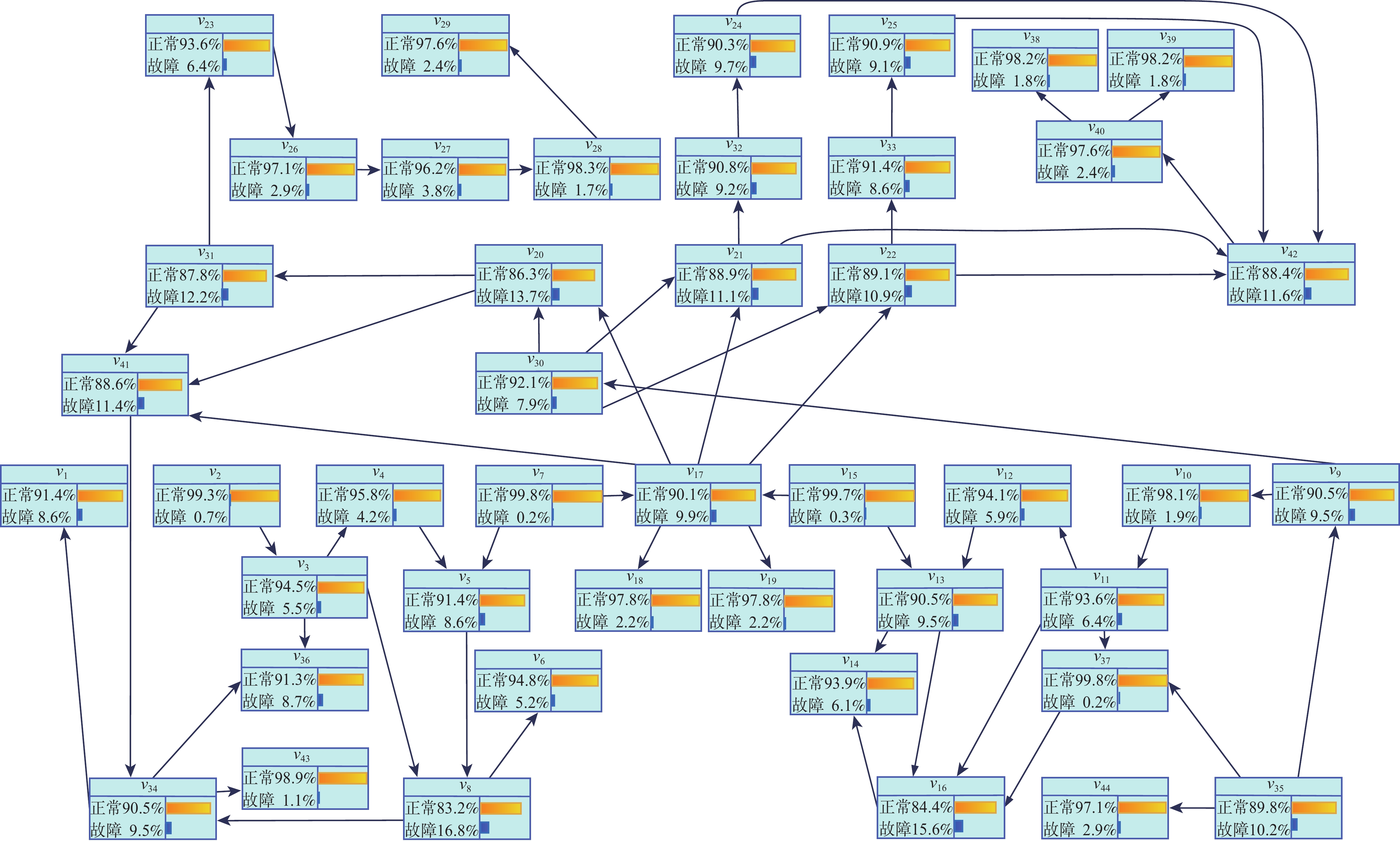
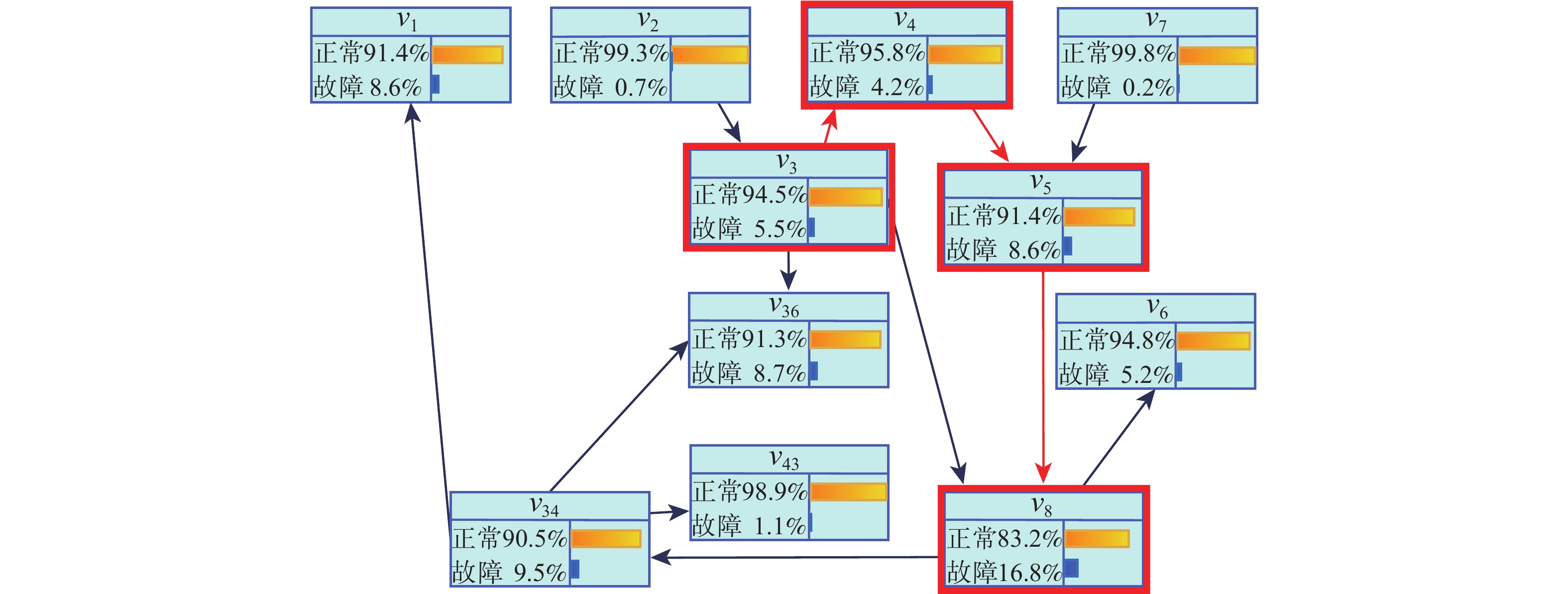
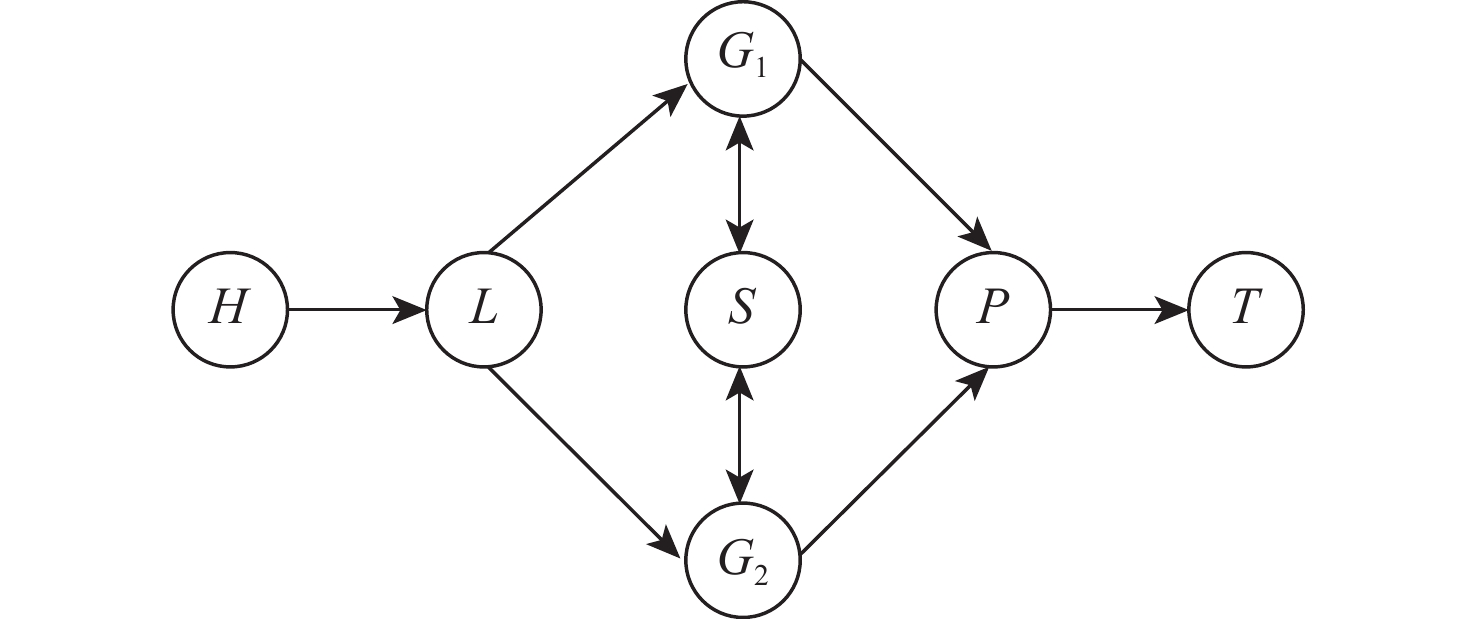
The air conditioning system of airplanes is one of the critical airplane-mounted systems used to control the internal environments. It is highly complex in structure, having multiple closed loops and much redundancy, which causes the faults to spread among its components. The Bayesian network can be used to deduce the fault transmission path of open-looped systems, but it is unfit for close-looped structures. In order to address this issue, an enhanced model based on the Bayesian network for determining the fault transmission path of the air conditioning system in A320 aircraft in a particular structure is presented in this research. Firstly, the functional behavior and physical structure of this air conditioning system are analyzed. By using the complex network theory, a topologically directed graph of this system is constructed. Additionally, in order to quantify the relevance of sides, the intensity of side influence is established based on the network structure and message transit, which increases the measurement’s accuracy.Then, through the loop-opening strategy based on the intensity of side influence, a close-looped structure is changed into an open-looped structure. In this way, the optimal Bayesian fault transmission network structure is obtained to precisely identify the path of fault transmission in a close-looped structure. Finally, a case study is conducted on the A320 air conditioning system to validate the proposed model.

NOMA-based joint optimization of trajectory and resources for UAV-enable integrated sensing and communication system
TANG Jingmin, HU Cheng, SONG Yaolian, YU Guicai
2026, 52(6): 1839-1849. doi: 10.13700/j.bh.1001-5965.2024.0275
Abstract:

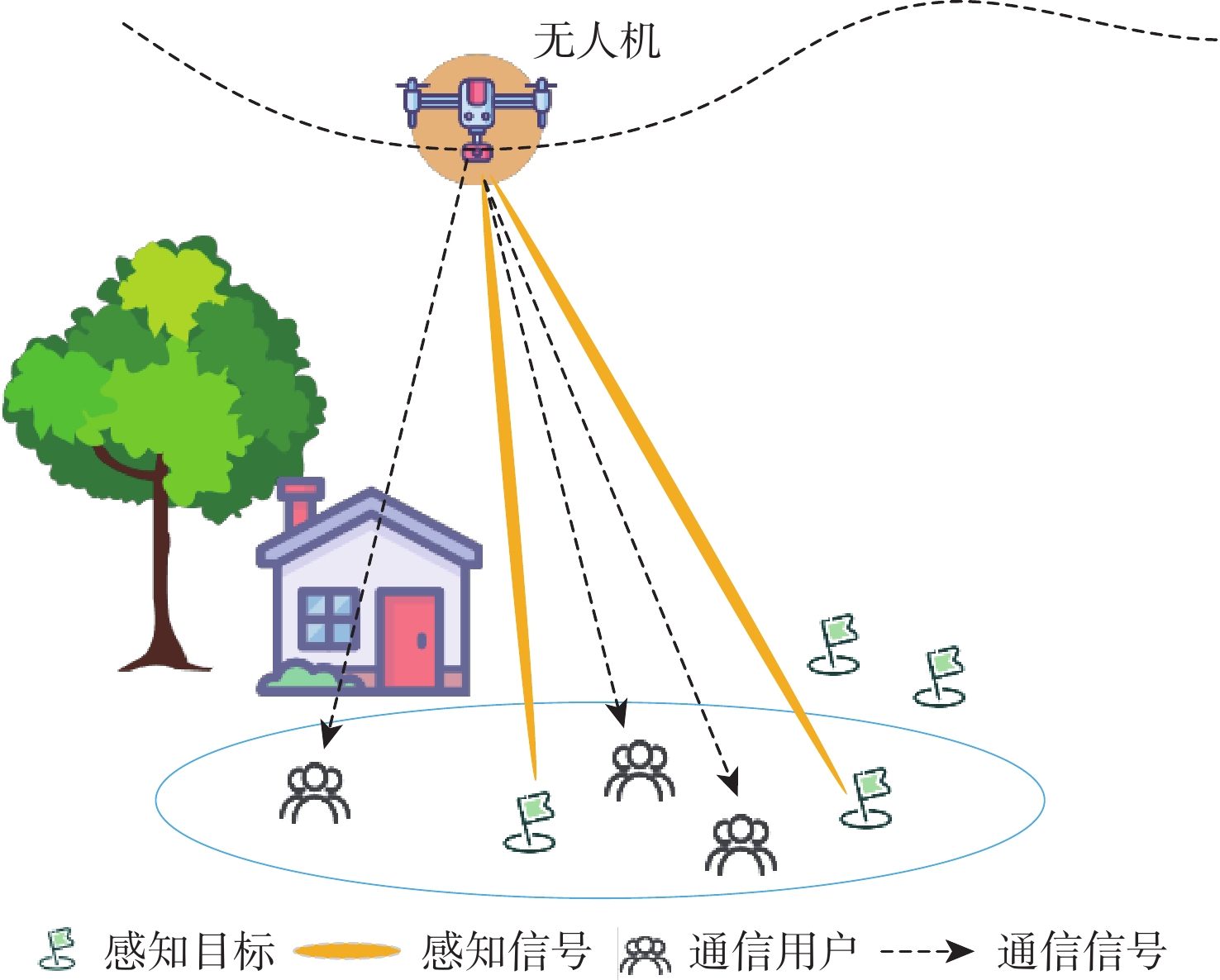
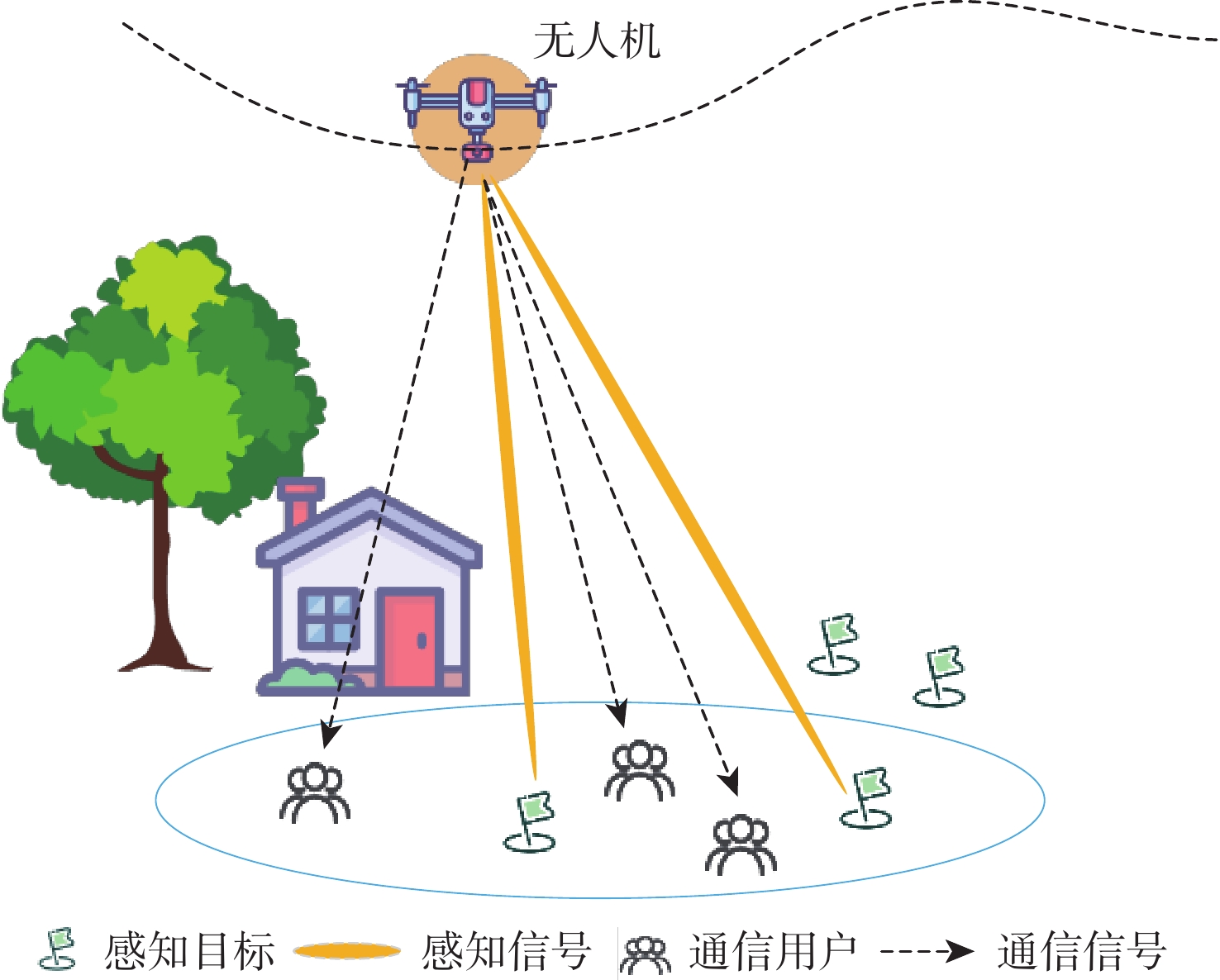
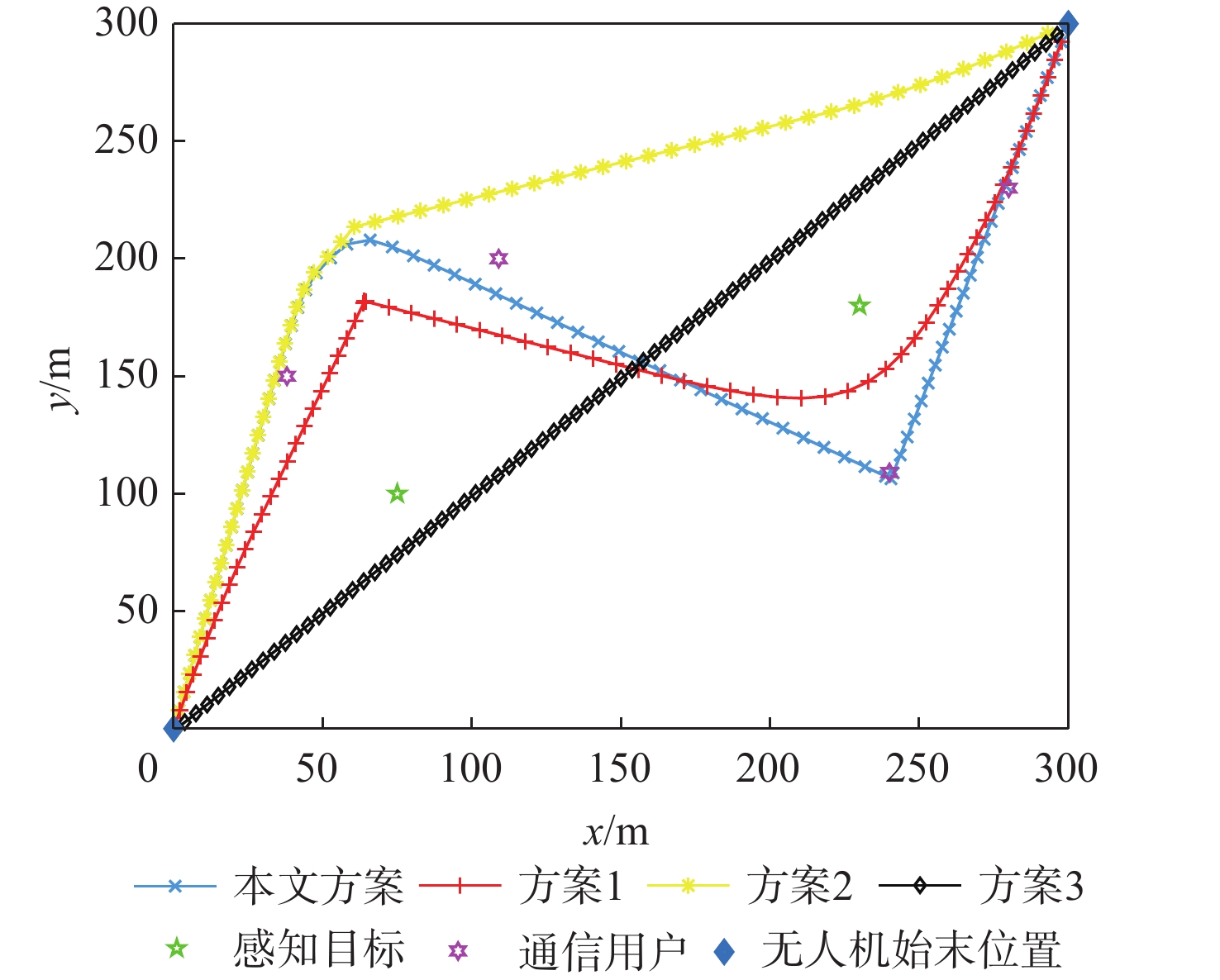
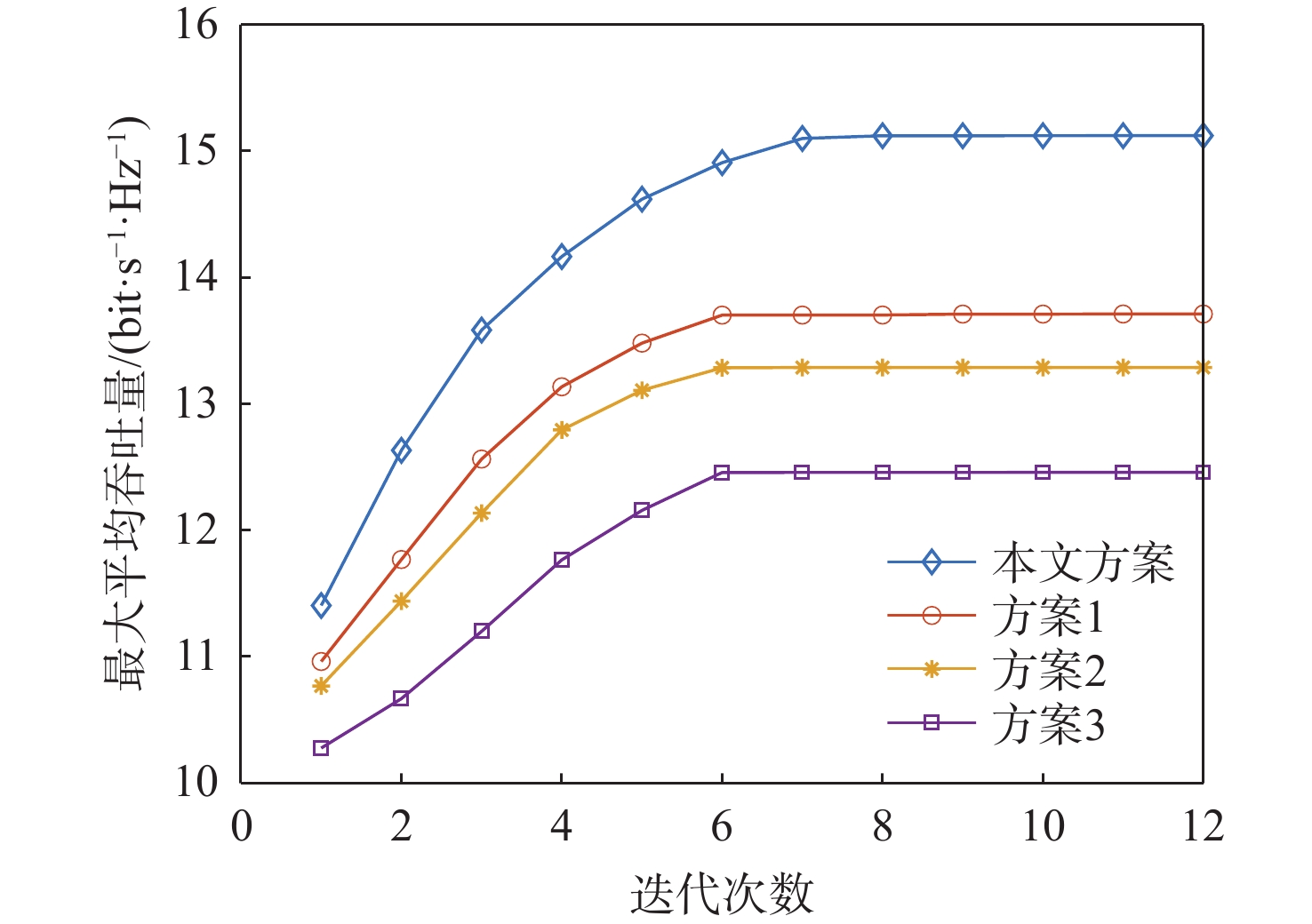
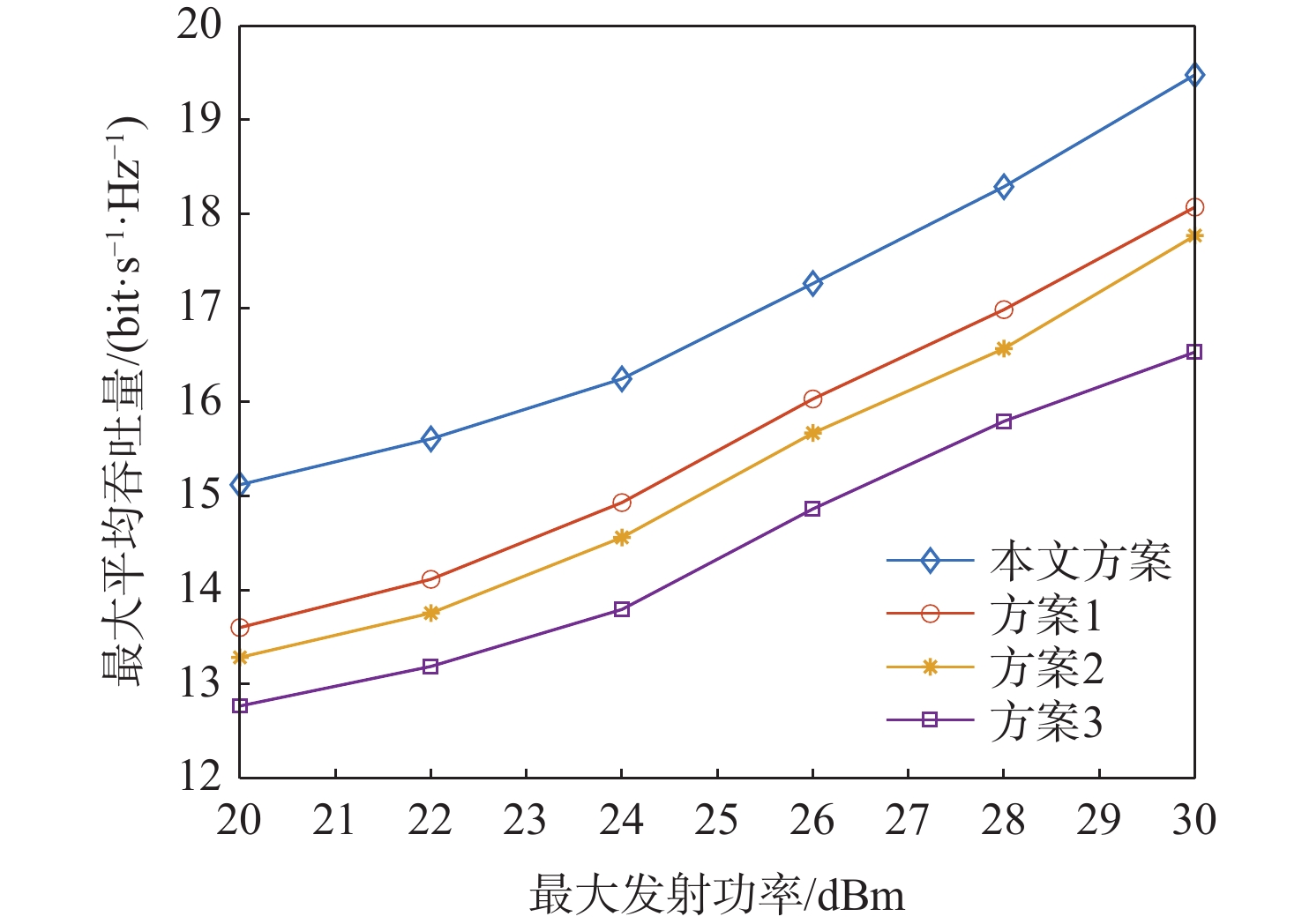
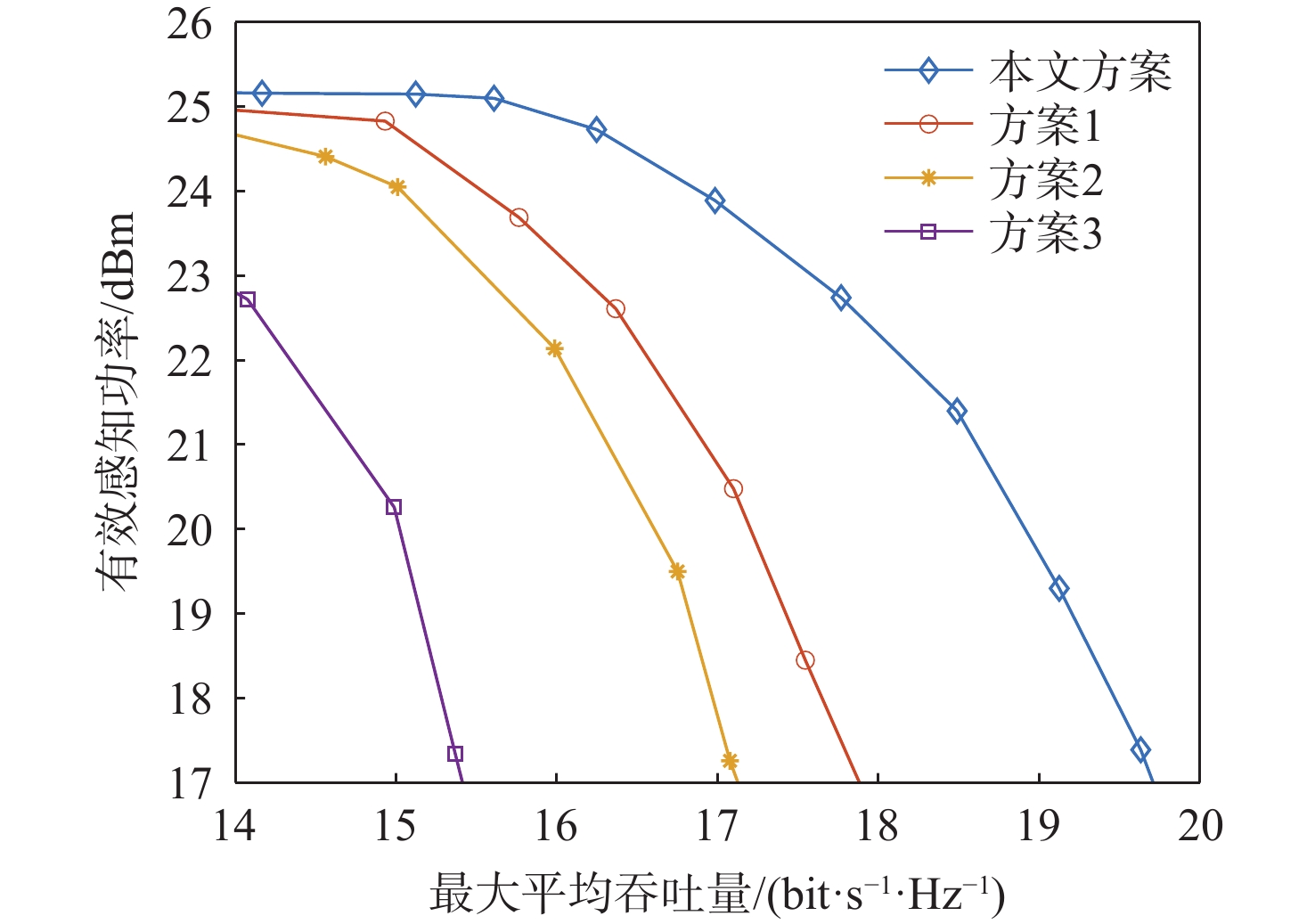
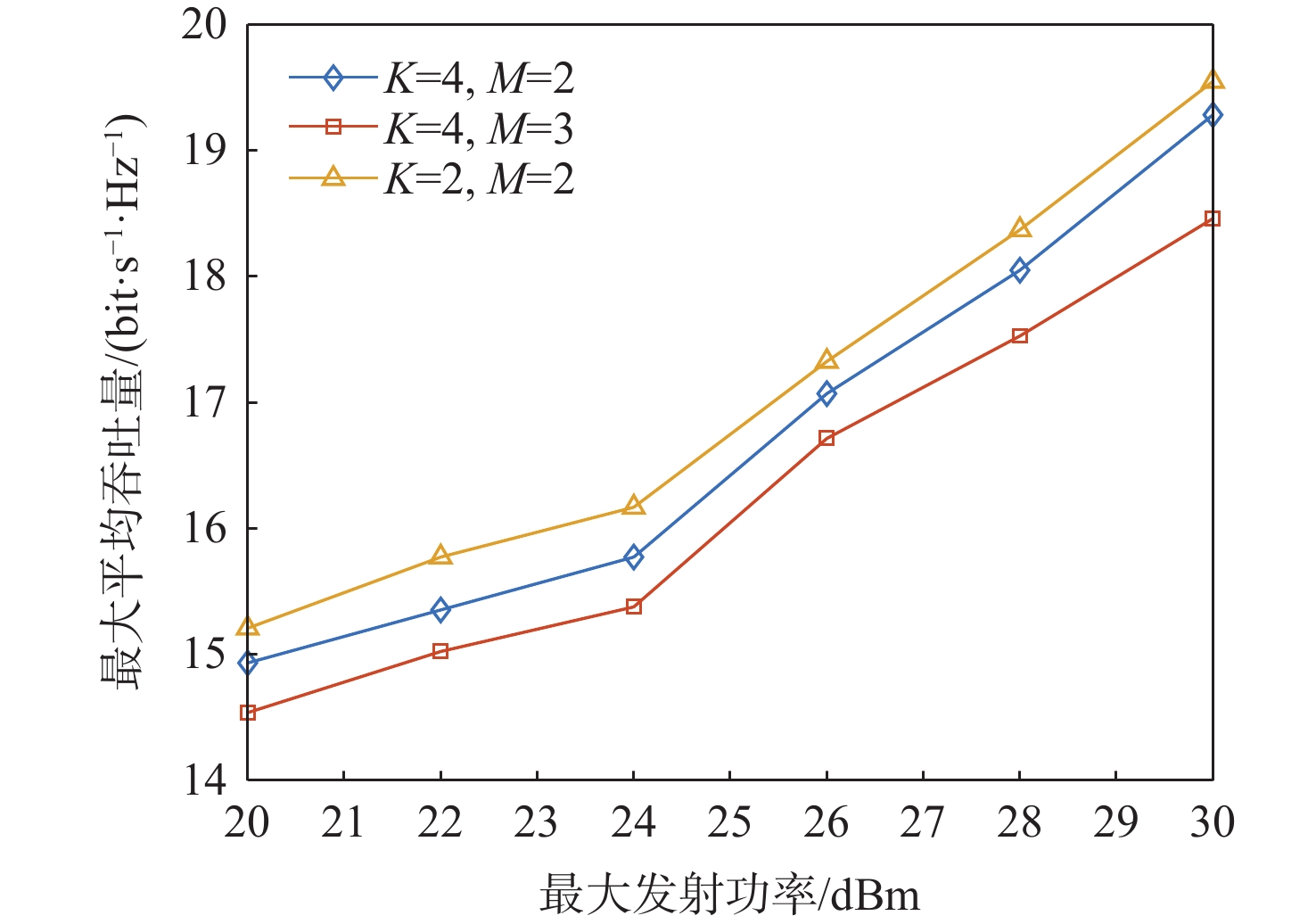
This study examines the difficulties of target selection, beamforming, and the combined optimization of UAV trajectory and speed inside the integrated sensing and communication (ISAC) architecture in order to address the shortage of wireless spectrum resources and the interference among multi-user signals. By leveraging non-orthogonal multiple access (NOMA) technology, the overall system throughput is enhanced. Given the non-convex nature of the problem, this research employs the block coordinate descent (BCD) method to decompose the intricate problem into three manageable subproblems. Utilizing relaxation variables, first-order Taylor approximation, and successive convex approximation (SCA), the method reduces computational complexity and improves efficiency. Alternating iterations of these subproblems yield an approximately optimal solution to the original problem. The suggested algorithm's effectiveness is confirmed by simulation results, which show how it may greatly increase maximum average throughput and exhibit strong convergence.

Fault diagnosis method for hydraulic robots based on digital twin and Transformer-LSTM-XGBoost
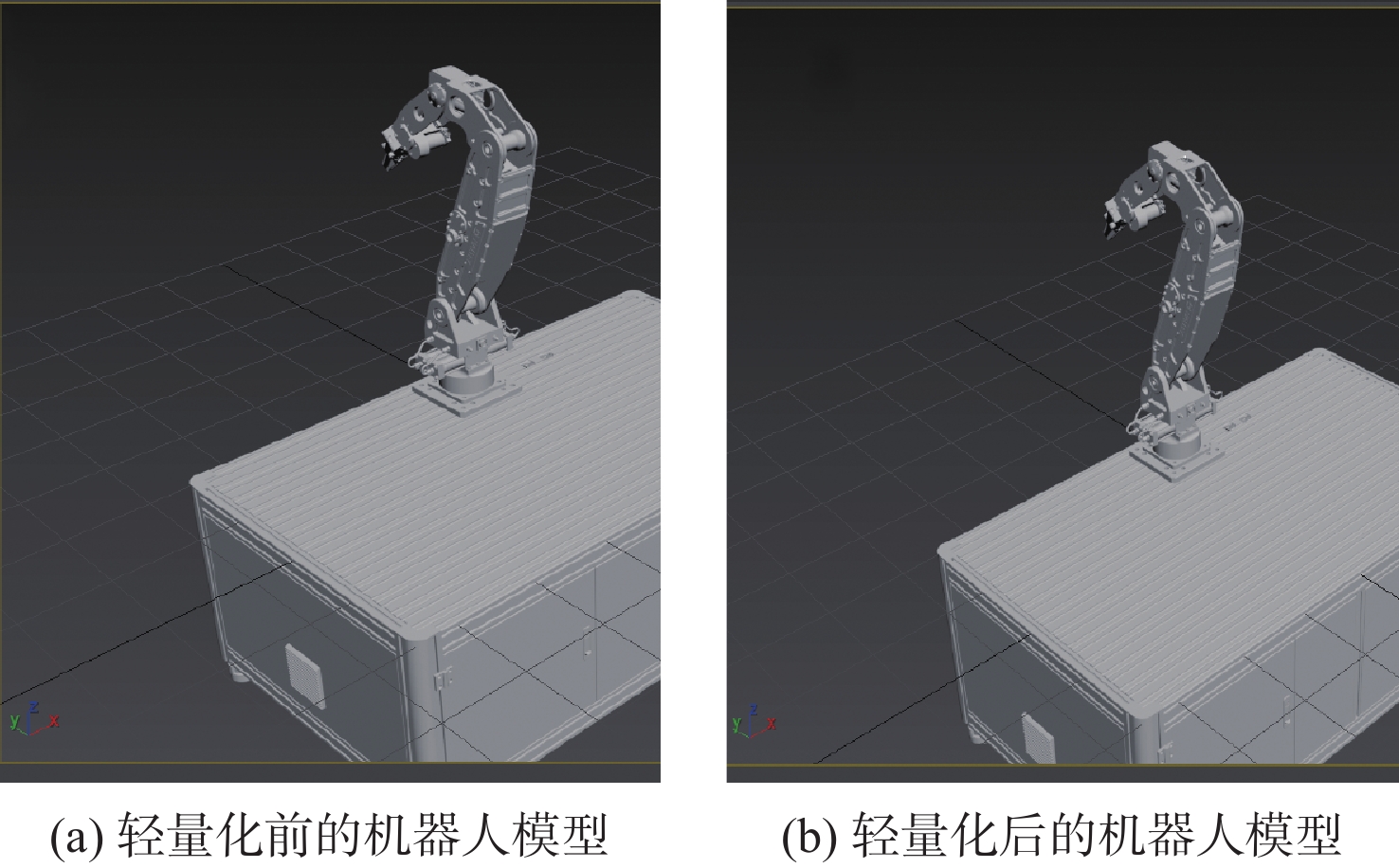
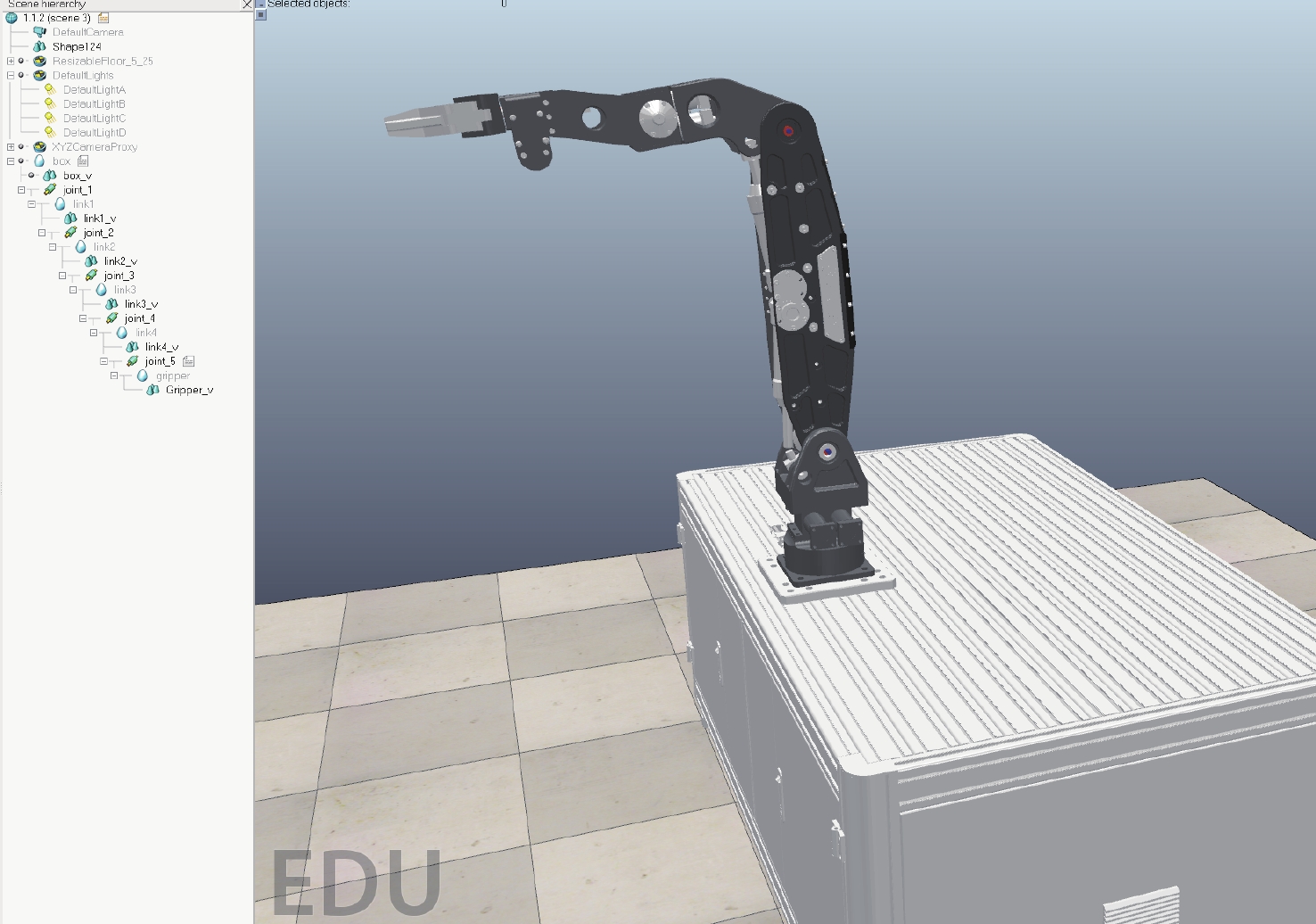
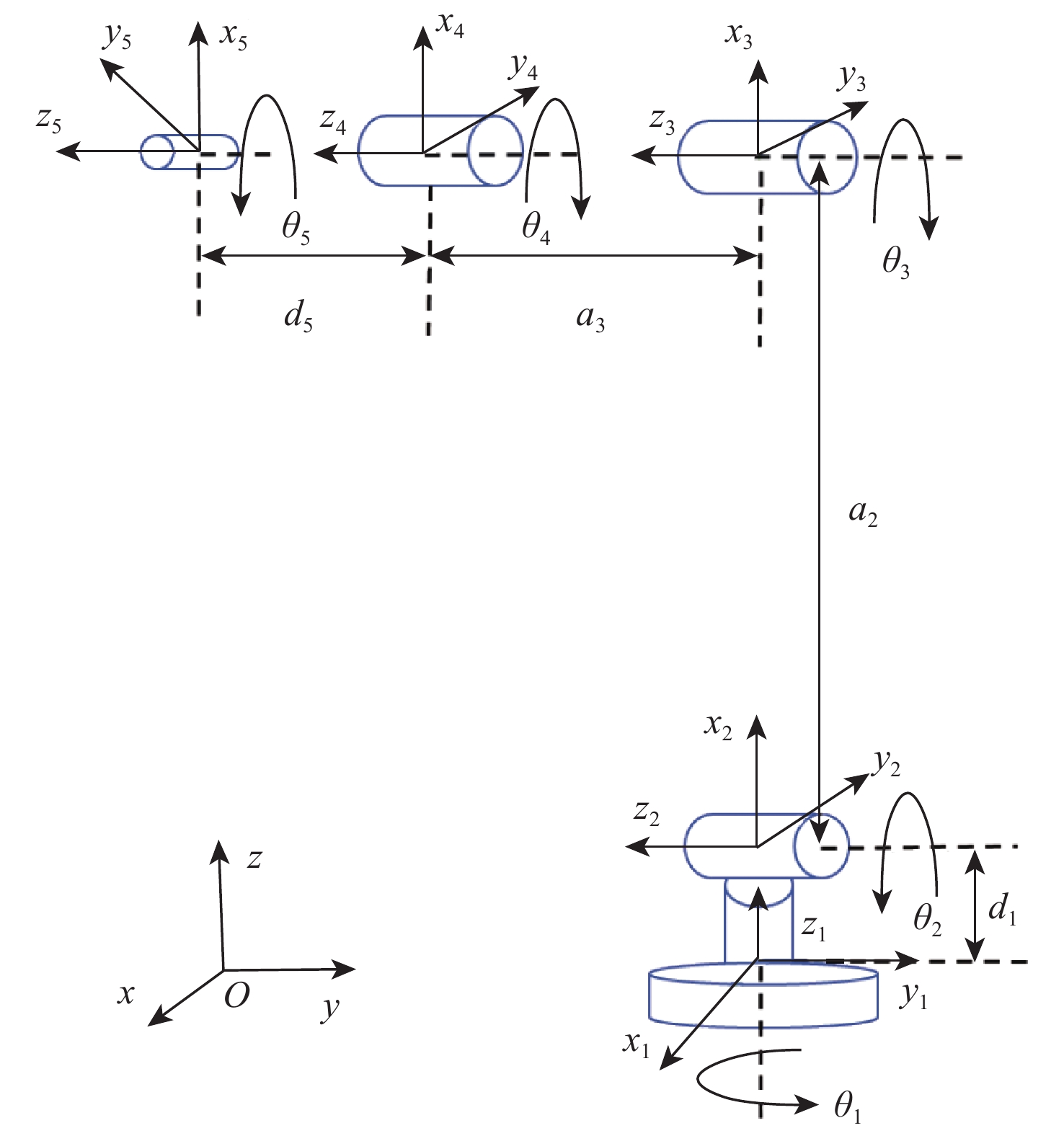
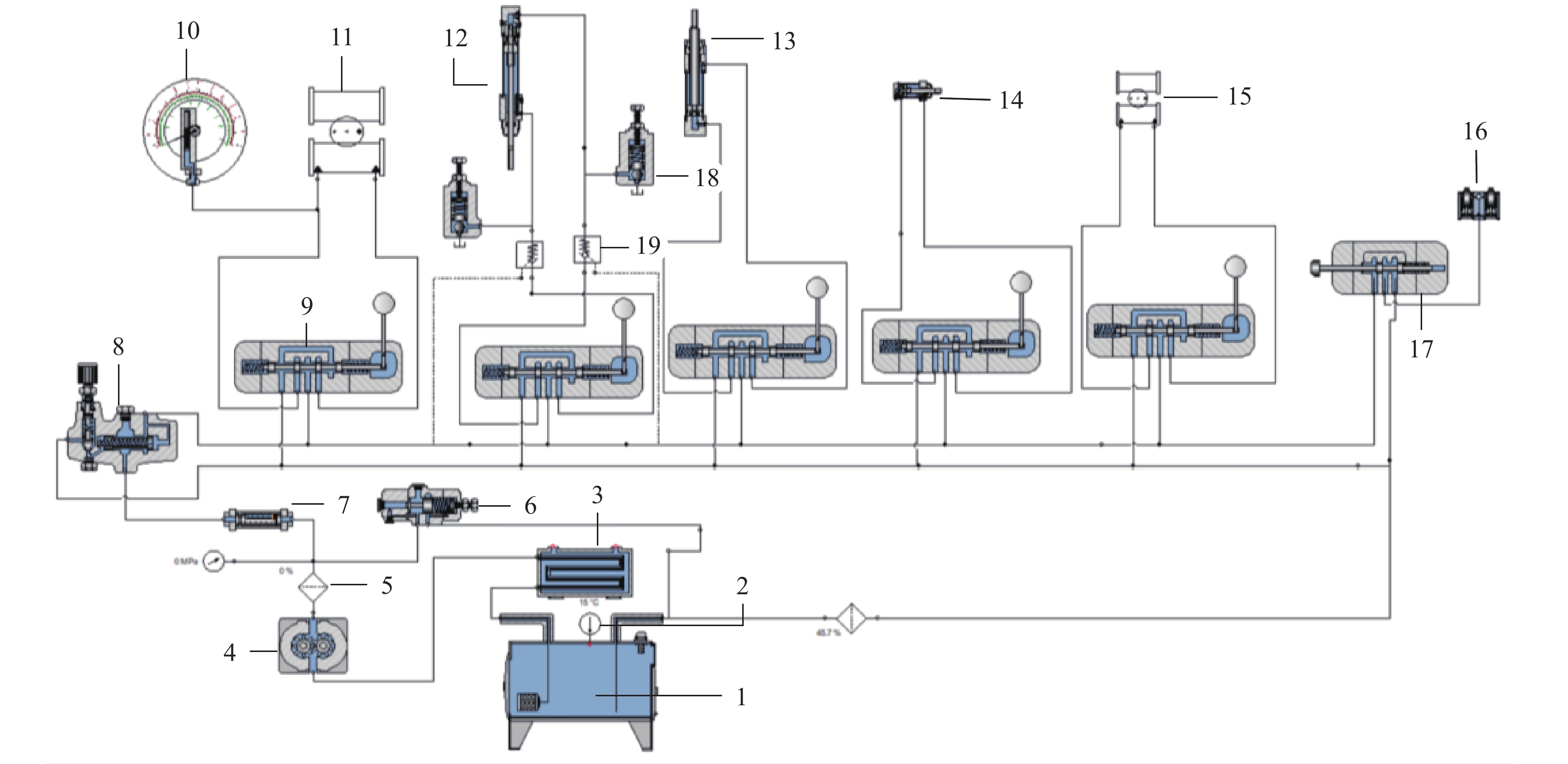
LI Yajie, WU Ruilong, LI Wei
2026, 52(6): 1850-1868. doi: 10.13700/j.bh.1001-5965.2025.0815
Abstract:

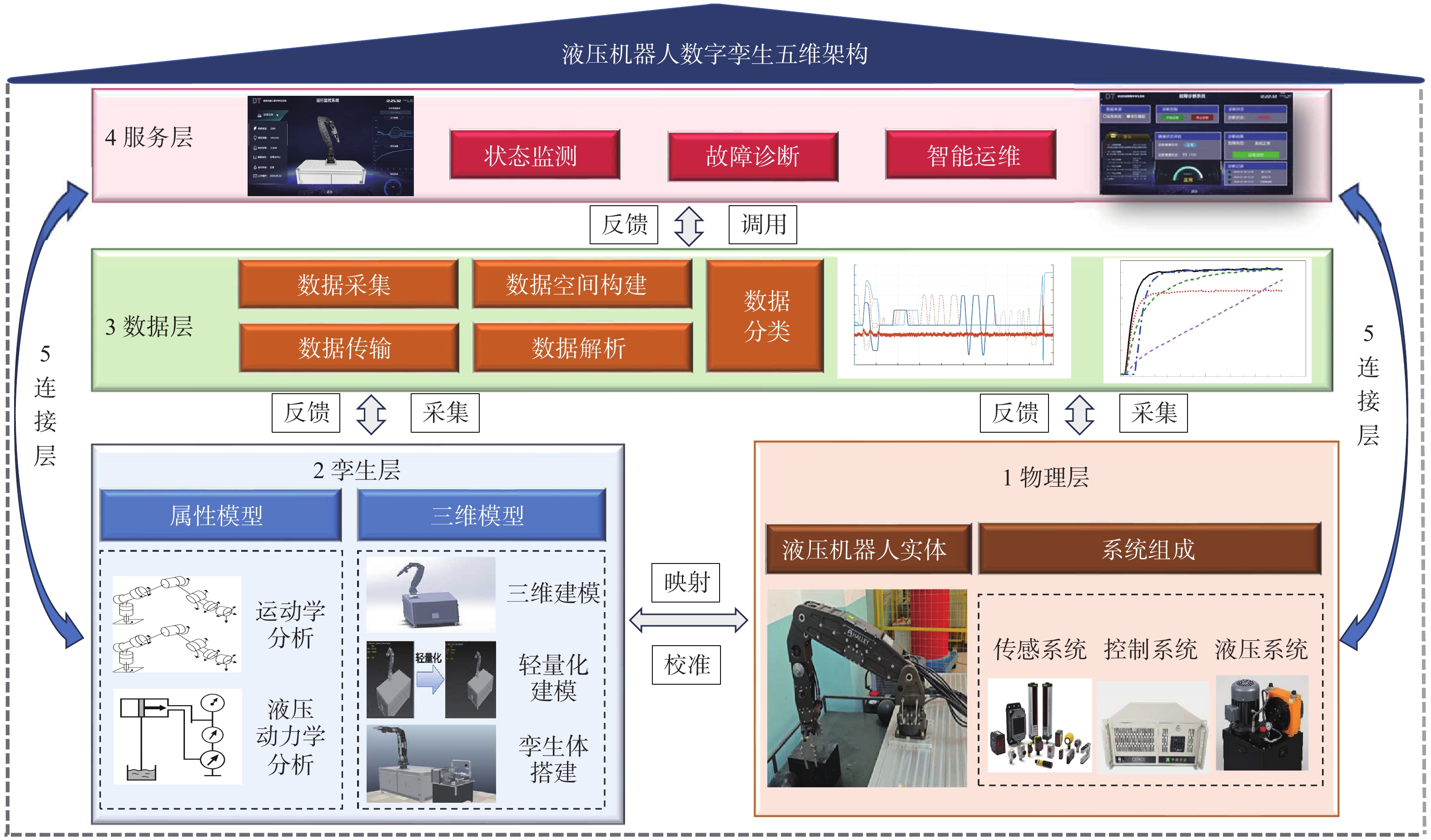
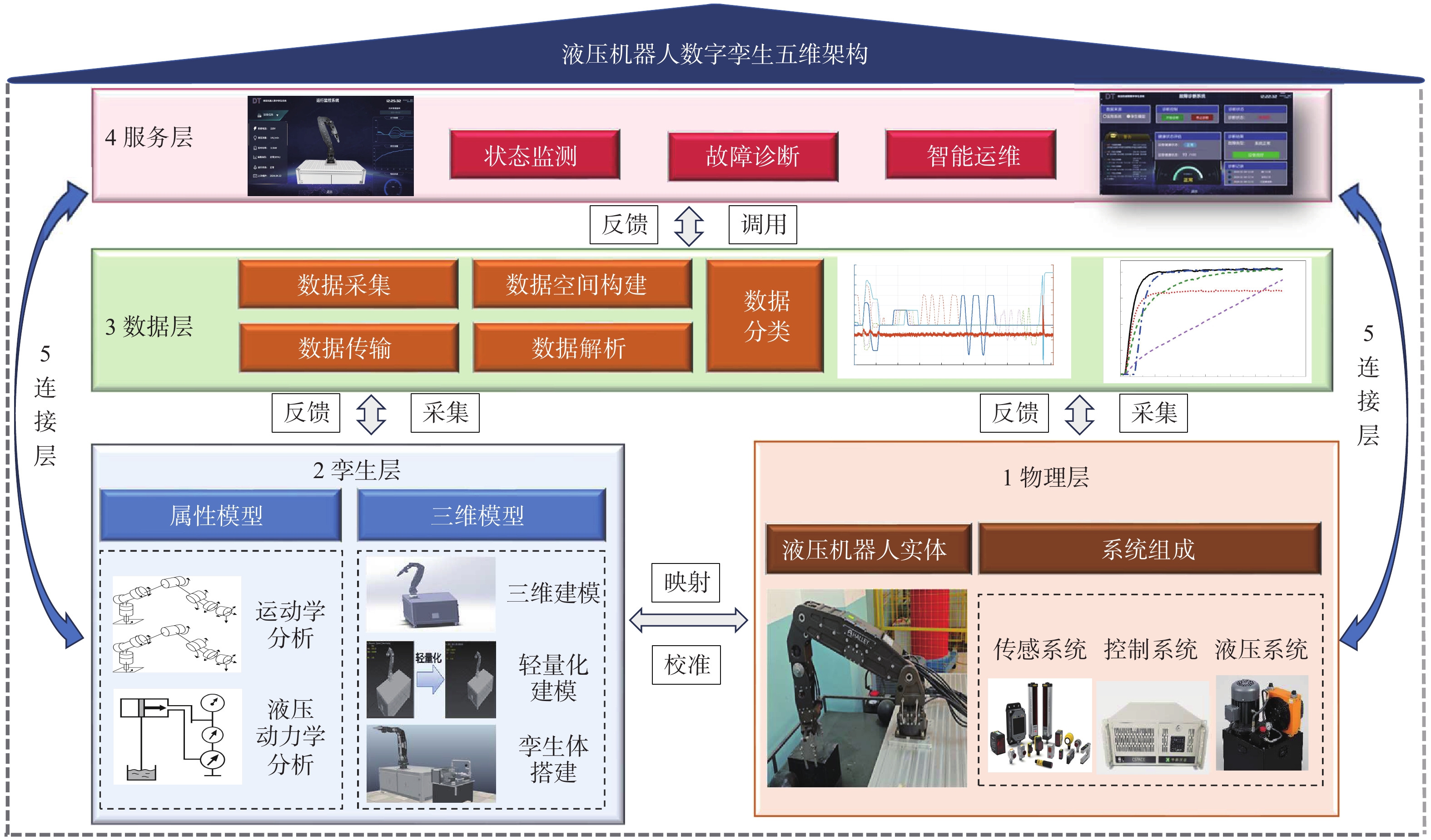
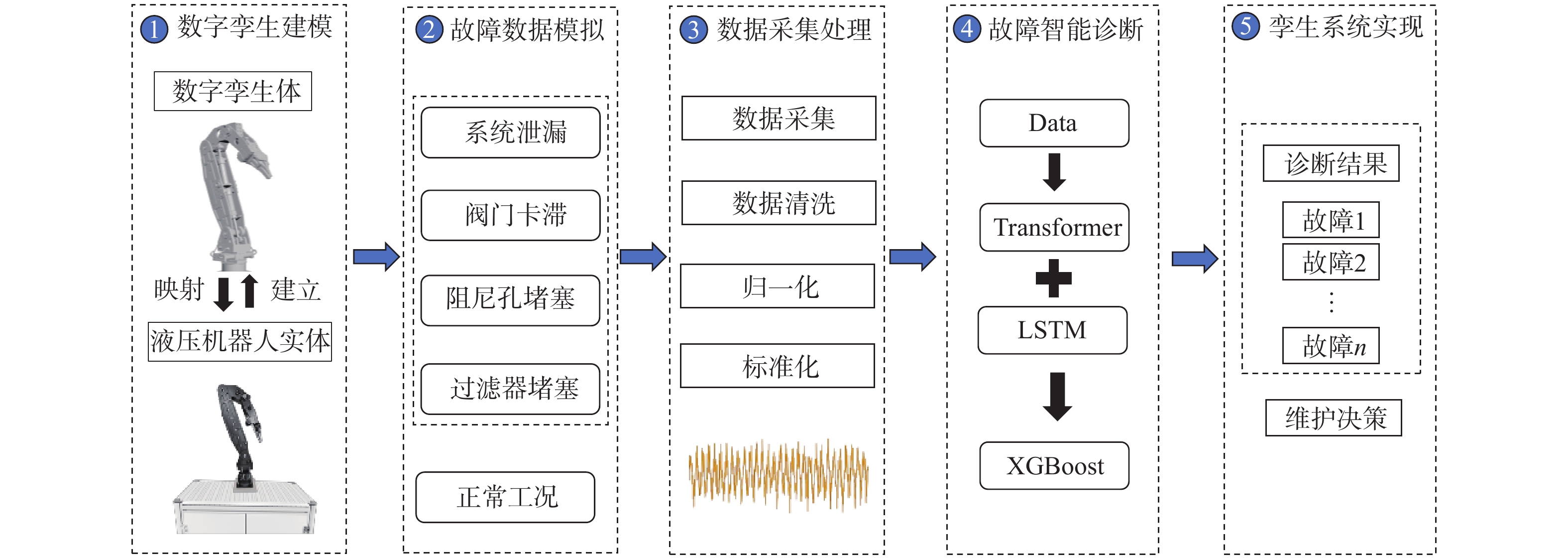
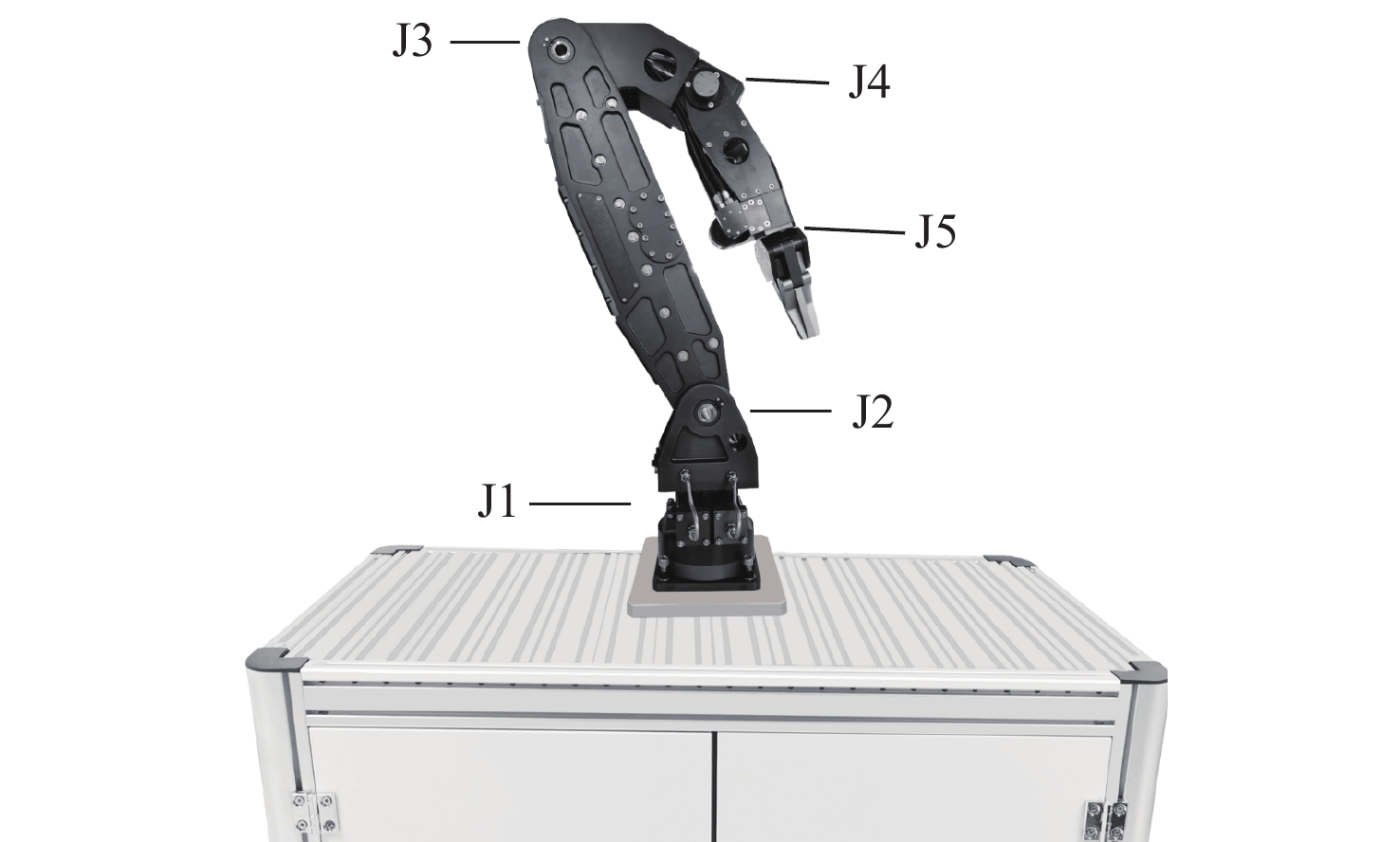
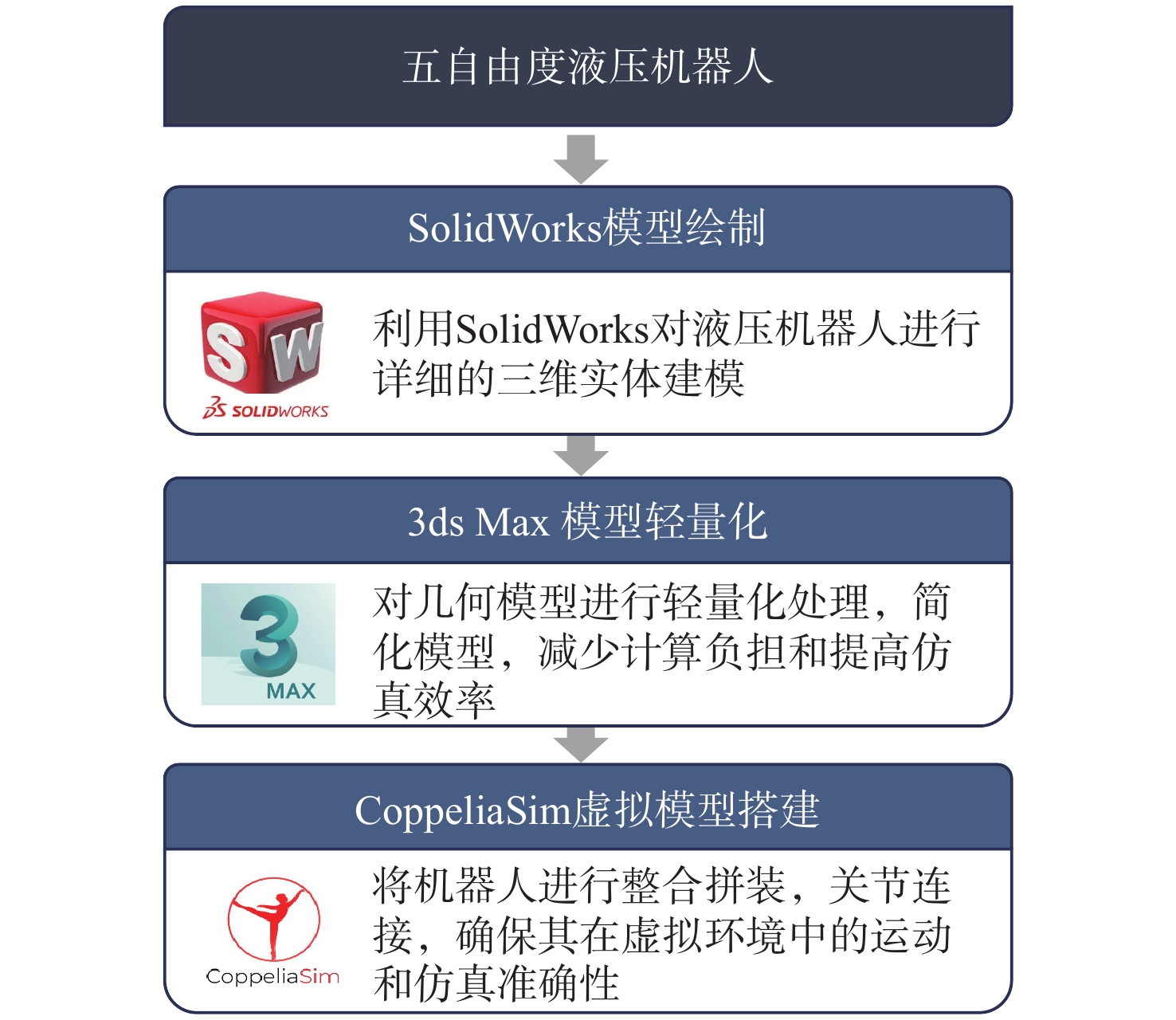
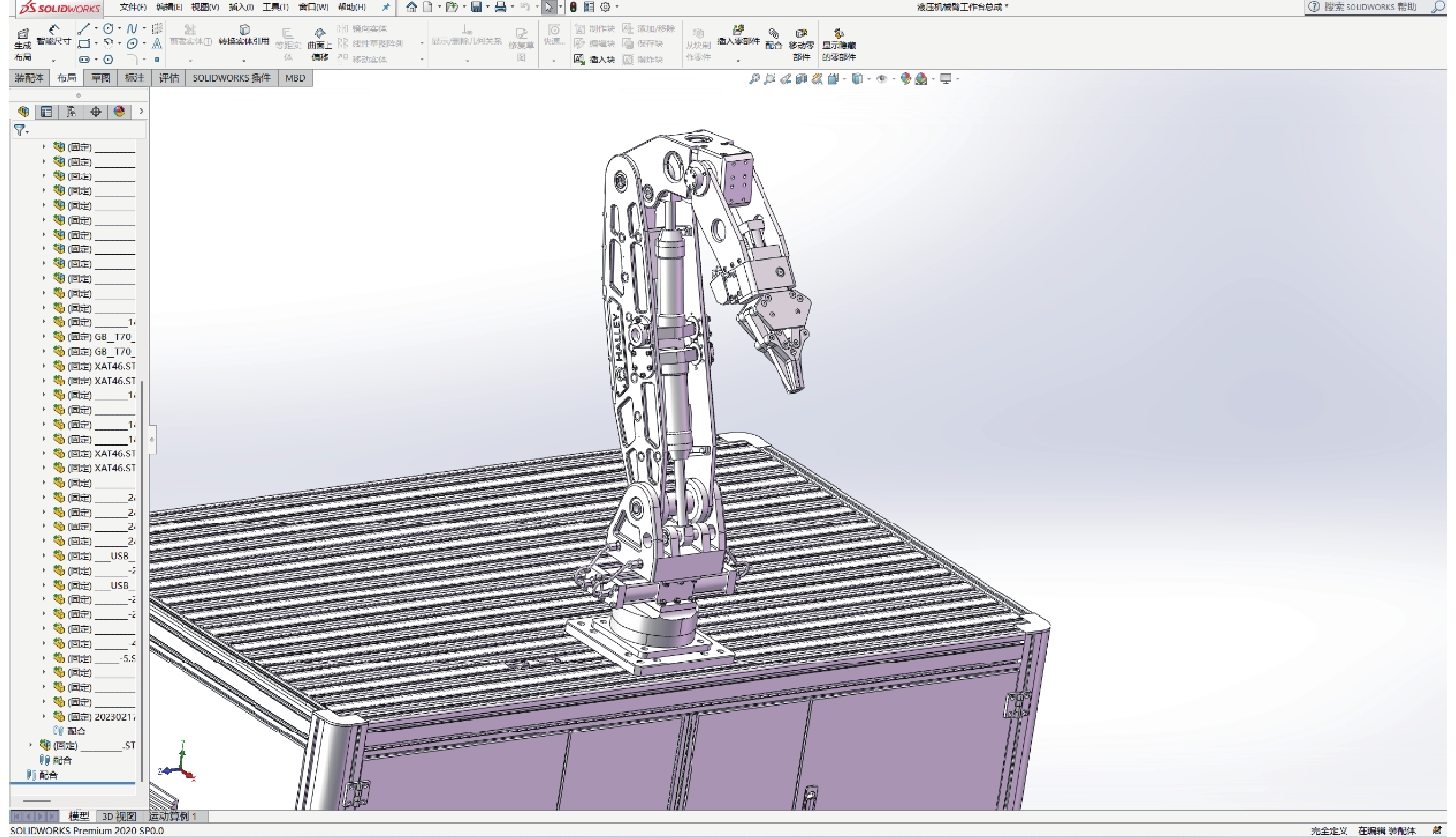
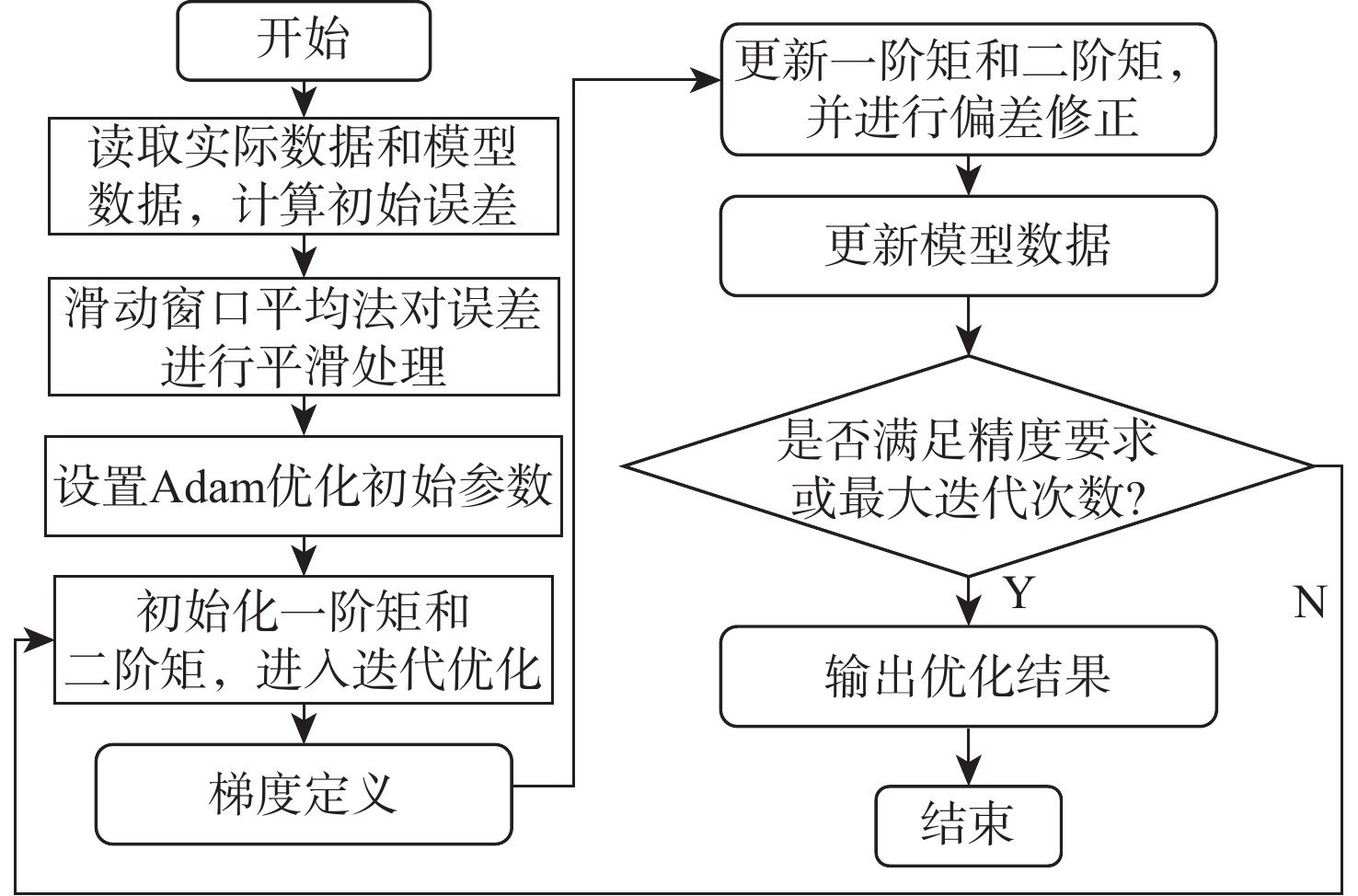
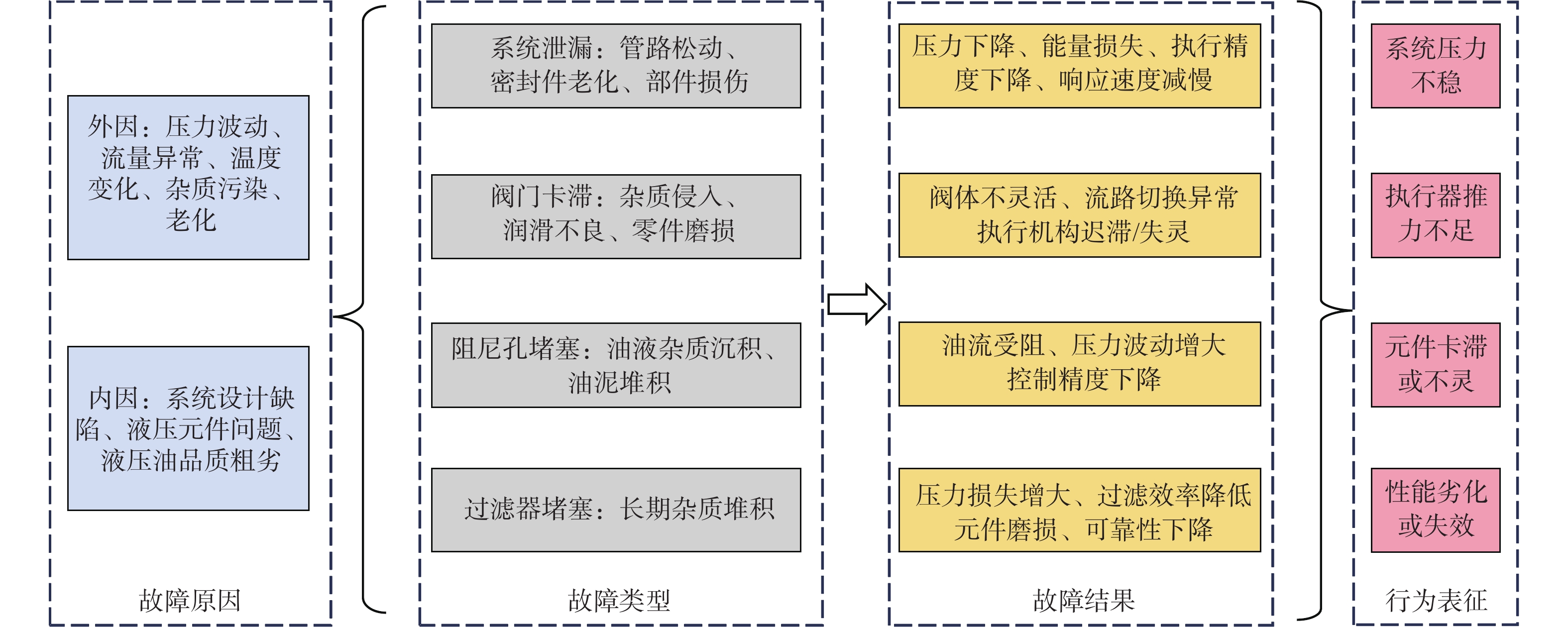
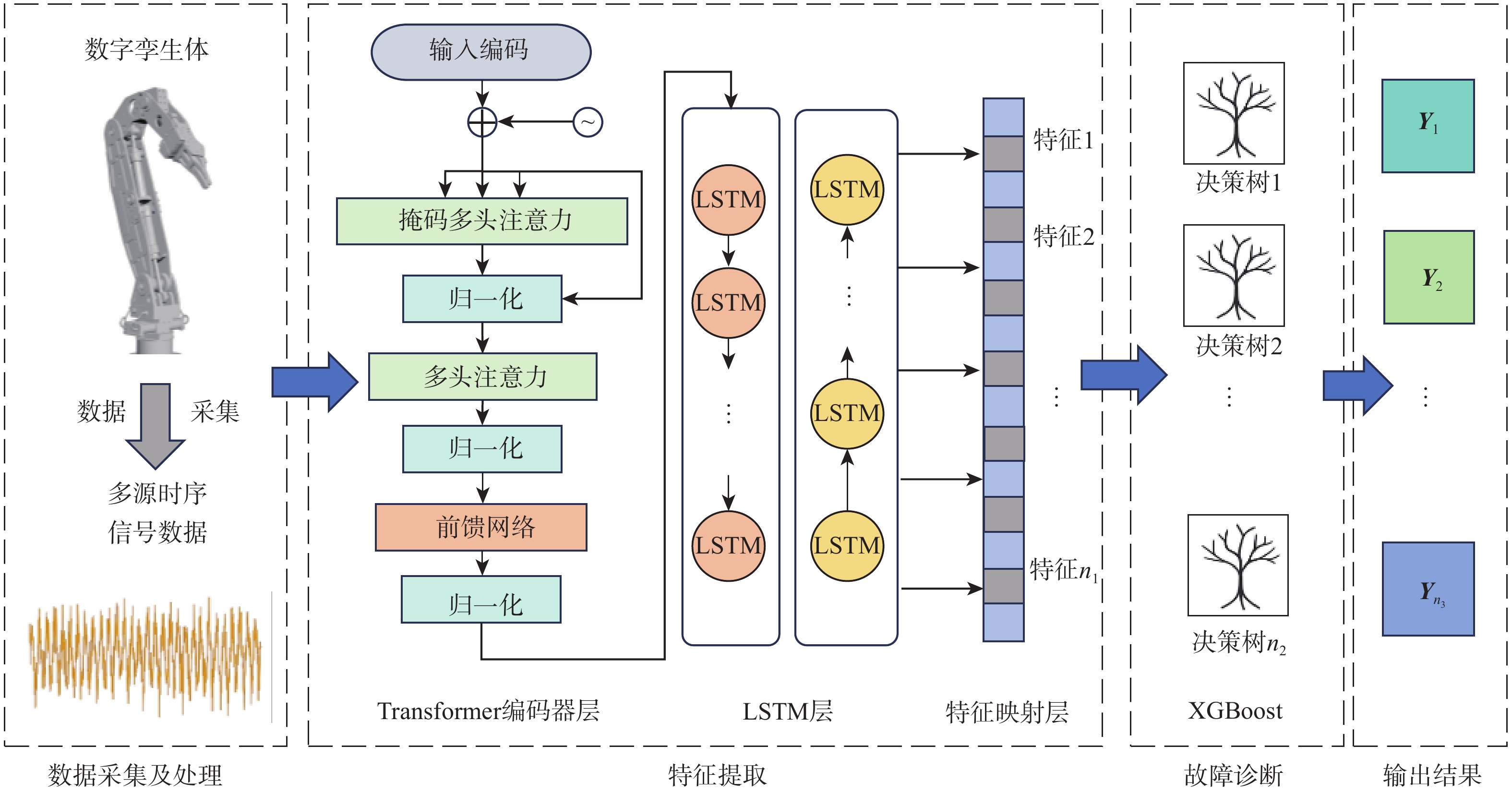
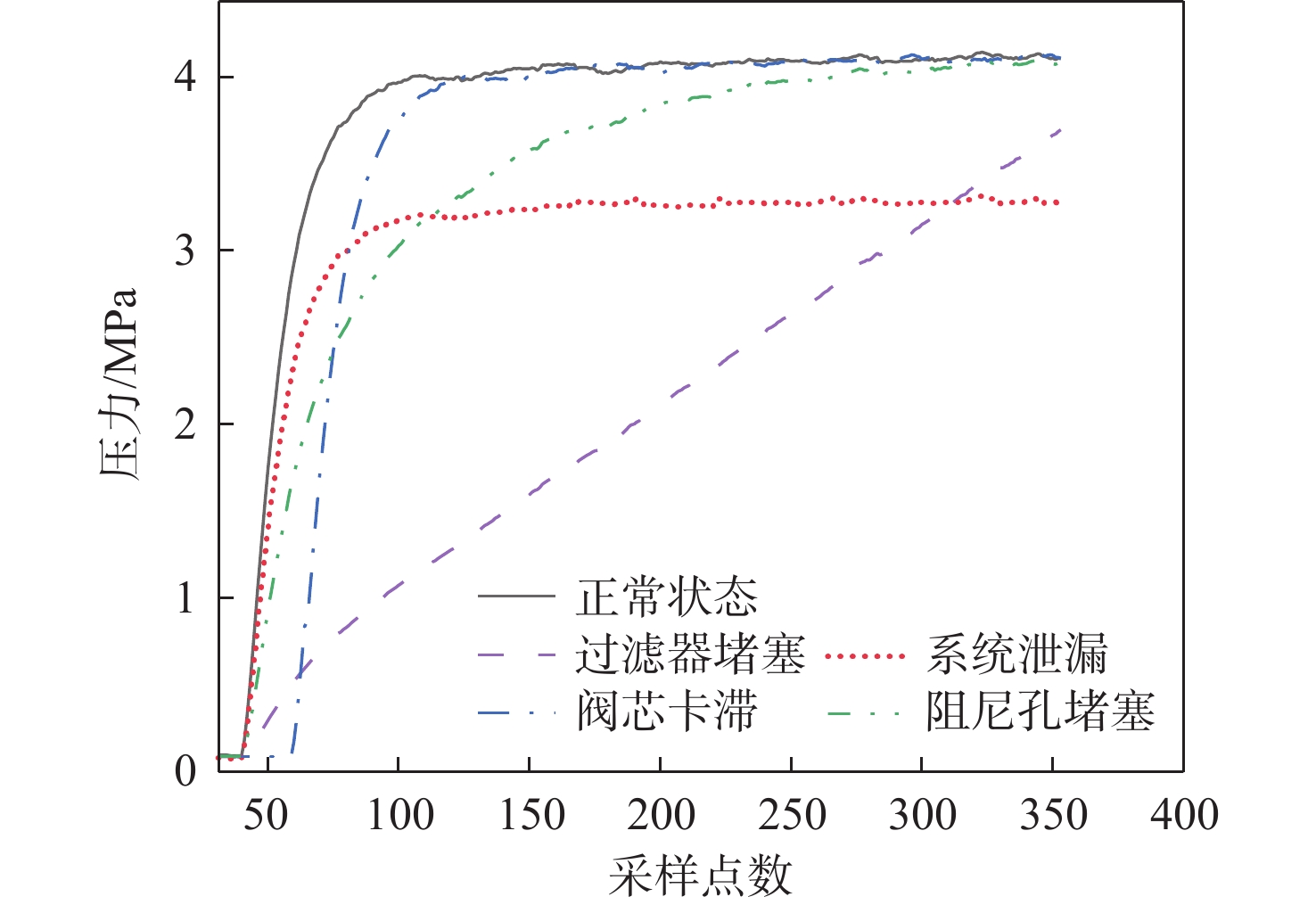
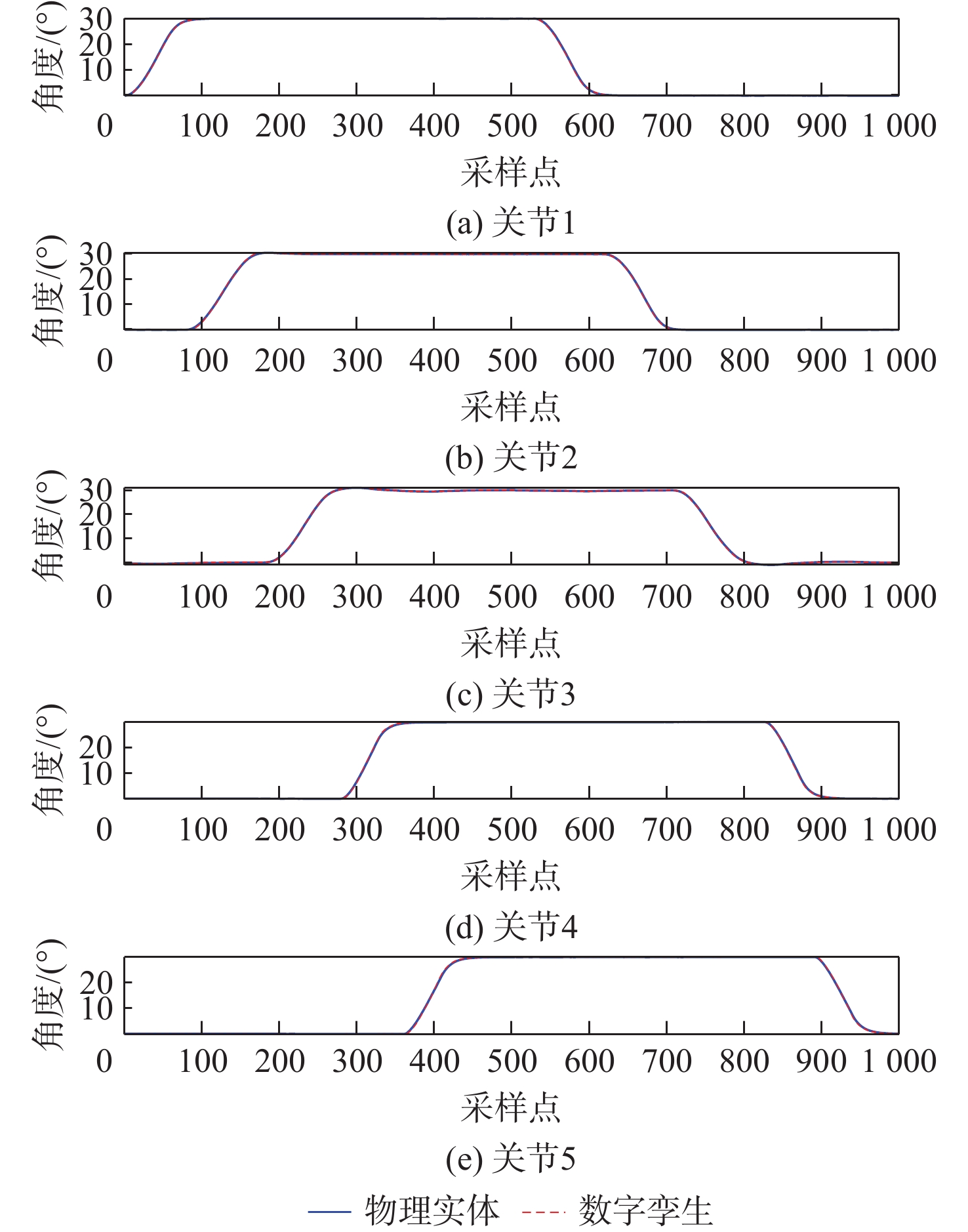
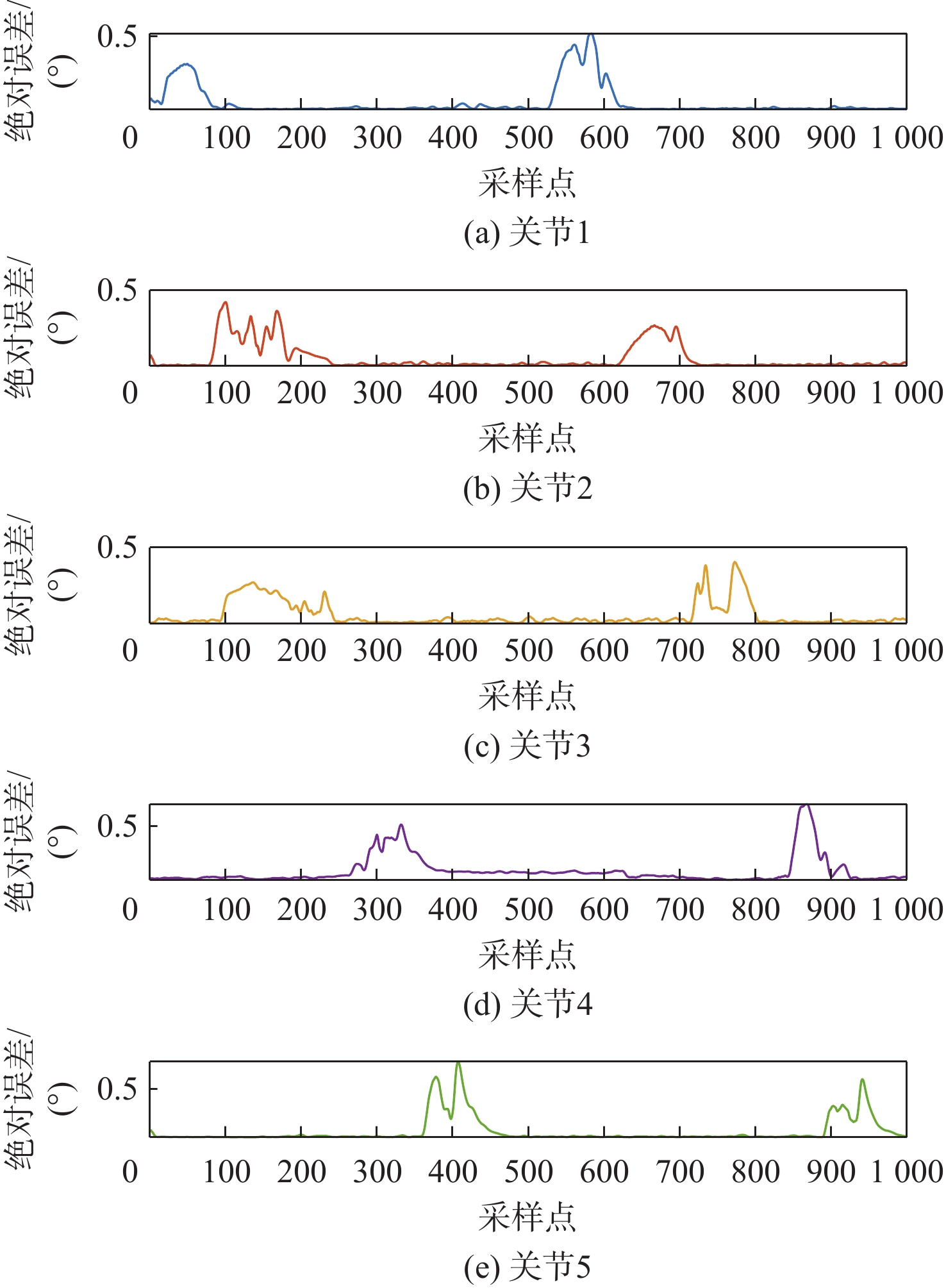
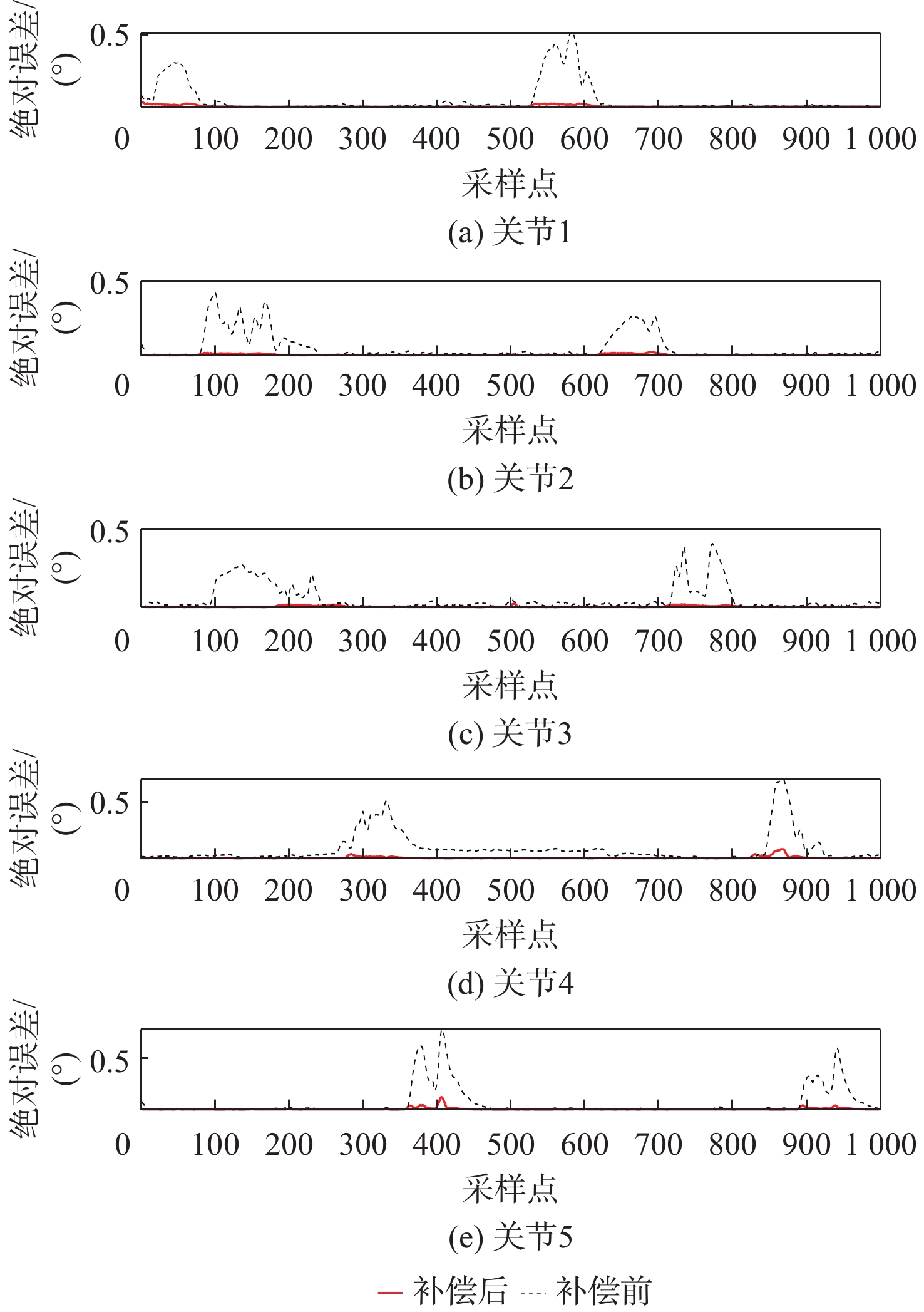
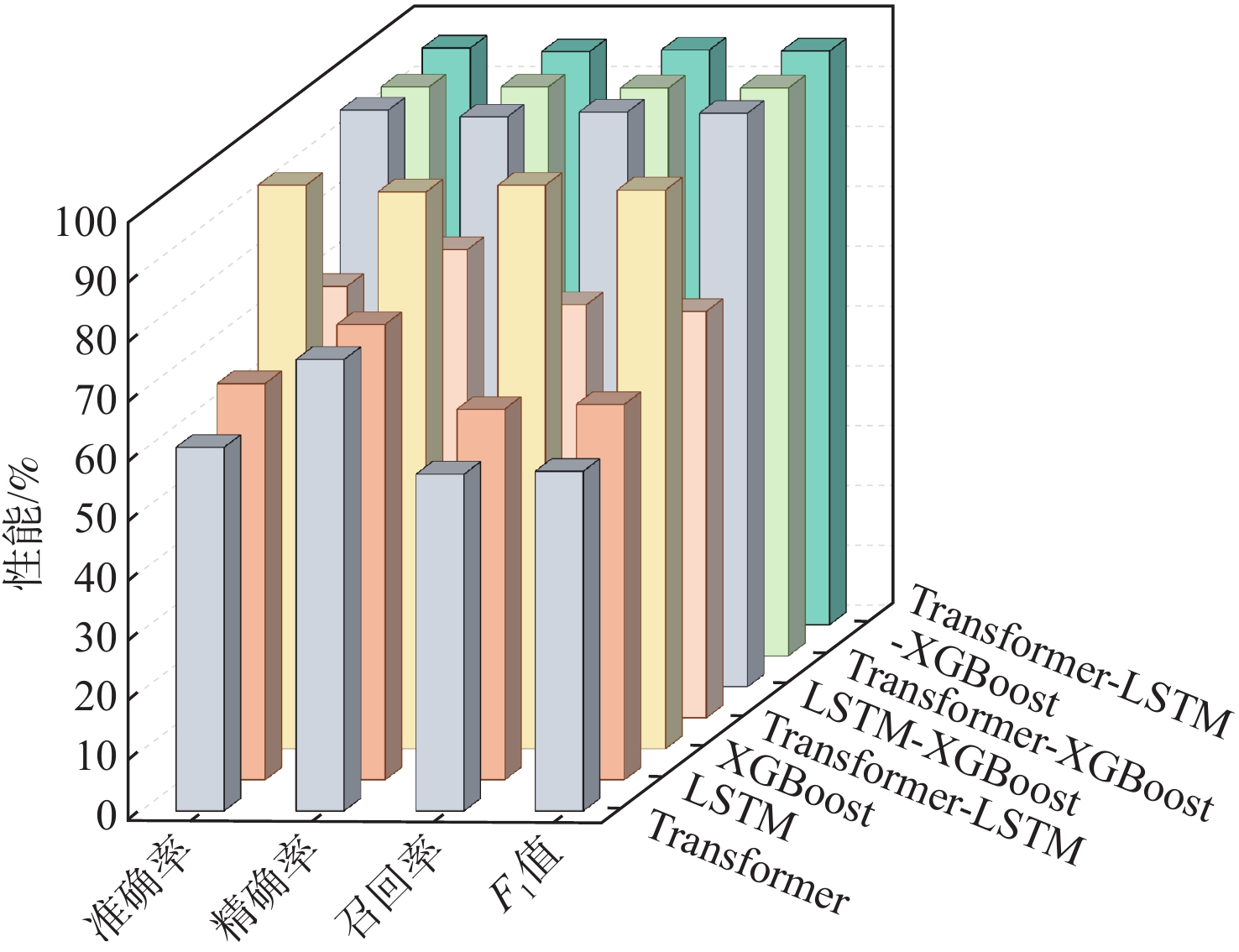
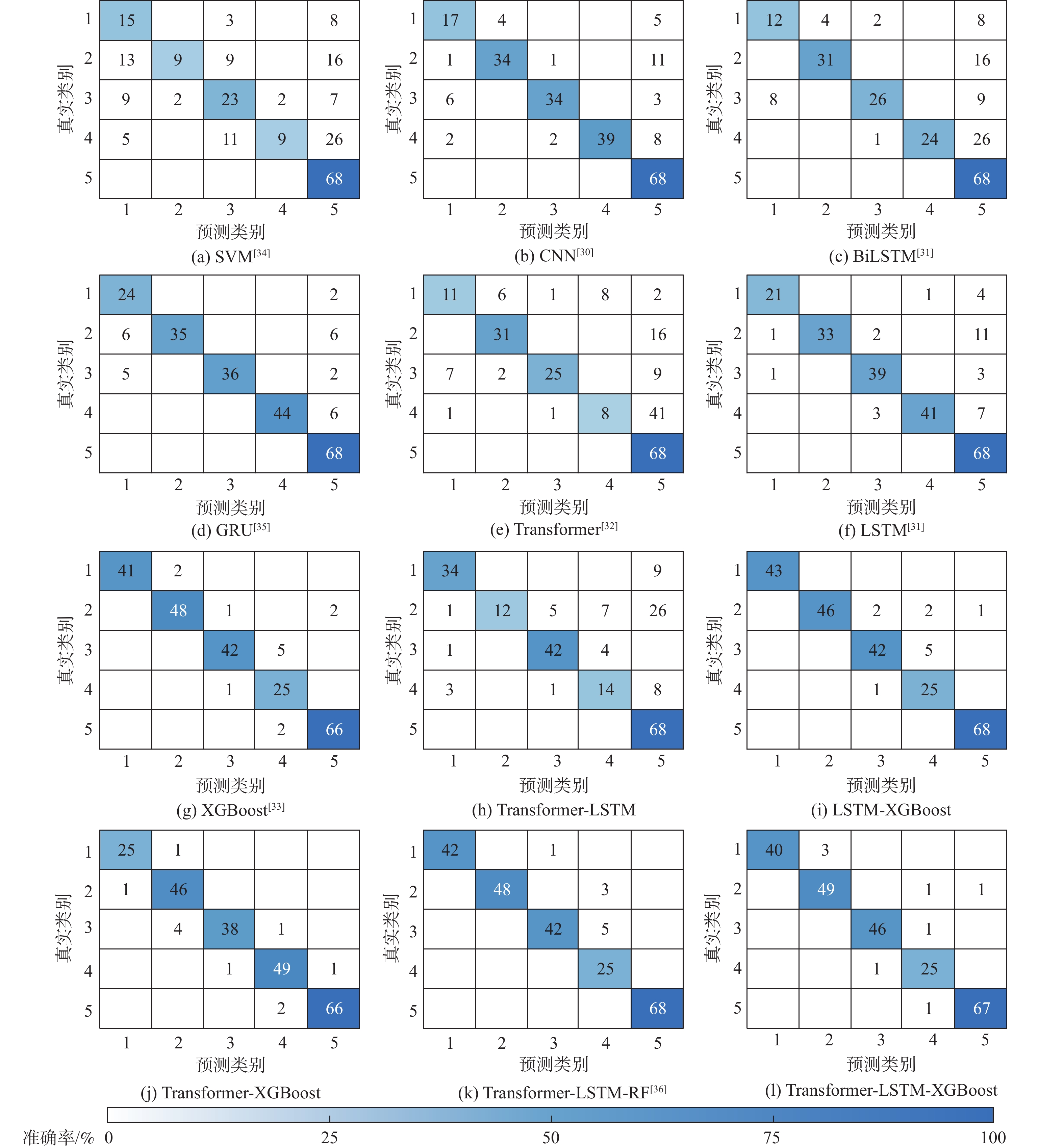
Hydraulic robots are increasingly used in industrial systems, which raises the need for reliable health diagnosis and maintenance under complex operating conditions. An intelligent fault diagnosis method was developed by integrating digital twin technology with deep learning and combining a Transformer, a long short-term memory networks (LSTM), and extreme gradient boosting (XGBoost). A diagnosis architecture based on digital twins was built, and cyber-physical synchronization was made possible by a digital twin with an attribute model and a three-dimensional model. Calibration improved twin accuracy and virtual-physical consistency. Fault mechanism analysis and fault evolution simulation were conducted for four typical hydraulic system faults: leakage, valve sticking, damping orifice blockage, and filter blockage. The simulations generated a dataset covering normal and fault conditions for data-driven modeling and diagnosis. A Transformer-LSTM feature extractor captured global dependencies and temporal dynamics in multi-dimensional time-series data, and XGBoost performed multi-fault classification. The experimental verification results show that the proposed method demonstrate steady performance under various noise disturbances and 96.6% diagnostic accuracy across many problems, suggesting high resilience and generalization and supporting hydraulic robot fault detection and maintenance in industrial applications.

Stability analysis of core payload operational performance on the XPNAV-1 satellite
YAN Linli, ZHANG Jiankang, ZHOU Qingyong, LEI Yaohu, FAN Shaojuan
2026, 52(6): 1869-1879. doi: 10.13700/j.bh.1001-5965.2024.0273
Abstract:

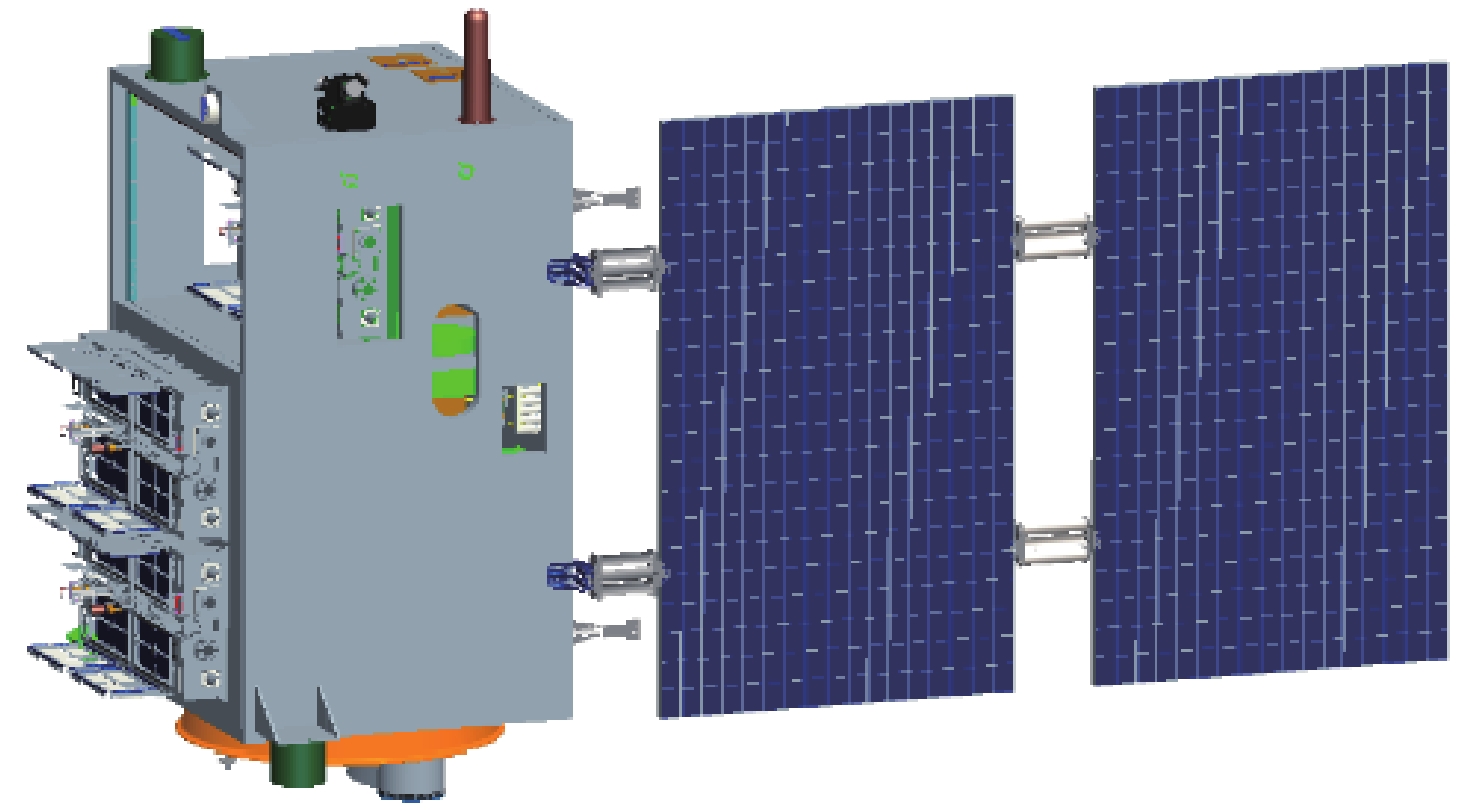
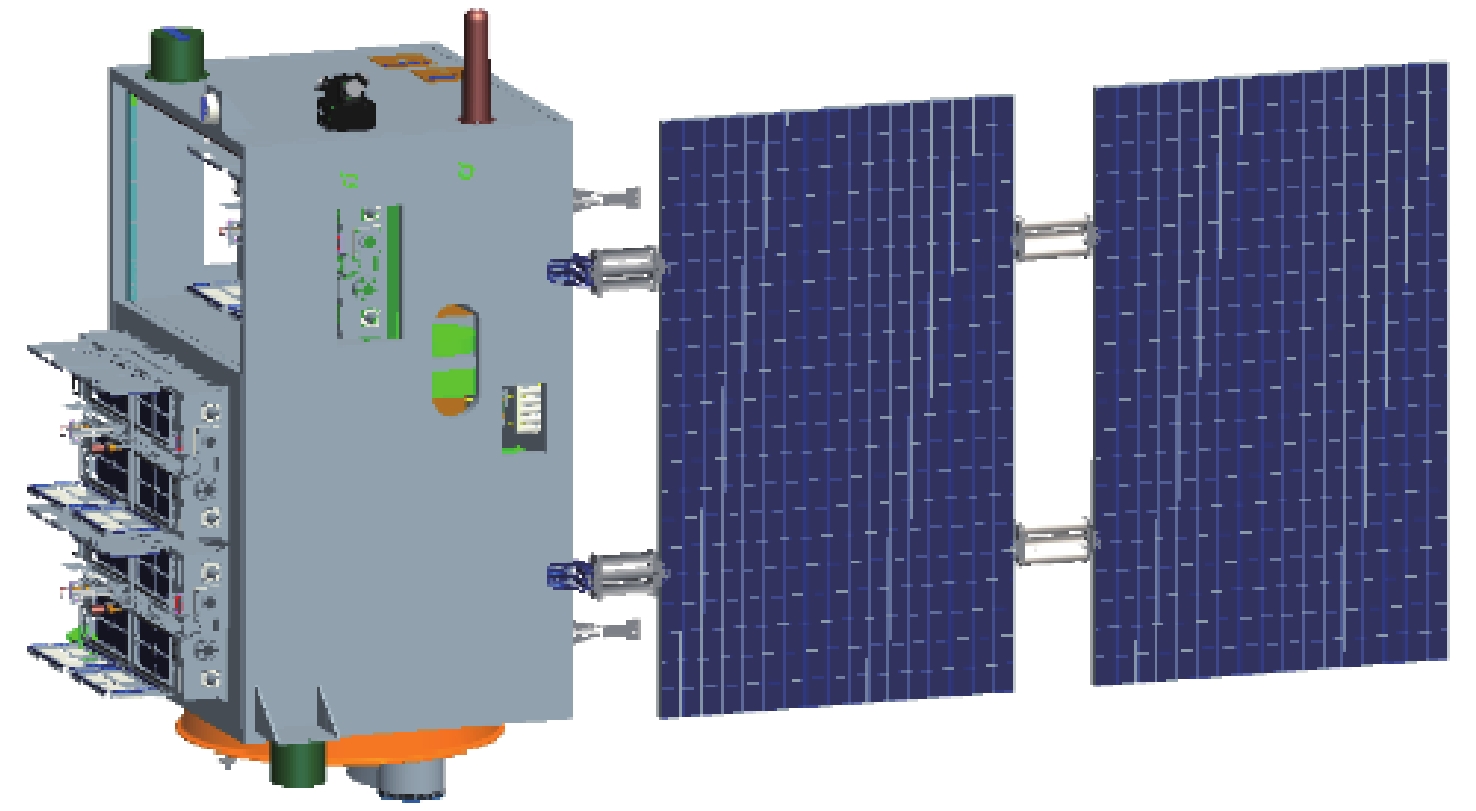
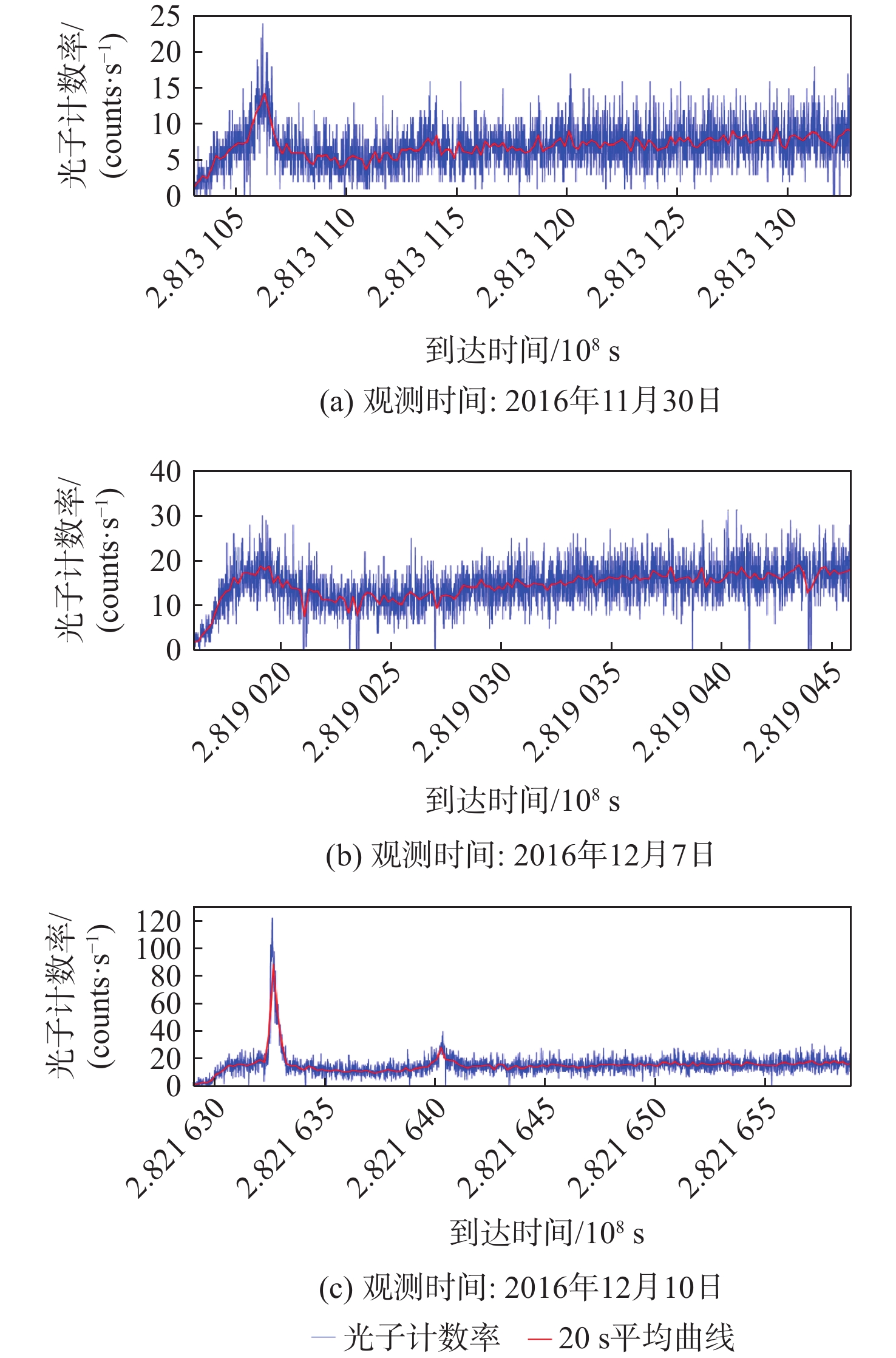
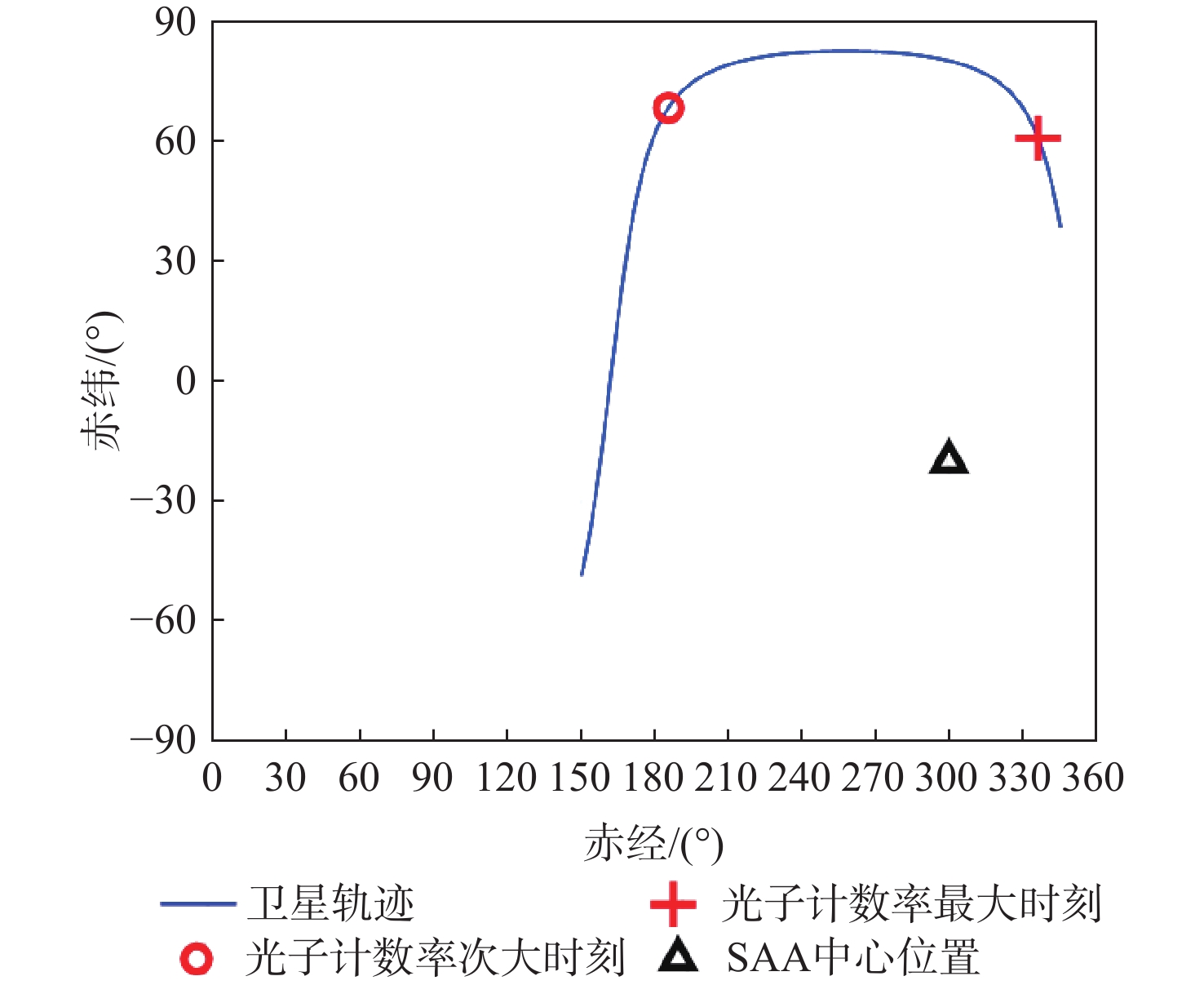
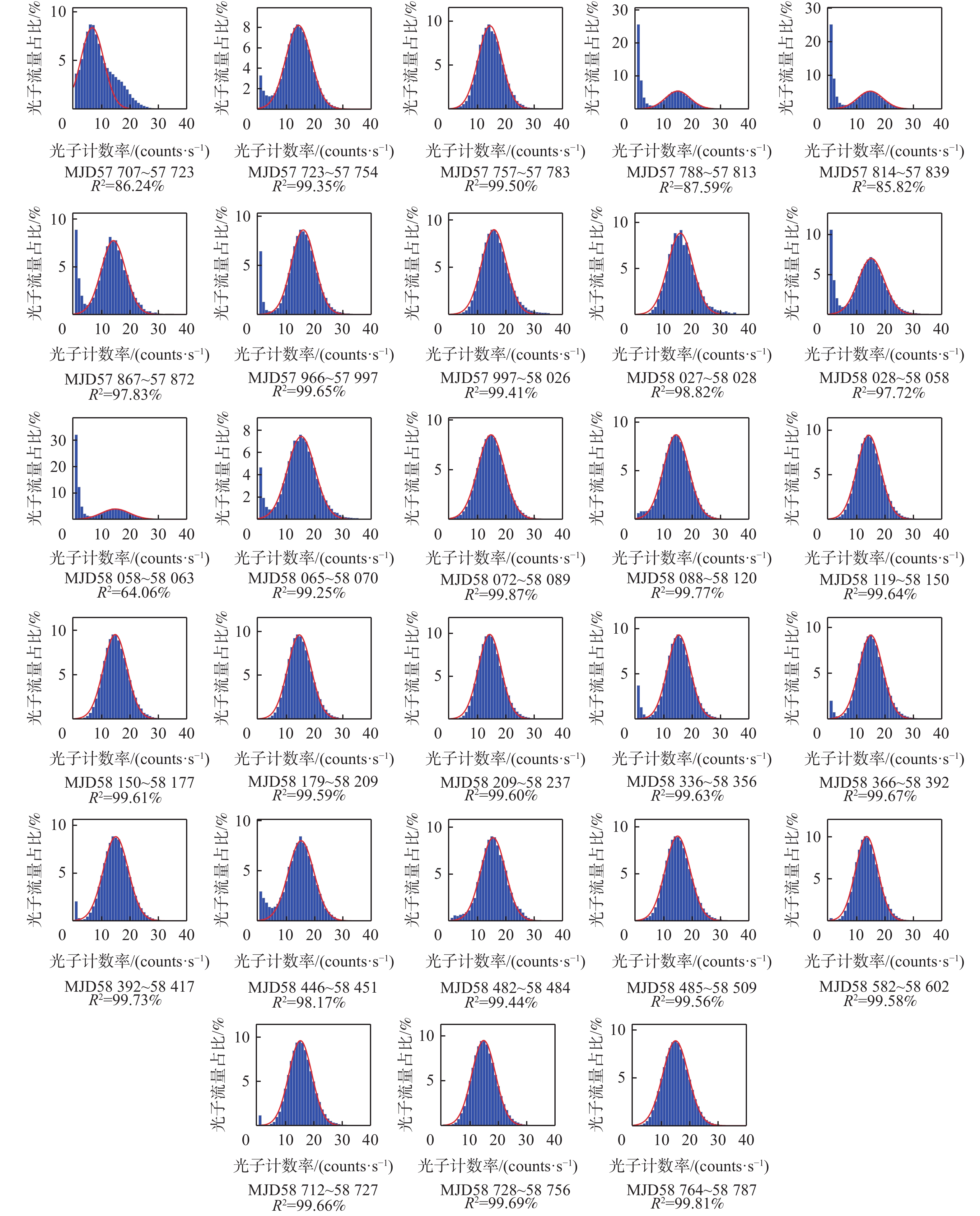
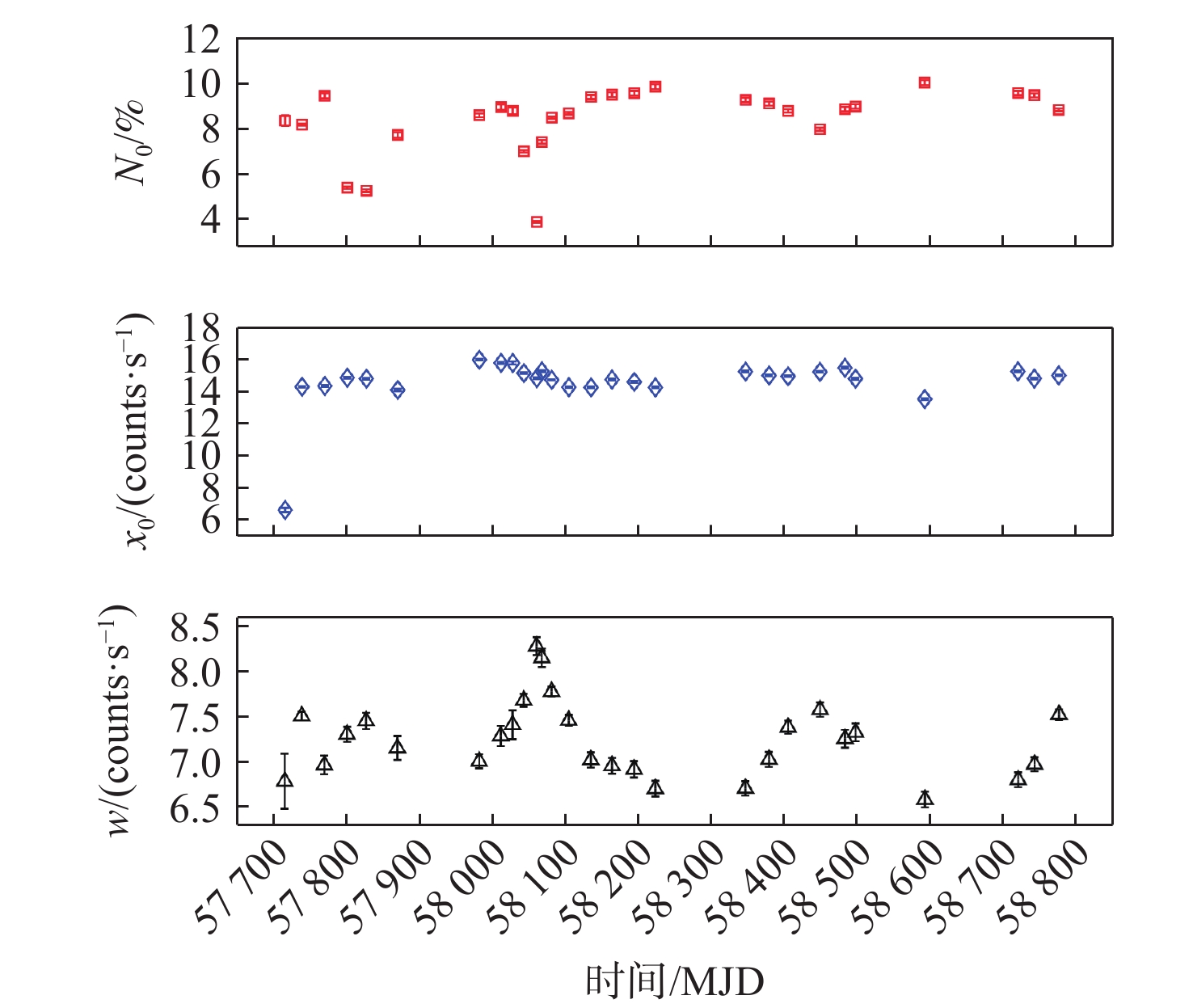
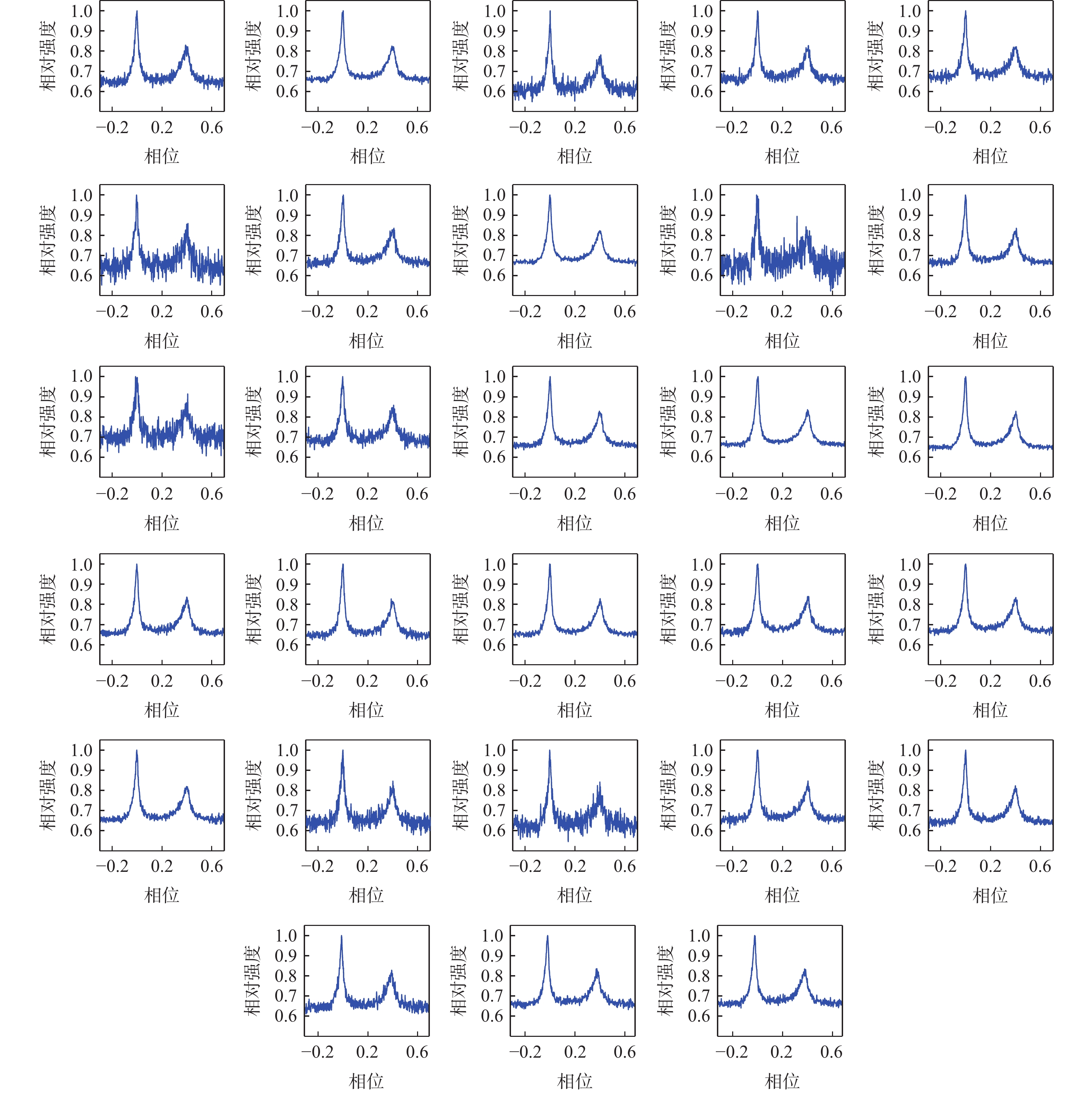
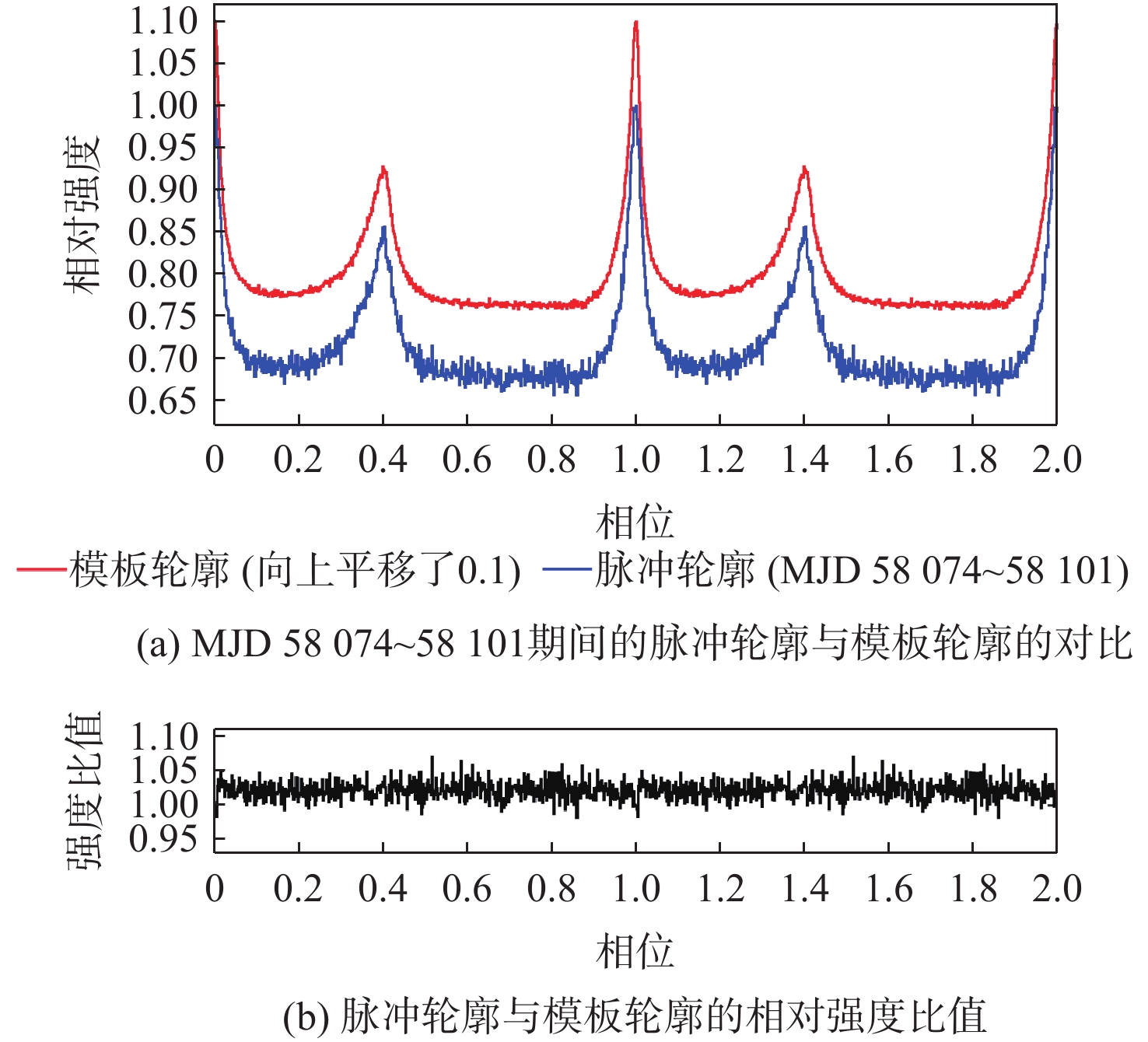
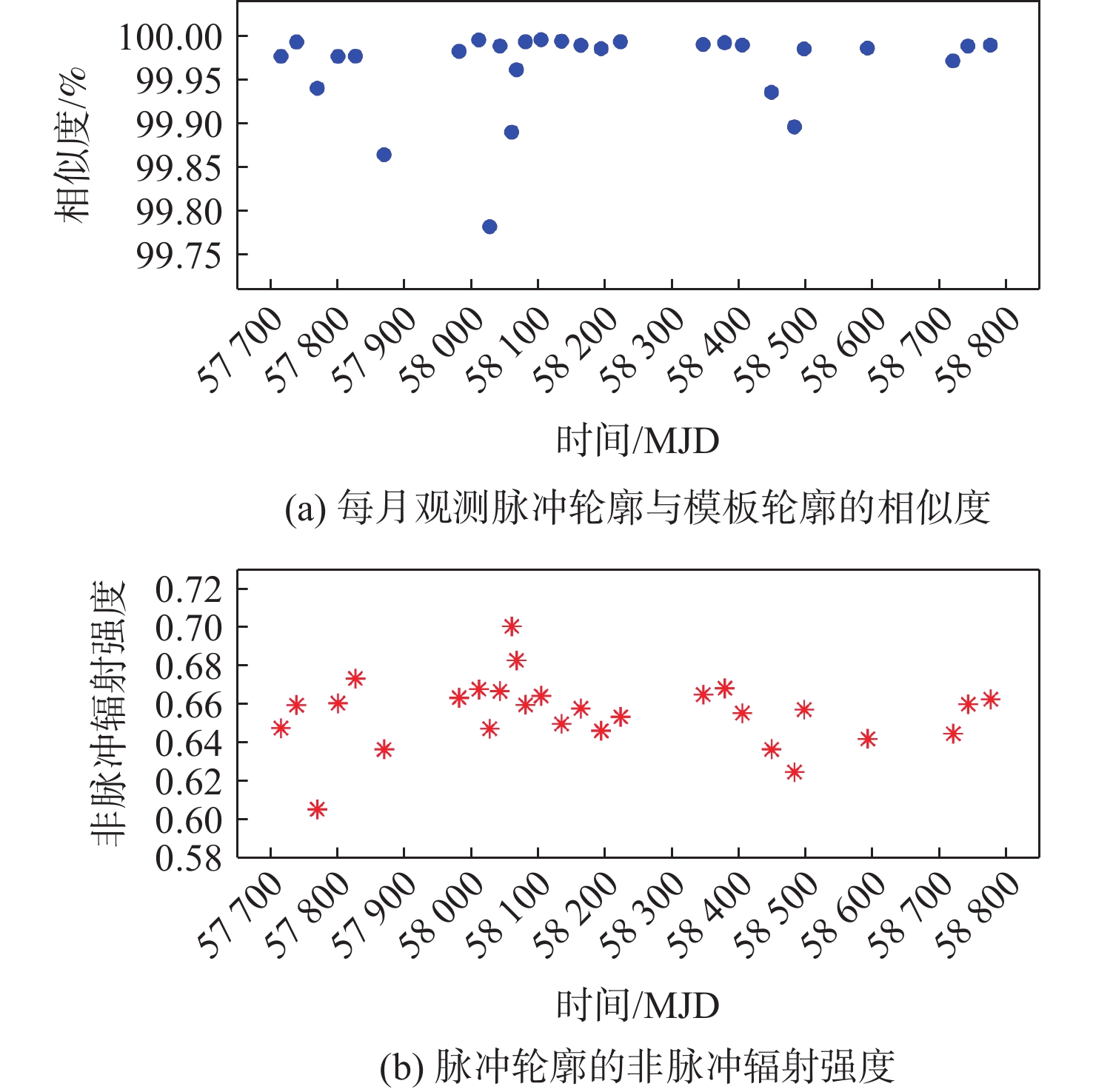
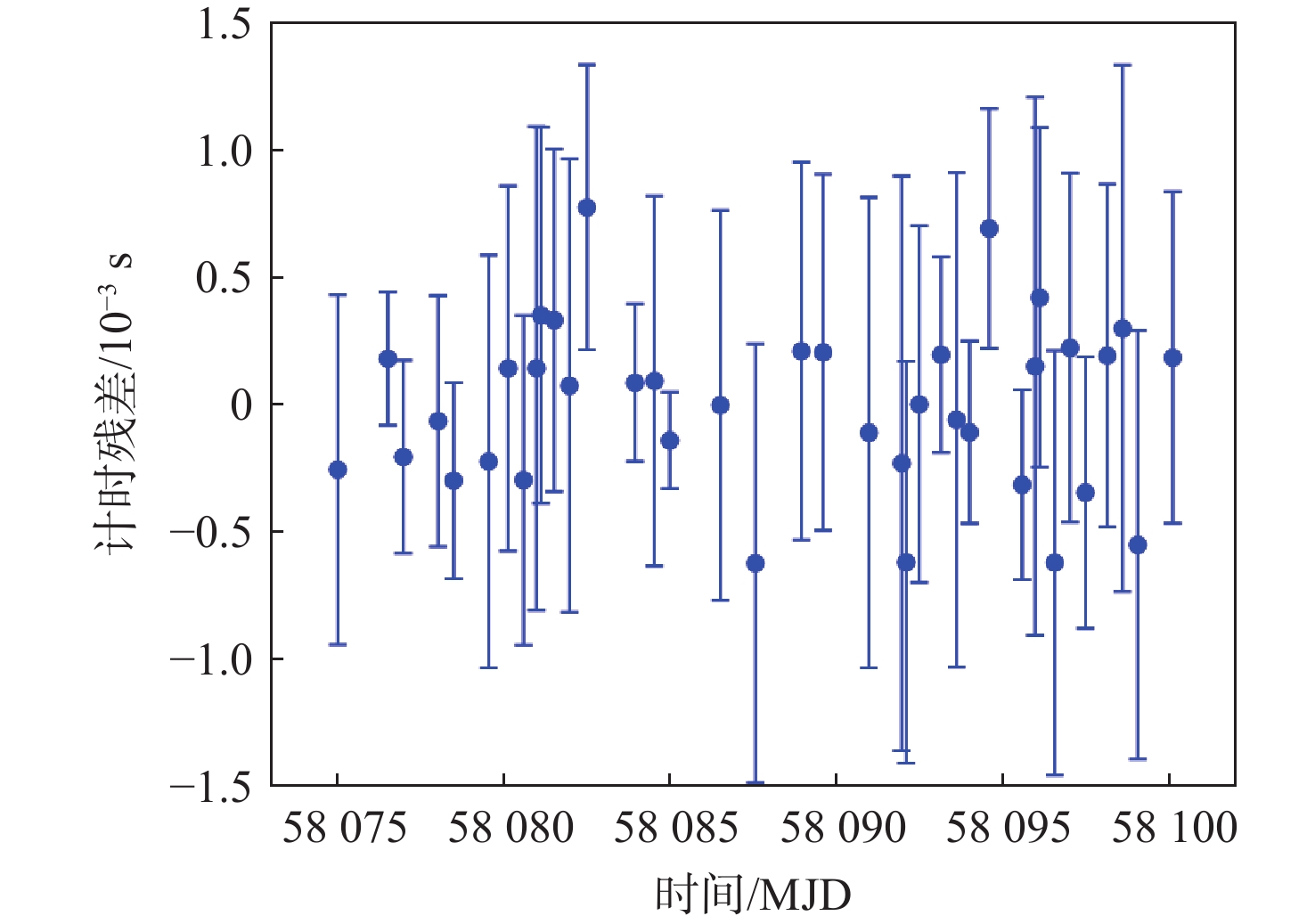
A carefully engineered focusing X-ray pulsar telescope (FXPT) is the main payload of China’s first X-ray pulsar navigation test satellite XPNAV-1. Factors such as launch vibrations, space radiation, and device lifespan can cause slight variations in the performance parameters of the FXPT. Therefore, long-term monitoring of its performance is necessary to provide more reliable observational data for astronomical timing analysis and navigation calculations. To monitor the performance changes of the FXPT on the XPNAV-1 satellite, a comprehensive analysis method combining the statistical distribution of photon count rates and the characteristics of pulse profile shapes was proposed. Using observation data of the Crab pulsar from 2016 to 2019 obtained by the XPNAV-1 satellite, the in-orbit operational stability of the FXPT was analyzed. The results show that the statistical distribution of the Crab pulsar photon count rates obtained by the FXPT approximately follows a Gaussian distribution. Even with a few periods of anomalous count rates, the pulse profile shapes still exhibit high similarity over different periods. High signal-to-noise ratio pulse profiles that are 99.99% comparable to pulse profiles folded using the ephemeris supplied by Jodrell Bank Observatory can be produced by the timing model generated from FXPT data. These results confirm the in-orbit operational stability of XPNAV-1’s core payload, the FXPT.

Vertiport operational task planning model and capacity estimation method
WEI Zhiqiang, XIAO Xinlong
2026, 52(6): 1880-1889. doi: 10.13700/j.bh.1001-5965.2024.0249
Abstract:

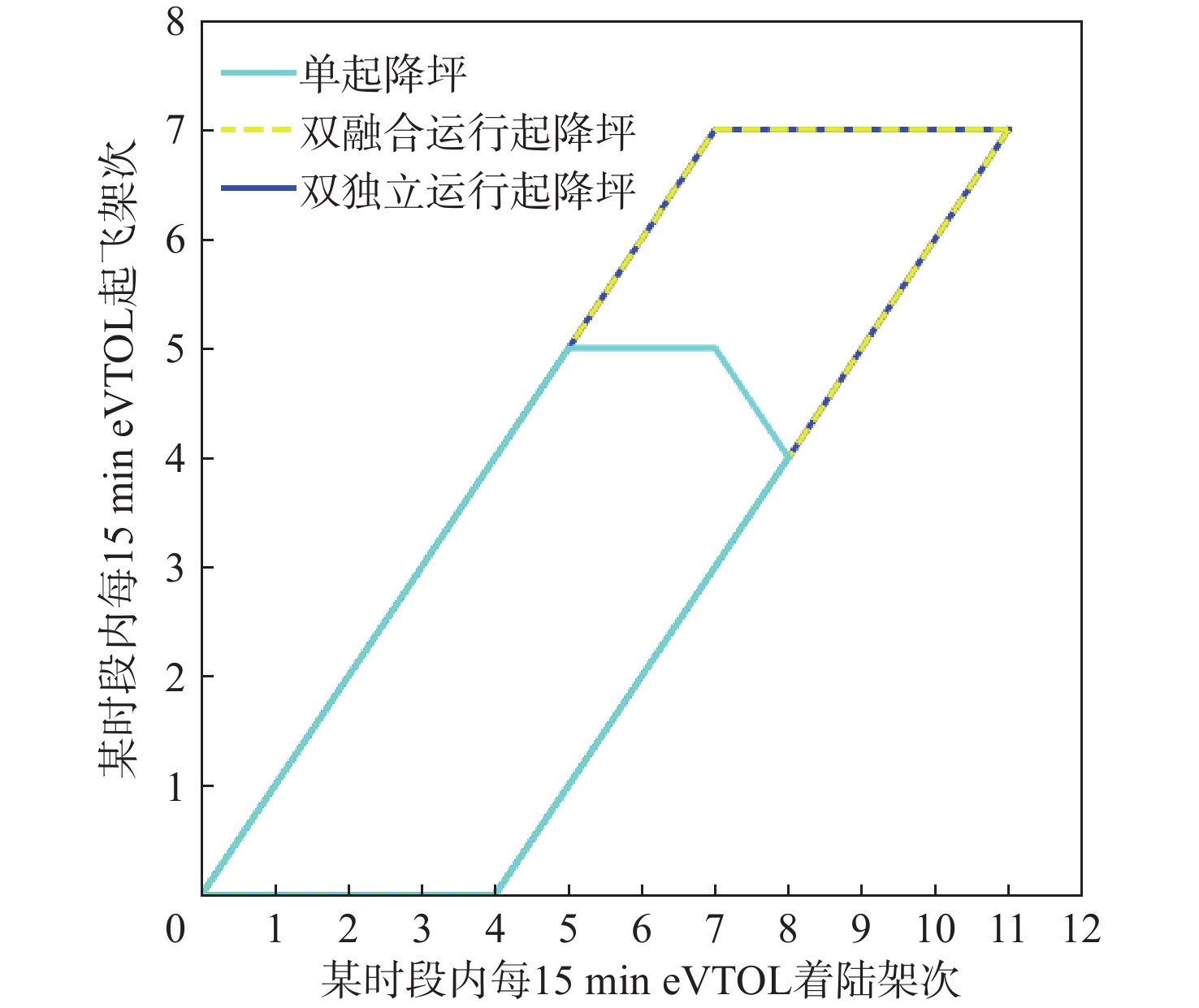
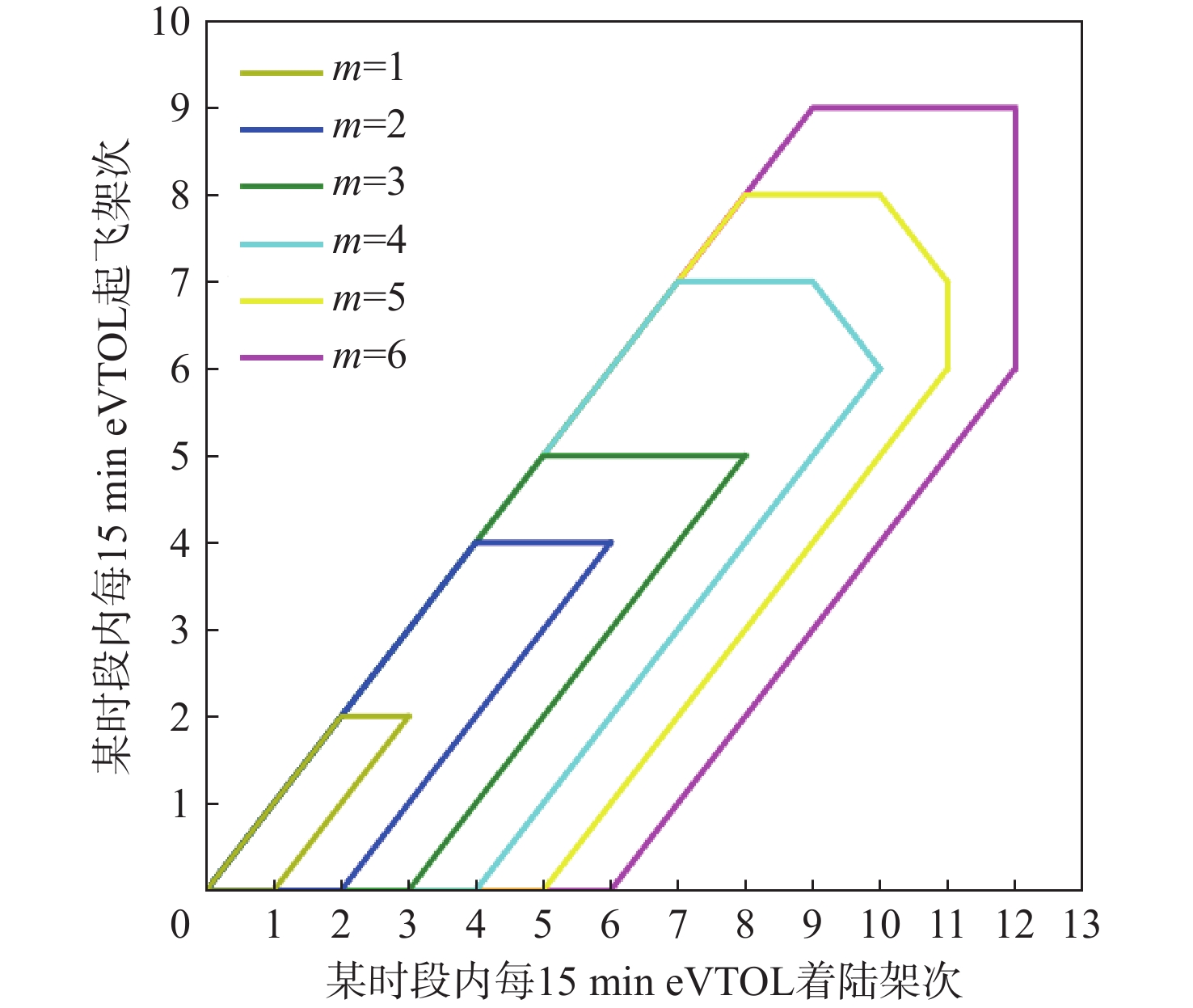
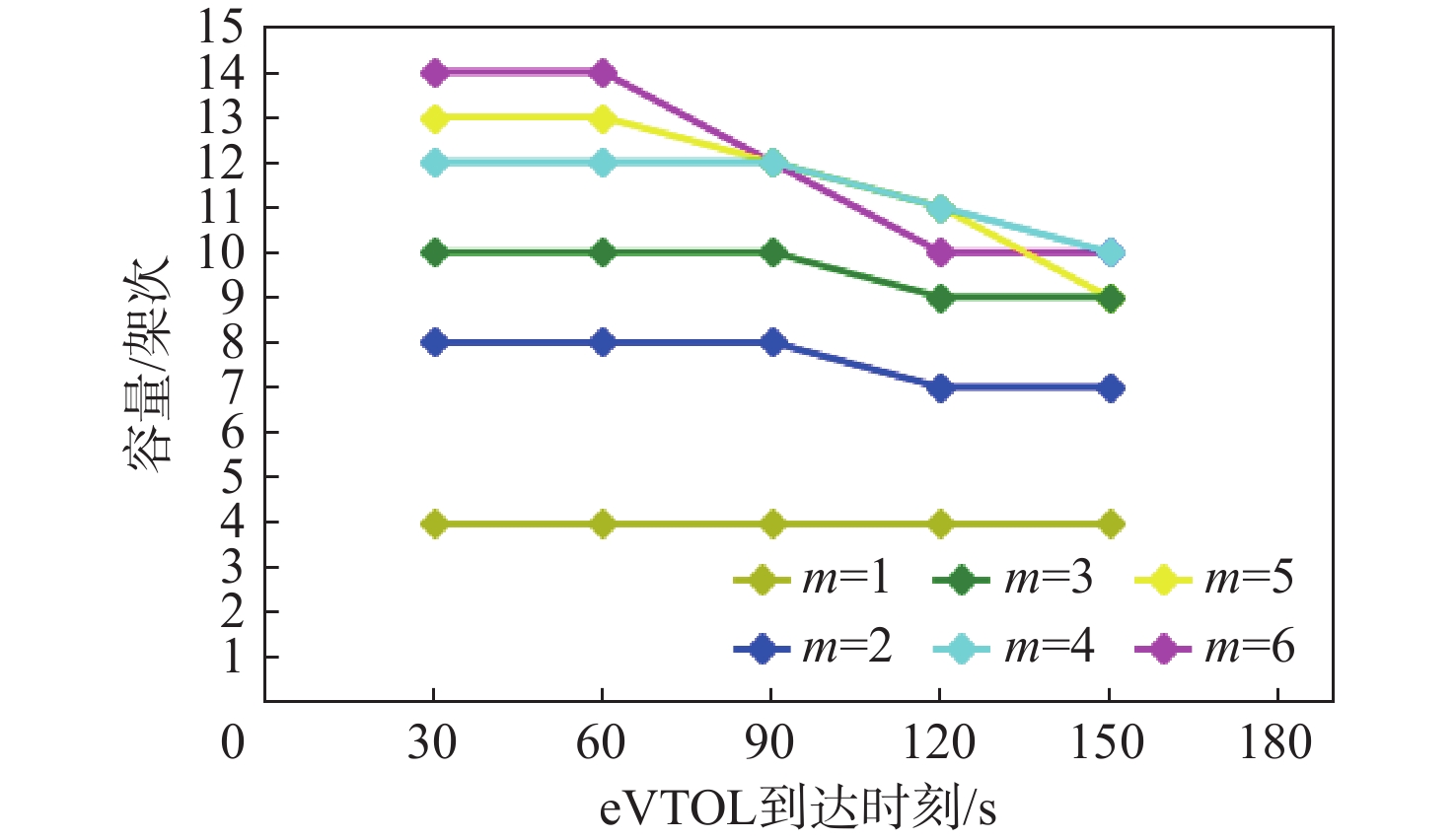
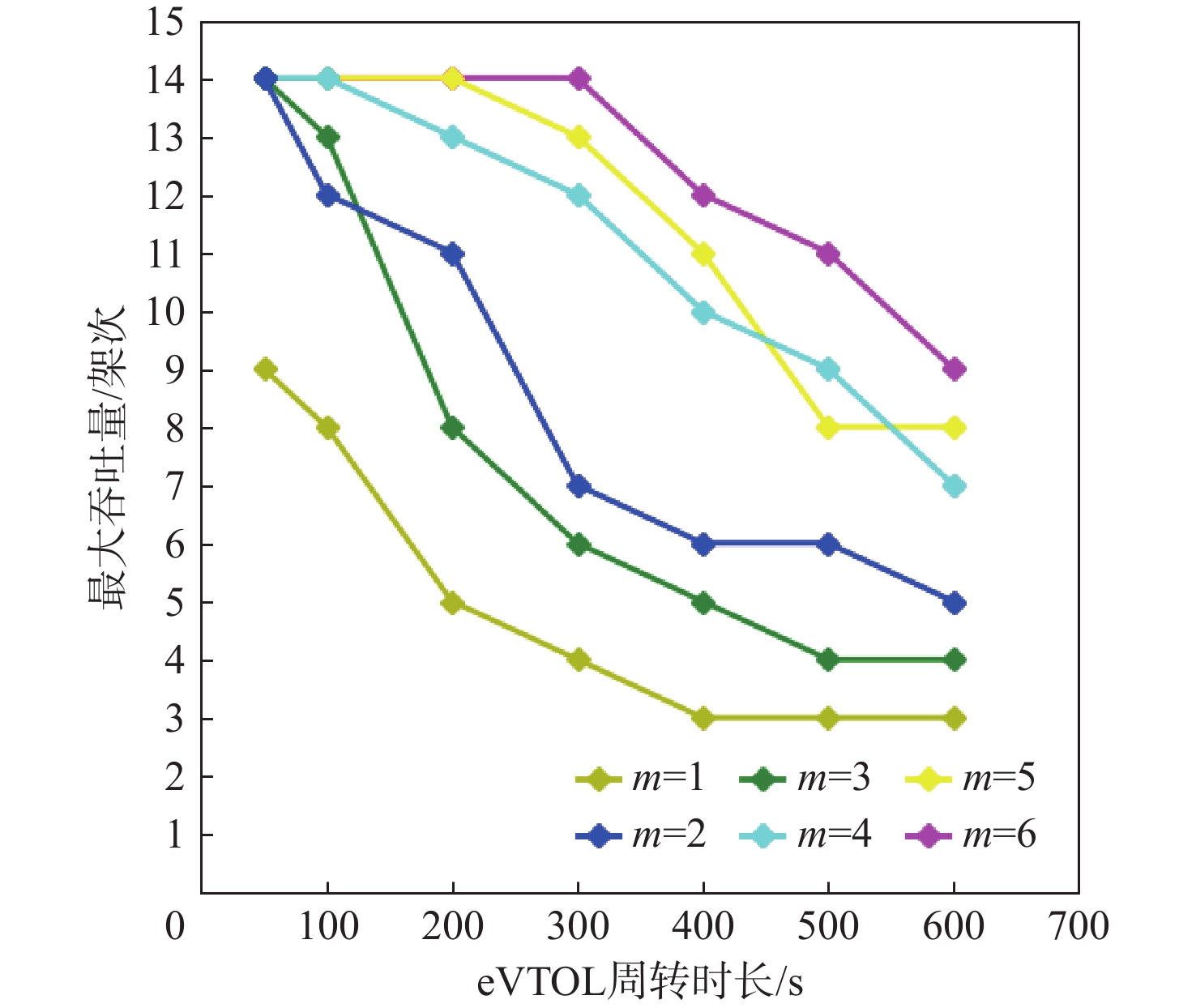
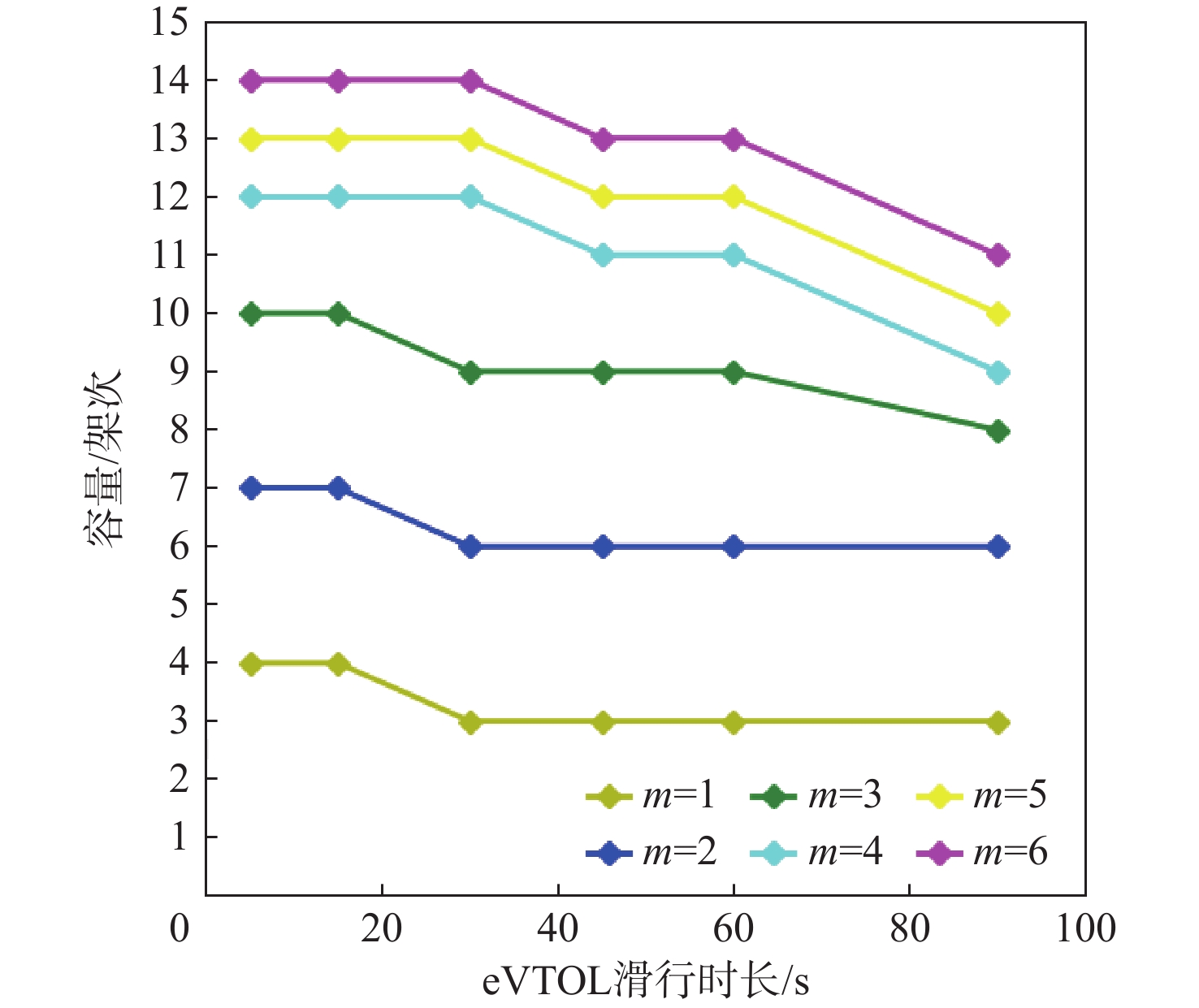
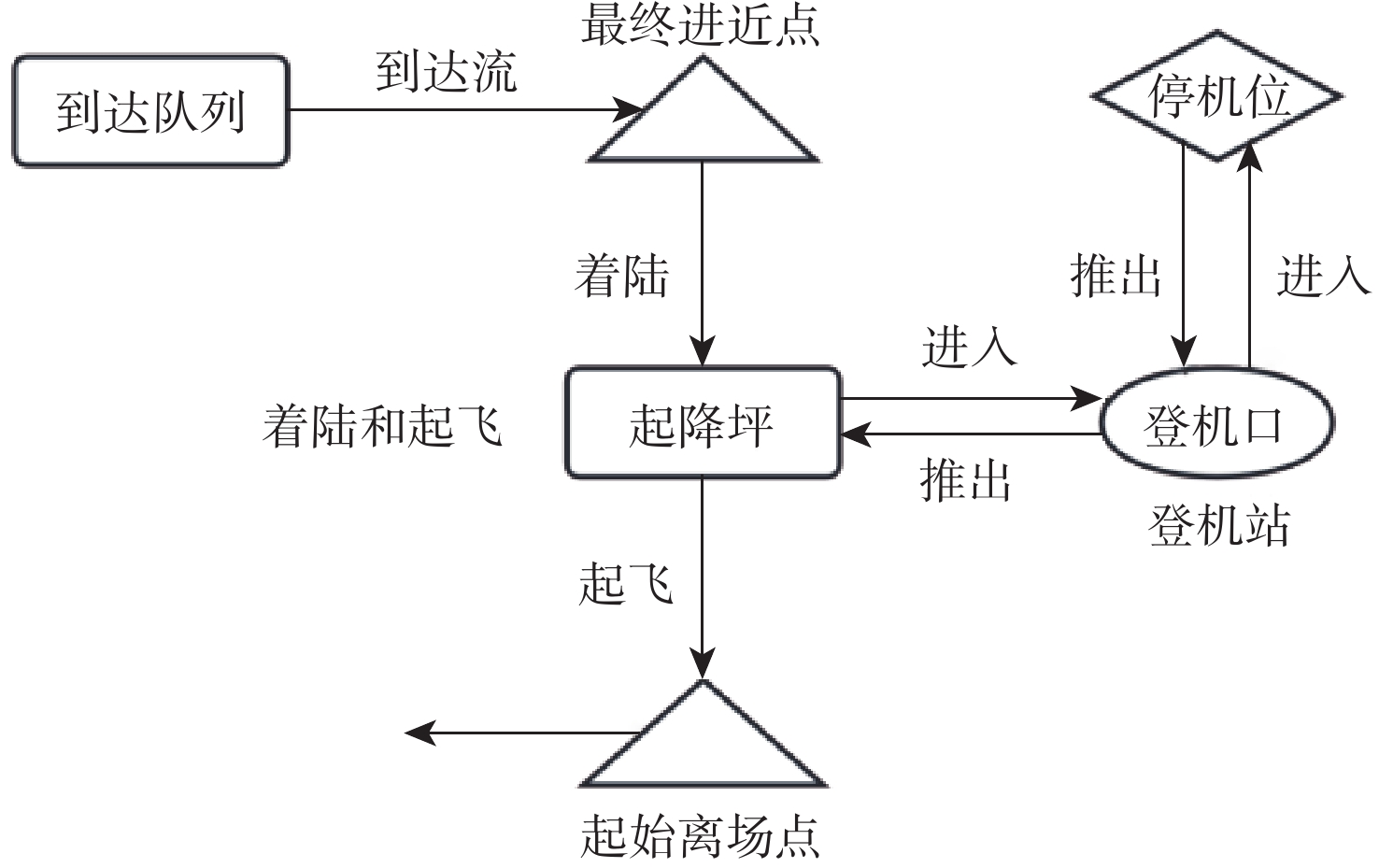
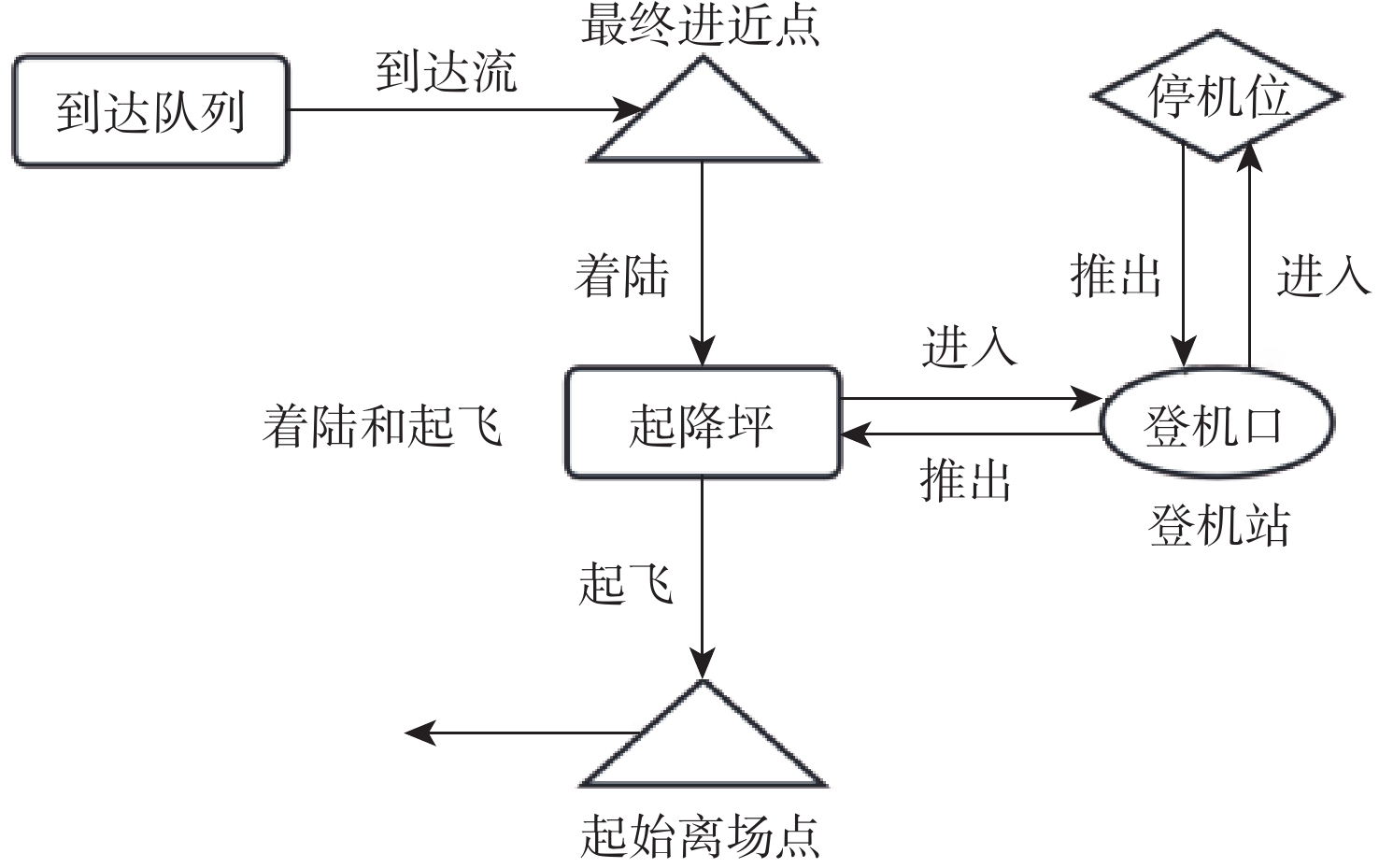
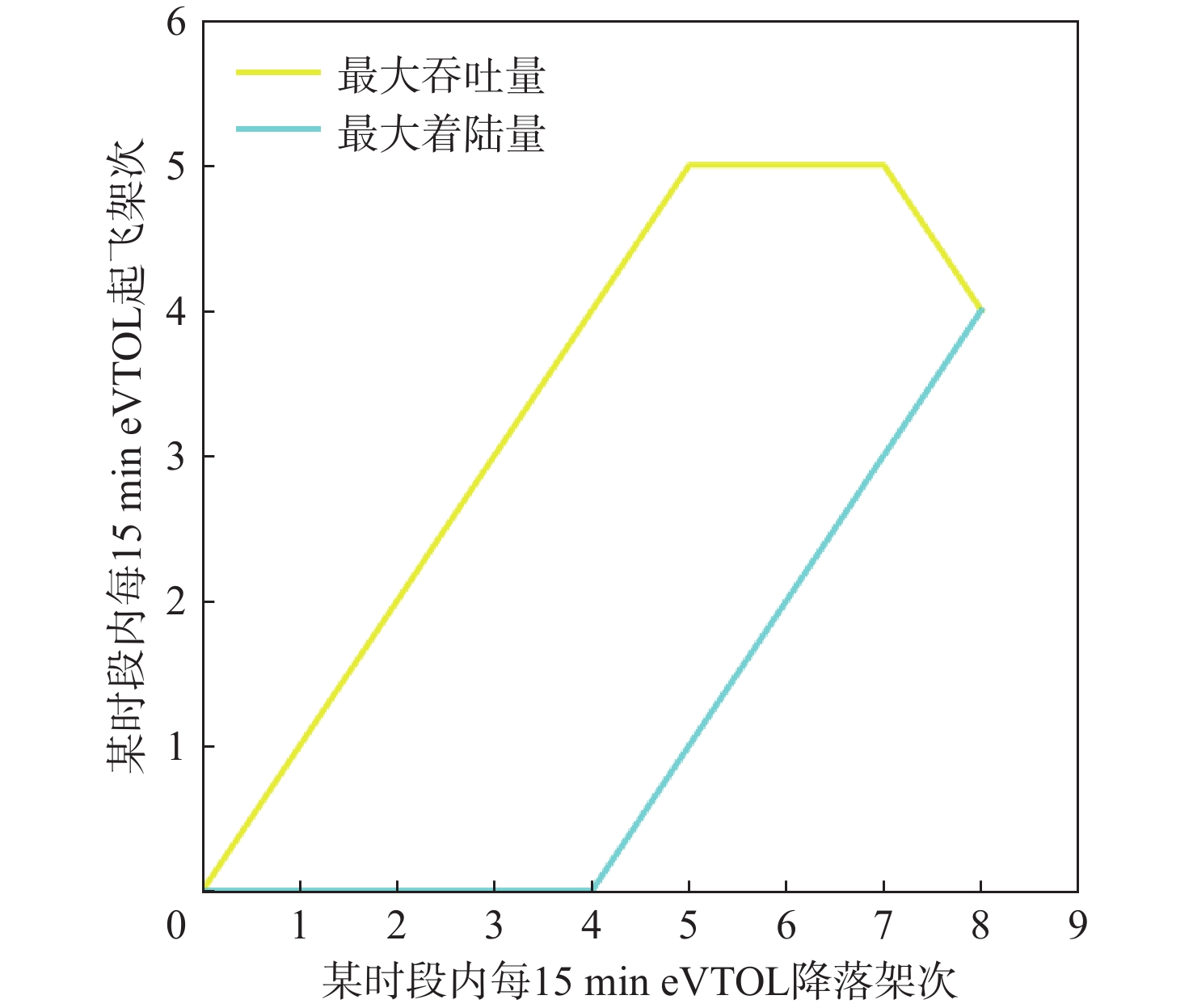
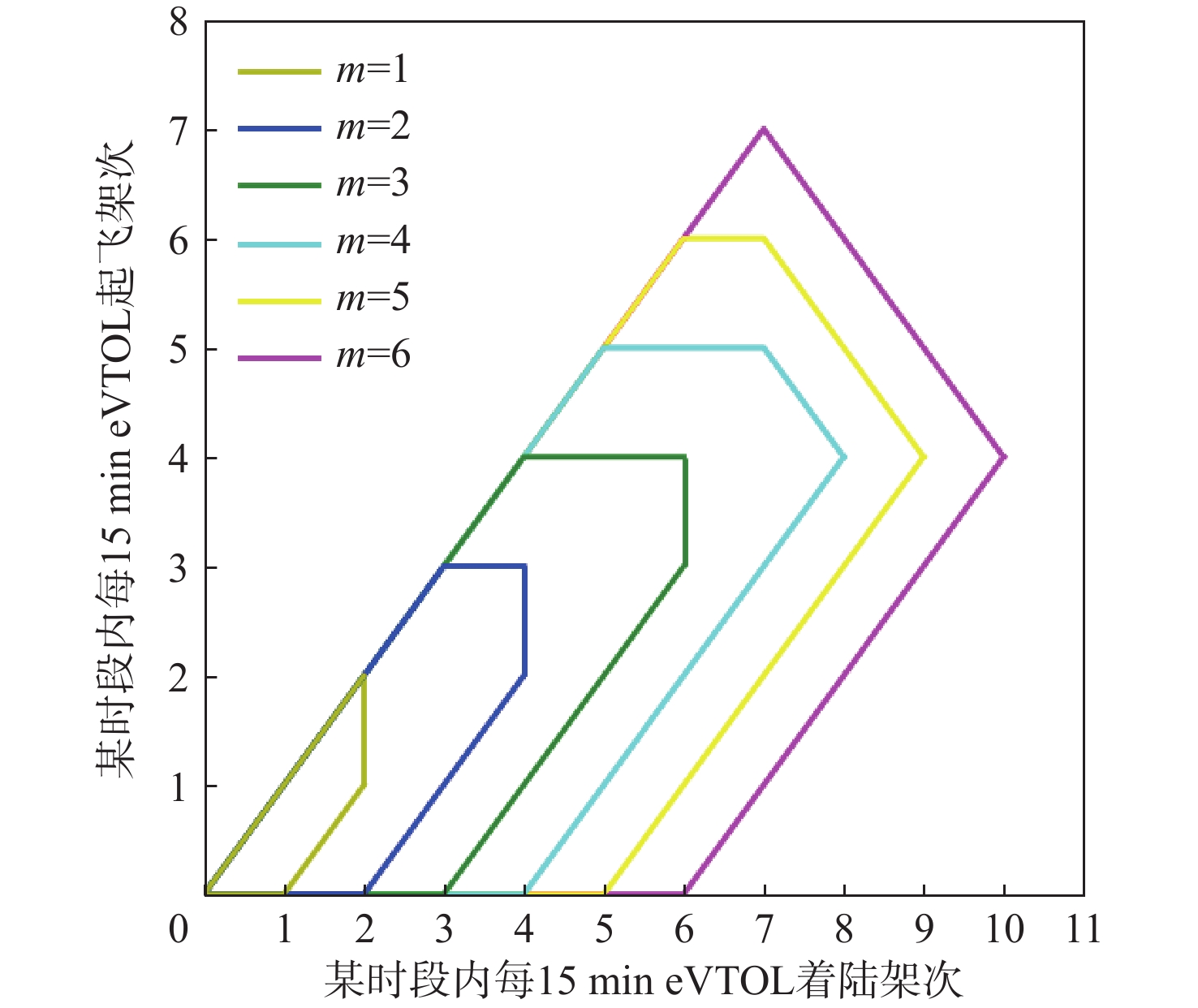
To solve the problem of electric vertical take-off and landing(eVTOL) operational planning and capacity estimation in a vertiport. Firstly, the operation task network was constructed by sorting out the layout structure of the vertiport. Then, based on the multi-commodity flow model and the entry and departure times of each node were set to construct the operational task planning model. The best task planning was taken as the optimization objective, and the node occupation time was taken as a constraint. Following the model's construction, a standard vertiport was utilized as an example, the problem was programmed and solved using Python and Gurobi, and the vertiport's maximum capacity as well as its influencing factors were computed and examined. The results show that the constructed task planning model is feasible. Regarding the variables influencing vertical take-off and landing airport capacity, when pad utilization is low, adding one gate can increase the capacity of three flights and provide a maximum capacity resilience of 100 seconds for vertiport; when boarding gate utilization is low, adding one pad can provide the capacity of seven flights for vertiport, and by reducing the take-off and landing time by thirty seconds, it can provide an average of three flights of capacity for vertiport. It can be seen that the research results are helpful for the estimation of vertiport capacity and provide a modeling idea for operational planning of eVTOL in vertiport.

Civil aviation short text combined classification method based on enhanced point-wise graph convolutional networks
LIU Xiaolin, SONG Yingying, LI Zhuo
2026, 52(6): 1890-1902. doi: 10.13700/j.bh.1001-5965.2024.0223
Abstract:

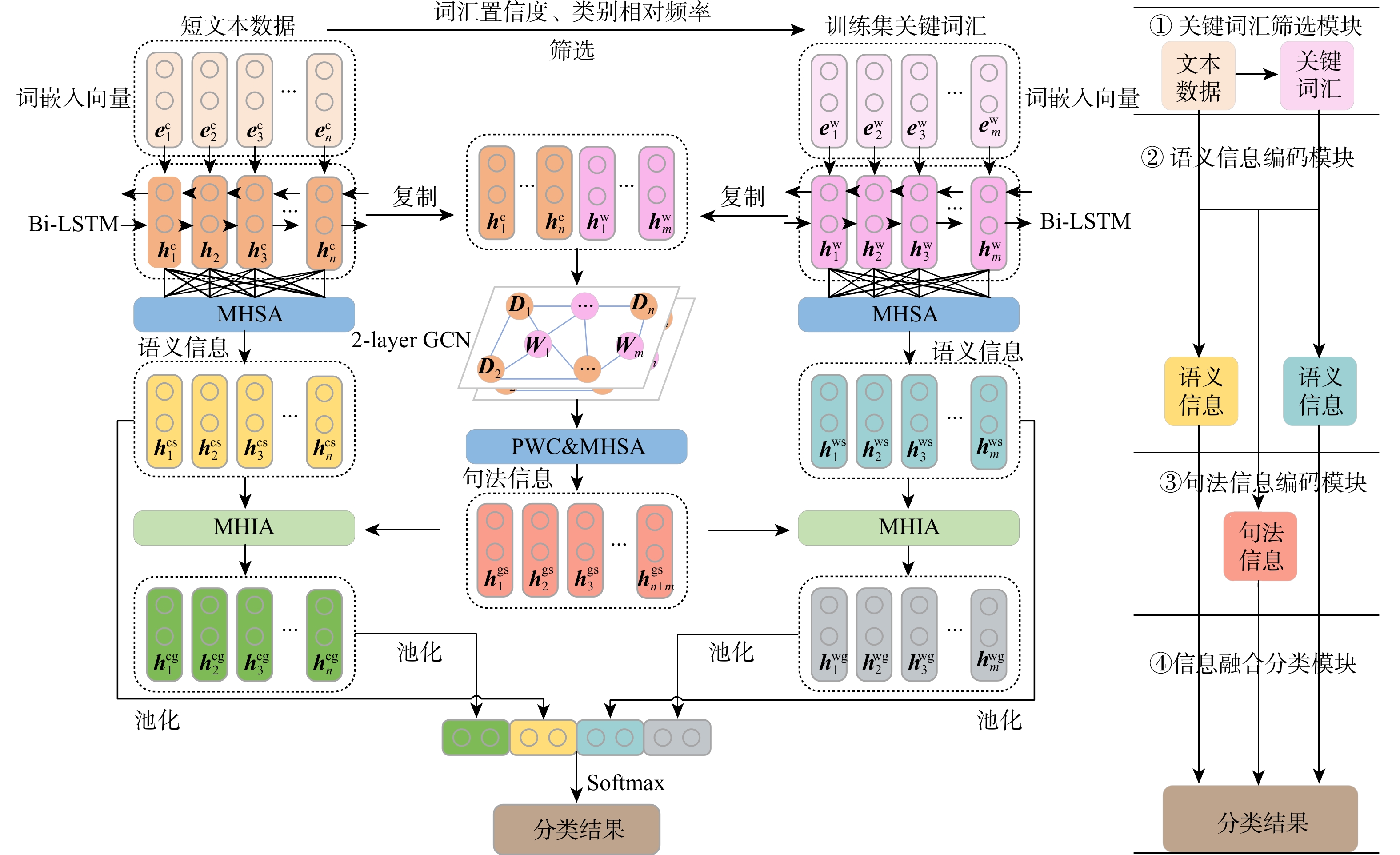
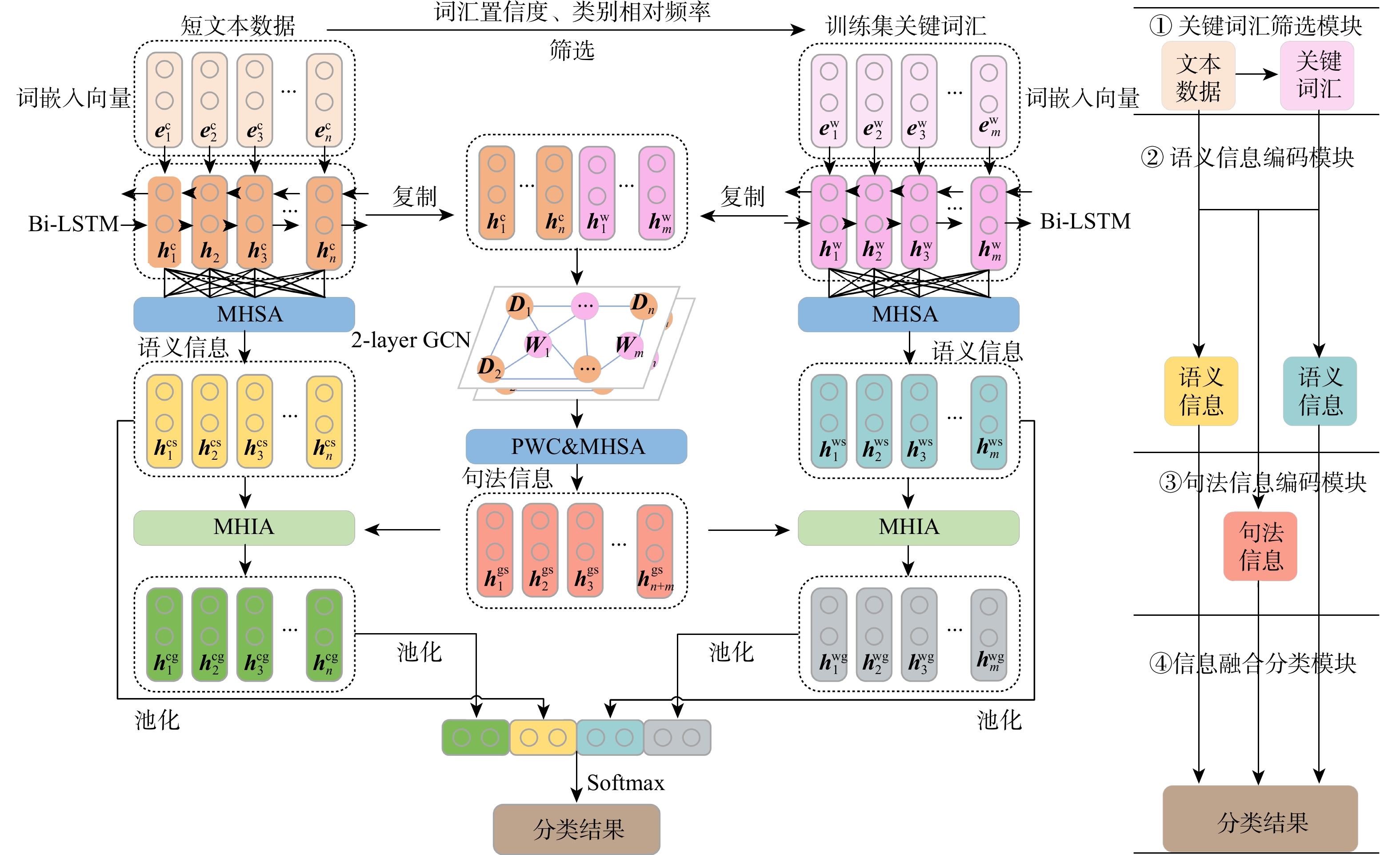
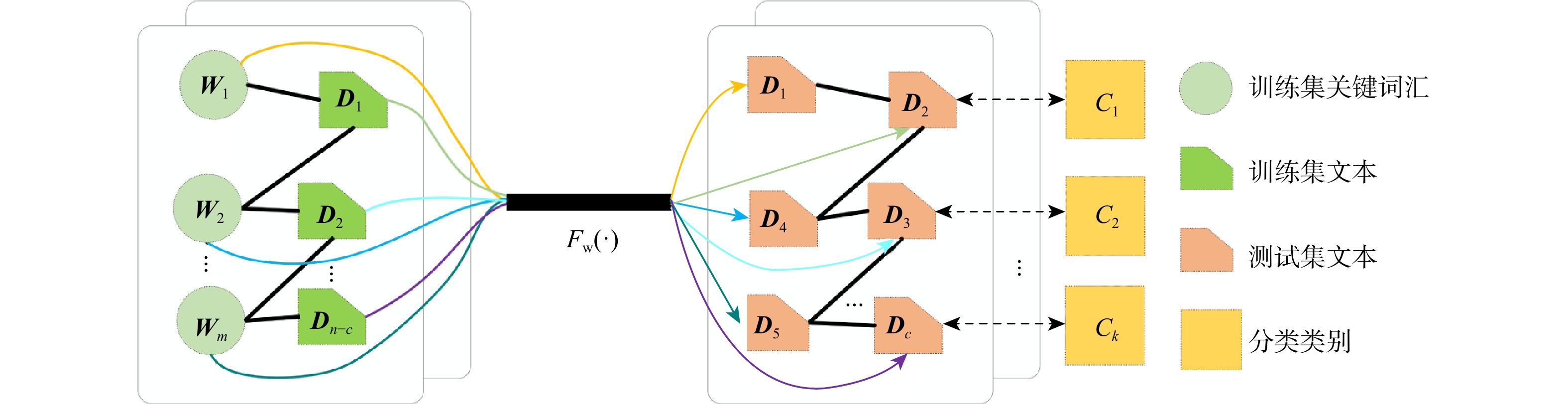
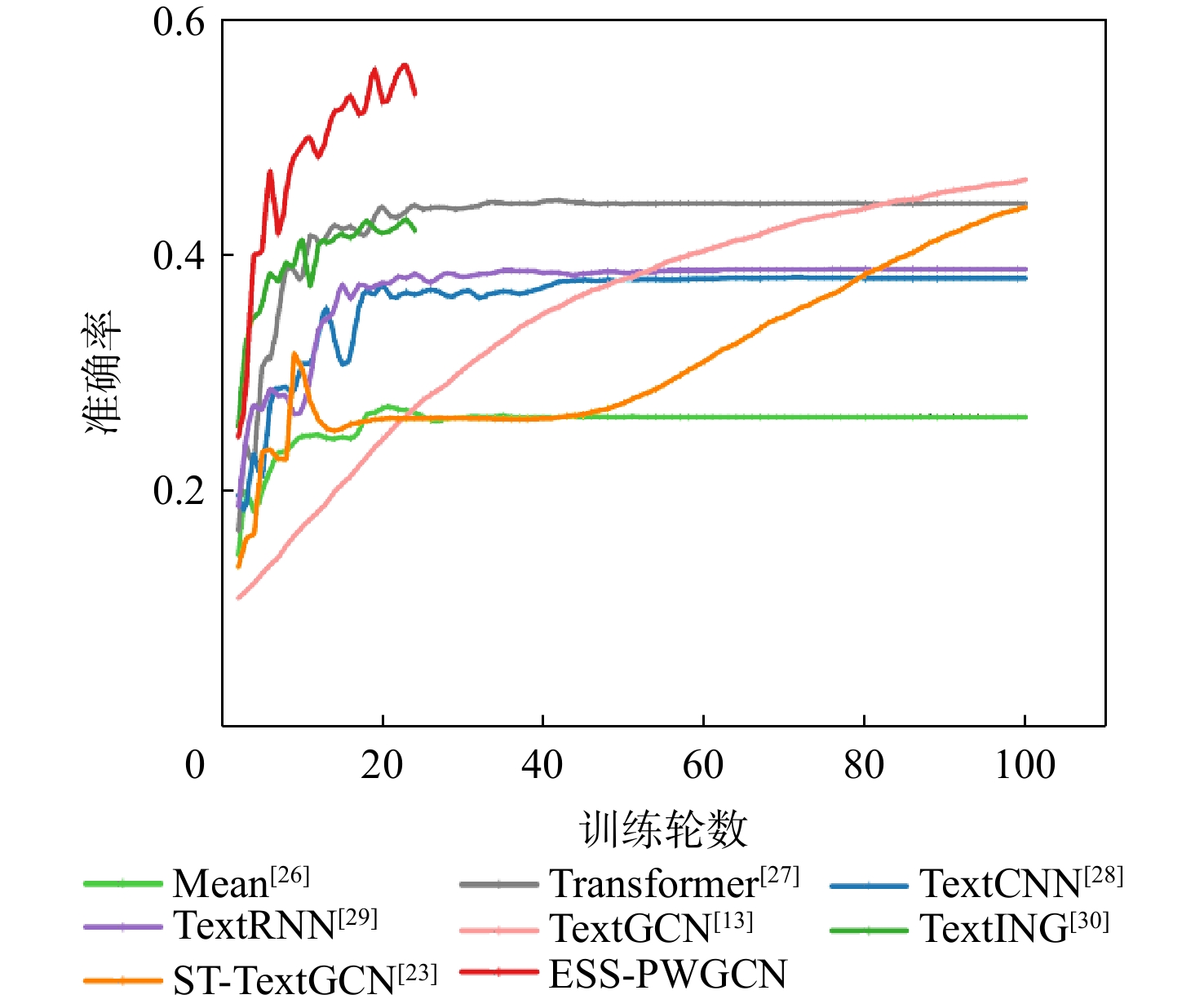
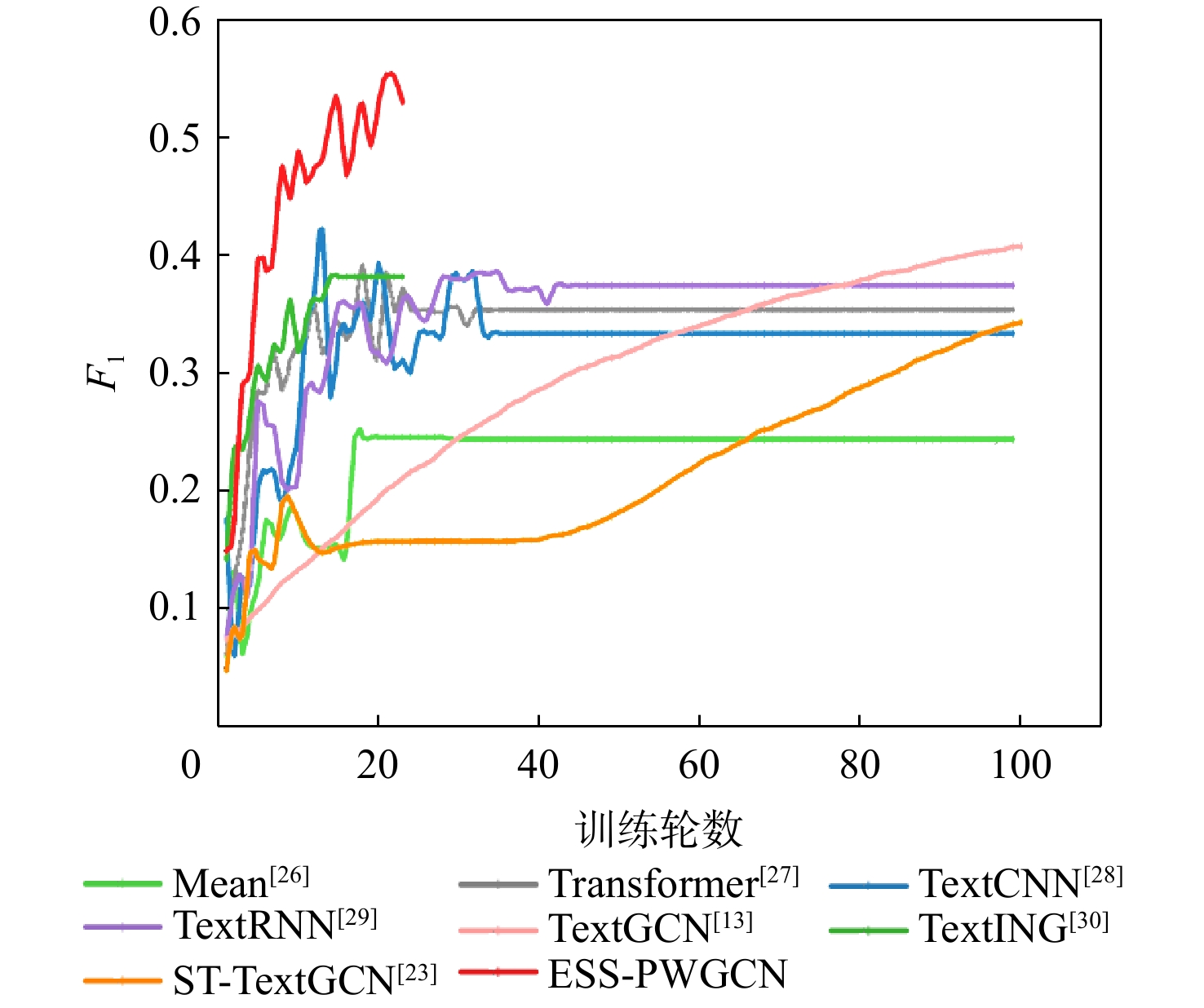
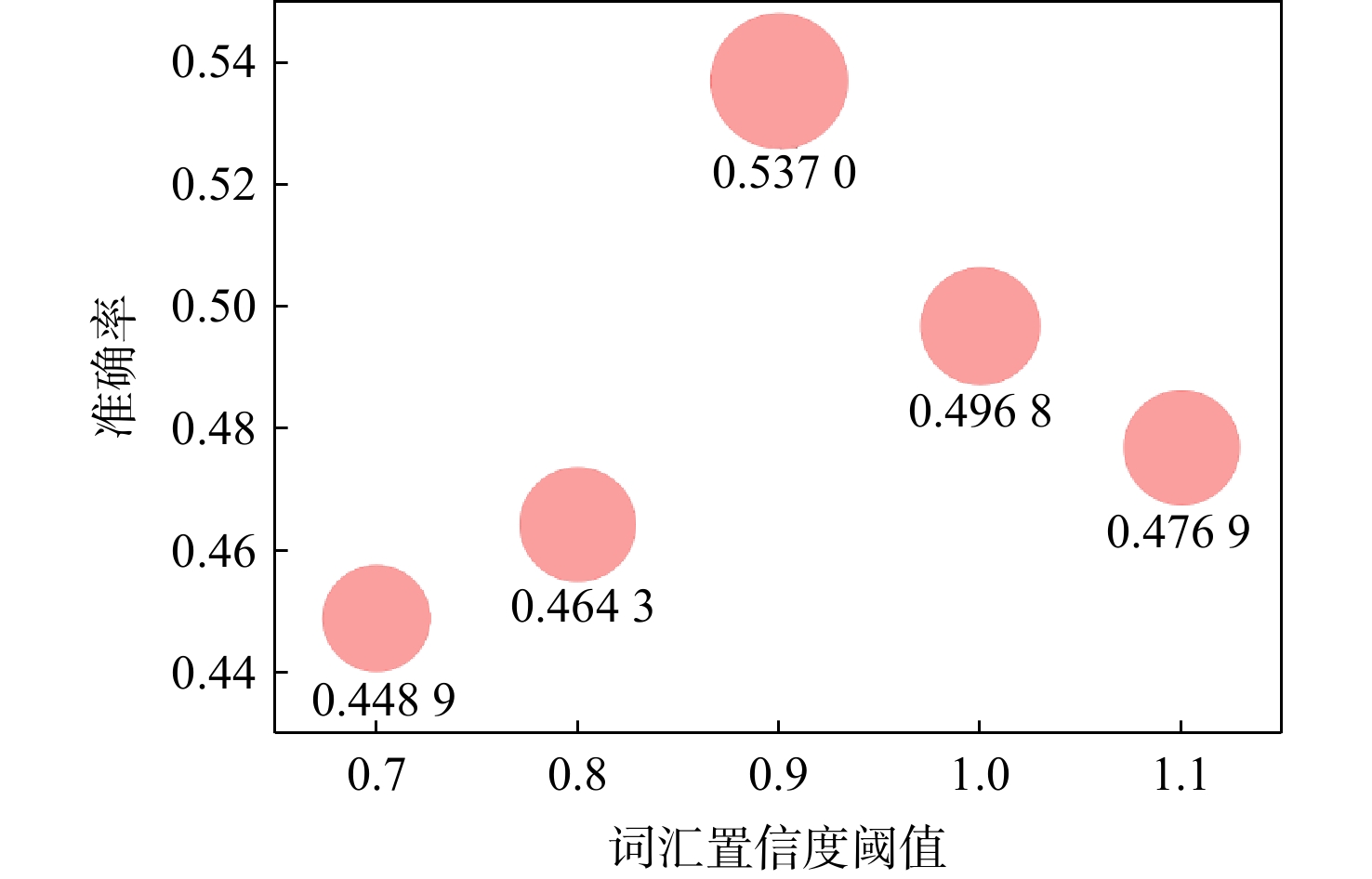
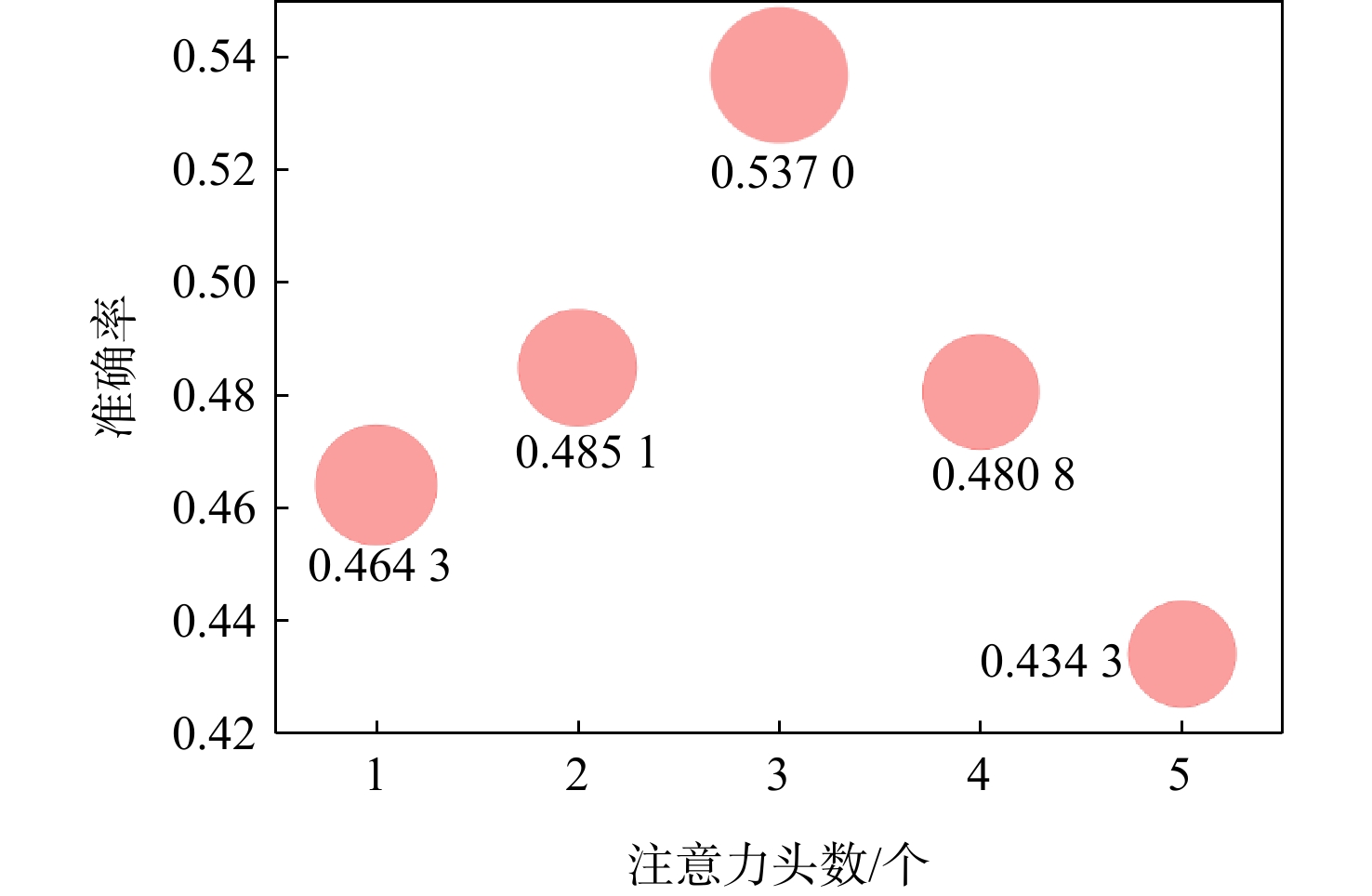
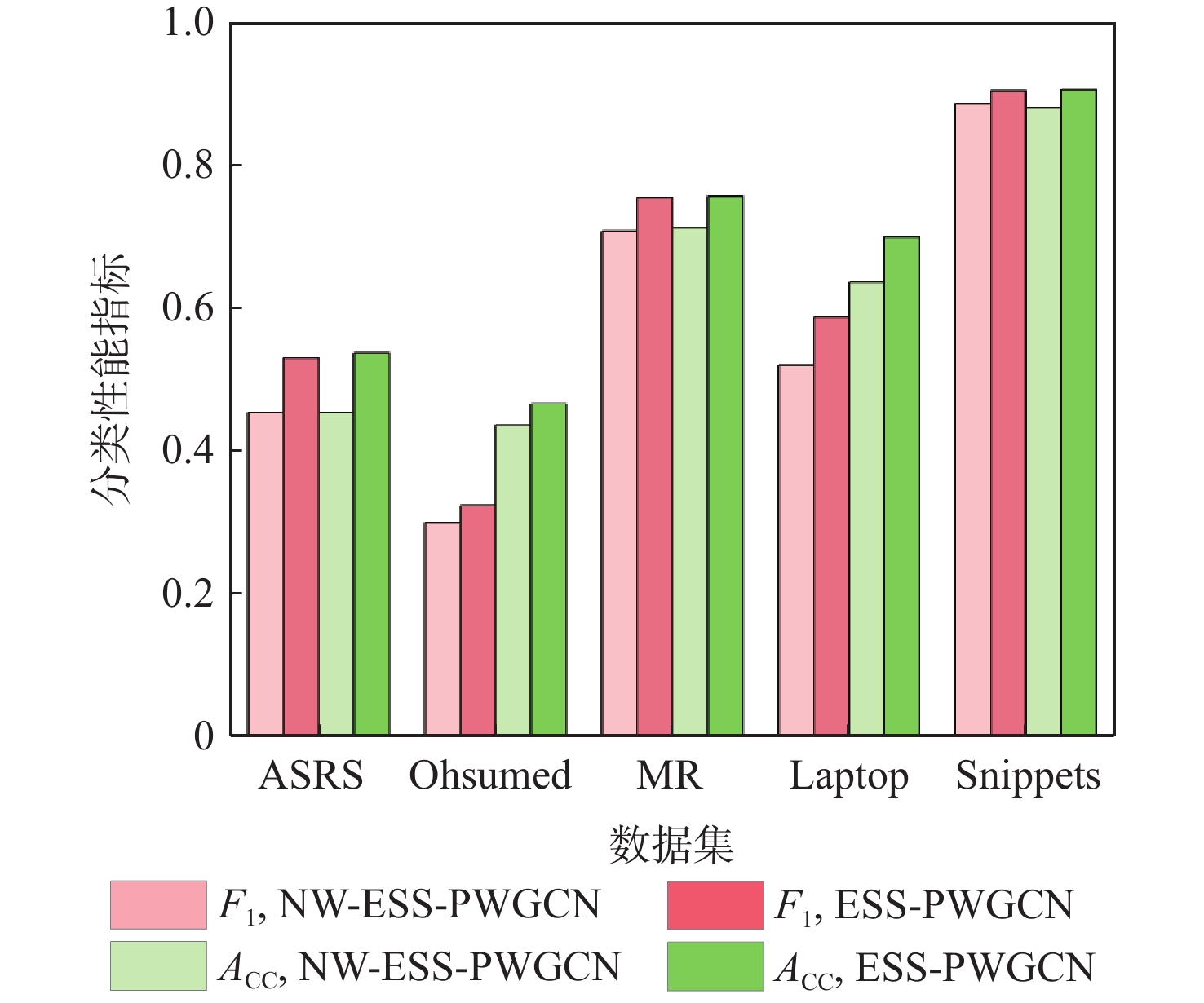
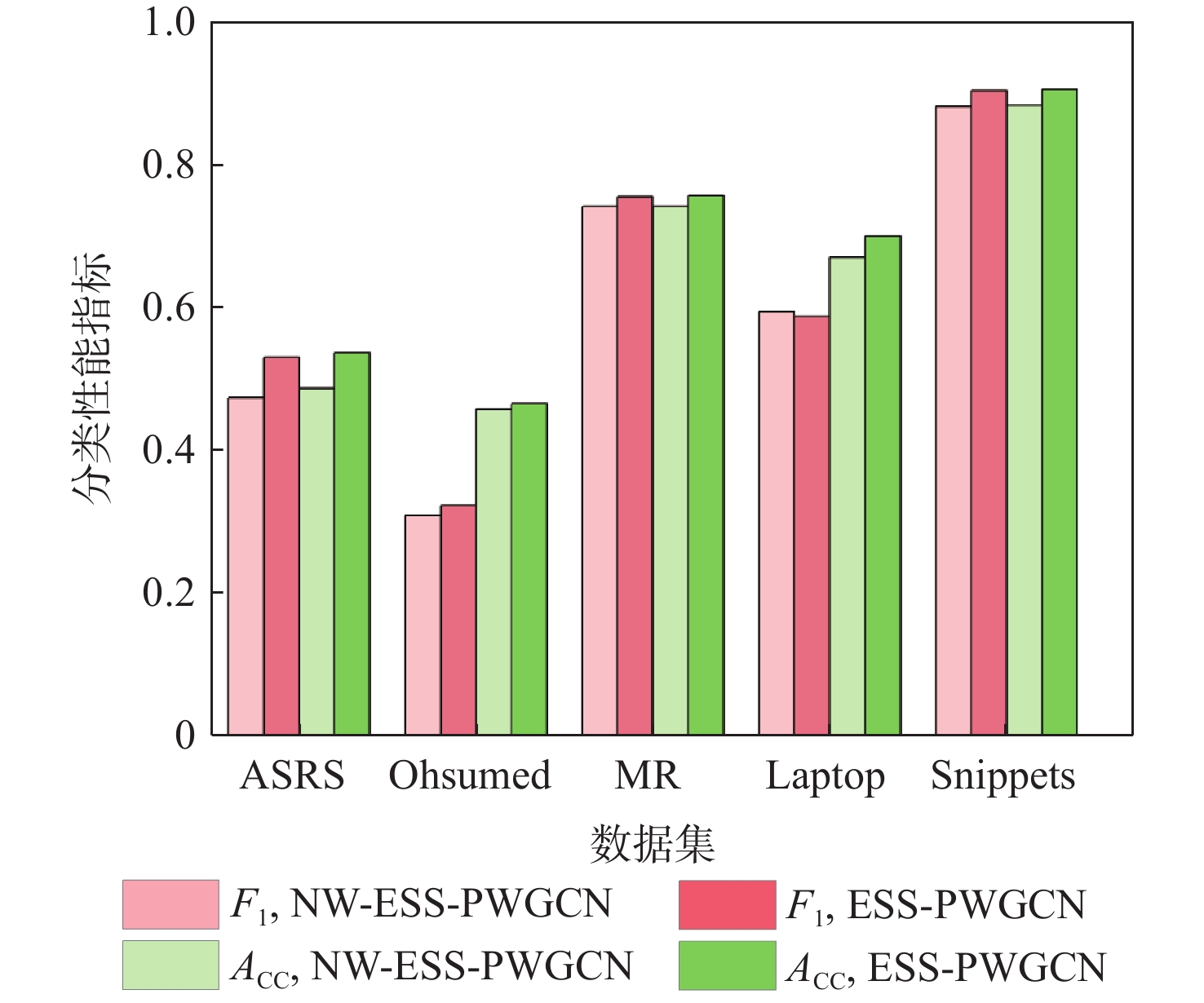
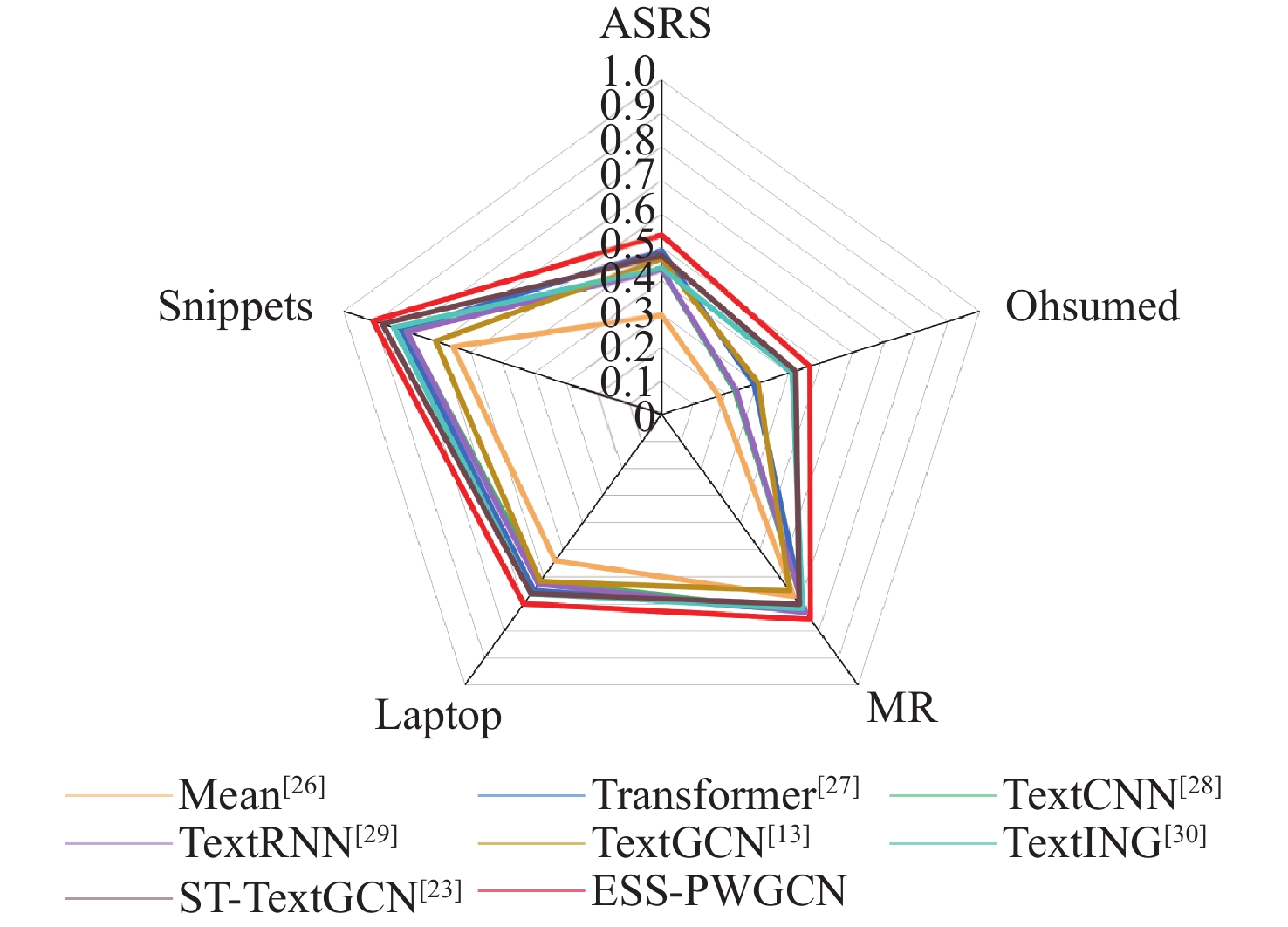
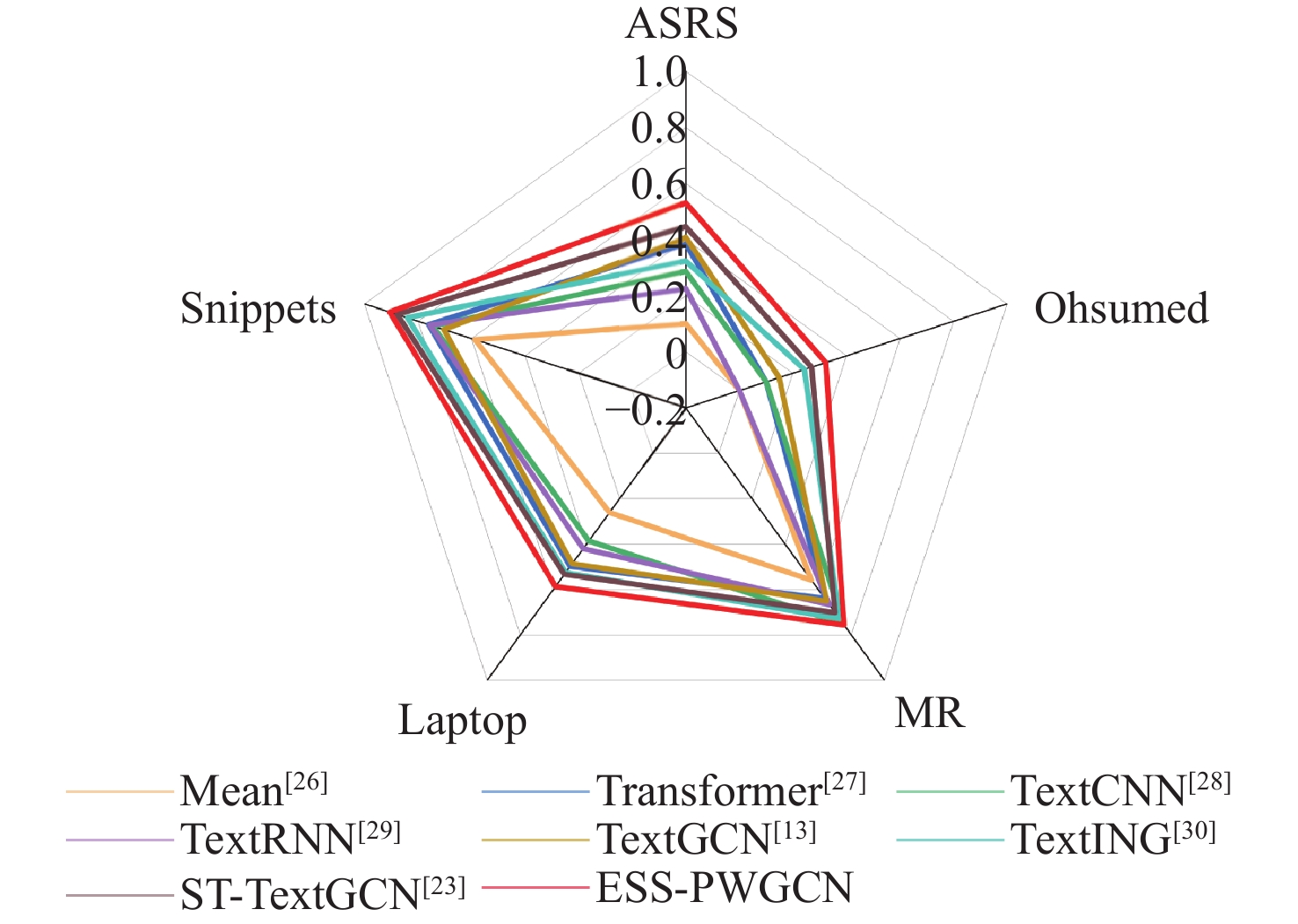
The improvement of classification accuracy is currently hampered by the fact that most short text classification approaches suffer from inadequate information mining and insufficient attention to local information. In light of this, an enhanced semantic-syntactic point-wise graph convolutional network (ESS-PWGCN) short-text combination classification model with few samples and semi-supervised civil aviation was proposed. Firstly, the model selects training set high-confidence keyword information to enrich and enhance the expression of key information within civil aviation short texts, thereby broadening the applicability of the model. Secondly, it balances the influence weights of global-local information within the textual graph structure while learning the semantic-syntactic information of civil aviation short texts by combining point-wise convolution with graph convolutional networks (GCN) and multi-head attention mechanisms.Then, a fully connected layer is employed to amalgamate the acquired information for outputting classification results. Finally, experiments conducted on aviation datasets and other public domain datasets demonstrate that the ESS-PWGCN model not only surpasses the current state-of-the-art self-training text graph convolution networks( ST-TextGCN) model in terms of accuracy and F1 score by 4.59% and 6.53%, respectively, but also exhibits superior robustness and generalizability.

Wind turbine blade defect detection based on improved YOLOv7
TANG Zhanjun, ZHANG Chaojie, WANG Jian, LU Peng, LIU Huiyuan, JIAN Hong
2026, 52(6): 1903-1914. doi: 10.13700/j.bh.1001-5965.2024.0228
Abstract:

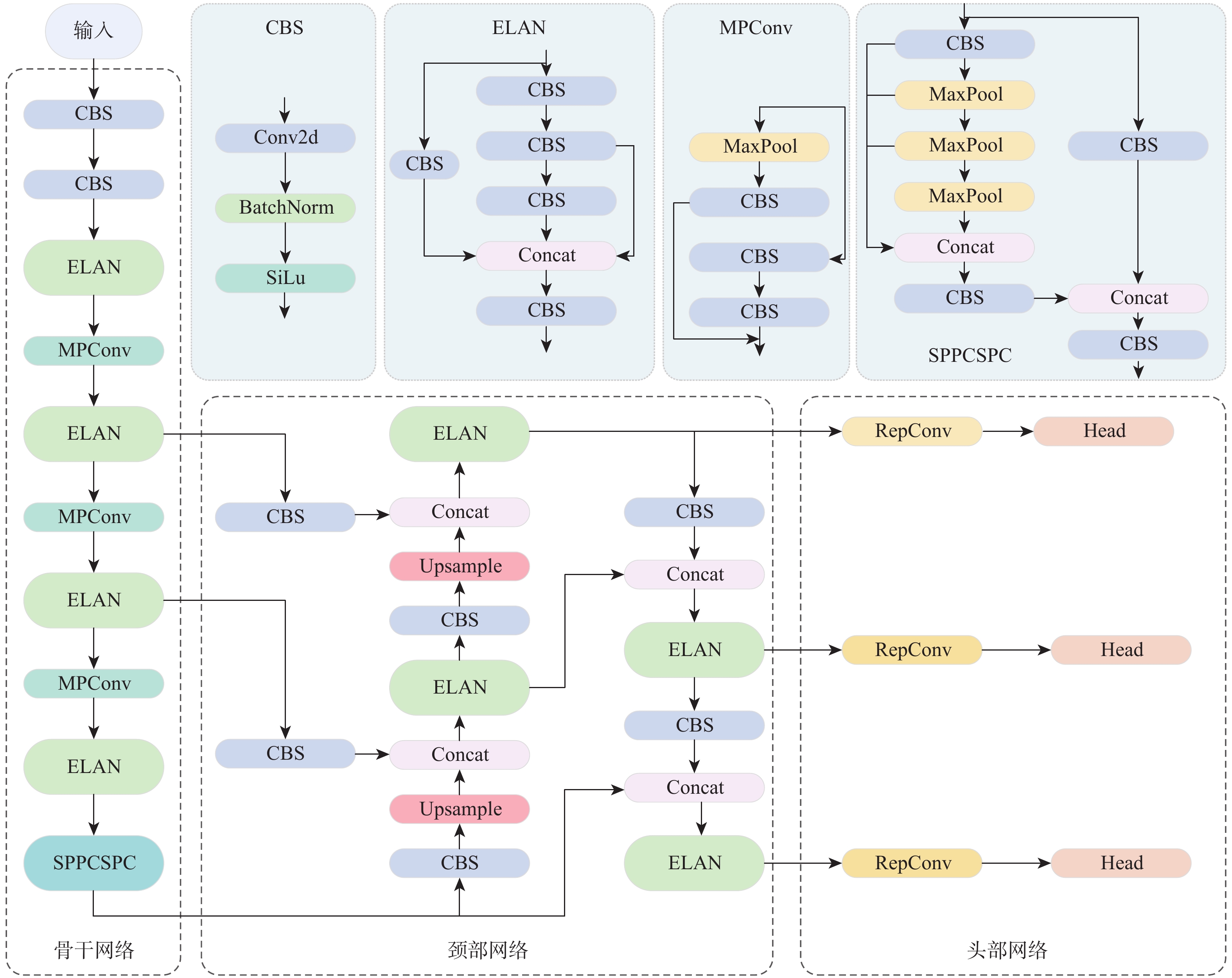
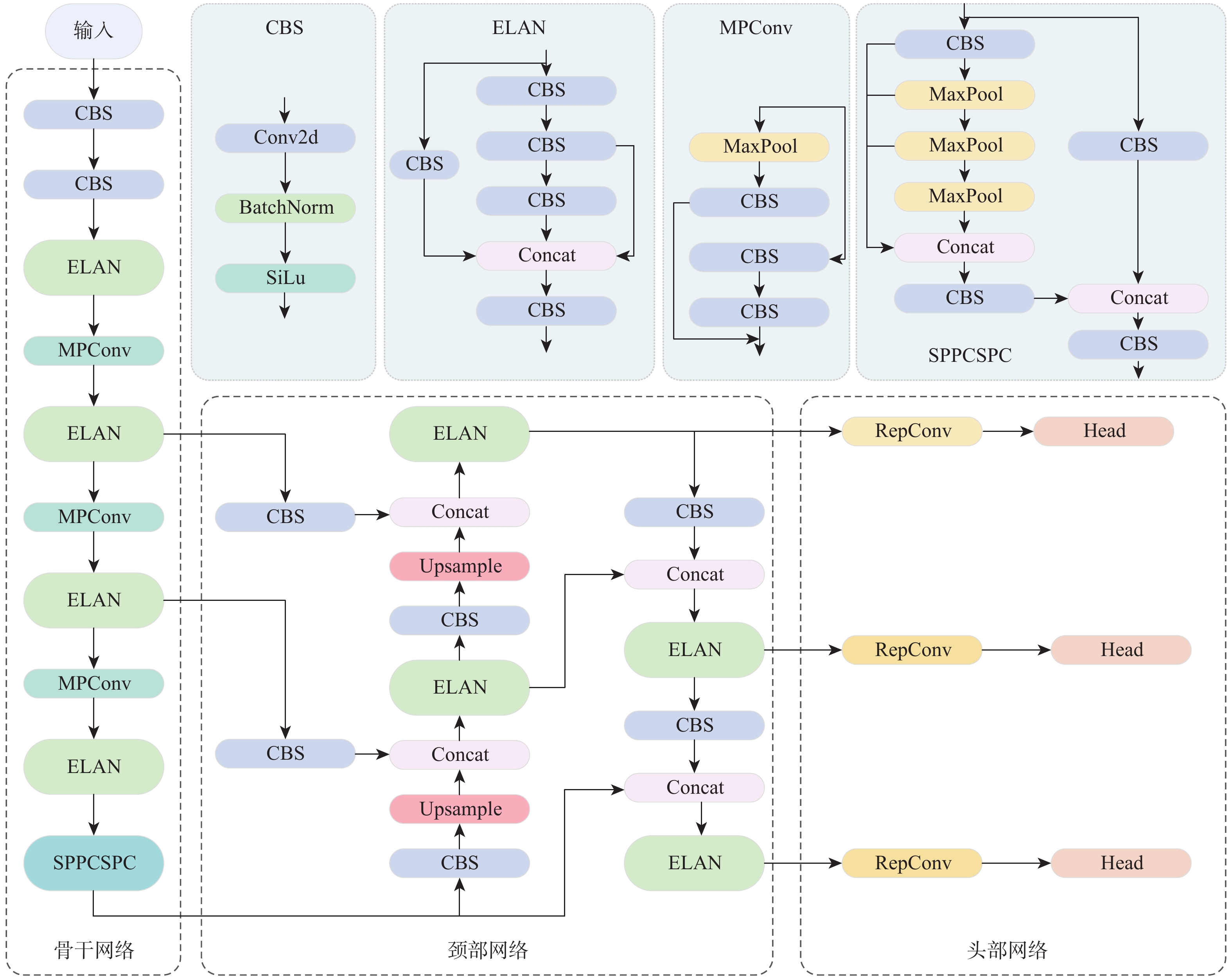
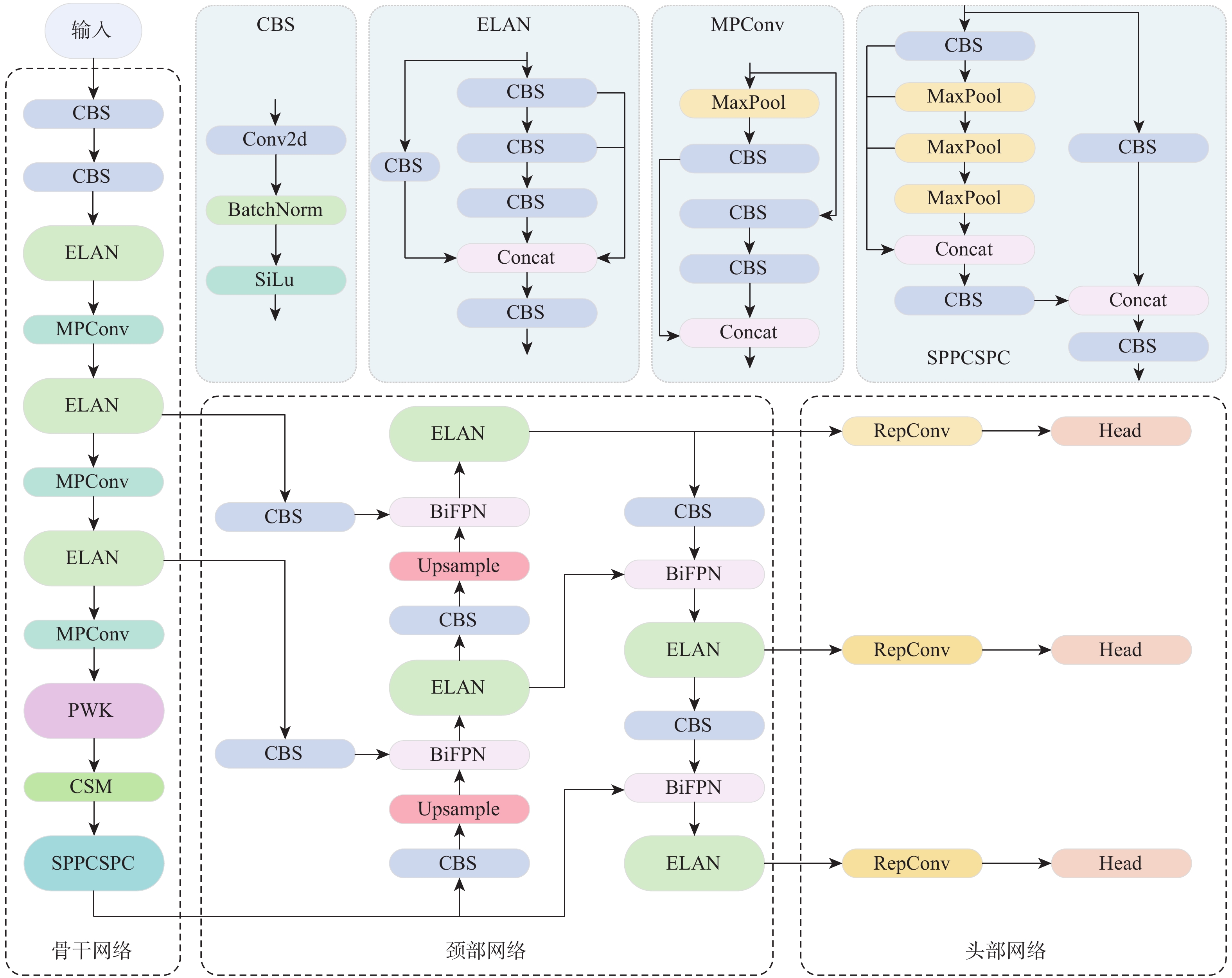
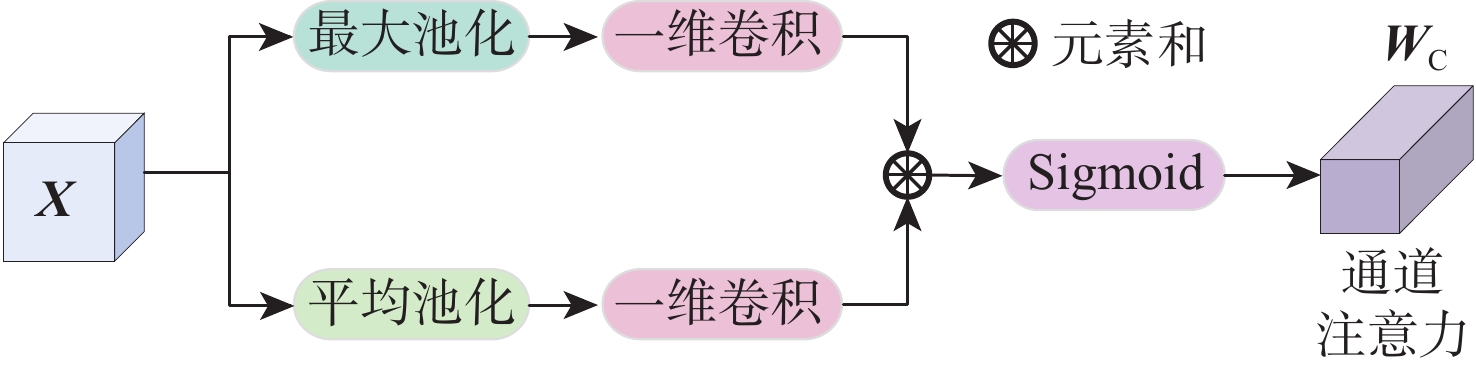
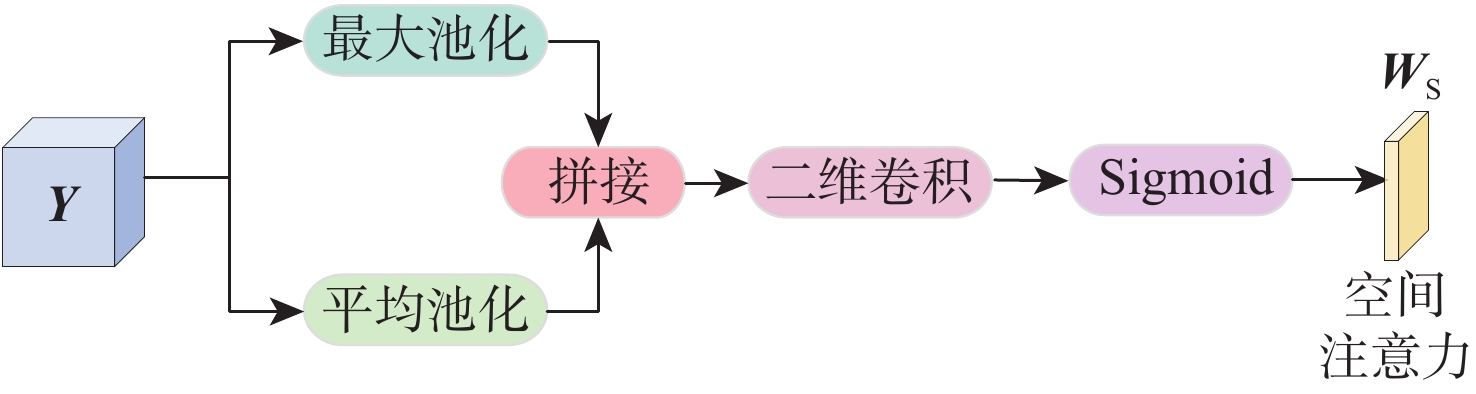
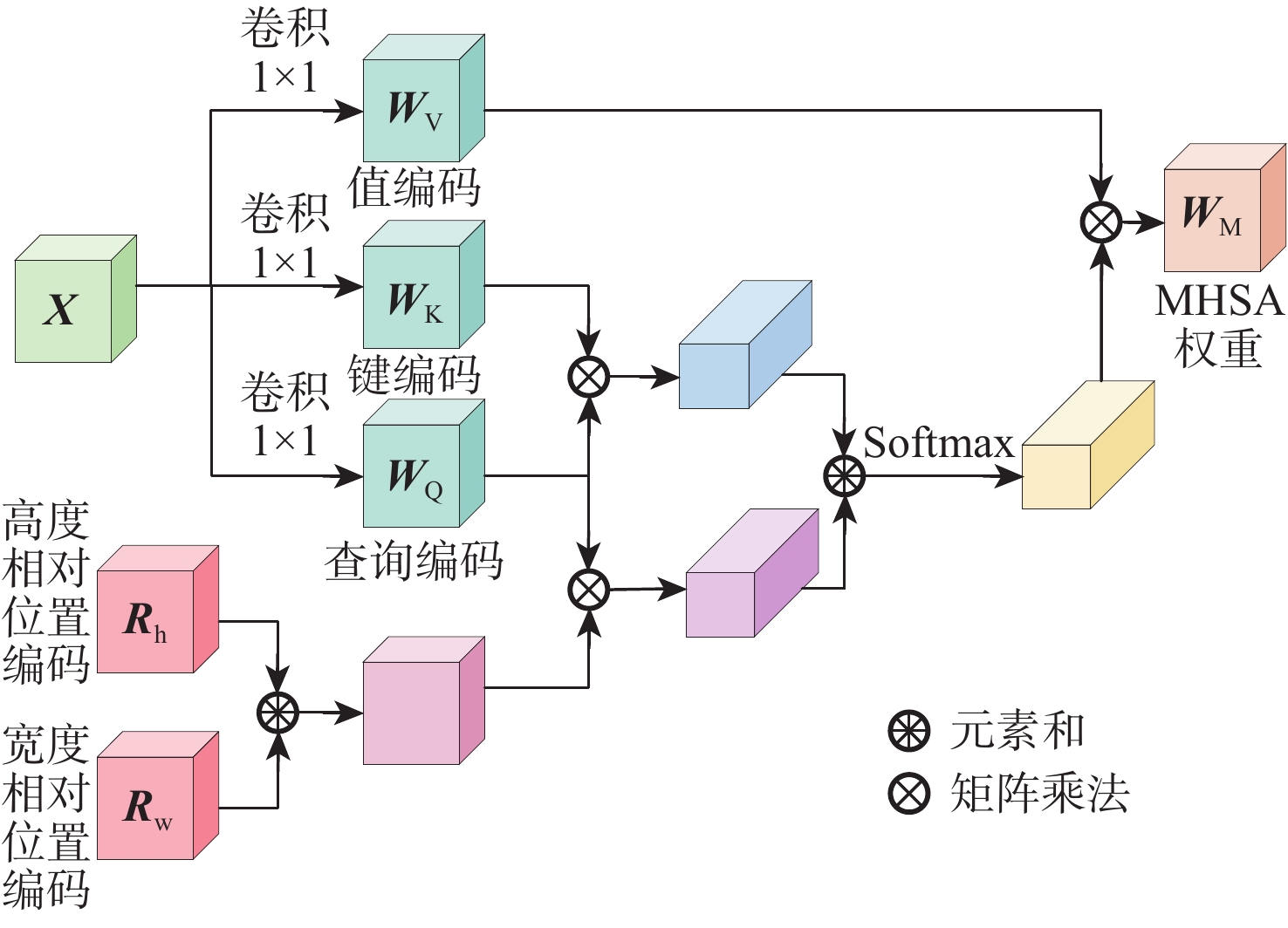
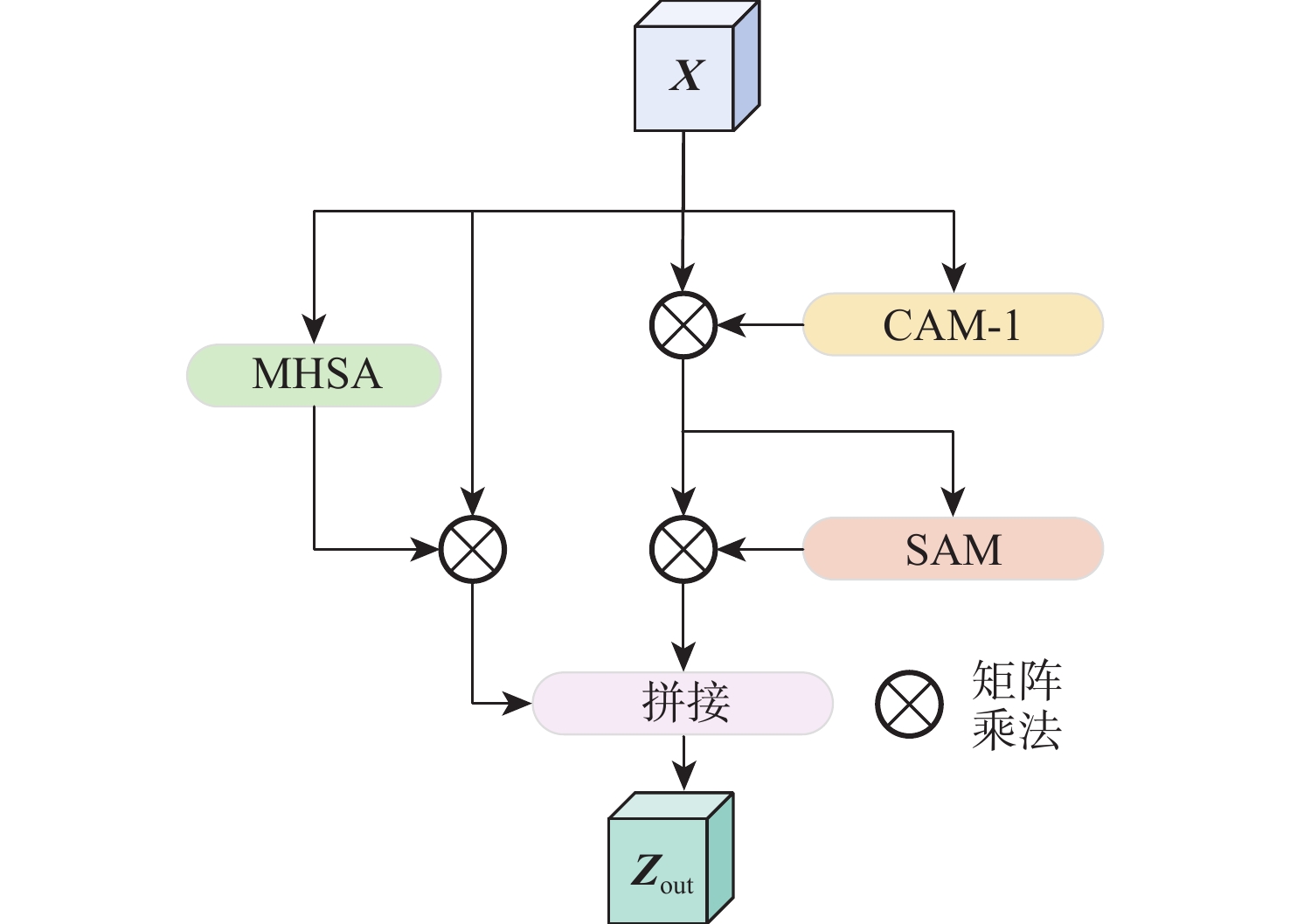
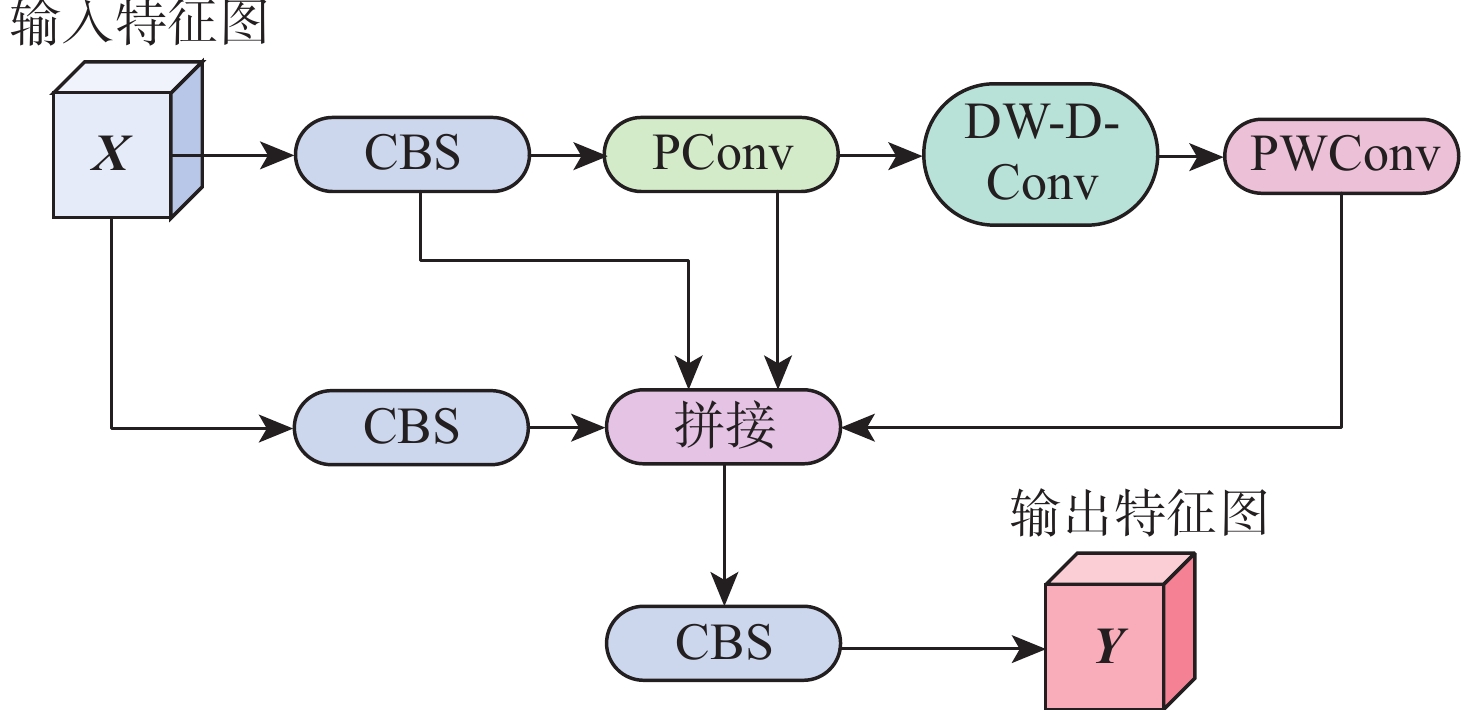
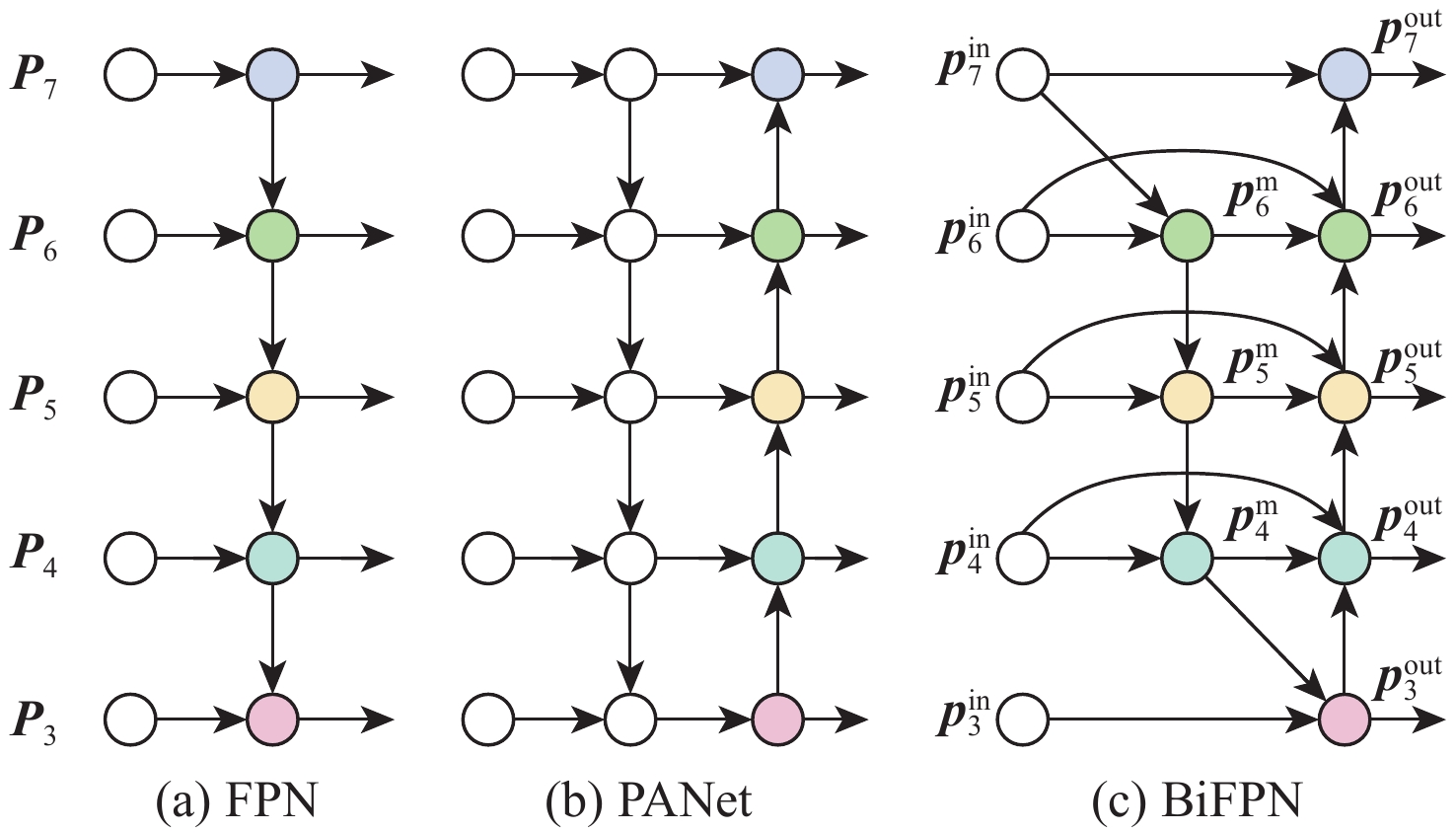
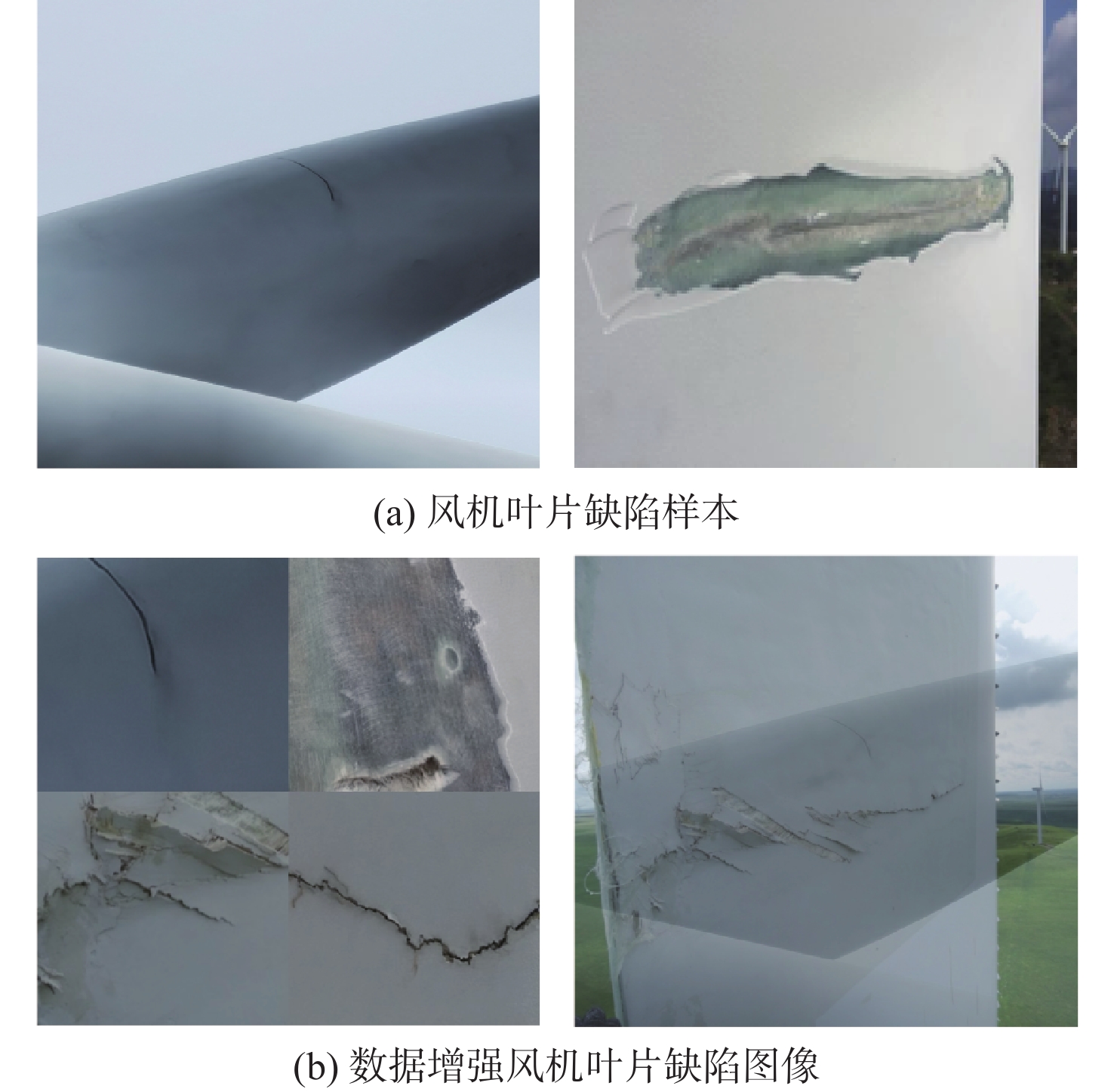
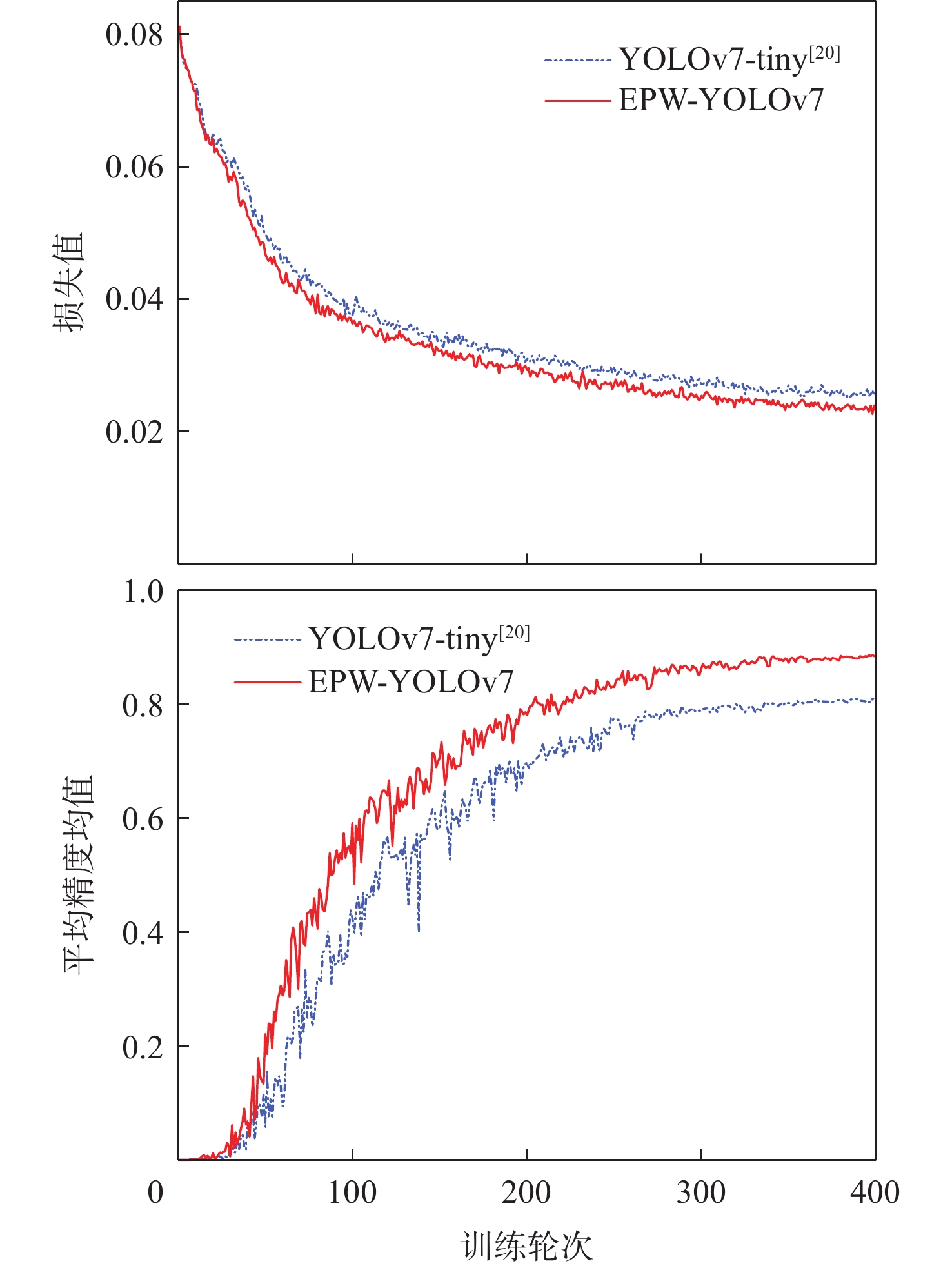
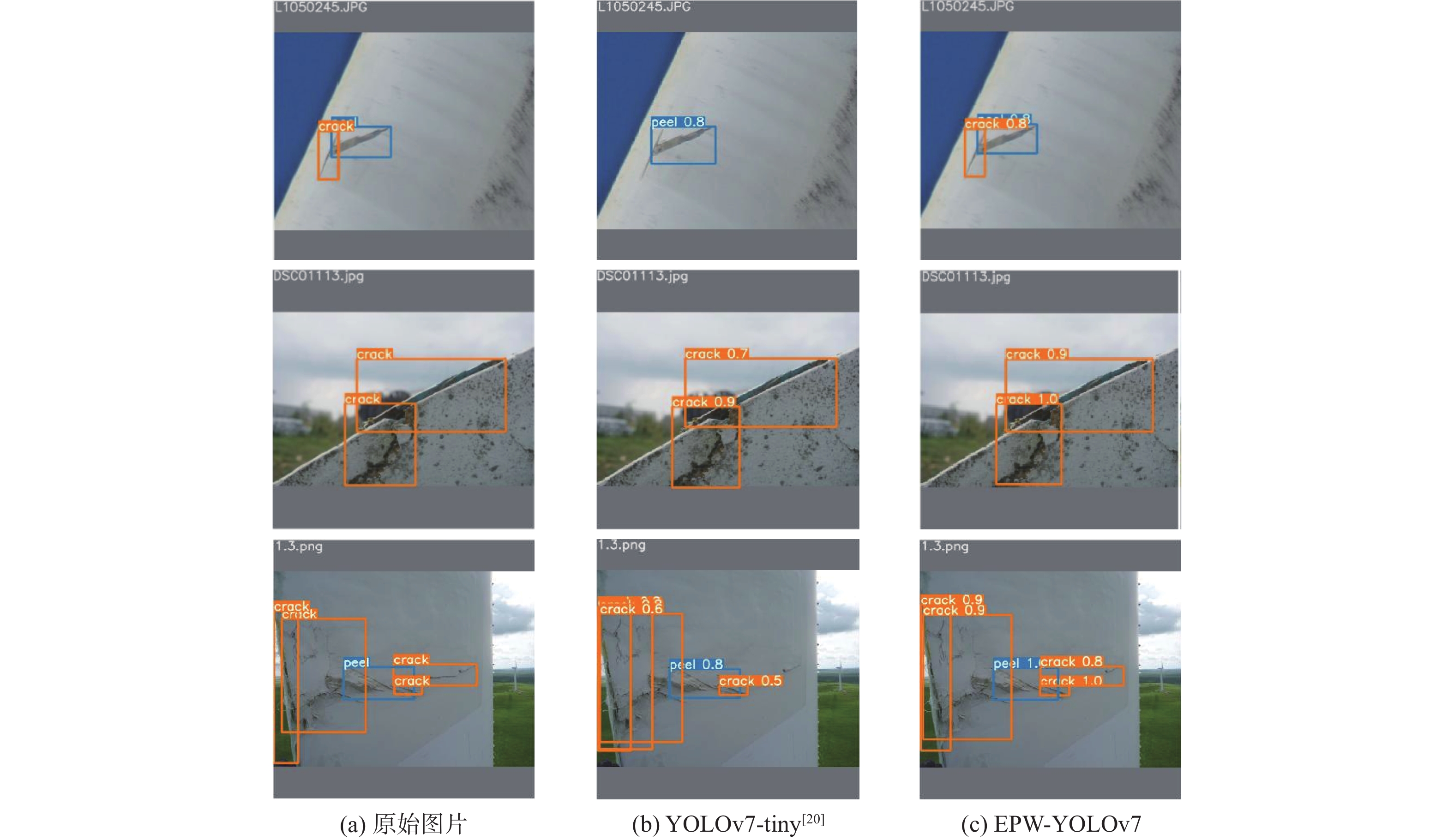
A wind turbine blade defect detection technique, EPW-YOLOv7, based on the YOLOv7 network model, is suggested for the features of wind turbine blade defects with large scale variation and complicated backdrop in order to achieve real-time accurate identification of wind turbine blade flaws. Firstly, the CSM attention module is designed and added to the backbone network to suppress the complex background interference and to improve the efficiency of extracting important features. Second, the lightweight PWK module is designed to replace the original (ELAN) module to reduce the amount of redundant parameters and computation, and to accelerate the detection speed of the network. Then, the bidirectional feature pyramid networks(BiFPN) feature fusion module is introduced to motivate the network to recognize multi-scale defect features more accurately. Finally, the wise-intersection over union(WIoU) loss function is used to optimize the network and improve the overall detection performance of the improved model. The wind turbine blade defect dataset is used for experiments, and the results demonstrate that the average accuracy of the EPW-YOLOv7 model can reach 88.4%, which is 7.1% higher than that of the YOLOv7-tiny model. Additionally, the frame rate reaches 66 frames/s, satisfying the requirement for real-time detection. In addition, compared with the current state-of-the-art target detection algorithms, the EPW-YOLOv7 model can detect defects of wind turbine blades with high accuracy and faster. In addition, compared with the current advanced target detection algorithms, the EPW-YOLOv7 model has more advantages in detecting the defects of wind turbine blades in terms of accuracy and speed, which demonstrates that the proposed algorithm is more suitable for the real-time detection and localization of wind turbine blade defect.

Quantitative real-time prediction model of pilot workload
HE Xueli, WANG Lijing, ZHAN Xi, MIAO Chongchong, GU Zonghui
2026, 52(6): 1915-1923. doi: 10.13700/j.bh.1001-5965.2024.0279
Abstract:

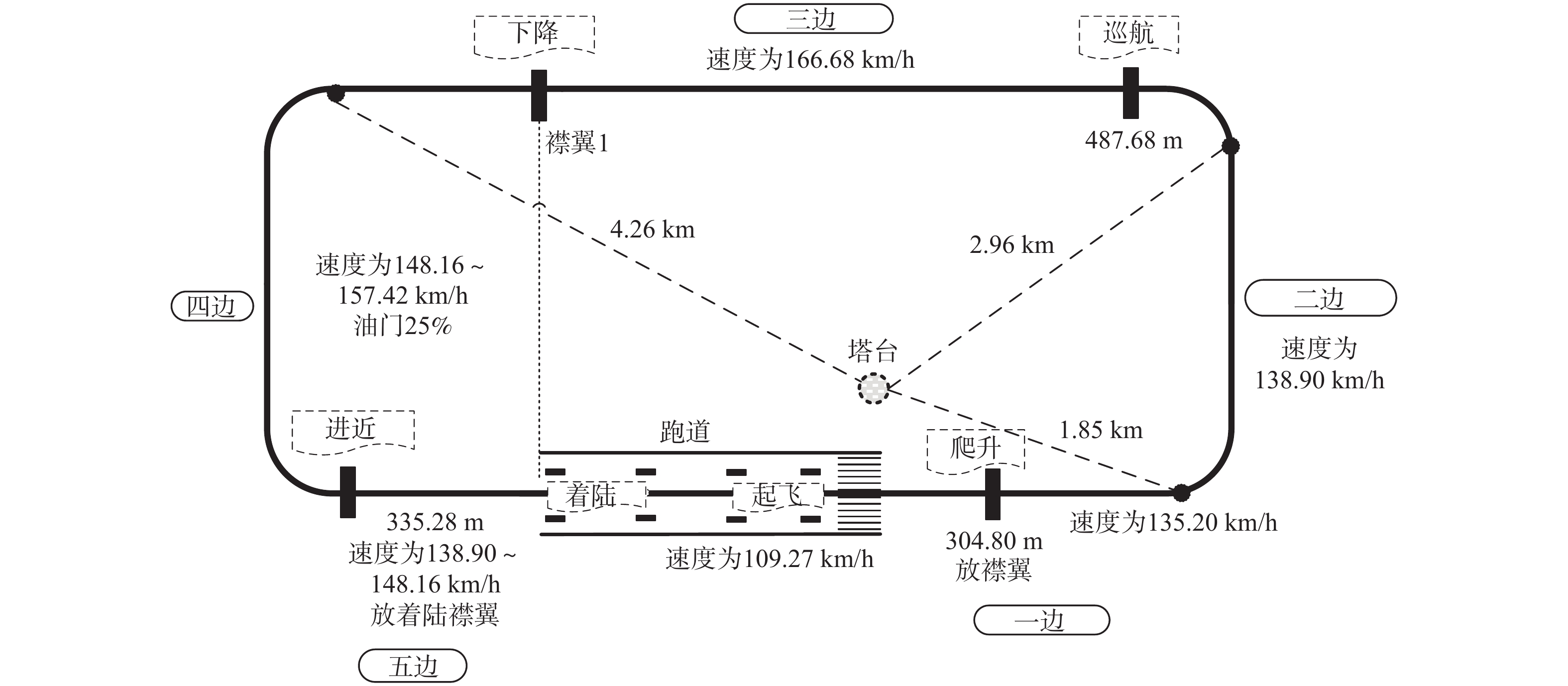
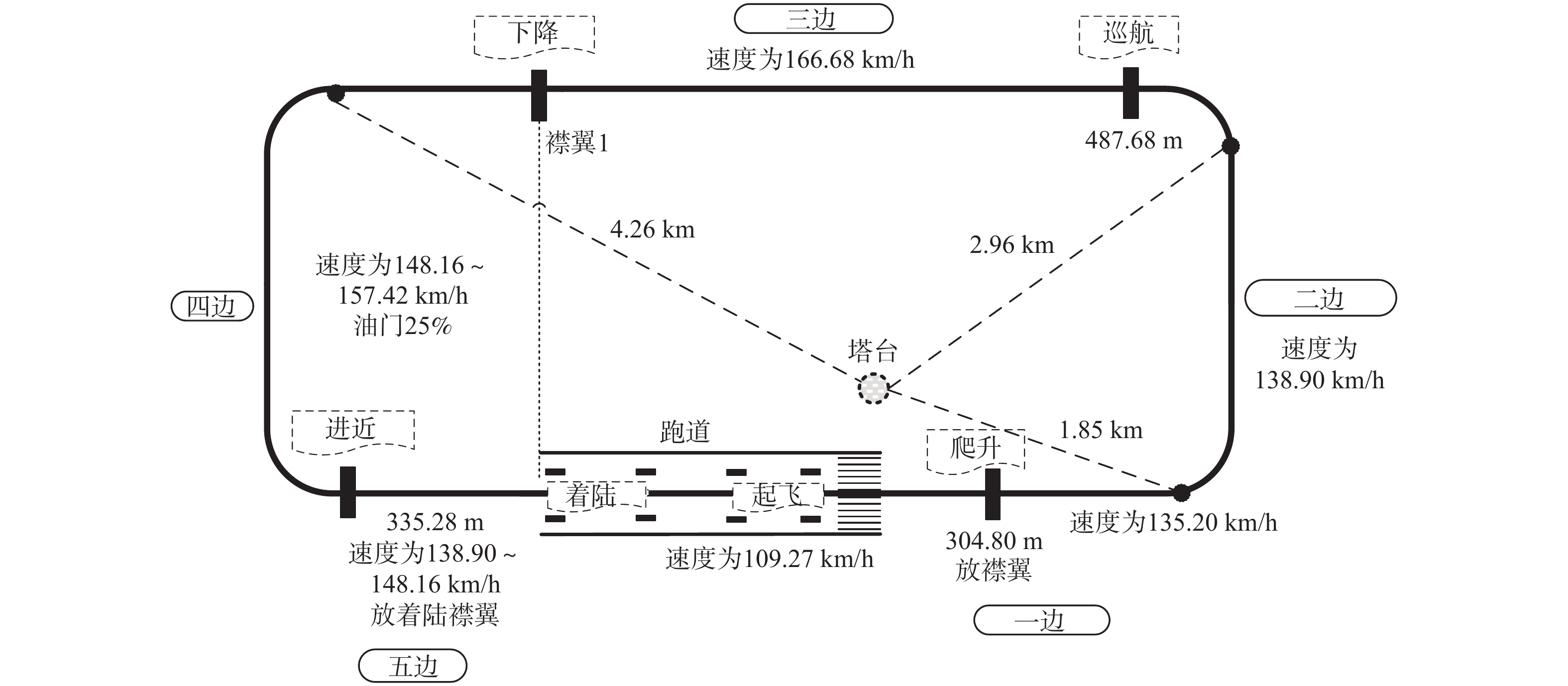
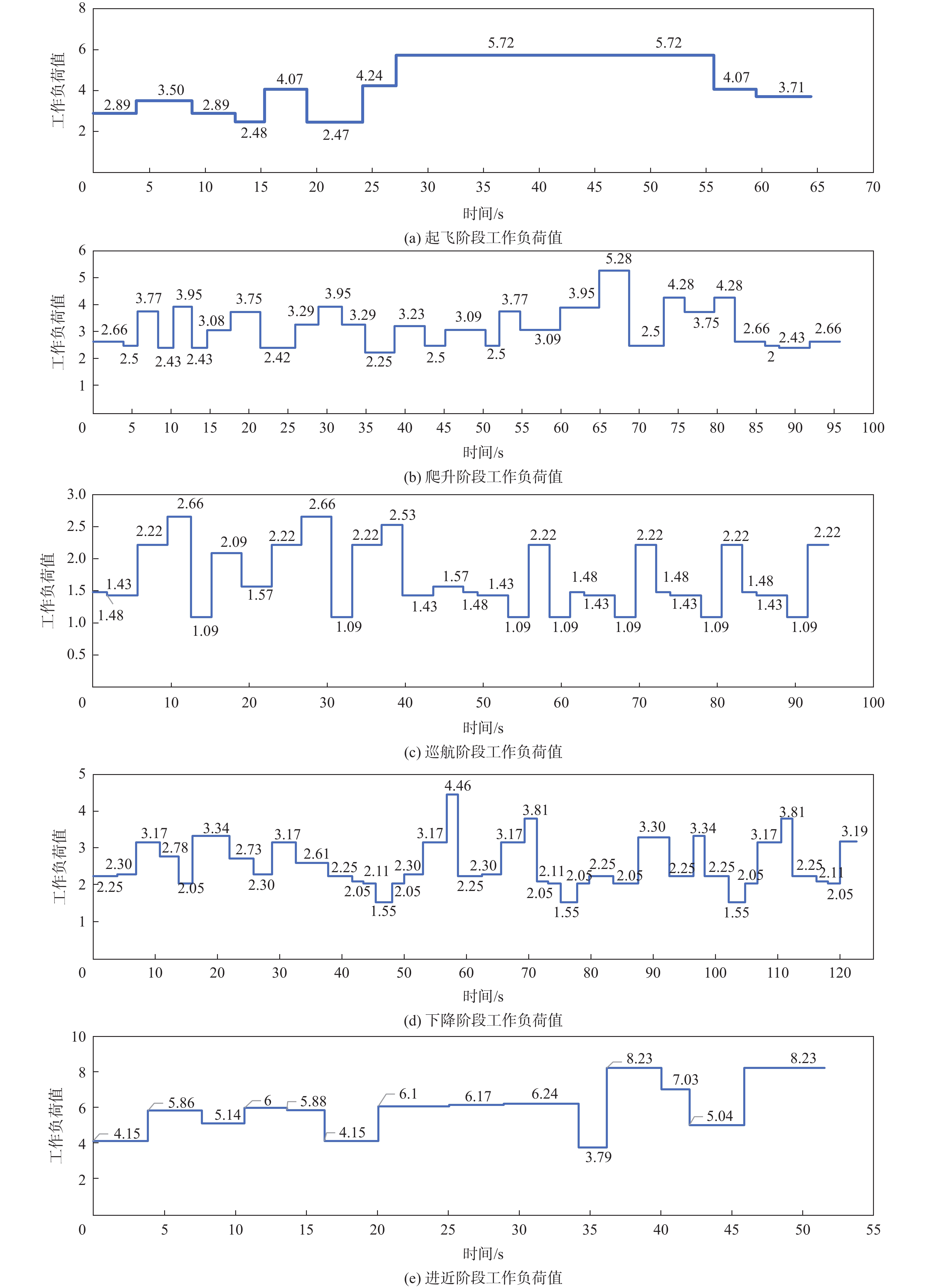
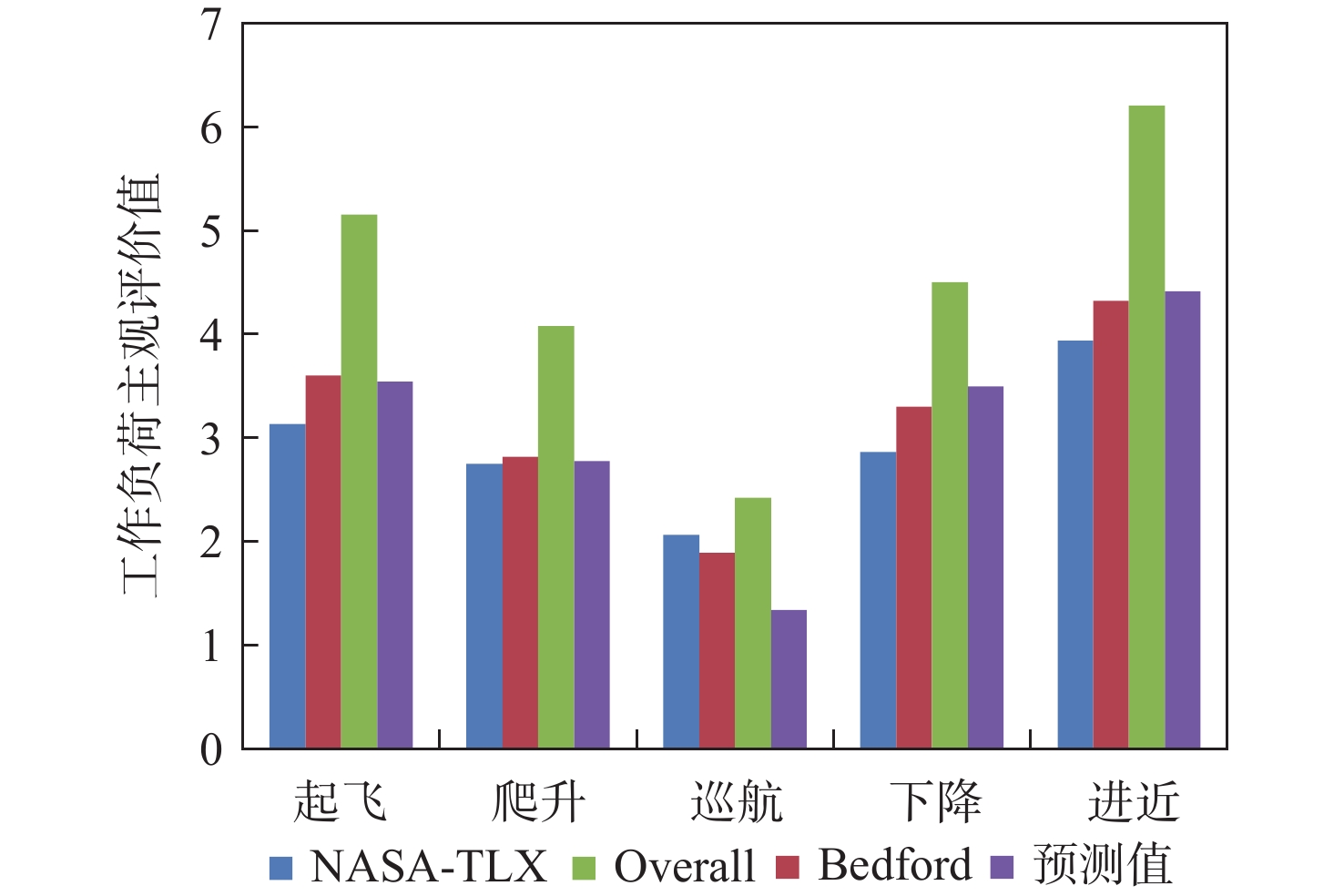
Quantitative real-time prediction model of workload that take into account influencing factors, task unit load, task conflict coefficient, and multi-task coefficient are proposed based on the operational tasks of pilots conducting flying activities in the cockpit environment. Selecting the normal pentagonal flight of the DA42 business jet as an example for prediction calculation, designing task scenarios, determining flight operation procedures, decomposing tasks, and calculating the real-time predicted flight workload values for different flight stages through a comprehensive calculation formula. In order to subjectively assess the flight workload under various flying stages, a validation experiment was carried out on the DA42 business jet flight simulator utilizing four subjective assessment scales: NASA-TLX, Bedford, Overall workload, and SWAT. The subjective evaluation values obtained were highly correlated with the workload values predicted by the prediction model. This verified the correctness and usability of the proposed model of workload proposed in this study.

Fuzzy anti-swing controller for improving handling quality of helicopter slung-load operation
WANG Luofeng, CHEN Renliang, ZHAO Yu
2026, 52(6): 1924-1934. doi: 10.13700/j.bh.1001-5965.2024.0265
Abstract:

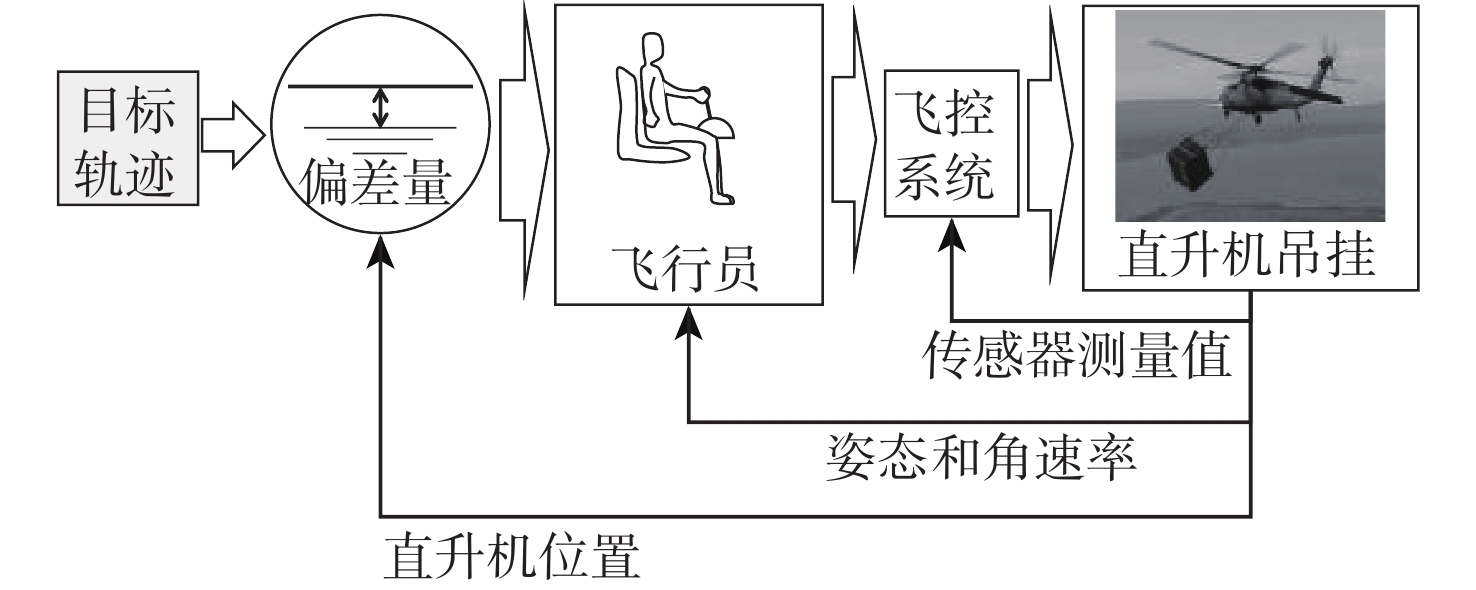
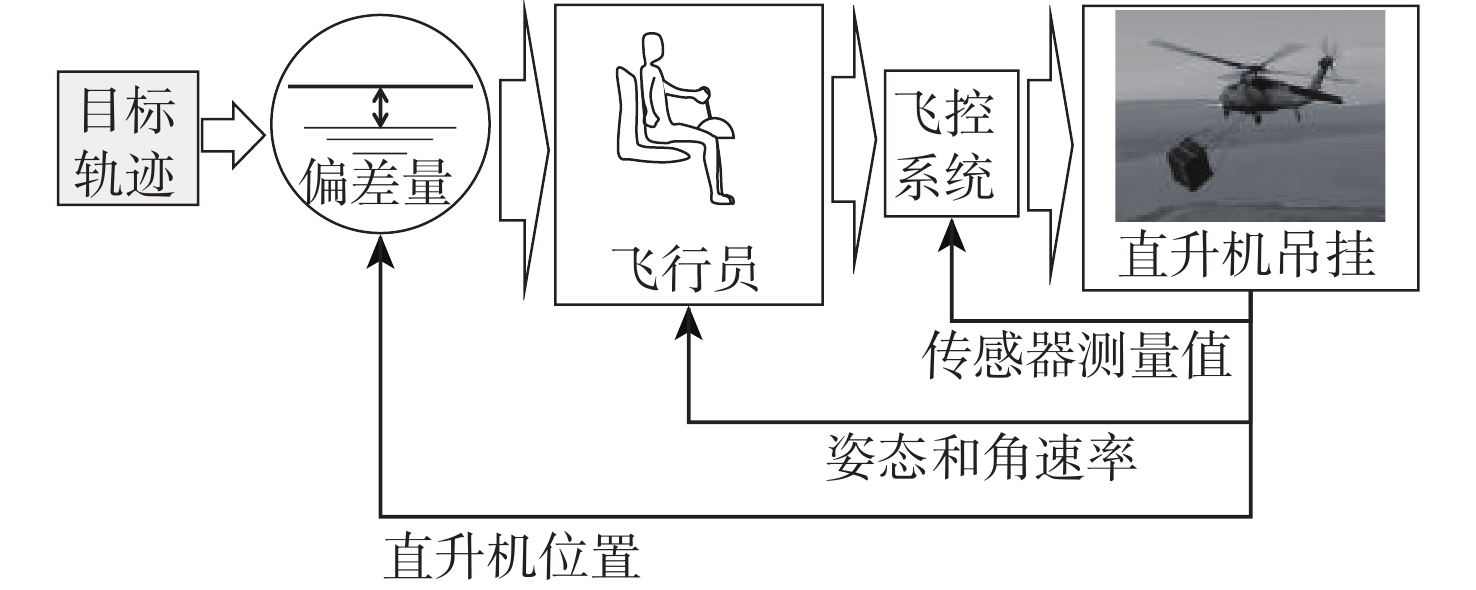
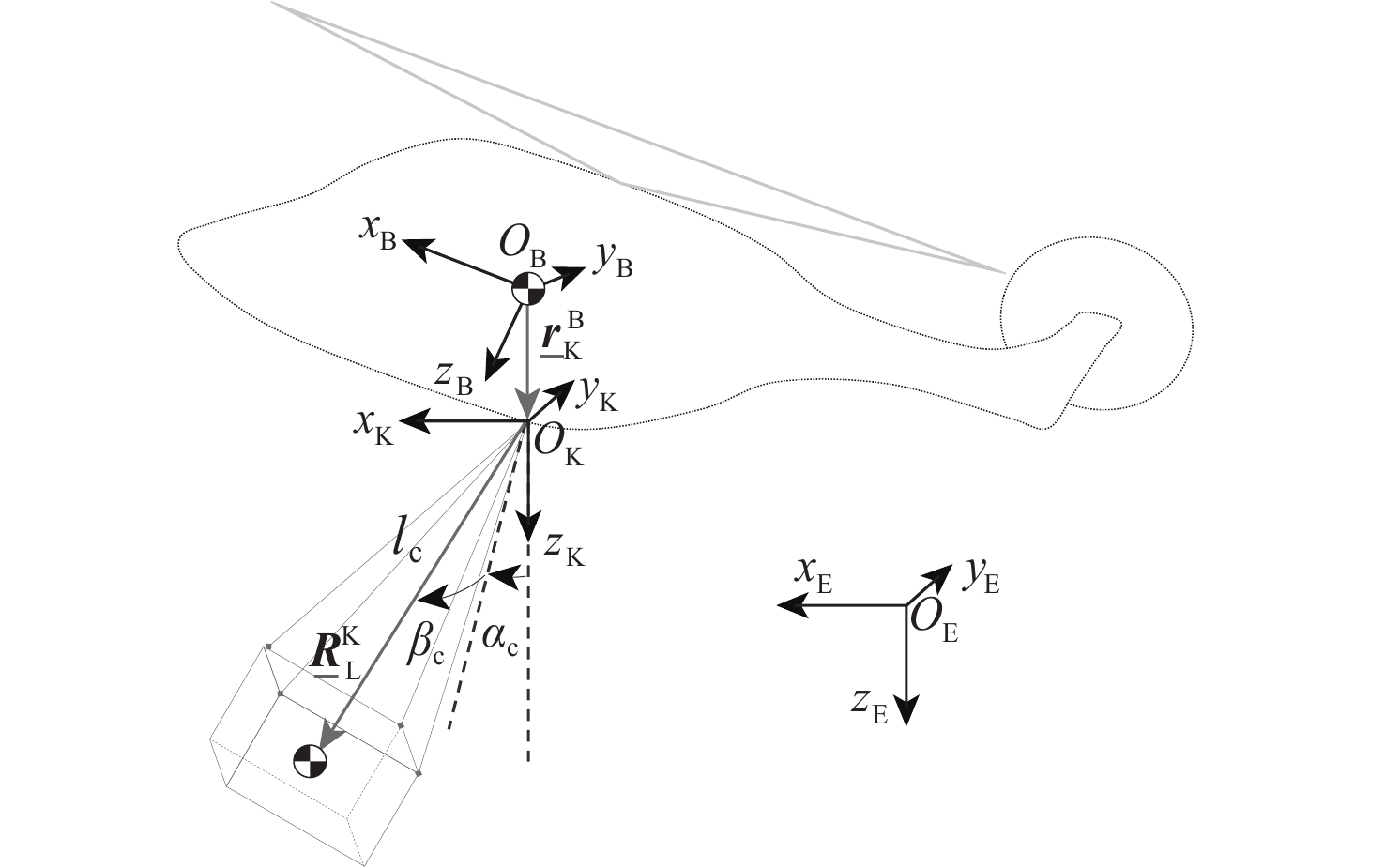
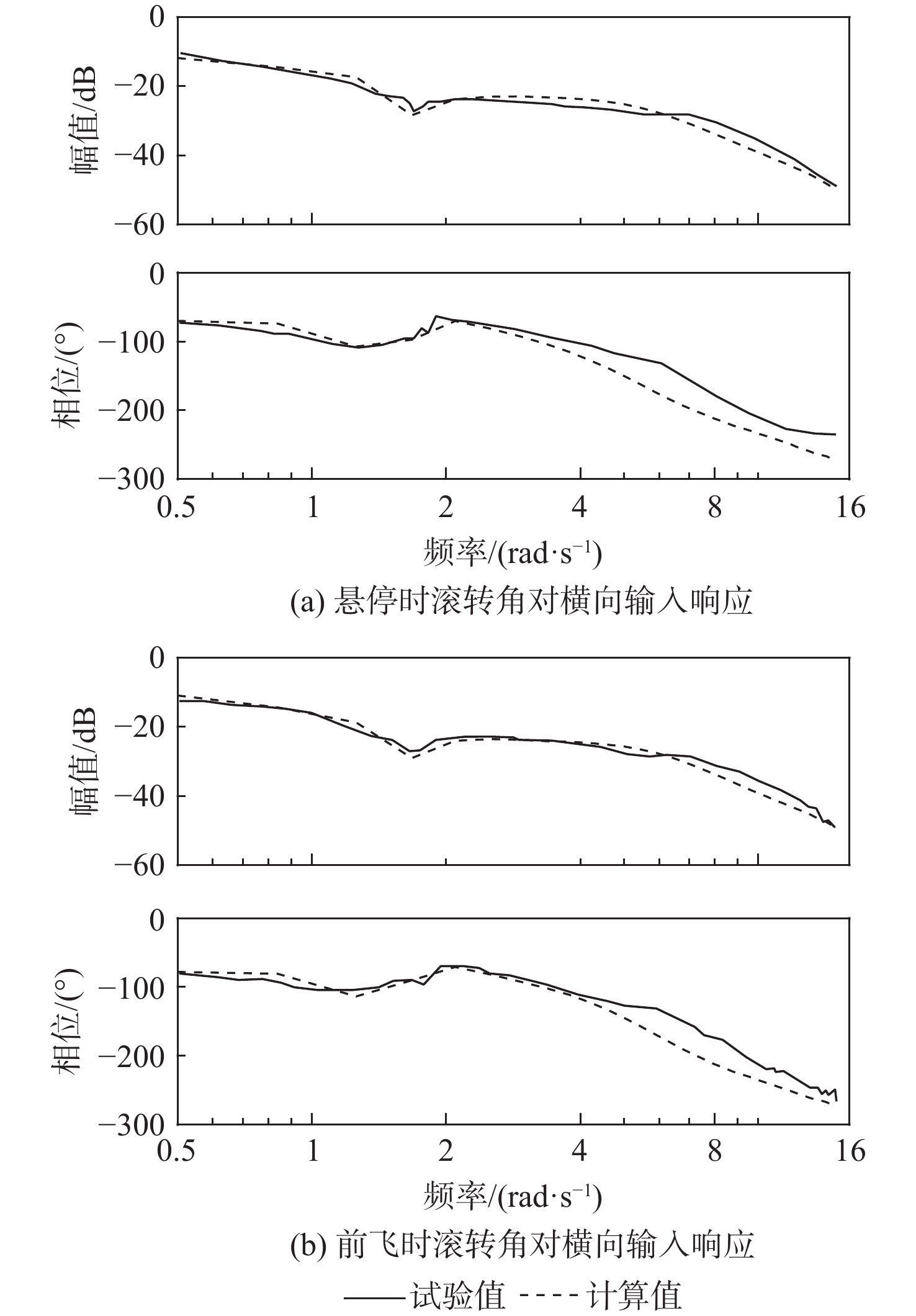
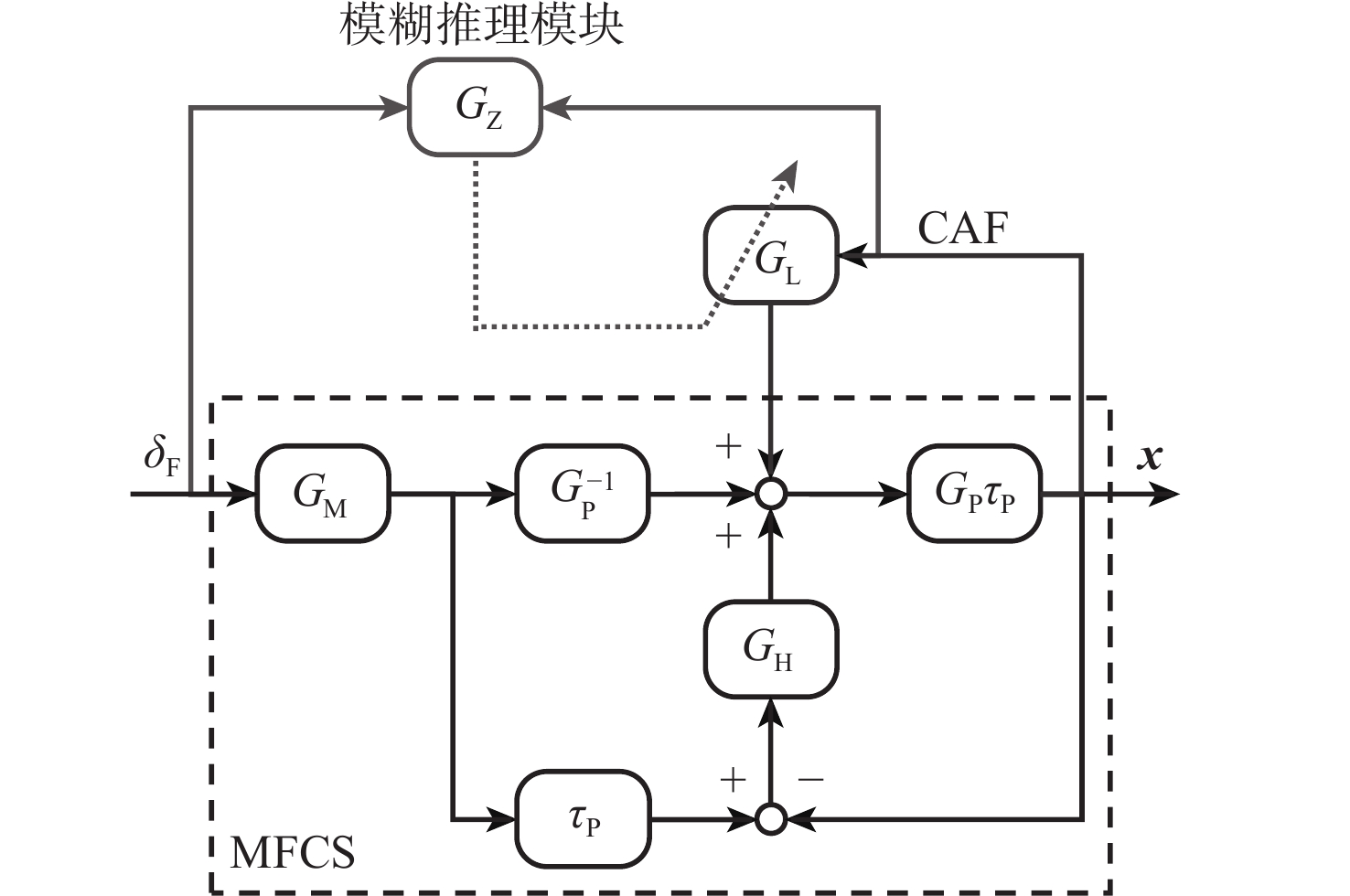
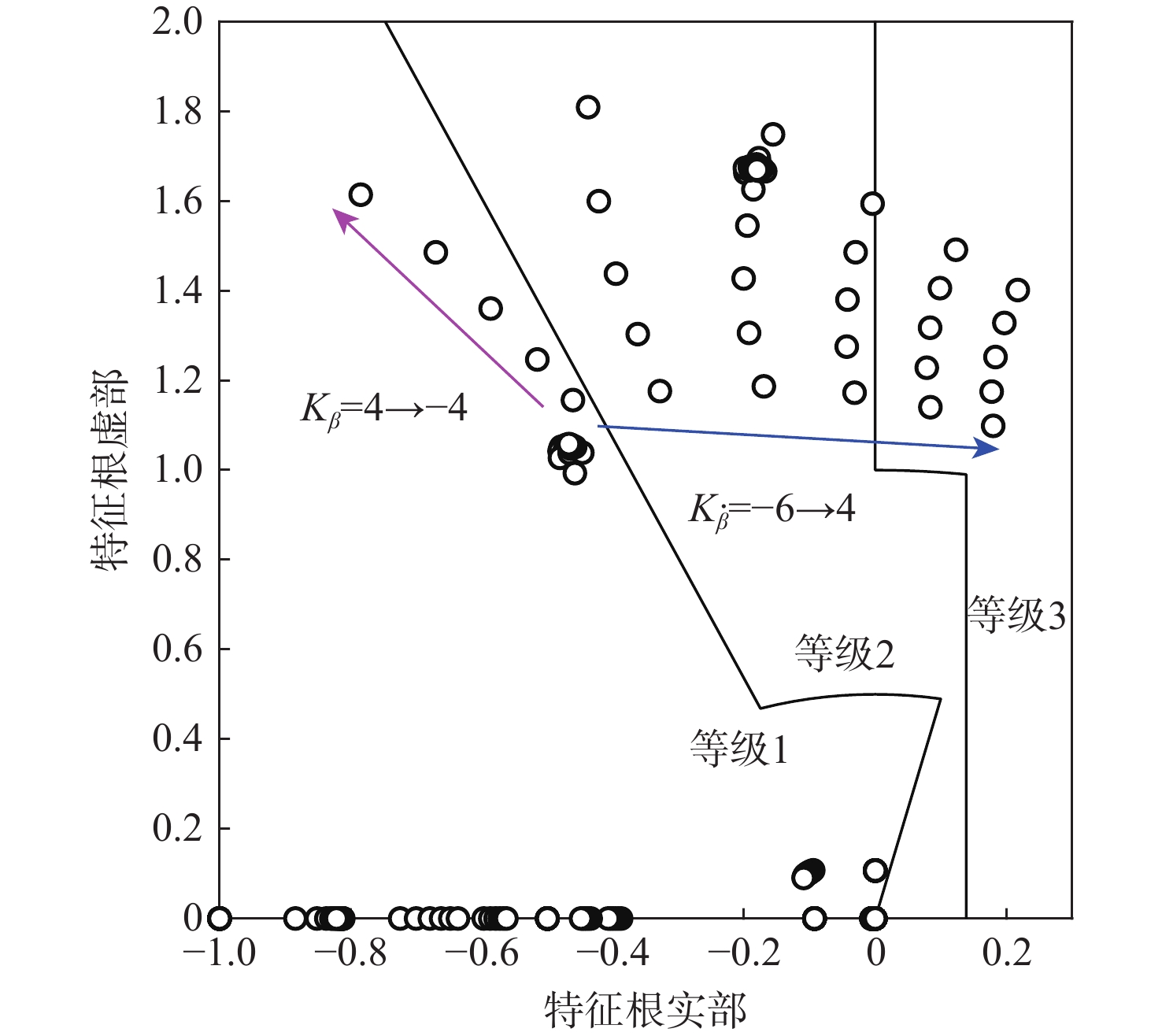
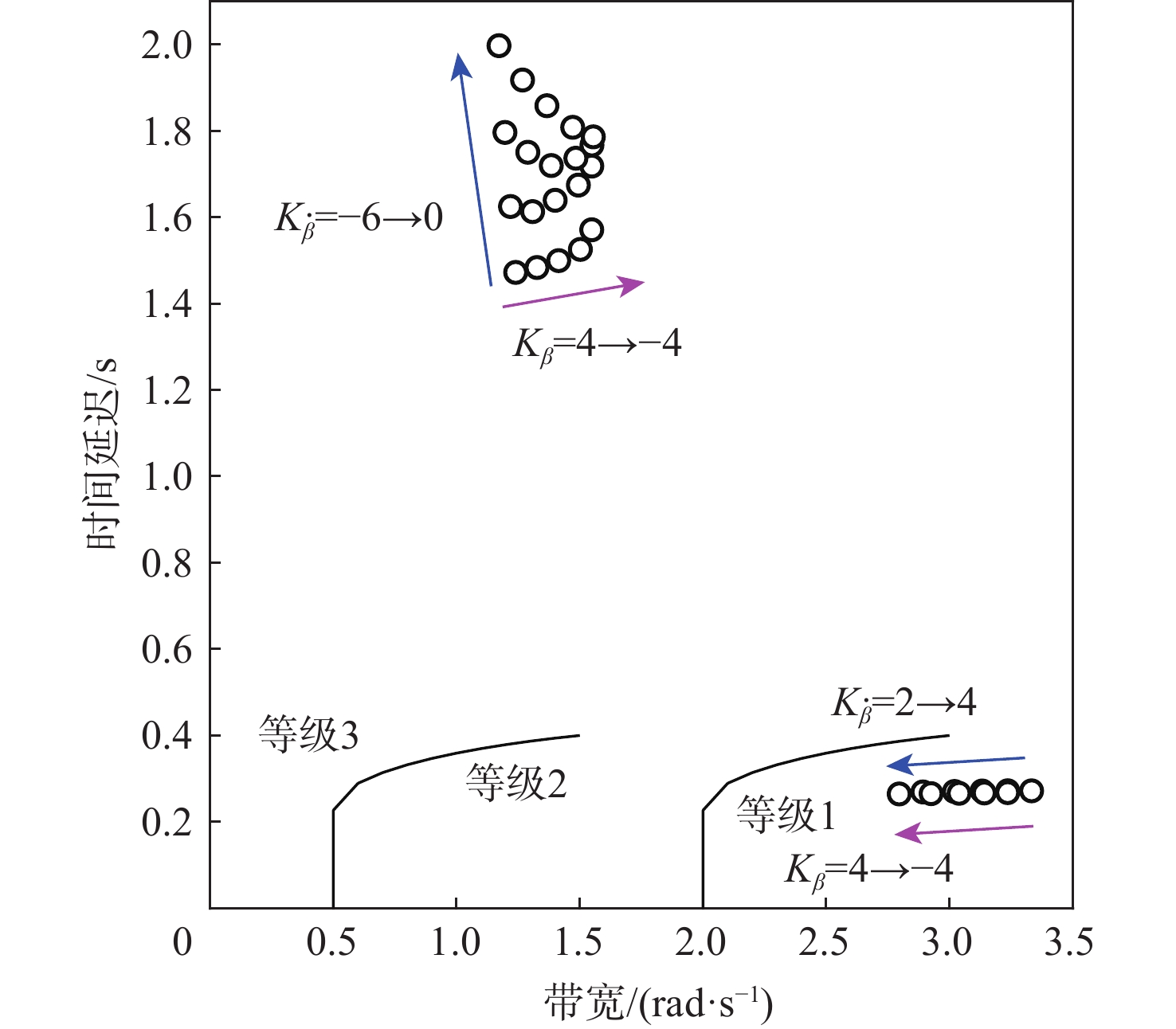
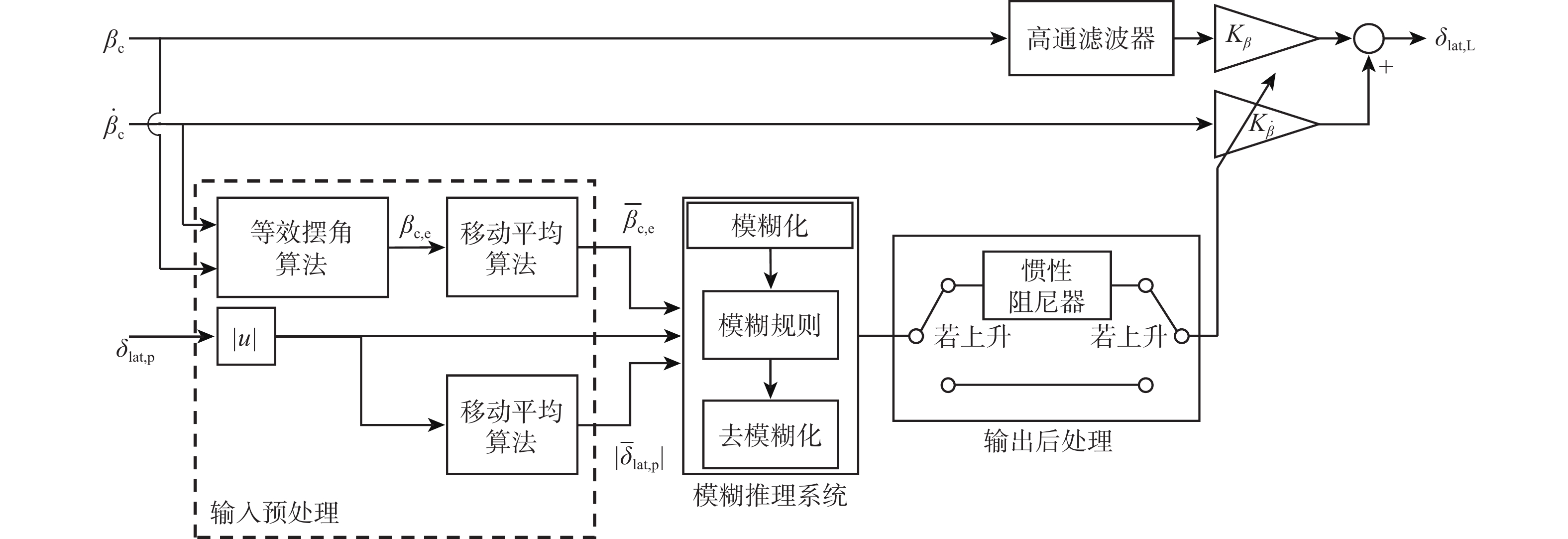
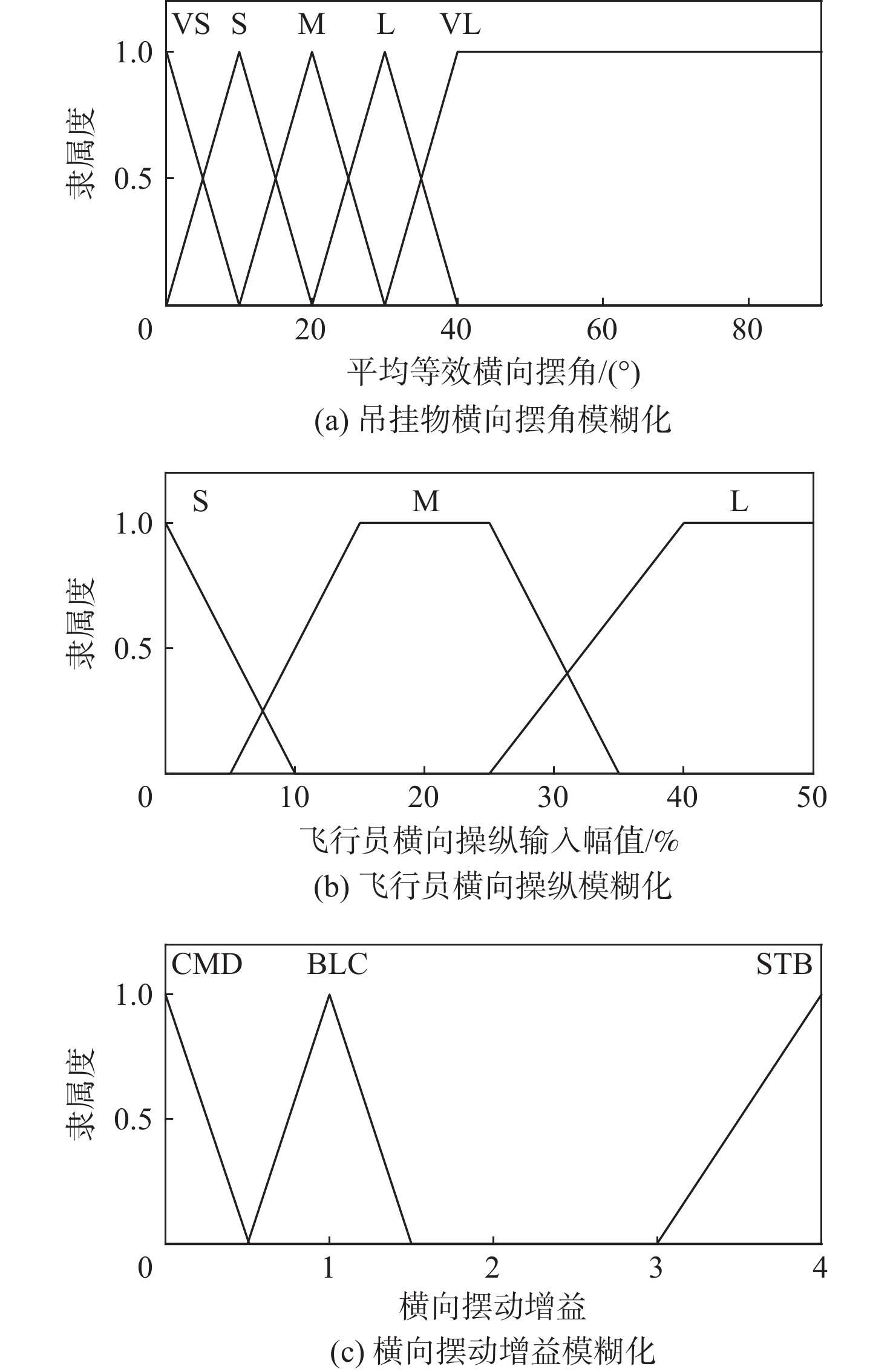
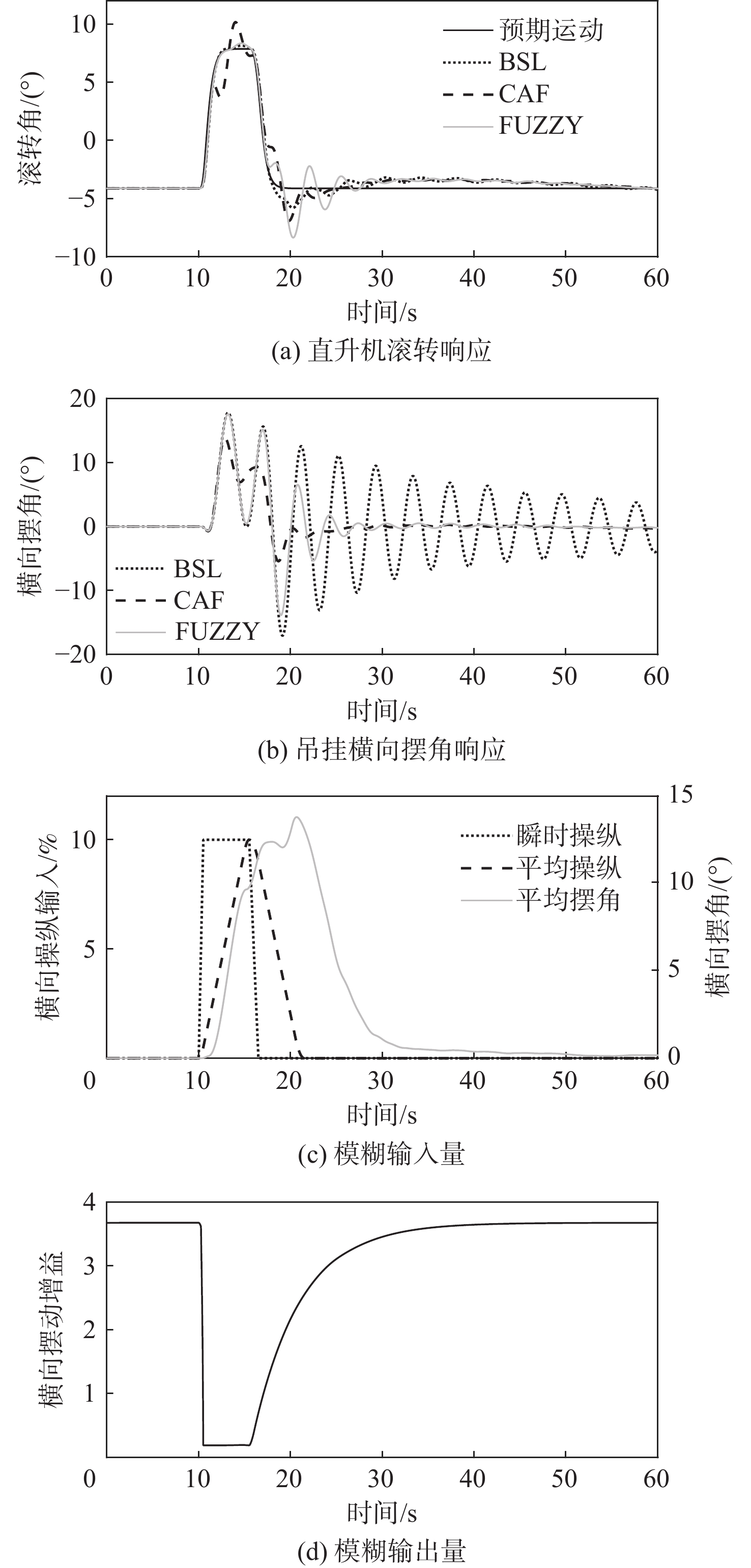
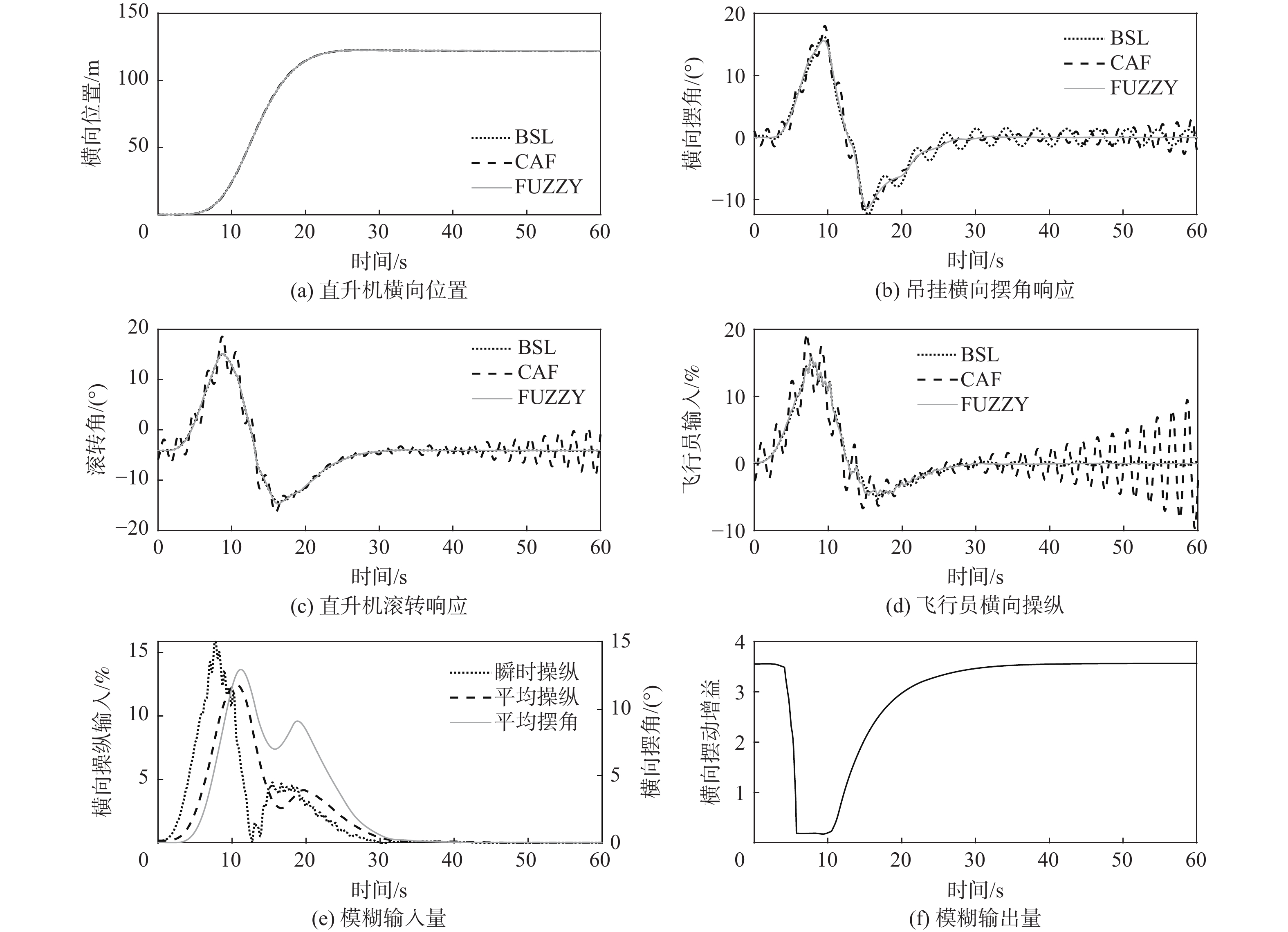
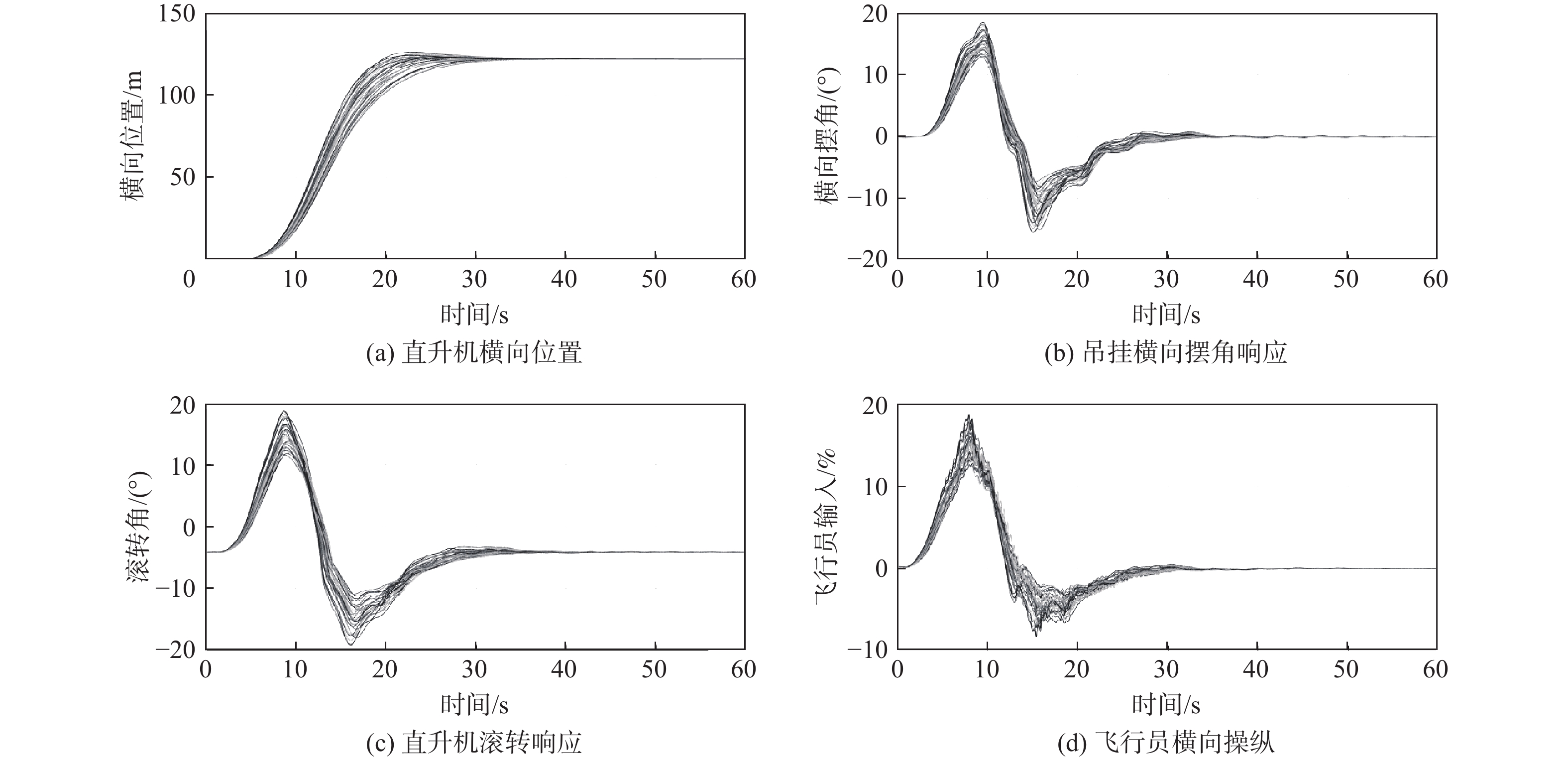
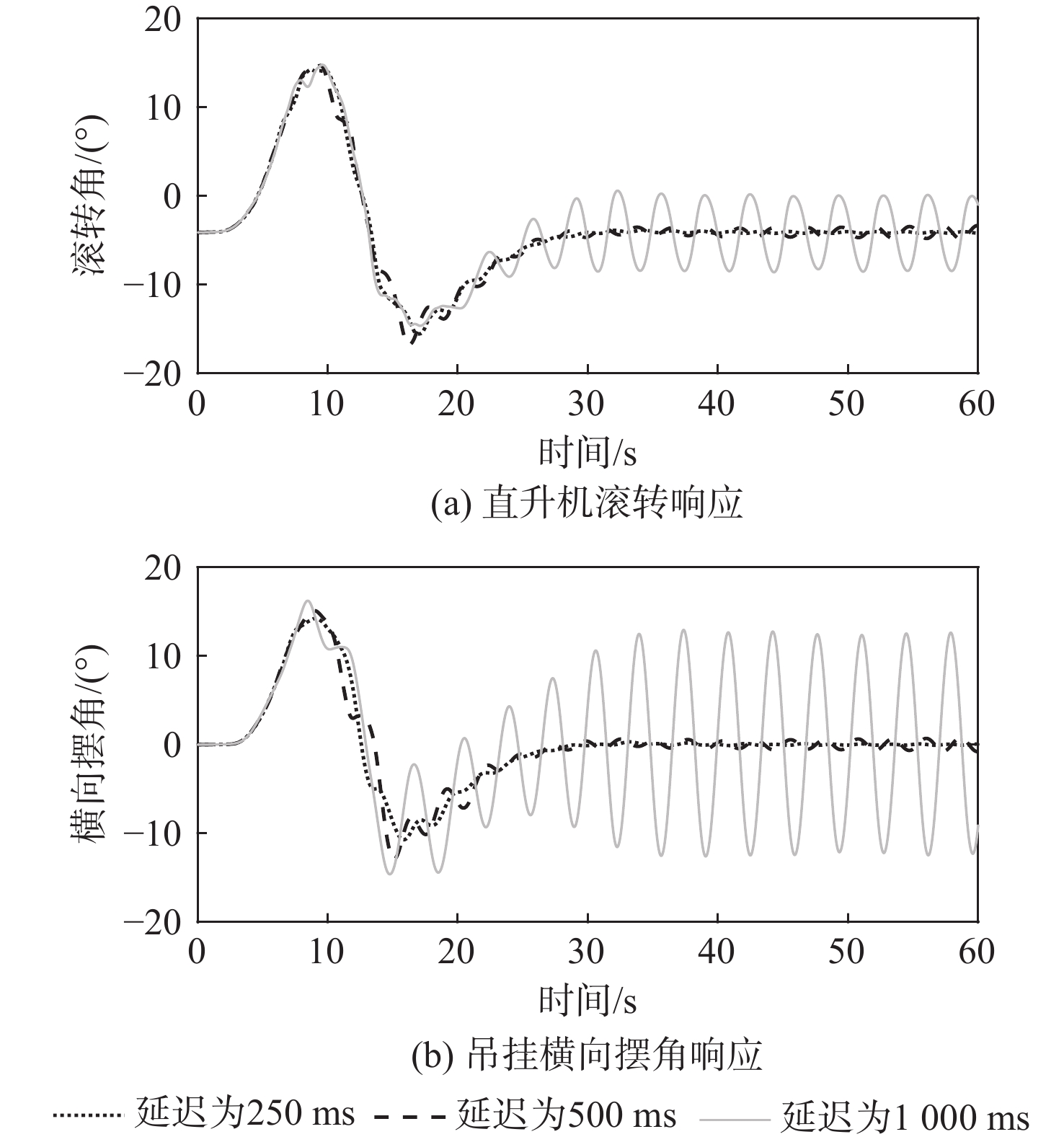
In order to solve the problem of compromised flight quality in helicopter sling load operations—which arises from the trade-off between load stabilization and command responsiveness—this paper presented a unique fuzzy control solution that incorporates pilot intention. By developing a high-fidelity nonlinear model of the pilot-helicopter-slung-load system, this method tackles the inherent conflict between reducing load swing and maintaining precise control that is common in current anti-swing controllers. The proposed method can reasonably reflect the pilot’s intent, and a cable angle feedback control law has been demonstrated through simulation to dynamically adjust control parameters in line with pilot expectations. With good resilience, this integration reduces pilot-induced oscillations and conflicts between pilot actions and the control system.

Automatic modulation classification method based on transfer learning
WANG Dong, CUI Tianshu, JI Libin, HUANG Yonghui, ZHU Yan
2026, 52(6): 1935-1943. doi: 10.13700/j.bh.1001-5965.2024.0231
Abstract:

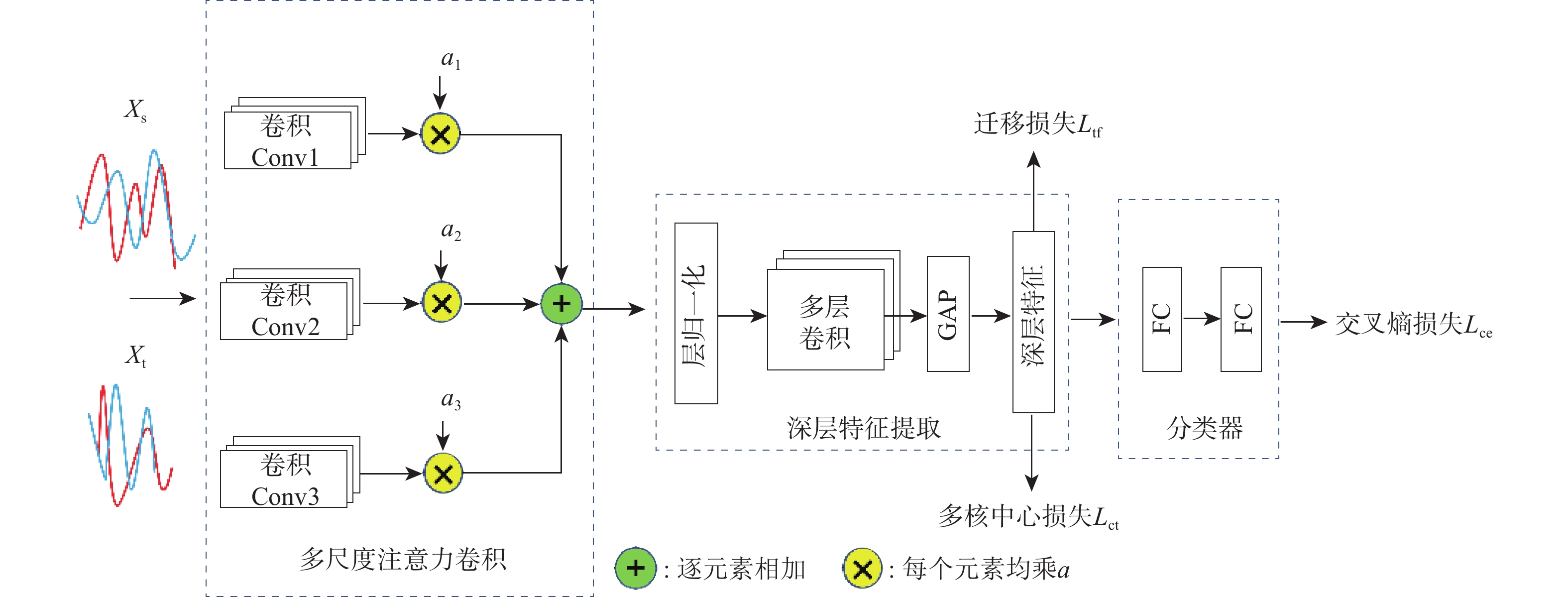
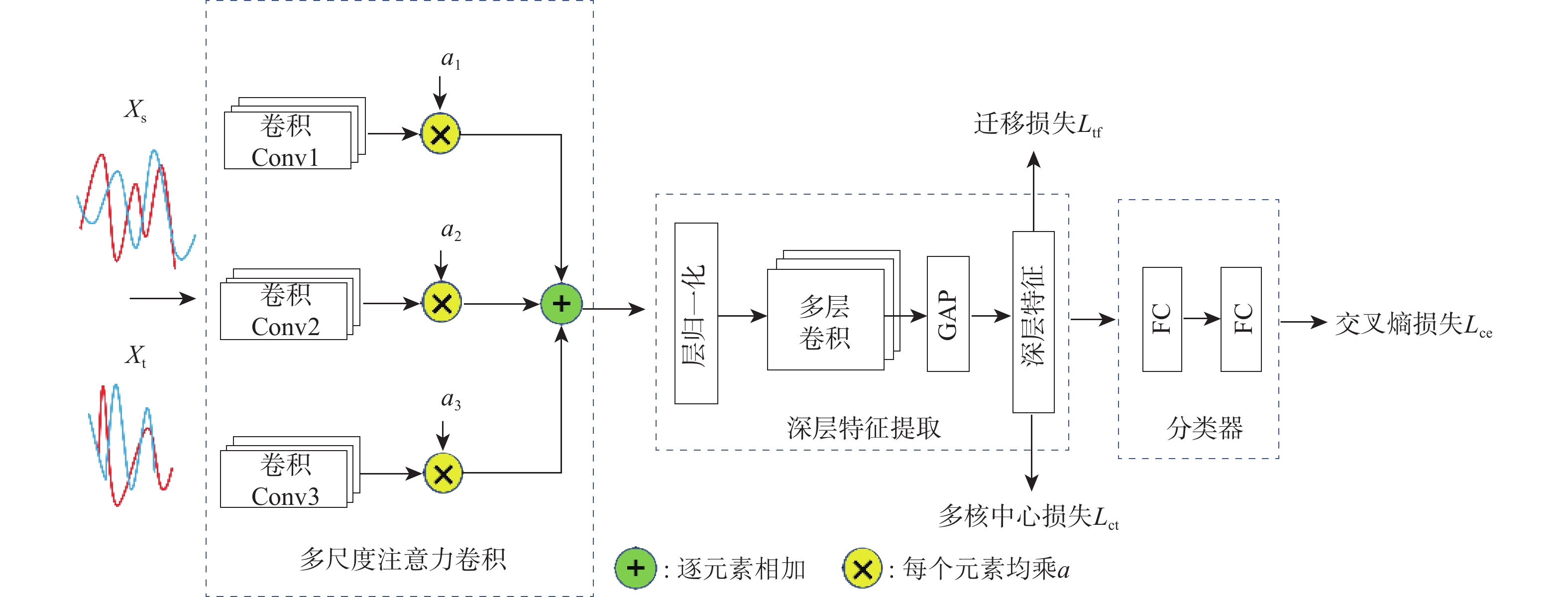
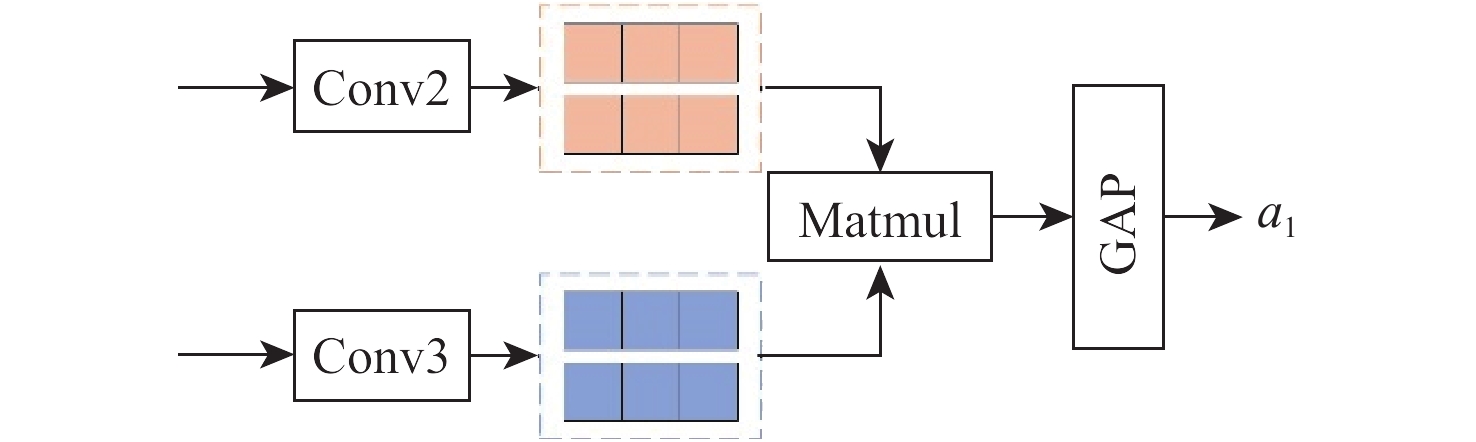
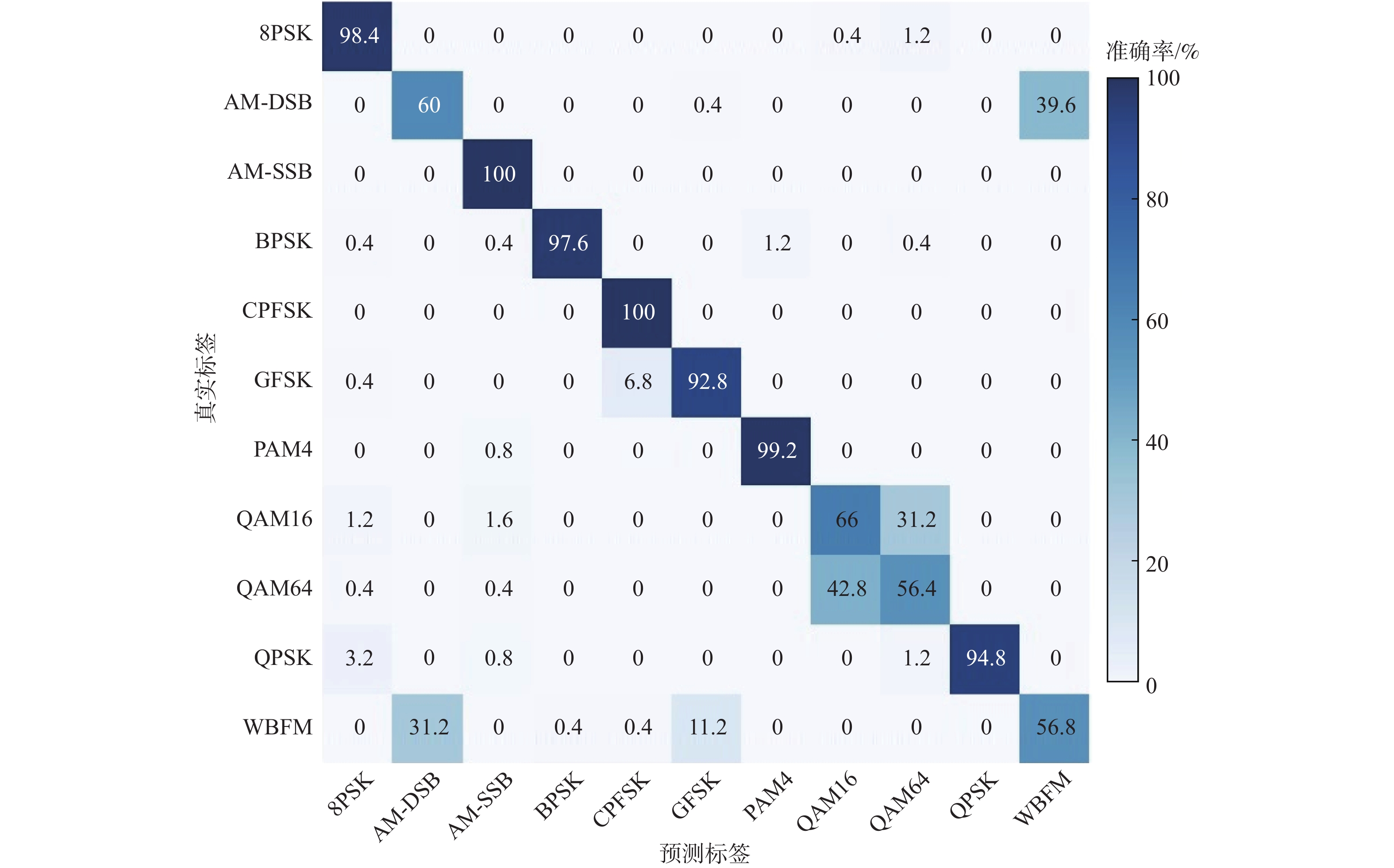
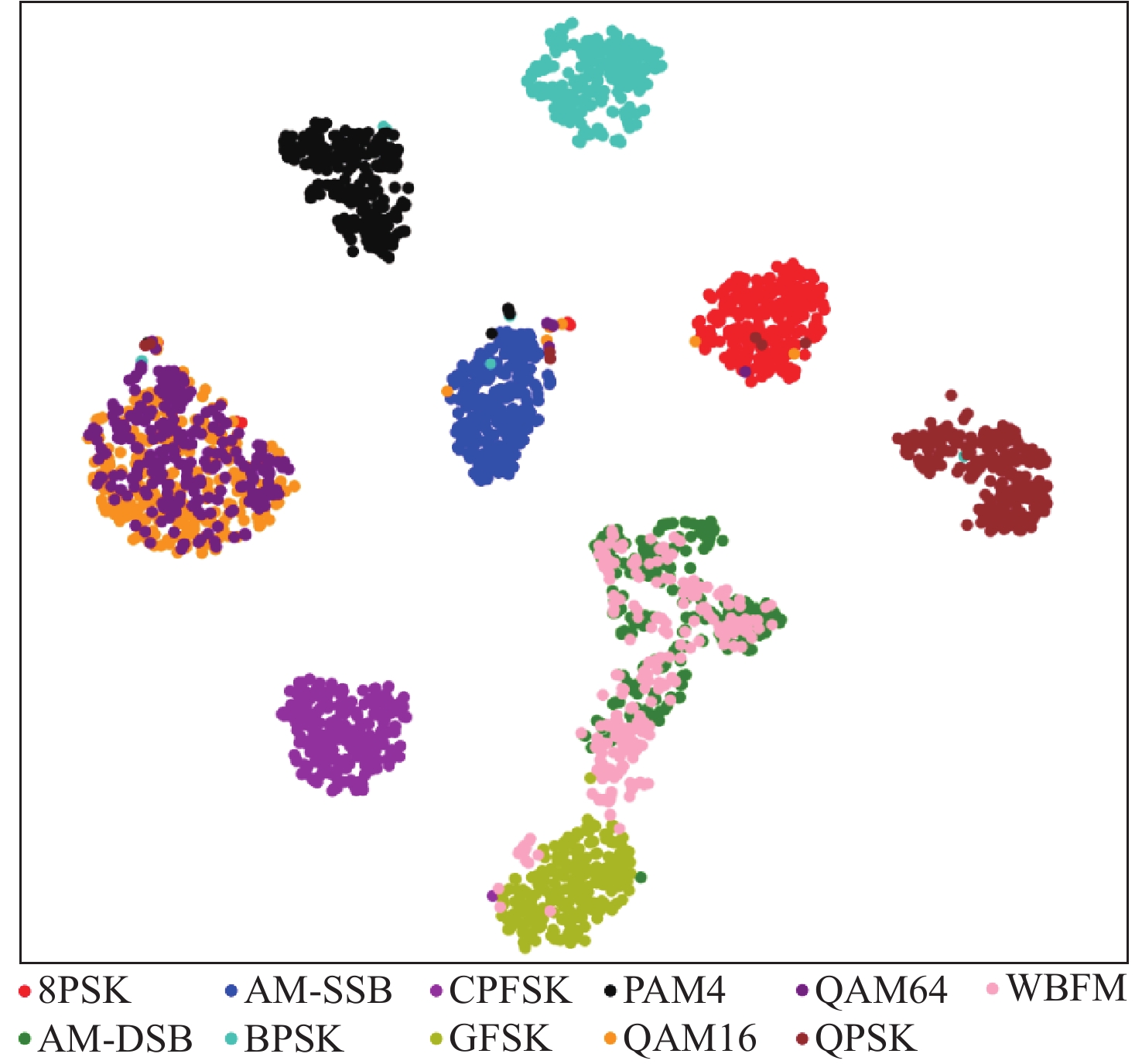
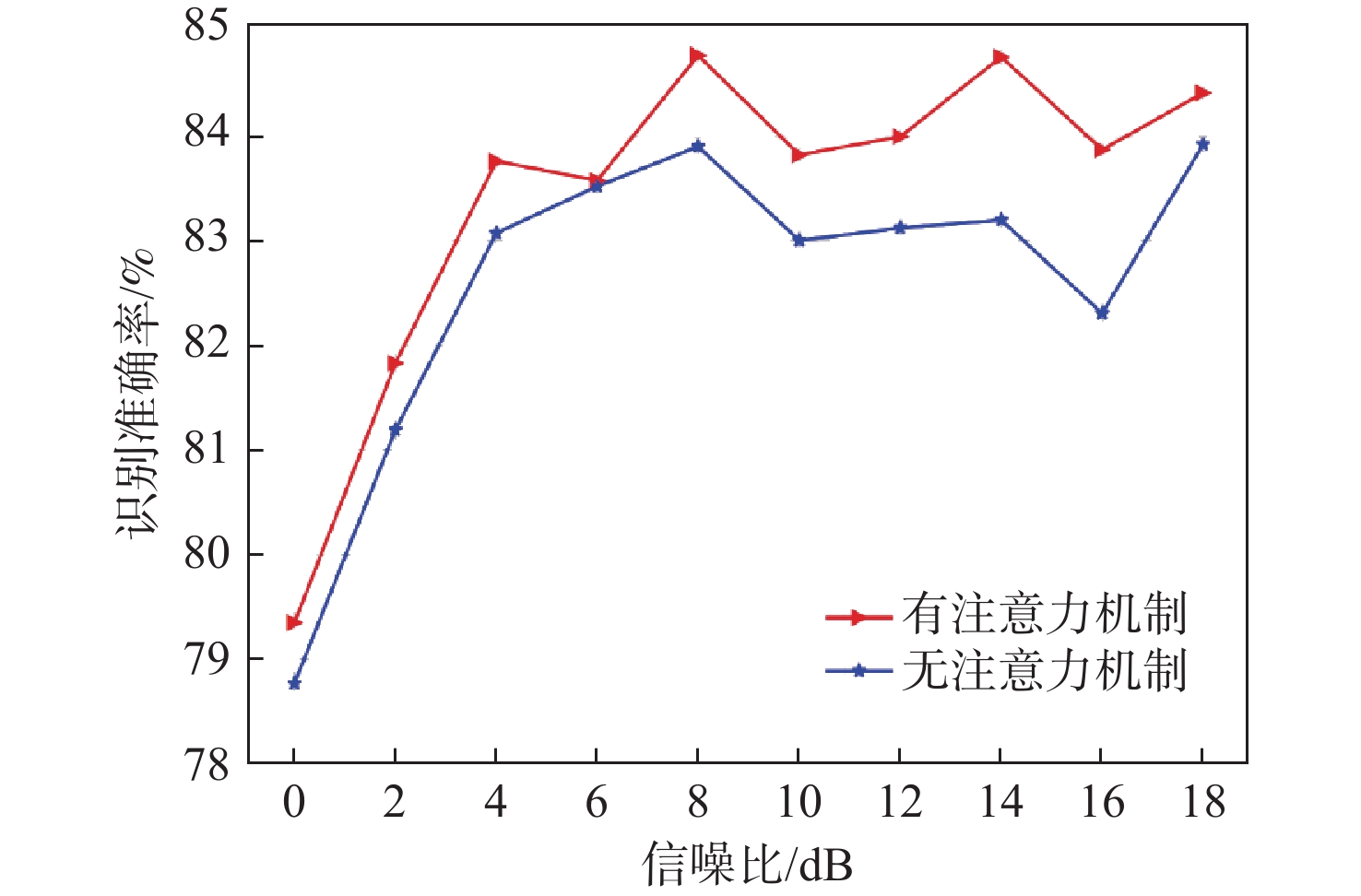
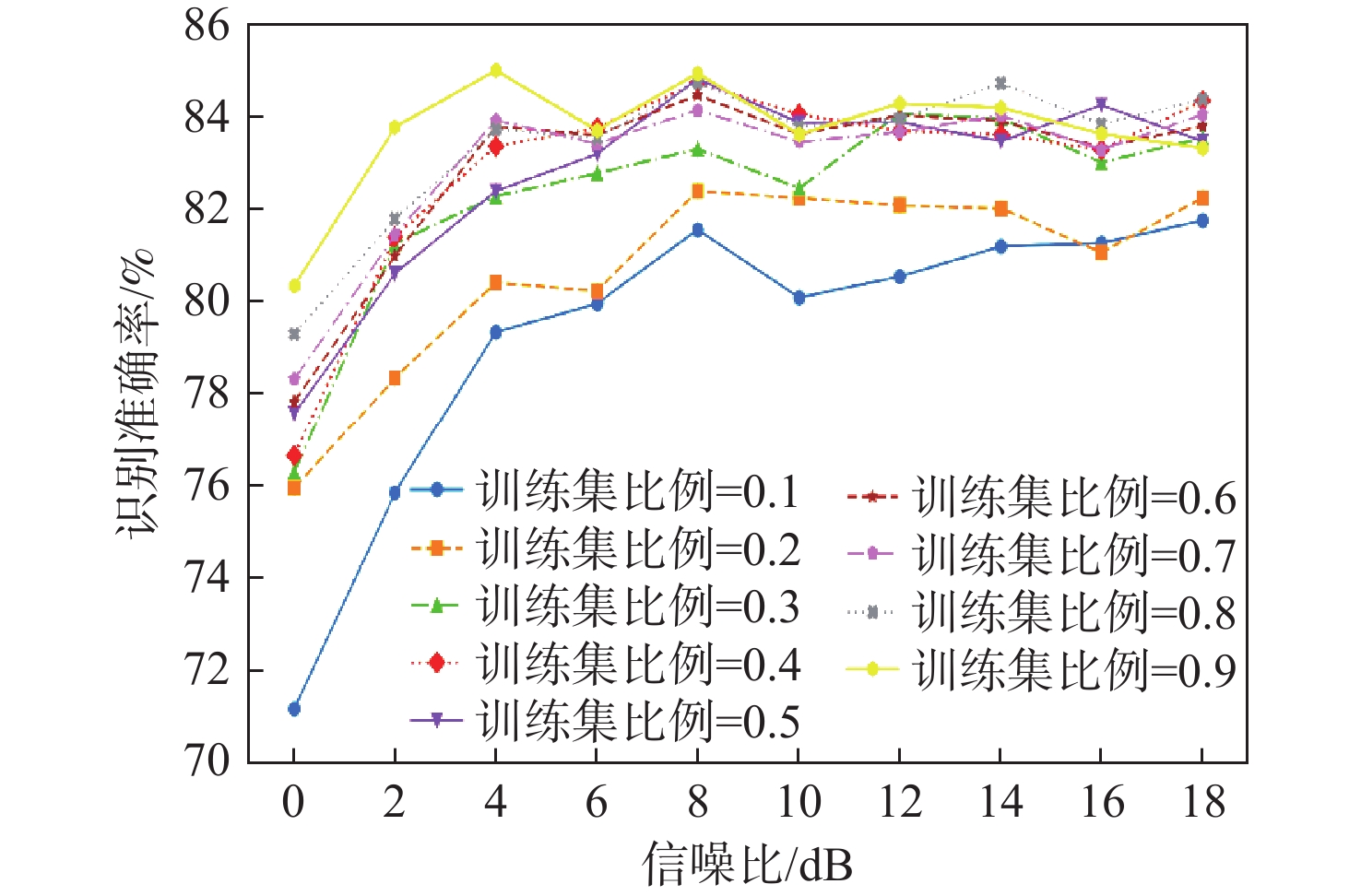
Deep learning has achieved considerable progress in the field of modulation classification; however, it is often limited by the consistency of the distribution between training and testing data. A novel multi-scale attention transfer learning architecture (MATLA) has been designed to assist cross-domain identification in order to overcome the problem of modulation classification with inconsistent data distribution caused by variable sample rates of source and target domains. This framework employs three parallel convolutional kernels with varying scales to extract features at different granularities. Moreover, the architecture integrates a multi-scale attention mechanism, which bolsters the extraction of discriminative features by emphasizing the weights of salient features. To effectively align features from the source and target domains, multiple kernel maximum mean discrepancy (MK-MMD) is utilized to measure the divergence of feature distributions in the reproducing kernel Hilbert space (RKHS) between the two domains. Additionally, to mitigate internal variation within the source domain features and enhance their consistency and stability, multiple kernel center loss (MKCL) is proposed. According to experimental data, the suggested approach outperforms a number of different network models and domain adaption techniques, achieving a recognition accuracy of 83.42% when the signal-to-noise ratio surpasses 0 dB.

Prediction method for matching between in-orbit satellites and satellite network filings based on knowledge graph
XU Cong, SHI Mengxin, WANG Hongfeng, JIA Qingyu, ZHI Jia, YANG Jiasen
2026, 52(6): 1944-1954. doi: 10.13700/j.bh.1001-5965.2024.0217
Abstract:

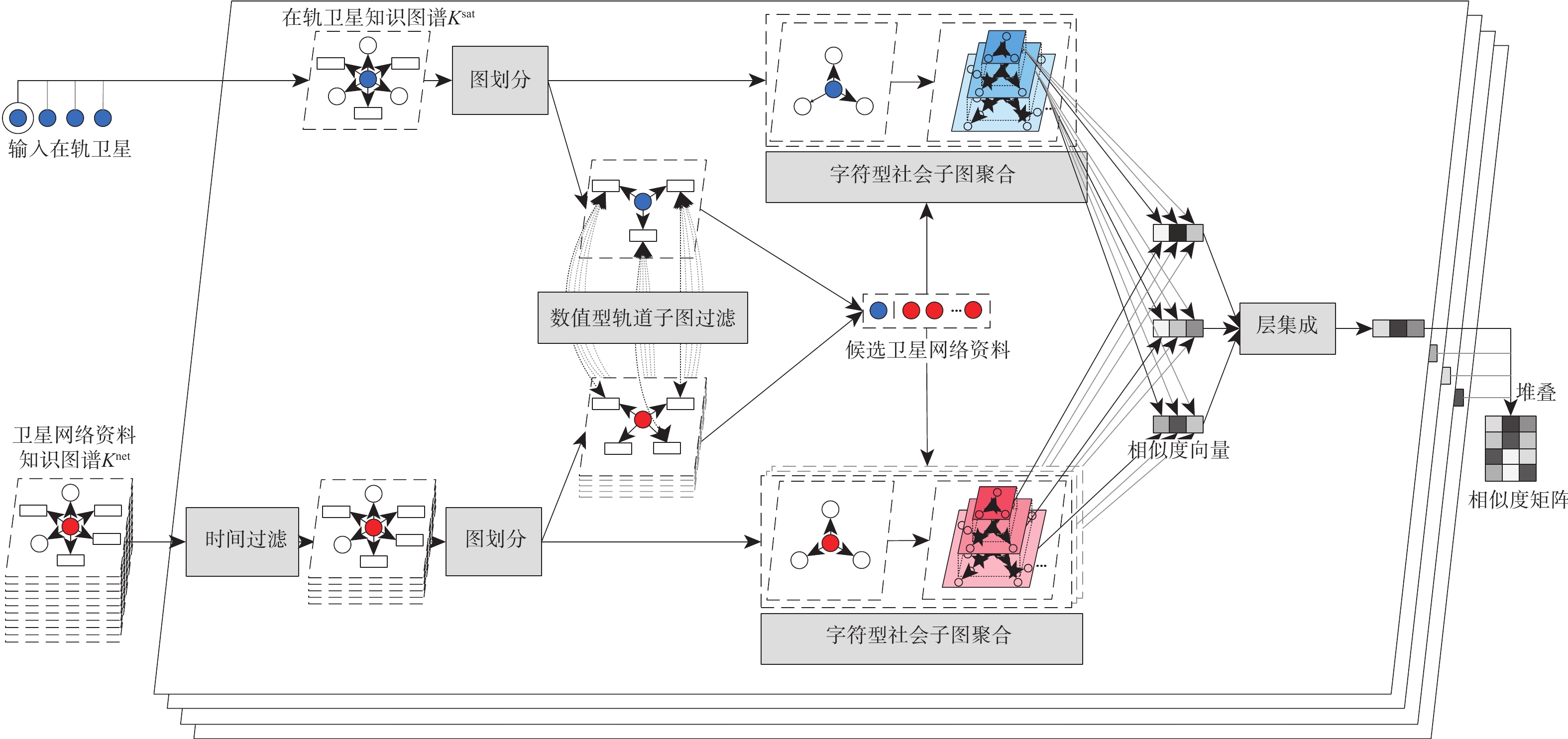
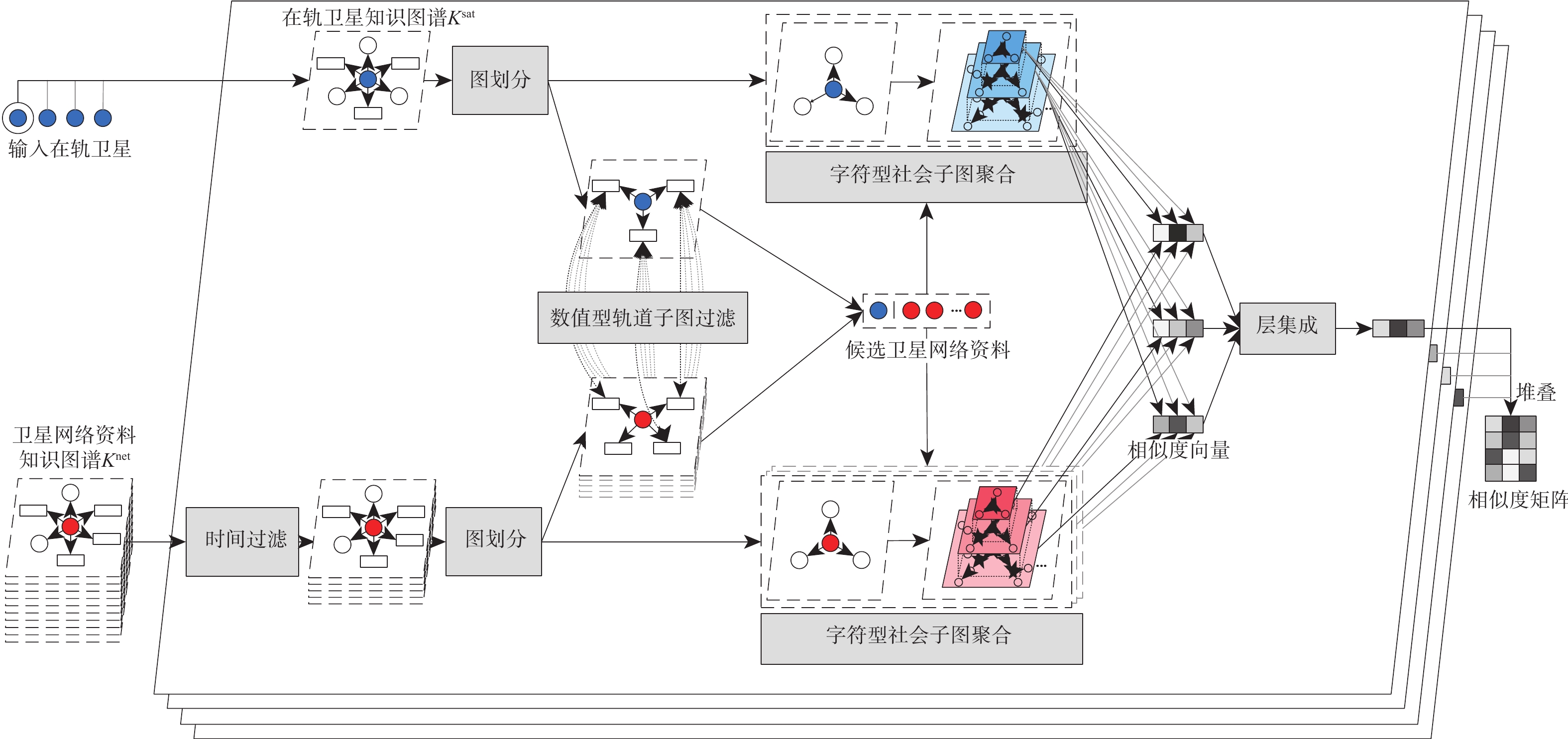
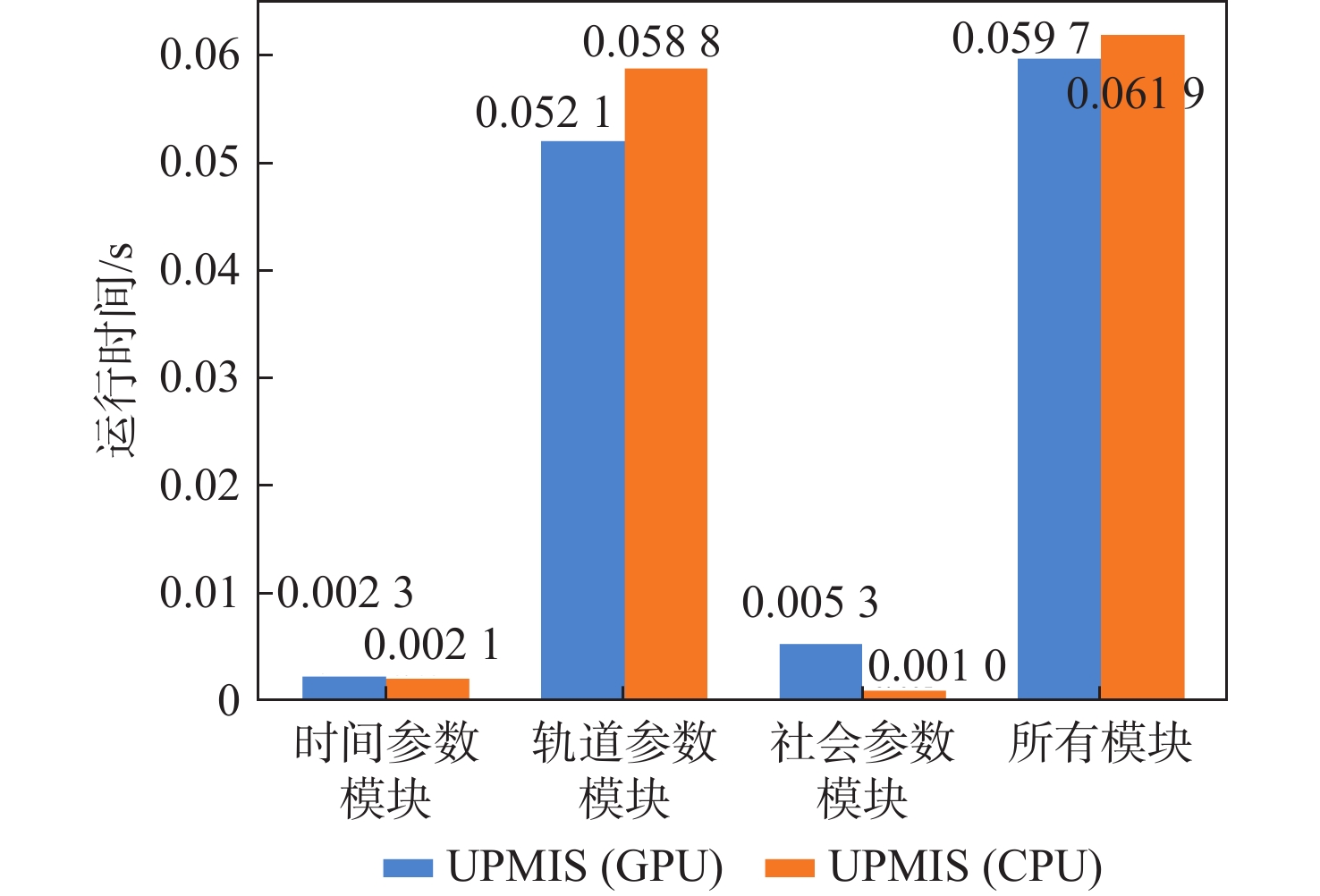
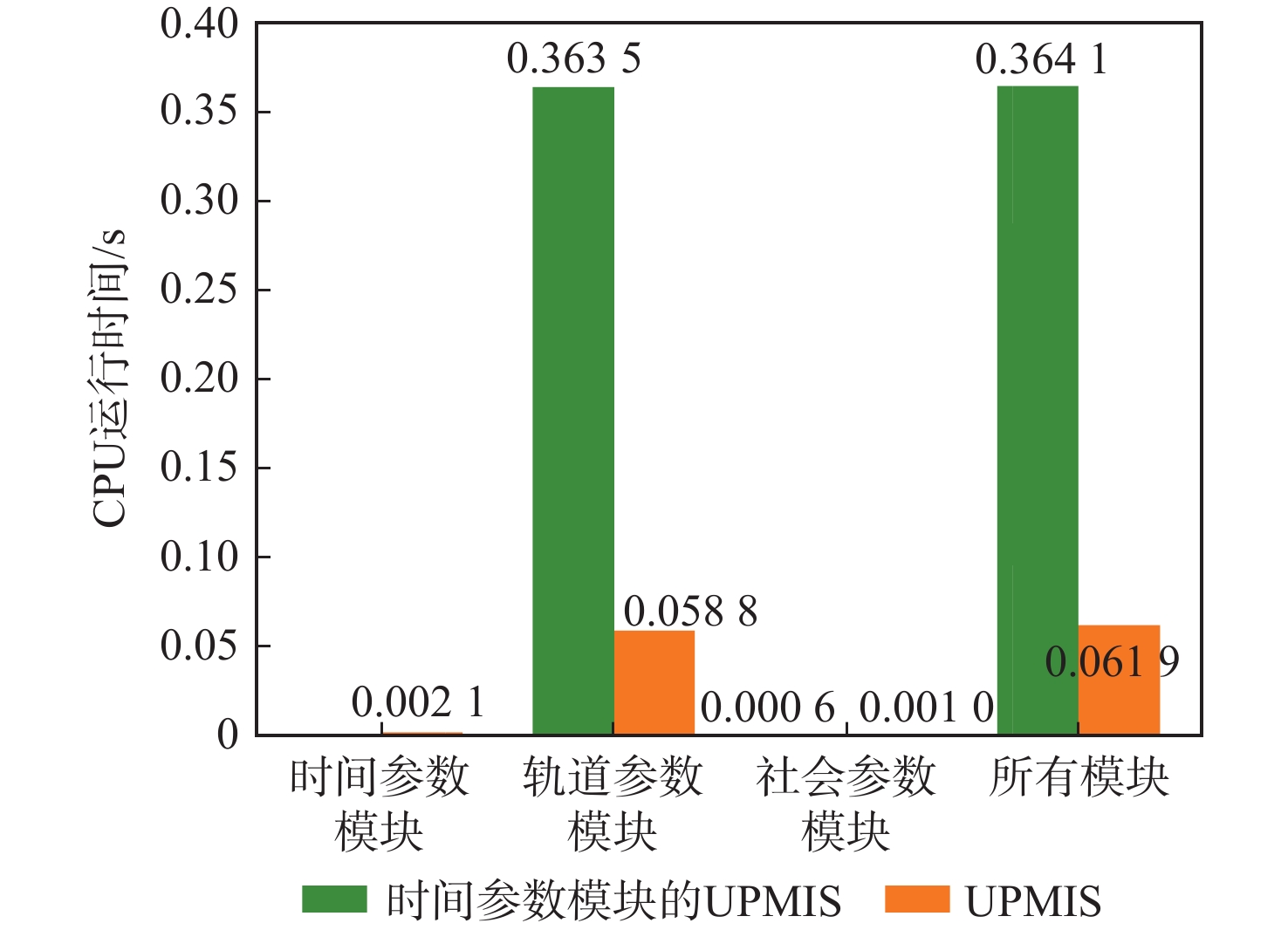
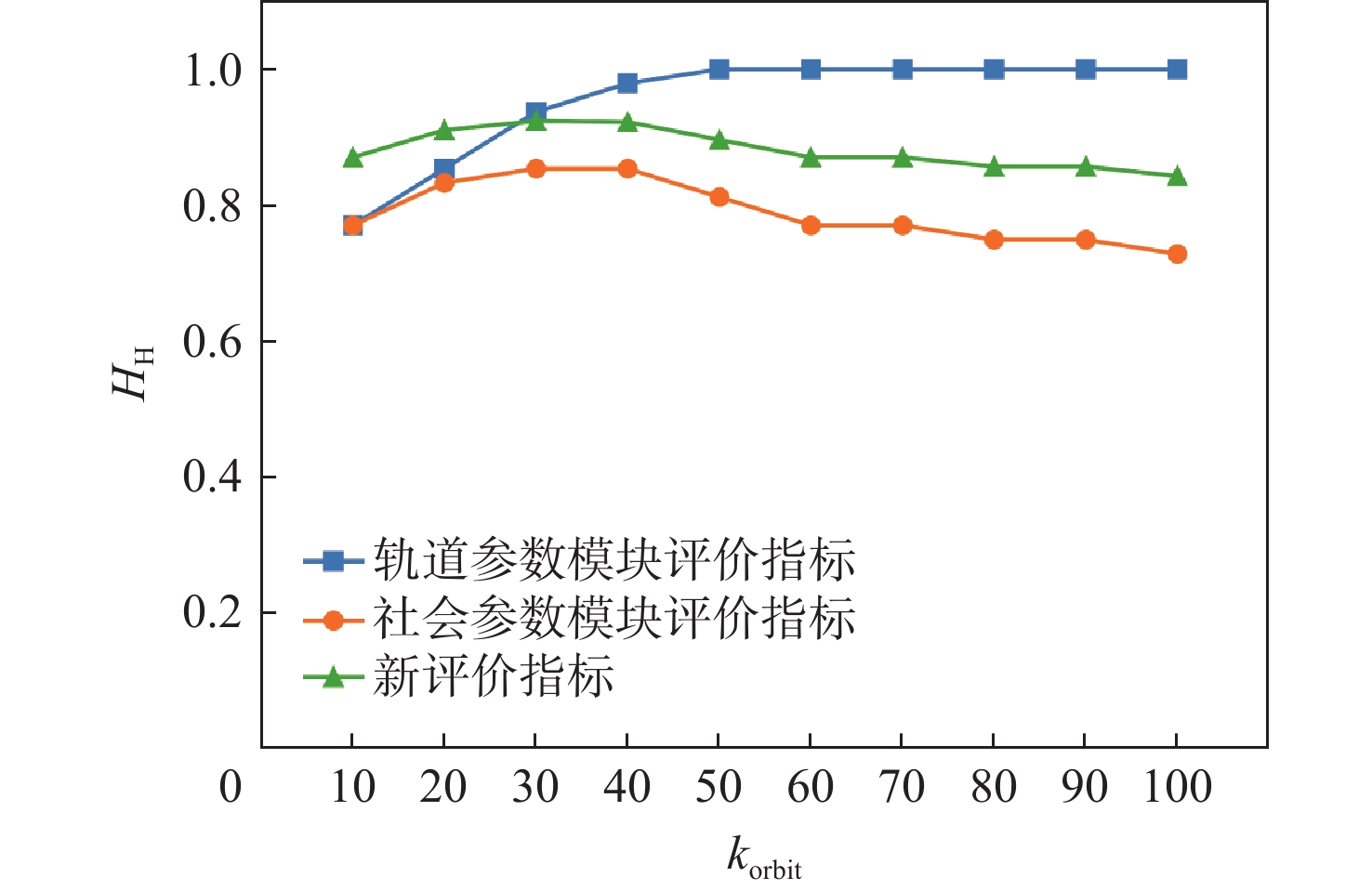
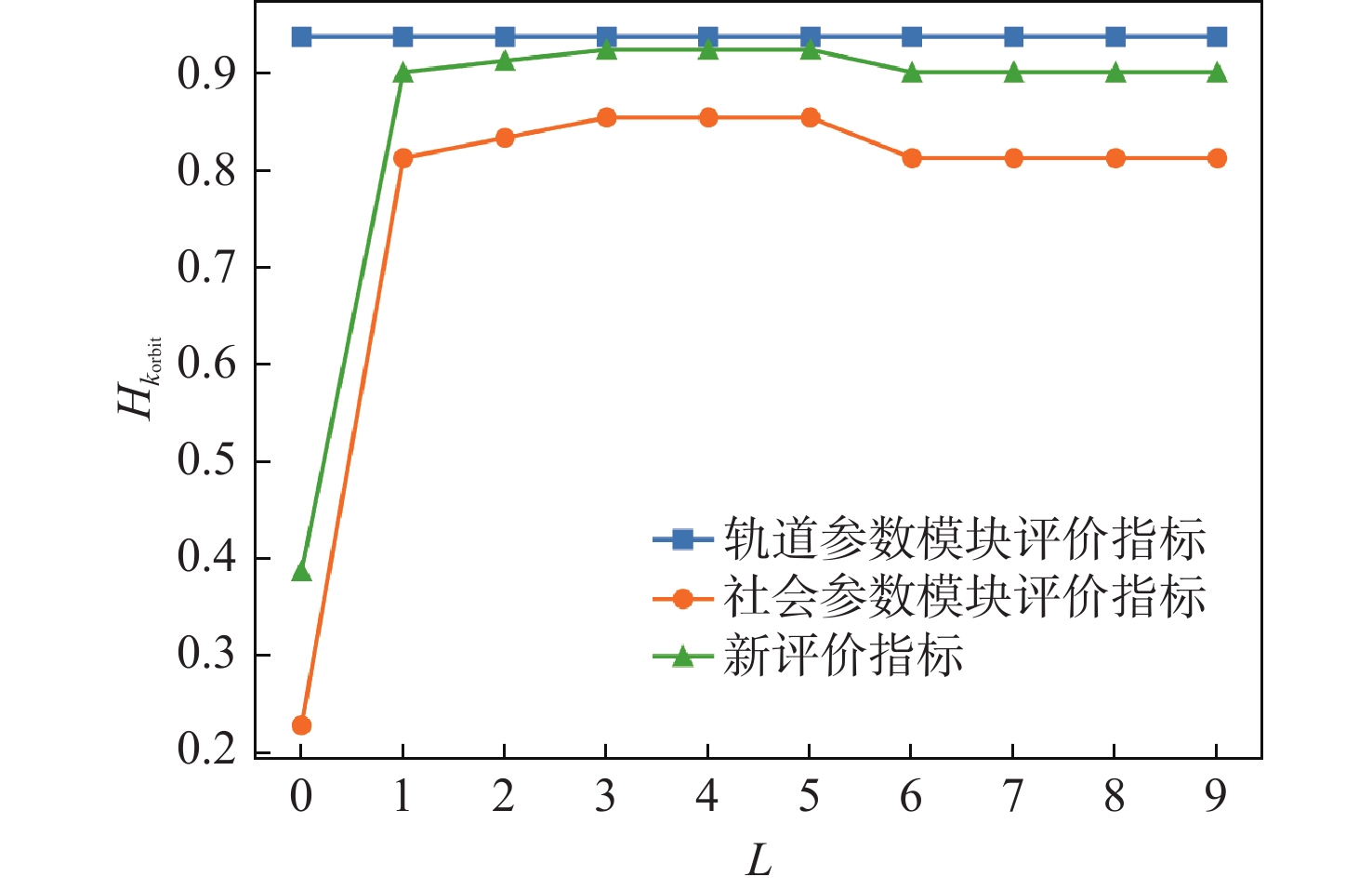
Matching in-orbit satellites with International Telecommunication Union (ITU) satellite network declaration filings is crucial for the design, selection, declaration, and coordination of satellite frequencies and orbits. Due of their low matching efficiency and high domain knowledge requirements, traditional manual matching algorithms frequently encounter difficulties. To address these issues, we propose an unsupervised prediction of matching between in-orbit satellites and satellite network filings (UPMIS) method. This method establishes a prediction indicator system and knowledge graphs for both in-orbit satellites and satellite network filings. By integrating domain knowledge and graph partitioning, we design a three-tier filtering framework comprising a time parameter module, a numerical orbit parameter module, and a character-based societal parameter module. This framework enables fast and accurate matching between in-orbit satellites and satellite network filings. Experimental results demonstrate that UPMIS achieves a H10 score of 0.8542 on real datasets, outperforming other comparative models. Additionally, the average runtime reaches millisecond-level efficiency. Additionally, the trials offer helpful references for future matching relationship predictions by recommending values for parameters like filtering quantity and aggregation depth.

Ship target recognition method based on multi-source image fusion for unmanned aerial vehicle aerial photography
JIANG Jie, YAN Wenjun, LIU Kai, ZHANG Limin
2026, 52(6): 1955-1964. doi: 10.13700/j.bh.1001-5965.2024.0289
Abstract:

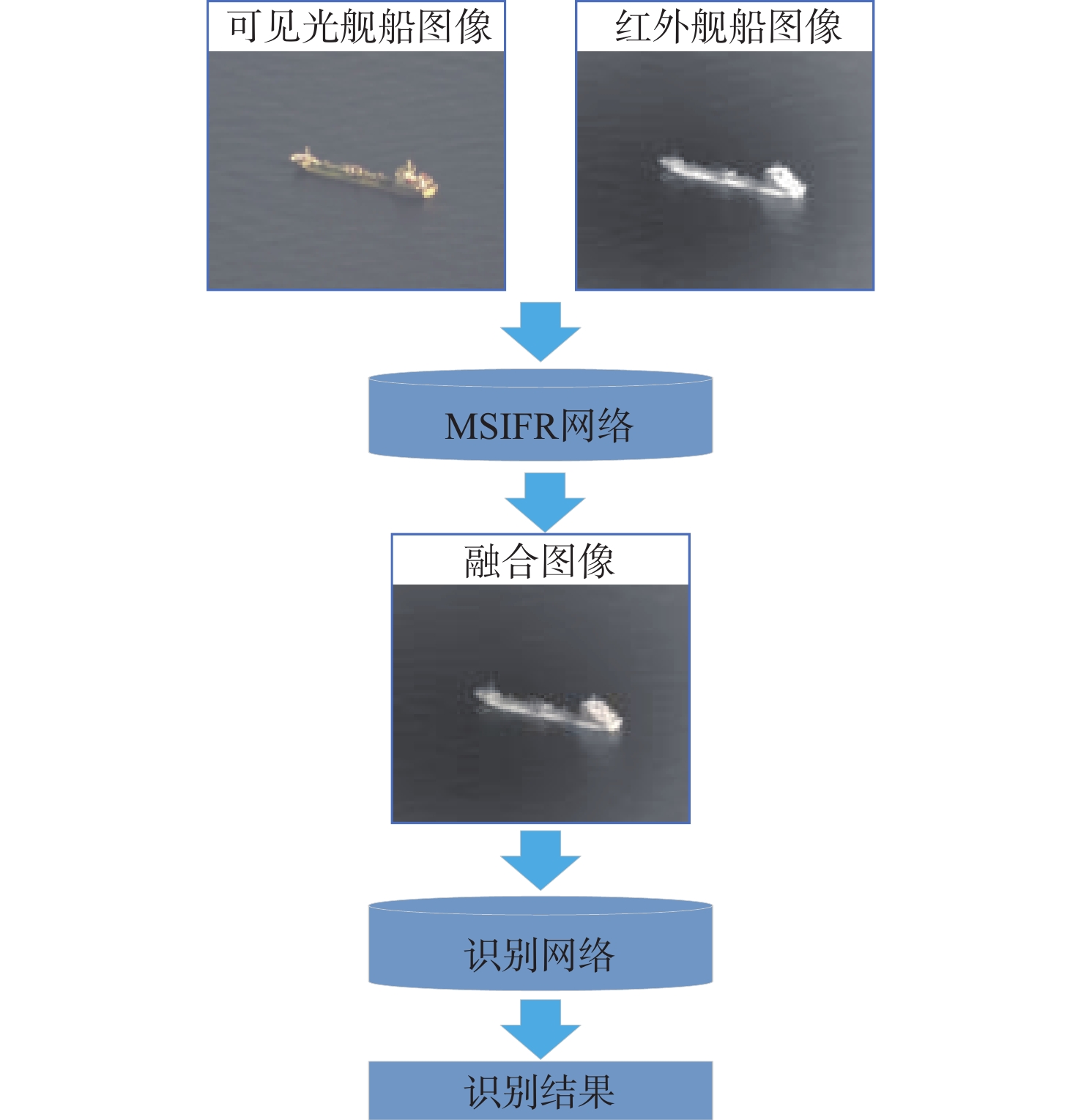
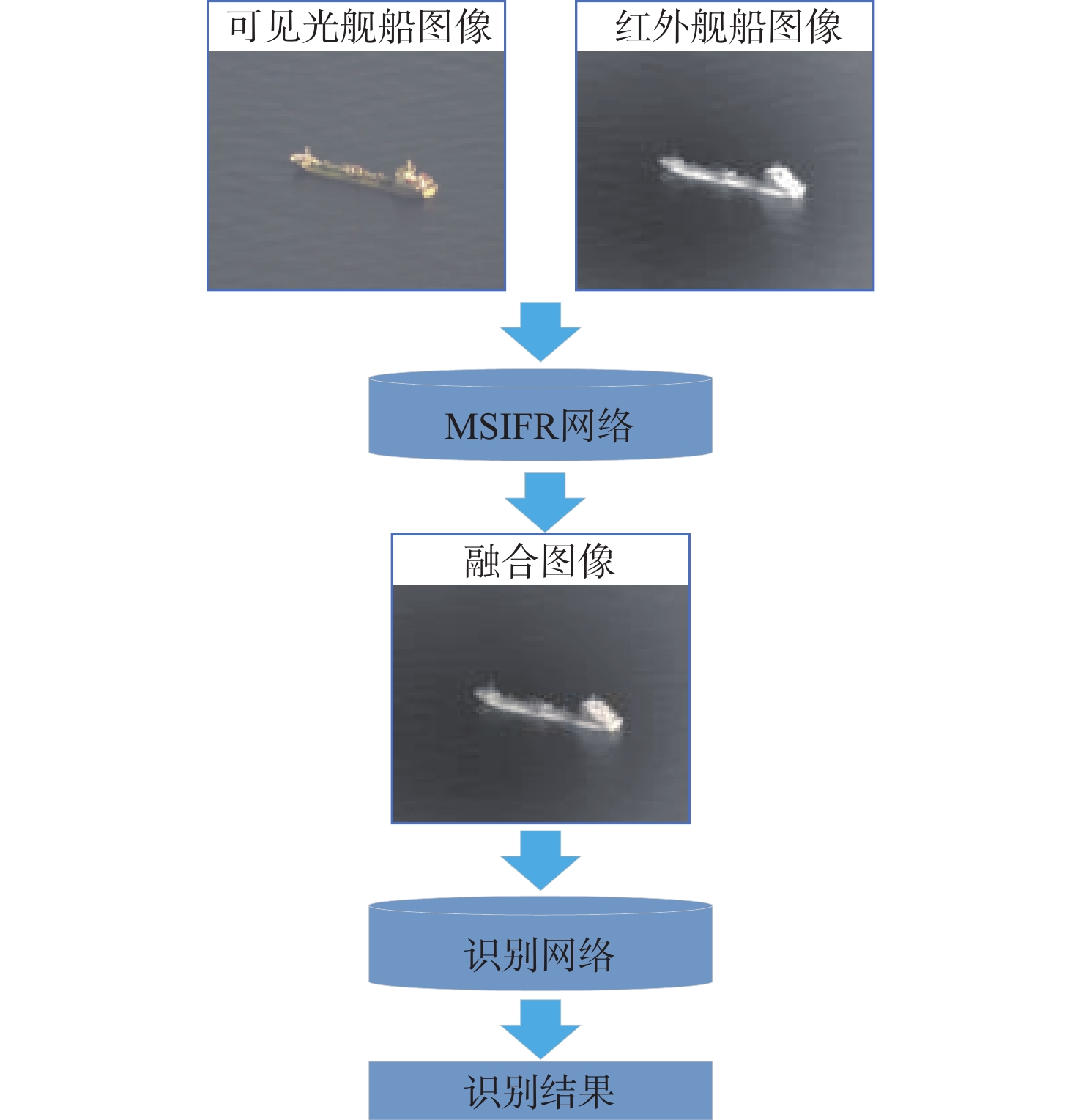
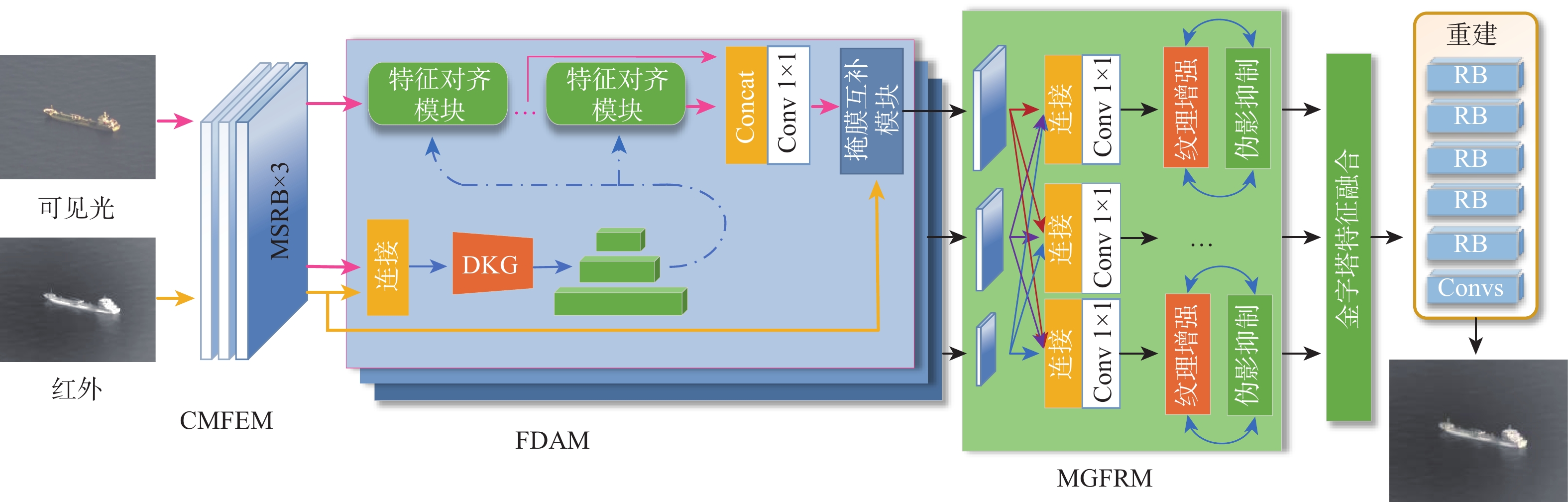
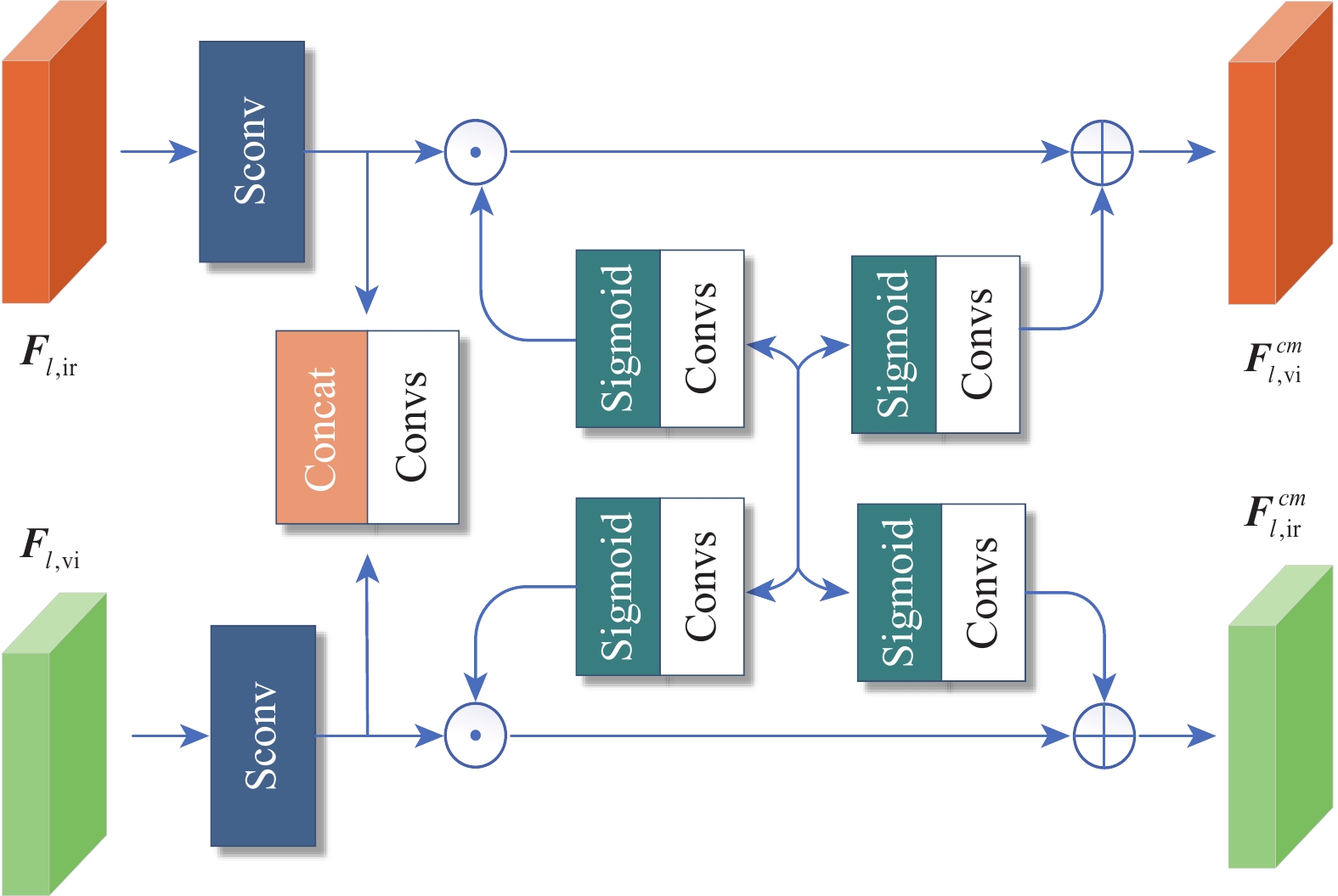
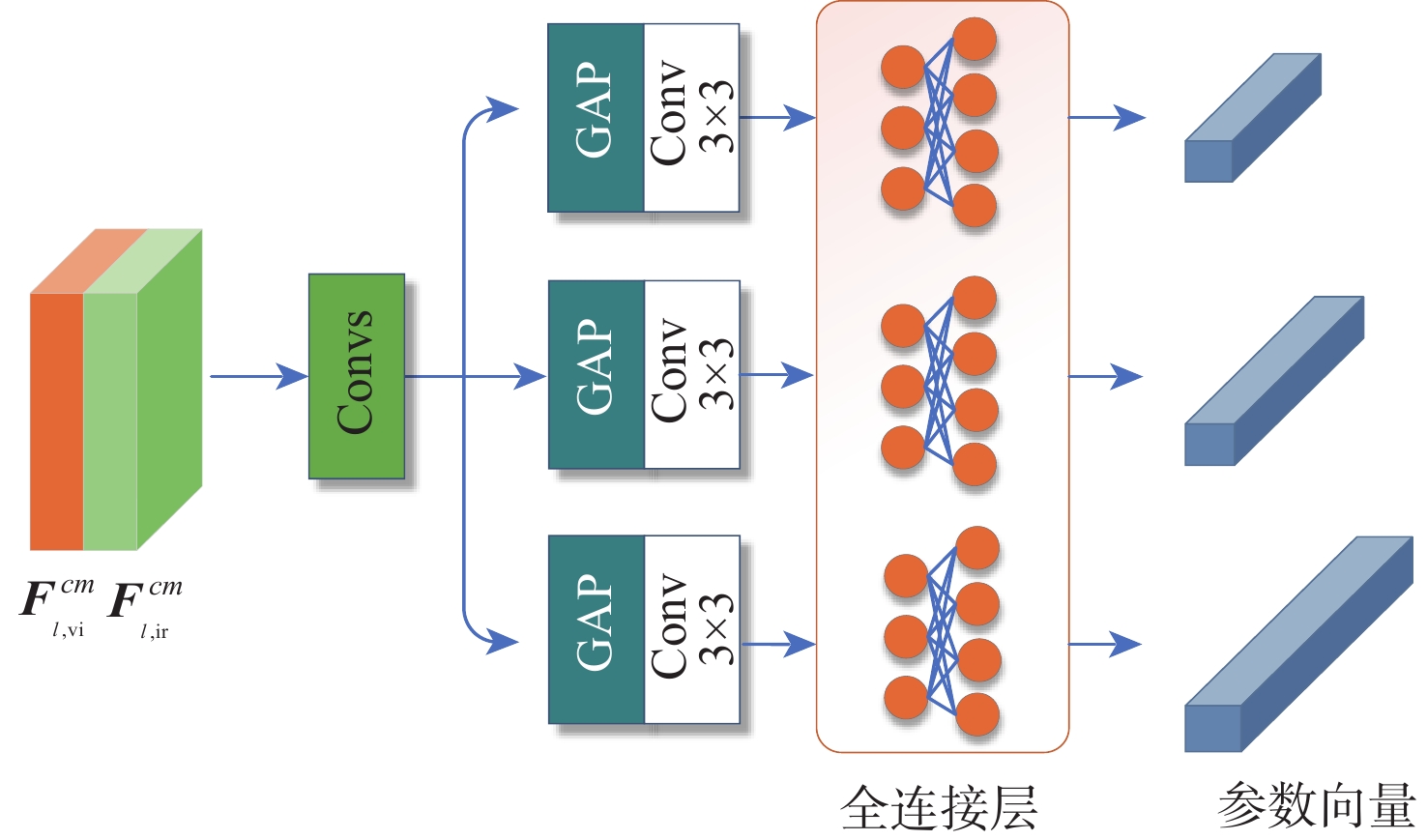
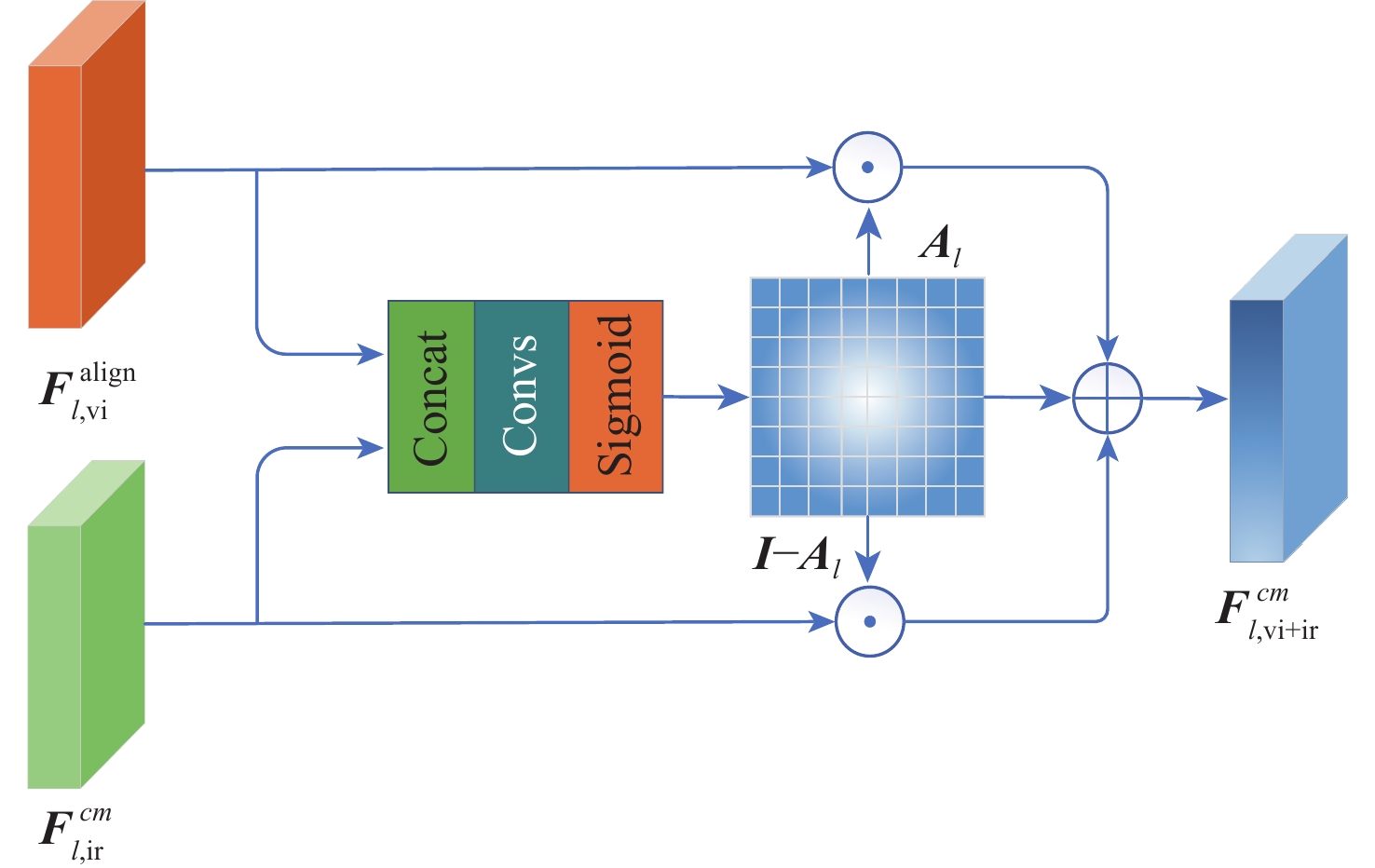
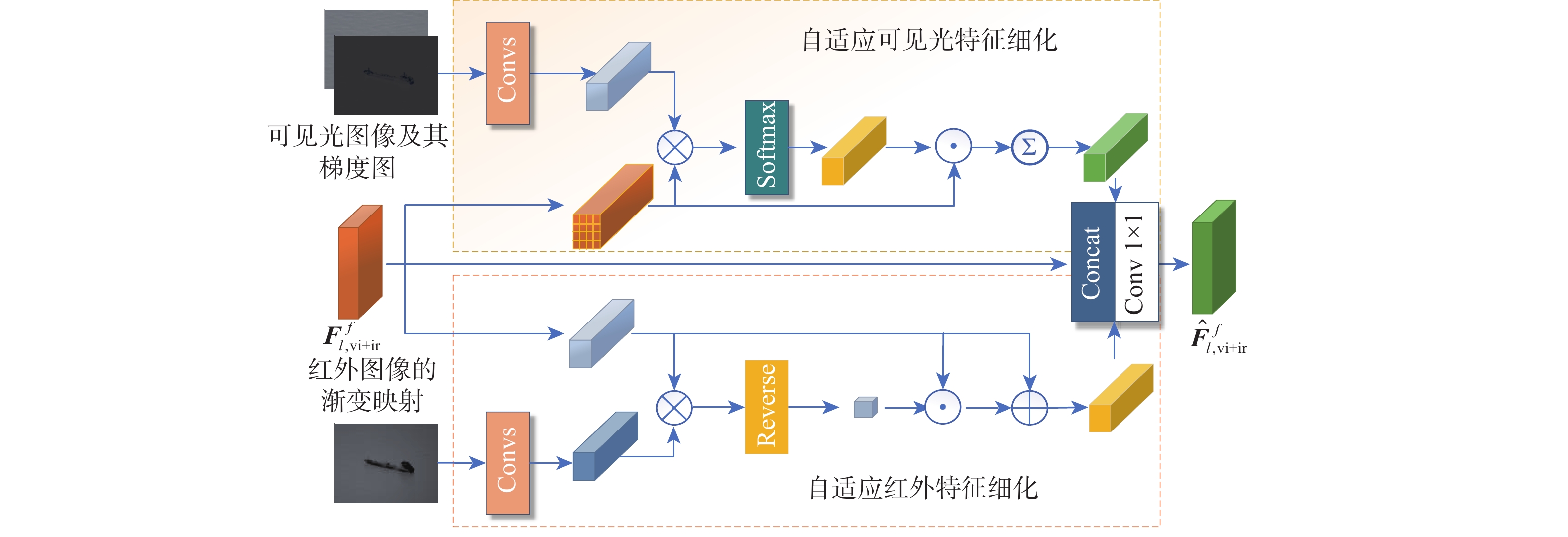
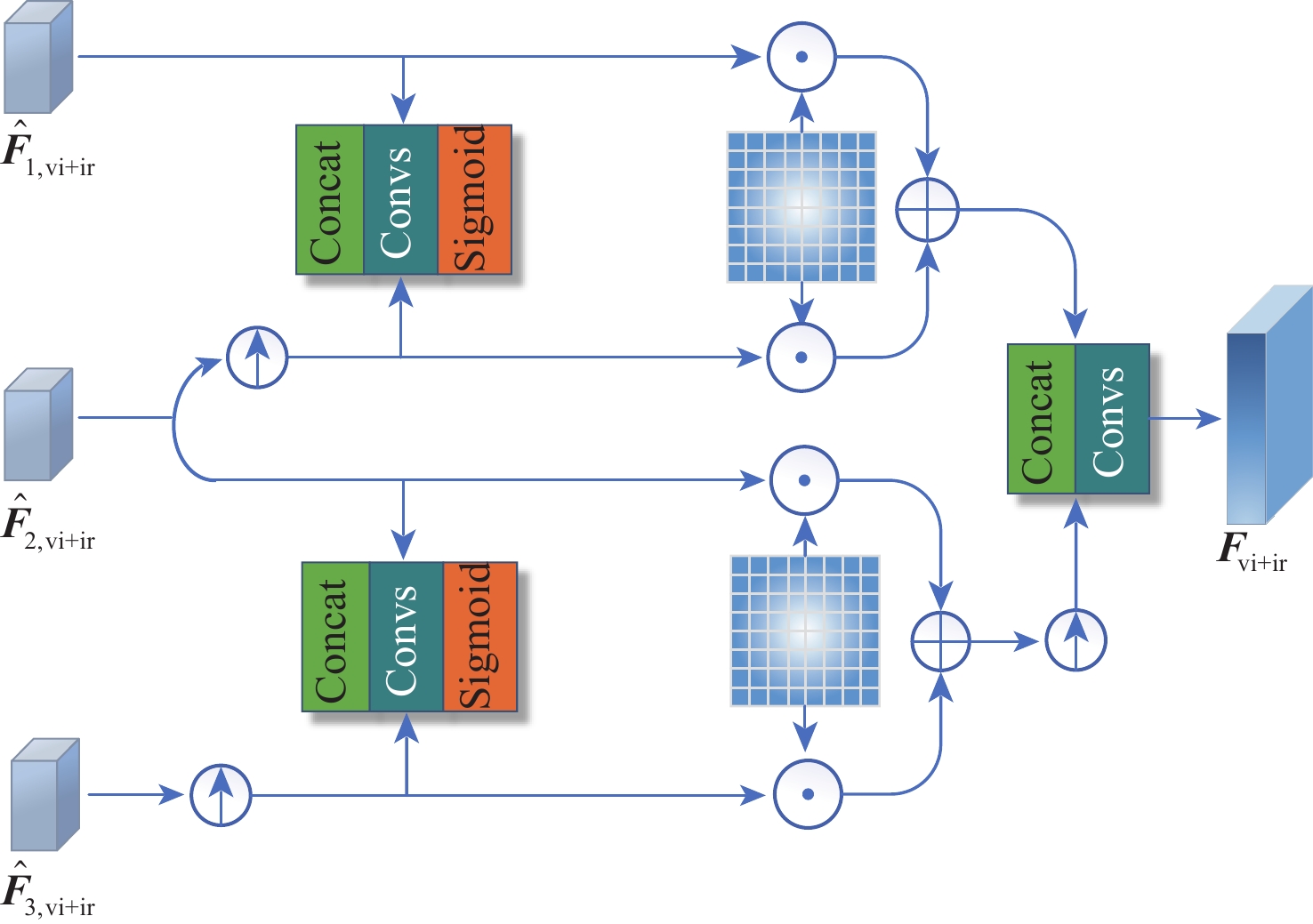
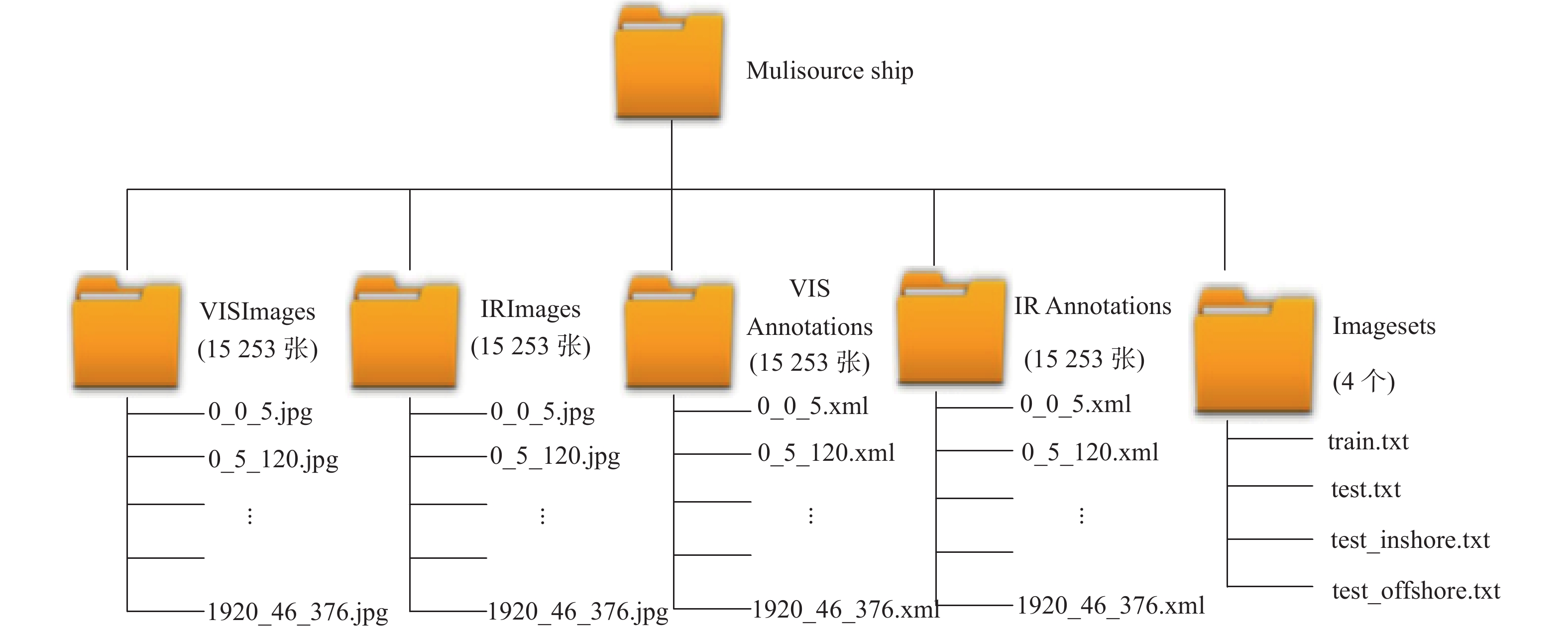
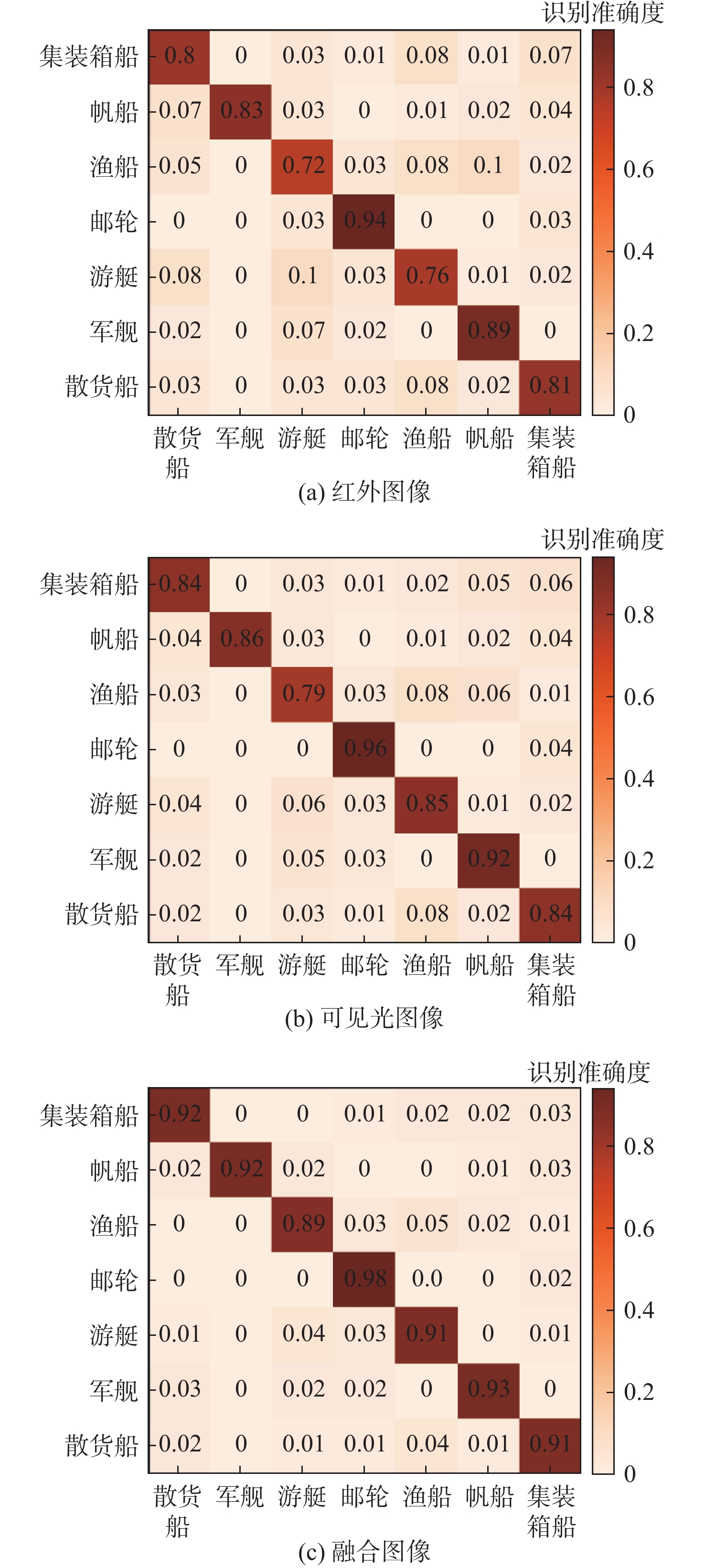
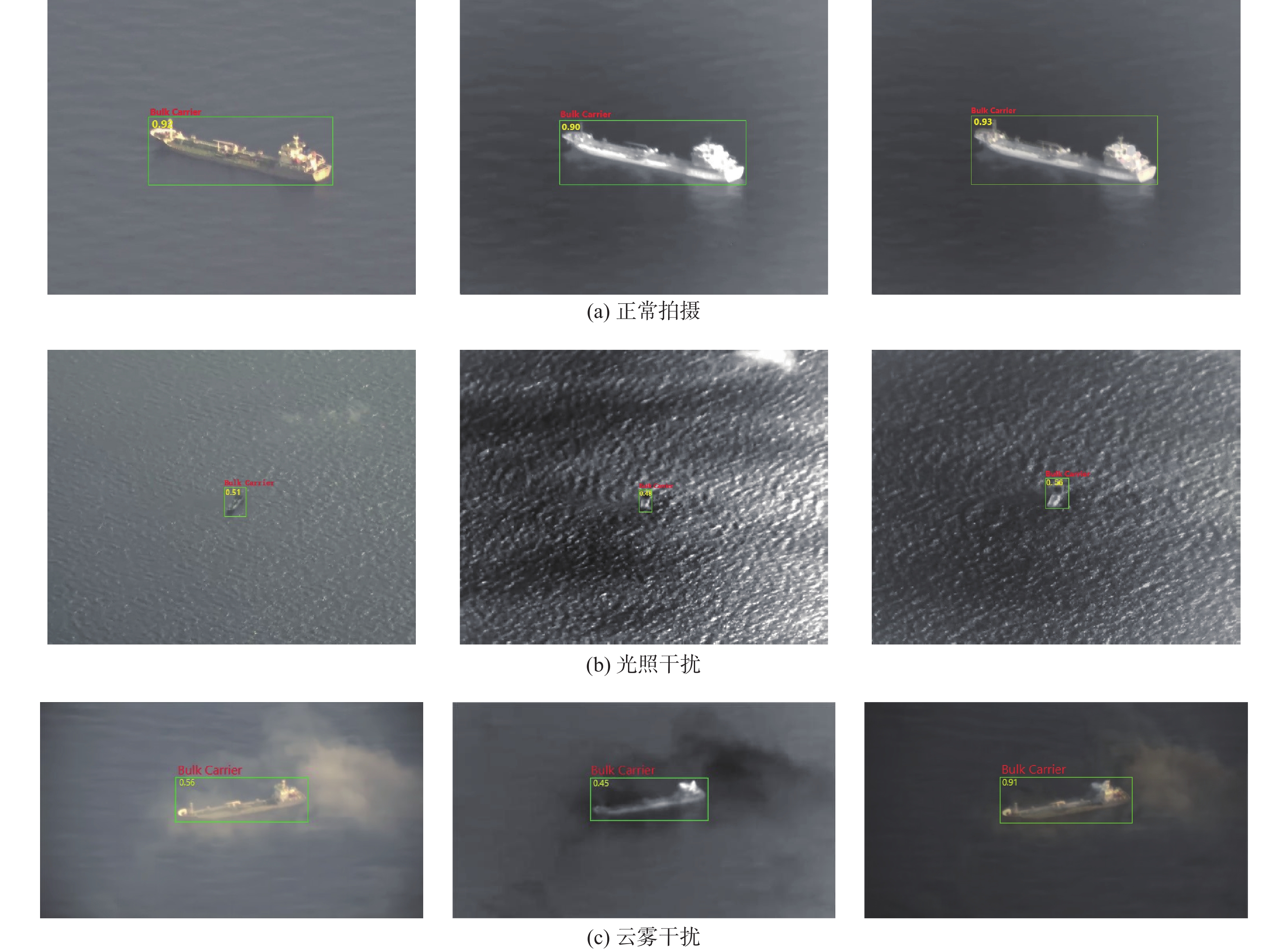
A multi-source ship image fusion recognition method is proposed for unmanned aerial vehicle aerial photography of multi-source ship images. In the face of many interferences in real scenes, pixel level fusion is adopted to fuse infrared and visible light ship images, and then perform target recognition. It can improve the algorithm's interpretability and lessen the network's reliance on samples as compared to feature level recognition techniques. This article focuses on solving the pixel offset caused by different sensor parameters. To eliminate the distortion and artifacts that traditional picture registration can readily cause, image registration has been turned into end-to-end feature alignment. A multi-source ship image fusion recognition network is proposed, which consists of a cross modulation feature extraction module, a feature dynamic alignment module, a multi granularity feature refinement module, and a pyramid feature fusion module. It can fully integrate the features and texture details of different modal images, effectively improving the recognition performance of ship targets. The approach described in this study has demonstrated great interpretability for multi-source images, good fusion performance, and high accuracy and robustness in recognizing ship targets through experimental verification.

Coupling suppression method of blended-wing-body combined-cycle-power vehicle
XIONG Zhiyue, ZHANG Shuguang, DING Jiayuan, LIAO Yuzhou
2026, 52(6): 1965-1981. doi: 10.13700/j.bh.1001-5965.2024.0270
Abstract:

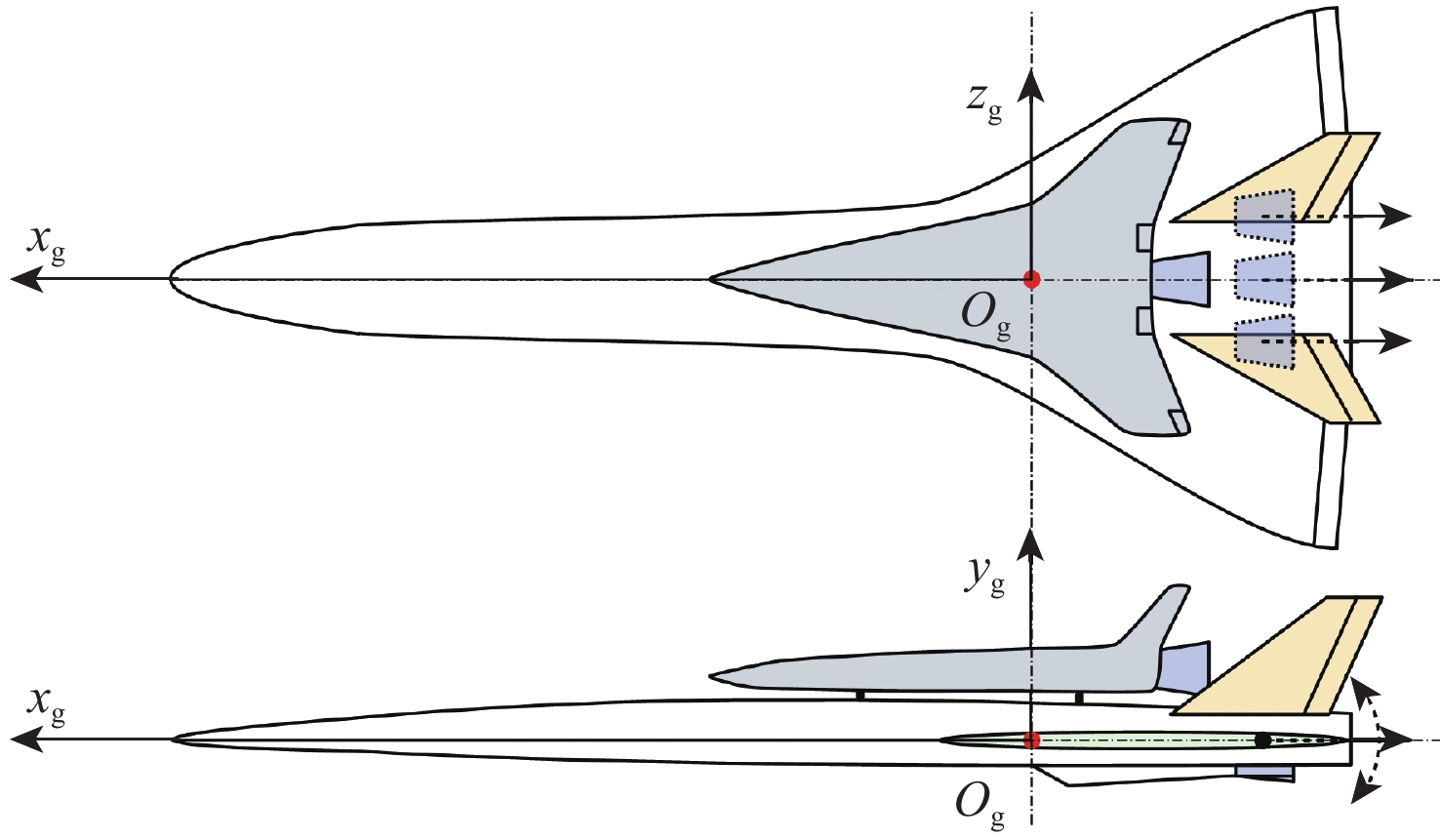
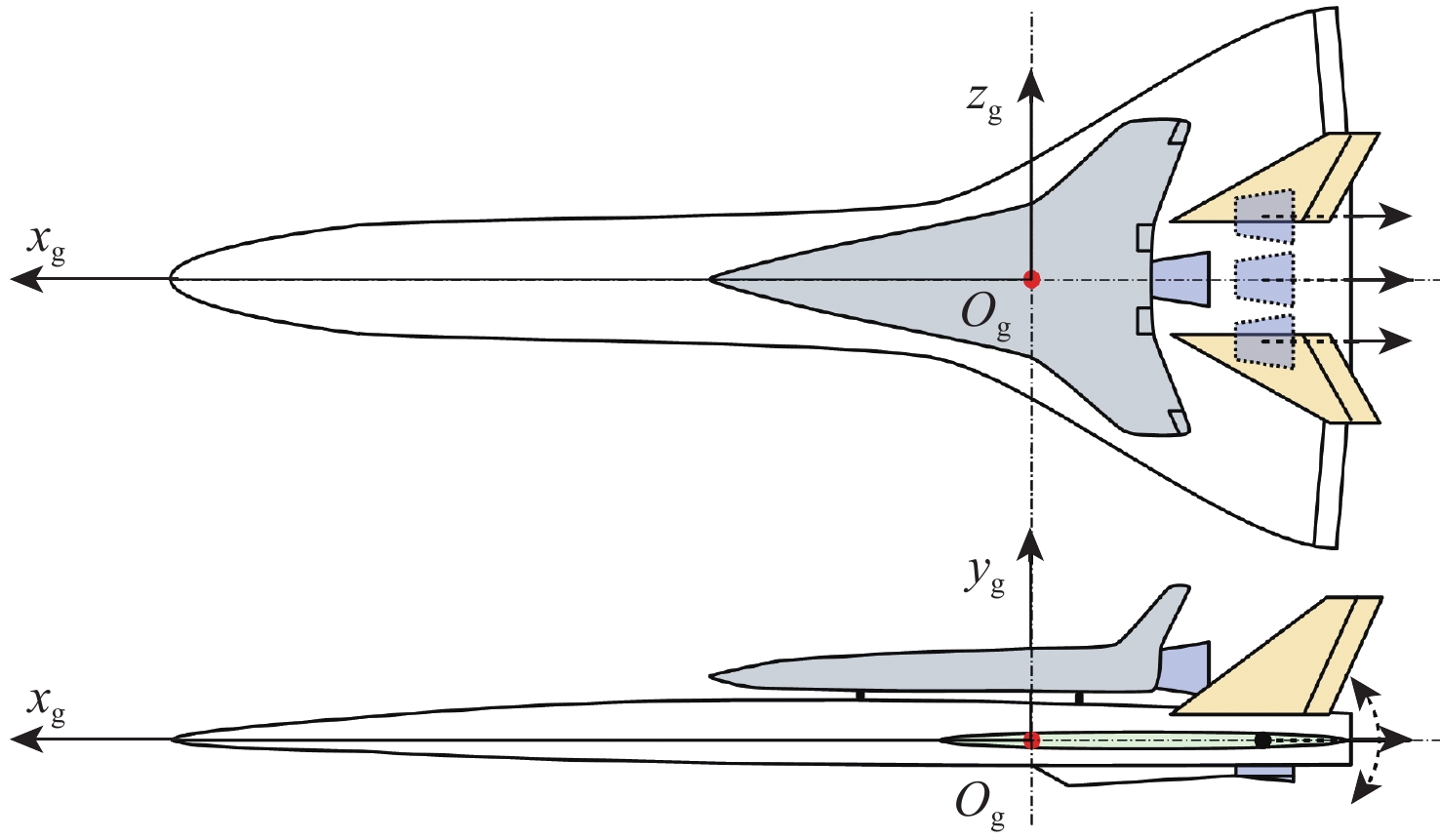
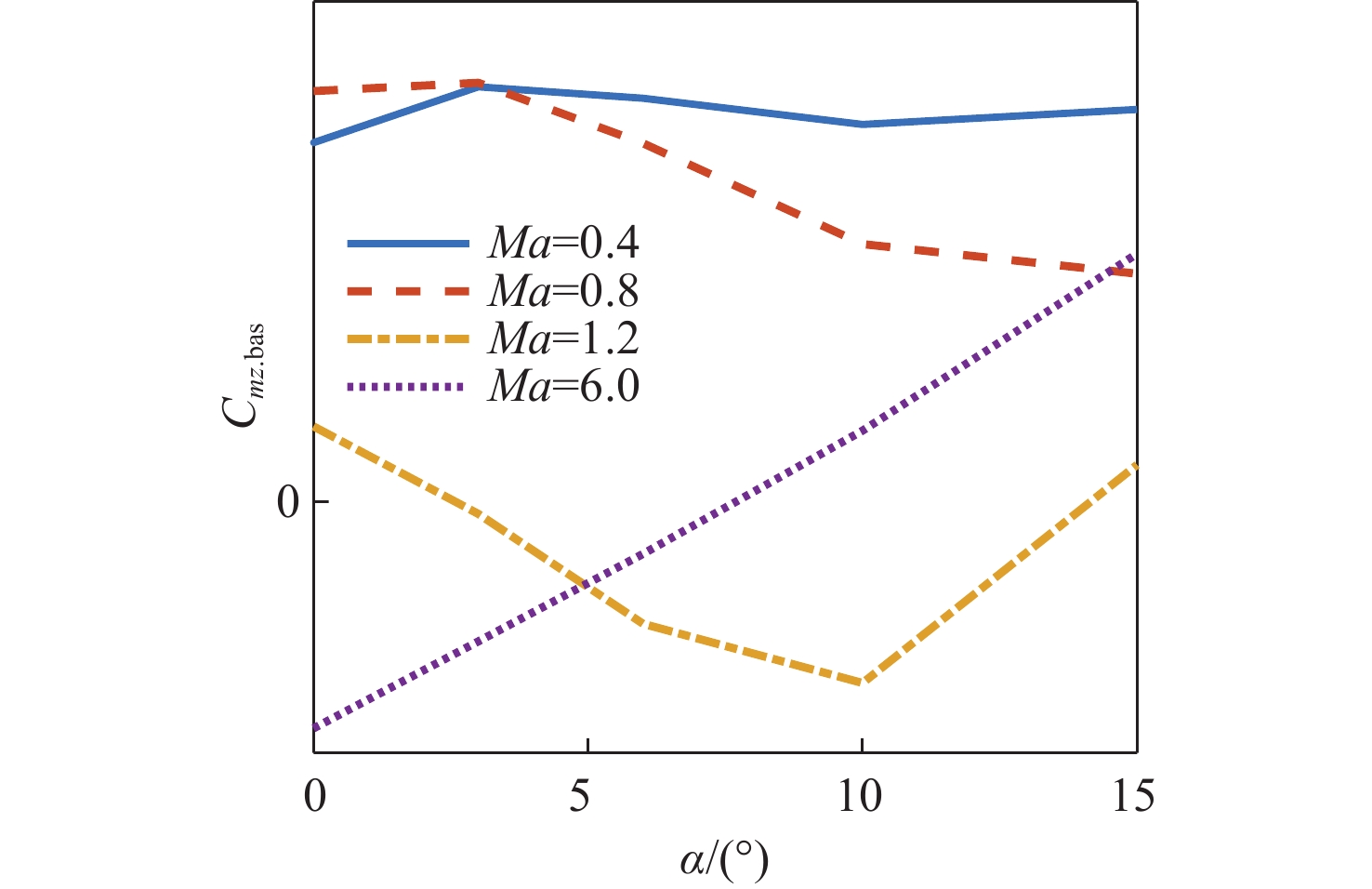
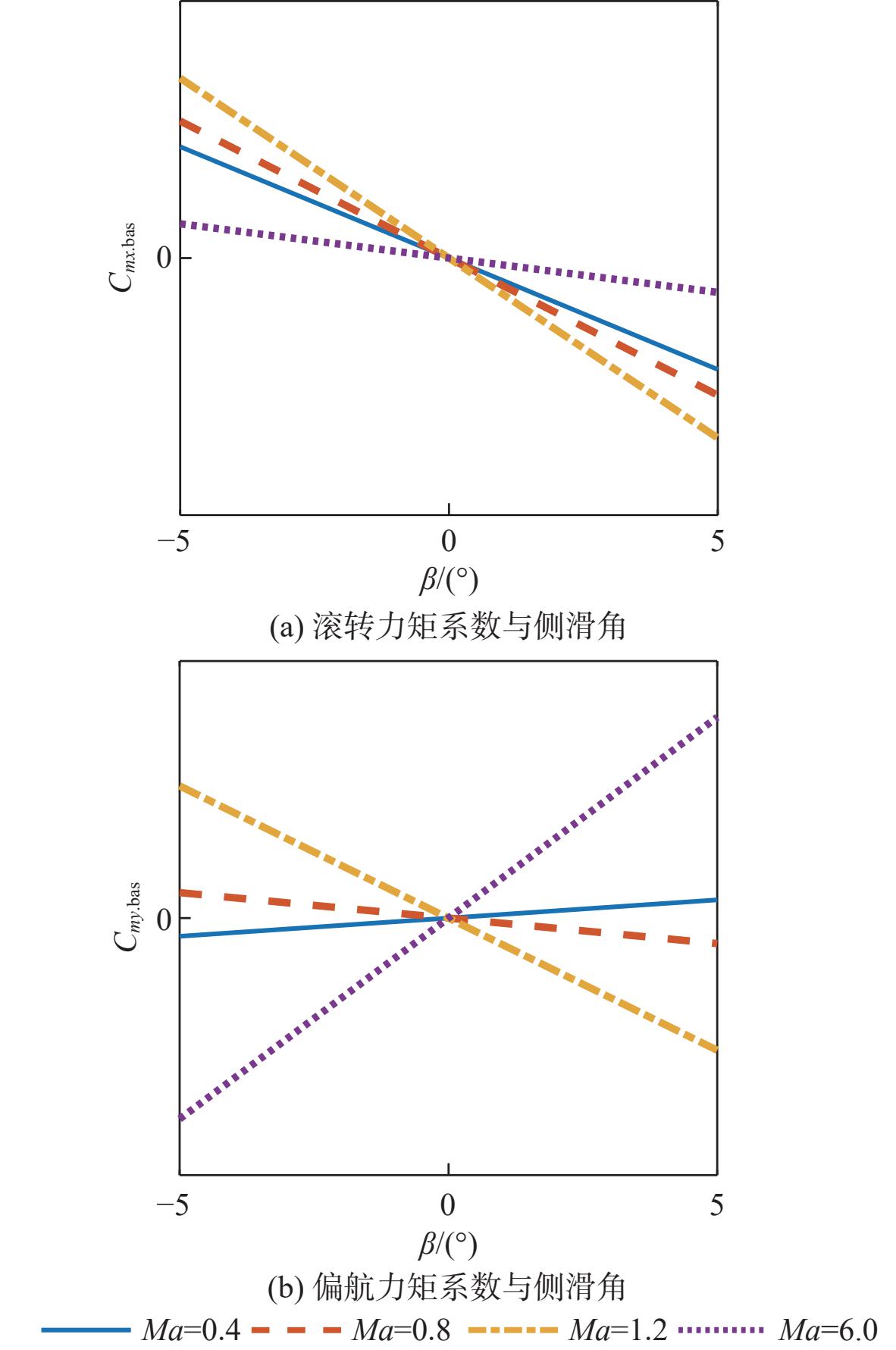
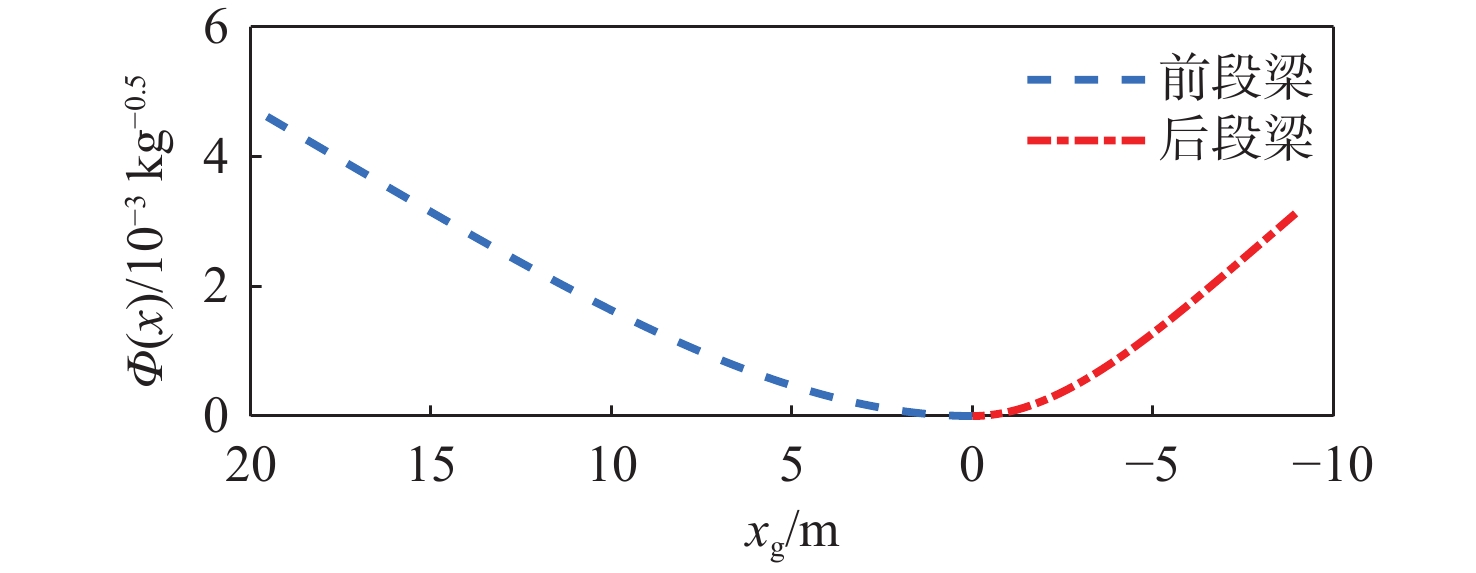
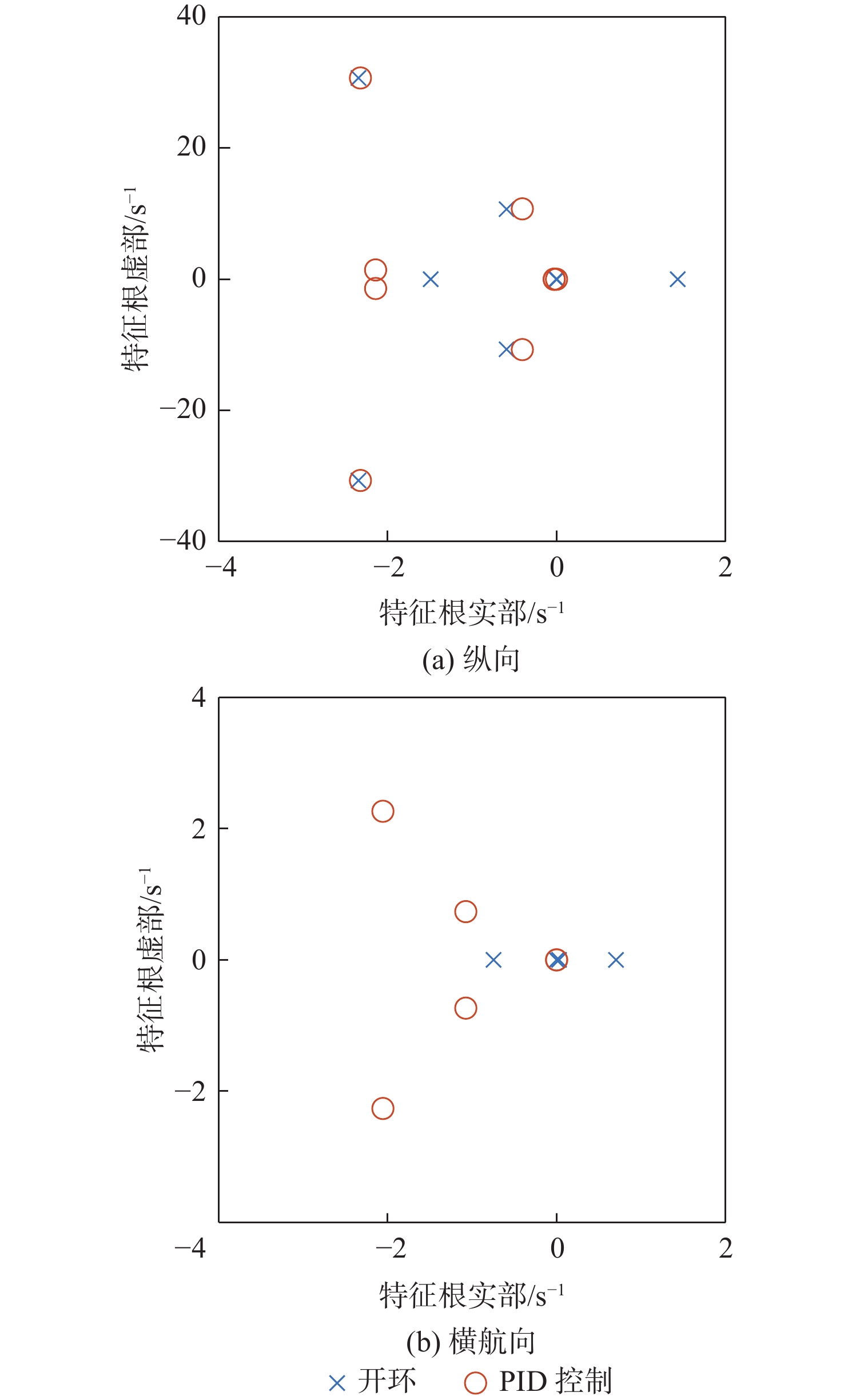
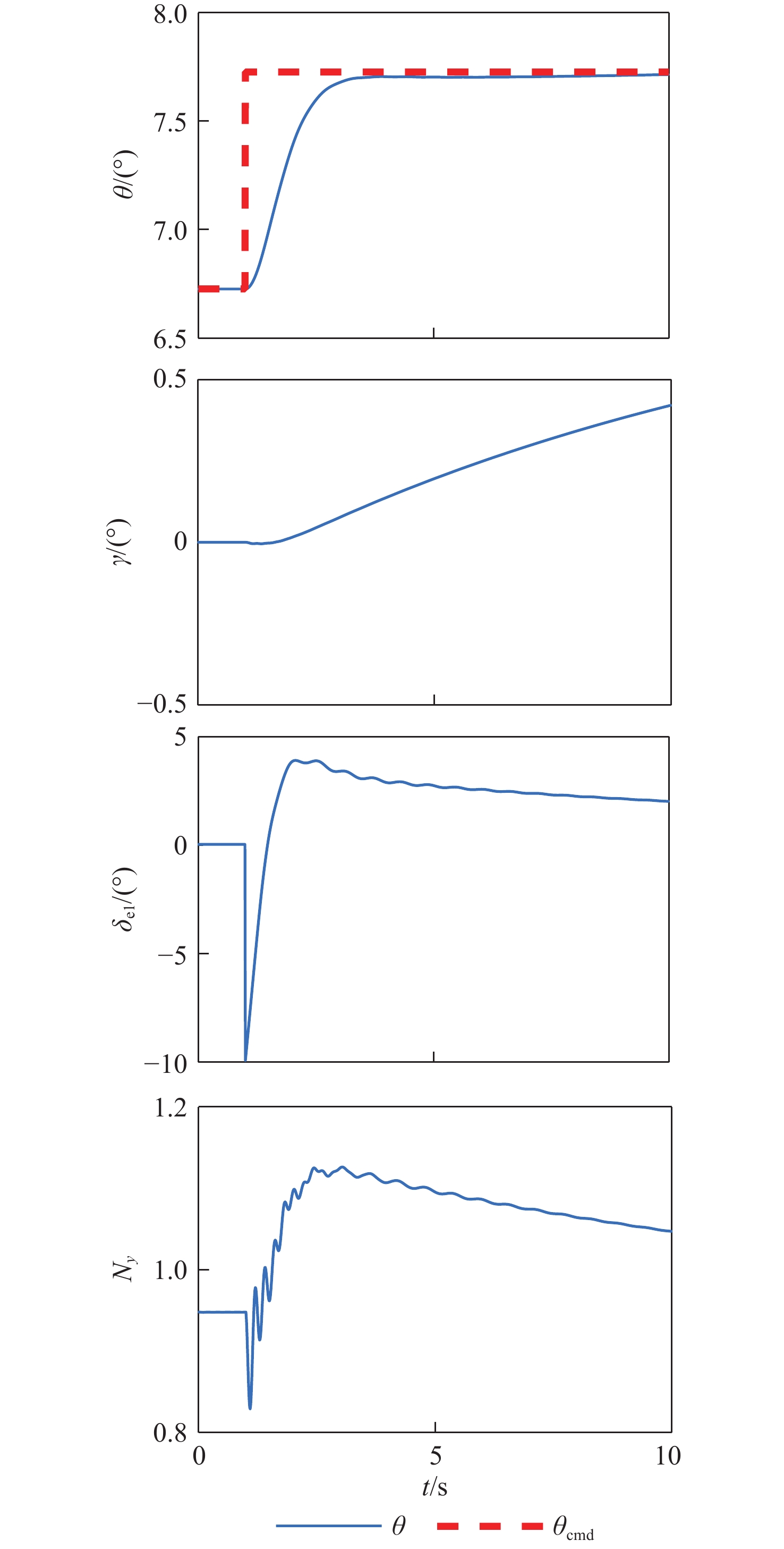
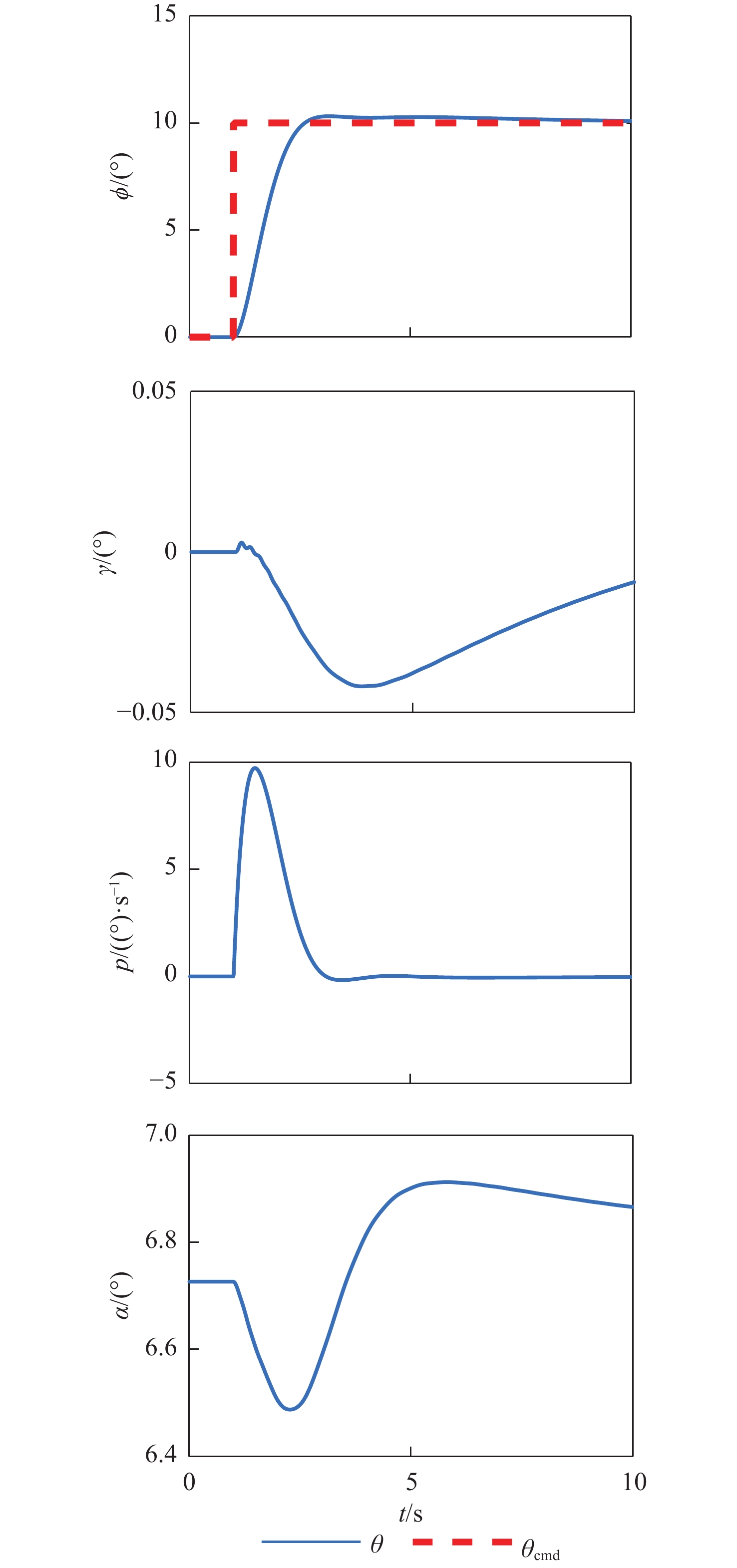
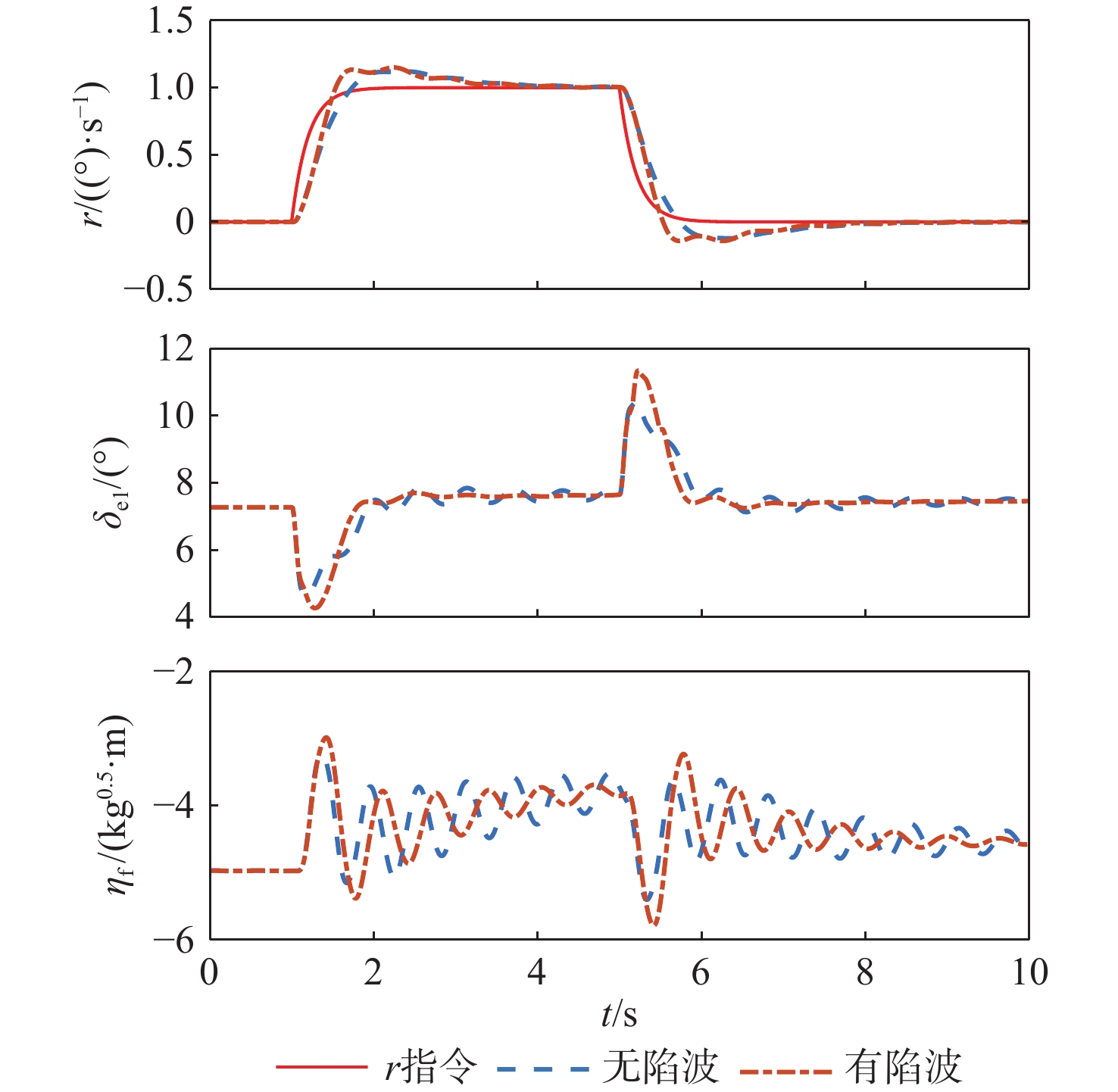
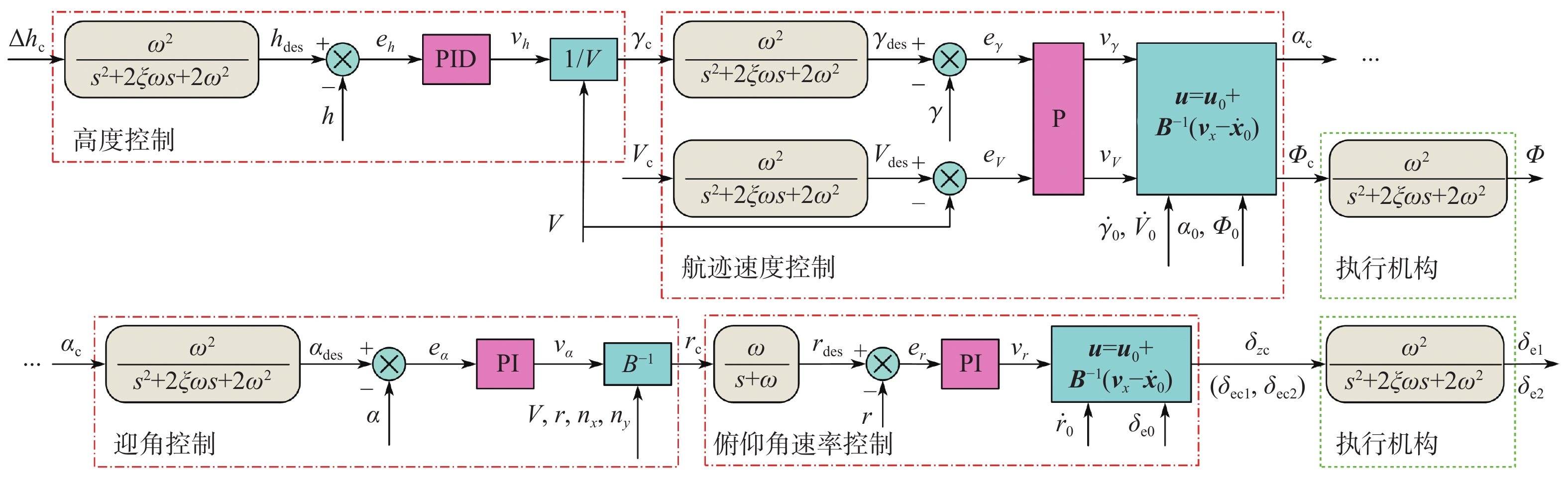
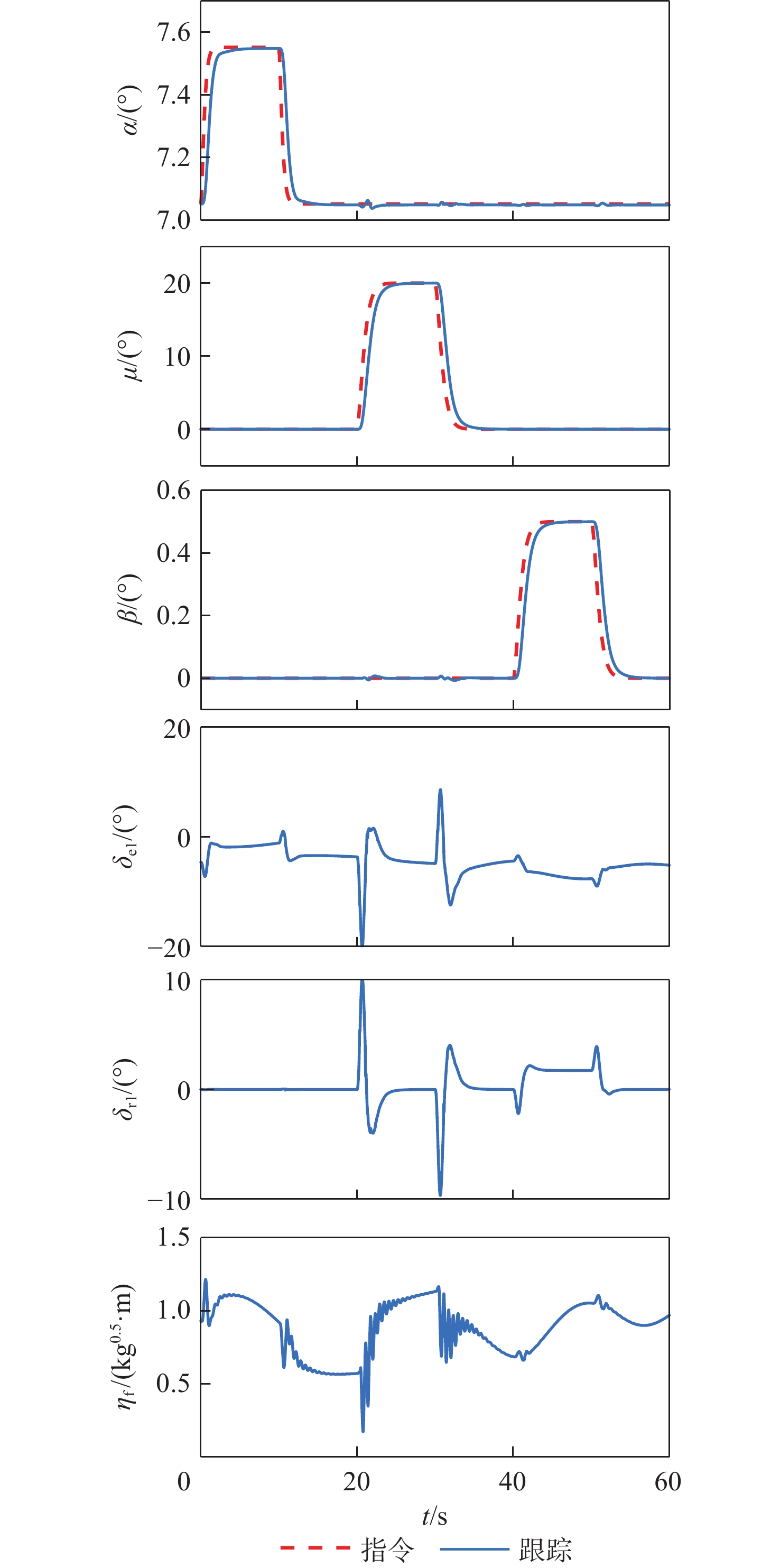
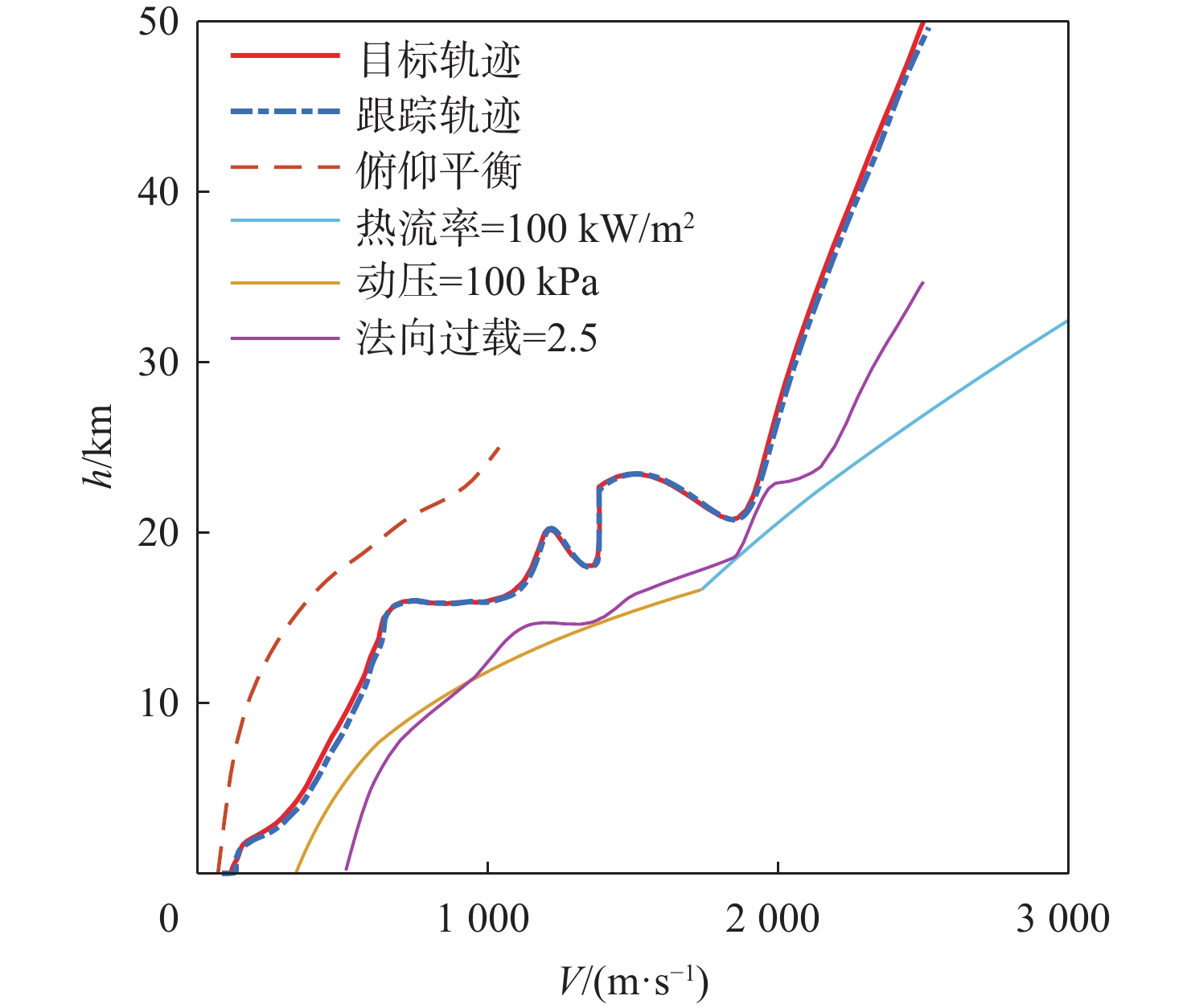
Horizontal takeoff and landing vehicles with integrated aero engines, blended wing bodies, and combined cycle power have the potential to be swiftly deployed and utilized in repeated aerospace round-trip missions with great transportation efficiency. However, their flight dynamics are affected by strong nonlinearity, aero-engine-elastic coupling, longitudinal-lateral kinematic coupling, and flight attitude-trajectory coupling, making control design challenging. In this regard, a flight dynamics model is established in this paper, which describes various coupling characteristics of a general blended-wing-body combined-cycle-power vehicle. Then, its flight dynamic characteristics are analyzed. By combining traditional PID control with dynamic inversion to suppress couplings, a multi-loop control law that is simple to apply is created. The multiple stochastic simulation results show that the control law not only helps suppress couplings but also achieves good tracking performance in attitude and trajectory, as well as good control robustness and anti-interference ability under uncertainties such as modeling, environment, and sensing.

Robust control of mobile robots based on H under DoS attack
JI Xudong, CHEN Youdong, WEI Hongxing
2026, 52(6): 1982-1989. doi: 10.13700/j.bh.1001-5965.2024.0267
Abstract:

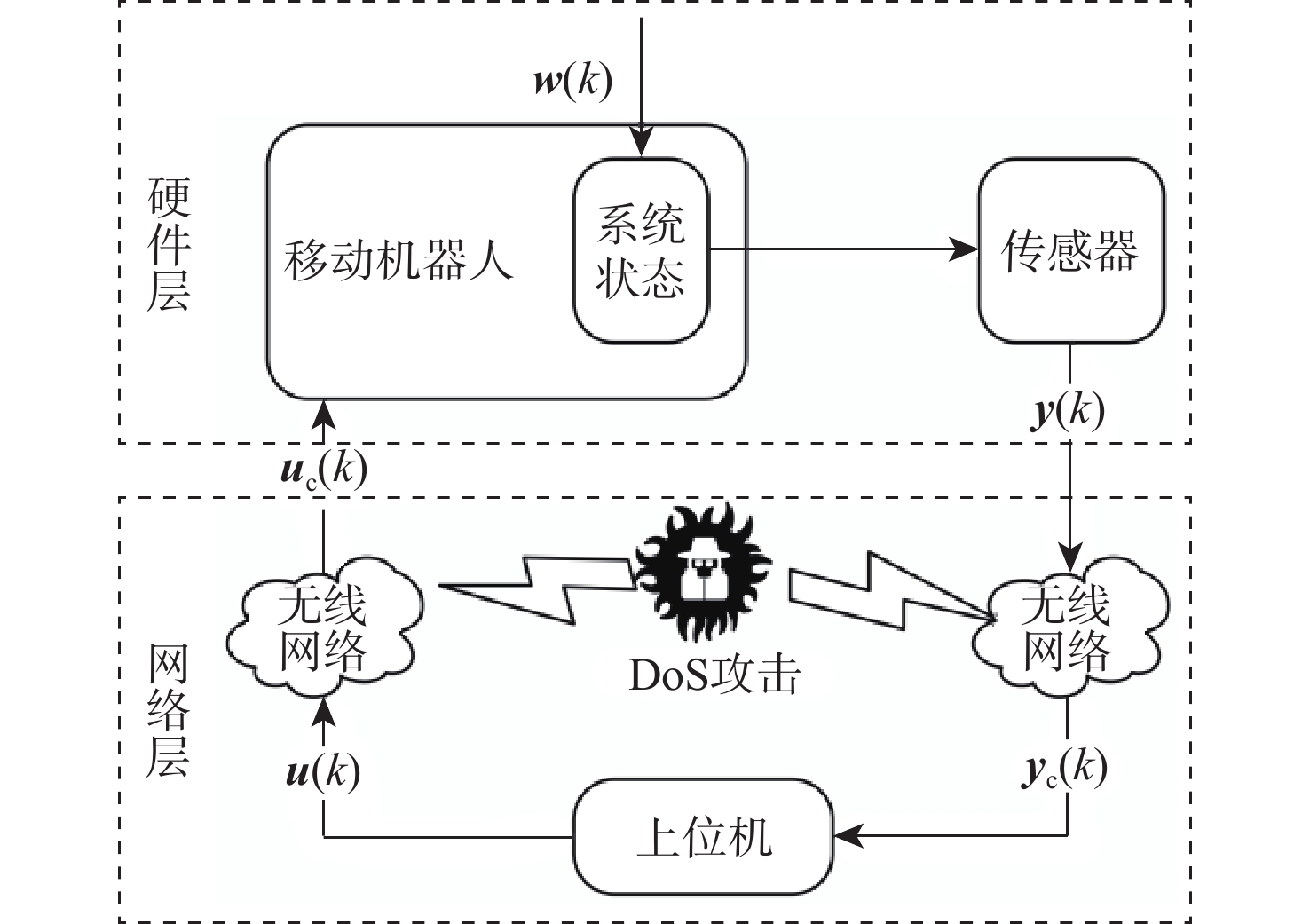
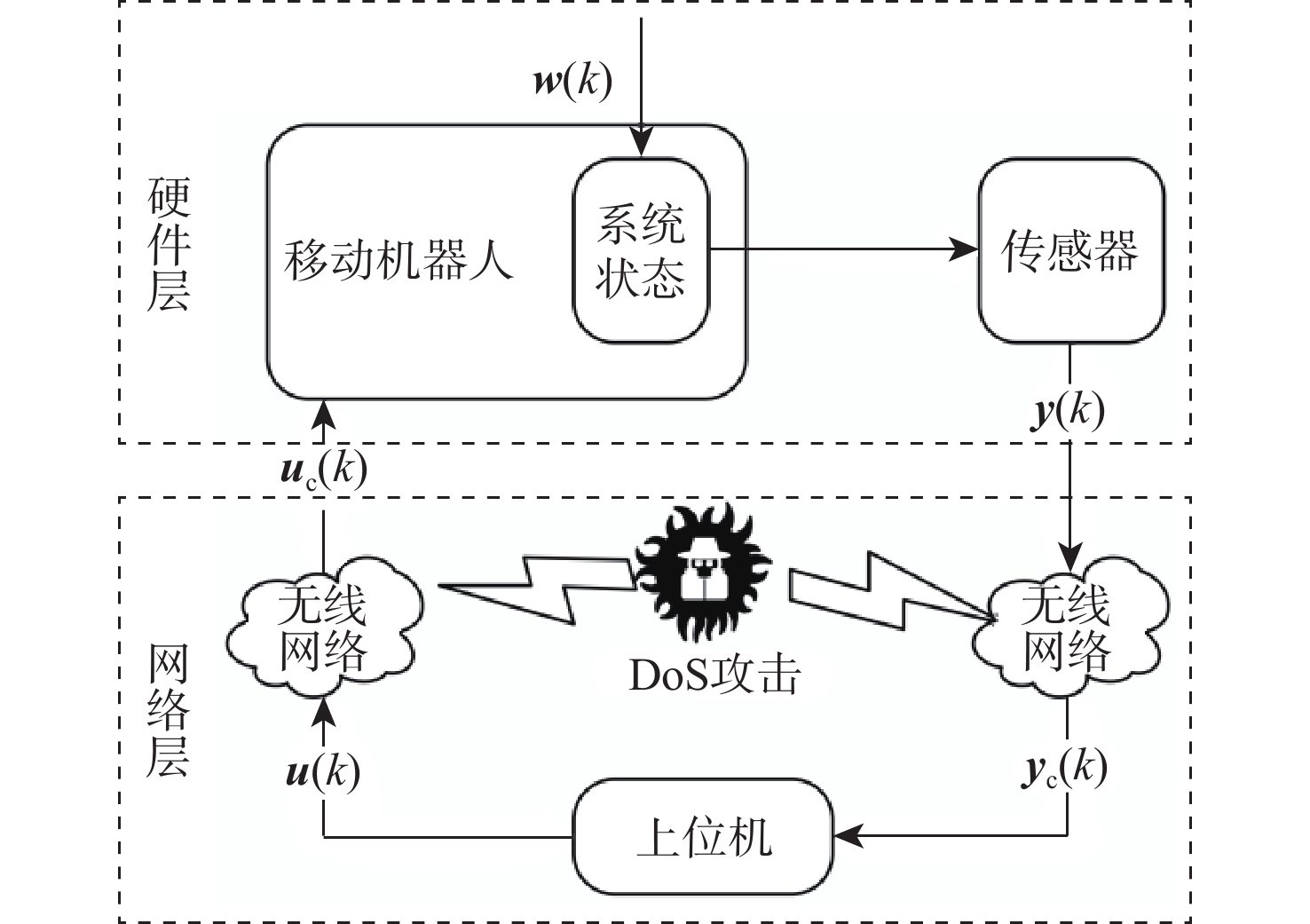
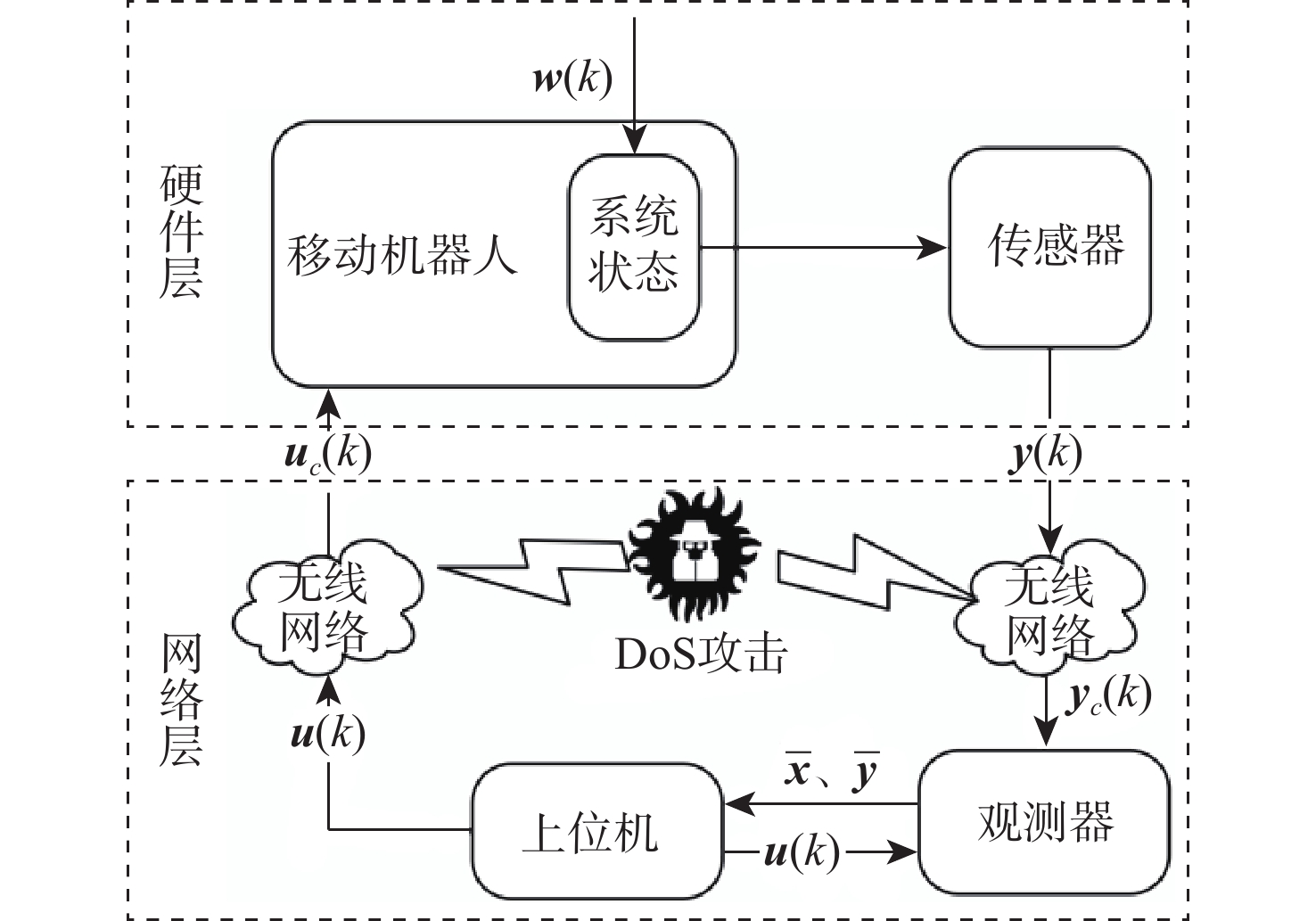
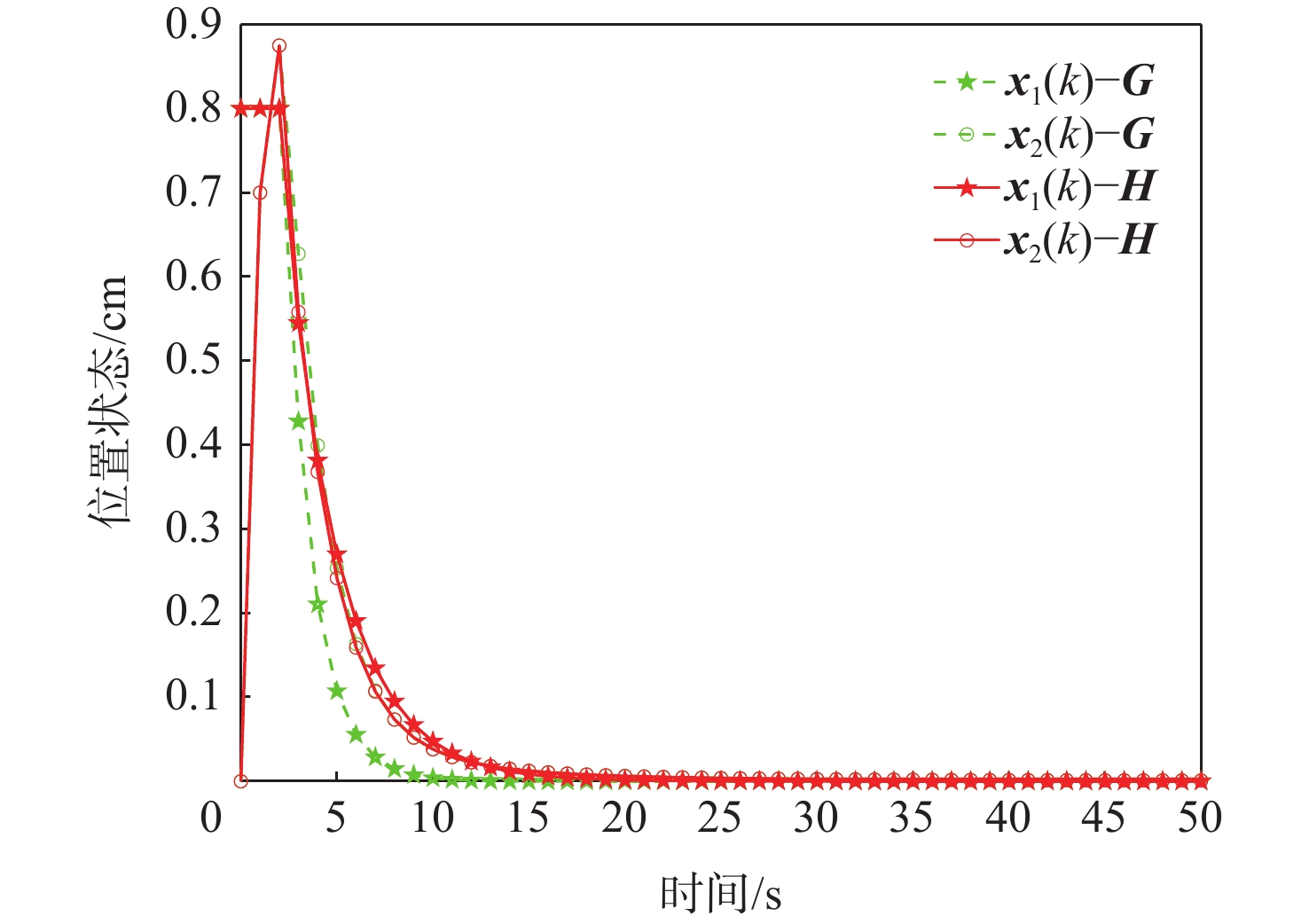
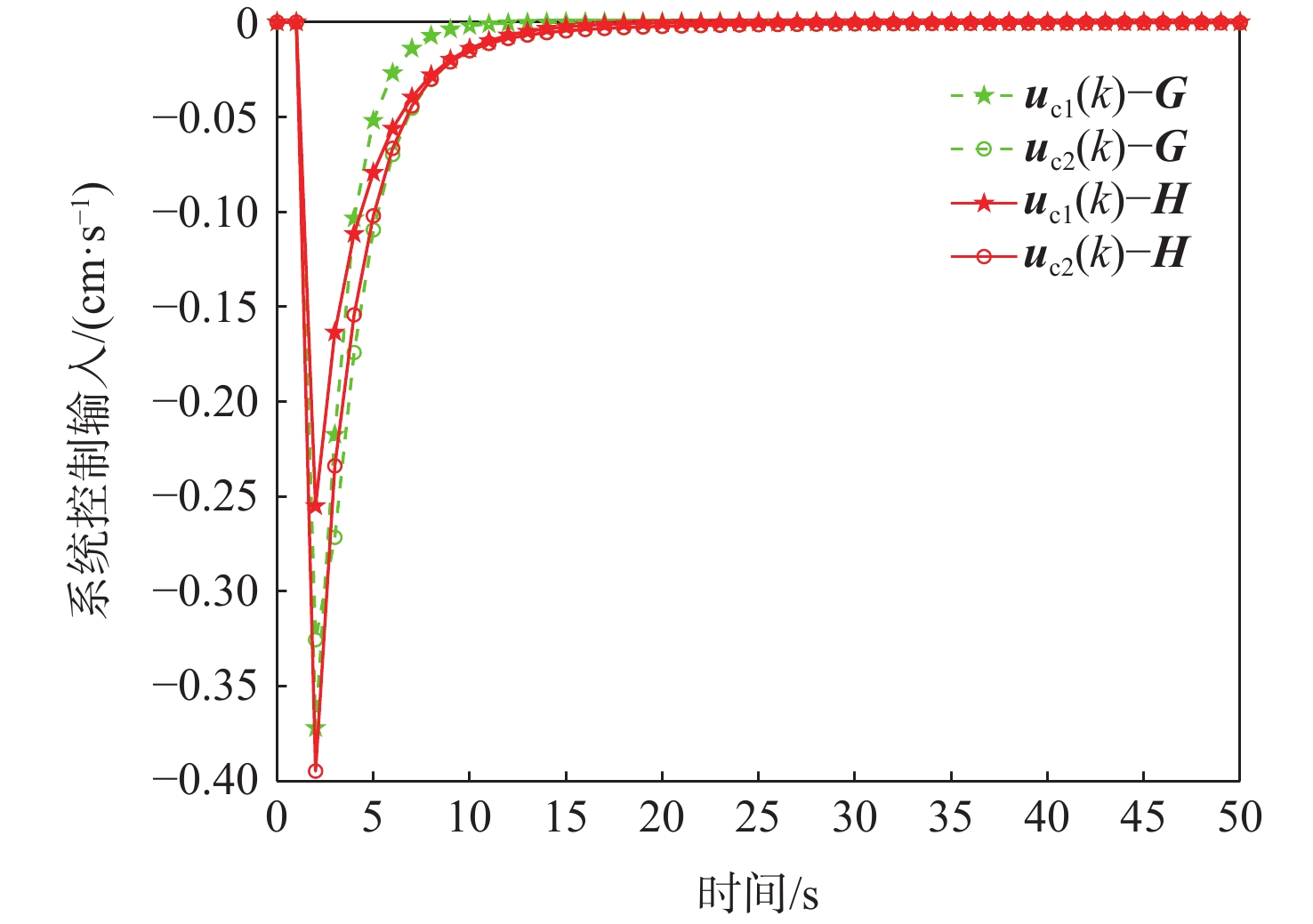
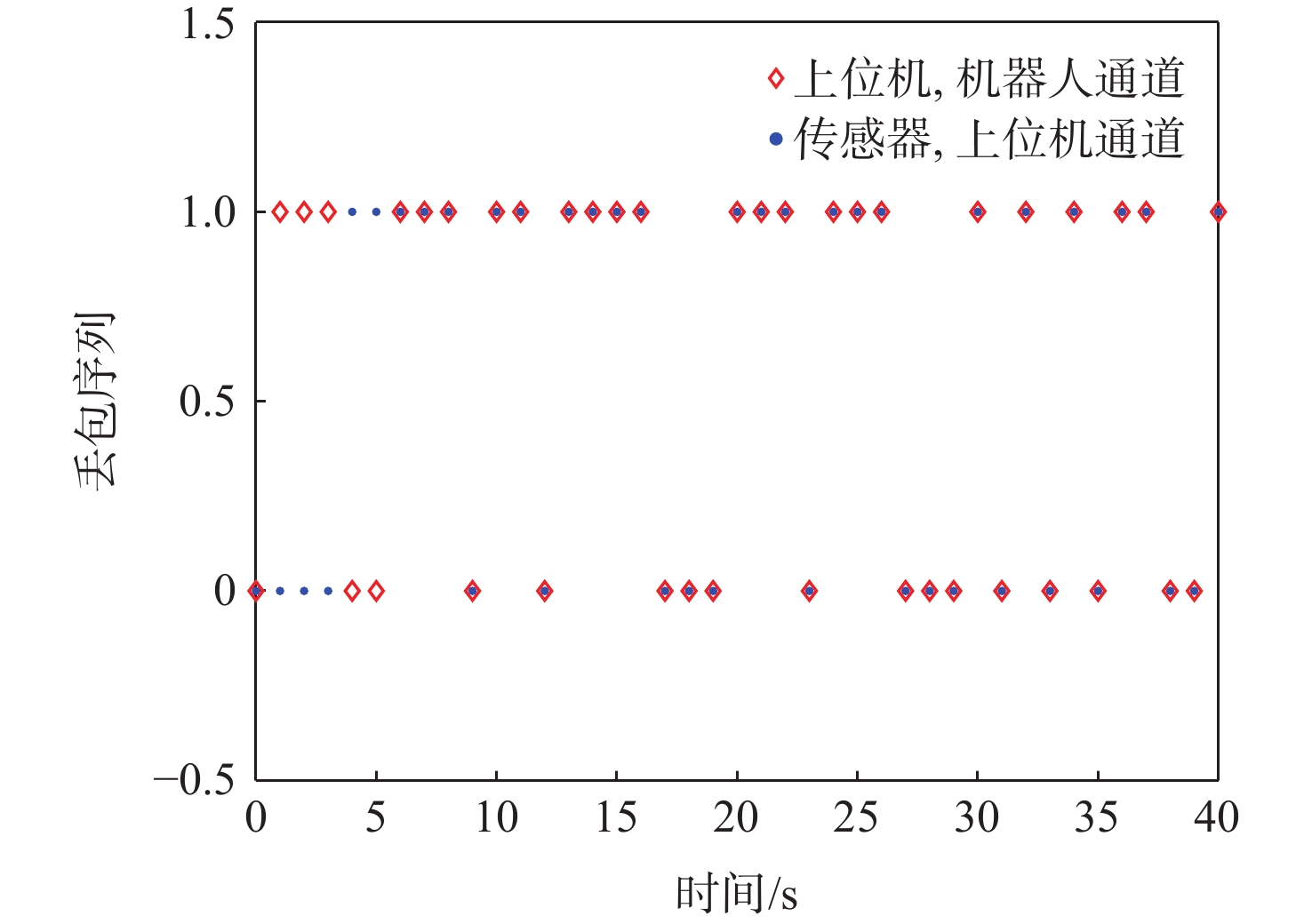
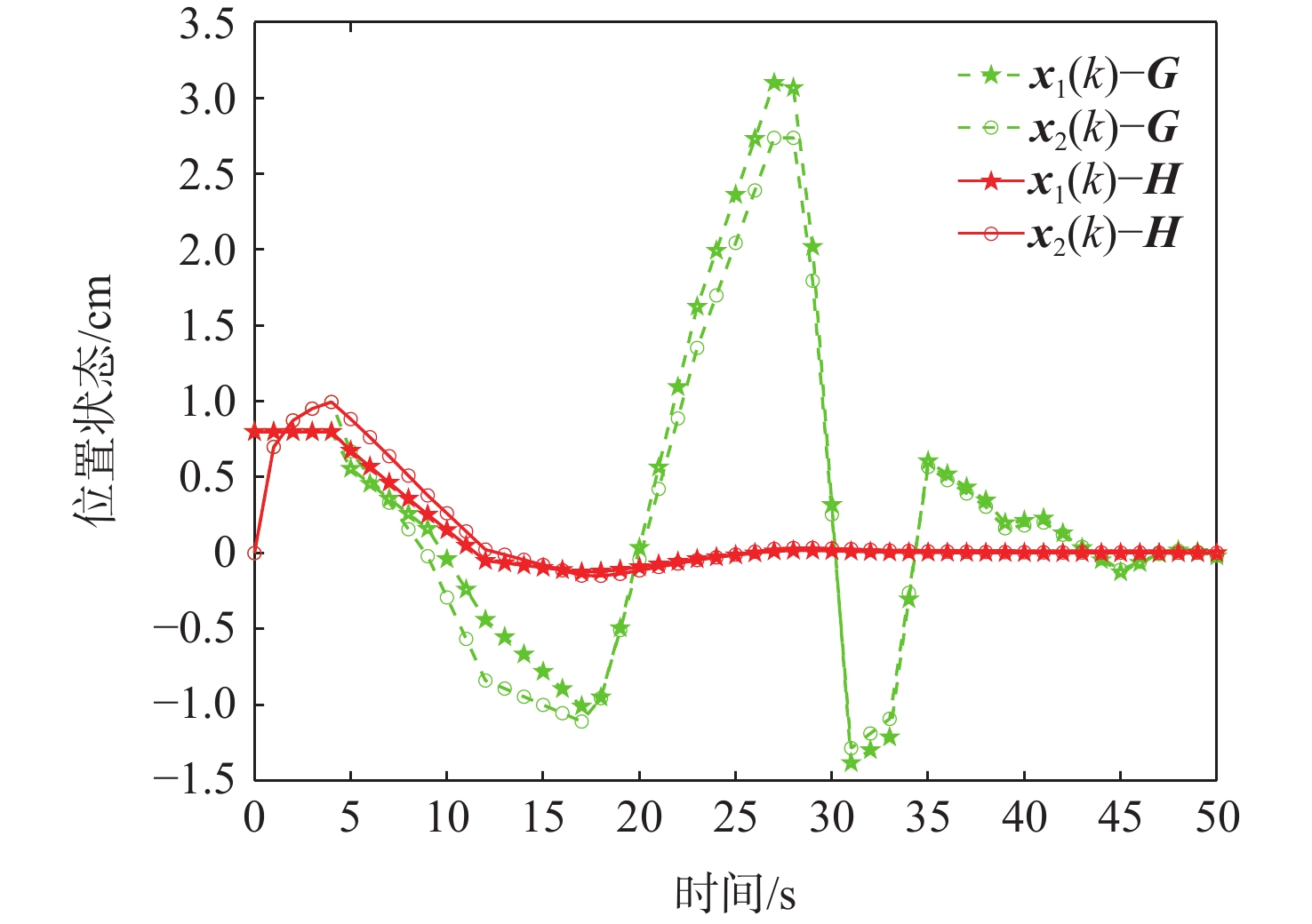
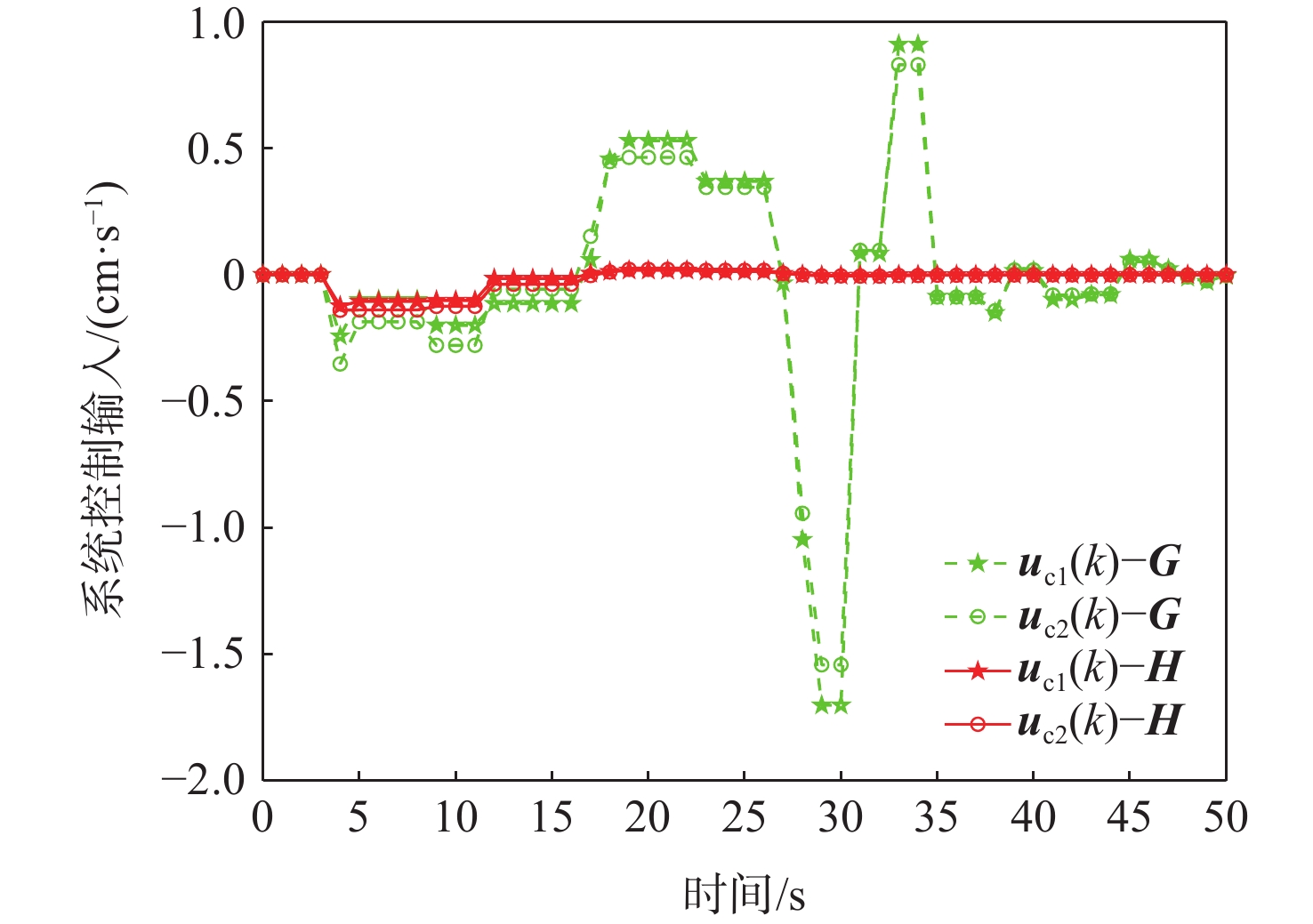
Mobile robot systems are increasingly being integrated into various scenarios. However, connecting these systems to networks exposes them to the risk of cyber-attacks, potentially leading to functional failures and system destabilization. This paper focuses on the stability of mobile robot systems under denial-of-service (DoS) attacks and proposes a robust control strategy based on H control. In the strategy, the impact of DoS attacks on the system is first modeled as random packet loss with a Bernoulli distribution. When the mobile robot system is attacked, robust control is achieved by using feedback compensation based on a state observer. Sufficient conditions for exponential mean-square stability and H control of the closed-loop system are derived using Lyapunov stability theory. n order to acquire the observer and controller gain matrices, which allow for robust system control and anti-interference effects, these criteria are used to solve linear matrix inequality constraints. Finally, through simulation experiments, it is demonstrated that the proposed strategy effectively mitigates the impact of DoS attacks on the system, ensuring the stability of the system.

Damage tolerance analysis on reusable launch vehicle connection structures
LI Peiyuan, CAI Qiaoyan, LI Zengshan, FENG Jiahe
2026, 52(6): 1990-1999. doi: 10.13700/j.bh.1001-5965.2024.0221
Abstract:

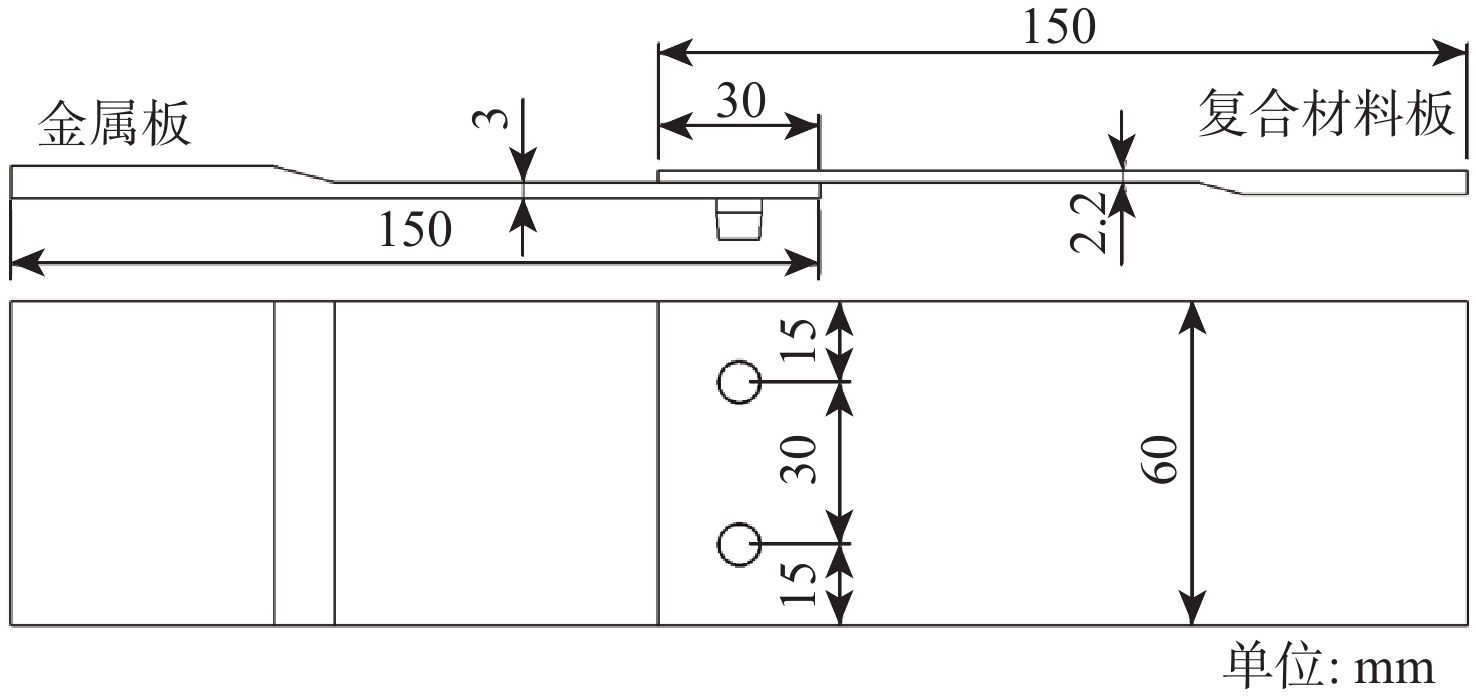
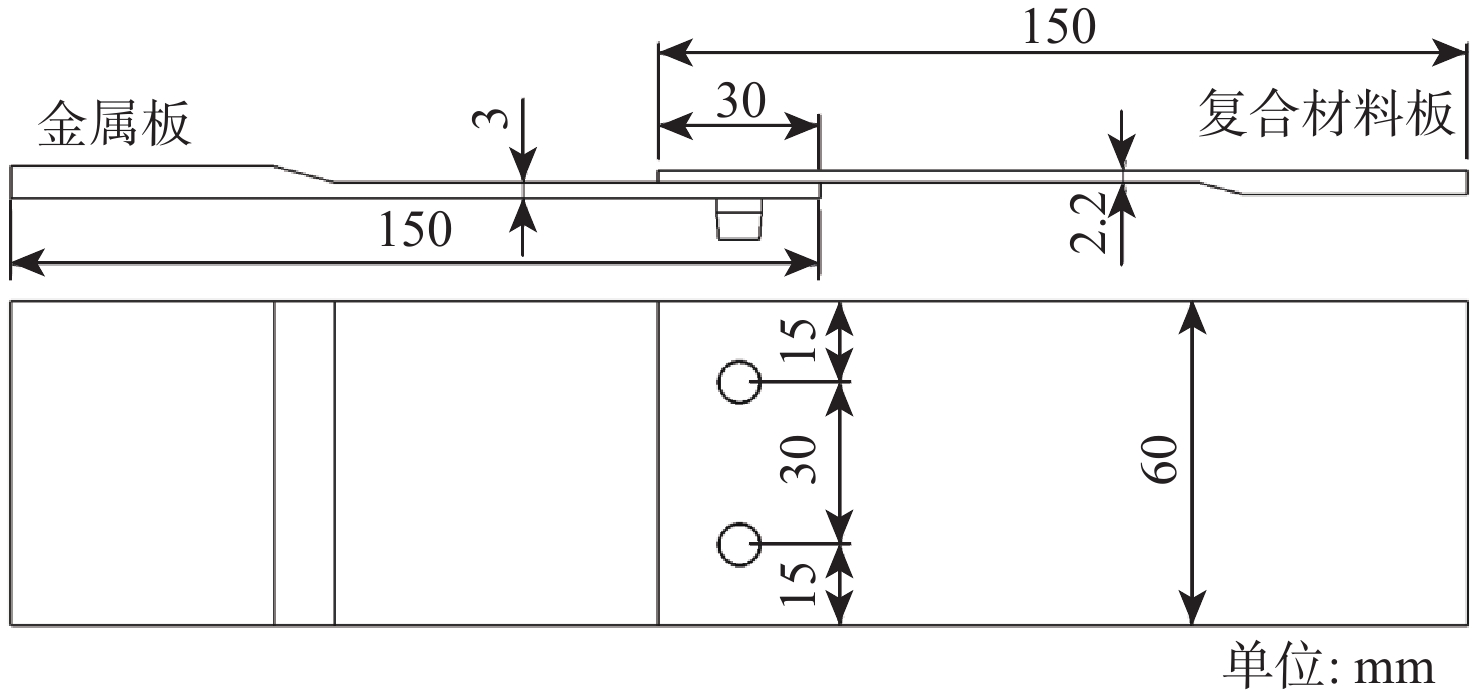
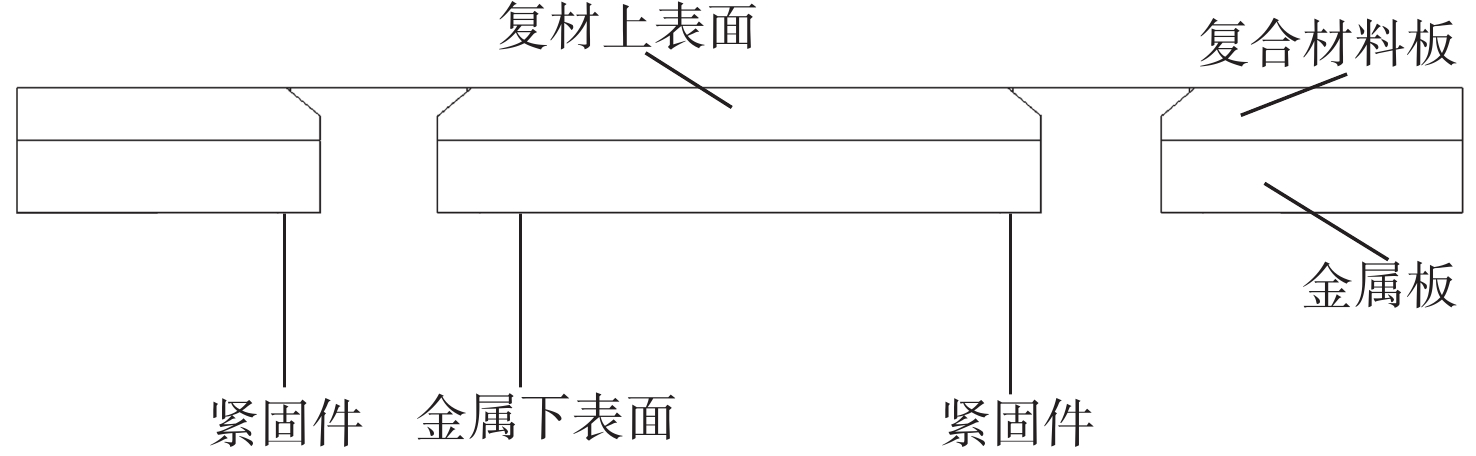
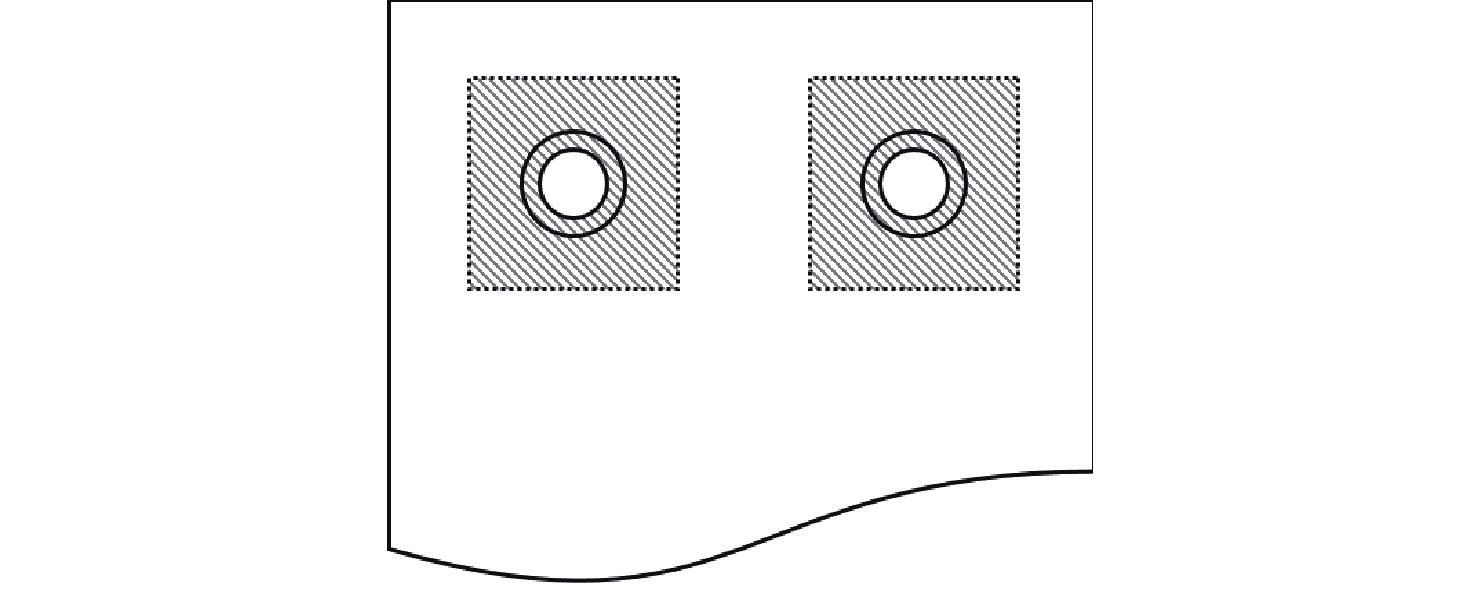
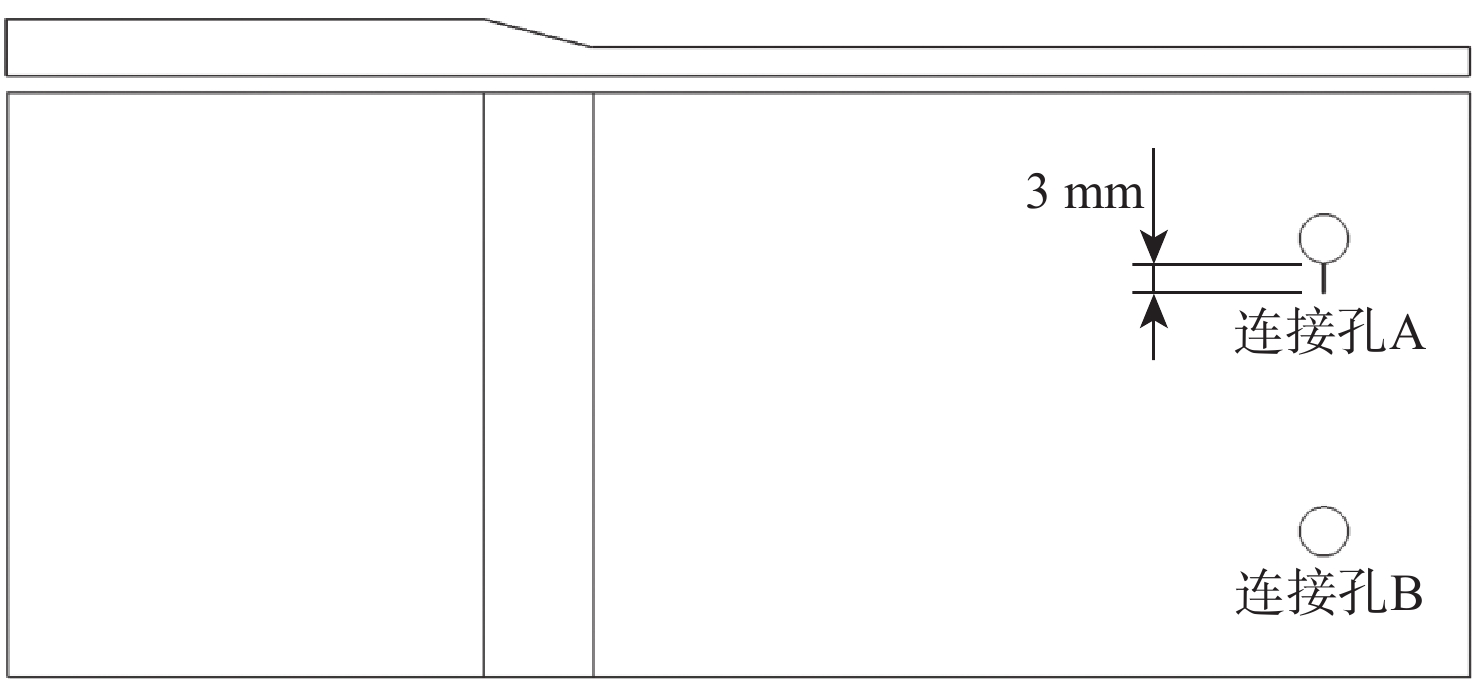
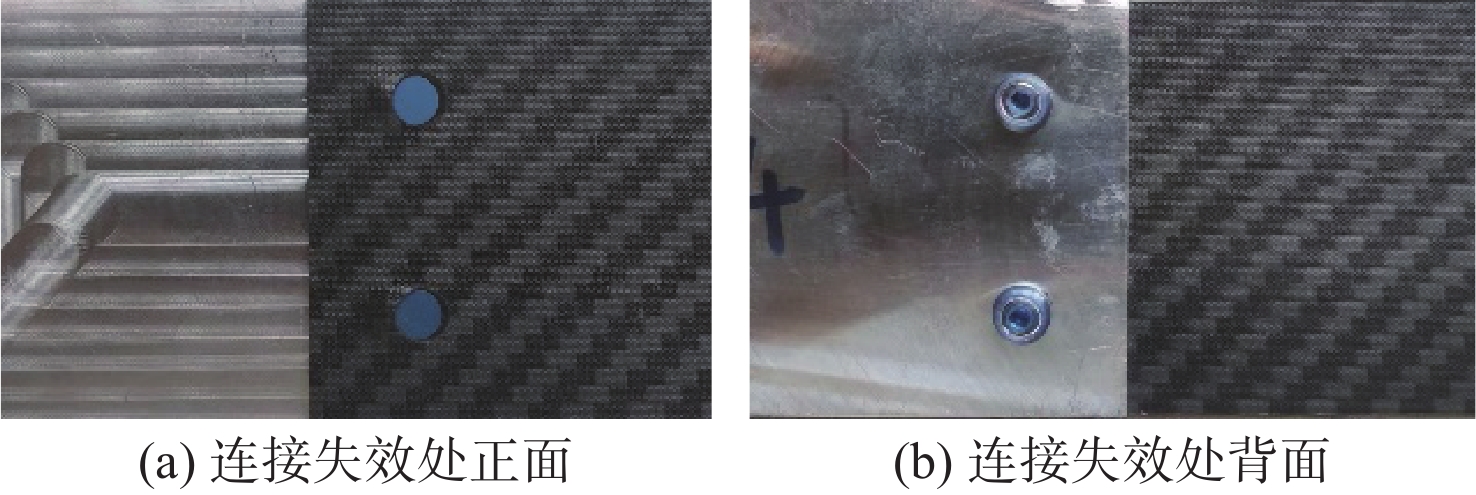
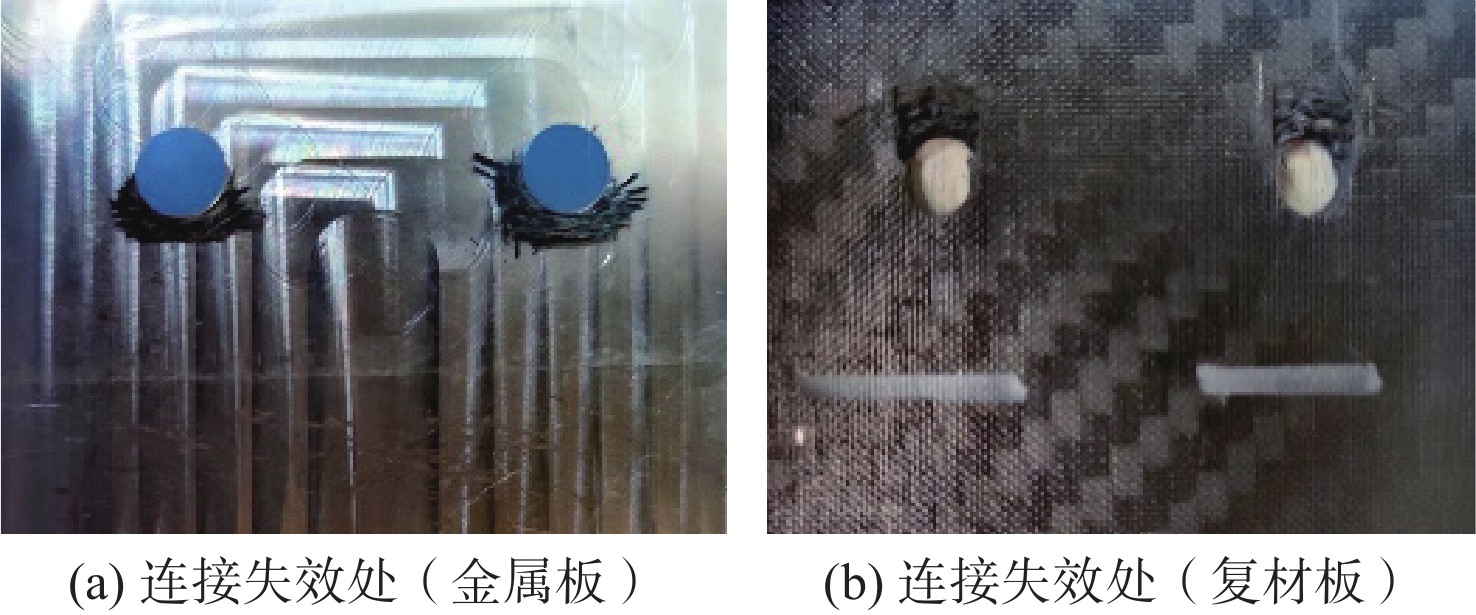
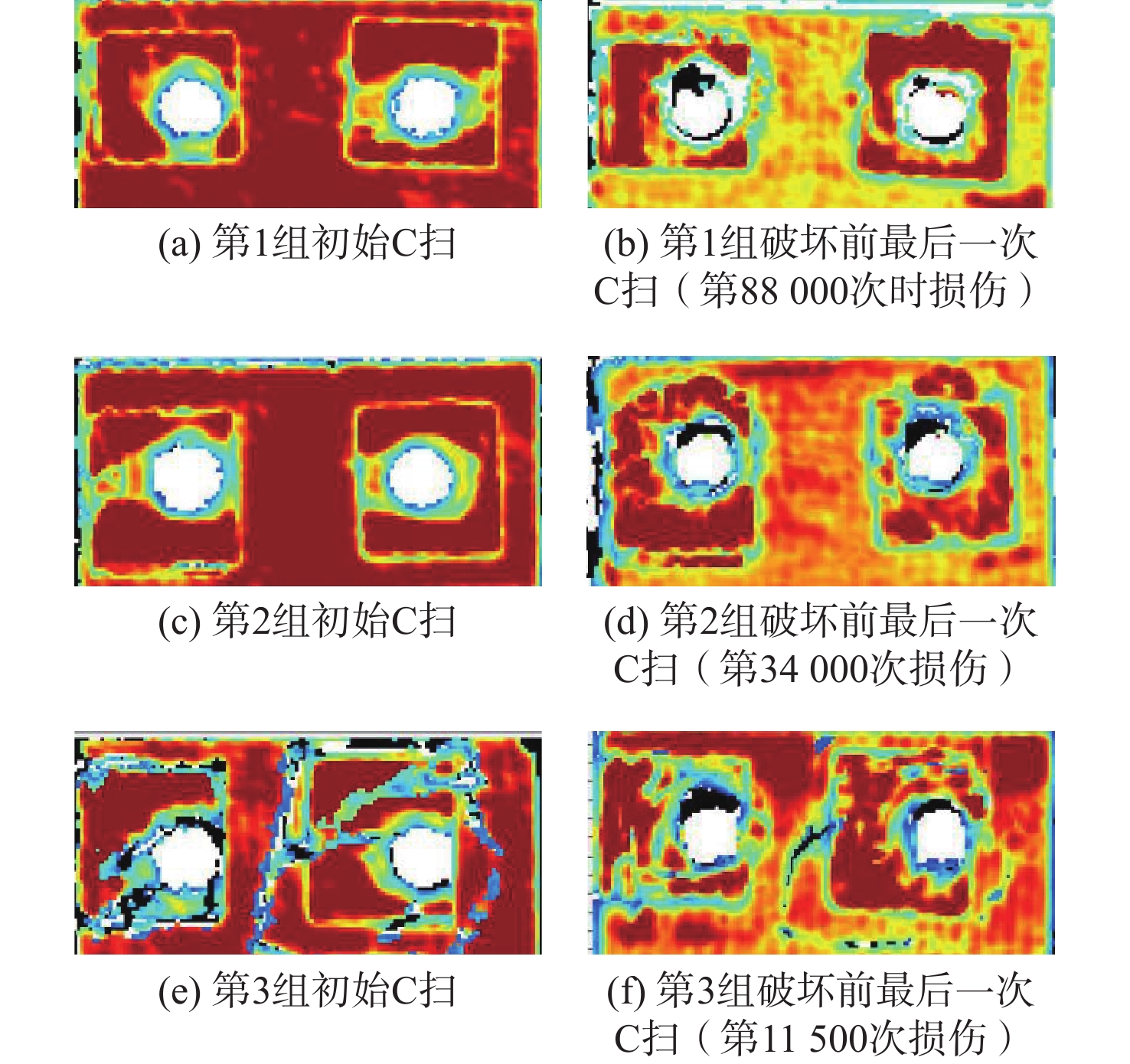
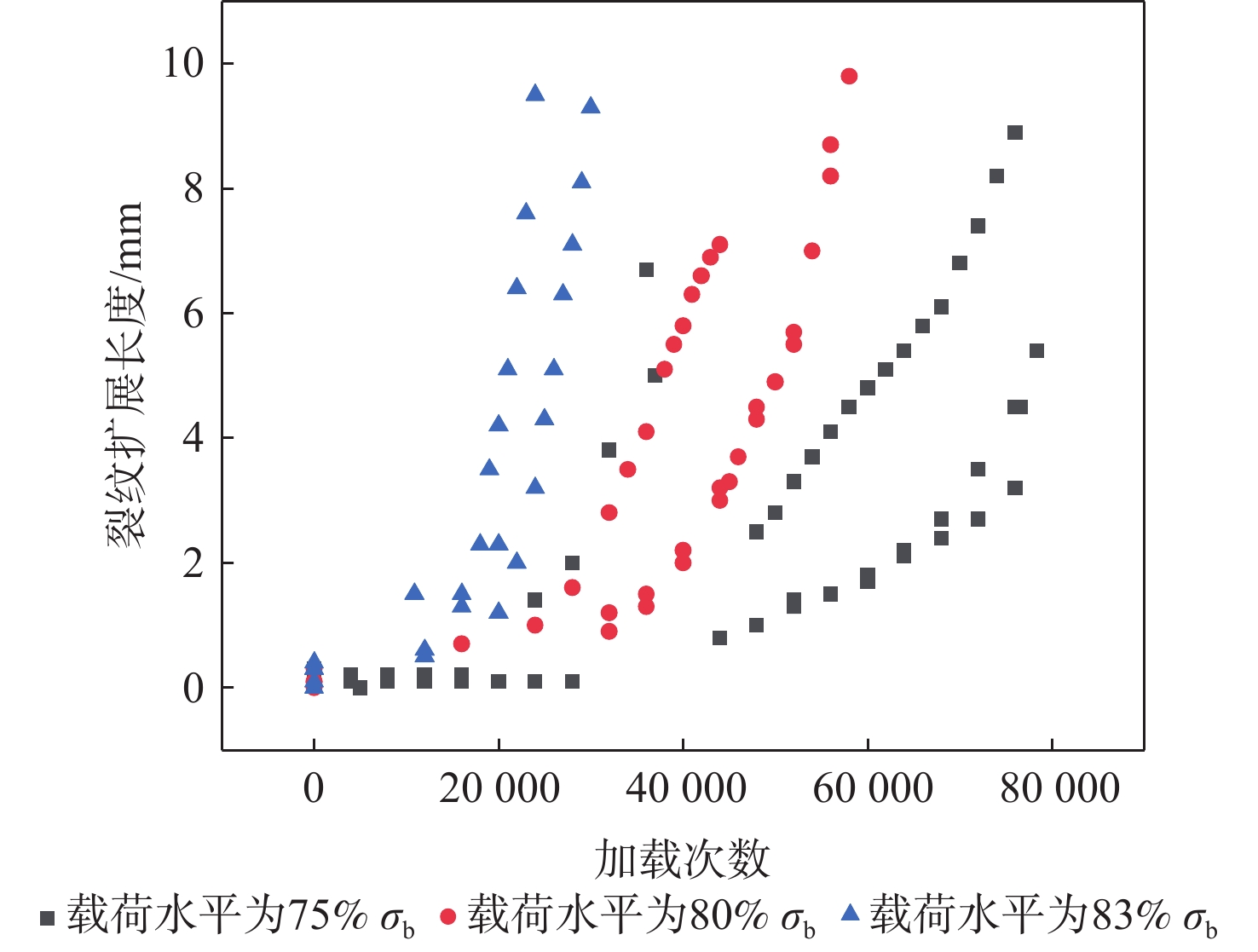
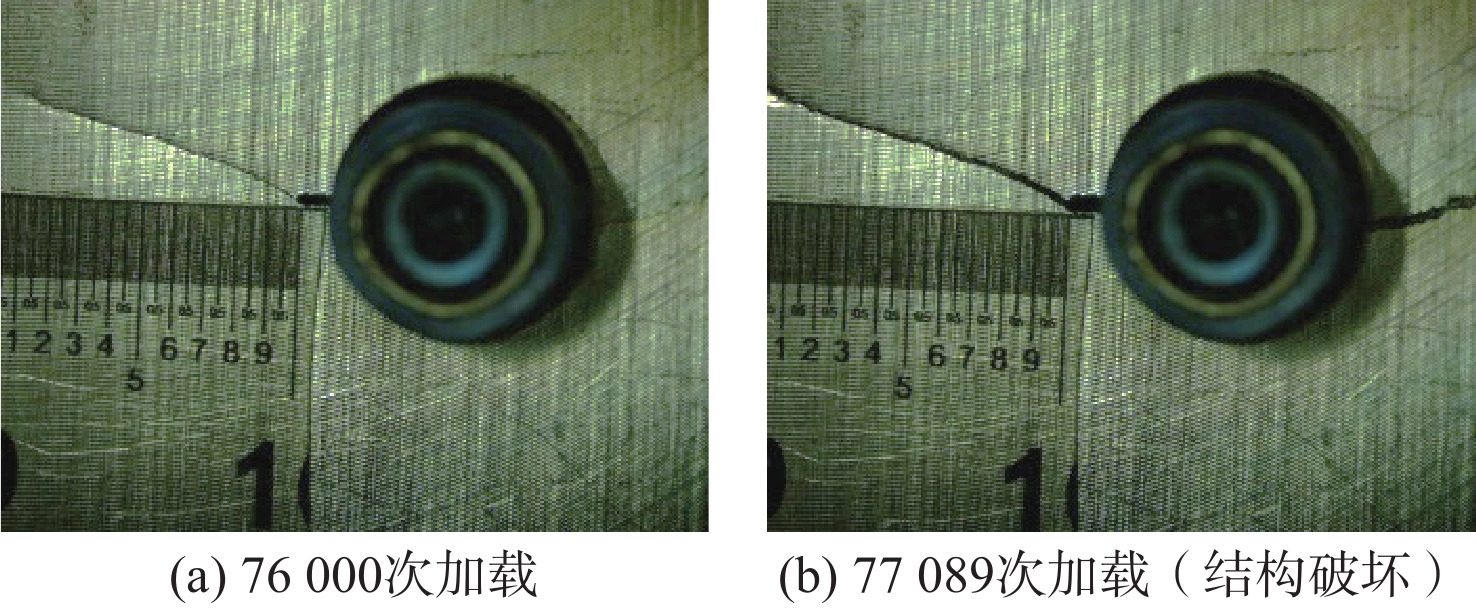
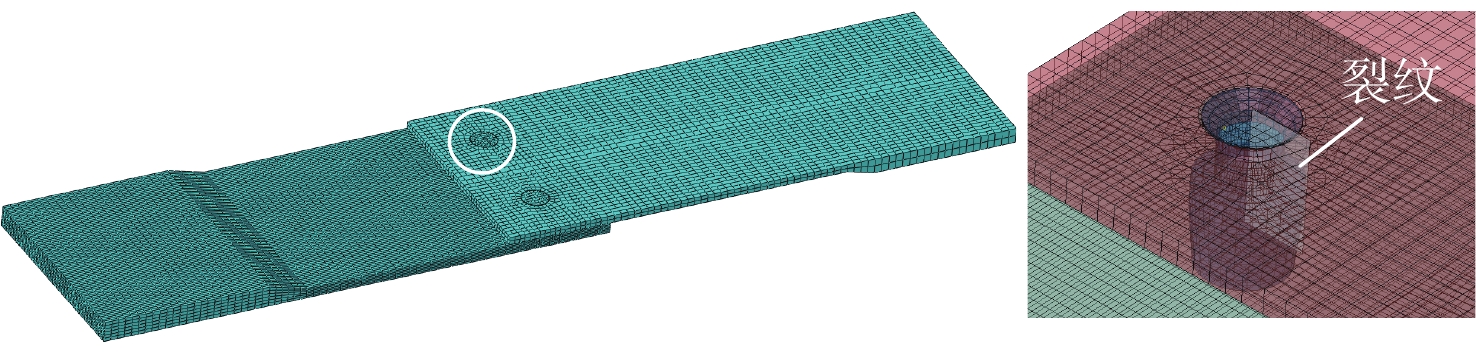
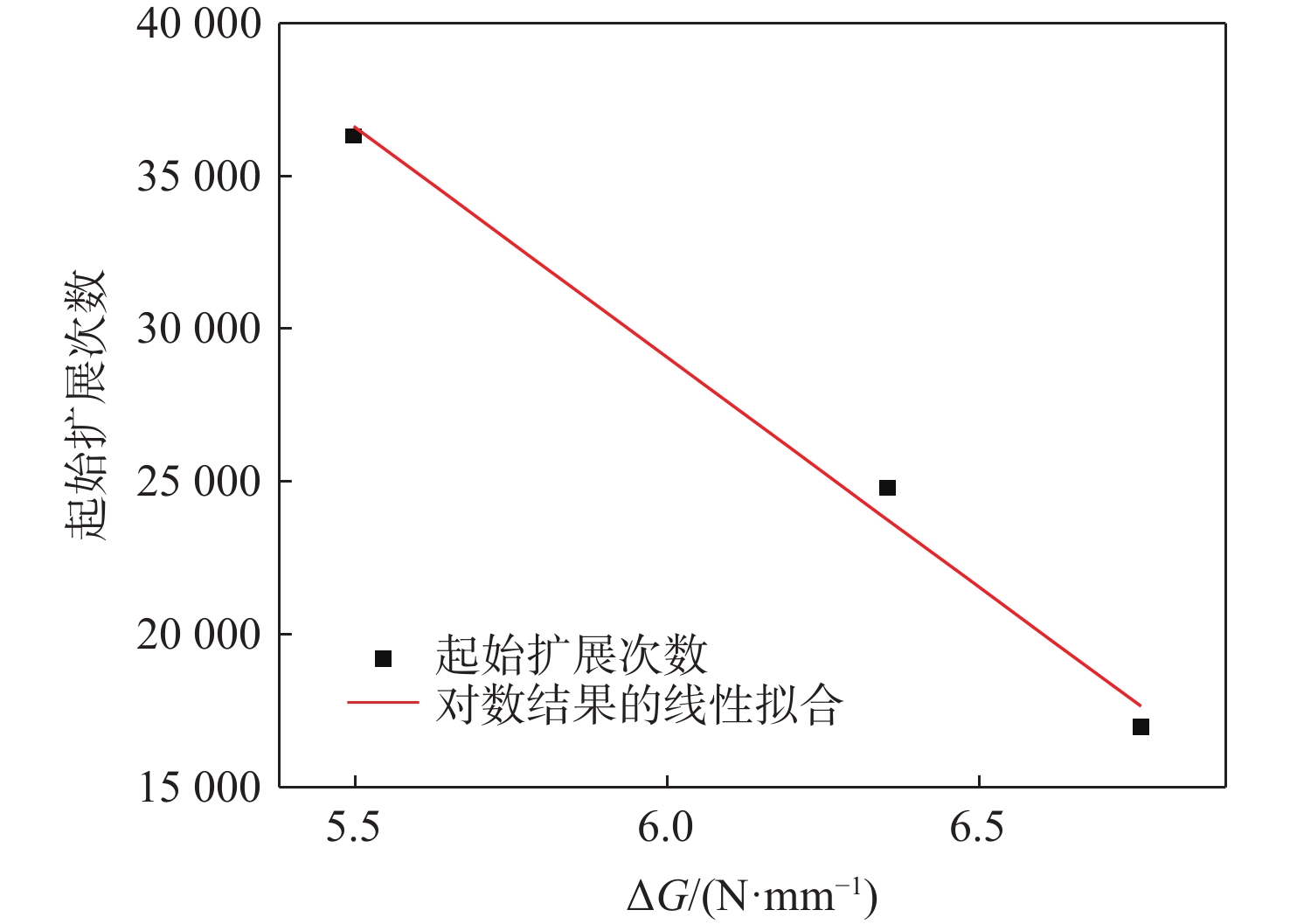
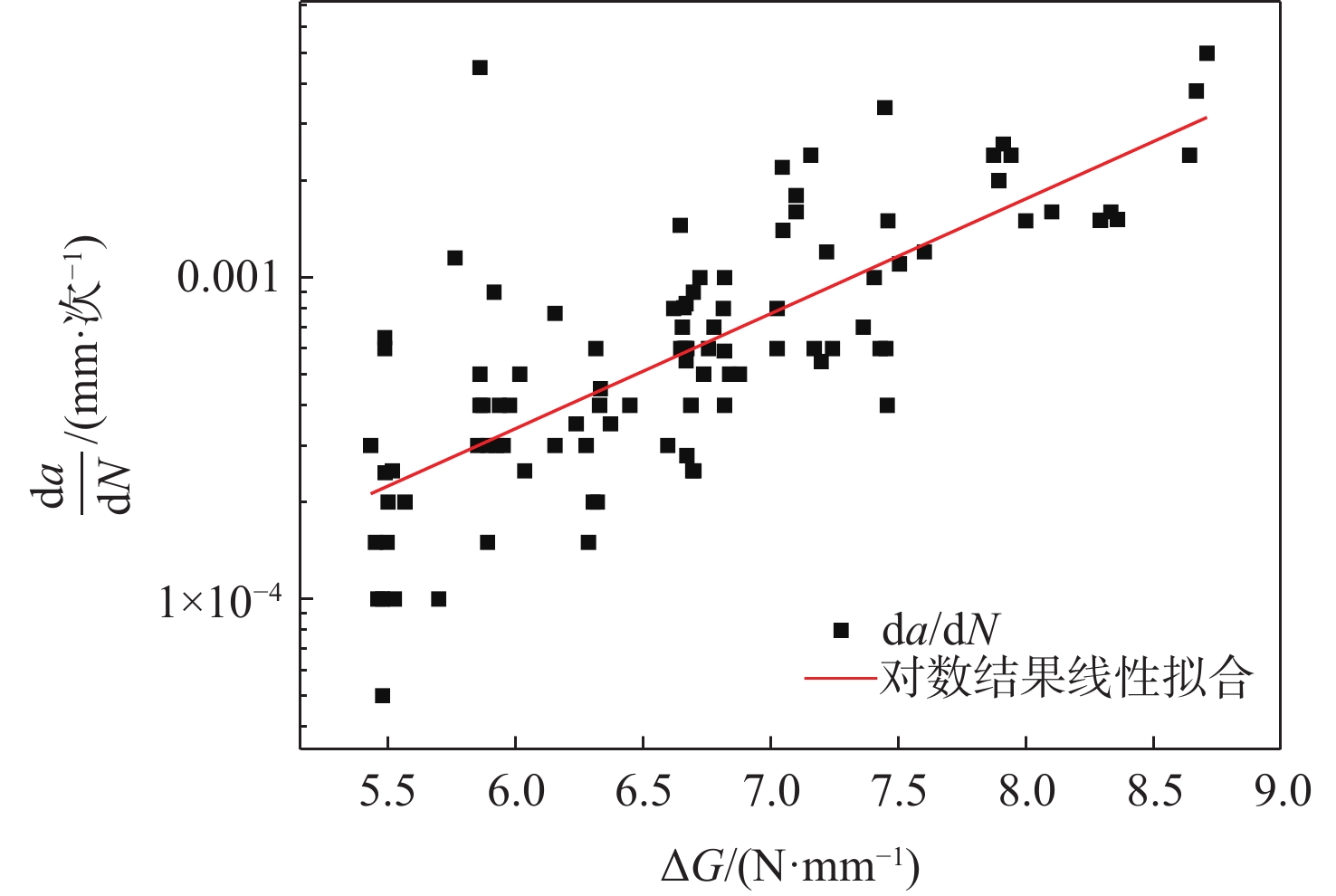
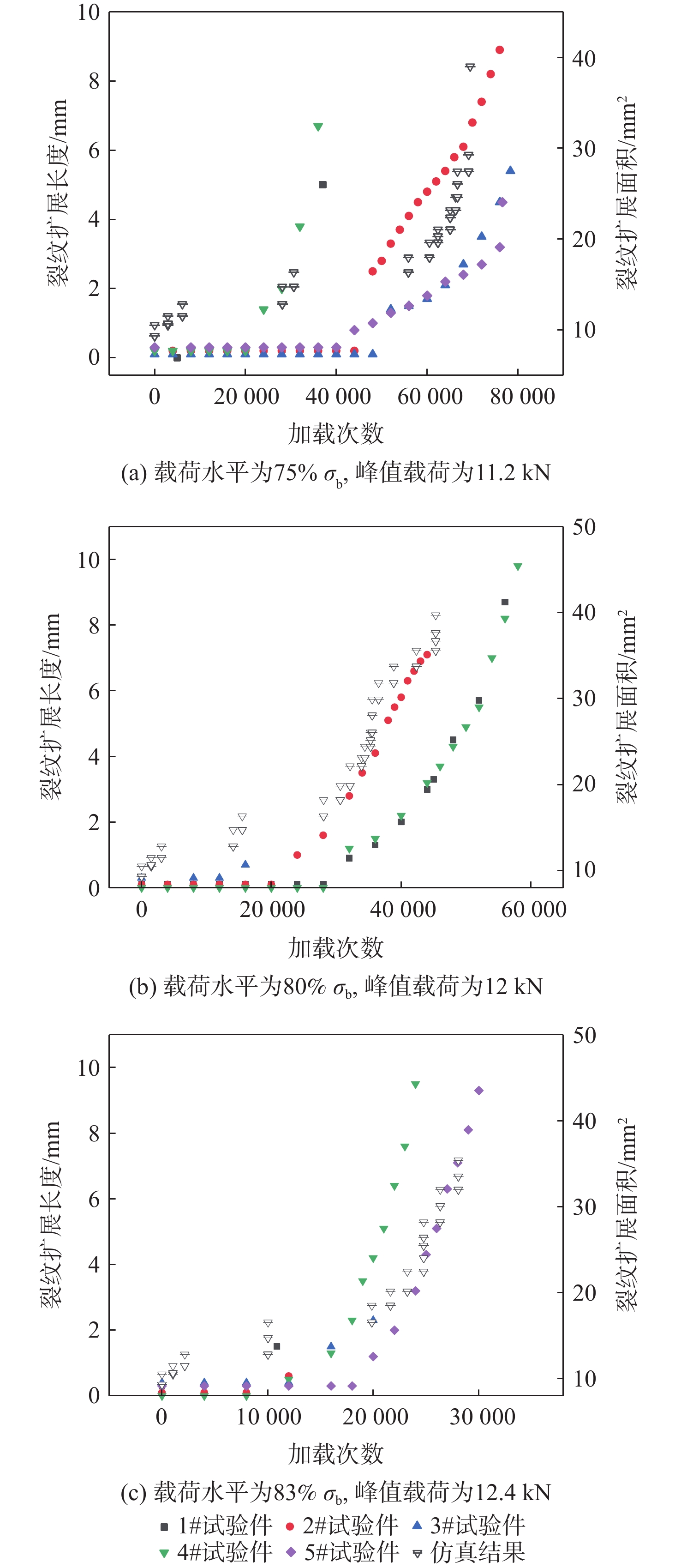
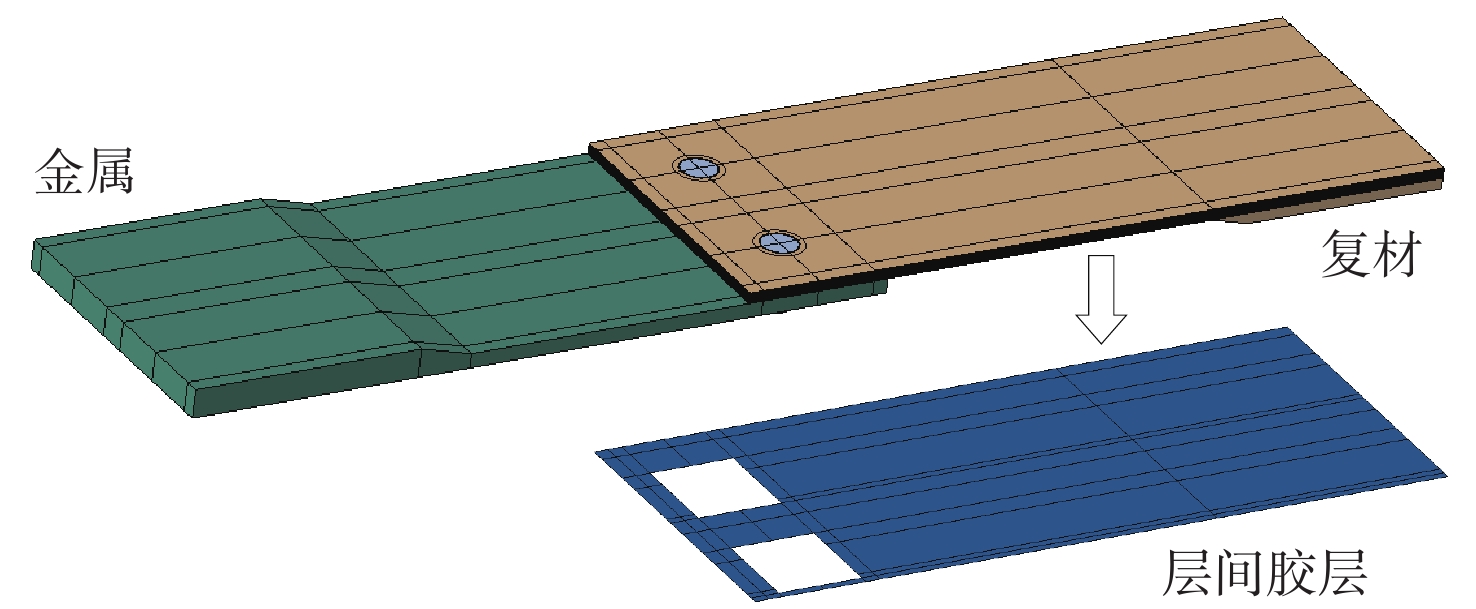
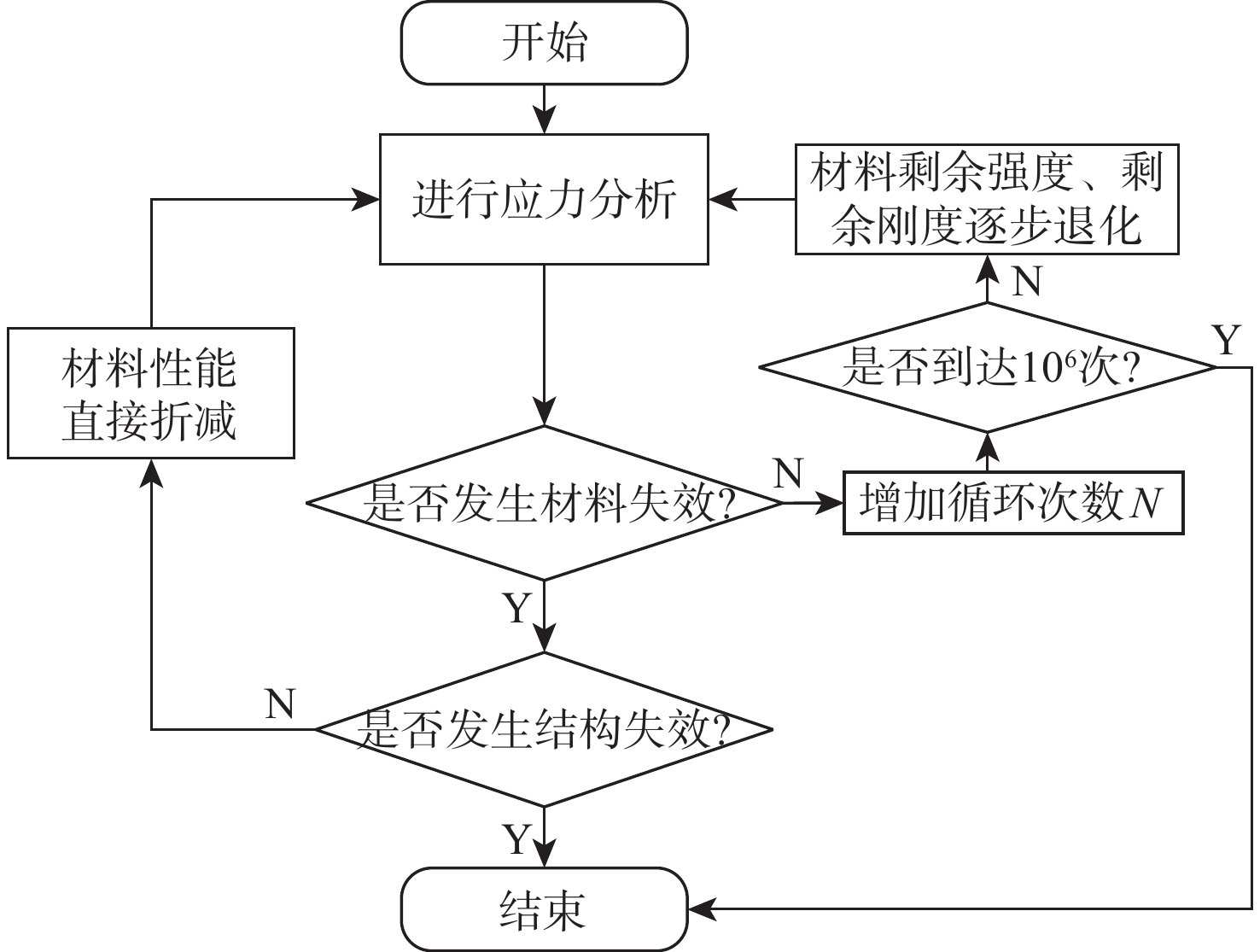
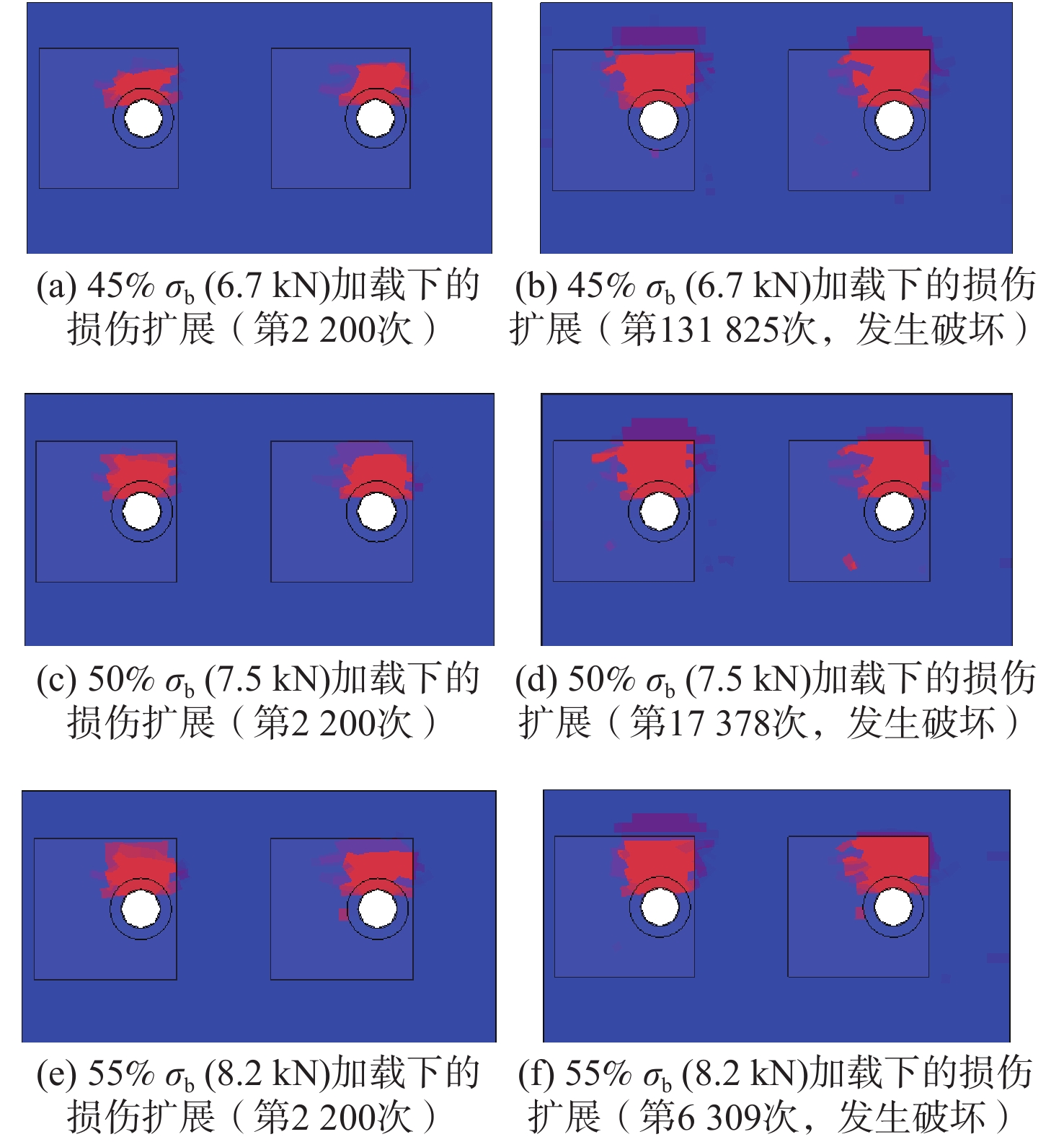
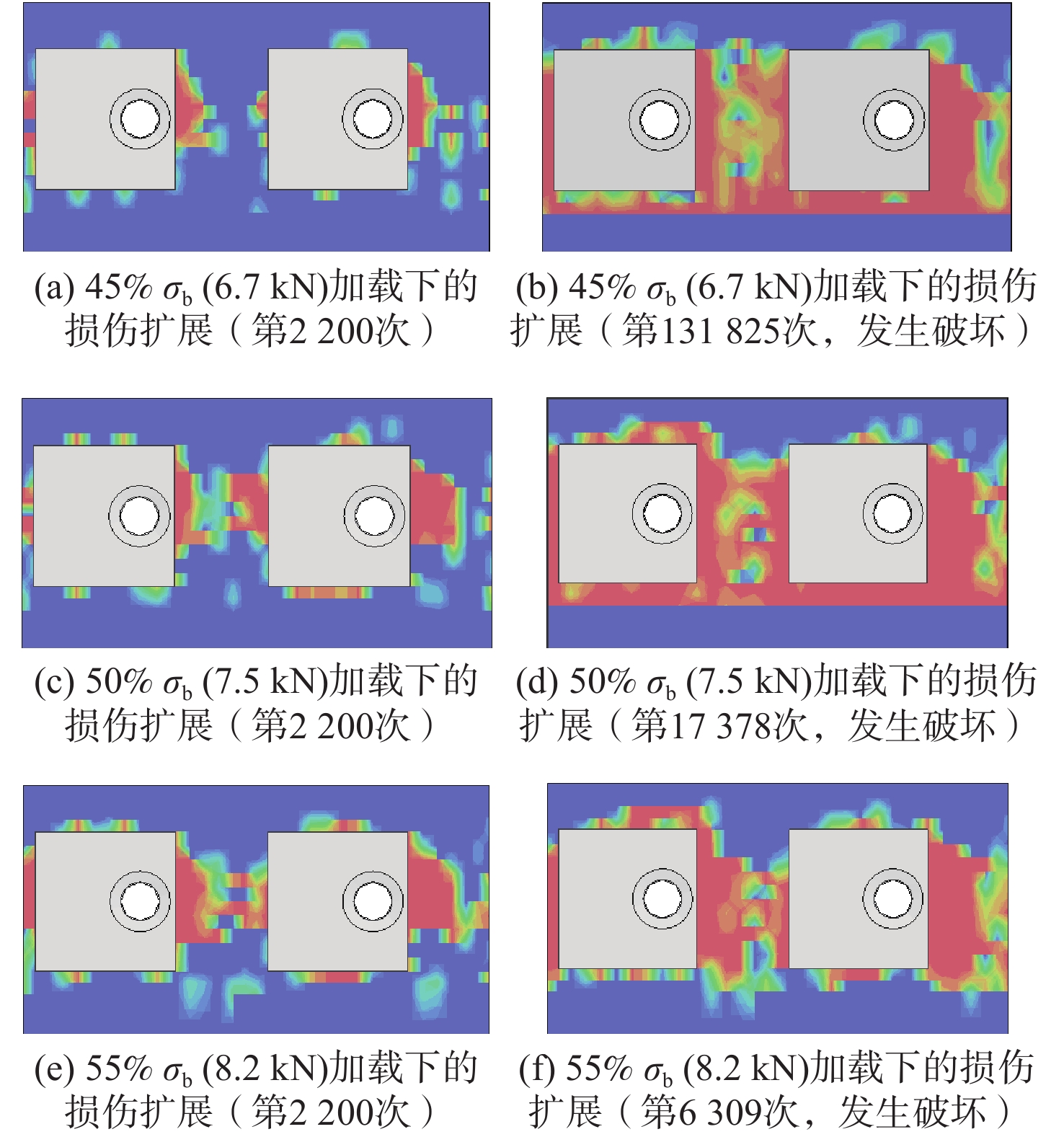
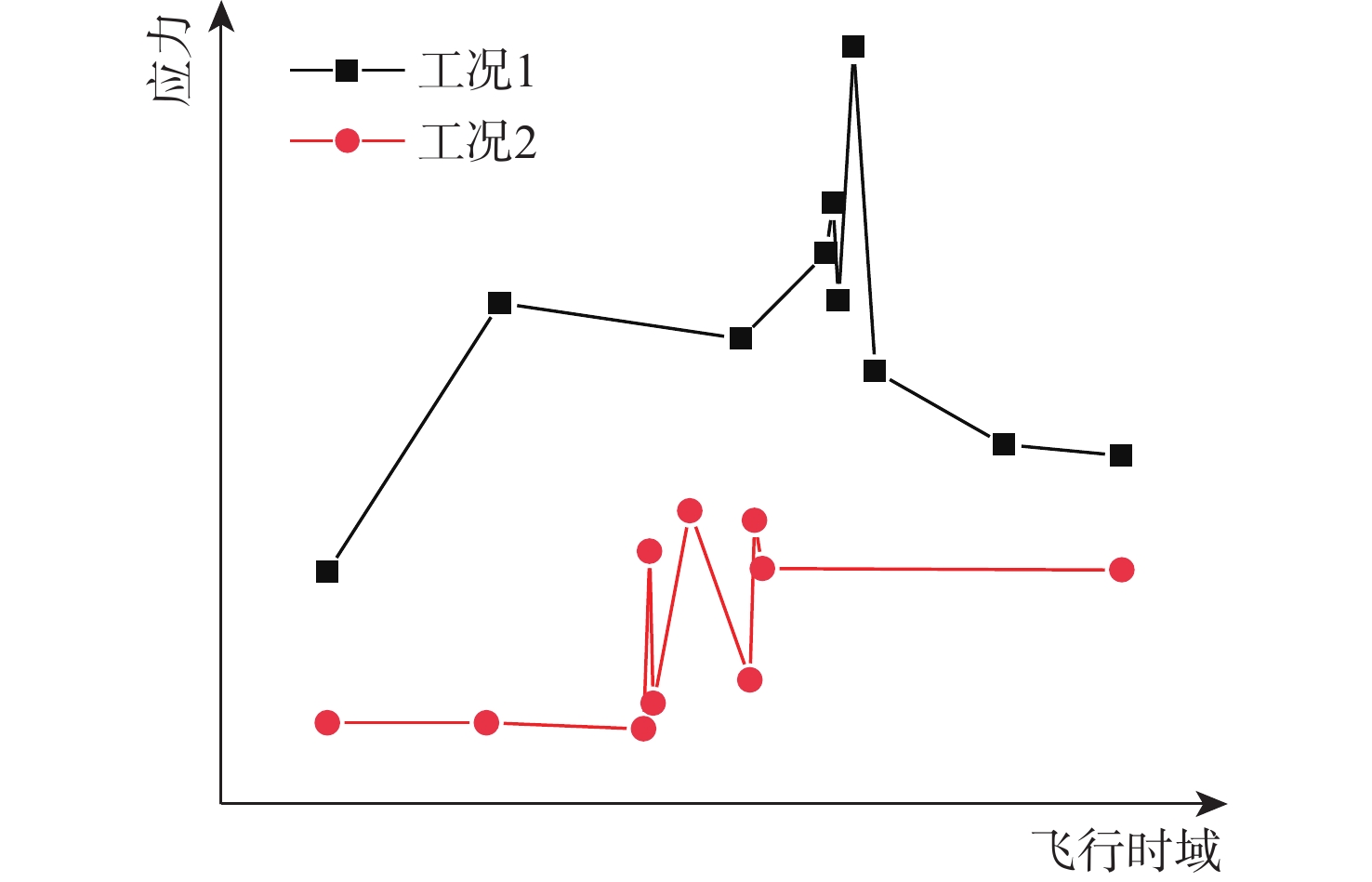
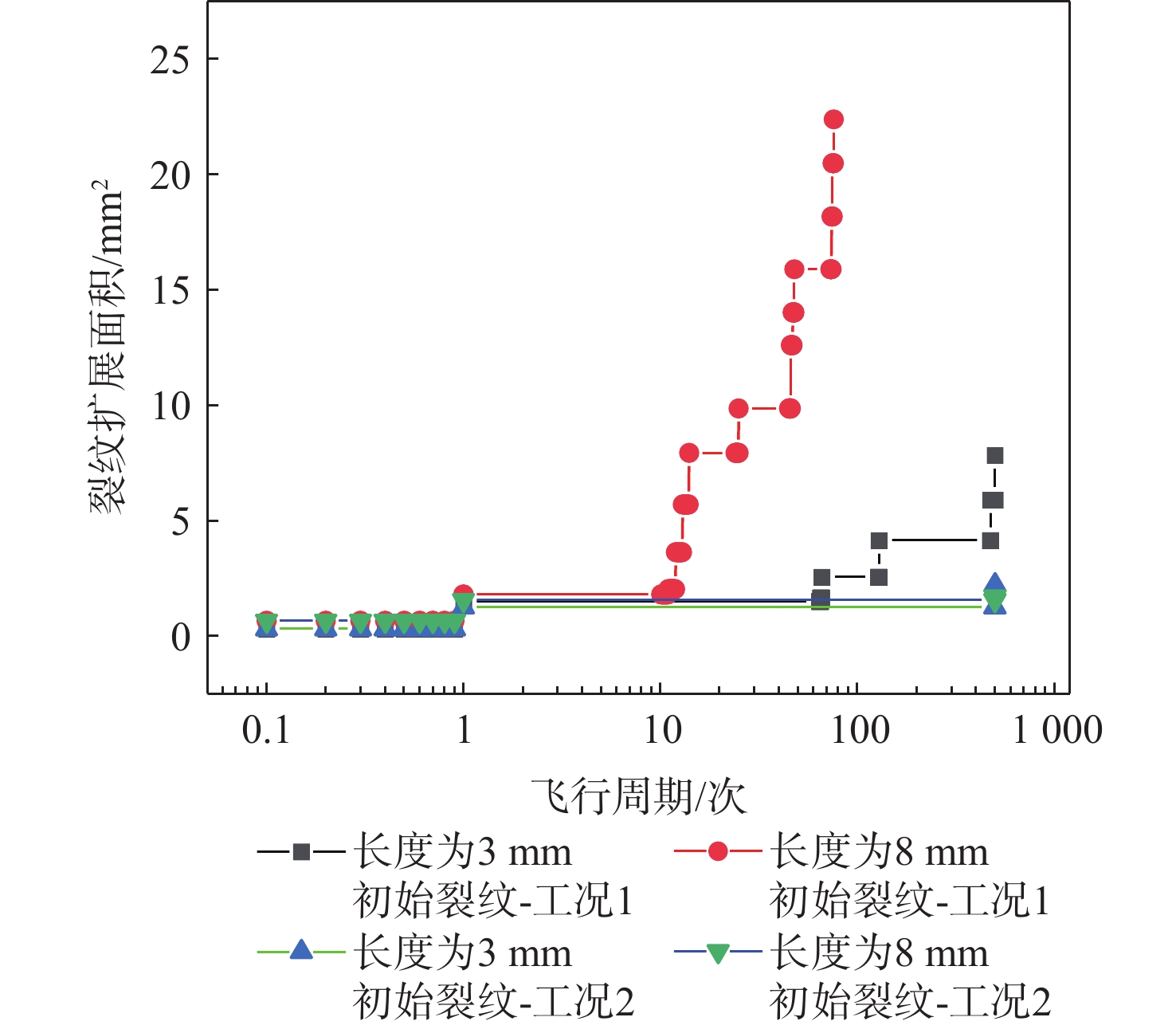
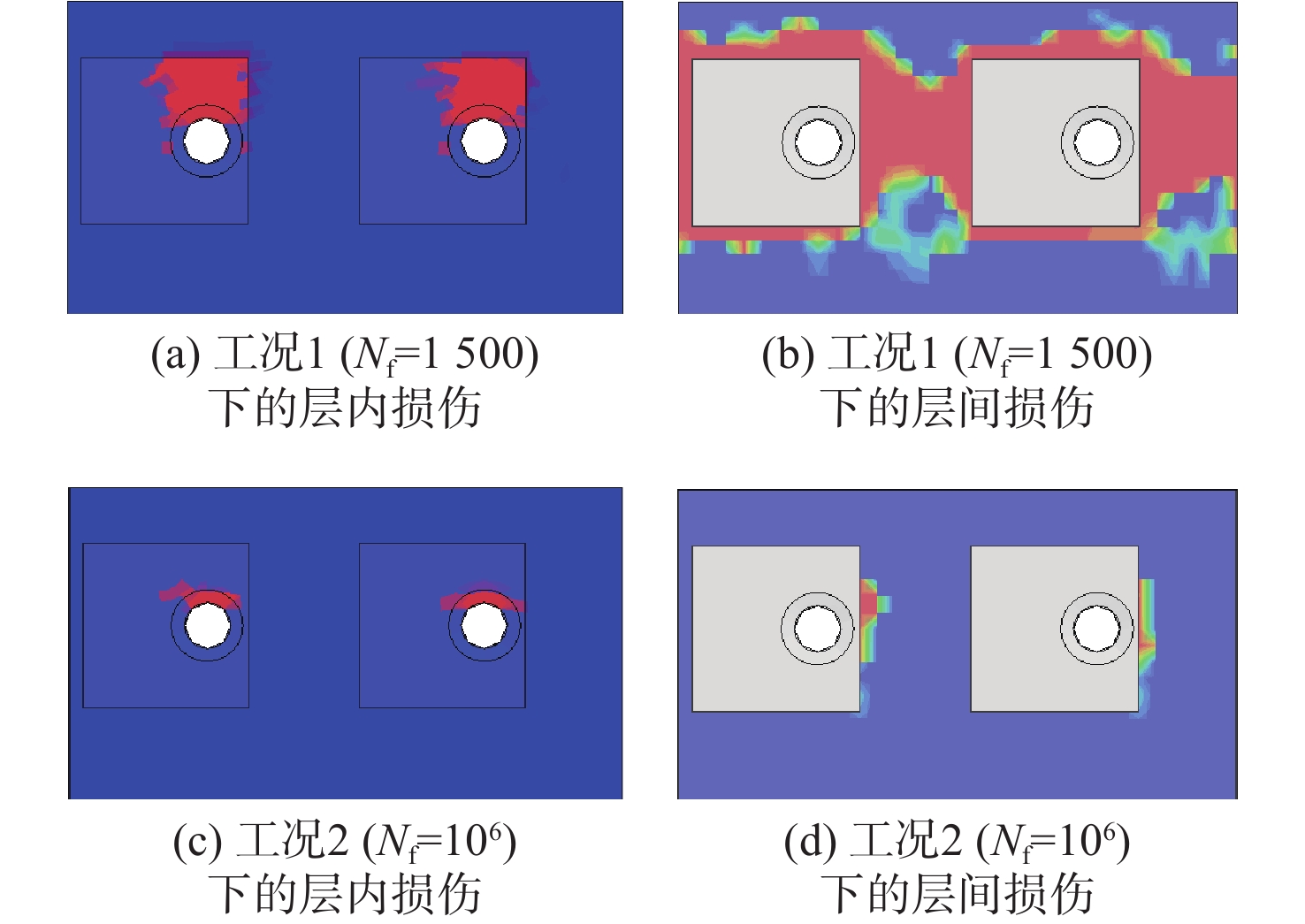
A damage tolerance test of the metal-composite connection structure with initial damage was conducted for the composite skin-metal skeleton structure used in the reusable launch vehicle, and a damage tolerance performance prediction model of the corresponding structure was created. The research results show that metal structures containing initial cracks at the edge of the connection hole will undergo crack expansion under fatigue load. Due to the geometric asymmetry of the connection structure, the crack expansion rates on the upper and lower surfaces are inconsistent, resulting in crack observation from the outer surface causing an error in the damage size. Extrusion load causes some delamination expansion in composite laminates with preset delaminations; extrusion fatigue damage to the composite materials is the primary cause of the damage. Delamination around composite connection holes will drastically reduce the life of the metal-composite connection structure. The damage tolerance design of the metal-composite connection structure should focus on composite hole edge delamination damage. The prediction results of the established metal-composite structure damage tolerance performance prediction model are in good agreement with the test results. It can well predict the damage expansion process and extended life of the structure, and can be used to guide the damage tolerance design of this type of structure.

Simulation of combustion characteristics and prediction of combustion performance using machine learning in an integrated afterburner
ZHANG Yu, WANG Fengming, WANG Yanhong, MU Lin, DONG Ming
2026, 52(6): 2000-2010. doi: 10.13700/j.bh.1001-5965.2024.0213
Abstract:

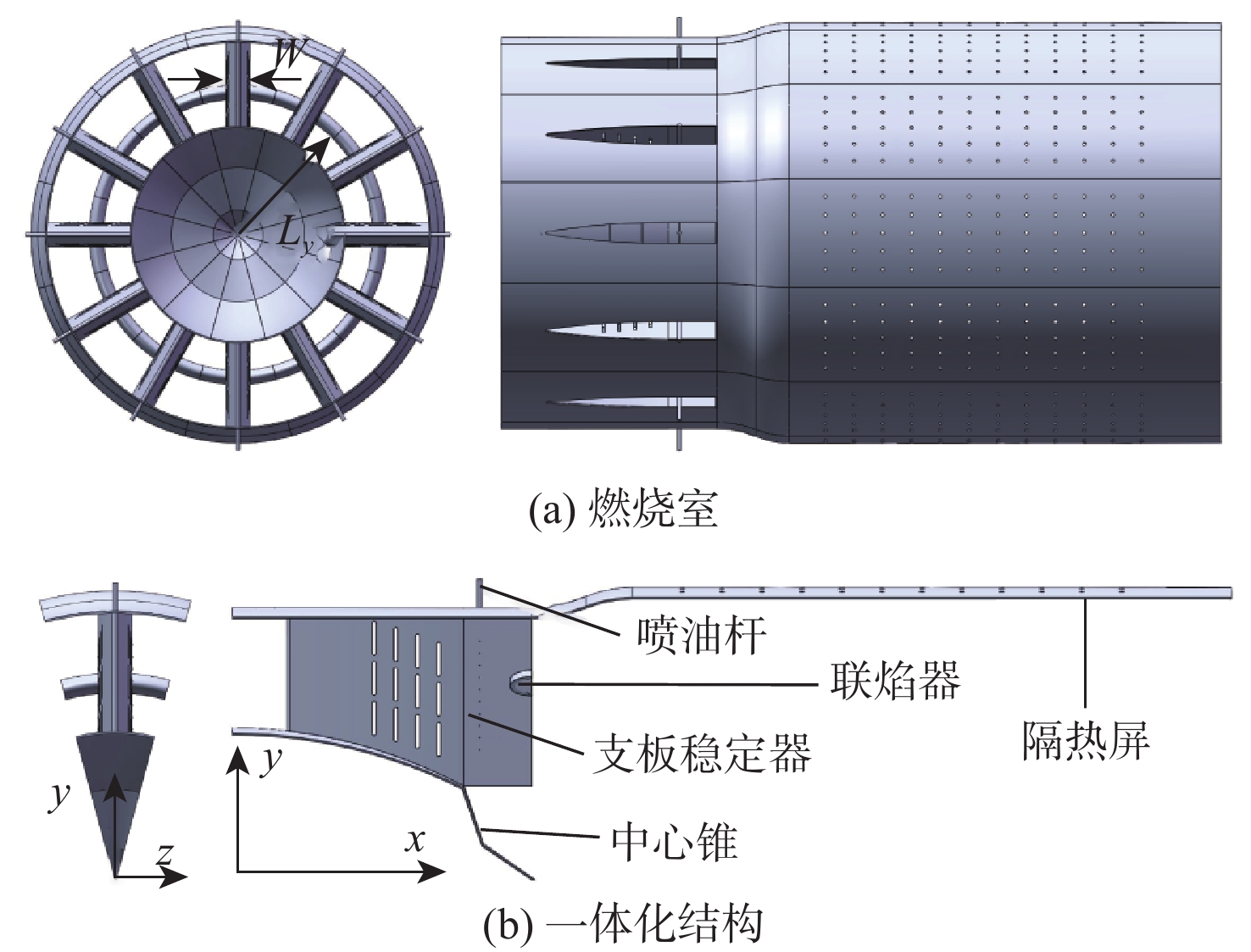
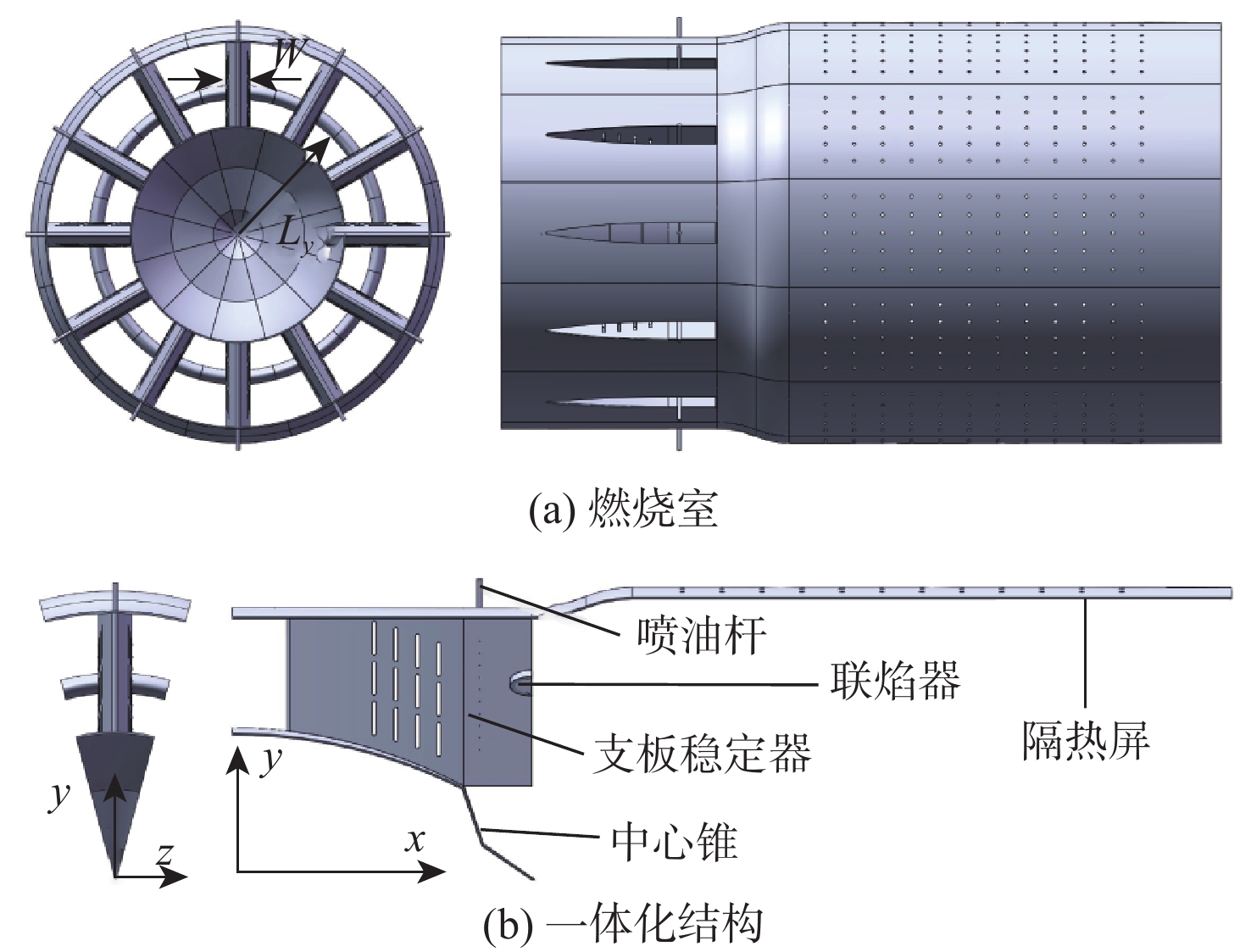
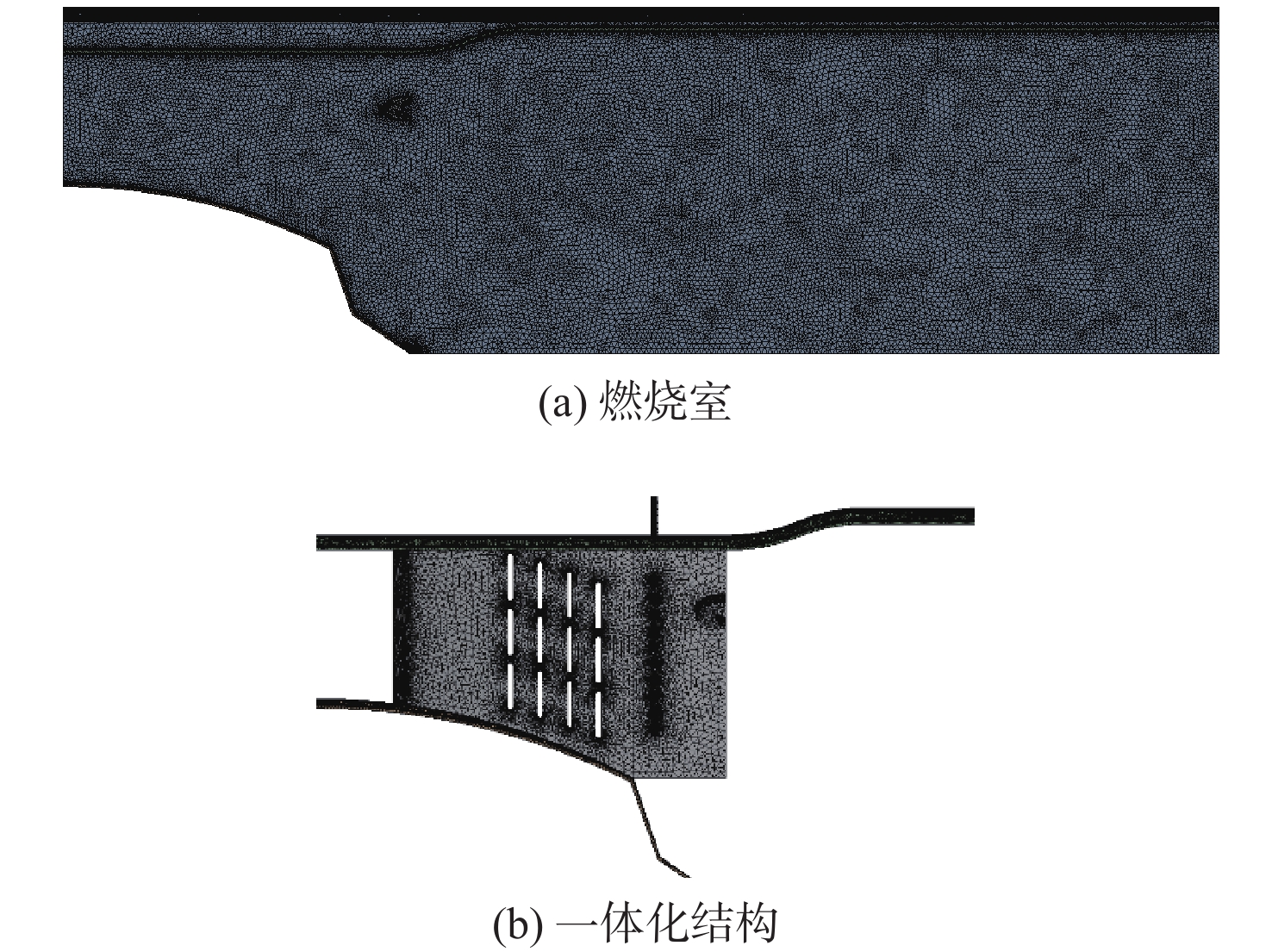
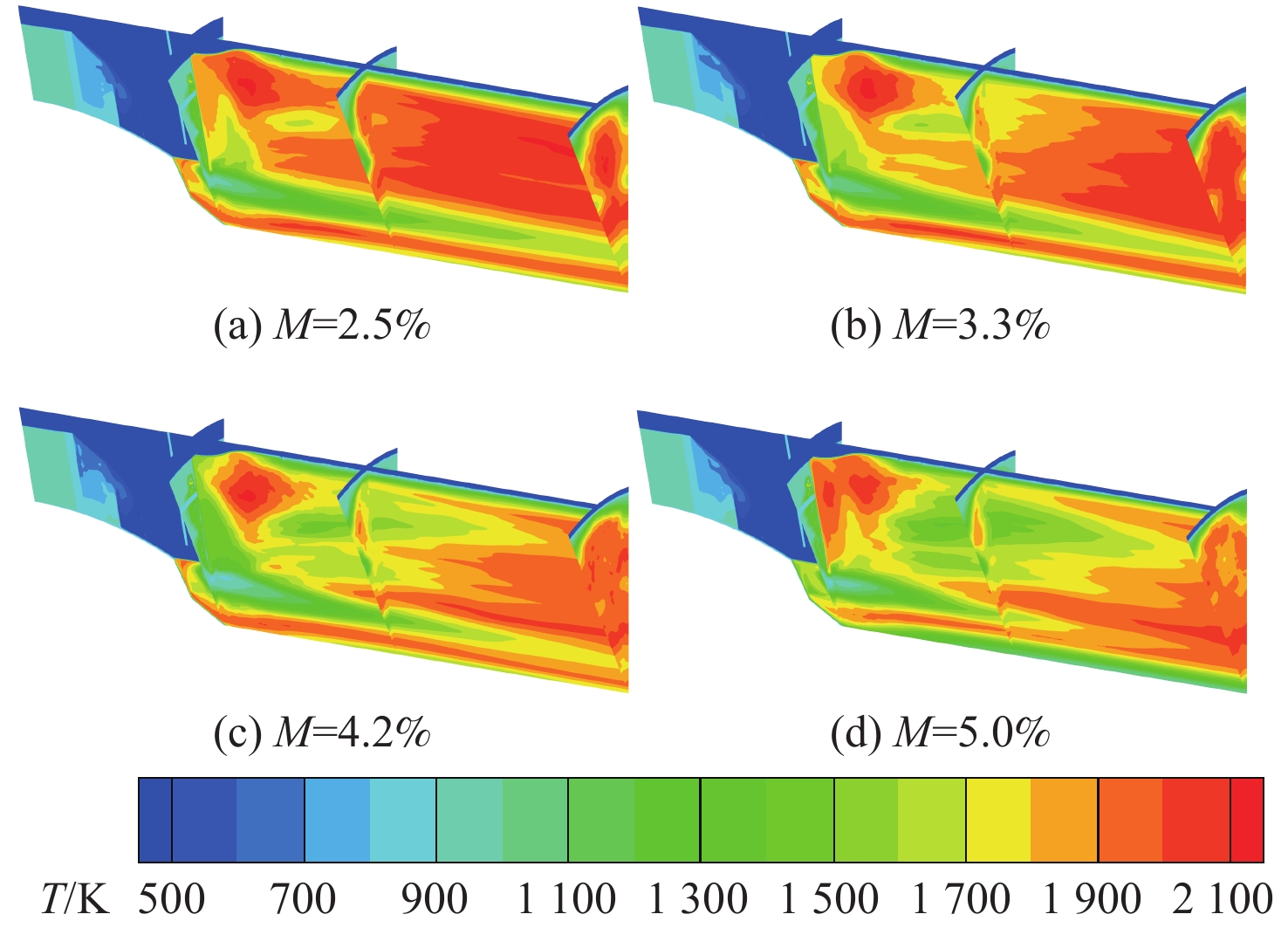
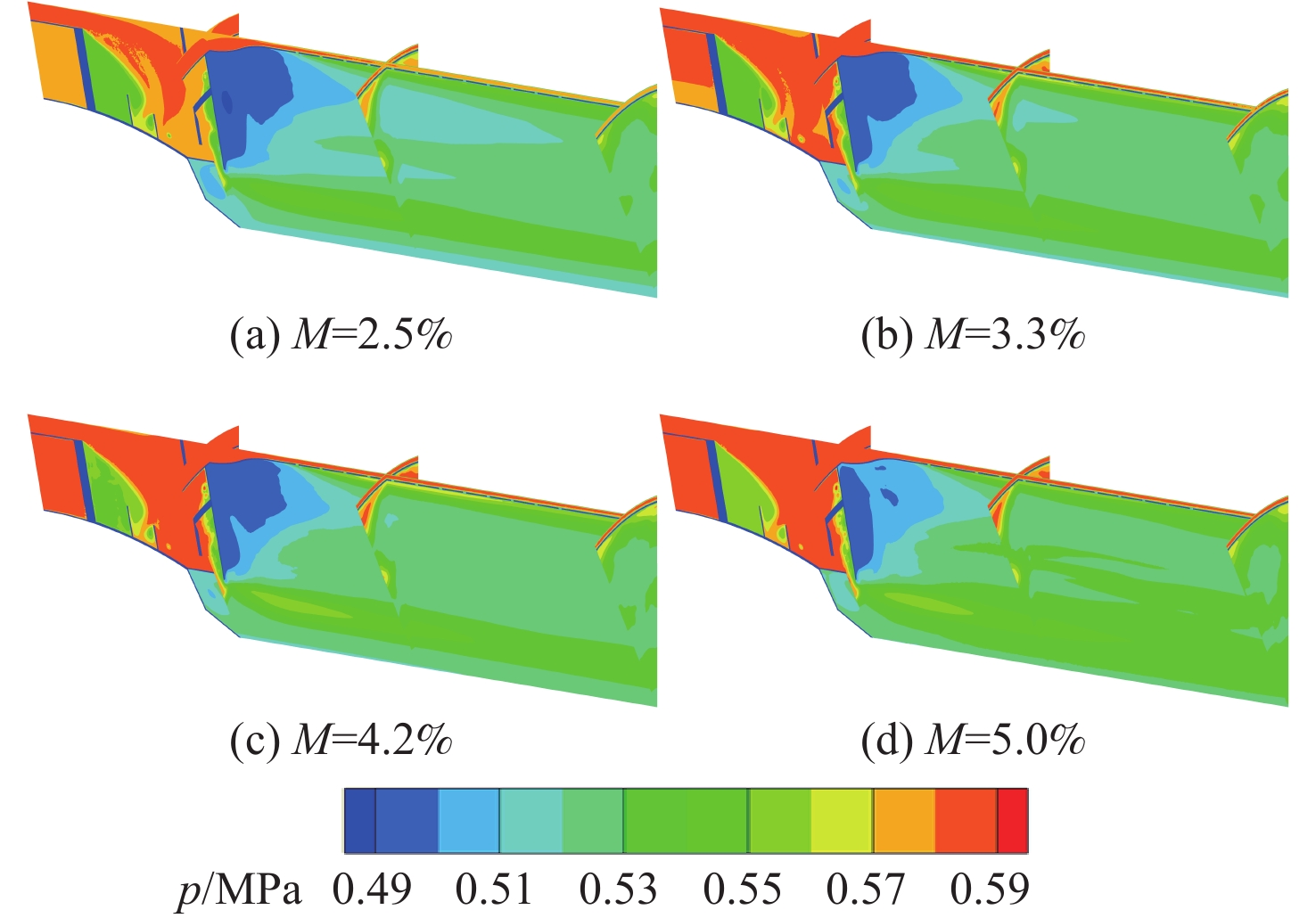
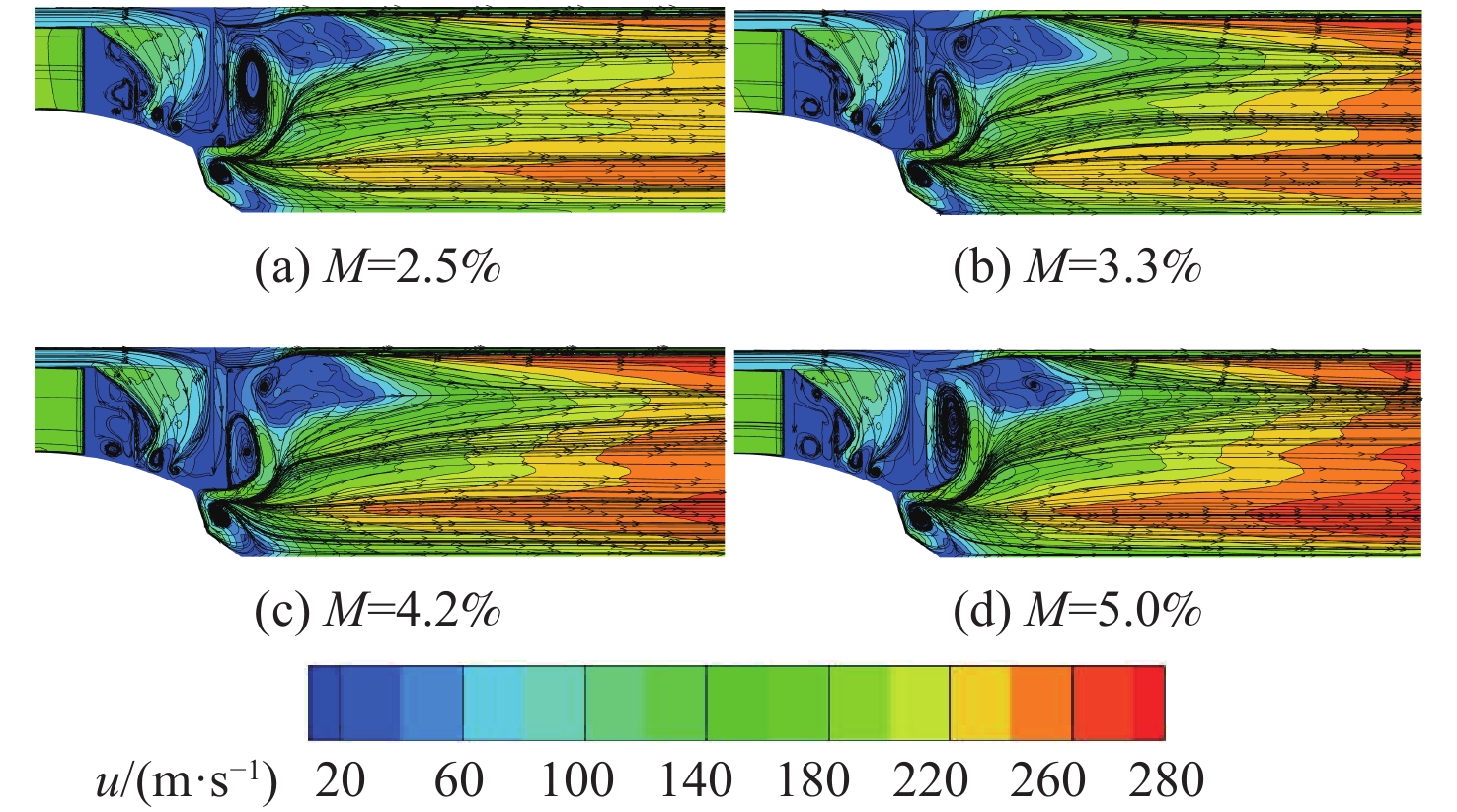
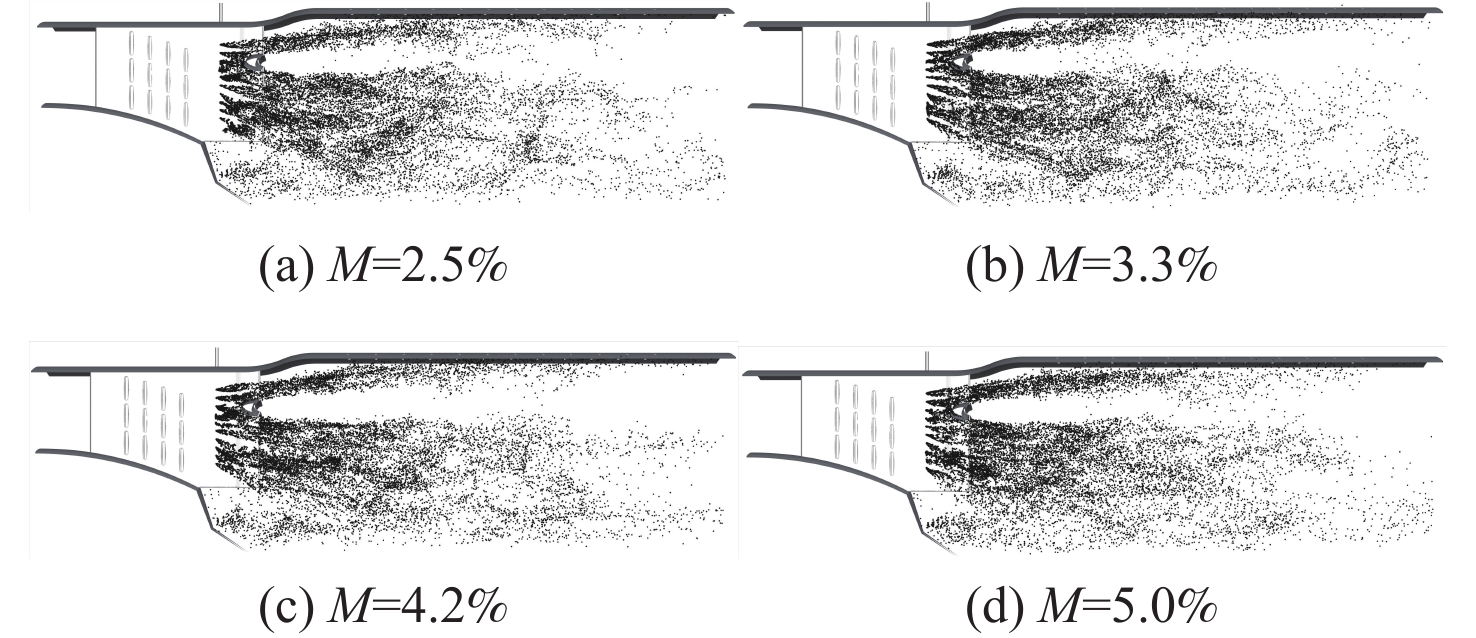
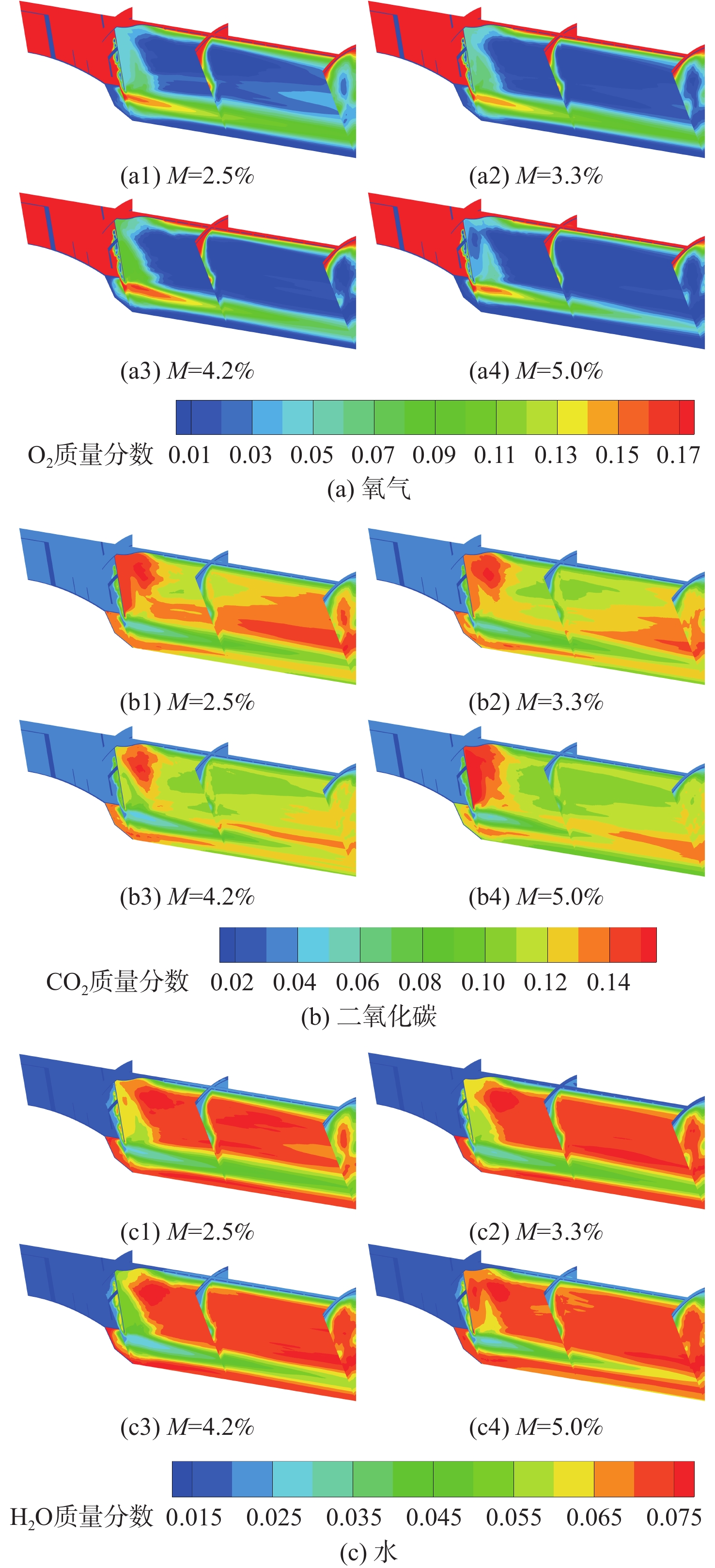
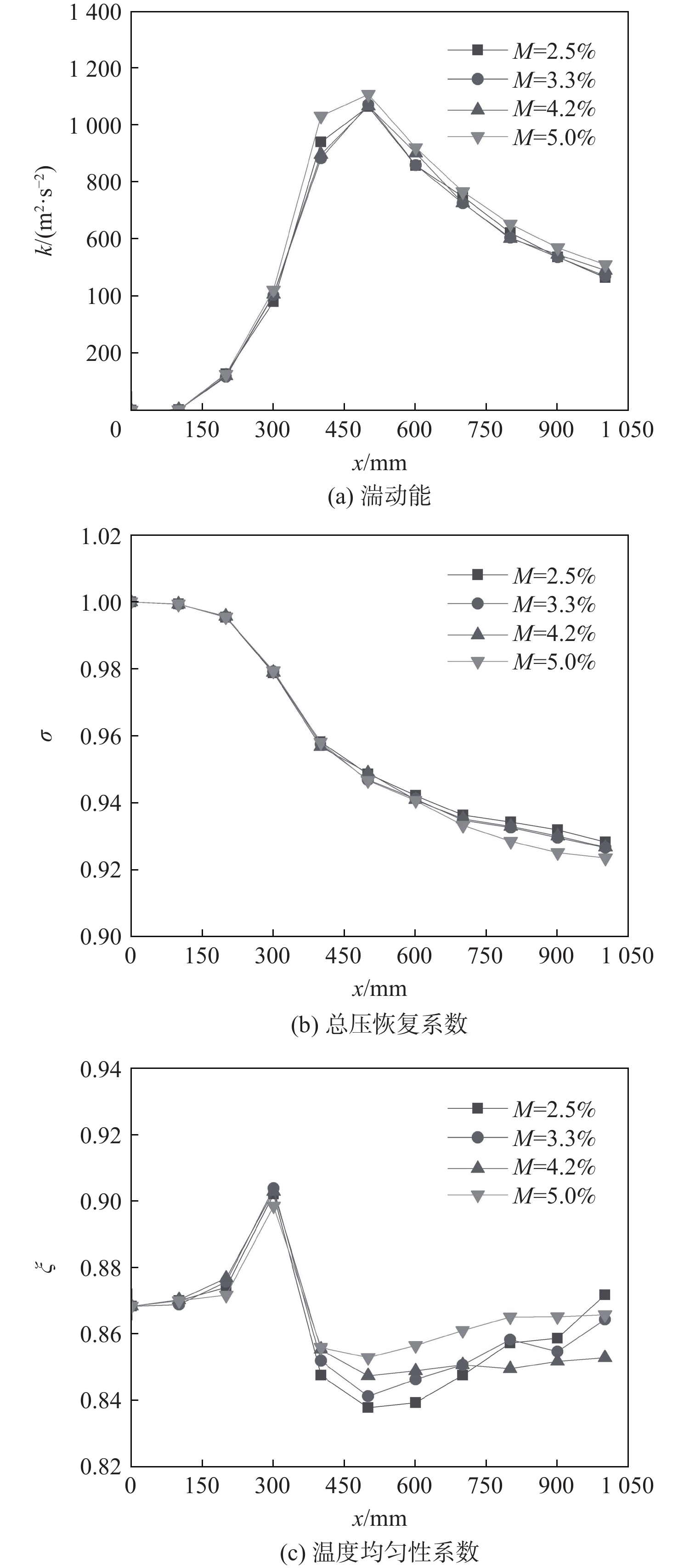
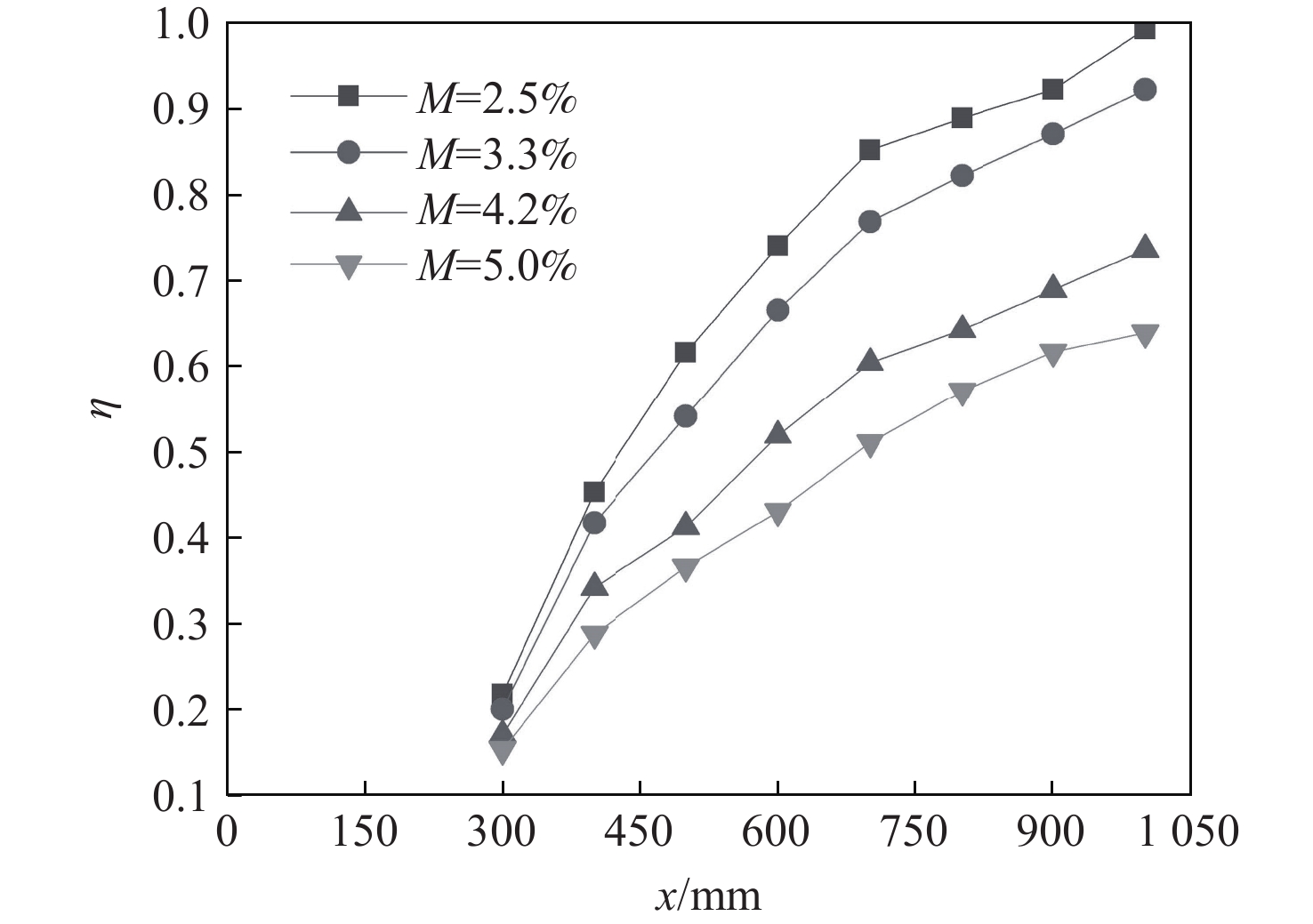
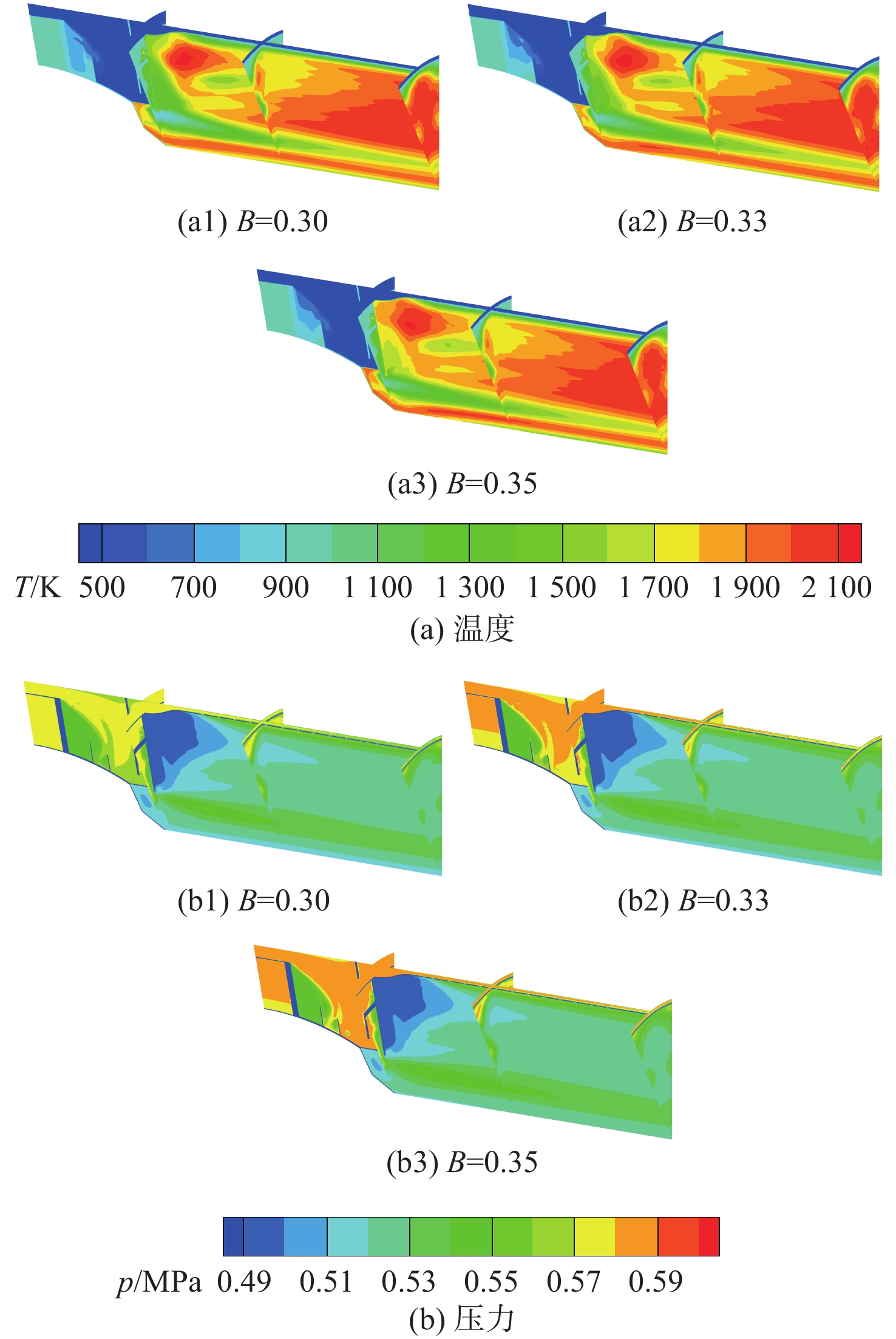
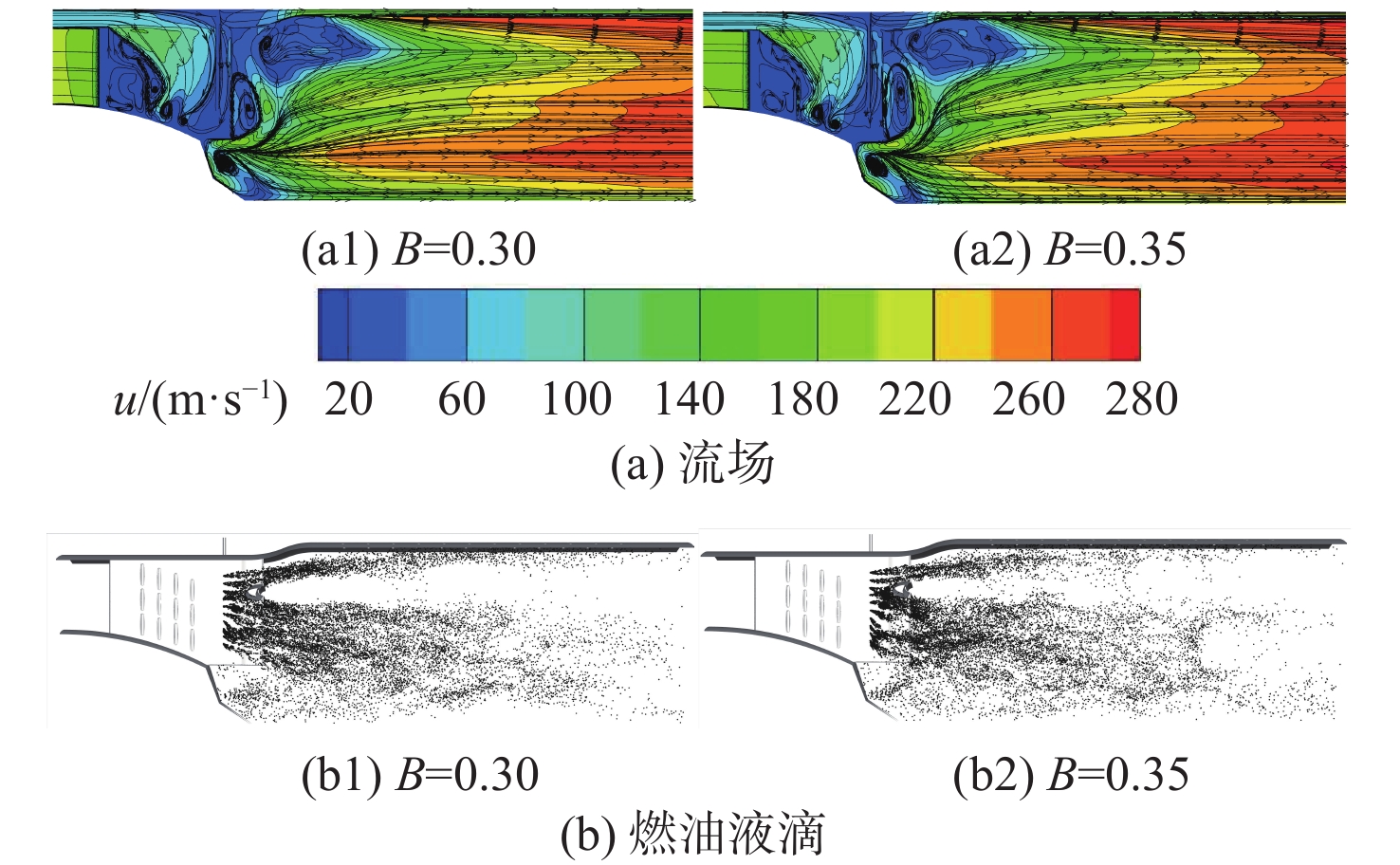
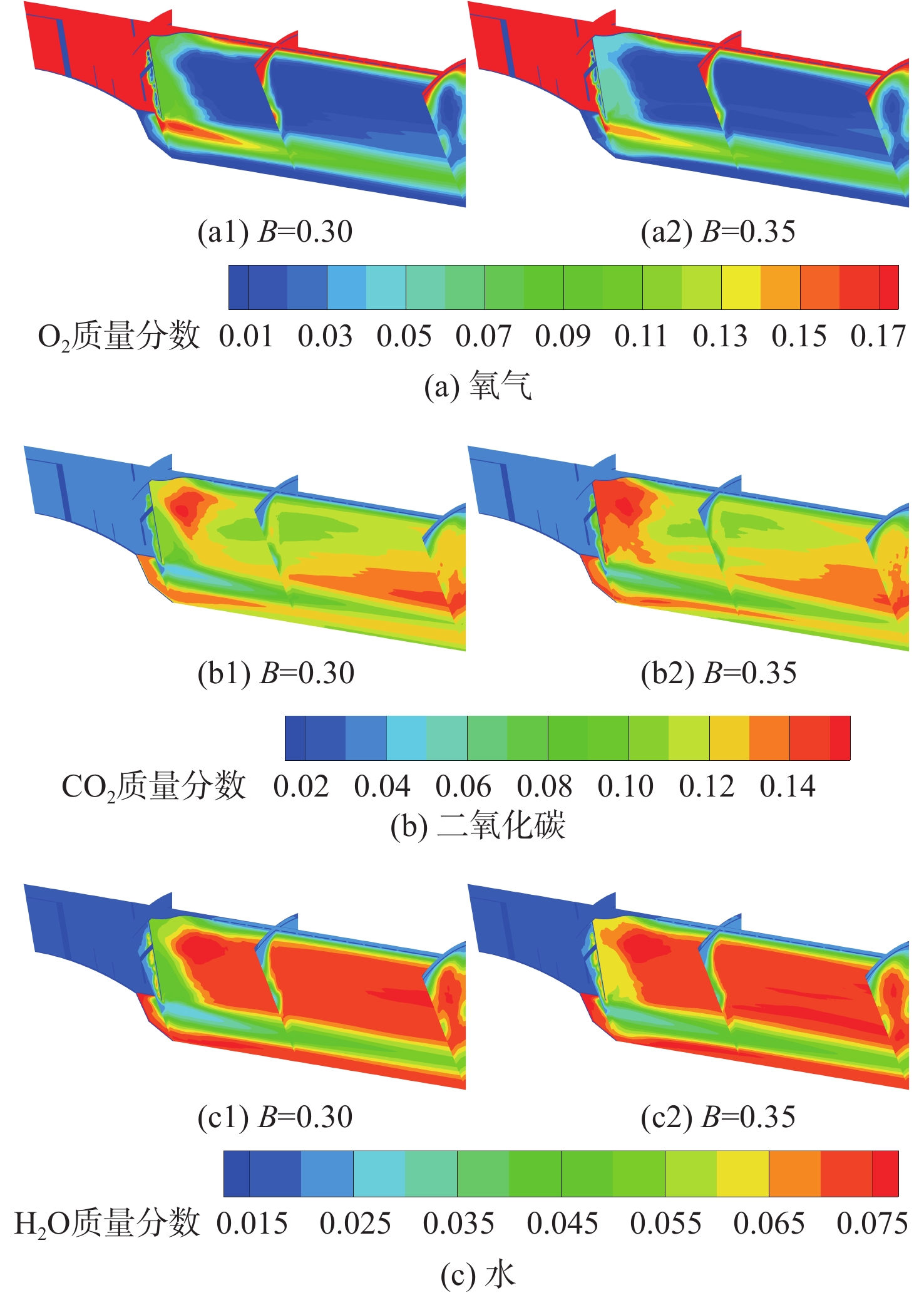
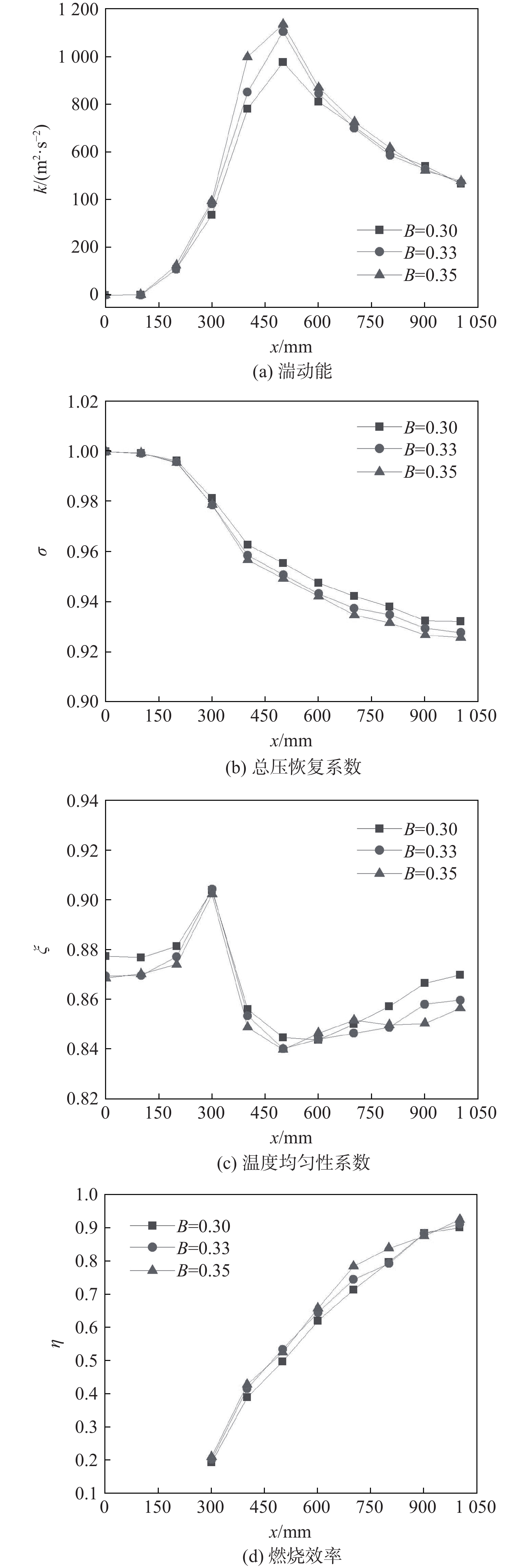
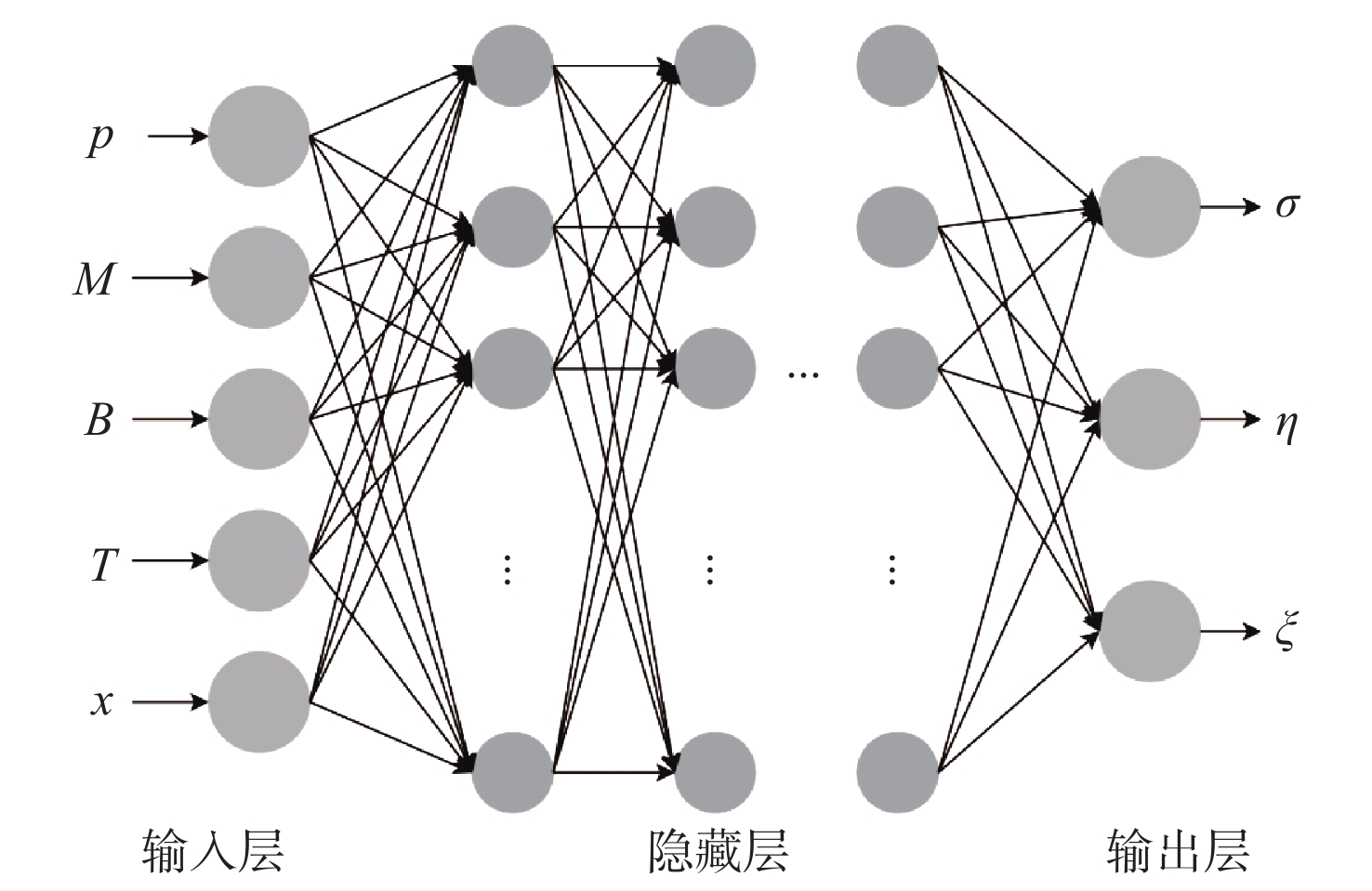
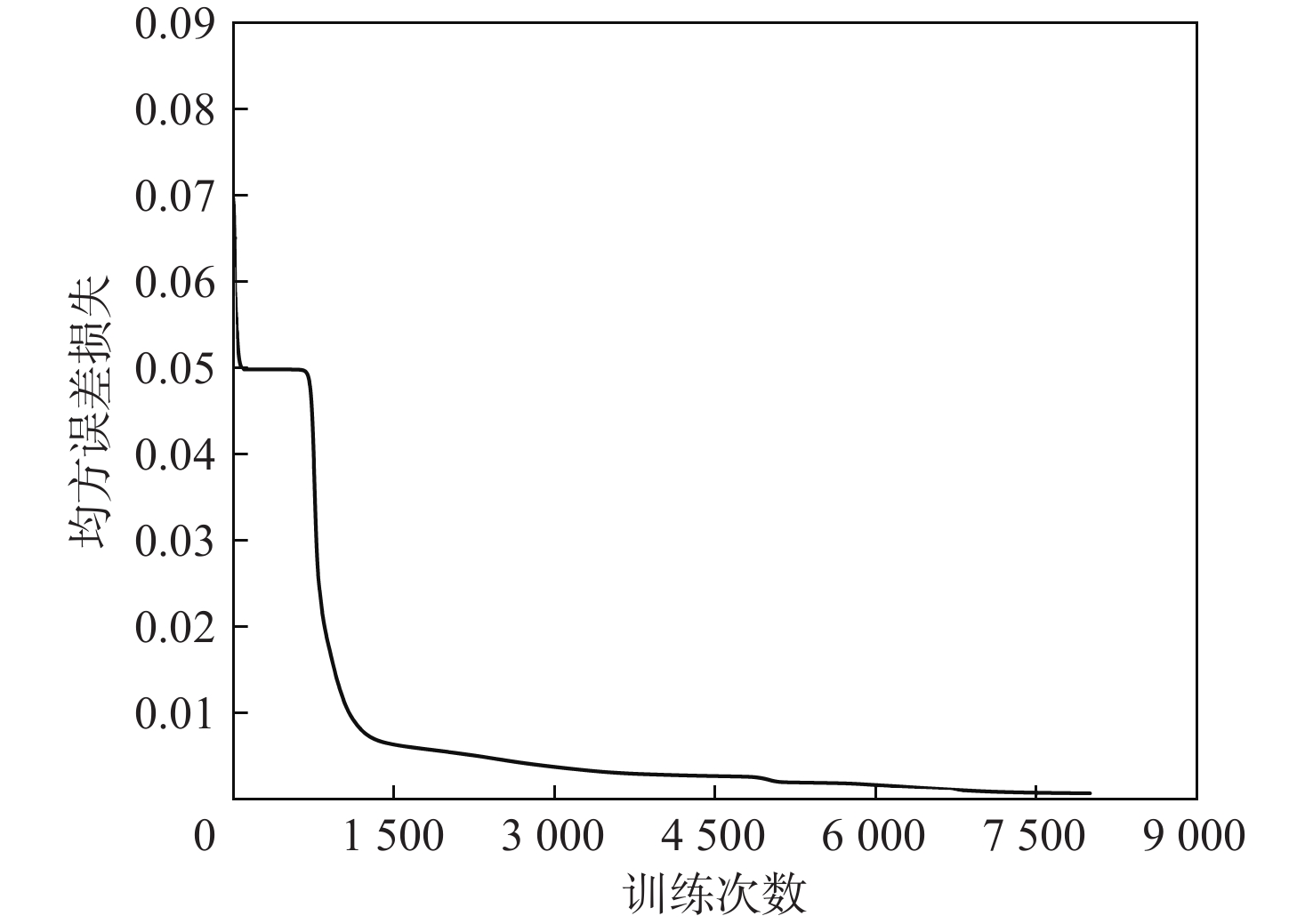
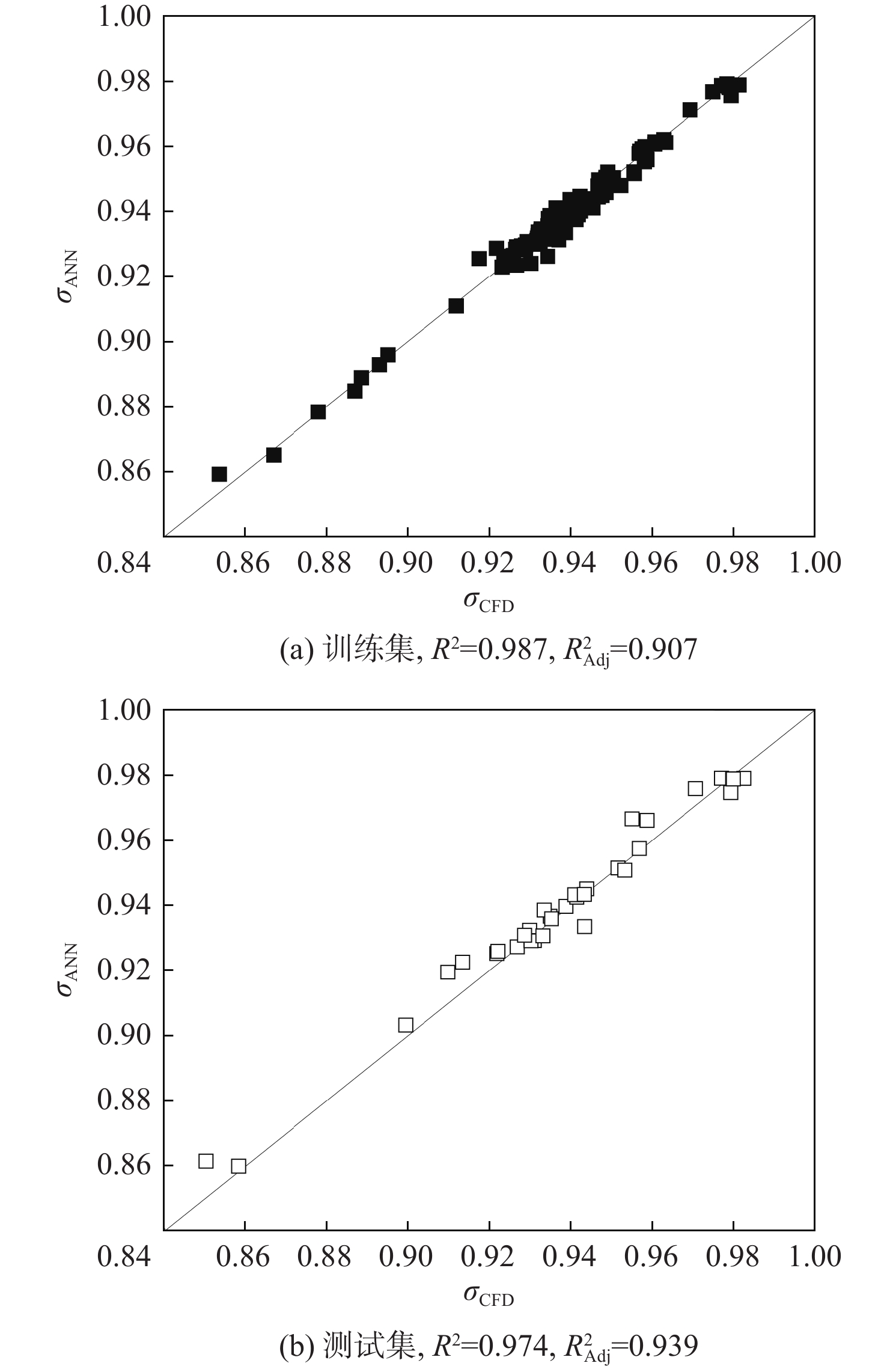
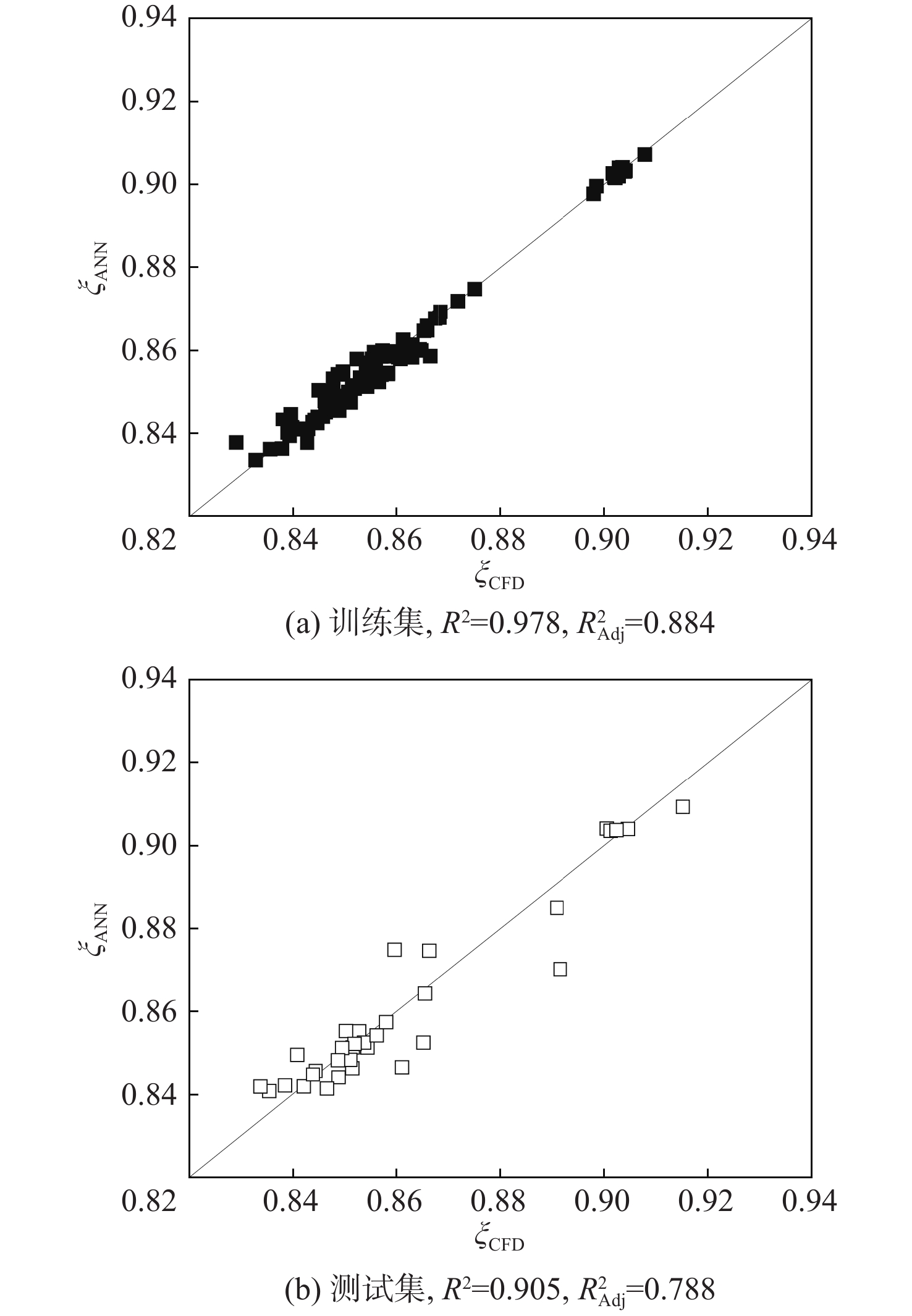
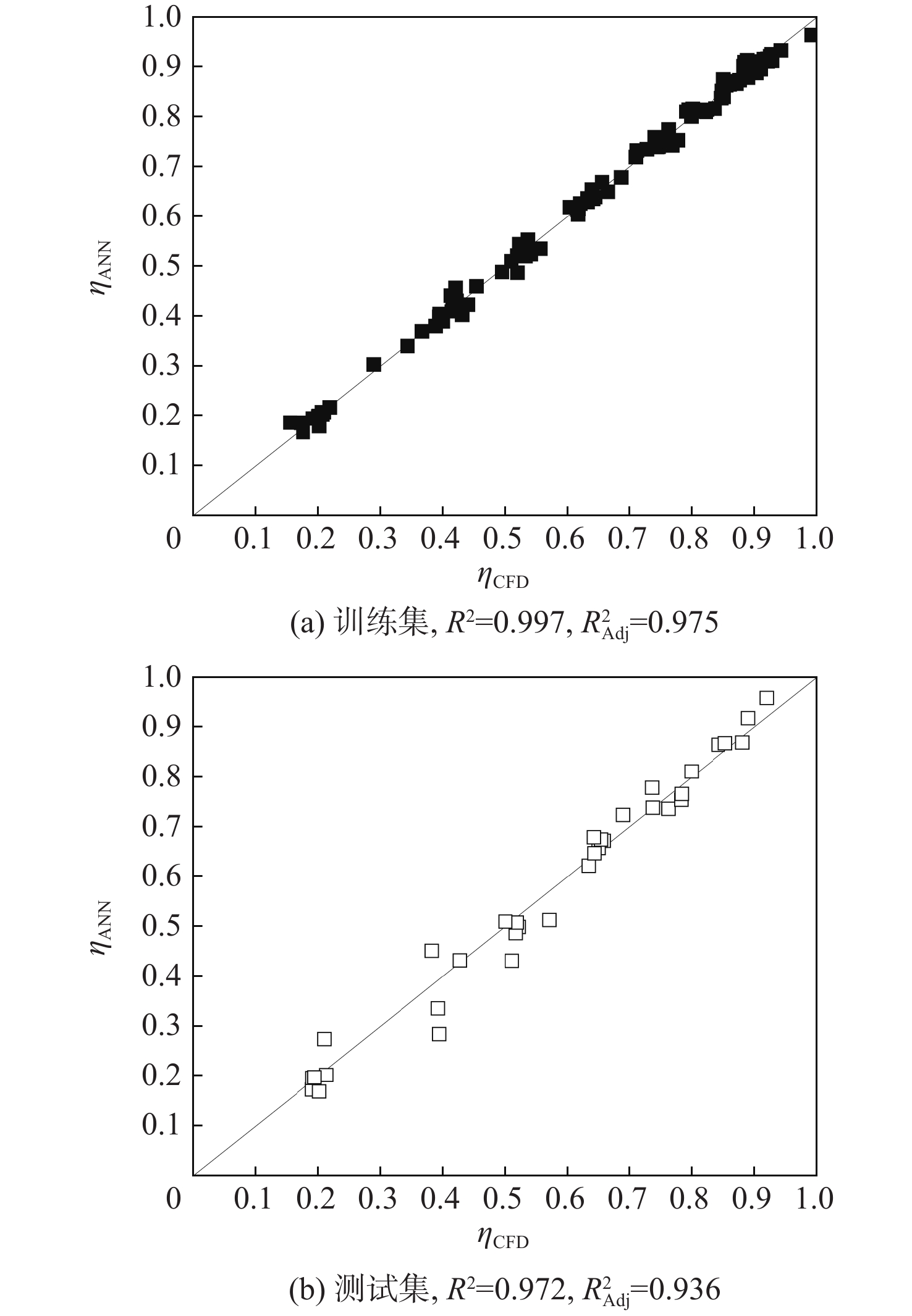
An afterburner design concept that integrated the fuel injection pipe, radial flame stabilizer, and turbine rear frame support plate was suggested as a solution to the problem of increasing the thrust-to-weight ratio of aero-engine. The thermal flow field and combustion characteristics of the afterburner under different kerosene-air ratios and bypass ratios were investigated through large eddy simulation. Distribution characteristics of the temperature, velocity, and pressure in the combustion chamber and their impacts on the combustion process were studied. The distributions of fuel droplets, oxygen, carbon dioxide, and water were analyzed. Using the intake pressure, intake temperature, fuel rate, bypass ratio, and axial distance as input variables, the machine learning method was developed and predictions were made for the total pressure recovery coefficient, temperature uniformity coefficient, and combustion efficiency. The results indicate that the overall combustion performance of the integrated afterburner is high, and only a localized combustion weakening zone is observed below the flame. There are three low-velocity recirculation zones in front of the combustion chamber, located in the strong flame zone, the middle and lower parts of the fuel injection pipe, and the tail of the central cone. As the kerosene-air ratio increases, the combustion efficiency is decreased, while an increase in bypass ratio leads to an improvement in combustion efficiency. The proposed machine learning model has a corrected determination coefficient greater than 0.788 for both the training and testing datasets, indicating good predictive performance.

Unsteady aerodynamic characteristics of flexible flapping plate at low Reynolds numbers
CAO Mengda, ZHENG Mengzong, SU Guanting, PAN Tianyu, LI Zhiping, LI Qiushi
2026, 52(6): 2011-2023. doi: 10.13700/j.bh.1001-5965.2024.0235
Abstract:

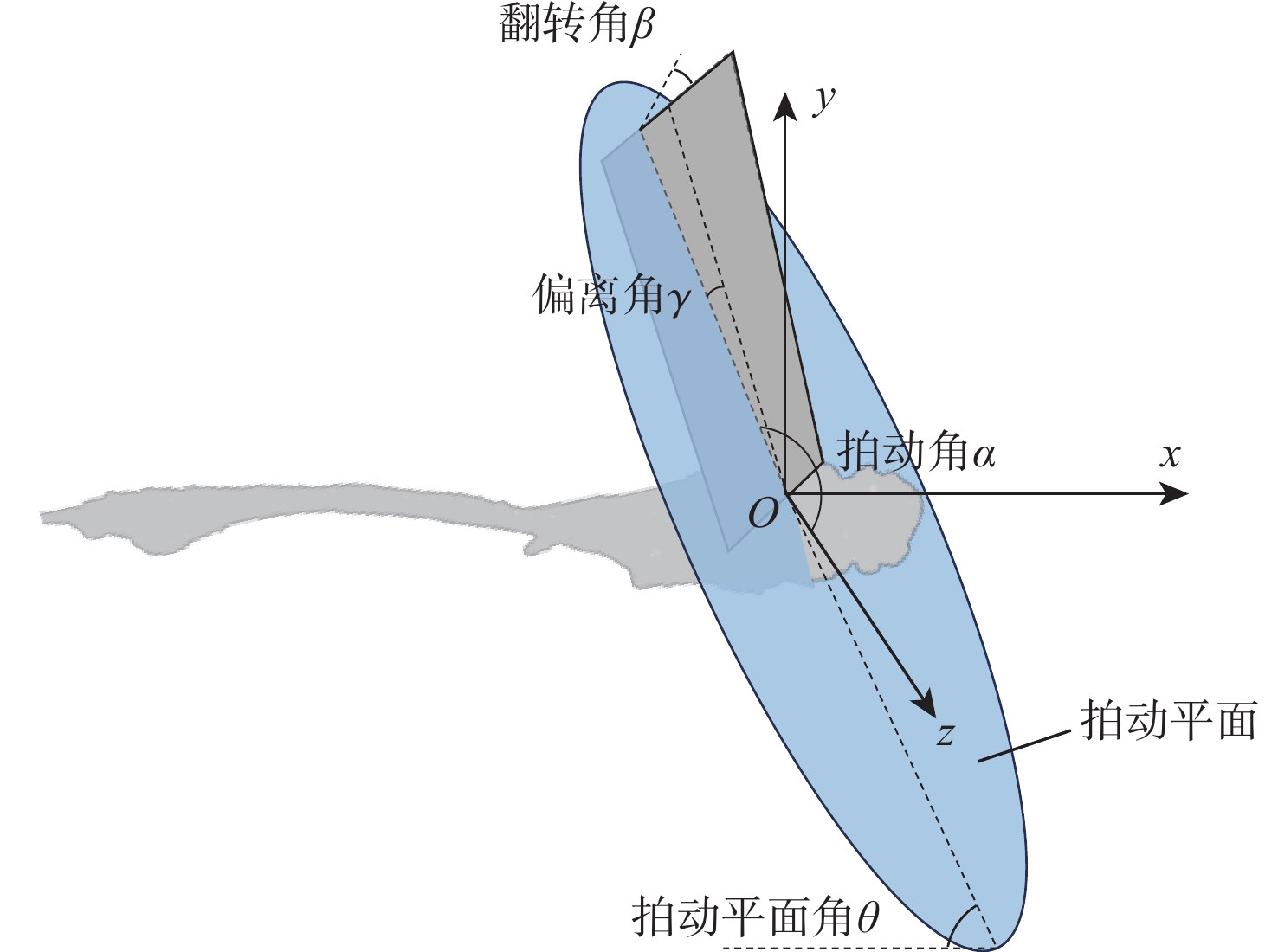
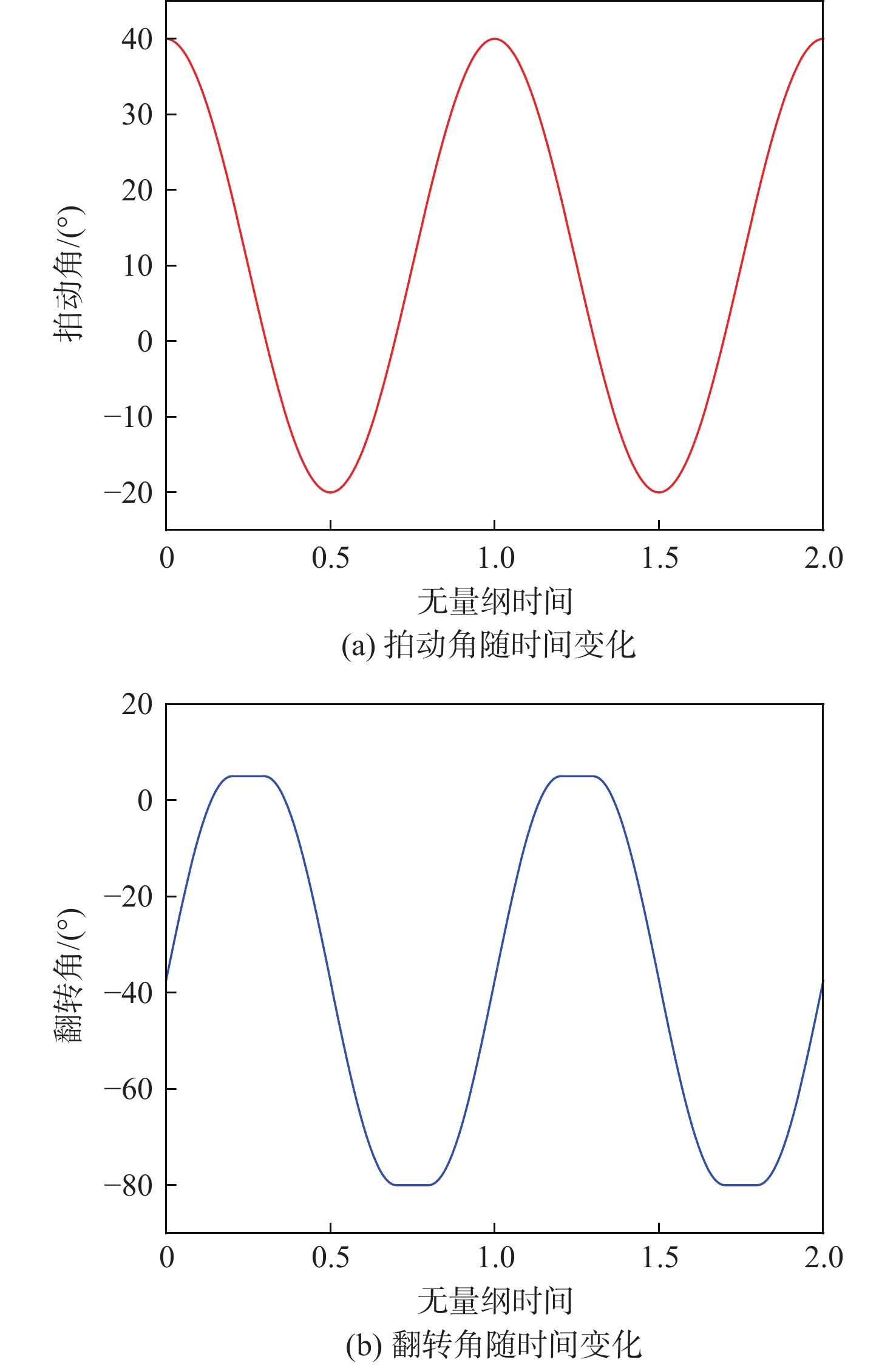
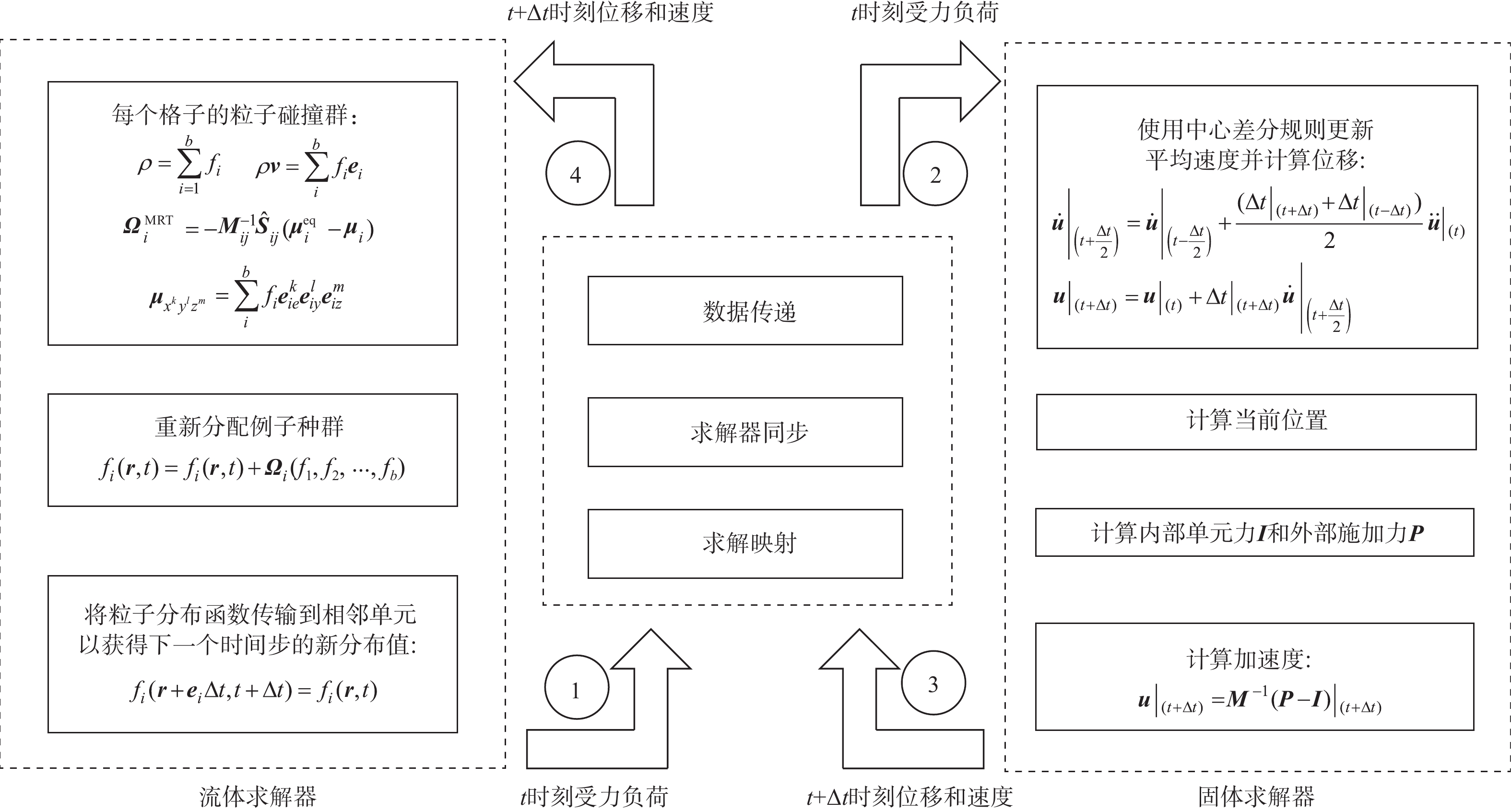
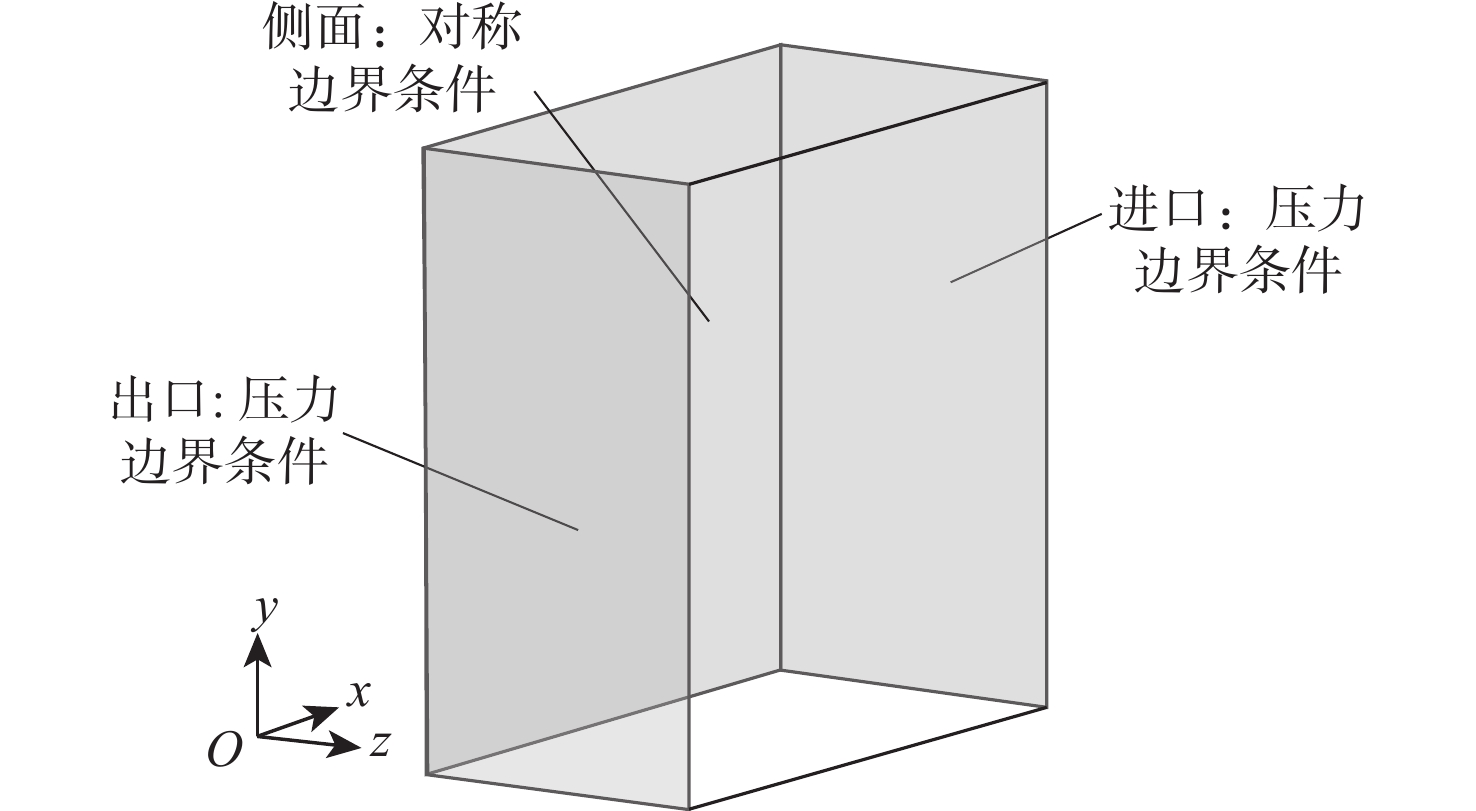
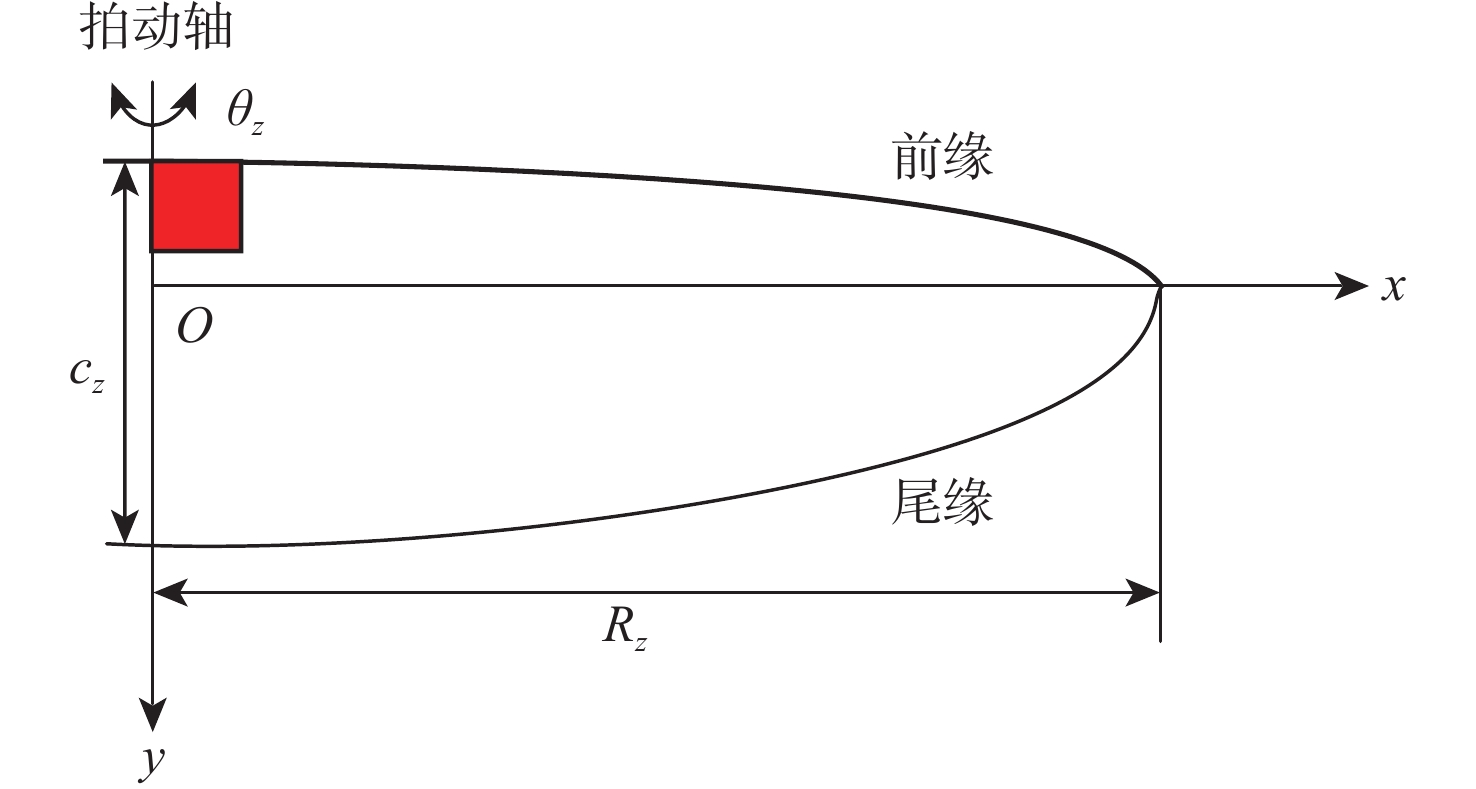
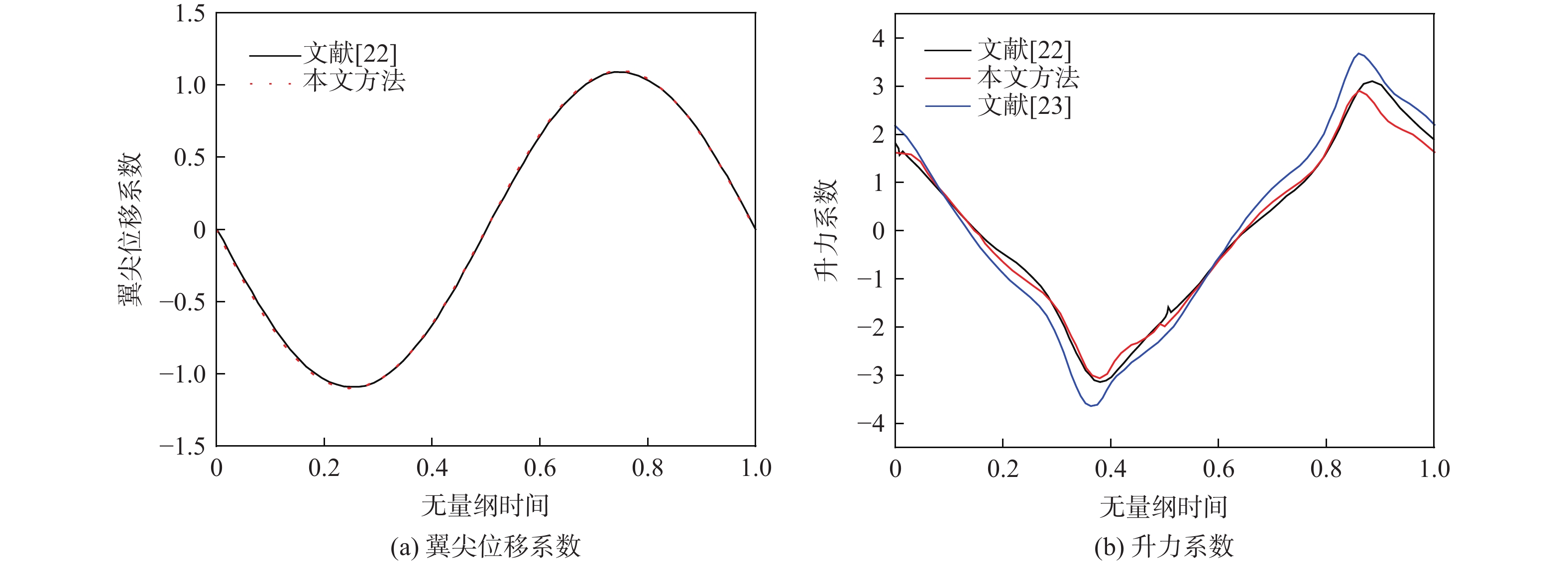
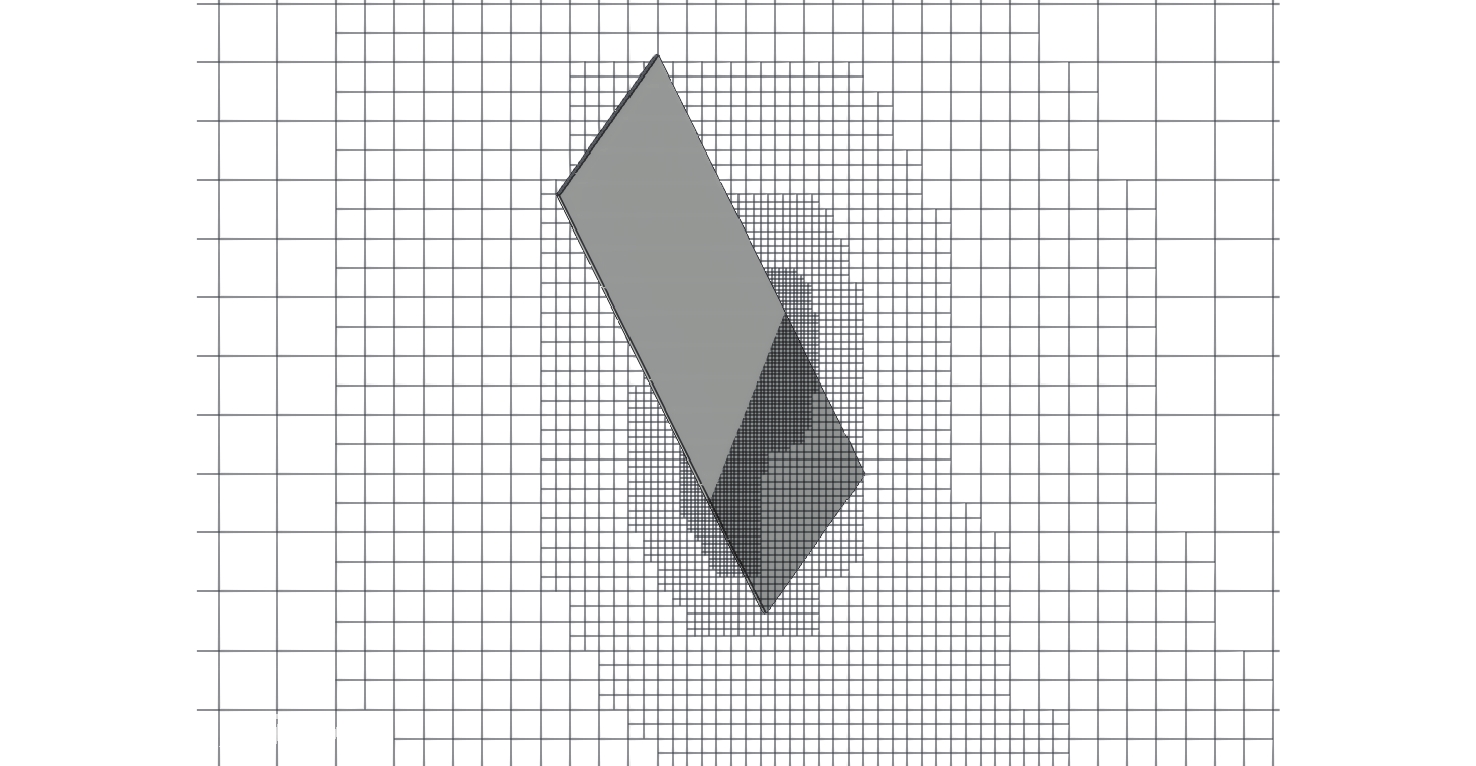
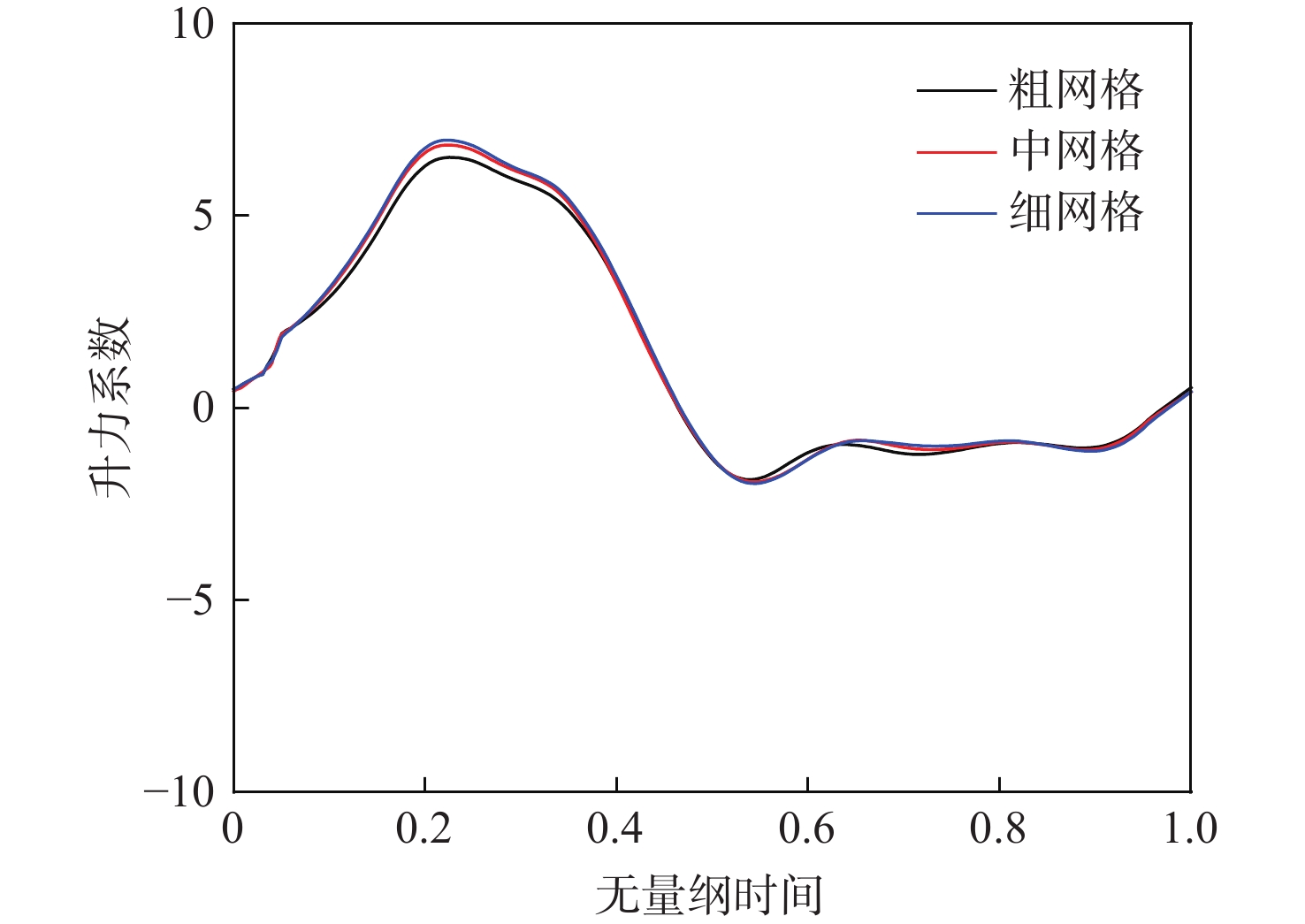
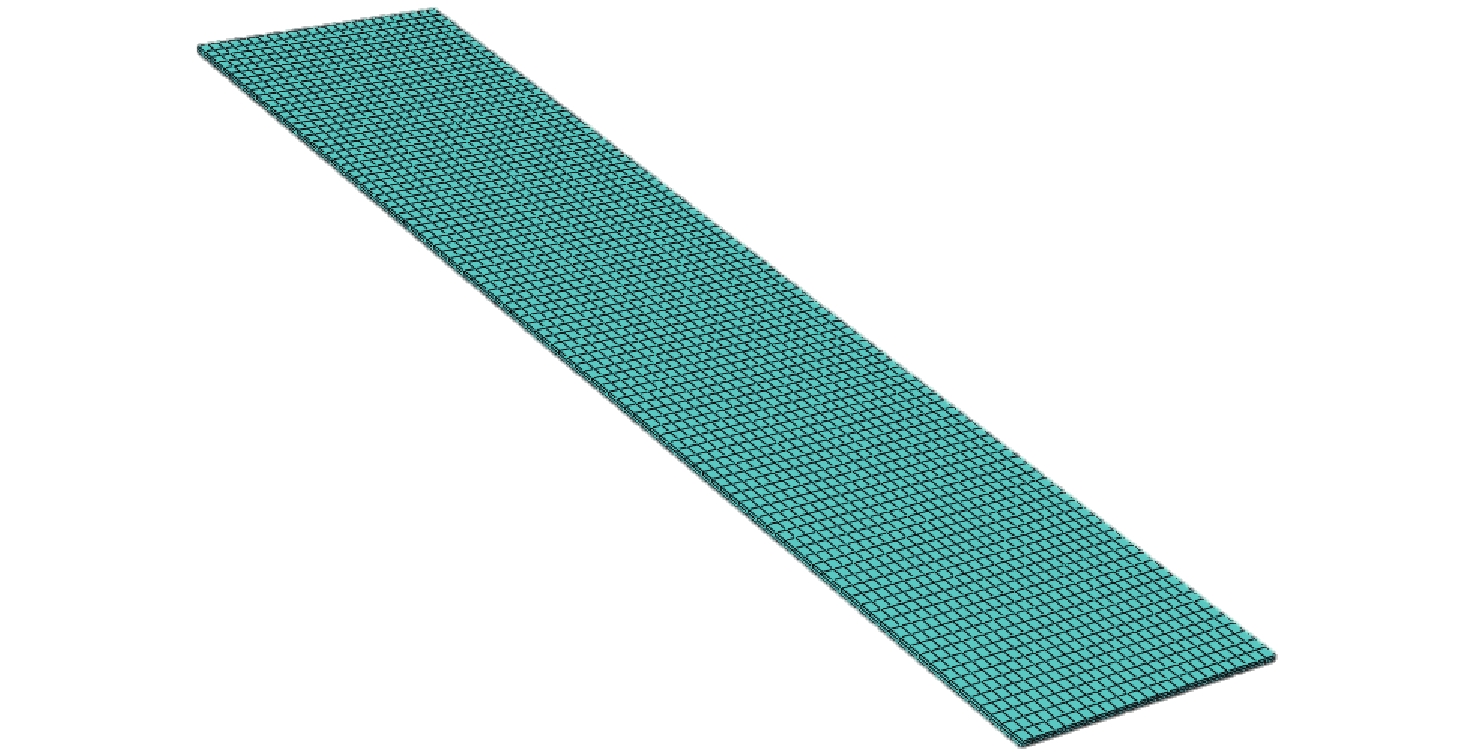
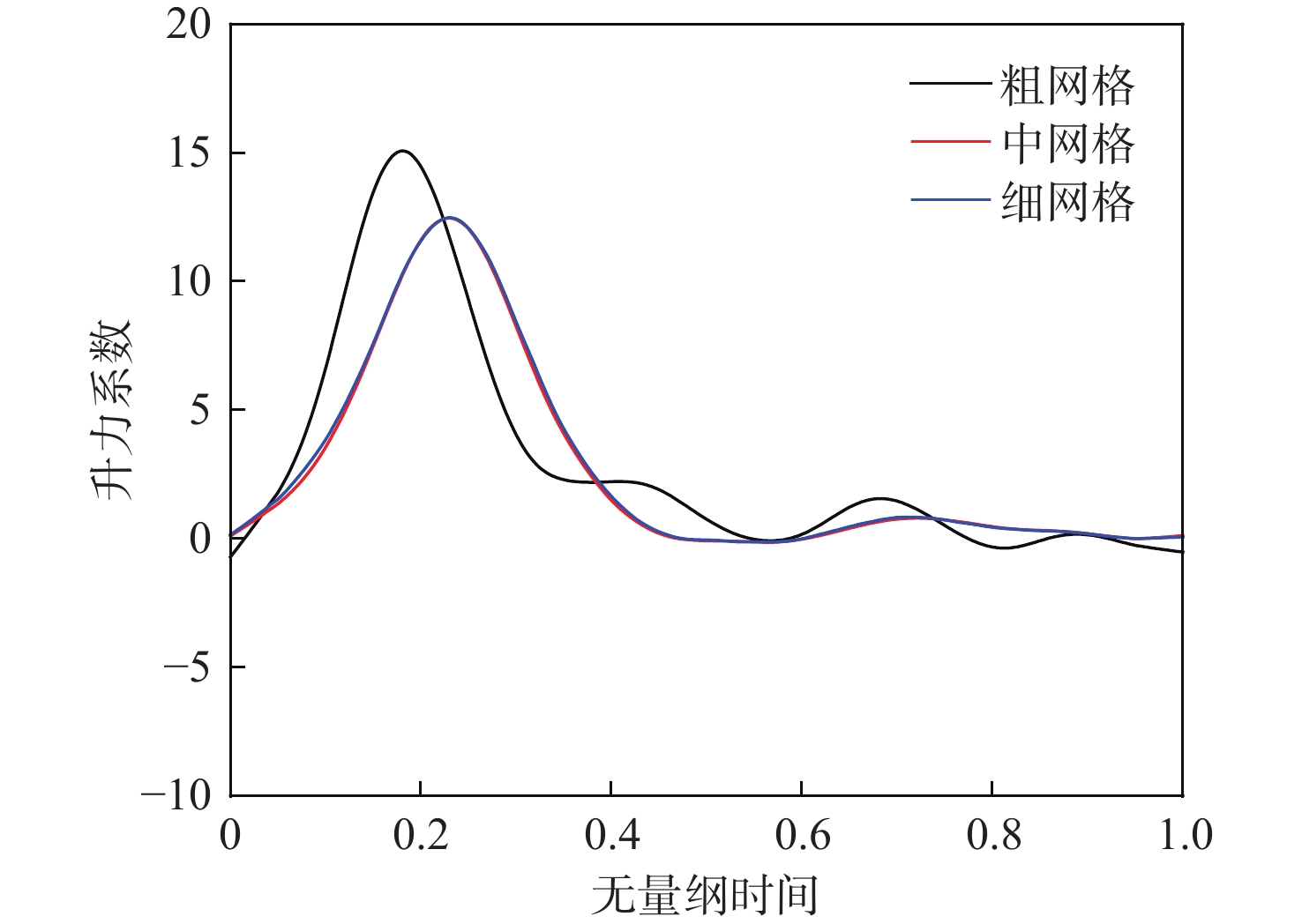
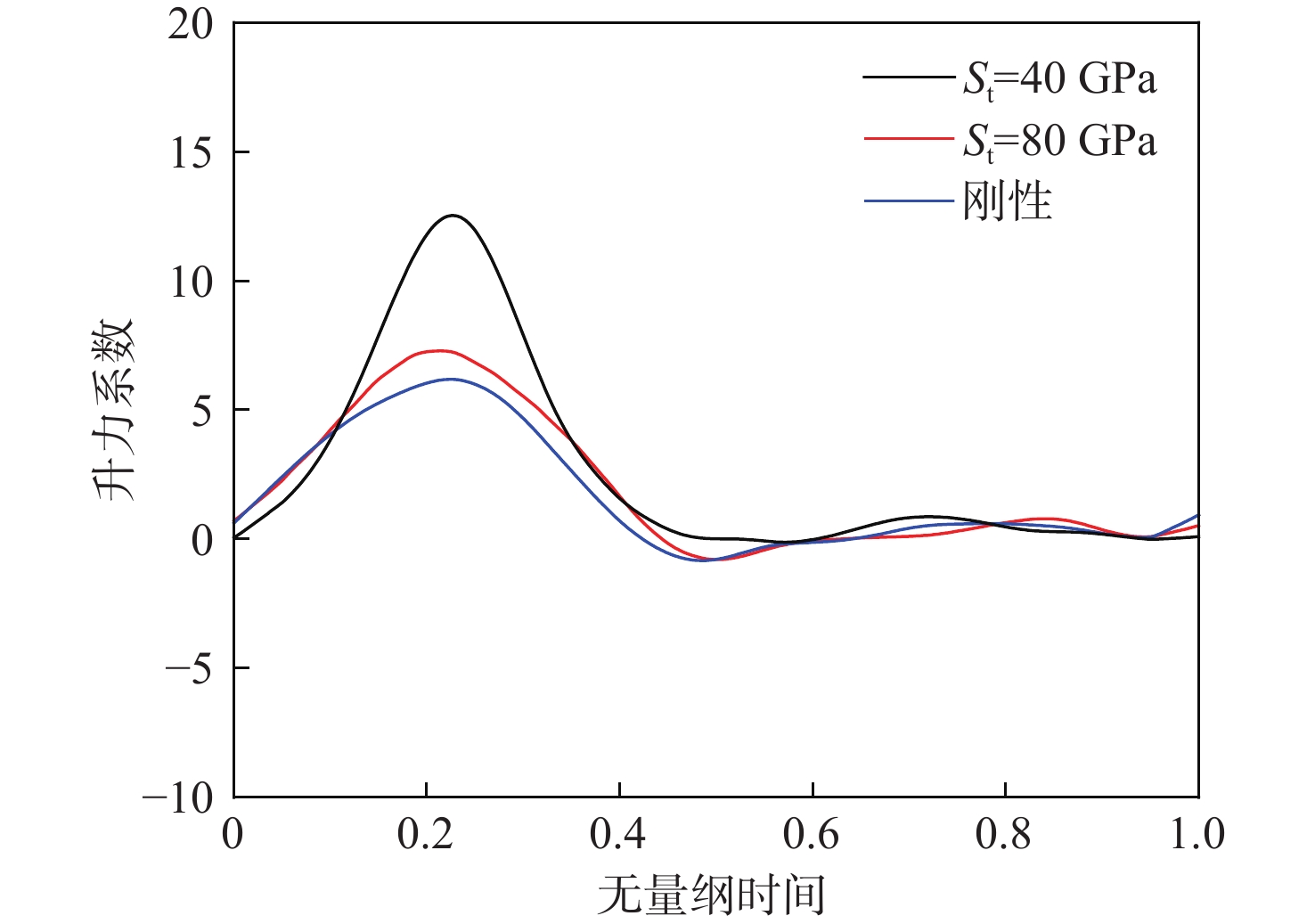
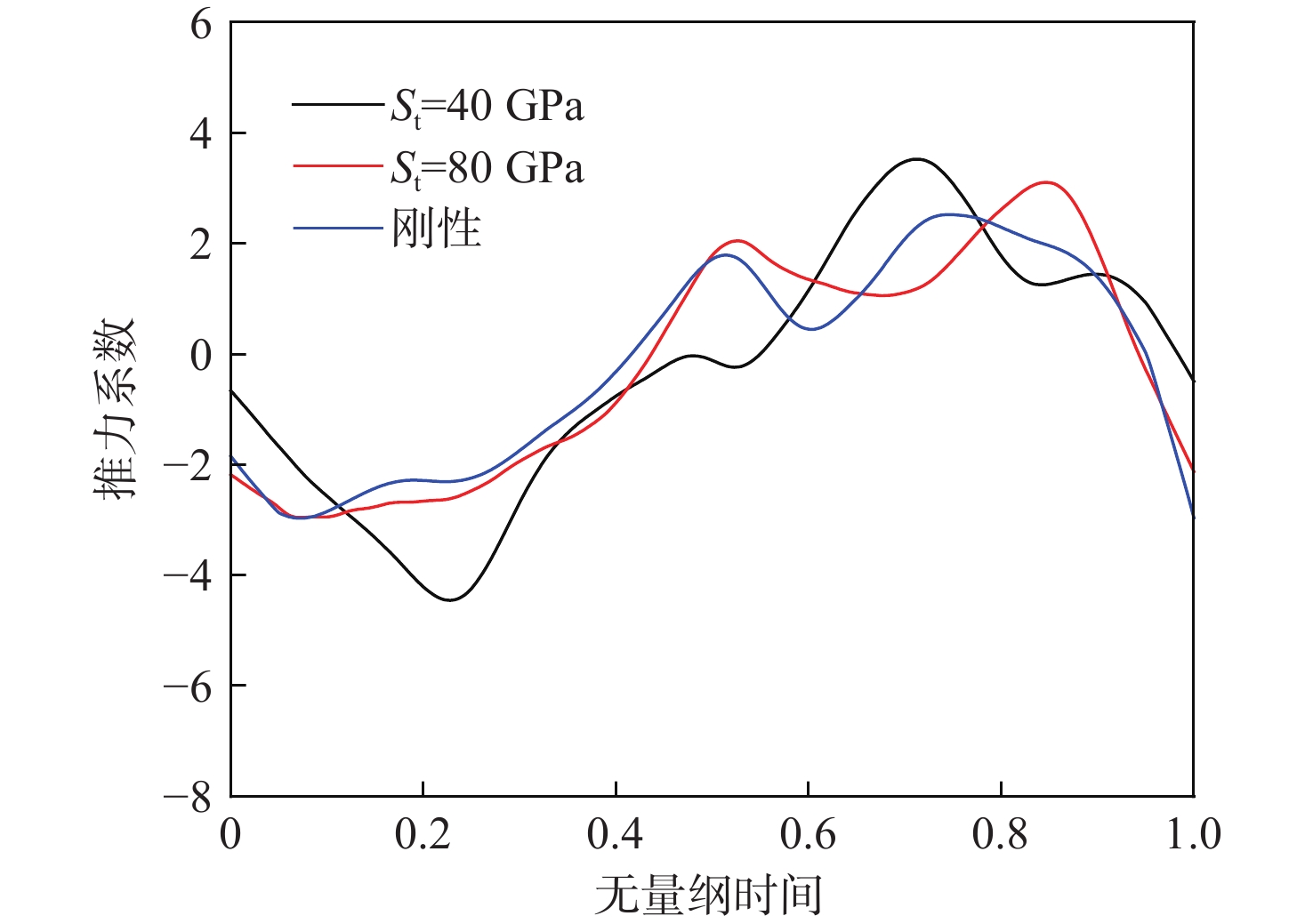
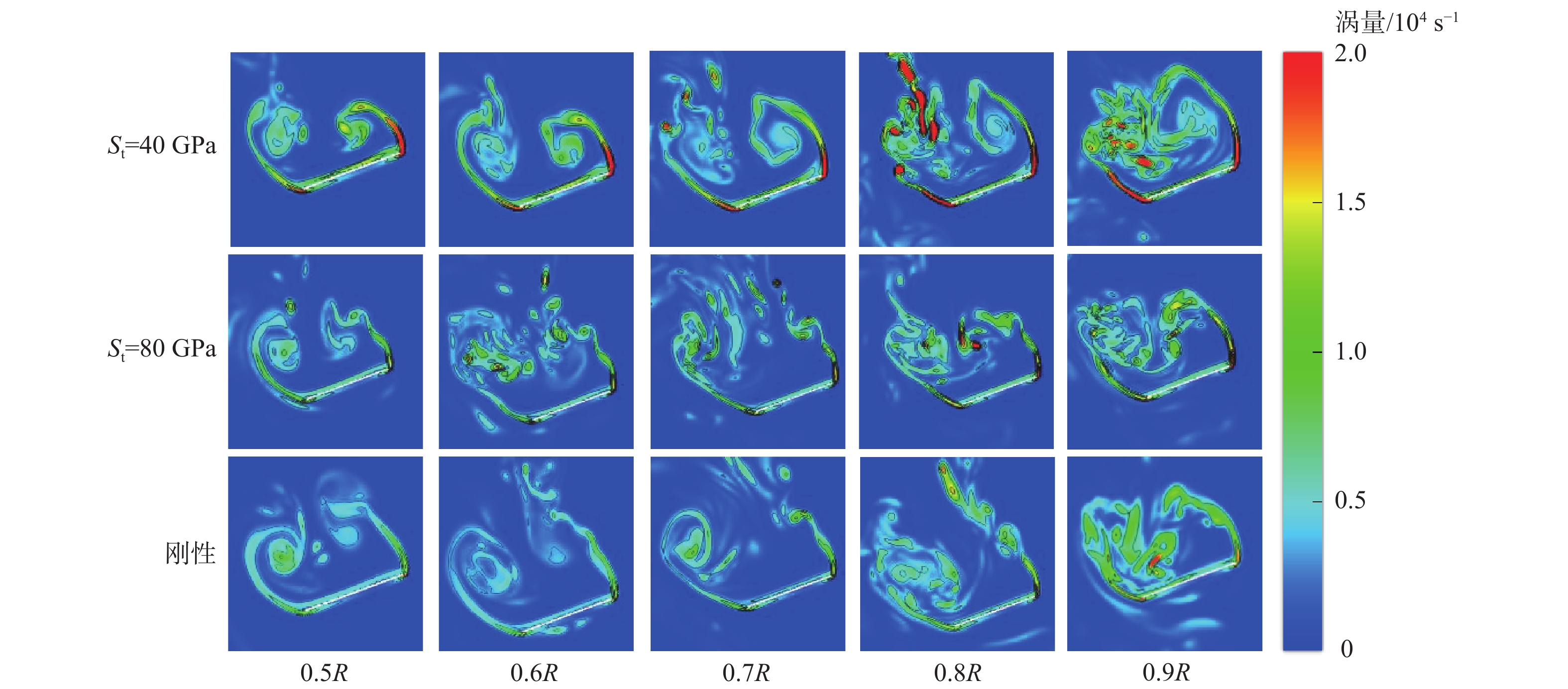
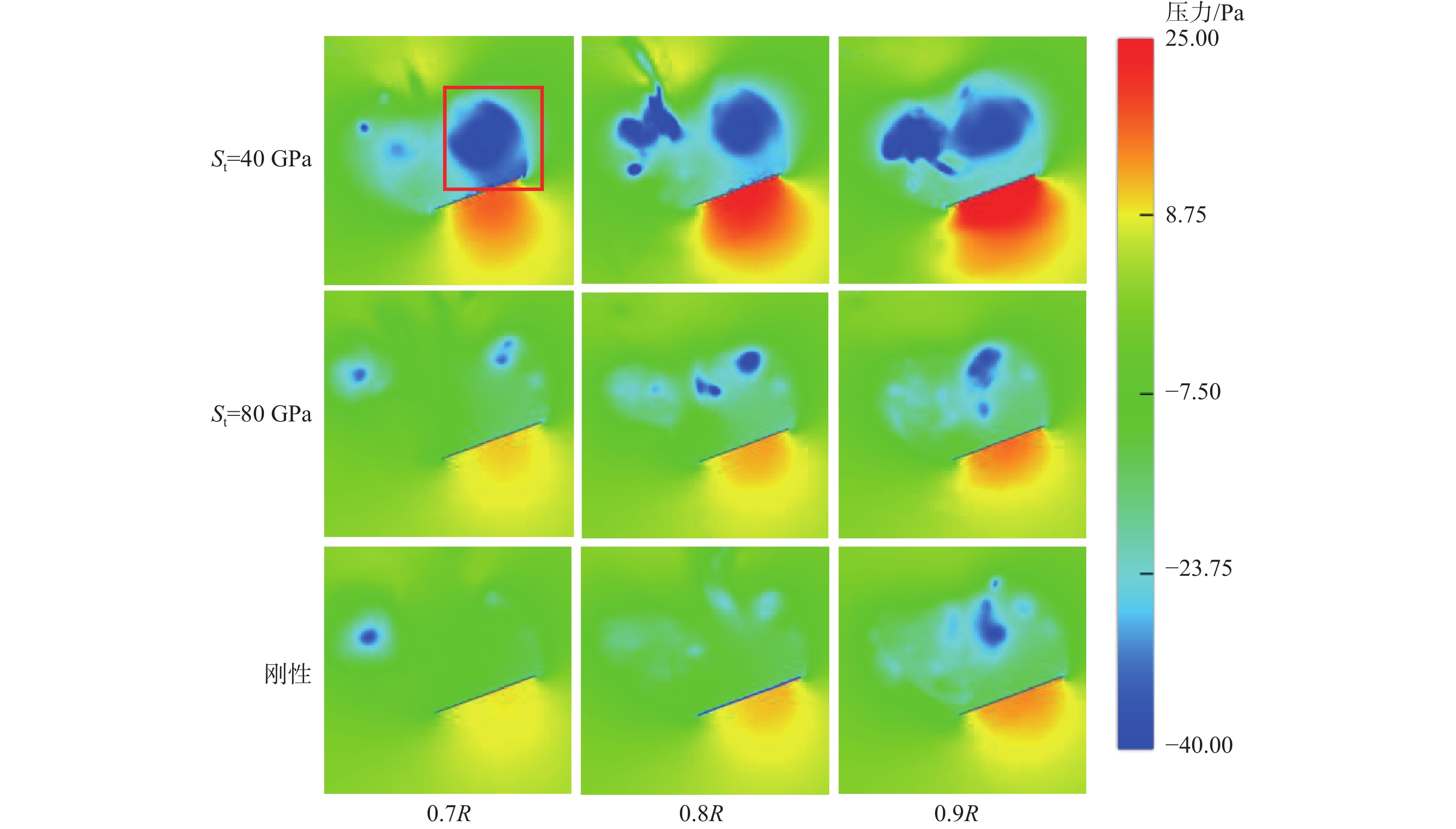
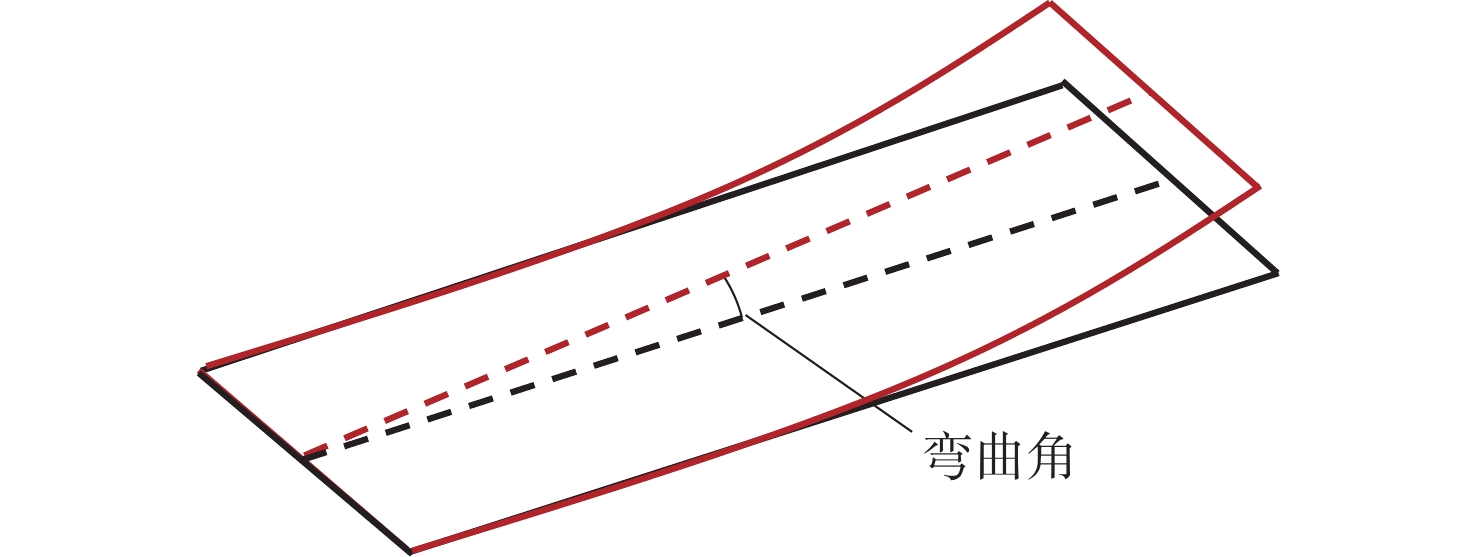
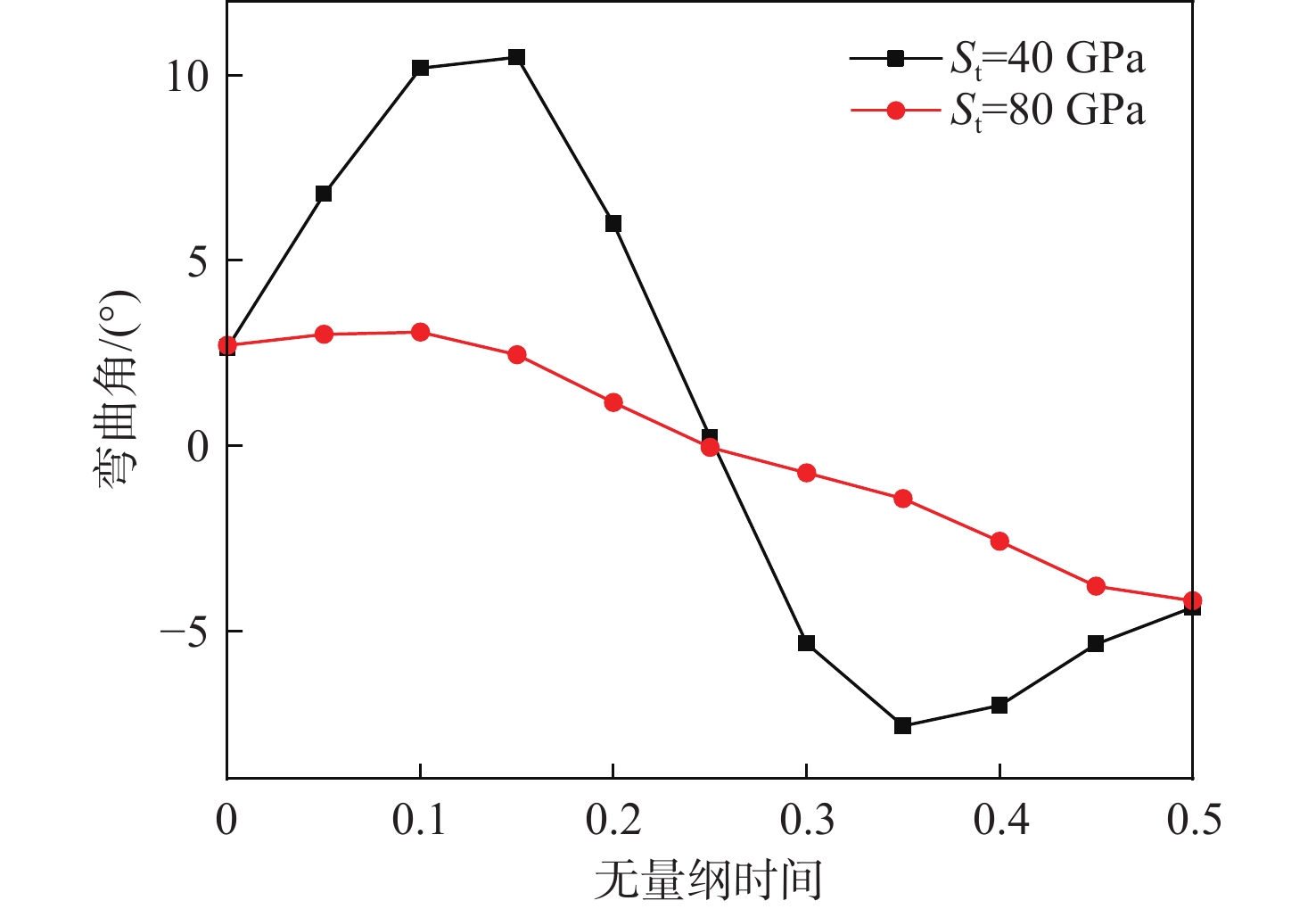
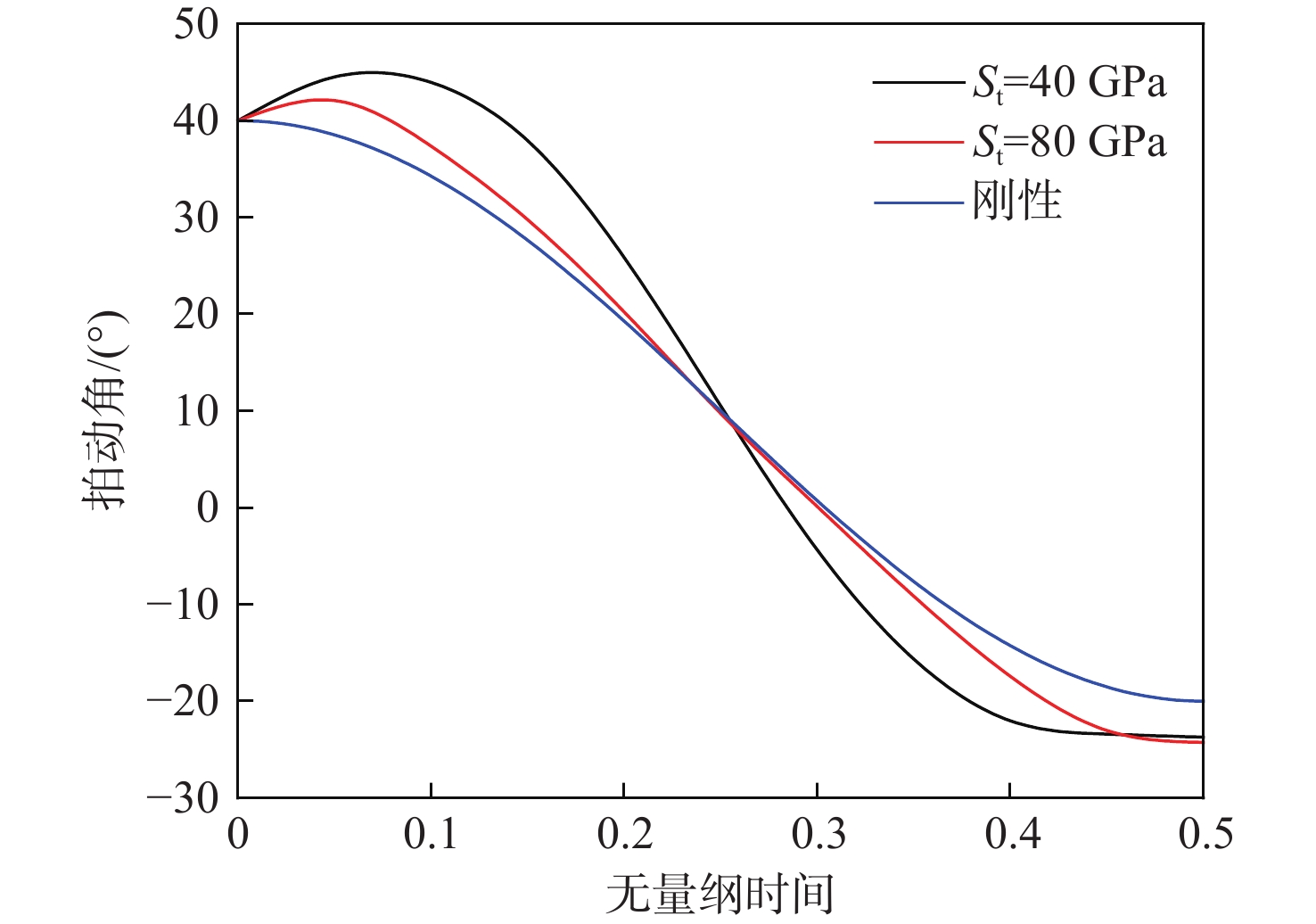
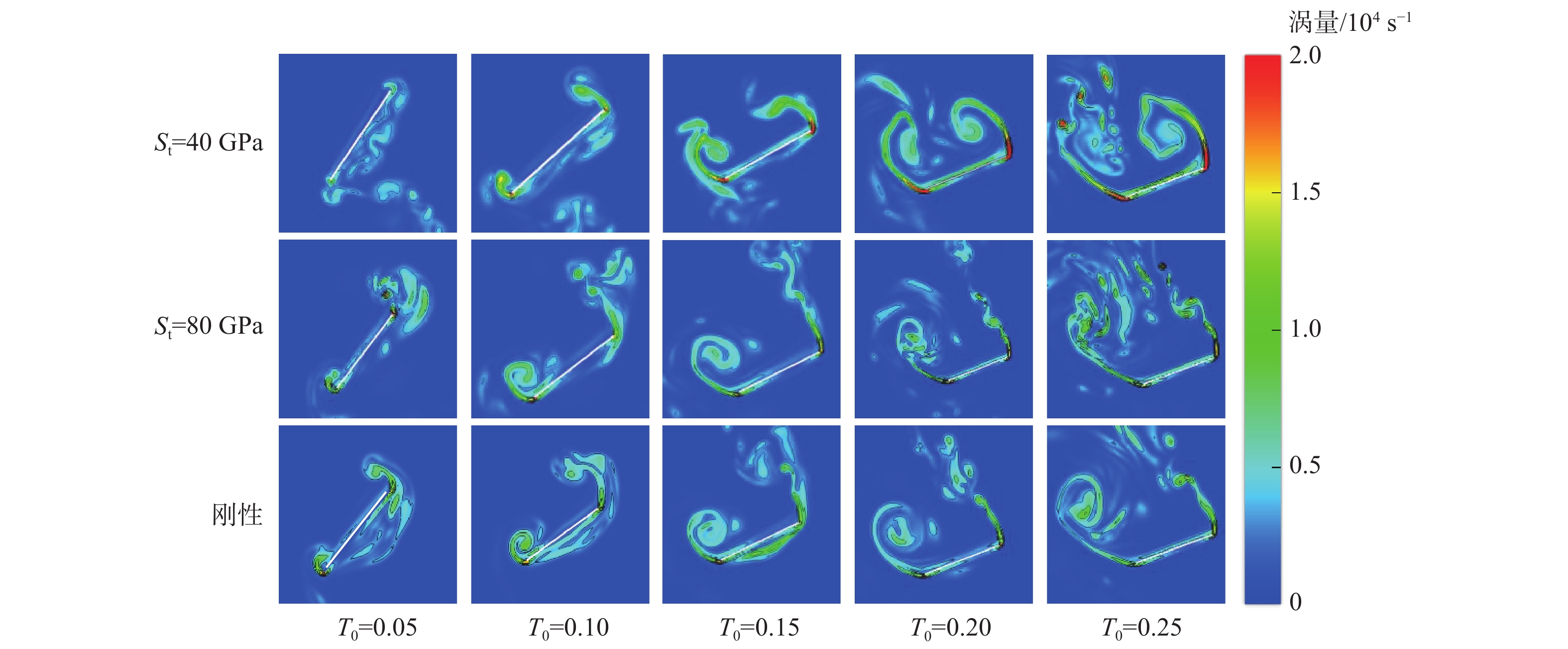
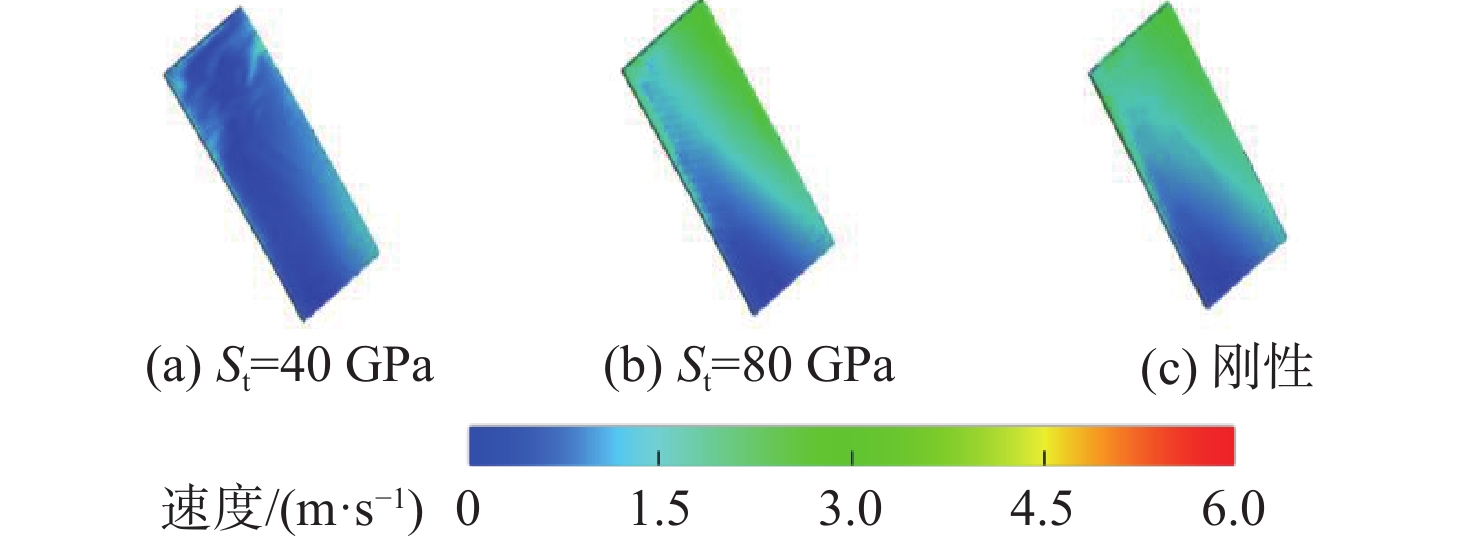
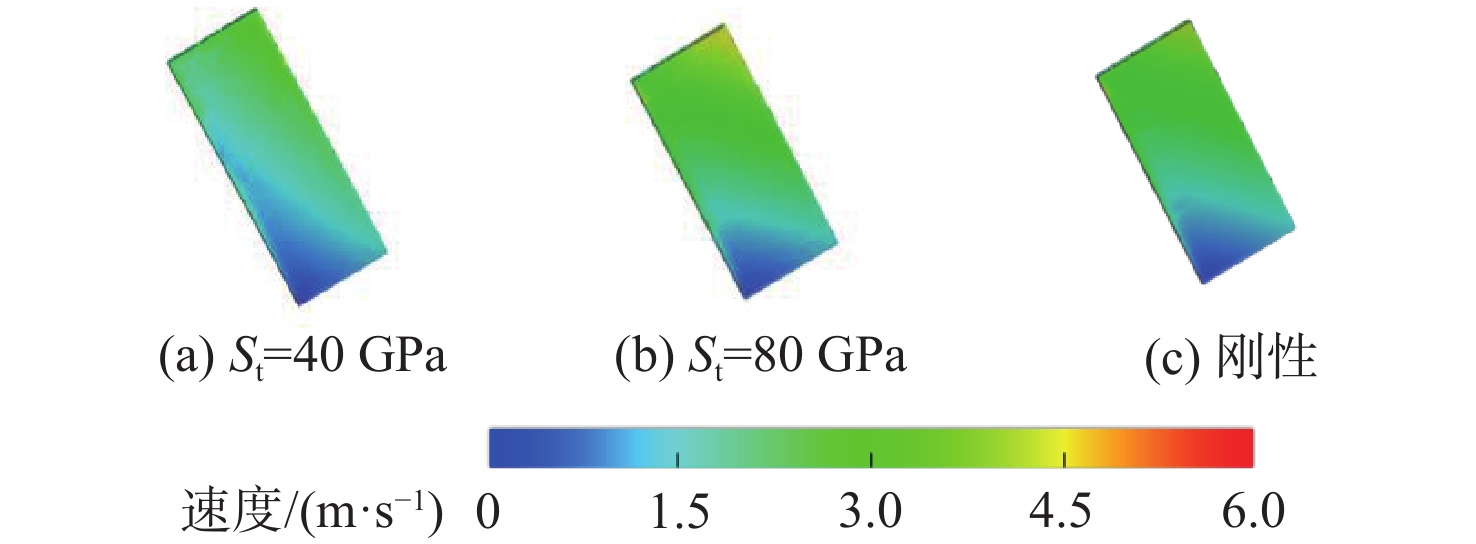
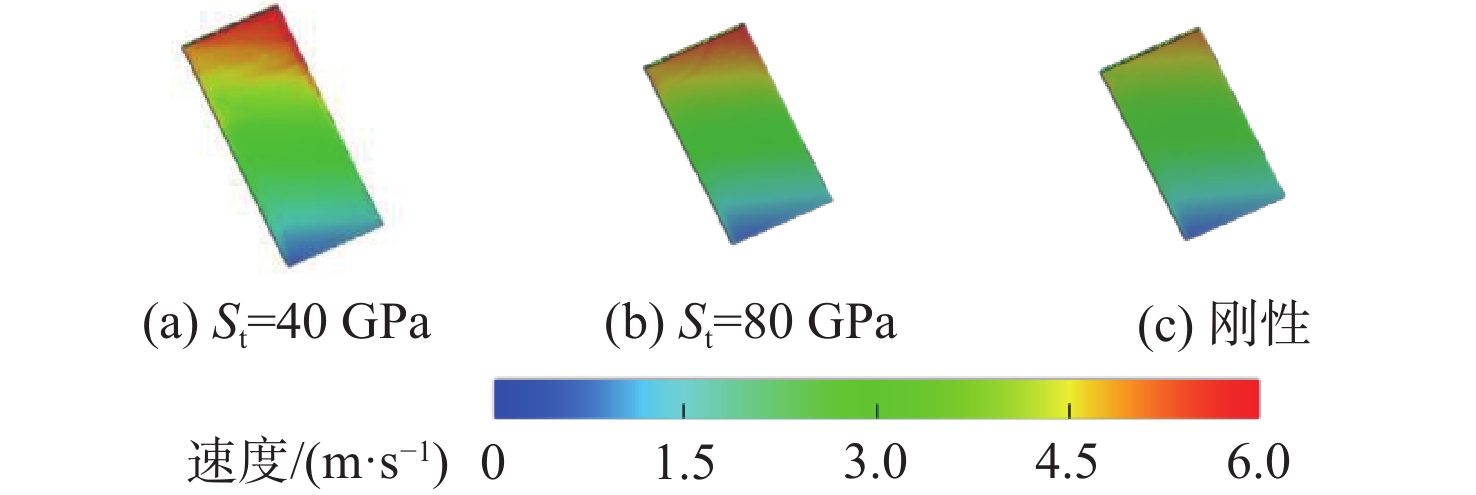
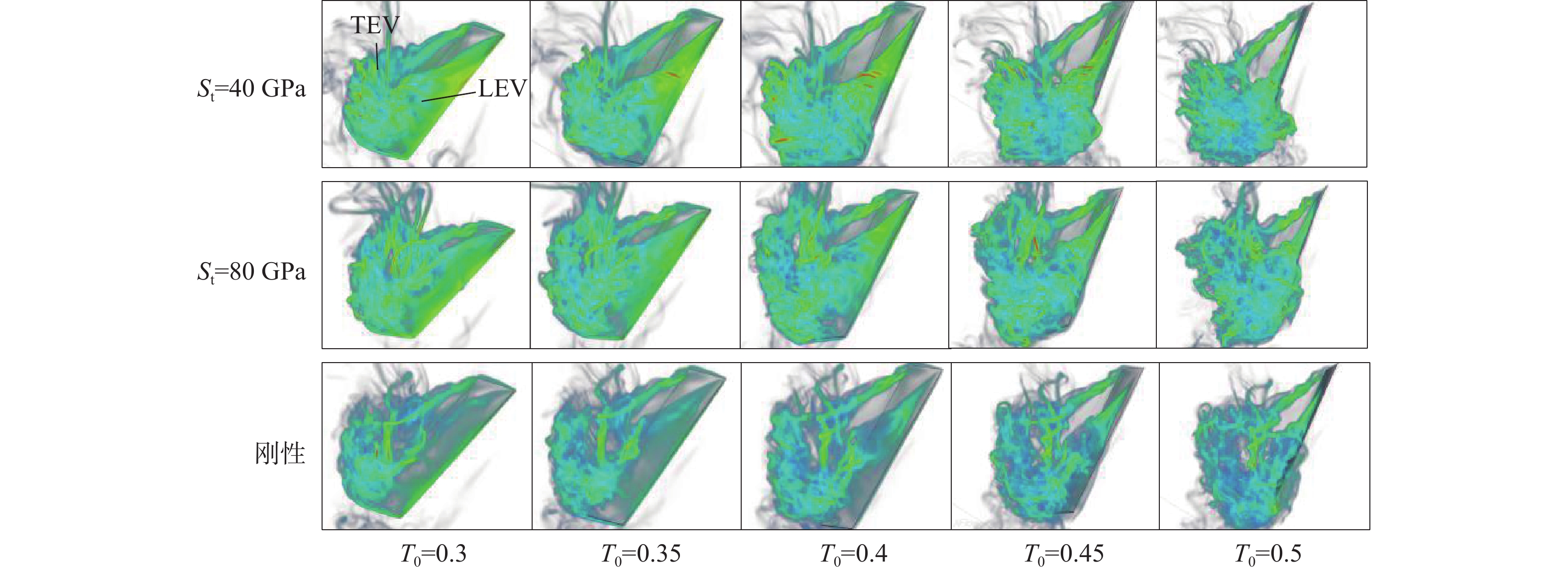
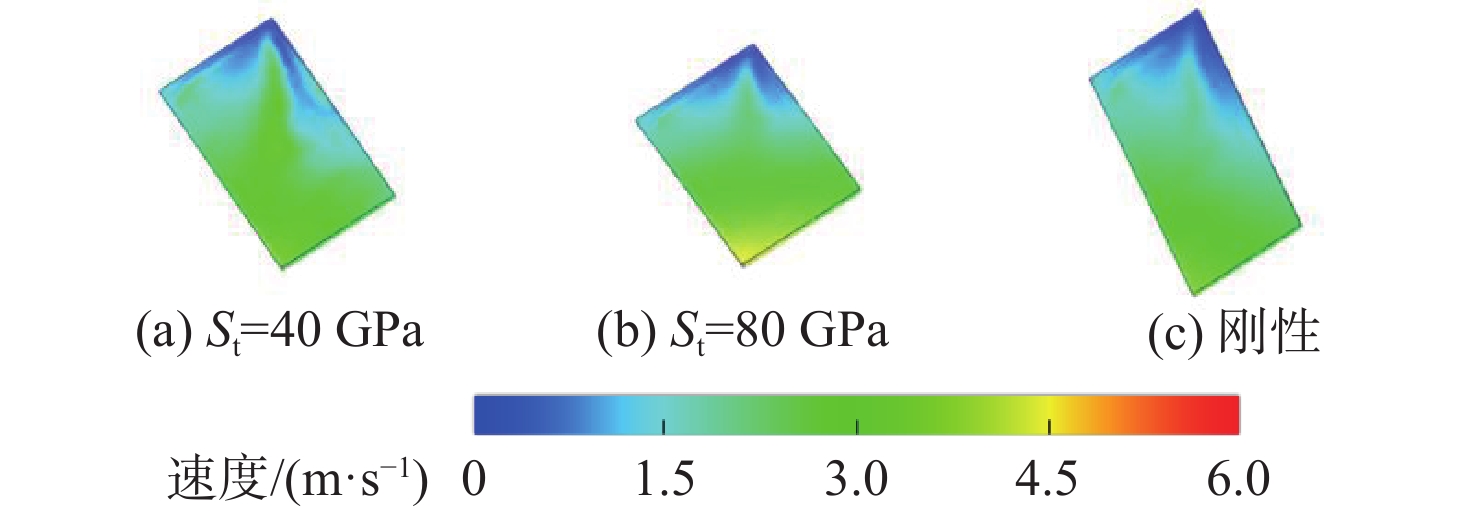
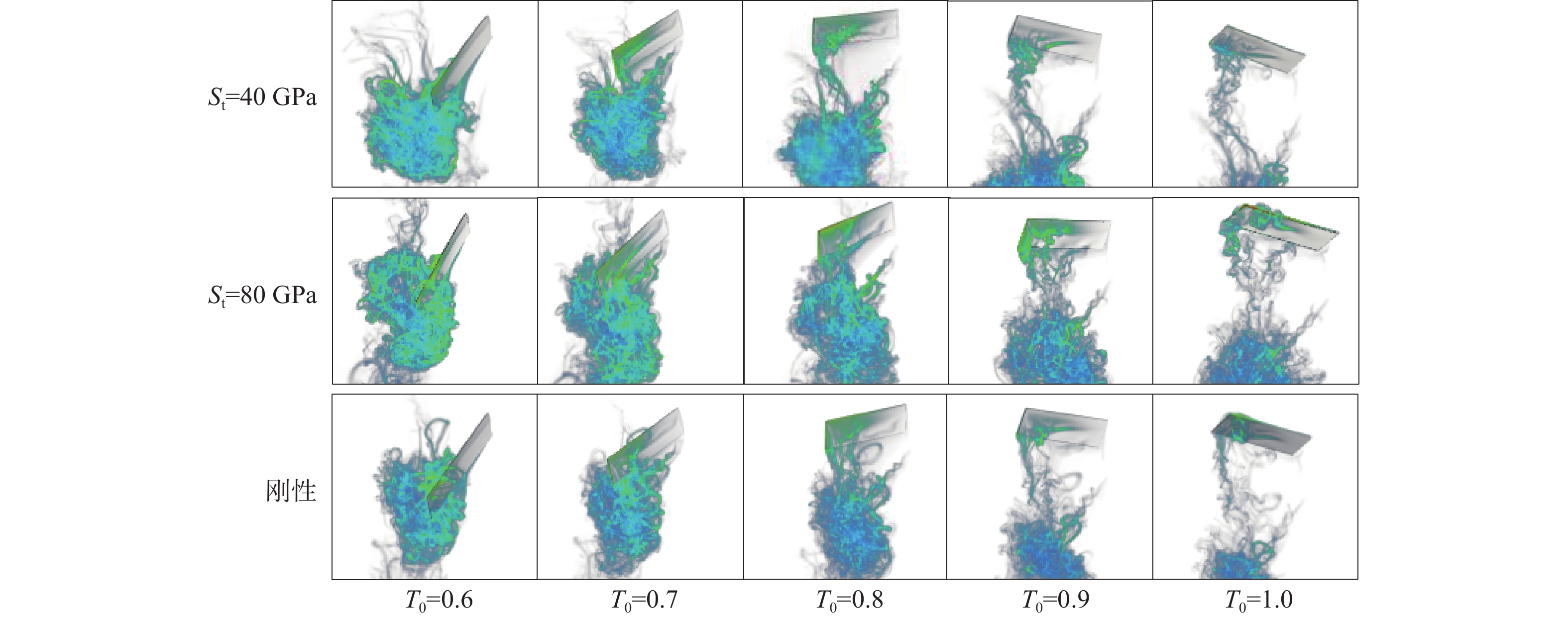
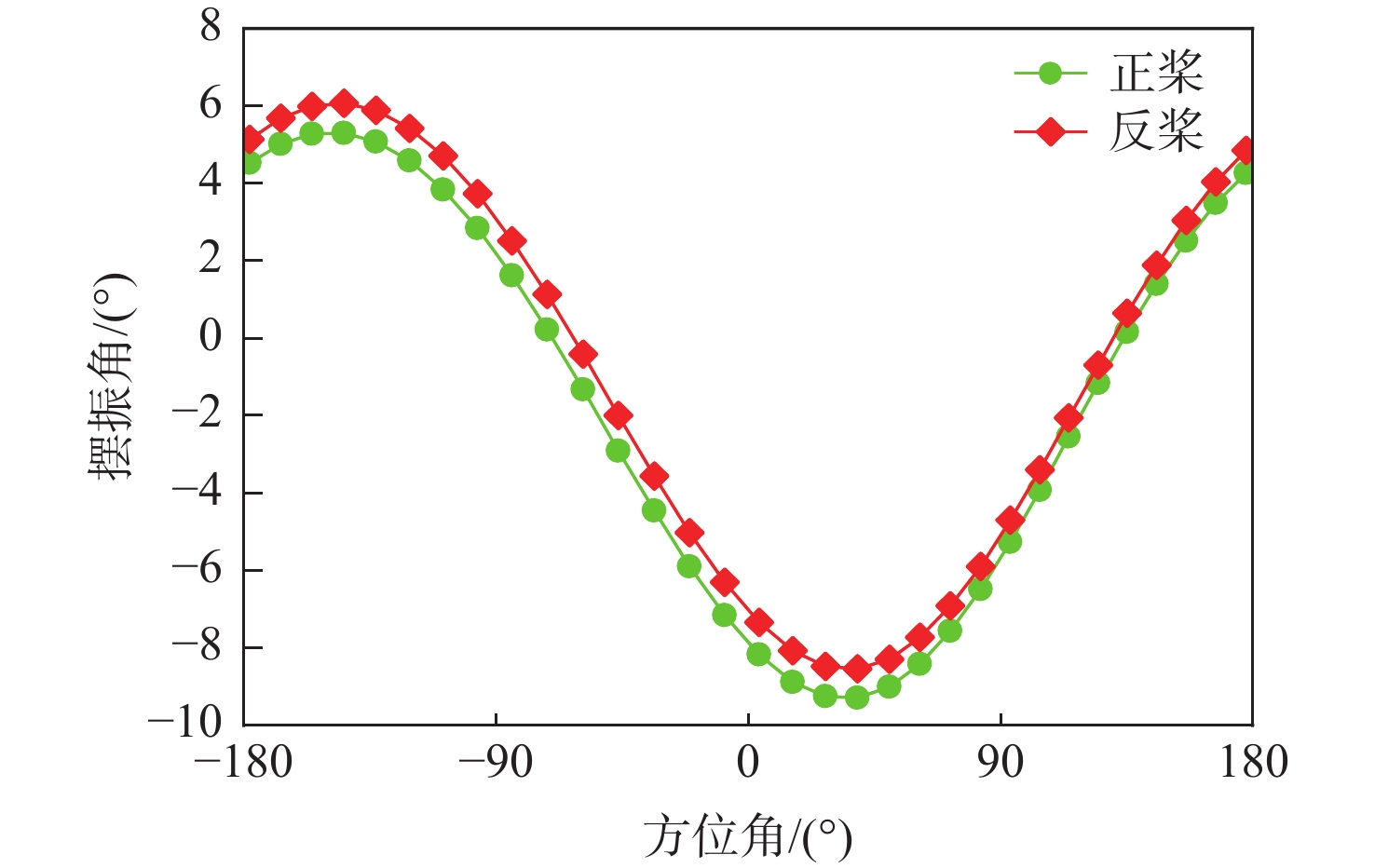
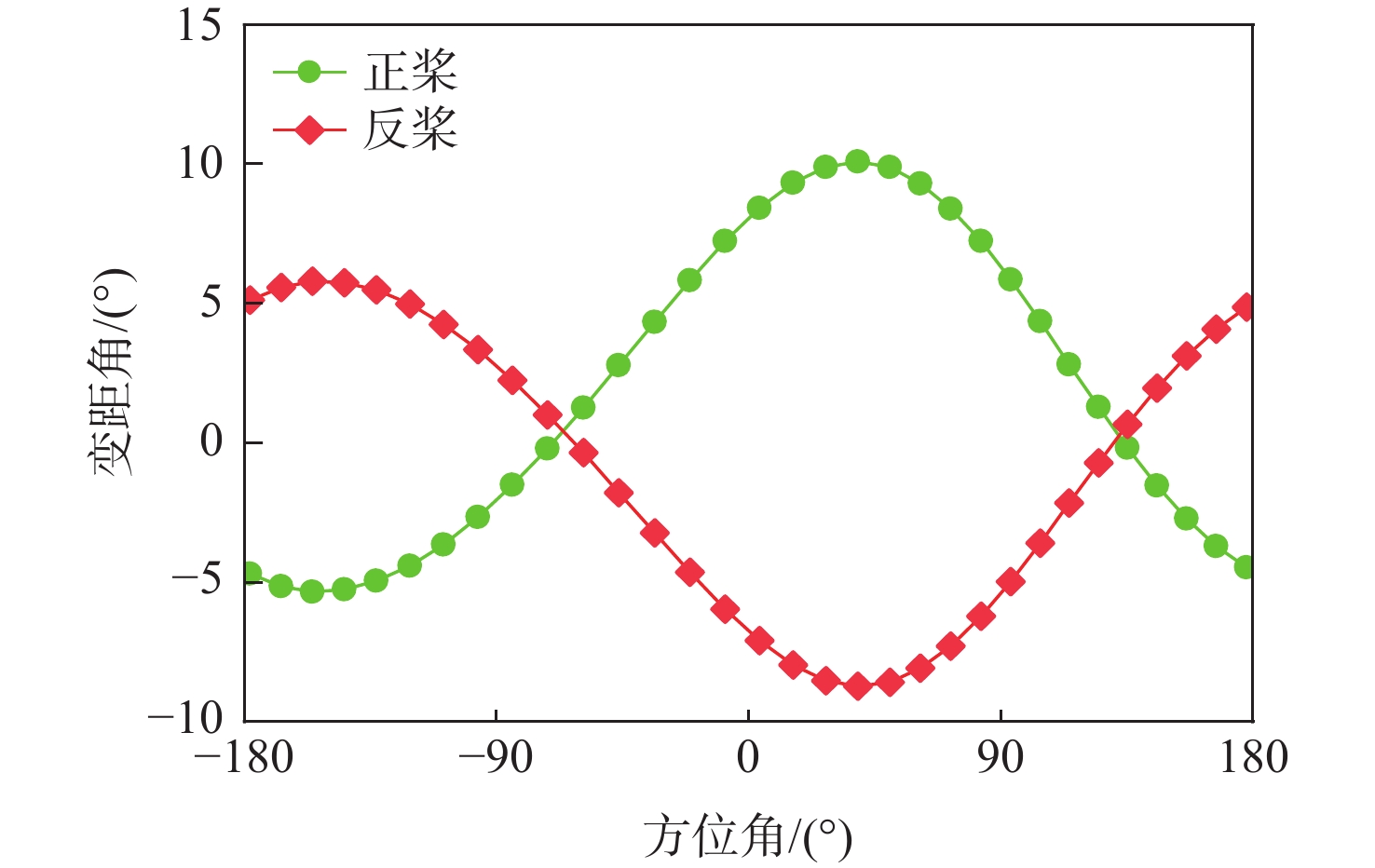
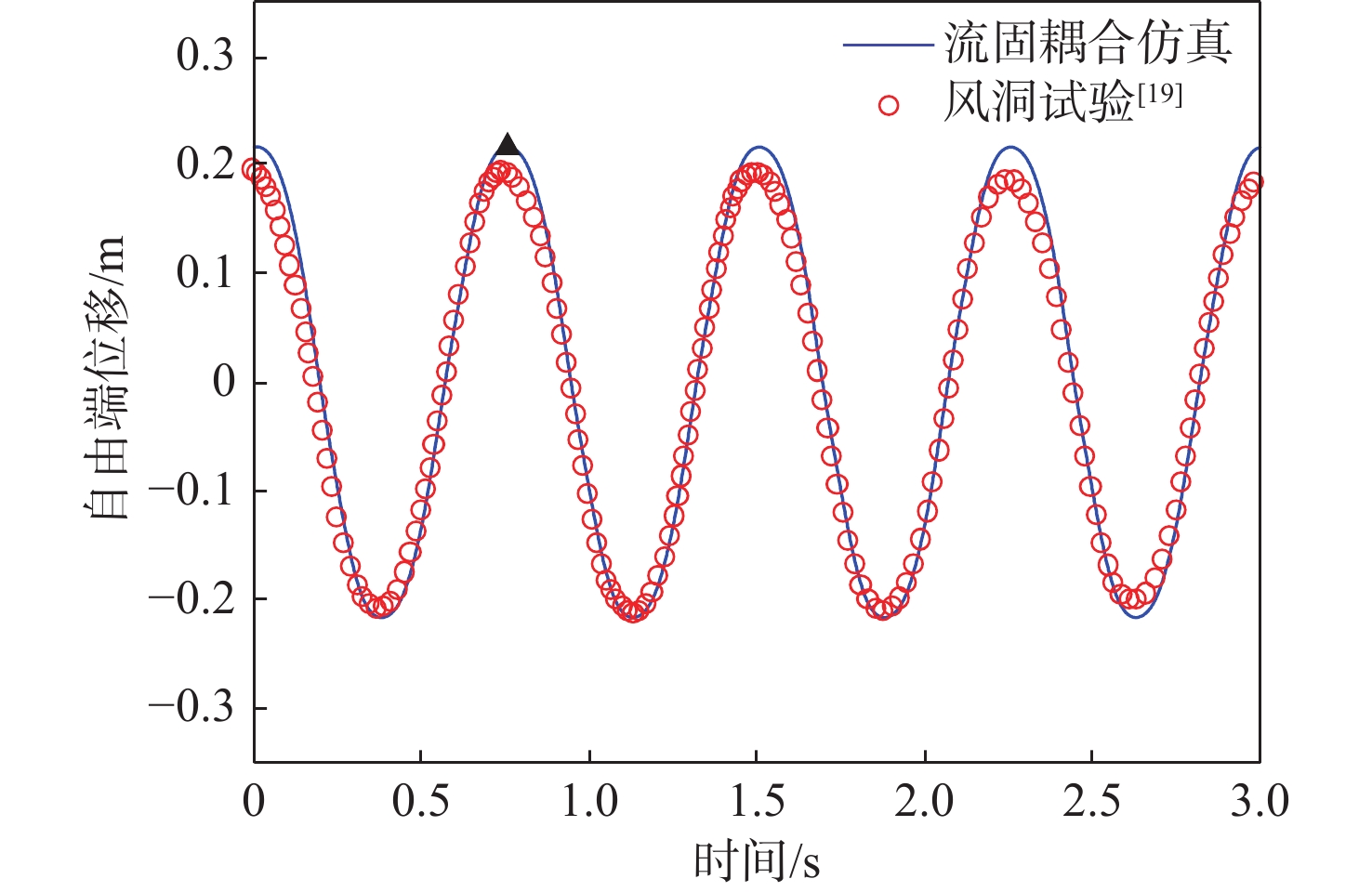
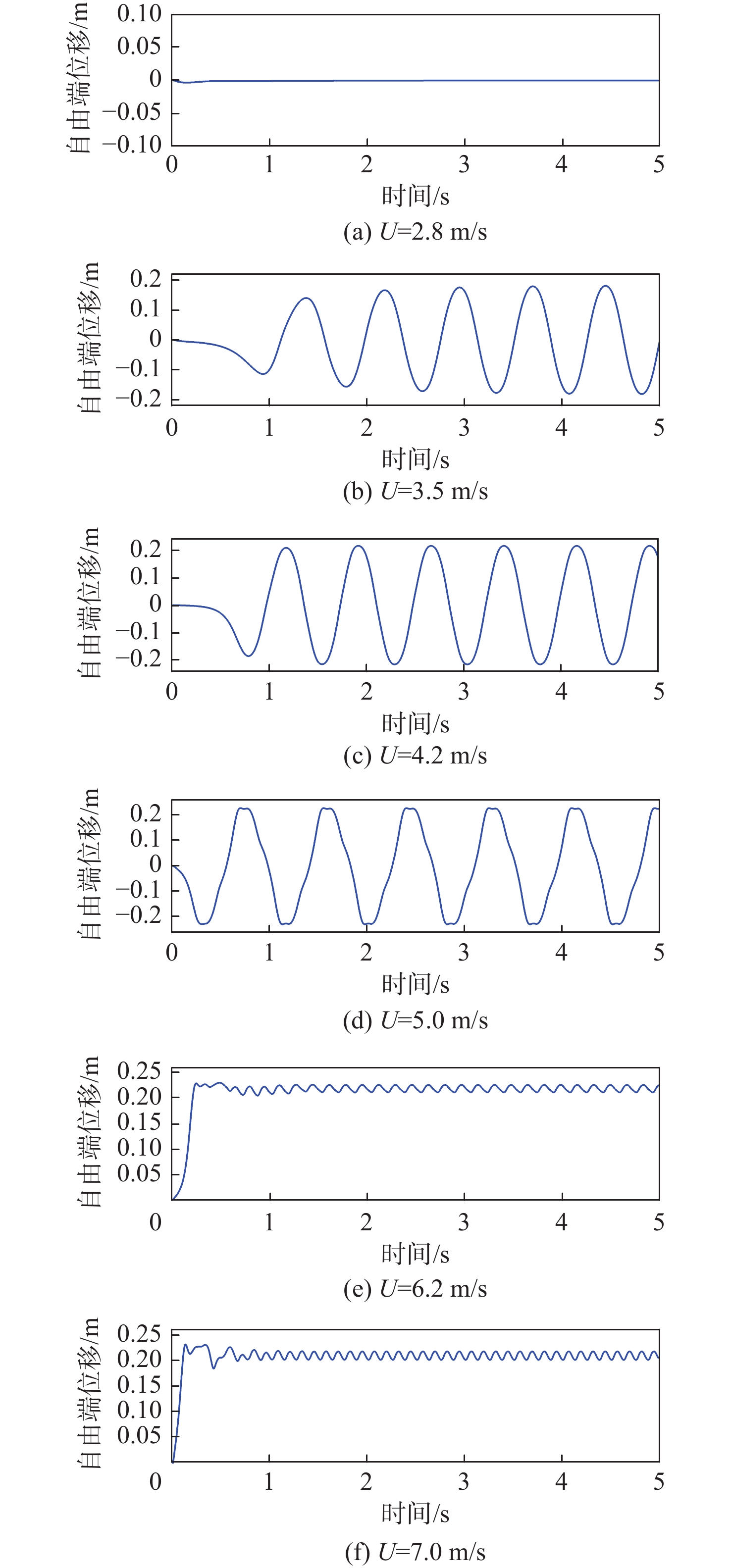
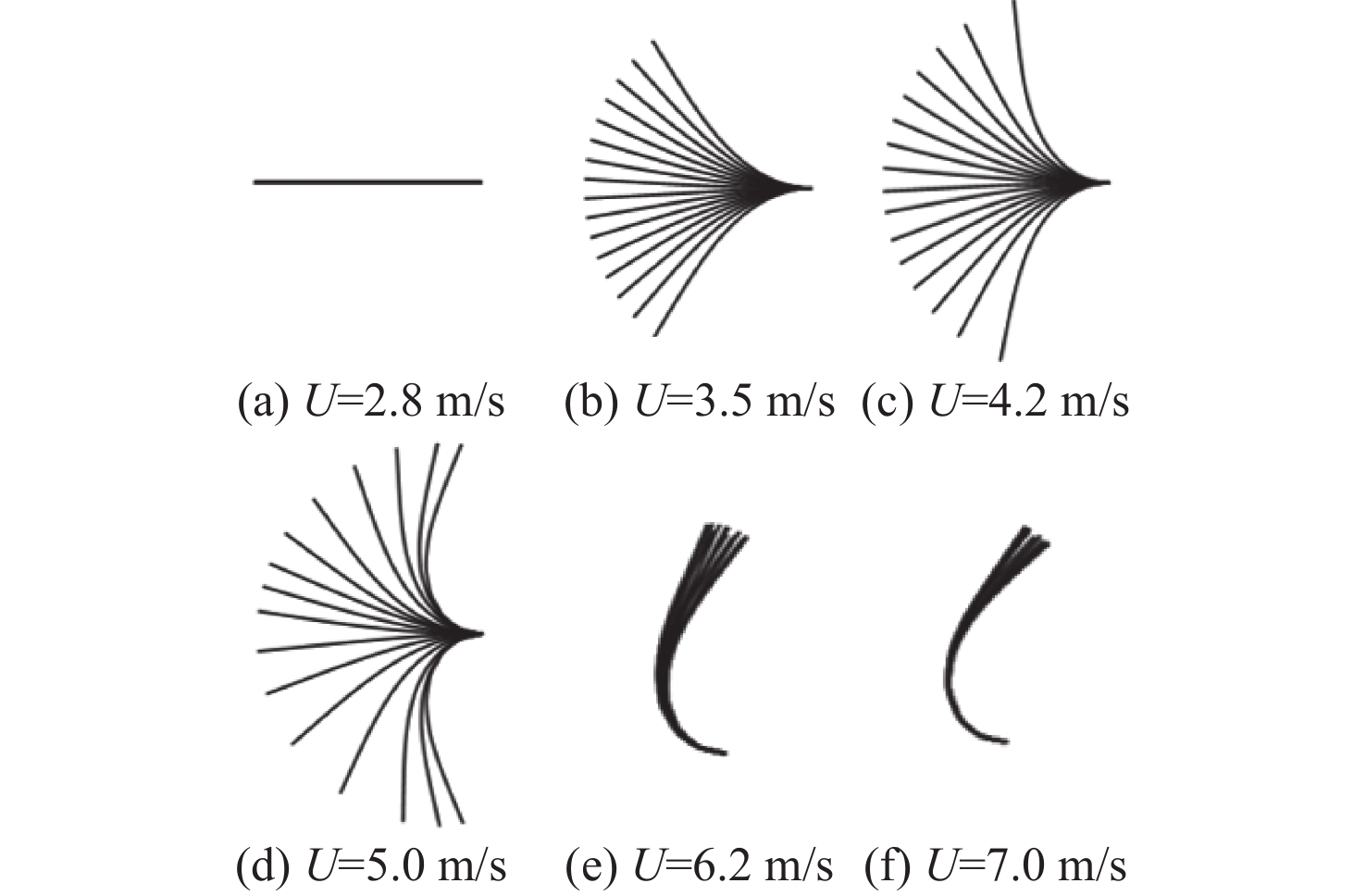
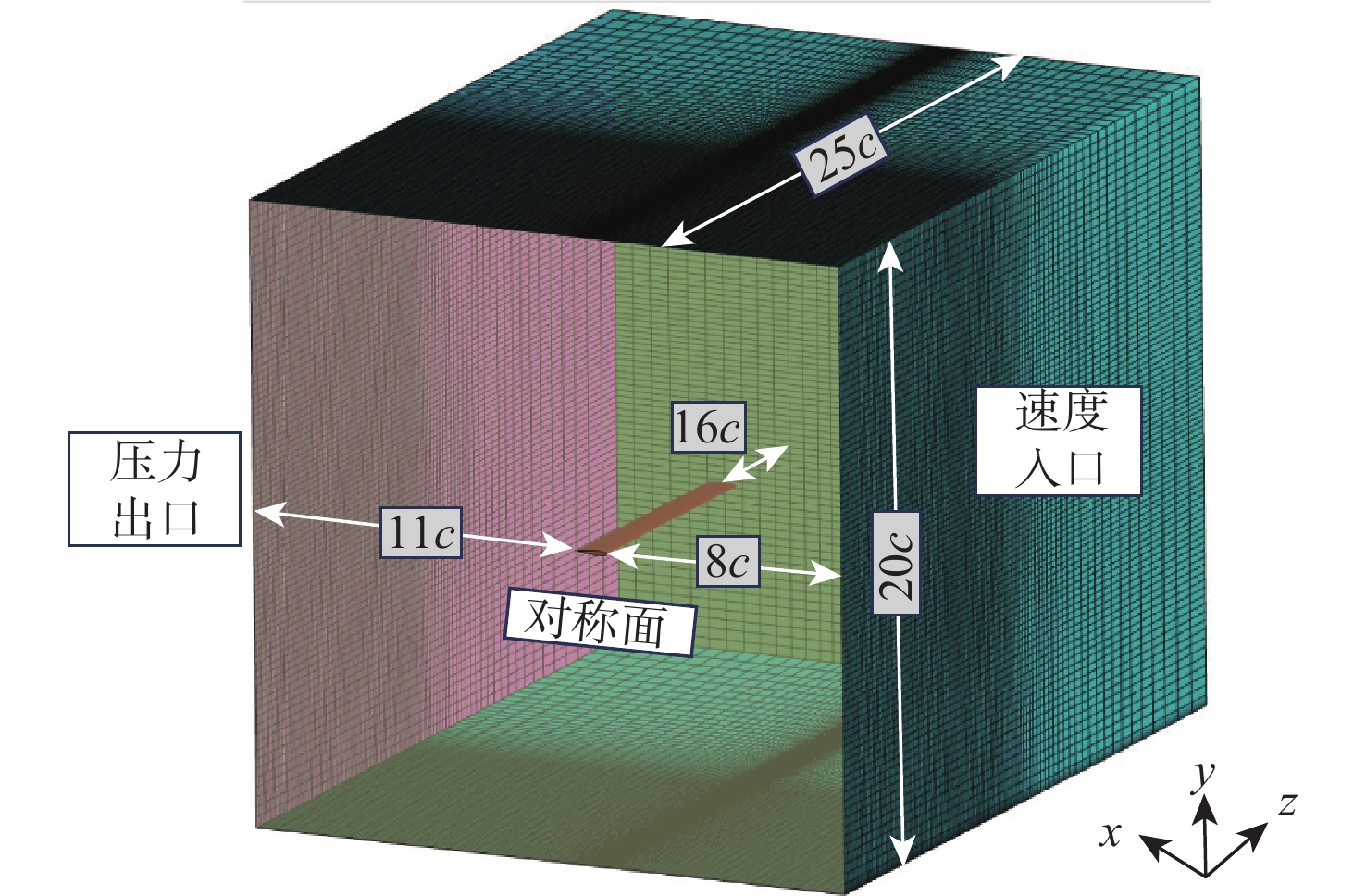
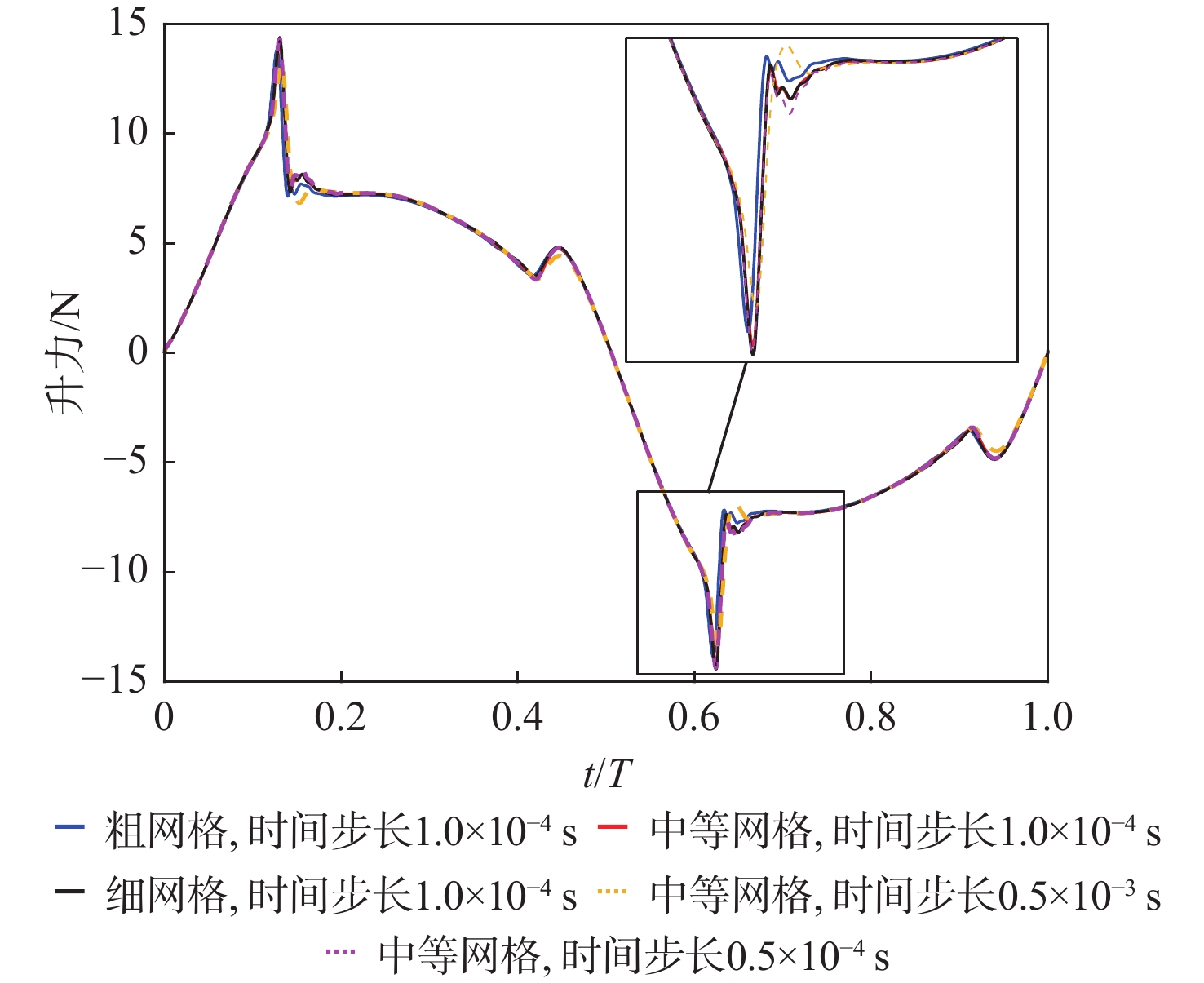
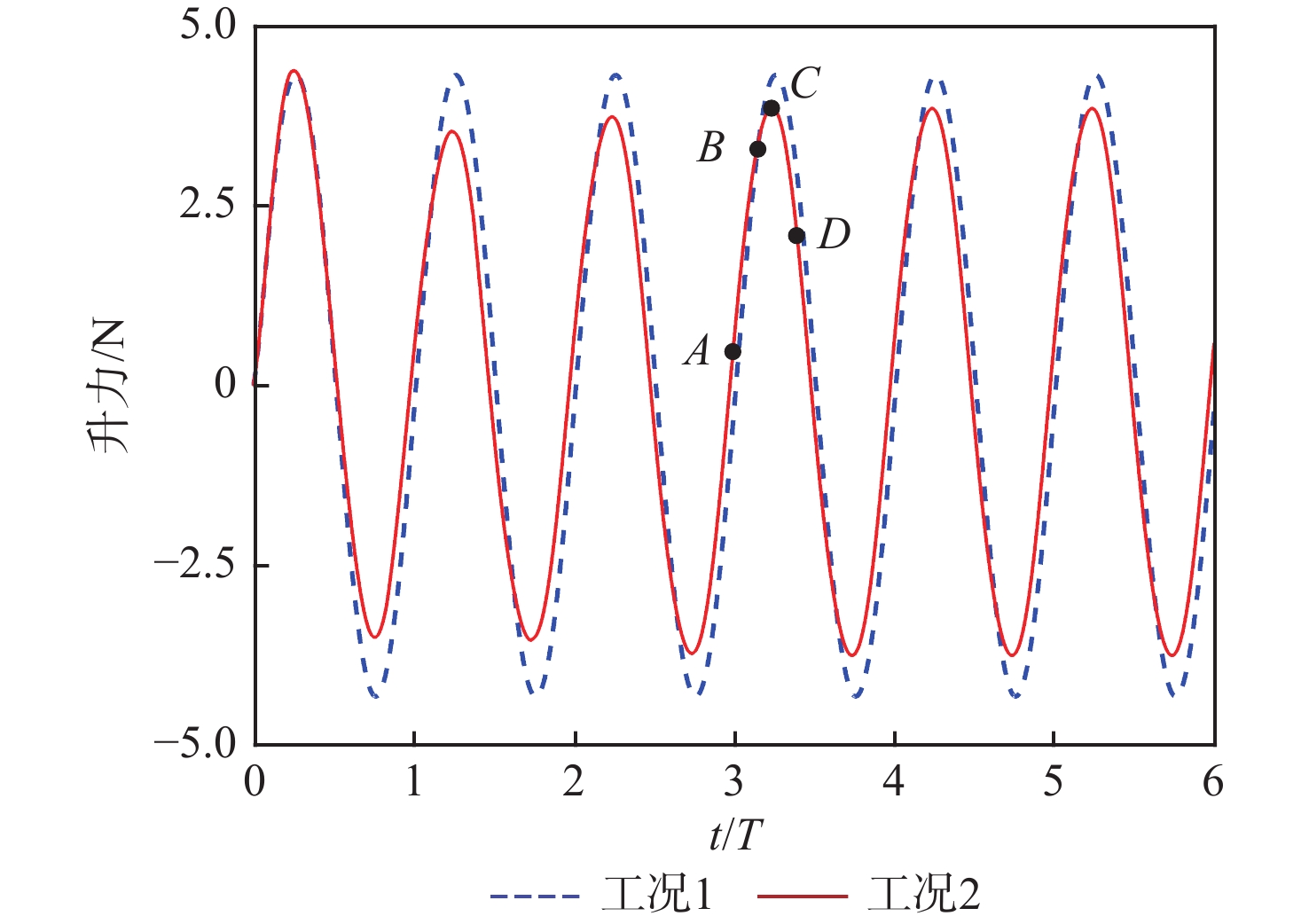
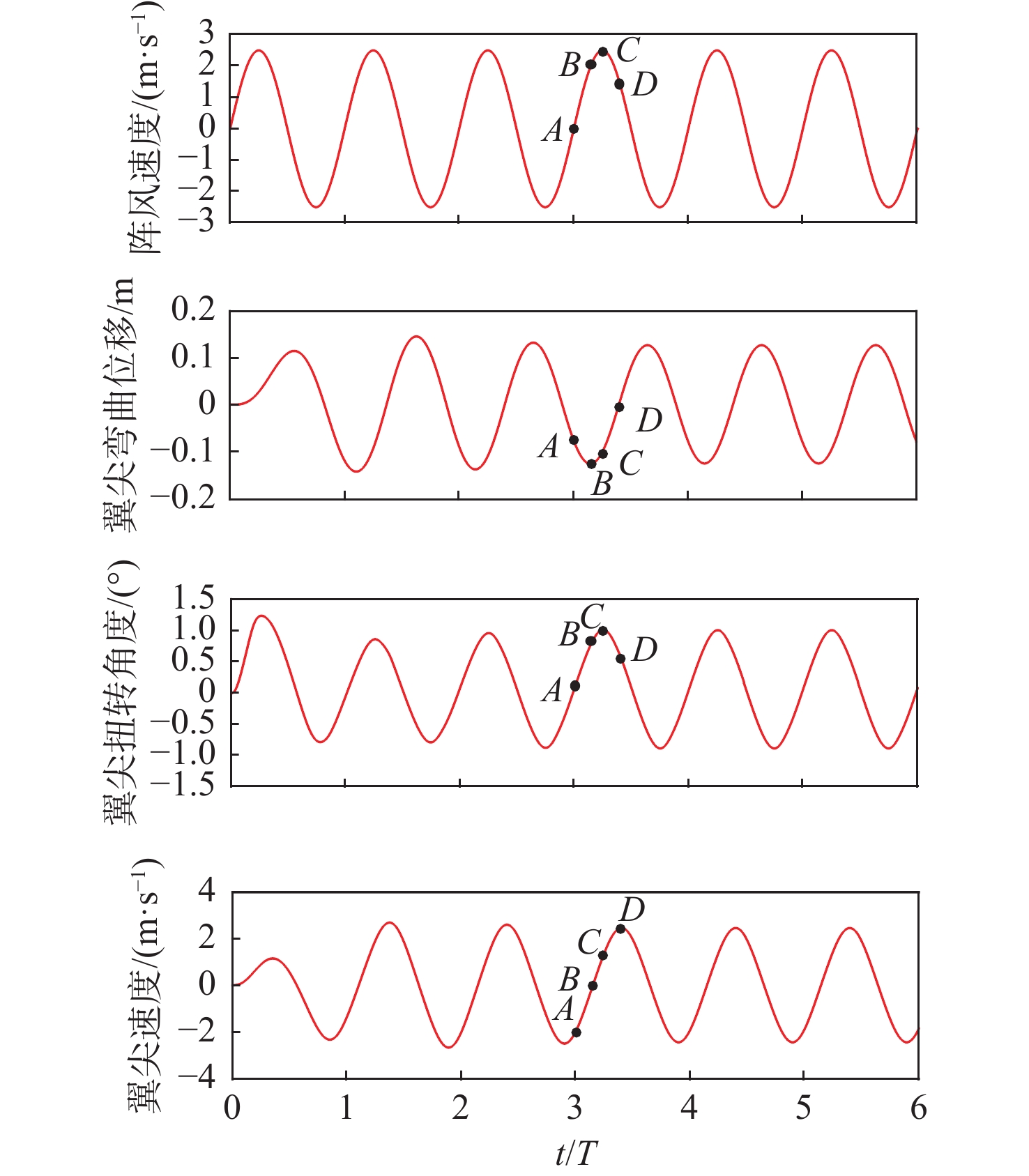
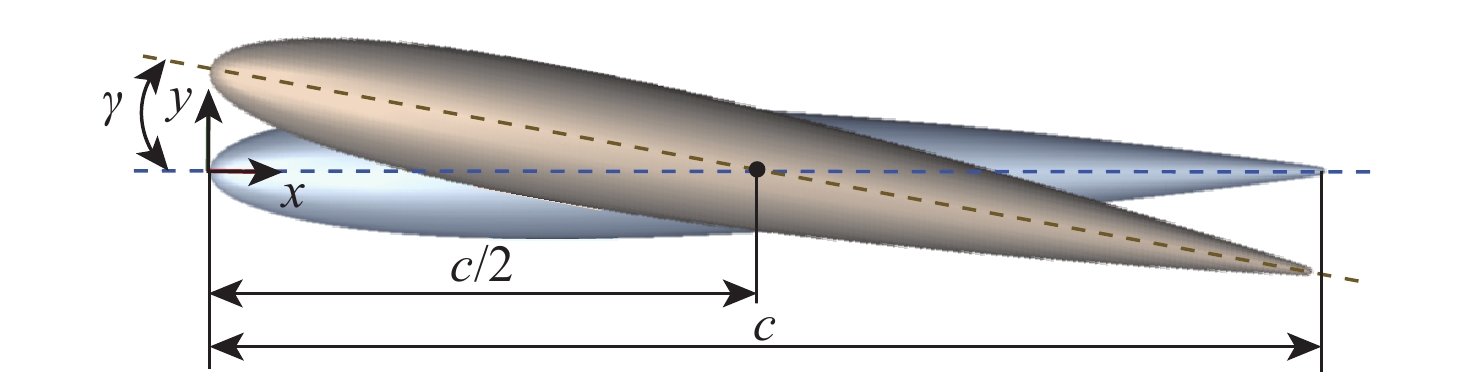
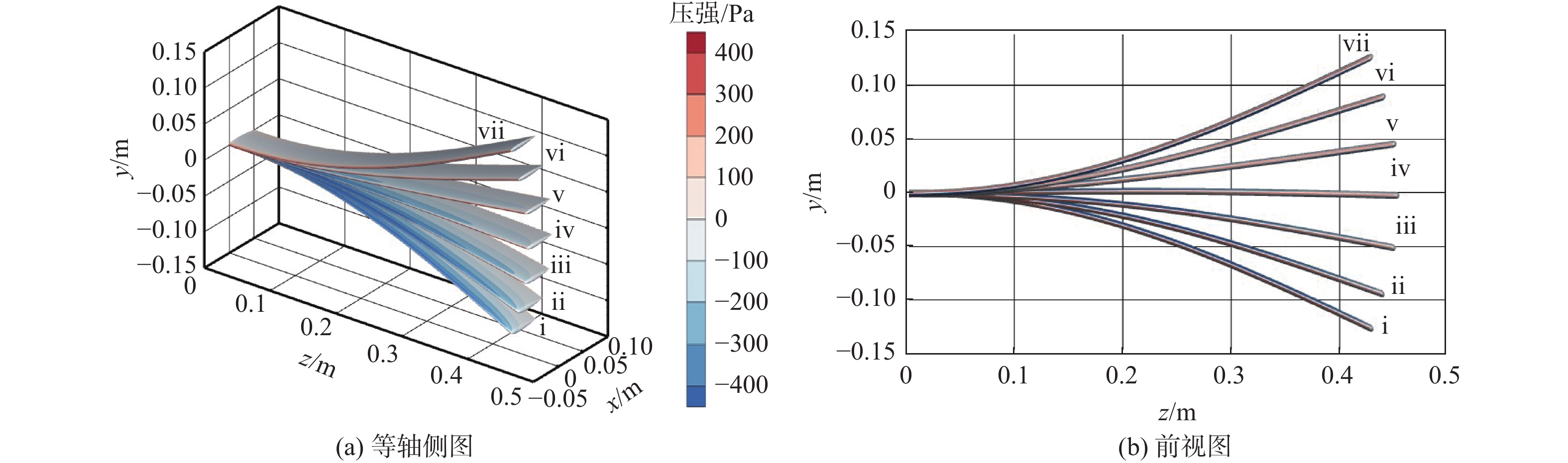
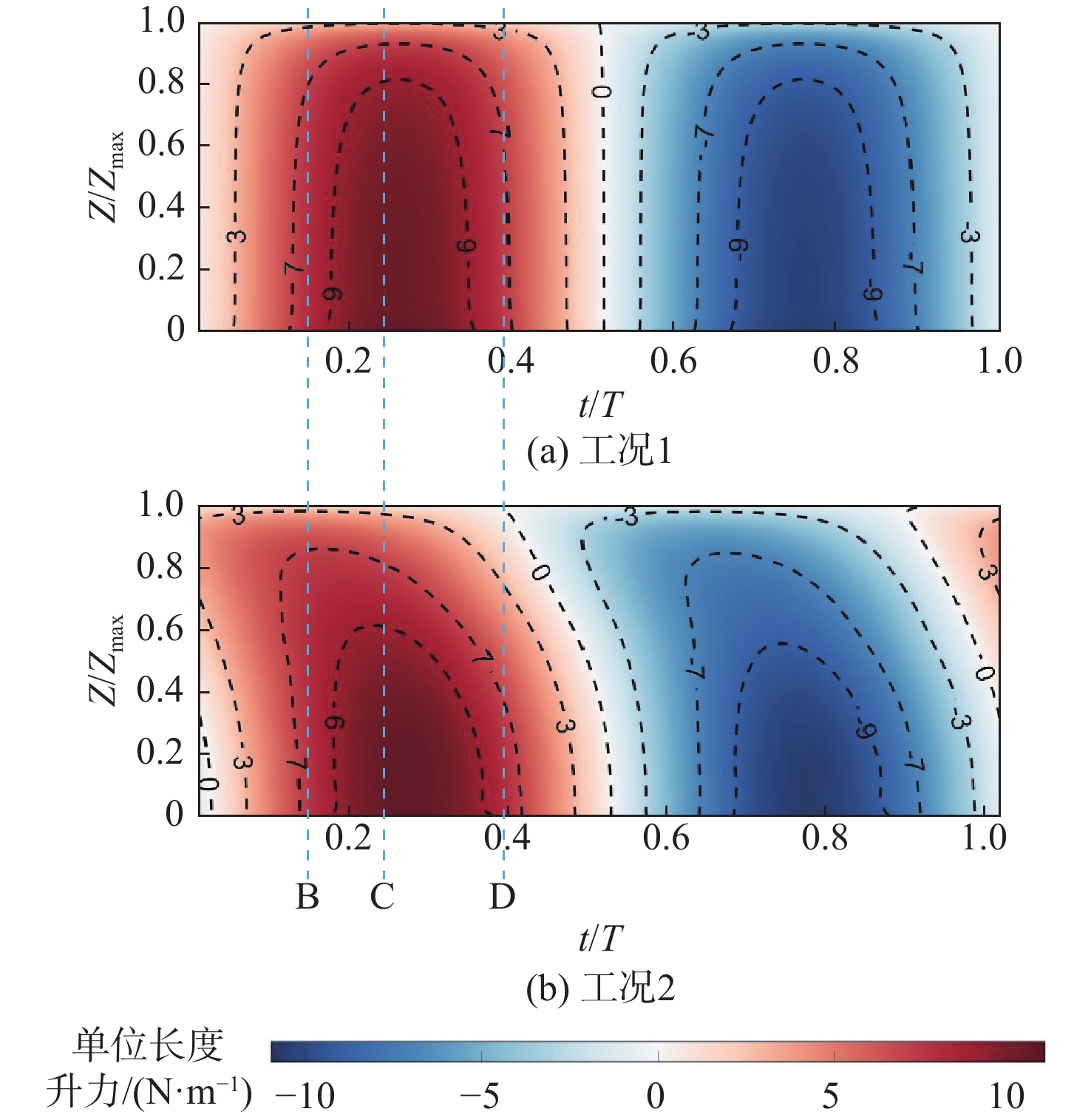
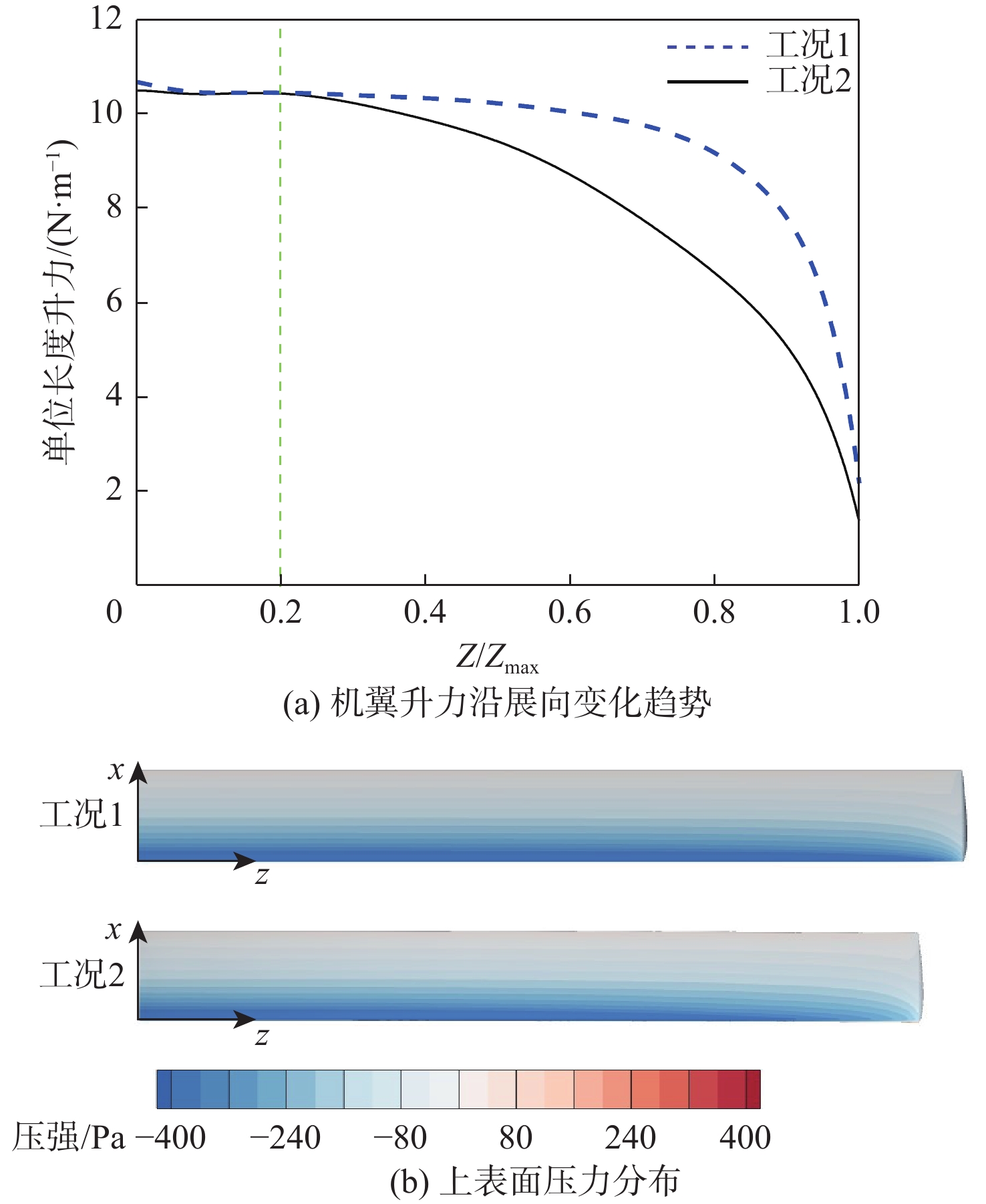
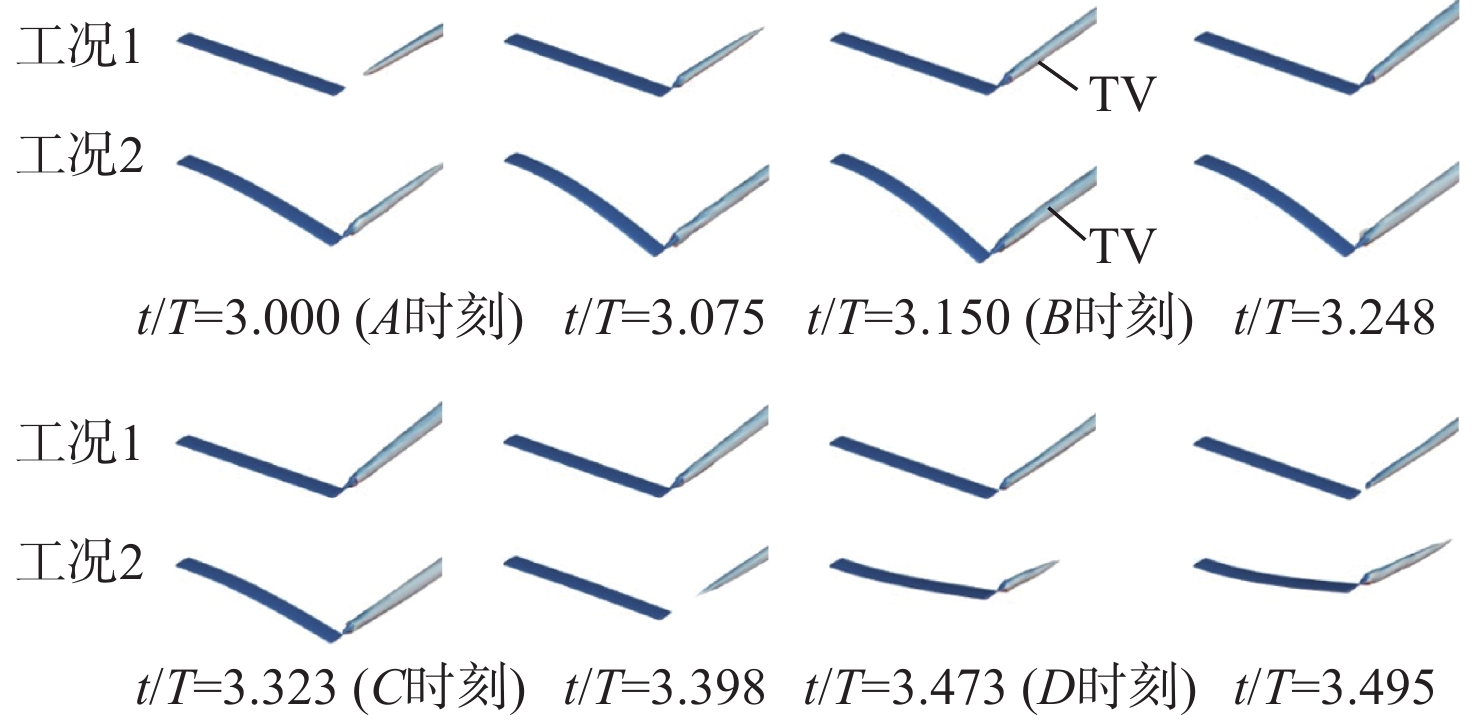
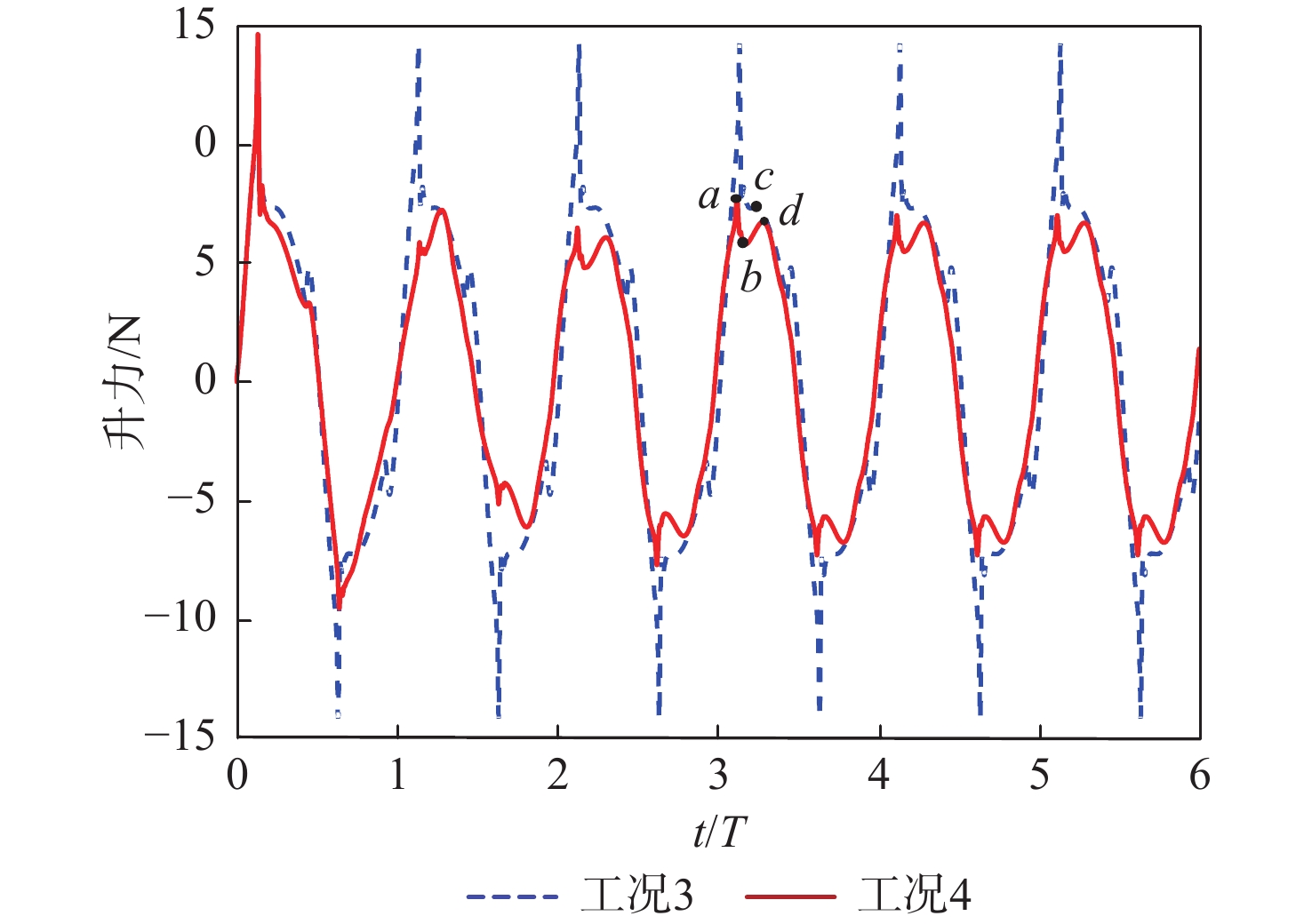
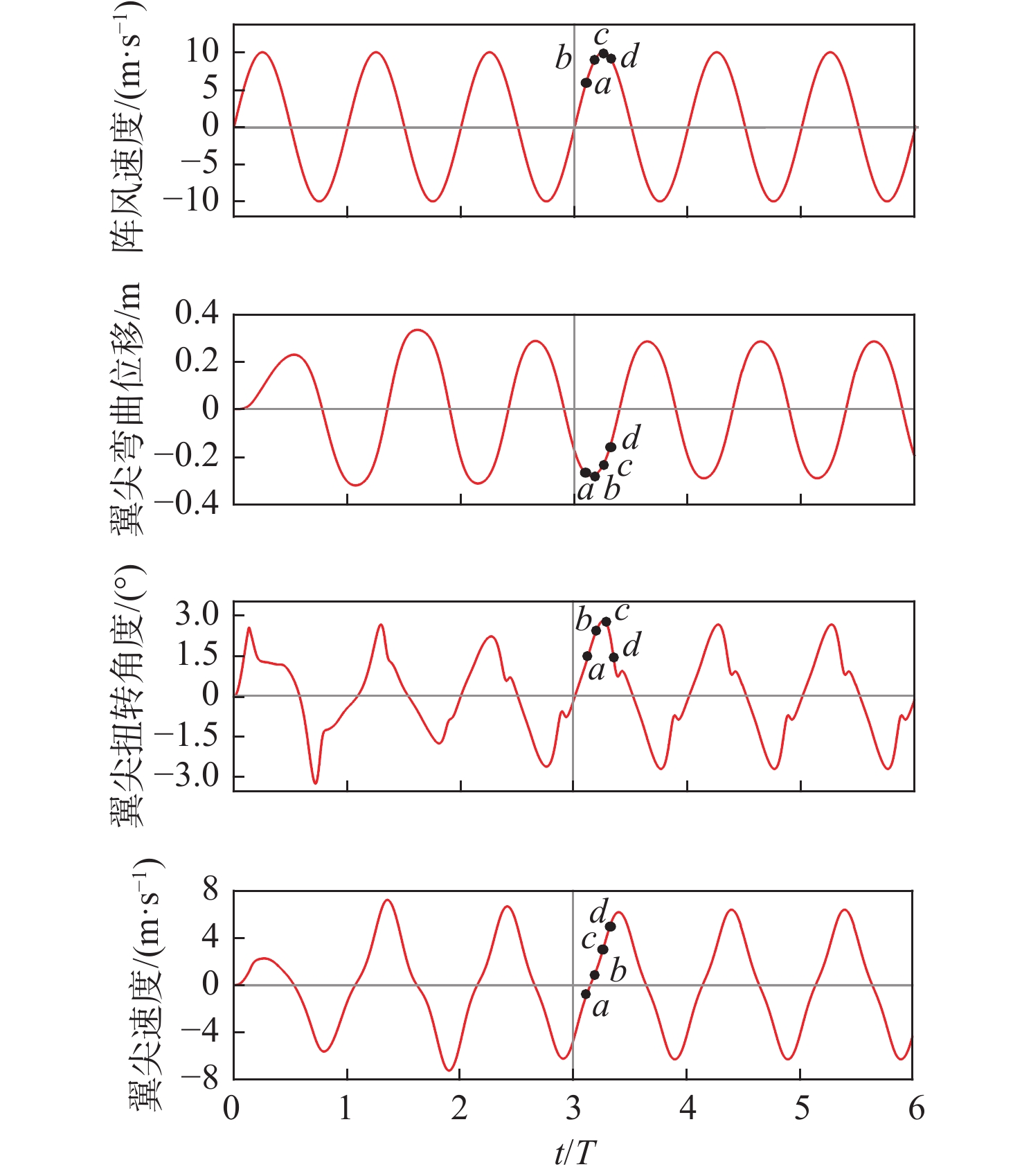
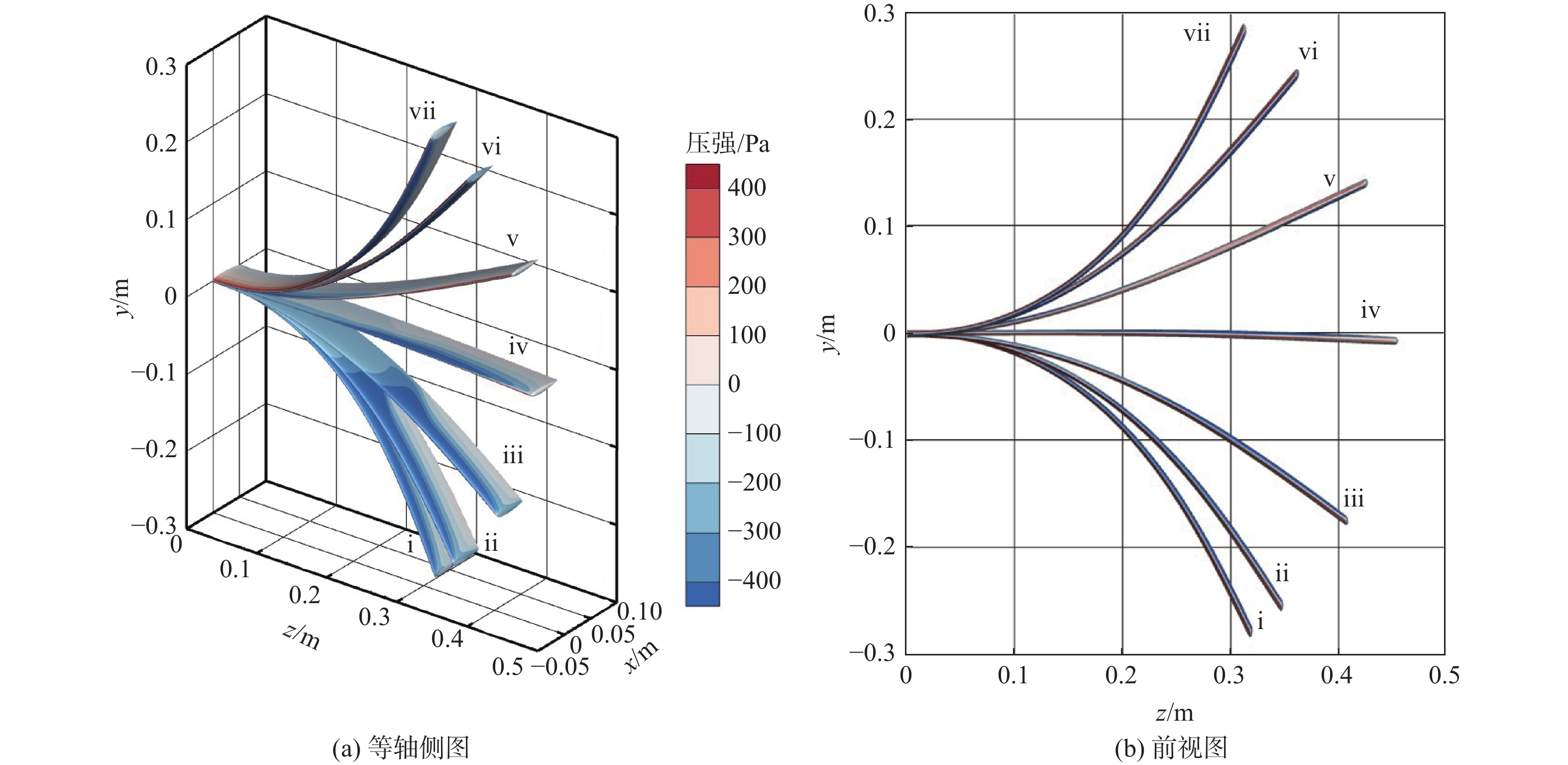
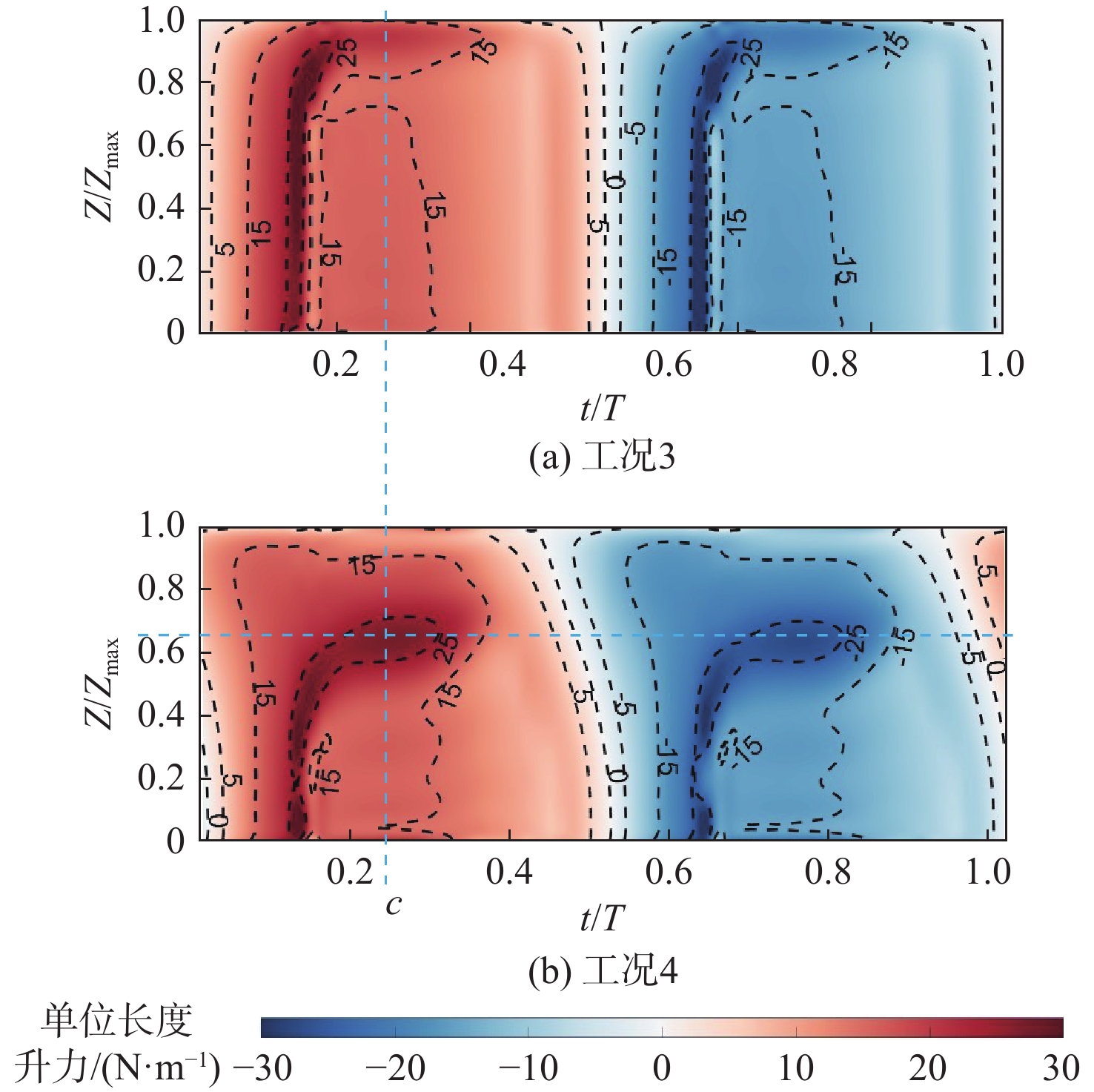
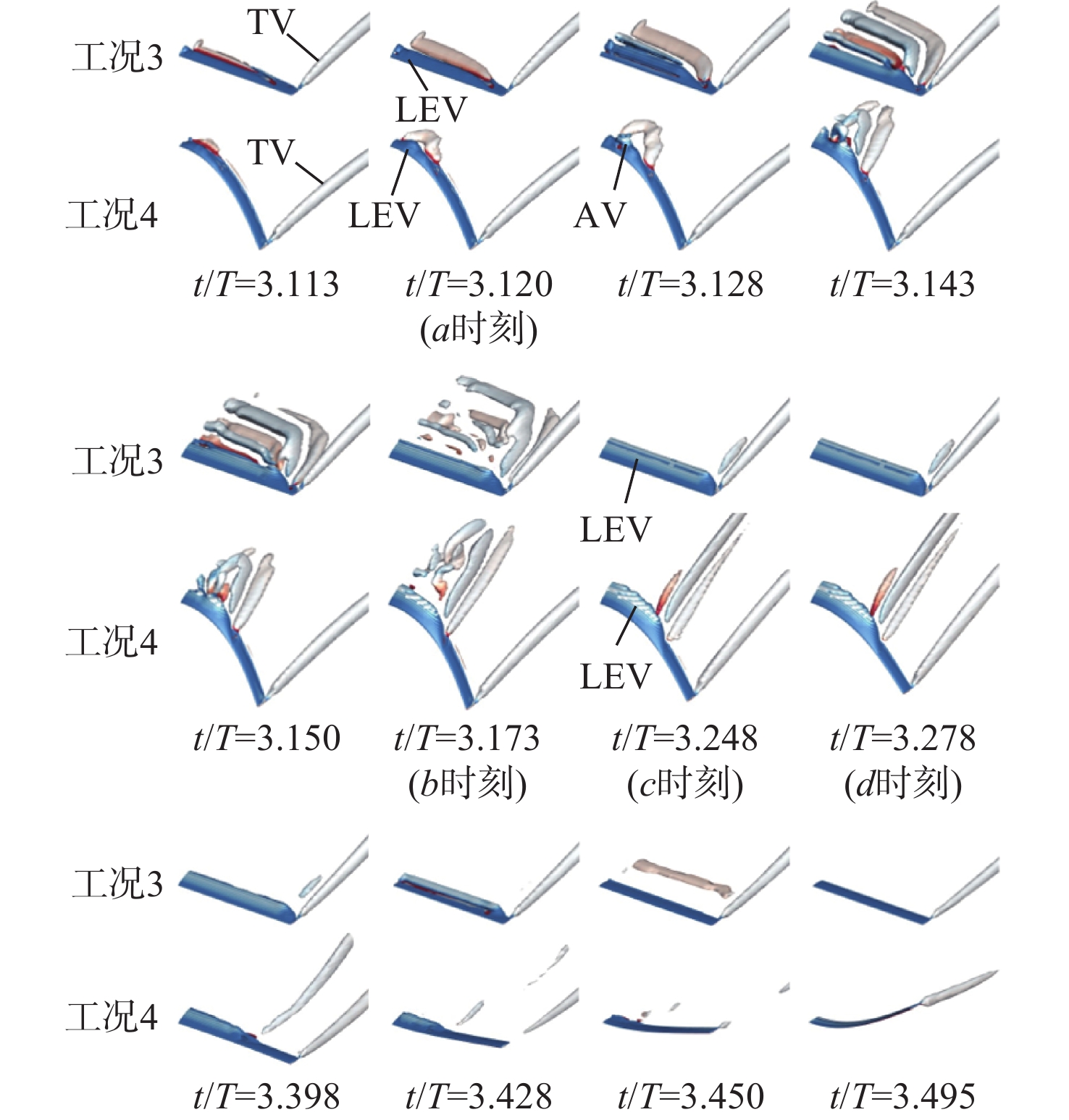
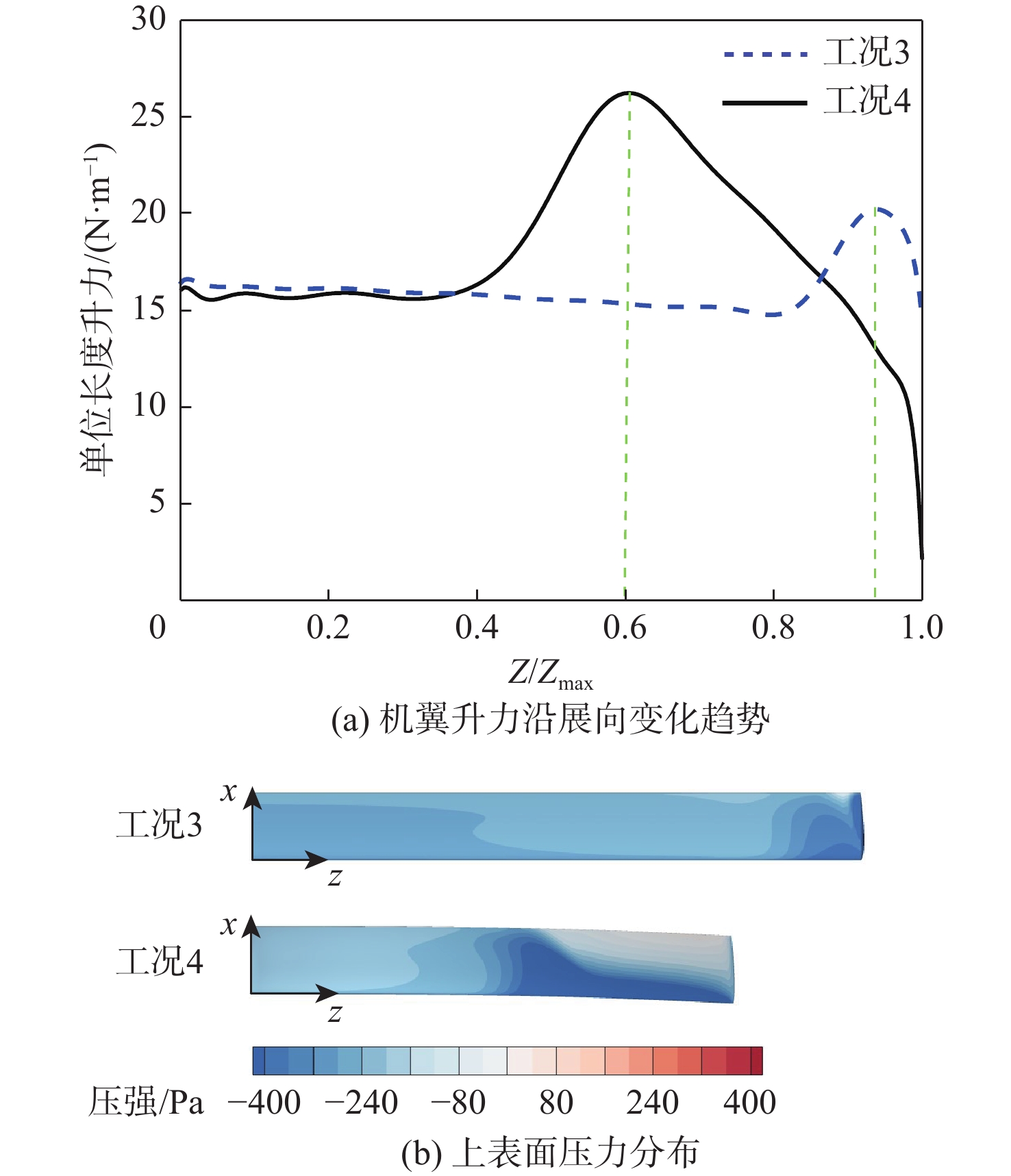
Flexible deformation impacts the aerodynamics of flapping wings and is accompanied by severe fluid-structure interaction effects in the case of flexible flapping wings. This study examines the fluid-structure interaction aerodynamic properties of a flexible flapping plate at low Reynolds numbers in order to clarify the process by which flexible deformation influences unsteady aerodynamic forces. By applying the motion patterns of dragonflies to both flexible and rigid flapping wings and conducting fluid-structure interaction numerical simulations, it was found that, under the same motion patterns, the average lift of flexible flapping wings over an entire cycle increased by 60.5% compared to rigid flapping wings. During the initial downstroke, the lift decreased by 31.4%, but increased by 76.7% during the mid to late downstroke. The thrust generated by both flexible and rigid flapping wings throughout the cycle was nearly zero. The study revealed the spatiotemporal influence mechanism of flexible deformation on aerodynamic forces. Lift is increased by the flexible flapping wings' spanwise bending deformation during the downstroke, which keeps the leading-edge vortex's spanwise distribution on the wing surface. At the beginning of the downstroke, flexible flapping wings experience downstroke lag, which is detrimental to the formation of the leading-edge vortex, thus reducing lift. As the downstroke progresses, spanwise bending deformation increases the downstroke speed, affecting the structure of the leading-edge vortex and subsequently increasing lift.
Dynamic model of high confidence tilt-hinge rotor based on Newton-Euler recursion algorithm
YANG Yisong, LI Jianbo, DUAN Dengyan
2026, 52(6): 2024-2033. doi: 10.13700/j.bh.1001-5965.2024.0230
Abstract:

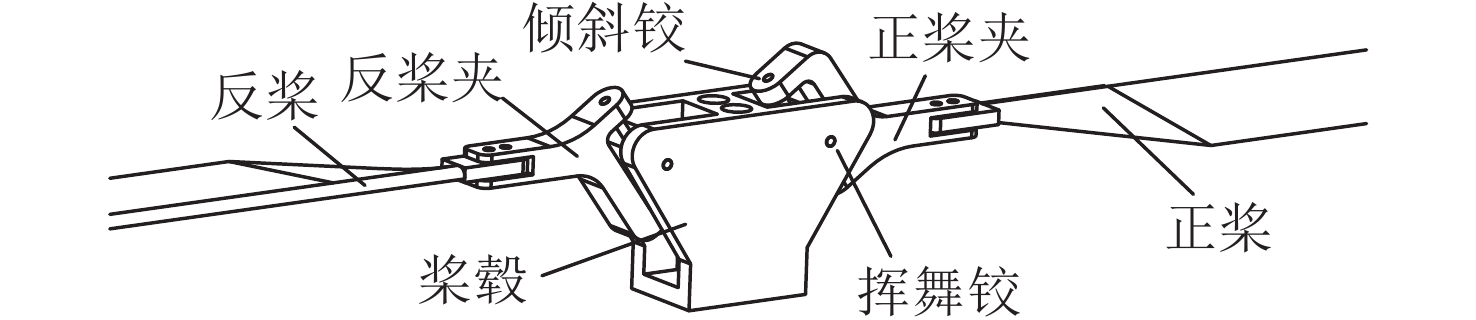
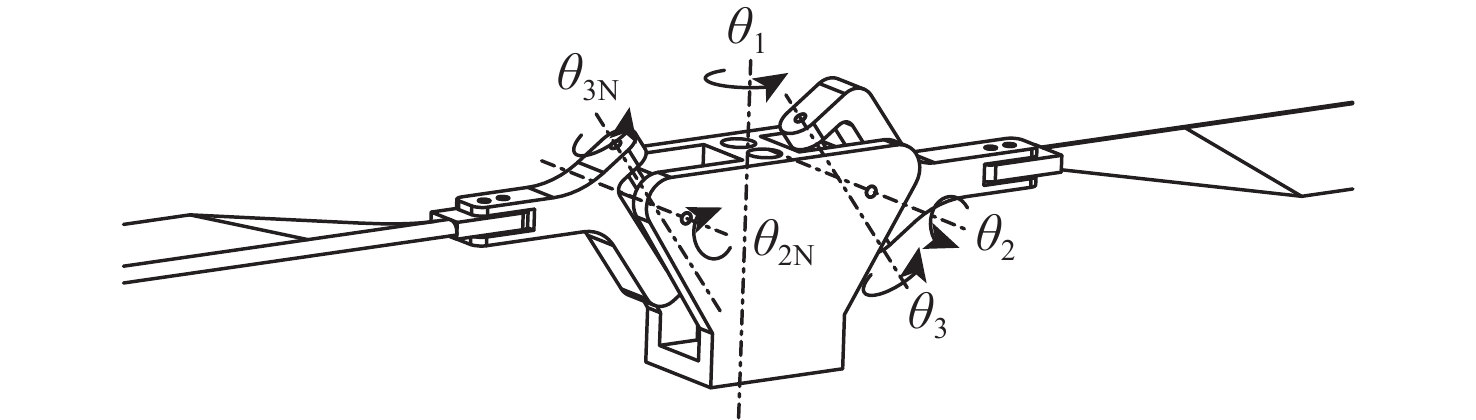
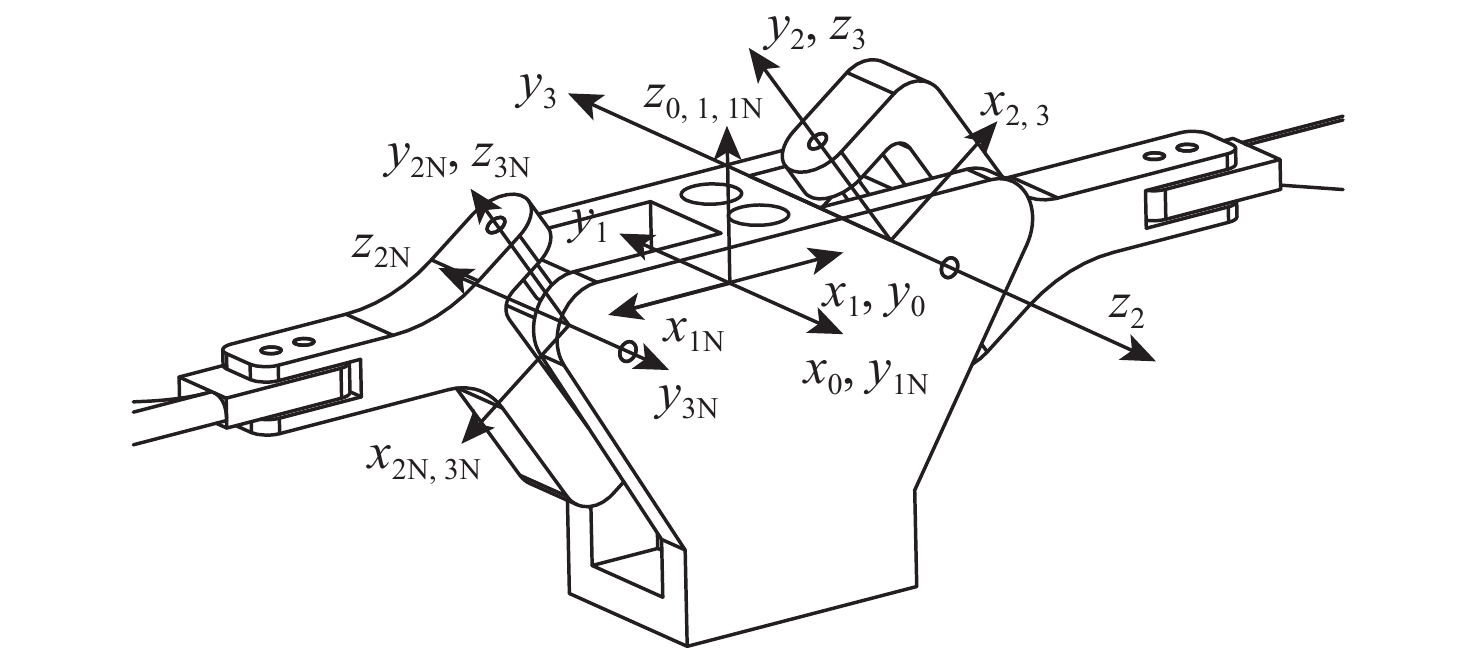
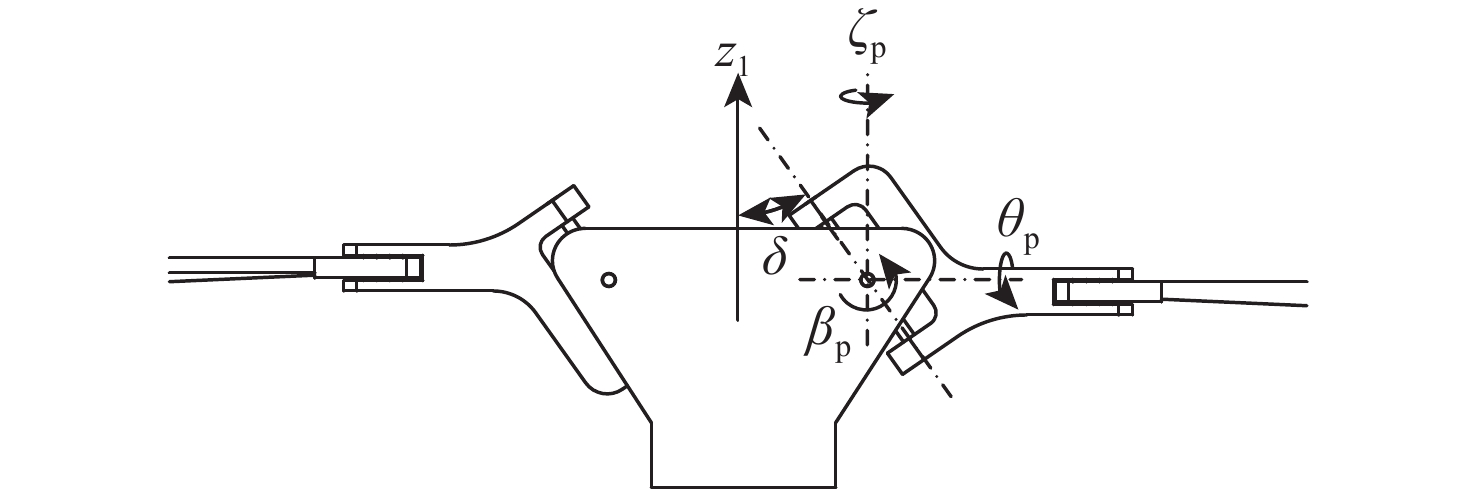
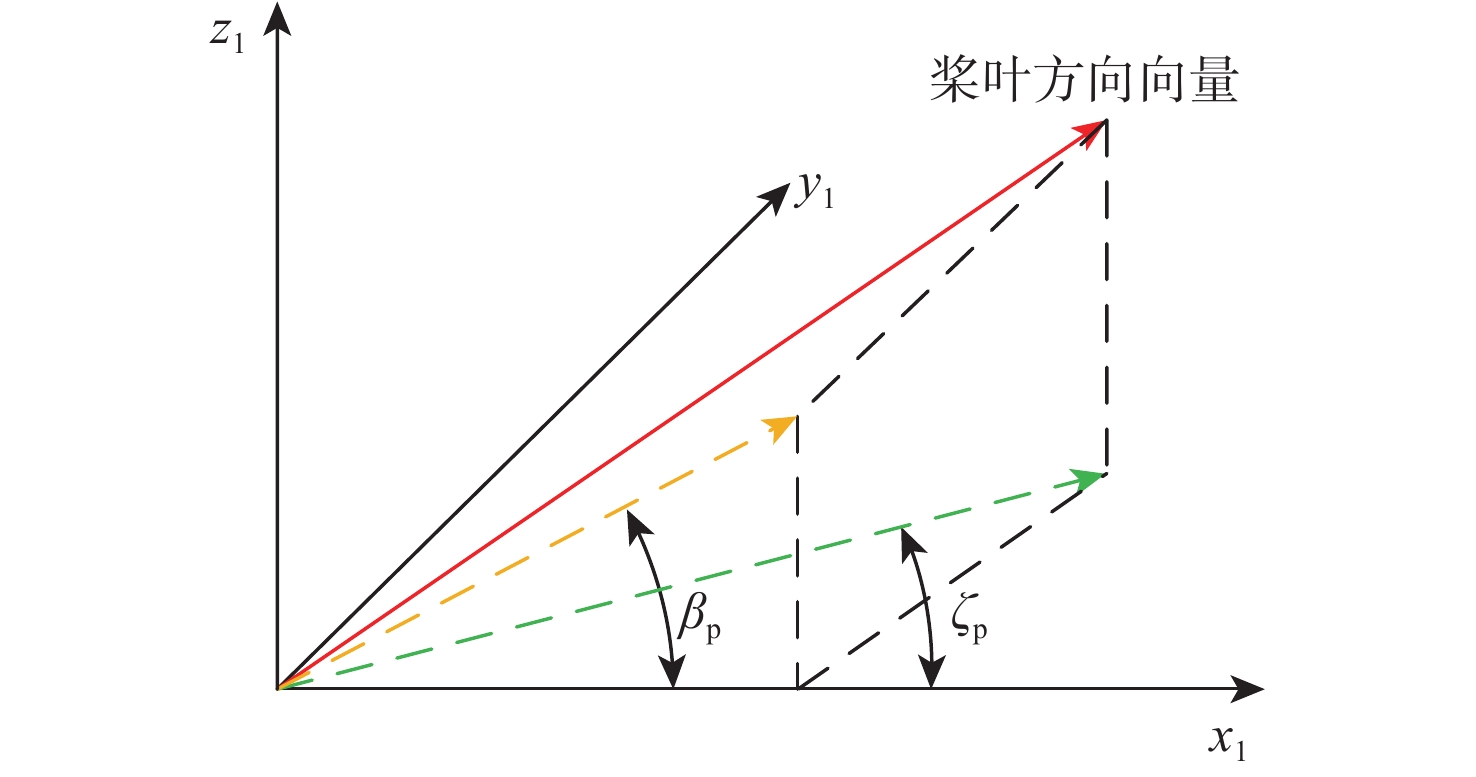
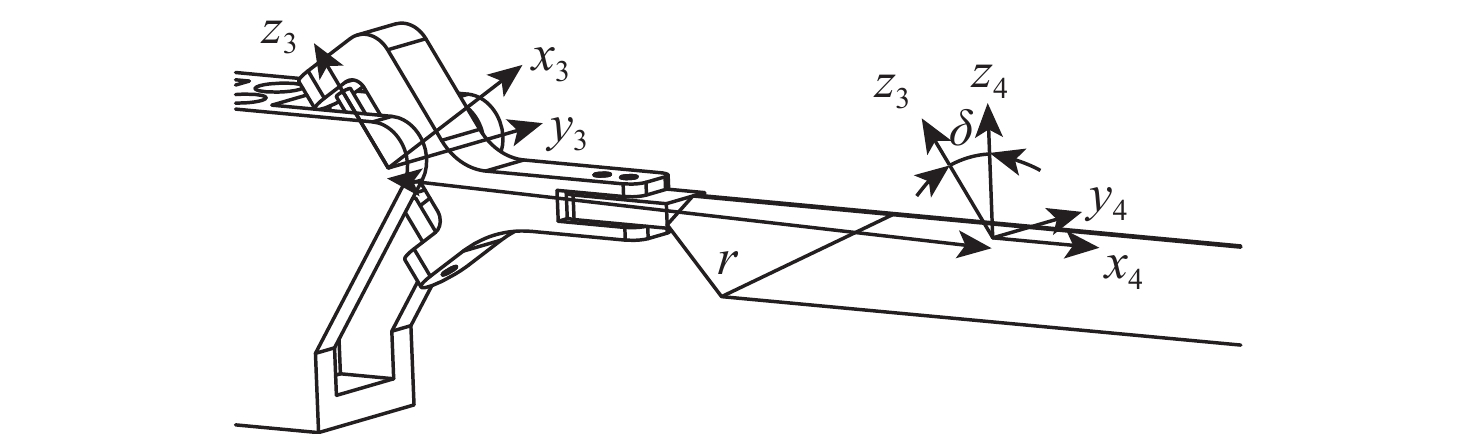
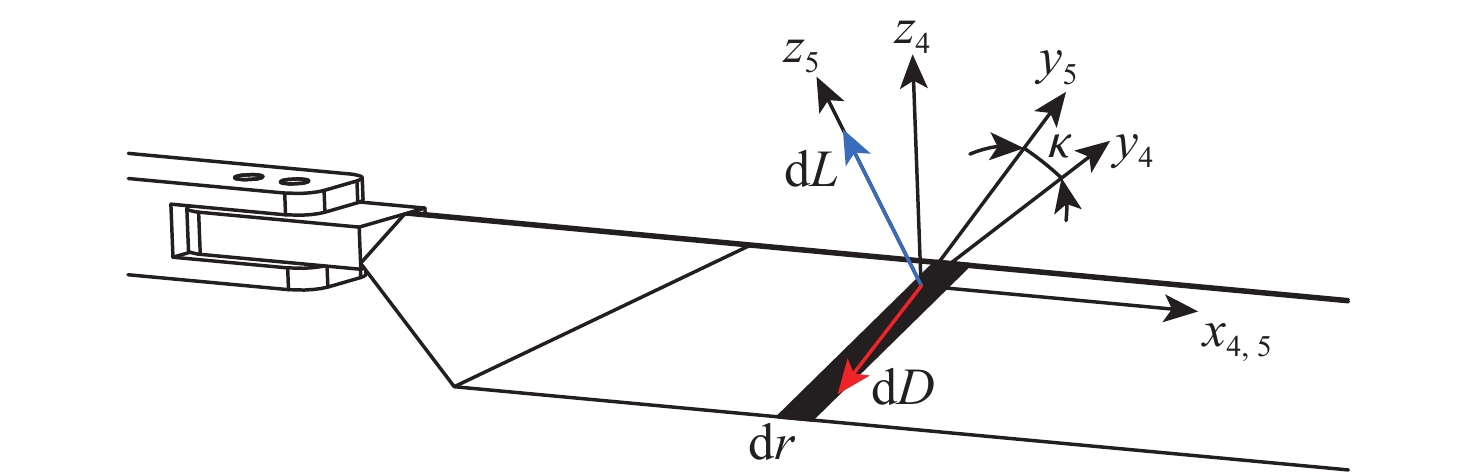
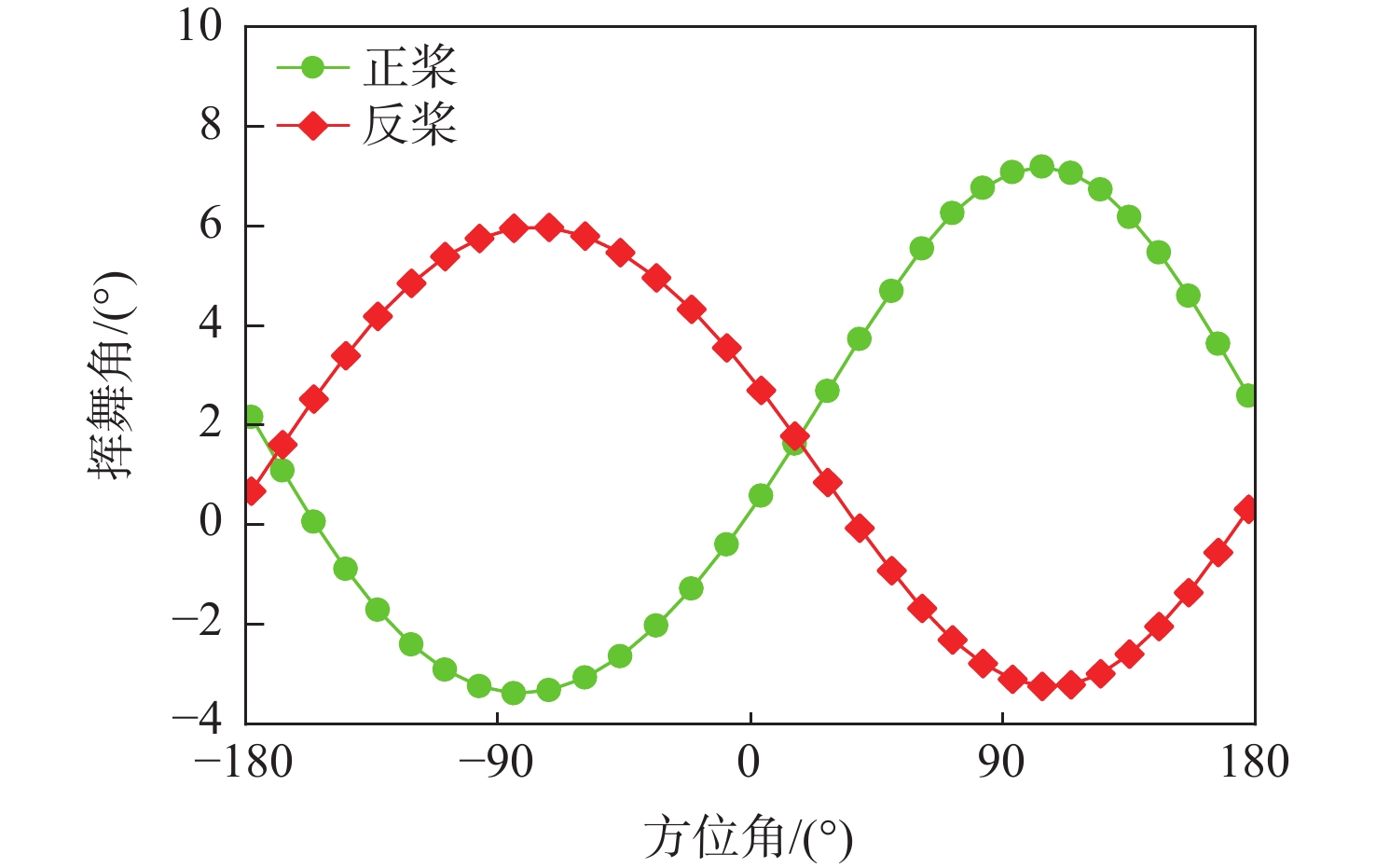
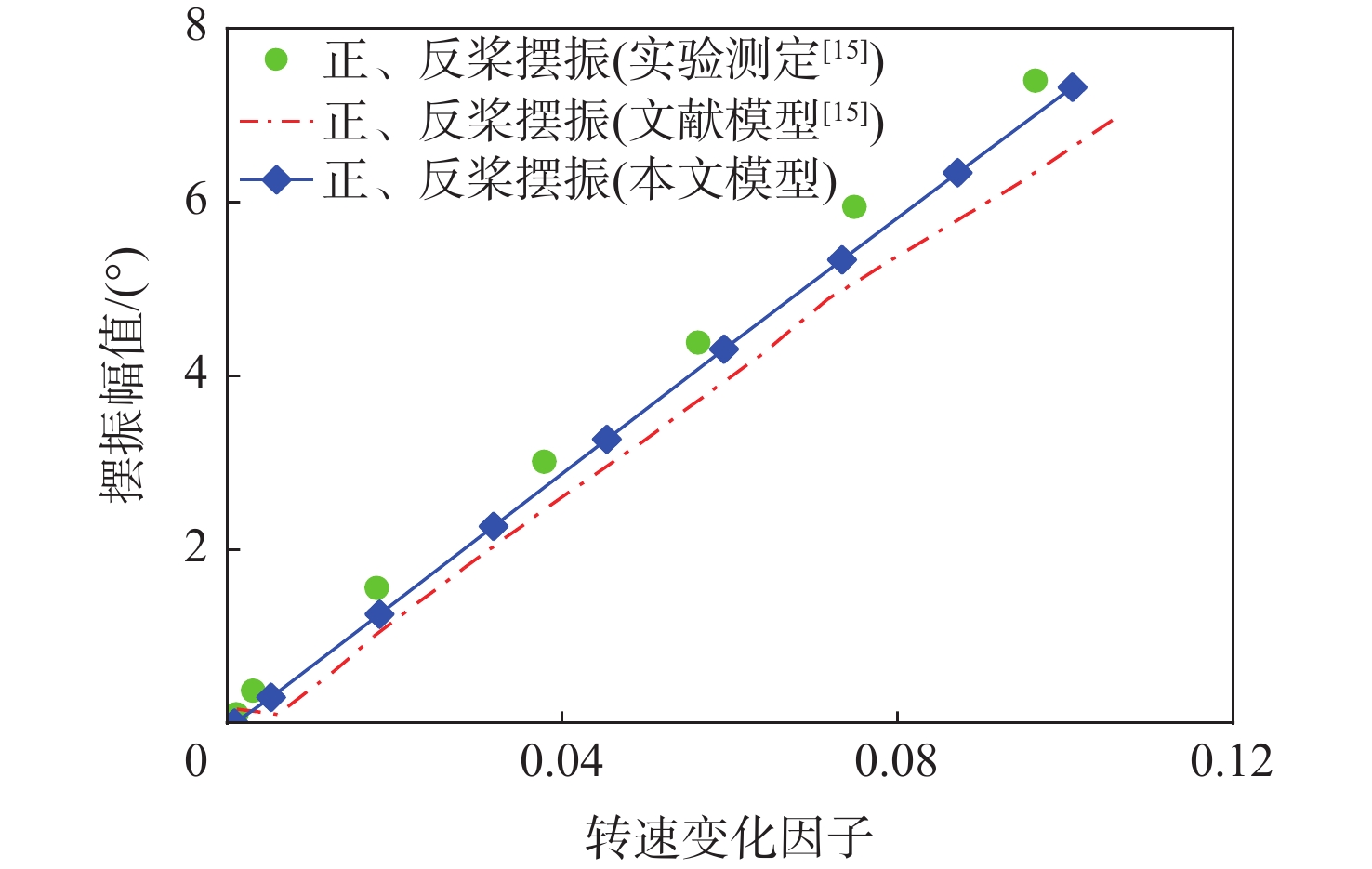
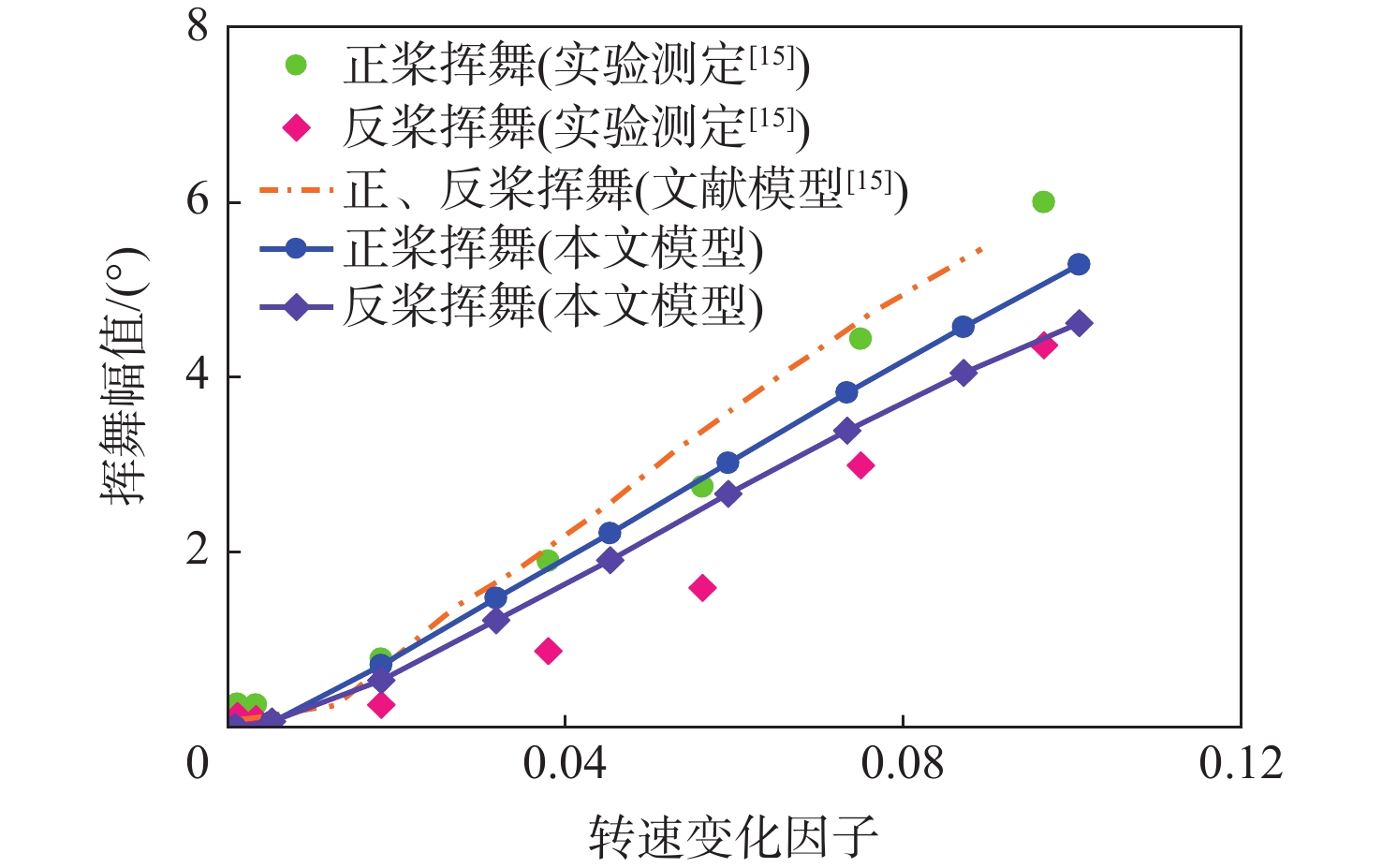
The tilt-hinge rotor has a simpler structure because it doesn’t need a swashplate and can provide cyclic pitch control just by accelerating and decelerating the motor. However, the tilt hinge coupled with the rotor lag and pitch motion complicates the modeling of rotor dynamics. However, the rotor lag and pitch motion are coupled with the tilt hinge, which makes the rotor dynamics modeling more complicated. The nearby linkage coordinate system of the blade was created based on the enhanced Denavia-Hartenberg approach in order to address the issues of low model prediction accuracy in the current modeling techniques and inadequate disclosure of the difference between forward and reverse blade flap-motion. The Newton-Euler recursion algorithm is used to calculate the velocity and acceleration of each linkage and the interaction force and torque of each linkage in the local linkage coordinate system. The dynamic model of the tilt-hinge rotor is established. On this basis, the mechanism of periodic pitch variation of the tilt-hinge rotor is further revealed through simulation calculation. At the same time, the calculation results show that this model can predict the flapping difference between forward and reverse blades more accurately. The prediction accuracy of blade lagging amplitude is improved by 9.05%.
Optimization of cabin return air ratio based on air quality and compensation loss
GAO Yang, LIN Jiaquan
2026, 52(6): 2034-2041. doi: 10.13700/j.bh.1001-5965.2024.0210
Abstract:

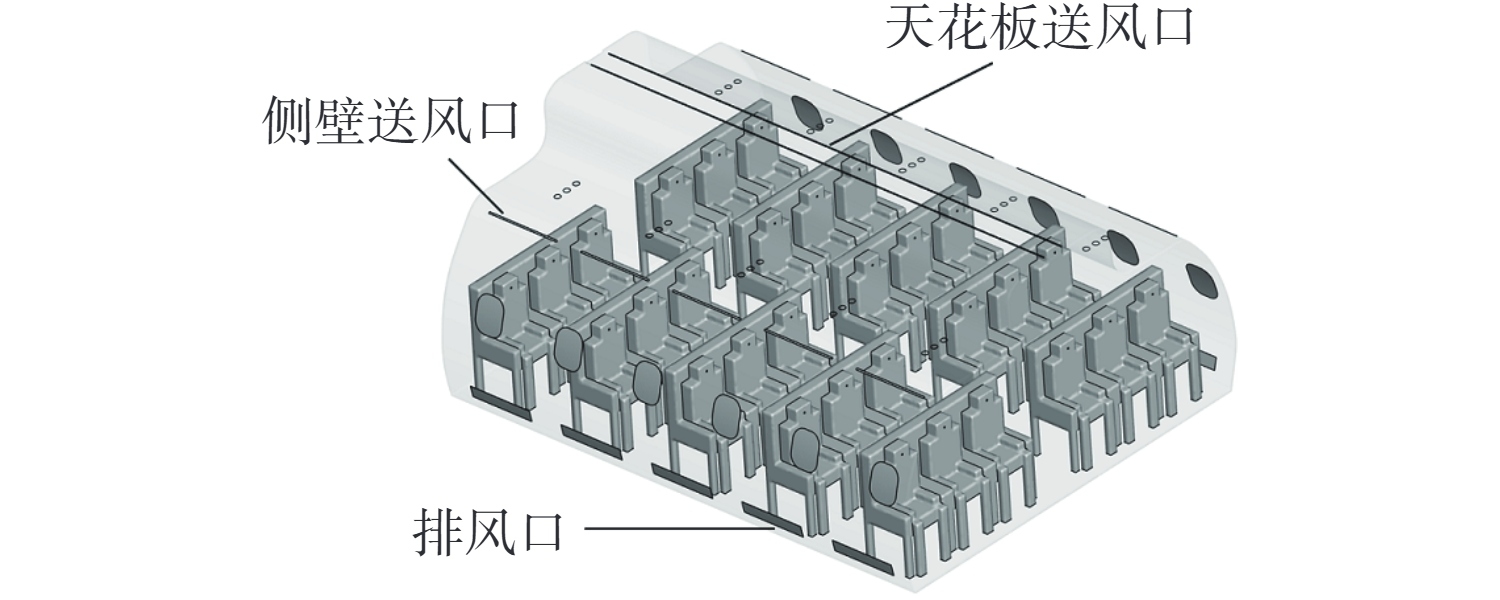
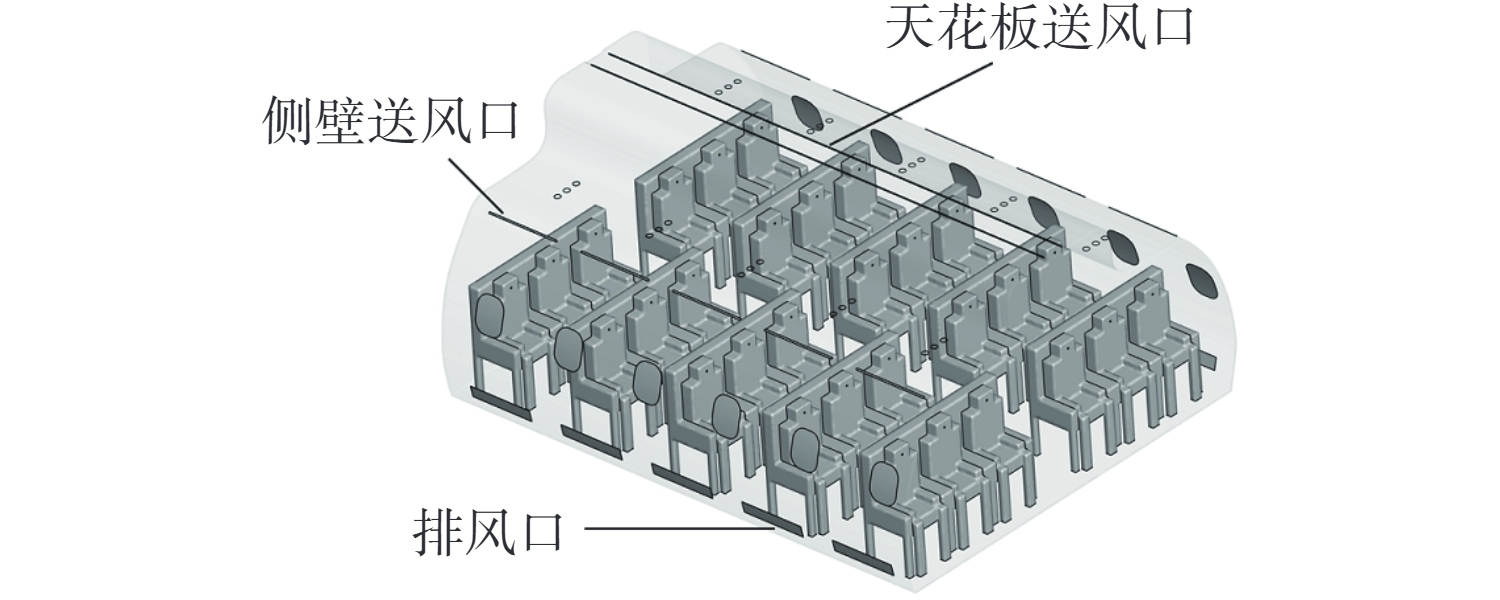
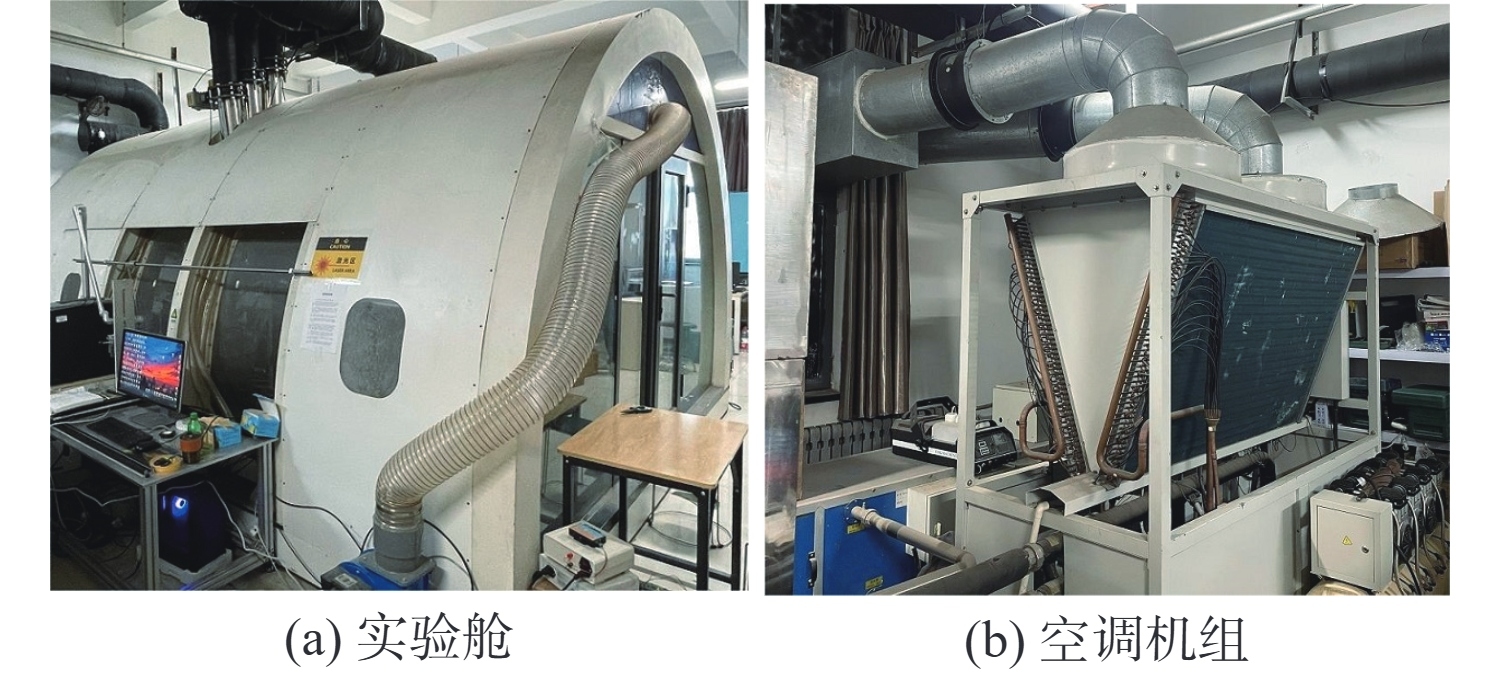
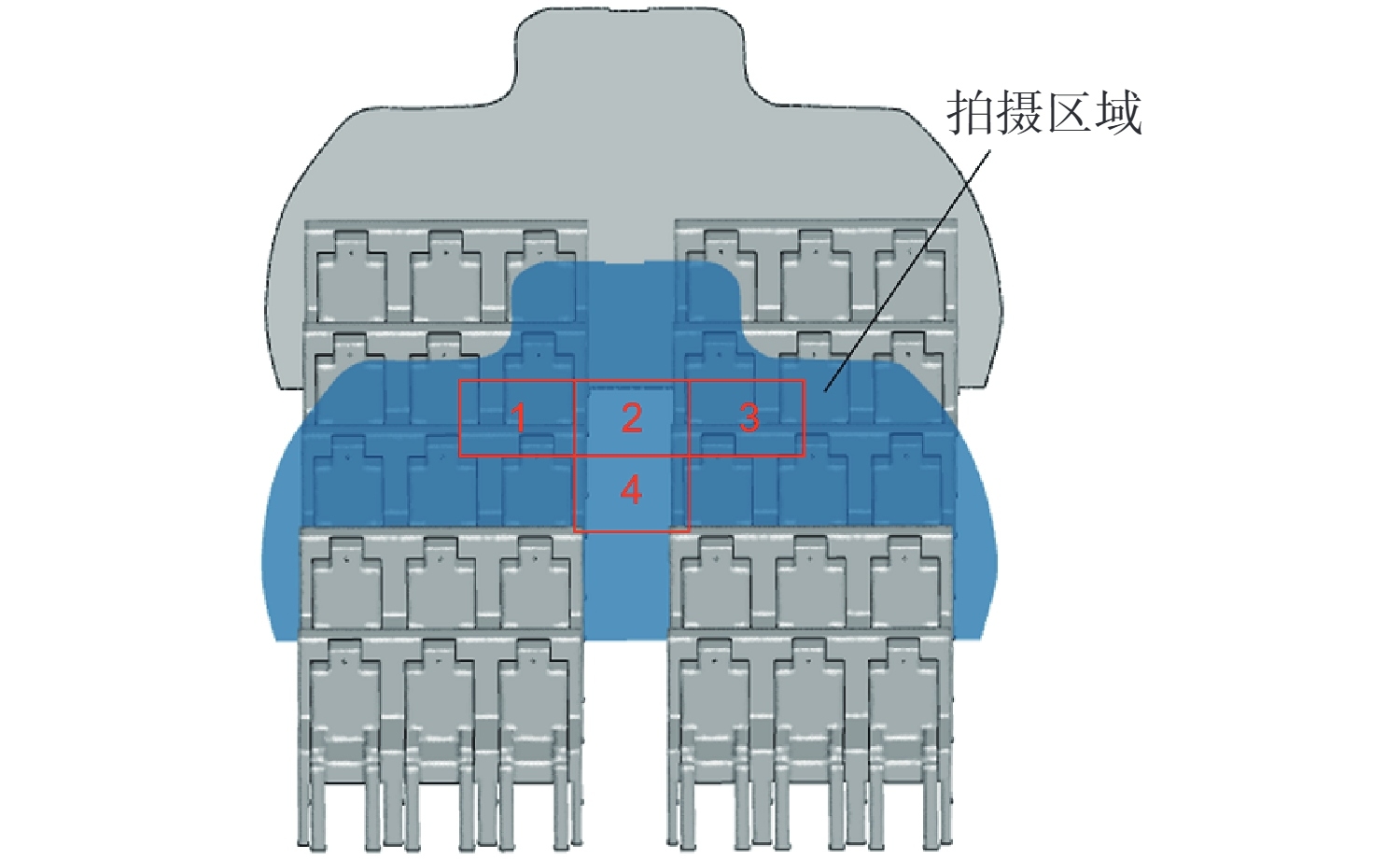
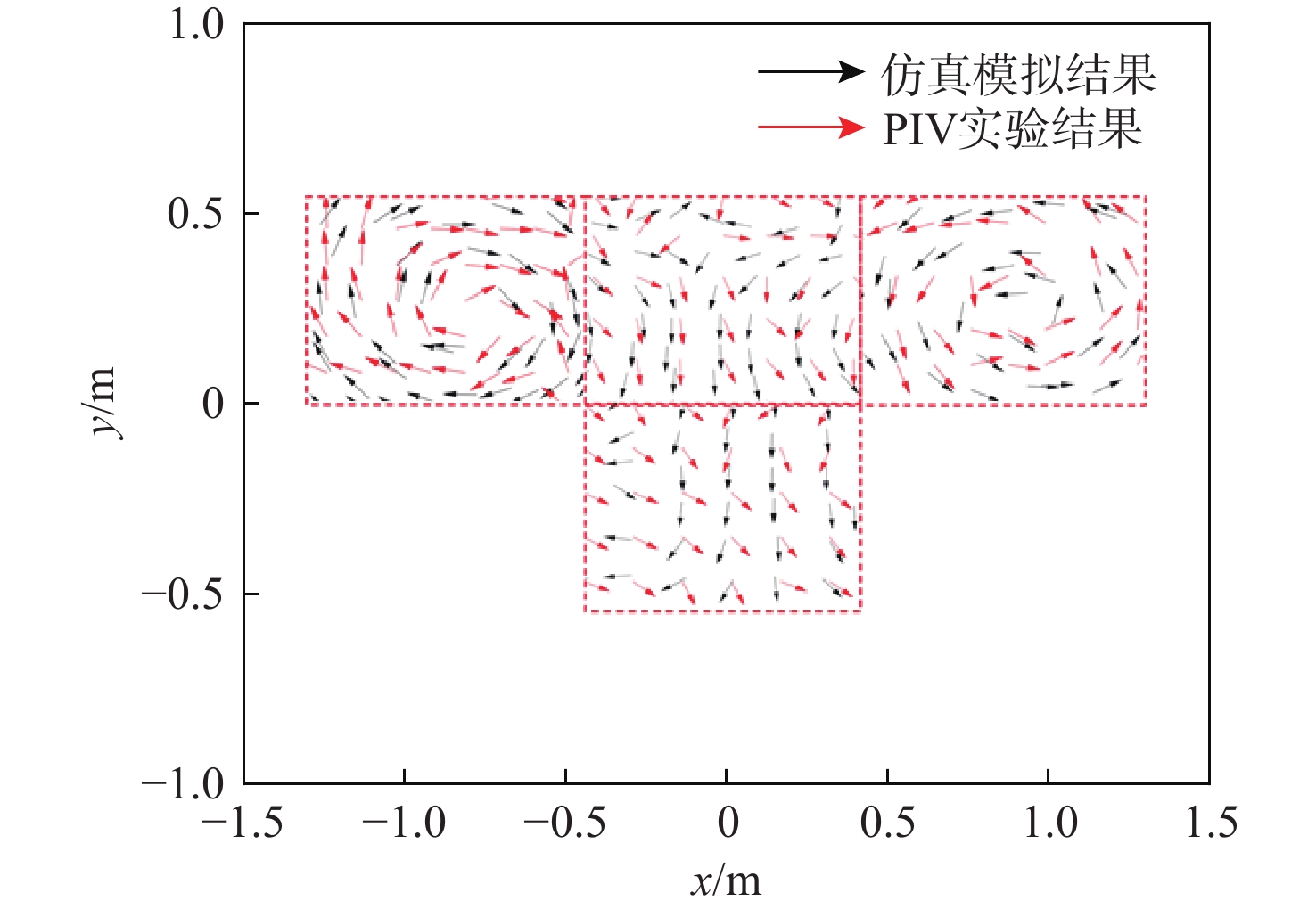
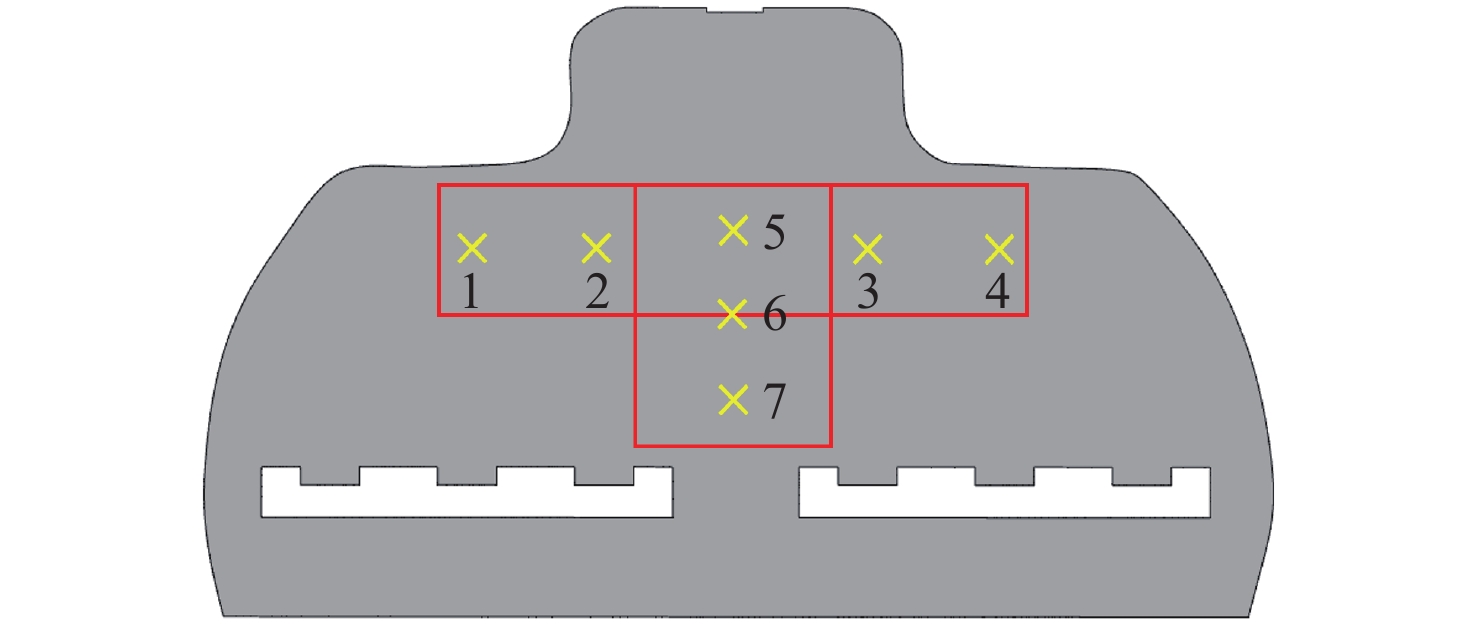
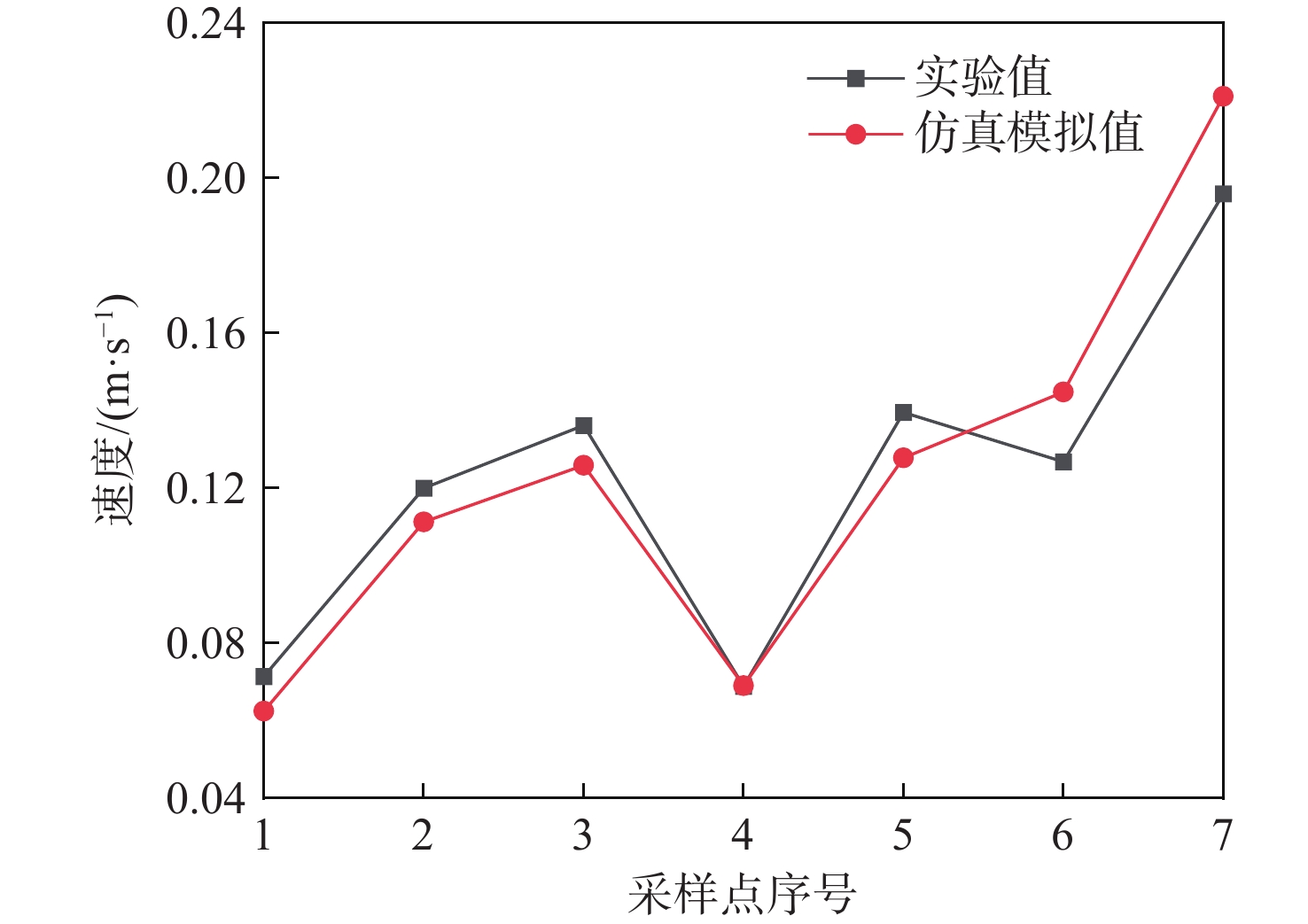
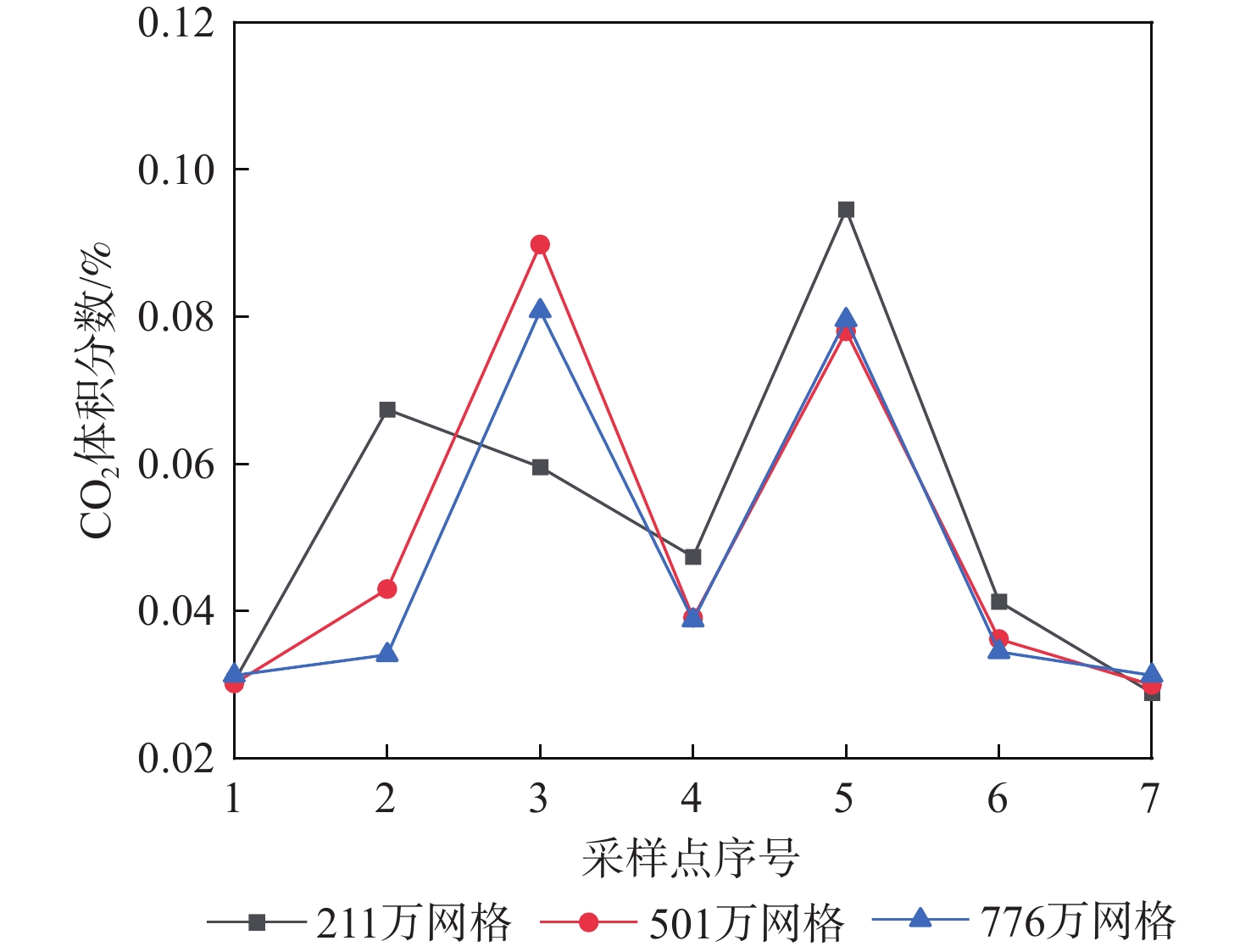
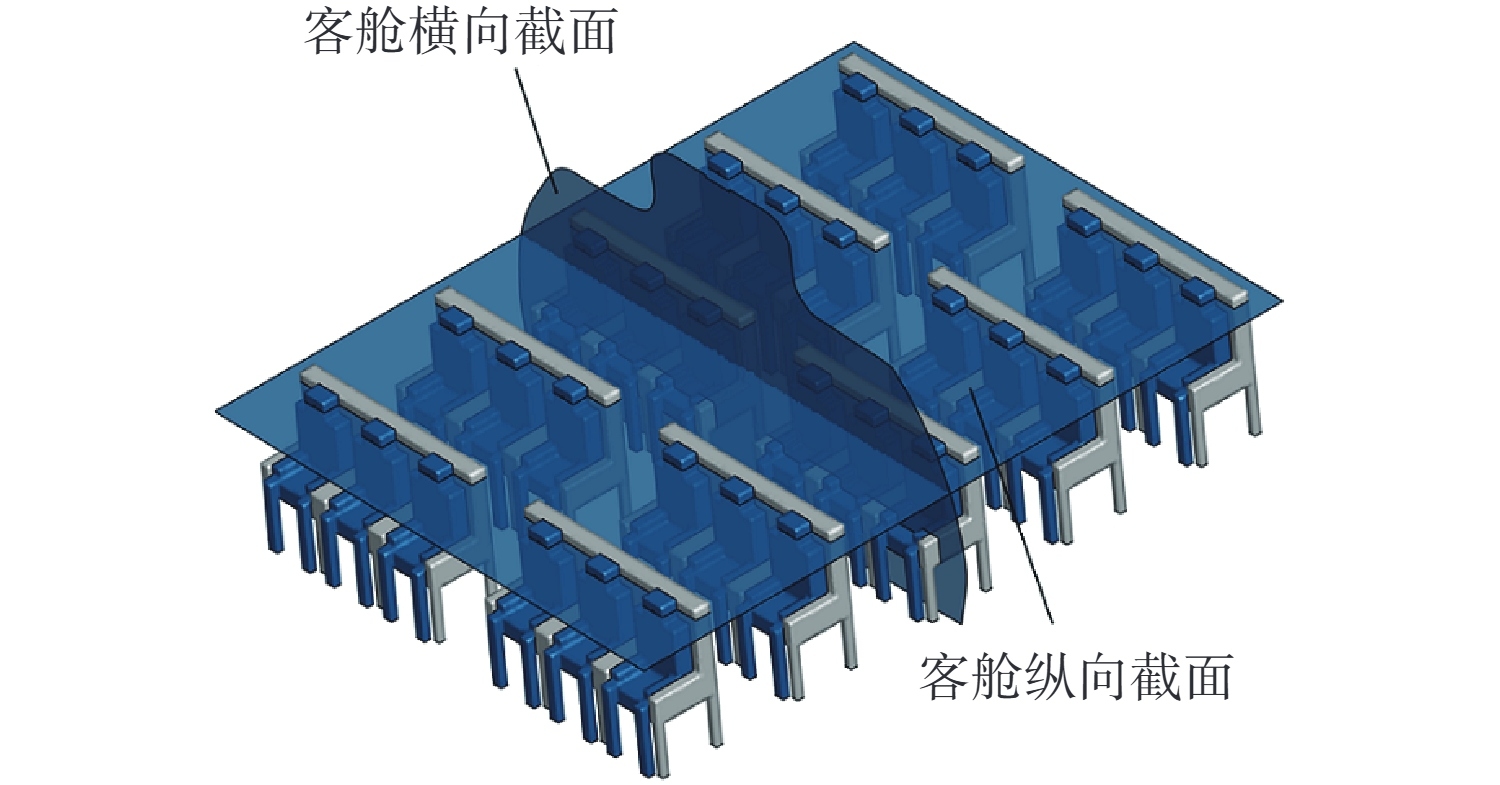
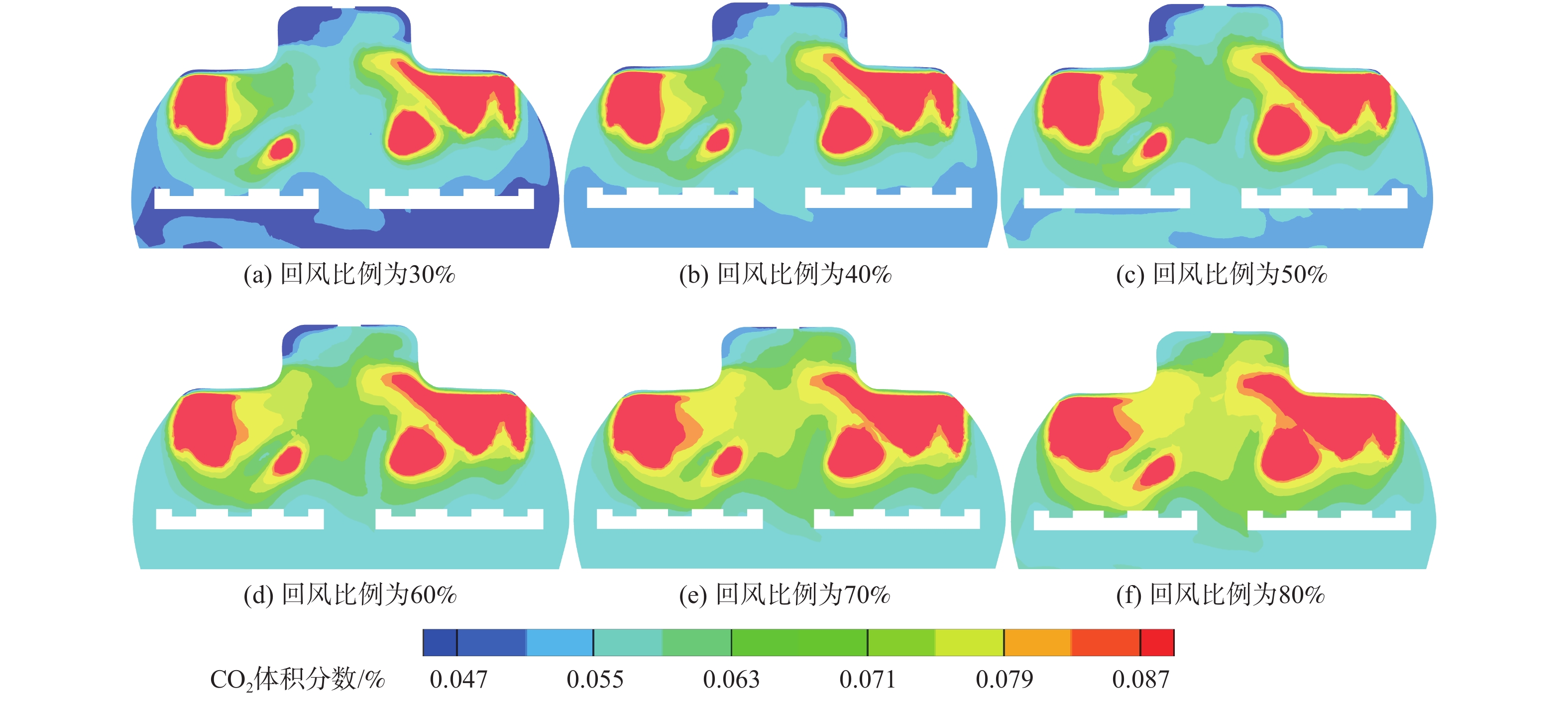
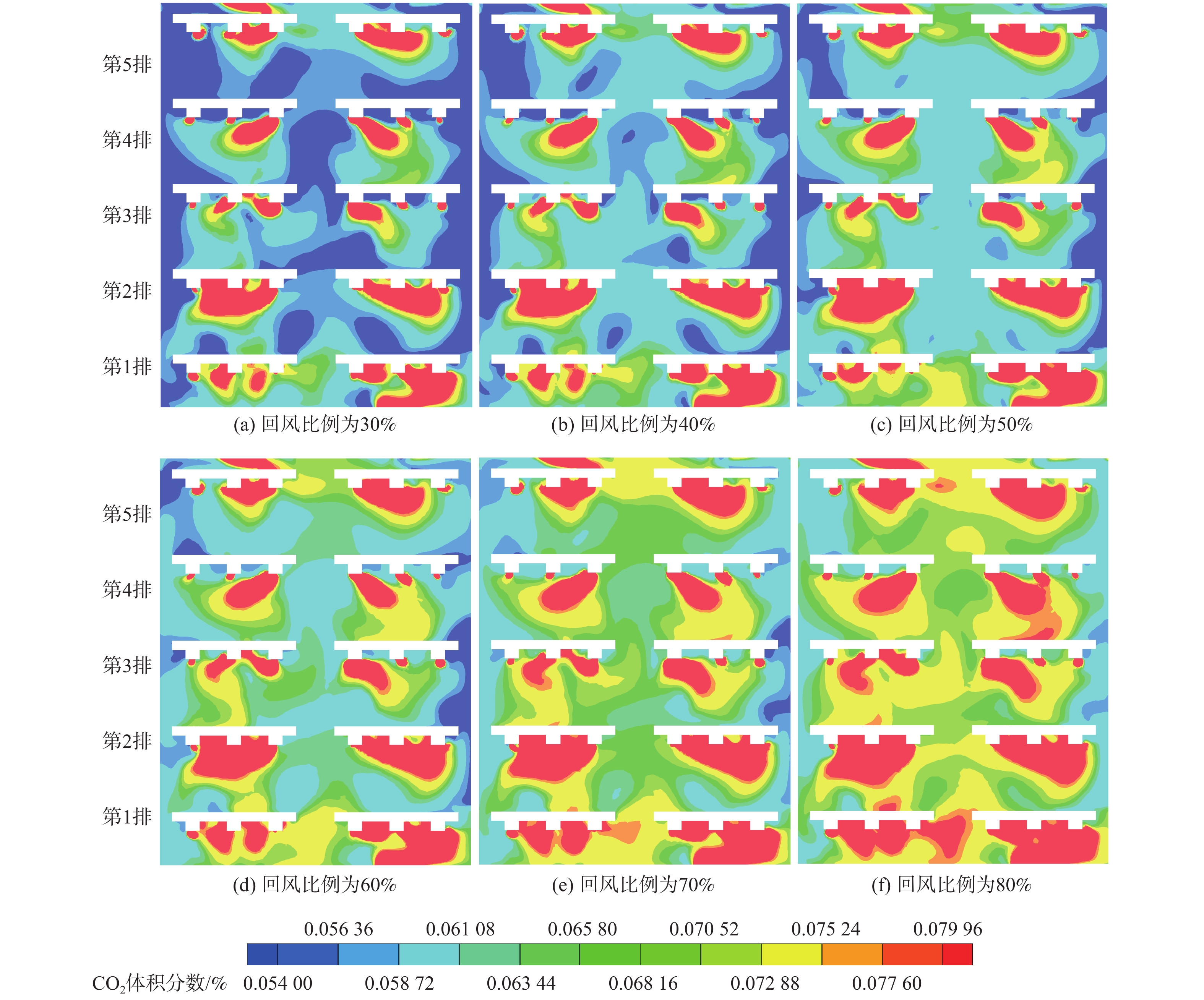
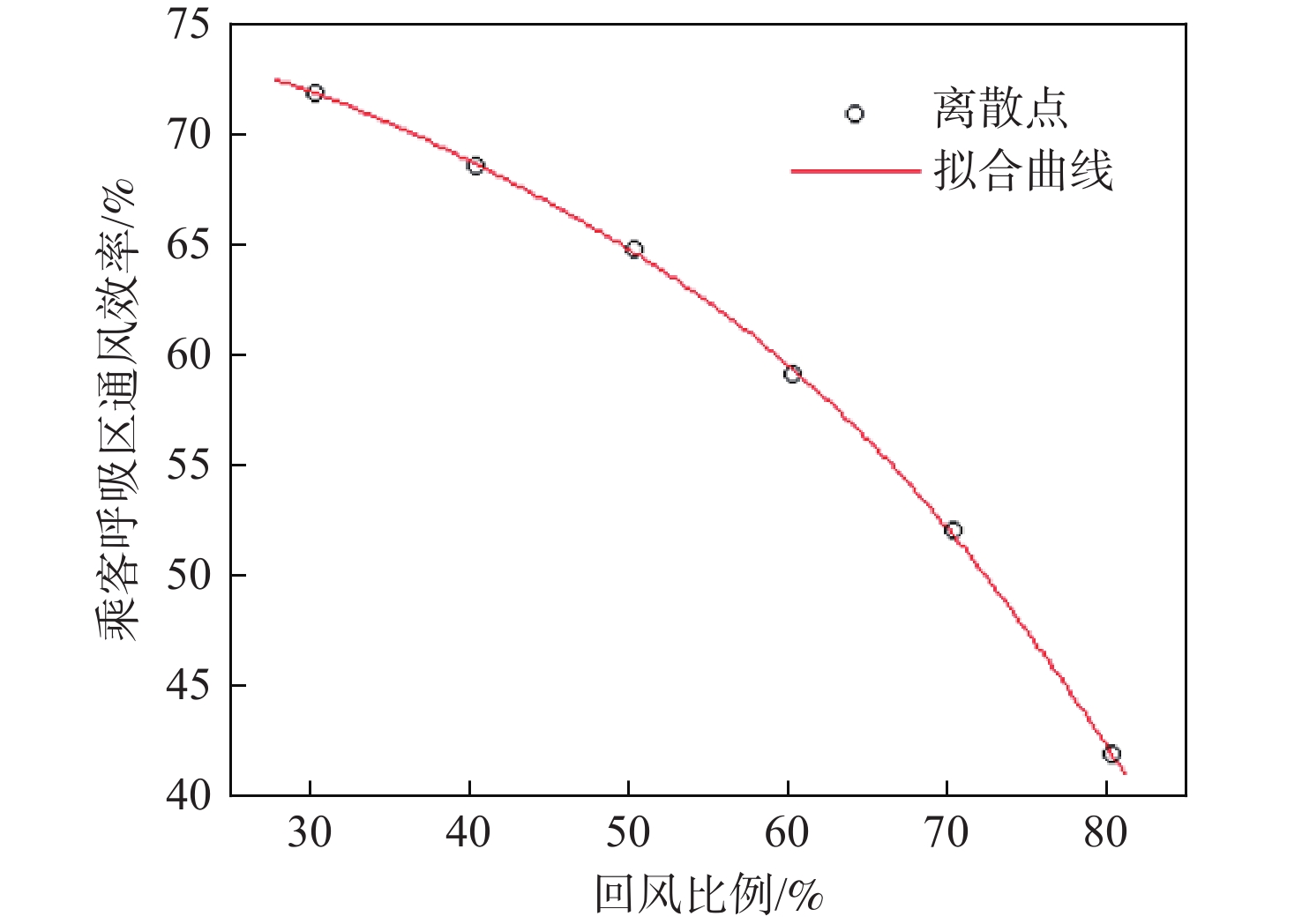
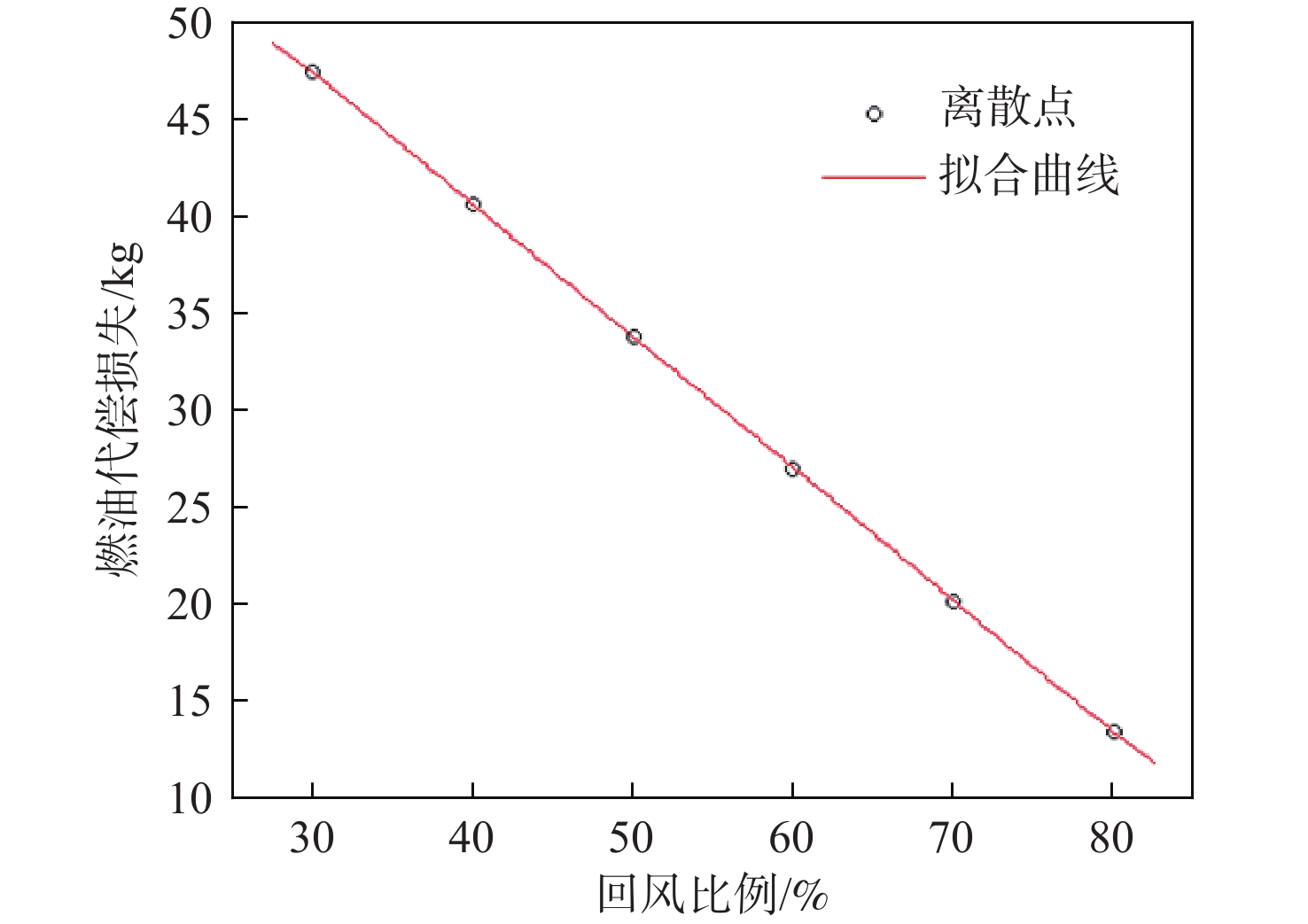
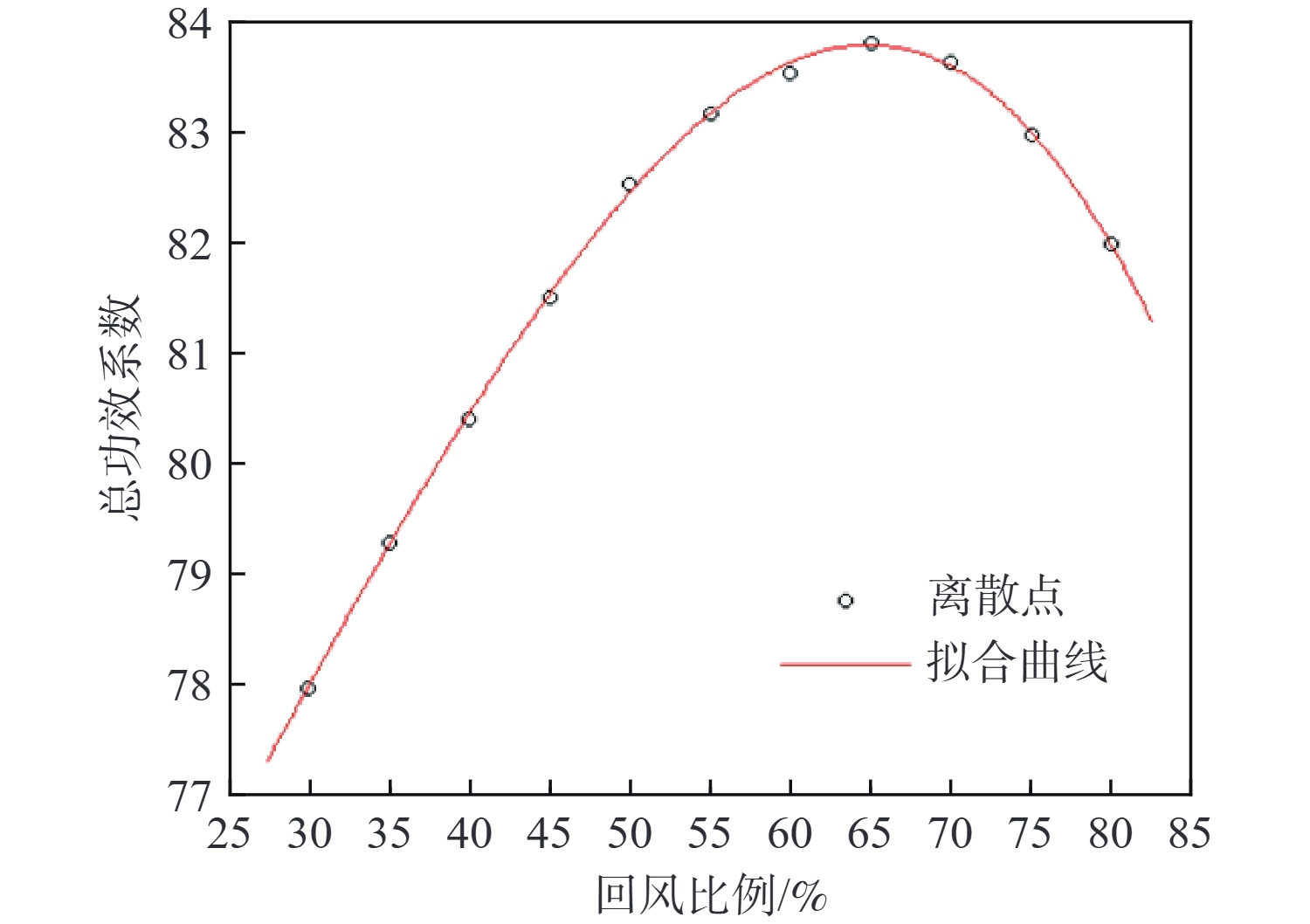
In order to obtain better air quality and improve the energy saving level of cabin air conditioning, computational fluid dynamics (CFD) method was used to establish a simulation model of the economy class of Boeing 737 passenger aircraft, and particle image velocimetry (PIV) technology was used to verify the accuracy of the simulation model. Based on this model, the effects of different return air ratios on the CO2 concentration field in cabin air conditioning were studied, and the ventilation efficiency index of the passenger breathing area was used to evaluate the effects of different return air ratios on cabin air quality. The fuel compensation loss under various return air proportion conditions with the same air supply volume was also calculated using the total takeoff mass method, and a functional relationship between the fuel compensation loss, the ventilation efficiency of the passenger breathing area, and the return air proportion was fitted. The efficiency coefficient approach was used to design the evaluation function, and the ideal return air proportion for the cabin air conditioning system was 64.864%. This method can provide a basis for the proportional control of return air in cabin air conditioning.

Enhancing performance through static computing partitioning approach in processing-in-memory systems
XUE Hongyu, XU Sheng, LUO Le, YAN Liang, ZOU Xingqi
2026, 52(6): 2042-2053. doi: 10.13700/j.bh.1001-5965.2024.0209
Abstract:

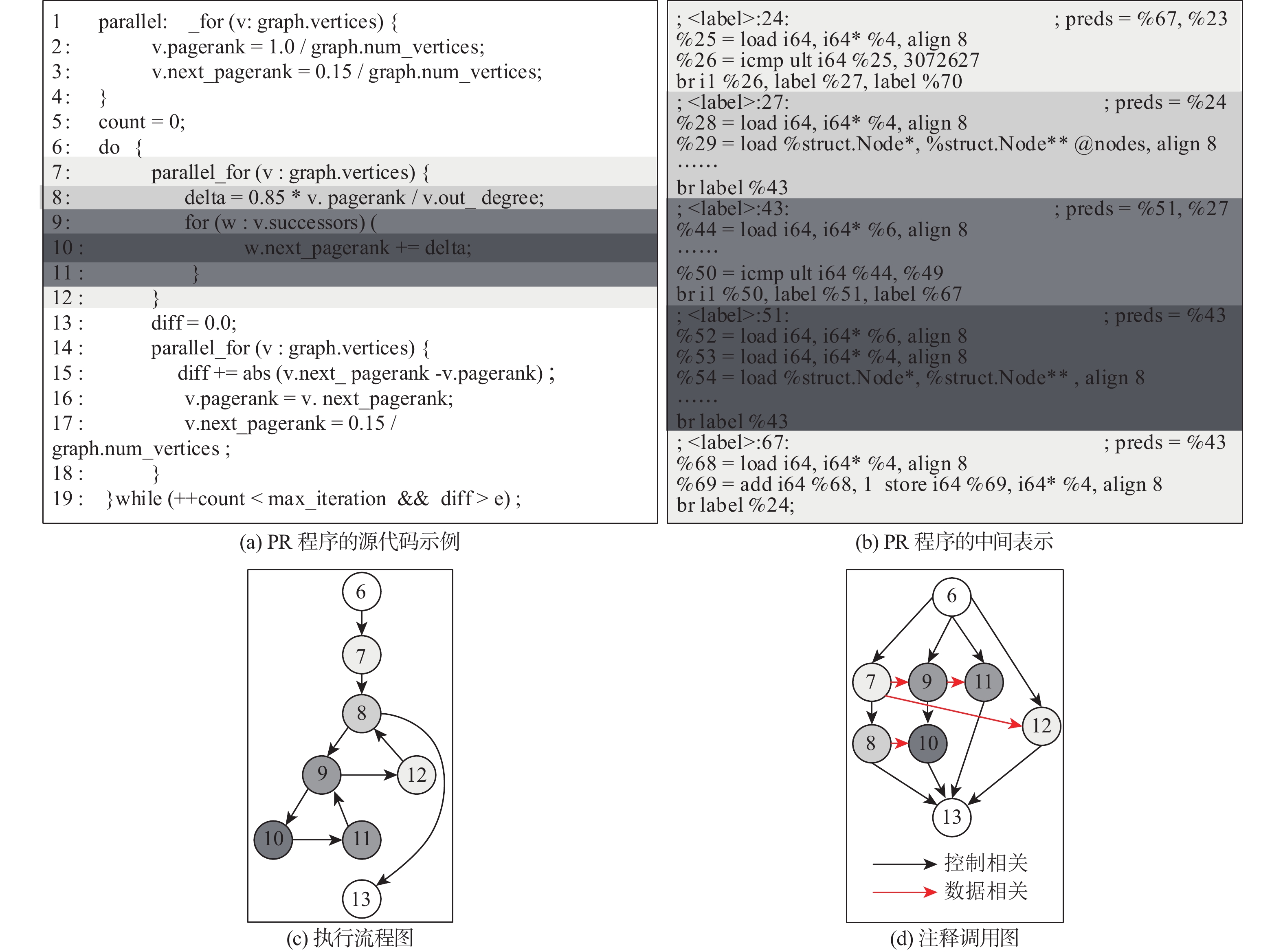
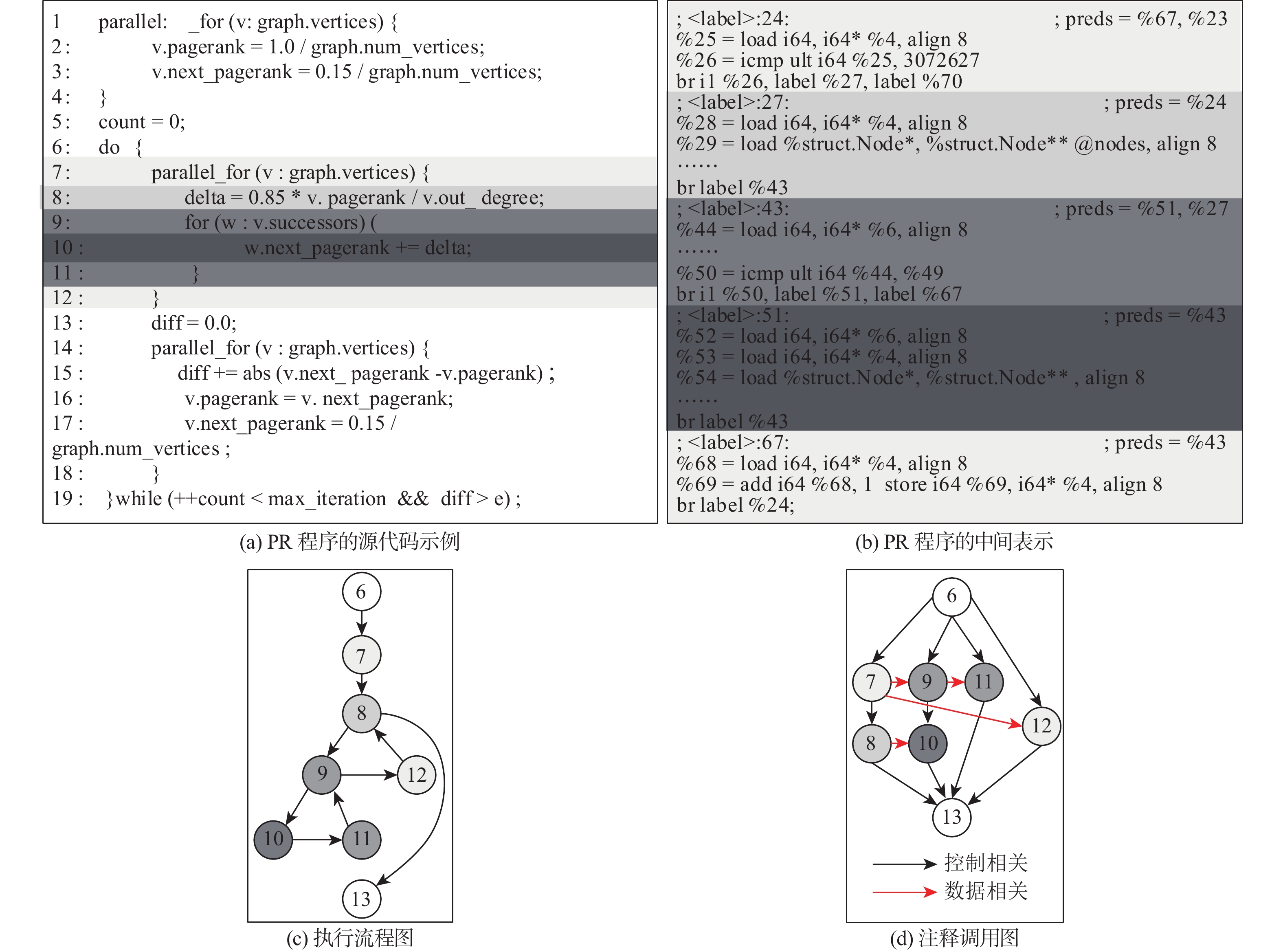
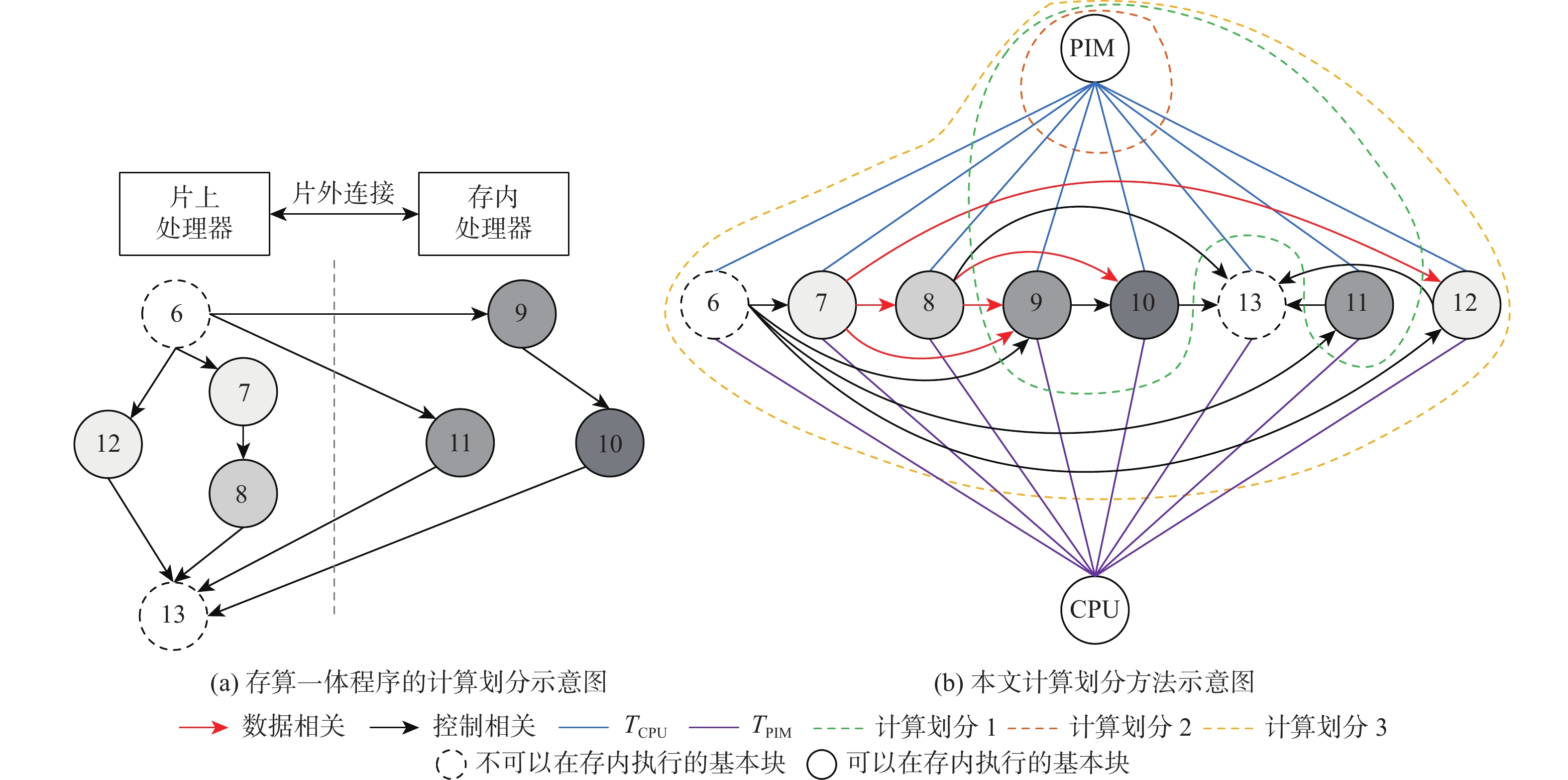
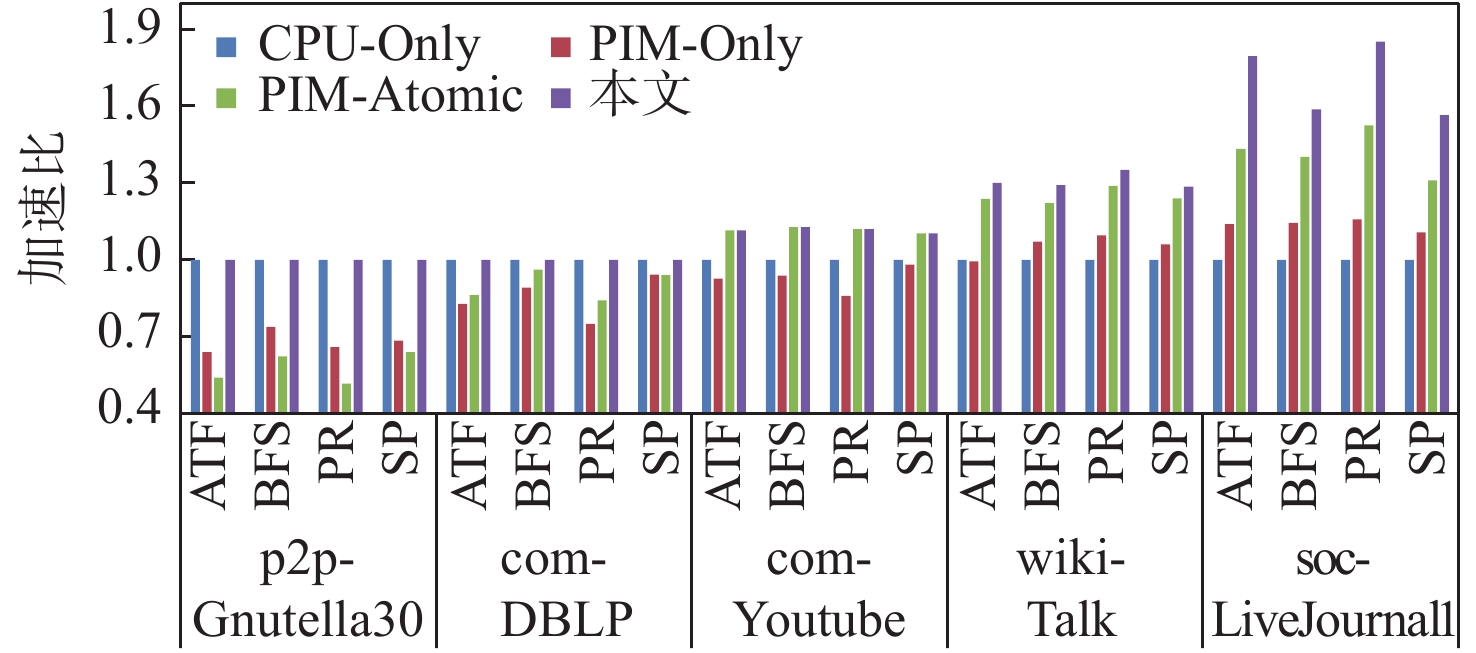
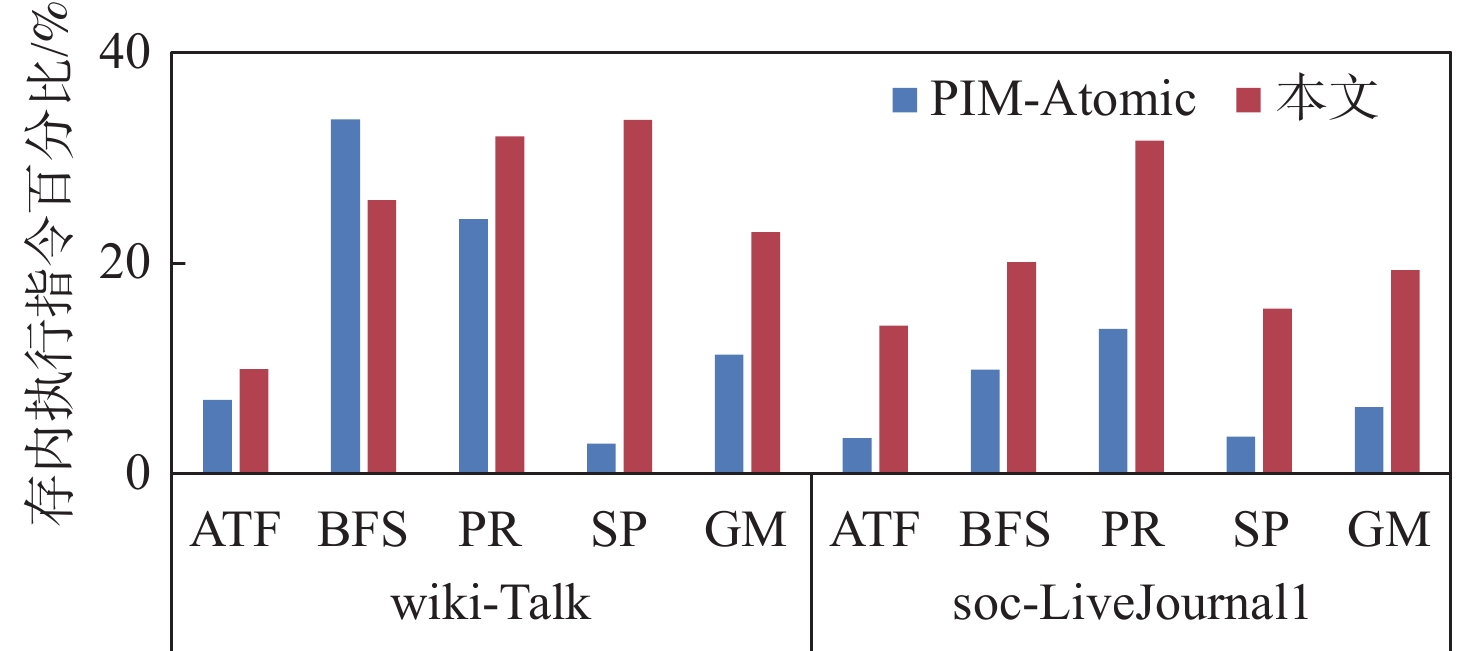
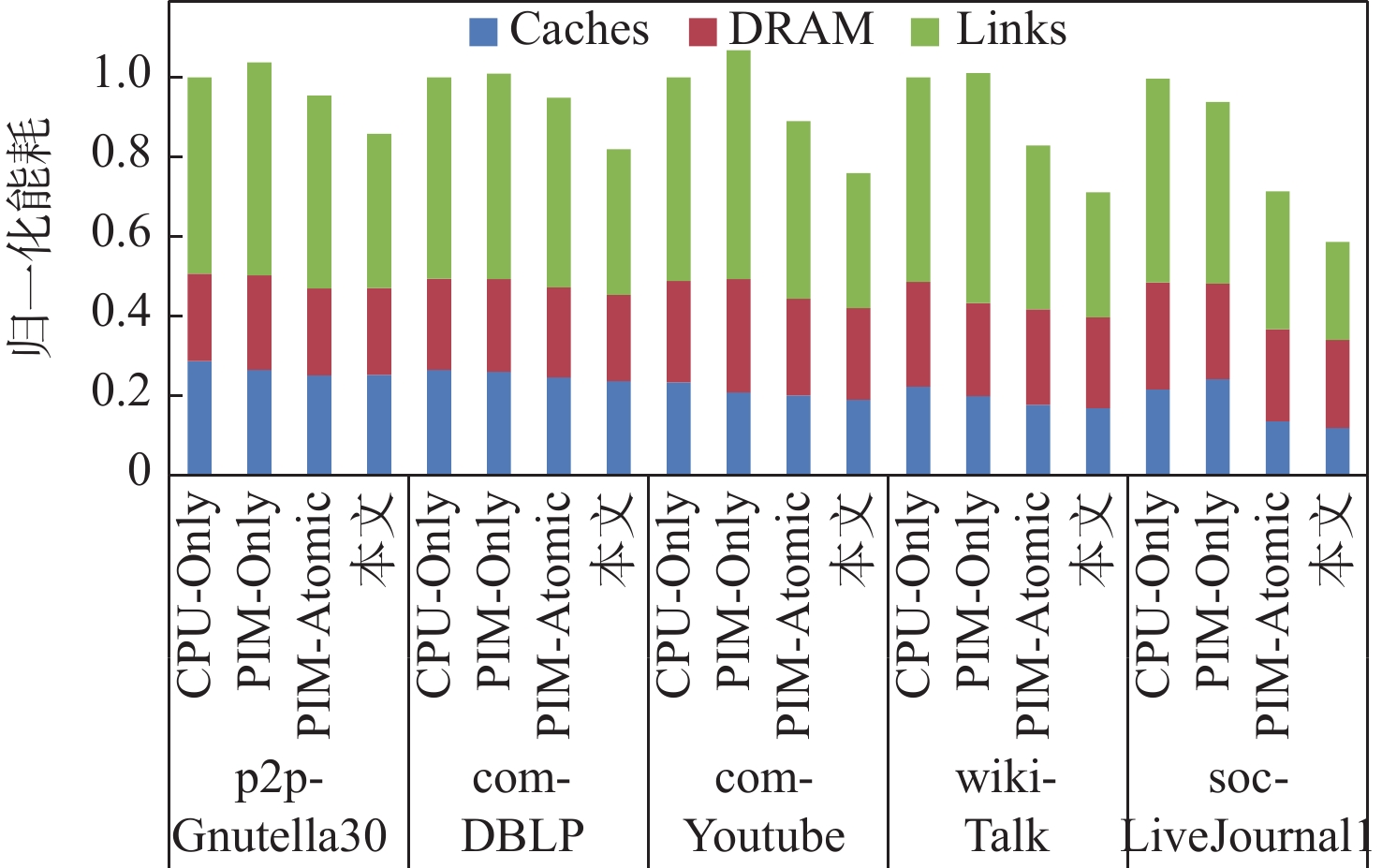
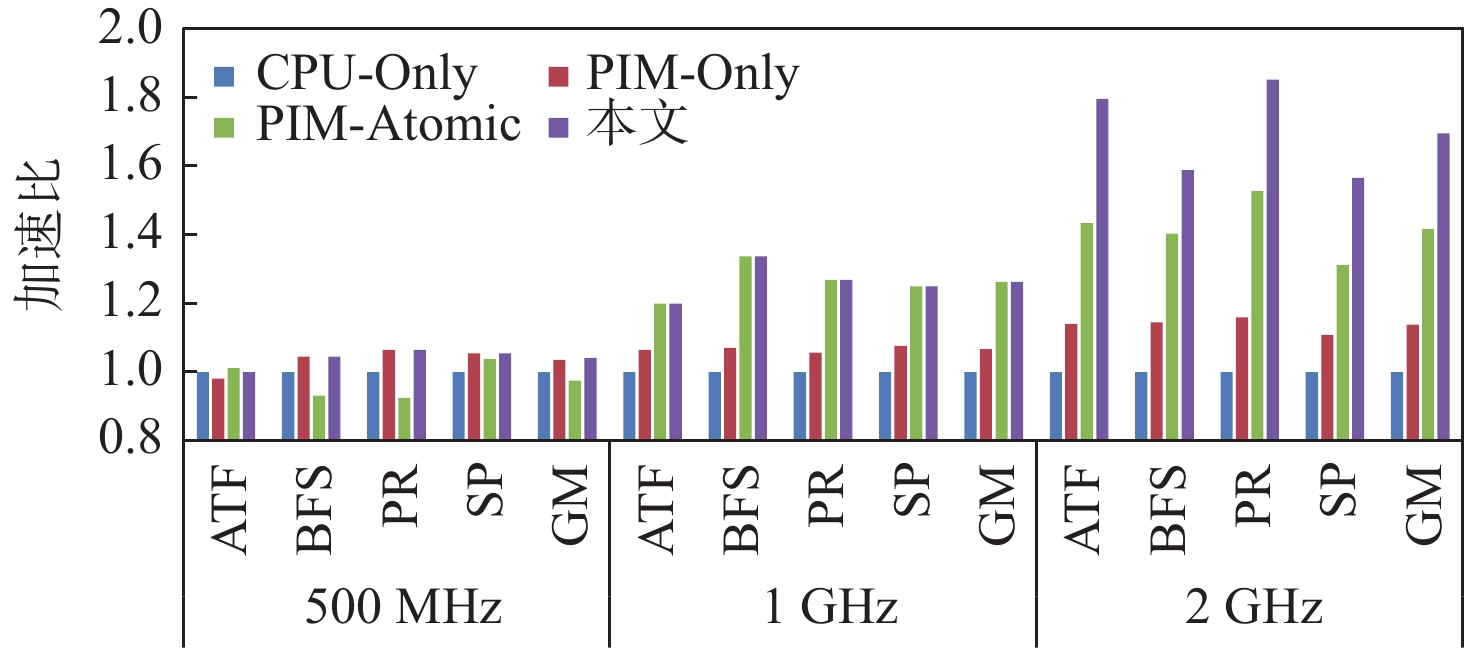
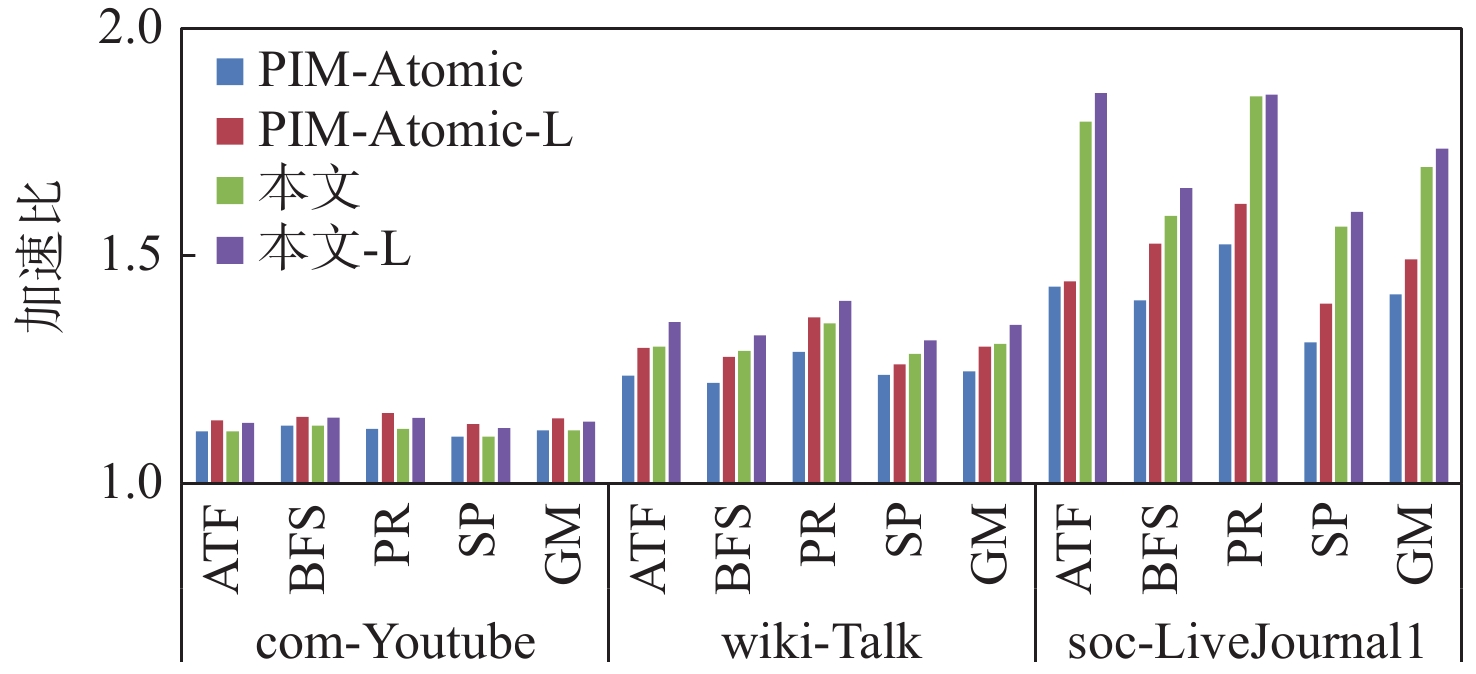
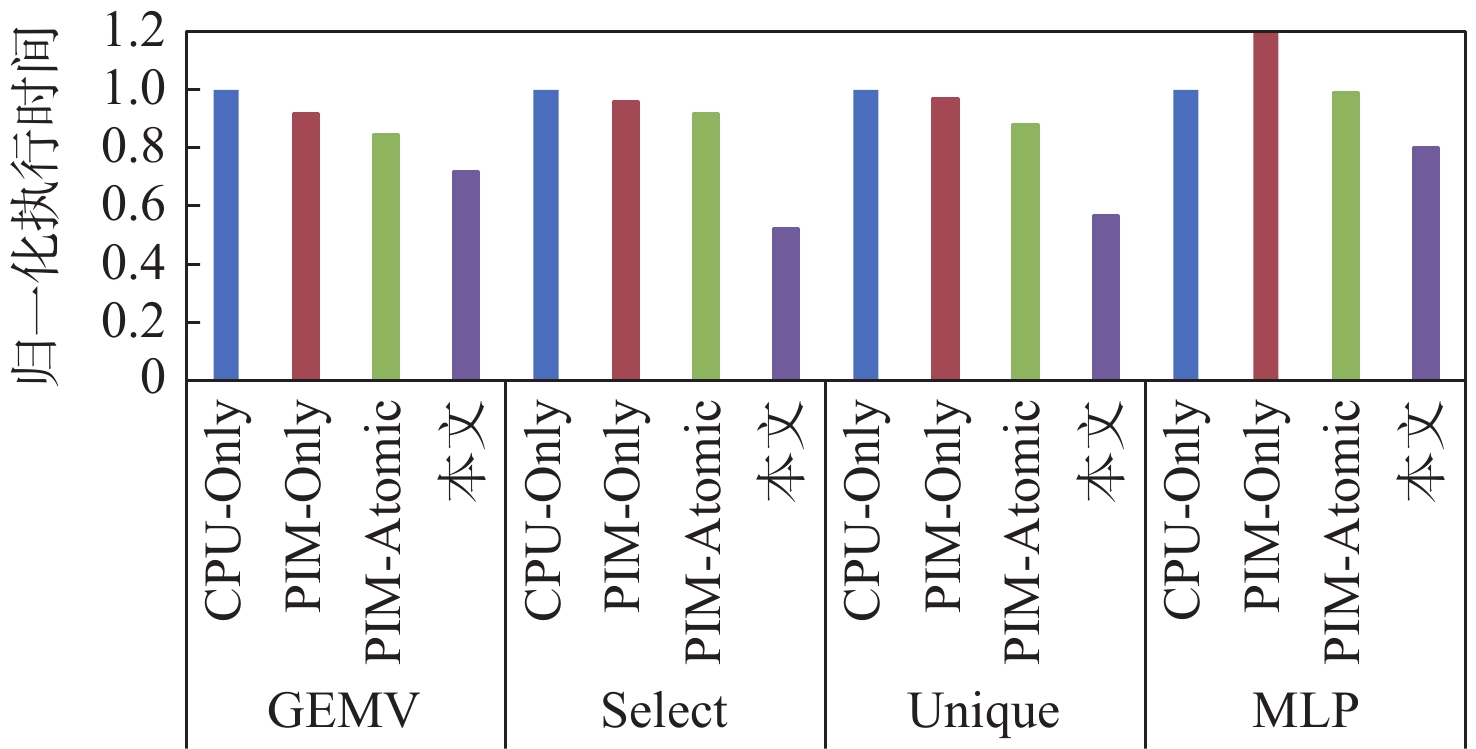
Processing-in-memory (PIM) systems mitigate the von Neumann “memory-wall” bottleneck by integrating in-memory computing units to break the conventional memory-computation separation paradigm. However, PIM architectures are incompatible with mainstream software stacks, their performance and energy efficiency are highly constrained by the computational partitioning of programs, and may even suffer from performance degradation or negative optimization. In this paper, we propose a static computing partitioning approach that deals with this challenge. The key insight of our work is to reframe the computing partitioning as an annotated call graph (ACG) partitioning problem and propose a simulated annealing-based algorithm to find the optimal computing partitions. In comparison to traditional methods, our trials show that our methodology can improve performance by 39% and cut energy use by an average of 32%.
Thermal control design features and flight validation of Queqiao-2 satellite
YANG Changpeng, REN Hongyan, SUN Tengfei, ZHOU Qiang, HUANG Xing, ZHANG Lihua, XIONG Liang, SUN Ji, CHENG Wenlong
2026, 52(6): 2054-2063. doi: 10.13700/j.bh.1001-5965.2025.0059
Abstract:

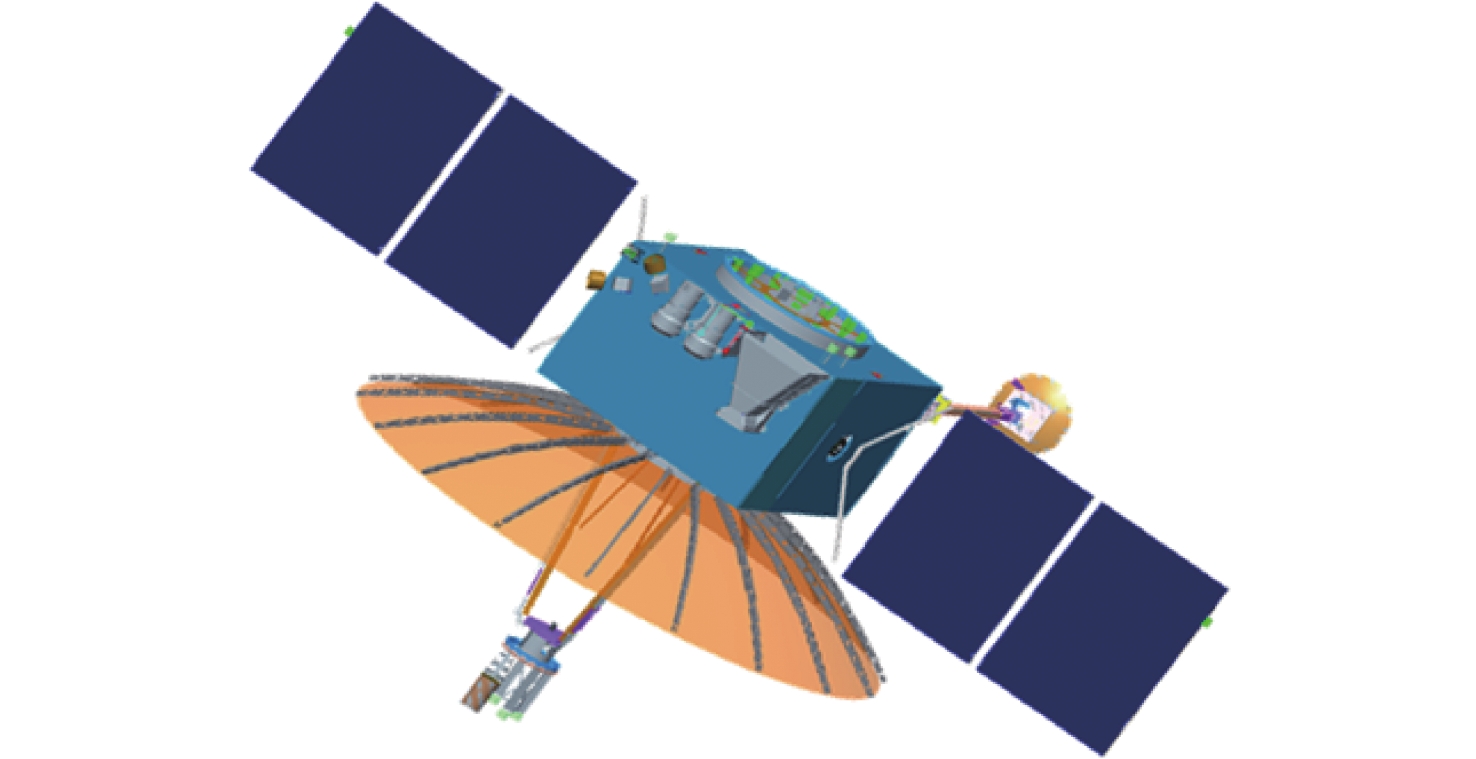
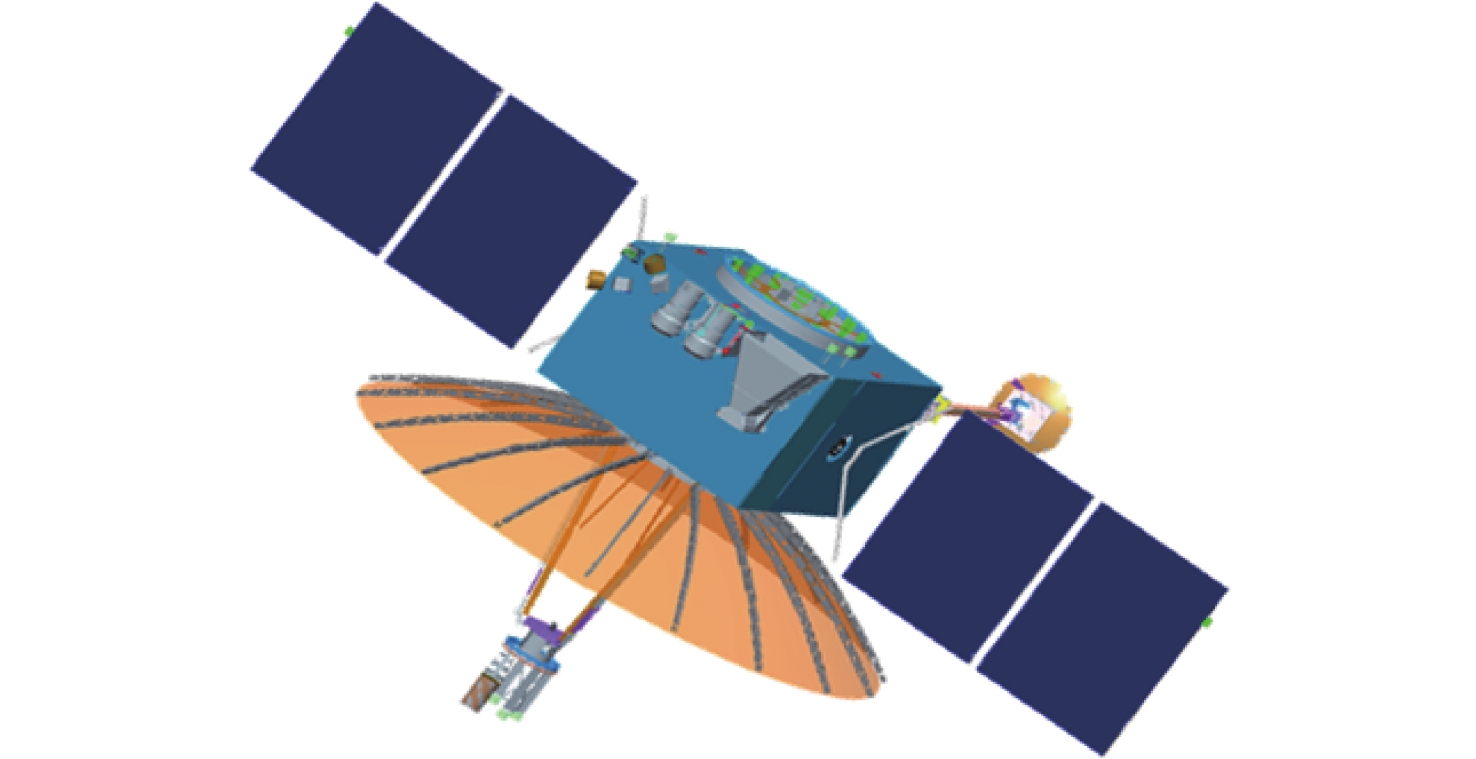
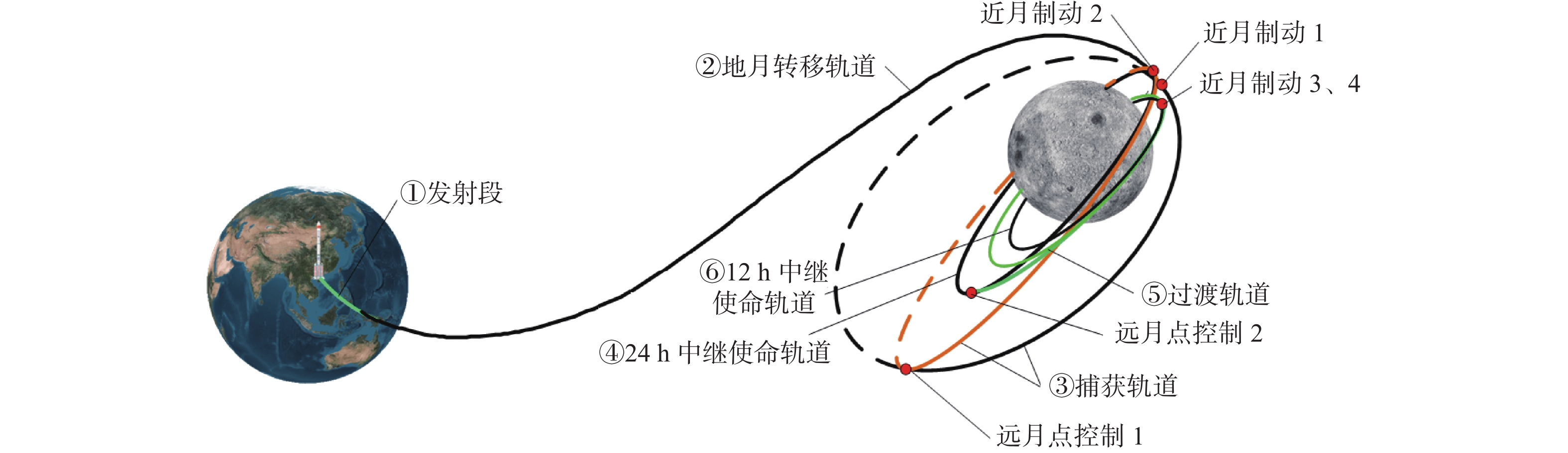
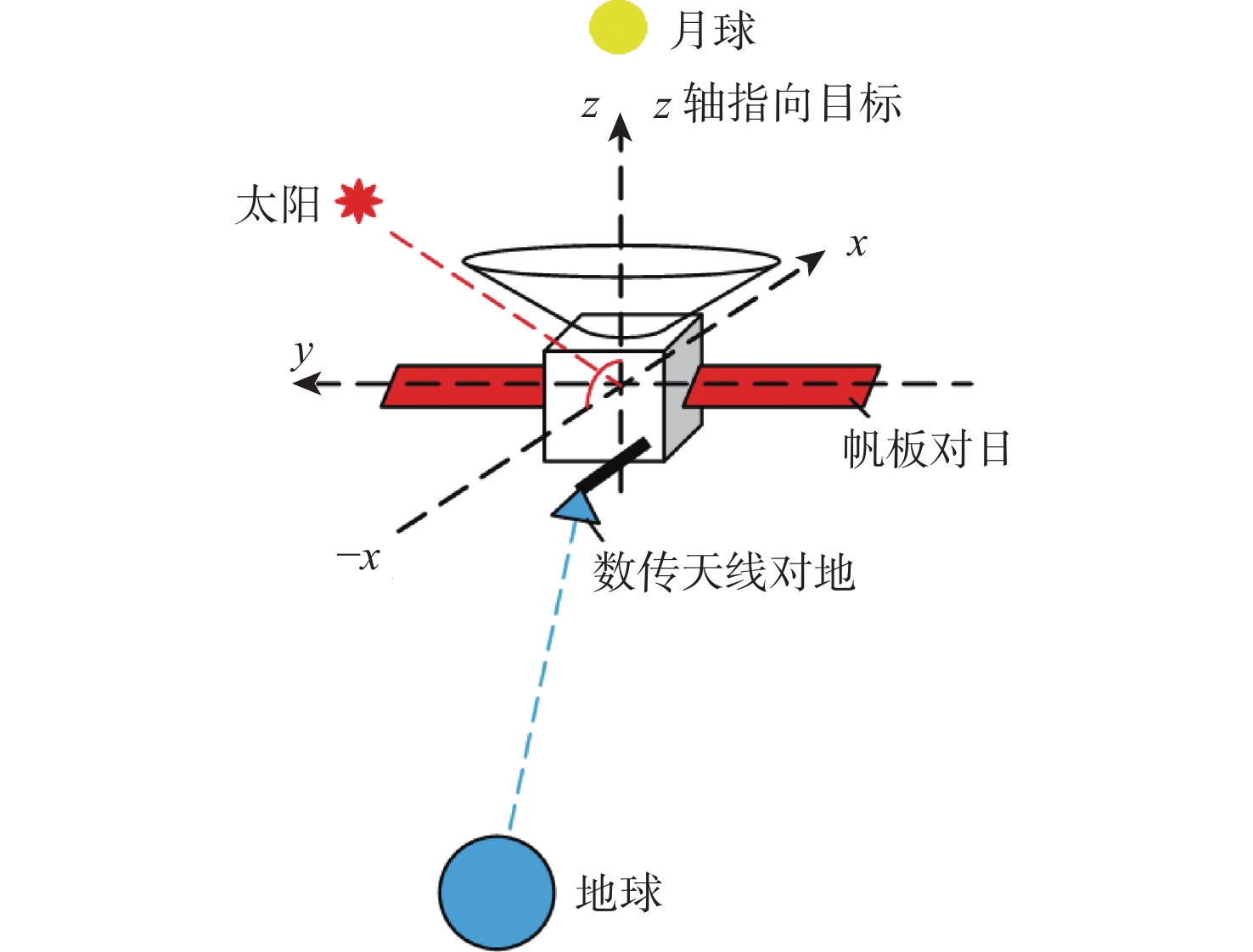
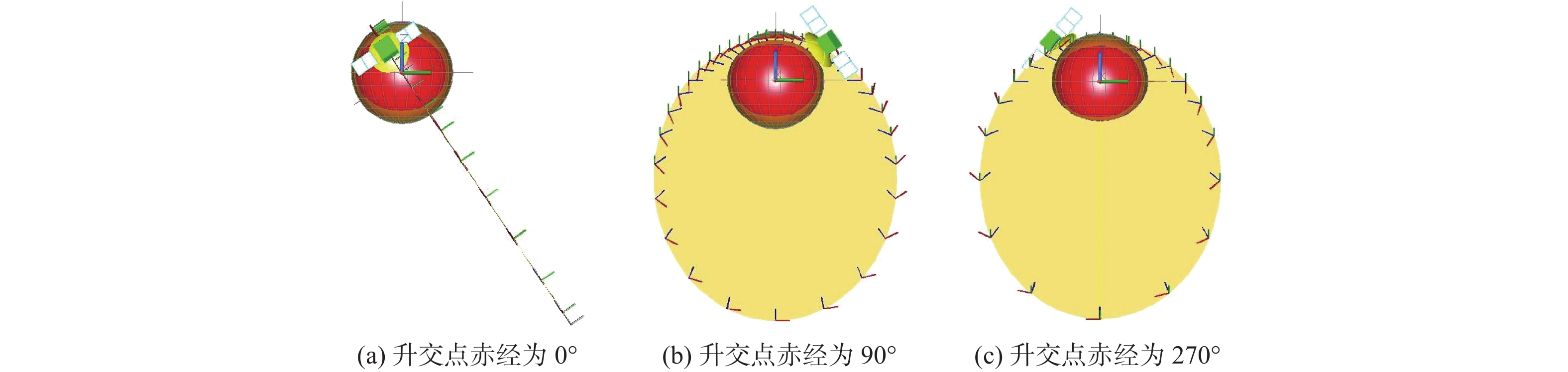
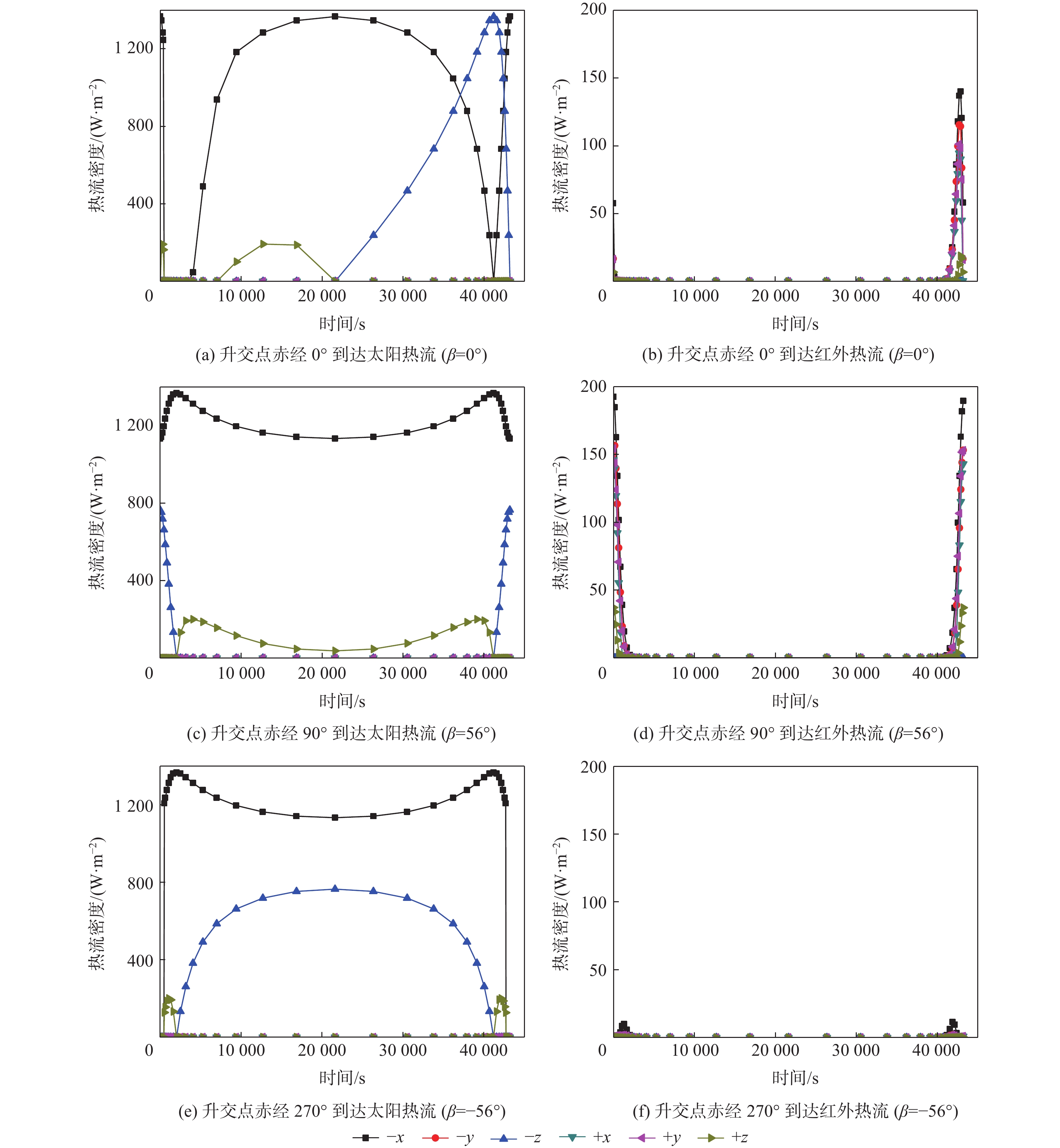
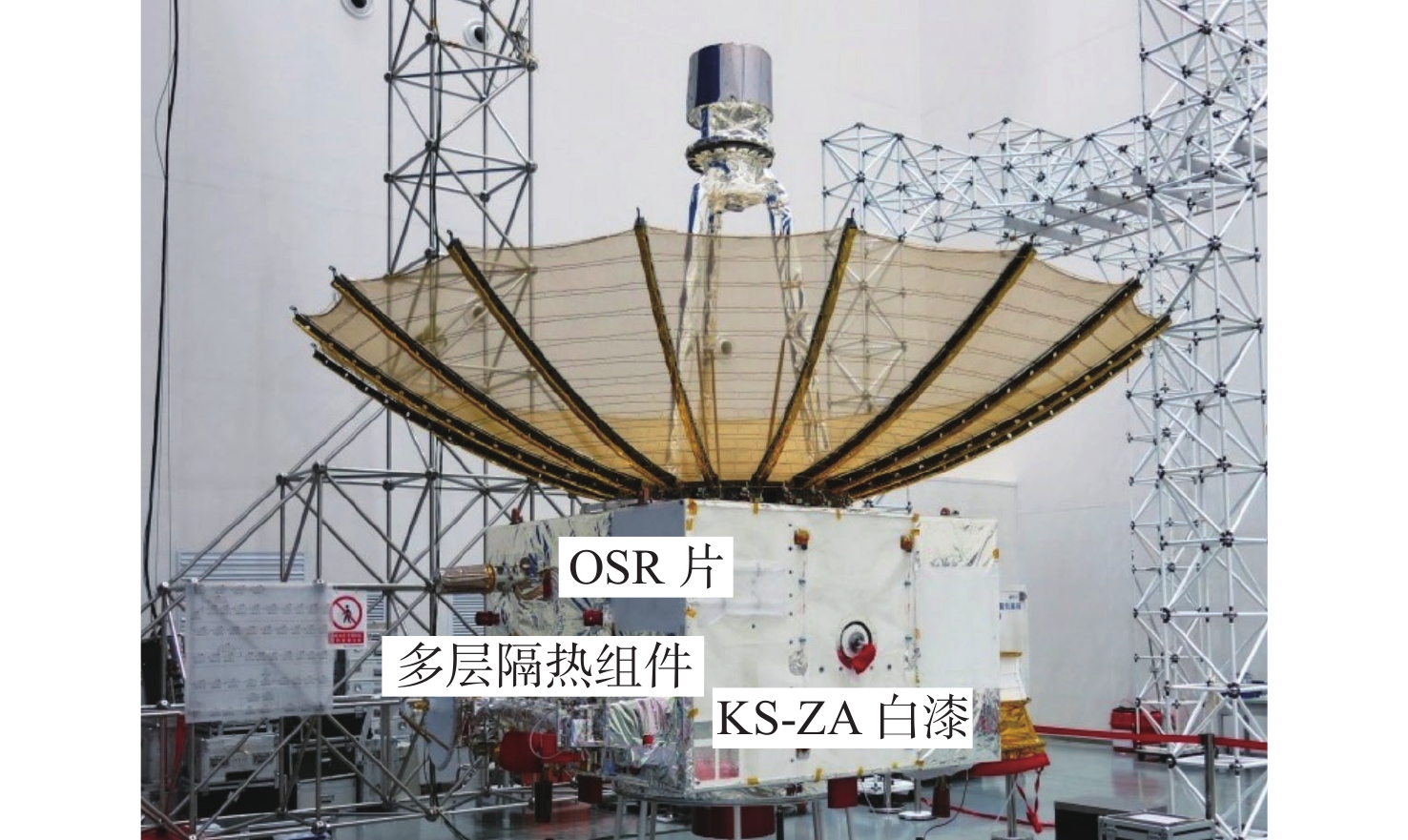
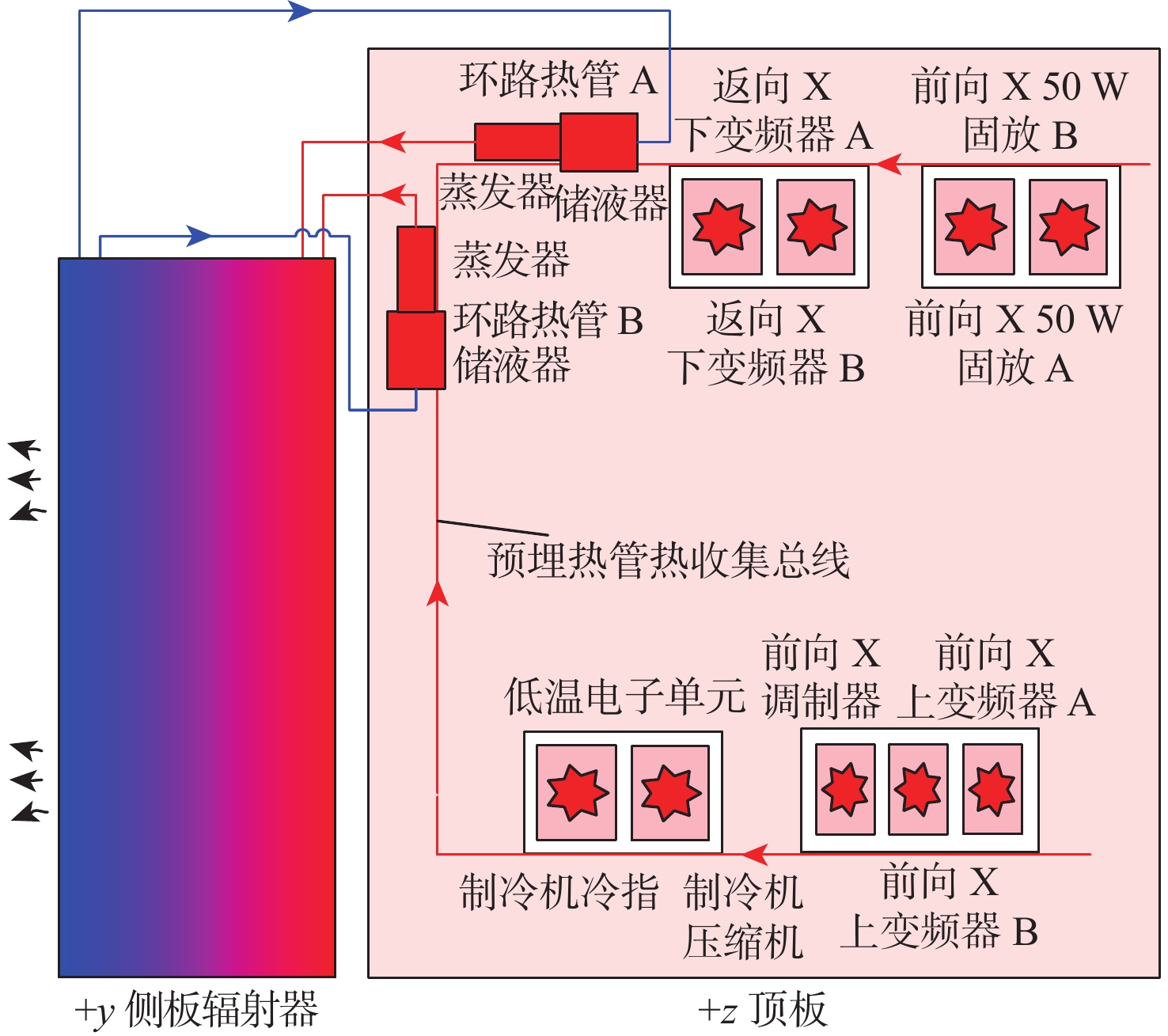
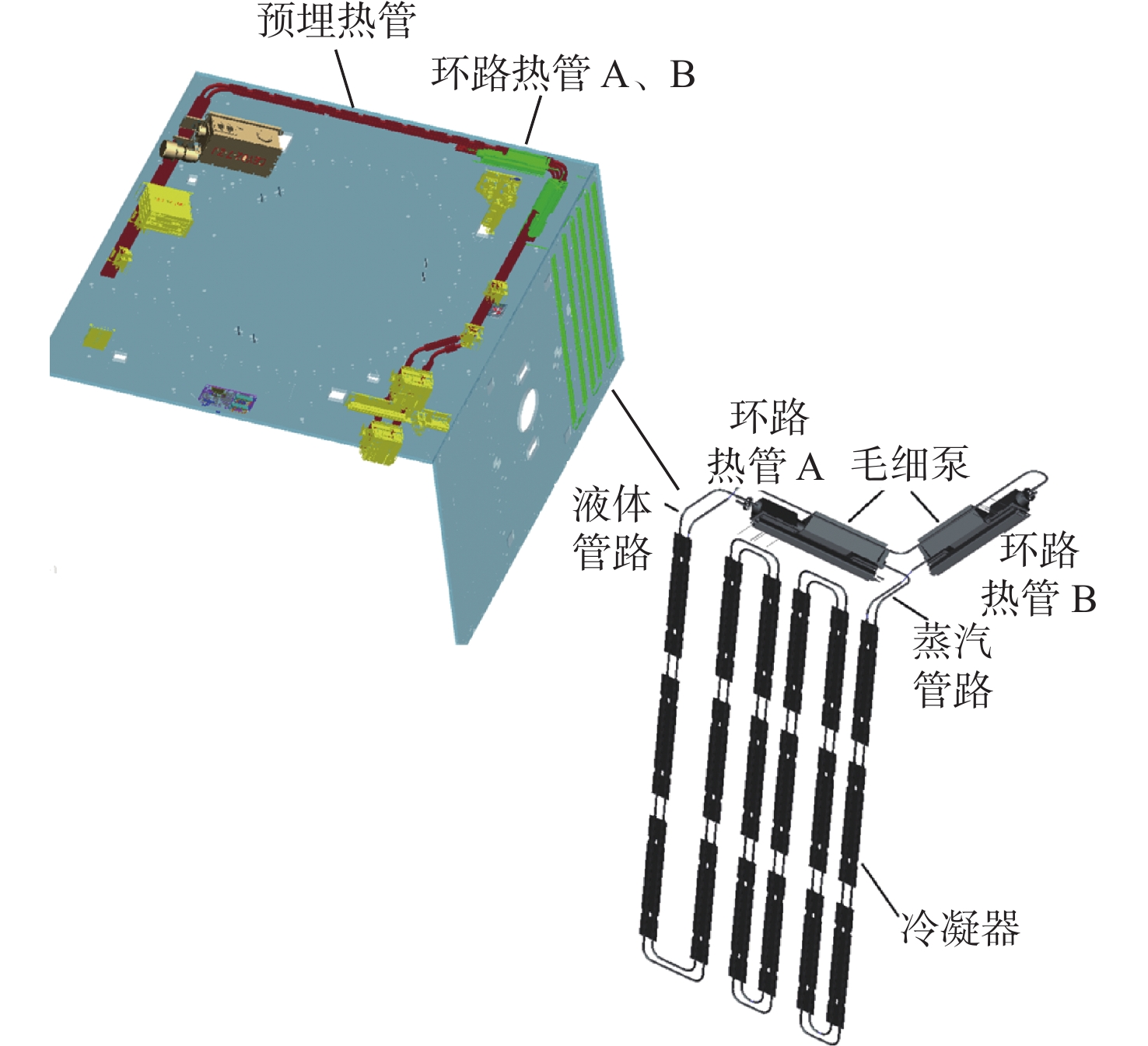
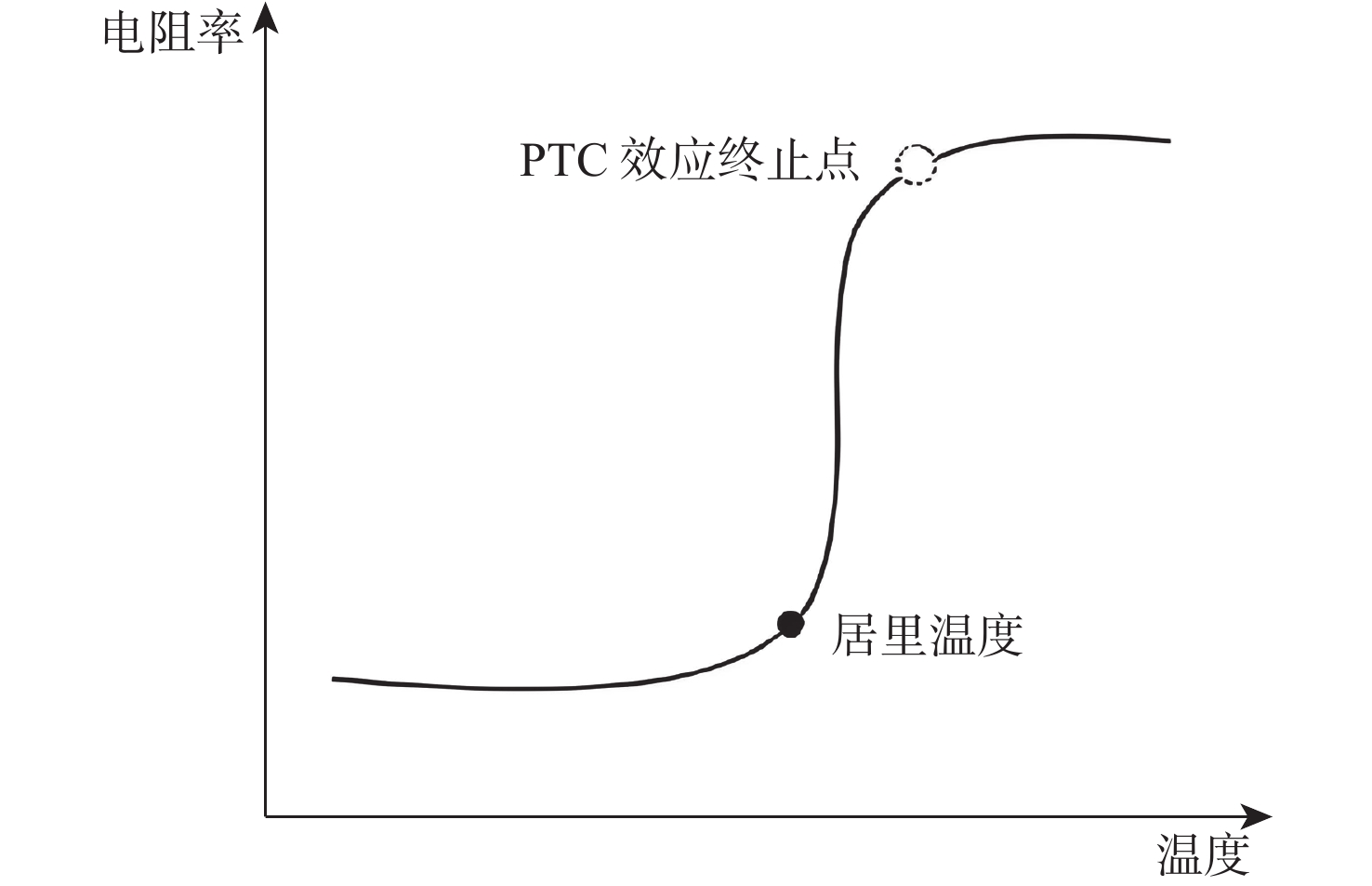
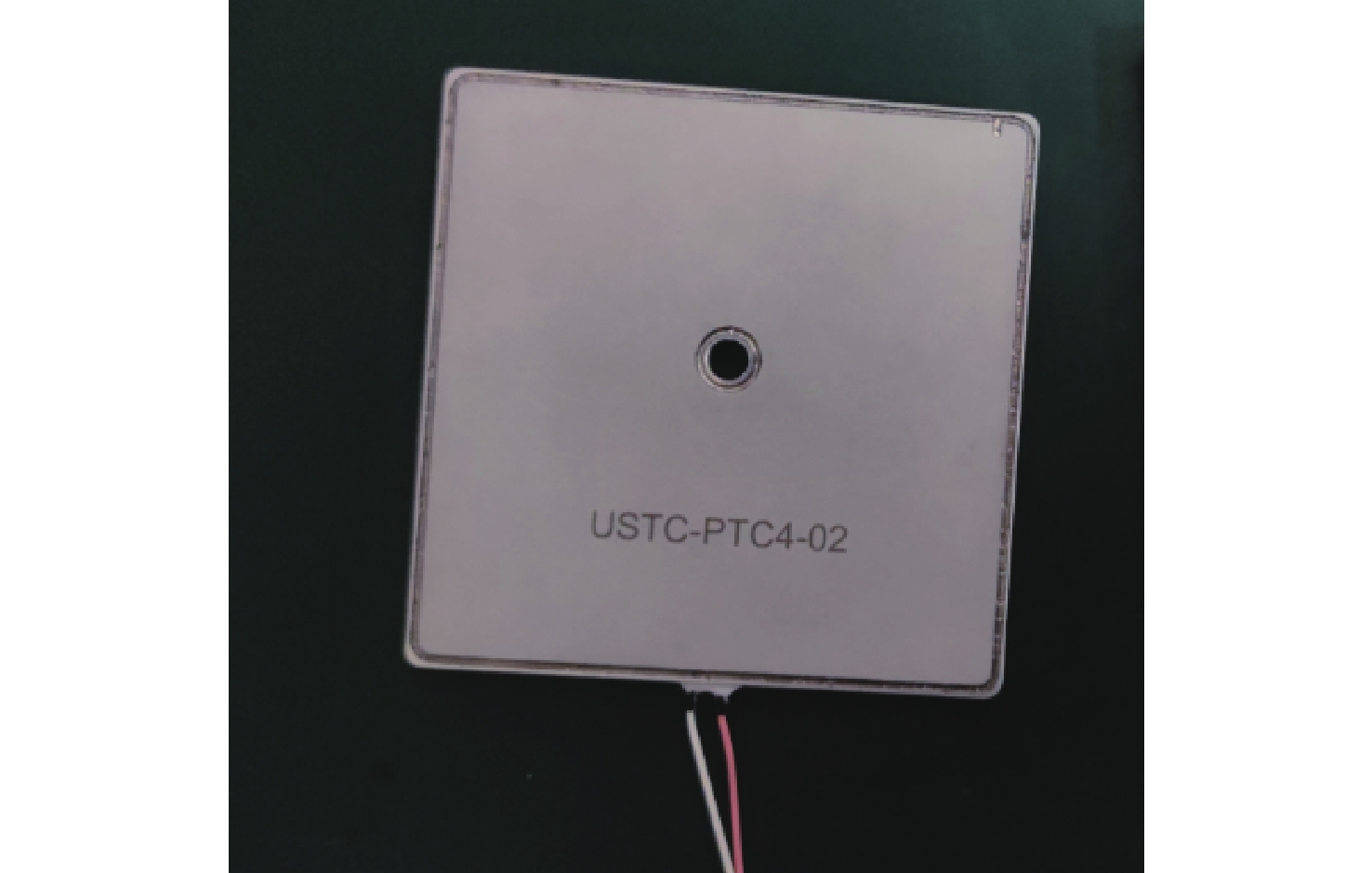
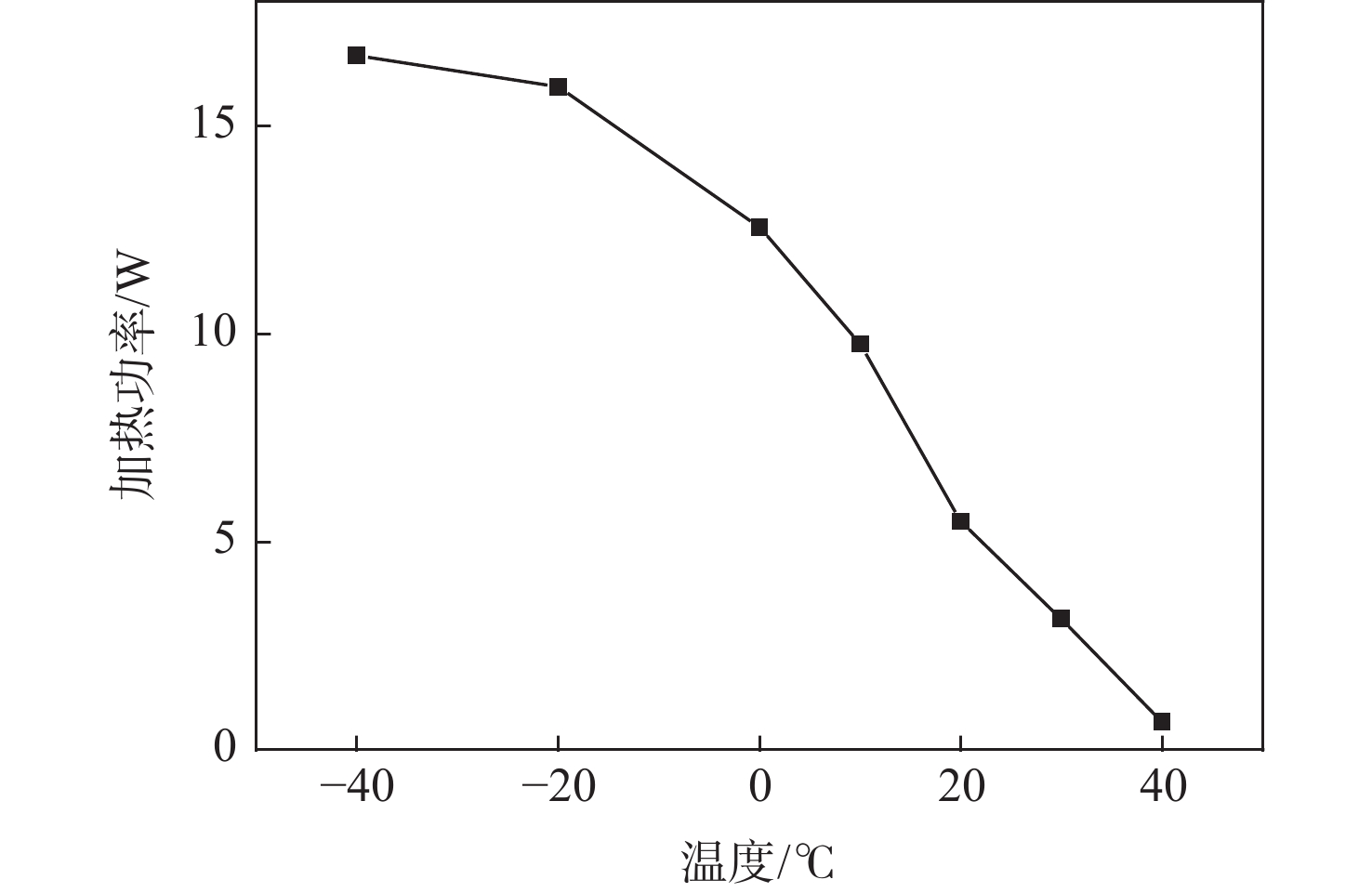
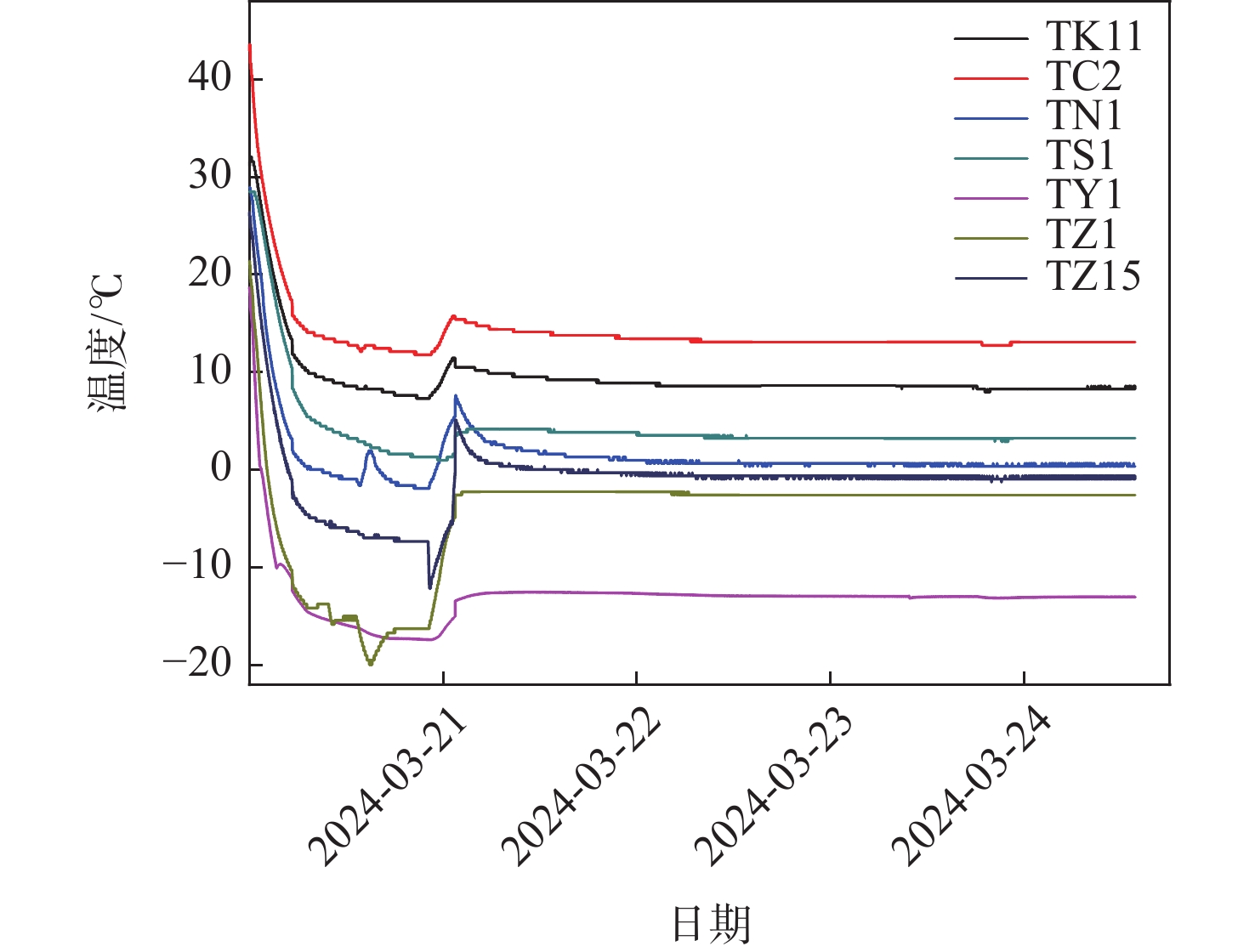
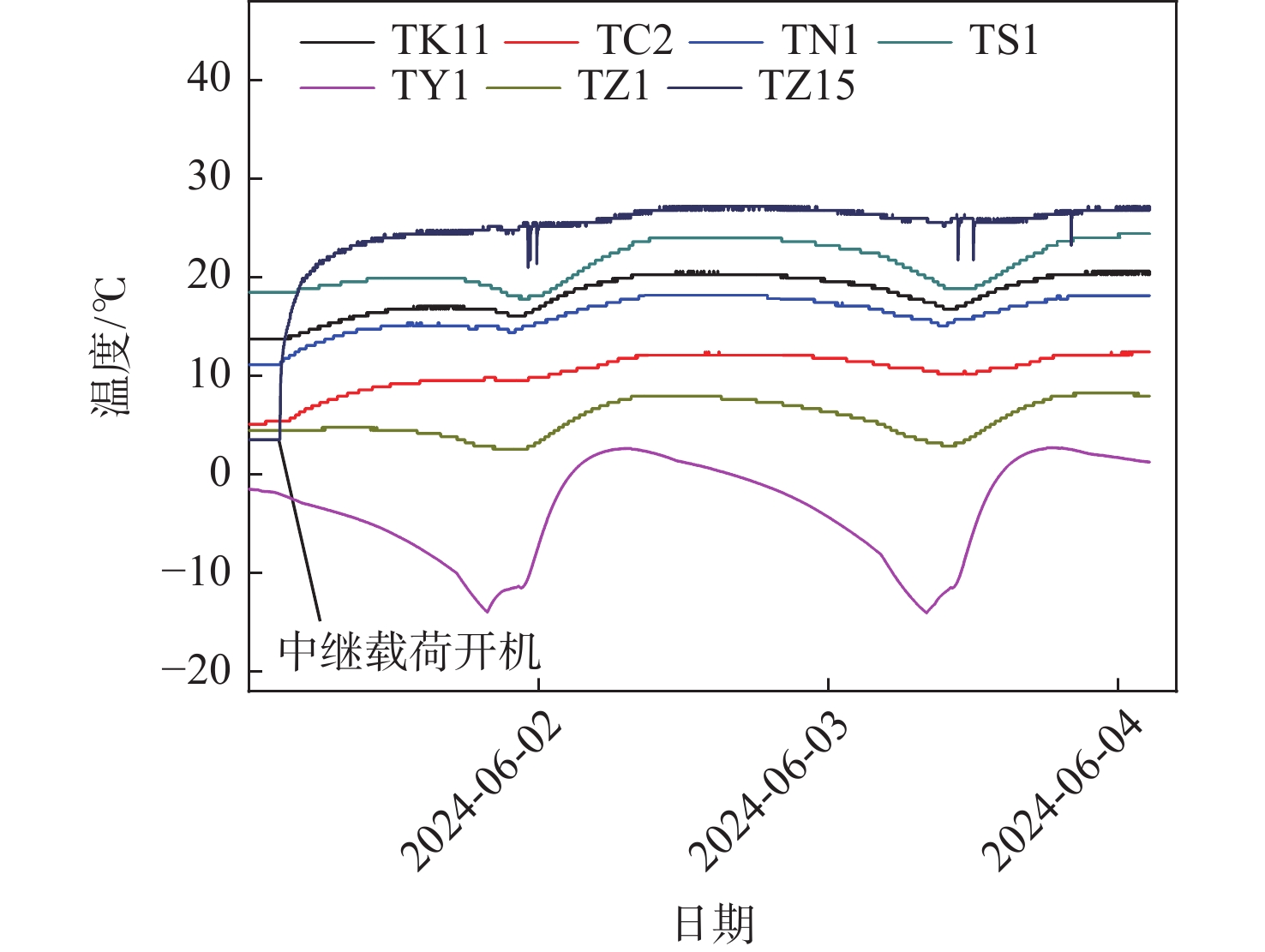
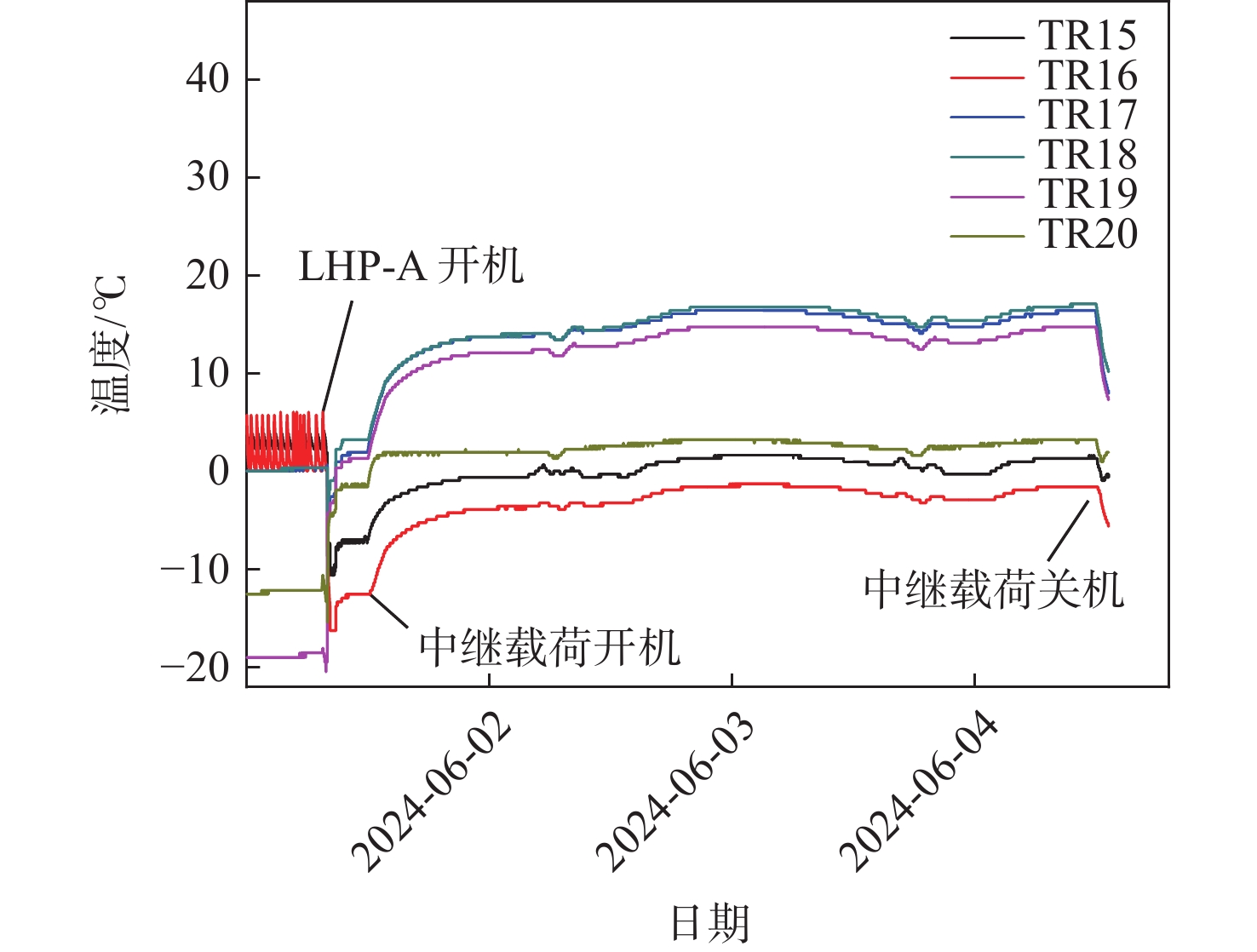
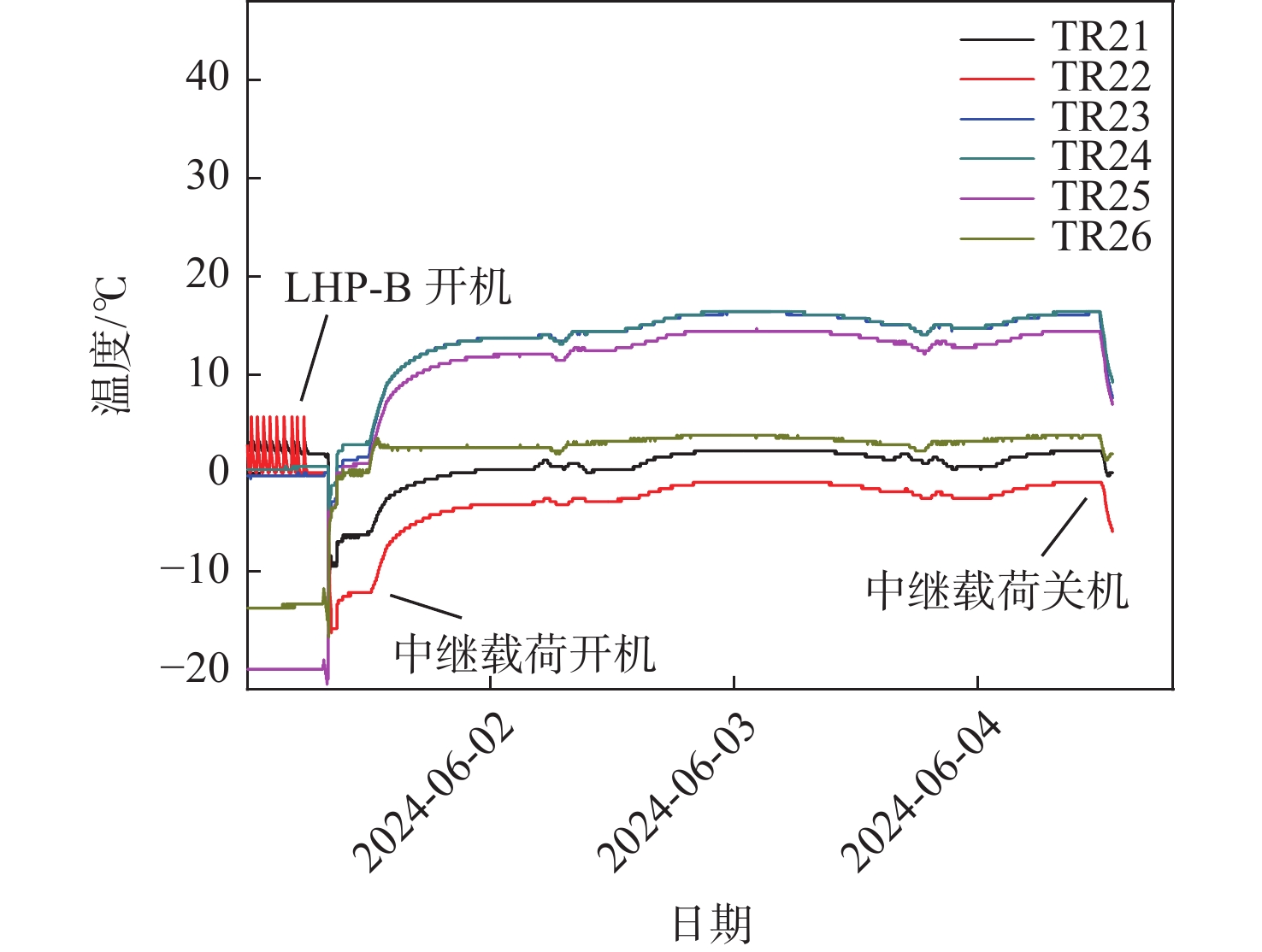
The Queqiao-2 satellite is a crucial part of the fourth Lunar Exploration Program mission. Compared to the Chang’e 4 Queqiao satellite, the Queqiao-2 satellite orbit changes from a Halo orbit at the Earth-Moon Lagrange L2 point to a circumlunar large elliptical orbit, with large changes in both relay communication and science load equipment. In this paper, the variation of solar heat flow and lunar infrared in a circumlunar large elliptical orbit with orbit is analyzed, which provides a basis for the design of the thermal control system of the Queqiao-2 satellite. In order to meet the temperature control requirements of the Queqiao-2 satellite in multi-mission mode and orbital attitude constraints, the thermal control system adopts a design scheme with adjustable heat dissipation capability based on loop heat pipe technology, while the design carries a positive temperature coefficient (PTC) self-controlled temperature heater, which is successfully applied in orbit. After Queqiao-2 was launched into orbit, the level of equipment temperature control during each flight phase was good. The first human lunar dorsal sample relay communications mission was substantially ensured by controlling the temperature of high-power relay loads, such as the Queqiao-2 X-band solid state amplifier, between 22 °C and 28 °C during the Chang’e 6 mission. The design method in this paper can provide a reference for the design of the highly adaptable thermal control system of a deep space exploration mission.

Uncertainty analysis methods for heat transfer ablation in carbon-based materials
LIU Ting, LIU Xiao, GUO Lei, ZENG Lei, GUO Yijun
2026, 52(6): 2064-2073. doi: 10.13700/j.bh.1001-5965.2024.0301
Abstract:

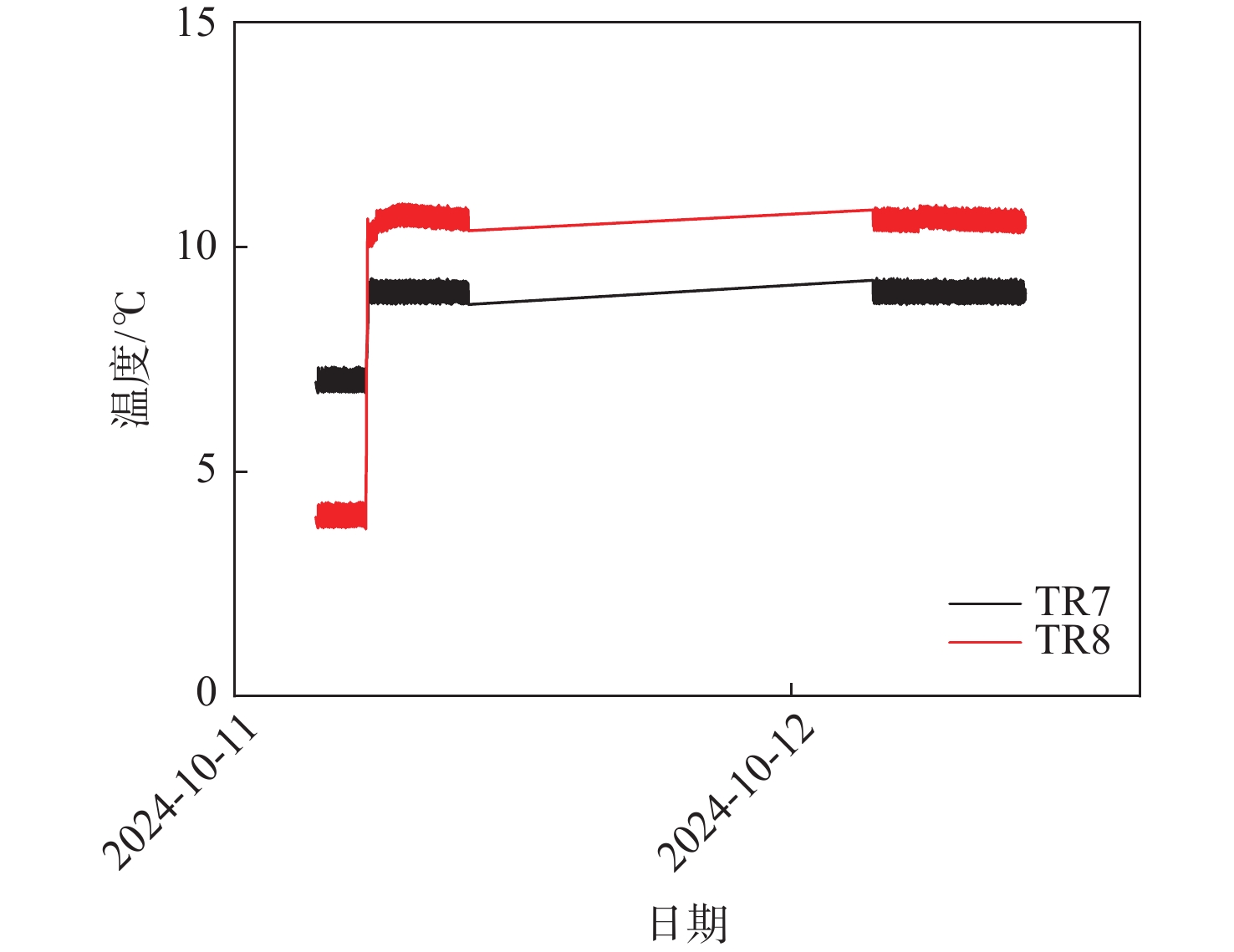
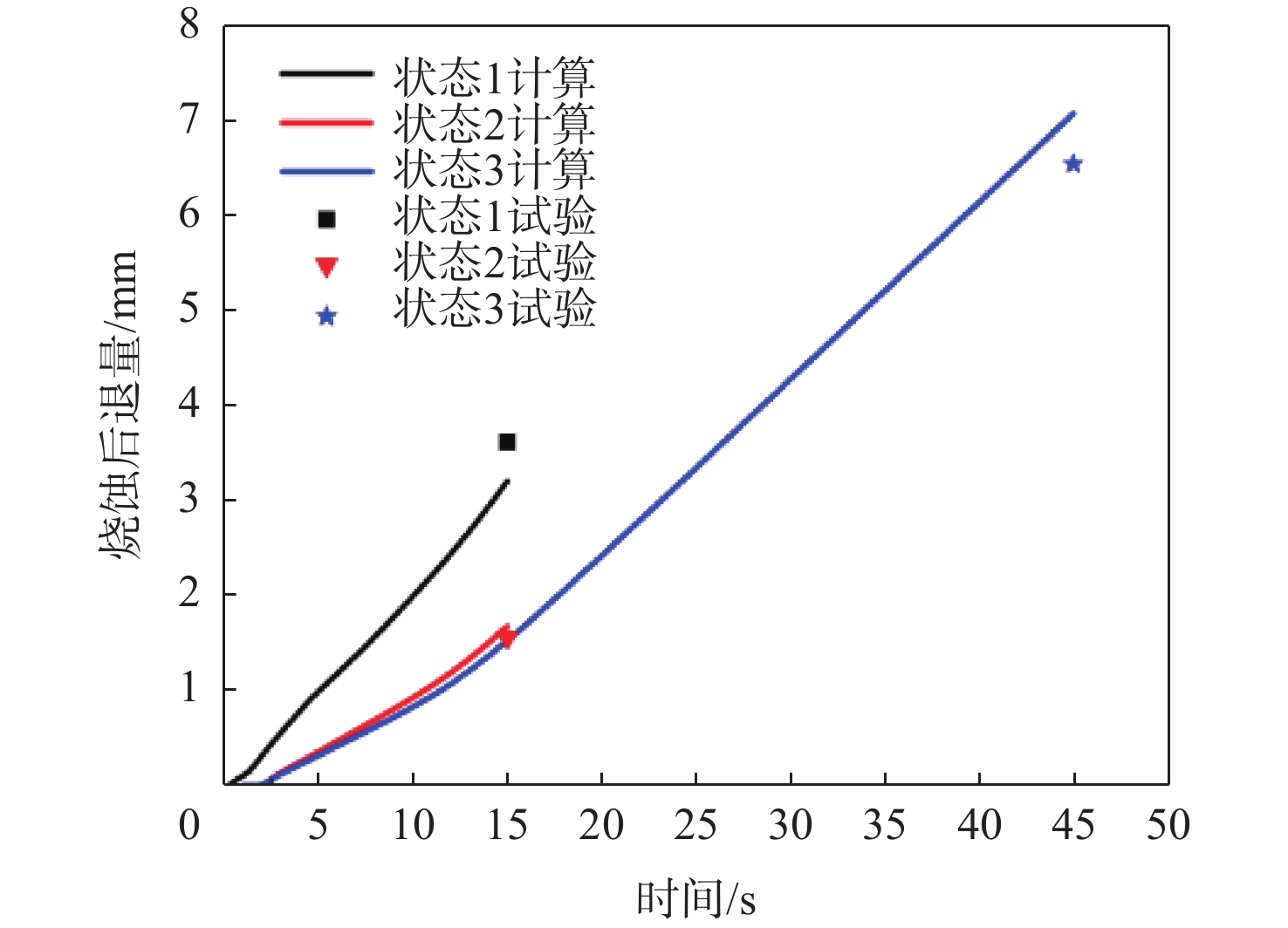
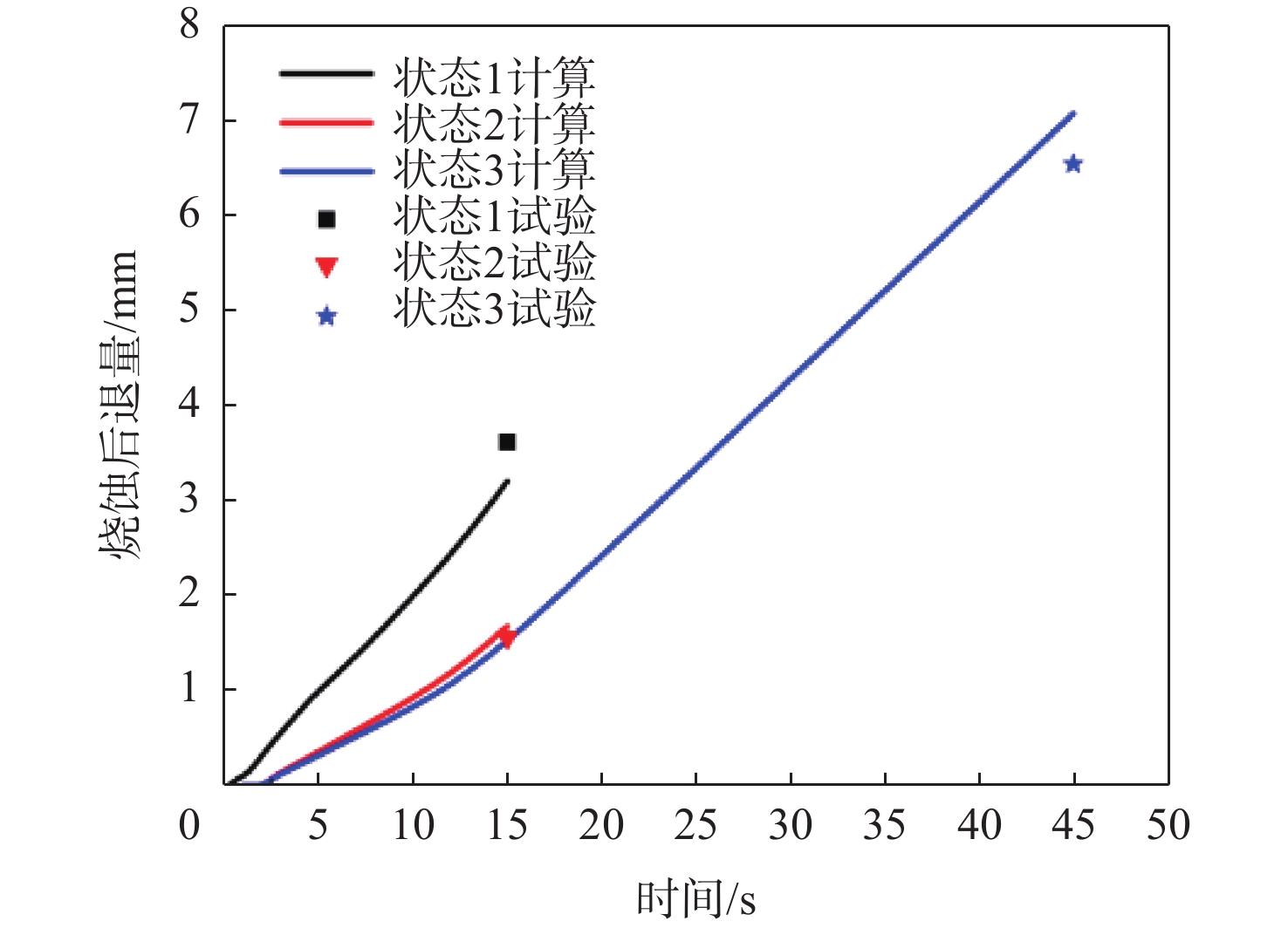
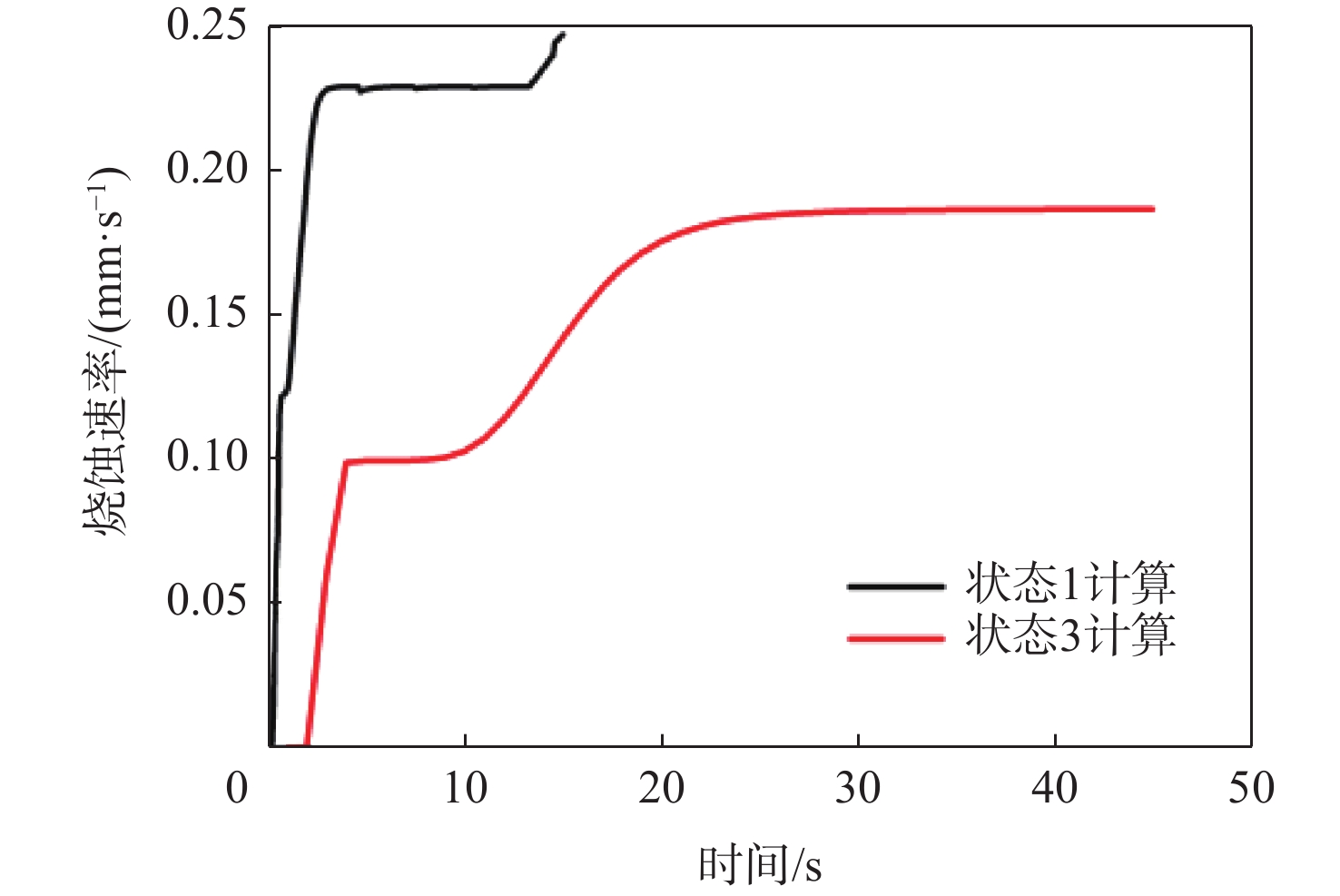
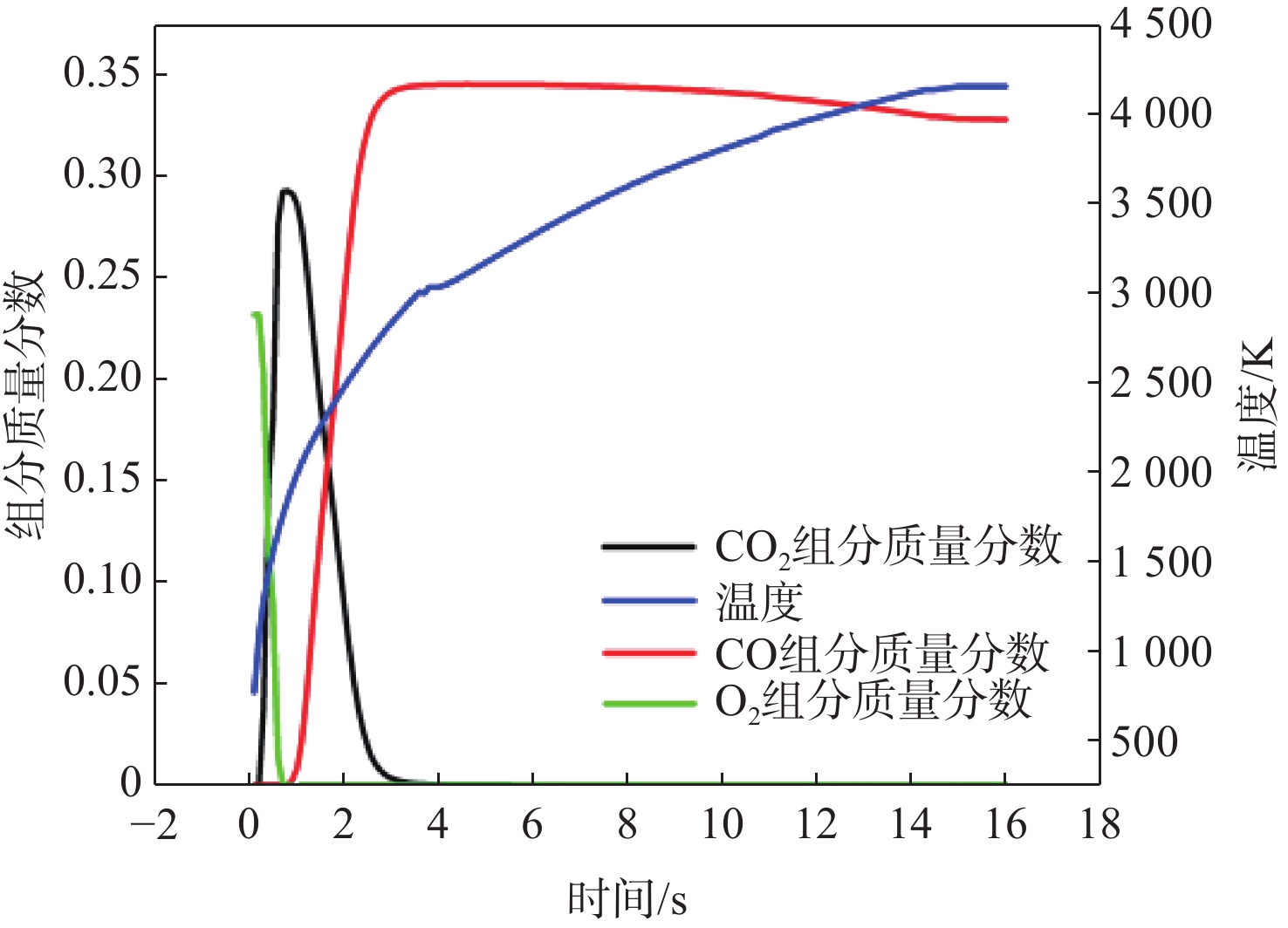
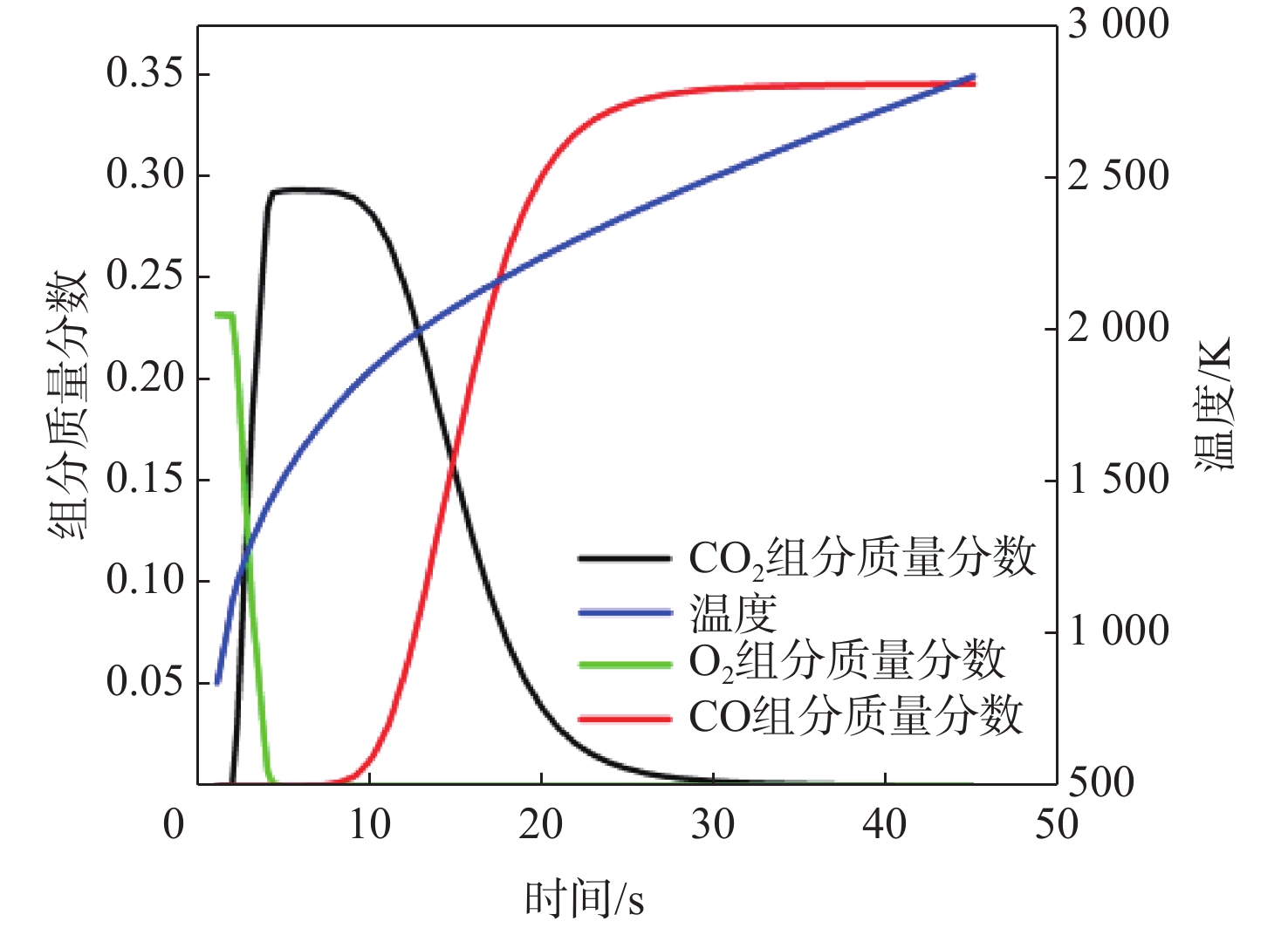
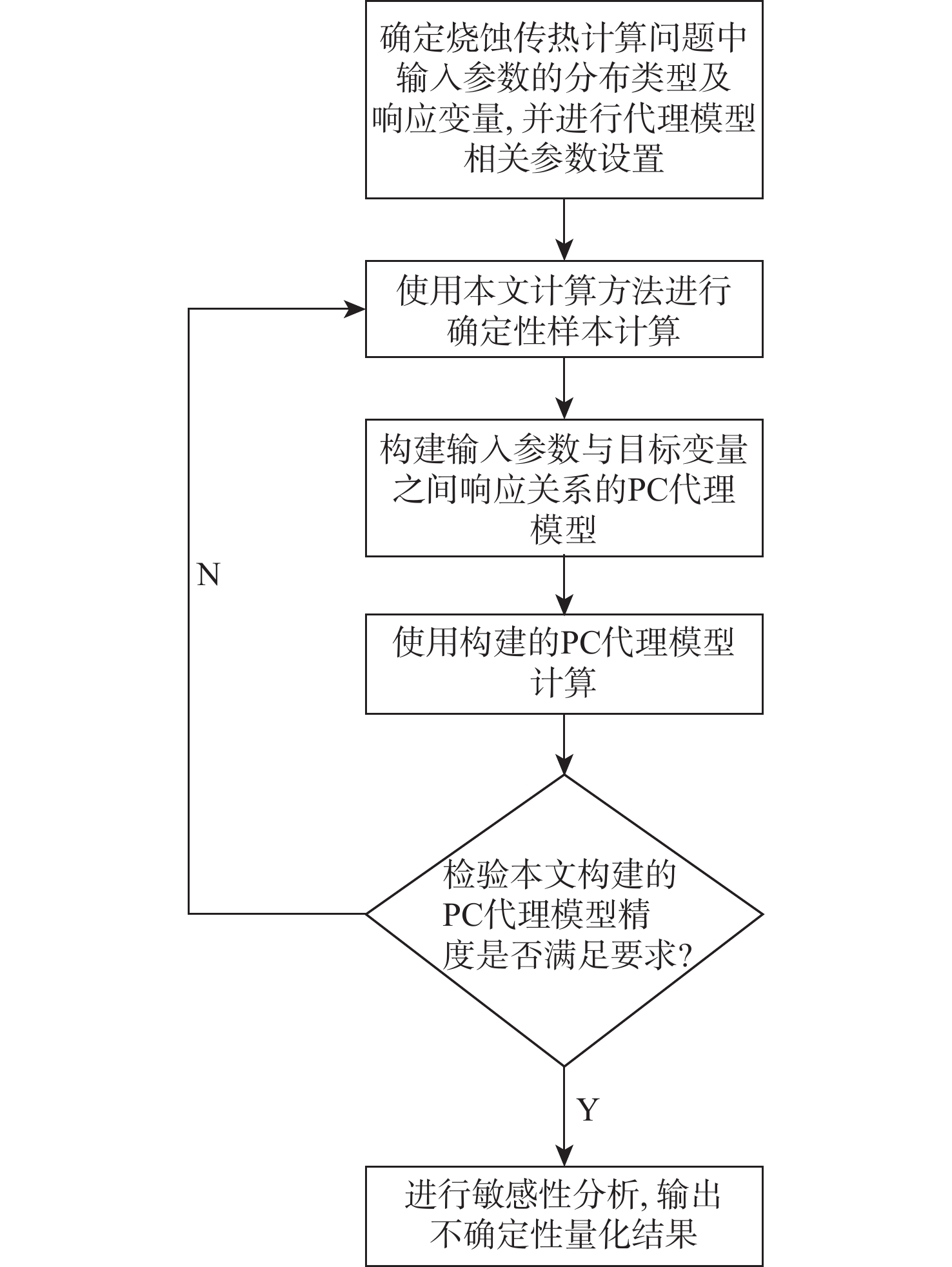
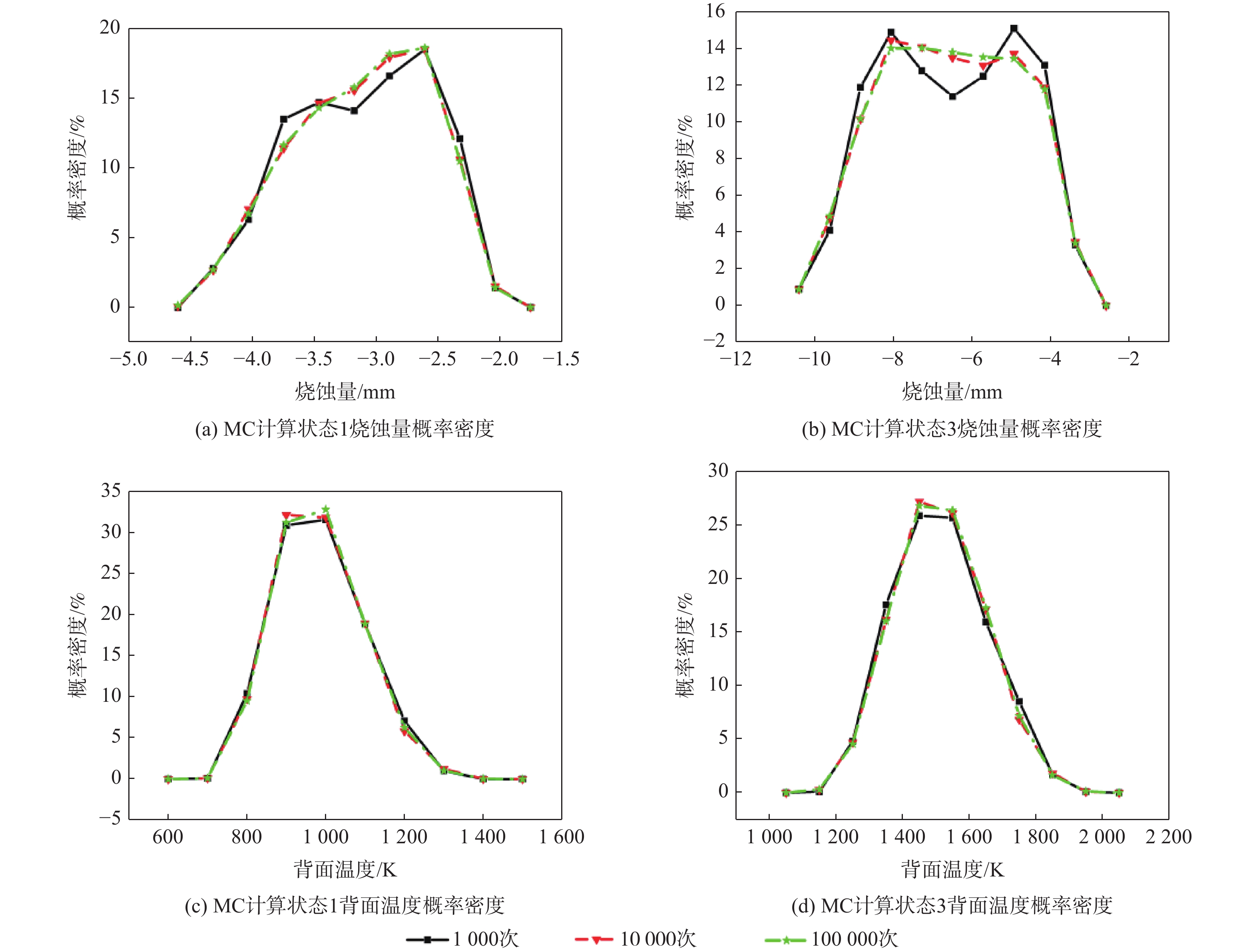
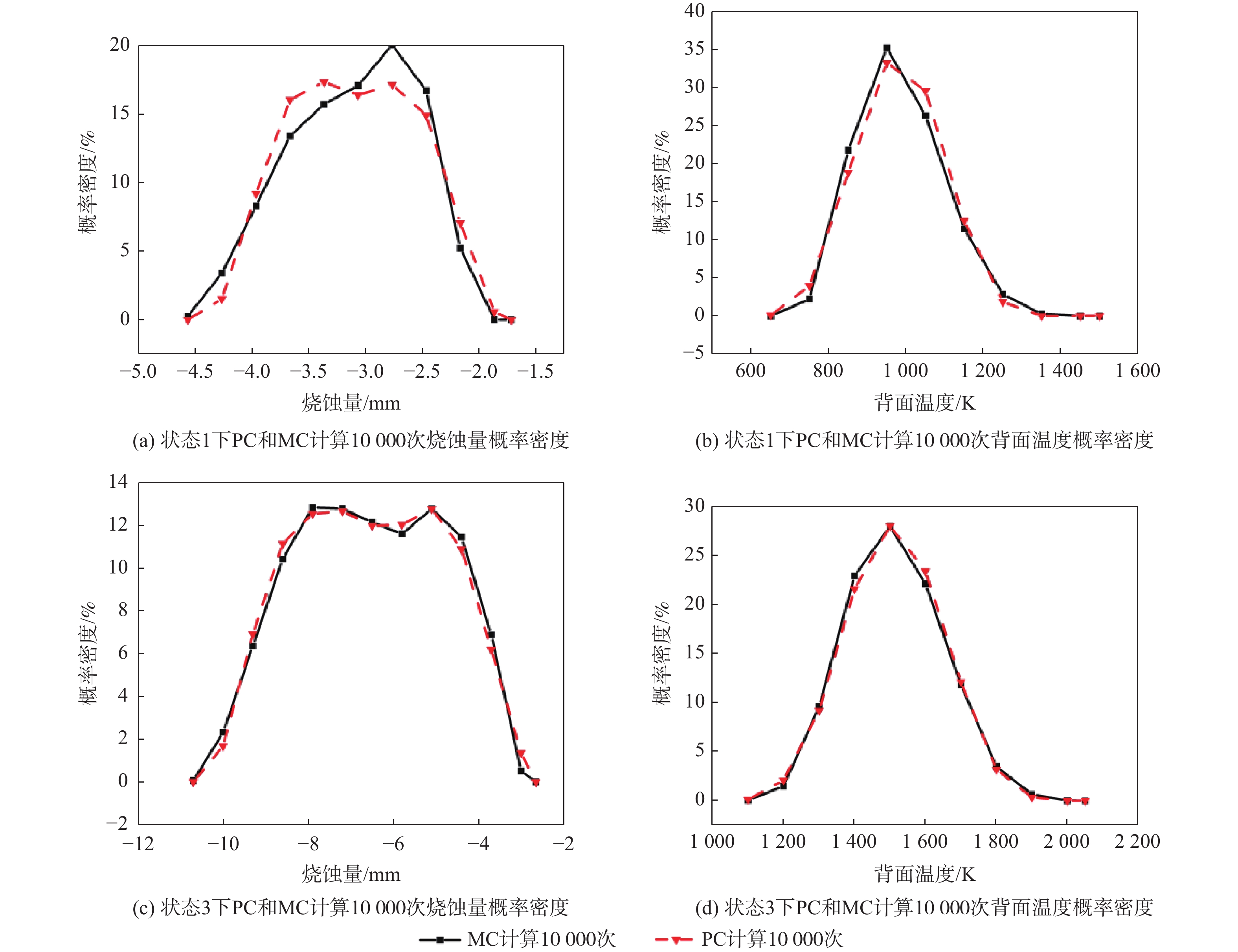
A quantitative study on the uncertainty of ablation heat transfer is conducted, in which a dual platform model is used for ablation prediction, and the heat transfer process under the ablation dynamic boundary is numerically solved using the finite element method. Firstly, an orthogonal experimental study was conducted to analyze the influence of parameters on the target variable. It was discovered that while the input parameters had consistent impacts on the backside temperature, they had distinct effects on the ablation quantity under two common heating situations (high heat flow, short time and low heat flow, long time). In order to obtain more accurate uncertainty quantification results, Monte Carlo (MC) and polynomial chaos (PC) methods were further used to conduct uncertainty analysis on the ablation heat transfer problem. Through sensitivity analysis, it was found that under two heating conditions, heat flux was the key factor affecting the ablation amount. The back temperature is most affected by the material’s thermal conductivity in state 1 (high heat flow, short time), but heat flow in state 3 (low heat flow, long time) has a comparatively bigger effect. Compared to the MC method, the PC method can effectively reduce computational costs and obtain satisfactory computational results.
Analysis of liquid sloshing under variable thrust, variable filling liquid ratio, and tilted tank state
HE Jiawei, LYU Jing, WANG Tianshu, LIU Yingjie
2026, 52(6): 2074-2082. doi: 10.13700/j.bh.1001-5965.2024.0286
Abstract:

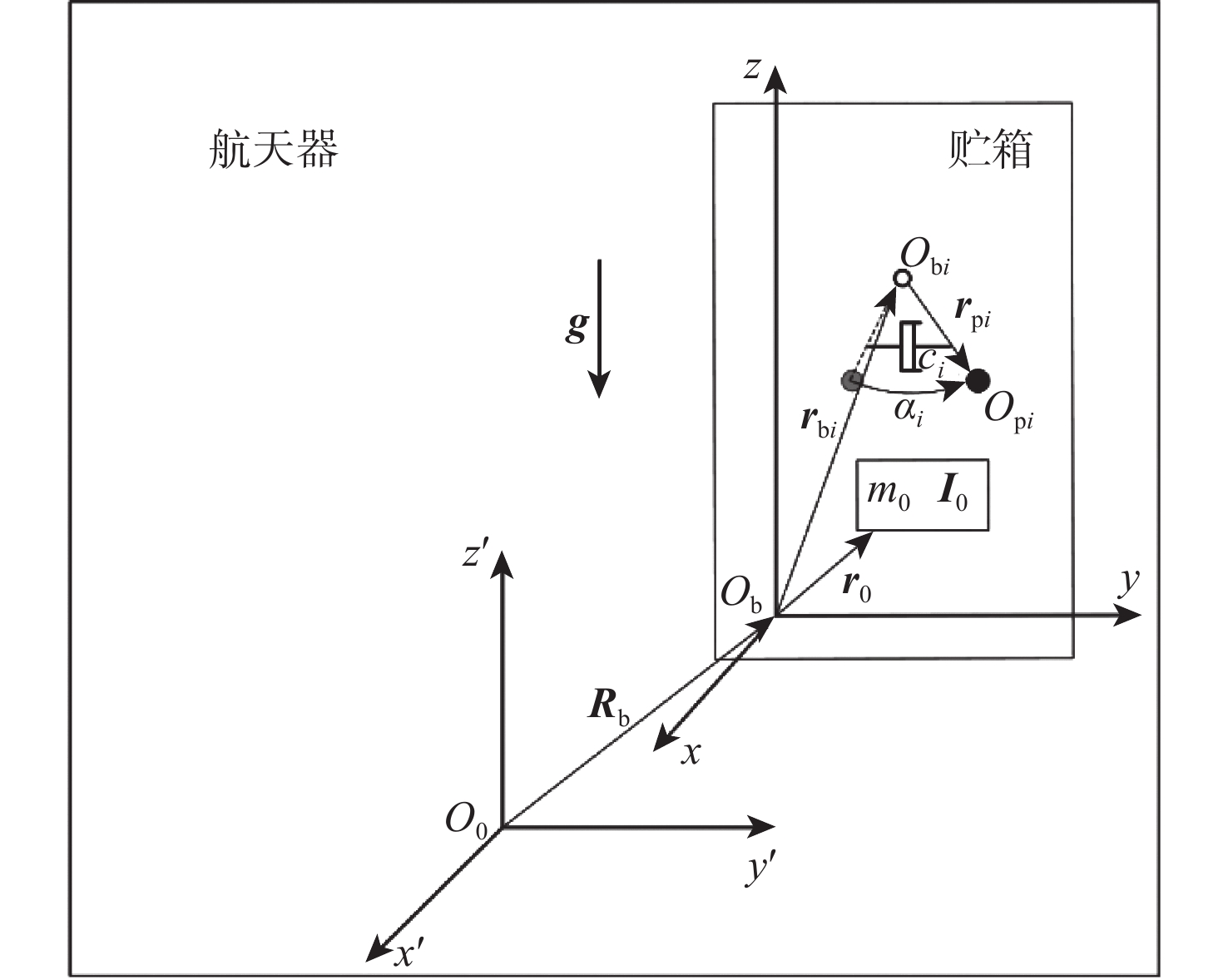
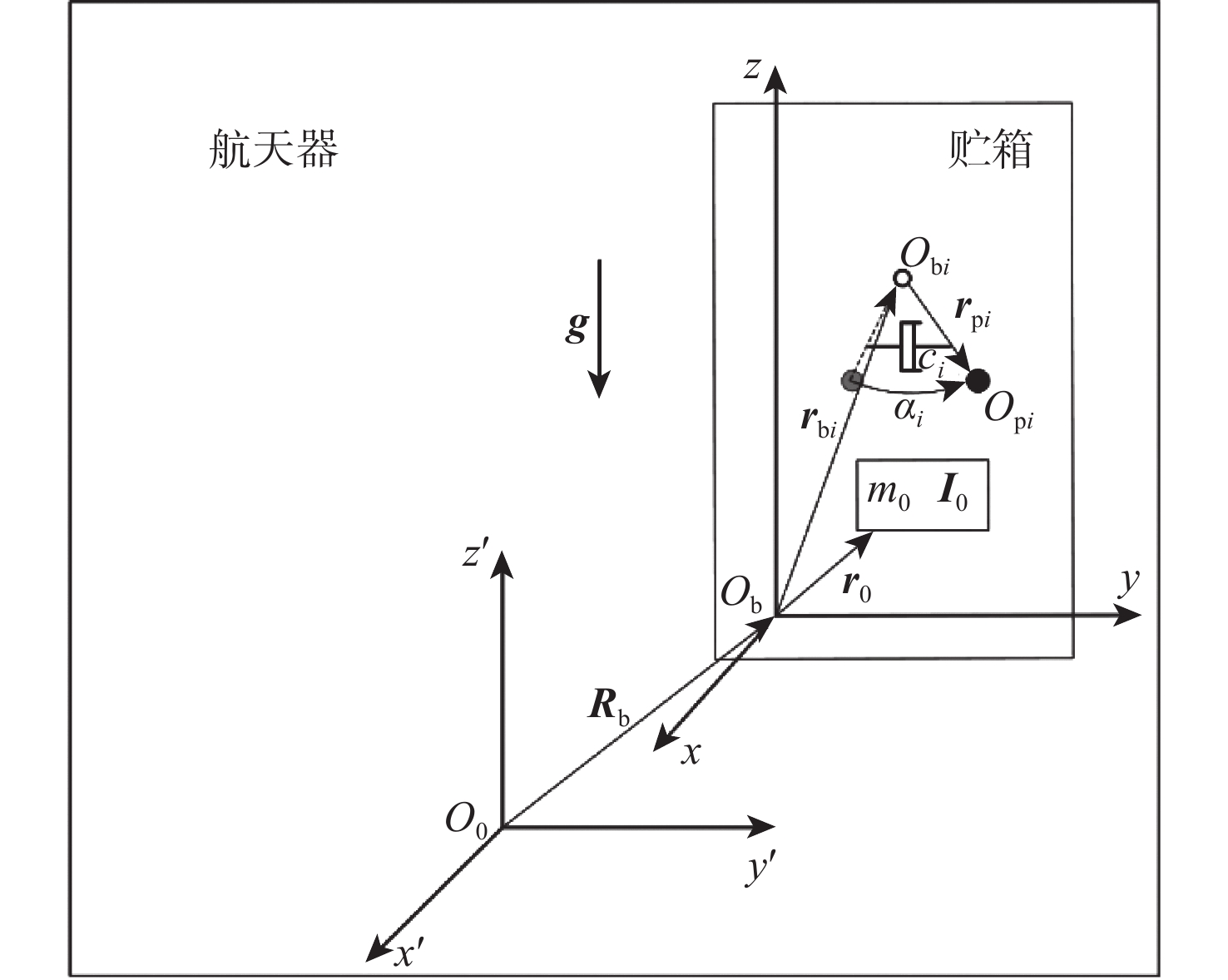
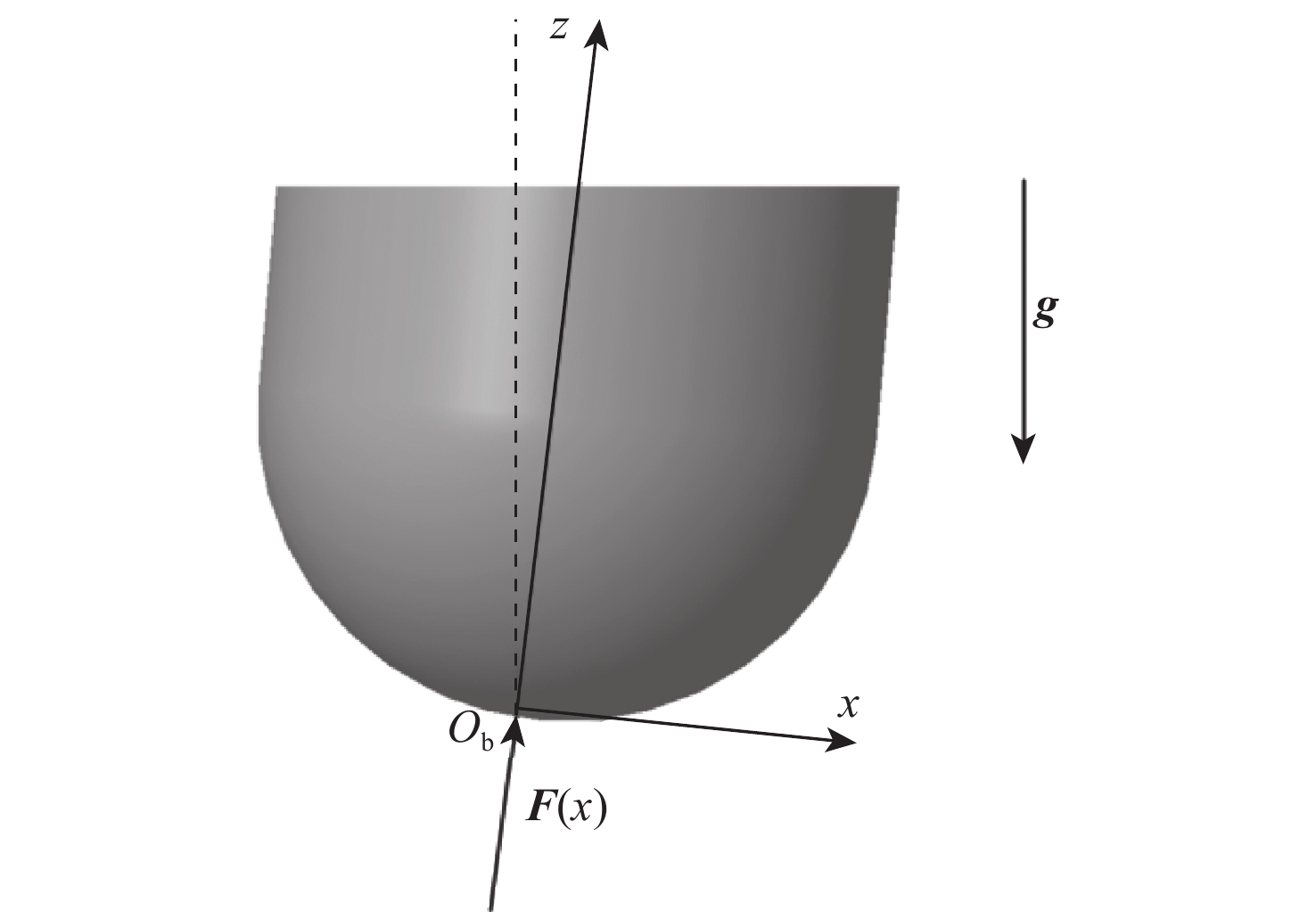
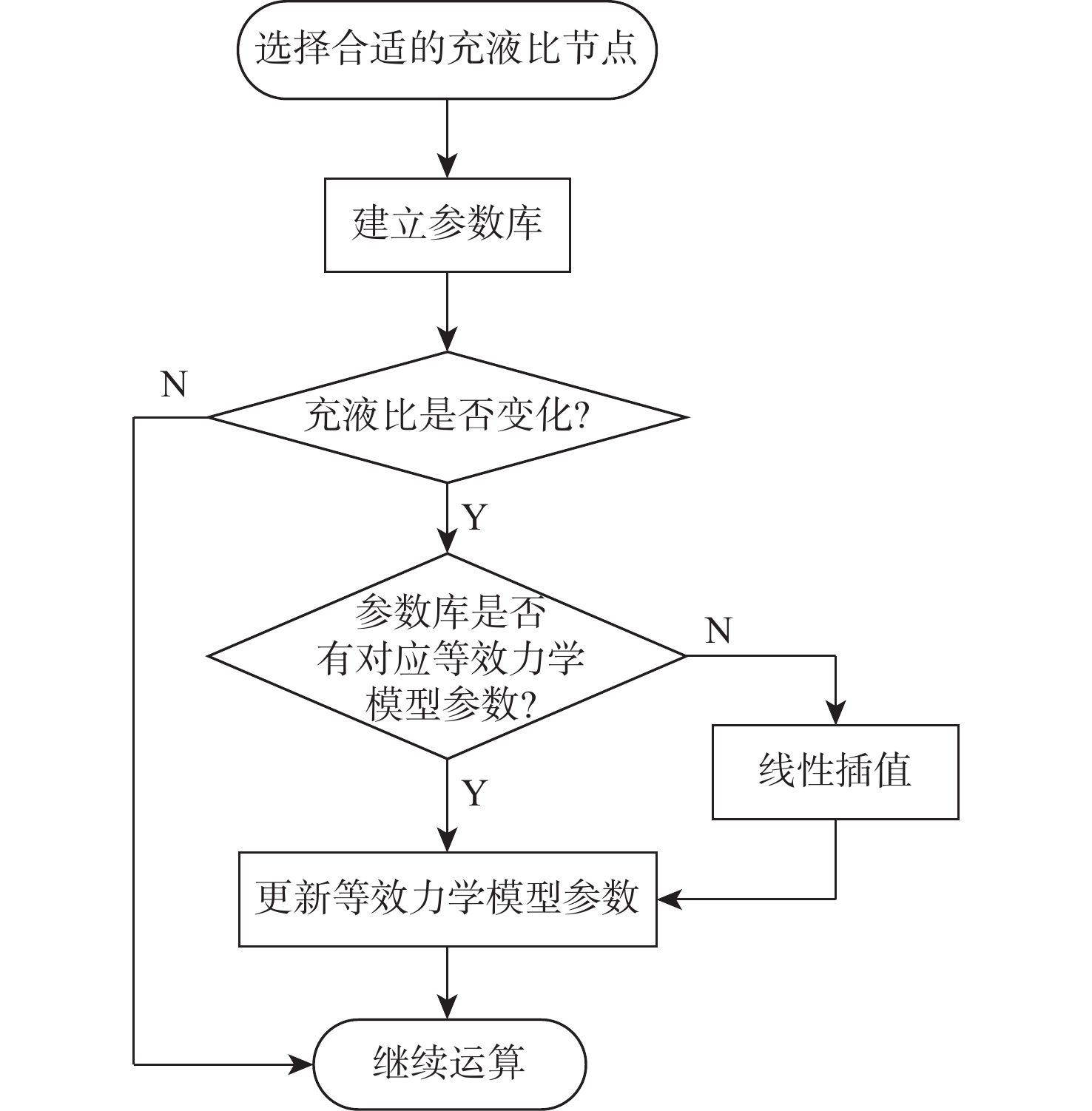
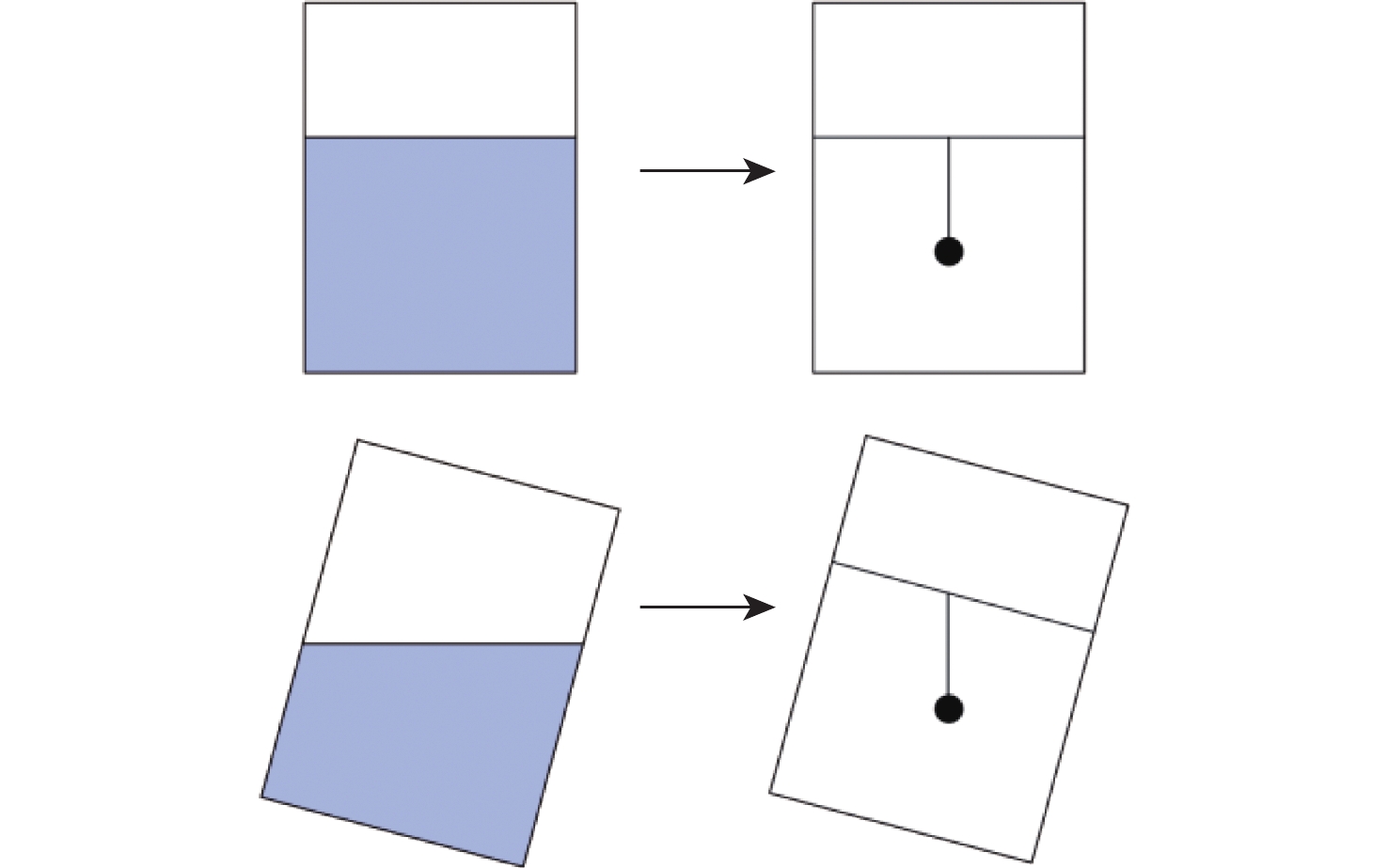
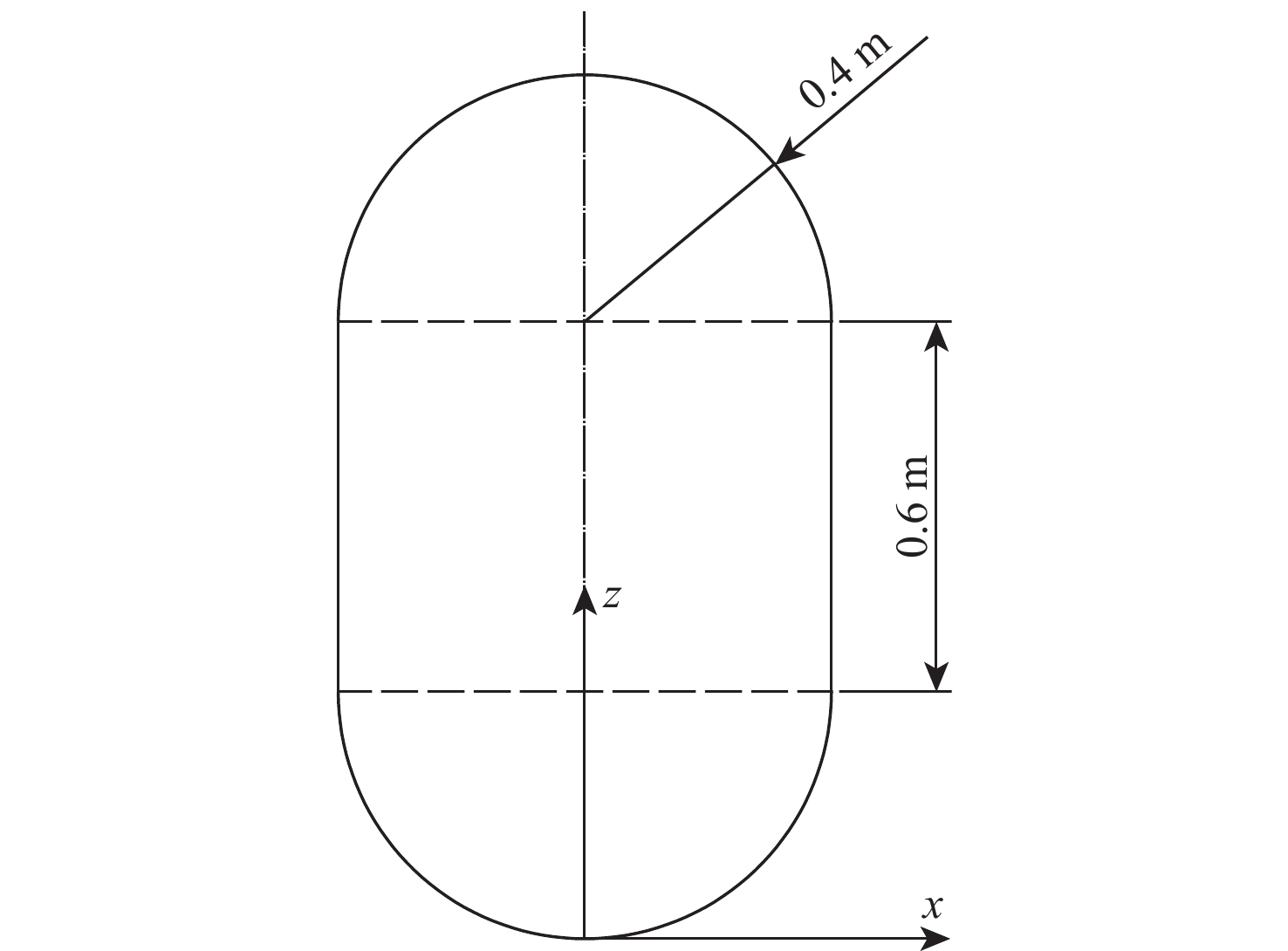
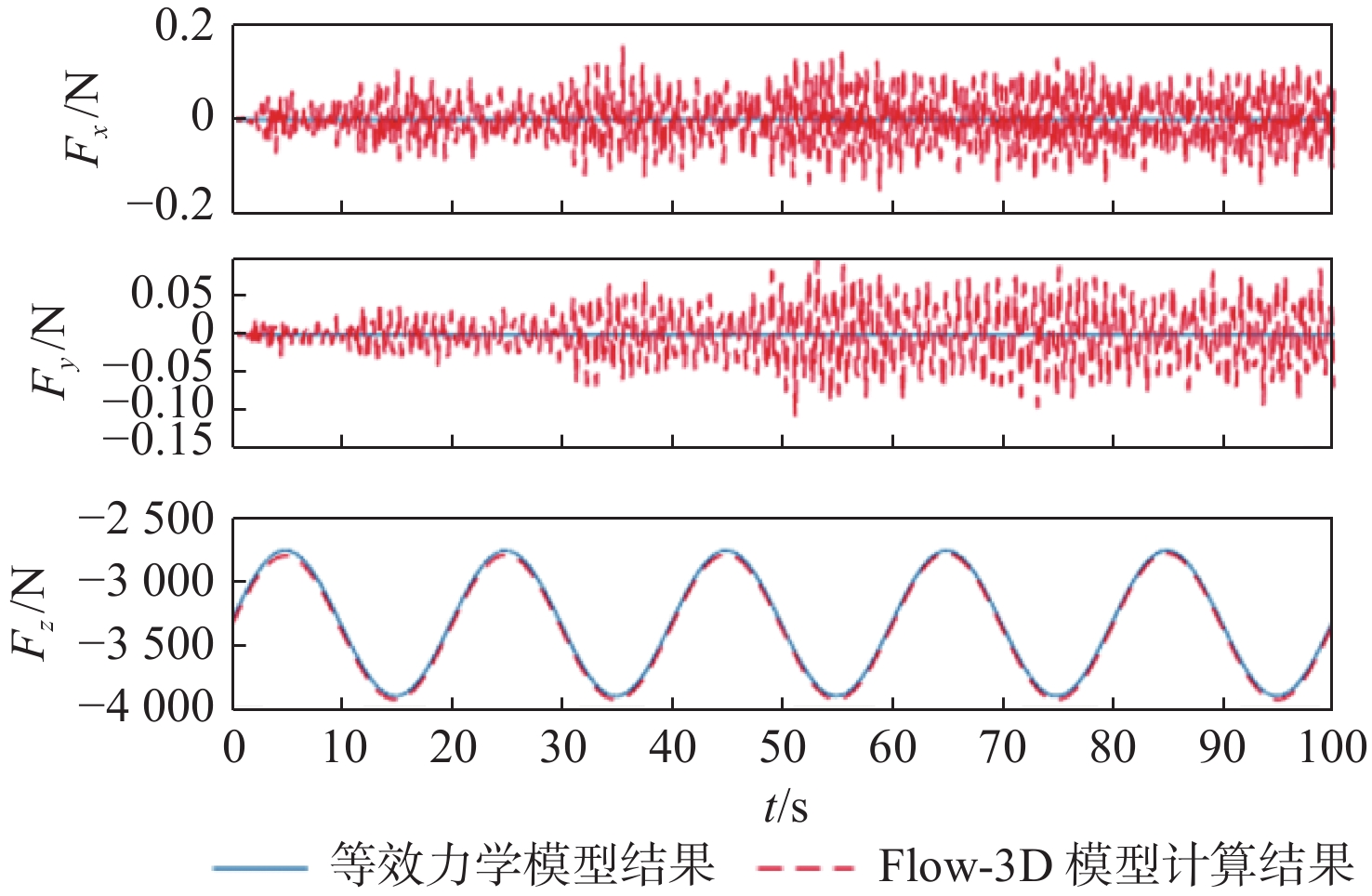
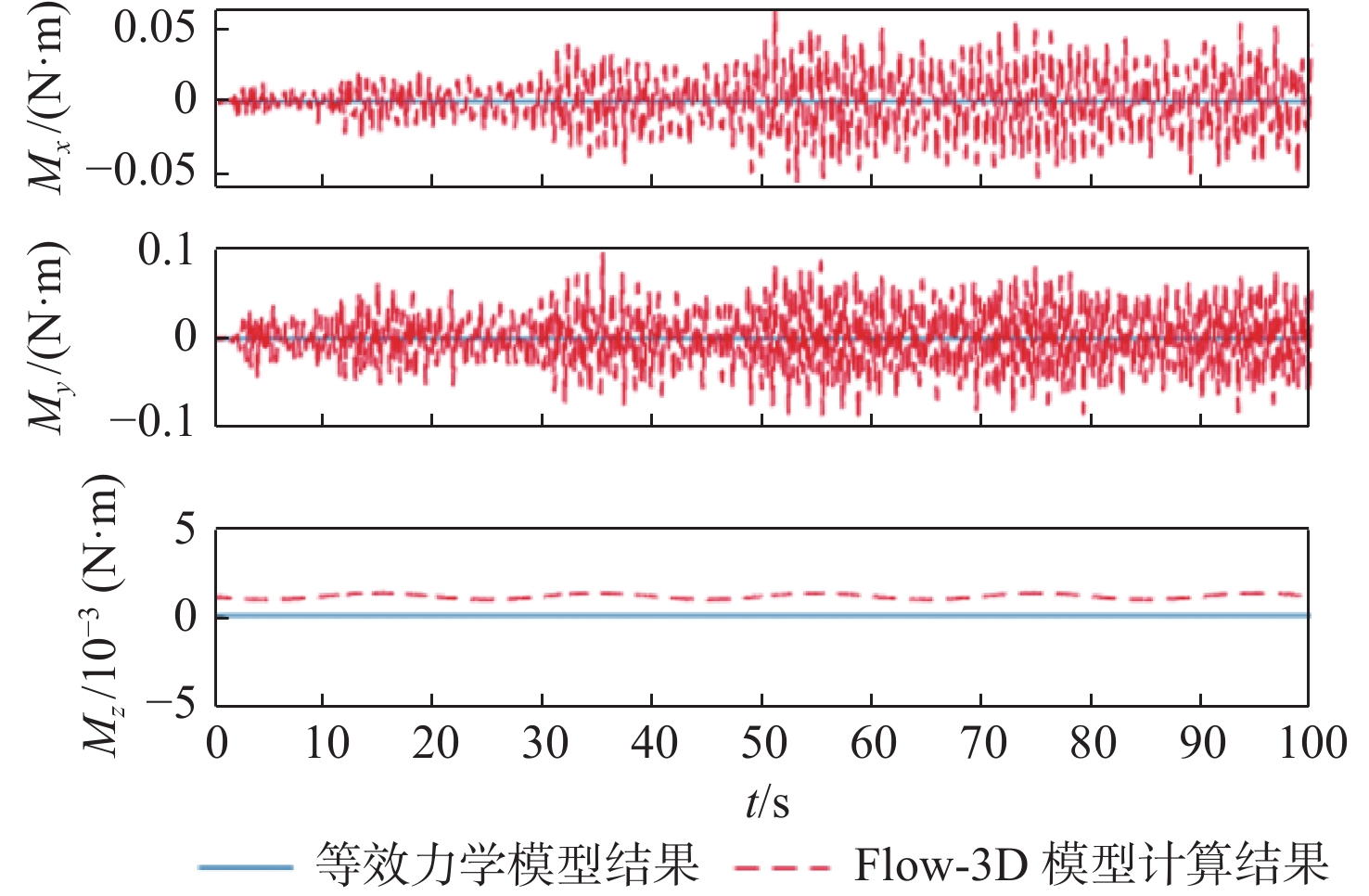
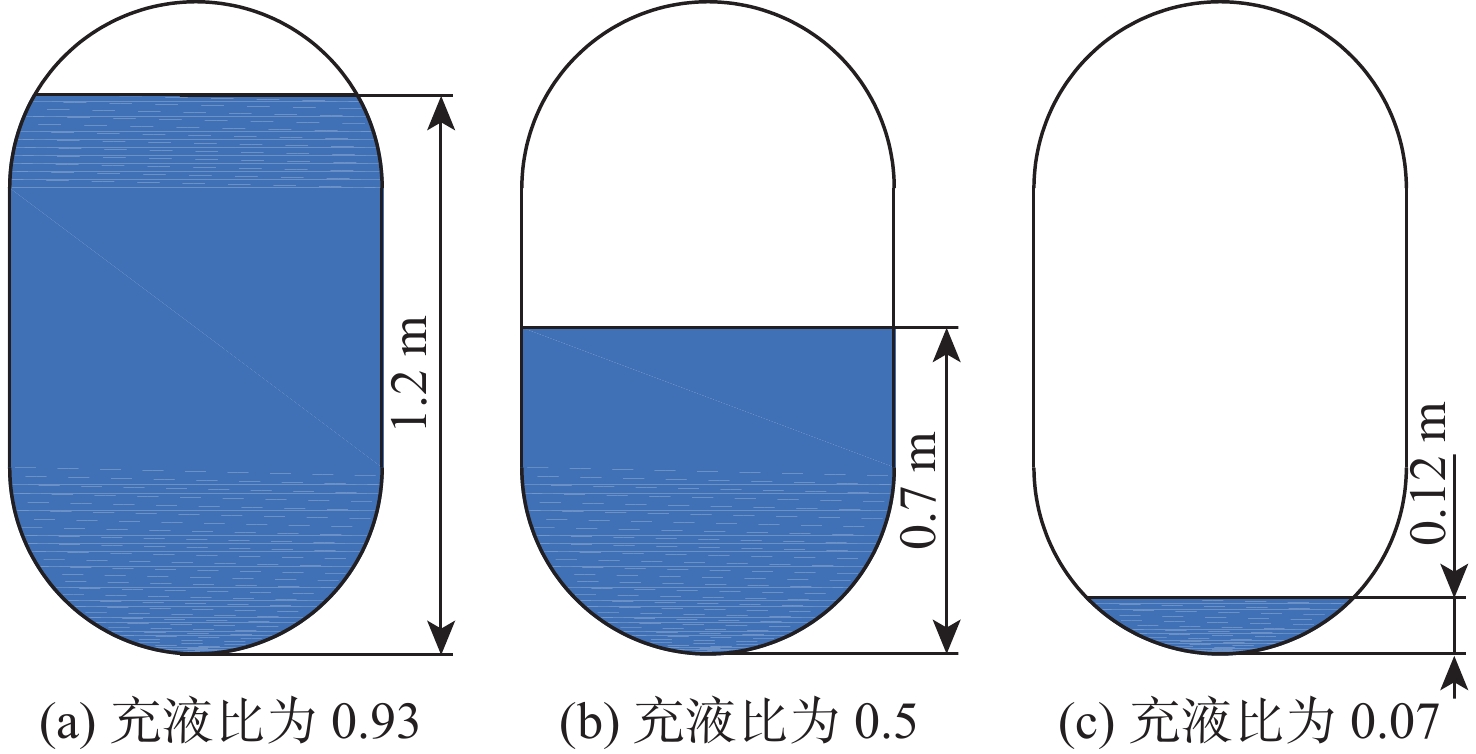
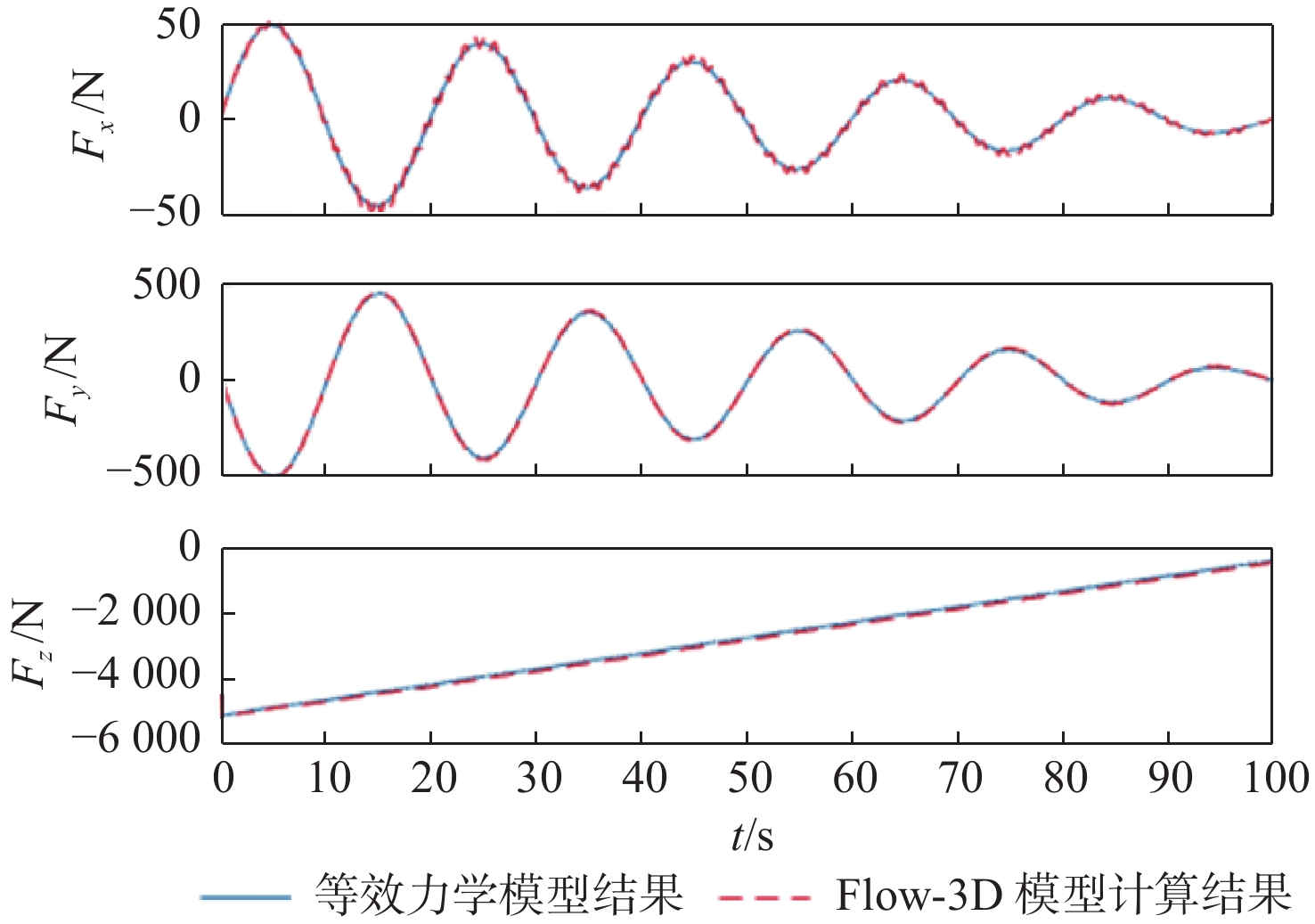
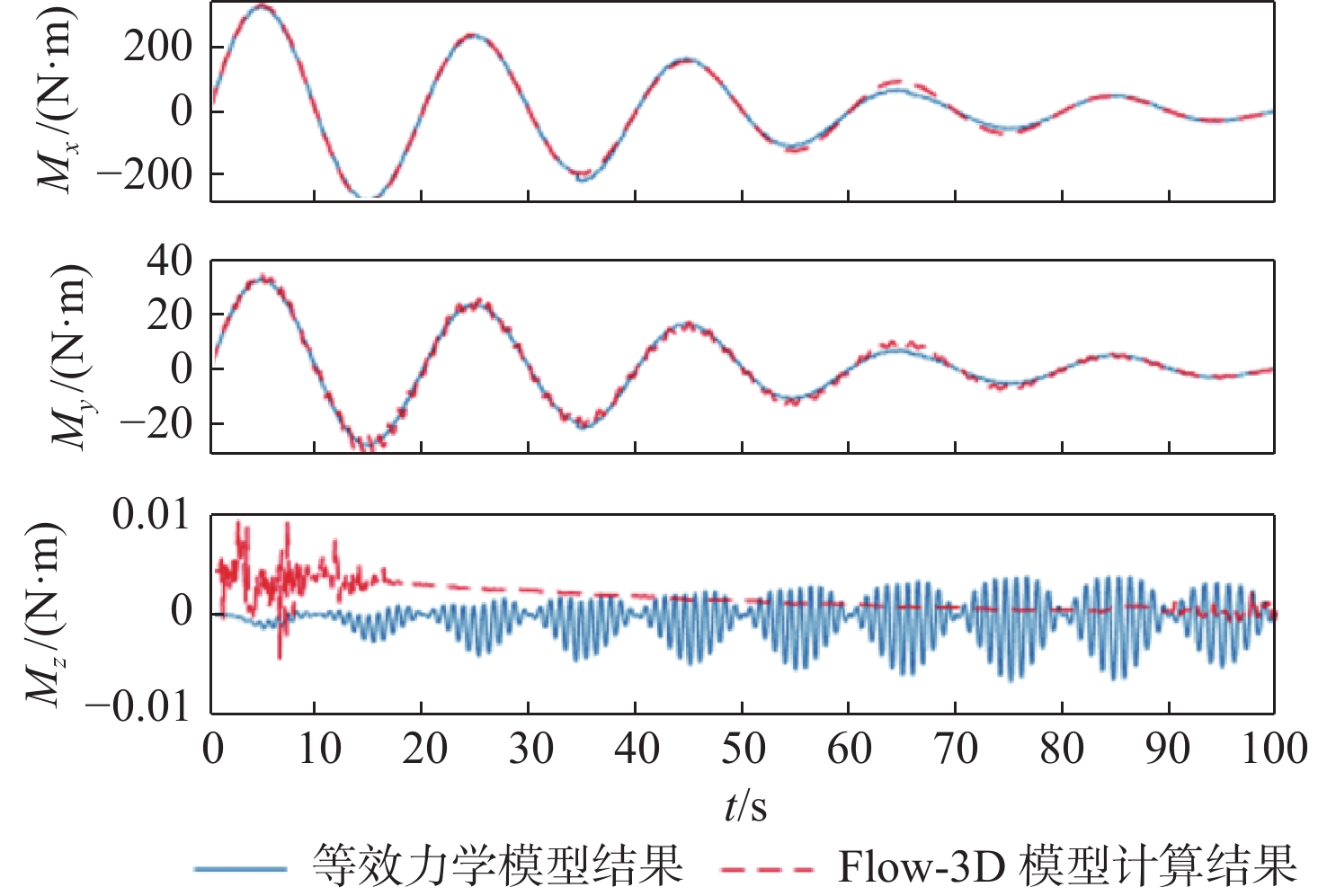
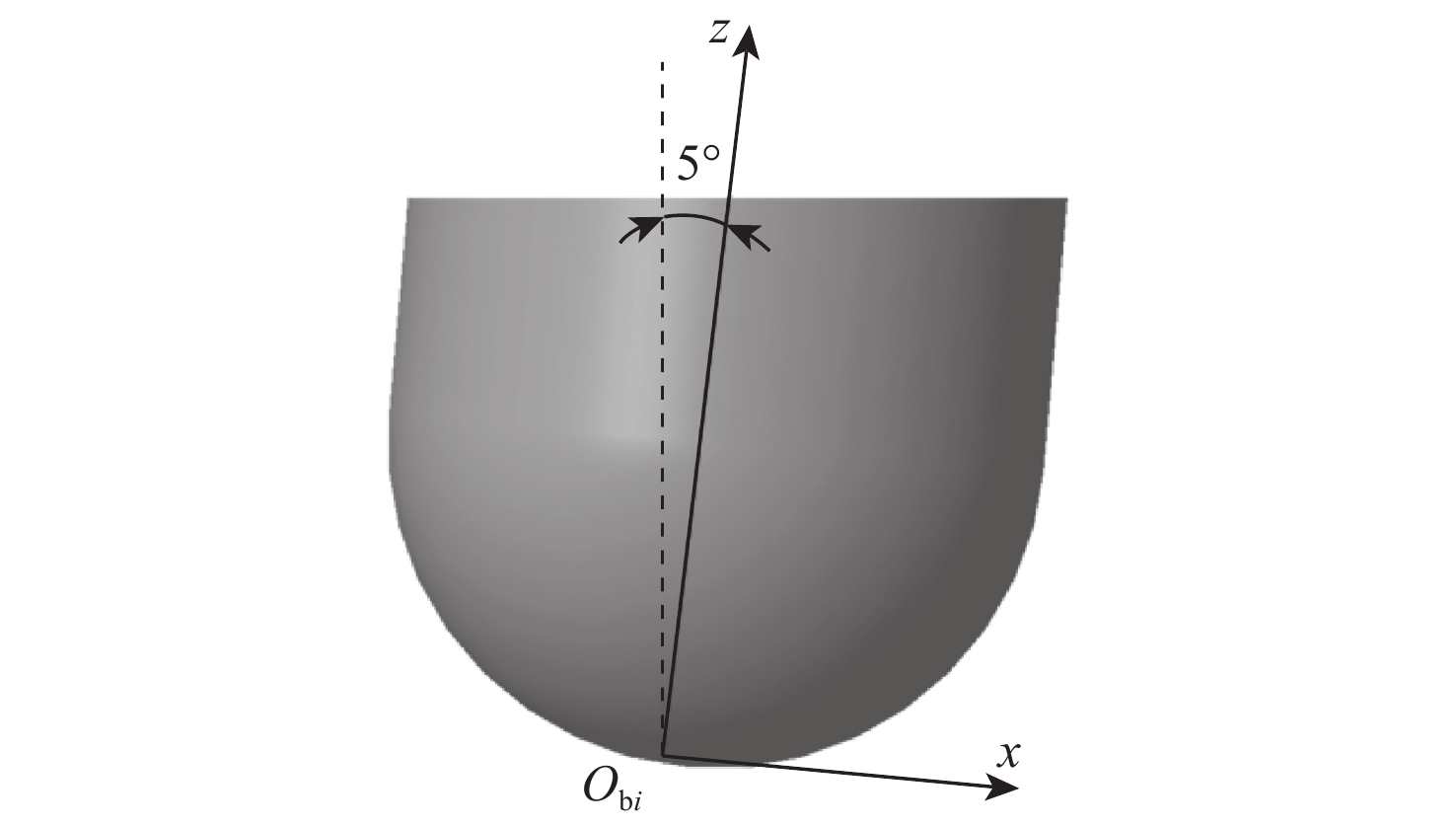
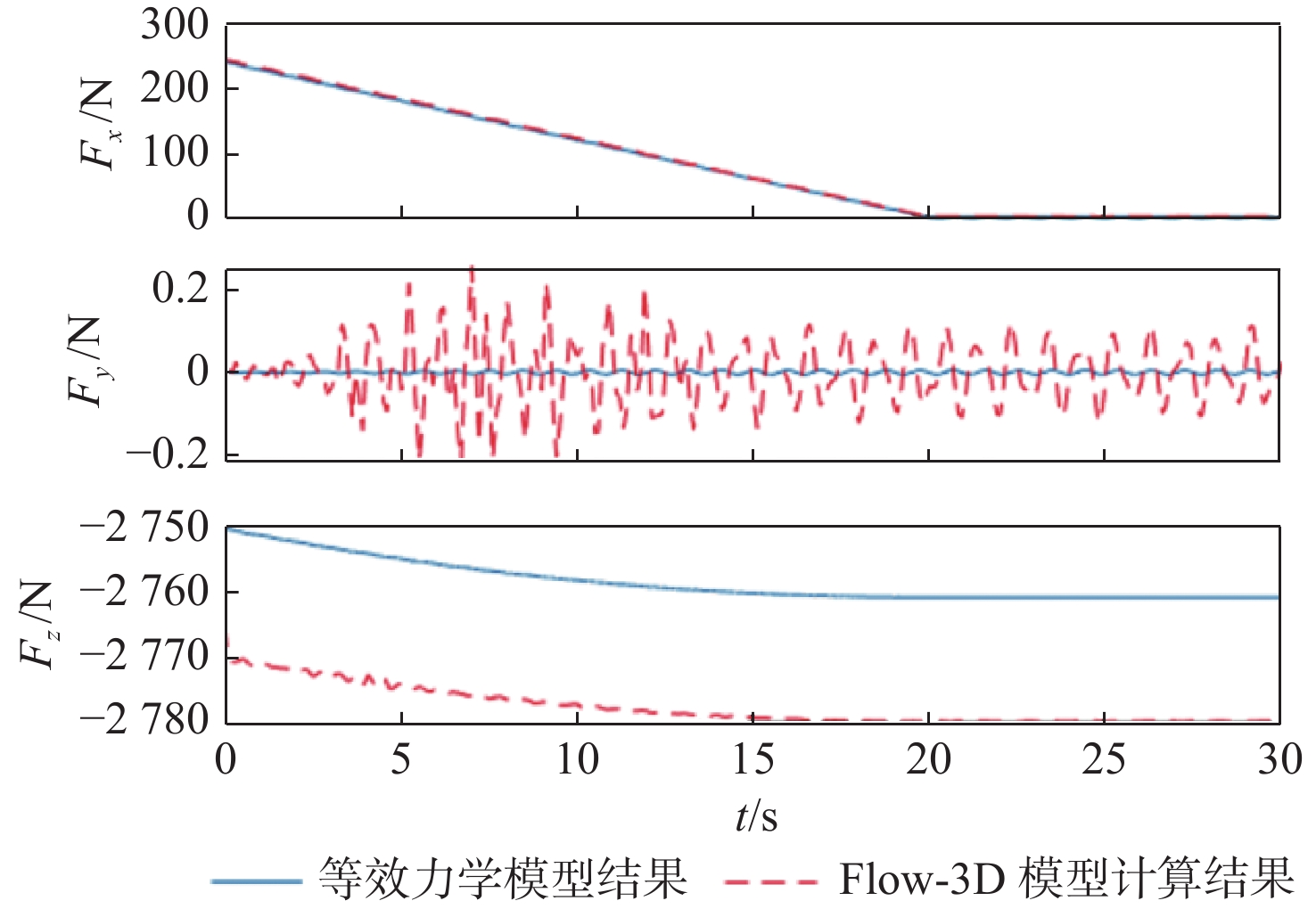
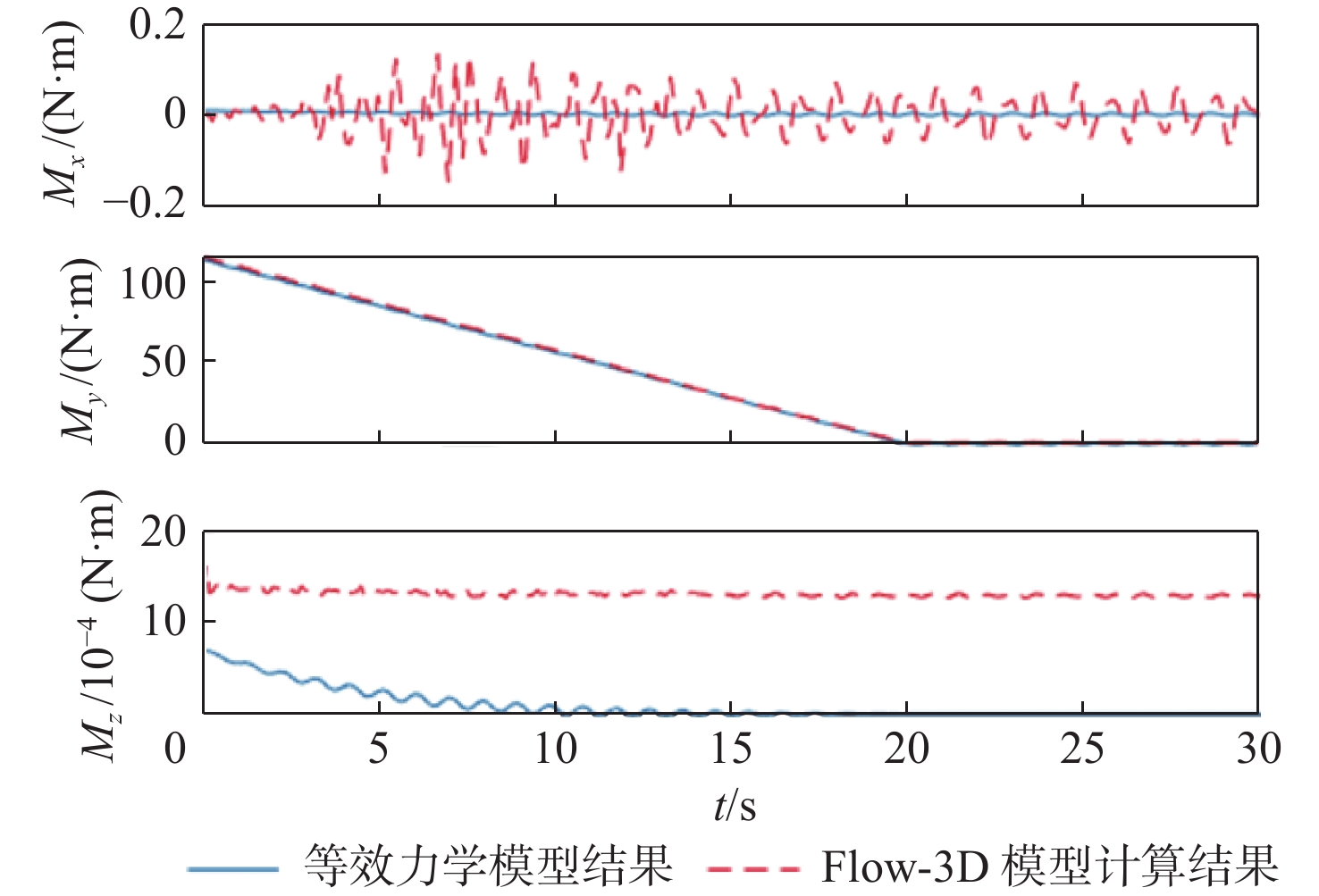
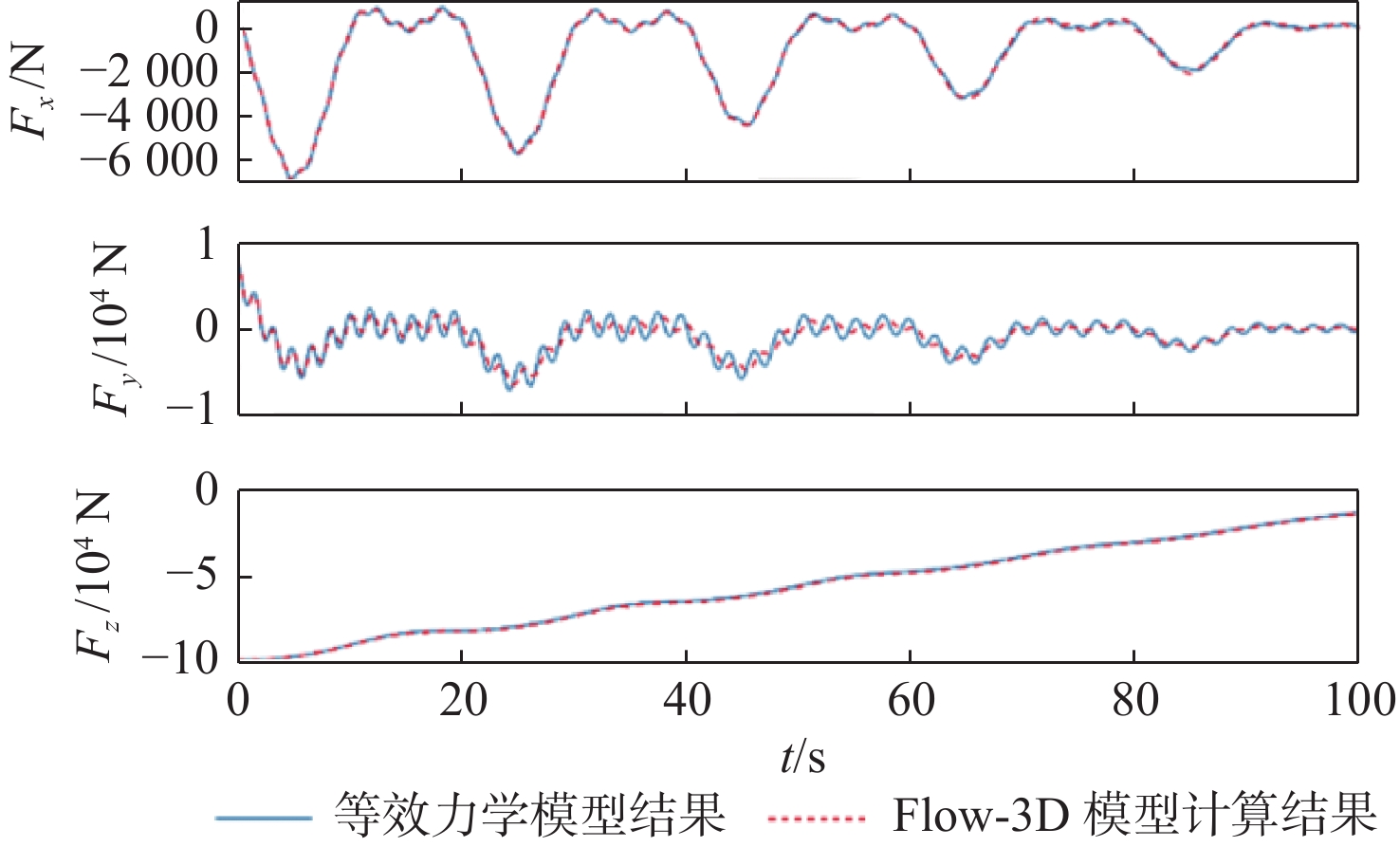
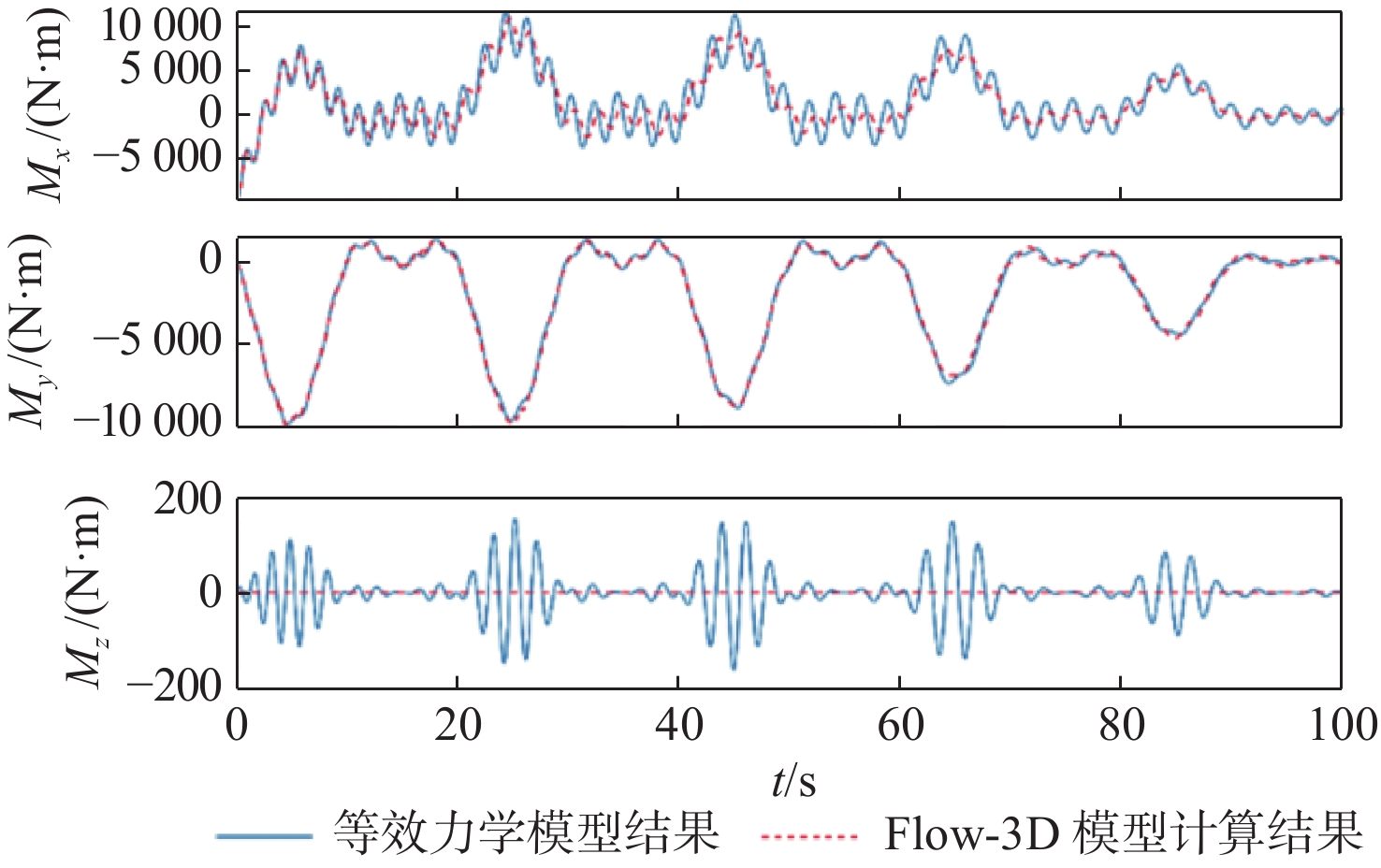
With the development of aerospace technology, new deep space probes will encounter two special operating conditions during takeoff: the magnitude and direction of the engine thrust vector changing over time; the direction of gravity during the initial launch does not coincide with the main axis of the spacecraft. During the flight, liquid fuel will be continuously consumed. This article suggests a new solution for the problem of liquid sloshing in spacecraft storage tanks to the aforementioned three working conditions: taking into account the impact of spacecraft translational acceleration during the dynamic modeling stage and then analyzing the sloshing situation of thrust not along the spacecraft axis direction; calculating the liquid sloshing problem under variable charge to liquid ratio conditions using the method of variable equivalent mechanical model parameters; and simulating the situation where the liquid level is not perpendicular to the tank axis when the tank tilts by setting an initial swing angle for a single pendulum in the equivalent mechanics model. This article takes the Cassini storage tank as an example to calculate the sloshing force and moment under the three working conditions mentioned above in a semi filled state. Finally, taking a certain type of spacecraft liquid storage tank as an example, sloshing analysis is carried out under actual launch conditions. The practicality of the calculation approach presented in this article is confirmed by the calculation results, which are in good agreement with the results of calculations made using commercial software Flow-3D.
Area optimization approach for MPRM logic circuits based on multi-strategy synergy ant lion optimization algorithm
PAN Jiayi, HE Zhenxue, ZHAO Xiaojun, HE Juncai, ZHOU Yuhao, WANG Xiang
2026, 52(6): 2083-2091. doi: 10.13700/j.bh.1001-5965.2024.0259
Abstract:

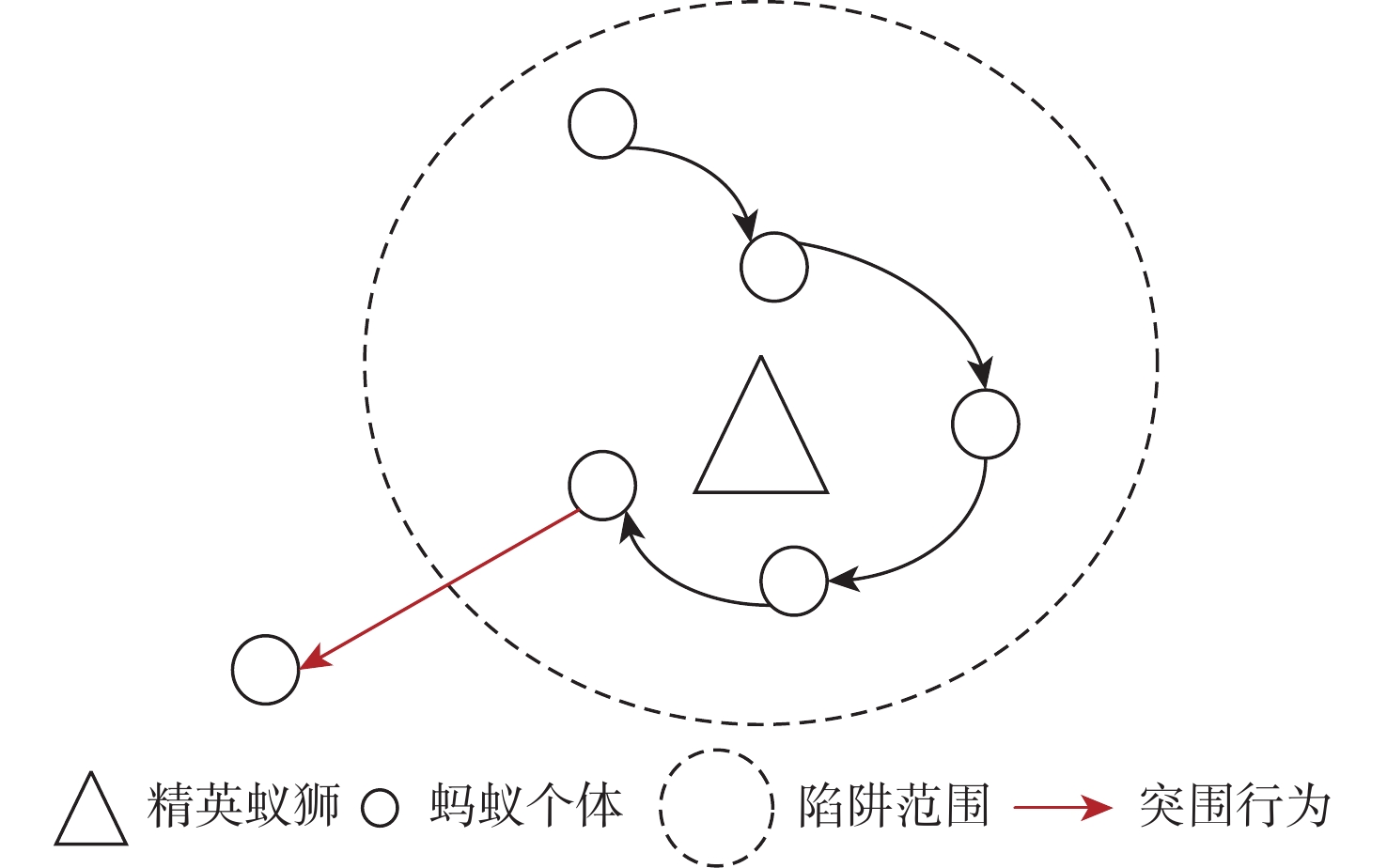
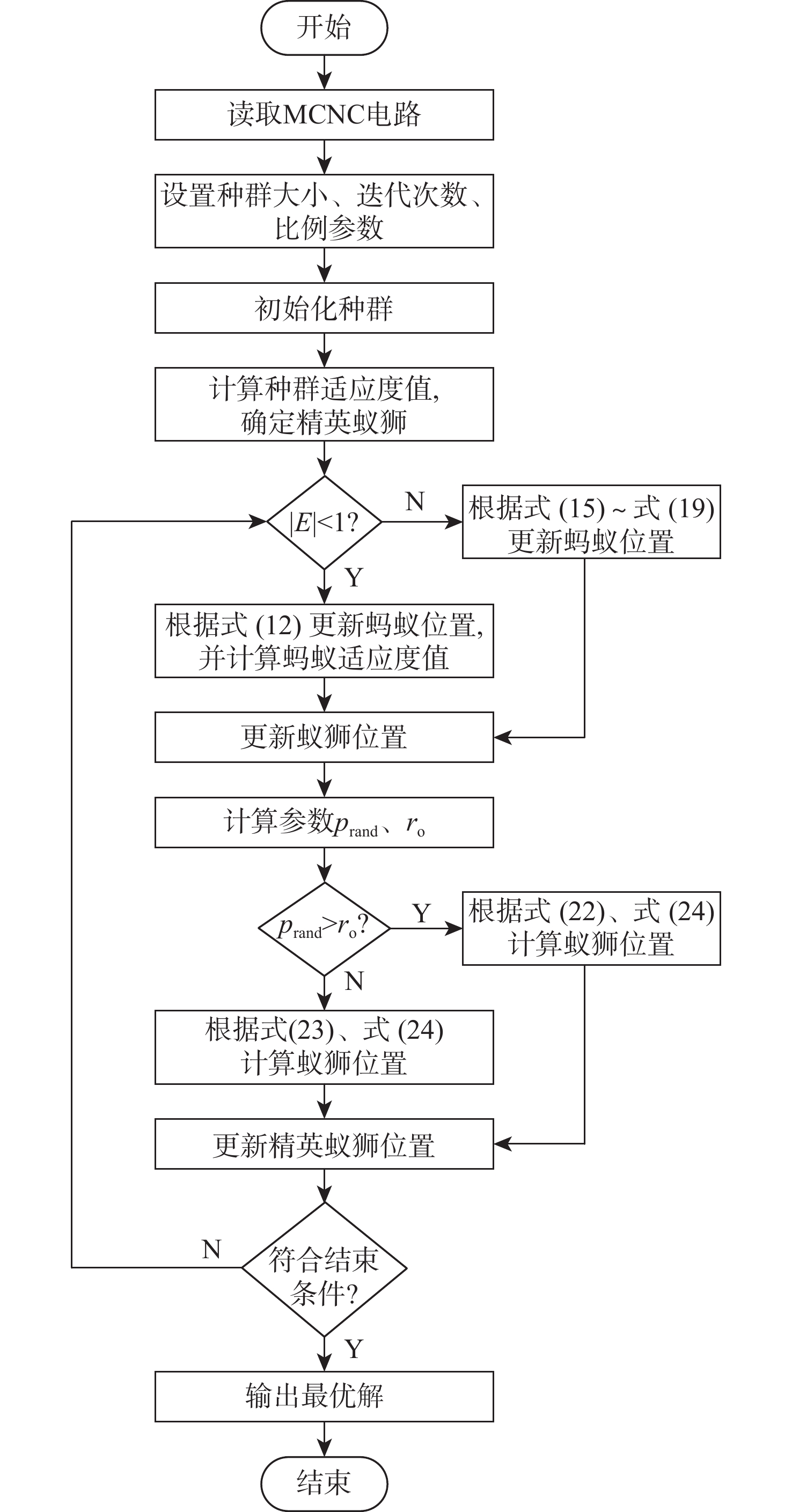
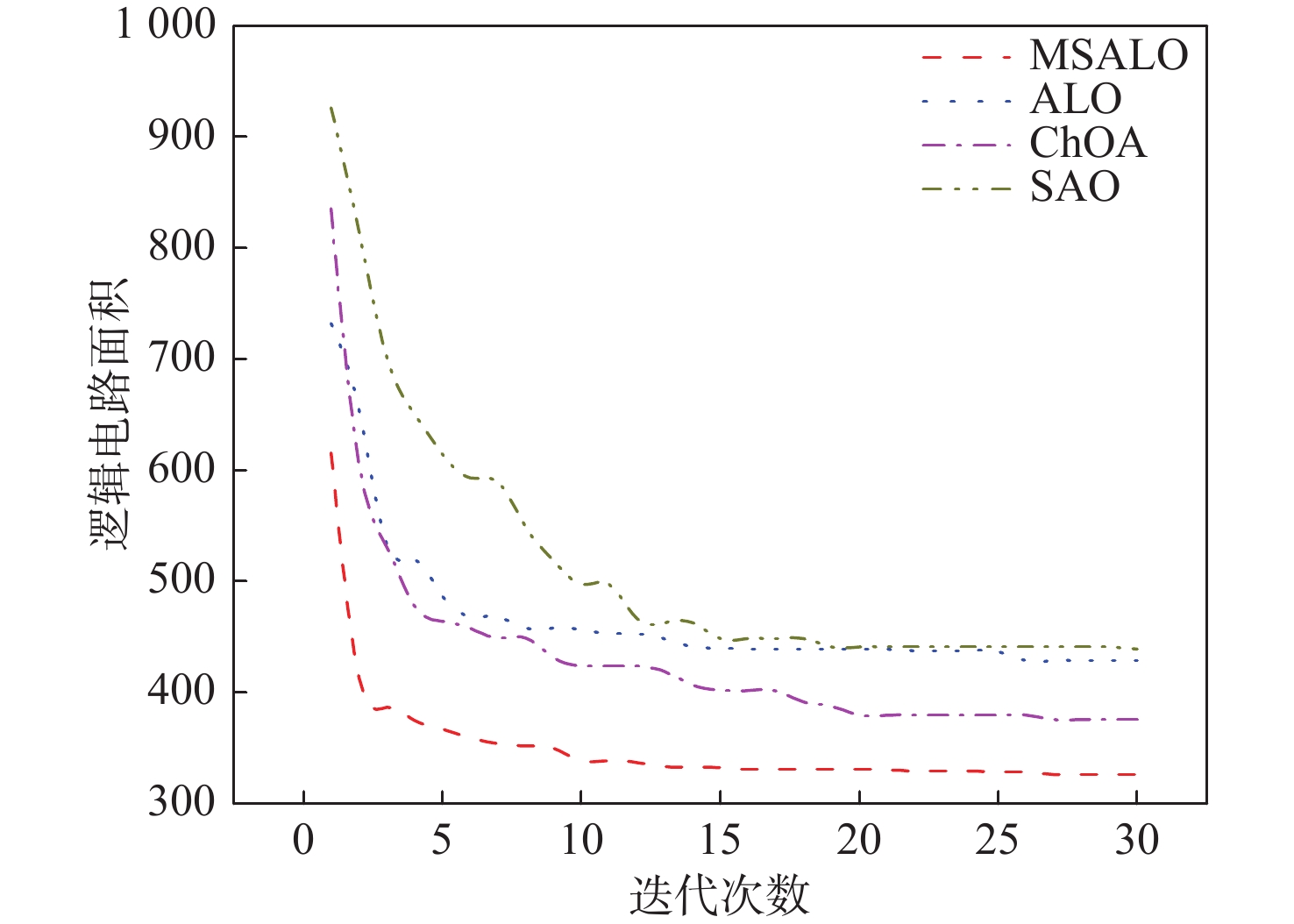
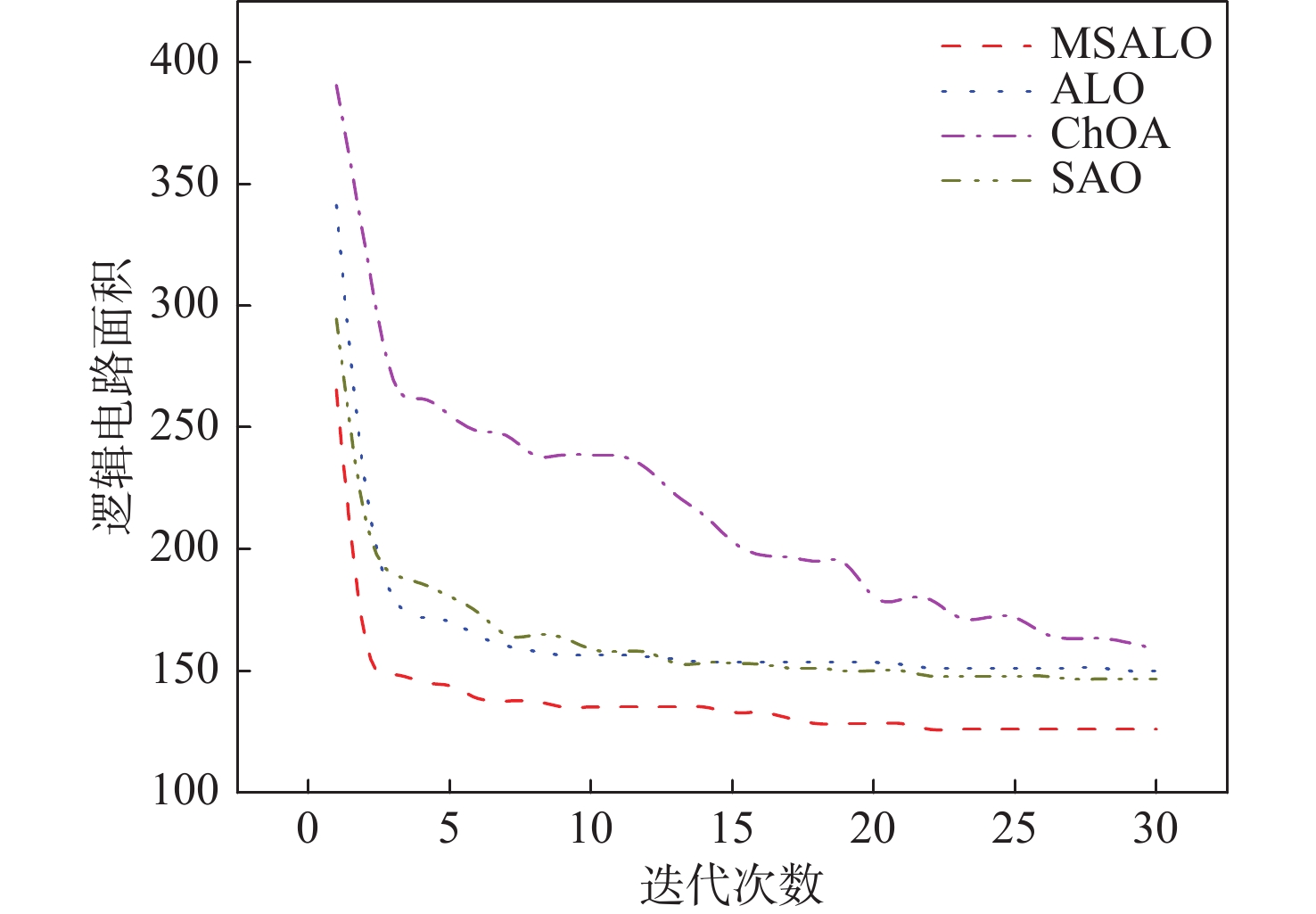
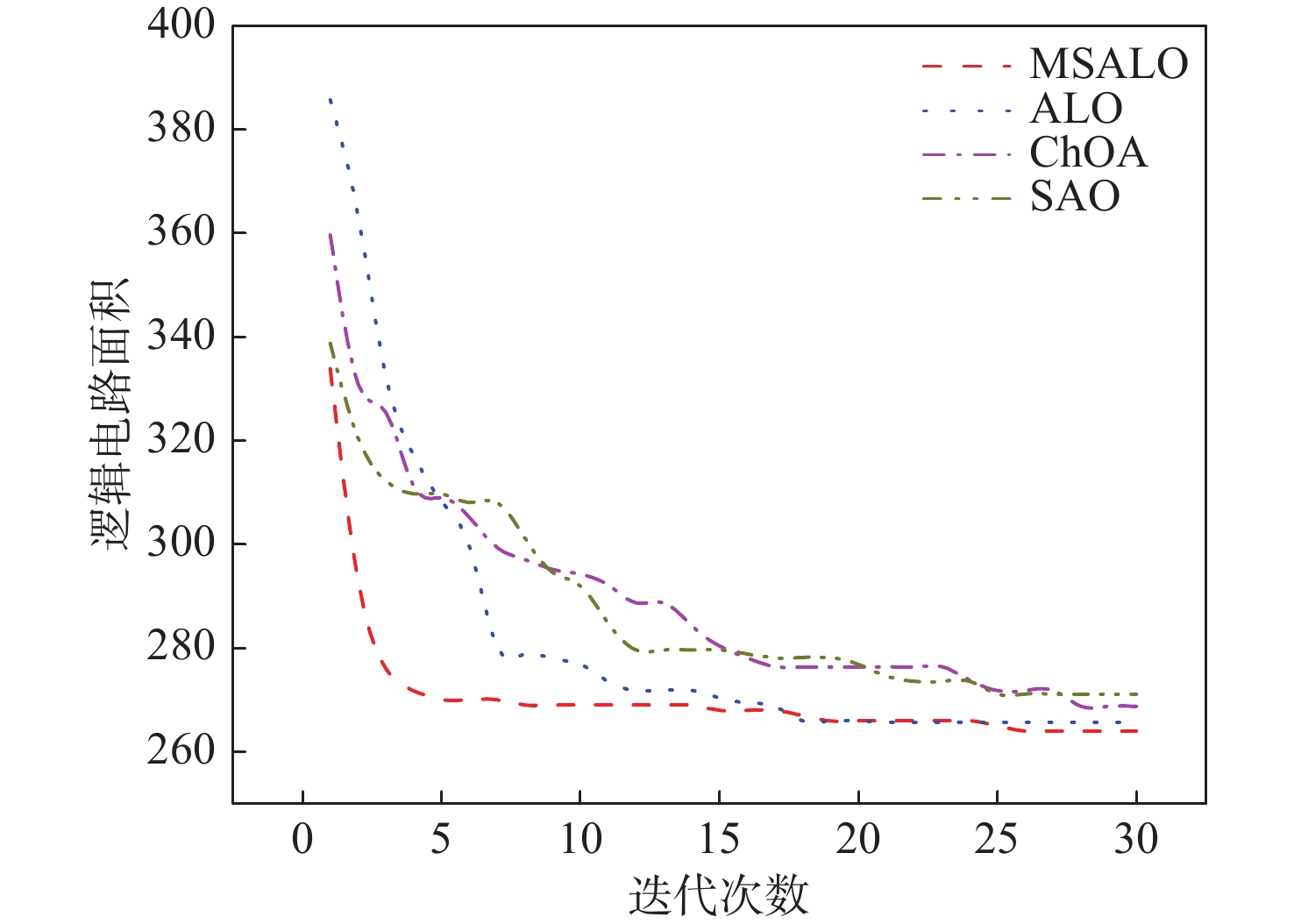
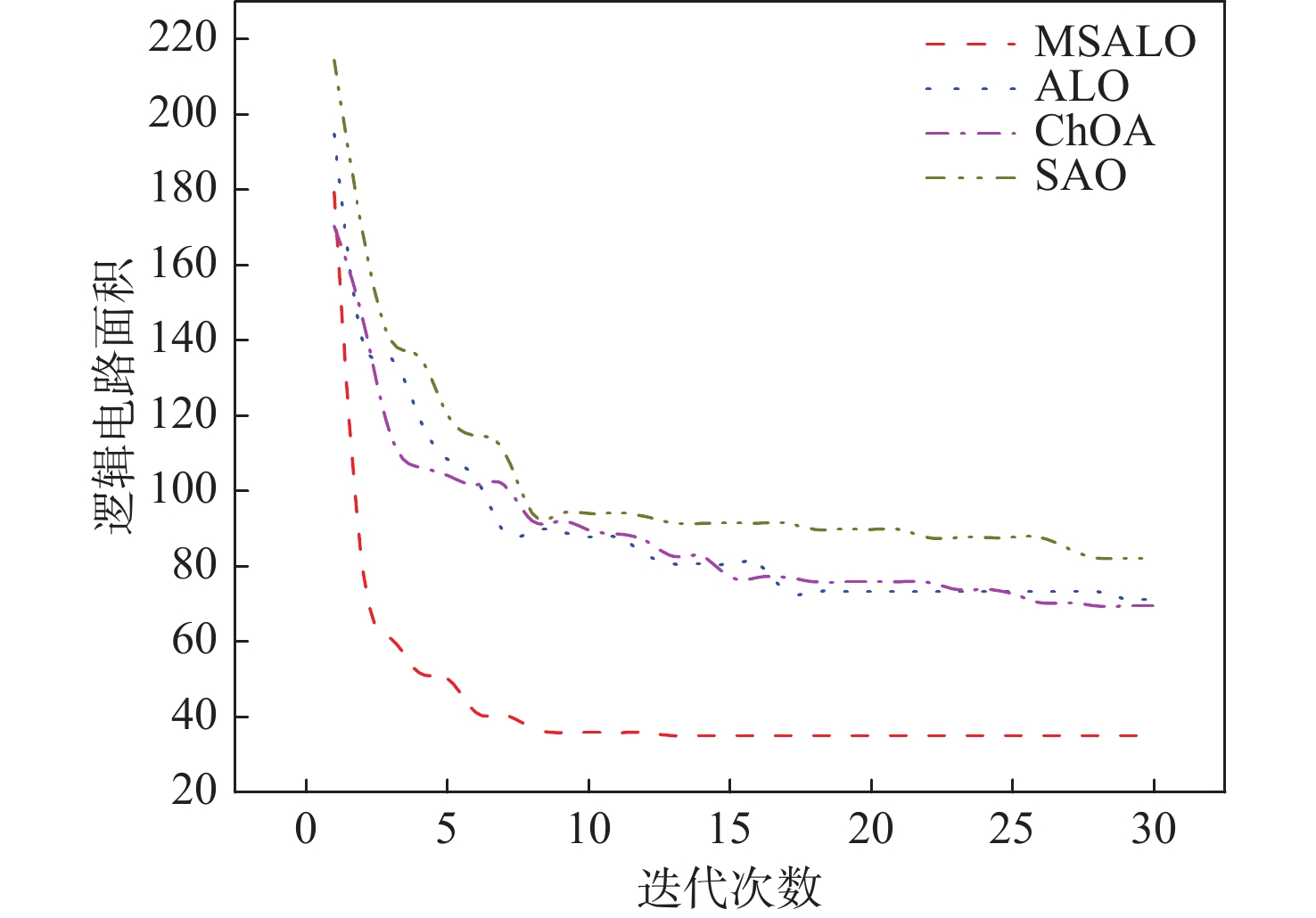
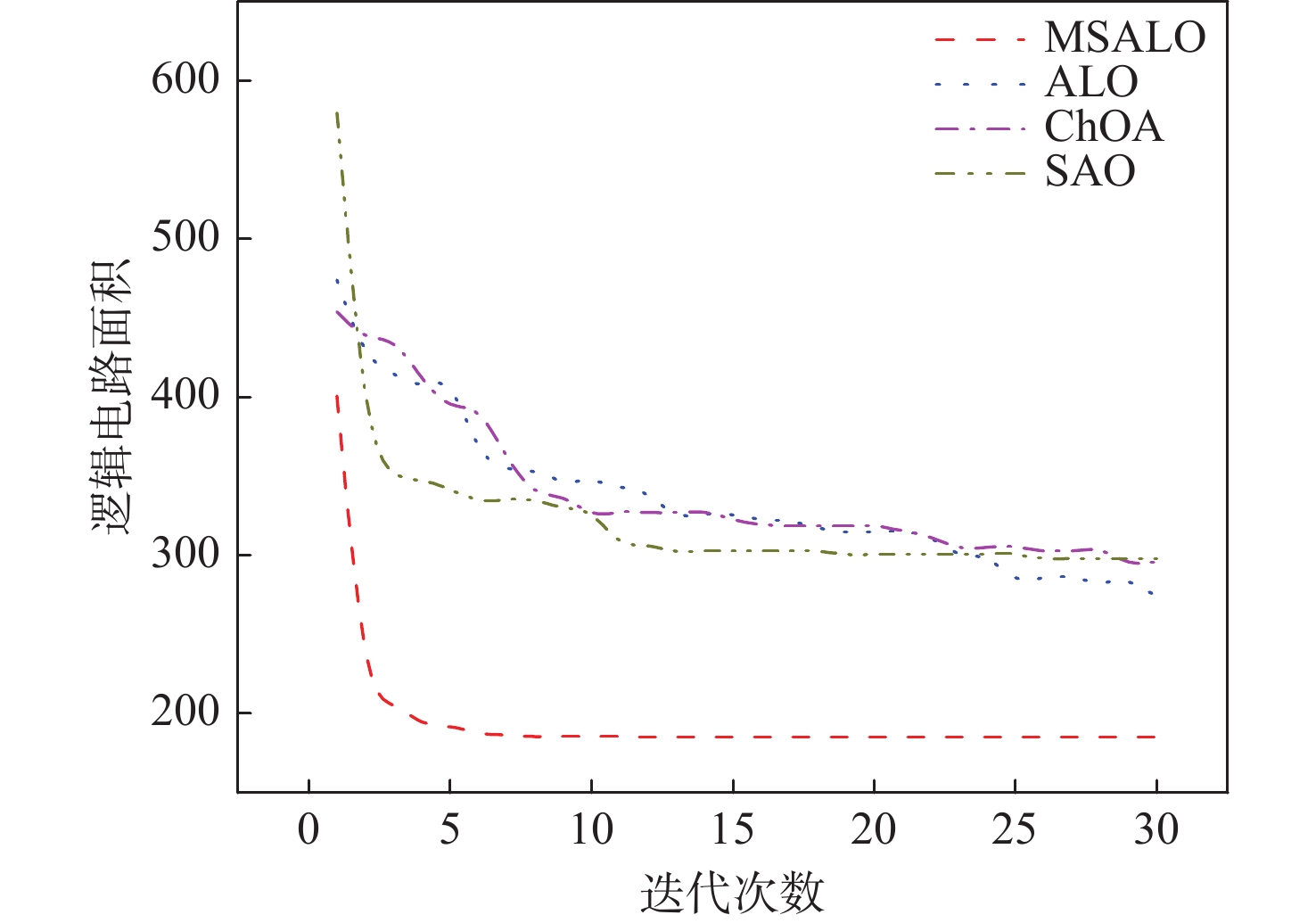
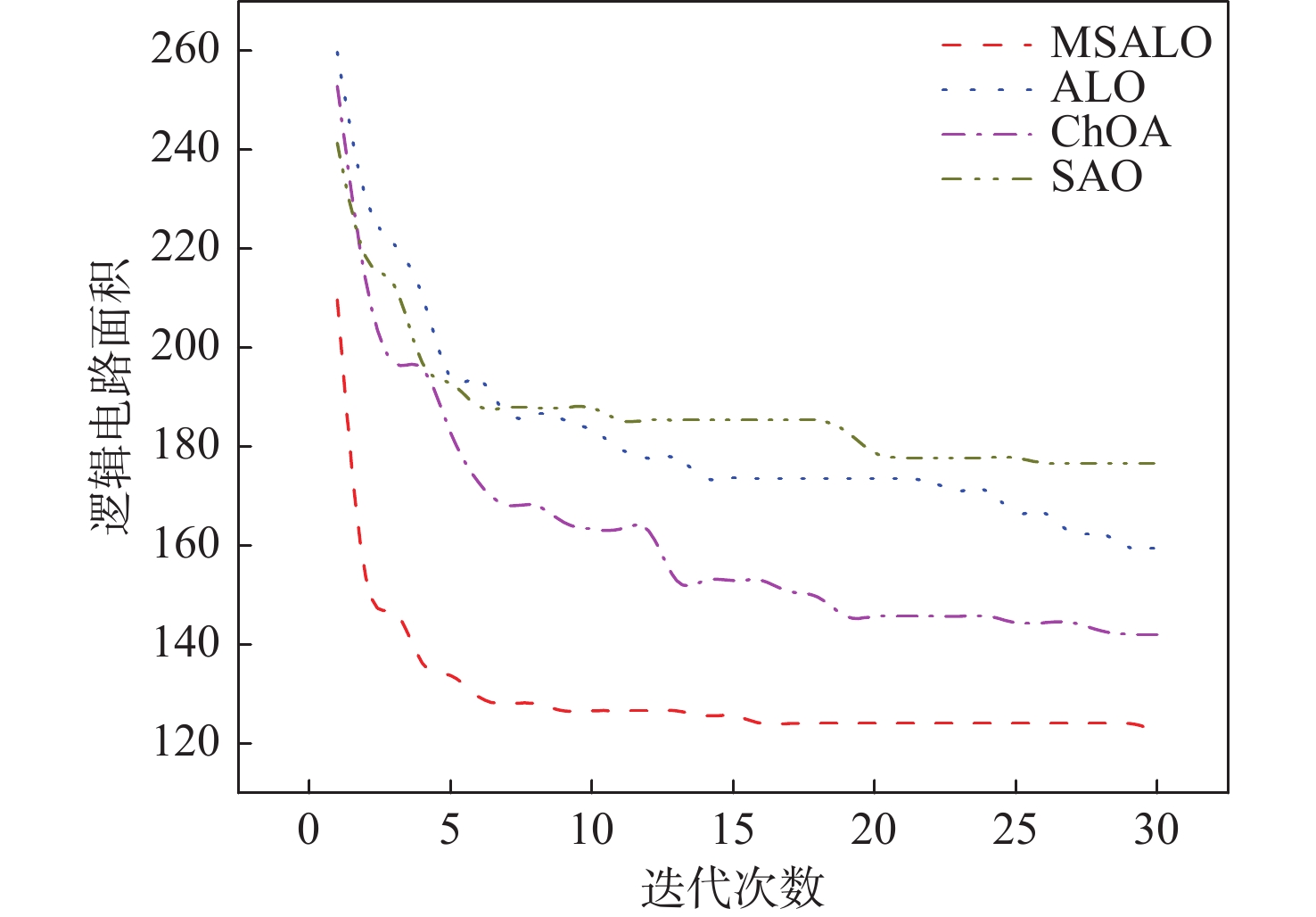
In this paper, we propose a multi-strategy synergy ant lion optimization (MSALO) algorithm to address the problems of insufficient optimization efficacy of existing mixed polarity Reed-Muller (MPRM) circuit area optimization methods. A two-strategy random tour mechanism is used in the algorithm’s random tour stage to address the issue of the ant lion optimization (ALO) algorithm’s poor global search ability. A breakout mechanism is used for elite ant lion individuals to address the issue of poor local exploration ability. To expedite the convergence rate of the algorithm, an adaptive ant position update strategy based on the sine function is introduced. The MPRM circuit area optimization approach based on MSALO is proposed to search for the best polarity corresponding to the MPRM logic circuit with the smallest circuit area by using MSALO. The experimental results based on the Microelectronics Center of North Carolina (MCNC) benchmark test circuit demonstrate that the average area savings rate of the area optimization strategy based on MSALO may be increased by an average of 27.96% when compared to the current state-of-the-art swarm intelligence optimization algorithms.
Anti-stochastic disturbance control of airship
CHANG Jiaming, LI Sulan, DUAN Xuechao, ZHANG Wei, WANG Chenyang
2026, 52(6): 2092-2101. doi: 10.13700/j.bh.1001-5965.2024.0489
Abstract:

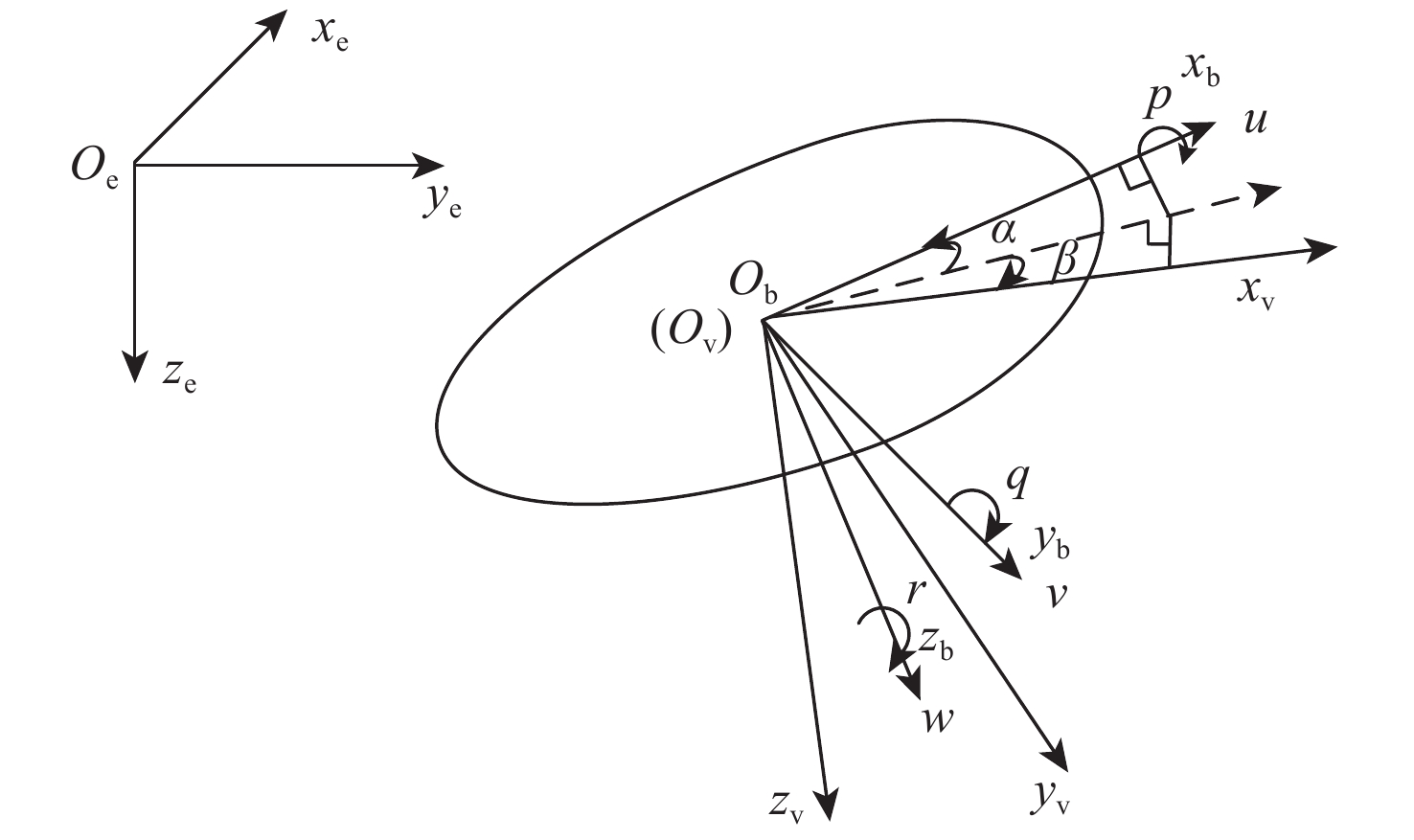
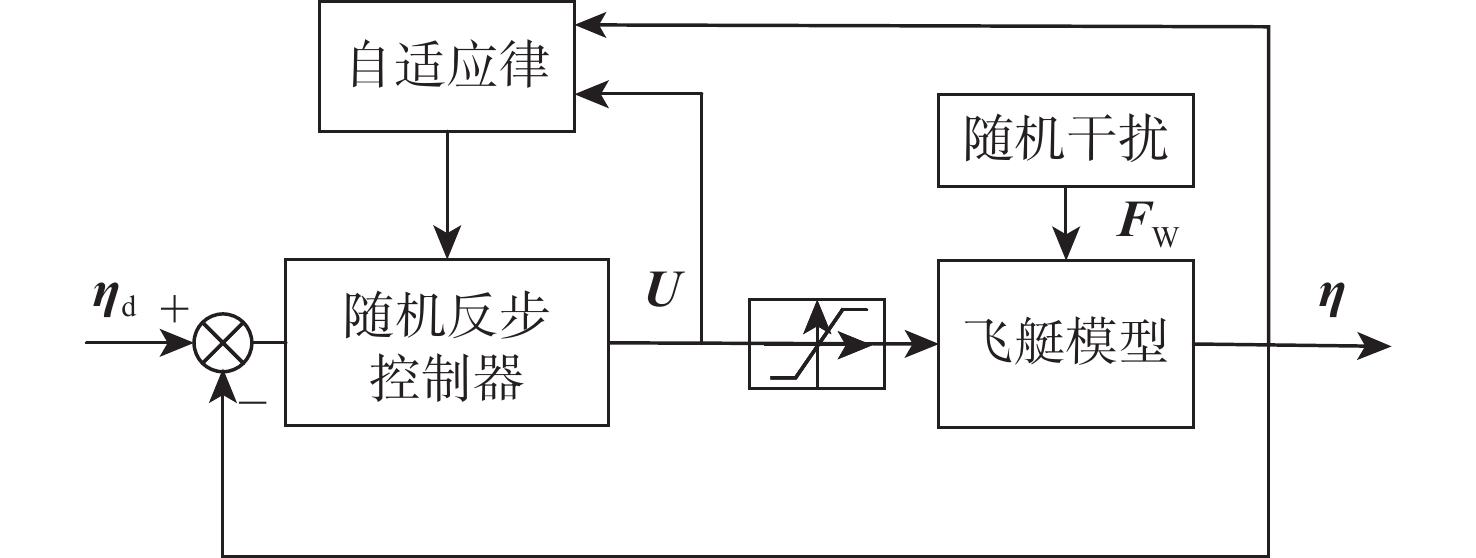
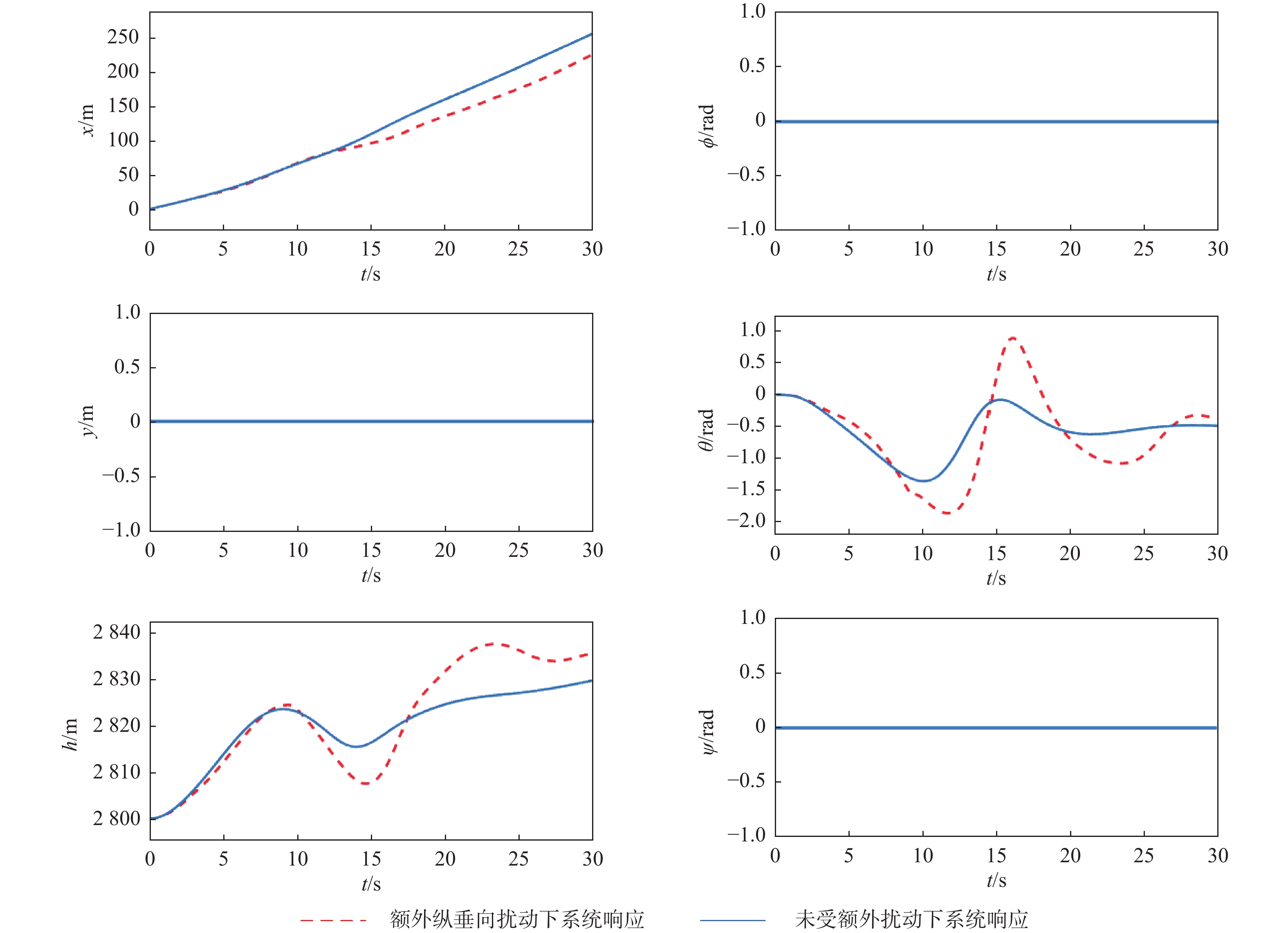
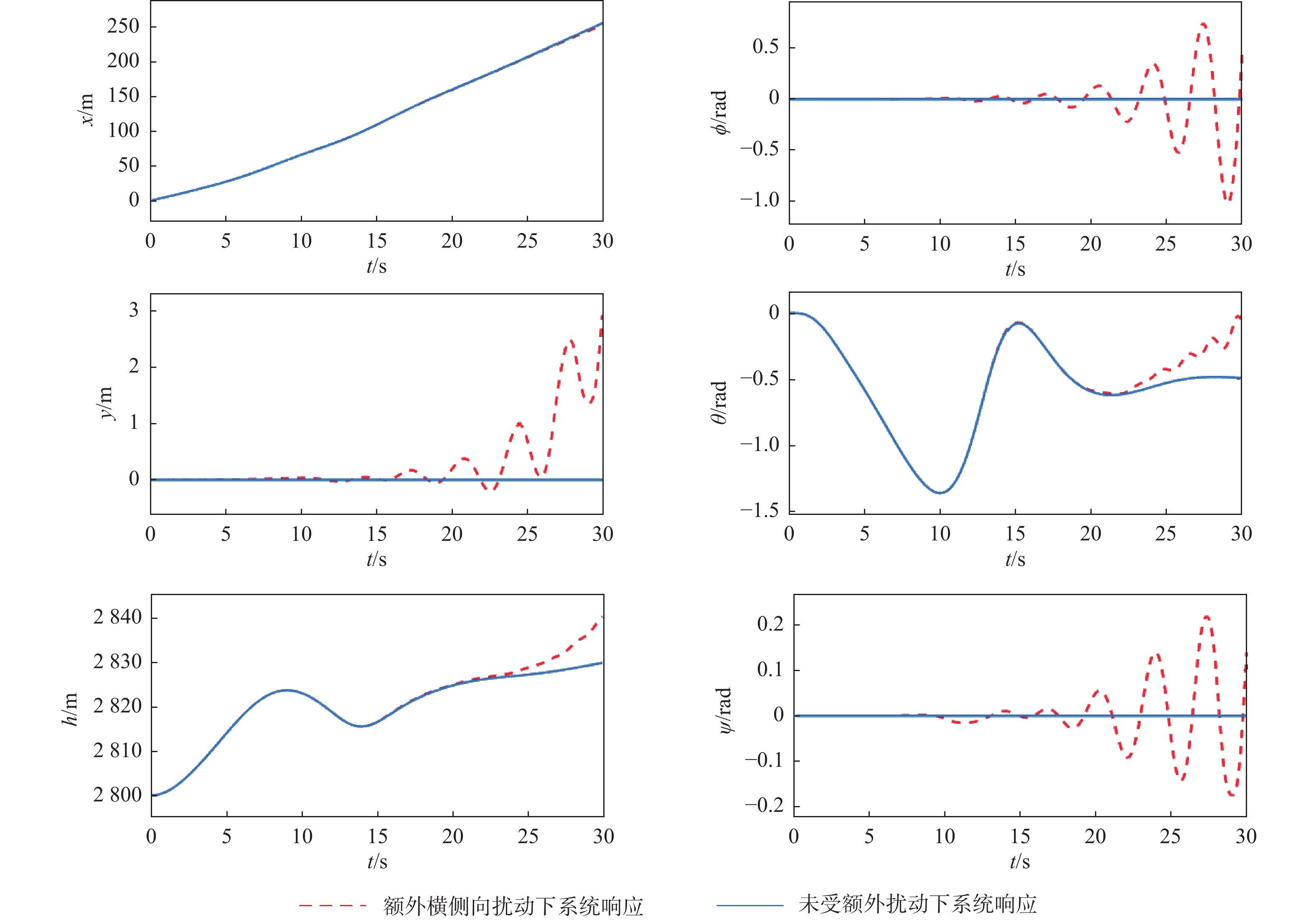
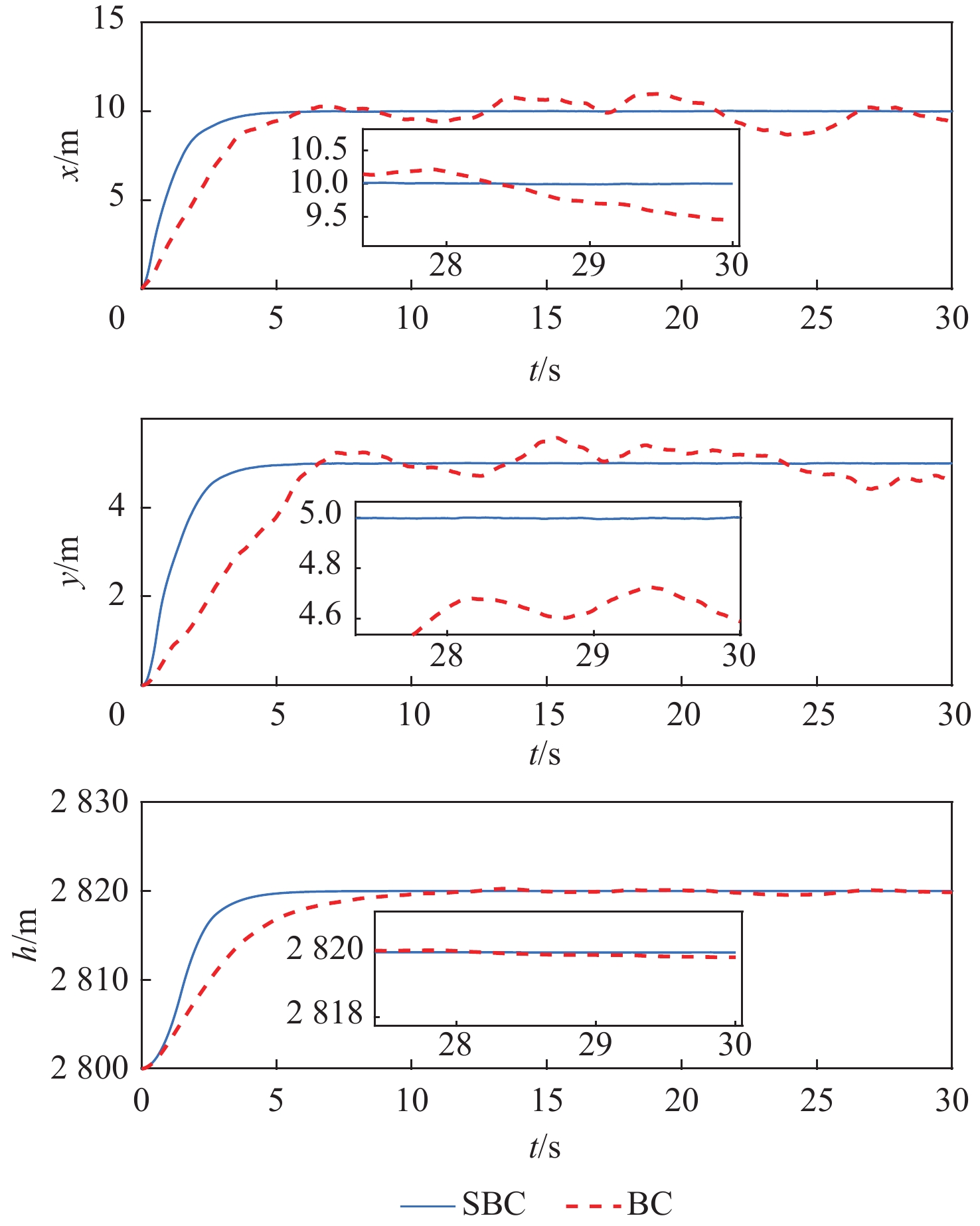
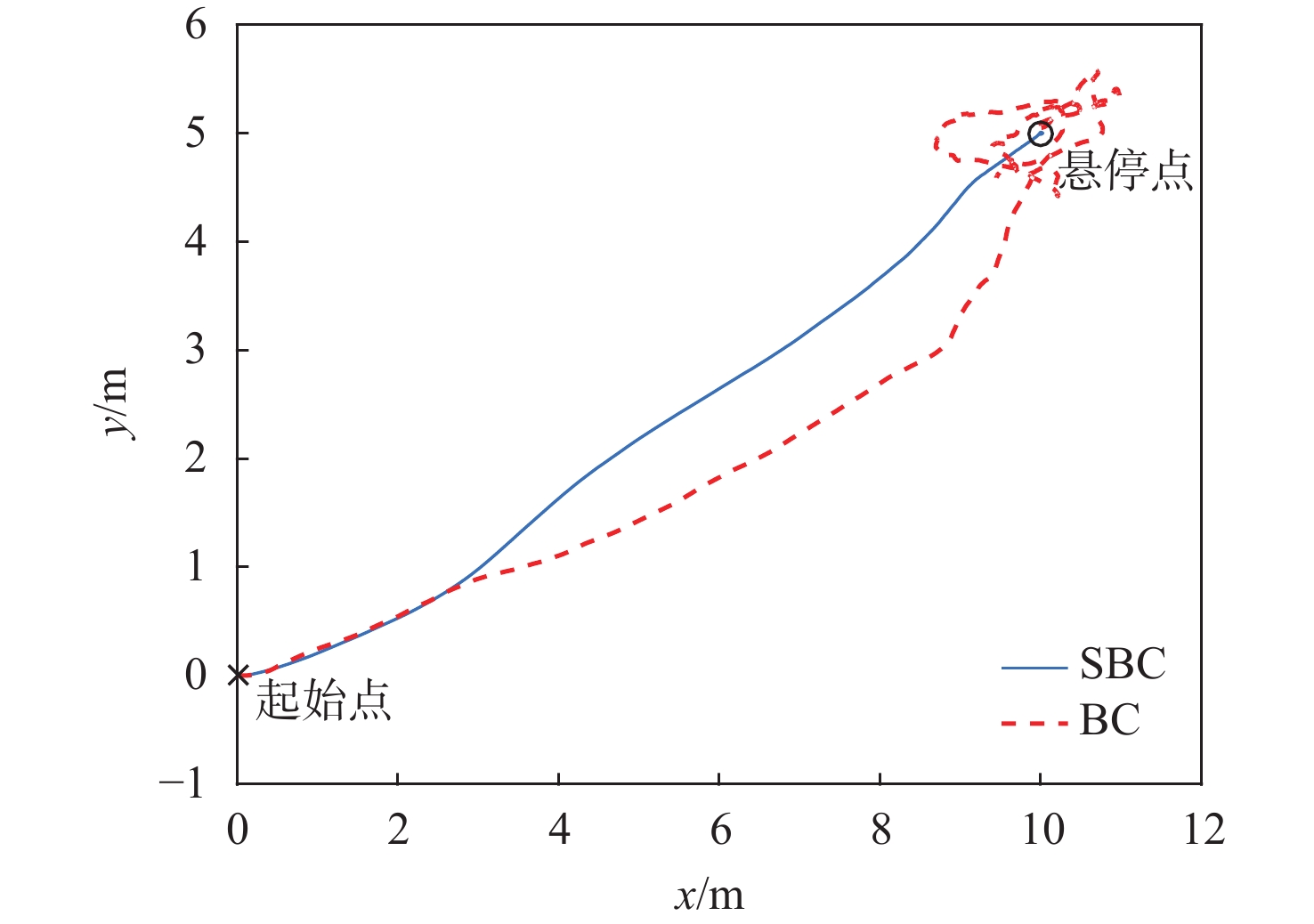
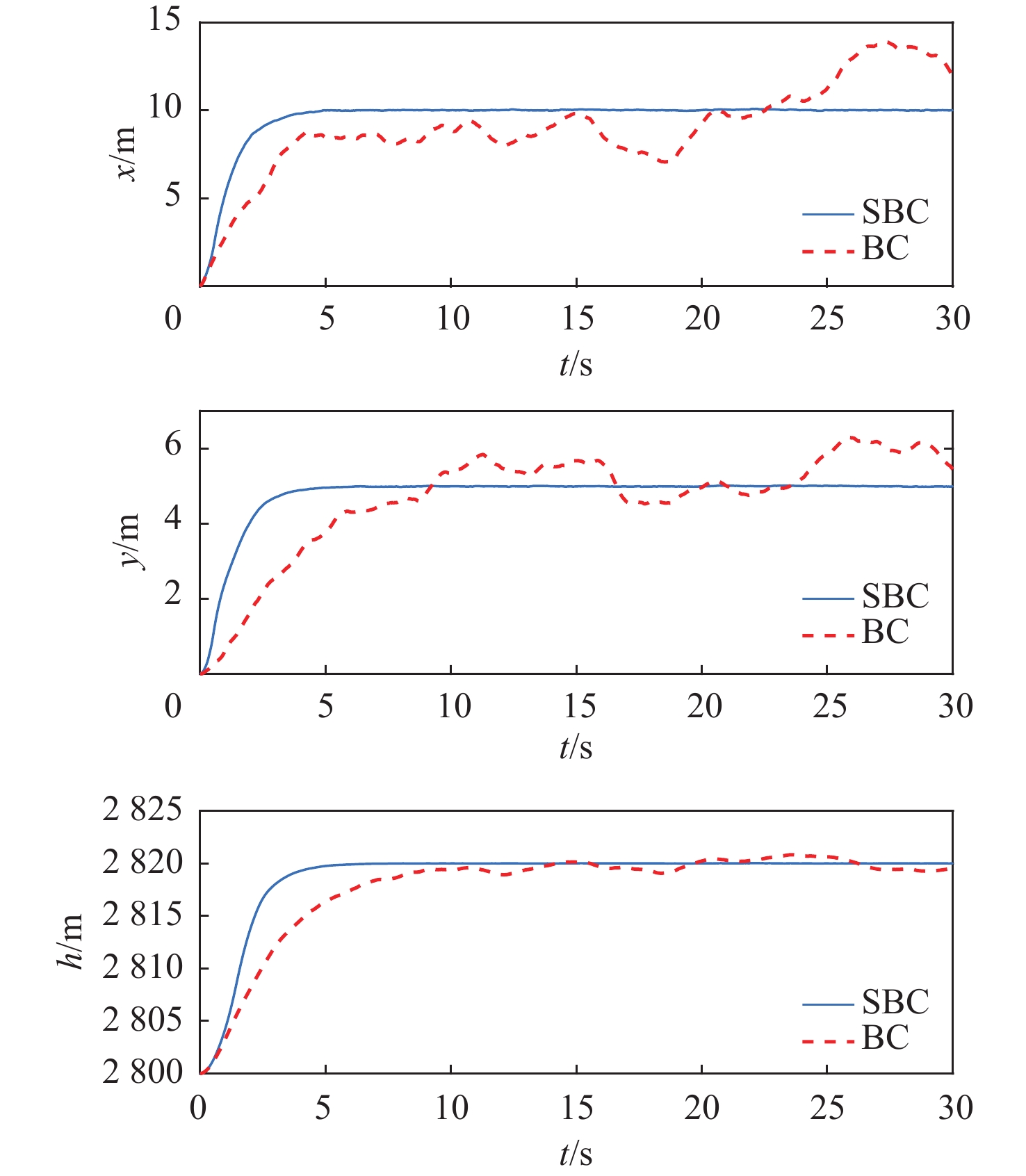
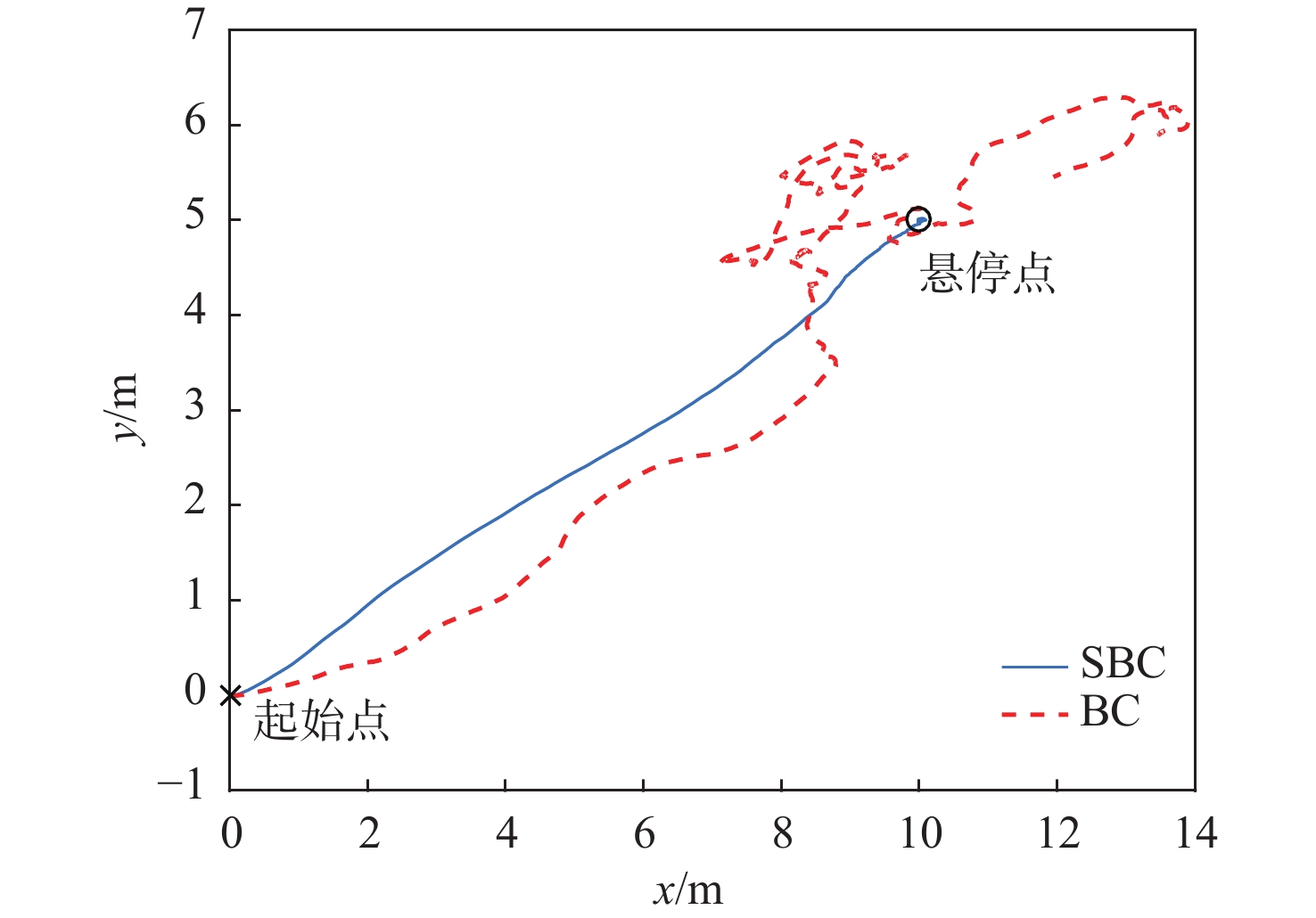
Due to their long endurance and low energy consumption, airships are frequently utilized in both high-altitude and low-altitude missions. Studying the airship's anti-stochastic disturbance control is essential since it operates in a complex environment and is frequently impacted by random interference like airflow. Based on the theory of stochastic systems, this paper considers the influence of stochastic disturbance term in the dynamic modeling of stochastic systems. Then, based on the backstepping method, adaptive technique and Lyapunov stability analysis theory, a robust controller against stochastic disturbance is designed. The simulation results demonstrate that the developed controller can quickly steer the airship to the trial site and hover with the desired attitude in the presence of stochastic airflow disturbance.
A high-efficient Swin Transformer accelerator design
CAI Qingzhu, LIU Qiang
2026, 52(6): 2102-2113. doi: 10.13700/j.bh.1001-5965.2024.0222
Abstract:

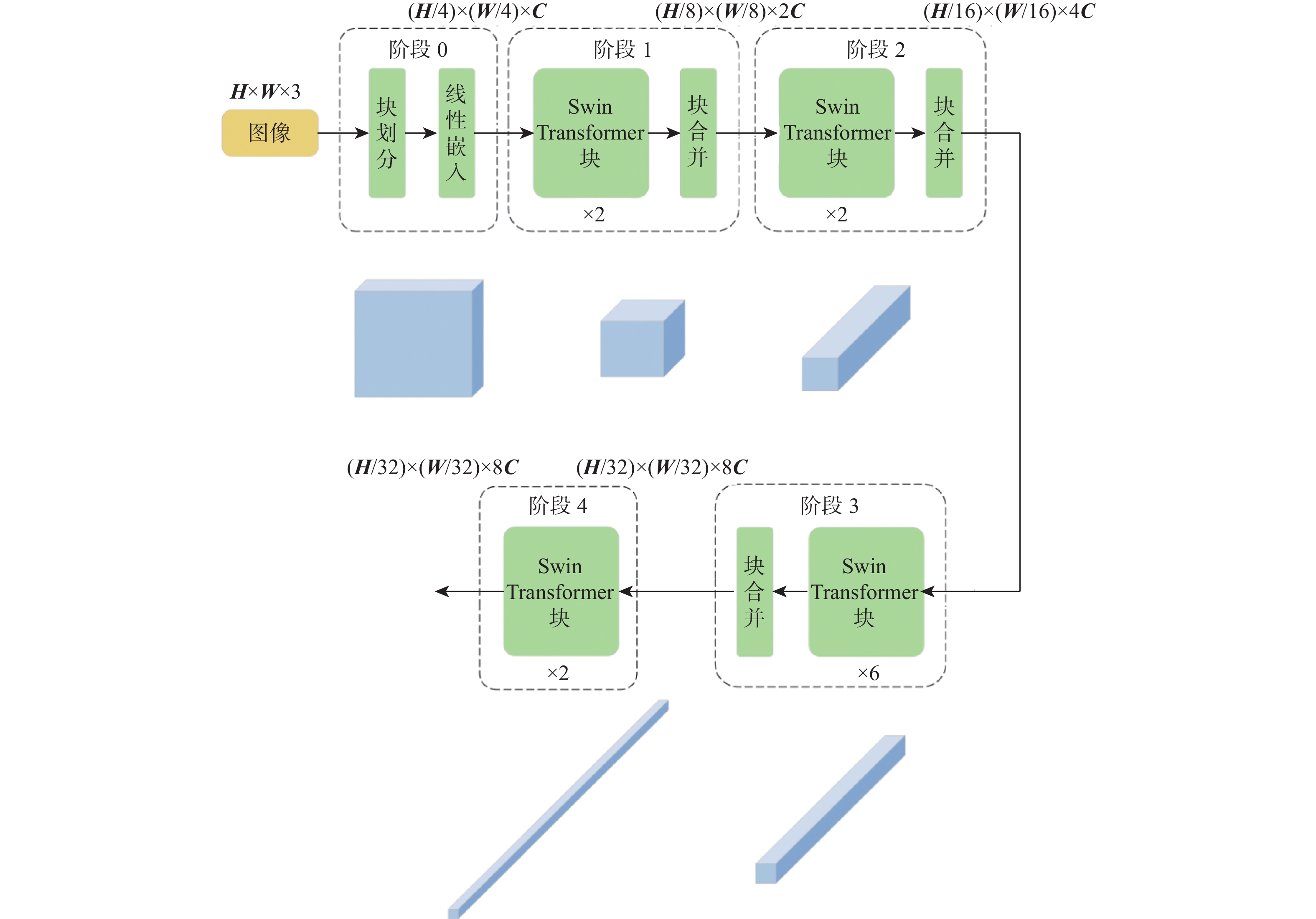
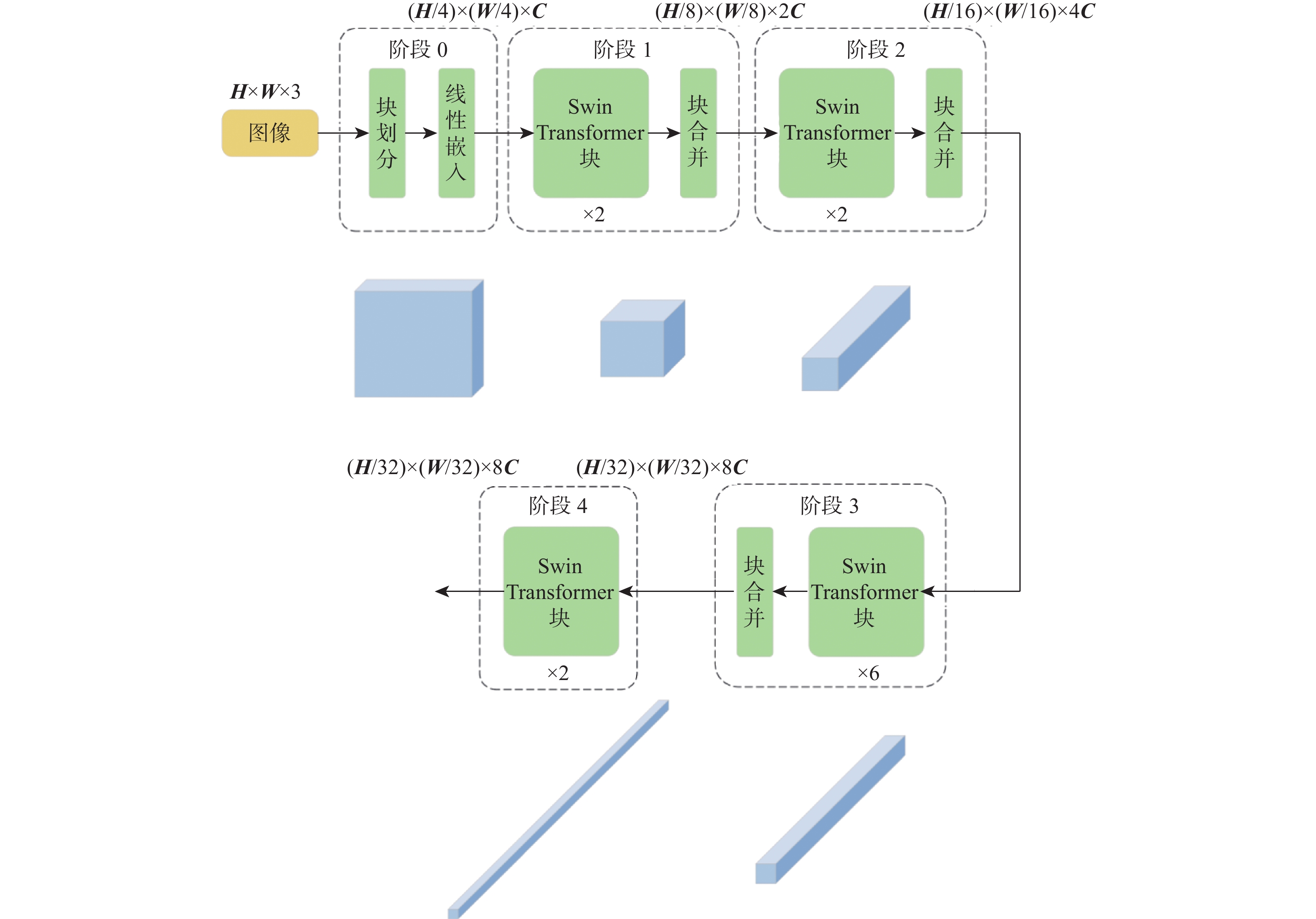
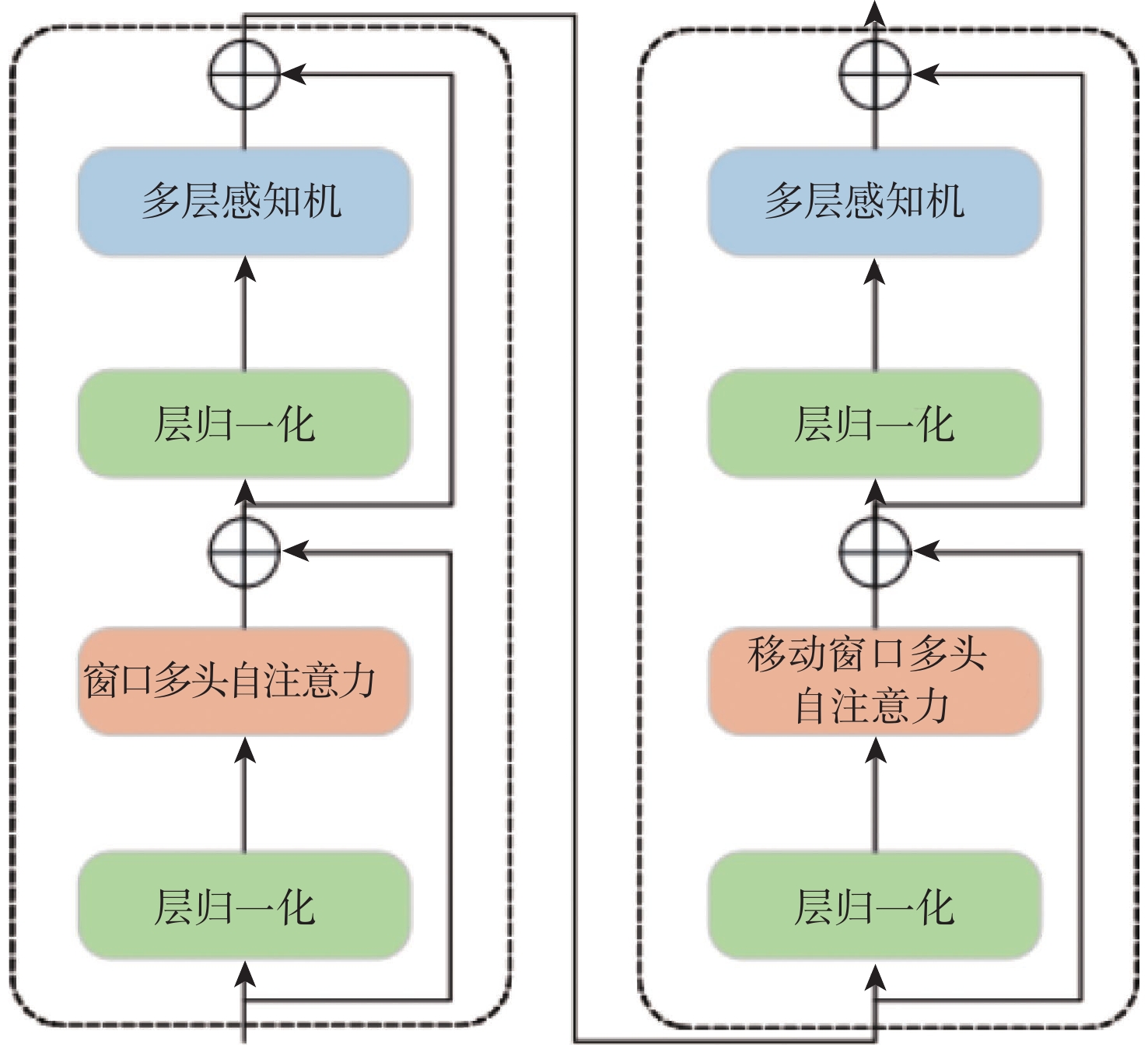
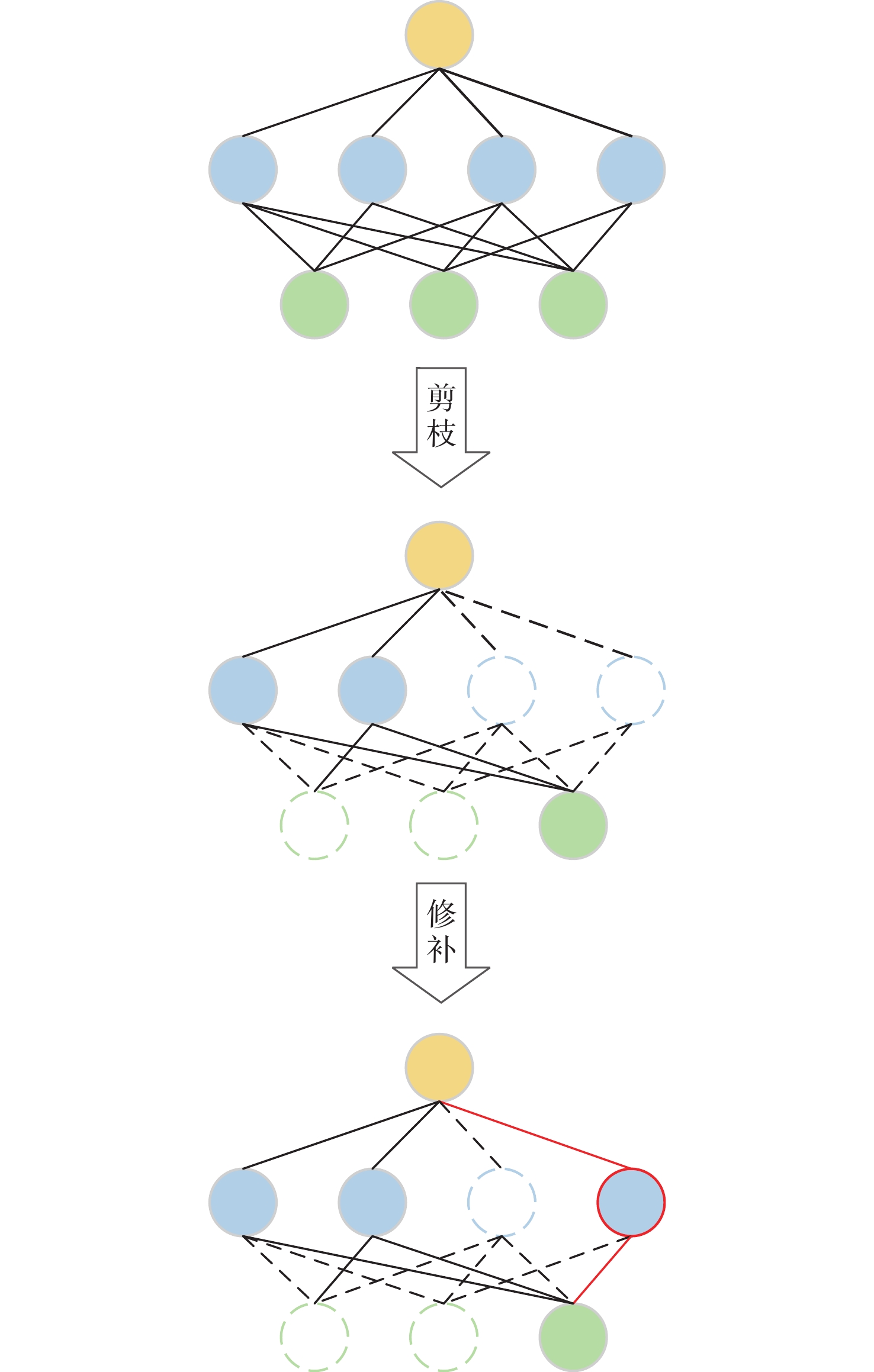
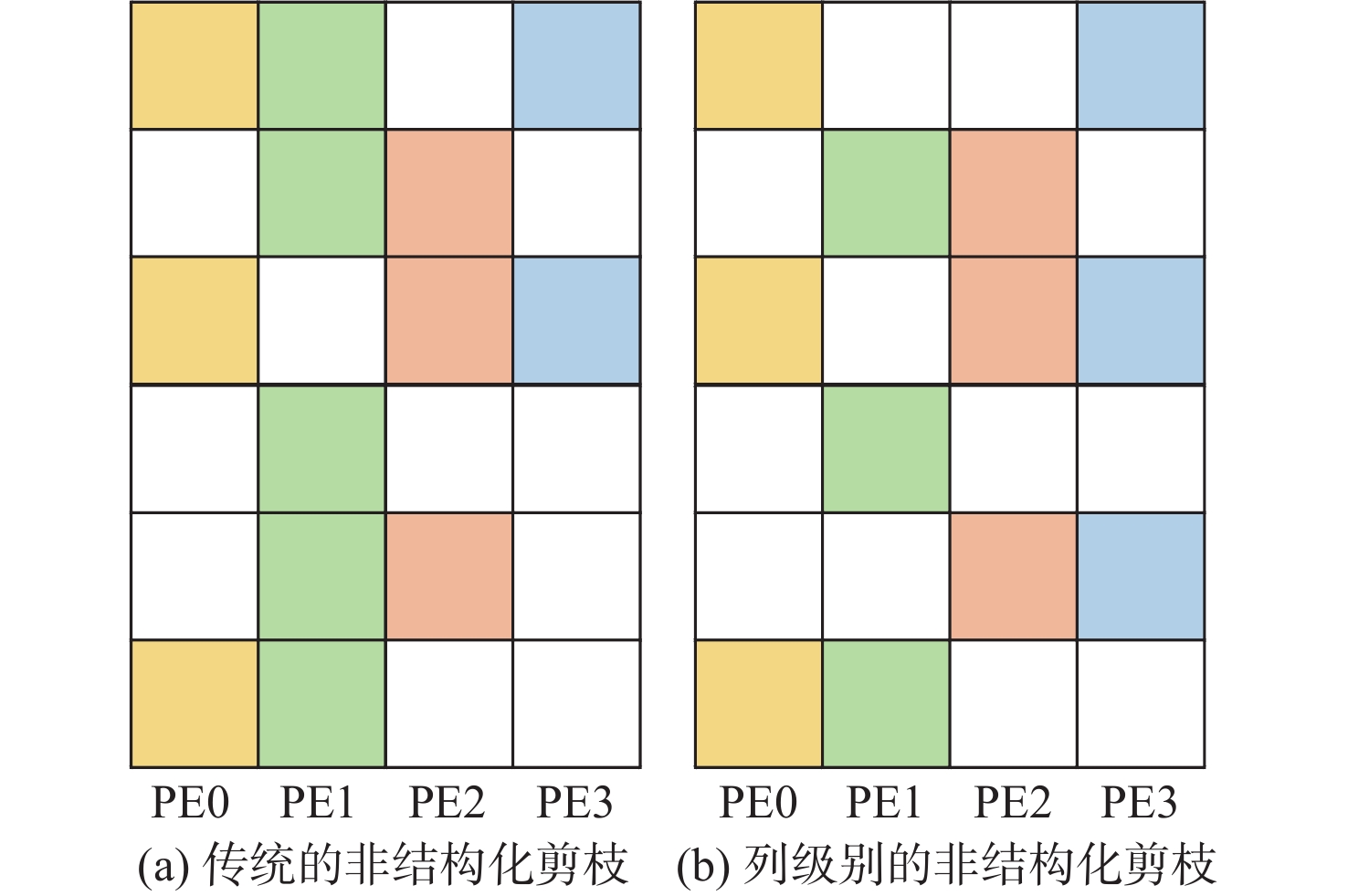
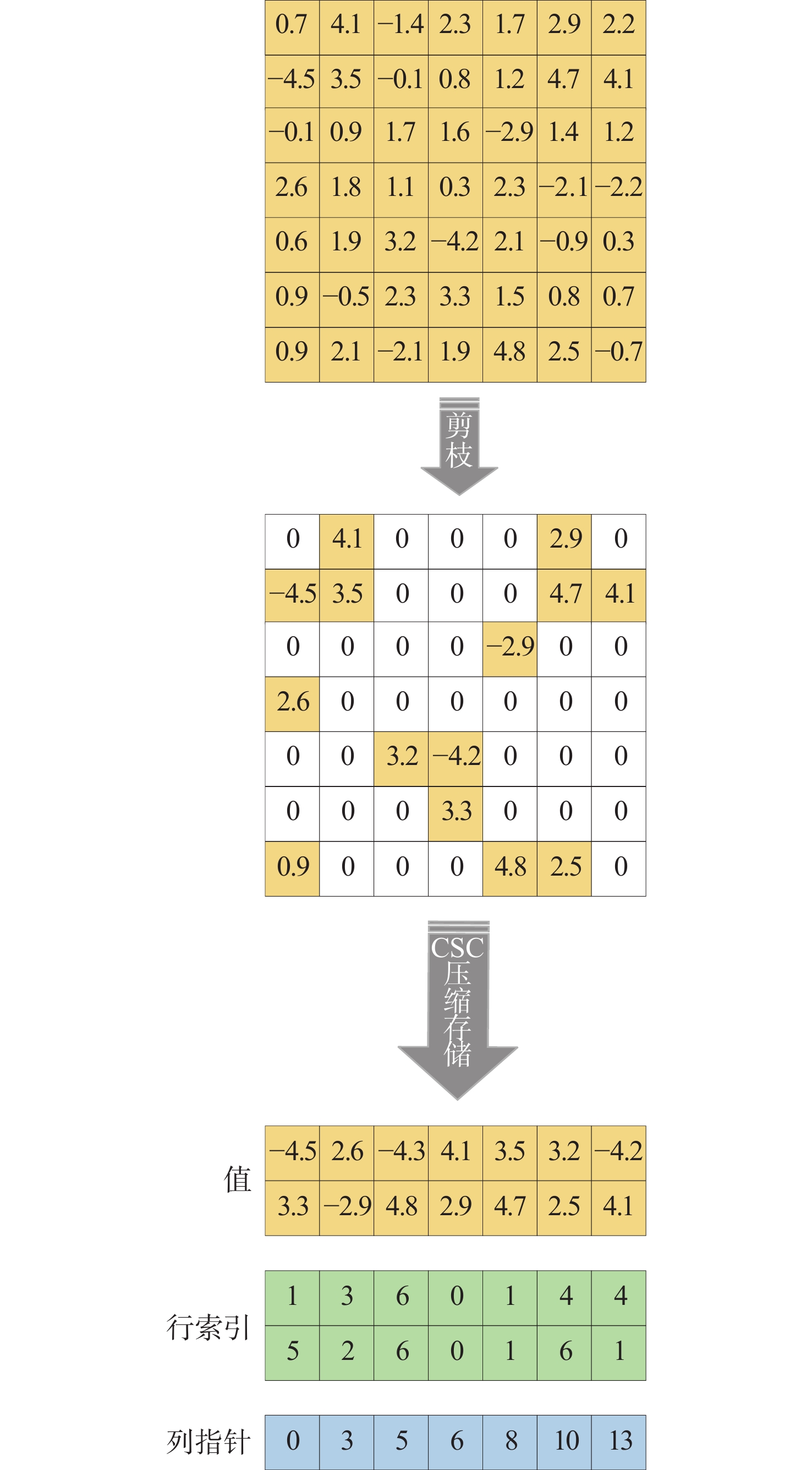
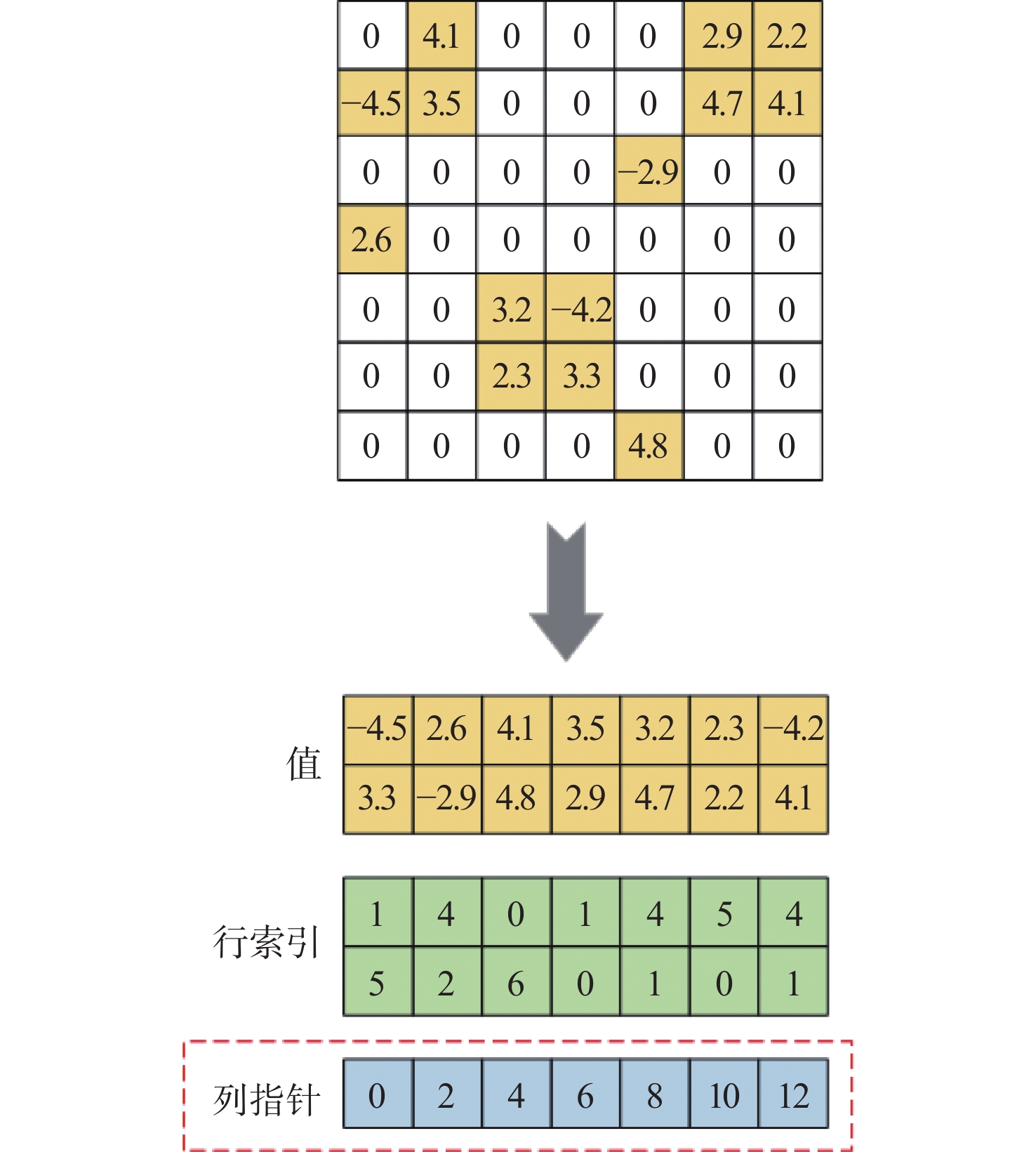
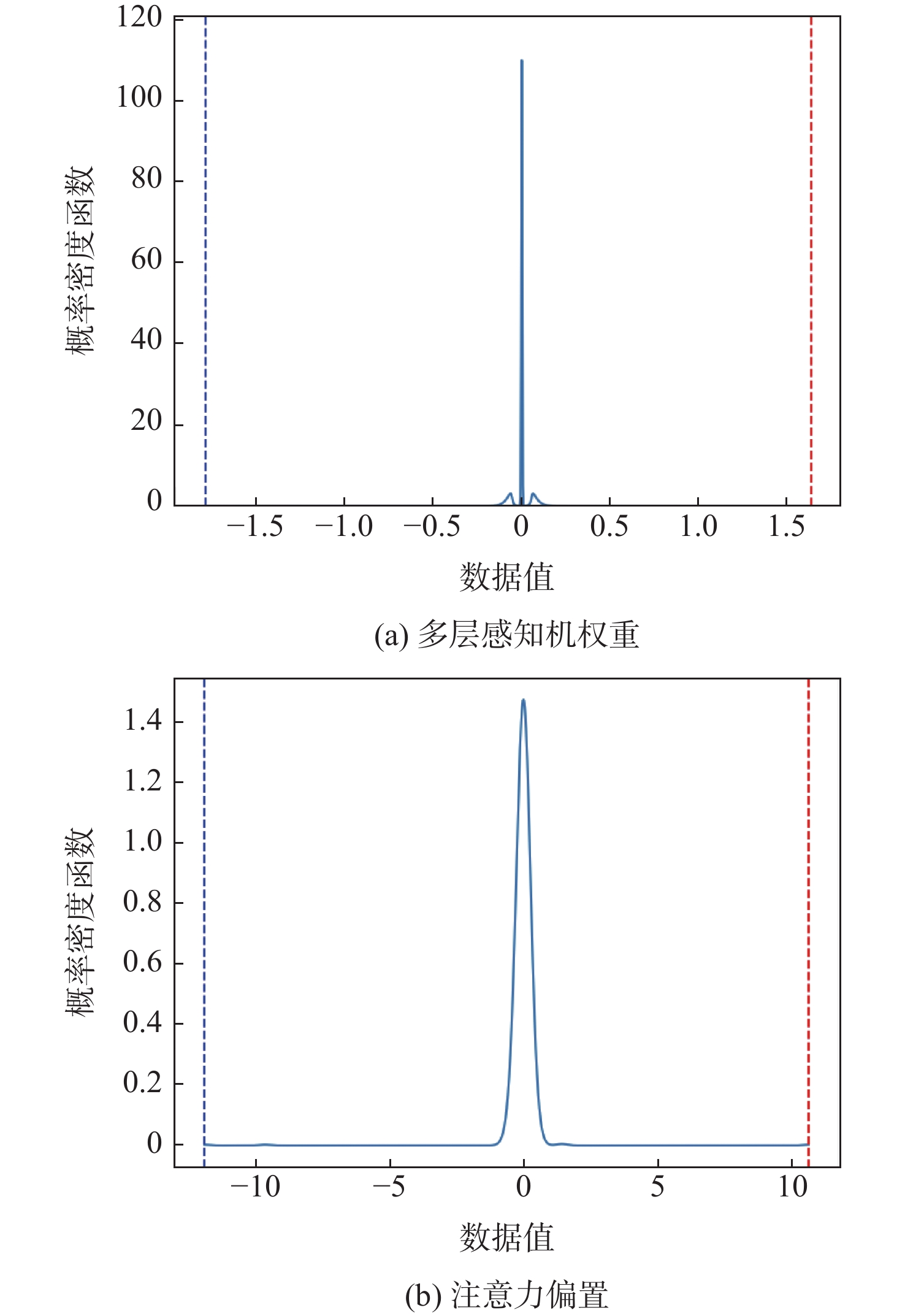
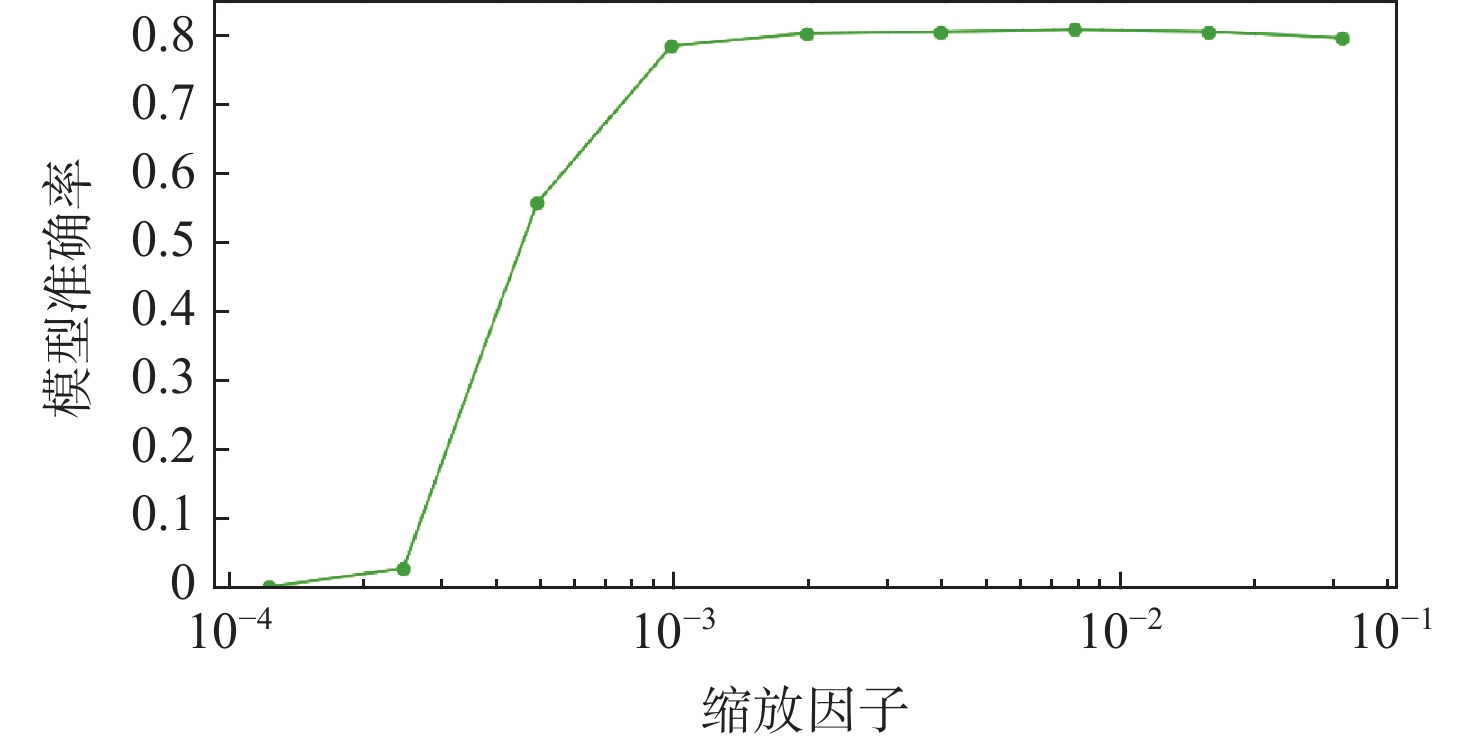
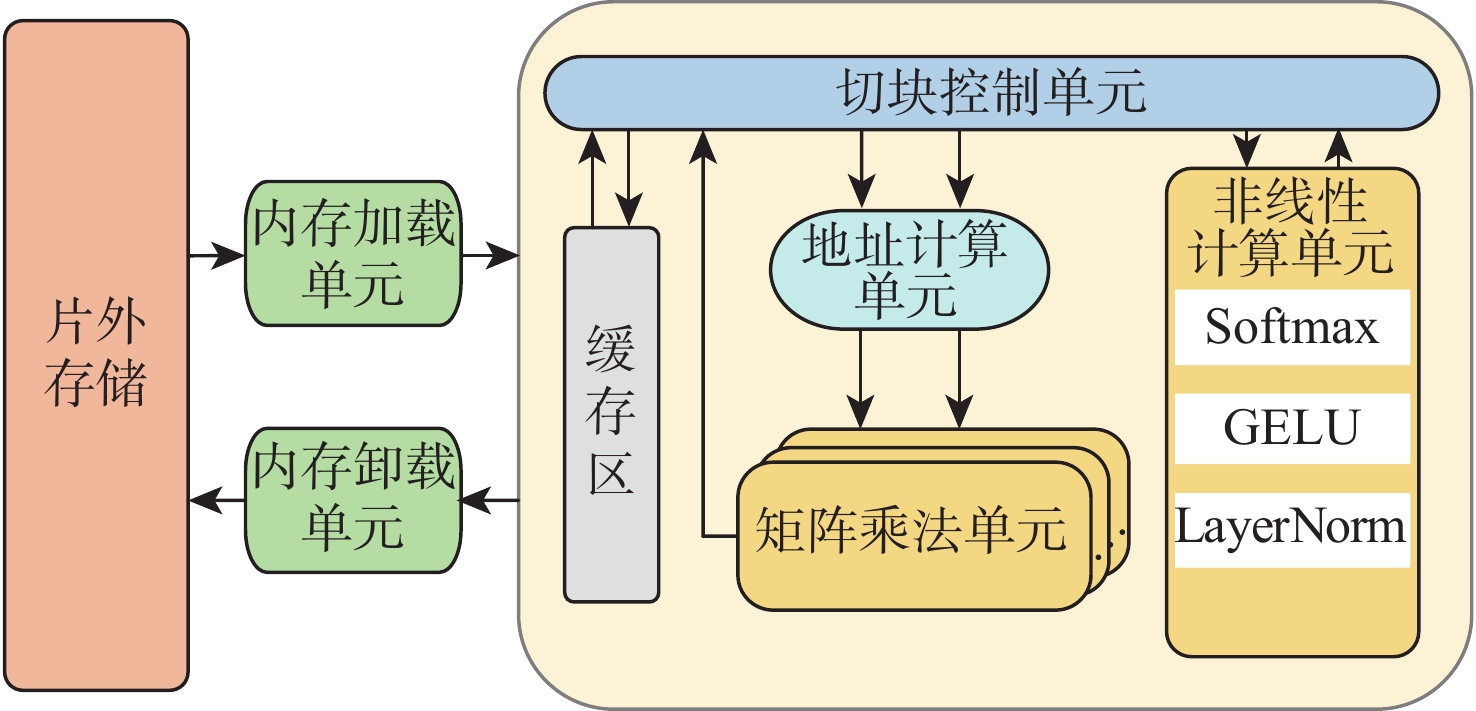
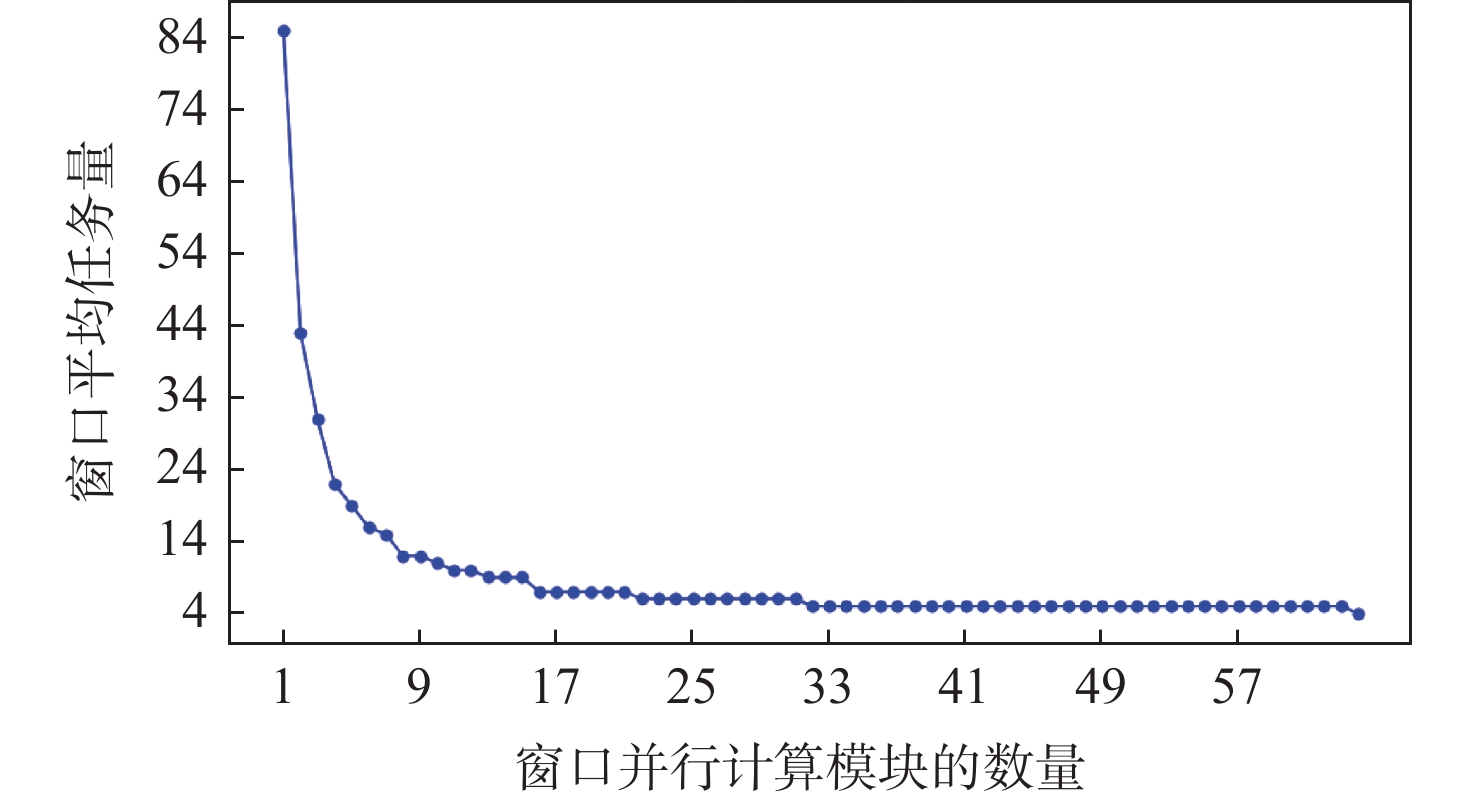
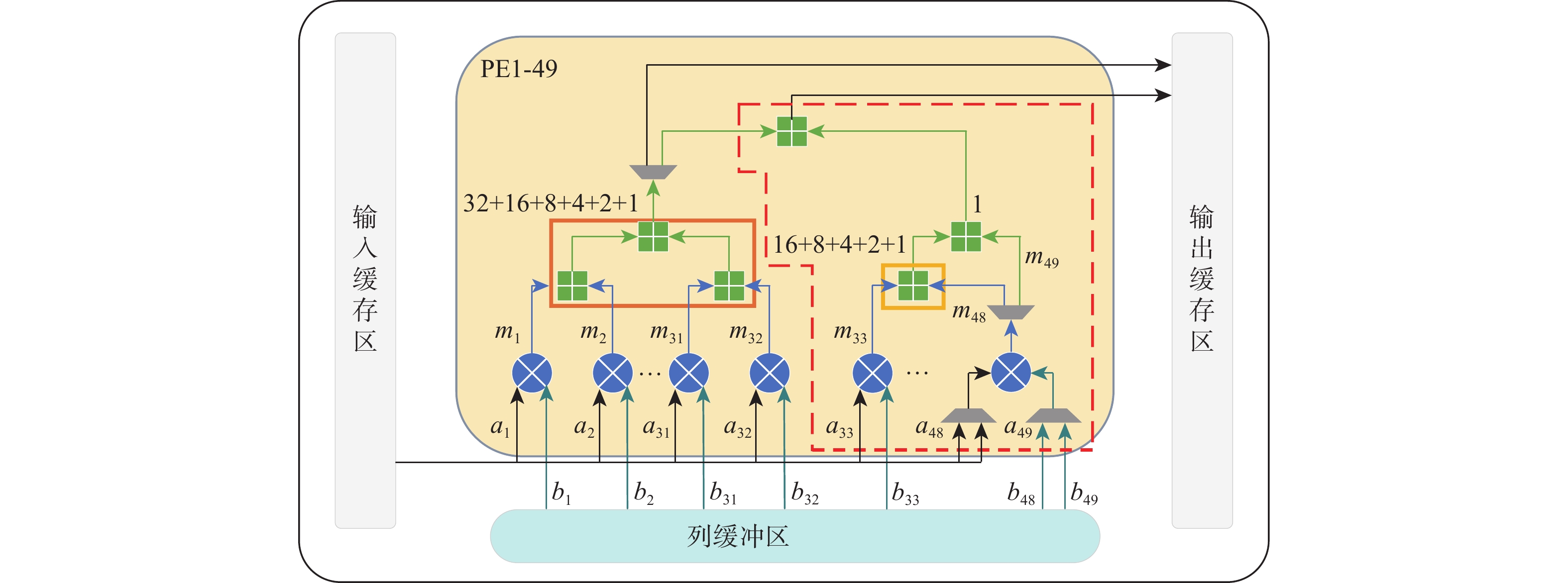
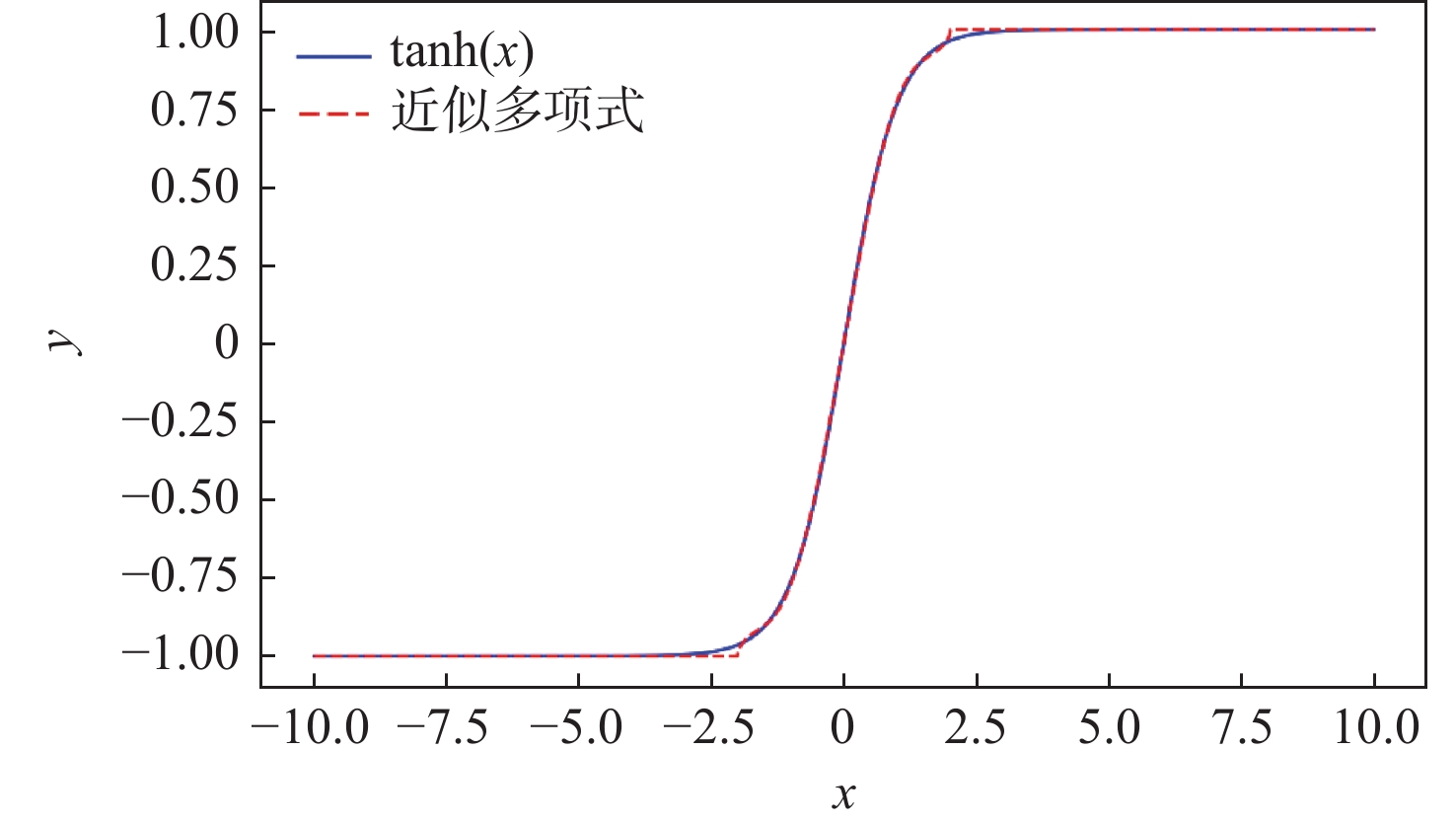
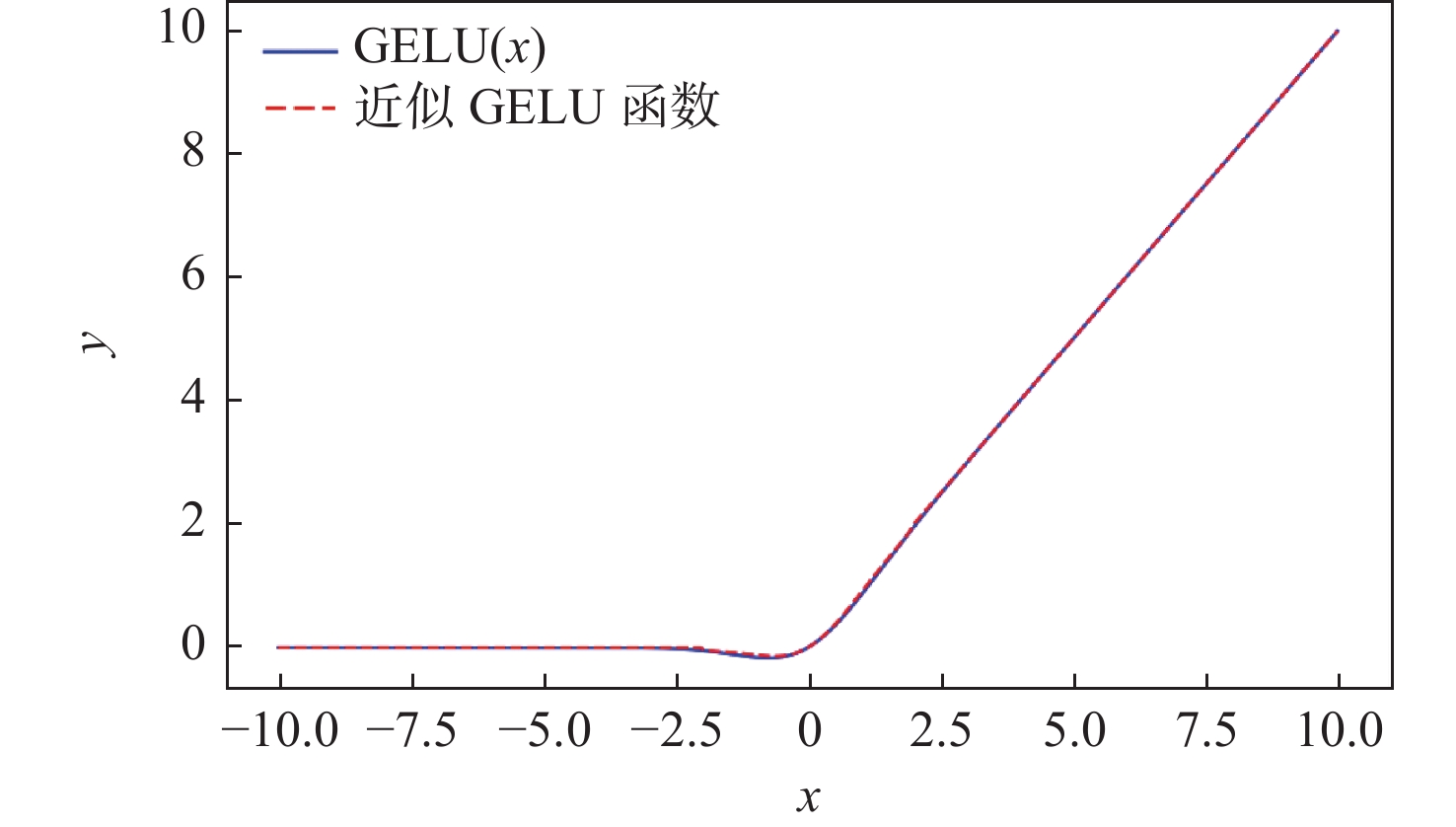
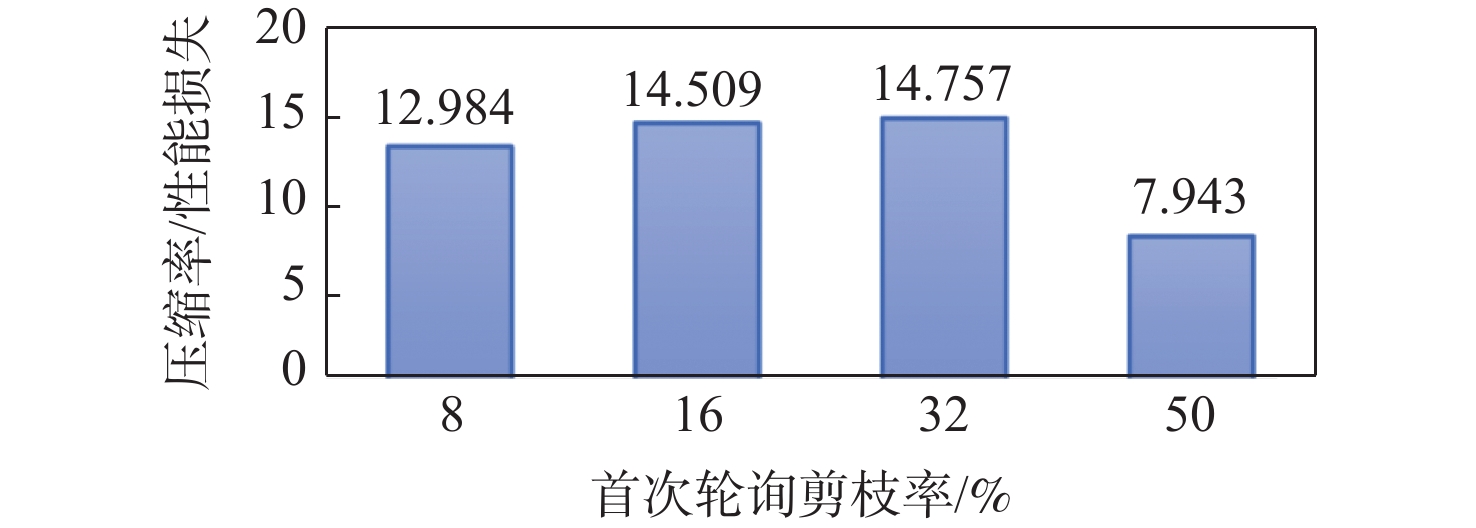
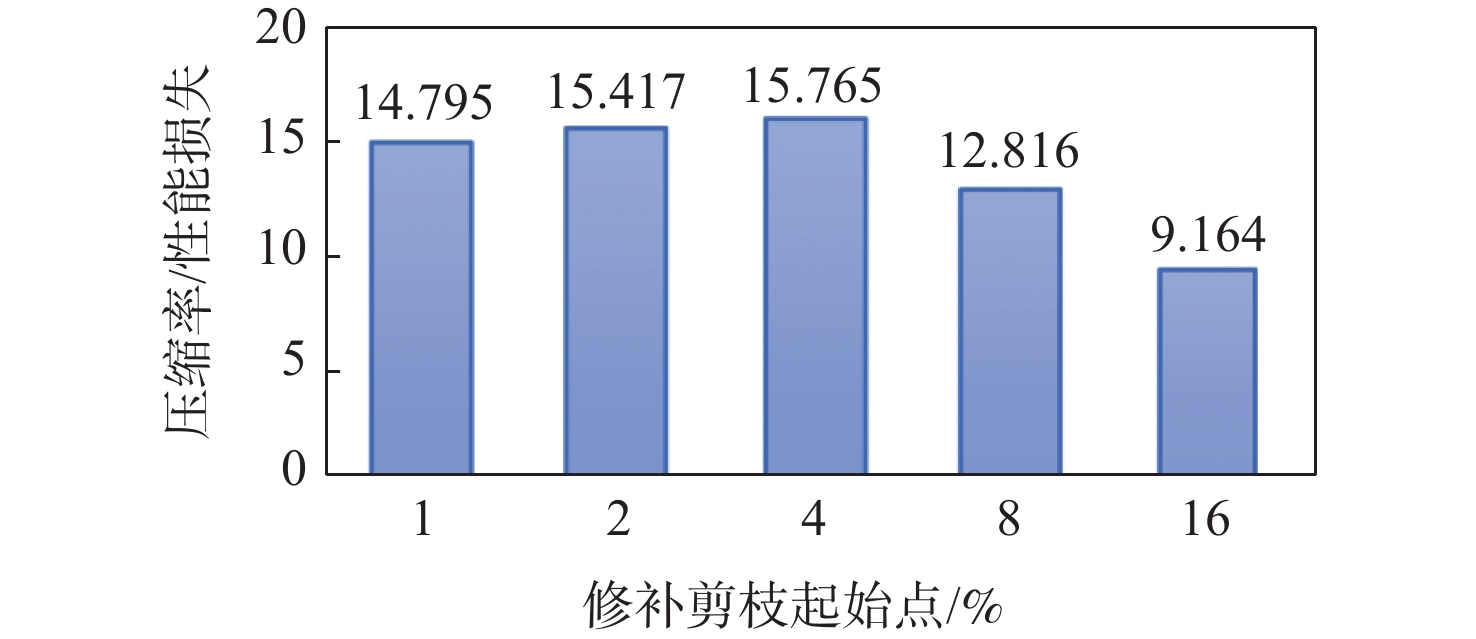
This study used adaptive iterative pruning and search-based bias-free quantization approaches to minimize model complexity and storage requirements while preserving accuracy in response to the deployment and execution problems of Swin Transformer models in resource-constrained situations. Initially, Adaptive iterative pruning dynamically eliminated non-essential weights, reducing storage and computational demands. Subsequently, Search-based bias-Free quantization optimized the storage of weights and activation values, further minimizing model size with minimal accuracy loss. In terms of hardware design, an accelerator architecture tailored for Swin Transformer models was put out, improving data processing efficiency and speed via hardware-level adjustments. Experimental results indicated that after applying pruning and quantization, the model's size reduced to 14.4% of its original, achieving a Top-1 accuracy of 77.4% on the ImageNet-1K dataset.

Area approximate optimization of logic circuits based on error rate allocation
FAN Haimei, WU Qianhuo, WANG Lunyao
2026, 52(6): 2114-2122. doi: 10.13700/j.bh.1001-5965.2024.0211
Abstract:

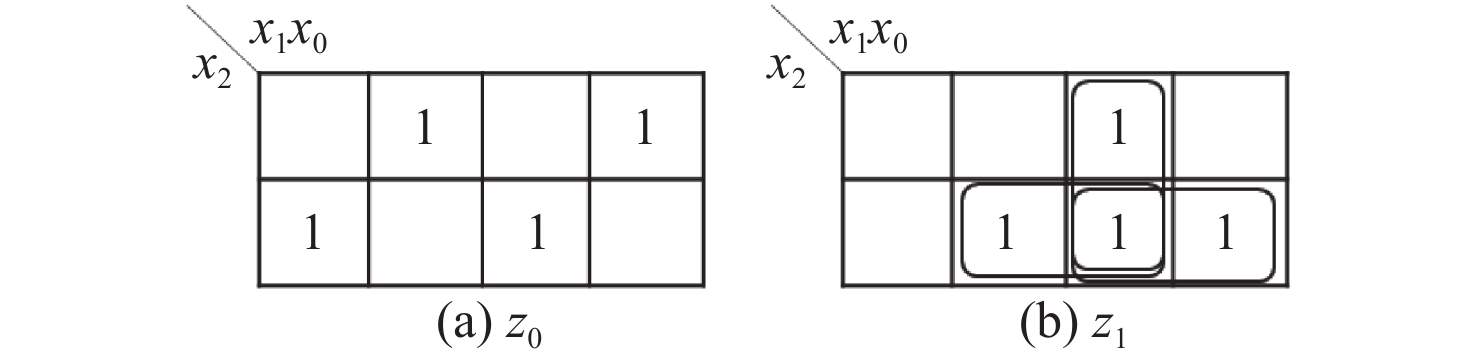
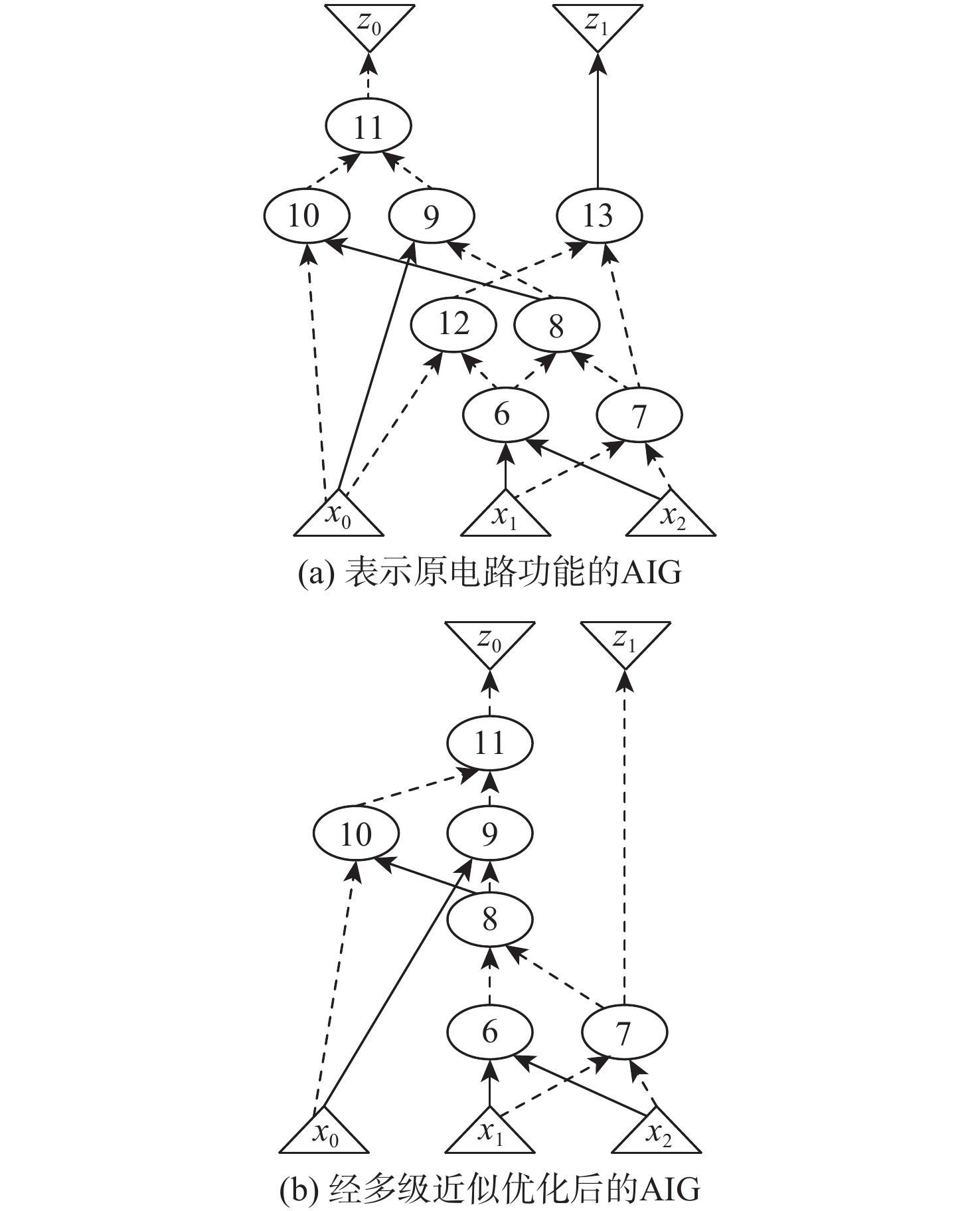
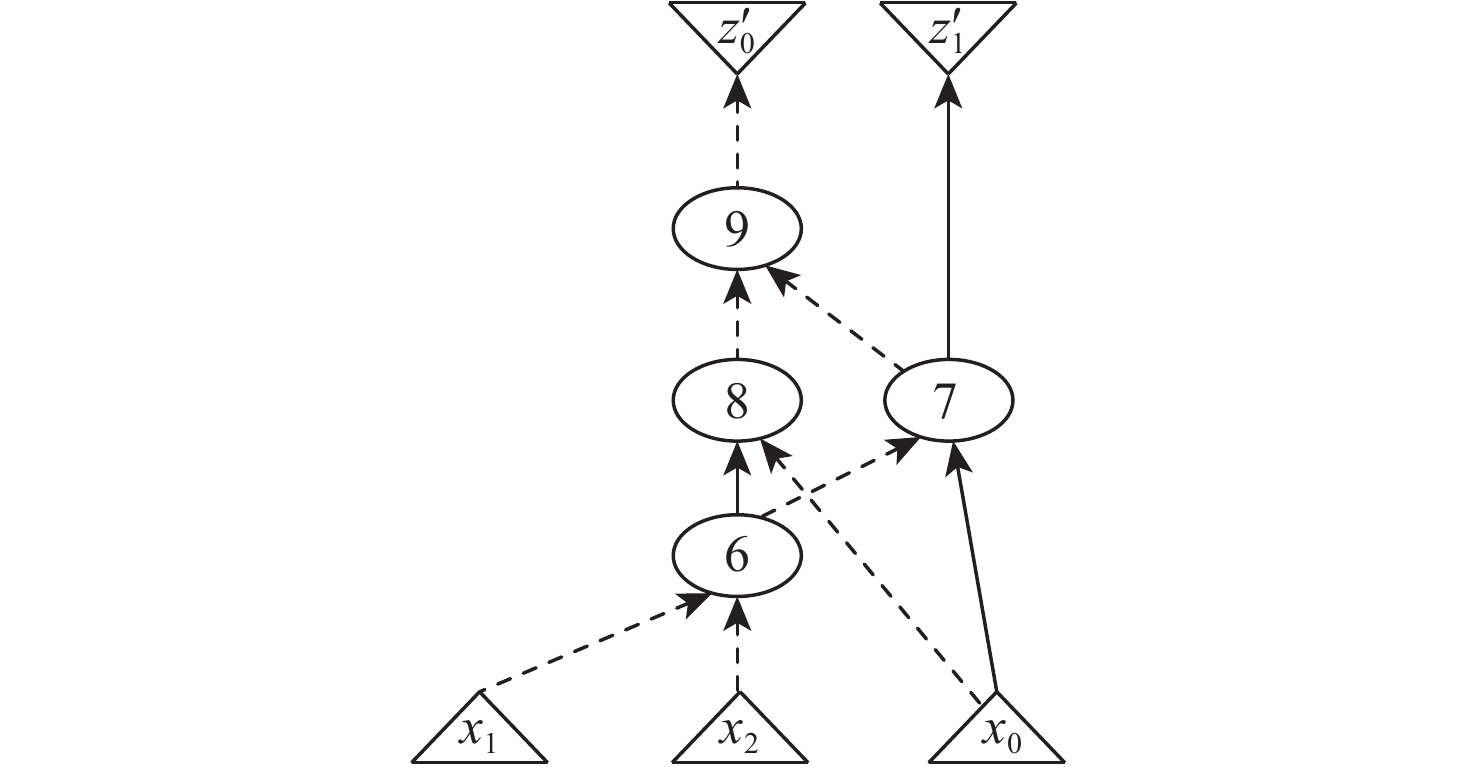
A multi-level area optimization algorithm for logic circuits based on error rate allocation is proposed, taking into account that the approximate optimization effects of a logic function under the same error rate constraint differ when the function is expressed in two-level or multi-level forms and that there is an equivalent conversion between two-level and multi-level forms. This algorithm consists of a two-level error rate estimation technique, an error rate coefficient search method for error rate division, and a two-level/multi-level approximate optimization method. The proposed algorithm is implemented using C, the commands of a system for sequential logic synthesis and formal verification (ABC) tools and tested with Microelectronics Center of North Carolina (MCNC) benchmarks. The experimental results show that, compared to the ABC tools, with the 5% error rate, the proposed algorithm achieves 42.36% and 25.15% in area and delay optimization, respectively. Compared to those approximate methods that only use the multi-level approximation method, further improvement in area and delay can be obtained by 5.05% and 9.36%, respectively.
Superblock nesting based on performance optimization for dynamic binary translation
JIN Shuai, CHAI Zhilei, ZHOU Haojie
2026, 52(6): 2123-2132. doi: 10.13700/j.bh.1001-5965.2024.0298
Abstract:

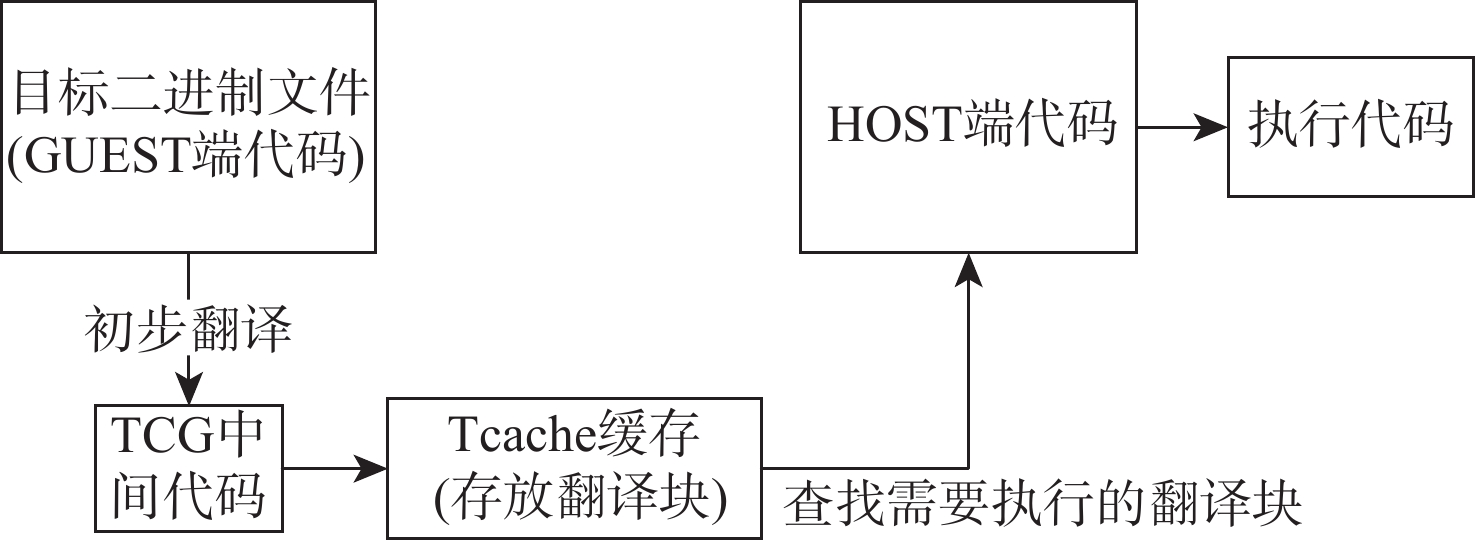
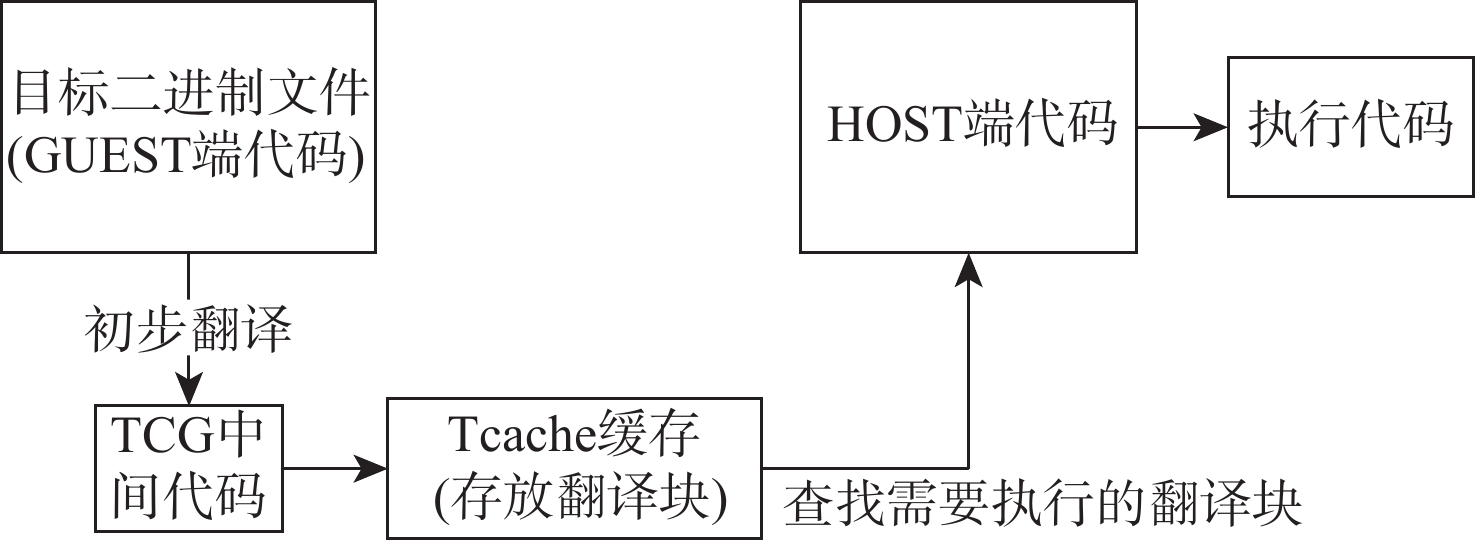
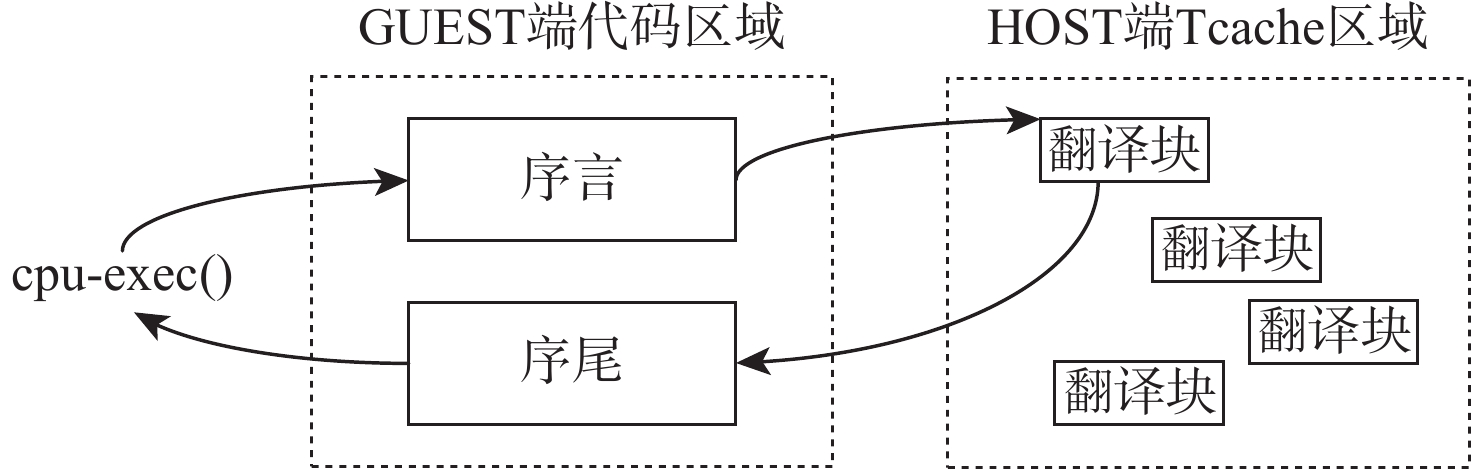
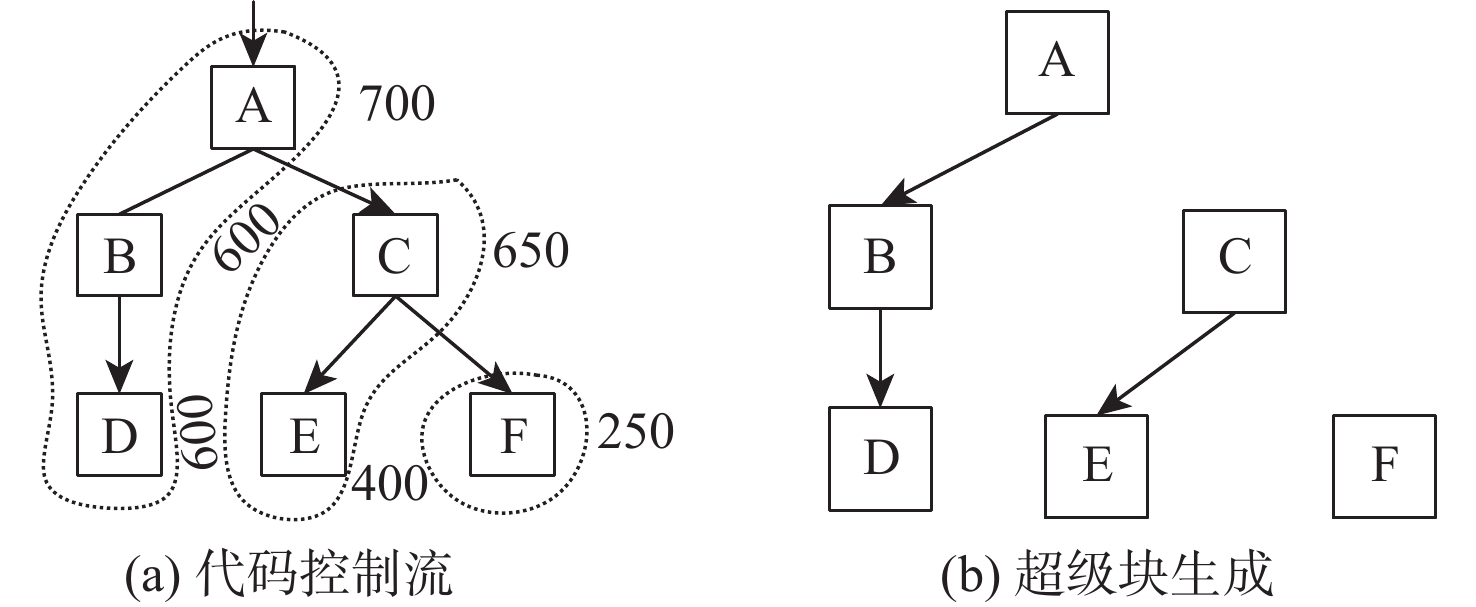
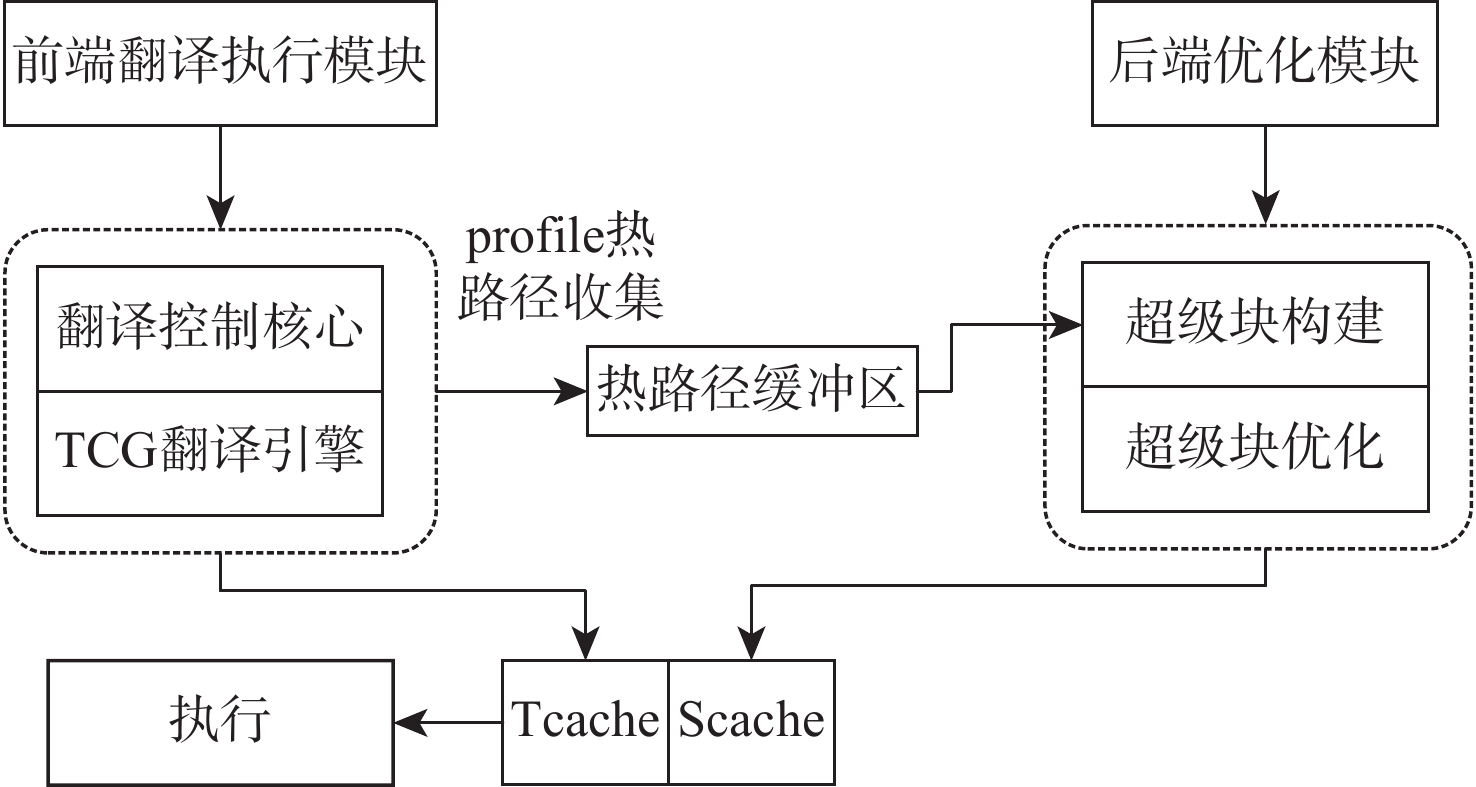
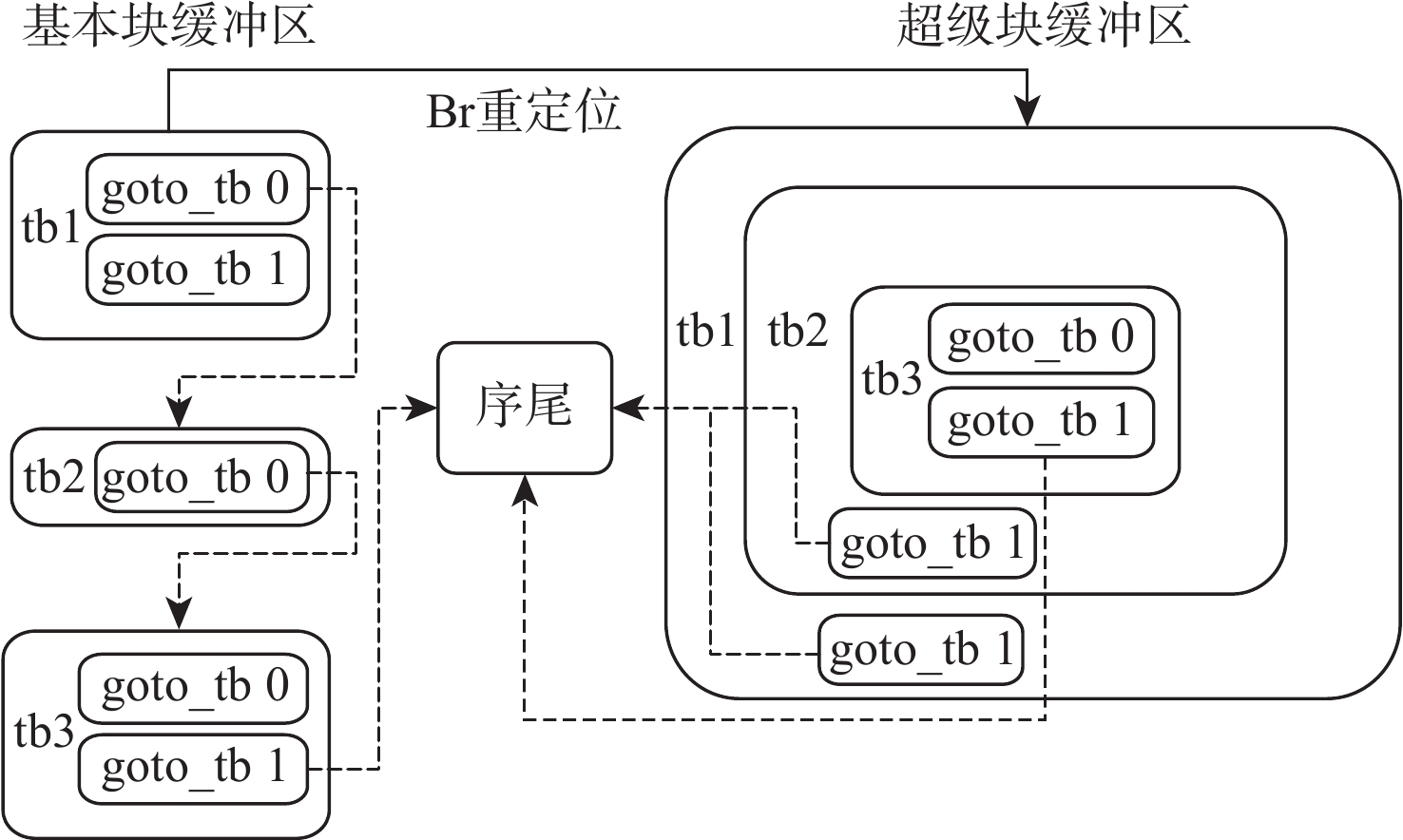
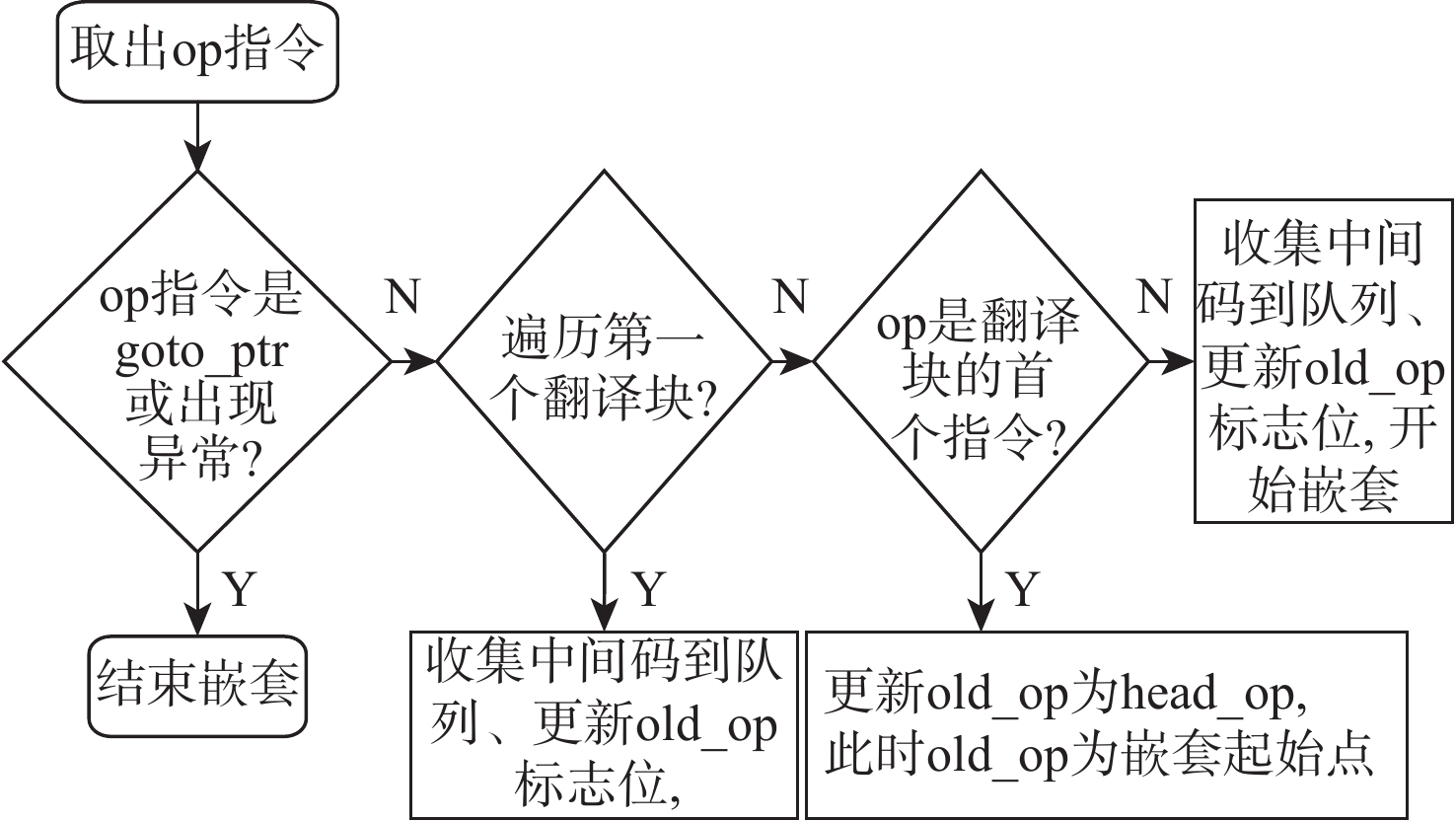
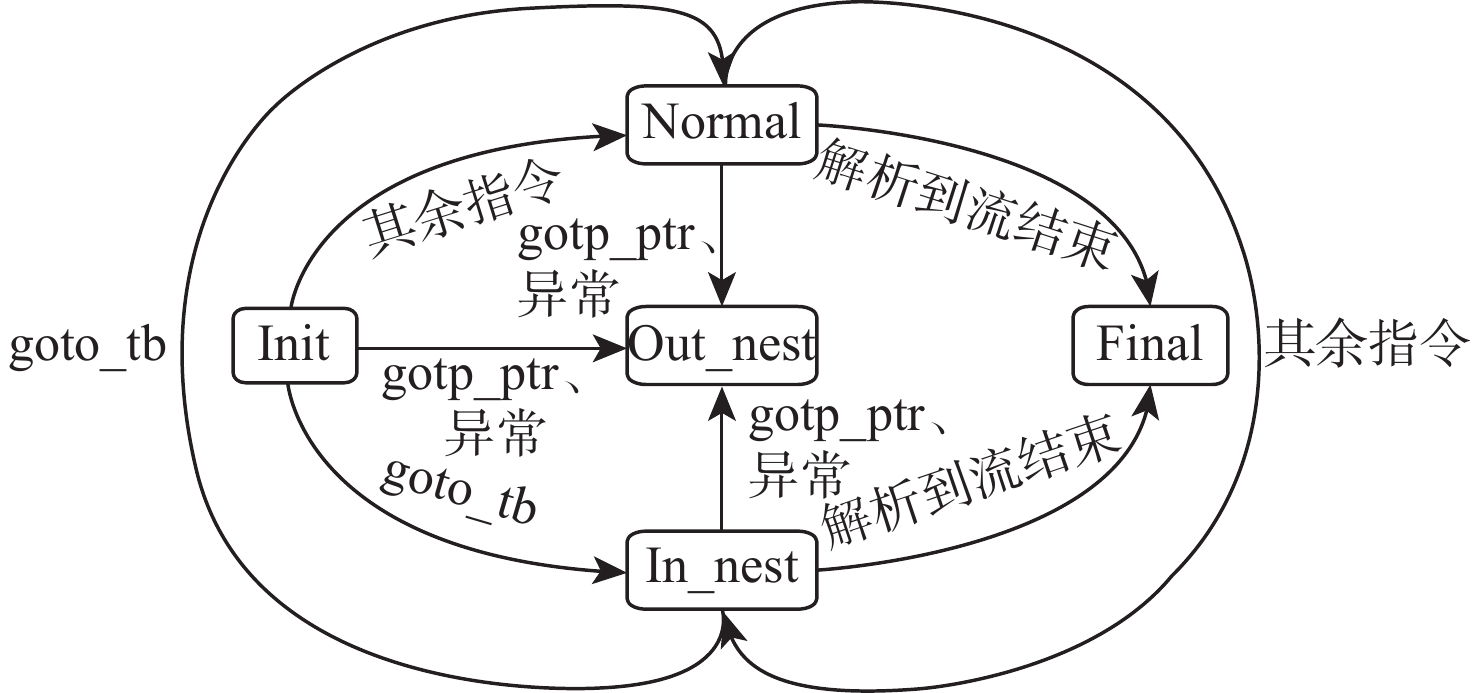
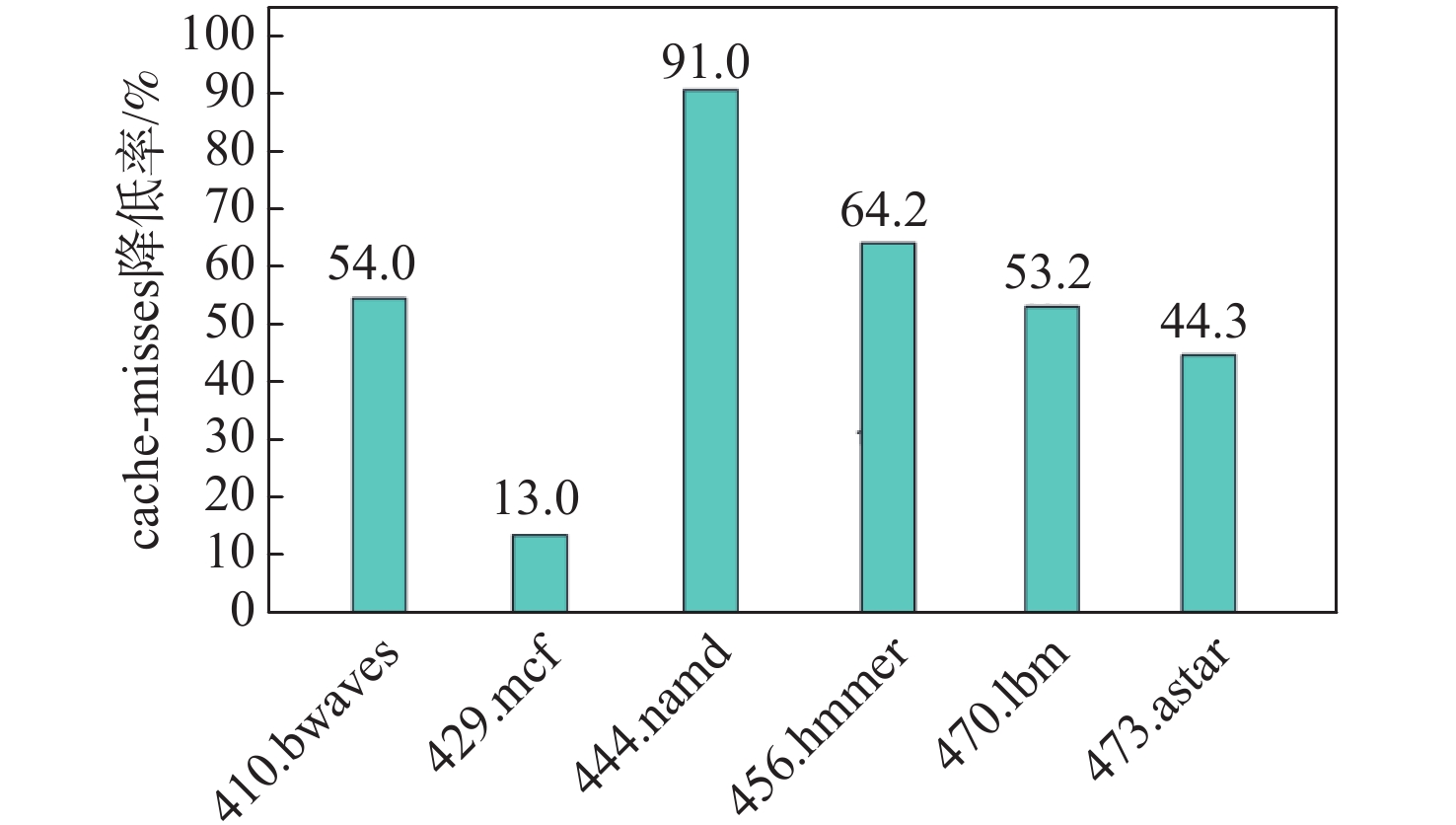
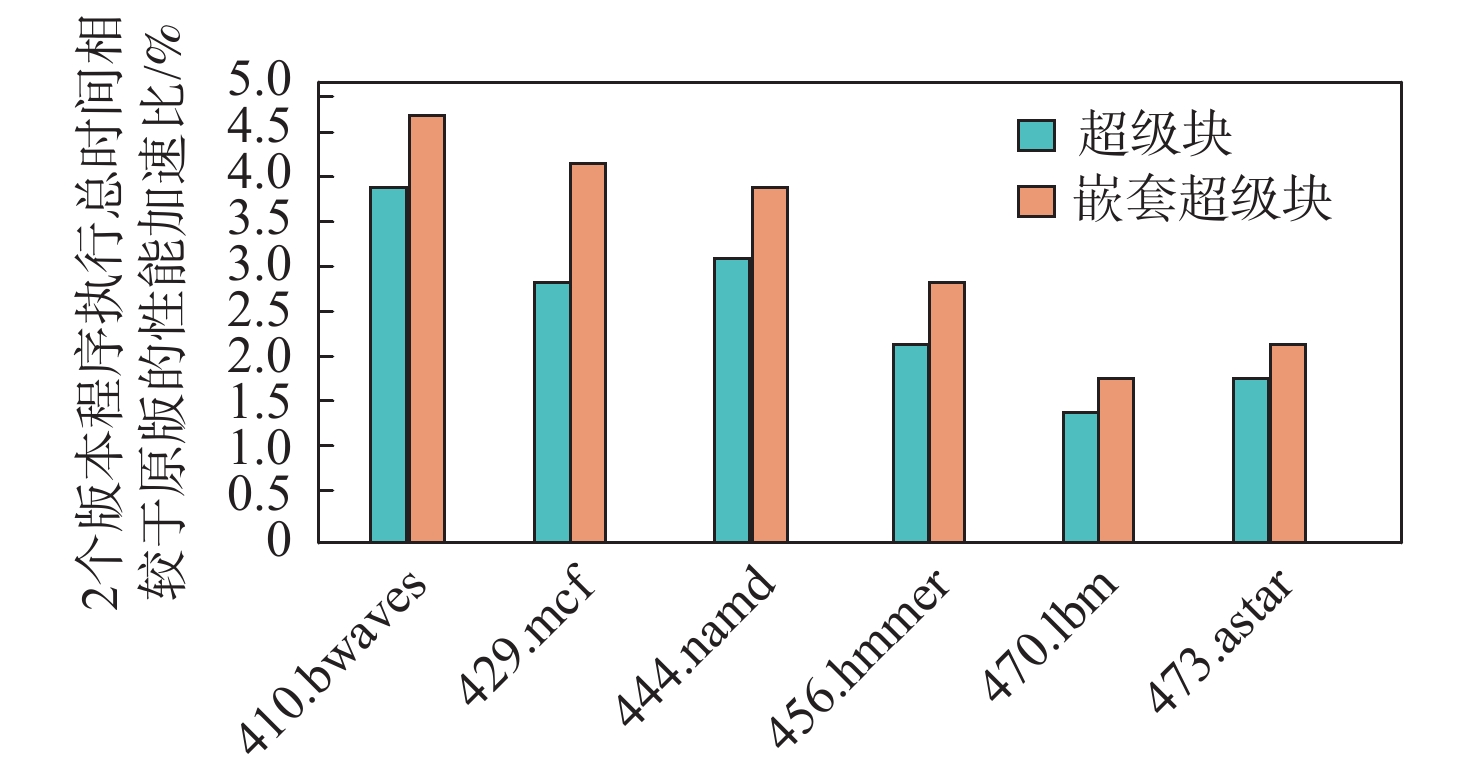
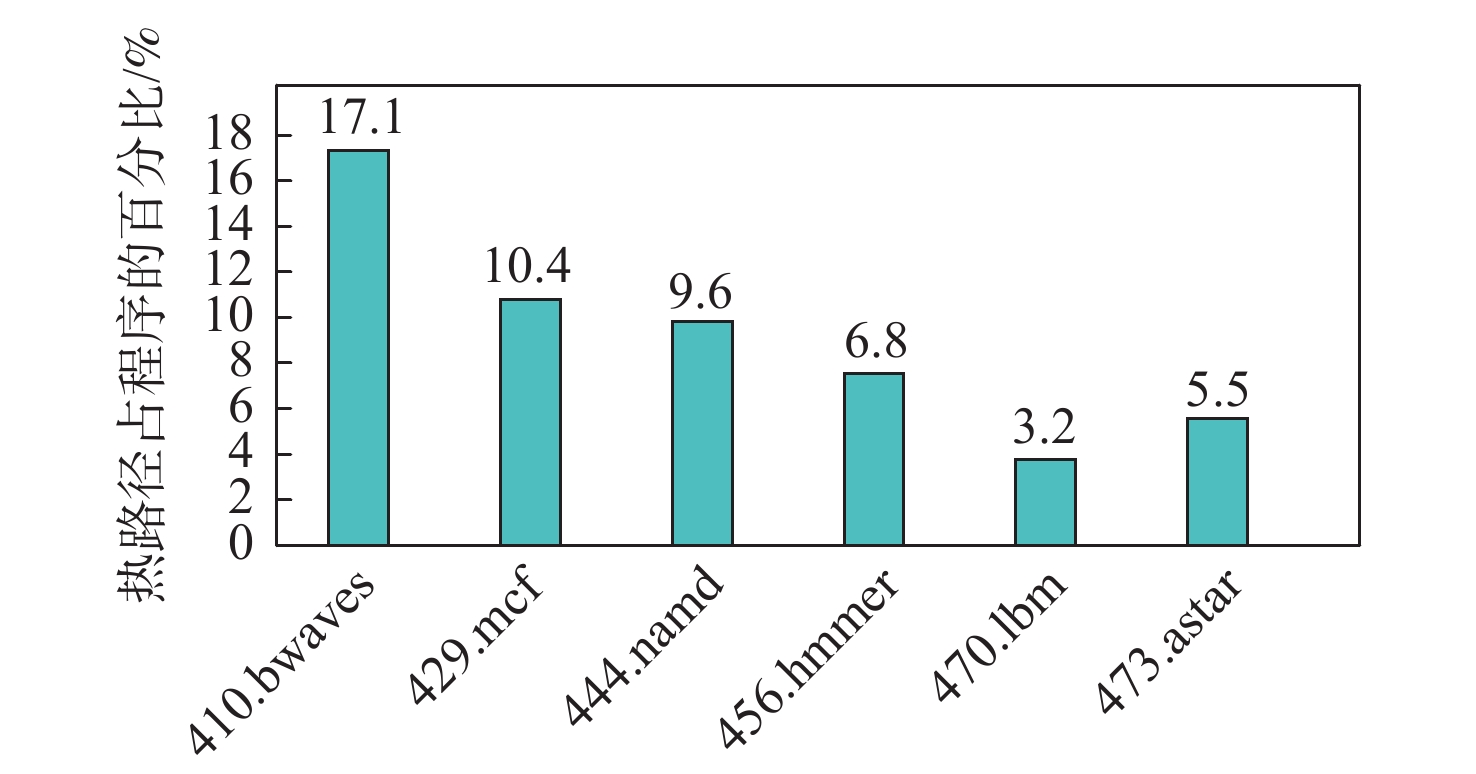
Simple direct block linking only considers the connection at the logical level and ignores the continuity of the physical storage location, despite the fact that the "direct block linking" method can decrease the frequency of translator intervention and enhance the target program's performance during the dynamic binary translation process. Aiming at this problem, a dynamic binary translation performance optimization method based on superblock nesting is proposed, which is based on the IR instructions generated by the binary translator pre-translating the target code, and increases the instruction cache hit rate by constructing superblocks with a nested structure so that the code achieves the continuity of physical storage locations. The experimental results show that: SPEC2006, the most classic and commonly used in the field of dynamic binary translation, is used as the test benchmark, and QEMU6.0, a mainstream open-source binary translator, is used as the experimental framework. Compared with the version without superblock nesting, the proposed method can improve the cache hit rate by 53.28% on average, and the maximum increase can be 90%. The running performance of the target program can be improved by 3.07% on average and 4.58% at maximum.

Dynamic characteristics of rotating disk-shaped flight vehicle during skipping considering configuration
WANG Di, LUO Jianqiao, YU Ning, MENG Junhui
2026, 52(6): 2133-2144. doi: 10.13700/j.bh.1001-5965.2024.0288
Abstract:

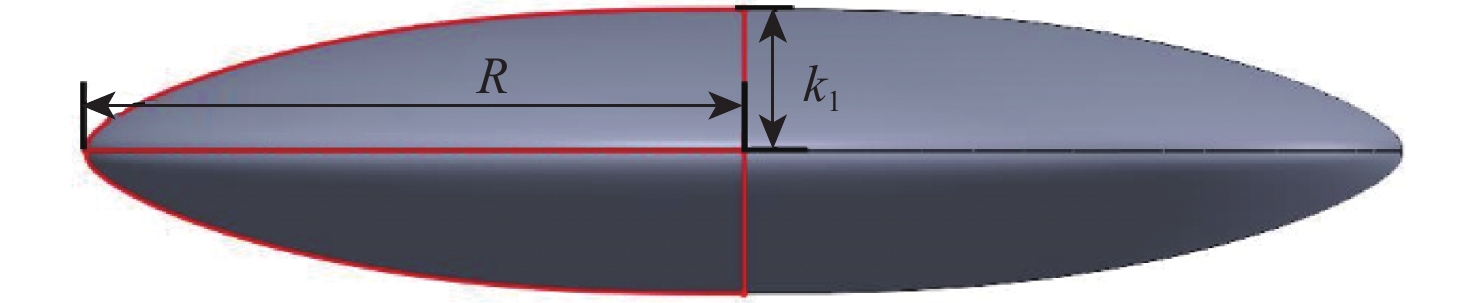
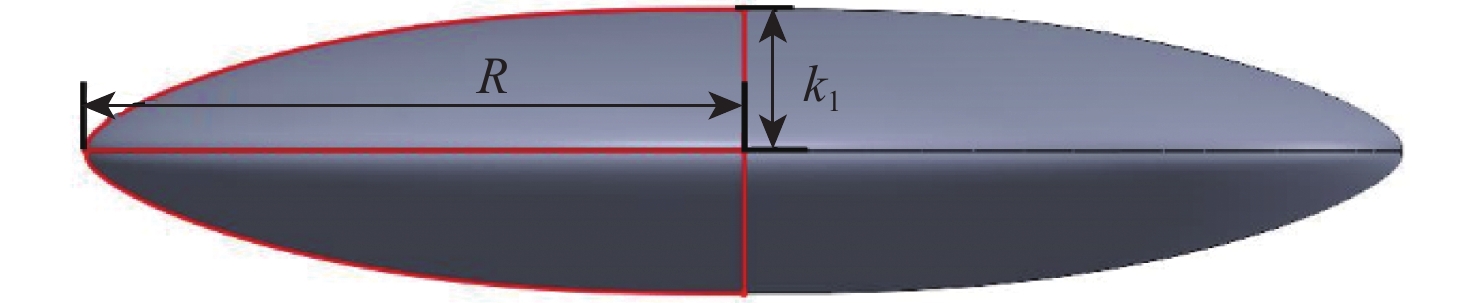
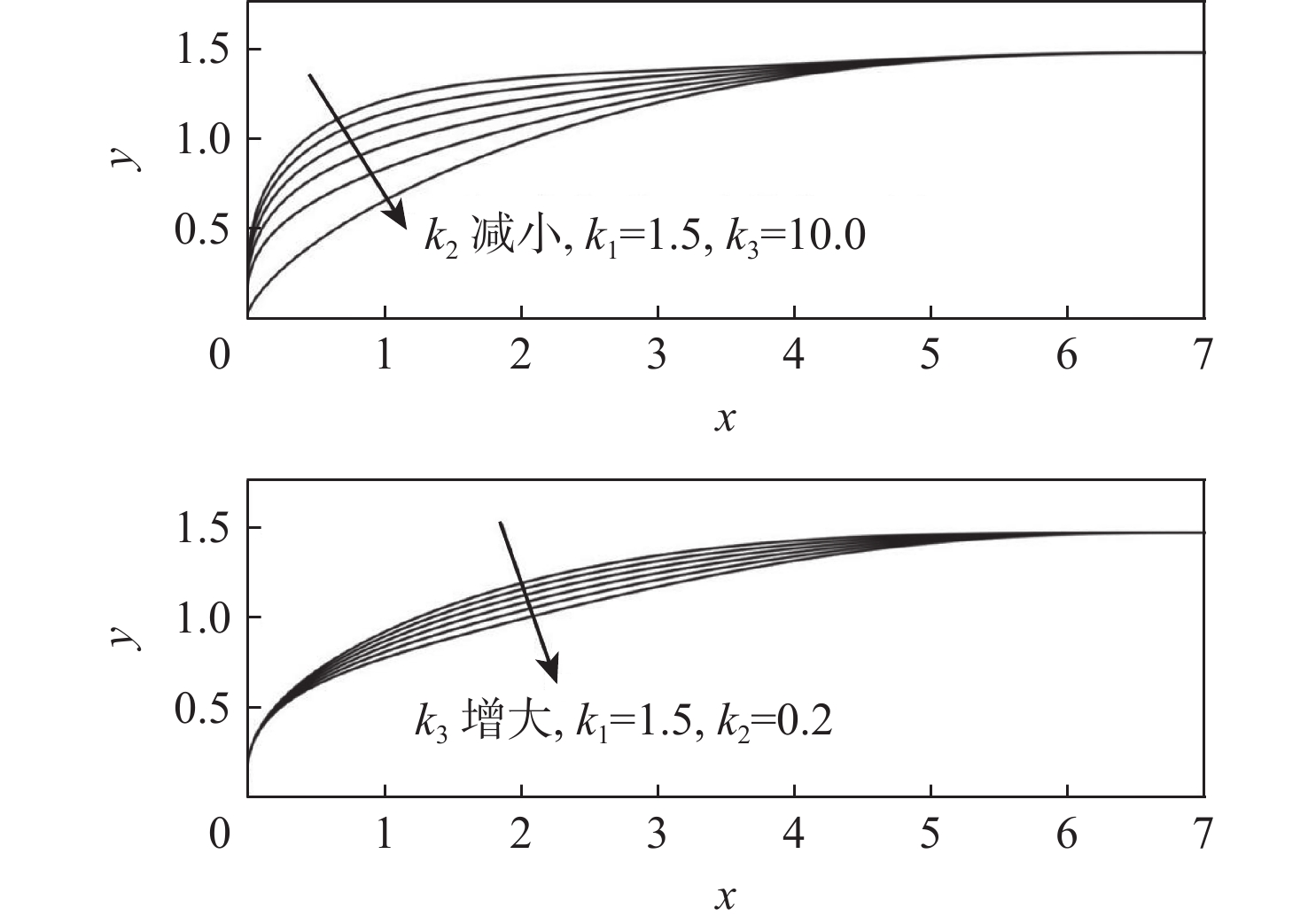
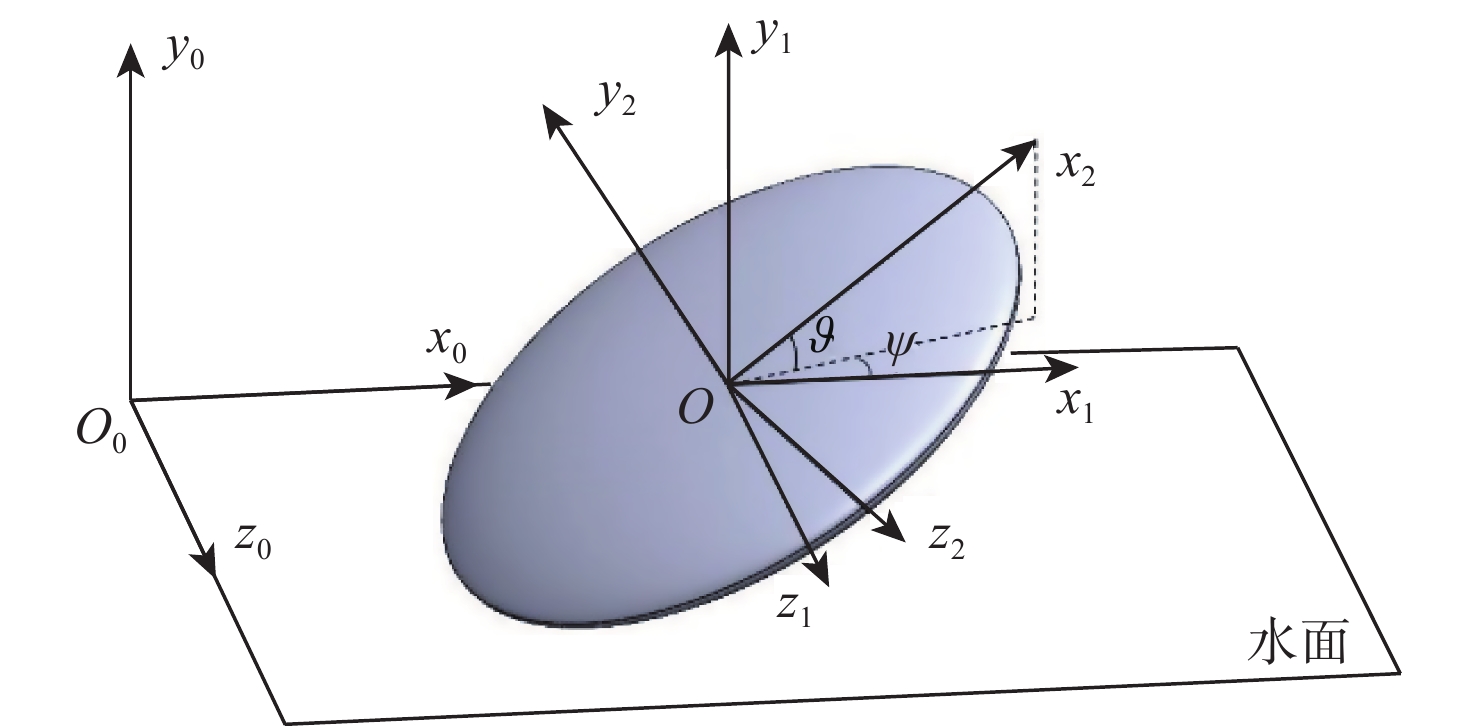
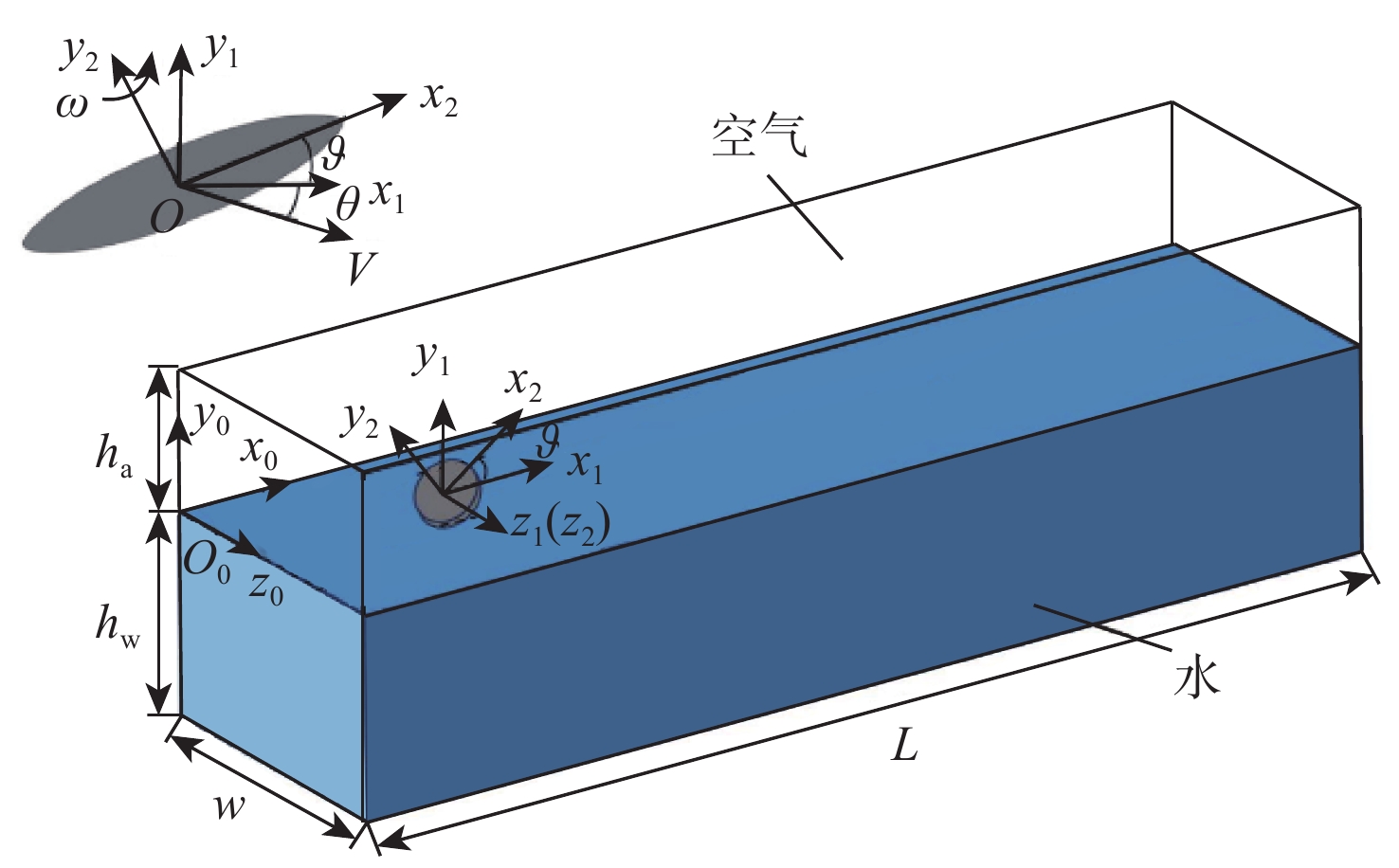
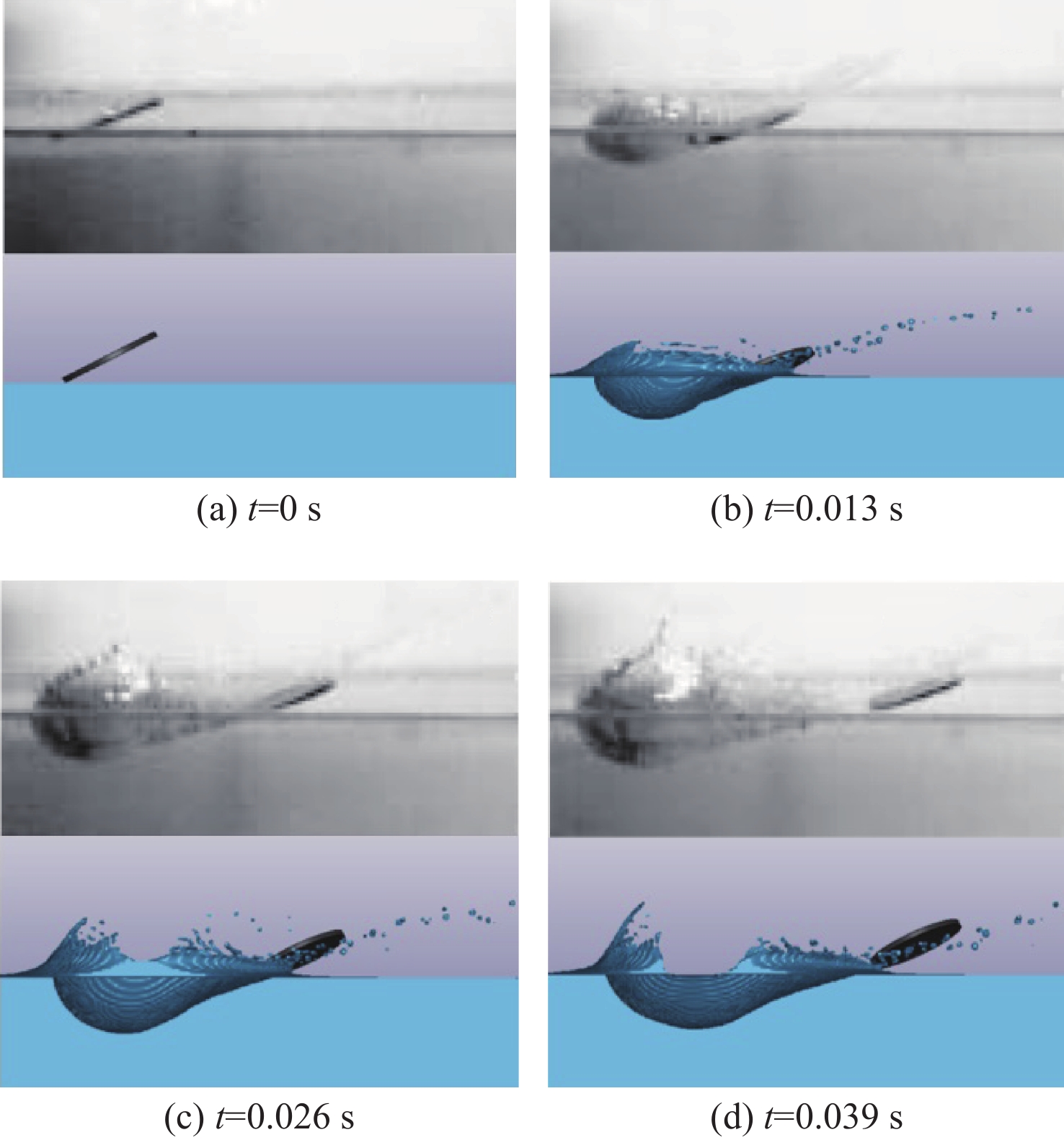
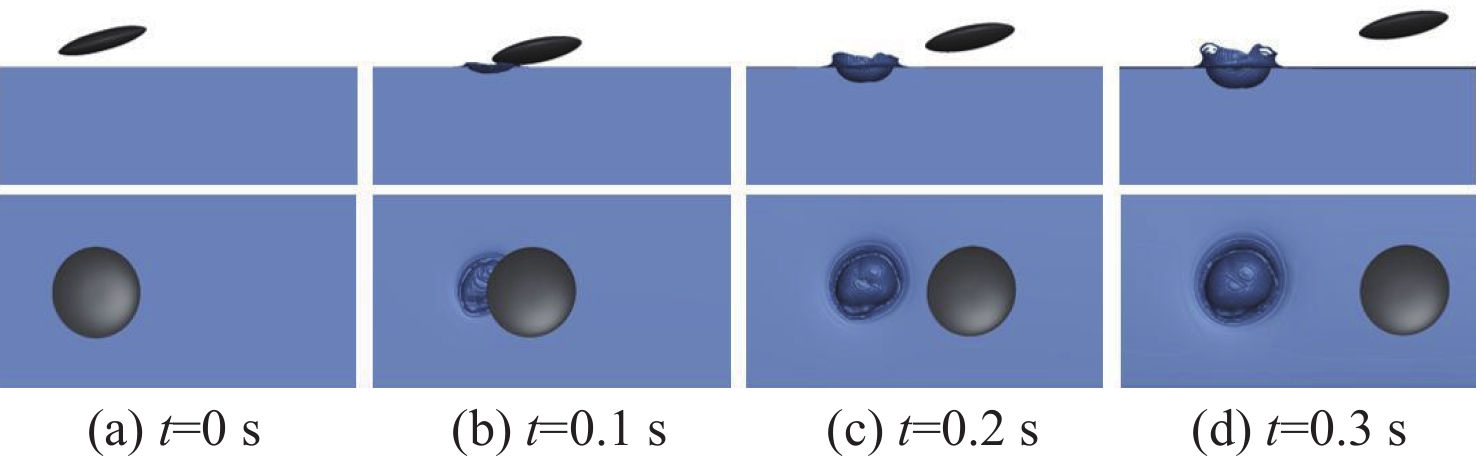
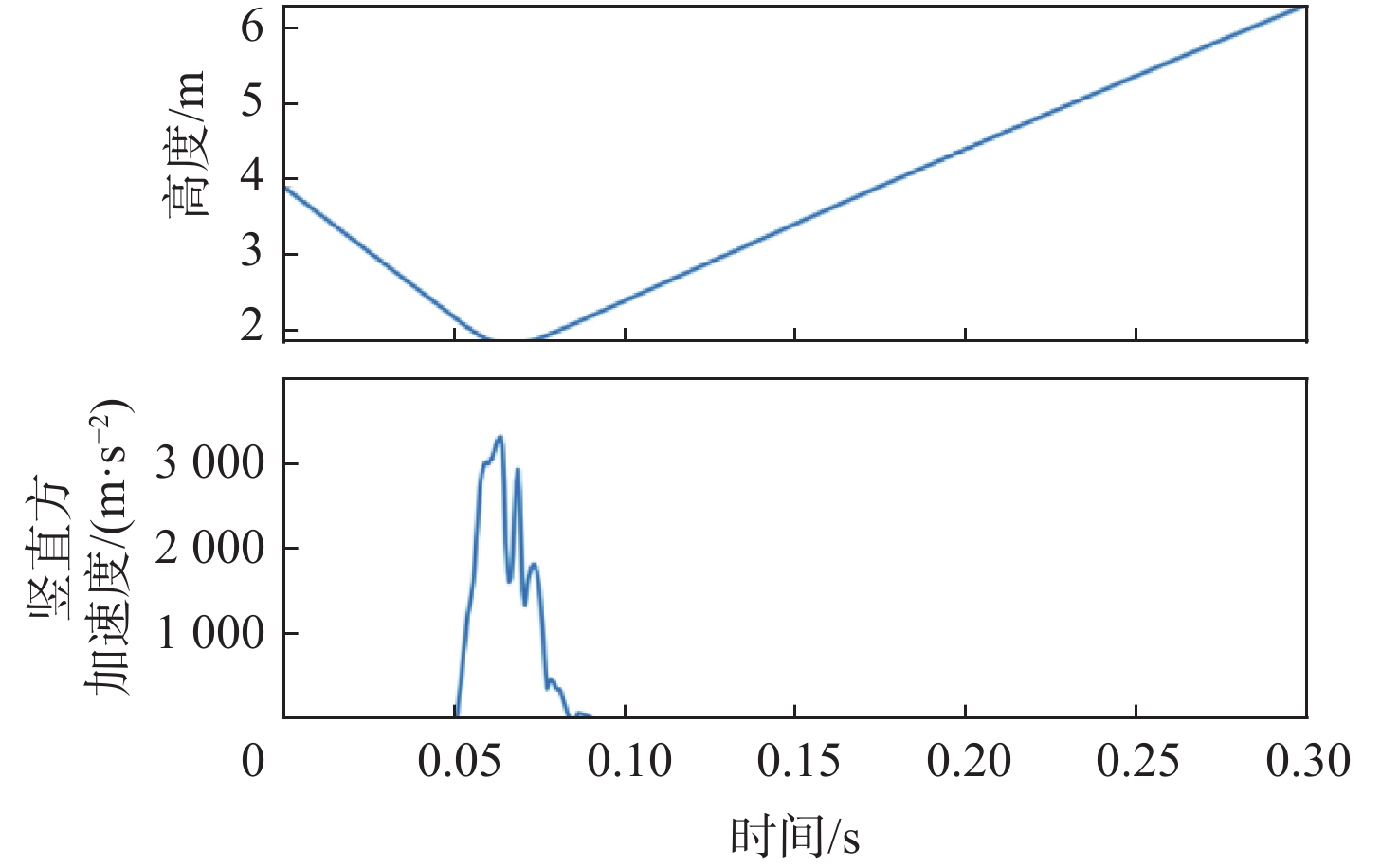
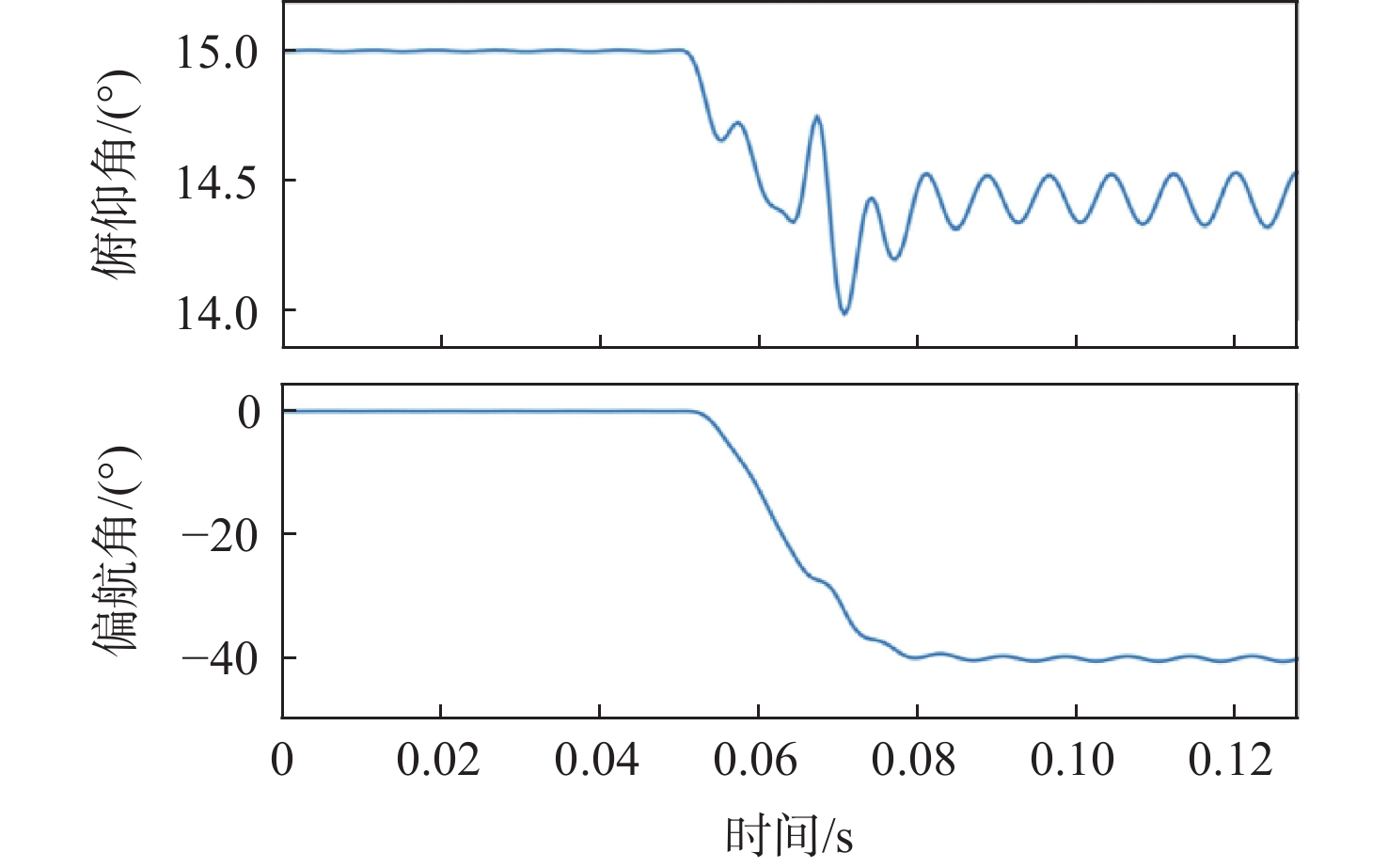
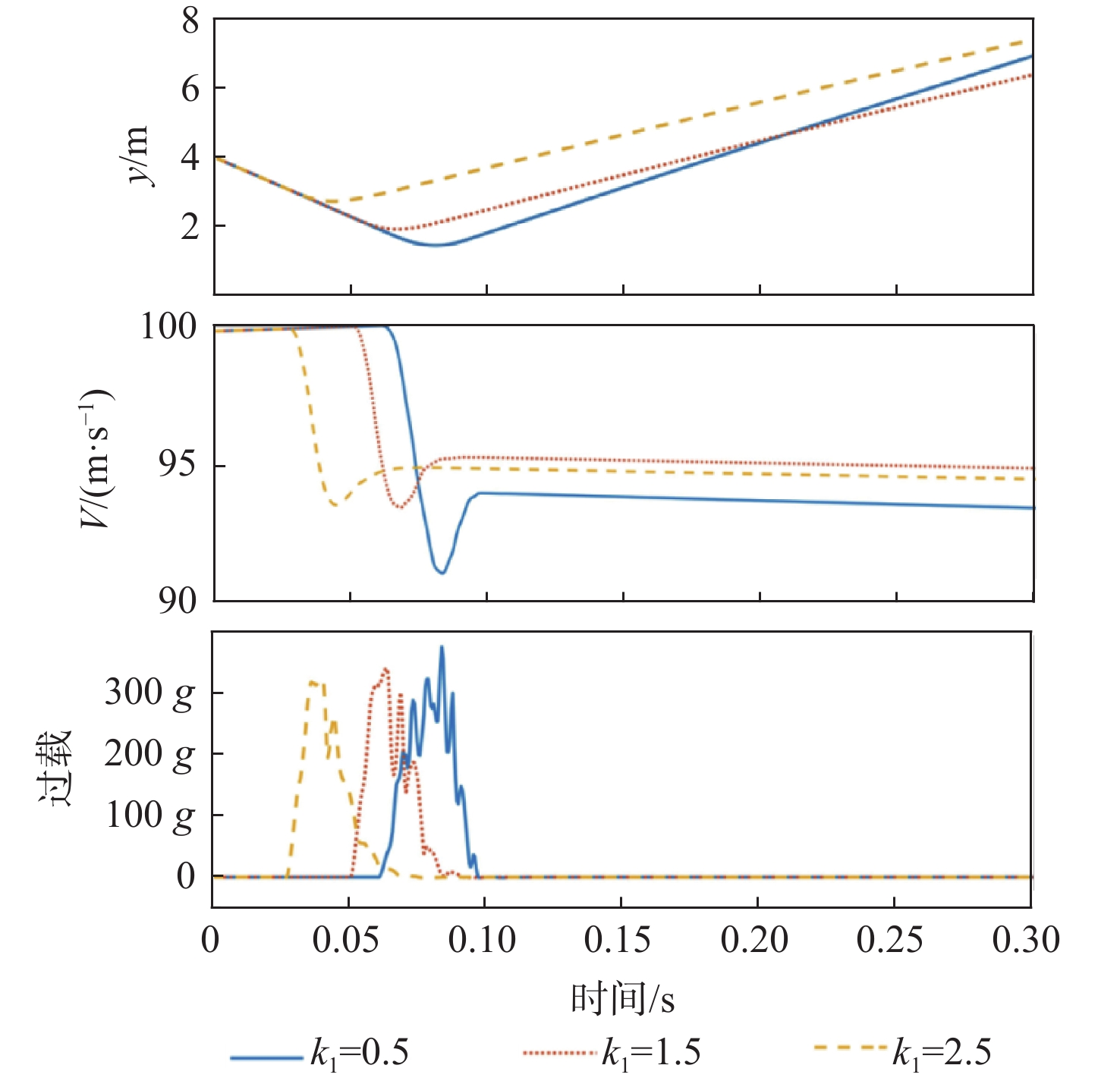
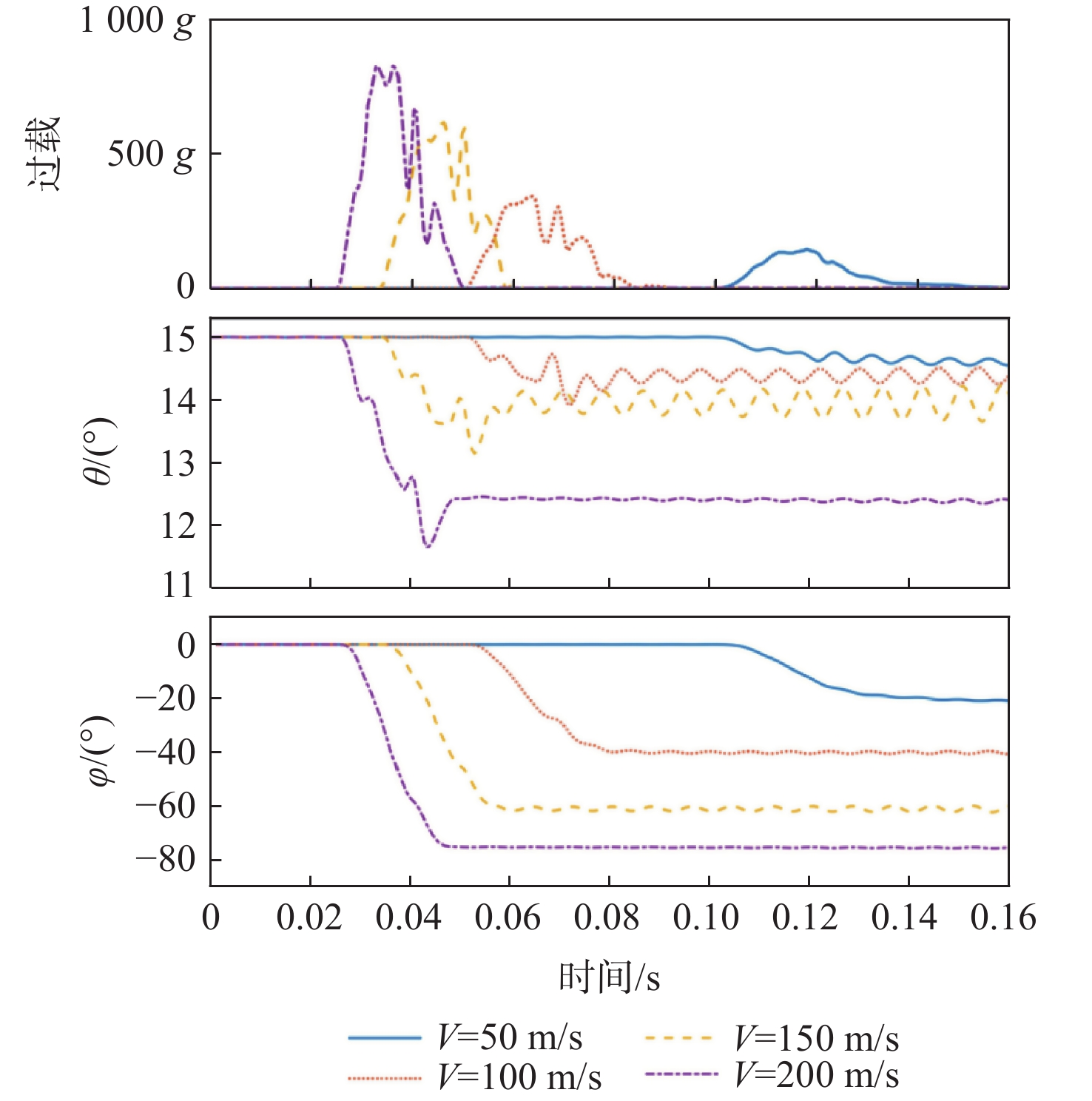
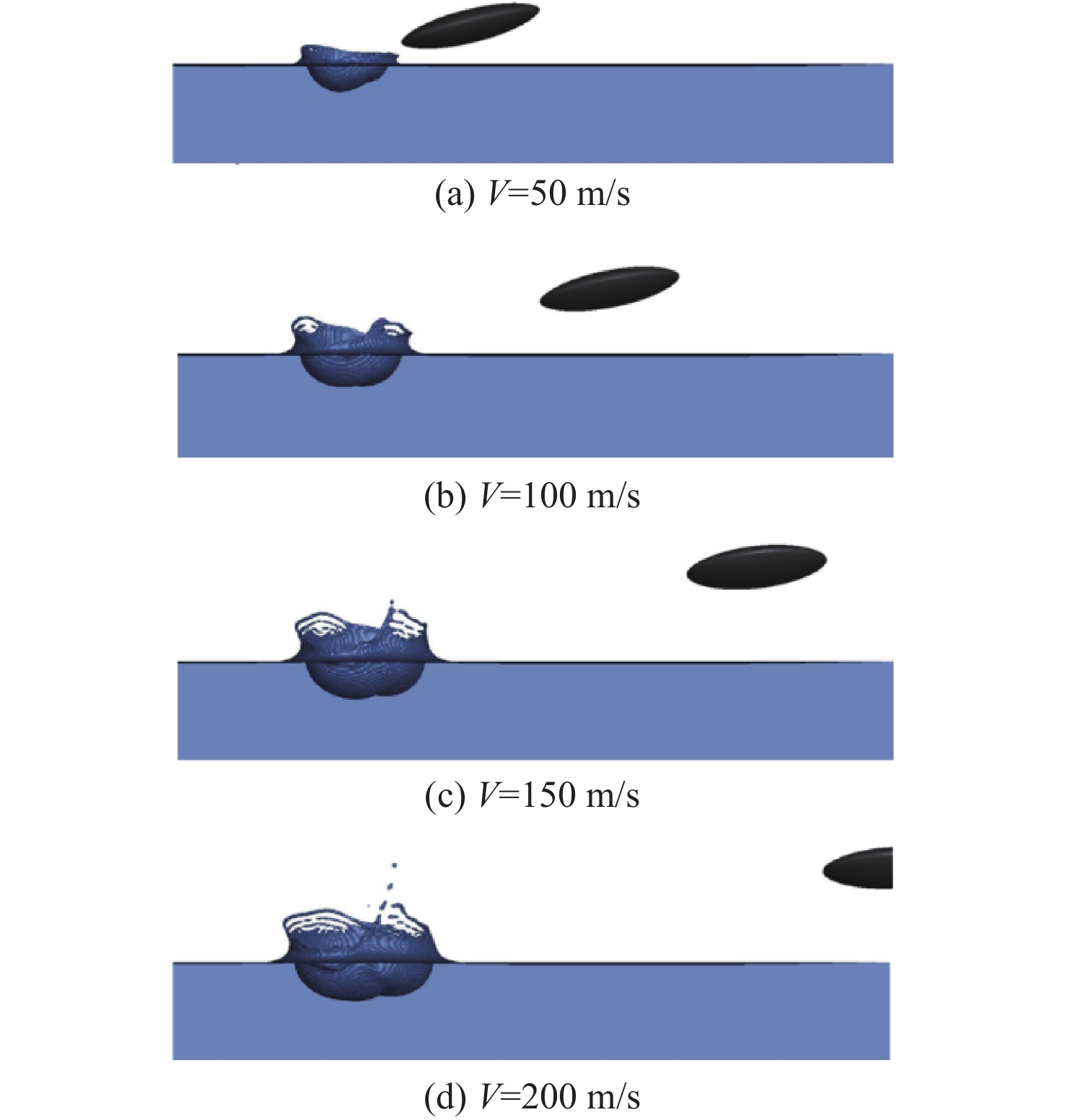
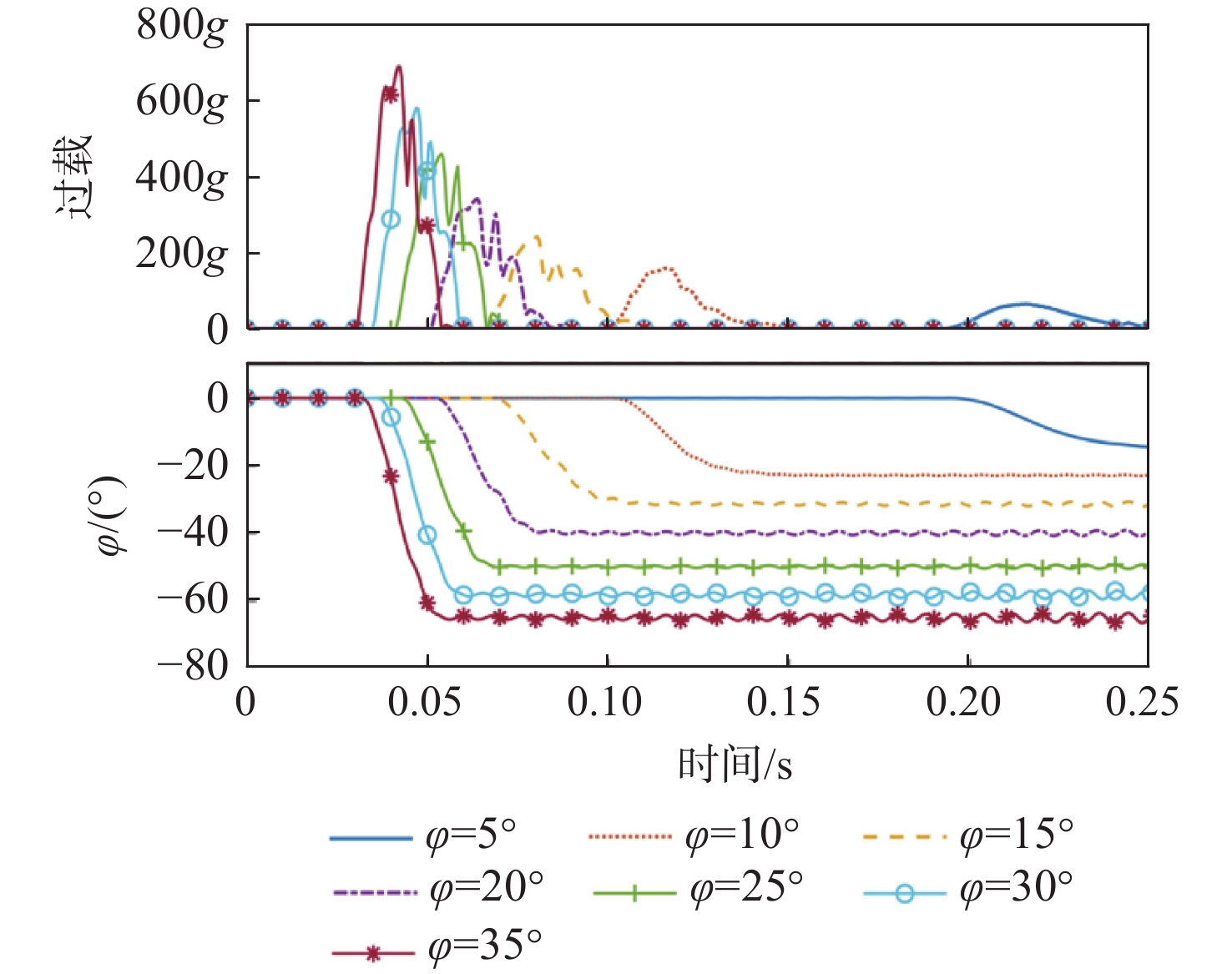
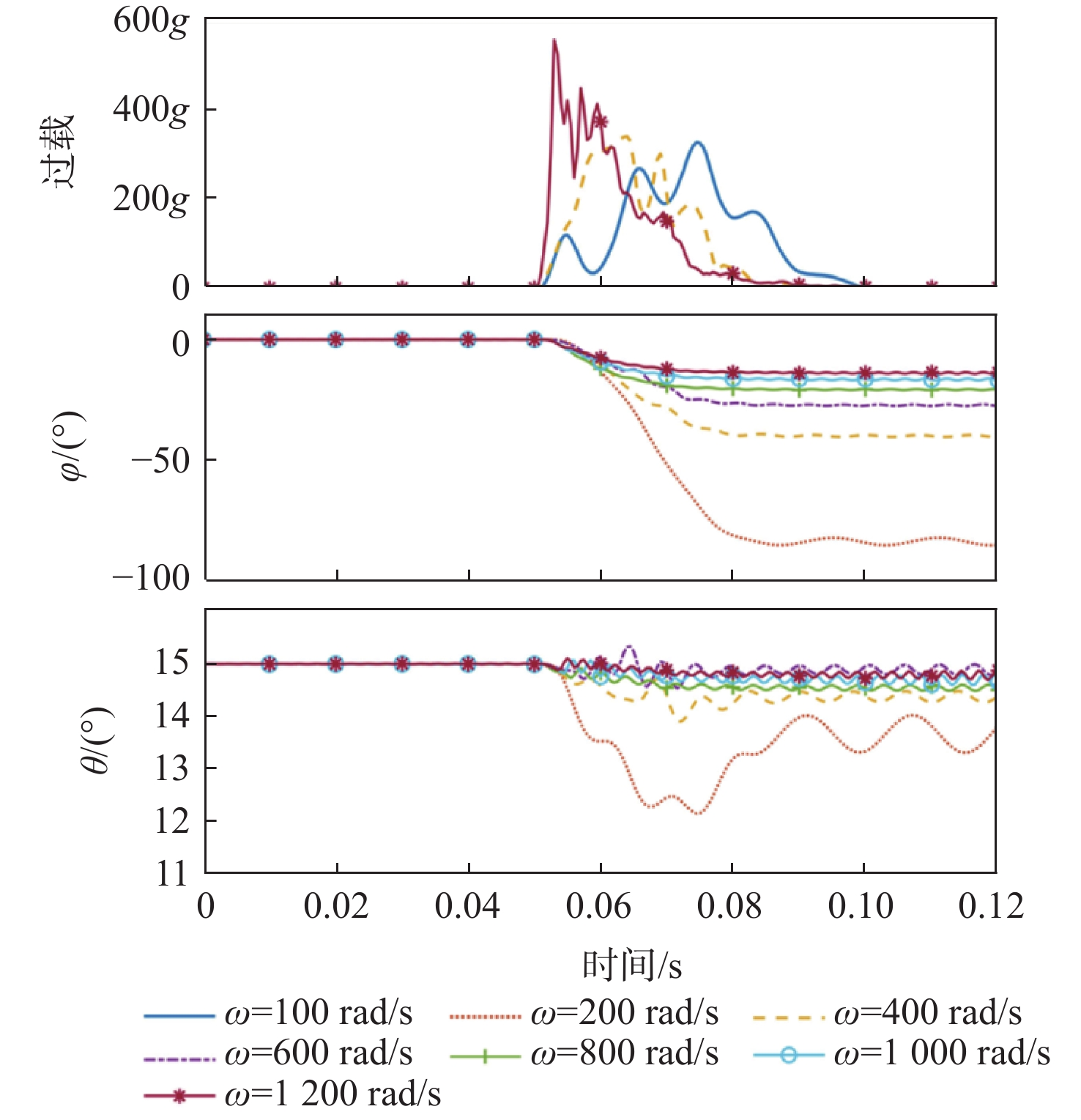
The rotating disk-shaped vehicle can significantly enhance penetration capabilities in denied environments by imitating stone skipping. Ensuring continuous skipping and reducing impact overload are critical dynamic design objectives. While setup settings are also important for the vehicle’s posture motion and load distribution during skipping, the dynamic aspects of skipping are mostly determined by the starting motion parameters. Therefore, the parameters affecting the dynamic characteristics of the rotating disk-shaped vehicle are strongly coupled, making the mechanisms of their influences remain unclear. This paper proposes a parameterized configuration for the disk-shaped vehicle. Utilizing the arbitrary Lagrange-Euler (ALE) method and penalty function method, a simulation analysis of the rotating disk-shaped vehicle is conducted. The study investigates the coupling relationship between configuration parameters and starting motion parameters and reveals their influence patterns on the vehicle's dynamic characteristics while skipping. The results demonstrate that increasing the edge curvature radius can effectively reduce the overload on the vehicle during skipping. Additionally, a better attitude stability can be achieved by increasing the spin rate. The findings presented in this paper can serve as valuable references for the design of new types of skipping anti-ship weapons, such as a rotating disk-shaped vehicle.

Deep separable convolutional neural networks based on structural reparameterization
CHEN Hong, YAN Jianguo, YANG Hua, ZHANG Jing, LI Wei, YANG Jing
2026, 52(6): 2145-2155. doi: 10.13700/j.bh.1001-5965.2024.0287
Abstract:

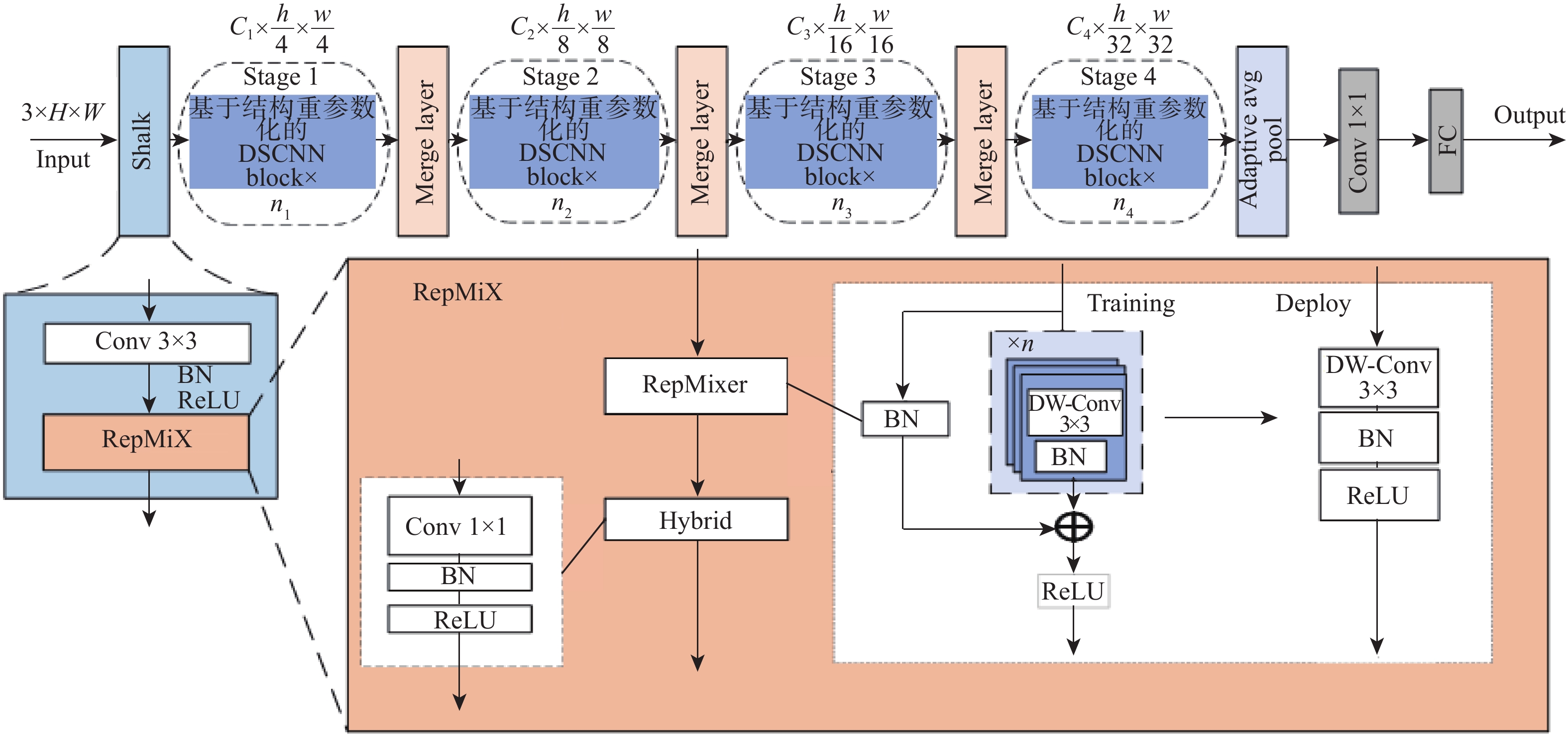
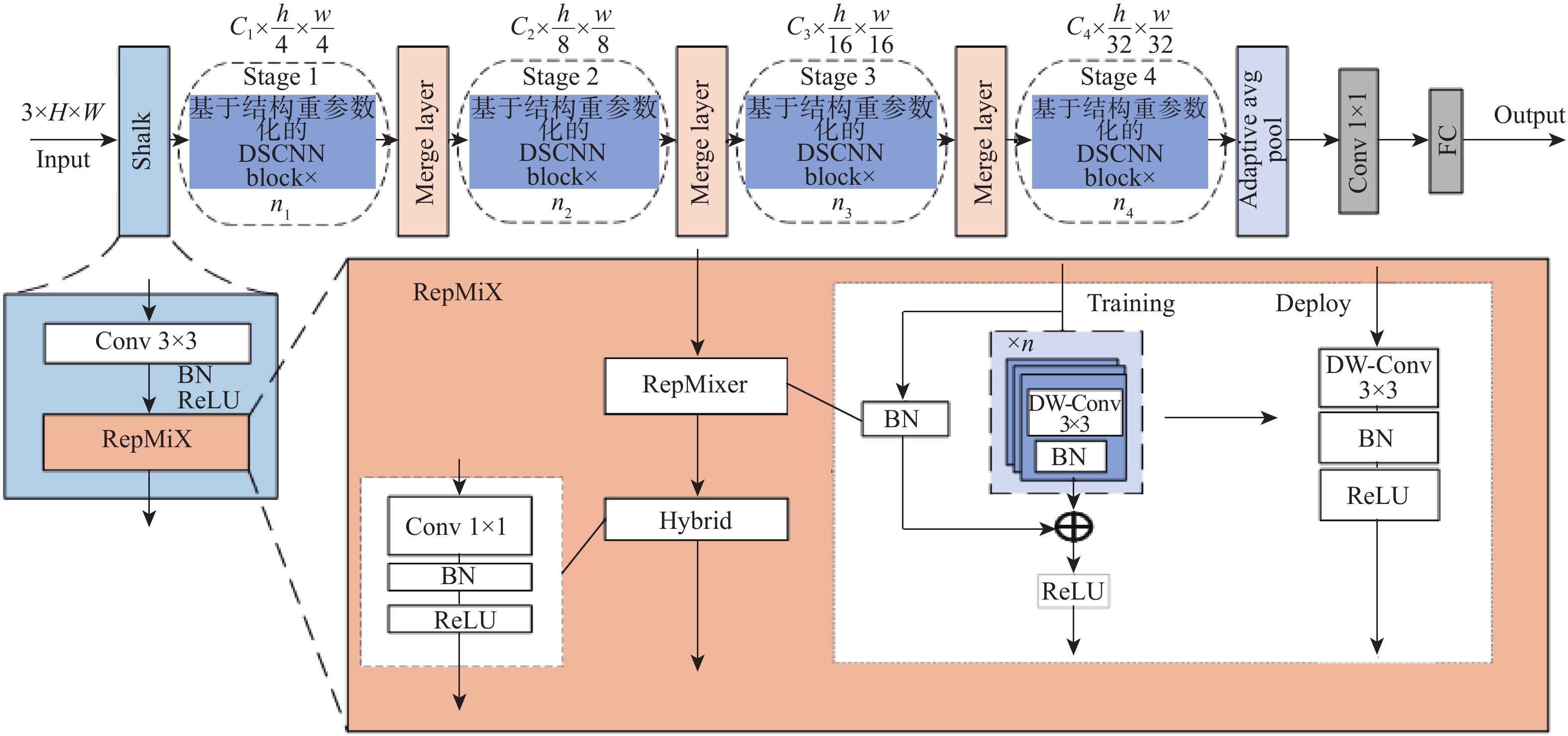
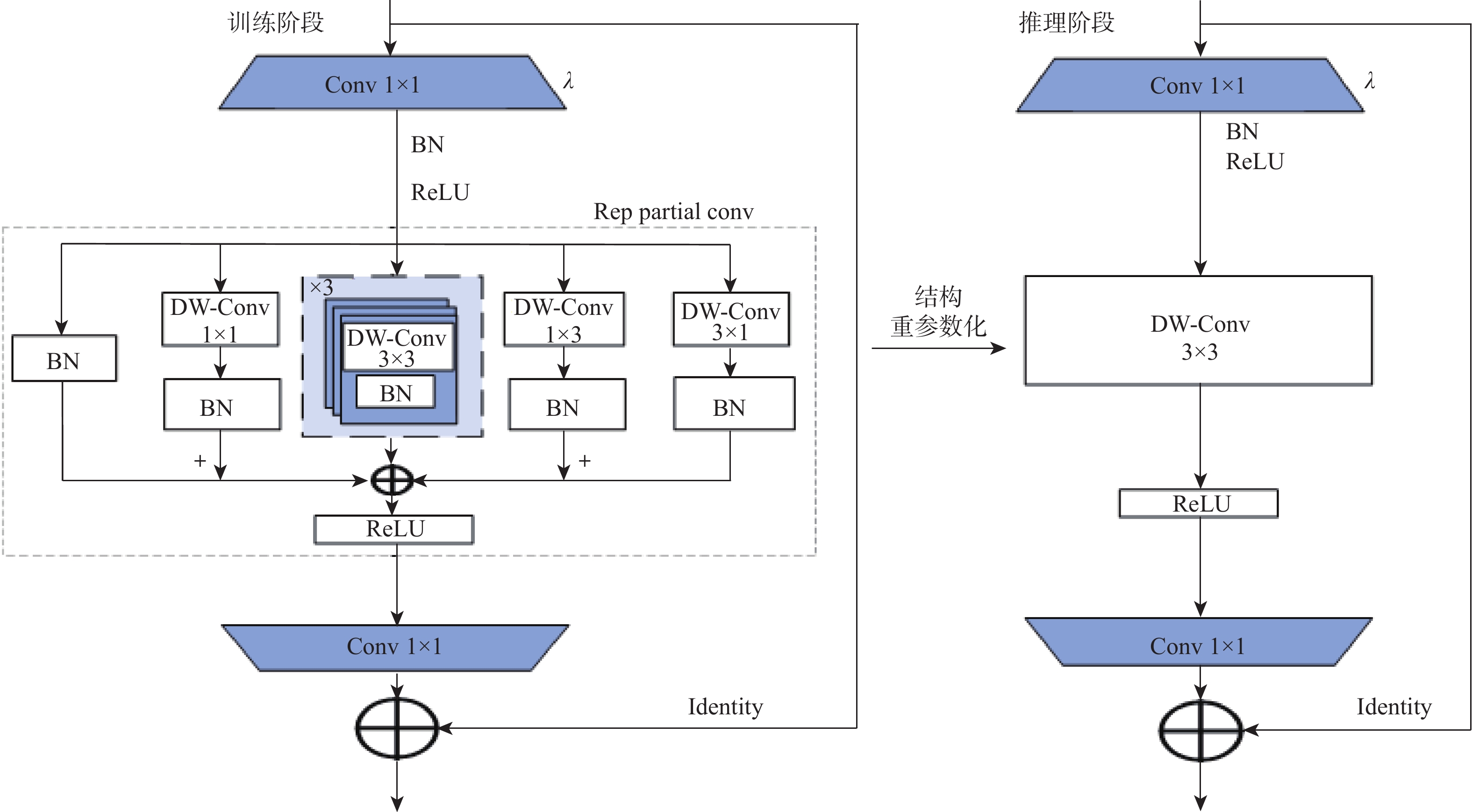
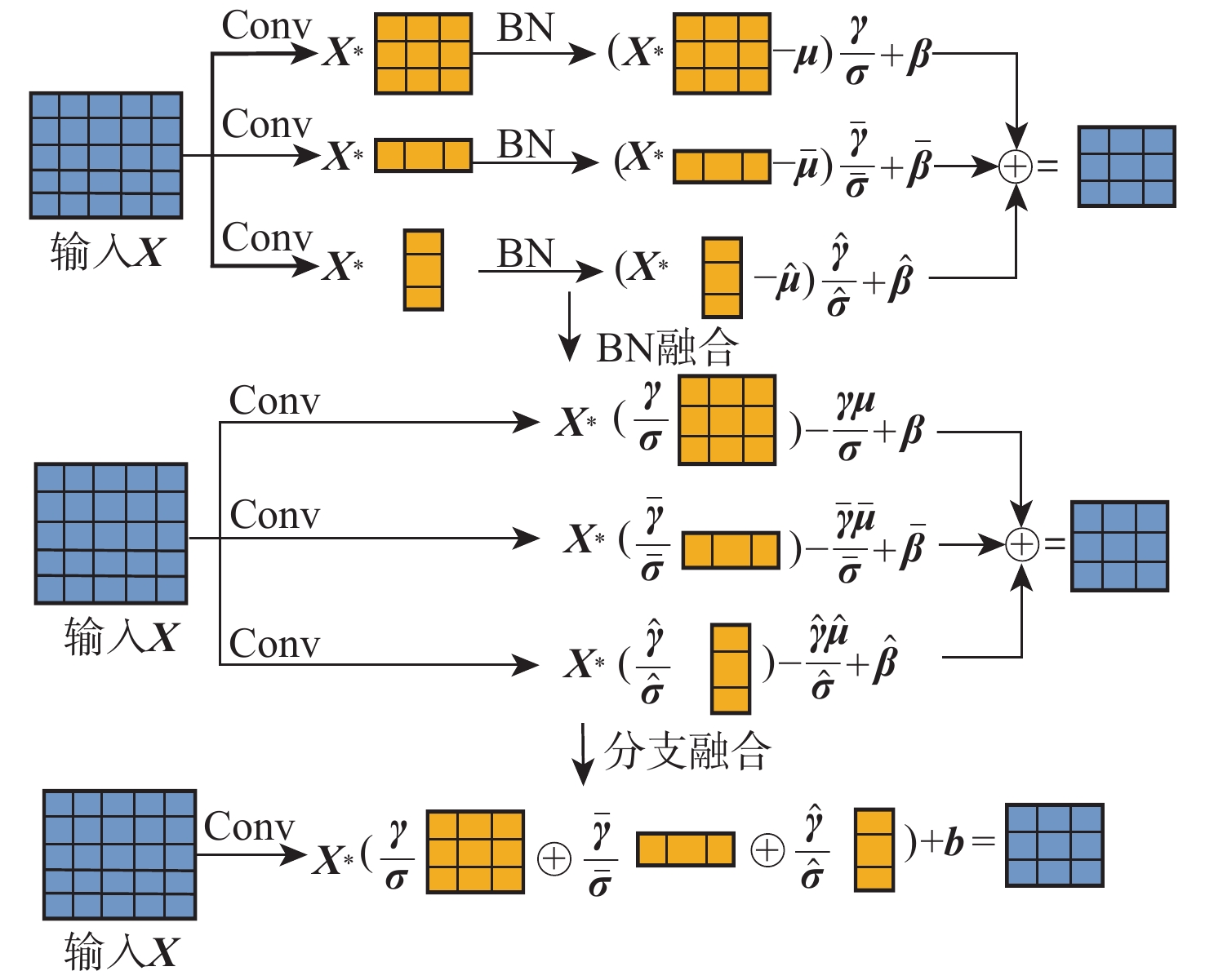
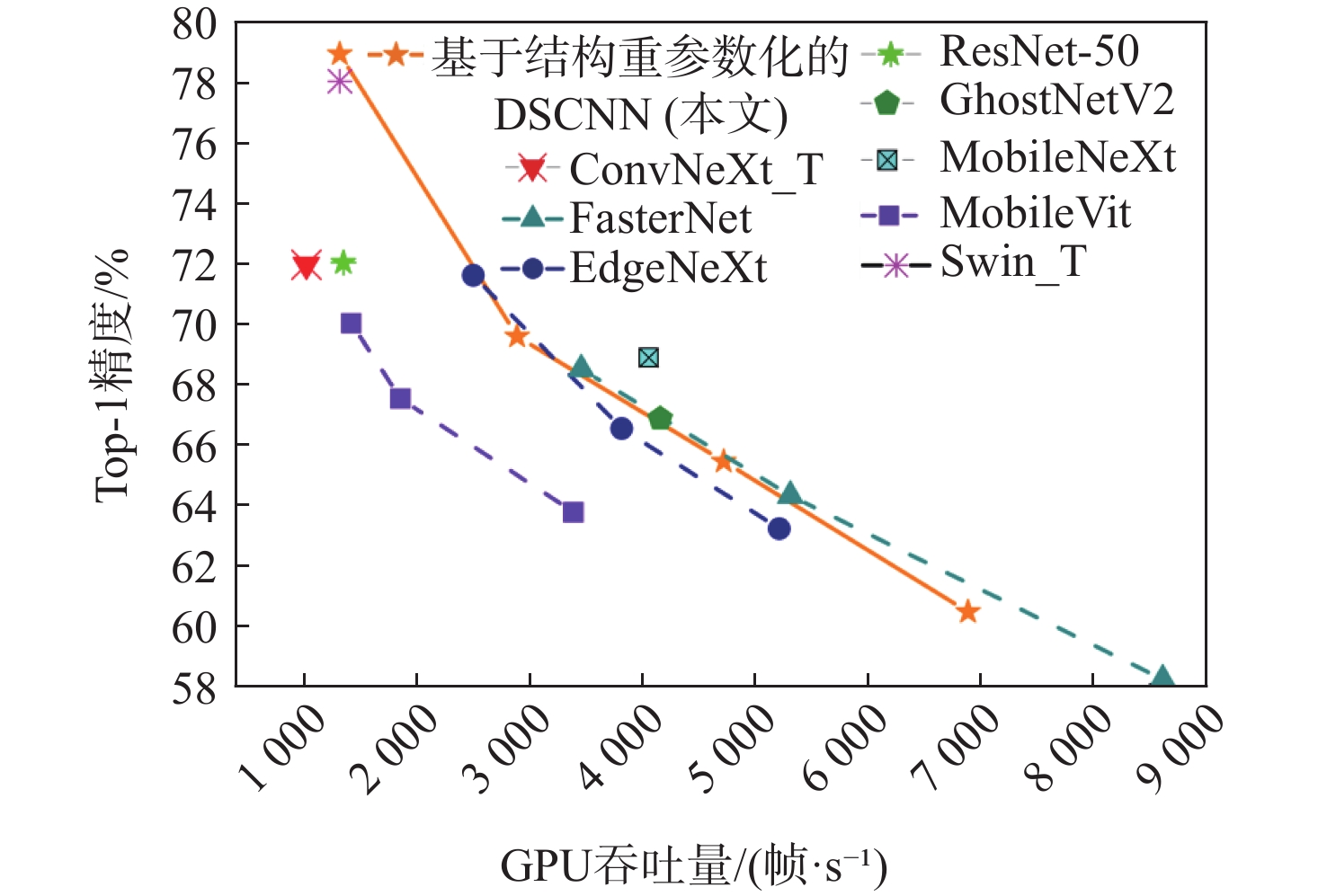
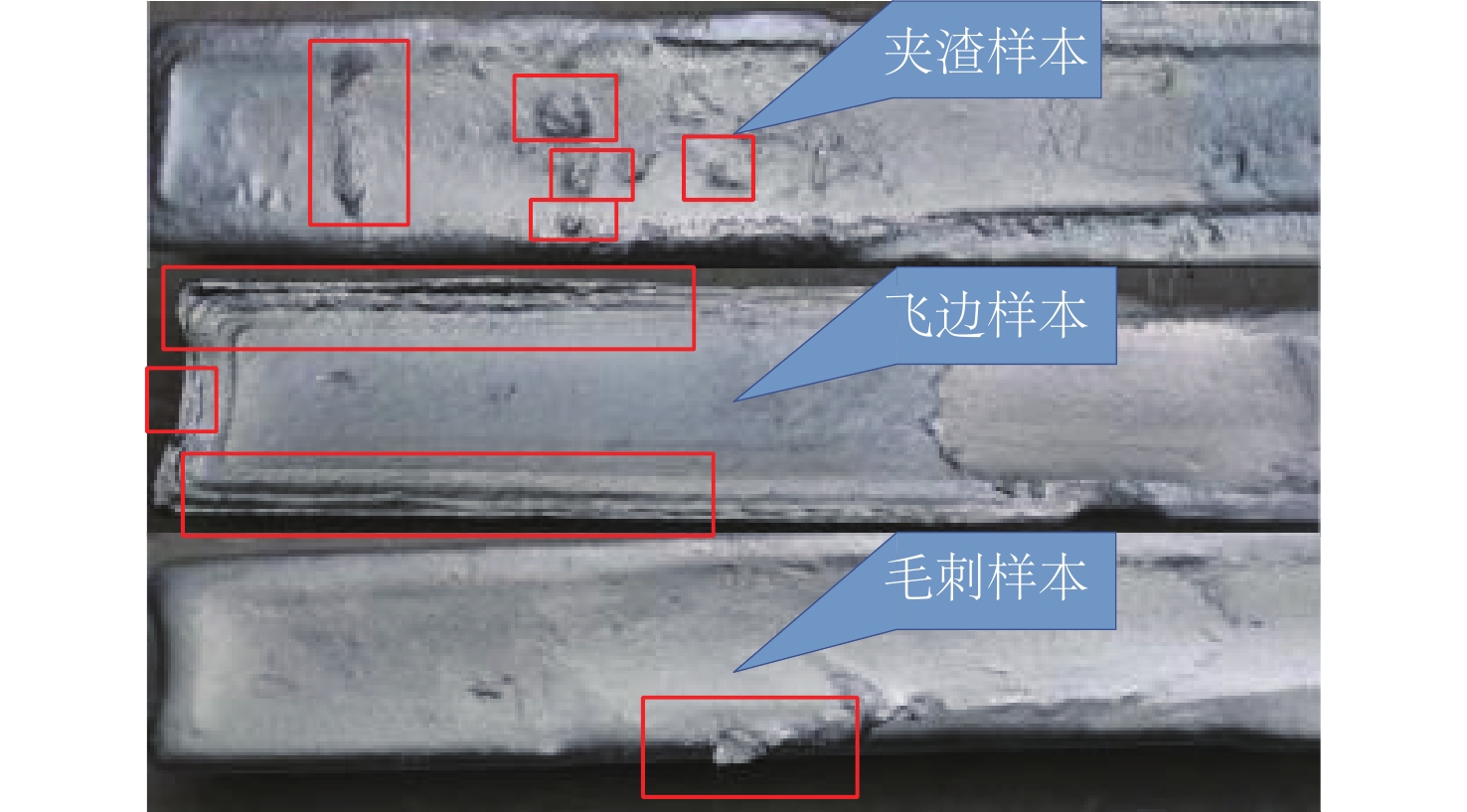
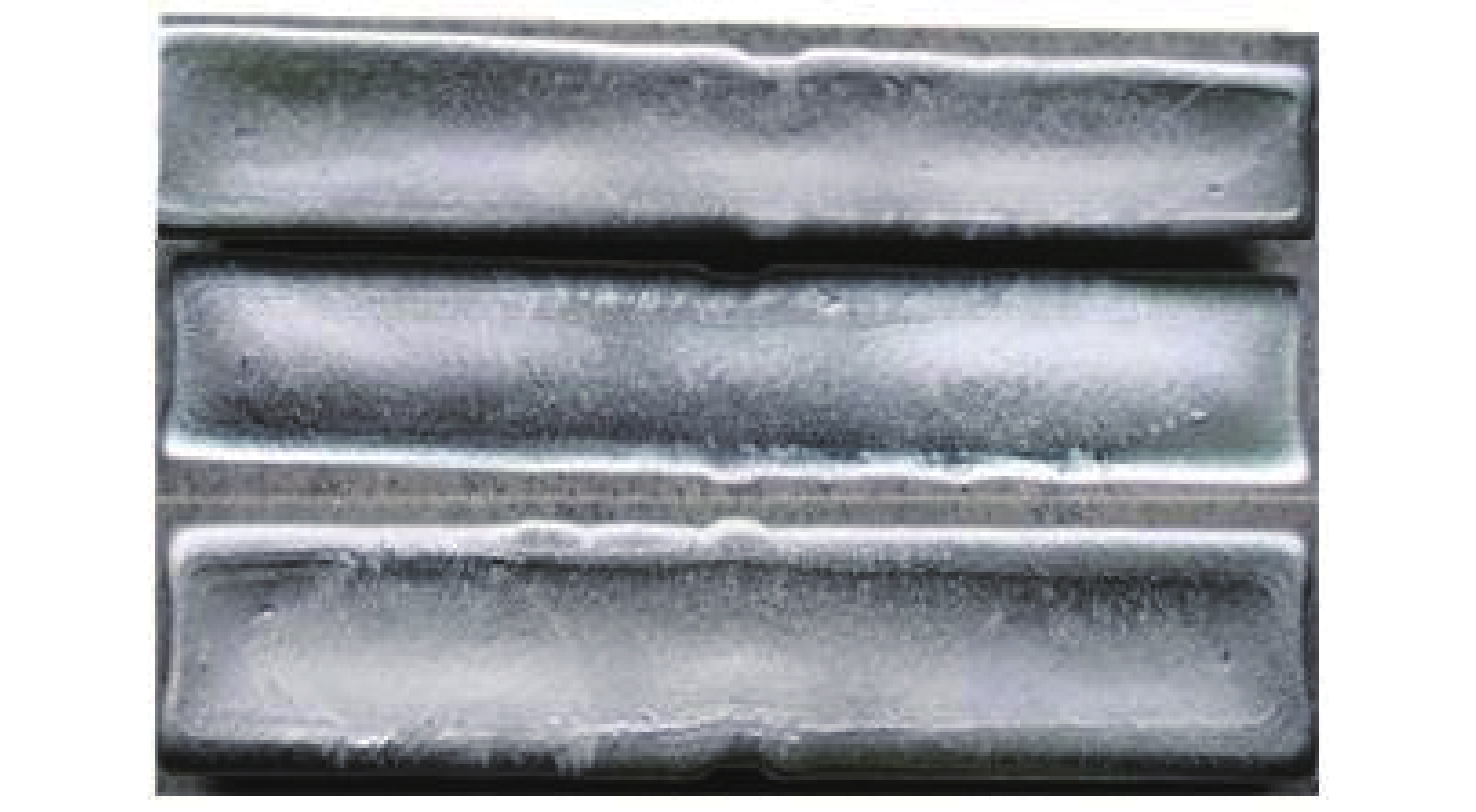
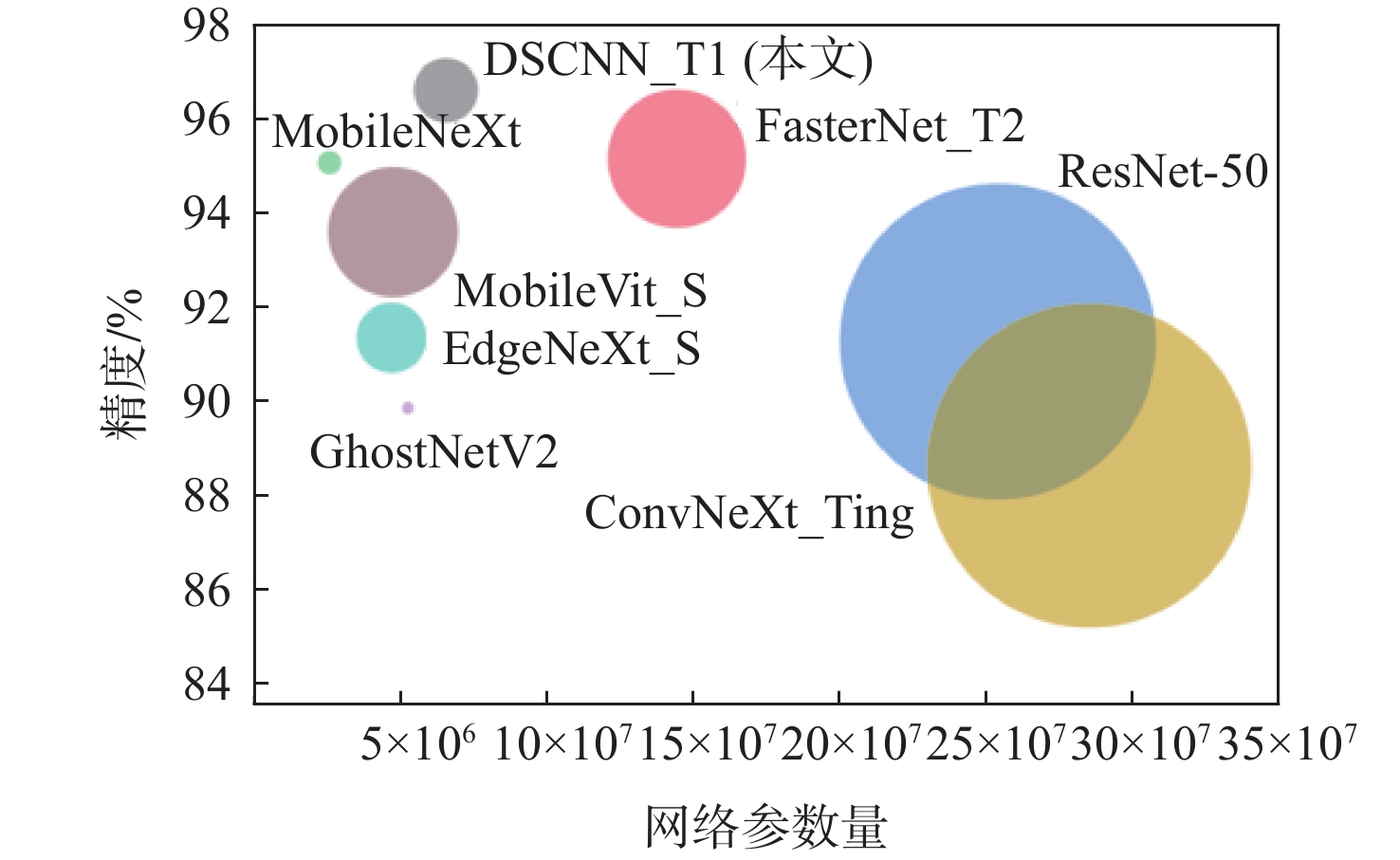
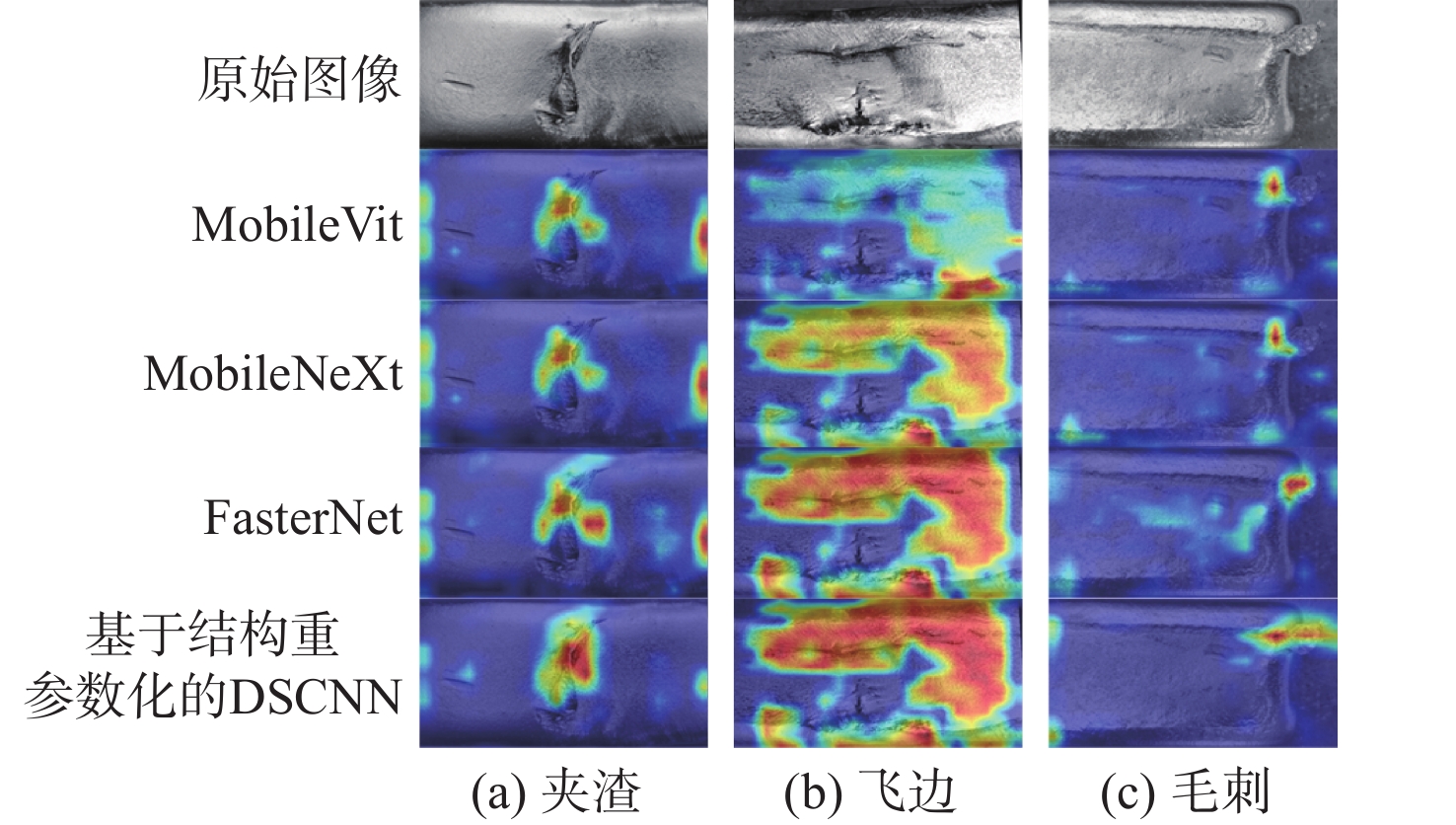
A new lightweight convolutional neural network (CNN) model called the deep separable convolutional neural network (DSCNN) based on structural reparameterization is proposed, aiming at the single-branch deep convolutional approach used in the majority of the current CNN models, which not only affects the expressive ability of the model but also occupies a large number of parameters and Flops. Firstly, the feature extraction module (reparameterization MiXer, RepMiX) of the model can fuse information between different channels and spatial locations, realizing multi-scale feature fusion. Secondly, the reparameterized asymmetric spatial operator (RepASO) in the DSCNN learns different channel feature information through a multi-branch structure with different functions, which improves the model feature learning ability; meanwhile, both RepMiX and RepASO combine the structural reparameterization technique and the idea of depth wise separable convolution (DS-Conv) to realize structural decoupling in the training and inference phases, which accelerates the model inference while reducing the model parameters and Flops. Finally, comparative experiments are carried out on the Tiny-imagenet-200, CIFAR-10, and CIFAR-100 datasets in addition to a self-constructed dataset for the classification of aluminum ingot surface defects. The experimental results demonstrate that the DSCNN maintains competitive accuracy while achieving higher floating-point speeds.

Reinforcement learning guidance law for maneuvering target interception based on imitation learning
REN Leliang, XIAN Yong, LIU Zhenyu, ZHANG Daqiao, LI Bing, LI Shaopeng
2026, 52(6): 2156-2171. doi: 10.13700/j.bh.1001-5965.2024.0284
Abstract:

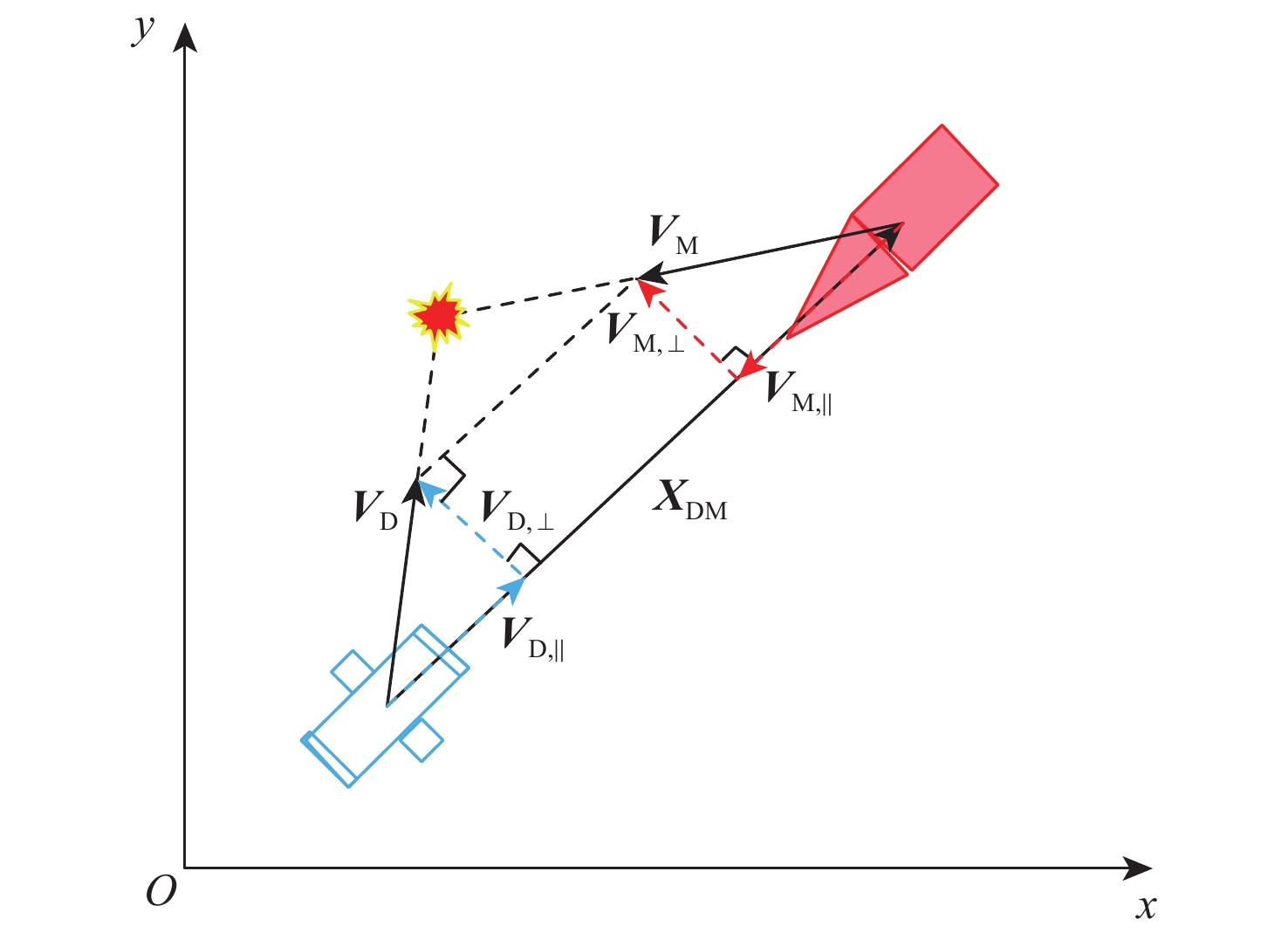
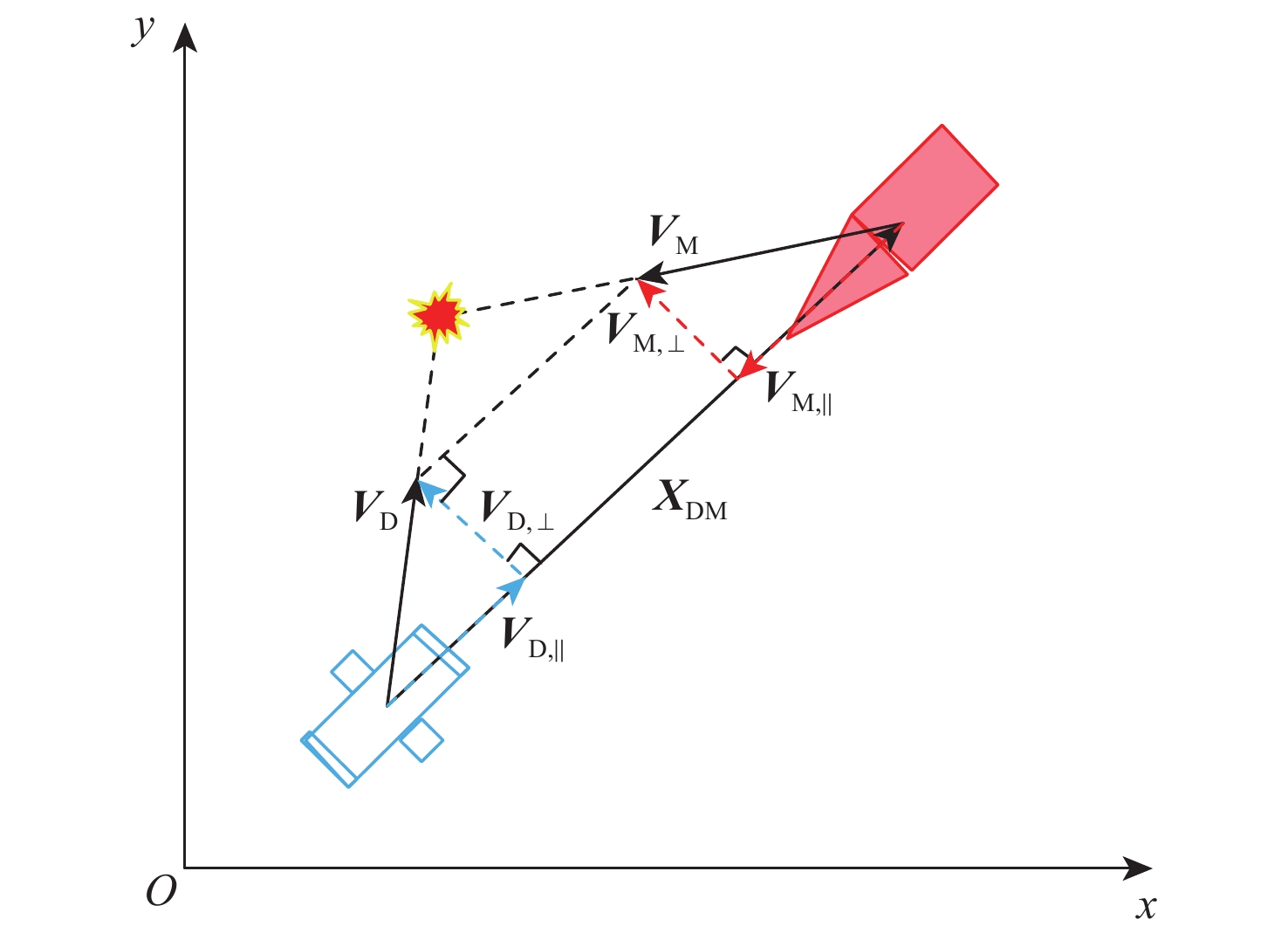
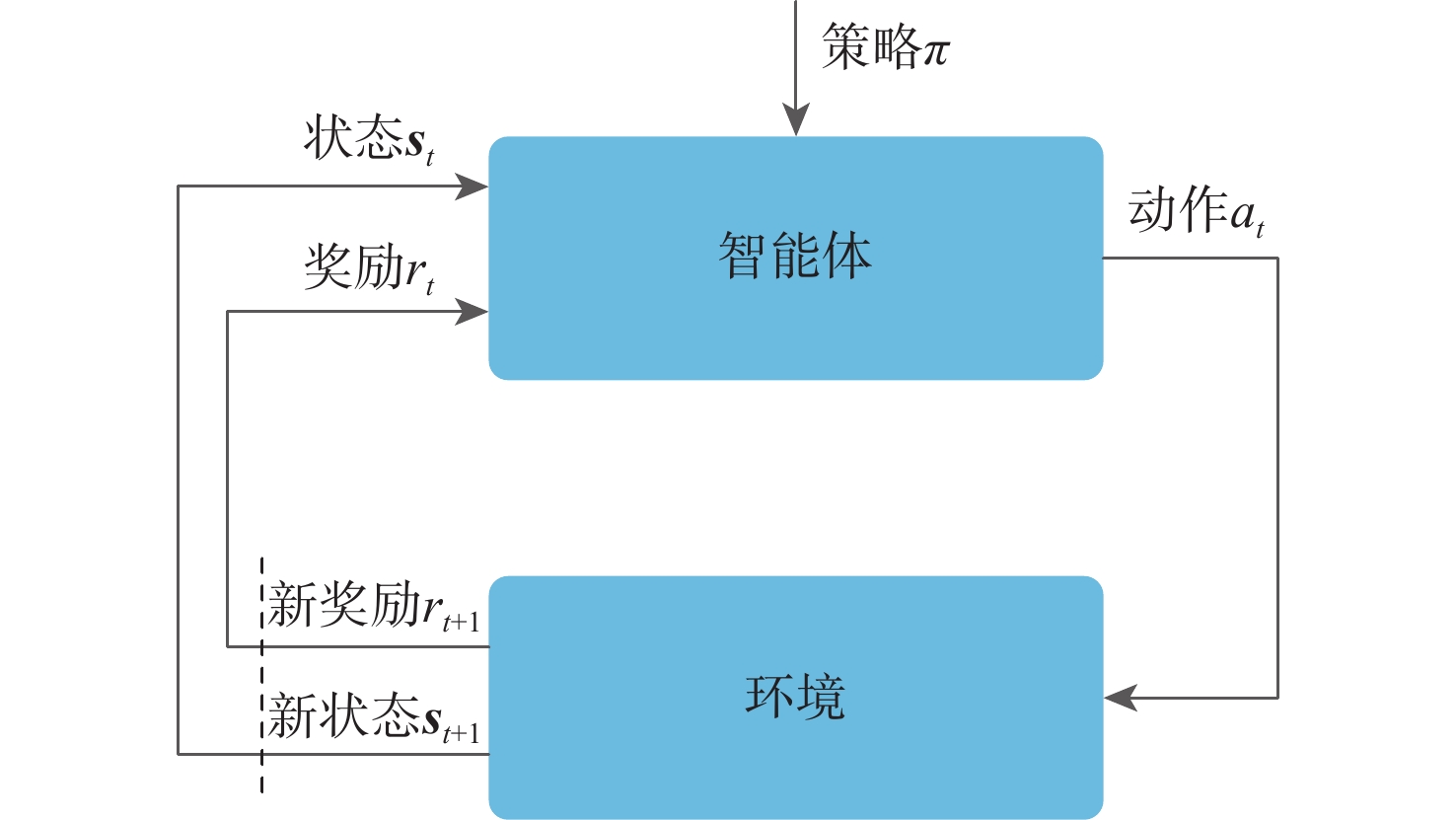
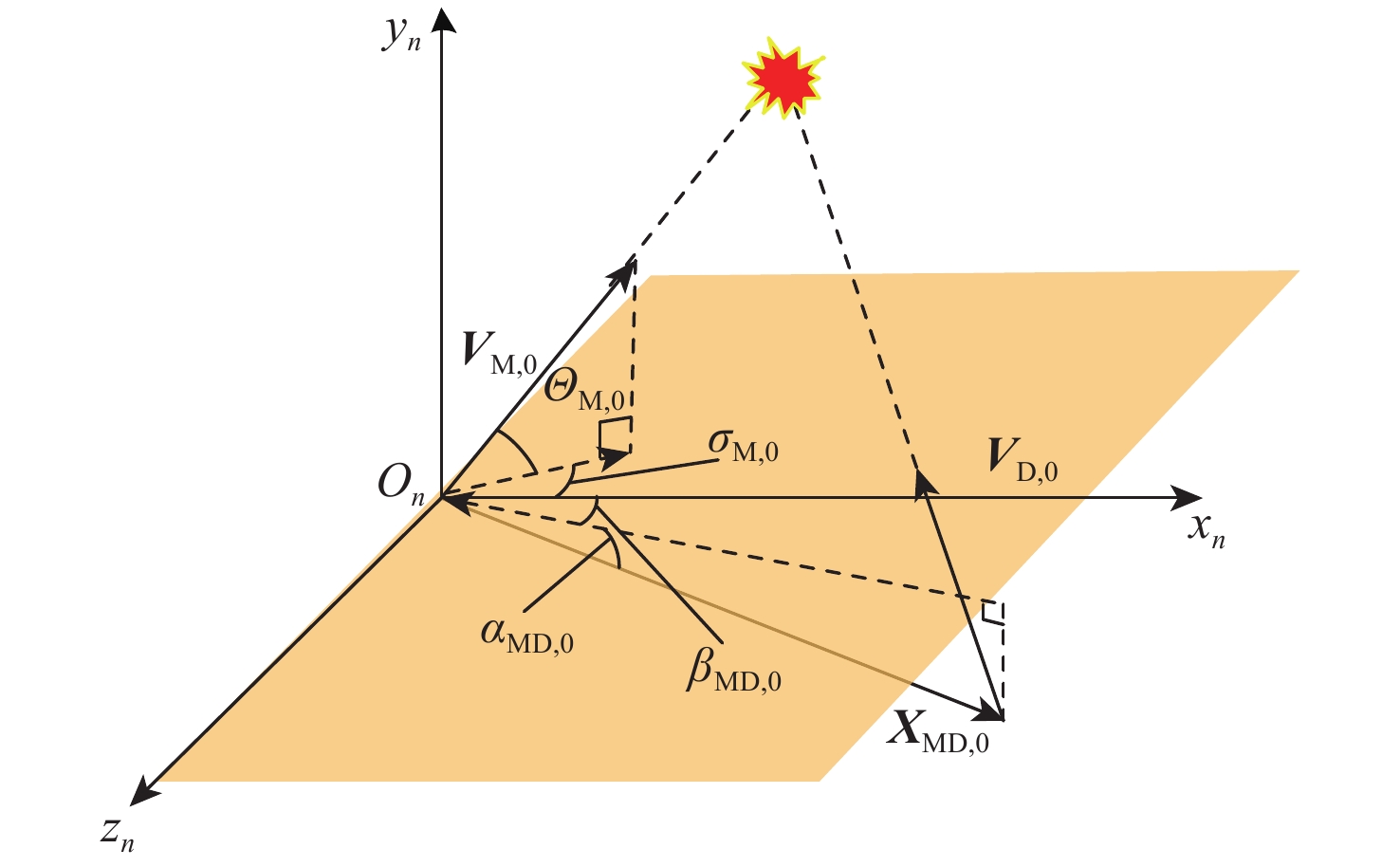
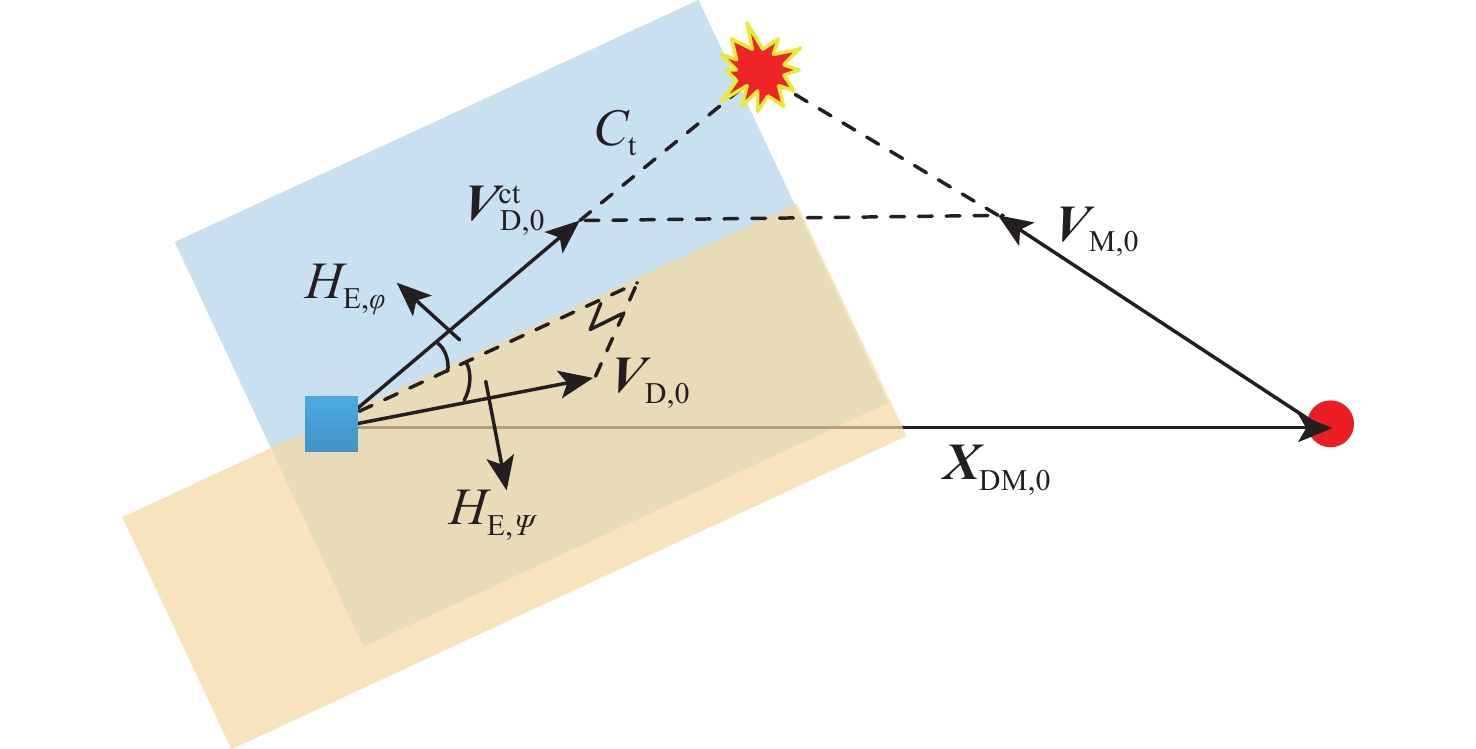
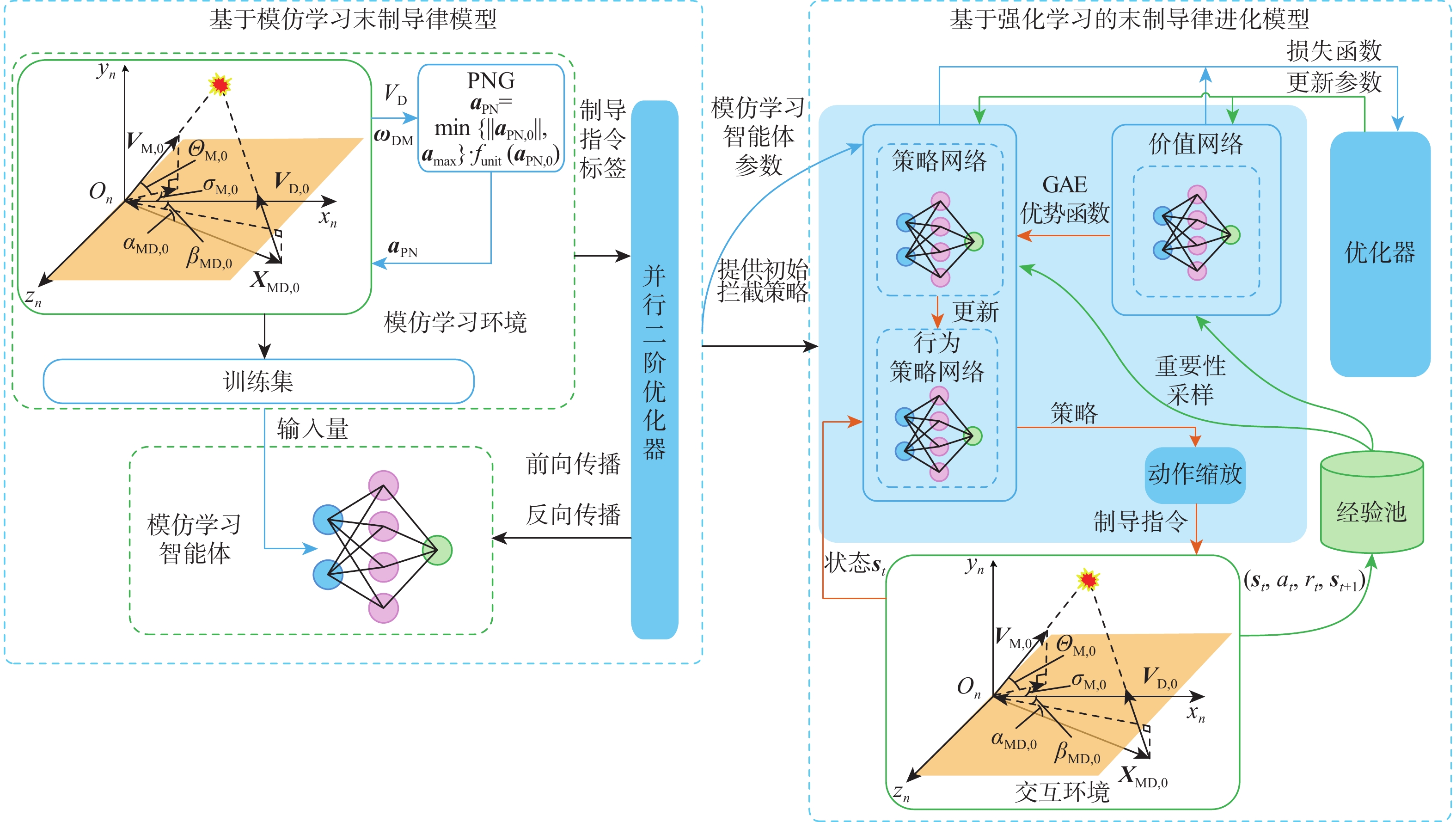
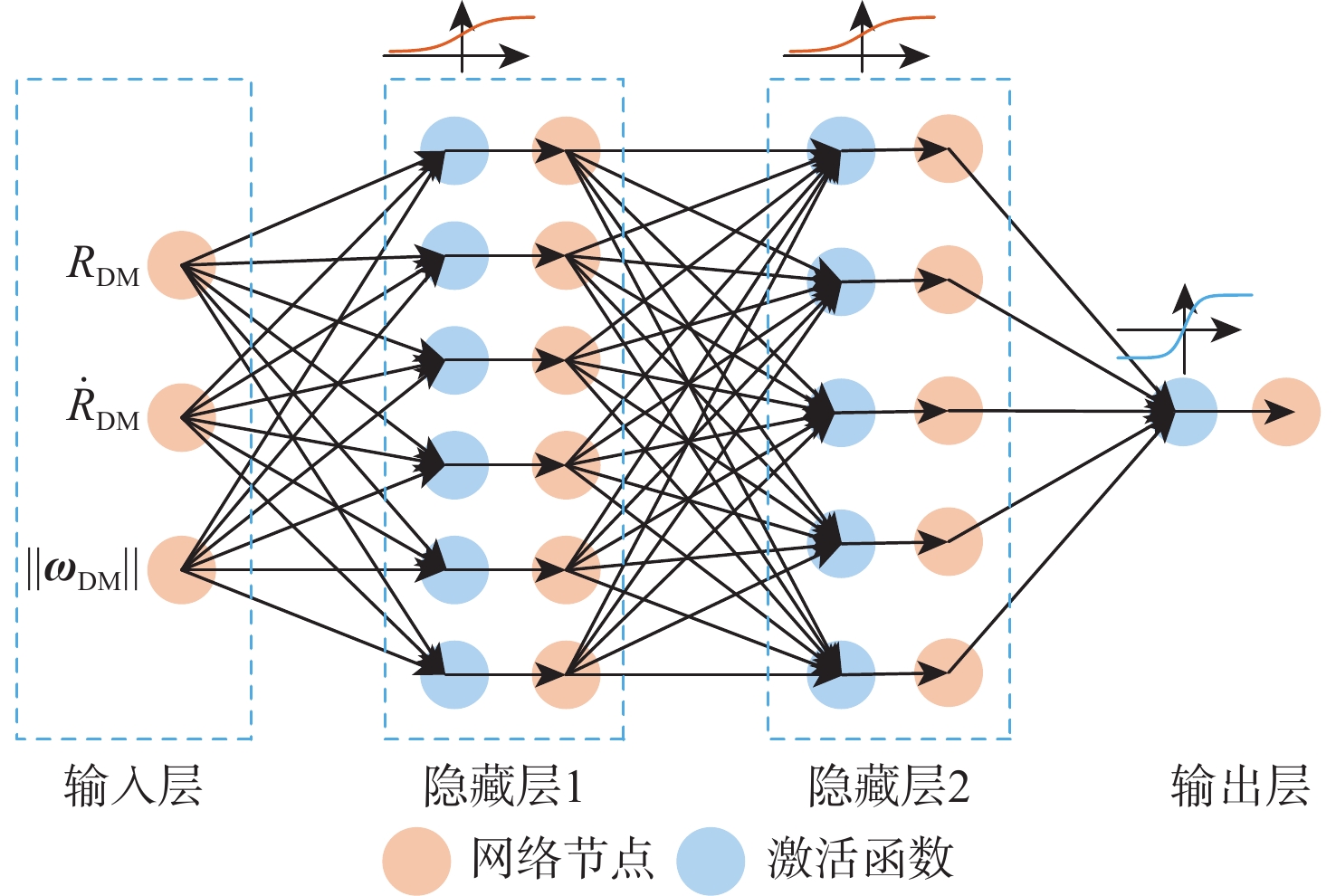
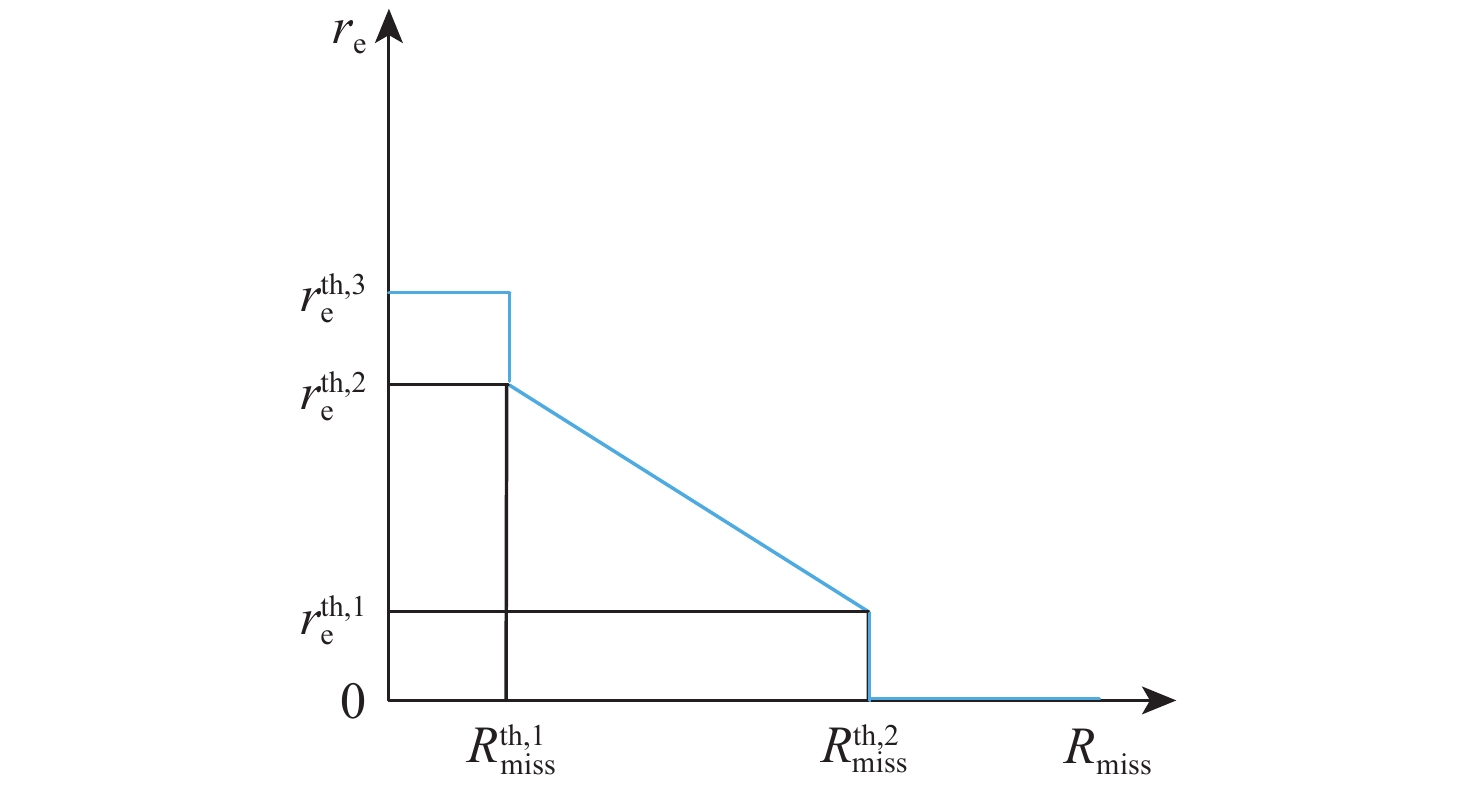
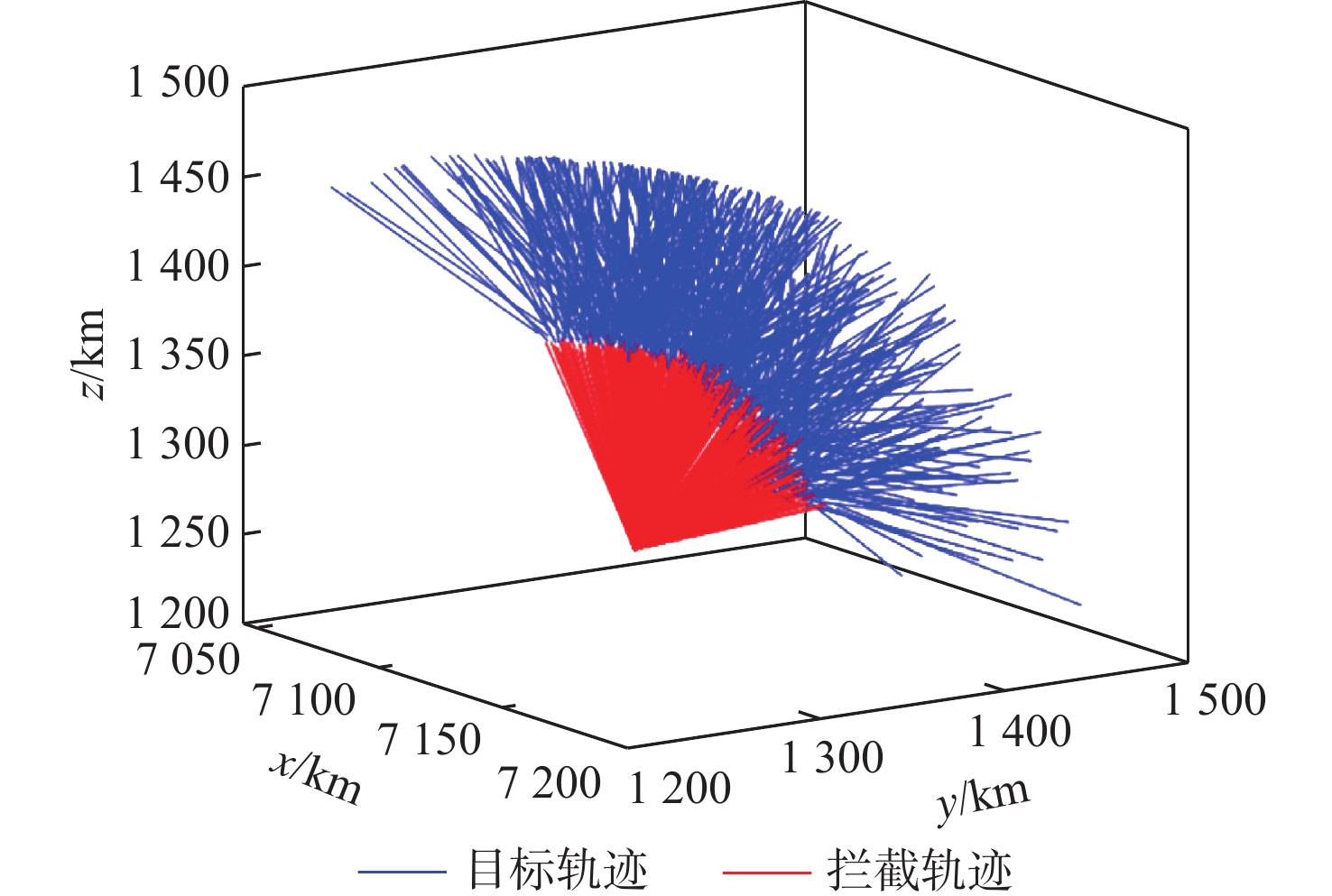
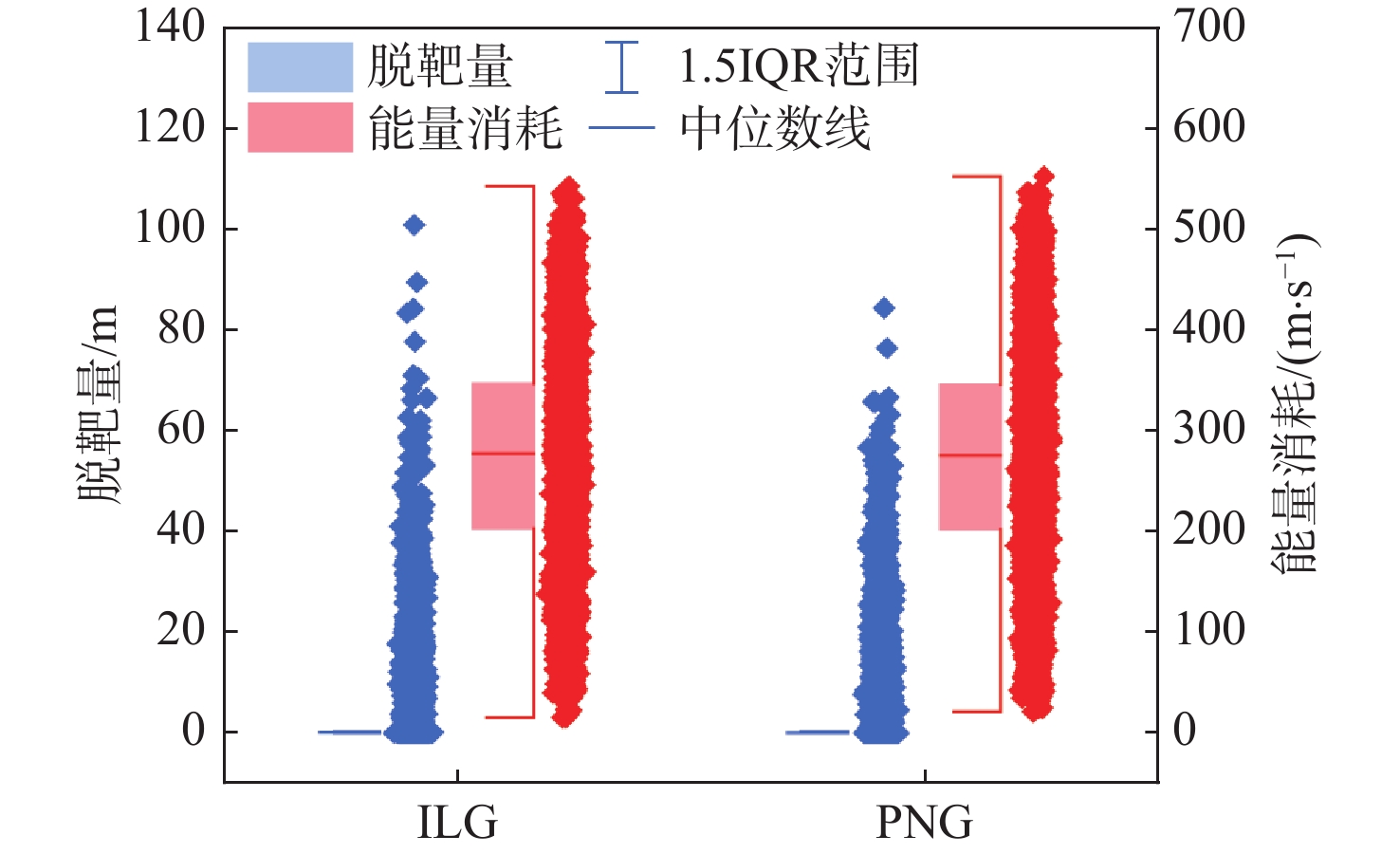
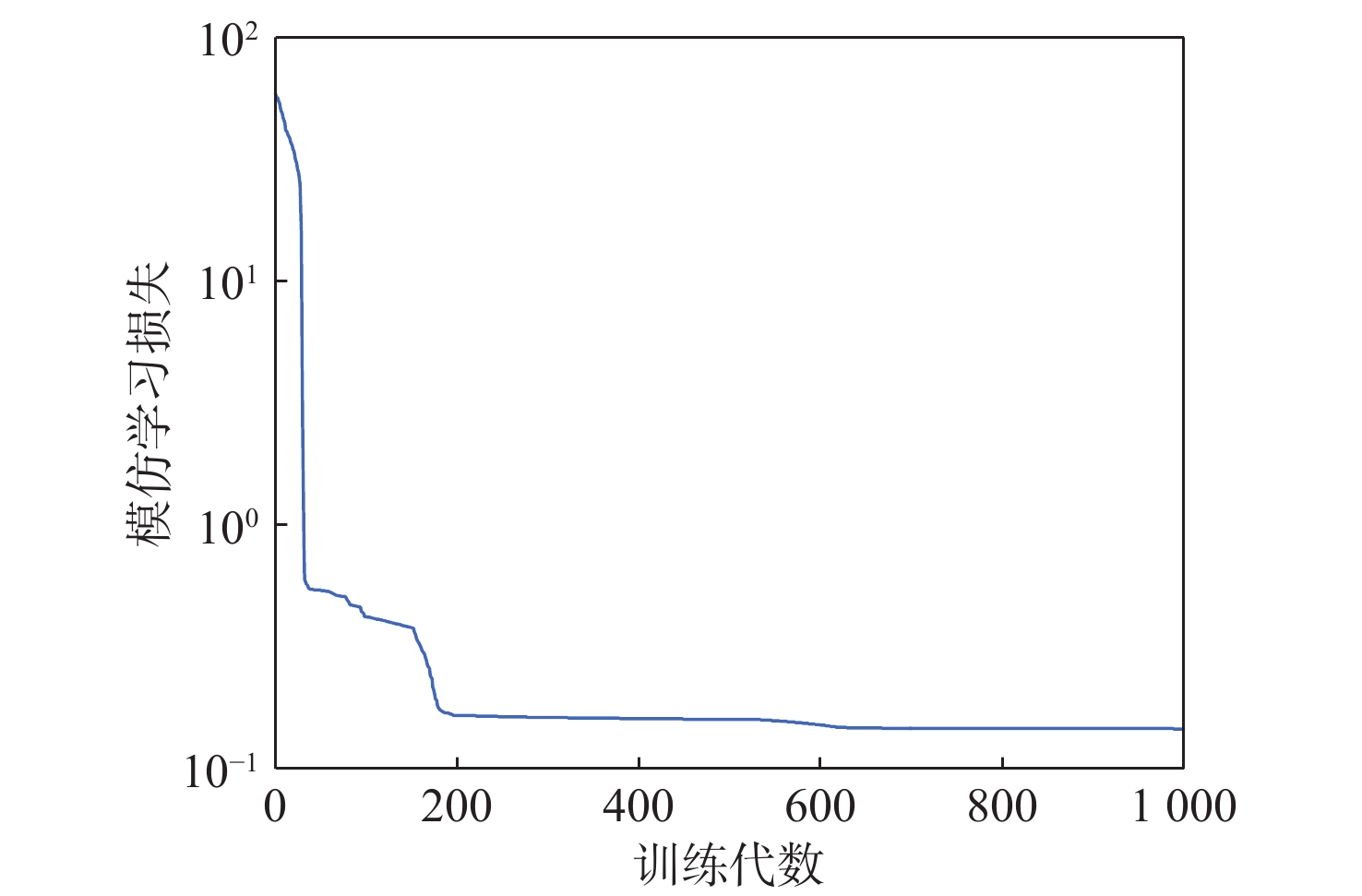
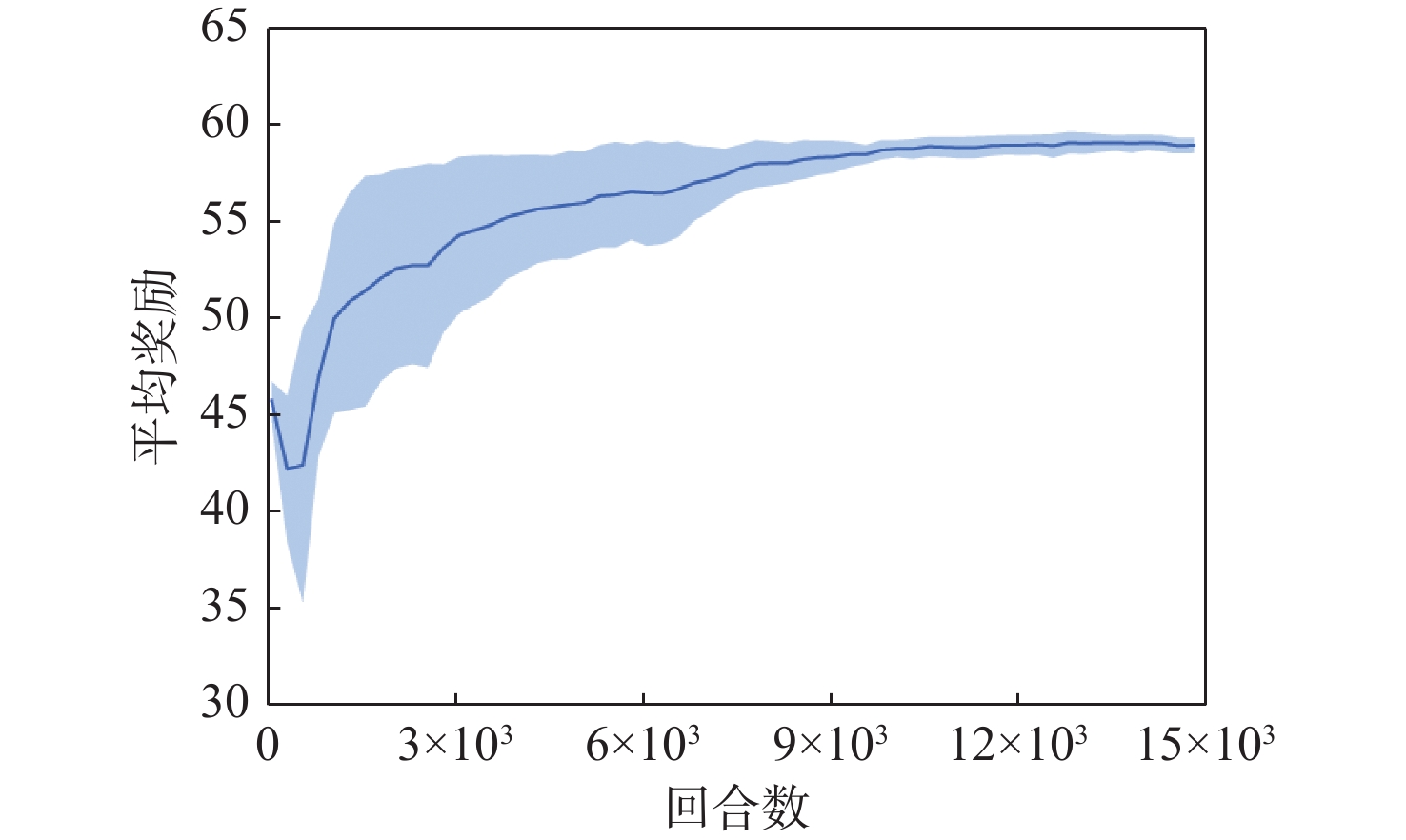
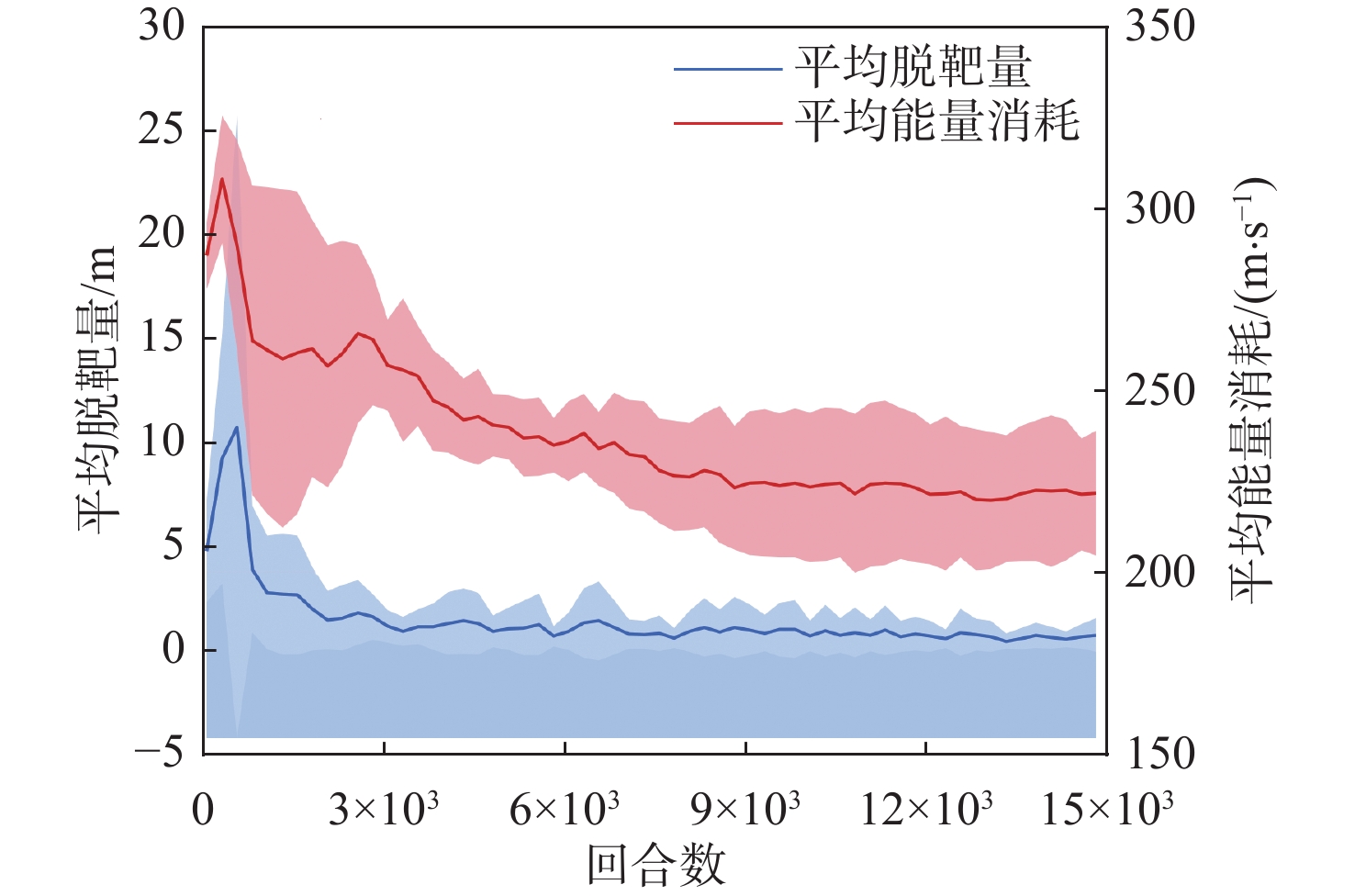
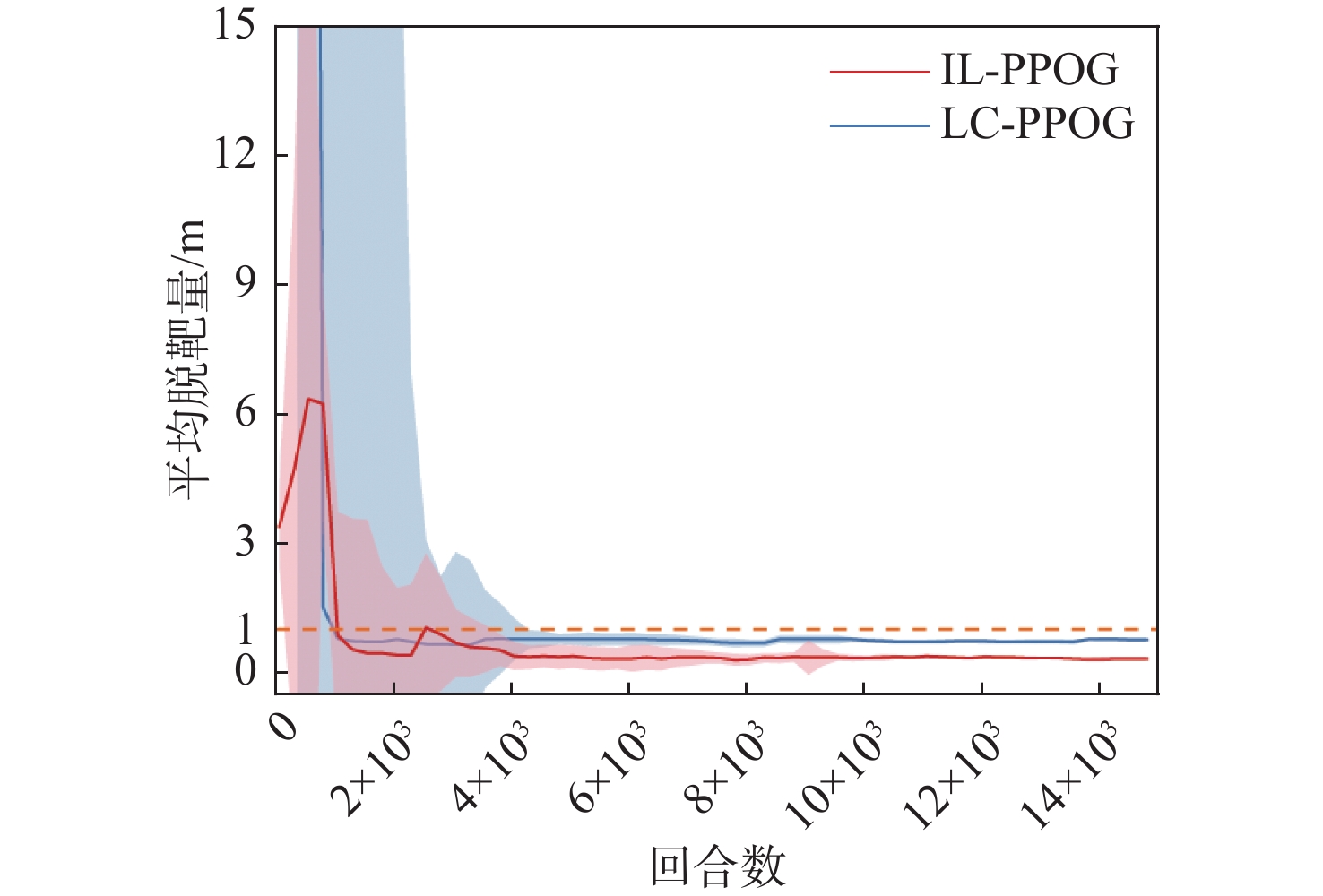
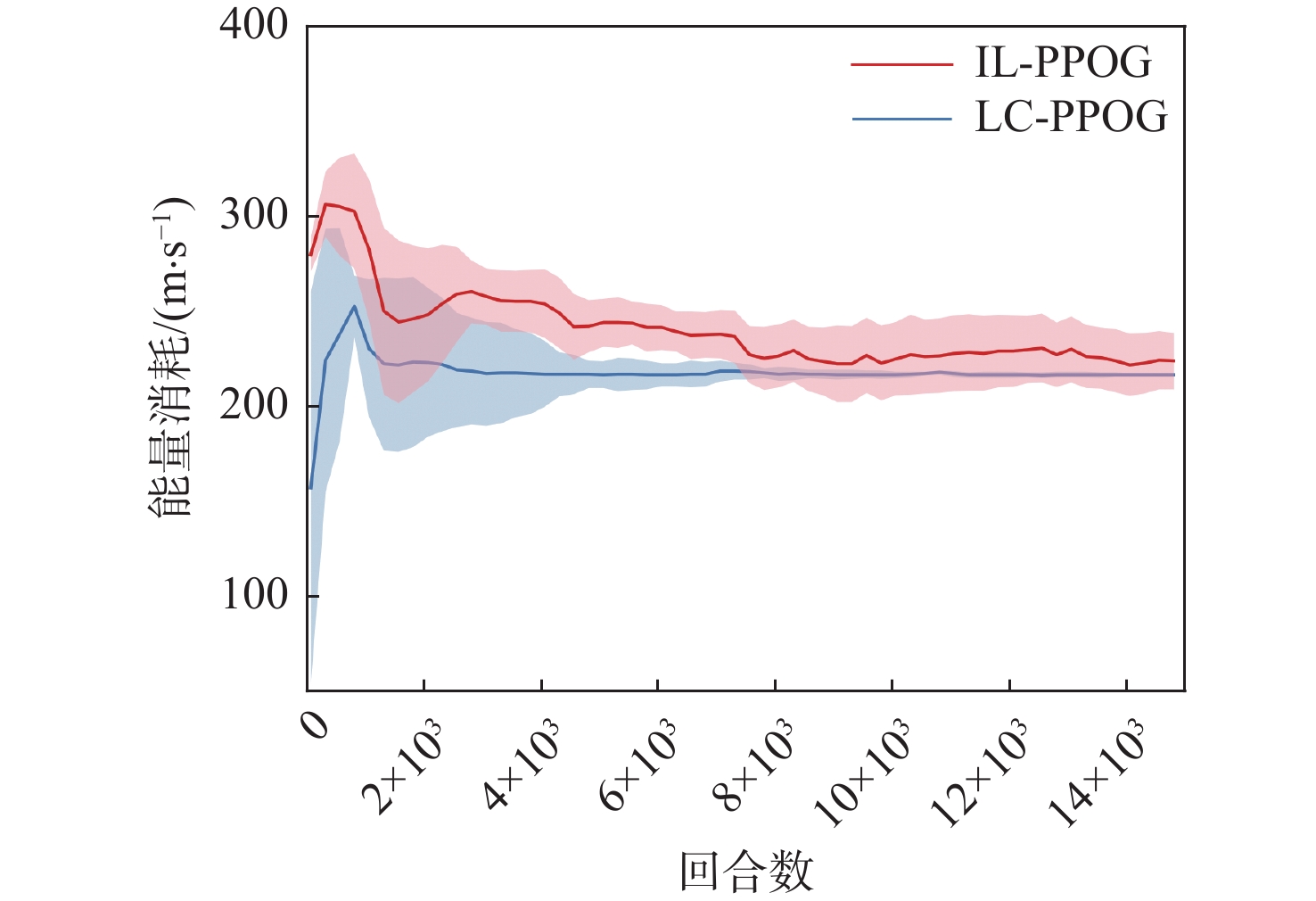
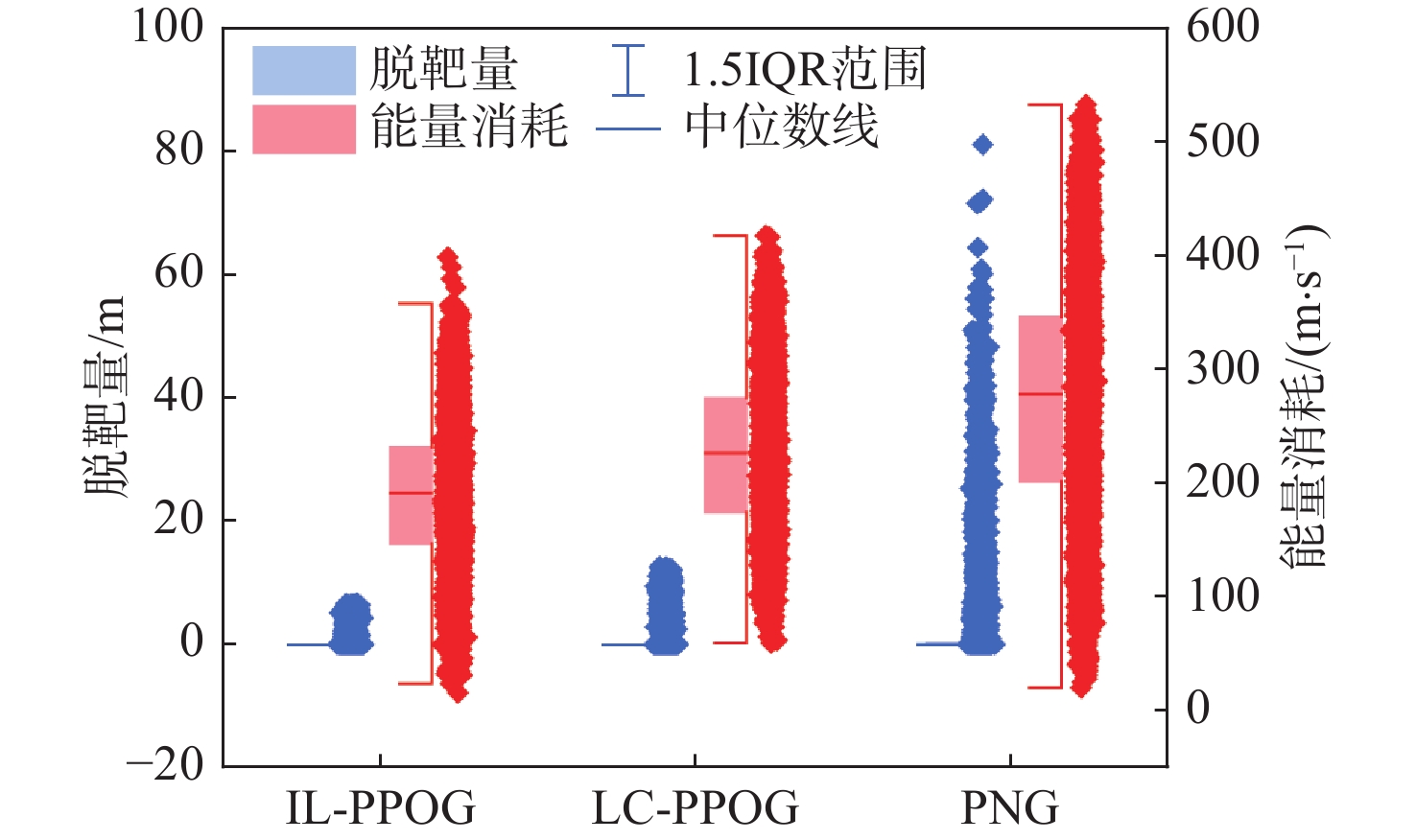
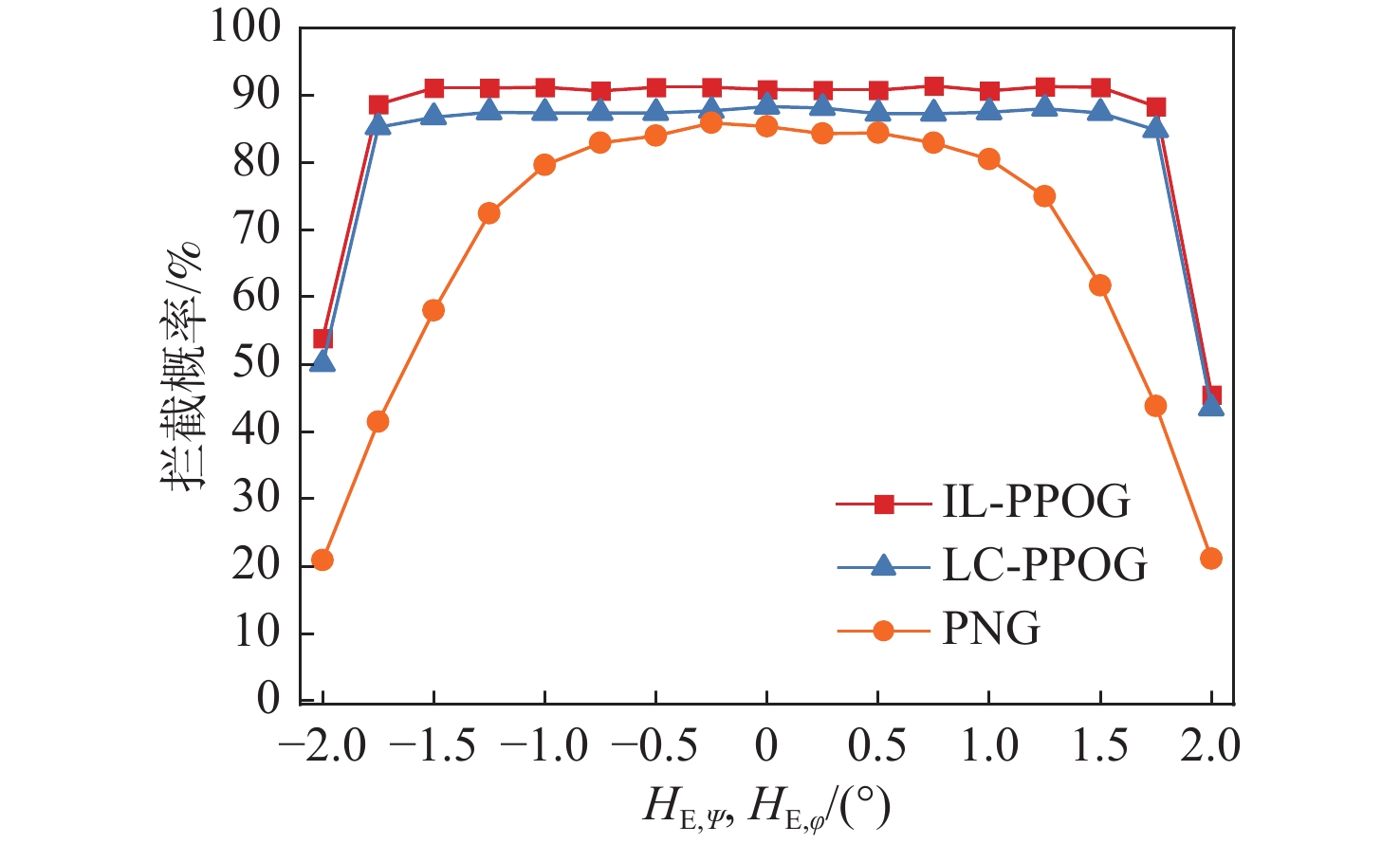
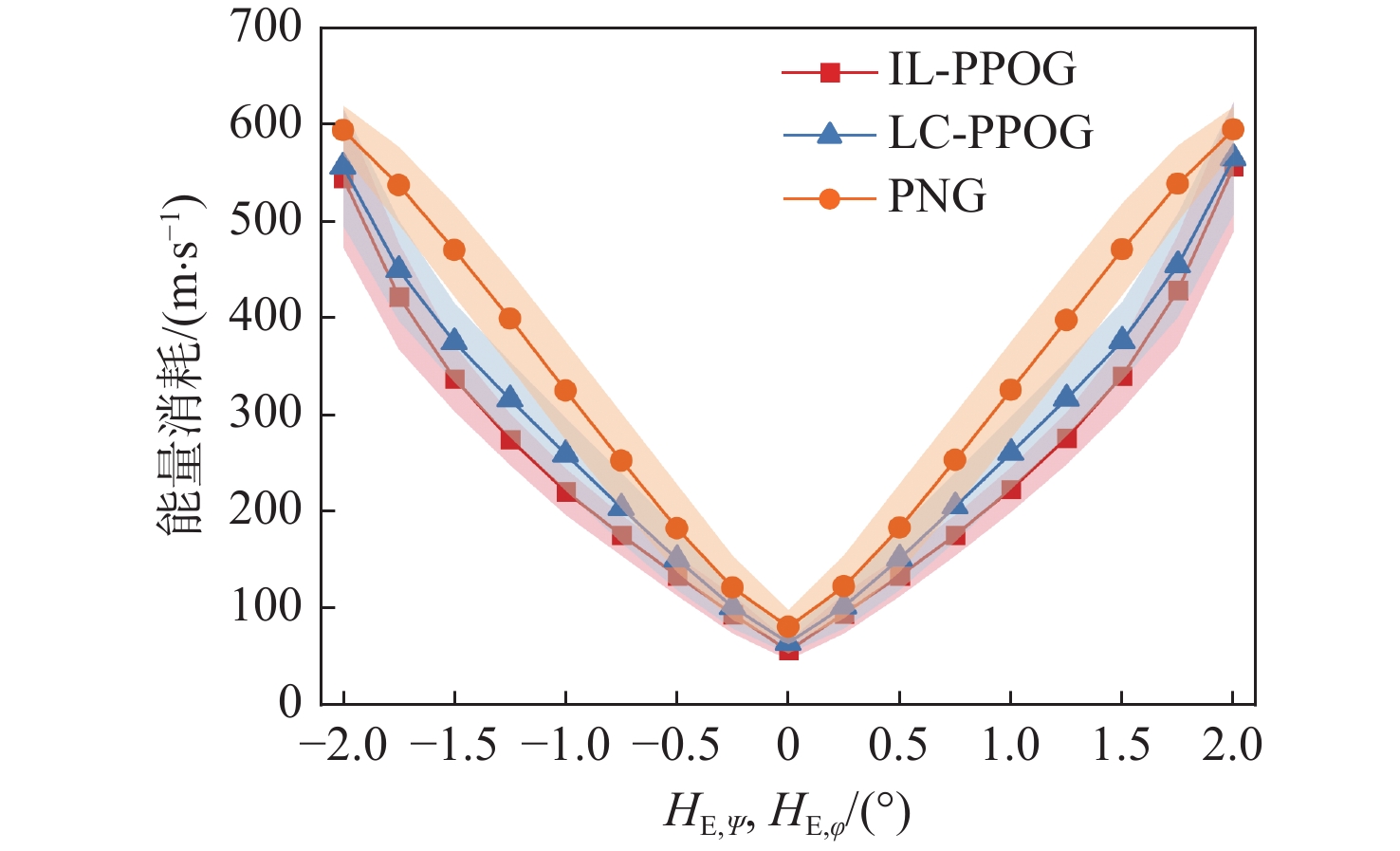
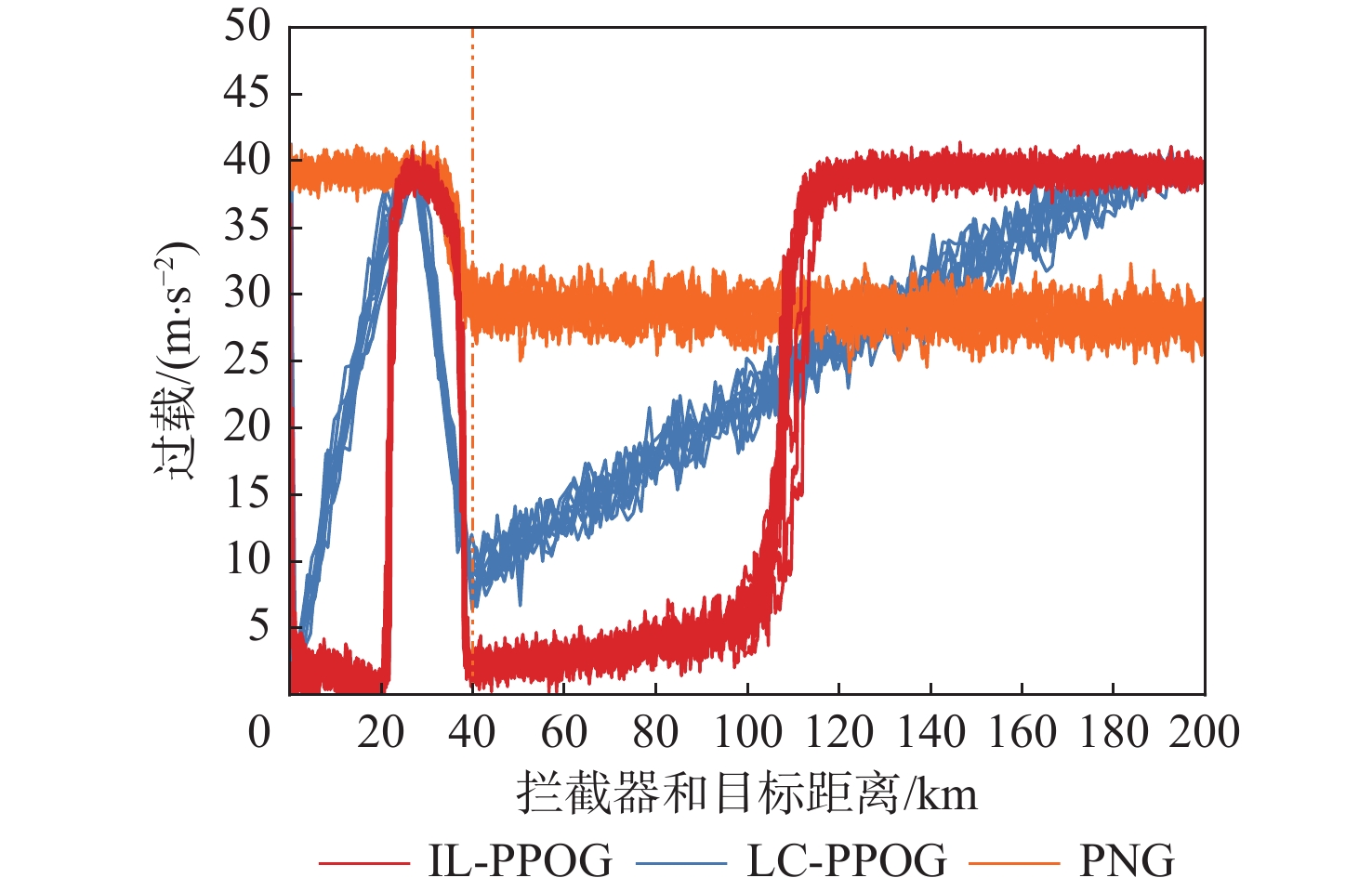
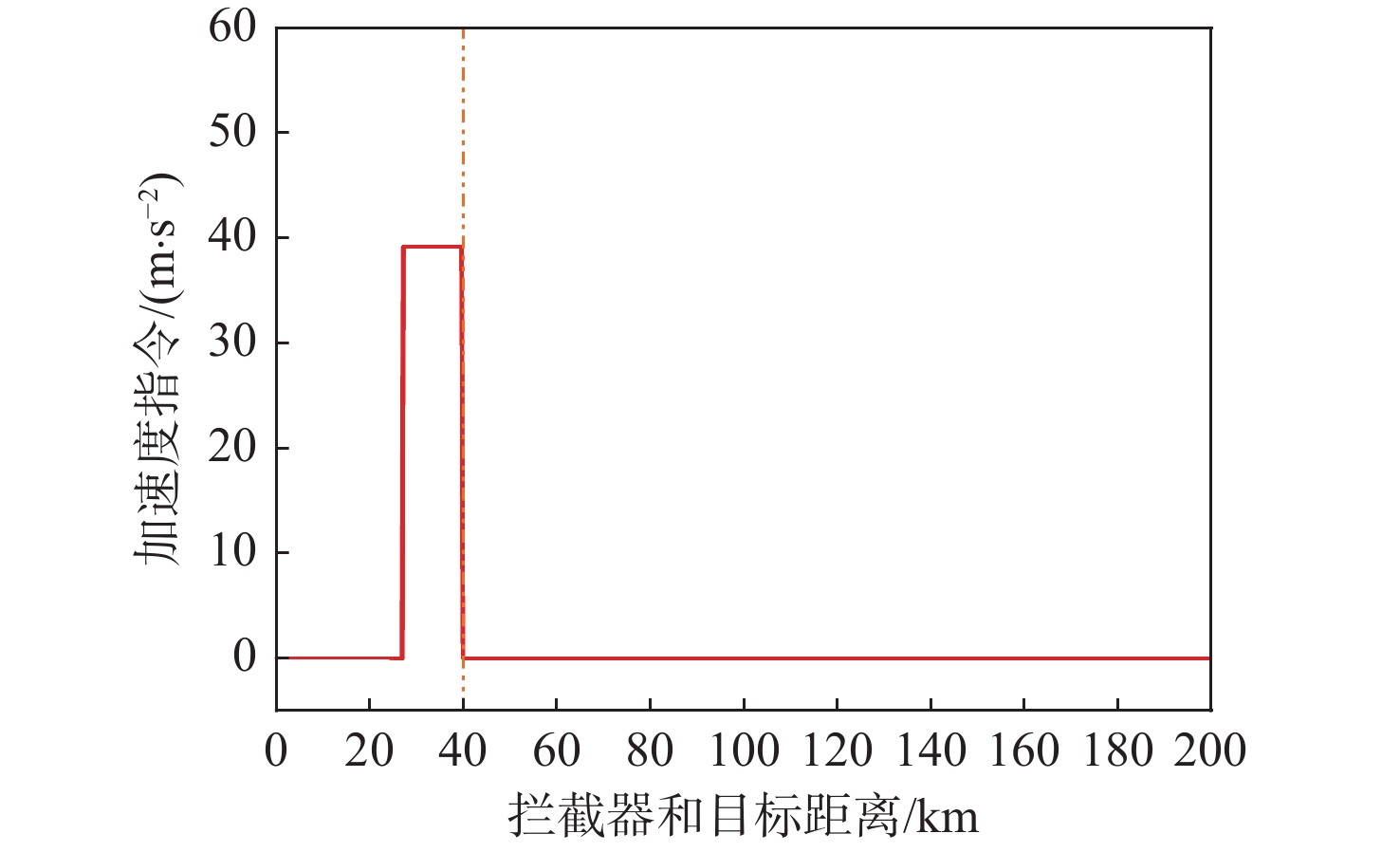
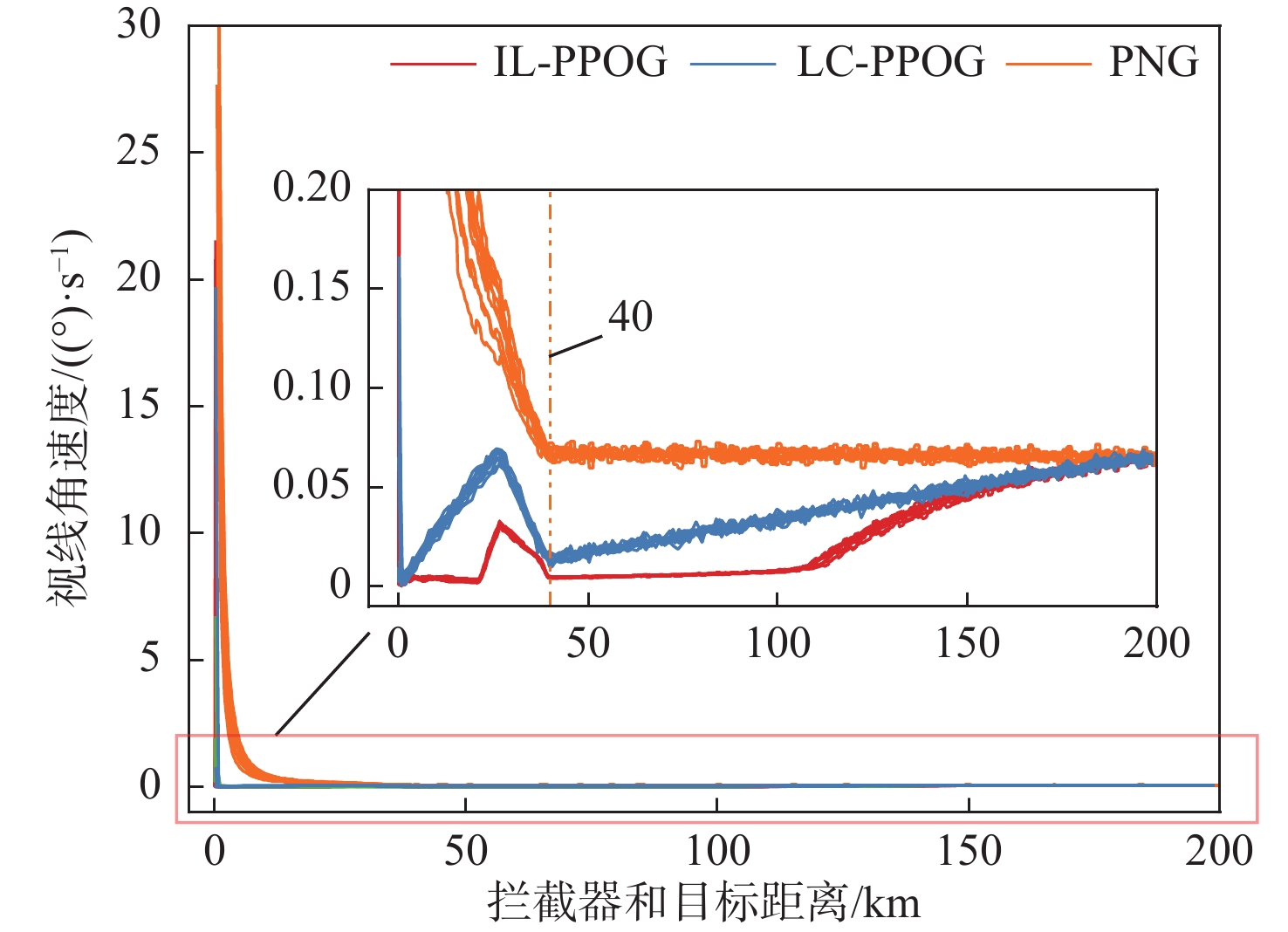
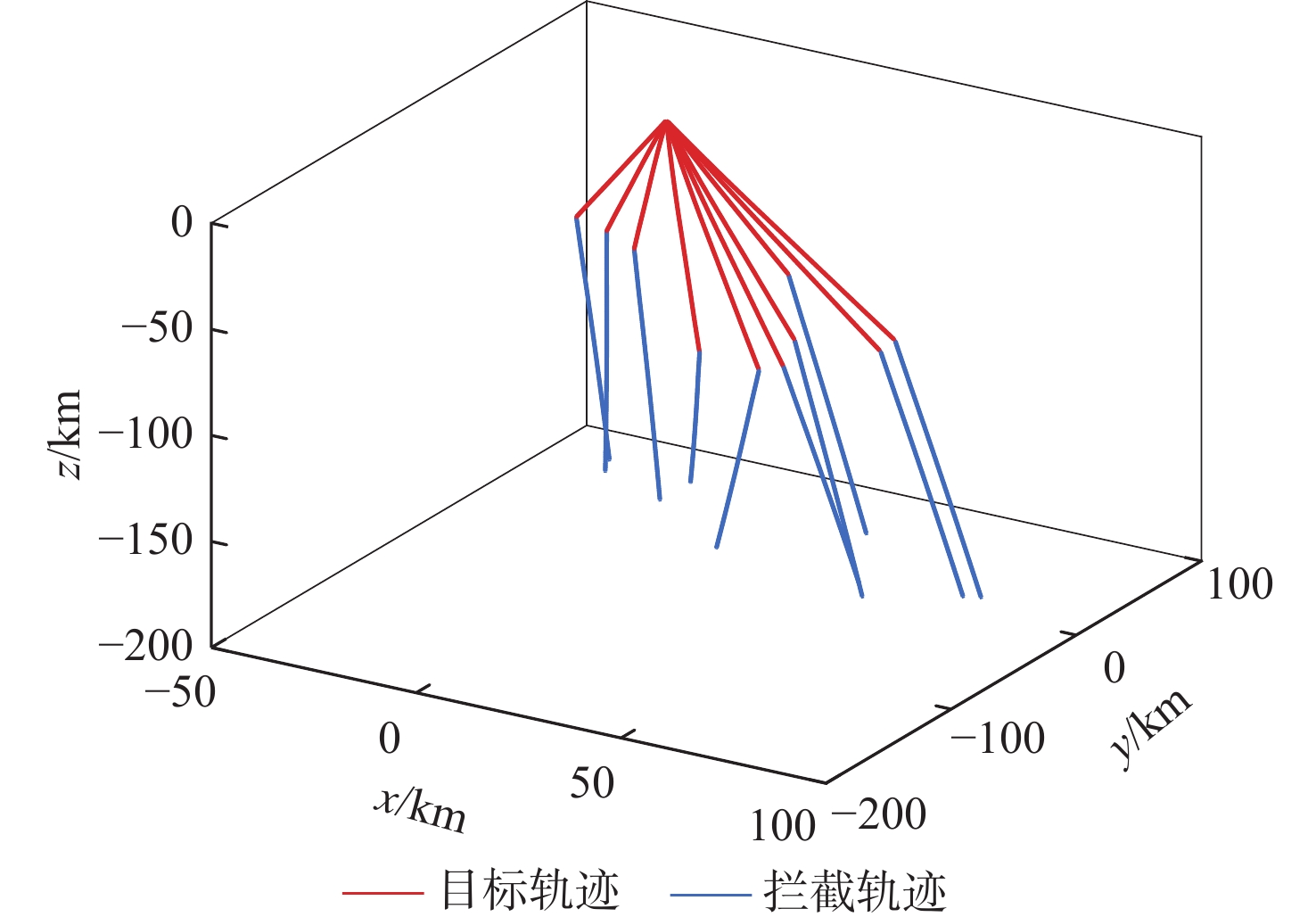
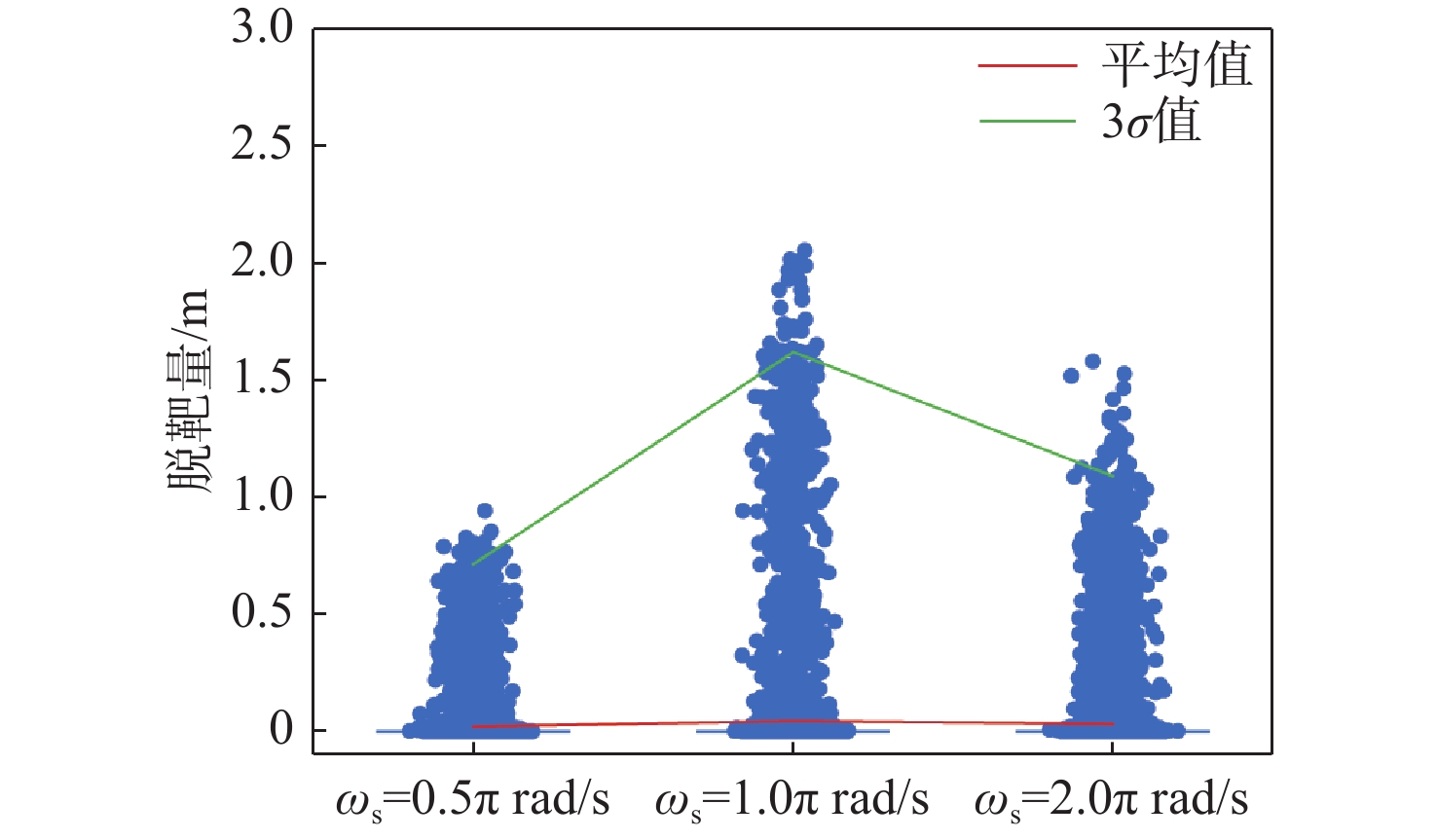
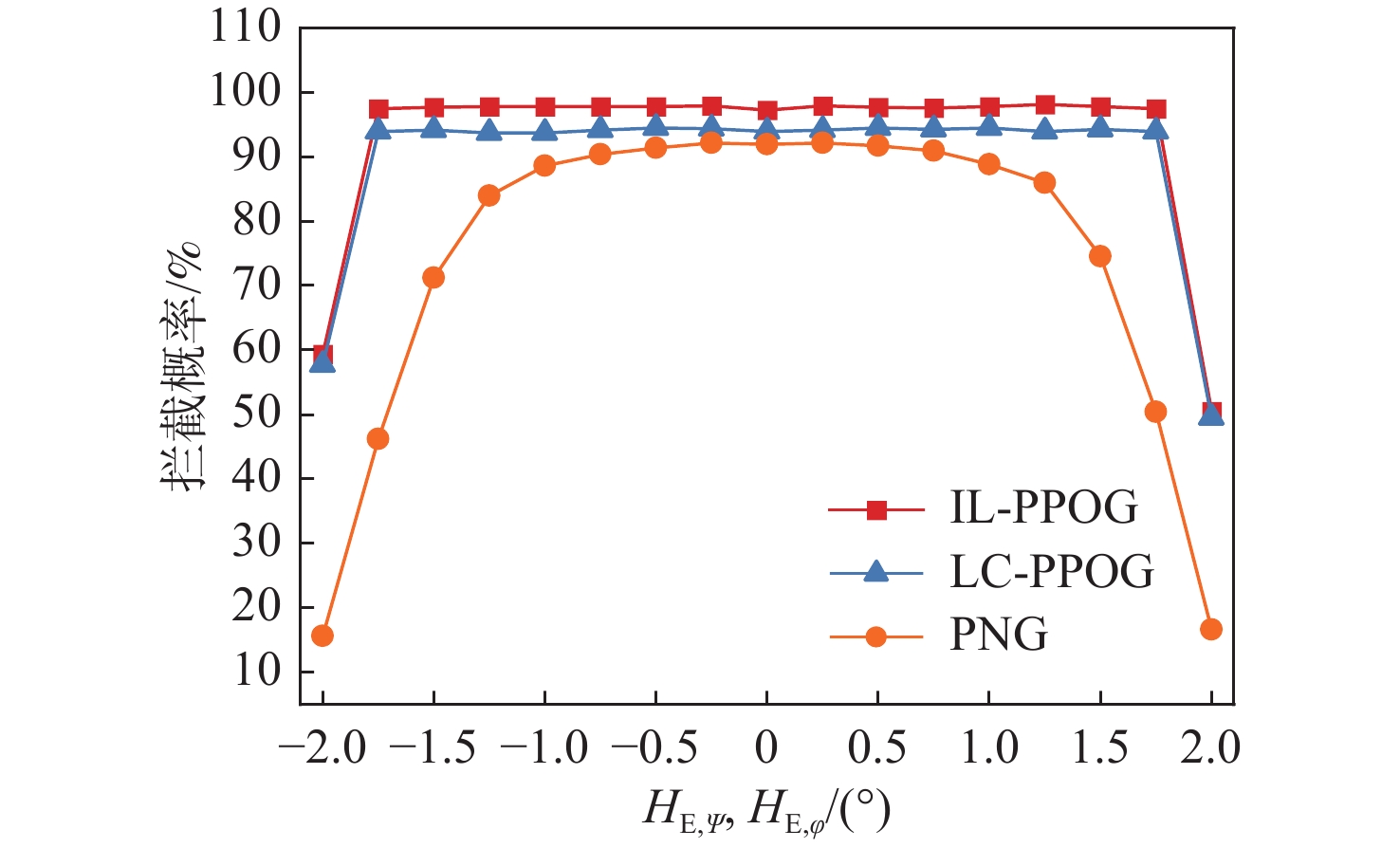
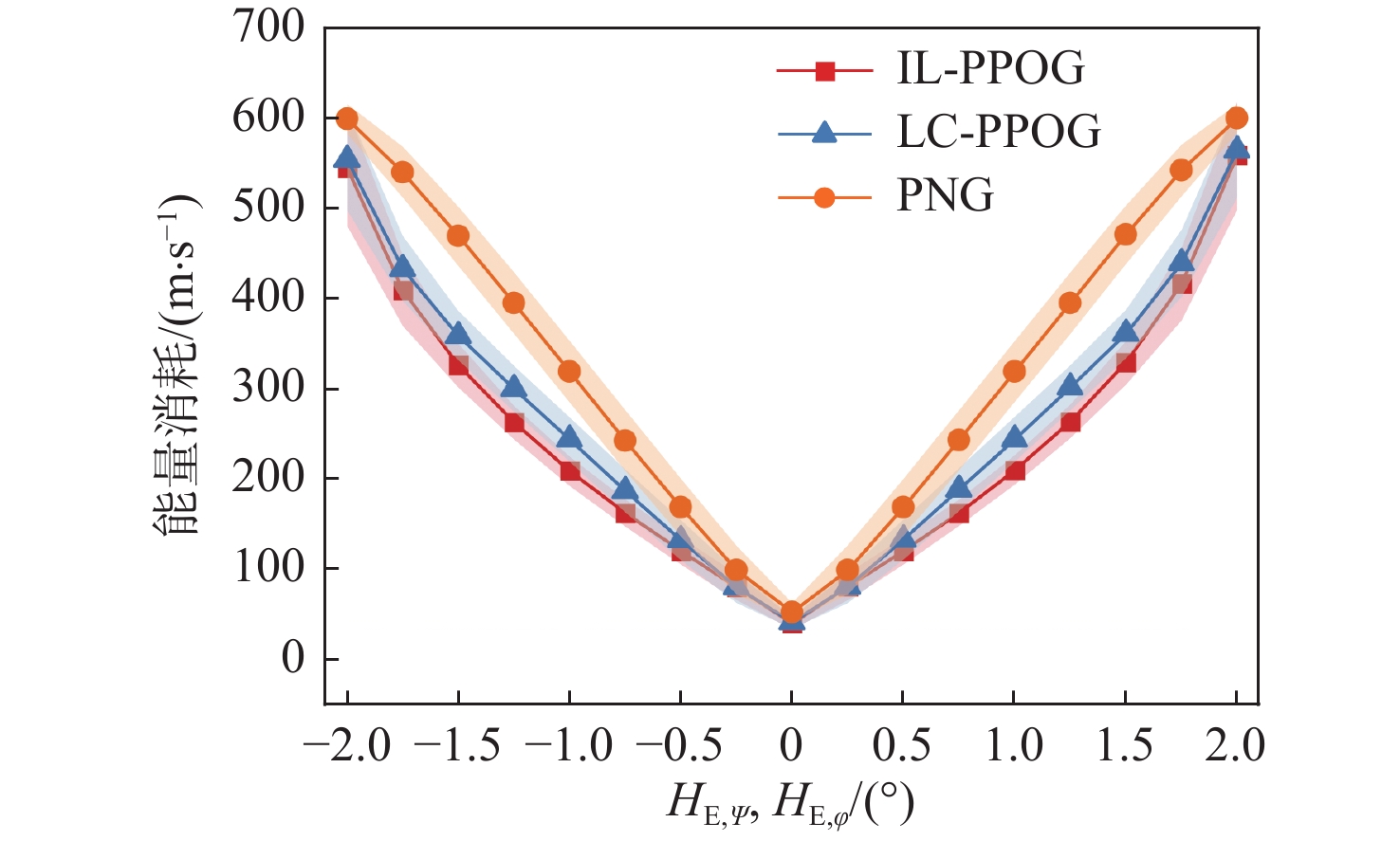
The advancement of maneuver penetration technology necessitates an improvement in the design of interception guidance laws to a higher level. An echelon intelligent guidance framework of “terminal guidance law model based on imitation learning (IL) → terminal guidance law evolution model based on reinforcement learning” is proposed to increase the interception probability, decrease the energy consumption, and improve the robustness of the guidance law for intercepting maneuvering targets. Firstly, a three-dimensional uncertain confrontation model between the maneuvering target and interceptor is established based on the interception collision triangle. Secondly, the IL method is used to mine the proportional navigation guidance (PNG) law, which provides a good initial policy for the subsequent reinforcement learning guidance law. Finally, a Markov decision model is established, and a process reward of energy consumption and a “soft” terminal reward model, including a “transition section,” are proposed. The proximal policy optimization (PPO) algorithm is used to fully explore the high-performance interception strategy. The findings of the Monte Carlo simulation show that the new guidance law is very stable and resilient, outperforming the conventional guidance algorithm in terms of interception probability and energy usage. Additionally, the single decision time is only 0.32 ms, making it of certain engineering value.

Nonlinear fluid-structure interaction response analysis of a large flexible wing under strong gusts
SU Jinxin, XI Ziyan, DAI Yuting
2026, 52(6): 2172-2183. doi: 10.13700/j.bh.1001-5965.2024.0278
Abstract:

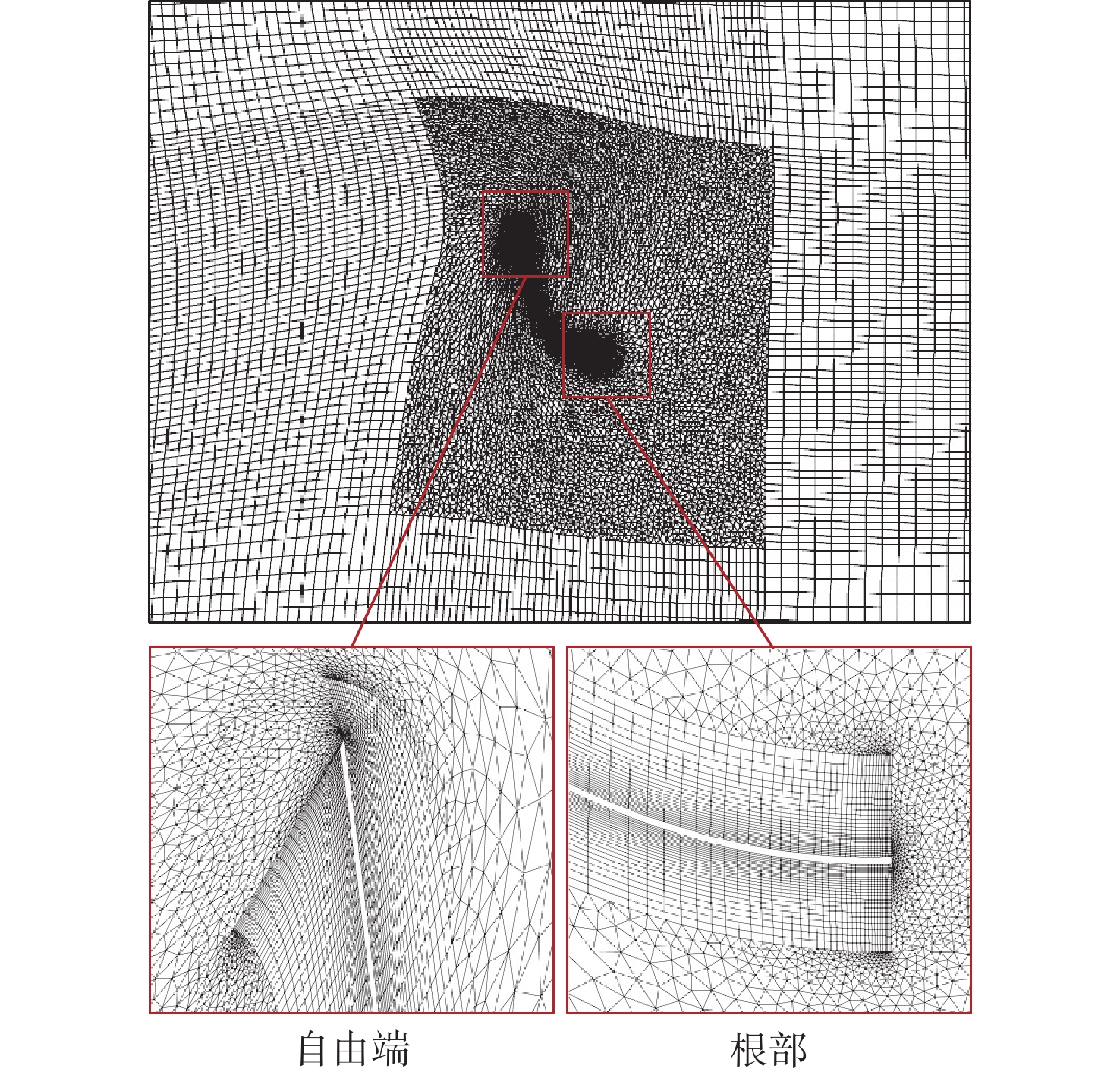
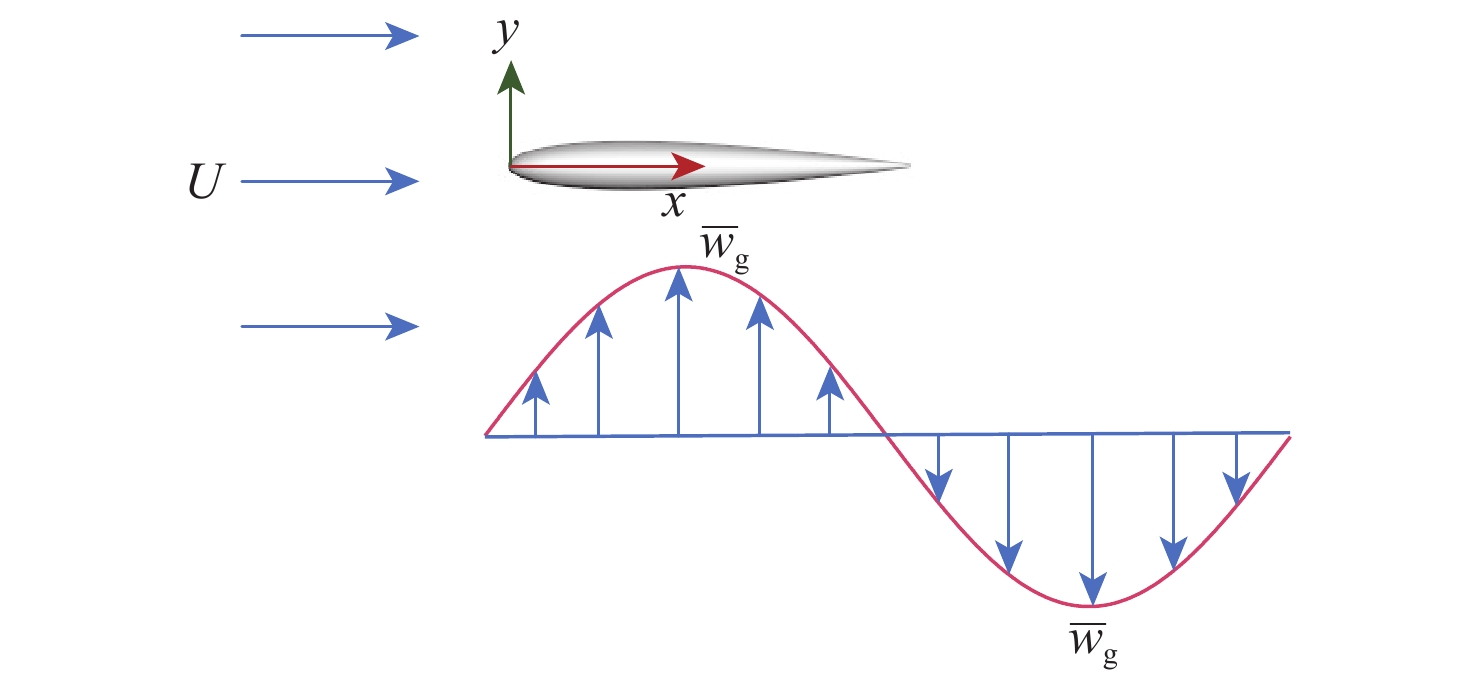
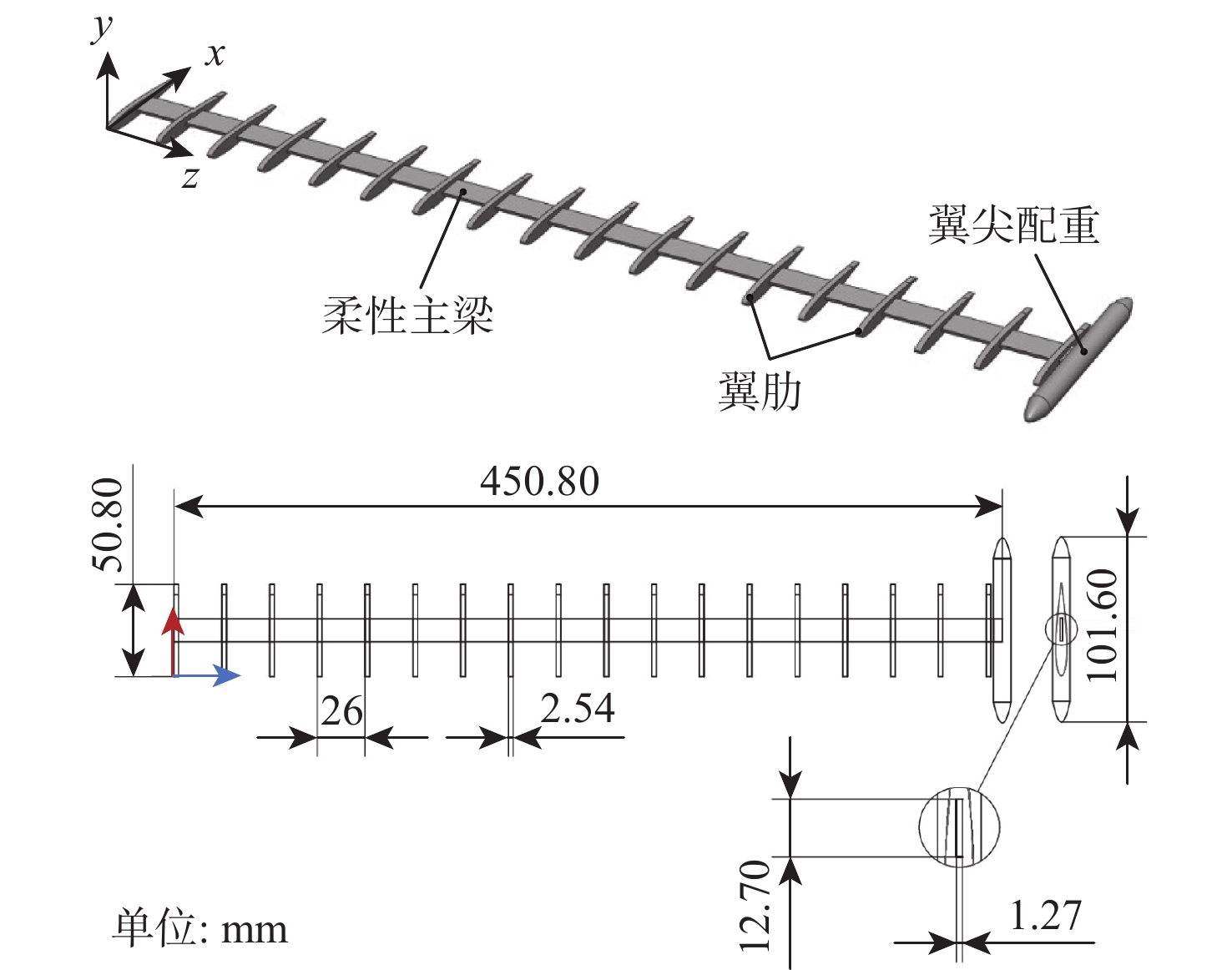
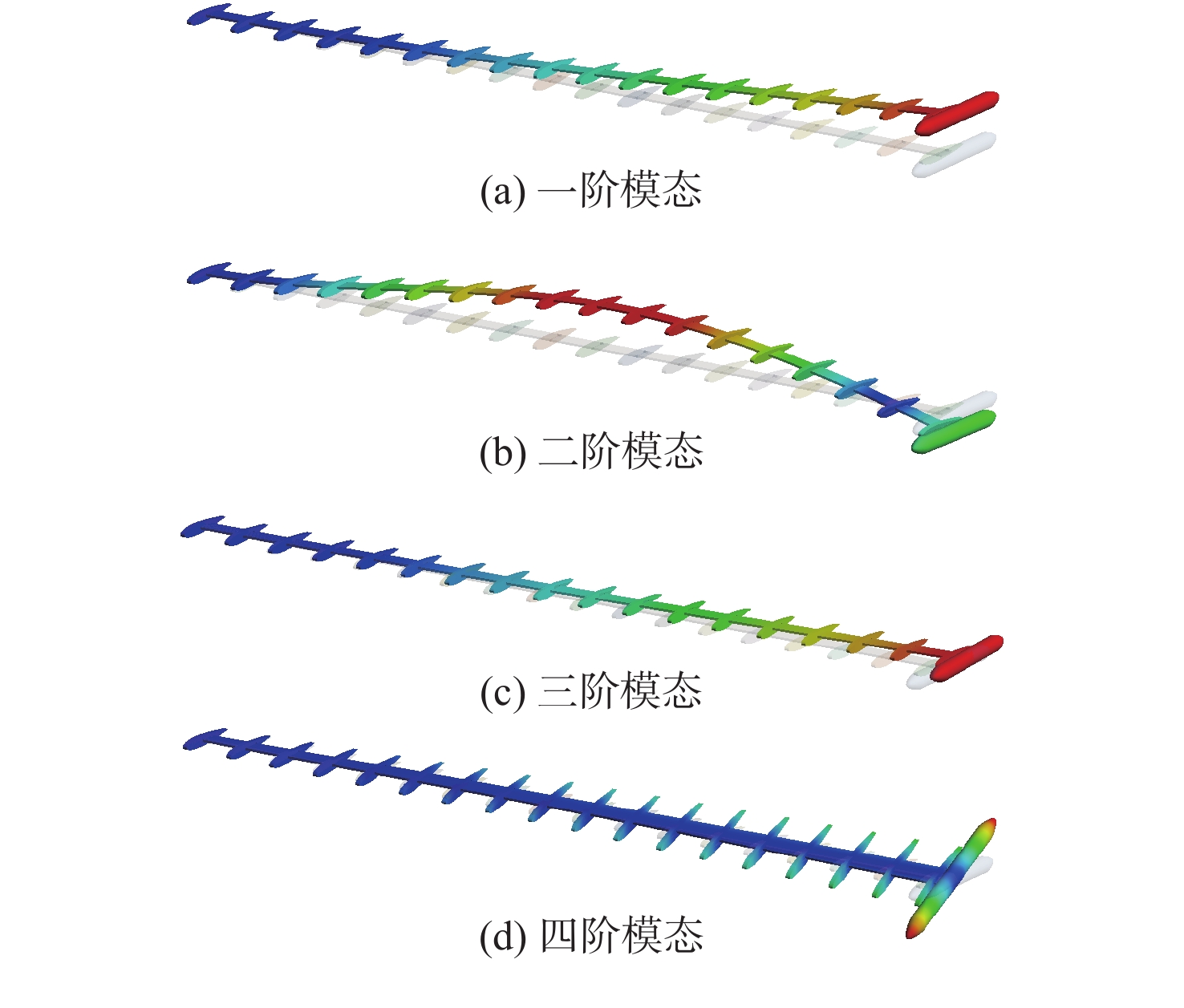
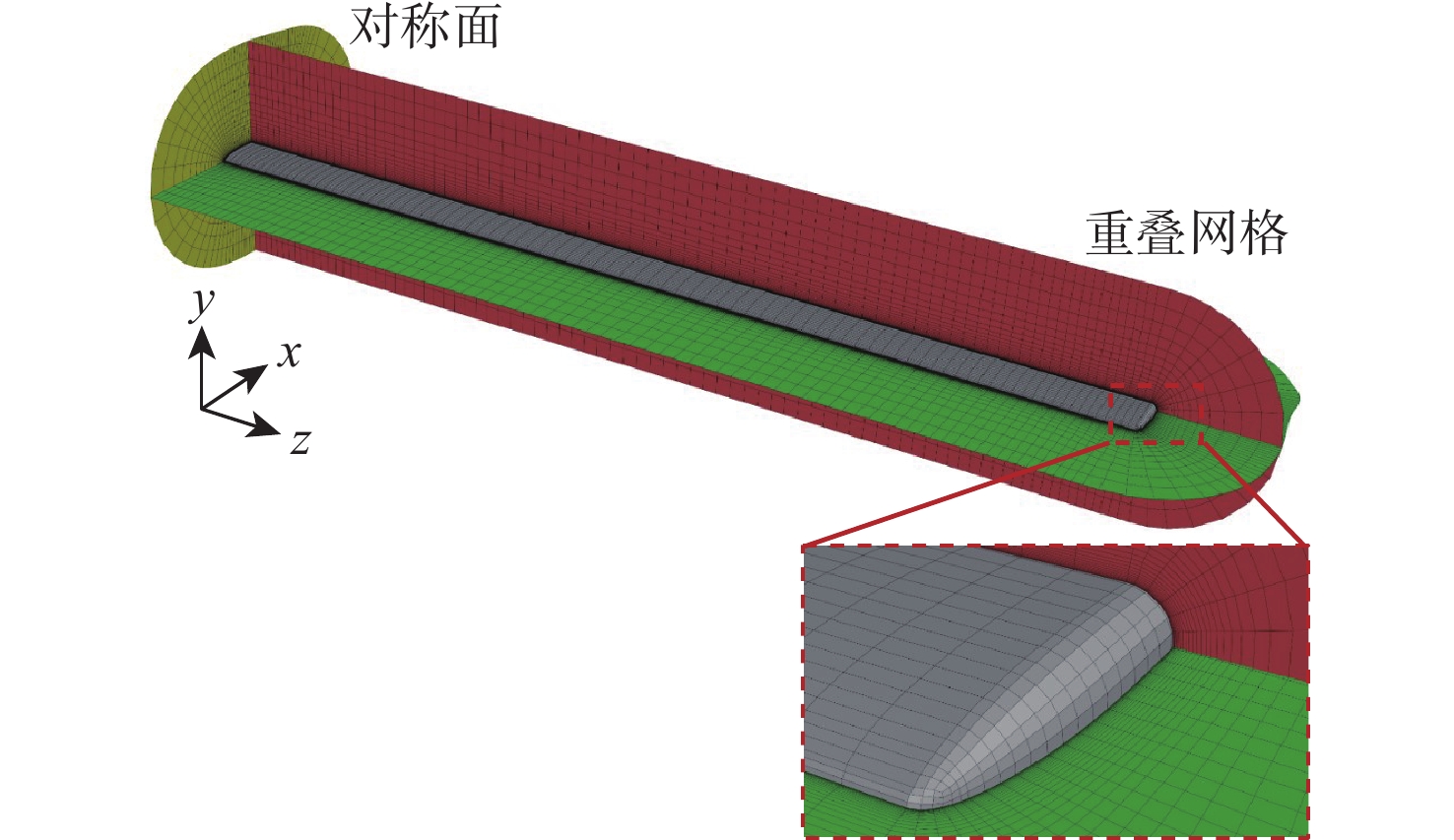
The geometric nonlinearity and aerodynamic nonlinearity cannot be ignored as the large flexible wing undergoes significant deformation when subjected to high gusts. In order to study the response of a large flexible wing under strong gusts, a fluid-structure interaction analysis method based on geometric nonlinear beam theory and computational fluid dynamics (CFD) was established. The fluid model and geometrically nonlinear beam model of a big flexible wing with a semi-aspect ratio of 9 were constructed, and the accuracy of the fluid-structure interaction simulation approach was confirmed by comparing wind tunnel tests of inverted flexible plate. The dynamic response characteristics of large flexible airfoils were examined at various gust ratios (RG=0.1-0.4). In particular, the dynamic stall aerodynamic characteristics of the airfoils caused by gusts at large gust ratios (RG=0.4) were examined. The gust response analysis was conducted at a Reynolds number of 105. The results show that significant nonlinear bending deformation of the wing occurs with the increase of gust ratios, and the maximum bending deformation of the wing reaches 63% of the half-spread length at RG=0.4. Meanwhile, the bending deformation of the wing reduces the width of the spreading distribution of the leading-edge vortex (LEV), which affects the distribution of aerodynamic forces and reduces the gust loads.

Radar coherent integration method for high-speed maneuvering targets based on sequence reversal
WANG Ruizheng, LI Shiqiang
2026, 52(6): 2184-2193. doi: 10.13700/j.bh.1001-5965.2024.0268
Abstract:

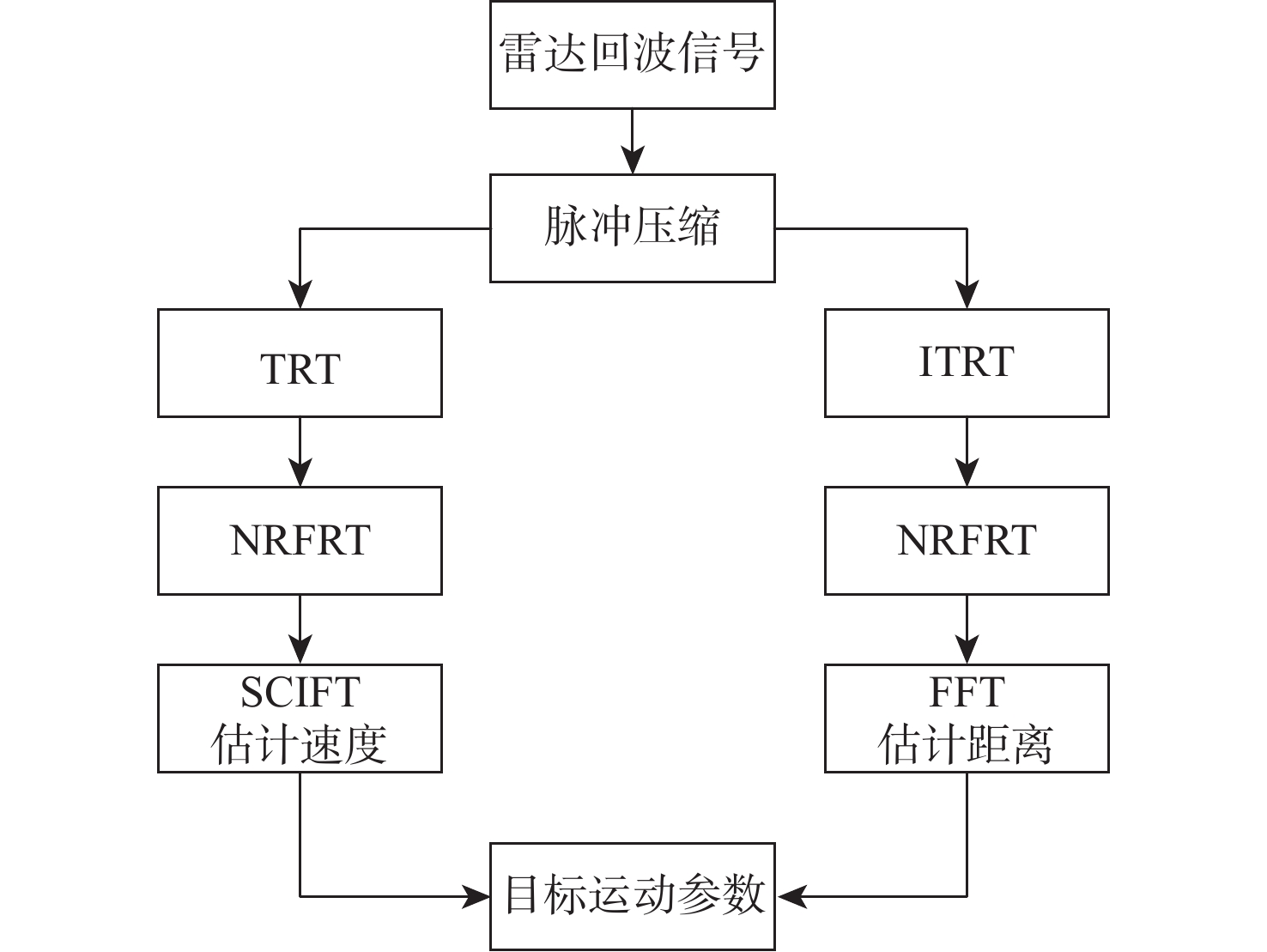
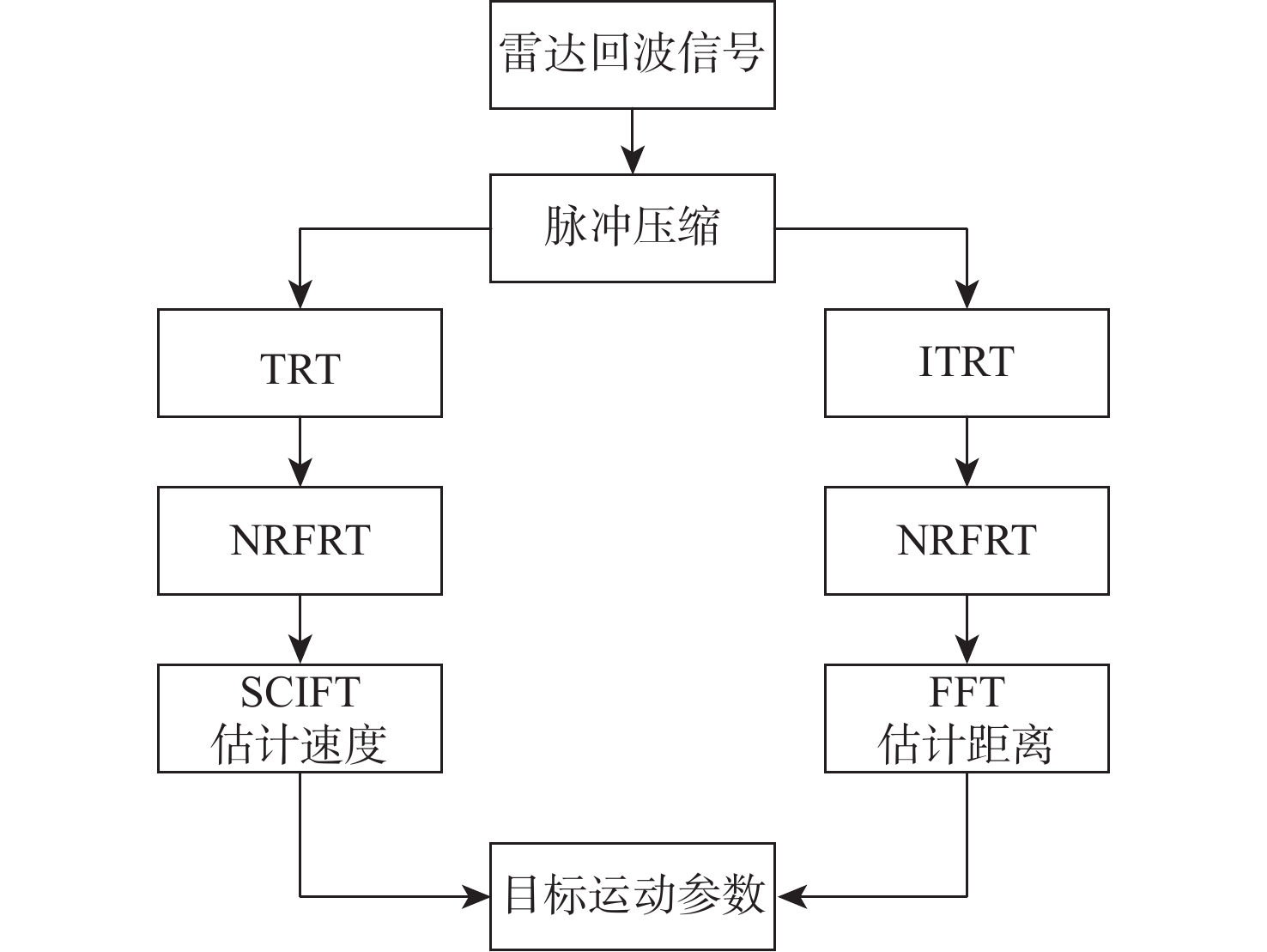
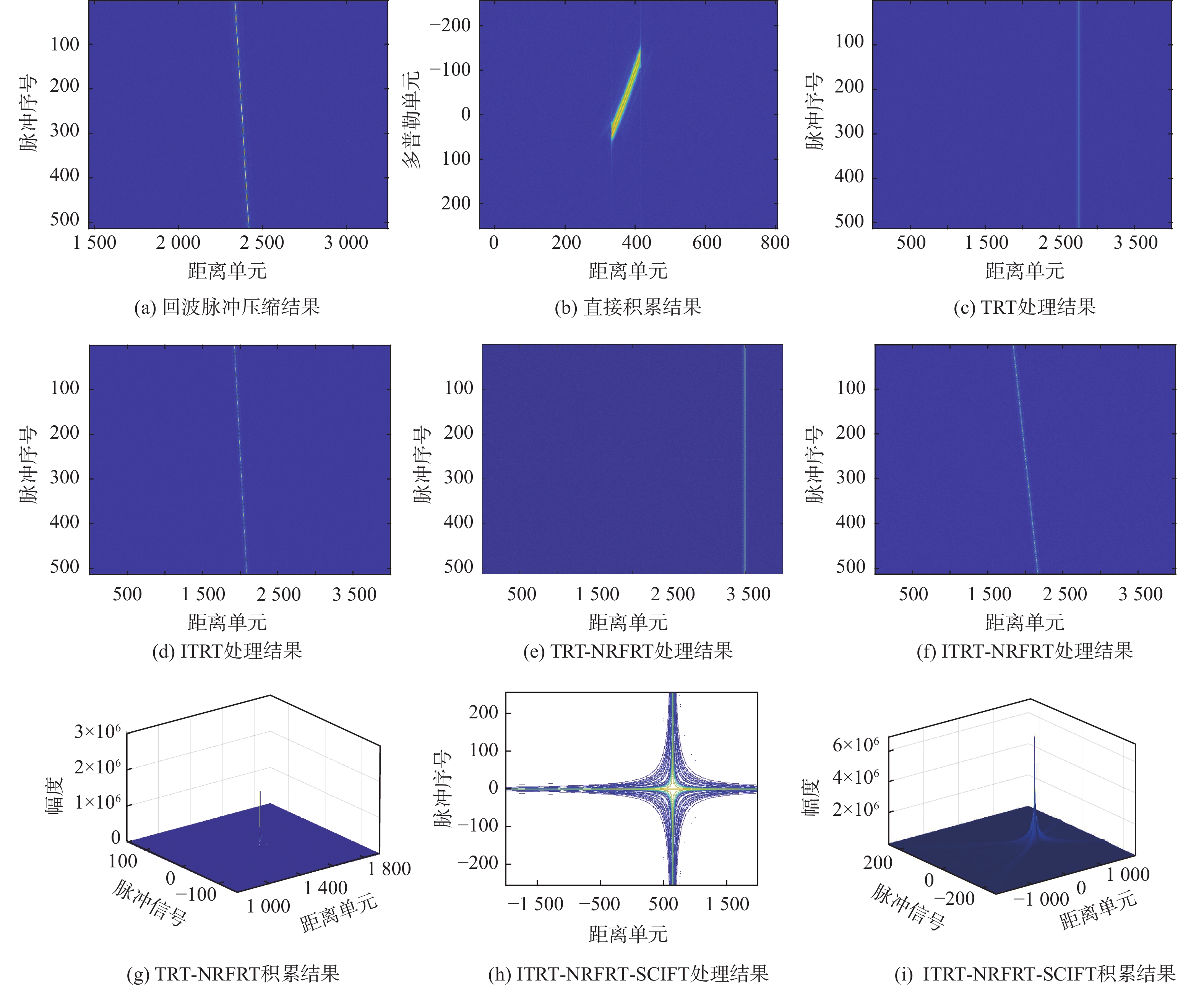
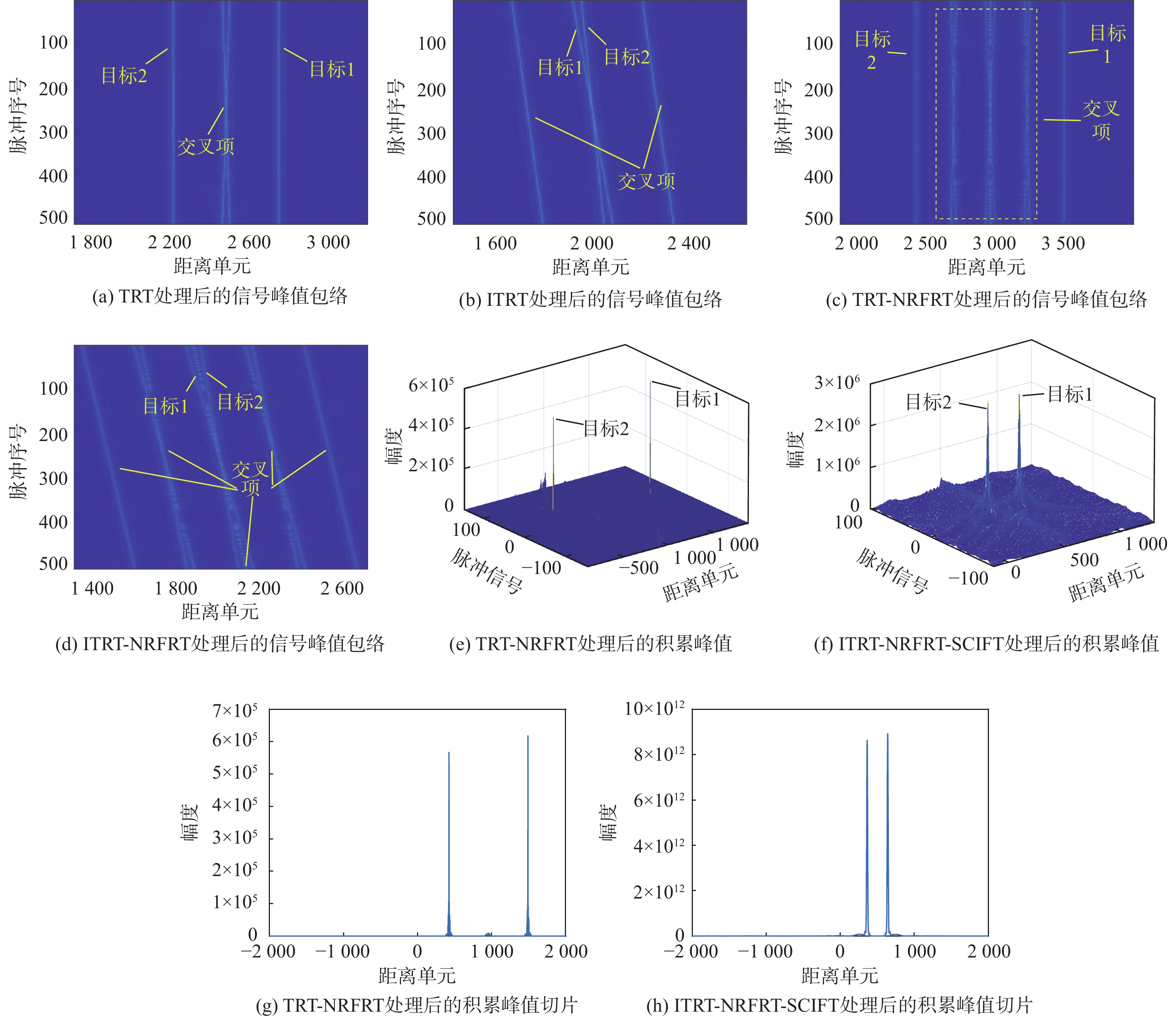
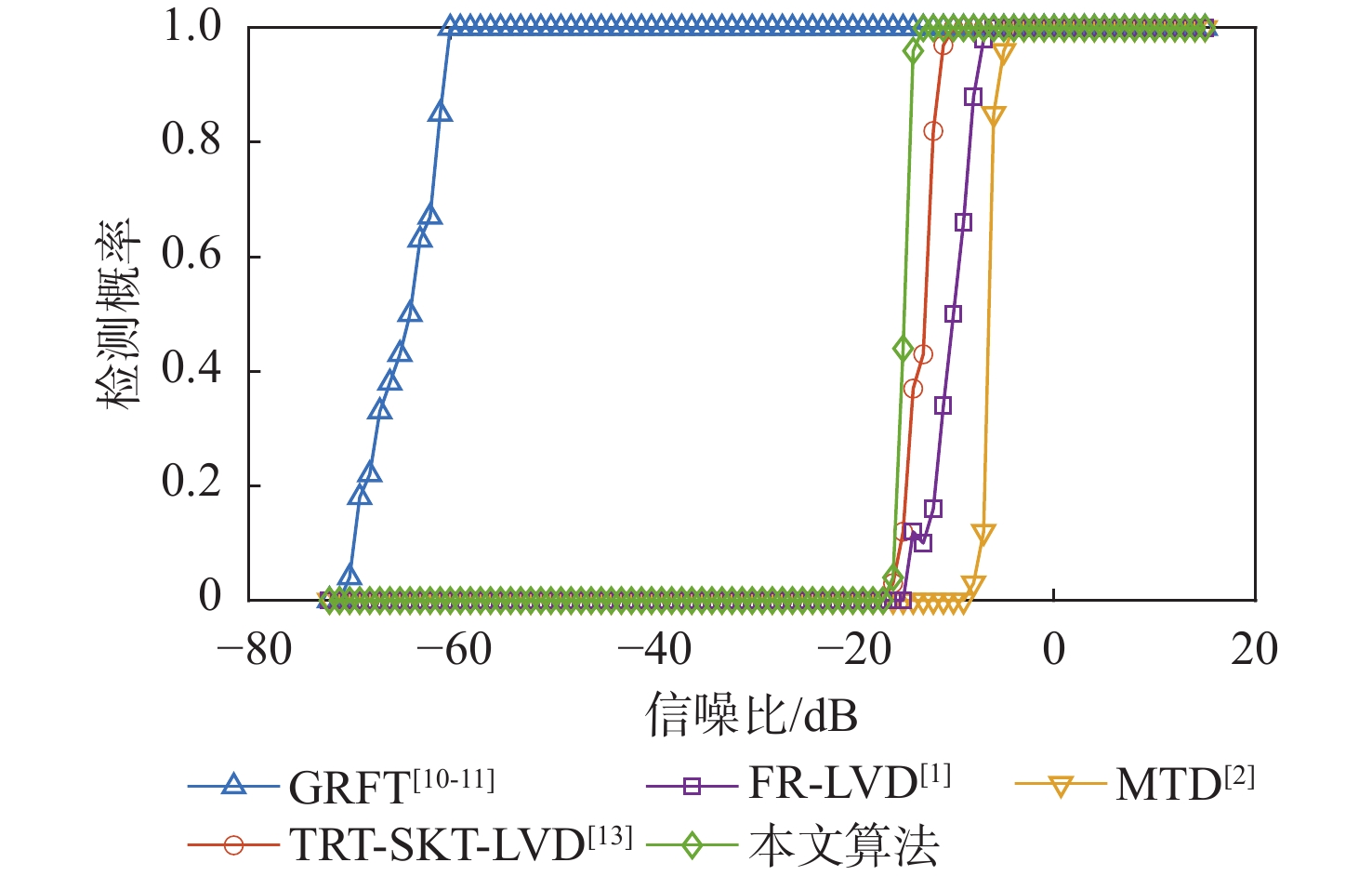
This paper proposes a joint algorithm based on improved time reversal transform-new range frequency reversal transform-scale-variable inverse Fourier transform (ITRT-NRFRT-SCIFT) and time reversal transform-new range frequency reversal transform (TRT-NRFRT) to solve the problems of cross-range cell migration and Doppler frequency migration in coherent integration of radar echoes from high-speed maneuvering targets. First, the slow time sequence is reversed to extract the target velocity information from the range information. Then, the NRFRT is applied to eliminate the effect of Doppler frequency migration. Fast Fourier transform (FFT) is utilized to achieve energy accumulation following TRT-NRFRT, whereas SCIFT is utilized following ITRT-NRFRT to achieve echo energy accumulation and remove the link between slow time and range frequency. Simulation experiments show that the algorithm can correct the cross-range cell migration and Doppler frequency migration of third-order moving targets without any parameter search, and obtain the radial distance and velocity information of the target with relatively low computational complexity.

Face image inpainting combining semantic segmentation and edge texture
SHI Jiliang, ZHANG Qian, ZHOU Zunfu, YANG Sihong
2026, 52(6): 2194-2207. doi: 10.13700/j.bh.1001-5965.2024.0258
Abstract:

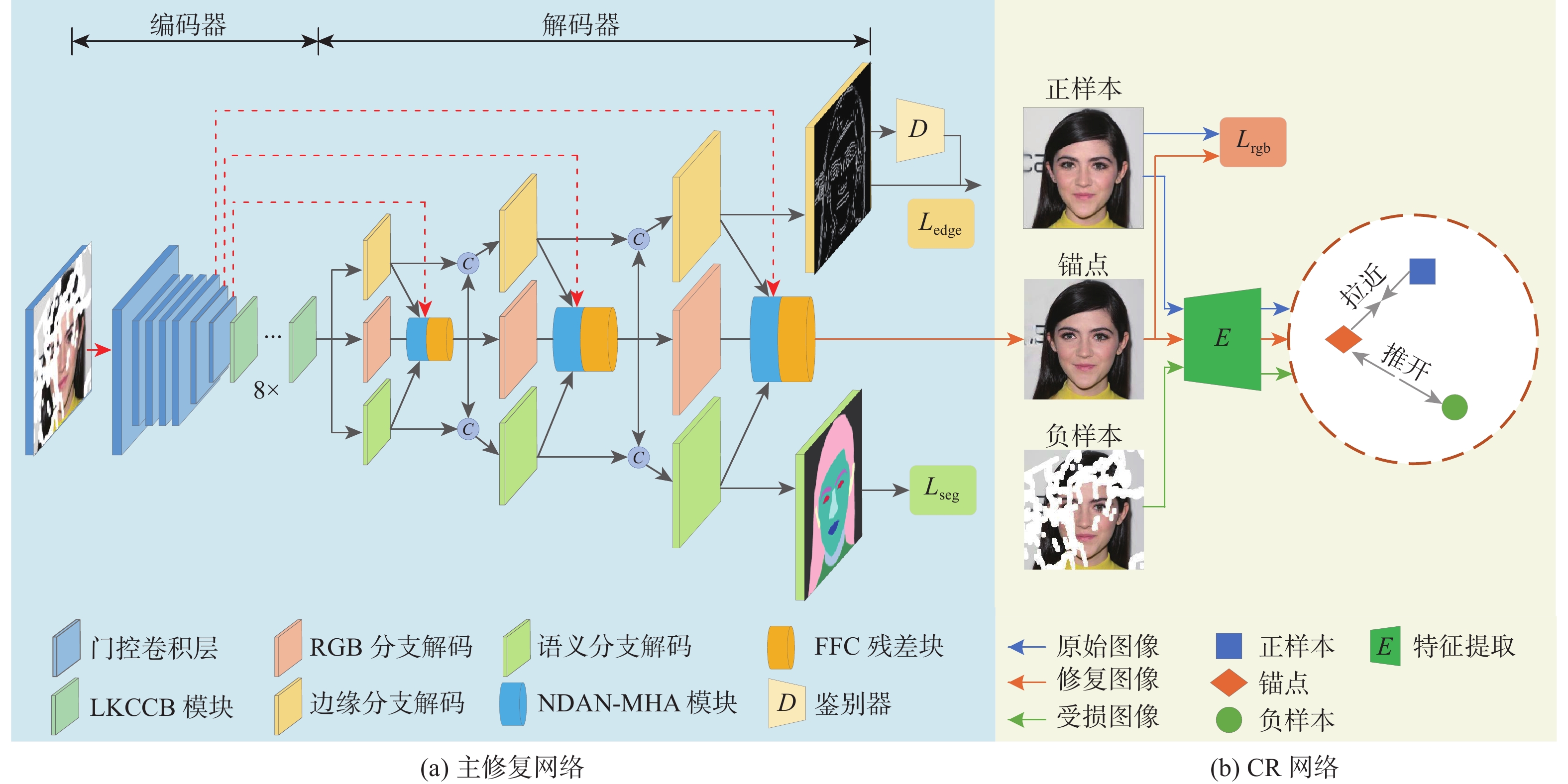
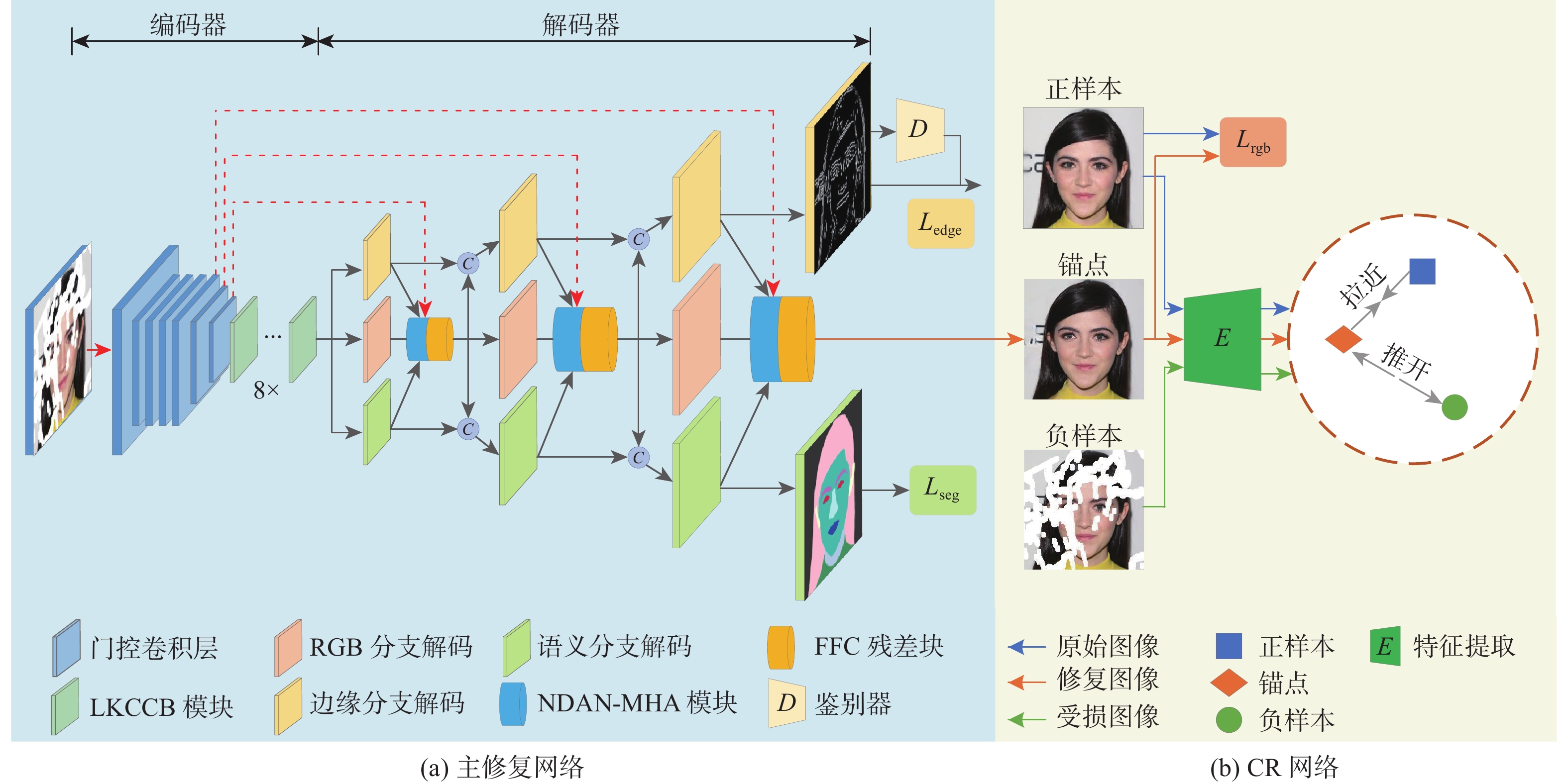
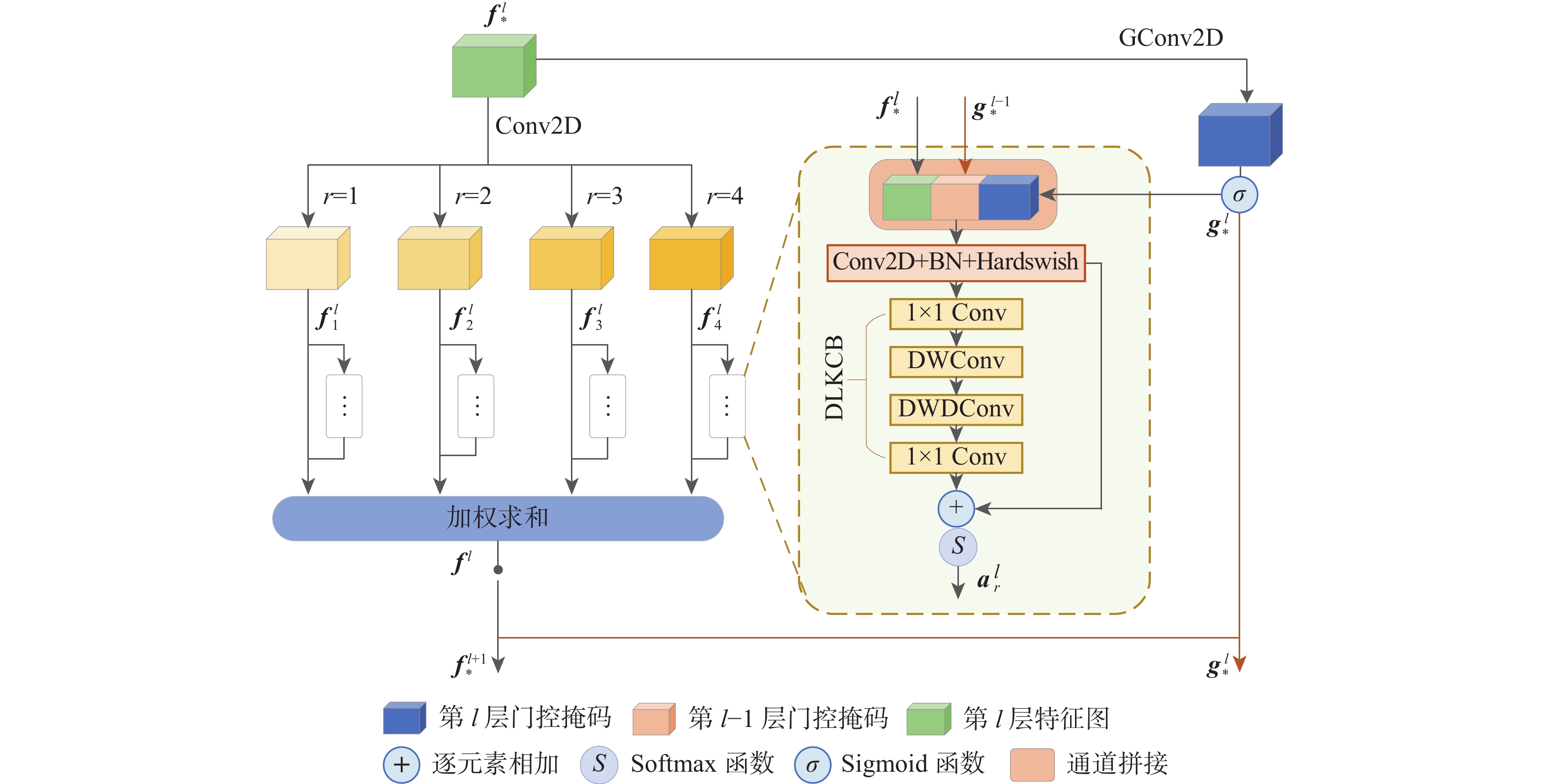
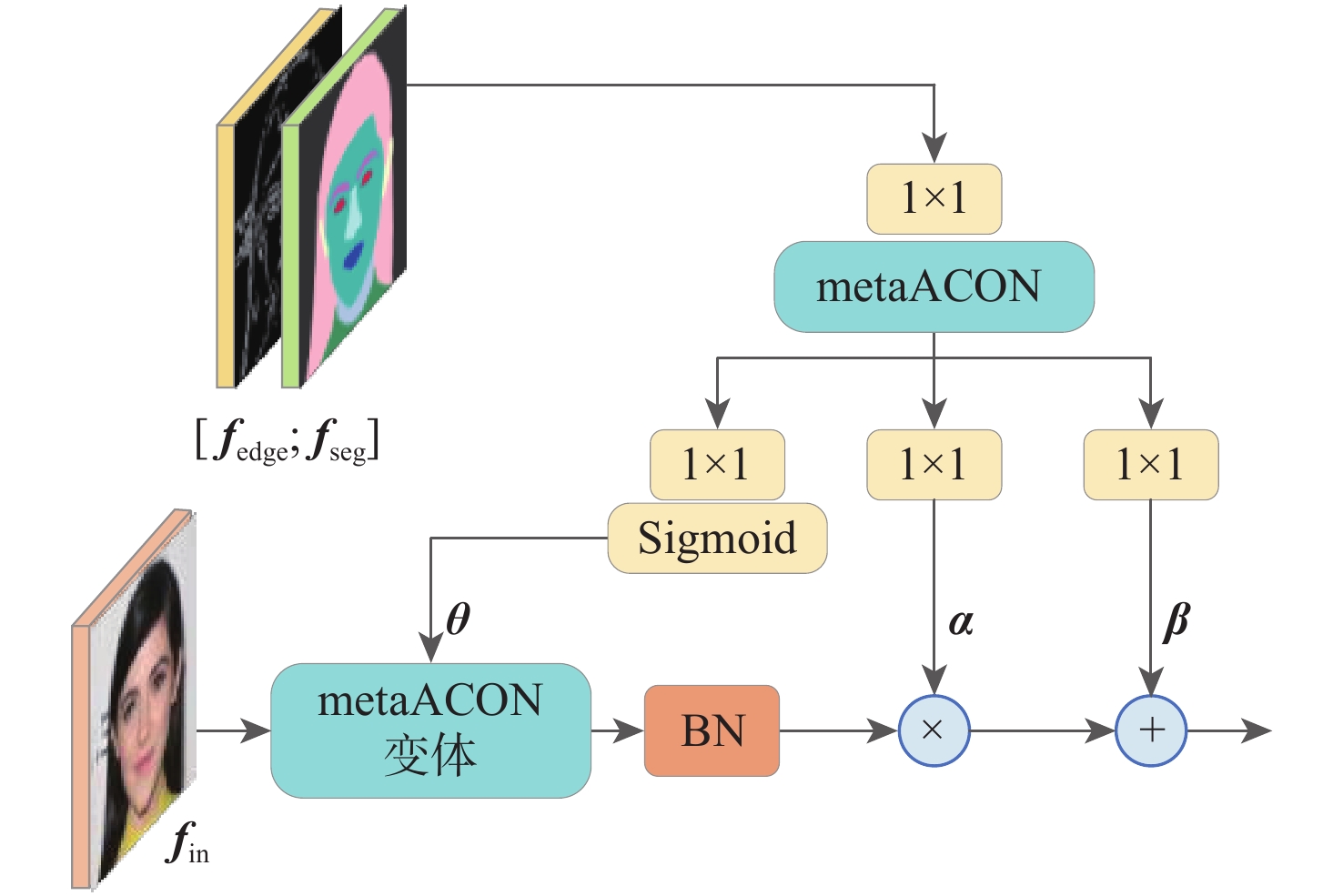
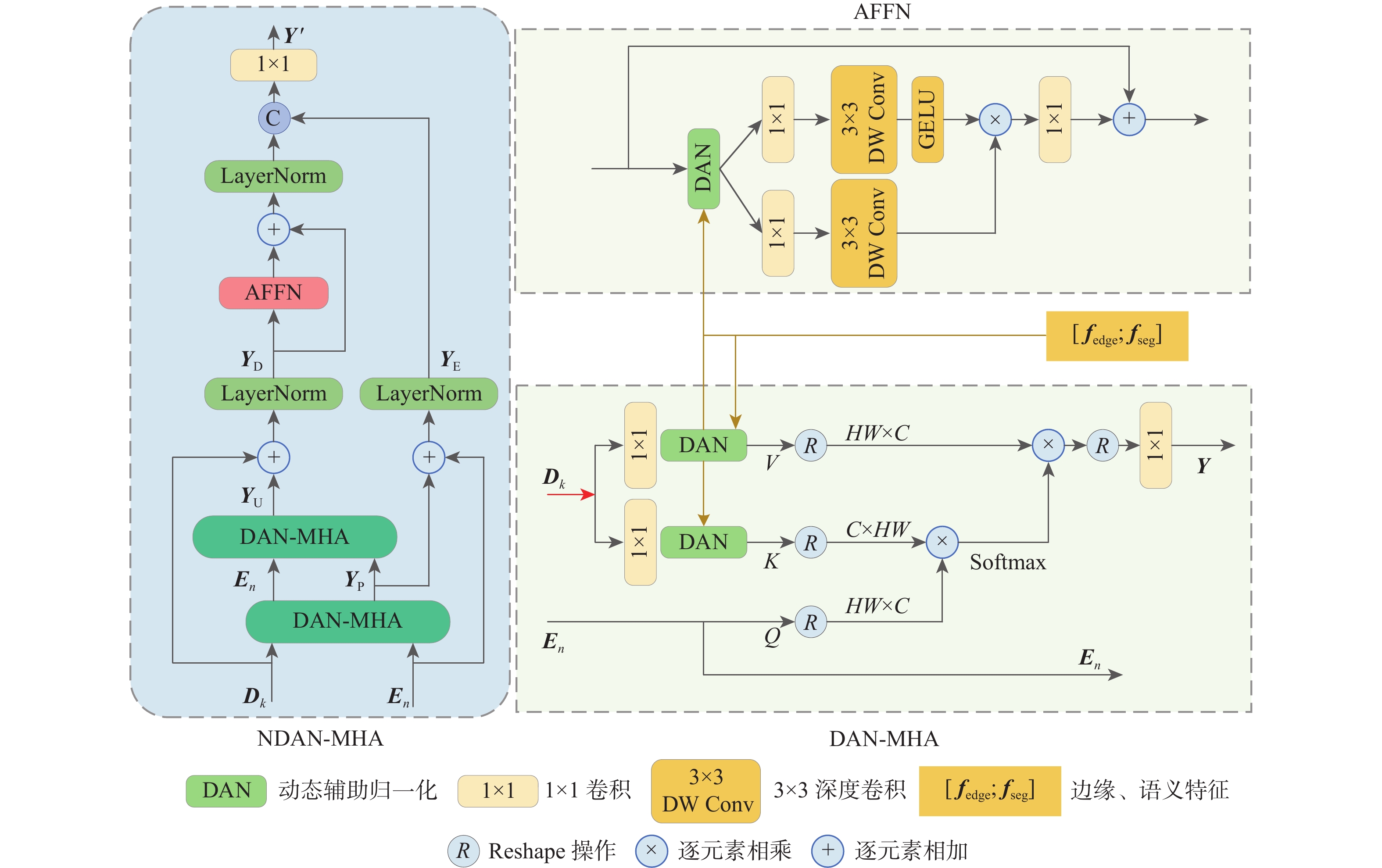
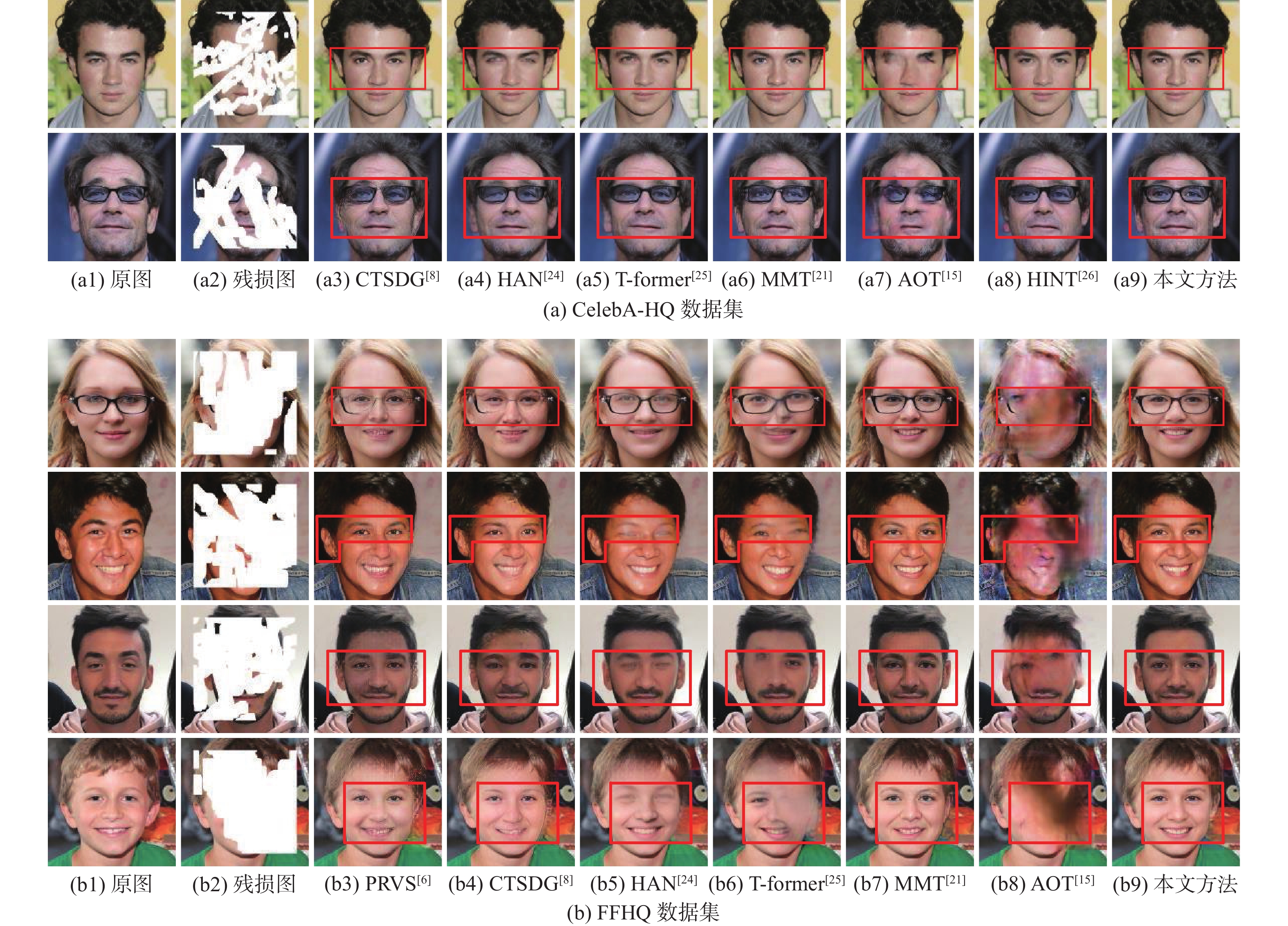
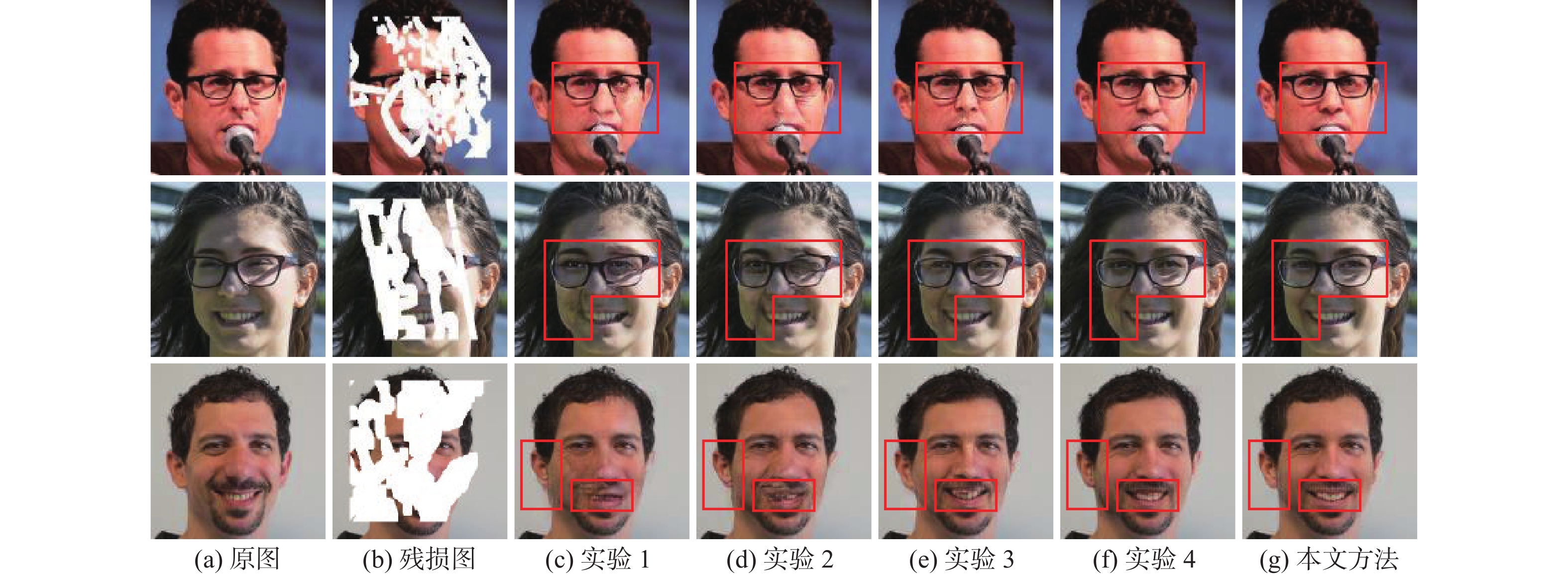
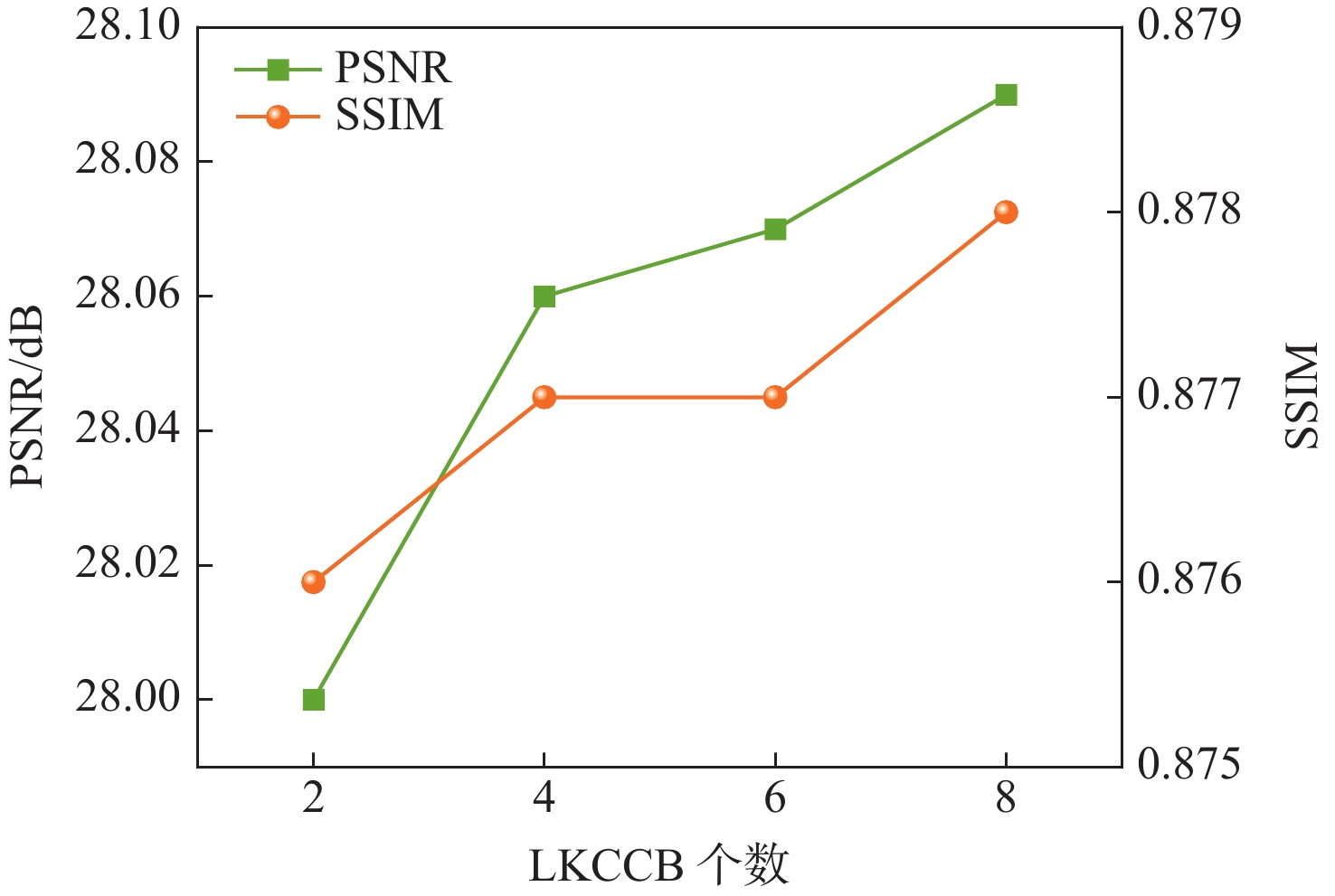
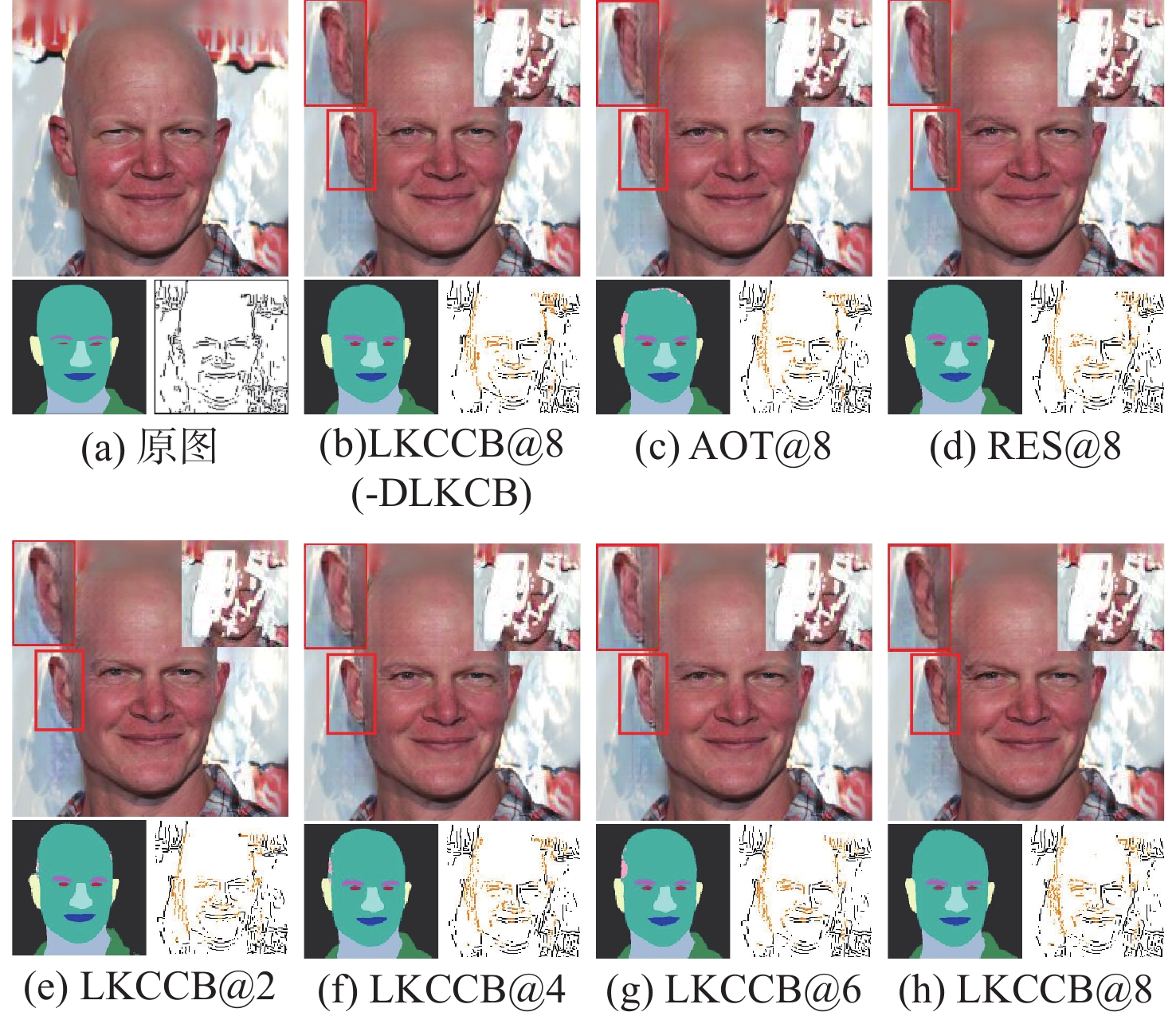
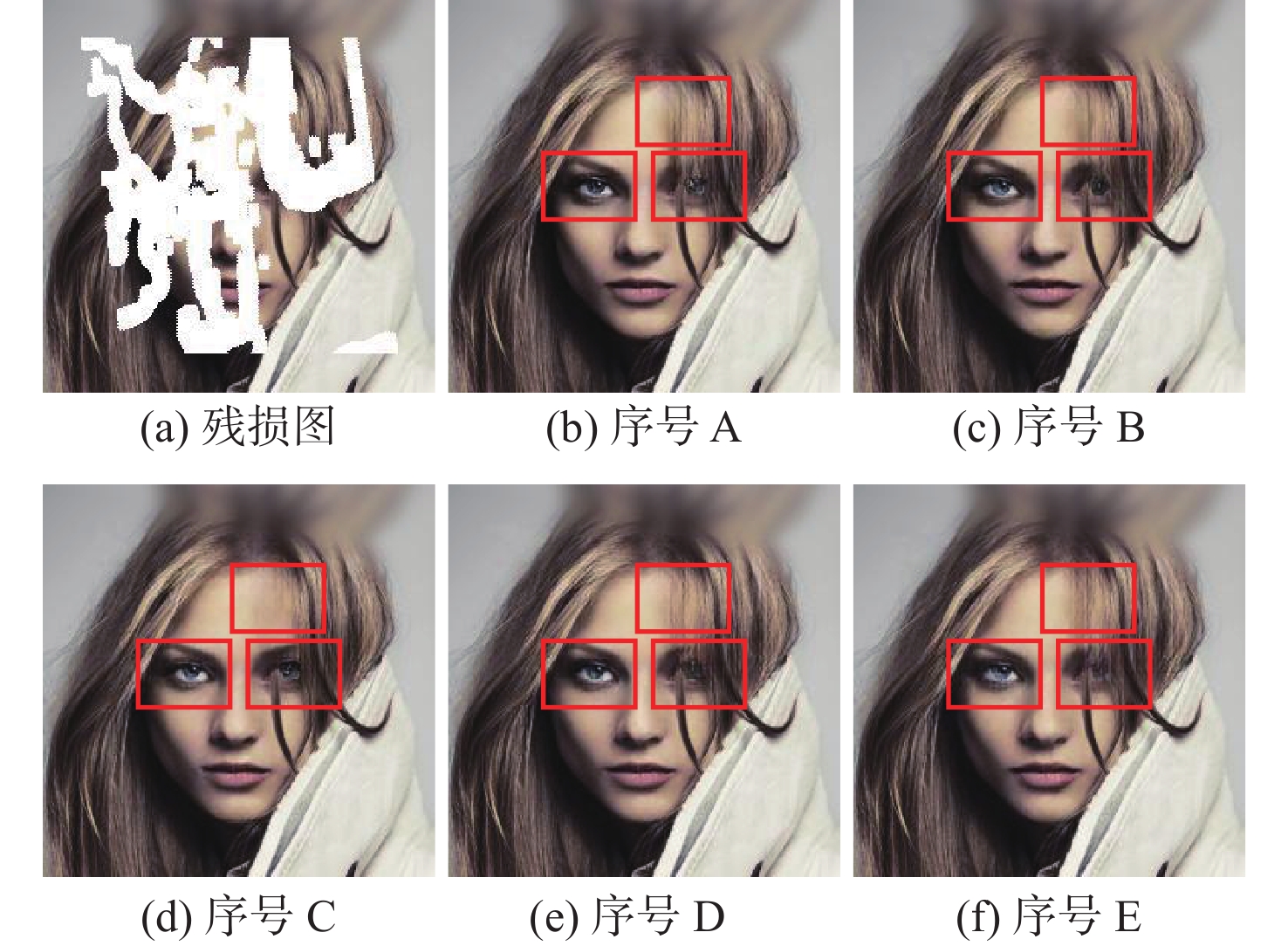
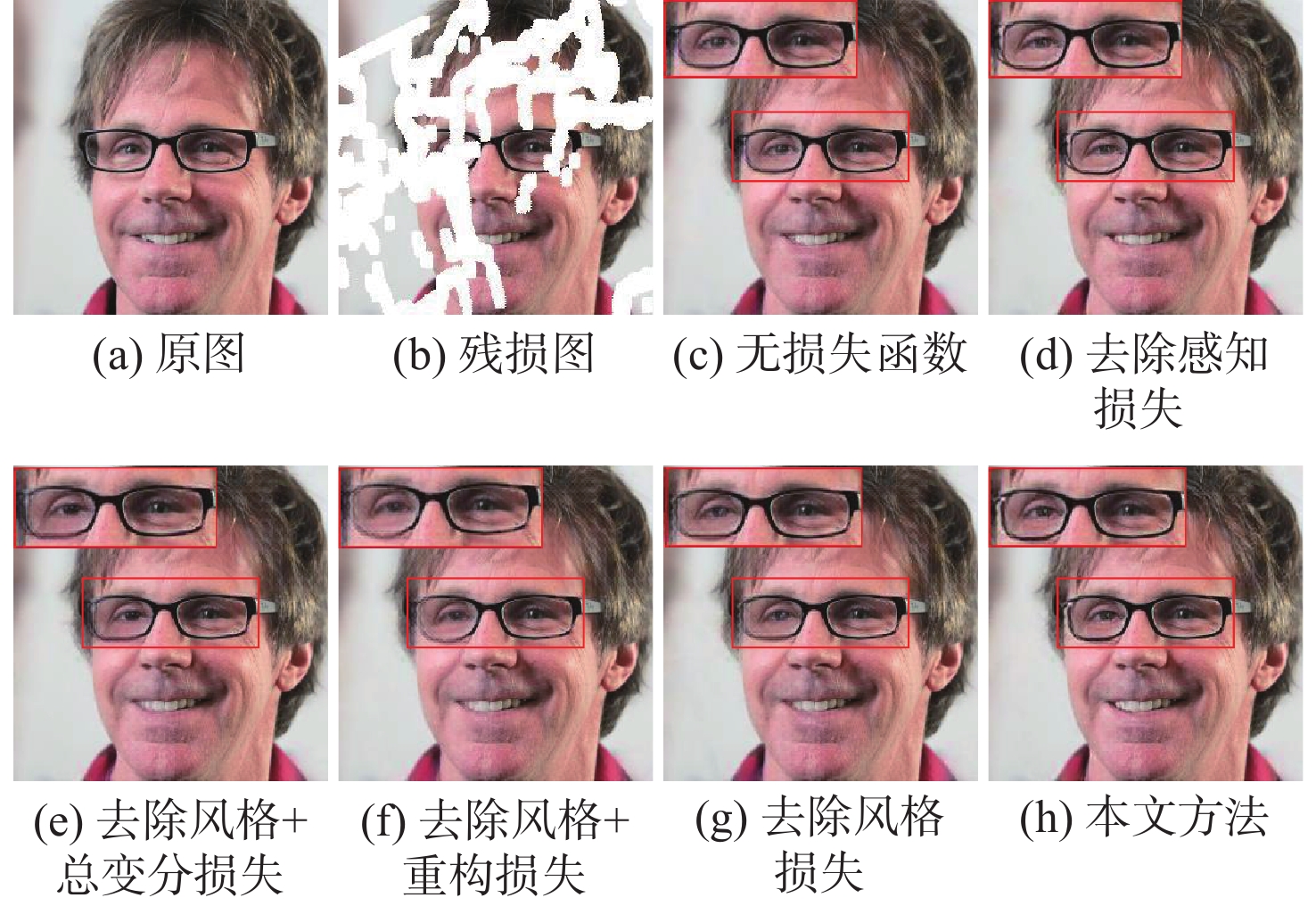
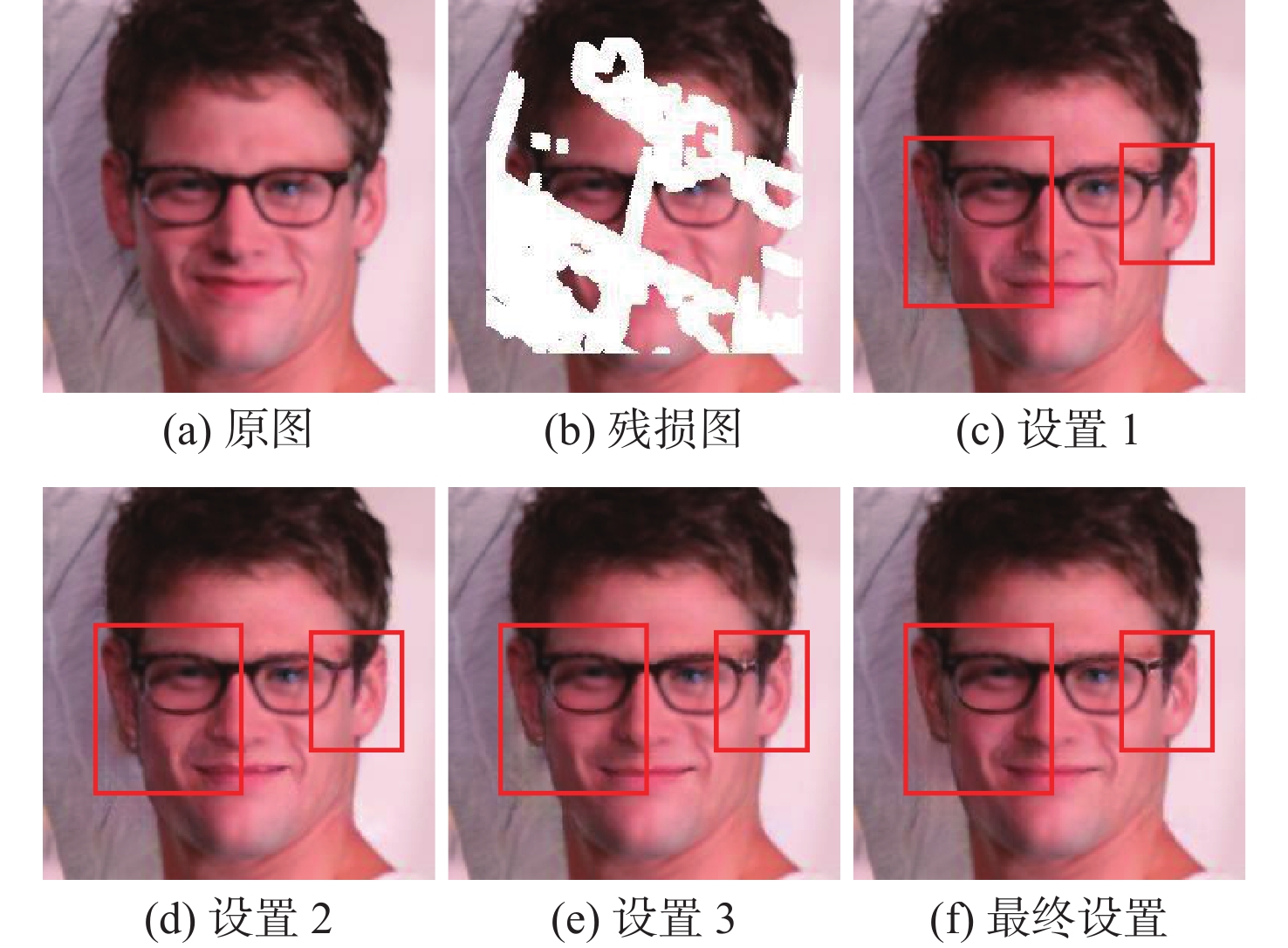
Current picture inpainting techniques use auxiliary structural information prediction to fill realistic patches, however erroneous priors can result in unrealistic structures and blurry textures. Meanwhile, existing methods only focus on the relationship between the original image and the inpainted image, and do not fully utilize the information of the damaged image. To address the above problems, an end-to-end transformer face image inpainting network is proposed, which utilizes semantic segmentation and edge texture information to guide the inpainting process. The main inpainting network includes one RGB inpainting branch and two auxiliary branches for semantic segmentation and edge texture. A set of large kernel convolutional context bottleneck (LKCCB) modules is designed in the encoder to increase the effective receptive field and better contextual reasoning. In order to capture distant contextual information, a nested dynamic auxiliary normalization multi-head attention (NDAN-MHA) module is proposed, which contains a dynamic auxiliary normalization (DAN) module that can dynamically integrate the structural features of the three branches to enrich semantic consistency. Furthermore, a contrastive regularization (CR) network is proposed to stabilize and improve the training of the network to generate more realistic inpainted images. The CelebA-HQ and FFHQ datasets were used for both qualitative and quantitative trials. The findings demonstrate that the suggested method performs better than the comparative methods in both subjective and objective measures and that it can reasonably restore huge, irregularly occluded face photos.

RGB-T crowd counting method with multi-scale perception and infrared feature enhancement
ZHENG Diwen, SHI Yangyu, XIE Chengjie, LU Shuhua
2026, 52(6): 2208-2218. doi: 10.13700/j.bh.1001-5965.2024.0250
Abstract:

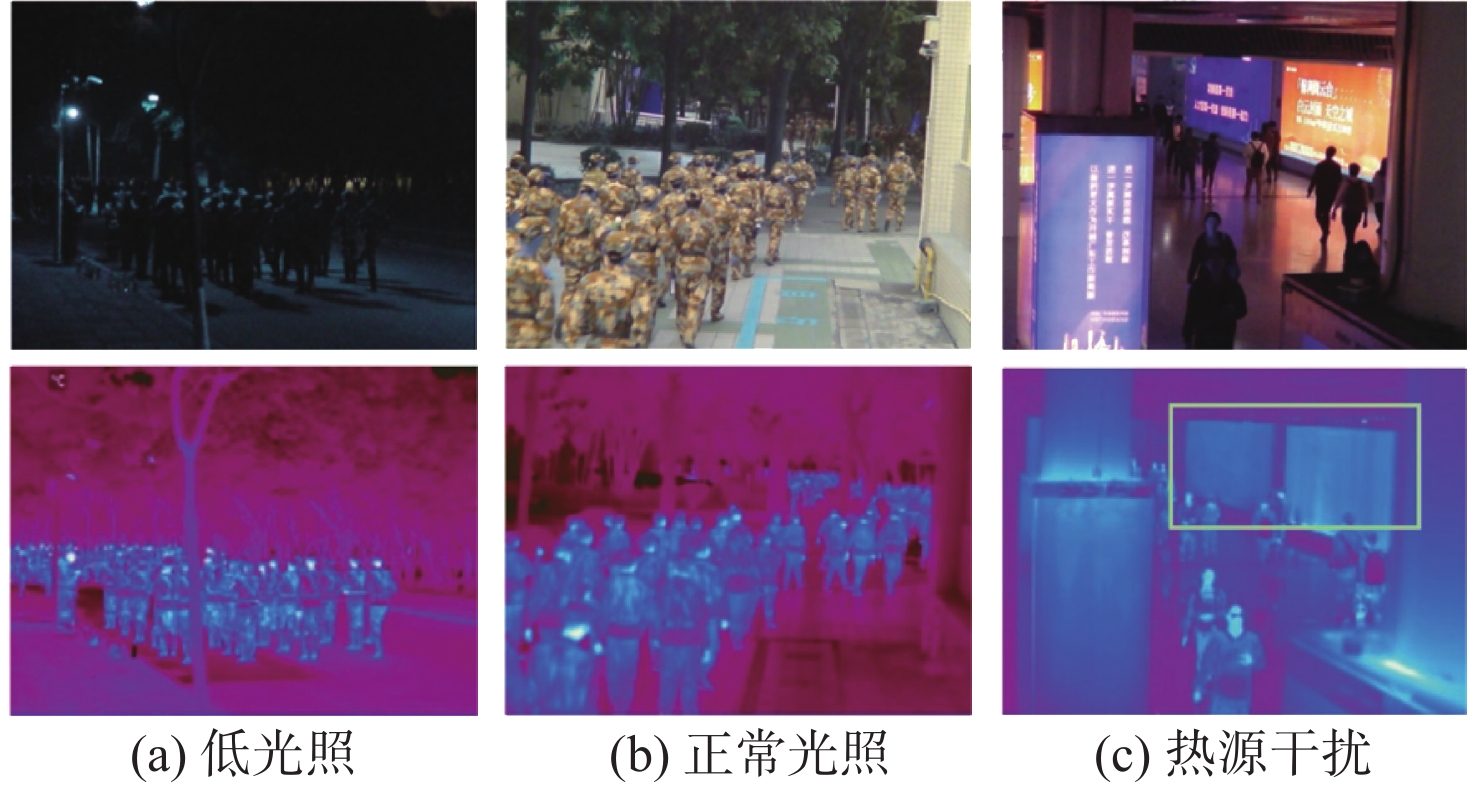
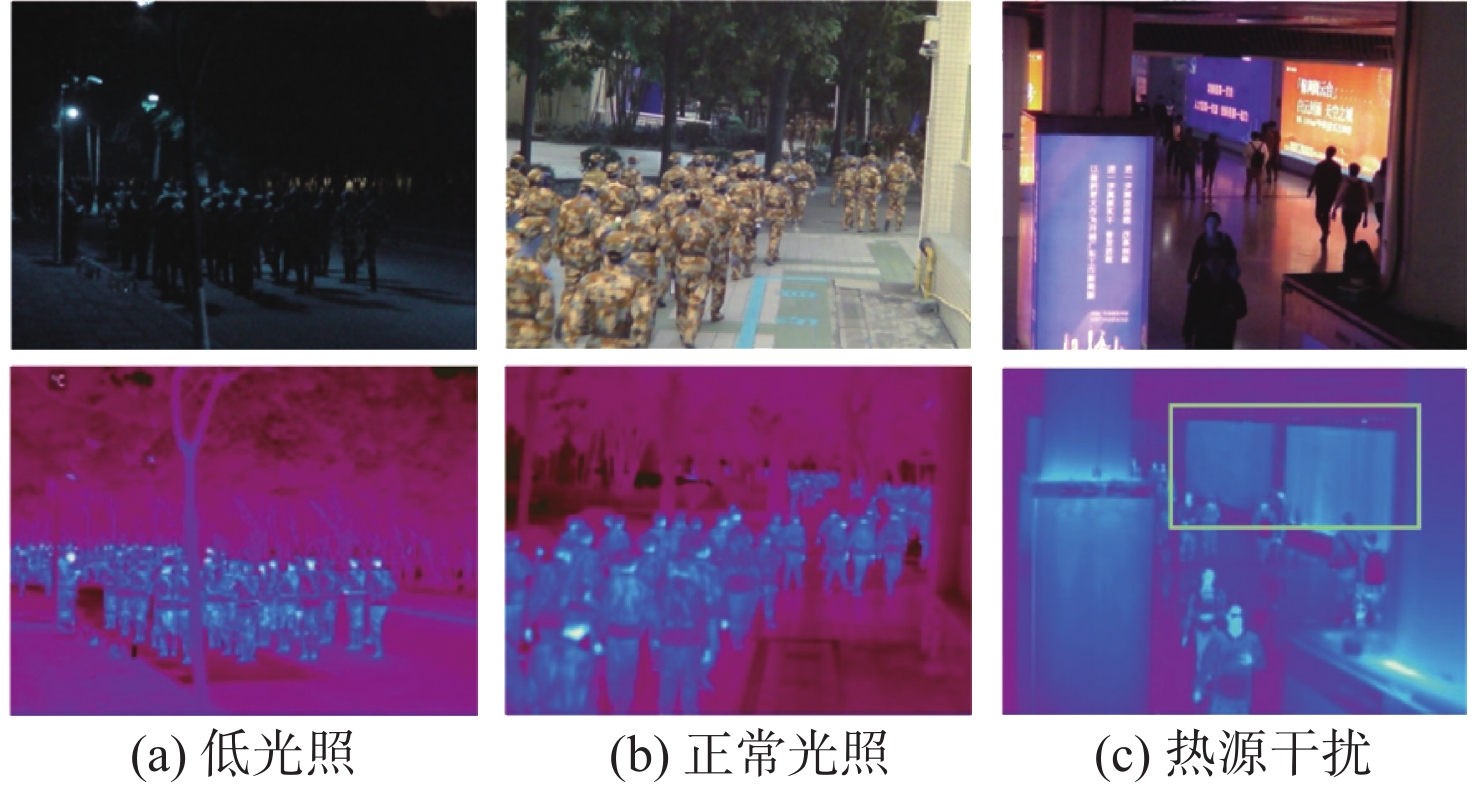
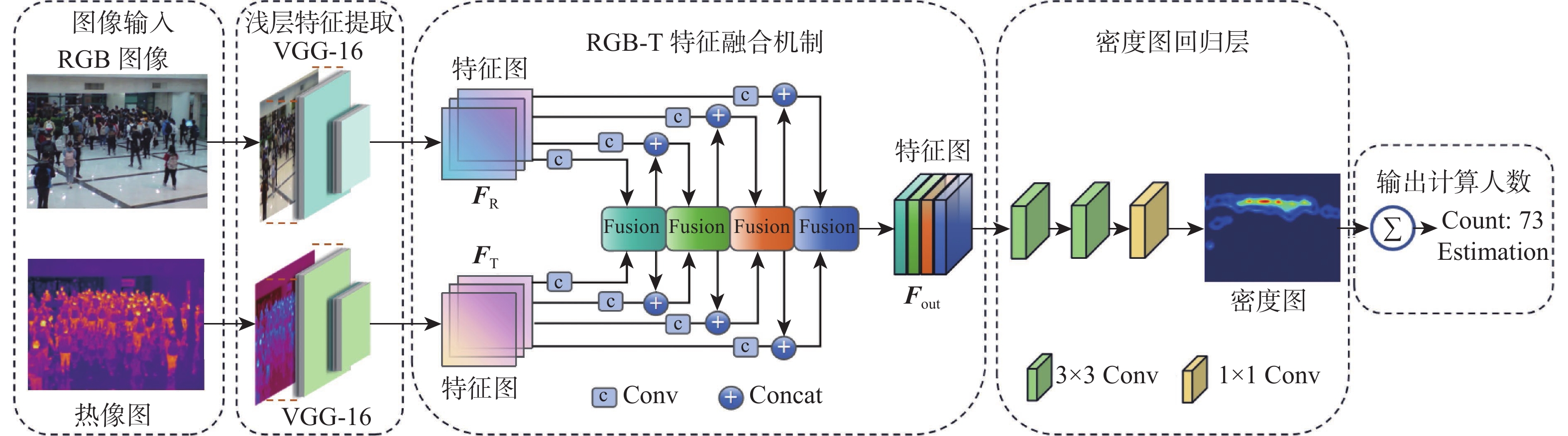
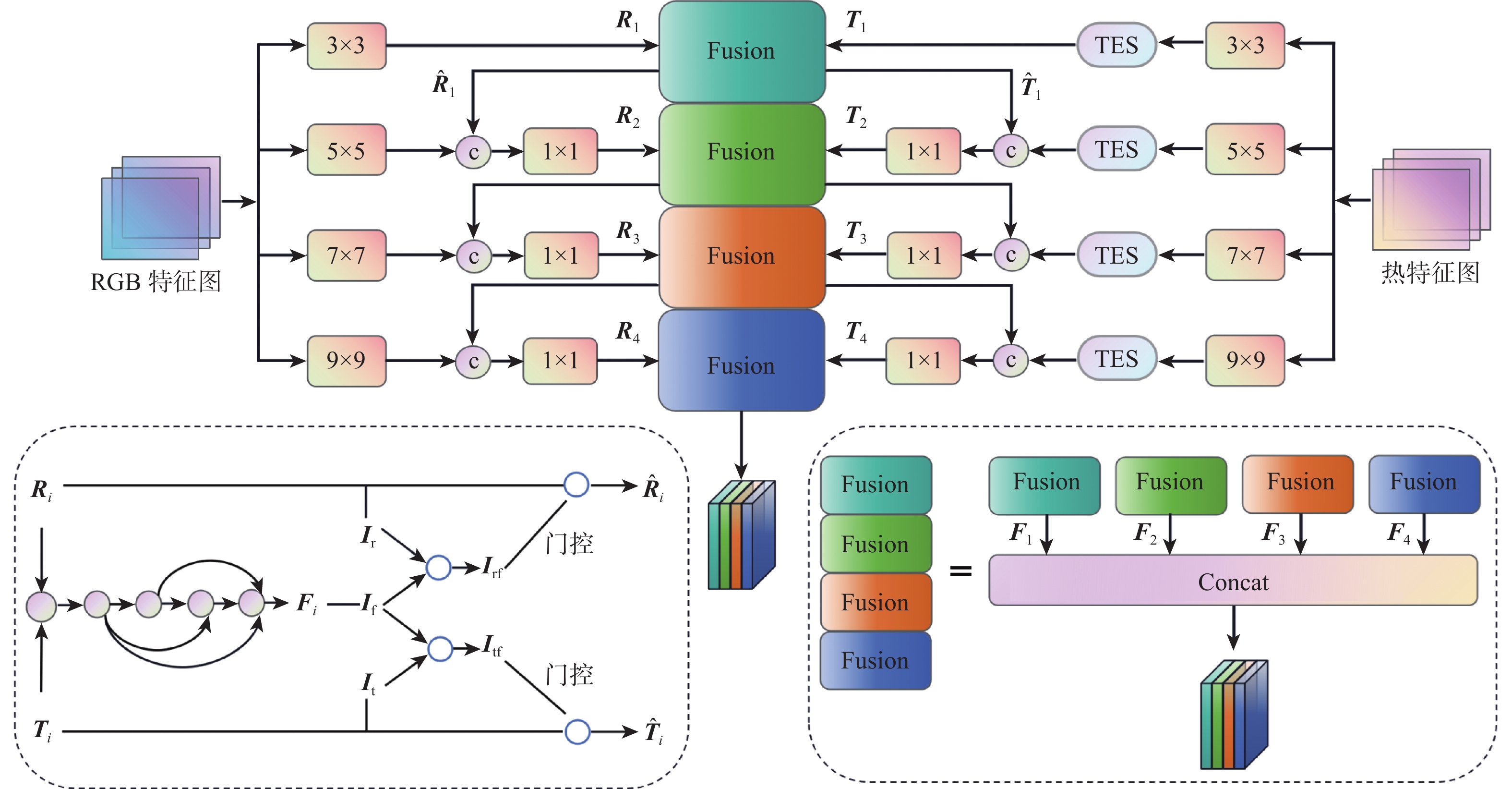
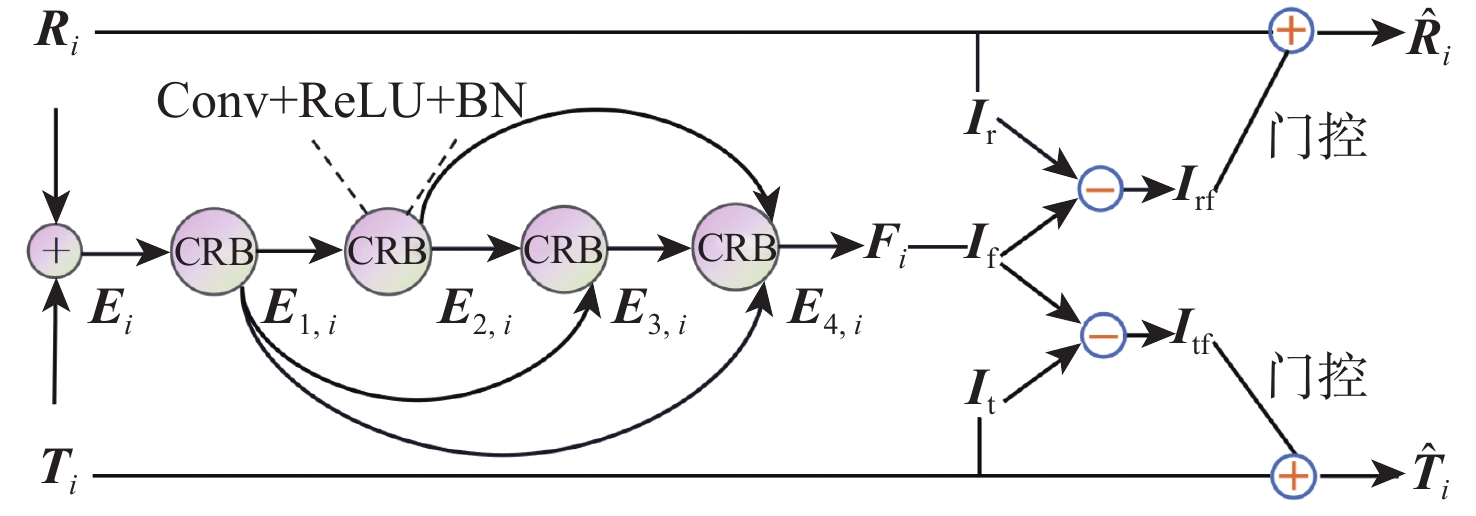
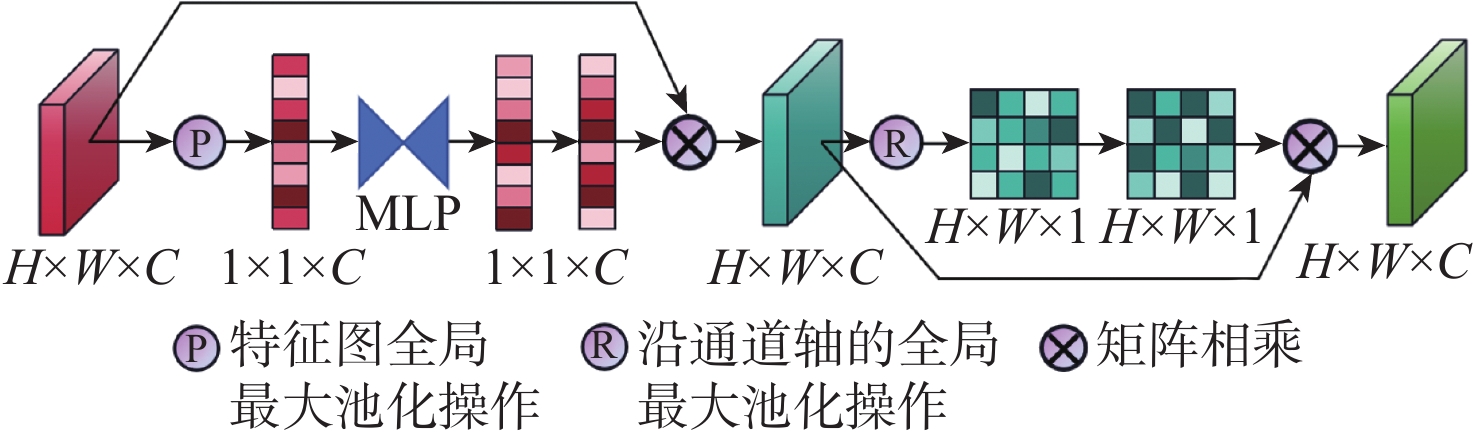
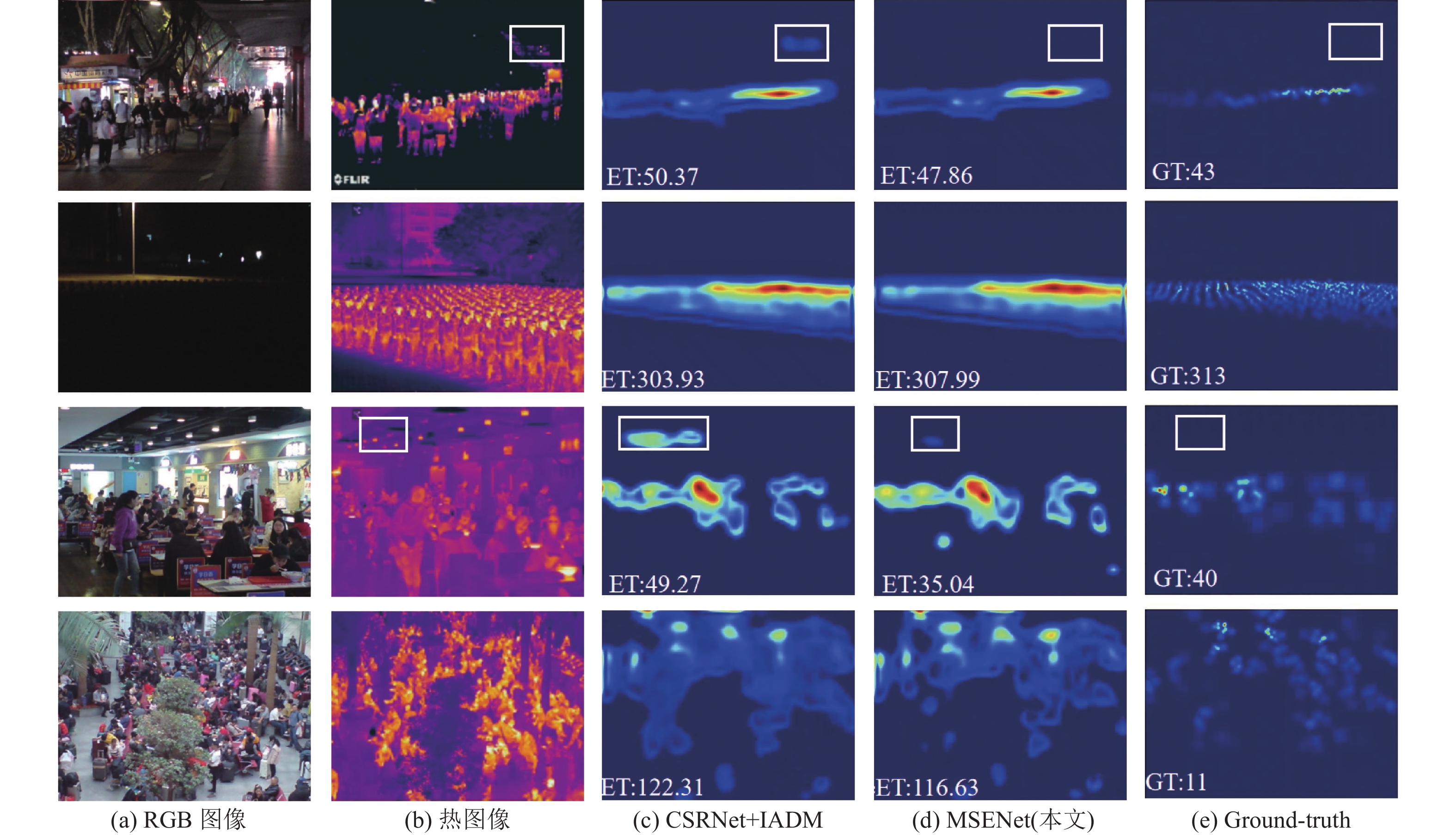
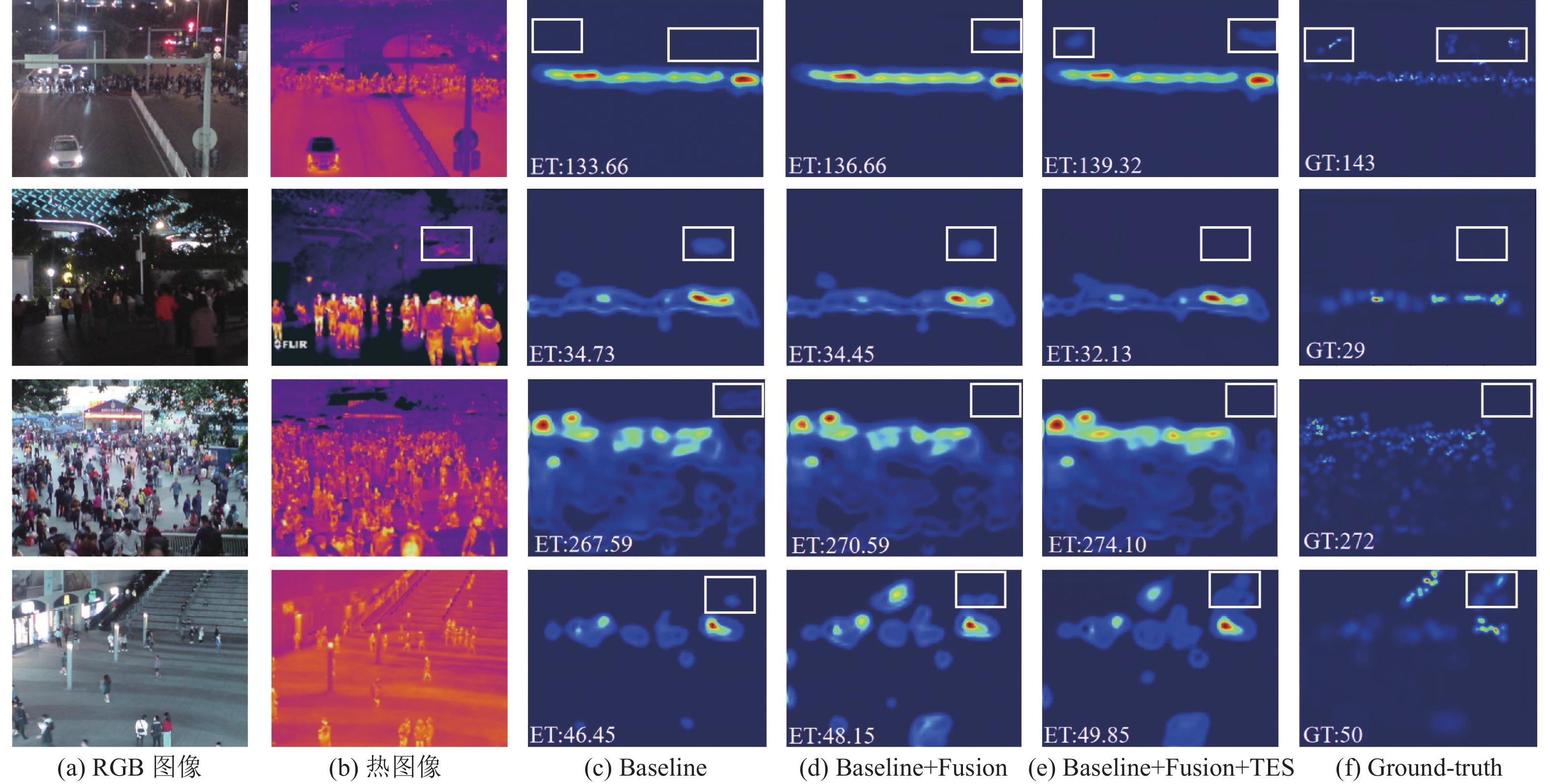
In order to overcome the difficulty of crowd counting in low light, RGB-T crowd counting attempts to create maps of crowd density utilizing complimentary information from visual and thermal imagery. However, existing RGB-T crowd counting methods face issues such as scale variation and background interference during cross-modality information fusion. To tackle these challenges, we propose an RGB-T crowd counting method based on multi-scale perception and infrared feature enhancement (MSENet). Our approach presents an RGB-T feature fusion mechanism (RTFM) that creates an infrared enhancement structure to completely capture crowd information in thermal images and uses a multi-branch structure for multi-scale feature extraction. Additionally, we utilize dense connections and information divergence mechanisms to transfer complementary features to each modality, achieving a reusable expression of complementary features and enhanced modality features. We evaluate our proposed method on the RGBT-CC dataset and the ShanghaiTechRGBD dataset through comparative experiments. The results demonstrate that our method outperforms existing state-of-the-art approaches on the RGBT-CC dataset, exhibiting good accuracy, robustness and good generalization.

A multimodal sentiment analysis based on audio and video features optimization and cross-modal Transformer
LIN Yishan, ZUO Jing, LU Shuhua
2026, 52(6): 2219-2228. doi: 10.13700/j.bh.1001-5965.2024.0247
Abstract:

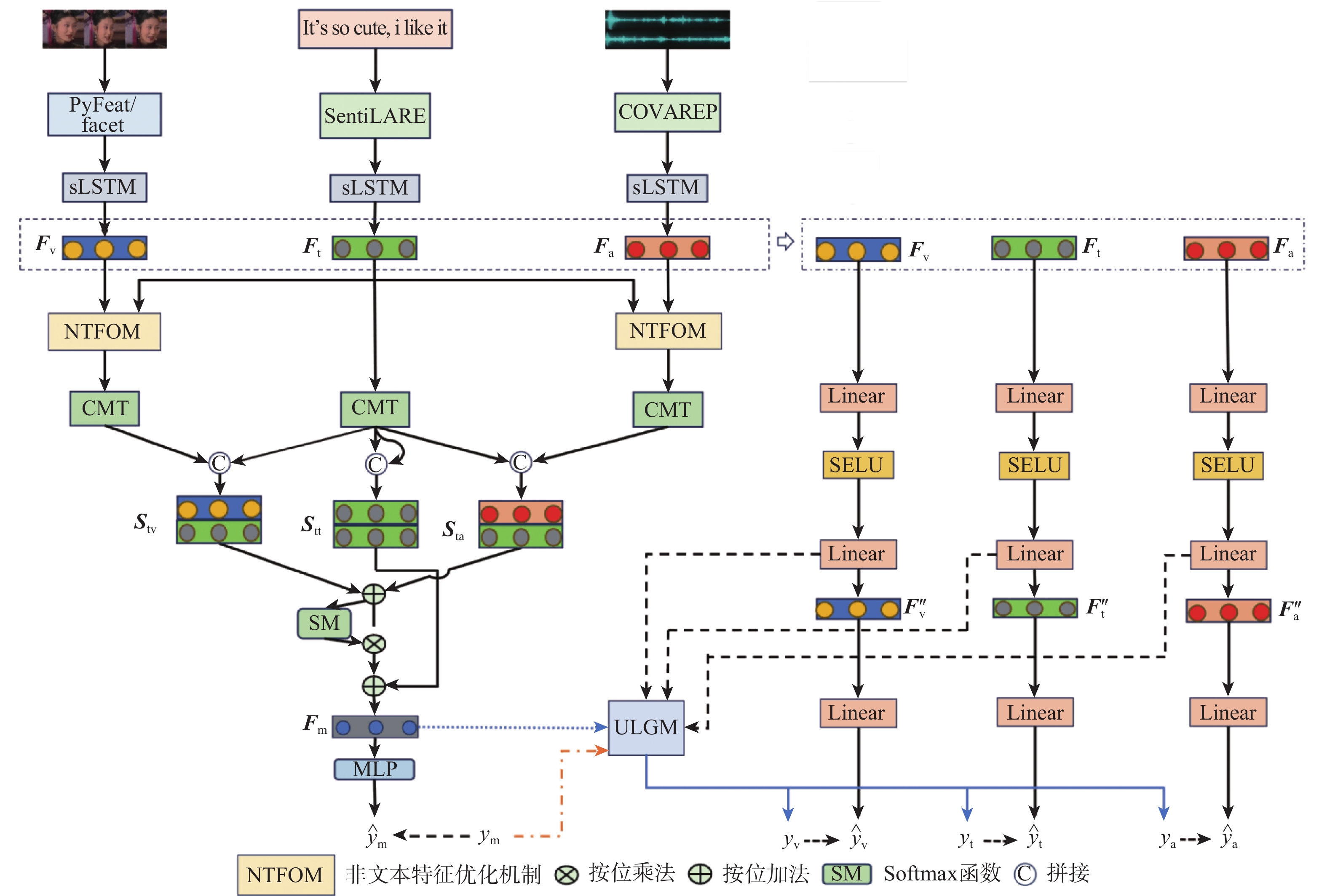
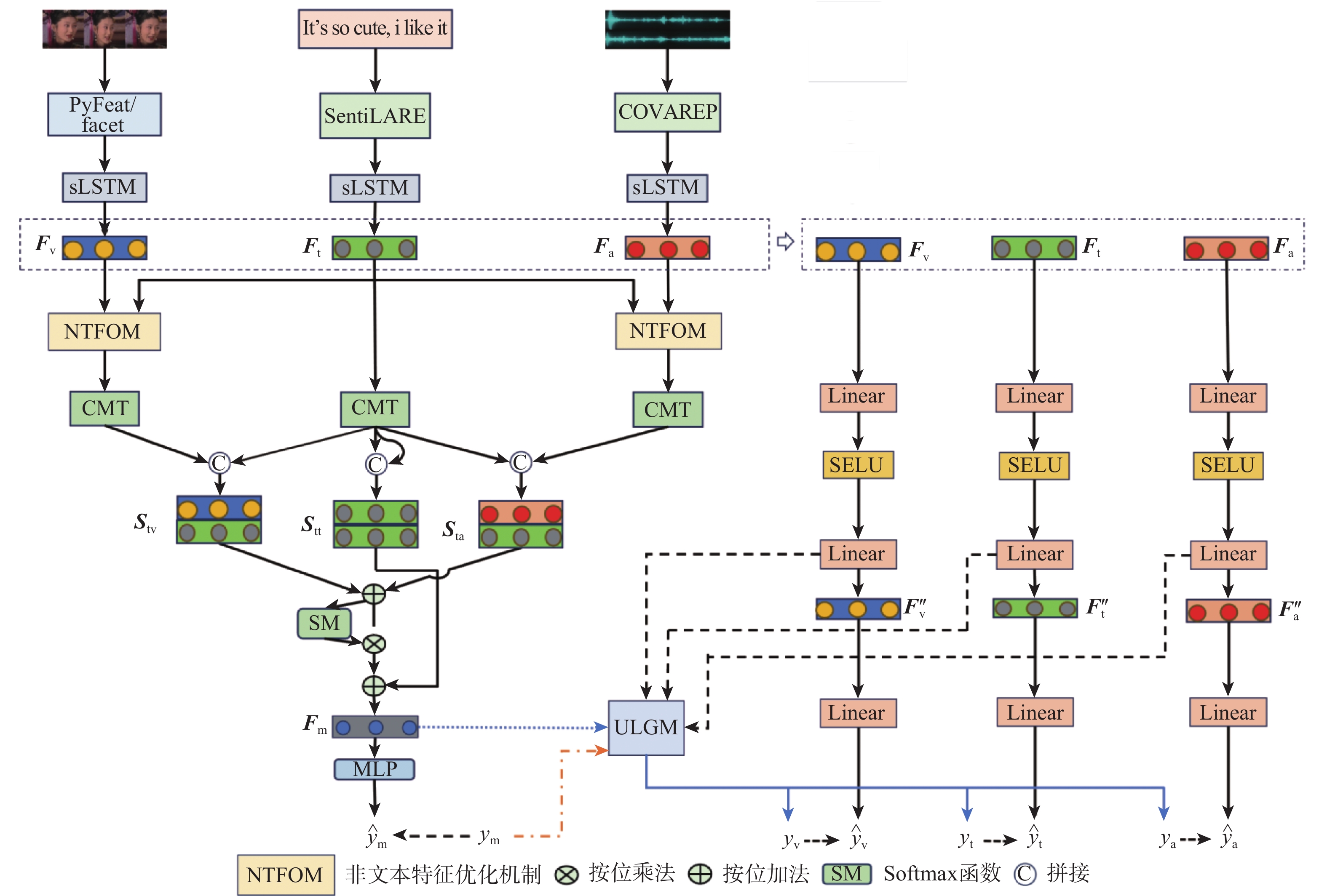
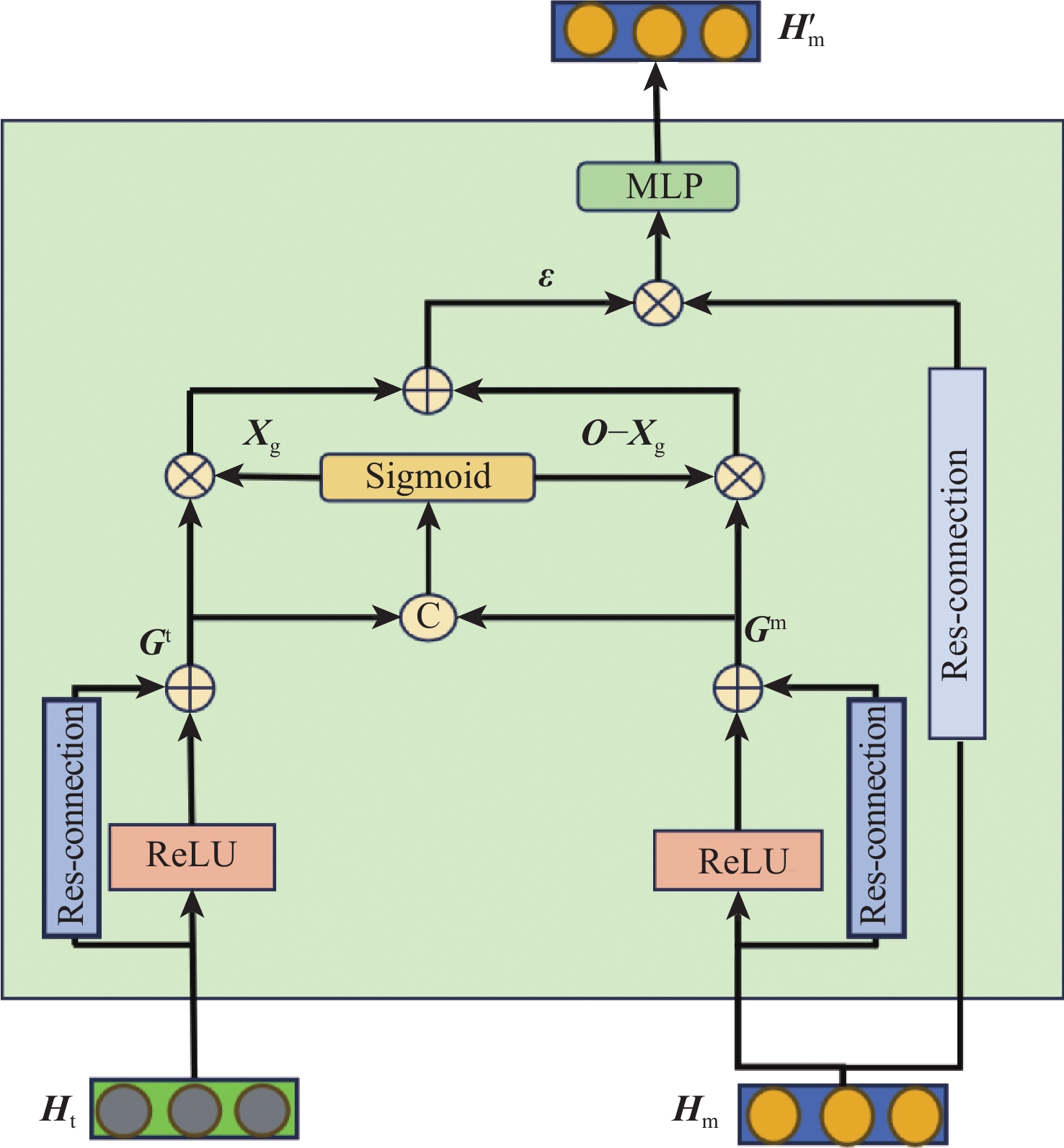
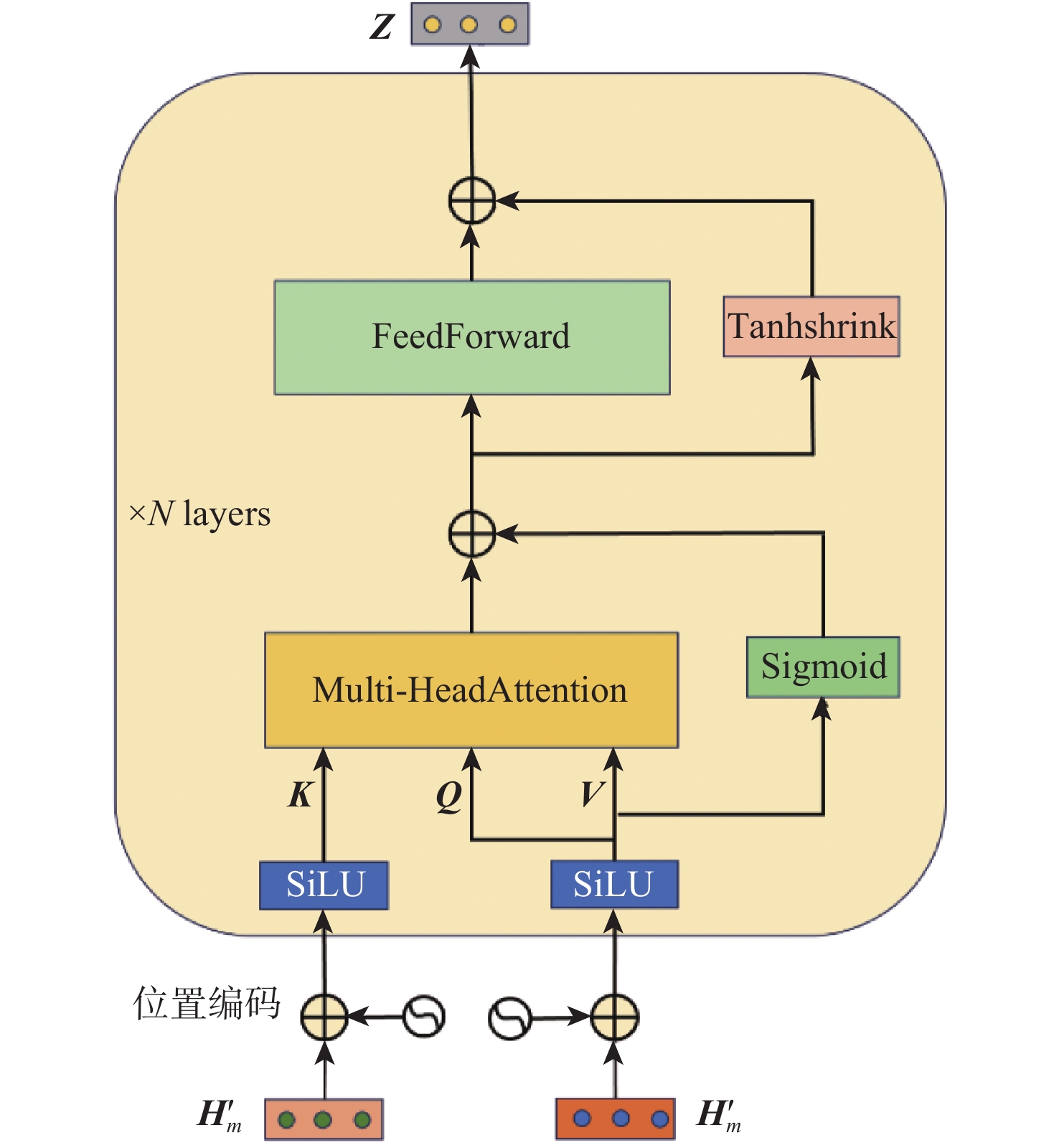
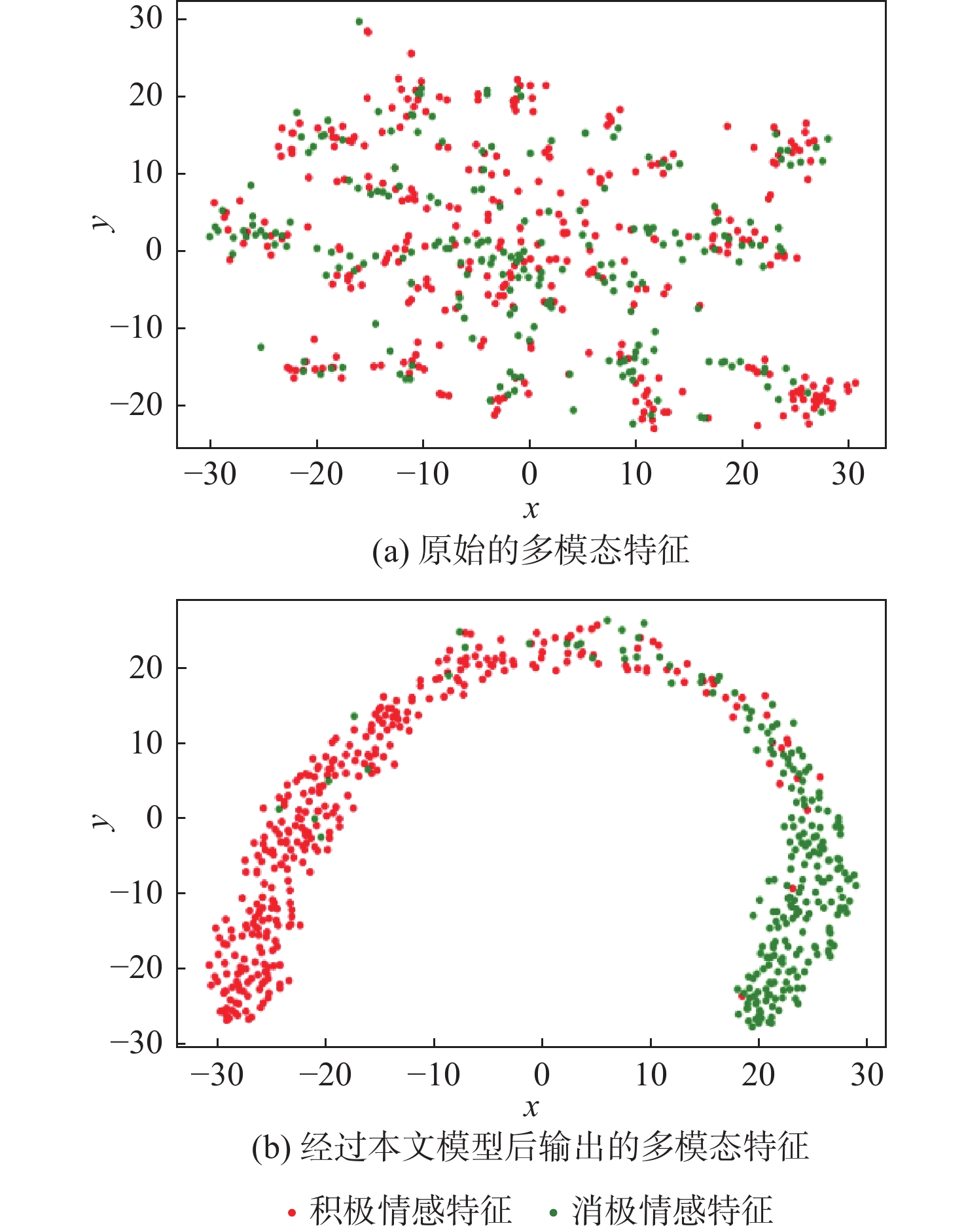
To solve problems including low-quality audio and video modal features and inadequate interaction between various modalities, a multimodal sentiment analysis approach based on cross-modal Transformer (CMT) and audio and video feature optimization is suggested. Firstly, we propose a audio and video features optimizing mechanism (AVFOM), which increases the density of sentiment information in audio and video features through synergistic interaction with textual features, thereby improving the quality of audio and video features. Secondly, in order to accomplish full interaction between text-audio and text-video modalities and learn consistent knowledge across various modalities, we construct a cross-modal Transformer structure with text as the dominant modality. Additionally, a label generation method based on the self-supervised learning strategy is introduced to perform single-modality sentiment prediction tasks, learning the characteristics of each modality separately. The proposed method is extensively validated and tested on two public datasets, CMU-MOSI and CMU-MOSEI, which surpass many currently advanced methods in terms of performance and effectively improve the accuracy of multimodal sentiment analysis.