| Citation: | Zhan X J,Wang X L. A high-precision starlight refraction celestial navigation observation method[J]. Journal of Beijing University of Aeronautics and Astronautics,2026,52(10):3627-3634 (in Chinese)

|
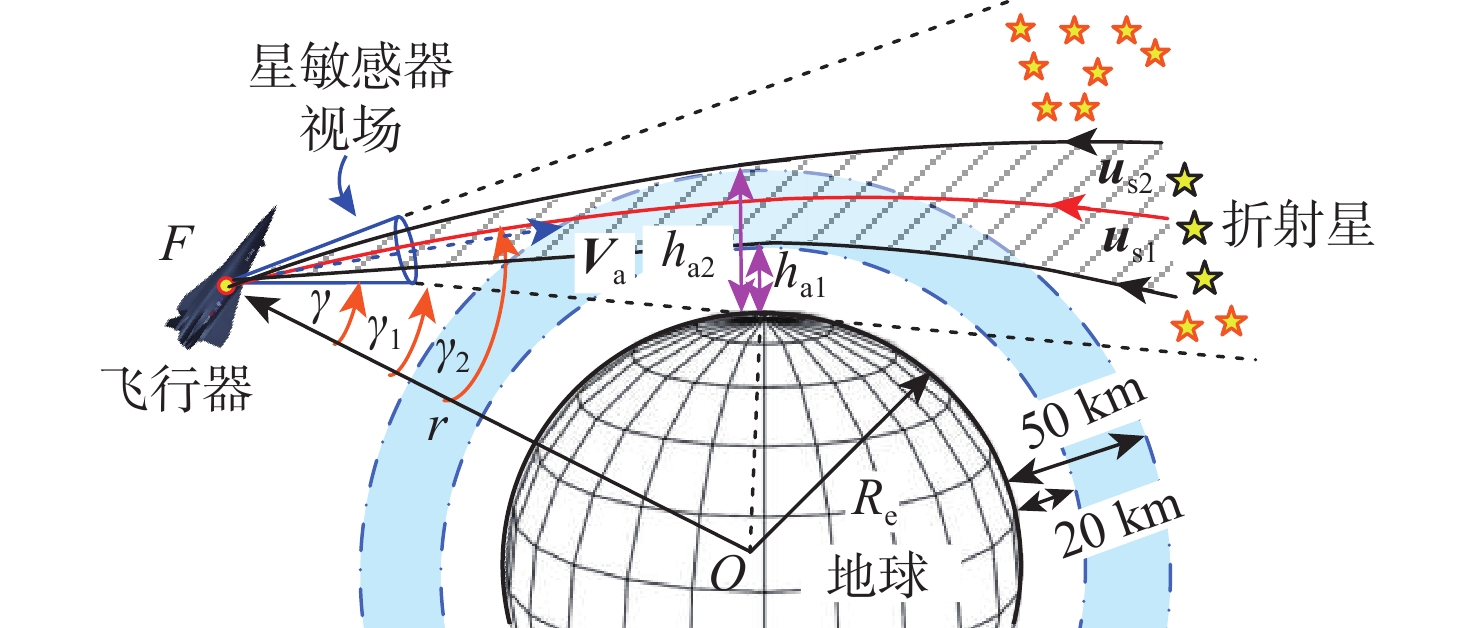
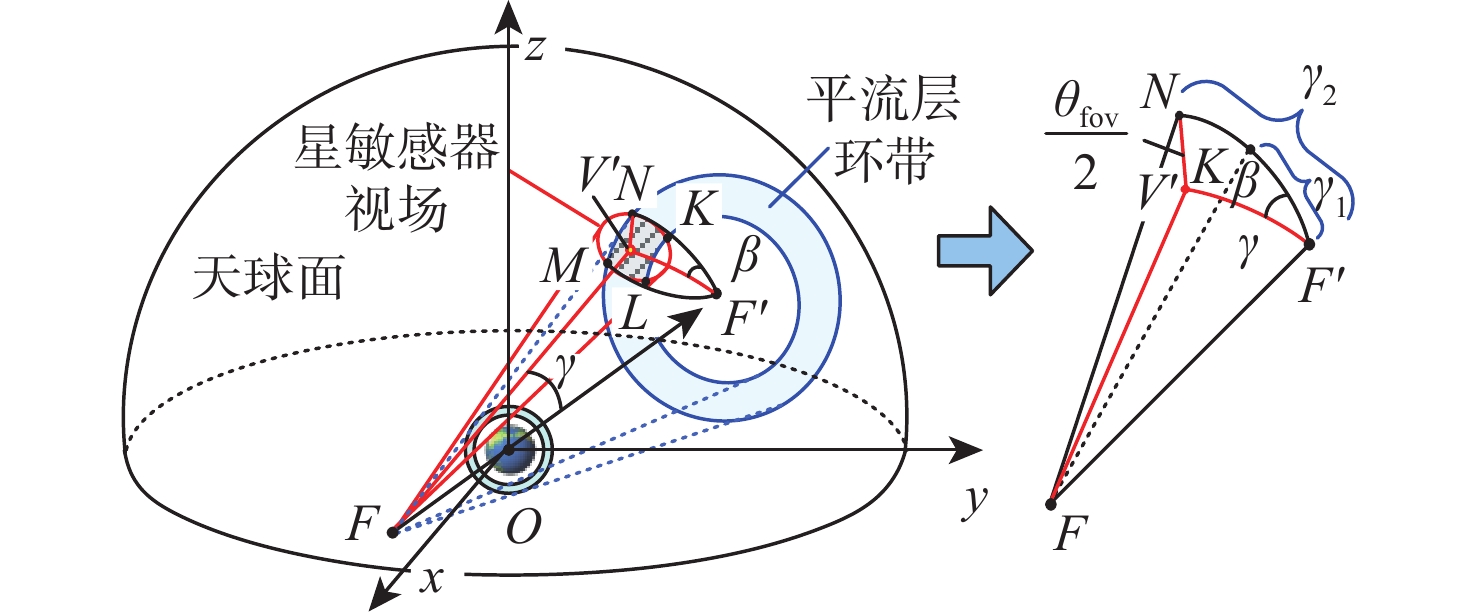
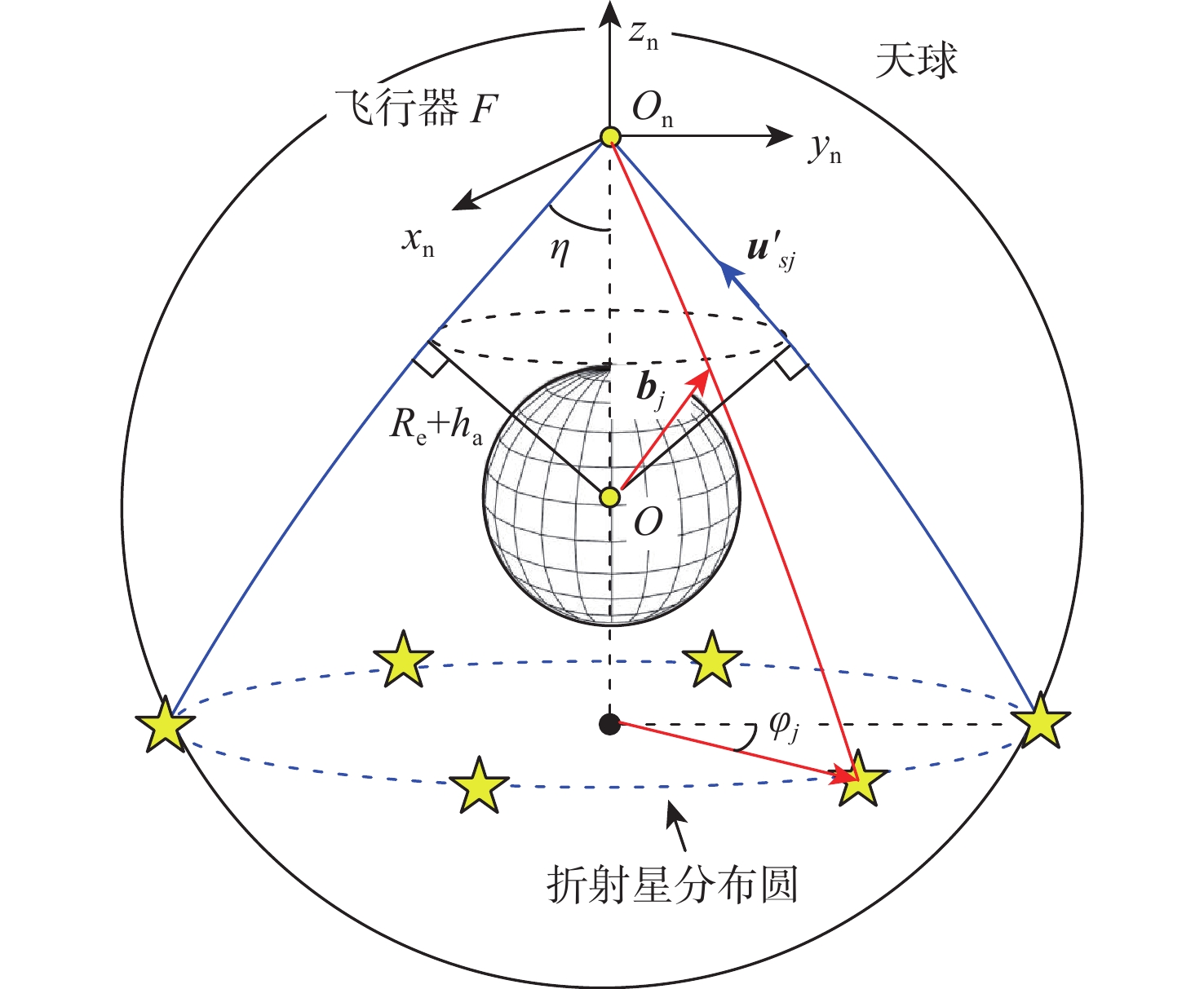
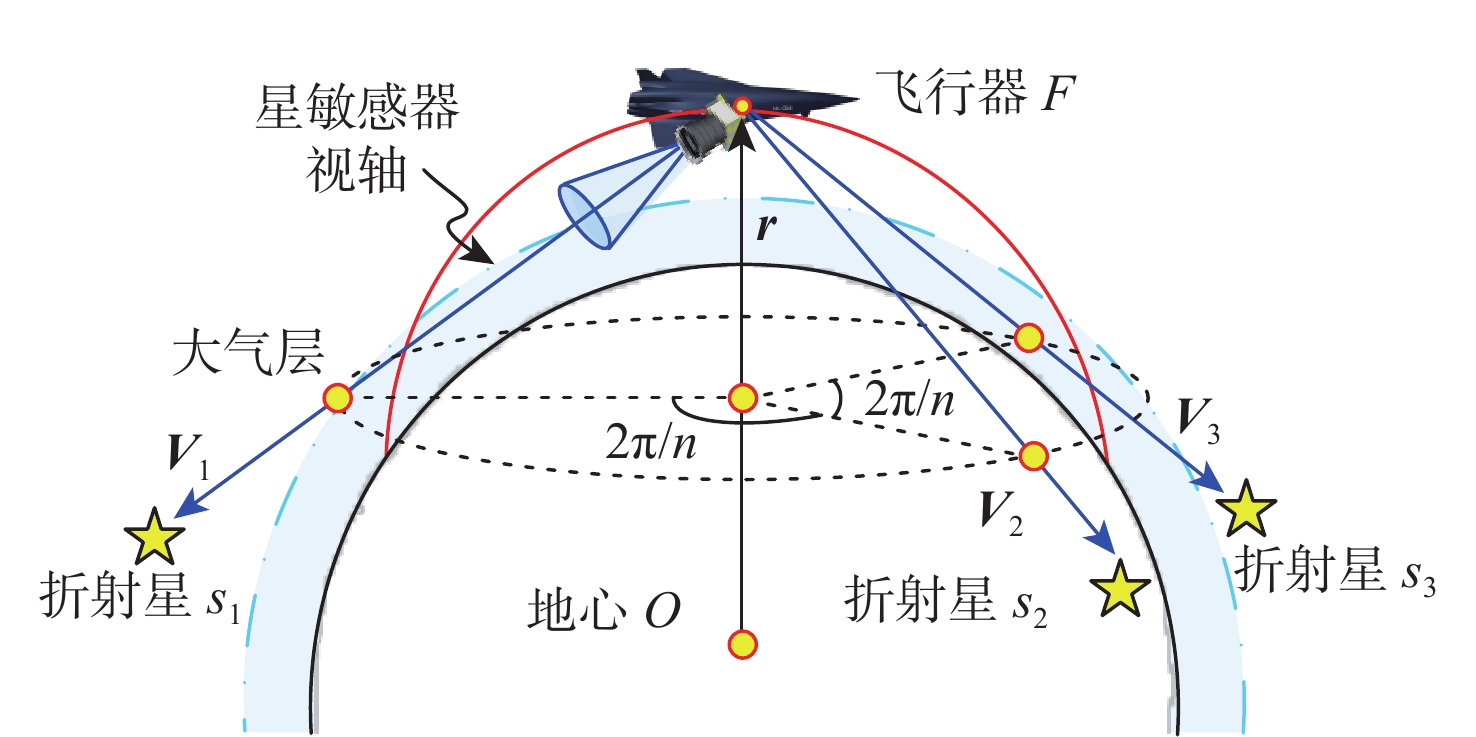
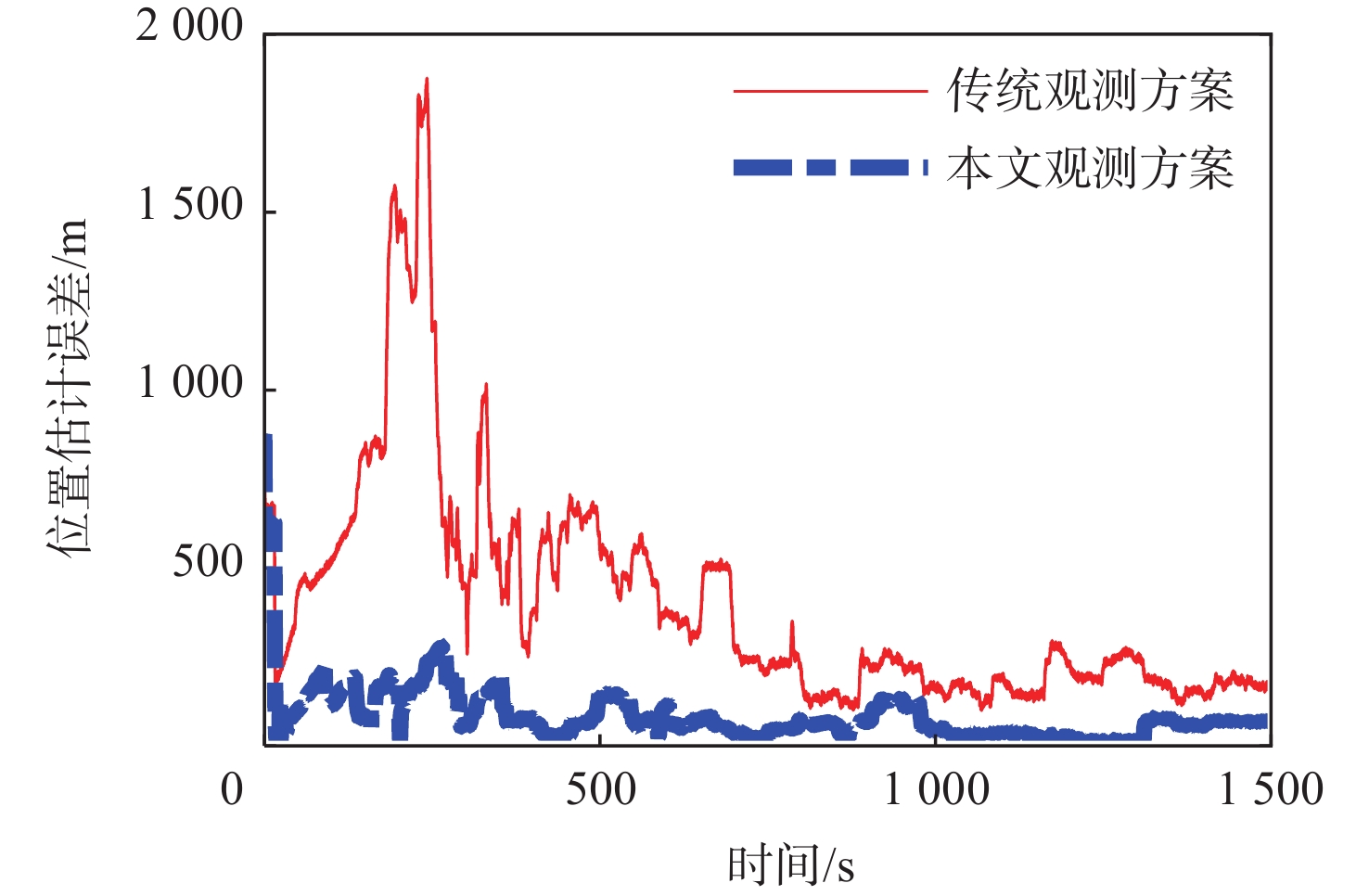
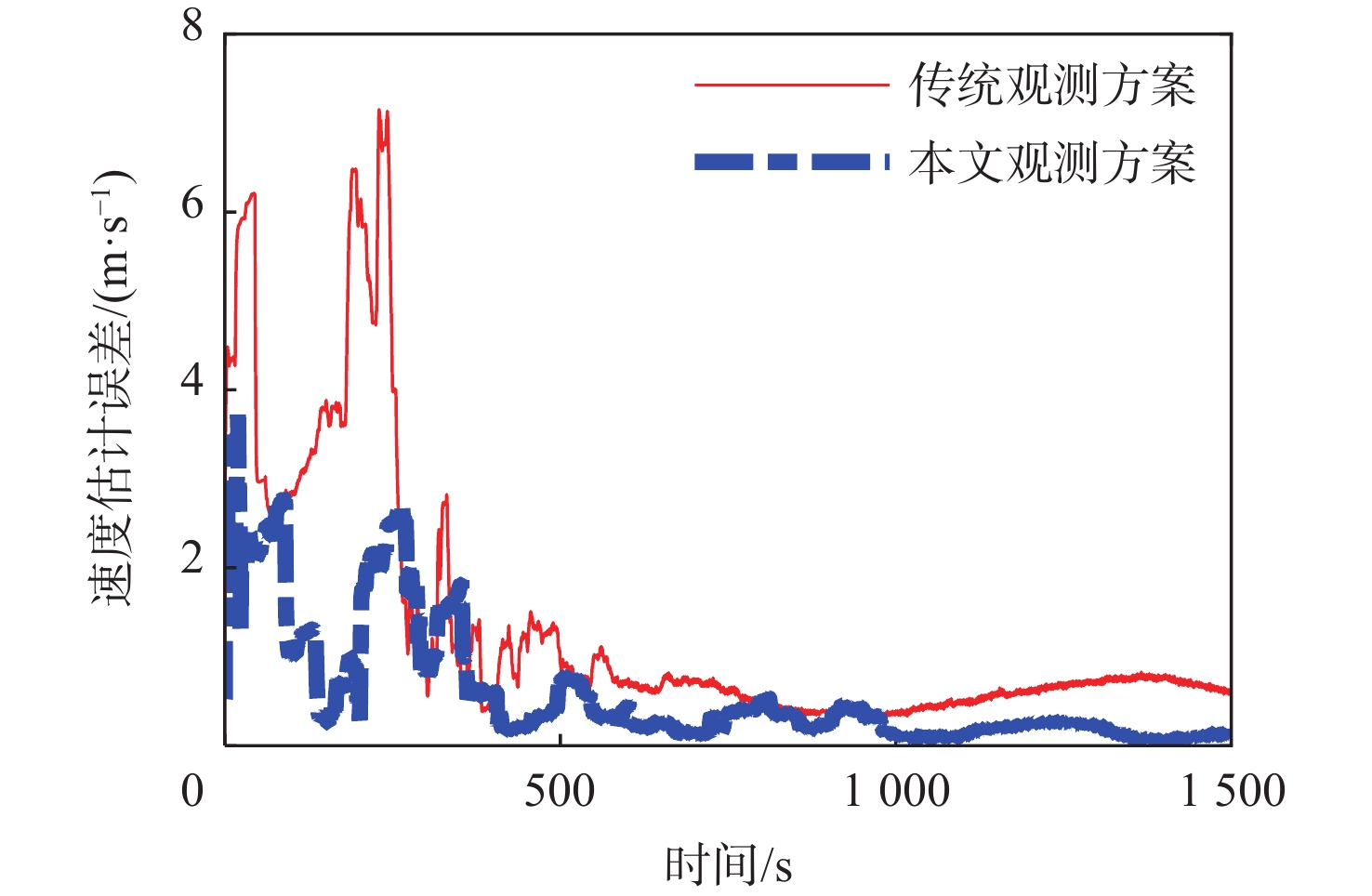
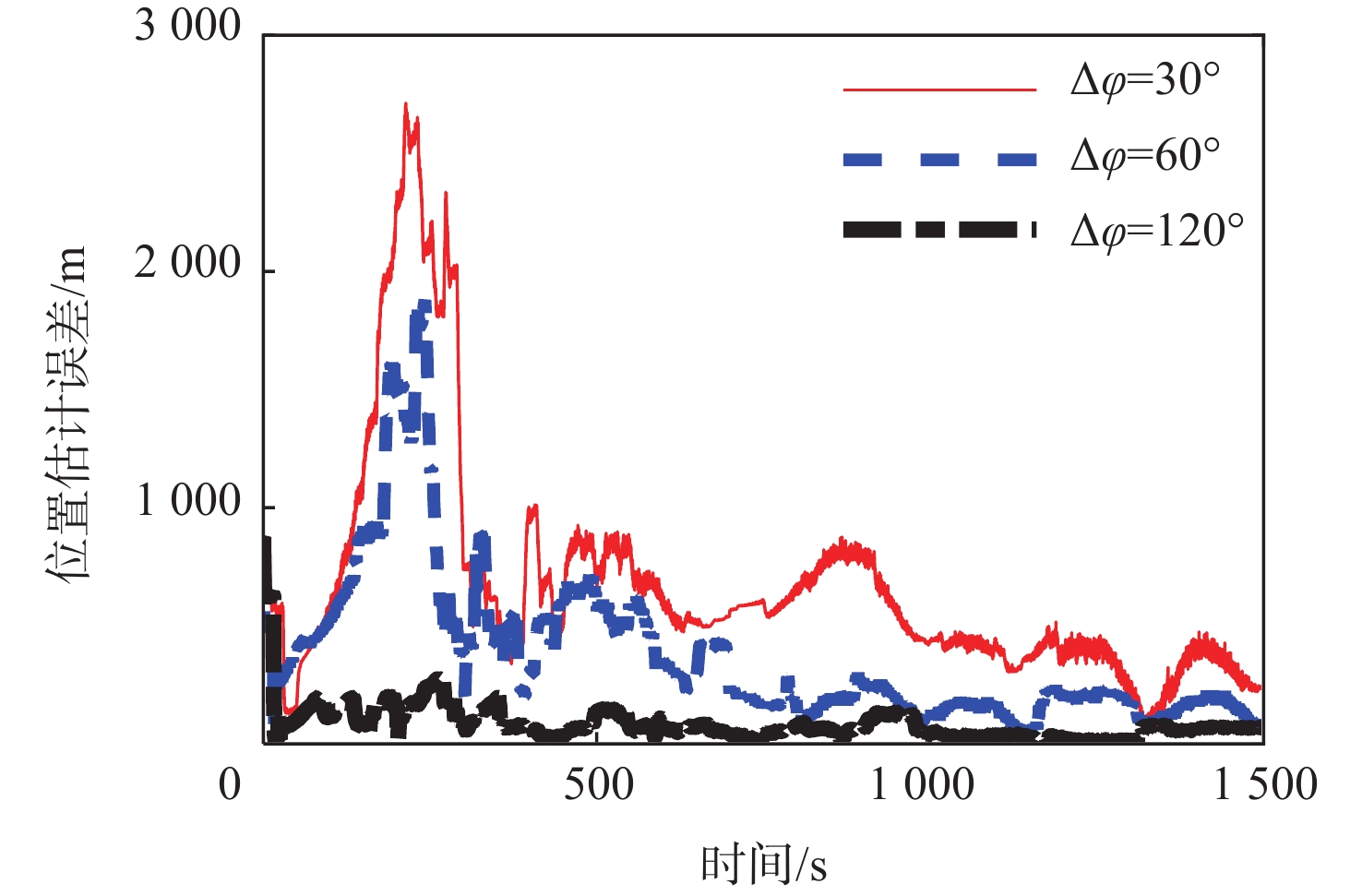
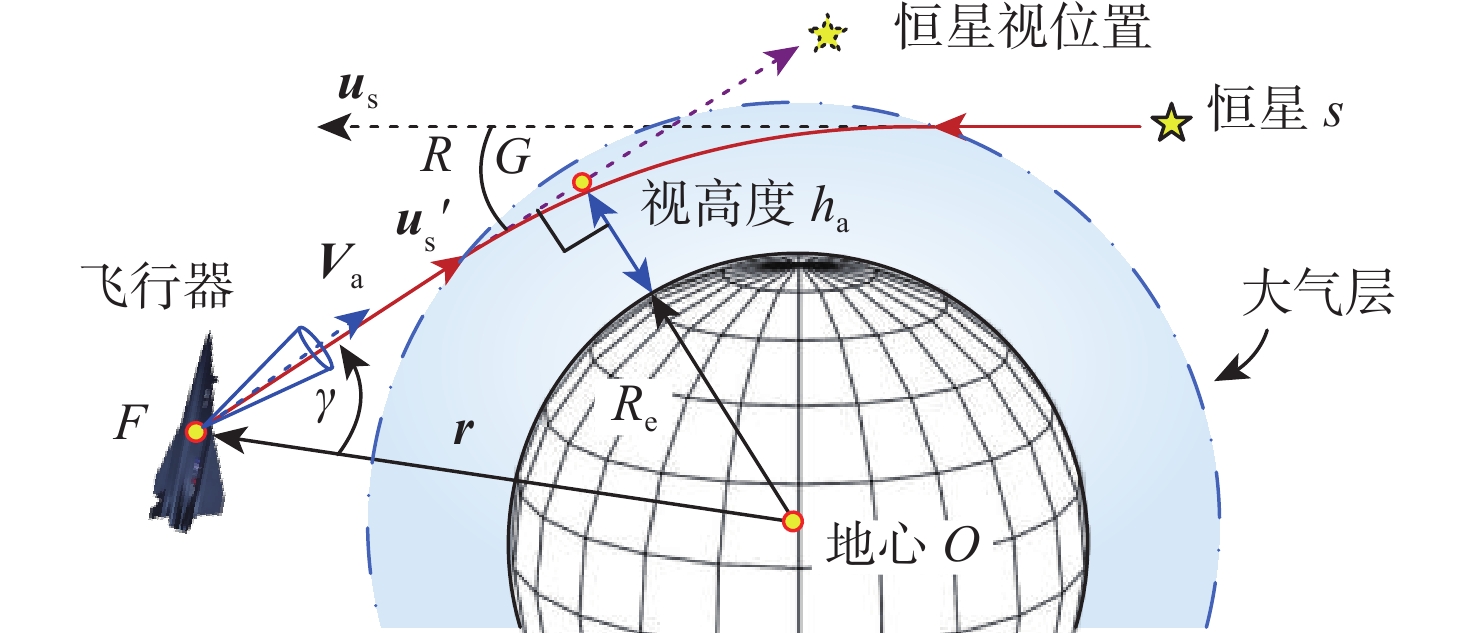
The traditional fixed optical axis observation approach reduces positioning accuracy and reliability in the starlight refraction indirect horizon-sensing positioning method by producing a small number of refracted stars with an uneven distribution. Therefore, a high-precision starlight refraction celestial navigation observation method is proposed. Based on the geometric relationship between the stratospheric refraction band and the star sensor’s field of view (FOV), a relation model is established between the FOV coverage area of the refraction band and the star sensor’s elevation angle. By maximizing the FOV coverage area and combining the flight parameters, the optimal elevation angle is determined to increase the observable refracted stars. Additionally, a quantitative relationship model is developed between positioning precision and the spatial arrangement of refracted stars. Based on the minimum position dilution of precision (PDOP) criterion, the optimal spatial geometric configuration of refracted stars is derived, thereby obtaining the optimal azimuth angle of the optical axis. This enables continuous and uniform observation for refracted starlight, so as to improve the positioning accuracy of celestial navigation. Simulation results demonstrate that compared with the conventional method, the proposed method achieves 75.7% and 66.7% improvements in position and velocity estimation accuracy, respectively.

| [1] |
魏昊, 蔡光斌, 凡永华, 等. 高超声速飞行器再入滑翔段在线制导[J]. 北京航空航天大学学报, 2025, 51(1): 183-192.
Wei H, Cai G B, Fan Y H, et al. Online guidance for hypersonic vehicles in glide-reentry segment[J]. Journal of Beijing University of Aeronautics and Astronautics, 2025, 51(1): 183-192(in Chinese).
|
| [2] |
Song G X, Yang Y Q, Ning X L, et al. A new SINS/RCNS integrated navigation method based on star pixel coordinates[J]. Science China Information Sciences, 2023, 66(9): 199201.
|
| [3] |
王鼎杰, 吕汉峰, 吴杰, 等. 星光折射辅助惯性/天文紧组合高精度导航方法[J]. 中国惯性技术学报, 2020, 28(1): 74-81.
Wang D J, Lv H F, Wu J, et al. Stellar refraction-aided SINS/CNS tightly-integrated navigation method[J]. Journal of Chinese Inertial Technology, 2020, 28(1): 74-81(in Chinese).
|
| [4] |
Ning X L, Sun X H, Fang J C, et al. Satellite stellar refraction navigation using star pixel coordinates[J]. Navigation, 2019, 66(1): 129-138.
|
| [5] |
Zhu J F, Wang X L, Li H N, et al. A high-accuracy SINS/CNS integrated navigation scheme based on overall optimal correction[J]. Journal of Navigation, 2018, 71(6): 1567-1588.
|
| [6] |
Zhao Y, Wang D J, Zhang H B, et al. A novel tightly-coupled SINS/RCNS integrated navigation method considering atmospheric density error[J]. IEEE Transactions on Instrumentation and Measurement, 2023, 72: 8503011.
|
| [7] |
Ning X L, Sun X H, Chao W. Integration of star pixel coordinates and their time differential measurement in satellite stellar refraction navigation[J]. Acta Astronautica, 2019, 159: 286-293.
|
| [8] |
Yang H, Wang D J, Zhang H B, et al. Autonomous strapdown inertial/refractive celestial integrated navigation using dual-band stellar refraction observations[J]. IEEE Transactions on Aerospace and Electronic Systems, 2025, 62: 2900-2912.
|
| [9] |
Zhan X J, Wang X L, Hu X D, et al. A new method for high-precision starlight refraction indirect horizon-sensing positioning of atmospheric flight vehicles[J]. Advances in Space Research, 2024, 73(8): 3884-3895.
|
| [10] |
宋峰, 张奕群. 星光大气折射观测导航方法可观性研究[J]. 现代防御技术, 2012, 40(2): 65-70.
Song F, Zhang Y Q. Research on observability of navigation approach using starlight refraction measurements[J]. Modern Defence Technology, 2012, 40(2): 65-70(in Chinese).
|
| [11] |
宁晓琳, 王龙华, 白鑫贝, 等. 一种星光折射卫星自主导航系统方案设计[J]. 宇航学报, 2012, 33(11): 1601-1610.
Ning X L, Wang L H, Bai X B, et al. A scheme design of satellite autonomous navigation system based on stellar refraction[J]. Journal of Astronautics, 2012, 33(11): 1601-1610(in Chinese).
|
| [12] |
Qian H M, Sun L, Cai J N, et al. A starlight refraction scheme with single star sensor used in autonomous satellite navigation system[J]. Acta Astronautica, 2014, 96: 45-52.
|
| [13] |
Wang H Y, Gao Z Q, Wang T F, et al. Study on command attitude law for refracted starlight observation in SINS/RCNS integrated navigation[J]. Advances in Space Research, 2018, 62(3): 721-731.
|
| [14] |
魏诗卉, 杨春伟, 刘炳琪, 等. 星光折射连续修正方法及制导规划[J]. 航空学报, 2020, 41(8): 54-63.
Wei S H, Yang C W, Liu B Q, et al. Stellar refraction: continuous correction and guidance planning[J]. Acta Aeronauticaet Astronautica Sinica, 2020, 41(8): 54-63(in Chinese).
|
| [15] |
Ning X L, Wang F, Fang J C. Implicit UKF and its observability analysis of satellite stellar refraction navigation system[J]. Aerospace Science and Technology, 2016, 54: 49-58.
|
Figures(13) / Tables(3)
Copyright © Journal of Beijing University of Aeronautics and Astronautics
Address: Editorial Department of Journal of Beijing University of Aeronautics and Astronautics, 37 Xueyuan Road, Haidian District, Beijing Post Code: 100191 Email: jbuaa@buaa.edu.cn
Supported by:
Beijing Renhe Information Technology Co., Ltd.






 DownLoad: