| Citation: | Xia Q Y,Liu M,Wu H,et al. Triggering and detection of pilot-induced oscillations in boundary avoidance-tracking tasks[J]. Journal of Beijing University of Aeronautics and Astronautics,2026,52(8):2876-2886 (in Chinese)

|
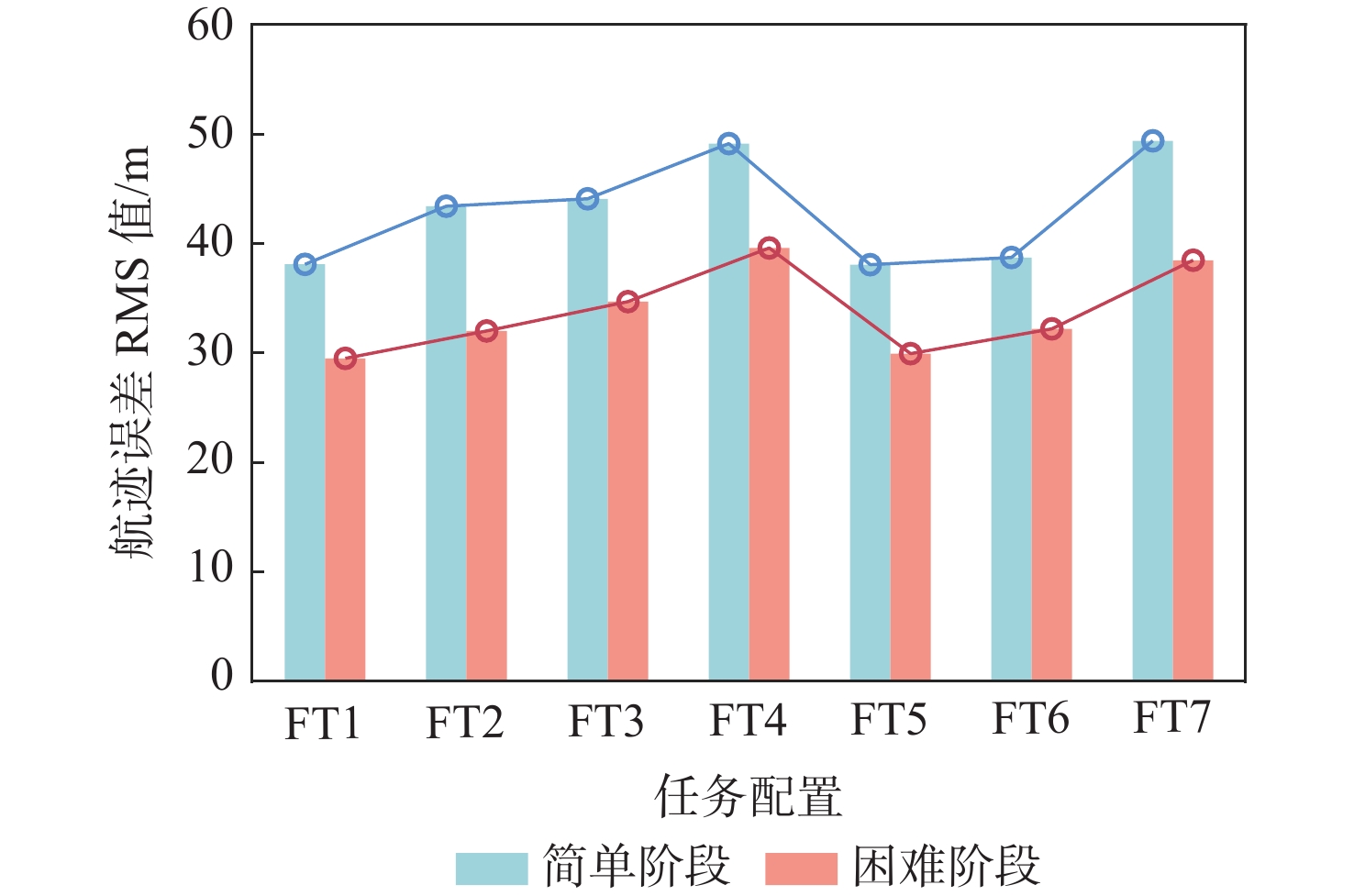
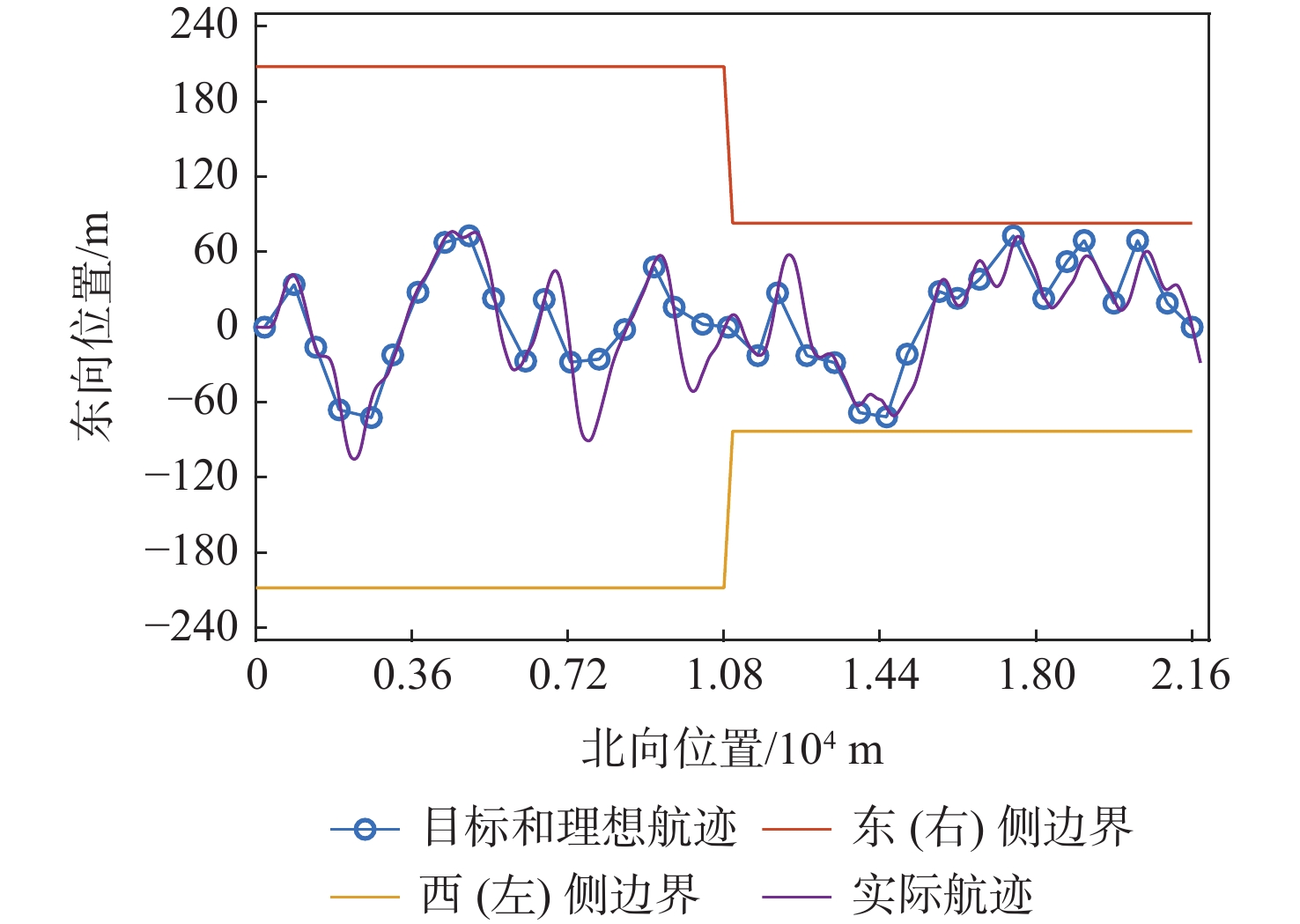
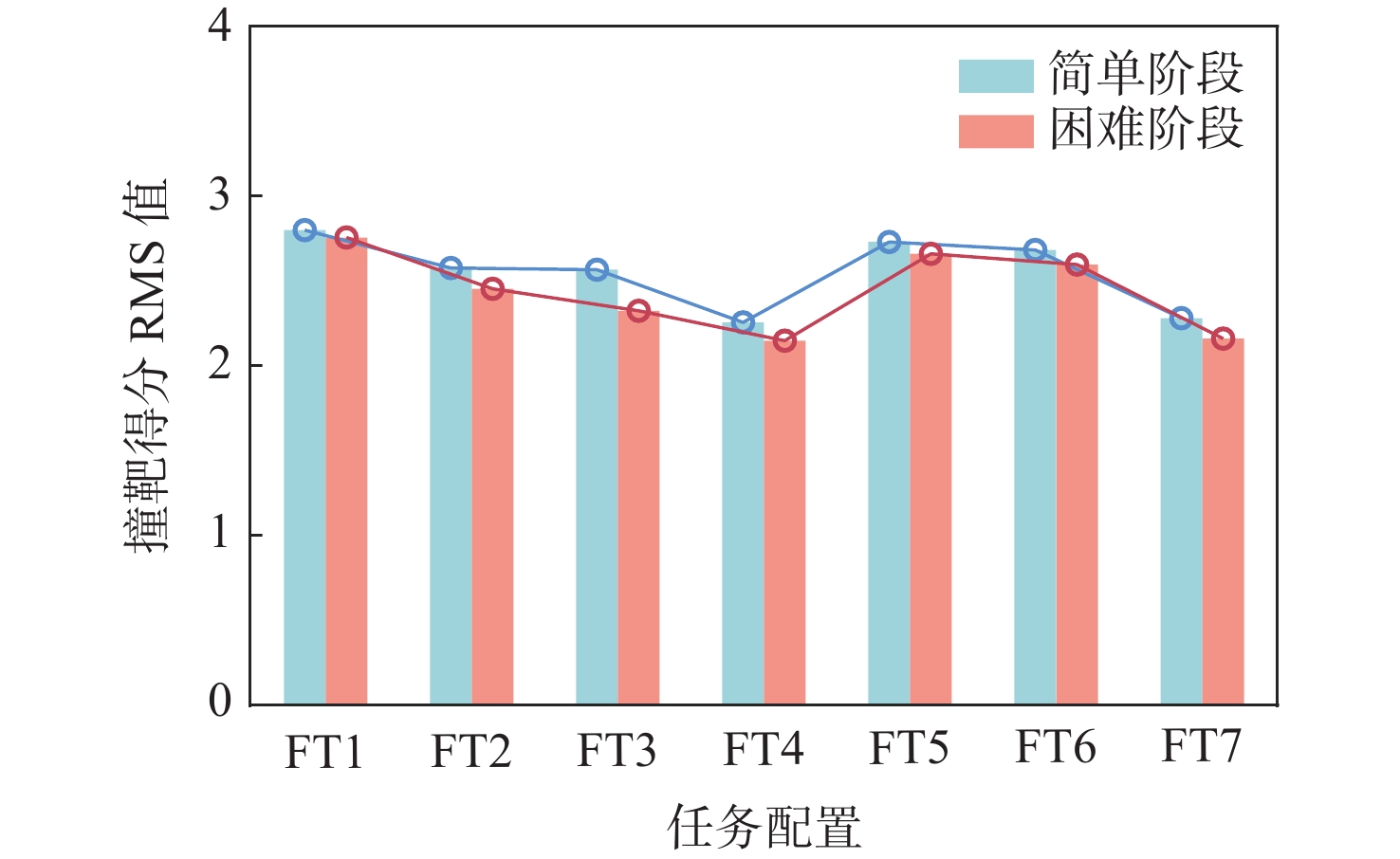
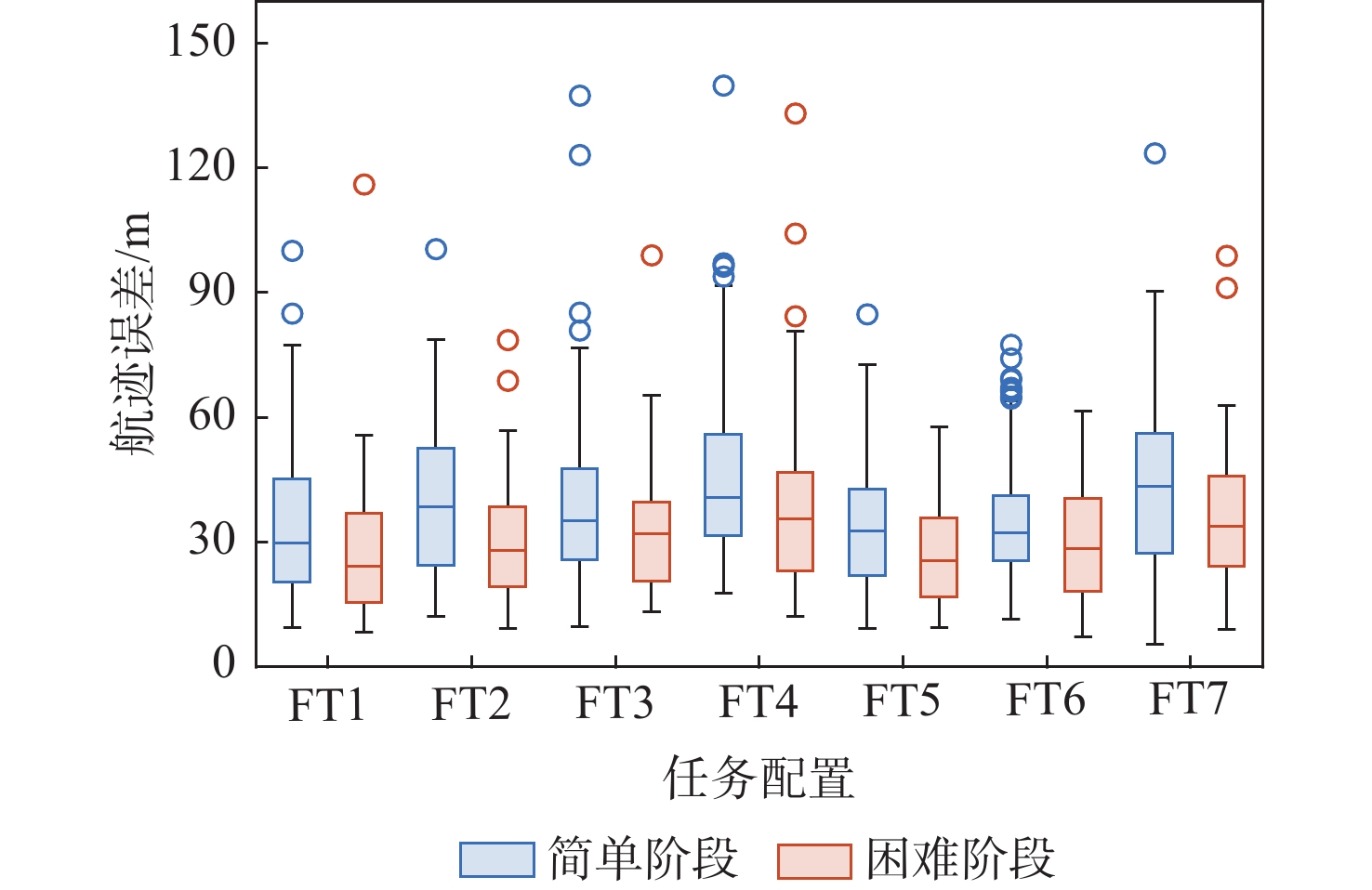
Pilot-induced oscillation (PIO) represents a critical human factor contributing to rotorcraft accidents. Its triggering mechanism is intrinsically linked to the dynamic characteristics of the rotorcraft-pilot coupling (RPC) system. An innovative multi-task flight simulation experimental platform was constructed based on the boundary avoidance-tracking (BAT) theoretical model. The impacts of two important triggering factors—input configuration and border difficulty—on task performance and the PIO phenomenon were methodically examined using parametric control. Experimental results demonstrate that the designed triggering parameters effectively induced behavioral changes in subjects, thereby affecting their task performance and PIO characteristic responses. Additionally, compared to conventional techniques like the phase-aggression criteria (PAC) method and the Klyde’s wavelet transform approach, the improved power-preserving wavelet transform (PPWT) detection method suggested in this study shown better recognition performance. This research refines the PIO research paradigm under the BAT task framework. The proposed “trigger-detection” experimental approach and methodology provide a novel technological pathway for investigating RPC phenomena.

| [1] |
Pavel M D, Jump M, Dang-Vu B, et al. Adverse rotorcraft pilot couplings: past, present and future challenges[J]. Progress in Aerospace Sciences, 2013, 62: 1-51.
|
| [2] |
Mcruer D T. Aviation safety and pilot control: understanding and preventing unfavorable pilot-vehicle interactions[M]. Washington, D. C. : National Academies Press, 1997.
|
| [3] |
Padfield G D, Lu L. The potential impact of adverse aircraft-pilot couplings on the safety of tilt-rotor operations[J]. The Aeronautical Journal, 2022, 126(1304): 1617-1647.
|
| [4] |
U. S. Department of Defense. Flying qualities of piloted airplanes: MIL-F-8785C[S]. Washington, D. C.: U. S. Department of Defense, 1980.
|
| [5] |
U. S. Department of Defense. Flying qualities of piloted aircraft: MIL-STD-1797A[S]. Washington, D. C.: U. S. Department of Defense, 1990.
|
| [6] |
Gray W. Boundary-escape tracking: a new conception of hazardous PIO: PA-04179[R]. Edwards AFB: Air Force Flight Test Center, 2004.
|
| [7] |
Gray W. Boundary avoidance tracking: a new pilot tracking model[C]//Proceedings of the AIAA Atmospheric Flight Mechanics Conference and Exhibit. Reston: AIAA, 2005: 5810.
|
| [8] |
Craun R, Acosta D M, Beard S D, et al. Boundary avoidance tracking for instigating pilot induced oscillations[C]//Proceedings of the AIAA Atmospheric Flight Mechanics Conference. Reston: AIAA, 2013: 4688.
|
| [9] |
Yilmaz D, Lu L H, Pavel M, et al. Comparison of simulator platform and flight tasks on adverse rotorcraft pilot coupling prediction[C]//Proceedings of the Vertical Flight Society 70th Annual Forum. Montréal: The Vertical Flight Society, 2014: 1-17.
|
| [10] |
Babu M D. Investigation of boundary avoidance tracking theory from ocular parameters through simulator and inflight studies[J]. Aerotecnica Missili & Spazio, 2021, 100(4): 303-319.
|
| [11] |
Wilson J C, Nair S, Scielzo S, et al. Objective measures of cognitive load using deep multi-modal learning: a use-case in aviation[J]. Proceedings of the ACM on Interactive, Mobile, Wearable and Ubiquitous Technologies, 2021, 5(1): 1-35.
|
| [12] |
Mitchell D G, Klyde D H. This is pilot gain[C]//Proceedings of the AIAA Scitech 2019 Forum. Reston: AIAA, 2019: 0562.
|
| [13] |
Lu L, Jump M. Pilot modelling for boundary hazard perception and reaction study[C]//Proceedings of the 43rd European Rotorcraft Forum. Milan: AIDAA, 2017: 640-652.
|
| [14] |
Ji H L, Lu L H, White M D, et al. Advanced pilot modeling for prediction of rotorcraft handling qualities in turbulent wind[J]. Aerospace Science and Technology, 2022, 123: 107501.
|
| [15] |
Gratton G B, Bromfield M A. Aspects of general aviation flight safety research[C]//Proceedings of the Royal Aeronautical Society 2008 General Aviation Conference. Cambridge: Royal Aeronautical Society, 2008: 1-12.
|
| [16] |
Afloare A I. Pilot induced oscillations detection using boundary avoidance tracking procedure[J]. The Scientific Bulletin Series D, 2015, 77(4): 1-8.
|
| [17] |
Wilson J C. Cognition and context-aware computing: towards a situation-aware system with a case study in aviation[D]. Dallas: Southern Methodist University, 2020.
|
| [18] |
Jones M, Jump M, Lu L, et al. Using the phase-aggression criterion to identify rotorcraft pilot coupling events[C]//Proceedings of the 38th European Rotorcraft Forum 2012. Amsterdam: NLR, 2012: 1-17.
|
| [19] |
Jones M, Jump M, Lu L H. Development of the phase-aggression criterion for rotorcraft: pilot coupling detection[J]. Journal of Guidance, Control, and Dynamics, 2013, 36(1): 35-47.
|
| [20] |
Klyde D H, Mitchell D G, White M D, et al. Assessment of a scalogram-based PIO metric with flight test data[C]//Proceedings of the AIAA Atmospheric Flight Mechanics Conference. Reston: AIAA, 2017: 1641.
|
| [21] |
Klyde D H, Schulze P C, De Mello R S F, et al. Assessment of a scalogram-based pilot-induced oscillation metric with flight-test and simulation data[J]. Journal of Guidance, Control, and Dynamics, 2020, 43(11): 2058-2072.
|
| [22] |
Jones M, Jump M. Prediction of rotorcraft pilot-induced oscillations using the phase-aggression criterion 2013 phoenix arizona[C]//Proceedings of the 69th Annual Forum of the American Helicopter Society. Phoenix: American Helicopter Society, 2013.
|
| [23] |
Xu S T, Tan W Q, Qu X J, et al. Prediction of nonlinear pilot-induced oscillation using an intelligent human pilot model[J]. Chinese Journal of Aeronautics, 2019, 32(12): 2592-2611.
|
| [24] |
Mello R S, Klyde D H, Mitchell D G. Aircraft accident investigation using wavelet scalogram-based metric to identify possible PIO signature[C]//Proceedings of the AIAA SCITECH 2023 Forum. Reston: AIAA, 2023: 1367.
|
| [25] |
Howlett J J. UH-60A black hawk engineering simulation program. Volume 1: mathematical model: SER-70452[R]. Washington, D. C. : The National Aeronautics and Space Administration, 1981.
|
| [26] |
Talbot P D, Tinling B E, Decker W A, et al. A mathematical model of a single main rotor helicopter for piloted simulation: NAS 1.15: 84281[R]. Washington, D. C. : The National Aeronautics and Space Administration, 1982.
|
| [27] |
Hilbert K B. A mathematical model of the UH-60 helicopter: NASA-TM-85890[R]. Washington, D. C. : The National Aeronautics and Space Administration, 1984.
|
| [28] |
Kaplita T T. UH-60 black hawk engineering simulation model validation and proposed modifications: NAS 1.26: 177360[R]. Washington, D. C. : The National Aeronautics and Space Administration, 1986.
|
| [29] |
MATLAB. Cwt-continuous 1-D wavelet transform[EB/OL]. (2023-04-12)[2025-07-03]. https://ww2.mathworks.cn/help/wavelet/ref/cwt.html.
|
| [30] |
Xia Q, Marchesoli D, Masarati P, et al. Preliminary study of tracking vs boundary avoidance task effects on rotorcraft pilot involuntary response[C]//Proceedings of the Aerospace Europe Conference 2023-10th EUCASS-9th CEAS Conference. Lausanne: EUCASS, 2023: 1-12.
|
| [31] |
Wobbrock J O, Findlater L, Gergle D, et al. The aligned rank transform for nonparametric factorial analyses using only anova procedures[C]//Proceedings of the SIGCHI Conference on Human Factors in Computing Systems. New York: ACM, 2011: 143-146.
|
Figures(22) / Tables(5)
Copyright © Journal of Beijing University of Aeronautics and Astronautics
Address: Editorial Department of Journal of Beijing University of Aeronautics and Astronautics, 37 Xueyuan Road, Haidian District, Beijing Post Code: 100191 Email: jbuaa@buaa.edu.cn
Supported by:
Beijing Renhe Information Technology Co., Ltd.






 DownLoad: