





Emergency evacuation assessment of aircraft tilting attitude based on information entropy
-
摘要:
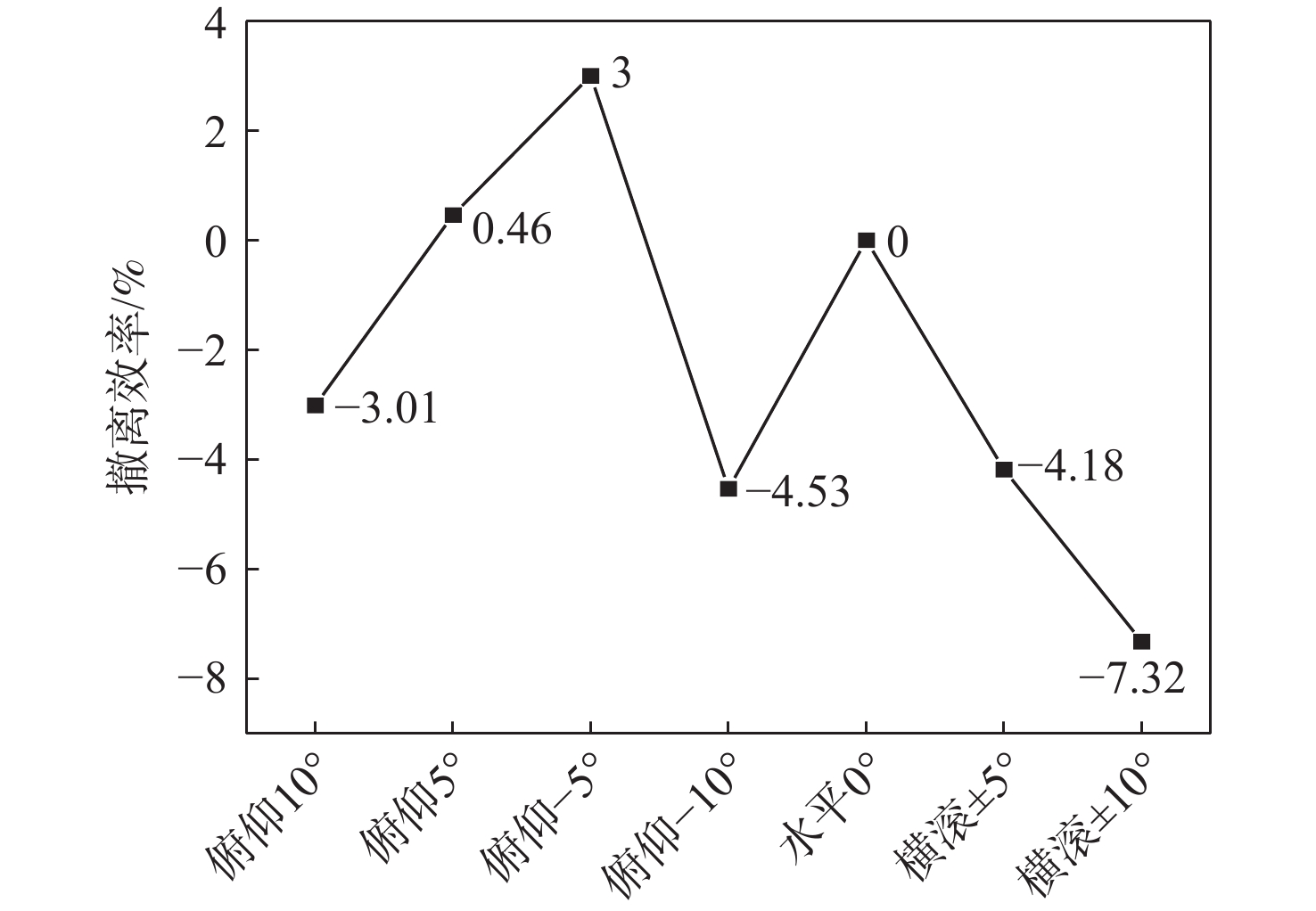
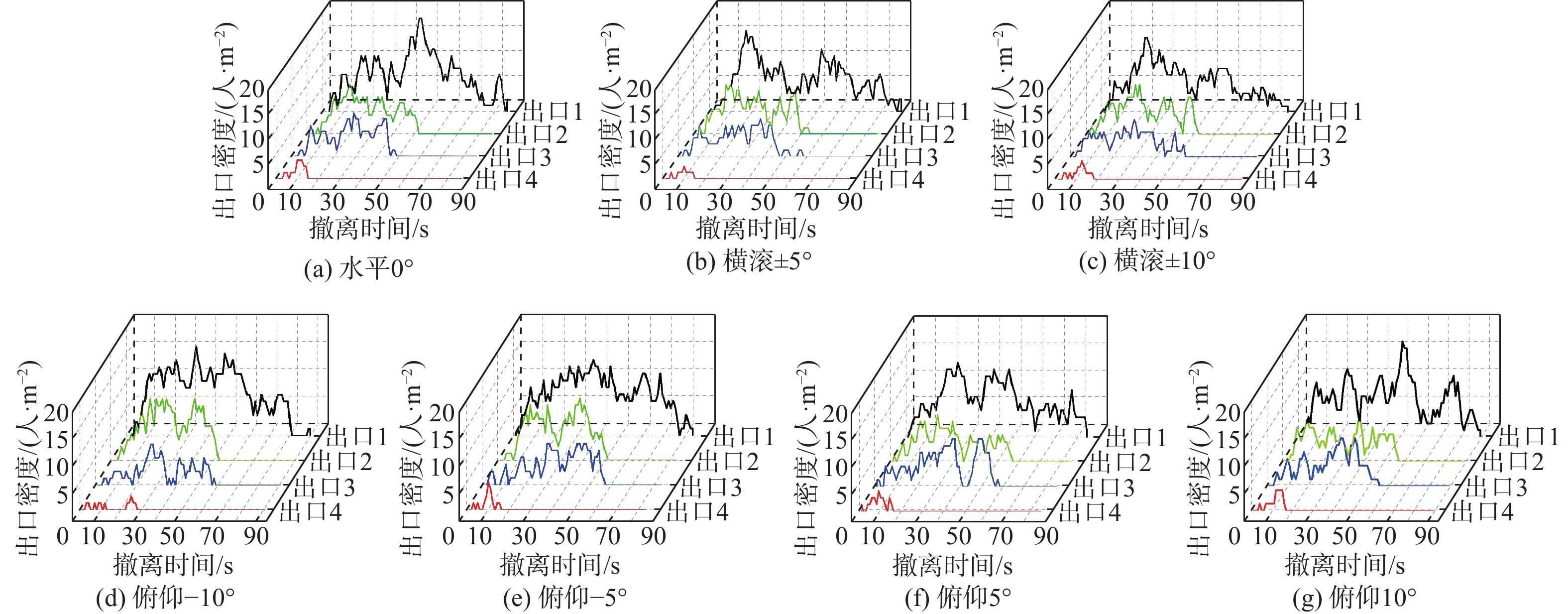
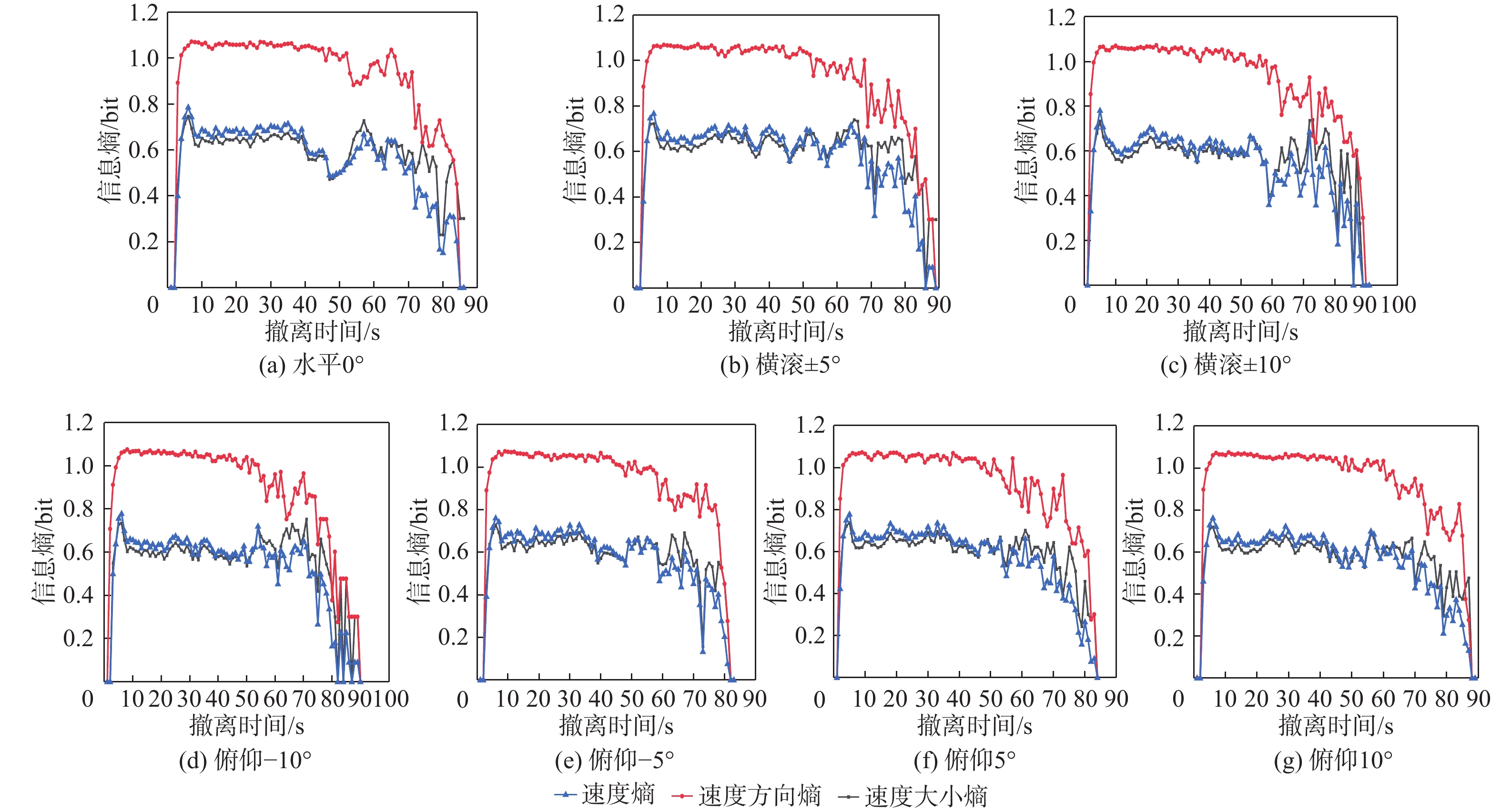
为探究与评价客机不同倾斜姿态下人员应急撤离效果,利用信息熵理论建立客机倾斜姿态应急撤离评价模型。构建人员应急撤离评价指标,以真实撤离试验数据进行宽体客机倾斜姿态应急撤离模拟仿真试验,采用熵权-逼近理想解排序(TOPSIS)法完成应急撤离效果的评价和优劣排序。试验数据显示:倾斜姿态对撤离时间影响范围为−7.32%~+3%,俯角与仰角姿态在出口2、出口3位置的人员密度呈现明显差异,速度熵峰值集中发生在撤离初期。分析表明:速度大小熵和出口人员密度为影响倾斜姿态撤离效果的2个重要因素;俯仰5°撤离效果最佳,俯仰−10°撤离效果最差,俯仰倾斜角度为5°与10°呈现出相反的撤离效果。所建模型可实现不同倾斜姿态的评价与排序,为宽体客机设计、制造与运行的安全评估提供参考。
Abstract:To explore and evaluate the emergency evacuation effectiveness of passengers under different tilt attitudes of aircraft, an emergency evacuation evaluation model was established using information entropy theory. Evaluation indicators for emergency evacuation were constructed, and wide-body aircraft tilt attitude emergency evacuation simulation experiments were conducted using real evacuation test data. The entropy weight-technique for order preference by similarity to an ideal solution (TOPSIS) method was employed to assess and rank the effectiveness of emergency evacuation. The experimental data showed that the influence of tilt attitude on evacuation time ranged from −7.32% to +3%. With the speed entropy peak focused in the early stage, there were notable disparities in pitch and roll attitudes in the personnel density at exits 2 and 3. Analysis indicated that the speed entropy and exit personnel density were two crucial factors affecting the effectiveness of emergency evacuation in tilted attitudes. The evacuation performance was optimal at a pitch angle of 5°and worst at a pitch angle of −10°, showing opposite evacuation effects at tilt angles of 5° and 10°. As a guide for the safety evaluation of wide-body aircraft design, production, and operation, the established model for aircraft is capable of rating and evaluating various tilt attitudes.
-

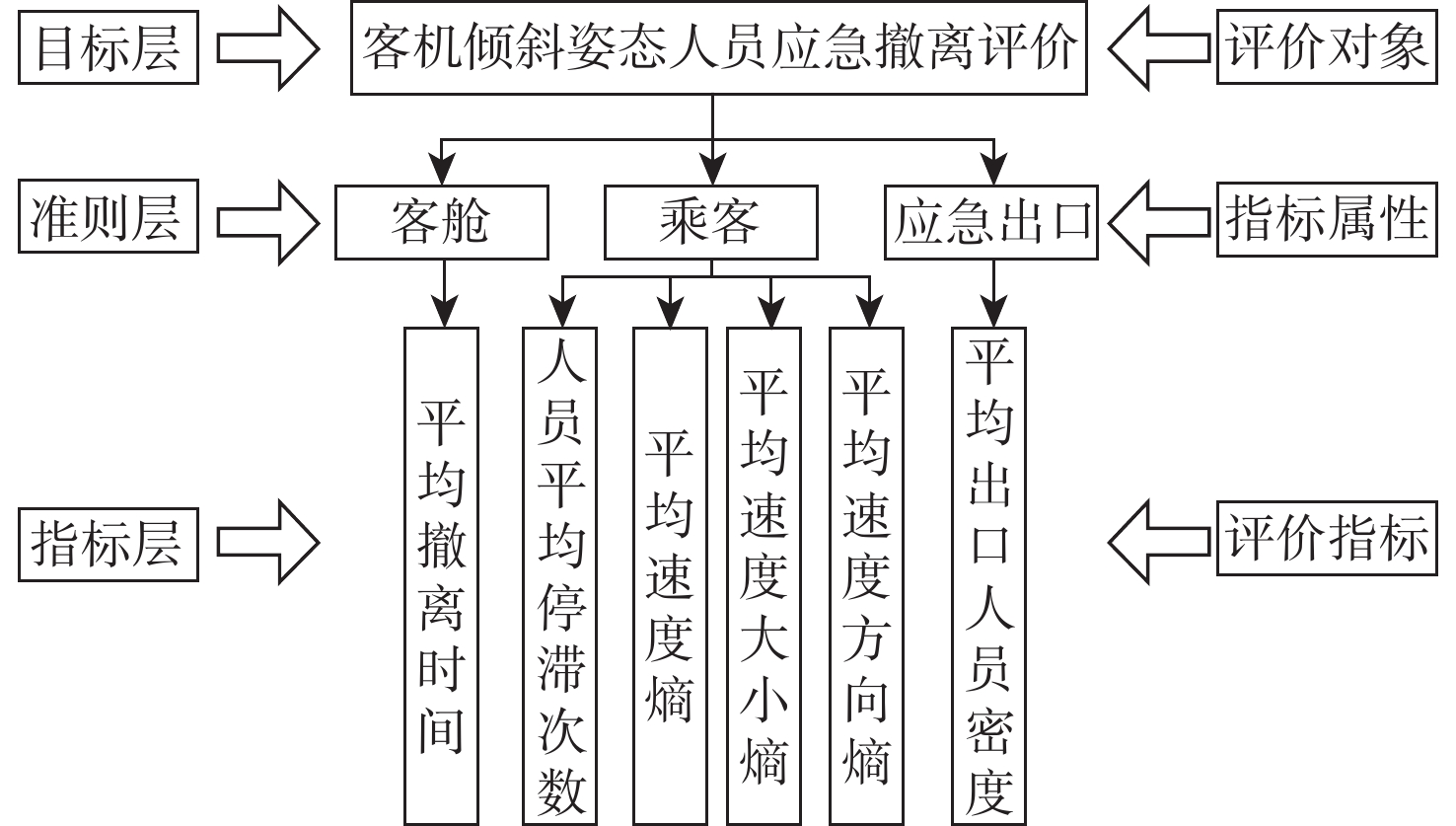
图 1 客机倾斜姿态应急撤离评价指标
Figure 1. Emergency evacuation evaluation index of aircraft tilting attitude

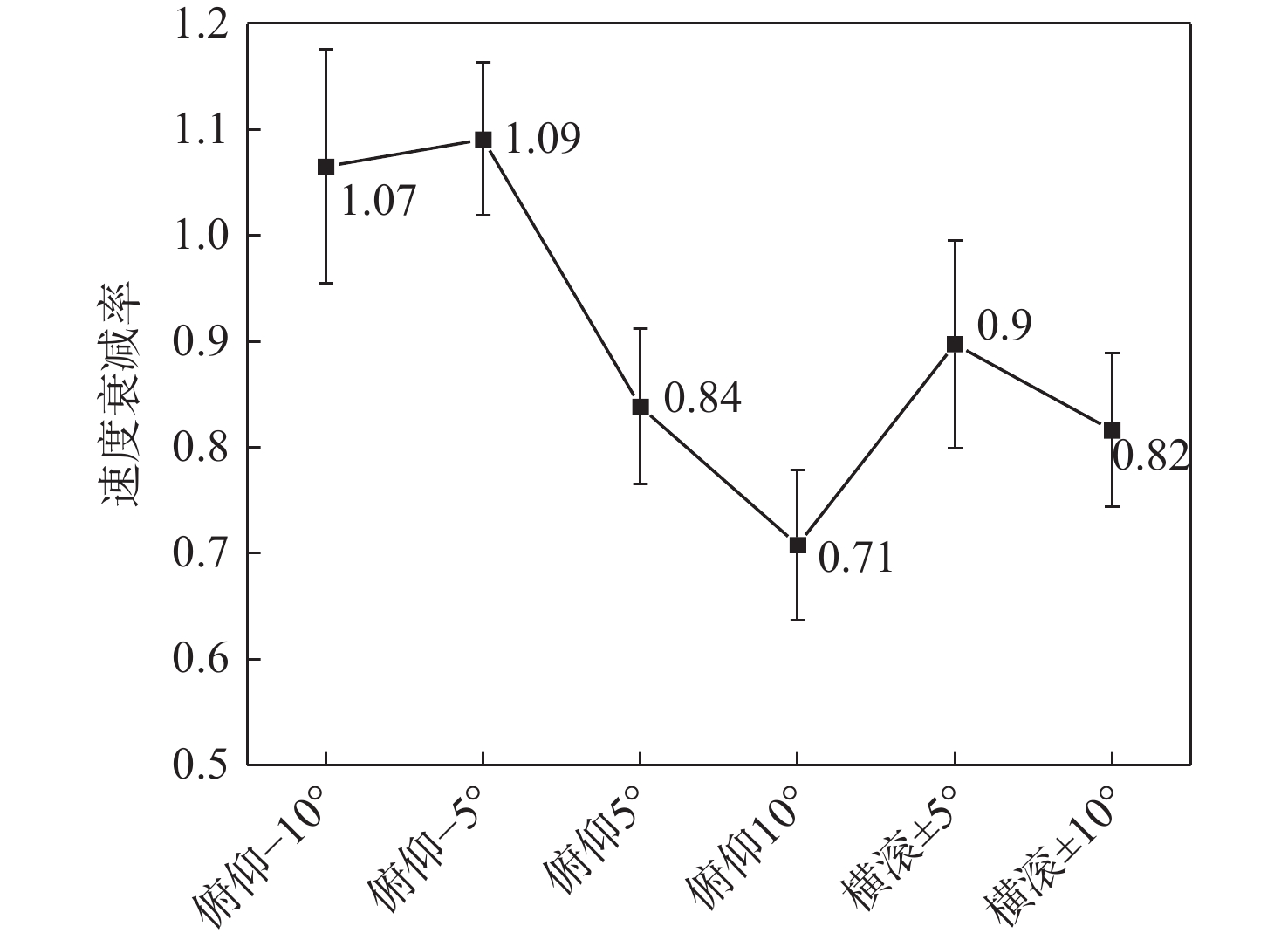
图 2 不同倾斜姿态下群体撤离速度衰减率
Figure 2. Attenuation rate of group withdrawal velocity under oblique posture

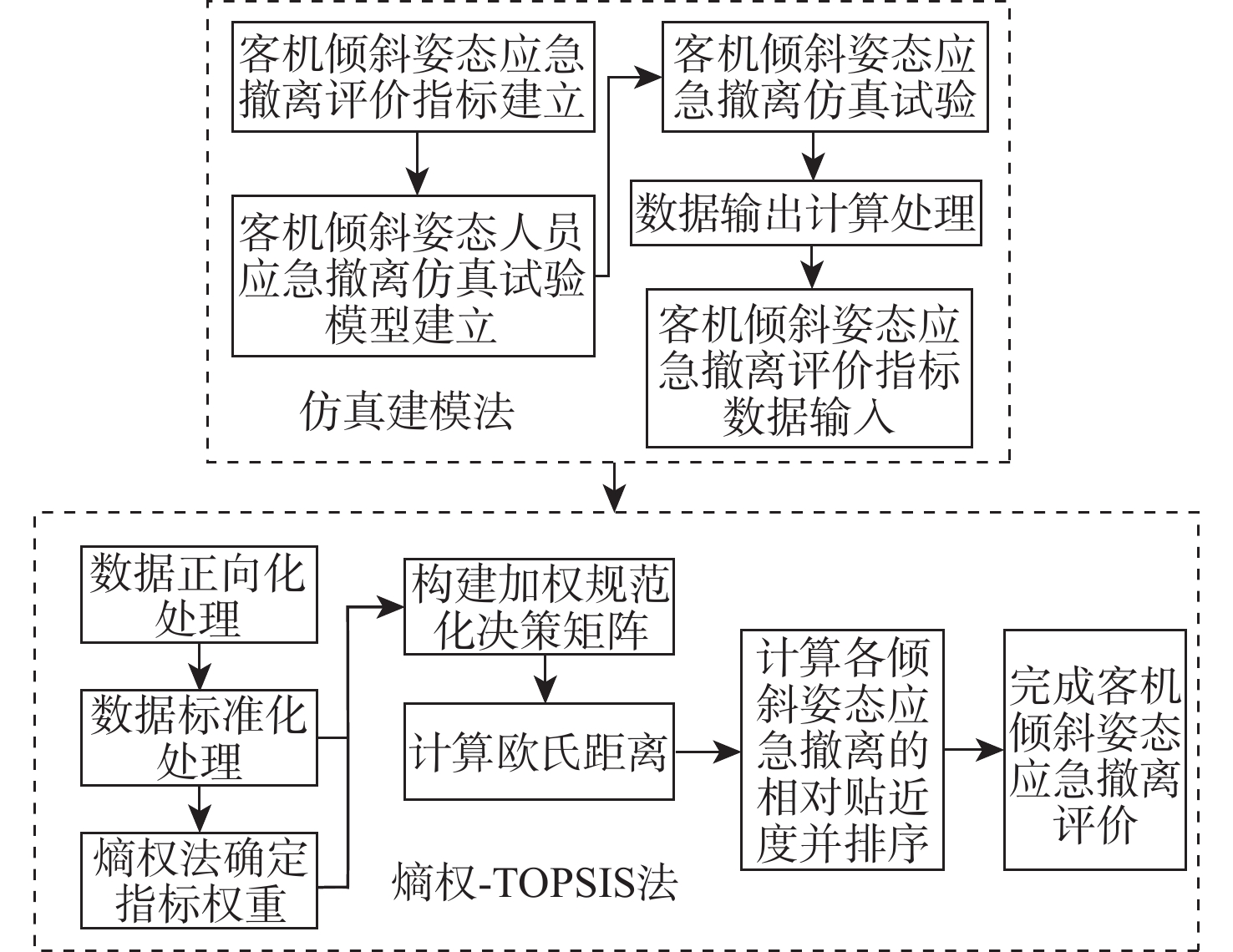
图 5 客机倾斜姿态应急撤离评价流程
Figure 5. Emergency evacuation evaluation process of aircraft tilting attitude

图 9 不同倾斜姿态下应急出口人员密度变化
Figure 9. Change of emergency exit personnel density under different posture
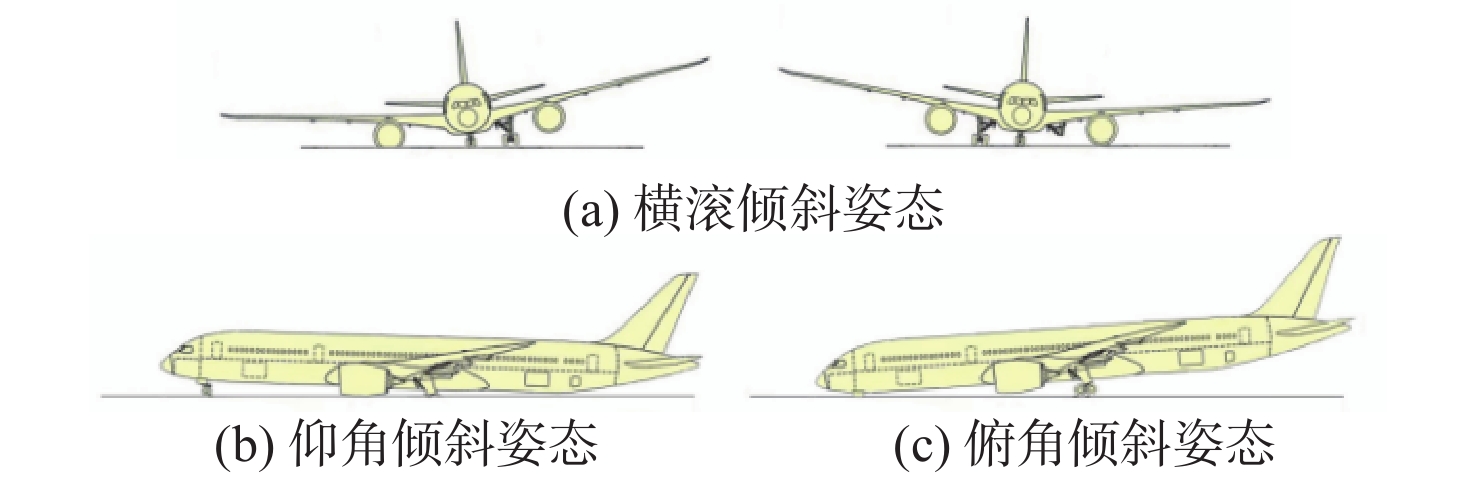
表 1 客舱倾斜姿态下应急撤离试验场景
Table 1. Emergency evacuation test scenario in cabin tilting attitude
试验序号 撤离场景 出口数量 仿真次数 1 水平0° 4 50 2 俯仰−5° 4 50 3 俯仰5° 4 50 4 俯仰−10° 4 50 5 俯仰10° 4 50 6 横滚±5° 4 50 7 横滚±10° 4 50  下载: 导出CSV
表 2 不同倾斜姿态下出口人员密度数值统计
Table 2. Numerical statistics of exit personnel density under different posture
出口 平均密度/(人·m−2) 密度峰值/(人·m−2) 水平0° 横滚±5° 横滚±10° 俯仰−10° 俯仰−5° 俯仰5° 俯仰10° 水平0° 横滚±5° 横滚±10° 俯仰−10° 俯仰−5° 俯仰5° 俯仰10° 1 7.619 6.65 6.206 8.161 7.758 6.955 7.278 18.784 16.279 15.027 16.279 13.775 13.775 17.532 2 5.249 4.985 4.867 6.926 5.995 3.962 4.206 10.018 10.018 10.018 11.27 11.27 8.766 7.514 3 4.313 3.757 3.615 2.778 3.85 4.064 4.125 8.766 7.514 7.514 7.514 7.514 8.766 8.766 4 2.049 1.138 1.503 0.601 1.445 1.586 1.83 3.757 2.505 3.757 2.505 5.009 3.757 3.757 出口 峰值时刻/s 水平0° 横滚±5° 横滚±10° 俯仰−10° 俯仰−5° 俯仰5° 俯仰10° 1 45、46 17 21、22 34 37 24 51 2 20 15、17 24、26 19、22、25、27、41 38 23 12、37、38 3 29 38 31 27、28 30、31、44、45、47、48 49、50、51 36、37、43 4 10、11、12 10 13 25 10 9 12、13、14、15
下载: 导出CSV
表 3 不同倾斜姿态下信息熵极值统计
Table 3. Statistics of extremum information entropy under different attitude
工况 $ \dfrac{速度熵峰}{谷值}\big/ $bit $\dfrac{速度大小熵峰}{谷值}\big/ $bit $\dfrac{速度方向熵峰}{谷值}\big/ $bit 水平0° 0.7863 (6 s)/0.4855 (49 s)0.7462 (6 s)/0.4718 (47 s)1.0717 (7 s)/0.8756 (70 s)横滚±5° 0.7673 (6 s)/0.4436 (69 s)0.7392 (65 s)/0.5526 (46 s)1.0701 (19 s)/0.7097 (70 s)横滚±10° 0.7808 (5 s)/0.3596 (59 s)0.7403 (73 s)/0.3979 (59 s)1.0722 (23 s)/0.7613 (63 s)俯仰−10° 0.7787 (6 s)/0.4530 (61 s)0.7534 (71 s)/0.5283 (61 s)1.0756 (8 s)/0.7526 (64 s)俯仰−5° 0.761(6 s)/ 0.4363 (66 s)0.7282 (6 s)/0.5350 (66 s)1.0738 (9 s)/0.7984 (64 s)俯仰5° 0.7784 (5 s)/0.4270 (67 s)0.7369 (5 s)/0.5331 (55 s)1.0719 (9 s)/0.7197 (68 s)俯仰10° 0.7622 (6 s)/0.4291 (70 s)0.7187 (6 s)/0.4522 (70 s)1.0743 (11 s)/0.8576 (65 s)注:为准确反映撤离过程的秩序性,熵谷值选取$ {T}_{{\mathrm{time}}} $=15~70 s区间的数值。
下载: 导出CSV
表 4 客机倾斜姿态应急撤离评价指标数据
Table 4. Emergency evacuation evaluation index data of passenger aircraft tilting attitude
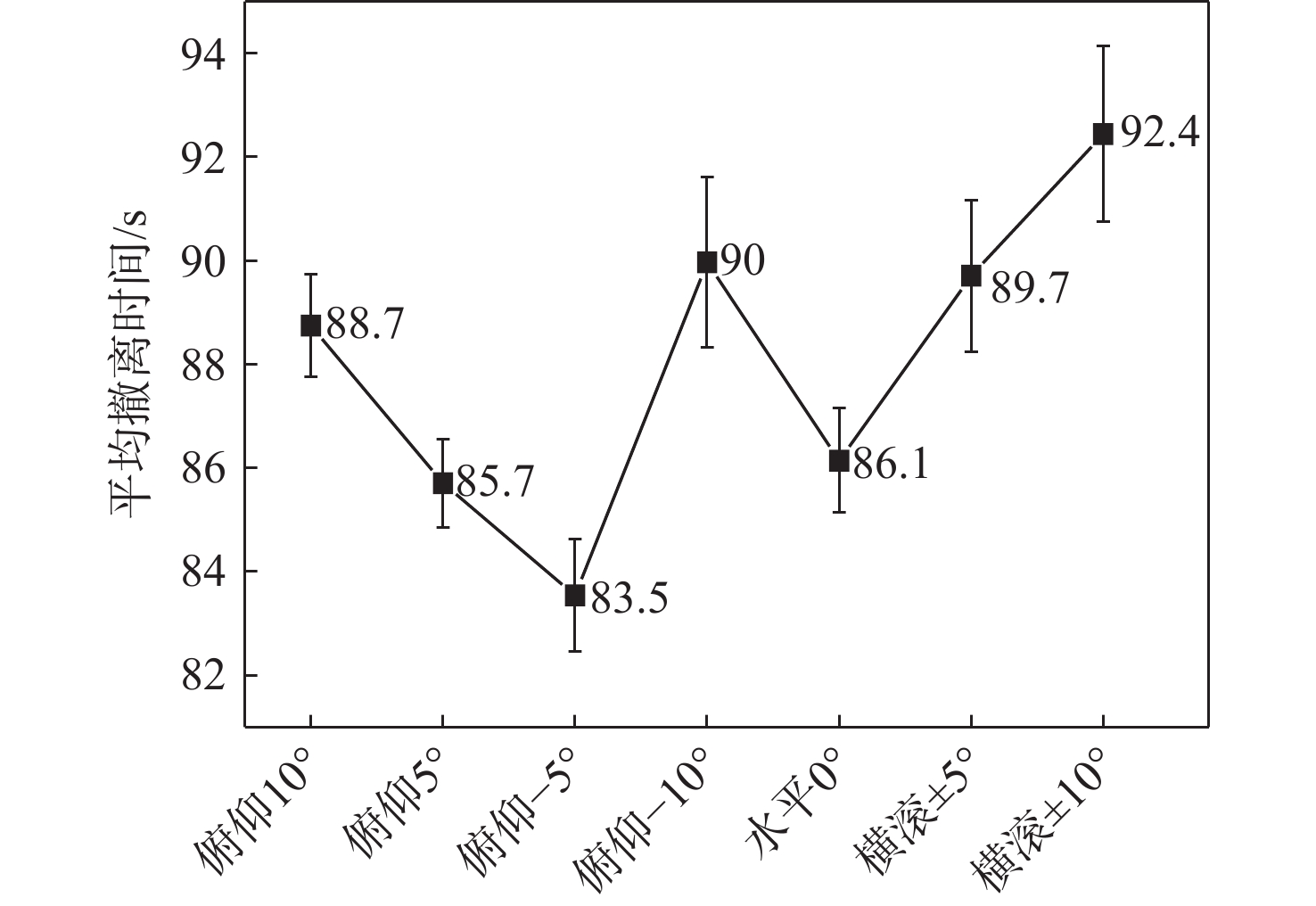
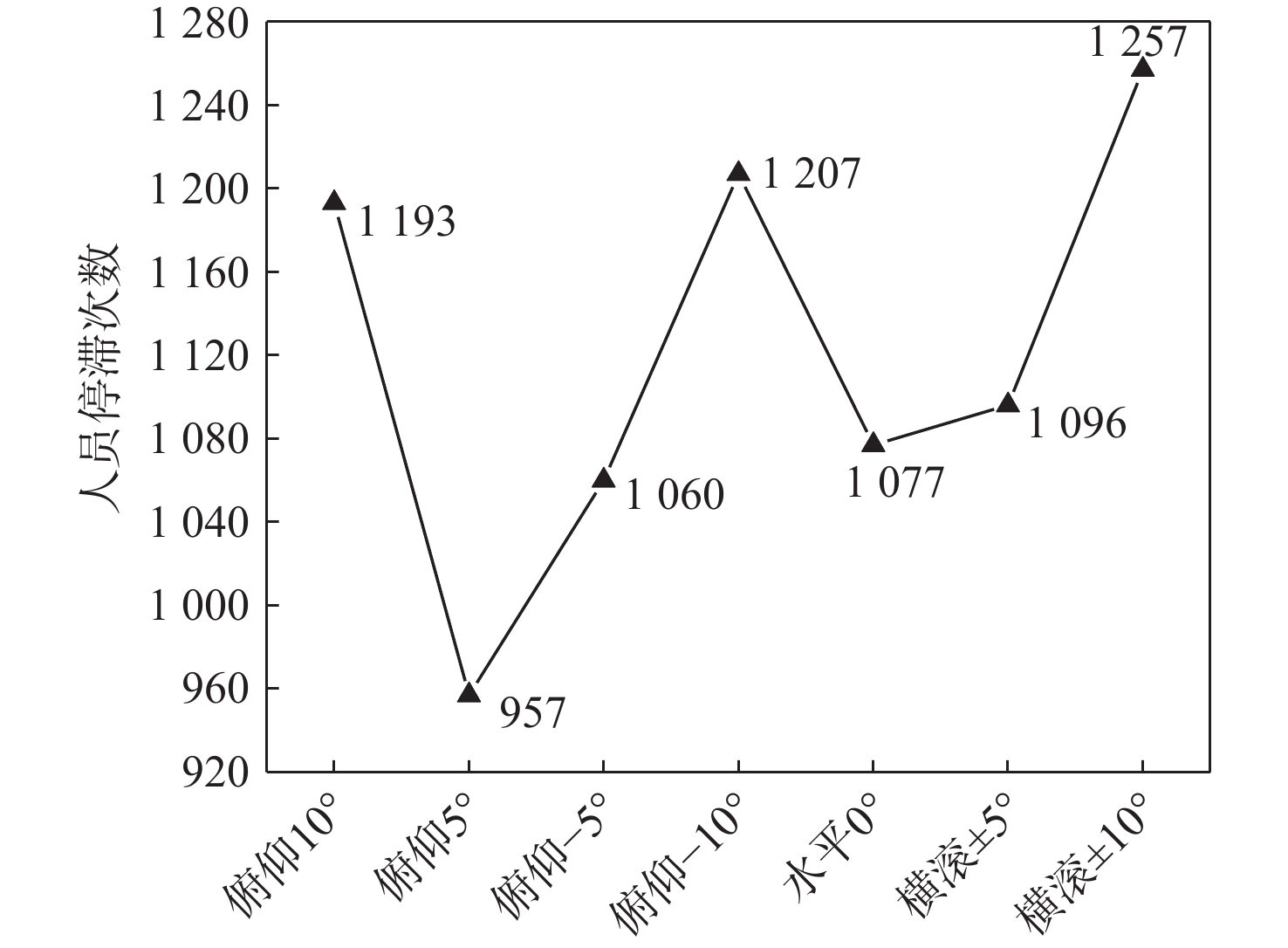
序号 工况 平均撤离时间/s 平均出口人员密度/(人·m−2) 平均速度熵/bit 平均速度大小熵/bit 平均速度方向熵/bit 人员平均停滞次数 1 水平0° 86.142 4.807689 0.552769 0.577678 0.912367 4.360324 2 横滚±5° 89.708 4.132413 0.566561 0.591762 0.909632 4.437247 3 横滚±10° 92.440 4.047715 0.531763 0.552871 0.911086 5.089069 4 俯仰−10° 89.968 4.616464 0.524925 0.553193 0.888161 4.886640 5 俯仰−5° 83.542 4.761829 0.559137 0.572963 0.916227 4.291498 6 俯仰5° 85.704 4.141955 0.566023 0.586503 0.922240 3.874494 7 俯仰10° 88.744 4.359759 0.549797 0.564031 0.918651 4.829960
下载: 导出CSV
表 5 客机倾斜姿态应急撤离评价计算结果
Table 5. Calculation results of emergency evacuation evaluation of aircraft tilting attitude
工况 与正理想解
的欧氏距离与负理想解
的欧氏距离相对贴
近度$ {T}_{n} $归一化相对
贴近度$ {P}_{n} $熵权法
评价值$ {R}_{n} $水平0° 0.30373 0.28833 0.479970 0.13687 0.57563 横滚±5° 0.20838 0.40000 0.689481 0.19661 0.83760 横滚±10° 0.45219 0.25080 0.386593 0.11024 0.33672 俯仰−10° 0.46907 0.07962 0.147345 0.04202 0.12740 俯仰−5° 0.28775 0.32220 0.519149 0.14804 0.66021 俯仰5° 0.06603 0.48381 0.867850 0.24747 1.02844 俯仰10° 0.35024 0.21841 0.416490 0.11876 0.49761
下载: 导出CSV
表 6 评价排序对比结果
Table 6. Evaluation ranking and comparison results
工况 撤离时间排序 平均速度熵排序 熵权-TOPSIS排序 水平0° 3 4 4 横滚±5° 5 7 2 横滚±10° 7 2 6 俯仰−10° 6 1 7 俯仰−5° 2 5 3 俯仰5° 1 6 1 俯仰10° 4 3 5 注:数值1~7表示不同倾斜姿态工况下评估对比排名结果。
下载: 导出CSV
-
[1] 中国民用航空局. 大型飞机公共航空运输承运人运行合格审定规则[EB/OL]. (2024-04-13)[2025-11-19]. https://xxgk.mot.gov.cn/2020/gz/202404/t20240416_4128400.html.Civil Aviation Administration of China. Rules for the operation qualification examination of large aircraft public air transport carriers[EB/OL]. (2024-04-13)[2025-11-19]. https://xxgk.mot.gov.cn/2020/gz/202404/t20240416_4128400.html(in Chinese). [2] Federal Aviation Administration . AC 25.803-1 : emergency evacuation demonstrations[EB/OL]. (1989-11-13)[2023-11-22]. https://rosap.ntl.bts.gov/view/dot/71262. [3] 戴湘龄. 面向机场冲/偏出跑道事件的应急协同决策仿真研究[D]. 南京: 南京航空航天大学, 2017.DAI X L. Simulation study on emergency collaborative decision-making for airport runway rushing/deviating events[D]. Nanjing: Nanjing University of Aeronautics and Astronautics, 2017(in Chinese). [4] FANG S M, LIU Z J, WANG X J, et al. Simulation of evacuation in an inclined passenger vessel based on an improved social force model[J]. Safety Science, 2022, 148: 105675. [5] MCLEAN G A. Access-to-egress: a meta-analysis of the factors that control emergency evacuation through the transport airplane type-III overwing exit: DOT/FAA/AM-01/2 [R]. Washton, D. C. : Federal Aviation Administration, 2001. [6] 封文春, 李伟. 民用飞机应急撤离影响因素试验研究[J]. 航空科学技术, 2022, 33(3): 11-16.FENG W C, LI W. Test research on the influencing factors of civil aircraft emergency evacuation[J]. Aeronautical Science & Technology, 2022, 33(3): 11-16(in Chinese). [7] 张青松, 杨彩红. 飞机客舱应急撤离演示模拟方案设计研究[J]. 安全与环境学报, 2016, 16(3): 154-157.ZHANG Q S, YANG C H. Simulation design for the aircraft cabin emergency evacuation[J]. Journal of Safety and Environment, 2016, 16(3): 154-157(in Chinese). [8] 梁文娟, 张建涛. 翼身融合客机应急撤离建模与仿真方法研究[J]. 安全与环境学报, 2023, 23(5): 1717-1724.LIANG W J, ZHANG J T. Research on modeling and simulation methods for emergency evacuation of blended-wing-body civil aircraft[J]. Journal of Safety and Environment, 2023, 23(5): 1717-1724(in Chinese). [9] 田水承, 王启睿, 陈洋, 等. 民机客舱中部应急出口对人员疏散的影响[J]. 科学技术与工程, 2020, 20(20): 8413-8417.TIAN S C, WANG Q R, CHEN Y, et al. The impact of the central emergency exit of civil aircraft cabin on personnel evacuation[J]. Science Technology and Engineering, 2020, 20(20): 8413-8417(in Chinese). [10] MELIS D J, SILVA J M, YEUN R, et al. The effect of airline passenger anthropometry on aircraft emergency evacuations[J]. Safety Science, 2020, 128: 104749. [11] 封文春, 张桐, 李伟. 民用飞机迫降后不利姿态应急撤离实验研究[J]. 北京航空航天大学学报, 2023, 49(7): 1553-1562.FENG W C, ZHANG T, LI W. Experimental study on adverse attitude emergency evacuation of civil aircraft after crash landing[J]. Journal of Beijing University of Aeronautics and Astronautics, 2023, 49(7): 1553-1562(in Chinese). [12] LYU W, XING L L, LI J W, et al. Evaluating personnel evacuation risks under fire scenario of Airbus wide-body aircraft: a simulation study[J]. Frontiers in Public Health, 2022, 10: 994031. [13] 程明, 乔嘉鑫. 横滚姿态下飞机客舱火灾数值模拟研究[J]. 中国安全生产科学技术, 2024, 20(2): 195-201.CHENG M, QIAO J X. Numerical simulation of aircraft cabin fire in rolling attitude[J]. Journal of Safety Science and Technology, 2024, 20(2): 195-201(in Chinese). [14] 游乾乾, 陈琨, 寇志远, 等. 飞机倾斜对乘员应急撤离行为的影响研究[J]. 航空工程进展, 2025, 16(3): 90-98.YOU Q Q, CHEN K, KOU Z Y, et al. Research on the impact of airplane inclination on passengers emergency evacuation behavior[J]. Advances in Aeronautical Science and Engineering, 2025, 16(3): 90-98(in Chinese). [15] HUANG L D, CHEN T, WANG Y, et al. Congestion detection of pedestrians using the velocity entropy: a case study of Love Parade 2010 disaster[J]. Physica A: Statistical Mechanics and Its Applications, 2015, 440: 200-209. [16] 魏心泉, 王坚. 基于熵的火灾场景介观人群疏散模型[J]. 系统工程理论与实践, 2015, 35(10): 2473-2483.WEI X Q, WANG J. A mesoscopic evacuation model based on multi-agent and entropy with leading behavior under fire conditions[J]. Systems Engineering-Theory & Practice, 2015, 35(10): 2473-2483(in Chinese). [17] SHANNON C E. A mathematical theory of communication[J]. The Bell System Technical Journal, 1948, 27(3): 379-423. [18] 杜红兵, 张世博, 李弘毅, 等. 火灾场景下民机客舱人员疏散仿真及优化[J]. 中国安全生产科学技术, 2023, 19(2): 187-194.DU H B, ZHANG S B, LI H Y, et al. Simulation and optimization of personnel evacuation in civil aircraft cabin under fire scenario[J]. Journal of Safety Science and Technology, 2023, 19(2): 187-194(in Chinese). [19] 封文春, 李伟, 张桐, 等. 基于社会属性的民机复杂群体应急撤离仿真与试验研究[J]. 西北工业大学学报, 2022, 40(4): 853-864.FENG W C, LI W, ZHANG T, et al. Emergency evacuation simulation and test research of civil aircraft complex groups based on the social attribute[J]. Journal of Northwestern Polytechnical University, 2022, 40(4): 853-864(in Chinese). [20] SONG C C, SHAO Q, ZHU P, et al. An emergency aircraft evacuation simulation considering passenger overtaking and luggage retrieval[J]. Reliability Engineering & System Safety, 2023, 229: 108851. [21] HELBING D, MOLNÁR P. Social force model for pedestrian dynamics[J]. Physical Review E, 1995, 51(5): 4282-4286. [22] 李军, 张波. 基于IFAHP-改进熵权法的煤矿综合防尘体系安全评价[J]. 煤炭技术, 2023, 42(9): 195-199.LI J, ZHANG B. Safety evaluation of coal mine comprehensive dust control system based on IFAHP-improved entropy weight method[J]. Coal Technology, 2023, 42(9): 195-199(in Chinese). [23] 褚天巍, 朱国庆, 周莹. 基于个体差异的商业综合体人员疏散时间[J]. 消防科学与技术, 2019, 38(5): 626-629.CHU T W, ZHU G Q, ZHOU Y. Evacuation time of commercial complexes based on individual differences[J]. Fire Science and Technology, 2019, 38(5): 626-629(in Chinese). [24] 国家标准化管理委员会. 中国成年人人体尺寸: GB/T 10000-2023 [S]. 北京: 国家标准化管理委员会, 2023.National Standardization Administration. Chinese adult body size: GB/T 10000-2023[S]. Beijing: National Standardization Administration, 2023(in Chinese). [25] 刘月姣. 《中国居民营养与慢性病状况报告(2020年)》发布[J]. 中国食物与营养, 2020, 26(12): 2.LIU Y J. Report on nutrition and chronic diseases of Chinese residents (2020) was published[J]. Food and Nutrition in China, 2020, 26(12): 2(in Chinese). [26] 李伟. 应用人机工程学研究: 人体数据分析处理及其应用研究[D]. 上海: 东华大学, 2006.LI W. Research on applied ergonomics: analysis and processing of human data and its application[D]. Shanghai: Donghua University, 2006(in Chinese). [27] DE WEESE R, GOWDY V. Human factors associated with the certification of airplane passenger seats: seat belt adjustment and release: DOT/FAA/AM-03/9[R]. Washton, D. C. : Federal Aviation Administration, 2003. -

 下载:
下载:


 点击查看大图
计量
- 文章访问数: 181
- HTML全文浏览量: 77
- PDF下载量: 127
- 被引次数: 0
