





Steady state modeling and characteristic analysis of propylene flat loop heat pipes
-
摘要:
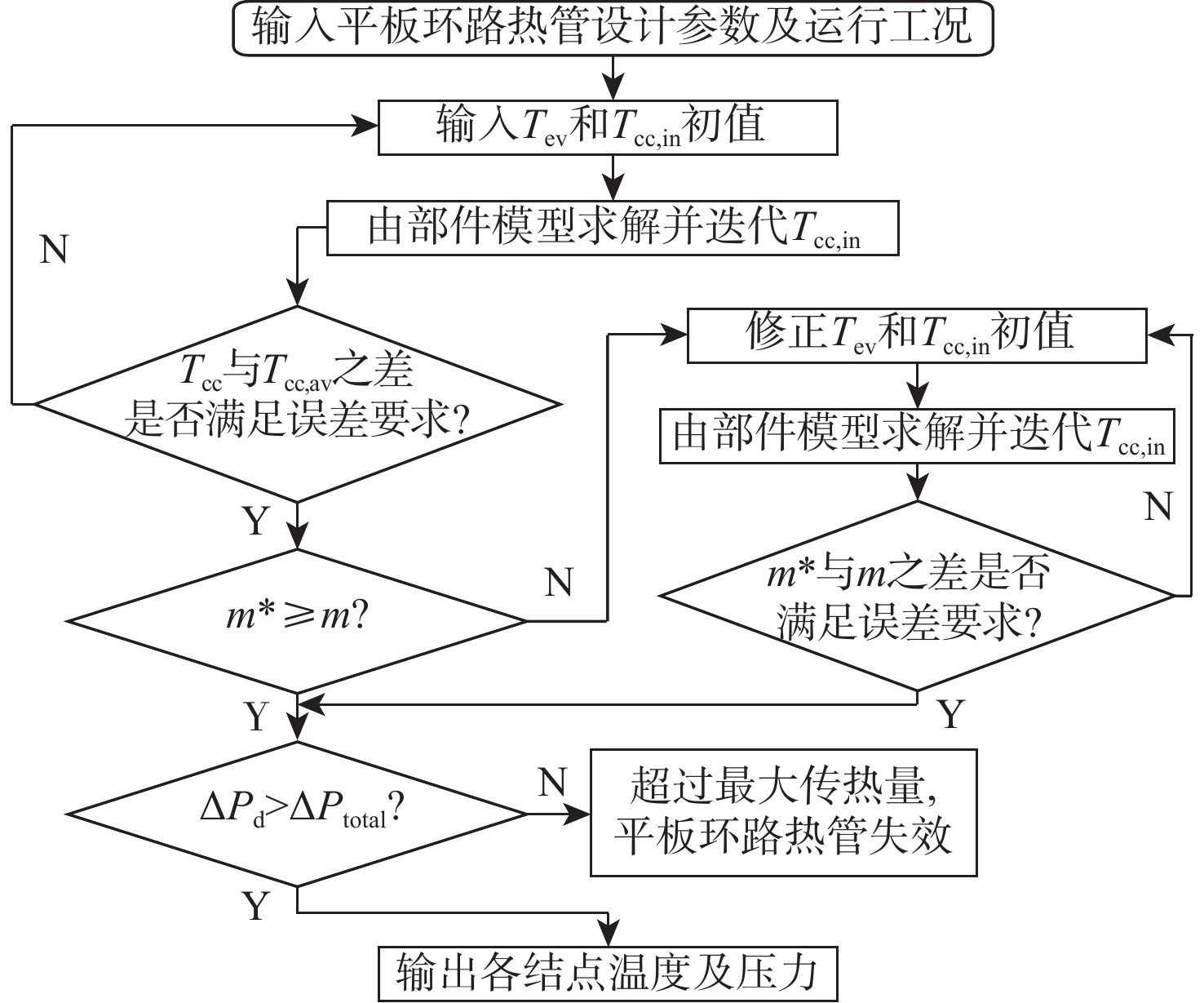
丙烯工质平板环路热管(LHP)具有耐低温、质量轻等优势,是解决深空探测任务热控难题的关键技术。丙烯工质平板环路热管的工作性能和特性亟需掌握。基于此,建立丙烯工质新型平板环路热管的稳态模型,基于模型分析其最大传热能力和流阻特性,指出提升传热性能的主要途径。改进储液器容积和工质充装质量的计算方法,提出一种带有副储液器的环路热管设计方案,可在拓宽工作温区的同时减小质量和体积。
Abstract:The flat loop heat pipe (LHP) using propylene as the working fluid has advantages such as low-temperature adaptability and light weight, making it the vital technology for solving the thermal control problems of deep space exploration missions. Urgent demands are raised to investigate the heat transfer performance and characteristics of propylene flat LHPs. This paper established a steady-state model, which can accurately predict the operating temperature of a propylene flat LHP. The maximum heat transfer capability and flow resistance characteristics of propylene LHP were analyzed. The calculation method was improved, which is used for computing the volume of the compensation chamber and the mass of working fluid. A design of an LHP with a secondary compensation chamber is put forward. The propylene LHP’s operating temperature range is expanded by the design, which also reduces its weight and volume.
-
Key words:
- propylene /
- loop heat pipes /
- flat evaporator /
- modeling analysis /
- space thermal control
-

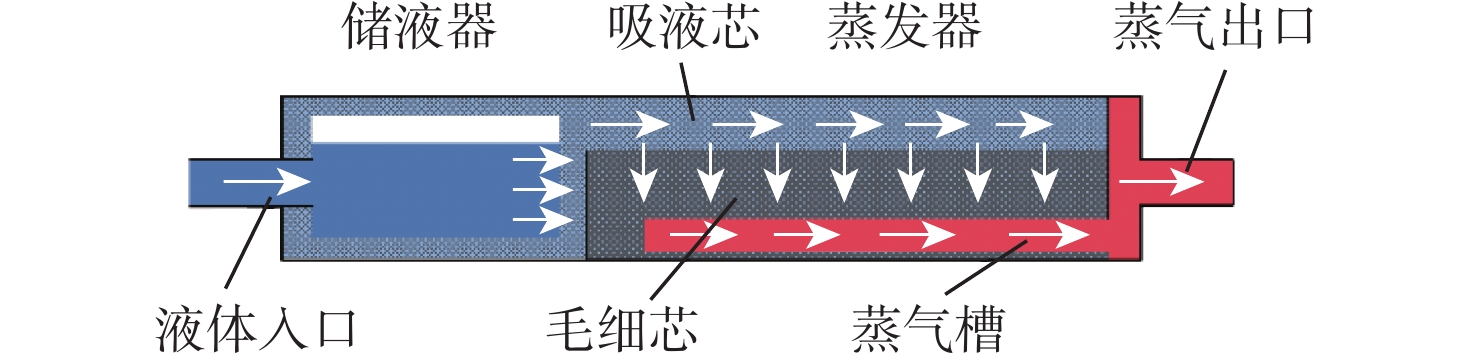
图 2 平板蒸发器结构及流场示意图
Figure 2. The construction and flow field diagram of the flat evaporator

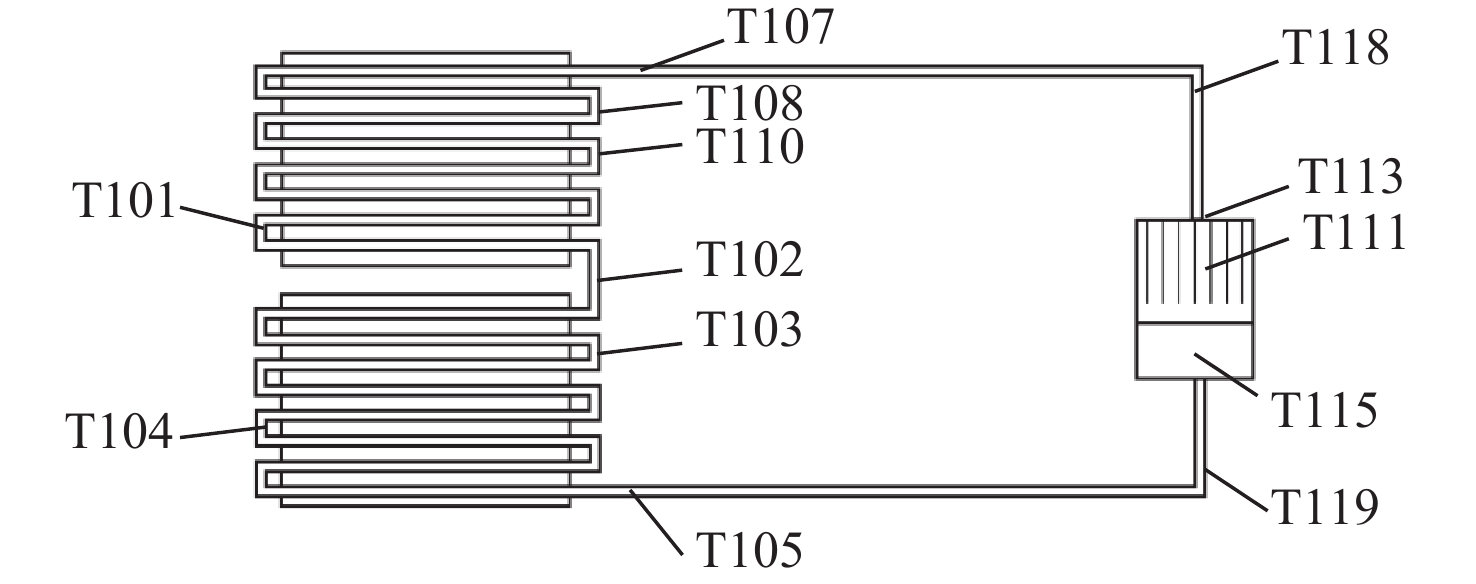
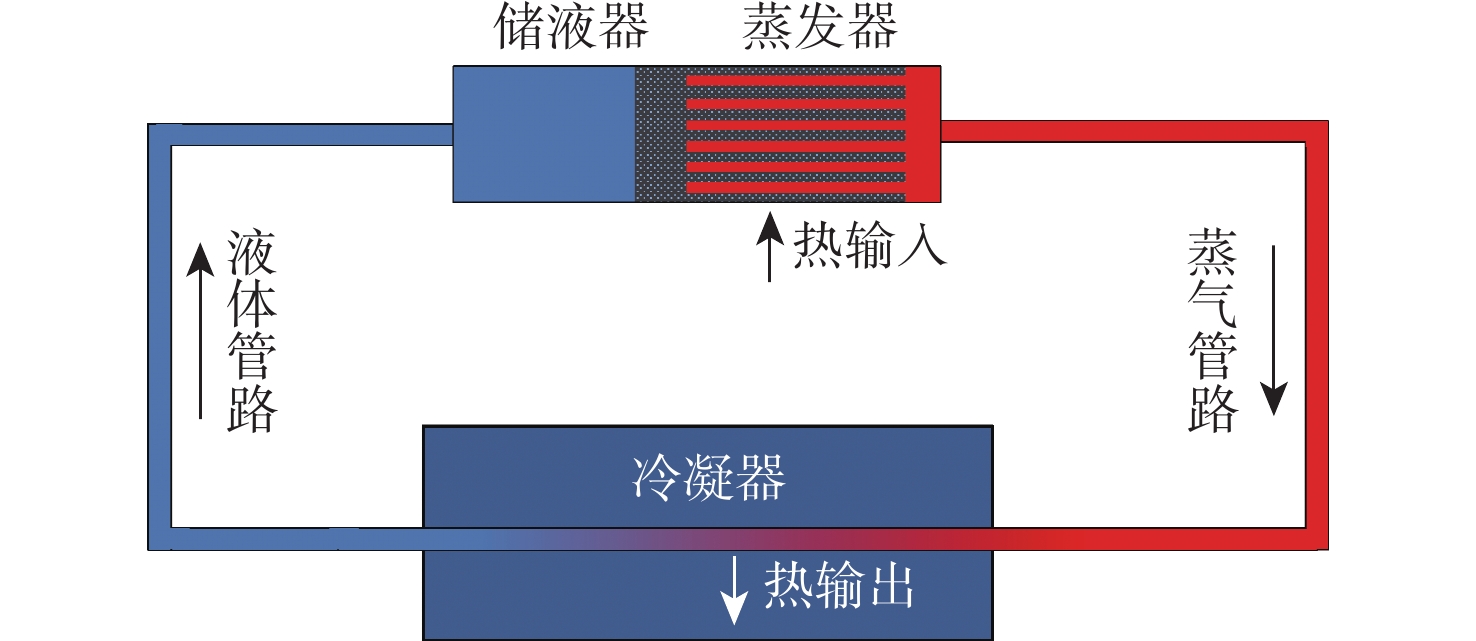
图 5 平板环路热管结构及测温点布局示意图
Figure 5. Schematic drawing of the flat loop heat pipe and temperature measuring points layout

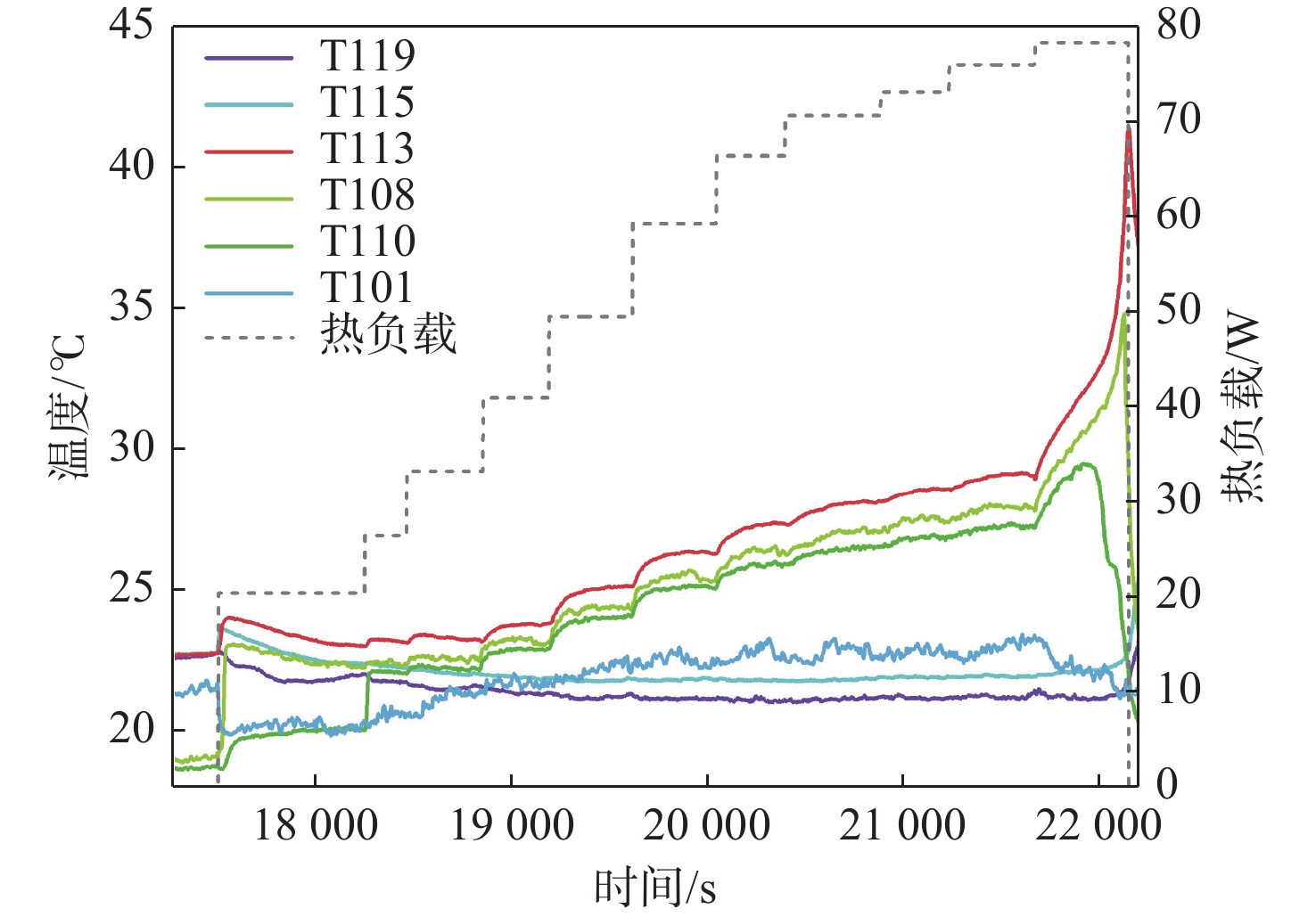
图 6 不同热负载下平板环路热管工作温度曲线
Figure 6. The operating temperature curves of the flat loop heat pipe in different heat loads

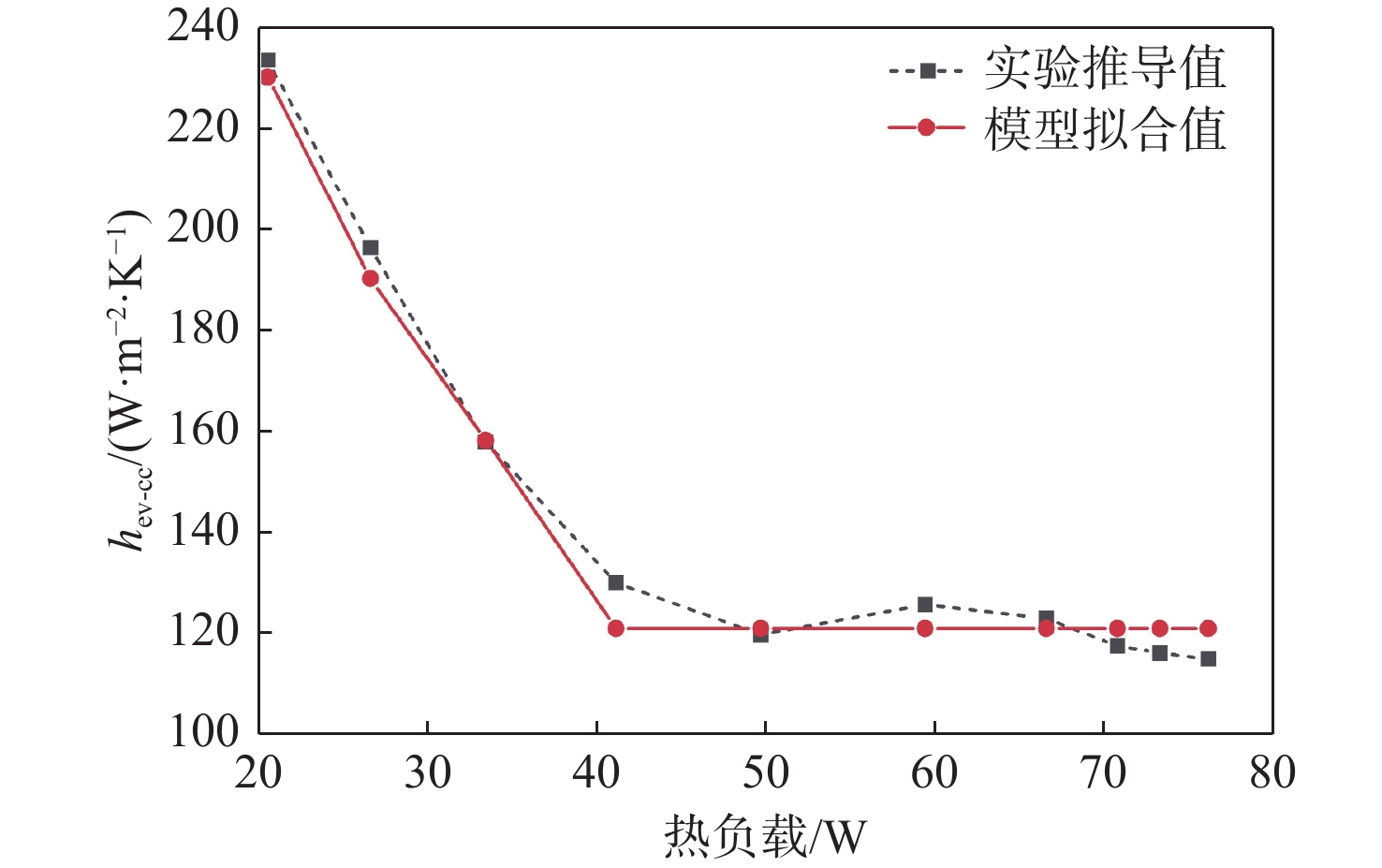
图 7 hev-cc的实验推导值和模型拟合值
Figure 7. Experimental derivation values and simulation fitting values of hev-cc

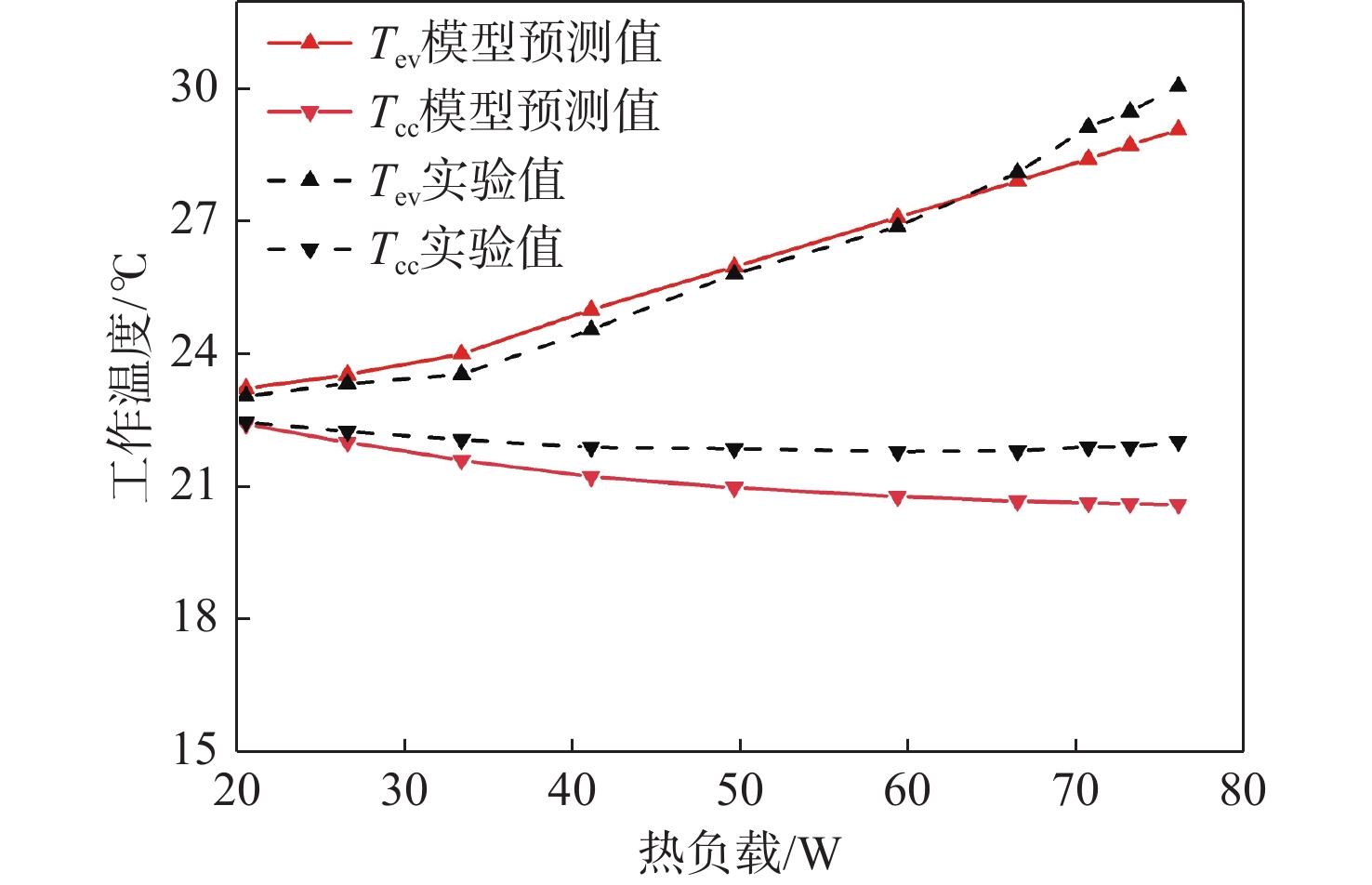
图 8 蒸发器及储液器稳态工作温度实验值和模型预测值的对比
Figure 8. Comparison of the temperature of evaporator and compensation chamber between experiment and simulation

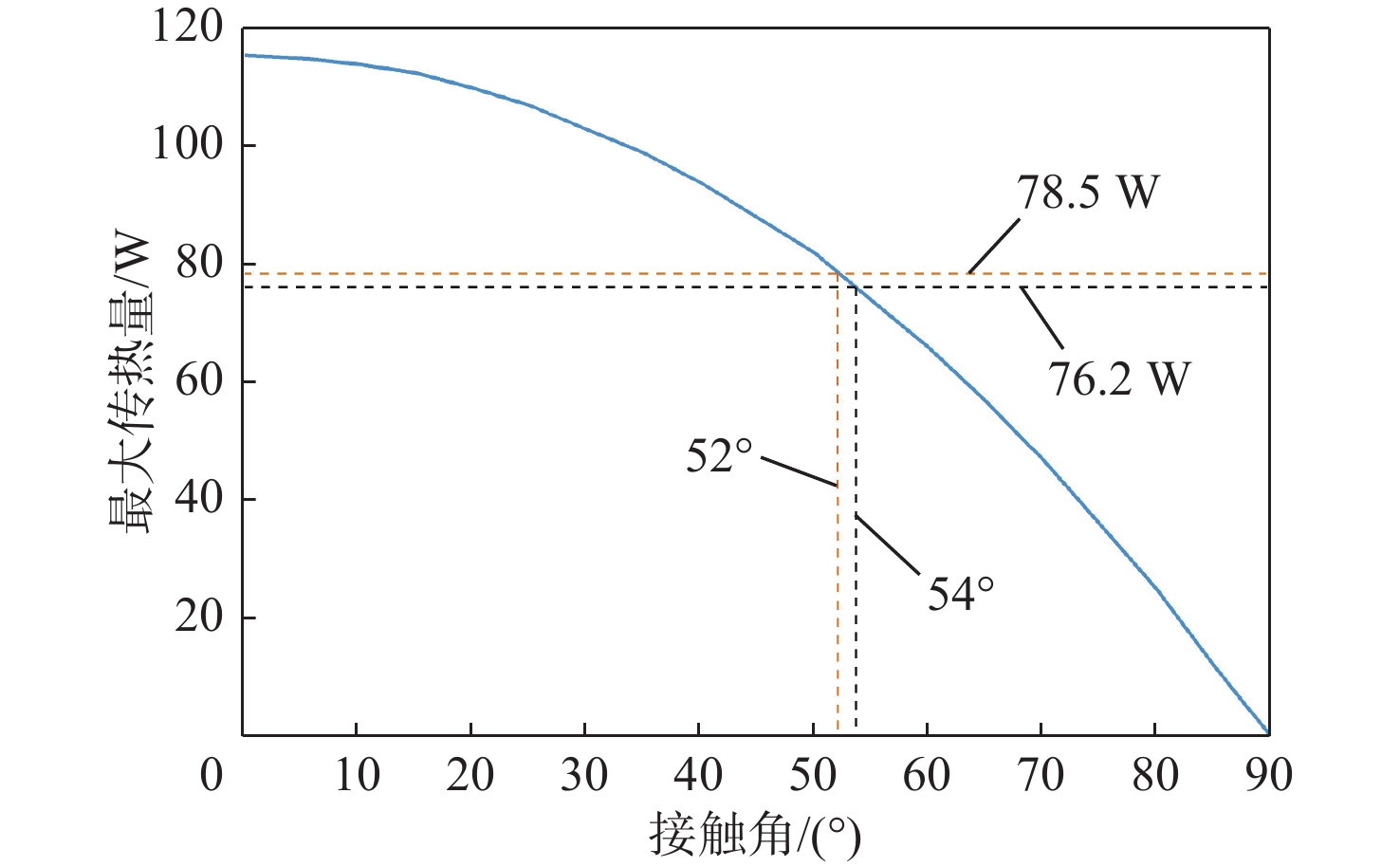
图 9 不同接触角拟合的最大传热量
Figure 9. The maximum heat transfer capabilities fitted with different contact angles

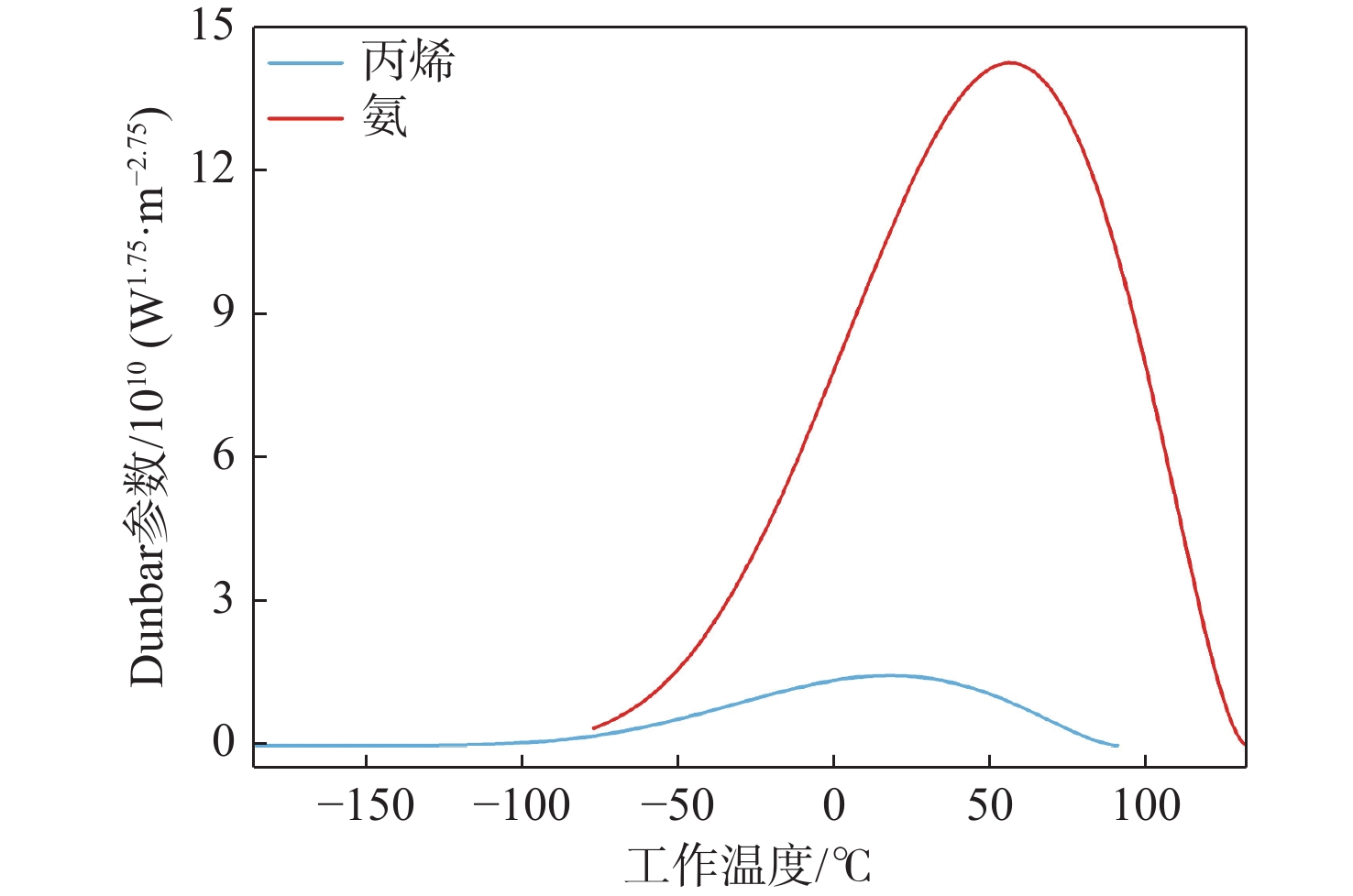
图 10 丙烯和氨工质平板环路热管的Dunbar参数曲线
Figure 10. Dunbar parameter curves of propylene and ammonia flat loop heat pipe

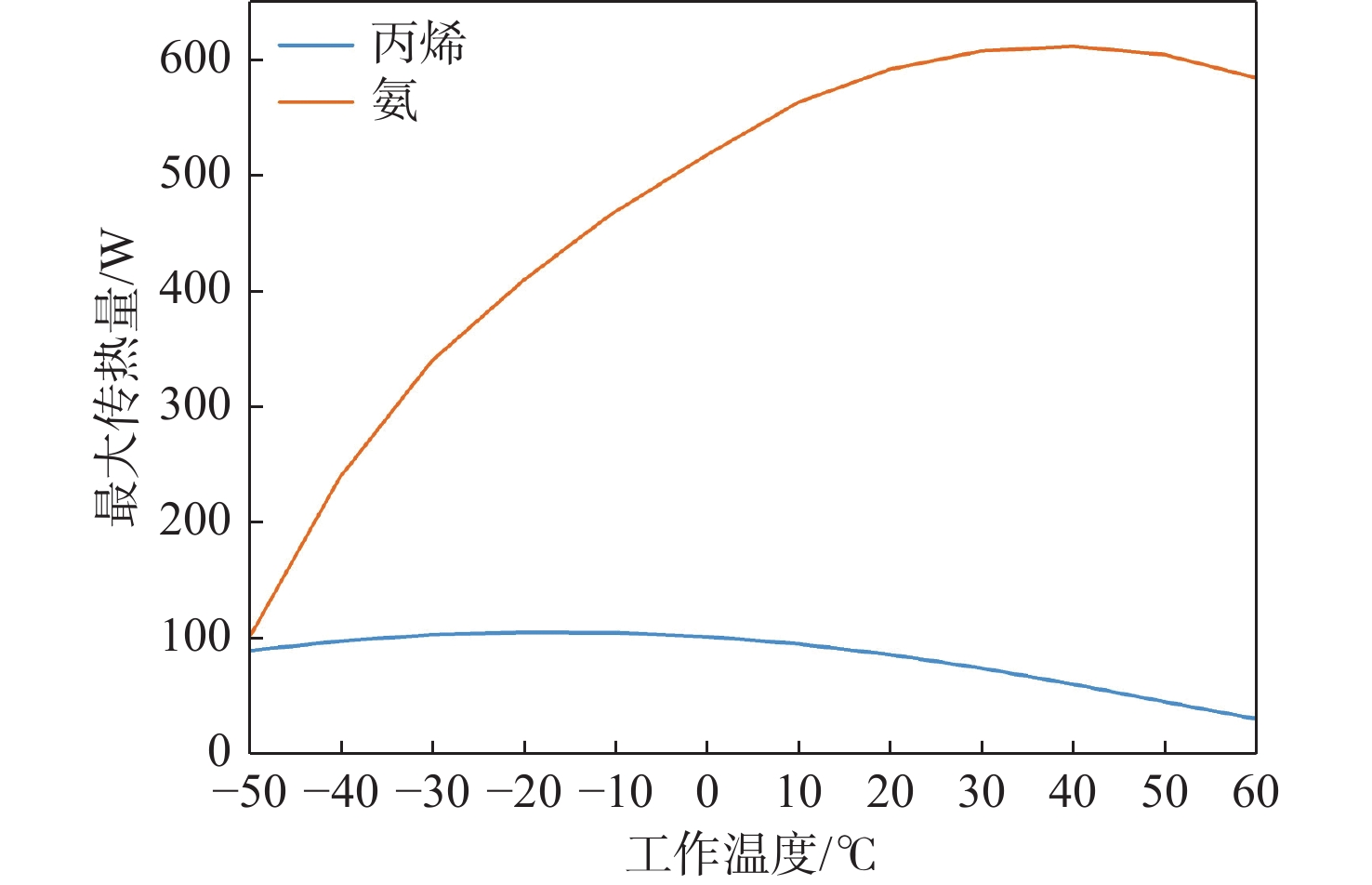
图 11 丙烯和氨工质平板环路热管的最大传热量
Figure 11. The maximum heat transfer capabilities of propylene and ammonia flat loop heat pipe

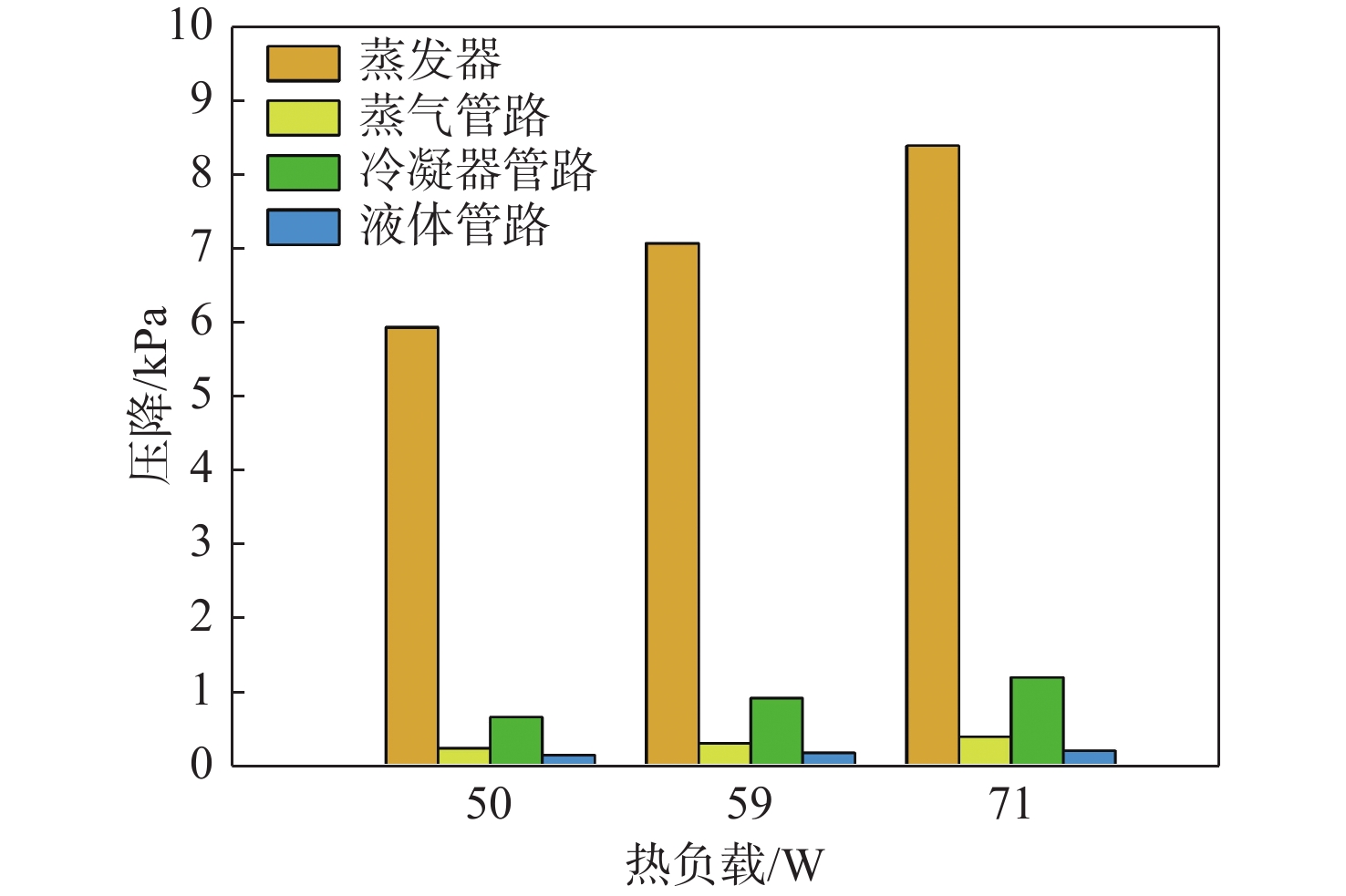
图 12 丙烯平板环路热管各部件压降
Figure 12. Pressure drops of propylene flat loop heat pipe components

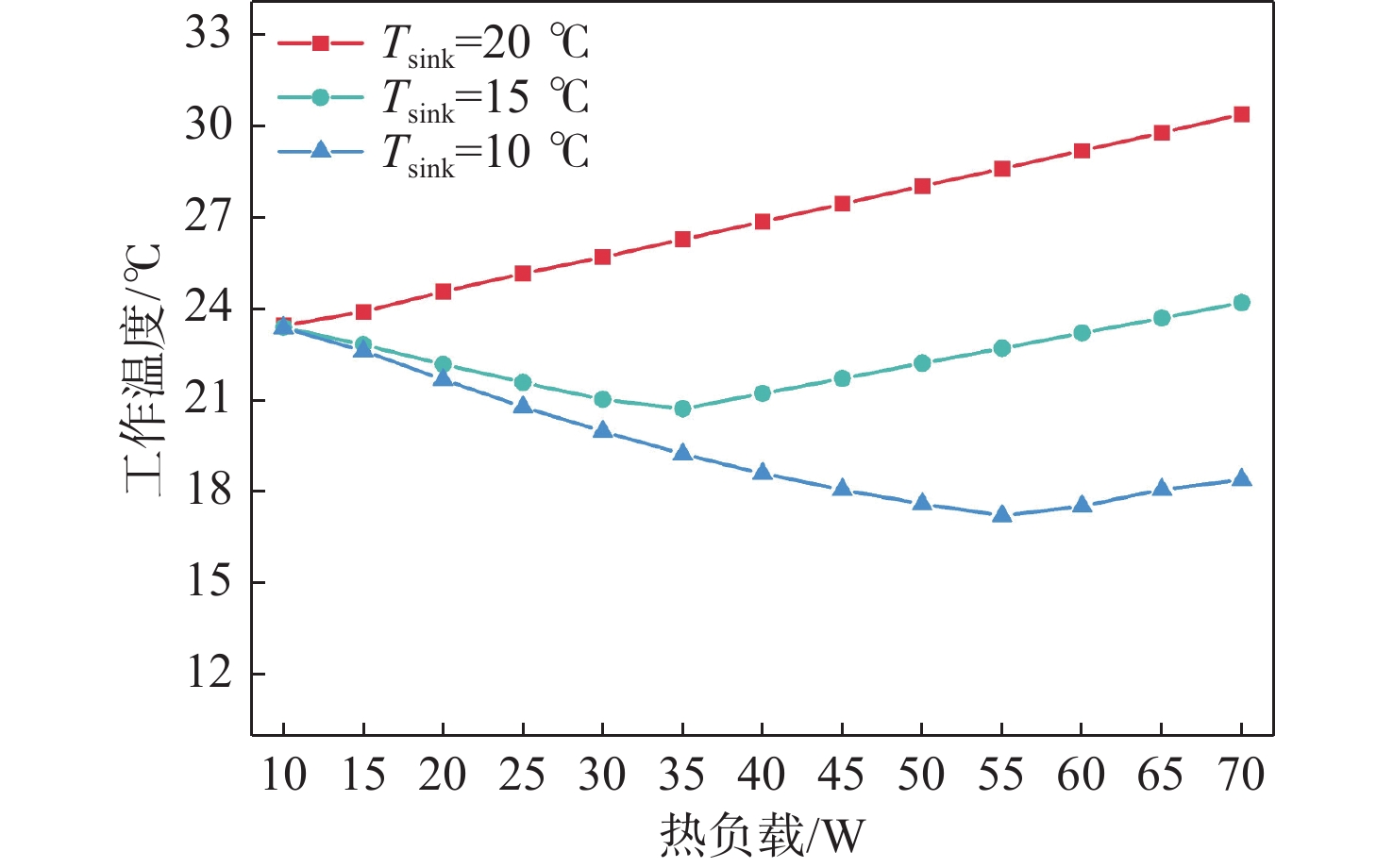
图 13 不同热沉温度下工作温度随热负载的变化
Figure 13. Variation of operating temperature with thermal loads at different heat sink temperatures

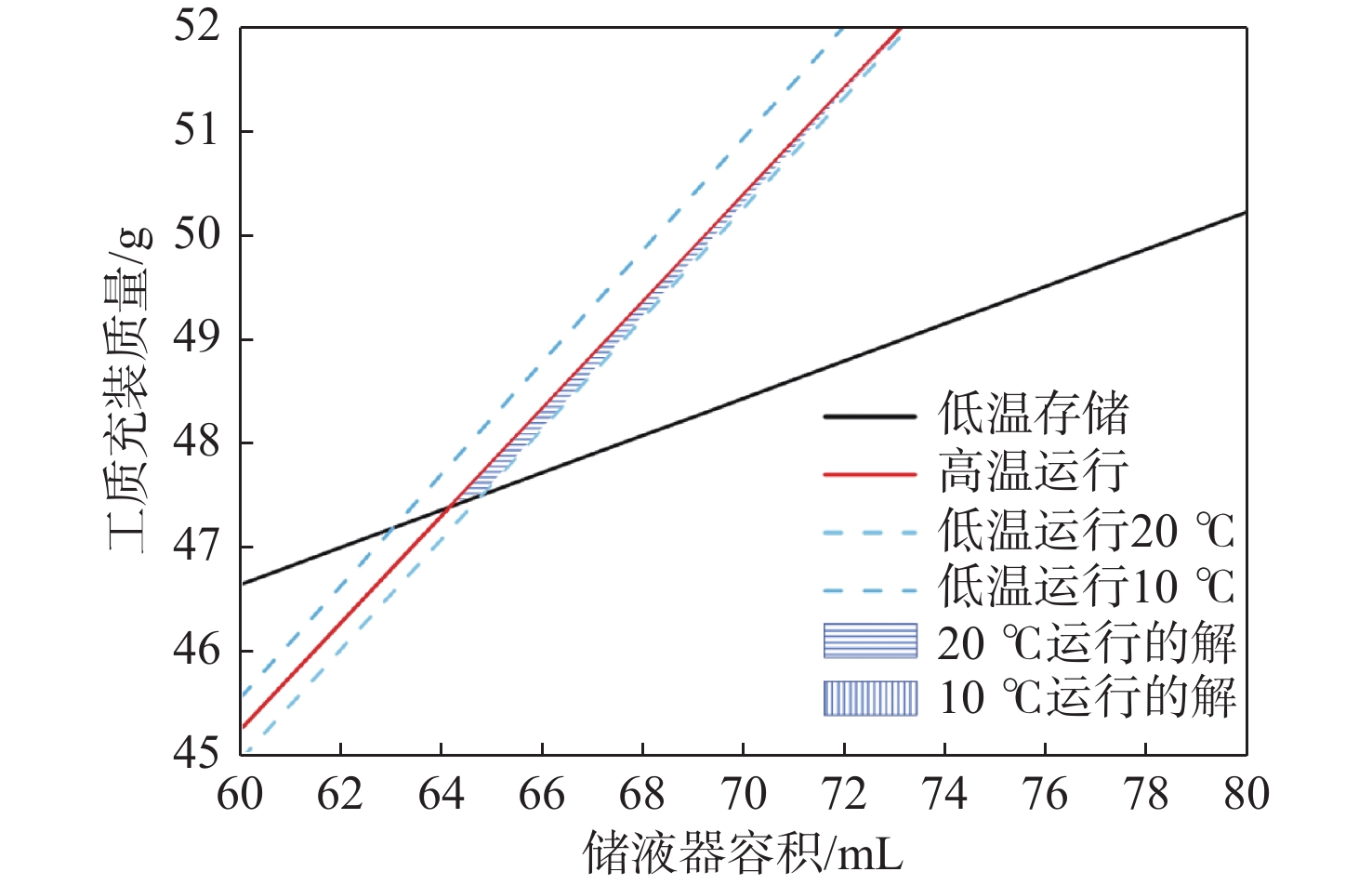
图 14 不同低温工况下解的范围
Figure 14. Region of solutions under different low temperature conditions

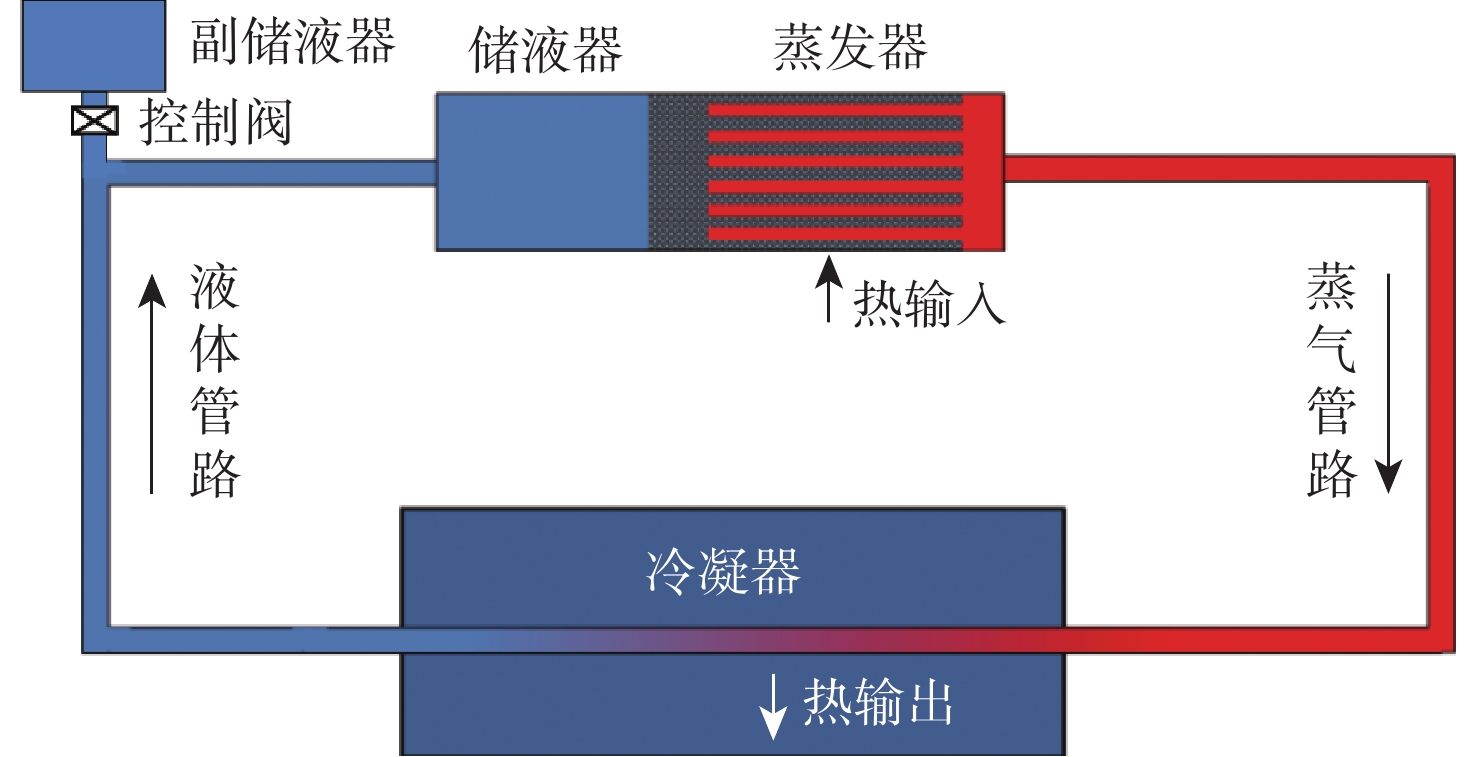
图 15 带副储液器平板环路热管的结构
Figure 15. The construction of the flat loop heat pipe with a secondary compensation chamber
表 1 丙烯工质平板环路热管主要参数
Table 1. Main parameters of the propylene flat loop heat pipe
毛细芯
最大
孔径/μm毛细芯
渗透率/m2毛细芯
厚度/mm毛细芯
面积/mm2蒸气槽
数量蒸气槽
直径/mm蒸气槽
长度/mm副芯
长度/mm副芯截
面积/mm2副芯渗
透率/m2储液器
容积/mL蒸气管路
尺寸/mm液体管路
尺寸/mm冷凝器管路
尺寸/mm工质充装
质量/g1.35 8.3×10⁻¹⁵ 4 2300 32 1 50 70 150 3.4×10⁻¹¹ 15 ϕ3× 1750 ϕ2× 2000 ϕ2× 3200 21.7  下载: 导出CSV
表 2 丙烯和氨的主要热物性参数
Table 2. Main thermophysical parameters of propylene and ammonia
材料 冰点/℃ 沸点/℃ 临界点 气液相变潜热(0 ℃)/(kJ·kg−1) 表面张力(0 ℃)/(mN·m−1) 饱和液密度(0 ℃)/(kg·m−3) 丙烯 −185 −47.7 91.9 ℃、4.62 MPa 377.59 10.178 546.13 氨 −77.7 −33.5 132.5 ℃、11.40 MPa 1262.25 26.295 638.57
下载: 导出CSV
-
[1] GROB E W. System accommodation of propylene loop heat pipes for the geoscience laser altimeter system (GLAS) instrument[J]. SAE Technical Paper Series, 2001, 1: 2263. [2] GONCHAROV K A, NIKITKIN M N, GOLOVIN O A, et al. Loop heat pipes in thermal control systems for “OBZOR” spacecraft[J]. SAE Technical Paper Series, 1995, 1: 951555. [3] CHOI M. Thermal design to meet stringent temperature gradient/stability requirements of SWIFT BAT detectors[C]//Proceedings of the 35th Intersociety Energy Conversion Engineering Conference and Exhibit. Reston: AIAA, 2000: 2905. [4] RODRIGUEZ J I. Thermal design of the tropospheric emission spectrometer instrument[J]. SAE Technical Paper Series, 2000, 1: 2274. [5] KOZMINE D, GONCHAROV K, NIKITKIN M, et al. Loop heat pipes for space mission Mars 96[J]. SAE Technical Paper Series, 1996, 1: 961602. [6] MISHKINIS D, GREGORI C, ROMERA F, et al. Development of propylene LHP for European Mars Rover applications[J]. Heat Pipe Science and Technology, 2010(1): 19-46. [7] WALKER K L, HARTENSTINE J, TARAU C, et al. Ammonia and propylene loop heat pipes with thermal control valves-thermal/vacuum and freeze/thaw testing[C]//Proceedings of the 43rd International Conference on Environmental Systems. Reston: AIAA, 2013: 3434. [8] PAUKEN M, RODRIGUEZ J I. Performance characterization and model verification of a loop heat pipe[J]. SAE Technical Paper Series, 2000, 1: 2317. [9] 闫凯芬. 丙烯环路热管150-290 K温区冷凝流型及换热特性研究[D]. 北京: 中国科学院大学, 2021: 34-40.YAN K F. Condensation flow pattern and heat transfer characteristics of propylene loop heat pipes in 150-290 K[D]. Beijing: University of Chinese Academy of Sciences, 2021: 34-40(in Chinese). [10] MAYDANIK Y, CHERNYSHEVA M, VERSHININ S. High-capacity loop heat pipe with flat evaporator for efficient cooling systems[J]. Journal of Thermophysics and Heat Transfer, 2020, 34(3): 465-475. [11] YANG Z H, ZHANG Y F, BAI L Z, et al. Experimental study on the thermal performance of an ammonia loop heat pipe using a rectangular evaporator with longitudinal replenishment[J]. Applied Thermal Engineering, 2022, 207: 118199. [12] ZHANG H X, LI G G, CHEN L, et al. Development of flat-plate loop heat pipes for spacecraft thermal control[J]. Microgravity Science and Technology, 2019, 31(4): 435-443. [13] 丁汀, 张红星, 苗建印, 等. 环路热管启动性能实验与分析[J]. 航天器工程, 2006, 15(1): 25-30.DING T, ZHANG H X, MIAO J Y, et al. Experimental study and analysis of the startup performance of LHP[J]. Spacecraft Engineering, 2006, 15(1): 25-30(in Chinese). [14] ZHOU L, QU Z G, CHEN G, et al. One-dimensional numerical study for loop heat pipe with two-phase heat leak model[J]. International Journal of Thermal Sciences, 2019, 137: 467-481. [15] CAVALLINI A, DEL COL D, DORETTI L, et al. Condensation in horizontal smooth tubes: a new heat transfer model for heat exchanger design[J]. Heat Transfer Engineering, 2006, 27(8): 31-38. [16] MÜLLER-STEINHAGEN H, HECK K. A simple friction pressure drop correlation for two-phase flow in pipes[J]. Chemical Engineering and Processing: Process Intensification, 1986, 20(6): 297-308. [17] 张红星. 环路热管2相传热技术的理论和实验研究[D]. 北京: 北京航空航天大学, 2006: 55-65.ZHANG H X. Theoretical and experimental investigation of loop heat pipes[D]. Beijing: Beihang University, 2006: 55-65(in Chinese). [18] 柏立战, 林贵平, 张红星, 等. 环路热管稳态建模及运行特性分析[J]. 北京航空航天大学学报, 2006, 32(8): 894-898.BAI L Z, LIN G P, ZHANG H X, et al. Steady state modeling of loop heat pipes and operating characteristics analysis[J]. Journal of Beijing University of Aeronautics and Astronautics, 2006, 32(8): 894-898(in Chinese). [19] XU Y, FANG X D. Correlations of void fraction for two-phase refrigerant flow in pipes[J]. Applied Thermal Engineering, 2014, 64(1-2): 242-251. [20] 刘成, 谢荣建, 吴亦农, 等. 工质对180~230 K低温环路热管工作特性的影响[J]. 工程科学与技术, 2020, 52(6): 190-198.LIU C, XIE R J, WU Y N, et al. Effects of working fluids on operating characteristics of the cryogenic loop heat pipe in 180~230 K[J]. Advanced Engineering Sciences, 2020, 52(6): 190-198(in Chinese). [21] WANG N H, JOSEPH B, CHENG L. Design and experimental study of thermal control system for AMS cryocoolers[J]. Chinese Science Bulletin, 2013, 58(10): 1200-1204. -

 下载:
下载:

 点击查看大图
计量
- 文章访问数: 304
- HTML全文浏览量: 99
- PDF下载量: 115
- 被引次数: 0
