





-
摘要:
全球能源需求增长和环境污染加剧背景下,生物航煤作为清洁、低碳、可持续燃料,引领未来燃料发展。航空发动机燃烧室的原型试验受到实际条件限制,低压模化试验可简化工况参数,有效解决实际问题并满足工程需求。为此,以生物航煤为燃料,采用3种模化准则,对燃烧室进行低压模化数值模拟研究,并与原设计状态对比。结果表明:等容积流率模化准则(
Q 准则)预测的流场分布与原设计状态最接近,且轴向和切向温度场分布优于等燃烧效率模化准则(K 准则)和L 准则。低压模化条件下,与原设计状态相比,燃烧效率降低2%~3%。特别是当压力指数过高时,L 准则模化后的燃油流量过小,不适用于航空发动机的模化试验。出口截面温度分布系数的预测结果显示,K 准则的预测值与原设计值相比,存在负偏差,Q 准则预测结果的平均误差最小。综合来看,Q 准则为最优模化准则,其计算结果可为航空发动机燃烧室的低压模化试验研究提供参考。Abstract:In the context of global energy demand growth and environmental pollution intensification, bio-jet coal as a clean, low-carbon, sustainable fuel, leading the future fuel development. The prototype test of an aero-engine combustion chamber is limited by practical conditions, while the low-pressure modeling test simplifies working parameters, effectively solves practical problems and meets engineering requirements. Three modeling criteria are used in this article’s low-pressure modeling numerical simulation of the combustor, which uses bio-jet as fuel. The results are compared to those computed in the original design condition. The results show that the flow field distribution predicted by the equal volume flow rate criterion (
Q criterion) is the closest to the original design state, and the axial and tangential temperature field distribution is better than the equal combustion efficiency criterion (K criterion) andL criterion. Under the condition of low-pressure modeling, the combustion efficiency is reduced by 2% to 3% compared to the original design state. Especially when the pressure index is too high, the fuel flow after theL criterion is too small, and it is not suitable for aero-engine modeling test. The prediction results of the temperature distribution coefficient of the exit section show that the predicted value of theK criterion has a negative deviation compared with the original design value. TheQ criterion has the smallest average error in predicting results. In conclusion, theQ criterion is the best modeling criterion, and the results of its computations can be used as a guide for the low-pressure modeling test of the combustion chamber of an aero engine.-
Key words:
- aero-engine /
- low-pressure modeling /
- numerical simulation /
- Q criterion /
- bio-jet coal
-

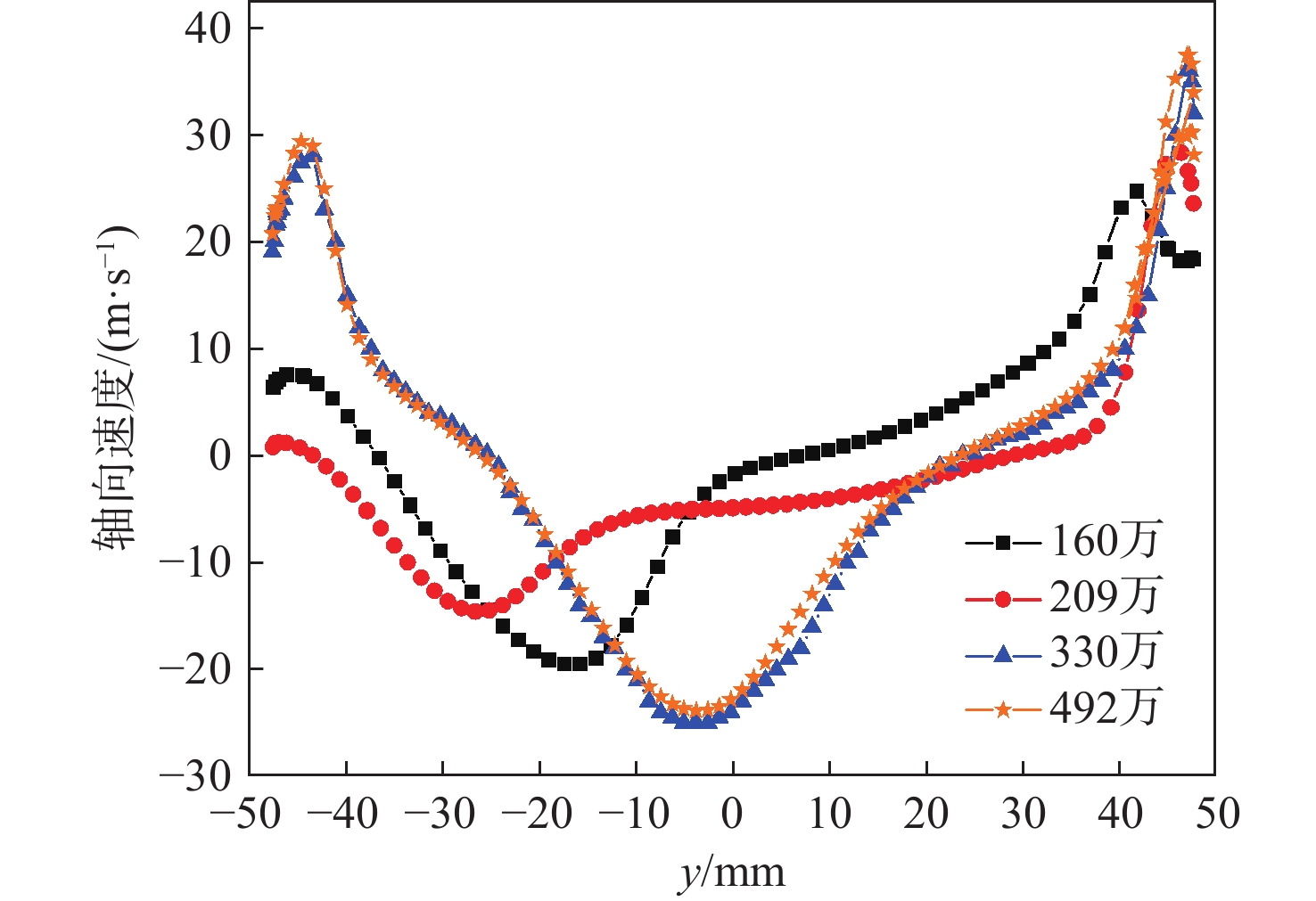
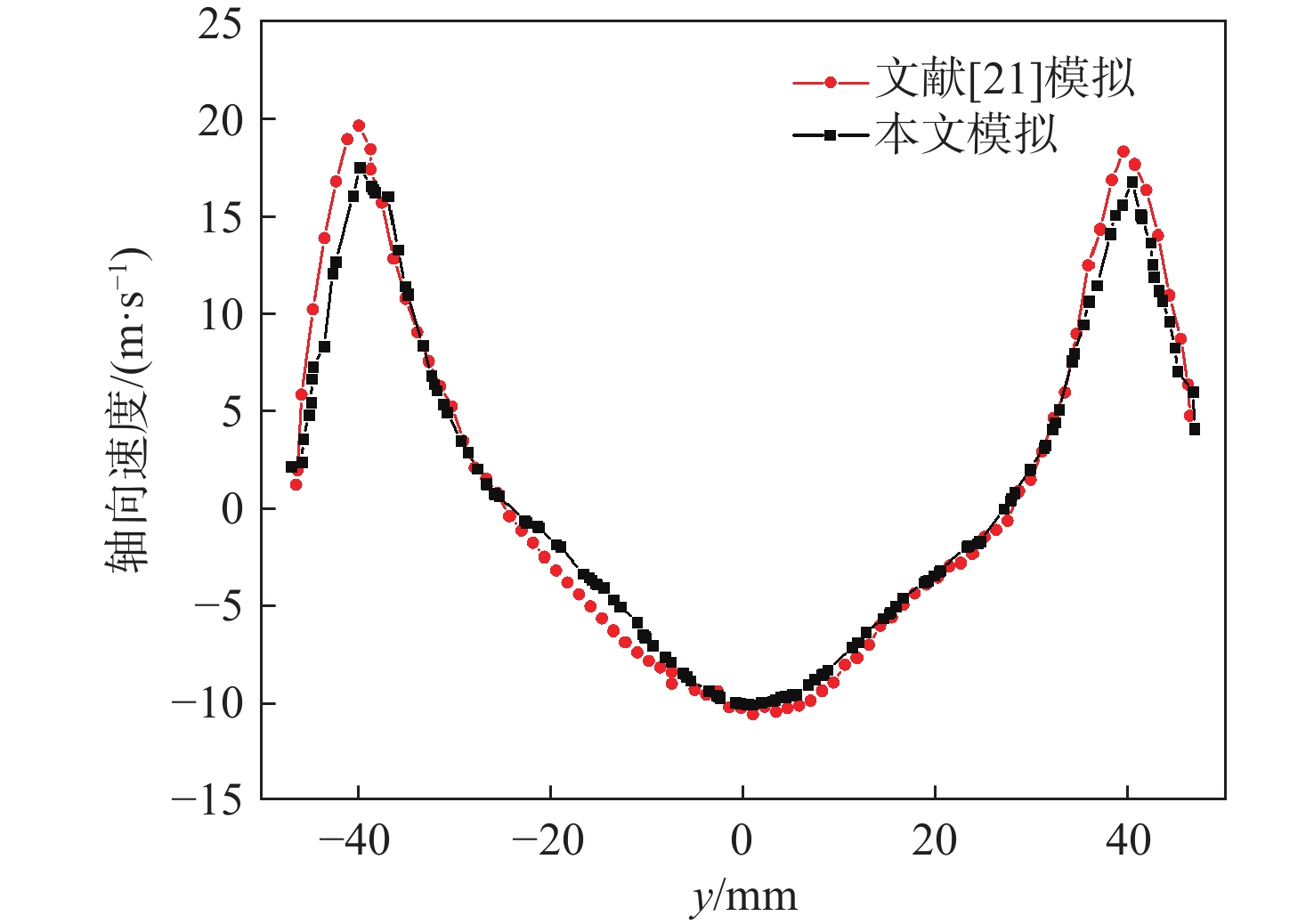
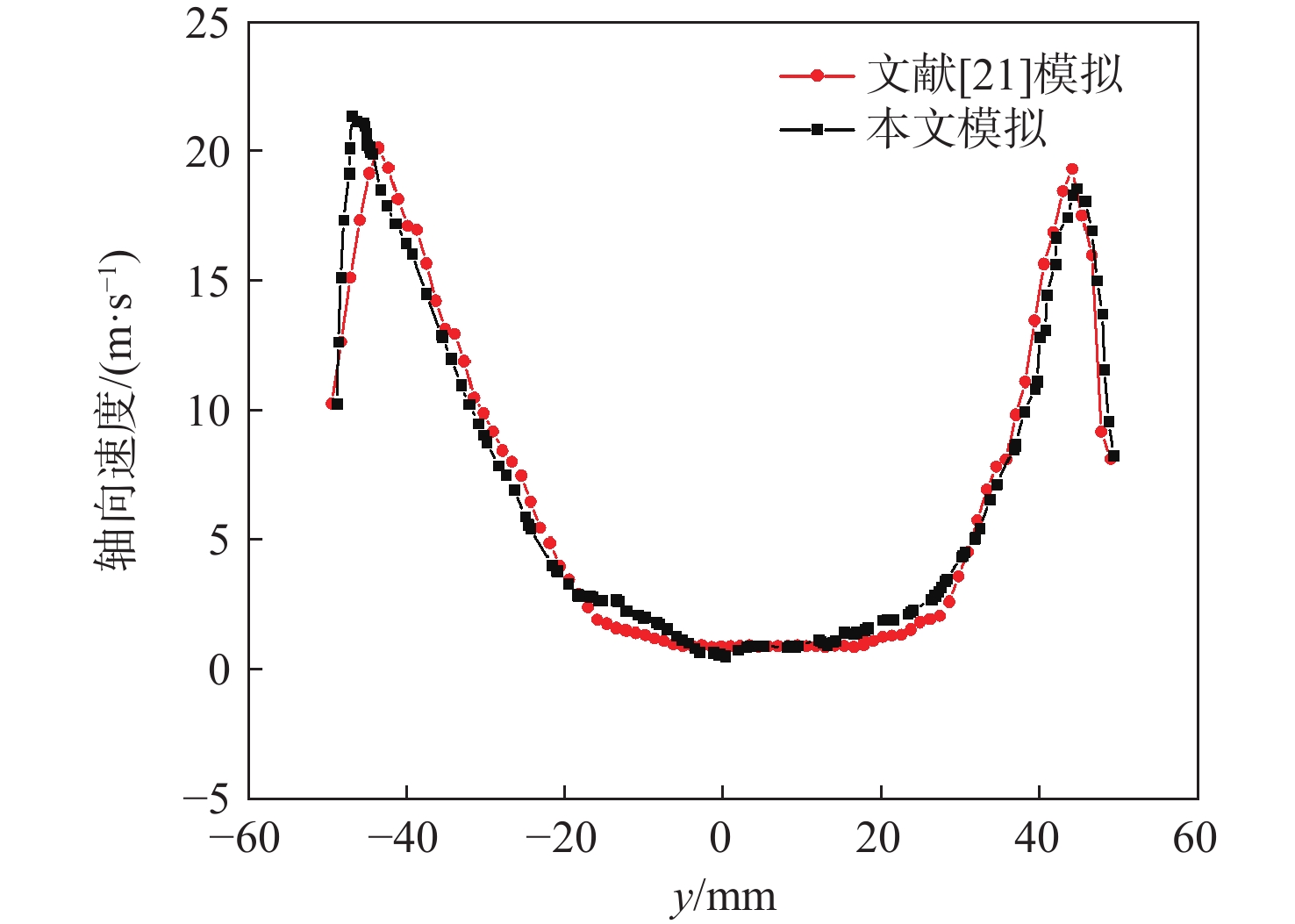
图 5 $ x $=10 mm截面处轴向速度模拟结果对比
Figure 5. Comparison of the simulation results of axial velocity at $ x $=10 mm cross-section

图 6 $ x $=50 mm截面处轴向速度模拟结果对比
Figure 6. Comparison of the simulation results of axial velocity at $ x $=50 mm cross-section

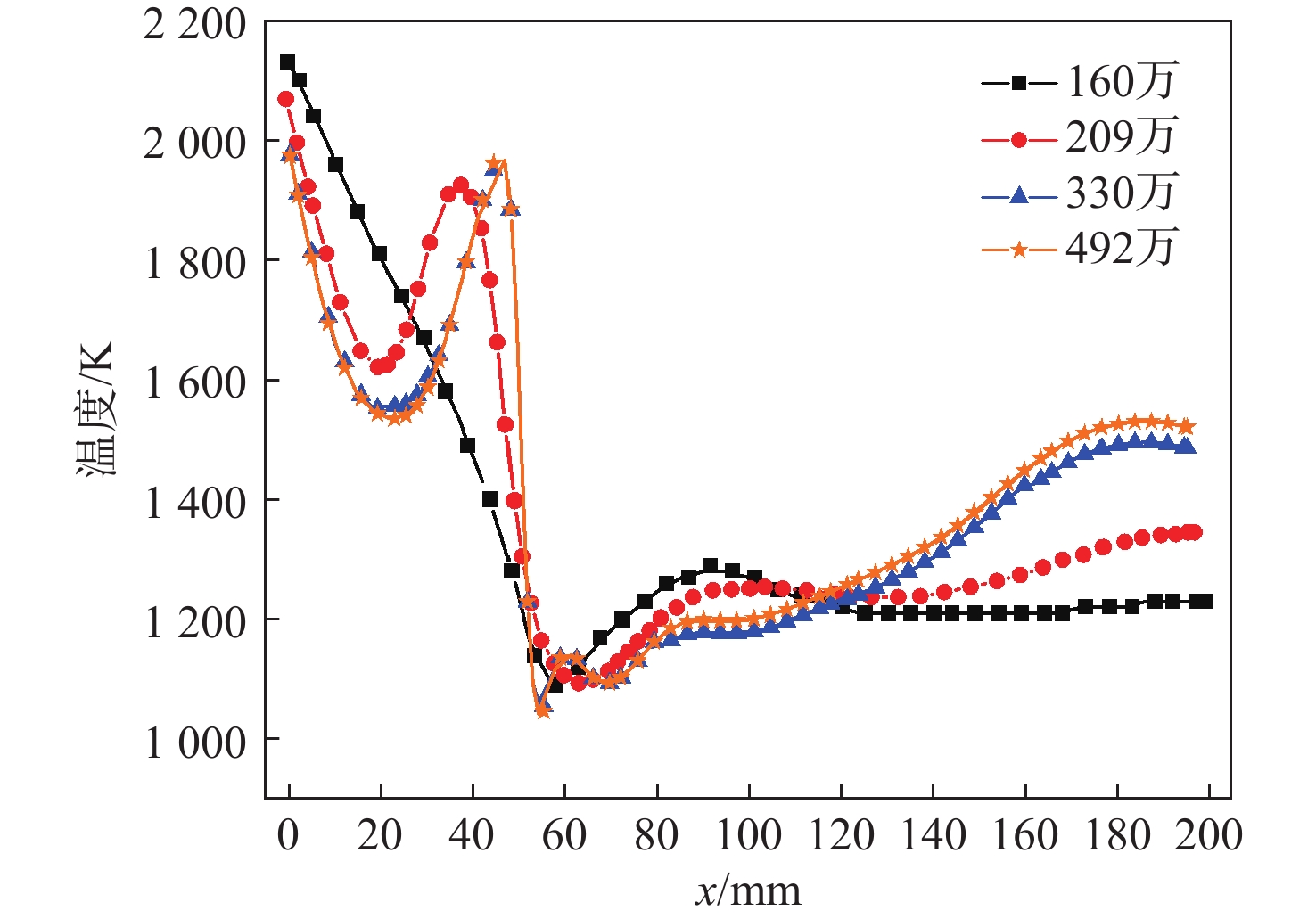
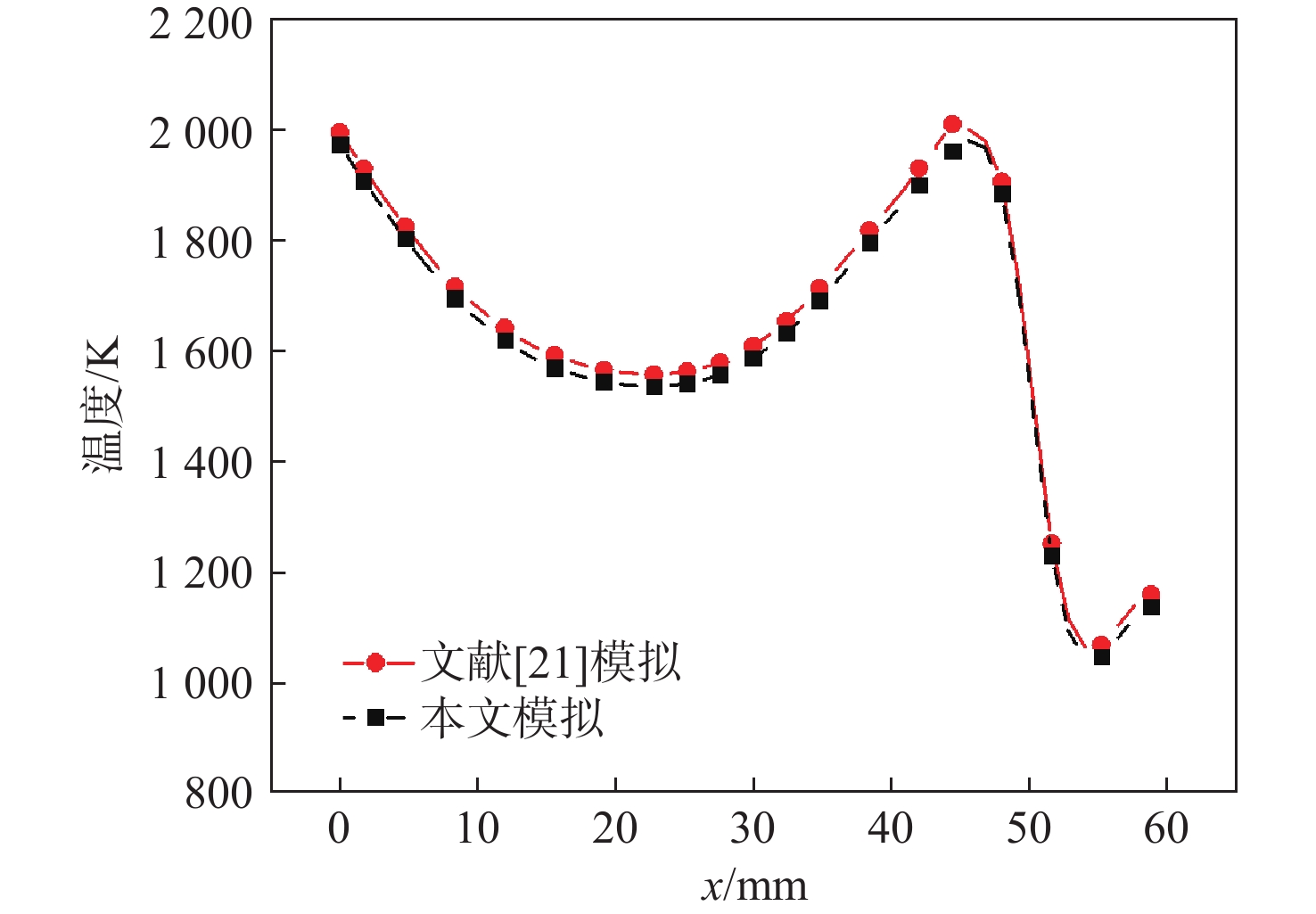
图 7 中心轴线上温度模拟结果对比
Figure 7. Comparison of temperature simulation results on the central axis

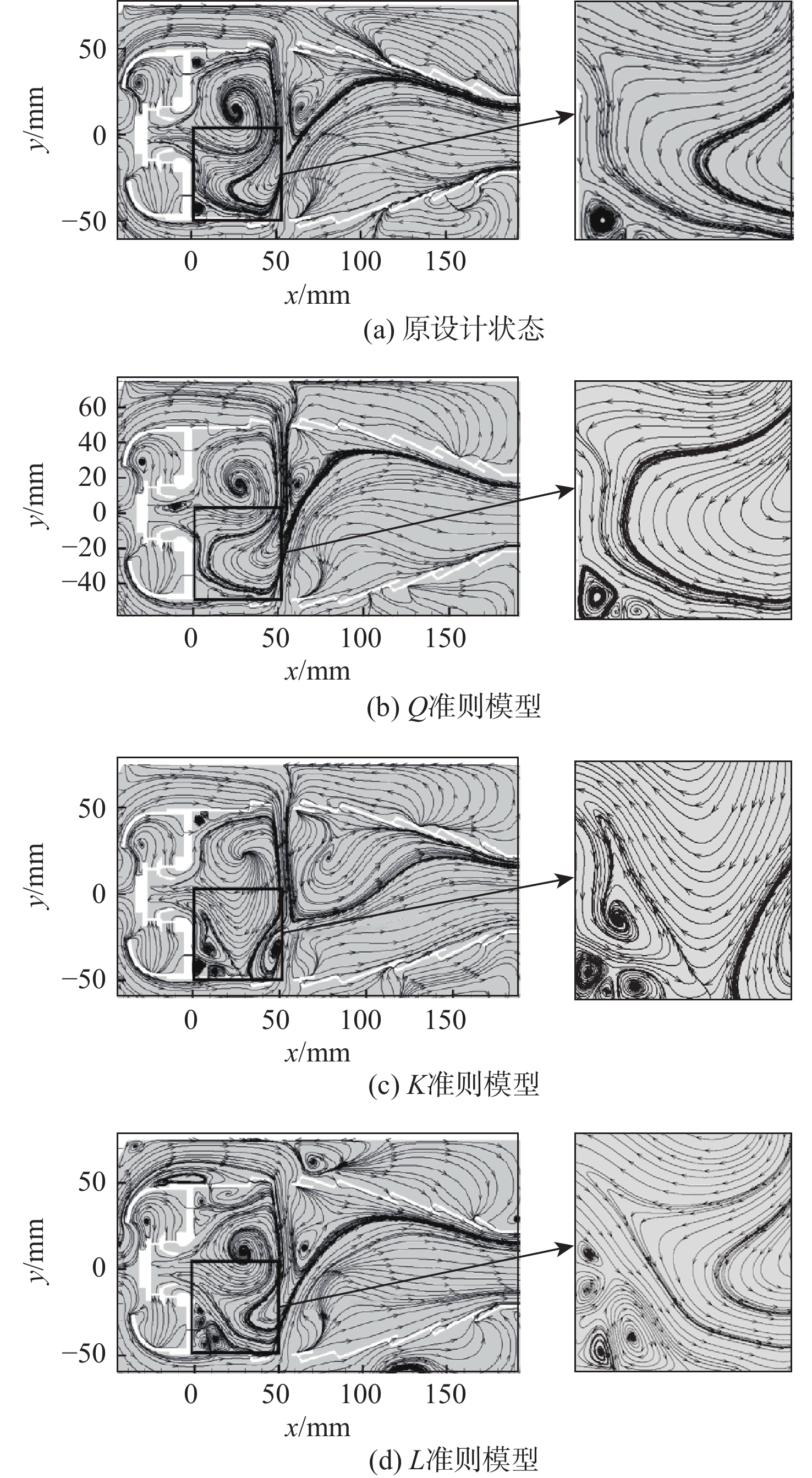
图 8 原设计状态和不同模化状态的流场结构
Figure 8. Flow field structure of original design state and different modeling states

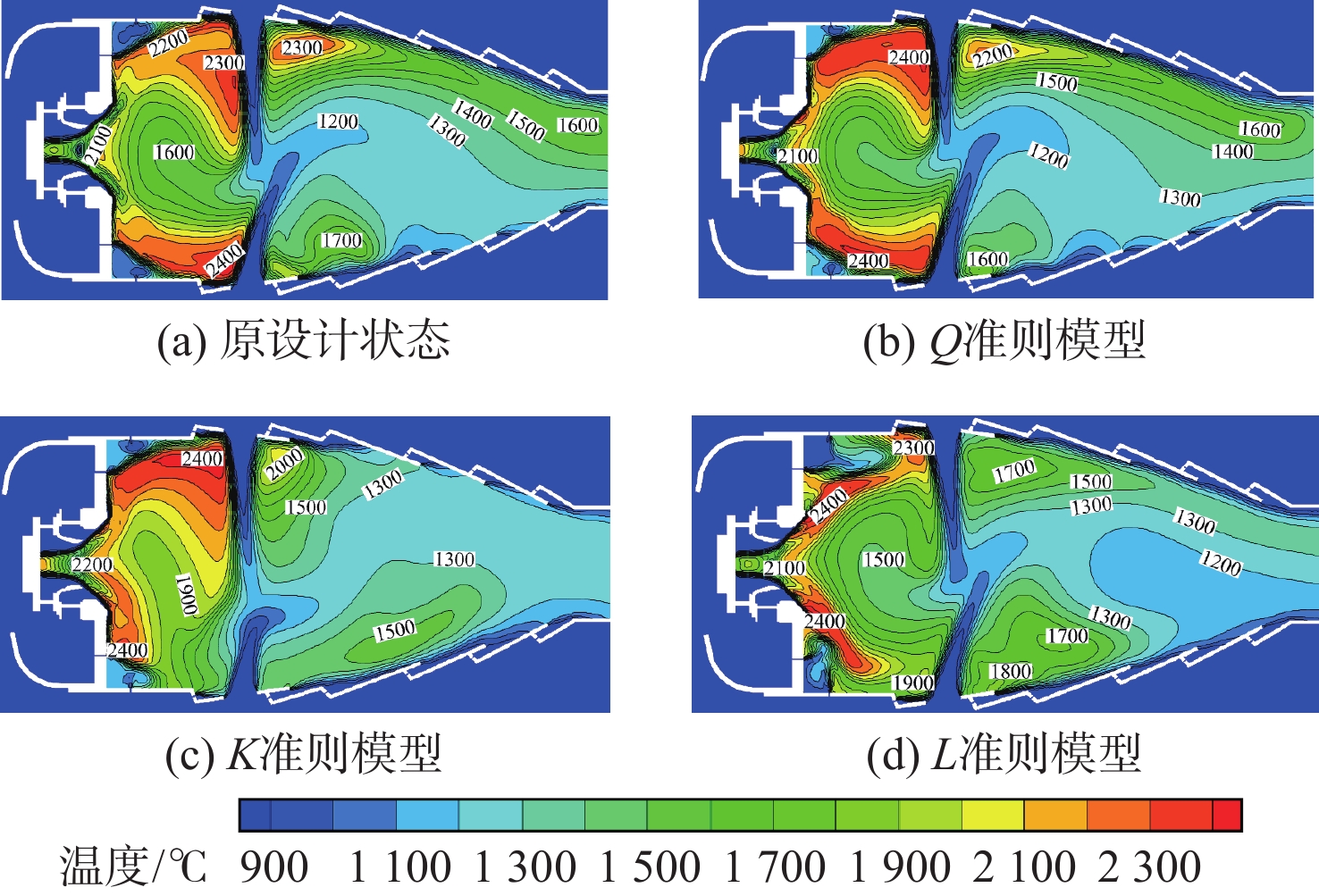
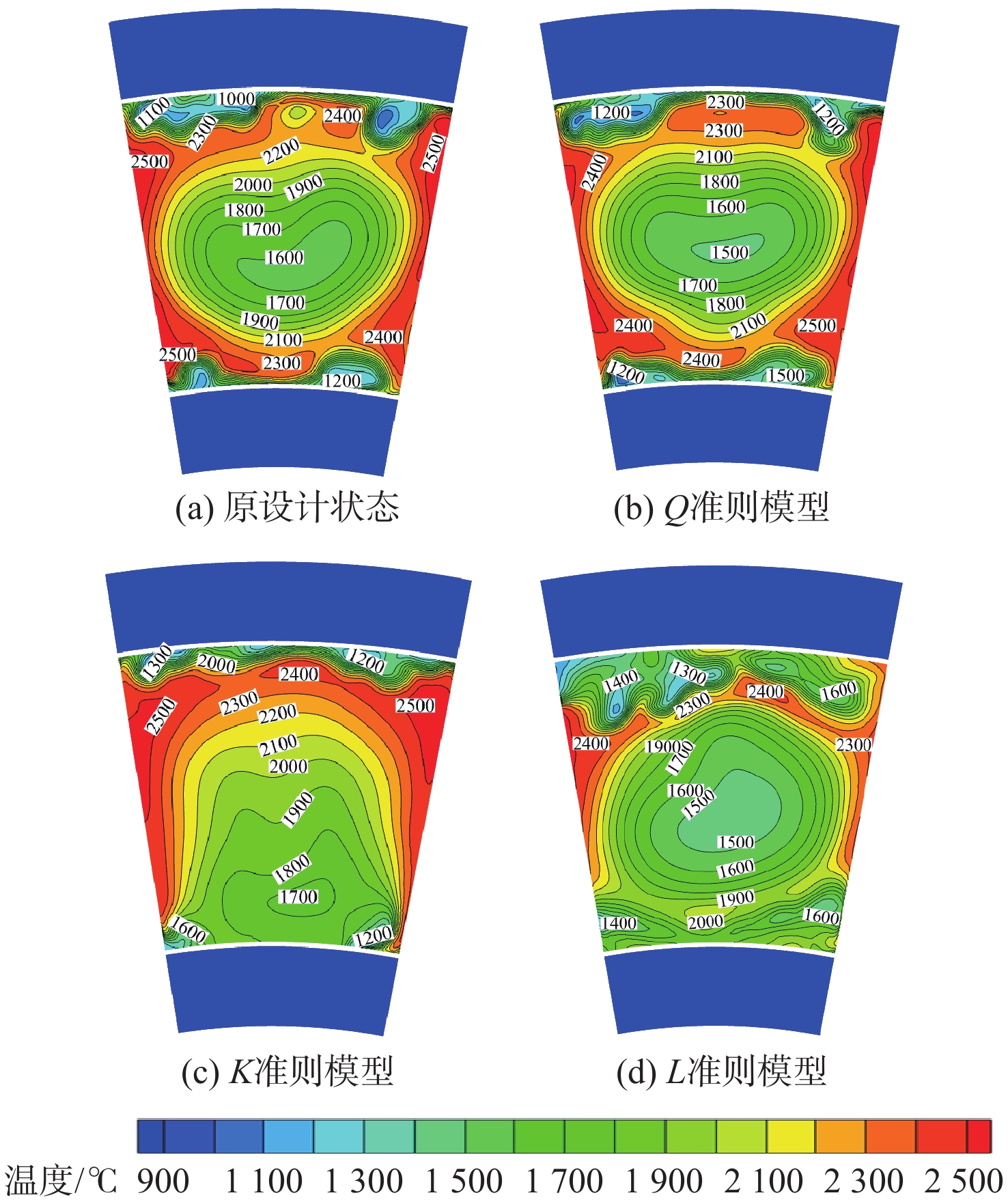
图 9 原设计状态和不同模化状态的温度场分布
Figure 9. Temperature field distribution of original design state and different modeling states

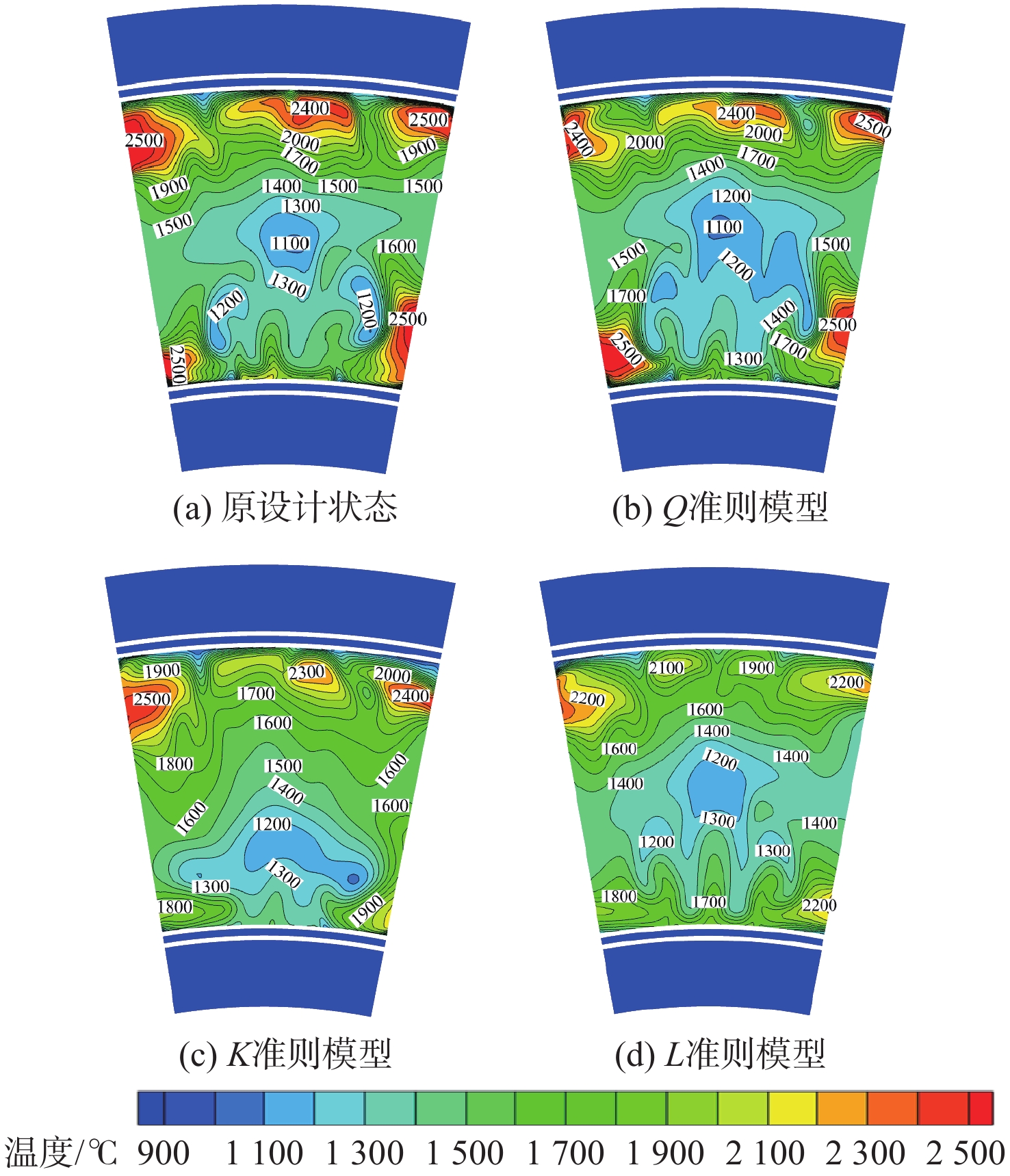
图 10 原设计状态和不同模化状态轴向切面$ x $=30 mm处的温度场分布对比
Figure 10. Comparison of temperature field distribution at axial section $ x $=30 mm between original design state and different modeling states

图 11 原设计状态和不同模化状态轴向切面$ x $=70 mm处的温度场分布对比
Figure 11. Comparison of temperature field distribution at axial section $ x $=70 mm between original design state and different modeling states

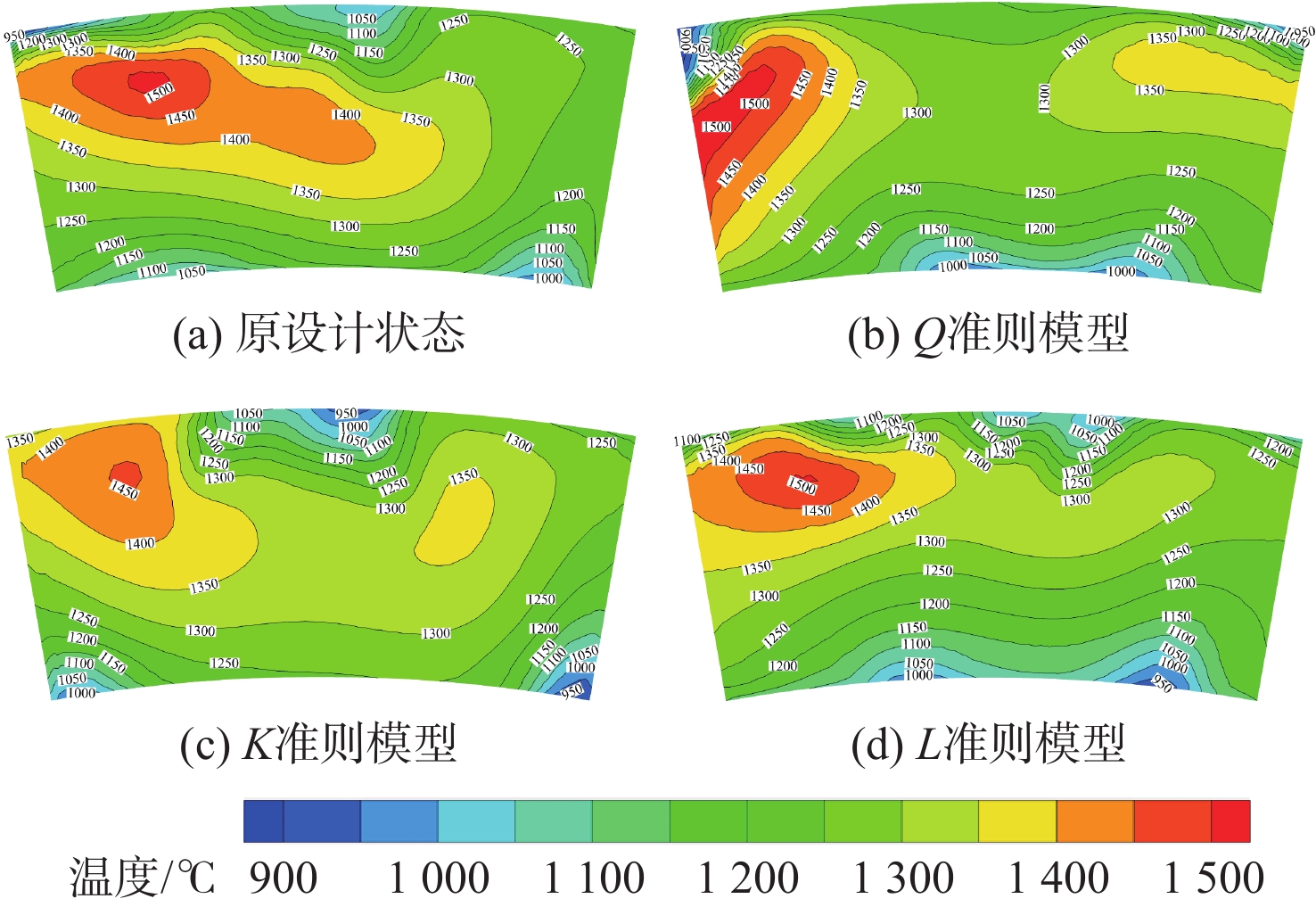
图 12 原设计状态和不同模化状态出口截面温度分布对比
Figure 12. Comparison of temperature distribution of exit section between original design state and different modeling states

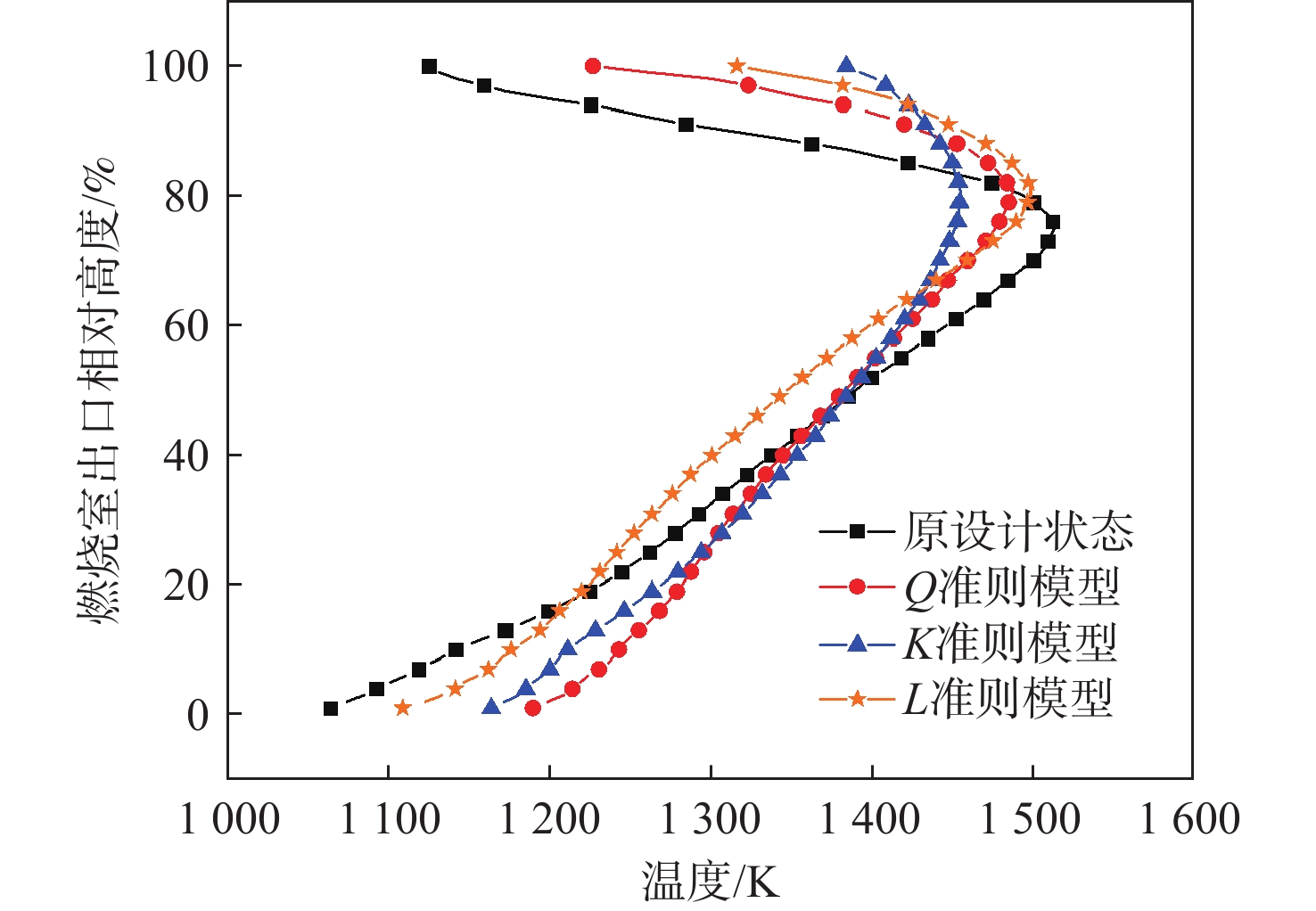
图 13 燃烧室出口温度沿高度的变化
Figure 13. Combustion chamber outlet temperature change with height
表 1 原设计状态和不同模化准则下燃烧室的进口参数
Table 1. Inlet parameters of the combustion chamber in the design state and under different modeling criteria
状态 空气质量流量/
(kg·s−1)空气
温度/K空气
压力/MPa燃油质量流量/
10−3(kg·s−1)原设计状态 1.3 800 2.5 17.95 Q准则 0.26 800 0.5 3.59 K准则 0.204 800 0.5 2.82 L准则 0.078 800 0.5 1.08  下载: 导出CSV
密度/
(kg·m−3)黏度/
(mm2·s−1)表面张力
(N·m−1)沸点/K 蒸发
温度/K气化潜热/
(kJ·kg−1)热值/
(MJ·kg−1)808 2.11 0.0236 477.95 311 252.6 44.4
下载: 导出CSV
表 3 冷态条件计算模型
Table 3. Calculation model for cold conditions
模型算法 射流参数 边界条件(进口) 求解器 时间 湍流模型 近壁处理 进口类型 粒子类型 速度/(m·s−1) 温度/K 总压/kPa 总温/K 湍流强度/% 水利直径/mm 隐式求解器 稳态 可实现k-ε模型 标准壁面函数 圆锥 液滴 30 300 110 300 5 34.56
下载: 导出CSV
表 4 热态条件计算模型
Table 4. Calculation model for hot conditions
模型算法 射流参数 边界条件(进口) 求解器 燃烧模型 湍流模型 近壁处理 进口类型 粒子类型 速度/(m·s−1) 温度/K 总压/MPa 总温/K 湍流强度/% 水利直径/mm 非稳态问题的
隐式求解器非预混PDF
燃烧模型可实现k-ε模型 标准壁面函数 圆锥 液滴 30 400 2.5 800 5 34.56
下载: 导出CSV
表 5 原设计状态和不同模化准则下燃烧室的出口参数
Table 5. Outlet parameters of combustion chamber under original design state and different modeling criteria
状态/准则 出口截面平均
温度/K出口截面最高
温度/KαRTDF βOTDF 原设计状态 1289 1515 0.14 0.46 Q准则 1279 1577 0.16 0.62 K准则 1288 1456 0.10 0.34 L准则 1257 1506 0.21 0.55
下载: 导出CSV
表 6 原设计状态和不同模化准则下的燃烧效率
Table 6. Combustion efficiency under original design state and different modeling criteria
状态/准则 燃烧效率 原设计状态 0.9768 Q准则 0.9553 K准则 0.9589 L准则 0.9478
下载: 导出CSV
-
[1] 刘威, 王成军, 郑顺, 等. 旋流器结构参数对燃烧室出口温度分布的影响[J]. 上海航天(中英文), 2020,37(4): 79-87.LIU W, WANG C J, ZHENG S, et al. Effects of structure parameters of swirlers on the outlet temperature distribution of combustor[J]. Aerospace Shanghai (Chinese& English), 2020, 37(4): 79-87(in Chinese). [2] 何念, 陈明敏, 高贤智, 等. 低压模化对燃气轮机燃烧室工作特性影响的数值分析[J]. 航空发动机, 2017, 43(2): 10-16.HE N, CHEN M M, GAO X Z, et al. Numerical analysis on influence of low pressure modeling on operation characteristics of gas turbine combustor[J]. Aeroengine, 2017, 43(2): 10-16(in Chinese). [3] 任广旭, 霍志成, 刘秀娟. 基于相似理论的航空发动机燃烧室工作过程试验模化研究[J]. 工程与试验, 2010, 50(2): 37-38.REN G X, HUO Z C, LIU X J. Test model research on the combustor working process of aeronautical engine based on similarity theory[J]. Engineering and Test, 2010, 50(2): 37-38(in Chinese). [4] STEWARD D G. Scaling of gas turbine combustion systems[M]. London: Butterworths, 1956, 5: 35-43. [5] DAMKOHLER G. The influence of flow, diffusion and heat transfer on the performance of reaction furnaces. I. General considerations of the transfer of chemical processes from small to large size equipment[J]. Zt. Elektrochemie, 1936, 42: 846-862. [6] 王宏基. 空气喷气发动机中燃烧室的模化问题[J]. 西北工业大学学报, 1964(2): 39-51.WANG H J. Modulation of the combustion chamber in an air-jet engine[J]. Journal of Northwestern Polytechnical University, 1964(2): 39-51(in Chinese). [7] CHILDS J H, GRAVES C C. Correlation of turbine-engine combustion efficiency with theoretical equations[C]//Symposium (International) on Combustion. Pittsburgh: The Combustion Institute, 1957, 6(1): 869-878. [8] GREENHOUGH V W, LEFEBVRE A H. Some applications of combustion theory to gas turbine development[C]//Symposium (International) on Combustion. Pittsburgh: The Combustion Institute, 1957, 6(1): 858-869. [9] 陈丹之. 燃烧系统的相似理论与模化法则[J]. 西安交通大学学报, 1963(4): 71-86.CHEN D Z. The similarity theory and scaling procedure of combustion systems[J]. Journal of Xi’an Jiaotong University, 1963(4): 71-86(in Chinese). [10] 郭伯伟. 关于燃烧装置模化的准则[J]. 工业炉, 1986(2): 2-9.GUO B W. Modeling criterion about combustion equipment[J]. Industrial Furnace, 1986(2): 2-9(in Chinese). [11] 焦树建. 原型燃烧室的低压模拟试验[J]. 燃气轮机技术, 1995, 8(4): 36-43.JIAO S J. Low pressure simulation test of prototype combustion chamber[J]. Gas Turbine Technology, 1995, 8(4): 36-43(in Chinese). [12] 汪凤山, 孔文俊, 王宝瑞, 等. 微型燃气轮机燃油燃烧室燃烧特性的模化试验研究[J]. 热能动力工程, 2010, 25(1): 8-11.WANG F S, KONG W J, WANG B R, et al. Experimental study of the modeling of the combustion characteristics of a micro gas turbine oil-fired combustor[J]. Journal of Engineering for Thermal Energy and Power, 2010, 25(1): 8-11(in Chinese). [13] 赖哲渊, 李铁, 周昕毅, 等. 柴油机喷雾燃烧相似性理论基础研究[J]. 内燃机工程, 2018, 39(3): 1-7.LAI Z Y, LI T, ZHOU X Y, et al. Fundamental theory of diesel spray and combustion similarity[J]. Chinese Internal Combustion Engine Engineering, 2018, 39(3): 1-7(in Chinese). [14] 高玉闪, 刘小勇, 金平. 全流量补燃循环气气燃烧相似性缩尺试验研究[J]. 推进技术, 2019, 40(7): 1554-1559.GAO Y S, LIU X Y, JIN P. Reduced-scale test of gas-gas combustion similarity in full-flow stage combustion engine[J]. Journal of Propulsion Technology, 2019, 40(7): 1554-1559(in Chinese). [15] 杨强, 丛敏, 姜雪梅, 等. 燃烧室低压模化试验的数值分析与试验对比[J]. 热能动力工程, 2020, 35(4): 46-51.YANG Q, CONG M, JIANG X M, et al. Numerical analysis and comparison of combustion chamber low pressure modeling test[J]. Journal of Engineering for Thermal Energy and Power, 2020, 35(4): 46-51(in Chinese). [16] 沈思远, 宗超, 季晨振, 等. 微小型燃气轮机燃烧室模化方法适用性的数值研究[J]. 热能动力工程, 2021, 36(8): 56-64.SHEN S Y, ZONG C, JI C Z, et al. Numerical study on applicability of modeling methods for micro gas turbine combustion chamber[J]. Journal of Engineering for Thermal Energy and Power, 2021, 36(8): 56-64(in Chinese). [17] 王威, 吴艳, 张国强, 等. 中心值班火焰对燃烧室性能影响的试验研究[J]. 热能动力工程, 2020, 35(3): 51-57.WANG W, WU Y, ZHANG G Q, et al. Experiment study of the influence of the central pilot flame combustion on combustor characteristics[J]. Journal of Engineering for Thermal Energy and Power, 2020, 35(3): 51-57(in Chinese). [18] 田学清. 燃气轮机燃烧室模化准则的数值模拟研究[D]. 北京: 中国科学院工程热物理研究所, 2004.TIAN X Q. Numerical simulation study of modeling criterion for gas turbine combustion chambers[D]. Beijing: Institute of Engineering Thermophysics, Chinese Academy of Sciences, 2004(in Chinese). [19] 赵钦煊. 相似原理在燃烧室研制中的应用[J]. 航空制造工程, 1997(5): 18-20.ZHAO Q X. Application of similarity principle in combustion chamber development[J]. Aviation Engineering & Maintenance, 1997(5): 18-20(in Chinese). [20] 朱杰文, 刘江, 翁培奋, 等. 燃气轮机燃烧室模化试验方法研究[J]. 上海电力学院学报, 2019, 35(2): 127-131.ZHU J W, LIU J, WENG P F, et al. Study on the modeling test of gas turbine combustion chamber[J]. Journal of Shanghai University of Electric Power, 2019, 35(2): 127-131(in Chinese). [21] 张雪琴, 黄勇. 某旋流杯环形燃烧室三维湍流流动的数值模拟[C]//中国航空学会第六届动力年会. 北京: 航空工业出版社, 2006: 242-248.ZHANG X Q, HUANG Y. Numerical simulation of three-dimensional turbulent flow in a circular combustion chamber of a swirl cup[C]//Proceedings of the 6th Annual Meeting of the Chinese Society of Aeronautics and Astronautics. Beijing: Aviation Industry Press, 2006: 242-248(in Chinese). [22] 杨飞. 某型生物航空煤油的基础特性研究[D]. 南京: 南京航空航天大学, 2020: 35.YANG F. Study on the basic characteristics of bio-aviation kerosene[D]. Nanjing: Nanjing University of Aeronautics and Astronautics, 2020: 35(in Chinese). [23] 王秧, 王静波, 李象远. RP-3航空燃料中低温燃烧机理构建及动力学模拟[J]. 化学研究与应用, 2018, 30(6): 946-952.WANG Y, WANG J B, LI X Y. Low and intermediate-temperature mechanism and simulation for the combustion of RP-3 kerosene[J]. Chemical Research and Application, 2018, 30(6): 946-952(in Chinese). [24] 焦树建. 燃气轮机燃烧室[M]. 北京: 机械工业出版社, 1981: 301-318.JIAO S J. Gas turbine combustor[M]. Beijing: China Machine Press, 1981: 301-318(in Chinese). [25] CUI Y F, XU G, YU B, et al. The effects of pressure on gas turbine combustor performance: an investigation via numerical simulation[C]//Proceedings of the ASME Turbo Expo 2006: Power for Land, Sea, and Air. New York: ASME, 2008: 533-540. [26] LEFEBVRE A H. Gas turbine combustion[M]. Washington, D. C. : Hemisphere Pub. Corp. , 1983: 311-379. -

 下载:
下载:

 点击查看大图
计量
- 文章访问数: 434
- HTML全文浏览量: 160
- PDF下载量: 120
- 被引次数: 0
