





-
摘要:
为实现飞行仿真中涡桨发动机的精确建模,针对定转速控制规律下的涡桨发动机,深入剖析其部件工作特性,并运用简化部件模型对核心机进行一体化建模。为提高动态建模精度,引入系统辨识方法,采用二阶传递函数对模型动态过程进行近似,使加速过程的拟合度达到95.5%。此外,为提高模型的通用性,根据相似理论准则进行归一化处理,实现了模型飞行包线内运行的推广。利用公开的涡桨发动机部分试验和仿真数据,以及AH-20M涡桨发动机总体性能数据,通过调整模型设计点参数,快速进行建模。仿真结果表明:仅需利用有限的总体性能参数数据,即可迅速构建出具有一定稳态精度、动态变化过程合理的发动机模型。仿真结果为飞行仿真中的涡桨发动机建模提供了一种高效且精确的解决方案。
Abstract:To achieve precise modeling of turboprop engines in flight simulation, this study provides an in-depth analysis of the component operating characteristics of the turboprop engine under the constant speed control law. Based on these characteristics, we integrated the core engine using a simplified component model. A 95.5% match for the acceleration process is obtained by approximating the model's dynamic processes using second-order transfer functions, which are introduced as a means of improving the accuracy of dynamic modeling. In addition, to enhance model generality, normalization processing is conducted based on similarity theory principles, enabling extrapolation within the flight envelope. In the validation phase, we carried out a simulation and comparative validation of the model using publicly available data on the amount of overall performance of the AH-20M turboprop engine, as well as some experimental and simulation data. The results showed that only a limited overall performance parameter data was needed to quickly build an engine model with certain steady-state accuracy and reasonable dynamic changes. The model is an effective and precise way to model turboprop engines in flight simulation, and it satisfies the performance and functionality criteria of flight simulation.
-

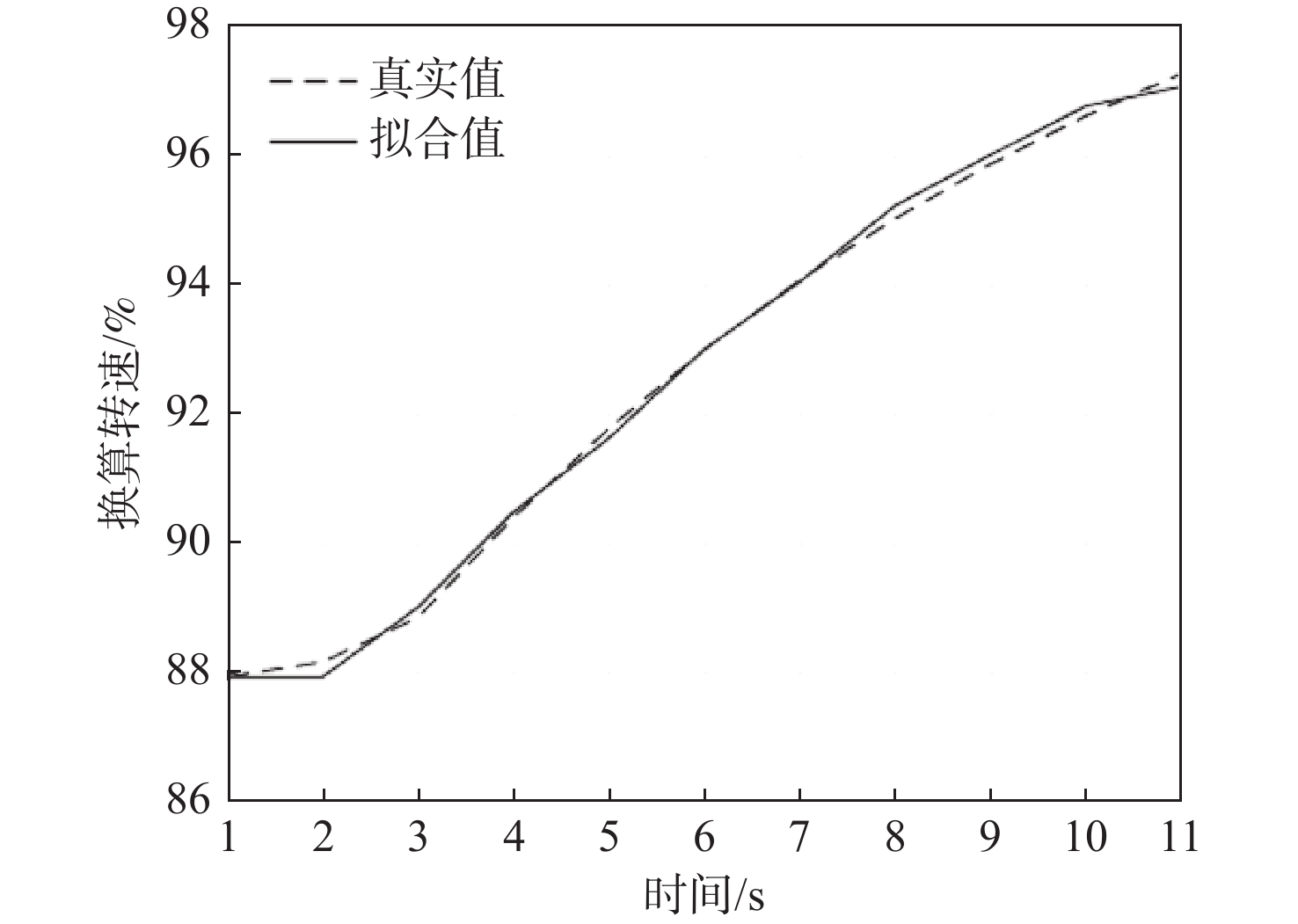
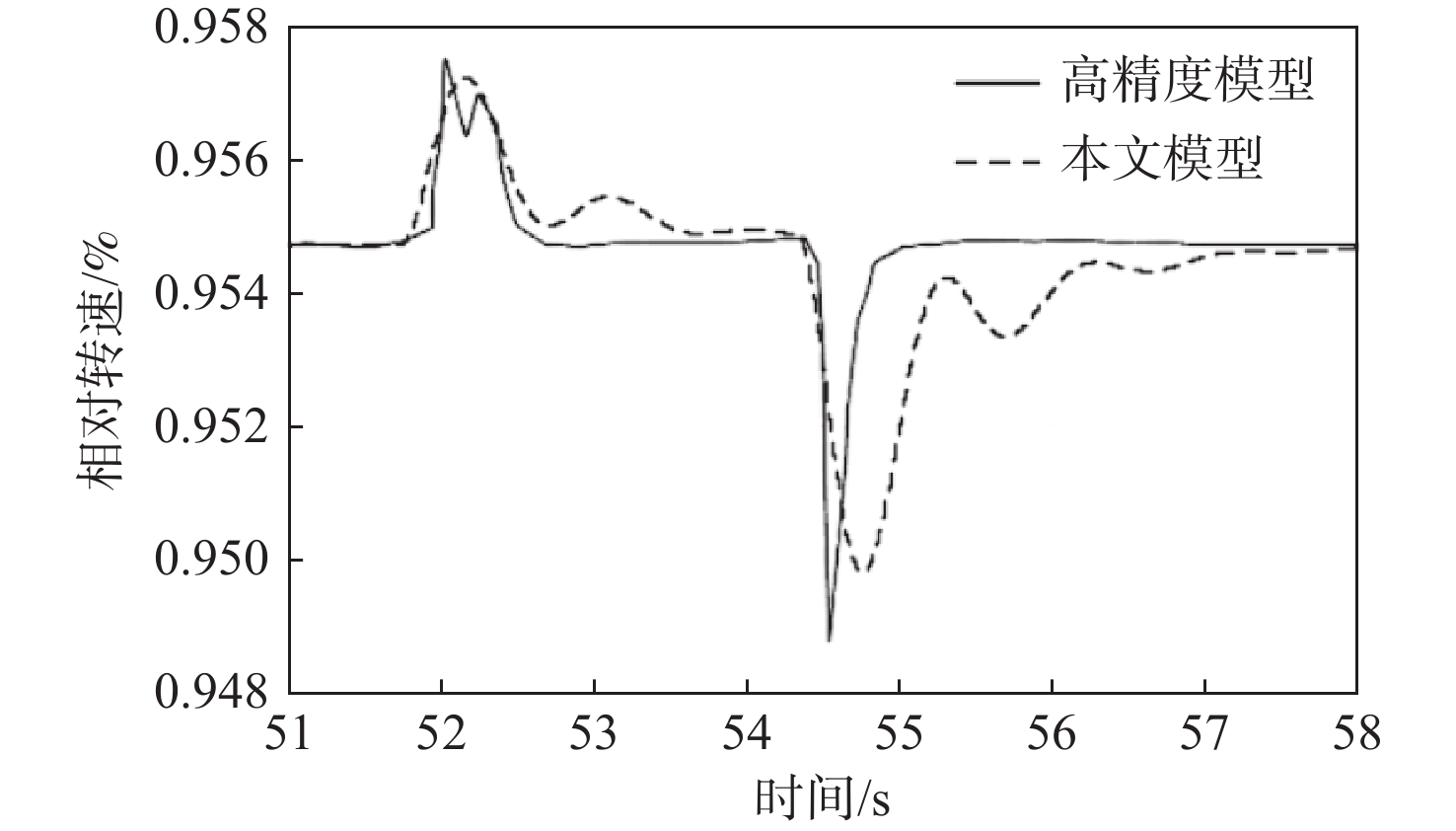
图 10 与高精度模型仿真对比的转子转速输出
Figure 10. Comparison of rotor speed output with high-precision model simulation

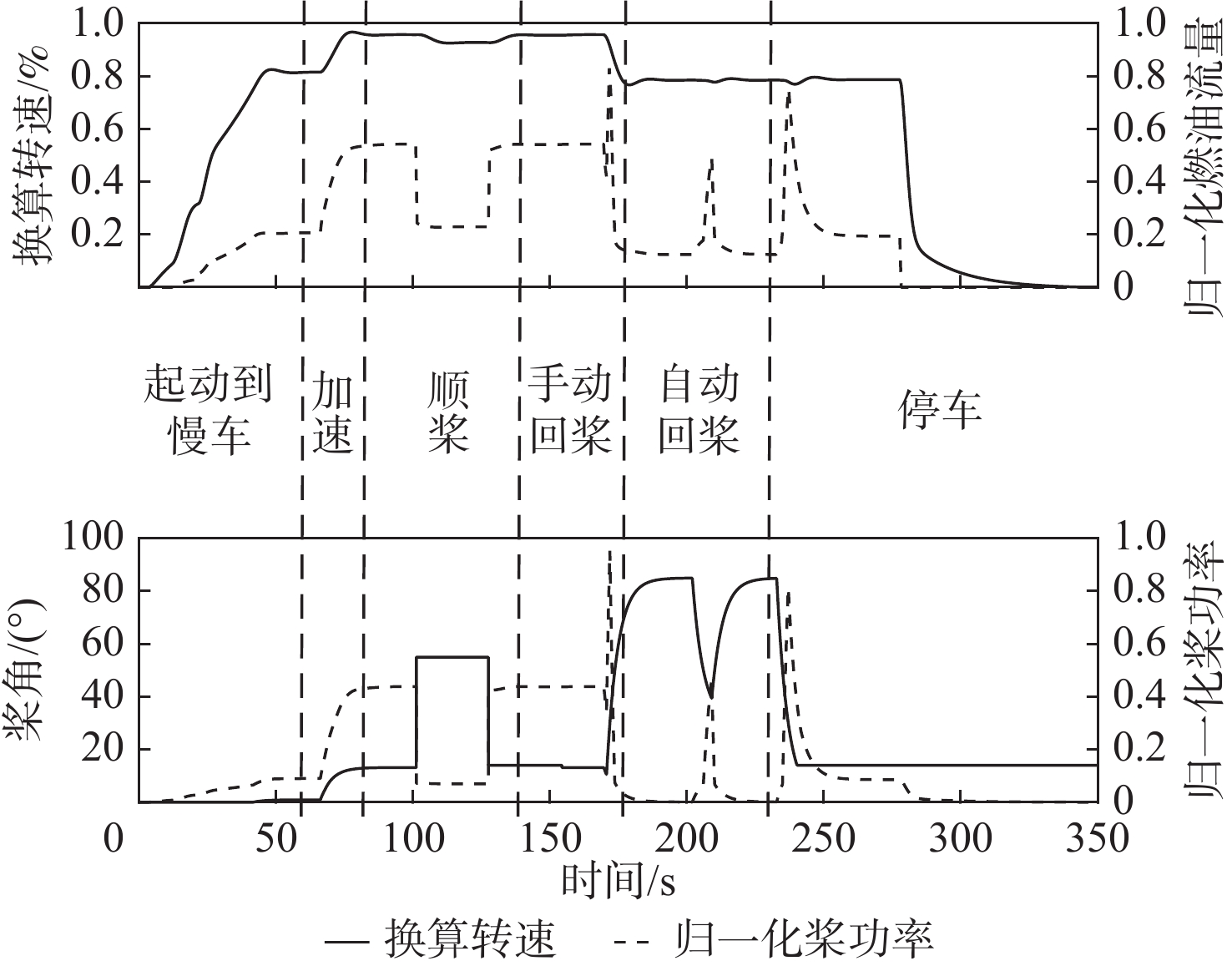
图 12 典型工况下主要参数变化
Figure 12. Variations of main parameters under typical operating conditions
表 1 选取的AH-20M设计点参数
Table 1. Selected design point parameters of AH-20M
参数 设计值 *慢车转速/% 81 *设计转速/% 91 起飞耗油率/(kg·kWh−1) 0.3755 起飞功率/kW 3169 空气流量/(kg·s−1) 20 巡航功率/kW 2013 *起动时间/s 55 *加速时间/s 20 *停车时间/s 75 注:带“*”的数据来自类似型号推测的数据。  下载: 导出CSV
表 2 测试工况和测试结果
Table 2. Test conditions and test results
阶段 测试工况 性能测试结果 功能测试结果 起动 测试从停车到慢车的动态过程 ①起动时间约为51 s;
②转速稳定在81%在起动机工作和供油时有明显增速过程 加速 从慢车到设计转速的加速过程 ①加速时间约为19 s;
②设计转速为91%转速平滑增加 顺桨 螺旋桨顺桨响应 ①桨角迅速增大至90°;
②桨功率迅速下降桨角迅速增大 回桨 螺旋桨回桨响应 ①桨角逐渐恢复;
②桨功率随桨角恢复桨角逐渐恢复 停车 发动机从慢车到停车的动态过程 停车时间约为75 s 指数型减小
下载: 导出CSV
-
[1] 熊海国. 飞行模拟器发动机系统建模与面向对象的仿真研究[D]. 哈尔滨: 哈尔滨工业大学, 2010.XIONG H G. Research on modeling and object-oriented simulation of flight simulator engine system[D]. Harbin: Harbin Institute of Technology, 2010(in Chinese). [2] 彭泽琰. 航空燃气轮机原理[M]. 北京: 国防工业出版社, 2008: 97-107.PENG Z Y. Principles of aero gas turbine [M]. Beijing: National Defense Industry Press, 2008: 97-107(in Chinese). [3] 时培燕, 毛宁, 杨恒辉, 等. 涡桨发动机螺旋桨建模与控制系统设计研究[J]. 计算机测量与控制, 2016, 24(5): 103-105.SHI P Y, MAO N, YANG H H, et al. Research on modeling and control system designing of turboprop engine propeller[J]. Computer Measurement & Control, 2016, 24(5): 103-105(in Chinese). [4] DURAND W F. Experimental research on air propellers: NACA-TR-14 [R]. Washington, D. C. : NASA, 1918. [5] DURAND W F, LESLEY E P. Experimental research on air propellers II: NACA-TR-30[R]. Washington, D. C. : NASA, 1920. [6] DURAND W F, LESLEY E P. Experimental research on air propellers III: NACA-TR-64[R]. Washington, D. C. : NASA, 1920. [7] DURAND W F, LESLEY E P. Experimental research on air propellers IV: NACA-TR-109[R]. Washington, D. C. : NASA, 1921. [8] 史永运, 钟易成, 邓君湘, 等. 涡轮螺旋桨动力飞机桨发匹配性能仿真研究[J]. 机械制造与自动化, 2019, 48(4): 116-120.SHI Y Y, ZHONG Y C, DENG J X, et al. Research on prop-engine cooperation performance simulation of propeller powered aircraft[J]. Machine Building & Automation, 2019, 48(4): 116-120(in Chinese). [9] 张孟伟. 单杆操控的变桨距微型涡桨发动机控制系统设计与验证[D]. 南京: 南京航空航天大学, 2020.ZHANG M W. Design and verification of control system of variable pitch micro turboprop engine controlled by single rod[D]. Nanjing: Nanjing University of Aeronautics and Astronautics, 2020 (in Chinese). [10] 郭迎清, 王海泉. 涡扇发动机模型辨识及其控制器设计[J]. 现代制造工程, 2006(9): 73-74.GUO Y Q, WANG H Q. System identification of a turbofan engine and design of its controller[J]. Modern Manufacturing Engineering, 2006(9): 73-74(in Chinese). [11] 姚华. 航空发动机全权限数字电子控制系统[M]. 北京: 航空工业出版社, 2014.YAO H. Full authority digital electronic control system for aero- engine [M]. Beijing: Aviation Industry Press, 2014(in Chinese). [12] 廉筱纯, 吴虎. 航空发动机原理[M]. 西安: 西北工业大学出版社, 2005.LIAN X C, WU H. Aeroengine principle[M]. Xi’an: Northwestern Polytechnical University Press, 2005(in Chinese). [13] 刘沛清, 马利川, 段中喆, 等. 平流层飞艇螺旋桨相似准则分析与验证[J]. 北京航空航天大学学报, 2012, 38(7): 957-961.LIU P Q, MA L C, DUAN Z Z, et al. Study and verification on similarity theory for propellers of stratospheric airships[J]. Journal of Beijing University of Aeronautics and Astronautics, 2012, 38(7): 957-961(in Chinese). [14] 缪辉, 臧朝平, 王晓伟, 等. 航空发动机高压转子试验模型的动力学相似设计[J]. 推进技术, 2021, 42(10): 2340-2348.MIAO H, ZANG C P, WANG X W, et al. Dynamic similarity design for experimental model of aero engine high-pressure rotor[J]. Journal of Propulsion Technology, 2021, 42(10): 2340-2348(in Chinese). [15] 田超. 航空涡桨发动机建模与控制的仿真研究[D]. 南京: 南京航空航天大学, 2010.TIAN C. Simulation study on modeling and control of aircraft turboprop engines[D]. Nanjing : Nanjing University of Aeronautics and Astronautics , 2010(in Chinese). [16] 方昌德. 世界航空发动机手册[M]. 北京: 航空工业出版社, 1996.FANG C D. The world aircraft engines handbook[M]. Beijing: Aviation Industry Press, 1996(in Chinese). [17] 高亚奎, 朱江, 林皓, 等. 飞行仿真技术[M]. 上海: 上海交通大学出版社, 2015.GAO Y K, ZHU J, LIN H, et al. Flight simulation technology[M]. Shanghai: Shanghai Jiao Tong University Press, 2015(in Chinese). [18] 黄庆南. 航空发动机设计手册. 第6册, 涡轮[M]. 北京: 航空工业出版社, 2001.HUANG Q N. Aerospace engine design handbook. Volume 6 , turbines [M]. Beijing: Aviation Industry Press, 2001(in Chinese). -

 下载:
下载:


 点击查看大图
计量
- 文章访问数: 328
- HTML全文浏览量: 96
- PDF下载量: 110
- 被引次数: 0
