





A prediction method for solid divert and attitude control motor performance based on deep learning
-
摘要:
为实现对固体姿轨控发动机性能快速预示,以及评估不同参数对发动机性能影响,提出一种基于特征可视化卷积神经网络仿真代理模型预示方法。通过对固体姿轨控发动机进行数值仿真建模,得到多组仿真数据进行训练,建立一种具有快速推理特性的基于特征可视化卷积神经网络仿真代理模型,可实现发动机性能快速预示。结果表明:针对发动机压强和推力,所建模型预测误差分别为0.2%和6%;针对固体姿轨控发动机多参数输入问题,所提方法可实现鉴定参数对发动机性能的影响程度;针对燃气阀门工作过程的压强,燃气阀门入口压强对压强变化影响更显著;针对燃气阀门推力,阀门开度为3.5 mm以下,阀栓行程对推力预示结果影响更显著,而阀门开度在3.5 mm以上时,影响推力预示结果更多的是入口压强。所提方法有良好的泛用性,可在算法层面直接评估关键参数,免去了多组仿真实验对比的繁琐,大大提高研究效率。
Abstract:A feature visualization convolutional neural network-based surrogate model is suggested to achieve the quick prediction of solid divert and attitude control motor performance and assess the influence of various parameters. After obtaining a number of simulation datasets for training from numerical simulation modeling of the solid divert and attitude control motor, a feature visualization convolutional neural network simulation surrogate model with fast inference characteristics is established, which can realize fast performance prediction. The results show that for pressure and thrust of the solid divert and attitude control motor, the model prediction error is 0.2% and 6%, respectively. For multi-parameters input problem of the solid divert and attitude control motor, the proposed method can identify the influence of parameters on performance. Pressure changes have a significant impact on the prediction results for solid divert and attitude control motor gas valve pressure during operation; for gas valve thrust, the pintle stroke has a greater impact on the thrust prediction result when the valve opening is less than 3.5 mm, while the inlet pressure has a greater impact when the valve opening is greater than 3.5 mm. The method has good generalizability and can directly evaluate the key parameters at the algorithmic level, while eliminating the cumbersome comparison of multiple sets of simulation experiments, which can greatly improve the research efficiency.
-
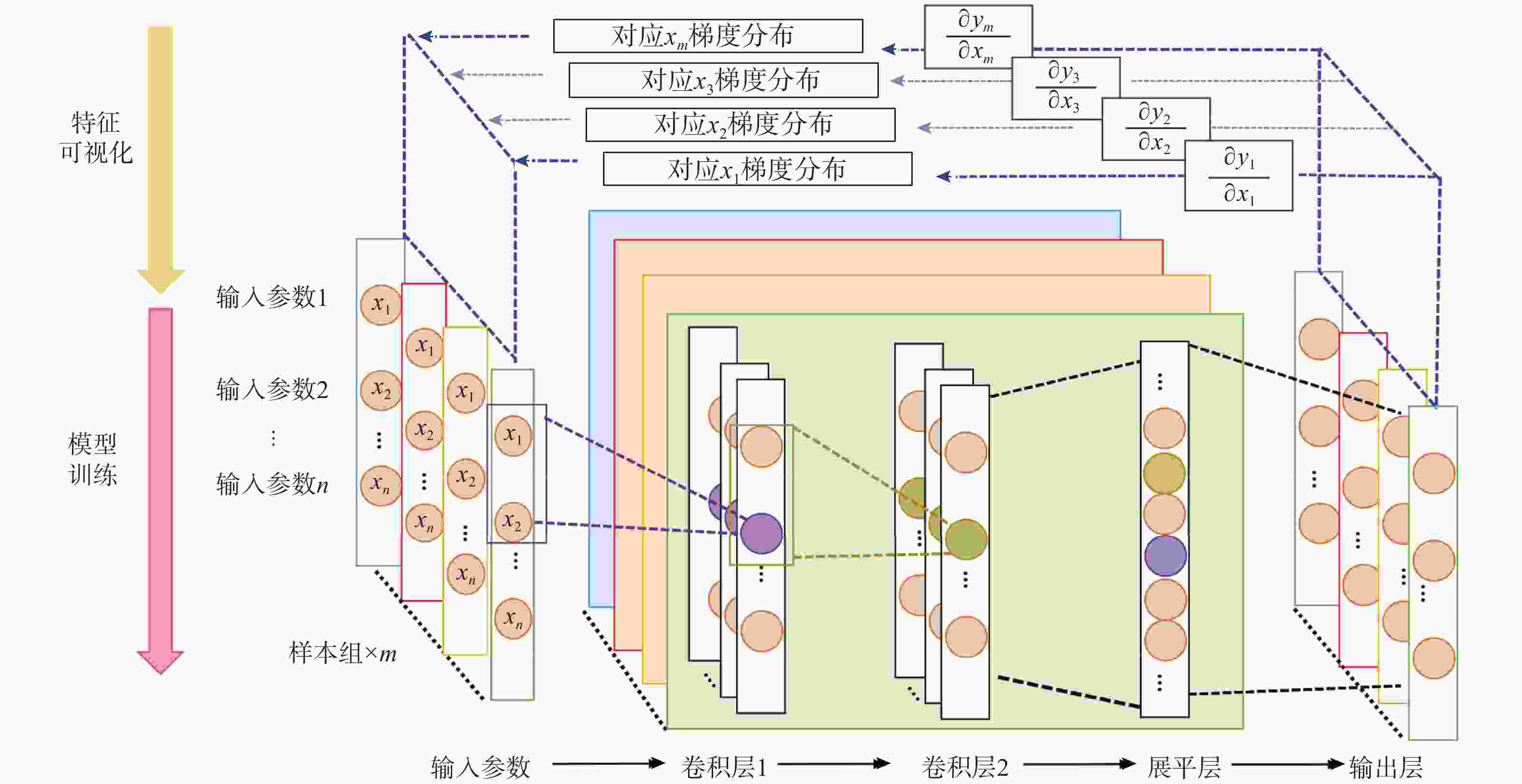
图 1 特征可视化的卷积神经网络模型示意图
Figure 1. Schematic diagram of a convolution neural networks model for feature visualization
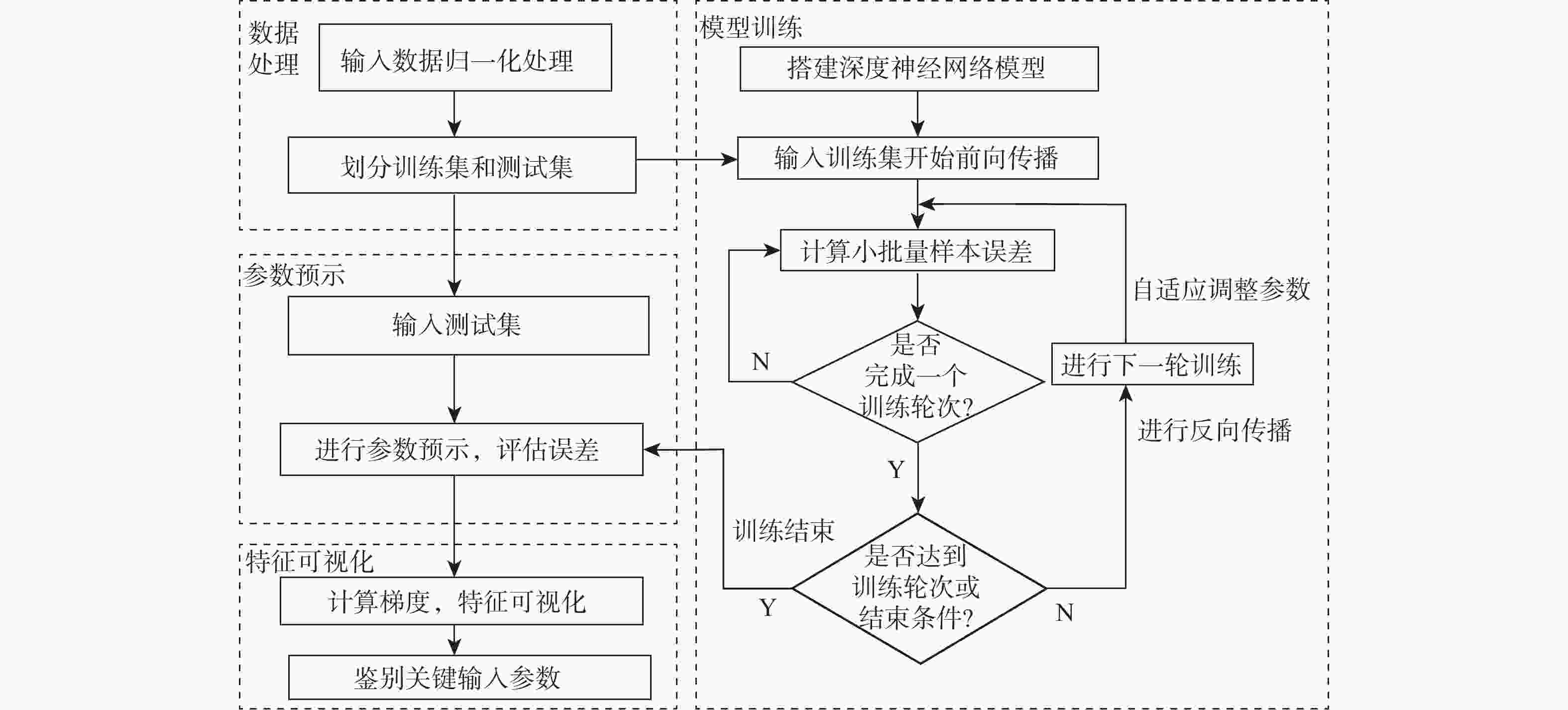
图 2 特征可视化的卷积神经网络算法流程
Figure 2. Flow chart of convolutional neural network algorithm based on feature visualization
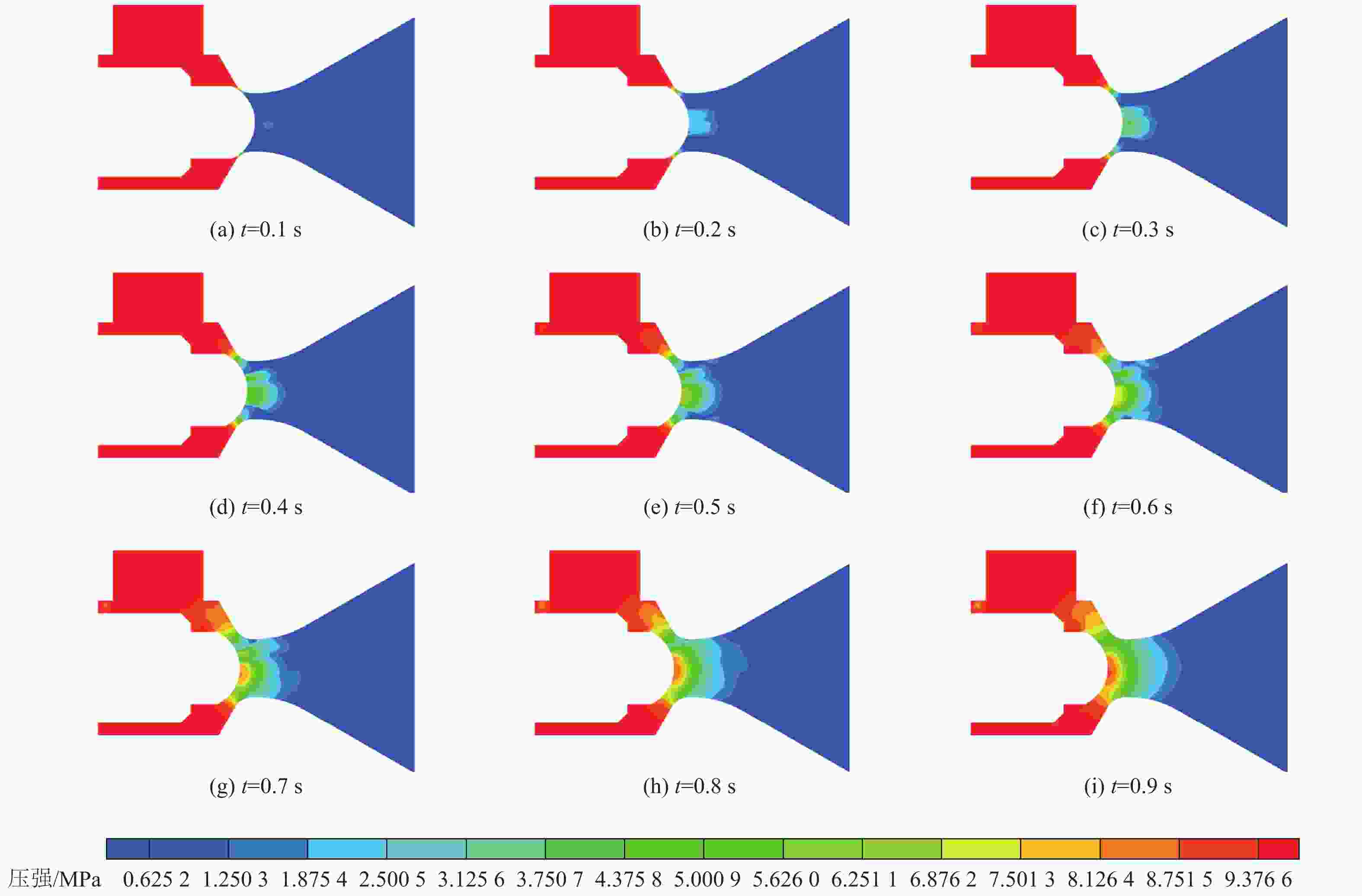
图 3 10 MPa入口压强下燃气阀随时间变化的压强云图
Figure 3. Pressure cloud of gas valve over time with 10 MPa inlet pressure
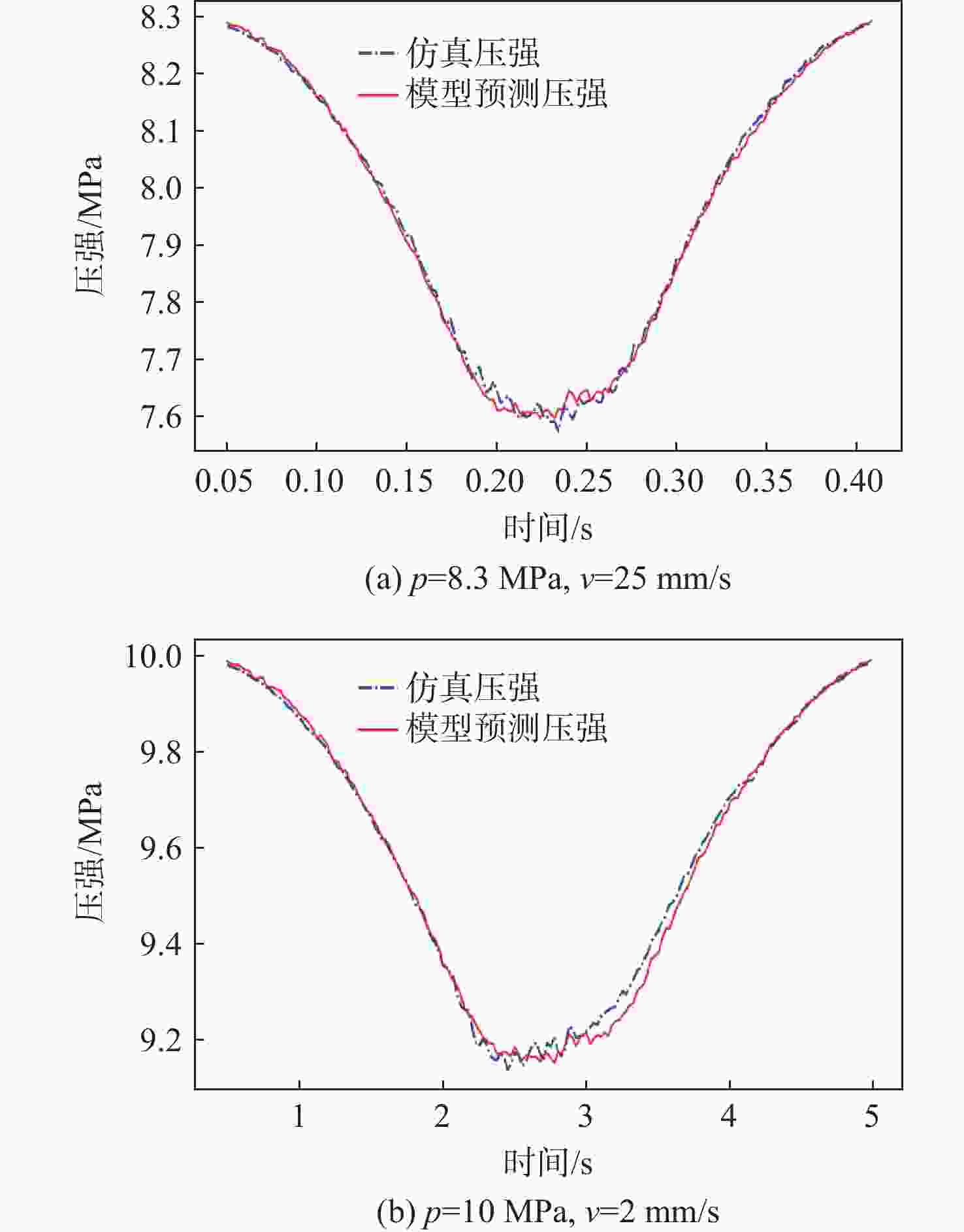
图 10 2组工况下燃气阀监测点1的预测结果
Figure 10. Predicted results for gas valve monitoring point 1 for two operating conditions groups
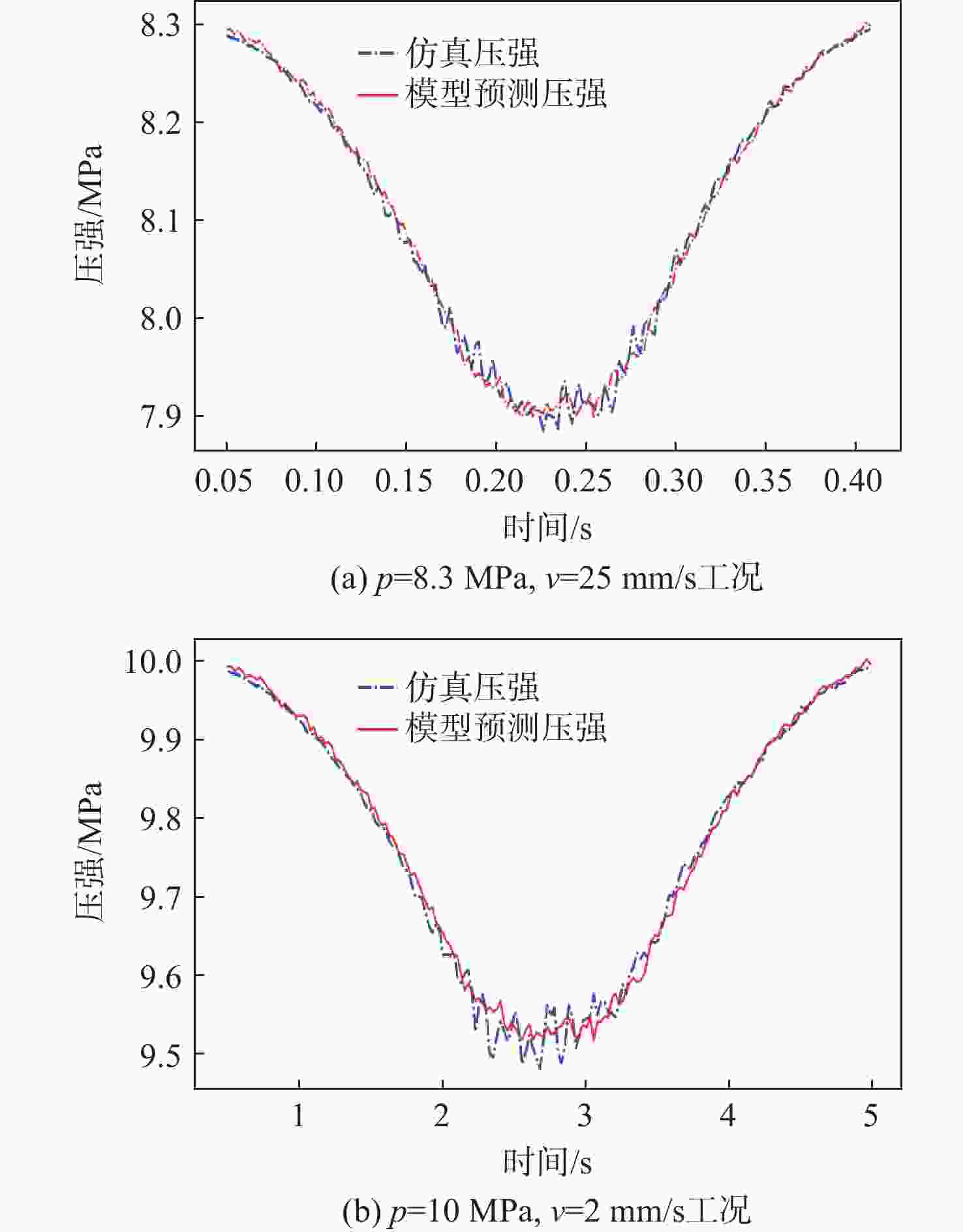
图 11 2组工况下燃气阀监测点2的预测结果
Figure 11. Predicted results for gas valve monitoring point 2 for two operating conditions groups
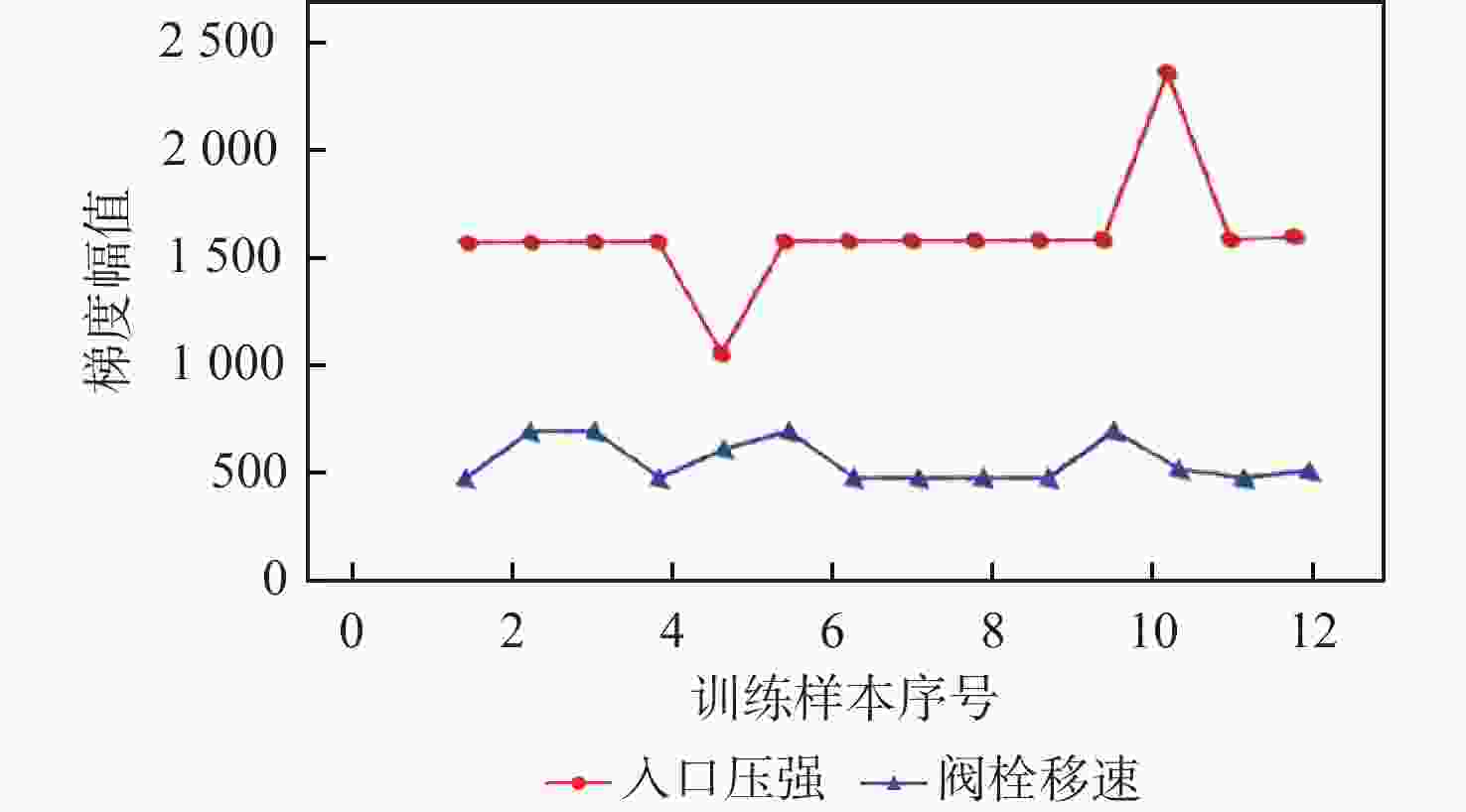
图 12 入口压强和阀栓移速梯度分布
Figure 12. Gradient distribution of inlet pressure and pintle velocity
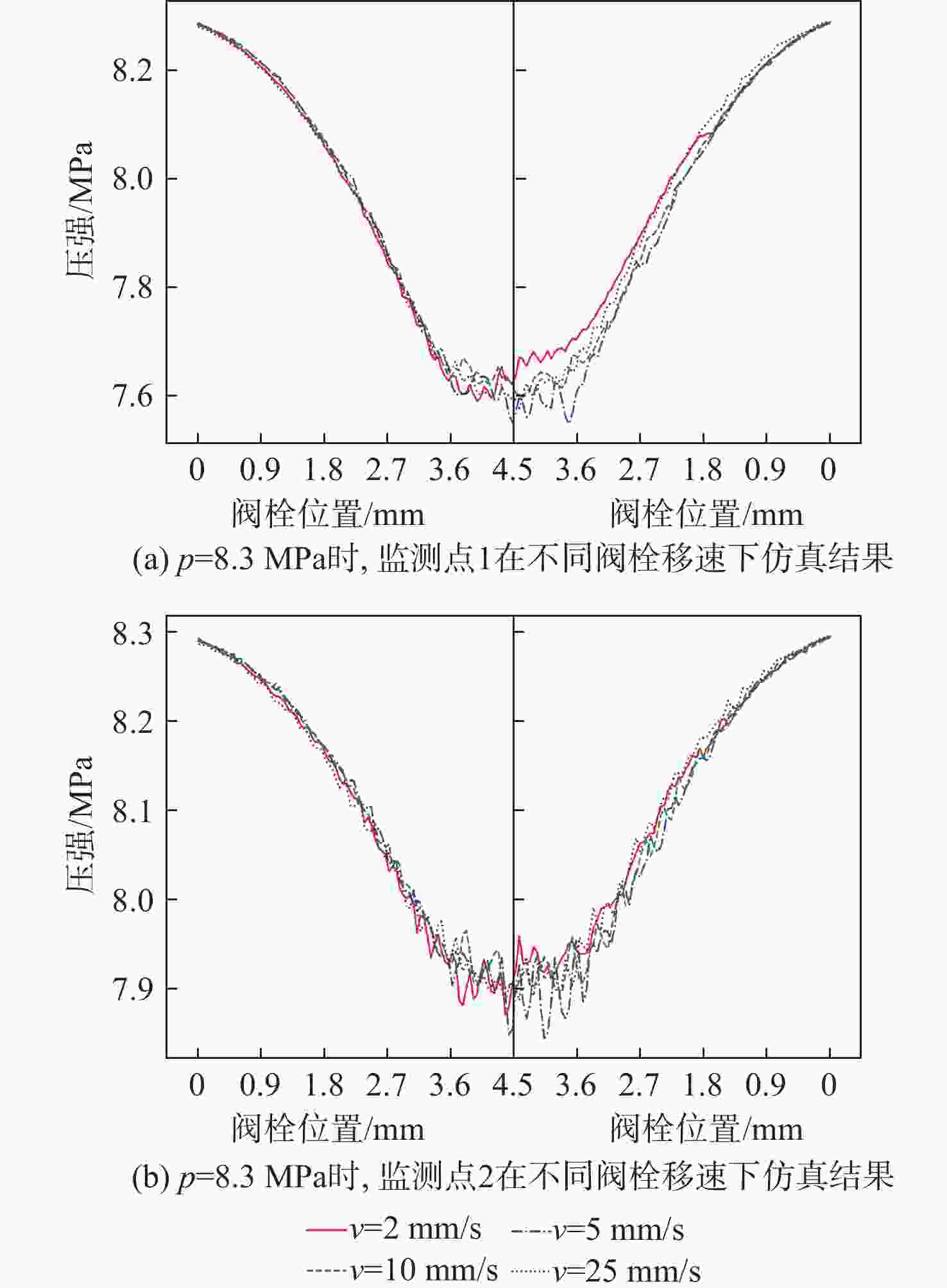
图 13 燃气阀监测点在不同阀栓移速下仿真结果
Figure 13. Simulation results of gas valve monitoring points with different pintle velocity
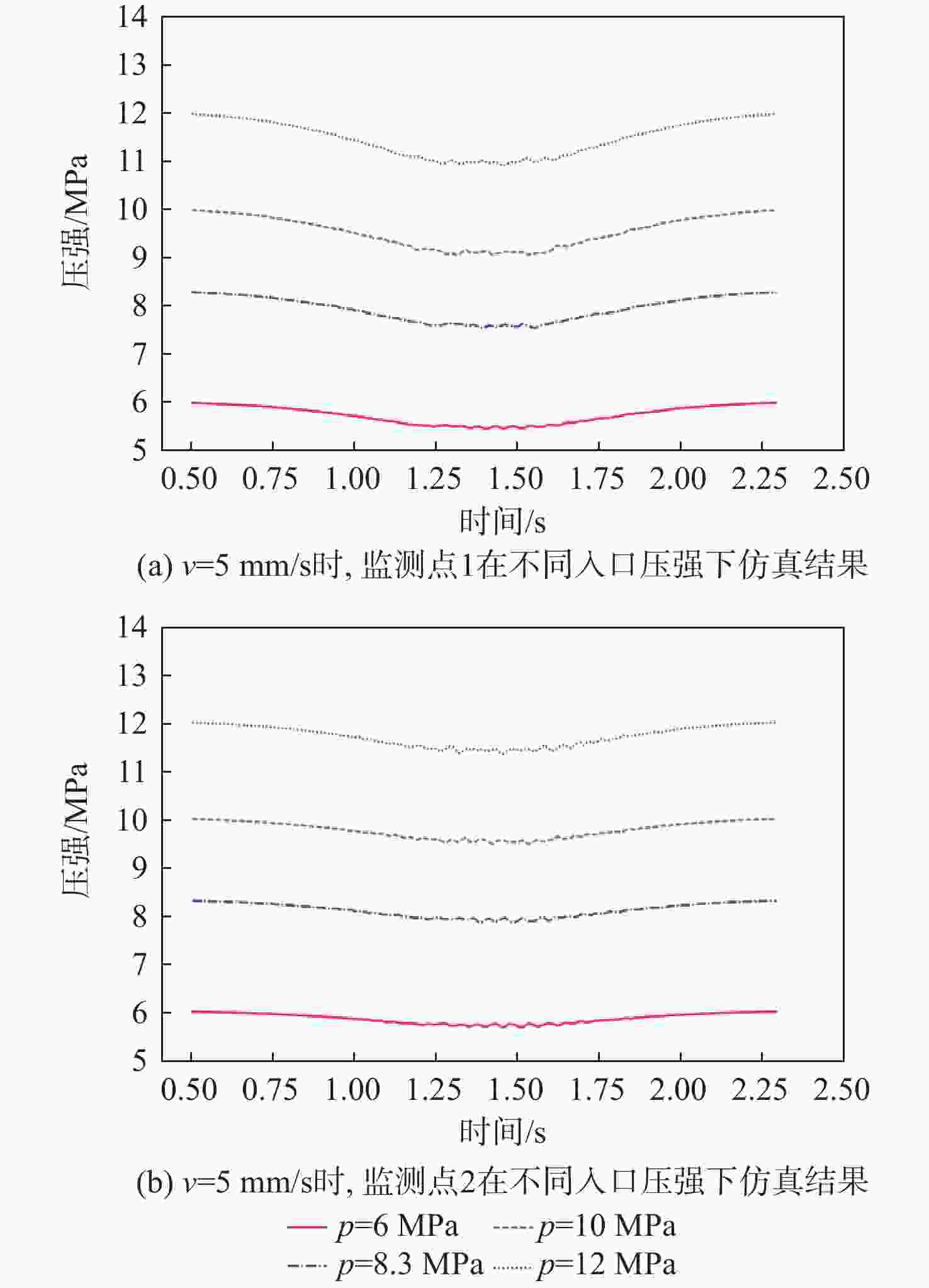
图 14 燃气阀监测点在不同入口压强下仿真结果
Figure 14. Simulation results of gas valve monitoring points with inlet pressure
表 1 监测点压强平均绝对百分比误差对比
Table 1. Comparison of mean absolute percentage error of pressure at monitoring points
监测点 MAPE/% v=2 mm/s v=5 mm/s v=10 mm/s v=25 mm/s 1 6.17 4.24 6.09 7.80 2 5.89 4.31 5.82 7.11  下载: 导出CSV
表 2 燃气阀监测点压强预测平均绝对百分比误差
Table 2. Comparison of mean average percent error of pressure at gas valve monitoring points
模型输入 MAPE/% 监测点1 监测点2 p=8.3 MPa, v=25 mm/s 0.12 0.11 p=10 MPa, v=2 mm/s 0.15 0.12
下载: 导出CSV
表 3 燃气阀监测点压强预测平均绝对误差
Table 3. Comparison of mean absolute error of pressure at gas valve monitoring points
模型输入 MAE/Pa 监测点1 监测点2 p=8.3 MPa, v=25 mm/s 9500 8700 p=10 MPa, v=2 mm/s 14300 11700
下载: 导出CSV
表 4 测试集1误差对比
Table 4. Error comparison for test set 1
模型输入 平均百分比误差/% 平均绝对误差/N p=6 MPa, L=0.5 mm 16.54 14.16 p=6 MPa, L=1.5 mm 9.33 29.18 p=6 MPa, L=2 mm 1.19 4.95 p=6 MPa, L=2.5 mm 0.52 2.62 p=8.3 MPa, L=4.5 mm 3.82 39.07 p=10 MPa, L=4.0 mm 0.05 0.56 p=12 MPa, L=0.5 mm 10.45 9.85 p=12 MPa, L=2.5 mm 0.94 10.94
下载: 导出CSV
表 5 测试集2误差对比
Table 5. Error comparison for test set 2
模型输入 平均百分比误差/% 平均绝对误差/N p=6 MPa, L=2.5 mm 1.42 7.21 p=6 MPa, L=3.5 mm 3.63 23.87 p=6 MPa, L=4.0 mm 2.90 19.92 p=8.3 MPa, L=1.5 mm 5.22 9.45 p=10 MPa, L=3.5 mm 1.20 14.30 p=10 MPa, L=4.0 mm 2.33 28.85 p=12 MPa, L=1.5 mm 1.14 8.71 p=12 MPa, L=4.0 mm 0.21 3.03
下载: 导出CSV
-
[1] 万东, 何国强, 王占利, 等. 针栓喷管技术在固体姿轨控系统中的应用研究[J]. 现代防御技术, 2011, 39(3): 48-54.WAN D, HE G Q, WANG Z L, et al. An application study of pintle-nozzle technology for solid divert and attitude control system[J]. Modern Defence Technology, 2011, 39(3): 48-54(in Chinese). [2] 李娟, 李江, 王毅林, 等. 喉栓式变推力发动机性能研究[J]. 固体火箭技术, 2007, 30(6): 505-509.LI J, LI J, WANG Y L, et al. Study on performance of pintle controlled thrust solid rocket motor[J]. Journal of Solid Rocket Technology, 2007, 30(6): 505-509(in Chinese). [3] 武婷文. 喉栓式变推力固体火箭发动机稳态与瞬态工作特性研究[D]. 西安: 航天动力技术研究院, 2023.WU T W. Study on steady and transient operating characteristics of throat plug variable thrust solid rocket motor[D]. Xi’an: Academy of Aerospace Solid Propulsion Technology, 2023(in Chinese). [4] 苗禾状. 喉栓式可控固体火箭发动机推力调节研究[D]. 哈尔滨: 哈尔滨工程大学, 2009.MIAO H Z. Study on thrust adjustment of throat-plug controllable solid rocket motor[D]. Harbin: Harbin Engineering University, 2009(in Chinese). [5] 吴超. 针栓式固体姿轨控发动机性能分析与设计优化[D]. 长沙: 国防科技大学, 2022.WU C. Performance analysis and design optimization of pin-bolt solid attitude and orbit control engine[D]. Changsha: National University of Defense Technology, 2022(in Chinese). [6] 张杰, 李国盛, 文谦, 等. 基于改进增广径向基的固体姿轨控发动机推力快速预示[J]. 推进技术, 2023, 44(8): 201-209.ZHANG J, LI G S, WEN Q, et al. Fast thrust prediction method for solid divert and attitude control system based on improved augmented radial basis functions[J]. Journal of Propulsion Technology, 2023, 44(8): 201-209(in Chinese). [7] REGIS R G, SHOEMAKER C A. A stochastic radial basis function method for the global optimization of expensive functions[J]. INFORMS Journal on Computing, 2007, 19(4): 497-509. [8] ATKINSON S, ZABARAS N. Structured Bayesian Gaussian process latent variable model: applications to data-driven dimensionality reduction and high-dimensional inversion[J]. Journal of Computational Physics, 2019, 383: 166-195. [9] YAN C, YIN Z Y, SHEN X L, et al. Surrogate-based optimization with improved support vector regression for non-circular vent hole on aero-engine turbine disk[J]. Aerospace Science and Technology, 2020, 96: 105332. [10] 刘轲. 基于代理模型的运载火箭多学科优化及可视化研究[D]. 绵阳: 西南科技大学, 2022.LIU K. Research on multidisciplinary optimization and visualization of launch vehicle based on proxy model[D]. Mianyang: Southwest University of Science and Technology, 2022(in Chinese). [11] TANG M, LIU Y M, DURLOFSKY L J. A deep-learning-based surrogate model for data assimilation in dynamic subsurface flow problems[J]. Journal of Computational Physics, 2020, 413: 109456. [12] 何磊, 张显才, 钱炜祺, 等. 基于长短时记忆神经网络的非定常气动力建模方法[J]. 飞行力学, 2021, 39(5): 8-12.HE L, ZHANG X C, QIAN W Q, et al. Unsteady aerodynamics modeling method based on long short-term memory neural network[J]. Flight Dynamics, 2021, 39(5): 8-12(in Chinese). [13] SUN L N, GAO H, PAN S W, et al. Surrogate modeling for fluid flows based on physics-constrained deep learning without simulation data[J]. Computer Methods in Applied Mechanics and Engineering, 2020, 361: 112732. [14] SIMONYAN K, VEDALDI A, ZISSERMAN A. Deep inside convolutional networks: visualising image classification models and saliency maps[EB/OL]. (2014-04-19)[2024-03-20]. https://arxiv.org/abs/1312.6034. [15] YANG H X, LI X, ZHANG W. Interpretability of deep convolutional neural networks on rolling bearing fault diagnosis[J]. Measurement Science and Technology, 2022, 33(5): 055005. [16] ZEILER M D, FERGUS R. Visualizing and understanding convolutional networks[C]//Proceedings of the Computer Vision. Berlin: Springer, 2014: 818-833. -

 下载:
下载:


 点击查看大图

计量
- 文章访问数: 1011
- HTML全文浏览量: 342
- PDF下载量: 0
- 被引次数: 0
