





Simplified S-mode signal pulse structure with kernel function constraints and TOA accuracy study
-
摘要:
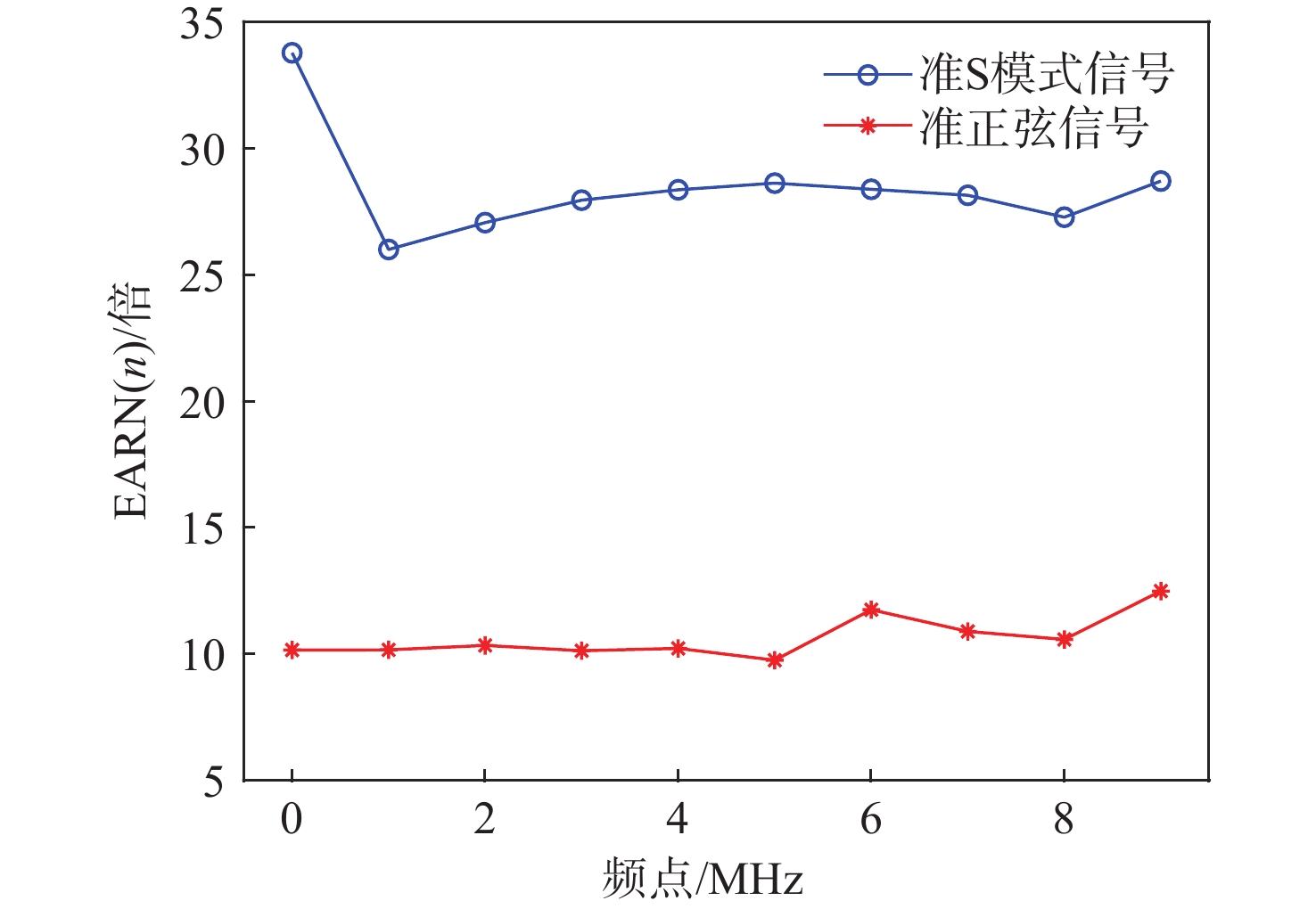
民航S模式应答信号空时结构复杂,易受到传输链路非线性影响和临近电磁干扰,严重影响到达时间(TOA)高精确提取。在民航S模式应答信号空时结构与频谱分析基础上,提出S模式信号脉冲结构简化的准S模式信号模型,根据准S模式信号、弱非线性系统特性反演约束的核函数,构建简化Volterra级数模型。仿真结果表明,基于准S模式信号的简化Volterra级数模型的核函数收益倍数不低于27倍。采用3阶简化Volterra级数模型与高次频点频谱补偿组合方式,对实测信噪比约为13 dB的受干扰S模式信号的准S模式信号进行恢复,实现了用约8.8%的准S模式信号模型的计算量得到约1.54%波形恢复误差,且恢复信号比受干扰信号提取TOA的准确度提升超过73%。基于核函数约束的准S模式信号简化Volterra级数模型,对民航S模式应答信号TOA的准确估计、定位精确度提升具有重要理论价值。
Abstract:The very accurate time-of-arrival (TOA) extraction is significantly impacted by the complicated space-time structure of the civil aviation S-mode transponder signal, which is also vulnerable to neighboring electromagnetic interference and transmission link nonlinearities. Based on the air-time structure and spectral analysis of the civil aviation S-mode transponder signal, a quasi-S-mode signal definition model is proposed to simplify the pulse structure of the S-mode signal, and a simplified Volterra level model is constructed based on the quasi-S-mode signal, the kernel function of the inversion constraints of the weak nonlinear system characteristics. Simulation results show that the kernel function gain multiplier of the simplified Volterra level model based on the quasi-S-mode signal is not less than 27 times. Finally, the quasi-S-mode recovery of an interfered S-mode signal with a measured signal-to-noise ratio of about 13 dB is achieved by using a combination of the 3rd-order simplified Volterra level model and spectral compensation at high sub-frequency points, and the waveform recovery error of about 1.54% is obtained with the computation of about 8.8% of the standard S-mode signal model. Additionally, the accuracy of the recovered signal is improved by more than 73% over the TOA extracted from the disturbed signal. Consequently, the reduced Volterra level model of quasi-S-mode signal based on kernel function constraints has significant theoretical significance for improving localization accuracy and accurately estimating the arrival time of S-mode signals in civil aviation.
-
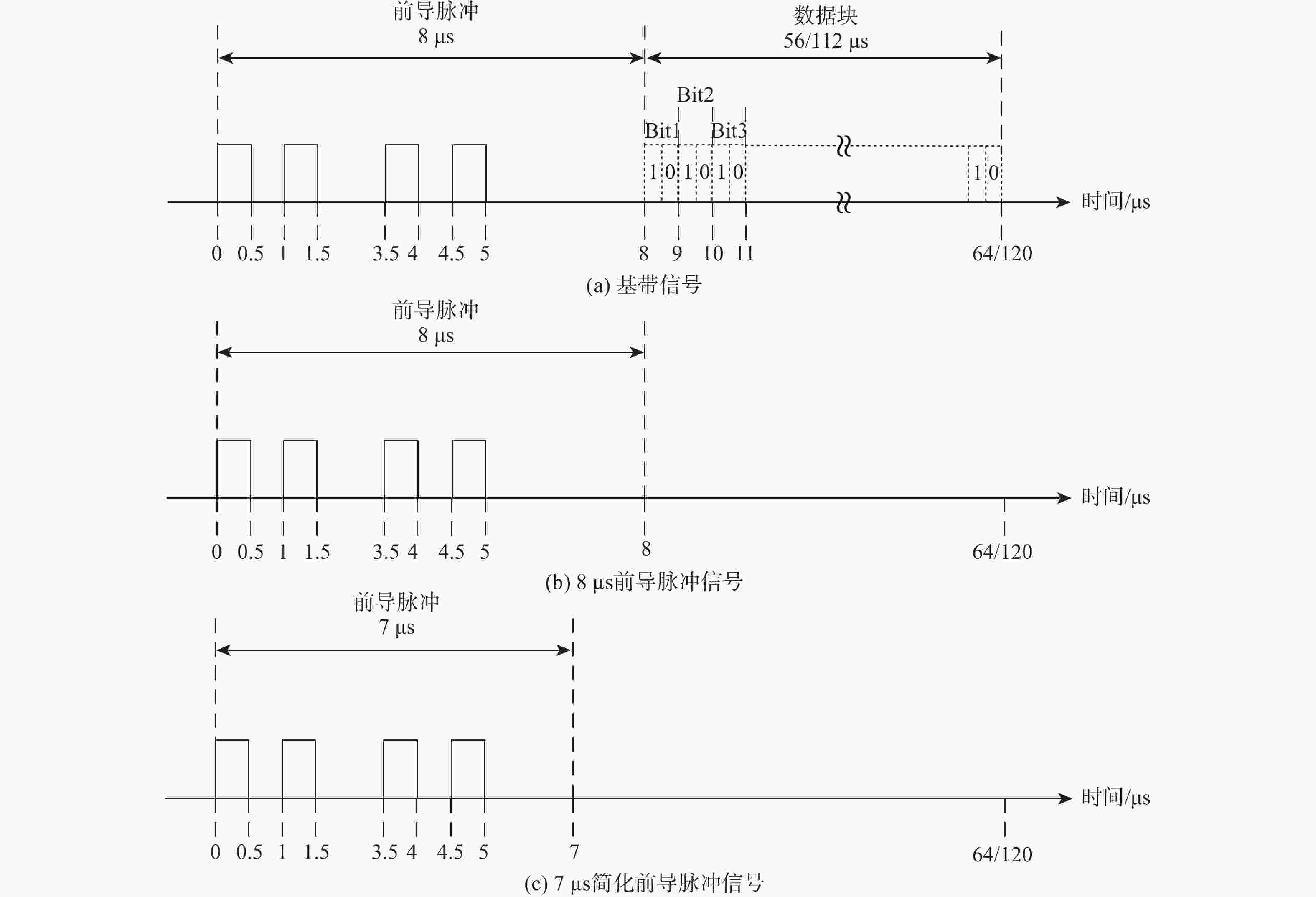
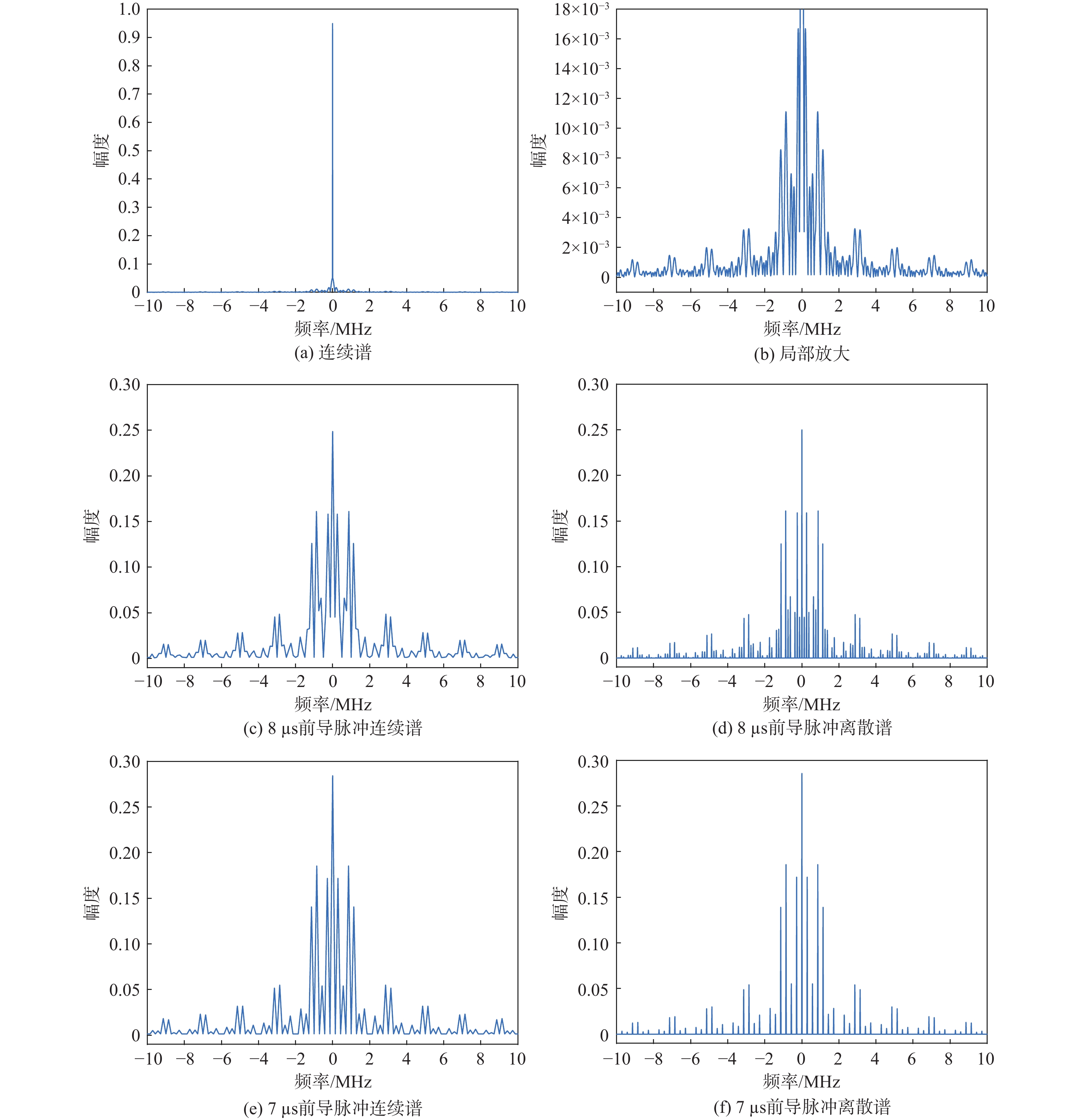
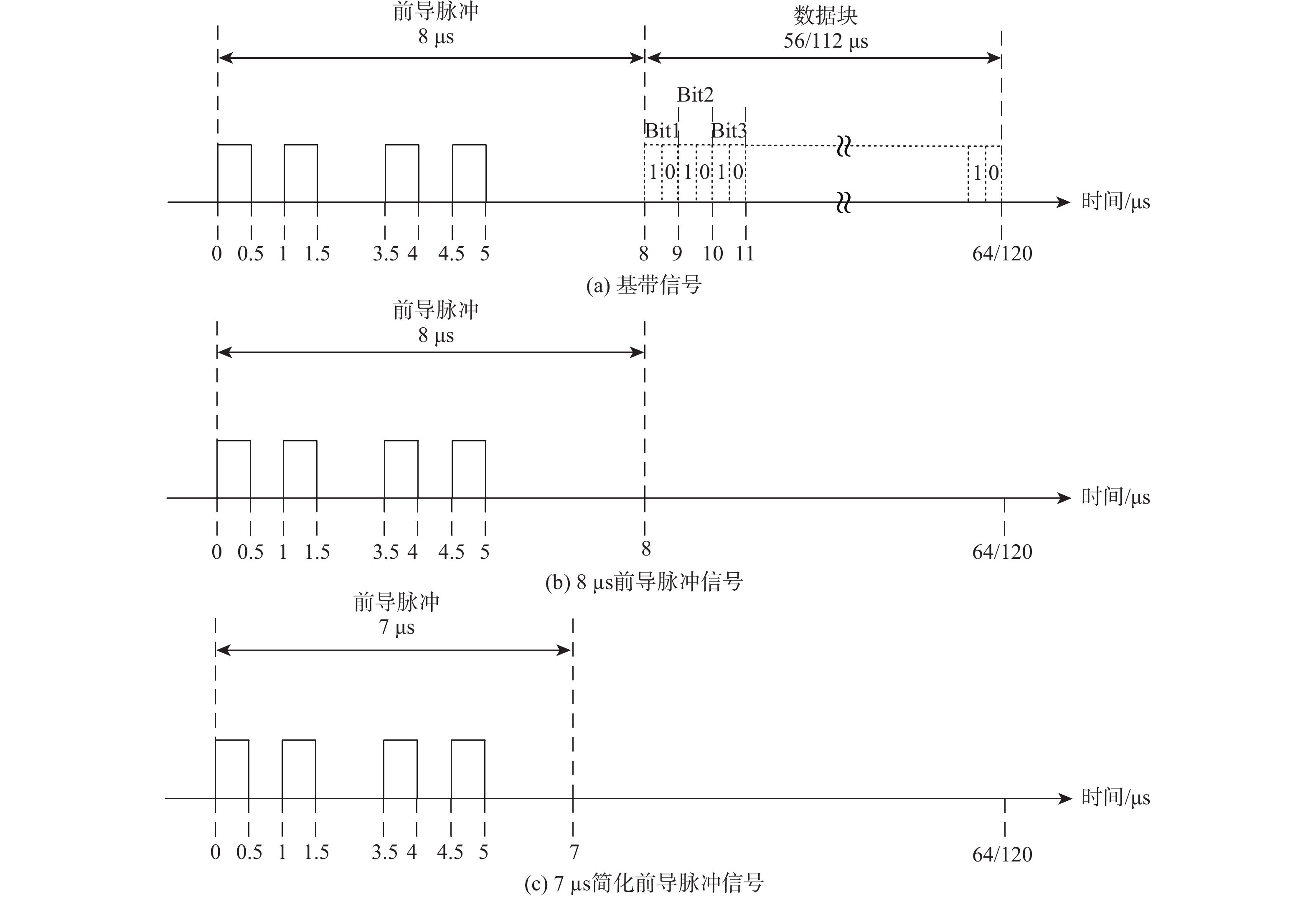
图 1 S模式基带信号及简化前导脉冲波形结构
Figure 1. S-mode baseband signal and simplified leading pulse waveform structure
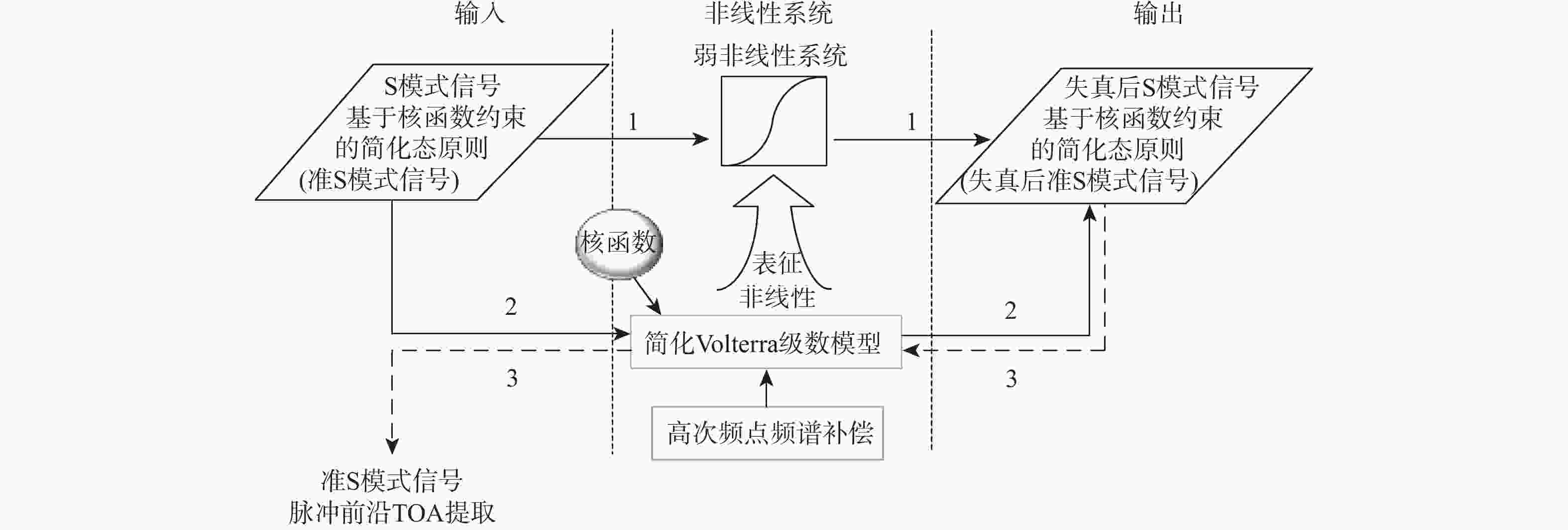
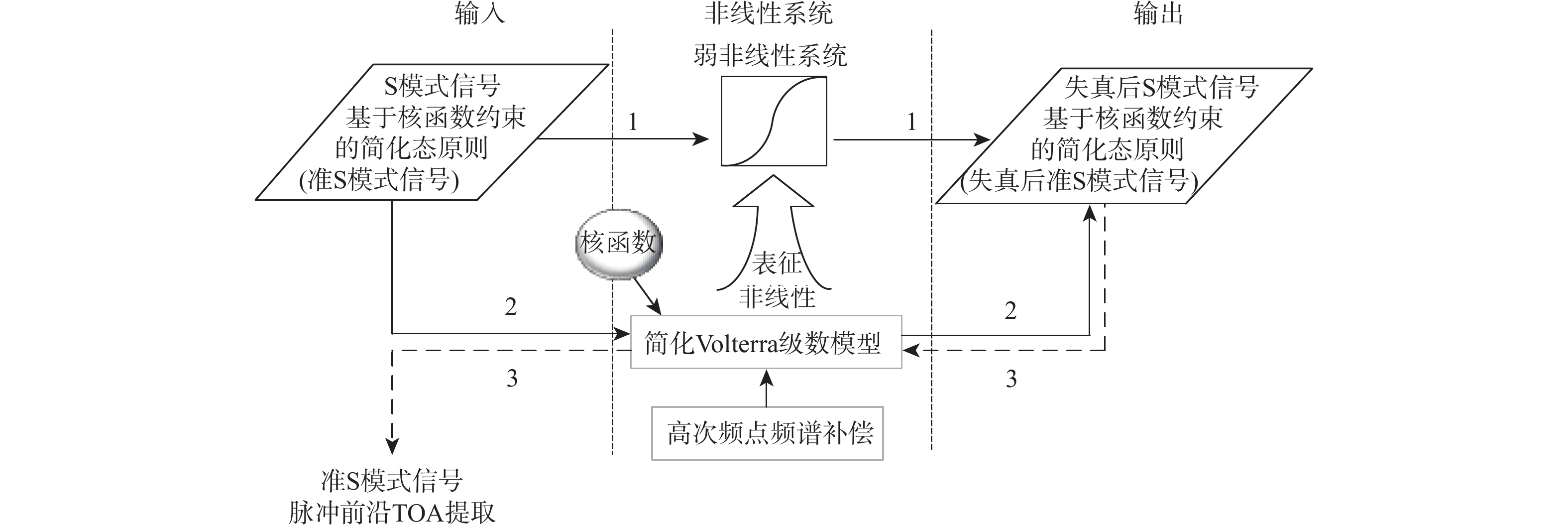
图 3 准S模式输入的弱非线性系统建模流程
Figure 3. Modeling process for weakly nonlinear systems with quasi-S mode inputs
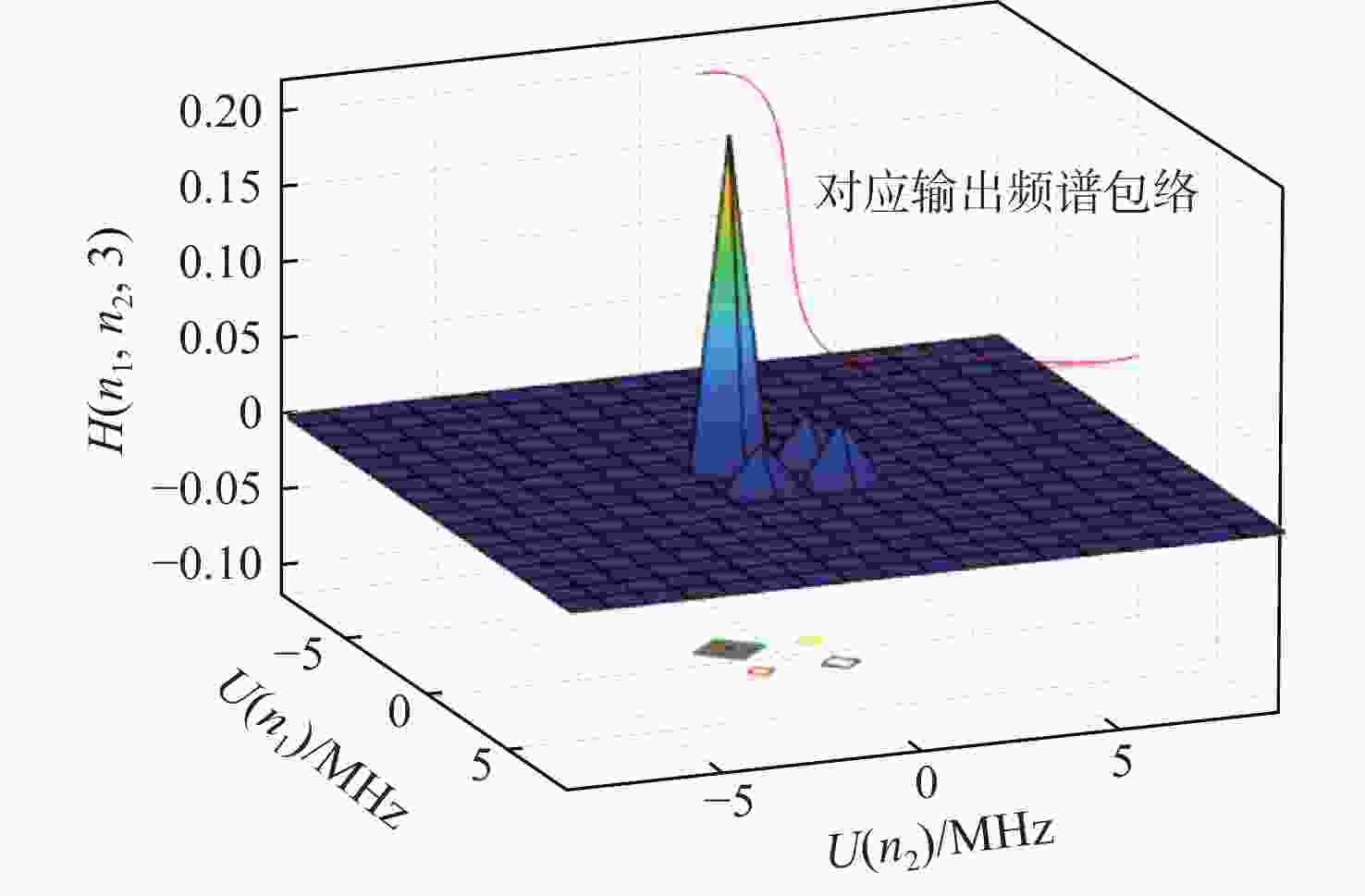
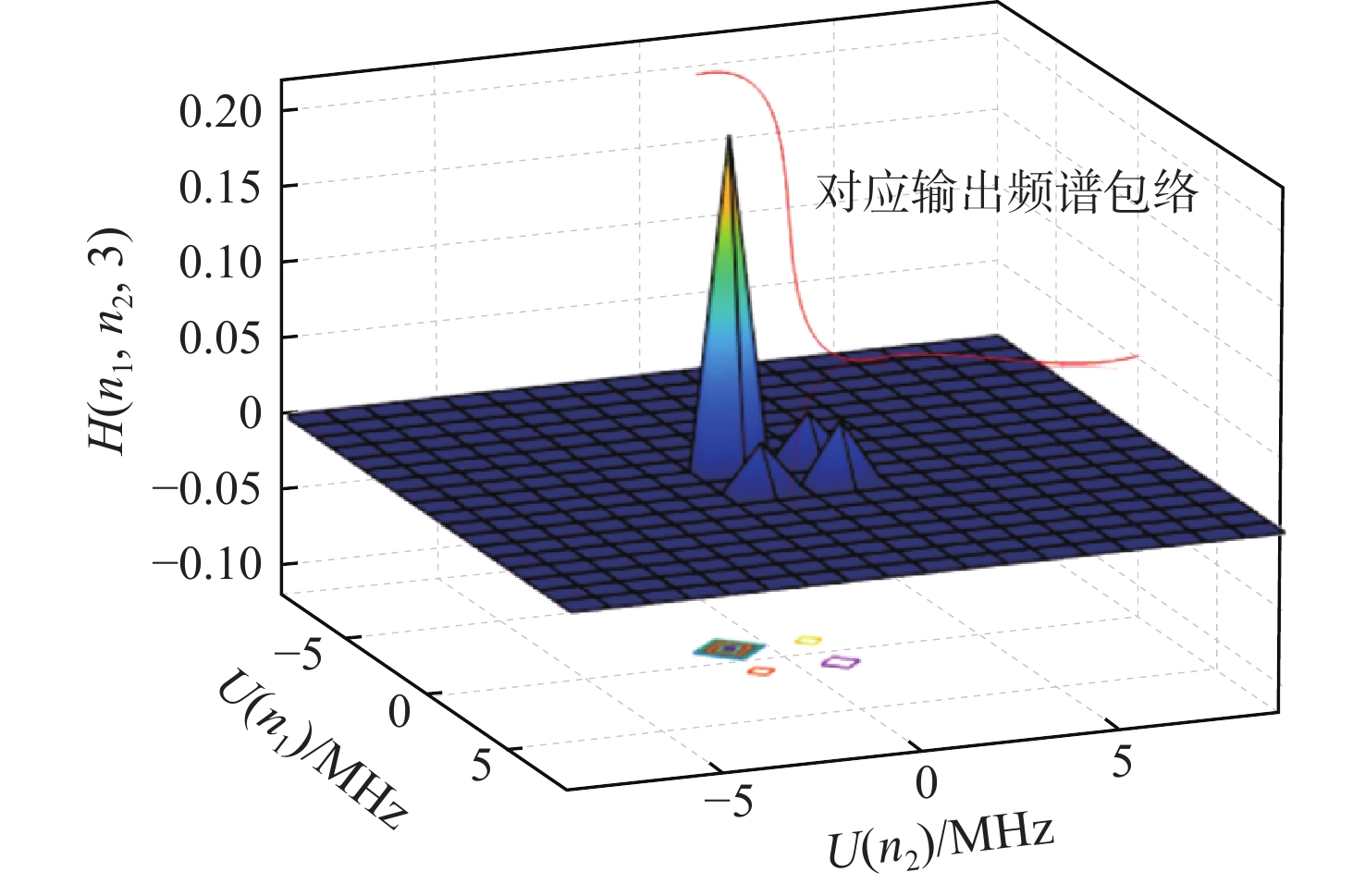
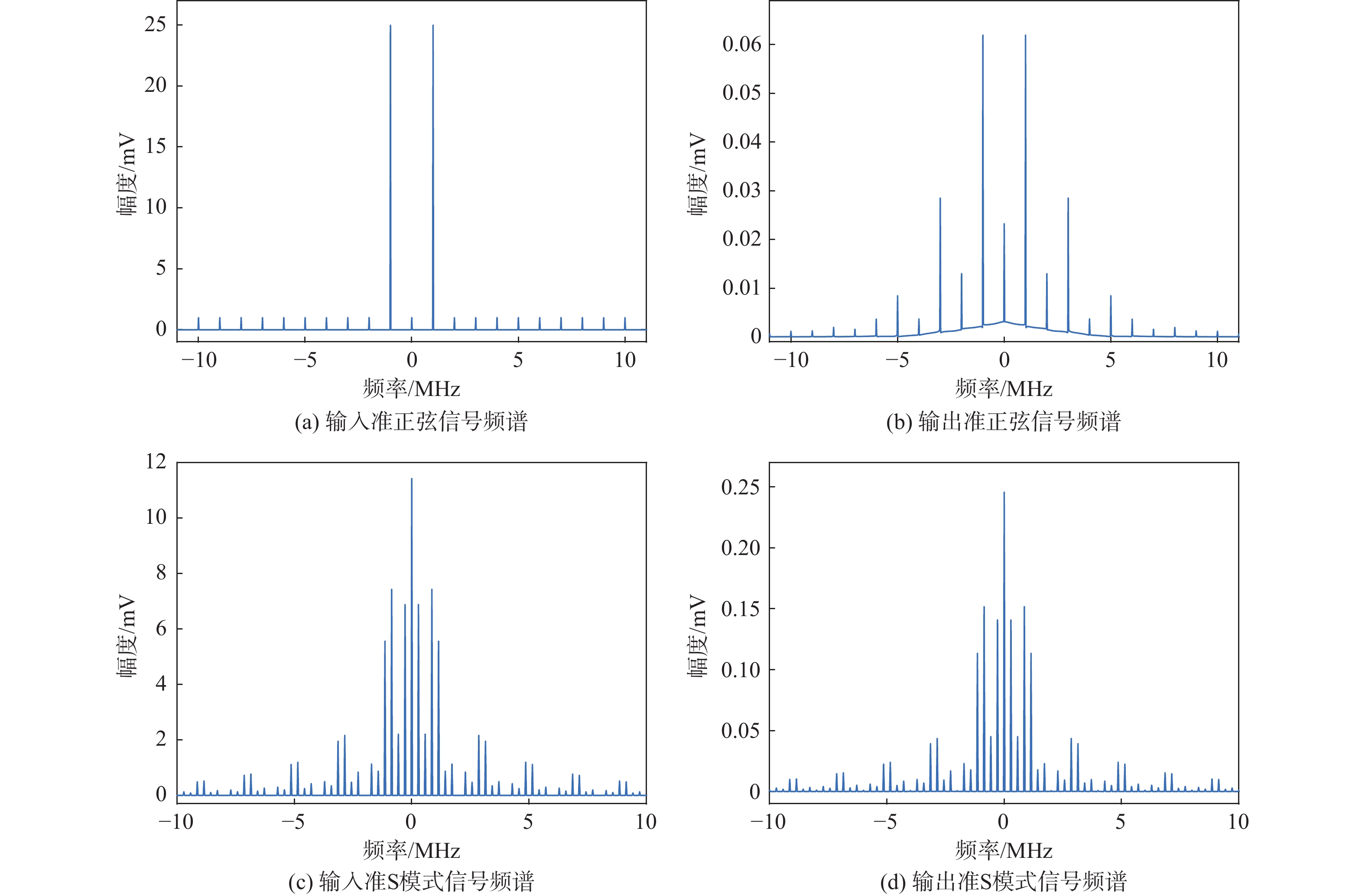
图 4 准正弦信号输入时3阶核函数H(n1,n2,3)
Figure 4. 3rd order kernel function H(n1,n2,3) for quasi-sin signal inputs
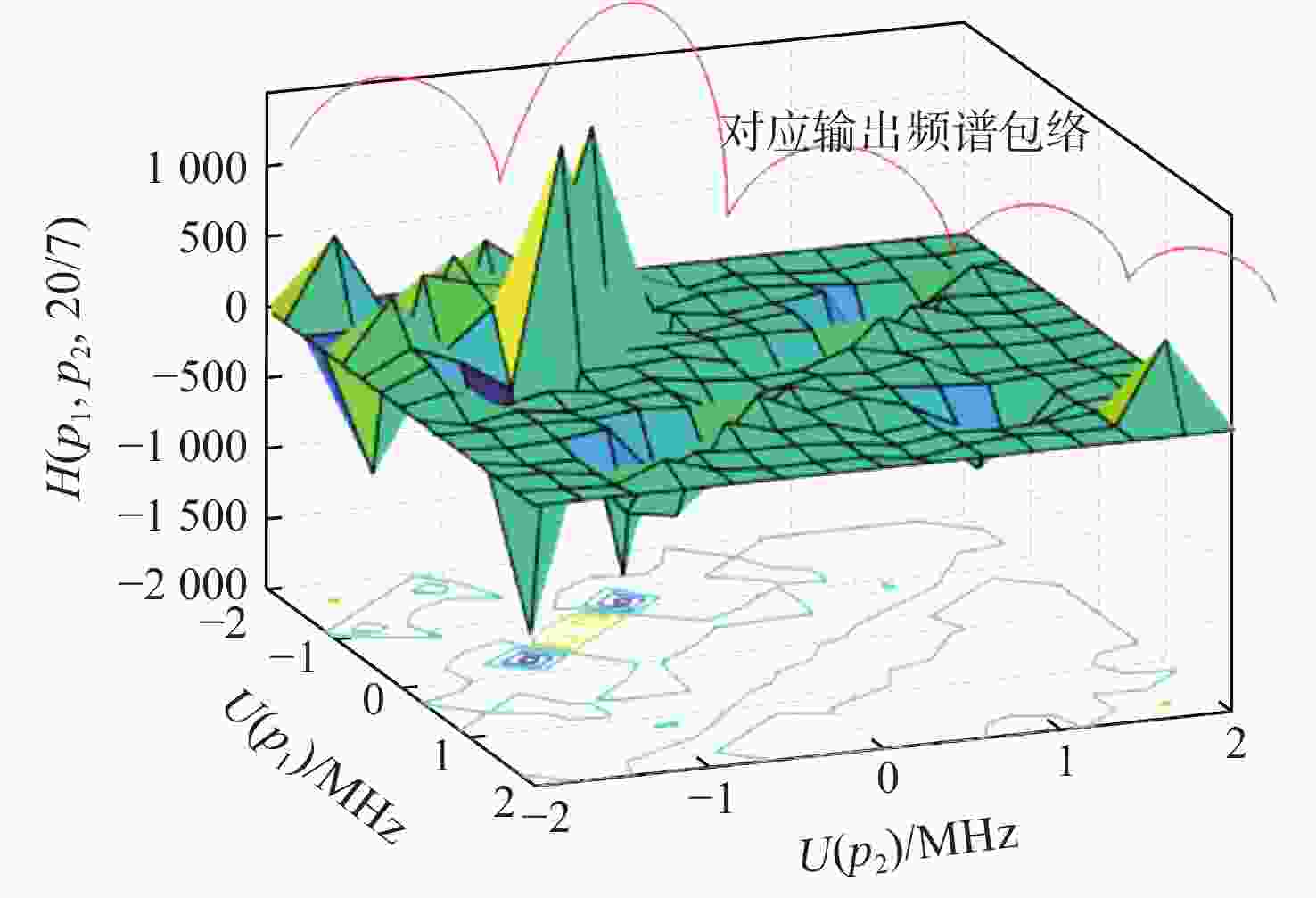
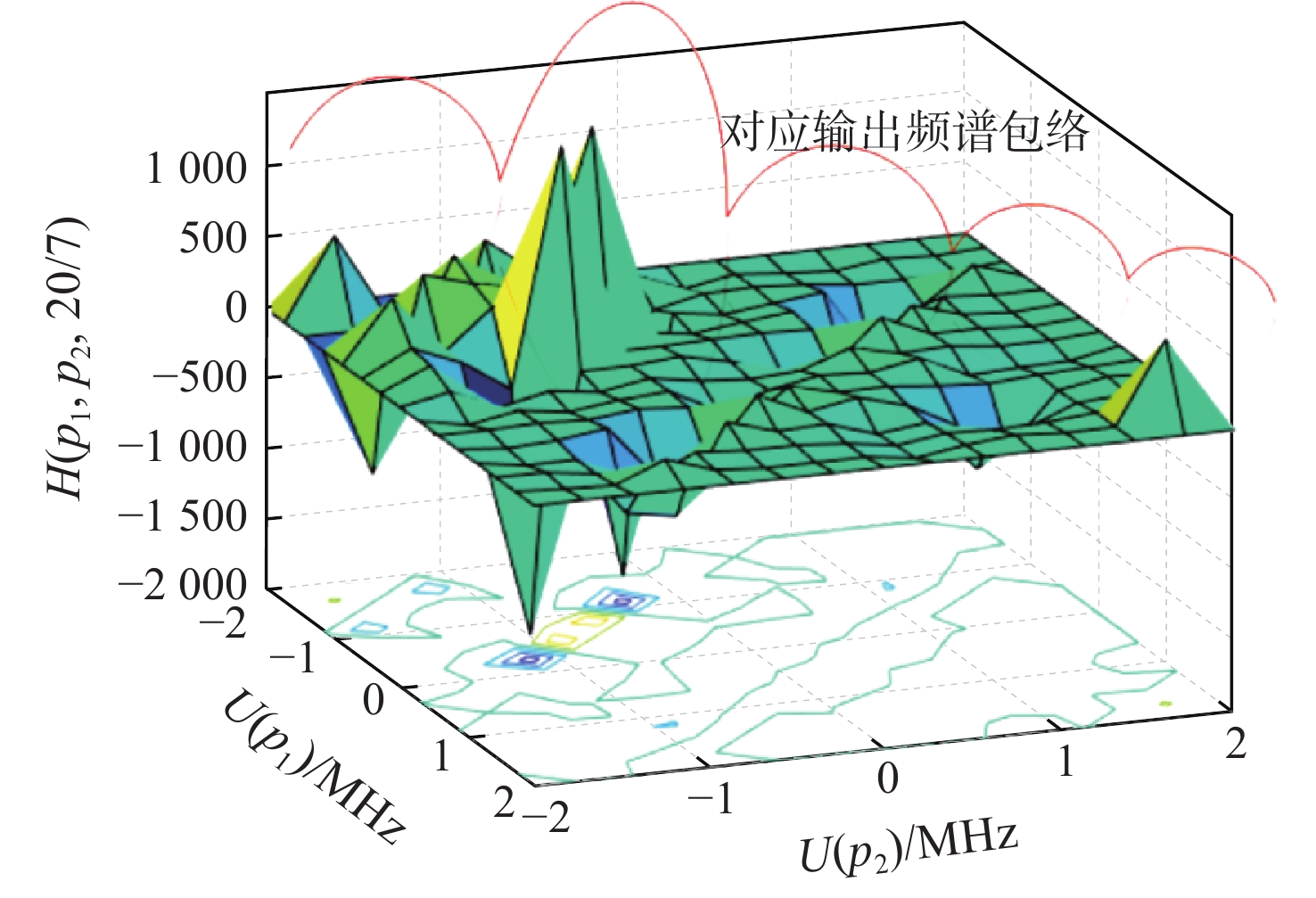
图 5 准S模式信号输入时3阶核函数H(p1, p2, 20/7)
Figure 5. 3rd order kernel function H(p1, p2, 20/7) for quasi-S-mode signal inputs
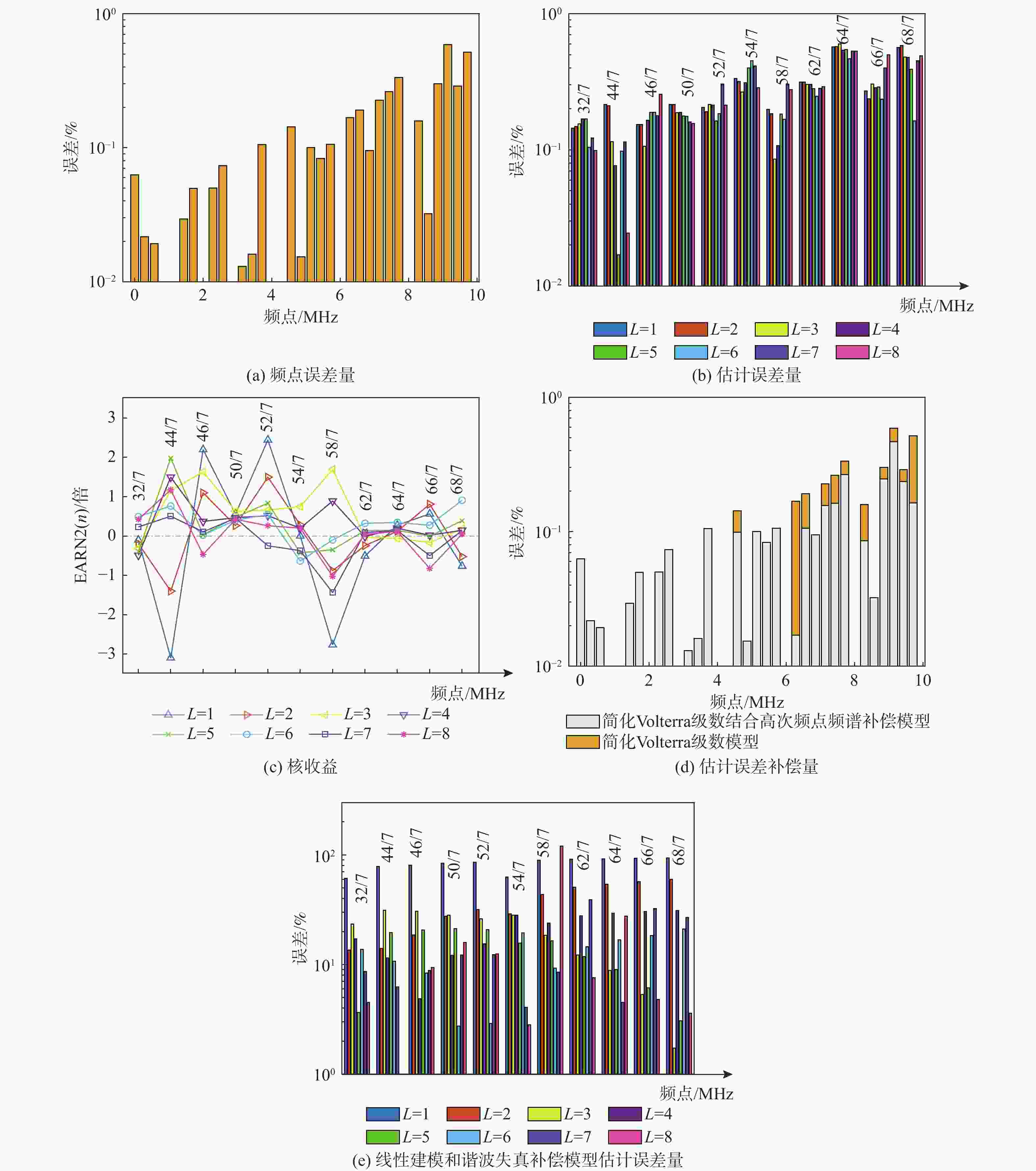
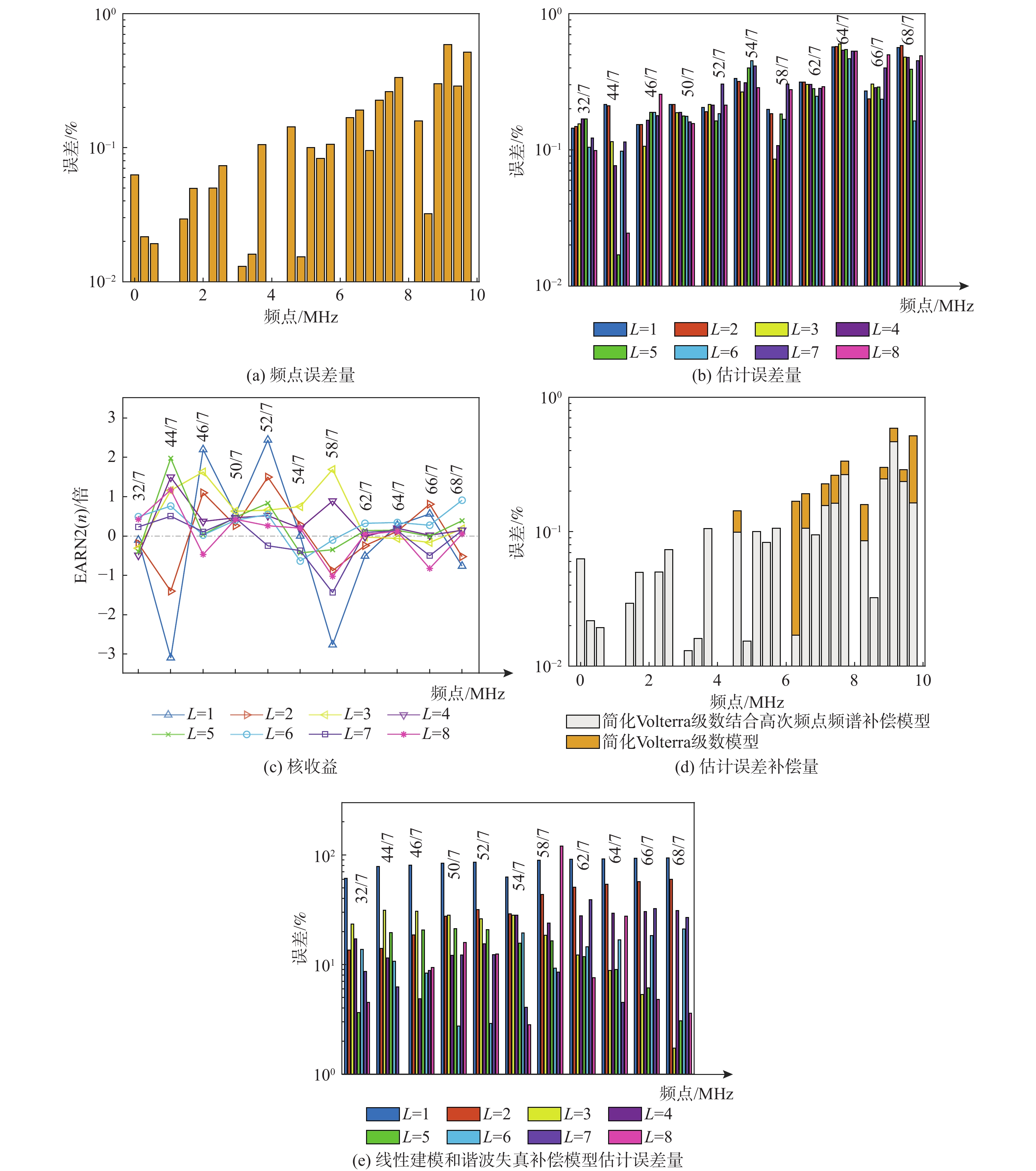
图 9 简化Volterra级数误差补偿项长度的影响
Figure 9. Effect of length of simplities Volterra series error compensation term
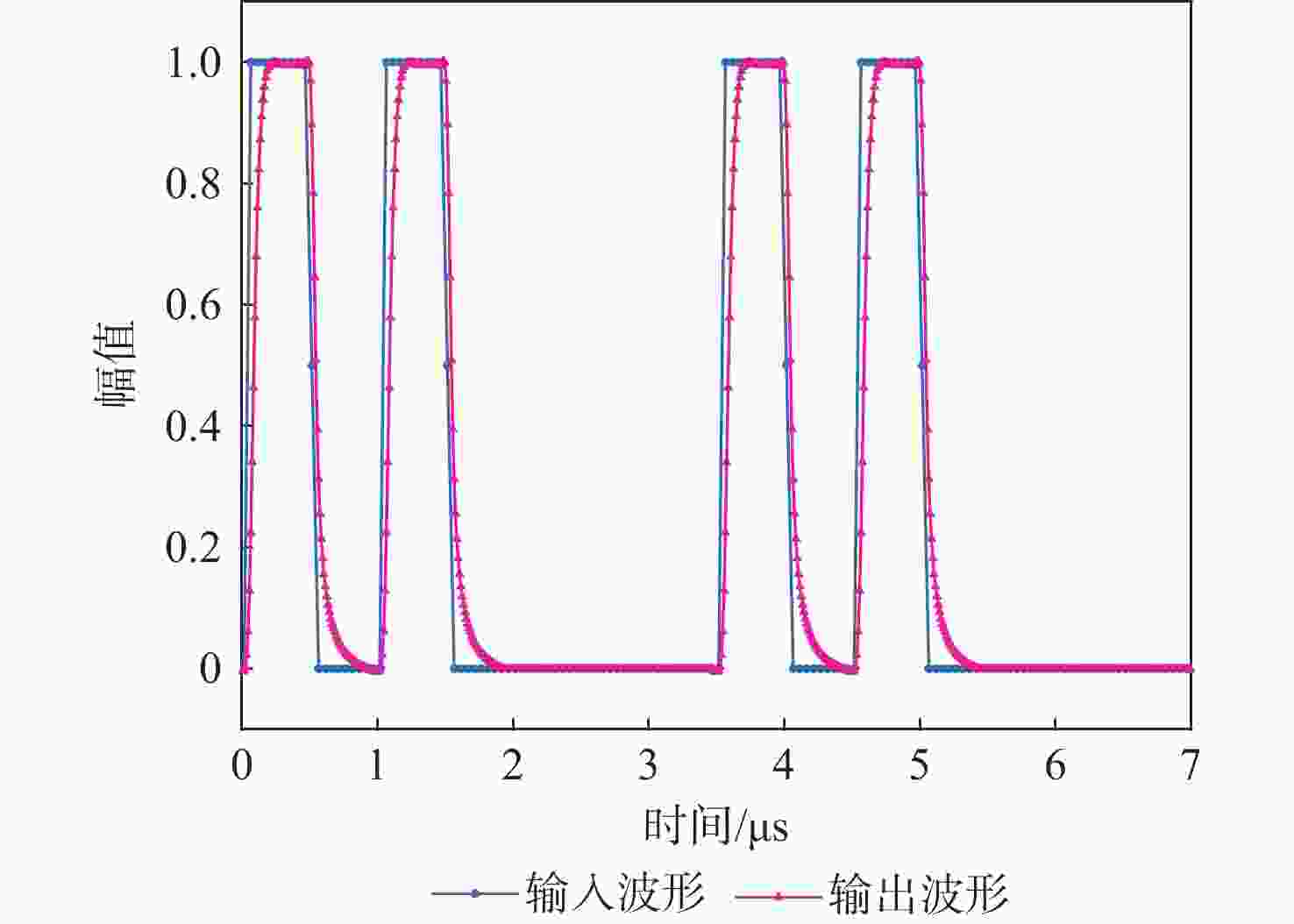
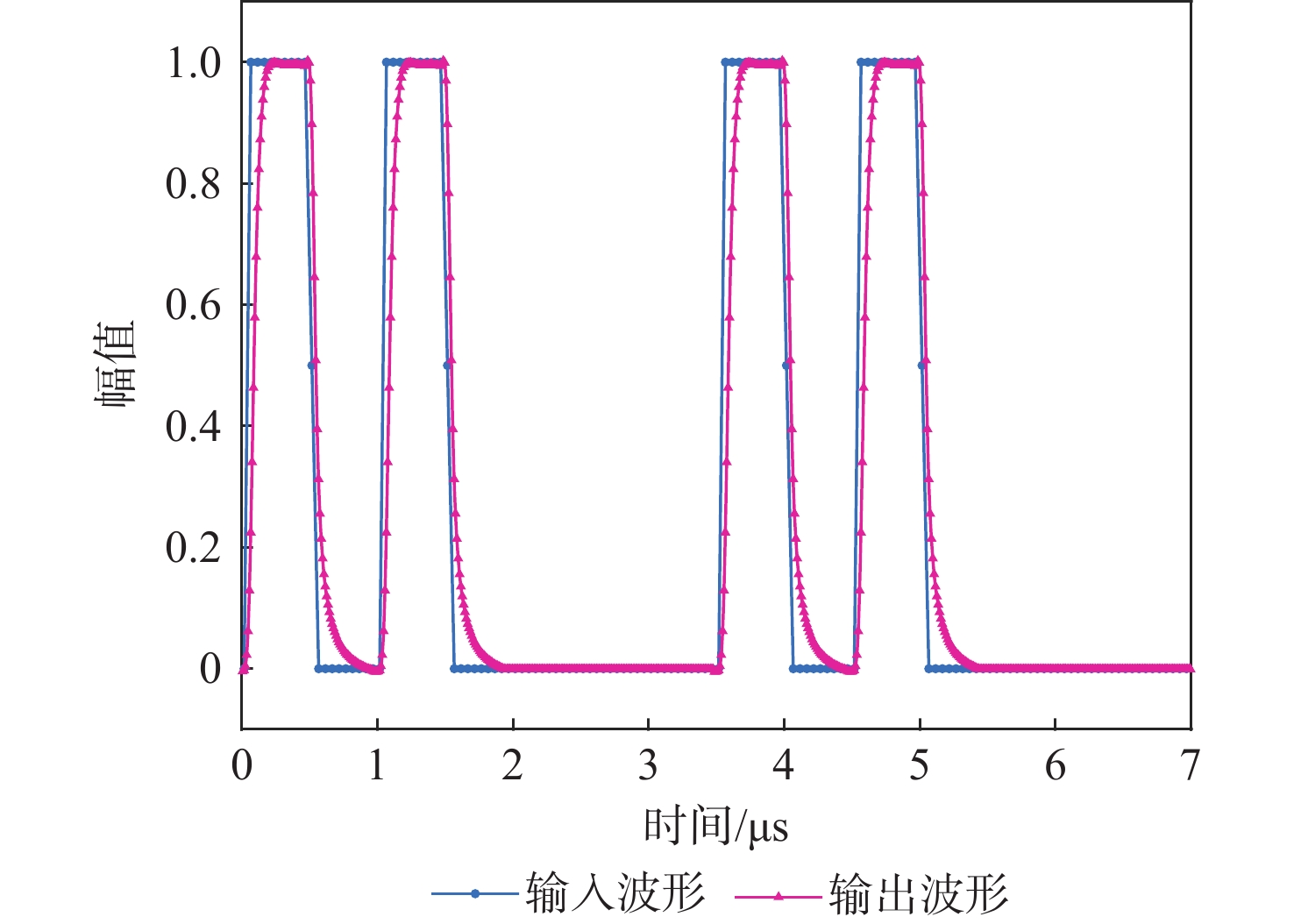
图 10 准S模式信号脉冲的输入与输出波形
Figure 10. Input and output waveforms of quasi-S mode signal pulse
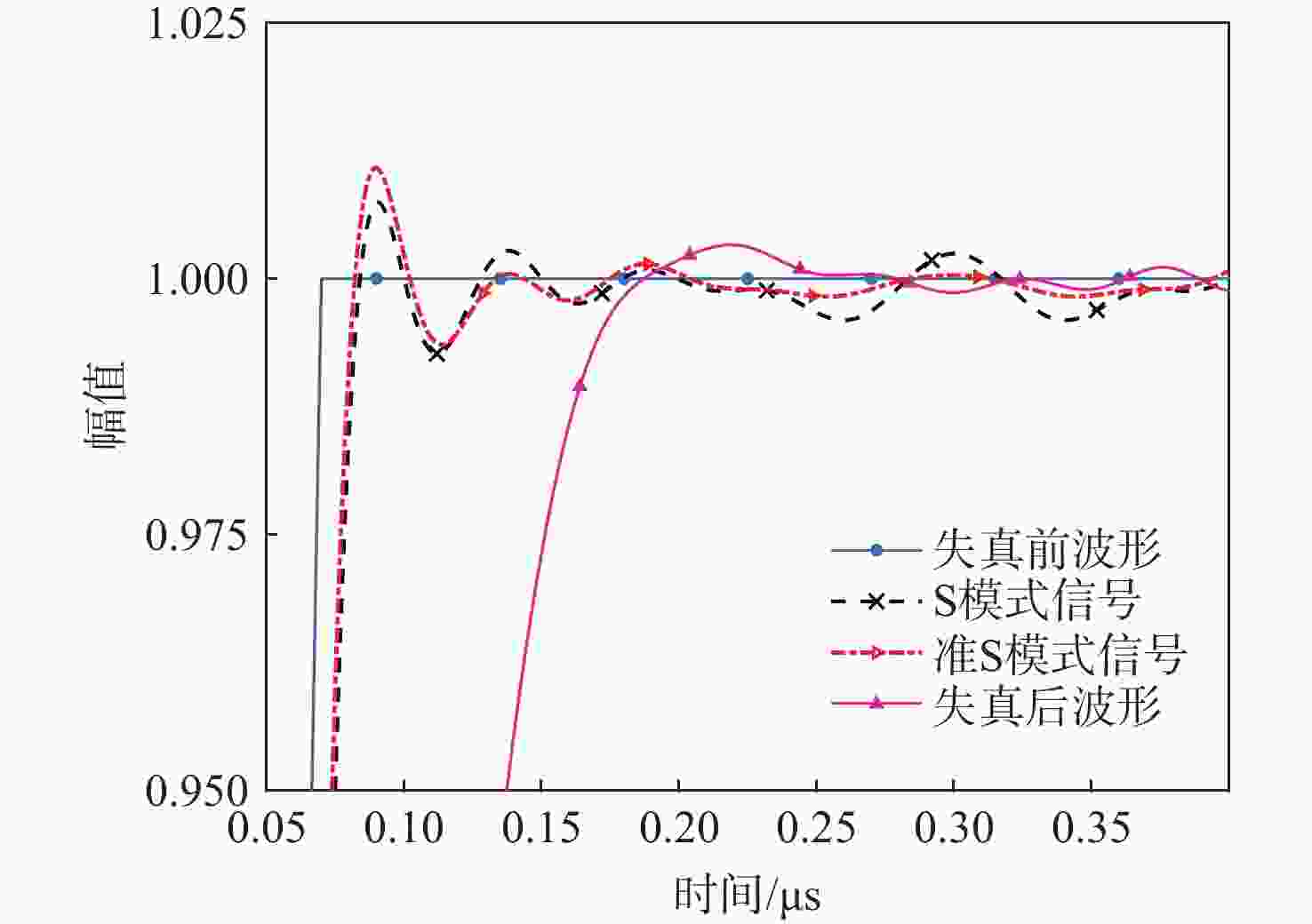
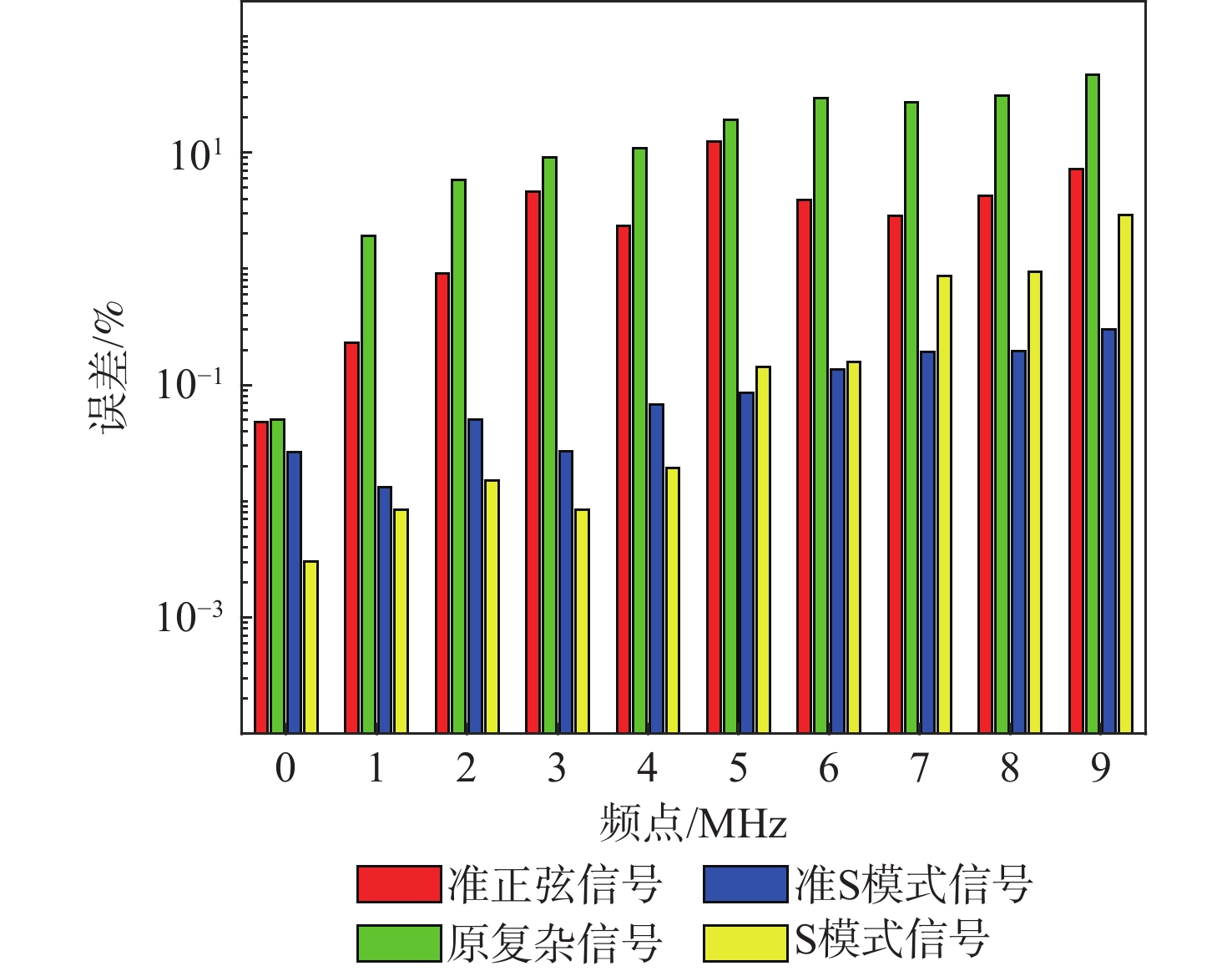
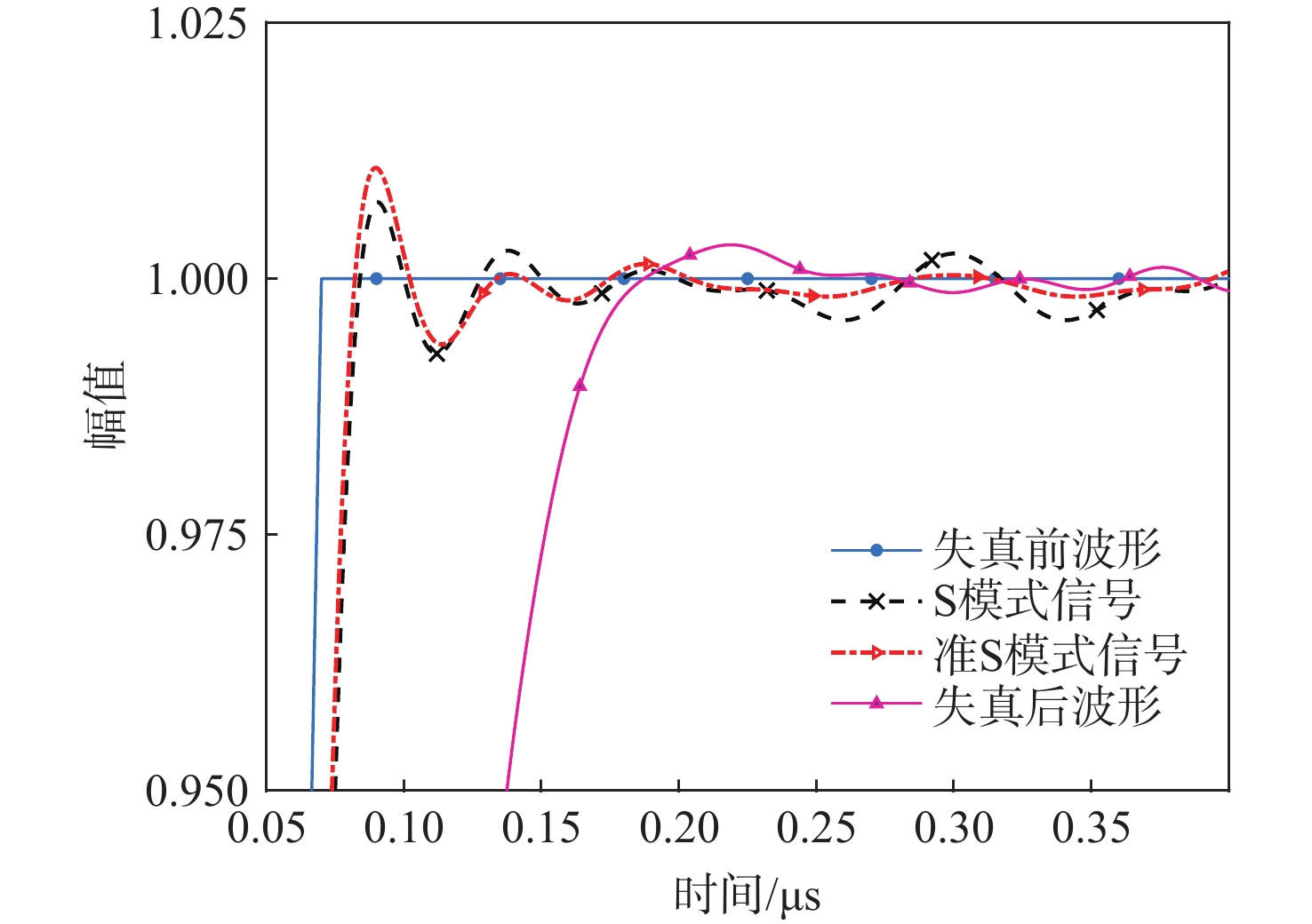
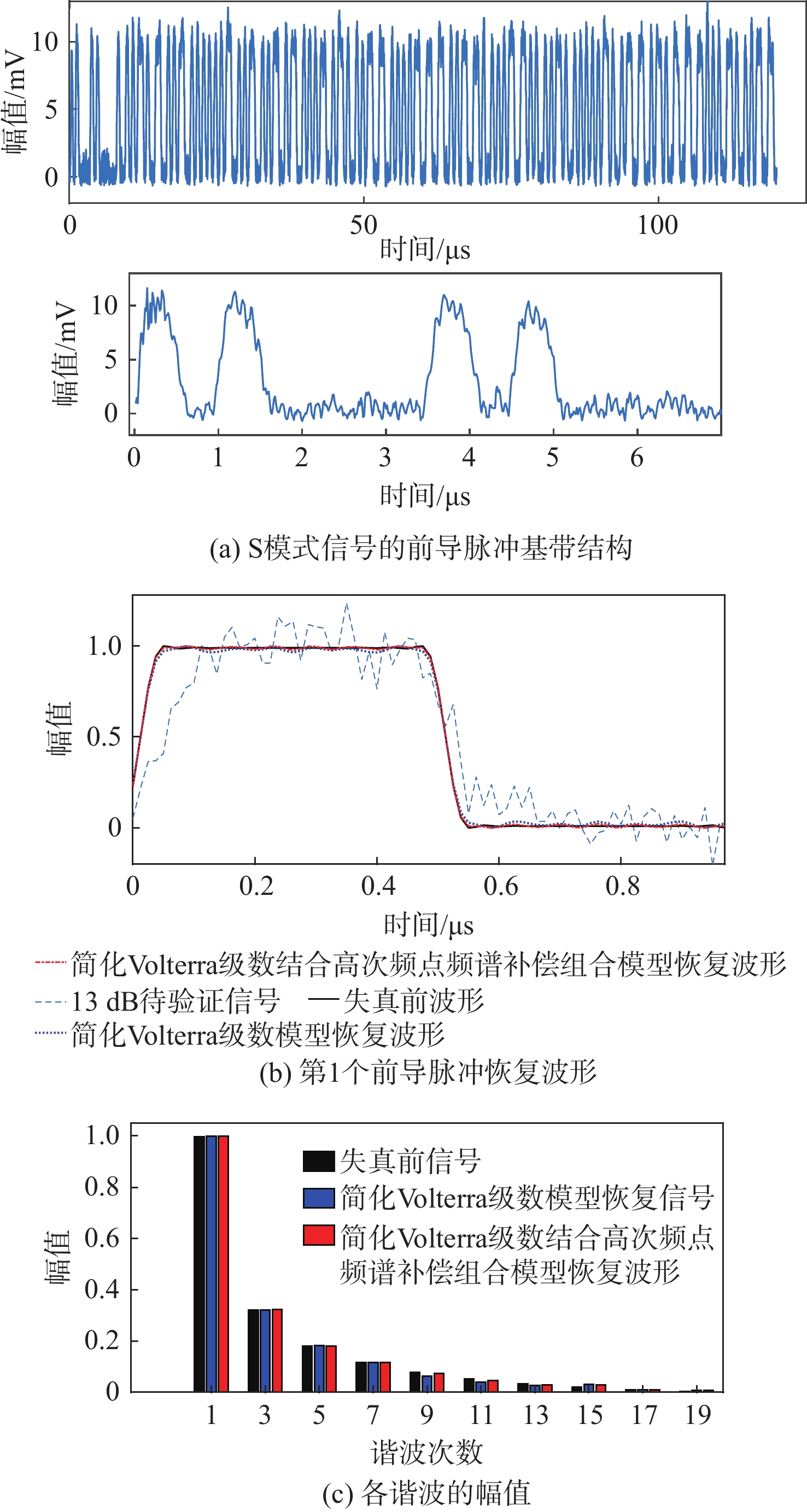
图 11 模型恢复波形与失真前输入信号波形
Figure 11. Model recovery and pre-distortion input signal waveform
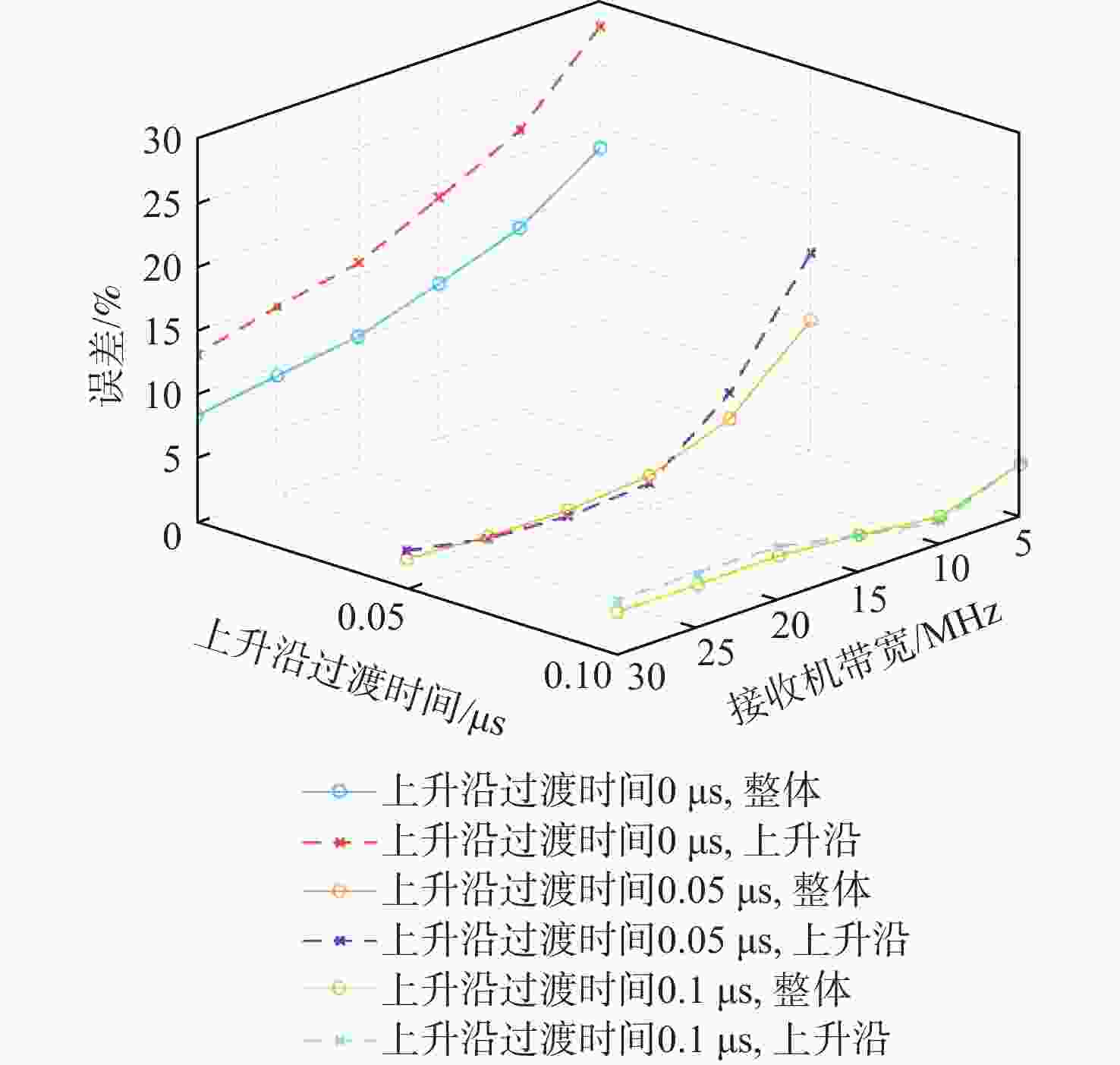
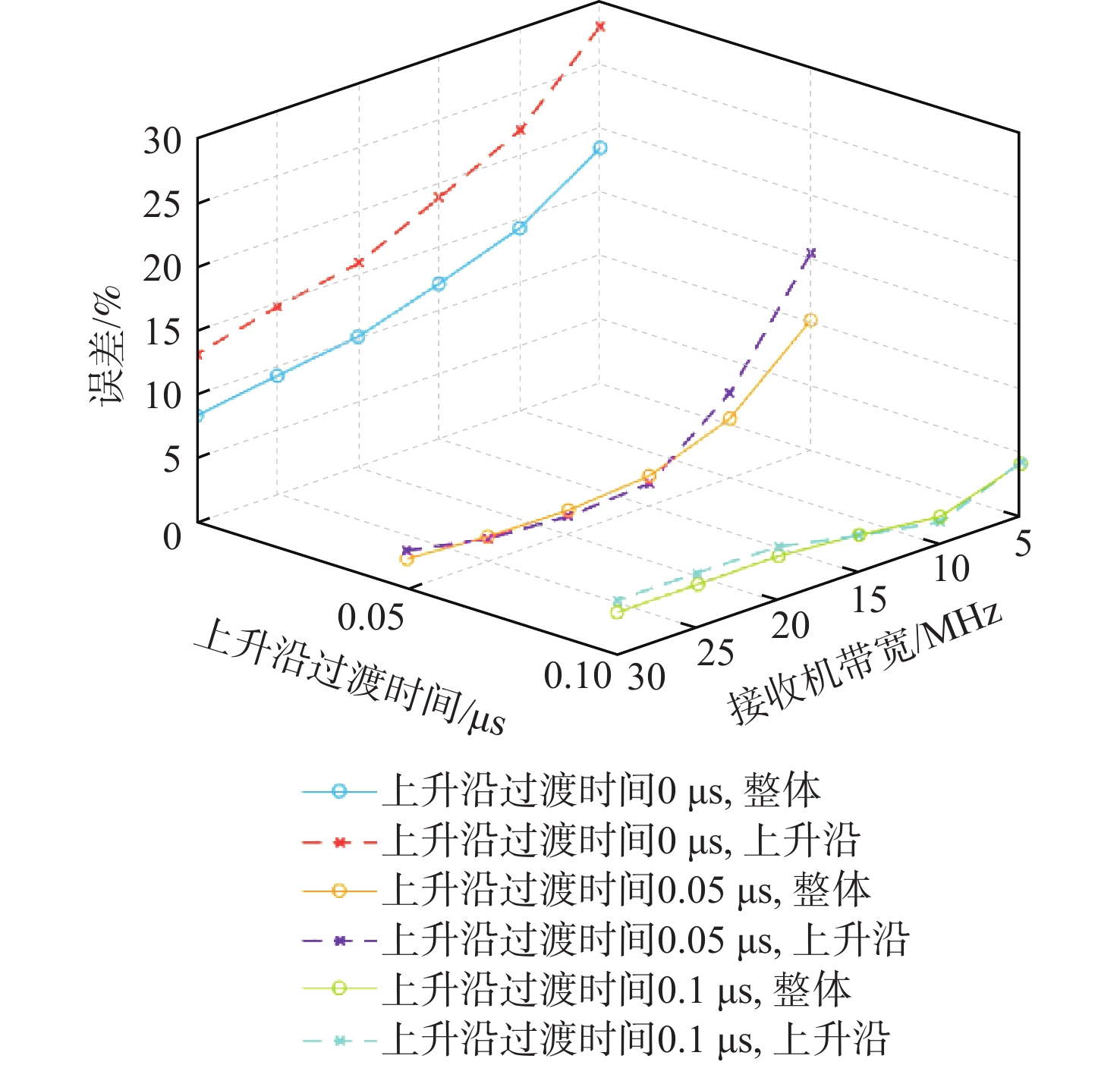
图 14 带宽和上升沿过渡时间对于恢复波形误差的影响
Figure 14. Influence of bandwidth and rising edge transition time on waveform recovery error
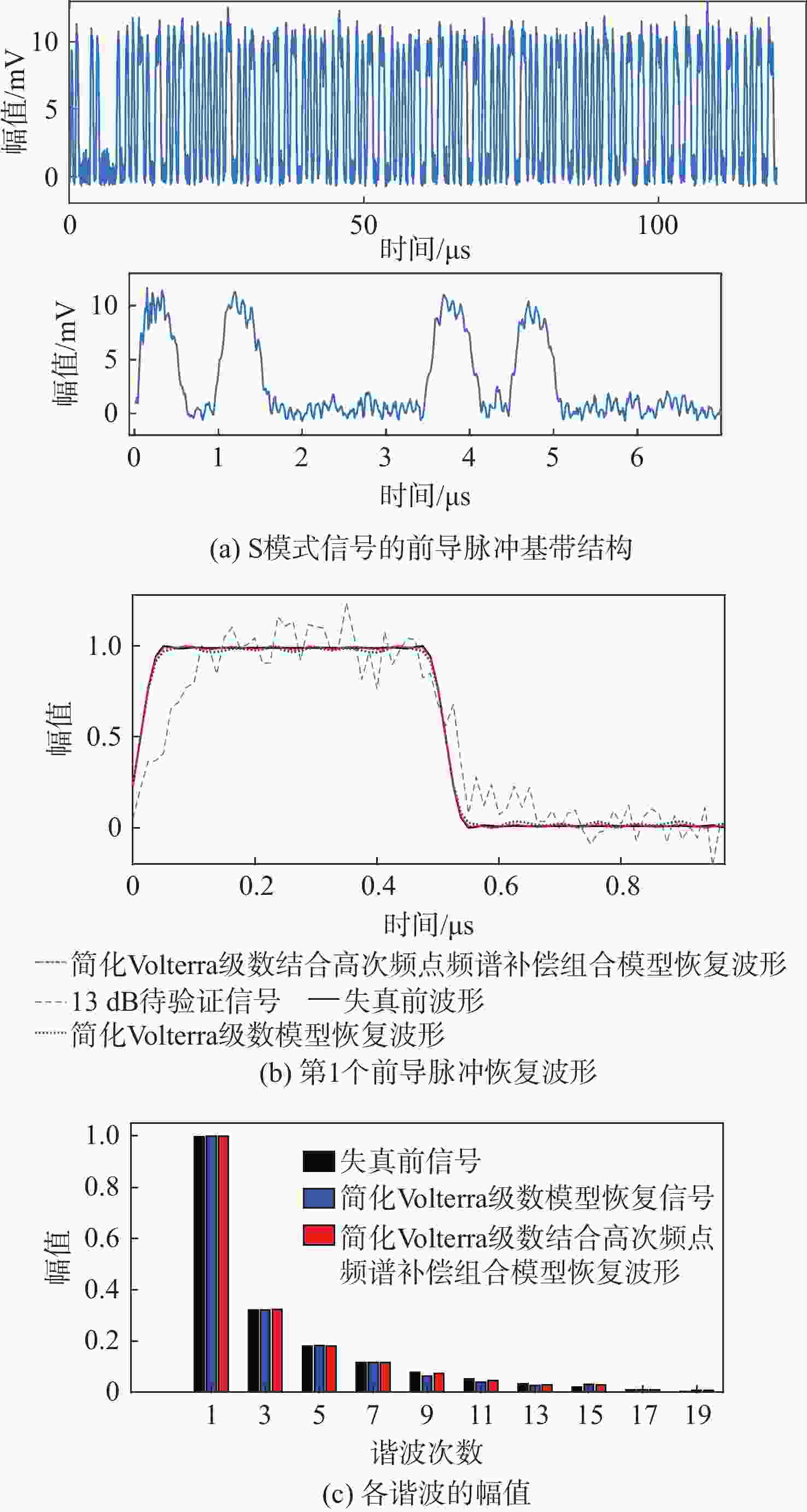
图 15 实测S模式基带信号波形及处理参数
Figure 15. Measured S-mode baseband signal waveform and processing parameters
表 1 传统Volterra级数模型所需核函数总数
Table 1. Total number of kernel functions required for traditional Volterra series model
建模参数 输入信号 核函数数目 阶数 带宽/MHz 3 10 S模式信号 12340 准S模式信号 1329 3 20 S模式信号 91800 准S模式信号 8435 8 10 S模式信号 3.77×10⁸ 准S模式信号 1.56×10⁶ 8 20 S模式信号 6.42×10¹⁰ 准S模式信号 1.45×10⁸  下载: 导出CSV
表 2 简化Volterra级数模型所需核函数总数
Table 2. Total number of kernel functions required to simplify Volterra series model
建模参数 输入信号 核函数数目 阶数 带宽/MHz 3 10 准正弦信号 56 准S模式信号 213 S模式信号 983 3 20 准正弦信号 116 准S模式信号 498 S模式信号 5679
下载: 导出CSV
表 3 模型参数
Table 3. Model parameters
模型 阶数 带宽/
MHz补偿项
个数样本数 运算
时间/s误差率/% 简化Volterra
级数模型3 10 0 300 0.343 0.31 简化Volterra
级数结合高次频点
频谱补偿组合模型3 10 42 300 0.436 0.15
下载: 导出CSV
表 4 恢复前后波形TOA误差比较
Table 4. Comparison of TOA error in waveforms before and after restoration
波形 ΔT/ns 失真后波形 36 S模式信号 9 准S模式信号 8
下载: 导出CSV
表 5 模型恢复信号的TOA误差比较
Table 5. Comparison of TOA error in model recovery signals
模型 ΔT/ns 10 MHz带宽 无限制带宽 失真后信号 34 42 简化Volterra级数
模型恢复信号3 11 简化Volterra级数
结合高次频点频谱
补偿组合模型恢复信号2 10
下载: 导出CSV
-
[1] LE NEINDRE F, FERRE G, DALLET D, et al. A successive interference cancellation-based receiver for secondary surveillance radar[J]. IEEE Transactions on Aerospace and Electronic Systems, 2023, 59(2): 805-816. [2] 宫峰勋, 曹雅茹. S模式前导脉冲过零点提取与TOA时间戳精确度研究[J]. 南京航空航天大学学报, 2020, 52(5): 701-707.GONG F X, CAO Y R. Zero-crossing extraction of S-mode preamble pulse and TOA timestamp accuracy[J]. Journal of Nanjing University of Aeronautics & Astronautics, 2020, 52(5): 701-707(in Chinese). [3] 李松亭, 颜盾. 射频集成电路校准技术综述[J]. 电子与信息学报, 2022, 44(11): 4058-4074.LI S T, YAN D. An overview on calibration techniques for radio frequency integrated circuits[J]. Journal of Electronics & Information Technology, 2022, 44(11): 4058-4074(in Chinese). [4] 黄家露, 王文涛, 周莲, 等. 基于LS-SVM的宽带接收前端非线性补偿算法[J]. 电子学报, 2023, 51(6): 1500-1509.HUANG J L, WANG W T, ZHOU L, et al. Nonlinearity mitigation method based on LS-SVM for wide-band receiver[J]. Acta Electronica Sinica, 2023, 51(6): 1500-1509(in Chinese). [5] LENHARD K, BAUMGARTNER A, SCHWARZMAIER T. Independent laboratory characterization of NEO HySpex imaging spectrometers VNIR-1600 and SWIR-320m-e[J]. IEEE Transactions on Geoscience and Remote Sensing, 2015, 53(4): 1828-1841. [6] VANSEBROUCK R, JABBOUR C, JAMIN O, et al. Fully-digital blind compensation of non-linear distortions in wideband receivers[J]. IEEE Transactions on Circuits and Systems I: Regular Papers, 2017, 64(8): 2112-2123. [7] MAITI D, BRANDT-PEARCE M. Modified nonlinear decision feedback equalizer for long-haul fiber-optic communications[J]. Journal of Lightwave Technology, 2015, 33(18): 3763-3772. [8] 曹韬, 刘友江, 杨春, 等. 高效宽带包络跟踪系统电路性能优化及非线性行为校正[J]. 电子与信息学报, 2020, 42(3): 787-794.CAO T, LIU Y J, YANG C, et al. Circuits optimization and system linearization for high efficiency and wideband envelope tracking architecture[J]. Journal of Electronics & Information Technology, 2020, 42(3): 787-794(in Chinese). [9] OBAIS A M. Linearizing of low noise power amplifier using 5.8 GHz double loop feedforward linearization technique[J]. Journal of University of Babylon for Engineering Sciences, 2017, 2(25): 786-791. [10] DJENNOUNE S, BETTAYEB M, AL-SAGGAF U M. Modulating function-based fast convergent observer and output feedback control for a class of non-linear systems[J]. IET Control Theory & Applications, 2019, 13(16): 2681-2693. [11] ZHANG S, ZHOU Z C, ZHENG W X, et al. Frequency-domain Volterra kernel-based adaptation: formulations and algorithms[J]. Signal Processing, 2024, 216: 109295. [12] CHIERCHIE F, AASE S O. Volterra models for digital PWM and their inverses[J]. IEEE Transactions on Circuits and Systems I: Regular Papers, 2015, 62(10): 2606-2616. [13] CENTURELLI F, MONSURRÒ P, SCOTTI G, et al. Methods for model complexity reduction for the nonlinear calibration of amplifiers using Volterra kernels[J]. Electronics, 2022, 11(19): 3067. [14] POURDARVISH A, SAYEVAND K, MASTI I, et al. Orthonormal Bernoulli polynomials for solving a class of two dimensional stochastic Volterra-Fredholm integral equations[J]. International Journal of Applied and Computational Mathematics, 2022, 8(1): 31. [15] 王云海, 韩景龙, 张兵, 等. 空气动力二阶核函数辨识方法[J]. 航空学报, 2014, 35(11): 2949-2957.WANG Y H, HAN J L, ZHANG B, et al. Identification method of second-order kernels in aerodynamics[J]. Acta Aeronautica et Astronautica Sinica, 2014, 35(11): 2949-2957(in Chinese). [16] FAIFER M, LAURANO C, OTTOBONI R, et al. Definition of simplified frequency-domain Volterra models with quasi-sinusoidal input[J]. IEEE Transactions on Circuits and Systems I: Regular Papers, 2018, 65(5): 1652-1663. [17] FAIFER M, LAURANO C, OTTOBONI R, et al. Compensating the harmonic distortion introduced by instrument transformers: an improved method based on frequency-domain polynomials[C]//Proceedings of the IEEE 11th International Workshop on Applied Measurements for Power Systems. Piscataway: IEEE Press, 2021: 1-6. [18] 宫峰勋, 第五瑶光. 低信噪比S模式基带信号到达时间估计联合算法[J]. 北京航空航天大学学报, 2025, 51(2): 380-388.GONG F X, DIWU Y G. Joint algorithm for time of arrival estimation of S-mode baseband signals with low SNR[J]. Journal of Beijing University of Aeronautics and Astronautics, 2025, 51(2): 380-388(in Chinese). [19] 张家树, 肖先赐. 混沌时间序列的自适应高阶非线性滤波预测[J]. 物理学报, 2000, 49(7): 1221-1227.ZHANG J S, XIAO X C. Prediction of chaotic time series by using adaptive higher-order nonlinear Fourier infrared filter[J]. Acta Physica Sinica, 2000, 49(7): 1221-1227(in Chinese). -

 下载:
下载:

 点击查看大图
计量
- 文章访问数: 247
- HTML全文浏览量: 148
- PDF下载量: 7
- 被引次数: 0
