





Simulation of combustion characteristics and prediction of combustion performance using machine learning in an integrated afterburner
-
摘要:
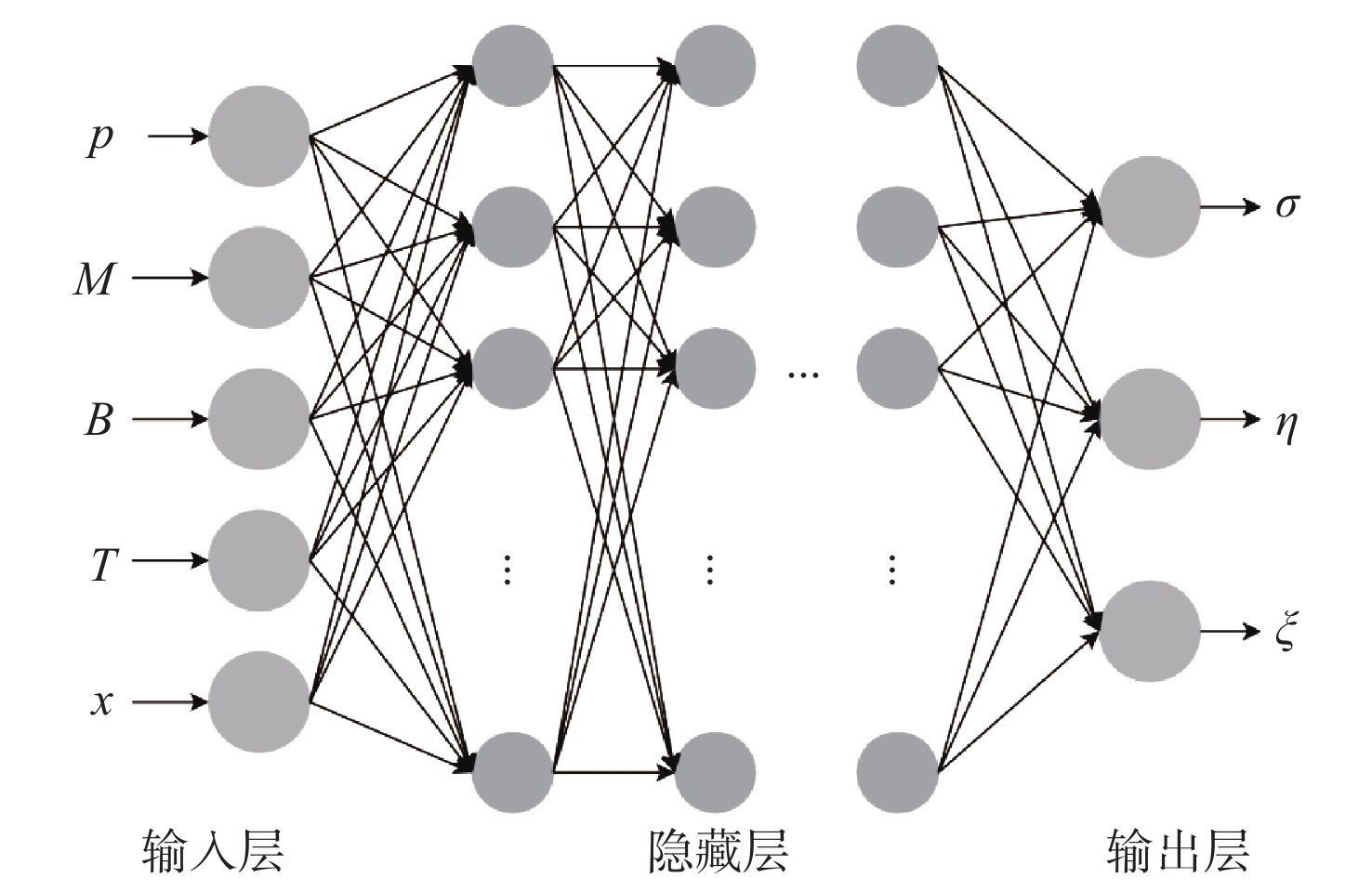
针对航空发动机提高推重比的问题,提出涡轮后框架支板、径向火焰稳定器、喷油杆一体化的加力燃烧室设计方案,开展不同油气比和涵道比下加力燃烧室热态流场和燃烧特性大涡模拟研究。揭示燃烧室温度、速度、压力的分布特征及其对燃烧过程的影响。探究燃油液滴、氧气、二氧化碳和水的分布状况。建立机器学习模型,以内涵进气压力、进气温度、喷油量、涵道比、轴向距离为输入变量,对总压恢复系数、温度均匀性系数、燃烧效率进行了预测。结果表明:该一体化加力燃烧室的整体燃烧性能良好,仅在火焰下方观察到局部燃烧弱化区。燃烧室前部存在3个低速回流区,分别位于强火焰区、喷油杆中下部和中心锥尾部。随着油气比增大,燃烧效率下降;随着涵道比增加,燃烧效率提高。所建机器学习模型训练集和测试集的校正决定系数大于0.788,预测效果较好。
Abstract:An afterburner design concept that integrated the fuel injection pipe, radial flame stabilizer, and turbine rear frame support plate was suggested as a solution to the problem of increasing the thrust-to-weight ratio of aero-engine. The thermal flow field and combustion characteristics of the afterburner under different kerosene-air ratios and bypass ratios were investigated through large eddy simulation. Distribution characteristics of the temperature, velocity, and pressure in the combustion chamber and their impacts on the combustion process were studied. The distributions of fuel droplets, oxygen, carbon dioxide, and water were analyzed. Using the intake pressure, intake temperature, fuel rate, bypass ratio, and axial distance as input variables, the machine learning method was developed and predictions were made for the total pressure recovery coefficient, temperature uniformity coefficient, and combustion efficiency. The results indicate that the overall combustion performance of the integrated afterburner is high, and only a localized combustion weakening zone is observed below the flame. There are three low-velocity recirculation zones in front of the combustion chamber, located in the strong flame zone, the middle and lower parts of the fuel injection pipe, and the tail of the central cone. As the kerosene-air ratio increases, the combustion efficiency is decreased, while an increase in bypass ratio leads to an improvement in combustion efficiency. The proposed machine learning model has a corrected determination coefficient greater than 0.788 for both the training and testing datasets, indicating good predictive performance.
-
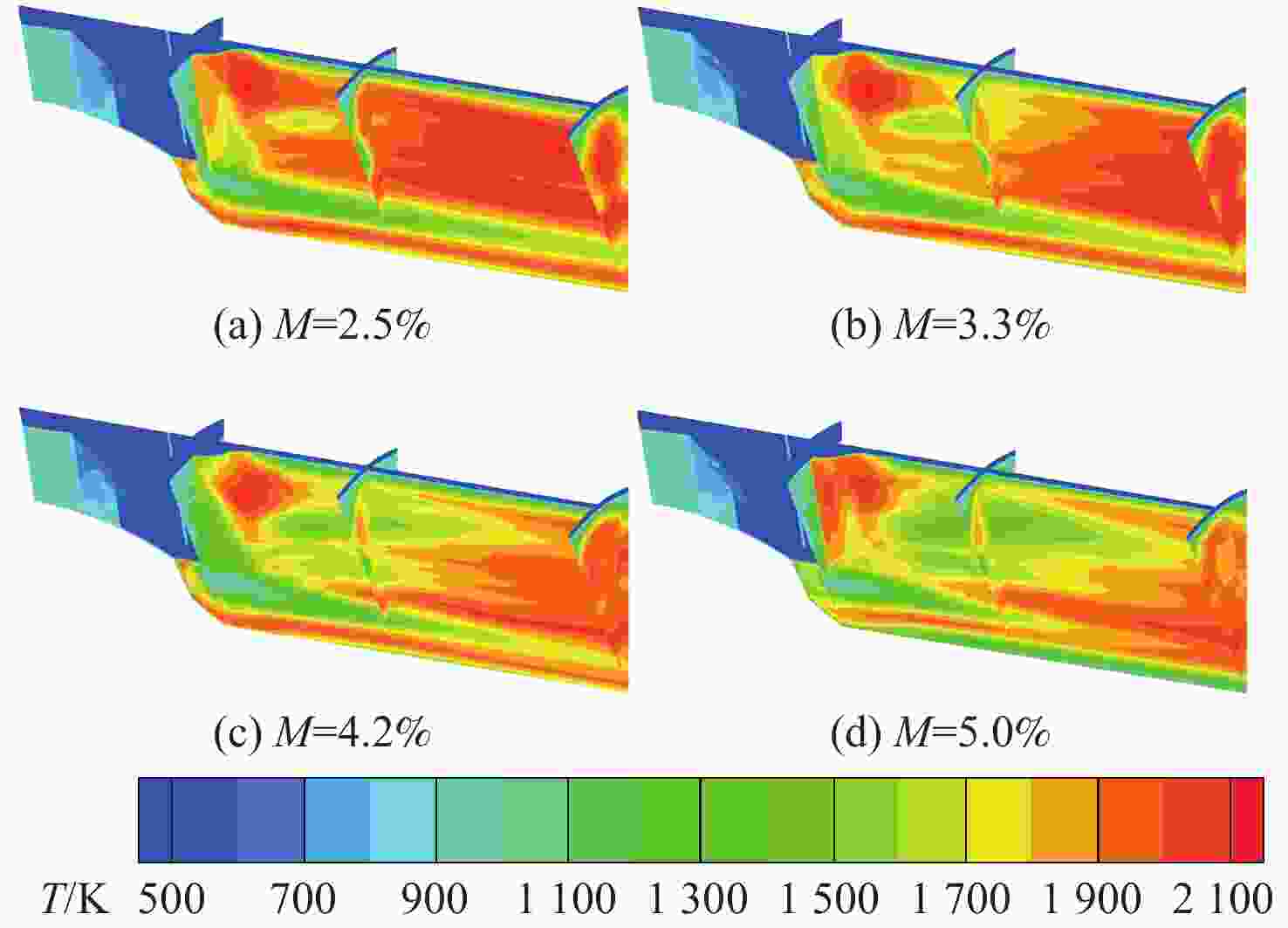
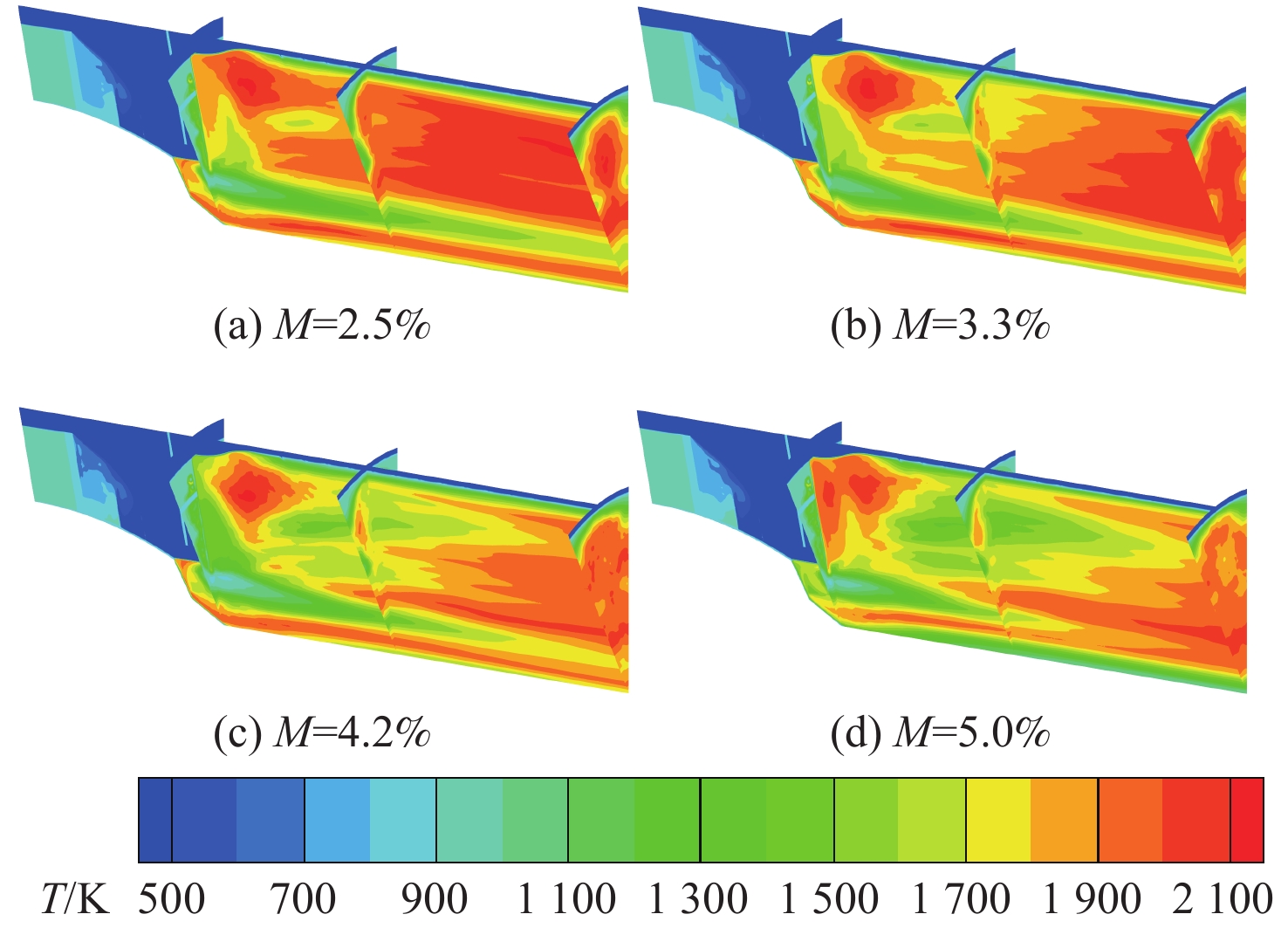
图 3 不同油气比下加力燃烧室温度分布情况
Figure 3. Temperature distribution of afterburner under various kerosene-air ratios
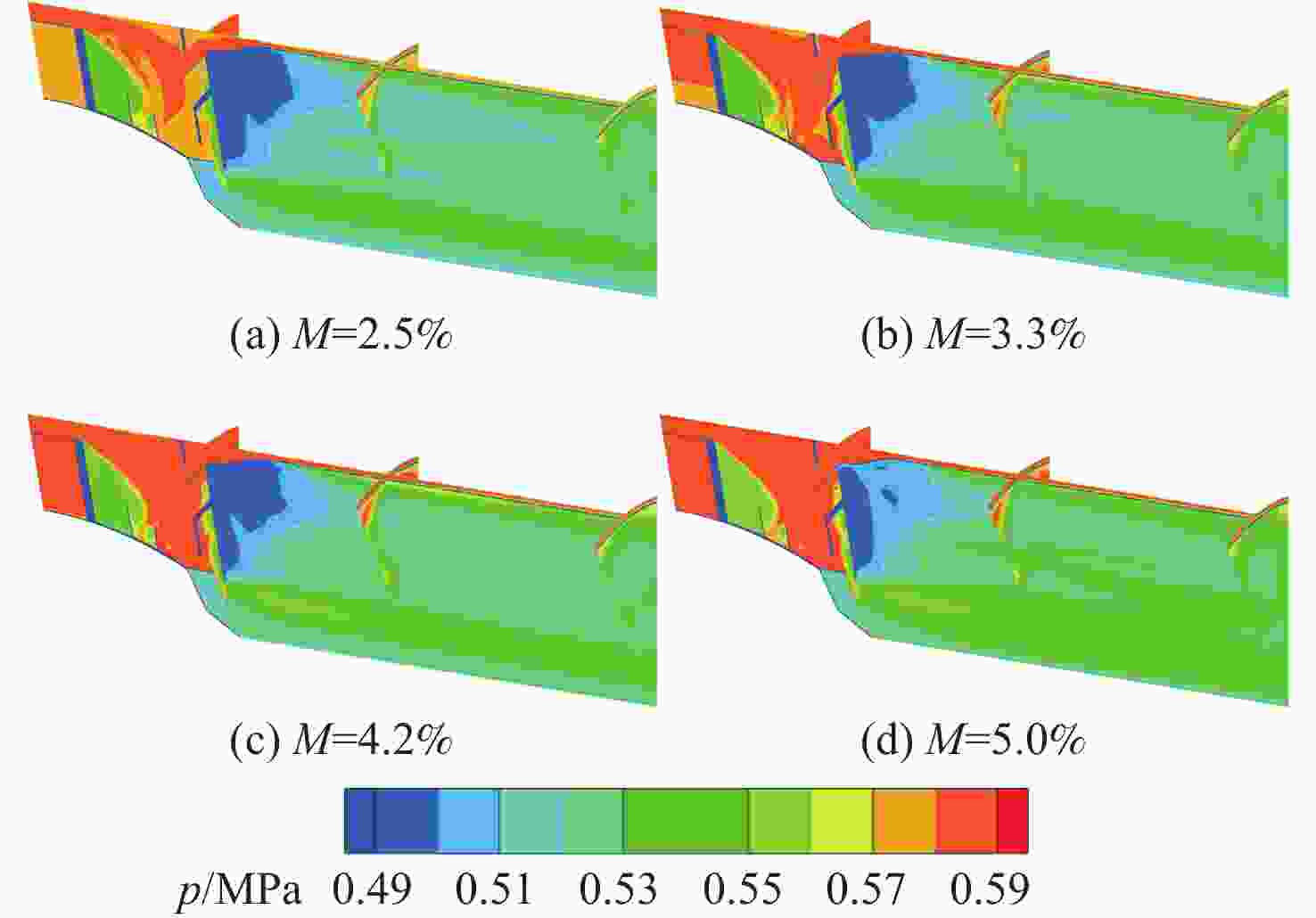
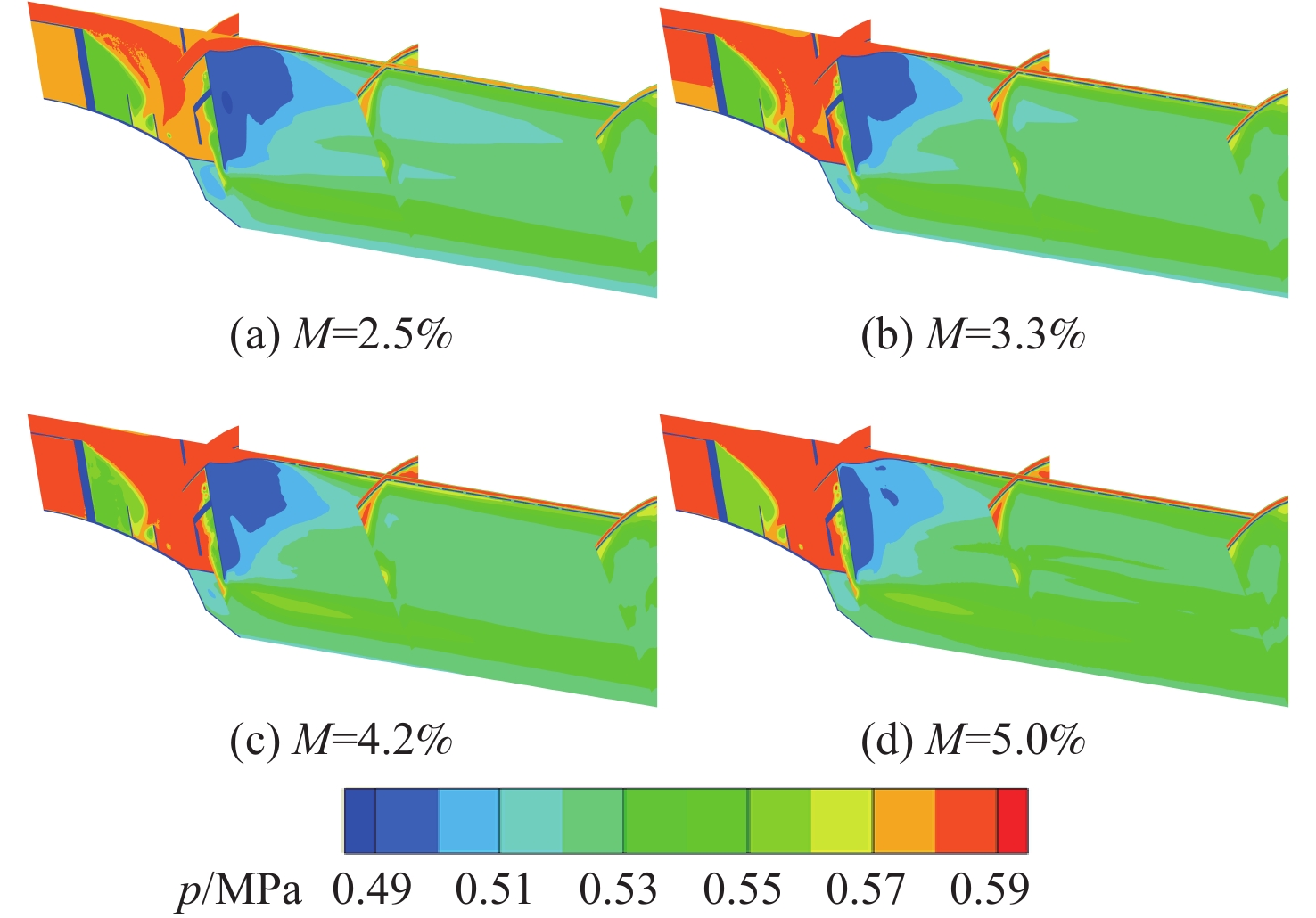
图 4 不同油气比下加力燃烧室压力分布情况
Figure 4. Pressure distribution of afterburner under various kerosene-air ratios
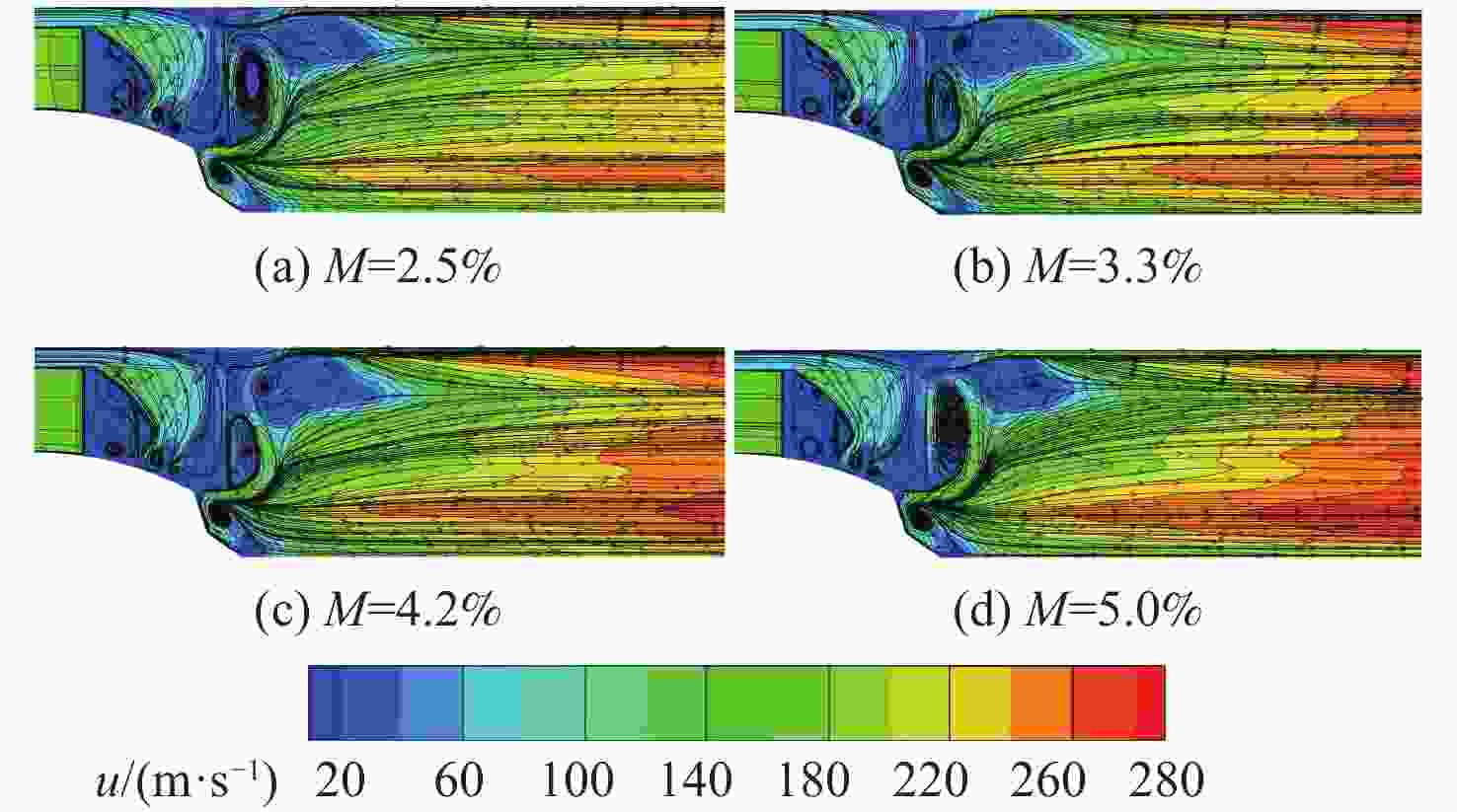
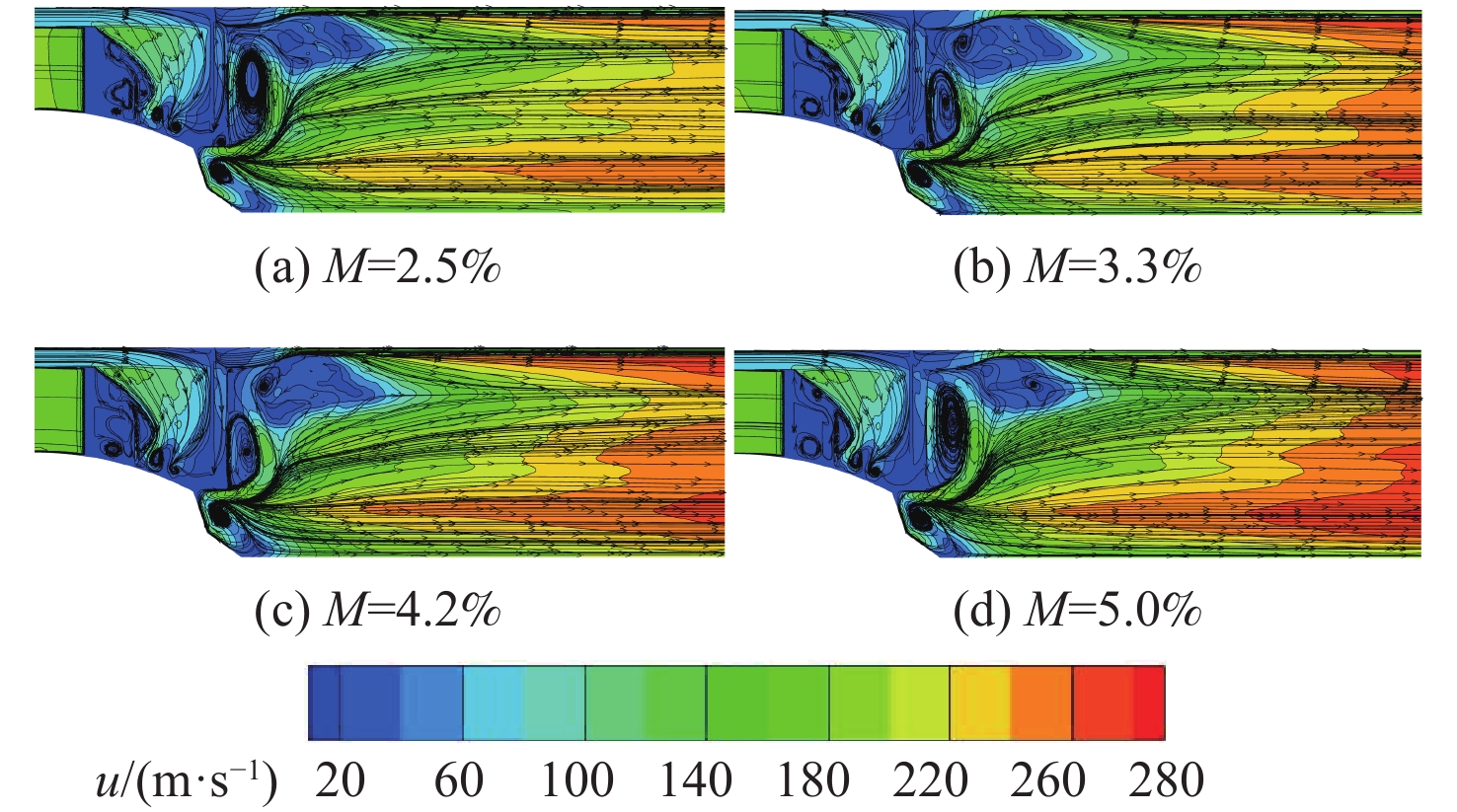
图 5 不同油气比下加力燃烧室流速和流线分布情况
Figure 5. Velocity and streamline distributions of afterburner under various kerosene-air ratios
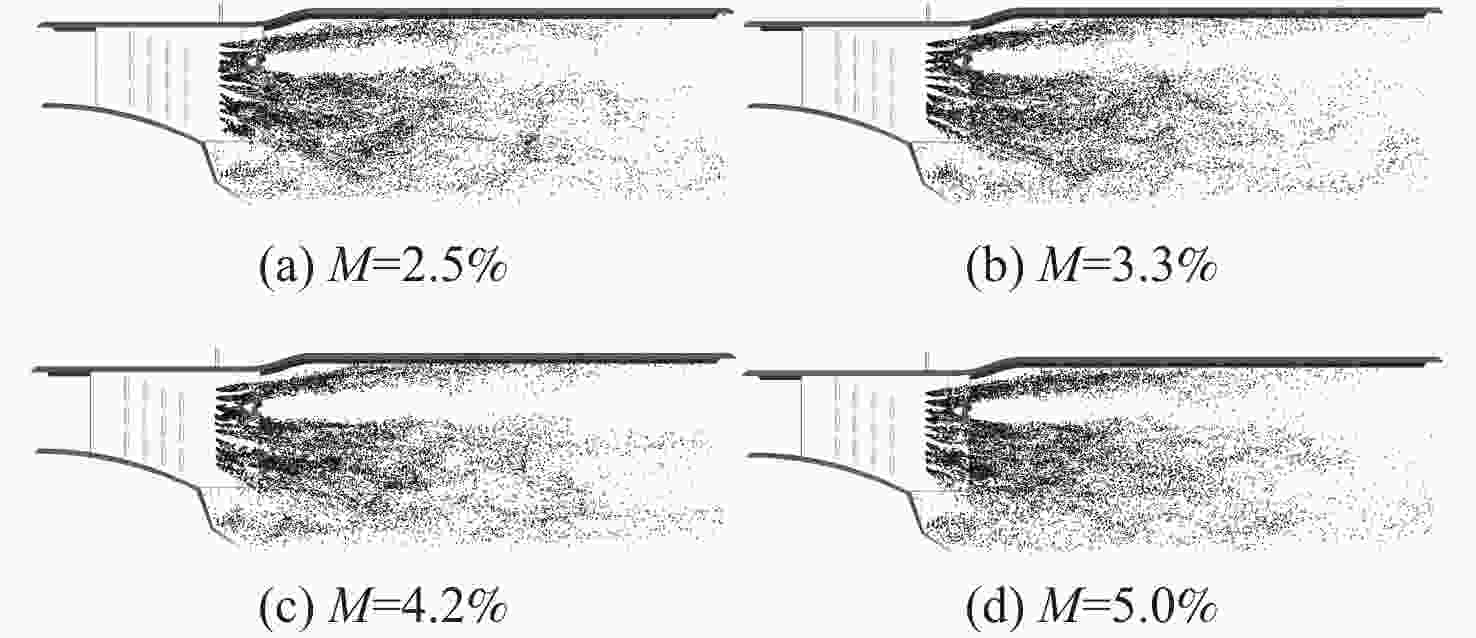
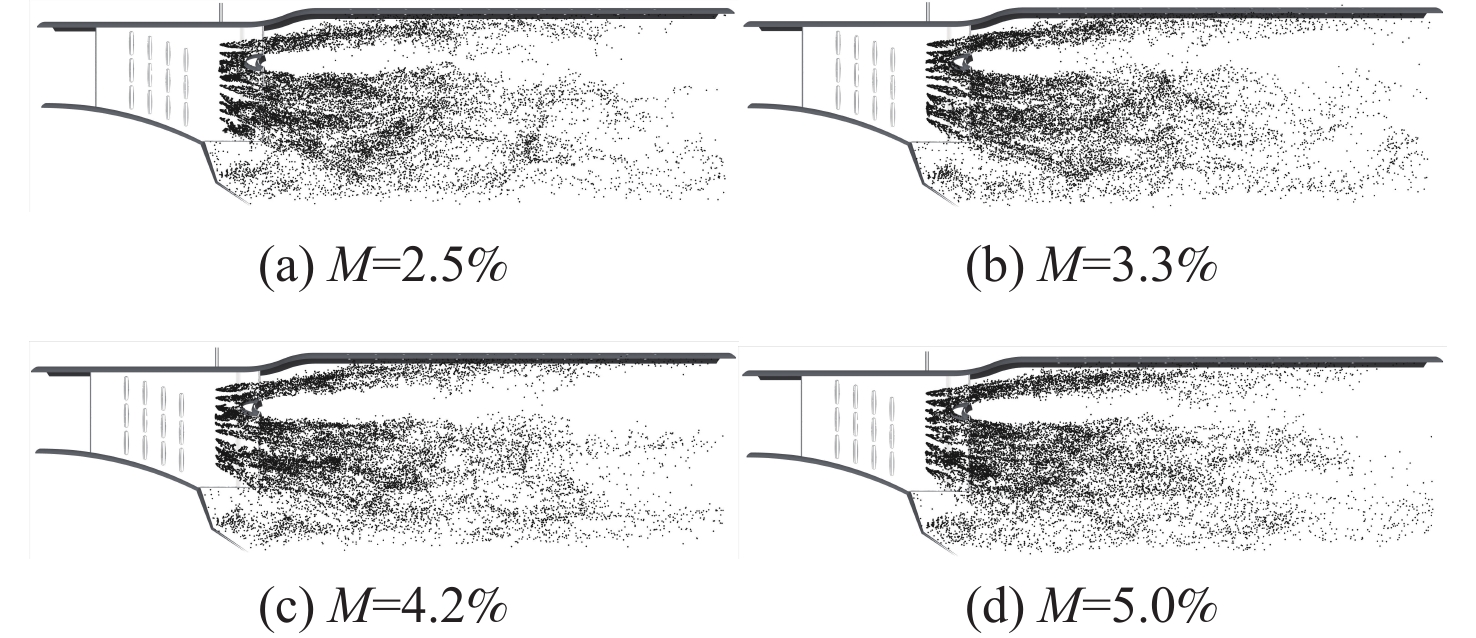
图 6 不同油气比下支板截面燃油液滴分布情况
Figure 6. Fuel droplets distributions of strut section under various kerosene-air ratios
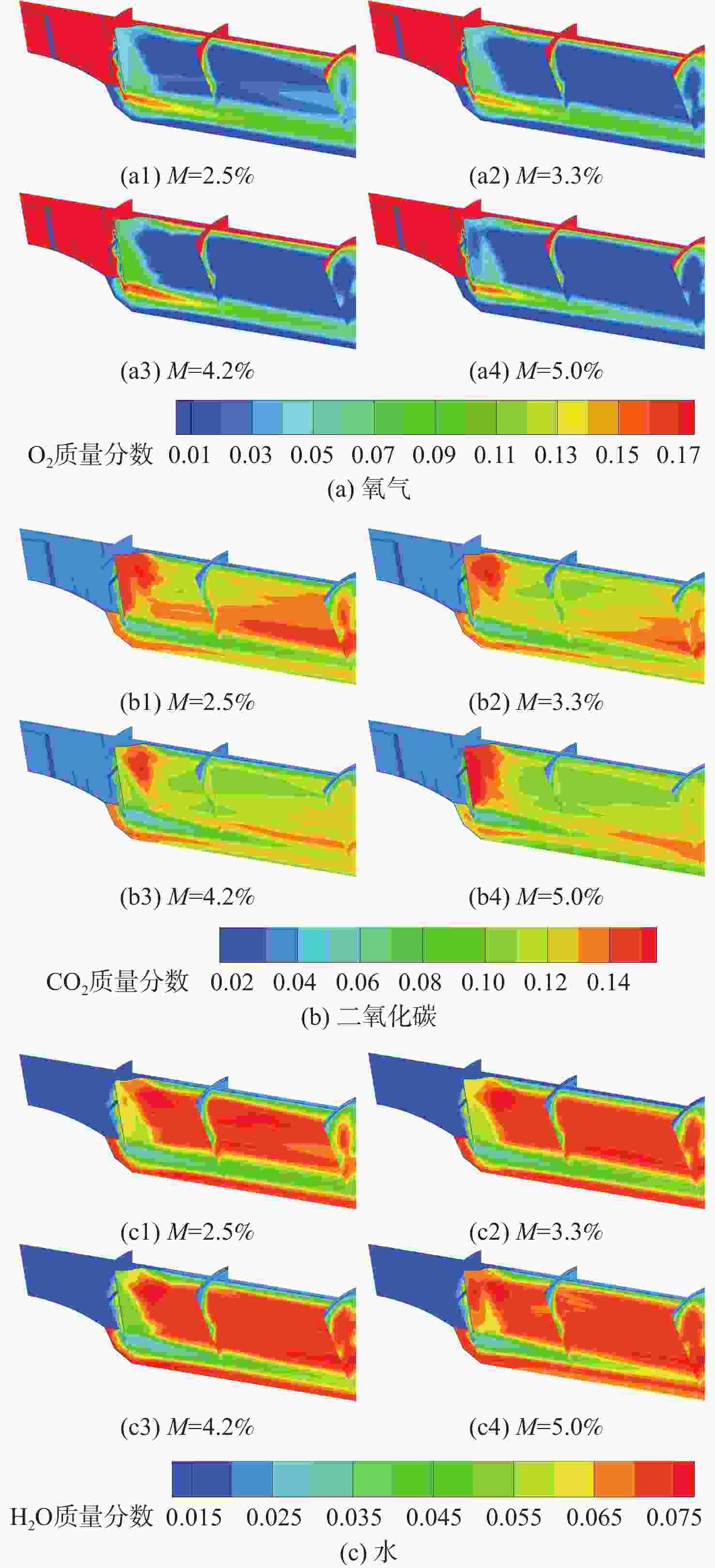
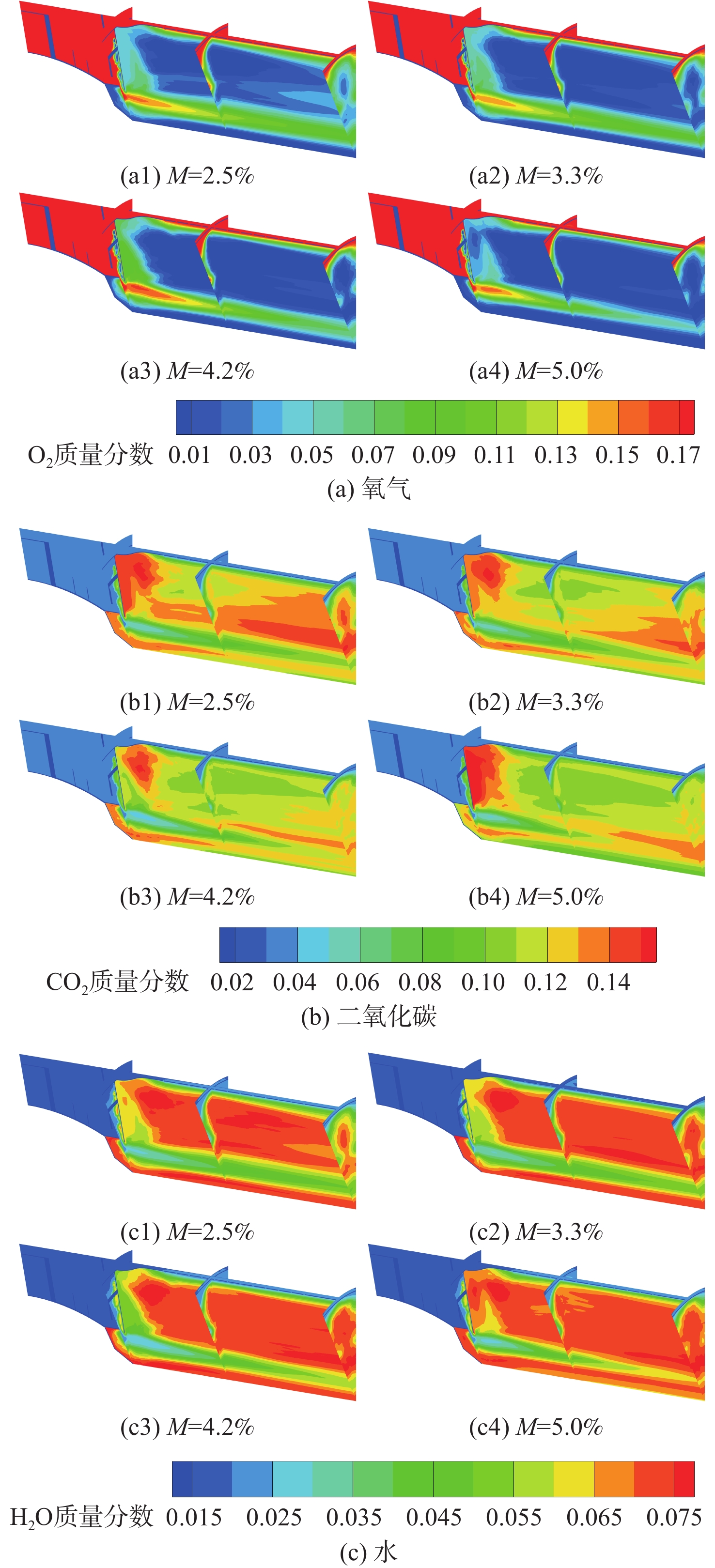
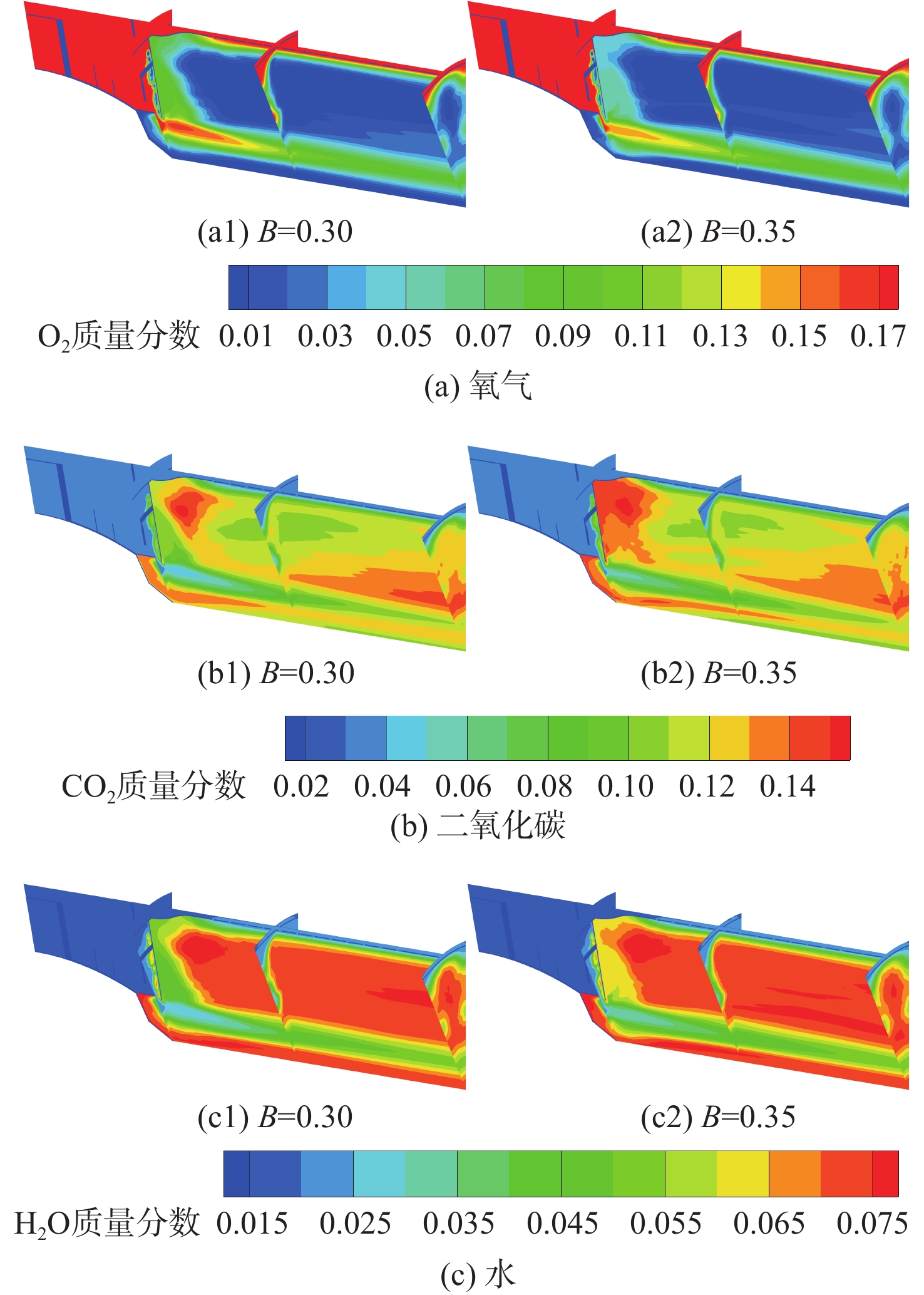
图 7 不同油气比下氧气、二氧化碳和水的分布情况
Figure 7. Distributions of oxygen, carbon dioxide and water under various kerosene-air ratios
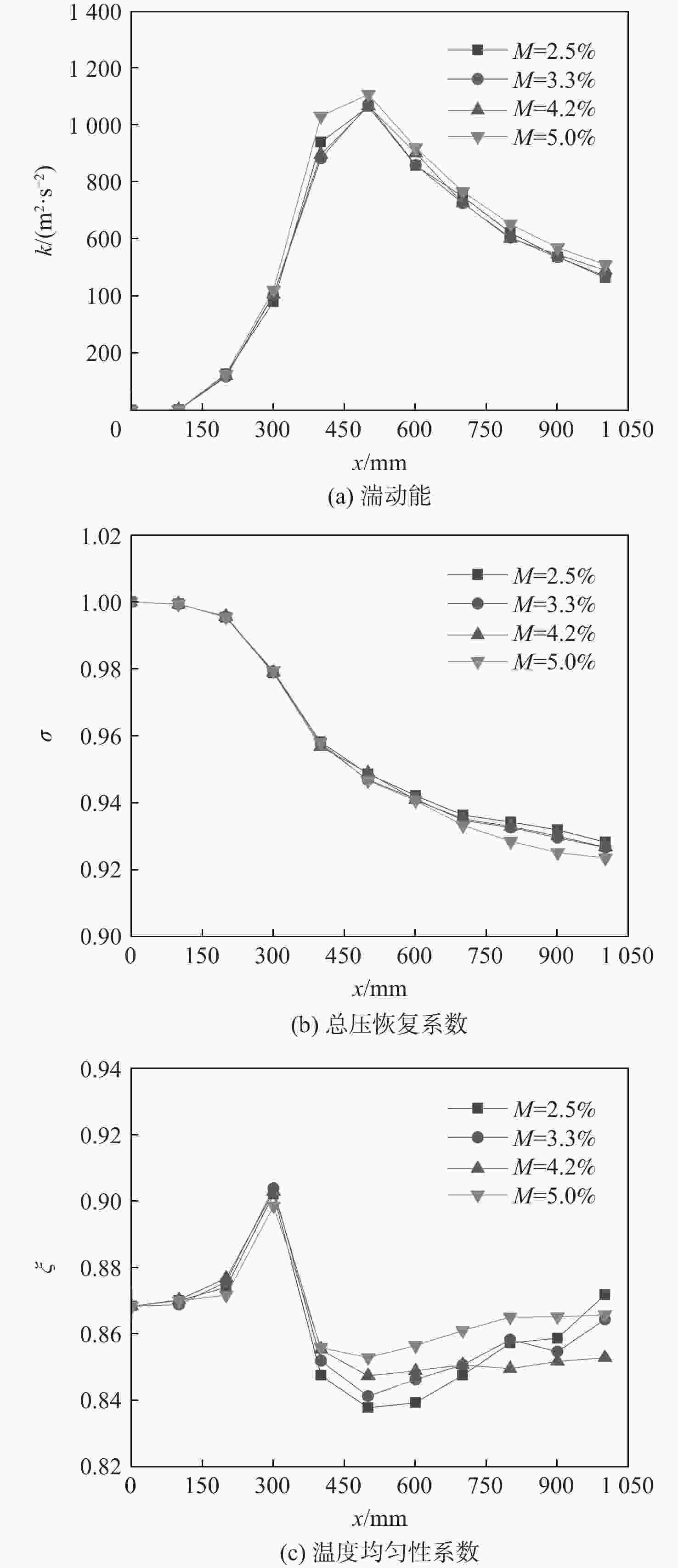
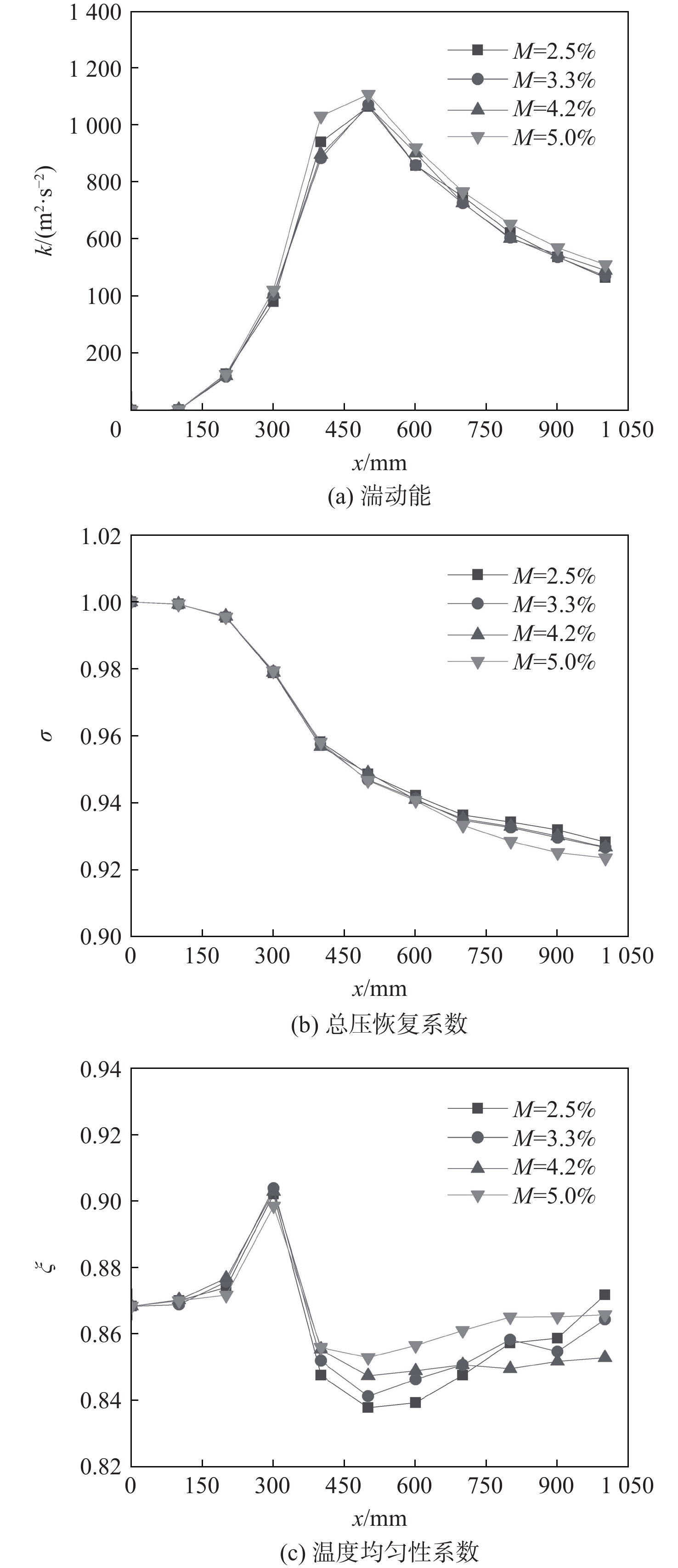
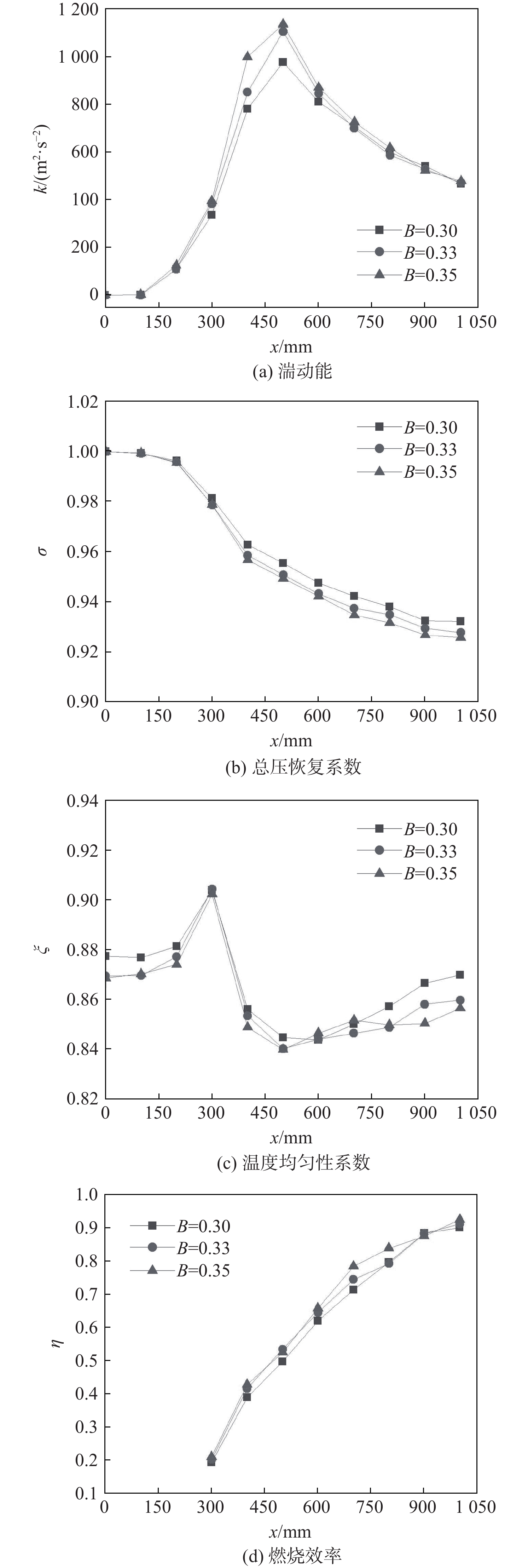
图 8 不同油气比下湍动能、总压恢复系数和温度均匀性系数的轴向变化情况
Figure 8. Turbulent kinetic energy, total pressure recovery coefficient, and temperature uniformity coefficient axial distributions under various kerosene-air ratios
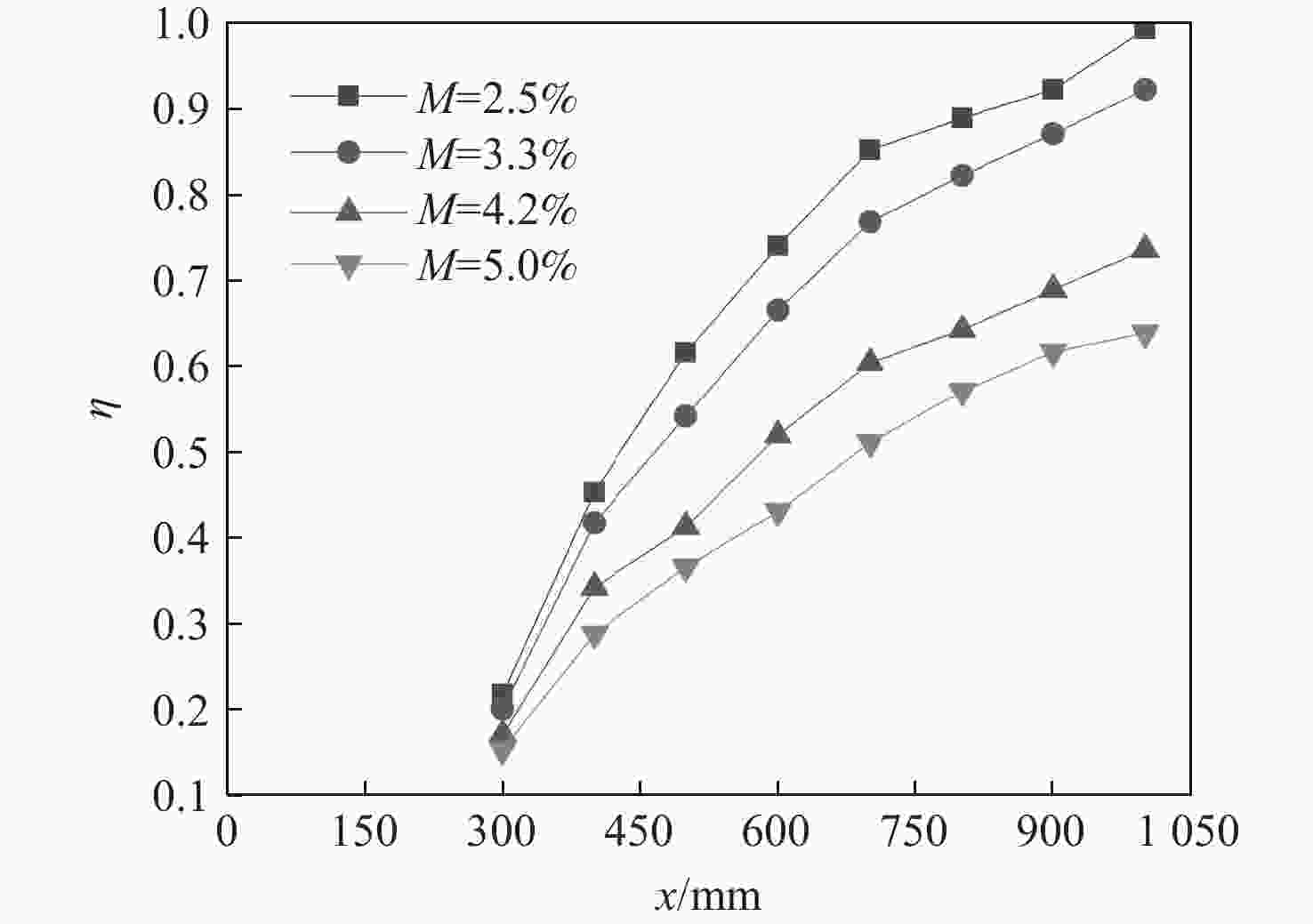
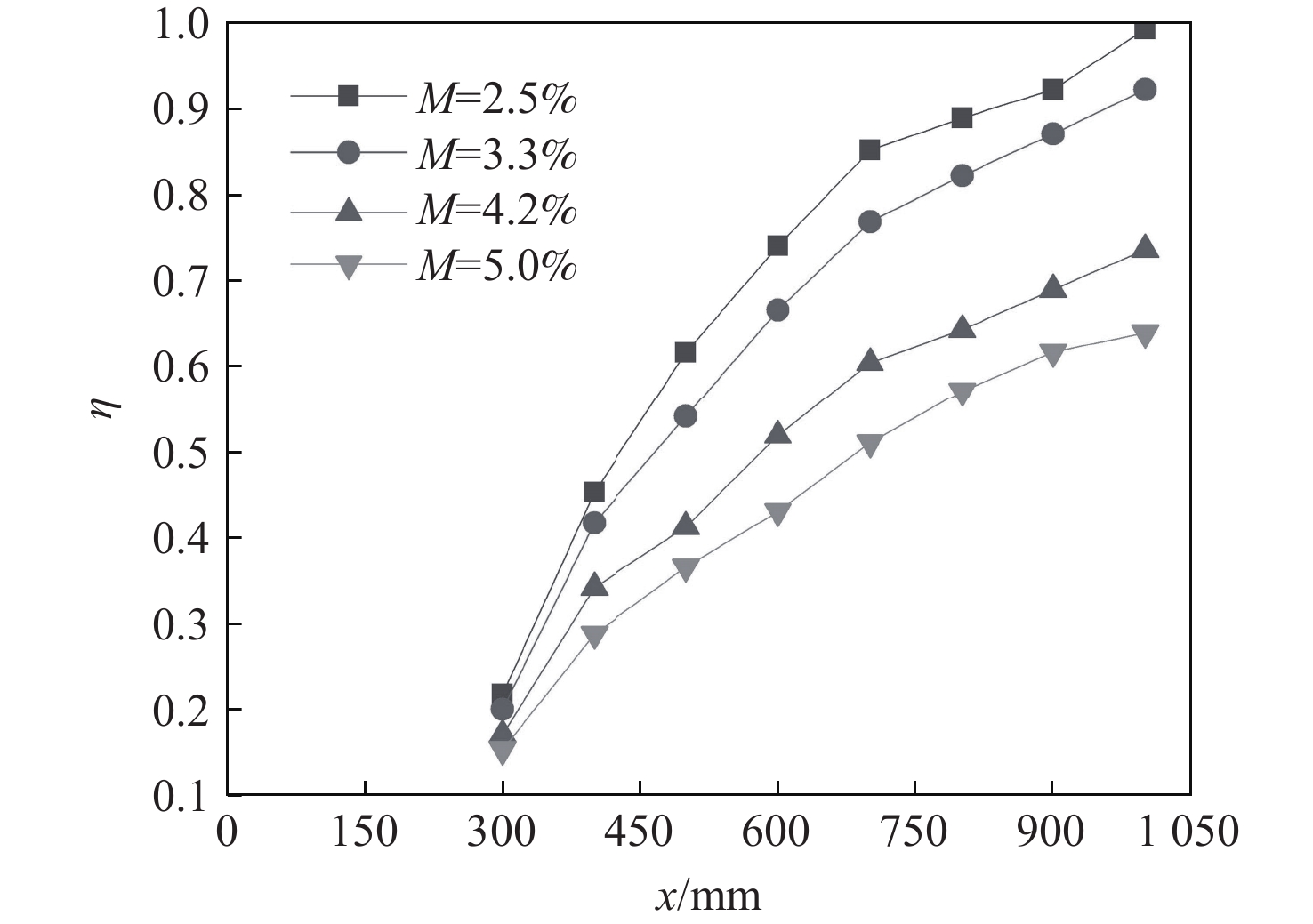
图 9 不同油气比下燃烧效率的轴向变化情况
Figure 9. Axial distribution of combustion efficiency under various kerosene-air ratios
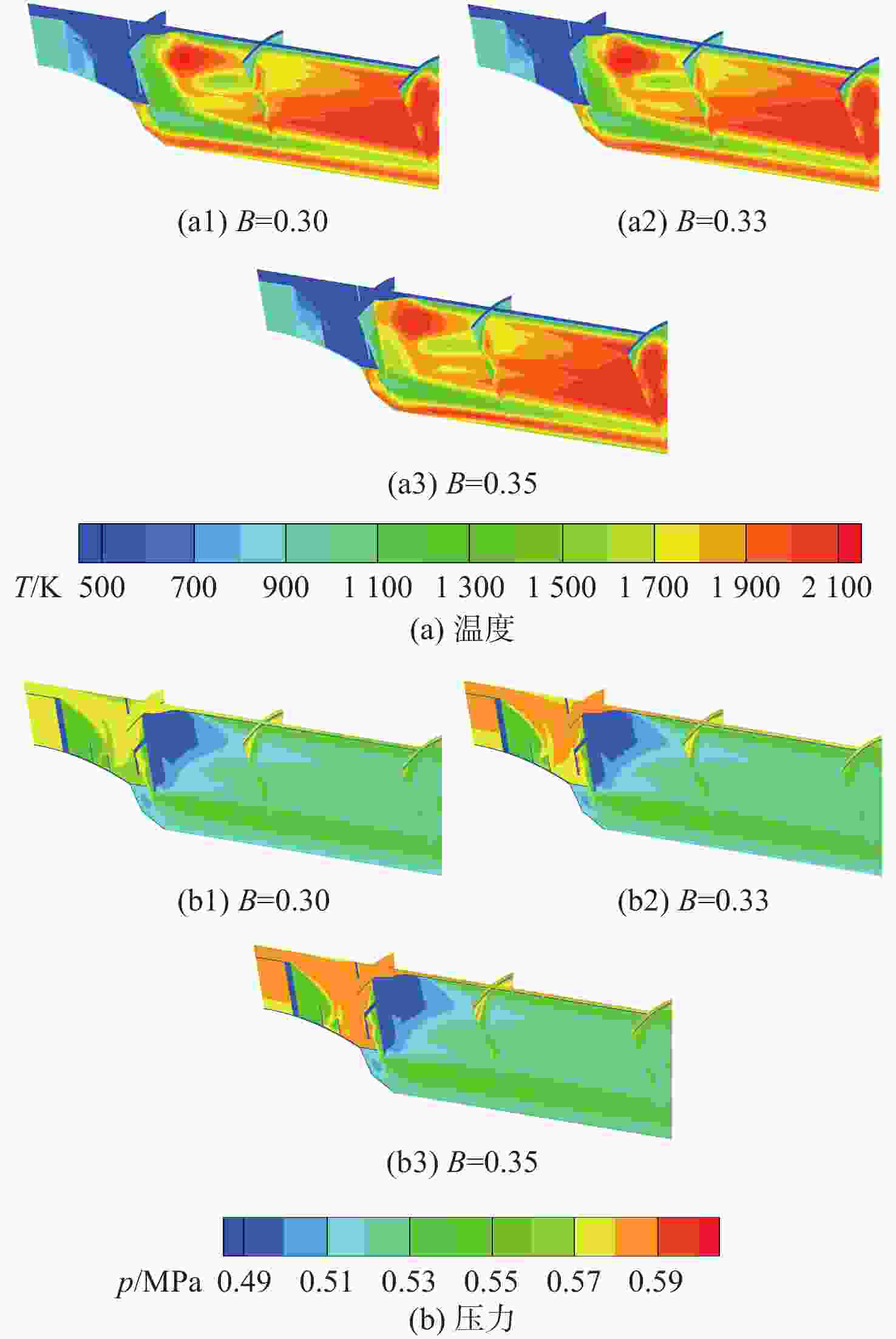
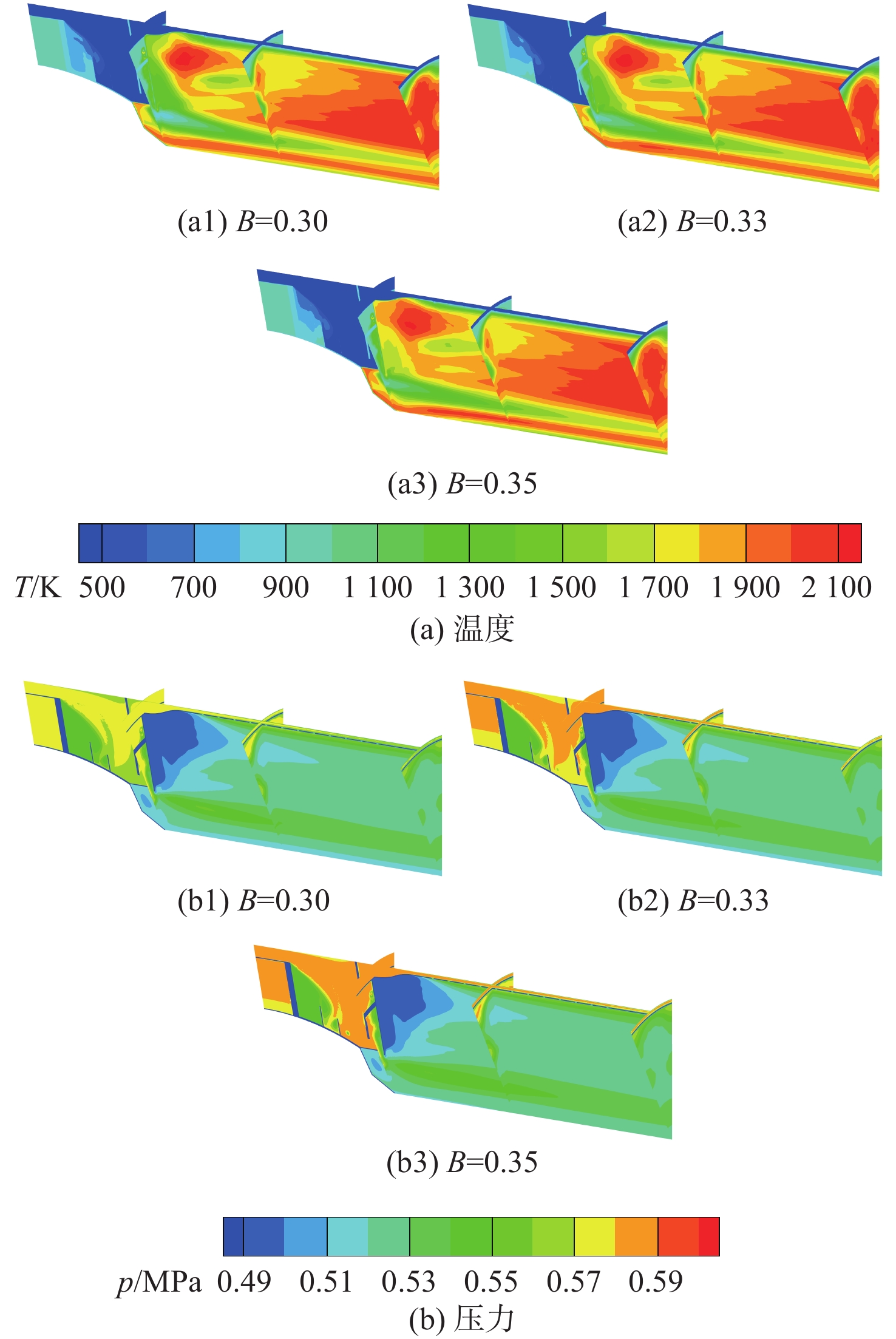
图 10 不同涵道比下加力燃烧室温度和压力分布情况
Figure 10. Temperature and pressure distributions of afterburner under various bypass ratios
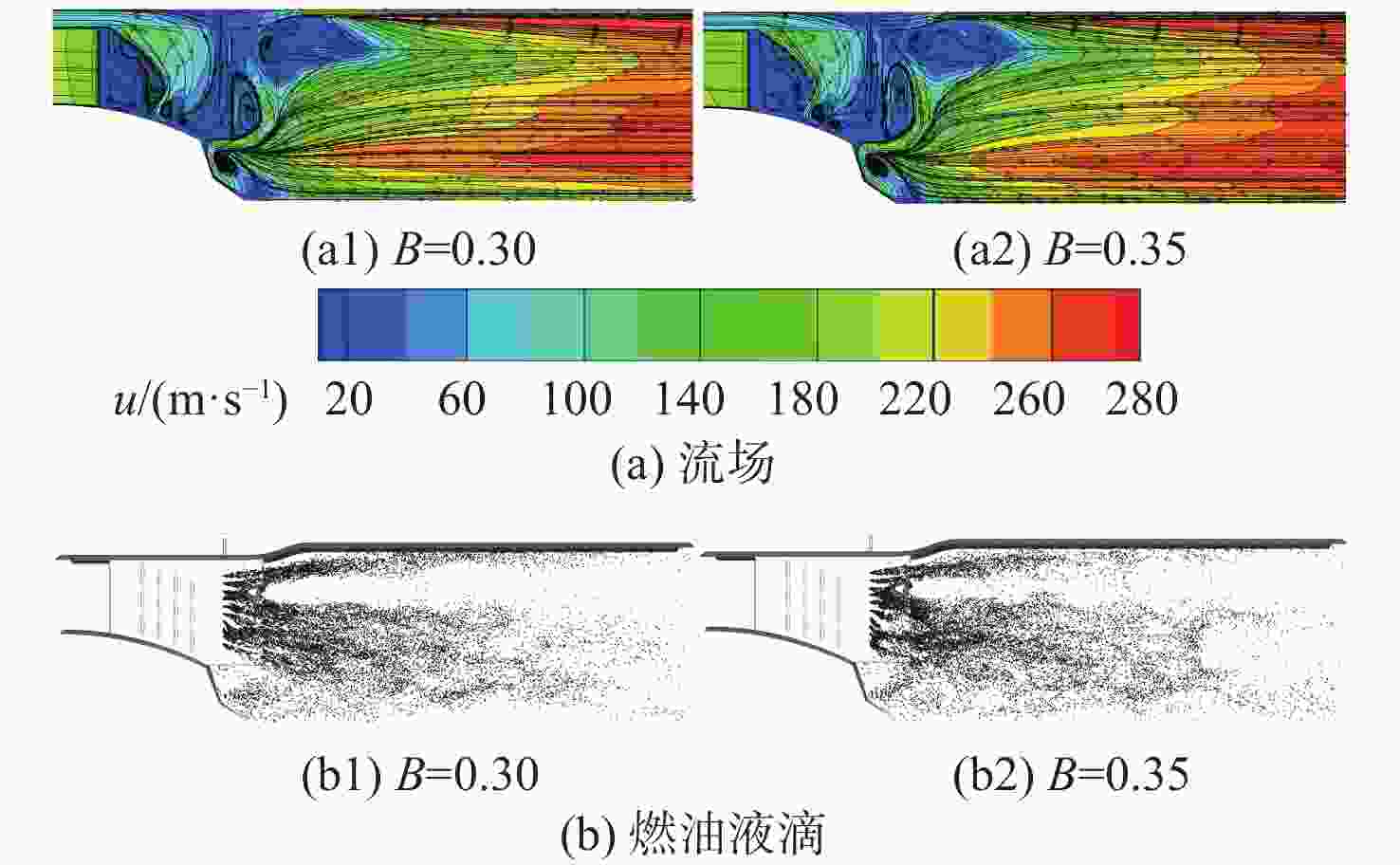
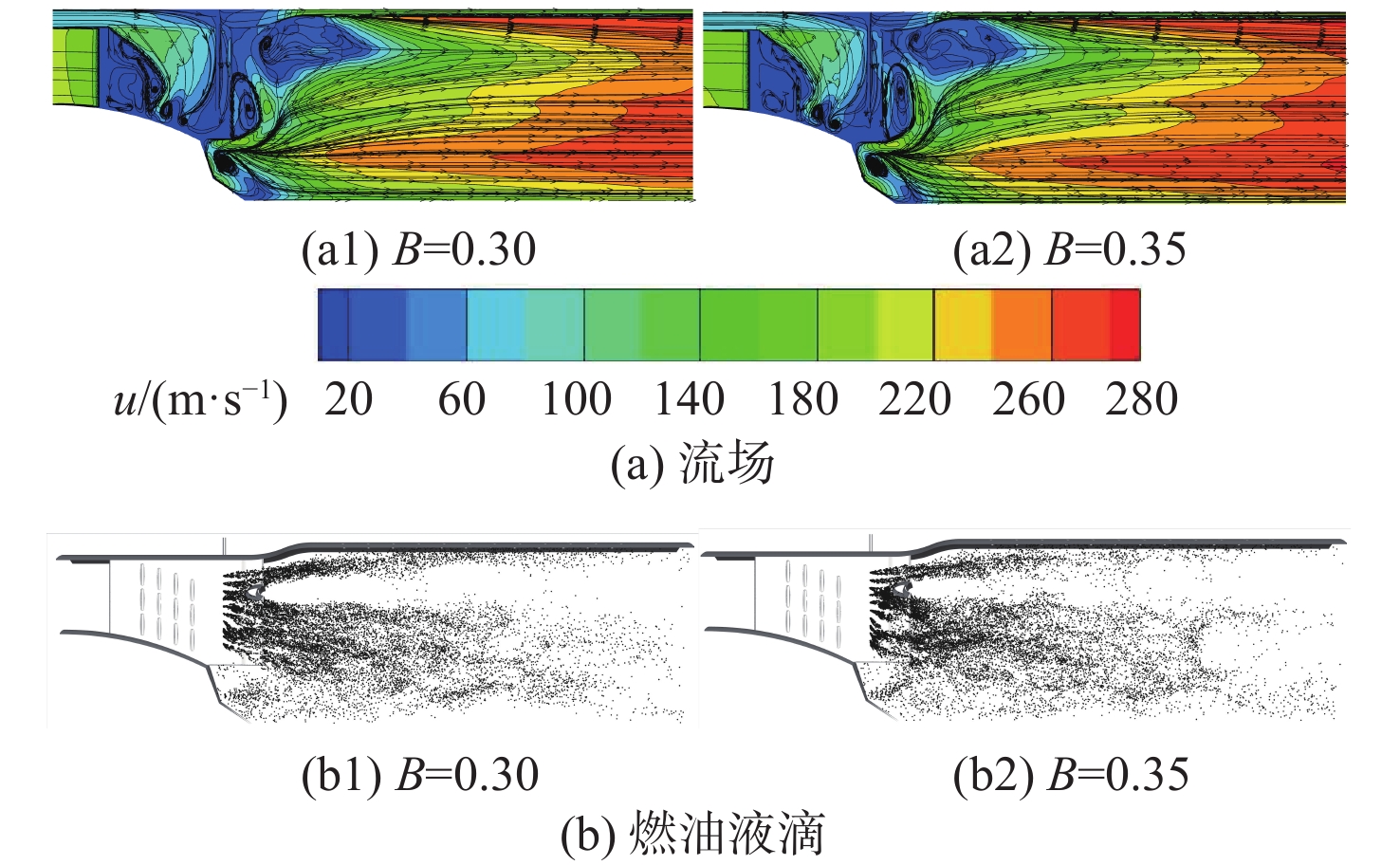
图 11 不同涵道比下加力燃烧室流场和燃油液滴分布情况
Figure 11. Flow field and fuel droplets distributions of afterburner under various bypass ratios
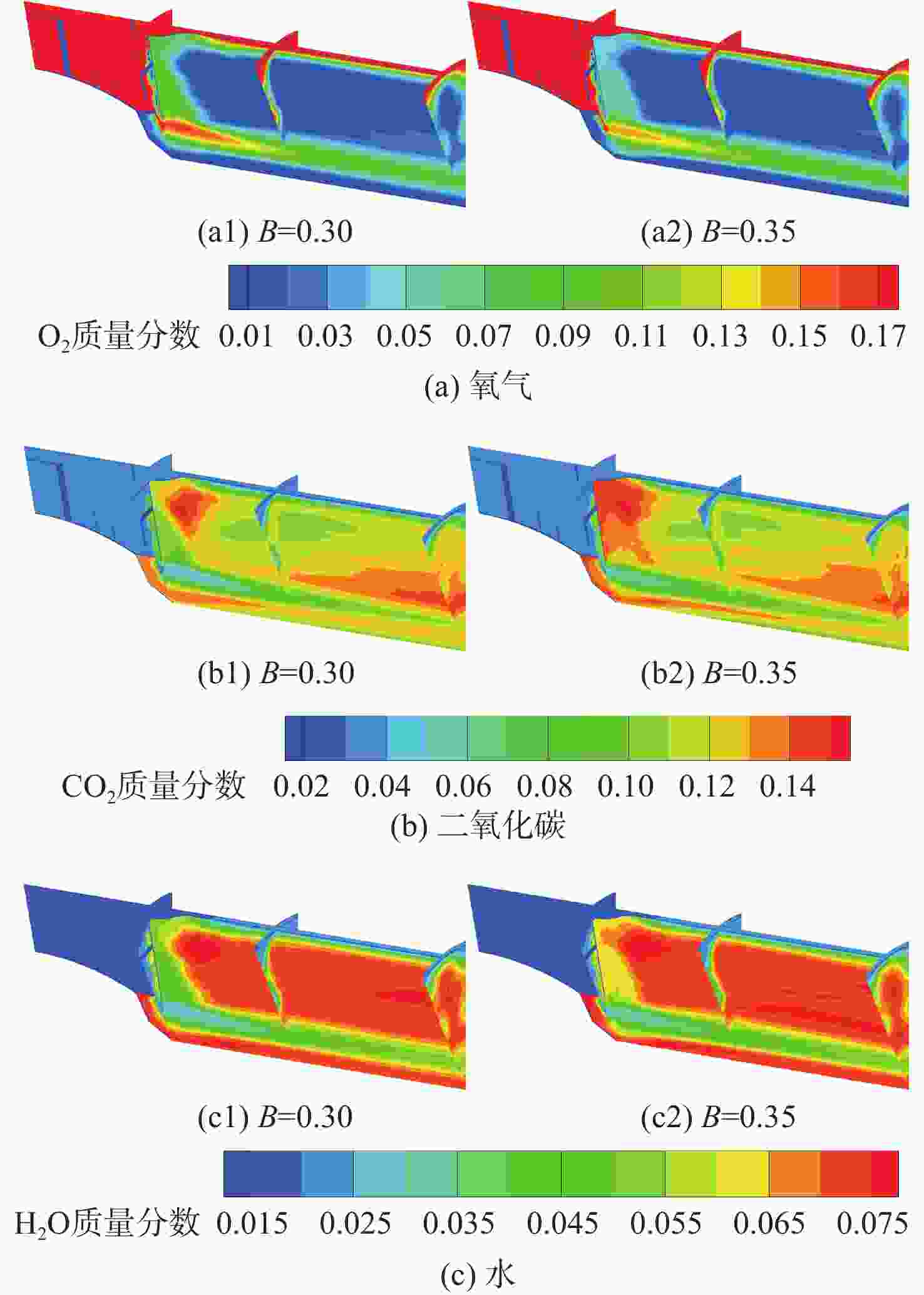
图 12 不同涵道比下氧气、二氧化碳和水的分布情况
Figure 12. Distributions of oxygen, carbon dioxide and water under various bypass ratios
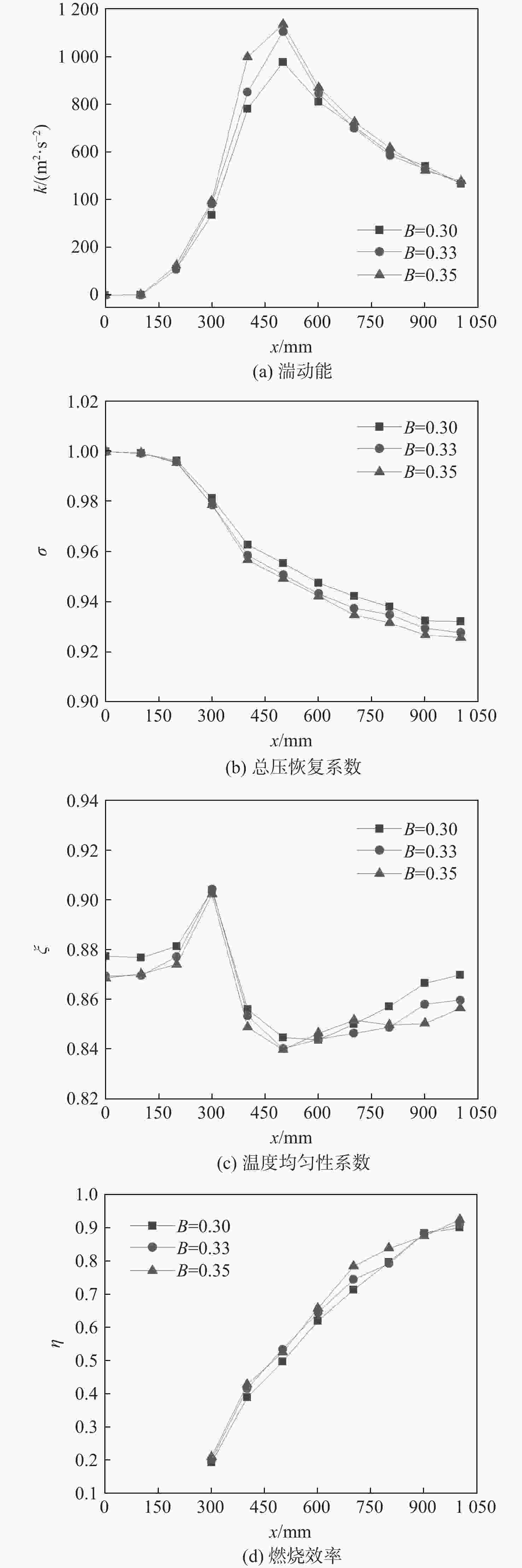
图 13 不同涵道比下湍动能、总压恢复系数、温度均匀性系数和燃烧效率的轴向变化情况
Figure 13. Turbulent kinetic energy, total pressure recovery coefficient, temperature uniformity coefficient, and combustion efficiency axial distributions under various various bypass ratios
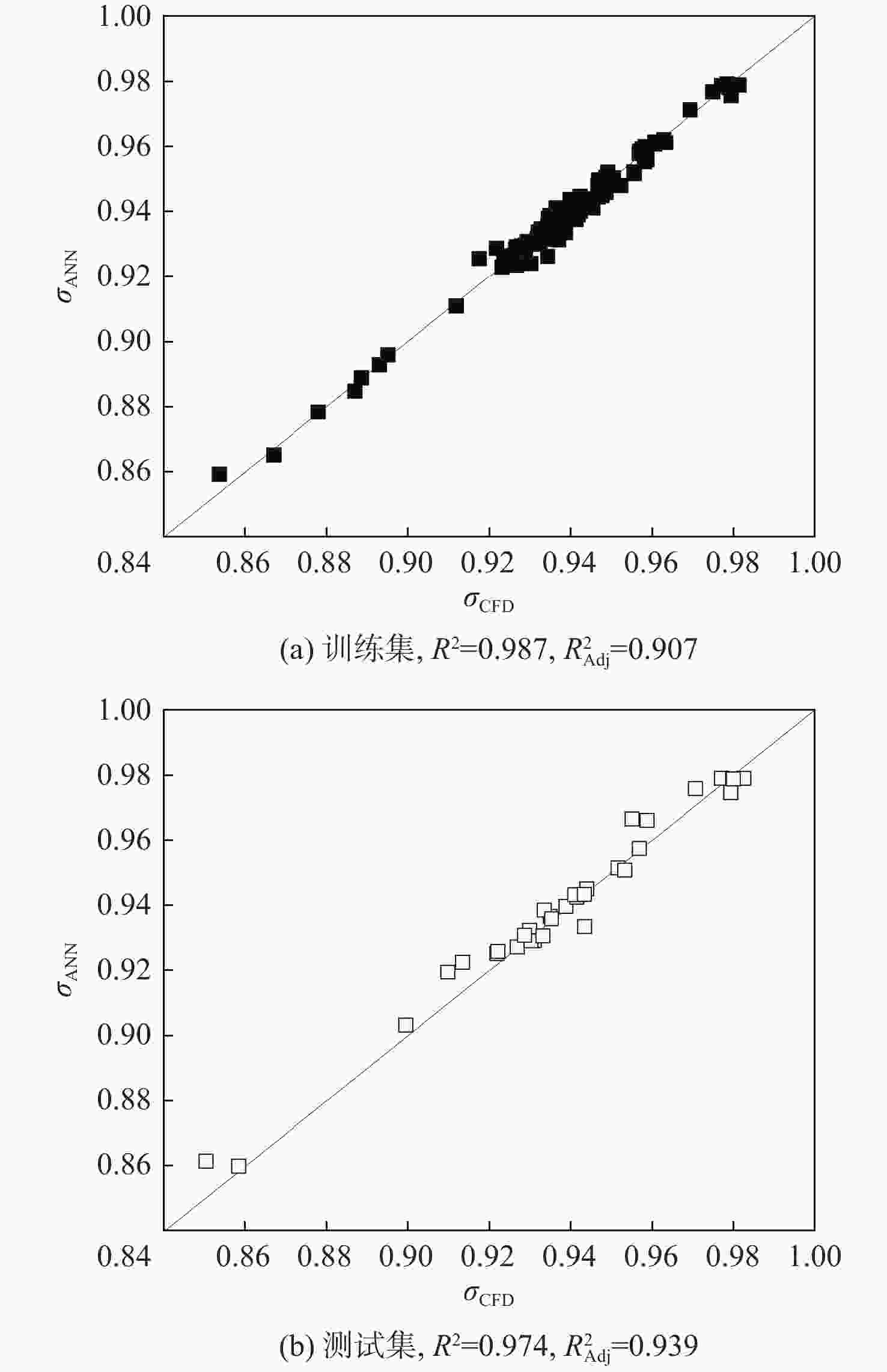
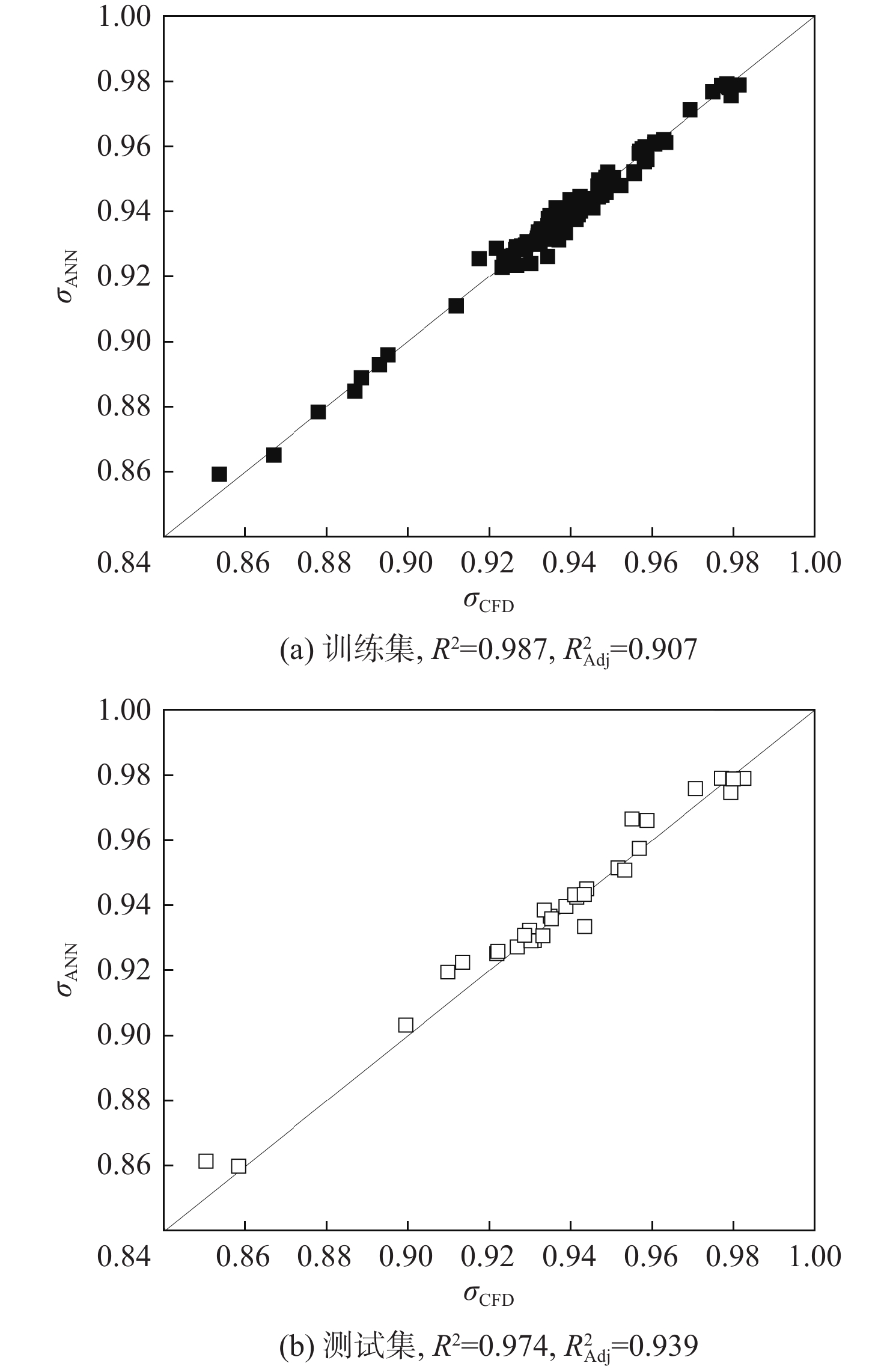
图 16 总压恢复系数数值结果与预测值的对比情况
Figure 16. Comparison between numerical results and predicted values of total pressure recovery coefficient
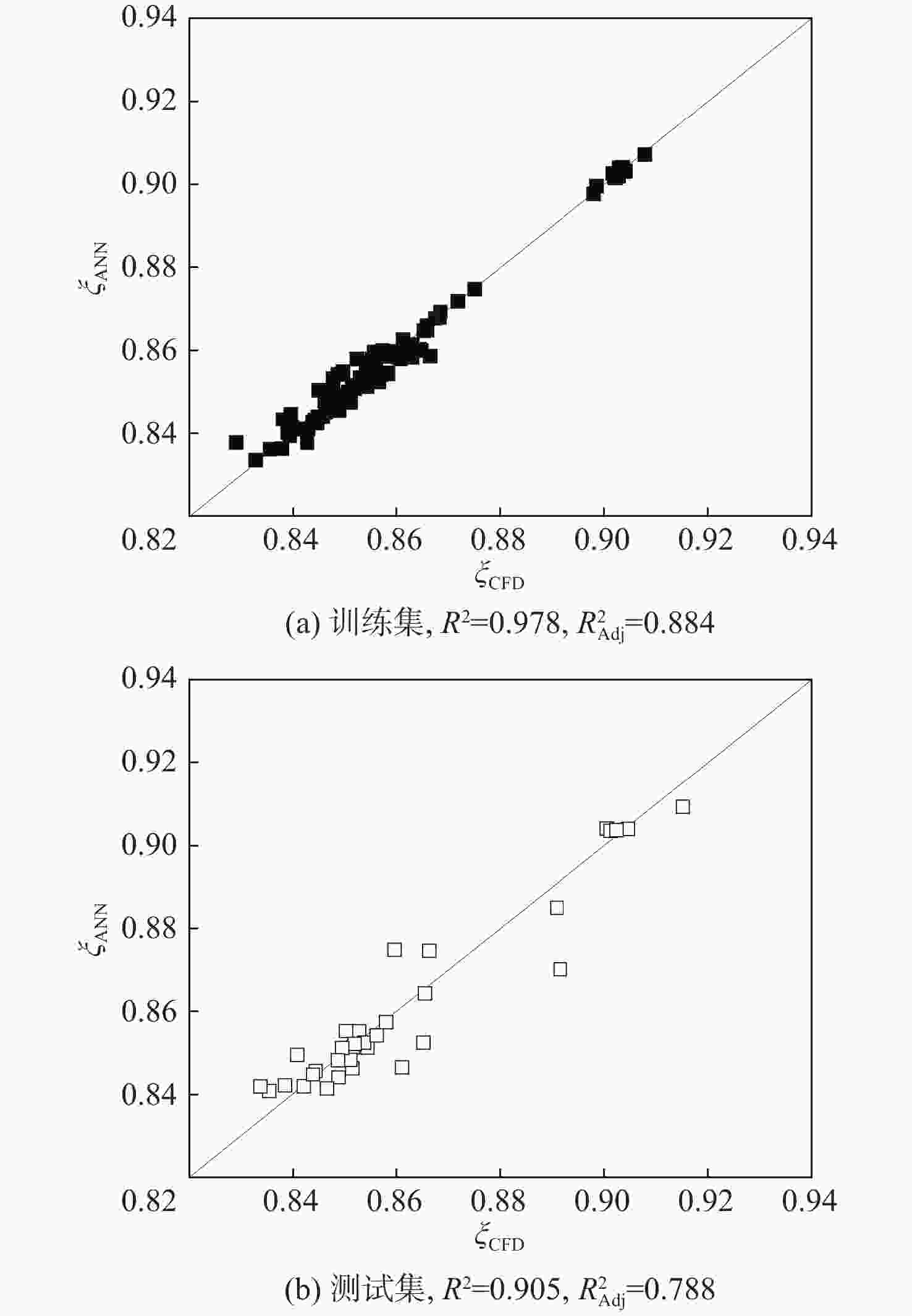
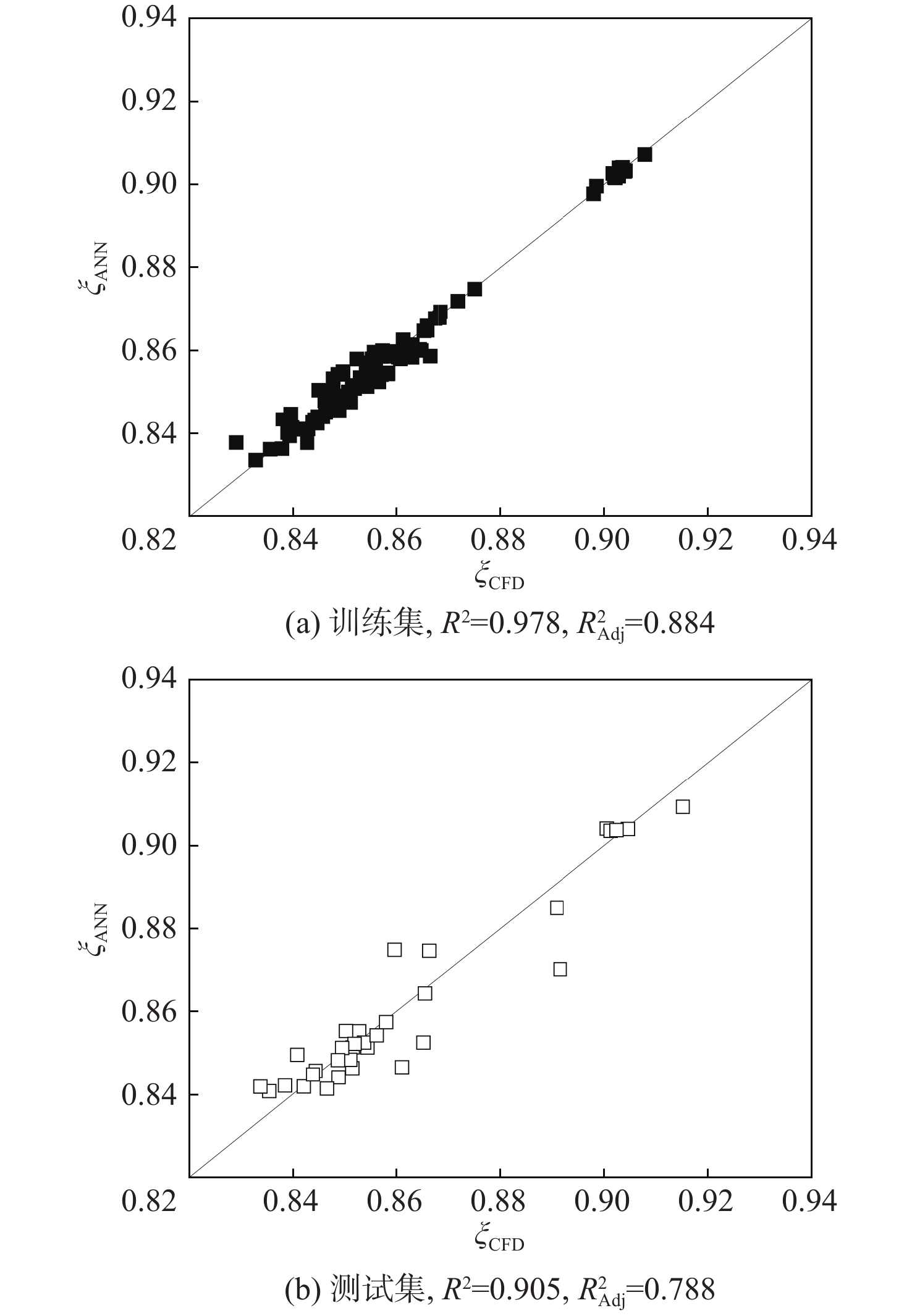
图 17 温度均匀性系数数值结果与预测值的对比情况
Figure 17. Comparison between numerical results and predicted values of temperature uniformity coefficient
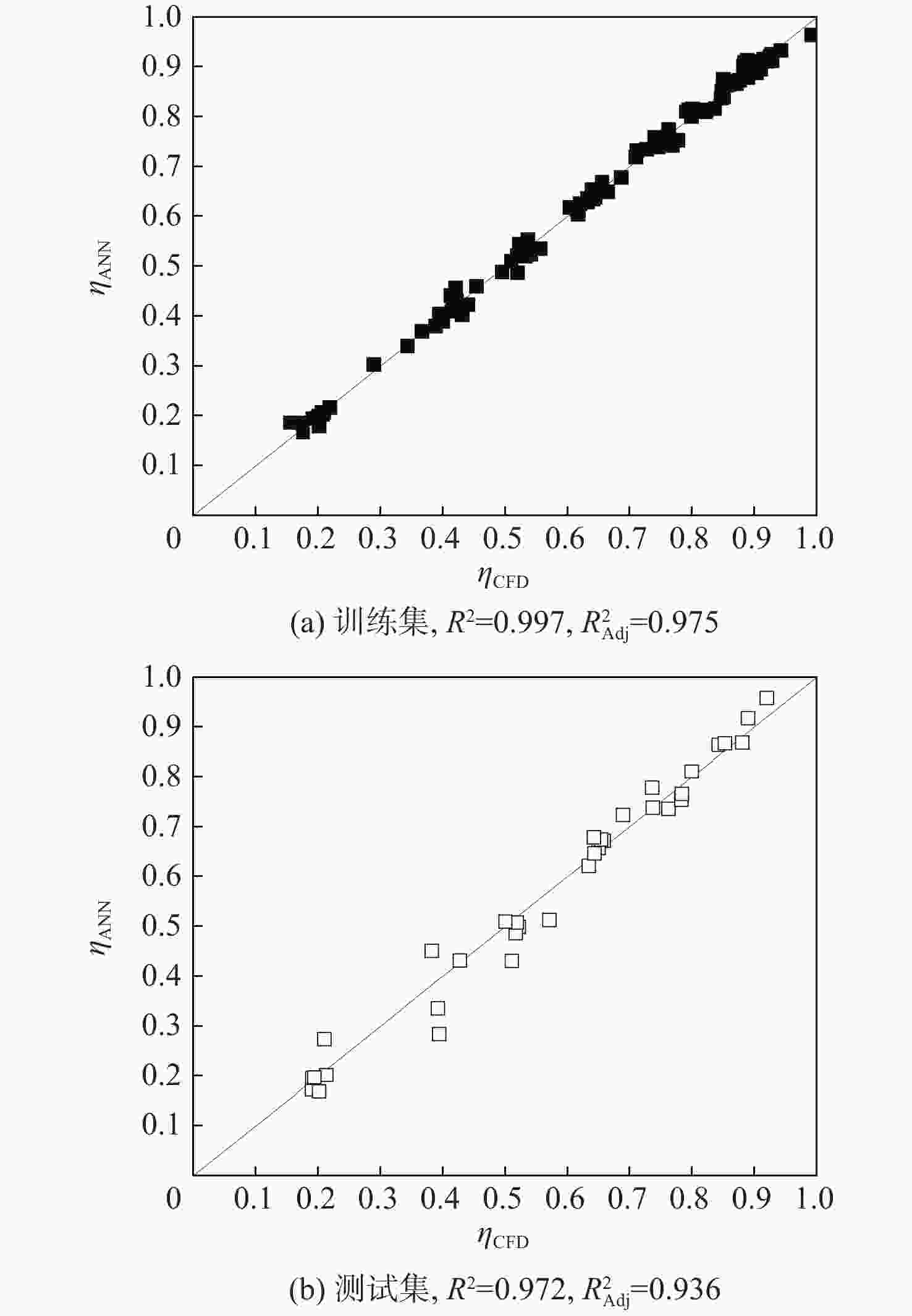
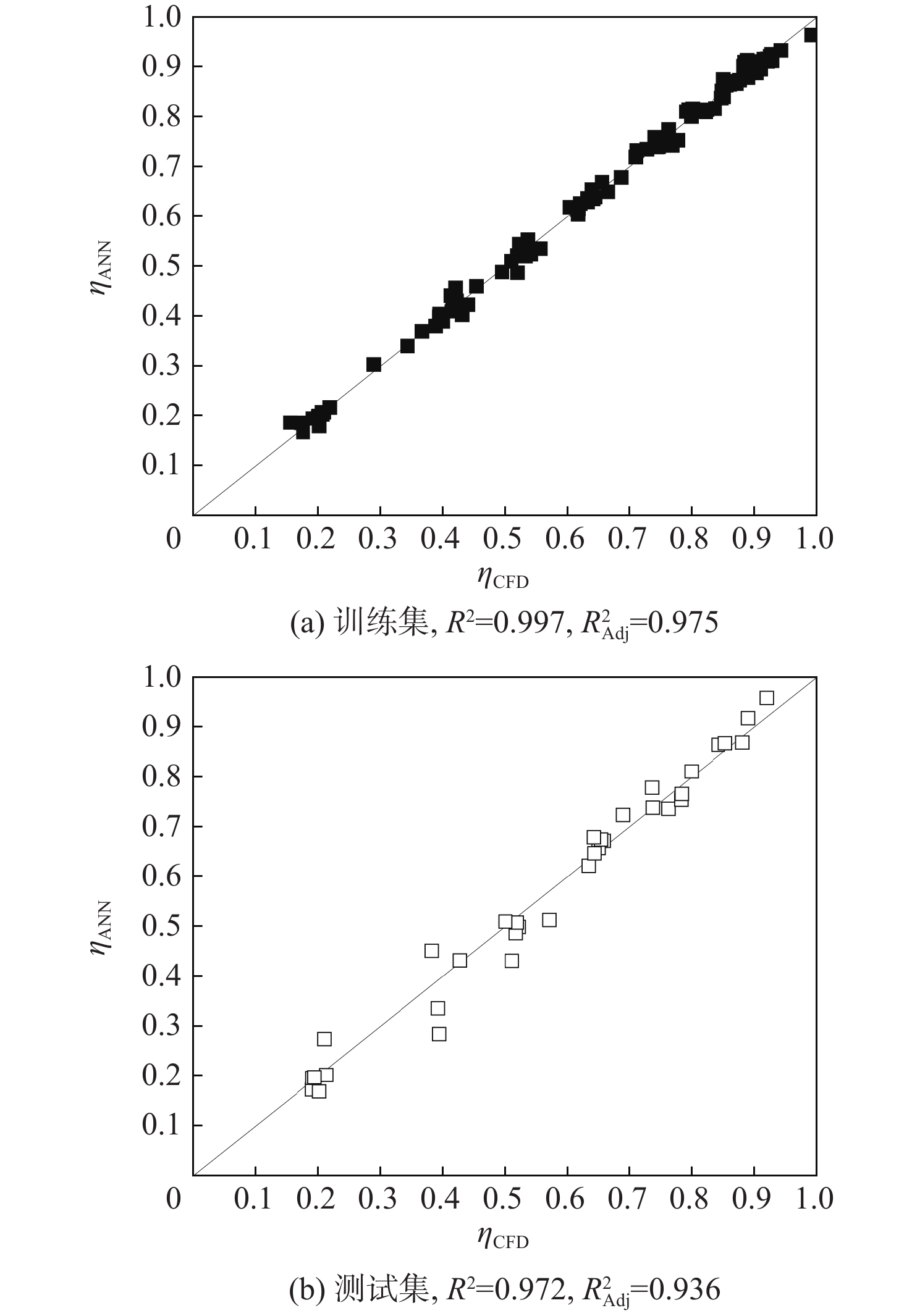
图 18 燃烧效率数值结果与预测值的对比情况
Figure 18. Comparison between numerical results and predicted values of combustion efficiency
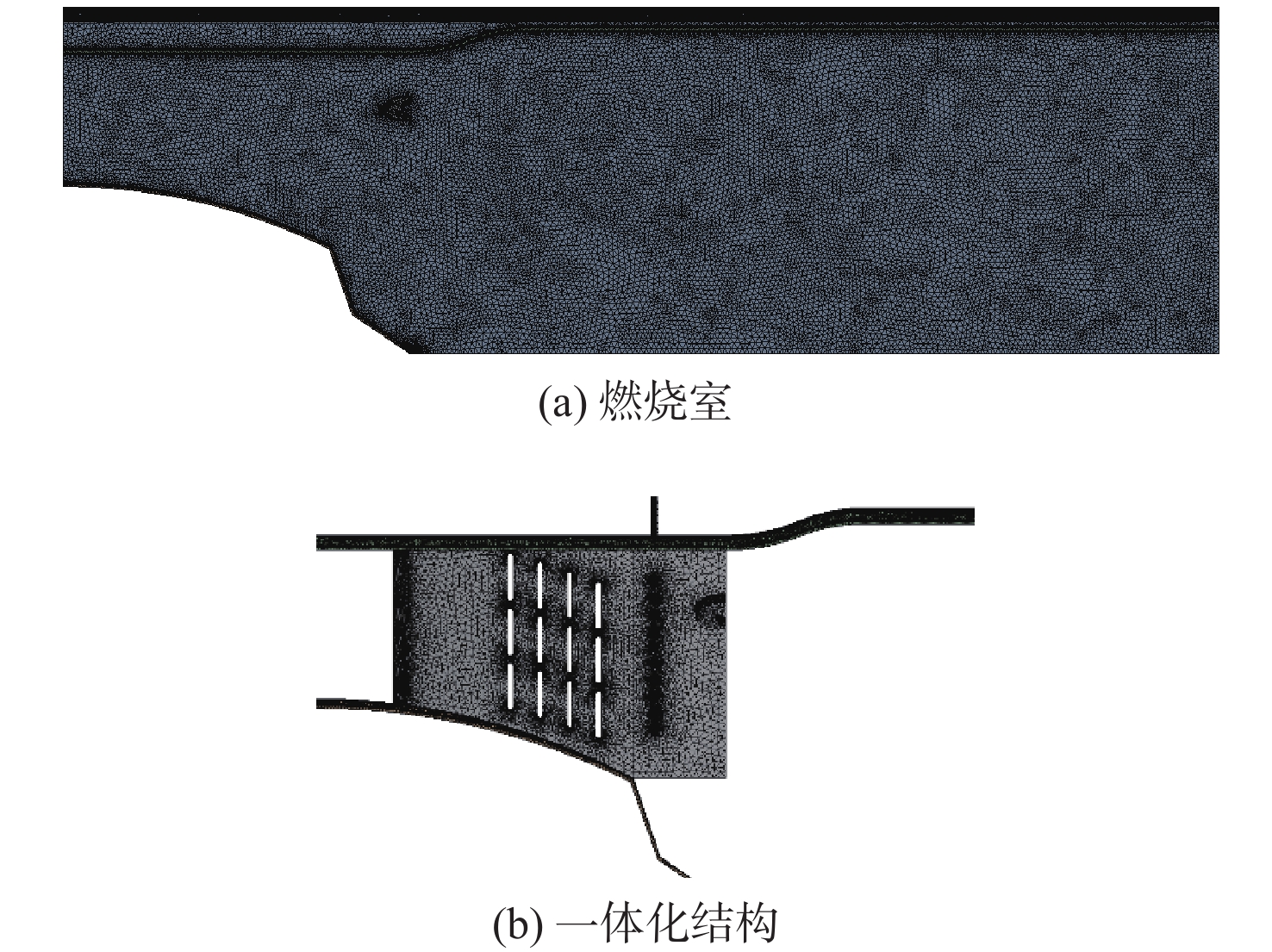
表 1 网格无关性分析
Table 1. Grid independence analysis
网格数量 出口温度/K 出口速度/(m·s−1) 9.43×10⁶ 2057.72 258.14 1.146×10⁷ 2061.48 260.61 1.449×10⁷ 2064.75 263.45 1.608×10⁷ 2064.91 263.84 1.823×10⁷ 2065.24 264.59  下载: 导出CSV
-
[1] 吴云柯, 李志强, 杨谦, 等. 折叠V形火焰稳定器原型的冷态与稳燃特性研究[J]. 推进技术, 2021, 42(6): 1321-1328.WU Y K, LI Z Q, YANG Q, et al. Cold flow and combustion characteristics of a prototype folded-V flame holder[J]. Journal of Propulsion Technology, 2021, 42(6): 1321-1328(in Chinese). [2] 高鹏举, 岳晨, 范育新, 等. 喷水射流预冷对加力燃烧室特性影响分析[J]. 推进技术, 2023, 44(10): 121-130.GAO P J, YUE C, FAN Y X, et al. Effects analysis of water spray mass injection pre-compressor cooling on afterburner characteristics[J]. Journal of Propulsion Technology, 2023, 44(10): 121-130(in Chinese). [3] 张海涛, 赵坚行. 带隔热屏加力燃烧室热态流场计算[J]. 航空动力学报, 2007, 22(8): 1241-1246.ZHANG H T, ZHAO J X. Turbulent combustion flow field calculation for afterburner with heat shied[J]. Journal of Aerospace Power, 2007, 22(8): 1241-1246(in Chinese). [4] 孙晓峰, 张光宇, 王晓宇, 等. 航空发动机燃烧不稳定性预测及控制研究进展[J]. 航空学报, 2023, 44(14): 1-23.SUN X F, ZHANG G Y, WANG X Y, et al. Research progress in aero-engine combustion instability prediction and control[J]. Acta Aeronautica et Astronautica Sinica, 2023, 44(14): 1-23(in Chinese). [5] 李安琦, 刘勇, 张祥. 加力燃烧室湍流火焰面模型优化方法[J]. 航空动力学报, 2023, 38(5): 1083-1089.LI A Q, LIU Y, ZHANG X. Optimization method of turbulent flamelet model in afterburner[J]. Journal of Aerospace Power, 2023, 38(5): 1083-1089(in Chinese). [6] 刘友宏, 杜力伟. 新型热混合效率公式及其在一体化加力燃烧室中的应用[J]. 推进技术, 2018, 39(7): 1515-1522.LIU Y H, DU L W. A new thermal mixing efficiency formula and its application in integrated afterburner[J]. Journal of Propulsion Technology, 2018, 39(7): 1515-1522(in Chinese). [7] JIA X Z, SHAN Y, TAN X M, et al. Numerical investigation of effects of cooling structure parameters on performance of flameholder in an integrated afterburner[J]. Aerospace Science and Technology, 2022, 121: 107378. [8] LI W, TAN X M, HUANG X F, et al. Application of double-wall cooling structure in the integrated strut flame stabilizer[J]. Thermal Science and Engineering Progress, 2022, 36: 101526. [9] 韦裕恒, 谭晓茗, 黄晓锋, 等. 带前缘冲击的一体化加力支板内外耦合传热数值研究[J]. 推进技术, 2023, 44(5): 149-162.WEI Y H, TAN X M, HUANG X F, et al. Numerical investigation on internal and external conjugate heat transfer characteristics of integrated strut with leading edge impingement[J]. Journal of Propulsion Technology, 2023, 44(5): 149-162(in Chinese). [10] HUANG Y K, HE X M, JIN Y, et al. Effect of non-uniform inlet profile on the combustion performance of an afterburner with bluff body[J]. Energy, 2021, 216: 119142. [11] 尹成茗, 张荣春, 樊未军, 等. 一种一体化加力燃烧室的数值模拟[J]. 航空动力学报, 2018, 33(2): 470-476.YIN C M, ZHANG R C, FAN W J, et al. Numerical simulation on a type of the integrated afterburner[J]. Journal of Aerospace Power, 2018, 33(2): 470-476(in Chinese). [12] 谭云川, 王亚军, 林建府, 等. 不同燃油分配的一体化加力燃烧室性能对比[J]. 推进技术, 2022, 43(12): 249-256.TAN Y C, WANG Y J, LIN J F, et al. Comparison of integrated afterburner performance for different fuel distribution[J]. Journal of Propulsion Technology, 2022, 43(12): 249-256(in Chinese). [13] 王伟龙, 金捷, 井文明, 等. 改进型一体化加力燃烧室方案的数值模拟[J]. 航空动力学报, 2015, 30(5): 1119-1124.WANG W L, JIN J, JING W M, et al. Numerical simulation on improved integrated afterburner scheme[J]. Journal of Aerospace Power, 2015, 30(5): 1119-1124(in Chinese). [14] 付垚, 朱健, 高源, 等. 喷嘴布局对加力燃烧室燃烧性能的影响[J]. 热科学与技术, 2023, 22(1): 13-20.FU Y, ZHU J, GAO Y, et al. Effects of the nozzle layout on the afterburner combustion performance[J]. Journal of Thermal Science and Technology, 2023, 22(1): 13-20(in Chinese). [15] 郑健, 王海鸥, 陈果, 等. 基于机器学习的边界层湍流燃烧壁面模型[J]. 工程热物理学报, 2023, 44(9): 2600-2607.ZHENG J, WANG H O, CHEN G, et al. Machine learning-based wall model for turbulent boundary layer combustion[J]. Journal of Engineering Thermophysics, 2023, 44(9): 2600-2607(in Chinese). [16] 安健, 陈宇轩, 苏星宇, 等. 机器学习在湍流燃烧及发动机中的应用与展望[J]. 清华大学学报(自然科学版), 2023, 63(4): 462-472.AN J, CHEN Y X, SU X Y, et al. Applications and prospects of machine learning in turbulent combustion and engines[J]. Journal of Tsinghua University (Science and Technology), 2023, 63(4): 462-472 (in Chinese). [17] AN J, HE G Q, LUO K H, et al. Artificial neural network based chemical mechanisms for computationally efficient modeling of hydrogen/carbon monoxide/kerosene combustion[J]. International Journal of Hydrogen Energy, 2020, 45(53): 29594-29605. [18] YAO S, WANG B, KRONENBURG A, et al. Conditional scalar dissipation rate modeling for turbulent spray flames using artificial neural networks[J]. Proceedings of the Combustion Institute, 2021, 38(2): 3371-3378. [19] WONG K I, WONG P K, CHEUNG C S, et al. Modeling and optimization of biodiesel engine performance using advanced machine learning methods[J]. Energy, 2013, 55(C): 519-528. [20] KUNDU K, DEUR J. A simplified reaction mechanism for calculation of emissions in hydrocarbon (Jet-A) combustion[C]//Proceedings of the 29th Joint Propulsion Conference and Exhibit. Reston: AIAA, 1993. [21] 莫毅, 陈璠, 许笑颜, 等. 航空发动机燃烧室两相湍流燃烧建模与仿真[J]. 清华大学学报(自然科学版), 2023, 63(4): 670-680.MO Y, CHEN F, XU X Y, et al. Modeling and simulation of two-phase turbulent combustion in aeroengine combustors[J]. Journal of Tsinghua University (Science and Technology), 2023, 63(4): 670-680(in Chinese). [22] 向缘酝, 李伟, 刘云鹏, 等. 一体化加力燃烧室燃烧性能数值研究[J]. 热能动力工程, 2023, 38(5): 71-79.XIANG Y Y, LI W, LIU Y P, et al. Numerical study on combustion performance of integrated afterburner[J]. Journal of Engineering for Thermal Energy and Power, 2023, 38(5): 71-79(in Chinese). [23] 贾翔中, 单勇, 徐兴平, 等. 一体化加力燃烧室冷态流动特性数值研究[J]. 航空动力学报, 2021, 36(7): 1472-1480.JIA X Z, SHAN Y, XU X P, et al. Numerical study on cold flow characteristics of integrated afterburner[J]. Journal of Aerospace Power, 2021, 36(7): 1472-1480(in Chinese). [24] 王志凯, 陈盛, 范玮. 神经网络宽度对燃烧室排放预测的影响[J]. 航空学报, 2023, 44(5): 82-92.WANG Z K, CHEN S, FAN W. Effect of neural network width on combustor emission prediction[J]. Acta Aeronautica et Astronautica Sinica, 2023, 44(5): 82-92(in Chinese). [25] 王超, 王贵东, 白鹏. 飞行仿真气动力数据机器学习建模方法[J]. 空气动力学学报, 2019, 37(3): 488-497.WANG C, WANG G D, BAI P. Machine learning method for aerodynamic modeling based on flight simulation data[J]. Acta Aerodynamica Sinica, 2019, 37(3): 488-497(in Chinese). [26] 韩雷. 基于BP神经网络的学术论文评价模型研究[J]. 现代情报, 2024, 44(2): 170-177.HAN L. Research on academic paper evaluation model based on BP neural network[J]. Modern Information, 2024, 44(2): 170-177(in Chinese). -

 下载:
下载:

 点击查看大图
计量
- 文章访问数: 489
- HTML全文浏览量: 141
- PDF下载量: 27
- 被引次数: 0
