





A fault propagation path identification method for A320 air conditioning system based on improved Bayesian network
-
摘要:
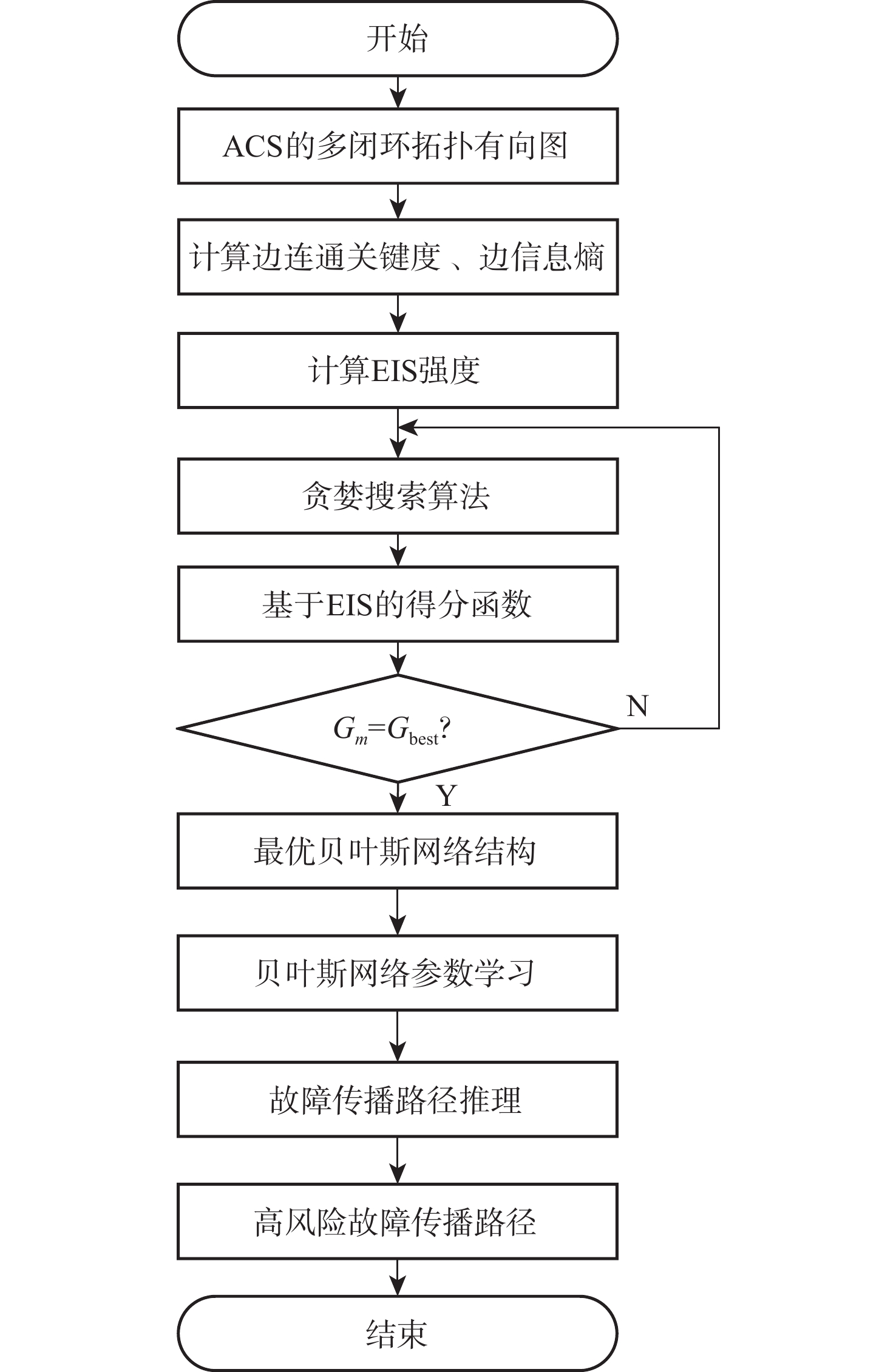
飞机空调系统是控制飞机内部环境的关键机载系统之一,其内部结构呈现多闭环和多冗余等复杂特征,导致故障在各组件之间传播。贝叶斯网络可以有效推理开环系统的故障传播路径,但无法适应闭环结构。为解决这一适应性问题,提出一种基于贝叶斯网络的改进模型,用于识别A320空调系统特定结构下的故障传播路径。分析空调系统的功能行为和物理结构,综合复杂网络理论,构建系统拓扑有向图;结合网络结构和信息传递定义边影响强度,对边重要性进行度量,提高边重要性度量的准确性;通过基于边影响强度的解环策略,将闭环结构转换为开环结构,以获得最佳的贝叶斯故障传播网络结构,从而精确识别多闭环结构下的故障传播路径。通过A320空调系统案例研究验证了所提方法的有效性。
Abstract:The air conditioning system of airplanes is one of the critical airplane-mounted systems used to control the internal environments. It is highly complex in structure, having multiple closed loops and much redundancy, which causes the faults to spread among its components. The Bayesian network can be used to deduce the fault transmission path of open-looped systems, but it is unfit for close-looped structures. In order to address this issue, an enhanced model based on the Bayesian network for determining the fault transmission path of the air conditioning system in A320 aircraft in a particular structure is presented in this research. Firstly, the functional behavior and physical structure of this air conditioning system are analyzed. By using the complex network theory, a topologically directed graph of this system is constructed. Additionally, in order to quantify the relevance of sides, the intensity of side influence is established based on the network structure and message transit, which increases the measurement’s accuracy.Then, through the loop-opening strategy based on the intensity of side influence, a close-looped structure is changed into an open-looped structure. In this way, the optimal Bayesian fault transmission network structure is obtained to precisely identify the path of fault transmission in a close-looped structure. Finally, a case study is conducted on the A320 air conditioning system to validate the proposed model.
-
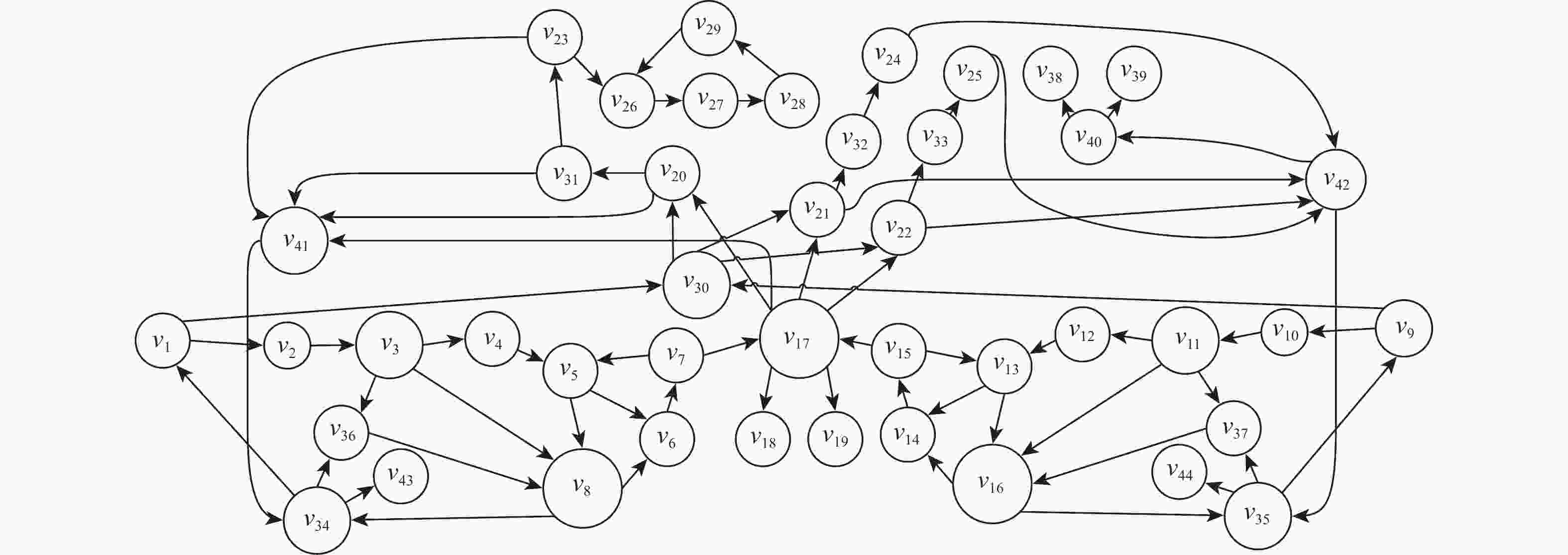
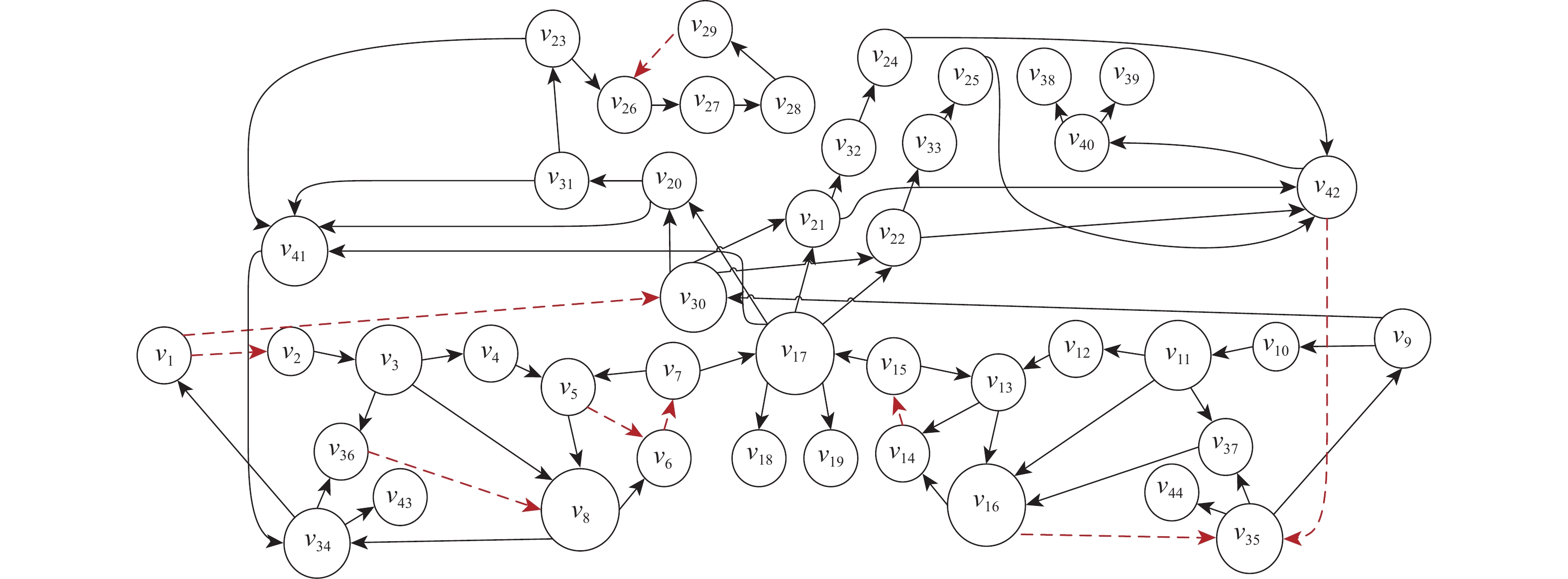
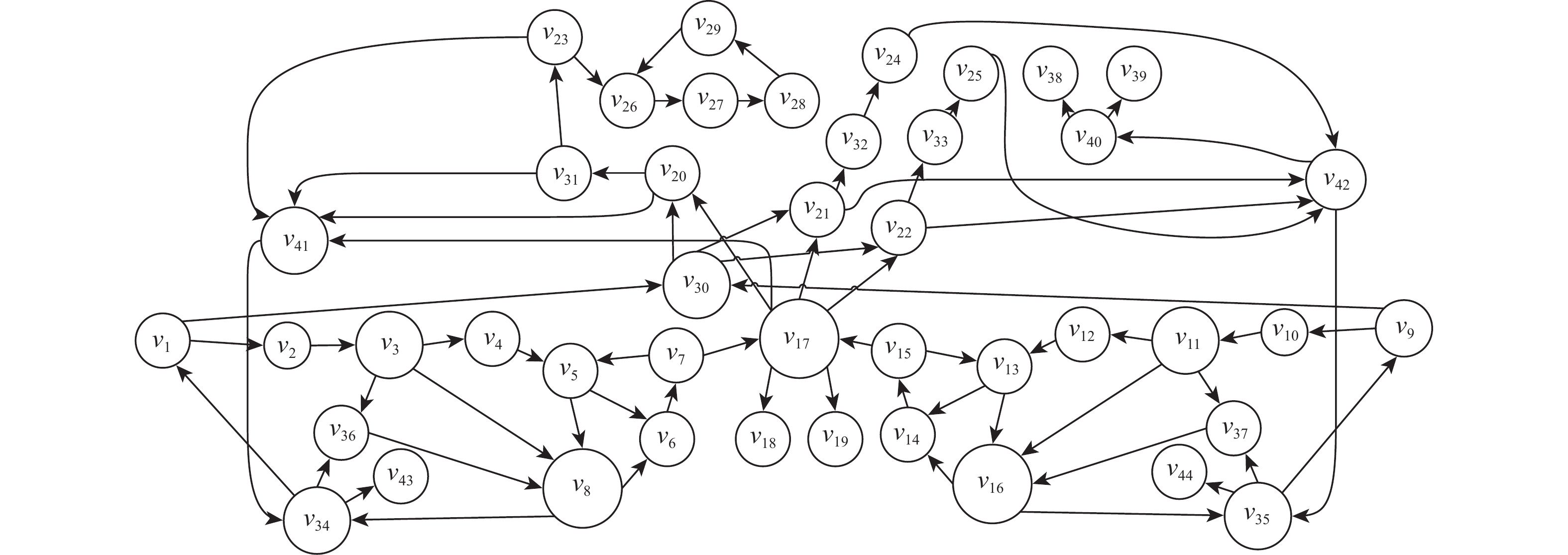
图 1 A320飞机空调系统拓扑有向图
v1:流量控制活门1;v2:次热交换器1;v3:压气机1;v4:主热交换器1;v5:再加热器1;v6:冷凝器1;v7:水分离器1;v8:涡轮1;v9:流量控制活门2;v10:次热交换器2;v11:压气机2;v12:主热交换器2;v13:再加热器2;v14:冷凝器2;v15:水分离器2;v16:涡轮2;v17:混合组件;v18:再循环风扇1;v19:再循环风扇2;v20:配平空气活门1;v21:配平空气活门2;v22:配平空气活门3;v23:驾驶舱压力传感器;v24:前客舱压力传感器;v25:后客舱压力传感器;v26:鼓风机;v27:电子电气设备;v28:排气扇;v29:蒙皮热交换器;v30:热空气压力调节活门;v31:驾驶舱风管;v32:前客舱风管;v33:后客舱风管;v34:Pack控制器1;v35:Pack控制器2;v36:旁通活门1;v37:旁通活门2;v38:前货舱温度传感器;v39:后货舱温度传感器;v40:货舱通风控制器;v41:ACS控制器1;v42:ACS控制器2;v43:冲压空气进口活门1;v44:冲压空气进口活门2。
Figure 1. A320 air conditioning system topology directed graph
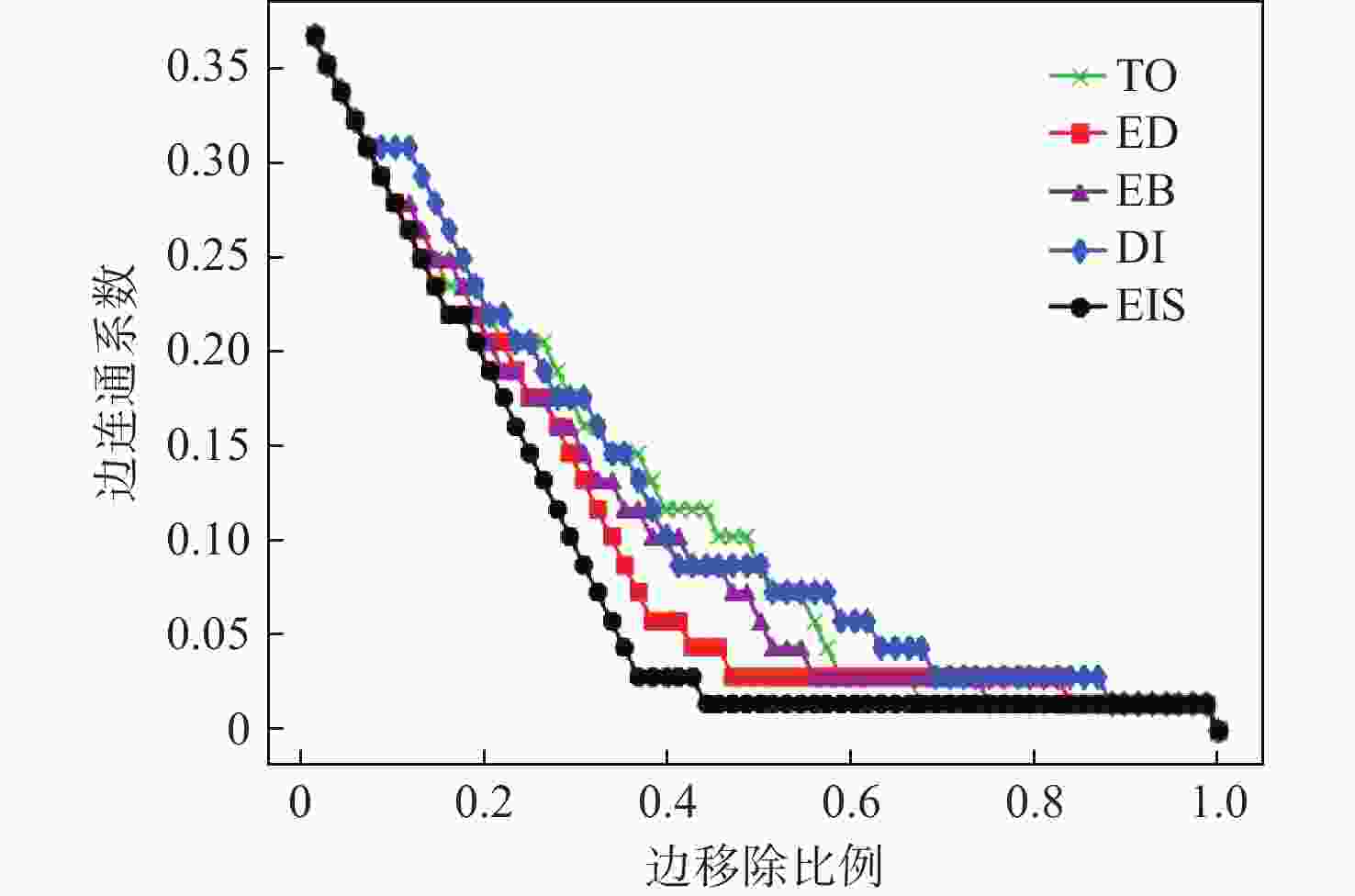
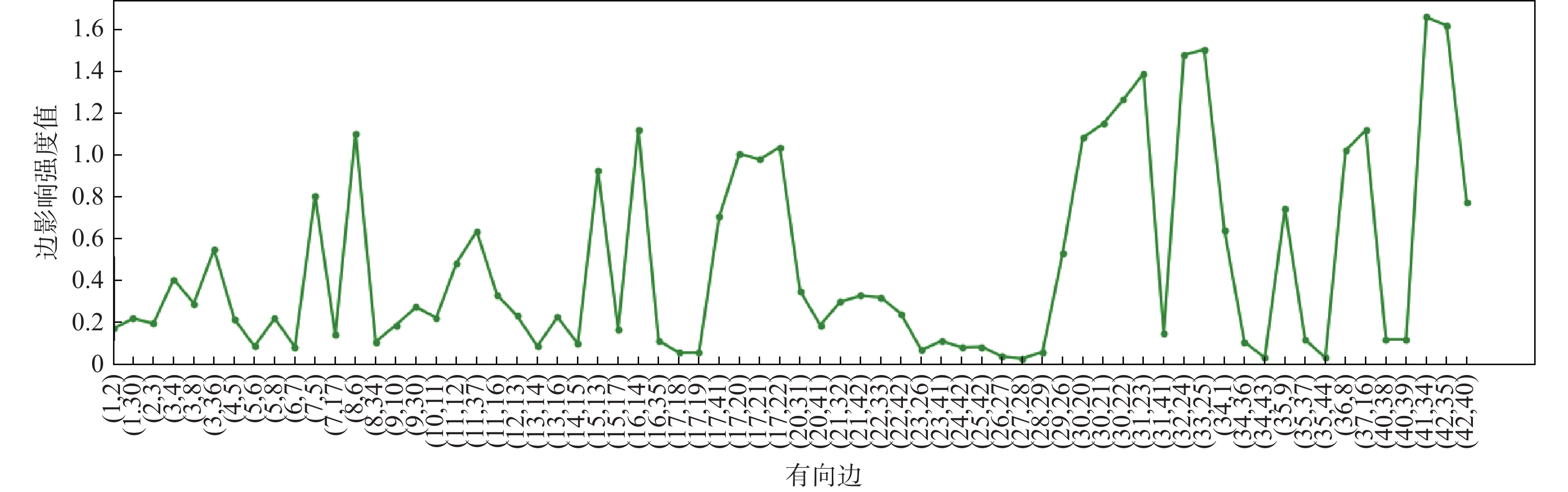
图 4 不同指标下的边连通系数$ \delta $
Figure 4. Edge connection coefficients $ \delta $ for different metrics
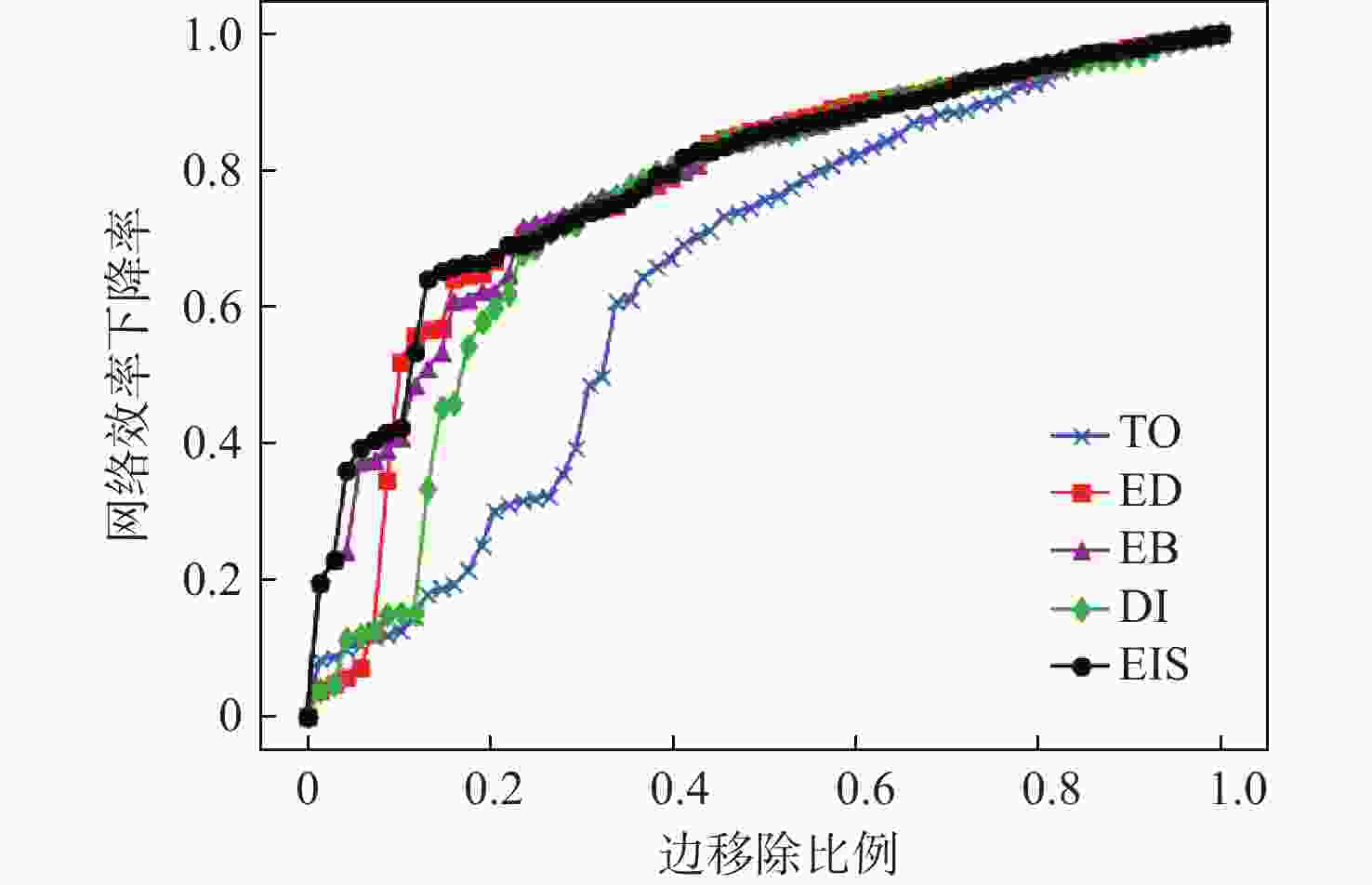
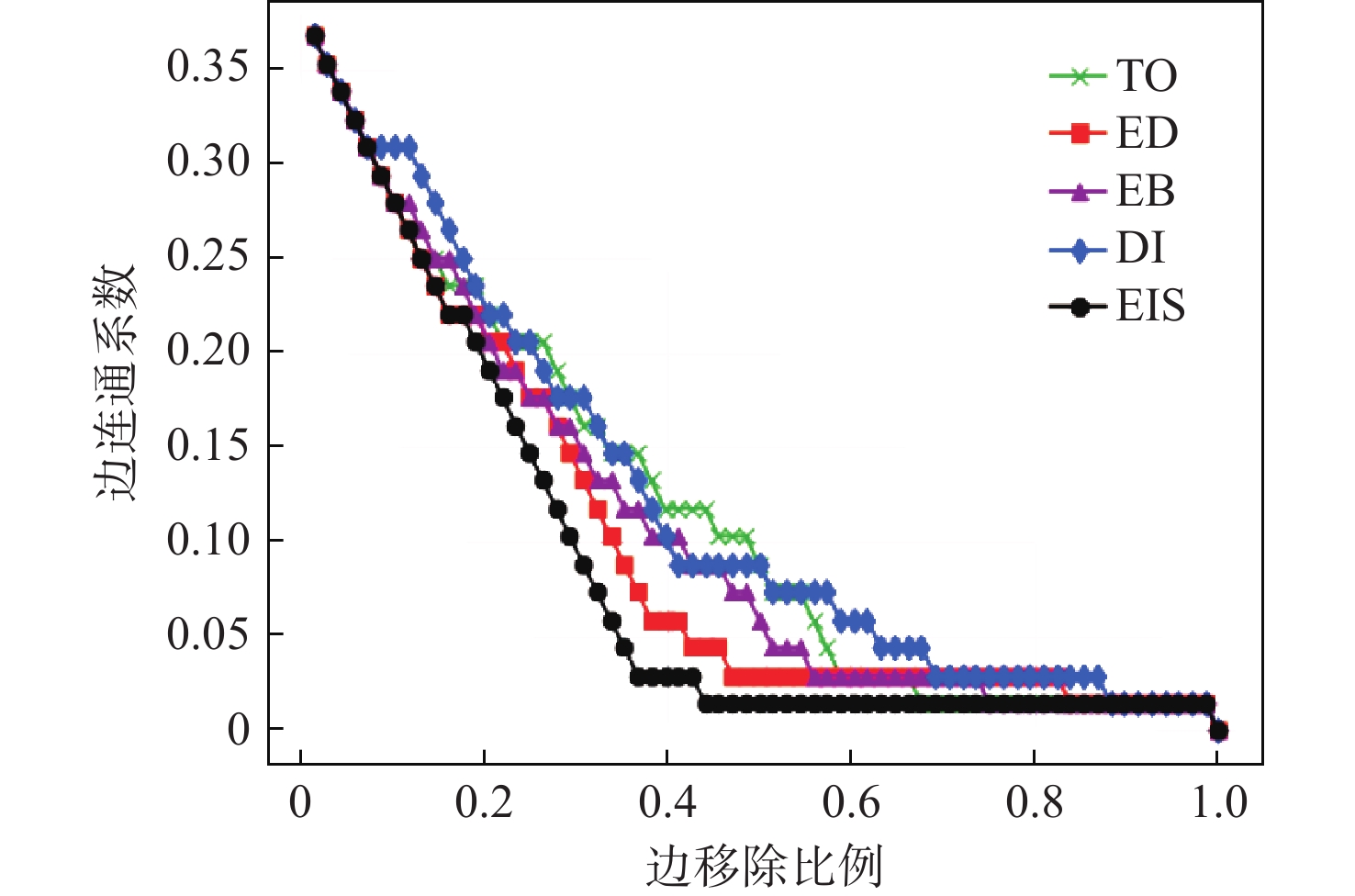
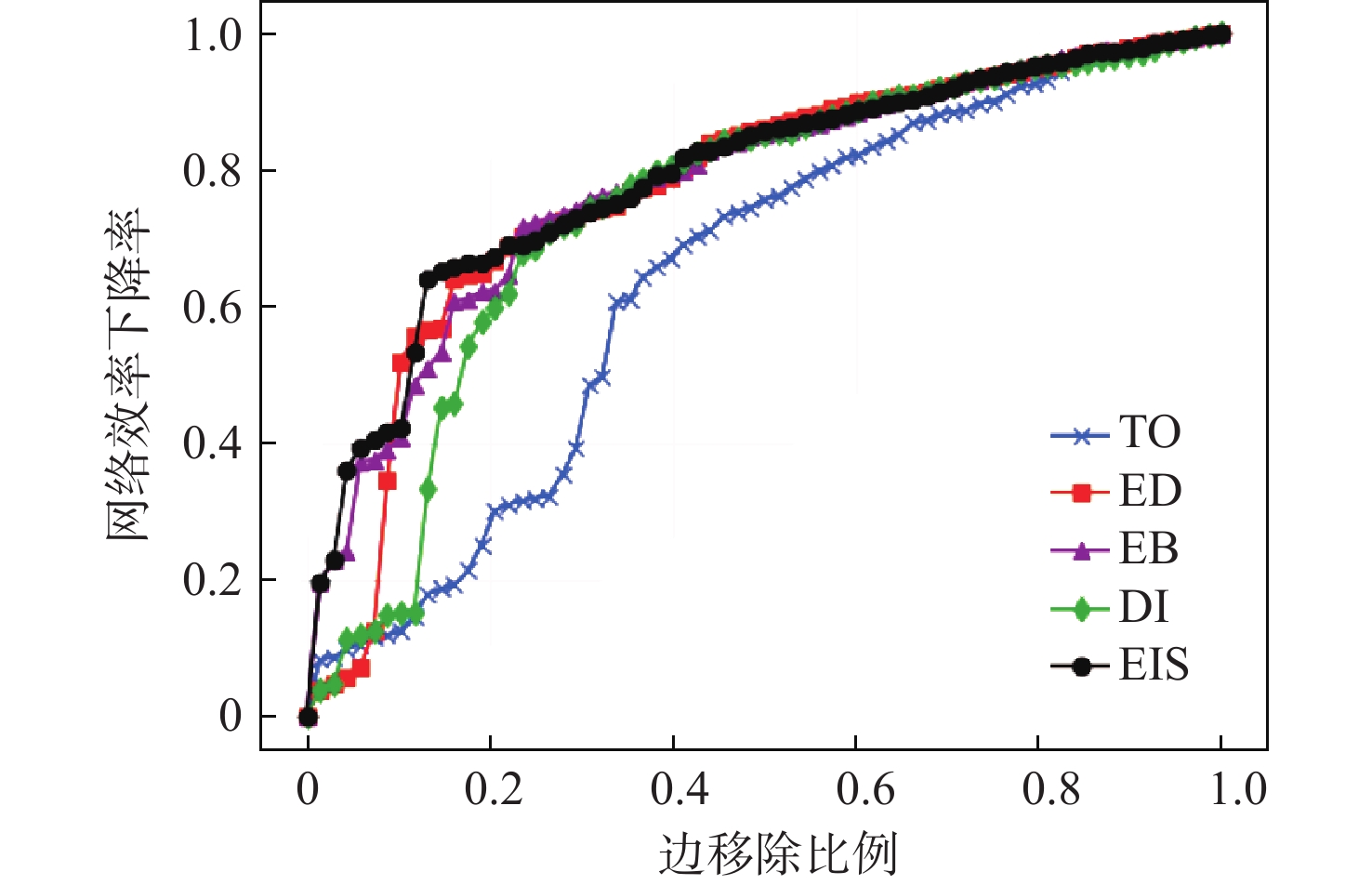
图 5 不同指标下的网络效率下降率$ \mu $
Figure 5. Network efficiency degradation rate $ \mu $ for different metrics
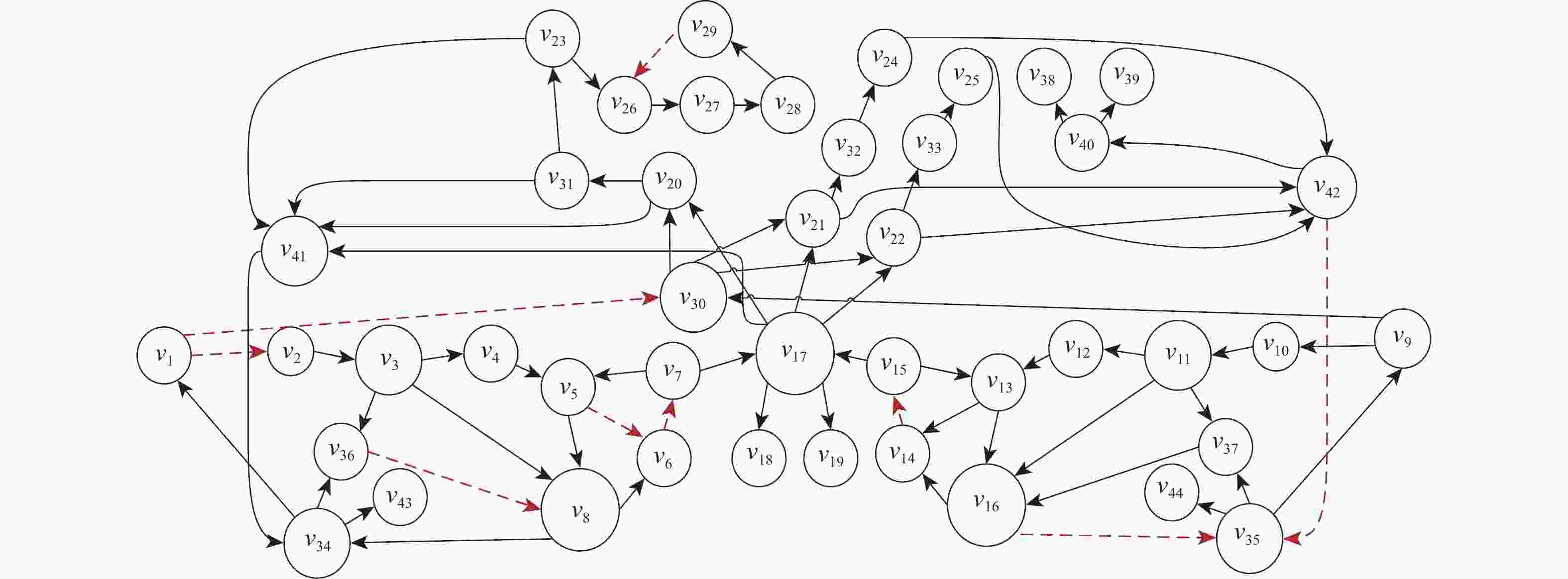
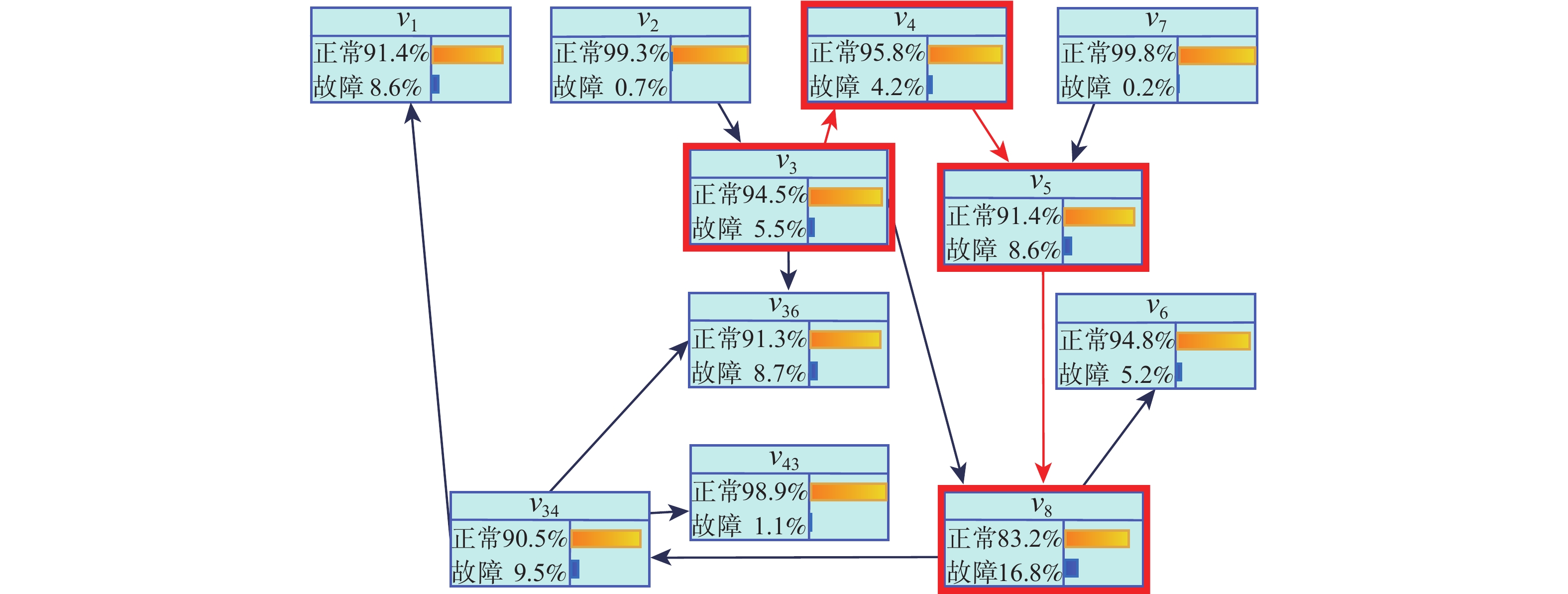
图 6 A320飞机空调系统故障传播有向无环图
Figure 6. Directed acyclic graph of A320 air conditioning system fault propagation
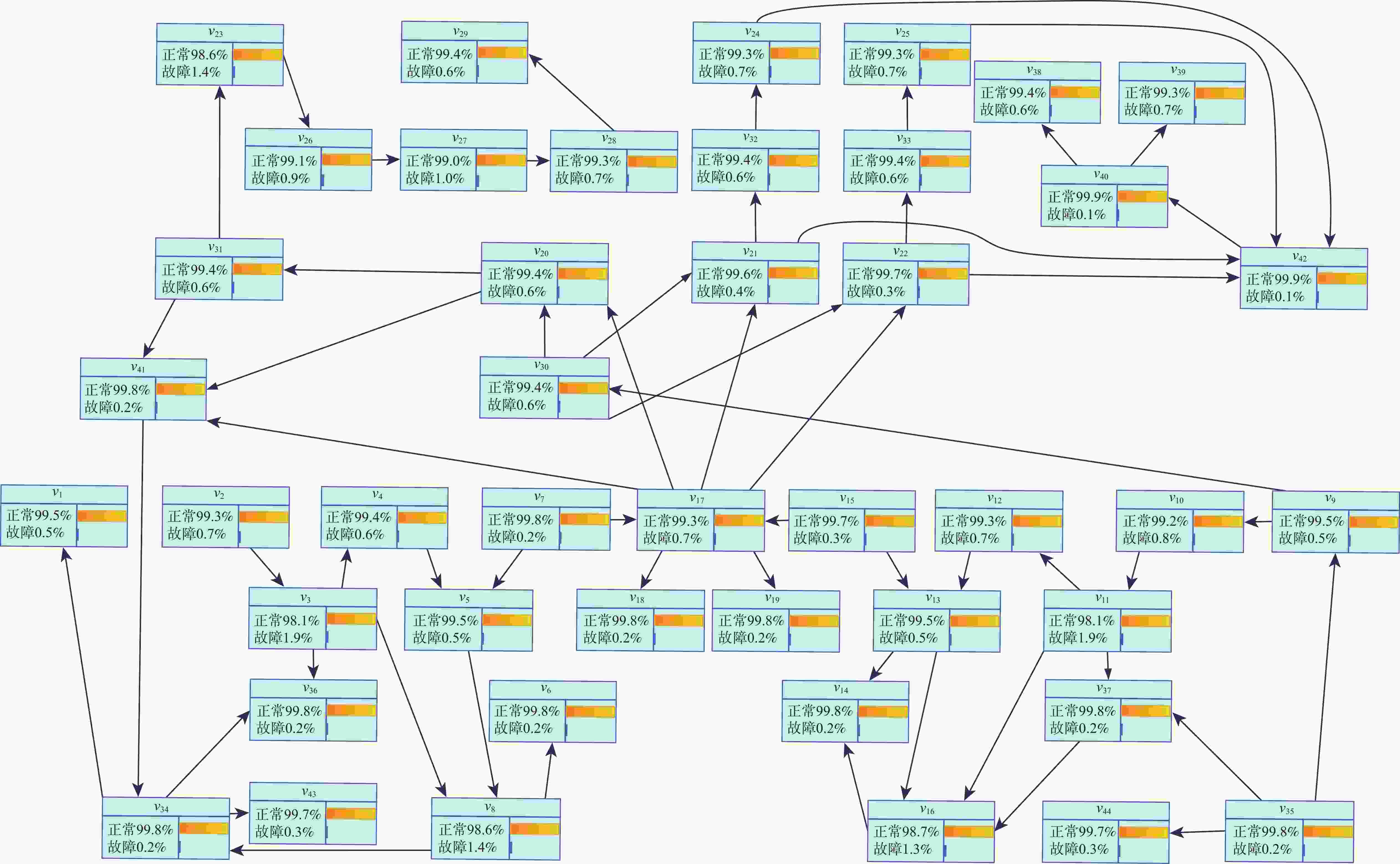
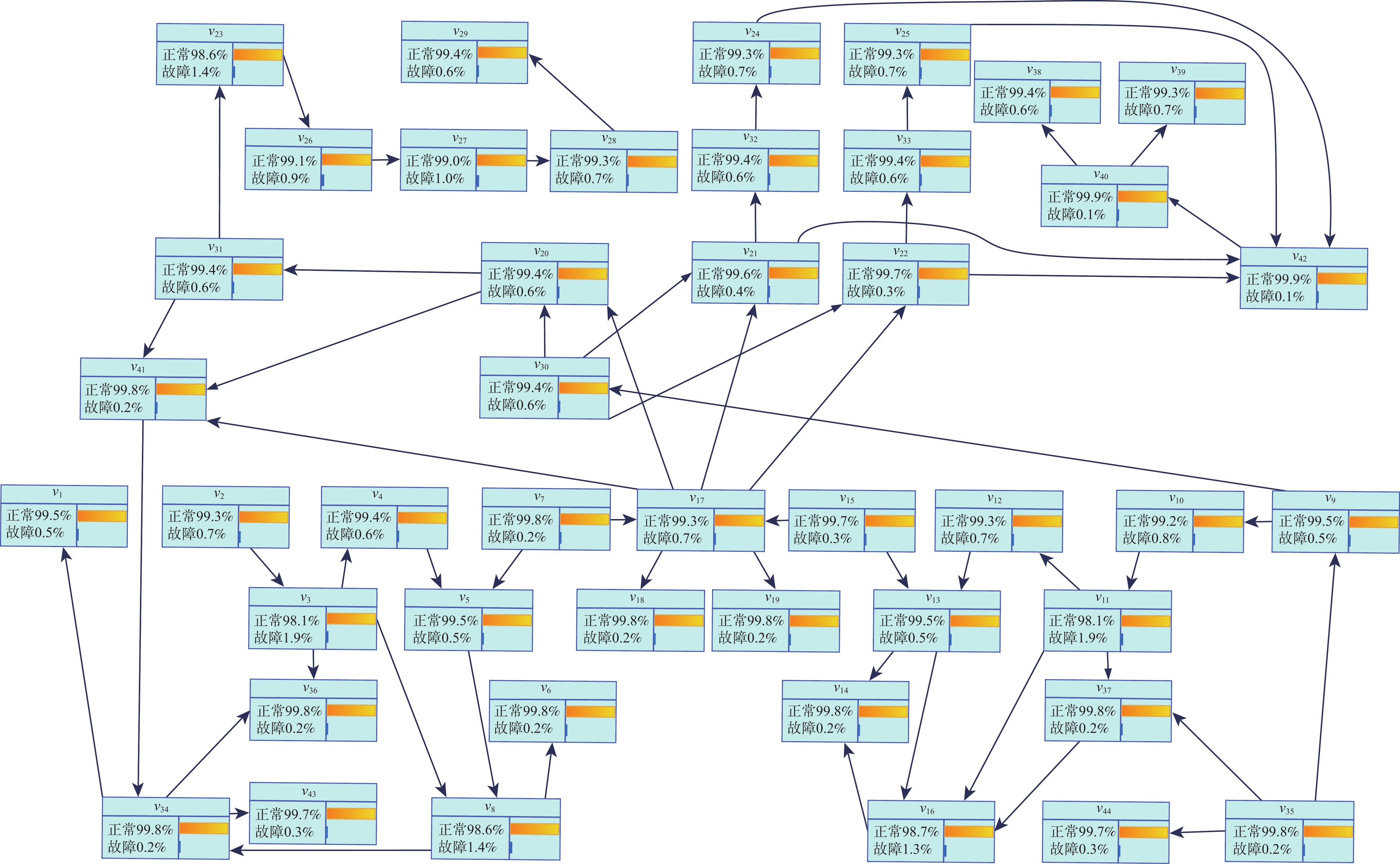
图 7 ACS贝叶斯网络节点状态的先验概率
Figure 7. Prior probability of node states in ACS Bayesian network
表 1 边连通关键度值
Table 1. Value of edge connectivity key
$ {e}_{ij} $ $ {Z}_{ij} $ $ {e}_{ij} $ $ {Z}_{ij} $ $ {e}_{ij} $ $ {Z}_{ij} $ $ {e}_{ij} $ $ {Z}_{ij} $ $ {e}_{ij} $ $ {Z}_{ij} $ $ {e}_{ij} $ $ {Z}_{ij} $ (1,2) 0.0115 (8,6) 0.0348 (15,13) 0.0011 (21,32) 0.0015 (30,20) 0.1157 (35,44) 0.0000 (1,30) 0.0866 (8,34) 0.0212 (15,17) 0.1152 (21,42) 0.1219 (30,21) 0.0544 (36,8) 0.0111 (2,3) 0.0039 (9,10) 0.0132 (16,14) 0.0447 (22,33) 0.0015 (30,22) 0.0147 (37,16) 0.0137 (3,4) 0.0003 (9,30) 0.1402 (16,35) 0.0248 (22,42) 0.0156 (31,23) 0.0118 (40,38) 0.0000 (3,8) 0.0067 (10,11) 0.0039 (17,18) 0.0000 (23,26) 0.0064 (31,41) 0.0073 (40,39) 0.0000 (3,36) 0.0001 (11,12) 0.0003 (17,19) 0.0000 (23,41) 0.0062 (32,24) 0.0004 (41,34) 0.2038 (4,5) 0.0002 (11,37) 0.0001 (17,41) 0.0657 (24,42) 0.0067 (33,25) 0.0004 (42,35) 0.3191 (5,6) 0.0027 (11,16) 0.0072 (17,20) 0.0604 (25,42) 0.0067 (34,1) 0.1403 (42,40) 0.0122 (5,8) 0.0015 (12,13) 0.0002 (17,21) 0.0735 (26,27) 0.0027 (34,36) 0.0198 (6,7) 0.0454 (13,14) 0.0036 (17,22) 0.0172 (27,28) 0.0007 (34,43) 0.0000 (7,5) 0.0010 (13,16) 0.0018 (20,31) 0.0329 (28,29) 0.0000 (35,9) 0.2264 (7,17) 0.0972 (14,15) 0.0619 (20,41) 0.0610 (29,26) 0.0000 (35,37) 0.0258  下载: 导出CSV
表 2 边信息熵值
Table 2. Value of edge information entropy
eij Hij eij Hij eij Hij eij Hij eij Hij eij Hij (1,2) 0.0316 (8,6) 0.2144 (15,13) 0.1852 (21,32) 0.0593 (30,20) 0.3076 (35,44) 0.0058 (1,30) 0.0275 (8,34) 0.0174 (15,17) 0.0122 (21,42) 0.0427 (30,21) 0.3921 (36,8) 0.2824 (2,3) 0.0380 (9,10) 0.0348 (16,14) 0.2167 (22,33) 0.0634 (30,22) 0.4183 (37,16) 0.2915 (3,4) 0.0810 (9,30) 0.0286 (16,35) 0.0179 (22,42) 0.0453 (31,23) 0.0962 (40,38) 0.0234 (3,8) 0.0567 (10,11) 0.0435 (17,18) 0.0102 (23,26) 0.0121 (31,41) 0.0283 (40,39) 0.0234 (3,36) 0.1098 (11,12) 0.0967 (17,19) 0.0108 (23,41) 0.0208 (32,24) 0.1162 (41,34) 0.1745 (4,5) 0.0431 (11,37) 0.1271 (17,41) 0.0289 (24,42) 0.0147 (33,25) 0.1211 (42,35) 0.1986 (5,6) 0.0163 (11,16) 0.0650 (17,20) 0.0904 (25,42) 0.0152 (34,1) 0.1024 (42,40) 0.1525 (5,8) 0.0434 (12,13) 0.0459 (17,21) 0.0423 (26,27) 0.0065 (34,36) 0.0174 (6,7) 0.0079 (13,14) 0.0164 (17,22) 0.0447 (27,28) 0.0051 (34,43) 0.0058 (7,5) 0.1610 (13,16) 0.0446 (20,31) 0.0641 (28,29) 0.0113 (35,9) 0.1067 (7,17) 0.0103 (14,15) 0.0079 (20,41) 0.0259 (29,26) 0.1060 (35,37) 0.0186
下载: 导出CSV
表 3 蚁群算法参数
Table 3. Ant colony algorithm parameters
$ m $ $ {\theta }_{1} $ $ {\theta }_{2} $ $ \rho $ $ Q $ 44 1 2 0.7 50
下载: 导出CSV
表 4 A320飞机空调系统故障传播路径及发生概率(部分)
Table 4. Fault propagation paths and occurrence probability in A320 air conditioning system (extracted)
序号 路径 $ {P}_{{\mathrm{op}}} $ 序号 路径 $ {P}_{{\mathrm{op}}} $ 1 3→4→5→8 0.3861 12 30→20→31 0.1923 2 9→10→11 0.3847 13 17→22→33 0.1675 3 11→12→13 0.3145 14 22→33→25 0.1491 4 17→21→32 0.2943 15 20→31→23 0.1452 5 26→28→29 0.2772 16 11→12→13→16 0.1217 6 9→30→20 0.2511 17 21→32→24→42 0.1064 7 8→34→43 0.2467 18 17→21→32→24 0.0913 8 21→32→24 0.2452 19 26→27→28→29 0.0887 9 7→5→8 0.2388 20 10→11→16→14 0.0742 10 15→13→16 0.2219 21 2→3→8→6 0.0701 11 11→37→16 0.2084 22 10→11→16→14 0.0494
下载: 导出CSV
表 5 空调系统故障传播路径识别对比实验结果
Table 5. Comparative experimental results of identifying fault propagation paths in air conditioning system
模型 路径识别准确率/% 路径数量/条 运行时长/s 小世界网络 92.55 1496 214 SDG 91.74 1536 287 Petri网 93.28 1432 266 MWST+BN 94.13 1371 208 改进贝叶斯网络 94.67 1248 195
下载: 导出CSV
-
[1] 康文文, 李浩敏. 基于模型的飞机系统架构多视图表达方法[J]. 系统工程与电子技术, 2021, 43(11): 3266-3277.KANG W W, LI H M. Multi-view representation method of aircraft system architecture based on model[J]. Systems Engineering and Electronics, 2021, 43(11): 3266-3277(in Chinese). [2] GABBAR H A. Improved qualitative fault propagation analysis[J]. Journal of Loss Prevention in the Process Industries, 2007, 20(3): 260-270. [3] HUANG S, LU N, JIANG B, et al. Fault propagation analysis of computer numerically controlled machine tools[J]. Journal of Manufacturing Systems, 2023, 70: 149-159. [4] LI Y, LU N Y, SHI J T, et al. A quantitative causal diagram based optimal sensor allocation strategy considering the propagation of fault risk[J]. Journal of the Franklin Institute, 2021, 358(1): 1021-1043. [5] JIANG Z, ZHAO T, WANG S, et al. A novel risk assessment and analysis method for correlation in a complex system based on multi-dimensional theory[J]. Applied Sciences, 2020, 10(9): 3007. [6] YANG B, LI H G, WEN B. A dynamic time delay analysis approach for correlated process variables[J]. Chemical Engineering Research and Design, 2017, 122: 141-150. [7] MA L, DONG J, PENG K X. A practical root cause diagnosis framework for quality-related faults in manufacturing processes with irregular sampling measurements[J]. IEEE Transactions on Instrumentation and Measurement, 2022, 71: 3511509. [8] LANDMAN R, JÄMSÄ-JOUNELA S L. Fault propagation analysis by implementing nearest neighbors method using process connectivity[J]. IEEE Transactions on Control Systems Technology, 2019, 27(5): 2058-2067. [9] KITSON N K, CONSTANTINOU A C, GUO Z G, et al. A survey of Bayesian network structure learning[J]. Artificial Intelligence Review, 2023, 56(8): 8721-8814. [10] KUMARI P, LEE D, WANG Q S, et al. Root cause analysis of key process variable deviation for rare events in the chemical process industry[J]. Industrial & Engineering Chemistry Research, 2020, 59(23): 10987-10999. [11] YE T Y, LIU L L, PANG H W, et al. Bayesian networks based approach to enhance GO methodology for reliability modeling of multi-state consecutive-k-out-of-n: F system[J]. Reliability Engineering & System Safety, 2023, 229: 108828. [12] CHU K Y, LIU R, DUAN G J. A gray correlation based Bayesian network model for fault source diagnosis of multistage process–small sample manufacturing system[J]. Advanced Engineering Informatics, 2023, 56: 101918. [13] CASTELLANO-QUERO M, FERNÁNDEZ-MADRIGAL J A, GARCÍA-CEREZO A. Improving Bayesian inference efficiency for sensory anomaly detection and recovery in mobile robots[J]. Expert Systems with Applications, 2021, 163: 113755. [14] KUMARI P, BHADRIRAJU B, WANG Q S, et al. A modified Bayesian network to handle cyclic loops in root cause diagnosis of process faults in the chemical process industry[J]. Journal of Process Control, 2022, 110: 84-98. [15] 马亮, 彭开香, 董洁. 工业过程故障根源诊断与传播路径识别技术综述[J]. 自动化学报, 2022, 48(7): 1650-1663.MA L, PENG K X, DONG J. Review of root cause diagnosis and propagation path identification techniques for faults in industrial processes[J]. Acta Automatica Sinica, 2022, 48(7): 1650-1663(in Chinese). [16] 孙见忠, 解志峰, 闫洪胜, 等. 民机PHM预测维修模式在空调系统的应用[J]. 南京航空航天大学学报, 2021, 53(6): 952-964.SUN J Z, XIE Z F, YAN H S, et al. Application of PHM predictive maintenance on aircraft air conditioning system[J]. Journal of Nanjing University of Aeronautics & Astronautics, 2021, 53(6): 952-964(in Chinese). [17] ONNELA J P, SARAMÄKI J, HYVÖNEN J, et al. Structure and tie strengths in mobile communication networks[J]. Proceedings of the National Academy of Sciences of the United States of America, 2007, 104(18): 7332-7336. [18] HOLME P, KIM B J, YOON C N, et al. Attack vulnerability of complex networks[J]. Physical Review E, Statistical, Nonlinear, and Soft Matter Physics, 2002, 65(5 Pt 2): 056109. [19] GIRVAN M, NEWMAN M E J. Community structure in social and biological networks[J]. PNAS, 2002, 99(12): 7821-7826. [20] LIU Y, TANG M, ZHOU T, et al. Improving the accuracy of the k-shell method by removing redundant links: from a perspective of spreading dynamics[J]. Scientific Reports, 2015, 5: 13172. [21] XU Y F, WANG Z, JIANG Y, et al. Small-world network analysis on fault propagation characteristics of water networks in eco-industrial parks[J]. Resources, Conservation and Recycling, 2019, 149: 343-351. [22] YANG F, XIAO D Y, SHAH S L. Signed directed graph-based hierarchical modelling and fault propagation analysis for large-scale systems[J]. IET Control Theory & Applications, 2013, 7(4): 537-550. [23] WANG Y H, SHI H, JIA L M, et al. Multi paths fault propagation model for network modeled system[C]//Proceeding of the 11th World Congress on Intelligent Control and Automation. Piscataway: IEEE Press, 2015: 5915-5920. [24] GUO R X, WANG Z H. A framework for modeling fault propagation paths in air turbine starter based on Bayesian network[J]. Proceedings of the Institution of Mechanical Engineers, Part O: Journal of Risk and Reliability, 2022, 236(6): 1078-1095. [25] WANG Y H, LI M, SHI H. A method of searching fault propagation paths in mechatronic systems based on MPPS model[J]. Journal of Central South University, 2018, 25(9): 2199-2218. -

 下载:
下载:

 点击查看大图
计量
- 文章访问数: 307
- HTML全文浏览量: 142
- PDF下载量: 14
- 被引次数: 0
