





-
摘要:
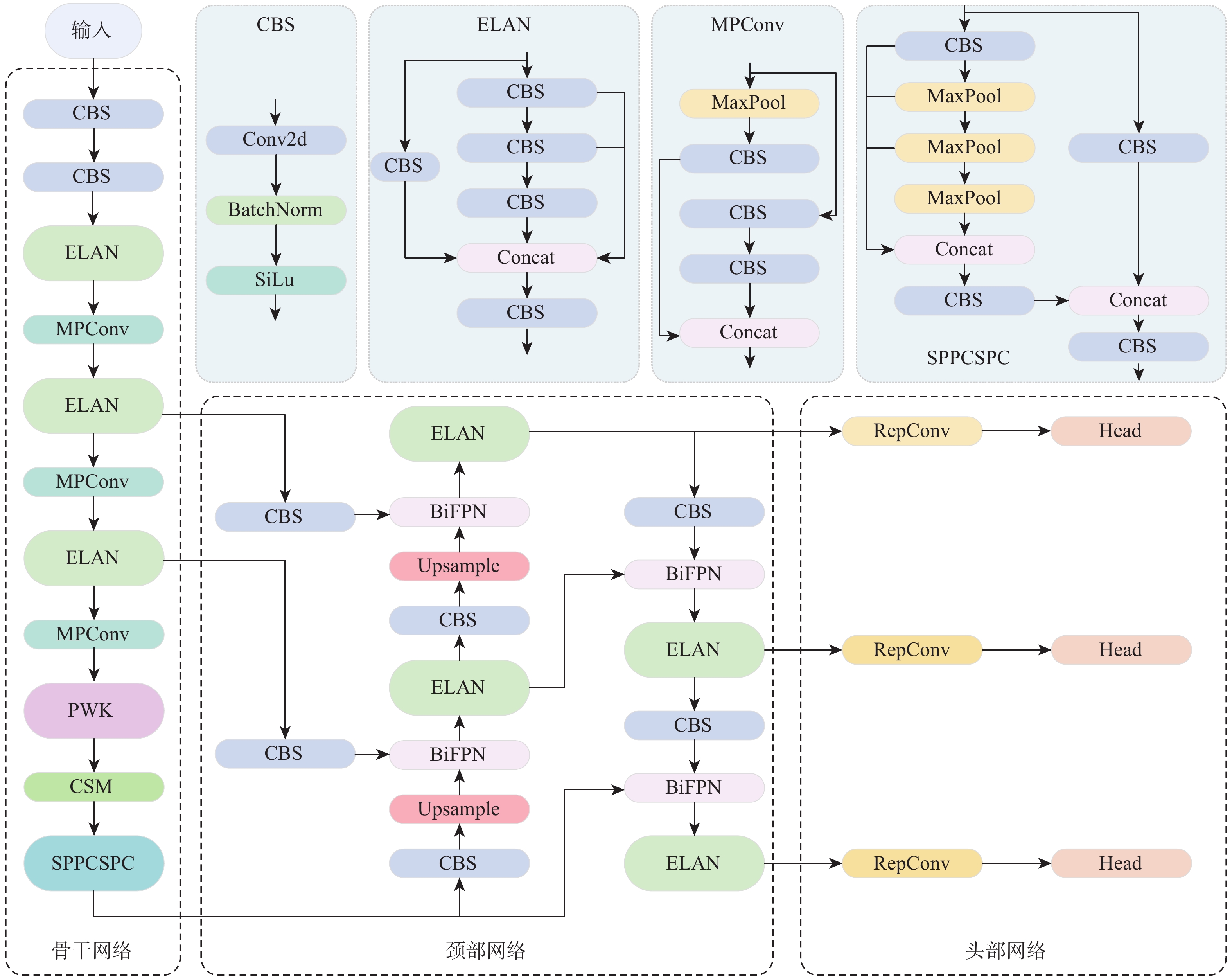
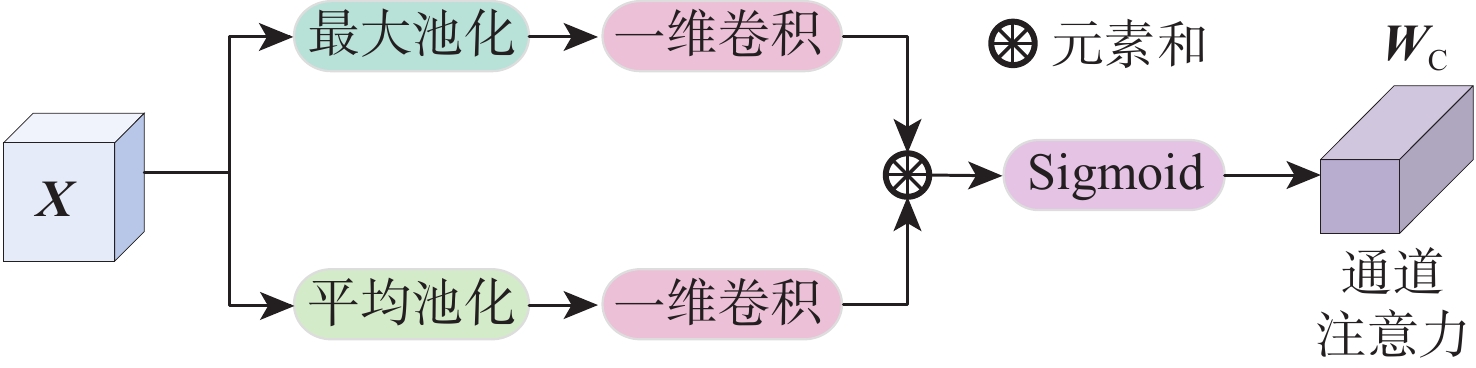
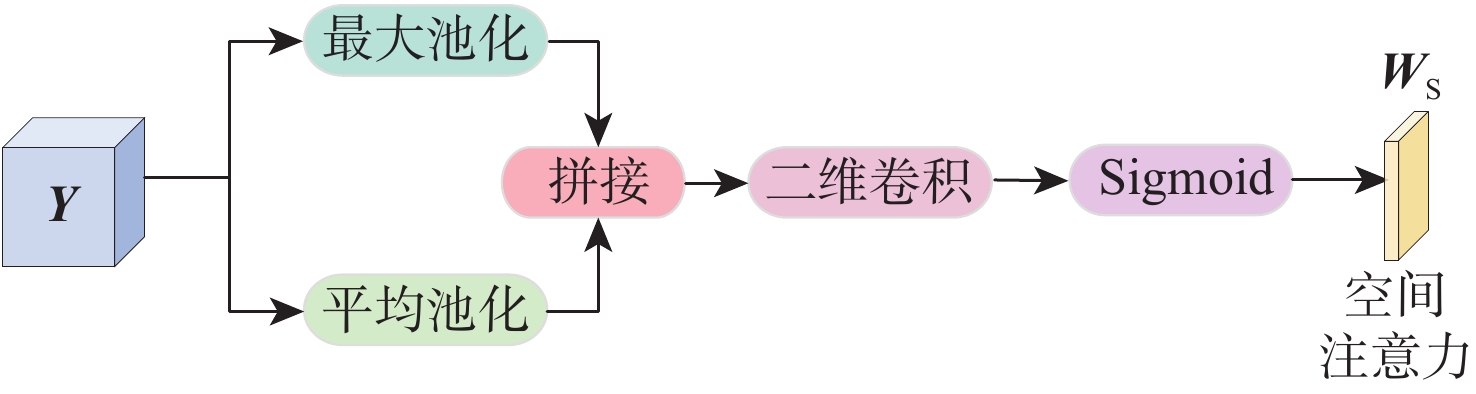
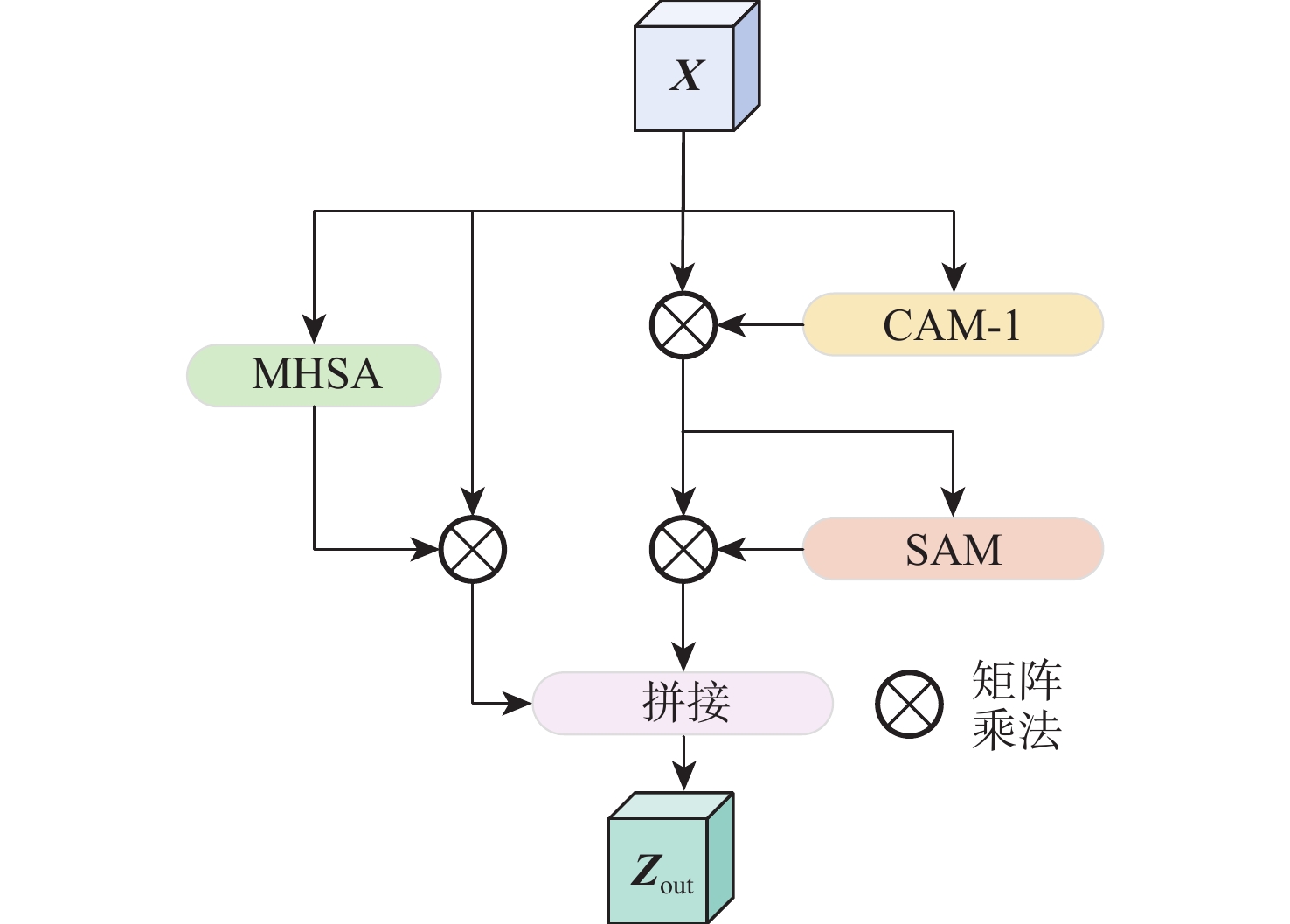
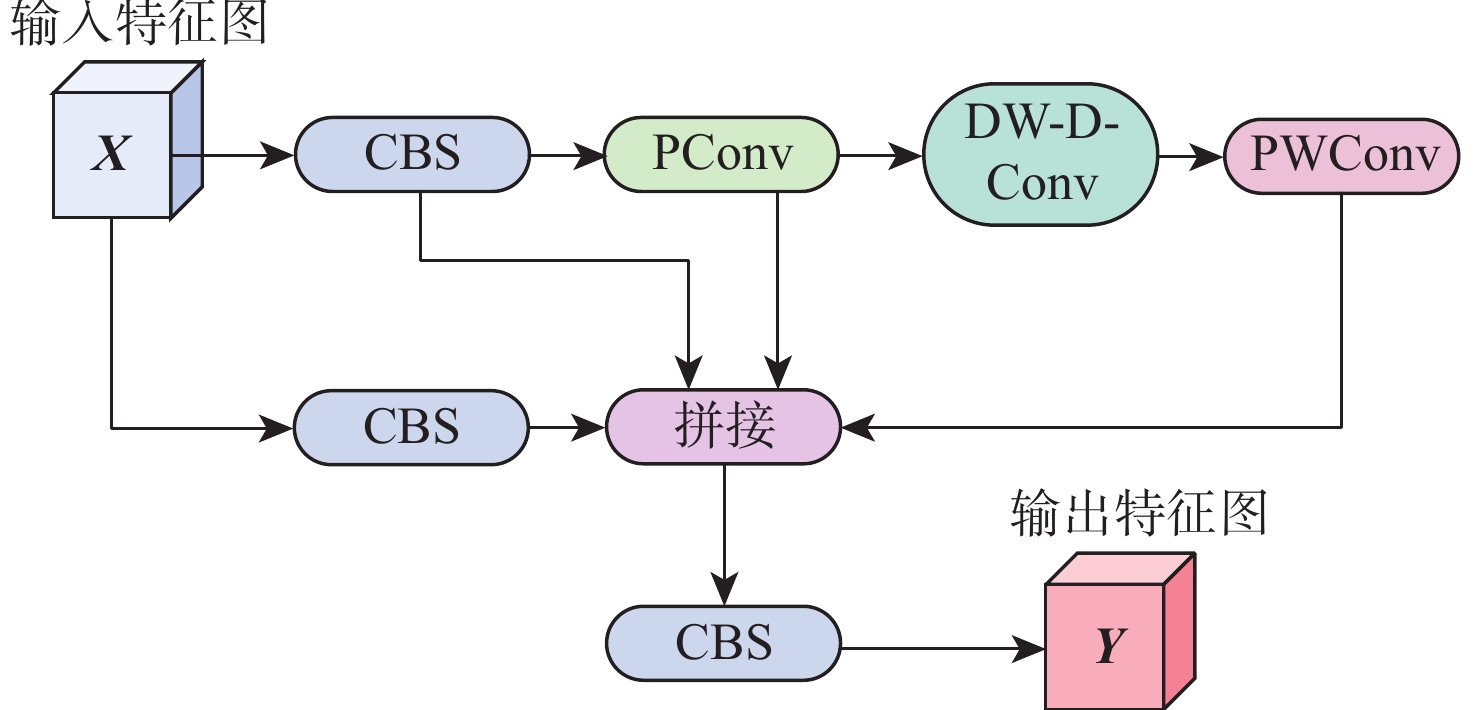
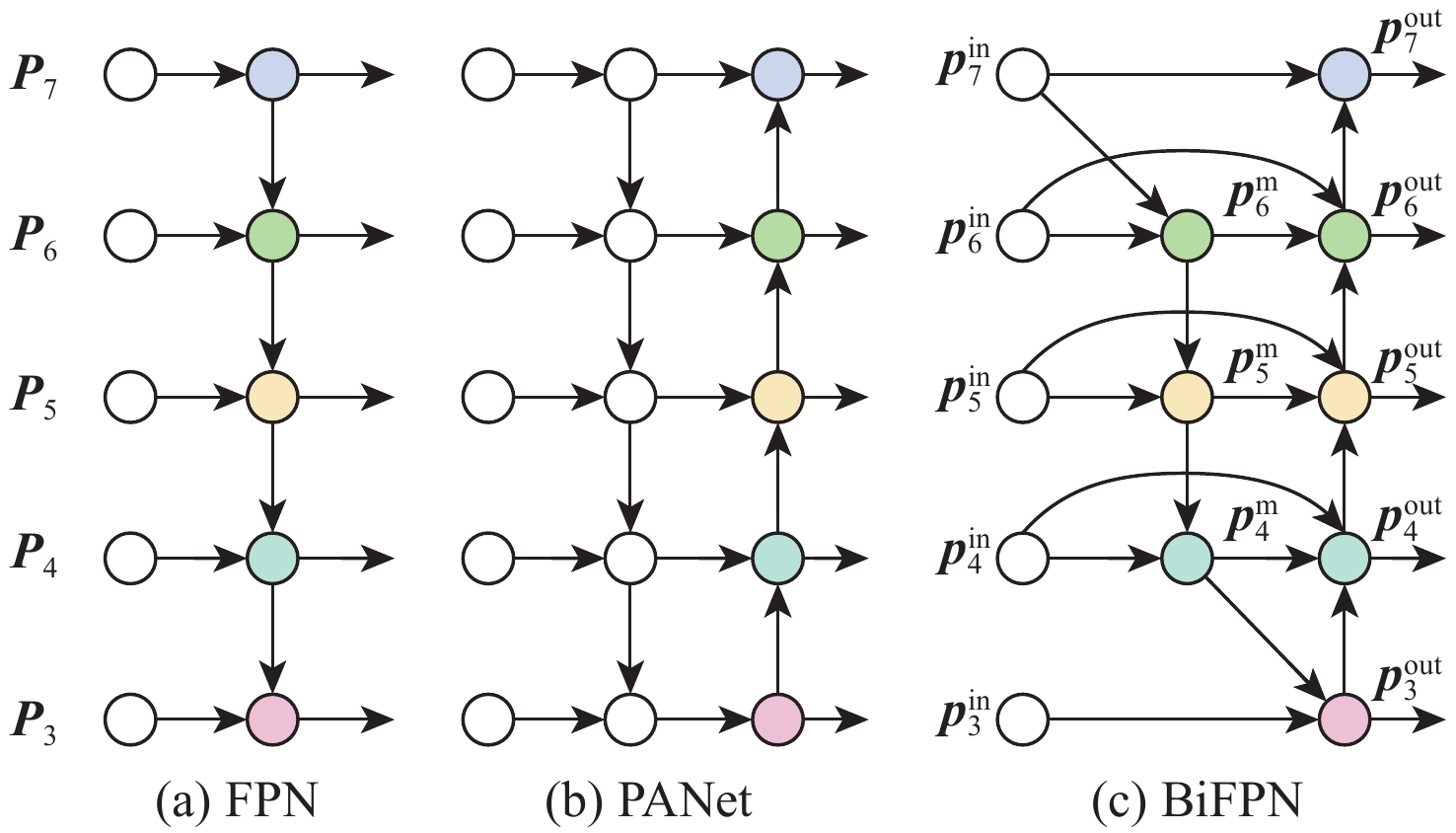
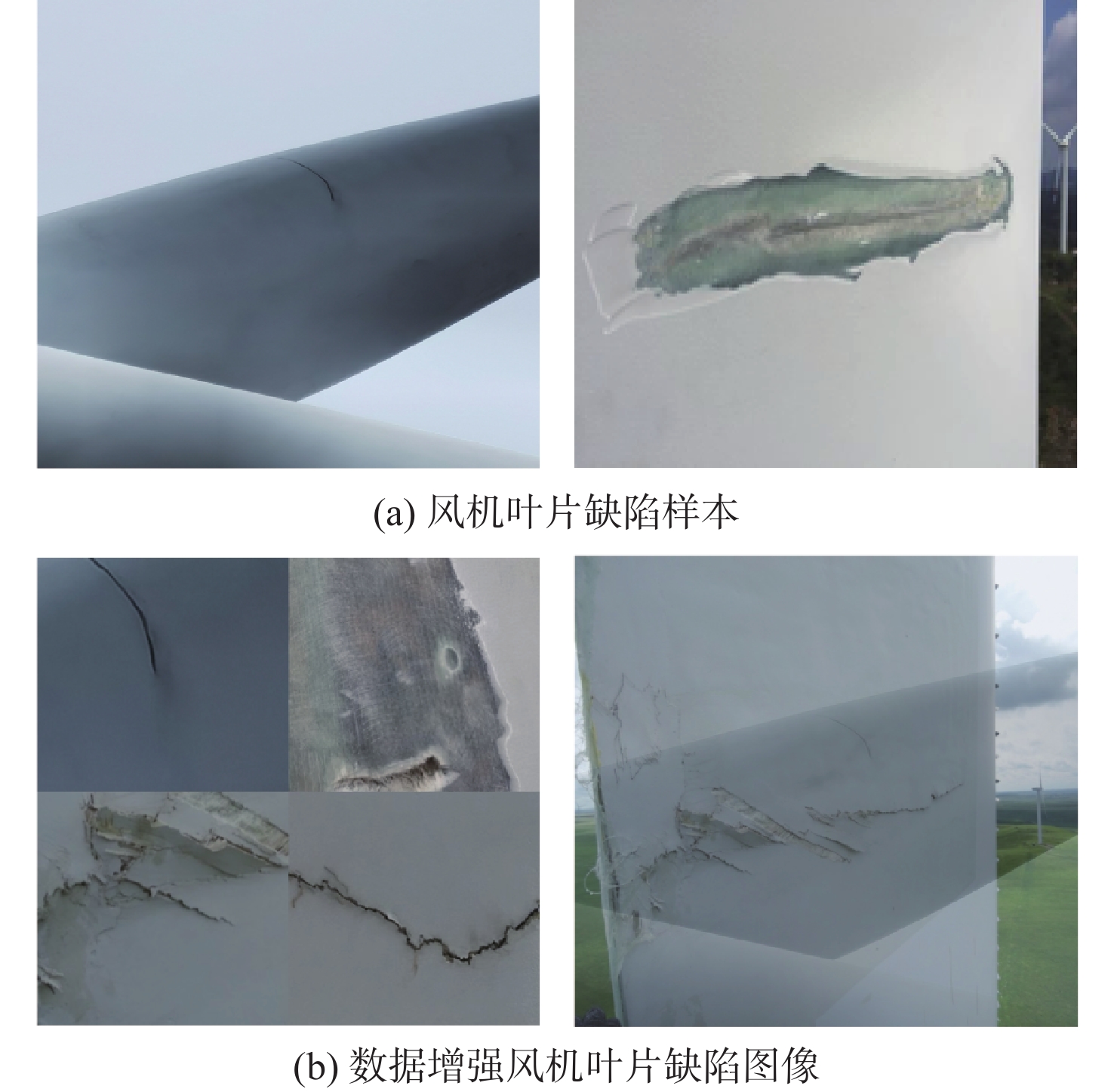
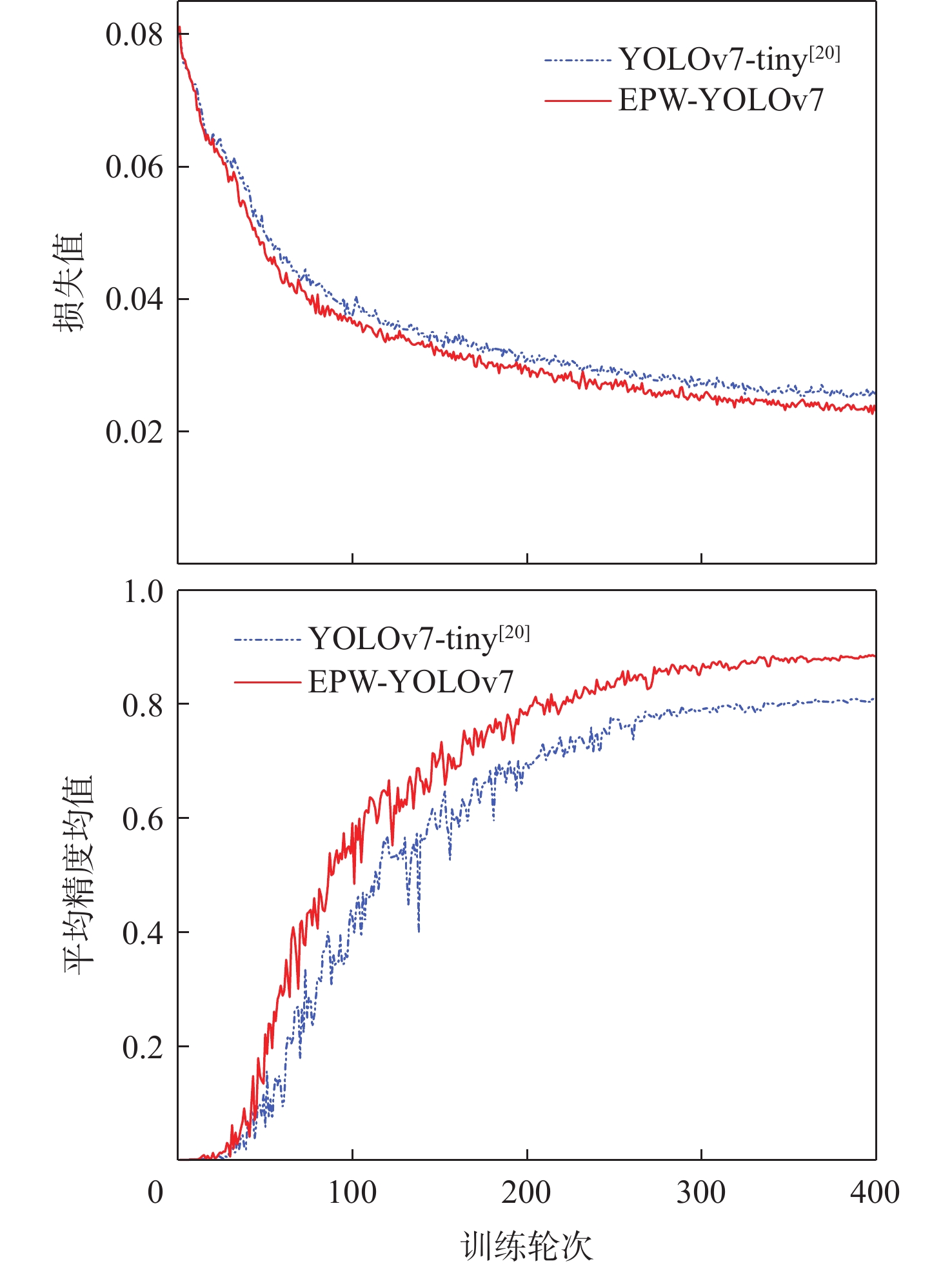
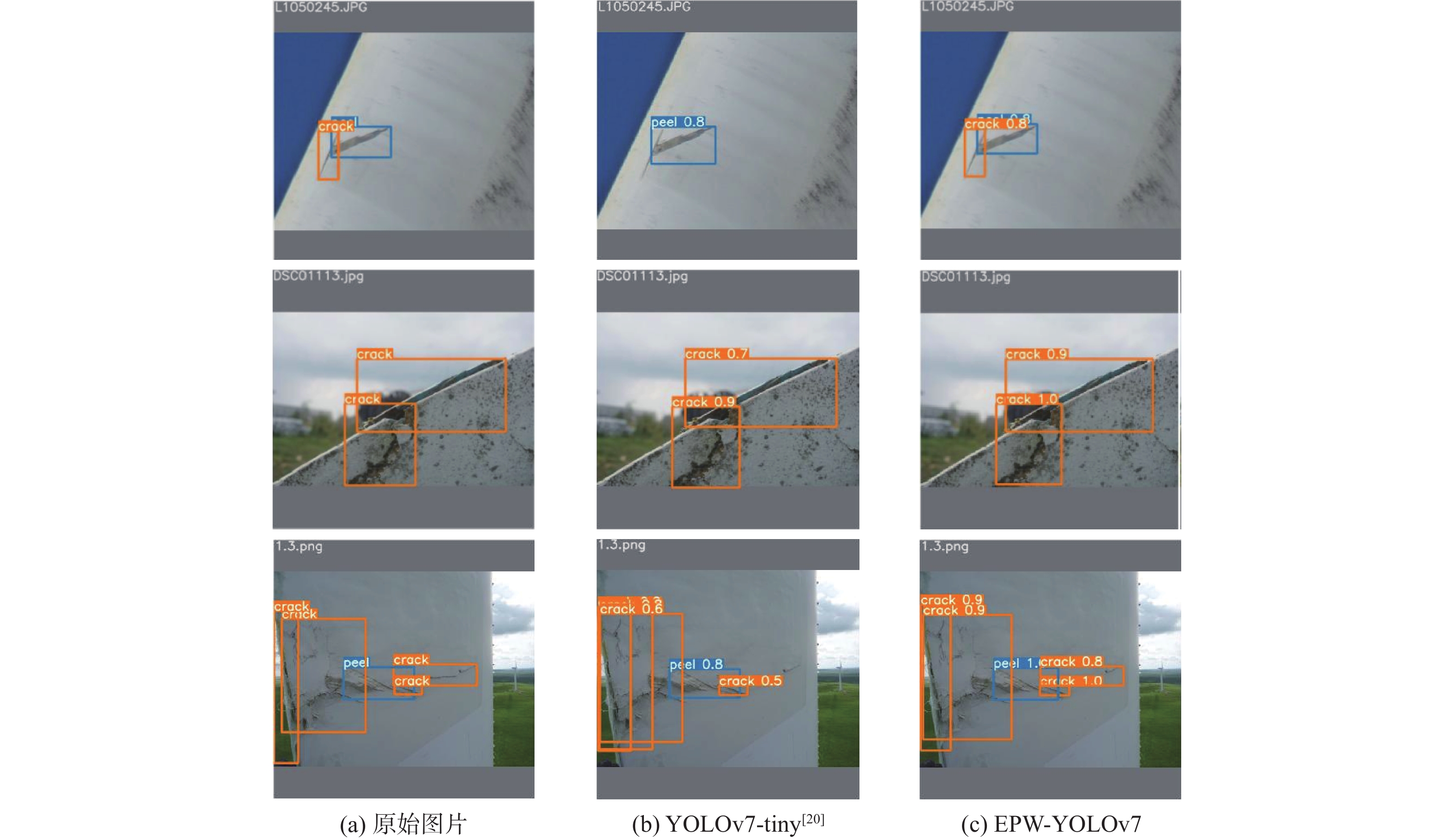
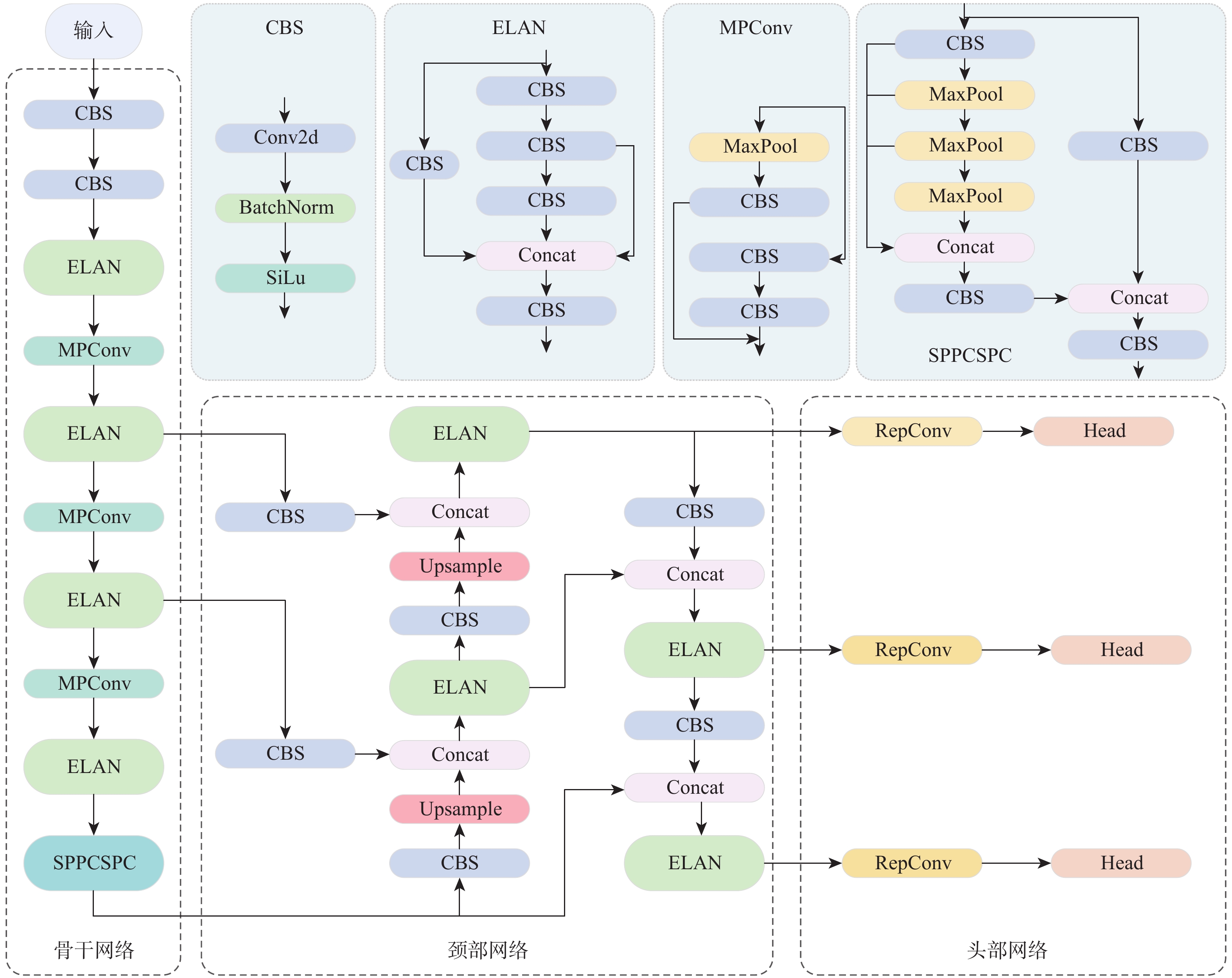
为实现对风力发电机叶片缺陷的实时精准检测,针对风机叶片缺陷尺度变化大、背景复杂的特点,提出一种基于YOLOv7网络模型的风机叶片缺陷检测模型EPW-YOLOv7。设计CSM注意力模块并添加于主干网络中,以抑制复杂背景干扰,提高重要特征的提取效率;设计轻量化的PWK模块替换原有的高效层聚合网络(ELAN)模块,减少冗余参数量及计算量,加快网络的检测速度;引入双向特征金字塔网络(BiFPN)特征融合模块,促使网络更精确地识别多尺度缺陷特征;采用Wise-交并比(WIoU)损失函数优化网络,提高EPW-YOLOv7模型的整体检测性能。在风机叶片缺陷数据集上进行实验,实验结果表明:EPW-YOLOv7模型的平均准确率可达88.4 %,相较于YOLOv7-tiny模型提高了7.1 %,且帧率达到66 帧/s,满足实时检测需求。此外,与当前先进的目标检测算法相比,EPW-YOLOv7模型在风机叶片缺陷的检测精度和速度上更具优势,证明所提模型更适用于风机叶片缺陷实时检测定位任务。
Abstract:A wind turbine blade defect detection technique, EPW-YOLOv7, based on the YOLOv7 network model, is suggested for the features of wind turbine blade defects with large scale variation and complicated backdrop in order to achieve real-time accurate identification of wind turbine blade flaws. Firstly, the CSM attention module is designed and added to the backbone network to suppress the complex background interference and to improve the efficiency of extracting important features. Second, the lightweight PWK module is designed to replace the original (ELAN) module to reduce the amount of redundant parameters and computation, and to accelerate the detection speed of the network. Then, the bidirectional feature pyramid networks(BiFPN) feature fusion module is introduced to motivate the network to recognize multi-scale defect features more accurately. Finally, the wise-intersection over union(WIoU) loss function is used to optimize the network and improve the overall detection performance of the improved model. The wind turbine blade defect dataset is used for experiments, and the results demonstrate that the average accuracy of the EPW-YOLOv7 model can reach 88.4%, which is 7.1% higher than that of the YOLOv7-tiny model. Additionally, the frame rate reaches 66 frames/s, satisfying the requirement for real-time detection. In addition, compared with the current state-of-the-art target detection algorithms, the EPW-YOLOv7 model can detect defects of wind turbine blades with high accuracy and faster. In addition, compared with the current advanced target detection algorithms, the EPW-YOLOv7 model has more advantages in detecting the defects of wind turbine blades in terms of accuracy and speed, which demonstrates that the proposed algorithm is more suitable for the real-time detection and localization of wind turbine blade defect.
-
Key words:
- wind turbine blade /
- defect detection /
- deep learning /
- attention mechanism /
- feature fusion
-
表 1 添加注意力模块对比实验
Table 1. Comparison experiment of adding attention modules
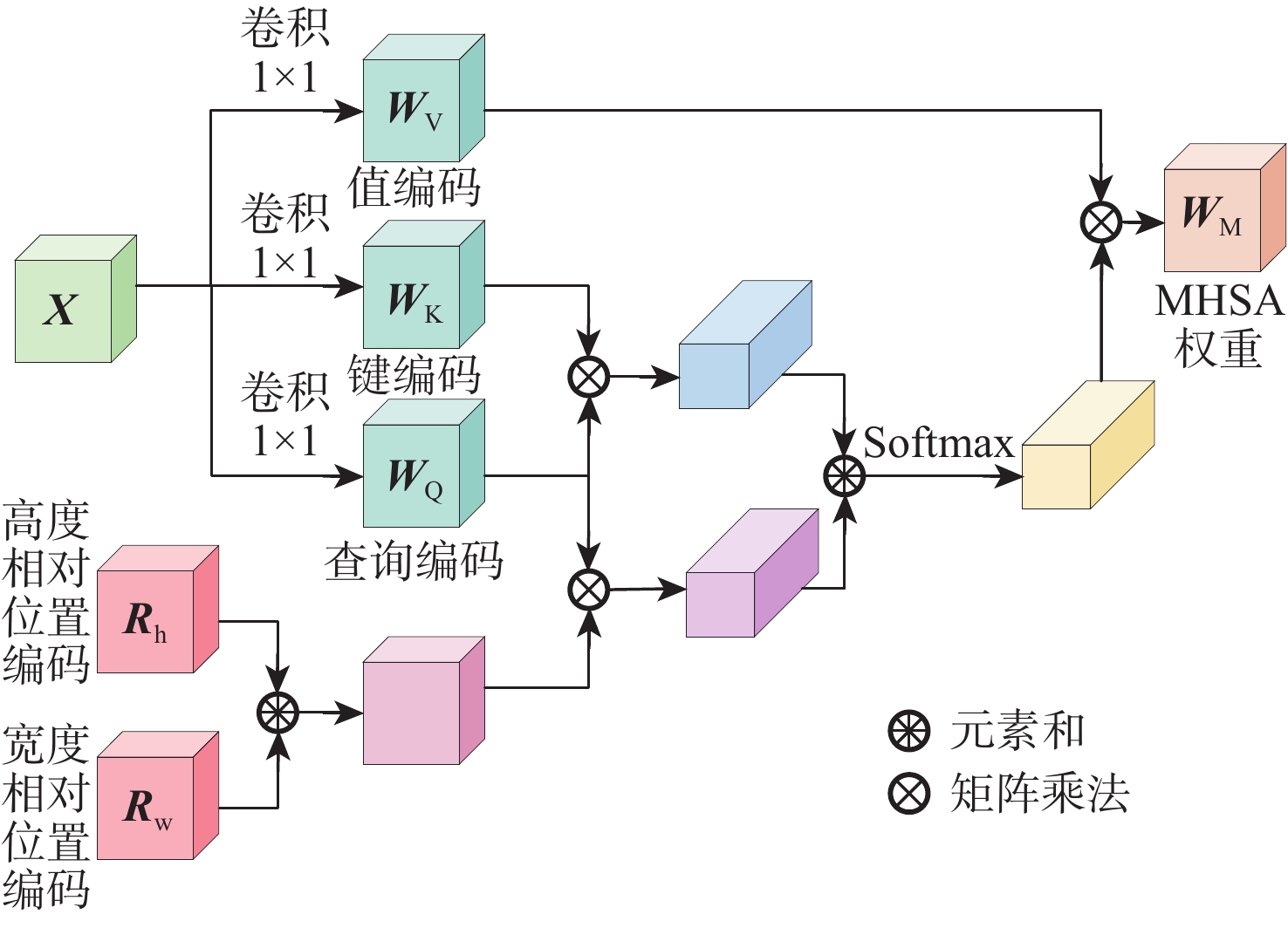
模型 mAP_0.5/% 浮点运算速度/109 s−1 模型参数量 YOLOv7-tiny[20] 81.2 13.2 6.02×10⁶ YOLOv7-tiny+CBAM 83.1 13.2 6.03×10⁶ YOLOv7-tiny+MHSA 83.2 13.8 6.80×10⁶ YOLOv7-tiny+ECA 82.3 13.3 6.03×10⁶ YOLOv7-tiny+SimAm 82.4 13.2 6.02×10⁶ YOLOv7-tiny+CSM 83.8 13.4 6.22×10⁶  下载: 导出CSV
表 2 消融实验
Table 2. Ablation experiment
模型编号 CSM PWK WIoU BiFPN mAP_0.5/% 帧率/(帧·s−1) 浮点运算速度/109 s−1 模型参数量 1 81.2 64 13.2 6.02×10⁶ 2 √ 83.8 67 13.4 6.22×10⁶ 3 √ √ 84.9 71 12.7 5.22×10⁶ 4 √ √ √ 86.2 68 12.7 5.22×10⁶ 5 √ √ √ √ 88.4 66 12.7 5.22×10⁶
下载: 导出CSV
表 3 对比实验
Table 3. Comparative experiments
模型 mAP_0.5/% 帧率/
(帧·s−1)浮点运算
速度/109 s−1模型参数量 Faster-RCNN[26] 81.6 19 370.2 137.09×10⁶ DETR[27] 78.5 42 42.0 52.01×10⁶ SDD[28] 79.2 104 60.9 23.87×10⁶ YOLOv3-tiny[29] 79.7 53 12.9 8.66×10⁶ YOLOv5s[30] 80.4 81 15.8 7.02×10⁶ YOLOv5l[30] 82.5 47 107.7 46.14×10⁶ YOLOv5x[30] 84.2 45 203.8 86.10×10⁶ YOLOv7[20] 83.4 46 36.5 103.80×10⁶ YOLOv7-tiny[20] 81.2 64 13.2 6.02×10⁶ EPW-YOLOv7 88.4 66 12.7 5.22×10⁶
下载: 导出CSV
-
[1] ROGA S, BARDHAN S, KUMAR Y, et al. Recent technology and challenges of wind energy generation: a review[J]. Sustainable Energy Technologies and Assessments, 2022, 52: 102239. [2] DU Y, ZHOU S X, JING X J, et al. Damage detection techniques for wind turbine blades: a review[J]. Mechanical Systems and Signal Processing, 2020, 141: 106445. [3] LEI J H, LIU C, JIANG D X. Fault diagnosis of wind turbine based on long short-term memory networks[J]. Renewable Energy, 2019, 133: 422-432. [4] CHOUNG J, LIM S, LIM S H, et al. Automatic discontinuity classification of wind-turbine blades using A-scan-based convolutional neural network[J]. Journal of Modern Power Systems and Clean Energy, 2021, 9(1): 210-218. [5] 邹宜金, 连应华, 黄新宇, 等. 基于声纹的高泛化性风机叶片异常检测方法研究[J]. 电子科技大学学报, 2021, 50(5): 795-800.ZOU Y J, LIAN Y H, HUANG X Y, et al. High generalization in anomaly detection of wind turbine generator based on voiceprint[J]. Journal of University of Electronic Science and Technology of China, 2021, 50(5): 795-800(in Chinese). [6] XU D, LIU P F, CHEN Z P. Damage mode identification and singular signal detection of composite wind turbine blade using acoustic emission[J]. Composite Structures, 2021, 255: 112954. [7] TIAN S H, YANG Z B, CHEN X F, et al. Damage detection based on static strain responses using FBG in a wind turbine blade[J]. Sensors, 2015, 15(8): 19992-20005. [8] HWANG S, AN Y K, YANG J, et al. Remote inspection of internal delamination in wind turbine blades using continuous line laser scanning thermography[J]. International Journal of Precision Engineering and Manufacturing-Green Technology, 2020, 7(3): 699-712. [9] DENG L W, GUO Y G, CHAI B R. Defect detection on a wind turbine blade based on digital image processing[J]. Processes, 2021, 9(8): 1452. [10] 徐灵鑫. 风力发电机叶片表面缺陷检测的研究[D]. 杭州: 中国计量学院, 2015.XU L X. Study on surface defect detection of wind turbine blades[D]. Hangzhou: China University of Metrology, 2015(in Chinese). [11] WANG L, ZHANG Z J. Automatic detection of wind turbine blade surface cracks based on UAV-taken images[J]. IEEE Transactions on Industrial Electronics, 2017, 64(9): 7293-7303. [12] REDDY A, INDRAGANDHI V, RAVI L, et al. Detection of cracks and damage in wind turbine blades using artificial intelligence-based image analytics[J]. Measurement, 2019, 147: 106823. [13] ZHANG C, WEN C B, LIU J H. Mask-MRNet: a deep neural network for wind turbine blade fault detection[J]. Journal of Renewable and Sustainable Energy, 2020, 12(5): 053302. [14] LV L, YAO Z Y, WANG E M, et al. Efficient and accurate damage detector for wind turbine blade images[J]. IEEE Access, 2022, 10: 123378-123386. [15] HU C S, ZHAO Y, CHENG F J, et al. Multi-object detection algorithm in wind turbine nacelles based on improved YOLOX-nano[J]. Energies, 2023, 16(3): 1082. [16] LIU Y J, WANG Z, WU X L, et al. Cloud-edge-end cooperative detection of wind turbine blade surface damage based on lightweight deep learning network[J]. IEEE Internet Computing, 2023, 27(1): 43-51. [17] ZHANG R, WEN C B. SOD-YOLO: a small target defect detection algorithm for wind turbine blades based on improved YOLOv5[J]. Advanced Theory and Simulations, 2022, 5(7): 2100631. [18] HU Y Z, WANG L W, KOU T H, et al. YOLO-tiny-attention: an improved algorithm for fault detection of wind turbine blade[C]//Proceedings of the 8th International Conference on Intelligent Computing and Signal Processing. Piscataway: IEEE Press, 2023: 1228-1232. [19] DAI L Y, LIU G, HUANG L, et al. Feature transfer method for infrared and visible image fusion via fuzzy lifting scheme[J]. Infrared Physics & Technology, 2021, 114: 103621. [20] WANG C Y, BOCHKOVSKIY A, LIAO H M. YOLOv7: trainable bag-of-freebies sets new state-of-the-art for real-time object detectors[C]//Proceedings of the IEEE/CVF Conference on Computer Vision and Pattern Recognition. Piscataway: IEEE Press, 2023: 7464-7475. [21] VASWANI A, RAMACHANDRAN P, SRINIVAS A, et al. Scaling local self-attention for parameter efficient visual backbones[C]//Proceedings of the IEEE/CVF Conference on Computer Vision and Pattern Recognition. Piscataway: IEEE Press, 2021: 12889-12899. [22] CHEN J R, KAO S H, HE H, et al. Run, don’t walk: chasing higher FLOPS for faster neural networks[C]//Proceedings of the IEEE/CVF Conference on Computer Vision and Pattern Recognition. Piscataway: IEEE Press, 2023: 12021-12031. [23] CHOLLET F. Xception: deep learning with depthwise separable convolutions[C]//Proceedings of the IEEE Conference on Computer Vision and Pattern Recognition. Piscataway: IEEE Press, 2017: 1800-1807. [24] TAN M X, PANG R M, LE Q V. EfficientDet: scalable and efficient object detection[C]//Proceedings of the IEEE/CVF Conference on Computer Vision and Pattern Recognition. Piscataway: IEEE Press, 2020: 10778-10787. [25] TONG Z J, CHEN Y H, XU Z W, et al. Wise-IoU: bounding box regression loss with dynamic focusing mechanism[EB/OL]. (2023-04-08)[2024-04-10]. https://arxiv.org/abs/2301.10051. [26] REN S Q, HE K M, GIRSHICK R, et al. Faster R-CNN: towards real-time object detection with region proposal networks[J]. IEEE Transactions on Pattern Analysis and Machine Intelligence, 2017, 39(6): 1137-1149. [27] LIU W, ANGUELOV D, ERHAN D, et al. SSD: single shot MultiBox detector[C]//Proceedings of the Computer Vision–ECCV. Berlin: Springer, 2016: 21-37. [28] Zhu X Z, SU W J, LU L W, et al. Deformable DETR: deformable transformers for end-to-end object detection[EB/OL]. (2021-03-18)[2024-04-10]. https://arxiv.org/abs/2010.04159. [29] REDMON J, FARHADI A. YOLOv3: an incremental improvement[EB/OL]. (2018-04-08)[2024-04-10]. https://arxiv.org/abs/1804.02767. [30] JOCHER G, CHAURASIA A, STOKEN A, et al. Ultralytics/yolov5: v6. 2-yolov5 classification models, apple M1, reproducibility, clearML and deci. ai integrations[EB/OL]. (2022-08-17)[2024-04-10]. https://ui.adsabs.harvard.edu/abs/2022zndo..7002879J/abstract. -

 下载:
下载:

 点击查看大图
计量
- 文章访问数: 428
- HTML全文浏览量: 139
- PDF下载量: 7
- 被引次数: 0
