





Unsteady aerodynamic characteristics of flexible flapping plate at low Reynolds numbers
-
摘要:
柔性变形会对扑翼气动力产生影响,且对于柔性扑翼问题,伴随着严重的流固耦合效应。为揭示柔性变形对非定常气动力的影响机理,开展低雷诺数柔性拍动平板流固耦合气动特性研究。将蜻蜓运动规律赋予柔性扑翼及刚性扑翼并开展流固耦合数值模拟计算,在相同运动规律下,柔性扑翼相对于刚性扑翼在整个周期的平均升力提高60.5%,在下拍初期升力下降31.4%,下拍中后期升力提高76.7%;柔性扑翼与刚性扑翼在整个周期内产生的推力几乎为0。揭示了柔性变形对气动力的时空影响机制,柔性扑翼在下拍阶段产生的展向弯曲变形能够维持扑翼表面前缘涡的展向分布而提高升力;柔性扑翼在拍动初期会产生下拍滞后,不利于前缘涡的形成而使升力降低,随着下拍进行,展向弯曲变形能够提高下拍速度进而影响前缘涡结构而提高升力。
Abstract:Flexible deformation impacts the aerodynamics of flapping wings and is accompanied by severe fluid-structure interaction effects in the case of flexible flapping wings. This study examines the fluid-structure interaction aerodynamic properties of a flexible flapping plate at low Reynolds numbers in order to clarify the process by which flexible deformation influences unsteady aerodynamic forces. By applying the motion patterns of dragonflies to both flexible and rigid flapping wings and conducting fluid-structure interaction numerical simulations, it was found that, under the same motion patterns, the average lift of flexible flapping wings over an entire cycle increased by 60.5% compared to rigid flapping wings. During the initial downstroke, the lift decreased by 31.4%, but increased by 76.7% during the mid to late downstroke. The thrust generated by both flexible and rigid flapping wings throughout the cycle was nearly zero. The study revealed the spatiotemporal influence mechanism of flexible deformation on aerodynamic forces. Lift is increased by the flexible flapping wings' spanwise bending deformation during the downstroke, which keeps the leading-edge vortex's spanwise distribution on the wing surface. At the beginning of the downstroke, flexible flapping wings experience downstroke lag, which is detrimental to the formation of the leading-edge vortex, thus reducing lift. As the downstroke progresses, spanwise bending deformation increases the downstroke speed, affecting the structure of the leading-edge vortex and subsequently increasing lift.
-
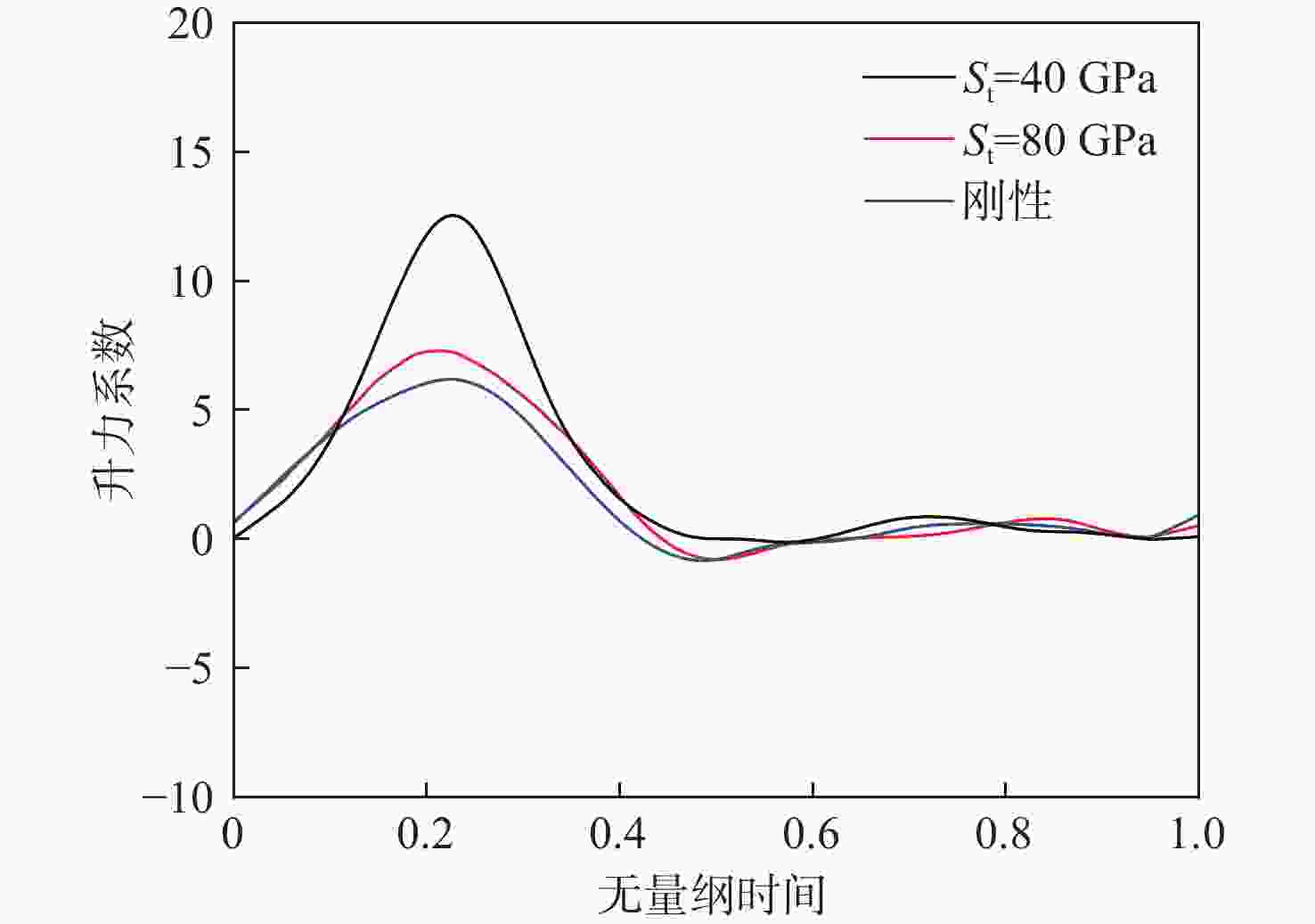
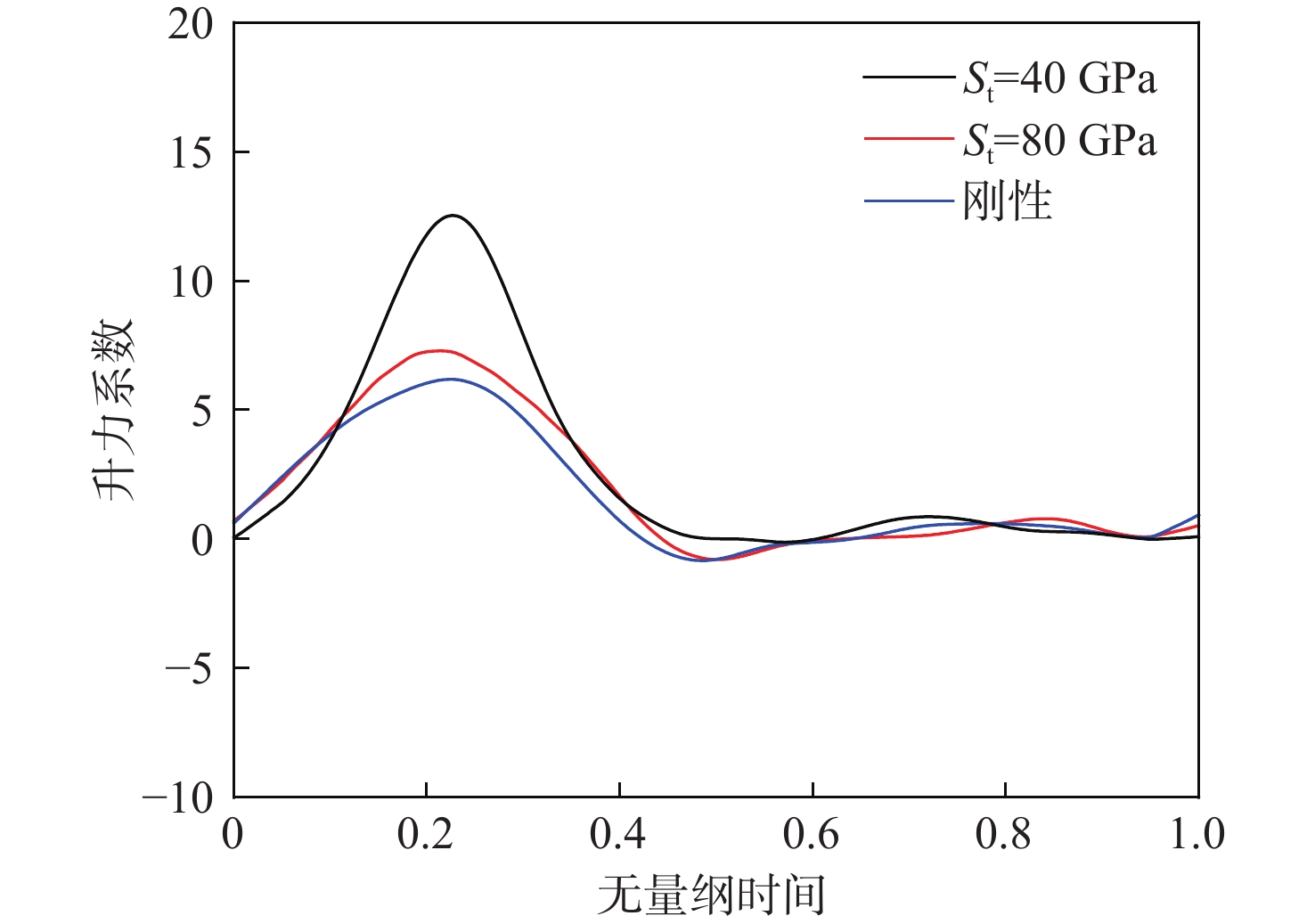
图 12 3种扑翼模型升力系数对比
Figure 12. Comparison of lift coefficients among three flapping wing models
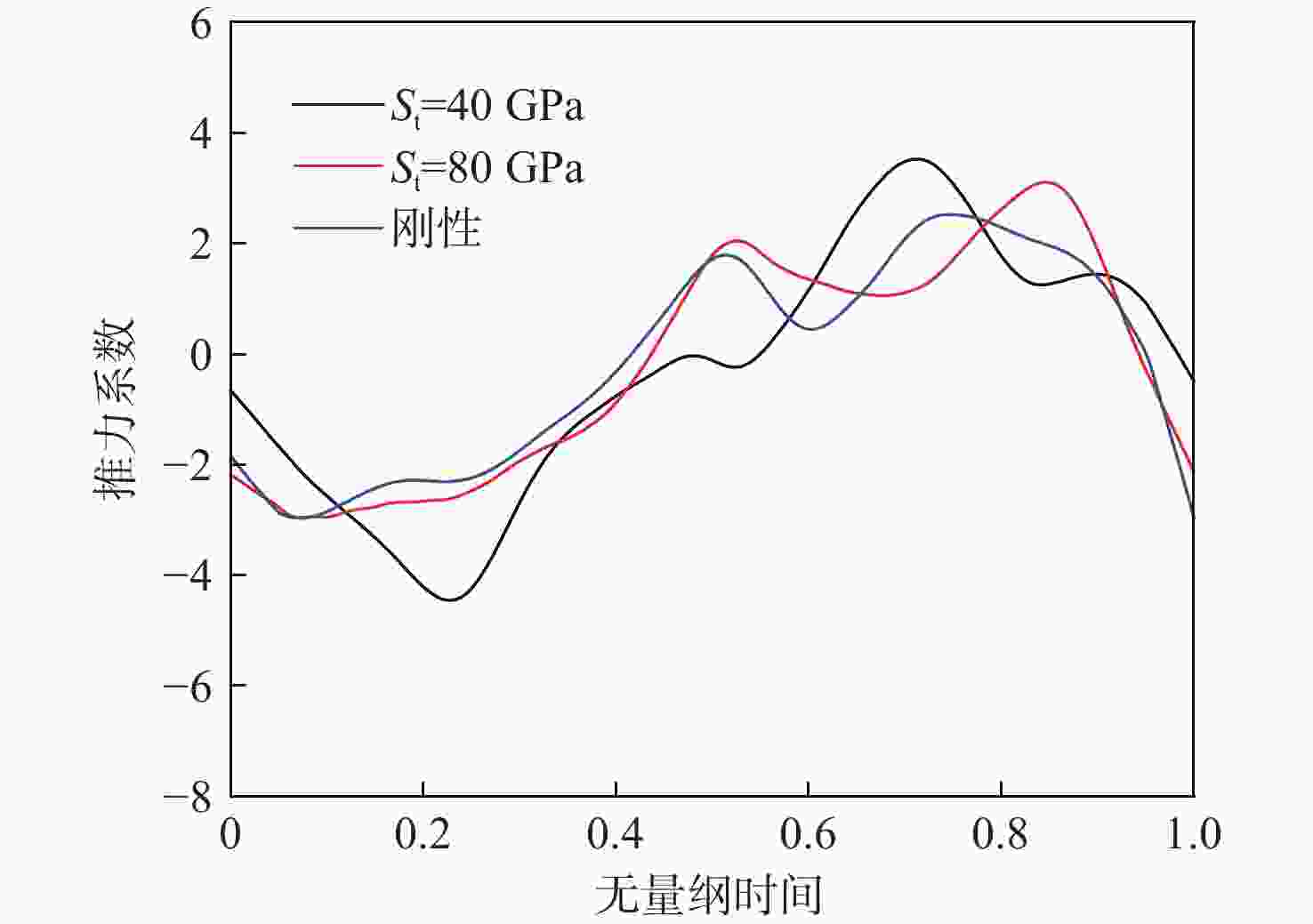
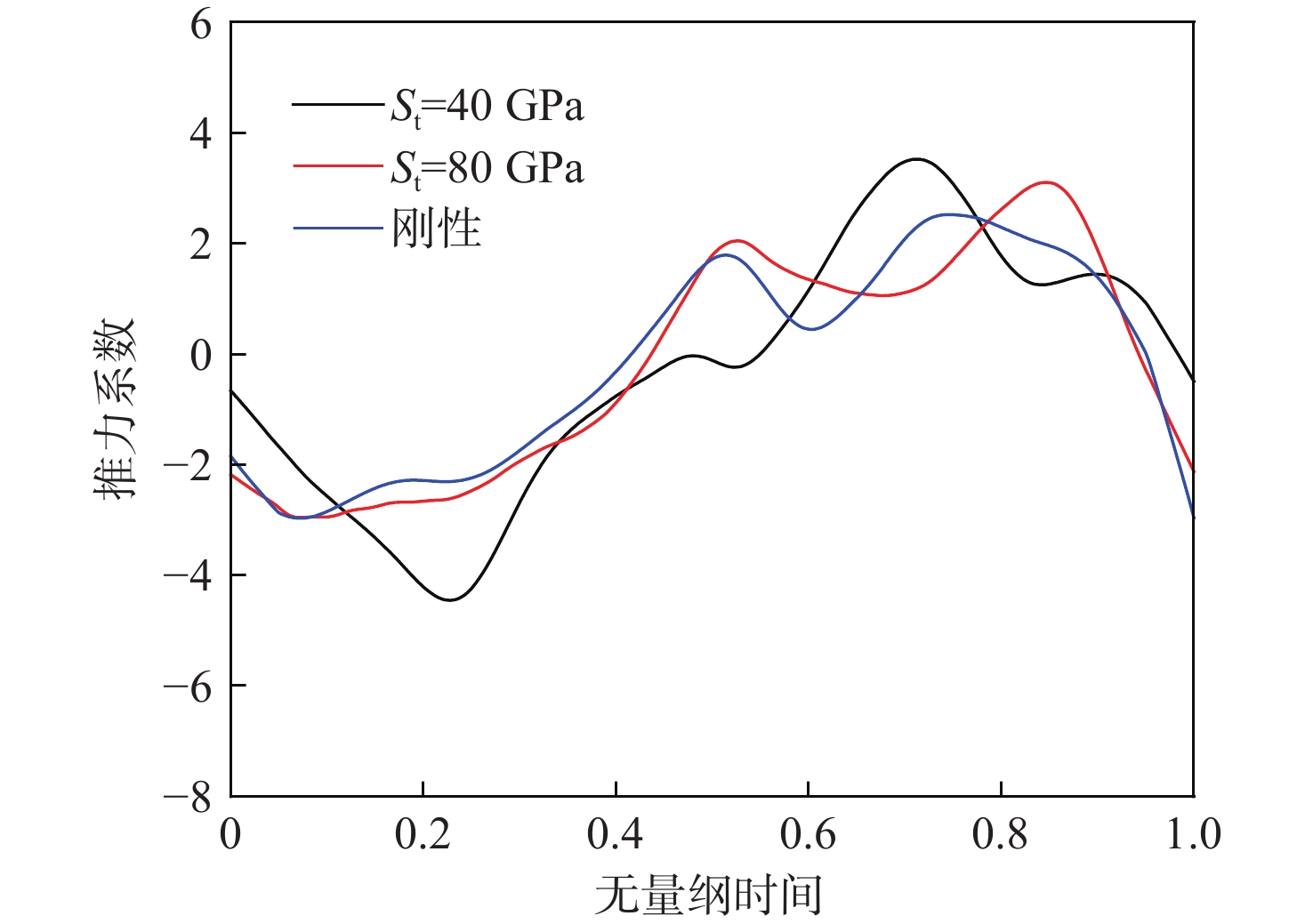
图 13 3种扑翼模型推力系数对比
Figure 13. Comparison of thrust coefficients among three flapping wing models
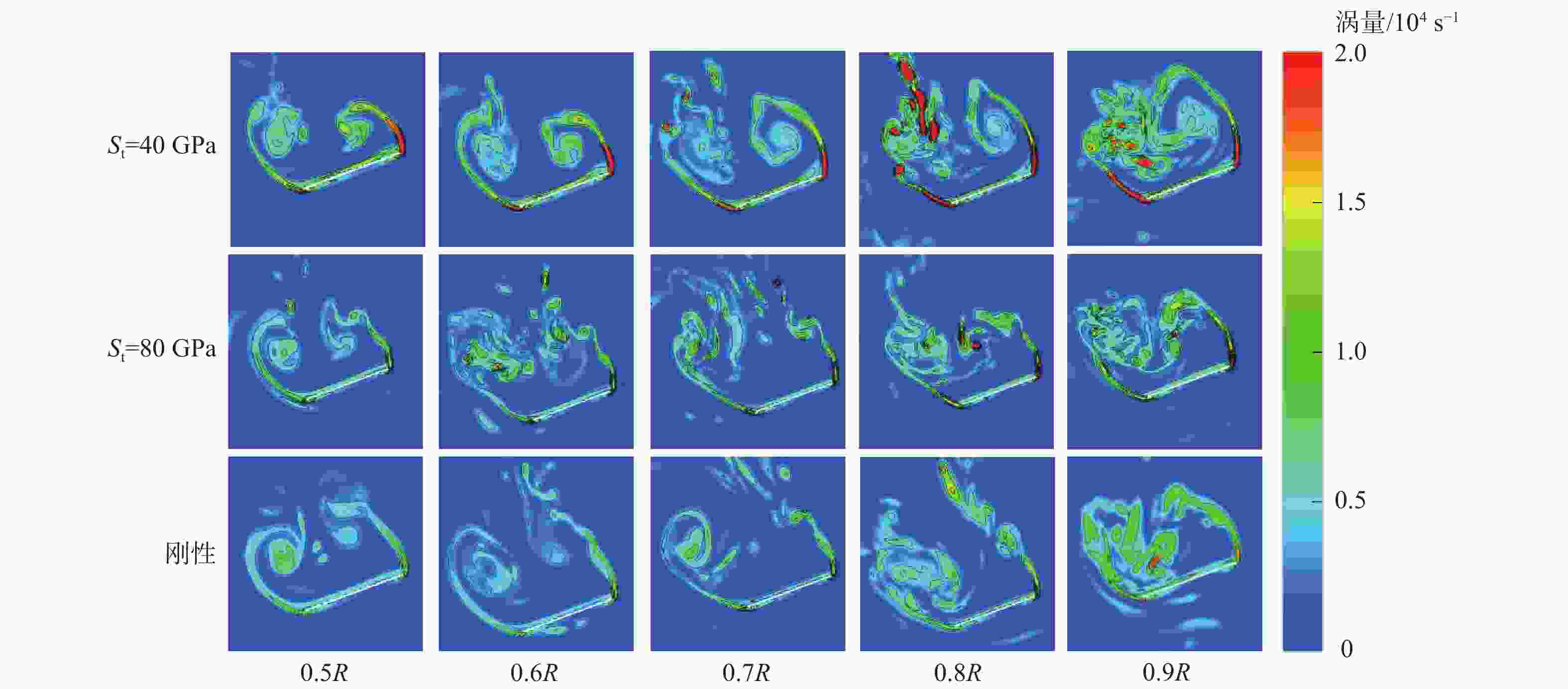
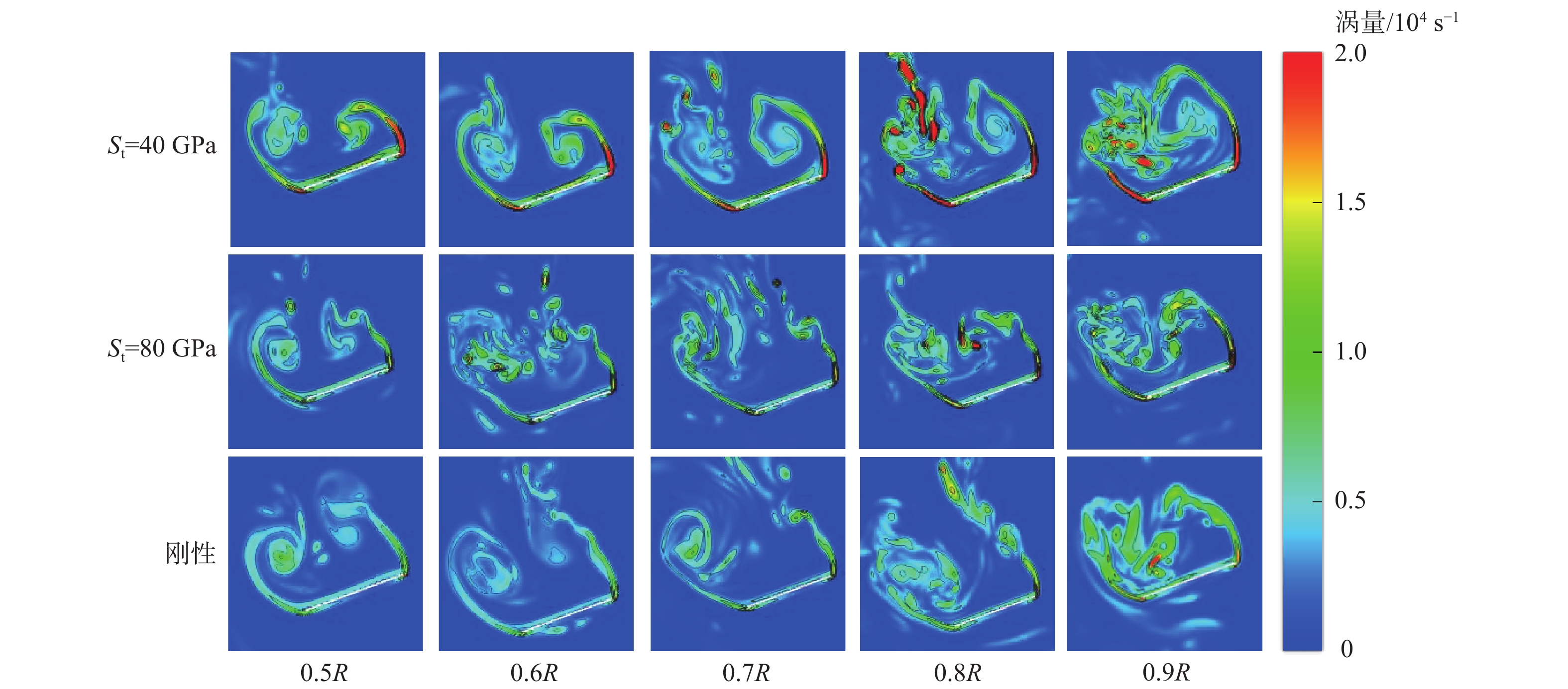
图 14 T0=0.25时刻3种扑翼模型在0.5R~0.9R的涡量对比
Figure 14. Comparison of vorticity among three flapping wing models at 0.5R to 0.9R at T0=0.25
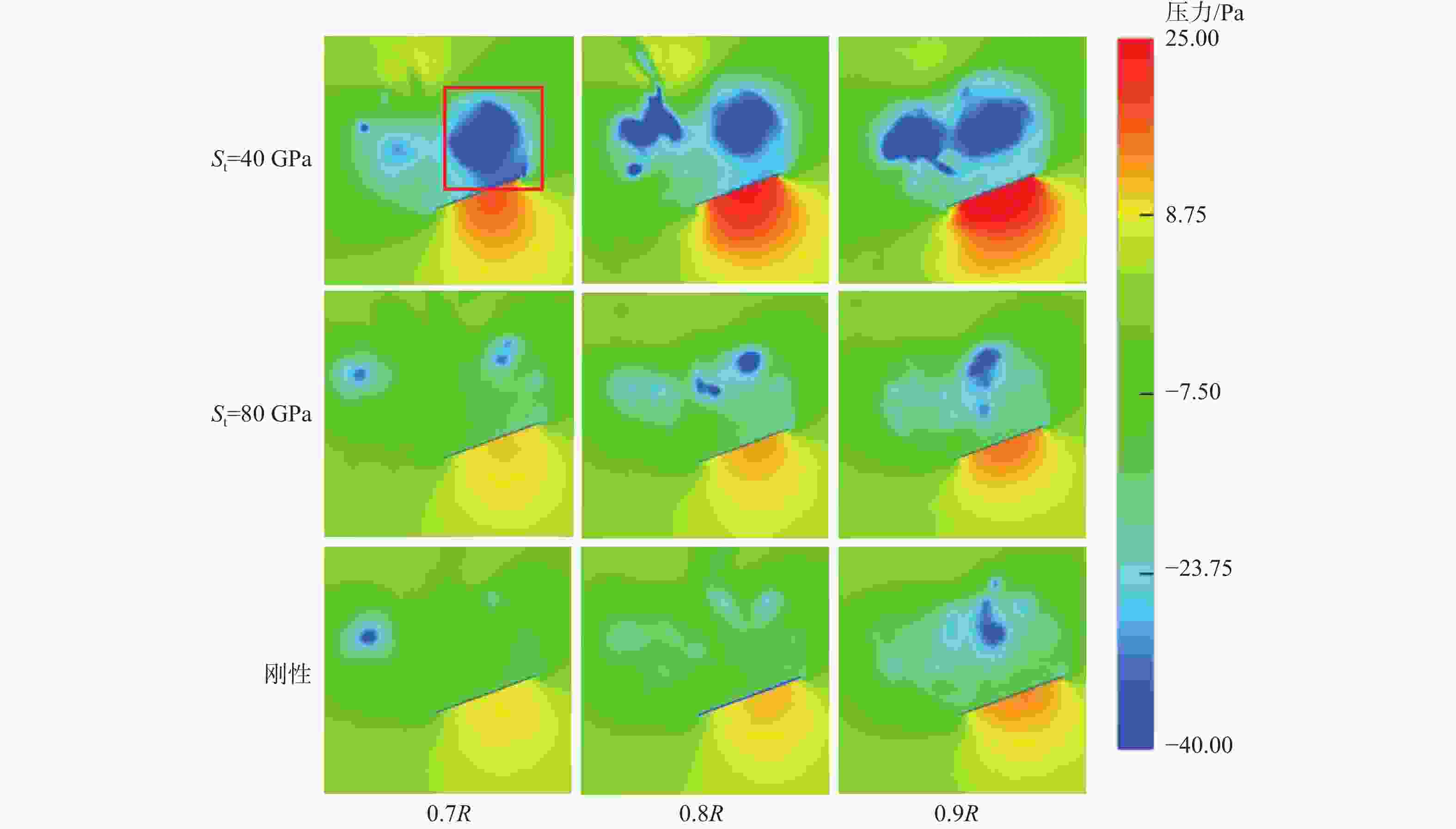
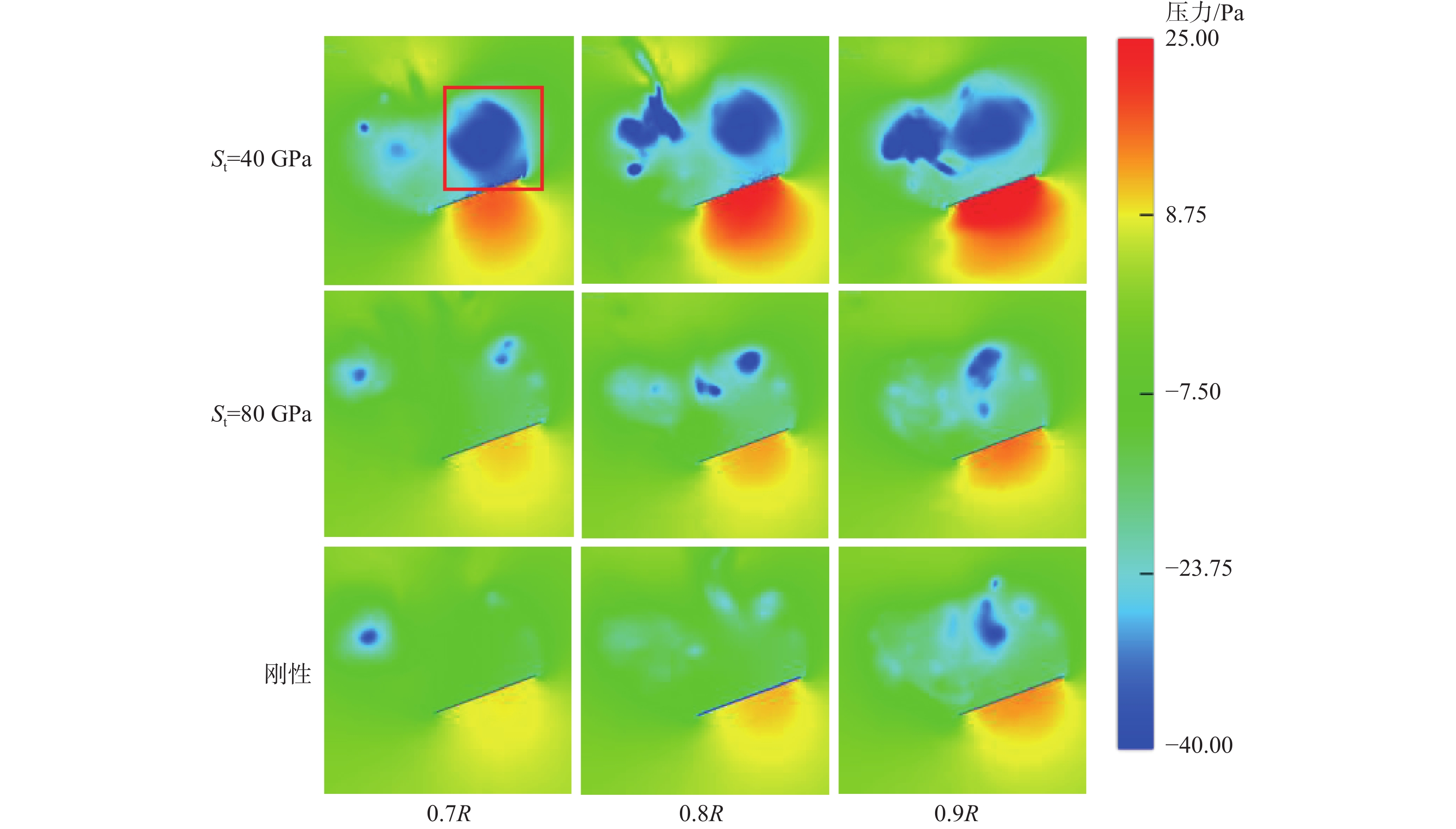
图 15 T0=0.25时刻3种扑翼模型在0.7R~0.9R的压力对比
Figure 15. Comparison of pressure among three flapping wing models at 0.7R to 0.9R at T0=0.25
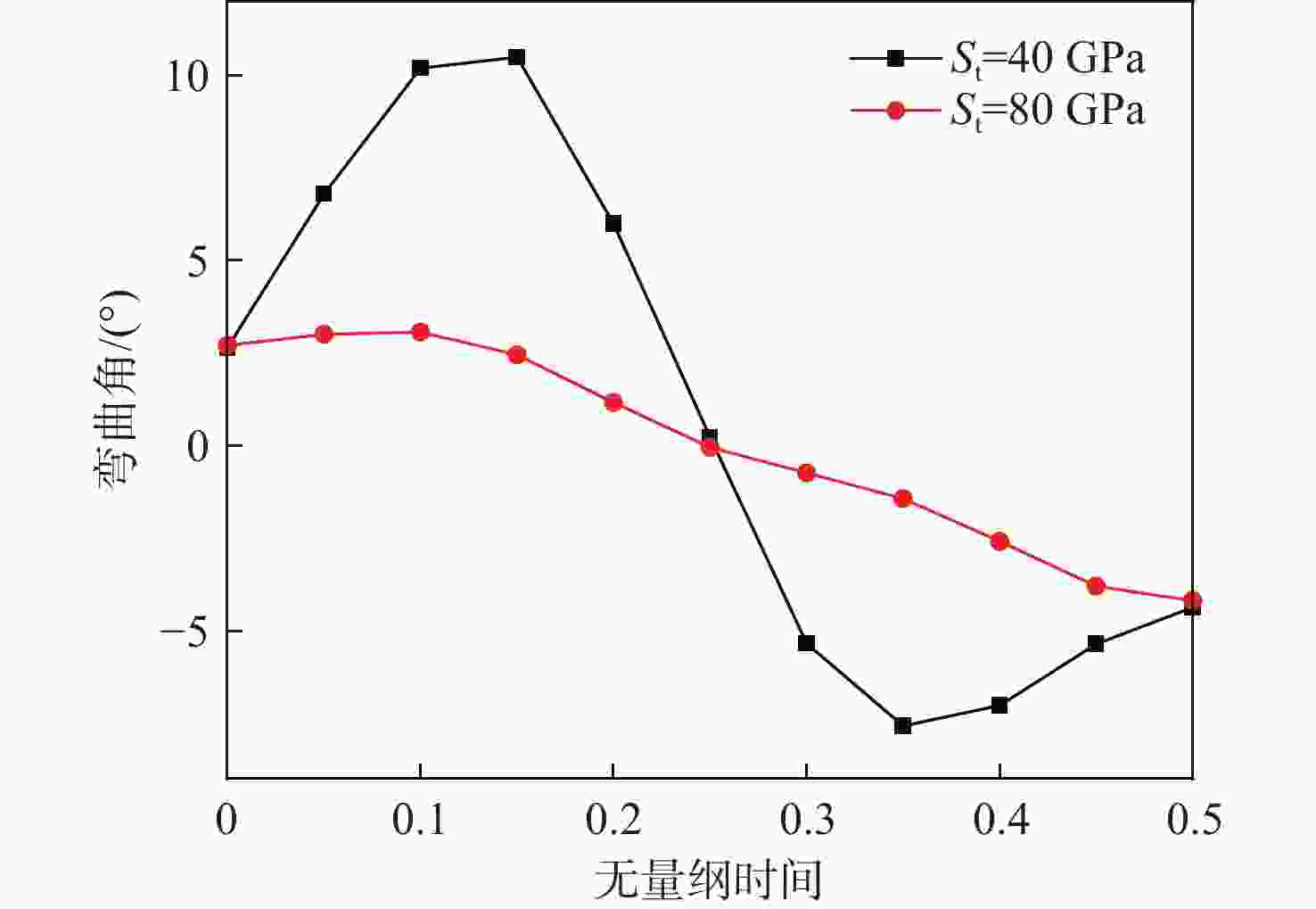
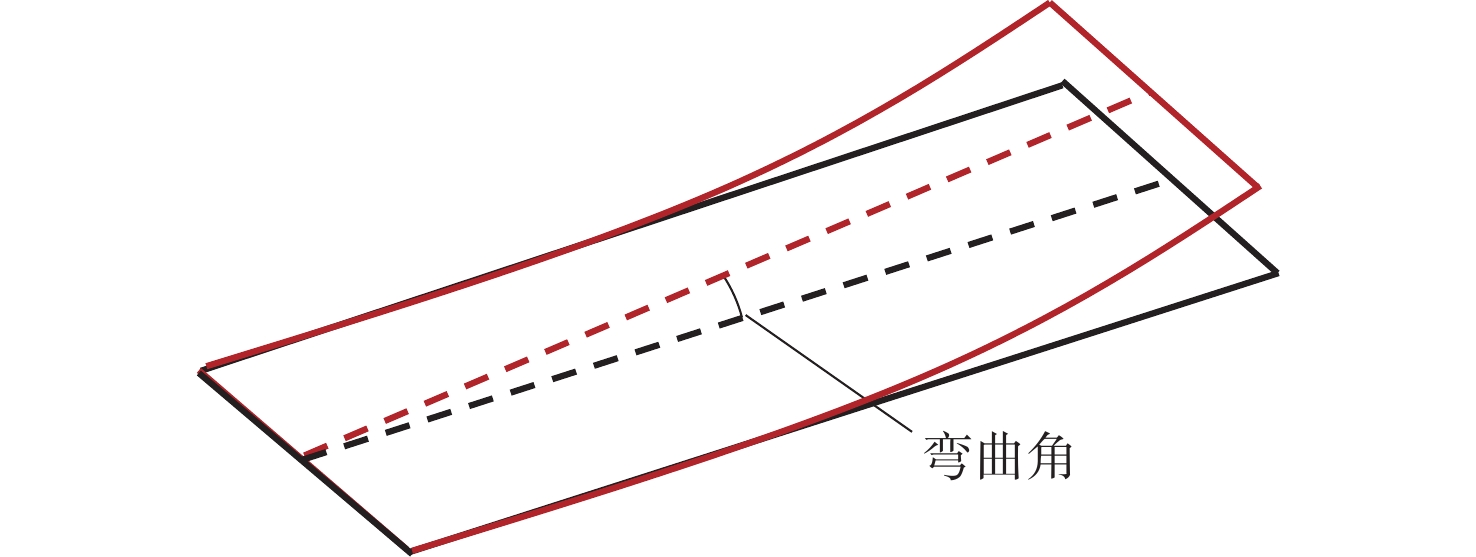
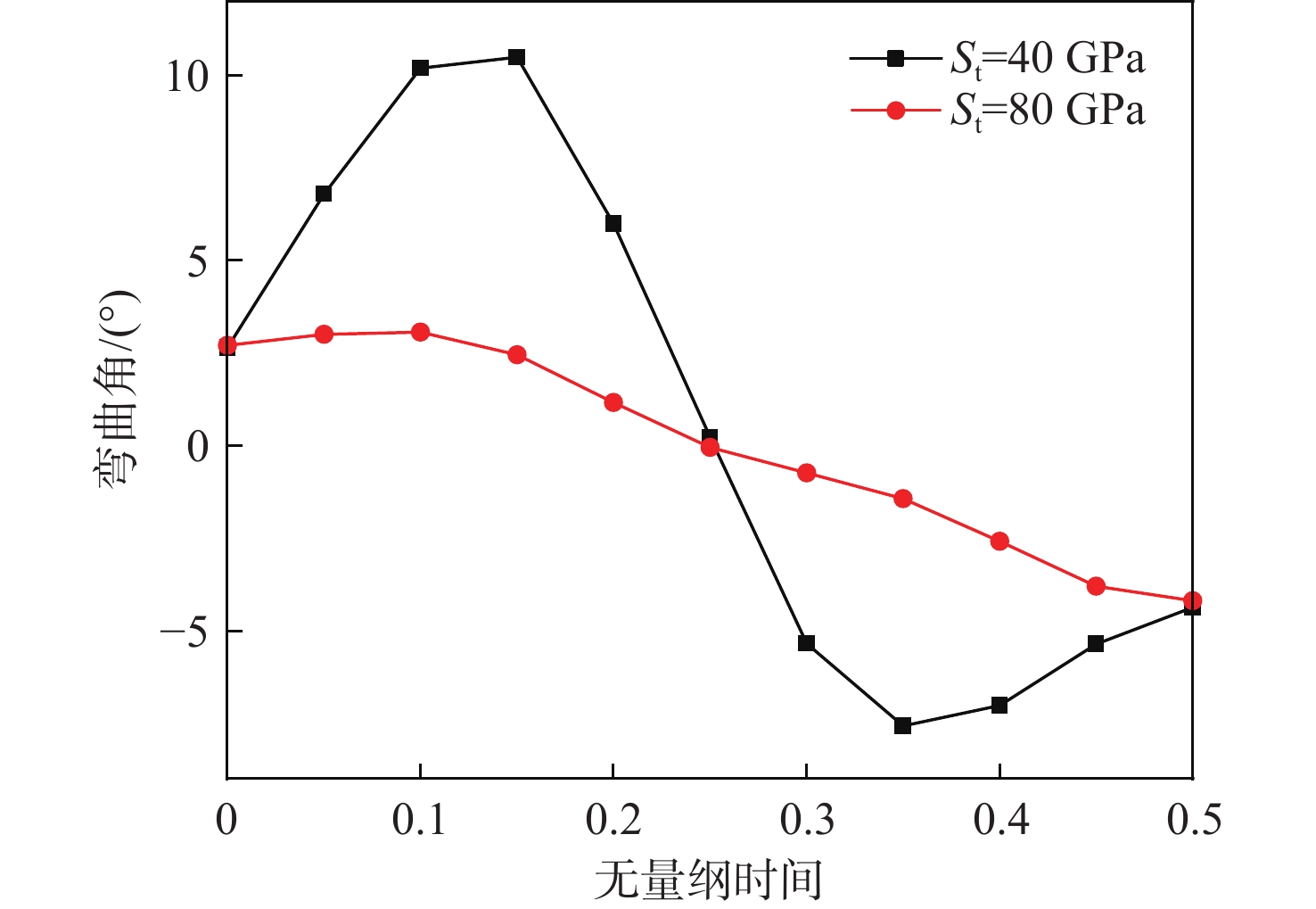
图 17 下拍阶段弯曲角随时间变化
Figure 17. Change of bending angle during downstroke phase over time
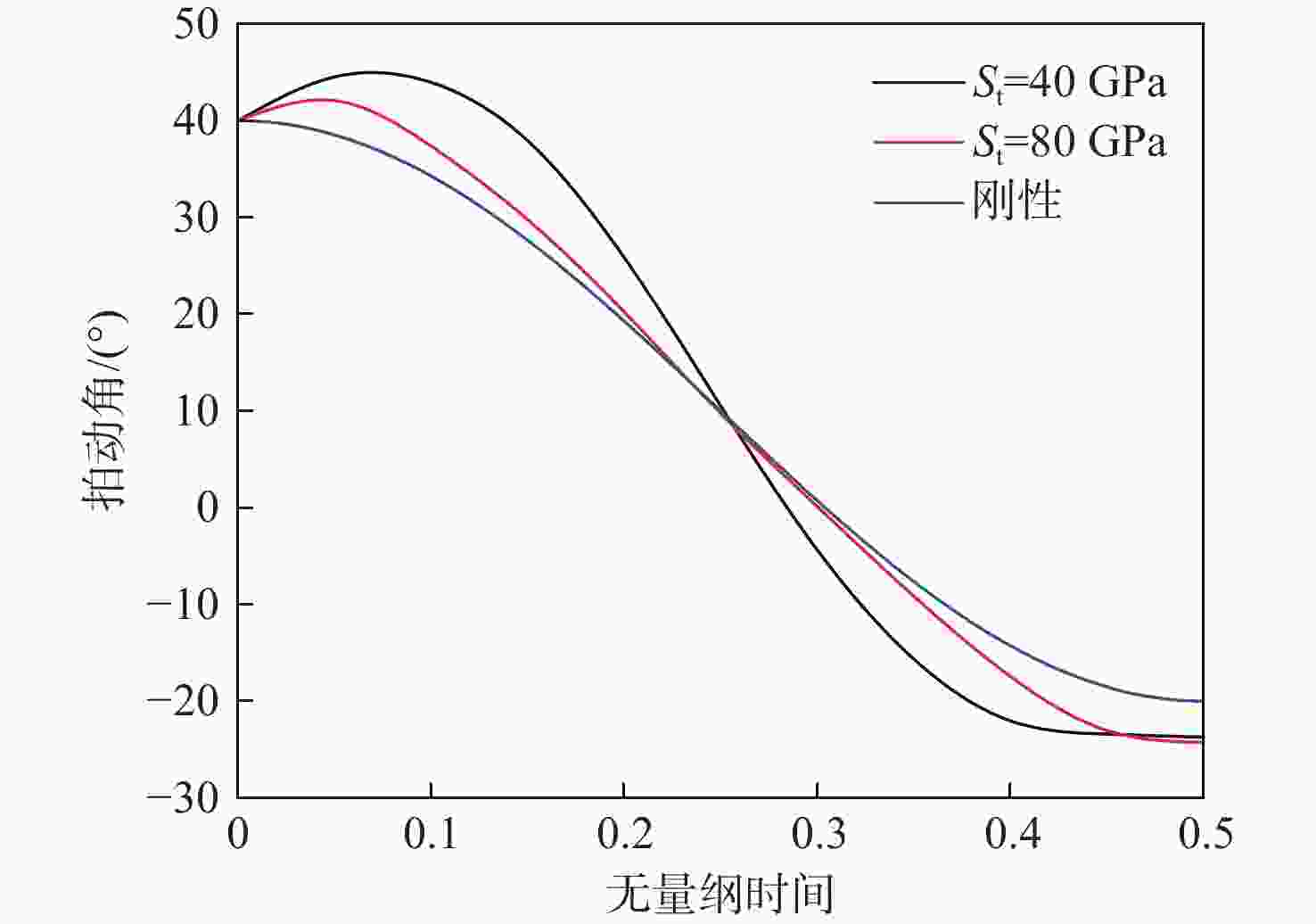
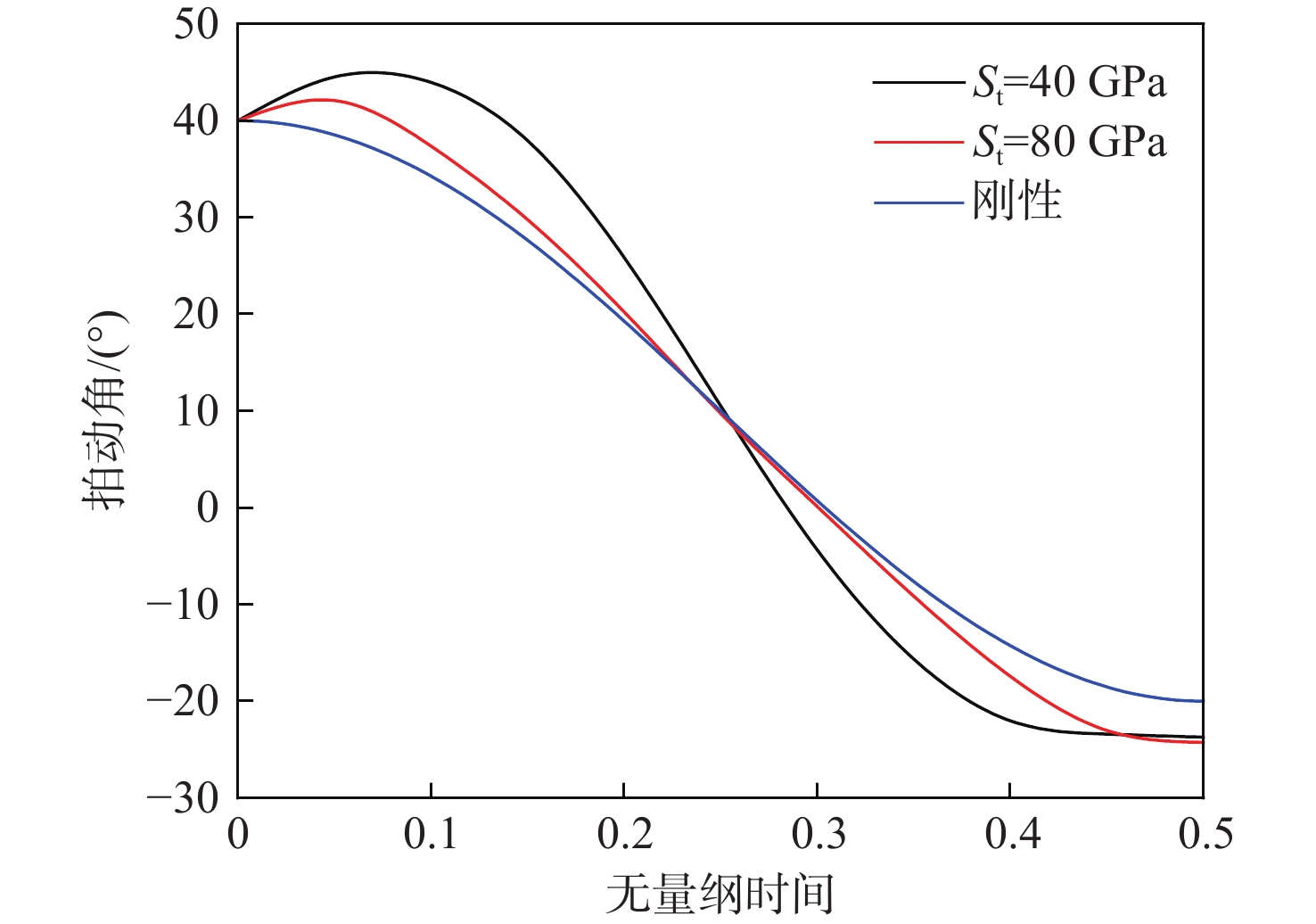
图 18 3种扑翼模型下拍阶段拍动角对比
Figure 18. Comparison of flapping phase angles among three flapping wing models
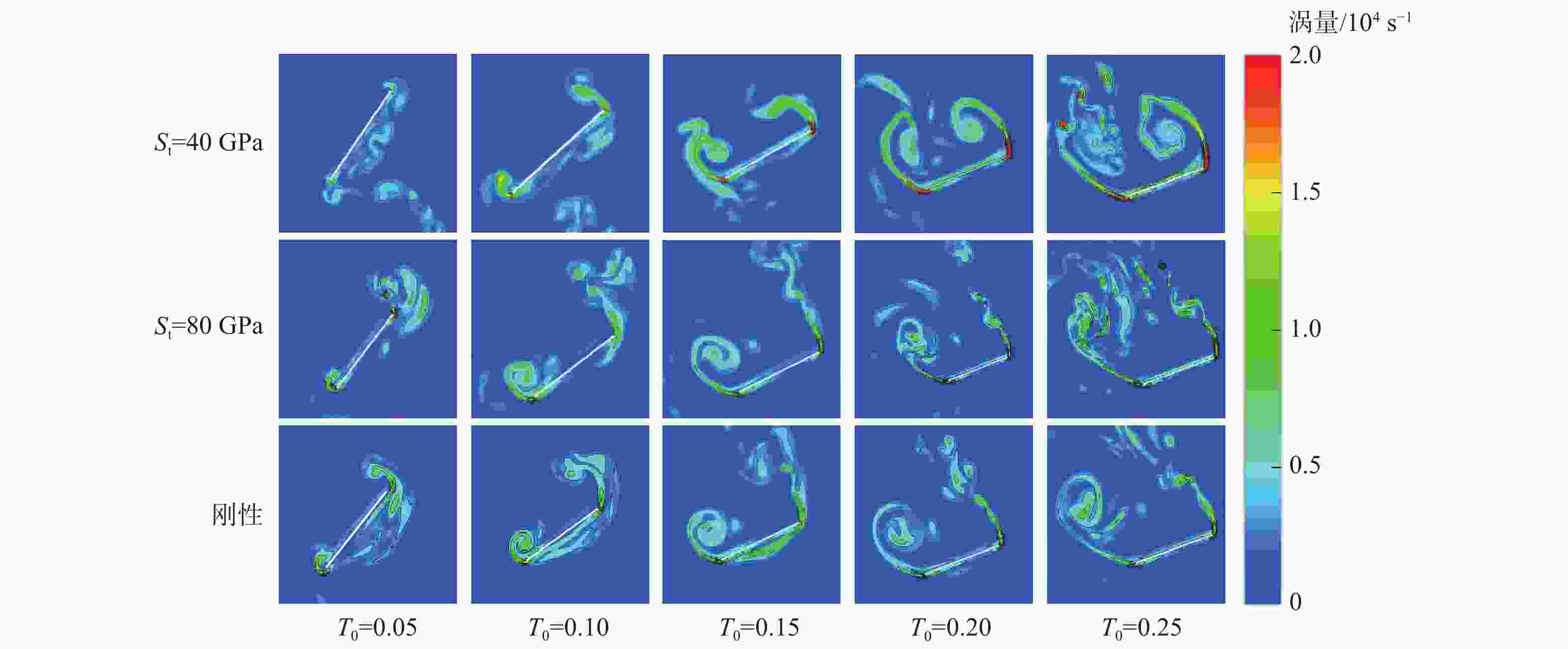
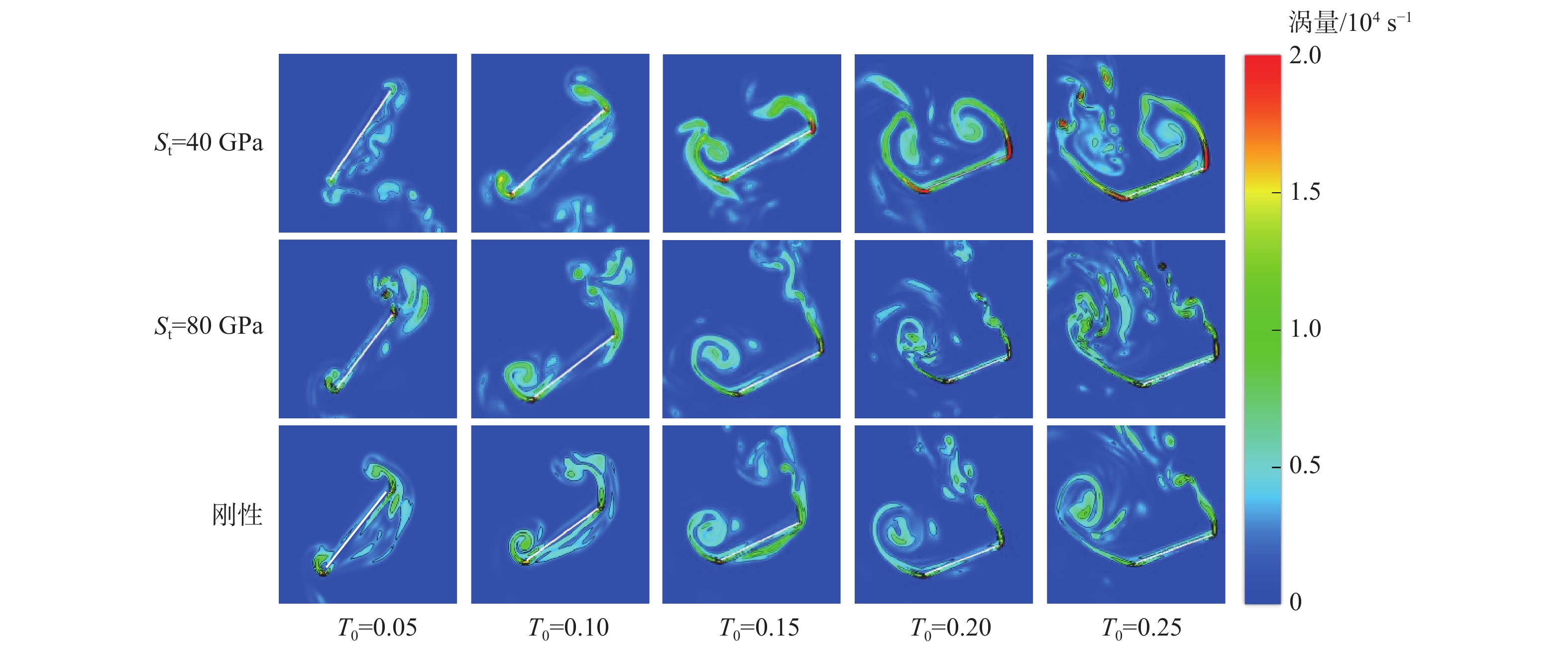
图 19 T0=0.05~0.25时0.7R处3种扑翼模型涡量对比
Figure 19. Comparison of vorticity among three flapping wing models at 0.7R from T0=0.05 to T0=0.25
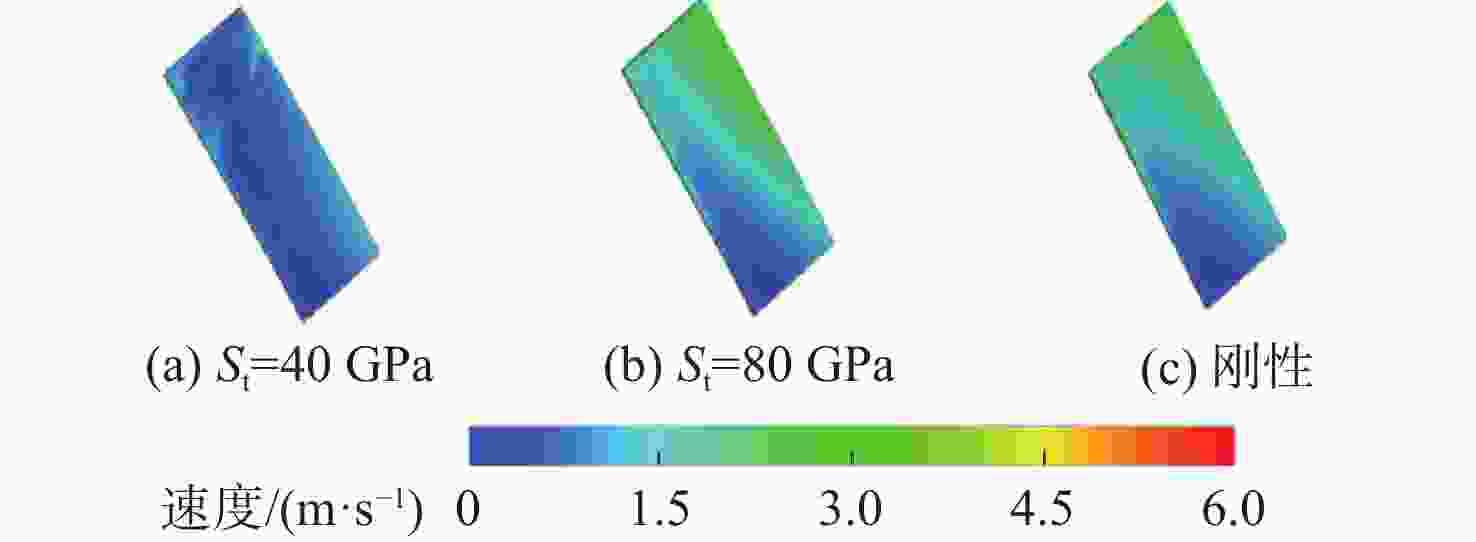
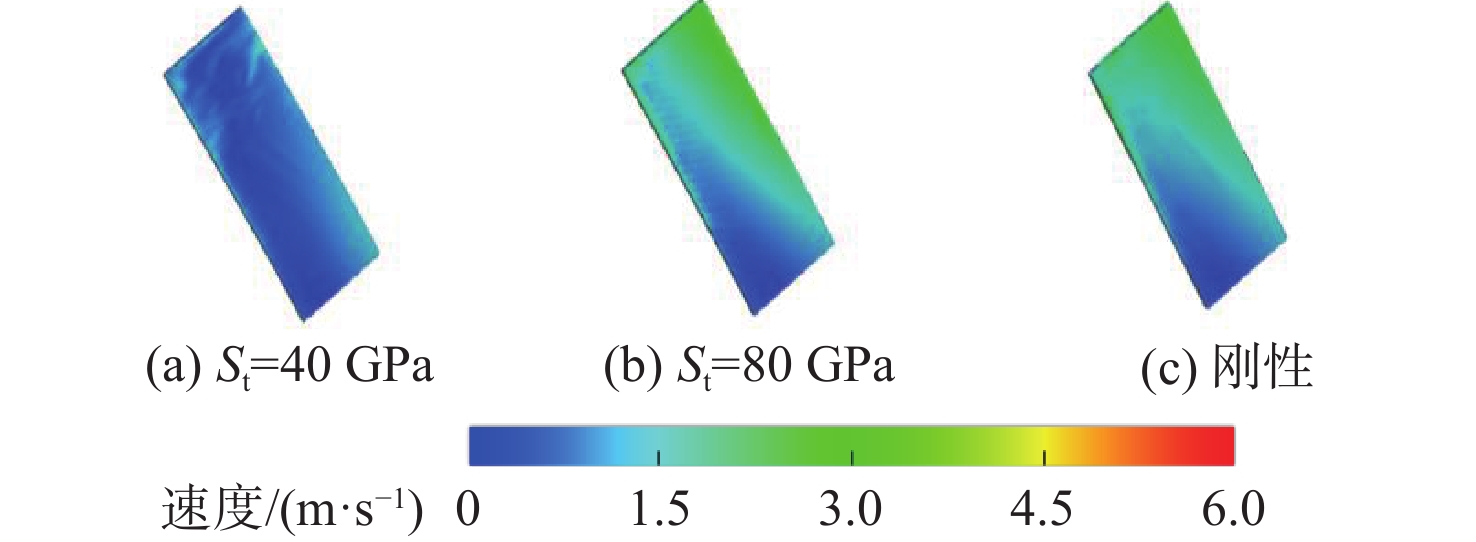
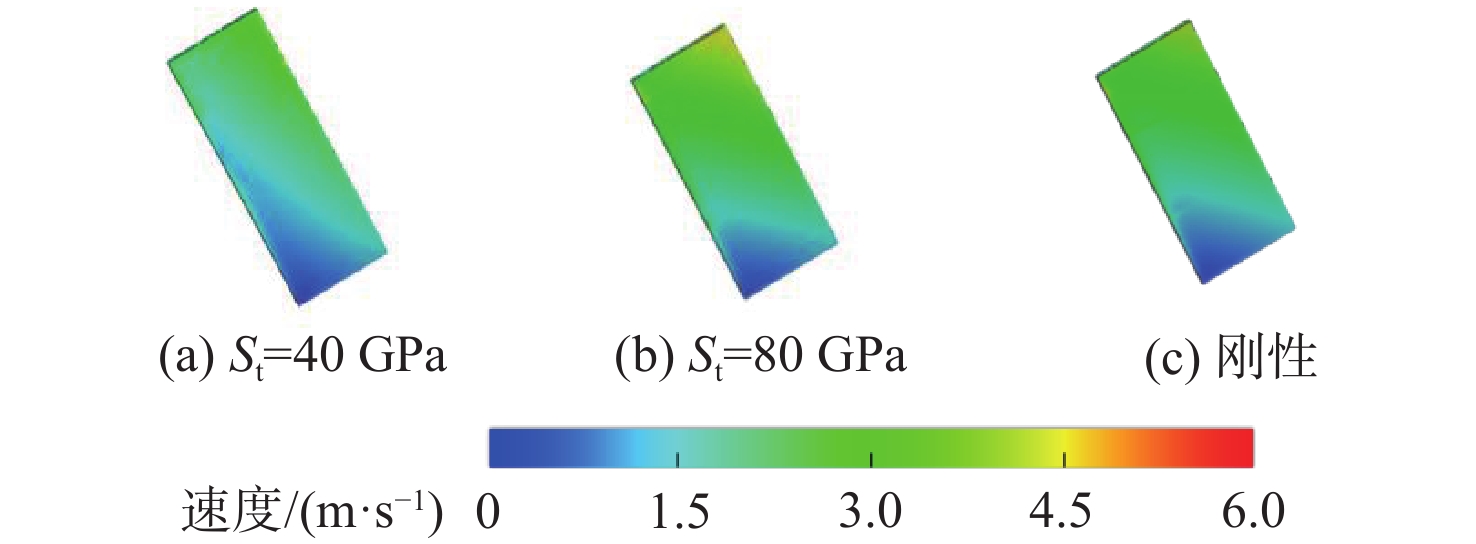
图 20 T0=0.05时3种扑翼模型表面速度对比
Figure 20. Comparison of surface velocity among three flapping wing models at T0=0.05
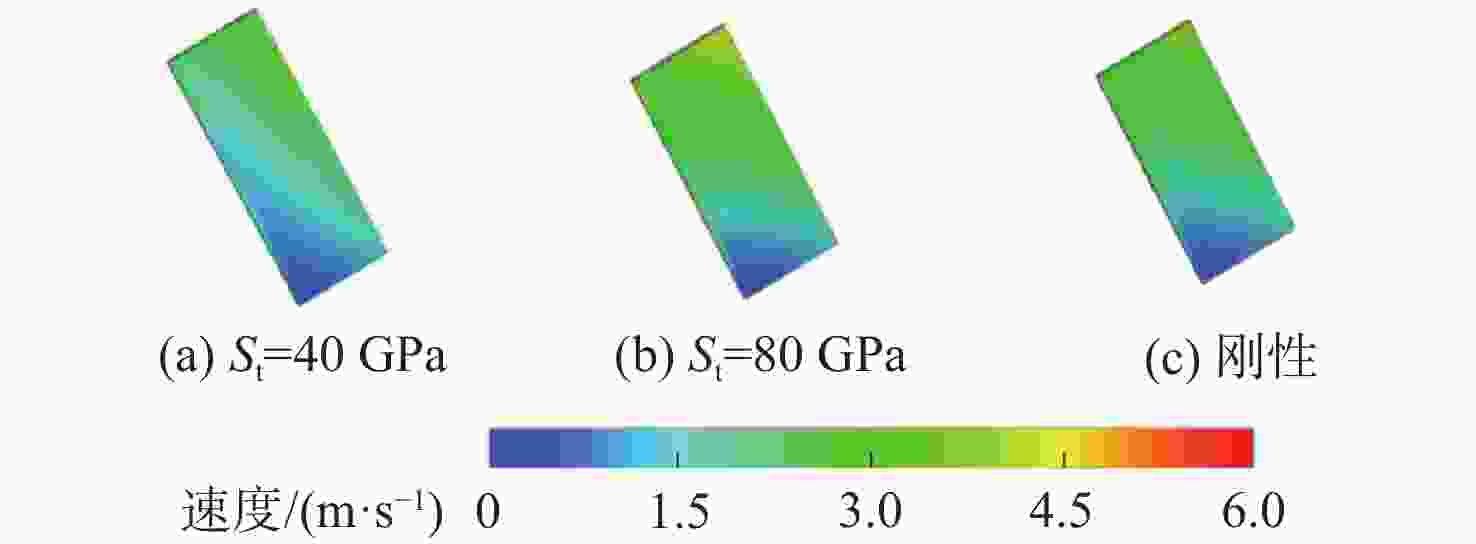
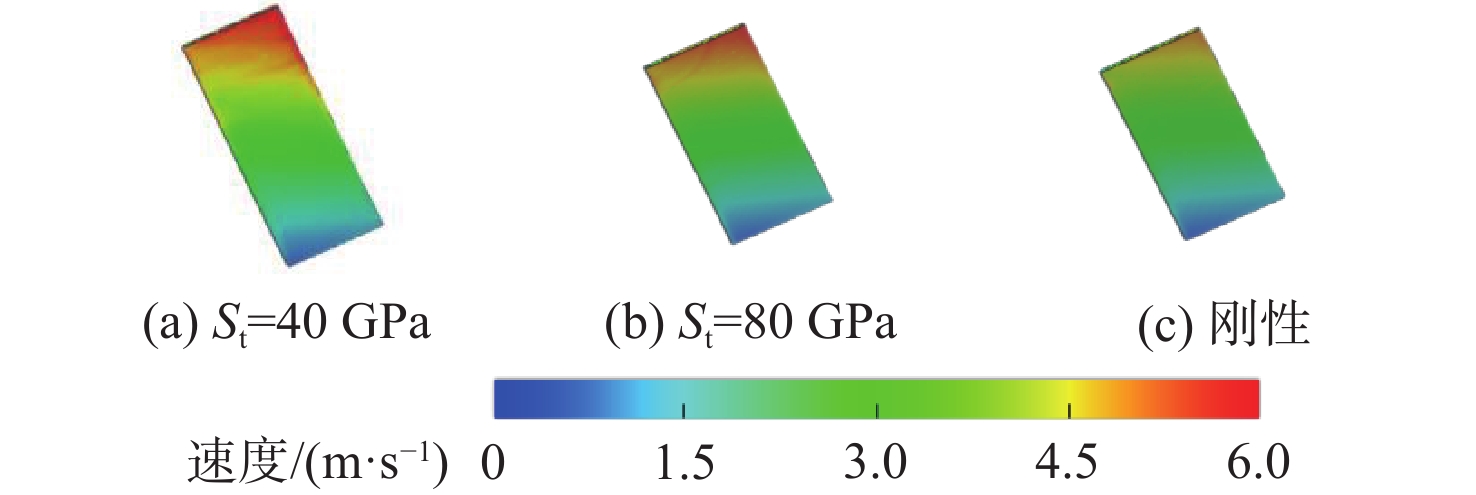
图 21 T0=0.1时3种扑翼模型表面速度对比
Figure 21. Comparison of surface velocities among three flapping wing models at T0=0.1
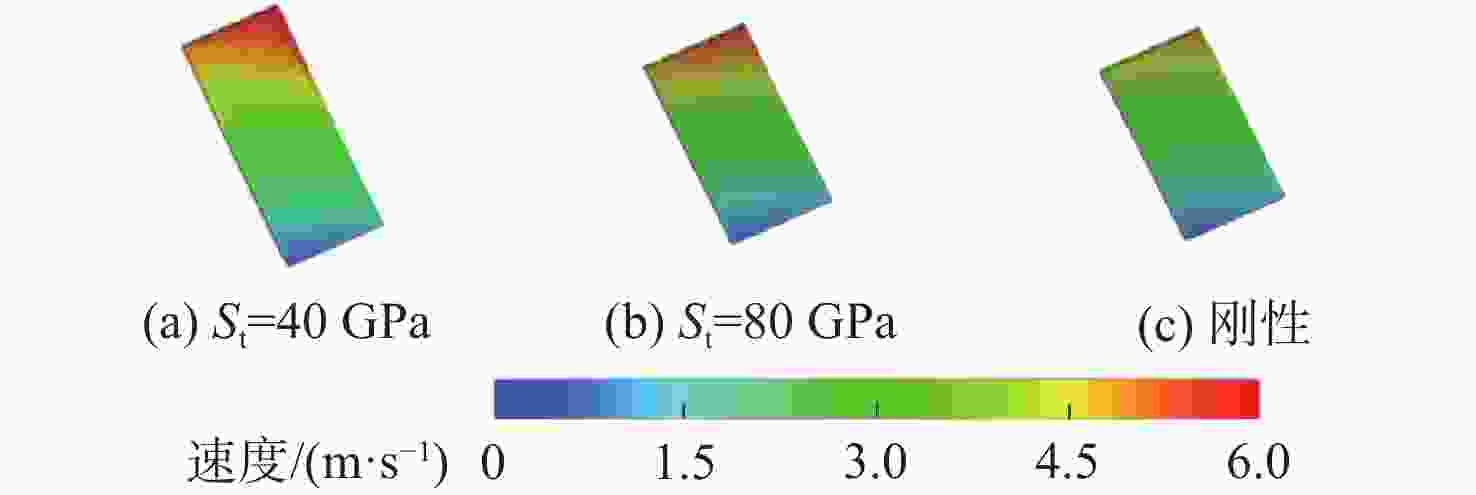
图 22 T0=0.15时3种扑翼模型表面速度对比
Figure 22. Comparison of surface velocities among three flapping wing models at T0=0.15
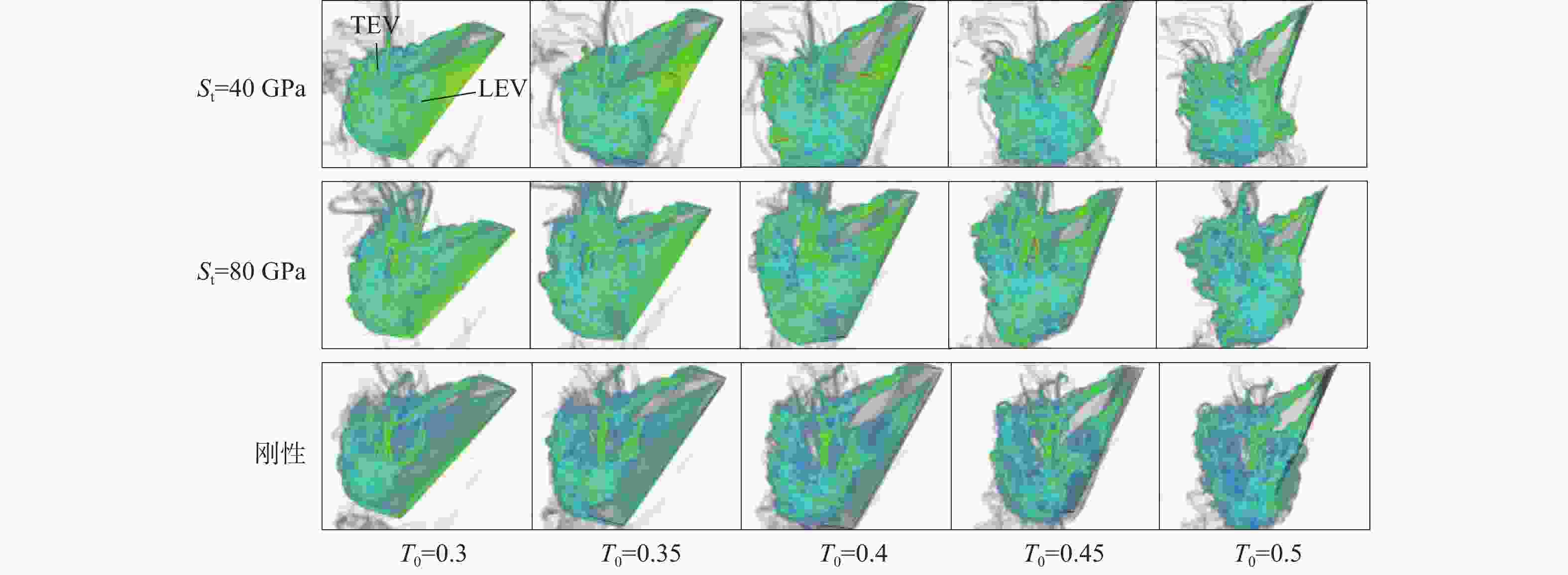
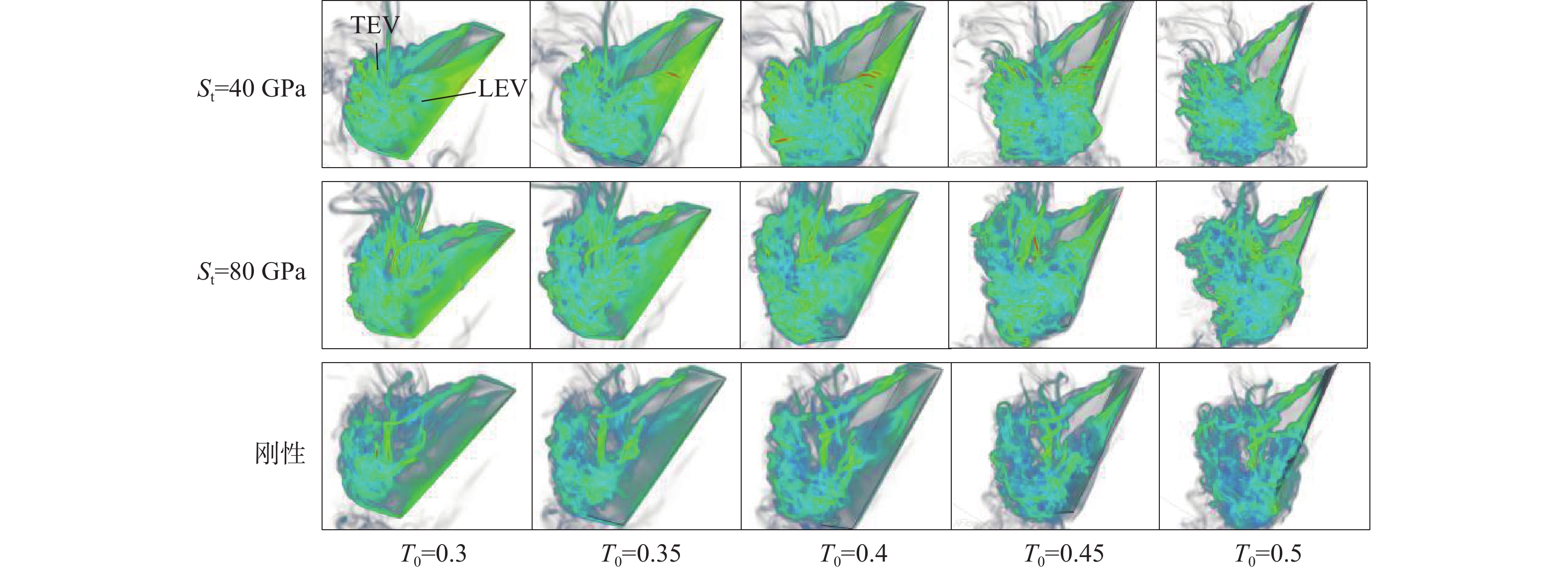
图 23 T0=0.3~0.5时3种扑翼模型三维涡量对比
Figure 23. Comparison of three-dimensional vorticity among three flapping wing models from T0=0.3 to T0=0.5
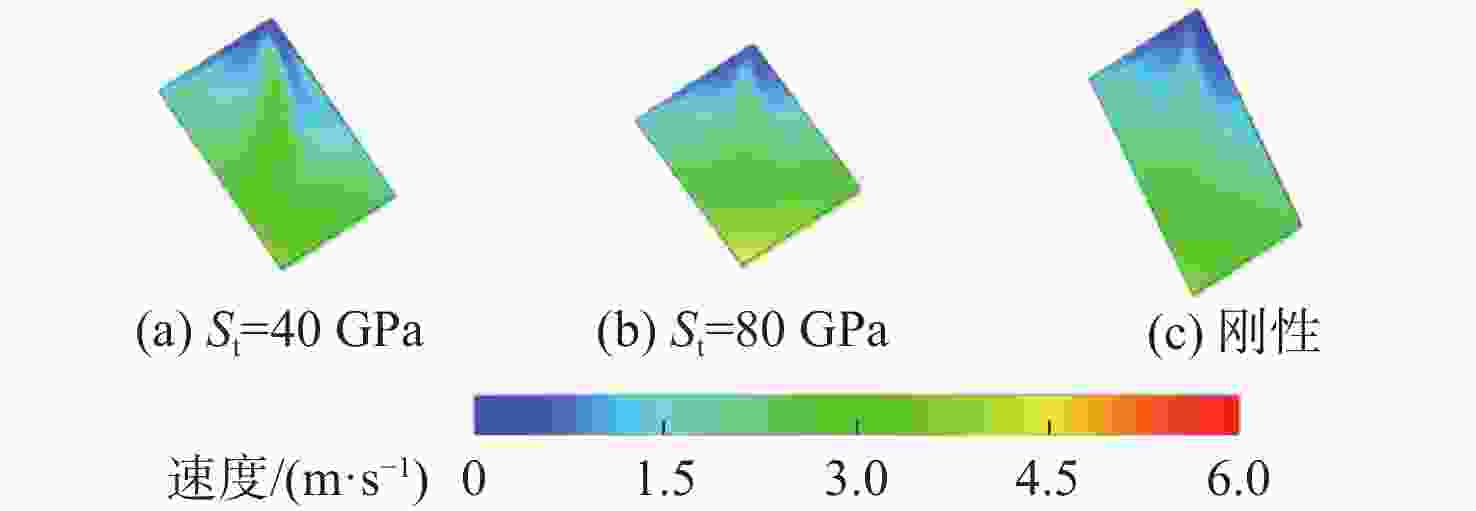
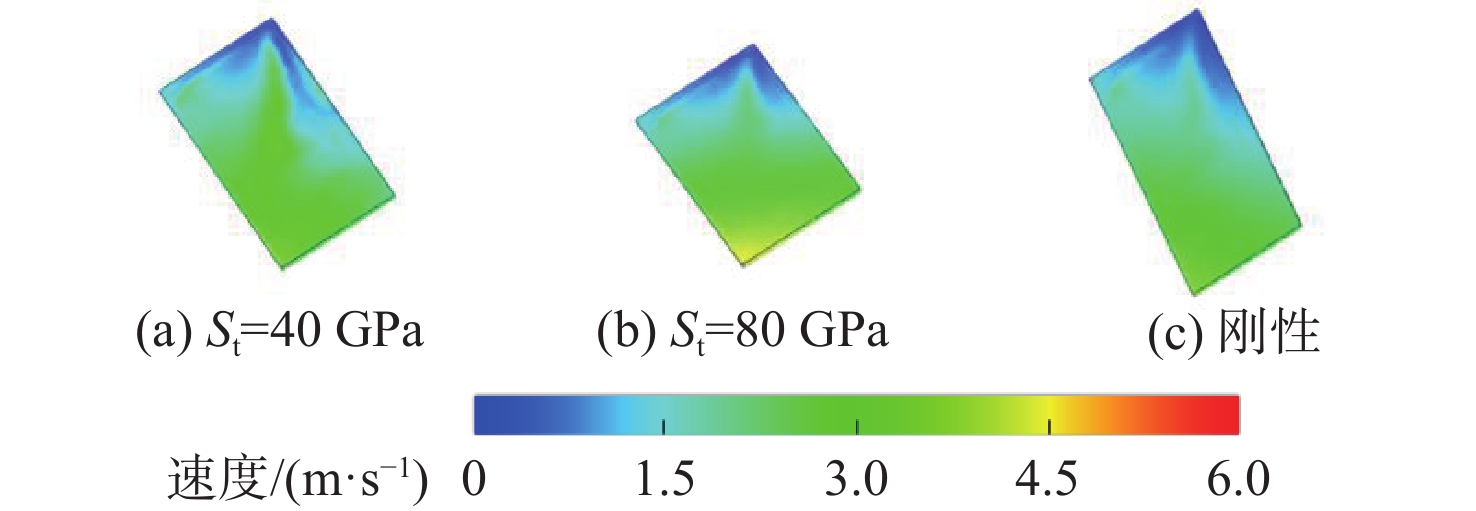
图 24 T0=0.4时3种扑翼表面速度云图
Figure 24. Comparison of surface velocities among three flapping wing models at T0=0.4
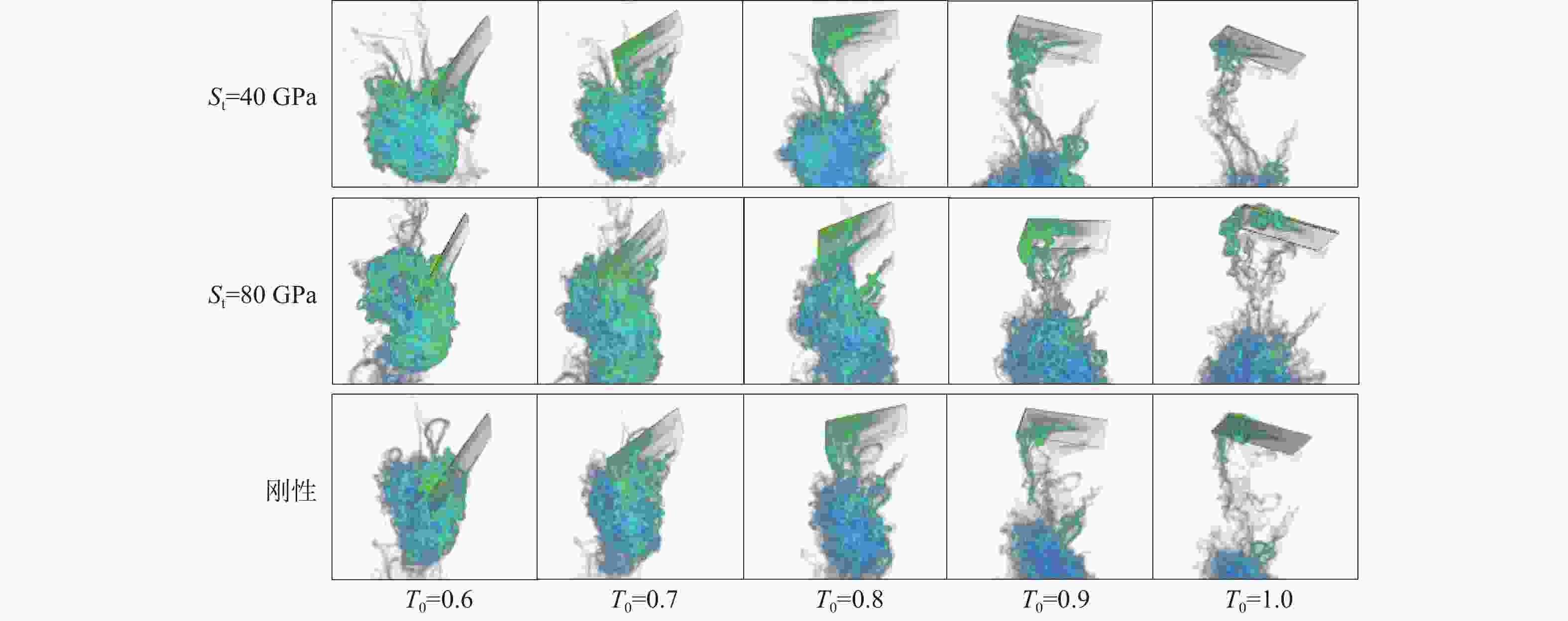
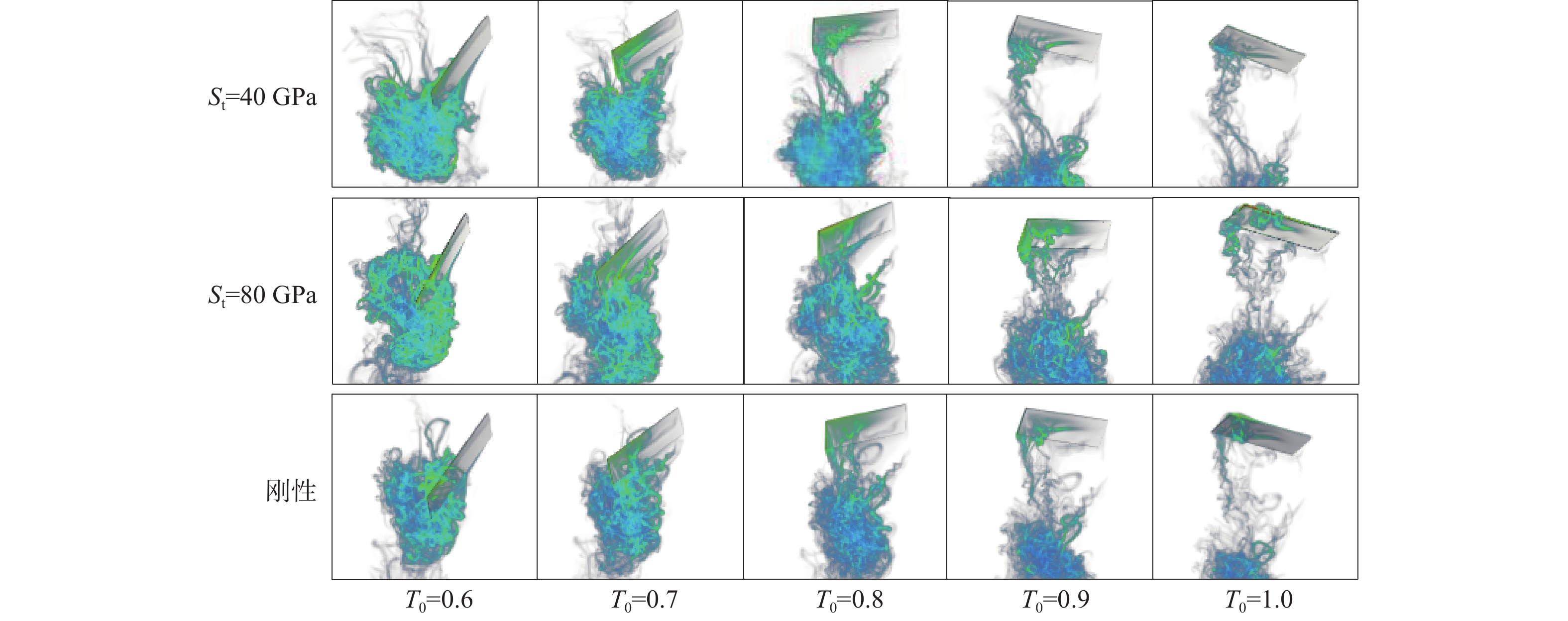
图 25 T0=0.6~1.0时3种扑翼三维涡量对比
Figure 25. Comparison of three-dimensional vorticity among three flapping wing models from T0=0.6 to T0=1.0
表 1 机翼及数值模拟相关参数
Table 1. Related parameters of wing and numerical simulation
展长
Rz/mm弦长
cz/mm厚度
hz/mm密度/
(kg·m−3)泊松比 弹性模量
E/GPa雷诺数Re 参考速度
Vref / (m·s−1)动力黏性系数
μ/ (Pa·s)拍动频率
f/Hz拍动幅值
$ {\theta }_{{\mathrm{A}}} $/ (°)拍动规律 75 25 0.4 2700 0.3 70 2605 1.0995 1.8×10⁻⁵ 10 21 正弦  下载: 导出CSV
表 2 流体域网格尺度选择
Table 2. Selection of mesh scale in fluid domain
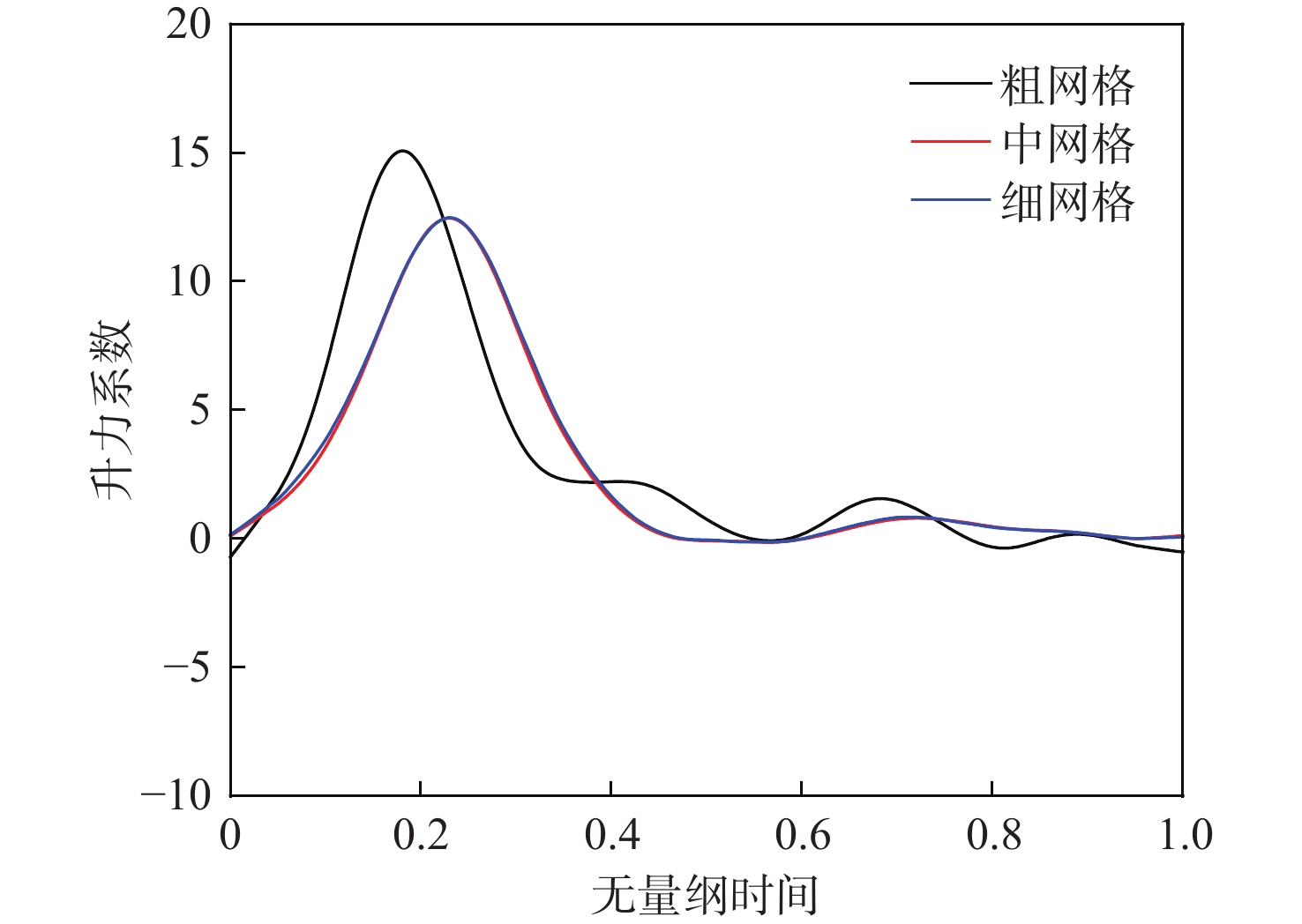
网格 最小网格尺度 周期平均升力系数 偏差/% 粗网格 0.04c 1.26 8.03 中网格 0.02c 1.34 2.19 细网格 0.01c 1.37
下载: 导出CSV
表 3 固体域网格尺度选择
Table 3. Selection of mesh scale in solid domain
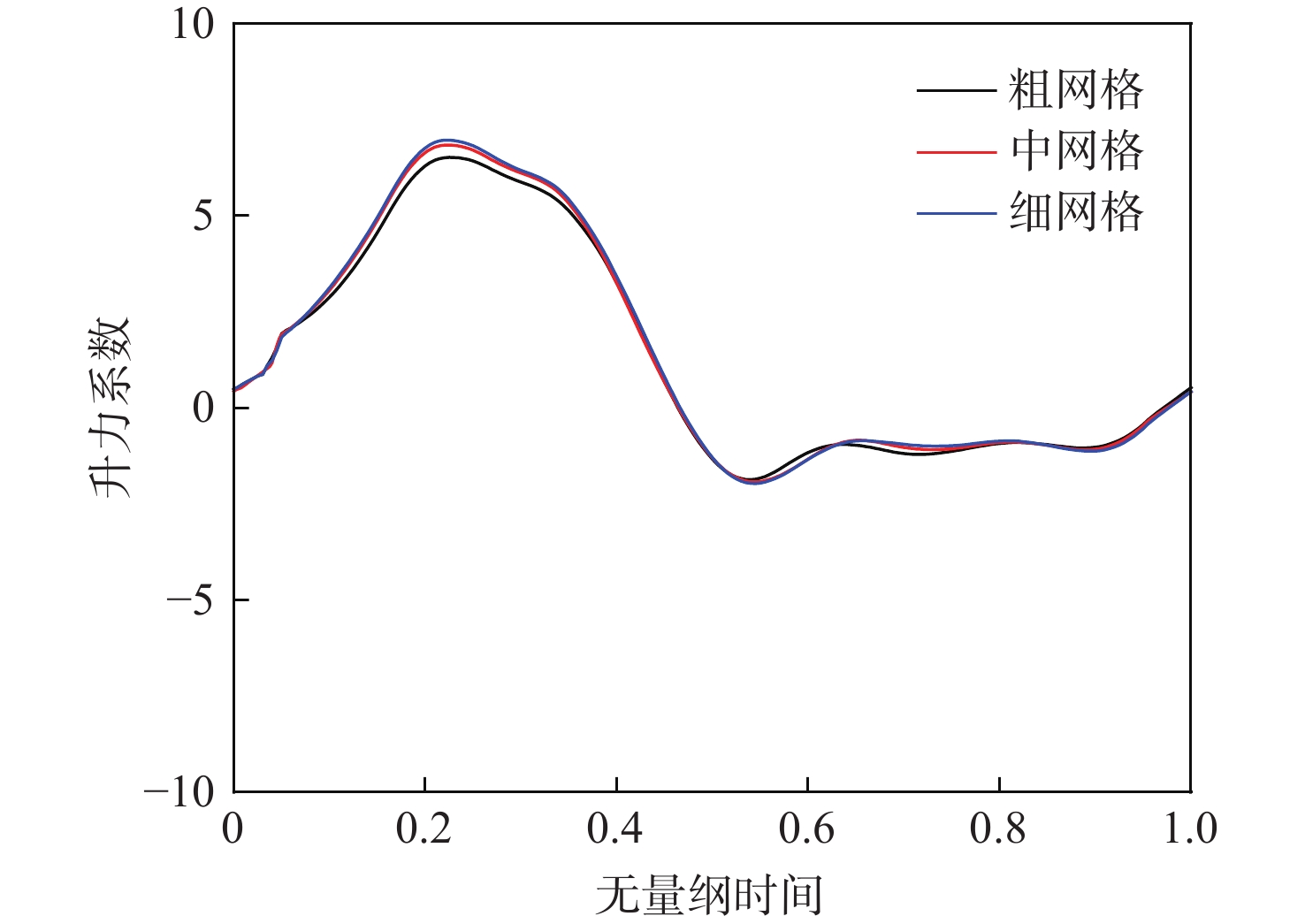
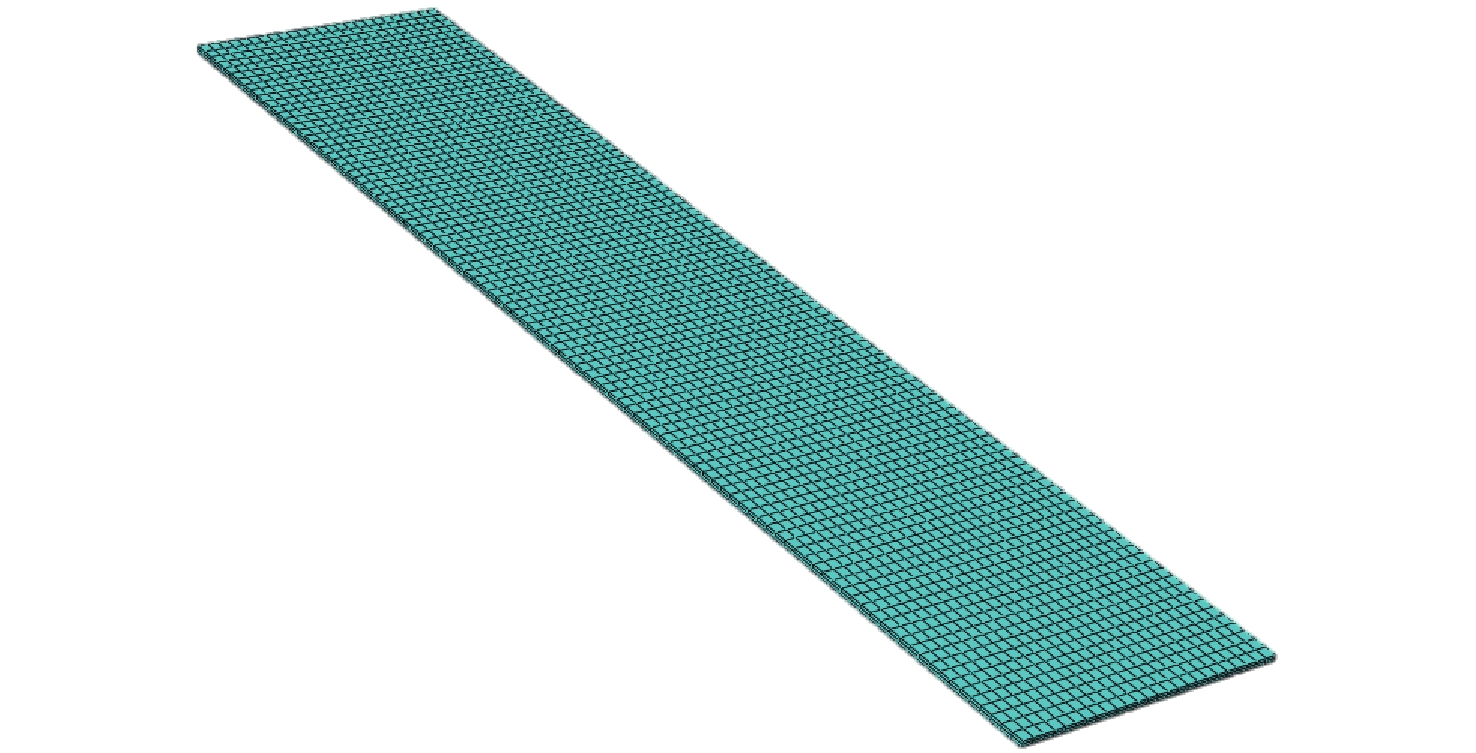
网格 最小网格尺度 周期平均升力系数 偏差/% 粗网格 0.06c 2.97 9.19 中网格 0.04c 2.65 2.57 细网格 0.02c 2.72
下载: 导出CSV
表 4 3种扑翼模型平均升力系数对比
Table 4. Comparison of average lift coefficient among three flapping wing models
时间 平均升力系数 柔性变形影响 $S_{\mathrm{t}} $=40 GPa $S_{\mathrm{t}} $=80 GPa 刚性 T0=0~0.12 1.77 2.52 2.58 不利 T0=0.12~0.5 5.99 4.12 3.29 有利 T0=0.5~1.0 0.30 0.17 0.20 全周期 2.68 1.97 1.67 有利
下载: 导出CSV
-
[1] WEIS-FOGH T. Quick estimates of flight fitness in hovering animals, including novel mechanisms for lift production[J]. Journal of Experimental Biology, 1973, 59(1): 169-230. [2] ELLINGTON C P, VAN DEN BERG C, WILLMOTT A P, et al. Leading-edge vortices in insect flight[J]. Nature, 1996, 384(6610): 626-630. [3] DICKINSON M H, LEHMANN F O, SANE S P. Wing rotation and the aerodynamic basis of insect flight[J]. Science, 1999, 284(5422): 1954-1960. [4] ELLINGTON C P. The aerodynamics of hovering insect flight. IV. aeorodynamic mechanisms[J]. Philosophical Transactions of the Royal Society of London Series B, Biological Sciences, 1984, 305(1122): 79-113. [5] NORBERG R Å. Flight characteristics of two plume moths, alucita pentadacty/a L. and orneodes hexadactyla L. (microlepidoptera)[J]. Zoologica Scripta, 1972, 1(5): 241-246. [6] VOGEL S. Flight in Drosophila. II. Variations in stroke parameters and wing contour[J]. Journal of Experimental Biology, 1967, 46(2): 383. [7] NGUYEN A T, HAN J H. Wing flexibility effects on the flight performance of an insect-like flapping-wing micro-air vehicle[J]. Aerospace Science and Technology, 2018, 79: 468-481. [8] NAKATA T, LIU H. Aerodynamic performance of a hovering hawkmoth with flexible wings: a computational approach[J]. Proceedings Biological Sciences, 2012, 279(1729): 722-731. [9] 周超英, 朱建阳, 汪超, 等. 柔性扑翼气动性能的数值研究[J]. 工程力学, 2013, 30(5): 13-18.ZHOU C Y, ZHU J Y, WANG C, et al. Numerical study on the effect of flexiblity of a flapping wing on its aerodynamic performance[J]. Engineering Mechanics, 2013, 30(5): 13-18(in Chinese). [10] 孟令兵, 昂海松, 肖天航. 基于CFD/CSD方法的蜻蜓柔性翼气动特性分析[J]. 航空动力学报, 2014, 29(9): 2063-2069.MENG L B, ANG H S, XIAO T H. Analysis of aerodynamic characteristics of flexible wing of dragonfly based on CFD/CSD method[J]. Journal of Aerospace Power, 2014, 29(9): 2063-2069(in Chinese). [11] 陈利丽, 宋笔锋, 宋文萍, 等. 柔性扑翼气动结构耦合特性数值研究[J]. 空气动力学学报, 2015, 33(1): 125-133.CHEN L L, SONG B F, SONG W P, et al. Numerical aerodynamic-structural coupling research for flexible flapping wing[J]. Acta Aerodynamica Sinica, 2015, 33(1): 125-133(in Chinese). [12] 王奇, 朱寅鑫, 牛培行, 等. 柔性扑翼翼型的气动性能仿真分析[J]. 应用数学和力学, 2022, 43(5): 586-596.WANG Q, ZHU Y X, NIU P X, et al. Simulation of aerodynamic performances of flexible flapping wing airfoils[J]. Applied Mathematics and Mechanics, 2022, 43(5): 586-596(in Chinese). [13] 彭连松, 郑孟宗, 潘天宇, 等. 翼间干涉效应对蜻蜓悬停气动性能的影响[J]. 航空学报, 2021, 42(7): 264-273.PENG L S, ZHENG M Z, PAN T Y, et al. Effects of tandem-wing interactions on aerodynamics of hovering dragonflies[J]. Acta Aeronautica et Astronautica Sinica, 2021, 42(7): 264-273(in Chinese). [14] RÜPPELL G. Kinematic analysis of symmetrical flight manoeuvres of Odonata[J]. Journal of Experimental Biology, 1989, 144(1): 13-42. [15] NORBERG R Å. Hovering flight of the dragonfly aeschna juncea L. , kinematics and aerodynamics[C]//Proceedings of the Swimming and Flying in Nature. Berlin: Springer, 1975(2): 763-781. [16] ÅKE NORBERG R. The pterostigma of insect wings an inertial regulator of wing pitch[J]. Journal of Comparative Physiology, 1972, 81(1): 9-22. [17] AZUMA A, AZUMA S, WATANABE I, et al. Flight mechanics of a dragonfly[J]. Journal of Experimental Biology, 1985, 116(1): 79-107. [18] WANG H, ZENG L J, LIU H, et al. Measuring wing kinematics, flight trajectory and body attitude during forward flight and turning maneuvers in dragonflies[J]. The Journal of Experimental Biology, 2003, 206(Pt 4): 745-757. [19] WAKELING J M, ELLINGTON C P. Dragonfly flight: I. gliding flight and steady-state aerodynamic forces[J]. Journal of Experimental Biology, 1997, 200(3): 543-556. [20] BHARDWAJ S, DALAL A, BISWAS G, et al. Analysis of droplet dynamics in a partially obstructed confinement in a three-dimensional channel[J]. Physics of Fluids, 2018, 30(10): 102102. [21] RAJABI H, GORB S N. How do dragonfly wings work? A brief guide to functional roles of wing structural components[J]. International Journal of Odonatology, 2020, 23(1): 23-30. [22] AONO H, CHIMAKURTHI S K, WU P, et al. A computational and experimental studies of flexible wing aerodynamics [C]//Proceedings of the 48th AIAA Aerospace Sciences Meeting Including the New Horizons Forum and Aerospace Exposition. Reston: AIAA, 2010. [23] SHAHZAD A, TIAN F B, YOUNG J, et al. Effects of flexibility on the hovering performance of flapping wings with different shapes and aspect ratios[J]. Journal of Fluids and Structures, 2018, 81: 69-96. [24] WANG X S, LI Y, SHI Y F. Effects of sandwich microstructures on mechanical behaviors of dragonfly wing vein[J]. Composites Science and Technology, 2008, 68(1): 186-192. [25] WAINWRIGHT S A. Mechanical design in organisms[M]. Princeton: Princeton University Press, 2020. [26] VINCENT J F V, WEGST U G K. Design and mechanical properties of insect cuticle[J]. Arthropod Structure & Development, 2004, 33(3): 187-199. -

 下载:
下载:

 点击查看大图
计量
- 文章访问数: 360
- HTML全文浏览量: 165
- PDF下载量: 5
- 被引次数: 0
