





-
摘要:
垂直轴风力发电机的风轮旋转轴垂直于地面或气流方向,其在风向改变时无需对风,能够始终保持稳定的发电功率。应用柔性叶片可进一步提高发电功率,但缺乏相关理论及方法。基于此,提出一种基于二维气动力及简支梁理论的柔性叶片流固耦合分析及优化方法。基于现有叶片的基本信息开展柔性叶片设计与结构简化,提出分布载荷作用下的高效简支梁静力学解析方法;将二维黏性/无黏气动力与结构变形通过曲线插值拟合,建立柔性叶片的流固耦合响应分析框架;研究柔性叶片的刚度特性对发电机周期发电功率的影响规律,采用遗传算法和Kriging方法,以最大发电功率为目标进行柔性叶片的刚度优化。结果表明:柔性叶片结构有助于提升发电功率,可为垂直轴风力发电机的研究、设计和进一步应用提供参考。
Abstract:A vertical-axis wind turbine has a rotation axis that is perpendicular to the ground or the direction of the airflow, allowing it to generate stable power without having to orient it as the wind direction changes. Applying flexible blades can further improve power generation, but there is currently a lack of relevant theories and methods. This article proposes a fluid-structure coupling analysis and optimization design method for the flexible blade based on two-dimensional aerodynamics and simply supported beam theory. First, an effective static analysis approach for simply supported beams under distributed loads is proposed, and flexible blade design and structural simplification are carried out based on the fundamental data of current blades. Then, the two-dimensional viscous/inviscid aerodynamic forces and structural deformation are fitted through curve interpolation to establish a fluid-structure coupling response analysis framework for flexible blades. Finally, the influence of the stiffness characteristics of flexible blades on the periodic power generation of generators is studied. The genetic algorithm and Kriging method are employed to maximize power generation by searching for the optimum stiffness of the flexible blades. The results indicate that the flexible blade structure helps to improve power generation, and this study can provide a reference for the research, design, and further application of vertical axis wind turbines.
-
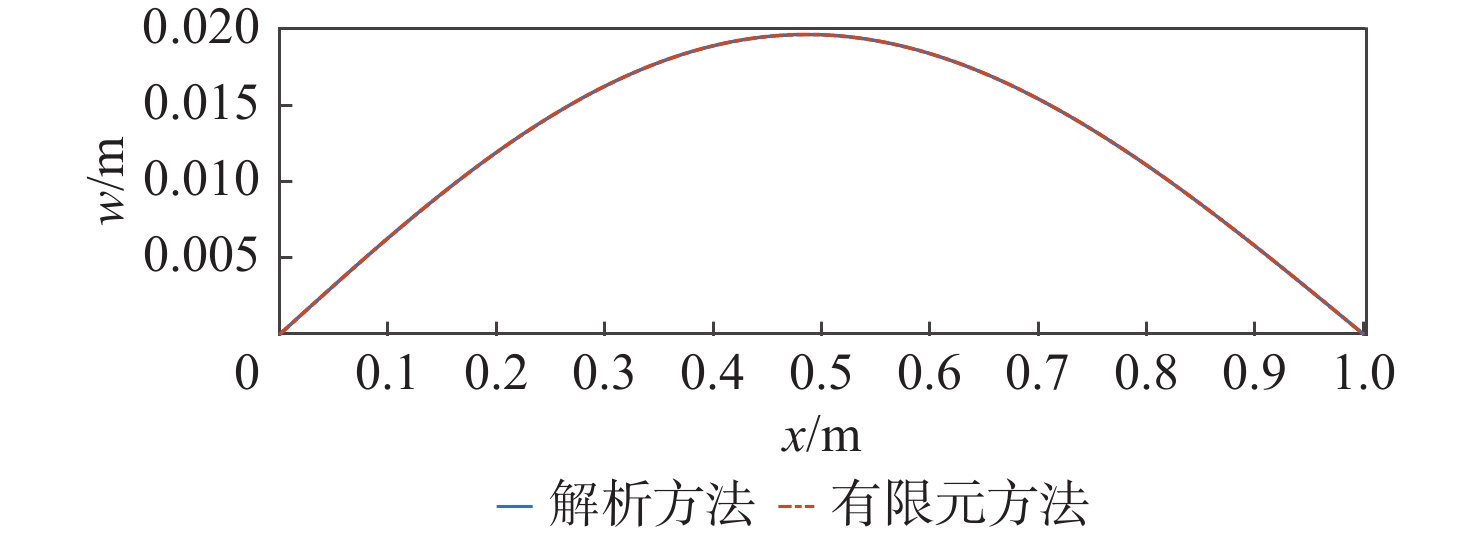
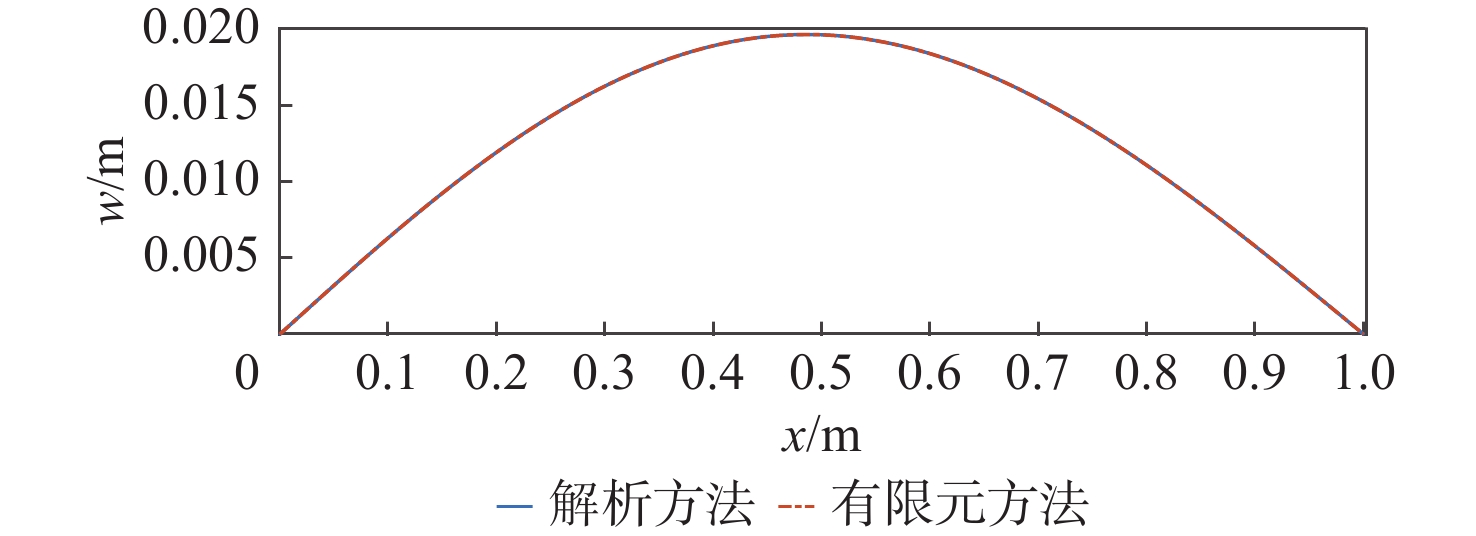
图 6 有限元方法和解析方法的结果比较
Figure 6. Comparison of results between finite element method and analytical method
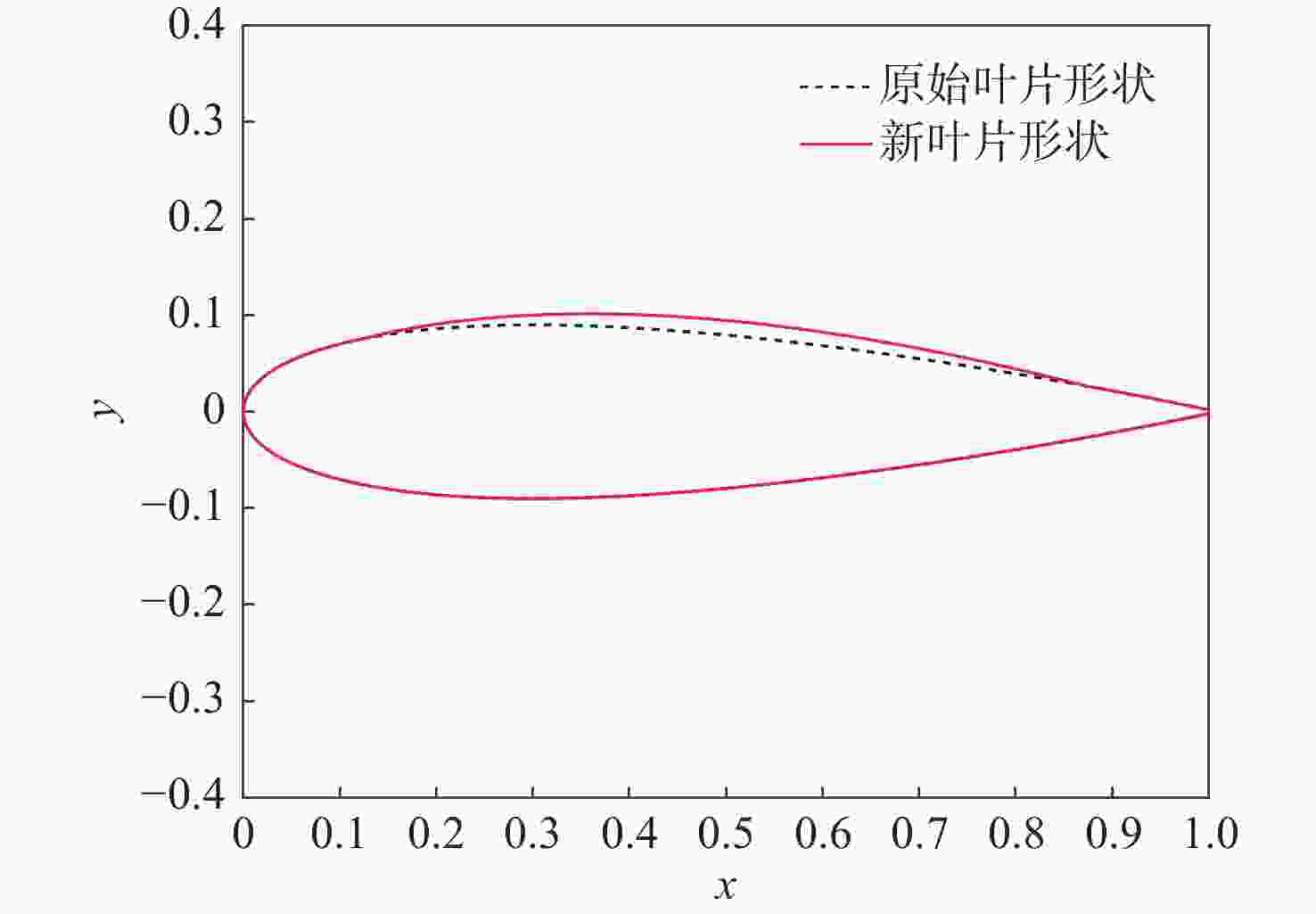
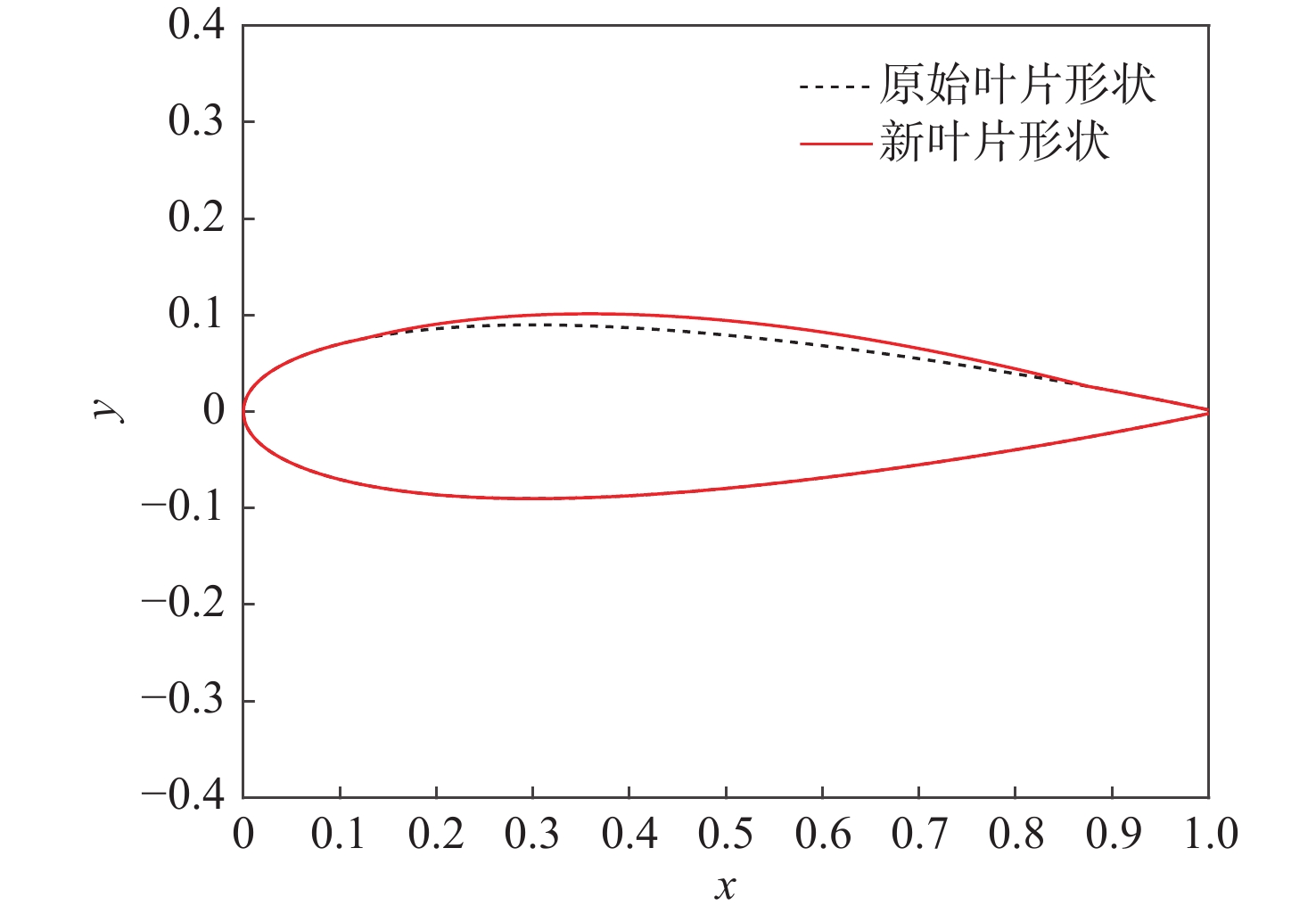
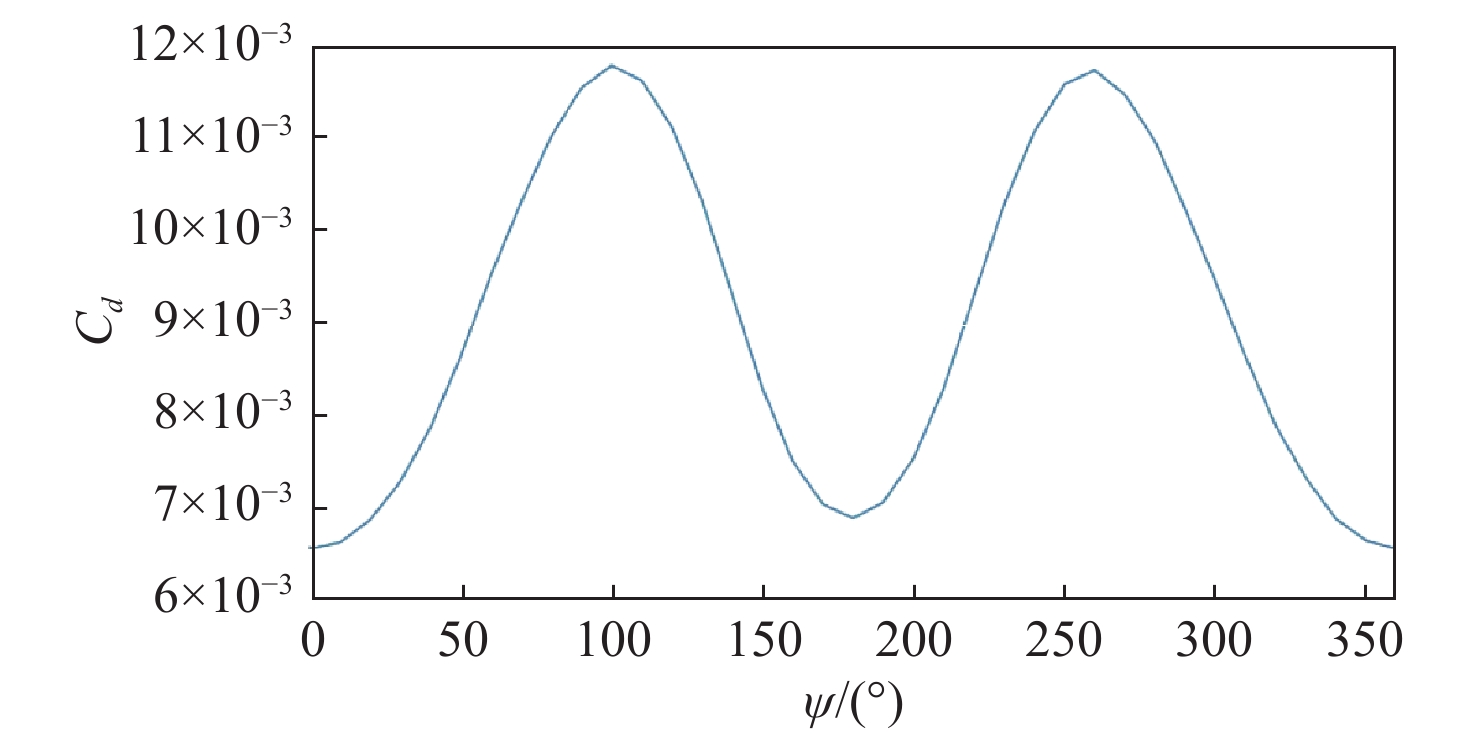
图 7 迭代前后叶片简化图对比
Figure 7. Comparison of simplified diagrams of blades before and after iteration
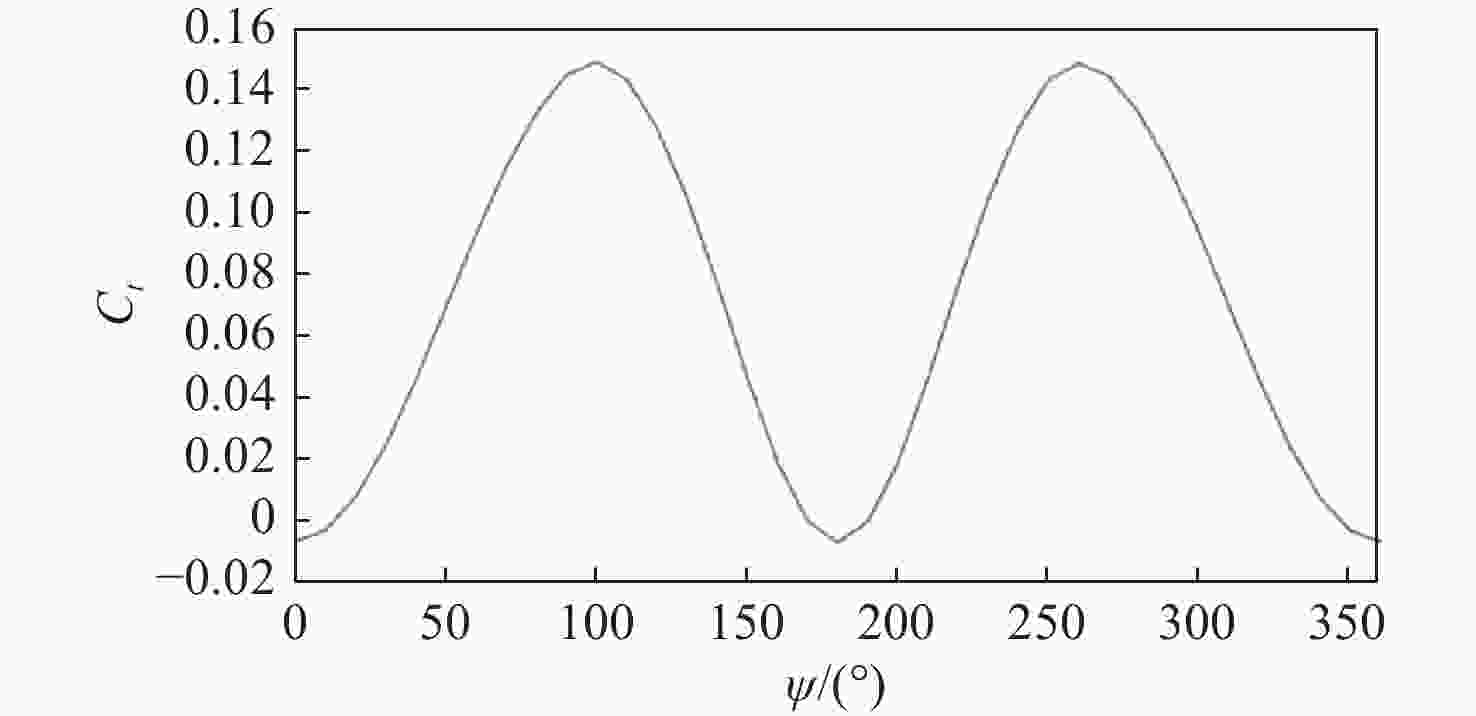
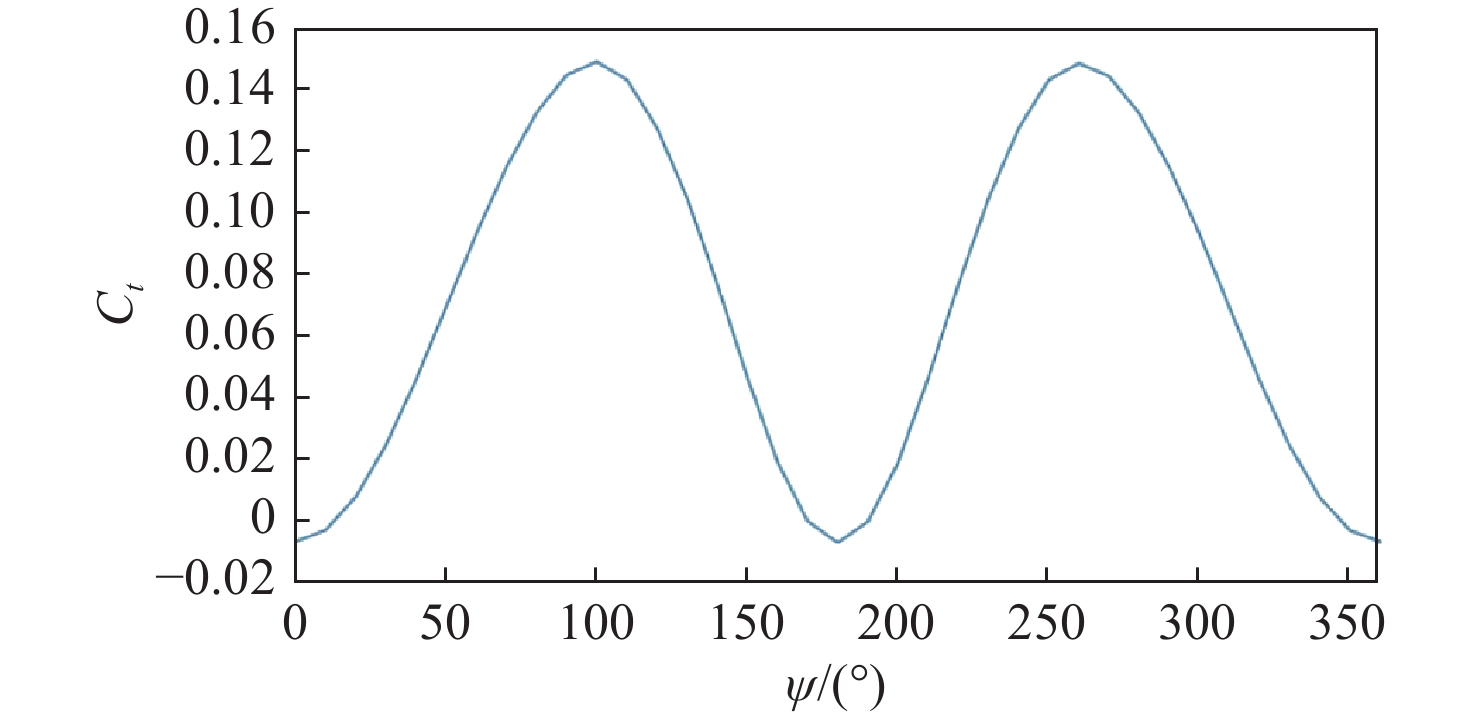
图 14 切向力系数随方位角变化
Figure 14. Variation of tangential force coefficient with azimuth angle
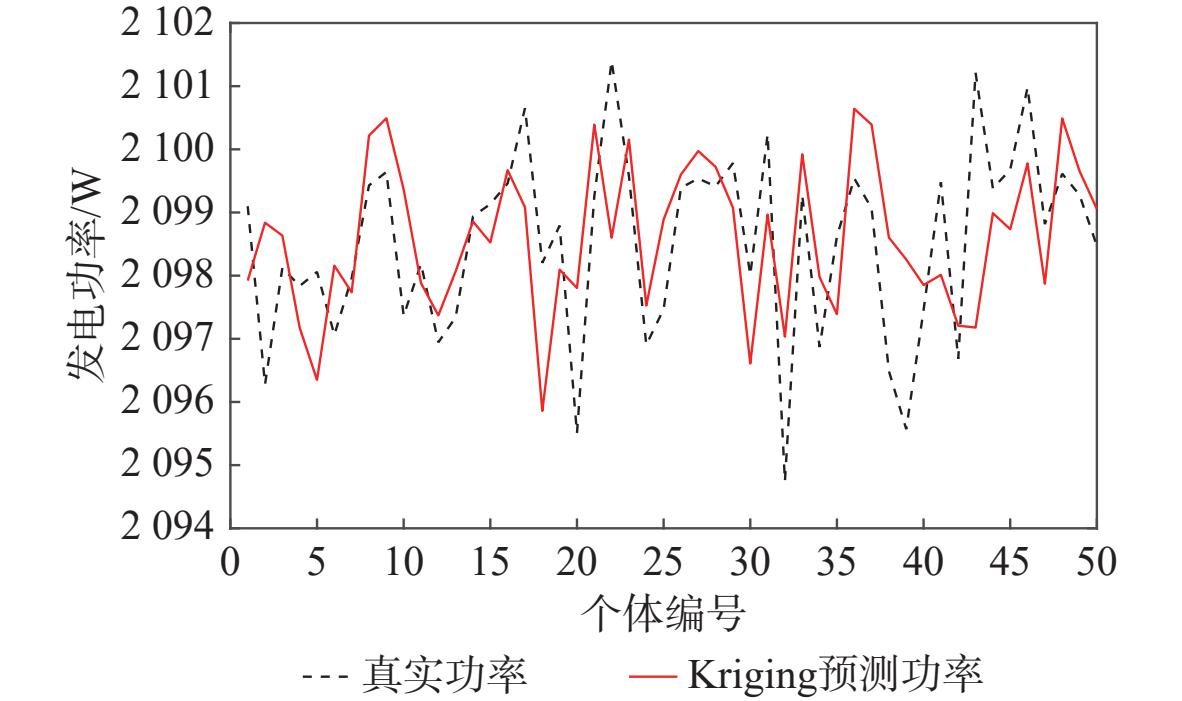
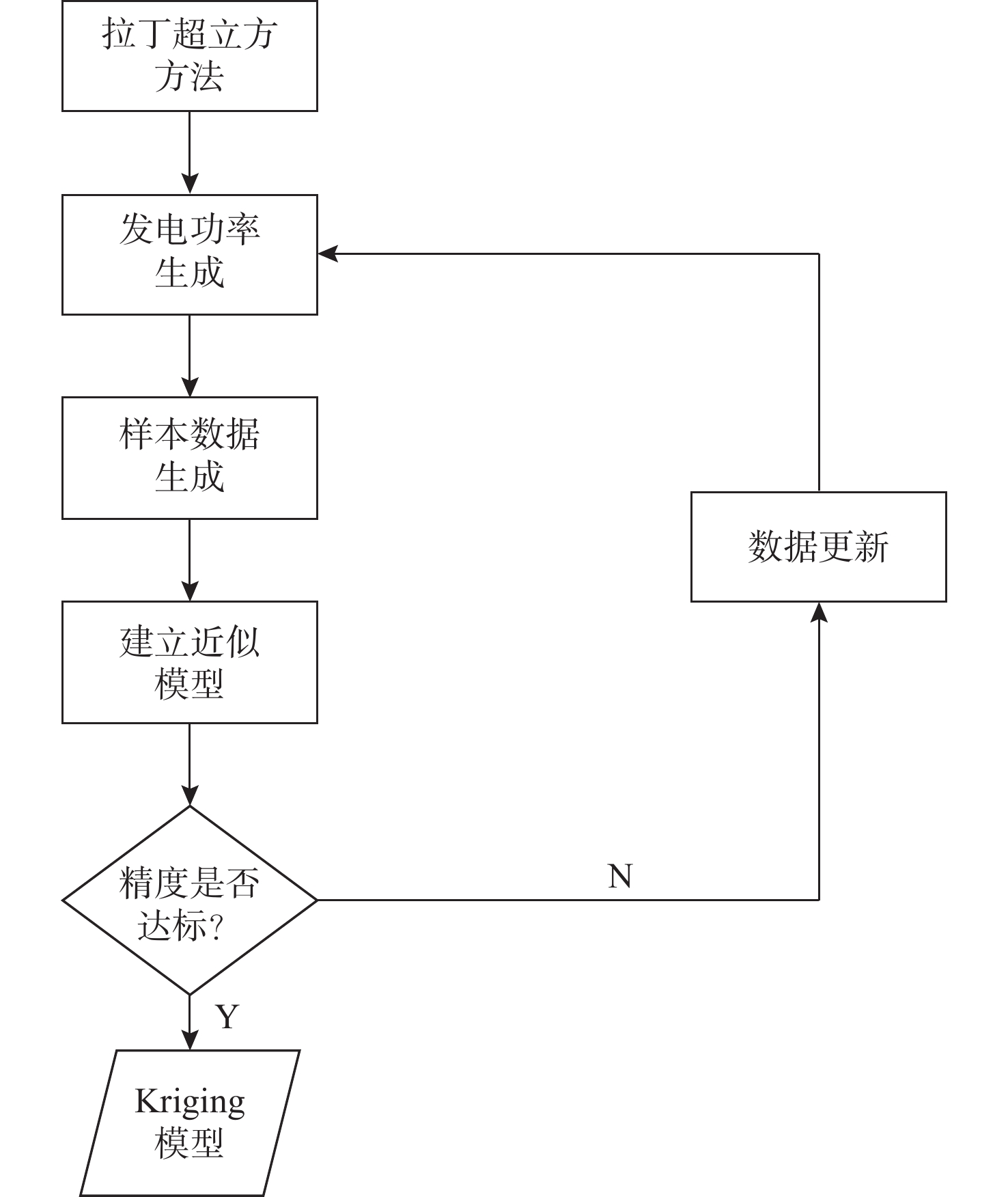
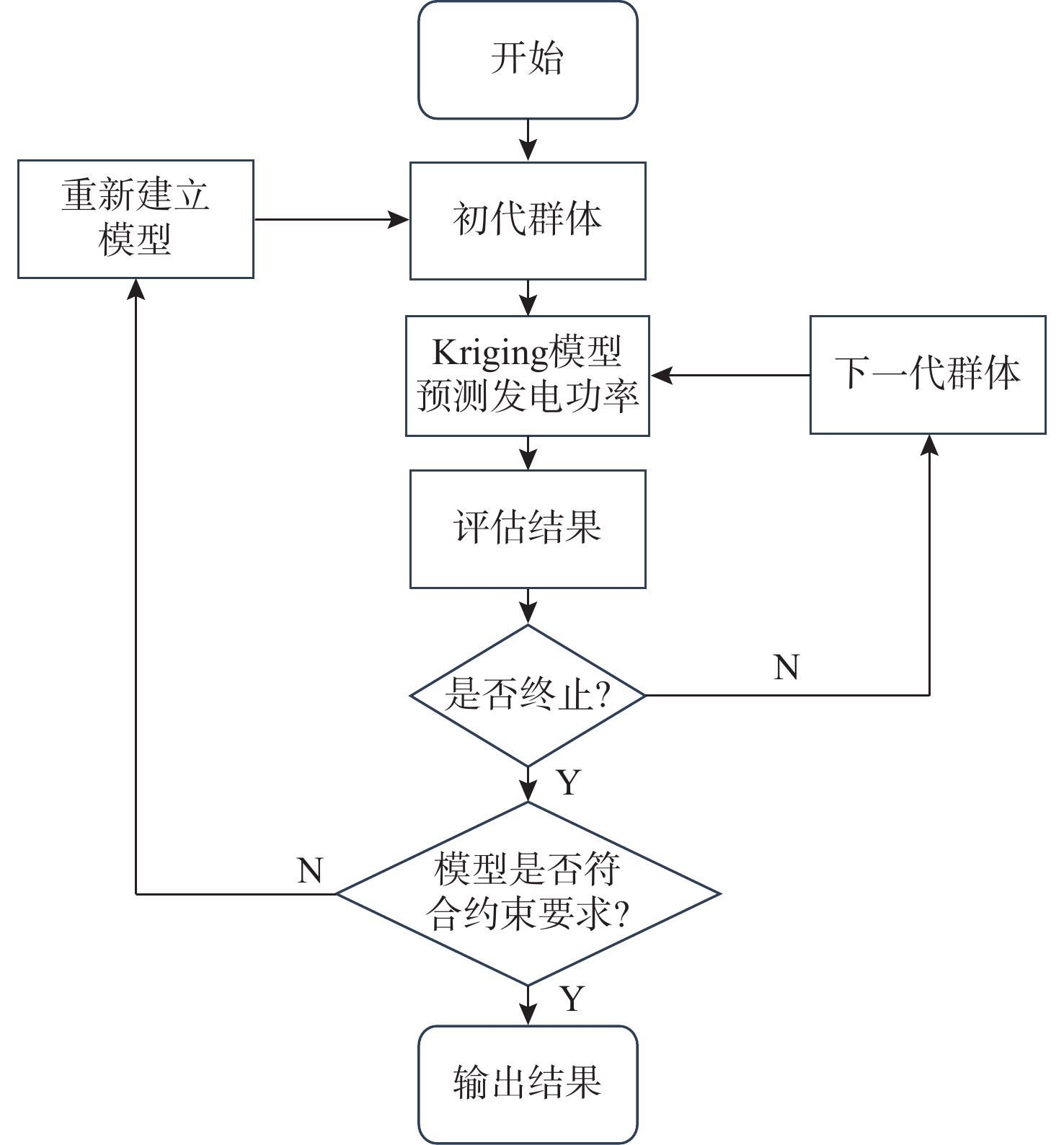
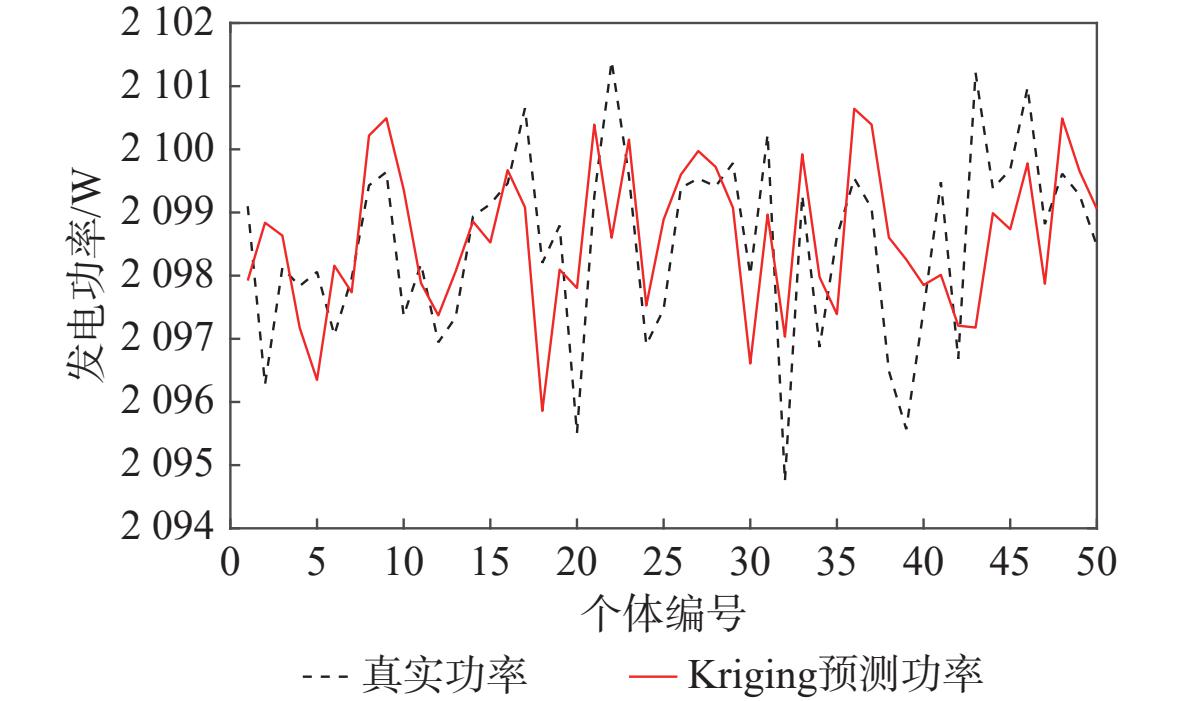
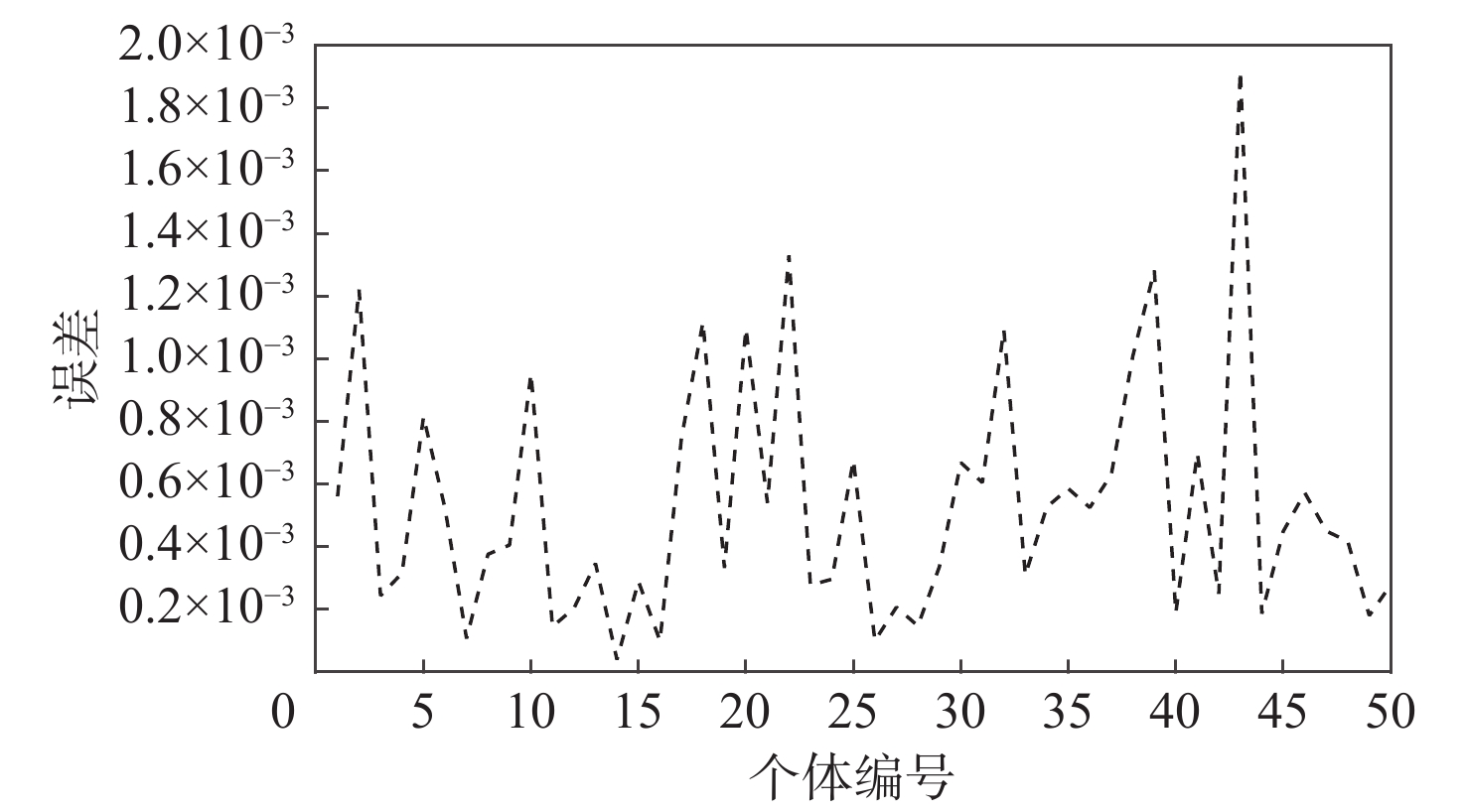
图 17 Kriging方法得到的功率与真实功率的对比
Figure 17. Comparison between power obtained by Kriging method and actual power
表 1 基础环境设置
Table 1. Basic environment setting
风速
$ {V}_{\mathrm{\infty }} $/
(m·s−1)额定
转速$ \omega $/
(rad·s−1)叶片
长度
$ l $/m叶片
弦长
$ c $/m旋转
半径
$ R $/m叶片
数量$ {n}_{\text{b}} $俯仰角
$ \phi $/(°)空气密度
$ \rho $/(kg·m−3)5.5 4.05 1 0.61 8.4 2 0 1.225  下载: 导出CSV
-
[1] 何志宁, 刘座铭, 张宗珍. 垂直轴风力发电机的发展历史及现状[J]. 机械工程师, 2014(2): 39-40.He Z N, Liu Z M, Zhang Z Z. Status quo and development of vertical-axis wind turbine[J]. Mechanical Engineer, 2014(2): 39-40(in Chinese). [2] 张涵, 唐清春, 黄健友. 垂直轴风力发电机力学性能研究综述[J]. 机械工程与技术, 2024, 13(2): 144-153.Zhang H, Tang Q C, Huang J Y. A review of research on the mechanical performance of vertical axis wind turbines[J]. Mechanical Engineering and Technology, 2024, 13(2): 144-153(in Chinese). [3] Tjiu W, Marnoto T, Mat S, et al. Darrieus vertical axis wind turbine for power generation II: challenges in HAWT and the opportunity of multi-megawatt Darrieus VAWT development[J]. Renewable Energy, 2015, 75: 560-571. [4] 张雷. 柔性叶片结构气弹稳定性分析研究[D]. 呼和浩特: 内蒙古工业大学, 2013.Zhang L. Analysis of the flexible blade structure aeroelastic stability[D]. Hohhot: Inner Mongolia University of Technology, 2013(in Chinese). [5] 高荣臻. 柔性风力机叶片气弹响应试验研究[D]. 扬州: 扬州大学, 2023.Gao R Z. Experimental study on aeroelastic response of flexible wind turbine blades[D]. Yangzhou: Yangzhou University, 2023(in Chinese). [6] 沈世钊, 武岳. 膜结构风振响应中的流固耦合效应研究进展[J]. 建筑科学与工程学报, 2006, 23(1): 1-9.Shen S Z, Wu Y. Research progress on fluid-solid interaction effect of wind-induced vibration response of membrane structure[J]. Journal of Architecture and Civil Engineering, 2006, 23(1): 1-9(in Chinese). [7] 武岳, 沈世钊. 索膜结构风振响应中的气弹耦合效应研究[J]. 建筑钢结构进展, 2006, 8(2): 30-36.Wu Y, Shen S Z. Study on wind-induced vibration of membrane-cable structures with the consideration of aeroelastic effect[J]. Progress in Steel Building Structures, 2006, 8(2): 30-36(in Chinese). [8] Bathe K J, Zhang H, Ji S H. Finite element analysis of fluid flows fully coupled with structural interactions[J]. Computers & Structures, 1999, 72(1-3): 1-16. [9] Bathe K J, Zhang H. A flow-condition-based interpolation finite element procedure for incompressible fluid flows[J]. Computers & Structures, 2002, 80(14-15): 1267-1277. [10] Kohno H, Bathe K J. A nine-node quadrilateral FCBl element for incompressible fluid flows[J]. Communications in Numerical Methods in Engineering, 2006, 22: 917-931. [11] 刘为佳, 李映坤, 陈雄, 等. 基于流固耦合的激波/边界层干扰作用下壁板颤振特性[J]. 航空学报, 2023, 44(6): 108-121.Liu W J, Li Y K, Chen X, et al. Panel flutter characteristics on shock wave/boundary layer interaction based on fluid-structure coupling[J]. Acta Aeronautica et Astronautica Sinica, 2023, 44(6): 108-121(in Chinese). [12] 罗剑桥, 解春雷, 金泽华, 等. 跨介质飞行器近水面滑跳流固耦合仿真及可滑跳区域研究[J]. 航空学报, 2023, 44(21): 377-394.Luo J Q, Xie C L, Jin Z H, et al. Water-skipping fluid-structure interaction simulation and slippable area study of trans-medium vehicle[J]. Acta Aeronautica et Astronautica Sinica, 2023, 44(21): 377-394(in Chinese). [13] 李秋琳, 周莉, 孙鹏, 等. 出口宽高比对S弯喷管流固耦合特性影响[J]. 航空学报, 2023, 44(14): 149-163.Li Q L, Zhou L, Sun P, et al. Influence mechanism of aspect ratio on fluid-structure interaction characteristics of serpentine nozzle[J]. Acta Aeronautica et Astronautica Sinica, 2023, 44(14): 149-163(in Chinese). [14] 许云涛, 檀大林, 杨超. 基于CFD/CSD耦合的高速射弹尾拍载荷特性研究[J]. 北京航空航天大学学报, 2023, 49(9): 2539-2546.Xu Y T, Tan D L, Yang C. Study on tail-slap load characteristics of high-speed projectile based on CFD/CSD coupling[J]. Journal of Beijing University of Aeronautics and Astronautics, 2023, 49(9): 2539-2546(in Chinese). [15] 吴越, 谢长川, 杨超. 面向柔性扑翼翼面形状和运动参数的优化设计[J]. 北京航空航天大学学报, 2023, 49(12): 3311-3320.Wu Y, Xie C C, Yang C. Optimal design of shape and motion parameters of a flapping wing[J]. Journal of Beijing University of Aeronautics and Astronautics, 2023, 49(12): 3311-3320(in Chinese). [16] 李岳, 胡宇祺, 蔡靖, 等. 基于变权重-正态云模型的飞机轮胎滑水风险[J]. 北京航空航天大学学报, 2023, 49(9): 2299-2305.Li Y, Hu Y Q, Cai J, et al. Hydroplaning risk of aircraft tire based on variable weight theory-normal cloud model[J]. Journal of Beijing University of Aeronautics and Astronautics, 2023, 49(9): 2299-2305(in Chinese). [17] Guo Y Y, Yang W Q, Dong Y B, et al. Resonance mechanism of flapping wing based on fluid structure interaction simulation[J]. Chinese Journal of Aeronautics, 2024, 37(5): 243-262. [18] Nie S C, Yu L, Li Y J, et al. Fluid structure interaction of supersonic parachute with material failure[J]. Chinese Journal of Aeronautics, 2023, 36(10): 90-100. [19] Zhang Y F, Li Q A, Zhu X Y, et al. Wind tunnel experiments and numerical study on performance characteristics of an H-type vertical axis wind turbine in the spanwise direction[J]. Journal of Thermal Science, 2021, 30(3): 758-771. [20] Drela M. XFOIL: subsonic airfoil development system[DB/OL]. (2026-01-01)[2026-07-02]. https://web.mit.edu/drela/Public/web/xfoil/. [21] 单辉祖. 材料力学Ⅰ[M]. 4版. 北京: 高等教育出版社, 2016: 37-62.Shan H Z. Mechanics of materials Ⅰ[M]. 4th ed. Beijing: Higher Education Press, 2016: 37-62(in Chinese). [22] Hibbeler R C. Mechanics of materials[M]. New York: Pearson Education, Inc., 2014: 718-785. [23] Kuester J F. Preliminary design of a vertical axis wind turbine with flexible sails[D]. Cranfield: Cranfield University, 2011. [24] 王铁方. 计算机基因学: 基于家族基因的网格信任模型[M]. 北京: 知识产权出版社, 2016: 93-94.Wang T F. Computer genetics: a grid trust model based on family genes[M]. Beijing: Intellectual Property Publishing House, 2016: 93-94(in Chinese). [25] 郑树泉. 工业智能技术与应用[M]. 上海: 上海科学技术出版社, 2019: 250-251.Zheng S Q. Technology and application of industrial intelligence[M]. Shanghai: Shanghai Scientific & Technical Publishers, 2019: 250-251(in Chinese). [26] 刘国峰, 孟小红, 岳延波, 等. 克里金法在GPS数据内插中的应用[J]. 物探与化探, 2006, 30(2): 175-178.Liu G F, Meng X H, Yue Y B, et al. The application of Kriging to GPS data interpolation[J]. Geophysical and Geochemical Exploration, 2006, 30(2): 175-178(in Chinese). [27] Wang X Z, Wan Z Q, Liu Z, et al. Integrated optimization on aerodynamics-structure coupling and flight stability of a large airplane in preliminary design[J]. Chinese Journal of Aeronautics, 2018, 31(6): 1258-1272. [28] 韩忠华. Kriging模型及代理优化算法研究进展[J]. 航空学报, 2016, 37(11): 3197-3225.Han Z H. Kriging surrogate model and its application to design optimization: a review of recent progress[J]. Acta Aeronautica et Astronautica Sinica, 2016, 37(11): 3197-3225(in Chinese). -

 下载:

计量
- 文章访问数: 583
- HTML全文浏览量: 143
- PDF下载量: 123
- 被引次数: 0
