





Multi-flight trajectory prediction method in terminal area based on an improved spatio-temporal model
-
摘要:
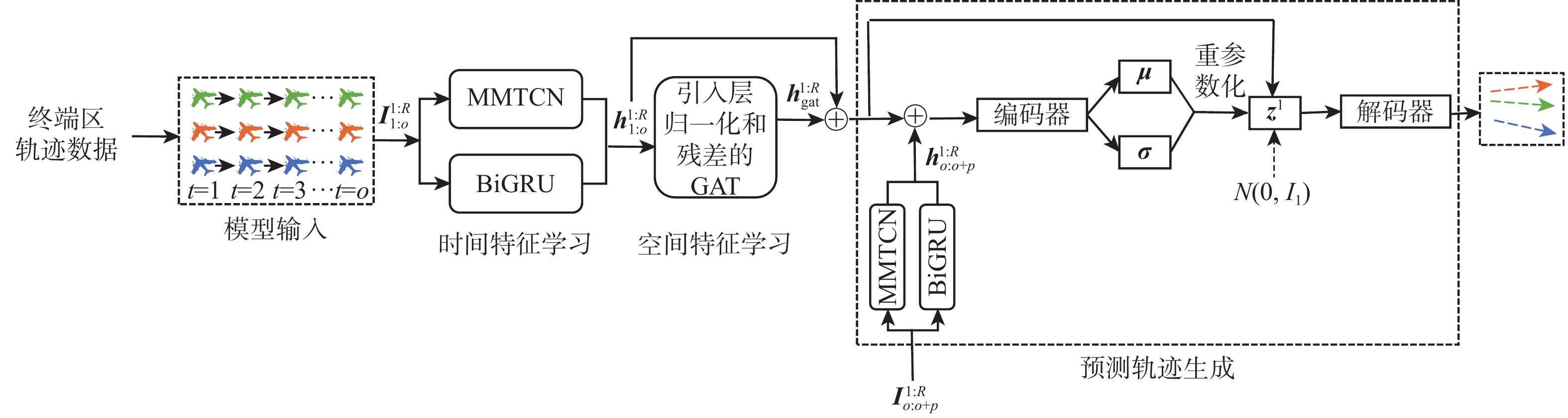
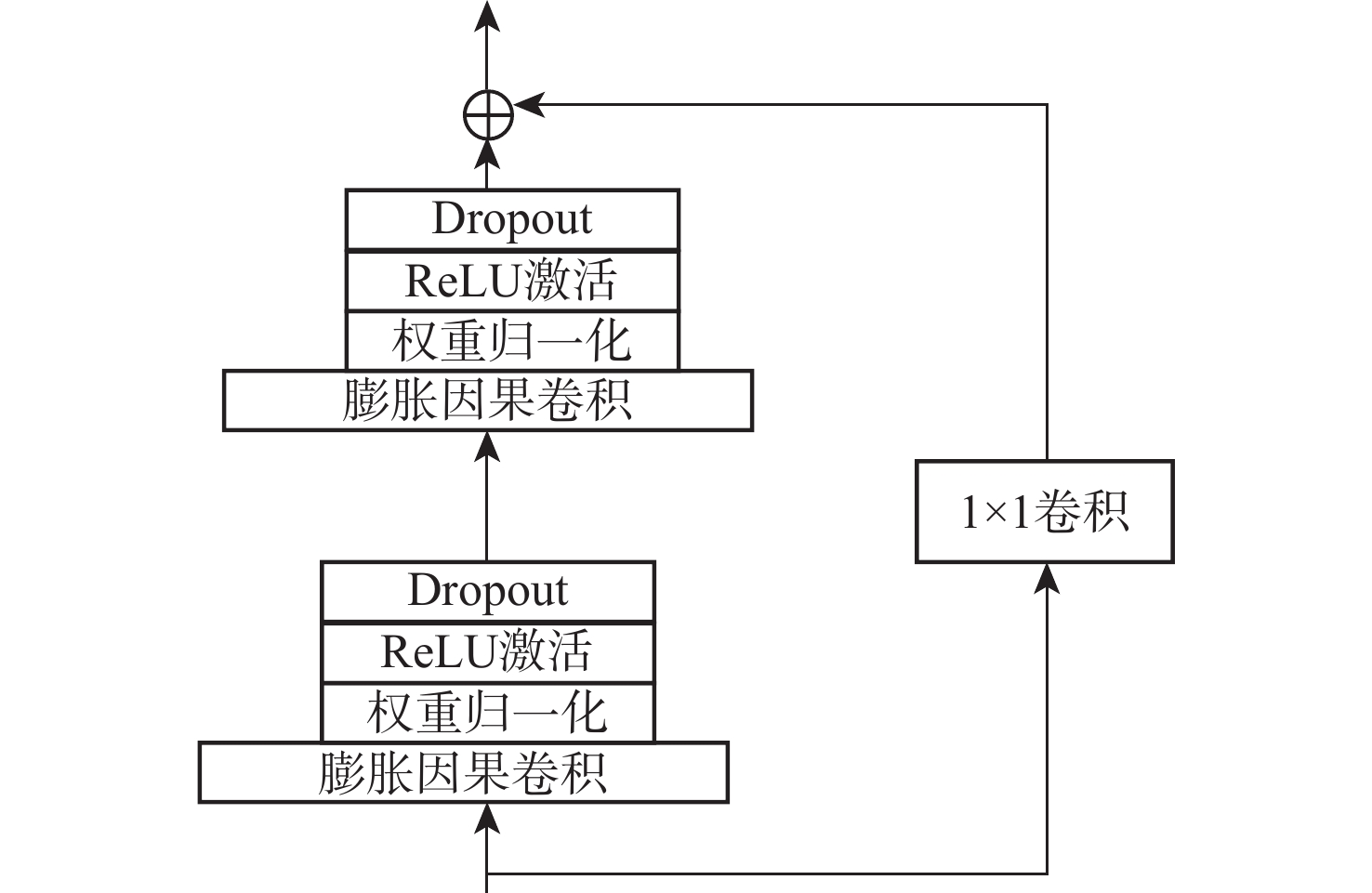
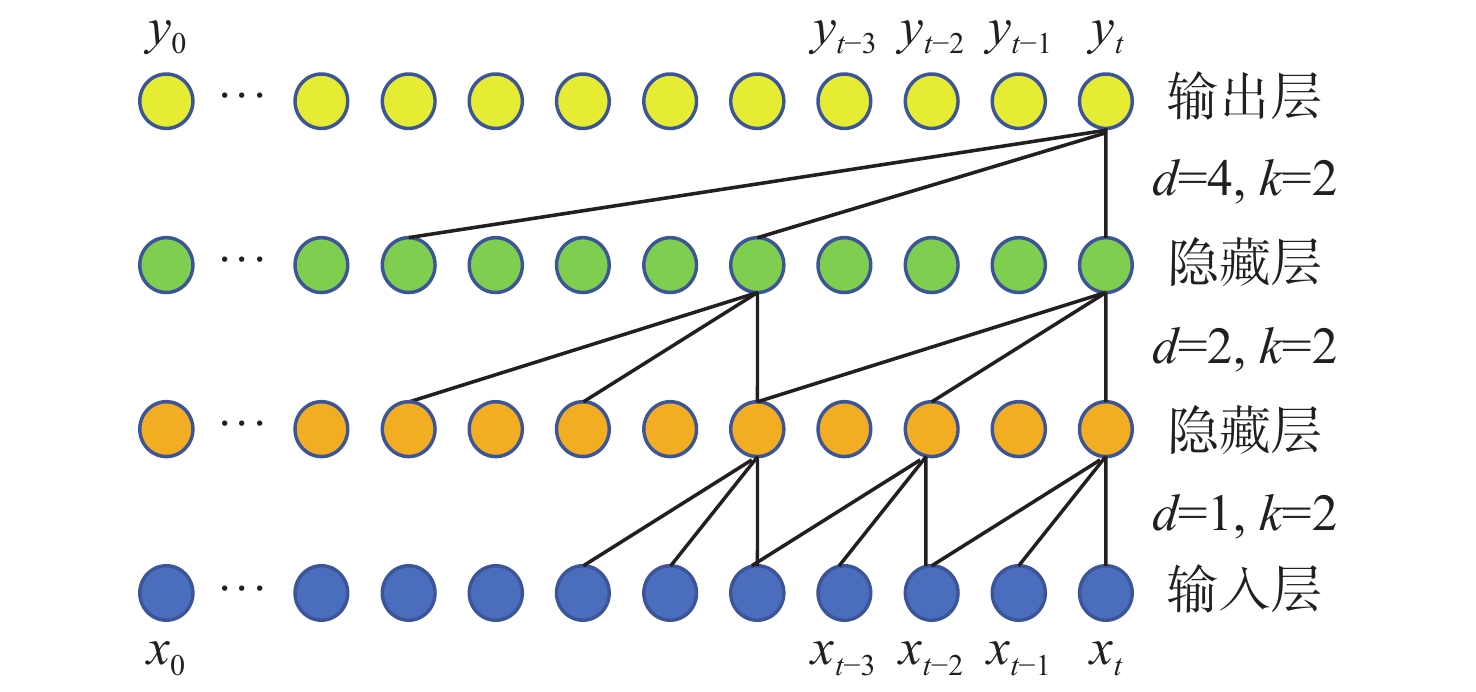
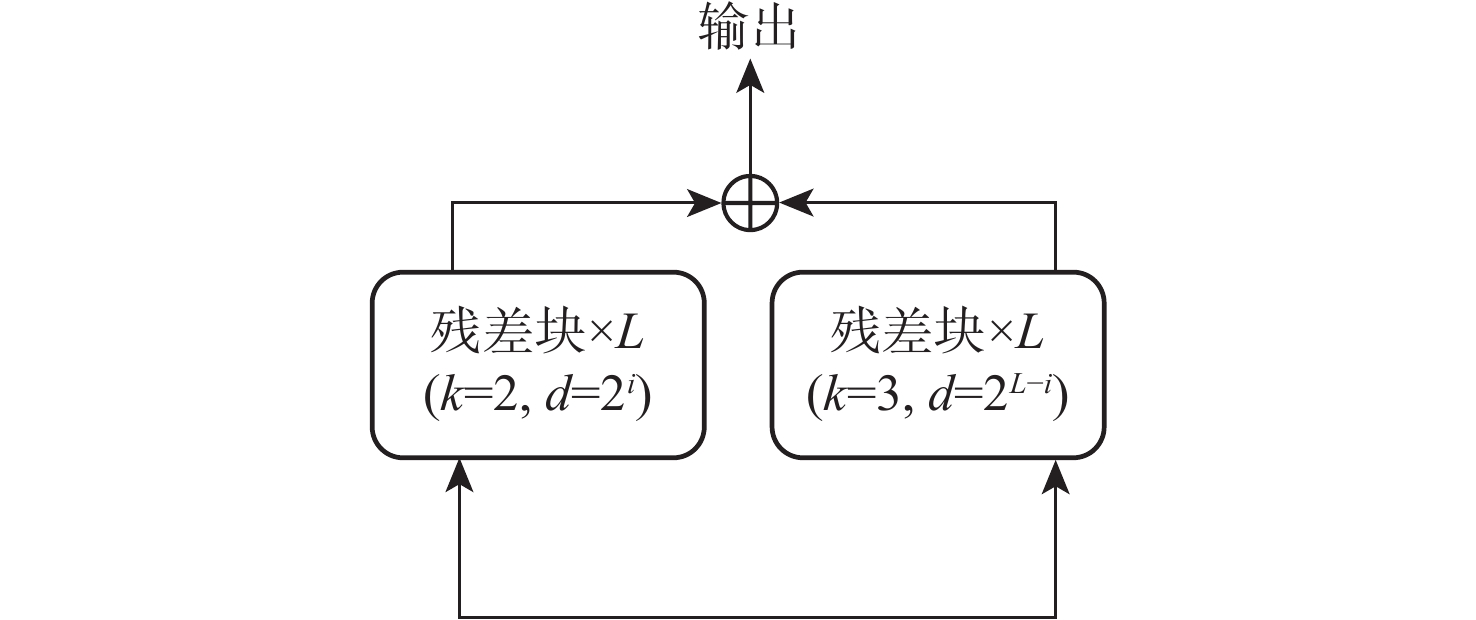
由于终端区历史航迹数据量较大、存在丰富的时空特征和航迹位置点数据突变等特点,使得在进行终端区4D航迹预测时充满不确定性和复杂性。为此,给出一种基于改进时空模型的解决方法。该模型包括3部分:将时间卷积网络(TCN)和双向门控循环单元(BiGRU)引入航迹预测领域,并对TCN进行改进,提出双层多尺度时间卷积网络MMTCN,分别从全局和局部2个方面提取时间特征;将层归一化和残差引入图注意力网络GAT,以捕捉航班之间的复杂空间依赖关系;针对航迹位置点数据突变导致的数据不确定性问题,将得到的时空特征输入到条件变分自编码器(CVAE)中,以学习航迹数据的潜在表示,生成多条预测轨迹。在训练过程中采用学习率调整策略,加速模型训练。实验结果表明:改进模型在平均位移误差(ADE)和最终位移误差(FDE) 2个指标上均表现最优,分别为
0.0826 和0.1111 ,显著优于其他基准模型;在通用航空数据集上,所提模型的ADE和FDE误差最大降低了约9.59%和7.75%,表明该模型能够更有效地提取时空特征,且具有训练稳定性。Abstract:4D trajectory prediction in this setting is extremely unpredictable and difficult due to the large amount of past trajectory data in the terminal area, its rich spatio-temporal properties, and the sudden changes in trajectory point placements. To address these challenges, we propose a solution based on an improved spatio-temporal model comprising three components. First, we introduce temporal convolutional networks (TCN) and bidirectional gated recurrent units (BiGRU) into the field of flight trajectory prediction, improving the TCN architecture. This leads to the development of a double-layer multi-scale temporal convolution network MMTCN that effectively extracts temporal features from both global and local perspectives. Second, we integrate layer normalization and residual connections into the graph attention network GAT to capture the intricate spatial dependencies among flights. Third, to mitigate data uncertainty stemming from abrupt changes in trajectory point locations, we input the extracted spatio-temporal characteristics into a conditional variational autoencoder (CVAE) to learn the latent representations of flight trajectory data, ultimately generating multiple predictive trajectories. Throughout the training process, a learning rate adjustment strategy is employed to enhance training efficiency. The experimental results demonstrate that the improved model achieves optimal performance on two metrics, with an average displacement error (ADE) of
0.0826 and a final displacement error (FDE) of0.1111 , significantly outperforming other baseline models. Additionally, the suggested model lowers the maximum error on the general aviation dataset by roughly 7.75% for FDE and 9.59% for ADE. This model not only effectively extracts spatio-temporal characteristics but also exhibits training stability. -
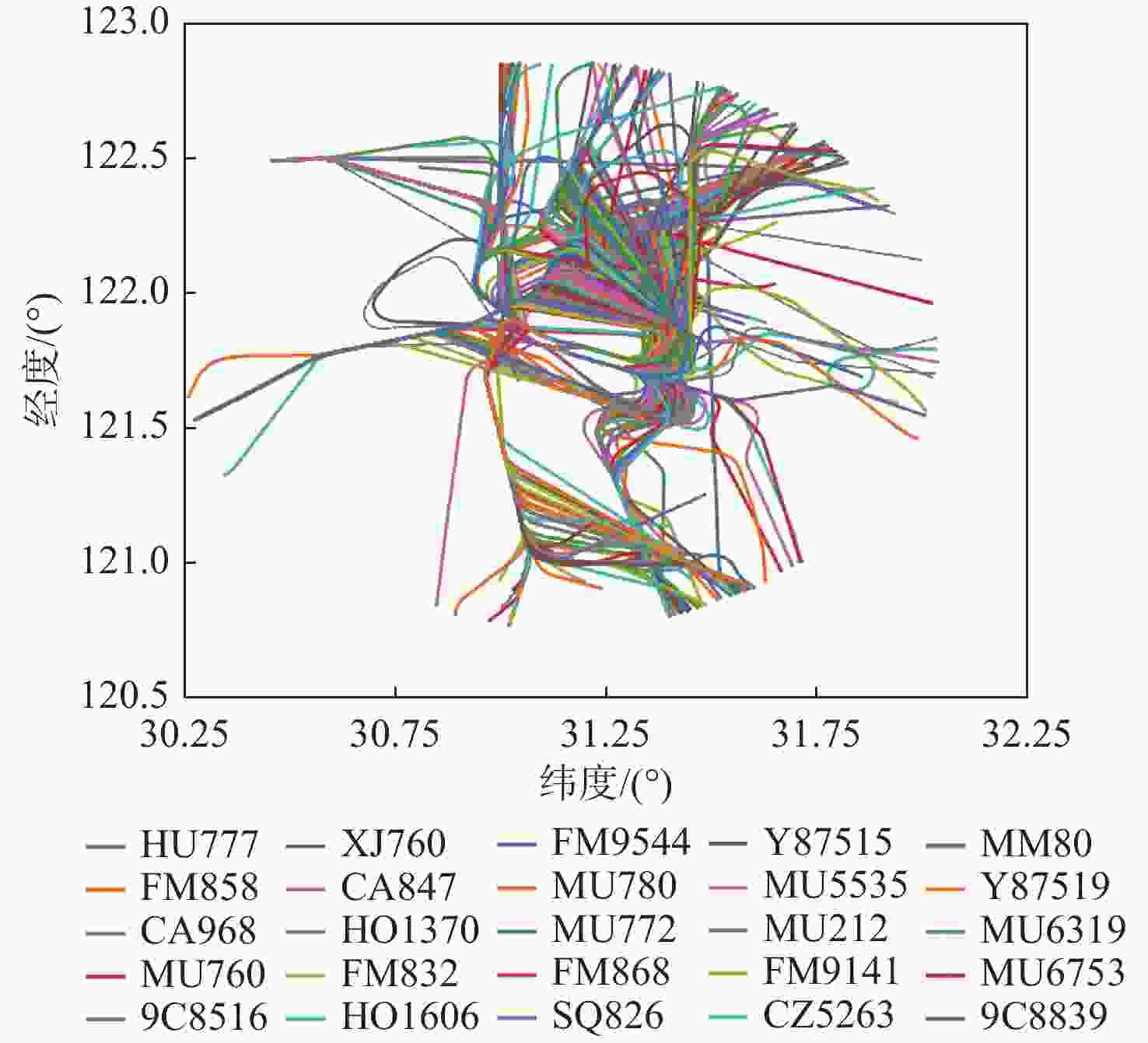
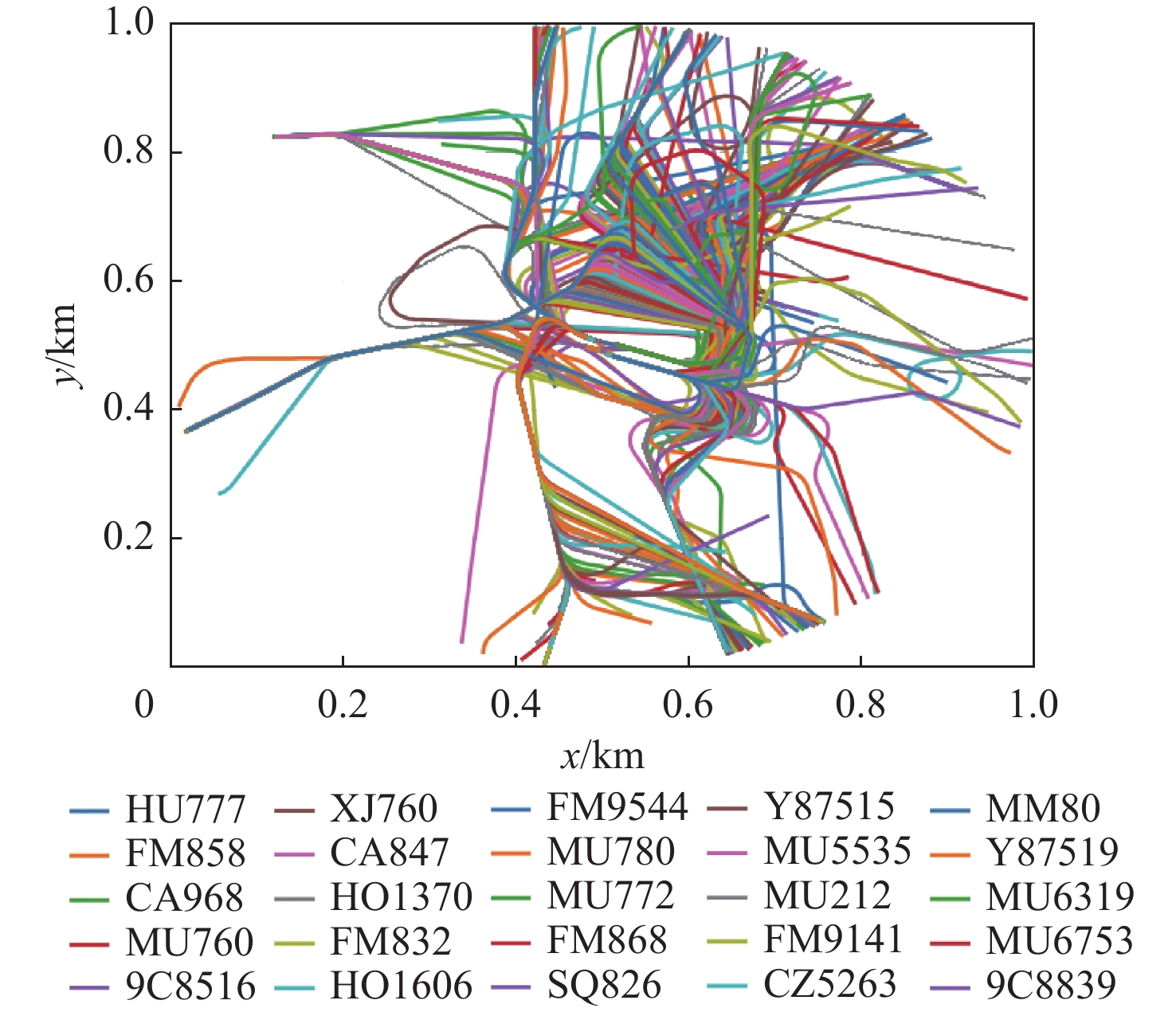
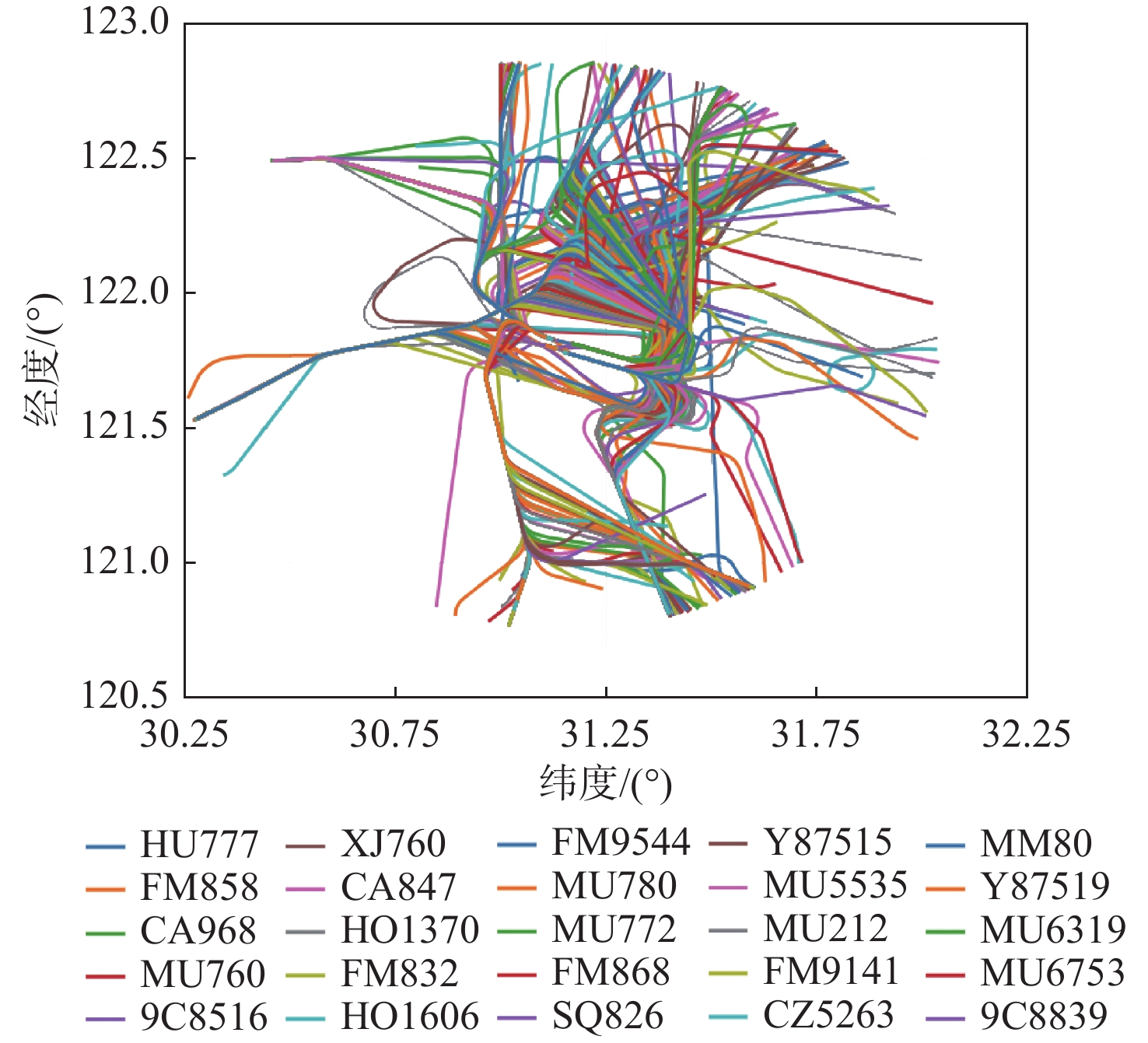
图 1 上海浦东国际机场部分场景终端区航迹
Figure 1. Flight trajectory of some scene terminal areas of Shanghai Pudong International Airport
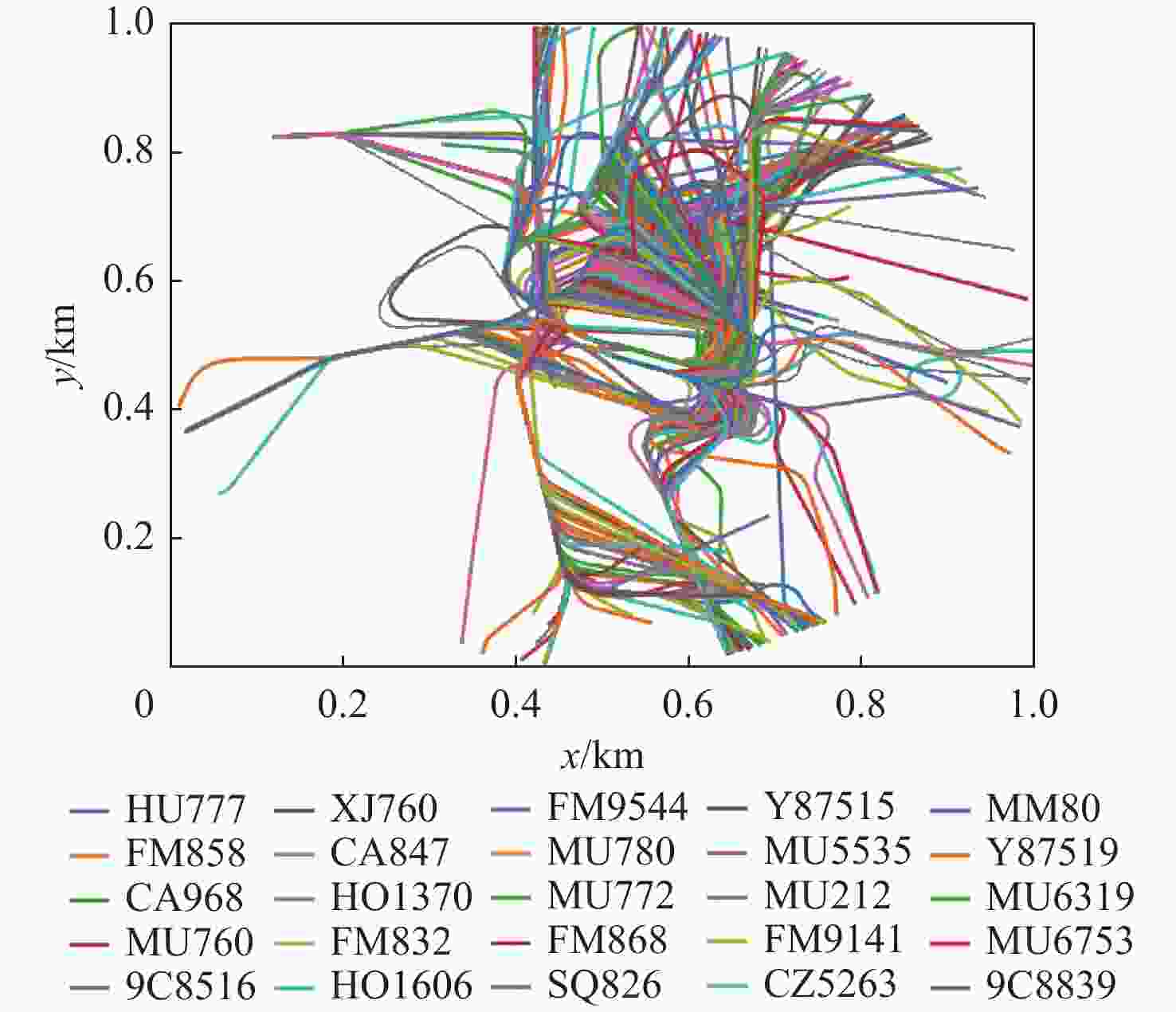
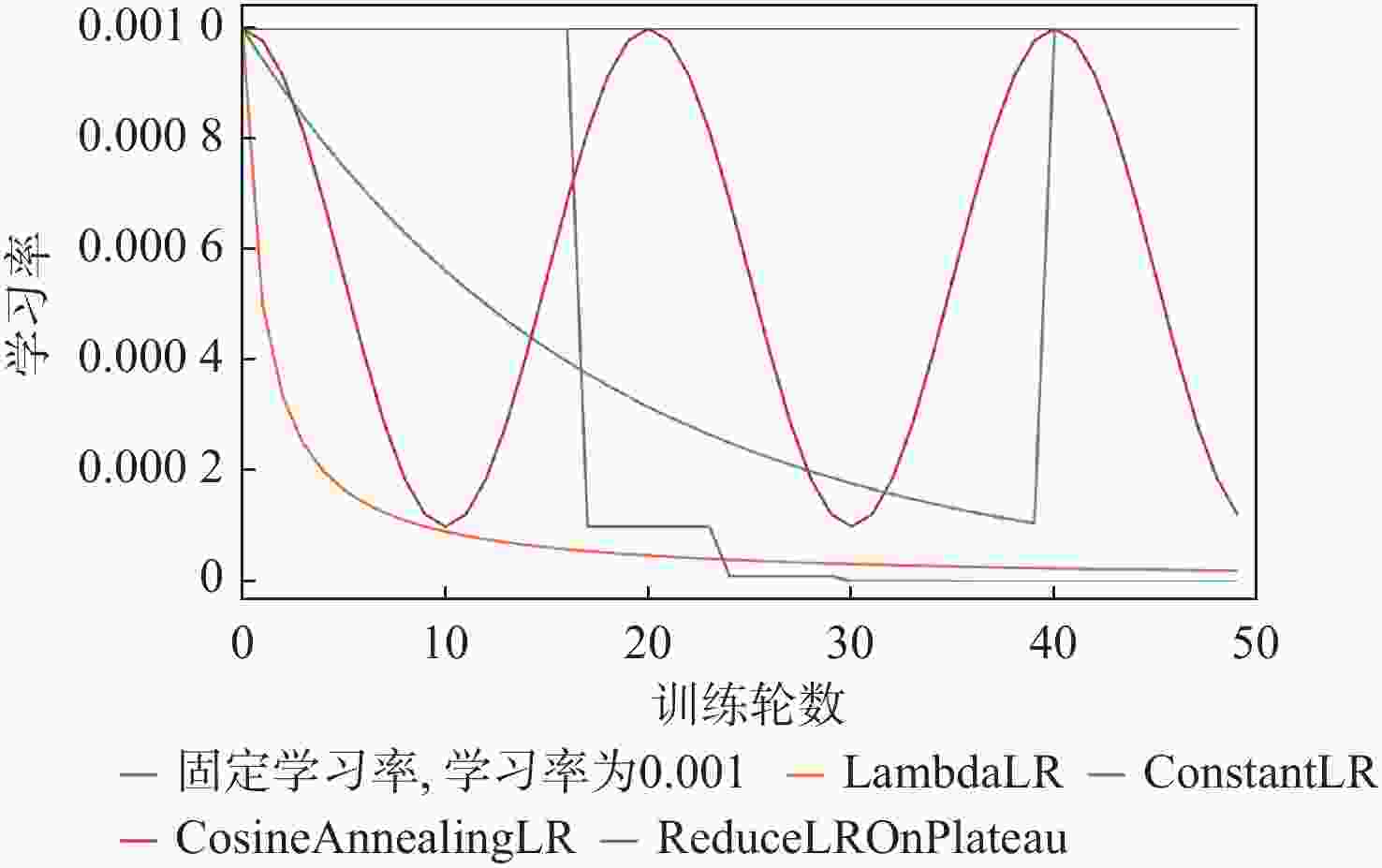
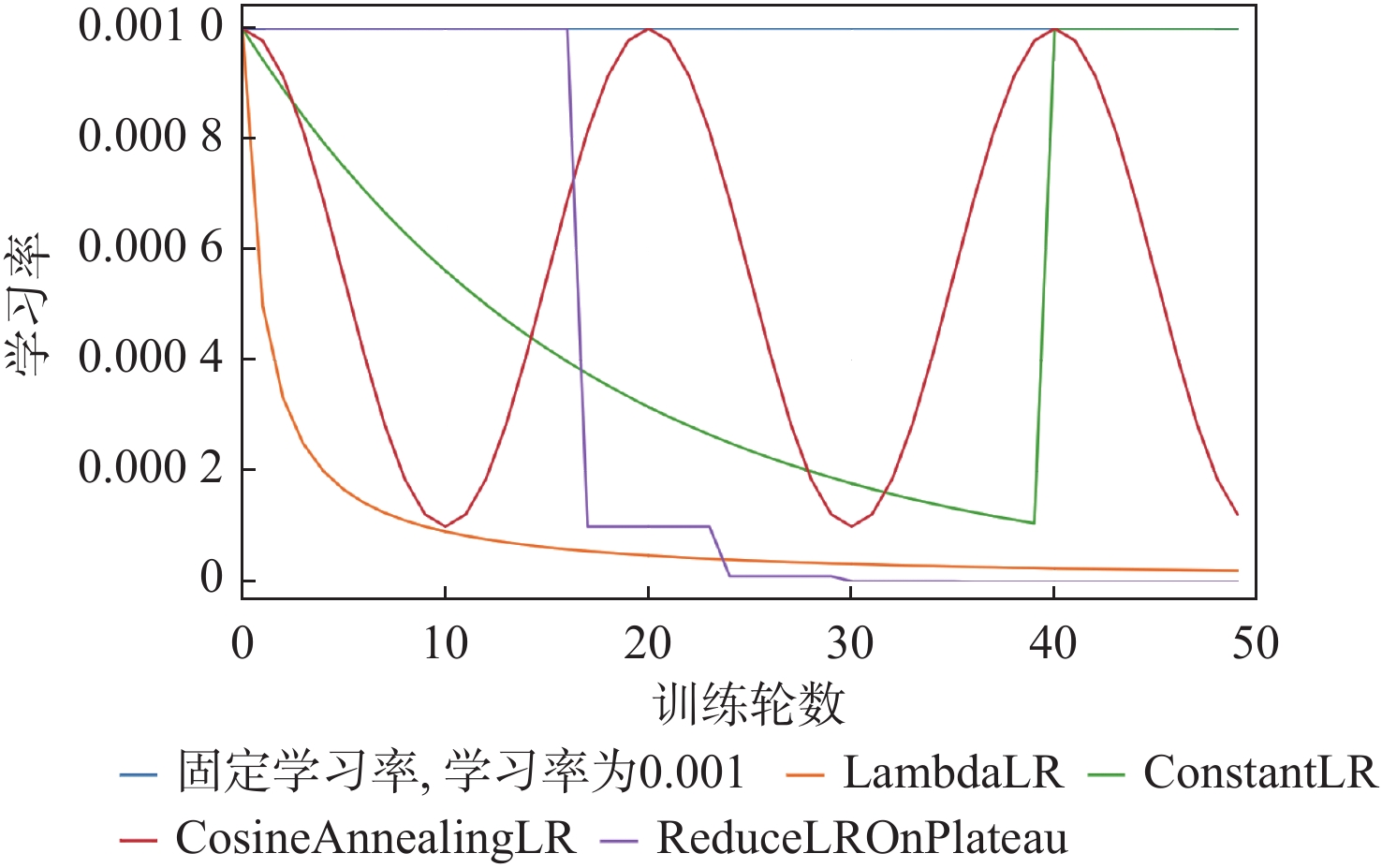
图 10 不同学习率调整策略的学习率变化趋势
Figure 10. Trends in learning rates for different learning rate adjustment strategies
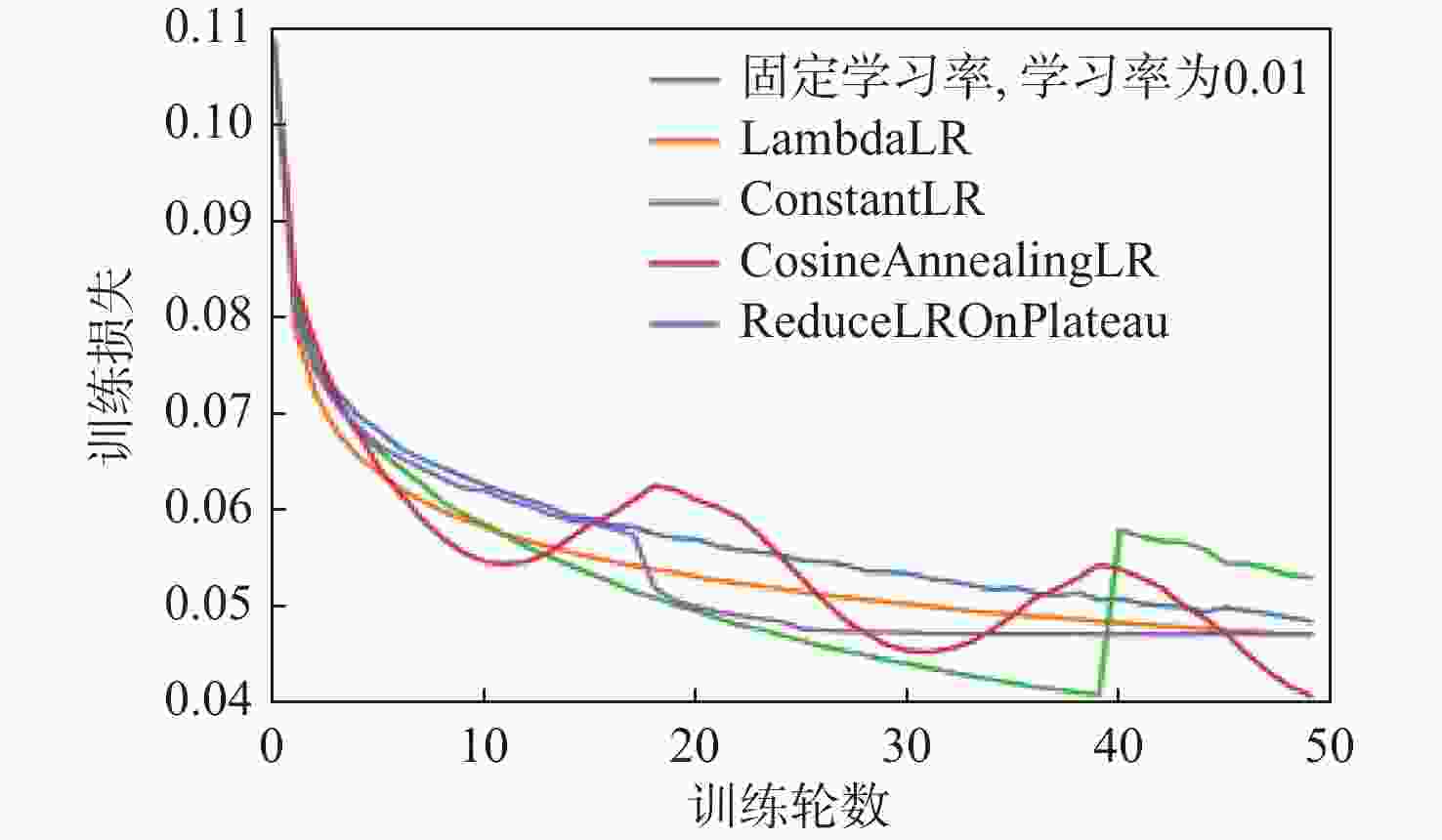
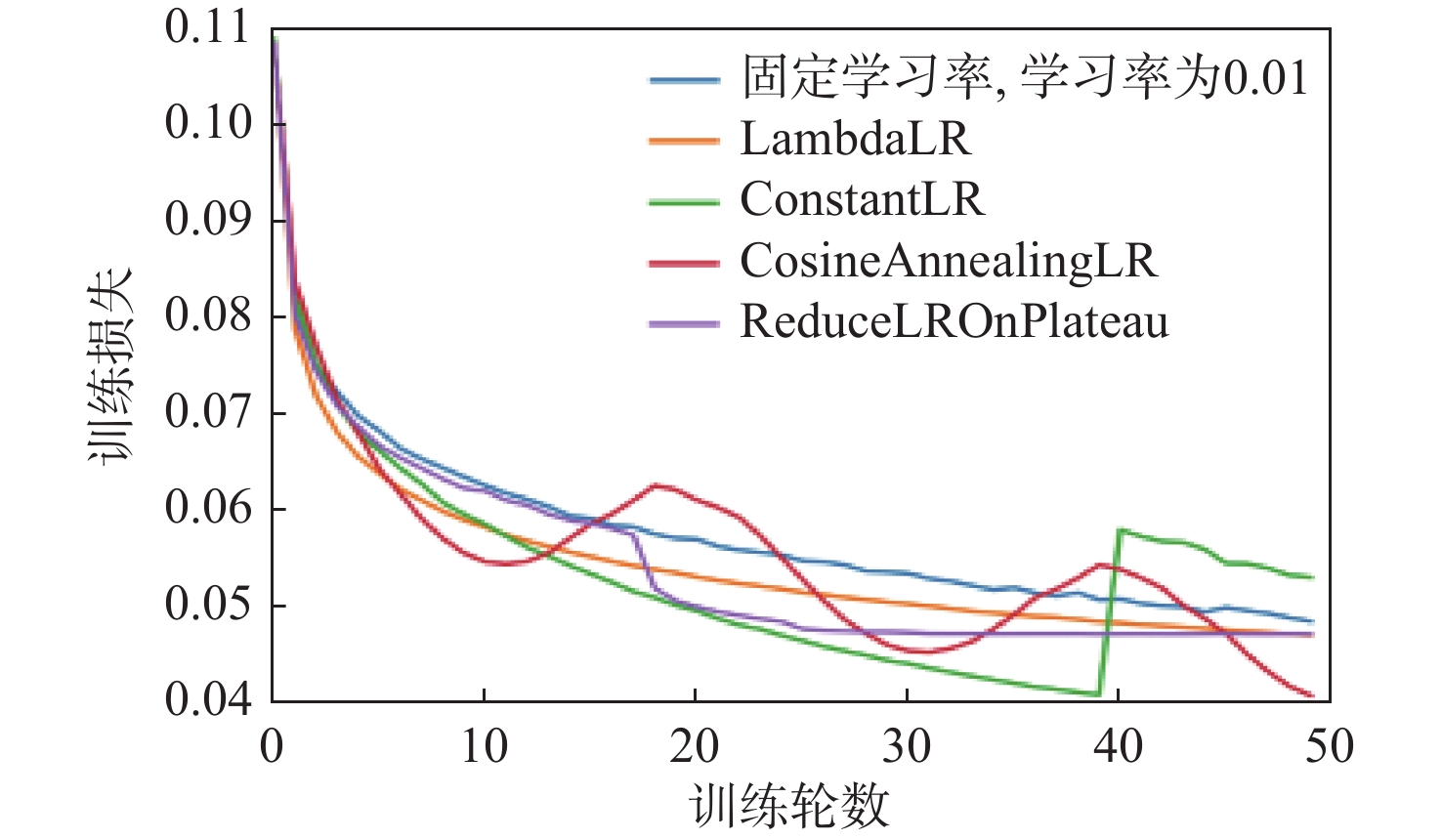
图 11 不同学习率调整策略的训练损失变化趋势
Figure 11. Trends in training loss for different learning rate adjustment strategies
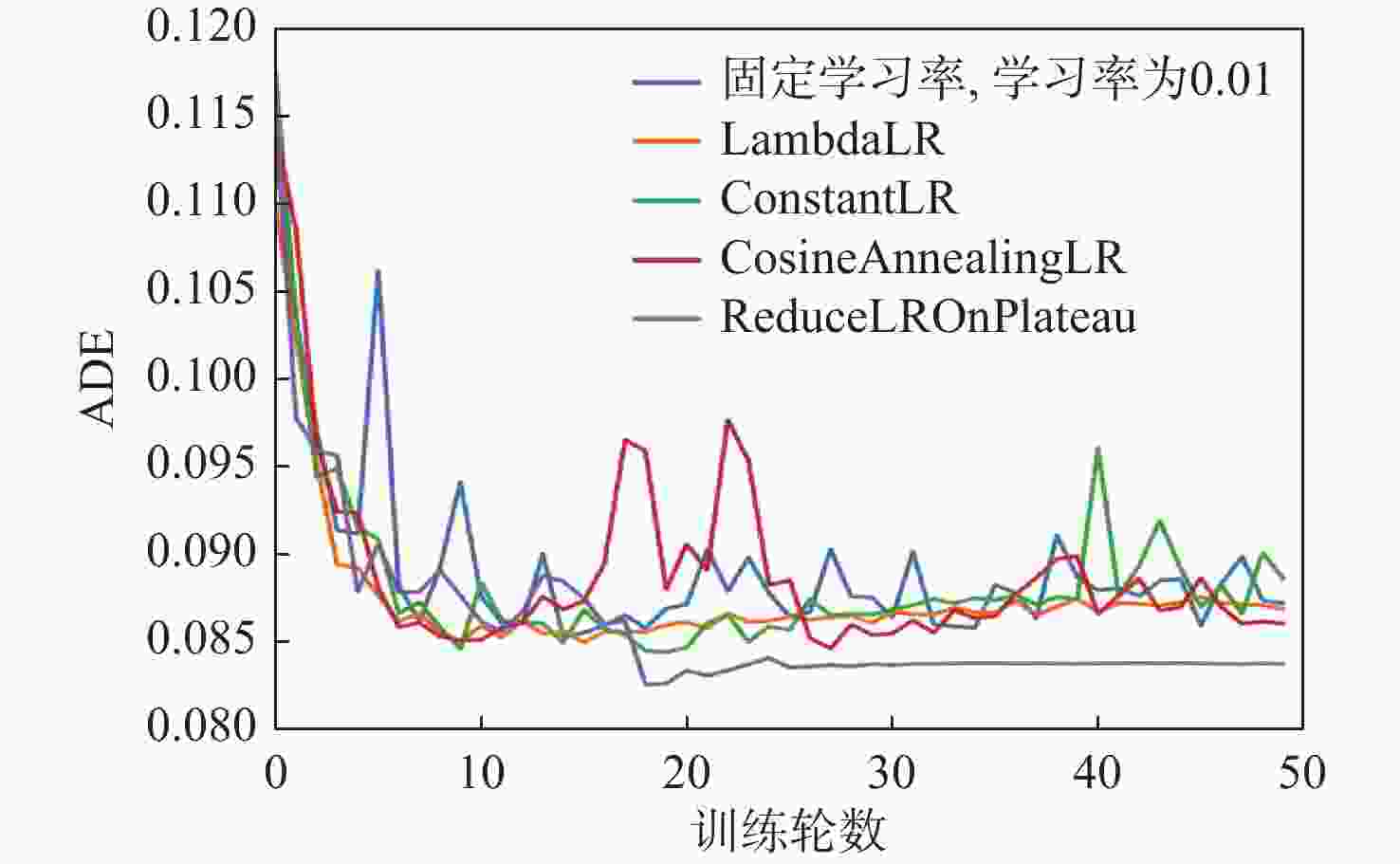
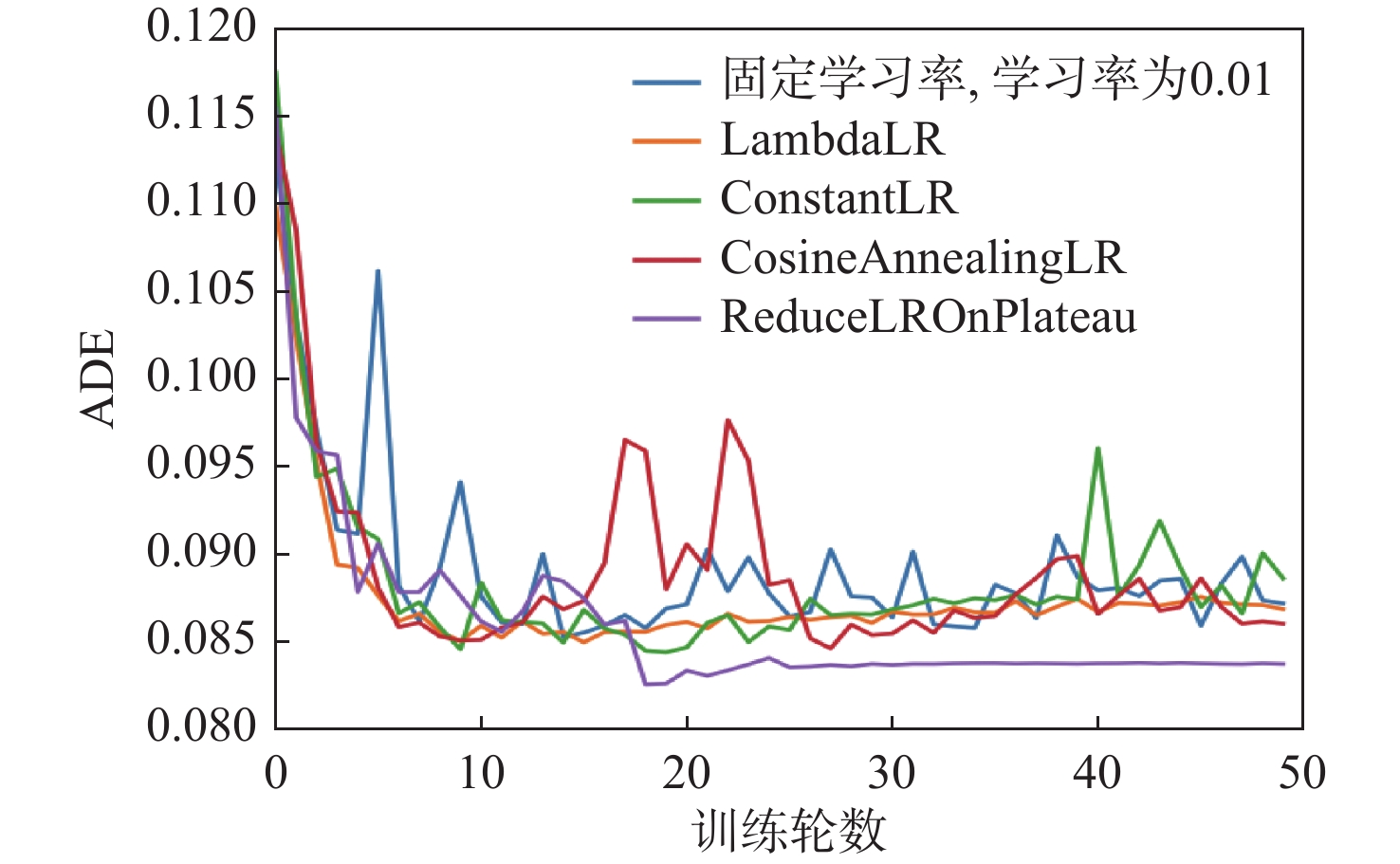
图 12 不同学习率调整策略的ADE变化趋势
Figure 12. ADE trends of different learning rate adjustment strategies
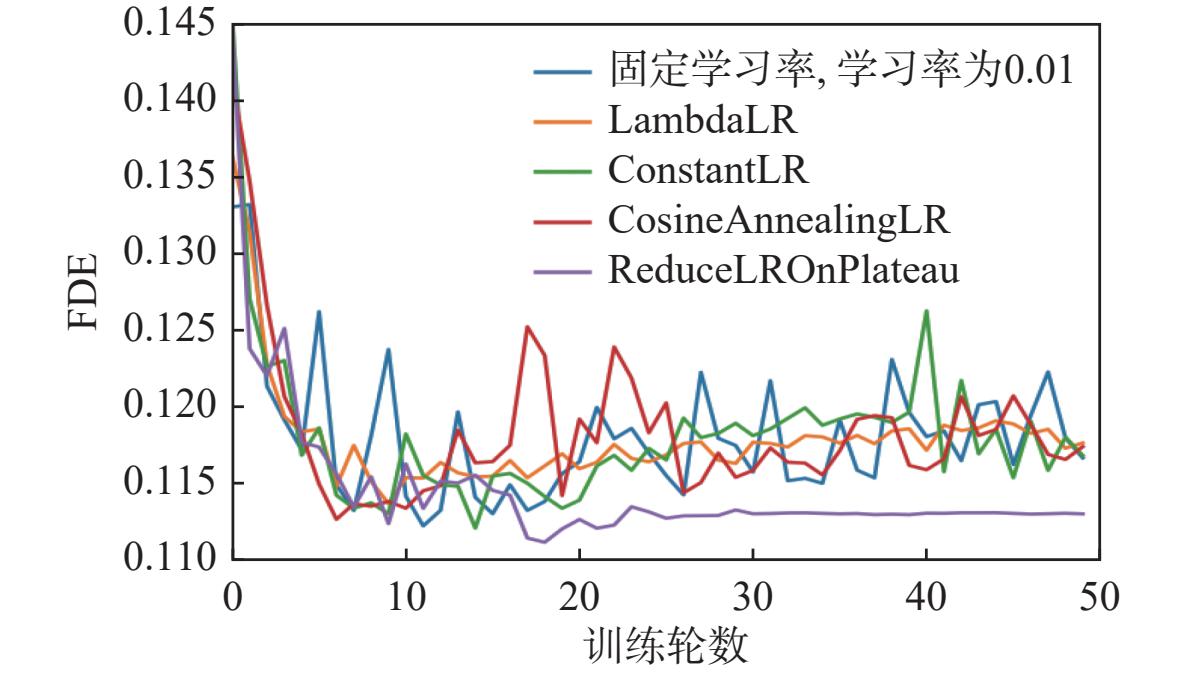
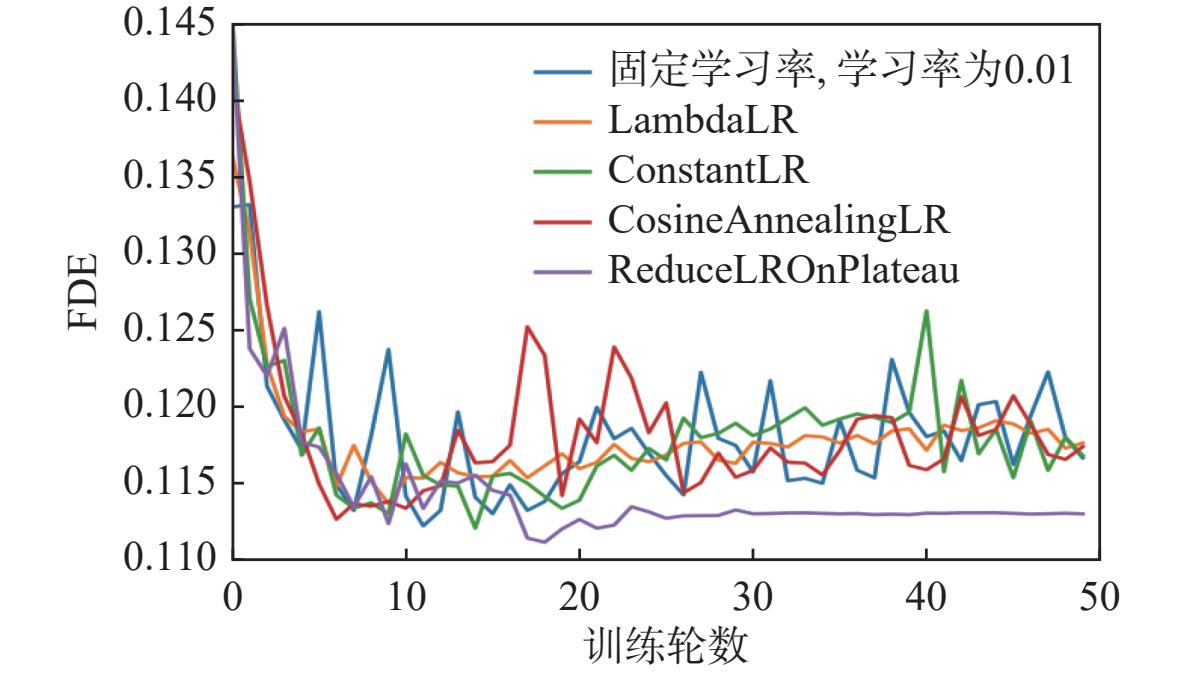
图 13 不同学习率调整策略的FDE变化趋势
Figure 13. FDE trends of different learning rate adjustment strategies
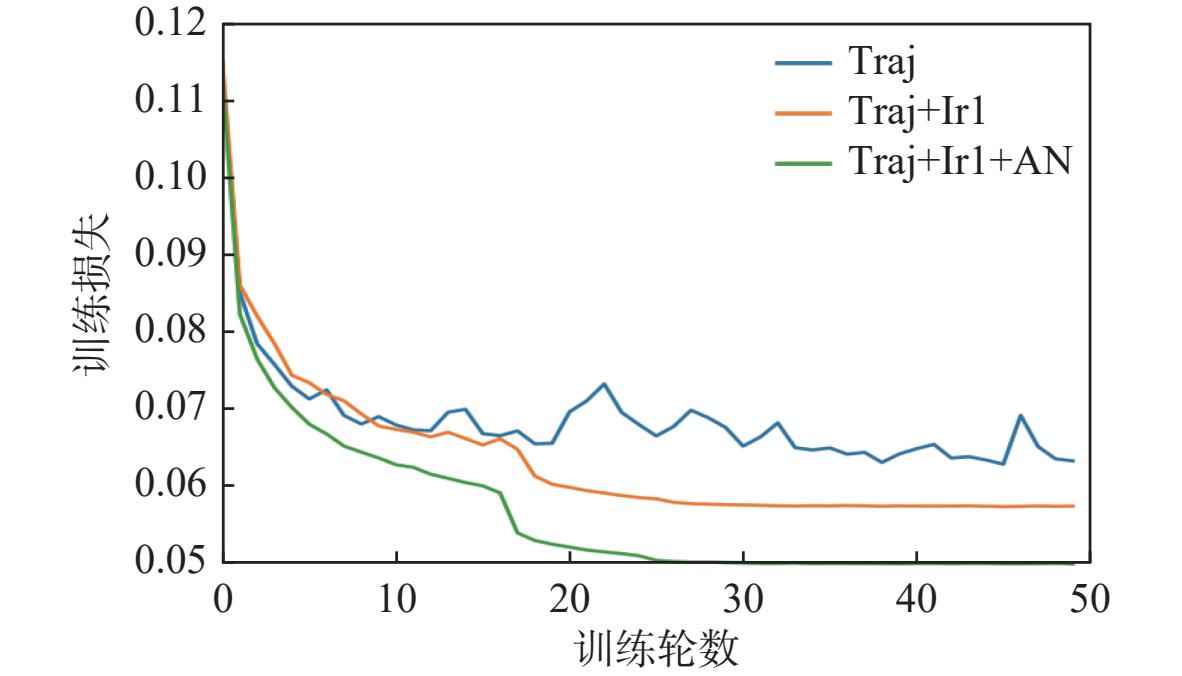
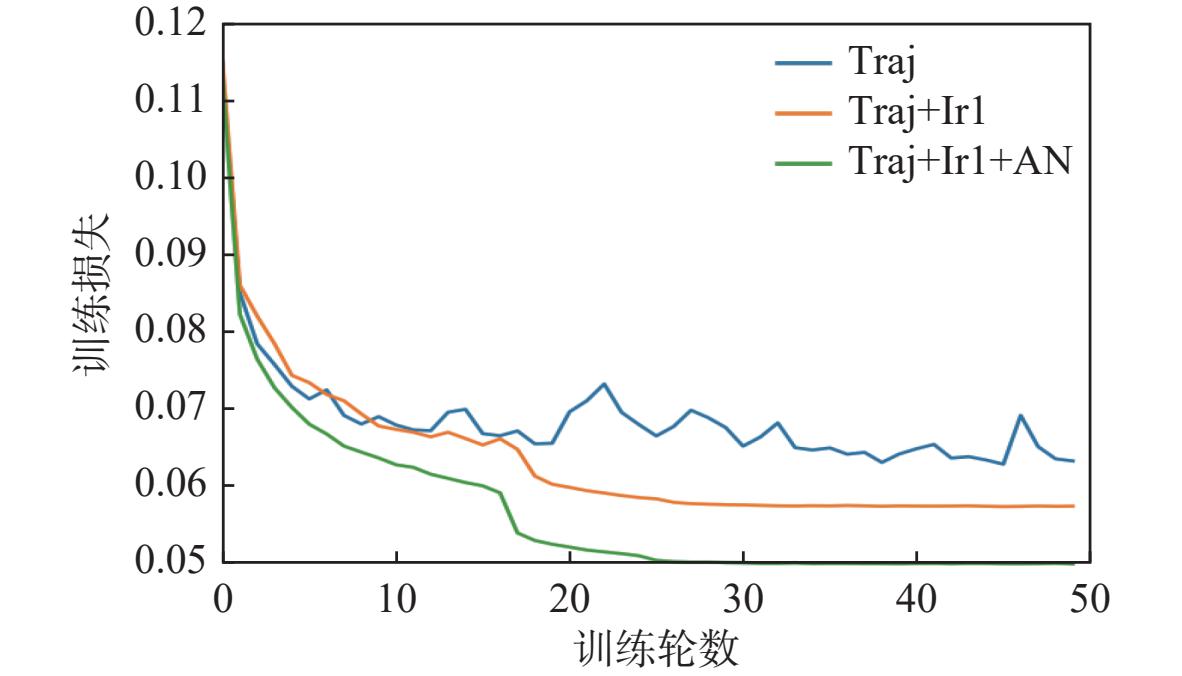
图 15 模型训练过程收敛性对比实验分析
Figure 15. Comparative experimental analysis of convergence of model training process
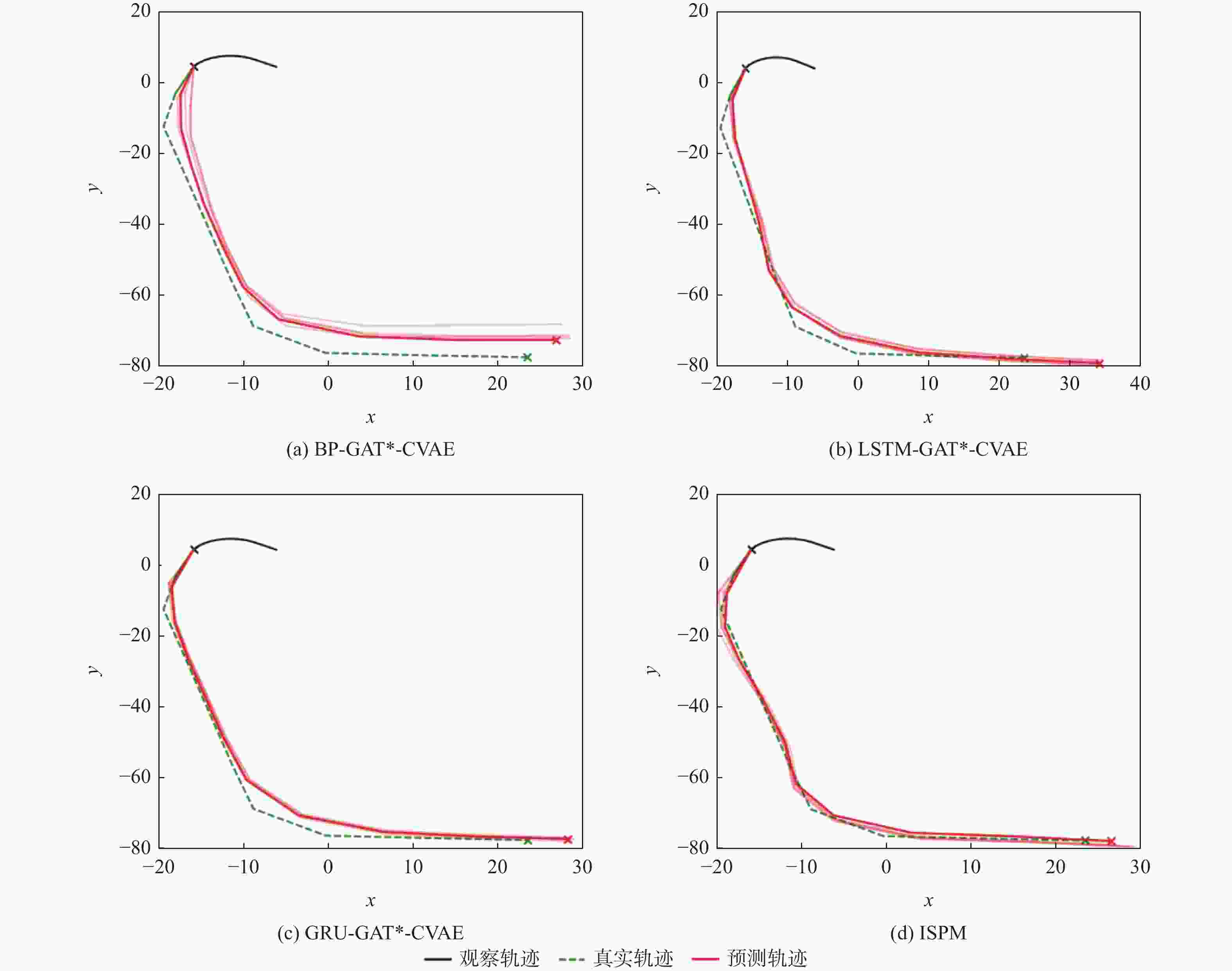
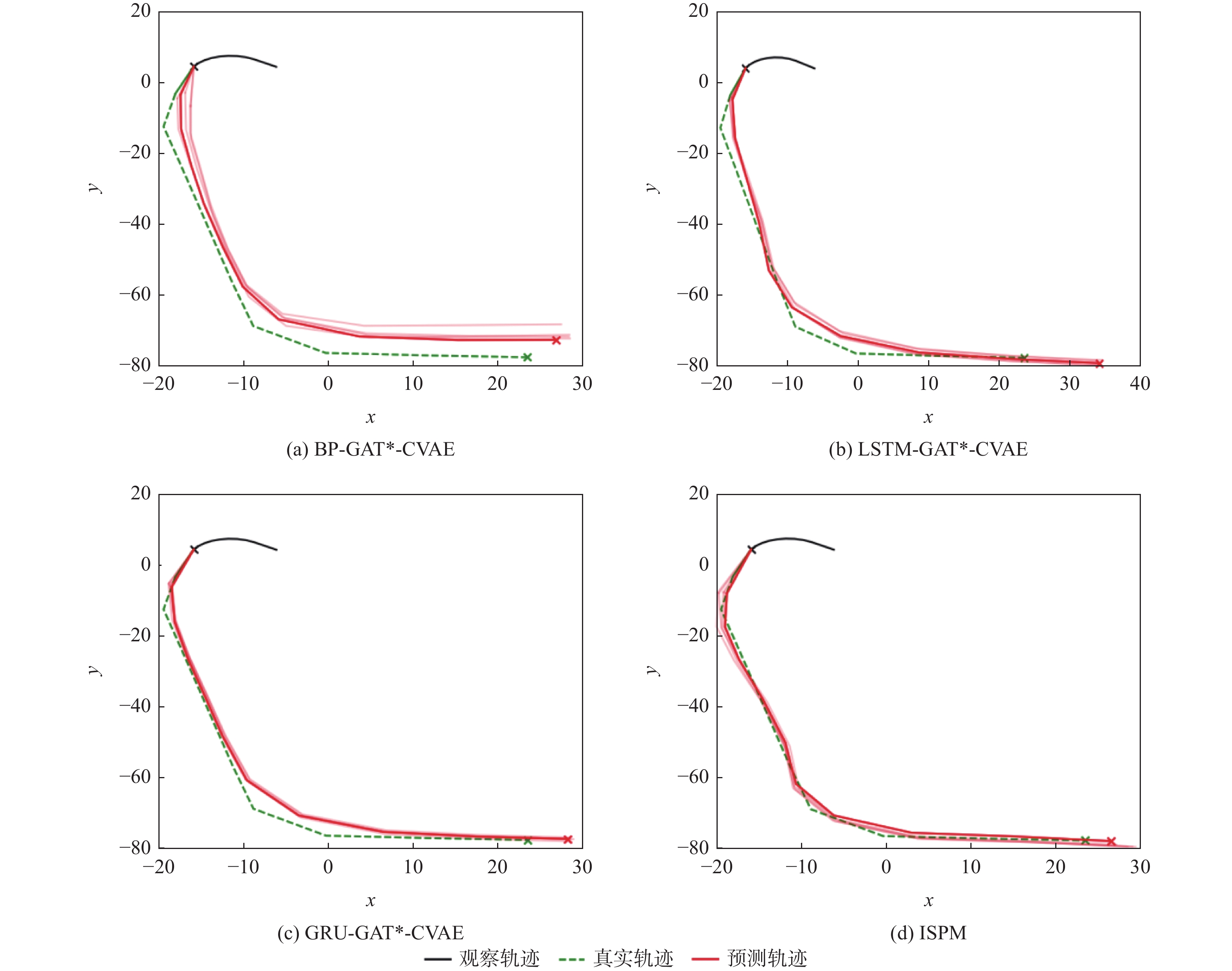
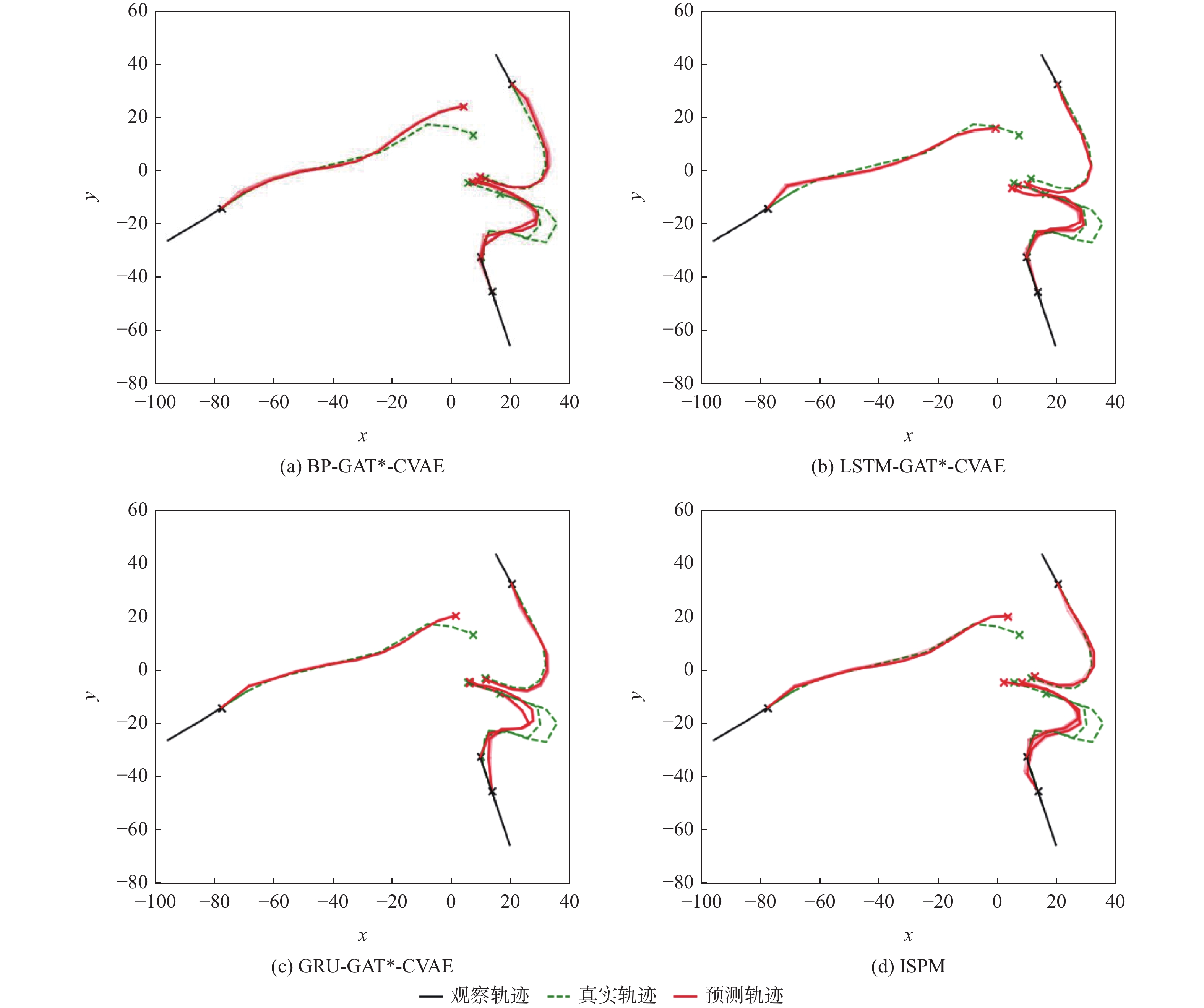
图 16 场景中只有1个航班时不同模型对比结果
Figure 16. Comparison results of different models when there is one flight in the scene
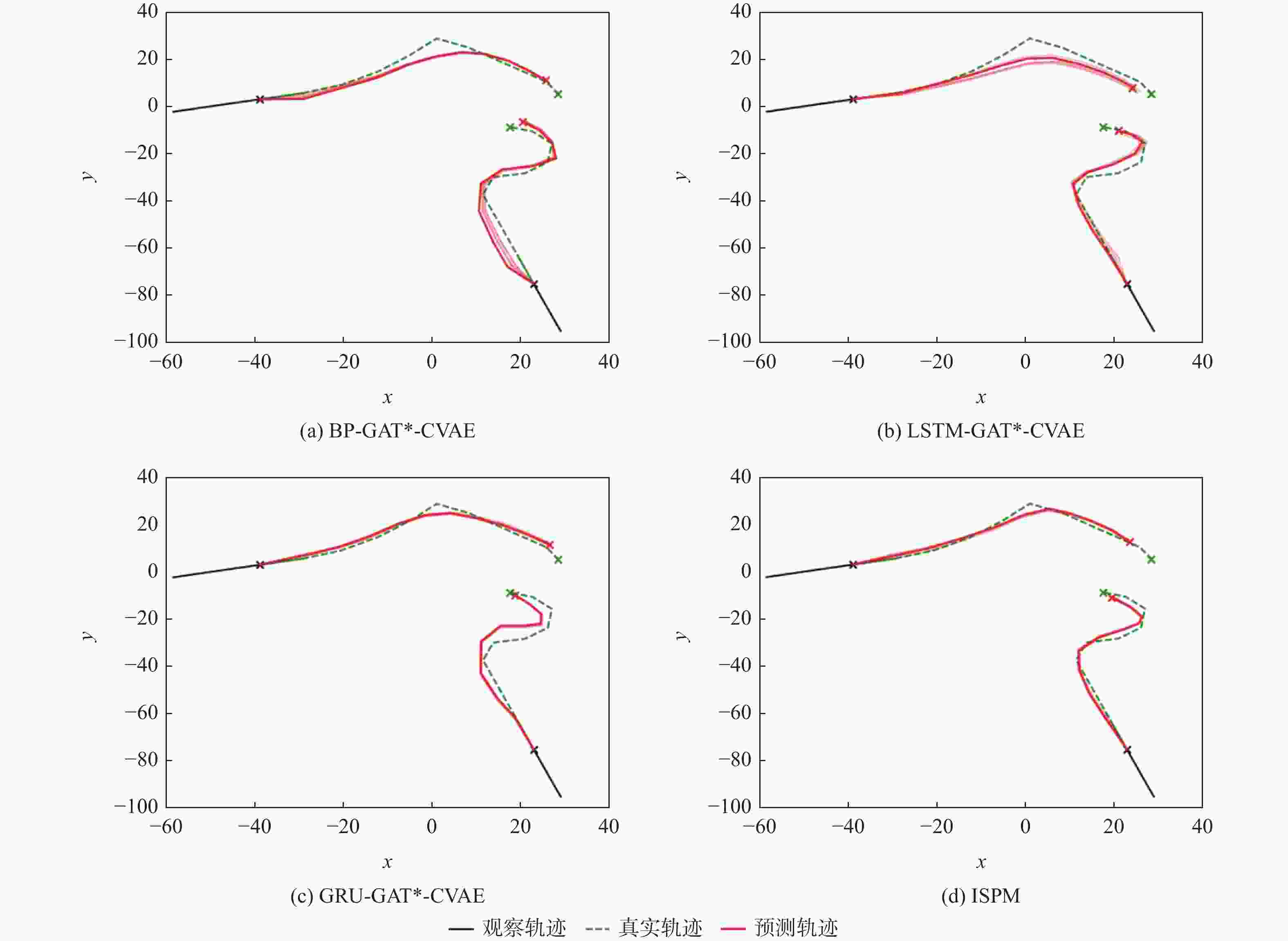
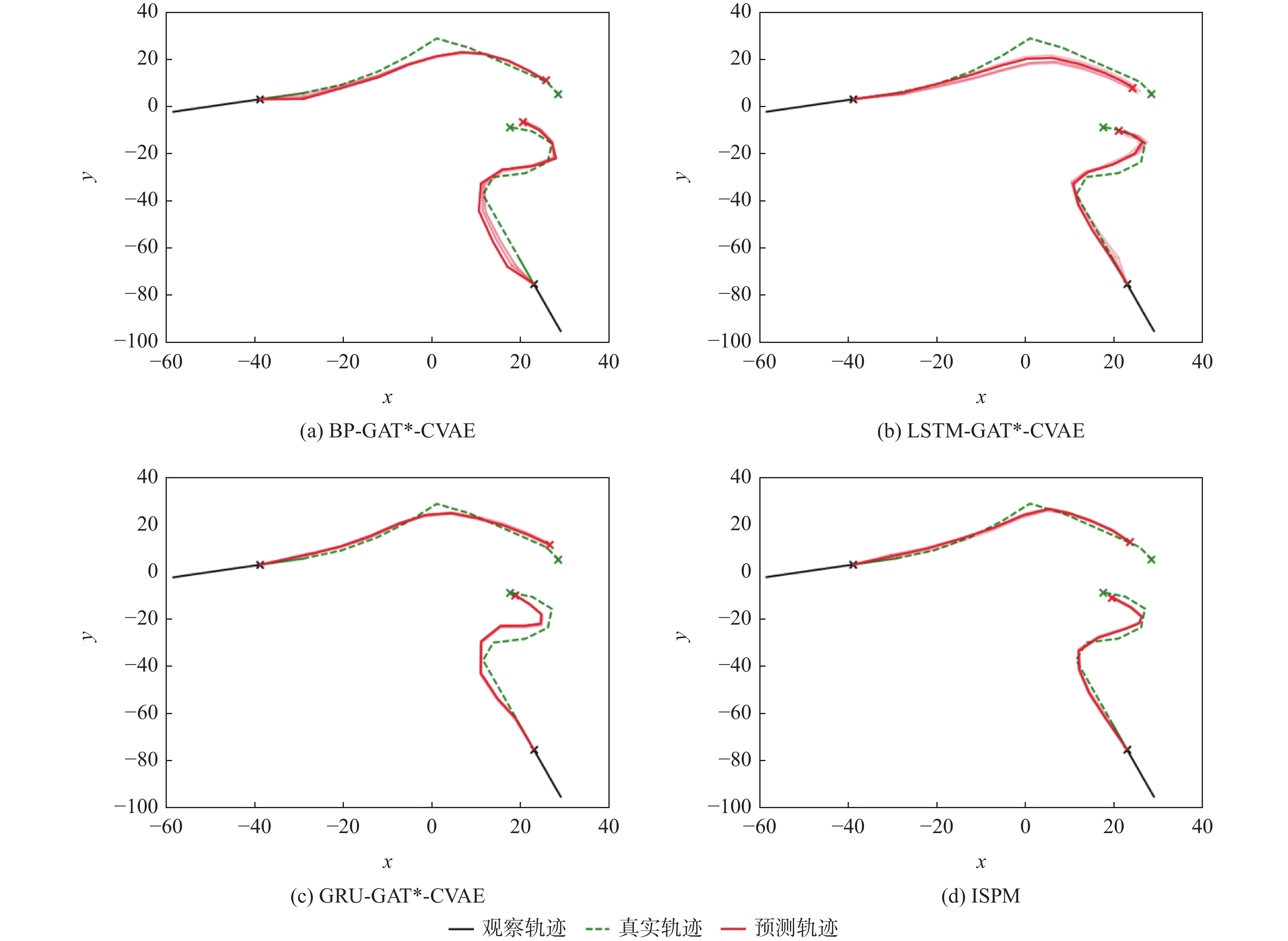
图 17 场景中有2个航班时不同模型对比结果
Figure 17. Comparison results of different models when there are two flights in the scene
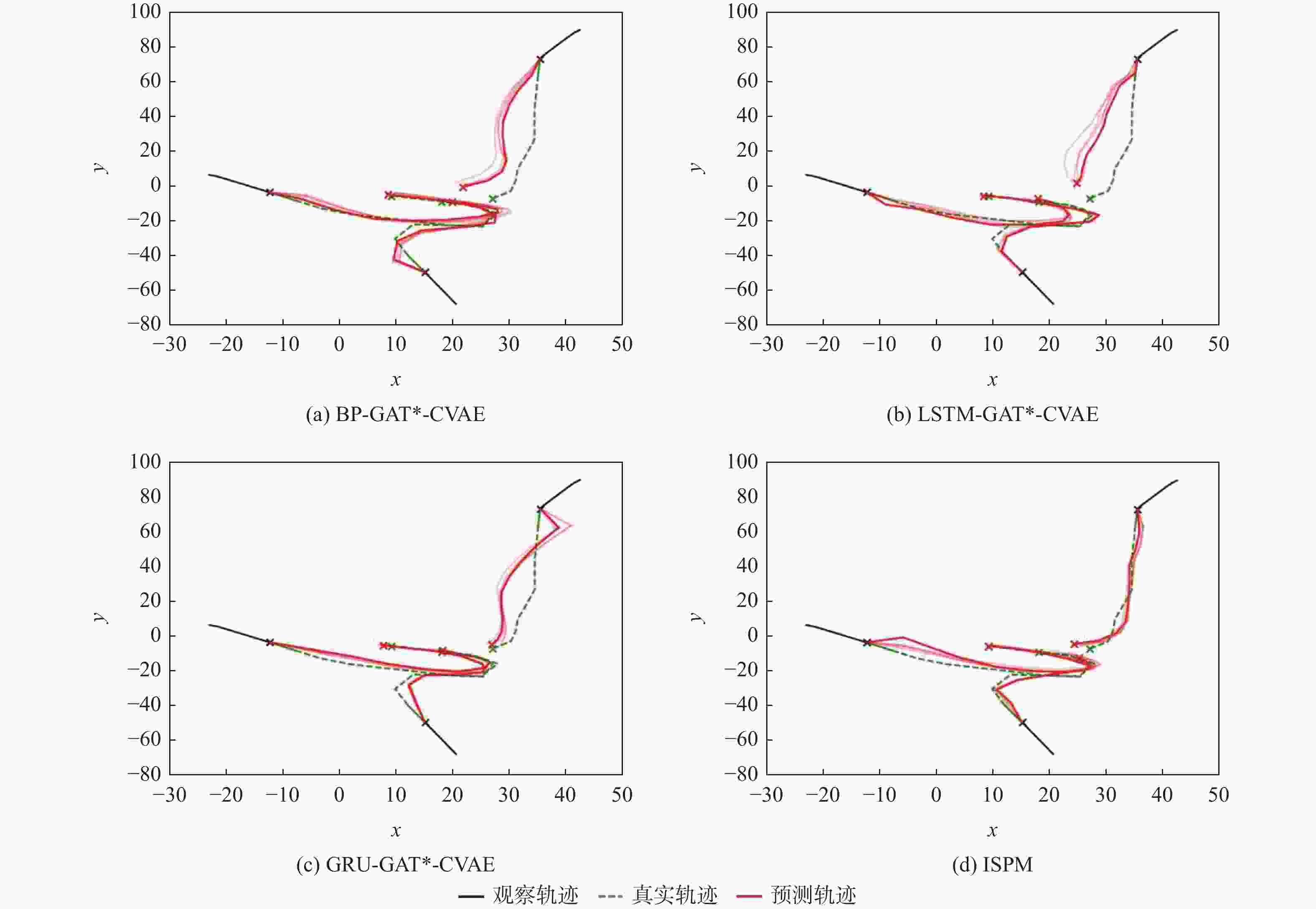
图 18 场景中有3个航班时不同模型对比结果
Figure 18. Comparison results of different models when there are three flights in the scene
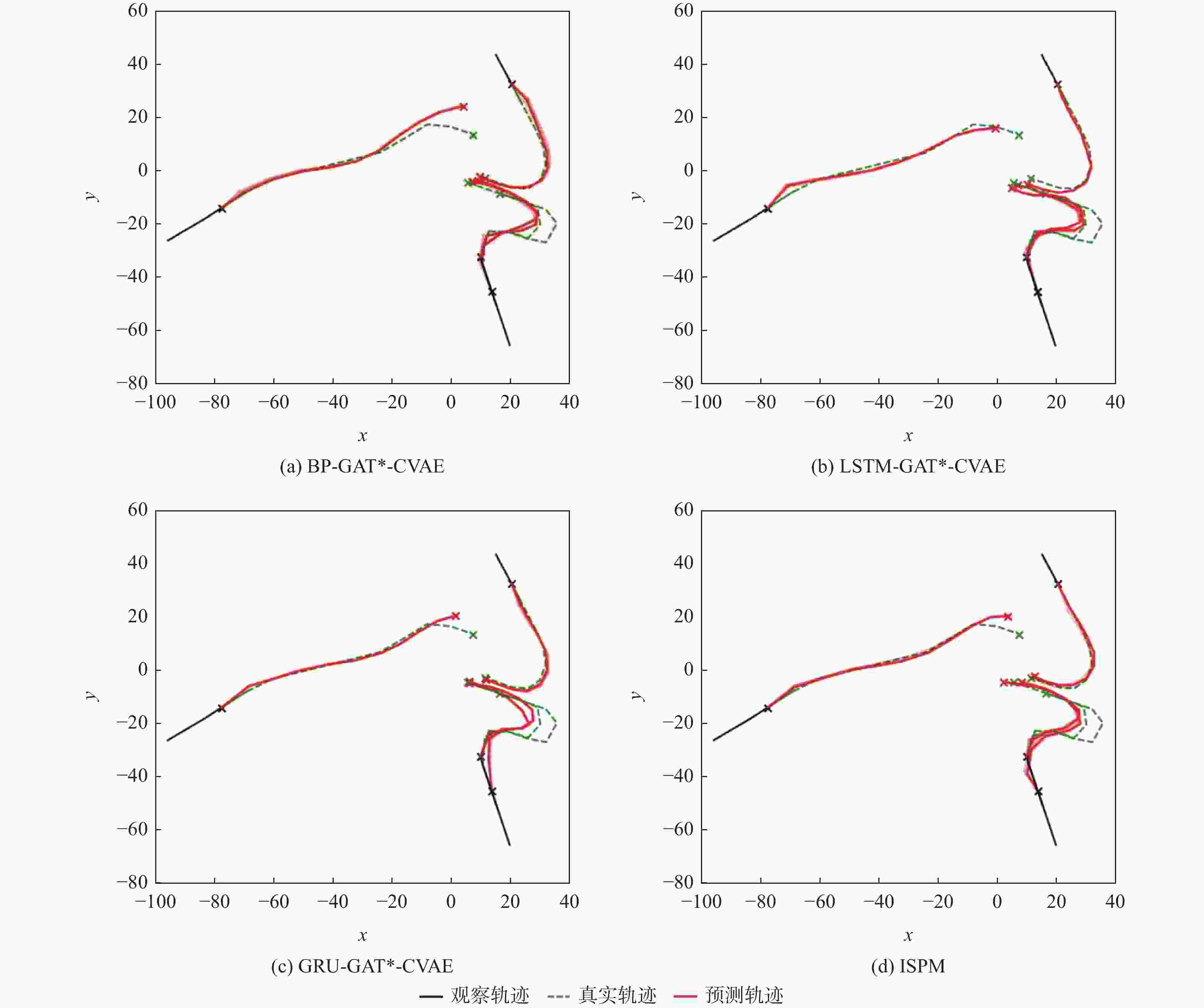
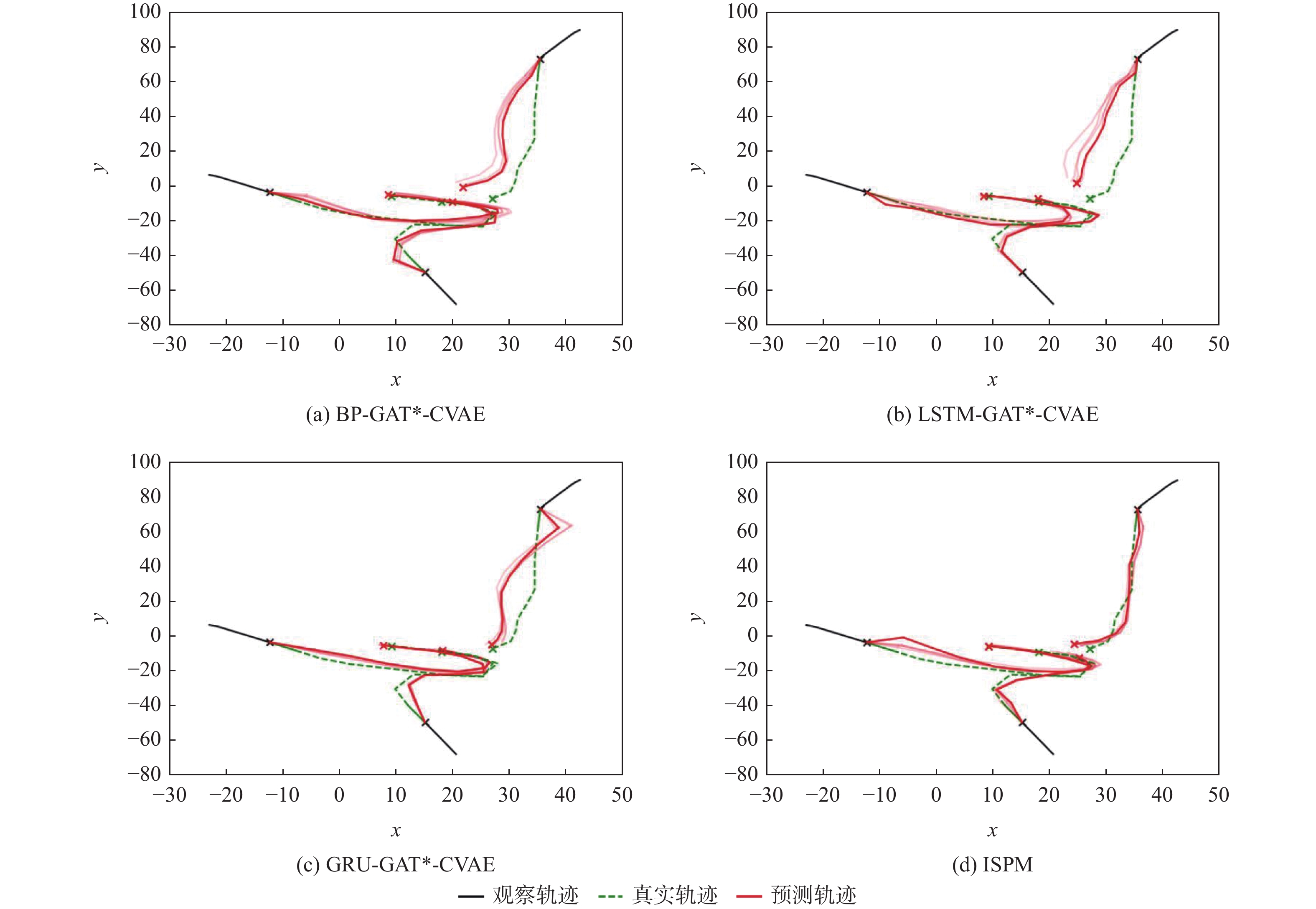
图 19 场景中有4个航班时不同模型对比结果
Figure 19. Comparison results of different models when there are four flights in the scene
表 1 航迹数据样本示例
Table 1. Sample example of flight trajectory data
时间 航班号 x y z 364 MM898 0.5252870606580 0.75507371166253 0.67043 365 MM898 0.5317204099315 0.76285541061643 0.69291 366 MM898 0.5379133001760 0.77027339096528 0.71970 367 MM898 0.5440692737049 0.77770654942161 0.73787 368 MU779 0.4876934397186 0.50982654276741 0.07076 368 MM898 0.5502592728813 0.78535442528130 0.74879 369 MU779 0.4839545720851 0.51135127848904 0.09410 369 MM898 0.5565259409597 0.79317226258636 0.75692 370 MM898 0.5624689206066 0.80164270291590 0.76263 370 MU779 0.4801439219490 0.51297539158761 0.11163  下载: 导出CSV
表 2 模型超参数设置
Table 2. Model hyperparameter settings
参数 数值 TCN卷积层输出的总通道数 256 TCN层数 2 TCN中卷积核的大小 [2,3] TCN中的膨胀系数(i为卷积层数,G为总层数) [2i, 2(G−1−i)] TCN中的Dropout 0.2 BiGRU网络层数 2 BiGRU中隐藏层大小 128 GAT*中的注意力头数量 16 GAT*模型中隐藏层大小 256 GAT*中激活函数的负斜率参数 0.2 CVAE中隐藏层大小 128 CVAE中卷积层输出的通道数 128 CVAE网络层数 2 采样次数M 5
下载: 导出CSV
表 3 不同模型对比实验分析
Table 3. Comparative experimental analysis of different models
模型 ADE FDE BP-GAT*-CVAE 0.0938 0.1184 LSTM-GAT*-CVAE 0.0899 0.1219 GRU-GAT*-CVAE 0.0895 0.1212 ISPM 0.0826 0.1111
下载: 导出CSV
表 4 历史数据的长度敏感性分析
Table 4. Length sensitivity analysis of historical data
历史数据长度 预测时间步长 时间步 ADE FDE 8 60 6 0.0913 0.1243 12 60 6 0.0826 0.1111 24 60 6 0.0881 0.1119 36 60 6 0.0954 0.1169
下载: 导出CSV
表 5 通用航空数据集上的对比结果
Table 5. Compare results on general aviation datasets
模型 数据集 ADE FDE Trajairnet 7days1 0.73 1.42 7days2 0.81 1.63 7days3 0.86 1.72 7days4 0.71 1.41 ISPM 7days1 0.66 1.31 7days2 0.73 1.44 7days3 0.83 1.65 7days4 0.66 1.33
下载: 导出CSV
表 6 消融实验结果
Table 6. Results of ablation experiments
功能模块 ADE FDE ISPM-B 0.0839 0.1117 ISPM-T 0.0854 0.1137 ISPM-M 0.0852 0.1154 ISPM-D 0.0846 0.1142 ISPM 0.0826 0.1111
下载: 导出CSV
-
[1] Tang X M, Han Y X. 4D trajectory estimation for air traffic control automation system based on hybrid system theory[J]. PROMET-Traffic& Transportation, 2012, 24(2): 91-98. [2] Lee J, Lee S, Hwang I. Hybrid system modeling and estimation for arrival time prediction in terminal airspace[J]. Journal of Guidance, Control, and Dynamics, 2016, 39(4): 903-910. [3] Seah C E, Hwang I. Terminal-area aircraft tracking using hybrid estimation[J]. Journal of Guidance, Control, and Dynamics, 2009, 32(3): 836-849. [4] Lymperopoulos I, Lygeros J. Sequential Monte Carlo methods for multi-aircraft trajectory prediction in air traffic management[J]. International Journal of Adaptive Control and Signal Processing, 2010, 24(10): 830-849. [5] Song Y, Cheng P, Mu C D. An improved trajectory prediction algorithm based on trajectory data mining for air traffic management[C]//Proceedings of the IEEE International Conference on Information and Automation. Piscataway: IEEE Press, 2012: 981-986. [6] Ayhan S, Samet H. Aircraft trajectory prediction made easy with predictive analytics[C]//Proceedings of the 22nd ACM SIGKDD International Conference on Knowledge Discovery and Data Mining. New York: ACM, 2016: 21-30. [7] Shi Z Y, Xu M, Pan Q, et al. LSTM-based flight trajectory prediction[C]//Proceedings of the International Joint Conference on Neural Networks. Piscataway: IEEE Press, 2018: 1-8. [8] Tran P N, Nguyen H Q V, Pham D T, et al. Aircraft trajectory prediction with enriched intent using encoder-decoder architecture[J]. IEEE Access, 2022, 10: 17881-17896. [9] Huang J, Ding W J. Aircraft trajectory prediction based on Bayesian optimised temporal convolutional network-bidirectional gated recurrent unit hybrid neural network[J]. International Journal of Aerospace Engineering, 2022, 2022. : 1-19. [10] 焦卫东, 杨蓓. 一种融合MSC和时空注意力的TCN航迹预测方法[J]. 北京航空航天大学学报, 2026, 52(1): 15-27.Jiao W D, Yang B. A TCN trajectory prediction method fusing MSC and spatio-temporal attention[J]. Journal of Beijing University of Aeronautics and Astronautics, 2026, 52(1): 15-27 (in Chinese). [11] 李楠, 孙伯鑫, 焦庆宇, 等. 基于GA-BP神经网络的终端区航迹预测[C]//世界交通运输工程技术论坛. 北京: 中国公路学会, 2021: 396-405.Li N, Sun B X, Jiao Q Y, et al. Trajectory prediction of terminal area based on GA-BP neural network[C]//Proceedings of the World Transport Convention. Beijing: China Highway and Transportation Society, 2021: 396-405(in Chinese). [12] 李旭娟, 皮建勇, 黄飞翔, 等. 基于自生成深度神经网络的4D航迹预测[J]. 计算机应用, 2021, 41(5): 1492-1499.Li X J, Pi J Y, Huang F X, et al. Self-generated deep neural network based 4D trajectory prediction[J]. Journal of Computer Applications, 2021, 41(5): 1492-1499(in Chinese). [13] Zeng W L, Quan Z B, Zhao Z Y, et al. A deep learning approach for aircraft trajectory prediction in terminal airspace[J]. IEEE Access, 2020, 8: 151250-151266. [14] Xu Z F, Zeng W L, Chu X, et al. Multi-aircraft trajectory collaborative prediction based on social long short-term memory network[J]. Aerospace, 2021, 8(4): 115. [15] Pang Y T, Liu Y M. Probabilistic aircraft trajectory prediction considering weather uncertainties using dropout as Bayesian approximate variational inference[C]//Proceedings of the Scitech 2020 Forum. Reston: AIAA, 2020: 1413. [16] Pang Y T, Zhao X Y, Hu J M, et al. Bayesian spatio-temporal graph Transformer network (B-STAR) for multi-aircraft trajectory prediction[J]. Knowledge-Based Systems, 2022, 249: 108998. [17] Xu Z F, Liu Y, Chu X, et al. Aircraft trajectory prediction for terminal airspace employing social spatiotemporal graph convolutional network[J]. Journal of Aerospace Information Systems, 2023, 20(6): 319-333. [18] 韩萍, 张启, 石庆研, 等. 基于DBSCAN-GRU算法的终端区4D航迹预测[J]. 信号处理, 2023, 39(3): 439-449.Han P, Zhang Q, Shi Q Y, et al. 4D trajectory prediction of terminal area based on DBSCAN-GRU algorithm[J]. Journal of Signal Processing, 2023, 39(3): 439-449 (in Chinese). [19] CCAR-93TM-R6 民用航空空中交通管理规则[S].CCAR-93TM-R6 Civil aviation air traffic management rules[S] (in Chinese). [20] Lin Z, Yue W Q, Huang J, et al. Ship trajectory prediction based on the TTCN-attention-GRU model[J]. Electronics, 2023, 12(12): 2556. [21] Patrikar J, Moon B, Oh J, et al. Predicting like a pilot: dataset and method to predict socially-aware aircraft trajectories in non-towered terminal airspace[C]//Proceedings of the International Conference on Robotics and Automation. Piscataway: IEEE Press, 2022: 2525-2531. -

 下载:

计量
- 文章访问数: 344
- HTML全文浏览量: 159
- PDF下载量: 123
- 被引次数: 0
