





Refined prediction of terminal area traffic congestion based on multimodal spatio-temporal feature fusion
-
摘要:
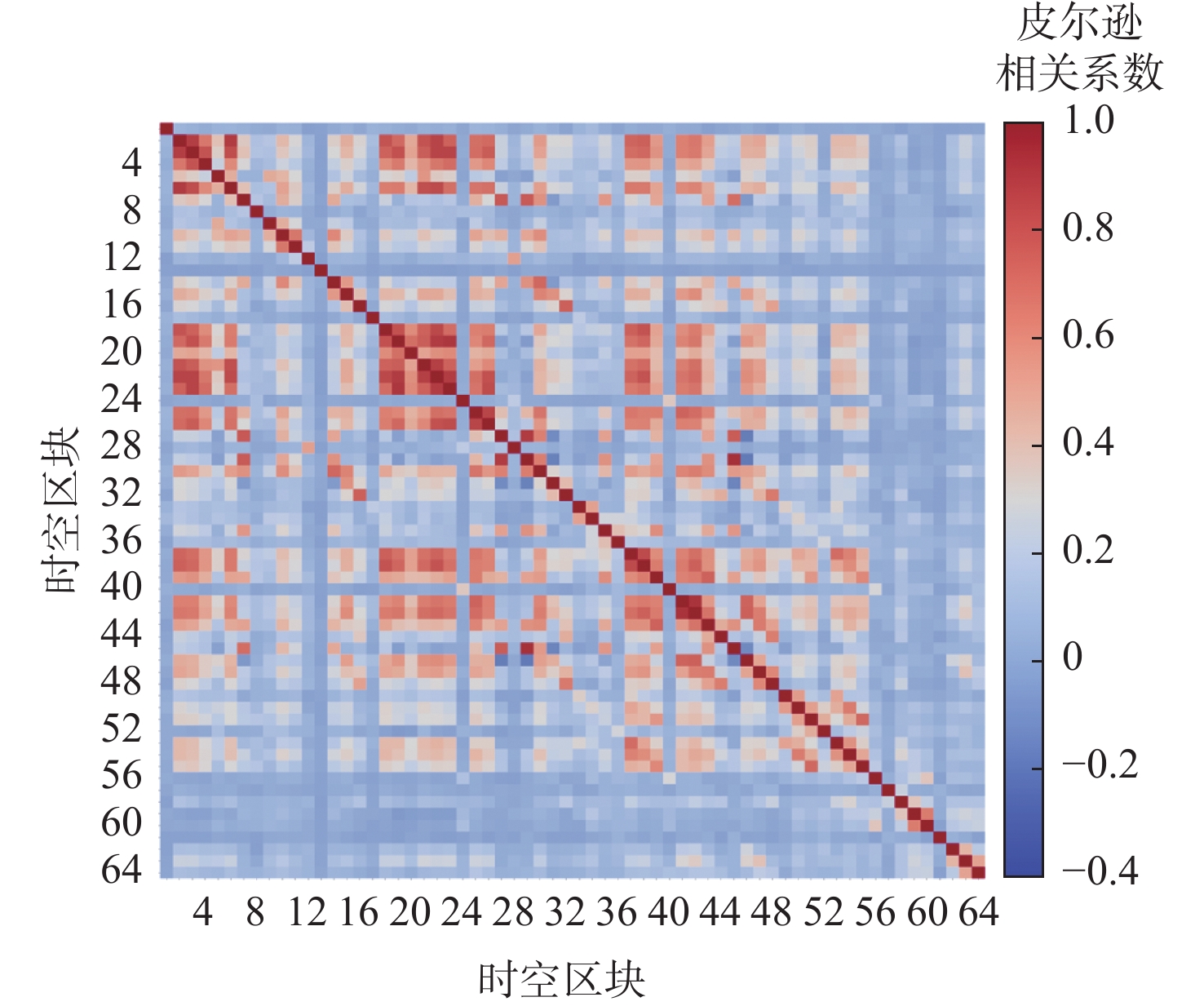
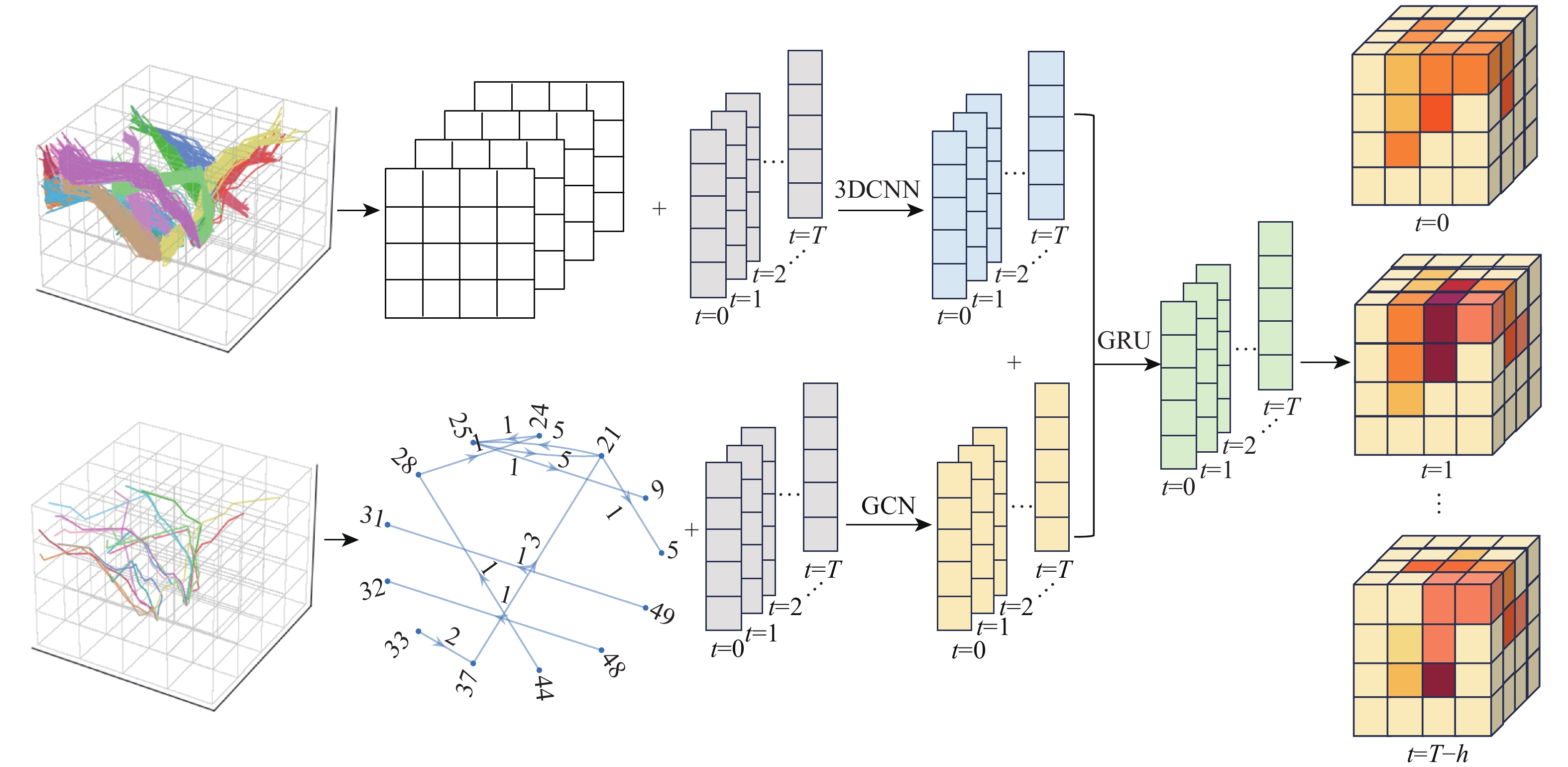
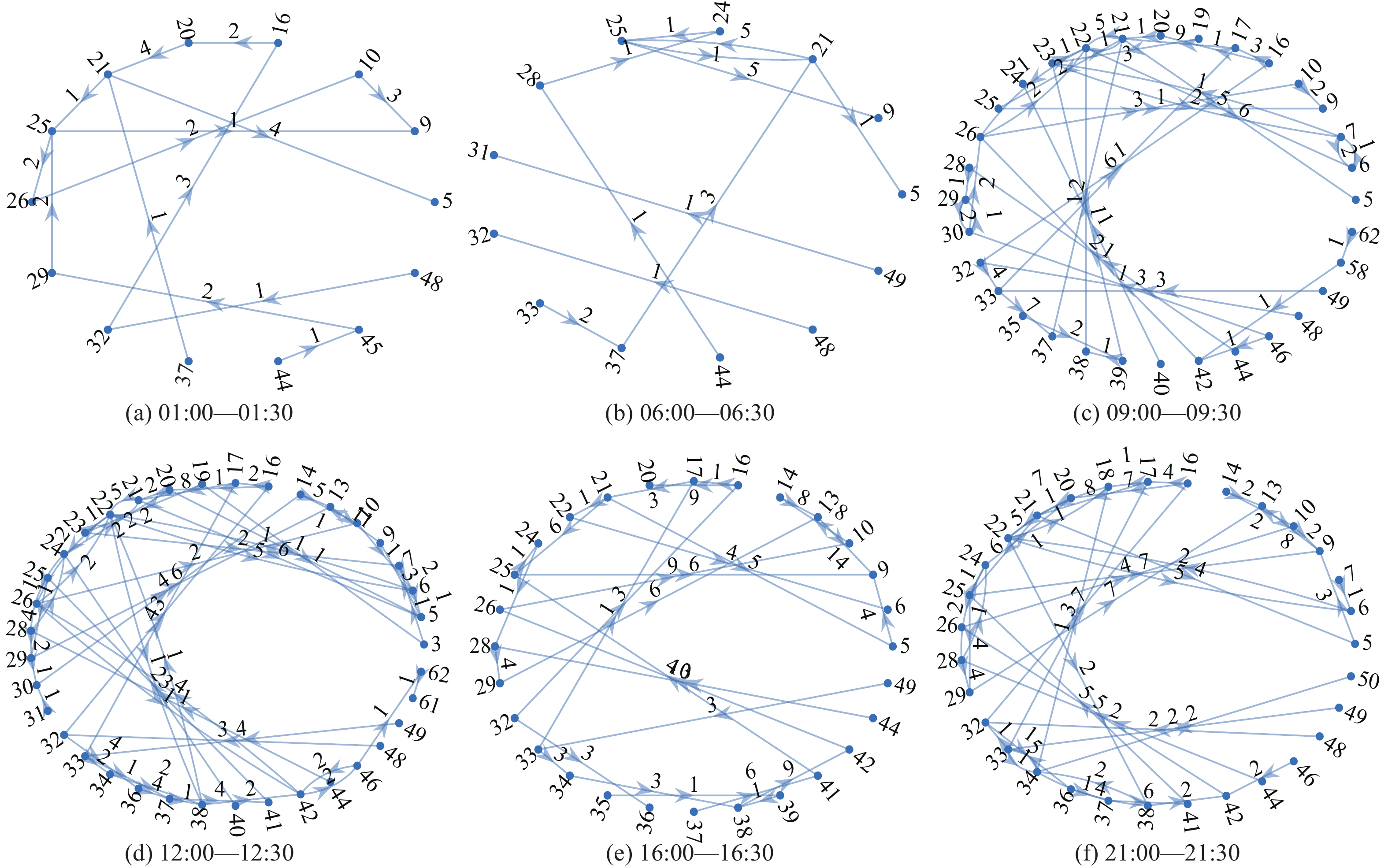
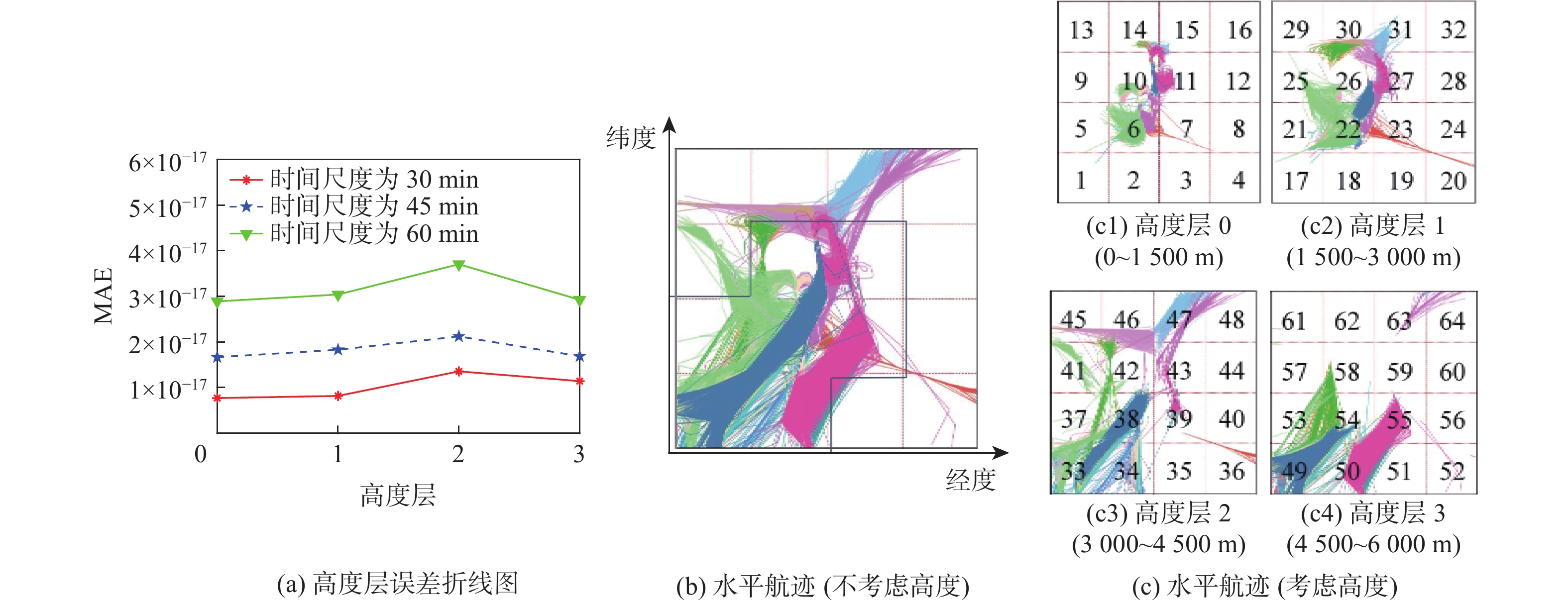
为提升对终端区未来交通态势把握的准确性和精细化,提出一套基于多模态时空特征融合的交通拥堵预测方法。从航空器滞留和管制负荷角度,采用交通流聚类技术,提出一种考虑交通流异质性的交通拥堵指数计算方法;将终端区空域进行四维时空区块划分,以时空区块为节点,构建动态邻接网络和交通流网络,表征终端区多模态的动态空间相关特征;提出一种基于三维卷积神经网络(3DCNN)+图卷积网络(GCN)+门控循环单元(GRU)的终端区交通拥堵预测模型。采用北京终端区航迹数据进行模型验证,结果表明:所提模型优于经典基线模型,与45 min和60 min时间尺度相比,30 min预测效果最好,相较于历史平均(HA)模型、指数加权平均(EMA)模型、支持向量机回归(SVR)模型,均方根误差(RMSE)和平均绝对误差(MAE)分别下降了21%和57%、38%和72%、19%和51%;相较于只学习邻接空间特征、只学习交通流空间特征、改用长短时记忆(LSTM)学习时间特征,所提模型的RMSE和MAE分别下降了36%和40%、6%和8%、2%和2%。预测结果表明:航迹越复杂的区域,其预测误差越大,且随空域高度的上升,预测误差呈现出先增大后减小的变化规律。
Abstract:In order to enhance the accuracy and refinement of grasping the future traffic dynamics in the terminal area, a set of traffic congestion prediction methods based on the fusion of multimodal spatio-temporal features is proposed. First, from the standpoint of aircraft detention and control load, a traffic flow clustering technique is used to provide a traffic congestion index calculation method that takes traffic flow heterogeneity into account. Further, the airspace of the terminal area is divided into four-dimensional spatio-temporal blocks, and the spatio-temporal blocks are used as the nodes for constructing the dynamic adjacency network and the traffic flow network, which characterize the spatial correlation of the terminal area in a multimodal way. Finally, a three-dimensional convolutional neural network (3DCNN)+graph convolutional network (GCN)+gated recurrent unit (GRU)-based traffic congestion prediction model for terminal areas is proposed. The model validation was performed using Beijing terminal area trajectory data, and the results show that the method of this paper is superior to the classical baseline model, with the best prediction effect at 30 min compared to 45 min and 60 min time scales, and the root mean squared error (RMSE) and mean absolute error (MAE) compared to the history average (HA) model, exponential moving average (EMA) model, and support vector regression (SVR) regression model and MAE decreased by 21% and 57%, 38% and 72%, and 19% and 51%, respectively. The RMSE and MAE of this paper’s model fall by 36% and 40%, 6% and 8%, and 2% and 2%, respectively, as compared to learning only neighbor space features, learning only traffic flow space features, and transitioning to long short-term memory (LSTM) to learn temporal characteristics. At the same time, the prediction results show that the more complex the trajectory is, the greater its prediction error is, and with the rise in the altitude of the airspace, the prediction error shows an increase and then a decrease. Meanwhile, the prediction results show that the more complicated the trajectory is, the larger the prediction error is, and with the increase of airspace altitude, the prediction error shows an increase and then decrease.
-
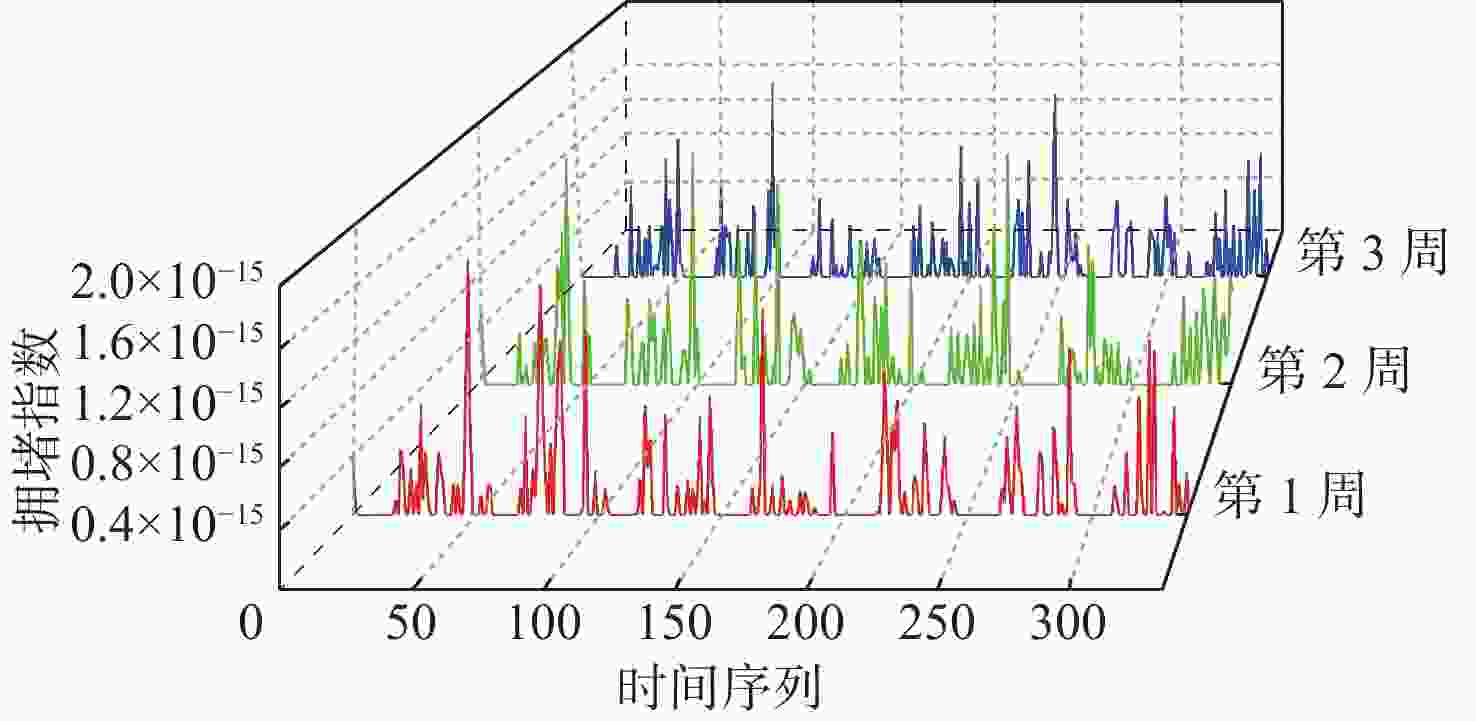
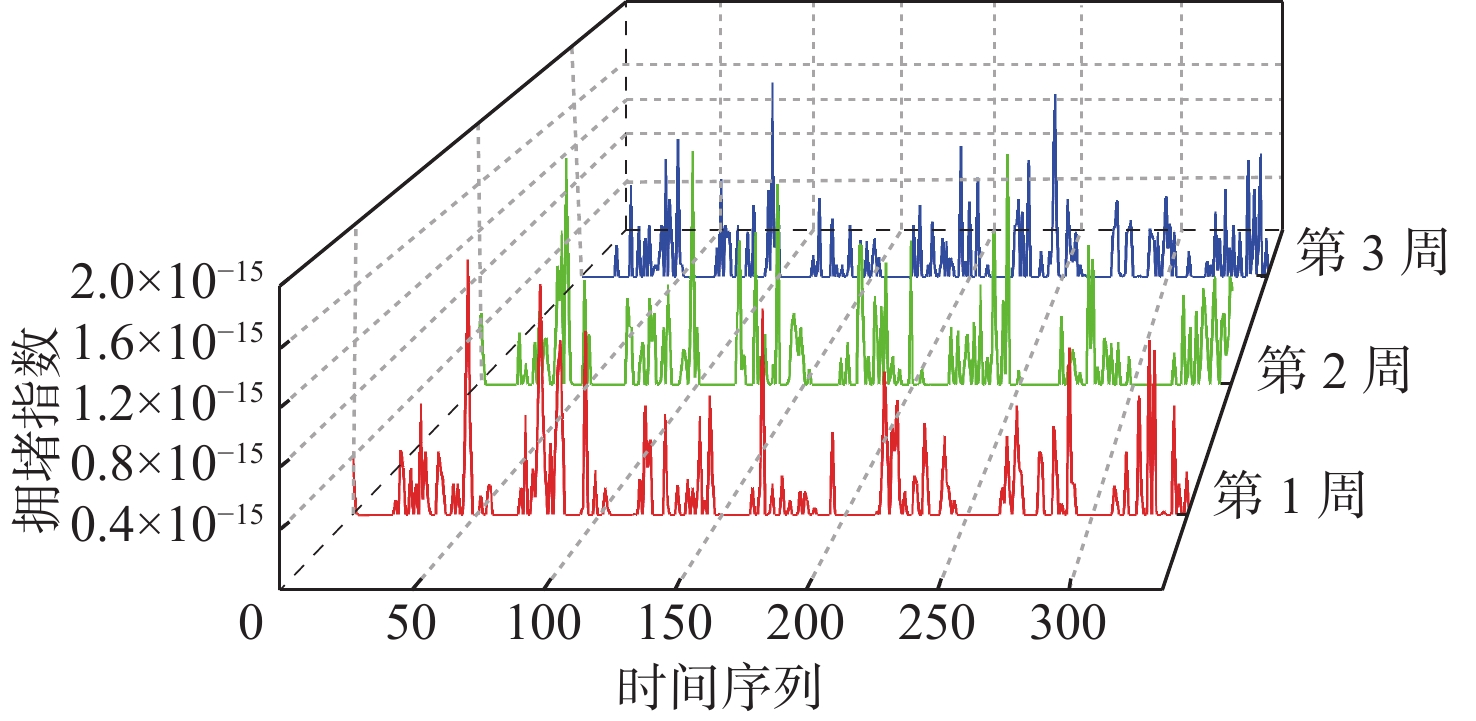
图 4 连续3周的拥堵指数变化趋势(时间尺度为30 min)
Figure 4. Congestion index has changed for three consecutive weeks (time scale is 30 min)
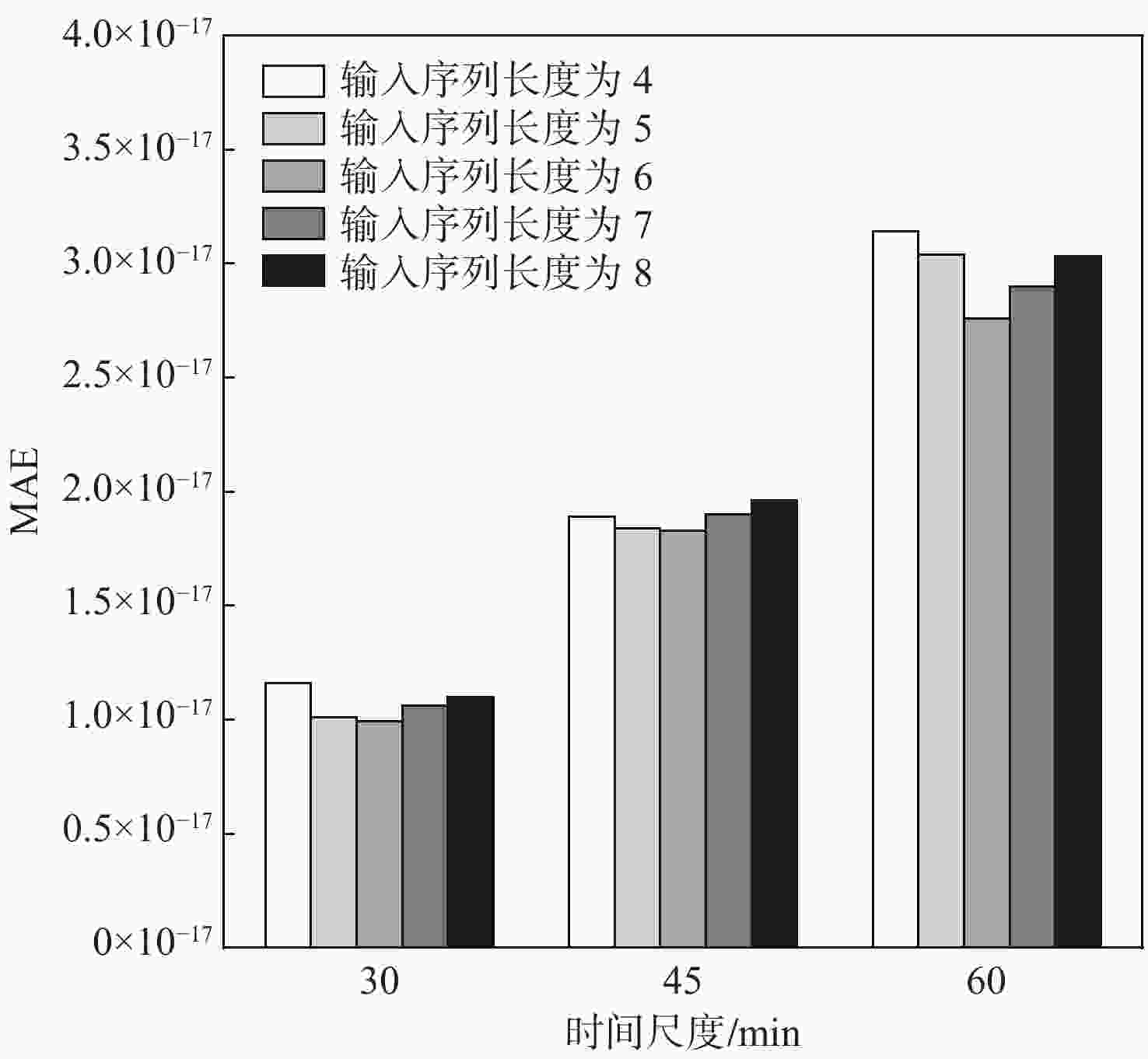
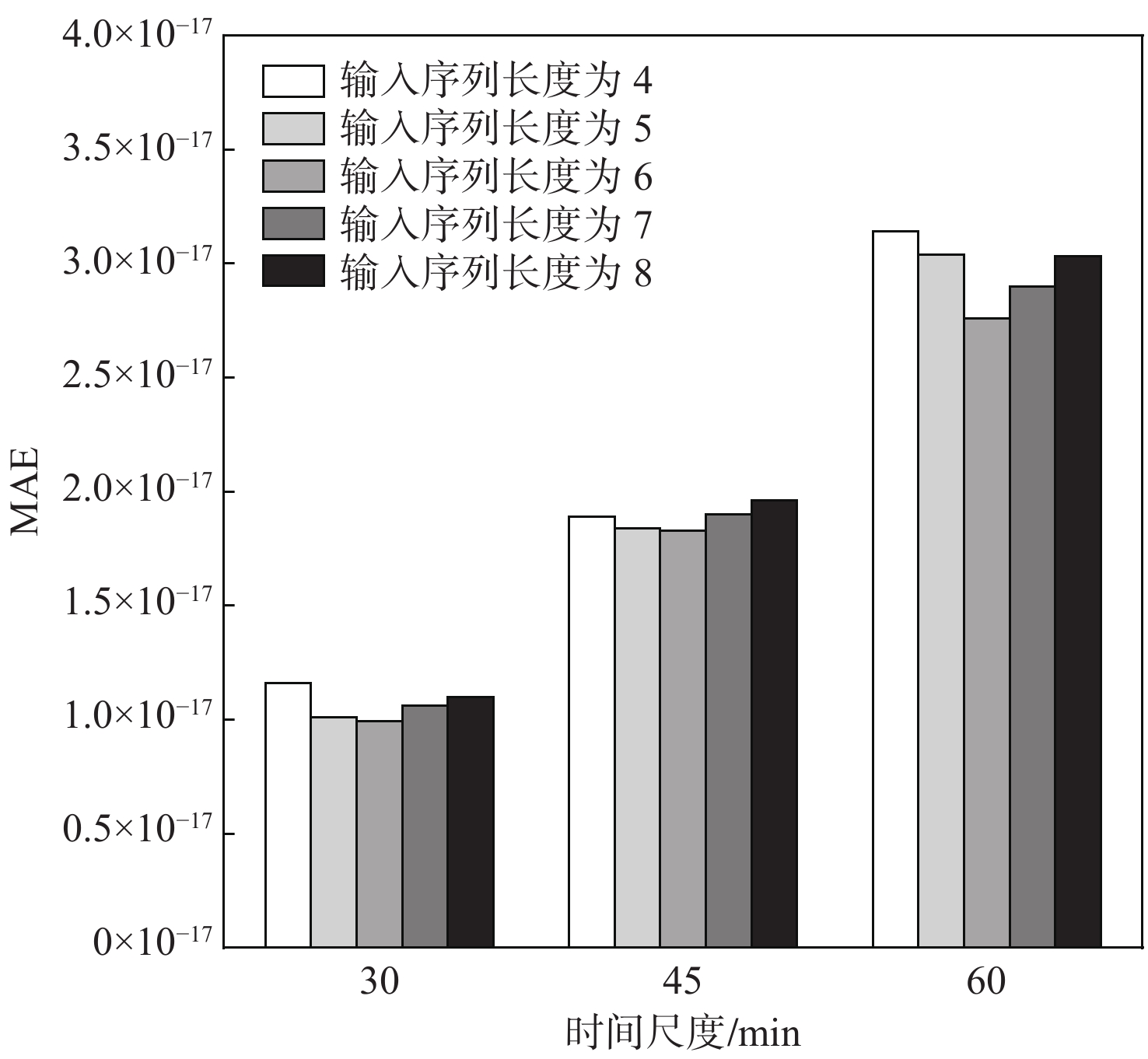
图 8 不同输入序列长度下各模型预测误差对比
Figure 8. Comparison of prediction errors of various models under different input sequence steps
表 1 交通拥堵计算结果
Table 1. Calculation results of traffic congestion
时空区块 平均拥堵指数 平均飞行时长/s 平均交通量/架 1 0 819.8 1.0 2 0 469.4 1.1 3 1.07×10⁻¹⁷ 468.2 1.9 $\vdots $ $\vdots $ $\vdots $ $\vdots $ 60 3.03×10⁻¹⁸ 681.3 1.4 61 3.14×10⁻¹⁸ 651.4 1.7 62 3.33×10⁻¹⁸ 612.0 1.7 63 7.4×10⁻¹⁸ 712.3 2.0  下载: 导出CSV
表 2 模型误差对比
Table 2. Comparison of model errors
模型 MAE RMSE 时间尺度为30 min 时间尺度为45 min 时间尺度为60 min 时间尺度为30 min 时间尺度为45 min 时间尺度为60 min HA 2.32×10⁻¹⁷ 3.91×10⁻¹⁷ 5.70×10⁻¹⁷ 5.60×10⁻¹⁷ 8.38×10⁻¹⁷ 1.11×10⁻¹⁶ EMA 3.56×10⁻¹⁷ 3.25×10⁻¹⁷ 4.72×10⁻¹⁷ 7.17×10⁻¹⁷ 6.49×10⁻¹⁷ 8.58×10⁻¹⁷ SVR 2.02×10⁻¹⁷ 3.45×10⁻¹⁷ 5.02×10⁻¹⁷ 5.47×10⁻¹⁷ 8.20×10⁻¹⁷ 1.09×10⁻¹⁶ CNN+GRU 1.08×10⁻¹⁷ 1.85×10⁻¹⁷ 2.95×10⁻¹⁷ 4.74×10⁻¹⁷ 8.02×10⁻¹⁷ 1.11×10⁻¹⁶ GCN+GRU 1.64×10⁻¹⁷ 2.84×10⁻¹⁷ 4.32×10⁻¹⁷ 6.93×10⁻¹⁷ 1.03×10⁻¹⁶ 1.41×10⁻¹⁶ CNN+GCN+LSTM 1.02×10⁻¹⁷ 1.98×10⁻¹⁷ 3.24×10⁻¹⁷ 4.52×10⁻¹⁷ 7.36×10⁻¹⁷ 1.02×10⁻¹⁶ CNN+GCN+GRU 9.92×10⁻¹⁸ 1.83×10⁻¹⁷ 2.76×10⁻¹⁷ 4.41×10⁻¹⁷ 6.51×10⁻¹⁷ 9.61×10⁻¹⁷
下载: 导出CSV
表 3 水平区块误差
Table 3. Horizontal block error
水平区块 MAE均值 MAE标准差 1 2.54×10⁻¹⁷ 8.63×10⁻¹⁷ 2 1.74×10⁻¹⁷ 8.80×10⁻¹⁷ 3 1.05×10⁻¹⁸ 1.44×10⁻¹⁷ 4 5.33×10⁻¹⁸ 4.32×10⁻¹⁷ 5 1.48×10⁻¹⁷ 6.84×10⁻¹⁷ 6 2.56×10⁻¹⁷ 5.99×10⁻¹⁷ 7 2.08×10⁻¹⁷ 7.69×10⁻¹⁷ 8 1.07×10⁻¹⁷ 6.02×10⁻¹⁷ 9 5.17×10⁻¹⁹ 1.46×10⁻¹⁷ 10 1.39×10⁻¹⁷ 6.45×10⁻¹⁷ 11 1.34×10⁻¹⁷ 6.15×10⁻¹⁷ 12 6.60×10⁻¹⁸ 4.67×10⁻¹⁷ 13 1.40×10⁻¹⁸ 2.07×10⁻¹⁷ 14 2.01×10⁻¹⁸ 2.66×10⁻¹⁷ 15 1.14×10⁻¹⁹ 1.23×10⁻¹⁷ 16 5.56×10⁻²⁰ 3.29×10⁻¹⁸
下载: 导出CSV
-
[1] 殷建棠, 刘继新, 田文, 等. 基于时空图卷积的航段拥挤态势预测[J]. 北京航空航天大学学报, 2025, 51(11): 3906-3915.Yin J T, Liu J X, Tian W, et al. Segment congestion situation prediction based on spatiotemporal graph convolution[J]. Journal of Beijing University of Aeronautics and Astronautics, 2025, 51(11): 3906-3915(in Chinese). [2] 李桂毅, 胡明华, 张洪海. 基于FCM-SVM方法的时空航路网交通状态识别研究[J]. 武汉理工大学学报(交通科学与工程版), 2018, 42(4): 569-573.Li G Y, Hu M H, Zhang H H. Research on traffic state identification of spatio-temporal air route network based on FCM-SVM method[J]. Journal of Wuhan University of Technology (Transportation Science & Engineering), 2018, 42(4): 569-573(in Chinese). [3] Williams K, Reichmuth J. An assessment of air traffic management in Europe during the calendar year 2004[EB/OL]. (2005-04-13)[2024-07-01]. https://www.eurocontrol.int/publication/performance-review-report-prr-2004. [4] 李善梅, 徐肖豪, 王超, 等. 基于灰色聚类的交叉航路拥挤识别方法[J]. 西南交通大学学报, 2015, 50(1): 189-197.Li S M, Xu X H, Wang C, et al. Congestion identification of crossing air routes based on gray clustering method[J]. Journal of Southwest Jiaotong University, 2015, 50(1): 189-197(in Chinese). [5] Tan X H, Sun Y S, Zeng W L, et al. Congestion recognition of the air traffic control sector based on deep active learning[J]. Aerospace, 2022, 9(6): 302. [6] Lin Y, Zhang J W, Liu H. An algorithm for trajectory prediction of flight plan based on relative motion between positions[J]. Frontiers of Information Technology & Electronic Engineering, 2018, 19(7): 905-916. [7] 张军峰, 蒋海行, 武晓光, 等. 基于BADA及航空器意图的四维航迹预测[J]. 西南交通大学学报, 2014, 49(3): 553-558.Zhang J F, Jiang H X, Wu X G, et al. 4D trajectory prediction based on BADA and aircraft intent[J]. Journal of Southwest Jiaotong University, 2014, 49(3): 553-558(in Chinese). [8] Saraf A P, Slater G L. Adaptive eulerian modeling for air traffic flow management[J]. Journal of Aircraft, 2008, 45(5): 1585-1600. [9] 毛利民, 彭瑛, 李杰, 等. 基于随机森林的对流天气下终端区容量预测[J]. 系统工程理论与实践, 2021, 41(8): 2125-2136.Mao L M, Peng Y, Li J, et al. Random-forest based terminal capacity prediction under convective weather[J]. Systems Engineering-Theory & Practice, 2021, 41(8): 2125-2136(in Chinese). [10] 李桂毅, 郭铭宇, 罗一帆. 基于集成学习算法的航路网络航段交通拥挤识别方法研究[J]. 交通运输系统工程与信息, 2020, 20(2): 166-173.Li G Y, Guo M Y, Luo Y F. Traffic congestion identification of air route network segment based on ensemble learning algorithms[J]. Journal of Transportation Systems Engineering and Information Technology, 2020, 20(2): 166-173(in Chinese). [11] Khanmohammadi S, Tutun S, Kucuk Y. A new multilevel input layer artificial neural network for predicting flight delays at JFK airport[J]. Procedia Computer Science, 2016, 95: 237-244. [12] Cai K Q, Shen Z Q, Luo X Y, et al. Temporal attention aware dual-graph convolution network for air traffic flow prediction[J]. Journal of Air Transport Management, 2023, 106: 102301. [13] 焦卫东, 杨蓓. 一种融合MSC和时空双重注意力的TCN航迹预测方法[J]. 北京航空航天大学学报, 2026, 52(1): 15-27.Jiao W D, Yang B. A TCN trajectory prediction method fusing MSC and spatio-temporal dual attention[J]. Journal of Beijing University of Aeronautics and Astronautics, 2026, 52(1): 15-27(in Chinese). [14] Wang K, Ma C X, Qiao Y H, et al. A hybrid deep learning model with 1DCNN-LSTM-Attention networks for short-term traffic flow prediction[J]. Physica A: Statistical Mechanics and its Applications, 2021, 583: 126293. [15] 刘晓琳, 郭梦娇, 李卓. 基于AAGC-GRU的航班延误组合预测方法[J]. 北京航空航天大学学报, 2025, 51(1): 30-42.Liu X L, Guo M J, Li Z. Combined prediction method of flight delay based on attention-based adaptive graph convolution-gated recurrentunit[J]. Journal of Beijing University of Aeronautics and Astronautics, 2025, 51(1): 30-42(in Chinese). [16] Cao M M, Li V O K, Shuai Q Q. DeepGAL: intelligent vehicle control for traffic congestion alleviation at intersections[J]. IEEE Transactions on Intelligent Transportation Systems, 2023, 24(7): 6836-6848. [17] Sun F R, Xu X J, Zhang H M, et al. Evolution mechanism and optimisation of traffic congestion[J]. The Aeronautical Journal, 2024, 128(1321): 598-630. -

 下载:

计量
- 文章访问数: 740
- HTML全文浏览量: 226
- PDF下载量: 129
- 被引次数: 0
