





Progress in the investigation of electro-thermal coupled catastrophic mechanisms in lithium-ion battery modules
-
摘要:
锂离子电池的热灾害问题一直是其应用过程中重大安全威胁之一。锂离子电池系统热灾害存在界面热稳定性衰退、单体电池内短路热失控、模组乃至系统热扩散的灾变逻辑过程。电与热交互的耦合灾变则既是表征锂离子电池系统热灾害逻辑的重要维度,又是治理锂离子电池系统热灾害的关键突破口。针对锂离子电池系统长周期、多尺度下的电热耦合灾变问题,归纳总结了单体电池固体电解质界面(SEI)膜分解阶段、隔膜融化阶段,以及模组热扩散阶段蕴含的自产热、焦耳热及热传导等热行为对电行为的作用机制,梳理了过充、过放及老化等电行为在上述阶段的产热及传热行为,概括了单体及模组最具代表性的电-热耦合模型。从微观与宏观多角度探索电热行为的联动机制,并对未来锂离子电池模组电热耦合领域进行了展望,旨在为锂离子电池模组的设计与运维提供参考。
Abstract:In the many applications of lithium-ion batteries, the problem of thermal failure presents a significant safety risk. This failure is characterized by a sequence of events: the degradation of interface thermal stability, the onset of thermal runaway triggered by internal short circuits within a cell, and the subsequent thermal propagation at both the module and system levels. The coupled electro-thermal catastrophe serves as both a critical dimension in characterizing the thermal failure logic of lithium-ion battery systems and a key breakthrough in managing these thermal failures. This paper provides a thorough analysis of the thermal behaviors, such as self-generated heat, Joule heating, and heat conduction, that affect electrical behaviors during the solid electrolyte interphase (SEI) layer decomposition of a single cell, the separator melting, and heat propagation at the module level for electro-thermal coupling catastrophe in lithium-ion battery systems over long cycles and across multiple scales. The heat generation and heat transfer behaviors associated with electrical phenomena are also analyzed, such as overcharging, overdischarging and battery aging. The paper also reviews the most prominent electro-thermal coupling models for both individual cells and modules, providing a synthesis of the mechanisms that govern the electro-thermal interactions in lithium-ion batteries. By exploring these interactions from both microscopic and macroscopic viewpoints, the study aims to shed light on the future advancements in the management of electro-thermal coupling in battery modules. The goal of this research is to improve the safety and dependability of lithium-ion battery systems through design, operation, and maintenance.
-
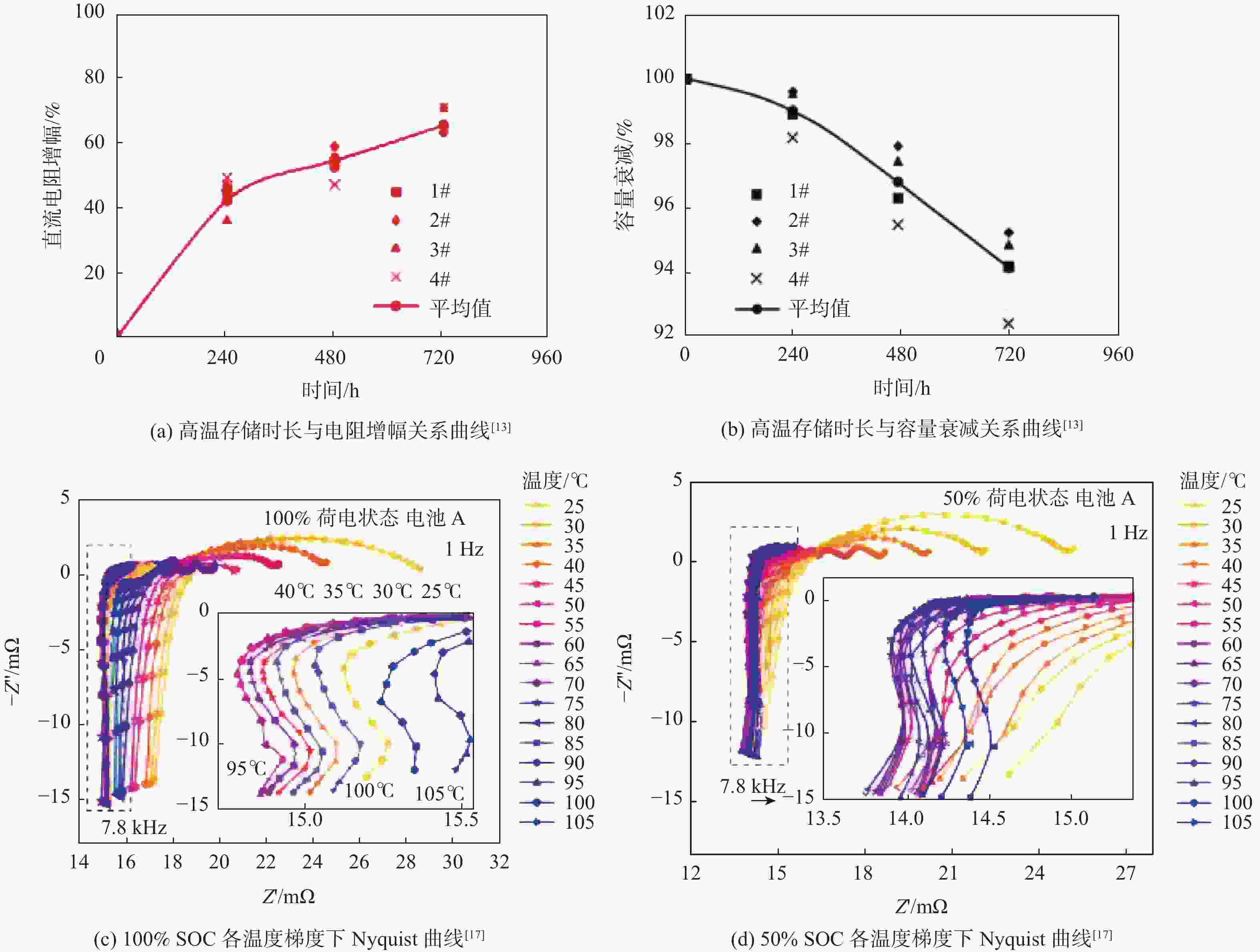
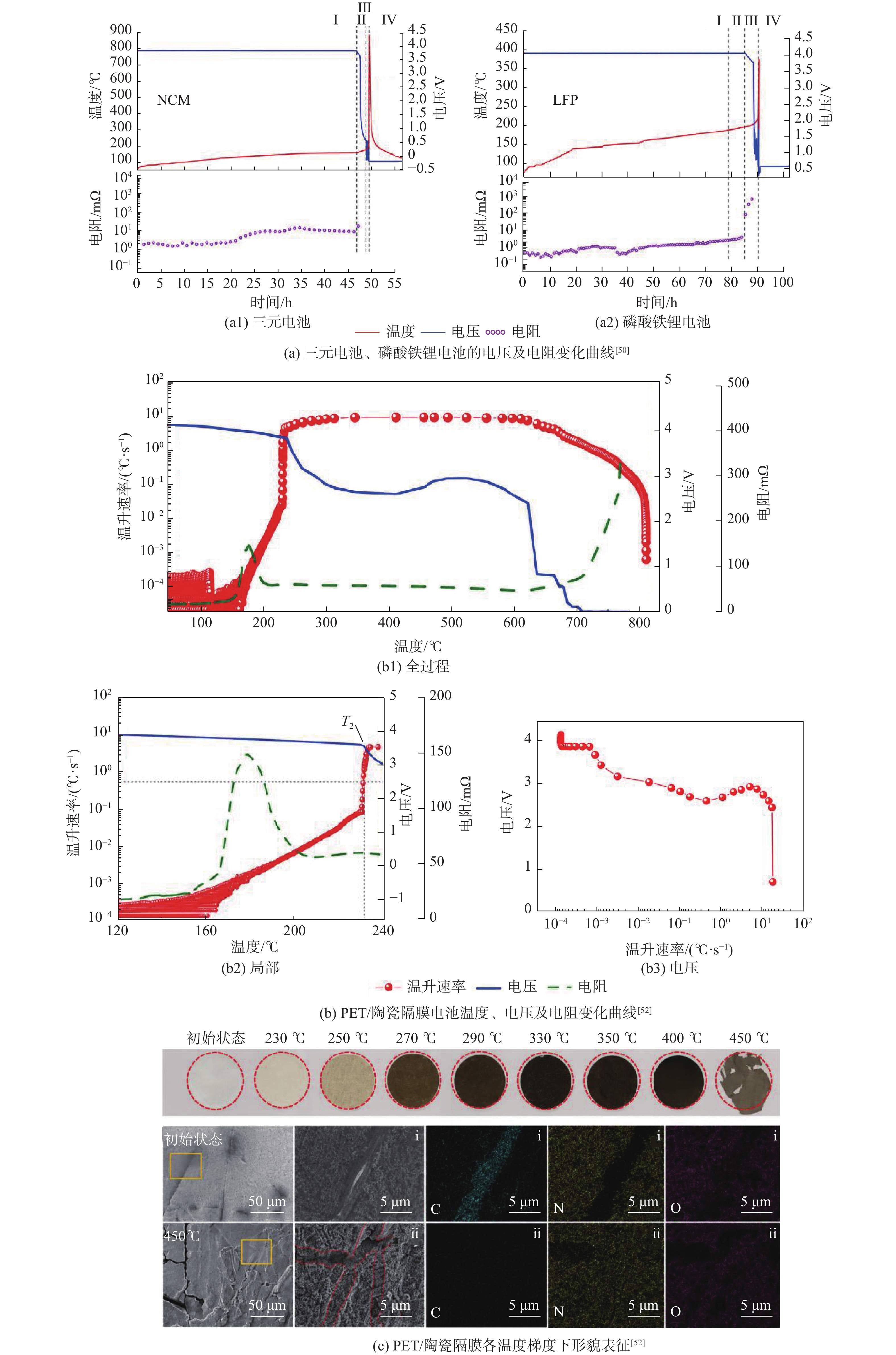
图 1 滥用热及自产热阶段电行为变化
Figure 1. Changes in electrical behavior during heat abuse and self-generated heat stages
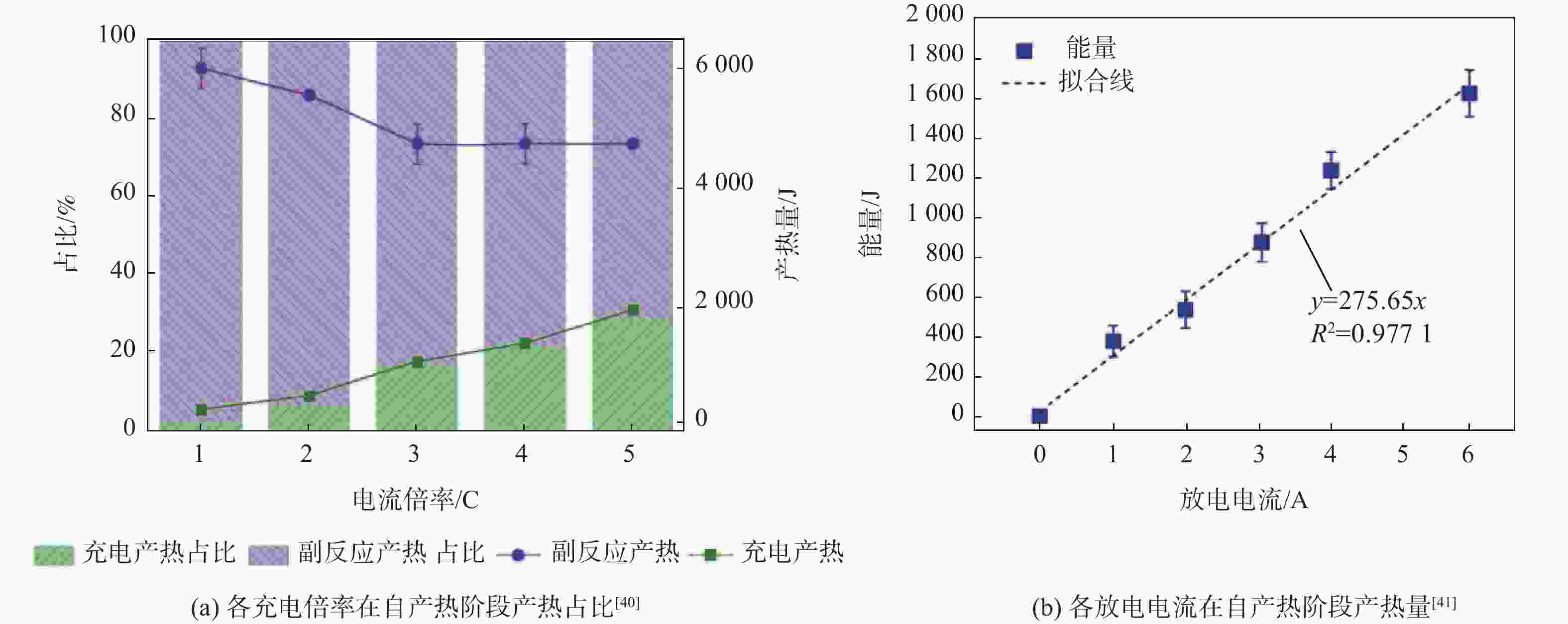
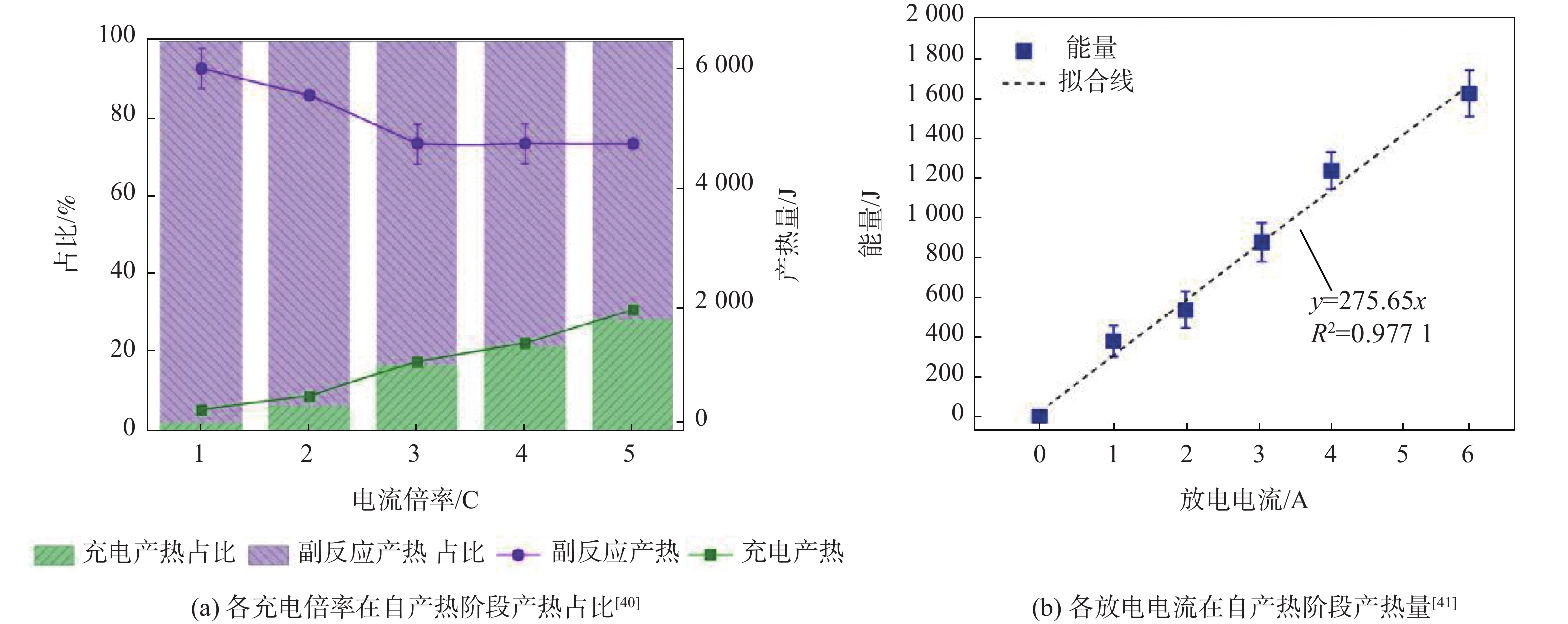
图 2 热滥用与充放电倍率耦合作用下的电化热占比
Figure 2. Electrochemical heat share for thermal abuse coupled with charge/discharge multiplicity
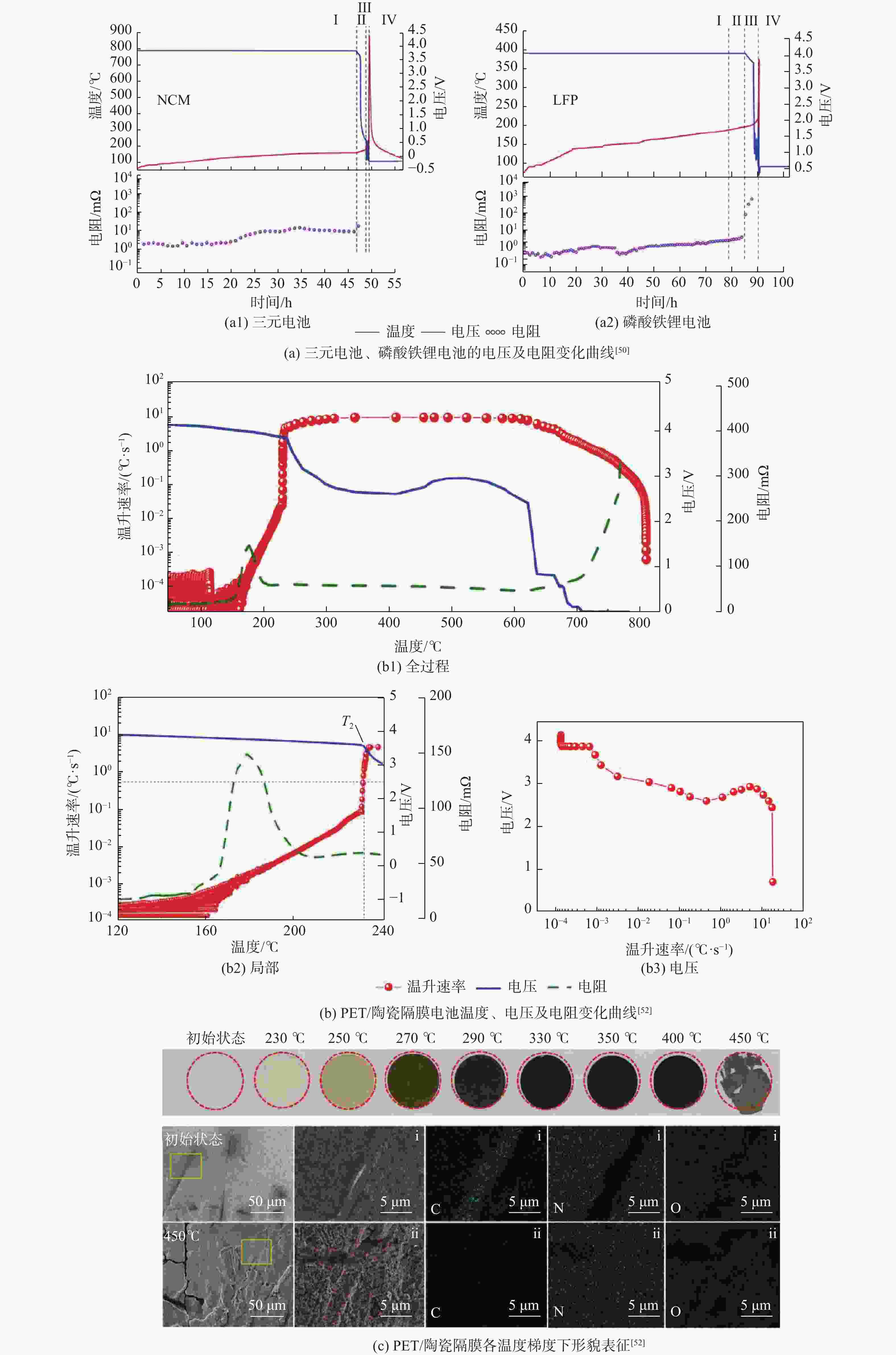
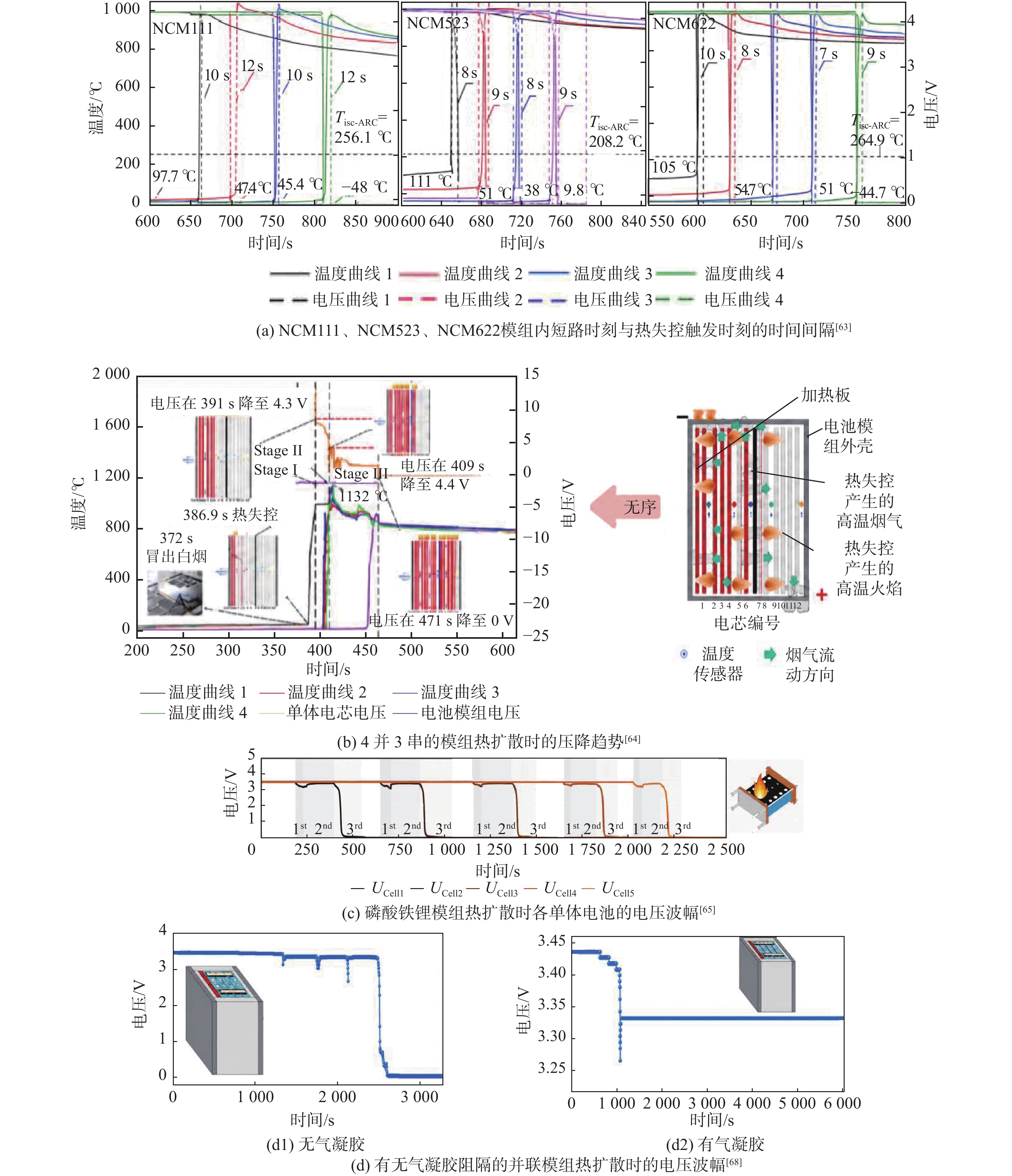
图 3 焦耳热及氧化还原热阶段电行为变化
Figure 3. Changes in electrical behavior during the Joule heat and redox heat stages
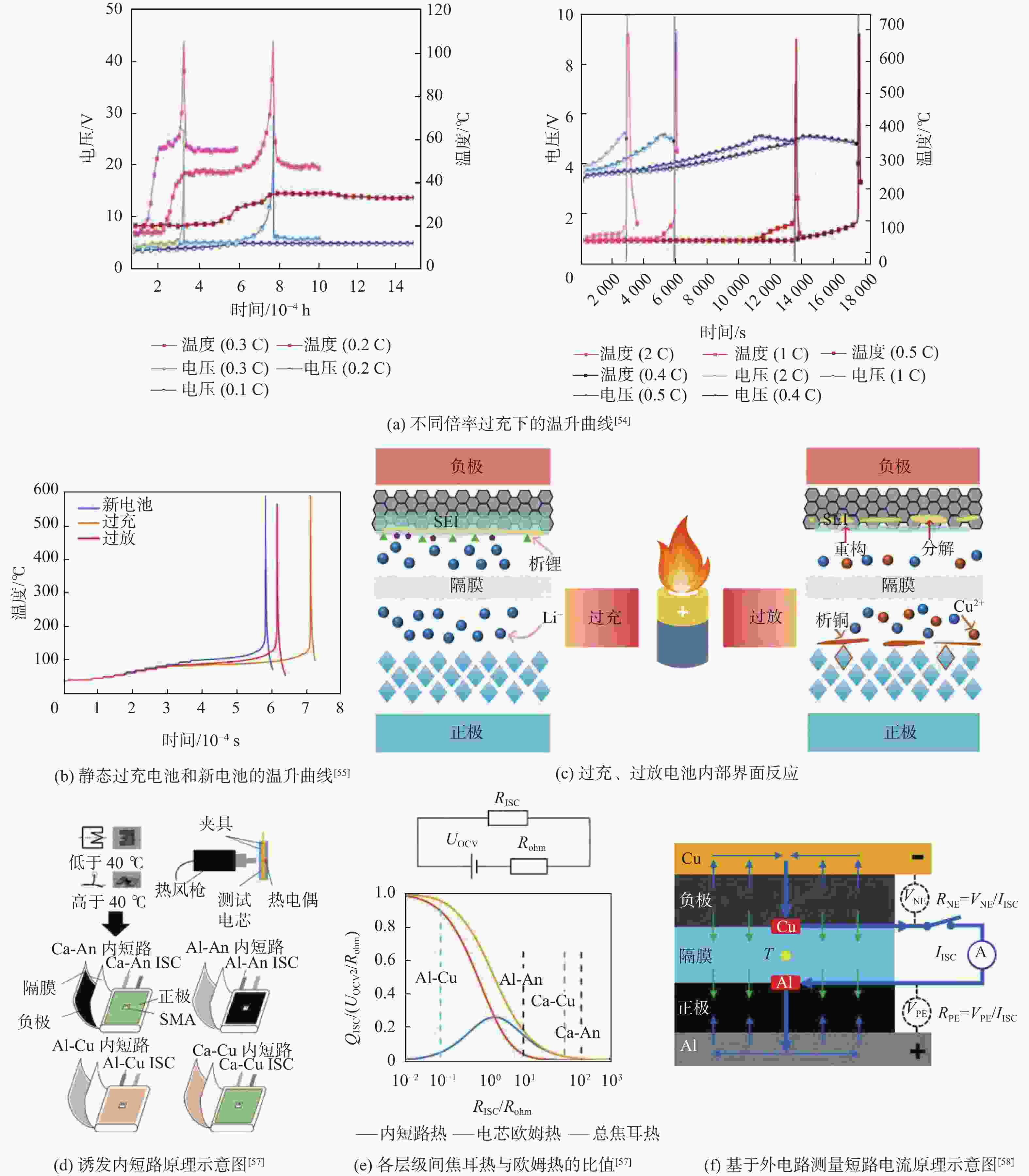
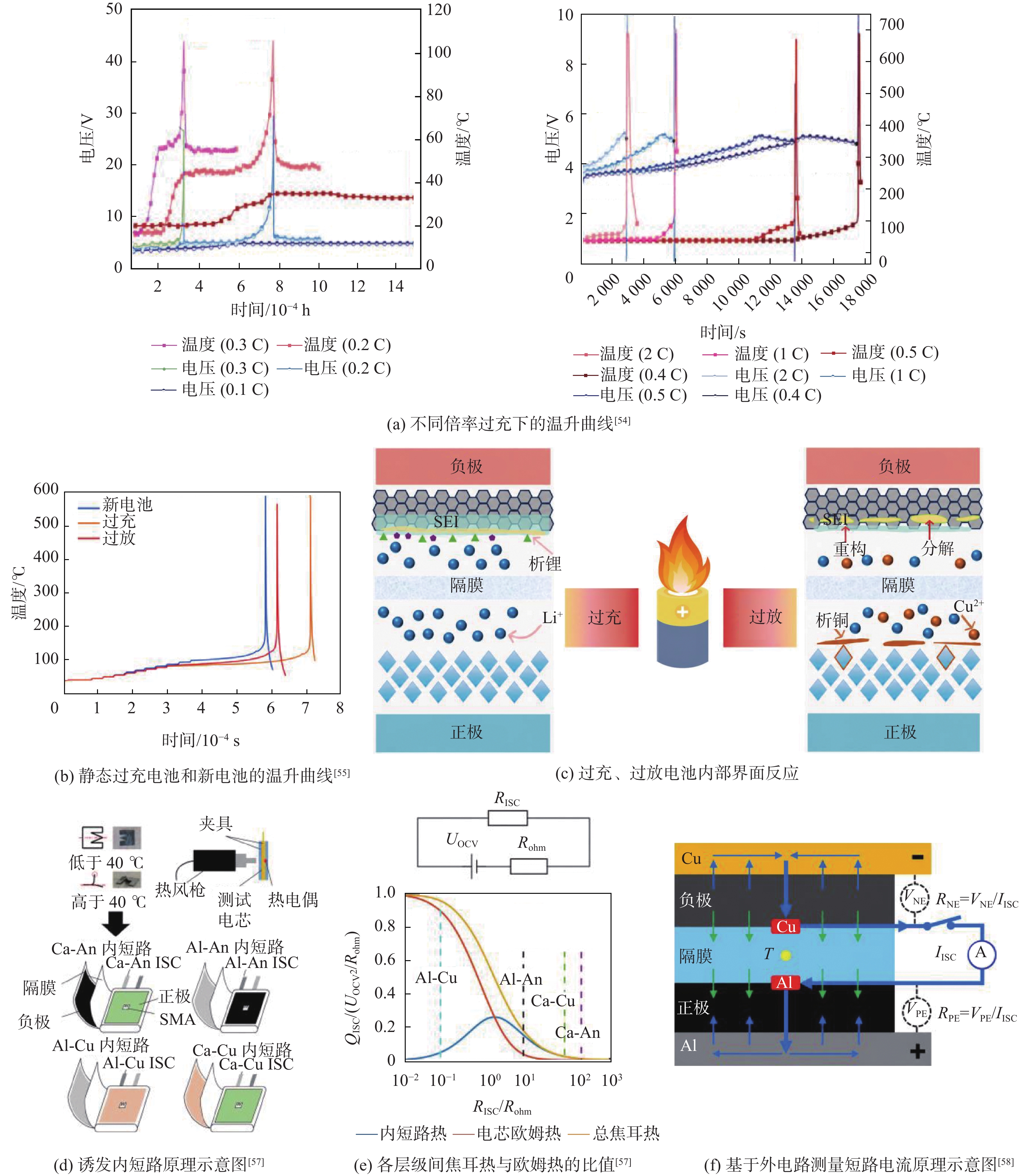
图 4 过充、过放及内短路的产热行为及机理
Figure 4. Heat generation behavior and mechanism of overcharge, overdischarge and internal short circuit
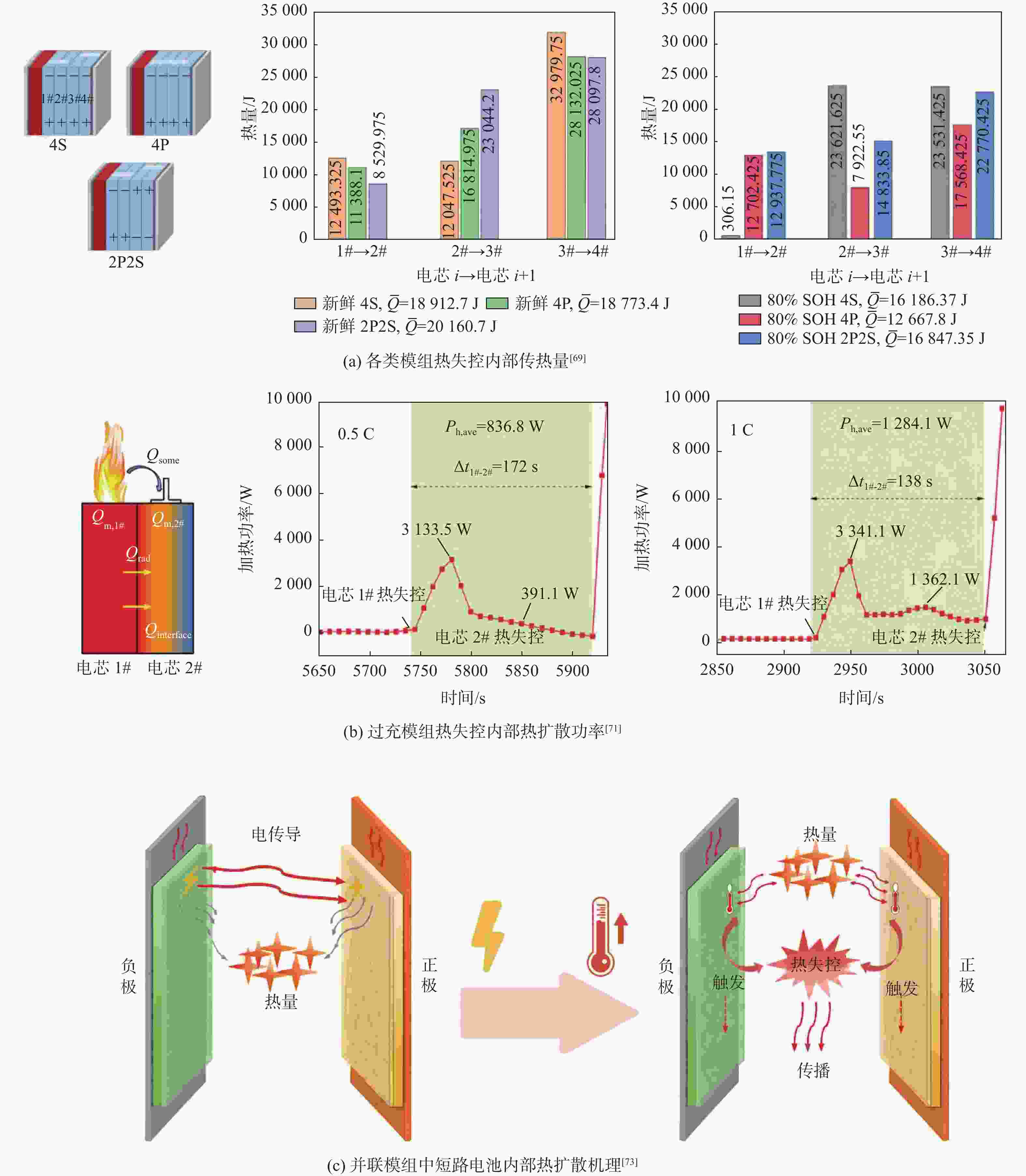
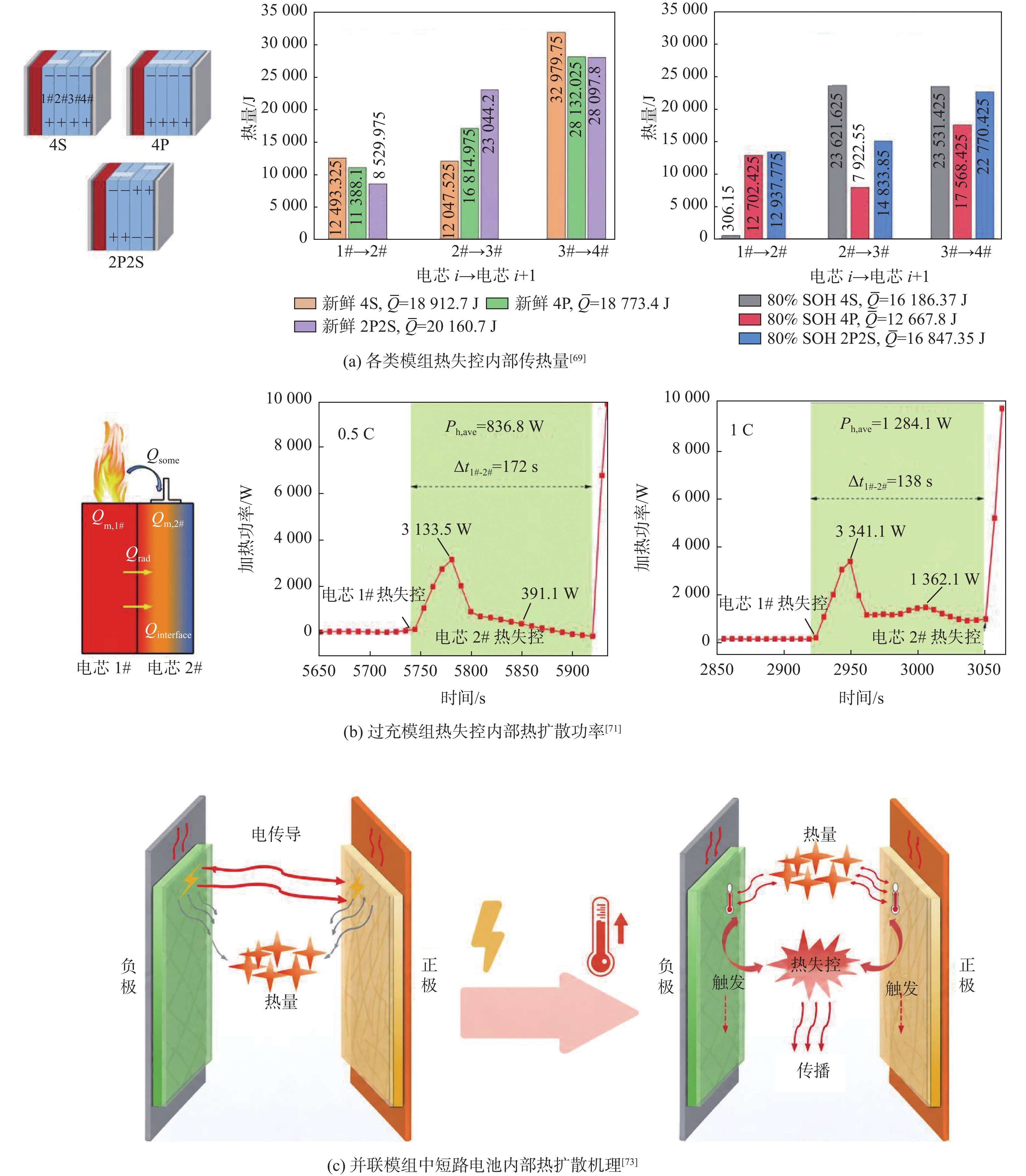
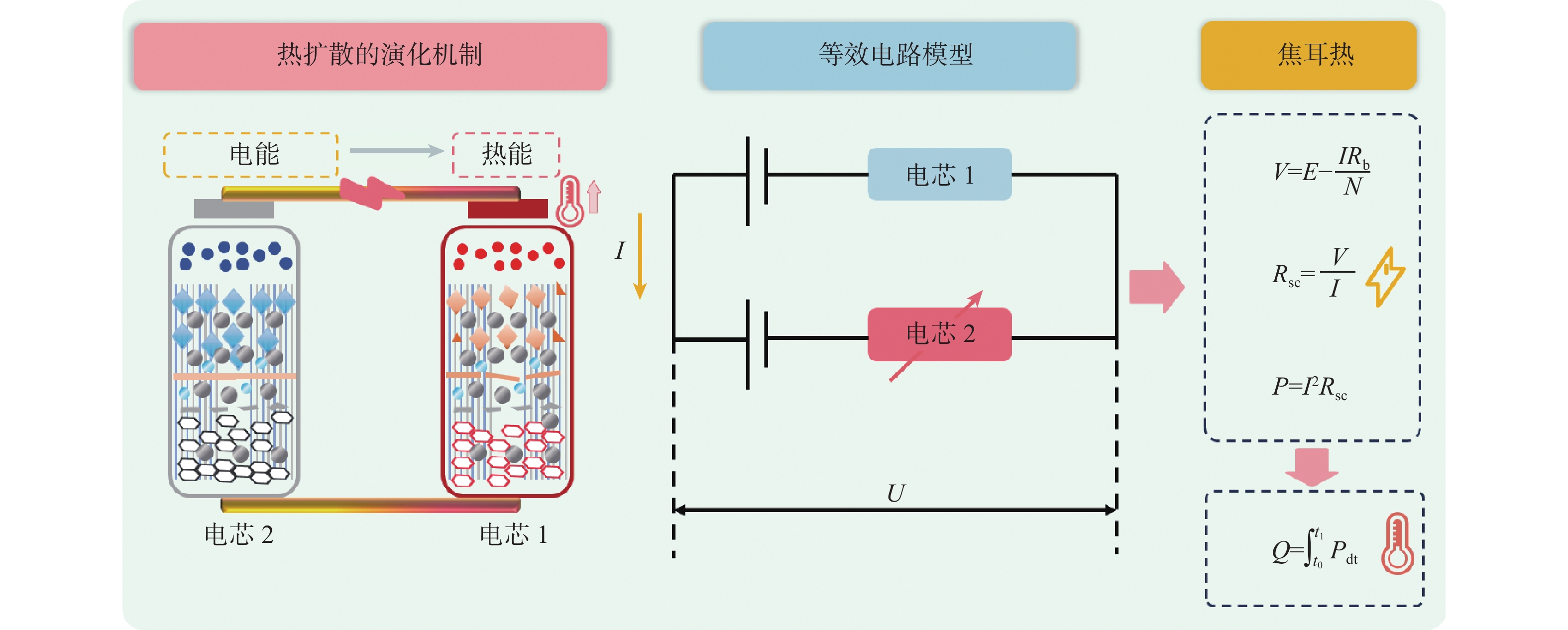
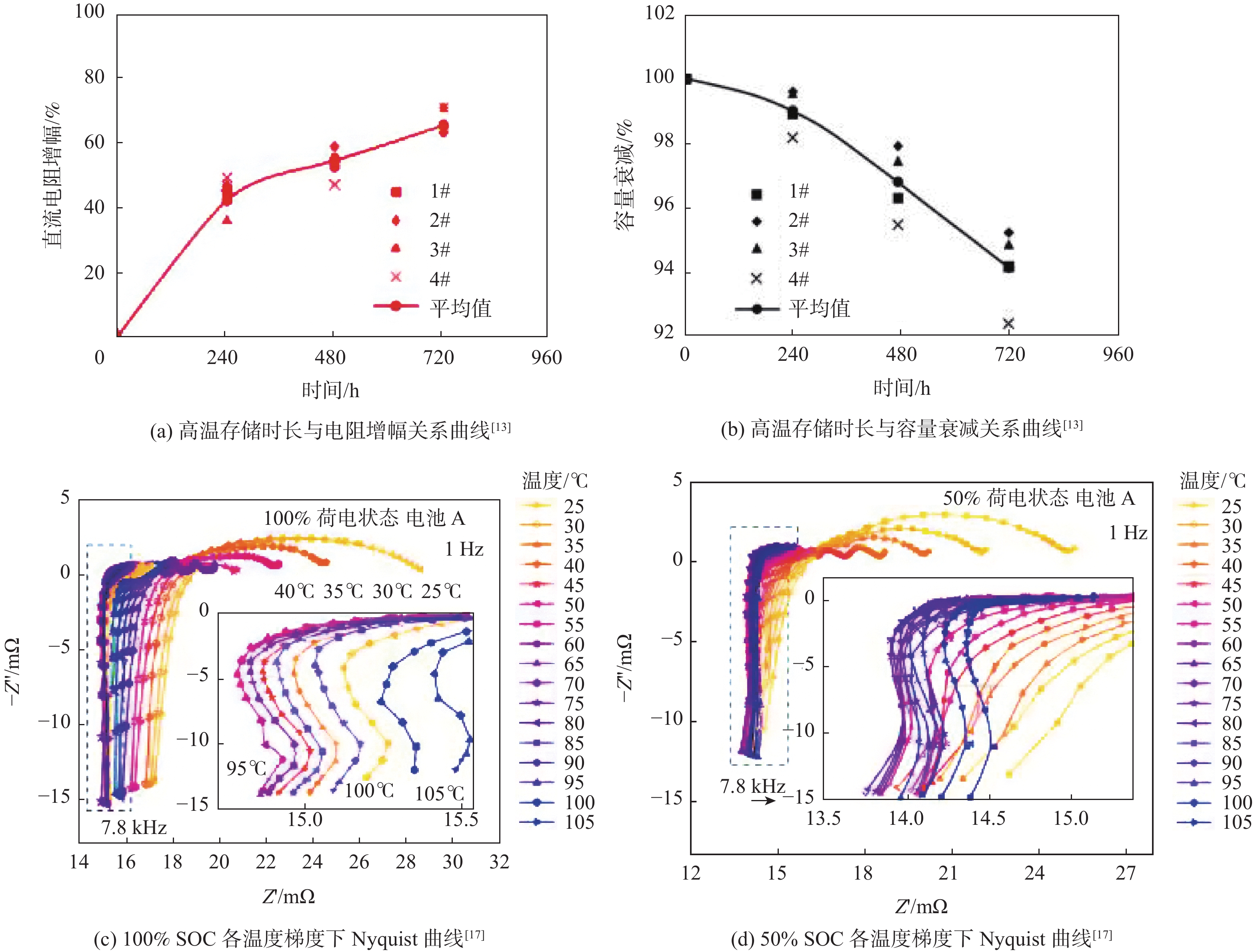
图 6 老化、过充及内短路的传热行为
Figure 6. Heat transfer behavior of aging, overcharging and internal short circuit
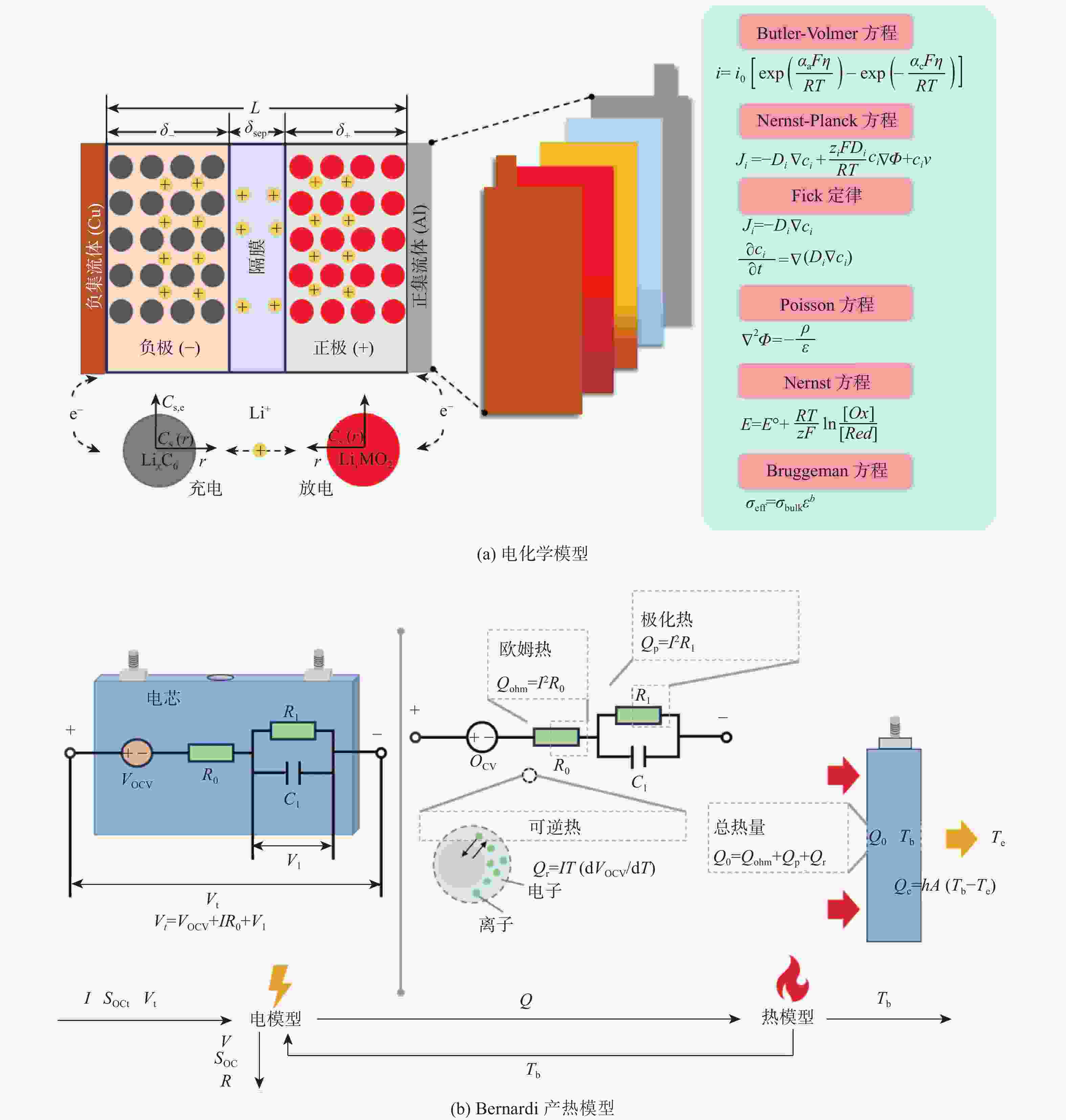
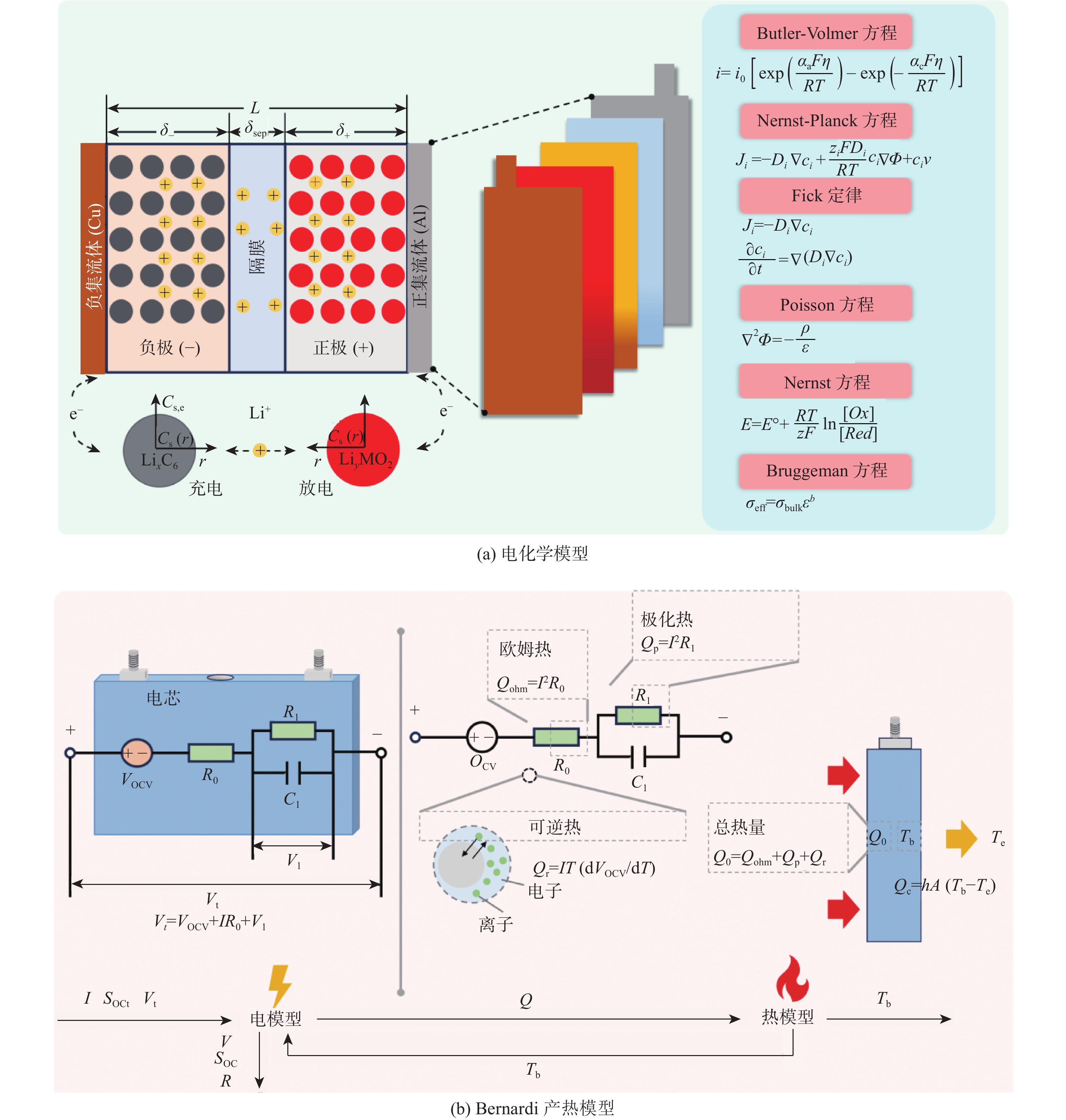
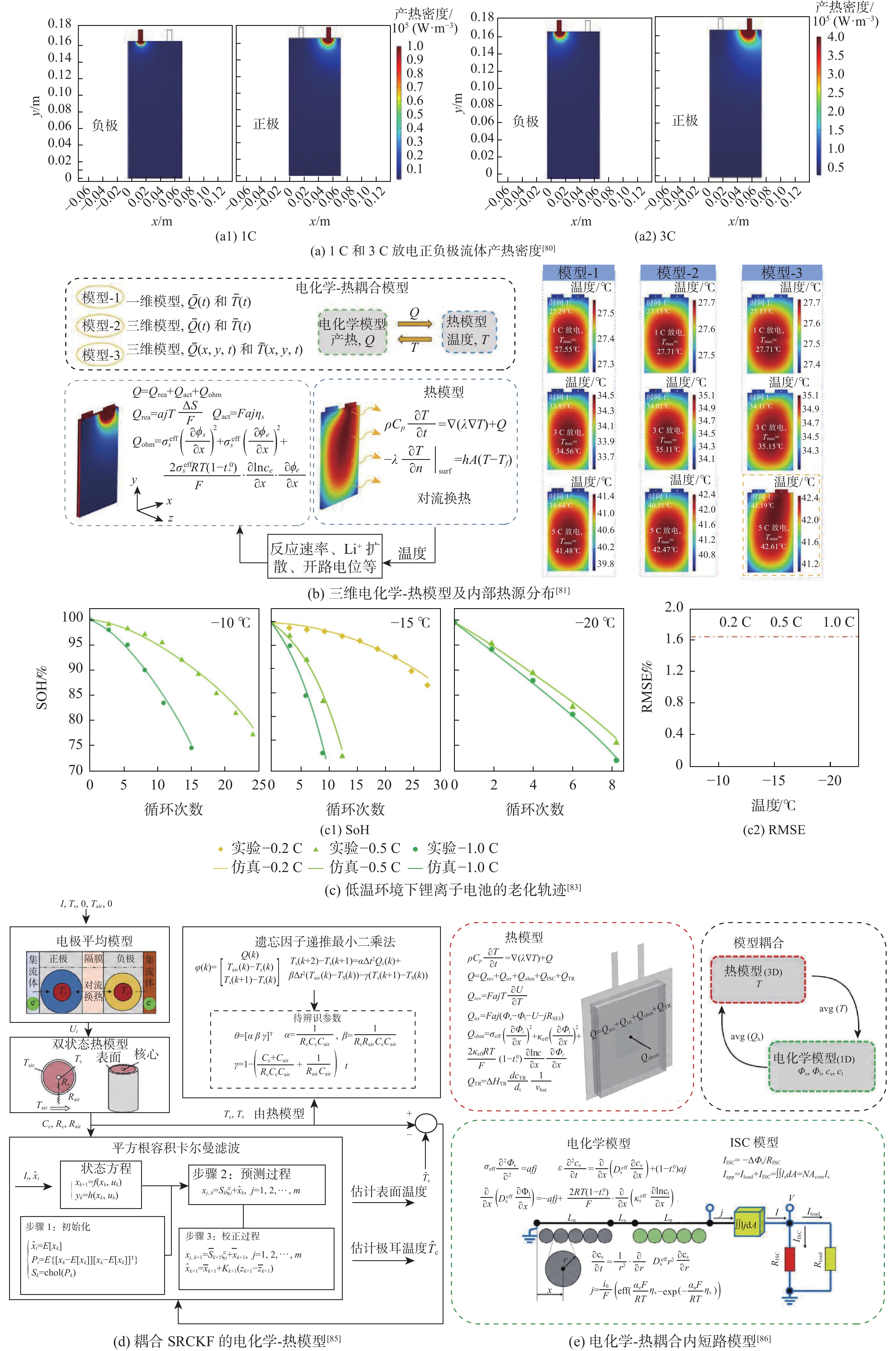
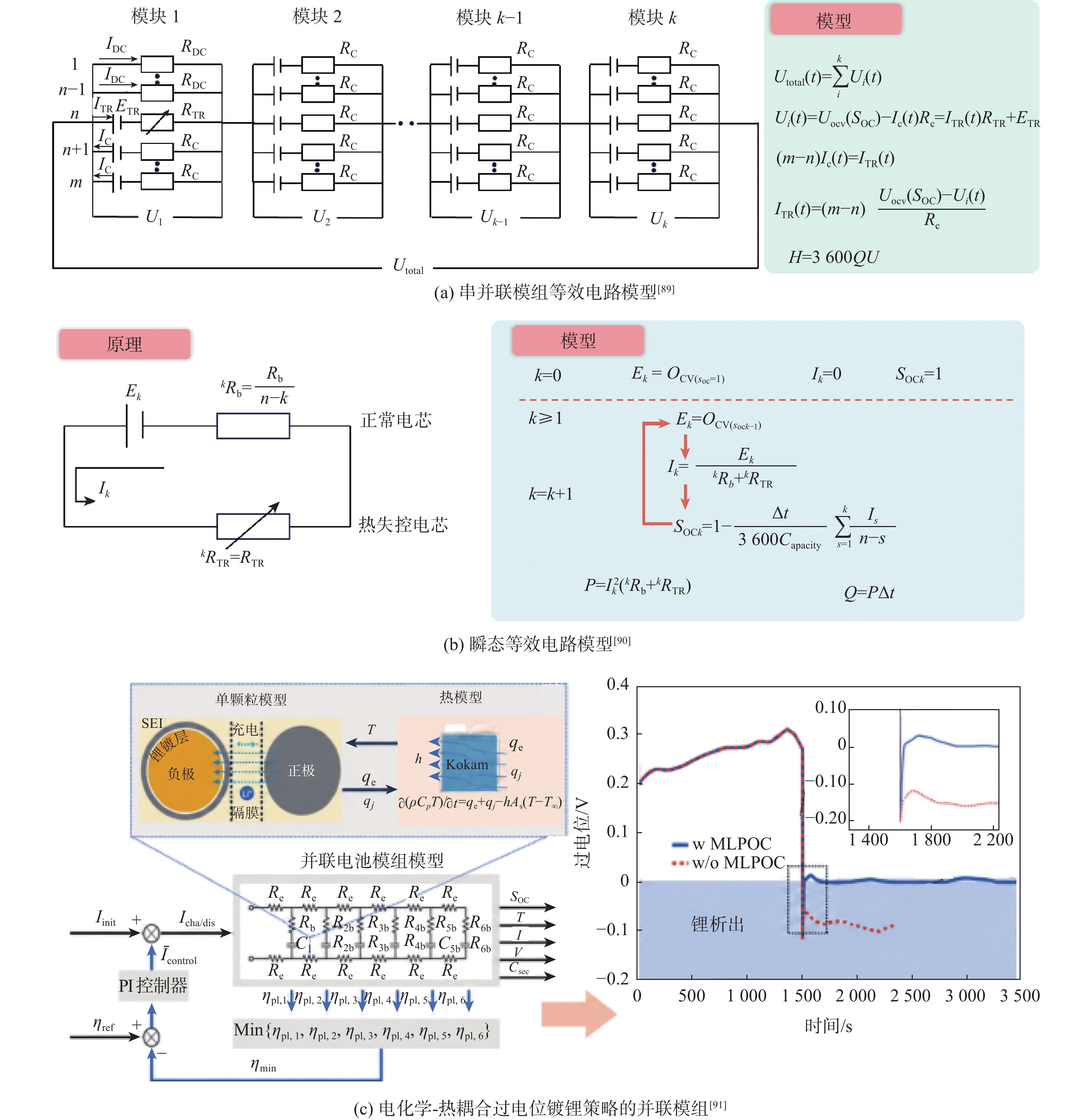
图 7 锂离子电池电-热耦合基础模型
Figure 7. Basic model of electro-thermal coupling in lithium-ion battery
表 1 过充、过放及充放电倍率产热行为的研究情况
Table 1. Research on thermal behavior of overcharging, overdischarging and charge/discharge rates
文献 型号 电行为 充放电倍率/ C 截止电压/容量/ V 温升/℃ Wang等[30] NCM523 过充 0.5 5.292 19.80 Liu等[31] LiMn2O4 过充 0.5 5.184 17.92 Zhang等[32] LFP 过充 0.5 5.218 18.15 Ouyang等[28] LiCoO2 过放 1.0 0.200 9.30 Ouyang等[33] NCM523 过放 1.0 0.200 6.70 Wang等[34] NCM523 放电 0.5 2.750 3.30 Liu等[35] LiCoO2 放电 1.0 4.450 16.50 Panchal等[36] LFP 放电 3.0 2.000 16.80 Dong等[37] NCM523 充电 3.0 4.200 15.00  下载: 导出CSV
-
[1] Dixit M, Bisht A, Essehli R, et al. Lithium-ion battery power performance assessment for the climb step of an electric vertical takeoff and landing (eVTOL) application[J]. ACS Energy Letters, 2024, 9(3): 934-940. [2] Feng X N, Ouyang M G, Liu X, et al. Thermal runaway mechanism of lithium ion battery for electric vehicles: a review[J]. Energy Storage Materials, 2018, 10: 246-267. [3] Peng R Q, Kong D P, Ping P, et al. Thermal runaway modeling of lithium-ion batteries at different scales: recent advances and perspectives[J]. Energy Storage Materials, 2024, 69: 103417. [4] Song L F, Wang S P, Jia Z Z, et al. A comprehensive investigation of thermal runaway critical temperature and energy for lithium iron phosphate batteries[J]. Journal of Energy Storage, 2024, 86: 111162. [5] Yuan C H, Wang L B, Yin S, et al. Generalized separator failure criteria for internal short circuit of lithium-ion battery[J]. Journal of Power Sources, 2020, 467: 228360. [6] Underwrites Laboratories. Standard for safety test method for evaluating thermal runaway fire propagation in battery energy storage systems: UL 9540A—2018[S]. Northbrook: Underwriters Laboratories, 2018-01-31. [7] UN Global Technical Regulation. Global technical regulation on the electrical vehicle safety: UN GTR No. 20[S]. Geneva: United Nations, 2018-03-14. [8] 国家市场监督管理总局, 国家标准化管理委员会. 电动汽车用动力蓄电池安全要求: GB 38031—2020[S]. 北京: 中国标准出版社, 2020-05-12.State Administration for Market Regulation, Standardization Administration of the People’s Republic of China. Electric vehicles traction battery safety requirements: GB 38031—2020[S]. Beijing: Standards Press of China, 2020-05-12(in Chinese). [9] 国家市场监督管理总局, 国家标准化管理委员会. 电力储能用锂离子电池: GB/T 36276—2023[S]. 北京: 中国标准出版社, 2023-12-28.State Administration for Market Regulation, Standardization Administration of the People’s Republic of China. Lithium ion battery for electrical energy storage: GB/T 36276—2023[S]. Beijing: Standards Press of China, 2023-12-28(in Chinese). [10] An Z J, Shi T L, Du X Z, et al. Experimental study on the internal short circuit and failure mechanism of lithium-ion batteries under mechanical abuse conditions[J]. Journal of Energy Storage, 2024, 89: 111819. [11] Zhang Y, Cheng S Y, Mei W X, et al. Understanding of thermal runaway mechanism of LiFePO4 battery in-depth by three-level analysis[J]. Applied Energy, 2023, 336(C): 120822. [12] Qi C, Yan H T, Yang J, et al. Study on the characteristics of thermal runaway expansion force of LiNi0.5Co0.2Mn0.3O2/graphite lithium-ion batteries with different SOCs[J]. Electrochimica Acta, 2024, 495: 144448. [13] Wang Z, Pang P P, Ma Z, et al. Performance degradation of lithium-ion batteries with LiNi0.33Co0.33Mn0.33O2 cathodes during long-term, high-temperature storage: behaviors and mechanism[J]. ChemElectroChem, 2021, 8(2): 403-410. [14] Sun Y Q, Zhang S T, Qi J, et al. Calendar degradation of Li-ion batteries under high storage temperature based on electrochemical impedance spectroscopy[J]. Microelectronics Reliability, 2021, 126: 114316. [15] Ding L, Zhang C, Wu T, et al. Effect of temperature on compression behavior of polypropylene separator used for lithium-ion battery[J]. Journal of Power Sources, 2020, 466: 228300. [16] Mendoza-Hernandez O S, Ishikawa H, Nishikawa Y, et al. Cathode material comparison of thermal runaway behavior of Li-ion cells at different state of charges including over charge[J]. Journal of Power Sources, 2015, 280: 499-504. [17] Li Y X, Jiang L H, Zhang N J, et al. Early warning method for thermal runaway of lithium-ion batteries under thermal abuse condition based on online electrochemical impedance monitoring[J]. Journal of Energy Chemistry, 2024, 92: 74-86. [18] Liu S Q, Ma T Y, Wei Z, et al. Study about thermal runaway behavior of high specific energy density Li-ion batteries in a low state of charge[J]. Journal of Energy Chemistry, 2021, 52: 20-27. [19] Li Y W, Jiang L H, Huang Z H, et al. Pressure effect on the thermal runaway behaviors of lithium-ion battery in confined space[J]. Fire Technology, 2023, 59(3): 1137-1155. [20] Zhou H W, Fear C, Parekh M, et al. The role of separator thermal stability in safety characteristics of lithium-ion batteries[J]. Journal of the Electrochemical Society, 2022, 169(9): 090521. [21] Gao F, Kai Y, Wang C J, et al. Experimental study on thermal runaway of LiFePO4/C battery under heating condition[J]. IOP Conference Series: Earth and Environmental Science, 2020, 546(4): 042025. [22] Zhu X Q, Sun Z W, Wang Z P, et al. Thermal runaway in commercial lithium-ion cells under overheating condition and the safety assessment method: effects of SoCs, cathode materials and packaging forms[J]. Journal of Energy Storage, 2023, 68: 107768. [23] Qi X P, Liu B X, Pang J, et al. Unveiling micro internal short circuit mechanism in a 60 Ah high-energy-density Li-ion pouch cell[J]. Nano Energy, 2021, 84: 105908. [24] Zhu Y L, Wang C J, Gao F, et al. Rupture and combustion characteristics of lithium-ion battery under overcharge[J]. Journal of Energy Storage, 2021, 38: 102571. [25] Zhang L, Huang L W, Zhang Z S, et al. Degradation characteristics investigation for lithium-ion cells with NCA cathode during overcharging[J]. Applied Energy, 2022, 327: 120026. [26] Ji C W, Zhang S Q, Wang B, et al. Study on thermal safety of the overcharged lithium-ion battery[J]. Fire Technology, 2023, 59(3): 1089-1114. [27] Flügel M, Kasper M, Pfeifer C, et al. Cu dissolution during over-discharge of Li-ion cells to 0 V: a post-mortem study[J]. Journal of the Electrochemical Society, 2021, 168(2): 020506. [28] Ouyang D X, Weng J W, Chen M Y, et al. Experimental analysis on the degradation behavior of overdischarged lithium-ion battery combined with the effect of high-temperature environment[J]. International Journal of Energy Research, 2020, 44(1): 229-241. [29] Mei W X, Li H, Zhao C P, et al. Numerical study on thermal characteristics comparison between charge and discharge process for lithium ion battery[J]. International Journal of Heat and Mass Transfer, 2020, 162: 120319. [30] Wang J F, Li Y H, Liu F, et al. A comparative study of overcharge thermal runaway force-electrical-thermal characteristics and safety assessment of lithium batteries with different cathode materials[J]. Applied Thermal Engineering, 2024, 256: 124092. [31] Liu J L, Wang Z R, Bai J L, et al. Heat generation and thermal runaway mechanisms induced by overcharging of aged lithium-ion battery[J]. Applied Thermal Engineering, 2022, 212: 118565. [32] Zhang Y, Li S Y, Mao B B, et al. A multi-level early warning strategy for the LiFePO4 battery thermal runaway induced by overcharge[J]. Applied Energy, 2023, 347: 121375. [33] Ouyang D X, Chen M Y, Liu J H, et al. Investigation of a commercial lithium-ion battery under overcharge/over-discharge failure conditions[J]. RSC Advances, 2018, 8(58): 33414-33424. [34] Wang X X, Zhang Y J, Ni H J, et al. Influence of different ambient temperatures on the discharge performance of square ternary lithium-ion batteries[J]. Energies, 2022, 15(15): 5348. [35] Liu S Z, Chen J J, Zhang C, et al. Experimental study on lithium-ion cell characteristics at different discharge rates[J]. Journal of Energy Storage, 2022, 45: 103418. [36] Panchal S, Mathew M, Fraser R, et al. Electrochemical thermal modeling and experimental measurements of 18650 cylindrical lithium-ion battery during discharge cycle for an EV[J]. Applied Thermal Engineering, 2018, 135: 123-132. [37] Dong T, Peng P, Jiang F M. Numerical modeling and analysis of the thermal behavior of NCM lithium-ion batteries subjected to very high C-rate discharge/charge operations[J]. International Journal of Heat and Mass Transfer, 2018, 117: 261-272. [38] 何春汕, 王子阳, 姚斌. 不同放电功率下的储能用磷酸铁锂电池热失控特性实验研究[J]. 储能科学与技术, 2024, 13(3): 981-989.He C S, Wang Z Y, Yao B. Experimental study of the thermal runaway characteristics of lithium iron phosphate batteries for energy storage under various discharge powers[J]. Energy Storage Science and Technology, 2024, 13(3): 981-989(in Chinese). [39] Hu J, Liu T, Wang X S. Effect of discharge operation on thermal runaway incubation process of lithium-ion battery: an experimental study[J]. Process Safety and Environmental Protection, 2024, 185: 25-35. [40] Hu J, Liu T, Wang X S, et al. Investigation on thermal runaway of 18, 650 lithium ion battery under thermal abuse coupled with charging[J]. Journal of Energy Storage, 2022, 51: 104482. [41] Li L, Ju X Y, Zhou X D, et al. Experimental study on thermal runaway process of 18650 lithium-ion battery under different discharge currents[J]. Materials, 2021, 14(16): 4740. [42] Feng X N, Ren D S, He X M, et al. Mitigating thermal runaway of lithium-ion batteries[J]. Joule, 2020, 4(4): 743-770. [43] Wang Z P, Yuan J, Zhu X Q, et al. Overcharge-to-thermal-runaway behavior and safety assessment of commercial lithium-ion cells with different cathode materials: a comparison study[J]. Journal of Energy Chemistry, 2021, 55: 484-498. [44] Xie S, Gong Y Z, Ping X K, et al. Effect of overcharge on the electrochemical and thermal safety behaviors of LiNi0.5Mn0.3Co0.2O2/graphite lithium-ion batteries[J]. Journal of Energy Storage, 2022, 46: 103829. [45] Juarez-Robles D, Vyas A A, Fear C, et al. Overdischarge and aging analytics of Li-ion cells[J]. Journal of the Electrochemical Society, 2020, 167(9): 090558. [46] Ren D S, Feng X N, Liu L S, et al. Investigating the relationship between internal short circuit and thermal runaway of lithium-ion batteries under thermal abuse condition[J]. Energy Storage Materials, 2021, 34: 563-573. [47] Tang X, Wei X Z, Zhang H N, et al. Experimental and modeling analysis of thermal runaway for LiNi0.5Mn0.3Co0.2O2/graphite pouch cell under adiabatic condition[J]. International Journal of Energy Research, 2021, 45(7): 10667-10681. [48] Yang Z G, Gu Z J, Tao Q Y, et al. Early warning technology for common characteristic resistances of lithium-ion batteries with thermal runaway[J]. Chemical Communications, 2024, 60(1): 87-90. [49] Tang X, Zhang G X, Wang X Y, et al. Investigating the critical characteristics of thermal runaway process for LiFePO4/graphite batteries by a ceased segmented method[J]. iScience, 2021, 24(10): 103088. [50] Zheng S Q, Wang L, Feng X N, et al. Probing the heat sources during thermal runaway process by thermal analysis of different battery chemistries[J]. Journal of Power Sources, 2018, 378: 527-536. [51] Huang Z H, Yu Y, Duan Q L, et al. Heating position effect on internal thermal runaway propagation in large-format lithium iron phosphate battery[J]. Applied Energy, 2022, 325(C): 119778. [52] Liu X, Ren D S, Hsu H, et al. Thermal runaway of lithium-ion batteries without internal short circuit[J]. Joule, 2018, 2(10): 2047-2064. [53] Mao N, Zhang T, Wang Z, et al. Revealing the thermal stability and component heat contribution ratio of overcharged lithium-ion batteries during thermal runaway[J]. Energy, 2023, 263: 125786. [54] Mao N, Zhang T, Wang Z R, et al. A systematic investigation of internal physical and chemical changes of lithium-ion batteries during overcharge[J]. Journal of Power Sources, 2022, 518: 230767. [55] Zhang G X, Wei X Z, Chen S Q, et al. Revealing the impact of slight electrical abuse on the thermal safety characteristics for lithium-ion batteries[J]. ACS Applied Energy Materials, 2021, 4(11): 12858-12870. [56] Li L, Zhou X D, Ju X Y, et al. Comprehensive analysis on aging behavior and safety performance of LiNixCoyMnzO2/graphite batteries after slight over-discharge cycle[J]. Applied Thermal Engineering, 2023, 225: 120172. [57] Liu L S, Feng X N, Rahe C, et al. Internal short circuit evaluation and corresponding failure mode analysis for lithium-ion batteries[J]. Journal of Energy Chemistry, 2021, 61: 269-280. [58] Long M K, Liu S Y, Zhang G S. A novel method for simultaneous triggering and in situ sensing of internal short circuit in lithium-ion cells[J]. Energy Advances, 2023, 2(12): 2018-2028. [59] Ma J, Huang P F, Bai Z H. Numerical study on the critical characteristics of internal short-circuit hot spot in lithium-ion batteries[J]. Process Safety and Environmental Protection, 2024, 185: 1373-1384. [60] Xin Y D, Liu C C, Li N, et al. In-situ monitoring of multiple signals evolution behaviour for commercial lithium-ion batteries during internal short circuit[J]. Applied Energy, 2023, 350: 121754. [61] Börger A, Mertens J, Wenzl H. Thermal runaway and thermal runaway propagation in batteries: what do we talk about?[J]. Journal of Energy Storage, 2019, 24: 100649. [62] Lyu P Z, Liu X J, Liu C Z, et al. The influence of tab overheating on thermal runaway propagation of pouch-type lithium-ion battery module with different tab connections[J]. International Journal of Heat and Mass Transfer, 2023, 211: 124279. [63] Wang H B, Du Z M, Rui X Y, et al. A comparative analysis on thermal runaway behavior of Li (Ni Co Mn) O2 battery with different nickel contents at cell and module level[J]. Journal of Hazardous Materials, 2020, 393: 122361. [64] Li H X, Gao Q, Ling J J, et al. Thermal runaway propagation and combustion characteristics of enclosed LiNi0.8Co0.1Mn0.1O2 pouch battery modules in an open environment[J]. Journal of Energy Storage, 2024, 85: 110877. [65] Schöberl J, Ank M, Schreiber M, et al. Thermal runaway propagation in automotive lithium-ion batteries with NMC-811 and LFP cathodes: safety requirements and impact on system integration[J]. eTransportation, 2024, 19: 100305. [66] Li H X, Gao Q, Wang Y. Experimental investigation of the thermal runaway propagation characteristics and thermal failure prediction parameters of six-cell lithium-ion battery modules[J]. Energies, 2023, 16(13): 5172. [67] Liu T, Hu J, Tao C F, et al. Effect of parallel connection on 18650-type lithium ion battery thermal runaway propagation and active cooling prevention with water mist[J]. Applied Thermal Engineering, 2021, 184: 116291. [68] Zhou Z Z, Zhou X D, Wang B X, et al. Experimentally exploring thermal runaway propagation and prevention in the prismatic lithium-ion battery with different connections[J]. Process Safety and Environmental Protection, 2022, 164: 517-527. [69] Zhao L Y, Han Z X, Guo W, et al. An experimental study on thermal runaway propagation over cyclic aging lithium-ion battery modules with different electrical connections[J]. Journal of Energy Storage, 2024, 89: 111823. [70] Han Z X, Zhao L Y, Zhao J J, et al. An experimental study on the thermal runaway propagation of cycling aged lithium-ion battery modules[J]. Fire, 2024, 7(4): 119. [71] Huang Z H, Liu J L, Zhai H J, et al. Experimental investigation on the characteristics of thermal runaway and its propagation of large-format lithium ion batteries under overcharging and overheating conditions[J]. Energy, 2021, 233: 121103. [72] Liu L, Lin C J, Yang P X, et al. Experimental study on thermal runaway characteristic parameters of parallel battery modules[J]. International Journal of Energy Research, 2022, 46(4): 4994-5005. [73] Zhou Z Z, Li M Y, Zhou X D, et al. Investigating thermal runaway characteristics and trigger mechanism of the parallel lithium-ion battery[J]. Applied Energy, 2023, 349: 121690. [74] Sun L, Wei C, Guo D L, et al. Comparative study on thermal runaway characteristics of lithium iron phosphate battery modules under different overcharge conditions[J]. Fire Technology, 2020, 56(4): 1555-1574. [75] Newman J, Tiedemann W. Porous-electrode theory with battery applications[J]. AIChE Journal, 1975, 21(1): 25-41. [76] Doyle M, Newman J. The use of mathematical modeling in the design of lithium/polymer battery systems[J]. Electrochimica Acta, 1995, 40(13-14): 2191-2196. [77] Doyle M, Fuller T F, Newman J. Modeling of galvanostatic charge and discharge of the lithium/polymer/insertion cell[J]. Journal of the Electrochemical Society, 1993, 140(6): 1526-1533. [78] Bernardi D, Pawlikowski E, Newman J. A general energy balance for battery systems[J]. Journal of the Electrochemical Society, 1985, 132(1): 5-12. [79] 郭佳涌. 动力电池模组电—热特性及过热触发热失控机理研究[D]. 北京: 北京交通大学, 2023.Guo J Y. Study on electro-thermal characteristics and overheat triggering thermal runaway mechanism of power battery module[D]. Beijing: Beijing Jiaotong University, 2023(in Chinese). [80] Ren H L, Jia L, Dang C, et al. An electrochemical-thermal coupling model for heat generation analysis of prismatic lithium battery[J]. Journal of Energy Storage, 2022, 50: 104277. [81] Lin X W, Zhou Z F, Zhu X G, et al. Non-uniform thermal characteristics investigation of three-dimensional electrochemical-thermal coupled model for pouch lithium-ion battery[J]. Journal of Cleaner Production, 2023, 417: 137912. [82] Sarkar S, Amin M T, El-Halwagi M M, et al. Thermal behavior of LiFePO4 battery at faster C-rates and lower ambient temperatures[J]. Process Safety and Environmental Protection, 2024, 186: 118-133. [83] Fan W J, Zhu J G, Qiao D D, et al. Low-temperature charging strategy optimization based on electrochemical-aging-thermal coupling model[J]. IEEE Transactions on Transportation Electrification, 2025, 11(1): 901-911. [84] Xi R Y, Mu Z Z, Ma Z Y, et al. Lifetime prediction of rechargeable lithium-ion battery using multi-physics and multiscale model[J]. Journal of Power Sources, 2024, 608: 234622. [85] Shen J W, Zhang Z, Chen Z, et al. Temperature estimation of multiple places for lithium-ion batteries based on improved electrochemical thermal modeling[J]. IEEE Transactions on Transportation Electrification, 2025, 11(1): 382-392. [86] Liu L S, Feng X N, Zhang M X, et al. Comparative study on substitute triggering approaches for internal short circuit in lithium-ion batteries[J]. Applied Energy, 2020, 259: 114143. [87] Huang Z H, Zhao C P, Li H, et al. Experimental study on thermal runaway and its propagation in the large format lithium ion battery module with two electrical connection modes[J]. Energy, 2020, 205: 117906. [88] Niu H C, Chen C X, Ji D, et al. Thermal-runaway propagation over a linear cylindrical battery module[J]. Fire Technology, 2020, 56(6): 2491-2507. [89] Xu C S, Zhang F S, Feng X N, et al. Experimental study on thermal runaway propagation of lithium-ion battery modules with different parallel-series hybrid connections[J]. Journal of Cleaner Production, 2021, 284: 124749. [90] Gao S, Feng X N, Lu L G, et al. An experimental and analytical study of thermal runaway propagation in a large format lithium ion battery module with NCM pouch-cells in parallel[J]. International Journal of Heat and Mass Transfer, 2019, 135: 93-103. [91] Yang S C, Gao X L, Li Y L, et al. Minimum lithium plating overpotential control based charging strategy for parallel battery module prevents side reactions[J]. Journal of Power Sources, 2021, 494: 229772. [92] Wang G Q, Ping P, Kong D P, et al. Advances and challenges in thermal runaway modeling of lithium-ion batteries[J]. The Innovation, 2024, 5(4): 100624. -

 下载:

 点击查看大图
计量
- 文章访问数: 422
- HTML全文浏览量: 148
- PDF下载量: 10
- 被引次数: 0
