





-
摘要:
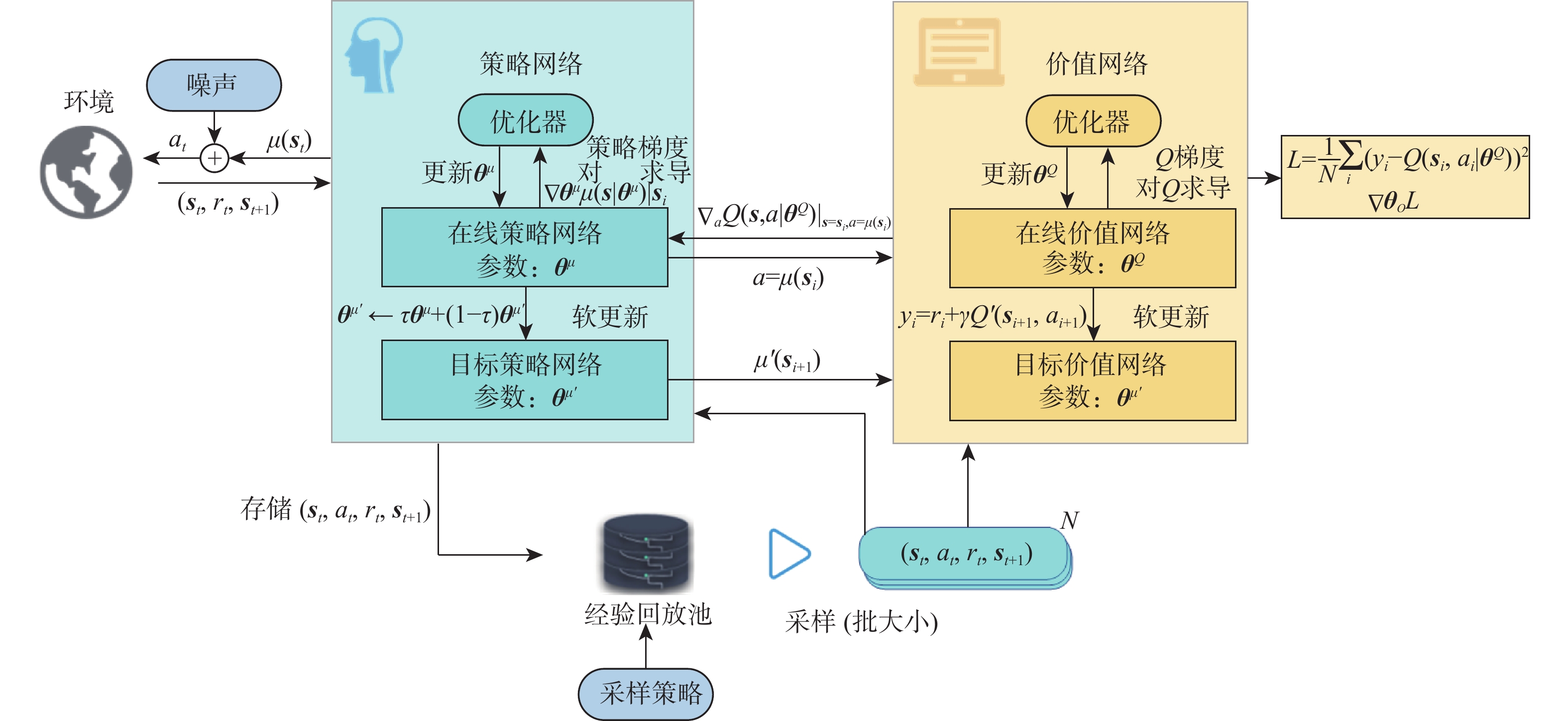
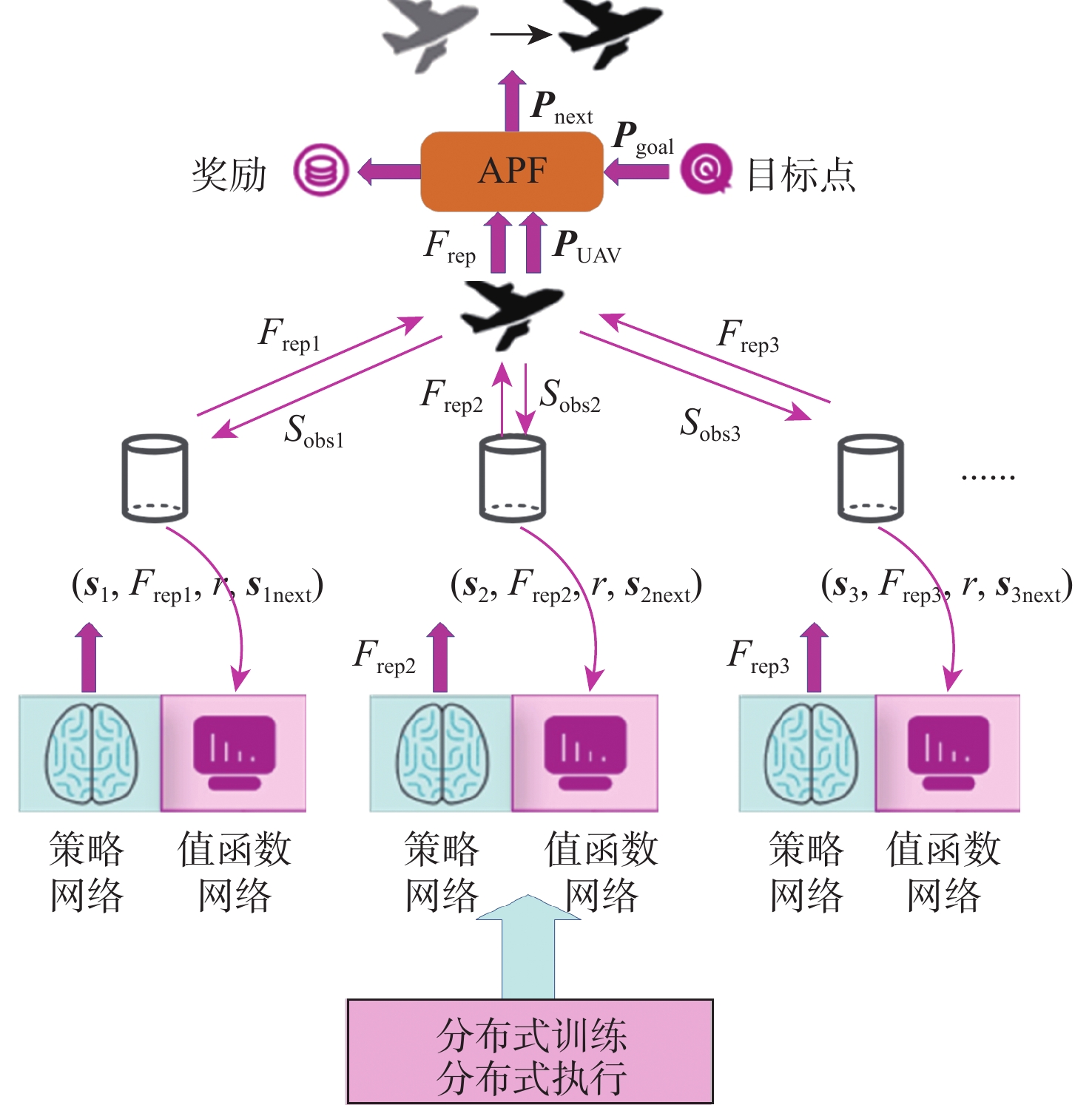
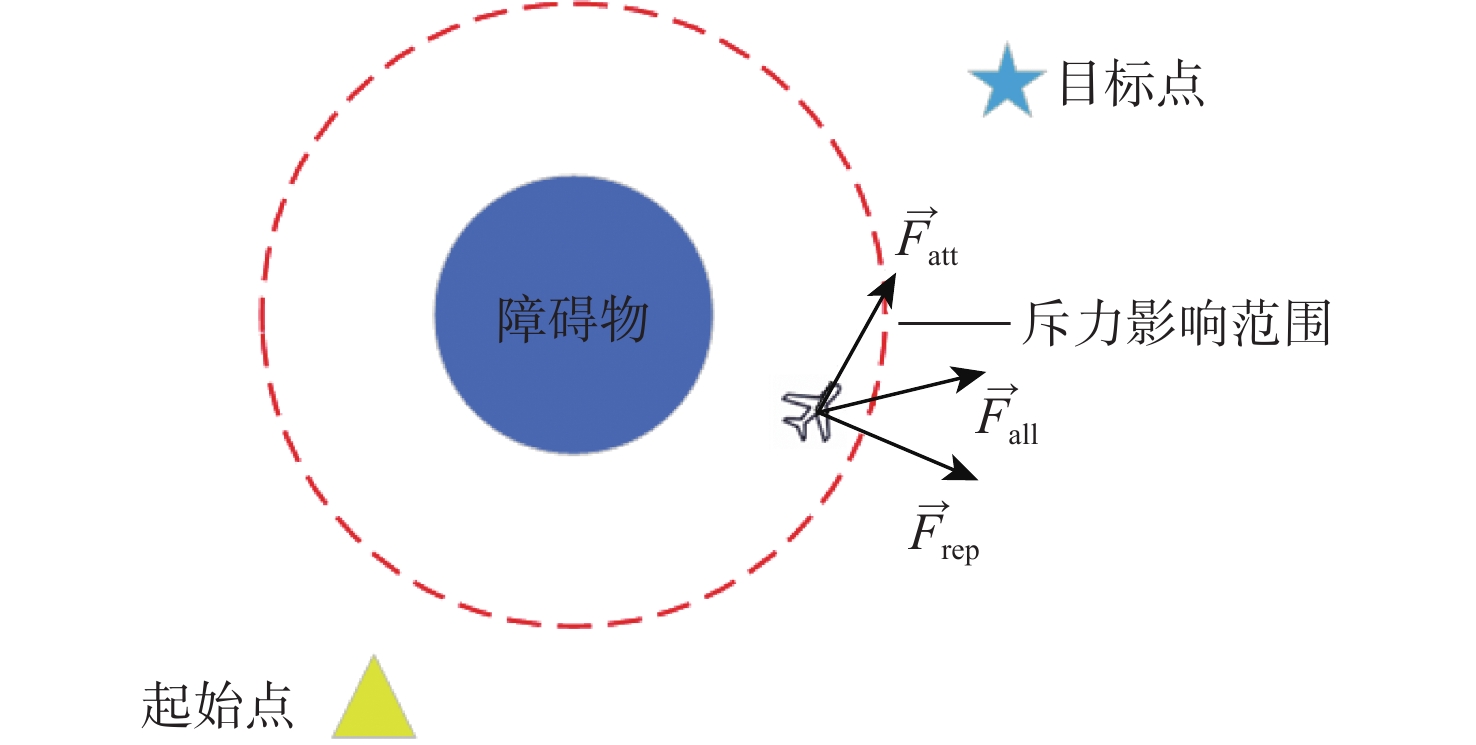
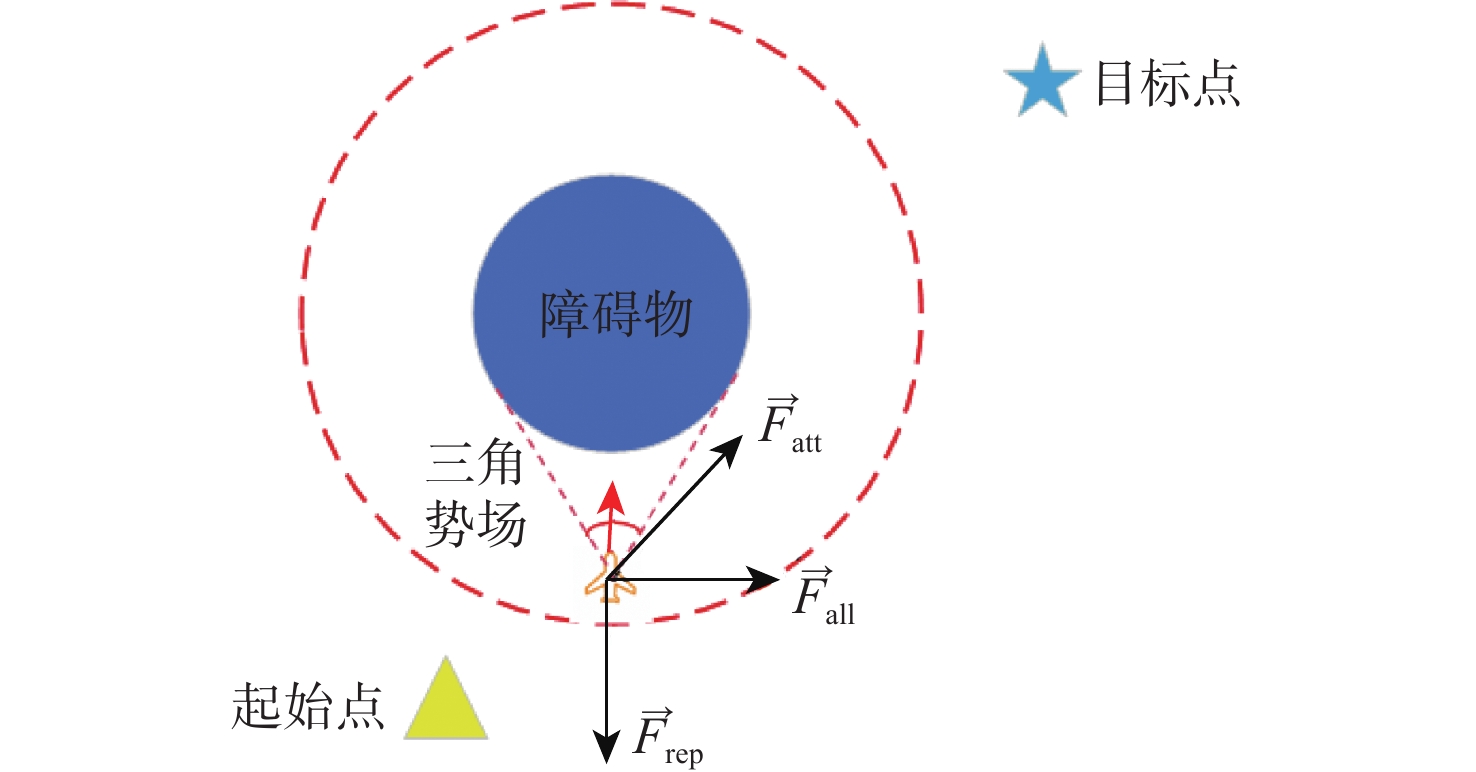
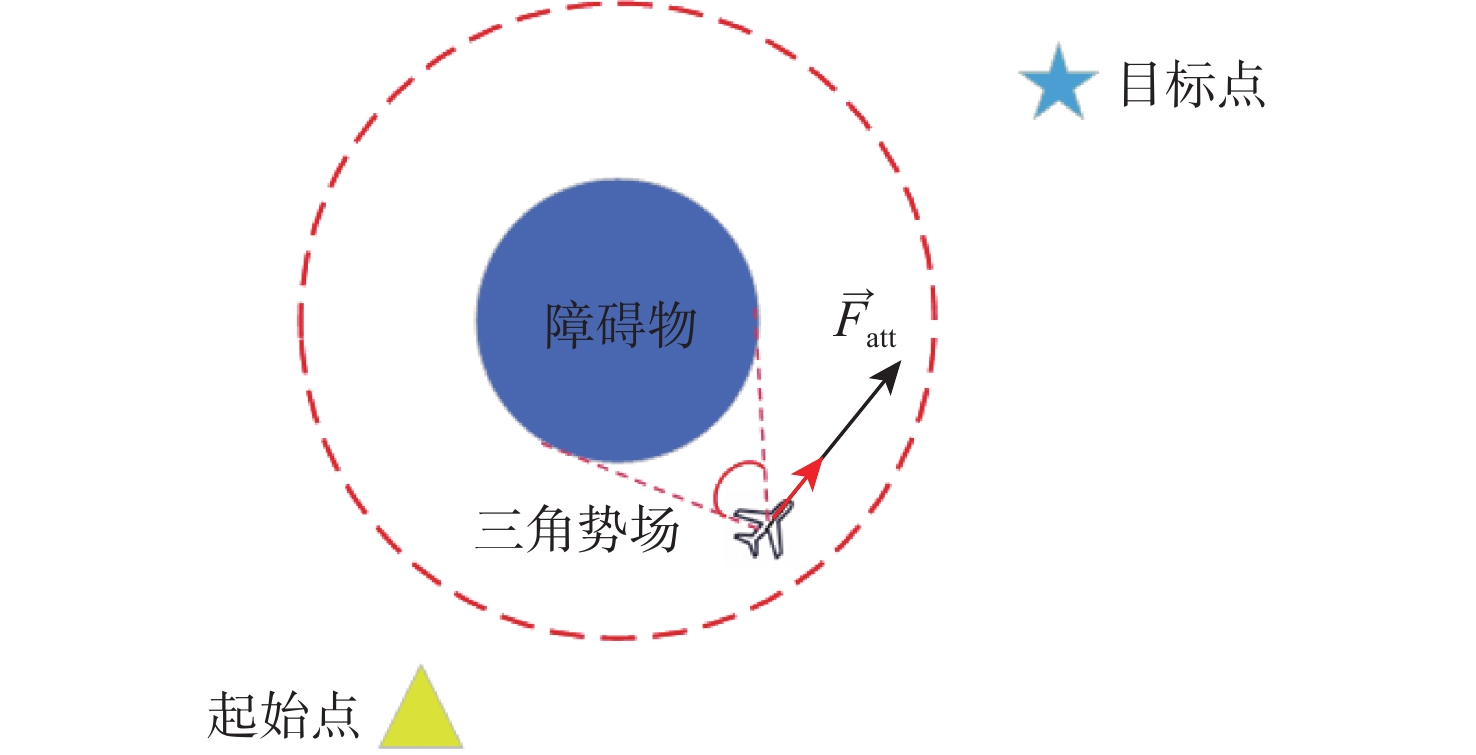
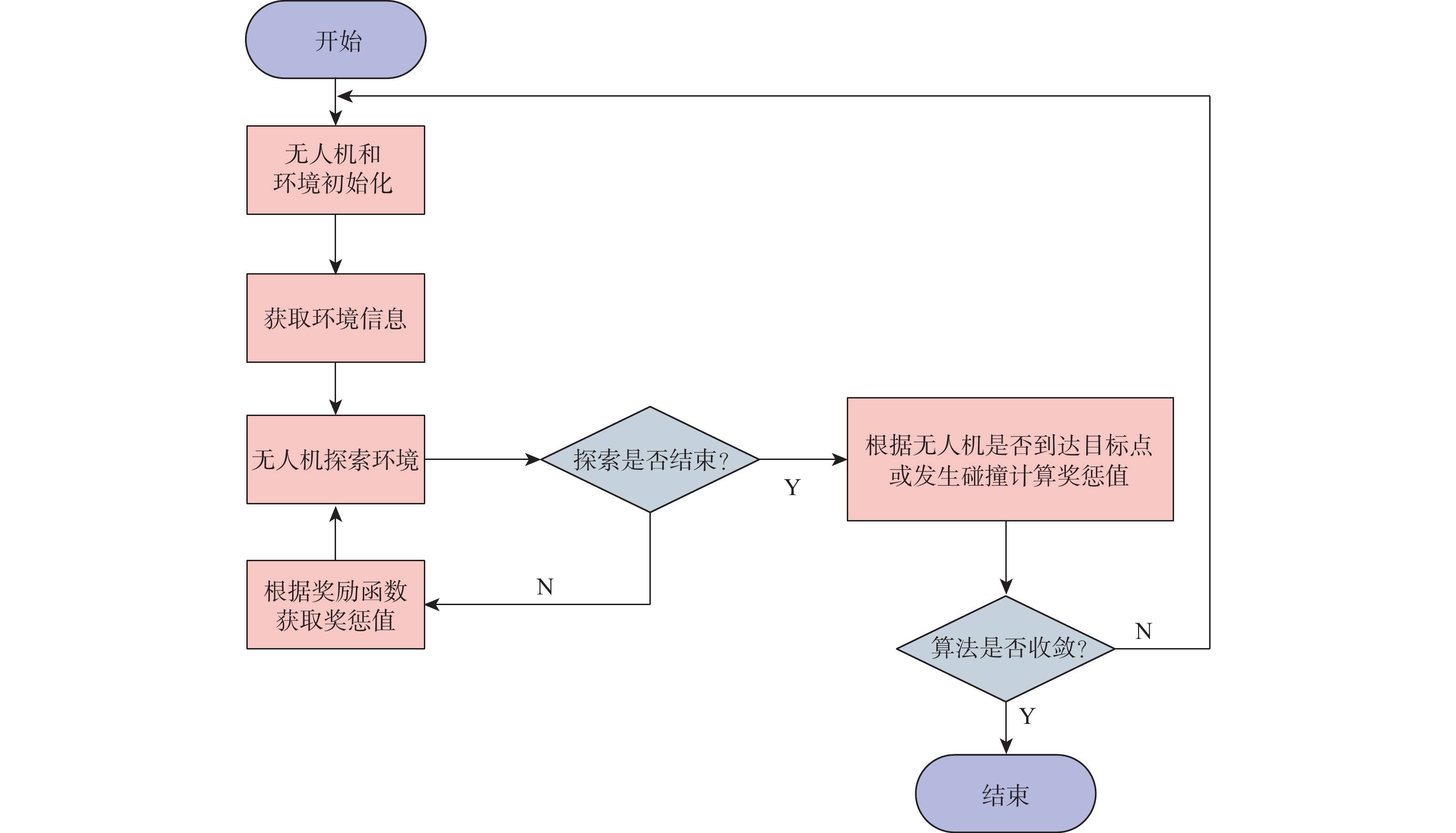
针对多障碍复杂场景下传统人工势场(APF)存在的势场函数设计困难、场景适应性差的难题,提出一种基于深度确定性策略梯度(DDPG)算法的三维自适应斥力势场的航迹规划(TAPF)方法。建立基于强化学习的斥力势场学习智能体,实现“端到端”的斥力输出,提高了斥力场的适应性;设计动态三角形描述斥力场范围,有效解决传统圆形斥力场导引的多余路径问题;根据无人机(UAV)航迹规划的特点,设计TAPF方法的状态空间、动作空间及奖励函数。仿真结果表明:所提方法规划出的路径更短,规划效果更优,对于复杂场景适应性具有更好的鲁棒性。
Abstract:Aiming at the difficulty of potential field function design and the poor scene adaptability of the traditional artificial potential field (APF) method in multi-obstacle complex scenes, a three-dimensional self-adaptive repulsive potential field trajectory planning (TAPF) method based on the deep deterministic policy gradient (DDPG) algorithm is proposed. The adaptive repulsive potential field is used for trajectory planning. Firstly, a reinforcement learning-based repulsive potential field learning intelligence is established, which achieves “end-to-end” repulsive force output and improves the adaptability of the repulsive field. Secondly, dynamic triangles are designed to describe the range of the repulsive field, which effectively solves the problem of redundant paths in the traditional circular repulsive field guidance. Lastly, according to the characteristics of UAV trajectory planning, the state space, action space, and action space are designed for the TAPF method, and the proposed algorithm is based on the characteristics of unmanned aerial vehicle (UAV) trajectory planning. The algorithm’s state space, action space, and reward function are created. According to simulation results, the proposed method has superior robustness to complicated scene adaptation and plans shorter courses with a better planning effect.
-
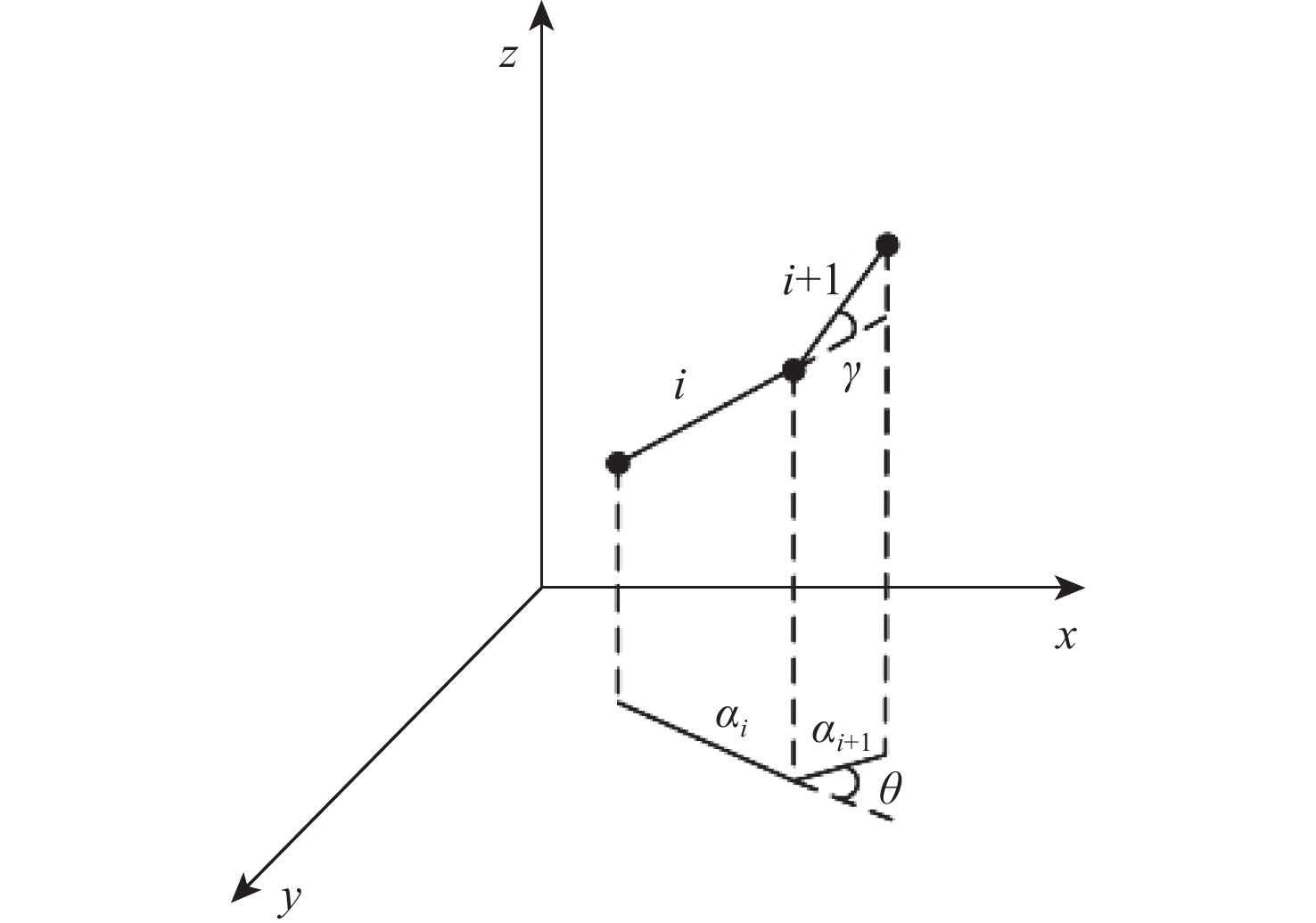
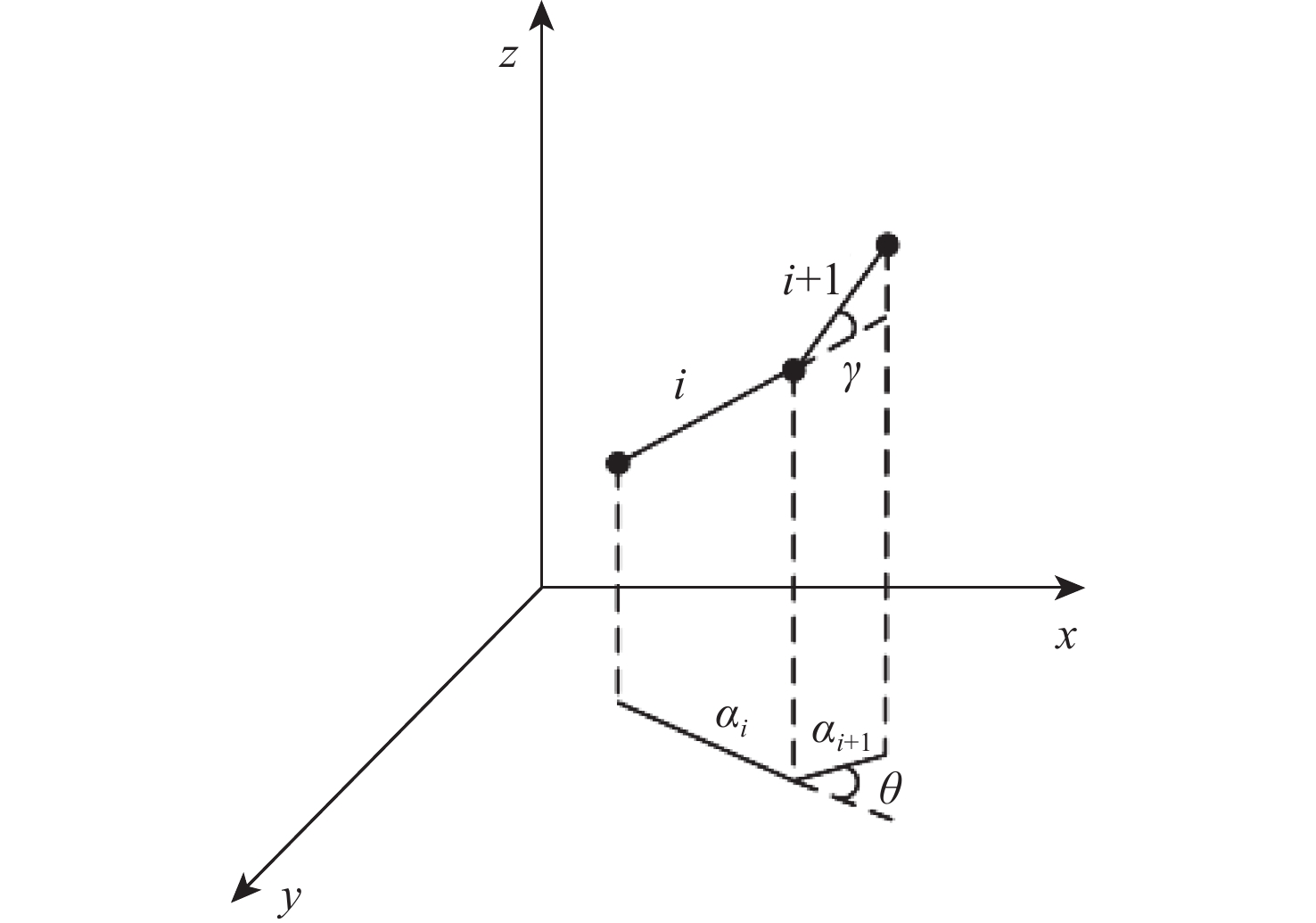
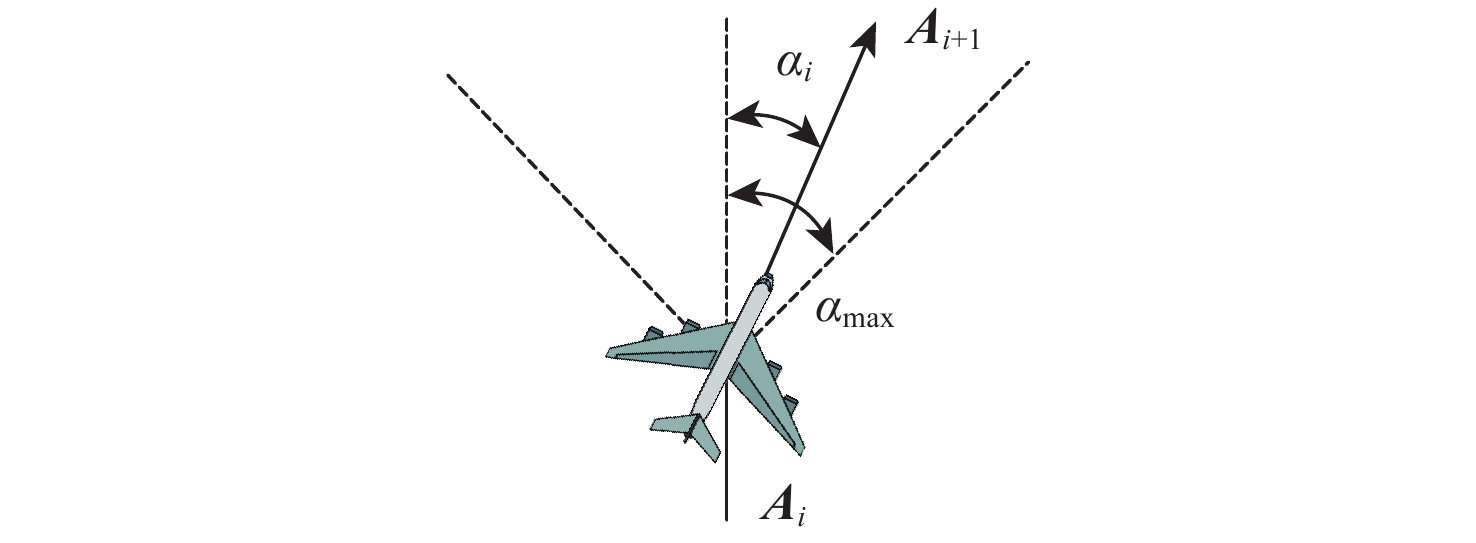
图 2 俯仰角和转弯角关系示意图
Figure 2. Schematic diagram of relationship between pitch and deflection angles
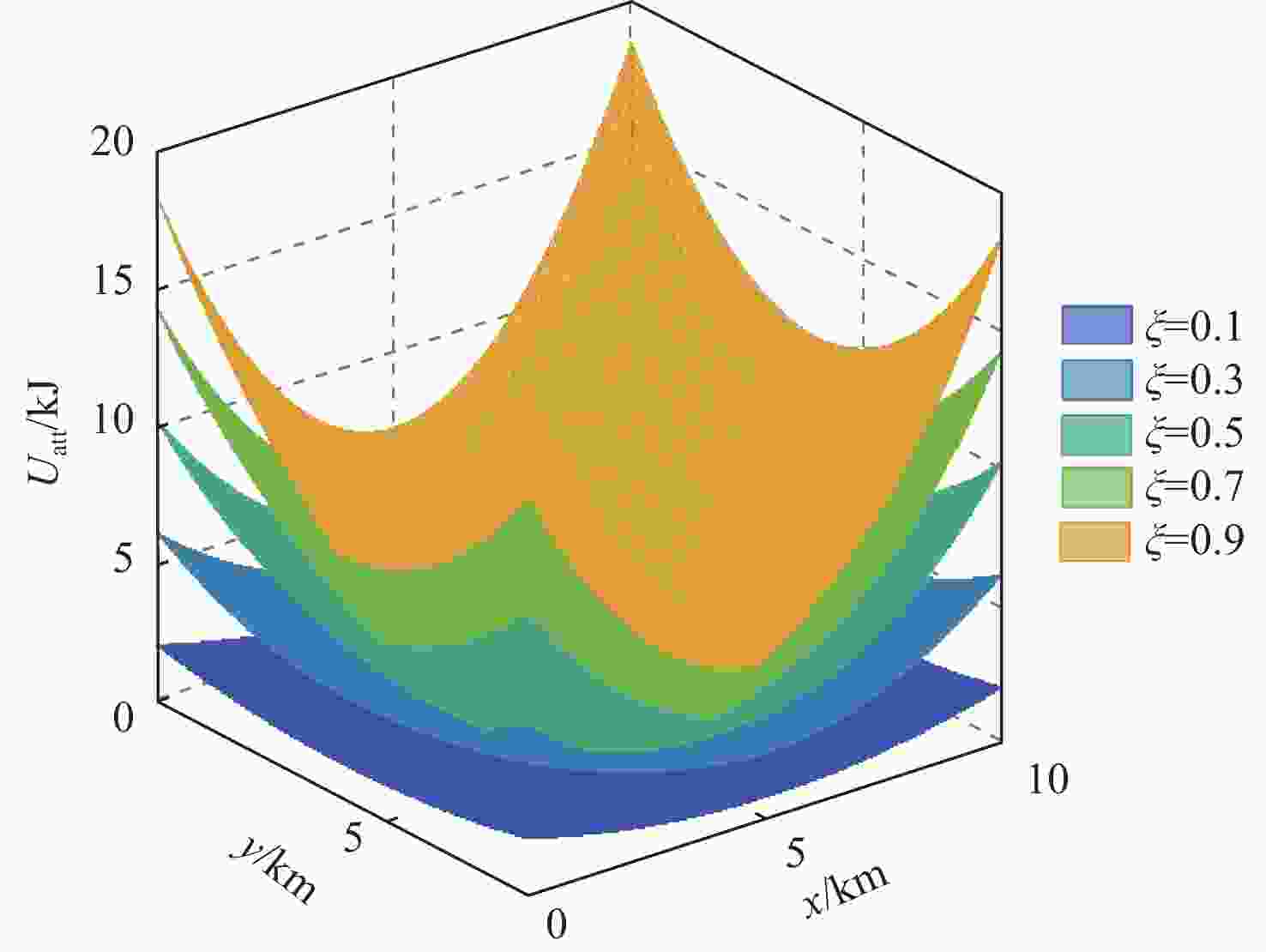
图 4 不同引力增益系数下引力场模型示意图
Figure 4. Schematic diagram of gravitational field model with different gravitational gain coefficients
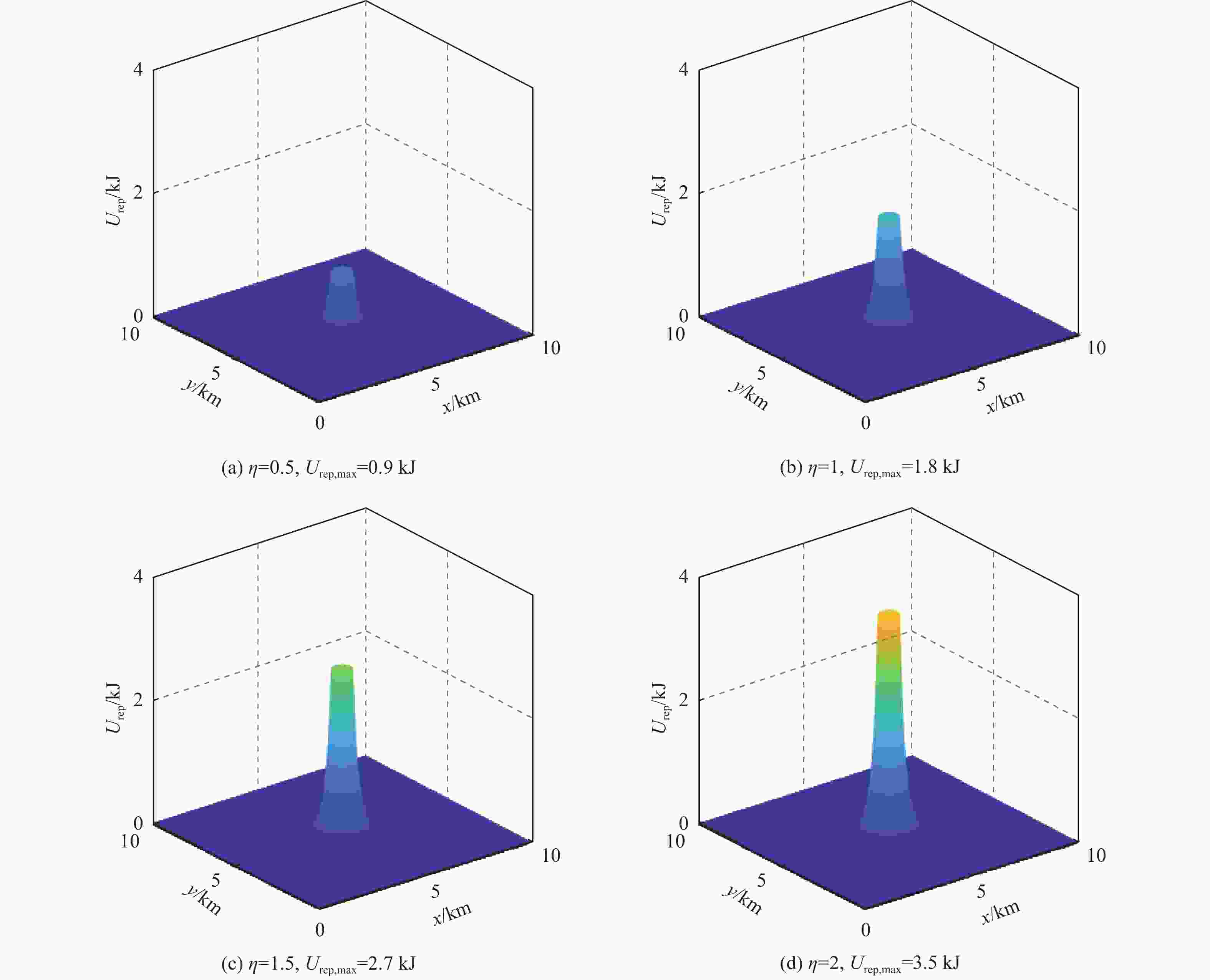
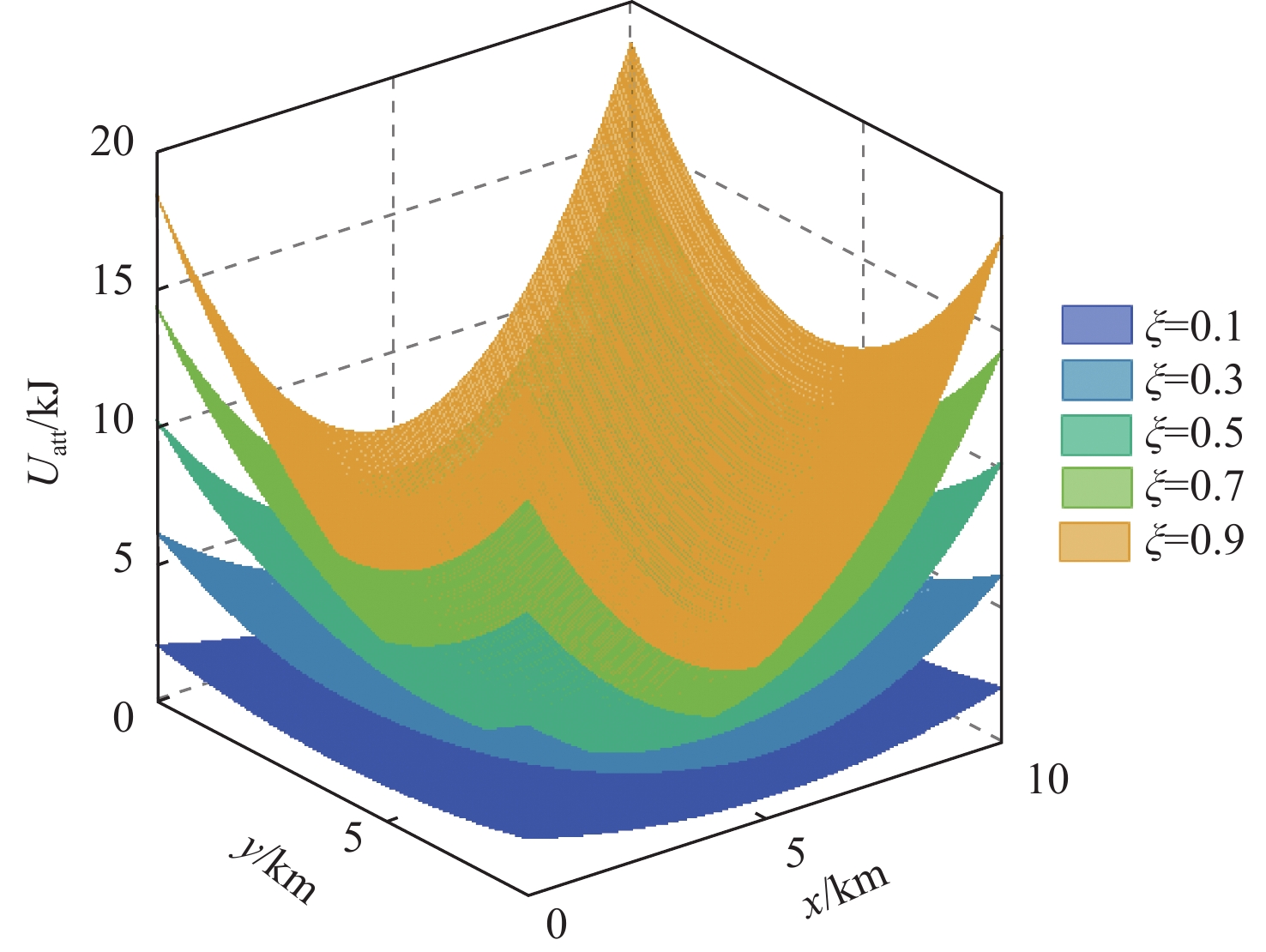
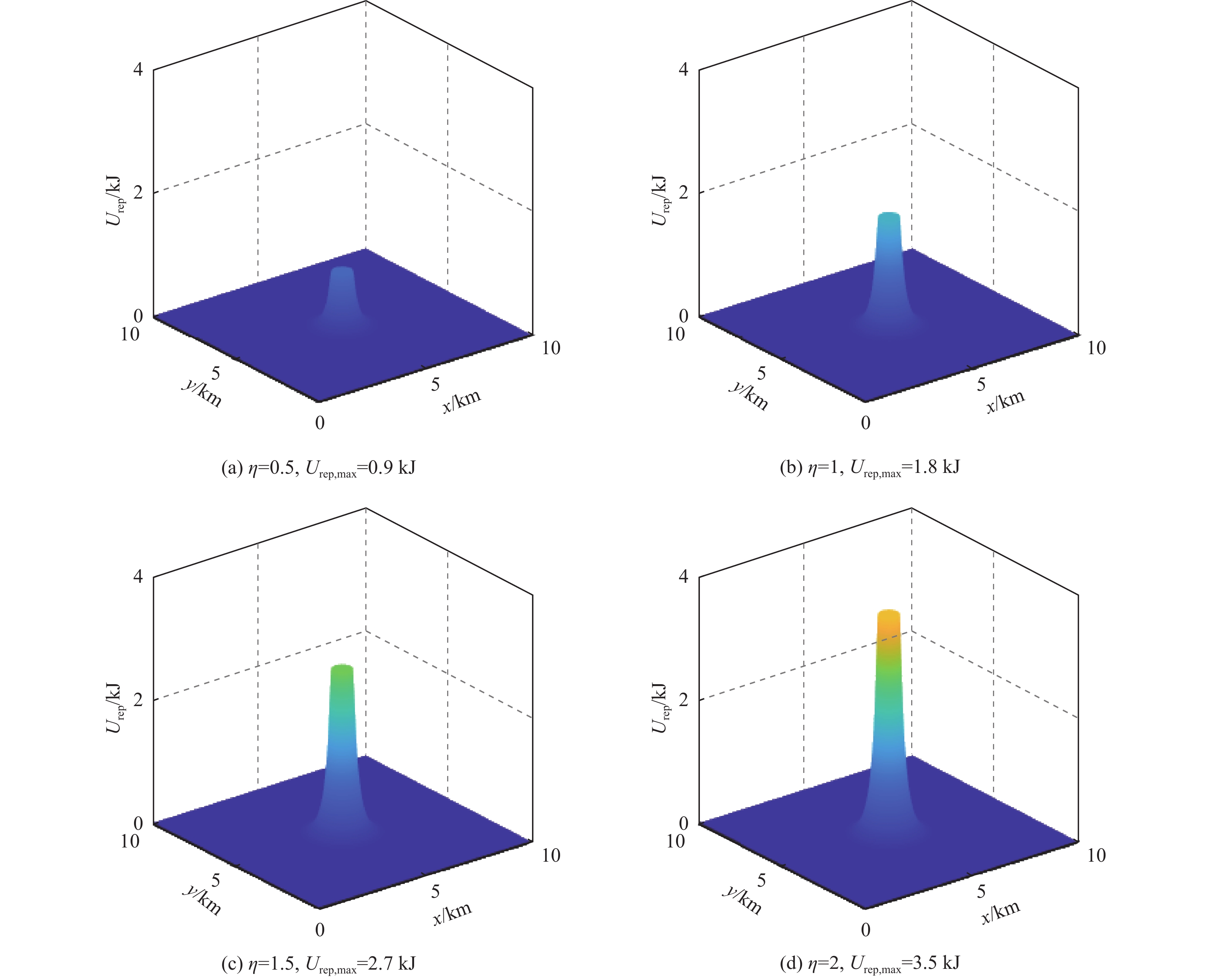
图 5 不同斥力增益系数下斥力场模型示意图
Figure 5. Schematic diagram of repulsive force field model with different repulsive force gain coefficients
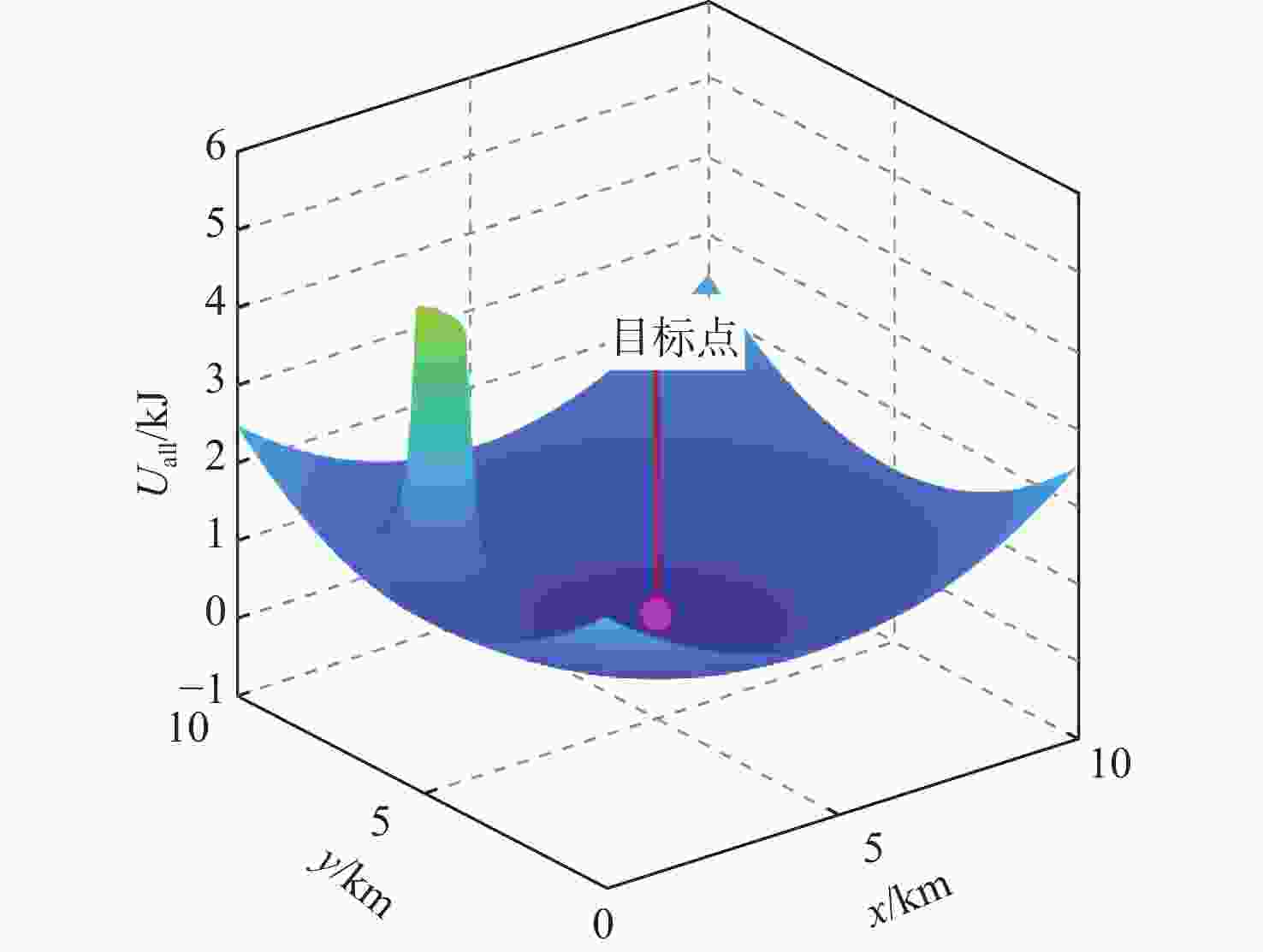
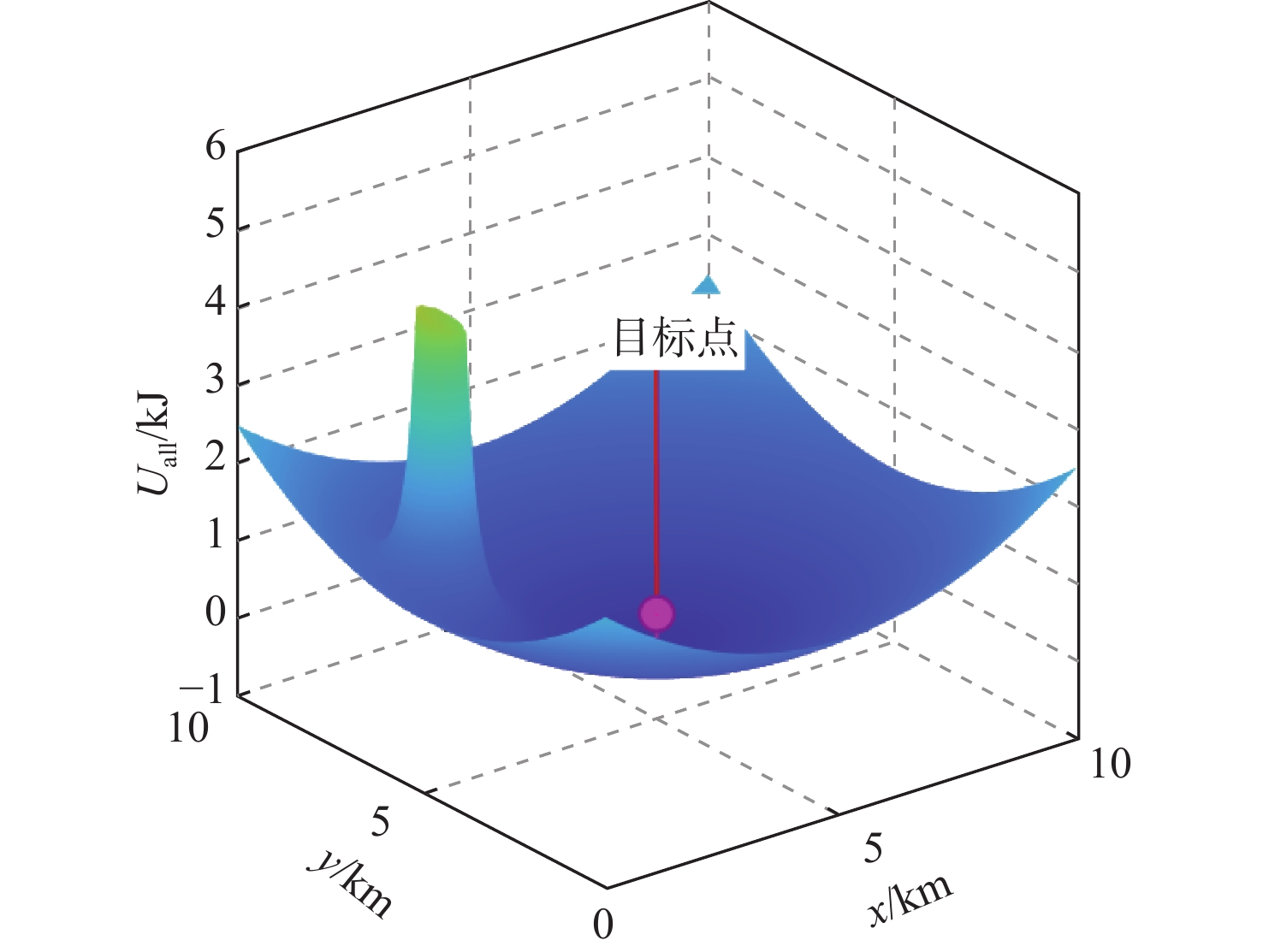
图 6 引力场与斥力场的叠加场模型示意图(单个斥力场)
Figure 6. Schematic diagram of superimposed field model of gravitational and repulsive fields (single repulsive field)
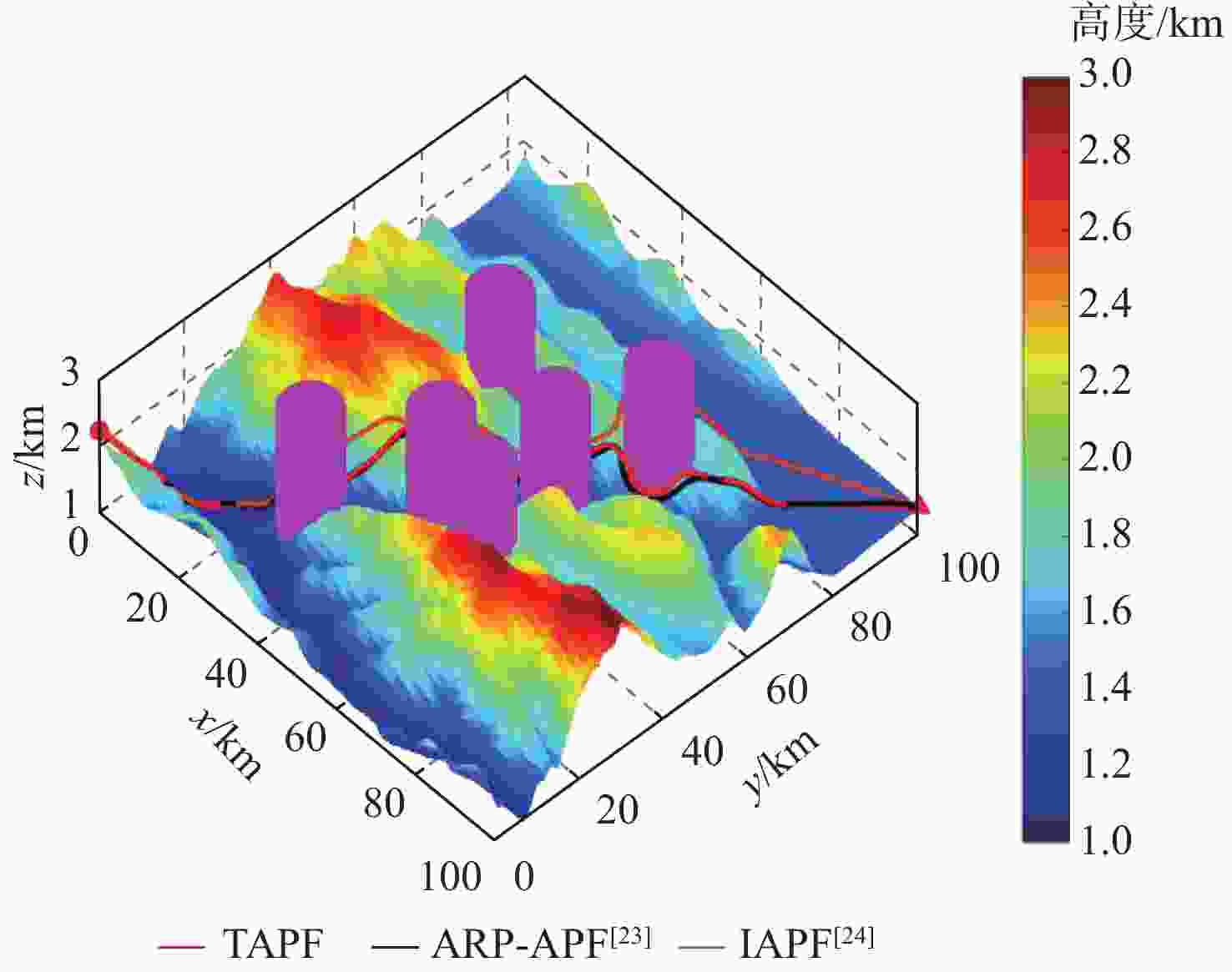
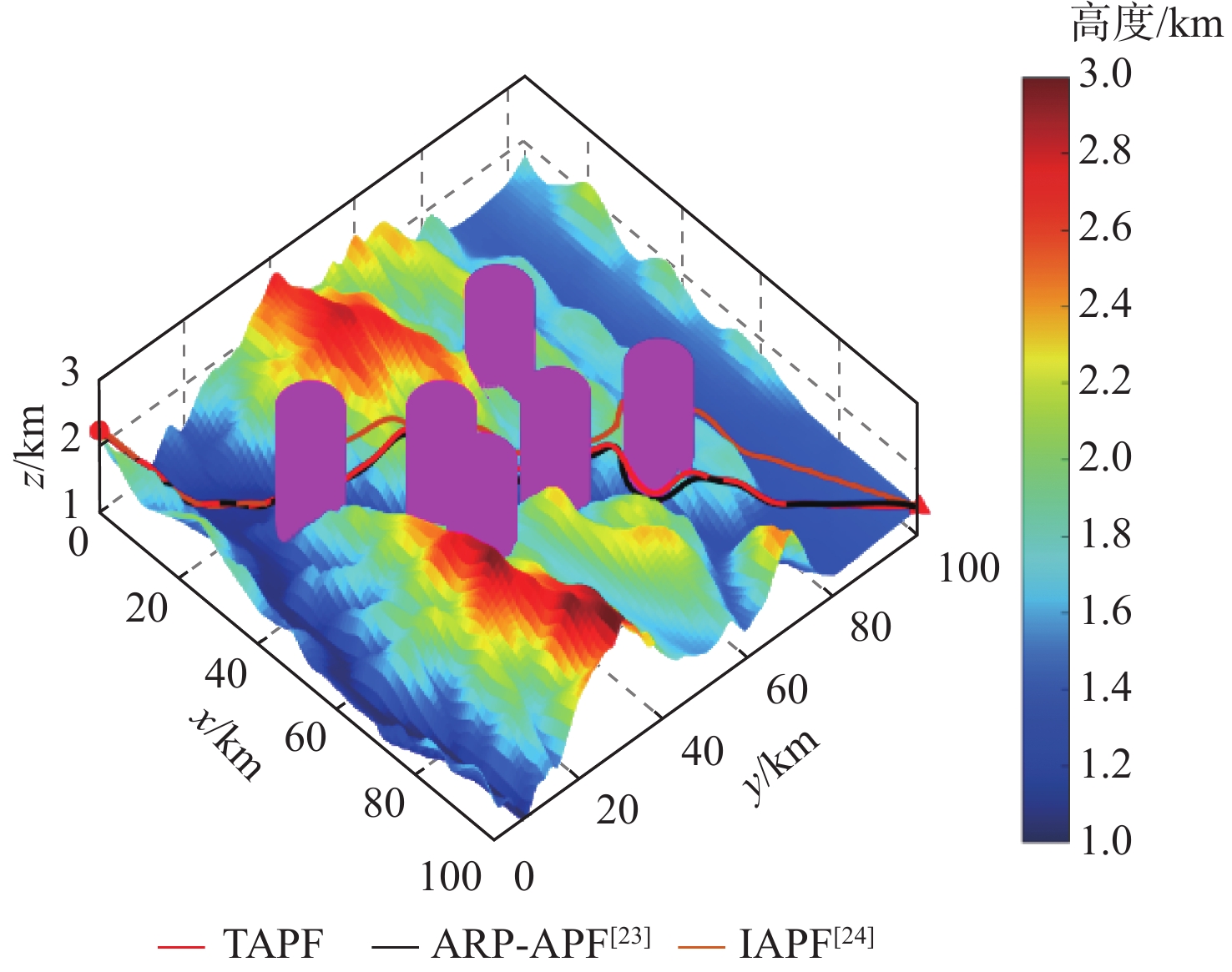
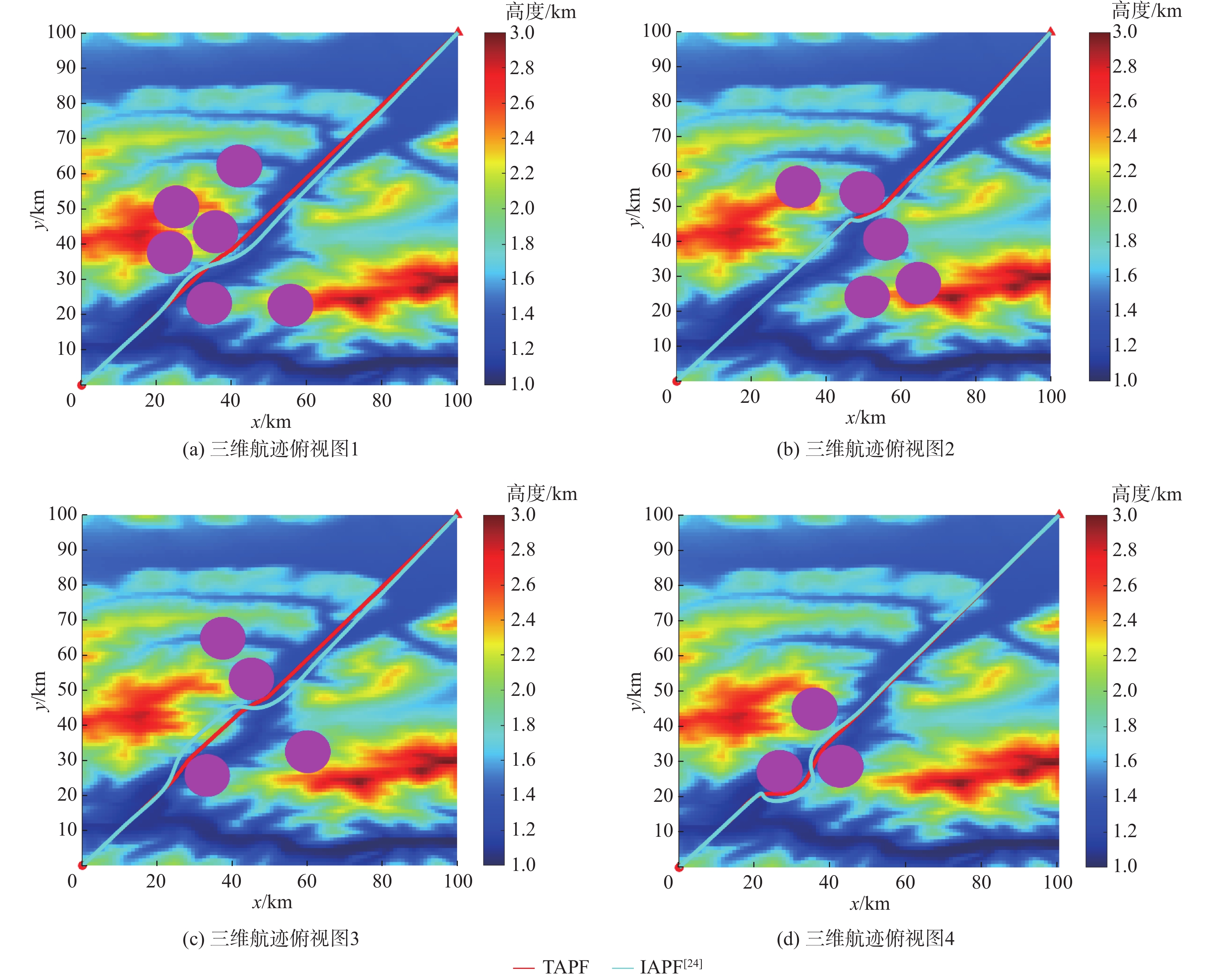
图 19 测试环境1中三维航迹模型图(测试1)
Figure 19. Three-dimensional trajectory model map in test environment 1
表 1 本文 DDPG算法参数
Table 1. Parameters of the DDPG algorithm
学习率 折扣
系数经验池容量 批处理数据 训练总步数 测试回合数 0.000 3 0.99 106 256 1 000 1 000  下载: 导出CSV
-
[1] 杨孝鹏, 李伟春, 孙锐. 基于国家安全情报的海岸警卫队态势感知研究[J]. 飞航导弹, 2020(6): 87-91.Yang X P, Li W C, Sun R. Research on situation awareness of coast guard based on national security intelligence[J]. Aerodynamic Missile Journal, 2020(6): 87-91(in Chinese). [2] 白文超, 班明飞, 宋梦, 等. 电动汽车-无人机联合救援系统协调调度模型[J]. 上海交通大学学报, 2024, 58(9): 1443-1453.Bai W C, Ban M F, Song M, et al. Coordinate scheduling model of electric vehicle-unmanned aerial vehicle joint rescue system[J]. Journal of Shanghai Jiao Tong University, 2024, 58(9): 1443-1453(in Chinese). [3] 王飞, 杨清平. 面向多无人机物流配送的双层任务规划方法[J]. 北京航空航天大学学报, 2026, 52(1): 94-103.Wang F, Yang Q P. Two-layer task planning method for multi-UAV logistics distribution[J]. Journal of Beijing University of Aeronautics and Astronautics, 2026, 52(1): 94-103(in Chinese). [4] 武锦龙, 吴虹麒, 李浩, 等. 基于改进DeepLabV3+的荞麦苗期无人机遥感图像分割识别方法研究[J]. 农业机械学报, 2024, 55(5): 186-195.Wu J L, Wu H Q, Li H, et al. Segmentation of buckwheat by UAV based on improved lightweight DeepLabV3+ at seedling stage[J]. Transactions of the Chinese Society for Agricultural Machinery, 2024, 55(5): 186-195(in Chinese). [5] 王超, 王银花. 一种改进Dijkstra算法的UAV路径规划[J]. 信息技术与信息化, 2021(10): 217-219.Wang C, Wang Y H. An improved Dijkstra algorithm for UAV path planning[J]. Information Technology and Informatization, 2021(10): 217-219(in Chinese). [6] 赵烈海, 李大鹏. 高密度场景下基于改进A*算法的无人机路径规划[J]. 无线电通信技术, 2024, 50(4): 713-719.Zhao L H, Li D P. Unmanned aerial vehicle path planning based on improved A* algorithm in high-density scenarios[J]. Radio Communications Technology, 2024, 50(4): 713-719(in Chinese). [7] 杨玉, 金敏, 鲁华祥. 融合简化稀疏A*算法与模拟退火算法的无人机航迹规划[J]. 计算机系统应用, 2019, 28(4): 25-31.Yang Y, Jin M, Lu H X. UAV path planning based on fusion of simplified sparse A* algorithm and simulated annealing algorithm[J]. Computer Systems & Applications, 2019, 28(4): 25-31(in Chinese). [8] Chen Y B, Luo G C, Mei Y S, et al. UAV path planning using artificial potential field method updated by optimal control theory[J]. International Journal of Systems Science, 2016, 47(6): 1407-1420. [9] 程泽新, 李东生, 高杨. 一种改进遗传算法的无人机航迹规划[J]. 计算机仿真, 2019, 36(12): 31-35.Cheng Z X, Li D S, Gao Y. GASA drone path planning to improve mutation strategy[J]. Computer Simulation, 2019, 36(12): 31-35(in Chinese). [10] Meng X L, Zhu X J, Zhao J. Obstacle avoidance path planning using the elite ant colony algorithm for parameter optimization of unmanned aerial vehicles[J]. Arabian Journal for Science and Engineering, 2023, 48(2): 2261-2275. [11] Yu Z H, Si Z J, Li X B, et al. A novel hybrid particle swarm optimization algorithm for path planning of UAVs[J]. IEEE Internet of Things Journal, 2022, 9(22): 22547-22558. [12] 王庆海, 刘广瑞, 郭珂甫. 基于改进人工蜂群算法的无人机航迹规划研究[J]. 机床与液压, 2017, 45(21): 68-72.Wang Q H, Liu G R, Guo K F. Research on path planning of UAV based on improved ABC algorithm[J]. Machine Tool & Hydraulics, 2017, 45(21): 68-72(in Chinese). [13] 姬鹏, 郭明皓. 基于Frenet坐标下改进人工势场法的无人车局部路径规划[J]. 兵工学报, 2024, 45(7): 2097-2109.Ji P, Guo M H. Local path planning for unmanned ground vehicles based on improved artificial potential field method in frenet coordinate system[J]. Acta Armamentarii, 2024, 45(7): 2097-2109(in Chinese). [14] 张铮, 薛波, 柯子鹏, 等. 改进人工势场算法的路径规划[J]. 西安理工大学学报, 2024, 40(1): 27-35.Zhang Z, Xue B, Ke Z P, et al. Path planning based on improved artificial potential field algorithm[J]. Journal of Xi’an University of Technology, 2024, 40(1): 27-35(in Chinese). [15] 张菁, 何友, 彭应宁, 等. 基于神经网络和人工势场的协同博弈路径规划[J]. 航空学报, 2019, 40(3): 322493.Zhang J, He Y, Peng Y N, et al. Neural network and artificial potential field based cooperative and adversarial path planning[J]. Acta Aeronautica et Astronautica Sinica, 2019, 40(3): 322493(in Chinese). [16] 苗田恬, 方厚招, 安康, 等. 基于人工势场引力因子的机械臂避障规划算法[J]. 计算机工程与设计, 2024, 45(2): 578-586.Miao T T, Fang H Z, An K, et al. Obstacle avoidance planning algorithm of robot arm based on attraction factor of artificial potential field[J]. Computer Engineering and Design, 2024, 45(2): 578-586(in Chinese). [17] 刘光才, 马寅松, 齐福强, 等. 基于改进A*-人工势场法的城市物流无人机路径规划[J]. 飞行力学, 2022, 40(6): 16-23.Liu G C, Ma Y S, Qi F Q, et al. Flight path planning for urban logistics UAV based on improved A*-APF algorithm[J]. Flight Dynamics, 2022, 40(6): 16-23(in Chinese). [18] 董炫良, 赵桂清. 人工势场引导蚁群算法的机器人导航路径规划[J]. 机械设计与制造, 2021(6): 169-173.Dong X L, Zhao G Q. Robot navigation path planning based on ant colony algorithm guided by artificial potential field[J]. Machinery Design & Manufacture, 2021(6): 169-173(in Chinese). [19] Guan W, Cui Z W, Zhang X K. Intelligent smart marine autonomous surface ship decision system based on improved PPO algorithm[J]. Sensors, 2022, 22(15): 5732. [20] Zhou Y X, Shu J S, Hao H, et al. UAV 3D online track planning based on improved SAC algorithm[J]. Journal of the Brazilian Society of Mechanical Sciences and Engineering, 2023, 46(1): 12. [21] 曹馨文, 时宏伟. 自适应斥力系数的无人机路径规划[J]. 计算机系统应用, 2023, 32(5): 36-44.Cao X W, Shi H W. Path planning of UAV based on adaptive repulsion coefficient[J]. Computer Systems & Applications, 2023, 32(5): 36-44(in Chinese). [22] 陈康雄, 刘磊. 基于扰动流体与TD3的无人机路径规划算法[J]. 电光与控制, 2024, 31(1): 57-62.Chen K X, Liu L. A UAV path planning method based on interfered fluid and TD3 algorithm[J]. Electronics Optics & Control, 2024, 31(1): 57-62(in Chinese). [23] Hao G Q, Lv Q, Huang Z, et al. UAV path planning based on improved artificial potential field method[J]. Aerospace, 2023, 10(6): 562. [24] 王庆禄, 吴冯国, 郑成辰, 等. 基于优化人工势场法的无人机航迹规划[J]. 系统工程与电子技术, 2023, 45(5): 1461-1468.Wang Q L, Wu F G, Zheng C C, et al. UAV path planning based on optimized artificial potential field method[J]. Systems Engineering and Electronics, 2023, 45(5): 1461-1468(in Chinese). -

 下载:

计量
- 文章访问数: 510
- HTML全文浏览量: 243
- PDF下载量: 109
- 被引次数: 0
