





-
摘要:
面向高性能战斗机对精准生命保障的需求,具备生理监测、状态预测和主动干预功能的机载智能氧气系统已成为下一代航空生命保障系统的重要发展方向。系统梳理机载氧气系统的发展历程及国内外智能化研究进展,重点分析电子式氧气调节、飞行员生理监测和生理状态预测3项关键技术的应用潜力及工程化制约因素。分析表明:电子式氧气调节器为将生理信息接入供氧控制闭环提供了工程基础,但复杂飞行环境下的传感可靠性、个体化状态预测、干预策略匹配、闭环稳定性和飞行验证仍是制约其工程应用的关键问题。未来应加强多模态生理信息融合、机理与数据融合建模及分级试验验证,推动飞行员生理状态、座舱环境与供氧设备的协同感知和闭环调控。
Abstract:To meet the growing demand for precision protection in advanced high-performance fighter aircraft and the increasing life-support requirements of pilots, intelligent oxygen systems integrating physiological monitoring, state prediction, and active intervention are expected to become a key component of next-generation life-support systems. Accordingly, the evolution of airborne oxygen systems and recent advances in intelligent oxygen technologies worldwide were systematically reviewed. Particular attention was given to the application potential and major limitations of three enabling technologies: electronic oxygen regulation, multimodal physiological monitoring, and physiological state prediction. Current evidence indicates that electronic oxygen regulators provide the engineering foundation for incorporating physiological information into the oxygen-supply control loop. However, sensor reliability under complex flight conditions, individualized prediction, appropriate matching of intervention strategies to physiological risks, closed-loop stability, and in-flight validation remain major barriers to practical implementation. Future research should integrate multimodal physiological information, hybrid physiology-data modeling, and staged experimental validation to achieve coordinated regulation of pilot physiological status, cockpit environment, and oxygen-supply equipment.
-
Key words:
- oxygen systems /
- life support systems /
- intelligent control /
- fighter aircraft /
- man machine systems /
- pilots
-
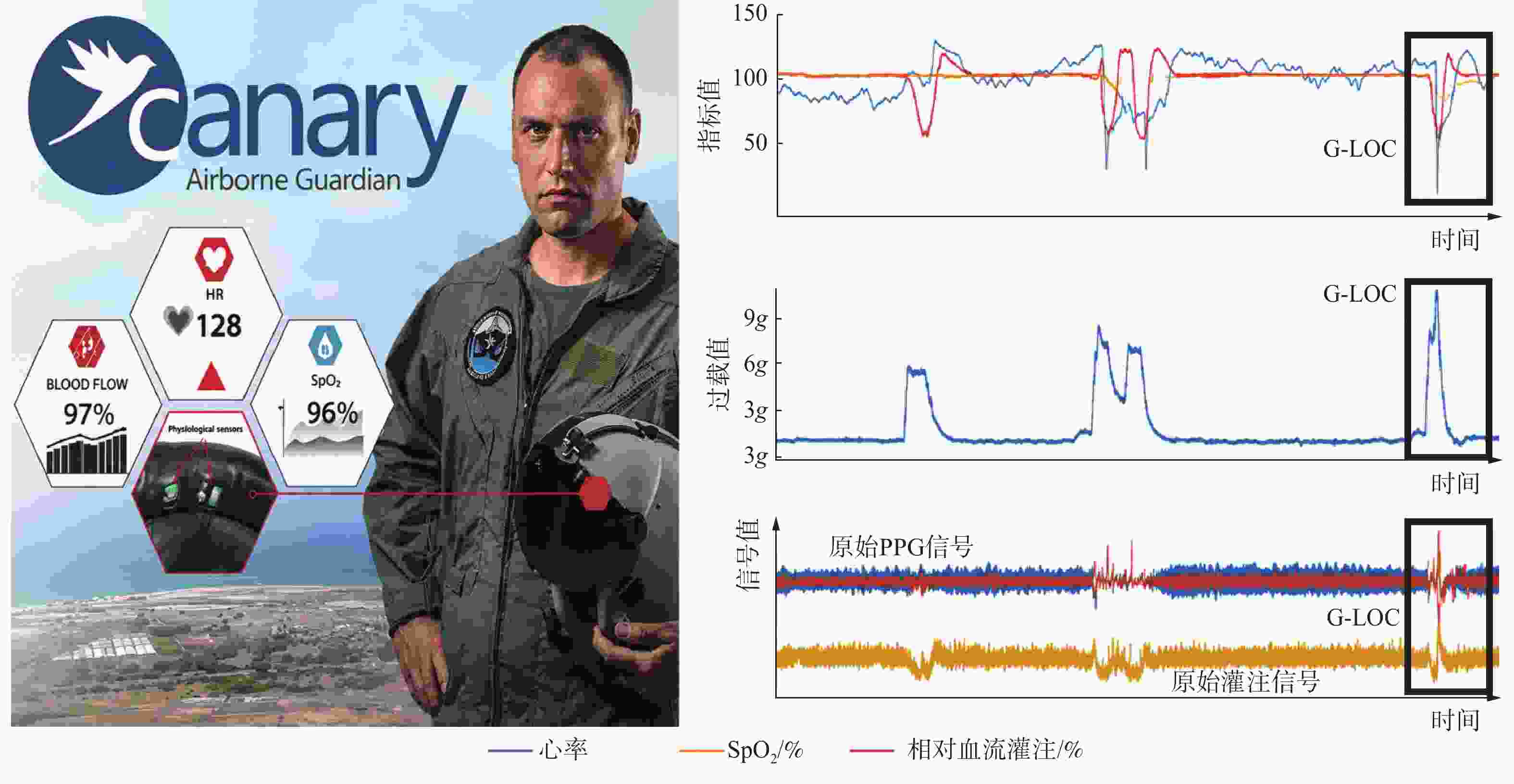
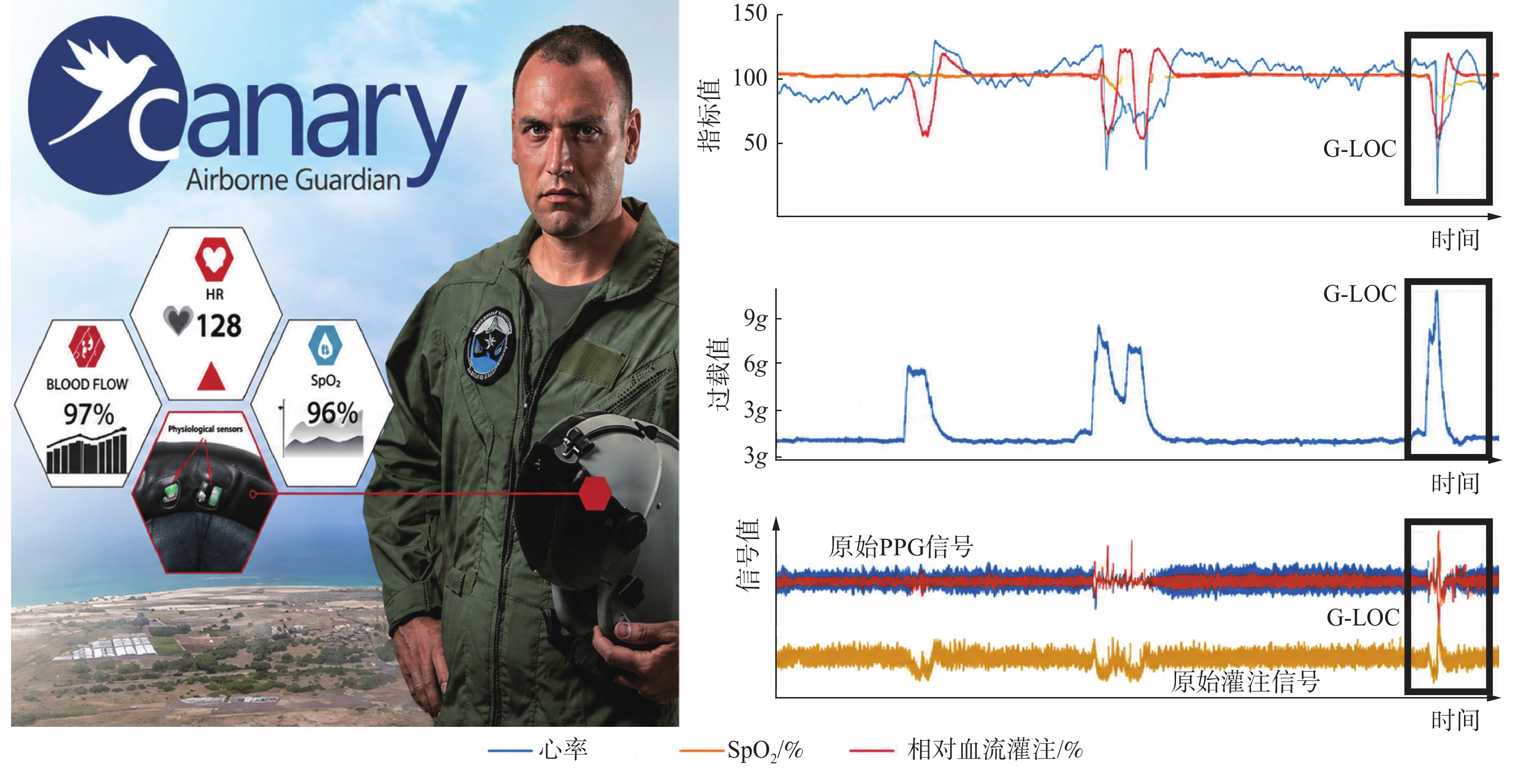
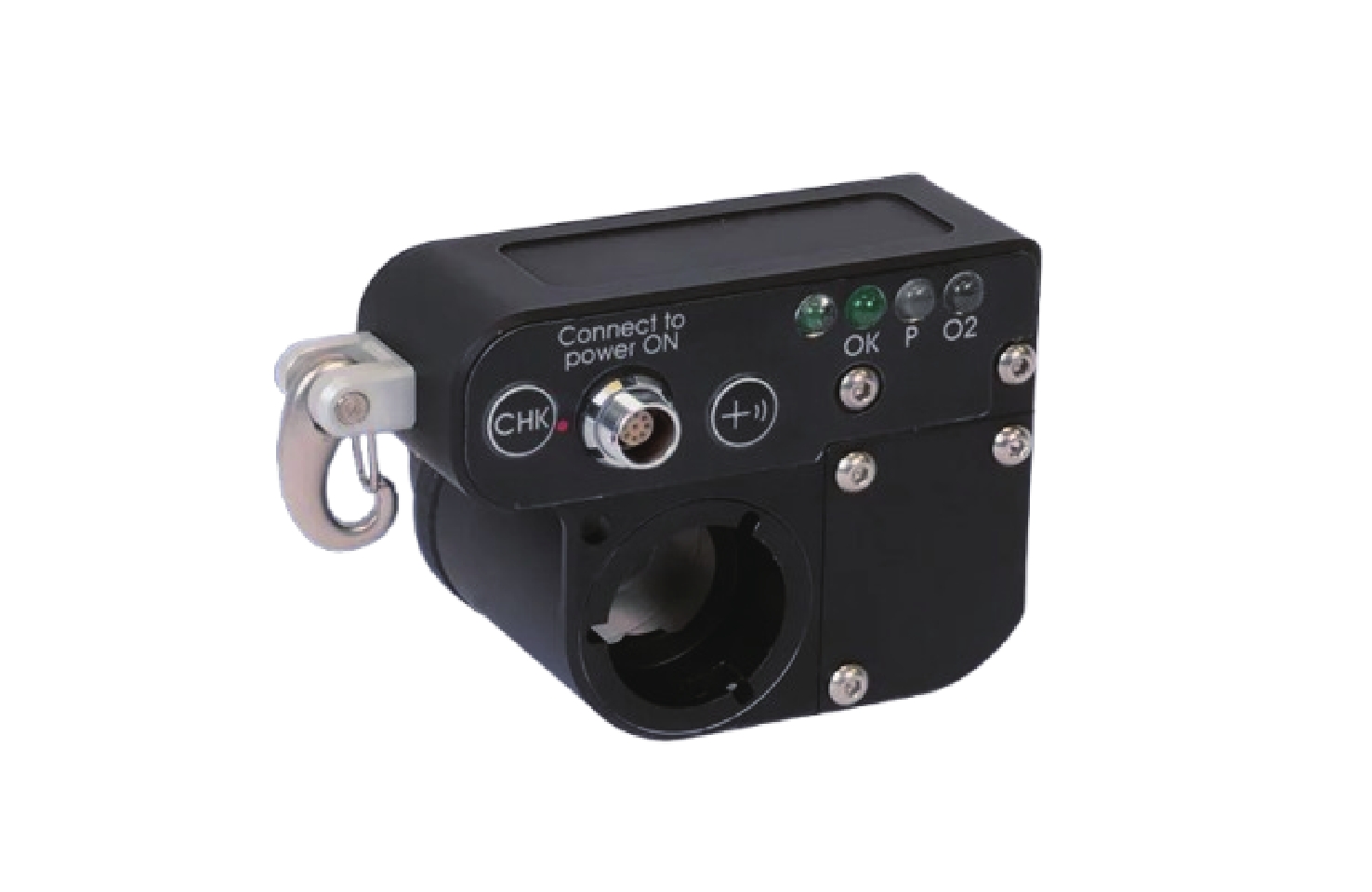
图 4 以色列Elbit Systems飞行员生理监测系统
Figure 4. Israel Elbit Systems health detection device for pilots
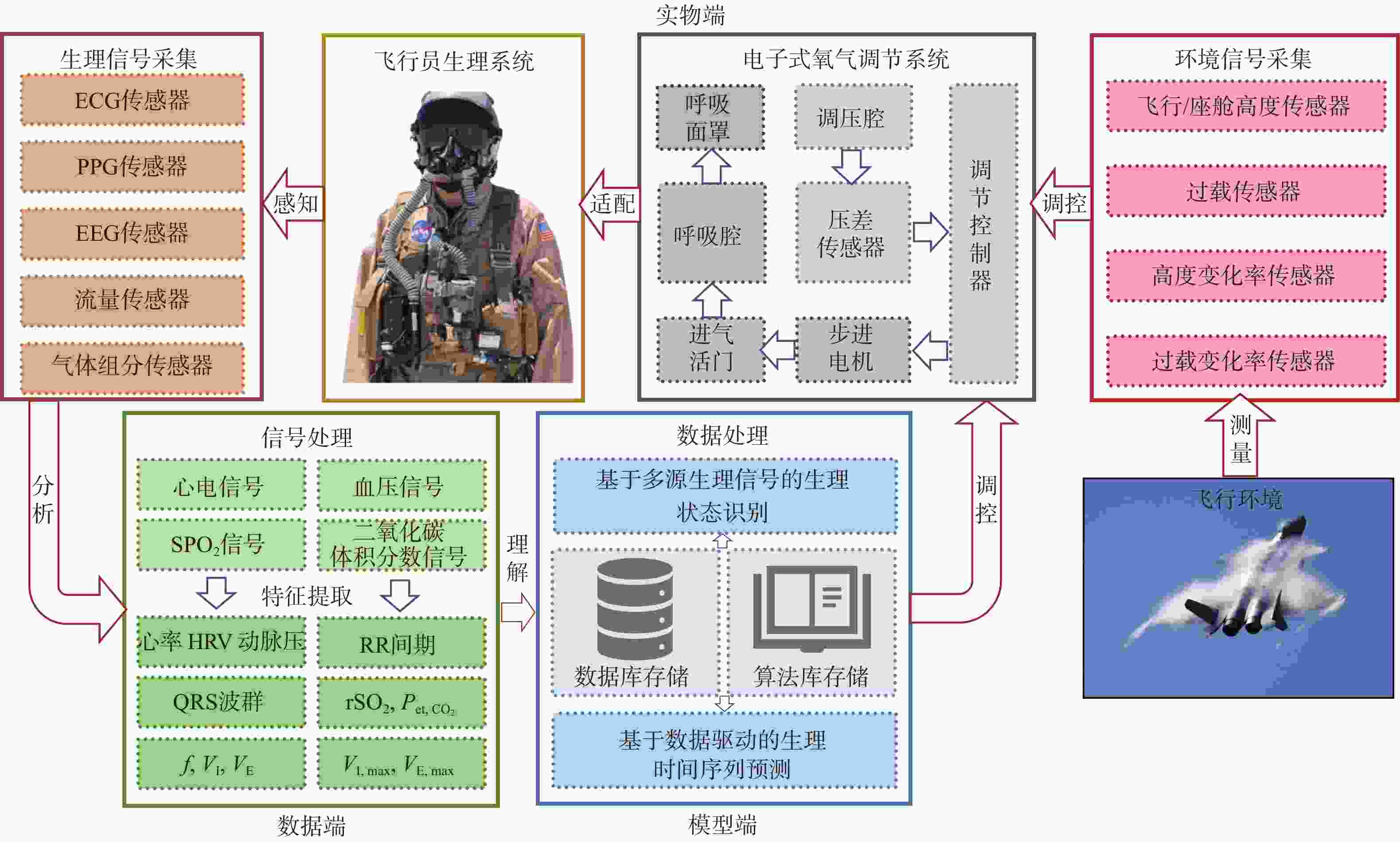
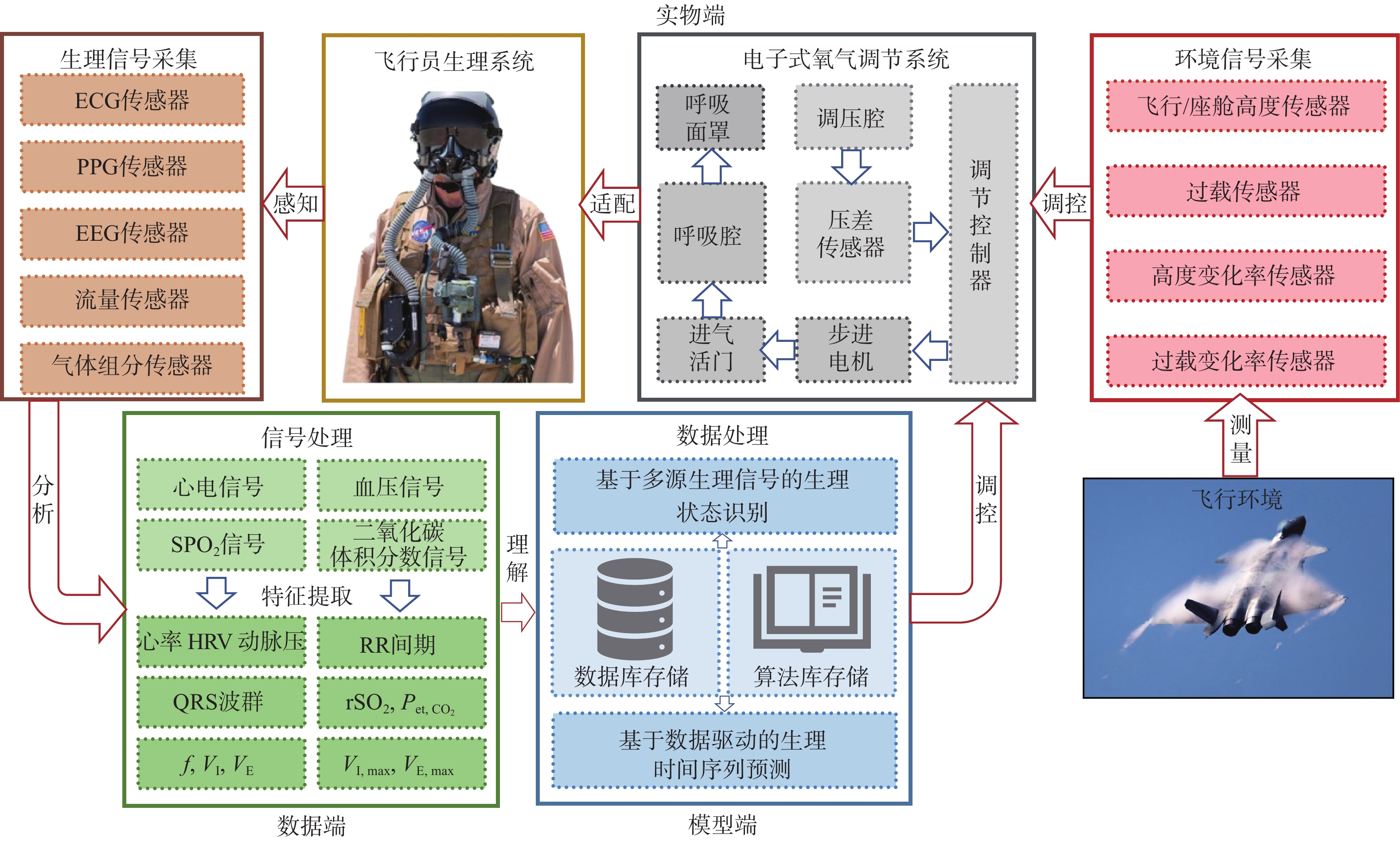
图 7 机载智能氧气系统闭环控制逻辑
Figure 7. Closed-loop control logic for an intelligent on-borne oxygen system
表 1 综合呼吸指数状态描述
Table 1. Integrated pulmonary index status descriptors
综合呼吸指数 人体状态 10 正常 8~9 在正常范围内 7 临近正常范围,需要注意 5~6 需要注意,或许需要干预 3~4 需要干预 1~2 需要马上干预  下载: 导出CSV
心血管系统模型 概述 适用情况 局限 三维模型[62-63] 考虑血管三维几何结构与力学性能,血液被视为非牛顿、不可压缩的稳定层流流体 研究血管几何形状对血流动力学的影响 高计算成本,空间尺度<1m 二维模型[64-65] 利用圆柱几何特性简化血管模型,将血管视为二维管道 研究管道流径向流动参数变化 较高计算成本,难以扩展到整个血管系统 一维模型[64,66] 血管模型只依赖于轴向坐标,将血管等效为一维管道 研究血管系统中波传播现象的理想工具 没有摆脱空间依赖性,不适用于对血管系统的整体分析 集中参数模型[67-71] 基于血管流体网络和电路网络间的相似性建立,血管系统可简化为集中参数模型 模拟更大范围的血管系统行为,方便考虑自我调节、代谢动力学,运算成本较低 不能反映血管三维流动细节,选参和调参困难 跨尺度耦合模型[72-77] 利用不同模型各自特点分别仿真循环系统的不同部分 利用集中参数模型为局部血管模型提供合理的边界条件 耦合交界面的处理
下载: 导出CSV
-
[1] 肖华军. 航空供氧防护装备生理学[M]. 北京: 军事医学科学出版社, 2005.Xiao H J. Physiology of aviation oxygen protective equipment[M]. Beijing: Military Medical Science Press, 2005(in Chinese). [2] 胡文东, 文治洪. 航空航天医学全书: 航空航天医学工程学[M]. 西安: 第四军医大学出版社, 2013: 1-17.Hu W D, Wen Z H. Aerospace medicine books: aerospace medical engineering[M]. Xian: Fourth Military Medical University Press, 2013, 1-17(in Chinese). [3] Cragg C H, Kennedy K D, Shelton M B, et al. Understanding pilot breathing—a case study in systems engineering: NASA NESC-RP-18-01320[R]. Washington, D. C.: NASA, 2021: 10-28. [4] 封文春, 朱永峰, 周慧红. F-22缺氧问题的分析与思考[J]. 航空科学技术, 2013, 24(1): 23-26.Feng W C, Zhu Y F, Zhou H H. Analysis and thinking of the problem of F-22 oxygen system[J]. Aeronautical Science & Technology, 2013, 24(1): 23-26(in Chinese). [5] Commander, U. S. Pacific Fleet. Comprehensive review physiological episodes of T-45 and F/A-18 aircraft[R]. Pearl Harbor: U. S. Navy, 2017: 1-56. [6] 孙喜庆, 姜世忠. 航空航天生物动力学[M]. 西安: 第四军医大学出版社, 2013: 26-31.Sun X Q, Jiang S Z. Aerospace biodynamics[M]. Xian: Fourth Military Medical University Press, 2013, 26-31(in Chinese). [7] 耿喜臣, 颜桂定, 金朝. 航空加速度生理学的研究与应用[J]. 航空军医, 2004, 32(5): 189-196.Geng X C, Yan G D, Jin Z. Research and application of aviation acceleration physiology[J]. Flight Surgeon, 2004, 32(5): 189-196(in Chinese). [8] Lyons T J, Harding R, Freeman J, et al. G-induced loss of consciousness accidents: USAF experience 1982—1990[J]. Aviation Space and Environmental Medicine, 1992, 63(1): 60-66. [9] 刘天亚. 与呼吸机相关性肺损伤的预防相关的呼吸力学问题的研究[D]. 北京: 北京航空航天大学, 2019: 1-28.Liu T Y. Studies of respiratory mechanics on prevention of ventilator-associated lung injury[D]. Beijing: Beihang University, 2019: 1-28(in Chinese). [10] Masters M, Schulte A. Physiological sensor fusion for real-time pilot workload prediction and overload prevention[C]//Proceedings of the AIAA SCITECH 2022 Forum. Reston: AIAA, 2022: 2344. [11] Endsley M R. Design and evaluation for situation awareness enhancement[C]//Proceedings of the Human Factors Society 32nd Annual Meeting. Santa Monica: Human Factors Society, 1988, 32: 97-101. [12] NASA Engineering and Safety Center. Pilot breathing assessment volume I: NESC-RP-18-01320, Vol. 1[R]. Washington, D. C.: NASA, 2020: 27-519. [13] NASA Engineering and Safety Center. Pilot breathing assessment volume II: NESC-RP-18-01320, Vol. 2[R]. Washington, D. C.: NASA, 2020: 1-260. [14] 潘锐. 电子式氧调器设计及实验研究[D]. 北京: 北京航空航天大学, 2021.Pan R. Design and experiment research of the electronic oxygen regulator[D]. Beijing: Beihang University, 2021(in Chinese). [15] INSTA. Austria selects Insta pilot’s breath air monitor for its Eurofighter fleet[EB/OL]. (2023-09-02)[2024-08-20]. https://defence-industry.eu. [16] Shaw D M, Harrell J W. Integrating physiological monitoring systems in military aviation: a brief narrative review of its importance, opportunities, and risks[J]. Ergonomics, 2023, 66(12): 2242-2254. [17] Spotlight Labs. Launches hypoxia sensor device for USAF pilots[EB/OL]. (2019-01-30)[2024-08-20]. https://www.airforce-technology.com. [18] 盛勇. 电子式供氧抗荷调节器的仿真研究[D]. 北京: 北京航空航天大学, 2011.Sheng Y. Simulation for the electronic oxygen supply and anti-G regulator[D]. Beijing: Beihang University, 2011(in Chinese). [19] 孙灿飞, 蔡元友, 龙海军. 电子式氧气调节器中步进电机模糊控制技术研究[J]. 测控技术, 2013, 32(4): 78-81.Sun C F, Cai Y Y, Long H J. Research on stepping motor fuzzy control technology application in the aircraft electronic oxygen regulator[J]. Measurement & Control Technology, 2013, 32(4): 78-81(in Chinese). [20] 吕晓东, 耿斌, 郭云, 等. 飞行头盔生理参数检测装置: CN102657523A[P]. 2012-09-12.Lyu X D, Geng B, Guo Y, et al. Physiological parameter detection device for flying helmet: CN102657523A[P]. 2012-09-12(in Chinese). [21] Ryoo H C, Hrebien L, Shender B S. Noninvasive monitoring of human consciousness by near-infrared spectroscopy (NIRS) during high +Gz stress[J]. Biomedical Sciences Instrumentation, 2002, 38: 1-7. [22] Ryoo H C, Sun H H, Shender B S, et al. Consciousness monitoring using near-infrared spectroscopy (NIRS) during high +Gz exposures[J]. Medical Engineering & Physics, 2004, 26(9): 745-753. [23] Benni P B, Li J K J, Chen B, et al. NIRS monitoring of pilots subjected to +Gz acceleration and G-induced loss of consciousness (G-LOC)[J]. Advances in Experimental Medicine and Biology, 2003, 530: 371-379. [24] Tamura T. Current progress of photoplethysmography and SPO2 for health monitoring[J]. Biomedical Engineering Letters, 2019, 9(1): 21-36. [25] Smith C, Goswami N, Robinson R, et al. The relationship between brain cortical activity and brain oxygenation in the prefrontal cortex during hypergravity exposure[J]. Journal of Applied Physiology, 2013, 114(7): 905-910. [26] Eiken O, Keramidas M E, Taylor N A S, et al. Intraocular pressure and cerebral oxygenation during prolonged headward acceleration[J]. European Journal of Applied Physiology, 2017, 117(1): 61-72. [27] Kurihara K, Kikukawa A, Kobayashi A, et al. Frontal cortical oxygenation changes during gravity-induced loss of consciousness in humans: a near-infrared spatially resolved spectroscopic study[J]. Journal of Applied Physiology, 2007, 103(4): 1326-1331. [28] Moore T W, Jaron D. Cardiovascular model for studying circulatory impairment under acceleration[J]. IEEE Engineering in Medicine and Biology Magazine, 1991, 10(1): 37-40. [29] Ghamari M. A review on wearable photoplethysmography sensors and their potential future applications in health care[J]. International Journal of Biosensors & Bioelectronics, 2018, 4(4): 195-202. [30] Buick F, Wood E H, Pecaric M, et al. Methods for measuring physiological responses and protection in man exposed to high +Gz[C]//AGARD Lecture Series. Neuilly sur Seine: AGARD, 1995: 8.1-8.15. [31] Bradke B S, Miller T A, Everman B. Photoplethysmography behind the ear outperforms electrocardiogram for cardiovascular monitoring in dynamic environments[J]. Sensors, 2021, 21(13): 4543. [32] 国防科学技术工业委员会. 飞行员肺通气参数: GJB 306A—97[S]. 北京: 中国标准出版社, 1997.Commission for Science, Technology and Industry for National Defense. Pilot’s parameters of pulmonary ventilation: GJB 306A—97[S]. Beijing: Standards Press of China, 1997(in Chinese). [33] 国防科学技术工业委员会. 飞行员飞行中肺通气参数: GJB 305—87[S]. 北京: 中国标准出版社, 1987.Commission for Science, Technology and Industry for National Defense. Pilot’s parameters of pulmonary ventilation during flight: GJB 305—87[S]. Beijing: Standards Press of China, 1987(in Chinese). [34] 刘爱东, 于群. 飞行员多生理参数采集模块嵌入式设计[J]. 信息技术, 2020(2): 108-111.Liu A D, Yu Q. Embedded design of pilot multi-physiological parameter acquisition[J]. Information Technology, 2020(2): 108-111(in Chinese). [35] Whinnery A M, Whinnery J E, Hickman J R. High +Gz centrifuge training: the electrocardiographic response to +Gz-induced loss of consciousness[J]. Aviation, Space, and Environmental Medicine, 1990, 61(7): 609-614. [36] Whinnery A, Whinnery J. The electrocardiographic response of females to centrifuge +Gz stress[J]. Aviation, Space and Environmental Medicine, 1990, 61(11): 1046-1051. [37] 陆霞, 初旭, 周杰, 等. 离心机高G训练中的心电图改变[J]. 航天医学与医学工程, 1997, 8(1): 62-64.Lu X, Chu X, Zhou J, et al. ECG changes during high G centrifuge training[J]. Space Medicine & Medical Engineering, 1997, 8(1): 62-64(in Chinese). [38] 吴斌, 薛月英, 由广兴, 等. 加速度致意识丧失前驱反应特征及预警方法研究[J]. 空军医学杂志, 2011, 27(1): 28-32.Wu B, Xue Y Y, You G X, et al. Study on prodromic responses and method for warning acceleration induced loss of consciousness[J]. Medical Journal of Air Force, 2011, 27(1): 28-32(in Chinese). [39] Zawadzka-Bartczak E K, Kopka L H. Cardiac arrhythmias during aerobatic flight and its simulation on a centrifuge[J]. Aviation, Space, and Environmental Medicine, 2011, 82(6): 599-603. [40] 常巍, 彭智勇, 李川涛, 等. 高过载失能生理预警指标和告警技术研究进展[J]. 海军军医大学学报, 2022, 43(2): 194-200.Chang W, Peng Z Y, Li C T, et al. Physiological warning indexes and alerting techniques for G-induced loss of consciousness: research progress[J]. Academic Journal of Naval Medical University, 2022, 43(2): 194-200(in Chinese). [41] 李毅峰, 张涛, 邓略, 等. 高重力加速度及其模拟条件下脑电变化研究综述[J]. 北京生物医学工程, 2013, 32(6): 647-654.Li Y F, Zhang T, Deng L, et al. Survey of electroencephalograph change under real and simulated high gravity acceleration[J]. Beijing Biomedical Engineering, 2013, 32(6): 647-654(in Chinese). [42] Whinnery J E, Burton R R, Boll P A, et al. Characterization of the resulting incapacitation following unexpected +Gz-induced loss of consciousness[J]. Aviation, Space, and Environmental Medicine, 1987, 58(7): 631-636. [43] Wilson G F, Reis G A, Tripp L D. EEG correlates of G-induced loss of consciousness[J]. Aviation, Space, and Environmental Medicine, 2005, 76(1): 19-27. [44] 金璋瑞. 飞行活动脑电图的特点[J]. 中国应用生理学杂志, 1986(3): 66-68.Jin Z R. Characteristics of EEG of pilots during flight[J]. Chinese Journal of Applied Physiology, 1986(3): 66-68(in Chinese). [45] Li Y F, Yang J J, Zhang L H, et al. Research of EEG change feature under +Gz acceleration[J]. Computers in Industry, 2015, 70: 144-152. [46] Lewis N G, Mcgovern J B, Miller J C, et al. EEG indices of G-induced loss of consciousness(G-LOC)[C]//AGARD Lecture Series. Neuilly sur Seine: AGARD, 1988: 29. [47] Galvez-Pol A, Calvo-Merino B, Forster B. Revealing the body in the brain: an ERP method to examine sensorimotor activity during visual perception of body-related information[J]. Cortex, 2020, 125: 332-344. [48] Han W Q, Hu W D, Dong M Q, et al. Cerebral hemodynamics and brain functional activity during lower body negative pressure[J]. Aviation, Space, and Environmental Medicine, 2009, 80(8): 698-702. [49] 韩文强, 胡文东, 马瑞山. +Gz作用下人体事件相关电位P300及工效学指标的改变[J]. 中国临床康复, 2004, 8(1): 98-100.Han W Q, Hu W D, Ma R S. Changes of event related potential P300 and ergonomics indices by the effect of +Gz[J]. Chinese Journal of Clinical Rehabilitation, 2004, 8(1): 98-100(in Chinese). [50] Charles R L, Nixon J. Measuring mental workload using physiological measures: a systematic review[J]. Applied Ergonomics, 2019, 74: 221-232. [51] Ronen M, Weissbrod R, Overdyk F J, et al. Smart respiratory monitoring: clinical development and validation of the IPI™ (Integrated Pulmonary Index) algorithm[J]. Journal of Clinical Monitoring and Computing, 2017, 31(2): 435-442. [52] Roscoe A H. Assessing pilot workload. Why measure heart rate, HRV and respiration[J]. Biological Psychology, 1992, 34(2-3): 259-287. [53] Jorna P G A M. Heart rate and workload variations in actual and simulated flight[J]. Ergonomics, 1993, 36(9): 1043-1054. [54] Dahlstrom N, Nahlinder S, Wilson G F, et al. Recording of psychophysiological data during aerobatic training[J]. The International Journal of Aviation Psychology, 2011, 21(2): 105-122. [55] Scannella S, Peysakhovich V, Ehrig F, et al. Assessment of ocular and physiological metrics to discriminate flight phases in real light aircraft[J]. Human Factors, 2018, 60(7): 922-935. [56] Dehais F, Dupres A, Di Flumeri G, et al. Monitoring pilot’s cognitive fatigue with engagement features in simulated and actual flight conditions using an hybrid fNIRS-EEG passive BCI[C]//Proceedings of the 2018 IEEE International Conference on Systems, Man, and Cybernetics. Piscataway: IEEE Press, 2019: 544-549. [57] Gray J S. The multiple factor theory of the control of respiratory ventilation[J]. Science, 1946, 103(2687): 739-744. [58] Fincham W, Tehrani F T. On the regulation of cardiac output and cerebral blood flow[J]. Journal of Biomedical Engineering, 1983, 5(1): 73-75. [59] 仇安琪, 白净. 人体呼吸系统数学模型[J]. 北京生物医学工程, 2000, 19(1): 6-13.Qiu A Q, Bai J. A mathematical model of human respiratory system[J]. Beijing Biomedical Engineering, 2000, 19(1): 6-13(in Chinese). [60] 刘大为. 临床血流动力学[M]. 北京: 人民卫生出版社, 2013: 67-80.Liu D W. Clinical hemodynamics[M]. Beijing: People’s Medical Publishing House, 2013: 67-80(in Chinese). [61] Hoskins P R, Lawford P V, Doyle B J. Cardiovascular biomechanics[M]. Berlin: Springer, 2017. [62] Brown A G, Shi Y B, Marzo A, et al. Accuracy vs. computational time: translating aortic simulations to the clinic[J]. Journal of Biomechanics, 2012, 45(3): 516-523. [63] Pfaller M R, Pham J, Wilson N M, et al. On the periodicity of cardiovascular fluid dynamics simulations[J]. Annals of Biomedical Engineering, 2021, 49(12): 3574-3592. [64] Shi Y B, Lawford P, Hose R. Review of zero-D and 1-D models of blood flow in the cardiovascular system[J]. BioMedical Engineering OnLine, 2011, 10(1): 33. [65] Mukkamala R, Cohen R J. A forward model-based validation of cardiovascular system identification[J]. American Journal of Physiology-Heart and Circulatory Physiology, 2001, 281(6): H2714-H2730. [66] Hughes A D, Parker K H, Davies J E. Waves in arteries: a review of wave intensity analysis in the systemic and coronary circulations[J]. Artery Research, 2008, 2(2): 51-59. [67] Jaron D, Moore T W, Bai J. Cardiovascular responses to acceleration stress: a computer simulation[J]. Proceedings of the IEEE, 1988, 76(6): 700-707. [68] Davis T L, Mark R G. Teaching physiology through simulation of hemodynamics[C]//Proceedings of the Computers in Cardiology. Piscataway: IEEE Press, 2002: 649-652. [69] Frolov S V, Sindeev S V, Lischouk V A, et al. A lumped parameter model of cardiovascular system with pulsating heart for diagnostic studies[J]. Journal of Mechanics in Medicine and Biology, 2017, 17(3): 1750056. [70] Li W P, Wang B T, Wang Y W, et al. Variations of human cerebral and ocular blood flow during exposure to multi-axial accelerations[J]. Medical & Biological Engineering & Computing, 2022, 60(2): 471-486. [71] Snyder M F, Rideout V C. Computer simulation studies of the venous circulation[J]. IEEE Transactions on Biomedical Engineering, 1969, BME-16(4): 325-334. [72] Li S, Kitade H, Ishida S, et al. Multiscale modeling of human cerebrovasculature: a hybrid approach using image-based geometry and a mathematical algorithm[J]. PLoS Computational Biology, 2020, 16(6): e1007943. [73] Sedeh S N, Toghraie D. Computational hemodynamics investigation of the heat transfer of blood flow in different geometries of the patient’s body on different scales[J]. Journal of Thermal Analysis and Calorimetry, 2022, 147(10): 5761-5769. [74] Qureshi M U, Vaughan G D A, Sainsbury C, et al. Numerical simulation of blood flow and pressure drop in the pulmonary arterial and venous circulation[J]. Biomechanics and Modeling in Mechanobiology, 2014, 13(5): 1137-1154. [75] Garber L, Khodaei S, Keshavarz-Motamed Z. The critical role of lumped parameter models in patient-specific cardiovascular simulations[J]. Archives of Computational Methods in Engineering, 2022, 29(5): 2977-3000. [76] Caforio F, Augustin C M, Alastruey J, et al. A coupling strategy for a first 3D-1D model of the cardiovascular system to study the effects of pulse wave propagation on cardiac function[J]. Computational Mechanics, 2022, 70(4): 703-722. [77] Li B, Wang W X, Mao B Y, et al. Long-term hemodynamic mechanism of enhanced external counter pulsation in the treatment of coronary heart disease: a geometric multiscale simulation[J]. Medical & Biological Engineering & Computing, 2019, 57(11): 2417-2433. [78] Mccall K C, Jeraj R. Dual-component model of respiratory motion based on the periodic autoregressive moving average (periodic ARMA) method[J]. Physics in Medicine and Biology, 2007, 52(12): 3455-3466. [79] Akino Y, Shiomi H, Sumida I, et al. Impacts of respiratory phase shifts on motion-tracking accuracy of the CyberKnife Synchrony™ Respiratory Tracking System[J]. Medical Physics, 2019, 46(9): 3757-3766. [80] Putra D, Haas O C L, Mills J A, et al. A multiple model approach to respiratory motion prediction for real-time IGRT[J]. Physics in Medicine and Biology, 2008, 53(6): 1651-1663. [81] Vedam S S, Keall P J, Docef A, et al. Predicting respiratory motion for four-dimensional radiotherapy[J]. Medical Physics, 2004, 31(8): 2274-2283. [82] Dürichen R, Wissel T, Schweikard A. Controlling motion prediction errors in radiotherapy with relevance vector machines[J]. International Journal of Computer Assisted Radiology and Surgery, 2015, 10(4): 363-371. [83] Murphy M J, Pokhrel D. Optimization of an adaptive neural network to predict breathing[J]. Medical Physics, 2009, 36(1): 40-47. [84] Lin H, Shi C Y, Wang B, et al. Towards real-time respiratory motion prediction based on long short-term memory neural networks[J]. Physics in Medicine & Biology, 2019, 64(8): 085010. [85] Hong J Y, Nandi M, Jin W W, et al. Using photoplethysmography to detect real-time blood pressure changes with a calibration-free deep learning model[EB/OL]. (2024-07-03)[2024-08-20]. https://arxiv.org/abs/2407.03274. [86] Reiss A, Indlekofer I, Schmidt P, et al. Deep PPG: large-scale heart rate estimation with convolutional neural networks[J]. Sensors, 2019, 19(14): 3079. [87] Tan M, Peng H X, Liang X K, et al. LSTformer: long short-term transformer for real time respiratory prediction[J]. IEEE Journal of Biomedical and Health Informatics, 2022, 26(10): 5247-5257. [88] Moody G B, Mark R G, Zoccola A, et al. Derivation of respiratory signals from multilead ECGs[J]. IEEE Computers in Cardiology, 1985, 12: 113-116. [89] Penzel T, Mcnames J, De Chazal P, et al. Systematic comparison of different algorithms for apnoea detection based on electrocardiogram recordings[J]. Medical and Biological Engineering and Computing, 2002, 40(4): 402-407. [90] Sharma H, Sharma K K, Bhagat O L. Respiratory rate extraction from single-lead ECG using homomorphic filtering[J]. Computers in Biology and Medicine, 2015, 59(C): 80-86. [91] Orphanidou C. Derivation of respiration rate from ambulatory ECG and PPG using ensemble empirical mode decomposition: comparison and fusion[J]. Computers in Biology and Medicine, 2017, 81: 45-54. [92] Lindberg L G, Ugnell H, Öberg P Å. Monitoring of respiratory and heart rates using a fibre-optic sensor[J]. Medical and Biological Engineering and Computing, 1992, 30(5): 533-537. [93] Johansson A. Neural network for photoplethysmographic respiratory rate monitoring[J]. Medical and Biological Engineering and Computing, 2003, 41(3): 242-248. [94] 伍雪冬. 非线性时间序列在线预测建模与仿真[M]. 北京: 国防工业出版社, 2015: 10-14.Wu X D. Modeling and simulation of online prediction of nonlinear time series[M]. Beijing: National Defense Industry Press, 2015: 10-14(in Chinese). [95] Wang Y B, Yu Z B, Sivanagaraja T, et al. Fast and accurate online sequential learning of respiratory motion with random convolution nodes for radiotherapy applications[J]. Applied Soft Computing, 2020, 95: 106528. -

 下载:


 点击查看大图
计量
- 文章访问数: 339
- HTML全文浏览量: 127
- PDF下载量: 20
- 被引次数: 0
