





Lateral directional control of aircraft based on distributed electric propulsion concept
-
摘要:
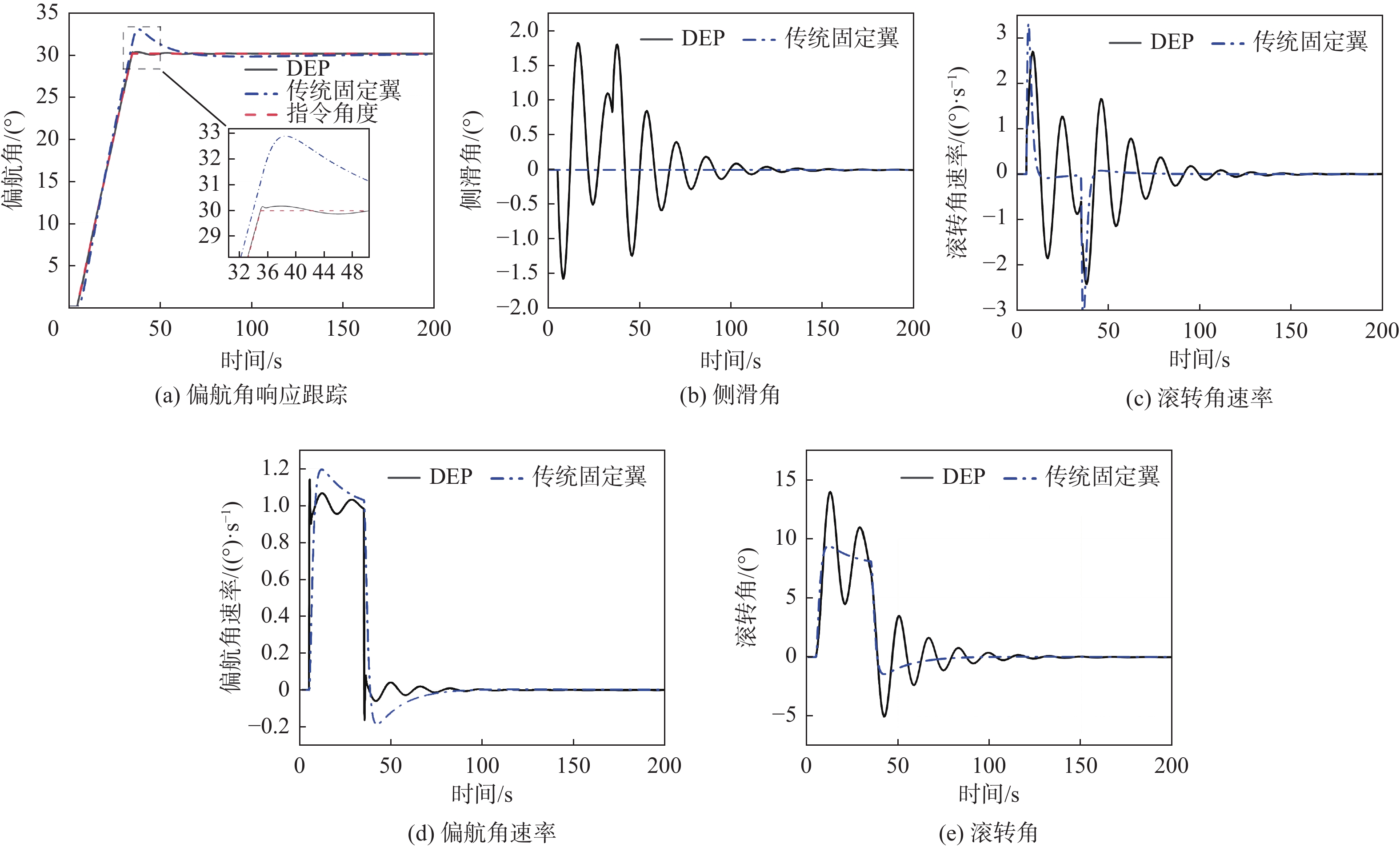
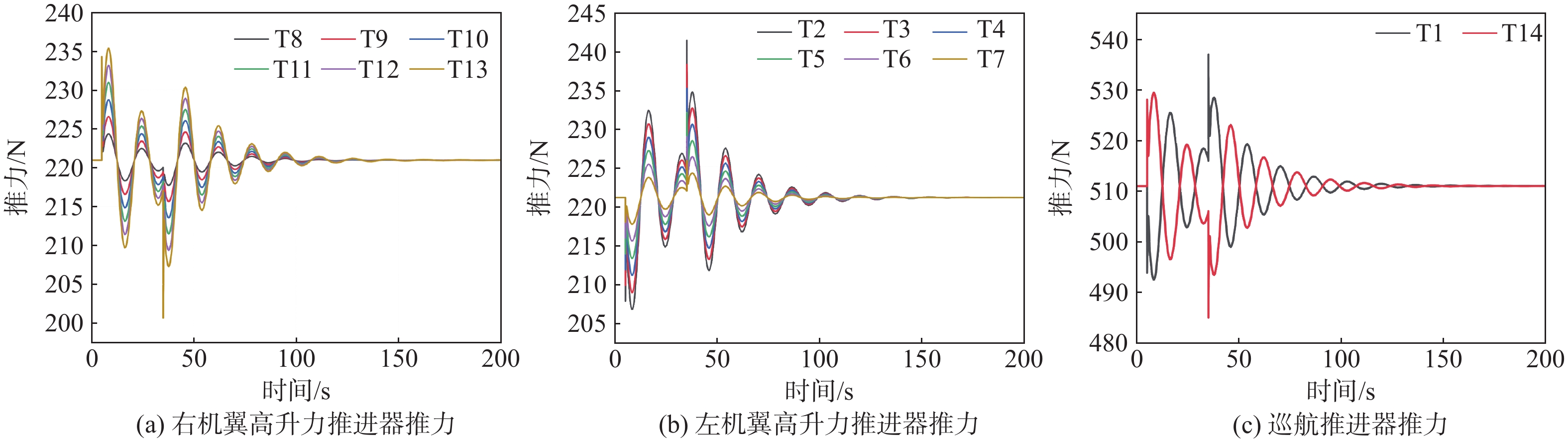
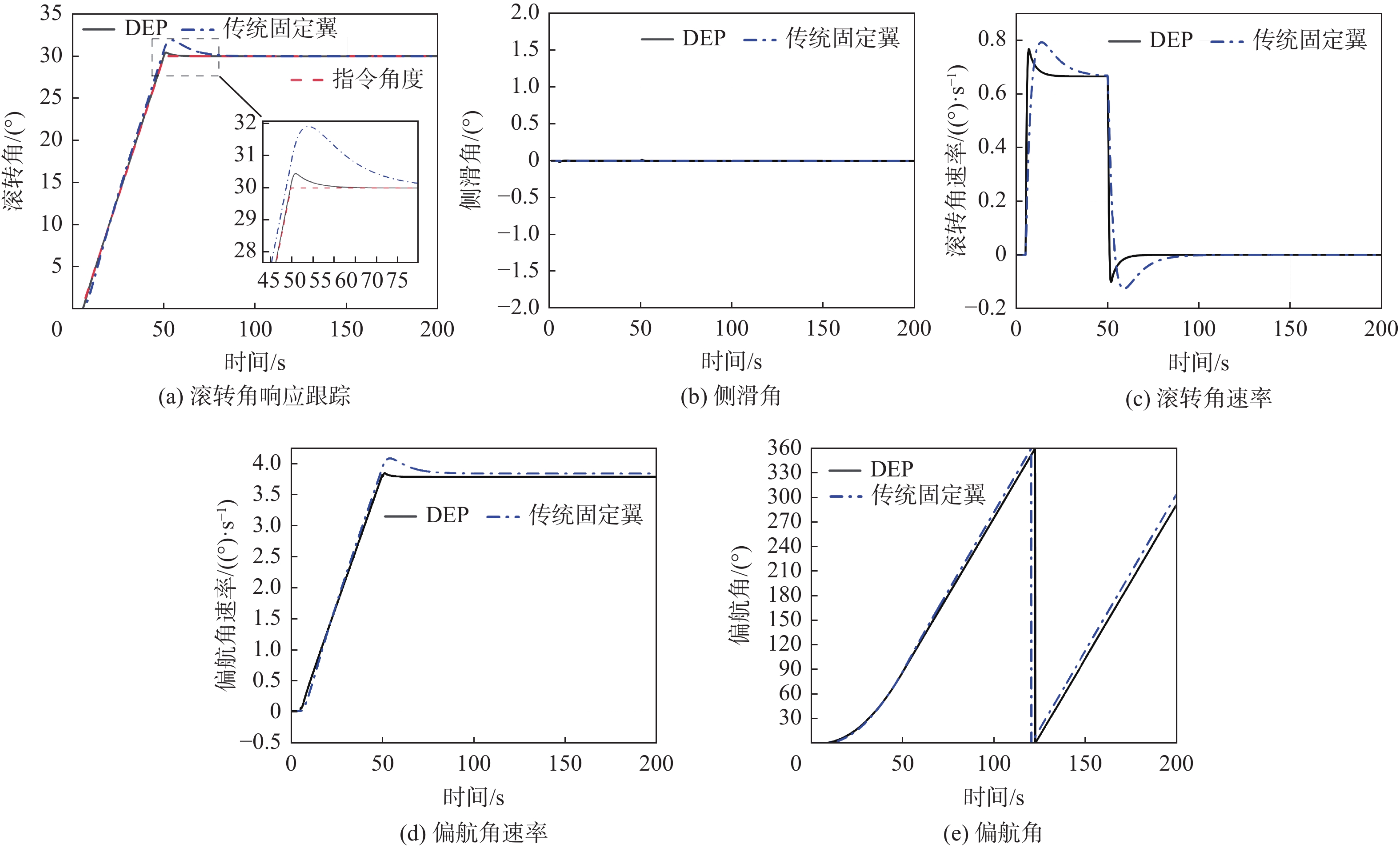
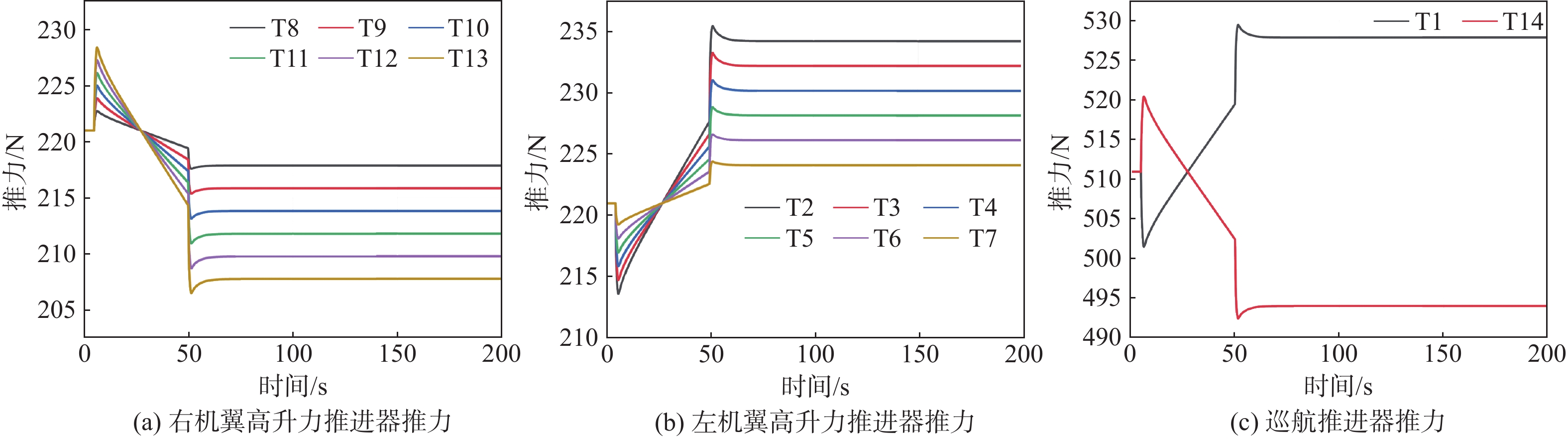
通过分布在机体上的多个电机-螺旋桨系统为飞机提供推力,分布式电推进(DEP)构型为飞机的横侧向控制提供了一种新的策略。建立DEP构型飞机的飞行动力学模型,考虑分布式滑流对气动特性的影响。采用传统比例-积分-微分(PID)控制算法,调节DEP系统的动力输出,控制飞机的横侧向运动,提高飞行稳定性和操控性。结果表明:在偏航运动过程中,飞机采用动力差动控制有效跟踪偏航角度指令,实现了飞机偏航30°,达到良好的控制效果;在滚转运动过程中,飞机利用不同推力推进器的滑流增升效应实现了滚转30°,并保持了稳定的飞行状态。
-
关键词:
- 分布式电推进 /
- 动力差动 /
- PID控制 /
- 机体/推进系统一体化效应 /
- 飞行控制
Abstract:Distributed electric propulsion (DEP) aircraft used multiple motor-propeller system distributed on the body to provide thrust and this configuration offers a new strategy for lateral control of the aircraft. The aerodynamic effects of distributed slipstream were taken into account when developing the flight dynamics model for DEP aircraft. The traditional proportional-integral-derivative (PID) control algorithm was used to adjust the power output of the DEP system, controlling the aircraft’s lateral movement to improve flight stability and controllability. The results show that during yaw motion, the aircraft uses differential thrust control effectively tracking yaw angle commands, achieving a 30° yaw and reaching excellent con-trol performance. The airplane maintains a stable flight state during roll motion by using the slipstream lift effect of various thrust propellers to achieve a 30° roll.
-
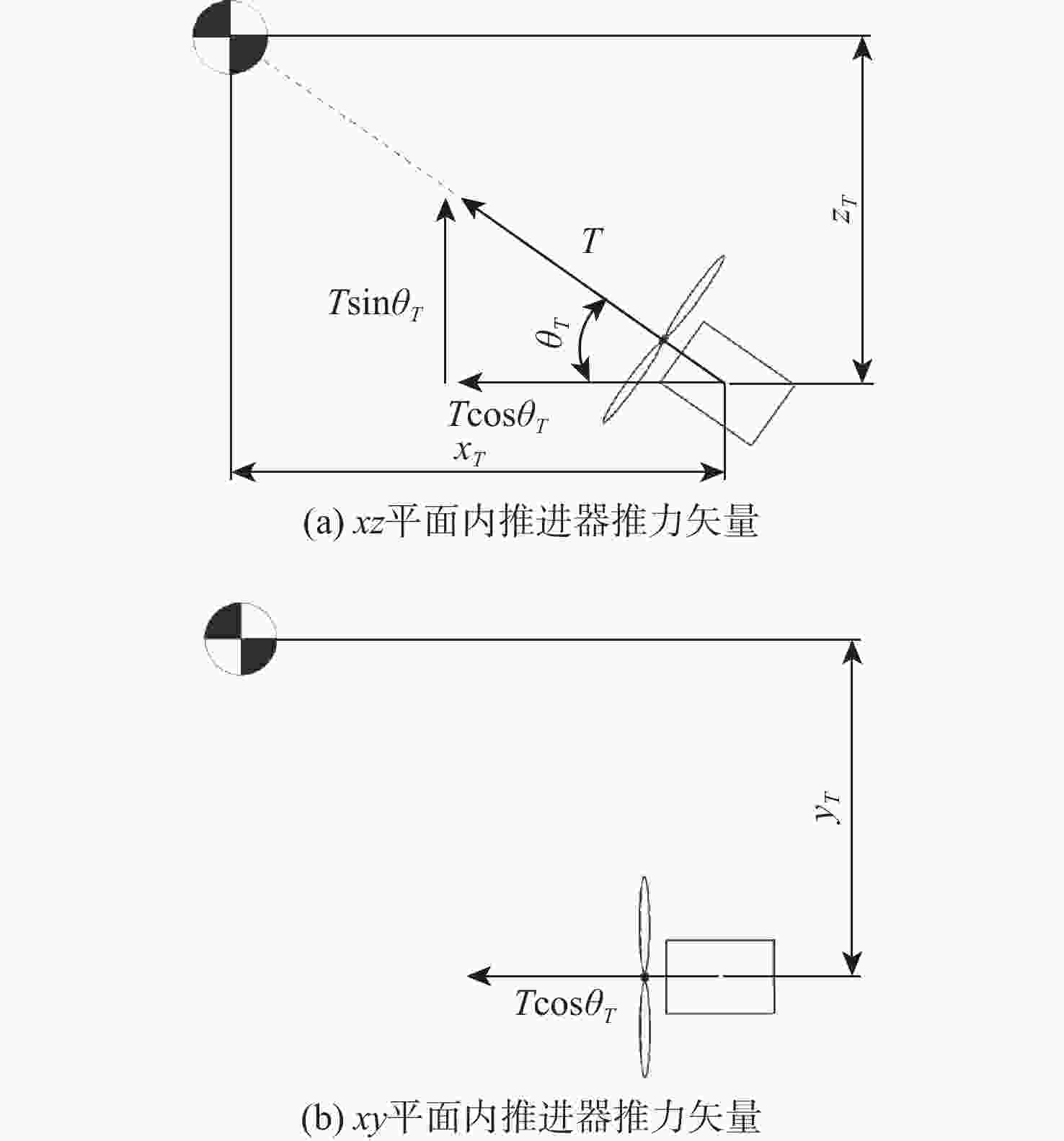
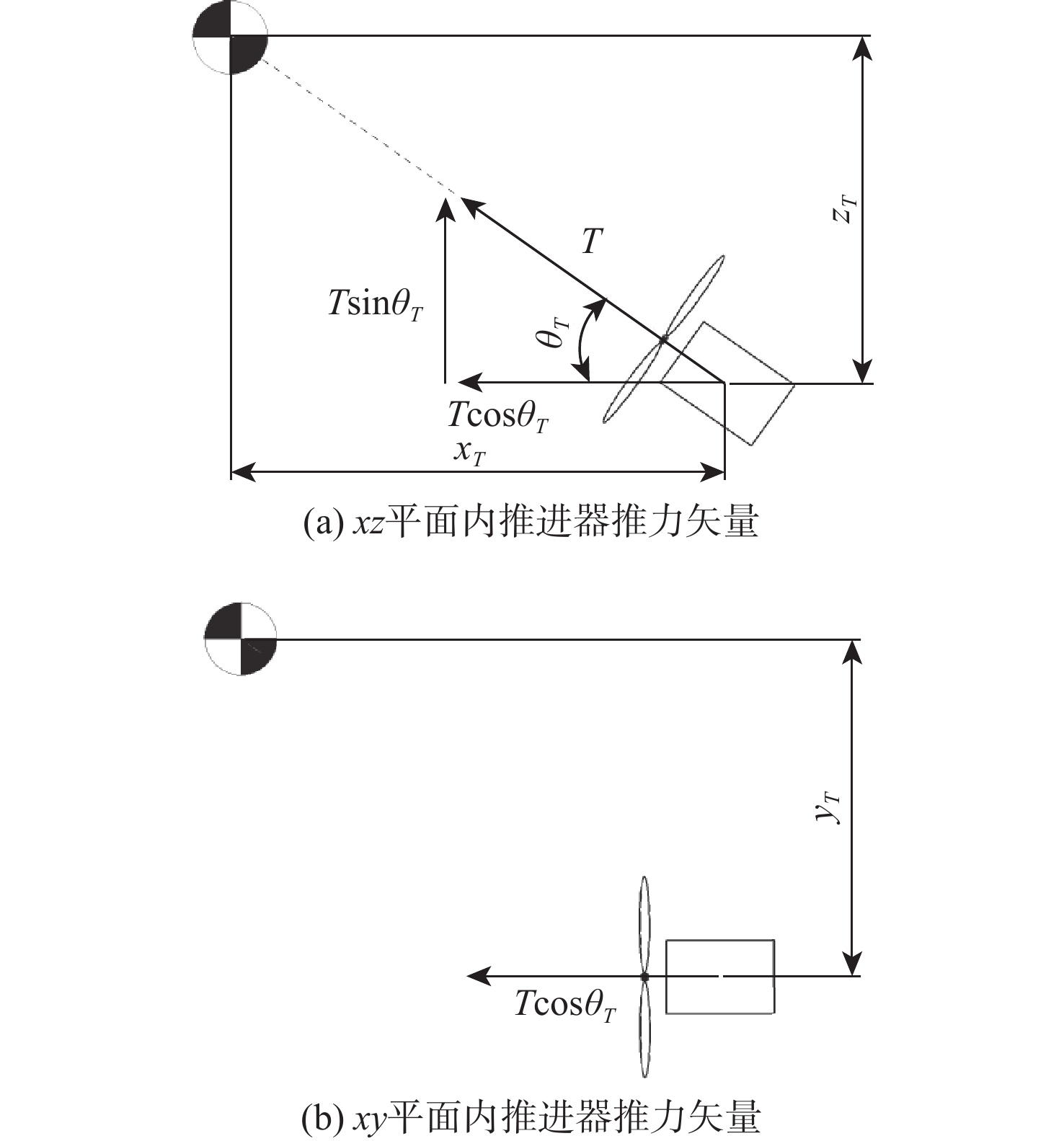
图 2 单个推进器推力相对于飞机重心的受力分析
Figure 2. Force analysis of a single propeller thrust relative to aircraft’s center of gravity
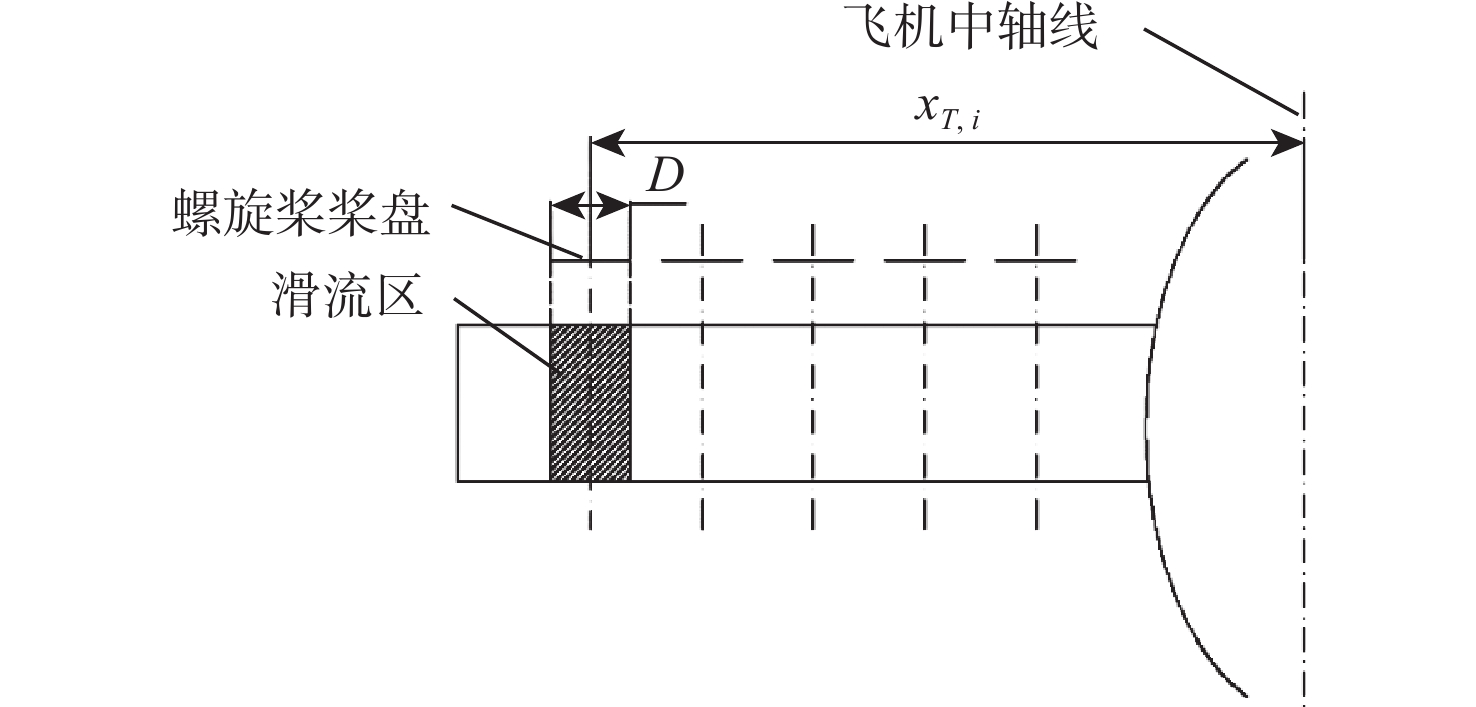
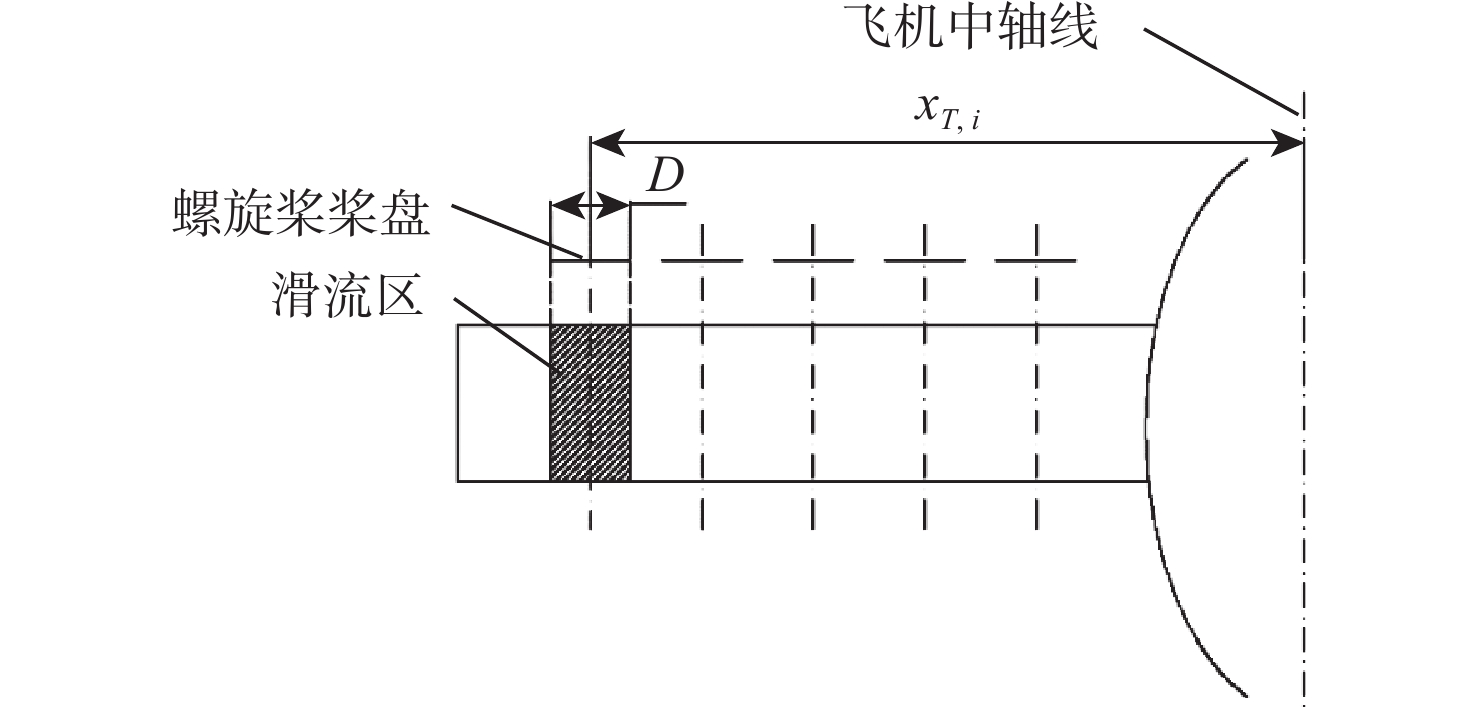
图 3 用于PAI效应分析的机翼和螺旋桨参数
Figure 3. Wing and propeller parameters for PAI effect analysis
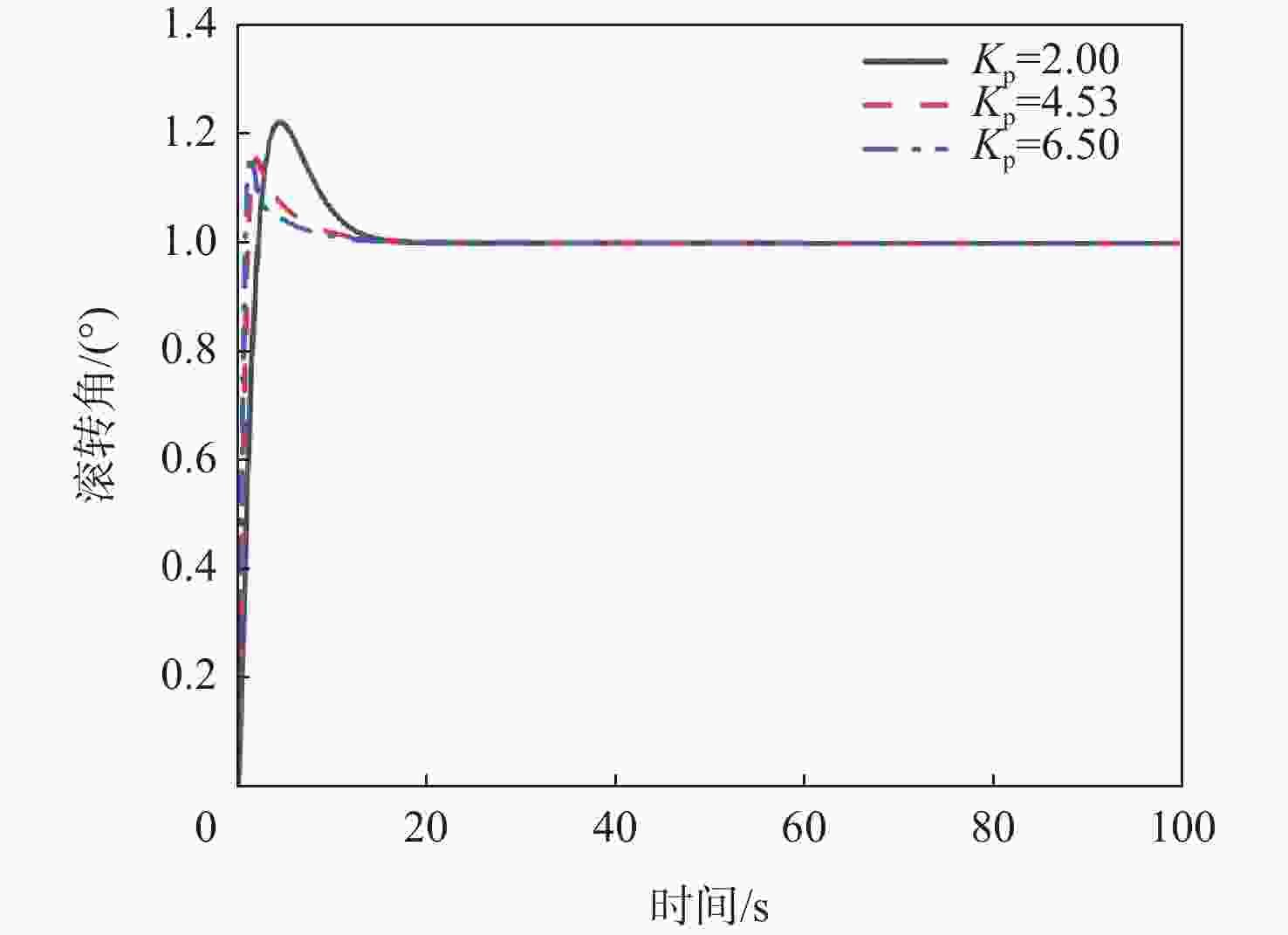
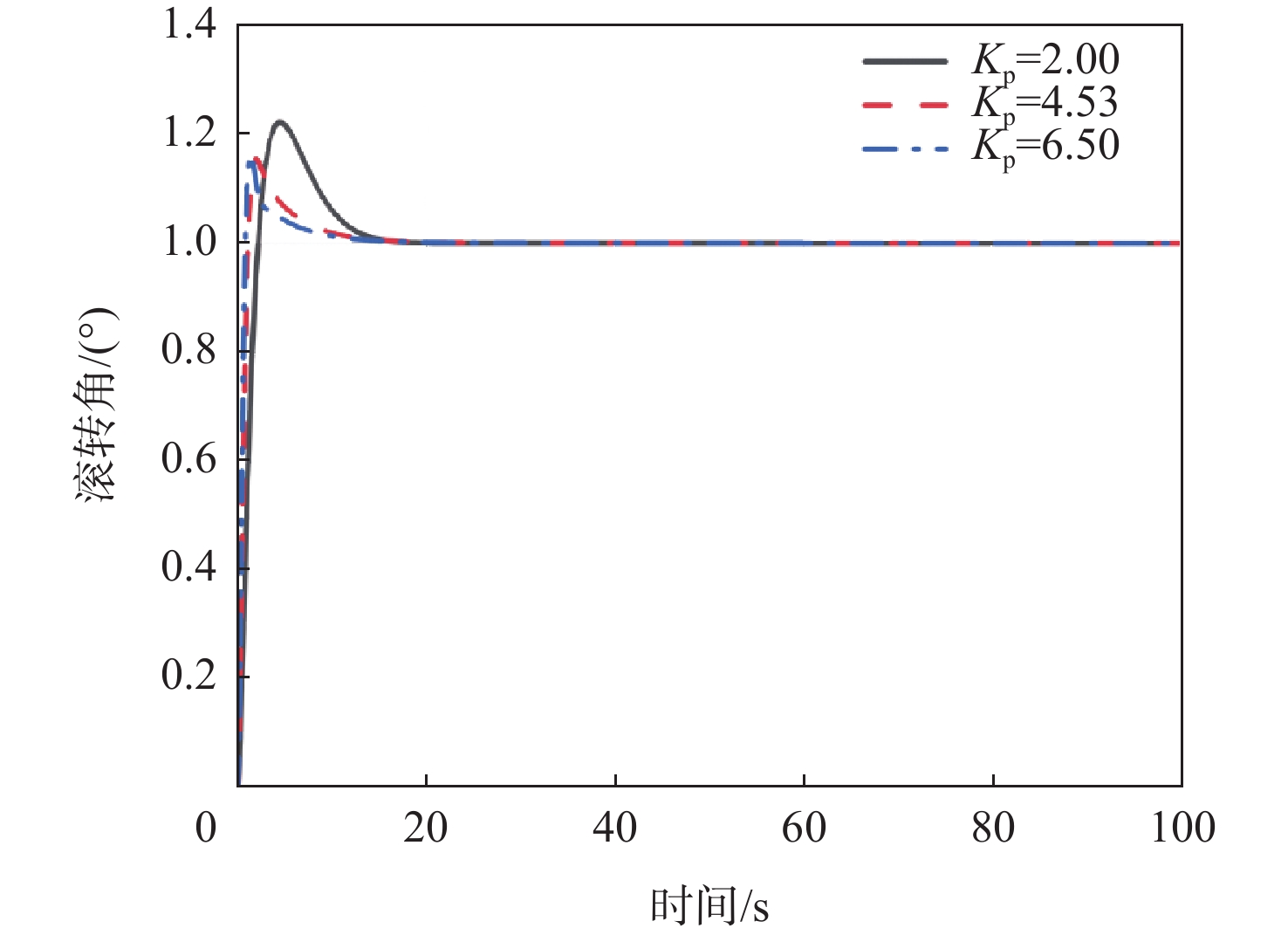
图 10 不同Kp值的滚转控制系统阶跃响应
Figure 10. Step response diagram of roll control system with different Kp values
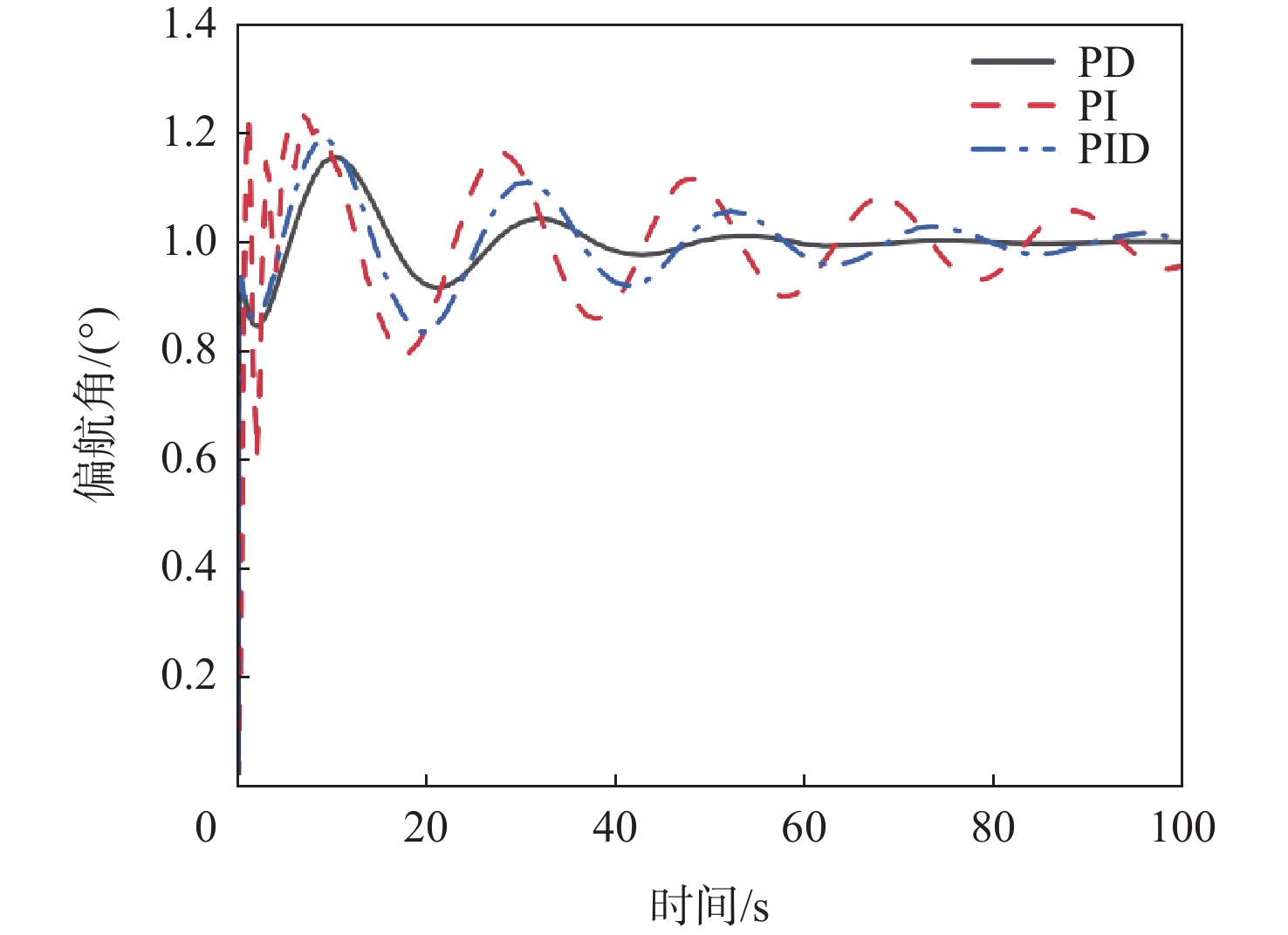
表 1 偏航控制回路不同PID控制对比
Table 1. Comparison of different PID controls for yaw control loop
控制方式 上升时间/s 超调量/% 调节时间/s 稳态误差 PD 0.148 15.9 44.6 0 PI 0.467 25.4 149.0 0 PID 0.148 19.0 85.6 0  下载: 导出CSV
表 2 滚转控制回路不同PID控制对比
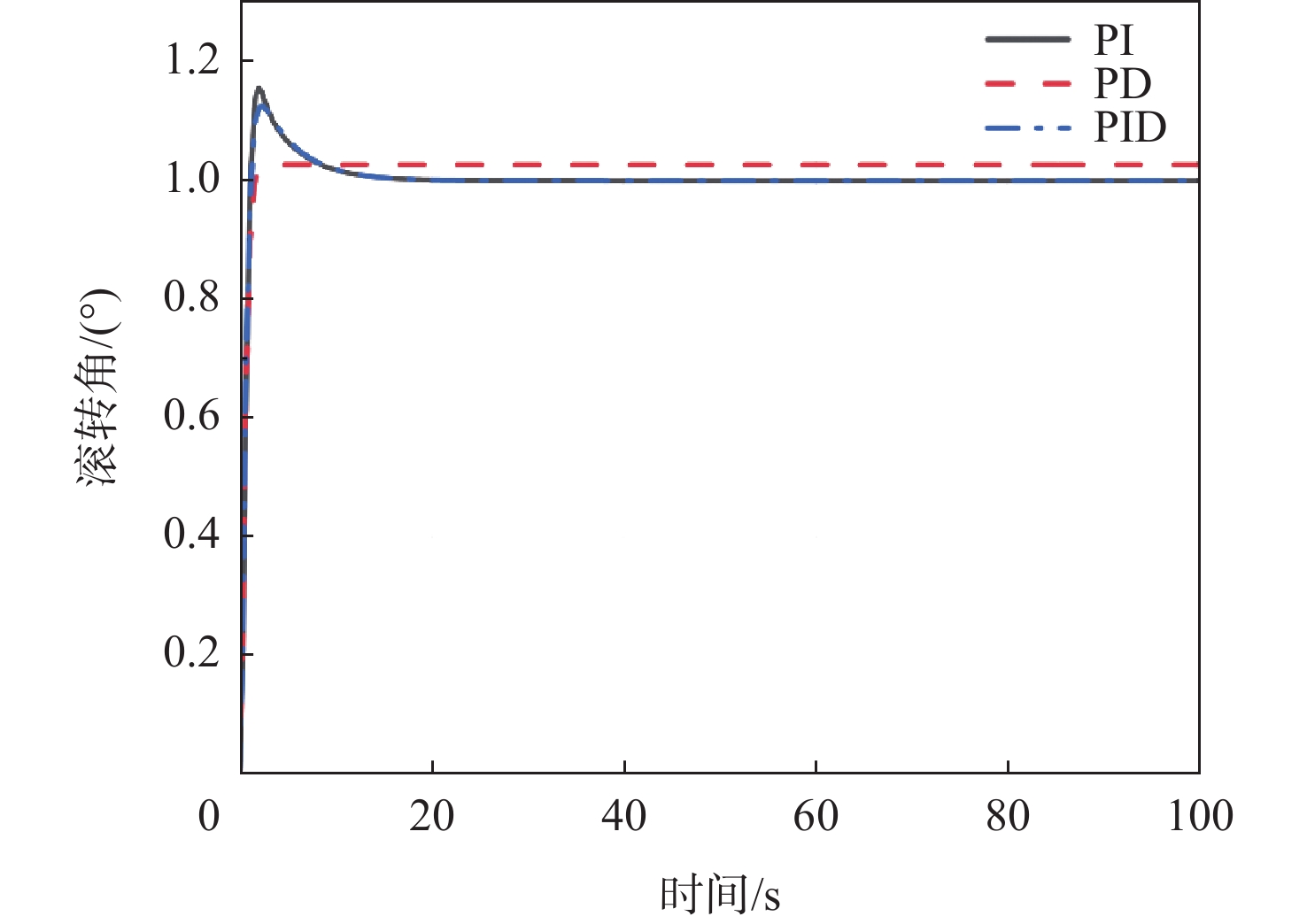
Table 2. Comparison of different PID controls for the roll control loop
控制方式 上升时间/s 超调量/% 调节时间/s 稳态误差 PI 0.771 15.6 9.67 0 PD 1.000 0 1.72 0.03 PID 0.784 12.7 9.75 0
下载: 导出CSV
-
[1] Hardin L, Tillman G, Sharma O, et al. Aircraft system study of boundary layer ingesting propulsion[C]//Proceedings of the 48th AIAA/ASME/SAE/ASEE Joint Propulsion Conference & Exhibit. Reston: AIAA, 2012. [2] Ko A, Leifsson L, Schetz J, et al. MDO of a blended-wing-body transport aircraft with distributed propulsion[C]//Proceedings of the AIAA’s 3rd Annual Aviation Technology, Integration, and Operations Forum. Reston: AIAA, 2003. [3] 孔祥浩, 张卓然, 陆嘉伟, 等. 分布式电推进飞机电力系统研究综述[J]. 航空学报, 2018, 39(1): 46-62.Kong X H, Zhang Z R, Lu J W, et al. Review of electric power system of distributed electric propulsion aircraft[J]. Acta Aeronautica et Astronautica Sinica, 2018, 39(1): 46-62(in Chinese). [4] Freeman J L, Klunk G T. Dynamic flight simulation of spanwise distributed electric propulsion for directional control authority[C]// Proceedings of the 2018 AIAA/IEEE Electric Aircraft Technologies Symposium. Piscataway: IEEE Press, 2018: 1-15. [5] Winborn Jr B R. ADAM III V/STOL concept[J]. Journal of Aircraft, 1970, 7(2): 175-181. [6] Ko A, Schetz J A, Mason W H. Assessment of the potential advantages of distributed-propulsion for aircraft[C]//Proceedings of the 16th International Symposium on Air Breathing Engines. Cape Verde Islands: ISABE, 2003. [7] Kim H D, Saunders J D. Embedded wing propulsion conceptual study: NASA/TM-2003-212696[R]. Washington, D. C. : NASA, 2003. [8] Kim H D, Felder J L, Tong M T, et al. Revolutionary aeropropulsion concept for sustainable aviation: turboelectric distributed propulsion[C]//Proceedings of the 21st International Symposium on Air Breathing Engines. Busan: ISABE, 2013. [9] Kim H D. Distributed propulsion vehicles[C]//Proceedings of the 27th Congress of the International Council of the Aeronautical Sciences. Nice: Optimage Ltd. , 2010. [10] Lu L K, Turkoglu K. H∞ loop-shaping robust differential thrust control methodology for lateral/directional stability of an aircraft with a damaged vertical stabilizer[C]//Proceedings of the AIAA Guidance, Navigation, and Control Conference. Reston: AIAA, 2016. [11] Weng L H, Zhang X, Yao T K, et al. A thrust cooperative control strategy of multiple propulsion motors for distributed electric propulsion aircraft[J]. World Electric Vehicle Journal, 2021, 12(4): 199. [12] Kou P, Wang J, Liang D L. Powered yaw control for distributed electric propulsion aircraft: a model predictive control approach[J]. IEEE Transactions on Transportation Electrification, 2021, 7(4): 3006-3020. [13] 尤顺, 寇鹏, 姚轩宇, 等. 分布式电推进飞机动力偏航非线性动态逆控制[J]. 航空动力学报, 2024, 39(2): 20220222.You S, Kou P, Yao X Y, et al. Nonlinear dynamic inversion for the powered yaw control of distributed electric propulsion aircraft[J]. Journal of Aerospace Power, 2024, 39(2): 20220222(in Chinese). [14] Perry A T, Ansell P J, Kerho M F. Aero-propulsive and propulsor cross-coupling effects on a distributed propulsion system[J]. Journal of Aircraft, 2018, 55(6): 2414-2426. [15] Pfeifle O, Frangenberg M, Notter S, et al. Distributed electric propulsion for yaw control: testbeds, control approach, and flight testing[C]//Proceedings of the AIAA AVIATION 2021 FORUM. Reston: AIAA, 2021: 3192. [16] Deere K A, Viken J K, Viken S A, et al. Computational analysis of the X-57 maxwell airplane at unpowered conditions (preliminary fuselage)[M]. Washington, D. C.: NASA Technical Memorandum, 2022. [17] Etkin B, Reid L D. Dynamics of flight: stability and control[M]. 3rd ed. New York: Wiley, 1996. [18] Deere K A, Viken S, Carter M B, et al. Computational component build-up for the X-57 Maxwell distributed electric propulsion aircraft[C]//Proceedings of the 2018 AIAA Aerospace Sciences Meeting. Reston: AIAA, 2018. [19] Patterson M D. Conceptual design of high-lift propeller systems for small electric aircraft[D]. Atlanta: Georgia Institute of Technology, 2016. [20] De Vries R, Brown M T, Vos R. A preliminary sizing method for hybrid-electric aircraft including aero-propulsive interaction effects[C]//Proceedings of the Aviation Technology, Integration, and Operations Conference. Reston: AIAA, 2018. [21] 胡寿松. 自动控制原理[M]. 7版. 北京: 科学出版社, 2019.Hu S S. Principle of automatic control[M]. 7th ed. Beijing: Science Press, 2019(in Chinese). -

 下载:

计量
- 文章访问数: 427
- HTML全文浏览量: 212
- PDF下载量: 119
- 被引次数: 0
