





-
摘要:
鹊桥二号中继星是探月工程四期任务的重要组成部分。相比嫦娥四号鹊桥中继星,鹊桥二号中继星运行轨道由地月拉格朗日L2点的Halo轨道变成环月大椭圆轨道,中继通信载荷和科学载荷配置均有较大变化。基于此,分析环月大椭圆轨道太阳热流、月球红外热流随轨道变化的规律,为鹊桥二号中继星热控系统设计提供了依据。为满足鹊桥二号中继星多任务模式、轨道姿态约束下的控温需求,热控系统采用基于环路热管技术散热能力可调节的设计方案,同时,设计搭载正温度系数(PTC)自控温加热器,并成功在轨应用。鹊桥二号中继星发射入轨后,各飞行阶段设备温控水平良好。嫦娥六号任务期间,鹊桥二号中继星前向X固放等大功率中继载荷温度控制在22~28 ℃之间,有力保障了人类首次月背采样中继通信任务,可为深空探测器高适应能力热控系统设计提供参考。
Abstract:The Queqiao-2 satellite is a crucial part of the fourth Lunar Exploration Program mission. Compared to the Chang’e 4 Queqiao satellite, the Queqiao-2 satellite orbit changes from a Halo orbit at the Earth-Moon Lagrange L2 point to a circumlunar large elliptical orbit, with large changes in both relay communication and science load equipment. In this paper, the variation of solar heat flow and lunar infrared in a circumlunar large elliptical orbit with orbit is analyzed, which provides a basis for the design of the thermal control system of the Queqiao-2 satellite. In order to meet the temperature control requirements of the Queqiao-2 satellite in multi-mission mode and orbital attitude constraints, the thermal control system adopts a design scheme with adjustable heat dissipation capability based on loop heat pipe technology, while the design carries a positive temperature coefficient (PTC) self-controlled temperature heater, which is successfully applied in orbit. After Queqiao-2 was launched into orbit, the level of equipment temperature control during each flight phase was good. The first human lunar dorsal sample relay communications mission was substantially ensured by controlling the temperature of high-power relay loads, such as the Queqiao-2 X-band solid state amplifier, between 22 °C and 28 °C during the Chang’e 6 mission. The design method in this paper can provide a reference for the design of the highly adaptable thermal control system of a deep space exploration mission.
-
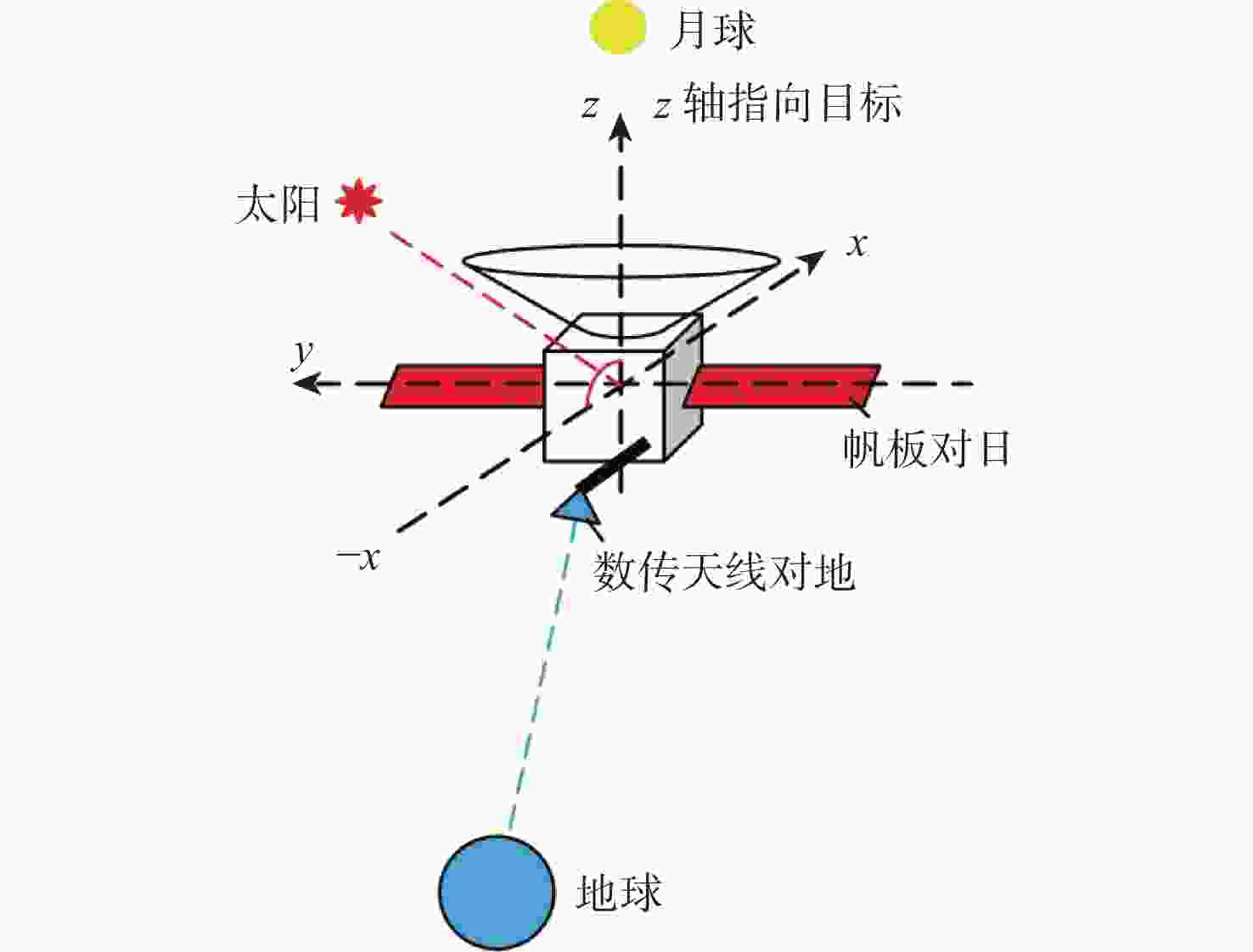
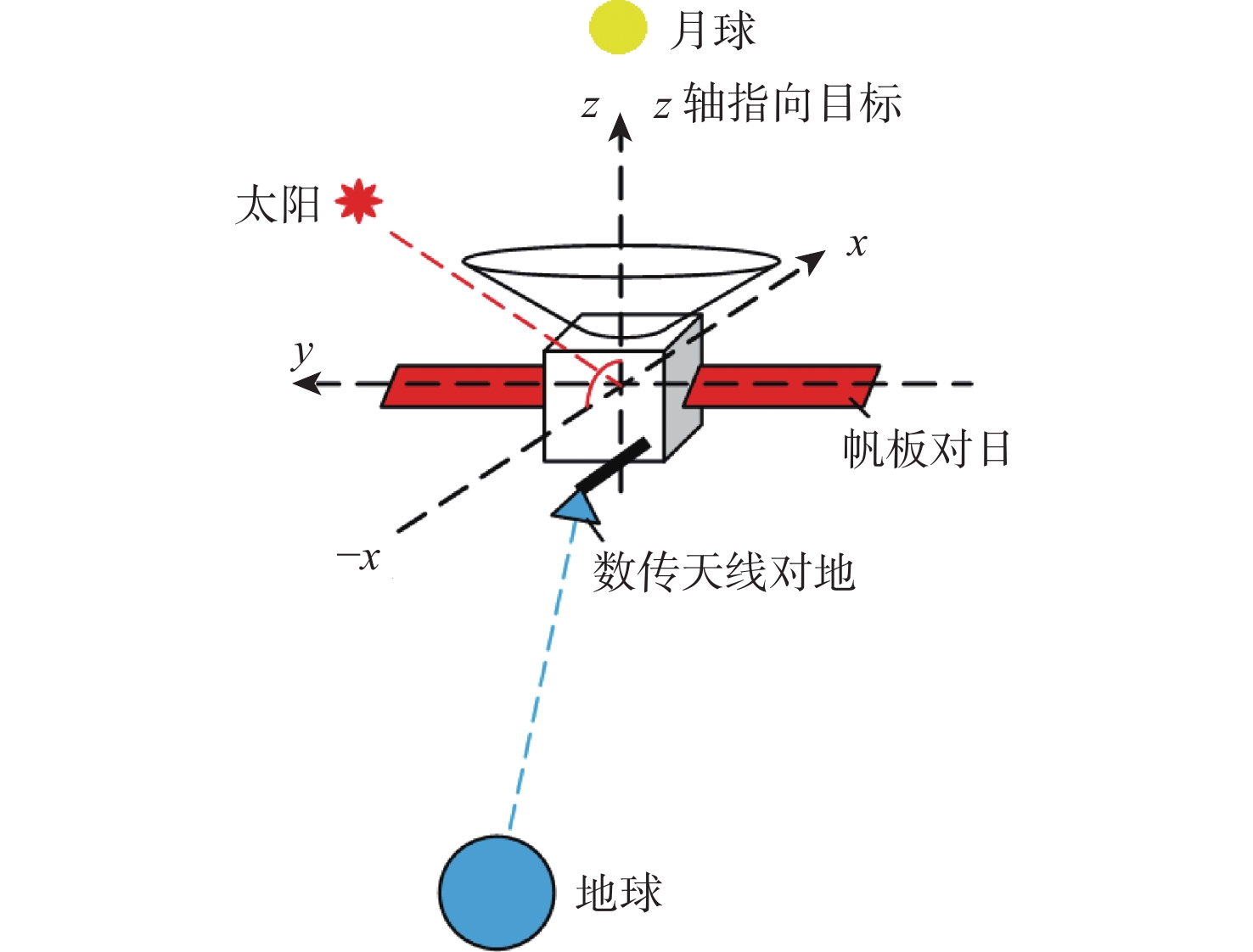
图 3 鹊桥二号中继星对月中继跟踪姿态示意图
Figure 3. Schematic diagram of Queqiao-2 satellite’s lunar relay tracking attitude

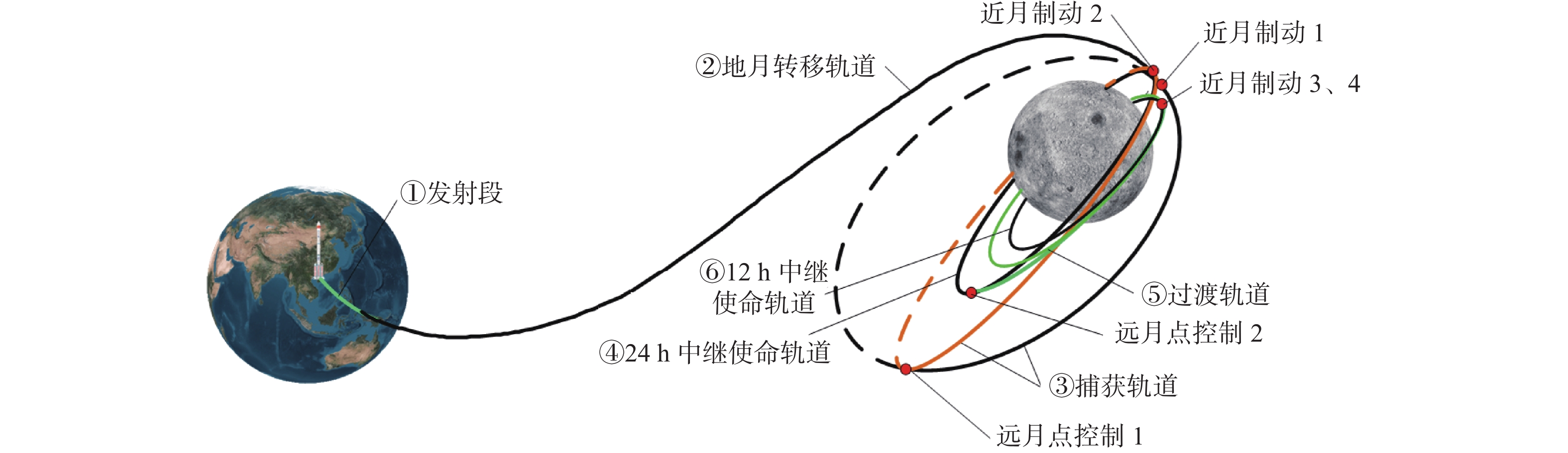
图 4 鹊桥二号中继星环月大椭圆轨道示意图
Figure 4. Schematic diagram of the Queqiao-2 satellite ringing the Moon in a highly elliptical orbit
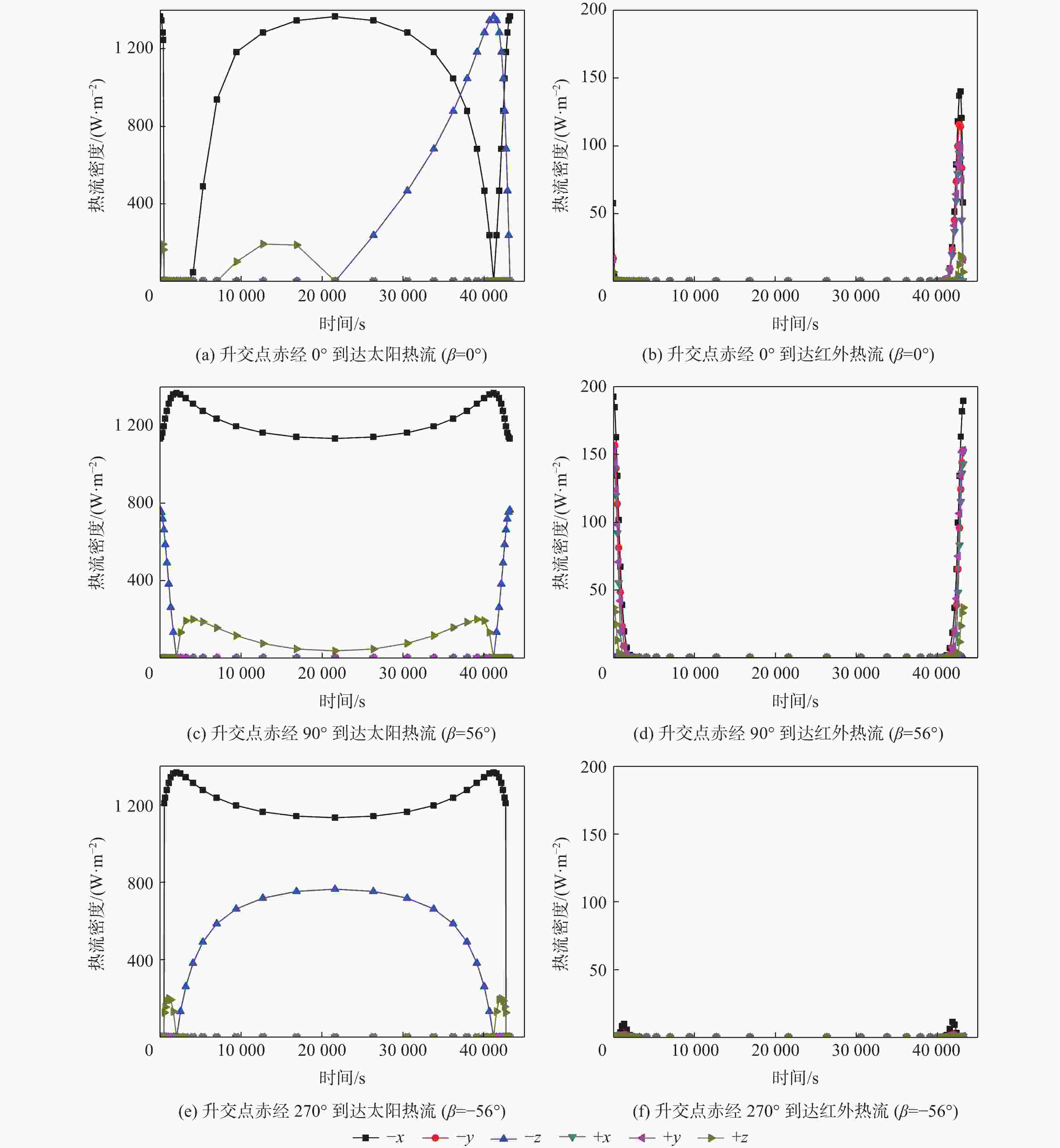
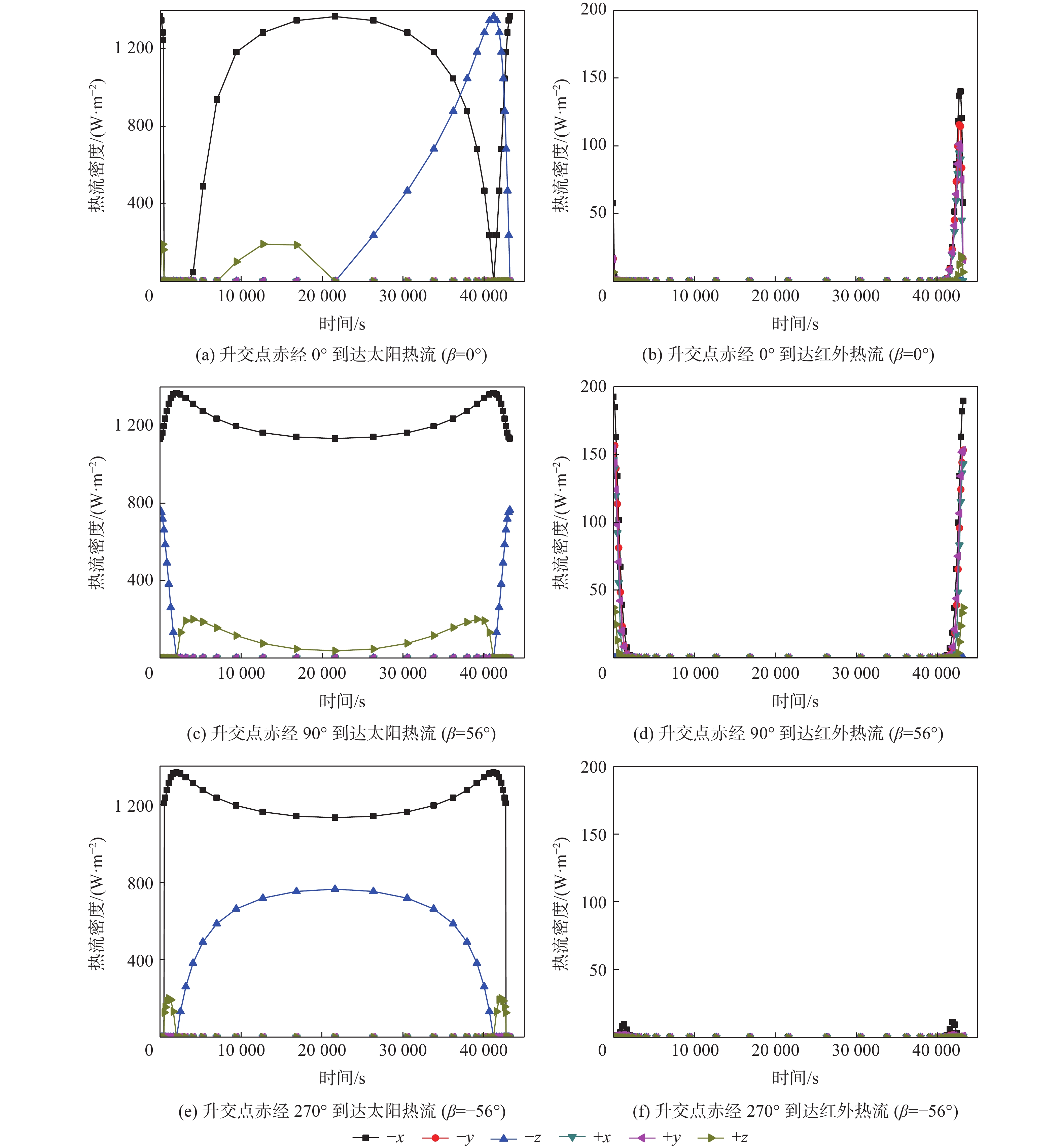
图 5 鹊桥二号中继星环月大椭圆轨道各面到达外热流曲线
Figure 5. Arrival heat flow curves of each side of the large elliptical orbit around the Moon of Queqiao-2 satellite
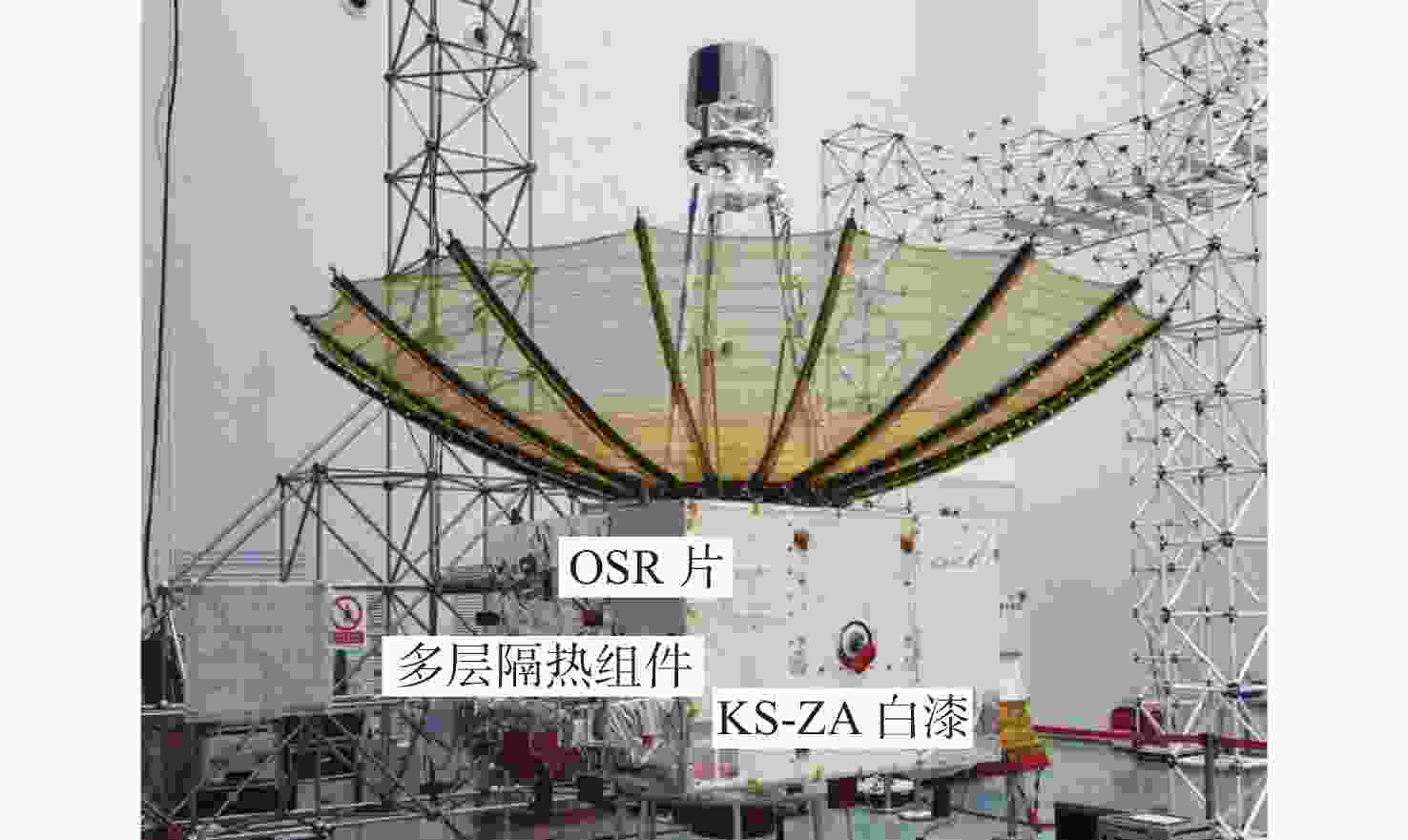
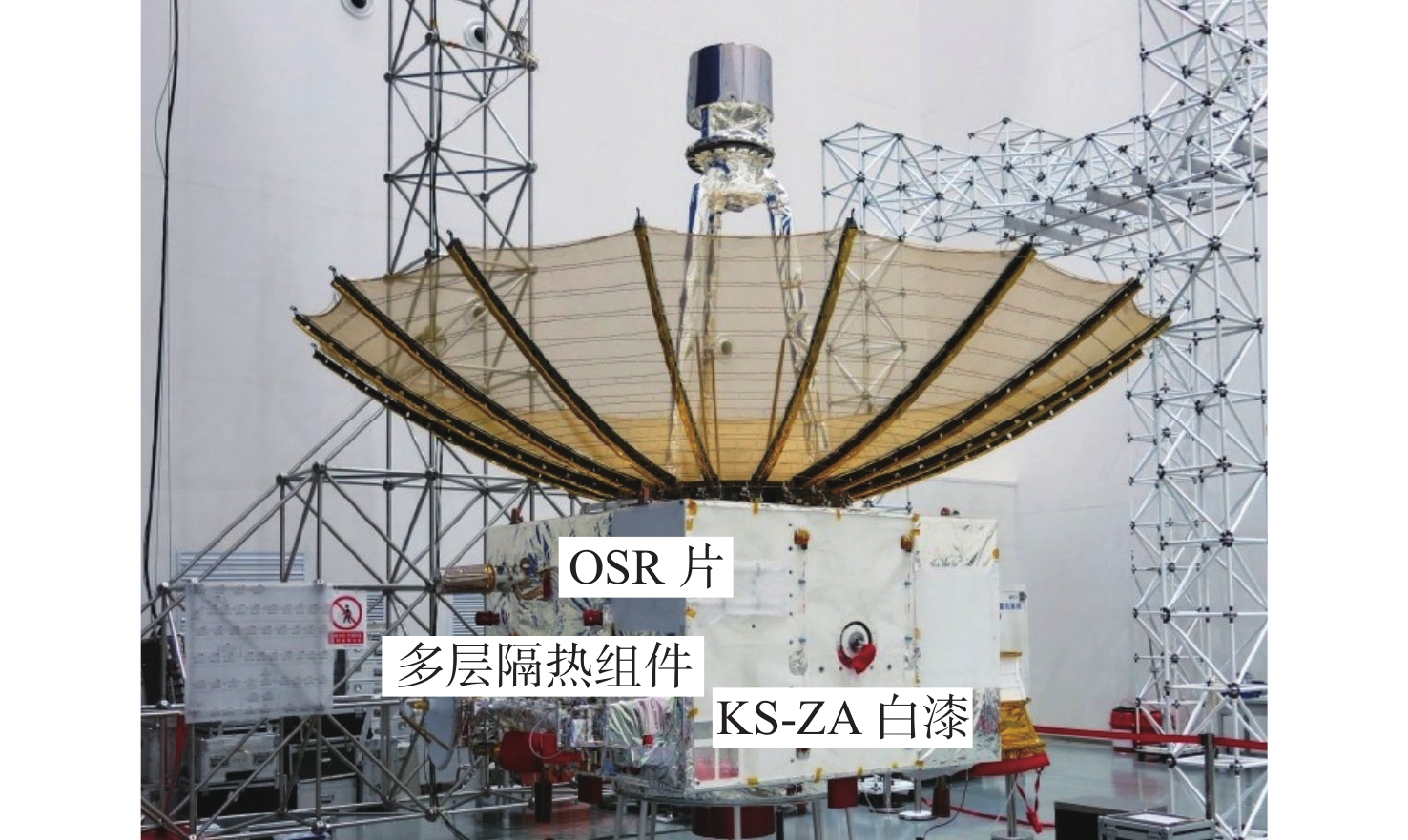
图 6 鹊桥二号中继星散热面与多层隔热组件
Figure 6. Queqiao-2 satellite radiator surface and multi-layer insulation component
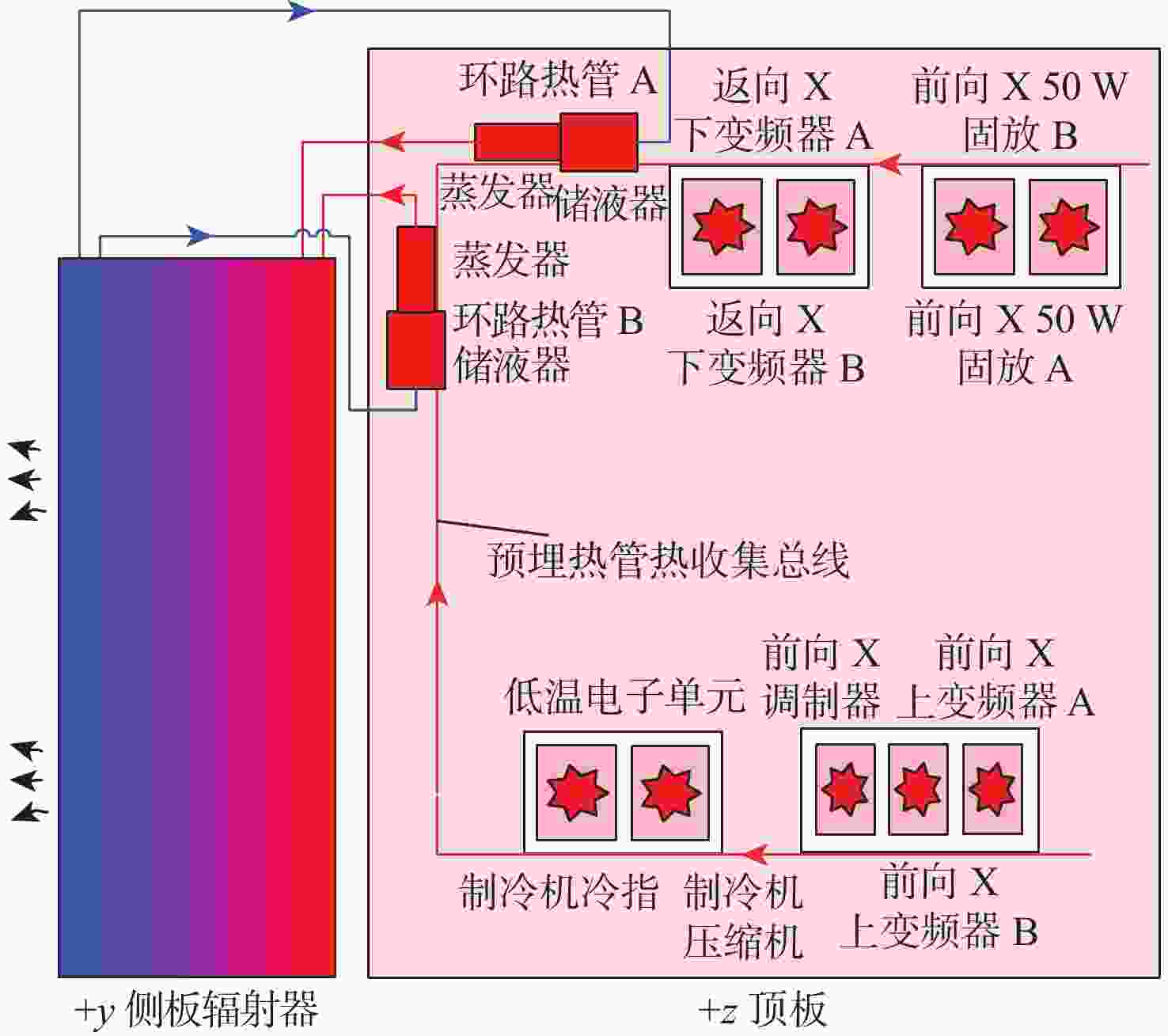
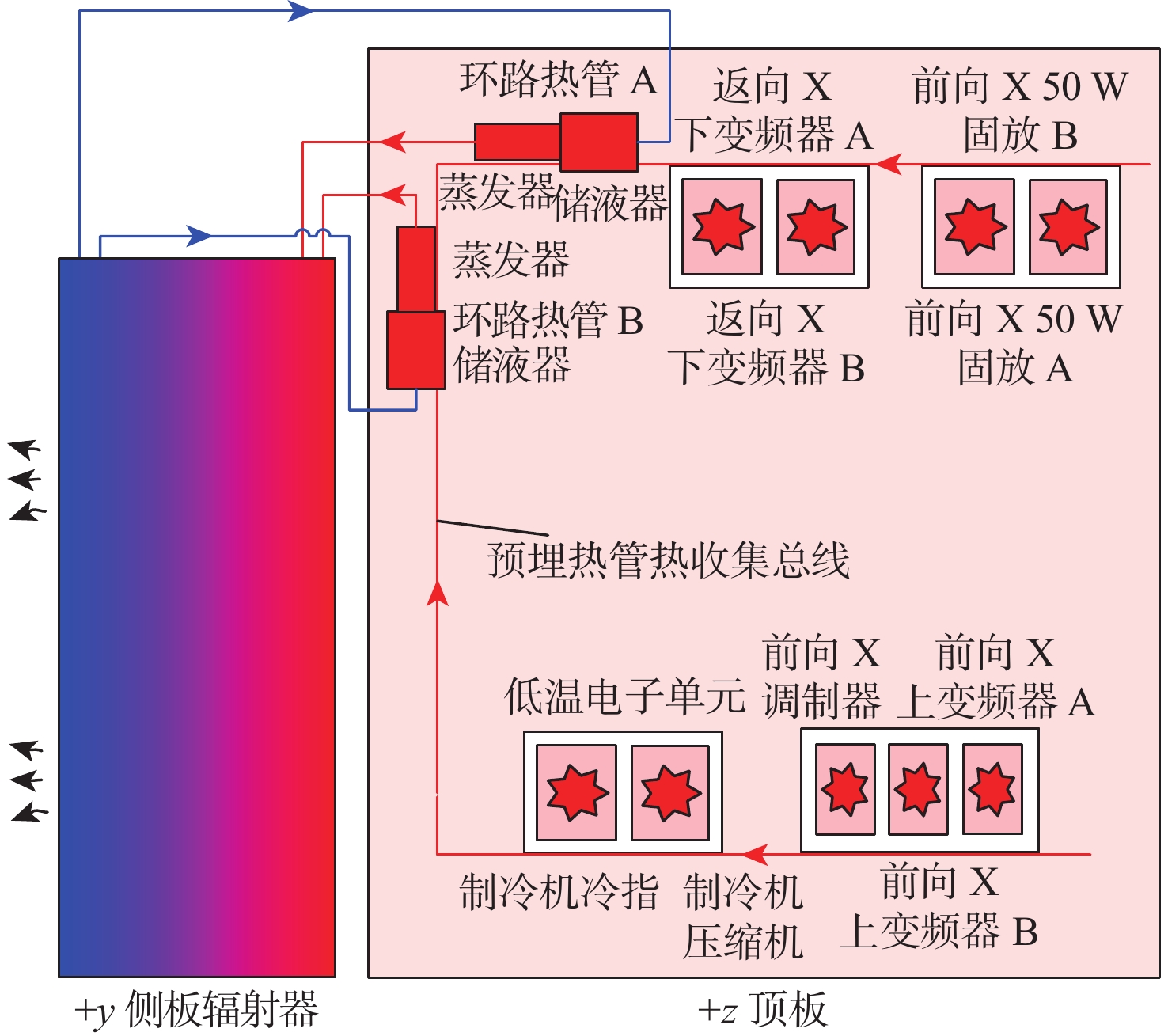
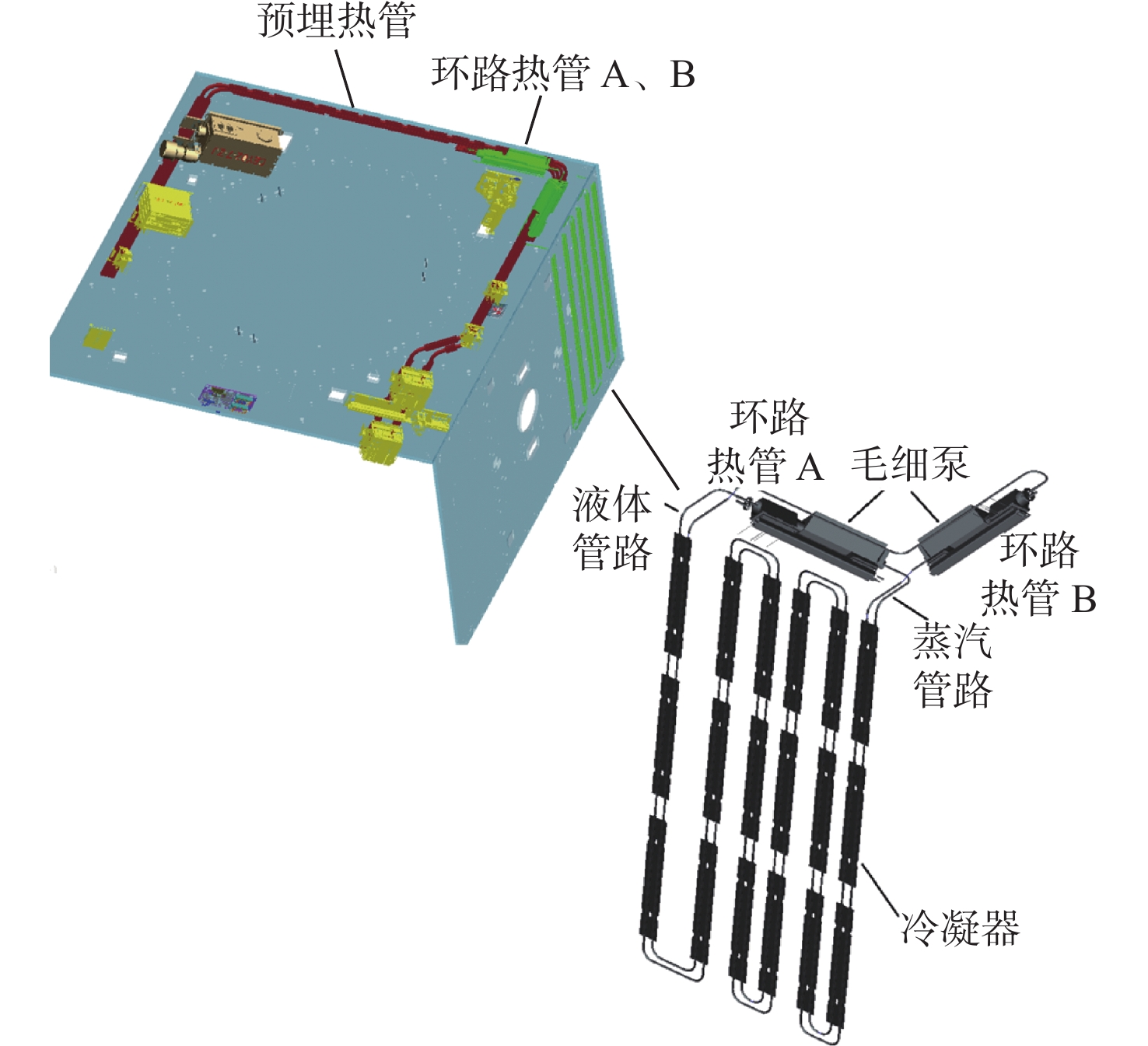
图 8 基于环路热管可调控散热设计原理
Figure 8. Principle of controllable heat dissipation design based on loop heat pipe
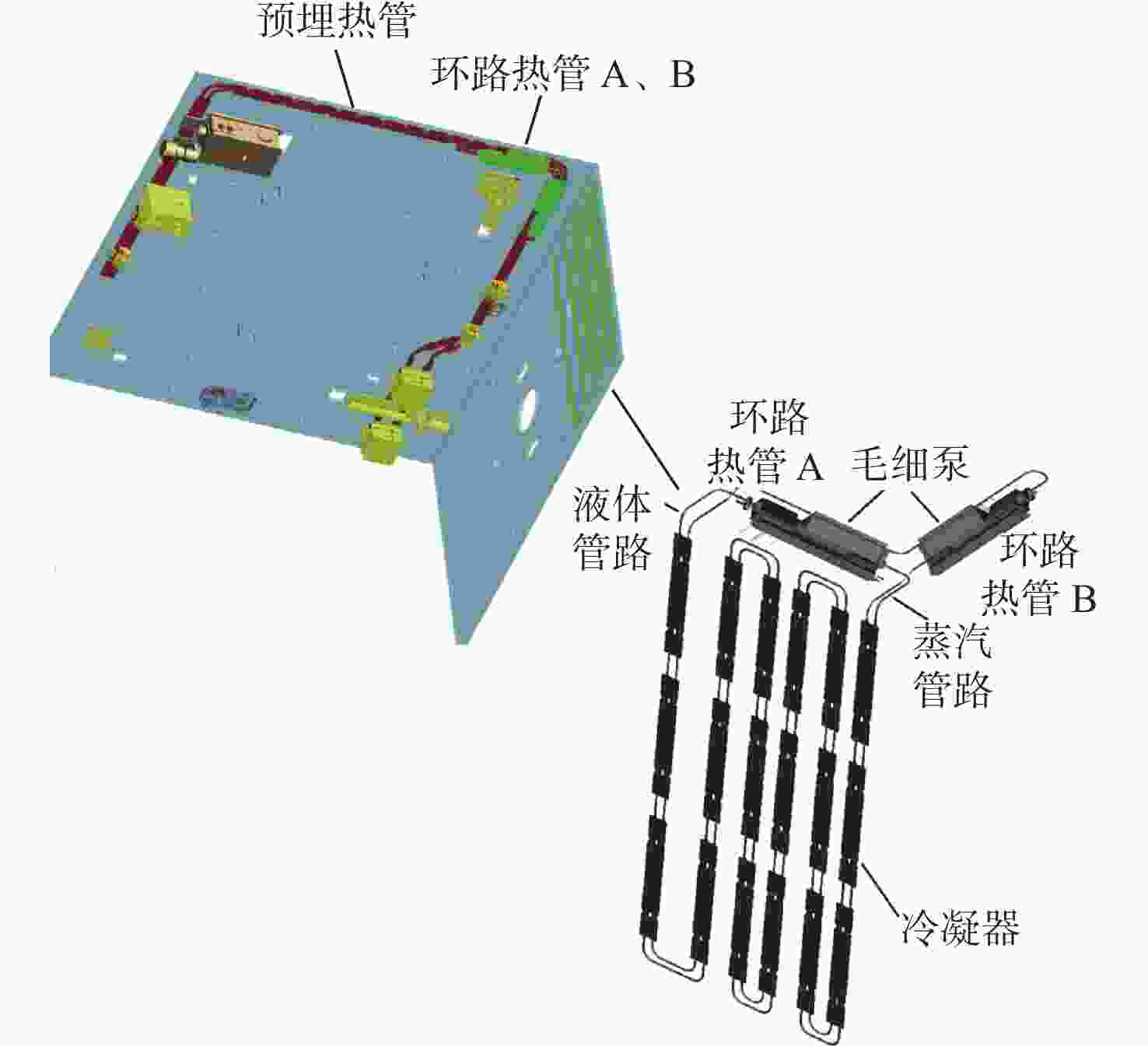
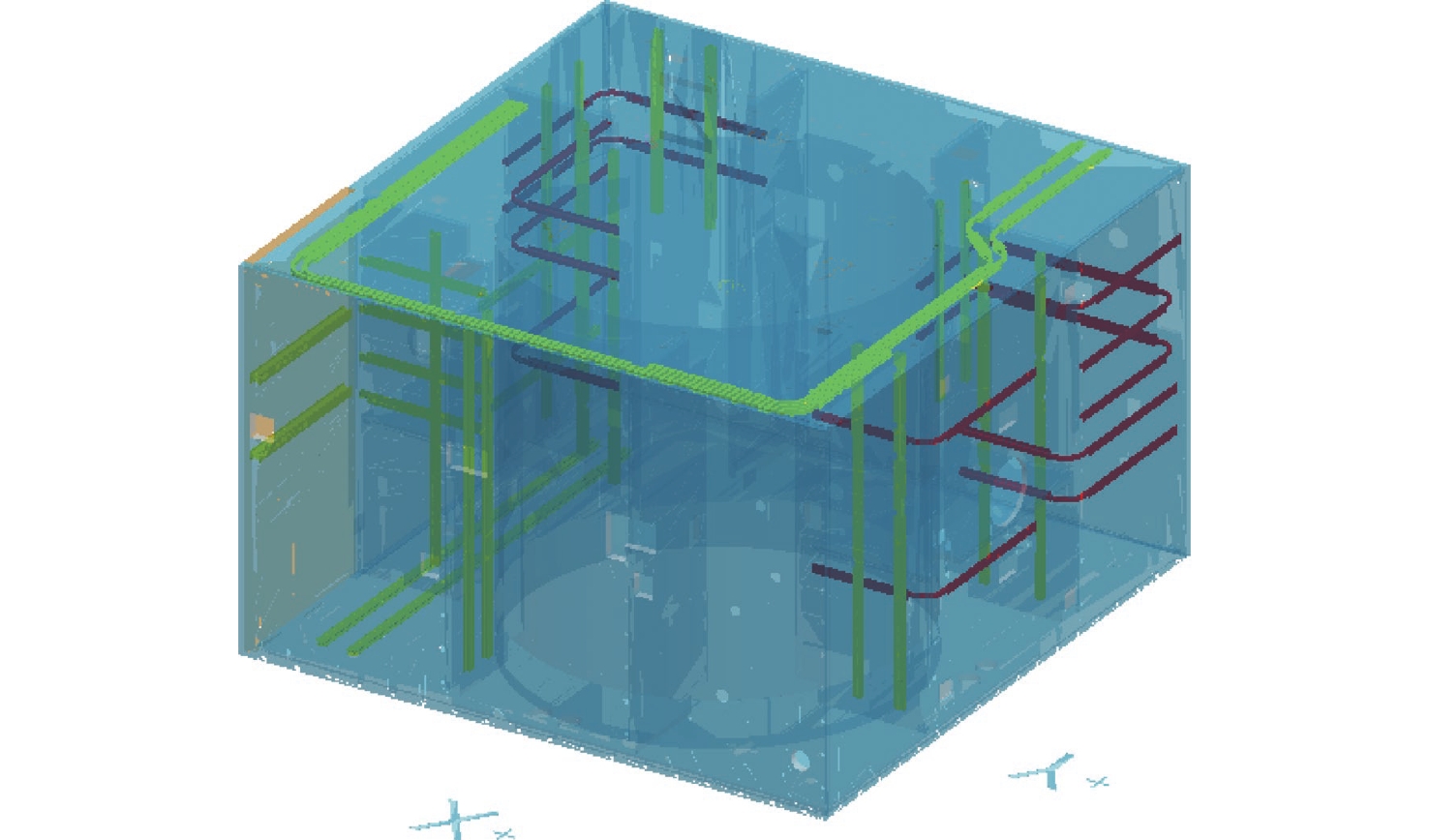
图 9 基于环路热管可调控散热设计三维模型
Figure 9. 3D model of a controllable heat dissipation design based on loop heat pipe
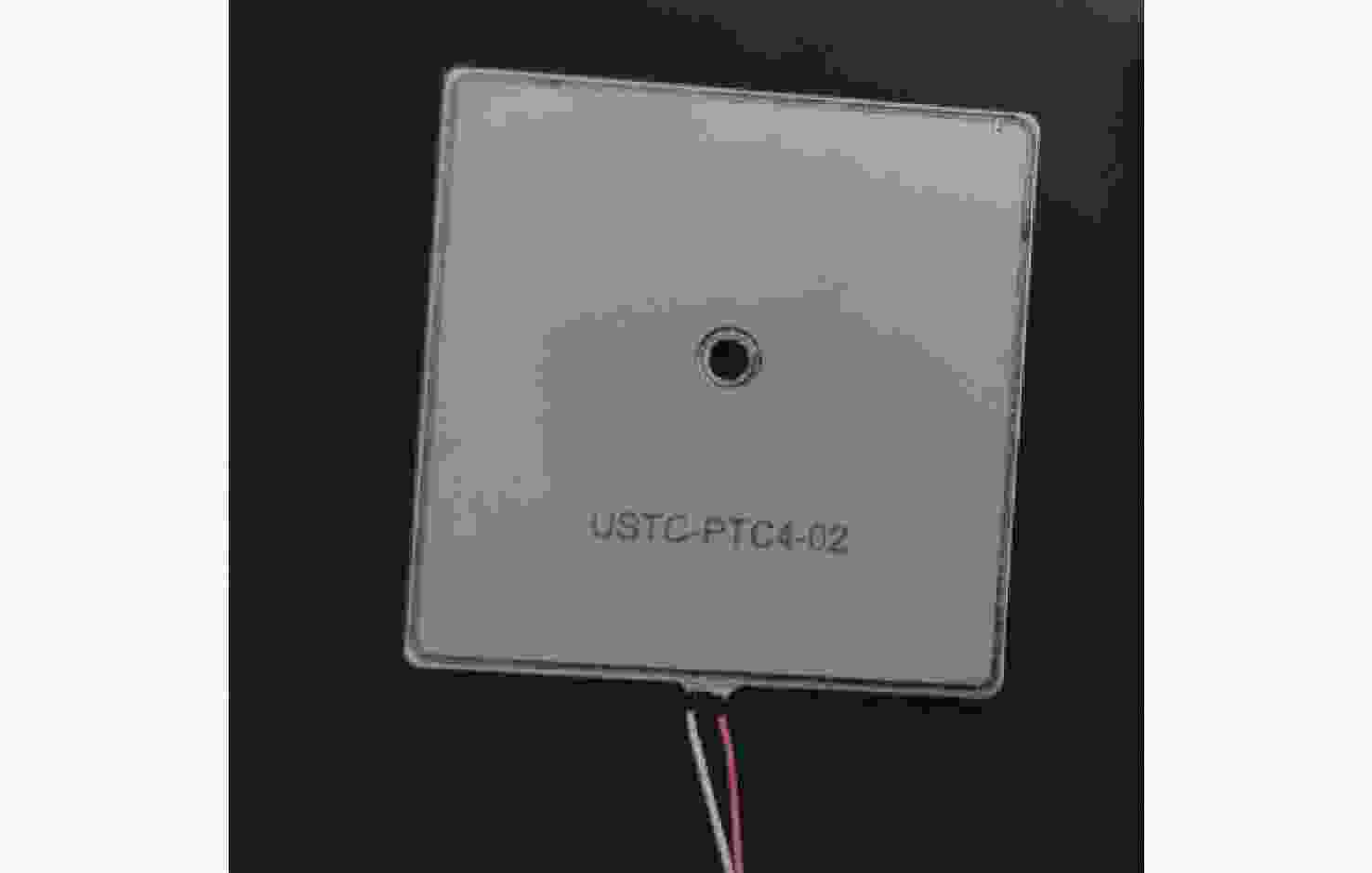
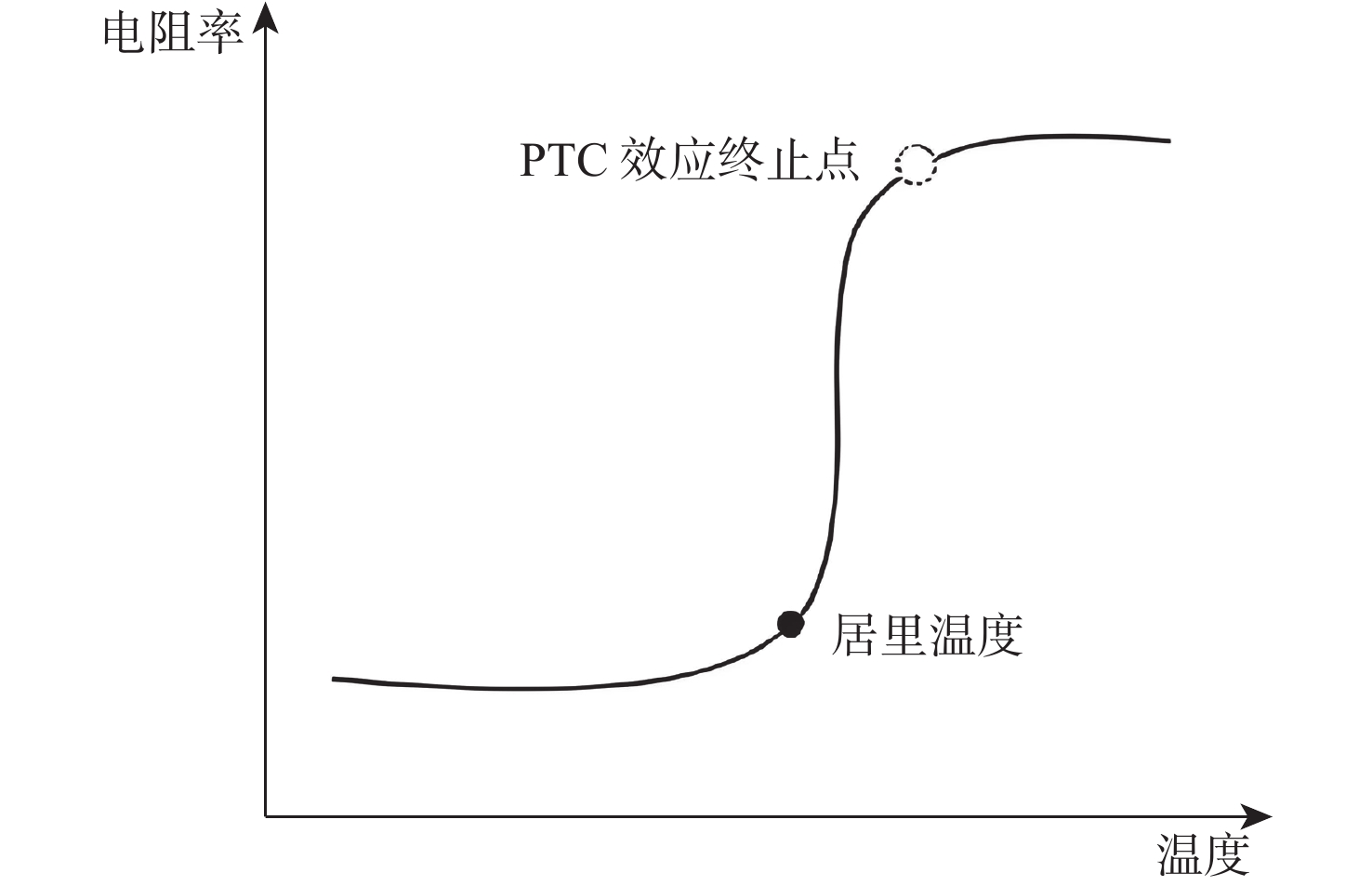
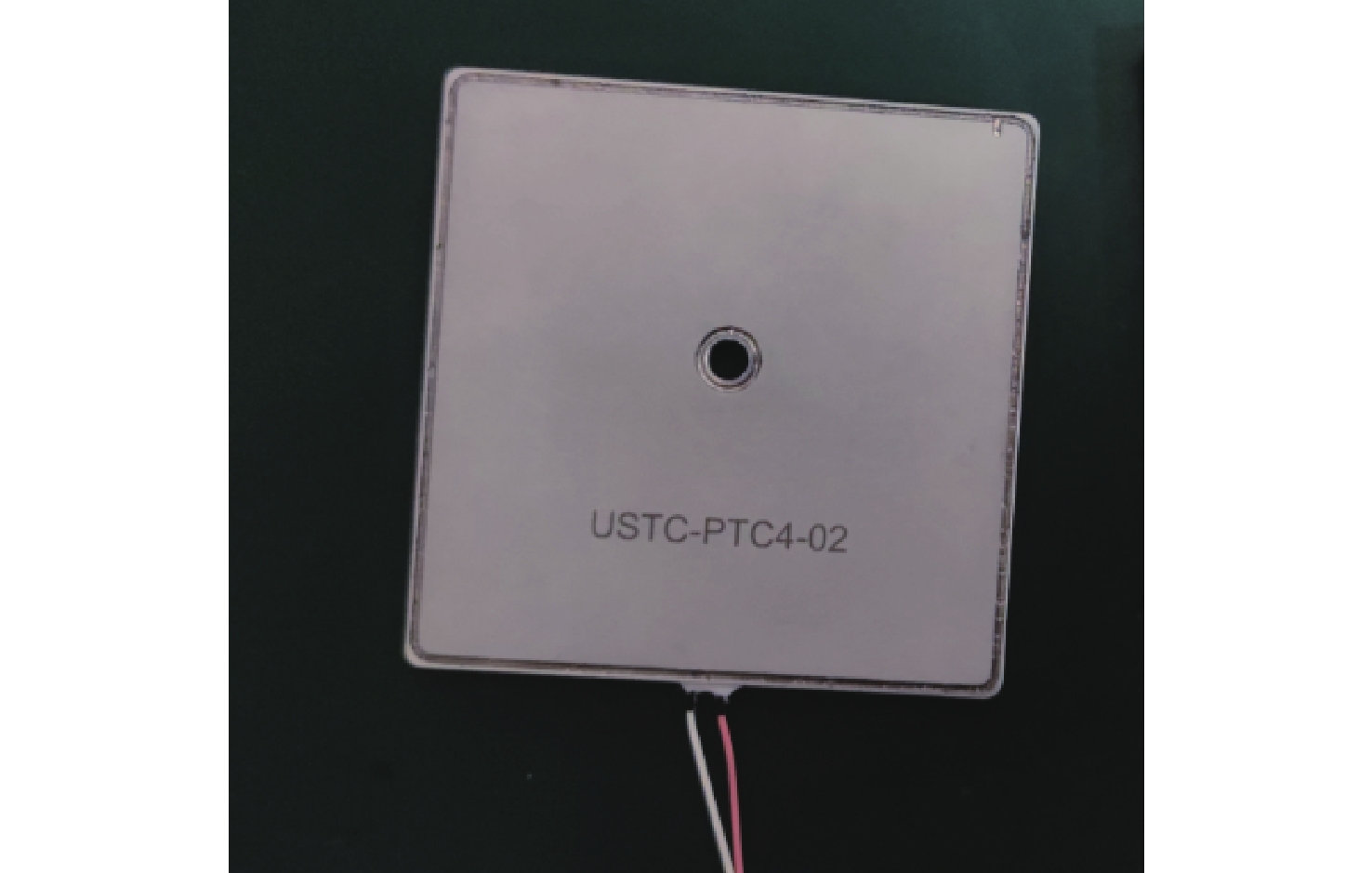
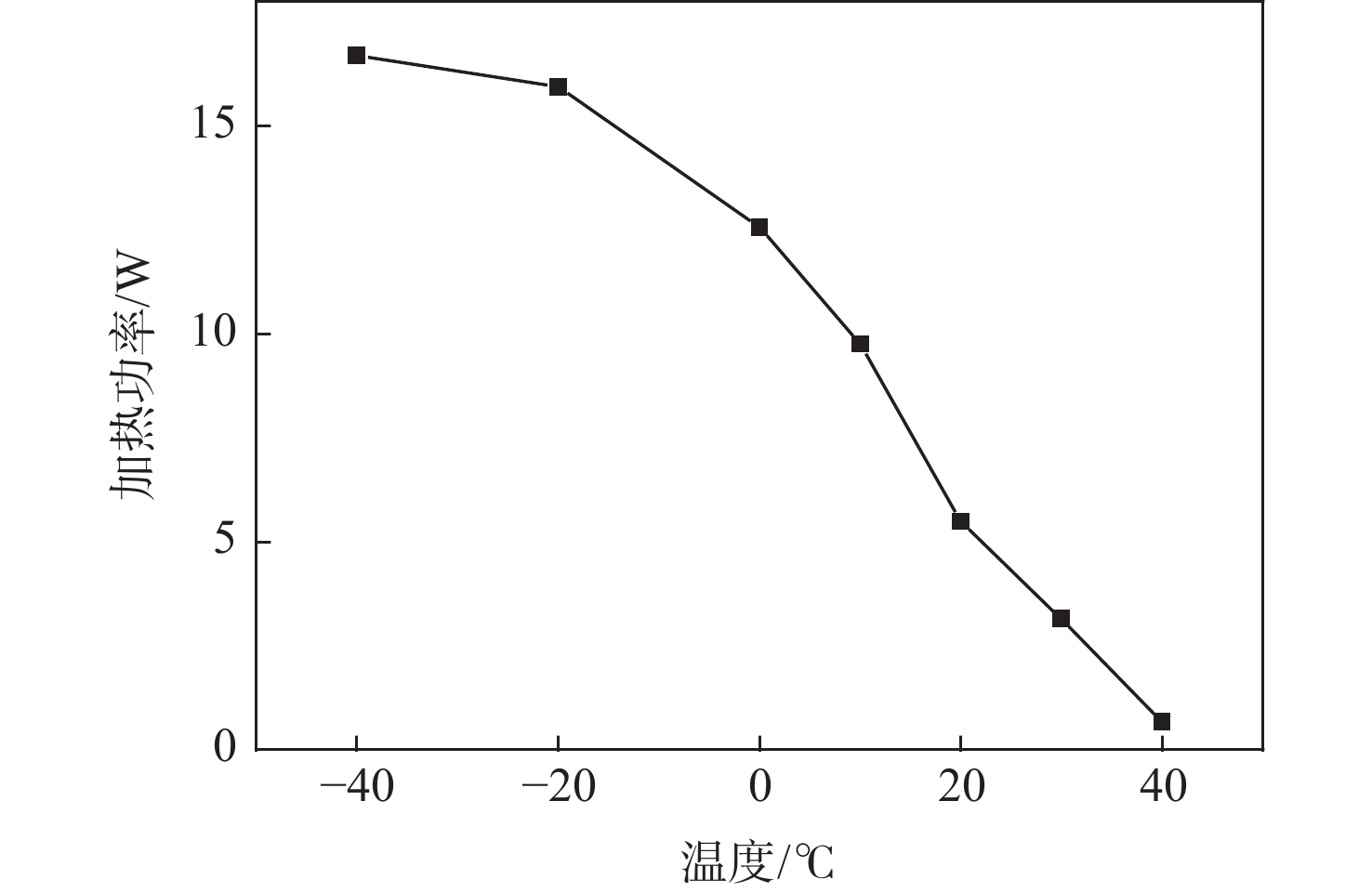
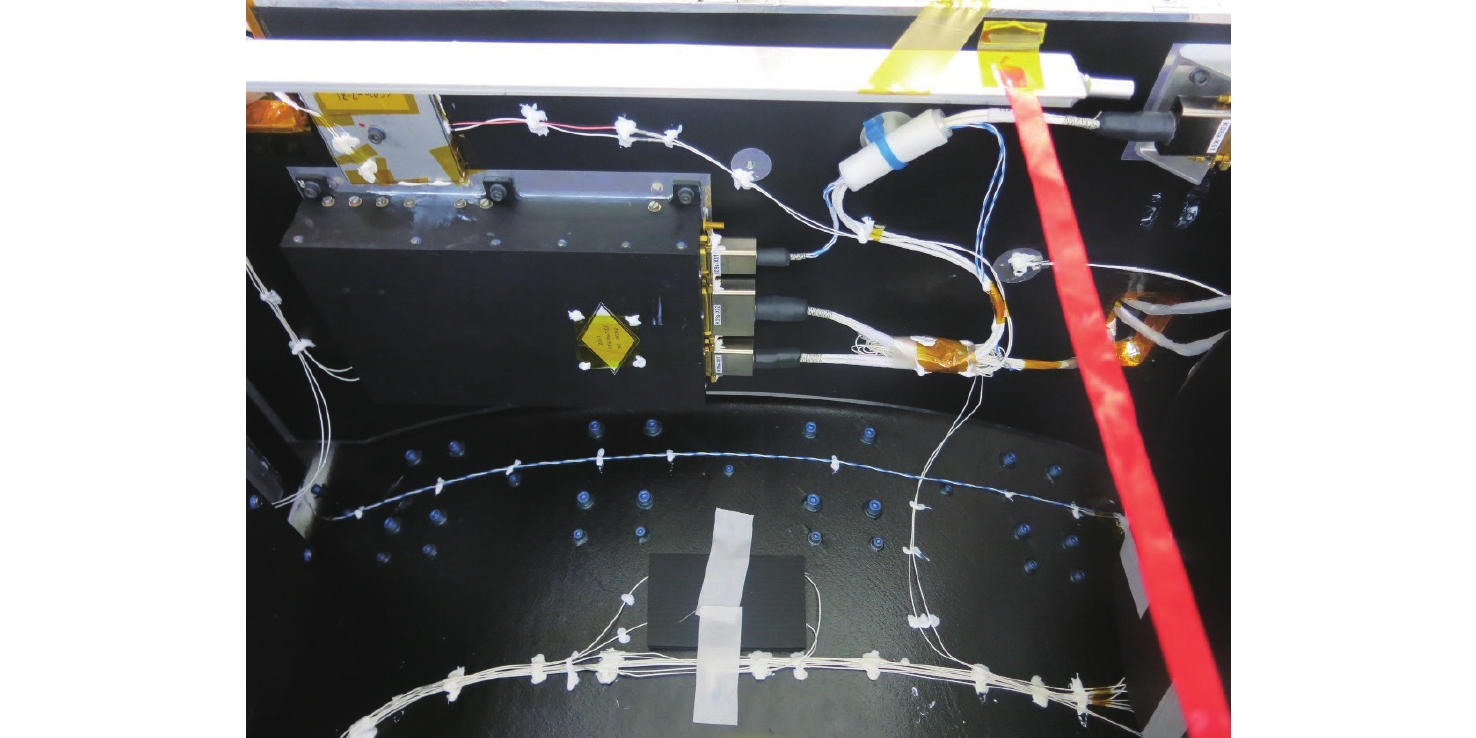
图 11 鹊桥二号中继星搭载的PTC自控温加热器产品
Figure 11. PTC heater products carried on Queqiao-2 satellite
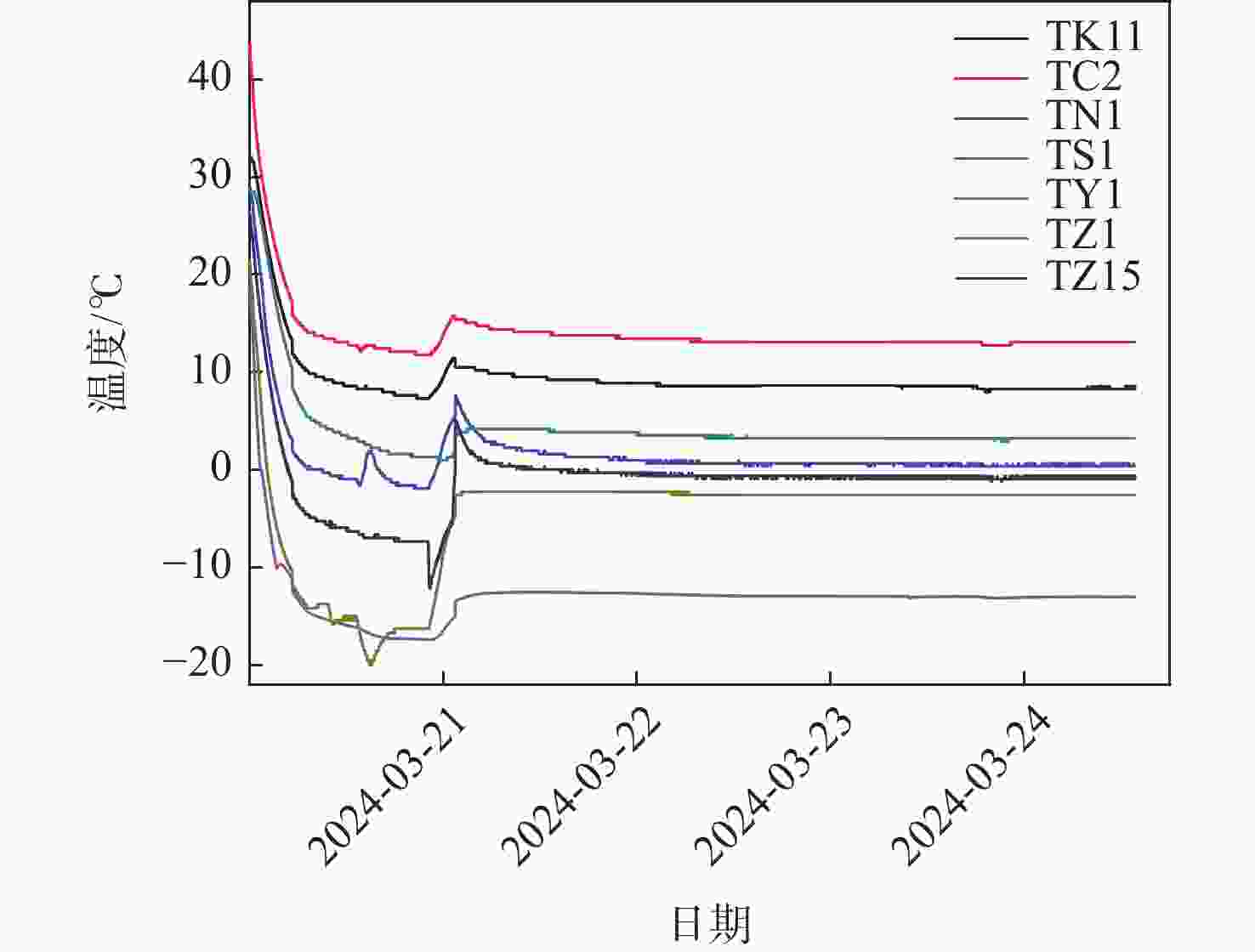
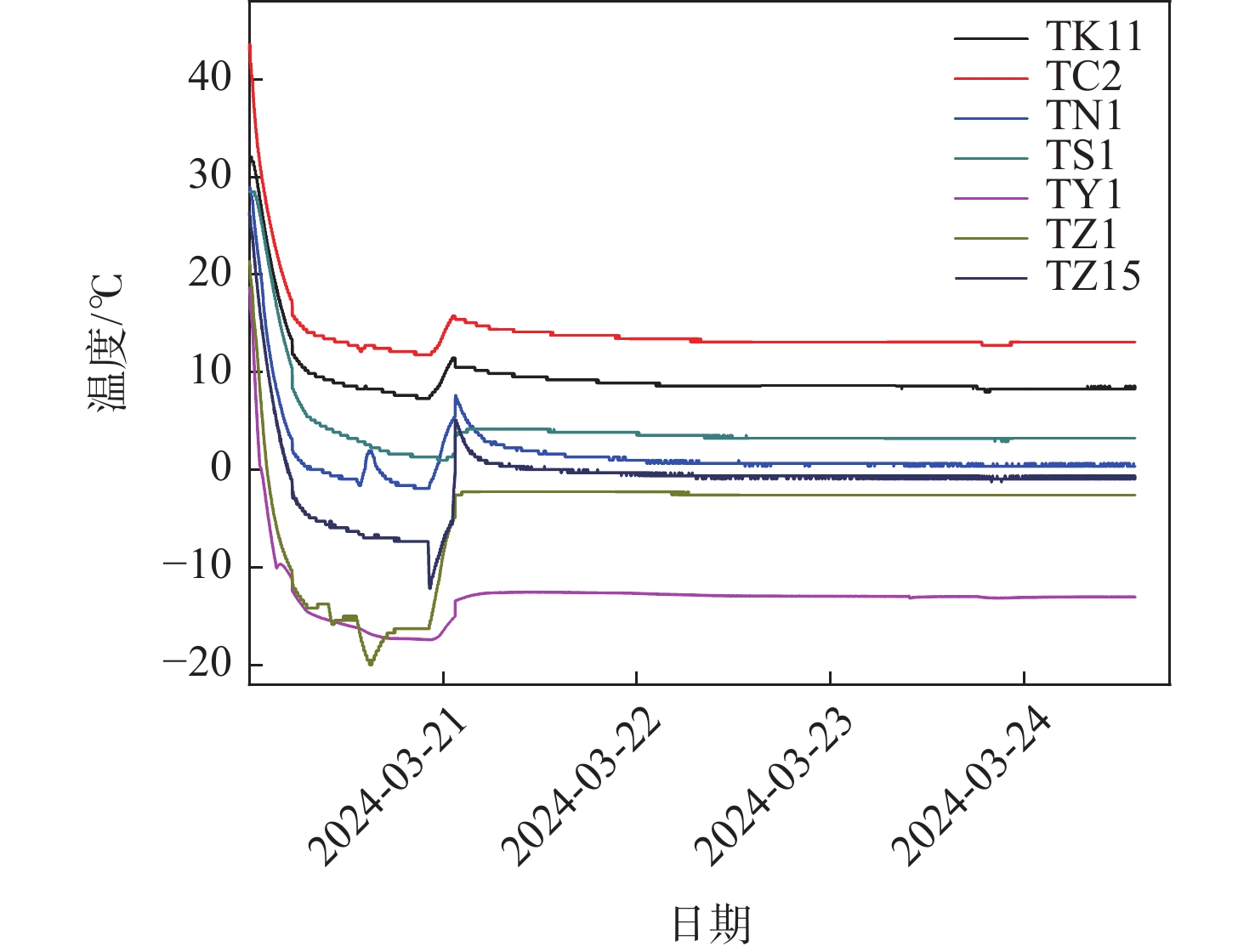
图 14 鹊桥二号中继星地月转移段典型设备温度曲线
Figure 14. Typical equipment temperature curves of satellite on the Earth-Moon transfer section
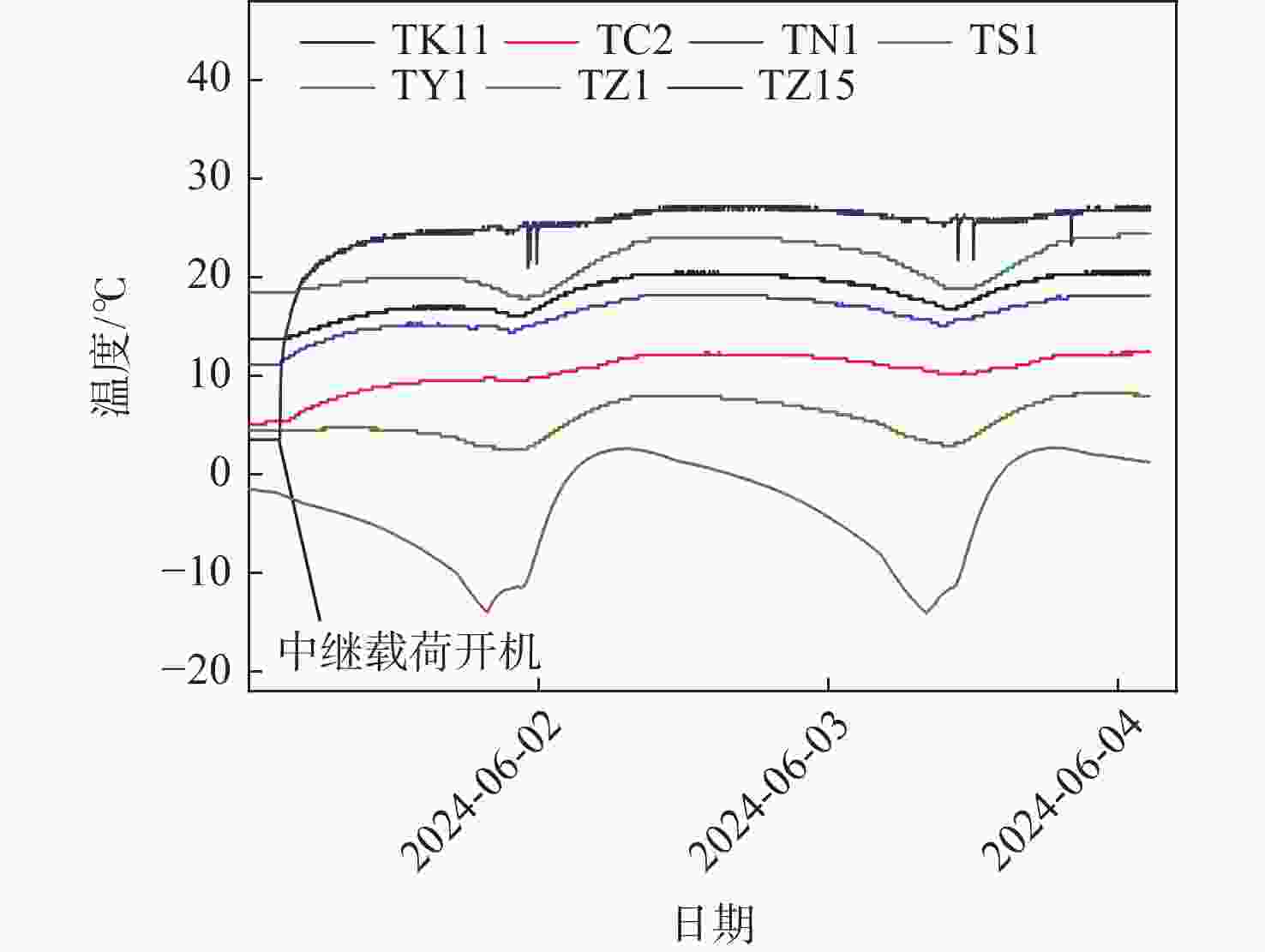
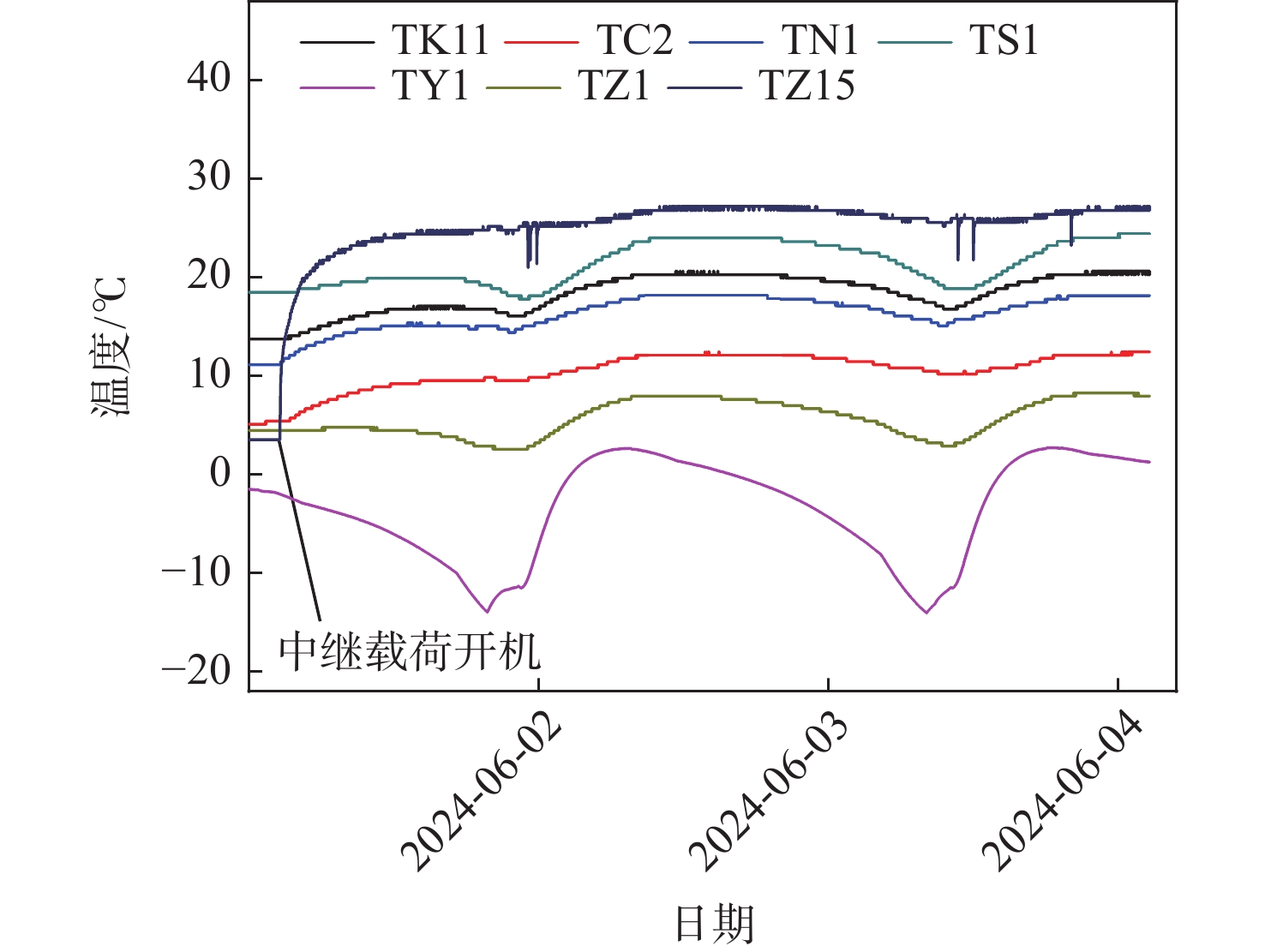
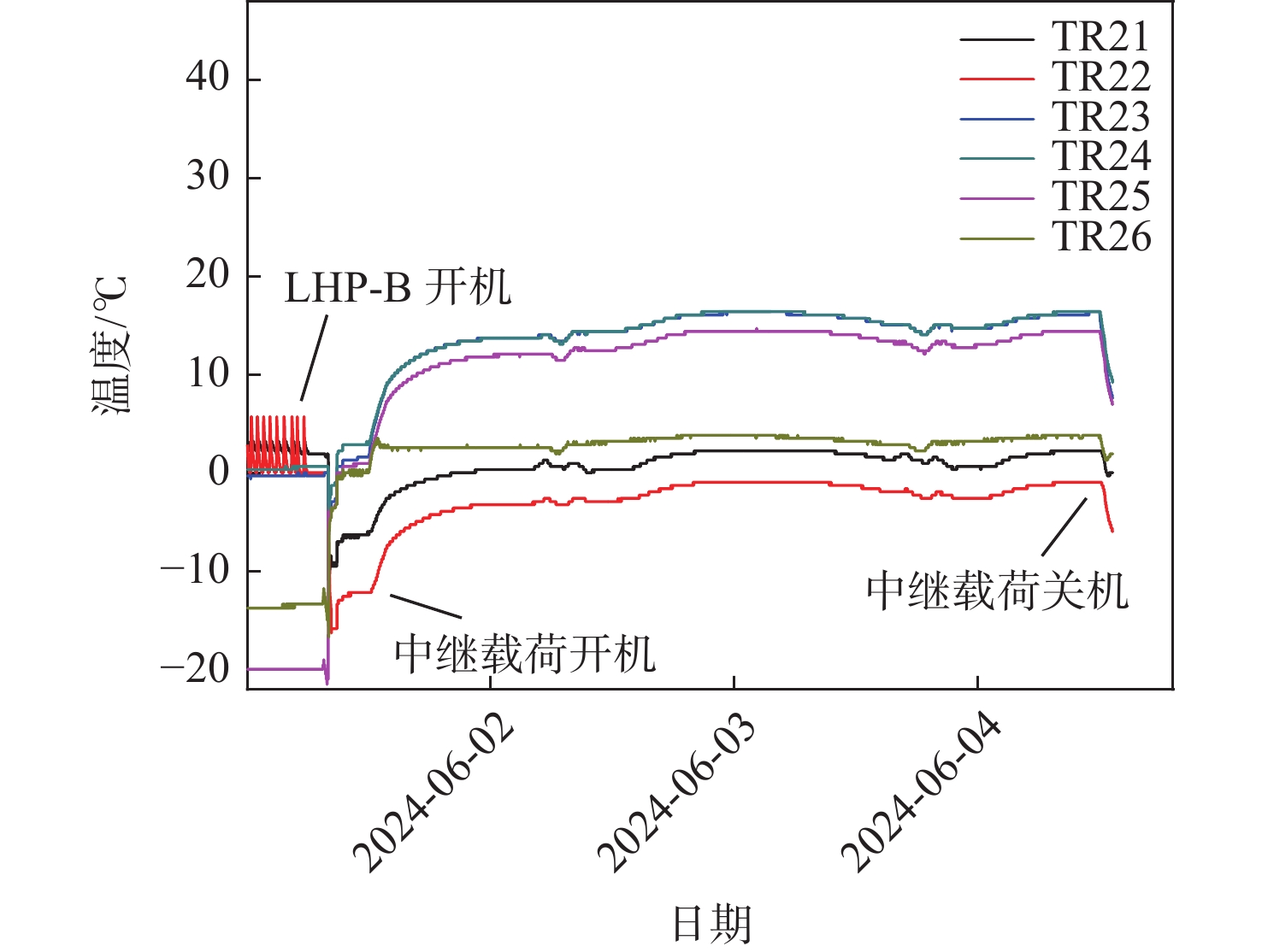
图 15 鹊桥二号中继星24 h中继使命轨道典型设备温度曲线
Figure 15. Typical equipment temperature curves on 24 hour relay mission orbit of Queqiao-2 satellite
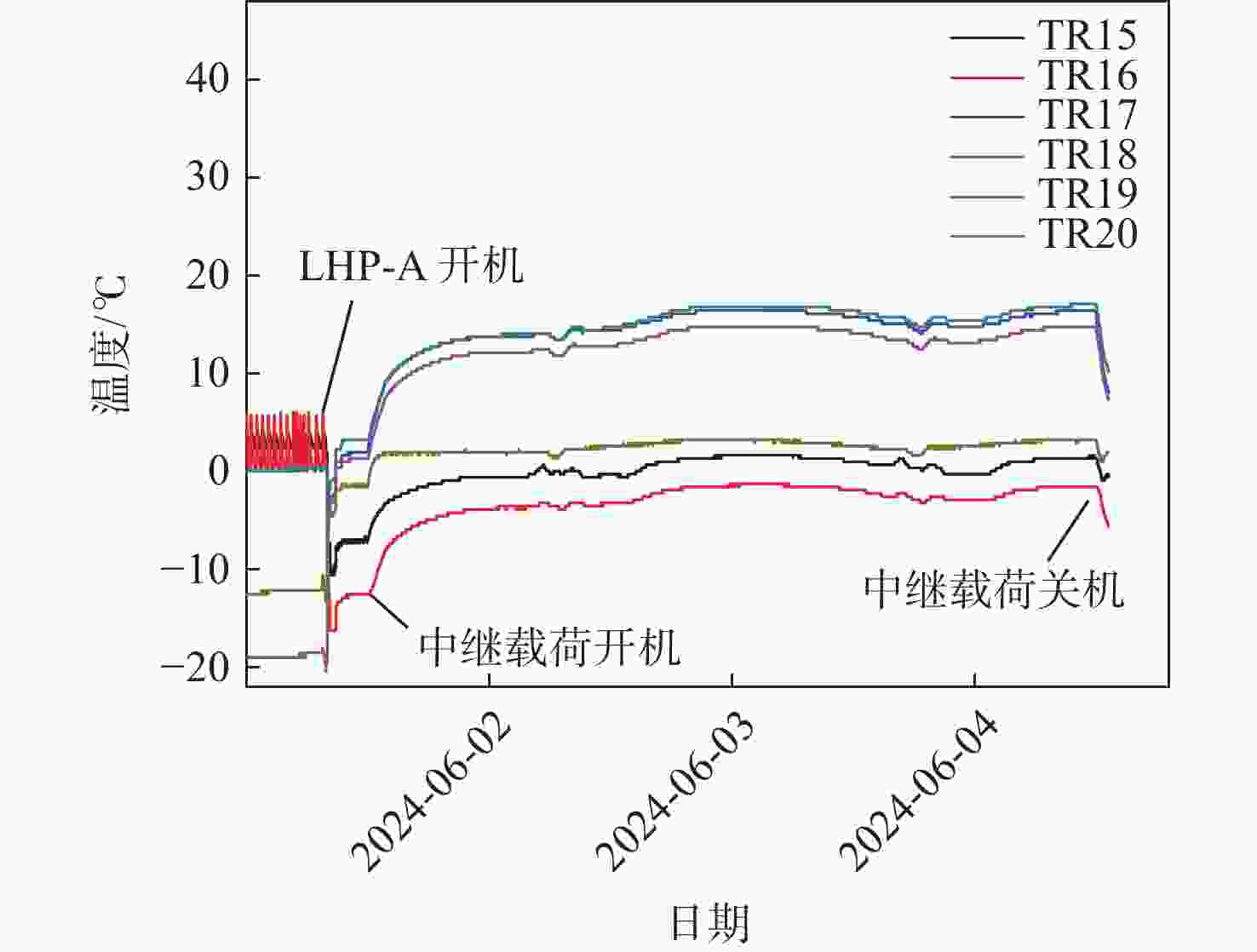
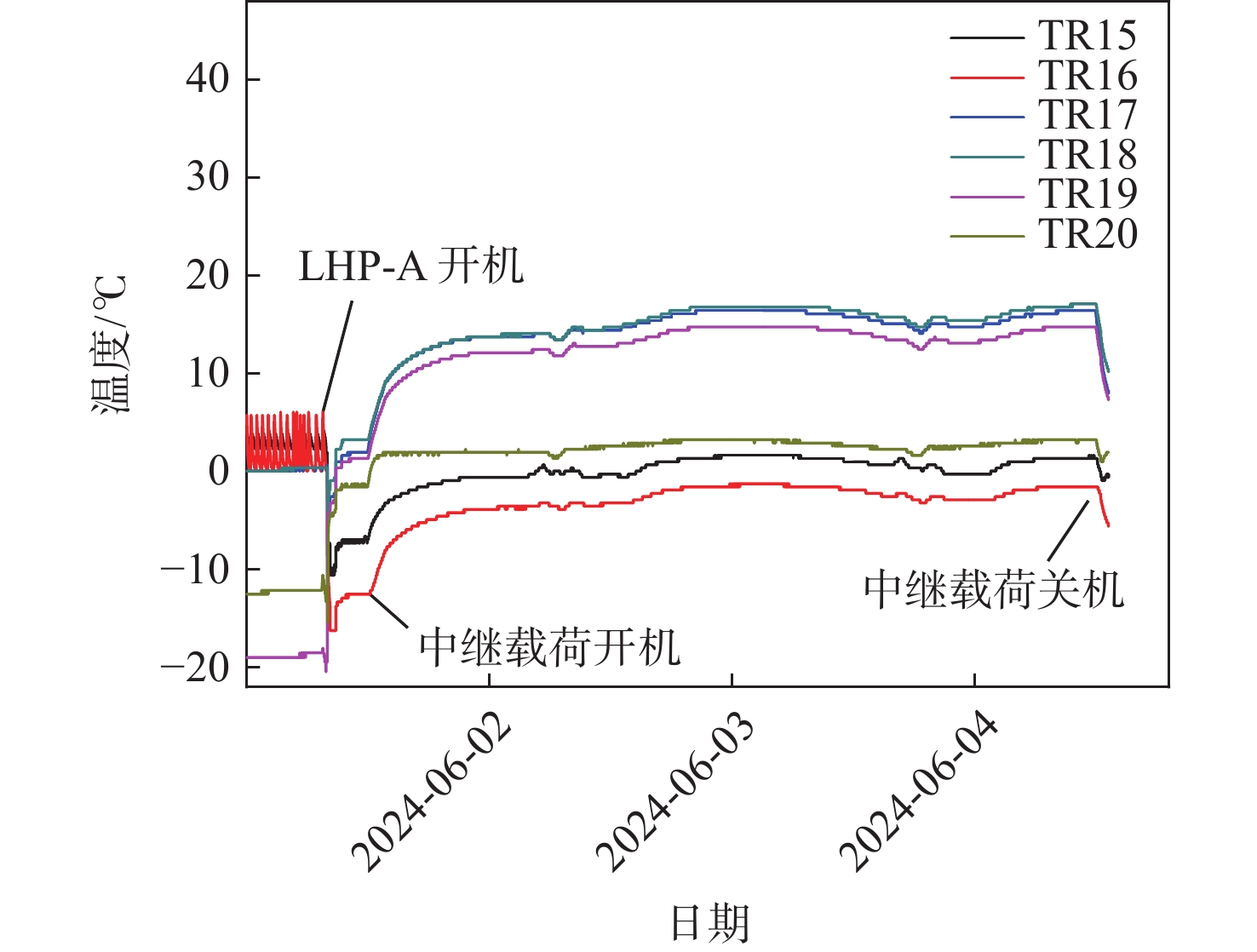
图 16 嫦娥六号任务期间环路热管A工作温度曲线
Figure 16. Loop heat pipe-A working temperature curves during the Chang’e 6 mission
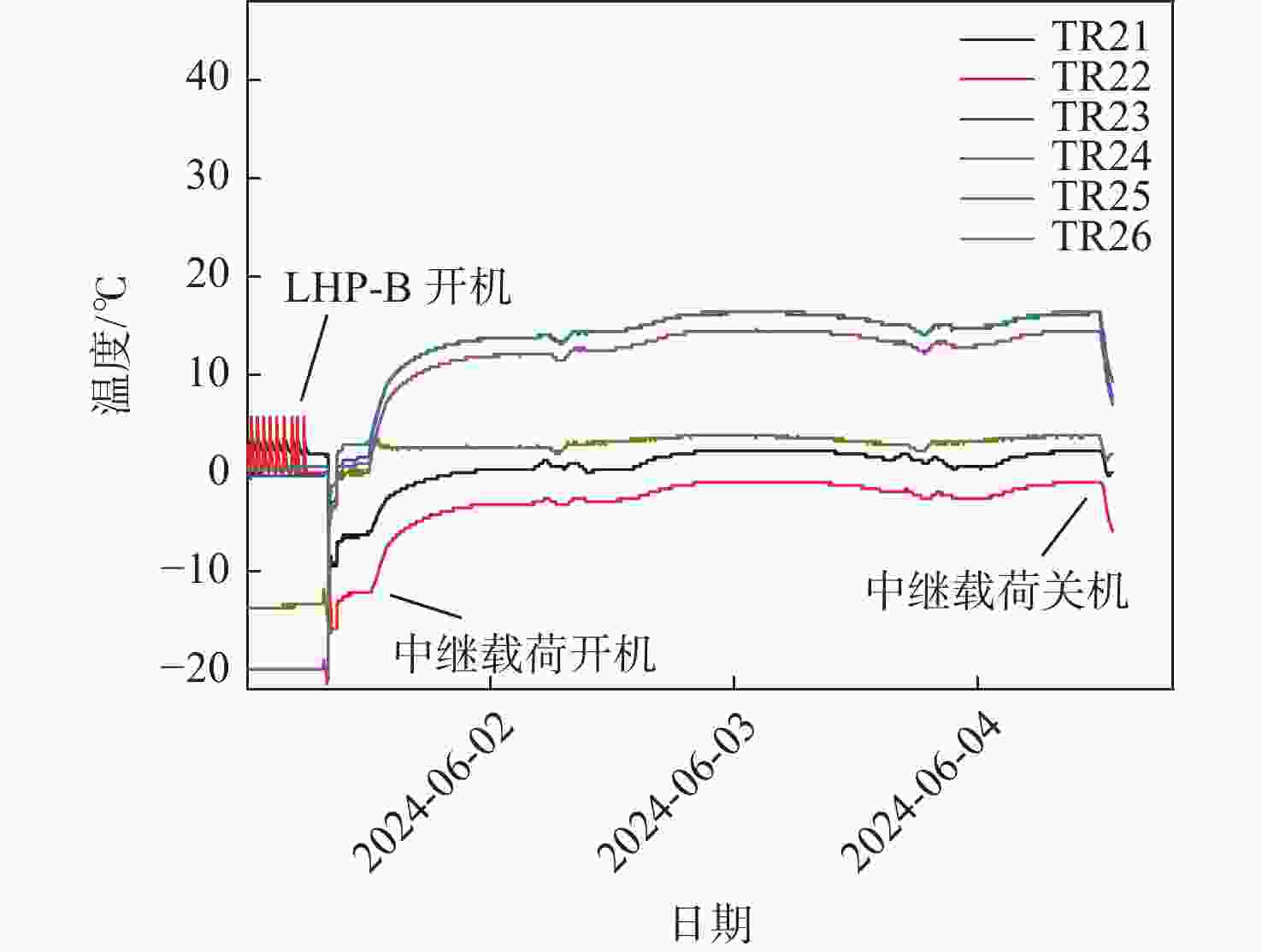
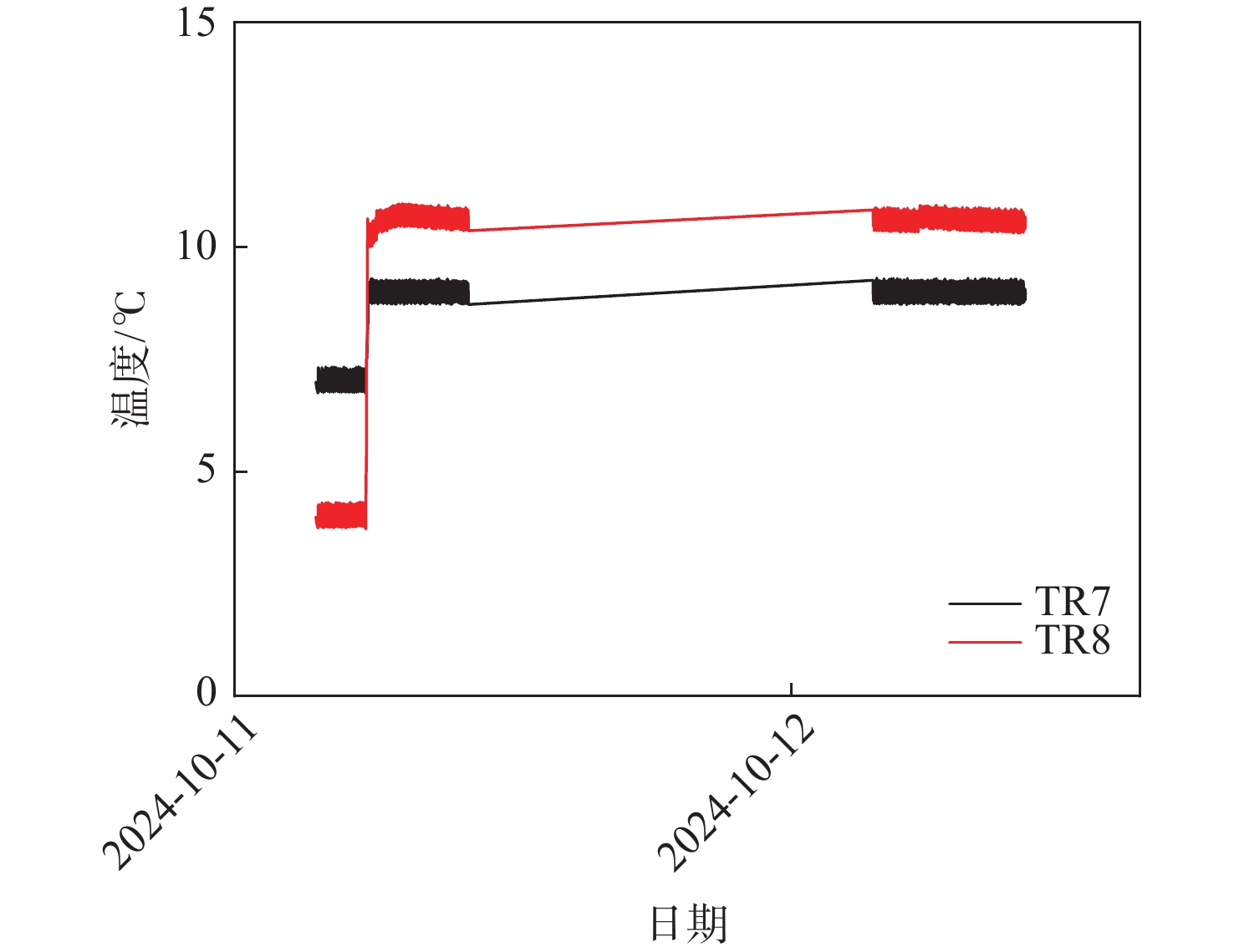
图 17 嫦娥六号任务期间环路热管B工作温度曲线
Figure 17. Loop heat pipe-B working temperature curves during the Chang’e 6 mission
表 1 鹊桥二号中继星热控设计输入基线变化
Table 1. Input baseline changes of Queqiao-2 satellite thermal control design
中继星 轨道 构型尺寸/(mm×mm×mm) 质量/kg 整星功耗/W 寿命/a 嫦娥四号鹊桥中继星 环地月L2点Halo轨道 箱板式构型 1400 ×1400 ×850425 长阴影模式146.6,
中继通信模式最大6103 鹊桥二号中继星 环月大椭圆轨道(24 h、12 h) 承力筒构型 1850 ×1850 ×1172 1200 长阴影模式554,
中继通信模式最大1233 8  下载: 导出CSV
-
[1] ZHANG L H, XIONG L, SUN J, et al. System design and validation of Queqiao-2 lunar relay communication satellite[J]. Chinese Space Science and Technology, 2024, 44(5): 23-39. [2] 余后满, 饶炜, 张益源, 等. “嫦娥七号”探测器任务综述[J]. 深空探测学报(中英文), 2023, 10(6): 567-576.YU H M, RAO W, ZHANG Y Y, et al. Mission analysis and spacecraft design of Chang’e-7[J]. Journal of Deep Space Exploration, 2023, 10(6): 567-576(in Chinese). [3] 张立华, 吴伟仁. 月球中继通信卫星系统发展综述与展望[J]. 深空探测学报, 2018, 5(6): 497-505.ZHANG L H, WU W R. The development overview and prospect of lunar relay communication satellite system[J]. Journal of Deep Space Exploration, 2018, 5(6): 497-505(in Chinese). [4] 周文艳, 高博宇, 董畑姗, 等. 鹊桥二号轨道与嫦娥六号任务匹配性设计和飞行实践[J]. 中国空间科学技术(中英文), 2024, 44(6): 16-22.ZHOU W Y, GAO B Y, DONG T S, et al. Matching design of trajectory with Chang’e-6 mission and flight pratice of Queqiao-2 satellite[J]. Chinese Space Science and Technology, 2024, 44(6): 16-22(in Chinese). [5] OSIANDER R, FIREBAUGH S L, CHAMPION J L, et al. Microelectromechanical devices for satellite thermal control[J]. IEEE Sensors Journal, 2004, 4(4): 525-531. [6] 金海波, 凌晨, 李静波. 航天器用可变发射率热控器件的研究进展[J]. 深空探测学报, 2018, 5(2): 188-200.JIN H B, LING C, LI J B. Development of variable-emittance thermal control technology[J]. Journal of Deep Space Exploration, 2018, 5(2): 188-200(in Chinese). [7] 宁献文, 苏生, 陈阳, 等. 月地高速再入返回器热控设计及实现[J]. 中国科学:技术科学, 2015, 45(2): 145-150.NING X W, SU S, CHEN Y, et al. Design and implementation of circumlunar return and reentry spacecraft thermal control system[J]. Scientia Sinica (Technologica), 2015, 45(2): 145-150(in Chinese). [8] 黄金印, 潘福明, 傅伟纯, 等. 高分七号卫星激光测高仪热设计及验证[J]. 航天器工程, 2020, 29(3): 138-143.HUANG J Y, PAN F M, FU W C, et al. Thermal design and verification of laser altimeter for GF-7 satellite[J]. Spacecraft Engineering, 2020, 29(3): 138-143(in Chinese). [9] 孟恒辉, 徐亚威, 韩东阳, 等. 基于钎焊工艺的环路热管耦合系统设计及验证[J]. 中国空间科学技术(中英文), 2024, 44(5): 57-65.MENG H H, XU Y W, HAN D Y, et al. Design and verification of loop heat pipe coupling heat system based on brazing technology[J]. Chinese Space Science and Technology, 2024, 44(5): 57-65(in Chinese). [10] 张立华, 熊亮, 孙骥, 等. 嫦娥四号任务中继星“鹊桥”技术特点[J]. 中国科学:技术科学, 2019, 49(2): 138-146.ZHANG L H, XIONG L, SUN J, et al. Technical characteristics of the relay communication satellite “Queqiao” for Chang’e-4 lunar farside exploration mission[J]. Scientia Sinica (Technologica), 2019, 49(2): 138-146(in Chinese). [11] REN H Y, YANG C P, SUN T F, et al. Thermal design and flight validation of the Chang’e-4 relay satellite[J]. Journal of Physics: Conference Series, 2024, 2691(1): 012048. [12] 向艳超, 邵兴国, 刘自军, 等. 嫦娥一号卫星热控系统及其特点[J]. 航天器工程, 2008, 17(5): 42-46.XIANG Y C, SHAO X G, LIU Z J, et al. Thermal control system and its characteristics of Chang’e-1[J]. Spacecraft Engineering, 2008, 17(5): 42-46(in Chinese). [13] 陈建新, 向艳超, 钟奇, 等. 月球探测器外热流与散热能力分析[J]. 航天器工程, 2015, 24(5): 73-78.CHEN J X, XIANG Y C, ZHONG Q, et al. Calculating external heating and analysing radiating surface of lunar spacecraft[J]. Spacecraft Engineering, 2015, 24(5): 73-78(in Chinese). [14] 向艳超, 刘自军, 宁献文, 等. 我国月球探测器热控技术发展[J]. 航天器工程, 2022, 31(2): 29-34.XIANG Y C, LIU Z J, NING X W, et al. Review of thermal control technology in Chinese lunar probes[J]. Spacecraft Engineering, 2022, 31(2): 29-34(in Chinese). [15] 桑泽康, 赵锐, 程文龙. 低电阻率陶瓷基PTC材料温控特性研究[J]. 北京航空航天大学学报, 2023, 49(8): 2147-2153.SANG Z K, ZHAO R, CHENG W L. Study on temperature control characteristics of low-resistivity ceramic-based PTC material[J]. Journal of Beijing University of Aeronautics and Astronautics, 2023, 49(8): 2147-2153(in Chinese). -

 下载:
下载:


 点击查看大图
计量
- 文章访问数: 225
- HTML全文浏览量: 69
- PDF下载量: 6
- 被引次数: 0
