





Near-space vehicle trajectory optimization based on control vector parameterization
-
摘要:
针对计算制导场景下临近空间飞行器的在线轨迹优化问题,提出了一种基于实际动力学方程控制向量参数化的轨迹优化方法。通过翻转Radau伪谱离散非线性动力学方程,建立了含初始和终端状态约束的轨迹优化问题。通过参数化控制向量,将各离散点处控制量的优化问题转化为几个参数向量的优化问题,简化了计算过程,并提升了计算效率。此外,针对参数幅值约束,融合凸规划技术提出了一种基于控制向量参数化的轨迹优化方法。考虑到中制导任务对终端飞行时间不敏感,将优化问题的自变量从时间转换为航程,进一步缩短了计算时间。仿真结果表明,所提方法能够有效满足计算制导中高精度高效率轨迹优化的任务需求。
Abstract:For online trajectory optimization of the near-space vehicle in computational guidance, a trajectory optimization method based on actual dynamic equations is proposed via control vector parameterization. Firstly, a trajectory optimization problem with initial and terminal state constraints is developed by discretizing the nonlinear dynamic equations using the flipped-Radau pseudospectral approach. Secondly, control vector parameterization reduces complexity and boosts computational efficiency by converting the optimization problem for control quantities at each discrete point into an optimization problem for multiple parameter vectors. Thirdly, to deal with parameter amplitude constraints, a trajectory optimization method based on convex programming techniques is proposed via control vector parameterization. Finally, given that the midcourse guidance mission is insensitive to terminal flight time, the optimization problem is transformed from being time-dependent to downrange-dependent, thereby further reducing the computational time. Simulation results demonstrate that the proposed method satisfies the high-efficiency and high-precision requirements for trajectory optimization in computational guidance.
-
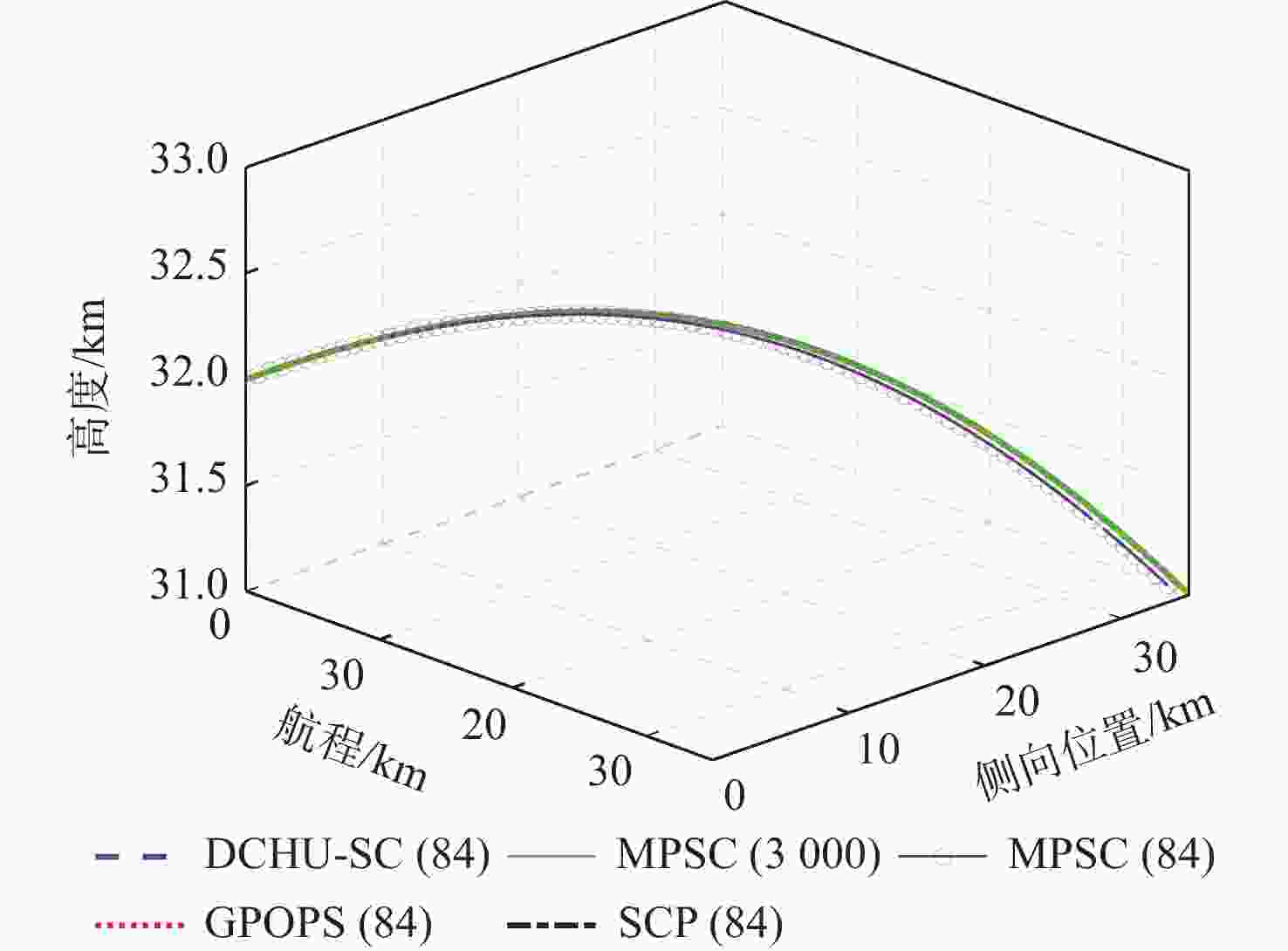
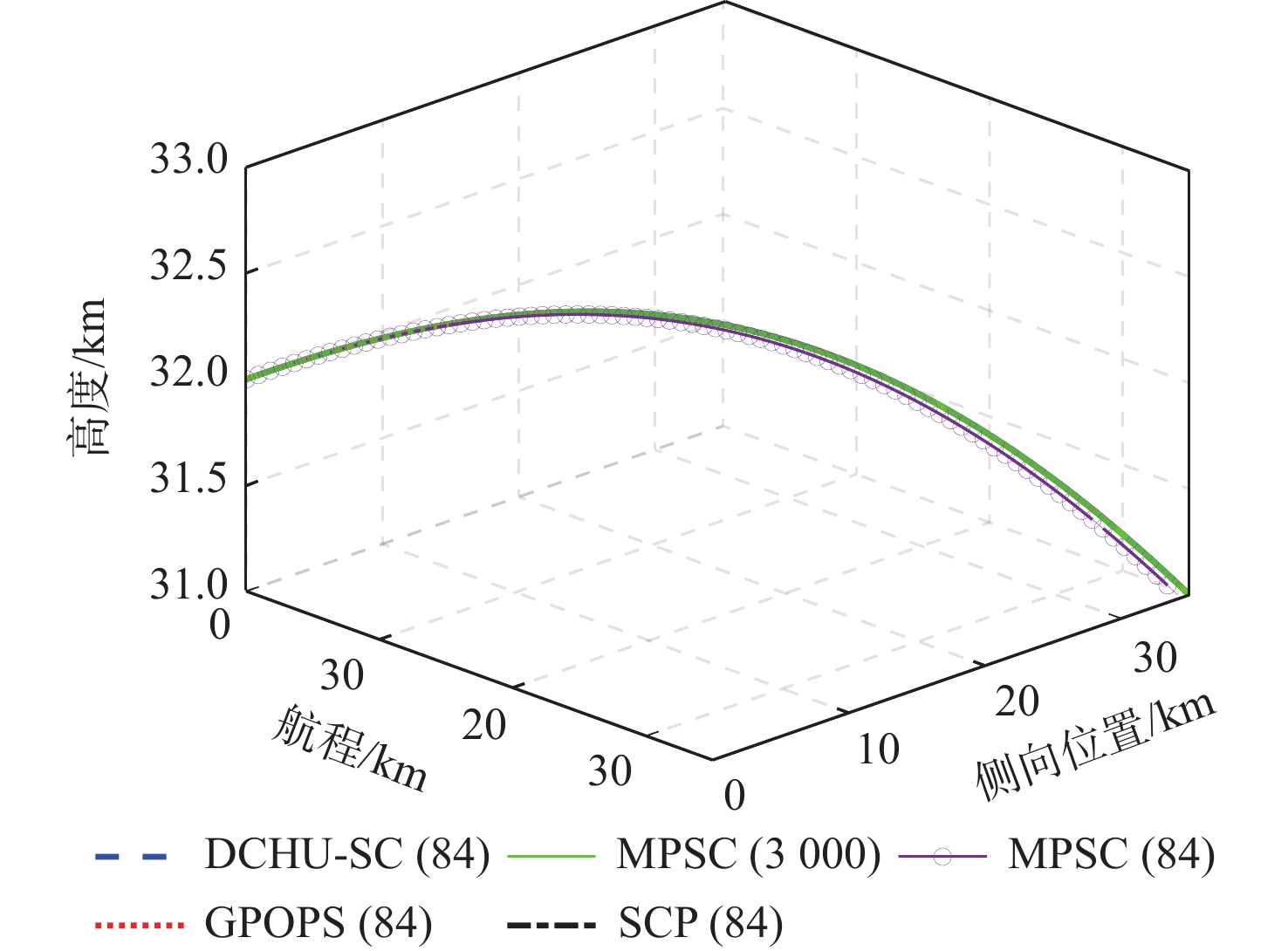
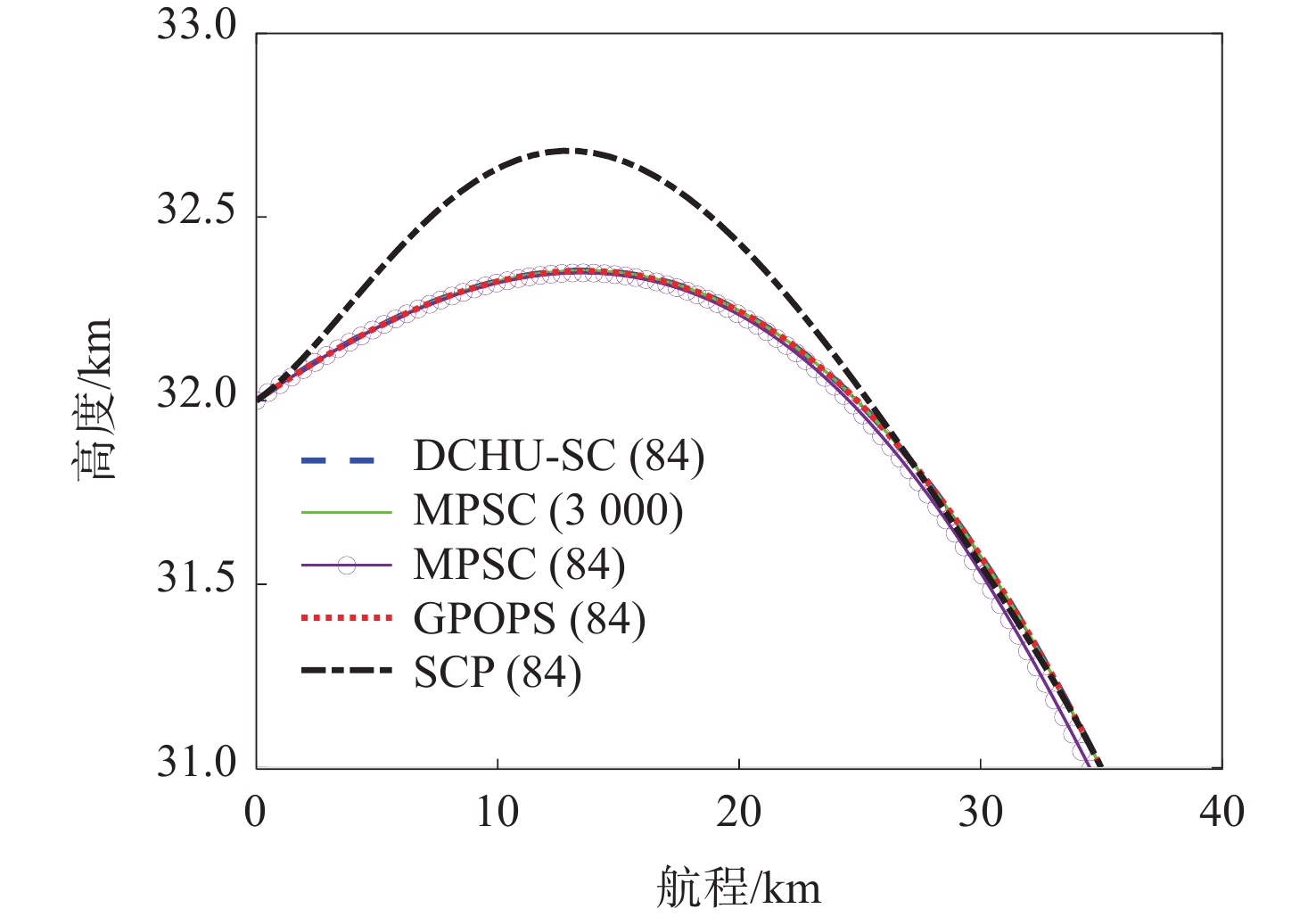
图 12 4种方法的航程-高度-侧向位置曲线
Figure 12. Curves of downrange, altitude, and lateral position for 4 methods
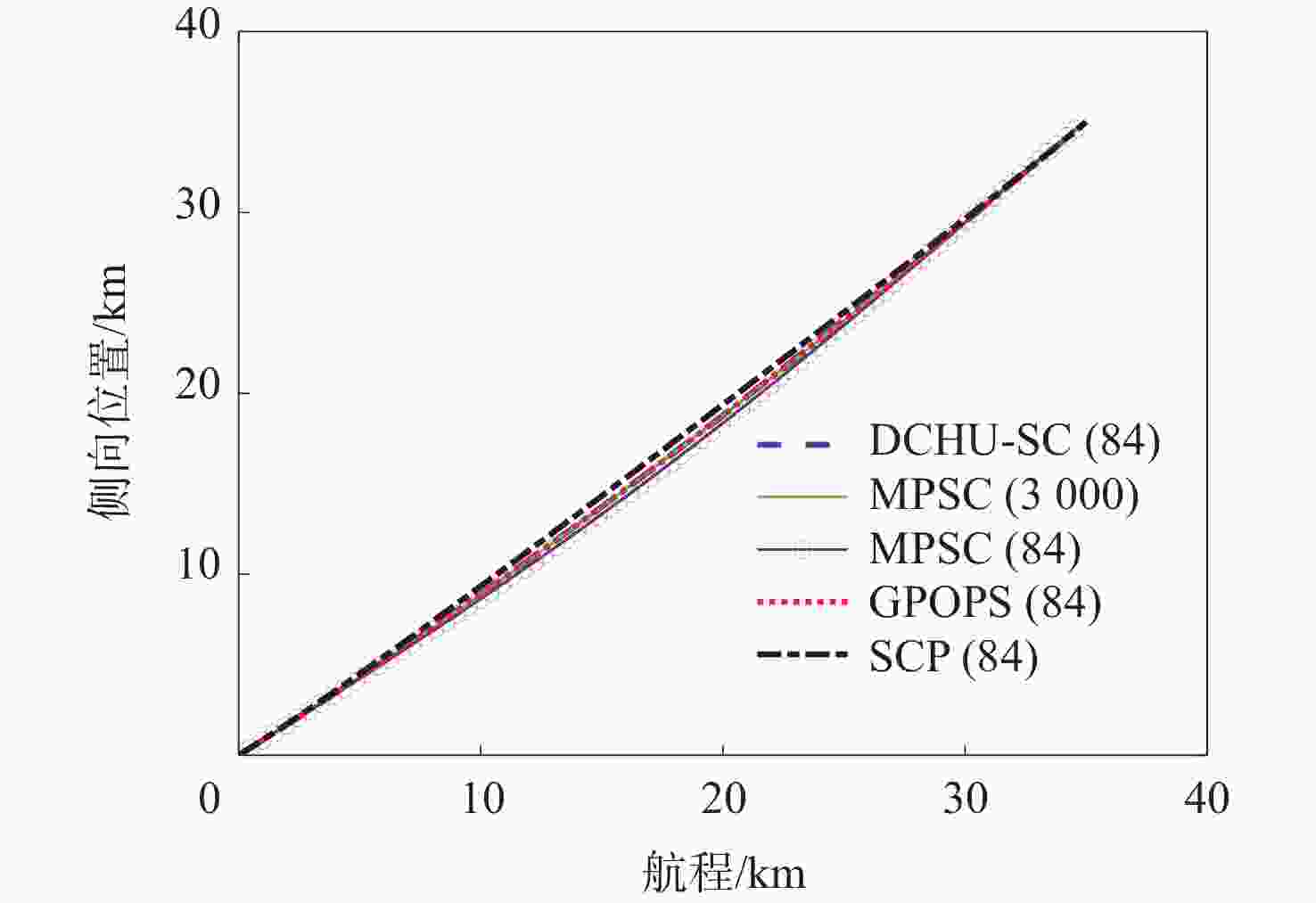
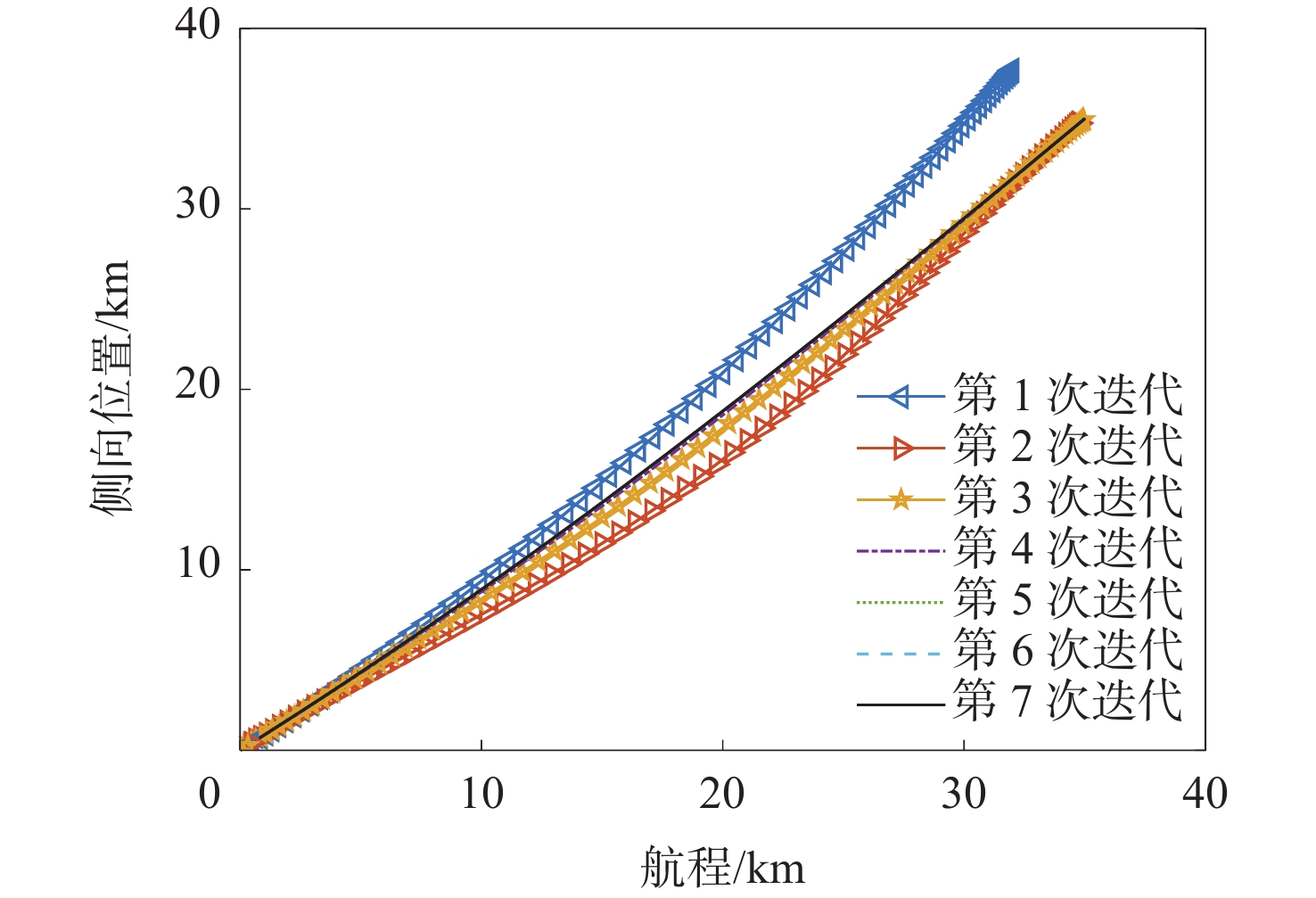
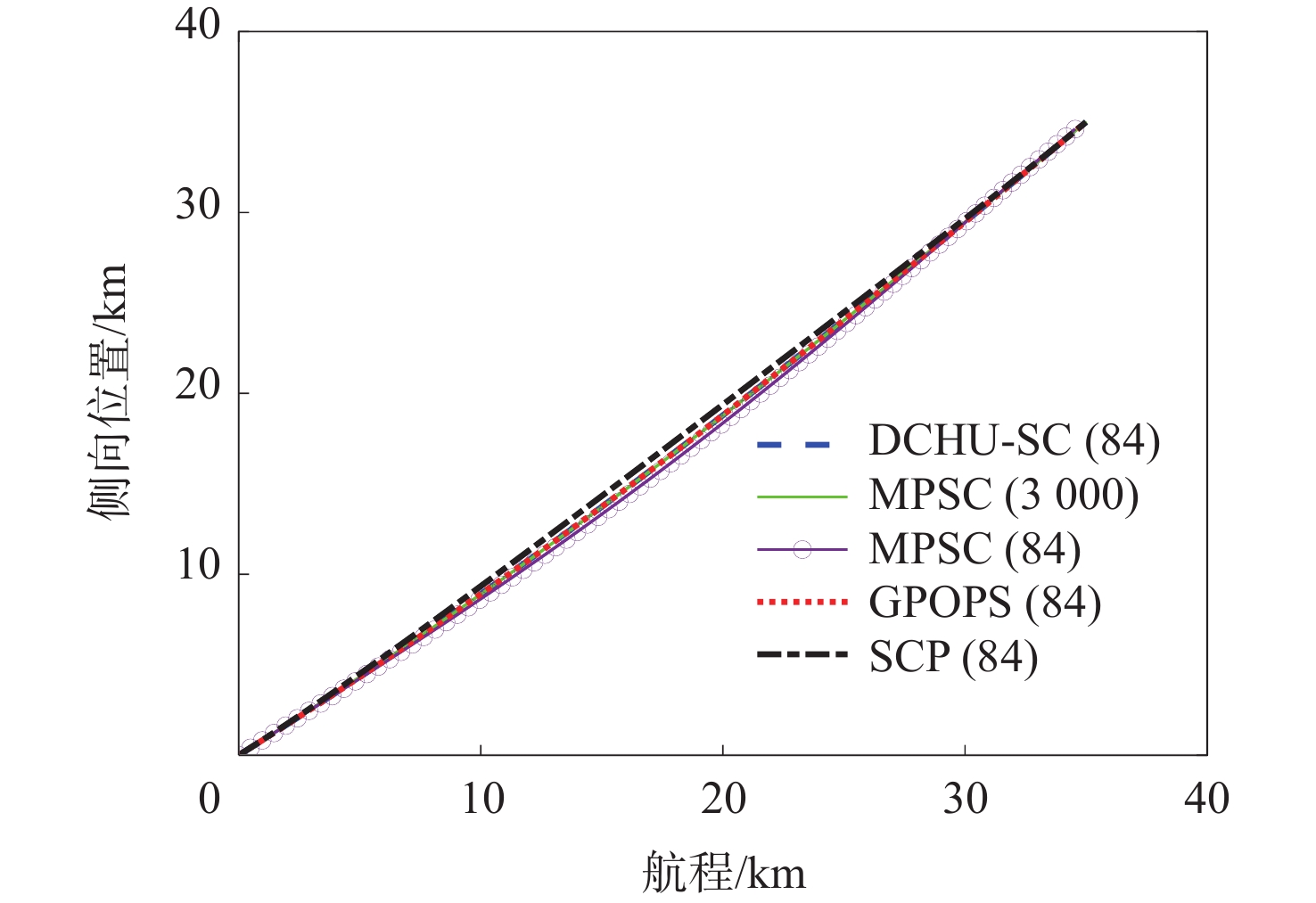
图 14 4种方法的航程-侧向位置曲线
Figure 14. Curves of lateral position with downrange for 4 methods

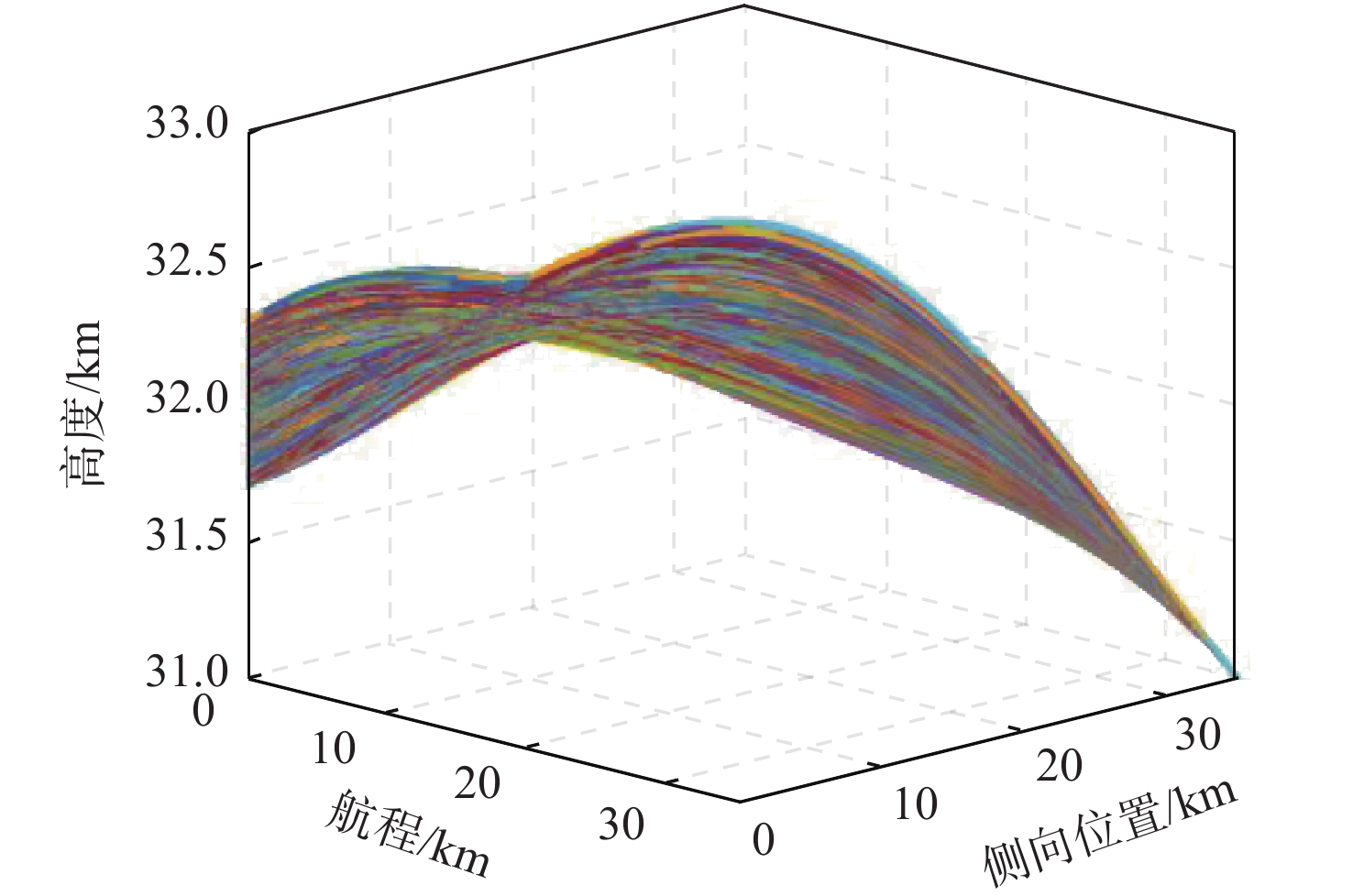
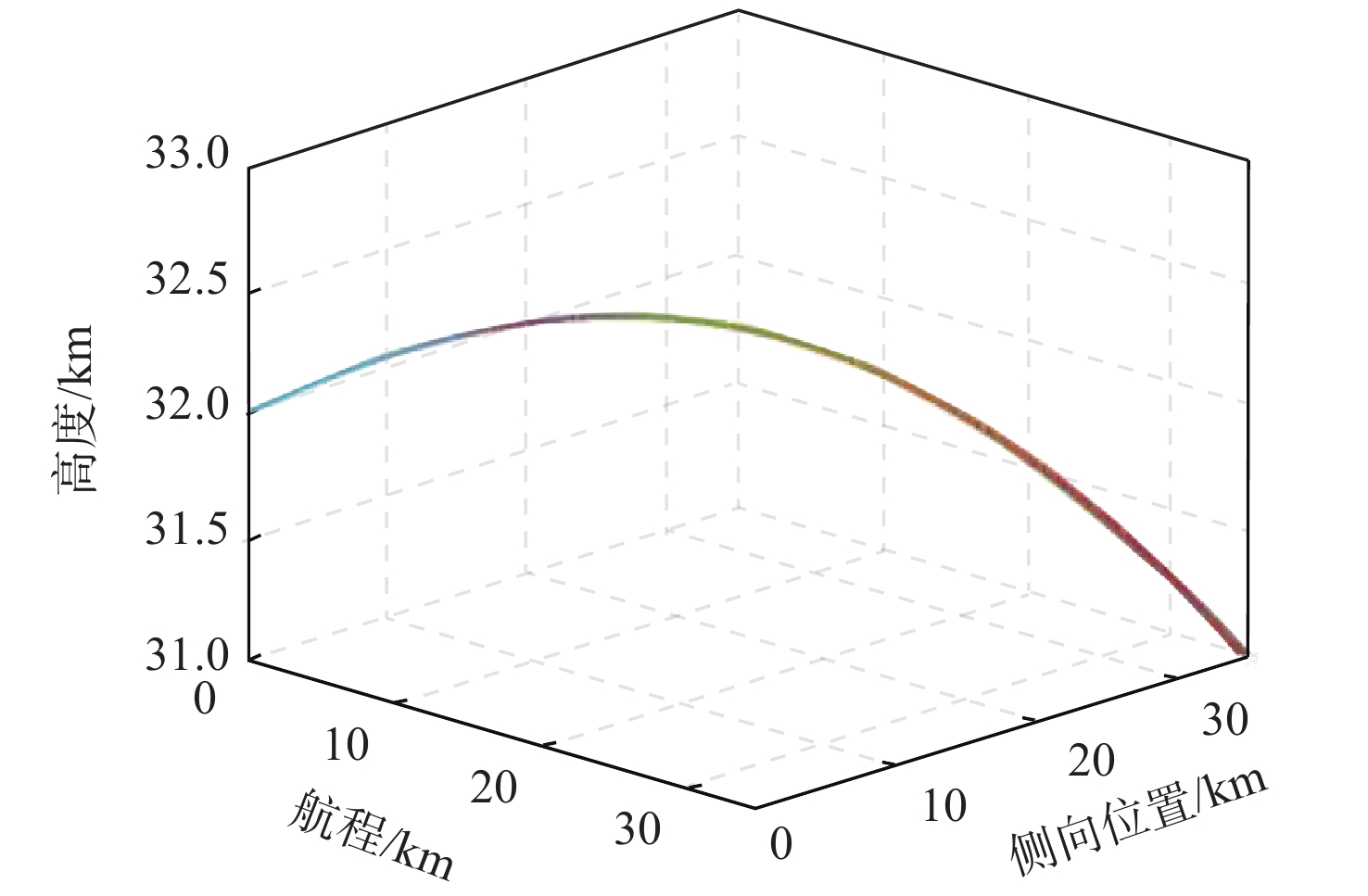
图 20 航程-高度-侧向位置曲线(初始状态摄动)
Figure 20. Curves of downrange, altitude, and lateral position (initial state perturbations)
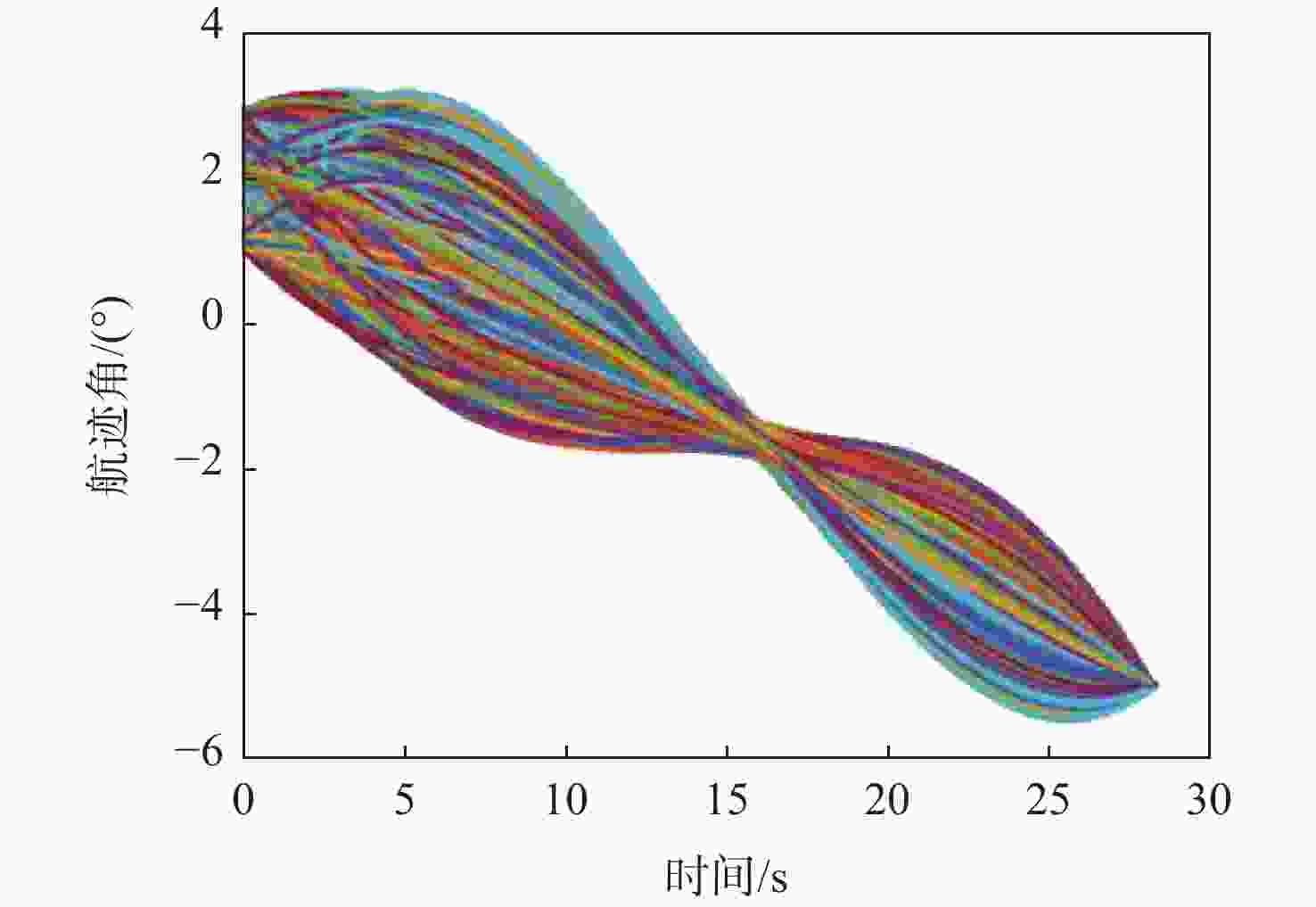
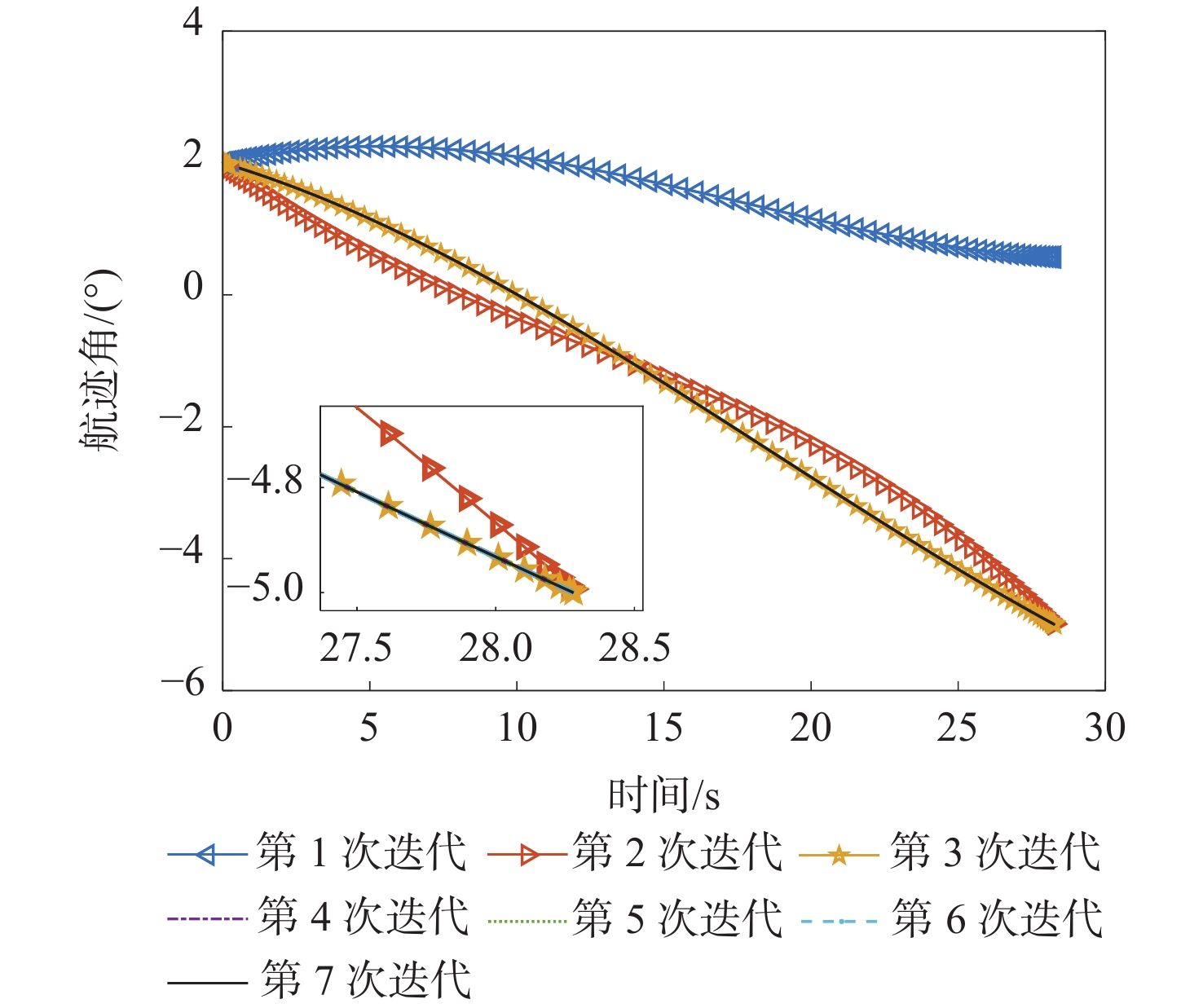
图 21 时间-航迹角曲线(初始状态摄动)
Figure 21. Curves of flight-angle with time (initial state perturbations)
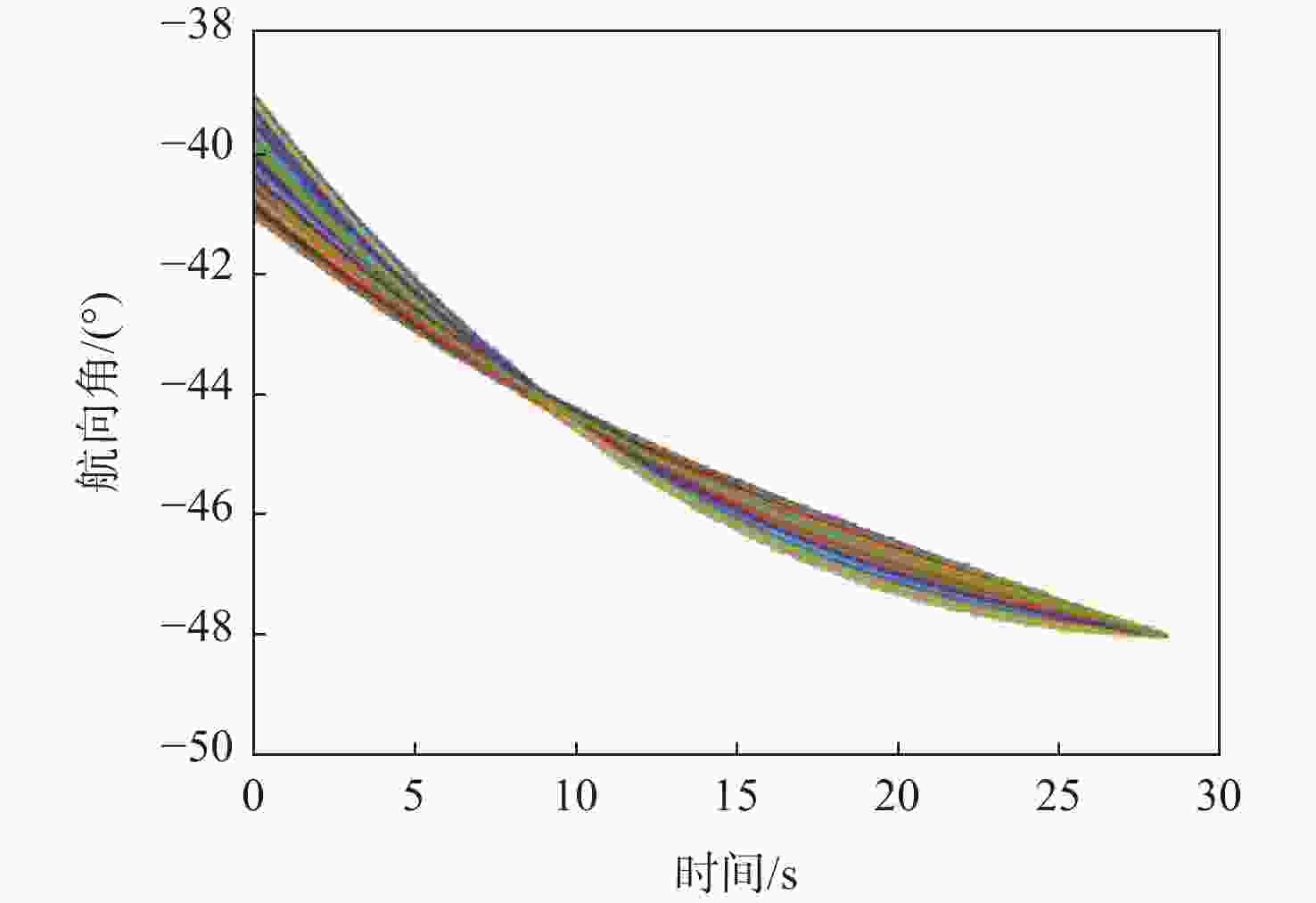
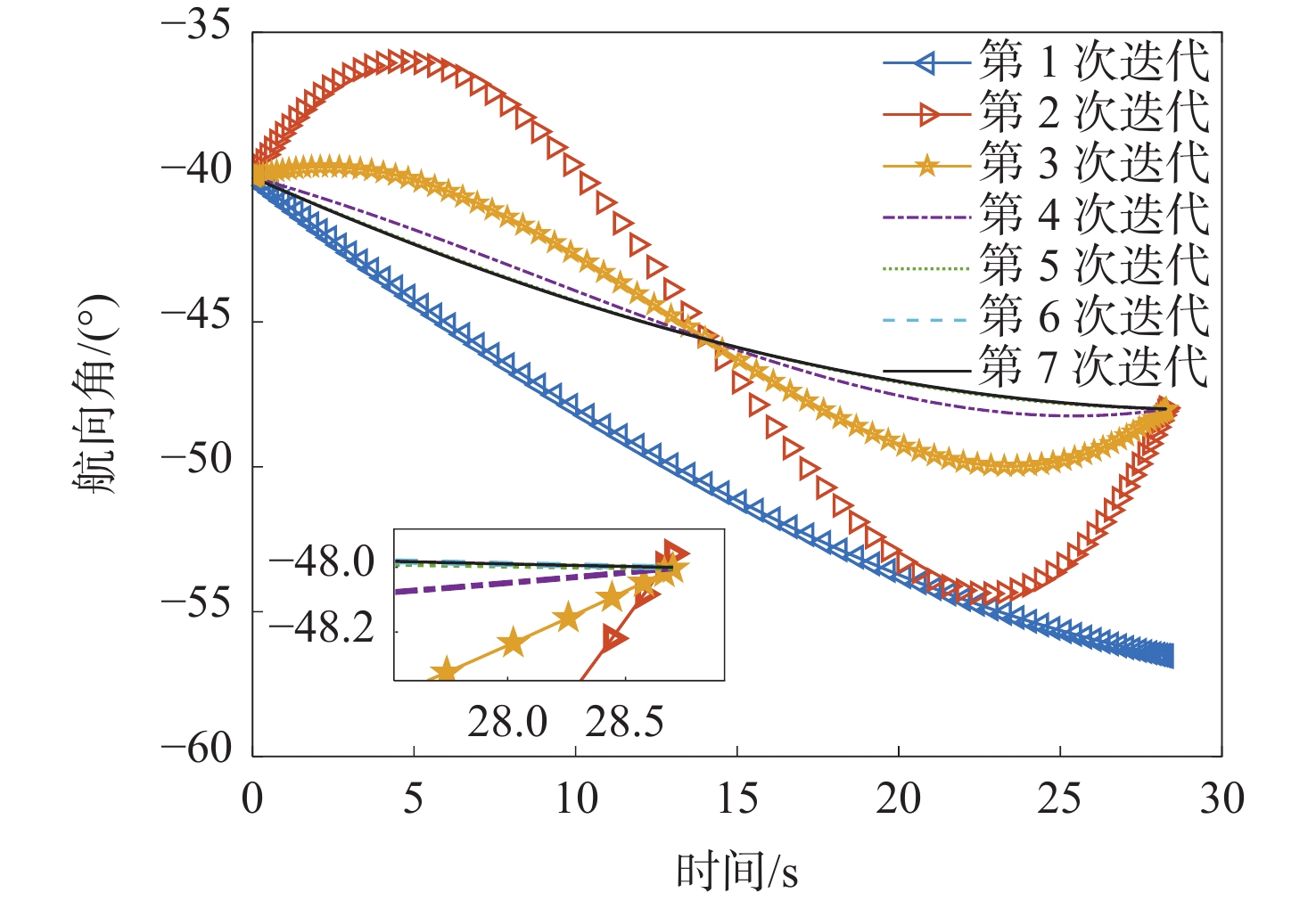
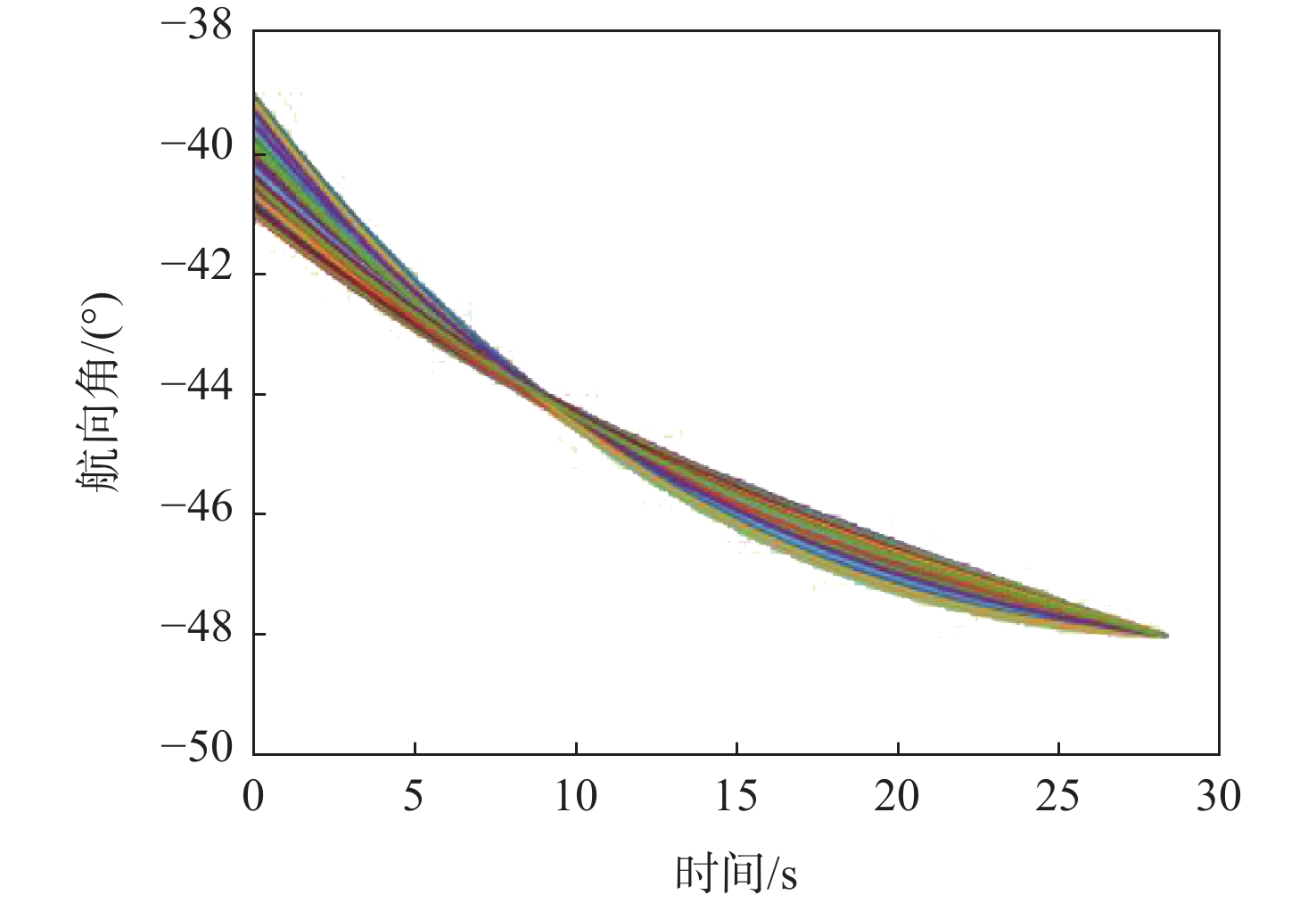
图 22 时间-航向角曲线(初始状态摄动)
Figure 22. Curves of heading angle with time (initial state perturbations)
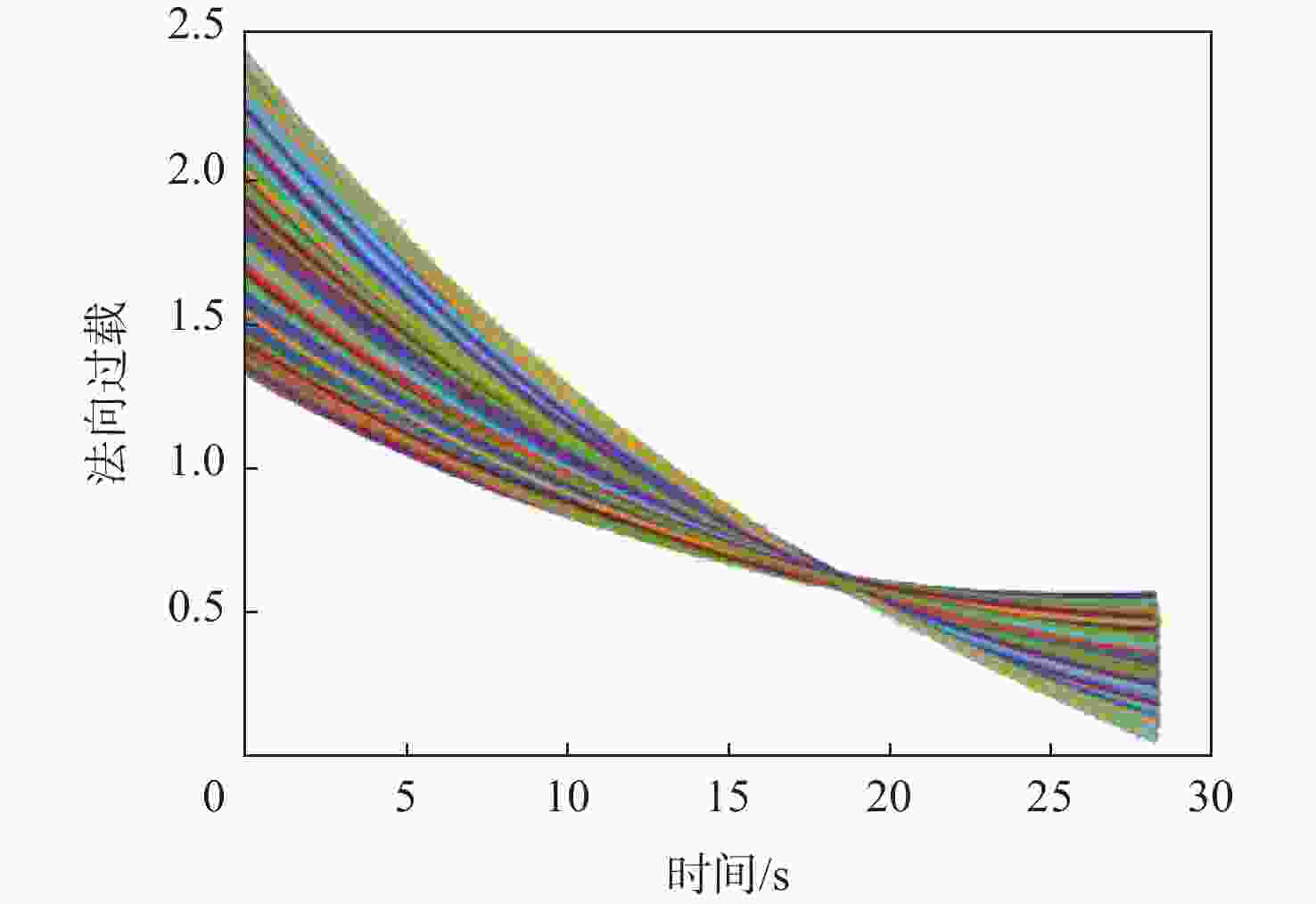
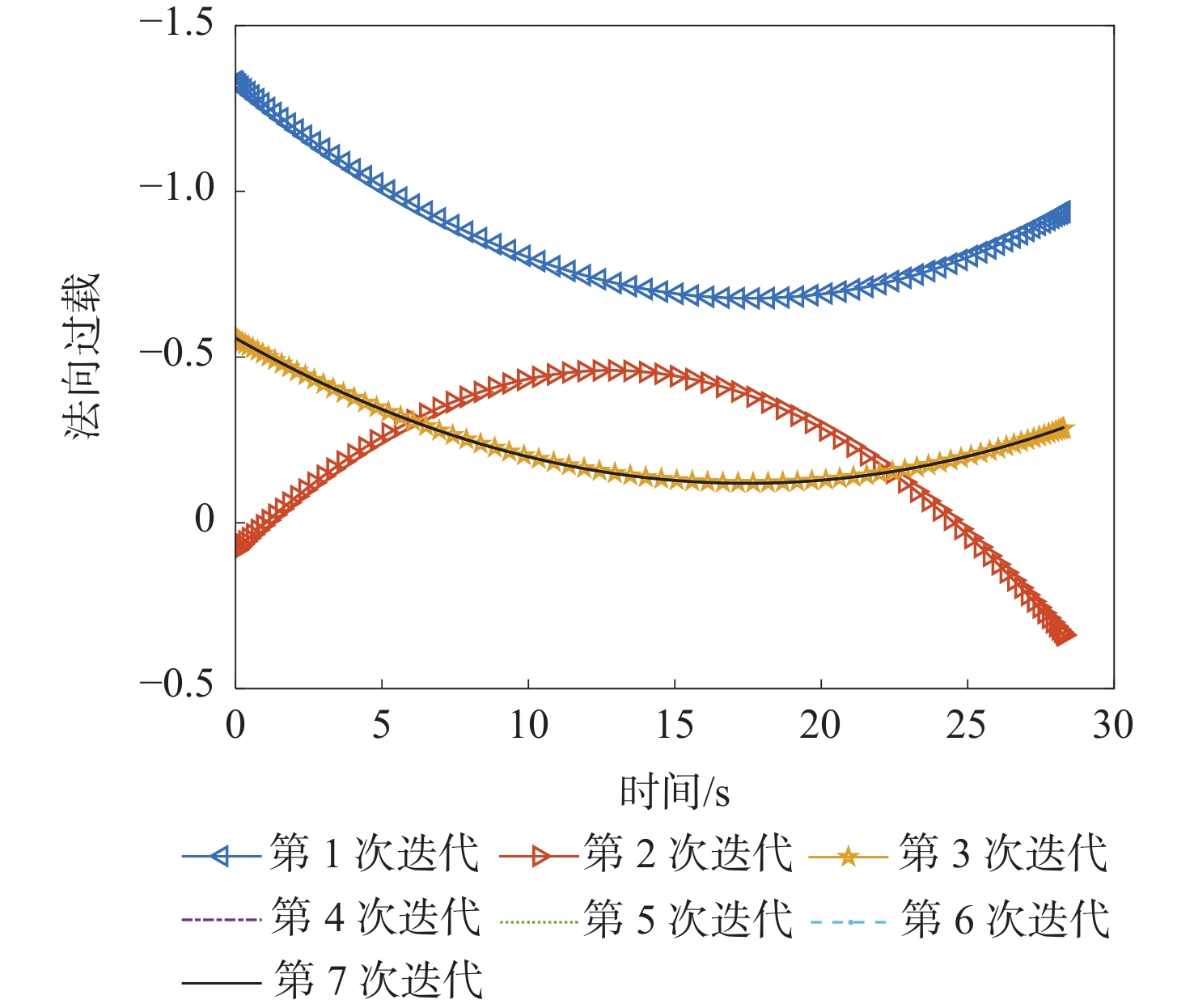
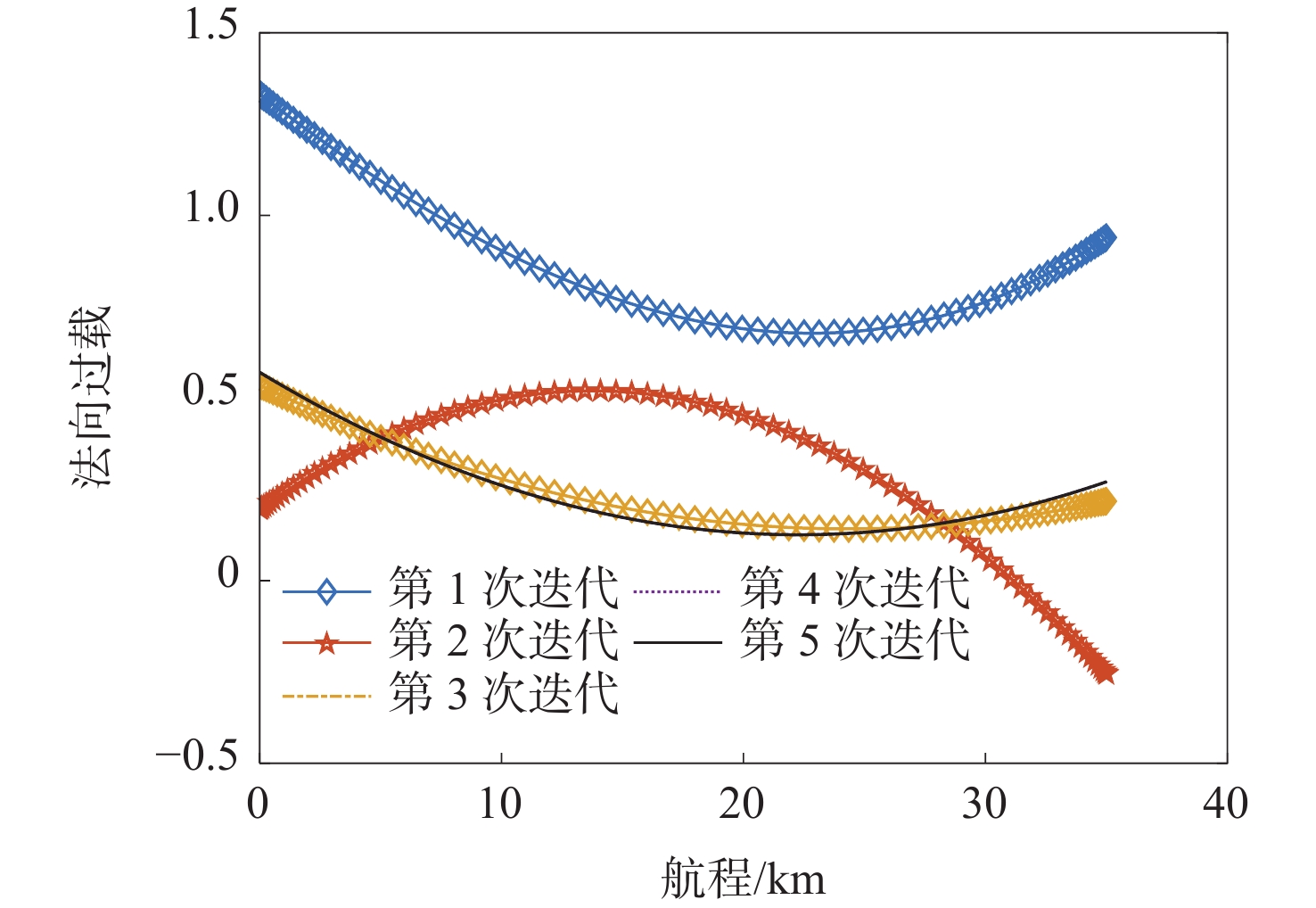
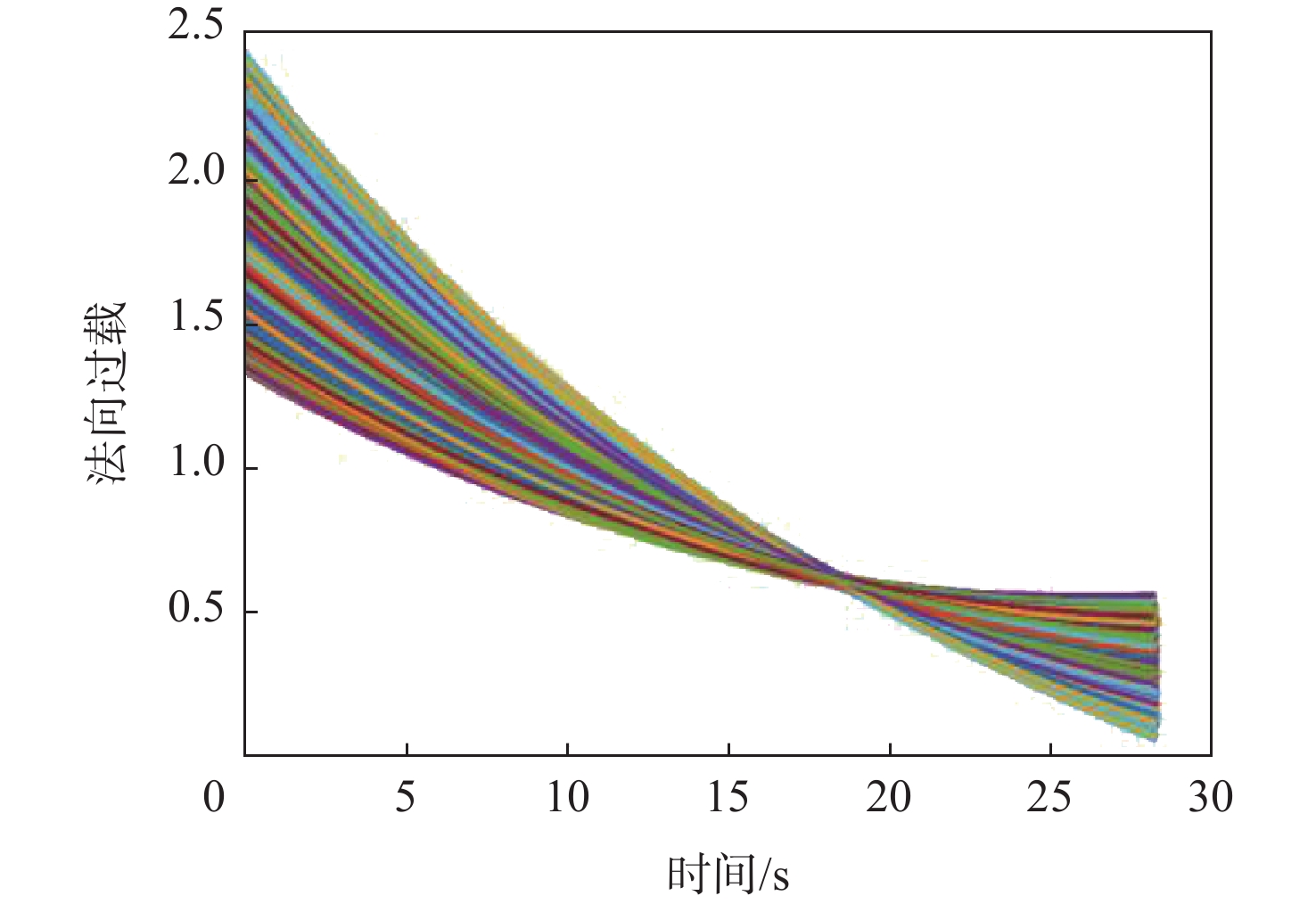
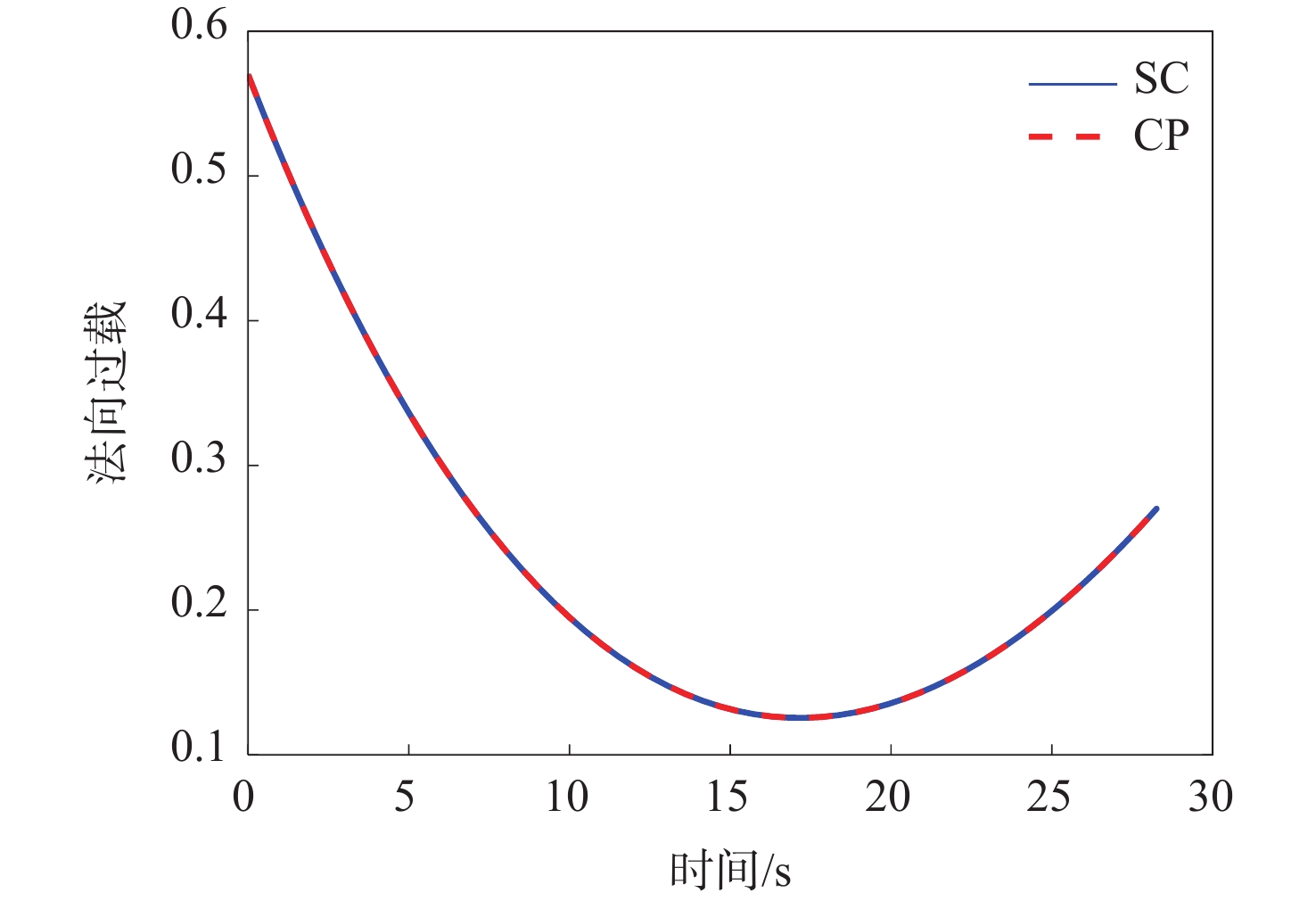
图 23 时间-法向过载曲线(初始状态摄动)
Figure 23. Curves of normal overload with time (initial state perturbations)
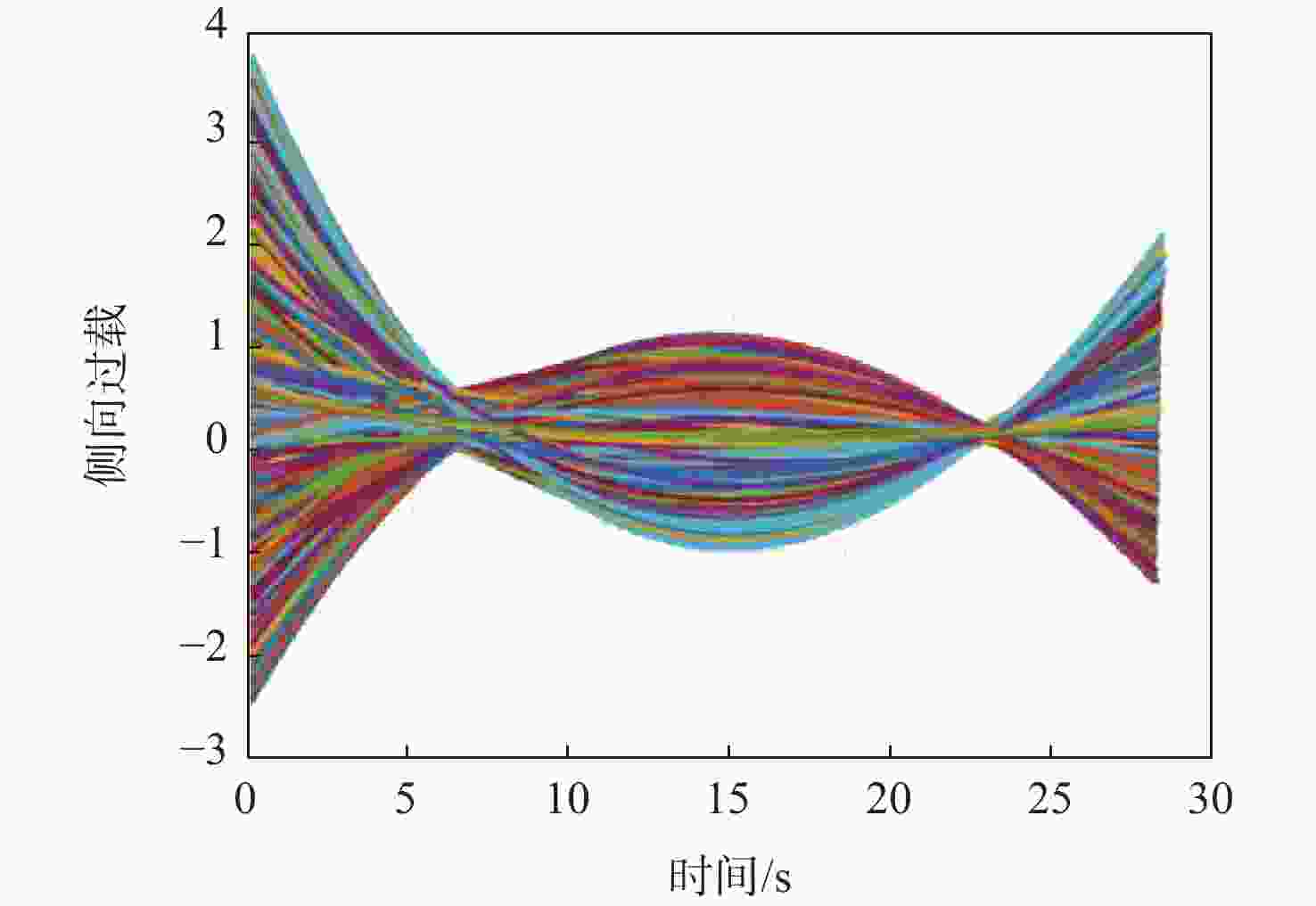
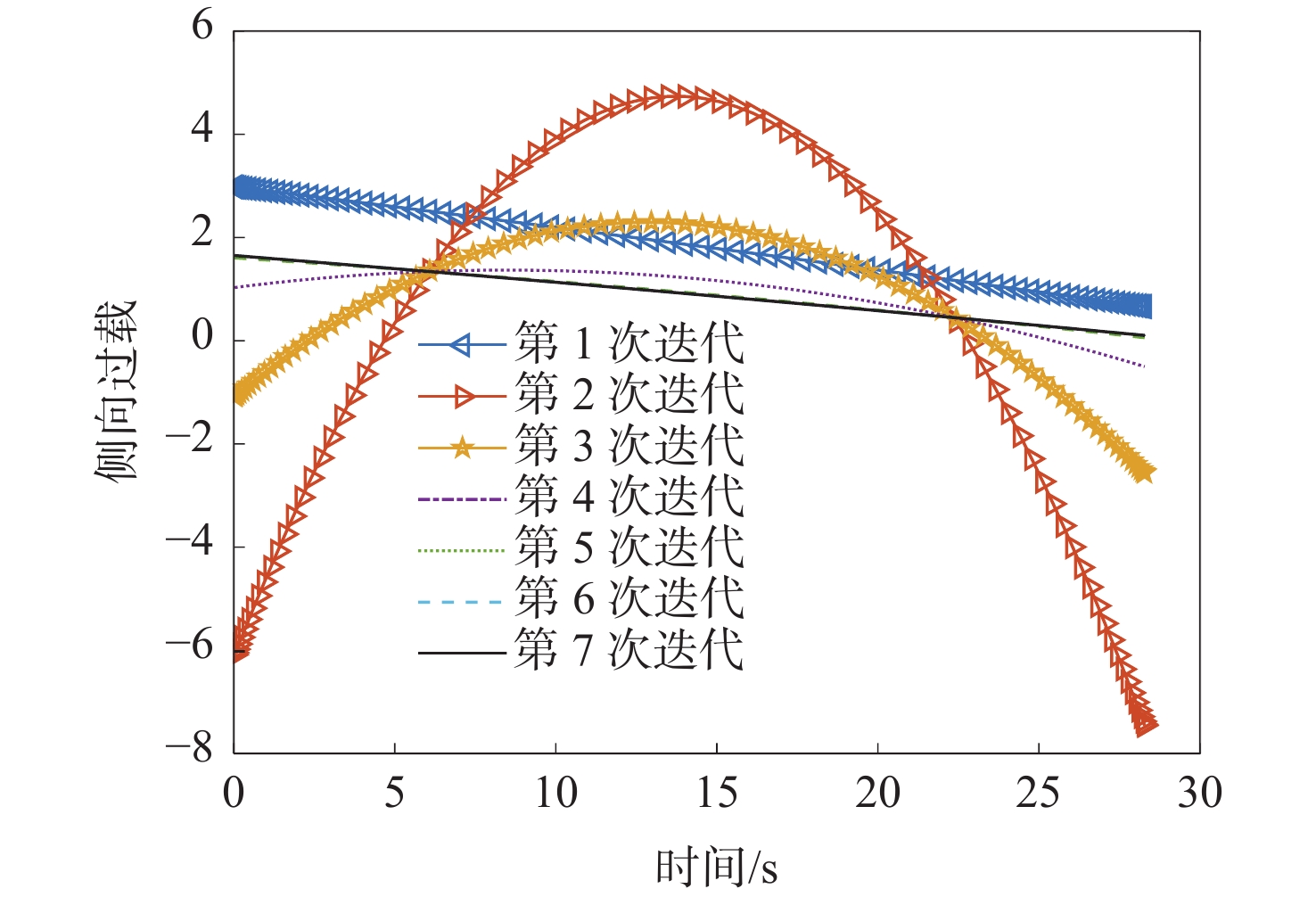
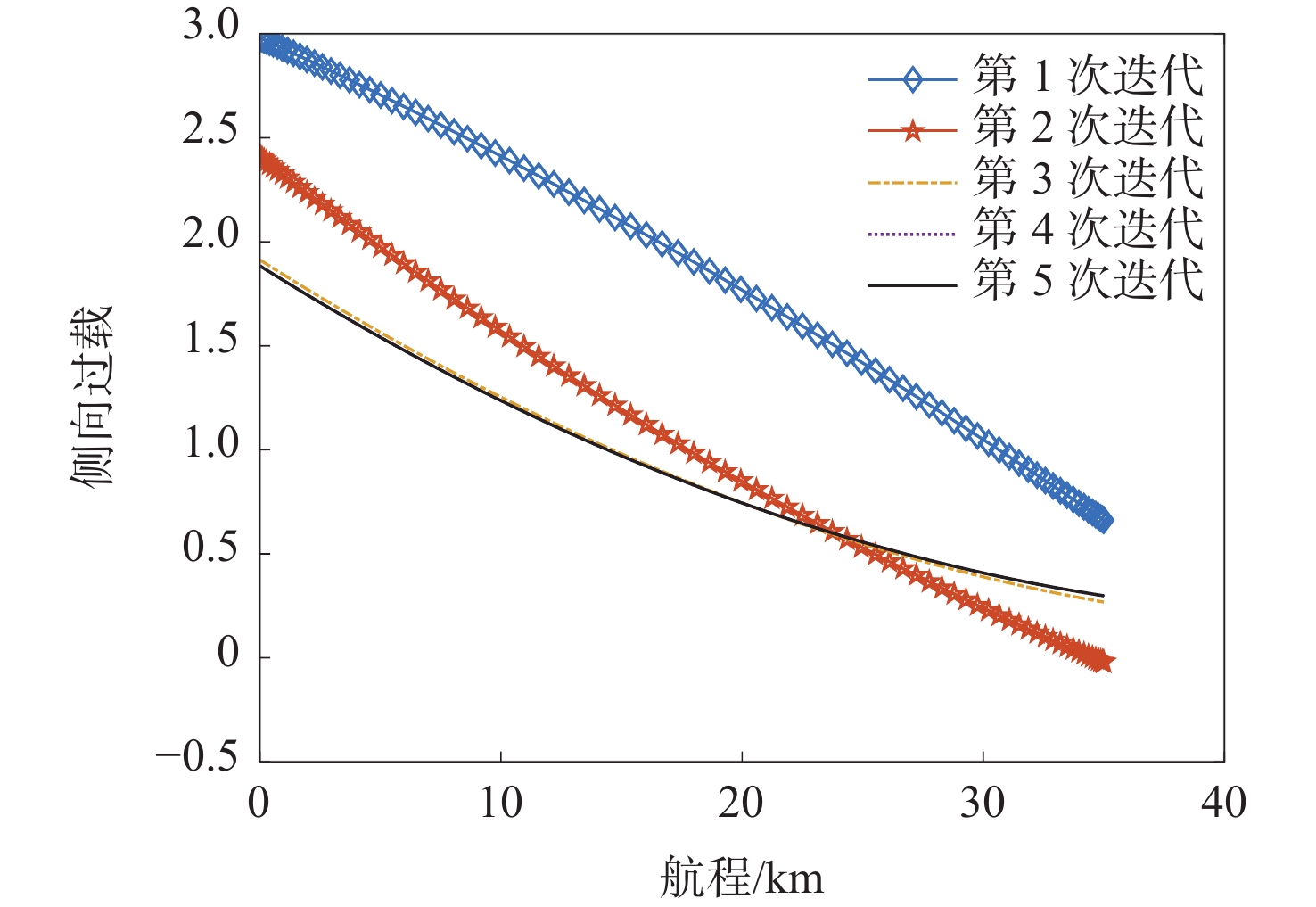
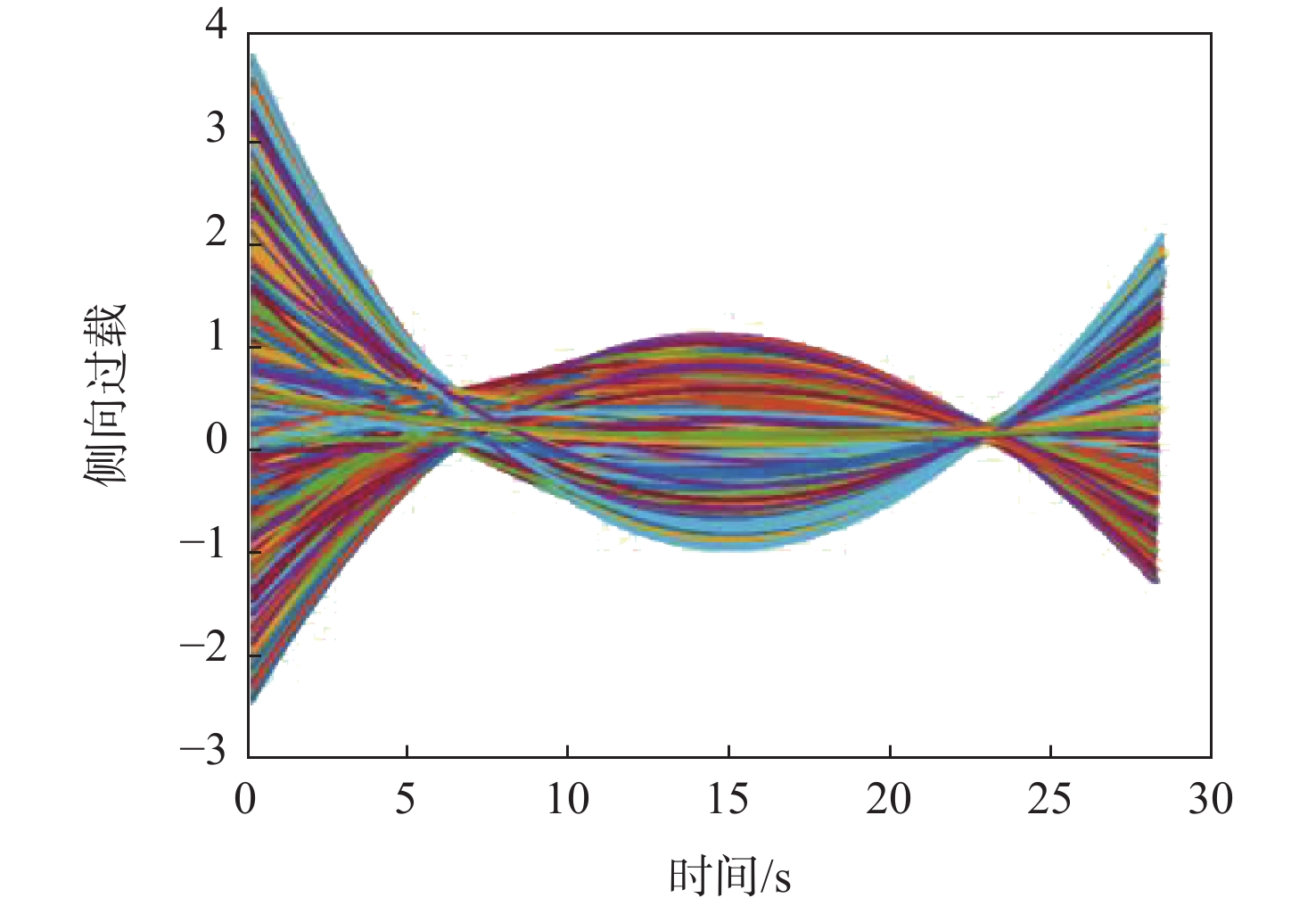
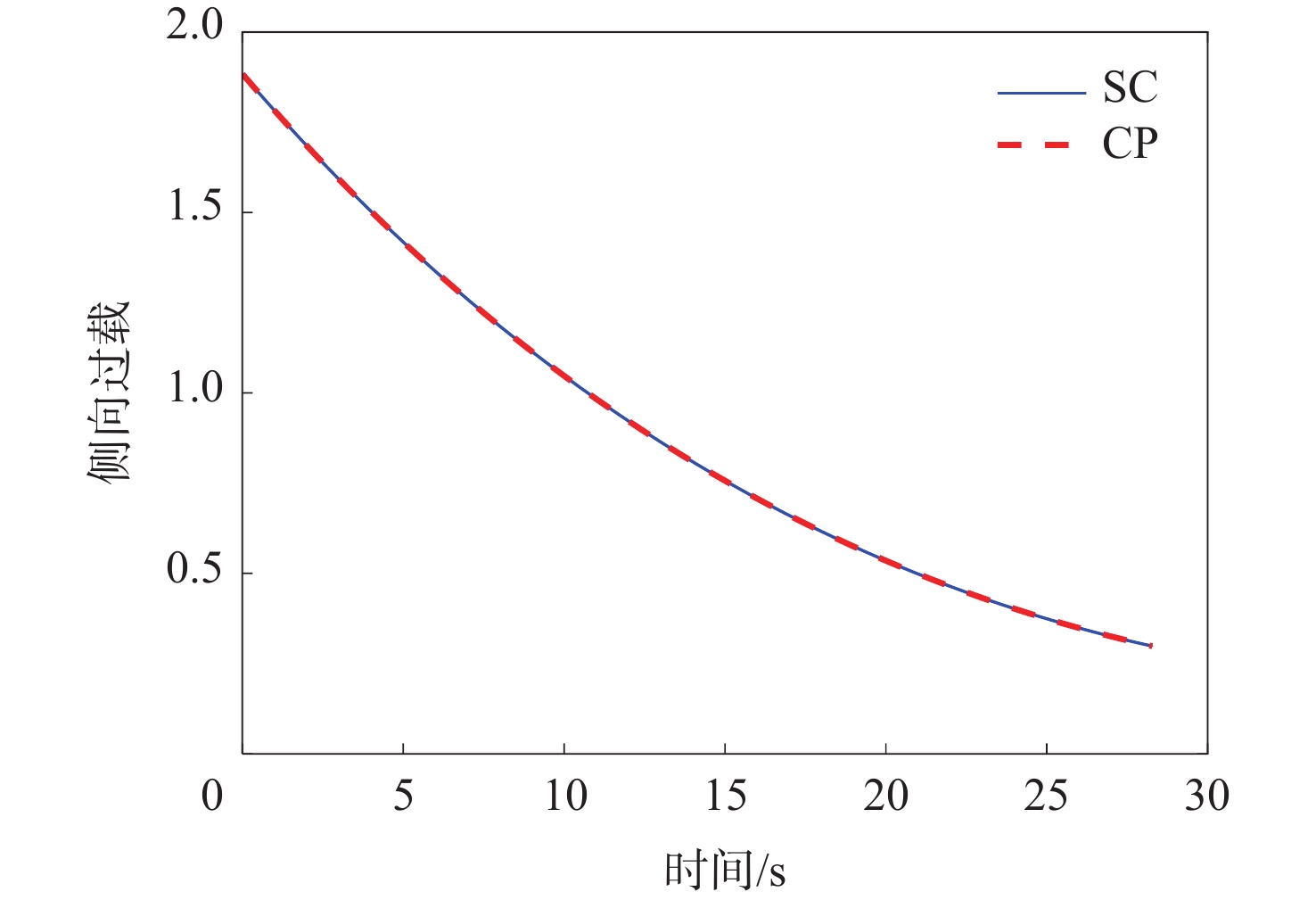
图 24 时间-侧向过载曲线(初始状态摄动)
Figure 24. Curves of lateral overload with time (initial state perturbations)
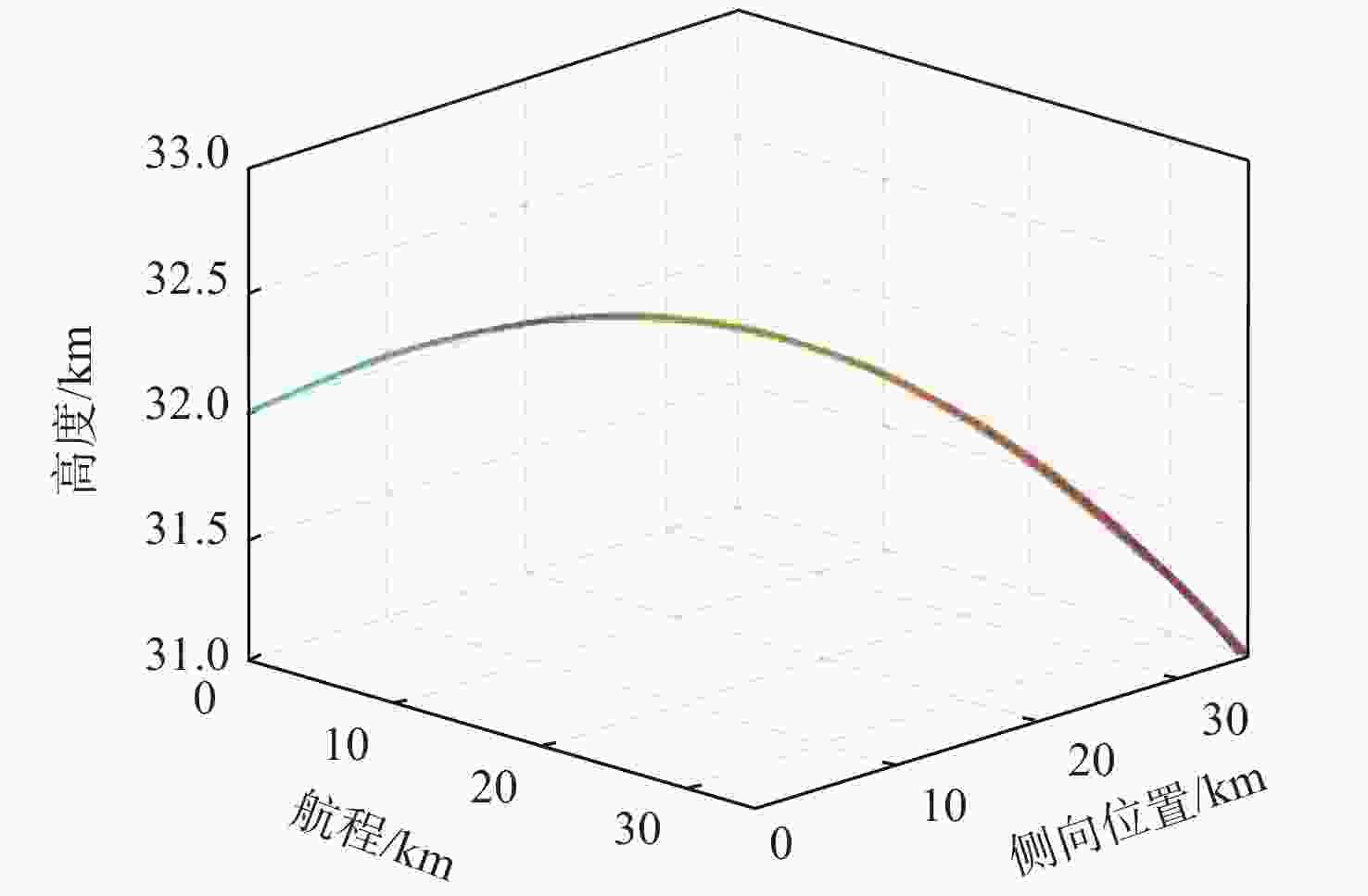
图 25 航程-高度-侧向位置曲线(模型摄动)
Figure 25. Curves of downrange, altitude, and lateral position (model perturbations)
表 1 初始和终端状态约束
Table 1. Initial and terminal state constraints
状态
约束速度/
(m·s−1)航迹角/
(°)航向角/
(°)航程/
km高度/
km侧向
位置/km初始 1 870 2 −40 0 32 0 终端 1 647 −5 −48 35 31 35  下载: 导出CSV
表 2 终端状态误差
Table 2. Terminal state errors
终端状态方法 速度误差/(m·s−1) 航迹角误差/(°) 航向角误差/(°) 航程误差/m 高度误差/m 侧向位置误差/m DCHU-SC (84) −2.90×10⁻³ −4.90×10⁻⁵ −2.60×10⁻⁴ 0.52 0.14 0.46 MPSC (3 000) 0.10 −5.43×10⁻⁴ 1.96×10⁻³ −0.41 −1.34 −0.10 MPSC (84) −7.11 0.05 0.24 −76.23 −52.18 26.95 GPOPS(84) −0.02 −4.32×10⁻⁶ −4.18×10⁻⁶ 0.54 0.10 0.54 SCP (84) 0.02 0.02 0.03 16.25 2.12 3.26
下载: 导出CSV
-
[1] 孙智孝, 杨晟琦, 朴海音, 等. 未来智能空战发展综述[J]. 航空学报, 2021, 42(8): 28-42.Sun Z X, Yang S Q, Piao H Y, et al. A survey of air combat artificial intelligence[J]. Acta Aeronautica et Astronautica Sinica, 2021, 42(8): 28-42(in Chinese). [2] 傅莉, 谢福怀, 孟光磊, 等. 基于滚动时域的无人机空战决策专家系统[J]. 北京航空航天大学学报, 2015, 41(11): 1994-1999.Fu L, Xie F H, Meng G L, et al. An UAV air-combat decision expert system based on receding horizon control[J]. Journal of Beijing University of Aeronautics and Astronautics, 2015, 41(11): 1994-1999(in Chinese). [3] Hu Y D, Liu Z C, Jiang C W, et al. Maneuver mode parametric modeling based on trajectory curve evolution laws for hypersonic glide vehicles[J]. Aerospace Science and Technology, 2025, 157: 109856. [4] 闫循良, 王培臣, 郭杨. 再入滑翔机动突防轨迹规划与制导方法研究综述[J]. 航空学报, 2025, 46(17): 239-266.Yan X L, Wang P C, Guo Y. Review of research on trajectory planning and guidance methods for entry glide maneuvering penetration[J]. Acta Aeronautica et Astronautica Sinica, 2025, 46(17): 239-266(in Chinese). [5] 刘哲, 陆浩然, 郑伟, 等. 多滑翔飞行器时间协同轨迹快速规划[J]. 航空学报, 2021, 42(11): 310-324.Liu Z, Lu H R, Zheng W, et al. Rapid time-coordination trajectory planning method for multi-glide vehicles[J]. Acta Aeronautica et Astronautica Sinica, 2021, 42(11): 310-324(in Chinese). [6] An K, Guo Z Y, Xu X P, et al. A framework of trajectory design and optimization for the hypersonic gliding vehicle[J]. Aerospace Science and Technology, 2020, 106: 106110. [7] Yu J L, Dong X W, Li Q D, et al. Cooperative guidance strategy for multiple hypersonic gliding vehicles system[J]. Chinese Journal of Aeronautics, 2020, 33(3): 990-1005. [8] 孙景亮, 刘春生. 基于自适应动态规划的导弹制导律研究综述[J]. 自动化学报, 2017, 43(7): 1101-1113.Sun J L, Liu C S. An overview on the adaptive dynamic programming based missile guidance law[J]. Acta Automatica Sinica, 2017, 43(7): 1101-1113(in Chinese). [9] Wang Y Z, Dai H H. Secure model predictive static programming with initial value generator for online computational guidance of near-space vehicles[J]. Aerospace Science and Technology, 2025, 156: 109768. [10] 王雨琪, 宁国栋, 王晓峰, 等. 基于微分对策的临近空间飞行器机动突防策略[J]. 航空学报, 2020, 41(增刊2): 69-78.Wang Y Q, Ning G D, Wang X F, et al. Maneuver penetration strategy of near space vehicle based on differential game[J]. Acta Aeronautica et Astronautica Sinica, 2020, 41(Sup 2): 69-78(in Chinese). [11] Pan B F, Ma Y Y, Yan R. Newton-type methods in computational guidance[J]. Journal of Guidance, Control, and Dynamics, 2019, 42(2): 377-383. [12] 卢青, 周军, 呼卫军. 基于改进A*算法的滑翔飞行器轨迹规划[J]. 系统工程与电子技术, 2016, 38(12): 2758-2763.Lu Q, Zhou J, Hu W J. Trajectory planning for gliding aircraft based on improved A* algorithm[J]. Systems Engineering and Electronics, 2016, 38(12): 2758-2763(in Chinese). [13] Wang Z, Bao W M, Li H F. Second-order dynamic sliding-mode control for nonminimum phase underactuated hypersonic vehicles[J]. IEEE Transactions on Industrial Electronics, 2017, 64(4): 3105-3112. [14] Lu P. Introducing computational guidance and control[J]. Journal of Guidance, Control, and Dynamics, 2017, 40(2): 193. [15] Malyuta D, Yu Y, Elango P, et al. Advances in trajectory optimization for space vehicle control[J]. Annual Reviews in Control, 2021, 52: 282-315. [16] Shirazi A, Ceberio J, Lozano J A. Spacecraft trajectory optimization: a review of models, objectives, approaches and solutions[J]. Progress in Aerospace Sciences, 2018, 102: 76-98. [17] Kazim M, Hong J, Kim M G, et al. Recent advances in path integral control for trajectory optimization: an overview in theoretical and algorithmic perspectives[J]. Annual Reviews in Control, 2024, 57: 100931. [18] Wu D, Cheng L, Jiang F H, et al. Analytical costate estimation by a reference trajectory-based least-squares method[J]. Journal of Guidance, Control, and Dynamics, 2022, 45(8): 1529-1537. [19] 刘宇航, 杨洪伟, 李爽. 小推力最优轨迹协态估计的高效机器学习方法[J]. 宇航学报, 2022, 43(5): 593-602.Liu Y H, Yang H W, Li S. Efficient machine learning method for co-state estimation of low-thrust optimal trajectories[J]. Journal of Astronautics, 2022, 43(5): 593-602(in Chinese). [20] Nurre N P, Taheri E. Comparison of indirect and direct methods for operationally constrained low-thrust trajectories[J]. Journal of Guidance, Control, and Dynamics, 2025, 48(4): 885-902. [21] 武迪, 郭祥, 蒋方华, 等. 连续小推力轨迹优化间接法研究进展综述[J]. 宇航学报, 2024, 45(7): 995-1007.Wu D, Guo X, Jiang F H, et al. Progress of indirect method for continuous low-thrust trajectory optimization[J]. Journal of Astronautics, 2024, 45(7): 995-1007(in Chinese). [22] 任鹏飞, 王洪波, 周国峰. 基于自适应伪谱法的高超声速飞行器再入轨迹优化[J]. 北京航空航天大学学报, 2019, 45(11): 2257-2265.Ren P F, Wang H B, Zhou G F. Reentry trajectory optimization for hypersonic vehicle based on adaptive pseudospectral method[J]. Journal of Beijing University of Aeronautics and Astronautics, 2019, 45(11): 2257-2265(in Chinese). [23] 雍恩米, 魏桐, 刘深深, 等. 一种基于伪谱法的助推-补能跳跃滑翔轨迹优化方法[J]. 宇航学报, 2024, 45(6): 893-902.Yong E M, Wei T, Liu S S, et al. A trajectory optimization method for boost-energy supplementing skip gliding motion base on pseudospectral method[J]. Journal of Astronautics, 2024, 45(6): 893-902(in Chinese). [24] 赵吉松, 李畅, 王晨曦, 等. 吸气式高超声速飞行器助推-巡航轨迹优化[J]. 宇航学报, 2021, 42(7): 820-829.Zhao J S, Li C, Wang C X, et al. Boost-cruise trajectory optimization of air breathing hypersonic vehicles[J]. Journal of Astronautics, 2021, 42(7): 820-829(in Chinese). [25] Lu P. What is guidance?[J]. Journal of Guidance, Control, and Dynamics, 2021, 44(7): 1237-1238. [26] Padhi R, Banerjee A, Mathavaraj S, et al. Computational guidance using model predictive static programming for challenging space missions: an introductory tutorial with example scenarios[J]. IEEE Control Systems Magazine, 2024, 44(2): 55-80. [27] Patel J, Subbarao K. Reachable-set constrained model predictive control for safe hypersonic reentry[J]. Journal of Guidance, Control, and Dynamics, 2025, 48(6): 1253-1265. [28] Engel D L, Putnam Z R, Dutta S. Assessment of model predictive control for Mars entry vehicles with flaps[J]. Journal of Spacecraft and Rockets, 2025, 62(5): 1528-1545. [29] Malyuta D, Reynolds T P, Szmuk M, et al. Convex optimization for trajectory generation: a tutorial on generating dynamically feasible trajectories reliably and efficiently[J]. IEEE Control Systems Magazine, 2022, 42(5): 40-113. [30] Hayner C R, Carson III J M, Açıkmeşe B, et al. Continuous-time line-of-sight constrained trajectory planning for 6-degree of freedom systems[J]. IEEE Robotics and Automation Letters, 2025, 10(5): 4332-4339. [31] Ma Y Y, Pan B F, Tan Q D. Neural convex optimization for real-time trajectory generation of asteroid landings[J]. Acta Astronautica, 2025, 229: 606-615. [32] Benedikter B, Zavoli A, Colasurdo G, et al. Convex approach to three-dimensional launch vehicle ascent trajectory optimization[J]. Journal of Guidance, Control, and Dynamics, 2021, 44(6): 1116-1131. [33] Wang Z B, Grant M J. Autonomous entry guidance for hypersonic vehicles by convex optimization[J]. Journal of Spacecraft and Rockets, 2018, 55(4): 993-1006. [34] Dwivedi P N, Bhattacharya A, Padhi R. Suboptimal midcourse guidance of interceptors for high-speed targets with alignment angle constraint[J]. Journal of Guidance, Control, and Dynamics, 2011, 34(3): 860-877. [35] 张永华, 王铮, 王时雨, 等. 基于无迹模型预测静态规划的可回收火箭着陆段鲁棒制导方法[J/OL]. 北京航空航天大学学报, 2024 (2024-09-14)[2025-04-18]. https://doi.org/10.13700/j.bh.1001-5965.2024.0491.Zhang Y H, Wang Z, Wang S Y, et al. Robust guidance method for reusable rocket landing phase based on UMPSP[J/OL]. Journal of Beijing University of Aeronautics and Astronautics, 2024 (2024-09-14) [2025-04-18]. https://doi.org/10.13700/j.bh.1001-5965.2024.0491(in Chinese). [36] 谭一廷, 荆武兴, 高长生. 考虑零控交班视窗角约束的拦截中制导设计[J]. 宇航学报, 2021, 42(10): 1257-1270.Tan Y T, Jing W X, Gao C S. Design of interception midcourse guidance with zero effort handover visual angle constraint[J]. Journal of Astronautics, 2021, 42(10): 1257-1270(in Chinese). [37] Ma S D, Yang Y X, Yang H, et al. Trajectory optimization of hypersonic vehicle considering the quasi-static assumption of pitch motion[J]. Aerospace Science and Technology, 2024, 146: 108969. [38] 王远卓, 代洪华, 岳晓奎. 基于实际动力学方程的飞行器准谱轨迹优化[J]. 航空学报, 2025, 46(22): 184-203.Wang Y Z, Dai H H, Yue X K. Quasi-spectral trajectory optimization for vehicle based on actual dynamic equations[J]. Acta Aeronautica et Astronautica Sinica, 2025, 46(22): 184-203(in Chinese). [39] Lu P, Doman D B, Schierman J D. Adaptive terminal guidance for hypervelocity impact in specified direction[J]. Journal of Guidance, Control, and Dynamics, 2006, 29(2): 269-278. [40] 王远卓. 高超声速飞行器邻近最优制导律研究[D]. 北京: 北京航空航天大学, 2024: 13-19.Wang Y Z. Research on neighboring optimal guidance law for hypersonic vehicle[D]. Beijing: Beihang University, 2024: 13-19(in Chinese). [41] 王远卓, 张冉, 李惠峰. 基于协态估计的火箭动力下降邻近最优制导[J]. 宇航学报, 2024, 45(5): 741-752.Wang Y Z, Zhang R, Li H F. Neighboring optimal guidance for rocket powered descent based on costate estimation[J]. Journal of Astronautics, 2024, 45(5): 741-752(in Chinese). [42] Liu X, Li S, Xin M. Pseudospectral convex optimization based model predictive static programming for constrained guidance[J]. IEEE Transactions on Aerospace and Electronic Systems, 2023, 59(3): 2232-2244. [43] Patterson M A, Rao A V. GPOPS-II: a MATLAB software for solving multiple-phase optimal control problems using hp-adaptive gaussian quadrature collocation methods and sparse nonlinear programming[J]. ACM Transactions on Mathematical Software, 2014, 41(1): 1-37. [44] Agamawi Y M, Rao A V. CGPOPS: a C++ software for solving multiple-phase optimal control problems using adaptive Gaussian quadrature collocation and sparse nonlinear programming[J]. ACM Transactions on Mathematical Software, 2020, 46(3): 1-38. [45] Mathavaraj S, Padhi R. Quasi-spectral unscented MPSP guidance for robust soft-landing on asteroid[J]. Journal of Optimization Theory and Applications, 2021, 191(2): 823-845. -

 下载:




 点击查看大图
计量
- 文章访问数: 297
- HTML全文浏览量: 173
- PDF下载量: 8
- 被引次数: 0
