





-
摘要:
随着无人机技术的迅速发展,高速无人机集群在低空复杂场景中得到越来越广泛的应用,但同时也带来了传统路由协议难以满足高动态网络环境的问题。基于此,提出一种基于深度Q网络(DQN)深度强化学习模型的高速无人机智能路由策略,聚焦于高速、高动态场景下的通信保障,并进一步加强无人机节点的本地化独立决策能力,同时,构建用于衡量链路未来稳定性的Stable稳定度因子,使无人机能根据最新状态自适应地进行独立决策。实验结果表明:所提高速无人机智能路由策略在不同速度对比场景中,数据包抵达率均保持在85%以上,平均端到端时延、平均每跳时延相较传统路由协议平均降低23%以上。在高频率通信场景下,数据包抵达率较传统路由协议平均提升15%以上,满足高速无人机高动态通信组网对稳定性与通信效率的需求。
Abstract:With the rapid advancement of unmanned aerial vehicle (UAV) technology, high-speed UAV swarms are increasingly applied in low-altitude complex environments. However, this also poses challenges, as traditional routing protocols struggle to cope with highly dynamic network conditions. Based on the Rainbow deep Q-network (DQN) deep reinforcement learning model, this paper suggests an intelligent routing strategy for high-speed UAVs with an emphasis on communication assurance in high-speed and highly dynamic scenarios and enhancing the capacity of UAV nodes to make autonomous, decentralized decisions. Stable factor is also designed to evaluate the future stability of communication links, enabling UAVs to autonomously make adaptive decisions based on the latest network state. According to experimental results, the high speed intelligent routing scheme suggested in this study reduces the average end-to-end delay and the per-hop delay by more than 23% when compared to traditional routing protocols, while maintaining a packet delivery ratio of more than 85% under all evaluated velocity settings. In high-frequency communication scenarios, the packet delivery ratio is improved by more than 15% on average, effectively meeting the requirements of high-speed UAV networks for stability and communication efficiency.
-
Key words:
- UAV swarm /
- routing strategy /
- deep reinforcement learning /
- flying ad hoc network /
- high-speed UAV
-
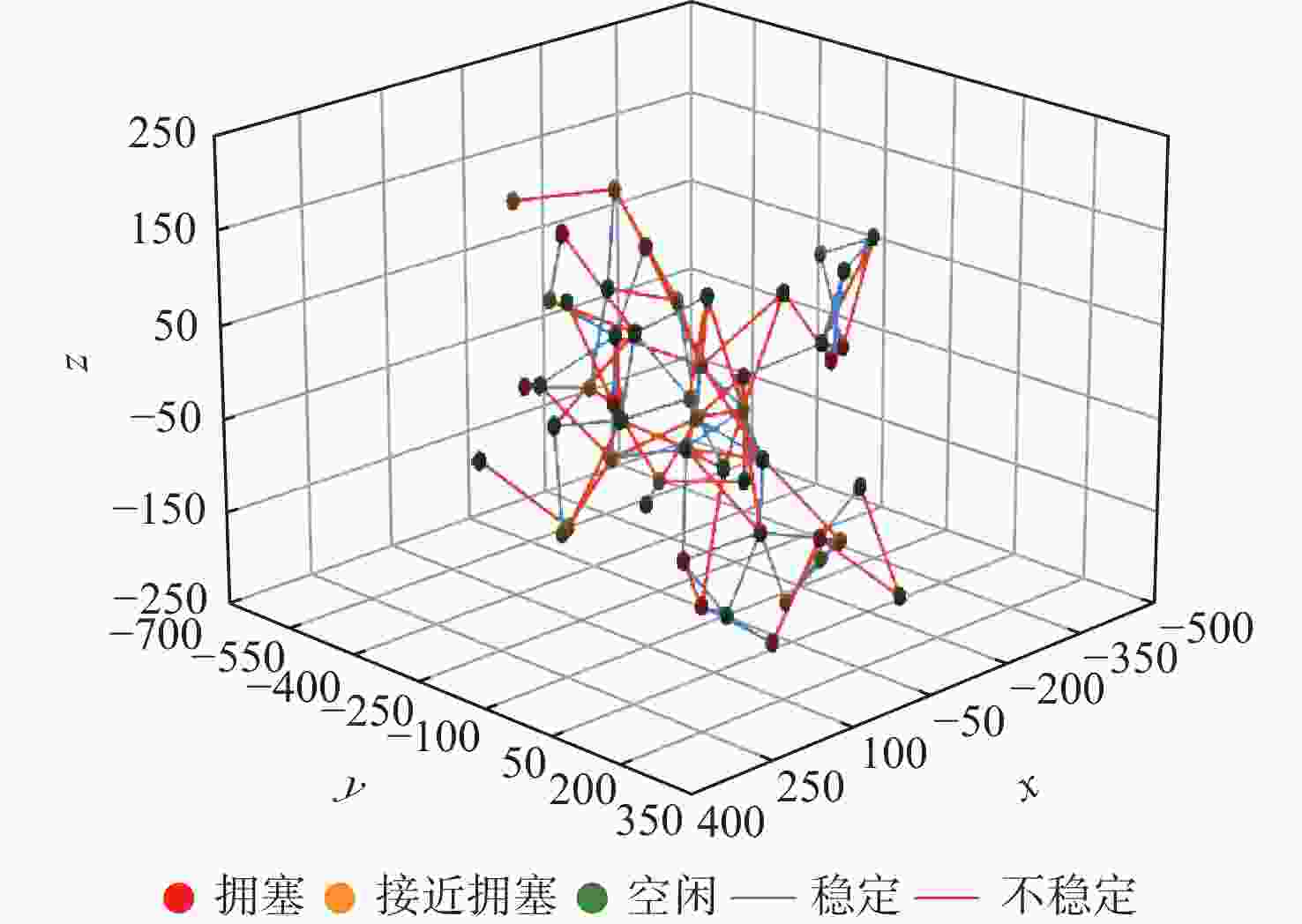
图 1 无人机集群通信自组网建模
Figure 1. Modeling of self-organizing network communication for UAV swarms
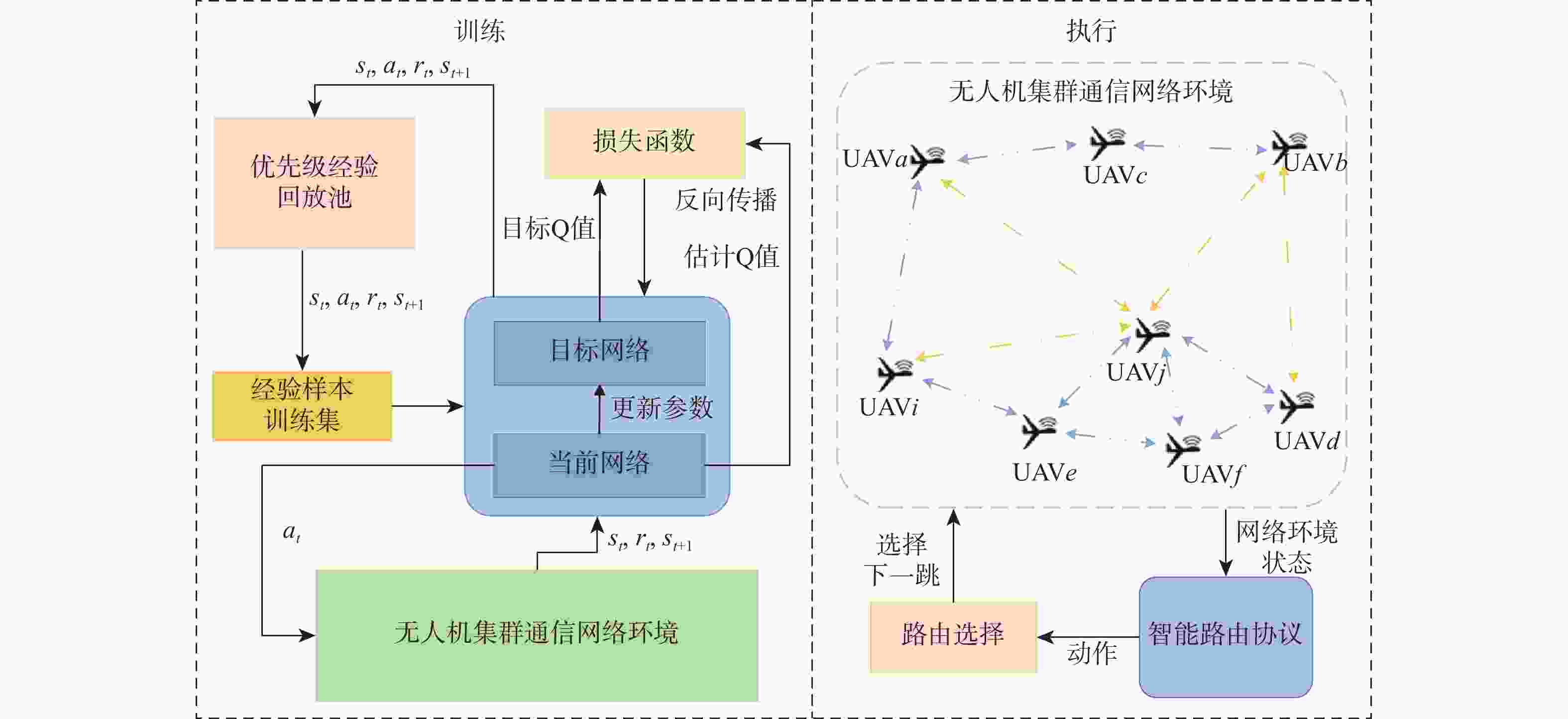
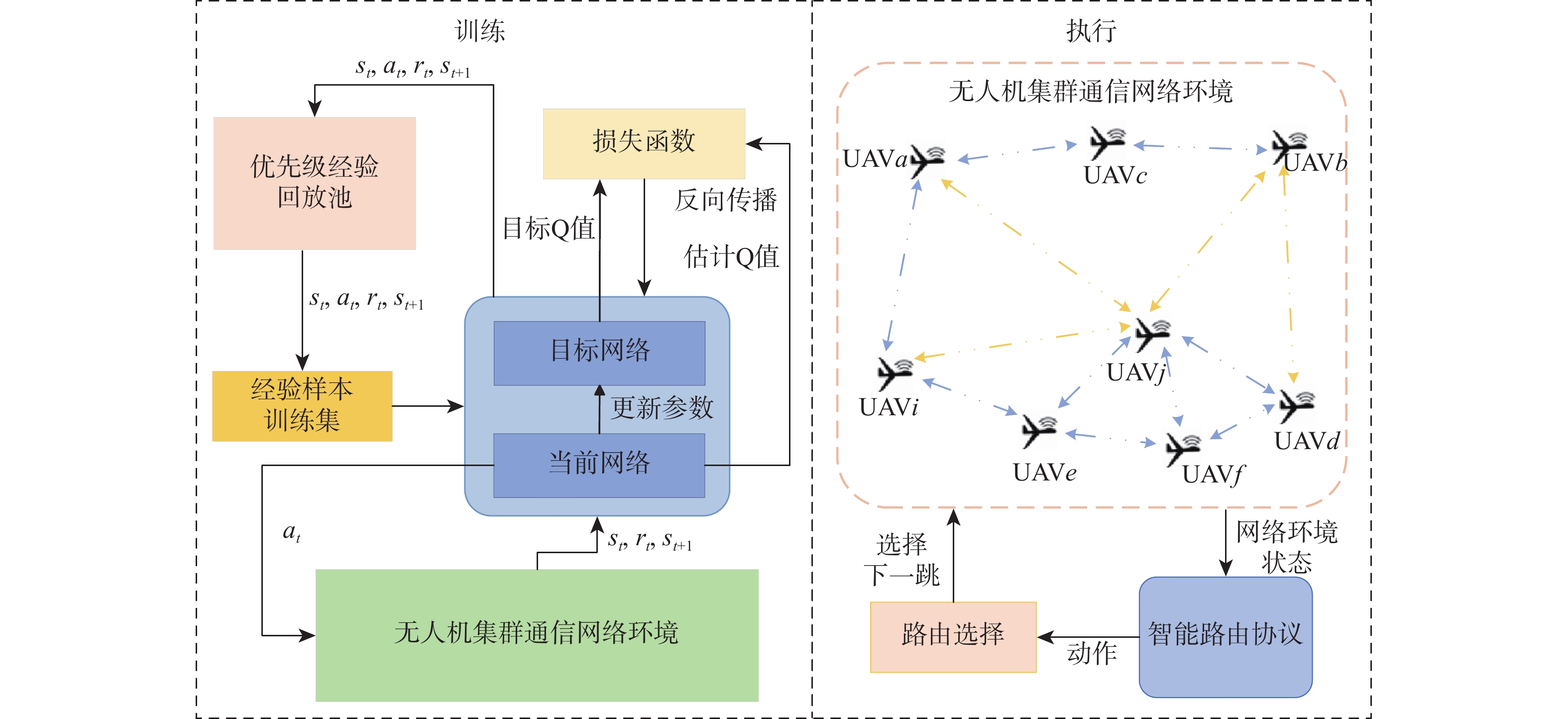
图 2 高速无人机集群智能路由策略框架
Figure 2. Intelligent routing policy framework for high-speed UAV swarms
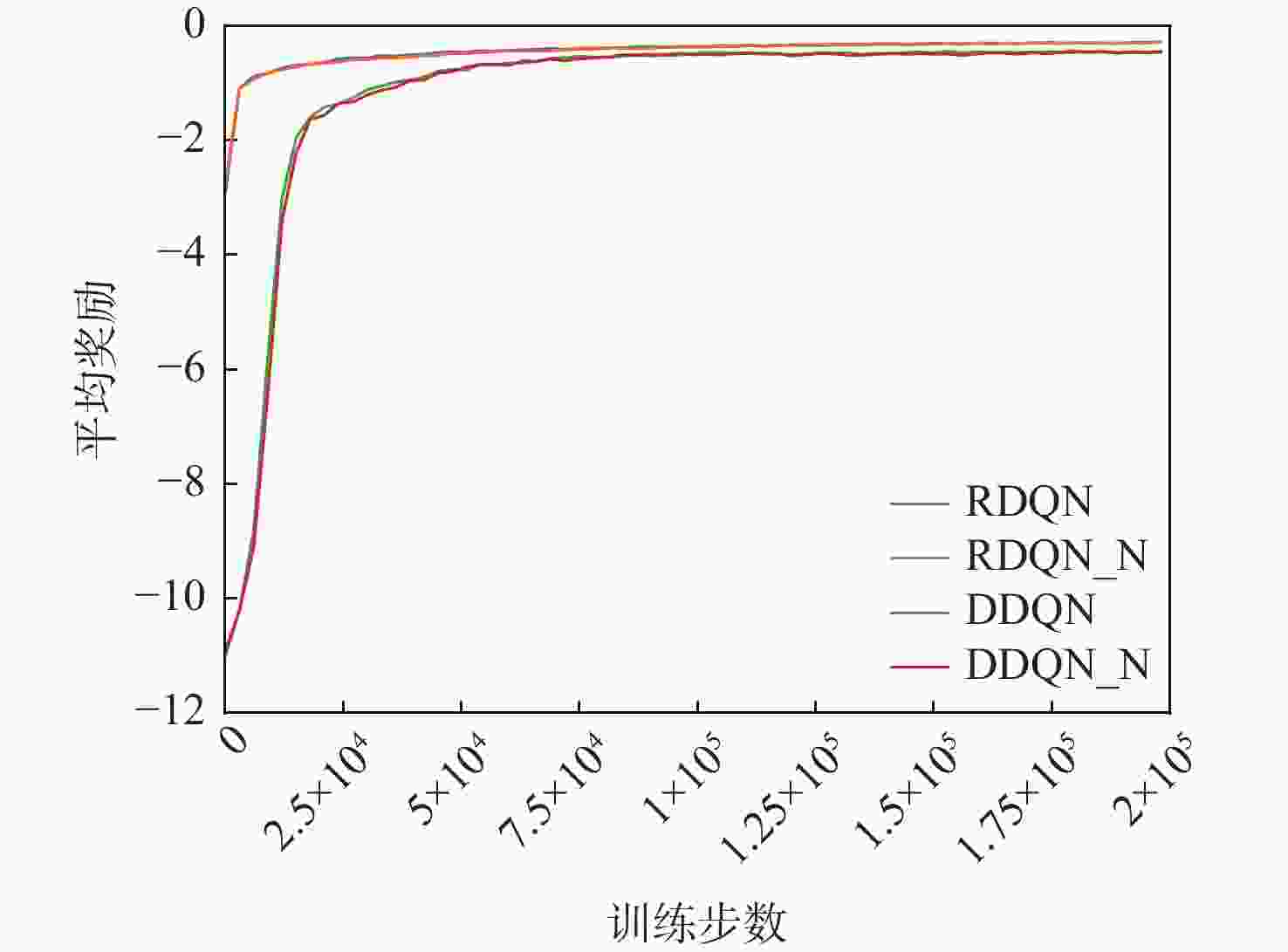
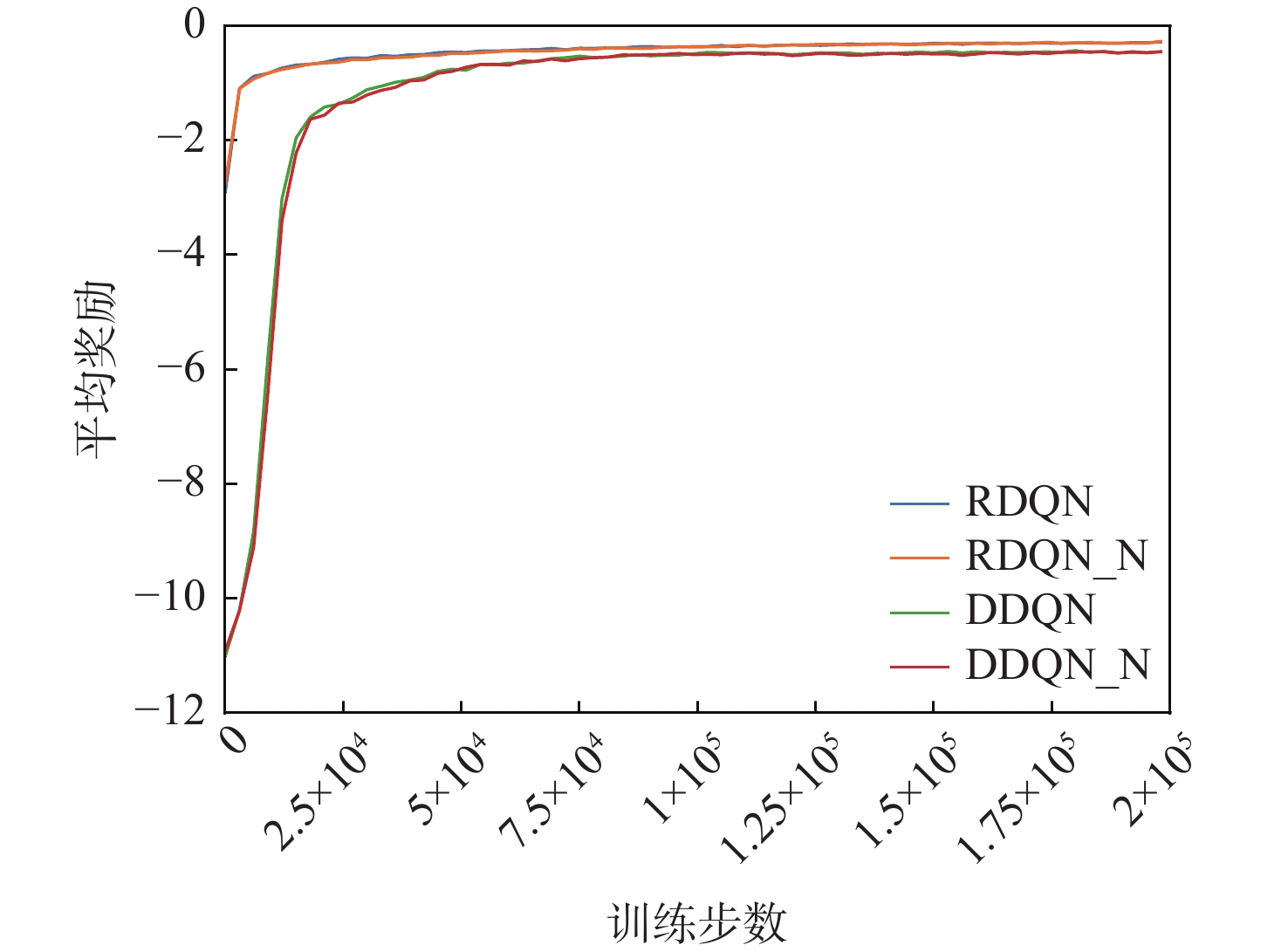
图 3 训练过程平均每步奖励对比
Figure 3. Comparison of the average rewards per step during the training process
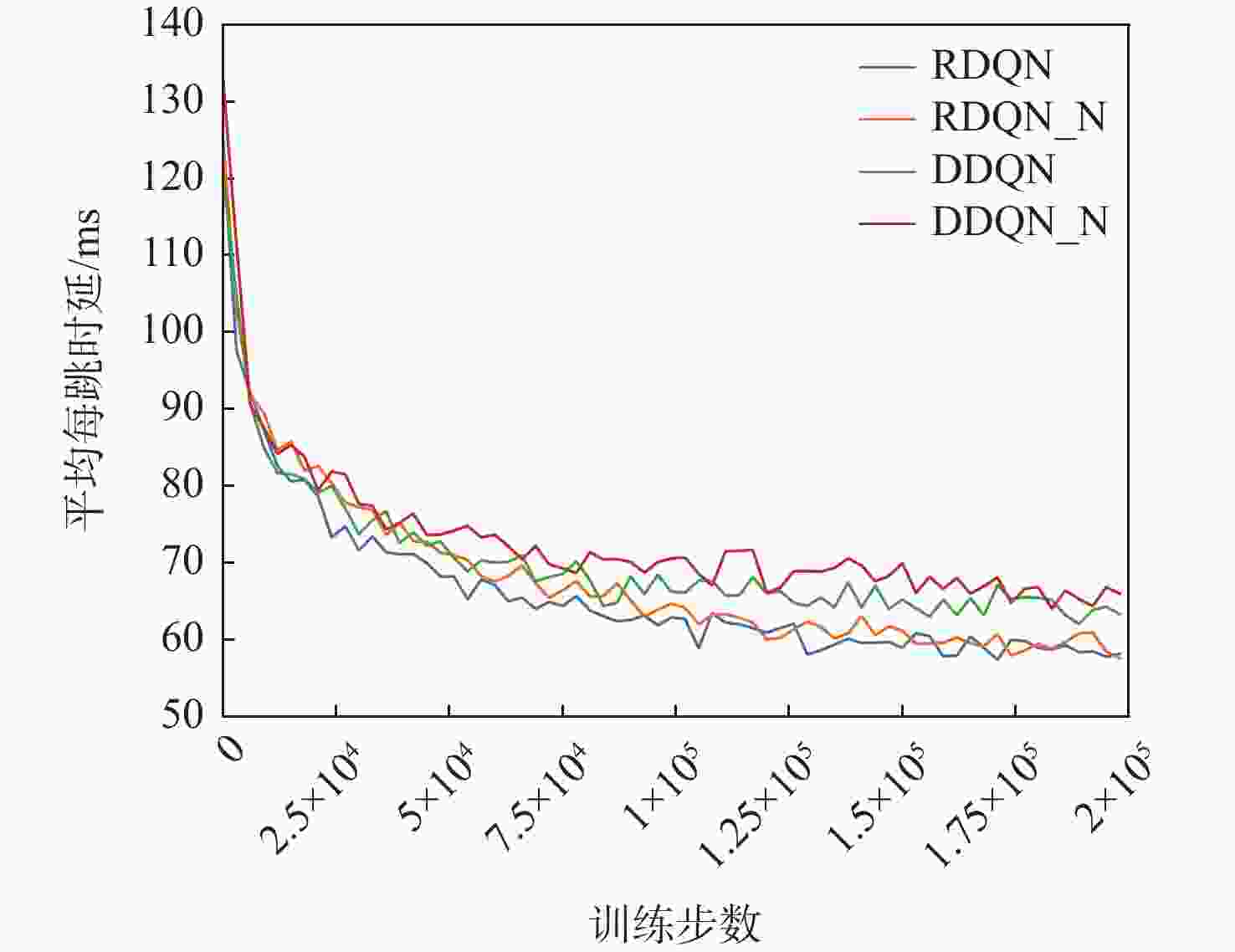
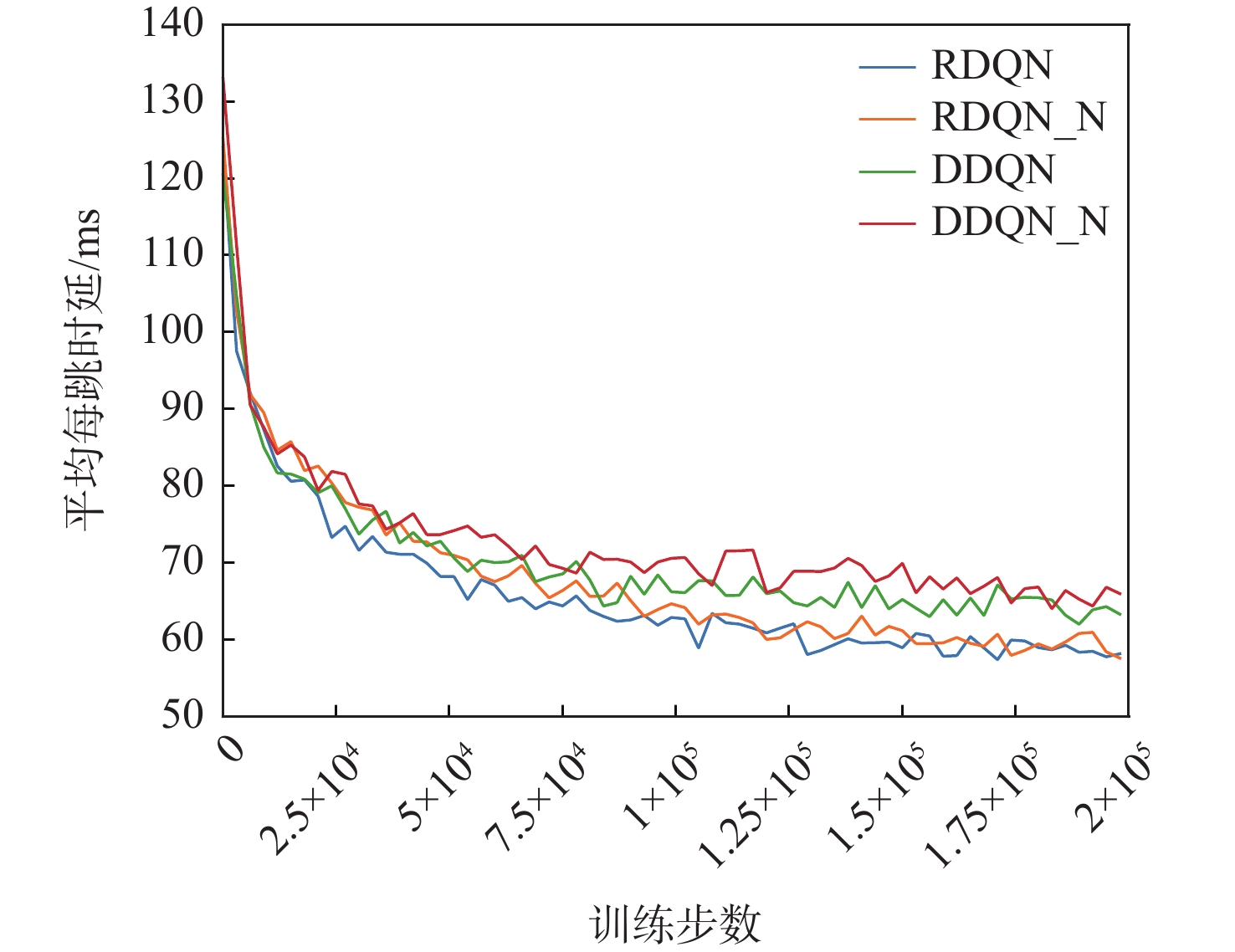
图 4 训练过程平均每跳时延对比
Figure 4. Comparison of average latency per jump during the training process
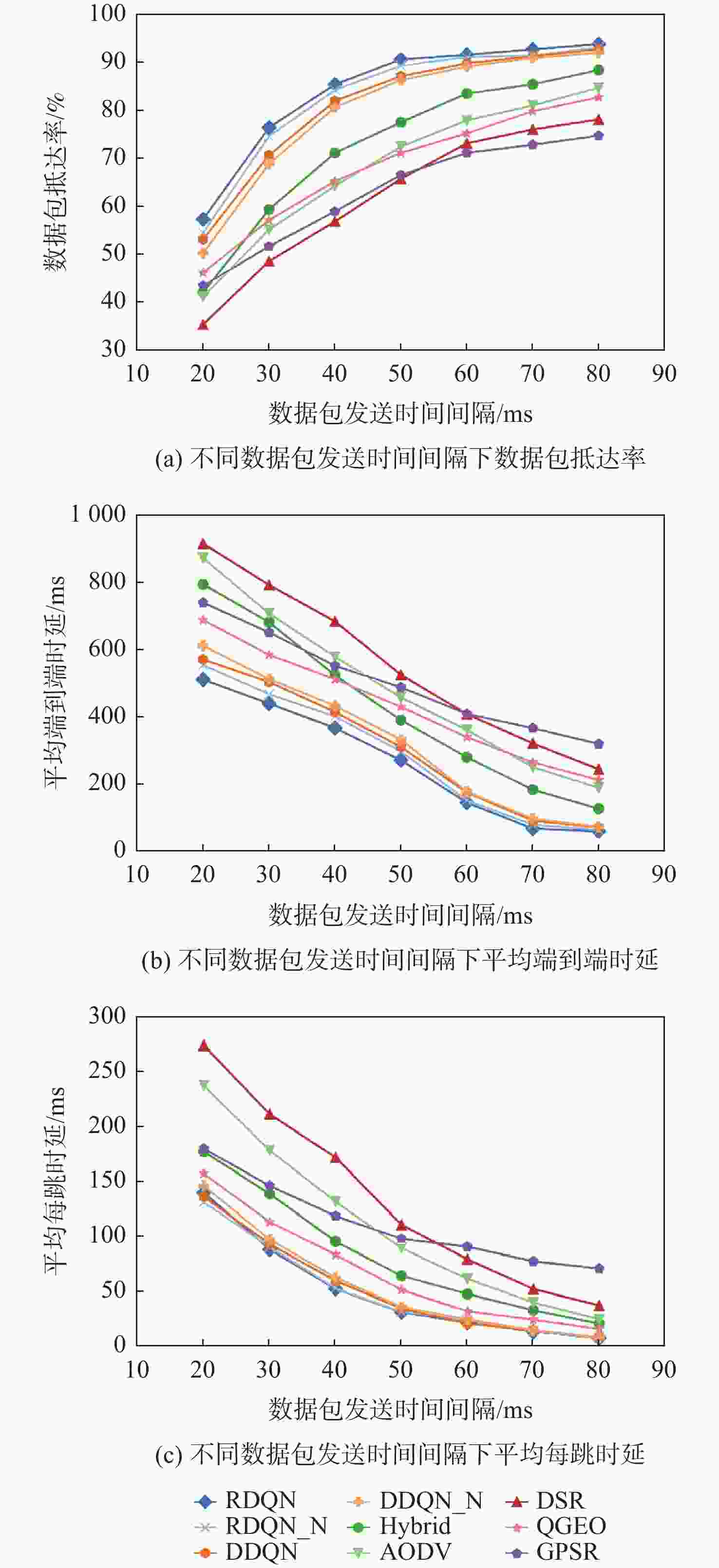
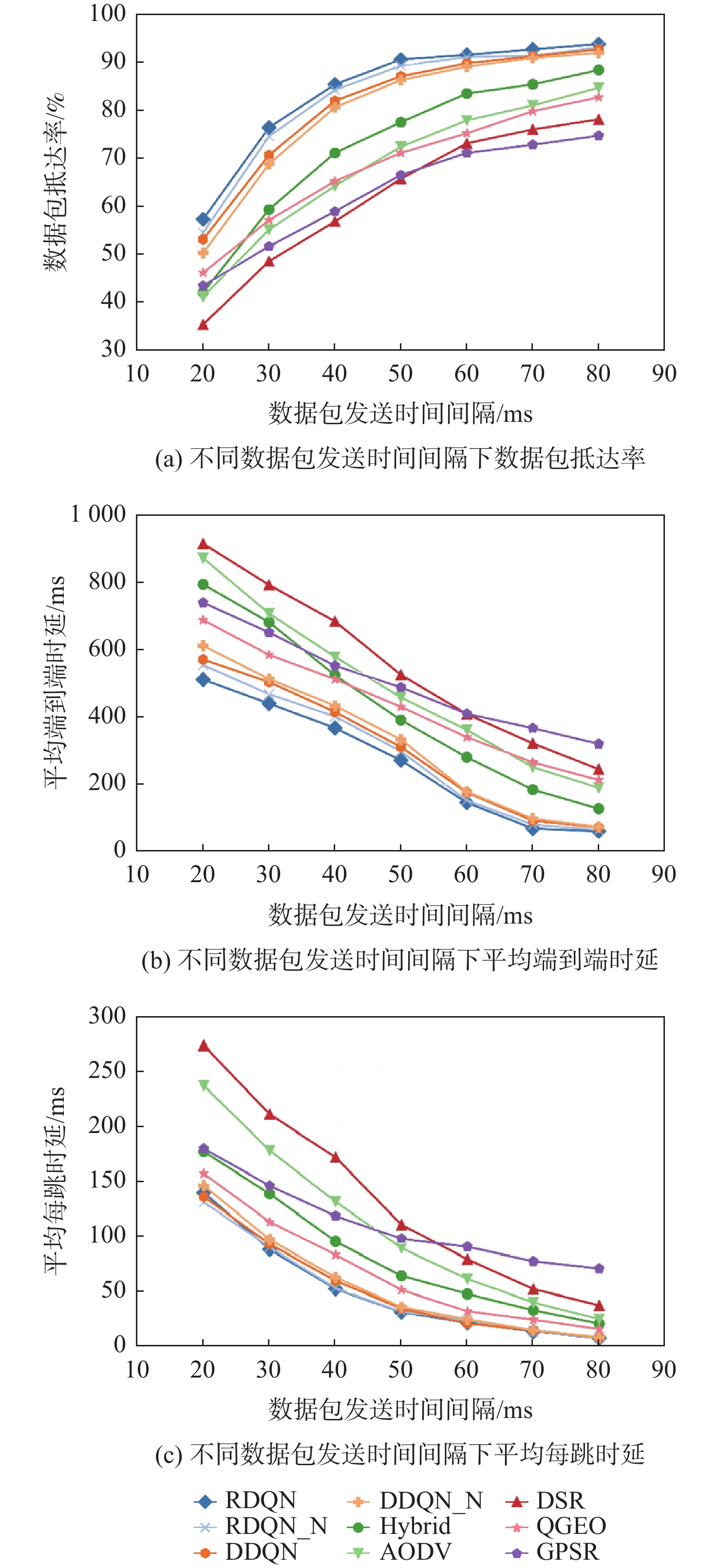
图 5 不同数据包发送时间间隔下网络性能对比
Figure 5. Comparison of network performance at different packet sending intervals
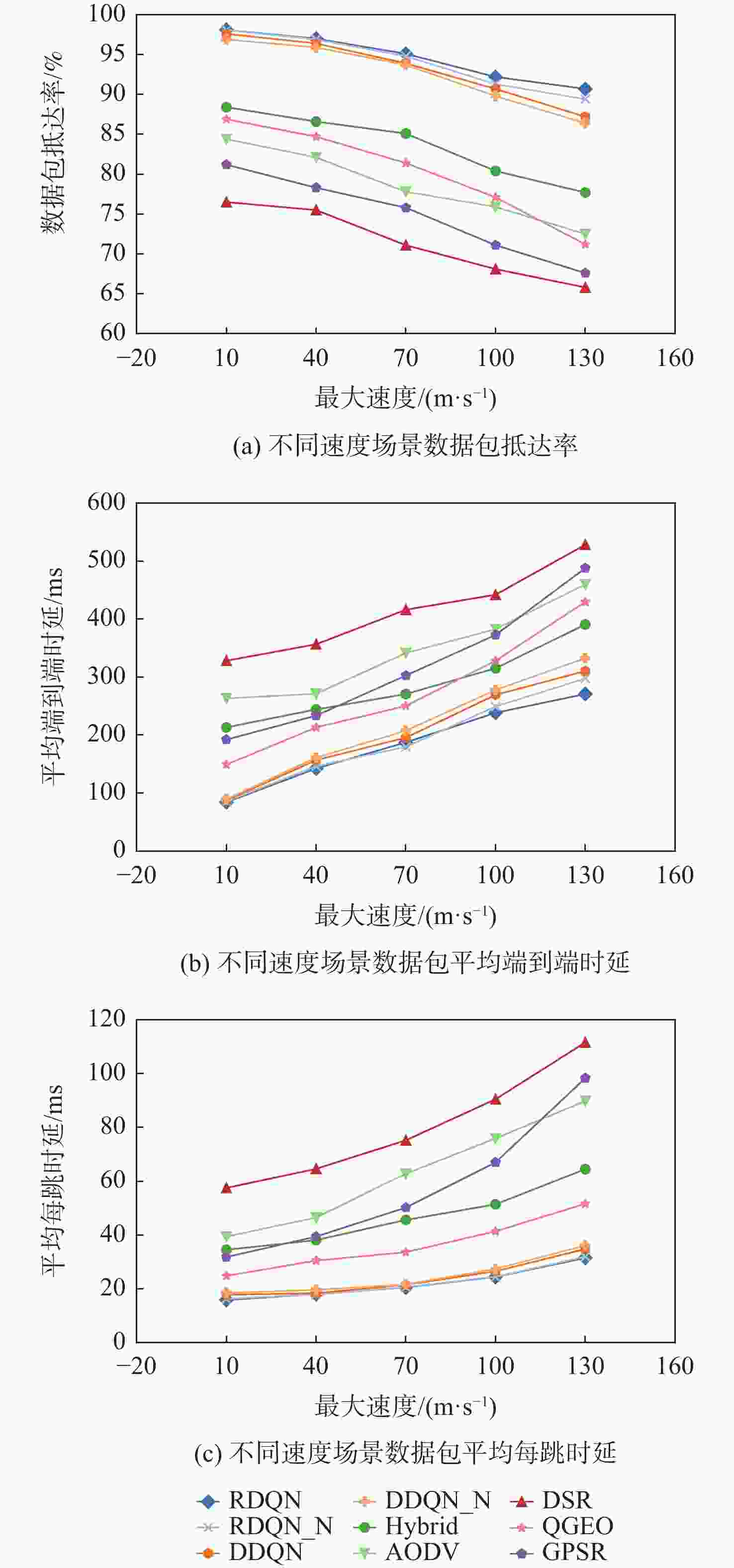
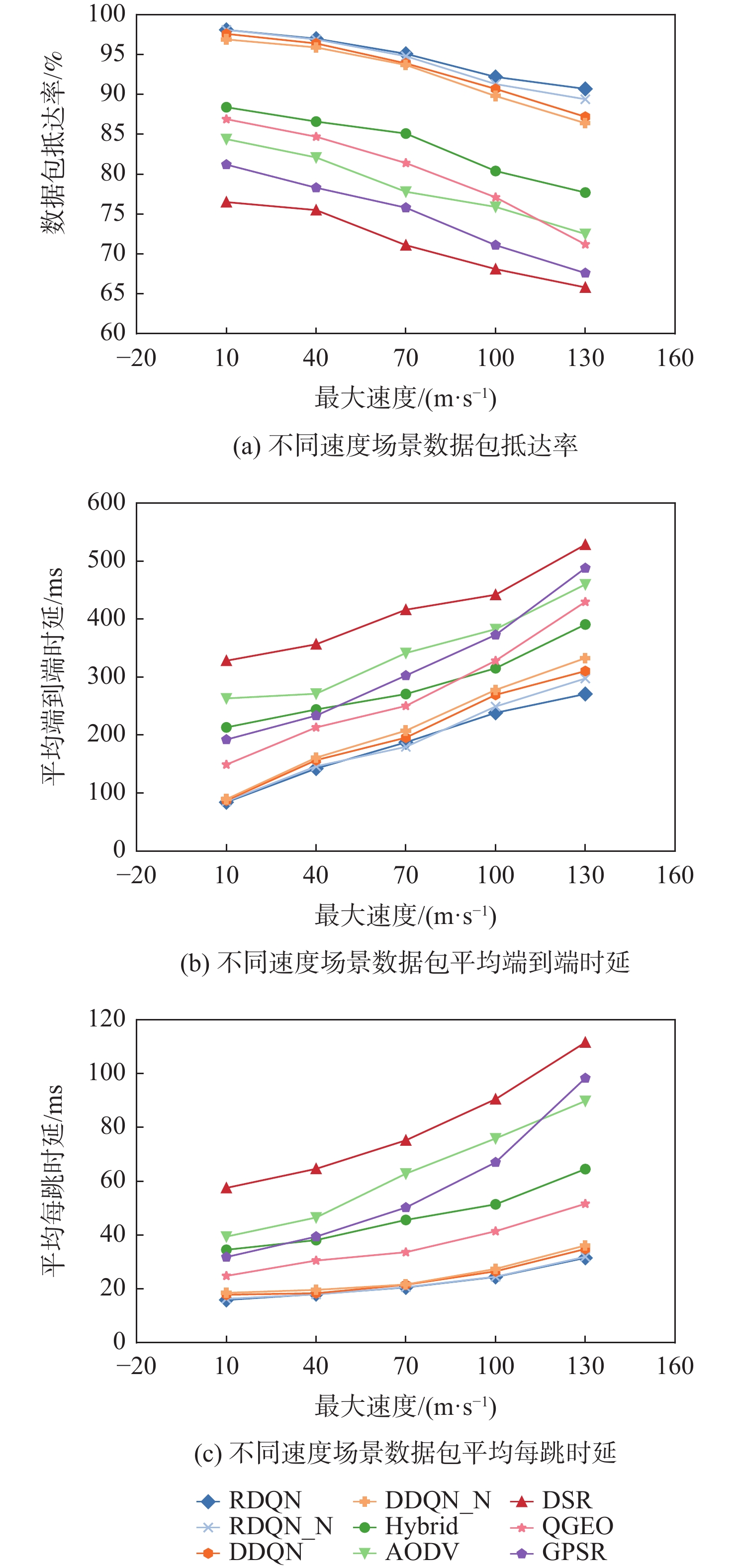
图 6 不同速度场景下网络性能对比
Figure 6. Comparison of network performance in different speed scenarios
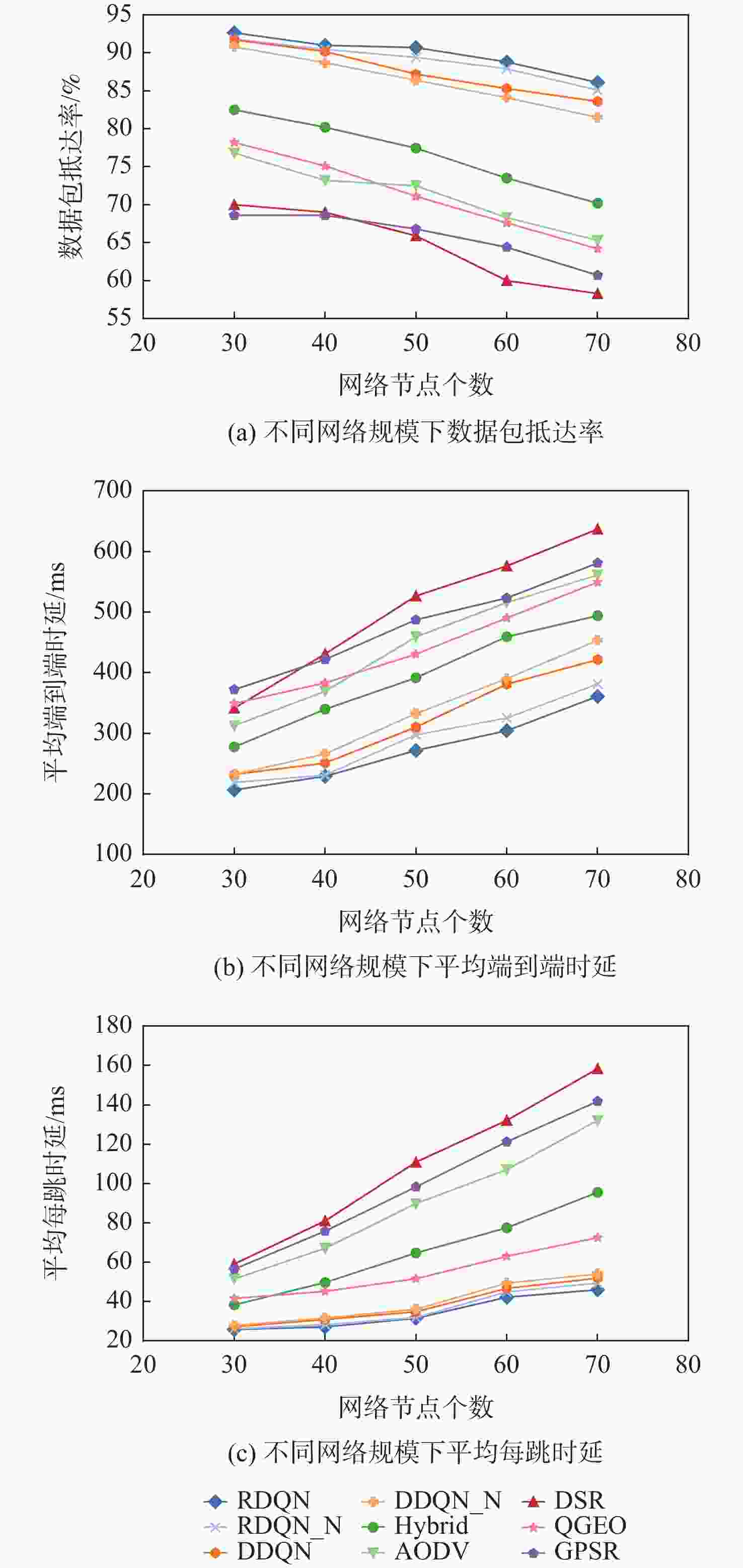
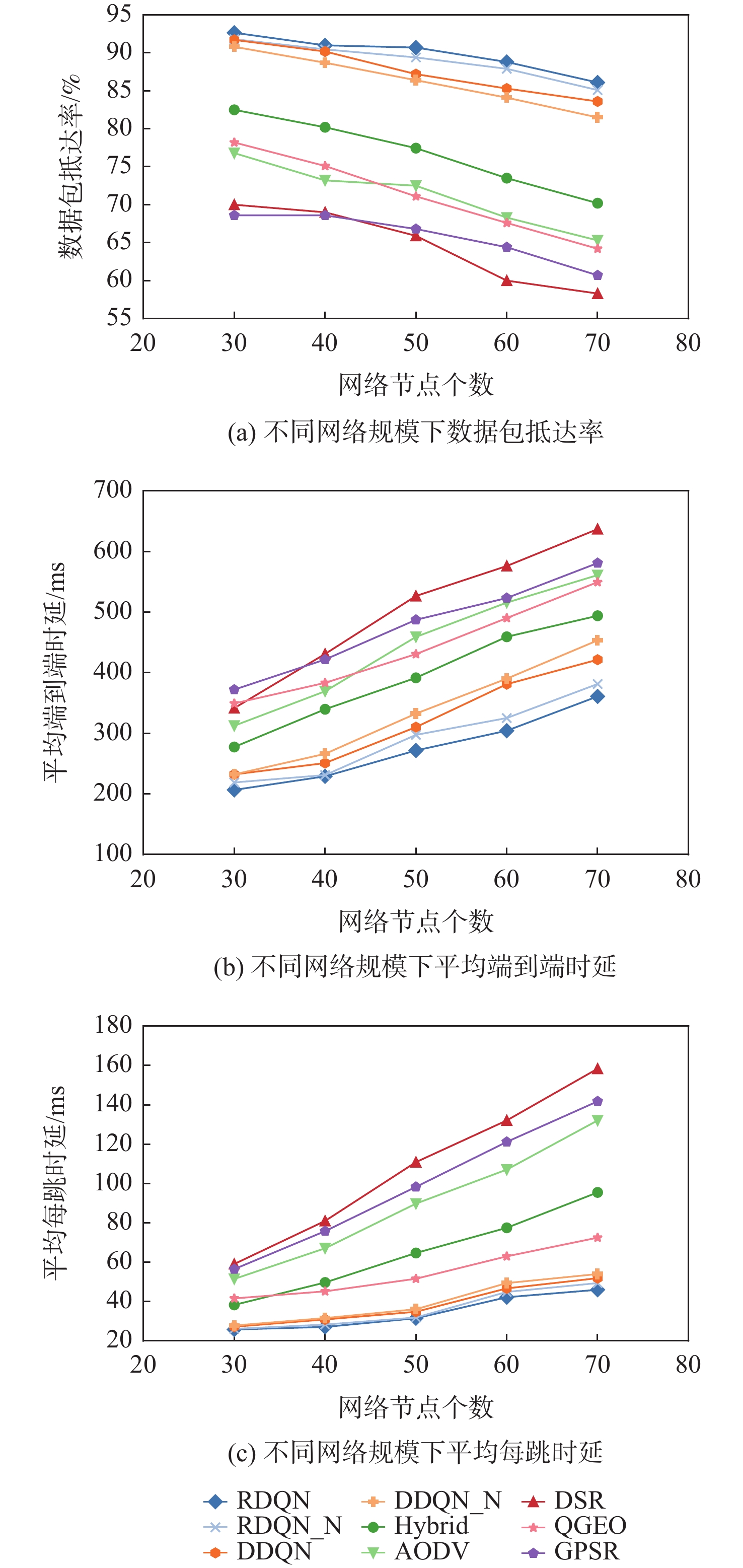
图 7 不同网络规模下网络性能对比
Figure 7. Comparison of network performance at different network scales
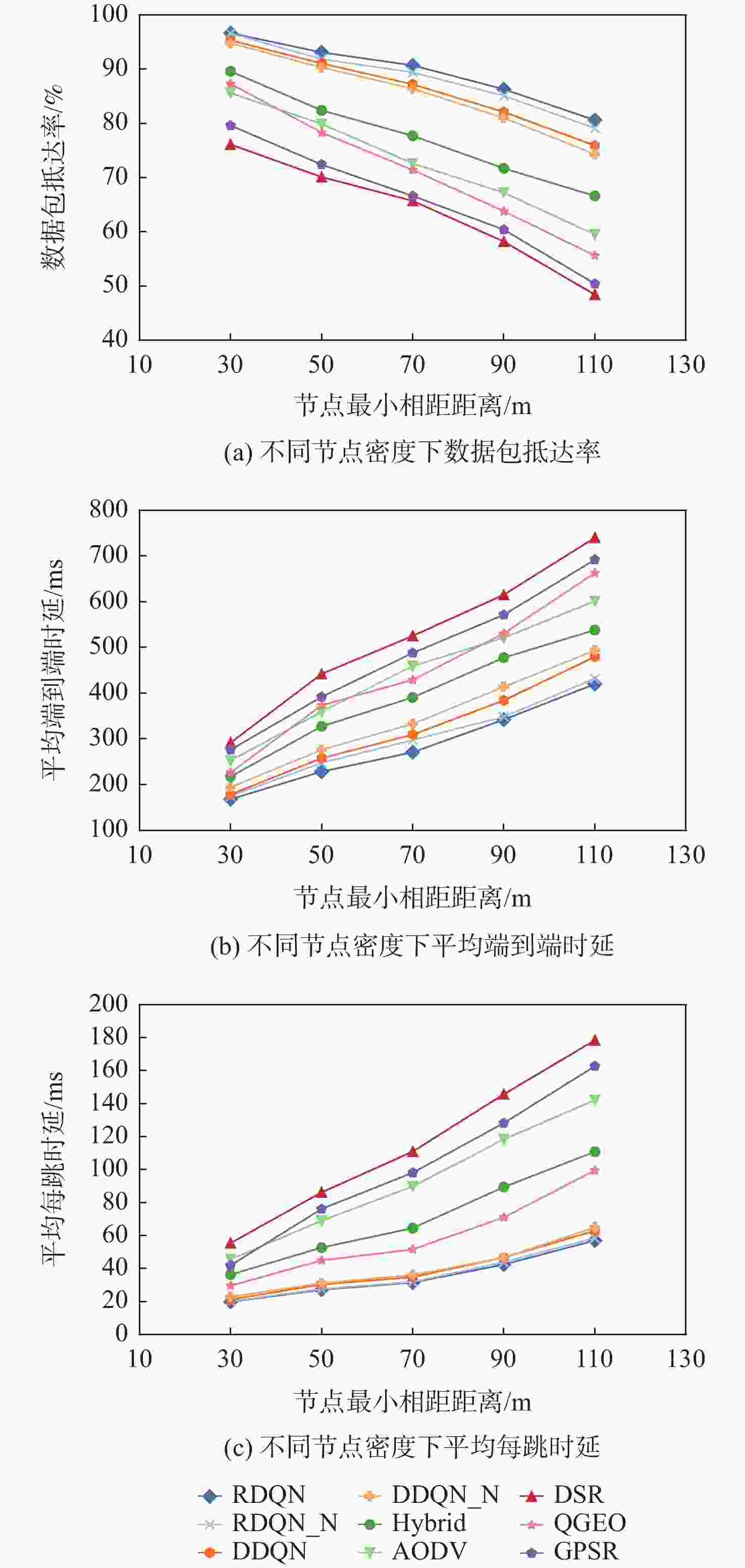
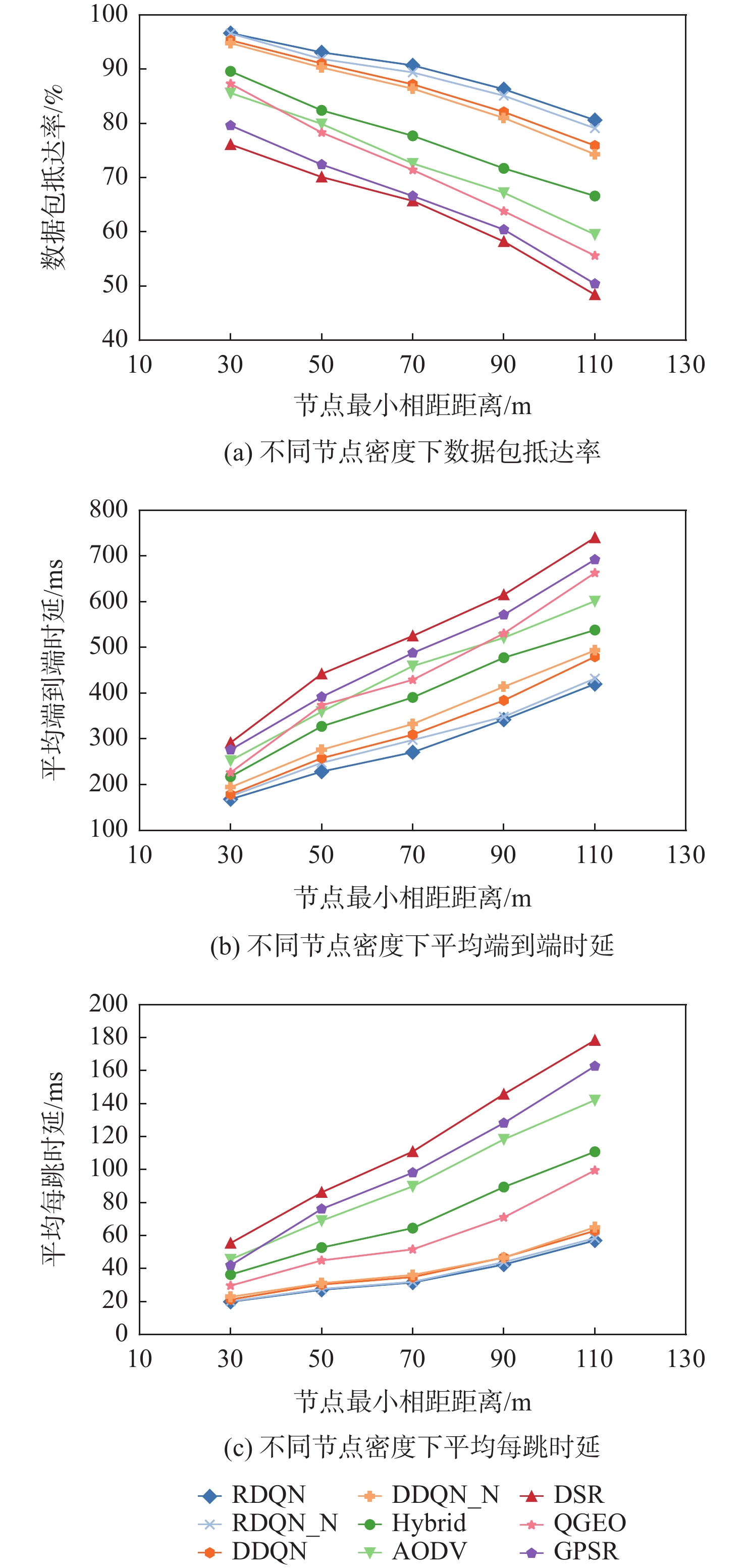
图 8 不同节点密度下网络性能对比
Figure 8. Comparison of network performance under different node densities
表 1 无人机集群通信自组网络仿真参数设定
Table 1. Simulation parameters setting for UAV swarm communication self-organizing networks
集群场景
大小/m无人机数量 最大通信
距离/m无人机最大
速度/(m·s−1)无人机最小
速度/(m·s−1)数据包
大小/bytes数据包发送
间隔/msHello Package
发送间隔/ms通信频率/GHz 最小可用
带宽/(Mbit·s−1)1500 ×1500 ×50030~70 150 10~160 5~80 1 024 20~80 150 2.4 1  下载: 导出CSV
表 2 深度强化学习模型参数设定
Table 2. Setting parameters for deep reinforcement learning models
学习率 训练轮数 训练批量 隐藏层维度 $\gamma $ $\tau $ 经验回放池容量 $\varepsilon $ (DDQN) ε的最小值 (DDQN) N Steps 网络评估频率 网络评估次数 0.000 01 200 000 256 256 0.99 0.005 100 000 0.9 0.05 3 1 000 3
下载: 导出CSV
-
[1] Maza I, Caballero F, Capitán J, et al. Experimental results in multi-UAV coordination for disaster management and civil security applications[J]. Journal of Intelligent & Robotic Systems, 2011, 61(1): 563-585. [2] Keller J, Thakur D, Likhachev M, et al. Coordinated path planning for fixed-wing UAS conducting persistent surveillance missions[C]// Proceedings of the IEEE International Symposium on Safety, Security, and Rescue Robotics. Piscataway: IEEE Press, 2016: 1-6. [3] Khan A, Zhang J, Ahmad S, et al. Dynamic positioning and energy-efficient path planning for disaster scenarios in 5G-assisted multi-UAV environments[J]. Electronics, 2022, 11(14): 2197. [4] Dahmane S, Yagoubi M B, Brik B, et al. Multi-constrained and edge-enabled selection of UAV participants in federated learning process[J]. Electronics, 2022, 11(14): 2119. [5] Sharma R, Patel K, Shah S, et al. Aerial footage analysis using computer vision for efficient detection of points of interest near railway tracks[J]. Aerospace, 2022, 9(7): 370. [6] Zhang R, Li S, Ding Y M, et al. UAV path planning algorithm based on improved Harris Hawks optimization[J]. Sensors, 2022, 22(14): 5232. [7] Pang X, Liu M, Li Z C, et al. Geographic position based hopless opportunistic routing for UAV networks[J]. Ad Hoc Networks, 2021, 120: 102560. [8] Wheeb A H, Nordin R, Samah A A, et al. Topology-based routing protocols and mobility models for flying ad hoc networks: a contemporary review and future research directions[J]. Drones, 2022, 6(1): 9. [9] Hong L, Guo H Z, Liu J J, et al. Toward swarm coordination: topology-aware inter-UAV routing optimization[J]. IEEE Transactions on Vehicular Technology, 2020, 69(9): 10177-10187. [10] Shen H, Jiang Y J, Deng F M, et al. Task unloading strategy of multi UAV for transmission line inspection based on deep reinforcement learning[J]. Electronics, 2022, 11(14): 2188. [11] Perkins C E, Bhagwat P. Highly dynamic destination-sequenced distance-vector routing (DSDV) for mobile computers[C]//Proceedings of the Conference on Communications Architectures, Protocols and Applications. New York: ACM, 1994: 234-244. [12] Jacquet P, Muhlethaler P, Clausen T, et al. Optimized link state routing protocol for ad hoc networks[C]//Proceedings of IEEE International Multi Topic Conference, 2001. Technology for the 21st Century. Piscataway: IEEE Press, 2002: 62-68. [13] Johnson D B, Hu Y C, Maltz D A. The dynamic source routing protocol (DSR) for mobile Ad hoc networks for IPv4, RFC 4728[R]. Fremont: Internet Engineering Task Force, 2007. [14] Perkins C E, Belding-royer E M, Das S R. Ad hoc on-demand distance vector (AODV) routing[J]. RFC, 2003, 3561: 1-37. [15] Park V D, Corson M S. A highly adaptive distributed routing algorithm for mobile wireless networks[C]//Proceedings of INFOCOM '97. Piscataway: IEEE Press, 2002: 1405-1413. [16] 孟泠宇, 郭秉礼, 杨雯, 等. 基于深度强化学习的网络路由优化方法[J]. 系统工程与电子技术, 2022, 44(7): 2311-2318.Meng L Y, Guo B L, Yang W, et al. Network routing optimization approach based on deep reinforcement learning[J]. Systems Engineering and Electronics, 2022, 44(7): 2311-2318(in Chinese). [17] Karp B, Kung H T. GPSR: greedy perimeter stateless routing for wireless networks[C]//Proceedings of the 6th Annual International Conference on Mobile Computing and Networking. New York: ACM, 2000: 243-254. [18] Garg S, Ihler A, Bentley E S, et al. A hybrid reactive routing protocol for decentralized UAV networks[EB/OL]. (2025-01-23)[2025-05-08]. https://arxiv.org/abs/2407.02929. [19] Cao Y, Lien S Y, Liang Y C. Deep reinforcement learning for multi-user access control in non-terrestrial networks[J]. IEEE Transactions on Communications, 2021, 69(3): 1605-1619. [20] Lin D P, Peng T, Zuo P L, et al. Deep-reinforcement-learning-based intelligent routing strategy for FANETs[J]. Symmetry, 2022, 14(9): 1787. [21] Qiu X L, Yang Y W, Xu L, et al. Maintaining links in the highly dynamic FANET using deep reinforcement learning[J]. IEEE Transactions on Vehicular Technology, 2023, 72(3): 2804-2818. [22] Liu C Z, Wang Y X, Wang Q. PARouting: prediction-supported adaptive routing protocol for FANETs with deep reinforcement learning[J]. International Journal of Intelligent Networks, 2023, 4: 113-121. [23] Jung W S, Yim J, Ko Y B. QGeo: Q-learning-based geographic ad hoc routing protocol for unmanned robotic networks[J]. IEEE Communications Letters, 2017, 21(10): 2258-2261. [24] Qiu X, Xu L, Wang P, et al. A data-driven packet routing algorithm for an unmanned aerial vehicle swarm: a multi-agent reinforcement learning approach[J]. IEEE Wireless Communications Letters, 2022, 11(10): 2160-2164. [25] Bai Y J, Zhang X, Yu D J, et al. A deep reinforcement learning-based geographic packet routing optimization[J]. IEEE Access, 2022, 10: 108785-108796. [26] Wang Z, Li H X, Knoblock E J, et al. Deep reinforcement learning-based joint routing and capacity optimization in an aerial and terrestrial hybrid wireless network[J]. IEEE Access, 2024, 12: 132056-132069. [27] Ke Y Q, Huang K, Qiu X L, et al. Distributed routing optimization algorithm for FANET based on multiagent reinforcement learning[J]. IEEE Sensors Journal, 2024, 24(15): 24851-24864. [28] Mnih V, Kavukcuoglu K, Silver D, et al. Human-level control through deep reinforcement learning[J]. Nature, 2015, 518(7540): 529-533. [29] Van Hasselt H, Guez A, Silver D. Deep reinforcement learning with double Q-Learning[C]//Proceedings of the Thirtieth AAAI Conference on Artificial Intelligence. New York: ACM, 2016: 2094-2100. [30] Hessel M, Modayil J, Van Hasselt H, et al. Rainbow: combining improvements in deep reinforcement learning[C]//Proceedings of the AAAI Conference on Artificial Intelligence. 2018, 32(1): 5737-5744. [31] Hu G N, Zhang W, Zhu W H. Prioritized experience replay for continual learning[C]//Proceedings of the 2021 6th International Conference on Computational Intelligence and Applications. Piscataway: IEEE Press, 2021: 16-20. [32] Wang Z Y, Schaul T, Hessel M, et al. Dueling network architectures for deep reinforcement learning[C]//Proceedings of the 33rd International Conference on International Conference on Machine Learning - Volume 48. New York: ACM, 2016: 1995-2003. [33] Bellemare M G, Dabney W, Munos R. A distributional perspective on reinforcement learning[EB/OL]. (2017-01-27)[2025-05-08]. https://arxiv.org/abs/1707.06887. [34] Fortunato M, Azar M G, Piot B, et al. Noisy networks for exploration[EB/OL]. (2019-01-09)[2025-05-08]. https://arxiv.org/abs/1706.10295. -

 下载:
下载:

 点击查看大图
计量
- 文章访问数: 400
- HTML全文浏览量: 243
- PDF下载量: 12
- 被引次数: 0
