





Research progress on modeling and simulation of characteristics of all-solid-state batteries
-
摘要:
全固态电池(ASSB)具备高比能和高安全的潜在特点,是全球各国政府及主流车企均在积极布局的下一代电池技术,但仍面临较大的研发和产业化挑战。通过开展全固态电池建模和仿真研究,可揭示其工作机制、掌握影响规律,进而设计满足指标需求、达到工作性能的全固态电池,缩短实验测试与开发周期。围绕全固态电池的分子动力学计算、关键材料及界面特性、电化学性能领域的建模和仿真工作进行了总结和分析,并重点对硫化物固态电解质材料微观结构建模、界面特性、离子输运机制、电解质间隙诱导应力和断裂等领域进行梳理,对全固态电池建模及仿真发展趋势进行展望,提出今后研究重点,期望可以促进全固态电池尽快实现产业化和应用。
Abstract:Governments and large automakers worldwide are aggressively investing in and developing all-solid-state batteries (ASSBs) as a next-generation battery technology because of their promise to provide high specific energy and improved safety. However, significant challenges remain in terms of research and development as well as large-scale industrialization. Conducting modeling and simulation studies on ASSBs can help reveal their underlying operational mechanisms and clarify the factors influencing their performance. This, in turn, enables the design of ASSBs that meet targeted specifications and achieve desired operational performance, ultimately shortening the cycles of experimental testing and development. This paper provides a comprehensive review and analysis of modeling and simulation efforts in the areas of molecular dynamics calculations, key materials and interfacial characteristics, and electrochemical performance of ASSBs. Particular emphasis is placed on the microstructural modeling of sulfide-based solid electrolytes, interfacial behavior, ion transport mechanisms, stress generation, and fracture induced by the interphase between electrodes and electrolytes. The study also identifies possible research goals, describes future trends in ASSB modeling and simulation, and attempts to use these insights to hasten the industrialization and practical application of ASSBs.
-
Key words:
- all-solid-state battery /
- model building /
- simulation analysis /
- multi physics field /
- solid electrolyte
-
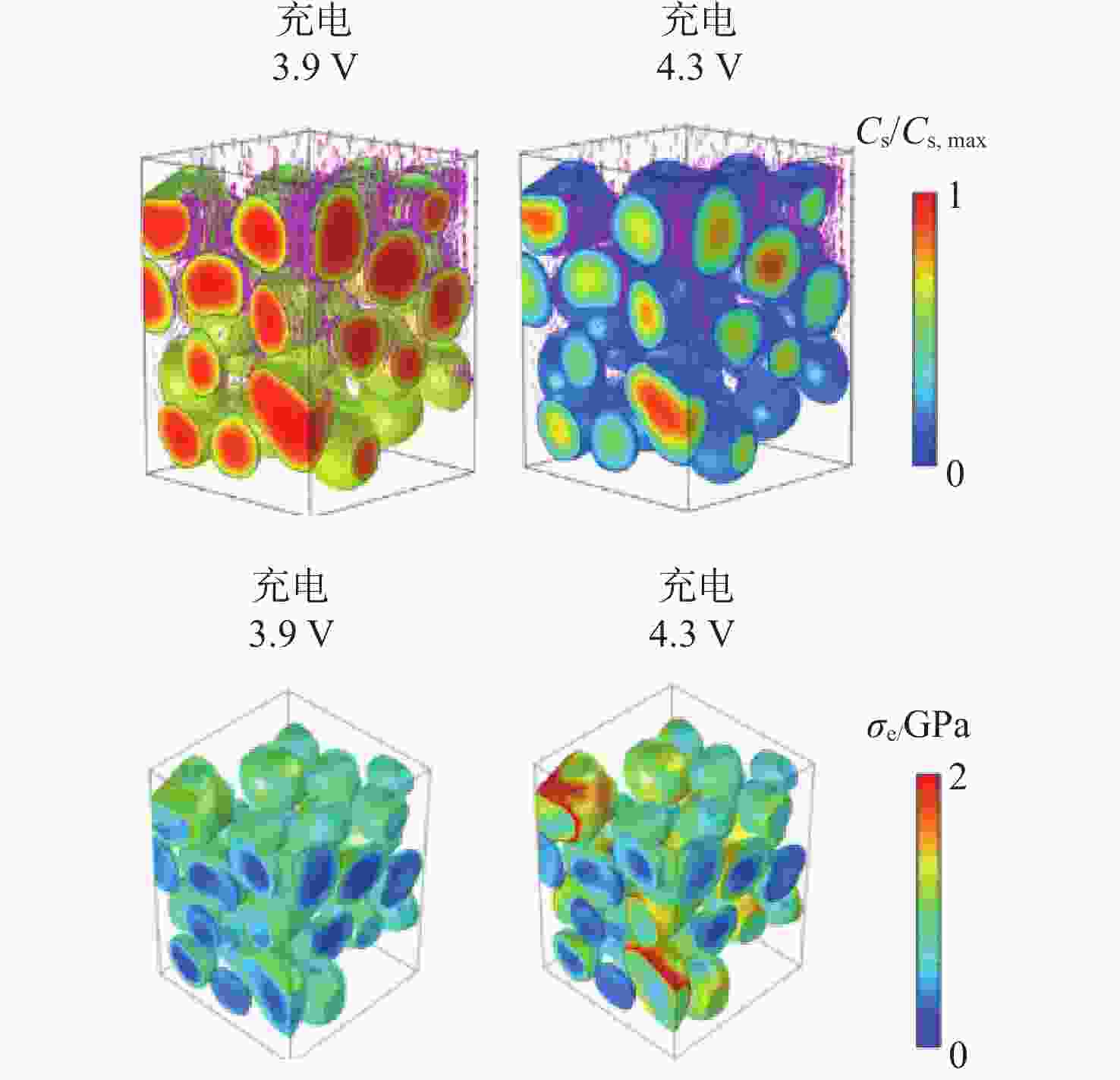
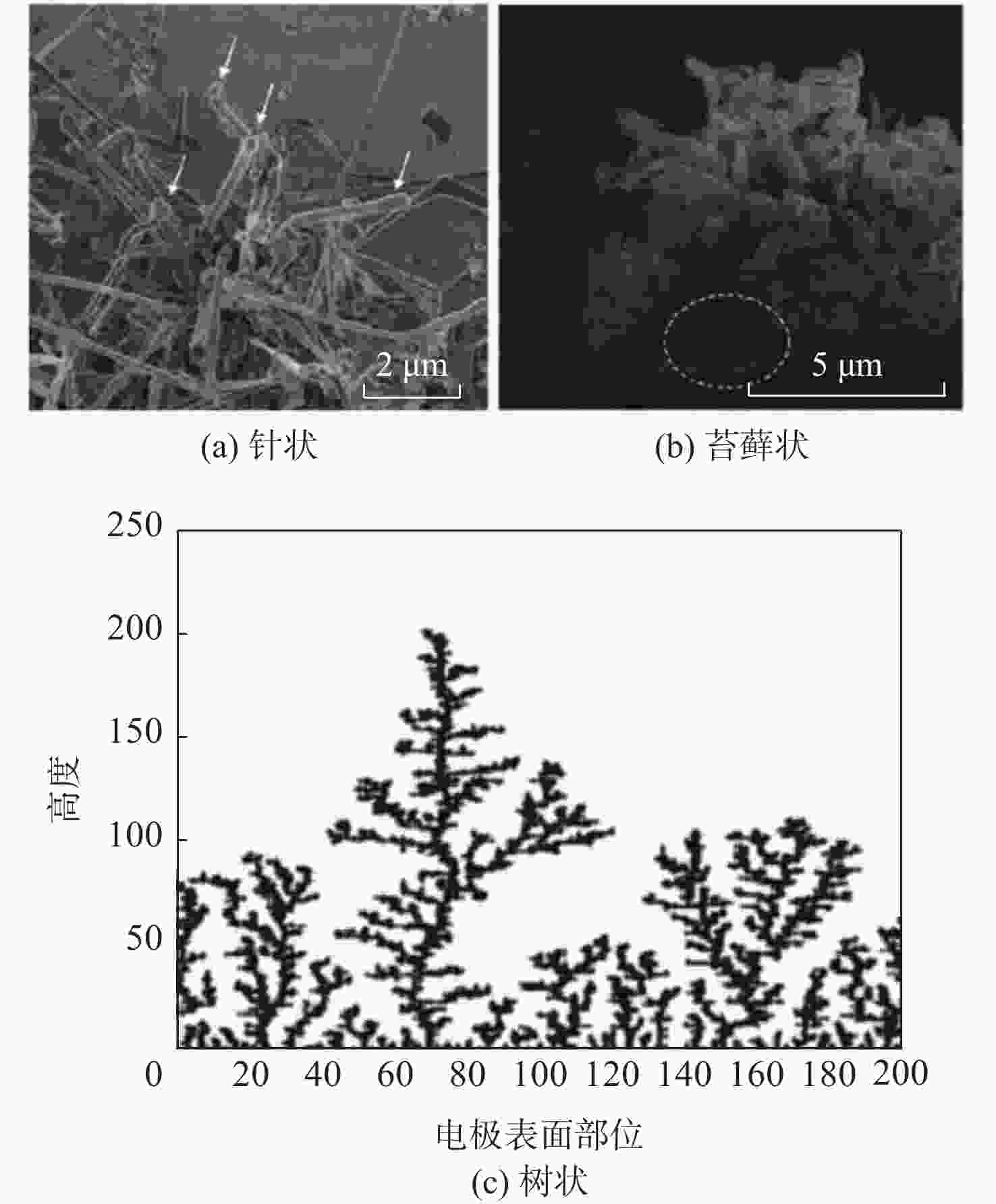
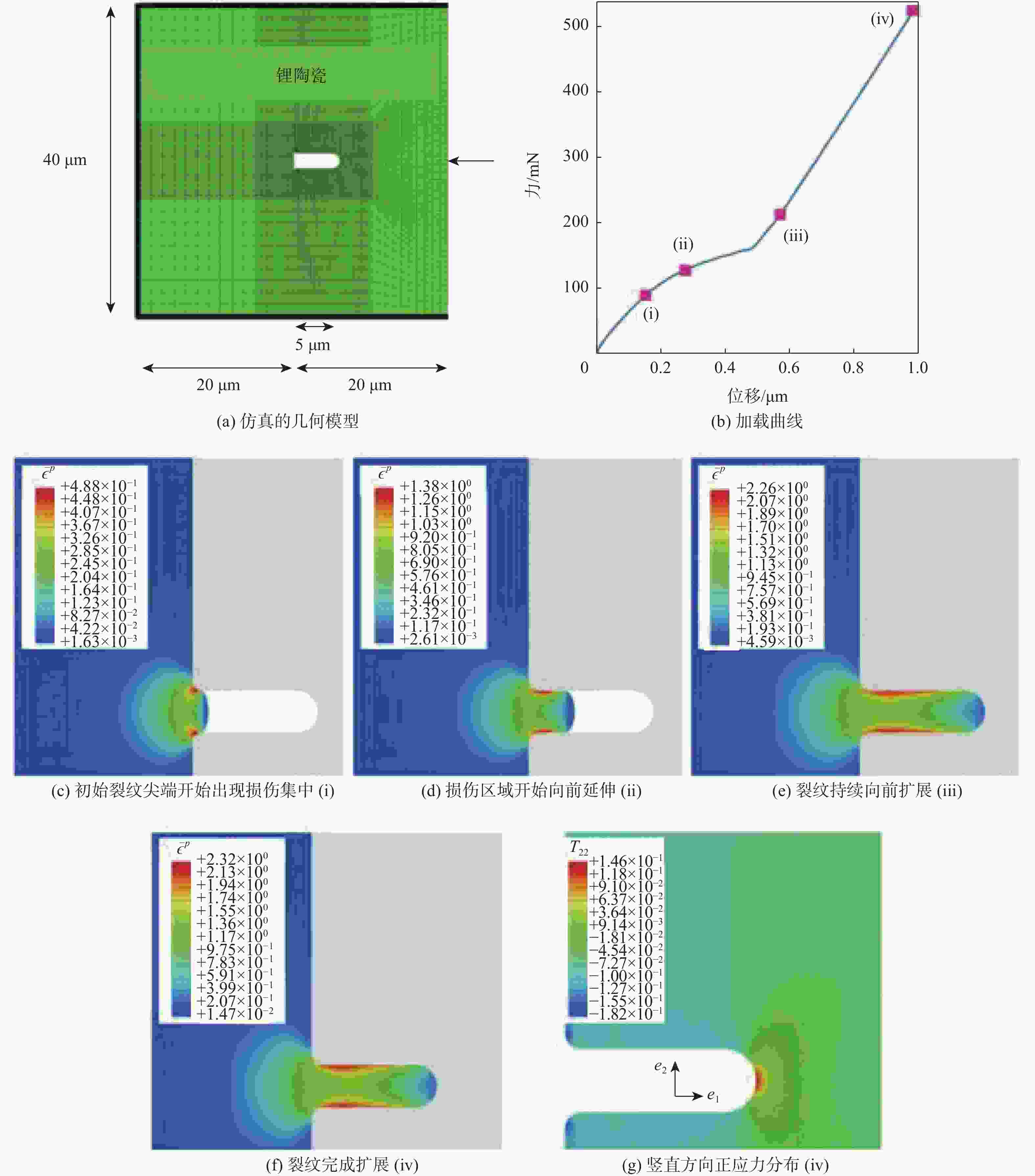
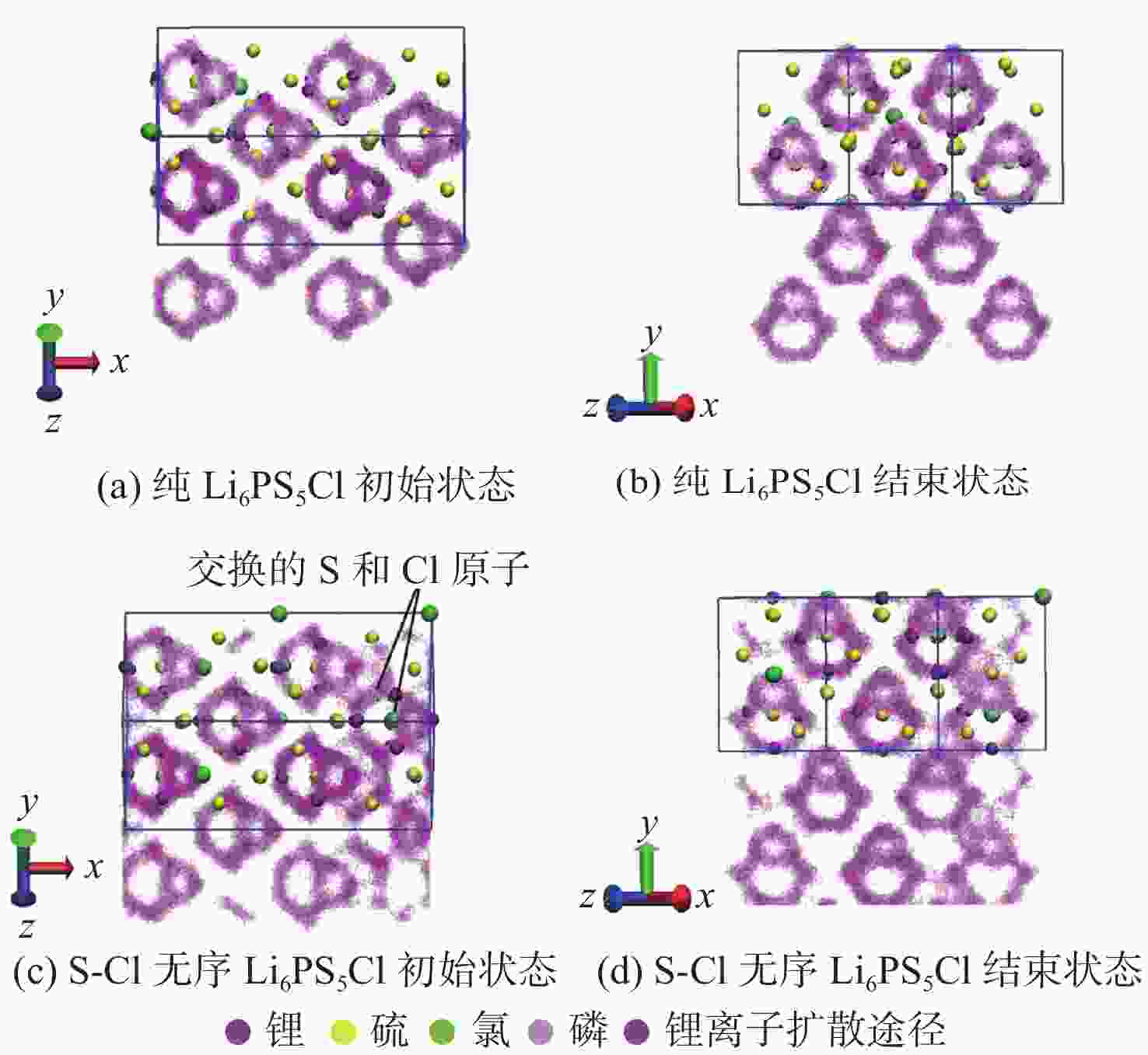
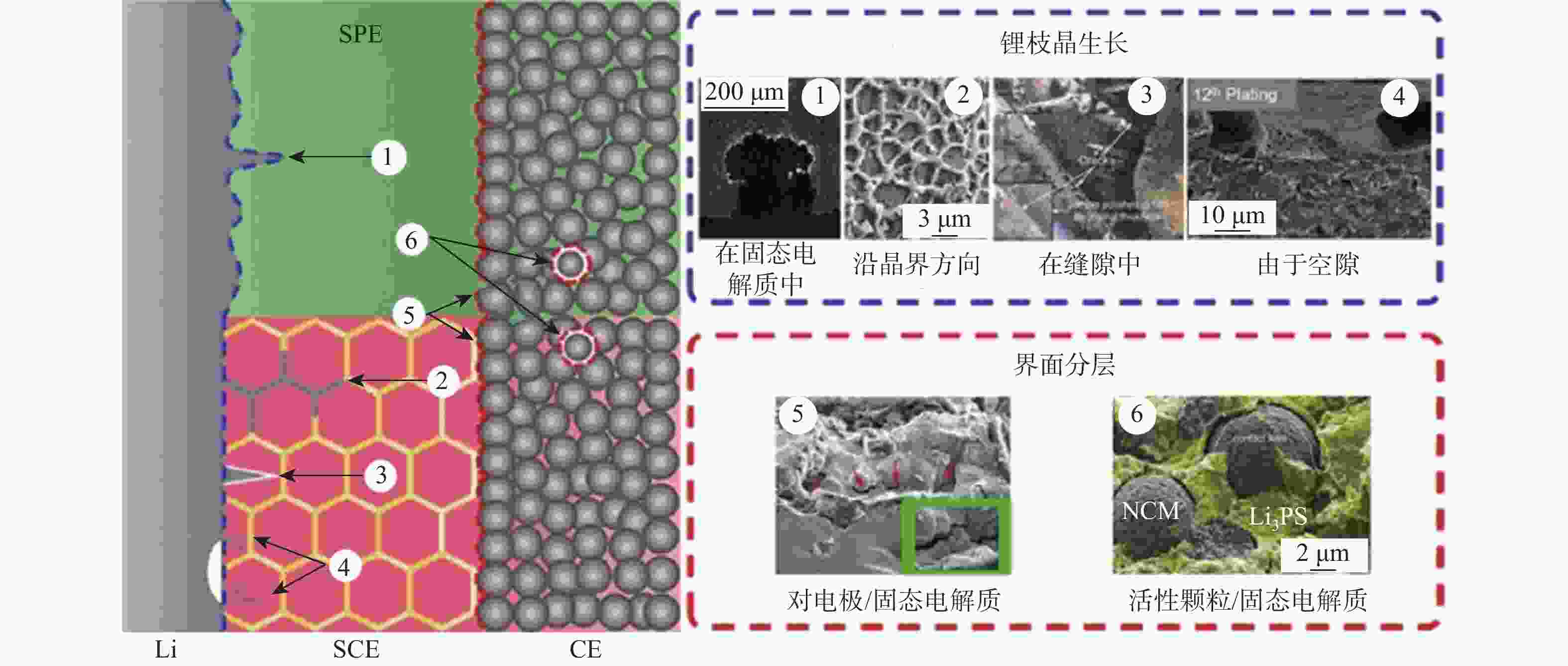
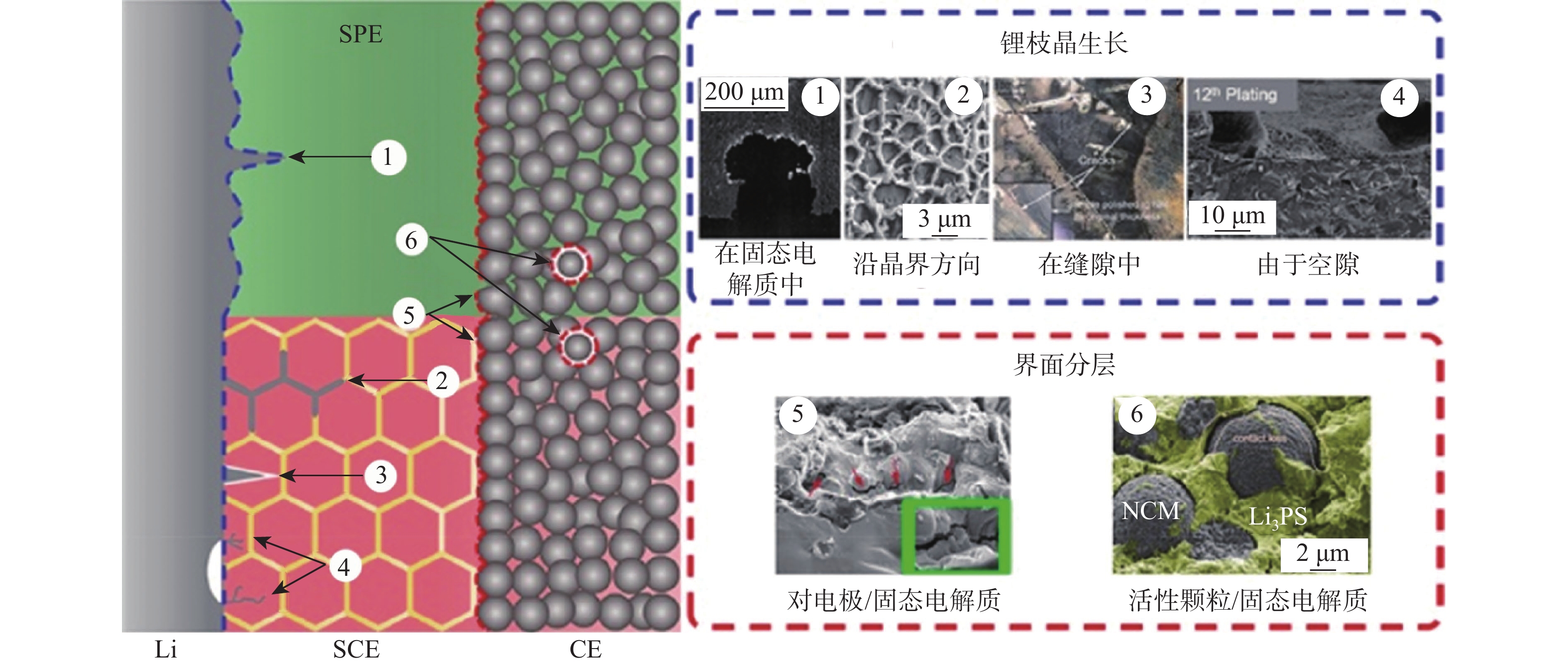
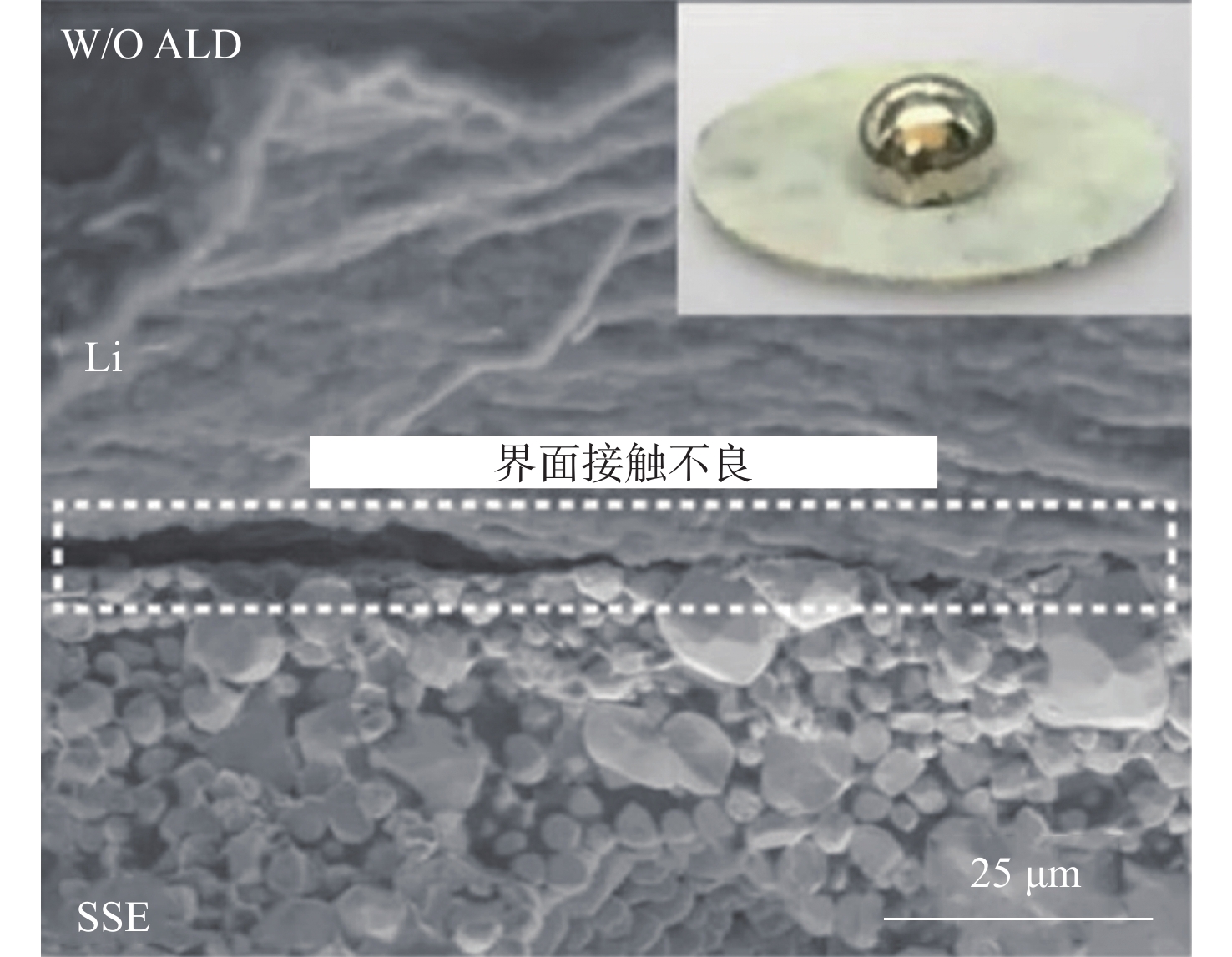
图 7 固态电池界面失效示意图
Figure 7. Schematic diagram of interface failure of solid-state battery
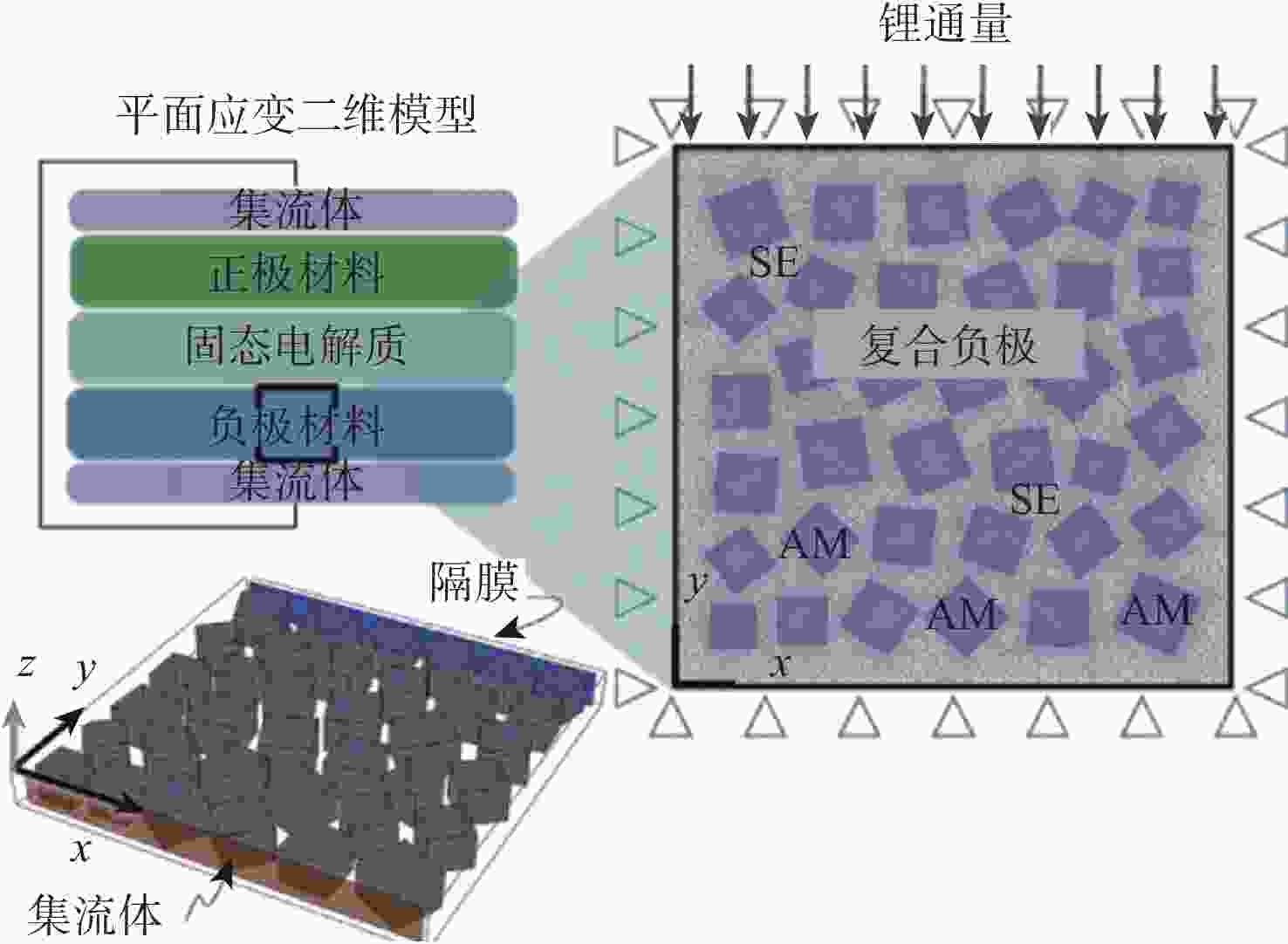
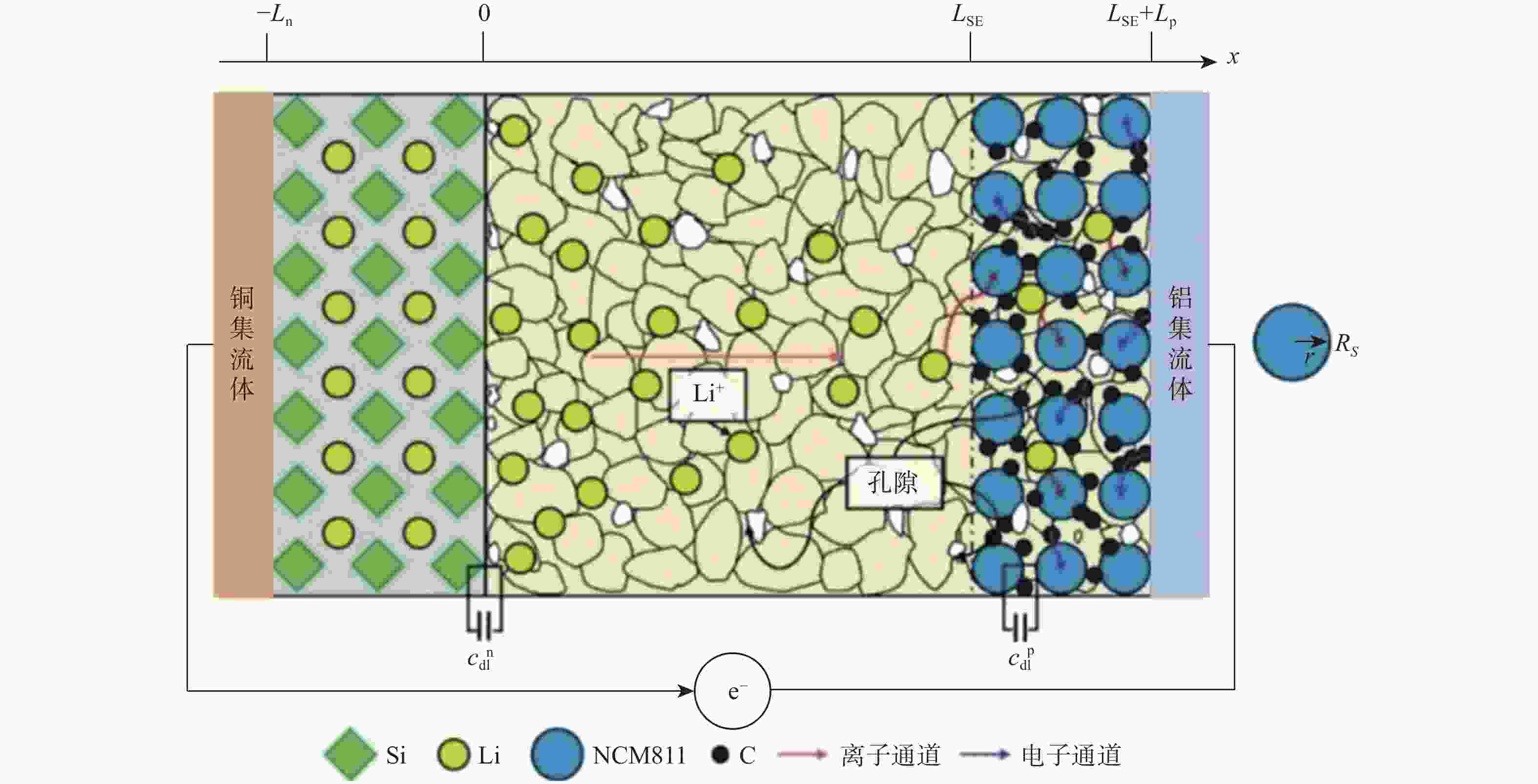
表 1 整车企业固态电池产品布局
Table 1. Layout of solid state battery products for vehicle enterprises
车企 搭载车型 电池供应商 装车进程 丰田汽车 自研 2025年8月,宣布突破硫化物固态电池耐久性瓶颈,计划2027—2028年量产装车 日产汽车 自研 2024年4月,宣布横滨工厂建成全固态电池试产线,计划2028年量产 宝马集团 i7 Solid Power 2025年5月,宣布与Solid Power联合开发20 Ah全固态电芯,启动原型车i7路测 大众集团 Quantum Scape 通过Quantum Scape投资推进固态电池商业化,2024年1月通过PowerCo耐久性指标验证;2025年9月,完成全球首次QS固态锂金属电池驱动电动车的实车演示 福特汽车 SK On 与SK On合作开发聚合物基固态电池,计划2026年装车测试 长安汽车 自研 预计2026年实现固态电池装车验证,2027年推进全固态电池逐步量产,能量密度达400 Wh/kg 东风汽车 奕派007 自研 2025年9月,表示全自主研发350 Wh/kg、1 C固态电池,2026年装车;第二代半固态电池量产装车(奕派007车型),支持4 C快充 上汽集团 MG4 上汽清陶能源 2025年在全新MG4上量产新一代固态电池,并计划于2027年推出首款全固态“光启电池” 广汽集团 昊铂 自研 2024年4月,宣布第三代海绵硅负极技术和高面容量固态正极技术,实现全固态电池能量密度达到400 Wh/kg以上,目标在2026年完成全固态电池开发,并首先搭载于昊铂车型 奇瑞汽车 自研 2024年宣布,自主研发的全固态电池, 1500 km续航,6 C充电效率,且将会在2026年上车,2027年开始量产蔚来汽车 ES6/ET7 北京卫蓝新能源 搭载150 kWh半固态电池的ES6、ET7于2023年量产;2024年6月起,150 kWh电池包适配蔚来旗下所有车型  下载: 导出CSV
表 2 电池企业固态电池产品布局
Table 2. Layout of solid state battery products for battery enterprises
企业 电池类型 能量密度/(Wh·kg−1) 产业化进程 宁德时代 全固态电池 500 2025年5月,表示预计2027年有望实现小批量生产 比亚迪 硫化物全固态电池 400 2024年宣布,首款全固态电池将搭载于海豹EV车型;全固态电池中试完成,重庆璧山基地规划100 GWh产能 中创新航 全固态电池 430 自研的430 Wh/kg全固态电池已完成产线建设,并规划了从半固态到全固态的稳健推进路线,配套产线于2025年正式投用 国轩高科 全固态电池 350 2024年5月,推出金石全固态电池,比能量350 Wh/kg;2025年5月,推出G垣准固态电池,比能量300 Wh/kg;宣布首条全固态实验线贯通,该生产线100%自主开发,设计产能达0.2 GWh,良品率高达90% 蜂巢能源 半固态电池 300 2025年11月,半固态电池产线正式投产,第一代高镍半固态电池(能量密度270 Wh/kg)已实现小批量生产,首搭于欧洲豪华品牌乘用车;第二代高镍半固态电池(能量密度342 Wh/kg)开发完成,主要配套低空飞行器,已完成装机试飞测试 孚能科技 硫化物全固态电池 400~500 硫化物固态电池突破车规级验证,能量密度400 Wh/kg,续航超 1000 km,10 min快充80%,安全性能提升10倍,2026年小批量交付广汽埃安等车企赣锋锂业 固态电池 400~500 2025年6月,表示已形成电池全链路布局,首款500 Wh/kg级10 Ah产品实现小批量量产,400 Wh/kg电池循环寿命突破800次并完成工程验证 鹏辉能源 固态电池 320 2025年8月,表示固态电池能量密度已由280 Wh/kg提升至320 Wh/kg 上汽清陶能源 半固态电池+
全固态电池368 国内首条1 GWh半固态电池产线已投产,能量密度368 Wh/kg,搭载上汽智己L6车型实现 1000 km续航,全固态电池计划2026年量产,能量密度目标500 Wh/kg北京卫蓝新能源 半固态电池+
全固态电池360 150 kWh半固态电池包已交付蔚来ET7,充电倍率提升至3 C,2025年底,半固态电池已有产能规模达5.6 GWh;全固态电池能量密度达400 Wh/kg,计划2027年小批量装车 LG新能源 固态电池 计划开发包括固态电池在内的下一代电池,并将在2030年前推出成熟产品 三星SDI 全固态电池 新一代电池能量密度预计可达约900 Wh/L,有望在2027年前后应用于下一代Galaxy系列手机及电动交通工具中 SK On 半固态电池 一条半固态电池中试线正在运行,半固态电池样品将在2026年底实现生产 Quantum Scape 全固态电池 400 与大众合作推进固态电池量产,目标能量密度400 Wh/kg;2025年6月,宣布独特的Cobra隔膜工艺已顺利融入基线电池生产流程
下载: 导出CSV
表 3 锂电池常用模型总结
Table 3. Summary of commonly used models for lithium batteries
模型 基本介绍 示意图 优点 缺点 适用范围 电化学模型 基于电化学反应机理构建,如Newman伪二维(pseudo-two-dimensions,P2D)模型,通过偏微分方程描述锂离子在固/液相中的扩散、电荷转移和电解质迁移等过程,典型应用包括电极材料优化和充放电特性预测 
①物理意义明确,能精确描述电池内部反应机理;
②适用于微观尺度(如活性颗粒)的优化设计①计算复杂度高,需大量参数(如扩散系数、反应速率常数);
②难以扩展到模组或系统级别电极材料开发、高精度单体电芯性能仿真、基础电化学研究 等效电路模型 通过电路元件(电阻、电容、电感等)模拟电池外特性,如Rint、Thevenin、PNGV模型等,分数阶等效电路模型进一步引入非线性元件提升动态特性拟合能力 
①结构简单,参数辨识容易(如通过脉冲测试提取欧姆内阻、极化电阻);
②计算效率高,适用于实时状态估计,如SOC、SOH①无法反映电池内部机理(如锂枝晶生长);
②精度受限于模型阶数,高阶模型参数辨识困难电池管理系统在线控制、电动汽车能量管理策略、快速仿真场景(如硬件在环测试) 热-电化学-力耦合模型 多物理场耦合模型,结合电化学、热力学和力学效应,模拟电池充放电过程中的电流分布、温度场变化及应力演变(如扩散诱导应力、热应力) 
①全面分析电池性能与安全性(如热失控、结构形变);
②支持固态电池等新型设计的优化①计算资源消耗巨大,需高性能计算
支持;
②模型参数获取复
杂(如材料弹性模量、热膨胀系数)电池热管理设计、固态电池应力分析、极端工况下的安全性评估 神经网络模型 数据驱动模型,通过大量实验数据训练网络(如长短期记忆网络、卷积神经网络)预测电池特性(如容量衰减、电压响应),无需依赖机理公式,适合处理非线性问题 
①适应复杂工况(如动态负载、老化演变);
②可融合多源数据(电压、温度、电流)提升预测精度①依赖高质量数据集,数据获取成本高;
②模型泛化能力受限,外推性能较差电池寿命预测、复杂动态工况下的状态估计、数据丰富的工业场景(如电池回收评估)
下载: 导出CSV
表 4 不同结构锂硫银锗矿型固态电解质的离子电导率和电子电导率[67]
Table 4. Ionic and electronic conductivity of lithium sulfur silver germanite solid electrolytes with different structures[67]
化学式 离子电导率/(mS·cm−1) 电子电导率/(mS·cm−1) Li5.5PS4.5Cl1.5 3.9 1.4×10⁻⁵ Li5.75PS4.75Cl1.25 3.0 2.6×10⁻⁵ Li6PS5Br 1.9 4.4×10⁻⁶ Li6PS5Cl0.25Br0.75 3.4 1.1×10⁻⁵ Li6PS5Cl0.5Br0.5 3.9 1.4×10⁻⁵ Li6PS5Cl0.75Br0.25 3.2 3.7×10⁻⁶ Li6PS5Cl 2.4 5.1×10⁻⁶
下载: 导出CSV
-
[1] Zhao Q, Stalin S, Zhao C Z, et al. Designing solid-state electrolytes for safe, energy-dense batteries[J]. Nature Reviews Materials, 2020, 5(3): 229-252. [2] Lindorff-Larsen K, Piana S, Dror R O, et al. How fast-folding proteins fold[J]. Science, 2011, 334(6055): 517-520. [3] Hertig S, Latorraca N R, Dror R O. Revealing atomic-level mechanisms of protein allostery with molecular dynamics simulations[J]. PLoS Computational Biology, 2016, 12(6): e1004746. [4] Foroozan T, Soto F A, Yurkiv V, et al. Synergistic effect of graphene oxide for impeding the dendritic plating of Li[J]. Advanced Functional Materials, 2018, 28(15): 1705917. [5] Deng Z, Wang Z B, Chu I H, et al. Elastic properties of alkali superionic conductor electrolytes from first principles calculations[J]. Journal of the Electrochemical Society, 2016, 163(2): A67-A74. [6] Ngandjong A C, Rucci A, Maiza M, et al. Multiscale simulation platform linking lithium ion battery electrode fabrication process with performance at the cell level[J]. The Journal of Physical Chemistry Letters, 2017, 8(23): 5966-5972. [7] Hao F, Mukherjee P P. Mesoscale analysis of the electrolyte-electrode interface in all-solid-state Li-ion batteries[J]. Journal of the Electrochemical Society, 2018, 165(9): A1857-A1864. [8] Yu H C, Taha D, Thompson T, et al. Deformation and stresses in solid-state composite battery cathodes[J]. Journal of Power Sources, 2019, 440: 227116. [9] Tian H K, Liu Z, Ji Y Z, et al. Interfacial electronic properties dictate Li dendrite growth in solid electrolytes[J]. Chemistry of Materials, 2019, 31(18): 7351-7359. [10] Tian H K, Xu B, Qi Y. Computational study of lithium nucleation tendency in Li7La3Zr2O12 (LLZO) and rational design of interlayer materials to prevent lithium dendrites[J]. Journal of Power Sources, 2018, 392: 79-86. [11] Ahmad Z, Viswanathan V. Quantification of uncertainty in first-principles predicted mechanical properties of solids: application to solid ion conductors[J]. Physical Review B, 2016, 94(6): 064105. [12] Ahmad Z, Xie T, Maheshwari C, et al. Machine learning enabled computational screening of inorganic solid electrolytes for suppression of dendrite formation in lithium metal anodes[J]. ACS Central Science, 2018, 4(8): 996-1006. [13] Su S M, Ma J B, Zhao L, et al. Progress and perspective of the cathode/electrolyte interface construction in all-solid-state lithium batteries[J]. Carbon Energy, 2021, 3(6): 866-894. [14] Liao Y L, Hu J K, Fu Z H, et al. Integrated interface configuration by in-situ interface chemistry enabling uniform lithium deposition in all-solid-state lithium metal batteries[J]. Journal of Energy Chemistry, 2023, 80: 458-465. [15] Wang A N, Li J, Yi M Y, et al. Stable all-solid-state lithium metal batteries enabled by ultrathin LiF/Li3Sb hybrid interface layer[J]. Energy Storage Materials, 2022, 49: 246-254. [16] Umeshbabu E, Zheng B Z, Yang Y. Recent progress in all-solid-state Lithium-Sulfur batteries using high Li-ion conductive solid electrolytes[J]. Electrochemical Energy Reviews, 2019, 2(2): 199-230. [17] Wang Y Z, Zhu G M, Zeglio E, et al. N-type organic electrochemical transistors with high transconductance and stability[J]. Chemistry of Materials, 2023, 35(2): 405-415. [18] Díez-Pascual A M, Rahdar A. Graphene-based polymer composites for flexible electronic applications[J]. Micromachines, 2022, 13(7): 1123. [19] Aïssa B, Ali A, El-Mellouhi F. Oxide and organic-inorganic halide perovskites with plasmonics for optoelectronic and energy applications: a contributive review[J]. Catalysts, 2021, 11(9): 1057. [20] Koerver R, Aygün I, Leichtweiss T, et al. Capacity fade in solid-state batteries: interphase formation and chemomechanical processes in nickel-rich layered oxide cathodes and lithium thiophosphate solid electrolytes[J]. Chemistry of Materials, 2017, 29(13): 5574-5582. [21] Ferguson T R, Bazant M Z. Nonequilibrium thermodynamics of porous electrodes[J]. Journal of the Electrochemical Society, 2012, 159(12): A1967-A1985. [22] Renganathan S, Sikha G, Santhanagopalan S, et al. Theoretical analysis of stresses in a lithium ion cell[J]. Journal of the Electrochemical Society, 2010, 157(2): A155. [23] Christensen J. Modeling diffusion-induced stress in Li-ion cells with porous electrodes[J]. Journal of the Electrochemical Society, 2010, 157(3): A366. [24] Mykhaylov M, Ganser M, Klinsmann M, et al. An elementary 1-dimensional model for a solid state lithium-ion battery with a single ion conductor electrolyte and a lithium metal negative electrode[J]. Journal of the Mechanics and Physics of Solids, 2019, 123: 207-221. [25] Zelič K, Katrašnik T, Gaberšček M. Derivation of transmission line model from the concentrated solution theory (CST) for porous electrodes[J]. Journal of the Electrochemical Society, 2021, 168(7): 070543. [26] Garcia R E, Chiang Y M, Carter W C, et al. Microstructural modeling and design of rechargeable lithium-ion batteries[J]. Journal of the Electrochemical Society, 2005, 152(1): A255. [27] Xu R, Yang Y, Yin F, et al. Heterogeneous damage in Li-ion batteries: experimental analysis and theoretical modeling[J]. Journal of the Mechanics and Physics of Solids, 2019, 129: 160-183. [28] Bielefeld A, Weber D A, Janek J. Microstructural modeling of composite cathodes for all-solid-state batteries[J]. The Journal of Physical Chemistry C, 2019, 123(3): 1626-1634. [29] Purkayastha R, Mcmeeking R. Stress due to the intercalation of lithium in cubic-shaped particles: a parameter study[J]. Meccanica, 2016, 51(12): 3081-3096. [30] Bucci G, Nadimpalli S P V, Sethuraman V A, et al. Measurement and modeling of the mechanical and electrochemical response of amorphous Si thin film electrodes during cyclic lithiation[J]. Journal of the Mechanics and Physics of Solids, 2014, 62: 276-294. [31] Lyu D D, Ren B, Li S F. Failure modes and mechanisms for rechargeable lithium-based batteries: a state-of-the-art review[J]. Acta Mechanica, 2019, 230(3): 701-727. [32] Bucci G, Swamy T, Bishop S, et al. The effect of stress on battery-electrode capacity[J]. Journal of the Electrochemical Society, 2017, 164(4): A645-A654. [33] Al-Siraj M, Stein P, Xu B X. The effect of morphology changes and mechanical stresses on the effective diffusivity of solid electrolyte for lithium ion batteries[J]. Journal of the Electrochemical Society, 2020, 167(2): 020535. [34] Bucci G, Swamy T, Chiang Y M, et al. Modeling of internal mechanical failure of all-solid-state batteries during electrochemical cycling, and implications for battery design[J]. Journal of Materials Chemistry A, 2017, 5(36): 19422-19430. [35] Zhang T, Kamlah M. Mechanically coupled phase-field modeling of microstructure evolution in sodium ion batteries particles of NaxFePO4[J]. Journal of the Electrochemical Society, 2020, 167(2): 020508. [36] Cogswell D A, Bazant M Z. Size-dependent phase morphologies in LiFePO4 battery particles[J]. Electrochemistry Communications, 2018, 95: 33-37. [37] Bai P, Cogswell D A, Bazant M Z. Suppression of phase separation in LiFePO4 nanoparticles during battery discharge[J]. Nano Letters, 2011, 11(11): 4890-4896. [38] Mussa A S, Klett M, Lindbergh G, et al. Effects of external pressure on the performance and ageing of single-layer lithium-ion pouch cells[J]. Journal of Power Sources, 2018, 385: 18-26. [39] Sauerteig D, Hanselmann N, Arzberger A, et al. Electrochemical-mechanical coupled modeling and parameterization of swelling and ionic transport in lithium-ion batteries[J]. Journal of Power Sources, 2018, 378: 235-247. [40] Mcconohy G, Xu X, Cui T, et al. Mechanical regulation of lithium intrusion probability in garnet solid electrolytes[J]. Nature Energy, 2023, 8(3): 241-250. [41] 孙富, 刘海君, 倪玲, 等. 锂枝晶的生长理论模型及其抑制方法[J]. 科学通报, 2021, 66(9): 1046-1056.Sun F, Liu H J, Ni L, et al. Growth mechanisms of Li dendrite and the suppression strategies[J]. Chinese Science Bulletin, 2021, 66(9): 1046-1056(in Chinese). [42] Barton J L, Bockris J O. The electrolytic growth of dendrites from ionic solutions[J]. Proceedings of the Royal Society of London Series A, Mathematical and Physical Sciences, 1962, 268(1335): 485-505. [43] Chazalviel J N. Electrochemical aspects of the generation of ramified metallic electrodeposits[J]. Physical Review A, 1990, 42(12): 7355-7367. [44] Brissot C, Rosso M, Chazalviel J N, et al. In situ study of dendritic growth inlithium/PEO-salt/lithium cells[J]. Electrochimica Acta, 1998, 43(10-11): 1569-1574. [45] Monroe C, Newman J. The effect of interfacial deformation on electrodeposition kinetics[J]. Journal of the Electrochemical Society, 2004, 151(6): A880. [46] Monroe C, Newman J. Dendrite growth in lithium/polymer systems[J]. Journal of the Electrochemical Society, 2003, 150(10): A1377. [47] Akolkar R. Mathematical model of the dendritic growth during lithium electrodeposition[J]. Journal of Power Sources, 2013, 232: 23-28. [48] Ganser M, Hildebrand F E, Klinsmann M, et al. An extended formulation of Butler-Volmer electrochemical reaction kinetics including the influence of mechanics[J]. Journal of the Electrochemical Society, 2019, 166(4): H167-H176. [49] Klinsmann M, Hildebrand F E, Ganser M, et al. Dendritic cracking in solid electrolytes driven by lithium insertion[J]. Journal of Power Sources, 2019, 442: 227226. [50] Yu S, Siegel D J. Grain boundary softening: a potential mechanism for lithium metal penetration through stiff solid electrolytes[J]. ACS Applied Materials & Interfaces, 2018, 10(44): 38151-38158. [51] 洪清和, 耿晓彬, 徐波, 等. 固态电解质电池的枝晶生长仿真研究[J]. 武汉理工大学学报, 2023, 45(2): 81-87.Hong Q H, Geng X B, Xu B, et al. Simulation of dendrite growth in solid electrolyte batteries[J]. Journal of Wuhan University of Technology, 2023, 45(2): 81-87(in Chinese) . [52] Barai P, Higa K, Srinivasan V. Effect of initial state of lithium on the propensity for dendrite formation: a theoretical study[J]. Journal of the Electrochemical Society, 2017, 164(2): A180-A189. [53] Natsiavas P P, Weinberg K, Rosato D, et al. Effect of prestress on the stability of electrode-electrolyte interfaces during charging in lithium batteries[J]. Journal of the Mechanics and Physics of Solids, 2016, 95: 92-111. [54] Ahmad Z, Viswanathan V. Stability of electrodeposition at solid-solid interfaces and implications for metal anodes[J]. Physical Review Letters, 2017, 119(5): 056003. [55] Ding F, Xu W, Graff G L, et al. Dendrite-free lithium deposition via self-healing electrostatic shield mechanism[J]. Journal of the American Chemical Society, 2013, 135(11): 4450-4456. [56] Schultz R. Lithium: measurement of Young’s modulus and yield strength: FERMILAB-TM-2191[R]. Batavia: Fermilab, 2002. [57] Narayan S, Anand L. A large deformation elastic-viscoplastic model for lithium[J]. Extreme Mechanics Letters, 2018, 24: 21-29. [58] Yang F Q. Modeling analysis for the growth of a Li sphere and Li whisker in a solid-state lithium metal battery[J]. Physical Chemistry Chemical Physics, 2020, 22(24): 13737-13745. [59] Mcdowell M T, Xia S M, Zhu T. The mechanics of large-volume-change transformations in high-capacity battery materials[J]. Extreme Mechanics Letters, 2016, 9: 480-494. [60] Anand L. A Cahn-Hilliard-type theory for species diffusion coupled with large elastic-plastic deformations[J]. Journal of the Mechanics and Physics of Solids, 2012, 60(12): 1983-2002. [61] Bower A F, Guduru P R, Chason E. Analytical solutions for composition and stress in spherical elastic-plastic lithium-ion electrode particles containing a propagating phase boundary[J]. International Journal of Solids and Structures, 2015, 69-70: 328-342. [62] Huang S, Fan F, Li J, et al. Stress generation during lithiation of high-capacity electrode particles in lithium ion batteries[J]. Acta Materialia, 2013, 61(12): 4354-4364. [63] Di Leo C V, Rejovitzky E, Anand L. Diffusion-deformation theory for amorphous silicon anodes: the role of plastic deformation on electrochemical performance[J]. International Journal of Solids and Structures, 2015, 67-68: 283-296. [64] Wu H, Chan G, Choi J W, et al. Stable cycling of double-walled silicon nanotube battery anodes through solid-electrolyte interphase control[J]. Nature Nanotechnology, 2012, 7(5): 310-315. [65] Zhang X X, Krischok A, Linder C. A variational framework to model diffusion induced large plastic deformation and phase field fracture during initial two-phase lithiation of silicon electrodes[J]. Computer Methods in Applied Mechanics and Engineering, 2016, 312: 51-77. [66] Wang Y, Richards W D, Ong S P, et al. Design principles for solid-state lithium superionic conductors[J]. Nature Materials, 2015, 14(10): 1026-1031. [67] Zhou L D, Park K H, Sun X Q, et al. Solvent-engineered design of argyrodite Li6PS5X (X = Cl, Br, I) solid electrolytes with high ionic conductivity[J]. ACS Energy Letters, 2019, 4(1): 265-270. [68] De Klerk N J J, Rosłoń I, Wagemaker M. Diffusion mechanism of Li argyrodite solid electrolytes for Li-ion batteries and prediction of optimized halogen doping: the effect of Li vacancies, halogens, and halogen disorder[J]. Chemistry of Materials, 2016, 28(21): 7955-7963. [69] Baktash A, Reid J C, Yuan Q H, et al. Shaping the future of solid-state electrolytes through computational modeling[J]. Advanced Materials, 2020, 32(18): 1908041. [70] Baktash A, Reid J C, Roman T, et al. Diffusion of lithium ions in lithium-argyrodite solid-state electrolytes[J]. NPJ Computational Materials, 2020, 6: 162. [71] Yu C, Van Eijck L, Ganapathy S, et al. Synthesis, structure and electrochemical performance of the argyrodite Li6PS5Cl solid electrolyte for Li-ion solid state batteries[J]. Electrochimica Acta, 2016, 215: 93-99. [72] He P P, Tang Y, Tan Z L, et al. Solid-state batteries encounter challenges regarding the interface involving lithium metal[J]. Nano Energy, 2024, 124: 109502. [73] Lewis J A, Tippens J, Cortes F J Q, et al. Chemo-mechanical challenges in solid-state batteries[J]. Trends in Chemistry, 2019, 1(9): 845-857. [74] Wenzel S, Randau S, Leichtweiß T, et al. Direct observation of the interfacial instability of the fast ionic conductor Li10GeP2S12 at the lithium metal anode[J]. Chemistry of Materials, 2016, 28(7): 2400-2407. [75] Han X G, Gong Y H, Fu K, et al. Negating interfacial impedance in garnet-based solid-state Li metal batteries[J]. Nature Materials, 2017, 16(5): 572-579. [76] Tsai C L, Roddatis V, Chandran C V, et al. Li7La3Zr2O12 interface modification for Li dendrite prevention[J]. ACS Applied Materials & Interfaces, 2016, 8(16): 10617-10626. [77] Rana M, Rudel Y, Heuer P, et al. Toward achieving high areal capacity in silicon-based solid-state battery anodes: what influences the rate-performance[J]. ACS Energy Letters, 2023, 8(7): 3196-3203. [78] 郝增辉, 刘训良, 孟缘, 等. 电极界面微观结构对固态锂离子电池性能的影响[J]. 储能科学与技术, 2023, 12(7): 2095-2104.Hao Z H, Liu X L, Meng Y, et al. Effect of electrode interface microstructure on the performance of solid-state lithium-ion battery[J]. Energy Storage Science and Technology, 2023, 12(7): 2095-2104(in Chinese) . [79] Tian H K, Qi Y. Simulation of the effect of contact area loss in all-solid-state Li-ion batteries[J]. Journal of the Electrochemical Society, 2017, 164(11): E3512-E3521. [80] Javed B, Koyama M. Multi-physics simulation of solid-state batteries with active material coating[J]. Journal of the Electrochemical Society, 2020, 167(2): 020521. [81] Xiong R Y, Zhou M Y, Li L H, et al. Decoupled measurement and modeling of interface reaction kinetics of ion-intercalation battery electrodes[J]. Energy Storage Materials, 2023, 54: 836-844. [82] Wang W, Wang J X, Lin C, et al. Modeling of void-mediated cracking and lithium penetration in all-solid-state batteries[J]. Advanced Functional Materials, 2023, 33(41): 2303484. [83] Muy S, Bachman J C, Giordano L, et al. Tuning mobility and stability of lithium ion conductors based on lattice dynamics[J]. Energy & Environmental Science, 2018, 11(4): 850-859. [84] Rodger A R, Kuwano J, West A R. Li+ ion conducting γ solid solutions in the systems Li4XO4-Li3YO4: X=Si, Ge, Ti; Y=P, As, V; Li4XO4-LiZO2: Z=Al, Ga, Cr and Li4GeO4-Li2CaGeO4[J]. Solid State Ionics, 1985, 15(3): 185-198. [85] He X F, Zhu Y Z, Mo Y F. Origin of fast ion diffusion in super-ionic conductors[J]. Nature Communications, 2017, 8: 15893. [86] 张田. 固态电池中电极电解质相关模拟计算[D]. 天津: 天津大学, 2022.Zhang T. Correlated simulation calculation of electrode and electrolyte in solid state batteries[D]. Tianjin: Tianjin University, 2022 (in Chinese). [87] Ren D S, Lu L G, Hua R, et al. Challenges and opportunities of practical sulfide-based all-solid-state batteries[J]. eTransportation, 2023, 18: 100272. [88] Tikekar M D, Archer L A, Koch D L. Stabilizing electrodeposition in elastic solid electrolytes containing immobilized anions[J]. Science Advances, 2016, 2(7): e1600320. [89] Mistry A, Mukherjee P P. Molar volume mismatch: a malefactor for irregular metallic electrodeposition with solid electrolytes[J]. Journal of the Electrochemical Society, 2020, 167(8): 082510. [90] Ganser M, Hildebrand F E, Mcmeeking R M, et al. Stiffer is not necessarily better: requirements analysis for binary solid polymer electrolytes that ensure stable lithium metal electrodes[J]. Journal of the Electrochemical Society, 2020, 167(13): 130525. [91] Song S S, He F, Xia Q, et al. Research advances in rare-earth-based solid electrolytes for all-solid-state batteries[J]. Small, 2025, 21(23): 2502008. [92] Zhu X X, Wu J X, Lu J. Insight into inorganic solid-state electrolytes: ionic transport and failure mechanisms[J]. Advanced Functional Materials, 2024, 34(49): 2409547. [93] Yang S M, Tang Y, Yao Y, et al. Sulfide electrolytes for all-solid-state sodium batteries: fundamentals and modification strategies[J]. Materials Horizons, 2025, 12(4): 1058-1083. [94] Ganser M, Hildebrand F E, Kamlah M, et al. A finite strain electro-chemo-mechanical theory for ion transport with application to binary solid electrolytes[J]. Journal of the Mechanics and Physics of Solids, 2019, 125: 681-713. [95] Newman J, Balsara N P. Electrochemical systems[M]. 4th ed. Hoboken: John Wiley & Sons, 2021. [96] Bucci G, Chiang Y M, Carter W C. Formulation of the coupled electrochemical-mechanical boundary-value problem, with applications to transport of multiple charged species[J]. Acta Materialia, 2016, 104: 33-51. [97] Tippens J, Miers J C, Afshar A, et al. Visualizing chemomechanical degradation of a solid-state battery electrolyte[J]. ACS Energy Letters, 2019, 4(6): 1475-1483. [98] Mücke R, Finsterbusch M, Kaghazchi P, et al. Modelling electro-chemical induced stresses in all-solid-state batteries: anisotropy effects in cathodes and cell design optimisation[J]. Journal of Power Sources, 2021, 489: 229430. [99] Miehe C, Dal H, Schänzel L M, et al. A phase-field model for chemo-mechanical induced fracture in lithium-ion battery electrode particles[J]. International Journal for Numerical Methods in Engineering, 2016, 106(9): 683-711. [100] Yamakawa S, Nagasako N, Yamasaki H, et al. Phase-field modeling of stress generation in polycrystalline LiCoO2[J]. Solid State Ionics, 2018, 319: 209-217. [101] Anand L, Mao Y W, Talamini B. On modeling fracture of ferritic steels due to hydrogen embrittlement[J]. Journal of the Mechanics and Physics of Solids, 2019, 122: 280-314. [102] Shi T, Tu Q, Tian Y, et al. High active material loading in all-solid-state battery electrode via particle size optimization[J]. Advanced Energy Materials, 2020, 10(1): 1902881. [103] Bucci G, Talamini B, Balakrishna A R, et al. Mechanical instability of electrode-electrolyte interfaces in solid-state batteries[J]. Physical Review Materials, 2018, 2(10): 105407. [104] Barai P, Rojas T, Narayanan B, et al. Investigation of delamination-induced performance decay at the cathode/LLZO interface[J]. Chemistry of Materials, 2021, 33(14): 5527-5541. [105] Rezaei S, Asheri A, Xu B X. A consistent framework for chemo-mechanical cohesive fracture and its application in solid-state batteries[J]. Journal of the Mechanics and Physics of Solids, 2021, 157: 104612. [106] Fathiannasab H, Zhu L K, Chen Z W. Chemo-mechanical modeling of stress evolution in all-solid-state lithium-ion batteries using synchrotron transmission X-ray microscopy tomography[J]. Journal of Power Sources, 2021, 483: 229028. [107] Wan T H, Ciucci F. Electro-chemo-mechanical modeling of solid-state batteries[J]. Electrochimica Acta, 2020, 331: 135355. [108] Ke X Y, Wang Y, Ren G F, et al. Towards rational mechanical design of inorganic solid electrolytes for all-solid-state lithium ion batteries[J]. Energy Storage Materials, 2020, 26: 313-324. [109] Wang Z Q, Wu M S, Liu G, et al. Elastic properties of new solid state electrolyte material Li10GeP2S12: a study from first-principles calculations[J]. International Journal of Electrochemical Science, 2014, 9(2): 562-568. [110] Yang Y H, Wu Q, Cui Y H, et al. Elastic properties, defect thermodynamics, electrochemical window, phase stability, and Li+ mobility of Li3PS4: insights from first-principles calculations[J]. ACS Applied Materials & Interfaces, 2016, 8(38): 25229-25242. [111] Zhang X, Wang Q J, Harrison K L, et al. Pressure-driven interface evolution in solid-state lithium metal batteries[J]. Cell Reports Physical Science, 2020, 1(2): 100012. [112] Tu Q S, Barroso-Luque L, Shi T, et al. Electrodeposition and mechanical stability at lithium-solid electrolyte interface during plating in solid-state batteries[J]. Cell Reports Physical Science, 2020, 1(7): 100106. [113] Verma A, Kawakami H, Wada H, et al. Microstructure and pressure-driven electrodeposition stability in solid-state batteries[J]. Cell Reports Physical Science, 2021, 2(1): 100301. [114] Porz L, Swamy T, Sheldon B W, et al. Mechanism of lithium metal penetration through inorganic solid electrolytes[J]. Advanced Energy Materials, 2017, 7(20): 1701003. [115] Barroso-Luque L, Tu Q S, Ceder G. An analysis of solid-state electrodeposition-induced metal plastic flow and predictions of stress states in solid ionic conductor defects[J]. Journal of the Electrochemical Society, 2020, 167(2): 020534. [116] Yuan C H, Gao X, Jia Y K, et al. Coupled crack propagation and dendrite growth in solid electrolyte of all-solid-state battery[J]. Nano Energy, 2021, 86: 106057. [117] Yuan C H, Lu W Q, Xu J. Unlocking the electrochemical-mechanical coupling behaviors of dendrite growth and crack propagation in all-solid-state batteries[J]. Advanced Energy Materials, 2021, 11(36): 2101807. [118] Shishvan S S, Fleck N A, Mcmeeking R M, et al. Dendrites as climbing dislocations in ceramic electrolytes: Initiation of growth[J]. Journal of Power Sources, 2020, 456: 227989. [119] Shishvan S S, Fleck N A, Mcmeeking R M, et al. Growth rate of lithium filaments in ceramic electrolytes[J]. Acta Materialia, 2020, 196: 444-455. [120] 李建伟. 硫基固态电解质的改性及其全固态电池性能研究[D]. 济南: 山东大学, 2023.Li J W. Modification of sulfide based solid electrolyte and its application in all-solid-state batteries[D]. Jinan: Shandong University, 2023(in Chinese). [121] Sun F, Wang C, Osenberg M, et al. Clarifying the electro-chemo-mechanical coupling in Li10SnP2S12 based all-solid-state batteries[J]. Advanced Energy Materials, 2022, 12(13): 2103714. [122] 白洋. 全固态厚膜锂电池的研究[D]. 成都: 电子科技大学, 2022.Bai Y. All solid-state thick film lithium battery[D]. Chengdu: University of Electronic Science and Technology of China, 2022(in Chinese). [123] Danilov D, Niessen R A H, Notten P H L. Modeling all-solid-state Li-ion batteries[J]. Journal of the Electrochemical Society, 2011, 158(3): A215-A222. [124] Zhang D, Tang S X, Couto L D, et al. PDE observer for all-solid-state batteries via an electrochemical model[C]//Proceedings of the IEEE Conference on Control Technology and Applications. Piscataway: IEEE Press, 2022: 51-56. [125] Kazemi N, Danilov D L, Haverkate L, et al. Modeling of all-solid-state thin-film Li-ion batteries: accuracy improvement[J]. Solid State Ionics, 2019, 334: 111-116. [126] 李学鹏. 基于多物理场全固态锂电池特性仿真研究[J]. 集成电路应用, 2019, 36(12): 4-6.Li X P. Study on characteristics simulation of all solid state lithium battery based on multiphysics[J]. Application of IC, 2019, 36(12): 4-6(in Chinese). [127] Ansah S, Shin N, Lee J S, et al. A comprehensive parametric study for solid-state lithium-ion battery through finite element simulation[J]. Electronic Materials Letters, 2021, 17(6): 532-542. [128] Wang Q K, Shen J N, He Y J, et al. Design and management of lithium-ion batteries: a perspective from modeling, simulation, and optimization[J]. Chinese Physics B, 2020, 29(6): 068201. [129] Wang Y, Liu J H, Chen T W, et al. Factors that affect volume change during electrochemical cycling in cathode materials for lithium ion batteries[J]. Physical Chemistry Chemical Physics, 2022, 24(4): 2167-2175. [130] Kodama M, Horikawa N, Ohashi A, et al. Coupled nonlinear stress and electric field numerical simulation for all-solid-state lithium-ion batteries[J]. Journal of Power Sources Advances, 2021, 8: 100049. [131] Grazioli D, Verners O, Zadin V, et al. Electrochemical-mechanical modeling of solid polymer electrolytes: impact of mechanical stresses on Li-ion battery performance[J]. Electrochimica Acta, 2019, 296: 1122-1141. [132] Grazioli D, Zadin V, Brandell D, et al. Electrochemical-mechanical modeling of solid polymer electrolytes: Stress development and non-uniform electric current density in trench geometry microbatteries[J]. Electrochimica Acta, 2019, 296: 1142-1162. [133] Bistri D, Di Leo C V. Modeling of chemo-mechanical multi-particle interactions in composite electrodes for liquid and solid-state Li-ion batteries[J]. Journal of the Electrochemical Society, 2021, 168(3): 030515. [134] Song X, Lu Y J, Wang F H, et al. A coupled electro-chemo-mechanical model for all-solid-state thin film Li-ion batteries: the effects of bending on battery performances[J]. Journal of Power Sources, 2020, 452: 227803. [135] Yamada M, Watanabe T, Gunji T, et al. Review of the design of current collectors for improving the battery performance in lithium-ion and post-lithium-ion batteries[J]. Electrochem, 2020, 1(2): 124-159. [136] Doyle M, Fuller T F, Newman J. Modeling of galvanostatic charge and discharge of the lithium/polymer/insertion cell[J]. Journal of the Electrochemical Society, 1993, 140(6): 1526-1533. [137] Fabre S D, Guy-Bouyssou D, Bouillon P, et al. Charge/discharge simulation of an all-solid-state thin-film battery using a one-dimensional model[J]. Journal of the Electrochemical Society, 2012, 159(2): A104-A115. [138] Pang M C, Wei Y X, Wang H Z, et al. Large-format bipolar and parallel solid-state lithium-metal cell stacks: a thermally coupled model-based comparative study[J]. Journal of the Electrochemical Society, 2020, 167(16): 160555. [139] 孙哲韬, 何英杰, 陈邵杰, 等. 全固态锂金属电池多物理场耦合下的电化学过程仿真模拟[J]. 高等学校化学学报, 2021, 42(5): 1598-1609.Sun Z T, He Y J, Chen S J, et al. Simulation of the electrochemistry process with the coupling of multiple physical fields for all-solid-state lithium batteries[J]. Chemical Journal of Chinese Universities, 2021, 42(5): 1598-1609(in Chinese). [140] Bower A F, Guduru P R, Sethuraman V A. A finite strain model of stress, diffusion, plastic flow, and electrochemical reactions in a lithium-ion half-cell[J]. Journal of the Mechanics and Physics of Solids, 2011, 59(4): 804-828. [141] 郭邦军, 贾理男, 张希. 全固态硫化物锂电池中NCM正极及其界面研究[J]. 化工学报, 2024, 75(3): 743-759.Guo B J, Jia L N, Zhang X. A review of NCM cathode and interface characteristics in all-solid-state lithium-ion battery with sulfide electrolytes[J]. CIESC Journal, 2024, 75(3): 743-759 (in Chinese). [142] Fang X S, He Y L, Fan X M, et al. Modeling and simulation in capacity degradation and control of all-solid-state lithium battery based on time-aging polymer electrolyte[J]. Polymers, 2021, 13(8): 1206. [143] Bates A, Mukherjee S, Schuppert N, et al. Modeling and simulation of 2D lithium-ion solid state battery[J]. International Journal of Energy Research, 2015, 39(11): 1505-1518. [144] Talin A A, Ruzmetov D, Kolmakov A, et al. Fabrication, testing, and simulation of all-solid-state three-dimensional Li-ion batteries[J]. ACS Applied Materials & Interfaces, 2016, 8(47): 32385-32391. -

 下载:

 点击查看大图
计量
- 文章访问数: 439
- HTML全文浏览量: 224
- PDF下载量: 29
- 被引次数: 0
