





Architecture design and modeling technology for civil unmanned system operation scenarios
-
摘要:
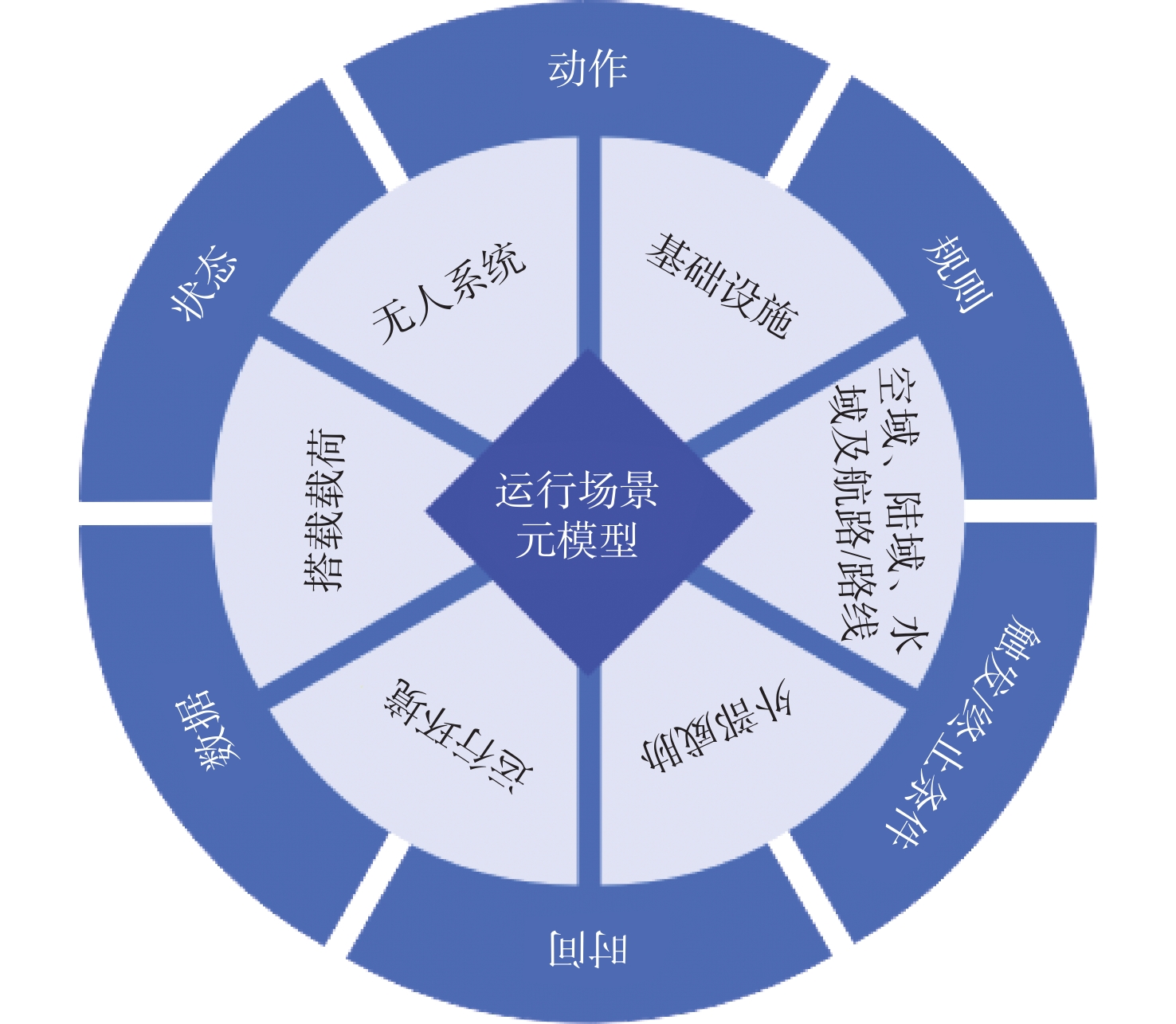
民用无人系统运行场景是全空间无人体系及低空经济产业价值的汇聚地,是推动新产业规模化发展的关键,同时作为典型的复杂体系,具有边界动态、多级涌现、利益权衡、持续演化等特征,必须按照体系工程的新思维开展架构设计,确保体系安全、高效运行。通过对民用无人系统运行场景架构设计与建模技术研究,提出运行场景“6+6”静动态要素元模型,从能力架构、运行架构、系统架构、标准架构对运行场景进行多视角架构设计和建模,形成一套从要素识别、架构设计到架构建模的完整方法,从而为新型基础设施建设、无人系统研制及选型、政策法规和标准规范的制定提供指导,为无人系统运行场景的搭建和产业体系化发展提供技术支撑。
Abstract:Operational scenarios for civil unmanned systems act as hubs of the industrial value of all-space unmanned system and low-altitude economy, playing a crucial role in scaling up new industries. This typical complex system features dynamic boundaries, multi-level emergence, balanced stakeholder interests, and continuous evolution. Modern systems engineering principles must be used in the design of such systems' architecture to guarantee their safe and effective operation. Our research into the architecture design and modeling of civil unmanned system scenarios produced a "6+6" meta-model, capturing static and dynamic elements. In addition to developing a thorough process that covers everything from element identification to architecture design and modeling, we created a multi-perspective architecture design and modeling including capability, operational, system, and standard architectures. This approach not only provides guidance for the construction of new infrastructure, the research, development, and selection of unmanned systems, and the formulation of policy and standard creation, but also concurrently offers technical support for the establishment of unmanned system operation scenarios and the systematic development of the related industry.
-
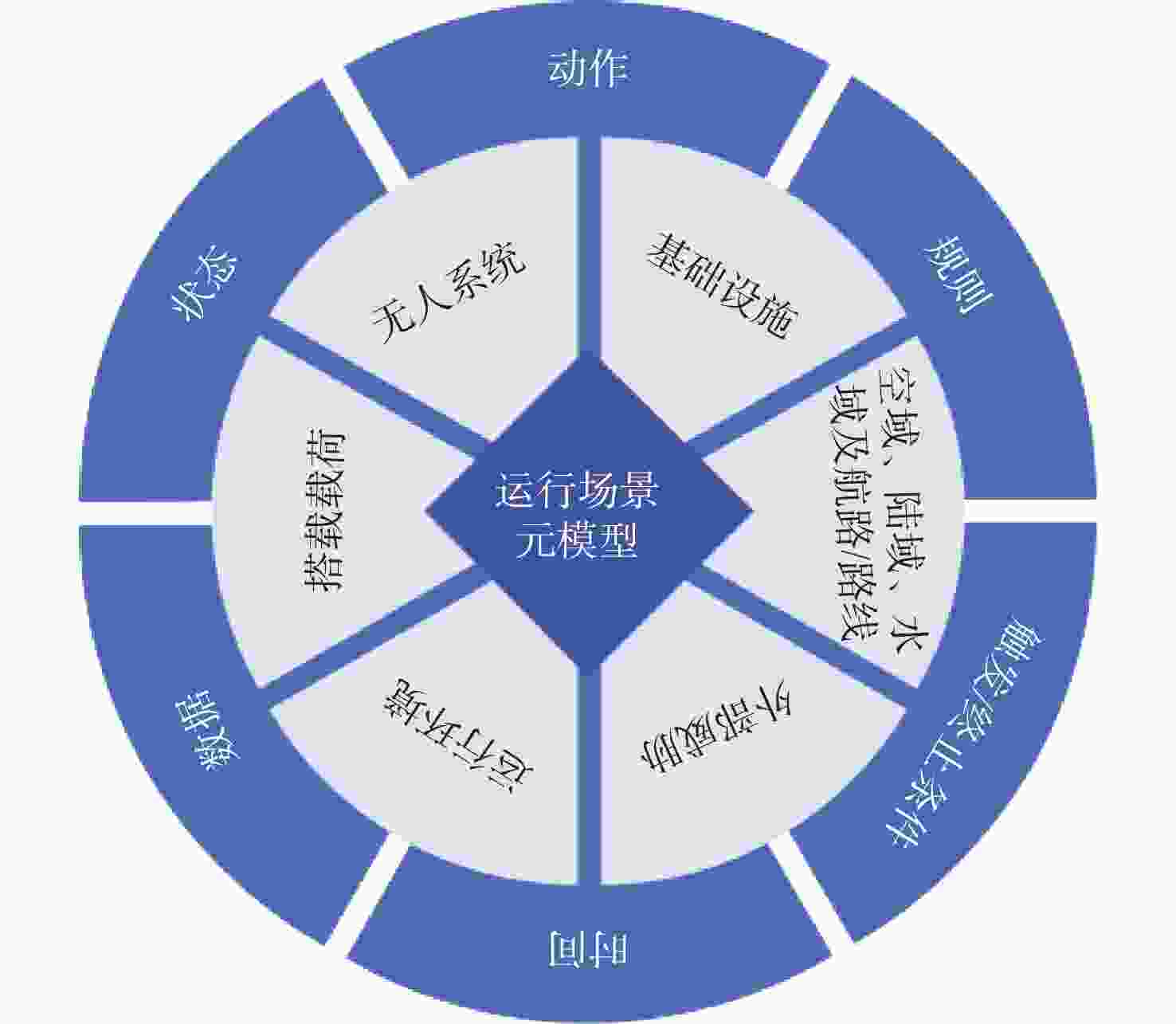
图 1 无人系统运行场景要素元模型
Figure 1. Element meta-model of unmanned systems operational scenarios
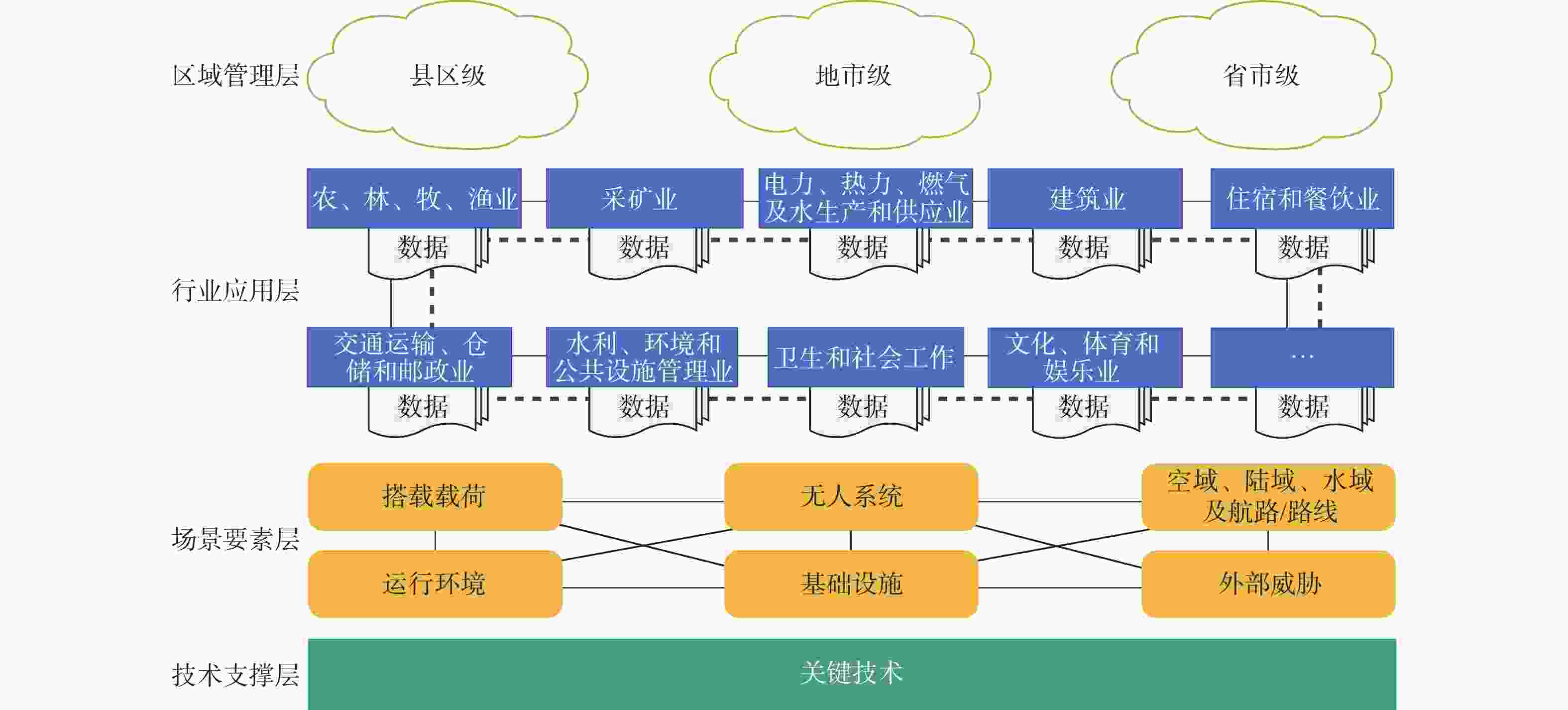
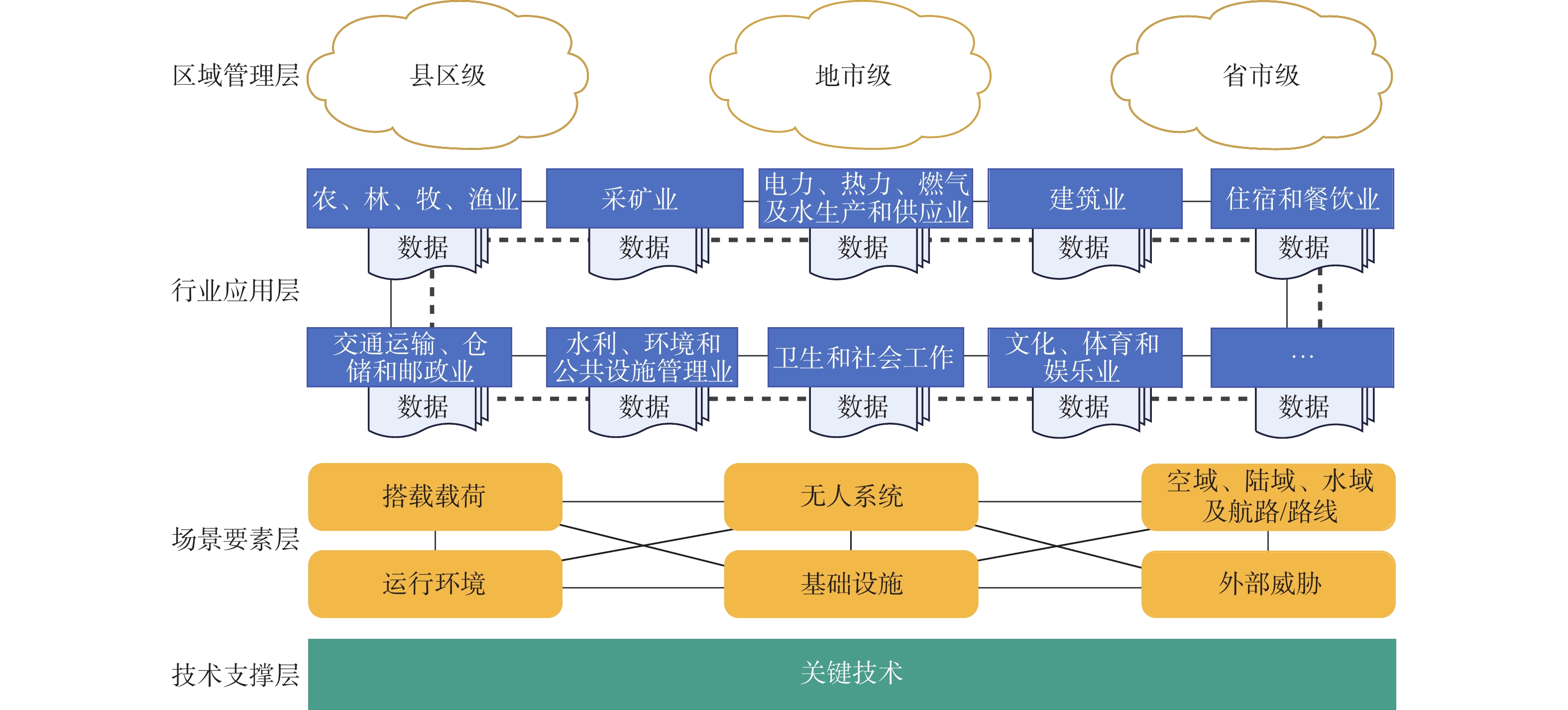
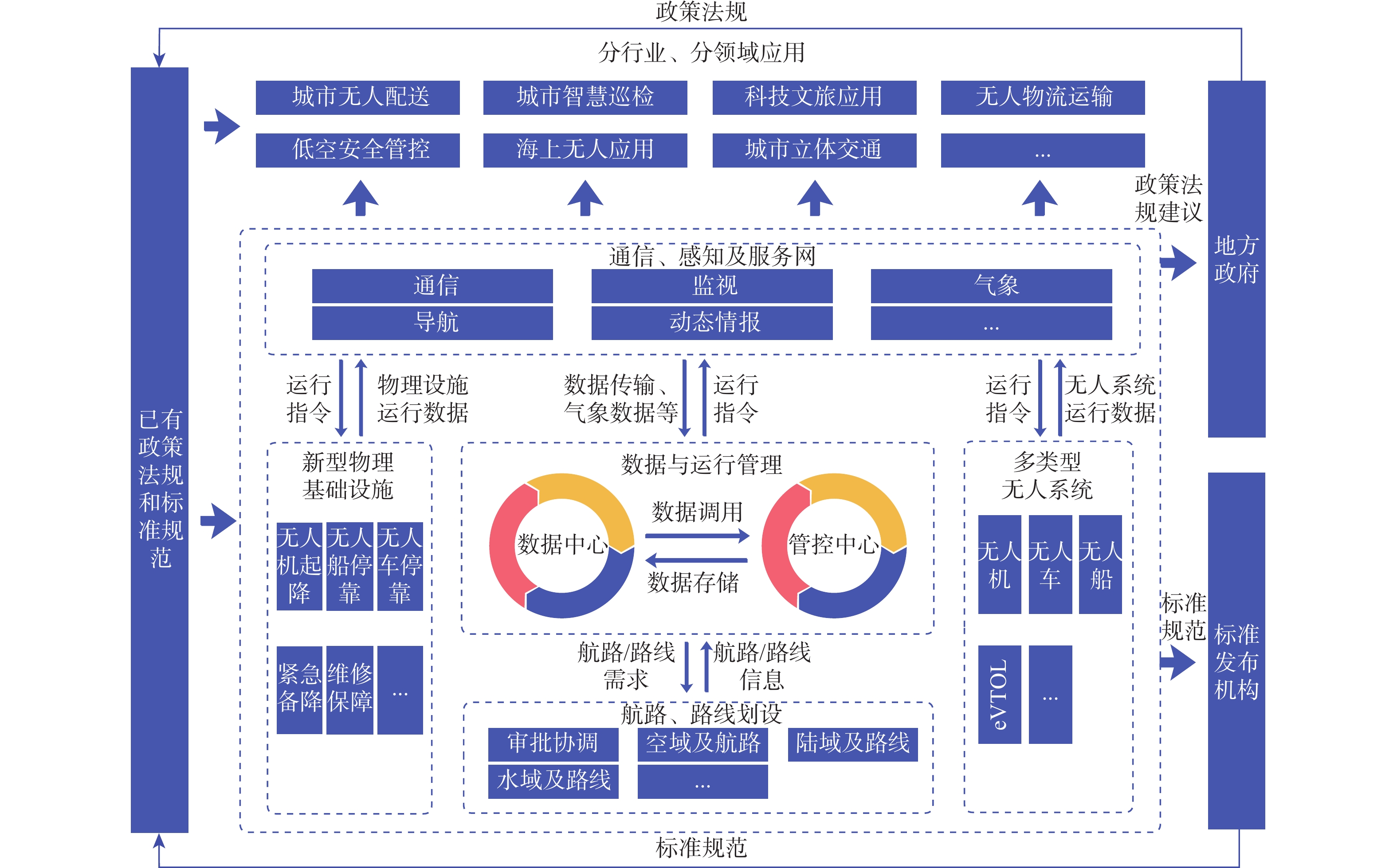
图 2 区域发展视角下运行场景框架
Figure 2. Framework of operational scenarios from perspective of regional development
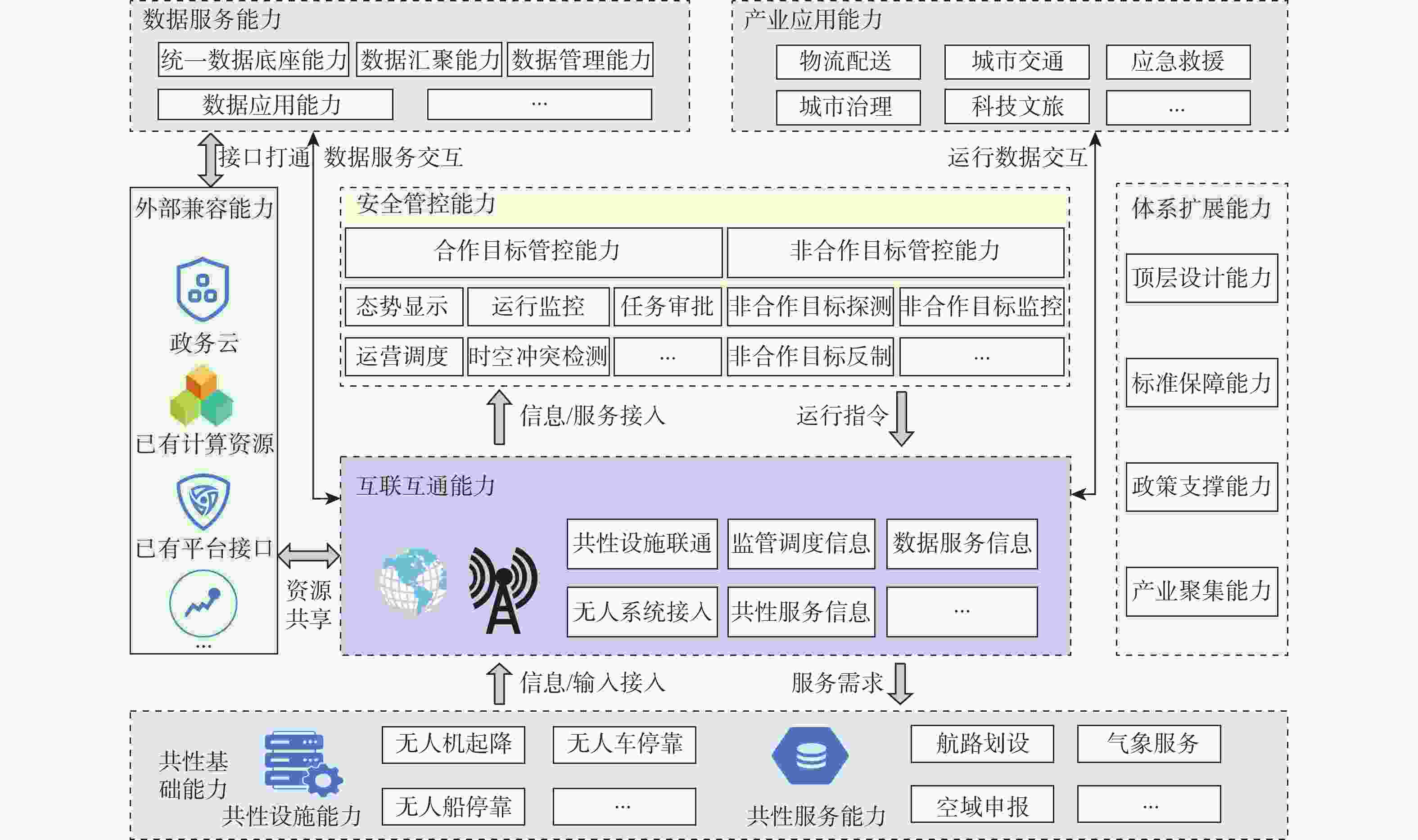
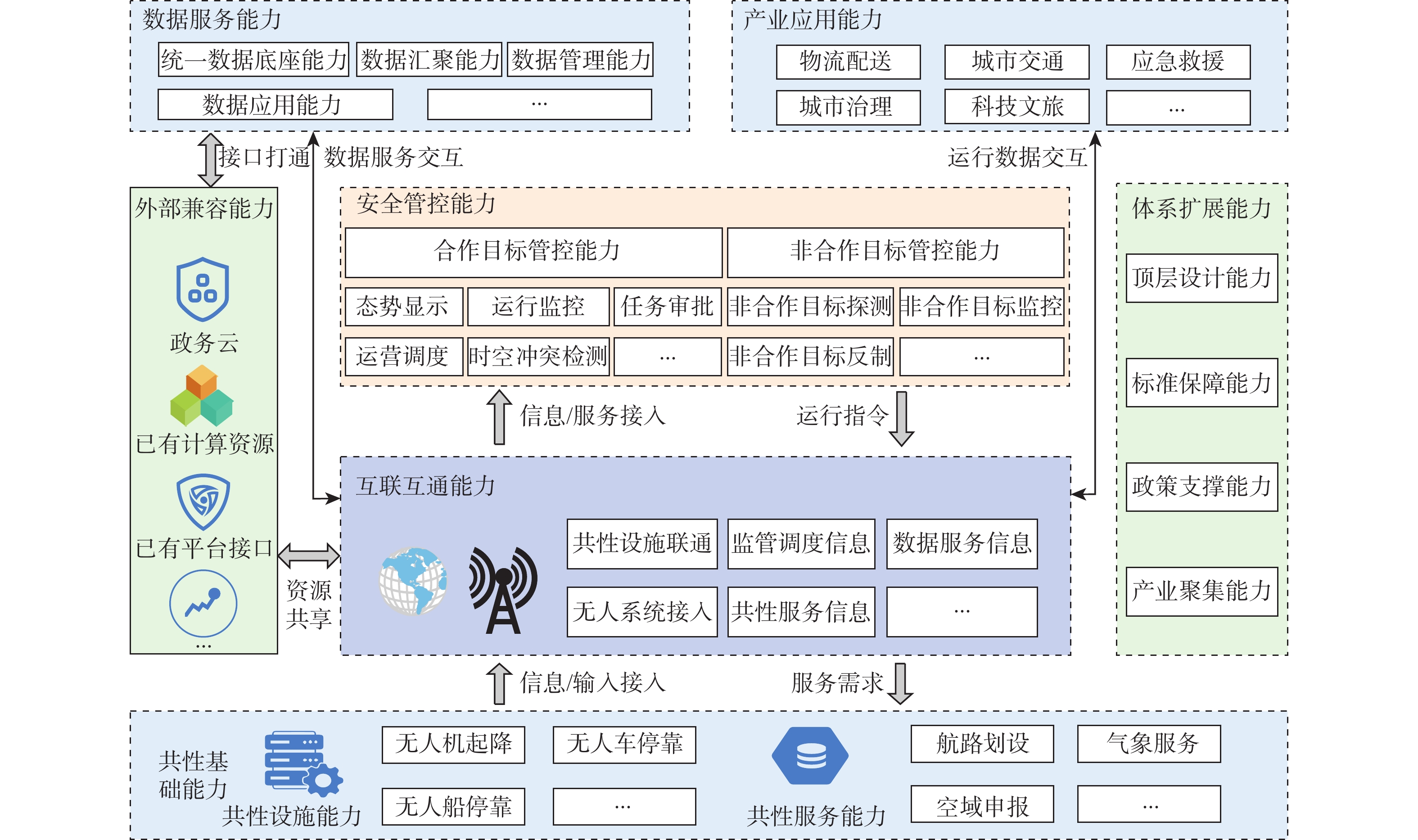
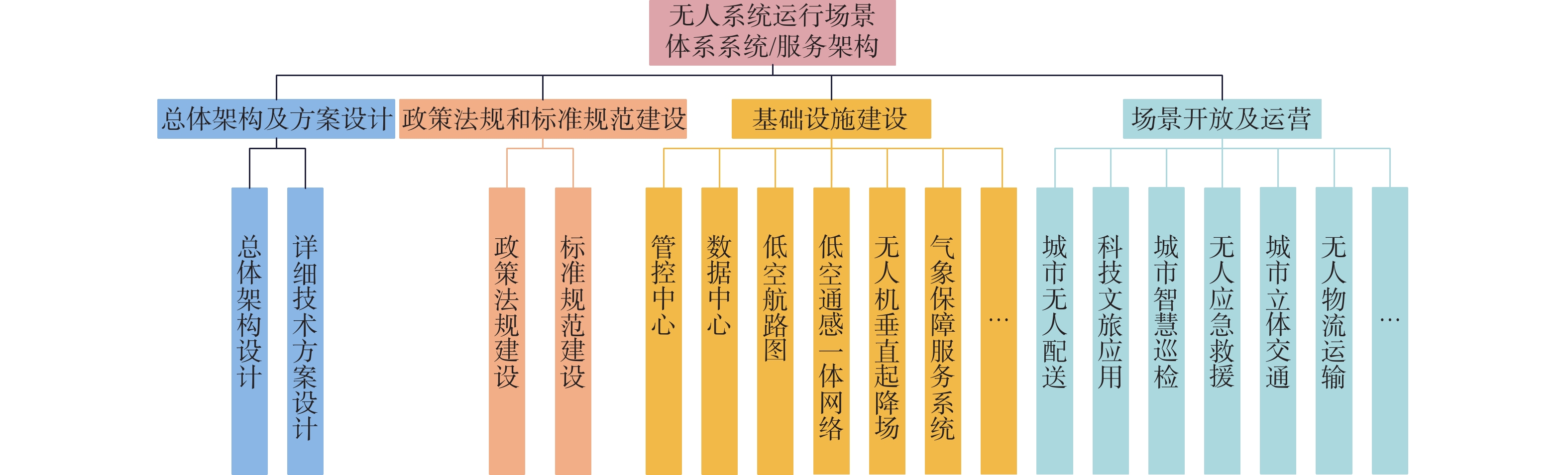
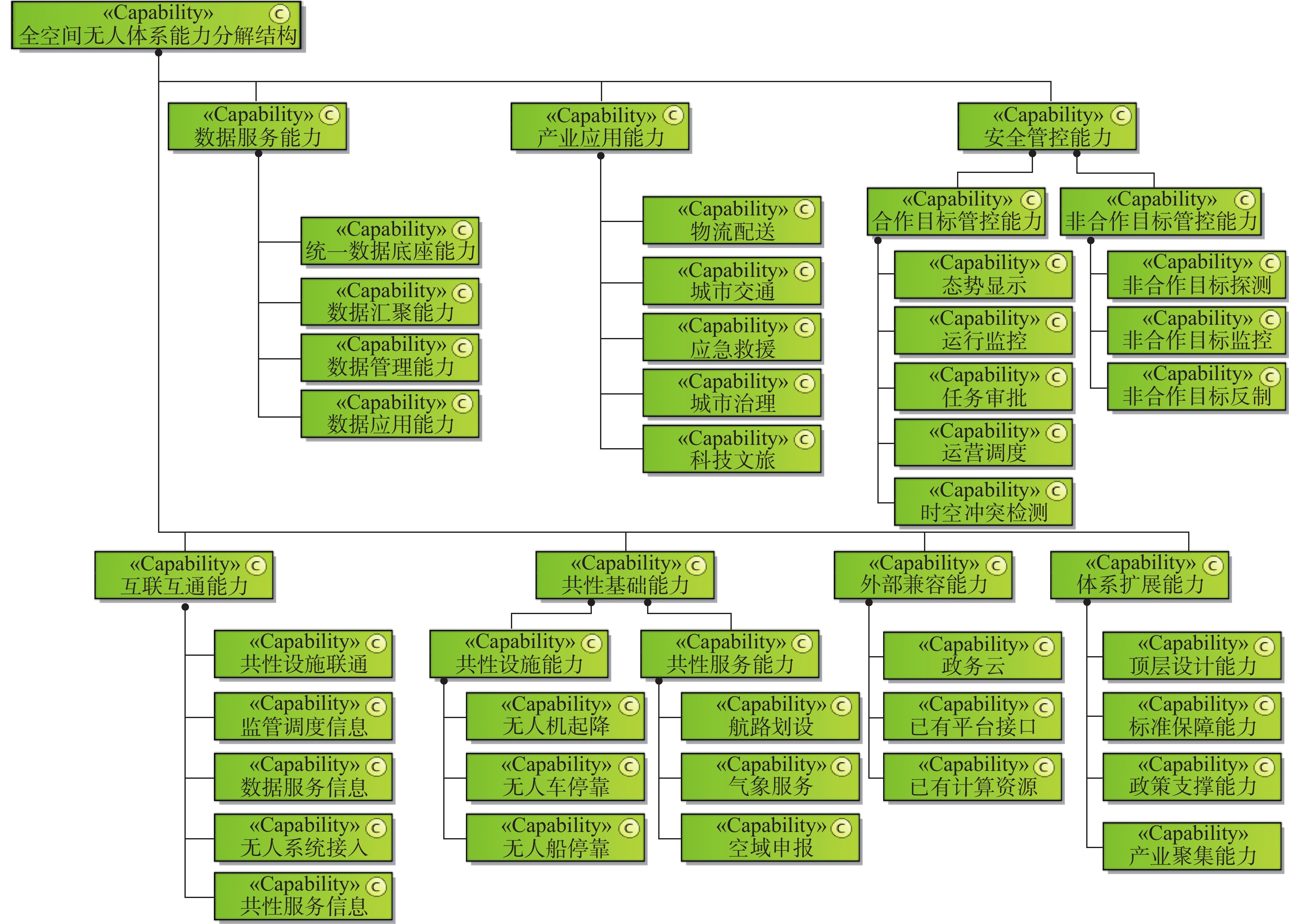
图 4 无人系统运行场景能力架构
Figure 4. Capability architecture of unmanned systems operational scenarios
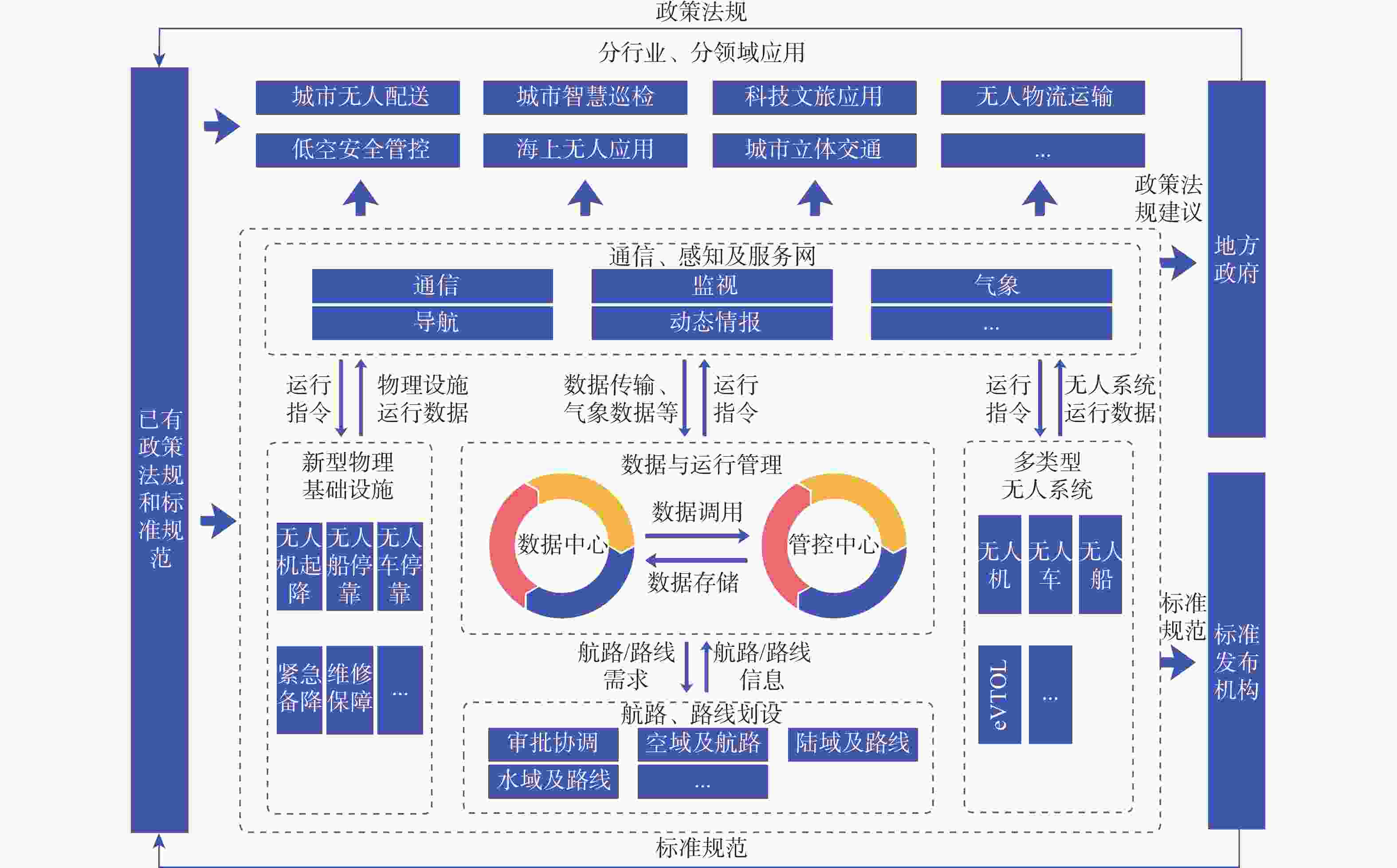
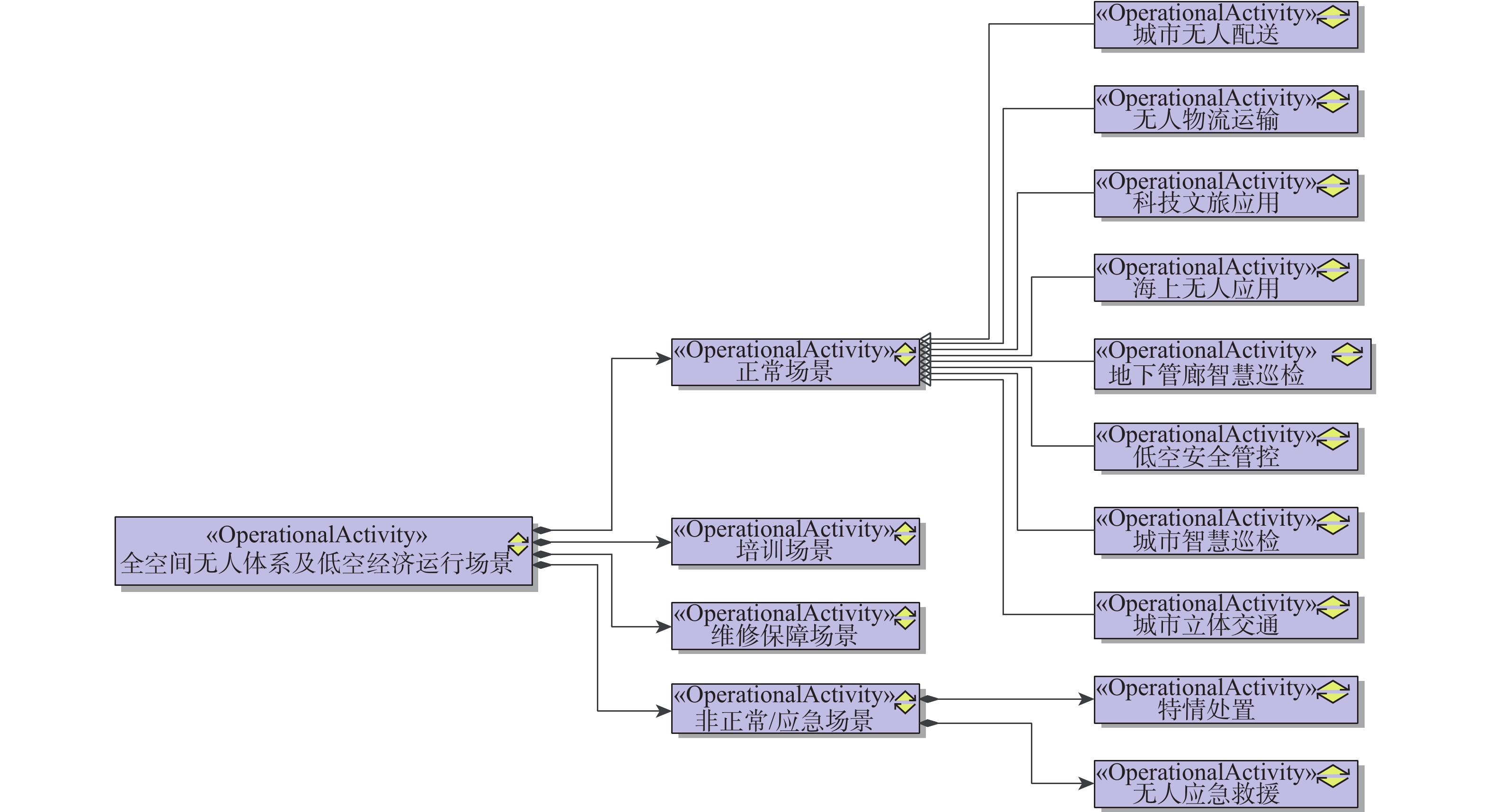
图 5 无人系统运行场景运行架构
Figure 5. Operational architecture of unmanned systems operational scenarios
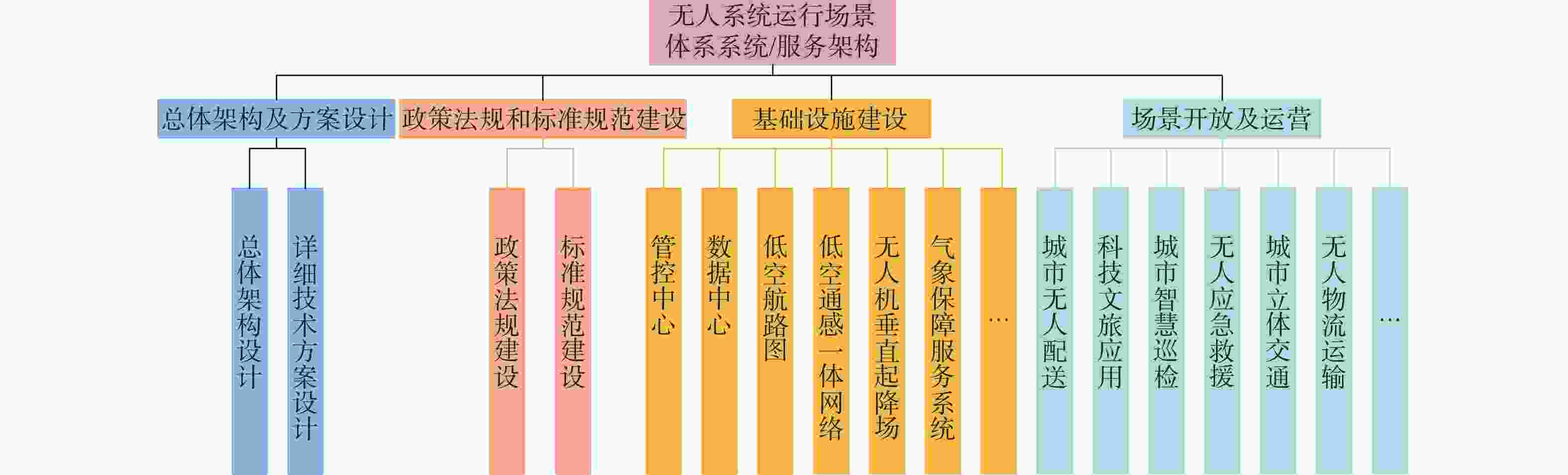
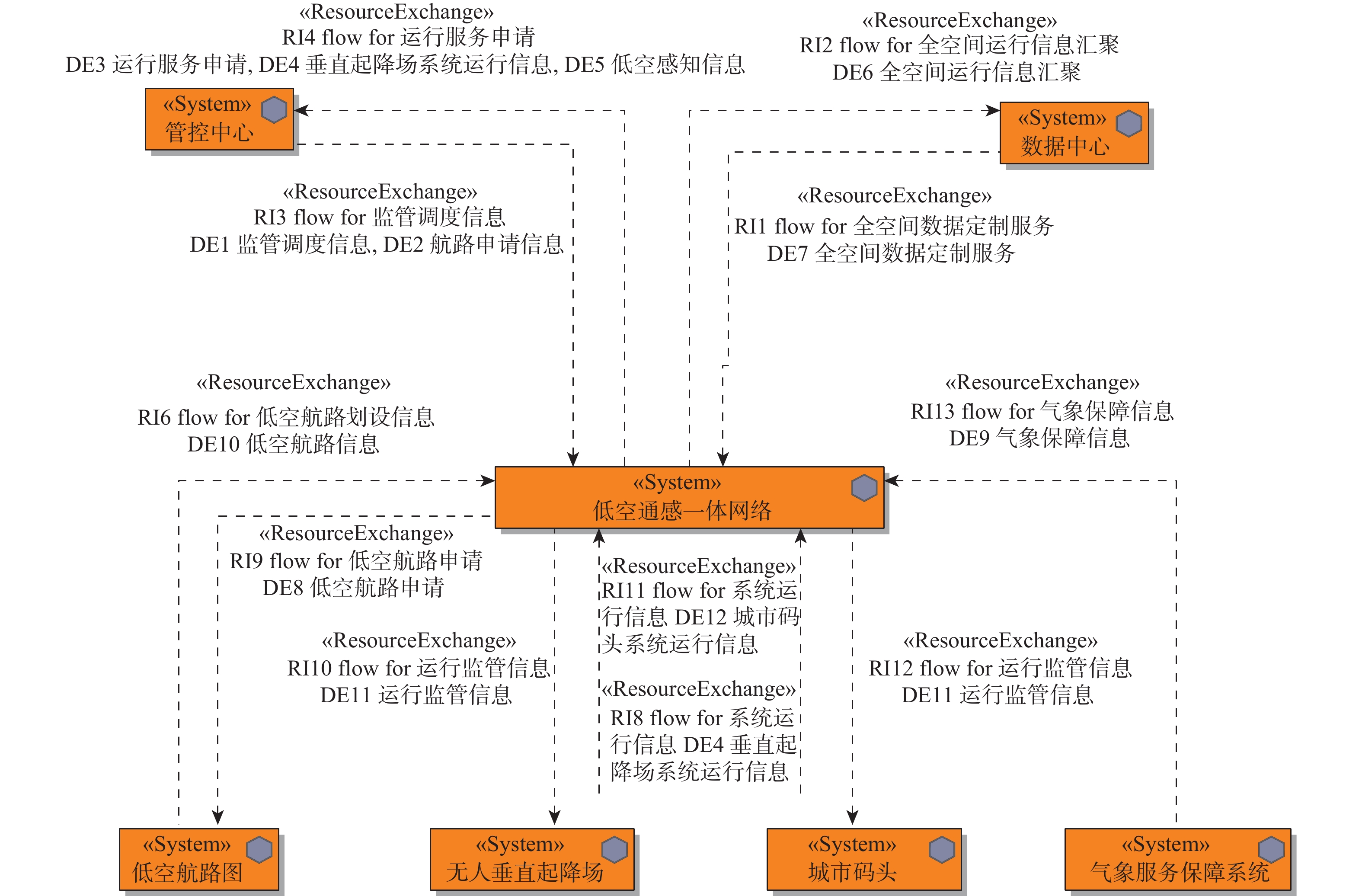
图 6 无人系统运行场景系统架构
Figure 6. Systems architecture of unmanned systems operational scenarios
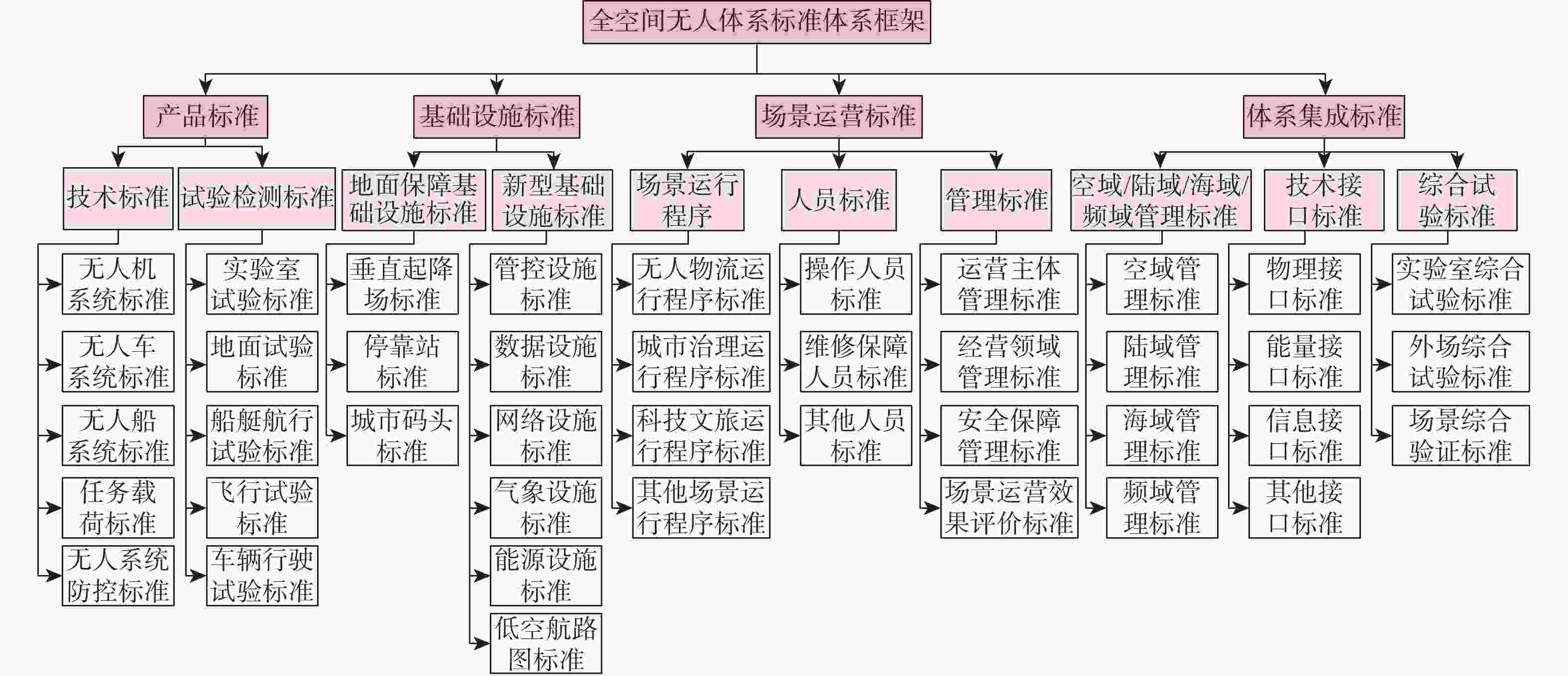
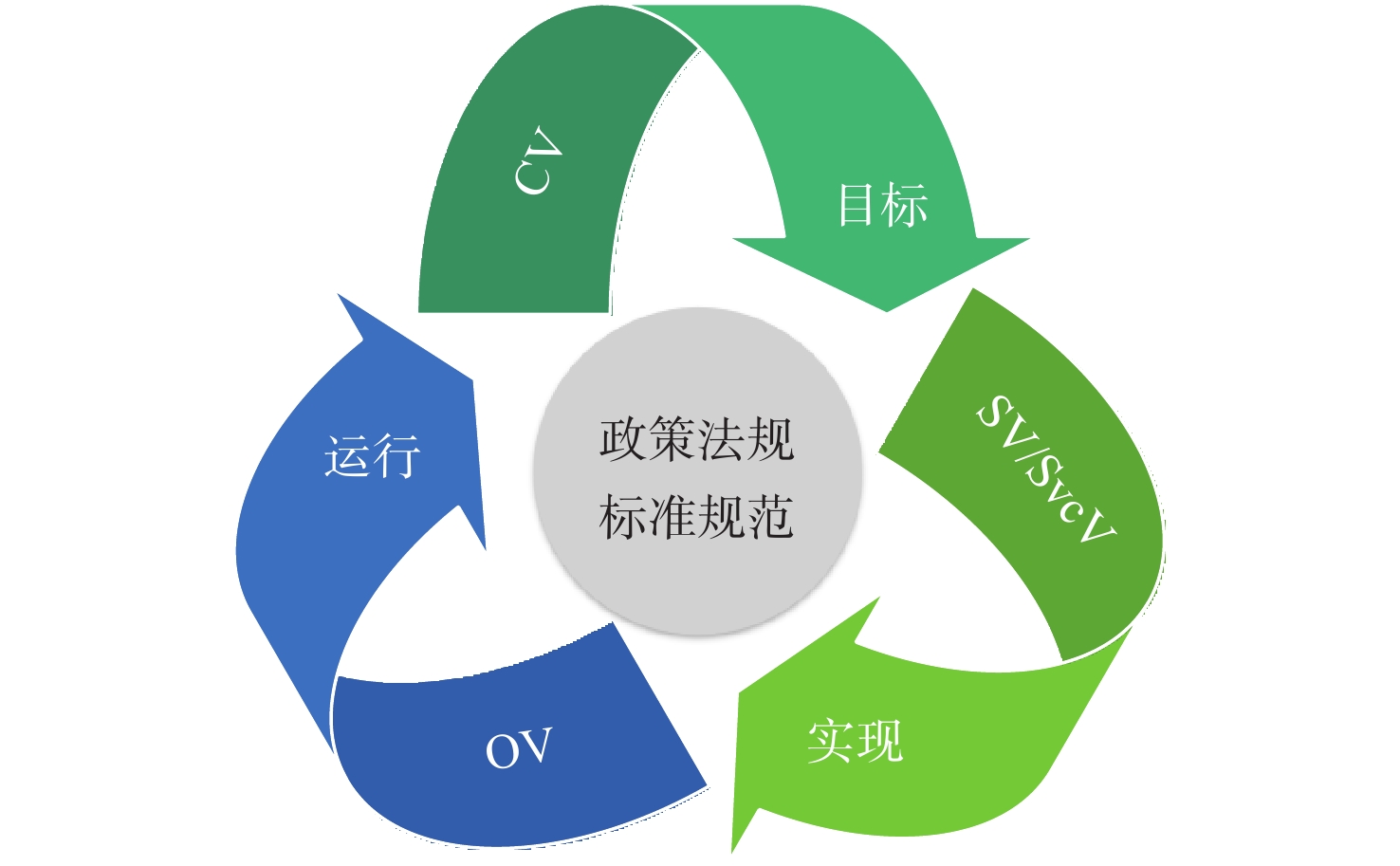
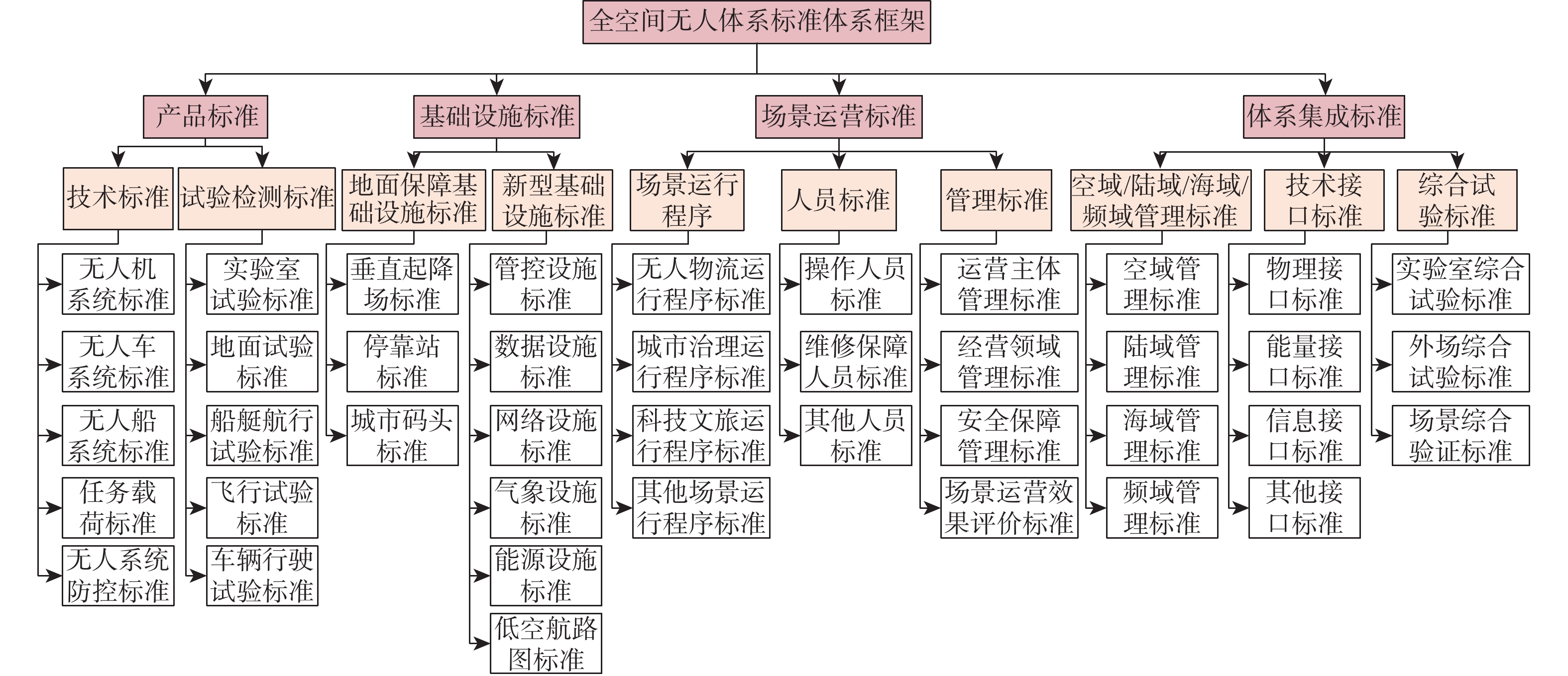
图 7 无人系统运行场景标准架构
Figure 7. Standards architecture of unmanned systems operational scenarios
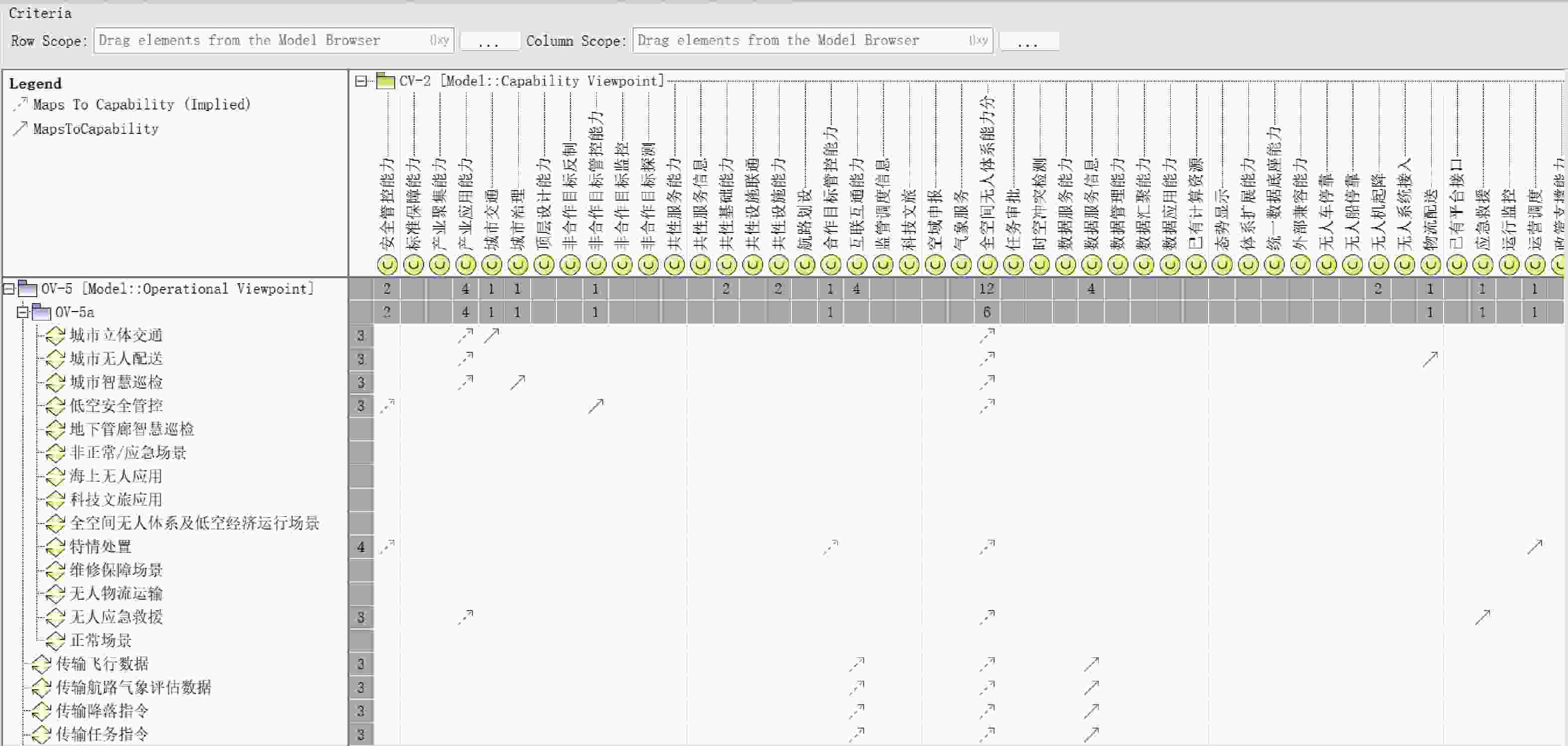
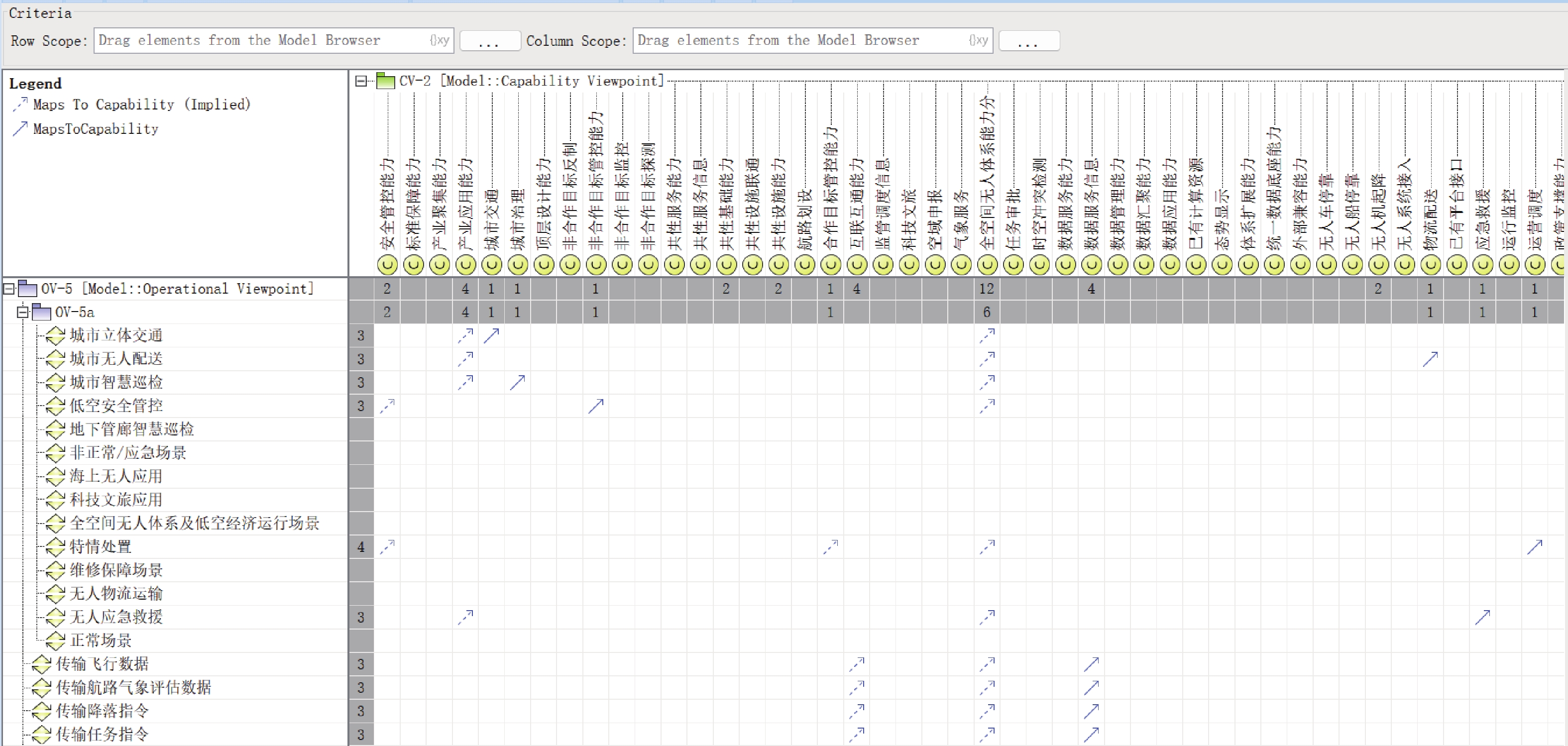
图 10 体系能力与运行活动关联(CV-6)
Figure 10. Traceability matrix of systems of systems capabilities and operational activities(CV-6)
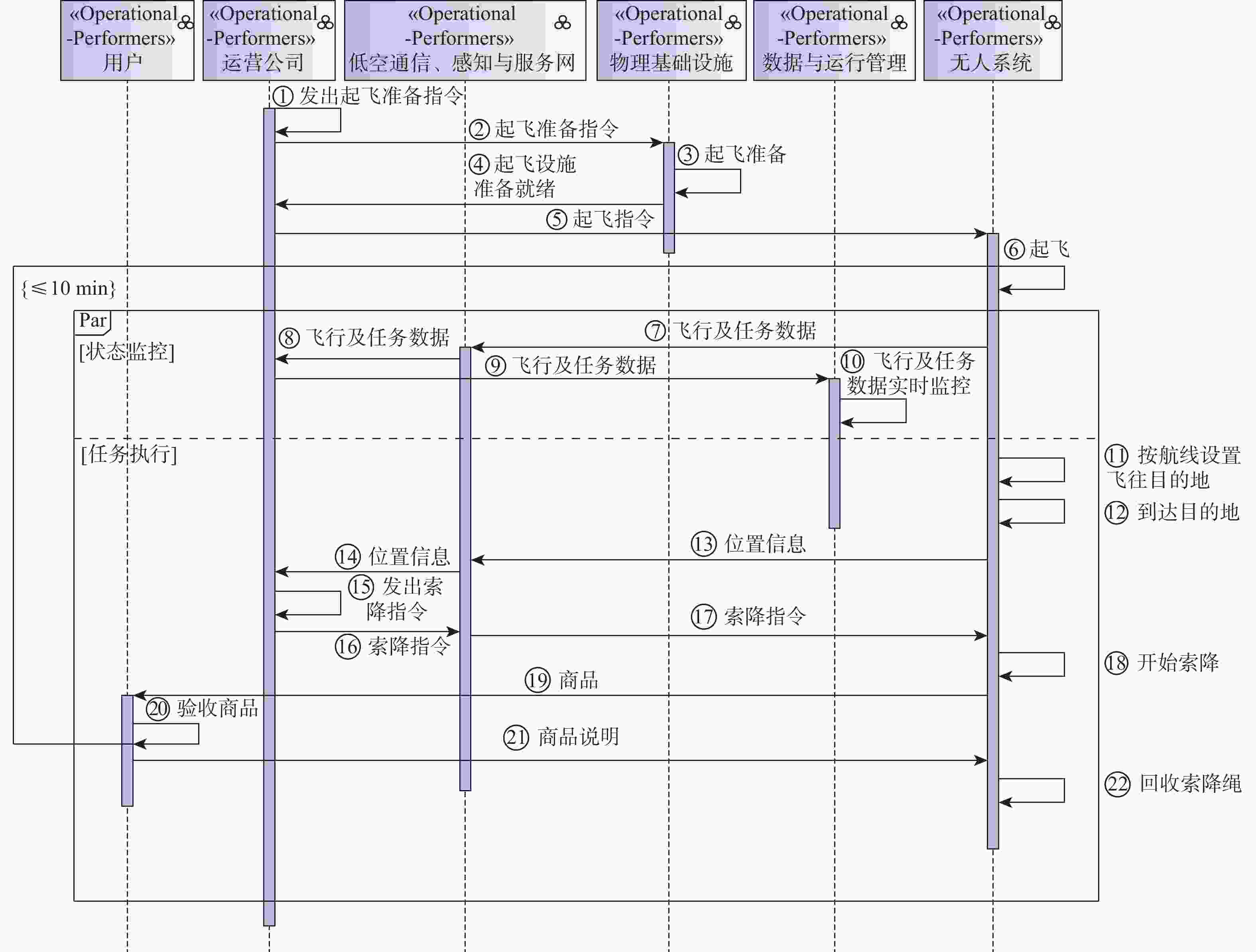
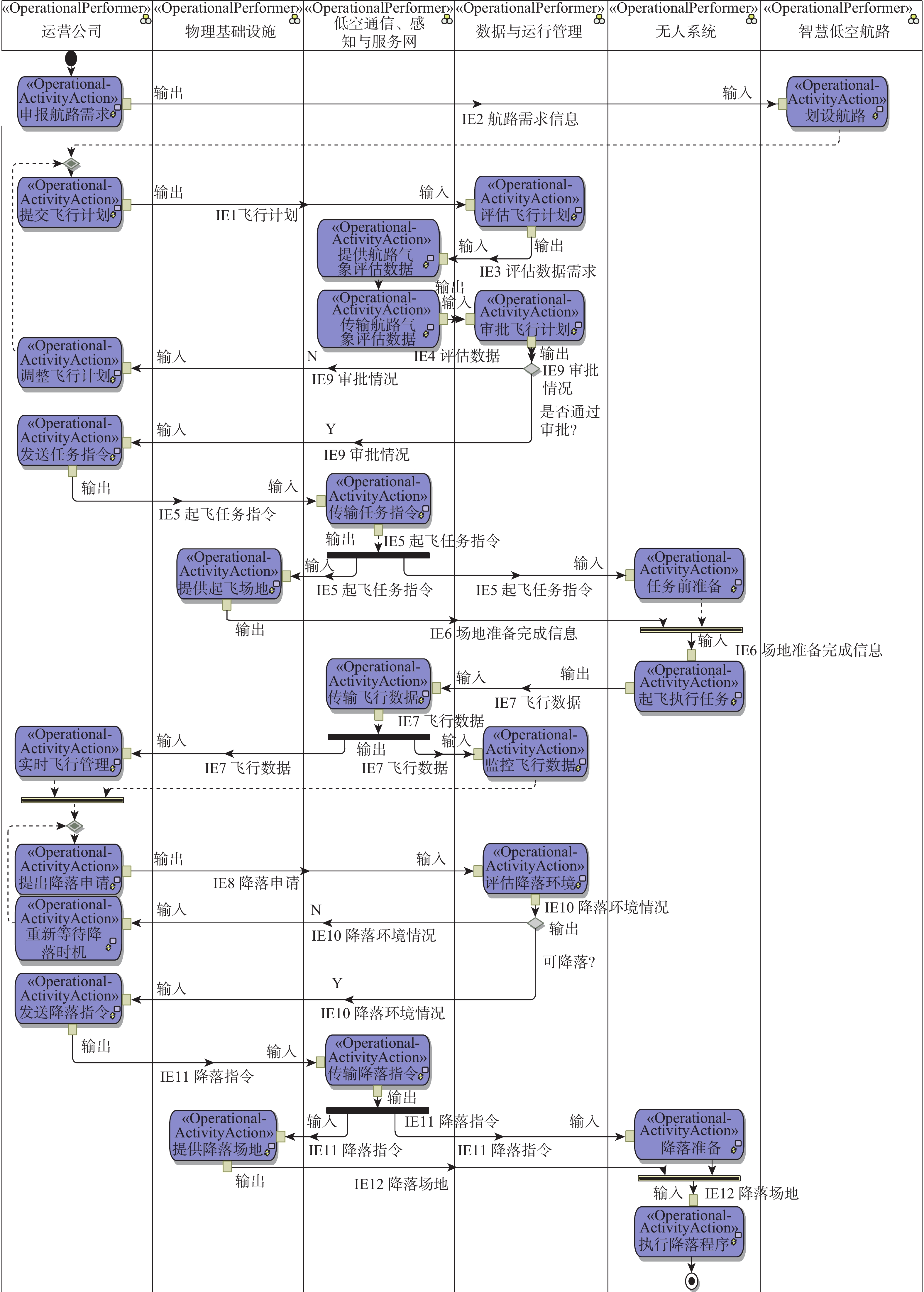
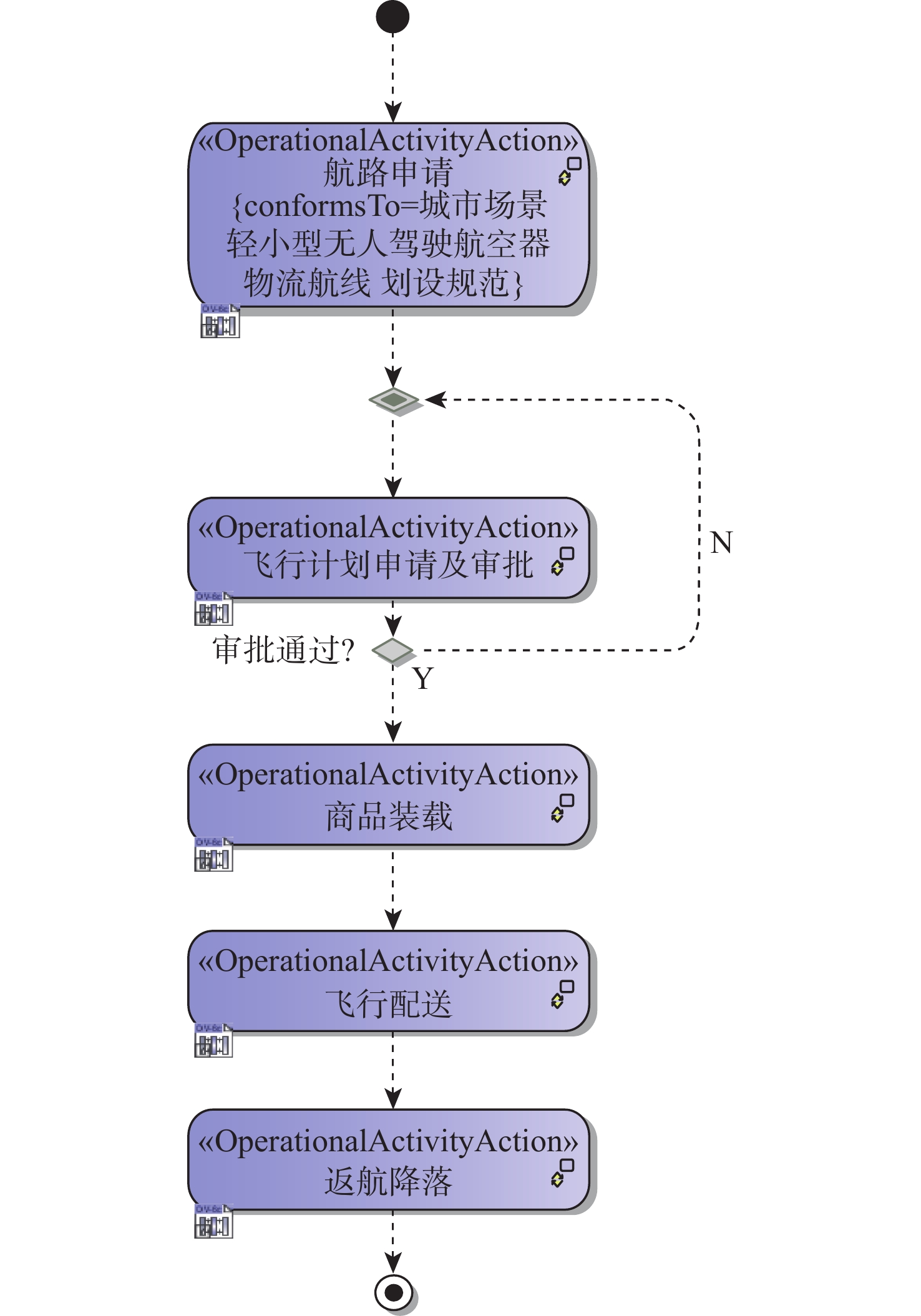
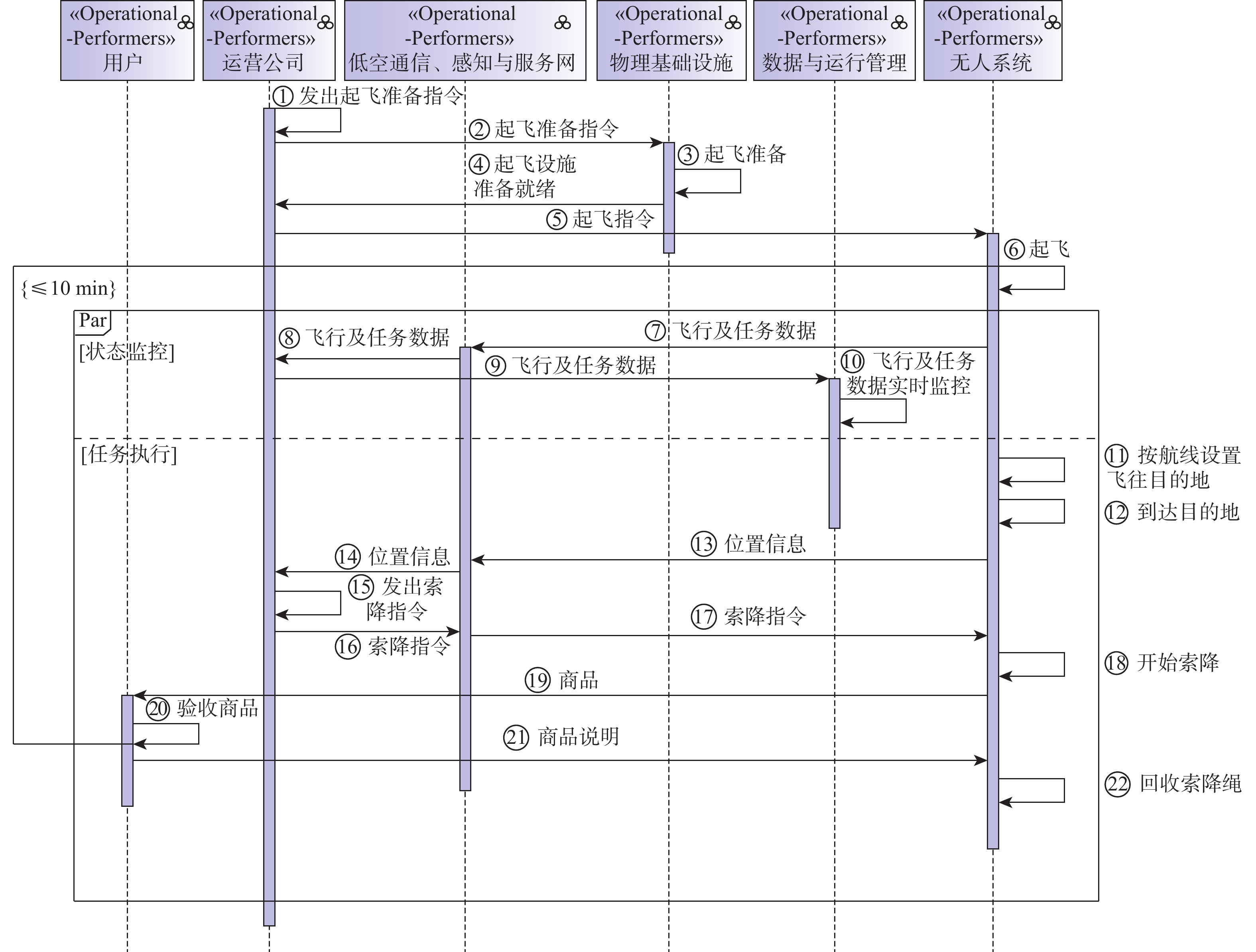
图 14 无人配送场景详细行为描述(OV-6c)
Figure 14. Detailed behavioural description for unmanned delivery scenario(OV-6c)
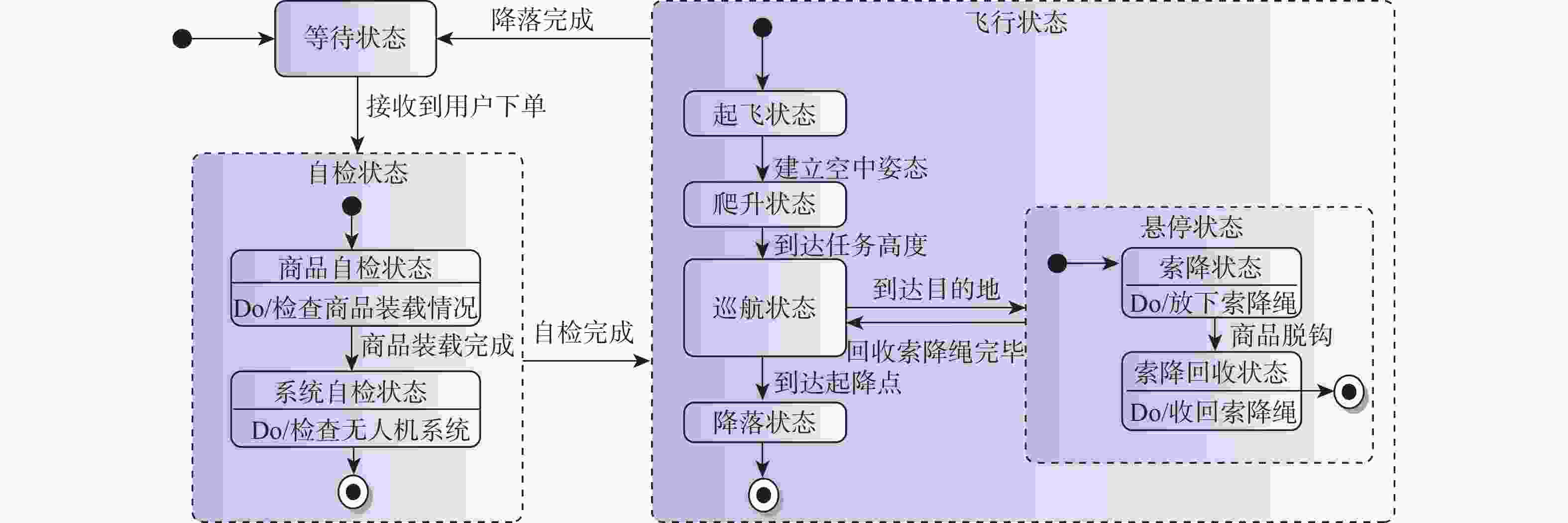
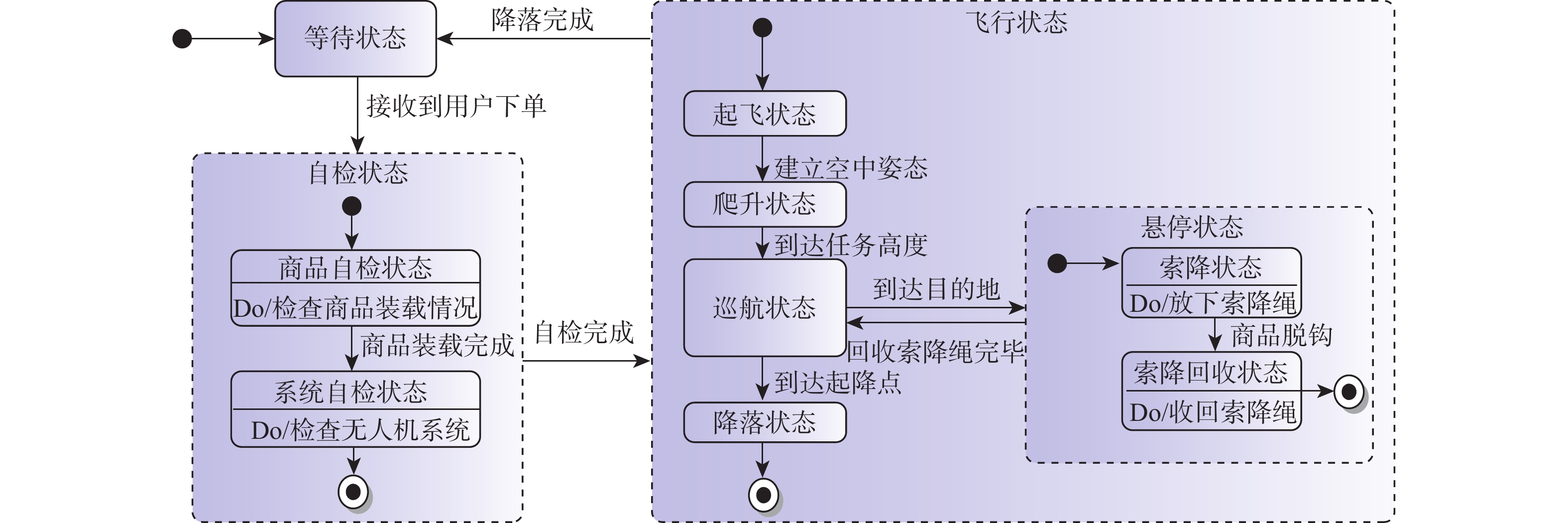
图 15 无人配送场景状态转移描述(OV-6b)
Figure 15. State transition description for unmanned delivery scenarios(OV-6b)
-
[1] 中共中央办公厅, 国务院办公厅. 关于完善市场准入制度的意见[EB/OL]. (2024-08-01)[2025-06-02]. https://www.qstheory.cn/yaowen/2024-08/21/c_1130194466.htm.Opinions of the General Office of the Central Committee of the Communist Party of China , the General Office of the State. Council on improving the market access system[EB/OL]. (2024-08-01)[2025-06-02]. https://www.qstheory.cn/yaowen/2024-08/21/c_1130194466.htm(in Chinese). [2] 中国信息协会低空经济分会. 低空经济发展报告(2024-2025)[R]. 北京: 中国信息协会低空经济分会, 2025: 28-38.Low-altitude Economy Branch of the China Information Industry Association. Low-altitude economic development report (2024-2025)[R]. Beijing: Low-altitude Economy Branch of the China Information Industry Association, 2025: 28-38(in Chinese). [3] 欧阳桃花. 低空经济的技术创新与场景创新[J]. 人民论坛·学术前沿, 2024(15): 57-68.Ouyang T H. Technological innovation and scenario innovation of low-altitude economy[J]. Frontiers, 2024(15): 57-68(in Chinese). [4] 欧阳桃花, 郑舒文. 基于共同演化的低空经济产业生态策略研究: 以 “低空航空器+” 为例[J]. 北京航空航天大学学报(社会科学版), 2024, 37(5): 109-119.Ouyang T H, Zheng S W. Industrial ecological strategies of low-altitude economy based on co-evolution: taking “low-altitude aircraft+” as an example[J]. Journal of Beijing University of Aeronautics and Astronautics (Social Sciences Edition), 2024, 37(5): 109-119(in Chinese). [5] 张晓兰. 我国低空经济发展面临的问题与政策建议[EB/OL]. (2024-12-30)[2025-06-10]. http://www.ndrc.gov.cn/wsdwhfz/202412/t20241230_1395328_ext.html.Zhang X L. The issues and policy recommendations regarding the development of the low-altitude economy in our country[EB/OL]. (2024-12-30)[2025-06-10]. http://www.ndrc.gov.cn/wsdwhfz/202412/t20241230_1395328_ext.html(in Chinese). [6] 张夏恒. 新质生产力背景下低空经济高质量发展的机理与路径[J]. 苏州大学学报(社会科学版), 2025, 46(1): 112-122.Zhang X H. Research on the mechanism and path of high-quality development of low-altitude economy under the background of new-quality productivity[J]. Journal of Soochow University (Philosopy and Social Science Edition), 2025, 46(1): 112-122(in Chinese). [7] 褚鹏, 王军, 刘树光, 等. 基于人工智能技术的低空飞行器管控关键技术研究[J]. 航空兵器, 2023, 30(2): 120-124.Chu P, Wang J, Liu S G, et al. Research on key technologies of low altitude vehicle management and control based on artificial intelligence technology[J]. Aero Weaponry, 2023, 30(2): 120-124(in Chinese). [8] 刘泉, 陈瑶瑶, 洪晓苇, 等. 面向无人机的城市低空空域规划的国际经验[J]. 城市规划学刊, 2024(5): 64-70.Liu Q, Chen Y Y, Hong X W, et al. International experience of urban low altitude airspace planning for drones[J]. Urban Planning Forum, 2024(5): 64-70(in Chinese). [9] Huang C Q, Fang S F, Wu H, et al. Low-altitude intelligent transportation: system architecture, infrastructure, and key technologies[J]. Journal of Industrial Information Integration, 2024, 42: 100694. [10] 廖小罕, 徐晨晨, 叶虎平. 低空经济发展与低空路网基础设施建设的效益和挑战[J]. 中国科学院院刊, 2024, 39(11): 1966-1981.Liao X H, Xu C C, Ye H P. Benefits and challenges of constructing low-altitude air route network infrastructure for developing low-altitude economy[J]. Bulletin of Chinese Academy of Sciences, 2024, 39(11): 1966-1981(in Chinese). [11] Li Z R, Gao Z, Wang K Y, et al. Unauthorized UAV countermeasure for low-altitude economy: joint communications and jamming based on MIMO cellular systems[J]. IEEE Internet of Things Journal, 2025, 12(6): 6659-6672. [12] 李晓华. 政府引导、产业生态构建与低空经济发展[J]. 改革, 2025(2): 21-35.Li X H. Government guidance, construction of industrial ecosystem, and the development of low-altitude economy[J]. Reform, 2025(2): 21-35(in Chinese). [13] 孔得建, 袁泽. 低空经济政策法律体系的现状、经验与展望[J]. 北京航空航天大学学报(社会科学版), 2024, 37(5): 85-95.Kong D J, Yuan Z. Current situation, experience and prospect of the policies and legal system of low-altitude economy[J]. Journal of Beijing University of Aeronautics and Astronautics (Social Sciences Edition), 2024, 37(5): 85-95(in Chinese). [14] 樊一江, 李卫波. 我国低空经济阶段特征及应用场景研究[J]. 中国物价, 2024(4): 98-103.Fan Y J, Li W B. The development stage and application scenarios of China’s low-altitude economy[J]. China Price Journal, 2024(4): 98-103(in Chinese). [15] 庄茁. 人工智能赋能低空经济: 应用场景与未来方向[J]. 人民论坛·学术前沿, 2024(15): 38-44.Zhuang Z. AI empowers low-altitude economy application scenarios and future directions[J]. Frontiers, 2024(15): 38-44(in Chinese). [16] Yang H L, Zheng M T, Shao Z L, et al. Intelligent computation offloading and trajectory planning for 3-D target search in low-altitude economy scenarios[J]. IEEE Wireless Communications Letters, 2025, 14(4): 949-953. [17] 王丹, 罗章松. 低空经济赋能农业新质生产力发展: 角色扮演、现实壁垒与破解之道[J]. 农林经济管理学报, 2025, 24(2): 165-173.Wang D, Luo Z S. Low-altitude economy empowers development of new quality productivity in agriculture: role playing, realistic barriers and solutions[J]. Journal of Agro-Forestry Economics and Management, 2025, 24(2): 165-173(in Chinese). [18] 李晓华. 以应用场景创新推动低空经济发展[J]. 中国军转民, 2024(23): 3.Li X H. Promoting the development of low-altitude economy through application scenario innovation[J]. Defence Industry Conversion in China, 2024(23): 3(in Chinese). [19] 王灿, 郭齐胜, 穆歌, 等. 军事领域体系结构研究综述[J]. 火力与指挥控制, 2023, 48(2): 1-11.Wang C, Guo Q S, Mu G, et al. Review of system of systems architecture research in military domain[J]. Fire Control & Command Control, 2023, 48(2): 1-11(in Chinese). [20] IEEE Computer Society. IEEE standard for information technology-Protocols for distributed interactive simulation applications—Entity information and interaction: IEEE 1278-1993[S]. Piscataway: IEEE Press, 1993. [21] Durak U, Topçu O, Siegfried R, et al. Scenario development: a model-driven engineering perspective[C]//Proceedings of the 4th International Conference on Simulation and Modeling Methodologies, Technologies and Applications. Piscataway: IEEE Press, 2014: 117-124. [22] NATO Science and Technology Organization. Rapid scenario generation for simulation applications[EB/OL]. (2023-07-04)[2025-06-09]. https://www.sto.nato.int/document/rapid-scenario-generation-for-simulation-applications/. [23] ISO/IEC/IEEE. Systems and software engineering—Life cycle processes—Requirements engineering: ISO/IEC/IEEE 29148: 2018(E) [S]. Piscataway: IEEE Press, 2018: 1-104. [24] Society of Automotive Engineers. Guidelines for development of civil aircraft and systems: ARP4754B[S]. Washington, D. C.: Society of Automotive Engineers, 2023: 1-172. [25] 卢方周, 闫坤, 李文宇, 等. 低空经济总体架构与提升路径[J]. 信息通信技术与政策, 2024, 50(11): 2-10.Lu F Z, Yan K, Li W Y, et al. Overall architecture and enhancement pathways of low-altitude economy[J]. Information and Communications Technology and Policy, 2024, 50(11): 2-10(in Chinese). [26] 江雨航, 郭泰, 宫綦, 等. 民用飞机应急场景分析与建模方法[J]. 北京航空航天大学学报, 2024, 50(3): 839-849.Jiang Y H, Guo T, Gong Q, et al. Analysis and modeling method of civil aircraft emergency scenario[J]. Journal of Beijing University of Aeronautics and Astronautics, 2024, 50(3): 839-849(in Chinese). -

 下载:
下载:


 点击查看大图
计量
- 文章访问数: 226
- HTML全文浏览量: 147
- PDF下载量: 9
- 被引次数: 0
