





Triggering and detection of pilot-induced oscillations in boundary avoidance-tracking tasks
-
摘要:
飞行员诱发振荡(PIO)是导致直升机事故的核心因素之一,其诱发机理与人机耦合系统的动力学特性密切相关。基于边界规避-追踪(BAT)理论模型,构建了创新的多任务飞行模拟实验平台,通过输入配置和边界难度2个关键触发因素的参数化调控,系统分析其对任务绩效及PIO现象的作用。实验结果表明:所设计的触发参数可有效诱发被试者行为的改变,进而影响其任务绩效和PIO特征响应,且改进的能量保持小波变换(PPWT)检测方法相较于传统相位-侵略性准则(PAC)方法和Klyde的小波变换方法具有更优的识别性能。研究结果改进了BAT任务框架下的PIO研究范式,提出的“触发-检测”实验和方法为直升机人机耦合现象的研究提供了新的技术路径。
Abstract:Pilot-induced oscillation (PIO) represents a critical human factor contributing to rotorcraft accidents. Its triggering mechanism is intrinsically linked to the dynamic characteristics of the rotorcraft-pilot coupling (RPC) system. An innovative multi-task flight simulation experimental platform was constructed based on the boundary avoidance-tracking (BAT) theoretical model. The impacts of two important triggering factors—input configuration and border difficulty—on task performance and the PIO phenomenon were methodically examined using parametric control. Experimental results demonstrate that the designed triggering parameters effectively induced behavioral changes in subjects, thereby affecting their task performance and PIO characteristic responses. Additionally, compared to conventional techniques like the phase-aggression criteria (PAC) method and the Klyde’s wavelet transform approach, the improved power-preserving wavelet transform (PPWT) detection method suggested in this study shown better recognition performance. This research refines the PIO research paradigm under the BAT task framework. The proposed “trigger-detection” experimental approach and methodology provide a novel technological pathway for investigating RPC phenomena.
-
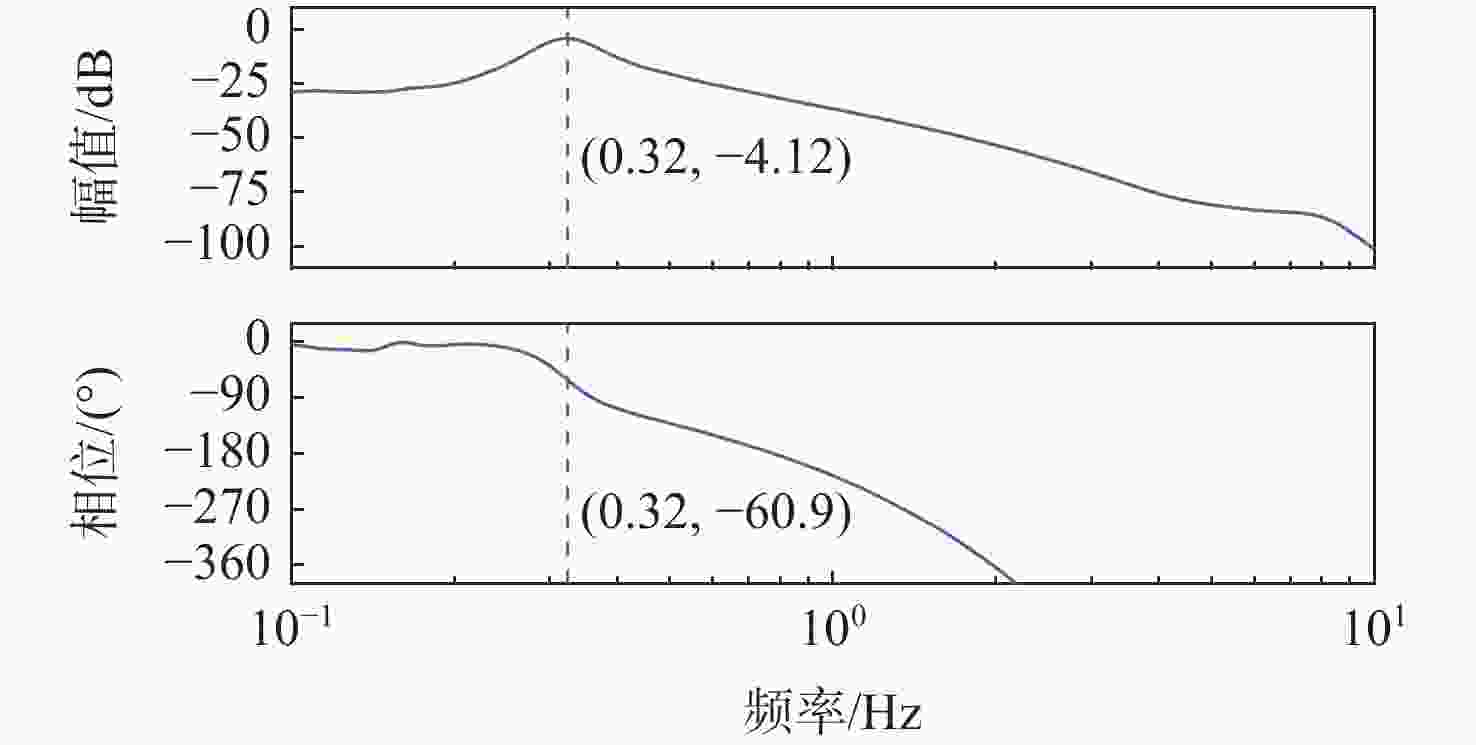
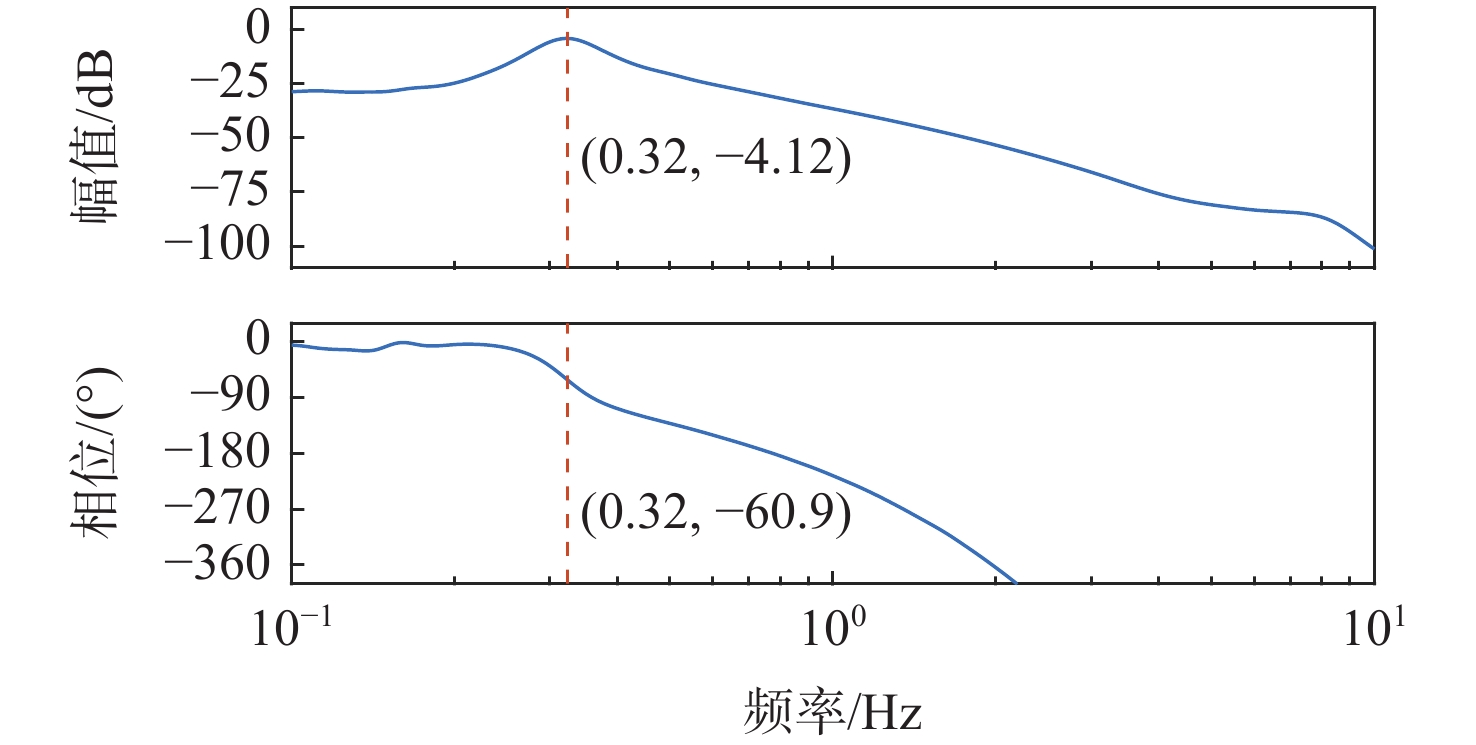
图 11 被控对象的幅频相频特性曲线
Figure 11. Amplitude-frequency and phase-frequency characteristic curves of the controlled element
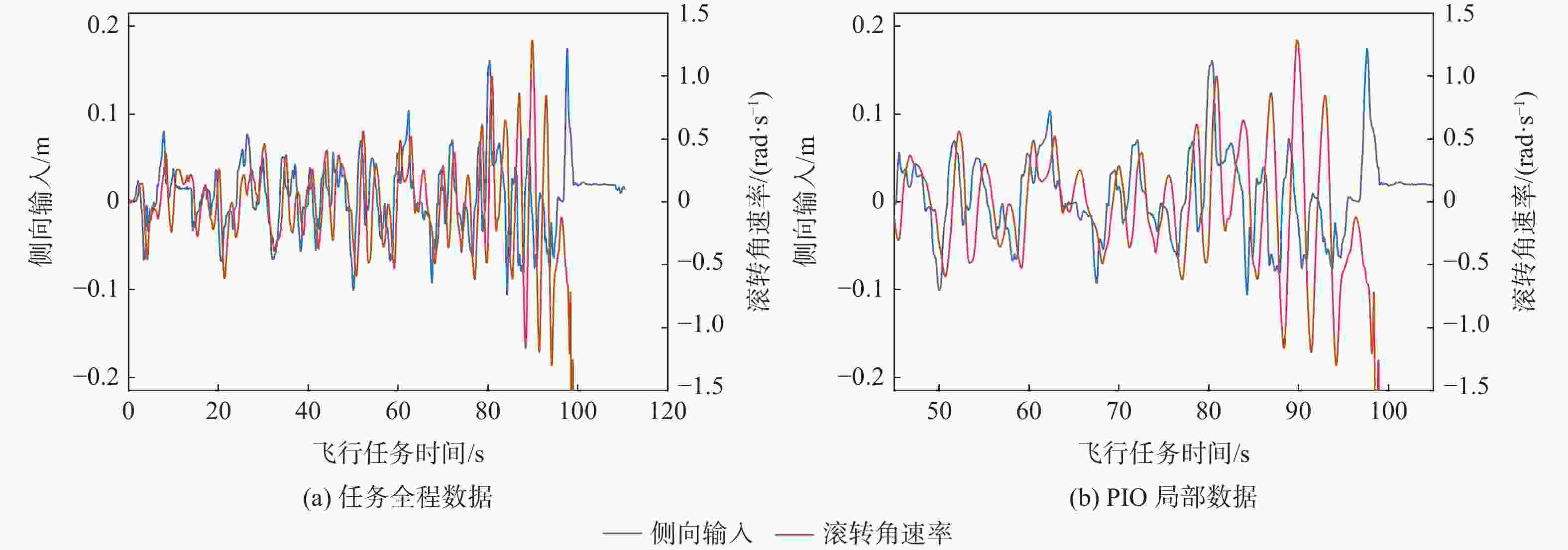
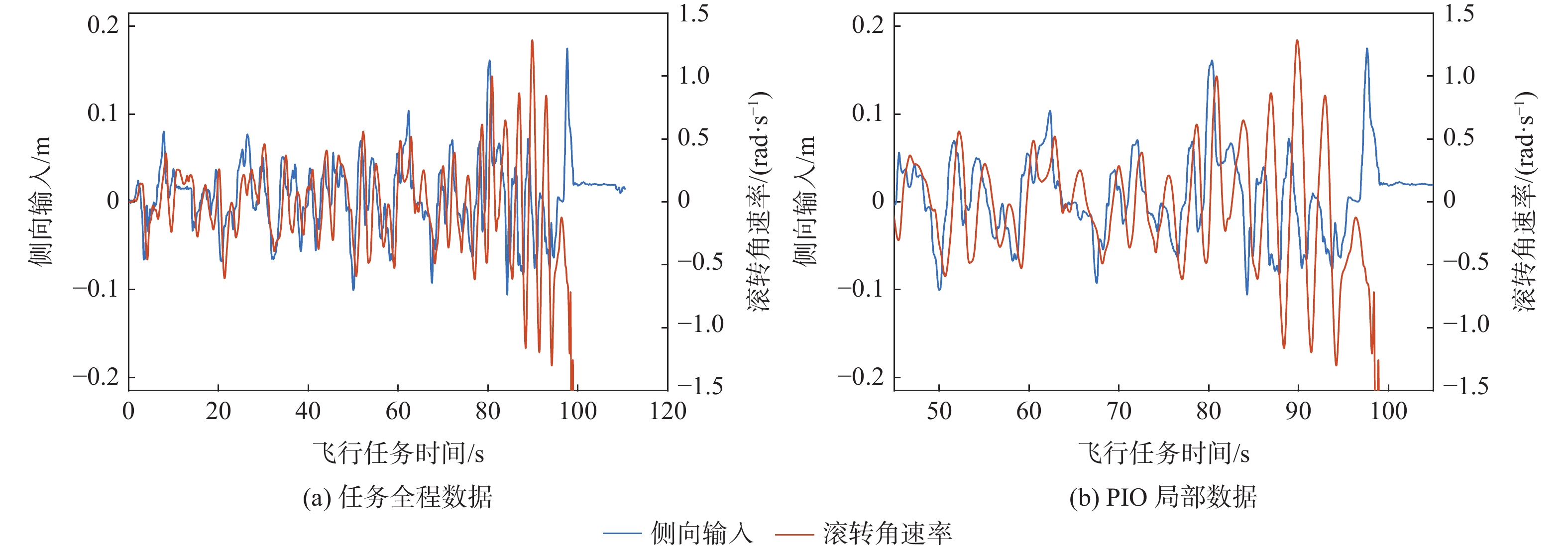
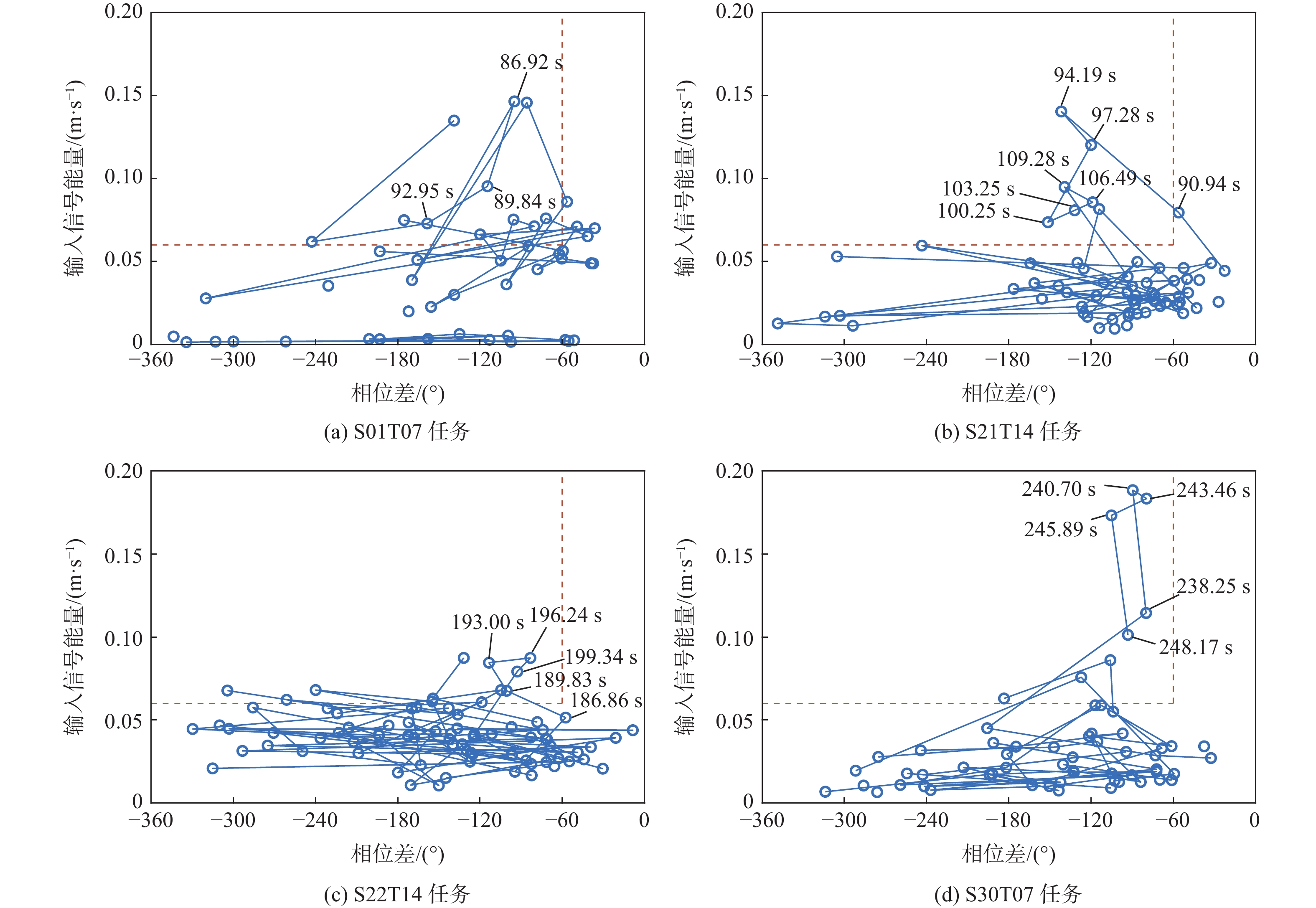
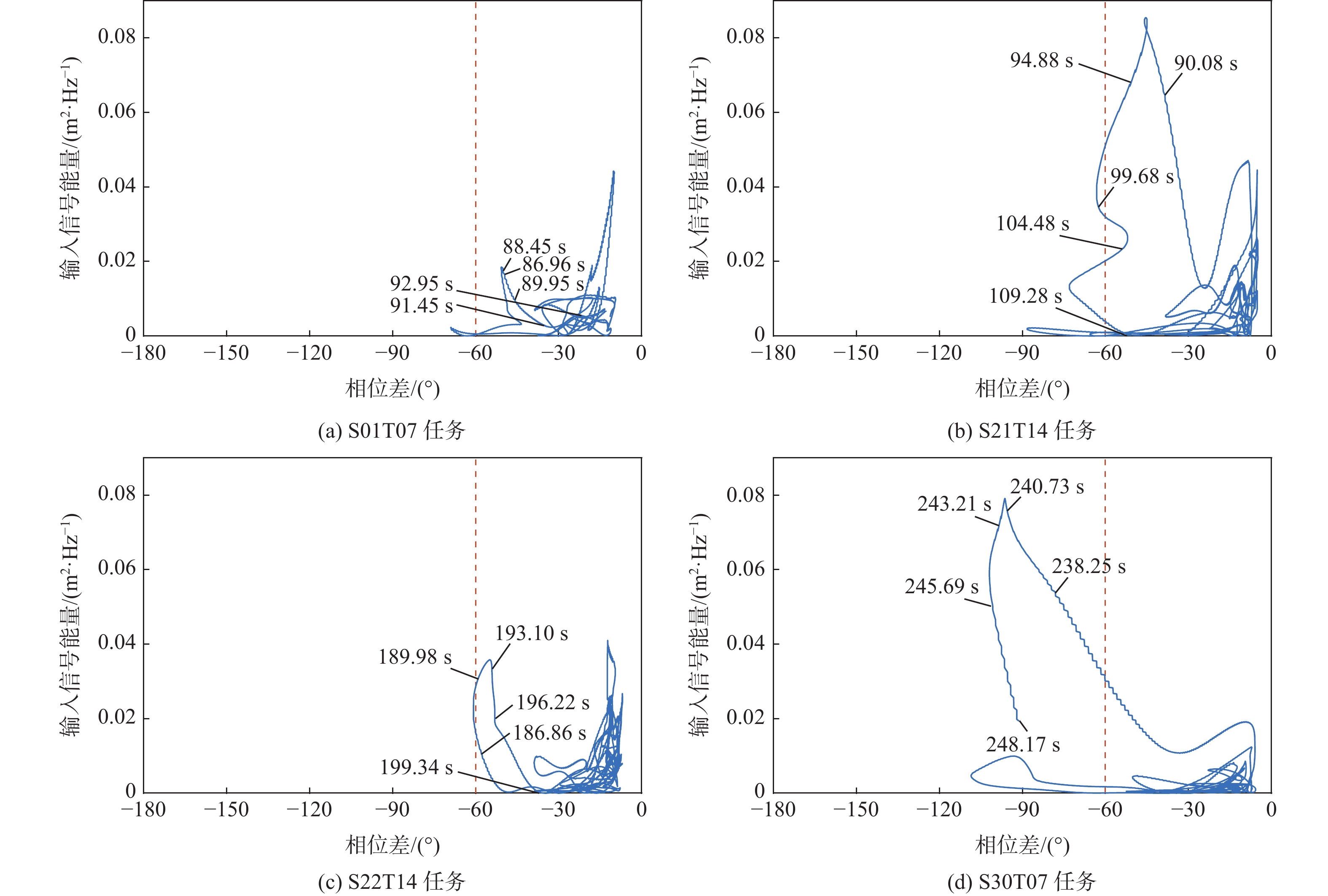
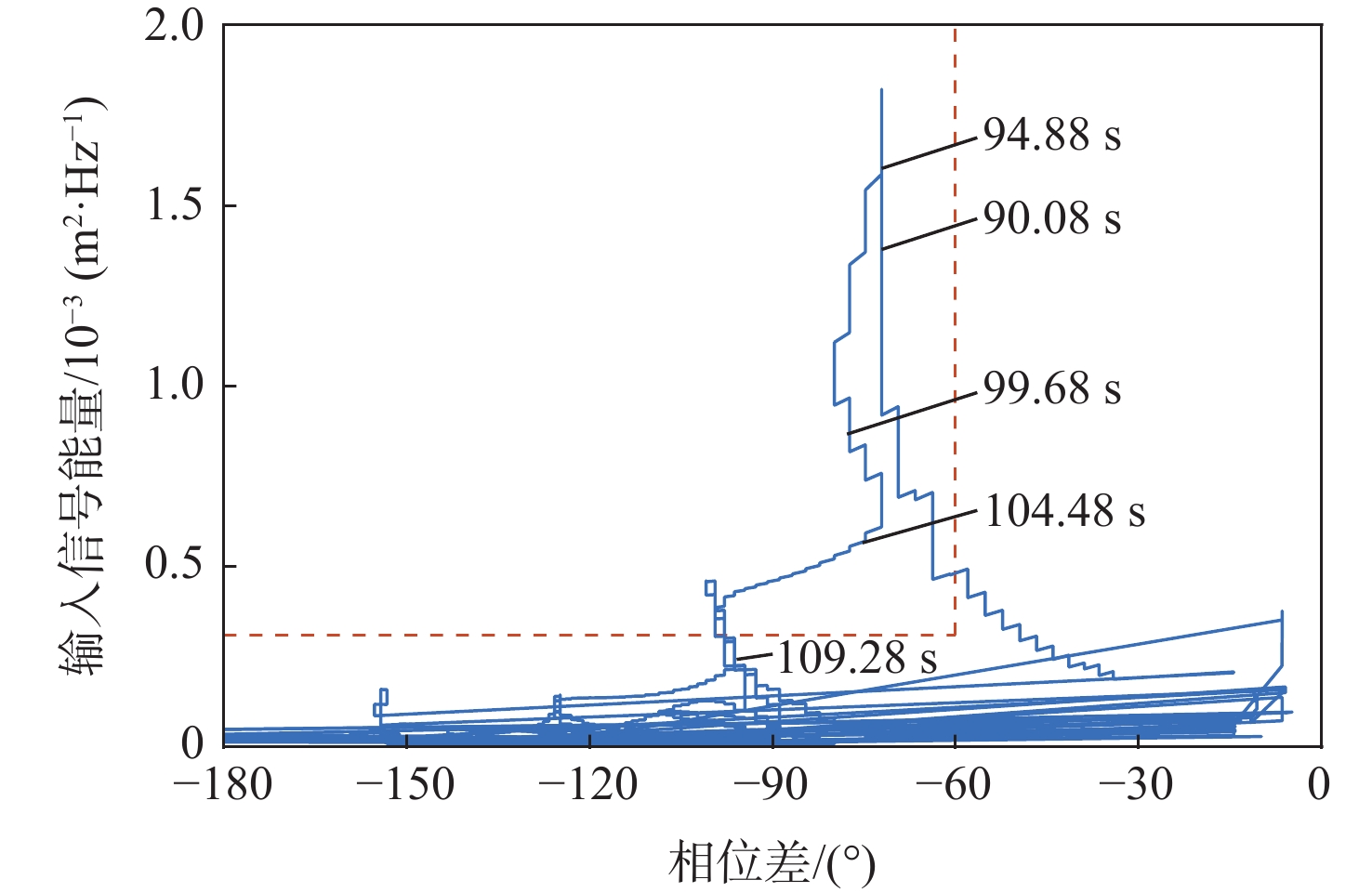
图 12 S01T07飞行任务、FT4配置检测结果
Figure 12. Detection results of flight task S01T07 with task configuration FT4
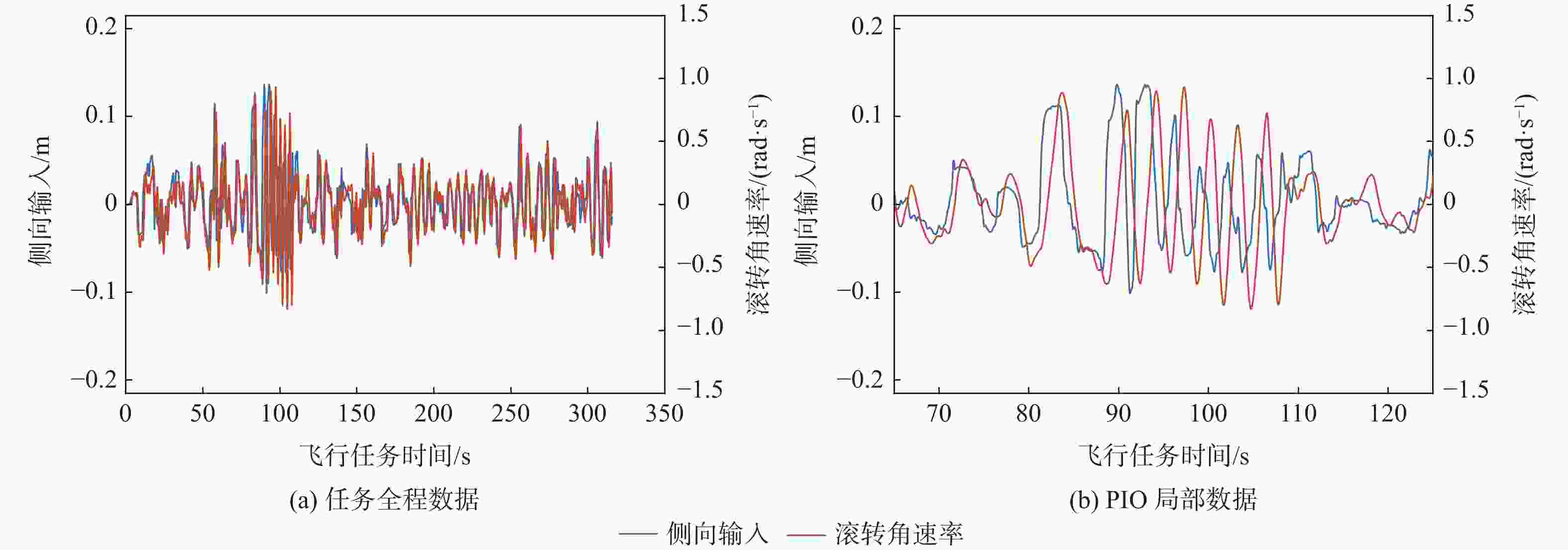
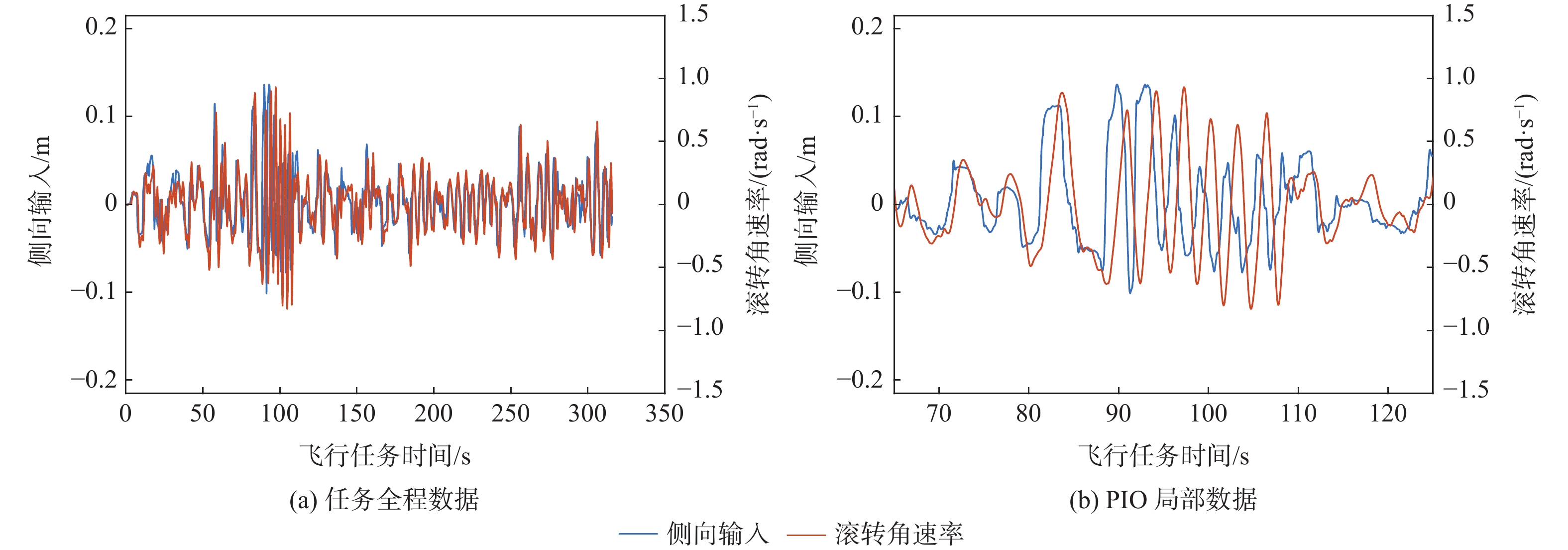
图 13 S21T14飞行任务、FT7配置检测结果
Figure 13. Detection results of flight task S21T14 with task configuration FT7
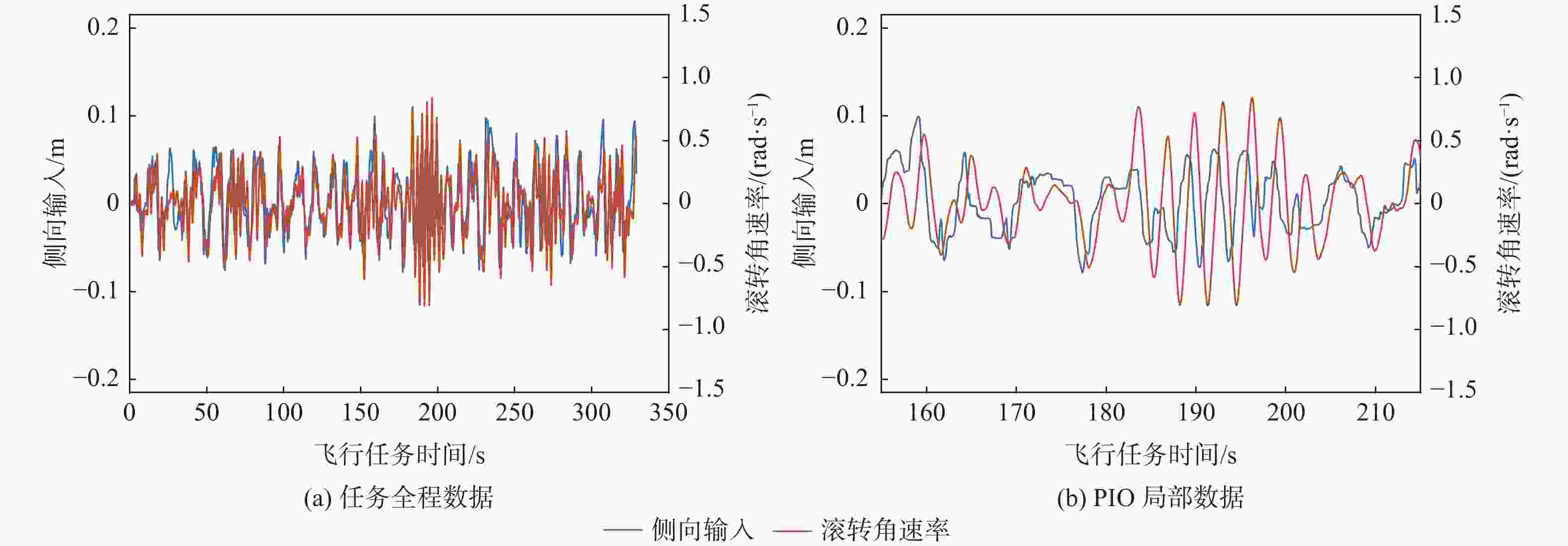
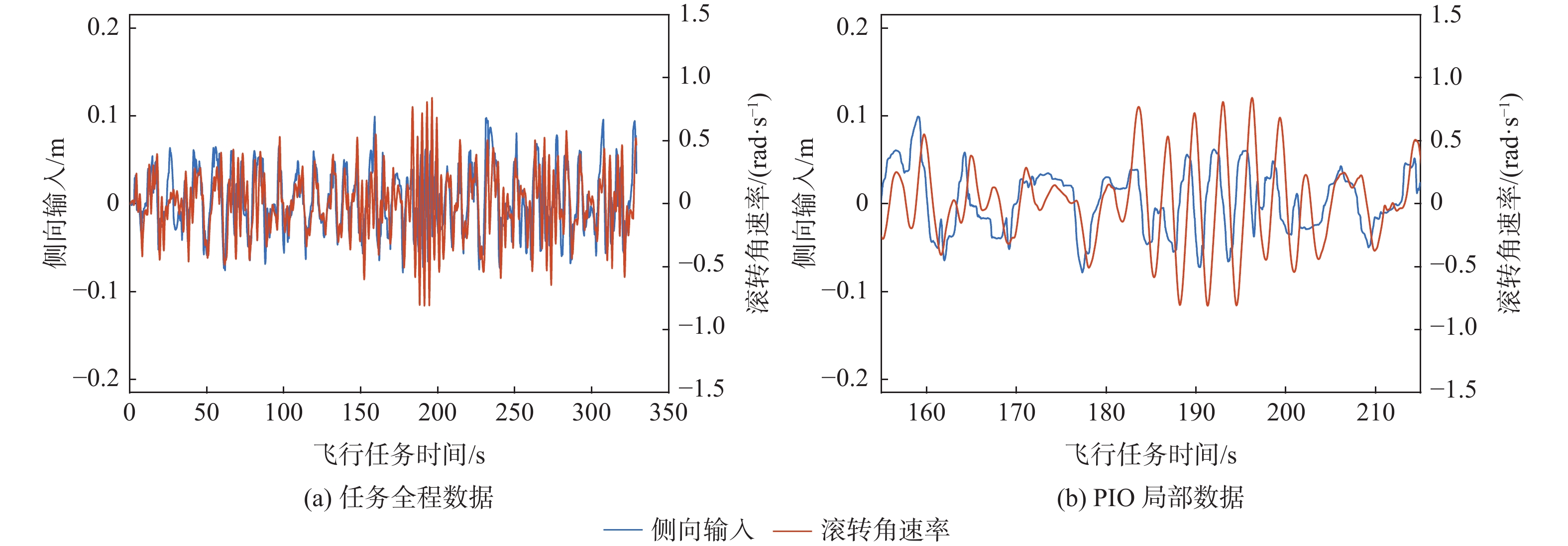
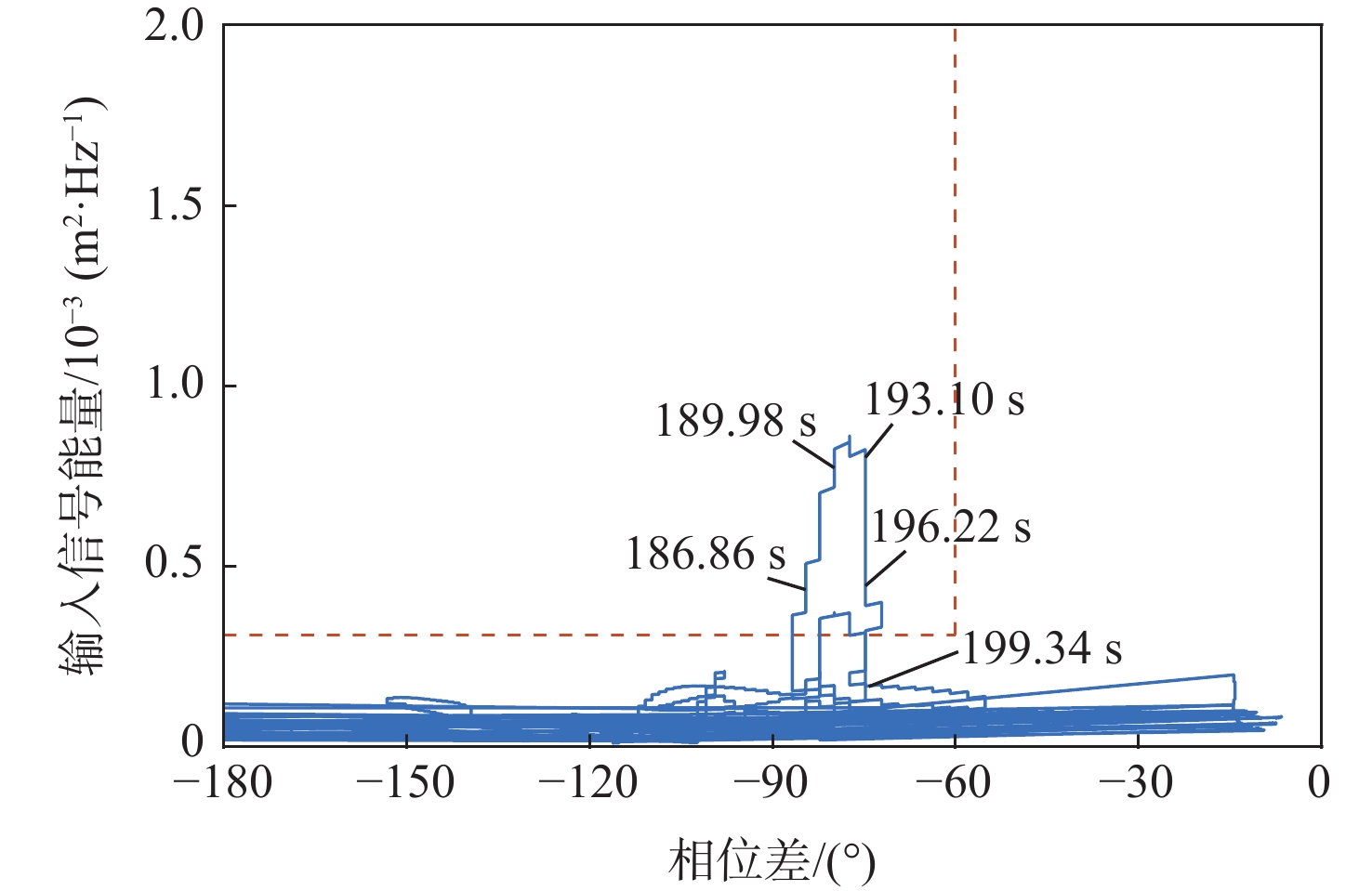
图 14 S22T14飞行任务、FT7配置检测结果
Figure 14. Detection results of flight task S22T14 with task configuration FT7
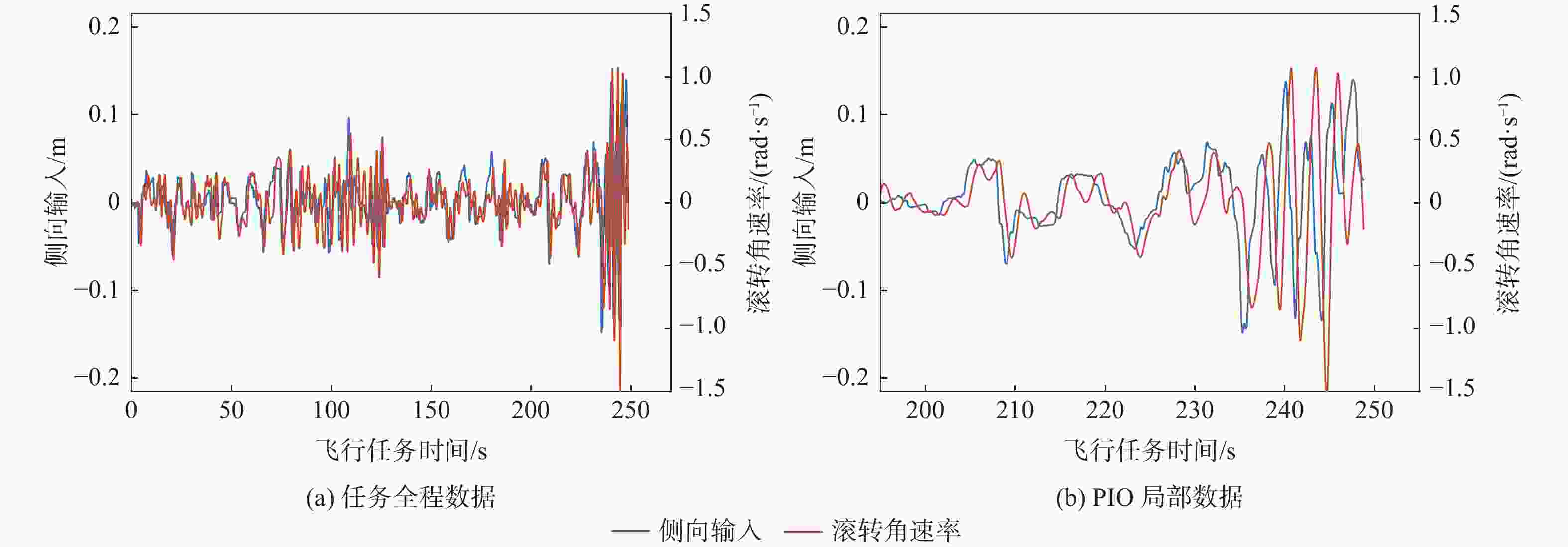
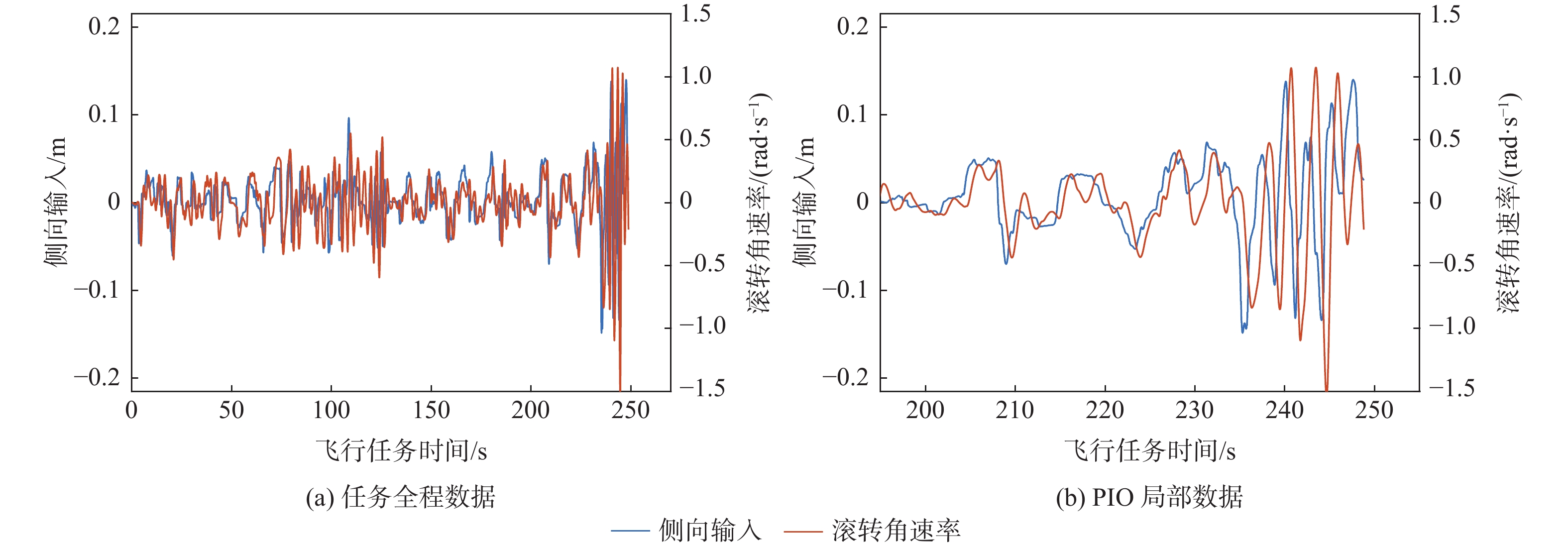
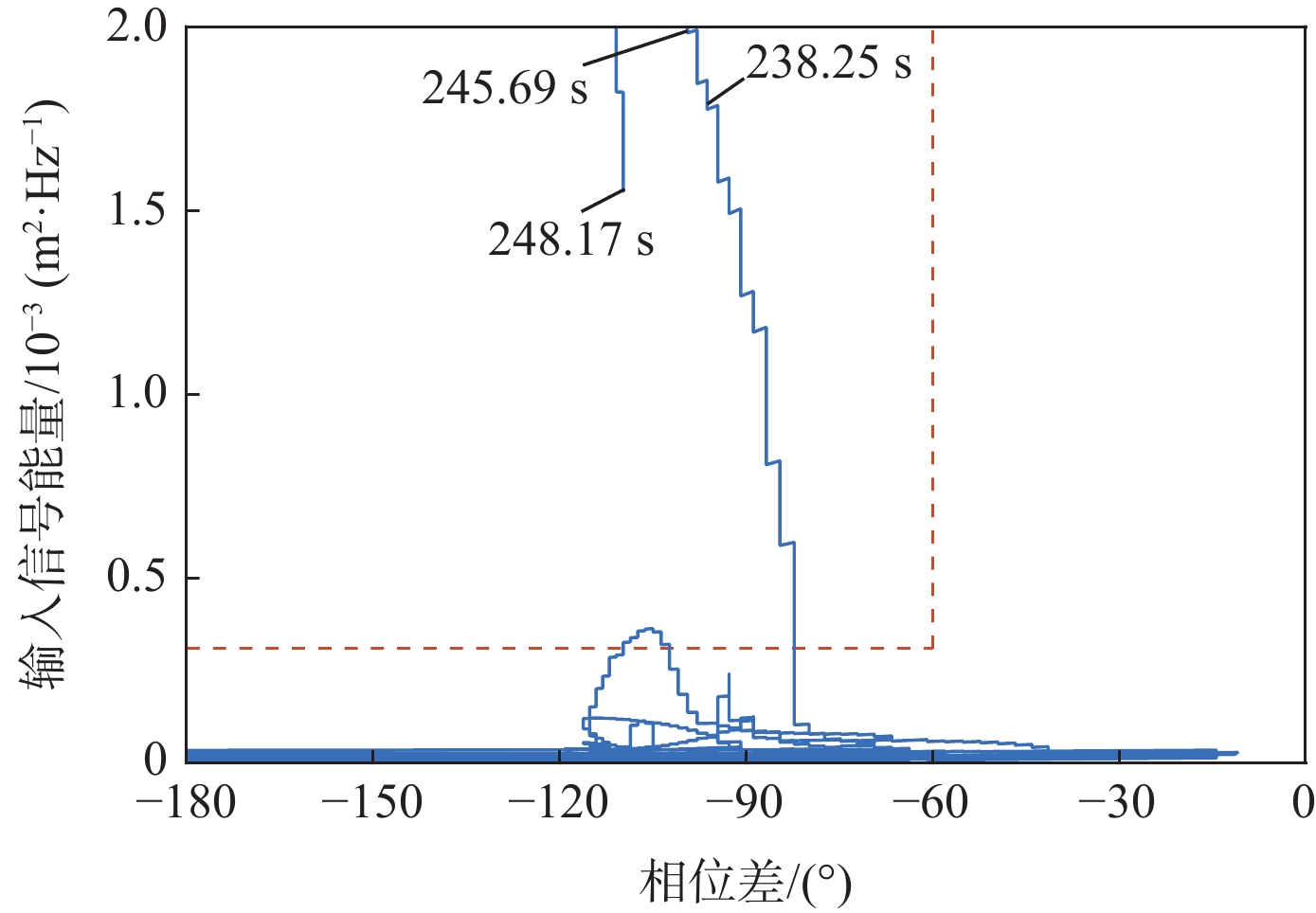
图 15 S30T07飞行任务、FT4配置检测结果
Figure 15. Detection results of flight task S30T07 with task configuration FT4
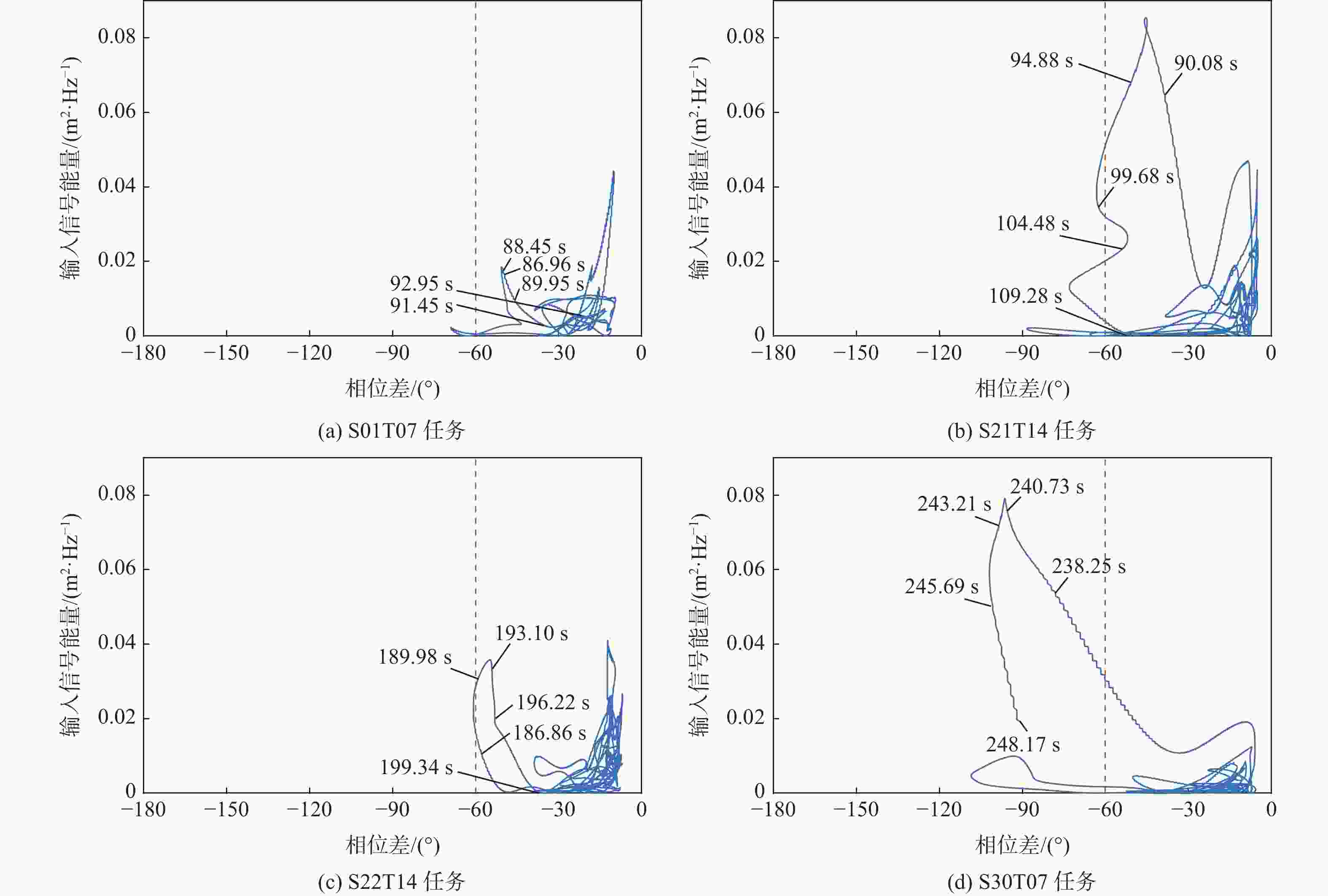
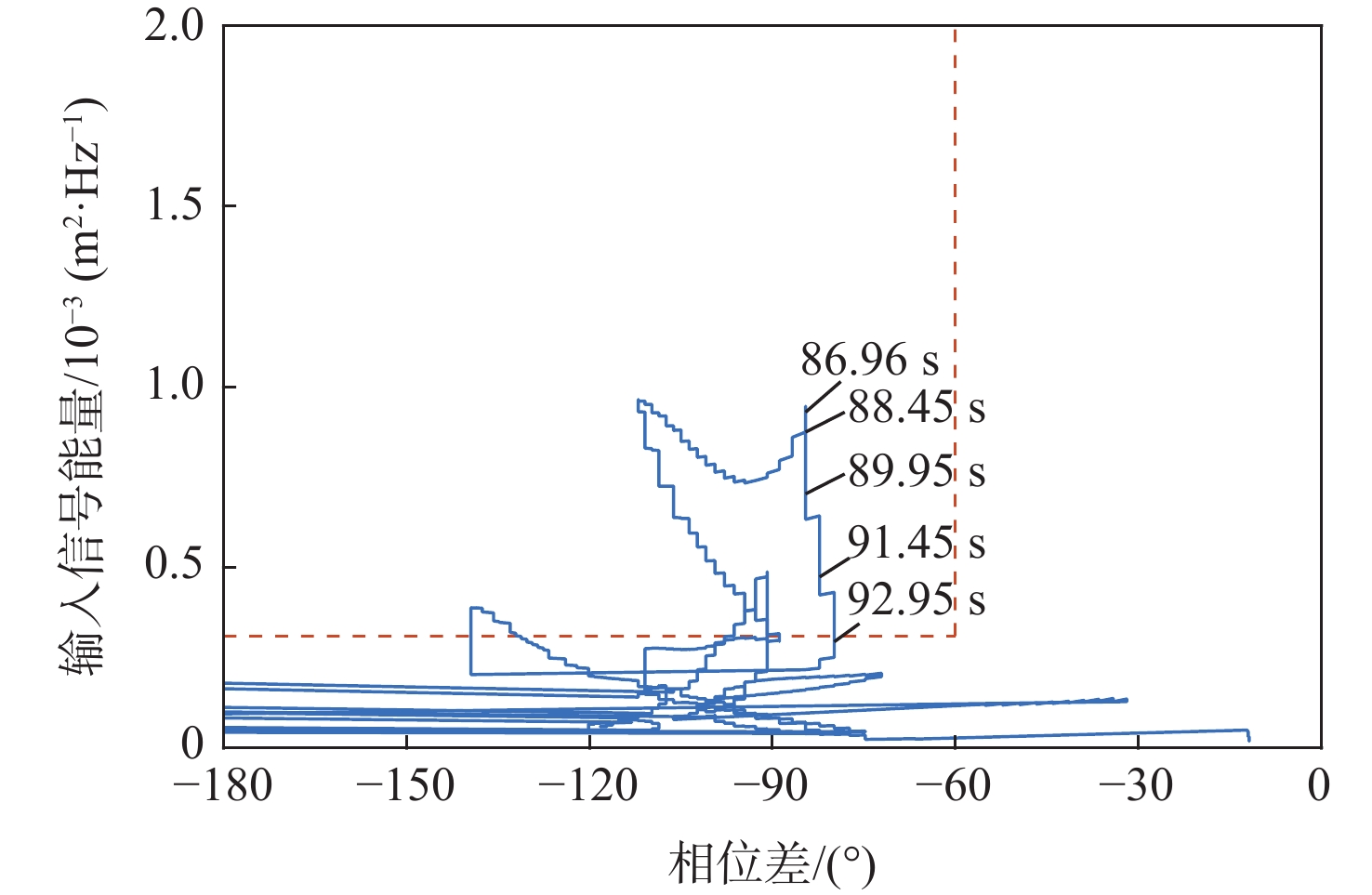
图 17 Klyde小波变换方法的PIO检测
Figure 17. PIO detection for the Klyde’s wavelet transform method
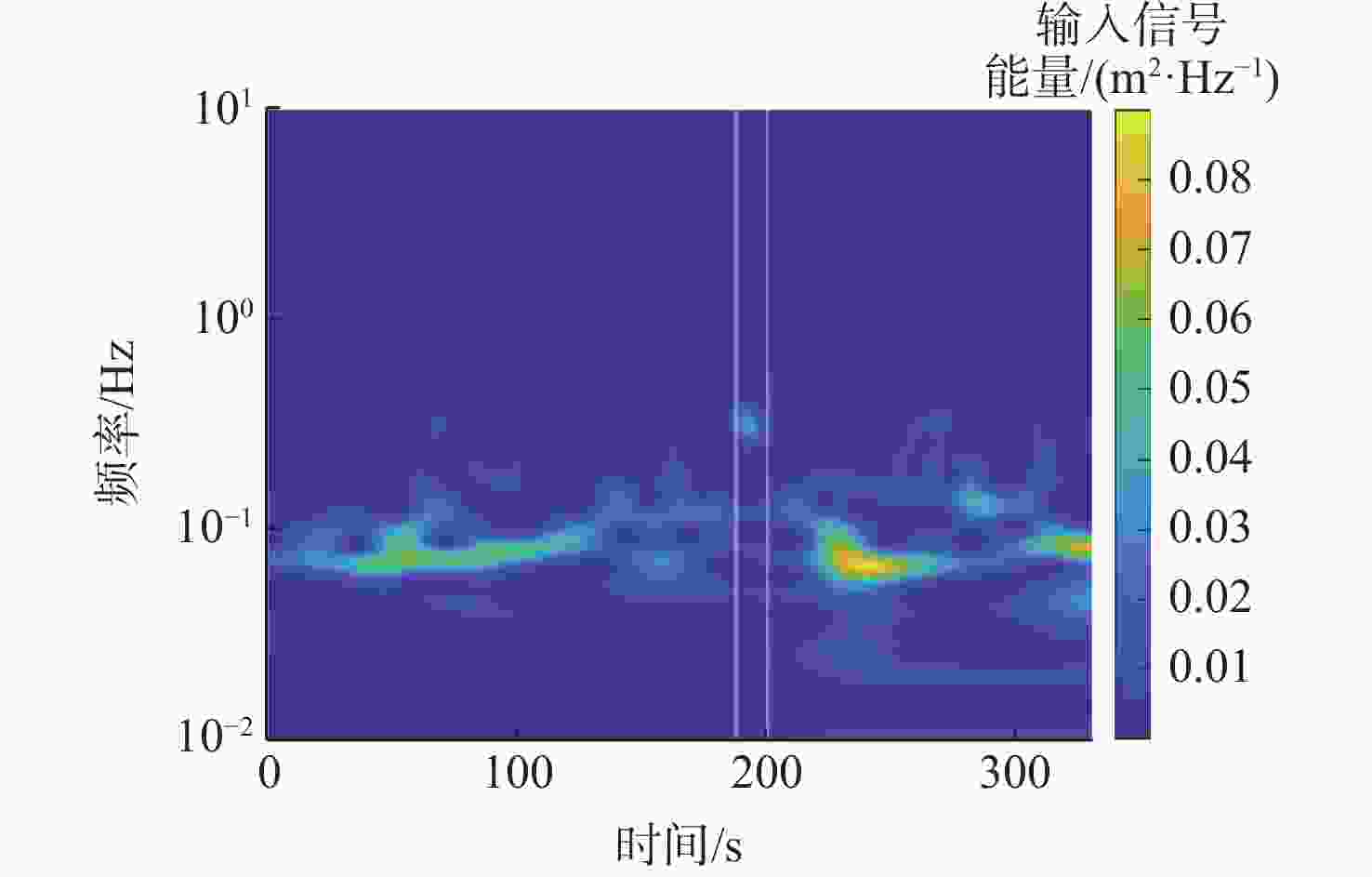
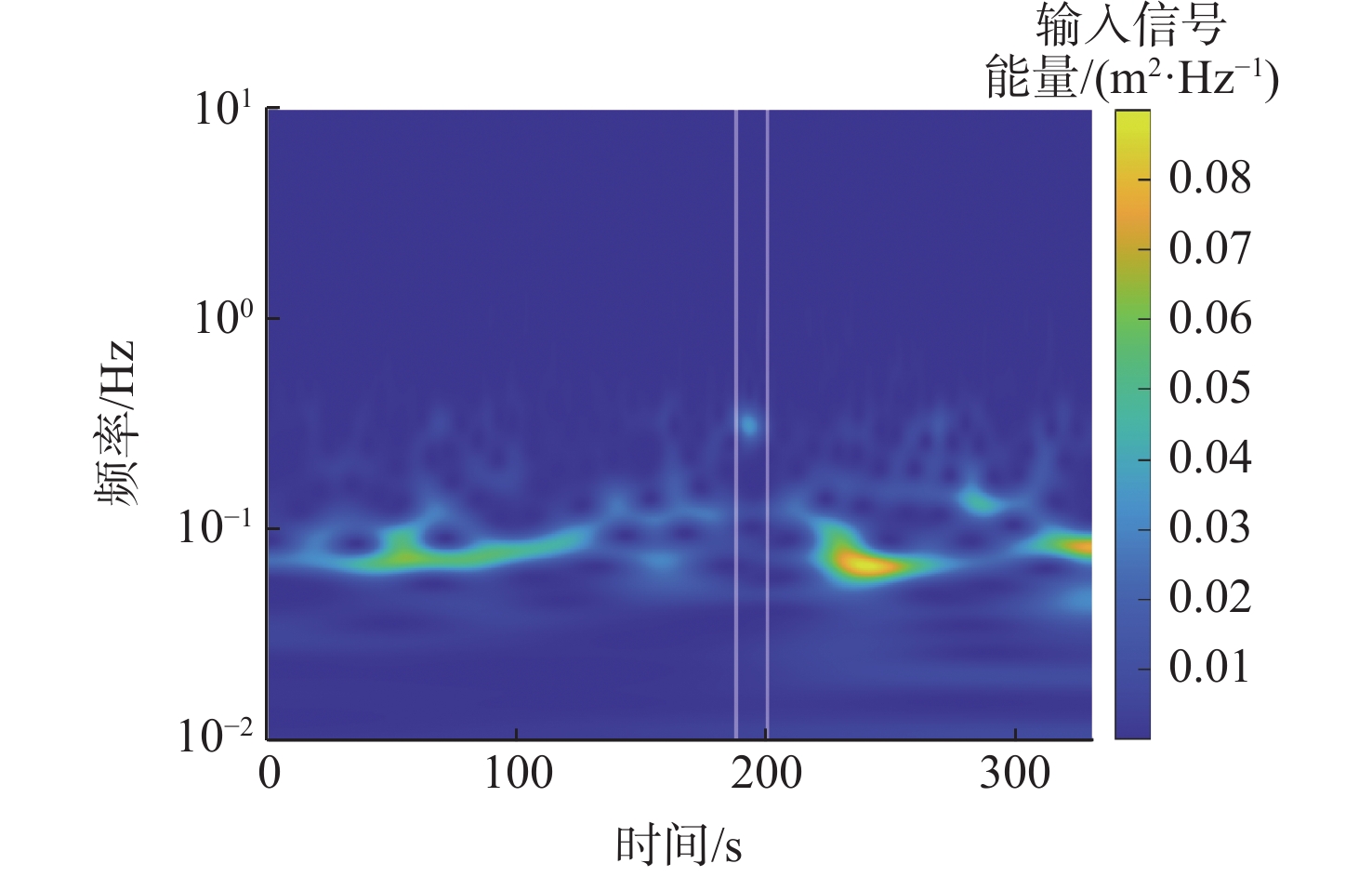
图 18 S22T14任务输入信号的Klyde小波变换能量频谱
Figure 18. Klyde wavelet transform scalogram of the input signal for task S22T14
表 1 模拟飞行任务配置
Table 1. Flight simulation task configurations
序号 边界难度阶段 输入配置 FT1 简单+困难 FT2 简单+困难 输入延迟100 ms FT3 简单+困难 输入延迟200 ms FT4 简单+困难 输入延迟300 ms FT5 简单+困难 饱和速率$\dfrac{\text{π}}{18} $ rad/s FT6 简单+困难 饱和速率$\dfrac{\text{π}}{36} $ rad/s FT7 简单+困难 输入延迟300 ms+饱和速率$\dfrac{\text{π}}{36} $ rad/s  下载: 导出CSV
表 2 跨被试航迹误差和撞靶得分的RMS值
Table 2. RMS value for cross-subject flight path error and target hitting score
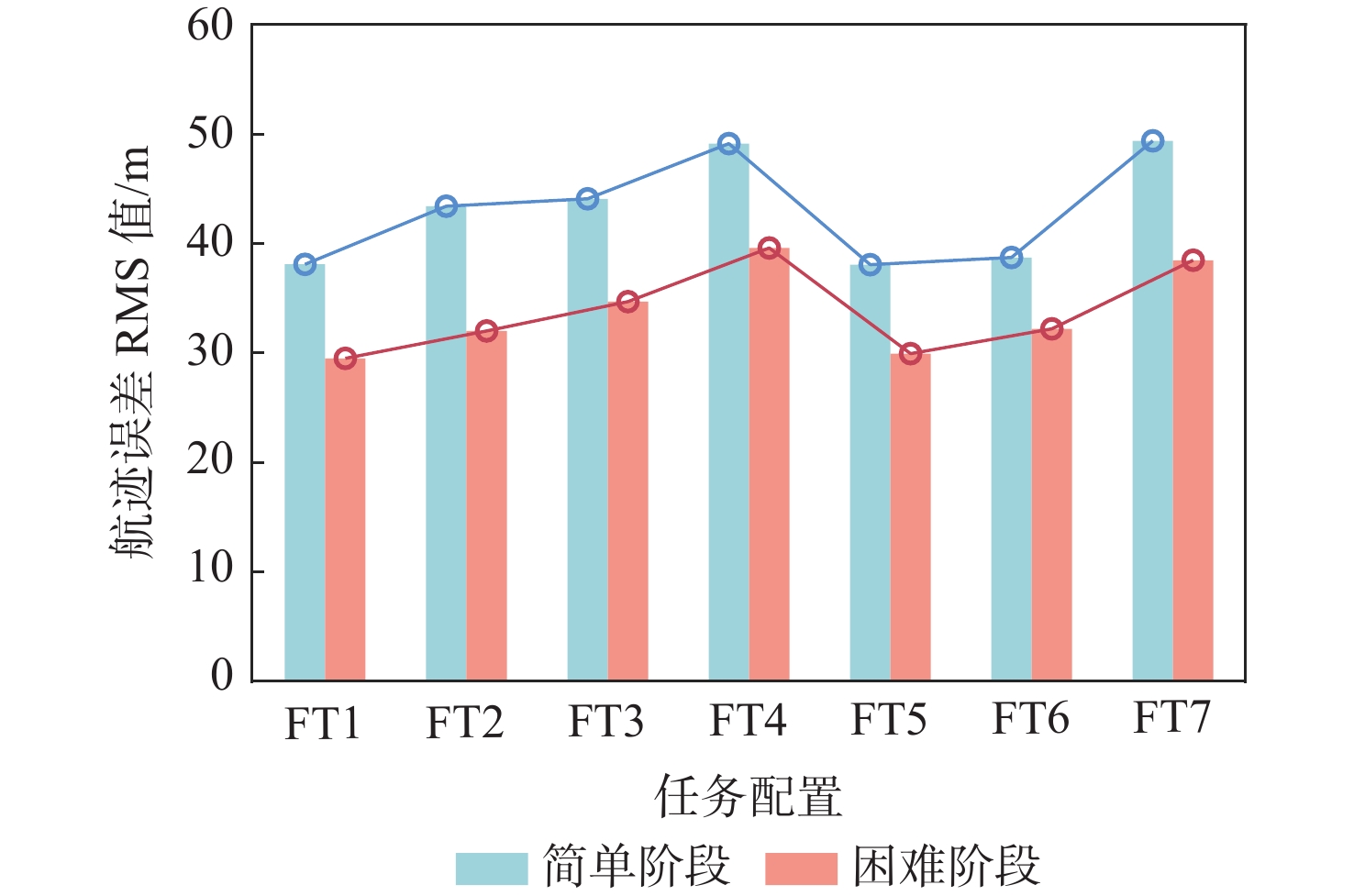
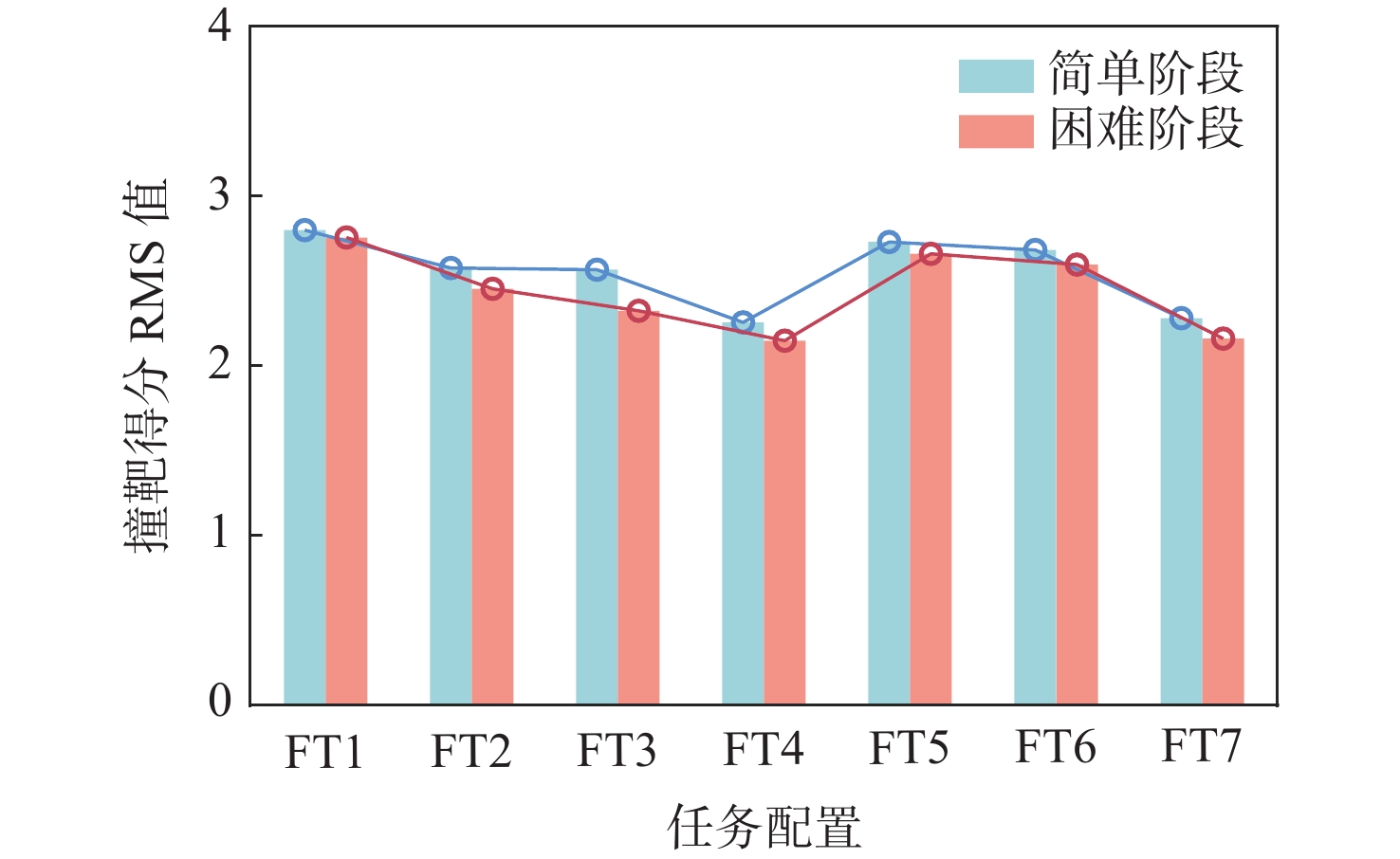
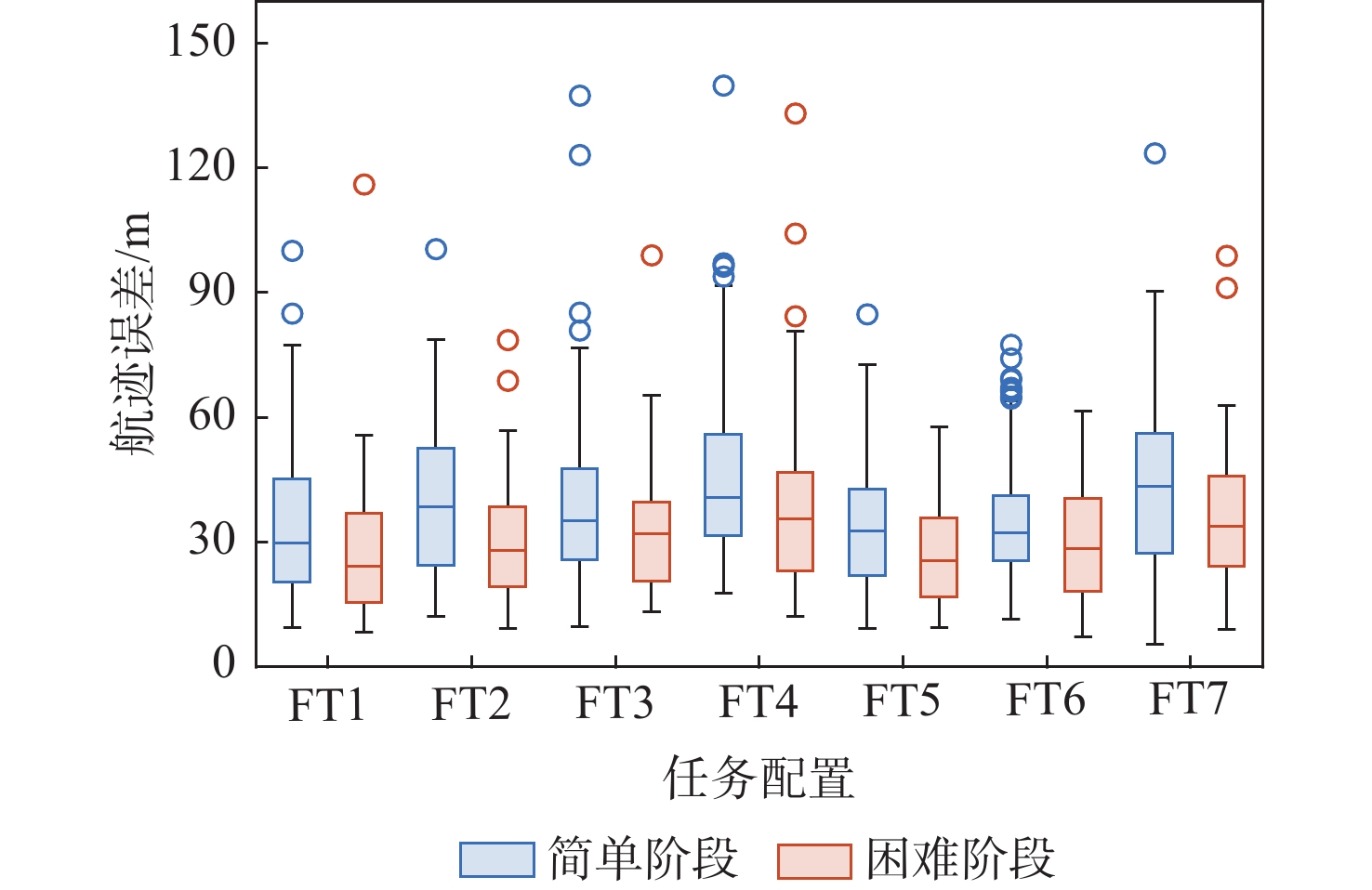
序号 航迹误差RMS值/m 撞靶得分RMS值 简单阶段 困难阶段 简单阶段 困难阶段 FT1 38.104 29.517 2.801 2.757 FT2 43.417 32.021 2.578 2.455 FT3 44.092 34.699 2.568 2.326 FT4 49.134 39.600 2.257 2.149 FT5 38.075 29.949 2.731 2.661 FT6 38.732 32.215 2.684 2.598 FT7 49.388 38.480 2.282 2.162
下载: 导出CSV
表 3 单任务航迹误差分布的显著性检验
Table 3. Significance test for flight path error distribution of individual tasks
变异来源 $ {\eta }^{2} $ $ F $ $ p $ 任务配置 0.055 11.230 <0.001 边界难度 0.047 56.606 <0.001 交互效应 0.001 0.246 0.961
下载: 导出CSV
表 4 发生PIO的时间区间
Table 4. Time interval in which PIO occurred
任务编号 发生PIO的时间区间/s S01T07 [86.92, 92.95] S21T14 [83.69, 109.28] S22T14 [186.86, 199.34] S30T07 [238.25, 248.17]
下载: 导出CSV
表 5 PAC方法和PPWT检测方法的性能对比
Table 5. Performance comparison of PAC method and PPWT detection methods
任务 虚警率/% 漏报率/% PAC PPWT PAC PPWT S01T07 11.76 19.13 0 0 S21T14 2.35 2.63 14.29 2.97 S22T14 8.16 1.73 20.00 12.73 S30T07 3.90 3.58 0 0 注:PAC方法和PPWT检测方法的平均虚警率分别为6.54%和6.77%,平均漏报率分别为8.57%和3.93%。
下载: 导出CSV
-
[1] Pavel M D, Jump M, Dang-Vu B, et al. Adverse rotorcraft pilot couplings: past, present and future challenges[J]. Progress in Aerospace Sciences, 2013, 62: 1-51. [2] Mcruer D T. Aviation safety and pilot control: understanding and preventing unfavorable pilot-vehicle interactions[M]. Washington, D. C. : National Academies Press, 1997. [3] Padfield G D, Lu L. The potential impact of adverse aircraft-pilot couplings on the safety of tilt-rotor operations[J]. The Aeronautical Journal, 2022, 126(1304): 1617-1647. [4] U. S. Department of Defense. Flying qualities of piloted airplanes: MIL-F-8785C[S]. Washington, D. C.: U. S. Department of Defense, 1980. [5] U. S. Department of Defense. Flying qualities of piloted aircraft: MIL-STD-1797A[S]. Washington, D. C.: U. S. Department of Defense, 1990. [6] Gray W. Boundary-escape tracking: a new conception of hazardous PIO: PA-04179[R]. Edwards AFB: Air Force Flight Test Center, 2004. [7] Gray W. Boundary avoidance tracking: a new pilot tracking model[C]//Proceedings of the AIAA Atmospheric Flight Mechanics Conference and Exhibit. Reston: AIAA, 2005: 5810. [8] Craun R, Acosta D M, Beard S D, et al. Boundary avoidance tracking for instigating pilot induced oscillations[C]//Proceedings of the AIAA Atmospheric Flight Mechanics Conference. Reston: AIAA, 2013: 4688. [9] Yilmaz D, Lu L H, Pavel M, et al. Comparison of simulator platform and flight tasks on adverse rotorcraft pilot coupling prediction[C]//Proceedings of the Vertical Flight Society 70th Annual Forum. Montréal: The Vertical Flight Society, 2014: 1-17. [10] Babu M D. Investigation of boundary avoidance tracking theory from ocular parameters through simulator and inflight studies[J]. Aerotecnica Missili & Spazio, 2021, 100(4): 303-319. [11] Wilson J C, Nair S, Scielzo S, et al. Objective measures of cognitive load using deep multi-modal learning: a use-case in aviation[J]. Proceedings of the ACM on Interactive, Mobile, Wearable and Ubiquitous Technologies, 2021, 5(1): 1-35. [12] Mitchell D G, Klyde D H. This is pilot gain[C]//Proceedings of the AIAA Scitech 2019 Forum. Reston: AIAA, 2019: 0562. [13] Lu L, Jump M. Pilot modelling for boundary hazard perception and reaction study[C]//Proceedings of the 43rd European Rotorcraft Forum. Milan: AIDAA, 2017: 640-652. [14] Ji H L, Lu L H, White M D, et al. Advanced pilot modeling for prediction of rotorcraft handling qualities in turbulent wind[J]. Aerospace Science and Technology, 2022, 123: 107501. [15] Gratton G B, Bromfield M A. Aspects of general aviation flight safety research[C]//Proceedings of the Royal Aeronautical Society 2008 General Aviation Conference. Cambridge: Royal Aeronautical Society, 2008: 1-12. [16] Afloare A I. Pilot induced oscillations detection using boundary avoidance tracking procedure[J]. The Scientific Bulletin Series D, 2015, 77(4): 1-8. [17] Wilson J C. Cognition and context-aware computing: towards a situation-aware system with a case study in aviation[D]. Dallas: Southern Methodist University, 2020. [18] Jones M, Jump M, Lu L, et al. Using the phase-aggression criterion to identify rotorcraft pilot coupling events[C]//Proceedings of the 38th European Rotorcraft Forum 2012. Amsterdam: NLR, 2012: 1-17. [19] Jones M, Jump M, Lu L H. Development of the phase-aggression criterion for rotorcraft: pilot coupling detection[J]. Journal of Guidance, Control, and Dynamics, 2013, 36(1): 35-47. [20] Klyde D H, Mitchell D G, White M D, et al. Assessment of a scalogram-based PIO metric with flight test data[C]//Proceedings of the AIAA Atmospheric Flight Mechanics Conference. Reston: AIAA, 2017: 1641. [21] Klyde D H, Schulze P C, De Mello R S F, et al. Assessment of a scalogram-based pilot-induced oscillation metric with flight-test and simulation data[J]. Journal of Guidance, Control, and Dynamics, 2020, 43(11): 2058-2072. [22] Jones M, Jump M. Prediction of rotorcraft pilot-induced oscillations using the phase-aggression criterion 2013 phoenix arizona[C]//Proceedings of the 69th Annual Forum of the American Helicopter Society. Phoenix: American Helicopter Society, 2013. [23] Xu S T, Tan W Q, Qu X J, et al. Prediction of nonlinear pilot-induced oscillation using an intelligent human pilot model[J]. Chinese Journal of Aeronautics, 2019, 32(12): 2592-2611. [24] Mello R S, Klyde D H, Mitchell D G. Aircraft accident investigation using wavelet scalogram-based metric to identify possible PIO signature[C]//Proceedings of the AIAA SCITECH 2023 Forum. Reston: AIAA, 2023: 1367. [25] Howlett J J. UH-60A black hawk engineering simulation program. Volume 1: mathematical model: SER-70452[R]. Washington, D. C. : The National Aeronautics and Space Administration, 1981. [26] Talbot P D, Tinling B E, Decker W A, et al. A mathematical model of a single main rotor helicopter for piloted simulation: NAS 1.15: 84281[R]. Washington, D. C. : The National Aeronautics and Space Administration, 1982. [27] Hilbert K B. A mathematical model of the UH-60 helicopter: NASA-TM-85890[R]. Washington, D. C. : The National Aeronautics and Space Administration, 1984. [28] Kaplita T T. UH-60 black hawk engineering simulation model validation and proposed modifications: NAS 1.26: 177360[R]. Washington, D. C. : The National Aeronautics and Space Administration, 1986. [29] MATLAB. Cwt-continuous 1-D wavelet transform[EB/OL]. (2023-04-12)[2025-07-03]. https://ww2.mathworks.cn/help/wavelet/ref/cwt.html. [30] Xia Q, Marchesoli D, Masarati P, et al. Preliminary study of tracking vs boundary avoidance task effects on rotorcraft pilot involuntary response[C]//Proceedings of the Aerospace Europe Conference 2023-10th EUCASS-9th CEAS Conference. Lausanne: EUCASS, 2023: 1-12. [31] Wobbrock J O, Findlater L, Gergle D, et al. The aligned rank transform for nonparametric factorial analyses using only anova procedures[C]//Proceedings of the SIGCHI Conference on Human Factors in Computing Systems. New York: ACM, 2011: 143-146. -

 下载:
下载:


 点击查看大图
计量
- 文章访问数: 152
- HTML全文浏览量: 91
- PDF下载量: 4
- 被引次数: 0
