





Experimental investigation of overhang structure surface roughness characterization and oxidation characteristic in L-PBF aircraft hydraulic channels
-
摘要:
激光粉末床熔融(L-PBF)作为一种增材制造技术,已经成为制造复杂几何形状零件最具应用前景的技术之一。L-PBF技术虽然增加了飞机液压流道设计的自由度,但改善流道悬垂结构的表面质量和氧化行为仍是关键挑战。基于此,通过实验探究了激光功率密度、光斑直径和铺粉厚度等关键工艺参数对流道顶部悬垂结构表面粗糙度和氧化特性的影响规律,揭示了悬垂结构表面未完全熔融颗粒和微裂纹的成形机理。通过扫描电子显微镜(SEM)对悬垂结构表面的微观形貌进行表征,利用能量色散X射线光谱(EDS)表征氧元素在完全熔融和未完全熔融区域的分布,揭示不完全熔融与氧化之间的相关性。实验结果表明:较高的激光功率密度不仅会加剧表面粗糙度,同时会促进未完全熔融区域的氧化;对于直径10 mm的流道,光斑直径130 μm、铺粉厚度40 μm可以有效降低其顶部的表面粗糙度;未完全熔融区域的氧元素含量远大于未熔融区域和完全熔融区域;完全熔融区域和未完全熔融区域的氧元素含量均随着成形层数的增加呈下降趋势;使用新鲜粉末不仅可以降低悬垂结构表面粗糙度,还可以降低氧化物含量。研究成果为L-PBF技术在飞机液压流道的应用提供了理论依据和实验指导。
Abstract:Laser powder bed fusion (L-PBF), as one of the additive manufacturing technologies, has become one of the most promising techniques for producing components with complex geometries. While L-PBF enhances design freedom for aircraft hydraulic channels, challenges such as improving surface quality and oxidation behavior in overhang structures remain critical issues. This research experimentally investigates the effects of key process parameters, including laser power density, spot diameter, and layer thickness, on the surface roughness and oxidation behavior of the top overhang surfaces of hydraulic channels. The formation mechanisms of incompletely molten particles and microcracks on overhang surfaces are revealed. The microstructure of the overhang surfaces is examined using scanning electron microscopy (SEM), and the distribution of oxygen in fully and partially molten regions is examined using energy dispersive spectroscopy (EDS) to clarify the relationship between incomplete melting and oxidation. Experimental results show that higher laser power densities not only exacerbate surface roughness but also promote oxidation in incompletely molten areas. For hydraulic channels with a diameter of 10 mm, the spot diameter of 130 μm, and layer thickness of 40 μm effectively reduce surface roughness at the top of the channel. Compared to unmelted and fully molten regions, the oxygen level in partially molten regions is much higher. Both the oxygen content in molten and incompletely molten regions decreases with increasing layer count during fabrication. Using fresh powder reduces both the surface roughness of overhang structures and the oxide content. This study provides theoretical insights and practical guidance for the application of L-PBF technology in aircraft hydraulic channels.
-
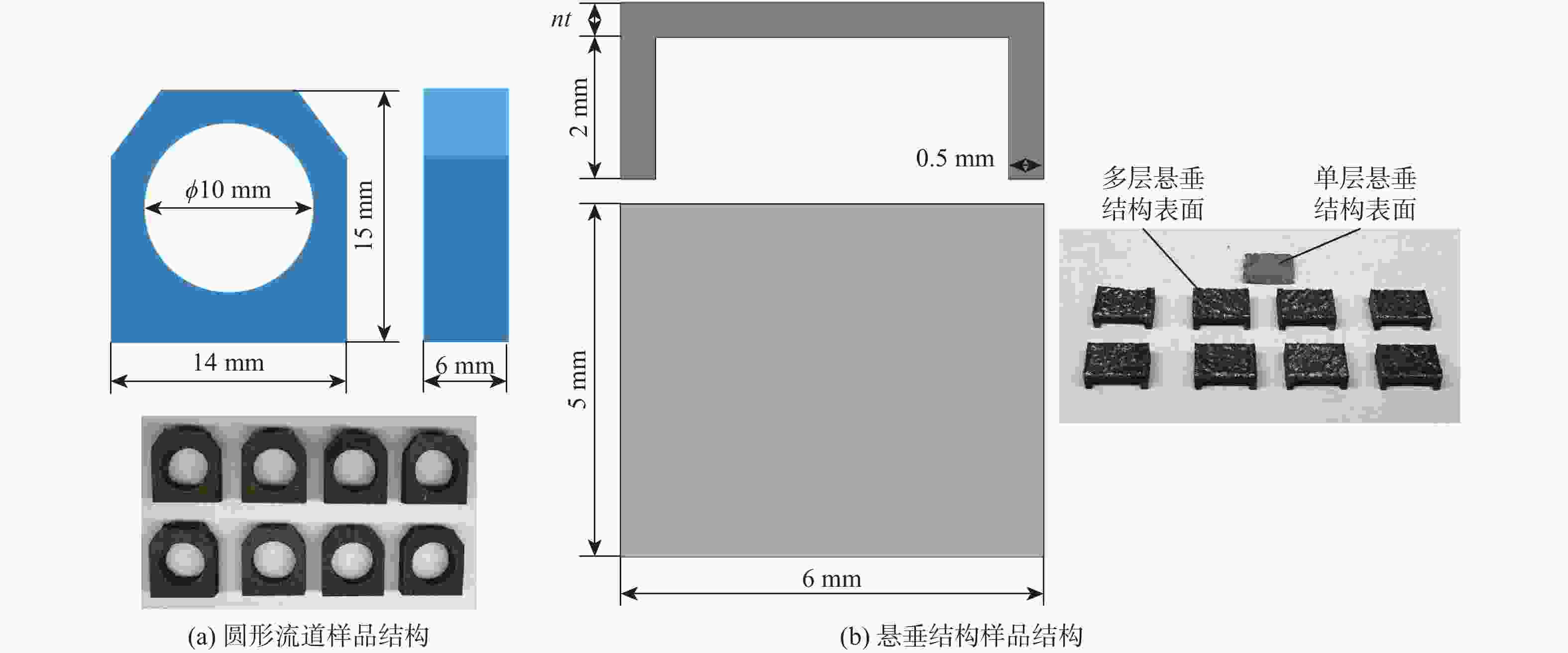
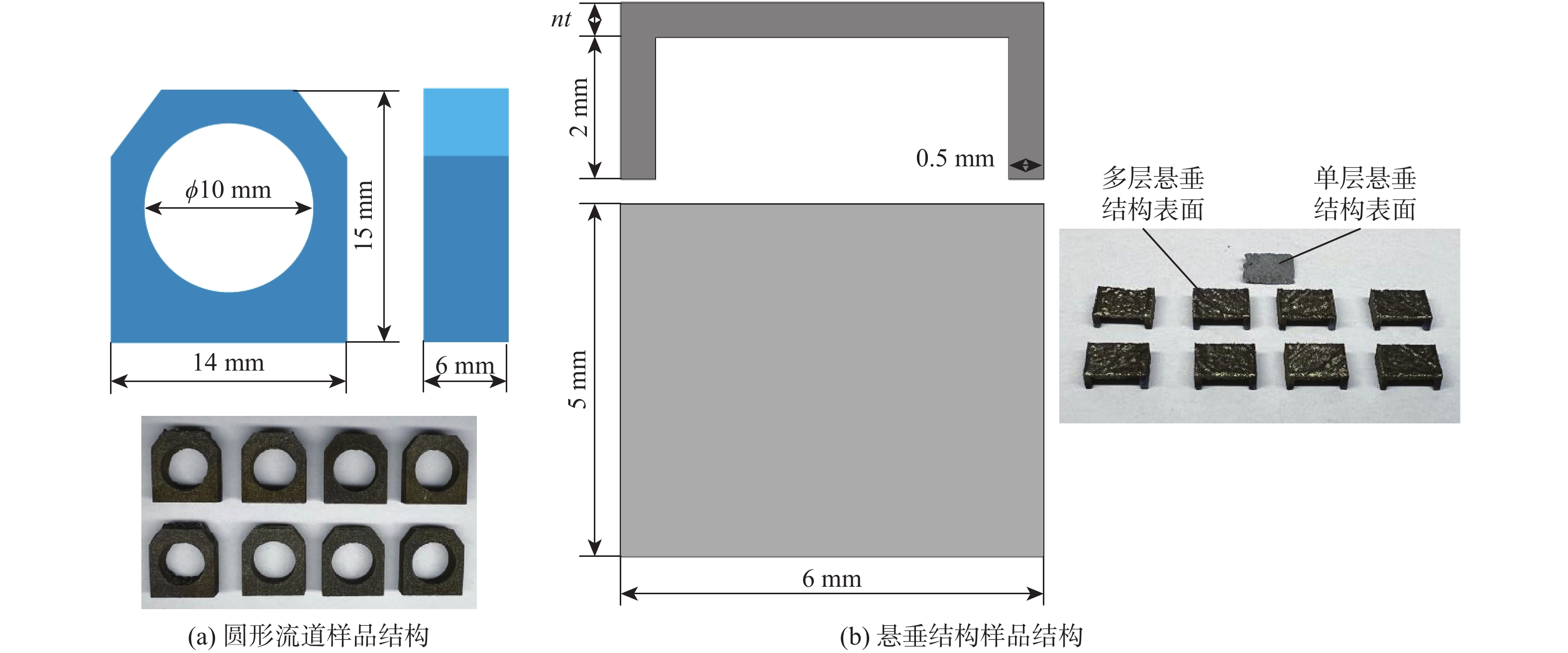
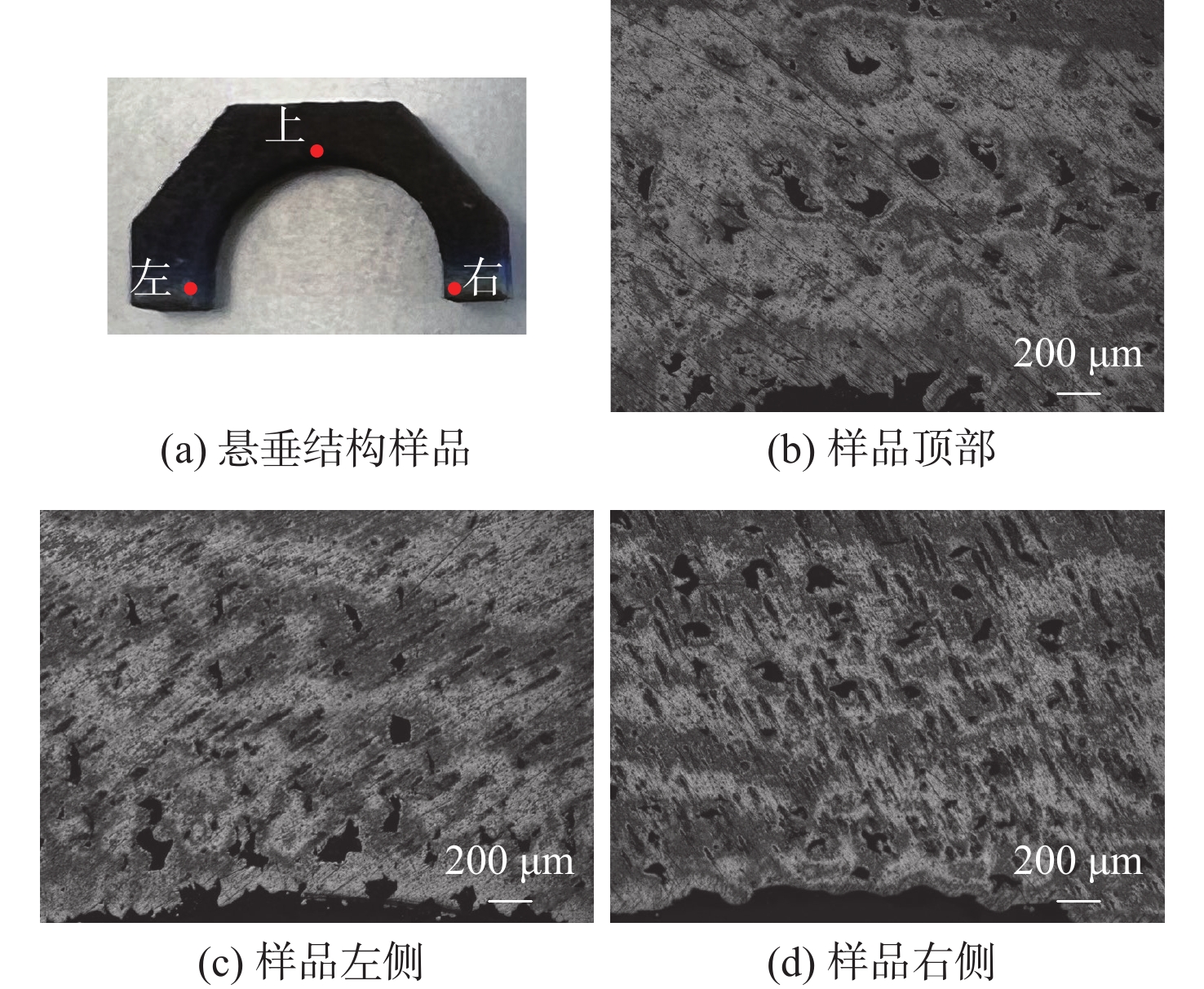
图 3 圆形流道样品结构及悬垂结构样品结构
Figure 3. Structures of circular channel sample and overhang structure samples
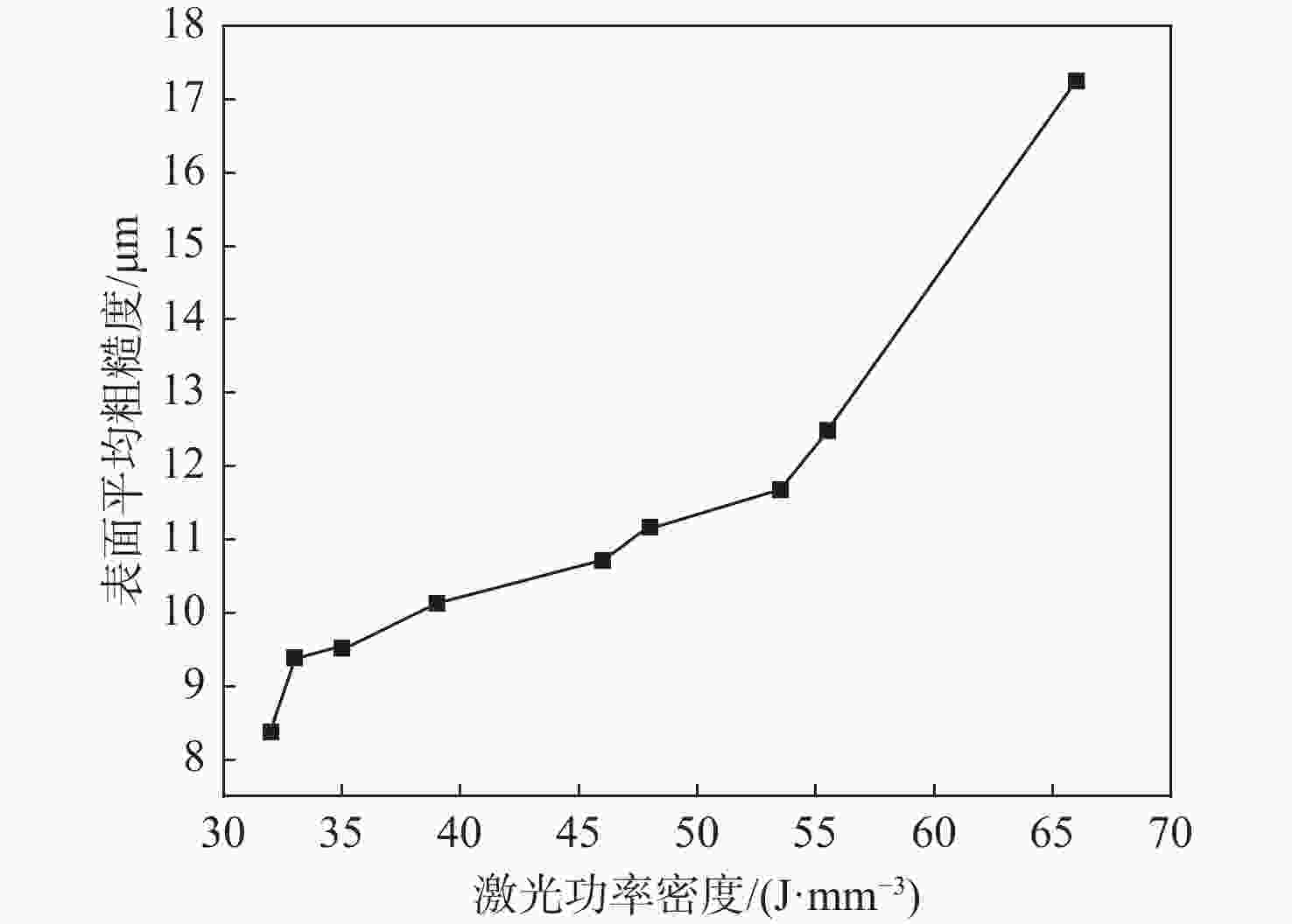
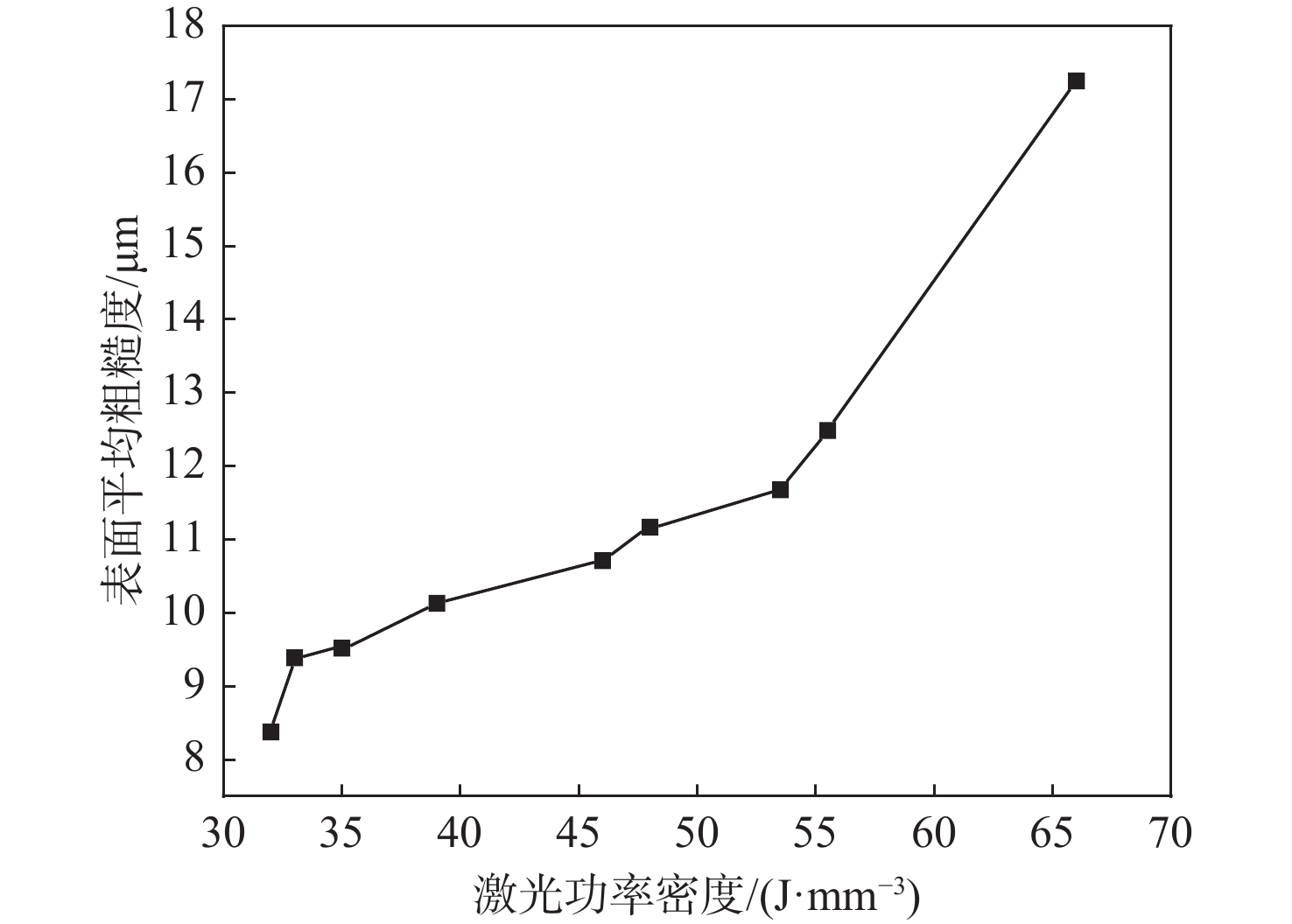
图 5 不同激光功率密度下流道顶部的表面平均粗糙度分布
Figure 5. Distribution of the surface average roughness at the top of channels for different laser power densities
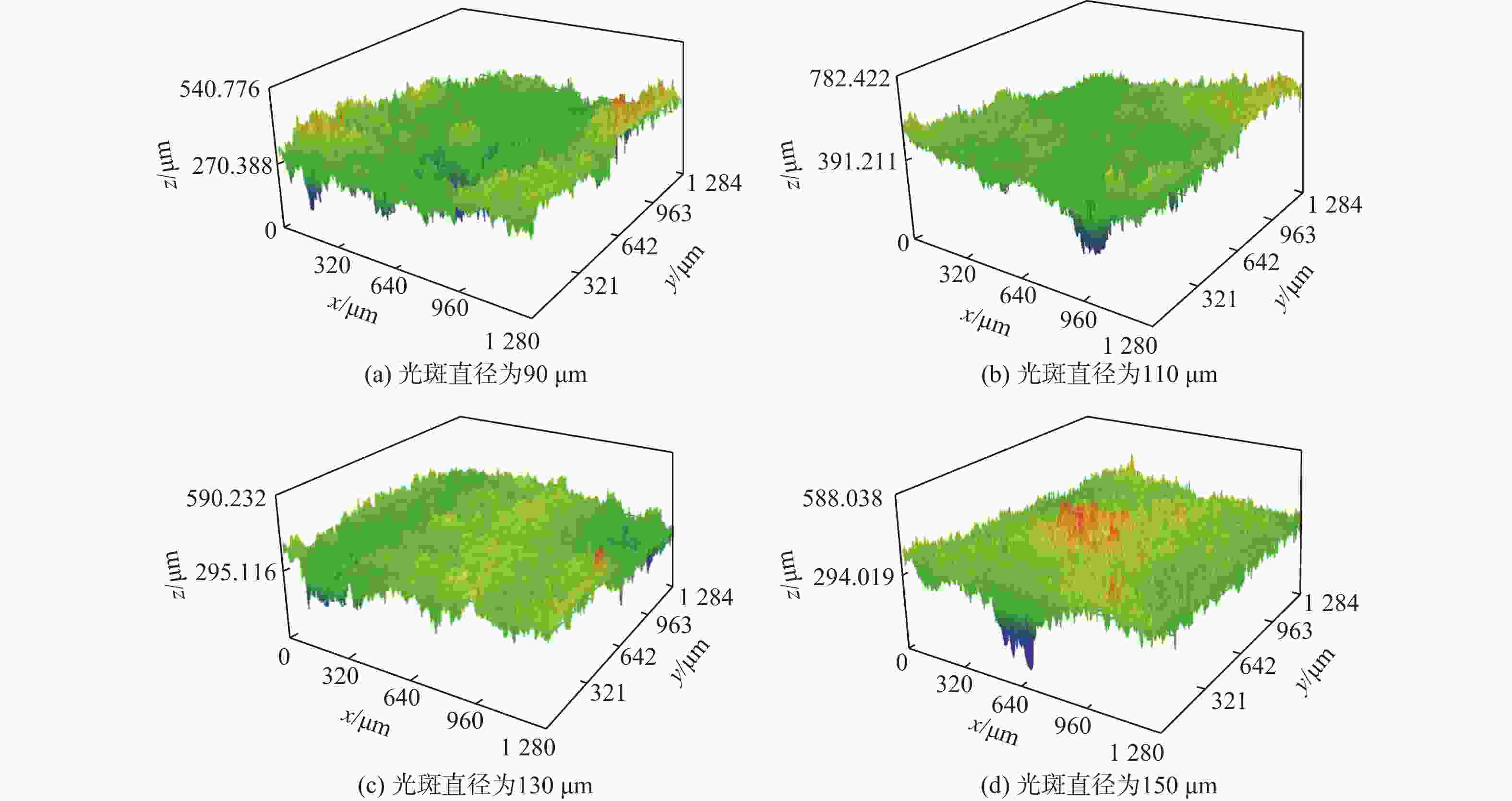
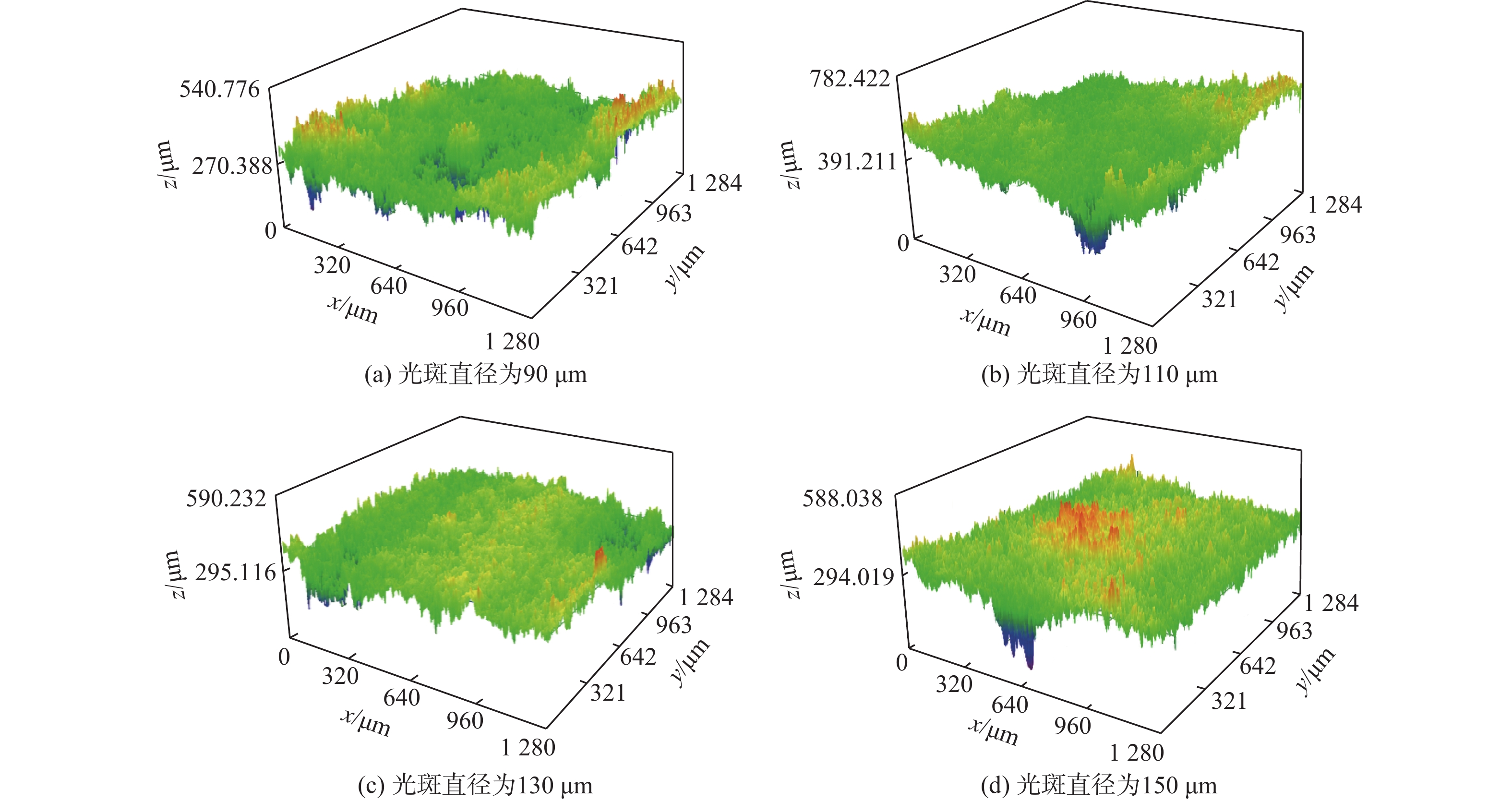
图 6 不同光斑直径下流道顶部的表面形貌
Figure 6. Surface morphology at the top of channels under different spot diameters
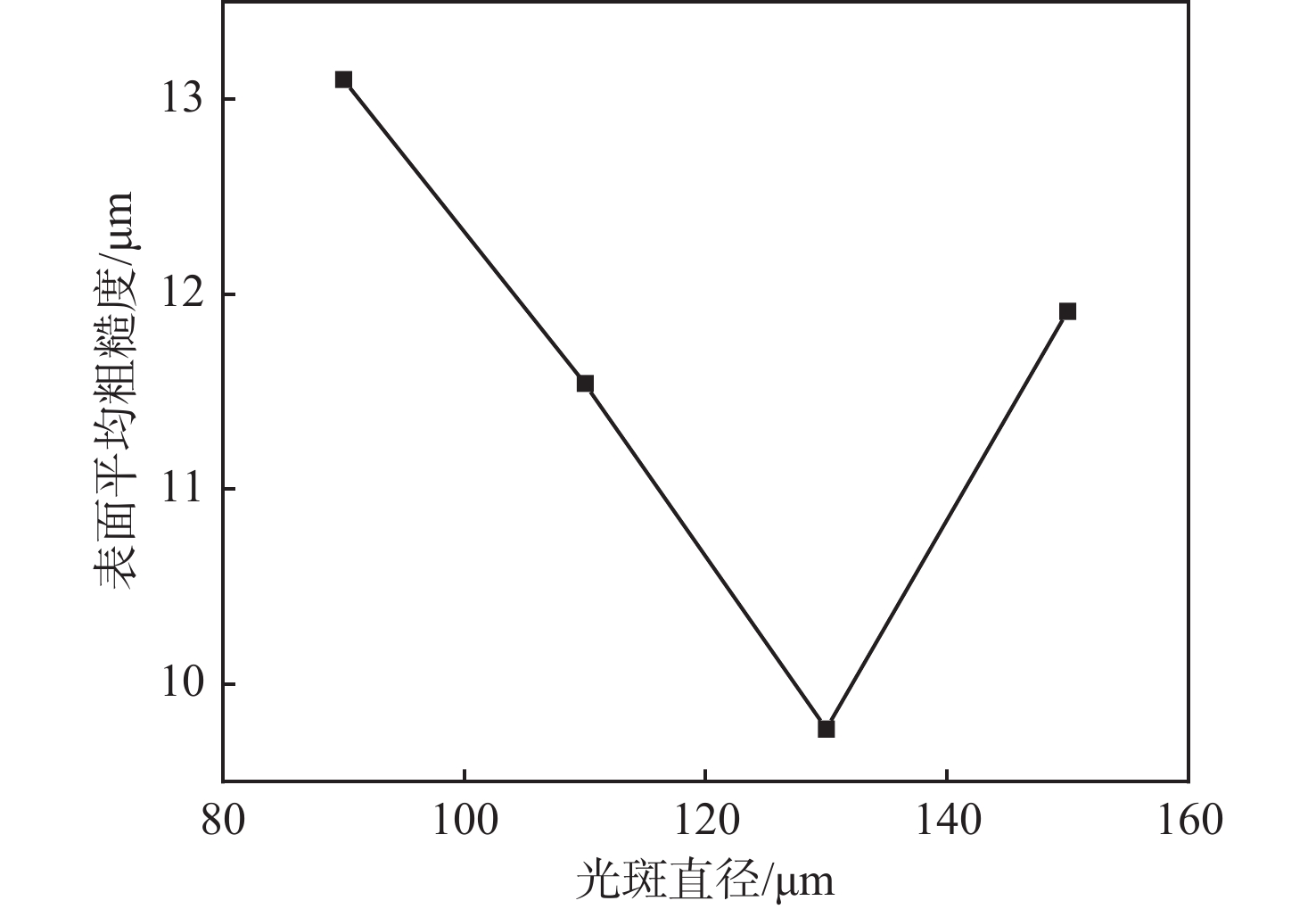
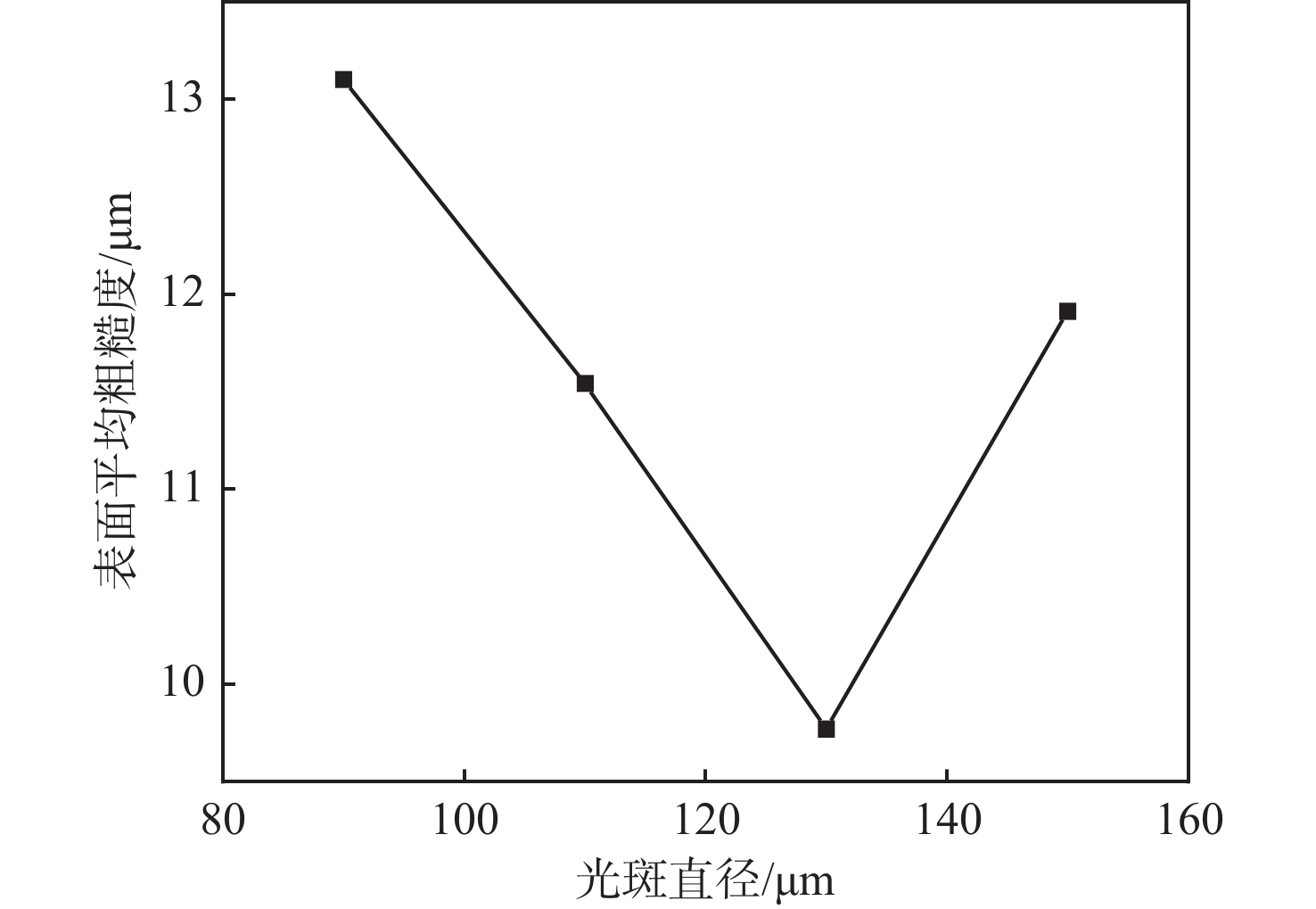
图 7 不同光斑直径下流道顶部的表面平均粗糙度分布
Figure 7. Distribution of the surface average roughness at the top of channels for different spot diameters
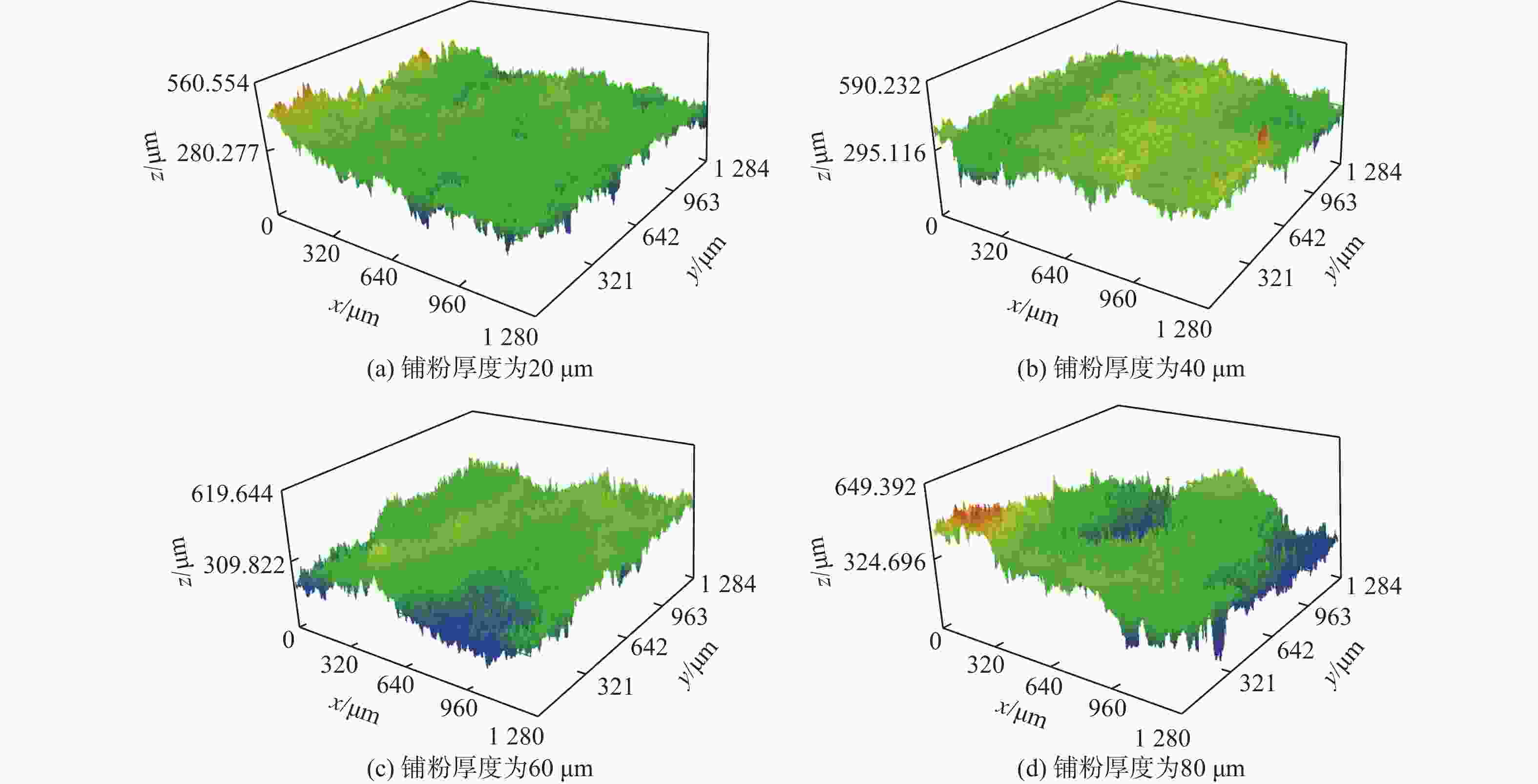
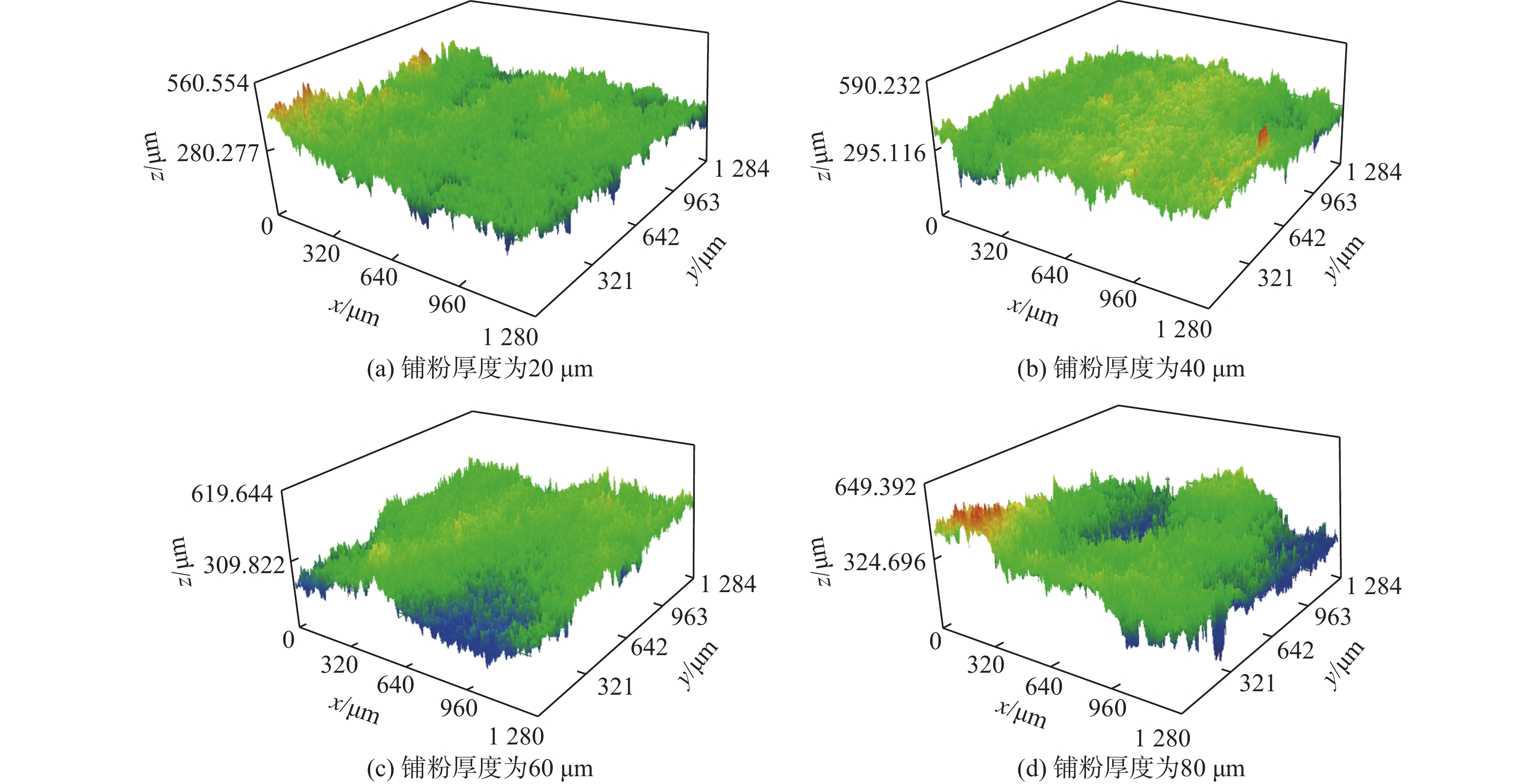
图 8 不同铺粉厚度下流道顶部的表面形貌
Figure 8. Surface morphology at the top of channels under different layer thicknesses
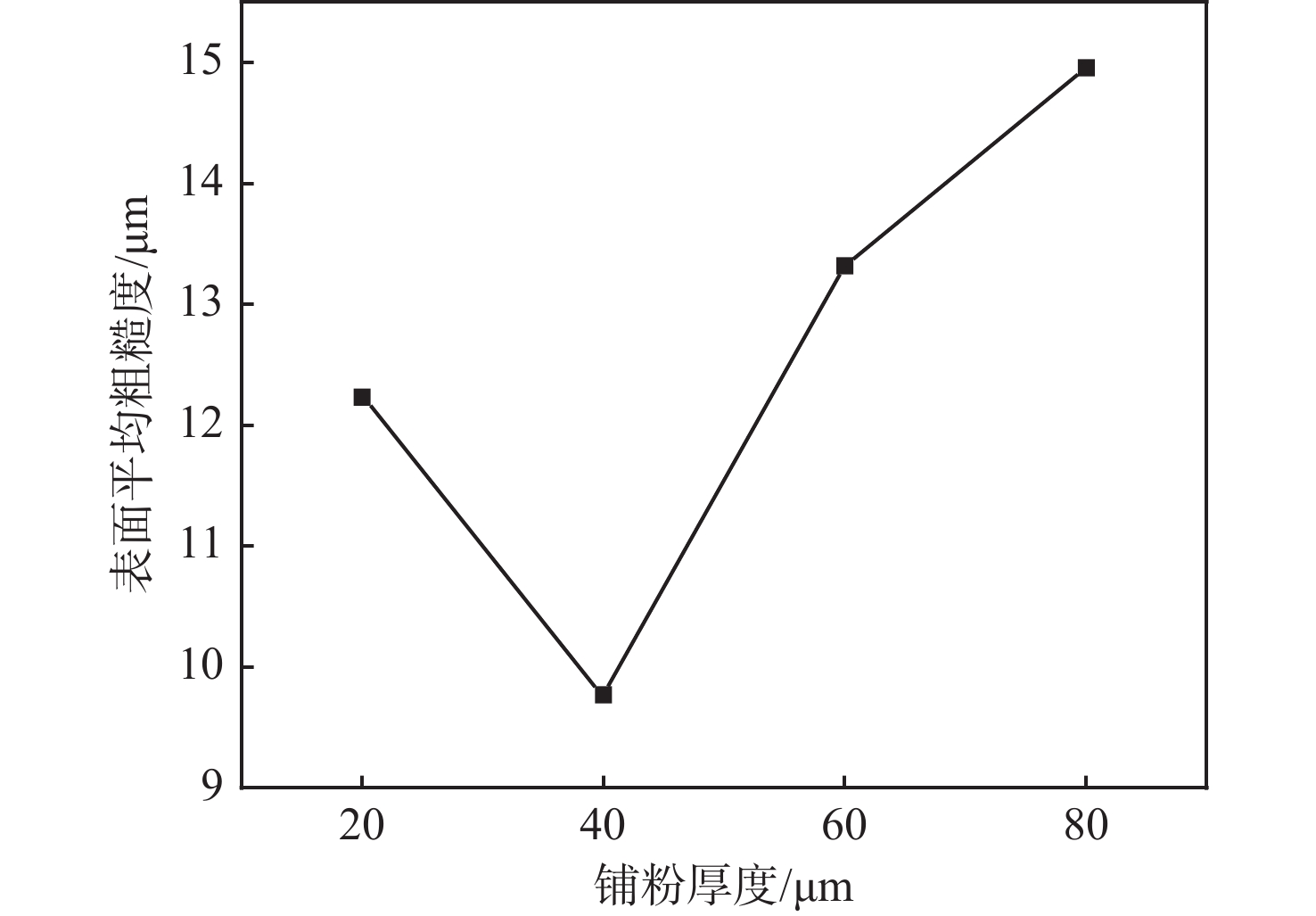
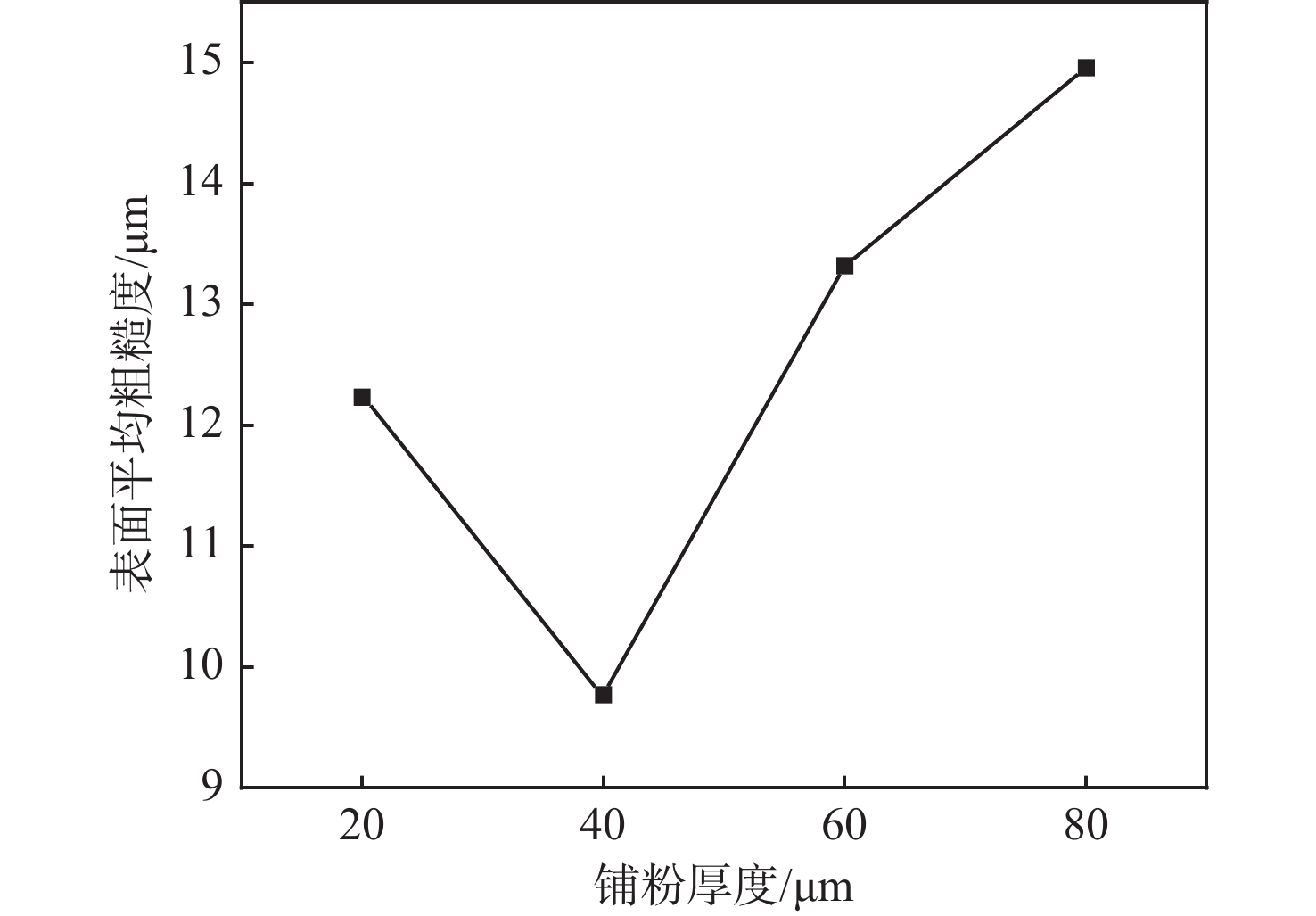
图 9 不同铺粉厚度下流道顶部的表面平均粗糙度分布
Figure 9. Distribution of the surface average roughness at the top of channels for different layer thicknesses
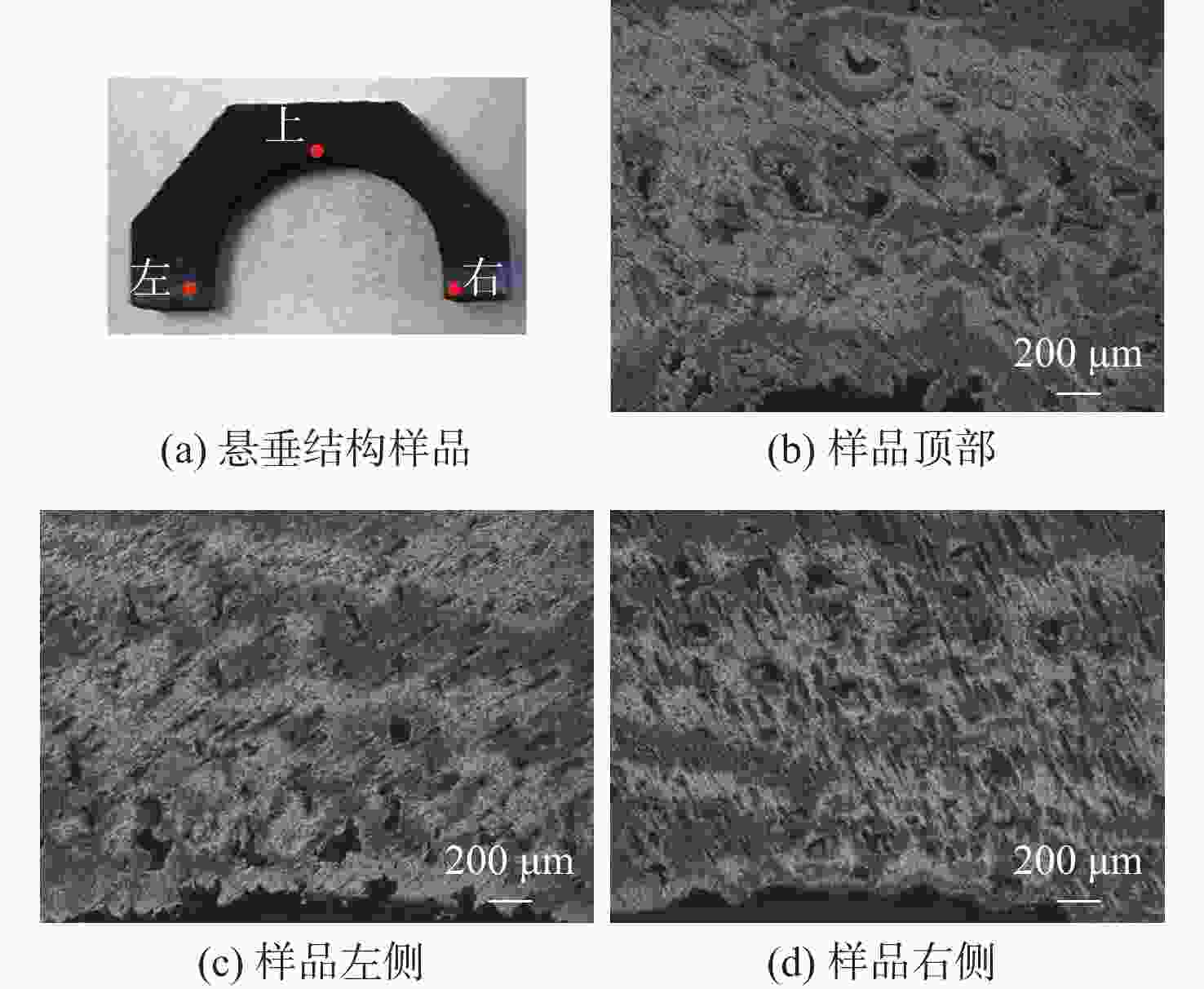
图 10 激光功率密度为32 J/mm3时流道悬垂结构侧边截面的表面形貌
Figure 10. Surface morphology of the side cross section of the channel overhang structure at the laser power density of 32 J/mm3
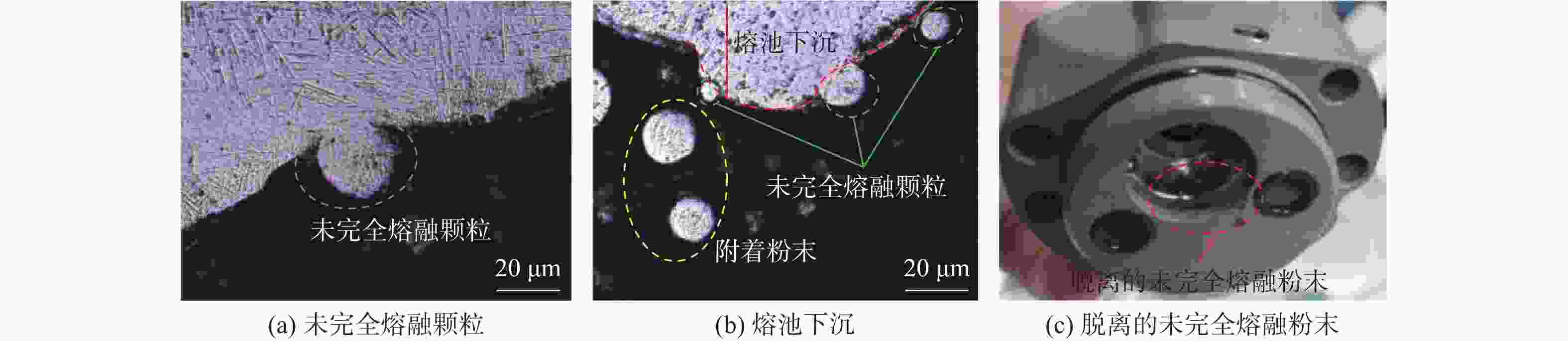
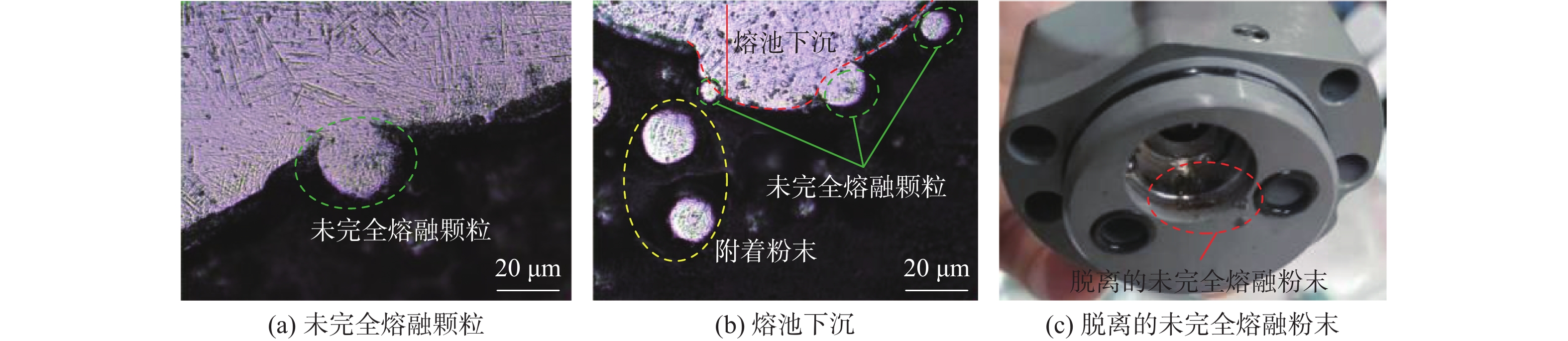
图 11 单层悬垂结构侧边的表面形貌
Figure 11. Surface morphology of the side edges of single-layer overhanging structures
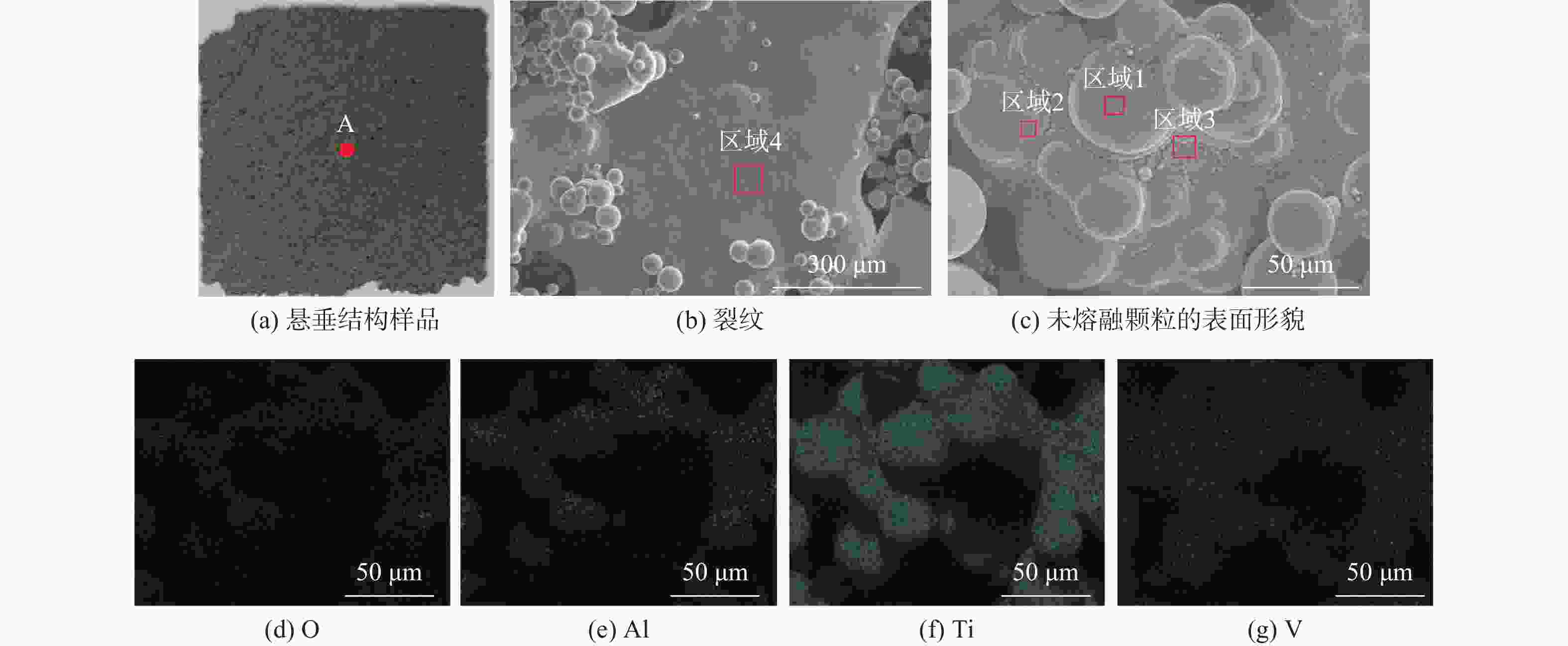
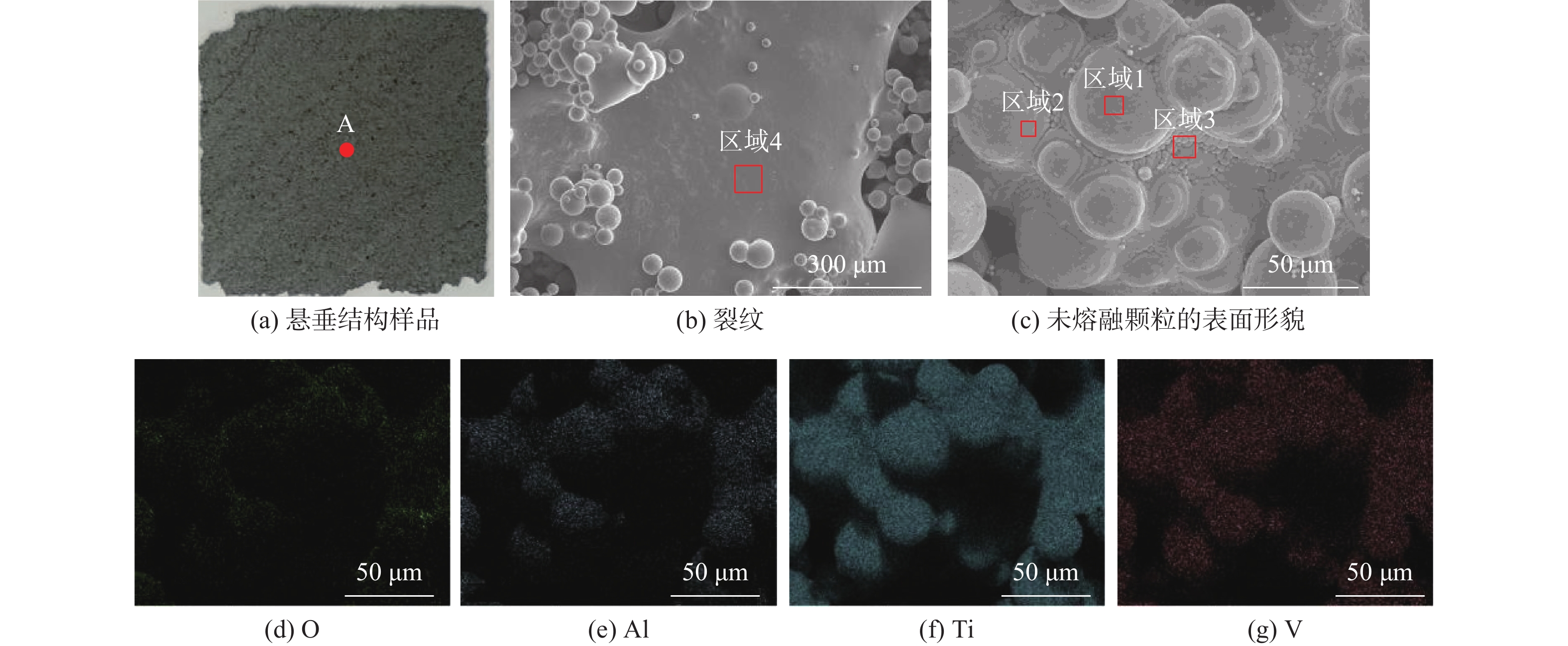
图 12 单层悬垂结构表面形貌及元素分布
Figure 12. Surface morphology and element distribution of single-layer overhanging structures
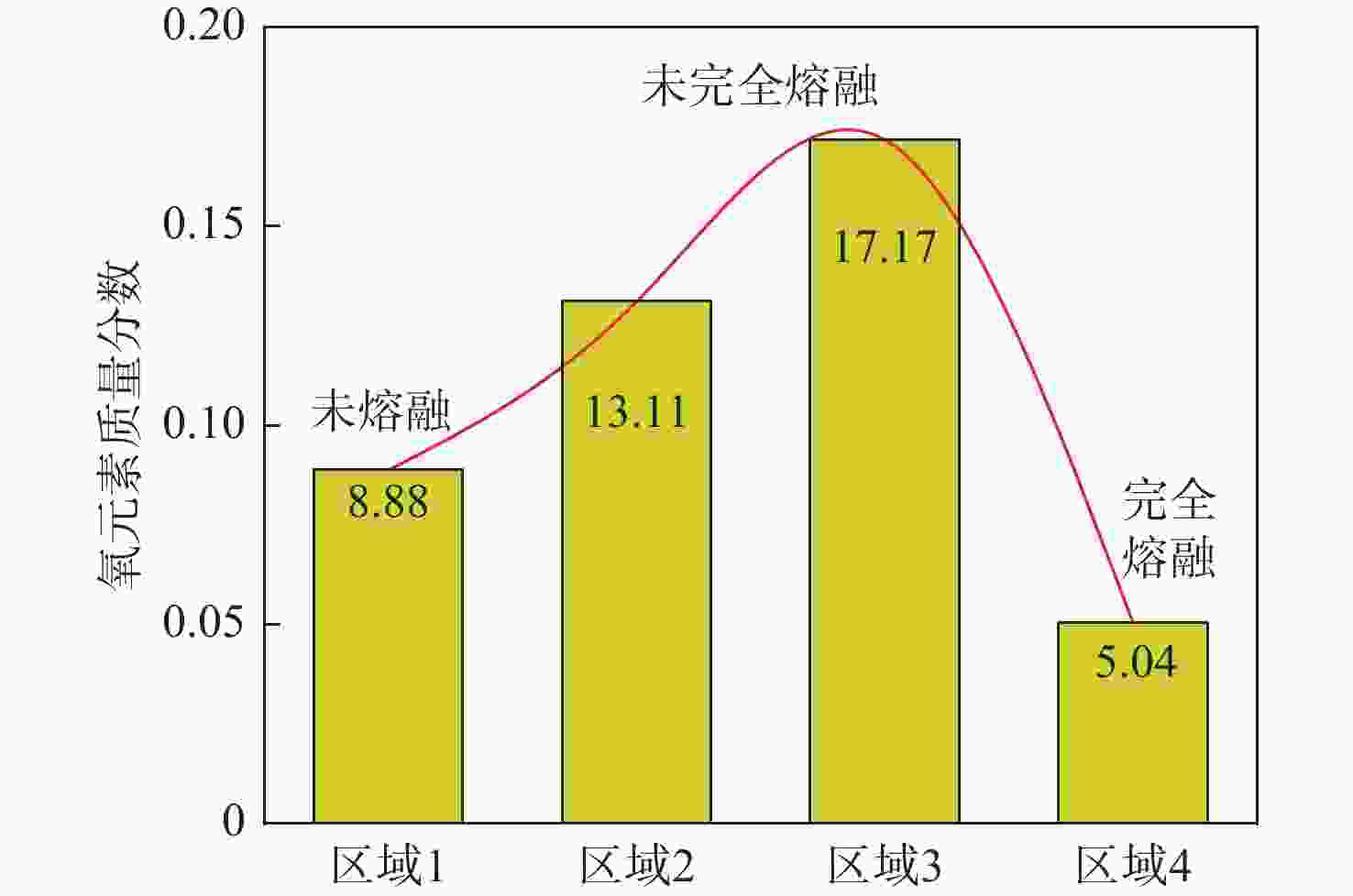
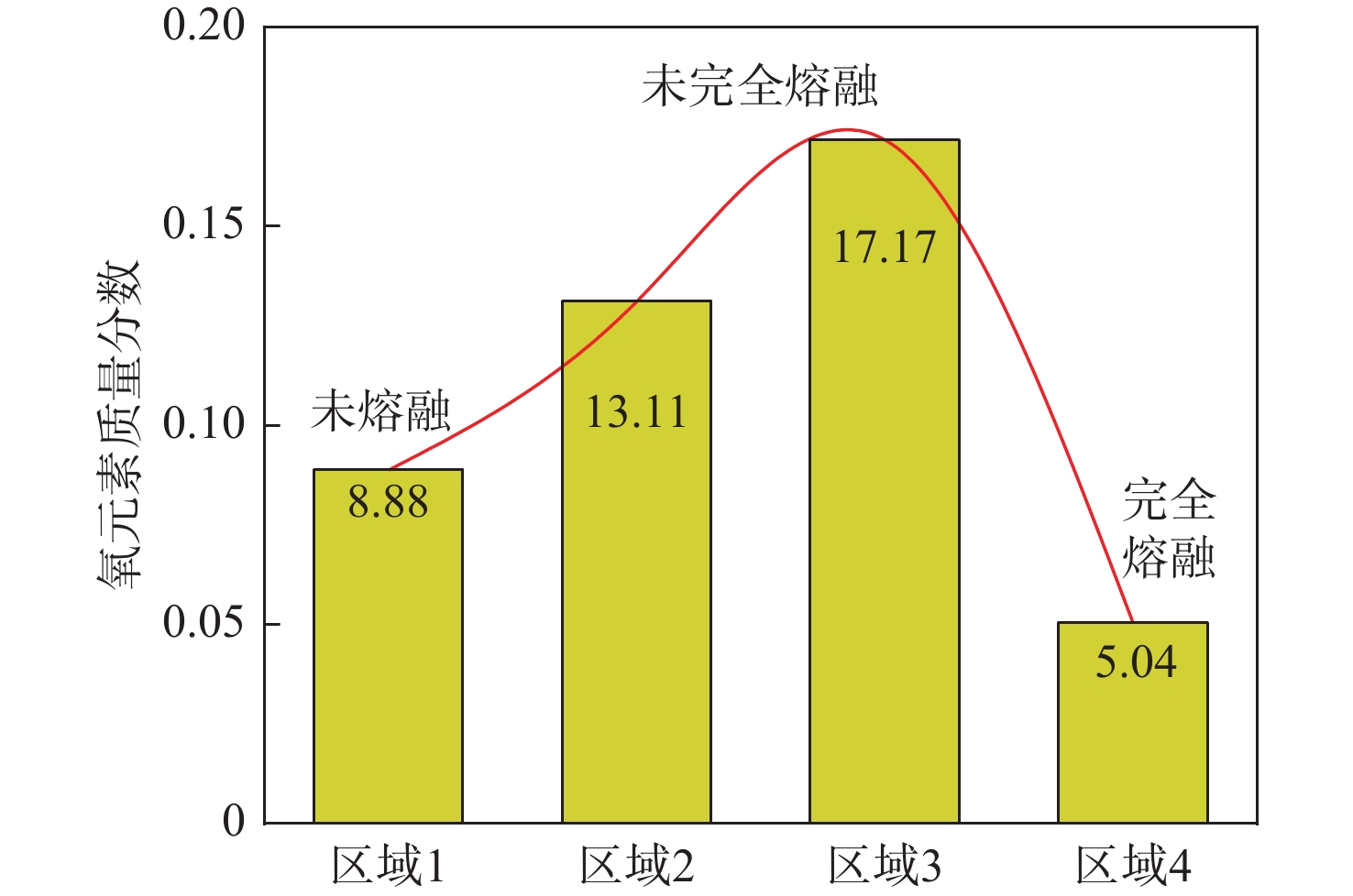
图 13 单层悬垂结构不同区域的氧元素含量
Figure 13. Oxygen content in different regions of single-layer overhanging structure
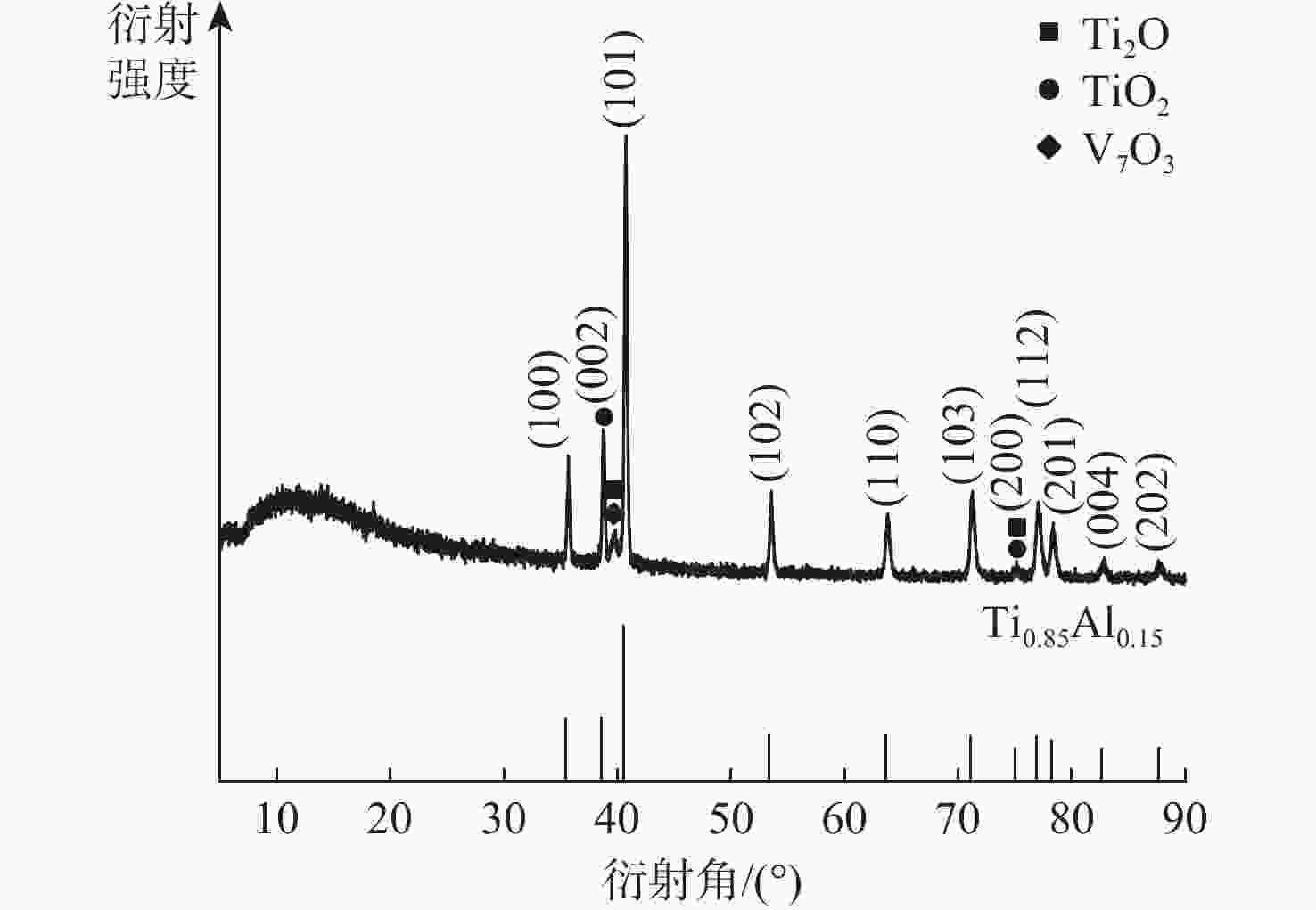
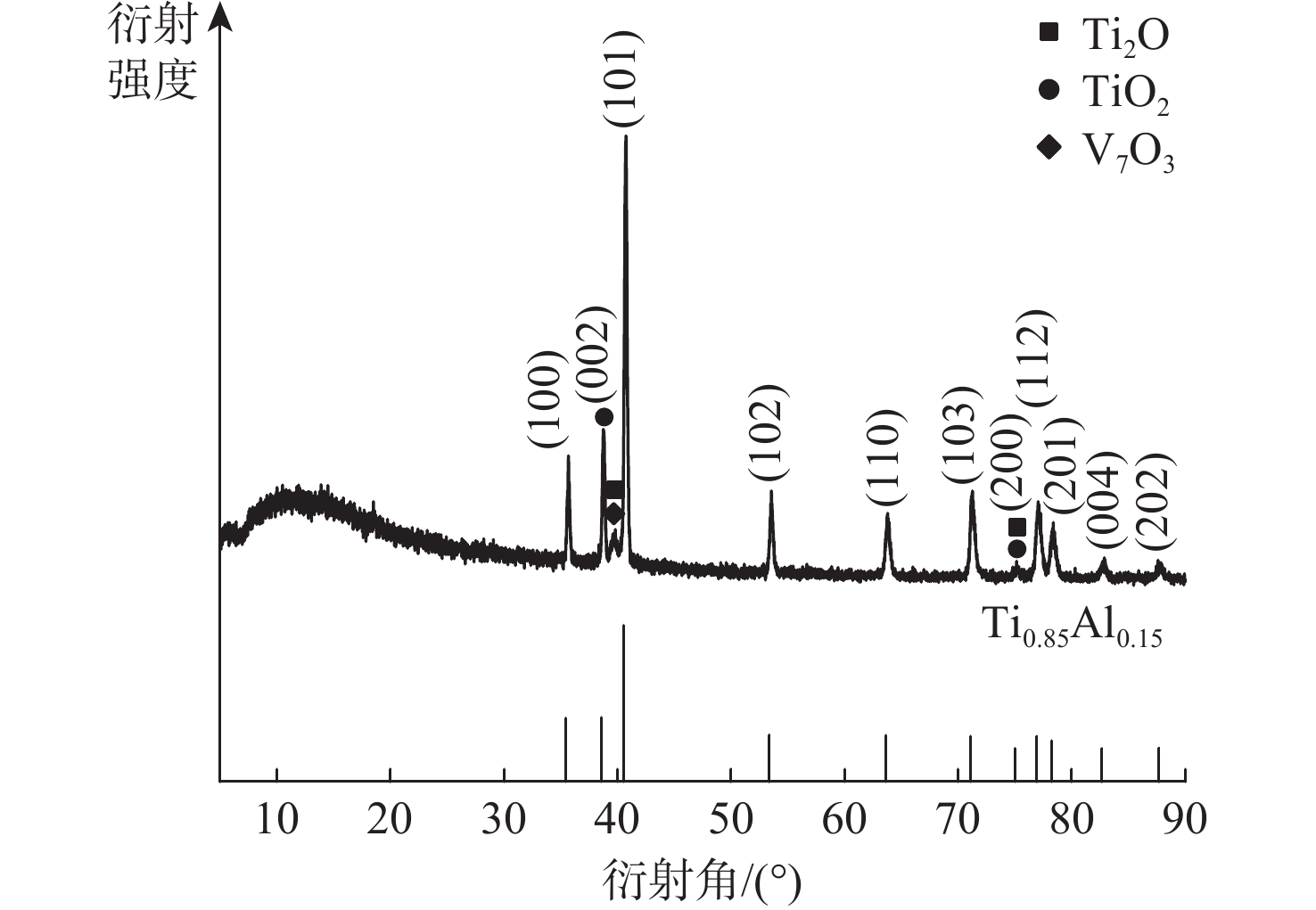
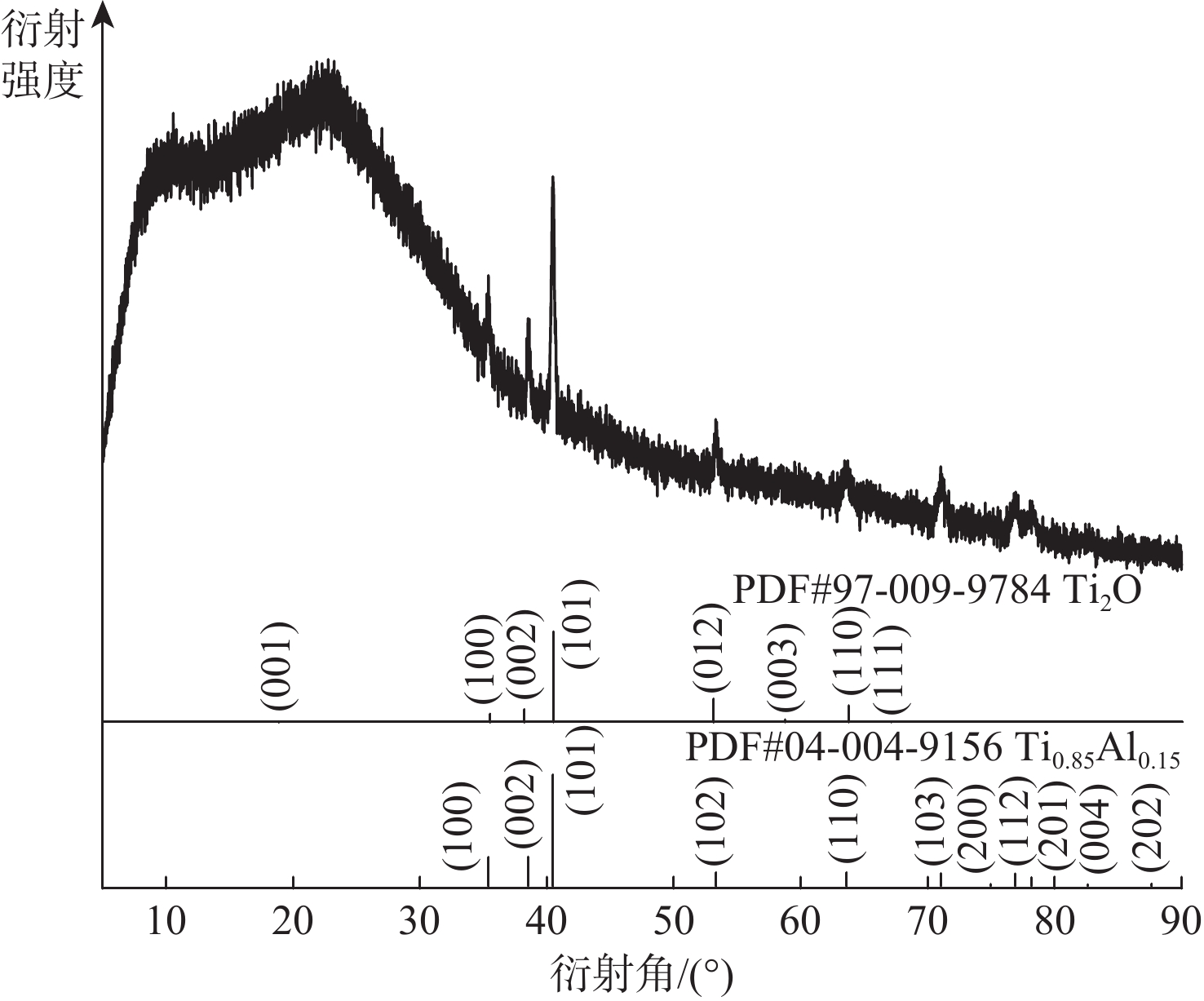
图 14 单层悬垂结构表面的XRD测试结果
Figure 14. XRD test results of single-layer overhanging structure surface
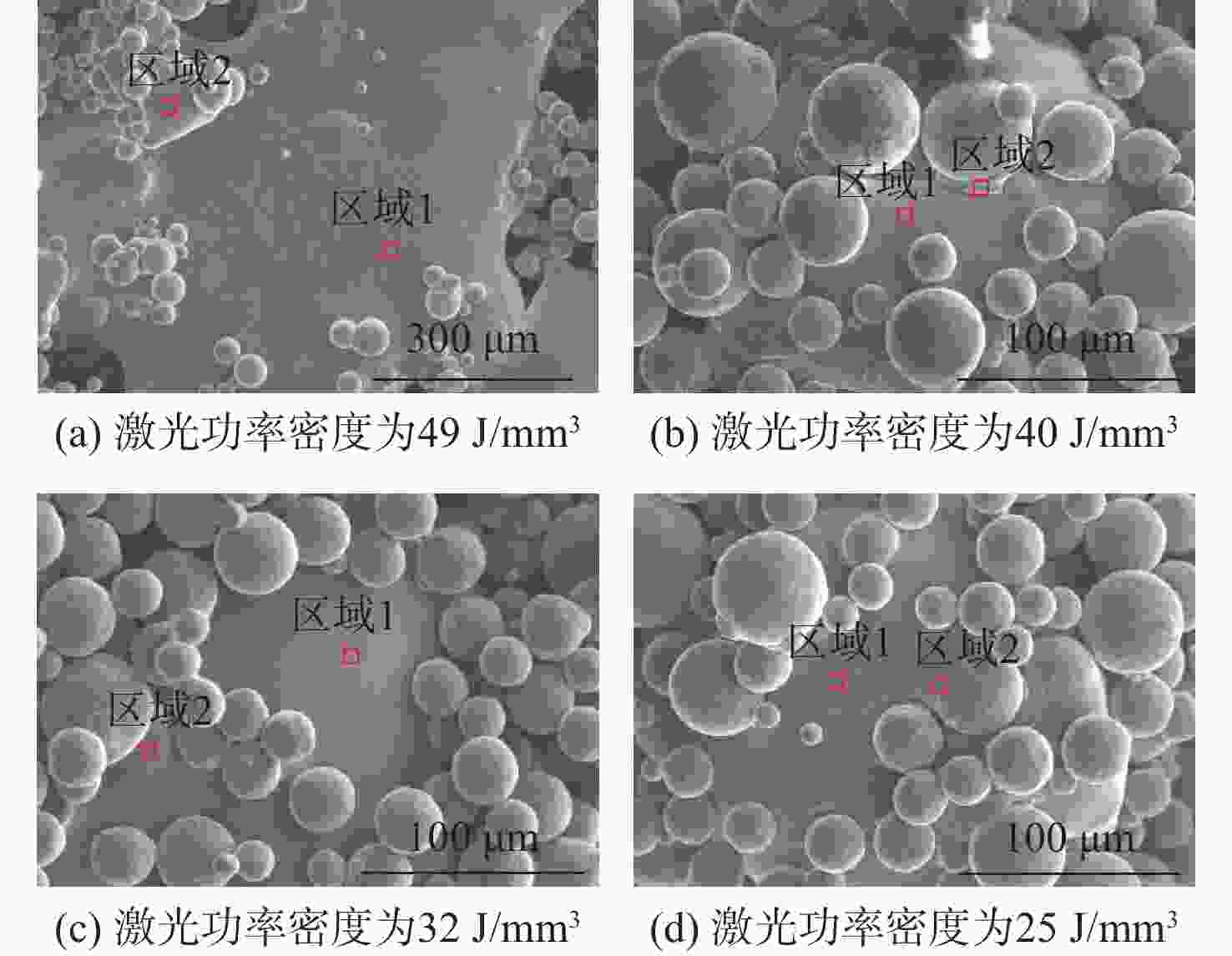
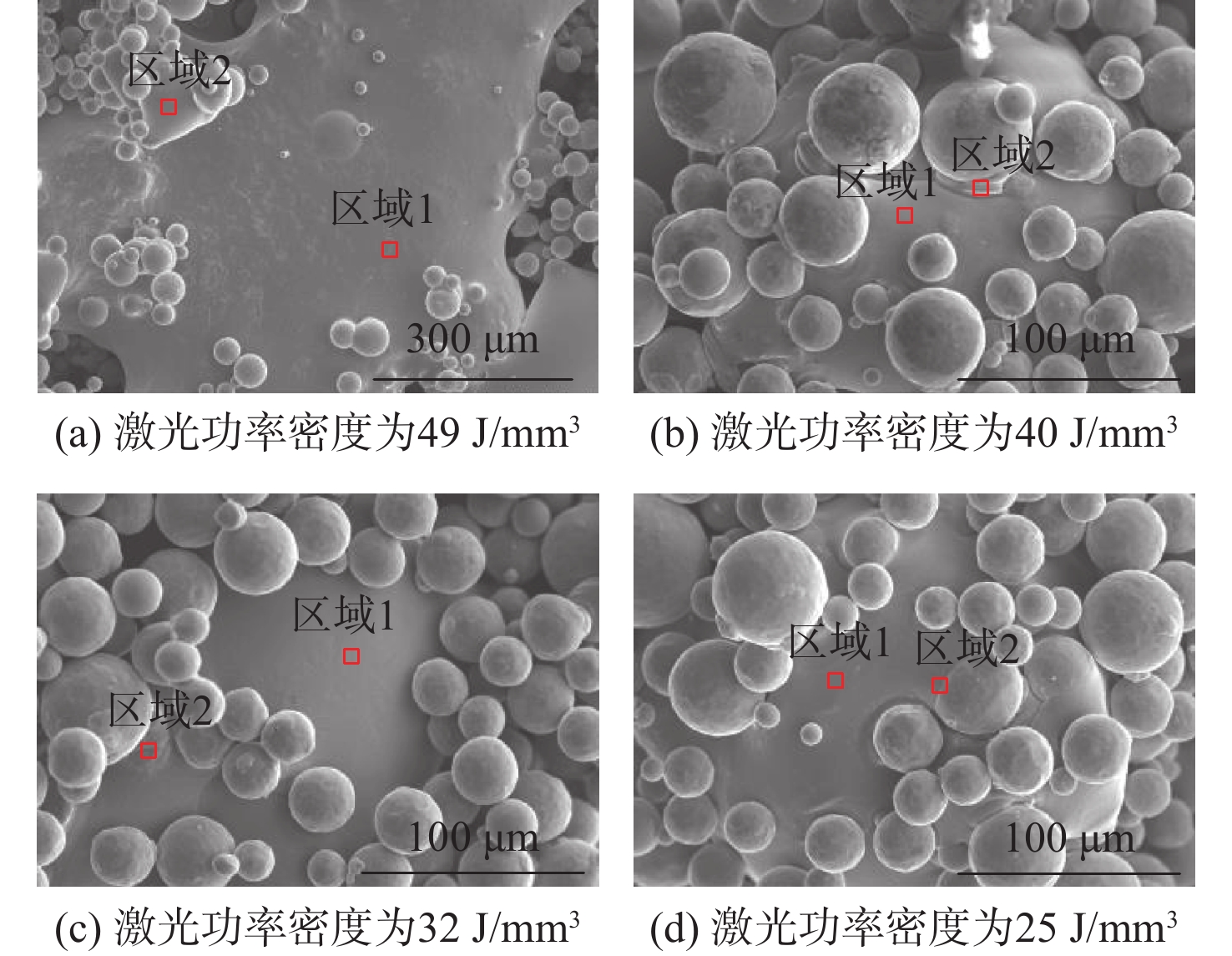
图 15 不同激光功率密度下单层悬垂结构的表面形貌
Figure 15. Surface morphology of the single-layer overhanging structure at different laser power densities
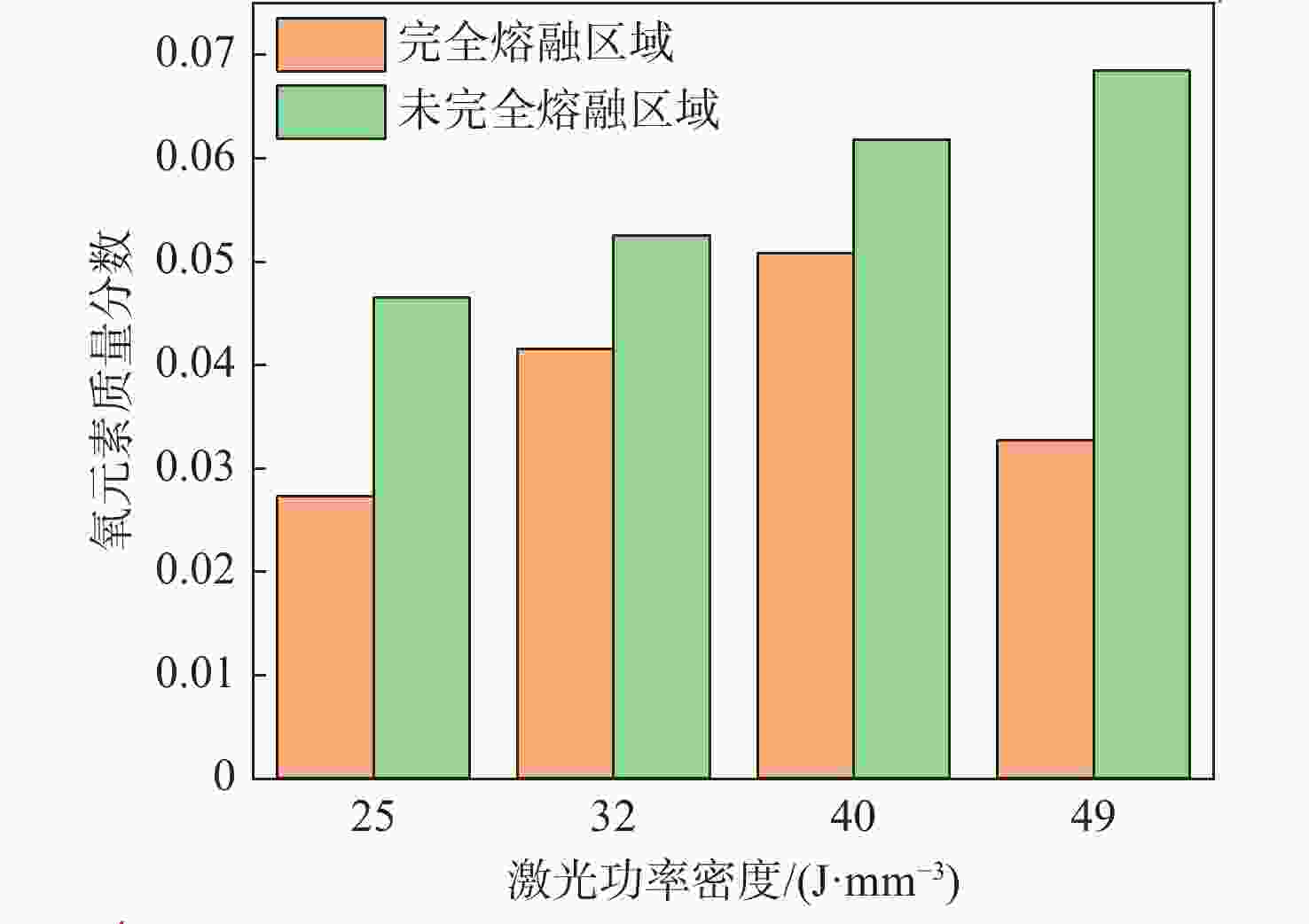
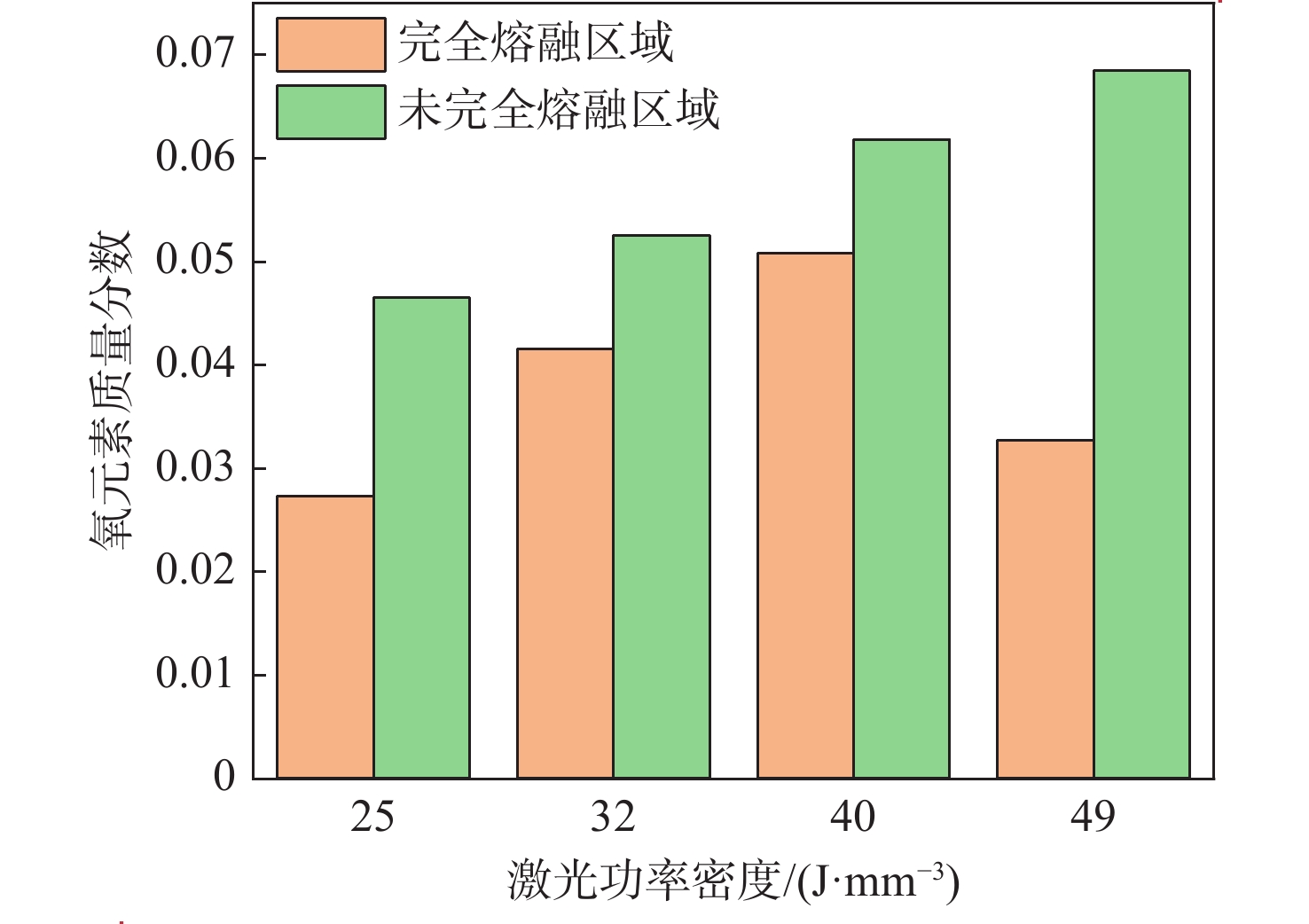
图 16 激光功率密度对不同区域氧元素含量的影响
Figure 16. Effect of laser power density on oxygen content in different regions
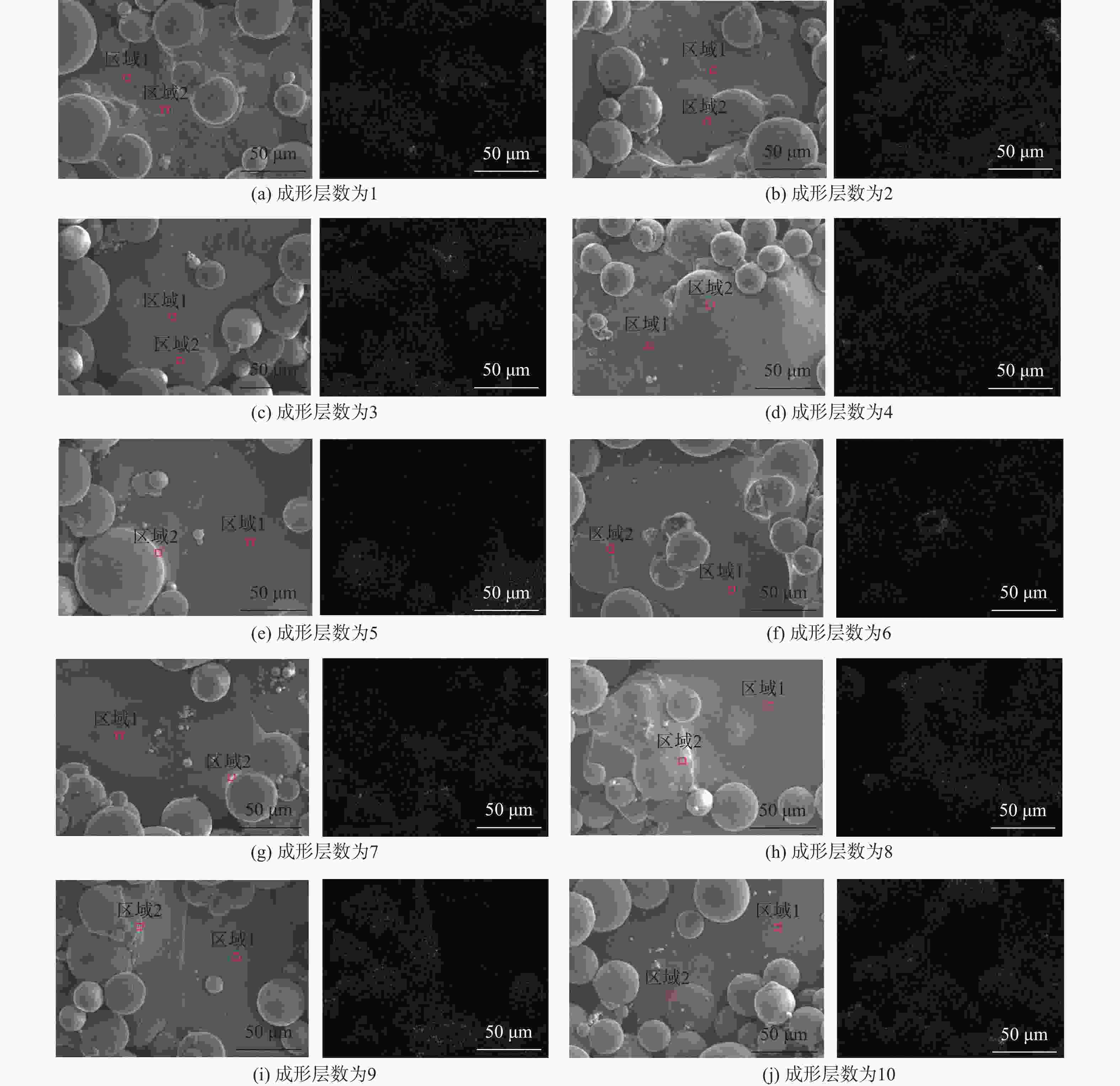
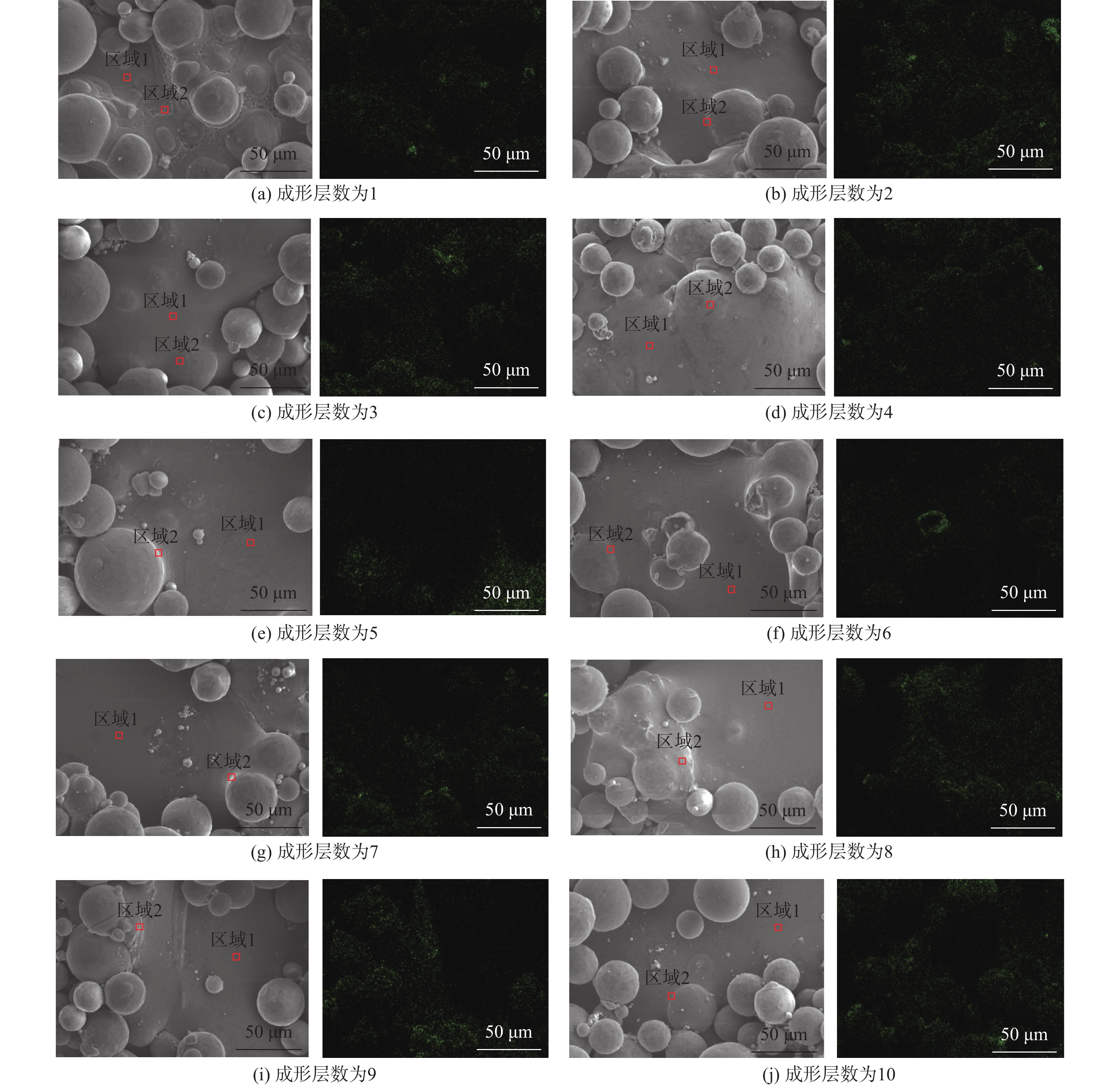
图 17 不同成形层数下悬垂结构的表面形貌及氧元素含量分布
Figure 17. Surface morphology and oxygen distribution of overhanging structure with different numbers of fabrication layers
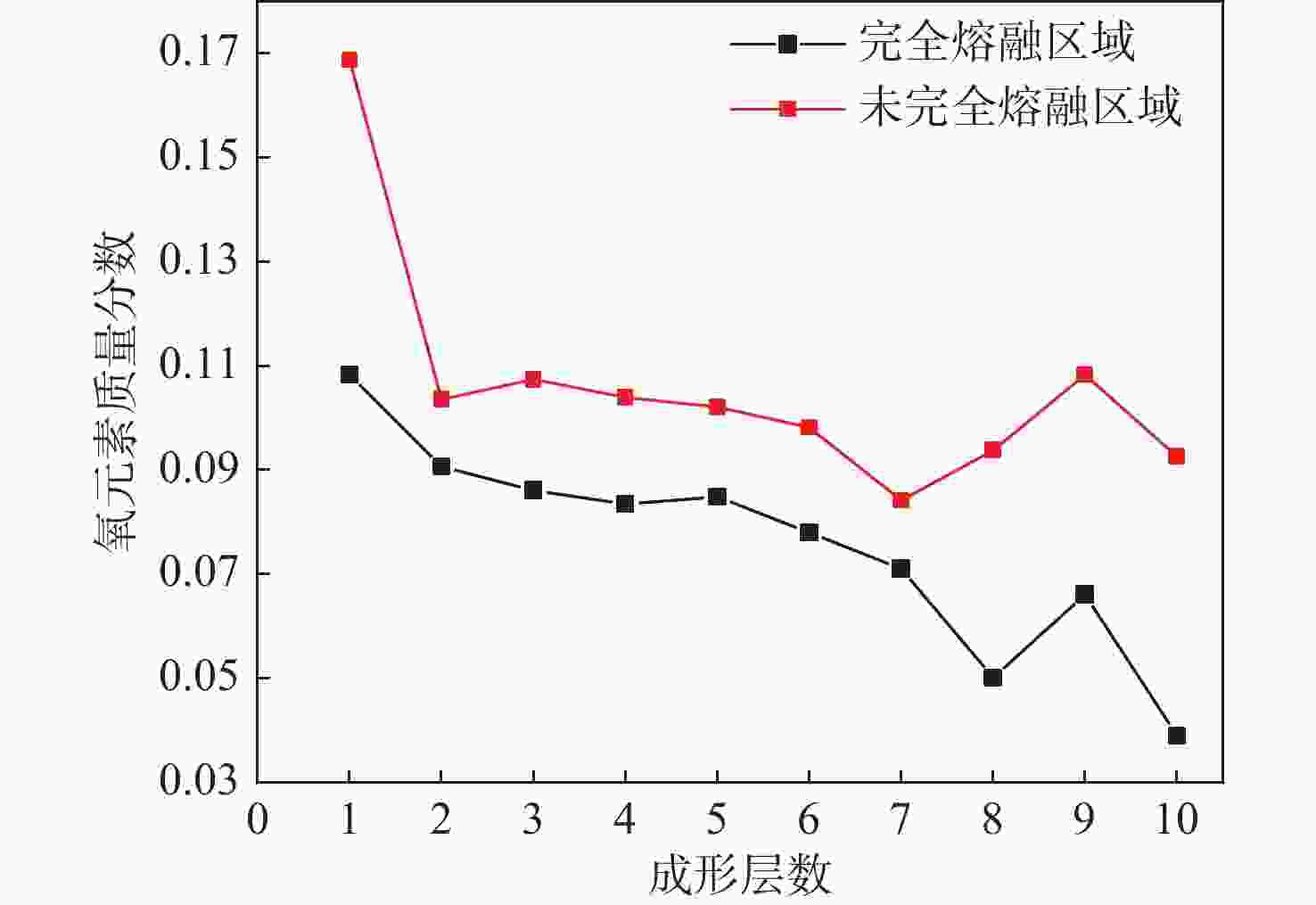
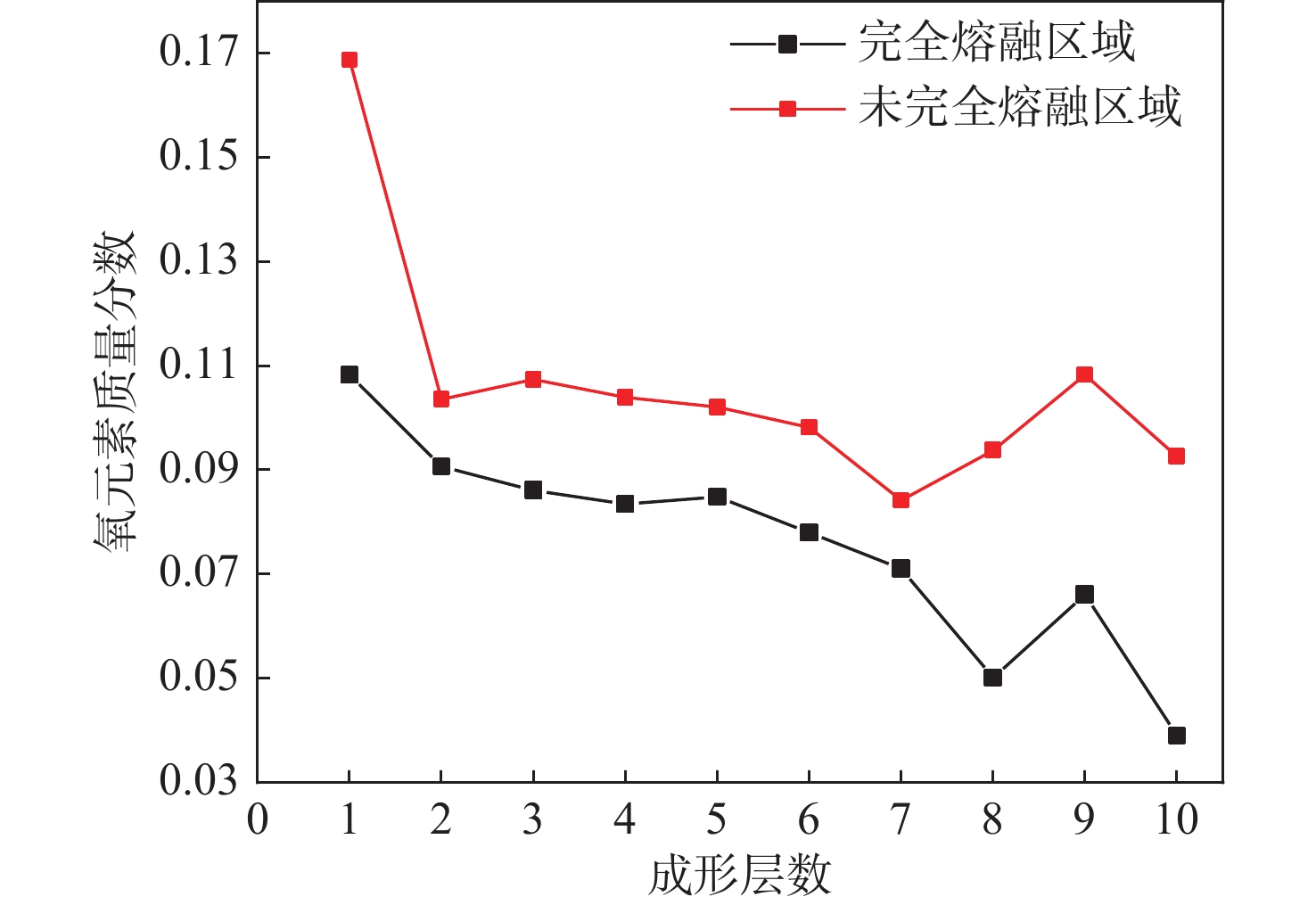
图 18 成形层数对不同区域氧元素含量的影响
Figure 18. Effect of numbers of fabrication layers on oxygen content in different regions
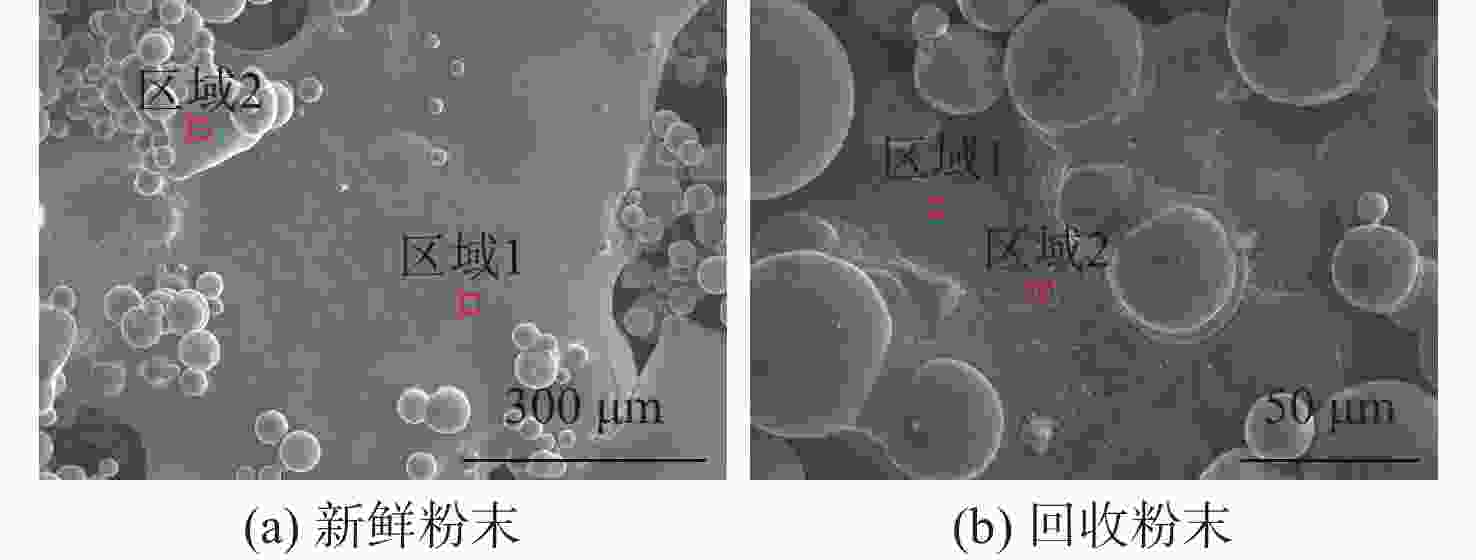
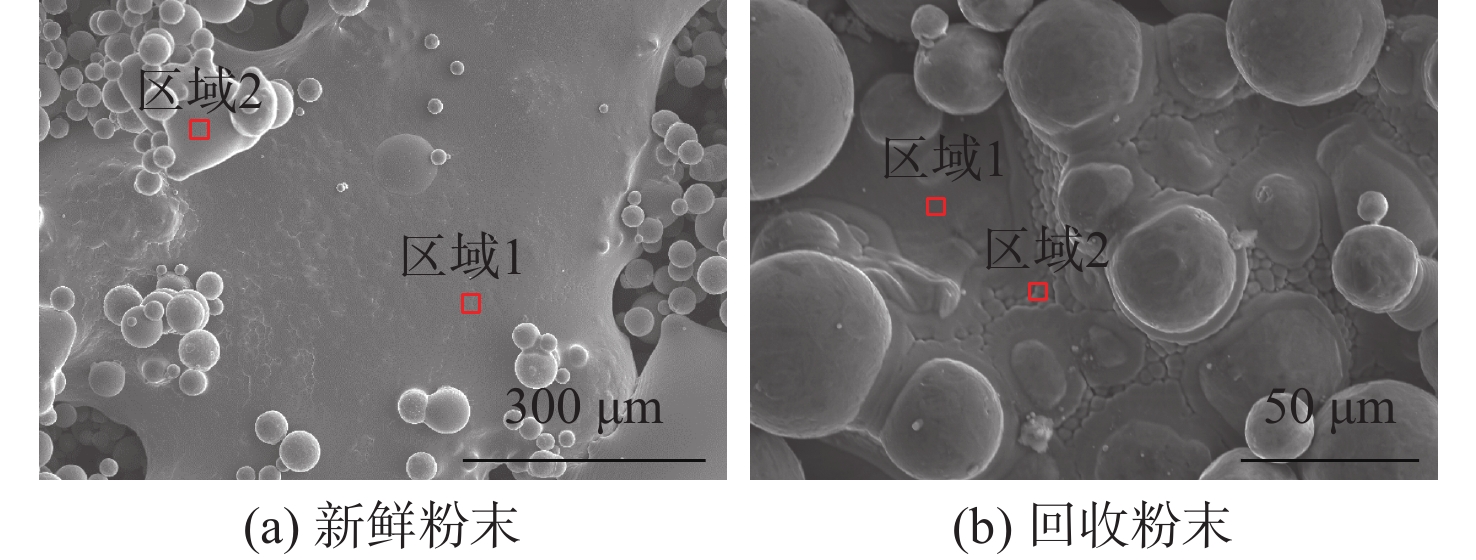
图 19 不同批次粉末成形单层悬垂结构的表面形貌
Figure 19. Surface morphology of the single-layer overhanging structure manufactured by different batches of powder
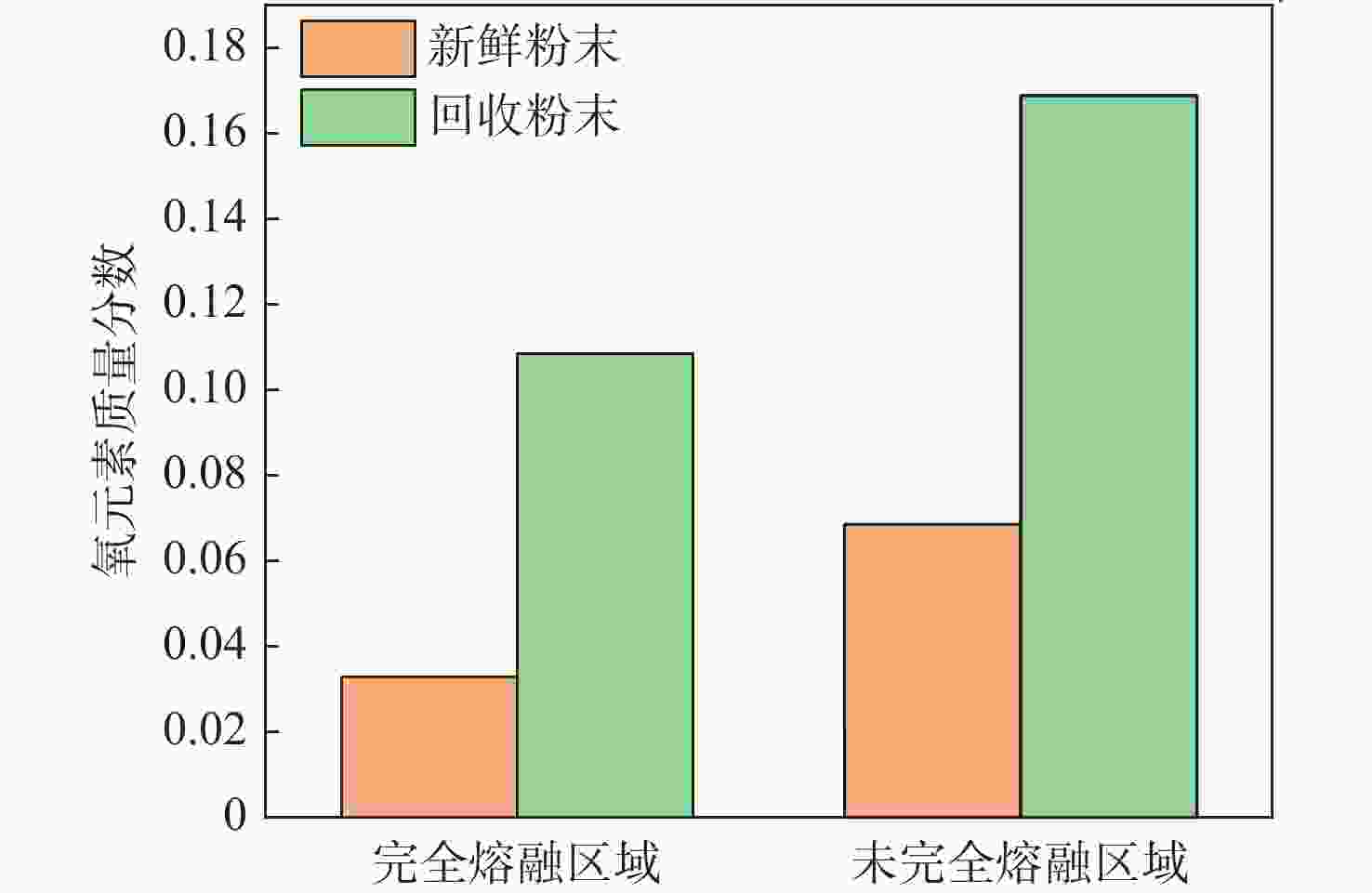
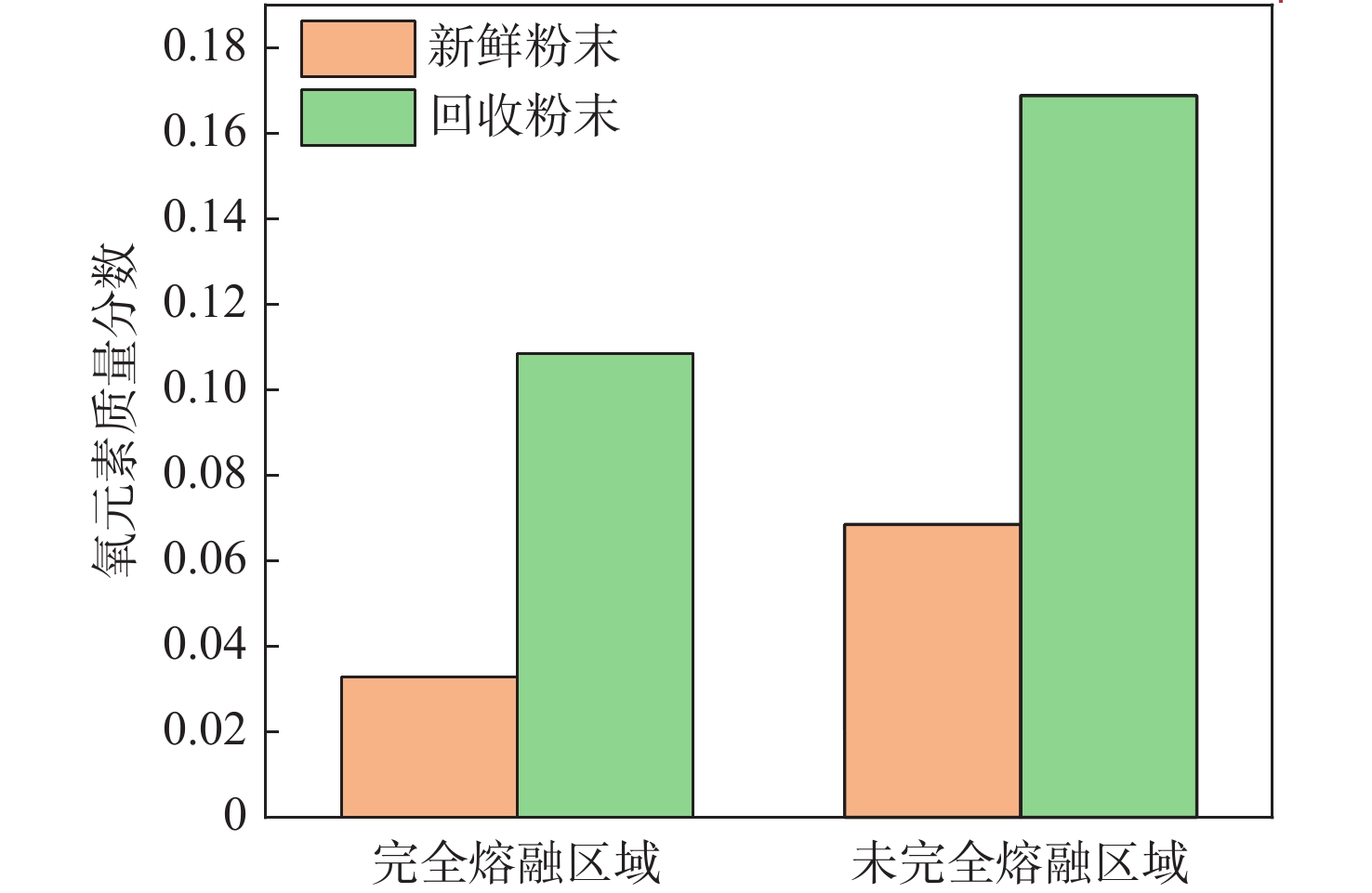
图 20 粉末批次对不同区域氧元素含量的影响
Figure 20. Effect of powder batches on oxygen content in different regions
表 1 TC4粉末化学成分
Table 1. Chemical composition of the TC4 powders
元素 质量分数 Ti 余量 Al 0.055~ 0.0675 V 0.035~0.045 Fe ≤ 0.0030 Si ≤ 0.0015 C ≤ 0.0008 N ≤ 0.0002 H ≤ 0.00005 O ≤ 0.0010 其他 ≤ 0.0040  下载: 导出CSV
表 2 圆形流道样品加工参数
Table 2. Processing parameters for circular channel samples
方案 激光功率密度/(J·mm−3) 光斑直径/μm 铺粉厚度/μm 点距/μm 扫描间距/μm 扫描策略 1 66、55.5、53.5、48、46、39、35、33、32 130 40 110 110 条带 2 66 90、110、130、150 40 110 110 条带 3 66 130 20、40、60、80 110 110 条带
下载: 导出CSV
表 3 悬垂结构样品加工参数
Table 3. Processing parameters for overhang structure samples
方案 激光功率/W 扫描速度/(mm·s−1) 成形层数 点距/μm 铺粉厚度/μm 扫描间距/μm 光斑直径/μm 扫描策略 1 370 1700 1 110 40 110 130 条带 2 320 1800 1 110 40 110 130 条带 3 270 1900 1 110 40 110 130 条带 4 220 2000 1 110 40 110 130 条带 5 370 1700 1、2、3、4、5、6、7、8、9、10 110 40 110 130 条带
下载: 导出CSV
-
[1] Wang Q, Kong D Y, Zhou S H, et al. Micro-structure evolution, precipitation behavior and strengthening mechanism of Ni-Cr-Mo system steel fabricated via laser powder bed fusion and subsequent quenching control[J]. Chinese Journal of Aeronautics, 2025, 38(3): 103221. [2] Li F F, Zhu J H, Zhang W H, et al. Combined anisotropic and cyclic constitutive model for laser powder bed fusion fabricated aluminum alloy[J]. Chinese Journal of Aeronautics, 2025, 38(1): 102973. [3] Yang J, Li B, Liu J, et al. Application of additive manufacturing in the automobile industry: a mini review[J]. Processes, 2024, 12(6): 1101. [4] Joshua R J N, Raj S A, Sultan M T H, et al. Powder bed fusion 3D printing in precision manufacturing for biomedical applications: a comprehensive review[J]. Materials, 2024, 17(3): 769. [5] Liu X C, Li D B, Qi P Y, et al. A local resistance coefficient model of aircraft hydraulics bent pipe using laser powder bed fusion additive manufacturing[J]. Experimental Thermal and Fluid Science, 2023, 147: 110961. [6] Zhou L, Zhu Y, Liu H H, et al. A comprehensive model to predict friction factors of fluid channels fabricated using laser powder bed fusion additive manufacturing[J]. Additive Manufacturing, 2021, 47: 102212. [7] Bartlett J L, Li X D. An overview of residual stresses in metal powder bed fusion[J]. Additive Manufacturing, 2019, 27: 131-149. [8] Thomas D. The development of design rules for selective laser melting[D]. Cardiff: Cardiff Metropolitan University, 2009: 160-182. [9] Kamat A M, Pei Y T. An analytical method to predict and compensate for residual stress-induced deformation in overhanging regions of internal channels fabricated using powder bed fusion[J]. Additive Manufacturing, 2019, 29: 100796. [10] Li D B, Liu X C, Hou P Y, et al. Deformation prediction and shape compensation model of circular channels using laser powder bed fusion[J]. Journal of Materials Research and Technology, 2023, 27: 3968-3978. [11] Zhu Y, Zhou L, Wang S, et al. On friction factor of fluid channels fabricated using selective laser melting[J]. Virtual and Physical Prototyping, 2020, 15(4): 496-509. [12] Khan H M, Dirikolu M H, Koç E. Parameters optimization for horizontally built circular profiles: numerical and experimental investigation[J]. Optik, 2018, 174: 521-529. [13] Sarkar S, Porwal A, Yaswanth N, et al. A study on effect of different process parameters on the quality of overhang surface produced by selective laser melting[C]//Proceedings of the 2018 13th International Manufacturing Science and Engineering Conference. New York: ASME, 2018: V001T01A006. [14] Tian Y P, Ren H L, He J, et al. Surface roughness improvement of Ti-6Al-4V alloy overhang structures via process optimization for laser-powder bed fusion[J]. Journal of Manufacturing Processes, 2024, 110: 434-446. [15] Li D B, Liu X C, Hou P Y, et al. Experimental investigation of the annular gradient process for circular channels using laser powder bed fusion[J]. Optics & Laser Technology, 2024, 179: 111393. [16] King W E, Anderson A T, Ferencz R M, et al. Laser powder bed fusion additive manufacturing of metals: physics, computational, and materials challenges[J]. Applied Physics Reviews, 2015, 2(4): 041304. [17] Bugatti M, Semeraro Q, Colosimo B M. Effect of overhanging surfaces on the evolution of substrate topography and internal defects formation in laser powder bed fusion[J]. Journal of Manufacturing Processes, 2022, 77: 588-606. [18] Chen Z E, Wu X H, Tomus D, et al. Surface roughness of selective laser melted Ti-6Al-4V alloy components[J]. Additive Manufacturing, 2018, 21: 91-103. [19] Feng S C, Kamat A M, Sabooni S, et al. Experimental and numerical investigation of the origin of surface roughness in laser powder bed fused overhang regions[J]. Virtual and Physical Prototyping, 2021, 16(Sup1): S66-S84. [20] Fox J C, Moylan S P, Lane B M. Effect of process parameters on the surface roughness of overhanging structures in laser powder bed fusion additive manufacturing[J]. Procedia CIRP, 2016, 45: 131-134. [21] Feng J Y, Zhang Z Y, Yu S Q, et al. Novel multiphase jet polishing for complicated structured components produced by laser powder bed fusion[J]. Additive Manufacturing, 2023, 72: 103634. [22] Nagalingam A P, Yuvaraj H K, Santhanam V, et al. Multiphase hydrodynamic flow finishing for surface integrity enhancement of additive manufactured internal channels[J]. Journal of Materials Processing Technology, 2020, 283: 116692. [23] Shafagh S, Papini M. The effects of blast lag in abrasive jet machined micro-channel intersections[J]. Precision Engineering, 2020, 62: 162-169. [24] Yang T, Liu T T, Liao W H, et al. Effect of processing parameters on overhanging surface roughness during laser powder bed fusion of AlSi10Mg[J]. Journal of Manufacturing Processes, 2021, 61: 440-453. [25] Raza A, Pauzon C, Dubiez-Le Goff S, et al. Effect of processing gas on spatter generation and oxidation of TiAl6V4 alloy in laser powder bed fusion process[J]. Applied Surface Science, 2023, 613: 156089. [26] Soundarapandiyan G, Leung C L A, Johnston C, et al. In situ monitoring the effects of Ti6Al4V powder oxidation during laser powder bed fusion additive manufacturing[J]. International Journal of Machine Tools and Manufacture, 2023, 190: 104049. [27] Eo D R, Chung S G, Jeon J M, et al. Melt pool oxidation and reduction in powder bed fusion[J]. Additive Manufacturing, 2021, 41: 101982. [28] Wang Z, Huang S, Lu H F, et al. The role of annealing heat treatment in high-temperature oxidation resistance of laser powder bed fused Ti6Al4V alloy subjected to massive laser shock peening treatment[J]. Corrosion Science, 2022, 209: 110732. [29] Zhou W W, Takase N, Dong M Q, et al. Elucidating the impact of severe oxidation on the powder properties and laser melting behaviors[J]. Materials & Design, 2022, 221: 110959. [30] Afroz L, Das R, Qian M, et al. Fatigue behaviour of laser powder bed fusion (L-PBF) Ti-6Al-4V, Al-Si-Mg and stainless steels: a brief overview[J]. International Journal of Fracture, 2022, 235(1): 3-46. -

 下载:
下载:

 点击查看大图
计量
- 文章访问数: 202
- HTML全文浏览量: 142
- PDF下载量: 8
- 被引次数: 0
