





-
摘要:
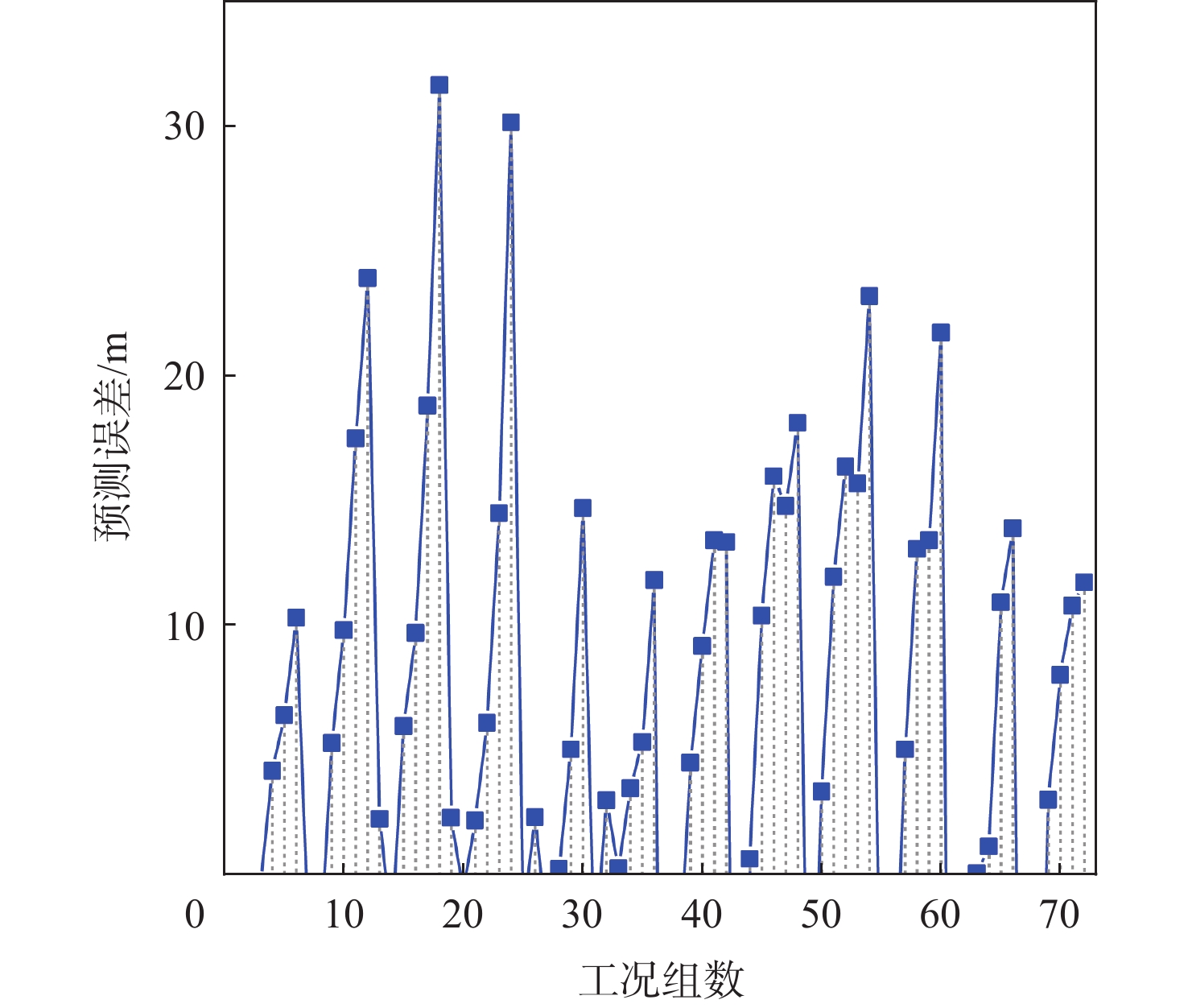
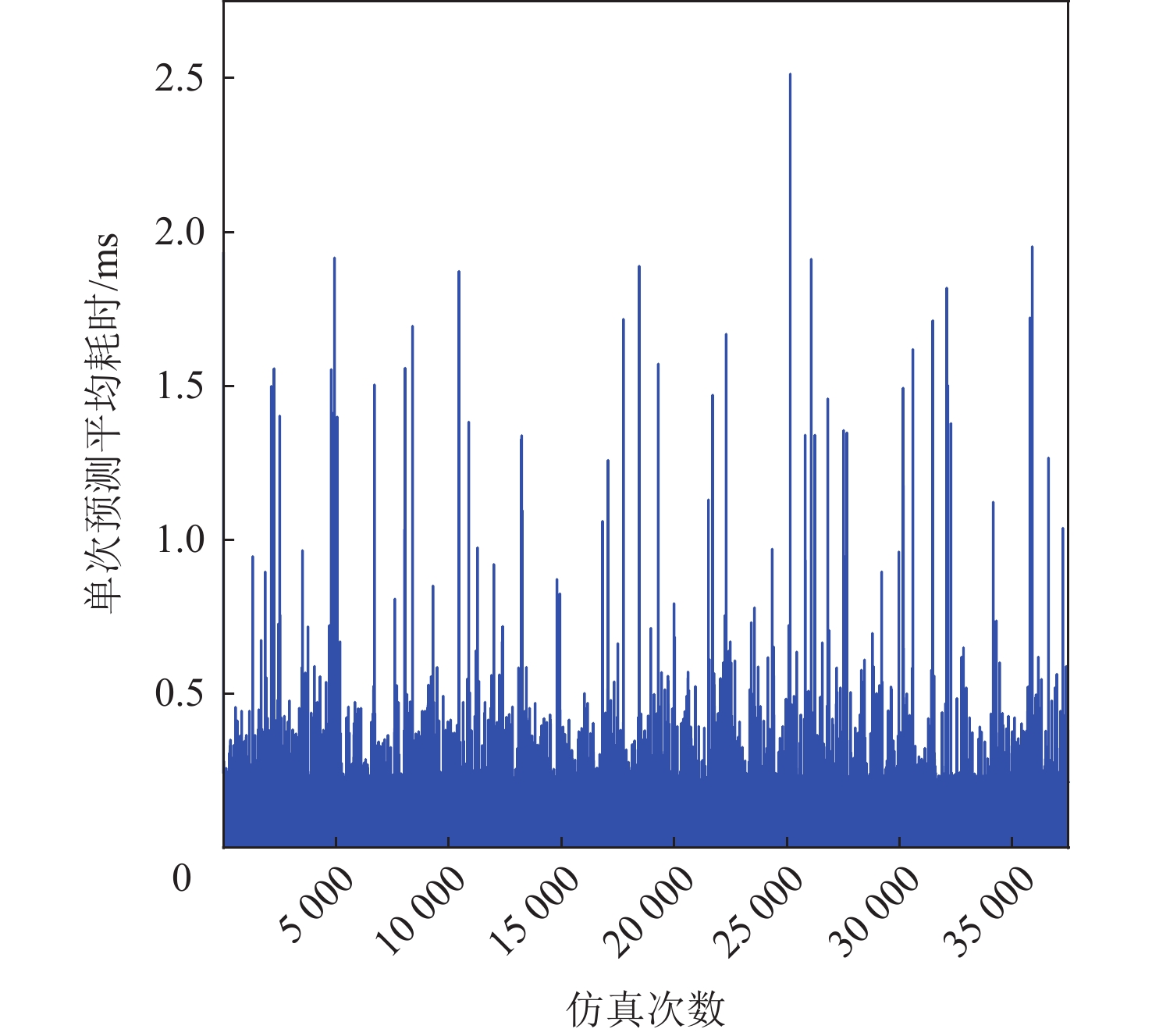
为有效预防飞机着陆冲出跑道事故,针对现有着陆距离预测方法在实时性和处理非线性动态过程中的局限性,提出一种基于模糊推理的飞机着陆距离混合预测算法。基于着陆过程3个动态特性各异的阶段,融合多种预测策略:在下滑阶段,使用地速矢量映射法预测;在滑跑阶段,使用轨迹解析法预测;在状态变化剧烈、难以精确建模的拉平阶段,使用基于Mamdani型模糊推理法预测。提出多工况、高保真仿真平台验证方法,可在紊流风场动态环境中实现对着陆距离的实时预测,拉平距离预测误差小于35 m,算法单次预测平均耗时小于3 ms,满足实时决策需求,为提升着陆安全裕度提供了一种可行的工程策略方法。
Abstract:A hybrid landing distance prediction algorithm based on fuzzy inference is suggested to overcome the shortcomings of current approaches in real-time performance and handling nonlinear dynamics in order to successfully prevent runway excursion incidents during aircraft landings. The method integrates multiple prediction strategies based on the three distinct dynamic phases of the landing process: during the glide phase, a ground speed vector mapping method is used for prediction; during the rollout phase, a trajectory analysis method is employed; and during the flare phase, which involves significant state changes and is difficult to model accurately, a Mamdani-type fuzzy inference method is applied. A high-fidelity simulation platform for multi-condition validation is also proposed. With a prediction inaccuracy of fewer than 35 meters during the flare phase and a computation time of less than 3 milliseconds per calculation, this platform can deliver real-time landing distance forecasts in turbulent wind environments. The proposed method meets real-time decision-making requirements and offers a feasible engineering strategy to enhance landing safety margins.
-
Key words:
- landing distance /
- real-time prediction /
- fuzzy inference /
- safety enhancement /
- intelligent decision
-
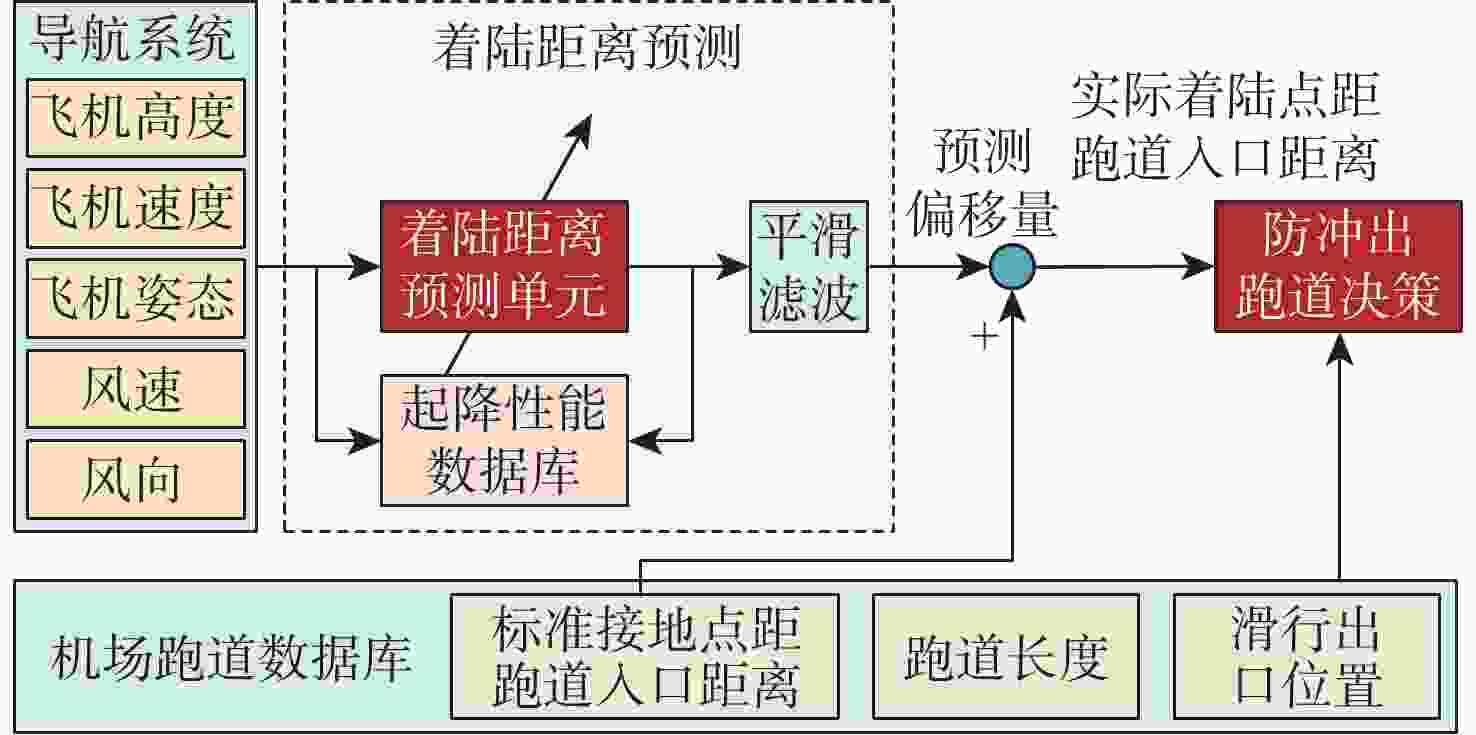
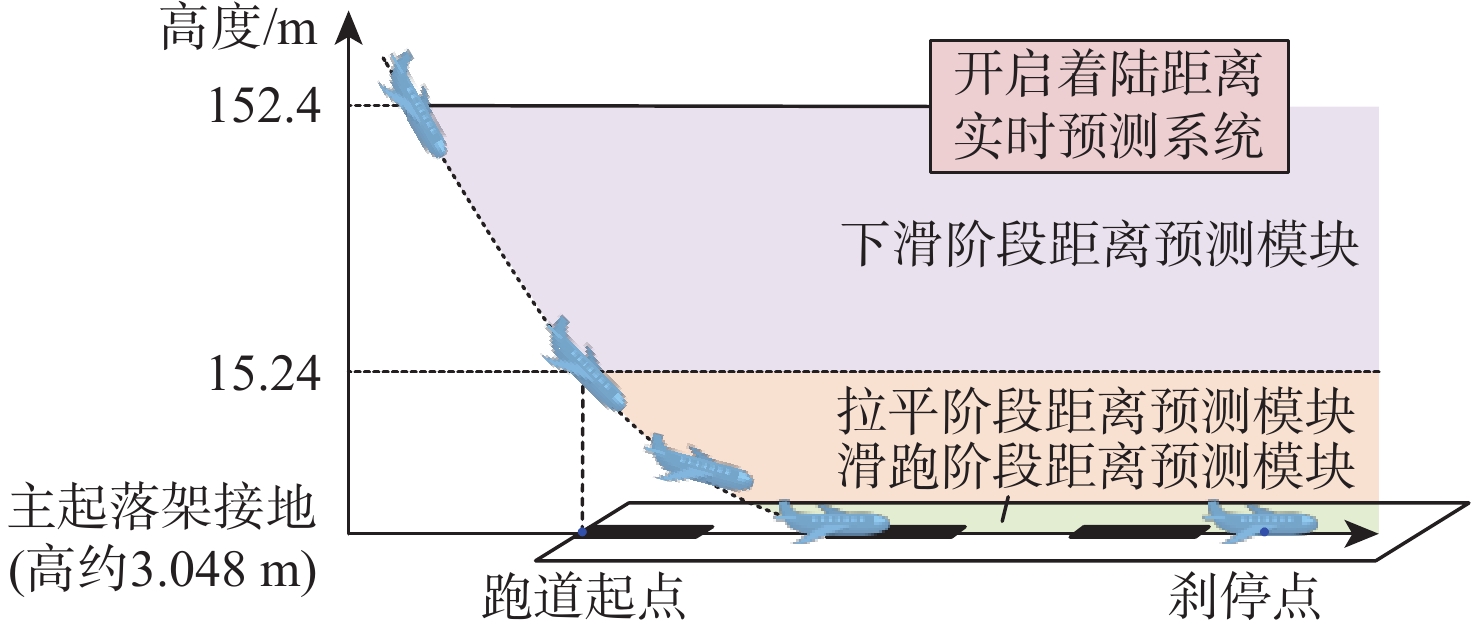
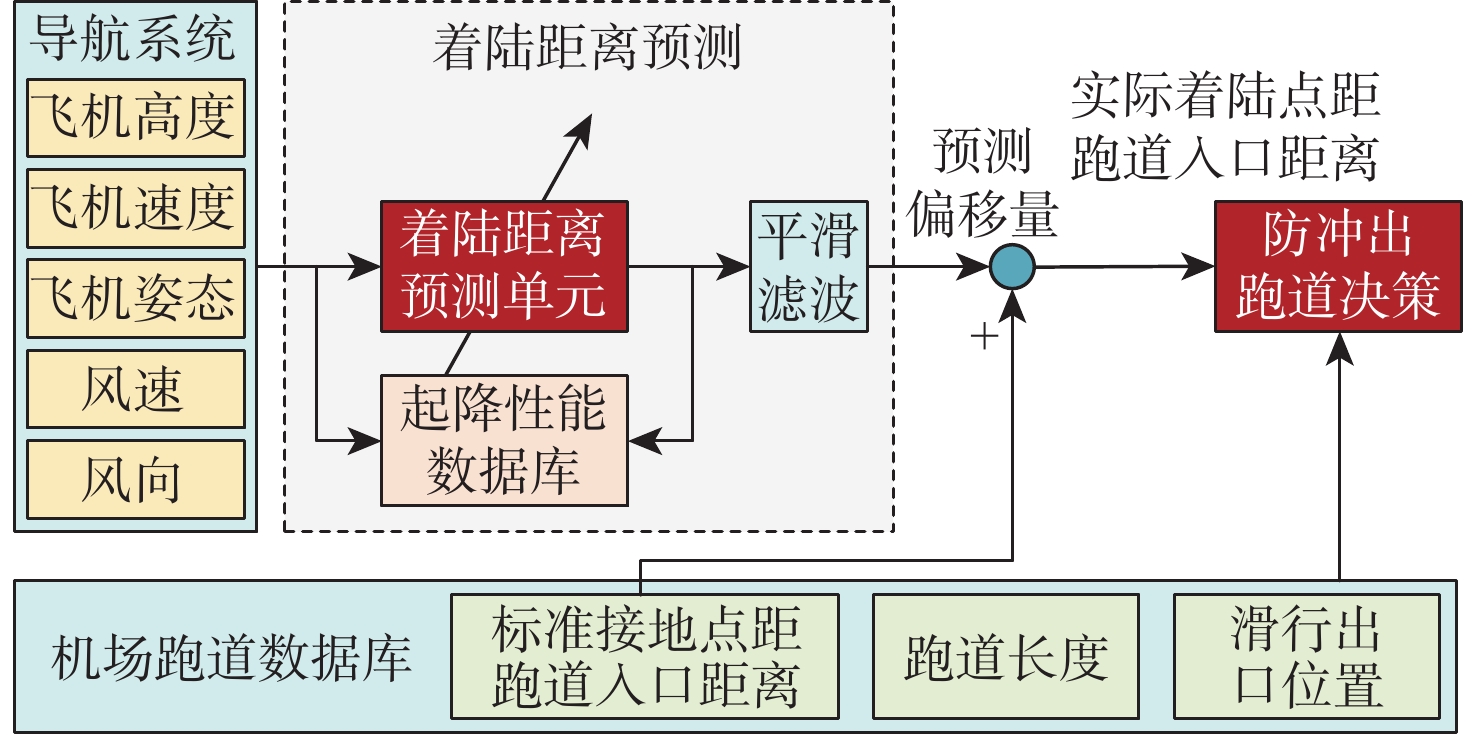
图 1 着陆距离实时预测算法整体架构
Figure 1. Overall architecture of landing distance real-time prediction algorithm
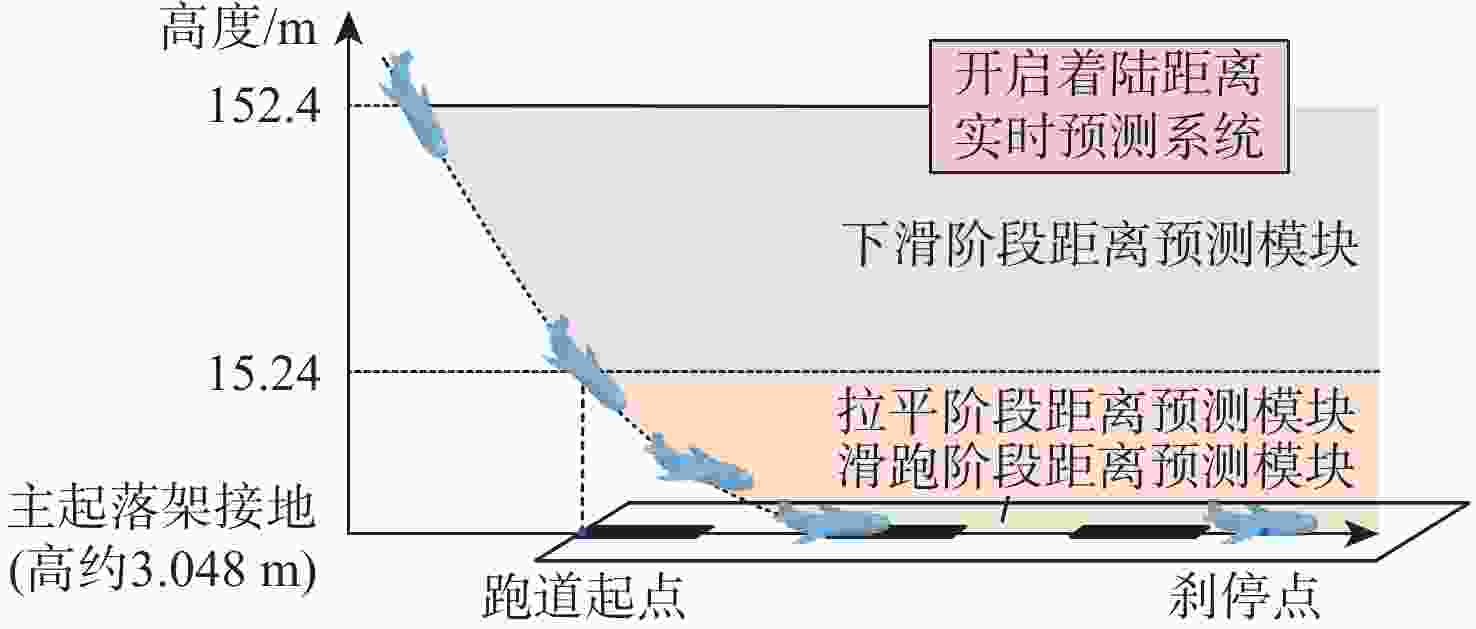
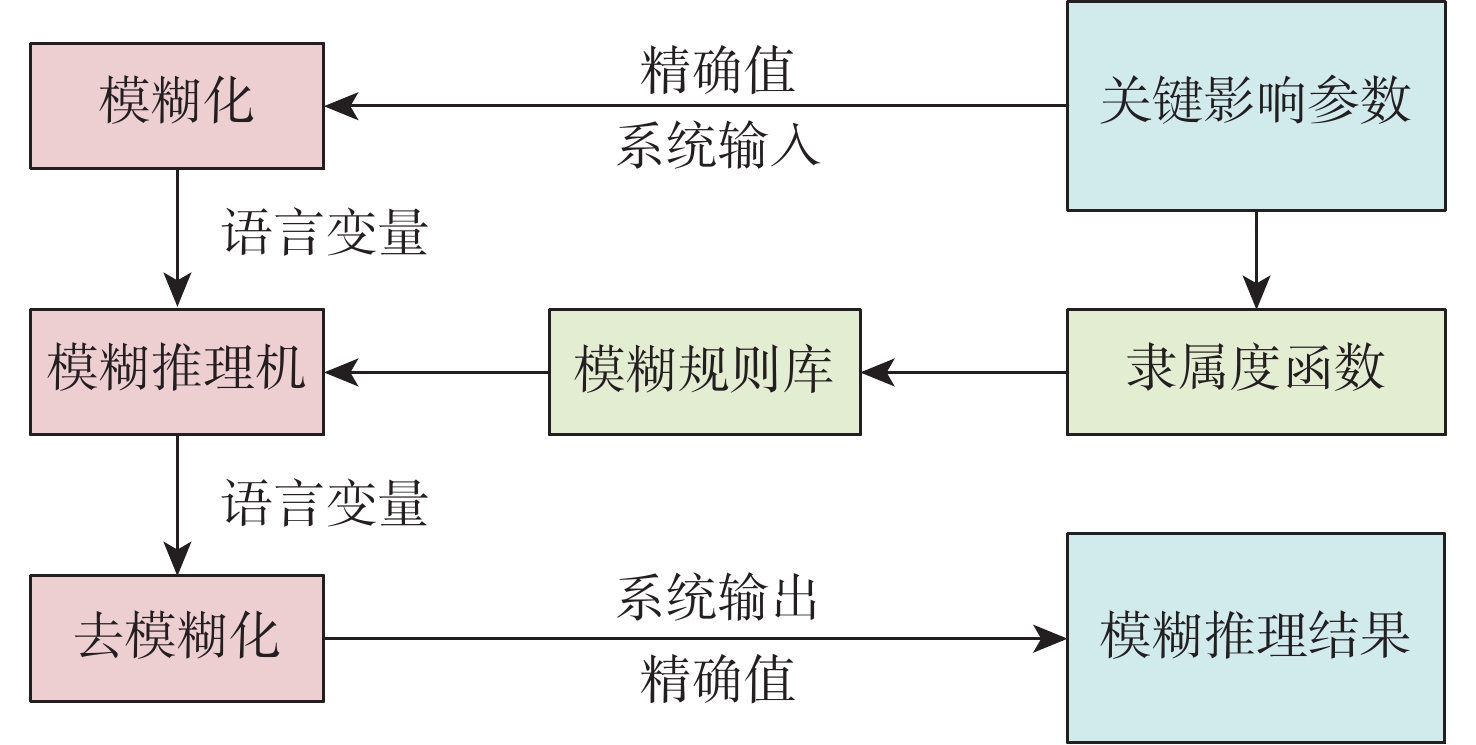
图 2 着陆距离预测单元实时切换流程
Figure 2. Real-time landing distance prediction unit switching process
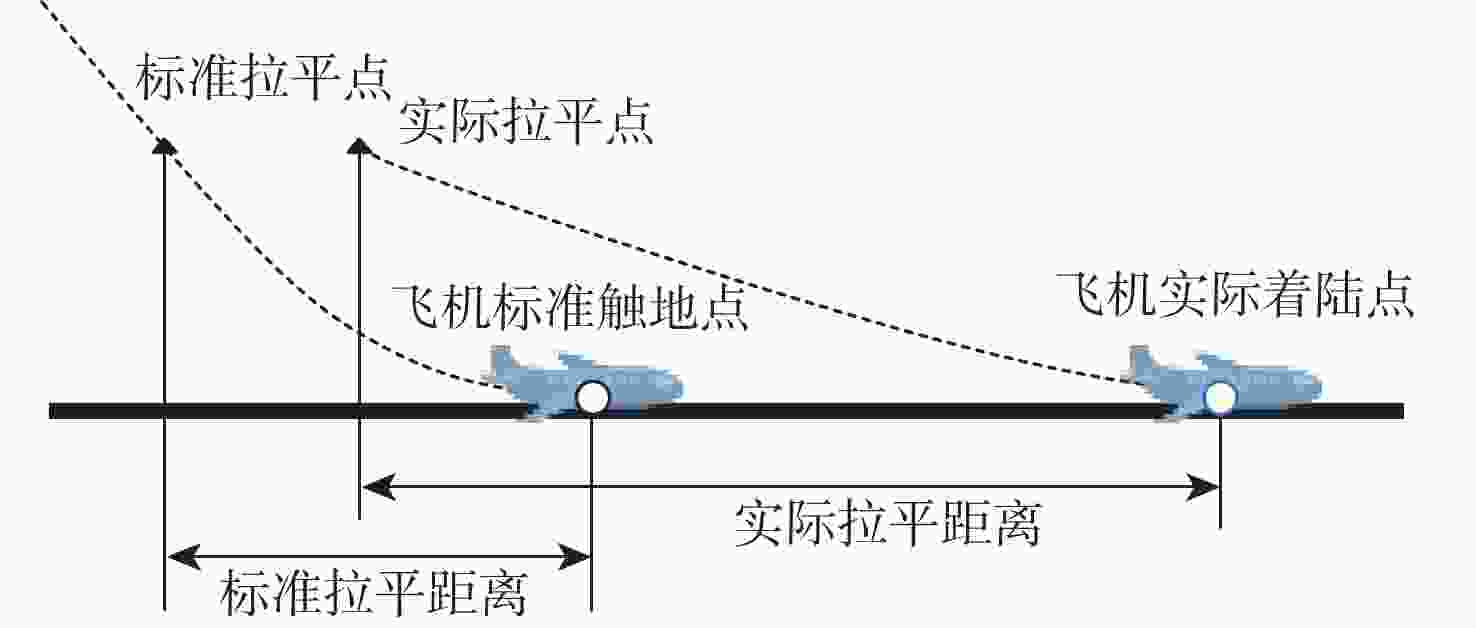
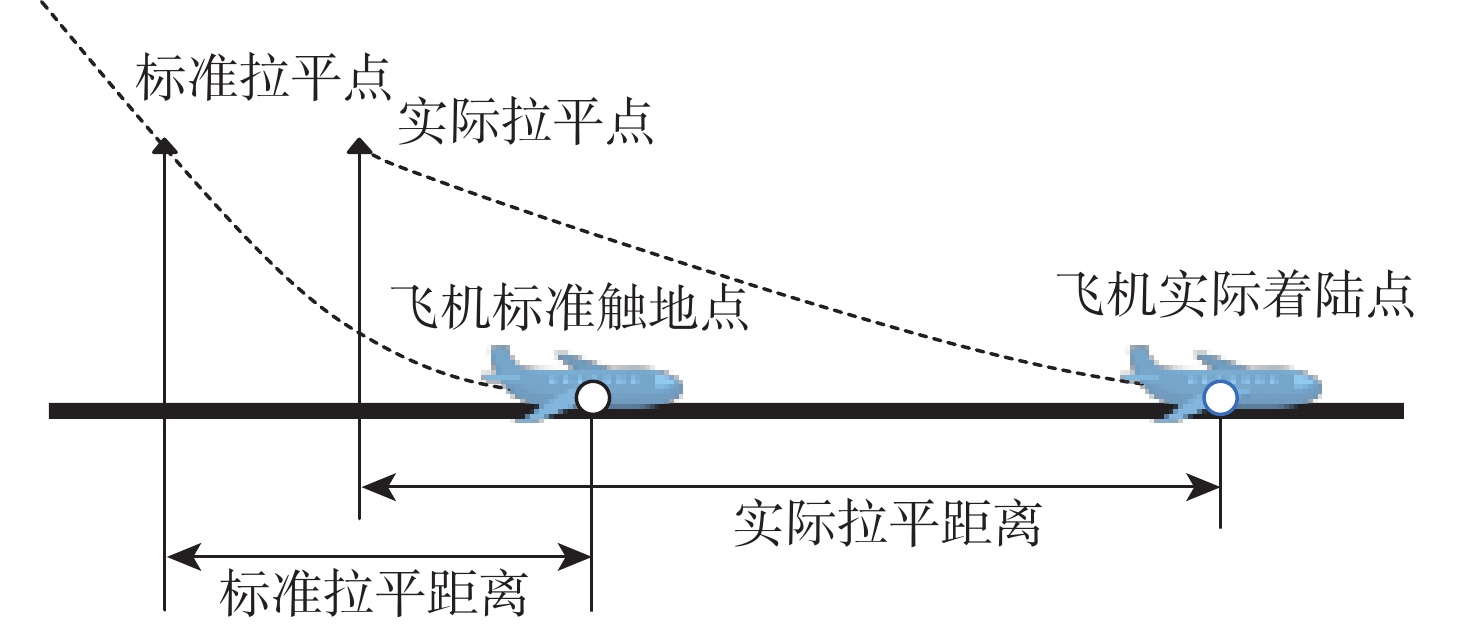
图 4 标准拉平轨迹与动态拉平轨迹对比
Figure 4. Comparison of standard flare trajectory and dynamic flare trajectory
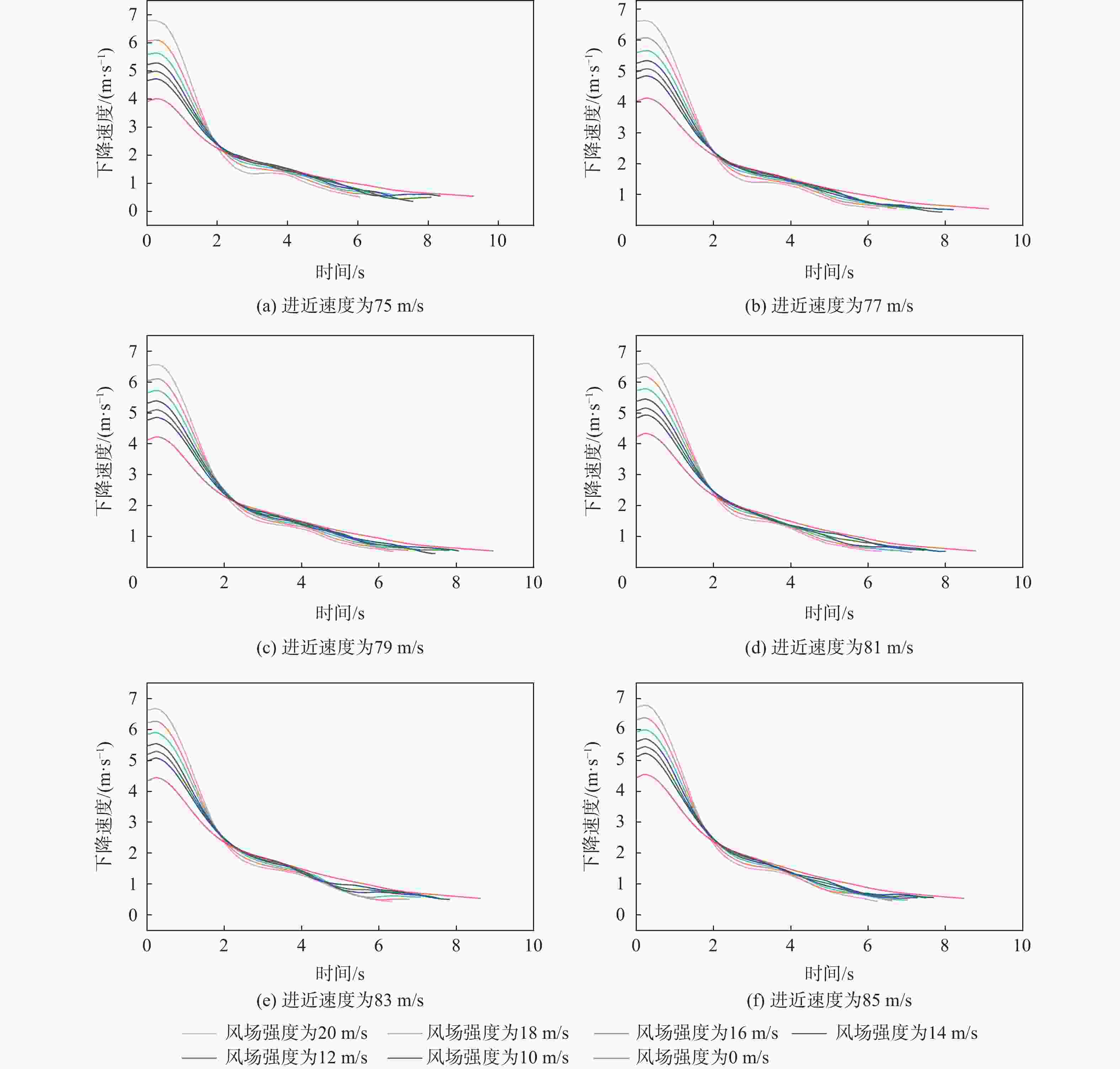
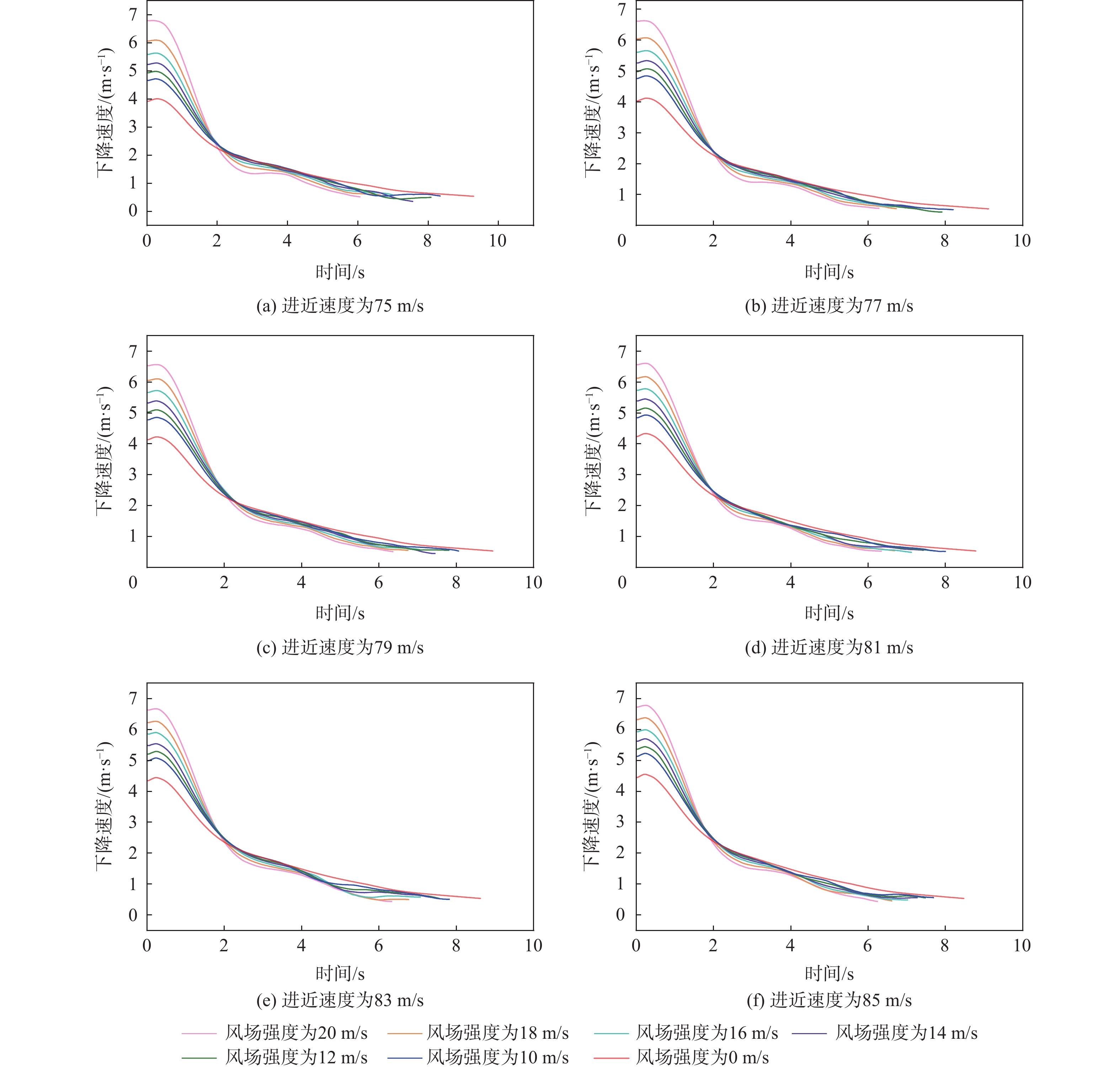
图 5 顺风紊流风场时下降速度在不同进近速度下的变化规律
Figure 5. Variation law of descent speed under different approach speeds in tailwind conditions
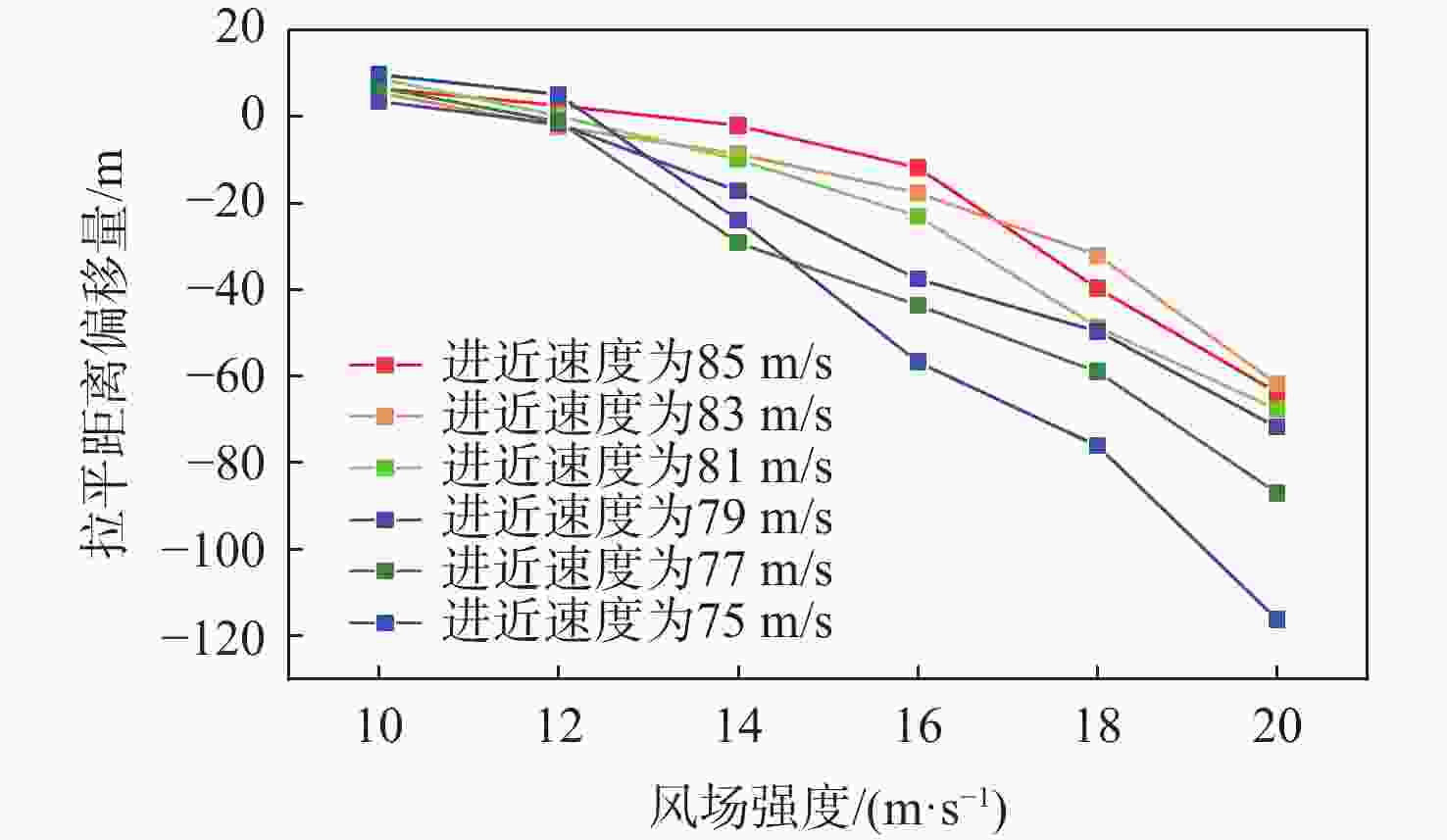
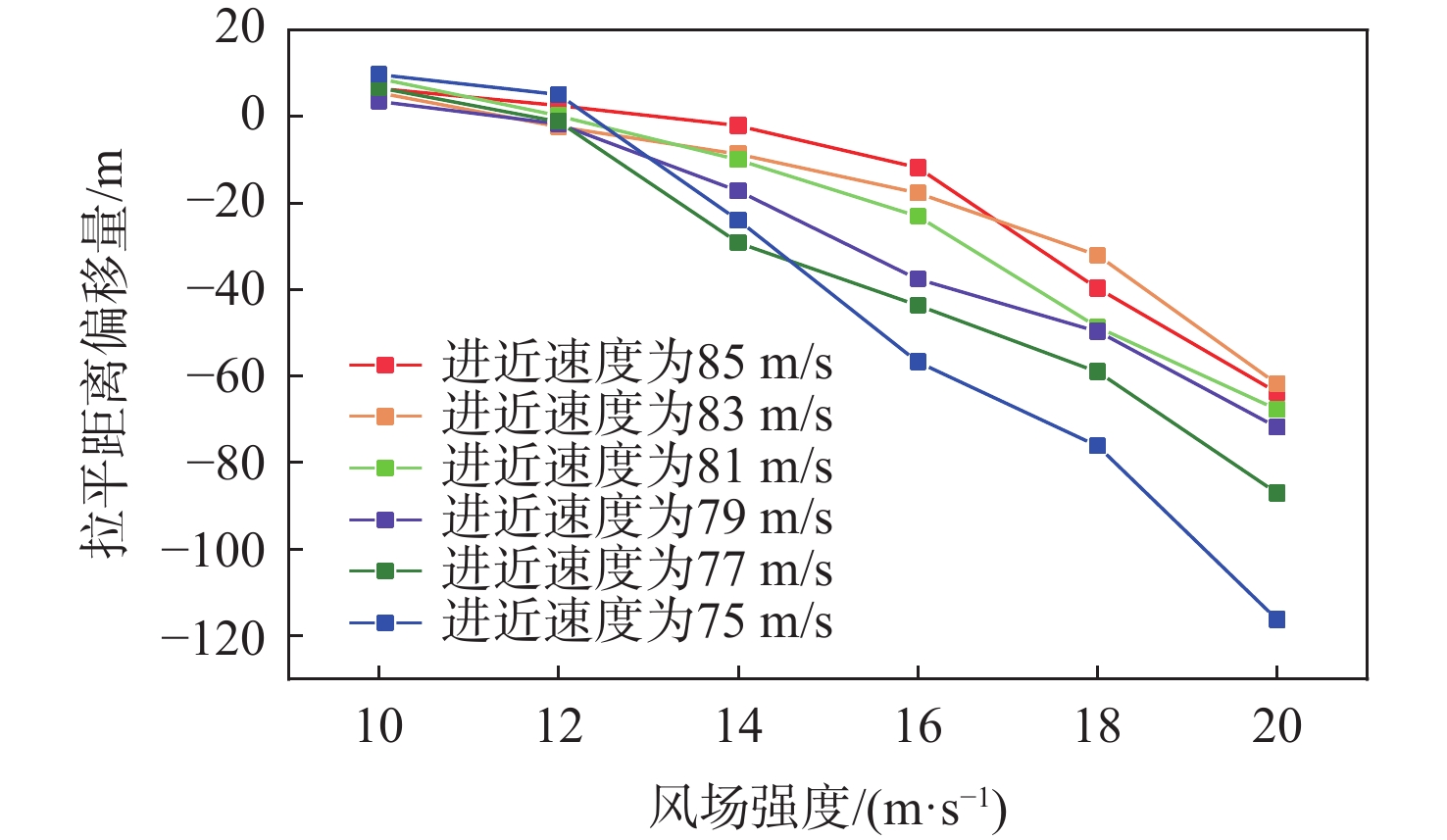
图 6 顺风紊流风场时拉平距离偏移量在不同进近速度下的变化规律
Figure 6. Variation law of flare distance deviation under different approach speeds in tailwind conditions
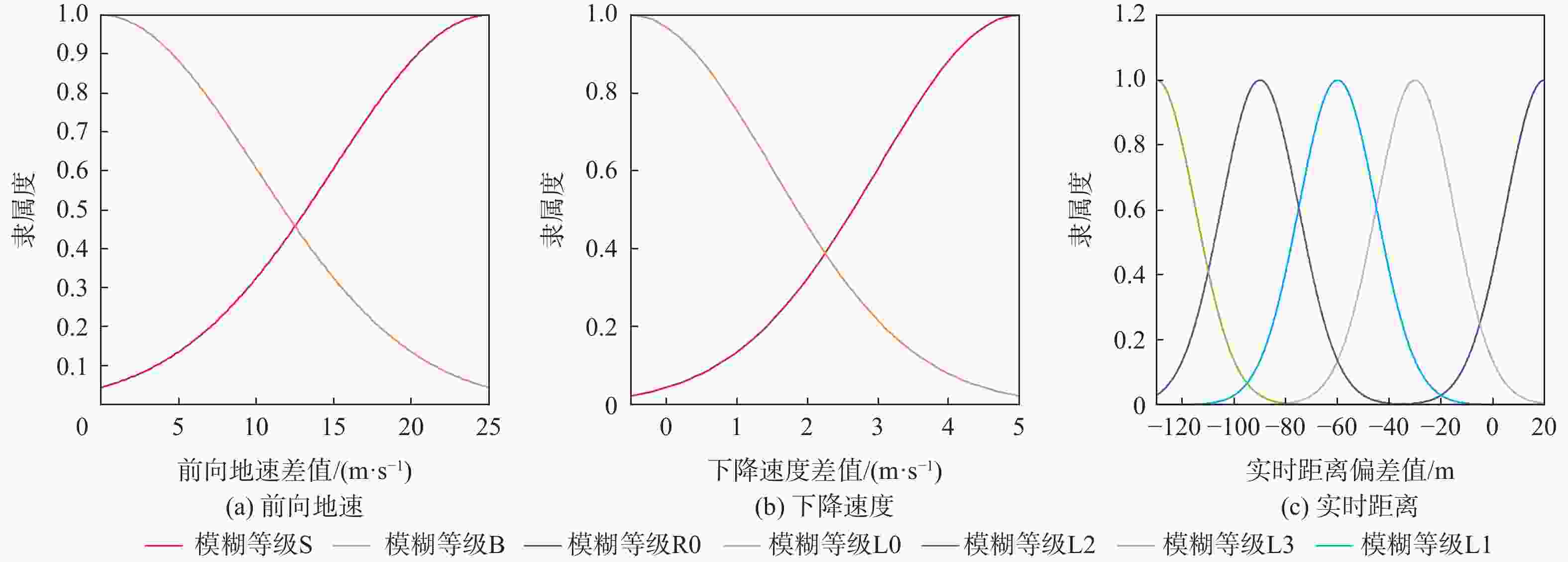
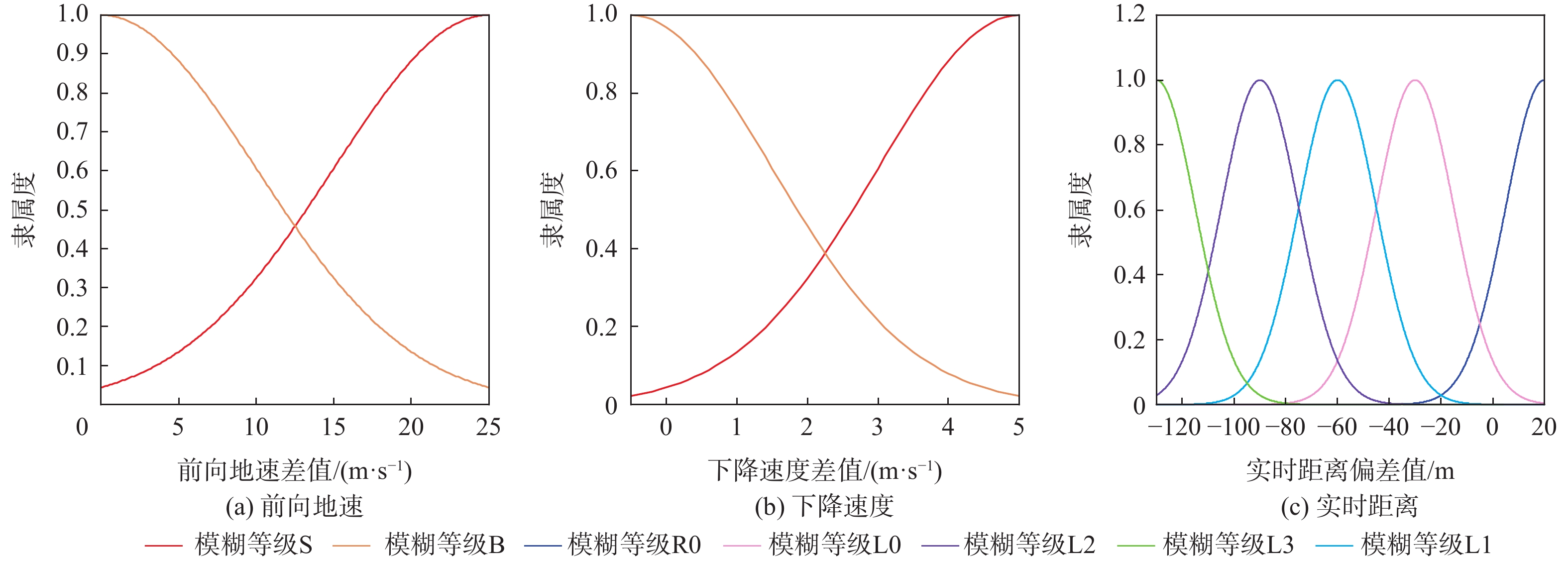
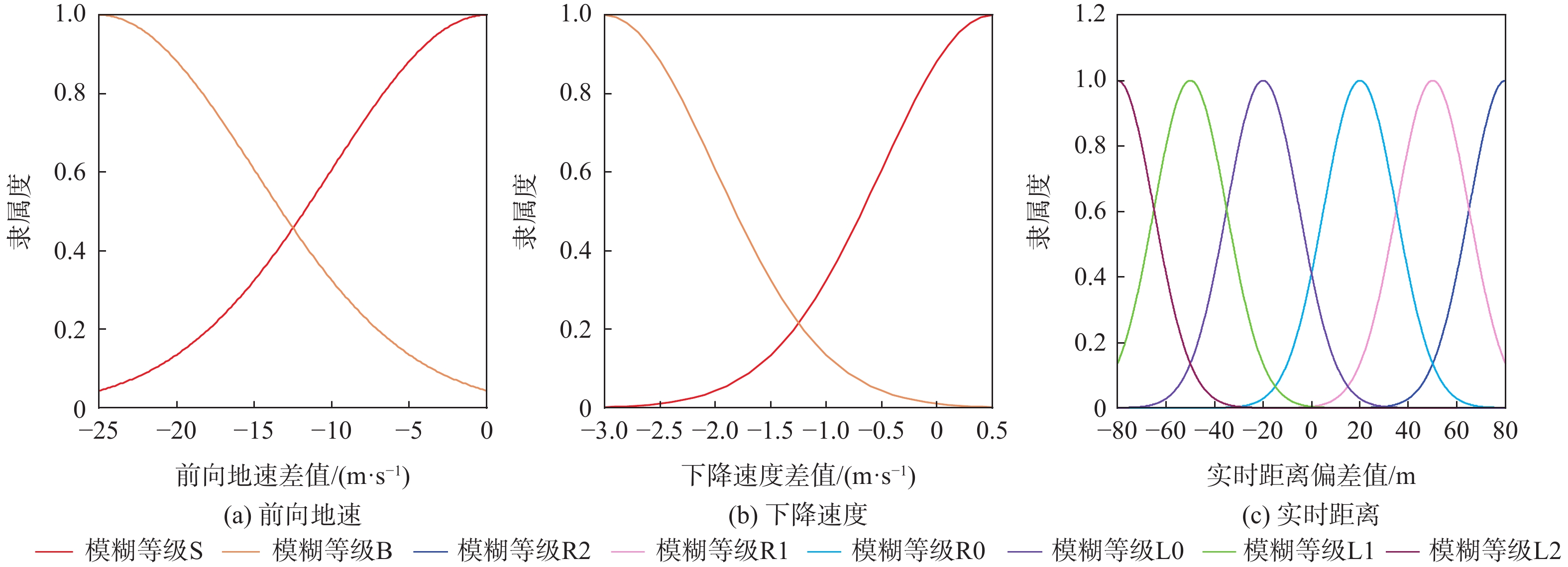
图 7 顺风紊流风场时输入变量隶属度函数
Figure 7. Membership function of input variables in tailwind conditions
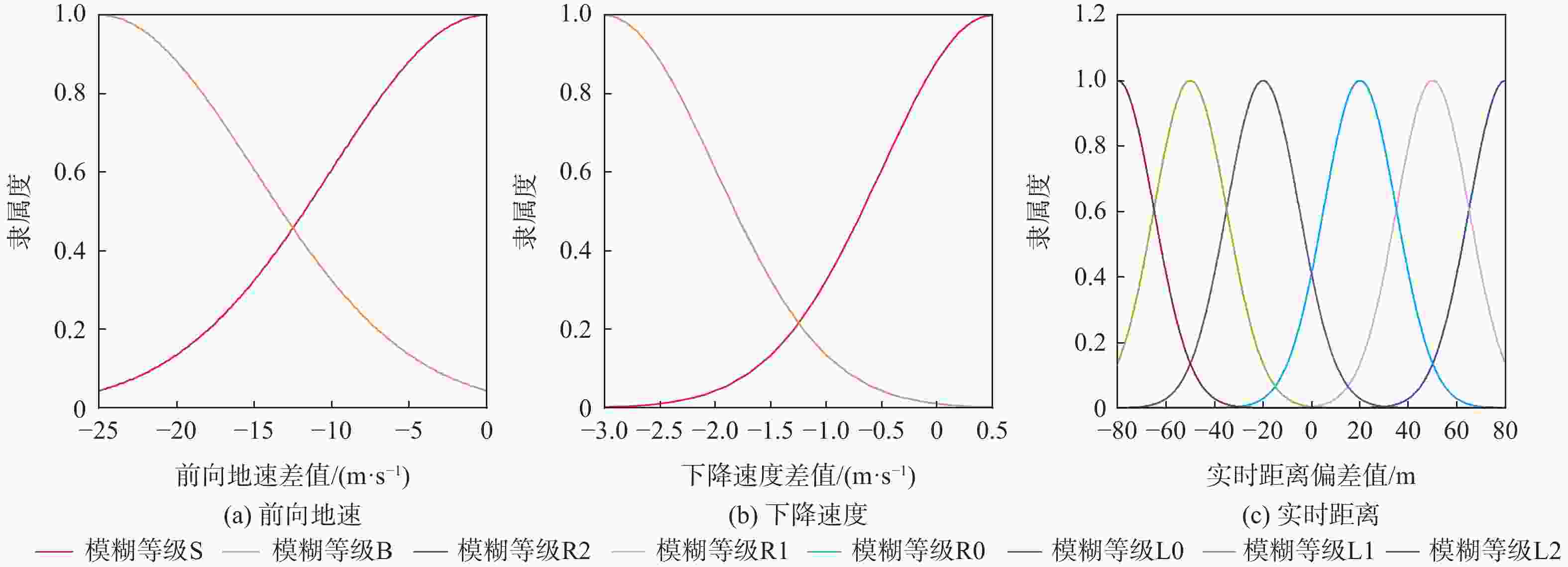
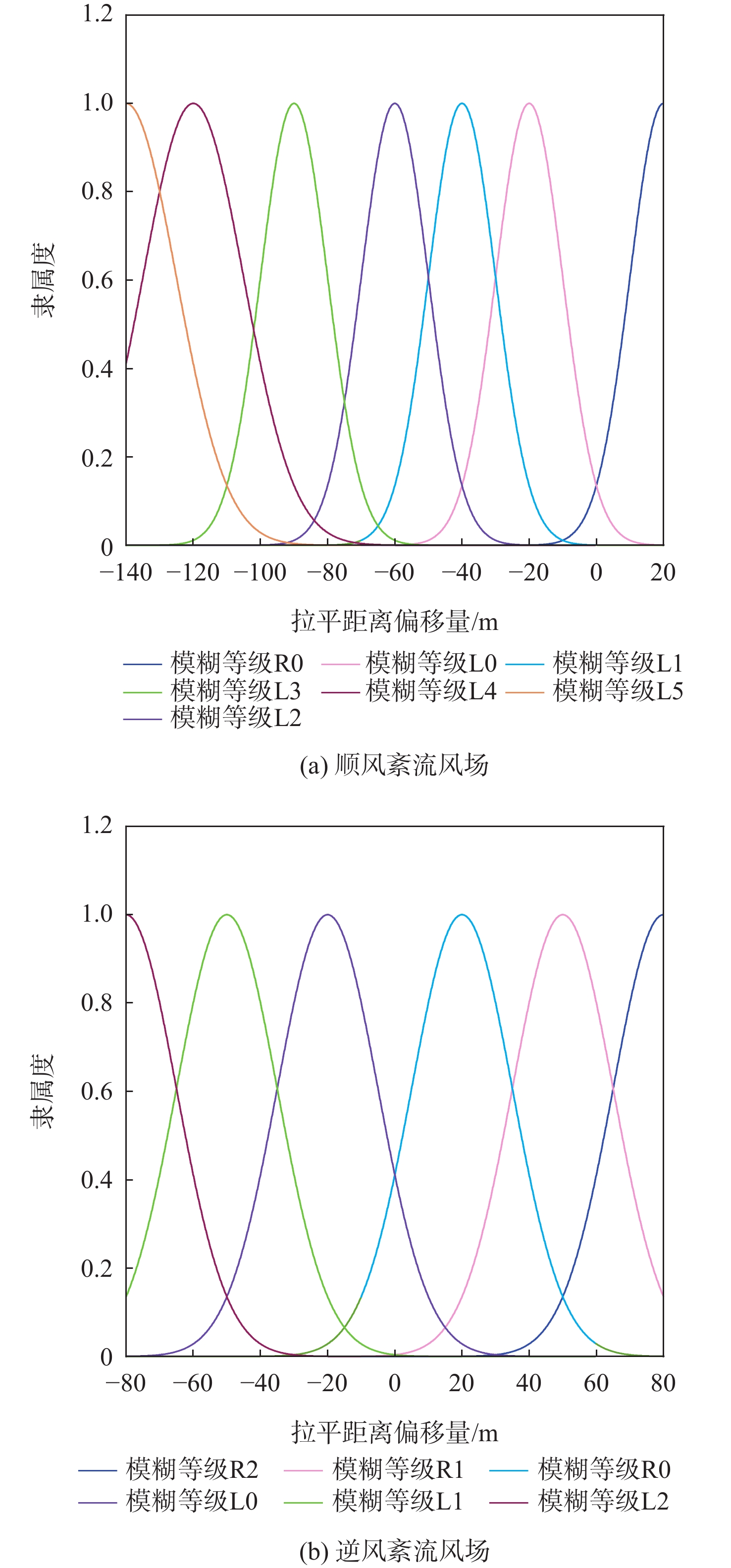
图 8 逆风紊流风场时输入变量隶属度函数
Figure 8. Membership function of input variables in headwind conditions
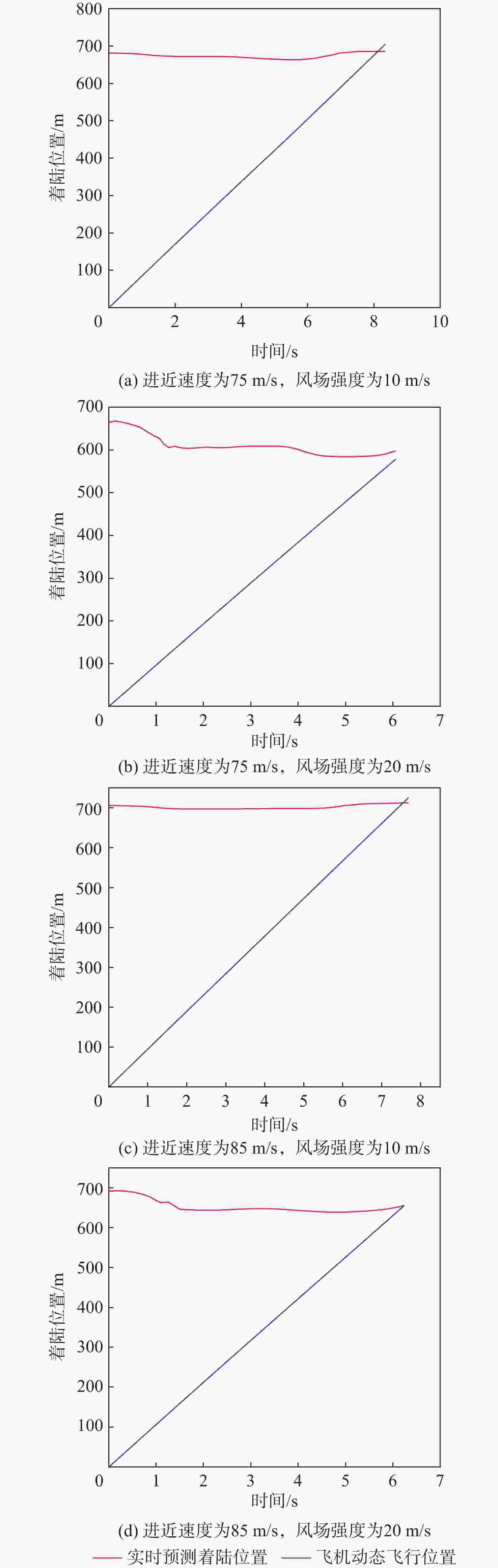
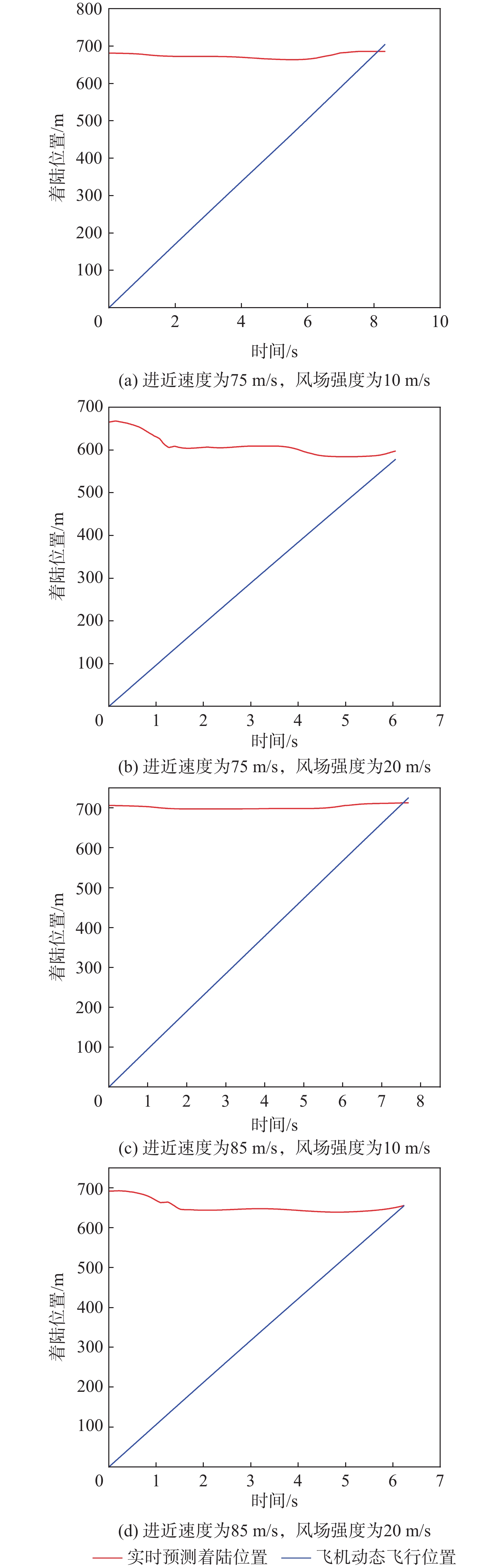
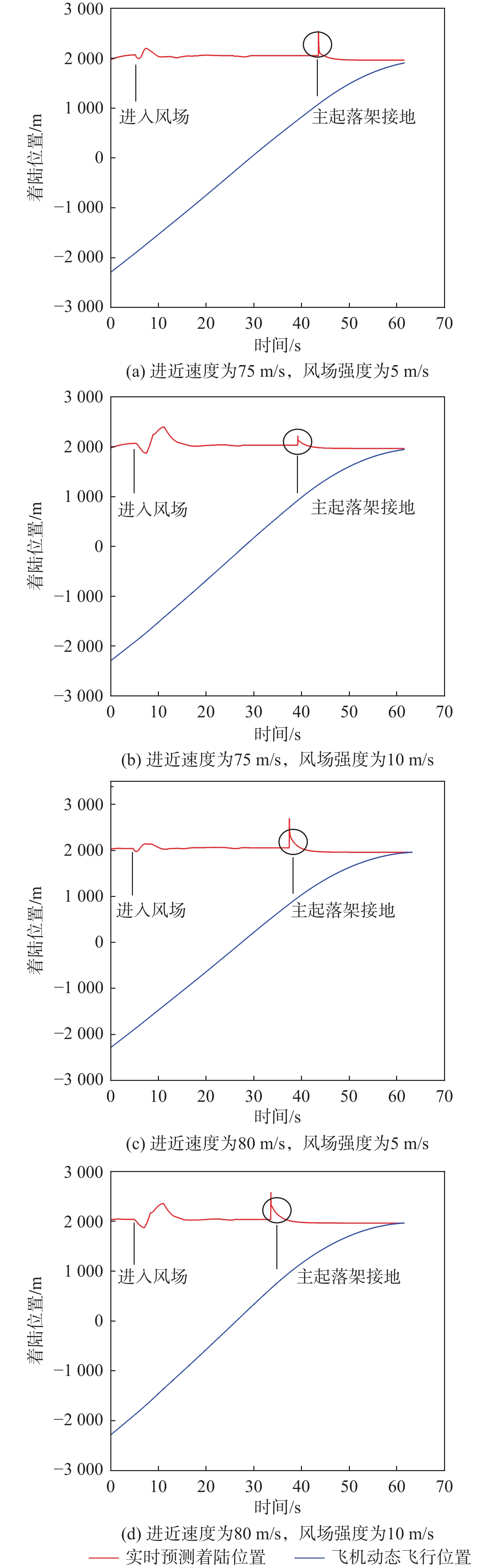
图 10 顺风紊流风场时拉平阶段预测结果
Figure 10. Prediction results of the flare phase in tailwind conditions
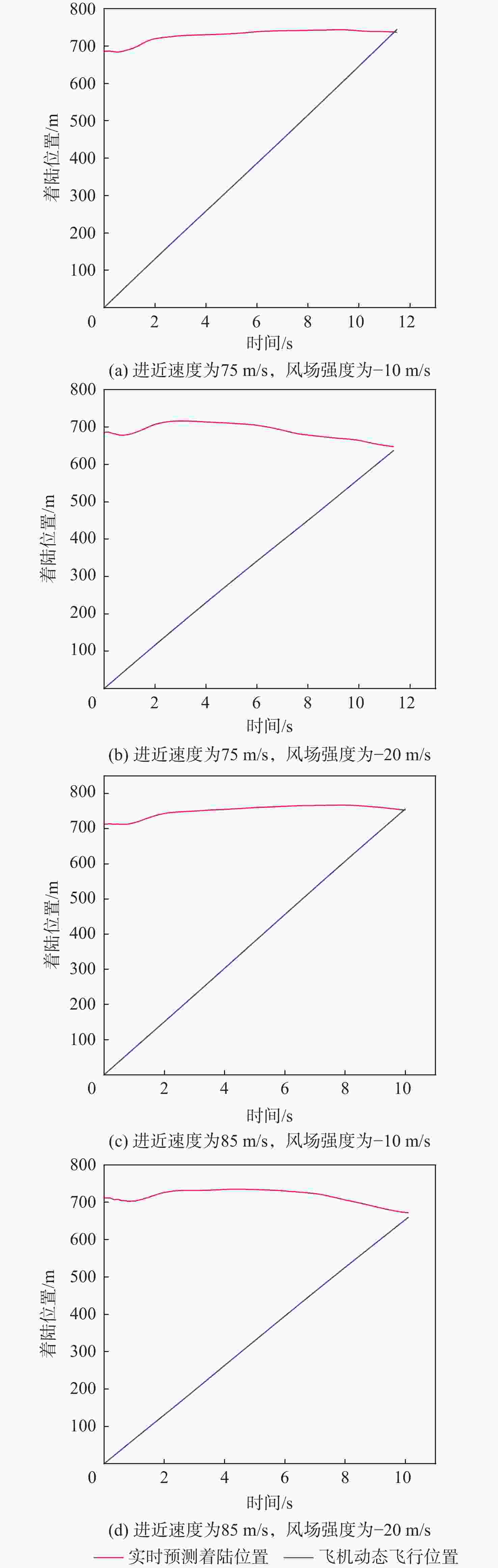
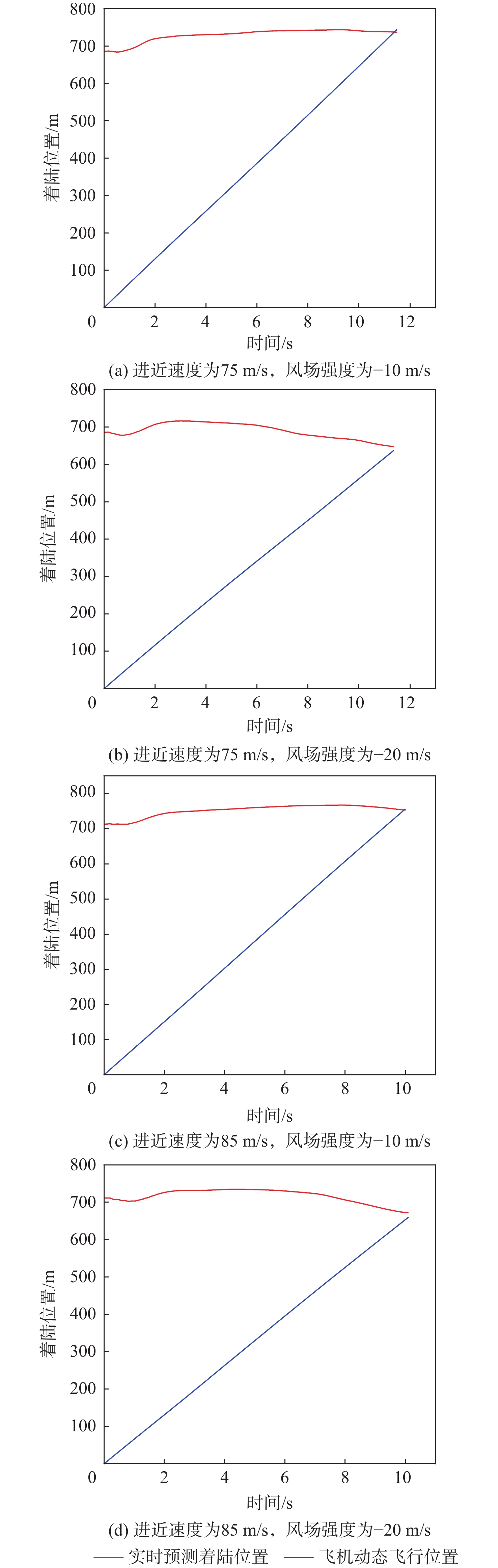
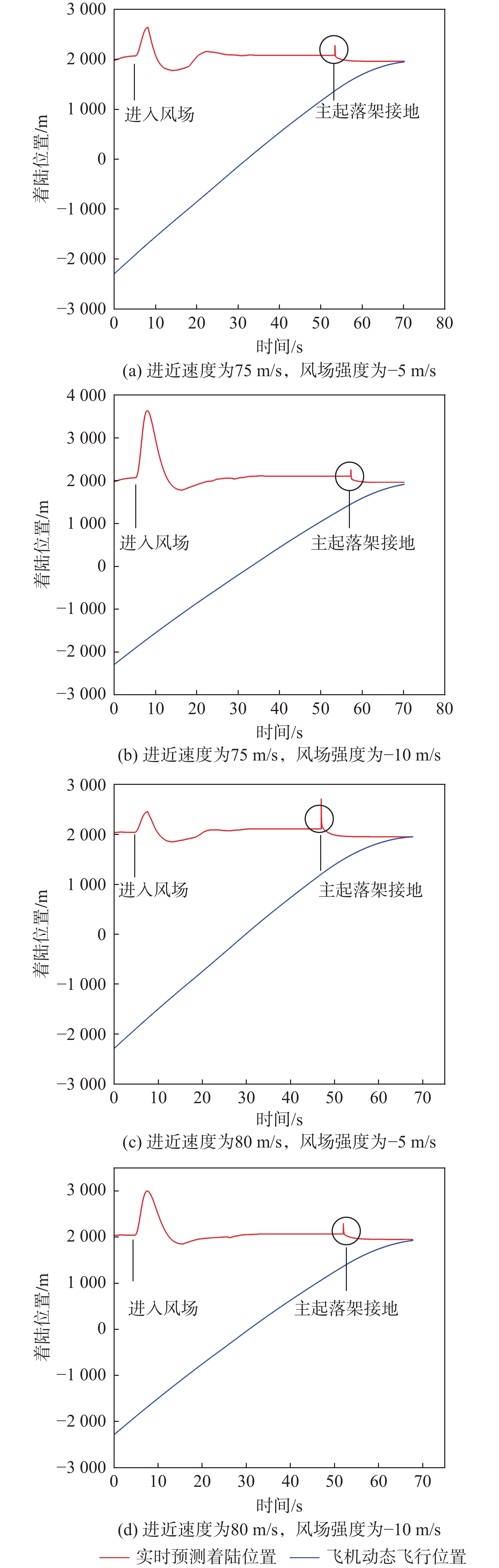
图 11 逆风紊流风场时拉平阶段预测结果
Figure 11. Prediction results of the flare phase in headwind conditions
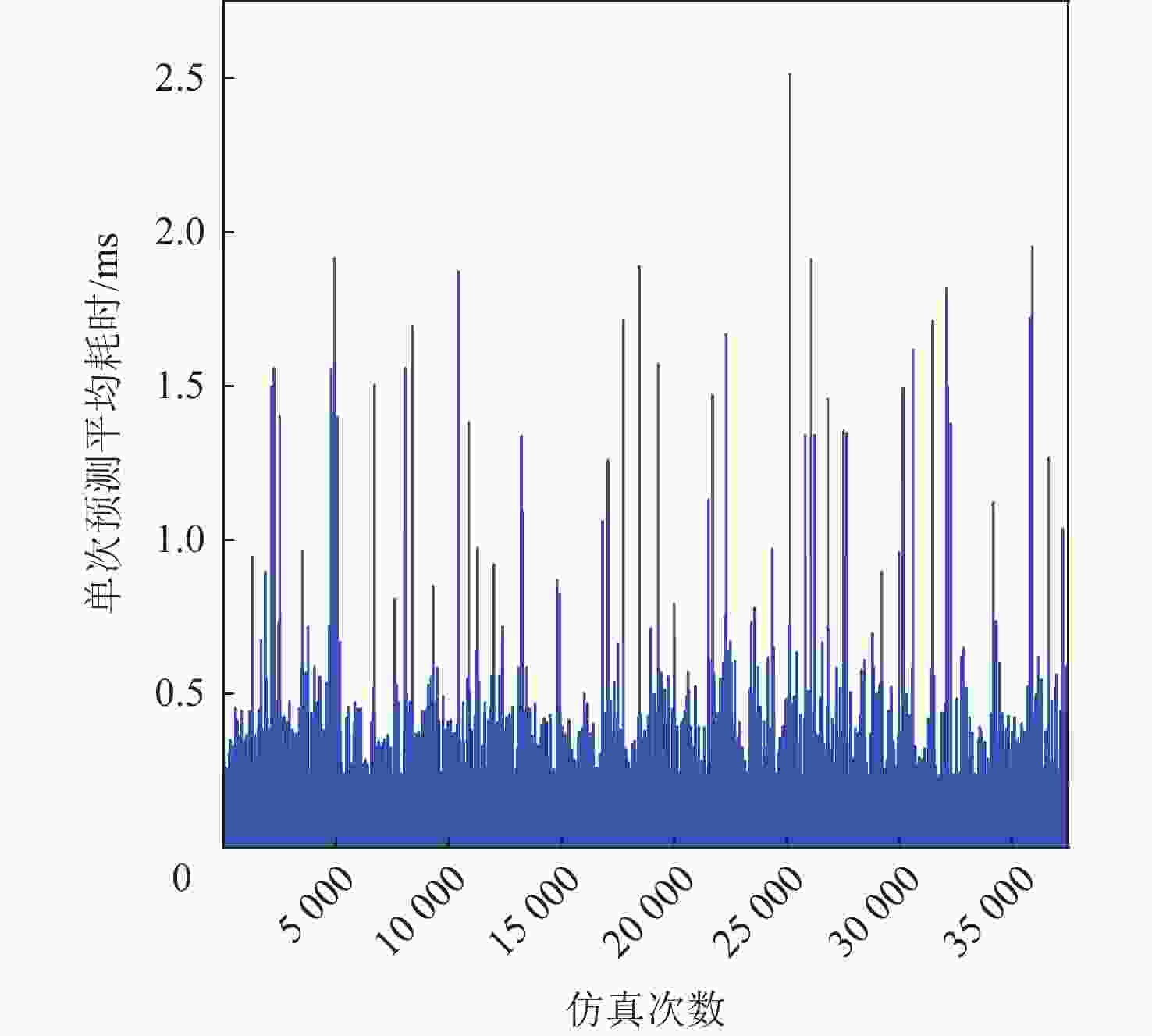
图 15 本文算法单次预测平均耗时
Figure 15. Single prediction average running time of the proposed algorithm
表 1 FIS系统输入变量模糊化(顺风紊流风场)
Table 1. Fuzzification of input variables for the FIS system (Tailwind flow field)
类别 模糊等级 隶属度函数 前向地速差值 B $ y=\text{gaussmf}\left(x,\left[10,25\right]\right) $ S $ y=\text{gaussmf}\left(x,\left[10,0\right]\right) $ 下降速度差值 B $ y=\text{gaussmf}\left(x,\left[2,5\right]\right) $ S $ y=\text{gaussmf}\left(x,\left[2,-0.5\right]\right) $ 实时距离偏差值 L3 $ y=\text{gaussmf}\left(x,\left[10,-130\right]\right) $ L2 $ y=\text{gaussmf}\left(x,\left[15,-90\right]\right) $ L1 $ y=\text{gaussmf}\left(x,\left[15,-60\right]\right) $ L0 $ y=\text{gaussmf}\left(x,\left[15,-30\right]\right) $ R0 $ y=\text{gaussmf}\left(x,\left[15,20\right]\right) $  下载: 导出CSV
表 2 FIS系统输入变量模糊化(逆风紊流风场)
Table 2. Fuzzification of input variables for the FIS system (Headwind flow field)
类别 模糊等级 隶属度函数 前向地速差值 B $ y=\text{gaussmf}\left(x,\left[10,-25\right]\right) $ S $ y=\text{gaussmf}\left(x,\left[10,0\right]\right) $ 下降速度差值 B $ y=\text{gaussmf}\left(x,\left[1,-3\right]\right) $ S $ y=\text{gaussmf}\left(x,\left[1,0.5\right]\right) $ 实时距离偏差值 L2 $ y=\text{gaussmf}\left(x,\left[15,-80\right]\right) $ L1 $ y=\text{gaussmf}\left(x,\left[15,-50\right]\right) $ L0 $ y=\text{gaussmf}\left(x,\left[15,-20\right]\right) $ R0 $ y=\text{gaussmf}\left(x,\left[15,20\right]\right) $ R1 $ y=\text{gaussmf}\left(x,\left[15,50\right]\right) $ R2 $ y=\text{gaussmf}\left(x,\left[15,80\right]\right) $
下载: 导出CSV
表 3 FIS系统输出变量模糊化
Table 3. Fuzzification of output variables for the FIS system
类别 模糊等级 隶属度函数 拉平距离偏移量
(顺风)L5 $ y=\text{gaussmf}\left(x,\left[10,-140\right]\right) $ L4 $ y=\text{gaussmf}\left(x,\left[10,-120\right]\right) $ L3 $ y=\text{gaussmf}\left(x,\left[10,-90\right]\right) $ L2 $ y=\text{gaussmf}\left(x,\left[10,-60\right]\right) $ L1 $ y=\text{gaussmf}\left(x,\left[10,-40\right]\right) $ L0 $ y=\text{gaussmf}\left(x,\left[10,-20\right]\right) $ R0 $ y=\text{gaussmf}\left(x,\left[10,20\right]\right) $ 拉平距离偏移量
(逆风)L2 $ y=\text{gaussmf}\left(x,\left[10,-80\right]\right) $ L1 $ y=\text{gaussmf}\left(x,\left[15,-50\right]\right) $ L0 $ y=\text{gaussmf}\left(x,\left[15,-20\right]\right) $ R0 $ y=\text{gaussmf}\left(x,\left[15,20\right]\right) $ R1 $ y=\text{gaussmf}\left(x,\left[15,50\right]\right) $ R2 $ y=\text{gaussmf}\left(x,\left[15,80\right]\right) $
下载: 导出CSV
表 4 模糊系统推理规则库
Table 4. Fuzzy system inference rule base
序号 模糊等级 前向地速差值 下降速度差值 实时距离偏差值 拉平距离偏移量 1 B B R0 L1 2 B S R0 L0 3 B B R0 L1 $\vdots $ $\vdots $ $\vdots $ $\vdots $ $\vdots $ 11 S B R0 L0 12 S S R0 R0 $\vdots $ $\vdots $ $\vdots $ $\vdots $ $\vdots $ 19 S B L3 L4 20 S S L3 L3
下载: 导出CSV
-
[1] IATA. IATA annual safety report-2023[EB/OL]. [2025-08-30]. https://www.iata.org/contentassets/95e933e1ad794068812f073cf883cb08/recommendations-for-accident-prevention---2023.pdf. [2] Alogdianakis G, Katsidimas I, Kotzakolios A, et al. Runway safety assistant foreseeing excursions: calculating means[J]. Aerospace, 2024, 11(9): 705. [3] Reiser C, Villani E, Cardoso-Junior M M. A novel approach to runway overrun risk assessment using FRAM and flight data monitoring[J]. The Aeronautical Journal, 2024, 128(1327): 2054-2072. [4] Flight Safety Foundation. Reducing the risk of runway excursions[EB/OL]. [2025-08-30]. https://skybrary.aero/sites/default/files/bookshelf/900.pdf. [5] 陈红英, 向小军. 民用飞机实际着陆距离计算方法研究[J]. 计算机仿真, 2013, 30(9): 66-69.Chen H Y, Xiang X J. Discussion of civil aircrafts operating landing distance calculation method[J]. Computer Simulation, 2013, 30(9): 66-69(in Chinese). [6] 杨军利, 曹旭辉, 王可. 民用飞机湿和污染道面所需着陆距离计算方法研究[J]. 民航学报, 2019, 3(3): 14-16.Yang J L, Cao X H, Wang K. Study of required landing distance calculation method on wet and contaminated runway for civil aircraft[J]. Journal of Civil Aviation, 2019, 3(3): 14-16(in Chinese). [7] Némcthová H, Ncštrák D, Fábry L, et al. The C560 XLS+ aircrafts landing distance variability according to temperature and wind component effect[C]//Proceedings of the 2019 New Trends in Aviation Development. Piscataway: IEEE Press, 2019: 130-134. [8] Takahashi T T. Revisiting Roskam’s empirical predictions for landing distance[C]//Proceedings of the AIAA Aviation 2021 Forum. Reston: AIAA, 2021: 2447. [9] 温瑞英, 吴博, 褚双磊, 等. 民用飞机着陆距离预测研究[J]. 中国安全科学学报, 2017, 27(1): 77-81.Wen R Y, Wu B, Chu S L, et al. Prediction of landing distance for civil aircraft[J]. China Safety Science Journal, 2017, 27(1): 77-81(in Chinese). [10] Qian S L, Zhou S H, Chang W B, et al. An improved aircraft landing distance prediction model based on particle swarm optimization: extreme learning machine method[C]//Proceedings of the 2017 IEEE International Conference on Industrial Engineering and Engineering Management. Piscataway: IEEE Press, 2018: 2326-2330. [11] Zhao N N, Zhang J C. Research on the prediction of aircraft landing distance[J]. Mathematical Problems in Engineering, 2022, 2022: 1436144. [12] Kong Y X, Mahadevan S. Aircraft landing distance prediction: a multistep long short-term memory approach[J]. Journal of Aerospace Information Systems, 2022, 19(5): 344-354. [13] 陈宗基, 张平. 民机飞行控制系统设计的理论与方法[M]. 上海: 上海交通大学出版社, 2015: 295.Chen Z J, Zhang P. Flight control system design for civil aircraft[M]. Shanghai: Shanghai Jiao Tong University Press, 2015: 295(in Chinese). [14] 中国民用航空局. 航空承运人湿跑道和污染跑道运行管理规定[EB/OL]. (2021-11-17)[2025-08-30]. https://occ.hk/pdf/P020211126493030986286.pdf.Civil Aviation Administration of China. Operational management rules for air carriers on wet and contaminated runways[EB/OL]. (2021-11-17)[2025-08-30]. https://occ.hk/pdf/P020211126493030986286.pdf(in Chinese). [15] Pourjavad E, Mayorga R V. A comparative study and measuring performance of manufacturing systems with Mamdani fuzzy inference system[J]. Journal of Intelligent Manufacturing, 2019, 30(3): 1085-1097. [16] Mitsuishi T. Definition of centroid method as defuzzification[J]. Formalized Mathematics, 2022, 30(2): 125-134. [17] Beal T R. Digital simulation of atmospheric turbulence for Dryden and von Karman models[J]. Journal of Guidance, Control, and Dynamics, 1993, 16(1): 132-138. [18] Mehmood K, Ali Shah S I, Ali Shams T, et al. Flight dynamic characteristics of wide-body aircraft with wind gust and turbulence[J]. Fluids, 2023, 8(12): 320. [19] Ghoreyshi M, Greisz I, Jirasek A, et al. Simulation and modeling of rigid aircraft aerodynamic responses to arbitrary gust distributions[J]. Aerospace, 2018, 5(2): 43. -

 下载:
下载:

 点击查看大图
计量
- 文章访问数: 166
- HTML全文浏览量: 81
- PDF下载量: 5
- 被引次数: 0
