





-
摘要:
航天事业的快速发展在推动科技进步的同时,也带来了不容忽视的环境影响。为评估全球航天活动对大气环境的影响,基于2020—2024年的全球火箭发射数据,对不同类型火箭产生的CO2、黑碳(BC)、H2O、Al2O3和含氯化合物(Cl
y )等产物在水平和垂直空间的排放分布特性进行了研究和分析。结果表明:2020—2024年期间,全球火箭发射排放的气相排放物以CO2和H2O为主,两者排放量分别高达2.71×10⁸ kg和1.44×10⁸ kg,固相排放物主要包括BC和Al2O3,排放量分别为6.70×10⁶ kg和7.80×10⁶ kg;在水平空间上,火箭排放物呈现出显著的地域集中性,美国和中国主导贡献了全球BC、CO2和H2O的排放,Al2O3和Cly 的排放则主要集中于中国、法国、美国和印度等国家;在大气层的垂直空间上,CO2的排放集中于对流层,BC排放核心区位于平流层和中间层,受限于高海拔大气层的垂直对流强度低,BC易出现积聚效应,导致平流层及以上大气层的综合辐射强迫提升近1倍,表明相比处于对流层的航空运输业及传统工业,航天发射活动排放的BC对环境气候的危害更为严重。Abstract:The rapid development of spaceflight has significantly advanced science and technology, but it also poses non-negligible environmental challenges. This study focuses on major emissions from rocket launches, including CO2, black carbon (BC), H2O, Al2O3, and chlorine species (Cl
y ). To assess the atmospheric influence of space activities, their horizontal and vertical spatial distributions are examined using worldwide launch data from 2020 to 2024. The results indicate that gaseous emissions are dominated by CO2 and H2O, with total quantities of approximately 2.71×10⁸ kg and 1.44×10⁸ kg, respectively. In contrast, particulate emissions consist mainly of BC and Al2O3, with estimated releases of 6.70×10⁶ kg and 7.80×10⁶ kg, respectively. Horizontally, the emissions exhibit strong regional concentration, with the United States and China accounting for the majority of CO2, H2O, and BC emissions. Al2O3 and Cly emissions are mainly concentrated in China, France, the United States, and India. Vertically, CO2 emissions are concentrated in the troposphere, while BC emissions peak in the stratosphere and mesosphere. Due to the persistence of BC in the upper atmosphere, a near twofold increase in net radiative forcing can be observed in these regions. This suggests that because of their high-altitude BC emissions, space launch operations are more dangerous to the climate than aircraft and conventional industrial sources that are limited to the troposphere.-
Key words:
- carbon dioxide /
- black carbon /
- kerosene /
- stratospheric emission /
- greenhouse effect
-
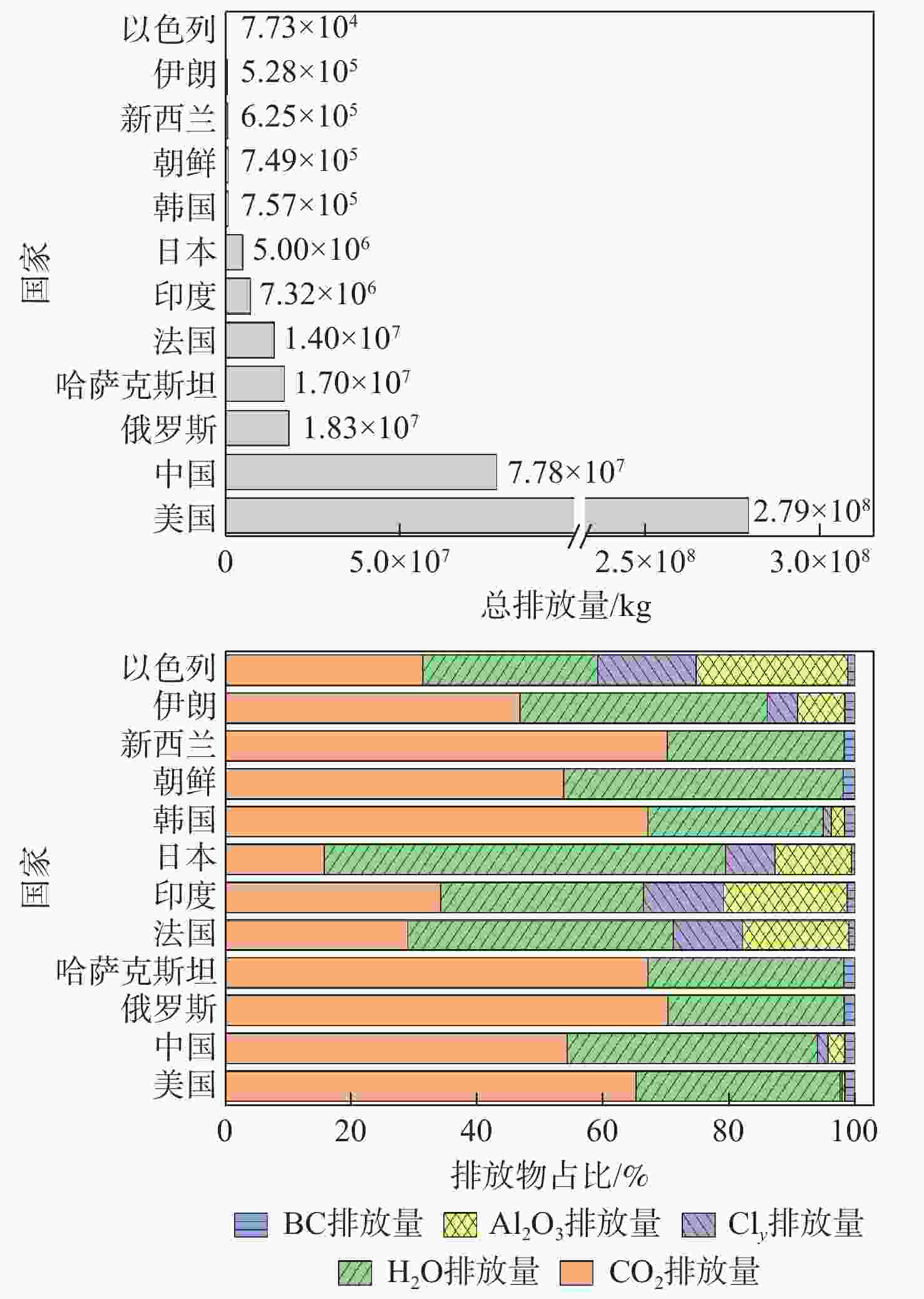
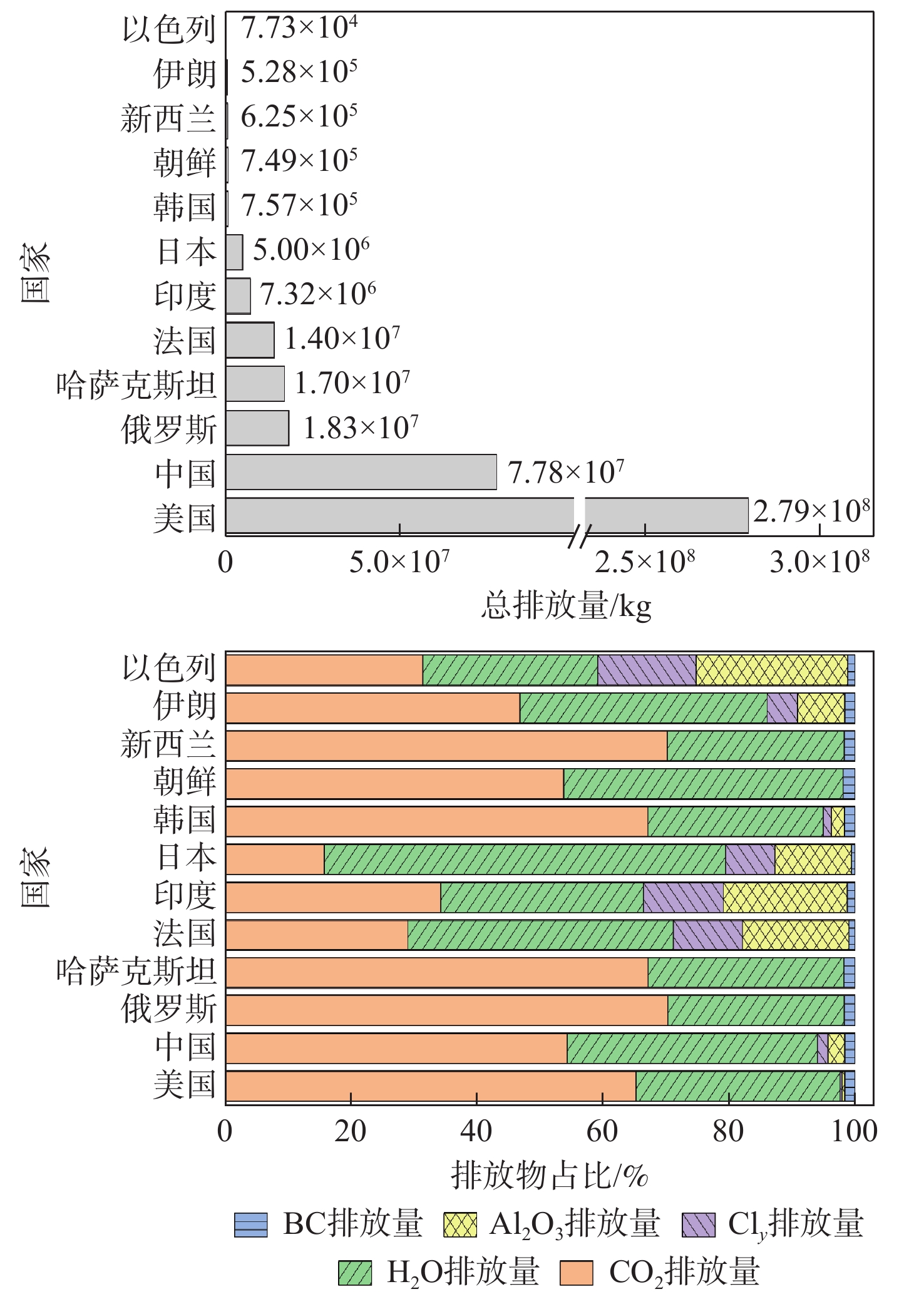
图 4 2020—2024年间总排放物的空间分布及占比
Figure 4. Spatial distribution and proportion of total emissions from 2020 to 2024
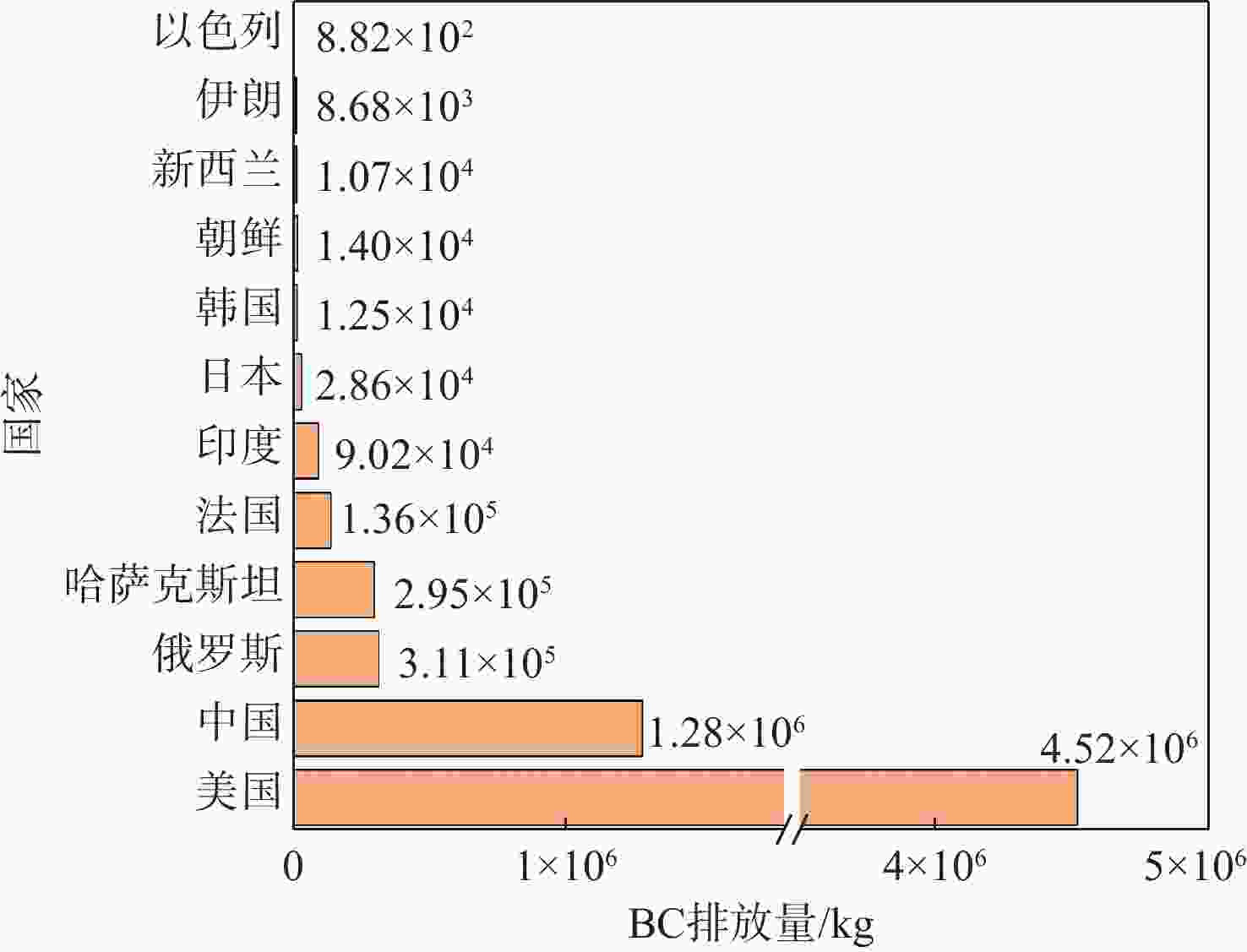
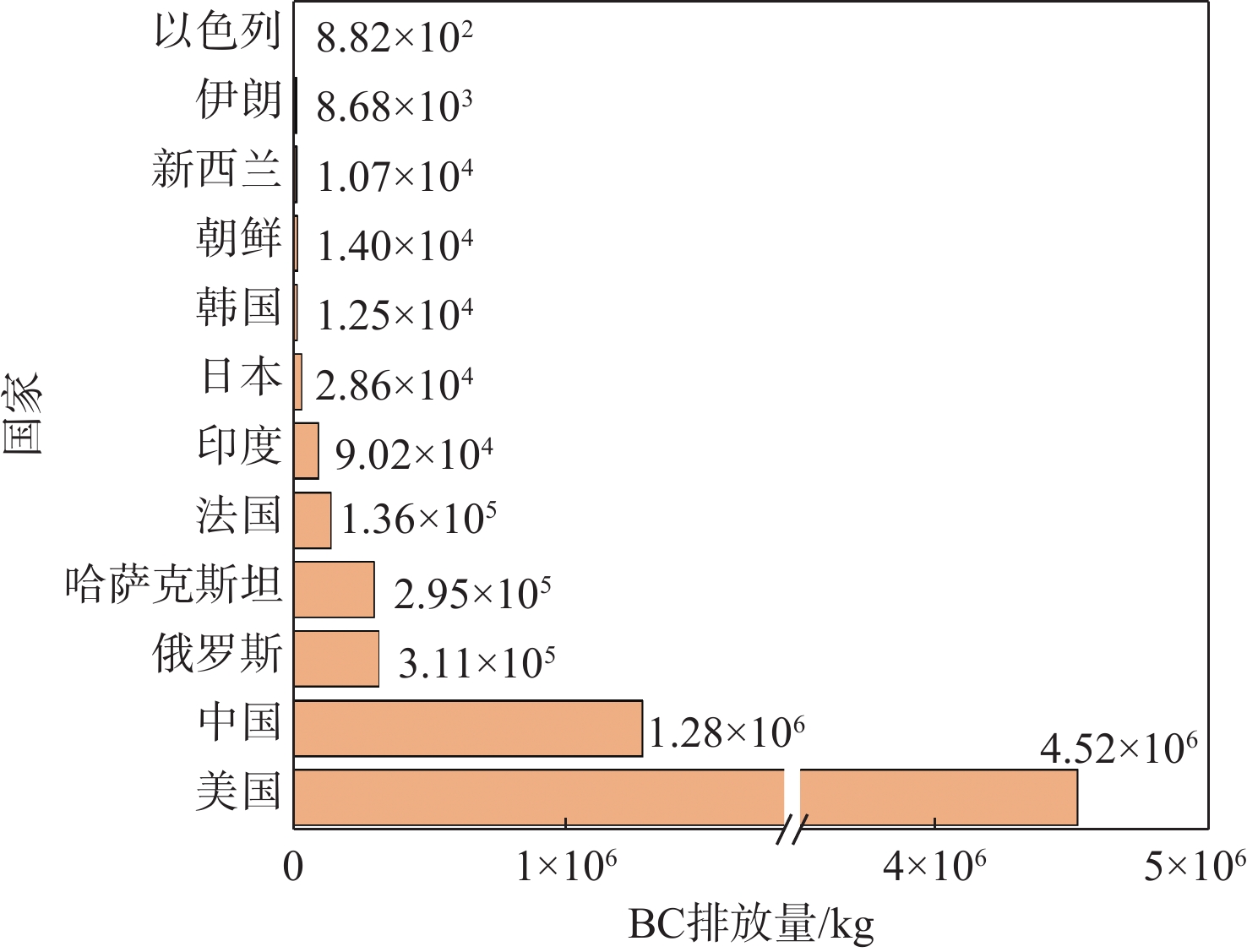
图 5 2020—2024年间BC排放的空间分布
Figure 5. Spatial distribution of total BC emissions during from 2020 to 2024
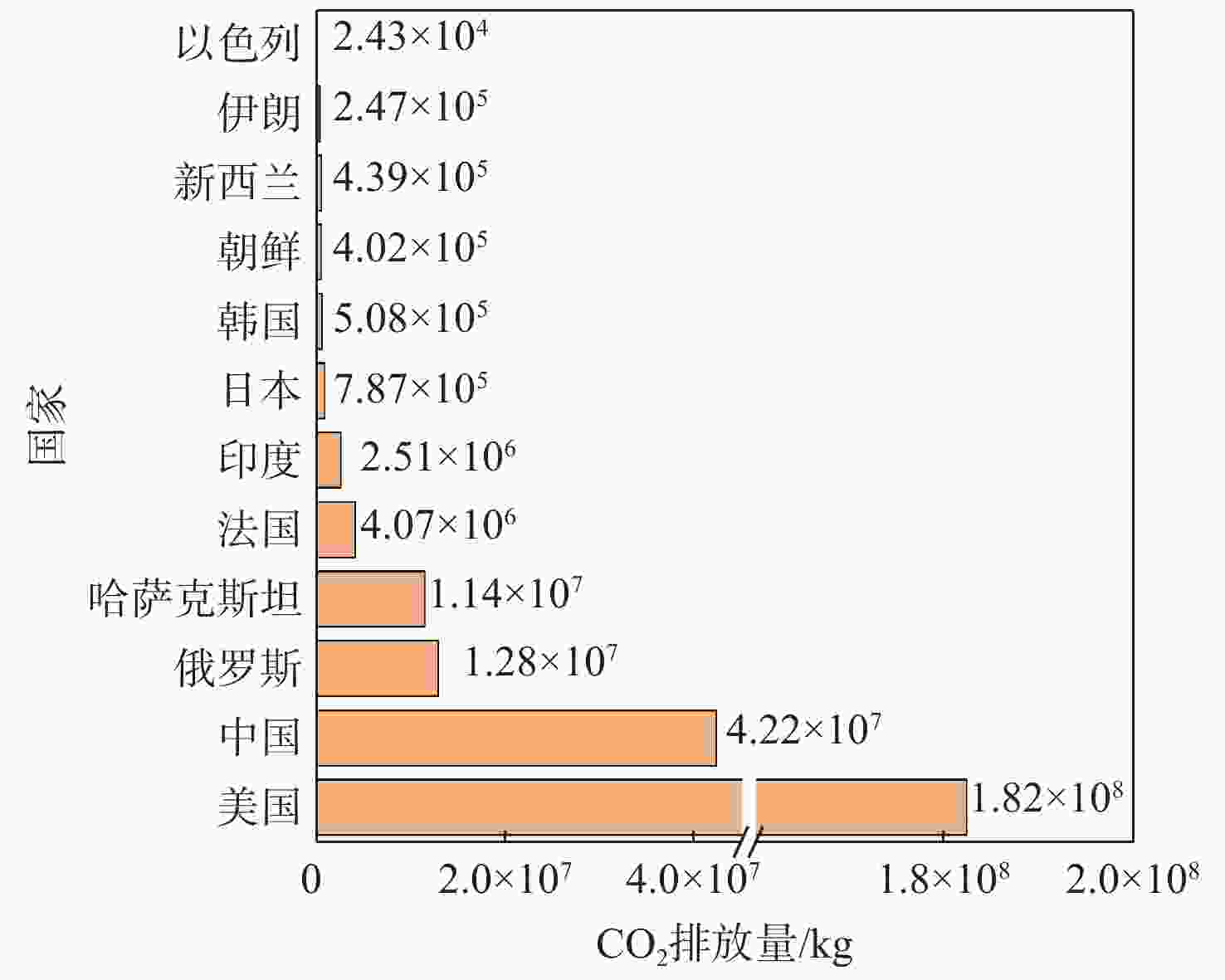
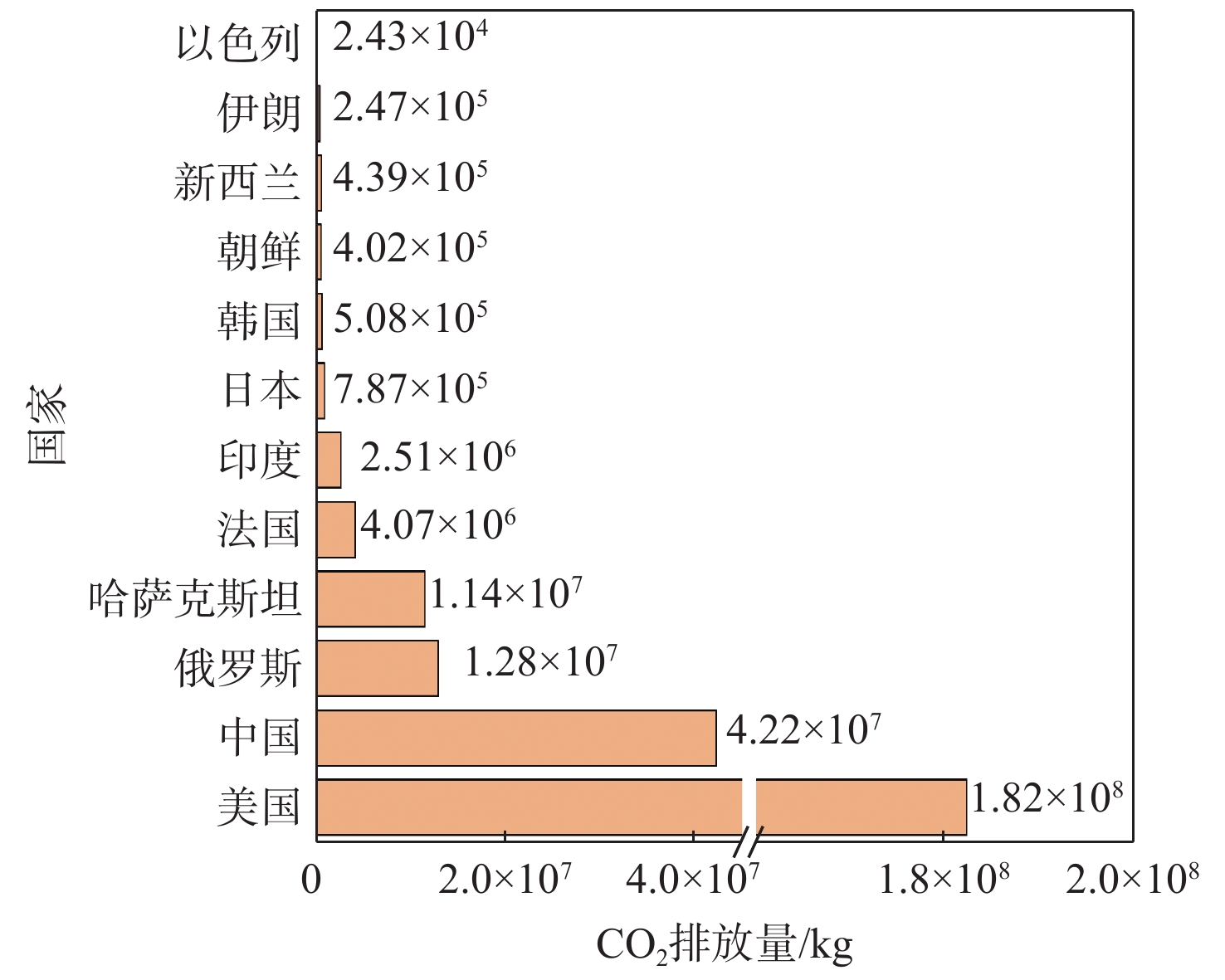
图 6 2020—2024年间CO2排放的空间分布
Figure 6. Spatial distribution of total CO2 emissions from 2020 to 2024
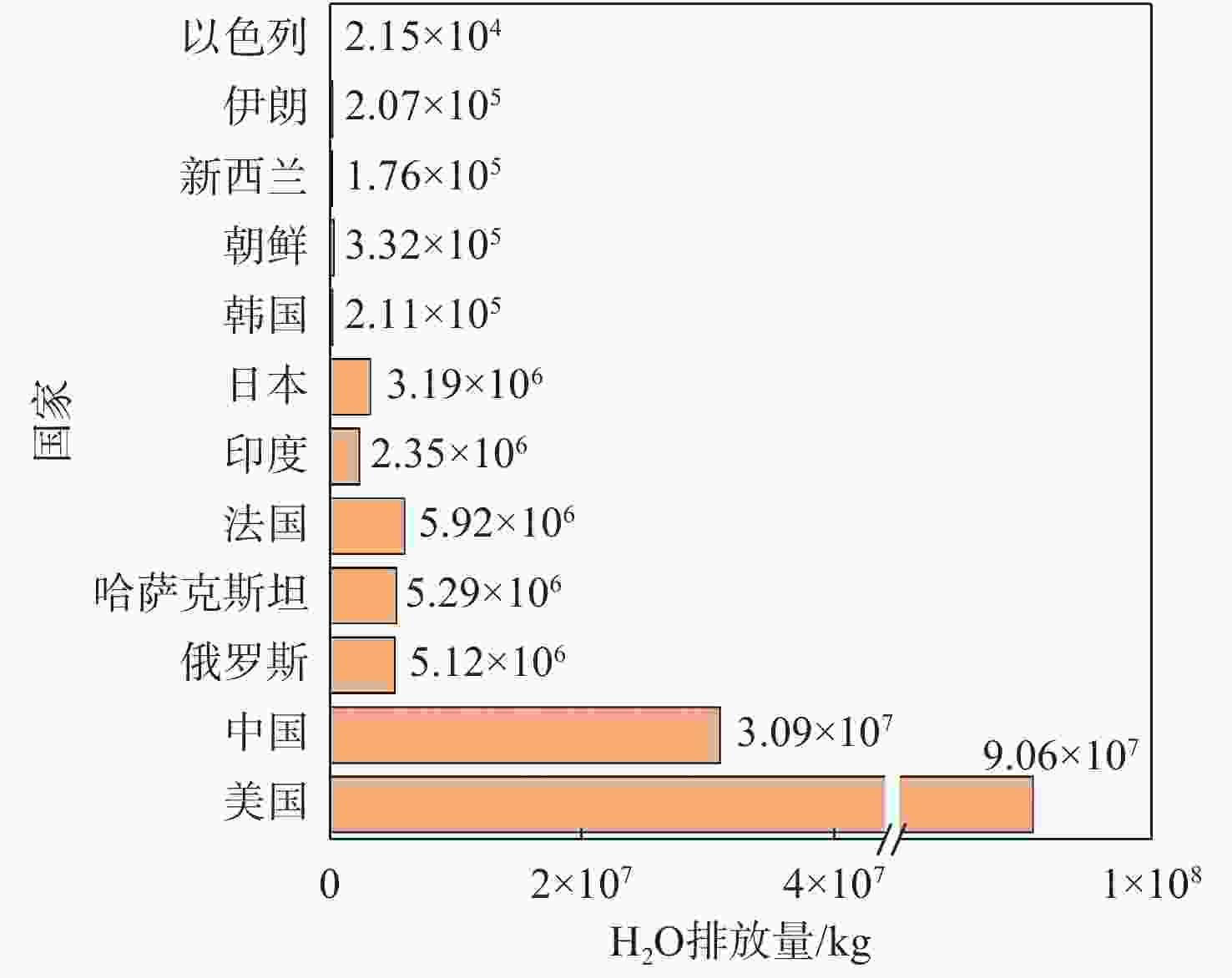
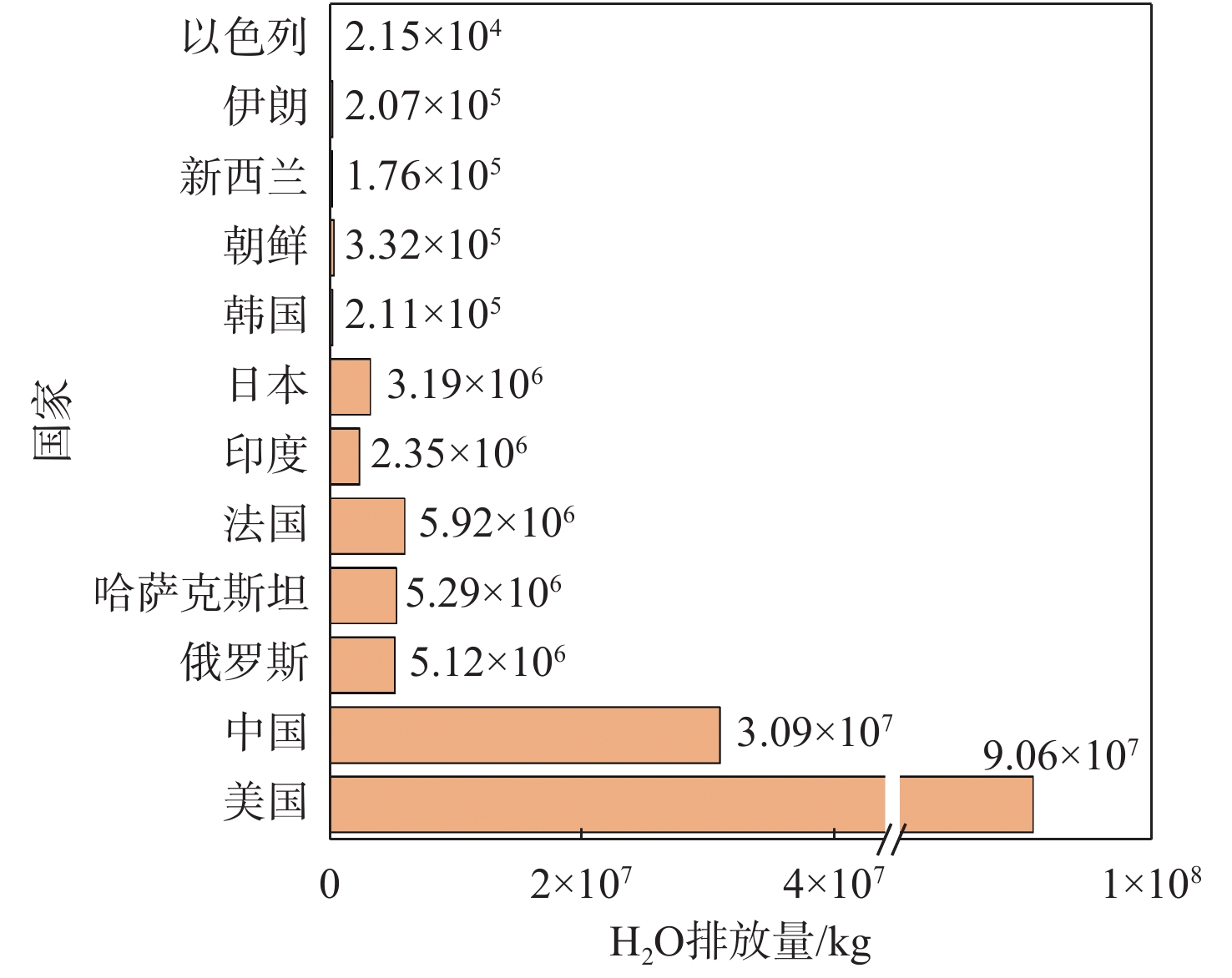
图 7 2020—2024年间H2O排放的空间分布
Figure 7. Spatial distribution of total H2O emissions from 2020 to 2024
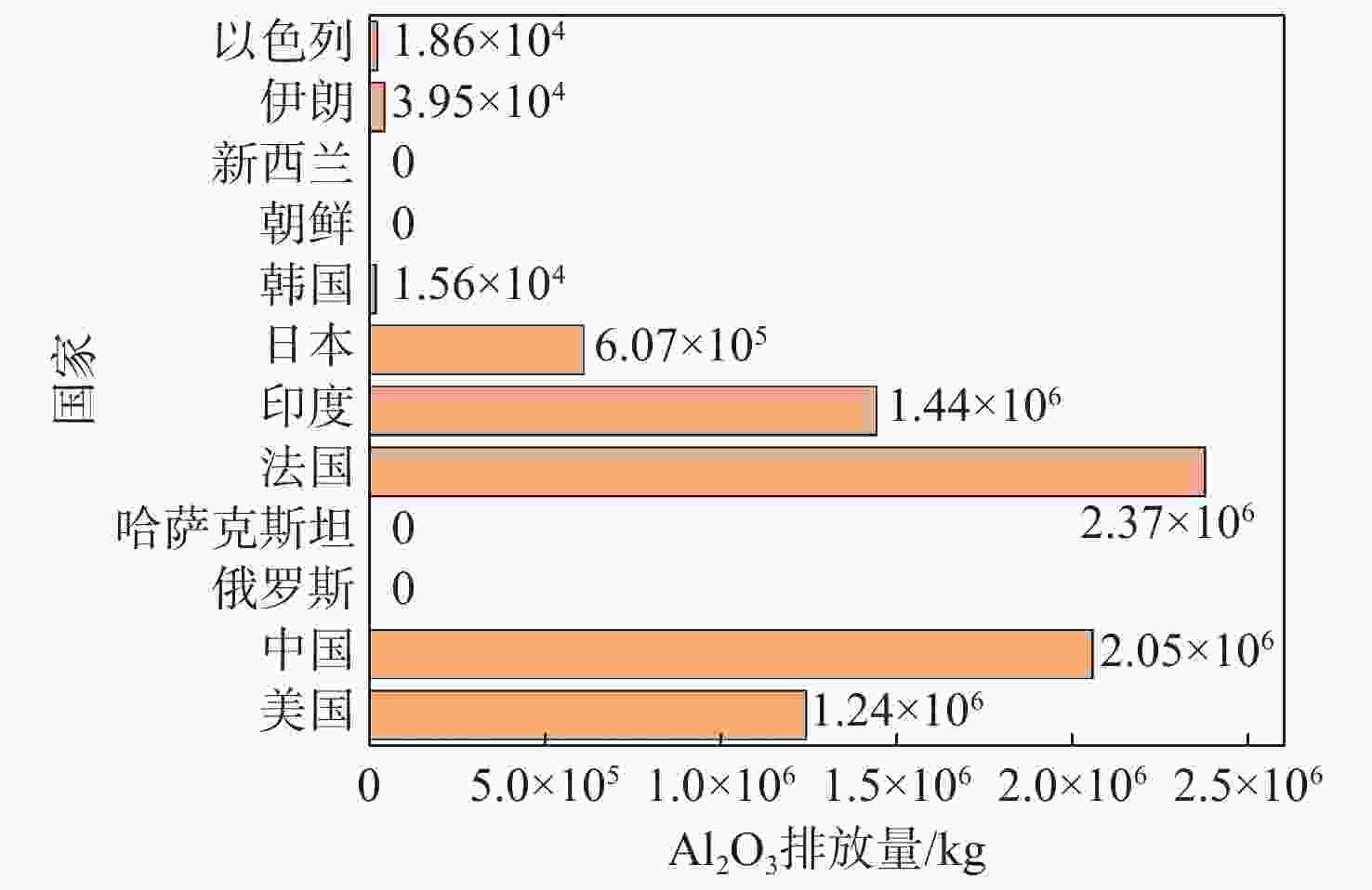
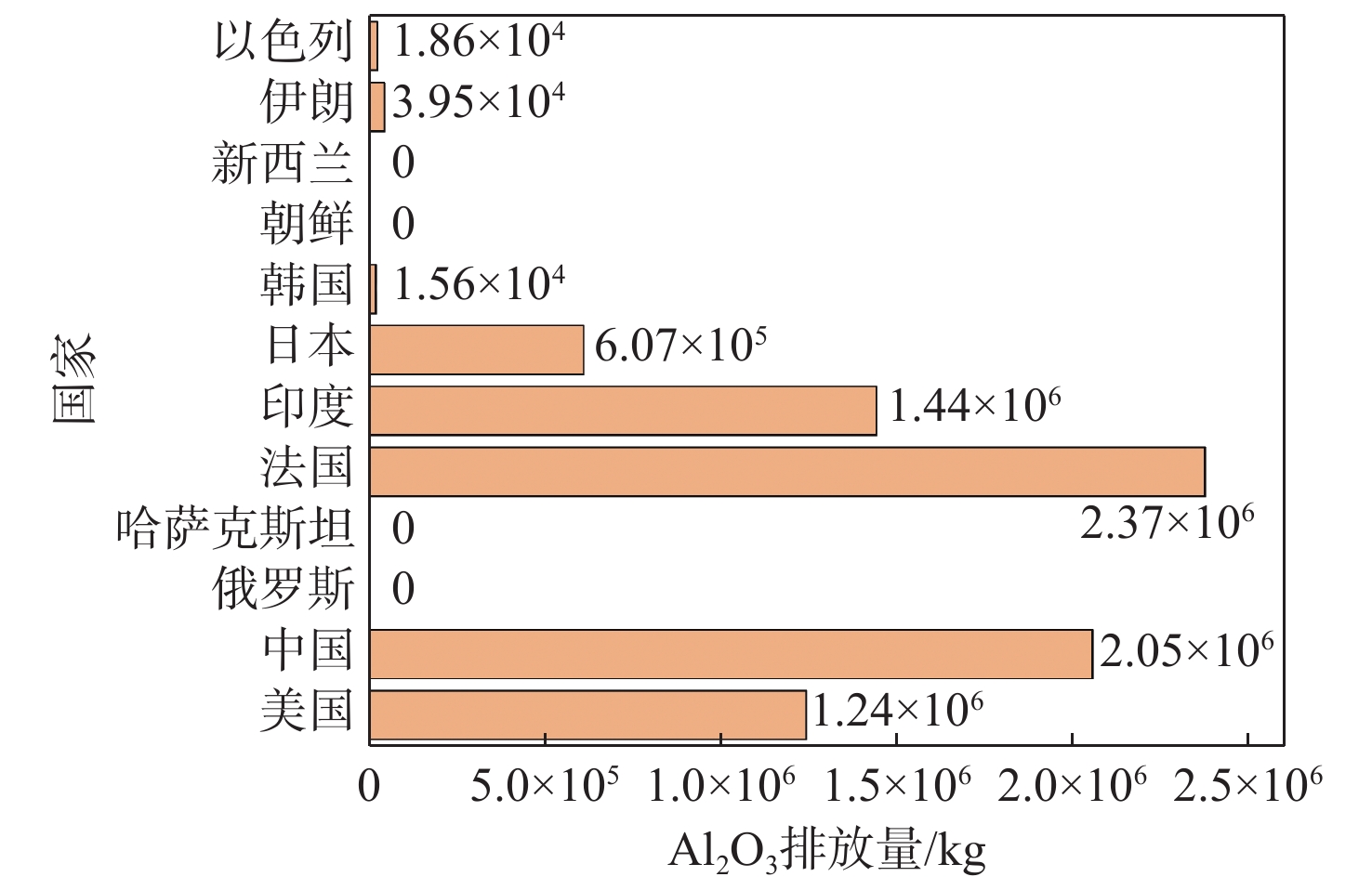
图 8 2020—2024年间Al2O3排放的空间分布
Figure 8. Spatial distribution of total Al2O3 emissions from 2020 to 2024
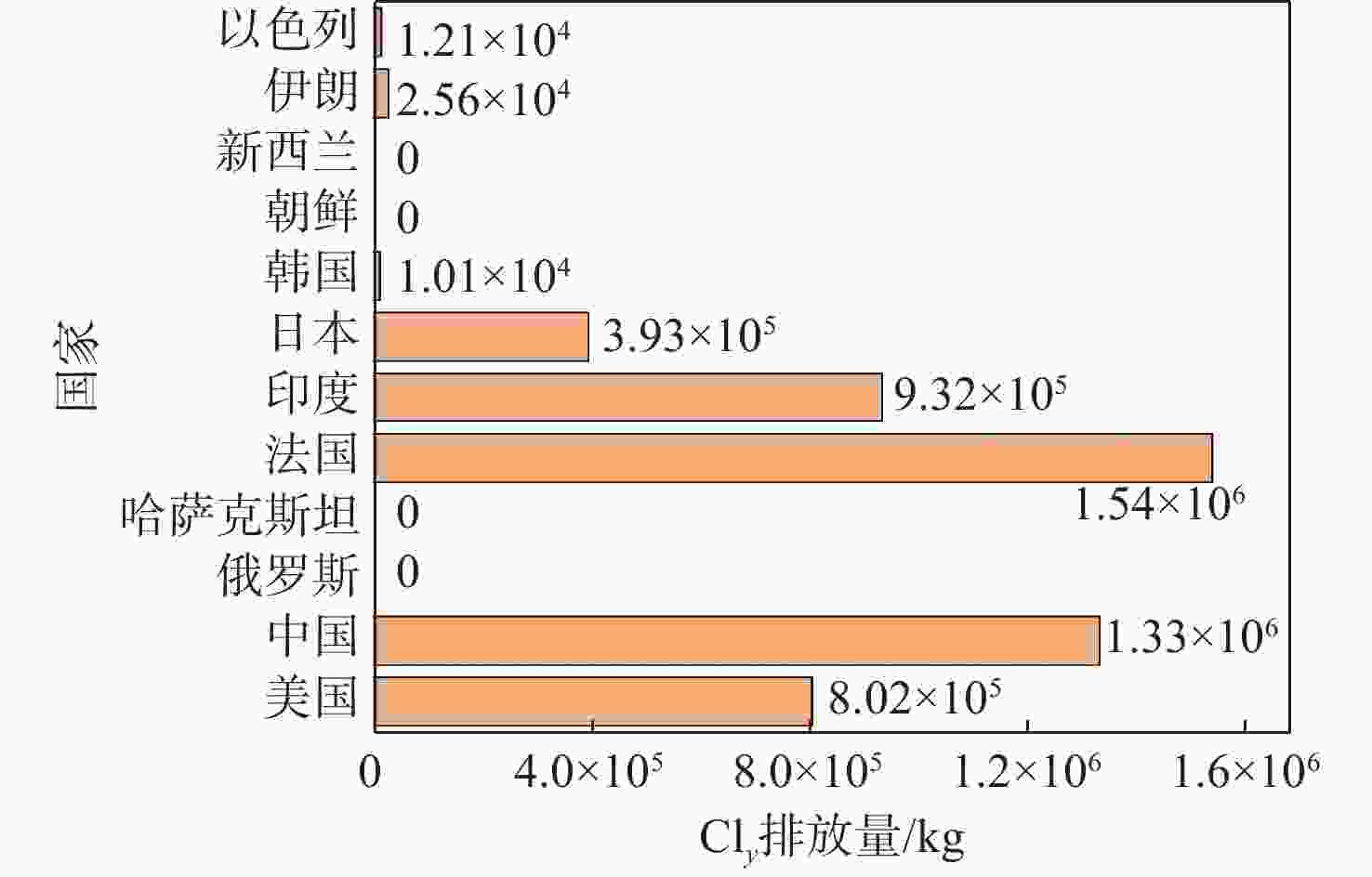
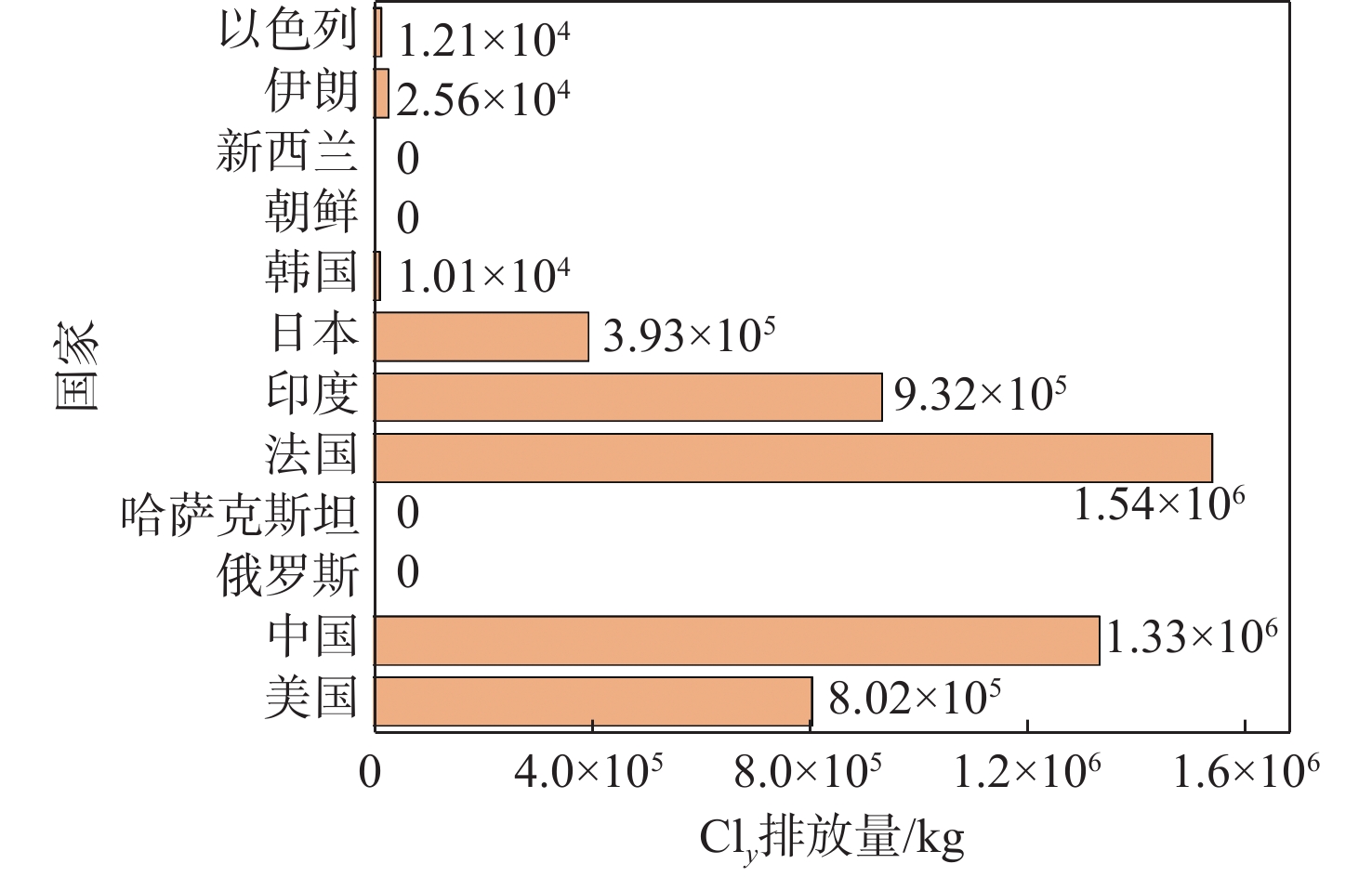
图 9 2020—2024年间Cly空间分布
Figure 9. Spatial distribution of total Cly emissions from 2020 to 2024
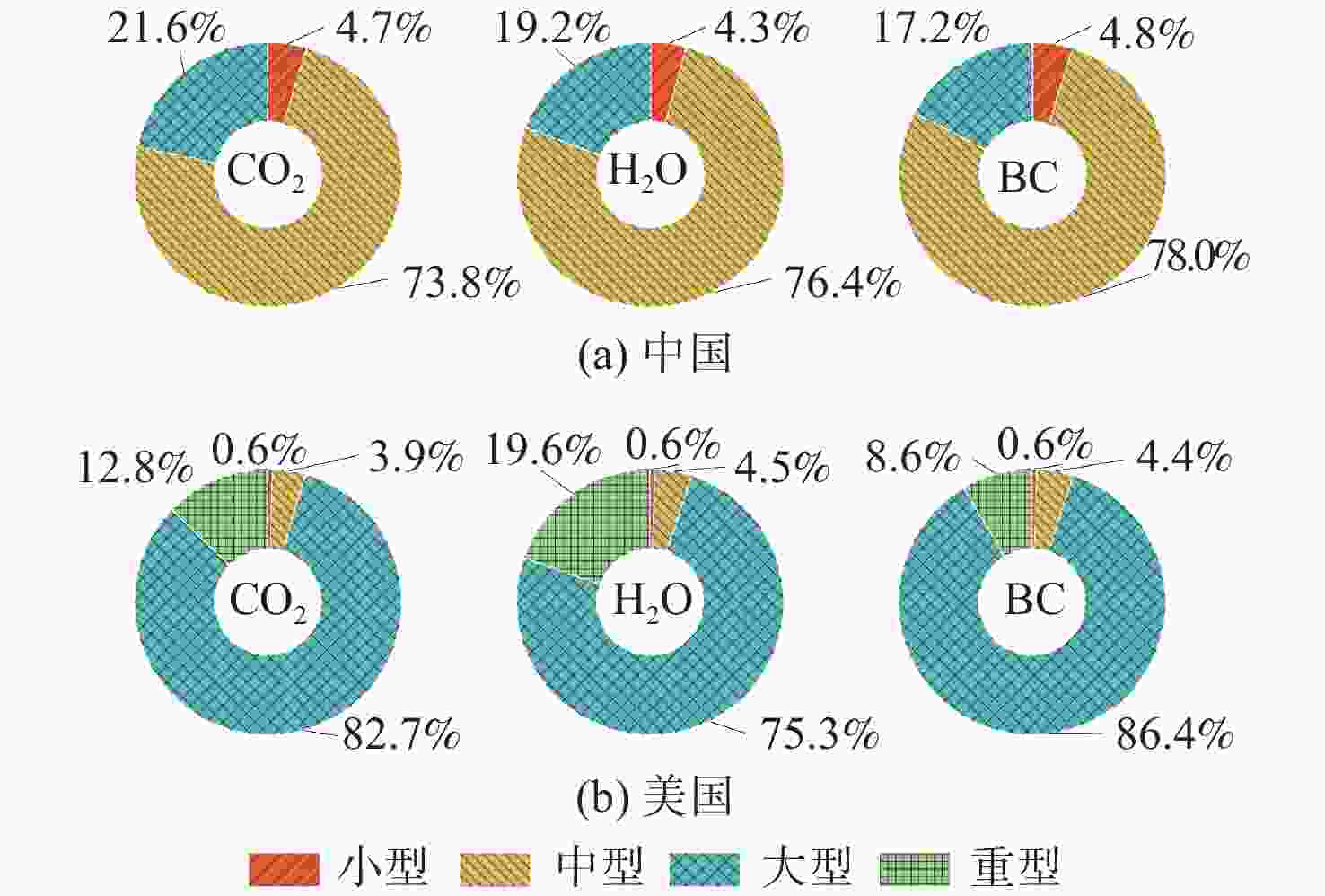
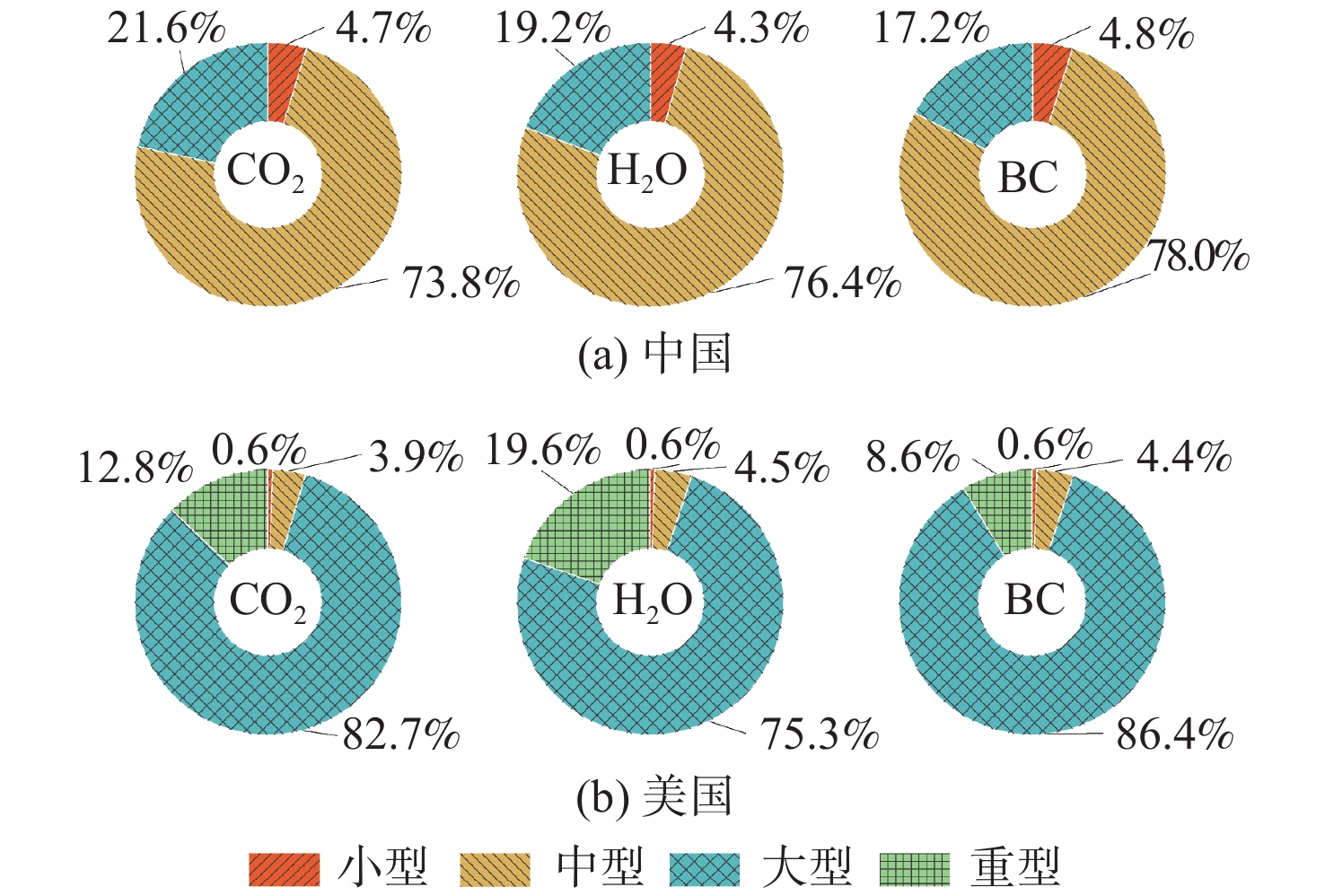
图 10 中国和美国不同级别运载火箭的排放占比
Figure 10. Pollutant emission proportions from different launch vehicle classes in China and the United States
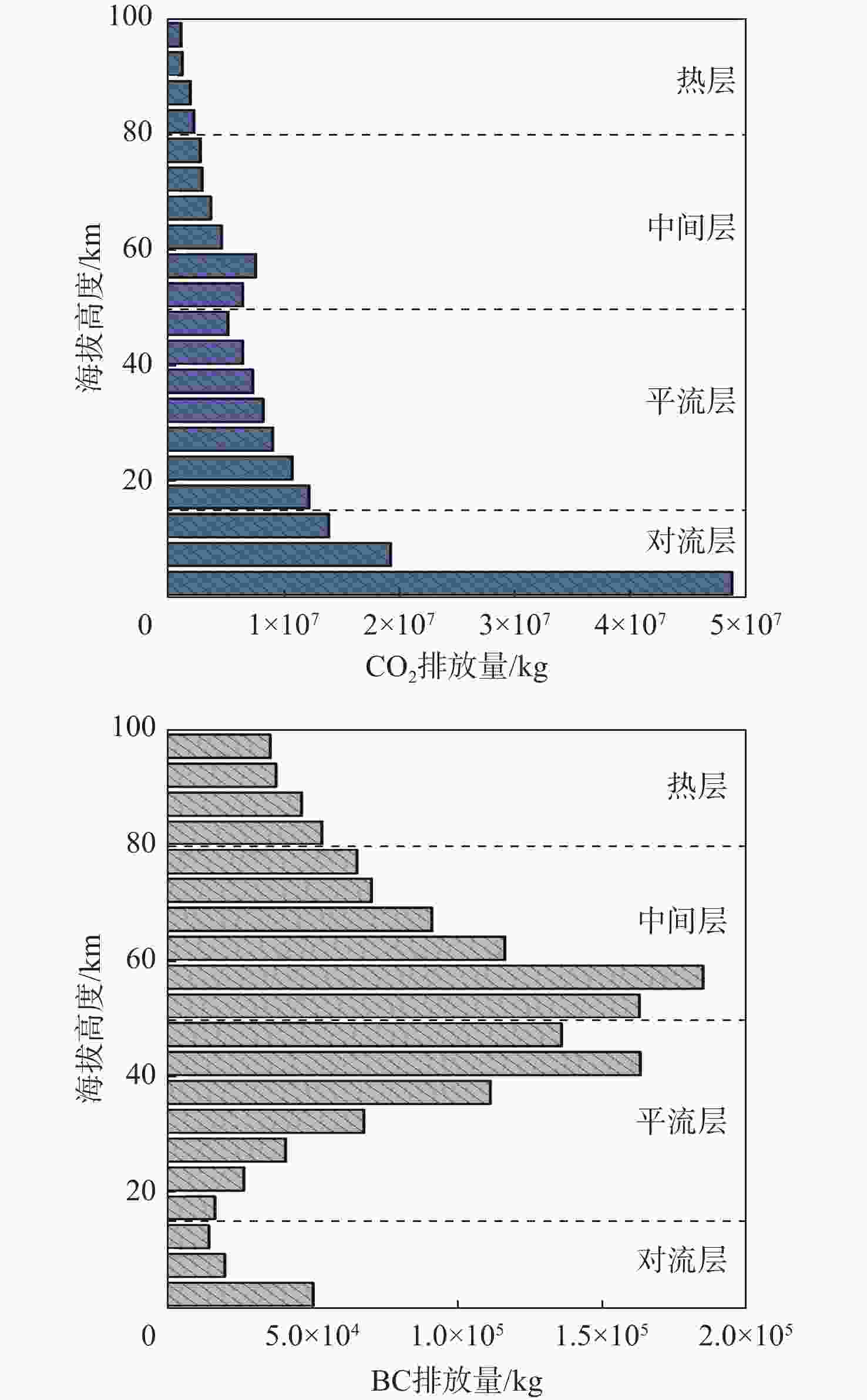
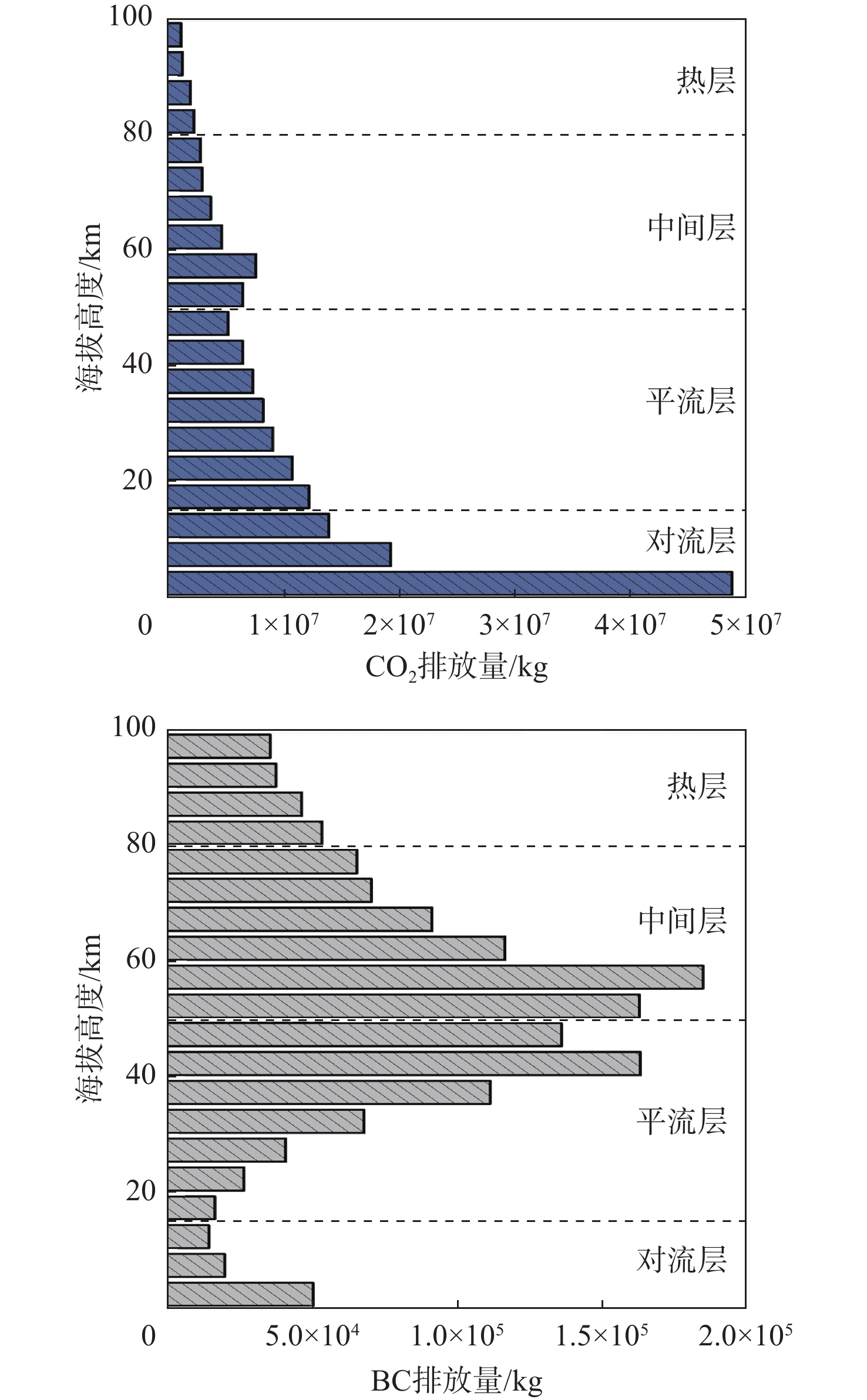
图 11 2020—2024年间0~100 km CO2和BC的垂直空间排放分布
Figure 11. Vertical distribution (0-100 km altitude) of CO2 and BC emissions during 2020—2024
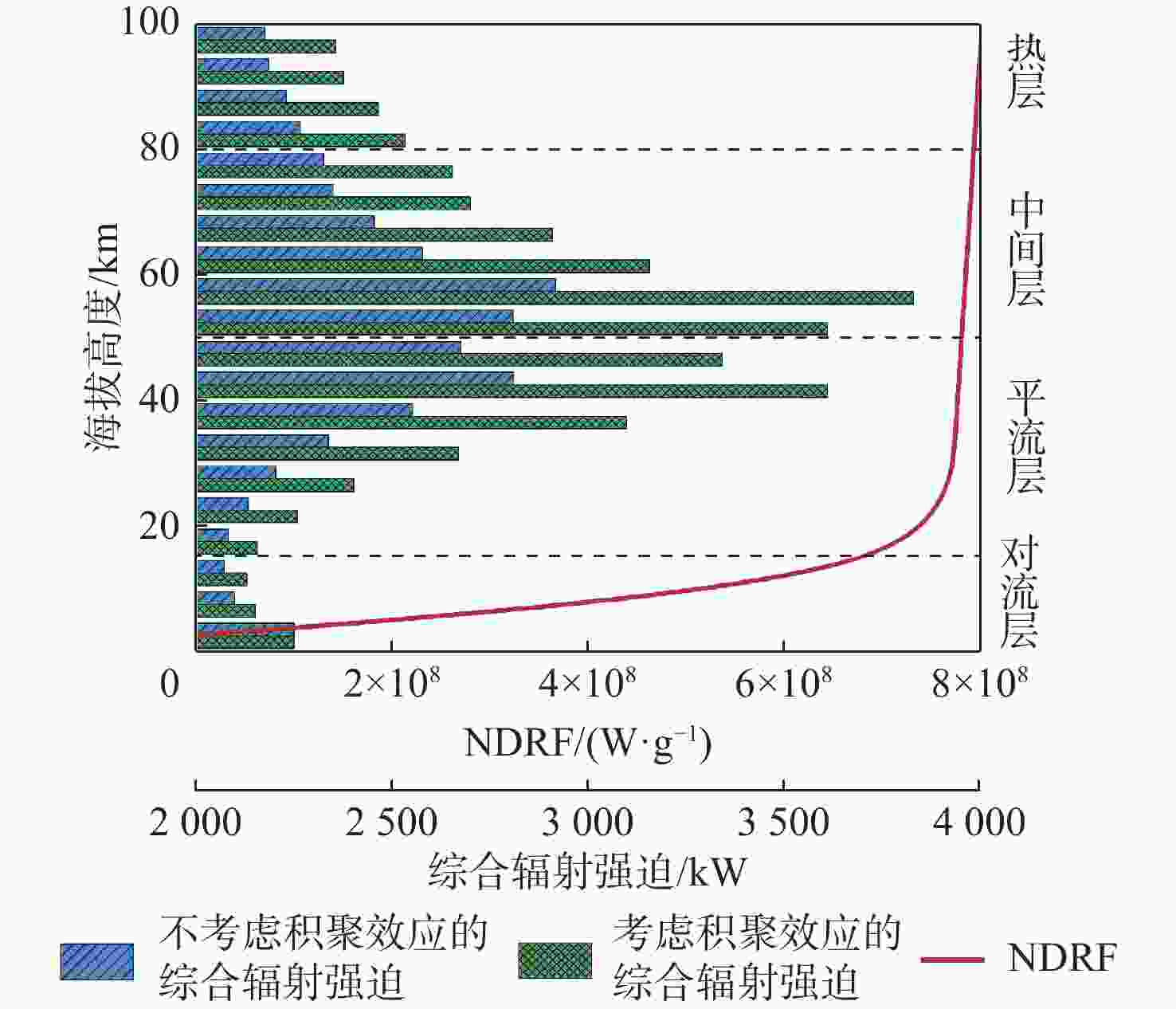
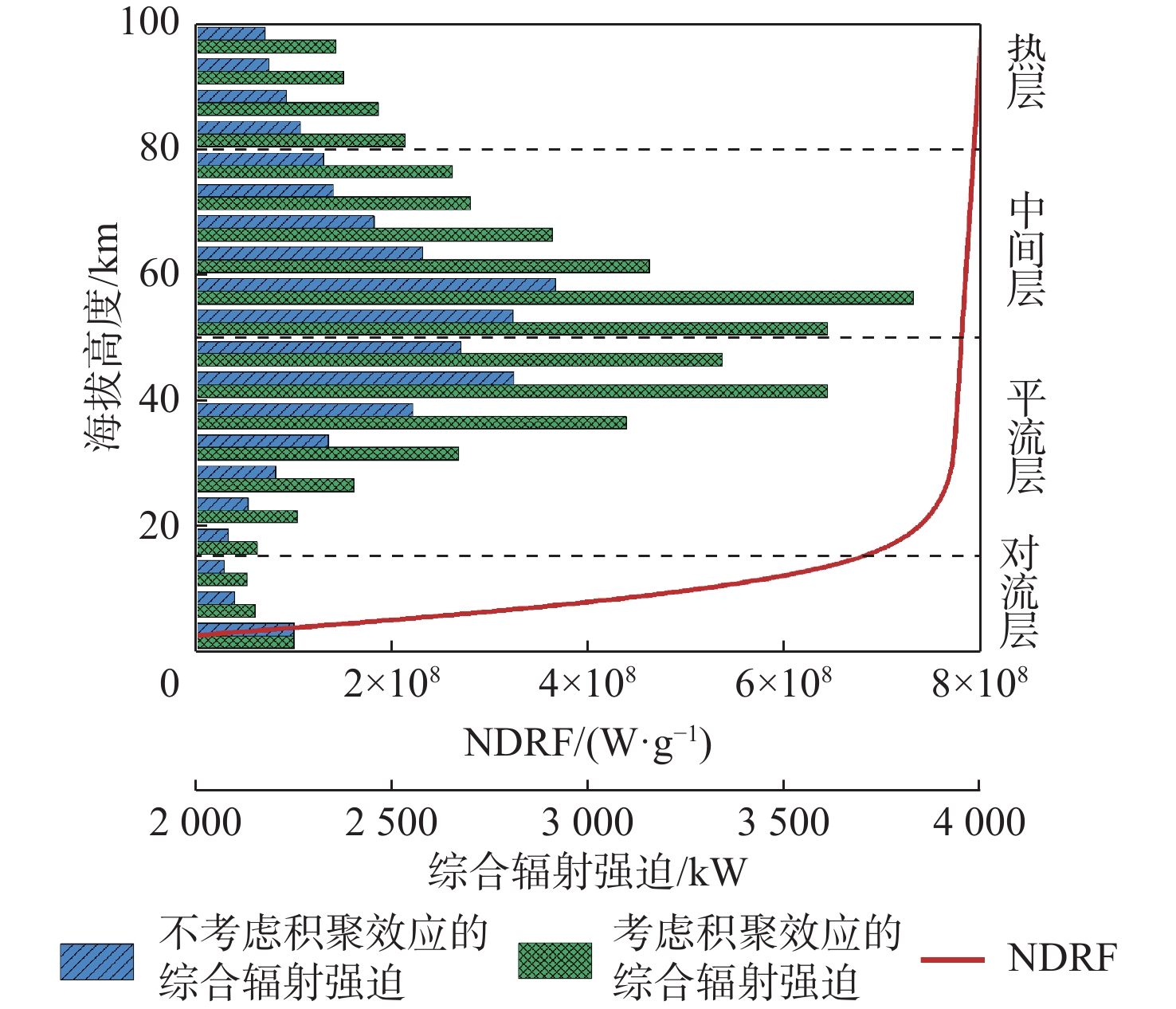
图 12 考虑和不考虑积聚效应时BC综合辐射强迫的垂直剖面
Figure 12. Vertical profiles of BC comprehensive radiative forcing with and without considering accumulation effects
表 1 数据缺失的火箭型号及其参考型号
Table 1. Rocket types with incomplete data and associated reference models
缺失型号 替代/参考型号 依据 火箭3号 (Astra Roket 3) 电子号 (Elecrton) 推进剂类型 千里马1号 (Chollima 1) 长征2号丙 推进剂类型 韩国固体燃料运载火箭
(GYUB-TV2)米诺陶1号
(Minotaur 1)推进剂类型、级数 凯洛斯(Kairos) 快舟1号 推进剂类型、级数 谷神星1号 沙维特 (Shavit) 推进剂类型、级数 捷龙3号 艾普斯龙CLPS
(Epsilon 2 CLPS)运载能力、级数 快舟11号 长征6号/快舟1号 起飞规模、运载能力、
推进剂类型长征11号 米诺陶1号
(Minotaur 1)推进剂类型、级数 长征12号 长征7号甲 运载能力、
推进剂类型长征6号甲 长征7号甲 起飞规模 朱雀2号 安塔瑞斯230
(Antares 230)起飞规模 朱雀2号改 安塔瑞斯230
(Antares 230)起飞规模  下载: 导出CSV
表 2 每千克推进剂燃烧产生的排放物质量
Table 2. Mass of pollutants emitted per kilogram of emissions burned
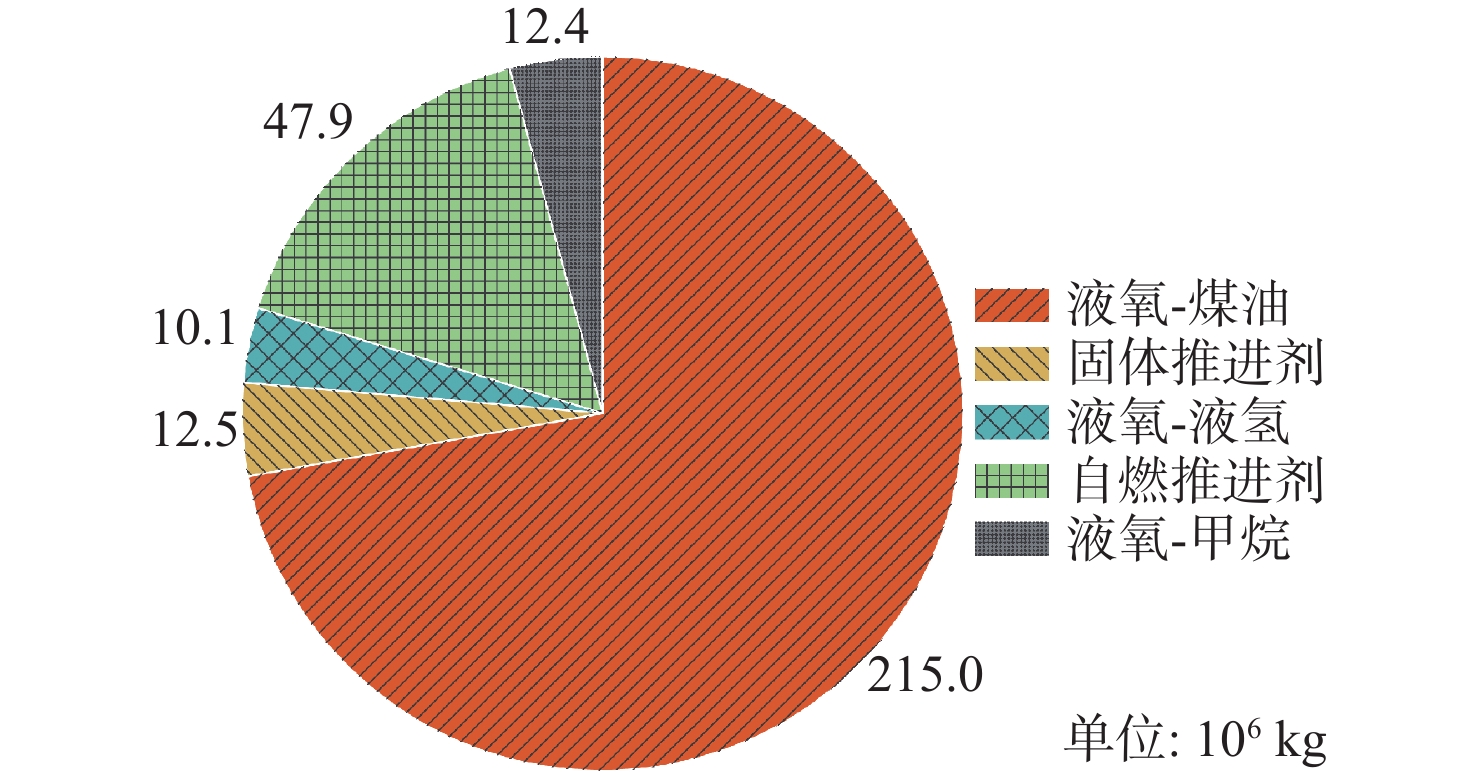
推进剂 排放物质量/kg CO2 BC H2O Al2O3 Cly 液氧-煤油 0.91 0.022 0.36 自燃推进剂 0.46 0.016 0.38 固体推进剂 0.44 0.016 0.39 0.34 0.217 液氧-甲烷 0.55 0.005 0.45 液氧-液氢 1.27
下载: 导出CSV
-
[1] 严一粟, 郭继峰. 月球原位资源开发体系研究进展[J]. 宇航学报, 2024, 45(8): 1155-1171.Yan Y S, Guo J F. Progress of lunar in-situ resource utilization system[J]. Journal of Astronautics, 2024, 45(8): 1155-1171(in Chinese). [2] 王巍, 姚伟. 近地小天体采矿体系构想及效益初步评估[J]. 空间科学与试验学报, 2024, 24(1): 13-22.Wang W, Yao W. Concept and preliminary evaluation of near earth asteroids mining architecture[J]. Journal of Space Science and Experiment, 2024, 24(1): 13-22(in Chinese). [3] 邵文凯, 刘尘旻, 张克非, 等. 近地小行星矿物分离与资源提取的挑战与展望[J]. 宇航学报, 2025, 46(1): 17-36.Shao W K, Liu C M, Zhang K F, et al. Challenges and prospects for mineral separation and resource extraction from near-earth asteroids[J]. Journal of Astronautics, 2025, 46(1): 17-36(in Chinese). [4] Barker C R, Marais E A, Mcdowell J C. Global 3D rocket launch and re-entry air pollutant and CO2 emissions at the onset of the megaconstellation era[J]. Scientific Data, 2024, 11: 1079. [5] SpaceX. Falcon 9[EB/OL]. (2024-11-20)[2025-07-18]. https://www.spacex.com/vehicles/falcon-9/. [6] Ross M N, Mills M, Toohey D. Potential climate impact of black carbon emitted by rockets[J]. Geophysical Research Letters, 2010, 37(24): 2010GL044548. [7] Ross M N, Sheaffer P M. Radiative forcing caused by rocket engine emissions[J]. Earth’s Future, 2014, 2(4): 177-196. [8] Dallas J A, Raval S, Alvarez Gaitan J P, et al. The environmental impact of emissions from space launches: a comprehensive review[J]. Journal of Cleaner Production, 2020, 255: 120209. [9] Kokkinakis I W, Drikakis D. Atmospheric pollution from rockets[J]. Physics of Fluids, 2022, 34(5): 056107. [10] Ross M N, Jones K L. Implications of a growing spaceflight industry: climate change[J]. Journal of Space Safety Engineering, 2022, 9(3): 469-477. [11] Samset B H, Myhre G. Vertical dependence of black carbon, sulphate and biomass burning aerosol radiative forcing[J]. Geophysical Research Letters, 2011, 38(24): L24802. [12] Ryan R G, Marais E A, Balhatchet C J, et al. Impact of rocket launch and space debris air pollutant emissions on stratospheric ozone and global climate[J]. Earth’s Future, 2022, 10(6): e2021EF002612. [13] Tsigaridis K, Field R, Bauer S E, et al. Composition and climate impacts of increasing launches to low earth orbit[C]//Proceedings of the AIAA SCITECH 2024 Forum. Reston: AIAA, 2024: 2168. [14] Butchart N. The brewer-Dobson circulation[J]. Reviews of Geophysics, 2014, 52(2): 157-184. [15] Maloney C M, Portmann R W, Ross M N, et al. The climate and ozone impacts of black carbon emissions from global rocket launches[J]. Journal of Geophysical Research: Atmospheres, 2022, 127(12): e2021JD036373. [16] Solomon S, Rosenlof K H, Portmann R W, et al. Contributions of stratospheric water vapor to decadal changes in the rate of global warming[J]. Science, 2010, 327(5970): 1219-1223. [17] Danilin M Y, Shia R L, Ko M K W, et al. Global stratospheric effects of the alumina emissions by solid-fueled rocket motors[J]. Journal of Geophysical Research: Atmospheres, 2001, 106(D12): 12727-12738. [18] Pradon C V M, Eastham S D, Chossière G, et al. Global three-dimensional emission inventory for launch vehicles from 2009 to 2018[J]. Journal of Spacecraft and Rockets, 2023, 60(3): 716-727. [19] Brown T F M, Bannister M T, Revell L E, et al. Worldwide rocket launch emissions 2019: an inventory for use in global models[J]. Earth and Space Science, 2024, 11(10): e2024EA003668. [20] ArianeGroup. Ariane 6, a versatile launcher for all missions[EB/OL]. (2024-08-20)[2025-07-18]. https://www.ariane.group/en/space-transportation/ariane-6/. [21] JAXA. H3 launch vehicle[EB/OL]. (2025-06-10)[2025-07-18]. https://global.jaxa.jp/projects/rockets/h3/. [22] United Launch Alliance. Vulcan centaur[EB/OL]. (2025-06-08)[2025-07-18]. https://www.ulalaunch.com/rockets/vulcan-centaur. [23] Desain J D, Brady B B. Potential atmospheric impact generated by space launches worldwide-update for emission estimates from 1985 to 2013: TOR-2014-02140[R]. El Segundo: The Aerospace Corporation, 2014. [24] Consulting L, Wayson A R L. Commercial space vehicle emissions modeling[M]. Washington, D. C. : Transportation Research Board, 2021. [25] Launius R D. The smithsonian history of space exploration: from the ancient world to the extraterrestrial future[M]. Washington, DC: Smithsonian Books, 2018. [26] Bainbridge W S, Roco M C. Handbook of science and technology convergence[M]. Berlin: Springer International Publishing, 2014. [27] Bergero C, Gosnell G, Gielen D, et al. Pathways to net-zero emissions from aviation[J]. Nature Sustainability, 2023, 6(4): 404-414. [28] 张锋, 严宇, 杨伟东, 等. 气氧/煤油富燃燃气发生器积碳特性试验研究[J]. 火箭推进, 2017, 43(6): 76-81.Zhang F, Yan Y, Yang W D, et al. Experimental investigation on soot deposition in a fuel-rich GOX/kerosene gas generator[J]. Journal of Rocket Propulsion, 2017, 43(6): 76-81(in Chinese). [29] Turushov V, Orlov V, Efremov Y, et al. Development status of a soot-free fuel-rich kerosene tripropellant preburner for reusable liquid rocket engine applications[C]//Proceedings of the 31st Joint Propulsion Conference and Exhibit. Reston: AIAA, 1995: 3002. -

 下载:


 点击查看大图
计量
- 文章访问数: 283
- HTML全文浏览量: 162
- PDF下载量: 19
- 被引次数: 0
