





-
摘要:
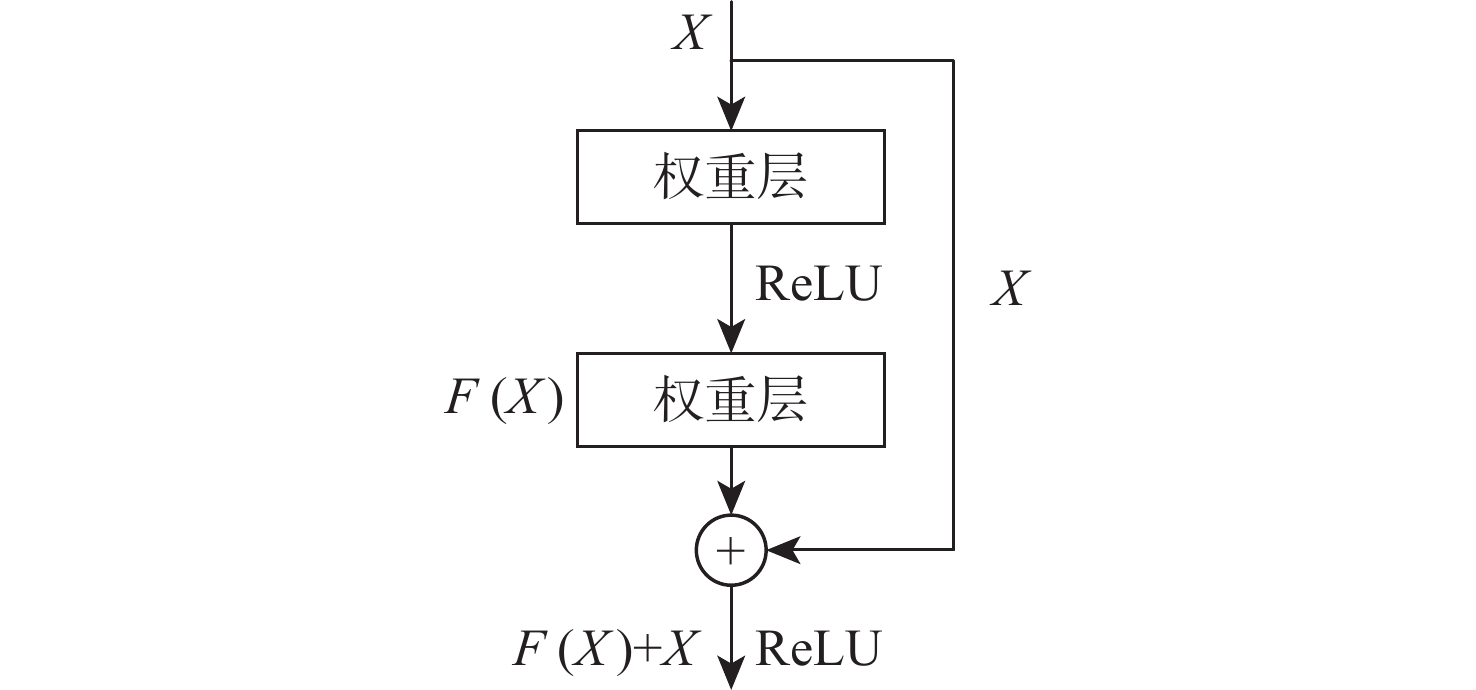
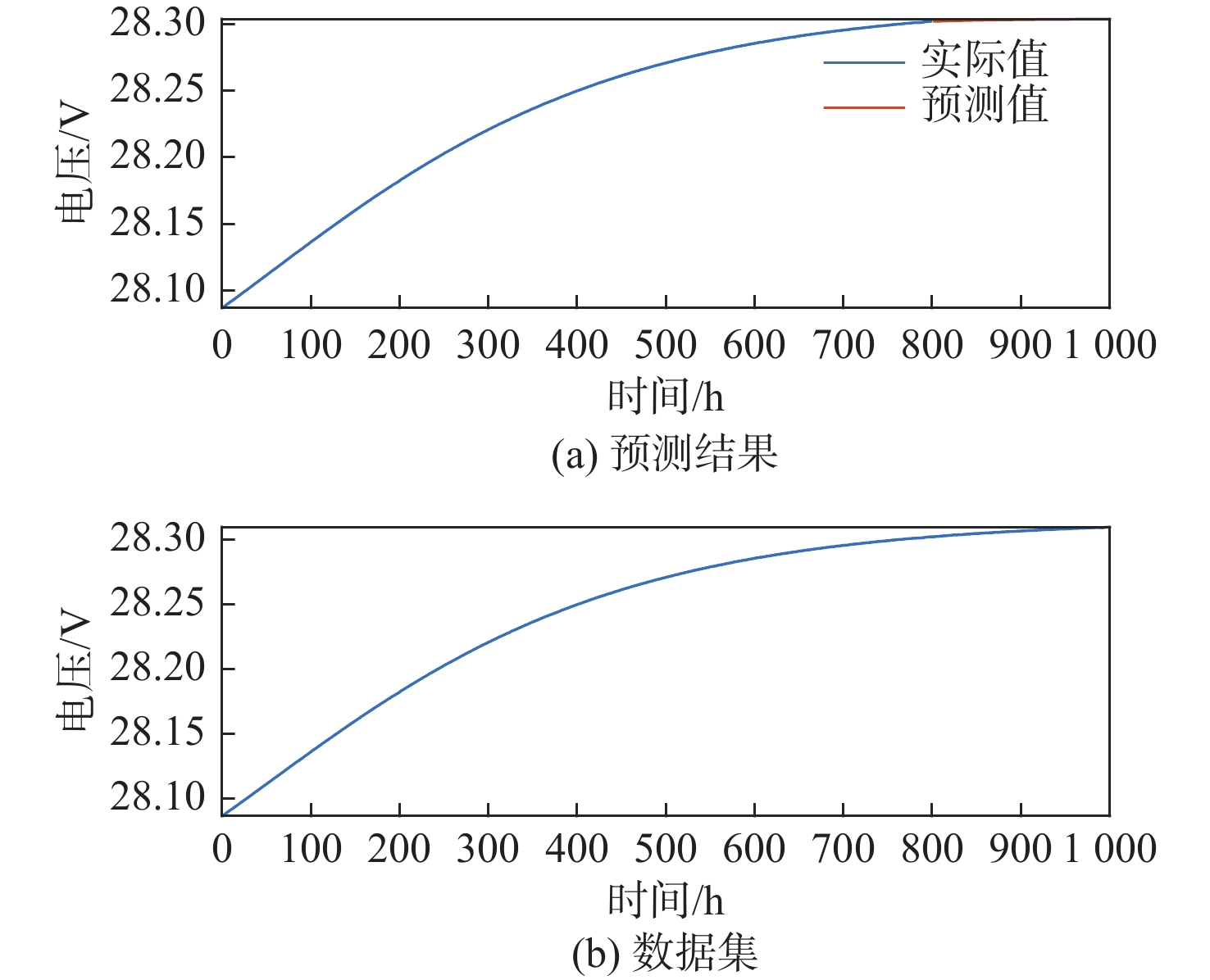
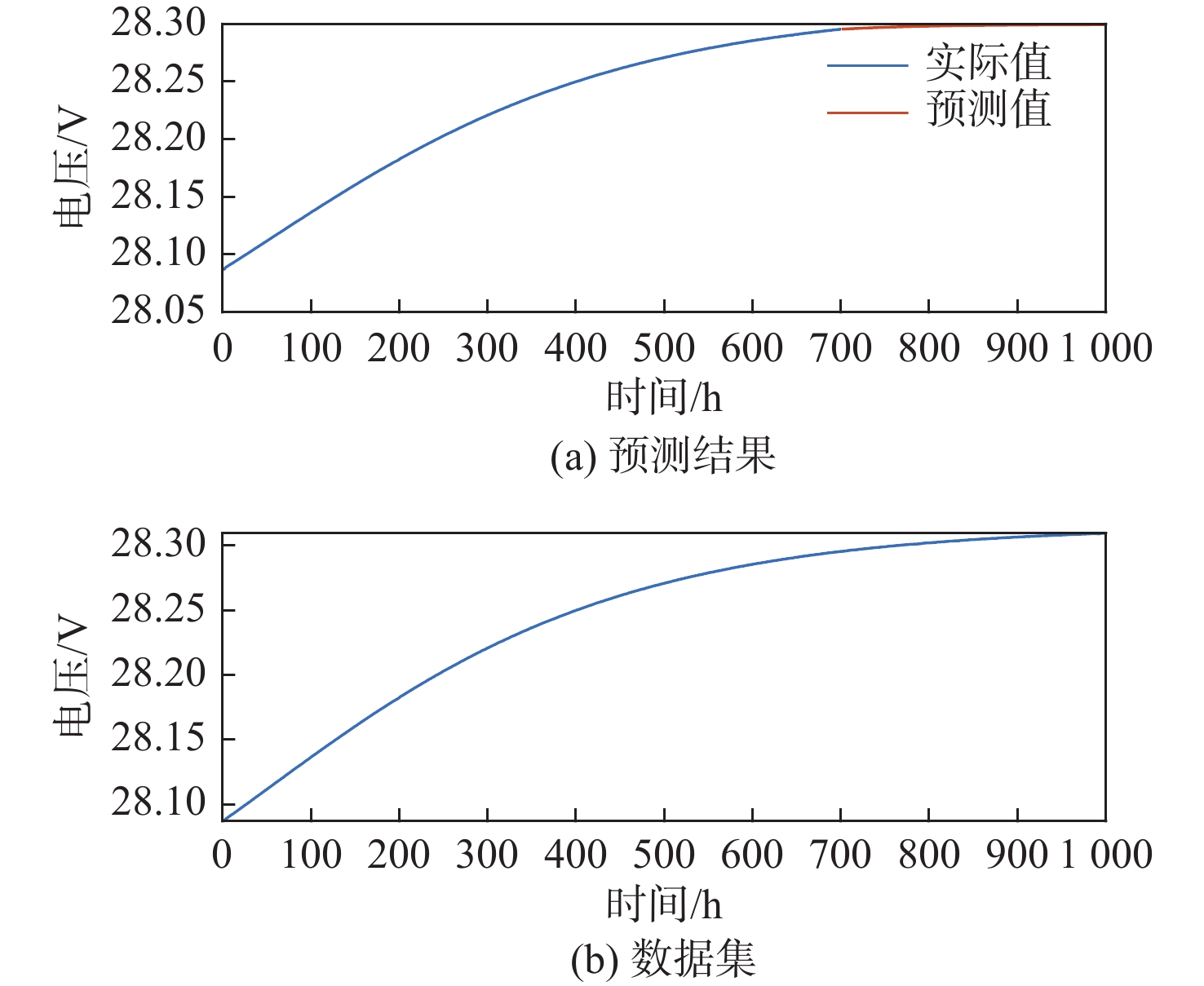
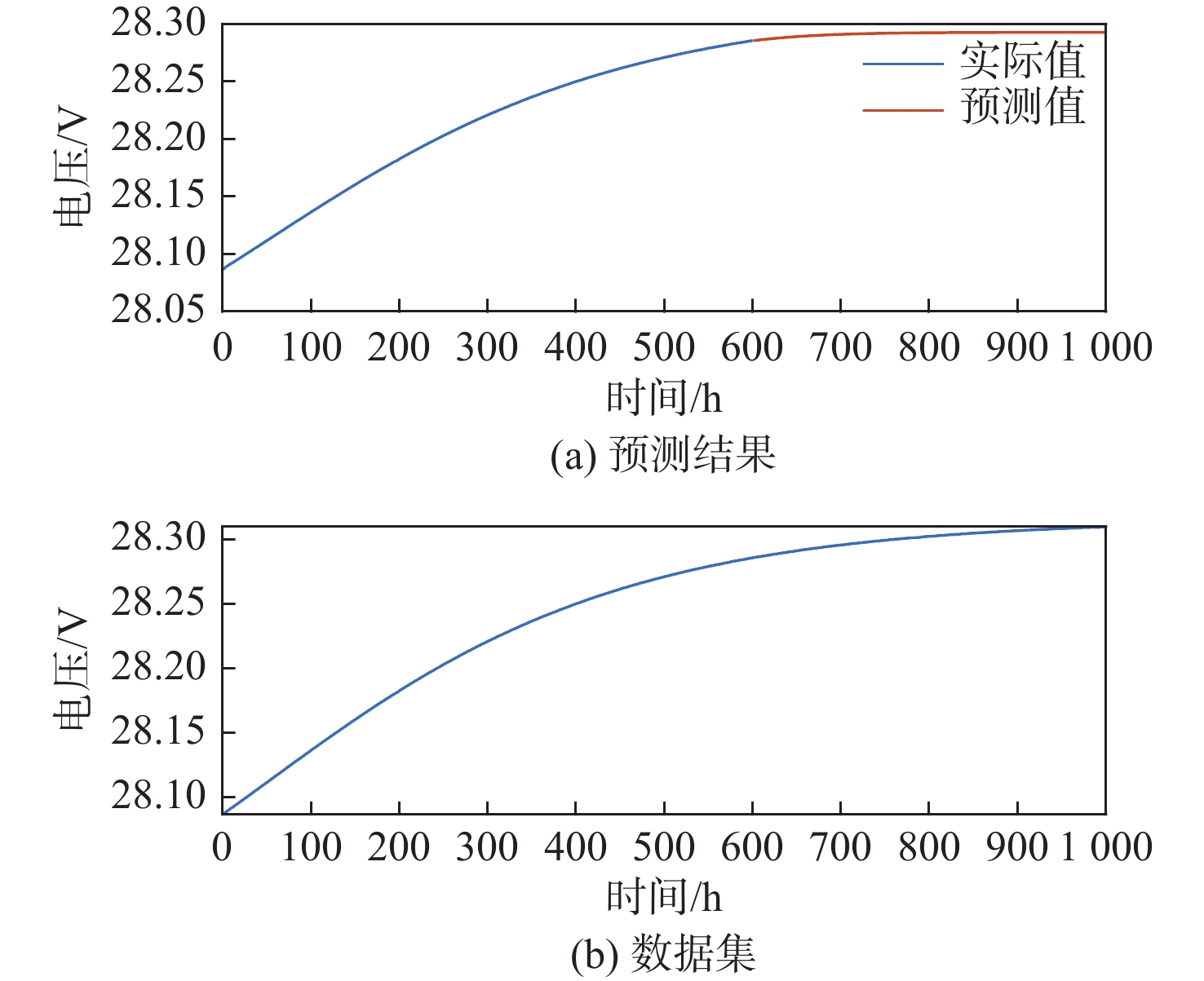
为实现开关电源的状态识别与退化监测,根据电容值相对于初始电容退化程度,划分为4个状态区间,为后续状态识别任务提供了明确的标签依据。提出一种基于纹波信号特征提取与深度学习分类模型相结合的方法,以实现对当前状态的快速识别。通过小波变换对纹波信号进行多尺度分解,提取其时频域特征图,从而捕捉电容退化过程中的微弱动态特征。在特征提取的基础上,构建了一个基于残差网络(ResNet)的深度卷积神经网络模型,利用其强大的特征表达能力与残差学习机制对不同状态特征图进行分类识别。采用ResNet-LSTM模型预测电源退化趋势,结果表明,其能实现较为准确的预测。
-
关键词:
- 开关电源 /
- 电压纹波 /
- 小波变换 /
- 残差网络ResNet /
- 长短期记忆神经网络
Abstract:The capacitance value’s degradation level in relation to its original value is first split into four state intervals in order to accomplish state recognition and degradation monitoring of switching power supply. This gives following state recognition jobs a clear labeling basis. A method combining ripple signal feature extraction with a deep learning classification model is proposed to enable rapid identification of the current state. The wavelet transform is applied to decompose the ripple signal at multiple scales, extracting its time-frequency domain feature maps to capture subtle dynamic characteristics during capacitor degradation. In order to categorize and identify feature maps of various states, a deep convolutional neural network model based on feature extraction is built using a residual network (ResNet) with its potent feature representation capabilities and residual learning mechanism. Finally, a ResNet-LSTM model is employed to predict the power supply’s degradation trend, with results demonstrating relatively accurate prediction performance.
-
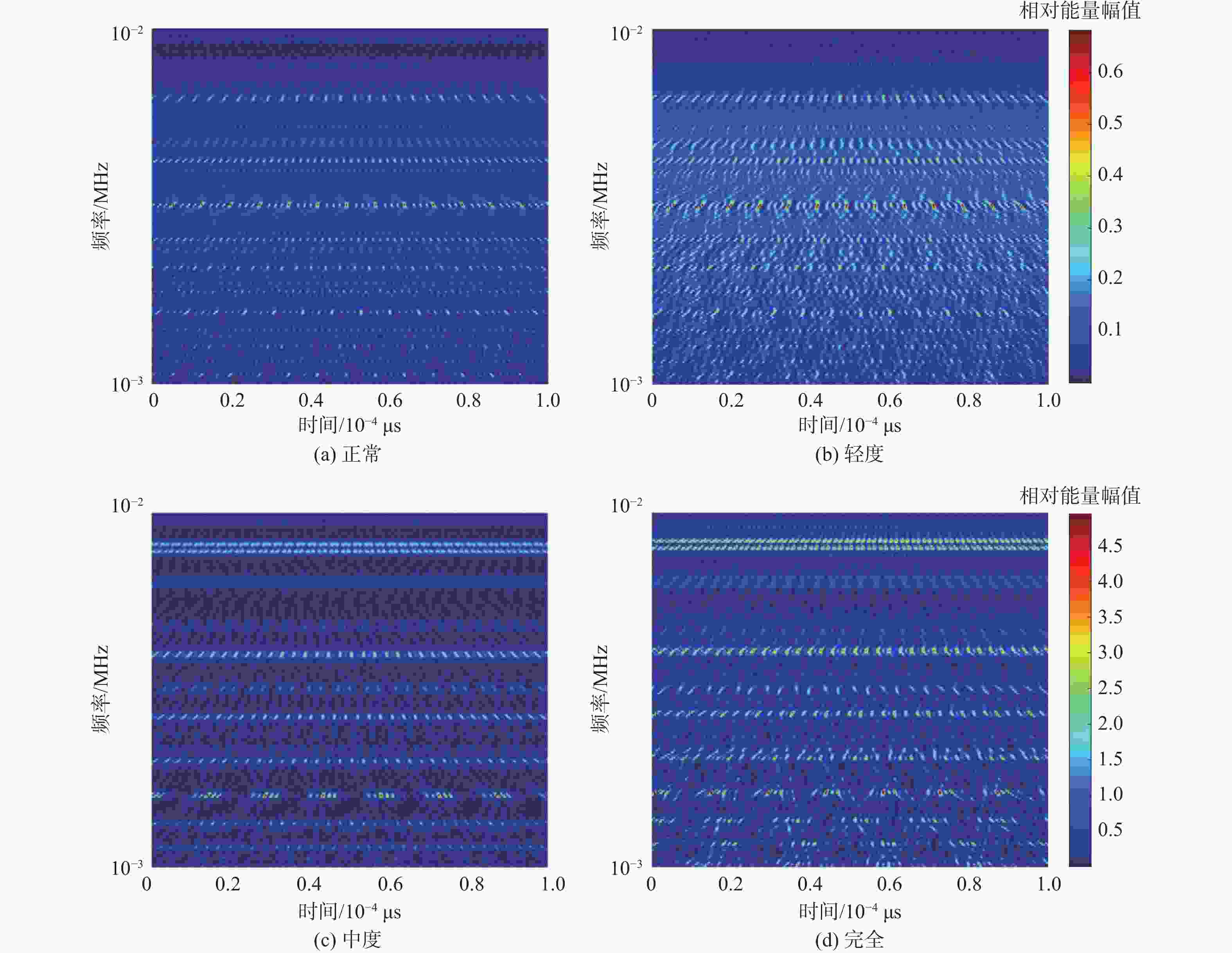
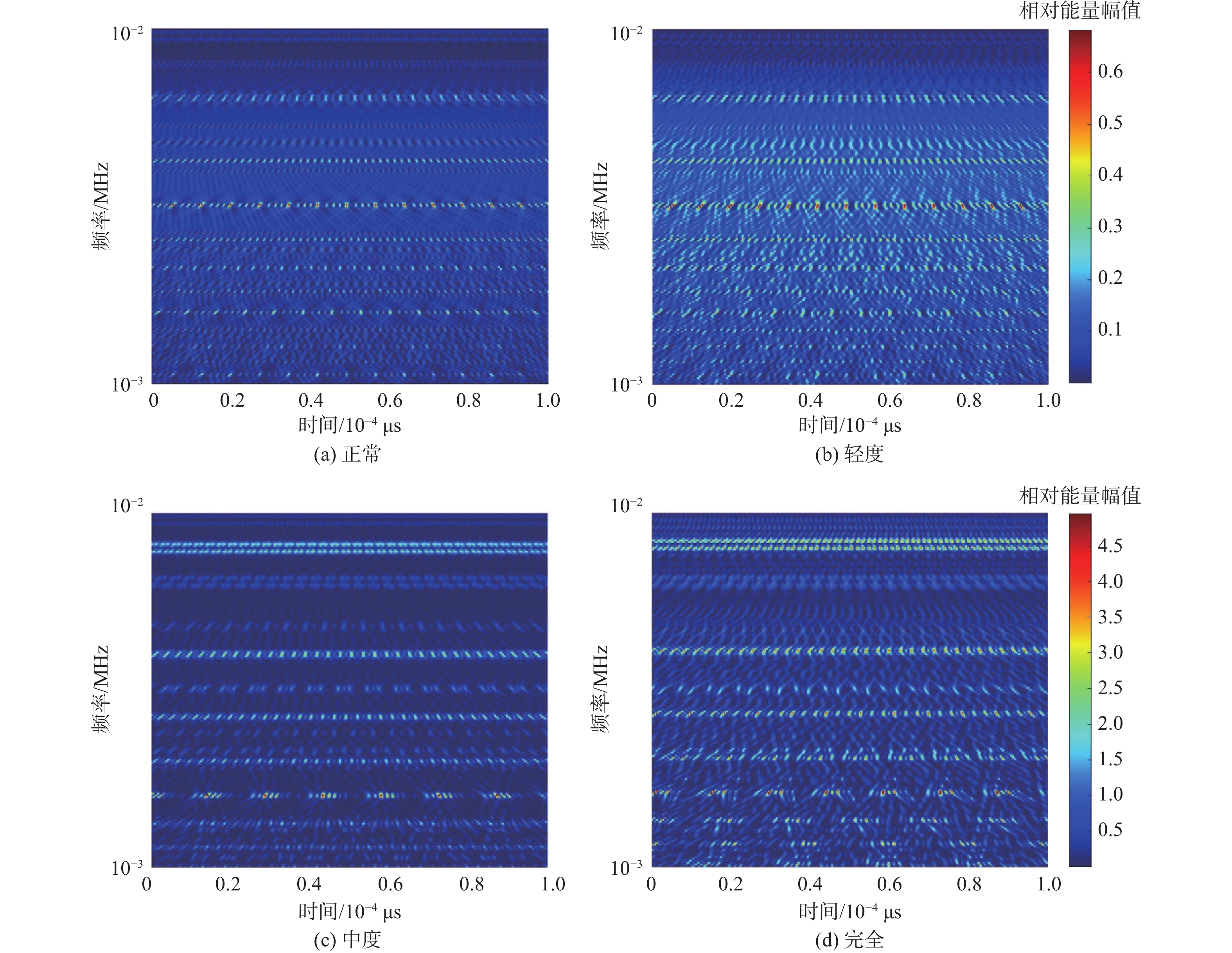
图 13 小波变换提取输出纹波电压特征
Figure 13. Wavelet transform for output ripple voltage feature extraction
表 1 ResNet结构组成
Table 1. Composition of ResNet structure
Layer 18-layer 34-layer 50-layer 101-layer Conv1 7×7, 64, stride2 7×7, 64, stride2 7×7, 64, stride2 7×7, 64, stride2 Conv2_X 3×3 max pool, stride2 3×3 max pool, stride2 3×3 max pool, stride2 3×3 max pool, stride2 $ \left[\begin{matrix}3\times 3 & 64\\3\times 3 & 64\end{matrix}\right]\times 2 $ $ \left[\begin{matrix}3\times 3 & 64\\3\times 3 & 64\end{matrix}\right]\times 3 $ $ \left[\begin{matrix}1\times 1 & 64\\3\times 3 & 64\\1\times 1 & 256\end{matrix}\right]\times 3 $ $ \left[\begin{matrix}1\times 1 & 64\\3\times 3 & 64\\1\times 1 & 256\end{matrix}\right]\times 3 $ Conv3_X $ \left[\begin{matrix}3\times 3 & 128\\3\times 3 & 128\end{matrix}\right]\times 2 $ $ \left[\begin{matrix}3\times 3 & 128\\3\times 3 & 128\end{matrix}\right]\times 4 $ $ \left[\begin{matrix}1\times 1 & 128\\3\times 3 & 128\\1\times 1 & 512\end{matrix}\right]\times 4 $ $ \left[\begin{matrix}1\times 1 & 128\\3\times 3 & 128\\1\times 1 & 512\end{matrix}\right]\times 4 $ Conv4_X $ \left[\begin{matrix}3\times 3 & 256\\3\times 3 & 256\end{matrix}\right]\times 2 $ $ \left[\begin{matrix}3\times 3 & 256\\3\times 3 & 256\end{matrix}\right]\times 6 $ $ \left[\begin{matrix}1\times 1 & 256\\3\times 3 & 256\\1\times 1 & 1024\end{matrix}\right]\times 6 $ $ \left[\begin{matrix}1\times 1 & 256\\3\times 3 & 256\\1\times 1 & 1024\end{matrix}\right]\times 23 $ Conv5_X $ \left[\begin{matrix}3\times 3 & 512\\3\times 3 & 512\end{matrix}\right]\times 2 $ $ \left[\begin{matrix}3\times 3 & 512\\3\times 3 & 512\end{matrix}\right]\times 3 $ $ \left[\begin{matrix}1\times 1 & 512\\3\times 3 & 512\\1\times 1 & 2048\end{matrix}\right]\times 3 $ $ \left[\begin{matrix}1\times 1 & 512\\3\times 3 & 512\\1\times 1 & 2048\end{matrix}\right]\times 3 $  下载: 导出CSV
表 2 实验滤波电容设置
Table 2. Experimental filter capacitor configuration
μF 数据类型 滤波
电容1滤波
电容2滤波
电容3滤波
电容4滤波
电容5滤波
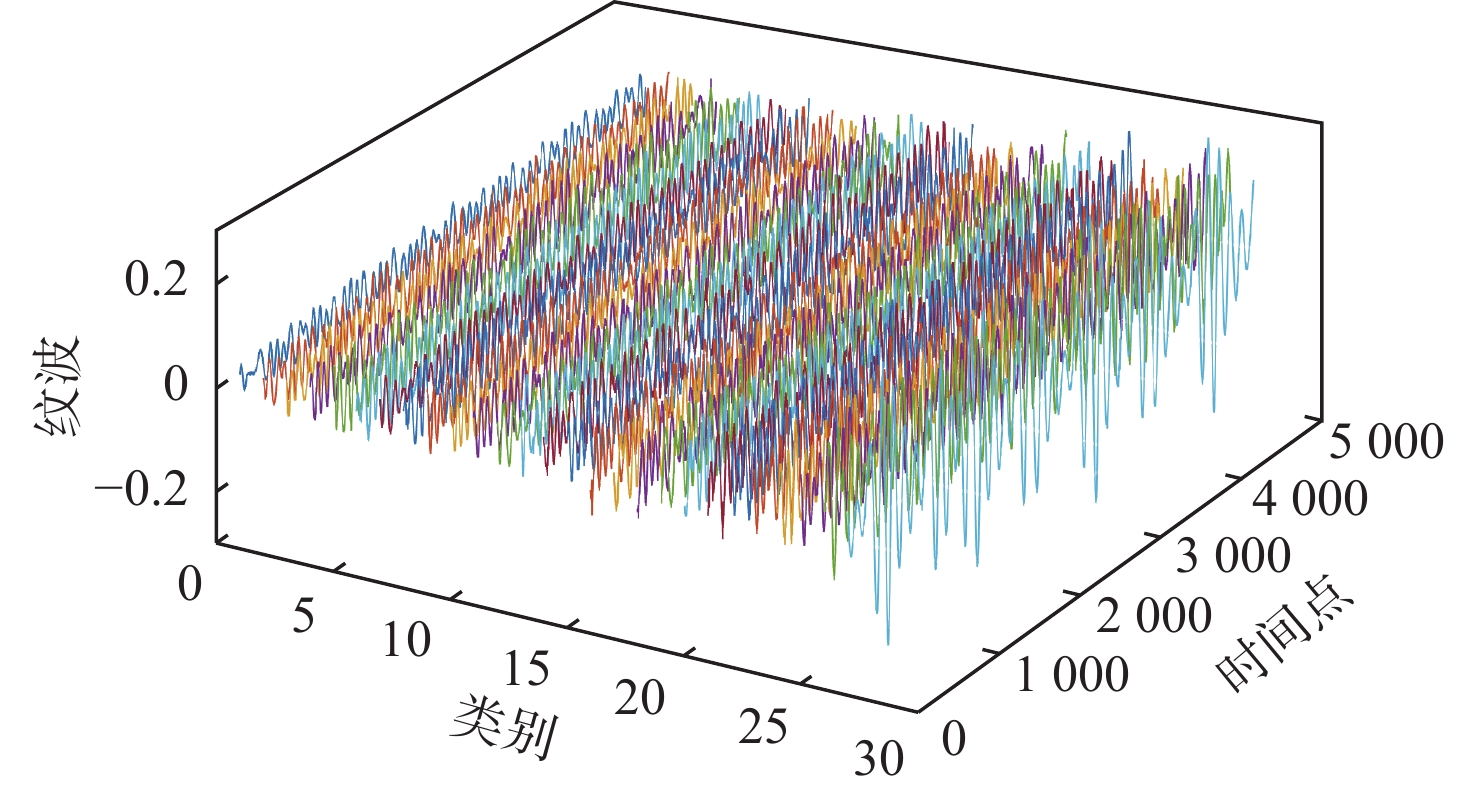
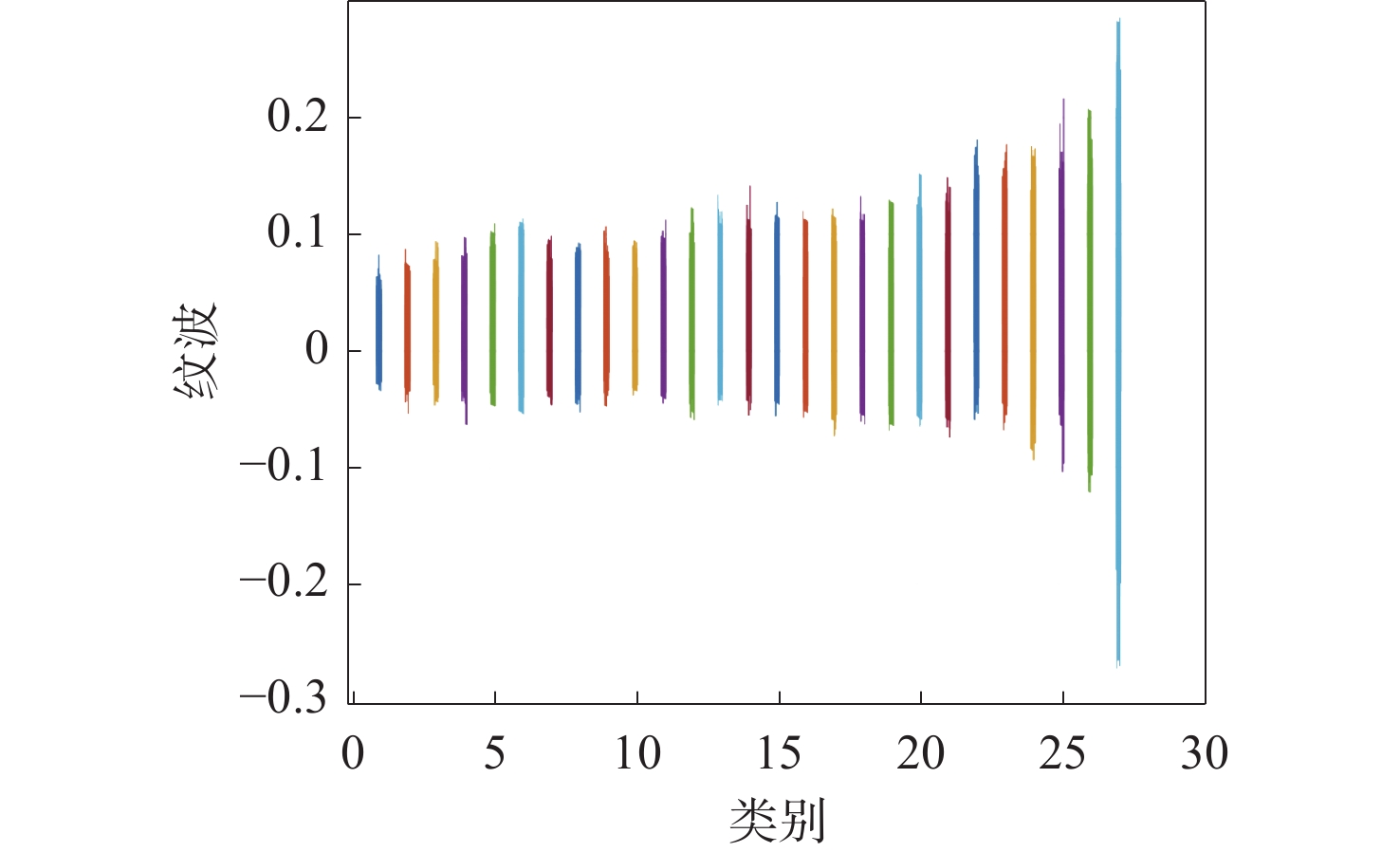
电容6正常数据 1 000 1 000 1 000 470 470 470 故障数据 1 000 1 000 680 470 470 470 故障数据 1 000 680 680 470 470 470 故障数据 680 680 680 470 470 470 故障数据 680 680 470 470 470 470 故障数据 680 470 470 470 470 470 故障数据 470 470 470 470 470 470 故障数据 470 470 470 470 470 330 故障数据 470 470 470 470 330 330 故障数据 470 470 470 330 330 330 故障数据 470 470 330 330 330 330 故障数据 470 330 330 330 330 330 故障数据 330 330 330 330 330 330 故障数据 330 330 330 330 330 220 故障数据 330 330 330 330 220 220 故障数据 330 330 330 220 220 220 故障数据 330 330 220 220 220 220 故障数据 330 220 220 220 220 220 故障数据 220 220 220 220 220 220 故障数据 220 220 220 220 220 100 故障数据 220 220 220 220 100 100 故障数据 220 220 220 100 100 100 故障数据 220 220 100 100 100 100 故障数据 220 100 100 100 100 100 故障数据 100 100 100 100 100 100 彻底故障数据 100 100 100 100 100 0 彻底故障数据 100 100 100 0 0 0
下载: 导出CSV
表 3 电源电压RMSE对比
Table 3. Comparison of power supply voltage RMSE
神经网络类型 训练集占比/% RMSE LSTM 90 0.001 4 80 0.003 5 70 0.006 2 60 0.010 5
下载: 导出CSV
-
[1] 郭庆. 列车控制系统电源模块性能退化与寿命预测研究[D]. 北京: 北京航空航天大学, 2010.Guo Q. Research on performance degradation and life prediction of power module in train control system[D]. Beijing: Beihang University, 2010(in Chinese). [2] 周月阁. 开关电源多元质量稳健优化设计技术[D]. 哈尔滨: 哈尔滨工业大学, 2015.Zhou Y G. Mutli-quality robust optimization design for switching mode power supply[D]. Harbin: Harbin Institute of Technology, 2015(in Chinese). [3] 王浩, 周月阁, 刘守文, 等. 基于多元性能加速退化的航天器DC/DC电源寿命评估方法研究[J]. 航天器环境工程, 2017, 34(4): 439-445.Wang H, Zhou Y G, Liu S W, et al. The life estimation method for spacecraft DC/DC power supply based on multivariable accelerated performance degradation data[J]. Spacecraft Environment Engineering, 2017, 34(4): 439-445(in Chinese). [4] 刘郑辉, 席自强. 基于Buck电路的开关电源纹波的计算和抑制[J]. 湖北工业大学学报, 2007, 22(5): 22-24.Liu Z H, Xi Z Q. On Calculation of switch ripple current based on buck circuit[J]. Journal of Hubei University of Technology, 2007, 22(5): 22-24(in Chinese). [5] 李享, 李岱霖, 叶雪荣, 等. LED开关电源中铝电解电容性能退化模型的研究[J]. 电源学报, 2012, 10(6): 51-54.Li X, Li D L, Ye X R, et al. Research on the degradation model of aluminum electrolytic capacitors in LED SMPS[J]. Journal of Power Supply, 2012, 10(6): 51-54(in Chinese). [6] 徐方维, 杨洪耕, 叶茂清, 等. 基于改进S变换的电能质量扰动分类[J]. 中国电机工程学报, 2012, 32(4): 77-84.Xu F W, Yang H G, Ye M Q, et al. Classification for power quality short duration disturbances based on generalized S-transform[J]. Proceedings of the CSEE, 2012, 32(4): 77-84(in Chinese). [7] 孟朔. 基于卷积神经网络的机织物结构参数识别研究[D]. 无锡: 江南大学, 2021.Meng S. Research on recognition of woven fabric structural parameters based on convolutional neural networks[D]. Wuxi: Jiangnan University, 2021(in Chinese). [8] 陈妮亚, 阮佳阳, 黄金苗, 等. 结合深度学习与生物特征识别在冷链拣选中的算法研究[J]. 智能科学与技术学报, 2019, 1(1): 88-95.Chen N Y, Ruan J Y, Huang J M, et al. Algorithm design for food-picking combining deep learning and biometrics recognition[J]. Chinese Journal of Intelligent Science and Technology, 2019, 1(1): 88-95(in Chinese). [9] 陈国威. 基于多视角的业务流程预测及异常检测研究[D]. 淮南: 安徽理工大学, 2024.Chen G W. Research on business process prediction and anomaly detection based on multiple perspectives[D]. Huainan: Anhui University of Science & Technology, 2024(in Chinese). [10] 田贵双, 王少萍, 石健, 等. 模型与数据混合驱动的IGBT寿命预测方法[J]. 航空学报, 2024, 45(15): 38-49.Tian G S, Wang S P, Shi J, et al. IGBT life prediction method driven by model and data[J]. Acta Aeronautica et Astronautica Sinica, 2024, 45(15): 38-49(in Chinese). [11] 田贵双. 轨道车辆牵引系统关键部件性能退化与寿命预测研究[D]. 北京: 北京航空航天大学, 2024.Tian G S. Research on performance degradation and life prediction of key components in rail vehicle traction system[D]. Beijing: Beihang University, 2024(in Chinese). [12] He W B, Zhang R Z, Wang X J, et al. Lithium battery health state prediction based on LSTM[C]//Proceedings of the 2025 IEEE 20th Conference on Industrial Electronics and Applications. Piscataway: IEEE Press, 2025: 1-6. [13] He W B, Li S S, Zhang Y W, et al. Fault model and effect analysis of nuclear power plant networked feed water control system[C]//Proceedings of the CSAA/IET International Conference on Aircraft Utility Systems. London: IET, 2025: 1596-1601. [14] 姜斌, 吴云凯, 陆宁云, 等. 高速列车牵引系统故障诊断与预测技术综述[J]. 控制与决策, 2018(5): 841-855.Jiang B, Wu Y K, Lu N Y, et al. Review of fault diagnosis and prognosis techniques for high-speed railway traction system[J]. Control and Decision, 2018(5): 841-855(in Chinese). [15] Huang H, Boyer A, Ben Dhia S. Analysis and modeling of passive device degradation for a long-term electromagnetic emission study of a DC-DC converter[J]. Microelectronics Reliability, 2015, 55(9-10): 2061-2066. -

 下载:
下载:


 点击查看大图
计量
- 文章访问数: 177
- HTML全文浏览量: 61
- PDF下载量: 4
- 被引次数: 0
