





RUL prediction of oil filter based on random process-failure mechanism model integration
-
摘要:
油滤作为保障液压系统油液清洁的关键部件,在实际运行中,由于颗粒污染物的尺寸与到来时间具有较强随机性,且制造、安装公差与认知不确定性难以避免,其剩余寿命预测面临参数不确定性与模型不确定性带来的双重挑战。基于此,提出一种融合失效机理退化模型与基于数据的随机过程模型的剩余寿命预测方法,基于贝叶斯推断理论结合实时退化观测数据与不同候选模型优势,对油滤的剩余使用寿命进行了有效预测。通过试验验证,所提方法的退化轨迹预测均方根误差(RMSE)为0.003 9 MPa,相较于传统失效机理Ergun物理机理模型与Wiener随机过程模型分别降低了79.9%和77.5%,表现出良好的预测精度和泛化能力,具有较高工程应用价值。
Abstract:Due to the considerable randomness in contaminant size and arrival, as well as unavoidable epistemic uncertainties and manufacturing/installation variations, both parametric and model uncertainties in practice pose a challenge to the oil filter's remaining useful life prediction. The oil filter is a crucial component in guaranteeing hydraulic fluid cleanliness. This paper introduces a remaining useful life prediction method that fuses a physics-based degradation model with data-driven stochastic process models. Based on Bayesian inference, the method achieves effective RUL prediction for oil filters by synthesizing real-time degradation observations with the respective advantages of different candidate models. In comparison to the Ergun and Wiener models, experimental validation shows that the root mean square error(RMSE)of real-time degradation prediction for oil filter achieves 0.003 9 MPa, resulting in drops of 79.9% and 77.5%, respectively. The results indicate that the proposed method exhibits superior prediction accuracy and strong generalization capability, highlighting its practical value for engineering applications.
-
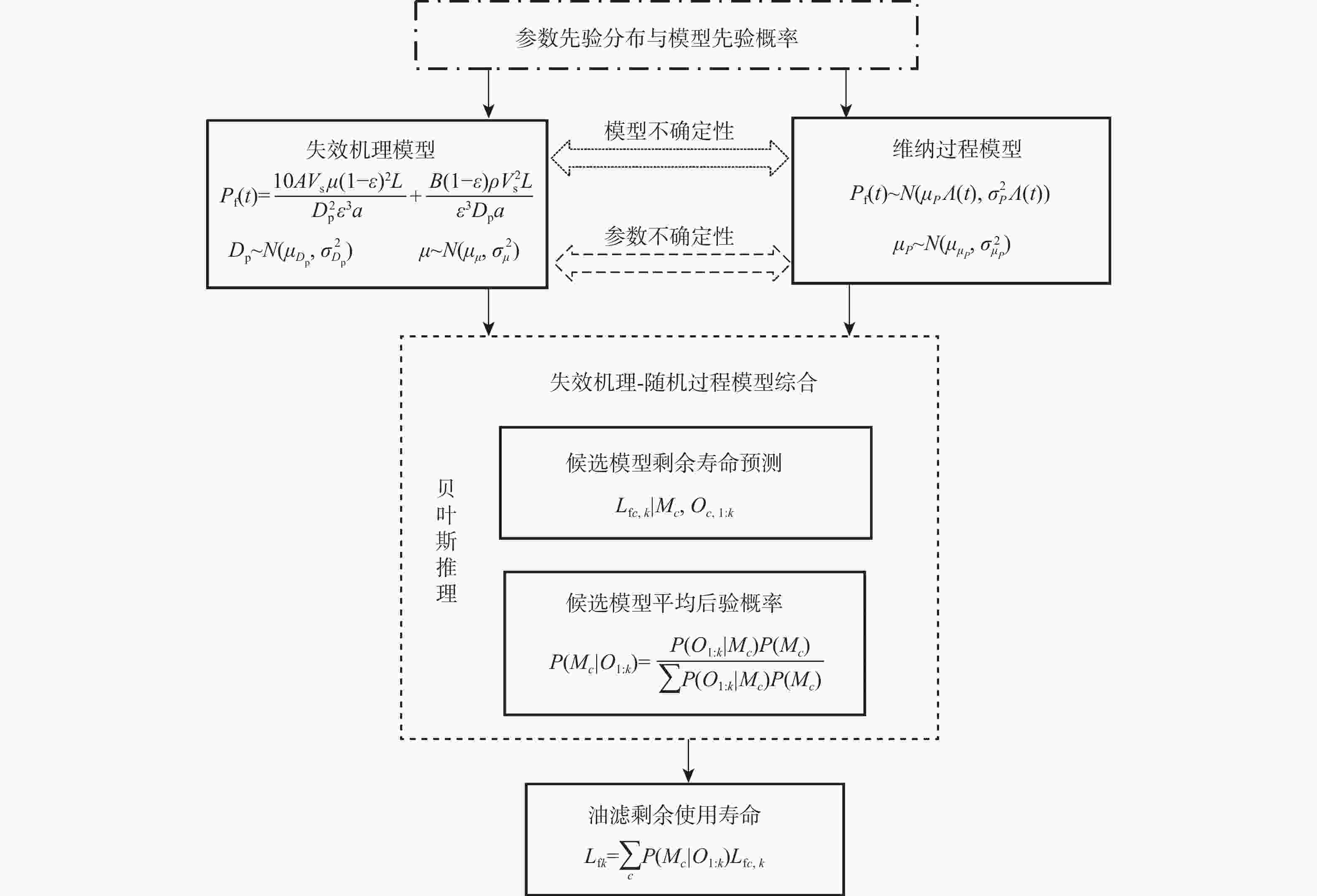
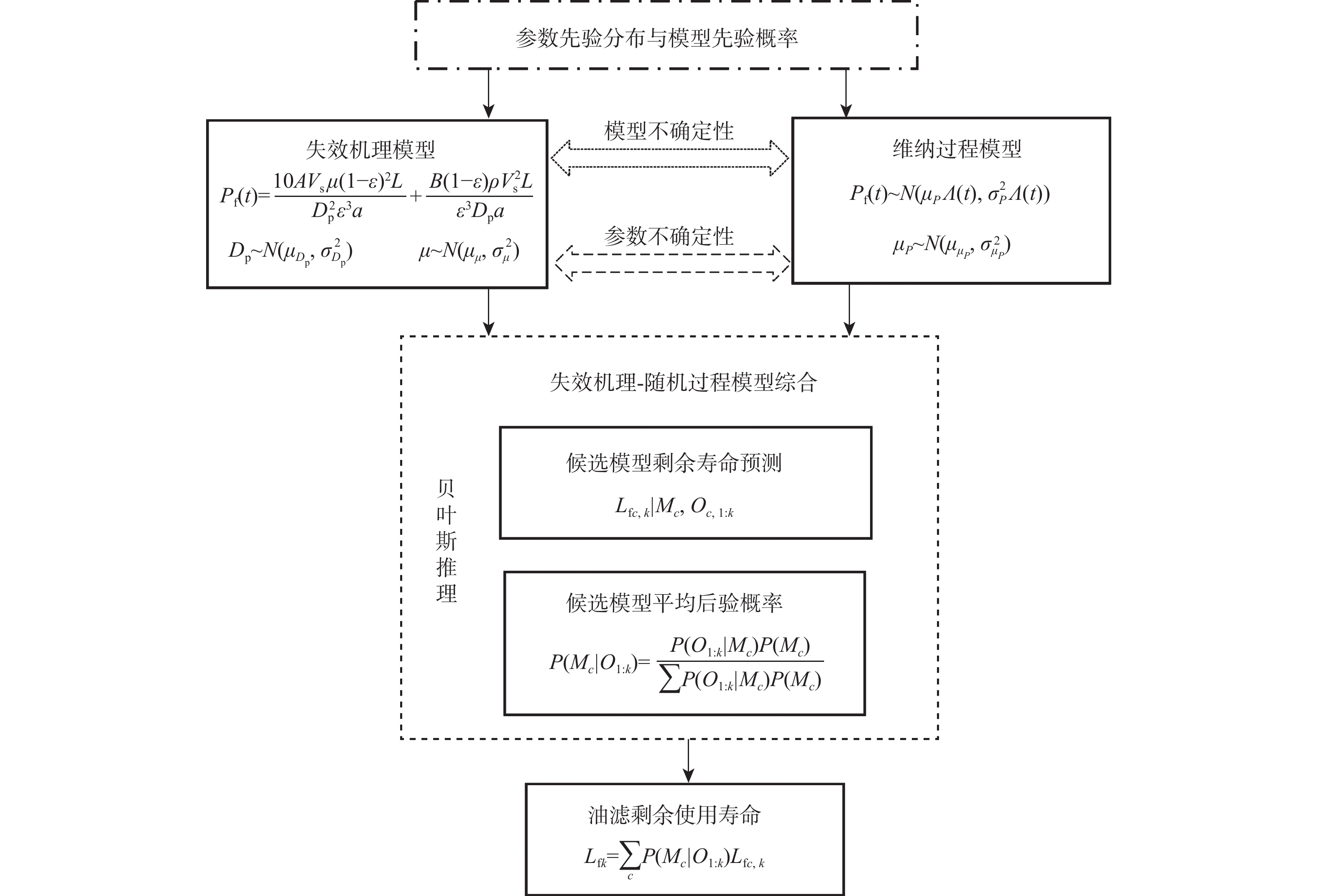
图 1 失效机理-维纳过程综合的油滤剩余寿命预测
Figure 1. RUL prediction of oil filter based on failure mechanism-Wiener model integration
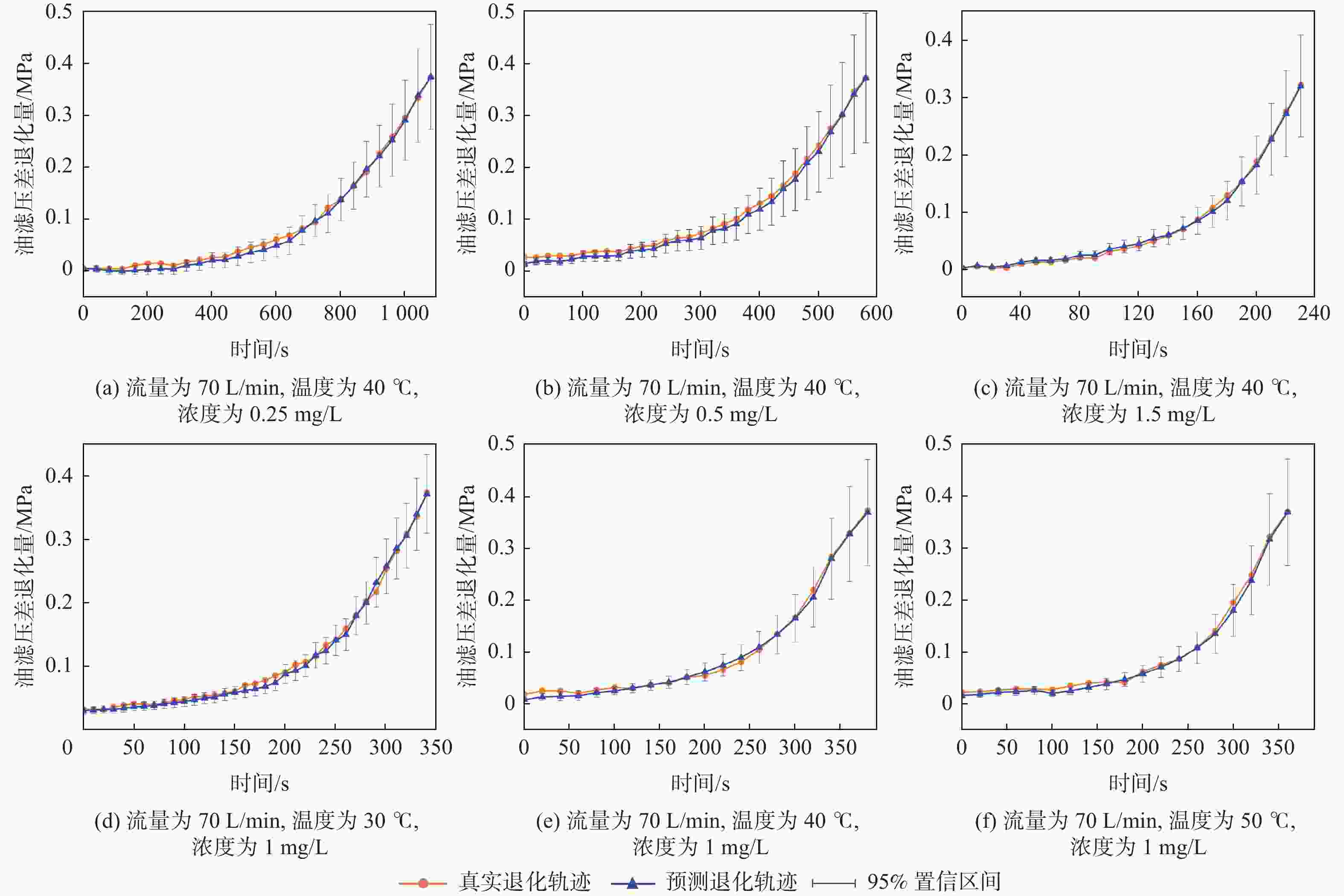
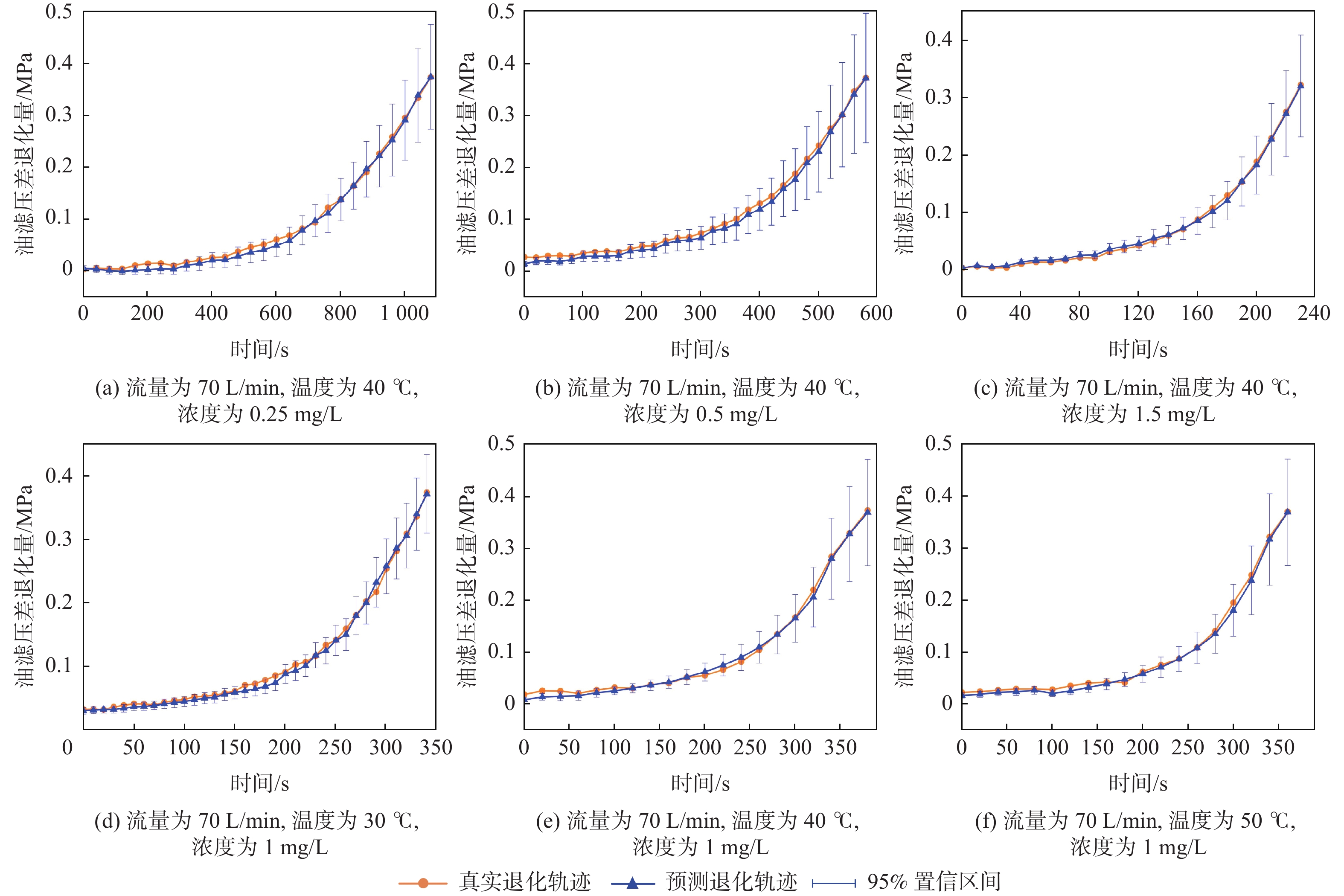
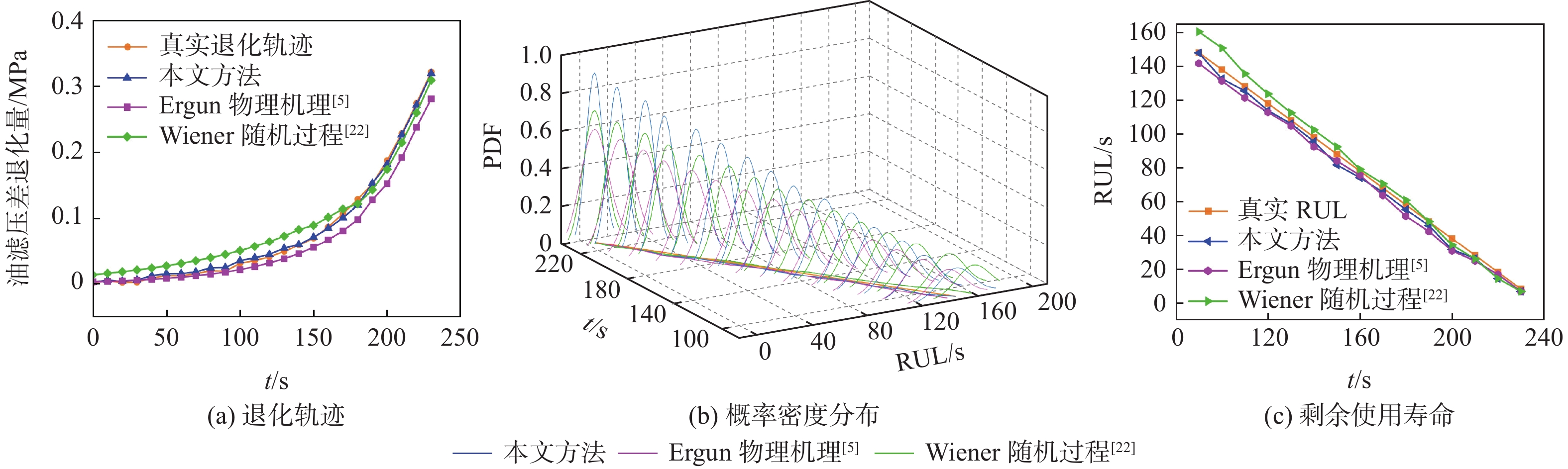
图 3 本文方法在6种工况下的油滤退化预测结果
Figure 3. Prediction results of oil filter degradation by the proposed method under six operating conditions
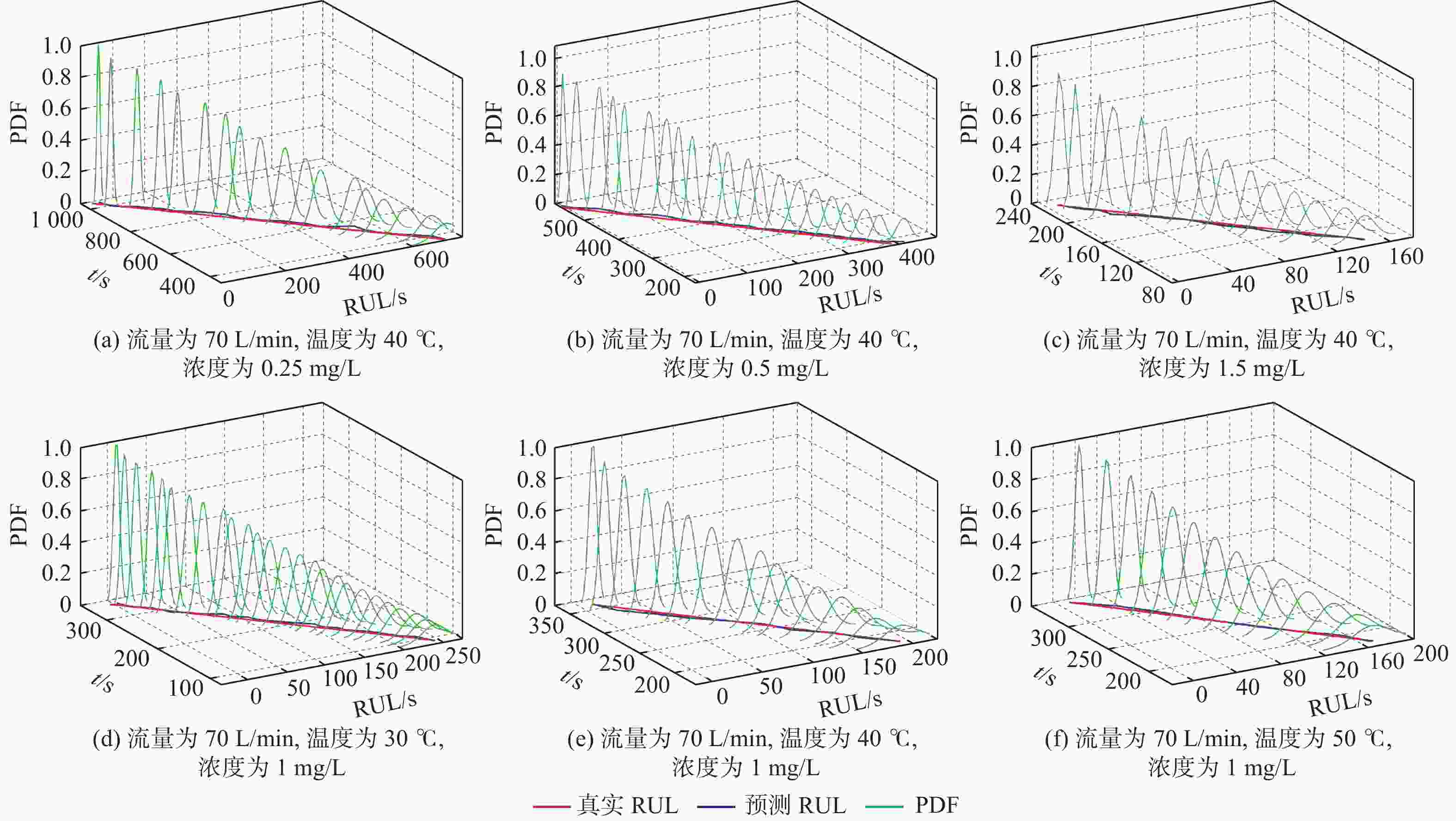
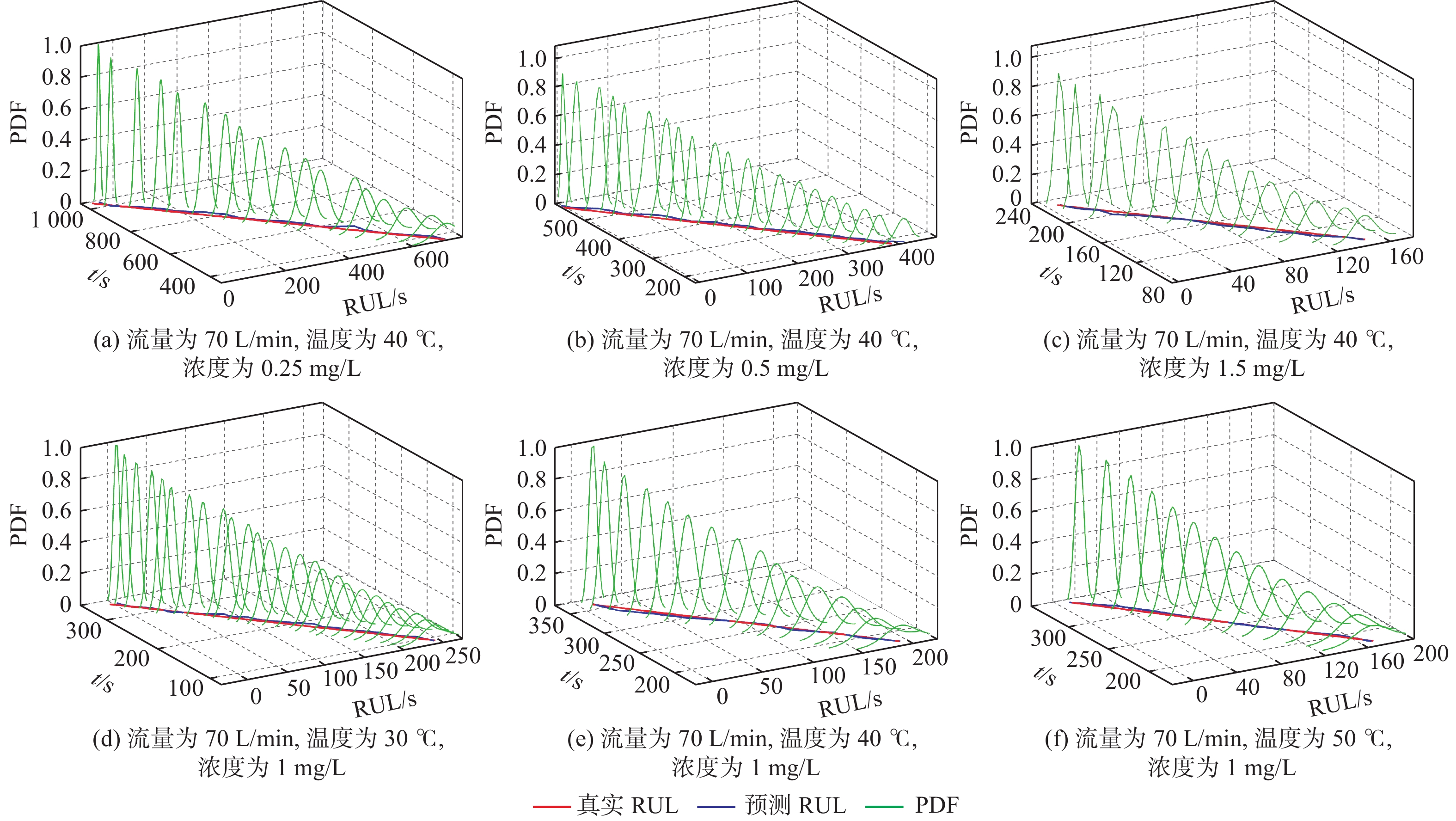
图 4 本文方法在6种工况下的剩余寿命预测概率分布
Figure 4. Probability distribution of remaining useful life prediction by the proposed method under six operating conditions
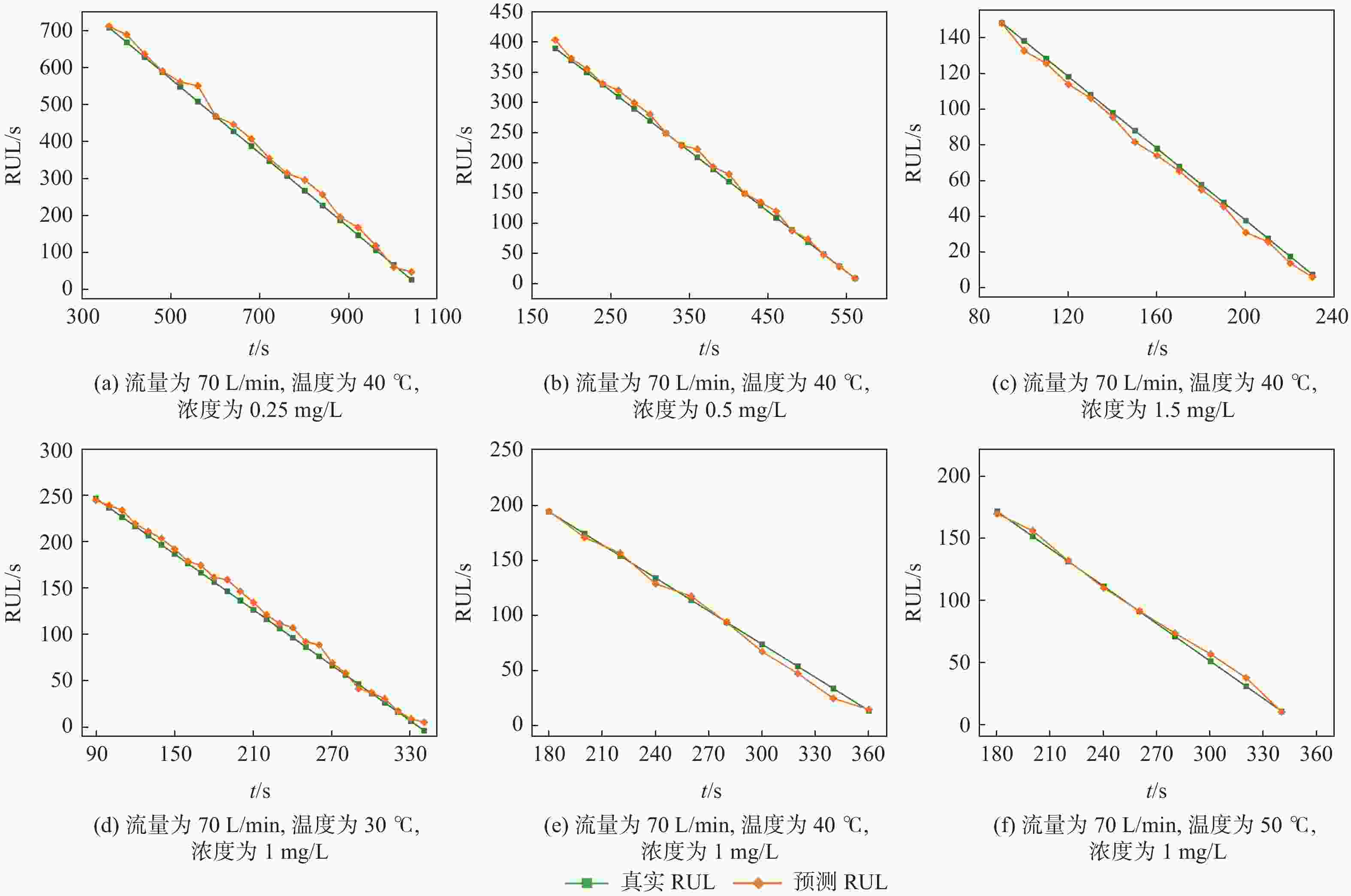
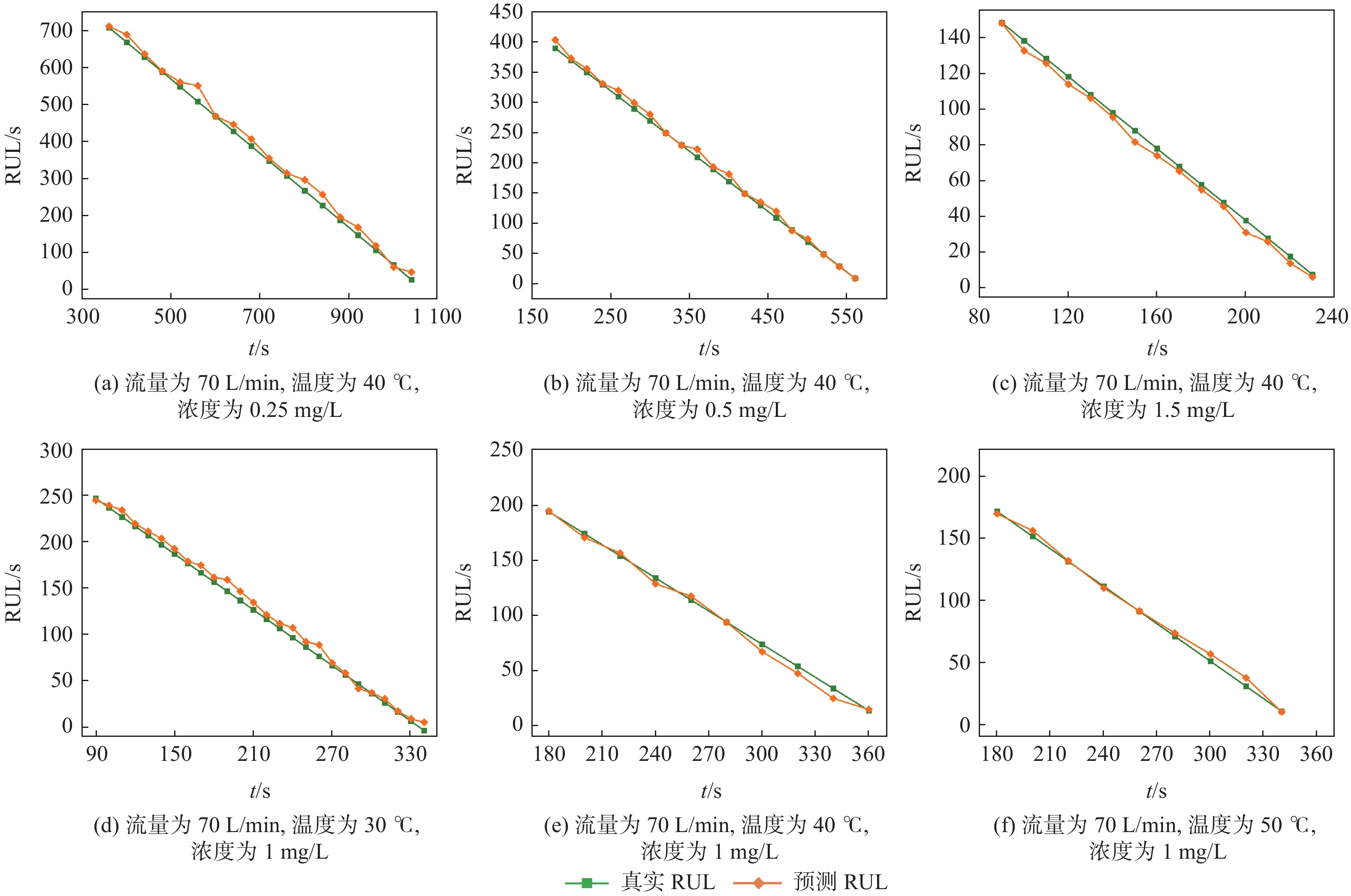
图 5 本文方法在6种工况下的剩余寿命预测
Figure 5. Remaining life prediction of proposed method under six operating conditions
表 1 油滤参数
Table 1. Oil filter parameters
最大工作
流量/(L·min−1)极限
压差/MPa最大工作
压力/MPa工作温度/℃ 过滤
精度/μm72 0.6±0.06 2 ≥30 15  下载: 导出CSV
表 2 试验参数配置
Table 2. Experimental parameter configuration
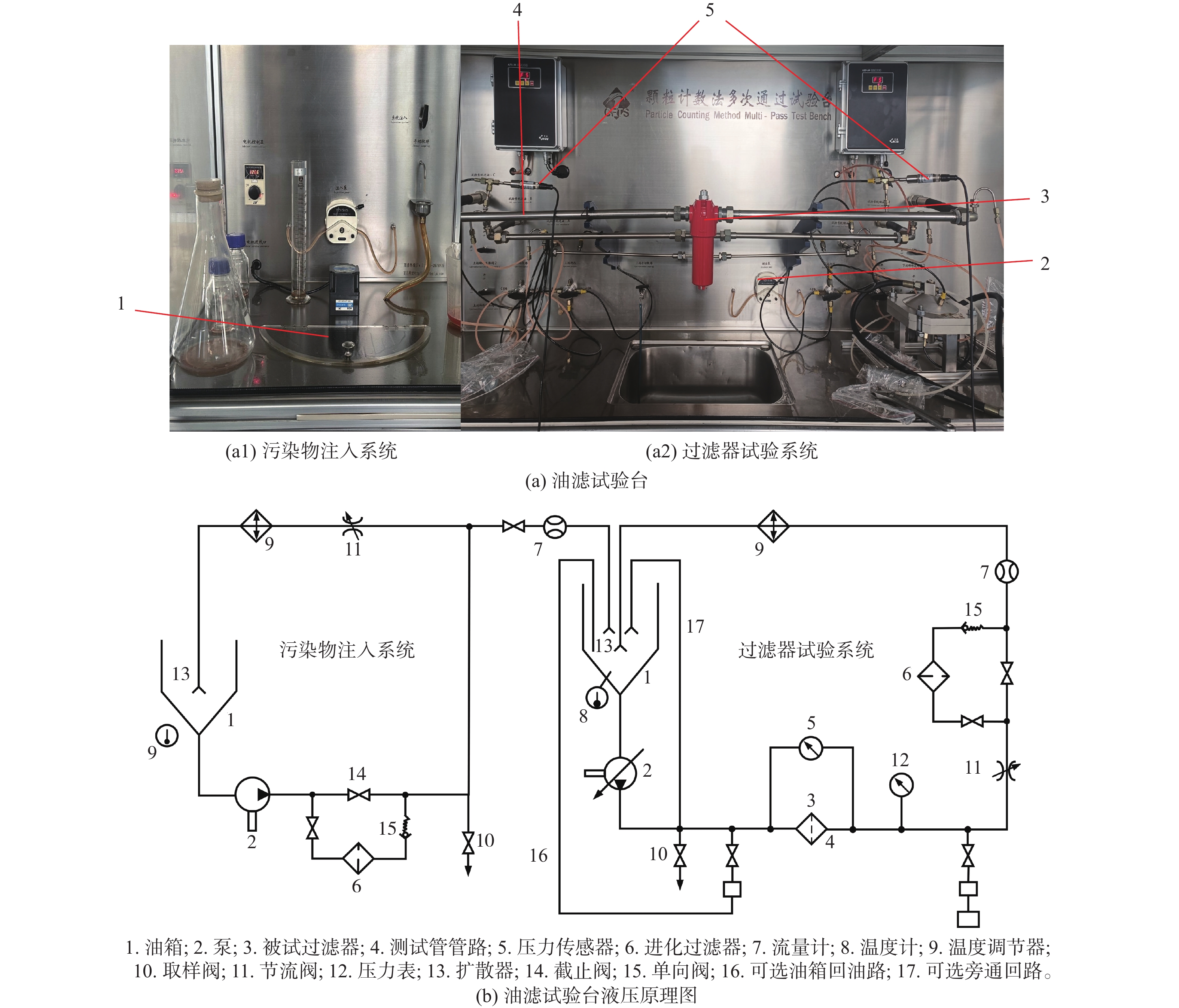
试验类 试验编号 流量/(L·min−1) 温度/℃ 浓度/(mg·L−1) 温度试验 1 70 40 1 2 70 30 1 3 70 50 1 浓度试验 4 70 40 0.25 5 70 40 0.5 6 70 40 1.5
下载: 导出CSV
-
[1] Sorrentino G, Chellappah K, Biscontin G. Understanding clogging mechanisms in filter media: an integration of laboratory findings and theoretical perspectives[J]. Separation and Purification Technology, 2025, 359: 130602. [2] Wang Y H, Li J L, Wang G Y, et al. Prediction of diesel particulate filter regeneration conditions and diesel engine performance under regeneration mode using AMSO-BPNN and combined with XGBoost[J]. Applied Energy, 2025, 377: 124341. [3] Ng F, Harding J A, Glass J. Improving hydraulic excavator performance through in line hydraulic oil contamination monitoring[J]. Mechanical Systems and Signal Processing, 2017, 83: 176-193. [4] 白晨朝, 汪承杰, 王笑天, 等. 基于高梯度磁场结构电感式油液污染物检测传感器研究[J]. 机械工程学报, 2022, 58(23): 98-105.Bai C Z, Wang C J, Wang X T, et al. Research on inductive oil contaminant detection sensor based on high gradient magnetic field structure[J]. Journal of Mechanical Engineering, 2022, 58(23): 98-105(in Chinese). [5] Eker O F, Camci F, Jennions I K. Physics-based prognostic modelling of filter clogging phenomena[J]. Mechanical Systems and Signal Processing, 2016, 75: 395-412. [6] Pan Y, Han Z D, Wu T H, et al. Remaining useful life prediction of lubricating oil with small samples[J]. IEEE Transactions on Industrial Electronics, 2023, 70(7): 7373-7381. [7] Lee S, Lee S, Lee K, et al. Data-driven health condition and RUL prognosis for liquid filtration systems[J]. Journal of Mechanical Science and Technology, 2021, 35(4): 1597-1607. [8] Pan Y, Jing Y T, Wu T H, et al. An integrated data and knowledge model addressing aleatory and epistemic uncertainty for oil condition monitoring[J]. Reliability Engineering & System Safety, 2021, 210: 107546. [9] Skaf Z, Eker O F, Jennions I K. A simple state-based prognostic model for filter clogging[J]. Procedia CIRP, 2015, 38: 177-182. [10] Kawakita M, Takeuchi J. Minimum description length principle in supervised learning with application to lasso[J]. IEEE Transactions on Information Theory, 2020, 66(7): 4245-4269. [11] Fuh C D, Kao C M, Pang T X. Kullback-leibler divergence and akaike information criterion in general hidden Markov models[J]. IEEE Transactions on Information Theory, 2024, 70(8): 5888-5909. [12] Si X S, Li T M, Zhang Q, et al. Prognostics for linear stochastic degrading systems with survival measurements[J]. IEEE Transactions on Industrial Electronics, 2020, 67(4): 3202-3215. [13] Chu F, Dai B W, Ma X P, et al. A minimum-cost modeling method for nonlinear industrial process based on multimodel migration and Bayesian model averaging method[J]. IEEE Transactions on Automation Science and Engineering, 2020, 17(2): 947-956. [14] Sun J W, Zhou S Y, Veeramani D, et al. Prediction of condition monitoring signals using scalable pairwise Gaussian processes and Bayesian model averaging[J]. IEEE Transactions on Automation Science and Engineering, 2025, 22: 2746-2757. [15] Dong M M, Cheng Y B, Wan L Q. A novel adaptive Bayesian model averaging-based multiple Kriging method for structural reliability analysis[J]. IEEE Transactions on Reliability, 2025, 74(1): 2185-2199. [16] Zhang S Y, Zhai Q Q, Shi X, et al. A Wiener process model with dynamic covariate for degradation modeling and remaining useful life prediction[J]. IEEE Transactions on Reliability, 2023, 72(1): 214-223. [17] Chen R T, Zhang C, Wang S P, et al. Reliability estimation of mechanical seals based on bivariate dependence analysis and considering model uncertainty[J]. Chinese Journal of Aeronautics, 2021, 34(5): 554-572. [18] Zhang F, Du H G, Tian R C, et al. Inverse Gaussian degradation modeling and reliability assessment considering unobservable heterogeneity[J]. IEEE Access, 2024, 12: 94367-94379. [19] Ling M H, Bae S J, Jin S X, et al. An extended gamma process for accelerated destructive degradation test: modeling and optimal design[J]. IEEE Transactions on Reliability, 2025, 74(3): 4387-4401. [20] Adli M A R. Analysis of aircraft hydraulic filter flow: computational fluid dynamics simulation using SimFlow 4.0[J]. Advanced and Sustainable Technologies (ASET), 2024, 3(2): 42-50. [21] 工业和信息化部. 民用飞机用液压油污染度等级: HB 8461-2014[S]. 北京: 中国标准出版社, 2014: 1-3.Ministry of Industry and Information Technology of the People’s Republic of China. Contamination classification for hydraulic fluid of civil aircraft: HB 8461-2014[S]. Beijing: China Standards Press, 2014: 1-3. [22] Wang Z J, Zhai Q Q, Shen L J. Degradation modeling and RUL prediction in dynamic environments using a Wiener process with an autoregressive rate[J]. IEEE Transactions on Reliability, 2024, 73(2): 912-921. -

 下载:
下载:

 点击查看大图
计量
- 文章访问数: 277
- HTML全文浏览量: 158
- PDF下载量: 9
- 被引次数: 0
