





-
摘要:
面对教育现代化的时代要求,校园数据的场景化应用为高校数字化转型提供了全新机遇。为此,基于校园3万名师生3个月的Wi-Fi日志和区域兴趣点(POI)数据,通过轨迹重构、语义映射与模式挖掘揭示校园行为的时空规律。将狄利克雷多项式回归(DMR)主题模型和基于手机数据的时空规律挖掘(STRMM)模型引入学生行为分析。DMR主题模型有效融合动态轨迹和静态地标数据,识别出10类校园区域功能;STRMM模型增强周期行为与不确定行为的捕捉能力,将本科生日常活动归纳为10类典型模式,包括标准教学型、专注科研型等,进一步识别出6类具有不同活动演变规律的本科生群体,呈现从低年级课程主导到高年级自主科研与弹性作息的转变,揭示了学生行为的年级动态性。研究证实,基于Wi-Fi数据的行为分析可有效识别区域功能与学生行为特征,为管理精准化、资源优化与“三全育人”实践提供数据支撑,对推动高校数字化转型具有重要参考价值。
Abstract:In response to the demands of educational modernization, the scenario-based application of campus data provides new opportunities for the digital transformation of higher education. In order to identify spatiotemporal patterns of campus behavior, this study uses trajectory reconstruction, semantic mapping, and pattern mining on three months’ worth of Wi-Fi logs and point of interest (POI) data from thirty thousand students and faculty. Innovatively introducing the Dirichlet multinomial regression (DMR) model and spatio-temporal routine mining on mobile phone data (STRMM) model for student behavior analysis, the DMR model effectively integrates dynamic trajectories and static landmark data to identify 10 categories of campus functional areas. The STRMM model enhances the ability to capture periodic and uncertain behaviors, categorizing undergraduate daily activities into 10 typical patterns, including standard teaching-oriented and focused research-oriented types. Additionally, grade-level dynamics in student behavior were shown by identifying six types of undergraduate groups with distinct evolutionary behavioral patterns. These groups demonstrated a shift from course-dominated activities in lower grades to self-directed research and flexible schedules in higher grades. The study confirms that Wi-Fi data-based behavioral analysis can effectively identify functional areas and student behavior characteristics, providing data support for precise management, resource optimization, and the practice of ‘Three-Comprehensive Education’ with important practical reference value for promoting the digital transformation of higher education.
-
Key words:
- activity chain analysis /
- pattern mining /
- travel behavior /
- traffic management /
- educational big data
-
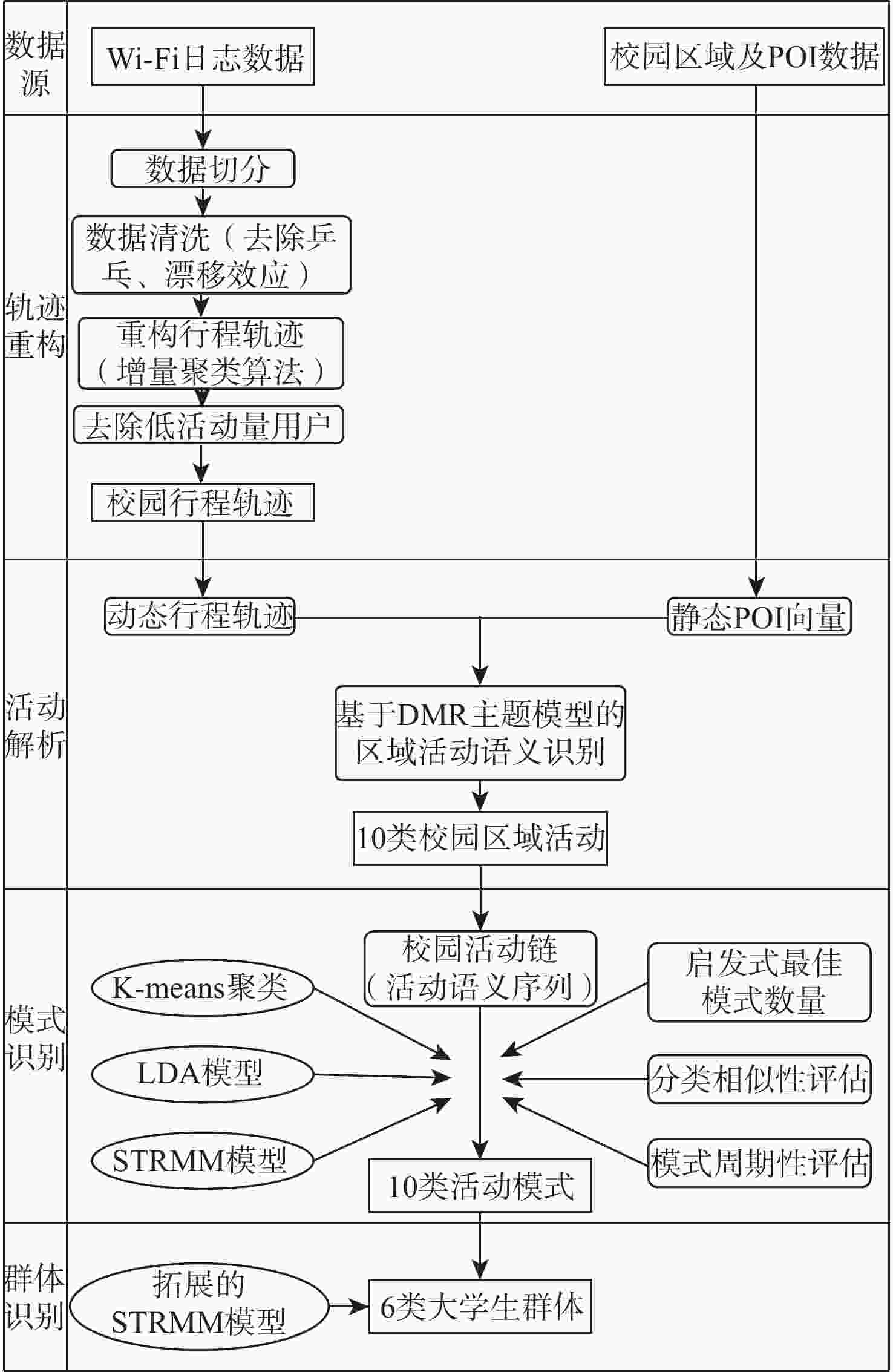
图 1 活动模式和群体类别识别框架
Figure 1. Recognition framework of activity pattern and group category
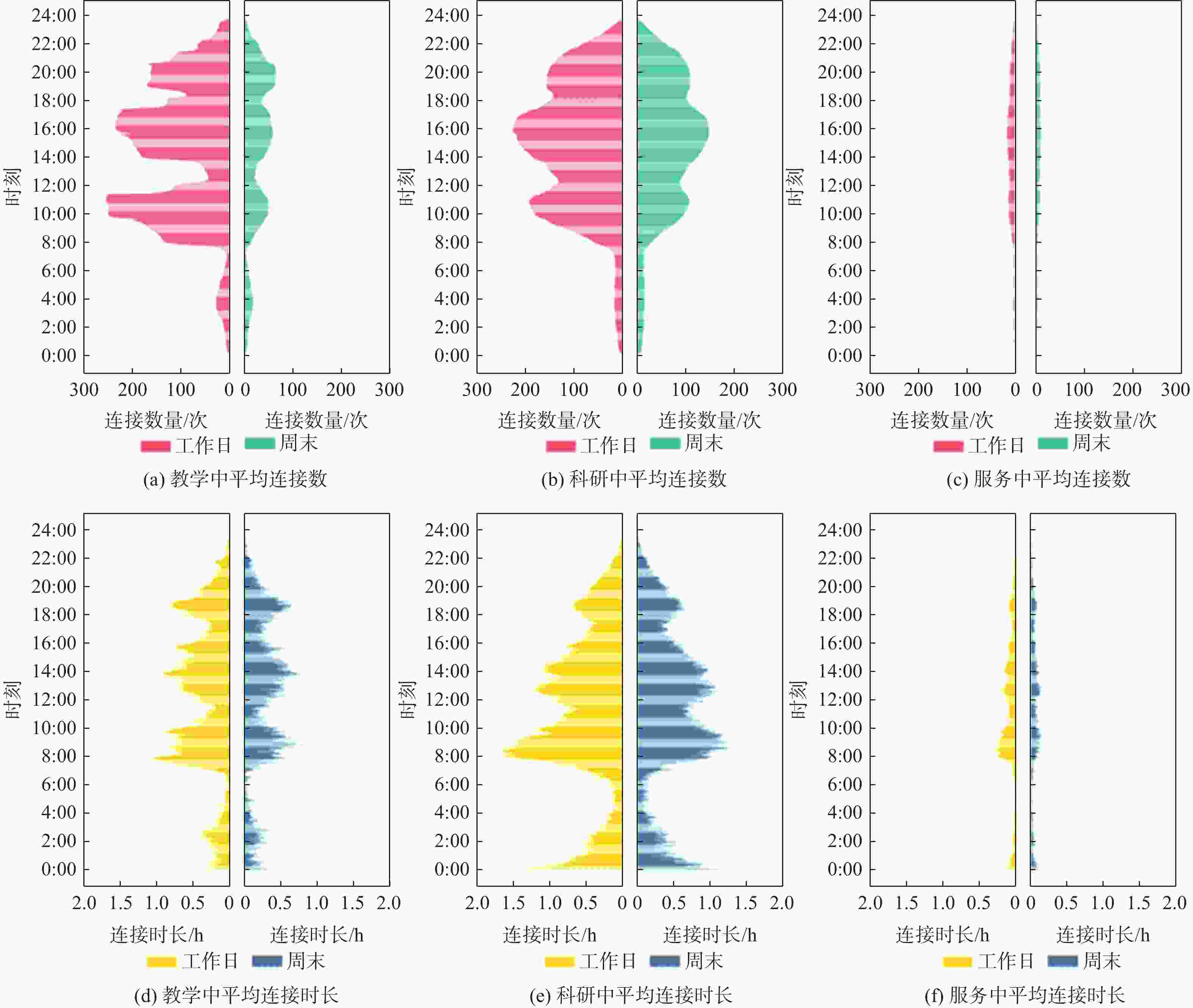
图 2 教学、科研、服务活动的Wi-Fi数据动态特征
Figure 2. Dynamic characteristics of Wi-Fi data in teaching, scientific research, and service activities
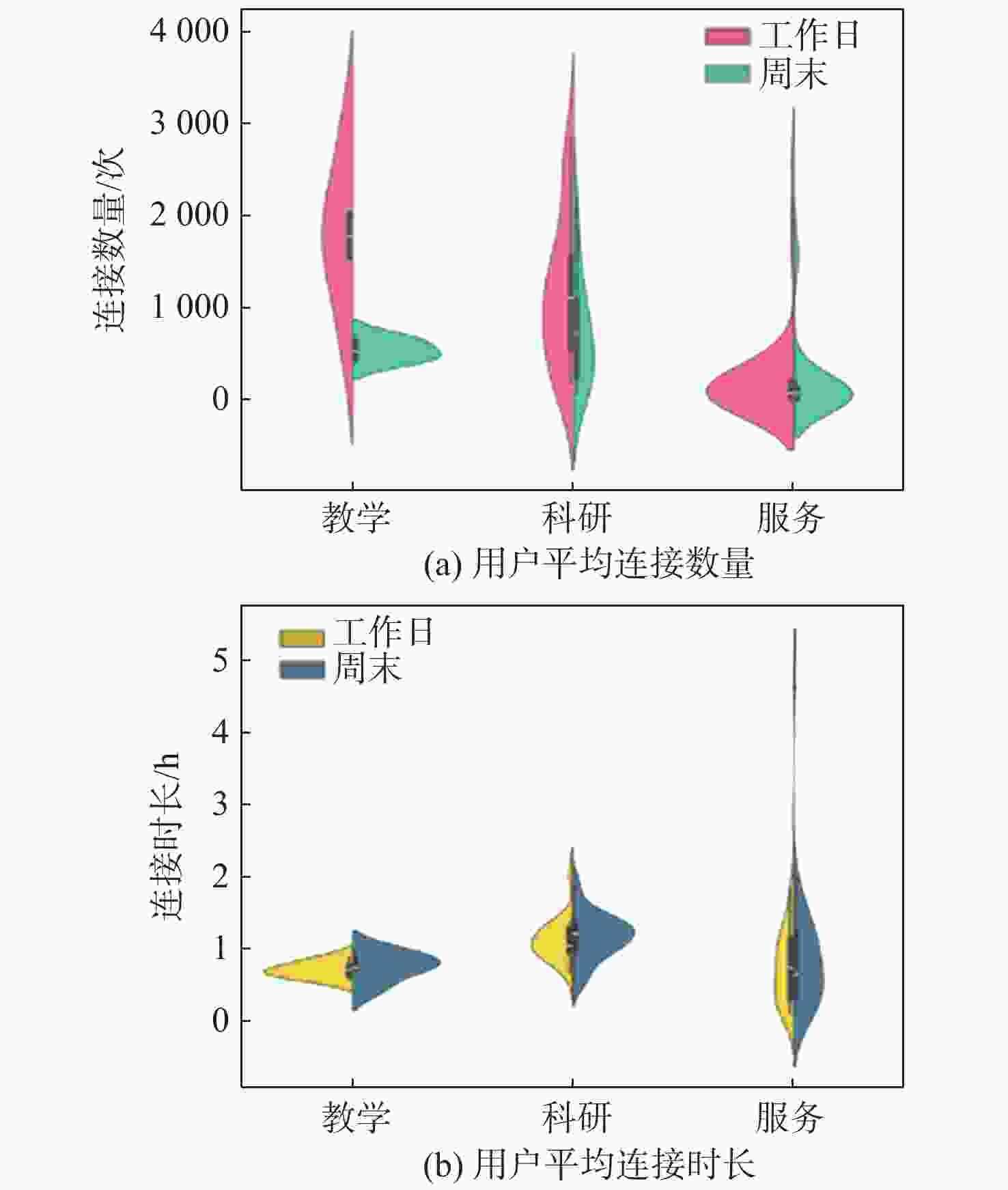
图 3 教学、科研、服务活动的Wi-Fi数据静态特征
Figure 3. Static characteristics of Wi-Fi data in teaching, scientific research, and service activities
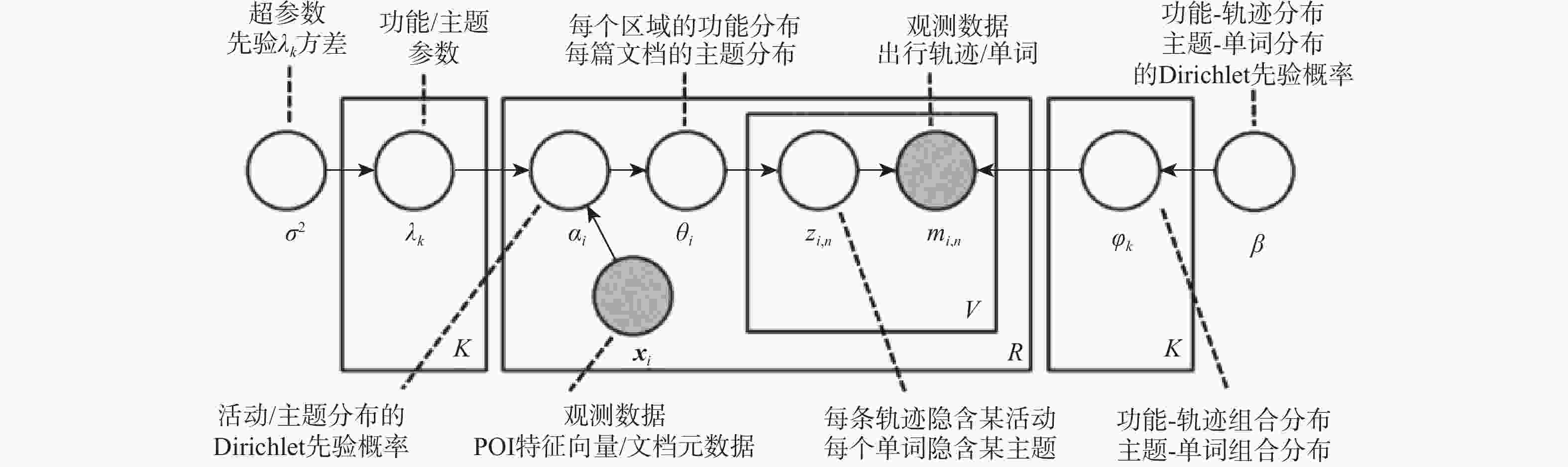
图 4 基于DMR主题模型的区域功能识别原理
Figure 4. Principle of regional function recognition based on DMR topic model

图 7 LDA方法中单个用户的轨迹特征向量示意图
Figure 7. Trajectory feature vector for an individual user in LDA method
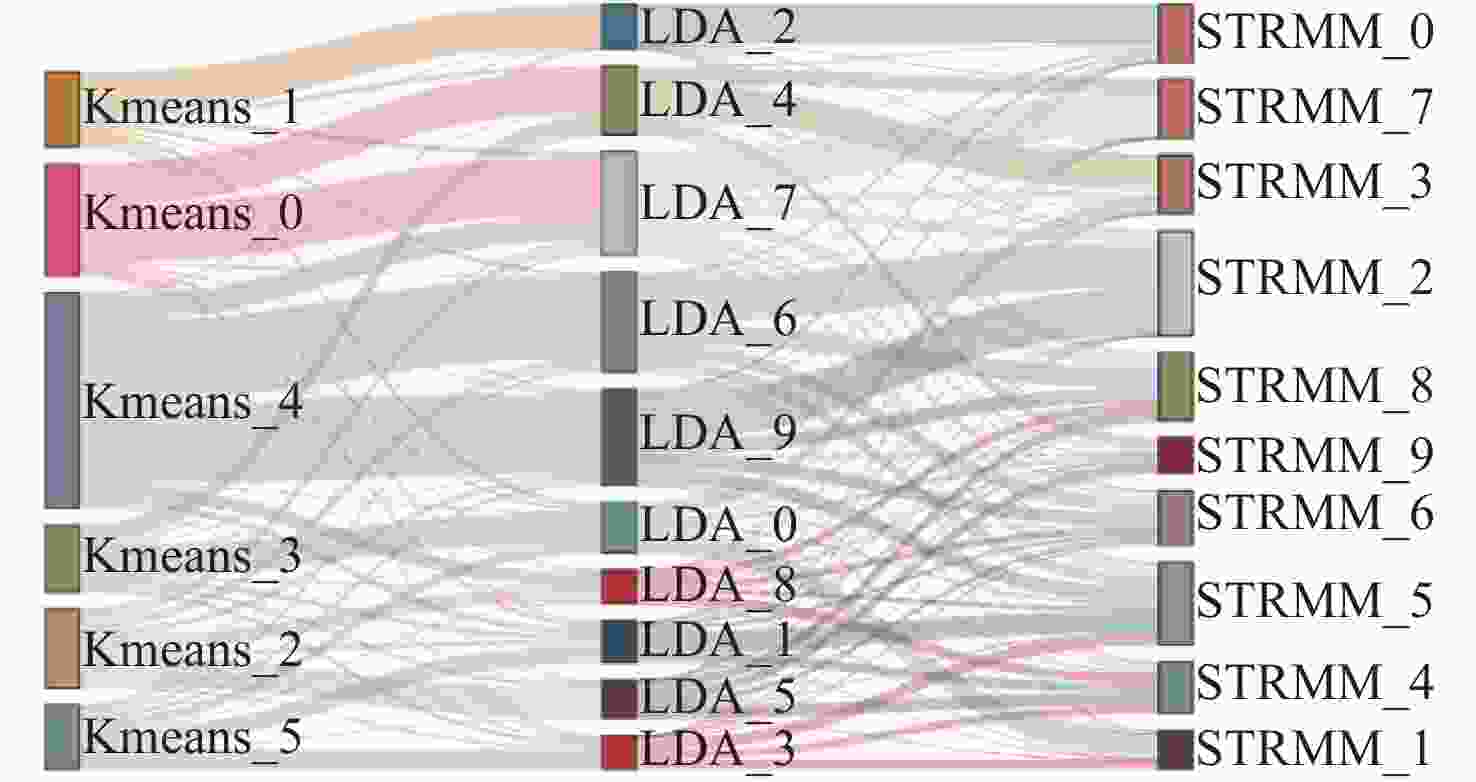
图 9 3种方法识别结果的关联度分析
Figure 9. Correlation analysis of recognition results from three methods
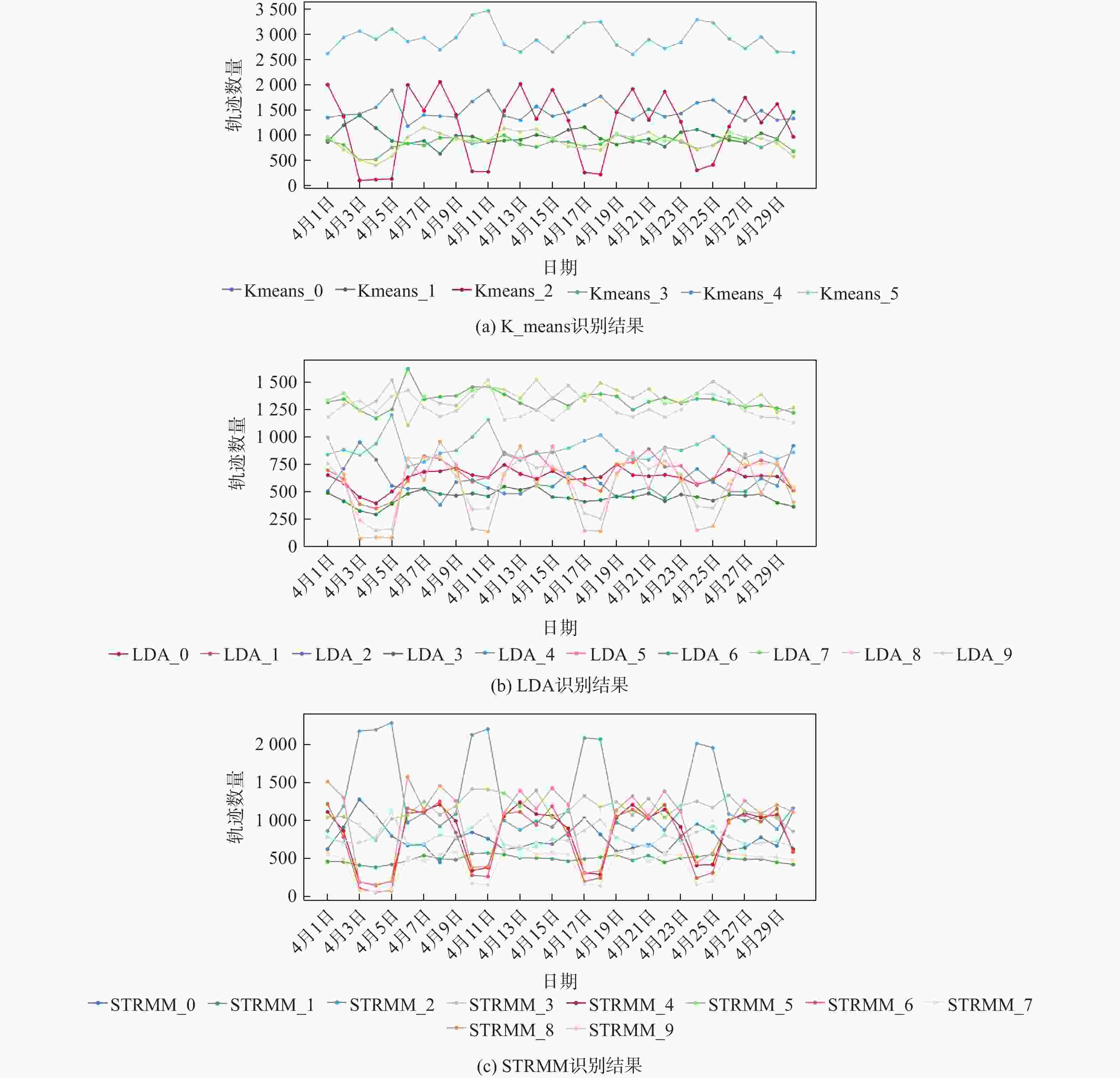
图 10 3种方法识别结果在一个月内的轨迹数量
Figure 10. Number of trajectories identified by three methods within one month
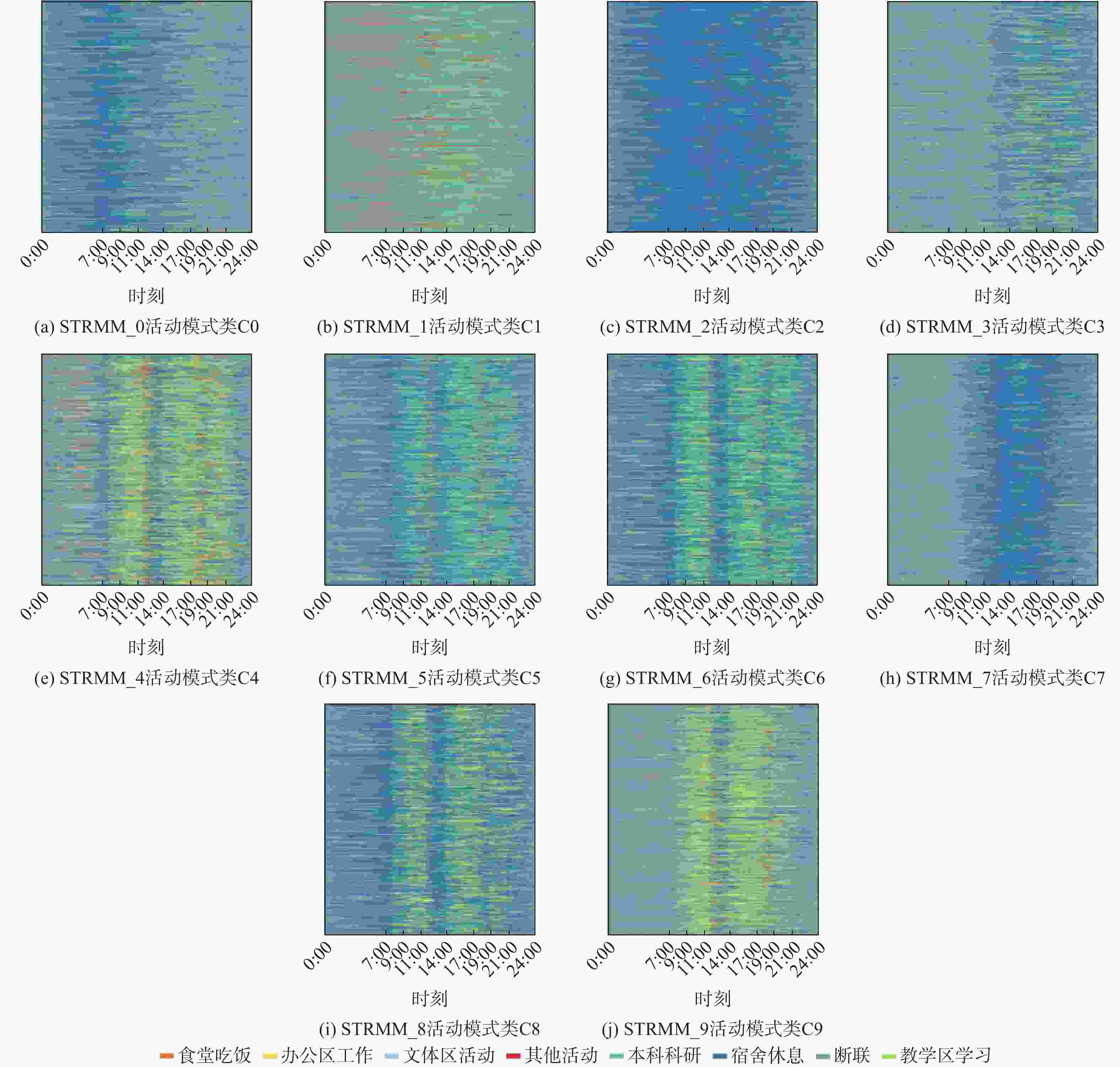
图 12 典型活动模式的时间序列分布图
Figure 12. Time series distribution diagram of typical activity patterns
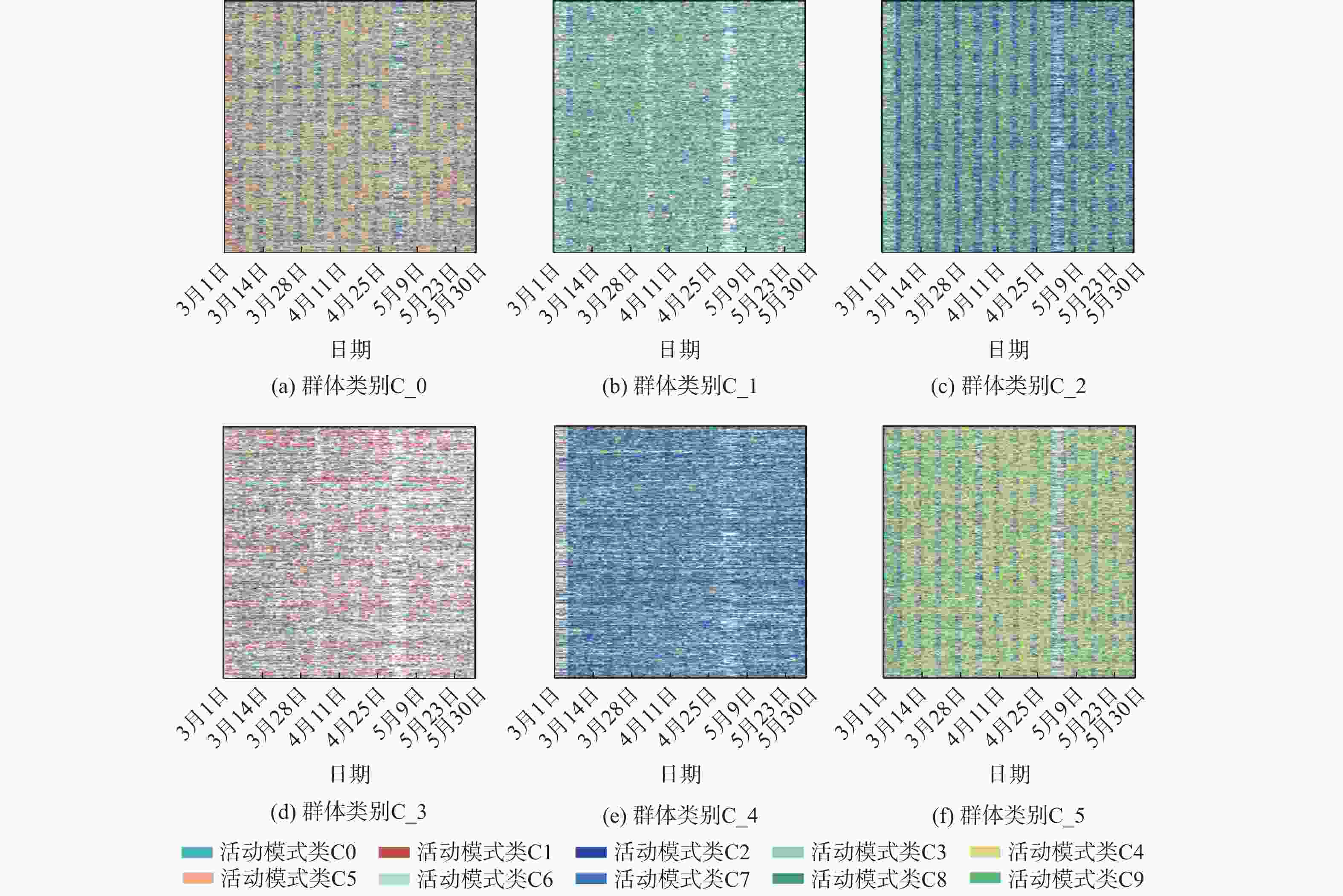
图 15 典型群体的活动模式序列分布
Figure 15. Distribution of activity pattern sequence of typical groups
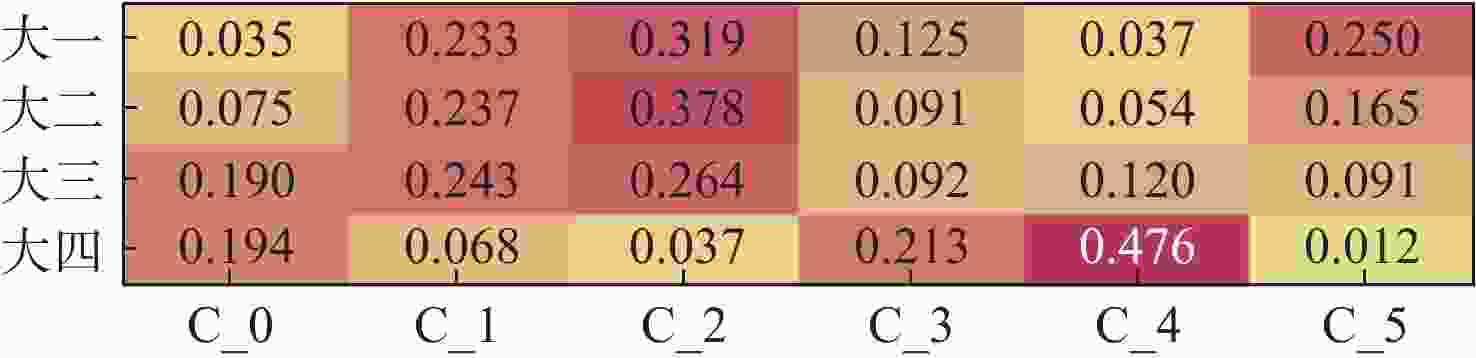
图 17 不同年级群体的活动模式分布
Figure 17. Distribution of activity patterns among different grade groups
表 1 用于生成轨迹的WiFi数据关键字段
Table 1. WiFi data key fields for generating trajectories
设备系统 时间 关键字段 关键字段 Radius认证日志 时间戳1 用户匿名ID、用户类别及信息 IP DHCP日志 时间戳2 用户MAC IP AP日志 时间戳3 用户MAC 区域位置  下载: 导出CSV
表 2 各区域在工作日/周末的聚类特征
Table 2. Clustering characteristics of various construction and areas during weekdays/weekends
类型 特征变量 具体含义 静态特征 平均用户数量 每分钟内该区域用户平均数 平均连接时长 每分钟内该区域用户平均停留时间 连接时长中位数 每分钟内该区域用户停留时间中位数 连接时长标准差 每分钟内该区域用户停留时间标准差 动态特征 连接幅度 以平均连接次数为信号计算的幅度值 连接时长幅度 以平均连接时长为信号计算的幅度值
下载: 导出CSV
表 3 校园区域间移动模式
Table 3. Movement patterns between campus areas
来源区域 区域位置 时间片 驻留次数 10号公寓 1号教学楼 工作日8:00—9:00 16 6号公寓 1号教学楼 工作日9:00—10:00 53 操场 停车场 周末8:00—9:00 0 图书馆 2号食堂 周末11:00—12:00 112
下载: 导出CSV
表 4 校园典型区域活动语义识别结果与功能强度排序
Table 4. Semantic recognition results and functional intensity ranking of typical campus areas
区域 FI A0 A1 A2 A3 A4 A5 A6 A7 A8 A9 3号教学楼 0.249 0 0.002 0 0 0 0.007 0 0.003 0.002 1号教学楼 0.102 0 0.002 0 0 0 0.034 0.047 0.006 0.004 16号公寓 0 0.150 0 0 0.022 0.001 0 0 0.010 0.015 13号公寓 0.008 0.021 0 0 0.003 0 0.000 0.031 0 0.001 9号公寓 0 0.135 0 0 0 0 0.002 0 0.008 0.005 综合食堂 0.029 0 0.536 0 0 0 0 0.009 0.004 0.002 2号食堂 0 0.002 0.071 0 0.002 0.001 0 0.002 0.004 办公楼 0 0 0.007 0.147 0.014 0.001 0.003 0 0 0.005 办公楼二区 0 0.001 0.002 0.049 0.002 0.001 0 0 0.003 0.003 办公楼三区 0 0 0 0.013 0 0 0.001 0 0 0 家属区 0 0.001 0.003 0 0.333 0 0.005 0.011 0 0.127 校医院 0 0 0 0 0.140 0.131 0.017 0 0.031 0.072 操场 0.044 0 0 0 0.098 0.344 0.034 0.099 0.100 0.099 会议中心 0 0.001 0.004 0 0 0.170 0.001 0 0.008 0.006 足球场 0 0 0 0 0 0.167 0 0 0 0.001 主楼1栋 0 0 0 0 0 0 0.093 0.047 0.050 0.032 主楼7栋 0.010 0 0 0.055 0 0 0.138 0.061 0.055 0.033 主楼6栋 0.065 0 0.016 0.010 0.003 0 0 0.145 0.032 0.020 生医楼 0.012 0 0 0.036 0.007 0.001 0.034 0.034 0.057 0.036 土木楼 0 0 0 0.022 0 0 0.007 0 0.058 0.041 区域 IR A0 A1 A2 A3 A4 A5 A6 A7 A8 A9 3号教学楼 1 17 27 45 55 1号教学楼 2 20 7 9 30 40 16号公寓 1 35 24 22 18 13号公寓 23 19 39 72 12 65 9号公寓 2 46 26 36 综合食堂 10 1 24 41 52 2号食堂 38 2 119 62 57 37 办公楼 11 1 4 23 41 32 办公楼二区 50 19 6 6 22 46 49 办公楼三区 18 67 家属区 54 16 1 9 32 23 1 校医院 2 4 18 11 4 操场 7 92 1 9 2 2 3 会议中心 47 15 2 69 25 31 足球场 3 61 主楼1栋 3 8 6 8 主楼7栋 20 5 1 5 5 7 主楼6栋 5 8 26 26 1 10 14 生医楼 18 9 9 26 8 11 4 6 土木楼 12 25 3 5
下载: 导出CSV
表 5 3种方法识别结果的相似度
Table 5. Similarity of recognition results from three methods
方法 ARI NMI K-means vs LDA 0.291 0.373 K-means vs STRMM −1.665×10⁻⁵ 1.959×10⁻⁵ LDA vs STRMM 2.393×10⁻⁵ 3.789×10⁻⁵
下载: 导出CSV
-
[1] 张文梅, 祁彬斌, 范文翔. 数据驱动的教学行为分析: 现状、逻辑与发展趋向[J]. 远程教育杂志, 2021, 39(1): 84-93.ZHANG W M, QI B B, FAN W X. Analysis of data-driven teaching behavior: current situation, basic logic and development trend[J]. Journal of Distance Education, 2021, 39(1): 84-93(in Chinese). [2] 谢承杰, 卢树华, 石洋宇, 等. 面向跨域人群计数的教师-学生复合优化方法[J/OL]. 北京航空航天大学学报, 2025[2025-10-01]. https://link.cnki.net/urlid/11.2625.V.20250106.1634.004.XIE C J, LU S H, SHI Y Y, et al. A teacher-student hybrid optimization method for cross-domain crowd counting[J/OL]. Journal of Beijing University of Aeronautics and Astronautics, 2025[2025-10-01]. https://link.cnki.net/urlid/11.2625.V.20250106.1634.004(in Chinese). [3] 张涛, 张思. 教育大数据挖掘的学习者模型设计与计算研究[J]. 电化教育研究, 2020, 41(9): 61-67.ZHANG T, ZHANG S. Research on design and computing of learner model of educational big data mining[J]. e-Education Research, 2020, 41(9): 61-67(in Chinese). [4] 李有增, 曾浩. 基于学生行为分析模型的高校智慧校园教育大数据应用研究[J]. 中国电化教育, 2018(7): 33-38.LI Y Z, ZENG H. Smart campus big data education application based on students’ behavior analysis model[J]. China Educational Technology, 2018(7): 33-38(in Chinese). [5] 陈辉, 白骏, 殷传涛, 等. 基于学习行为的MOOC用户持续学习预测框架[J]. 北京航空航天大学学报, 2023, 49(1): 74-82.CHEN H, BAI J, YIN C T, et al. Behavior based MOOC user dropout predication framework[J]. Journal of Beijing University of Aeronautics and Astronautics, 2023, 49(1): 74-82(in Chinese). [6] 刘科生, 倪义坤. 高校学生工作数据挖掘的研究和实践[J]. 北京航空航天大学学报(社会科学版), 2020, 33(5): 147-152.LIU K S, NI Y K. Research and application of data mining on college student affairs management[J]. Journal of Beijing University of Aeronautics and Astronautics (Social Sciences Edition), 2020, 33(5): 147-152(in Chinese). [7] 胡祖辉, 施佺. 高校学生上网行为分析与数据挖掘研究[J]. 中国远程教育, 2017, 37(2): 26-32.HU Z H, SHI Q. Analysis of college students’ online behavior and research on data mining[J]. Chinese Journal of Distance Education, 2017, 37(2): 26-32(in Chinese). [8] HSU W, HELMY A. Impact: investigation of mobile-user patterns across university campuses using WLAN trace analysis[EB/OL]. (2005-08-02)[2025-10-01]. https://arxiv.org/abs/cs/0508009. [9] FARHAN A A, BAMIS A, WANG B. Locating emergencies in a campus using Wi-Fi access point association data[C]//Proceedings of the ACM Conference on Pervasive and Ubiquitous Computing Adjunct Publication. New York: ACM, 2013: 1123-1134. [10] DAS SWAIN V, KWON H, SARGOLZAEI S, et al. Leveraging WiFi network logs to infer student collocation and its relationship with academic performance[J]. EPJ Data Science, 2023, 12(1): 22. [11] JUNDEE T, PHITHAKKITNUKOON S, RATTI C. Inferring trips and origin-destination flows from Wi-Fi probe data: a case study of campus Wi-Fi network[J]. IEEE Access, 2023, 11: 63351-63364. [12] POUCIN G, FAROOQ B, PATTERSON Z. Activity patterns mining in Wi-Fi access point logs[J]. Computers, Environment and Urban Systems, 2018, 67: 55-67. [13] GONZÁLEZ M C, HIDALGO C A, BARABÁSI A L. Understanding individual human mobility patterns[J]. Nature, 2008, 453(7196): 779-782. [14] SONG C M, QU Z H, BLUMM N, et al. Limits of predictability in human mobility[J]. Science, 2010, 327(5968): 1018-1021. [15] SCHNEIDER C M, BELIK V, COURONNÉ T, et al. Unravelling daily human mobility motifs[J]. Journal of the Royal Society Interface, 2013, 10(84): 20130246. [16] LIU W B, WANG B X, YANG Y, et al. Cluster analysis of microscopic spatio-temporal patterns of tourists’ movement behaviors in mountainous scenic areas using open GPS-trajectory data[J]. Tourism Management, 2022, 93: 104614. [17] JIANG S, FERREIRA J, GONZÁLEZ M C. Clustering daily patterns of human activities in the city[J]. Data Mining and Knowledge Discovery, 2012, 25(3): 478-510. [18] CALABRESE F, READES J, RATTI C. Eigenplaces: segmenting space through digital signatures[J]. IEEE Pervasive Computing, 2010, 9(1): 78-84. [19] FARRAHI K, GATICA-PEREZ D. Mining human location-routines using a multi-level approach to topic modeling[C]//Proceedings of the IEEE 2nd International Conference on Social Computing. Piscataway: IEEE Press, 2010: 446-451. [20] YUAN J, ZHENG Y, XIE X. Discovering regions of different functions in a city using human mobility and POIs[C]//Proceedings of the 18th ACM SIGKDD International Conference on Knowledge Discovery and Data Mining. New York: ACM, 2012: 186-194. [21] QIN T, SHANGGUAN W F, SONG G J, et al. Spatio-temporal routine mining on mobile phone data[J]. ACM Transactions on Knowledge Discovery from Data, 2018, 12(5): 1-24. [22] YIN L, LIN N, ZHAO Z Y. Mining daily activity chains from large-scale mobile phone location data[J]. Cities, 2021, 109: 103013. [23] WIDHALM P, YANG Y X, ULM M, et al. Discovering urban activity patterns in cell phone data[J]. Transportation, 2015, 42(4): 597-623. -

 下载:
下载:


 点击查看大图

计量
- 文章访问数: 173
- HTML全文浏览量: 60
- PDF下载量: 60
- 被引次数: 0
