





Construction and comparison of machine learning models for driving comfort assessment using multimodal physiological signals
-
摘要:
为实现驾驶舒适性的客观评估,基于多模态生理信号构建并系统比较了多种机器学习模型。采集64名受试者在模拟驾驶中的心电(ECG)、表面肌电(SEMG)、肌肉氧含量(SmO2)及下肢动脉血流信号,以舒适性评分为标签,建立支持向量机(SVM)、随机森林(RF)、自适应提升(AdaBoost)等6类模型,采用主成分分析、合成少数类过采样技术(SMOTE)及网格搜索进行优化。结果表明:多信号融合能够显著提升分类性能;支持向量机在包含动脉血流参数的特征组合中表现最优,平均曲线下面积(AUC)达0.97,准确率为0.90;随机森林在多信号融合中平均AUC超过0.95。研究明确了面向便携监测的有效信号组合:“表面肌电+心电”双信号组合(平均AUC为0.90)及“肌肉氧含量+心电+表面肌电”三信号组合(平均AUC为0.92)。研究成果可为驾驶舒适性的客观评估提供模型优选与信号组合的实证依据,也可为车载健康监测系统开发提供参考。
Abstract:To achieve an objective assessment of driving comfort, this study developed and systematically compared multiple machine learning models based on multimodal physiological signals. 64 individuals had their electrocardiograms (ECGs), surface electromyograms (sEMGs), muscle oxygen saturation (SmO2), and arterial blood flow signals recorded while they drove. Using comfort scores as labels, six types of models, including support vector machine (SVM), random forest (RF), and adaptive Boosting (AdaBoost), were constructed and optimized with principal component analysis, synthetic minority oversampling technique (SMOTE), and grid search. Results showed that multimodal signal fusion significantly improved classification performance. The SVM model achieved optimal performance with the feature set containing arterial blood flow parameters, reaching an average area under the curve (AUC) of 0.97 and an accuracy of 0.90. RF models consistently exceeded 0.95 AUC with fused signals. Practical signal combinations for portable monitoring were identified: "sEMG + ECG" dual-signal combination (average AUC is 0.90) and "SmO2 + ECG + sEMG" triple-signal combination (average AUC is 0.92). This study offers empirical support for model selection and signal setup in objective driving comfort evaluation, providing insightful information for the development of in-car health monitoring systems.
-
Key words:
- driving comfort /
- physiological signal /
- machine learning /
- classification models /
- signal fusion /
- health monitoring
-
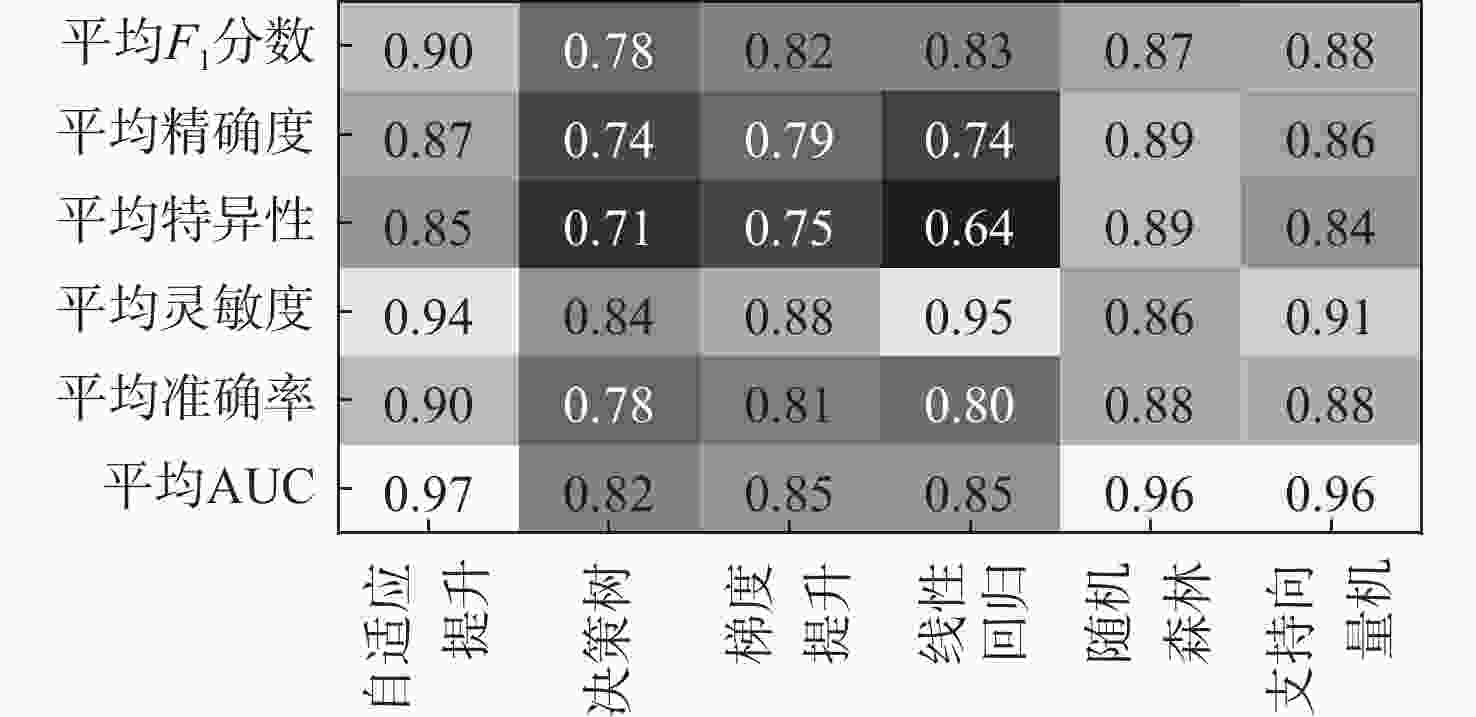
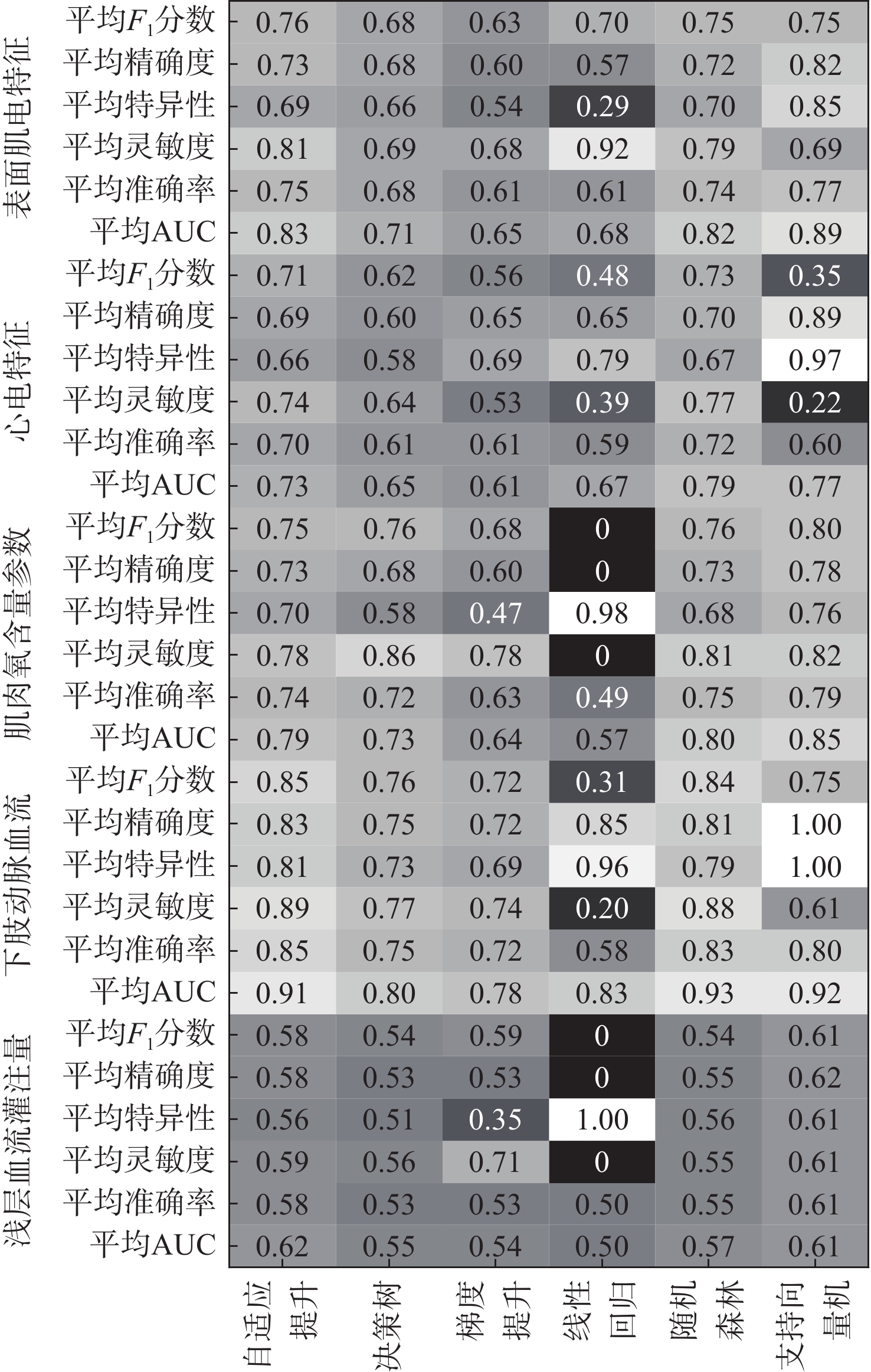
图 1 全部生理信号机器学习模型评价指标热图
Figure 1. Heatmap of evaluation metrics for all physiological signal machine learning models
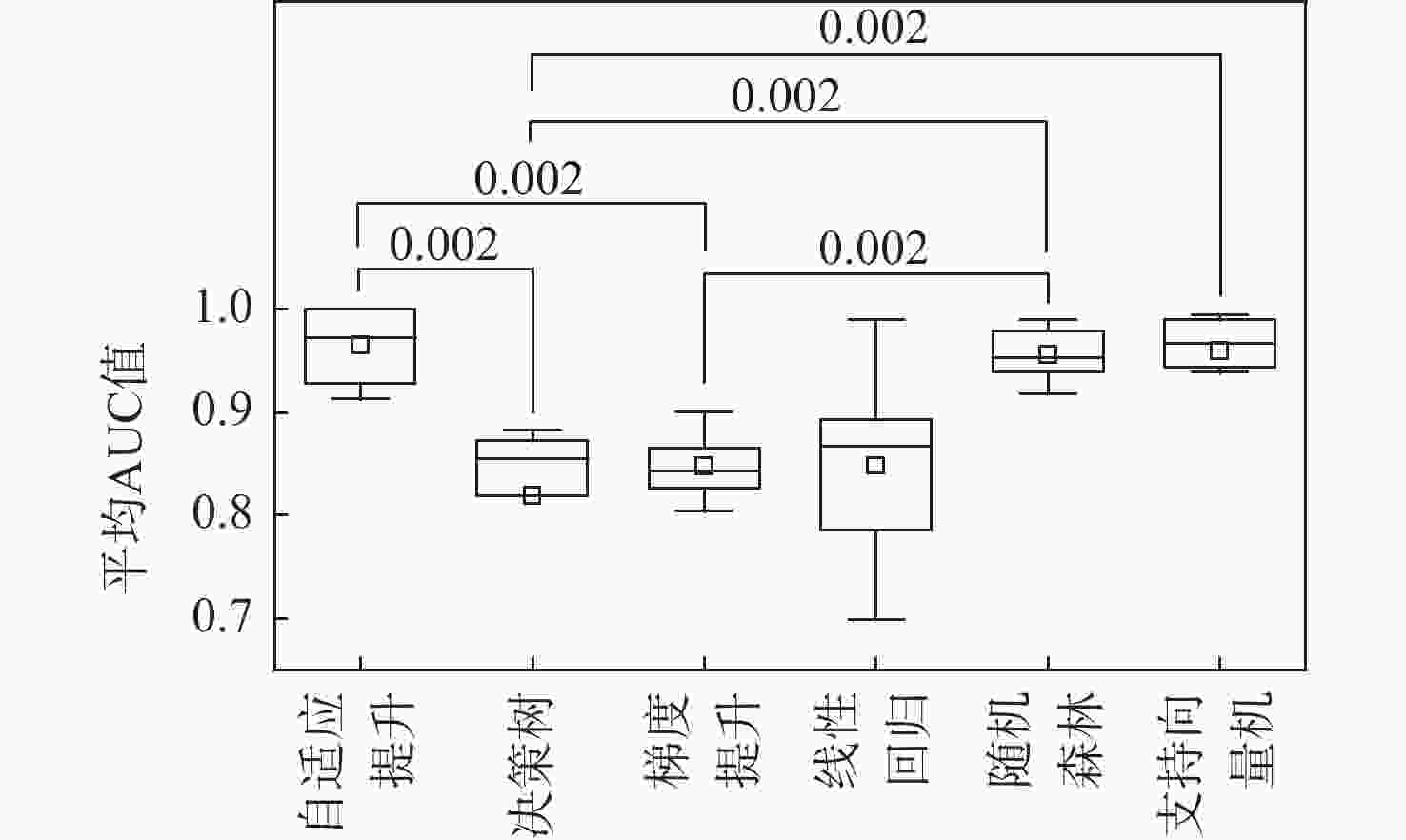
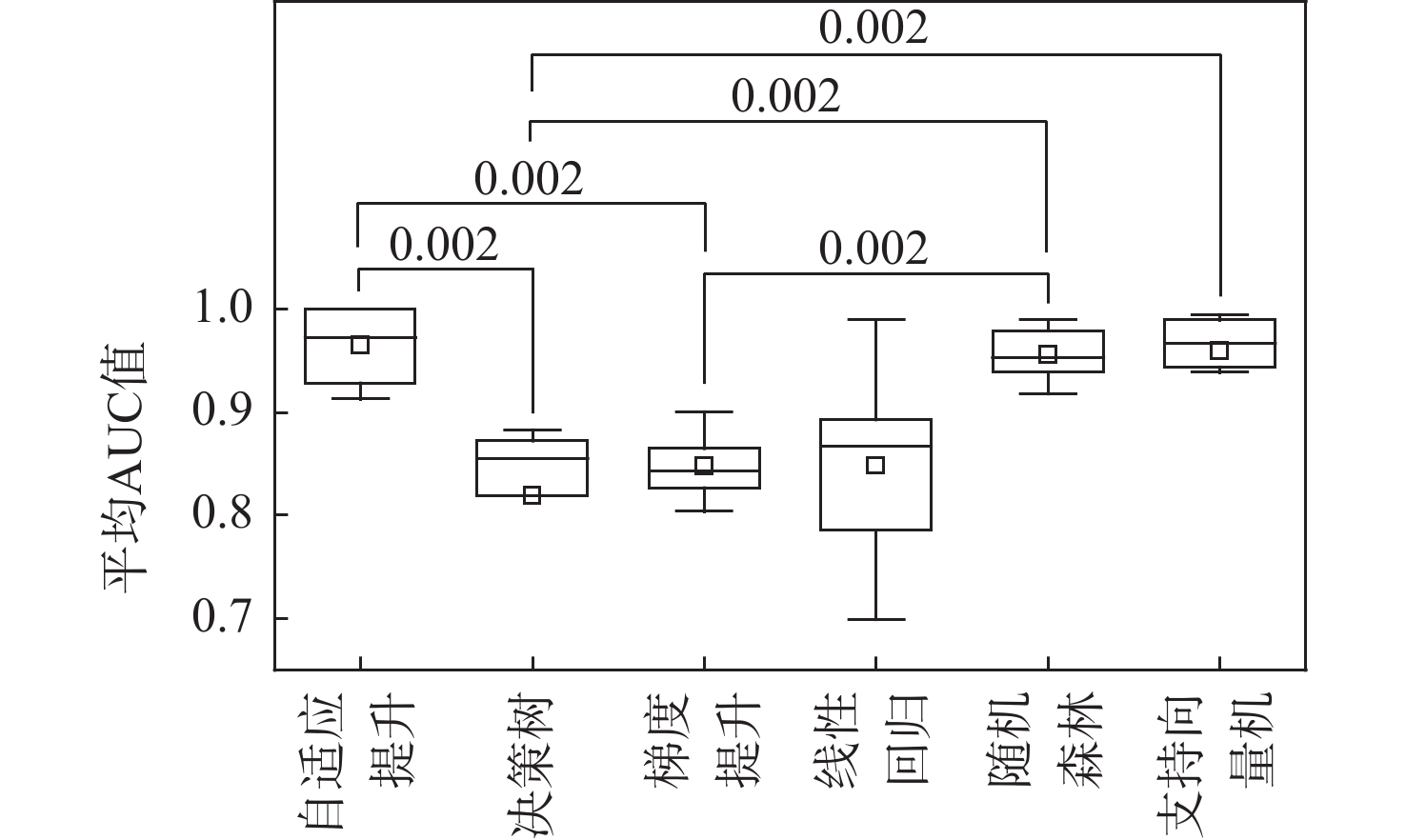
图 2 全部生理信号机器学习模型平均AUC值箱线图
Figure 2. Box plot of average AUC values for all physiological signal machine learning models
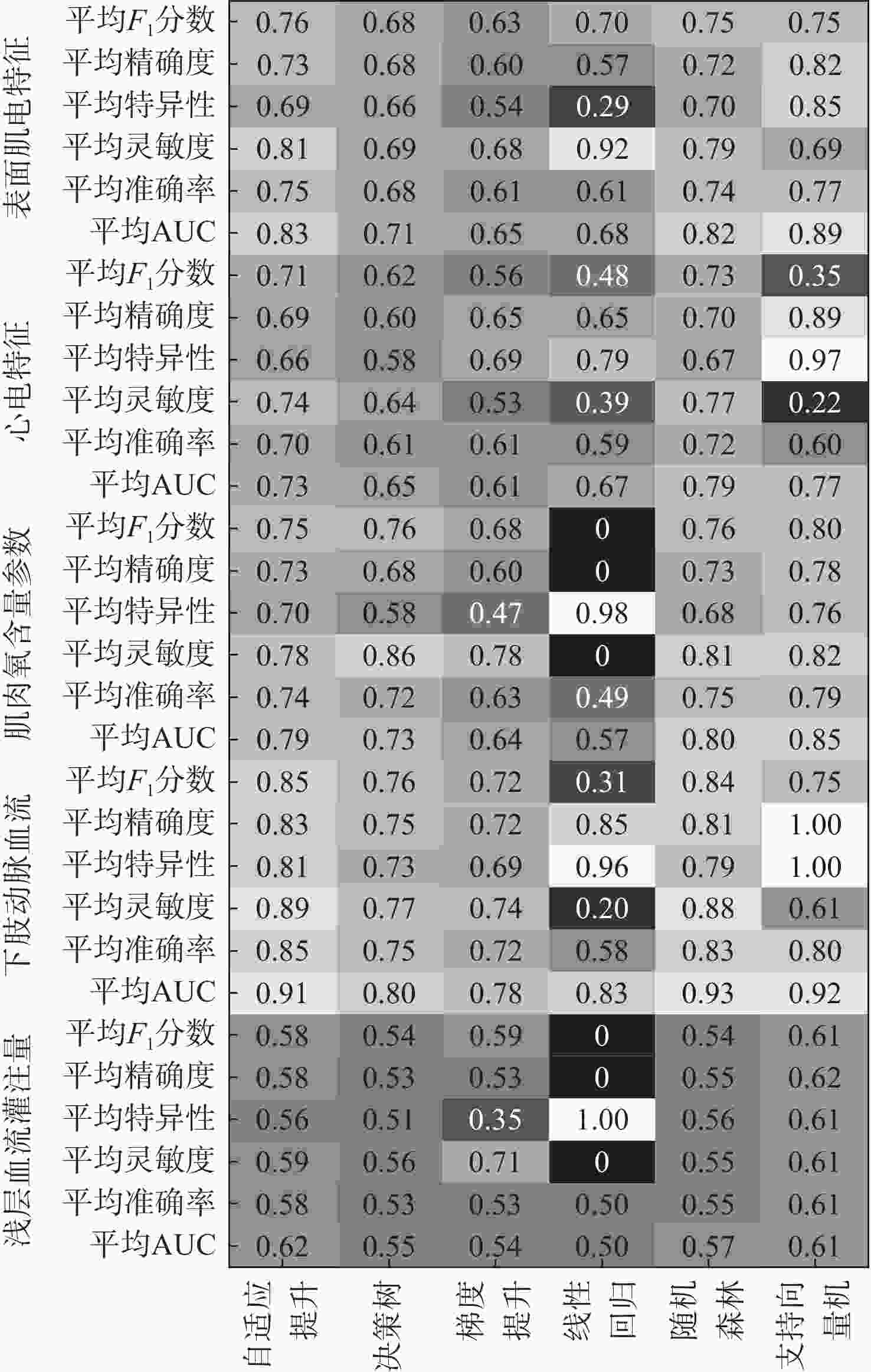
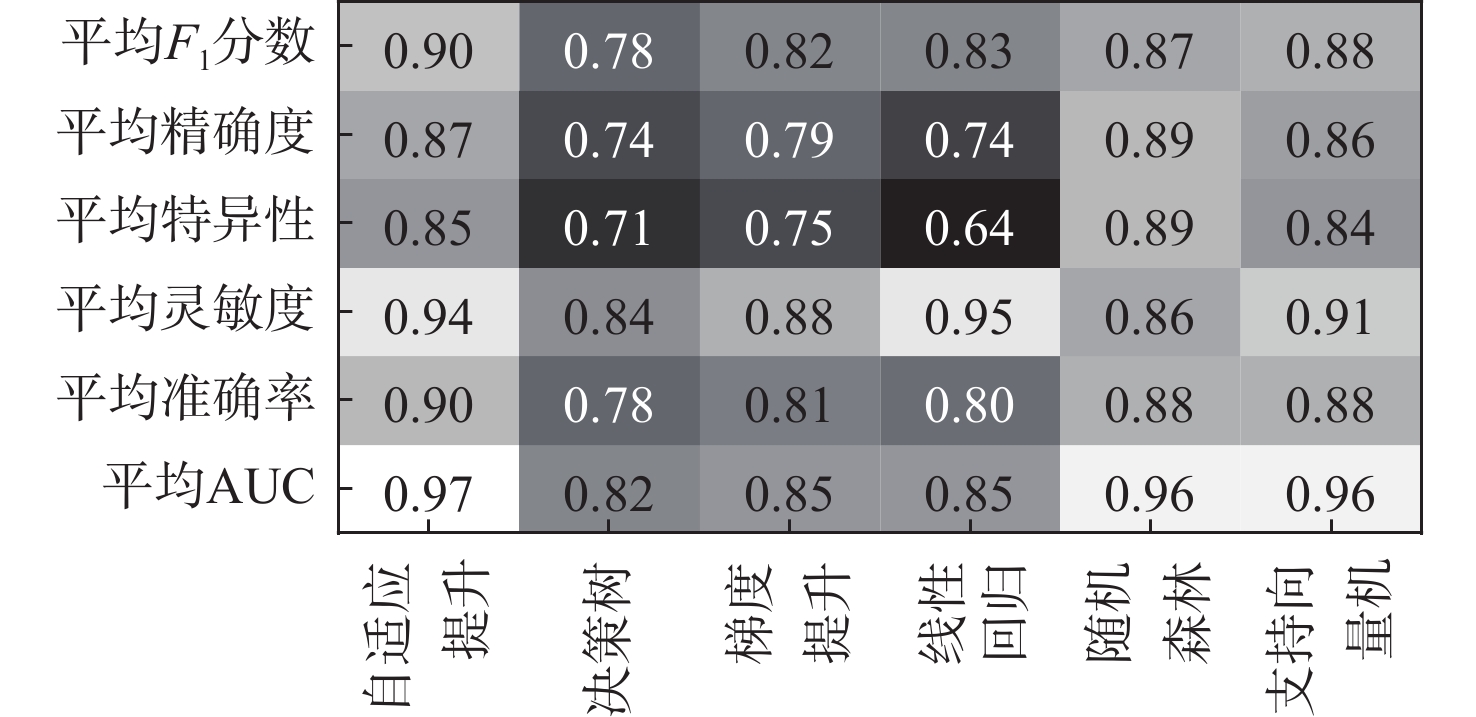
图 3 单一生理信号机器学习模型评价指标热图
Figure 3. Heatmap of evaluation metrics for single physiological signal machine learning models
表 1 多生理信号组合机器学习模型评价指标
Table 1. Evaluation metrics for multi-physiological signal combination machine learning models
信号组合 机器学习模型 平均AUC 平均F1分数 平均精确度 平均特异性 平均灵敏度 平均准确率 下肢动脉血流+肌肉氧含量 随机森林 0.94 0.90 0.88 0.87 0.91 0.89 下肢动脉血流+表面肌电 自适应提升 0.94 0.87 0.83 0.80 0.93 0.86 表面肌电+心电 随机森林 0.90 0.81 0.76 0.71 0.88 0.80 下肢动脉血流+肌肉氧含量+心电 随机森林 0.95 0.88 0.86 0.84 0.90 0.87 肌肉氧含量+心电+表面肌电 支持向量机 0.92 0.64 1.00 1.00 0.48 0.74 肌肉氧含量+心电+表面肌电 随机森林 0.92 0.81 0.80 0.78 0.83 0.80 下肢动脉血流+肌肉氧含量+心电+表面肌电 支持向量机 0.97 0.90 0.88 0.87 0.93 0.90 下肢动脉血流+肌肉氧含量+心电+表面肌电 随机森林 0.97 0.89 0.88 0.87 0.90 0.89 下肢动脉血流+肌肉氧含量+心电+表面肌电 自适应提升 0.96 0.89 0.85 0.84 0.94 0.89  下载: 导出CSV
-
[1] Casey G J, Miles-Johnson T, Stevens G J. Lack of consistency in truck driver fatigue management: Australian law enforcement officer’s and transport regulation agent’s perceptions of enforcement[J]. Transportation Research Part F: Traffic Psychology and Behaviour, 2025, 112: 322-341. [2] Nader M. Experimental investigations of special vehicles vibration with regard to their influence on human organism[J]. Engineering Transactions, 2000, 48(2): 119-134. [3] Voicu D, Stoica R M, Vilău R, et al. Frequency analysis of vibrations in terms of human exposure while driving military armoured personnel carriers and logistic transportation vehicles[J]. Electronics, 2023, 12(14): 3152. [4] Sikander G, Anwar S. Driver fatigue detection systems: a review[J]. IEEE Transactions on Intelligent Transportation Systems, 2019, 20(6): 2339-2352. [5] Sanjaya K H, Lee S, Katsuura T. Review on the application of physiological and biomechanical measurement methods in driving fatigue detection[J]. Journal of Mechatronics, Electrical Power, and Vehicular Technology, 2016, 7(1): 35-48. [6] Kolich M, Seal N, Taboun S. Automobile seat comfort prediction: statistical model vs. artificial neural network[J]. Applied Ergonomics, 2004, 35(3): 275-284. [7] Huang S R, Zhang Z F, Xu Z M, et al. Modeling of human model for static pressure distribution prediction[J]. International Journal of Industrial Ergonomics, 2015, 50: 186-195. [8] 孙守迁, 吴群, 吴剑锋, 等. 一种基于支持向量回归的驾驶座椅舒适度评价方法[J]. 中国机械工程, 2008, 19(11): 1326-1330.Sun S Q, Wu Q, Wu J F, et al. An evolution method of driving seat comfort based on support vector regression[J]. China Mechanical Engineering, 2008, 19(11): 1326-1330(in Chinese). [9] Elgendi M, Menon C. Machine learning ranks ECG as an optimal wearable biosignal for assessing driving stress[J]. IEEE Access, 2020, 8: 34362-34374. [10] Yenipinar A, Koc S, Canga D, et al. Determining sample size in logistic regression with G-Power[J]. Black Sea Journal of Engineering and Science, 2019, 2(1): 16-22. [11] Davliakos I, Papadopoulos E. Model-based control of a 6-dof electrohydraulic Stewart-Gough platform[J]. Mechanism and Machine Theory, 2008, 43(11): 1385-1400. [12] International Organization for Standardization. Mechanical vibration and shock-evaluation of human exposure to whole-body vibration-part 1: general requirements: ISO 2631—1997[S]. Geneva: International Organization for Standardization, 1997: 1-17. [13] Jiang W S, Yin C, Zhou Q X, et al. Evaluation model of running fatigue of young students based on characteristic parameters of ECG signal[C]//HCI International 2023 Posters. Berlin: Springer, 2023: 336-342. [14] Matsuda T, Miyamori T, Fujino Y, et al. Reliability and validity of muscle activity analysis using wearable electromyographs[J]. Journal of Physical Therapy Science, 2024, 36(3): 123-127. [15] Jastania R, Wang P, Alqahtani B, et al. The Development of an interface instrument for collecting electromyography data and controlling a continuous passive motion machine[J]. Applied Sciences, 2023, 13(22): 12221. [16] Boushel R, Langberg H, Olesen J, et al. Monitoring tissue oxygen availability with near infrared spectroscopy (NIRS) in health and disease[J]. Scandinavian Journal of Medicine & Science in Sports, 2001, 11(4): 213-222. [17] Fredriksson I, Larsson M, Strömberg T. Measurement depth and volume in laser doppler flowmetry[J]. Microvascular Research, 2009, 78(1): 4-13. [18] El Falou W, Duchêne J, Grabisch M, et al. Evaluation of driver discomfort during long-duration car driving[J]. Applied Ergonomics, 2003, 34(3): 249-255. [19] SAE International. Subjective rating scale for evaluation of noise and ride comfort characteristics related to motor vehicle tires: SAE J1060_201405[S]. Warrendale: SAE International, 2014. [20] Teich M C, Lowen S B, Jost B M, et al. Heart rate variability: measures and models[M]//Akay M. Nonlinear biomedical signal processing, dynamic analysis and modeling. Piscataway: IEEE Press, 2001, 2: 159-213. [21] Chowdhury R H, Reaz M B I, Mohd Alauddin B M A, et al. Surface electromyography signal processing and classification techniques[J]. Sensors, 2013, 13(9): 12431-12466. [22] Koirala B, Concas A, Sun Y, et al. Blood volume versus deoxygenated NIRS signal: computational analysis of the effects muscle O2 delivery and blood volume on the NIRS signals[J]. Journal of Applied Physiology, 2021, 131(5): 1418-1431. [23] Hwang J Y. Doppler ultrasonography of the lower extremity arteries: anatomy and scanning guidelines[J]. Ultrasonography, 2017, 36(2): 111-119. [24] De Luca C J. The use of surface electromyography in biomechanics[J]. Journal of Applied Biomechanics, 1997, 13(2): 135-163. [25] Bharadiya J. A tutorial on principal component analysis for dimensionality reduction in machine learning[J]. International Journal of Innovative Science and Research Technology, 2023, 8(5): 2028-2032. [26] Alalawi H H, Alsuwat M S. Detection of cardiovascular disease using machine learning classification models[J]. International Journal of Engineering Research and Technology, 2021, 10(7): 151-157. [27] Liu Q, Liu Z, Cui B Y, et al. Driving safety and comfort enhancement in urban underground interchanges via driving simulation and machine learning[J]. Sustainability, 2024, 16(21): 9601. [28] Abdullah D M, Abdulazeez A M. Machine learning applications based on SVM classification a review[J]. Qubahan Academic Journal, 2021, 1(2): 81-90. [29] Charbuty B, Abdulazeez A M. Classification based on decision tree algorithm for machine learning[J]. Journal of Applied Science and Technology Trends, 2021, 2(1): 20-28. [30] Speiser J L, Miller M E, Tooze J, et al. A comparison of random forest variable selection methods for classification prediction modeling[J]. Expert Systems with Applications, 2019, 134: 93-101. [31] Hatwell J, Gaber M M, Atif Azad R M. Ada-WHIPS: explaining AdaBoost classification with applications in the health sciences[J]. BMC Medical Informatics and Decision Making, 2020, 20(1): 250. [32] Nti I K, Nyarko-Boateng O, Aning J. Performance of machine learning algorithms with different K values in K-fold CrossValidation[J]. International Journal of Information Technology and Computer Science, 2021, 13(6): 61-71. [33] Widodo A O, Setiawan B, Indraswari R. Machine learning-based intrusion detection on multi-class imbalanced dataset using SMOTE[J]. Procedia Computer Science, 2024, 234: 578-583. [34] Novakovic J D, Veljovic A, Ilic S S, et al. Evaluation of classification models in machine learning[J]. Theory and Applications of Mathematics and Computer Science, 2017, 7(1): 39-46. [35] Hou J X, Li X Y, Li Z J, et al. An in vivo data-based computational study on sitting-induced hemodynamic changes in the external iliac artery[J]. Journal of Biomechanical Engineering, 2022, 144(2): 021007. [36] Restaino R M, Holwerda S W, Credeur D P, et al. Impact of prolonged sitting on lower and upper limb micro- and macrovascular dilator function[J]. Experimental Physiology, 2015, 100(7): 829-838. [37] Thosar S S, Bielko S L, Wiggins C C, et al. Differences in brachial and femoral artery responses to prolonged sitting[J]. Cardiovascular Ultrasound, 2014, 12(1): 50. [38] Andersson B J, Ortengren R, Nachemson A, et al. Lumbar disc pressure and myoelectric back muscle activity during sitting. IV. studies on a car driver’s seat[J]. Scandinavian Journal of Rehabilitation Medicine, 2013, 6(3): 128-133. [39] Lin C T, Wu R C, Jung T P, et al. Estimating driving performance based on EEG spectrum analysis[J]. EURASIP Journal on Advances in Signal Processing, 2005(19): 3165-3174. [40] De Looze M P, Kuijt-Evers L F M, Van Dieën J. Sitting comfort and discomfort and the relationships with objective measures[J]. Ergonomics, 2003, 46(10): 985-997. [41] Luo S W. An automobile seat comfort evaluation method based on fuzzy support vector machine[C]//2008 9th International Conference on Computer-Aided Industrial Design and Conceptual Design. Piscataway: IEEE Press, 2008: 206-208. -

 下载:

 点击查看大图
计量
- 文章访问数: 223
- HTML全文浏览量: 130
- PDF下载量: 5
- 被引次数: 0
