





Mass flow distribution characteristics of supercritical fuel oil in parallel tubes under non-uniform heating conditions
-
摘要:
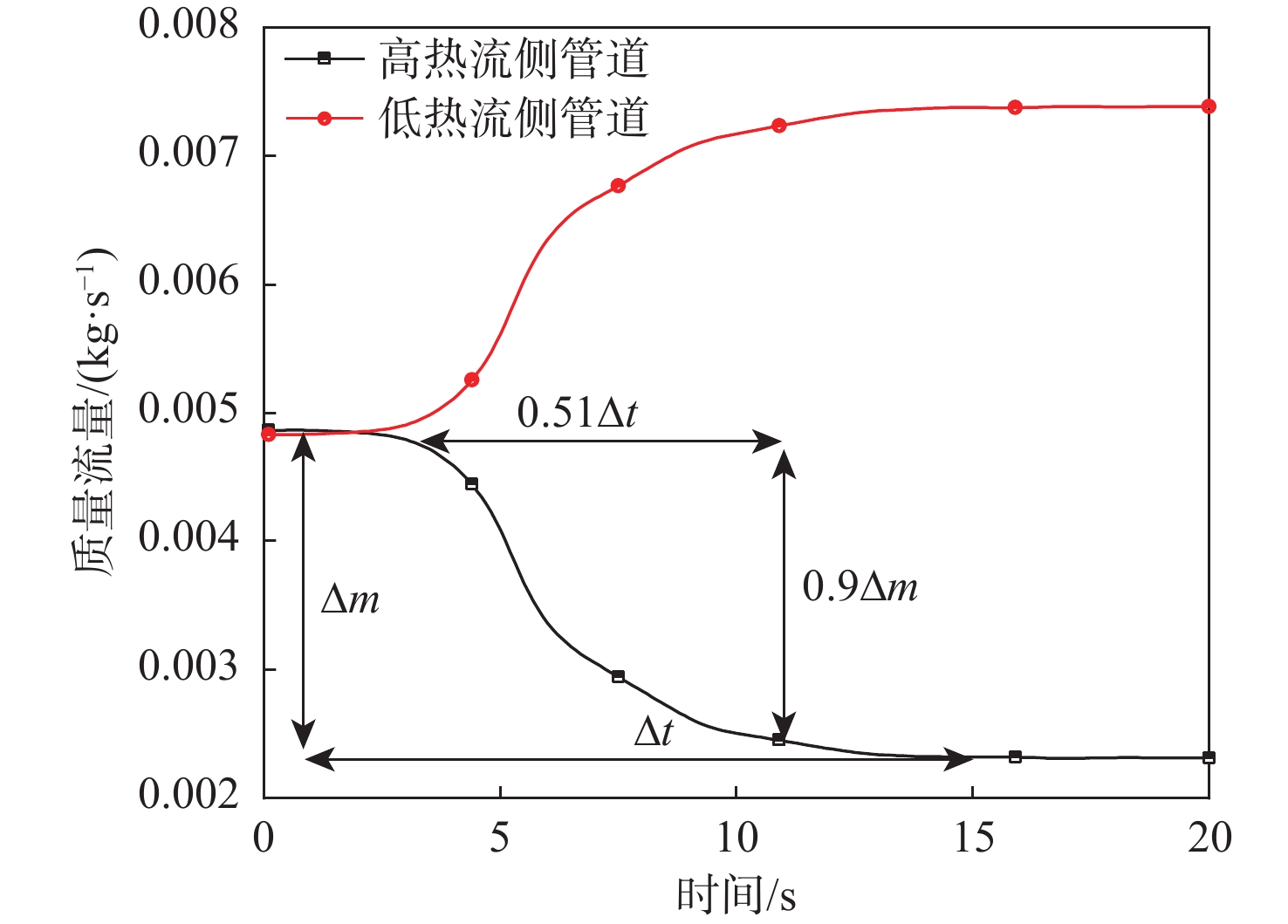
为研究线性非均匀加热下超临界燃油在并联双管中的质量流量分配特性,通过瞬态模拟超临界燃油RP-3流经并联双管的流动过程,探究质量流量分配特性的影响因素及其作用机理;通过稳态模拟平均热流密度在2.7~3.9 MW/m2、热流增长率在0.025~0.225范围内的质量流量分配特性,研究不同非均匀加热条件对质量流量分配特性的影响。结果表明:拟临界状态、裂解反应、固体导热、分流阻力差是影响质量流量分配特性的主要因素;拟临界状态正反馈、裂解反应正反馈会增大双管间的质量流量偏差;固体导热负反馈、分流阻力差负反馈会减小双管间的质量流量偏差。裂解反应正反馈被激活的必要条件是总加热功率可使全部冷却工质达到裂解温度。保持平均热流密度3.7 MW/m2不变,热流增长率增大了8倍,质量流量相对标准差增大了11%。非均匀加热条件主要起质量流量分配偏差的诱导作用,对最终质量流量分配特性的影响较小。
Abstract:To study the flow distribution characteristics in parallel tubes under leaner non-uniform heating, a transient simulation of supercritical fuel oil RP-3 flowing through parallel tubes was conducted in this paper, and the influence factors and their mechanisms were studied. The influence of different uniform heating conditions on flow distribution characteristics was investigated by steady-state simulations with average heat flux in the range of 2.7−3.9 MW/m2 and heat flux growth rate in the range of 0.025−0.225. The results show that the influence factors include pseudo critical state, pyrolysis, heat conduction, and shunting resistance difference. The positive feedback of pseudo-critical state and pyrolysis would increase the difference in flow distribution between the two tubes. The flow distribution discrepancy will be lessened by the negative feedback of the shunting resistance differential and heat conduction. When the average heat flux remained constant at 3.7 MW/m2, the growth rate of the heat flux increased eight times, which resulted in an 11% rise in the relative standard deviation of mass flow. Non-uniform heating conditions mainly guide the flow distribution deviation and have a slight influence on the final flow distribution characteristics.
-
Key words:
- supercritical fuel oil /
- parallel pipes /
- non-uniform heating /
- flow distribution /
- mechanism
-
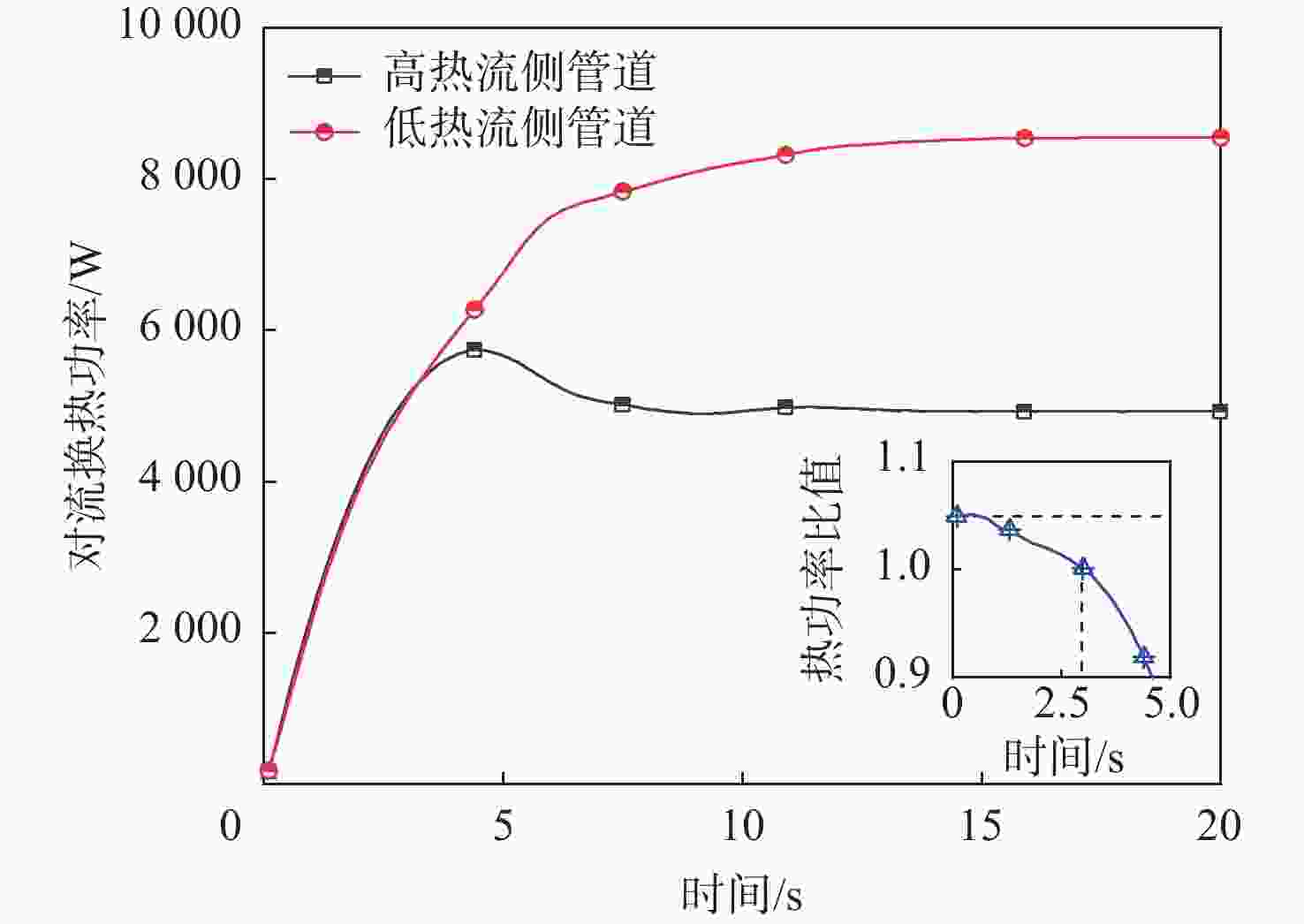
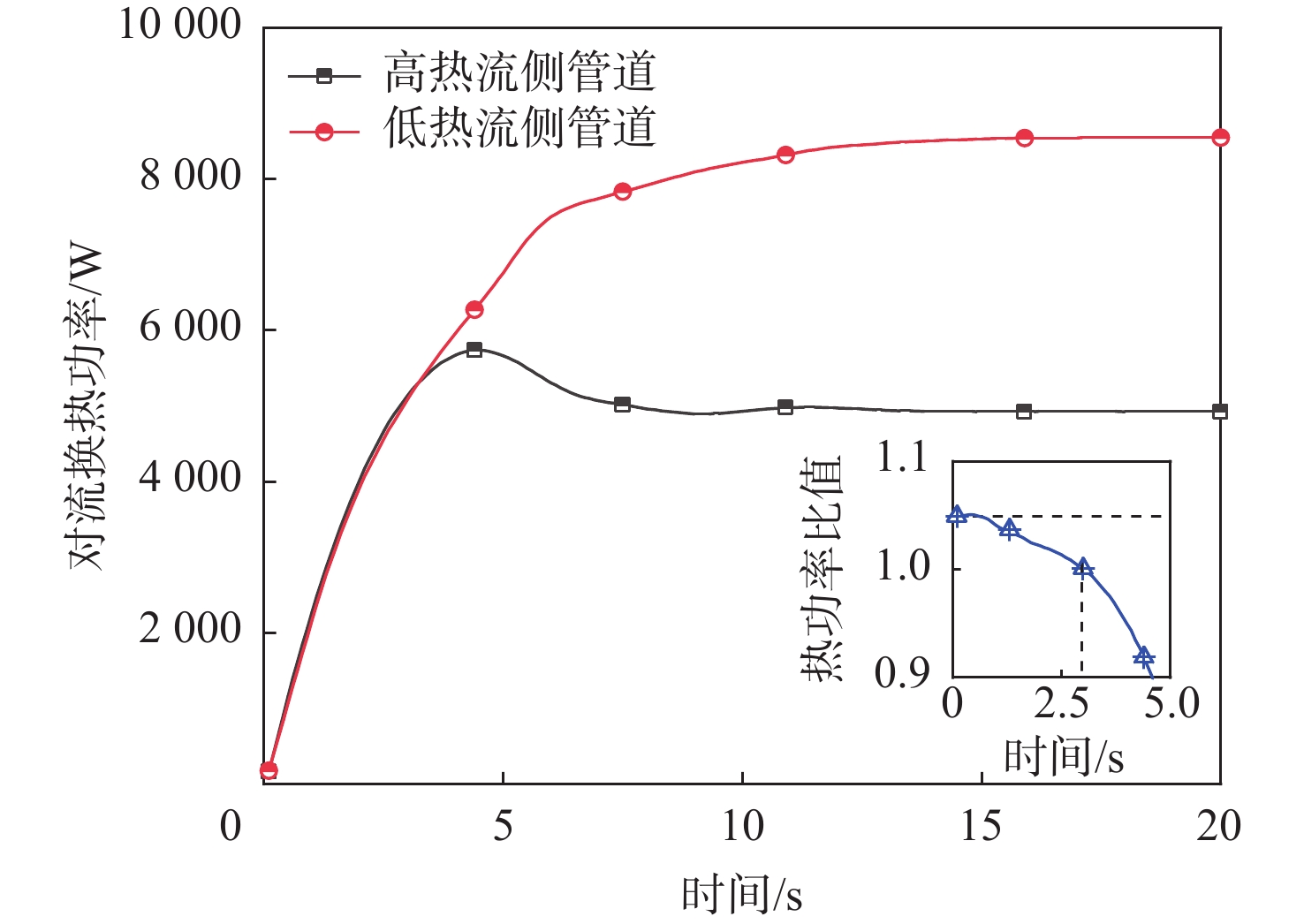
图 5 分支管对流换热功率随时间变化
Figure 5. Variation of convection heat transfer power of branch tubes with time
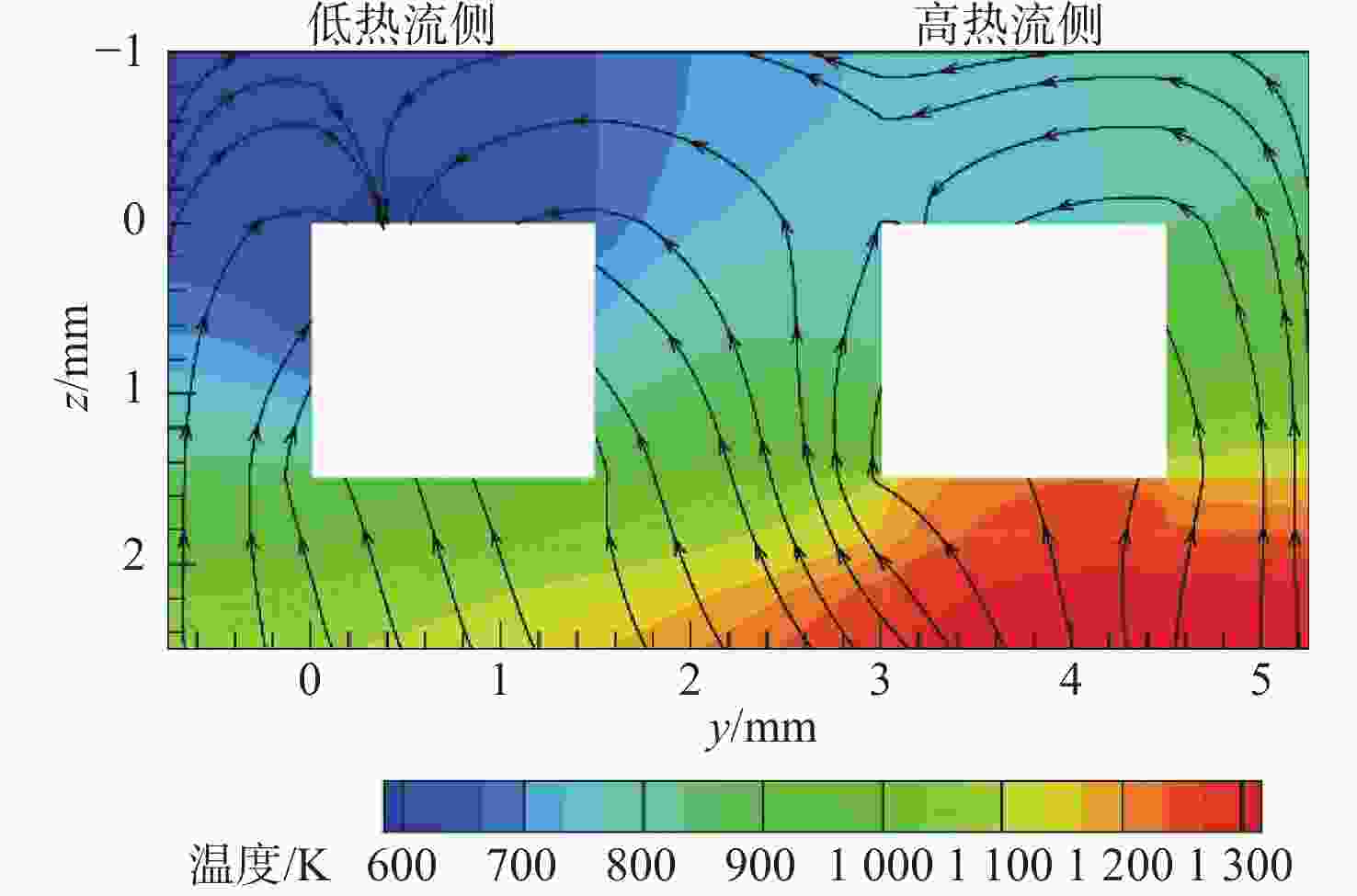
图 6 x=0.55 m横截面处固体导热热流分布
Figure 6. Solid conduction heat flux distribution at the x=0.55 m cross-section
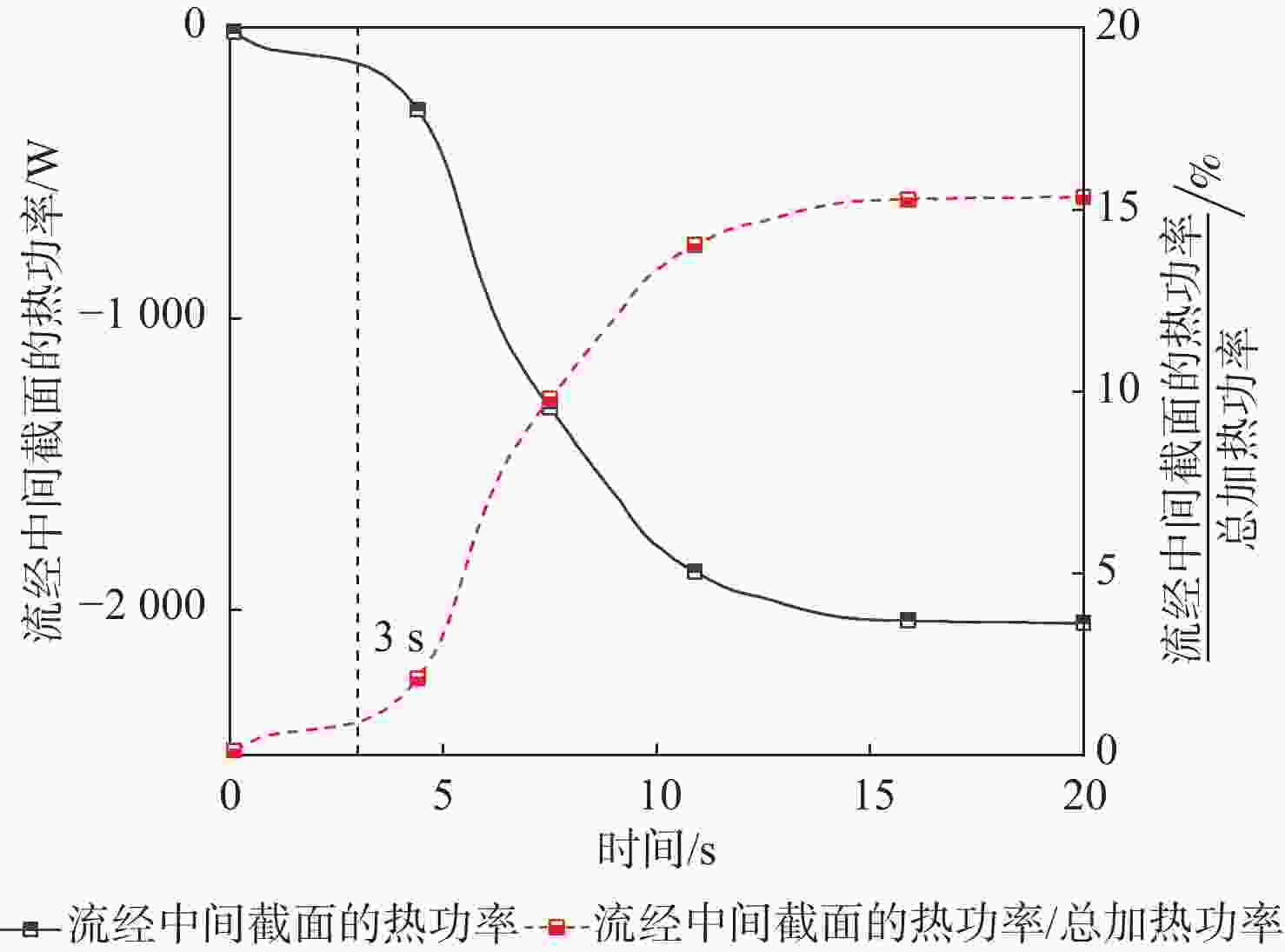
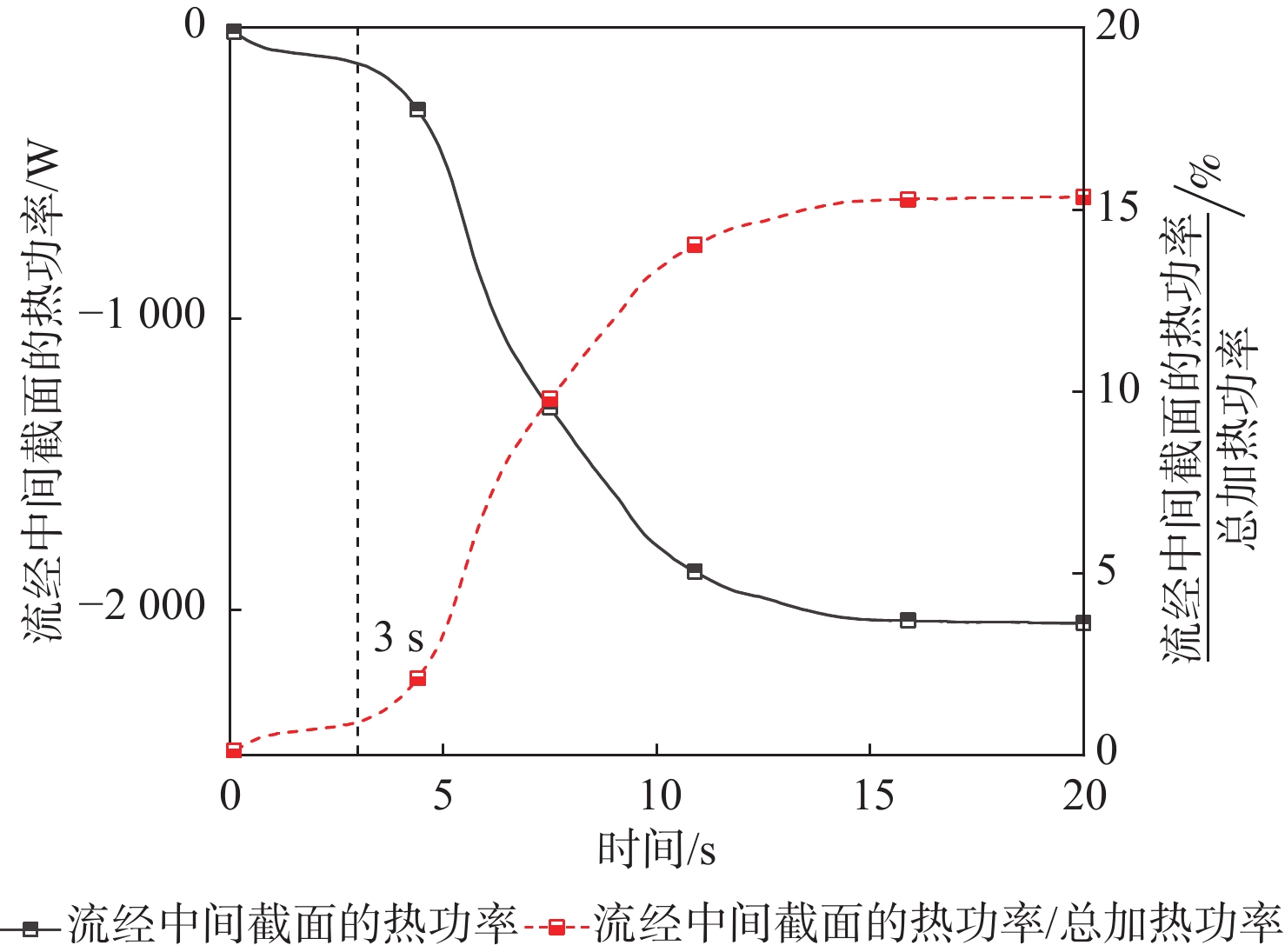
图 7 通过中间截面的热功率及其在总加热功率中的占比随时间的变化
Figure 7. Variation of thermal power passing through the middle section and its proportion in the total heating power with time
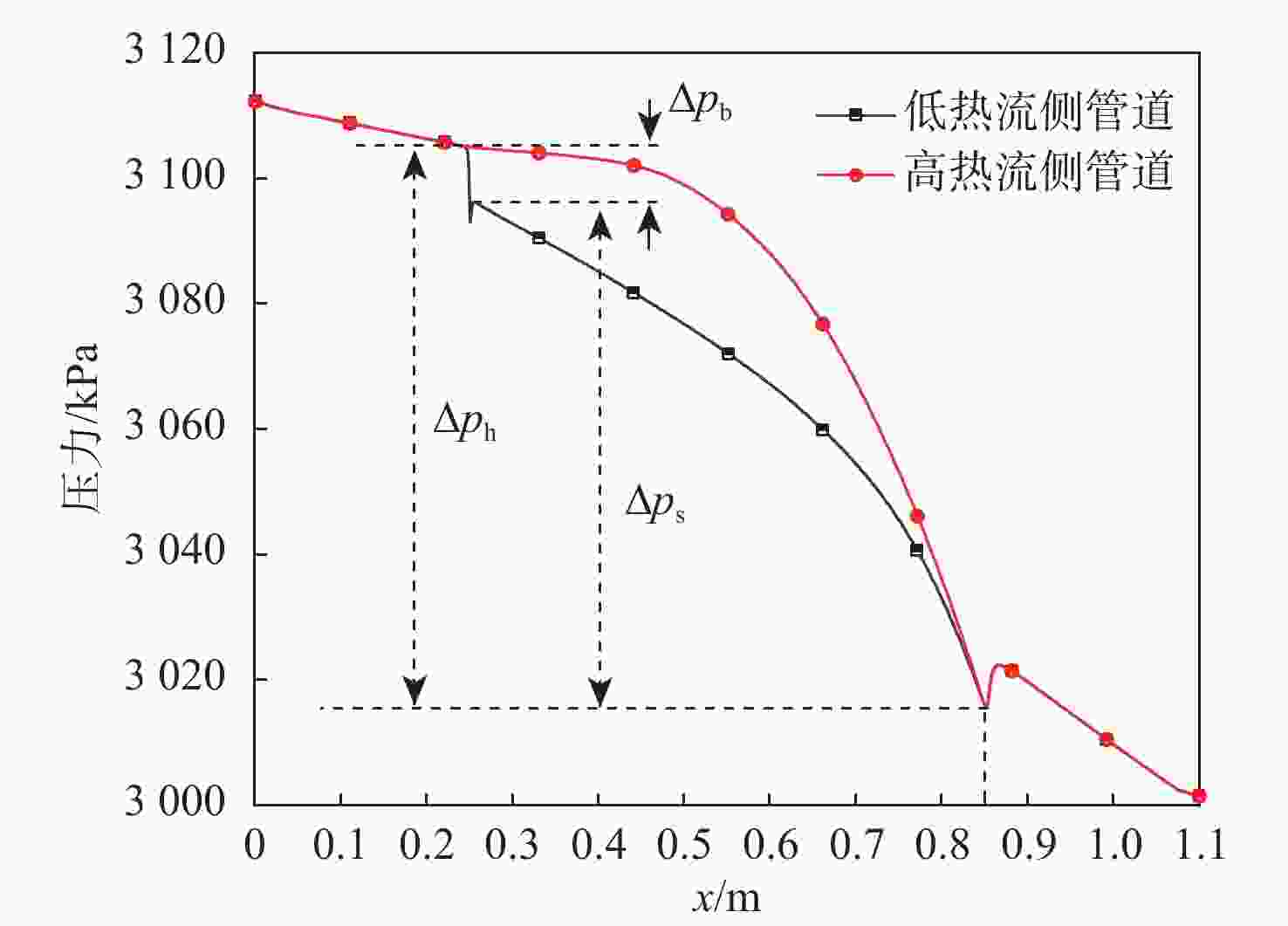
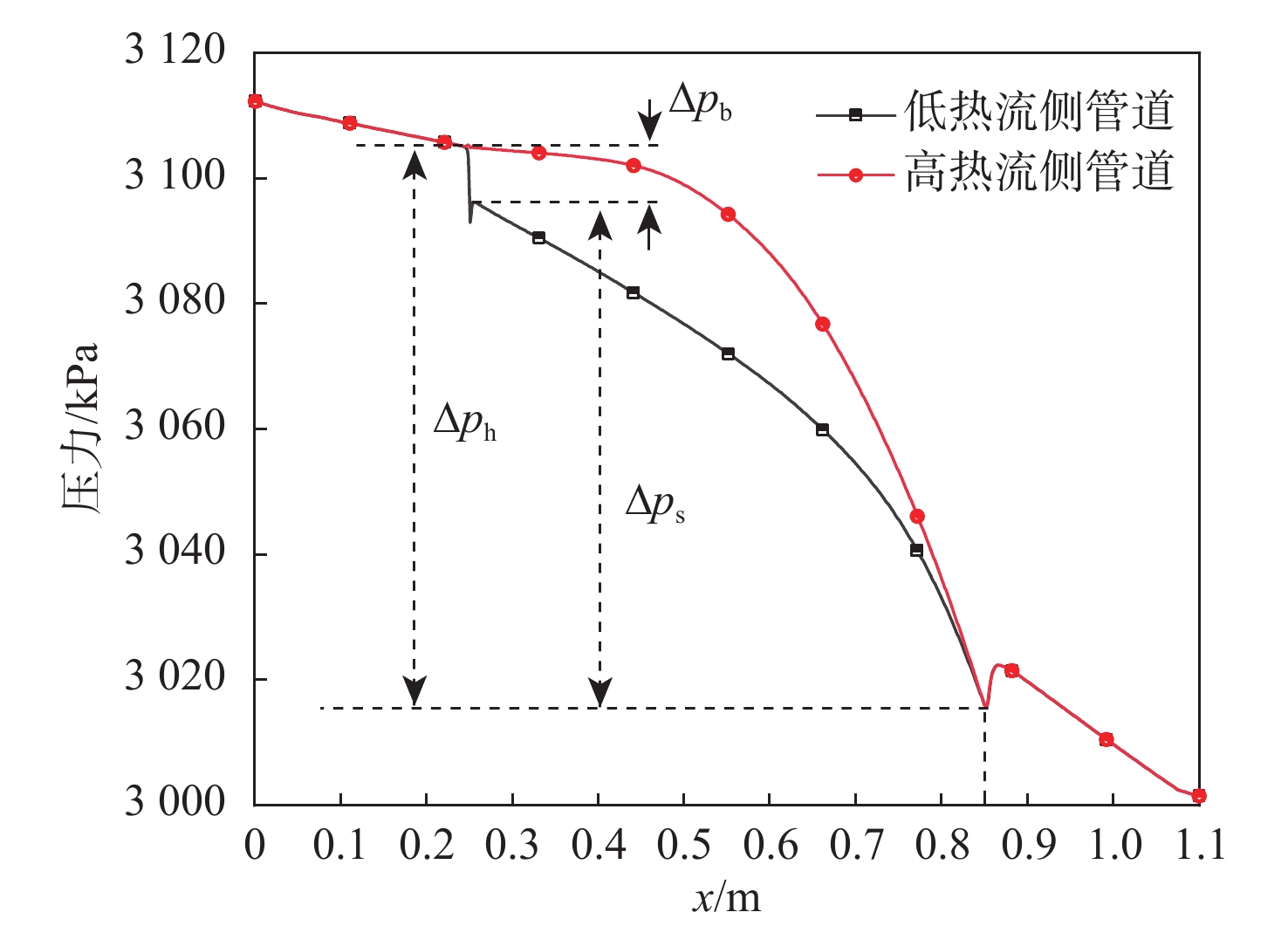
图 8 2个管道轴线延长线上的压力分布
Figure 8. Pressure distribution along the axes extension line of the two tubes
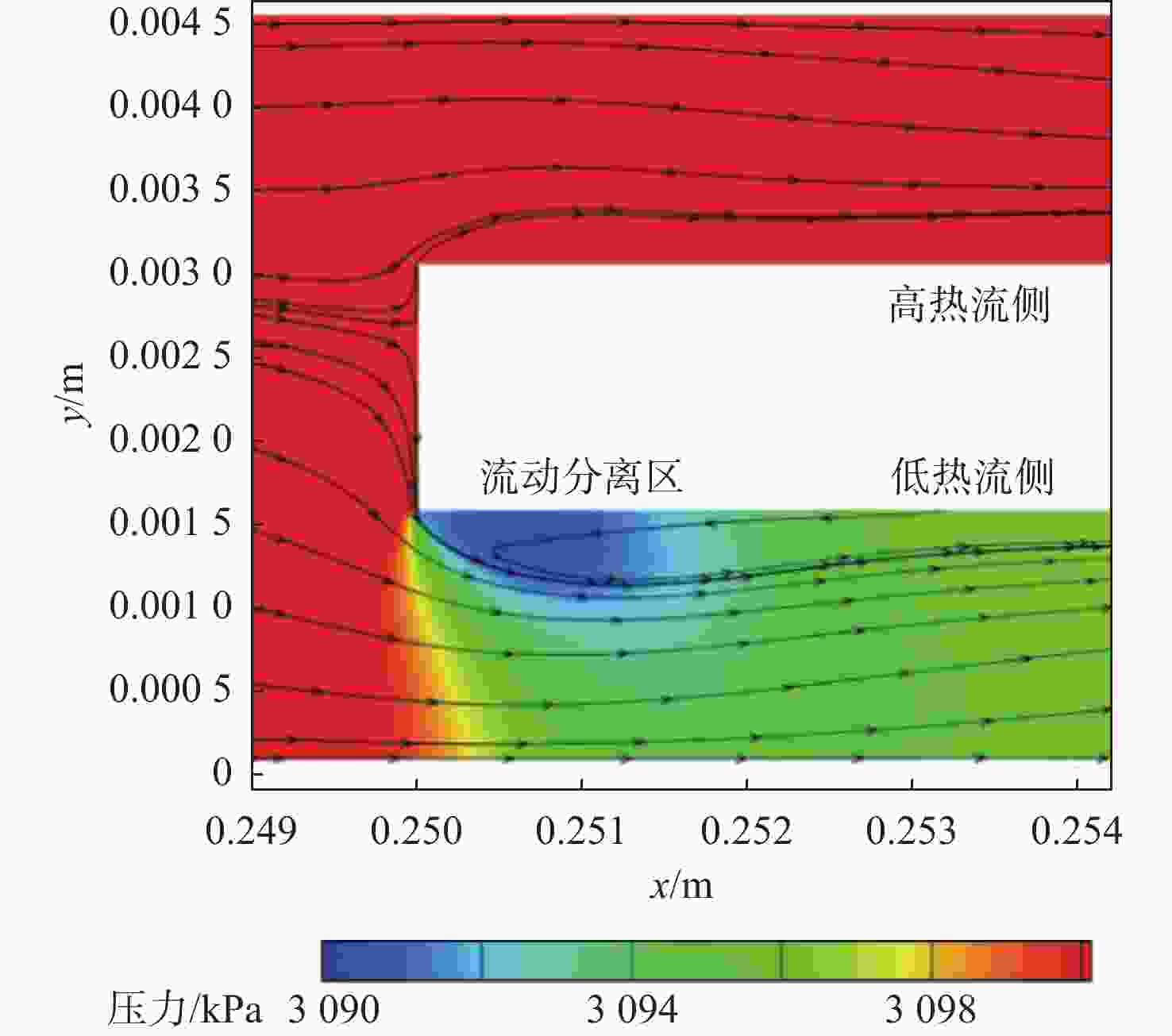
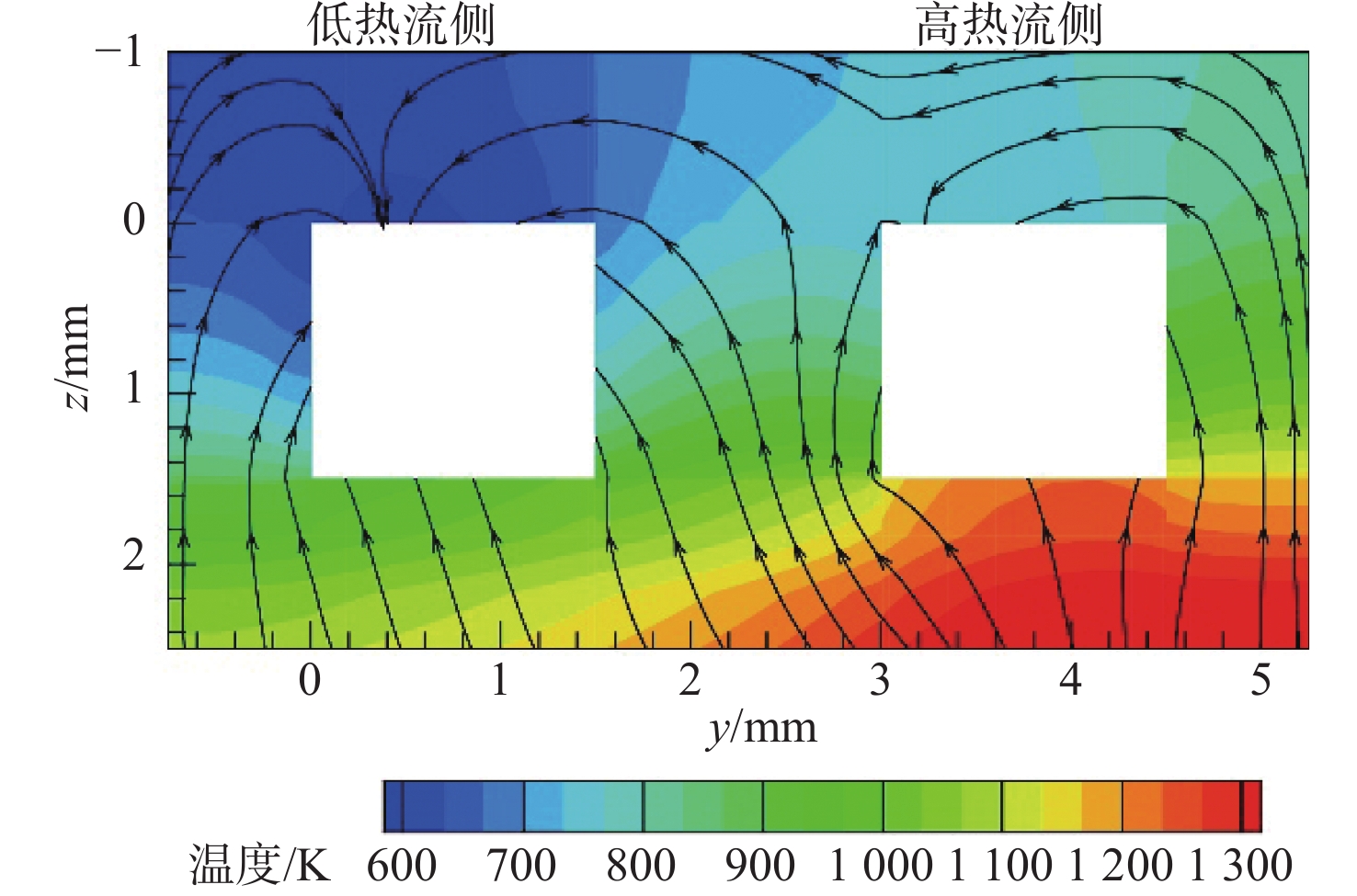
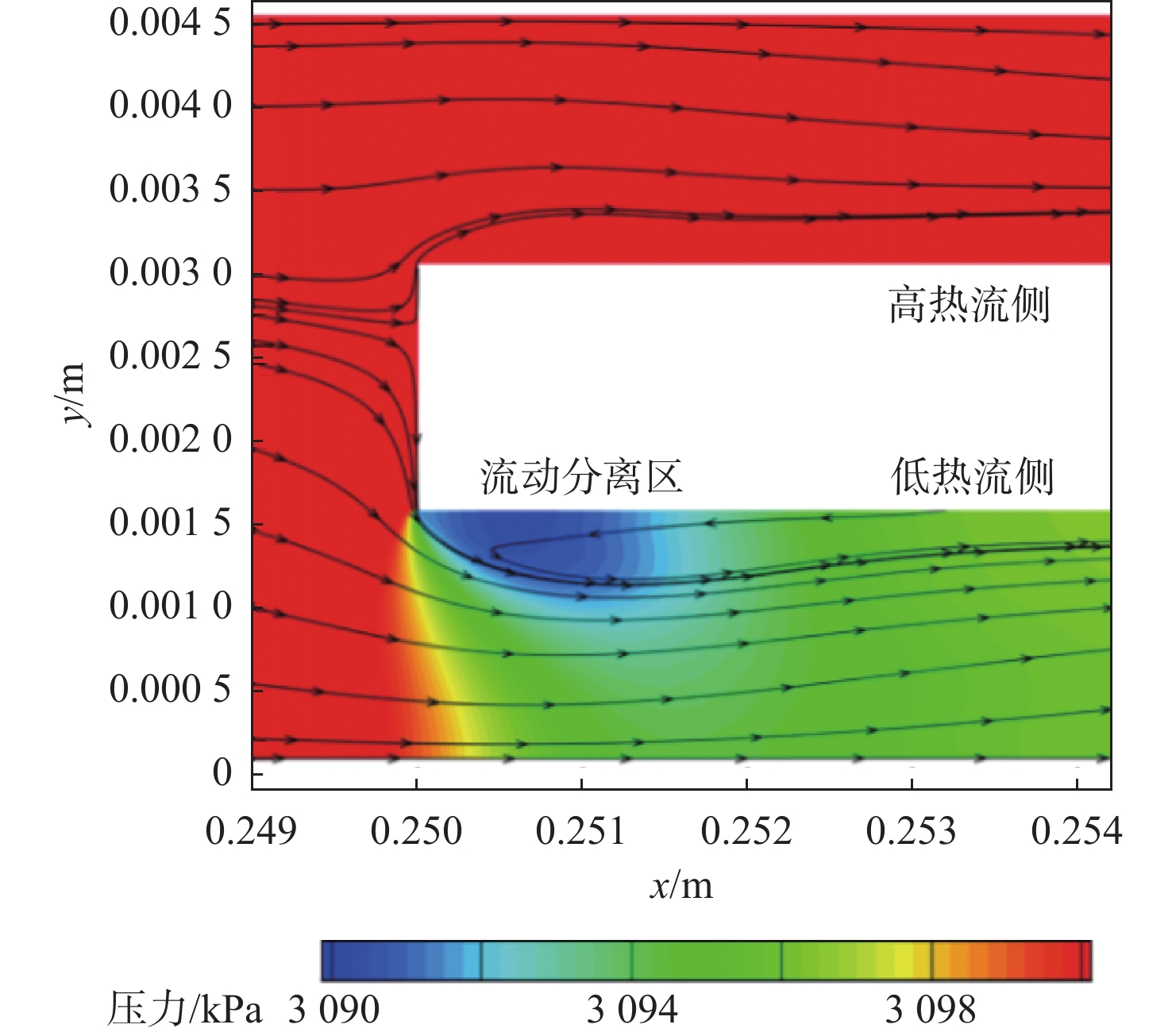
图 9 分流区纵截面处的流线分布及压力分布
Figure 9. Streamline distribution and pressure distribution of the longitudinal section at diversion zone
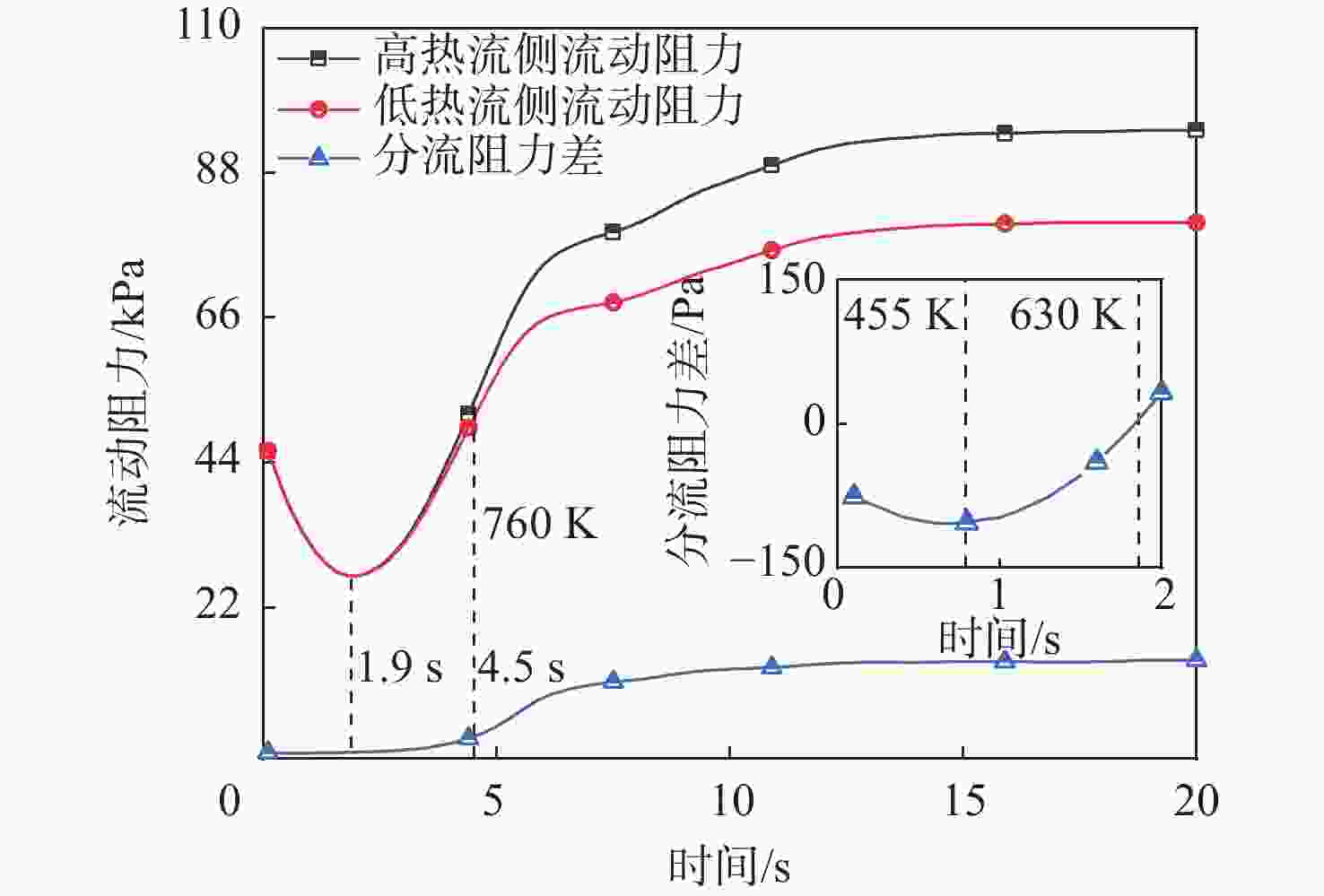
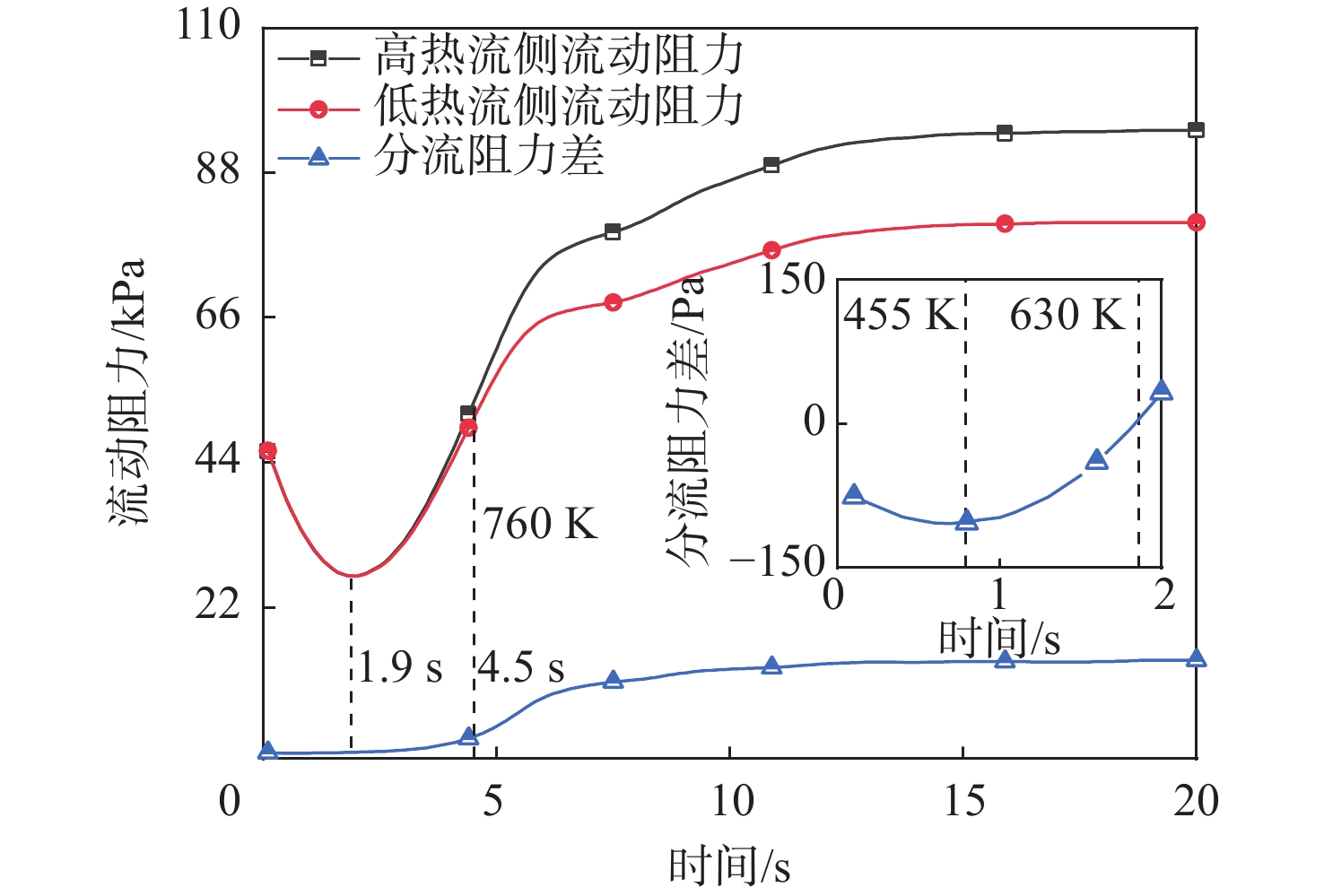
图 10 2个管道流动阻力及分流阻力差随时间的变化
Figure 10. Variation of flow resistance in two tube and the difference in flow resistance with time
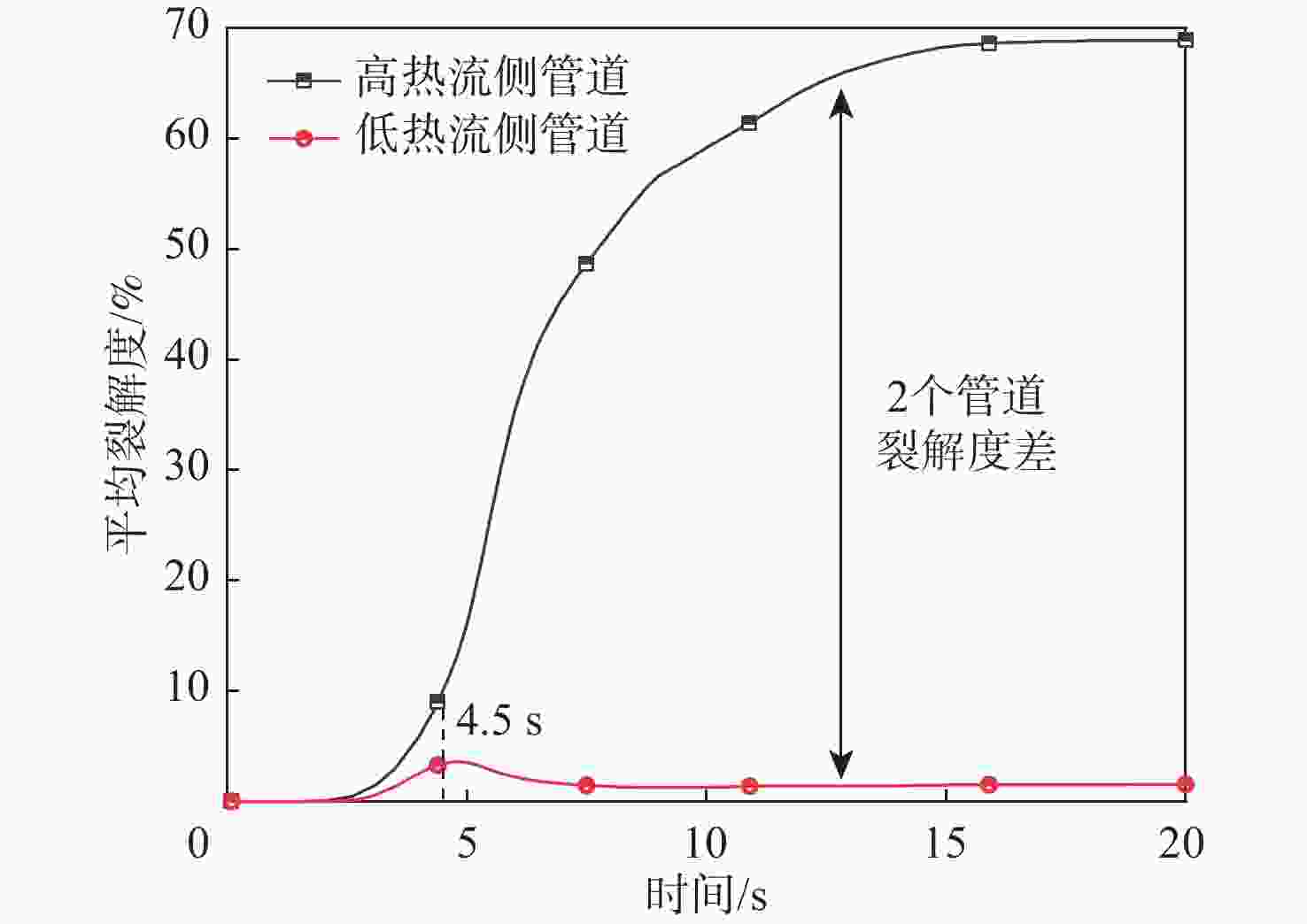
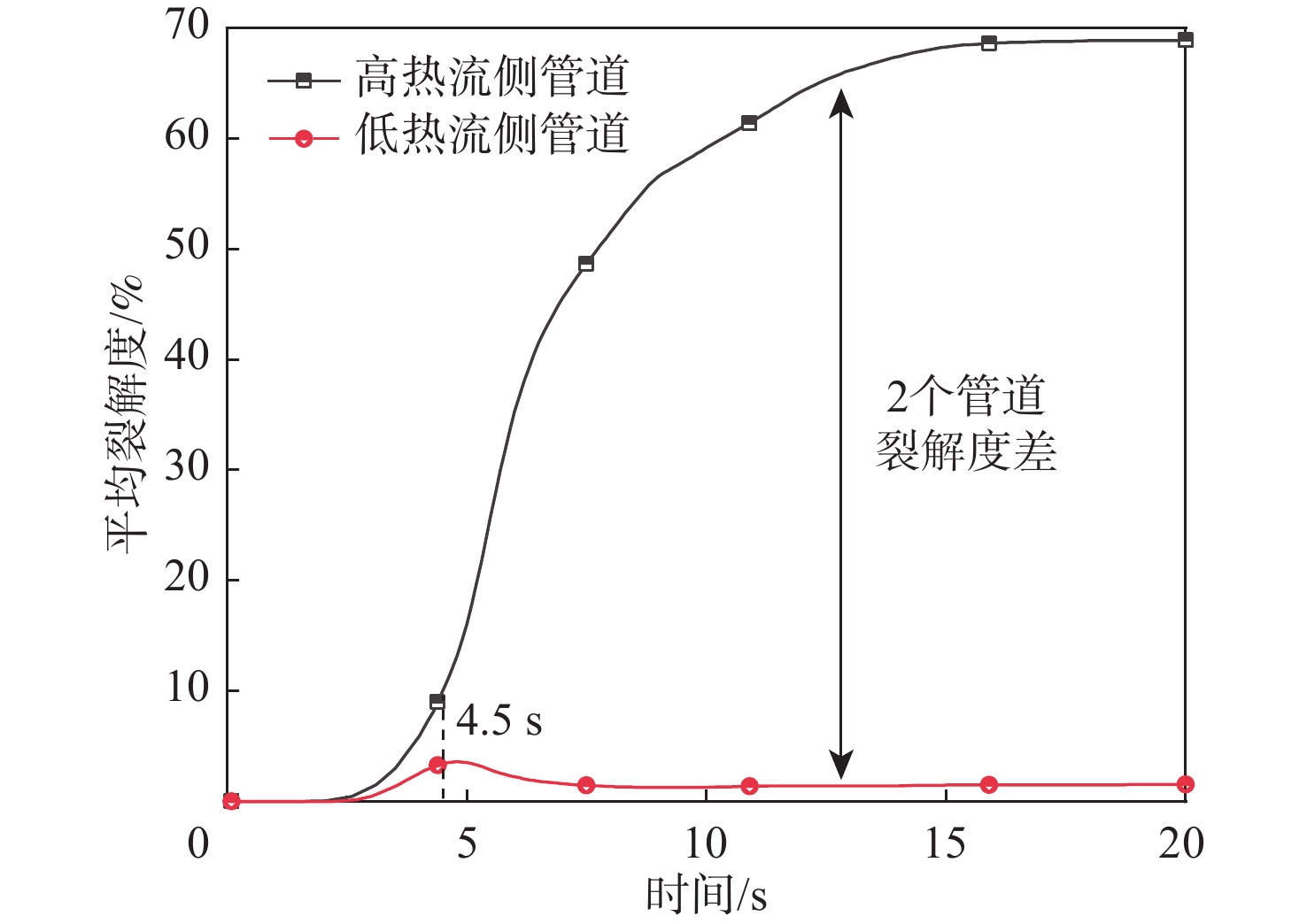
图 12 2个管道出口处平均裂解度随时间的变化
Figure 12. Variation of conversion with time at two tubes outlet
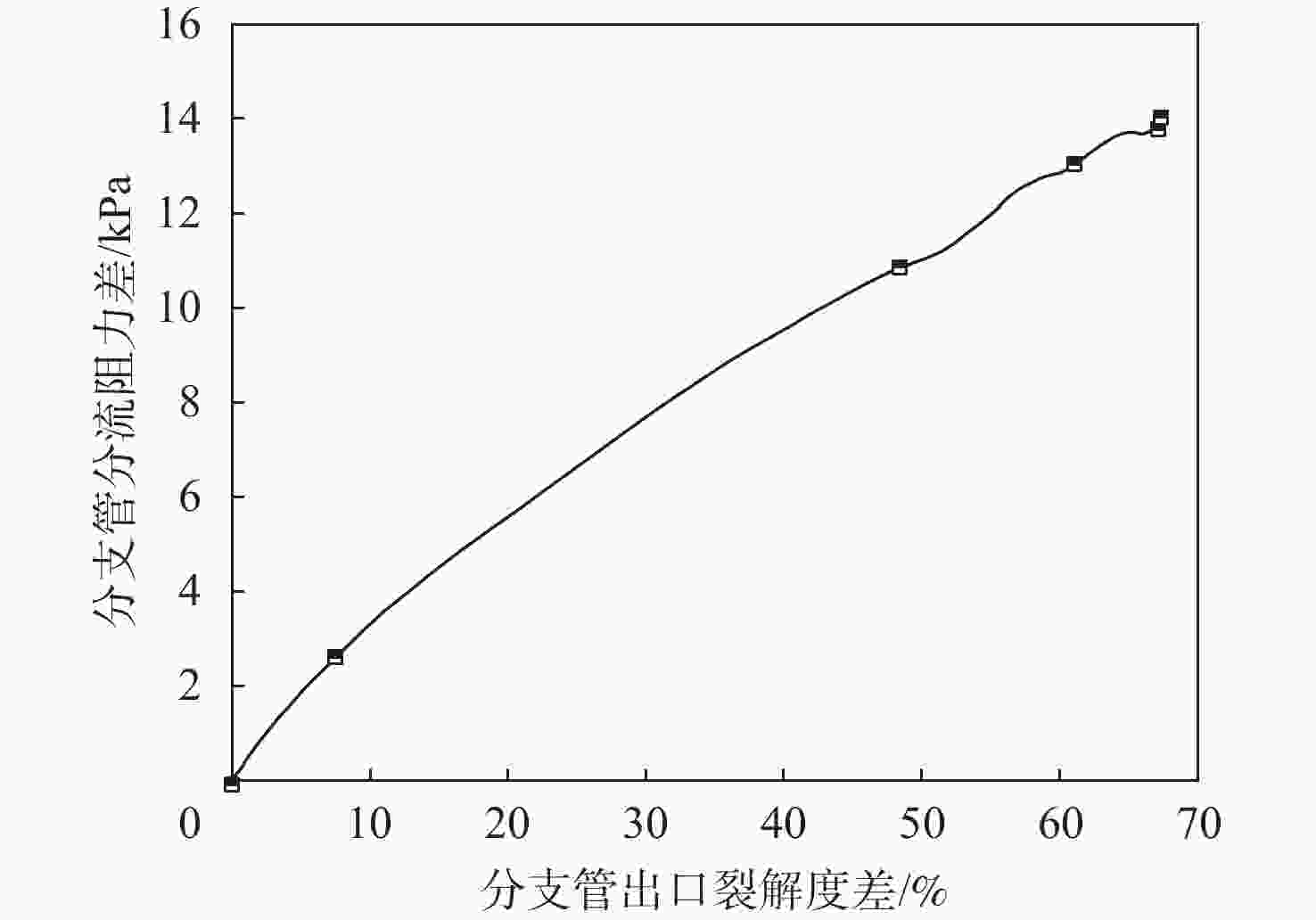
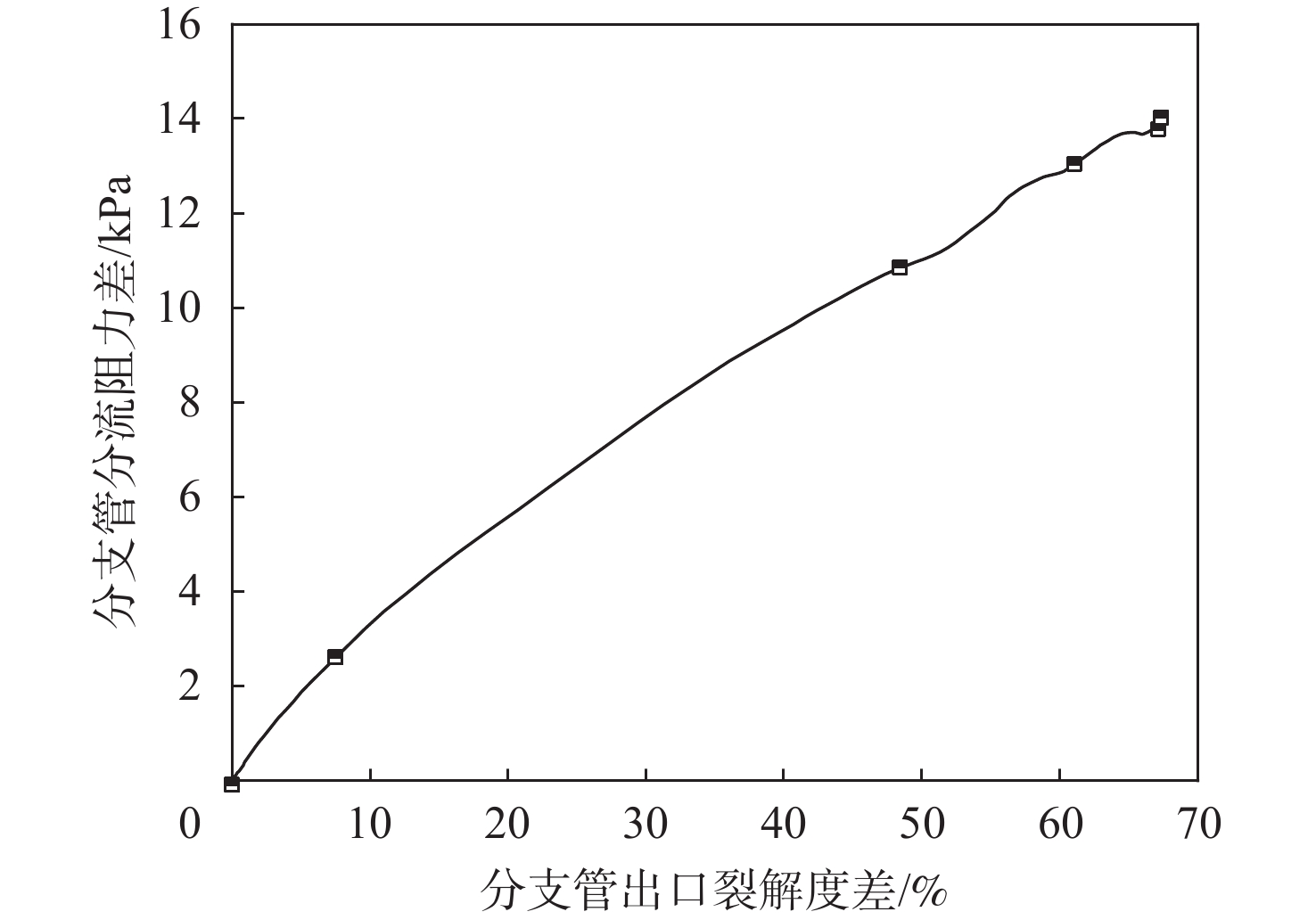
图 13 分支管出口裂解度差与分支管分流阻力差的关系
Figure 13. The relationships of the conversion difference and the flow resistance difference of branch tubes
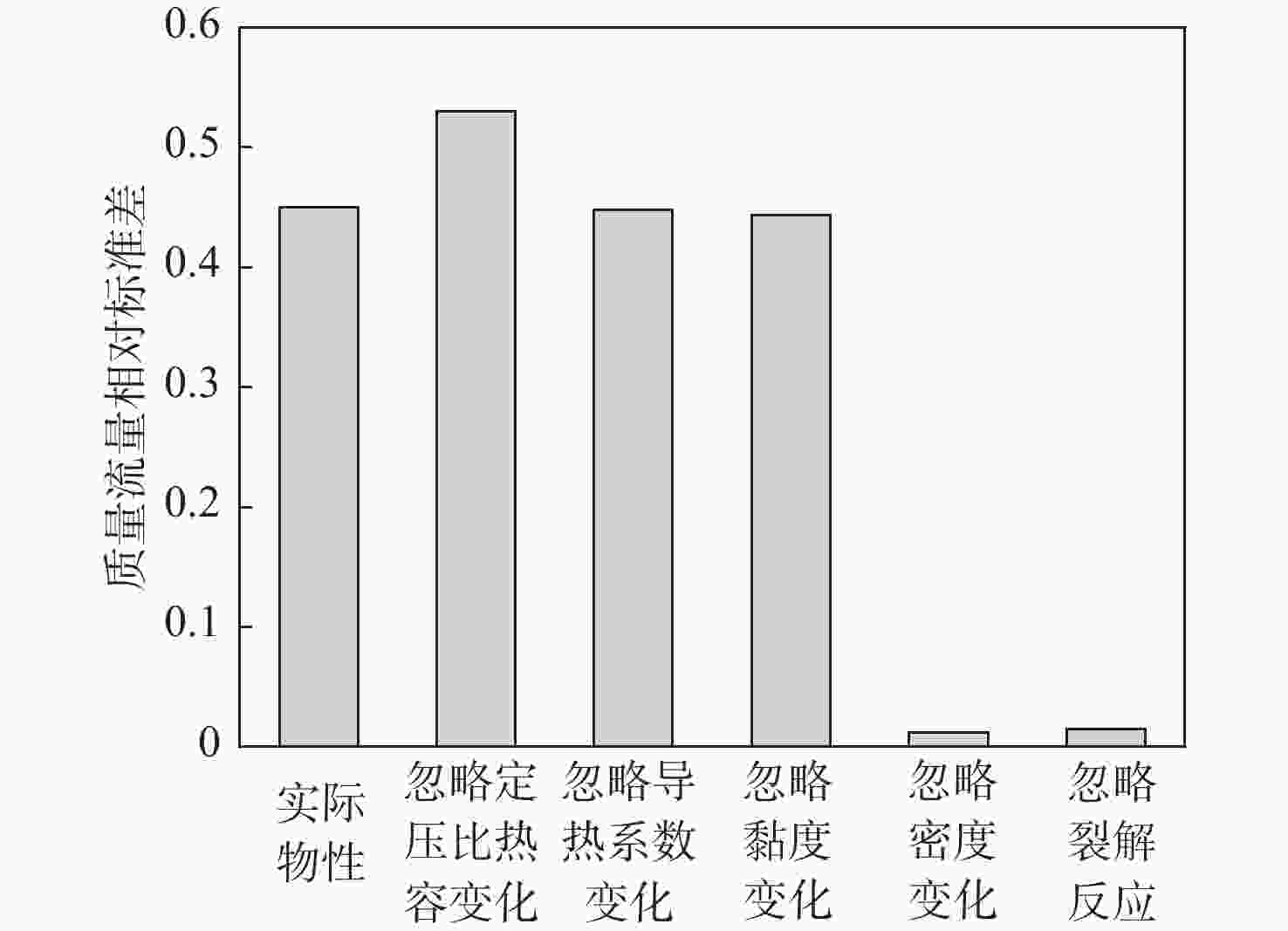
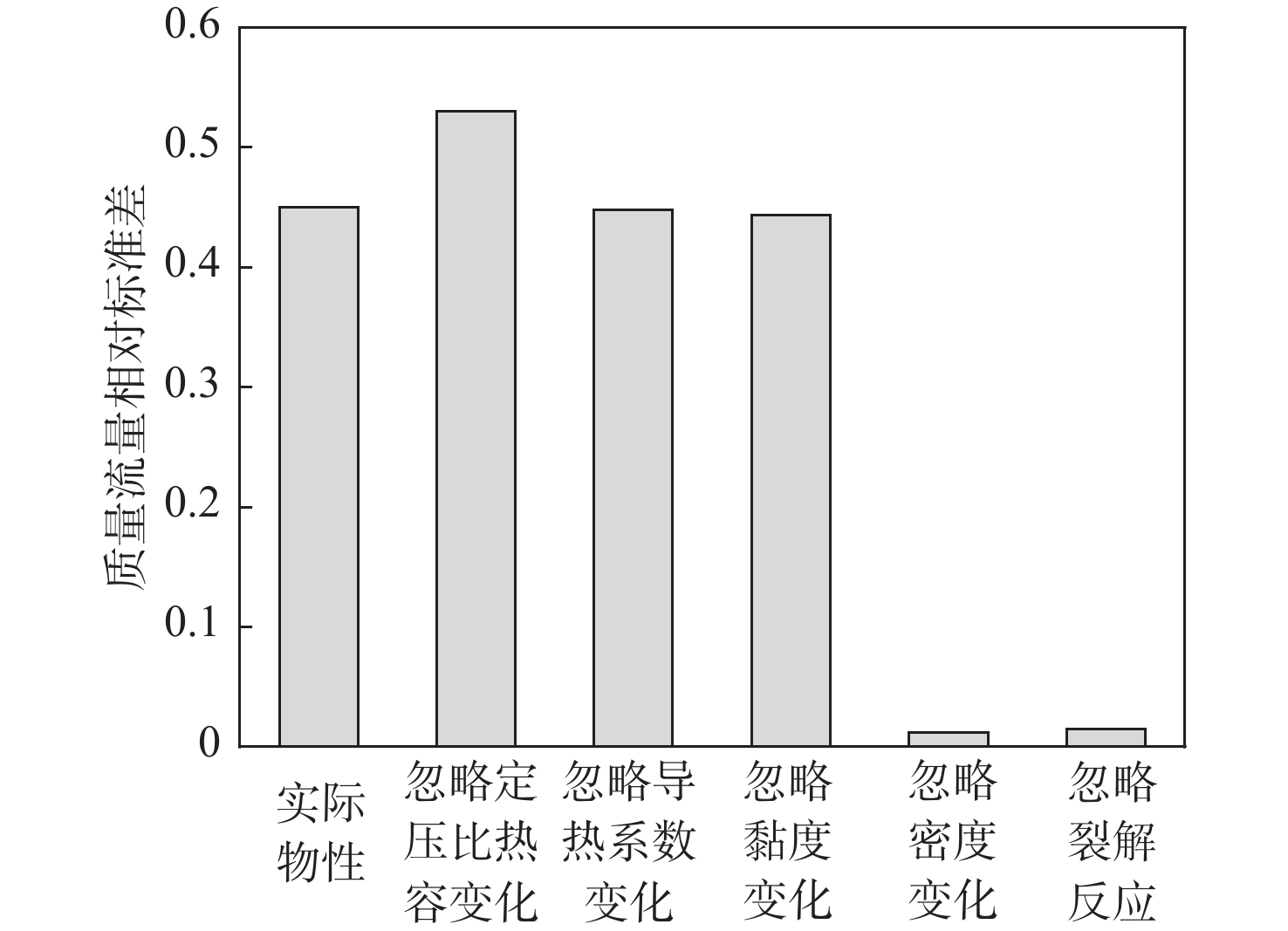
图 14 工况A1~A6下质量流量相对标准差的分布
Figure 14. Relative standard deviation of mass flow rate under condition A1−A6
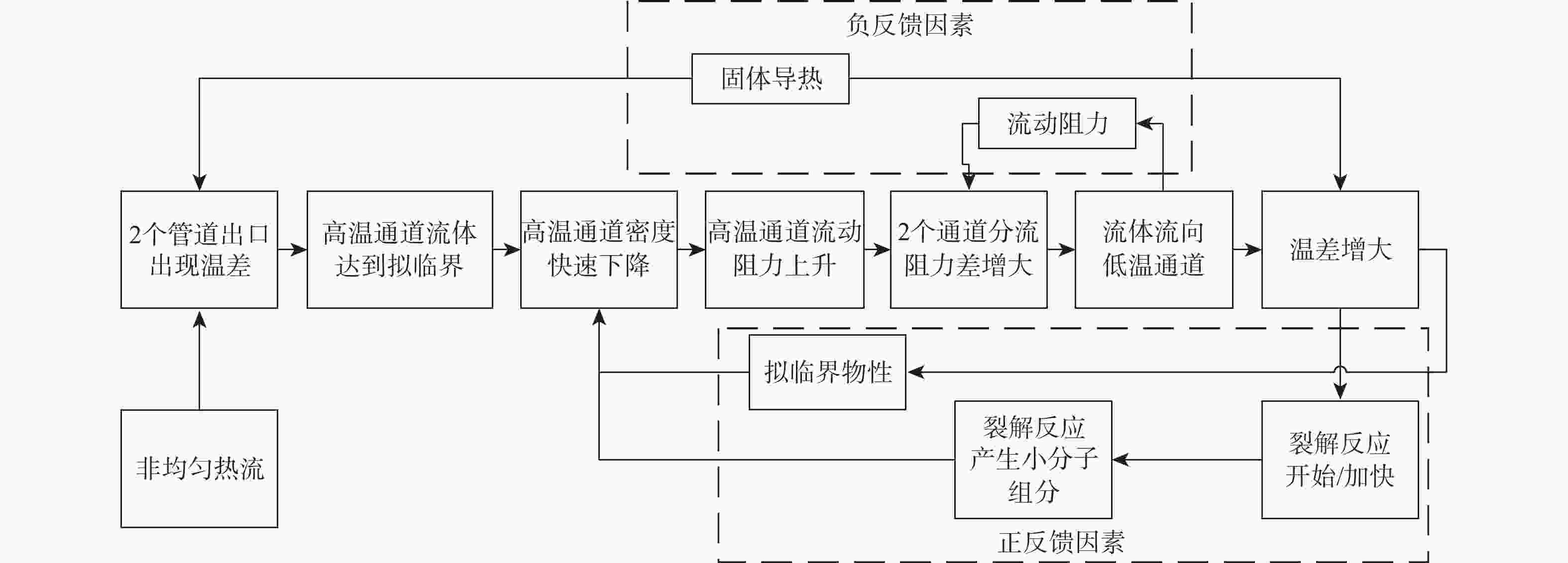
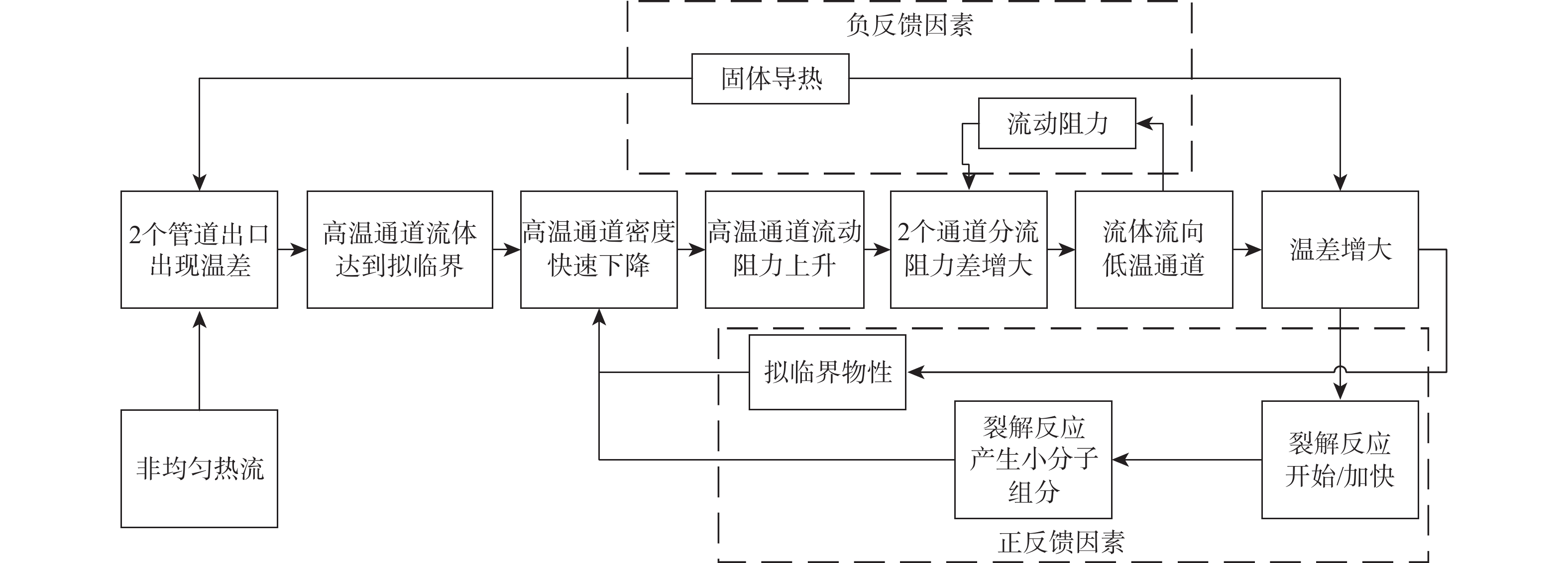
图 15 超临界燃油在并联双管中的质量流量分配机理
Figure 15. Flow distribution mechanism of supercritical fuel oil in parallel tubes
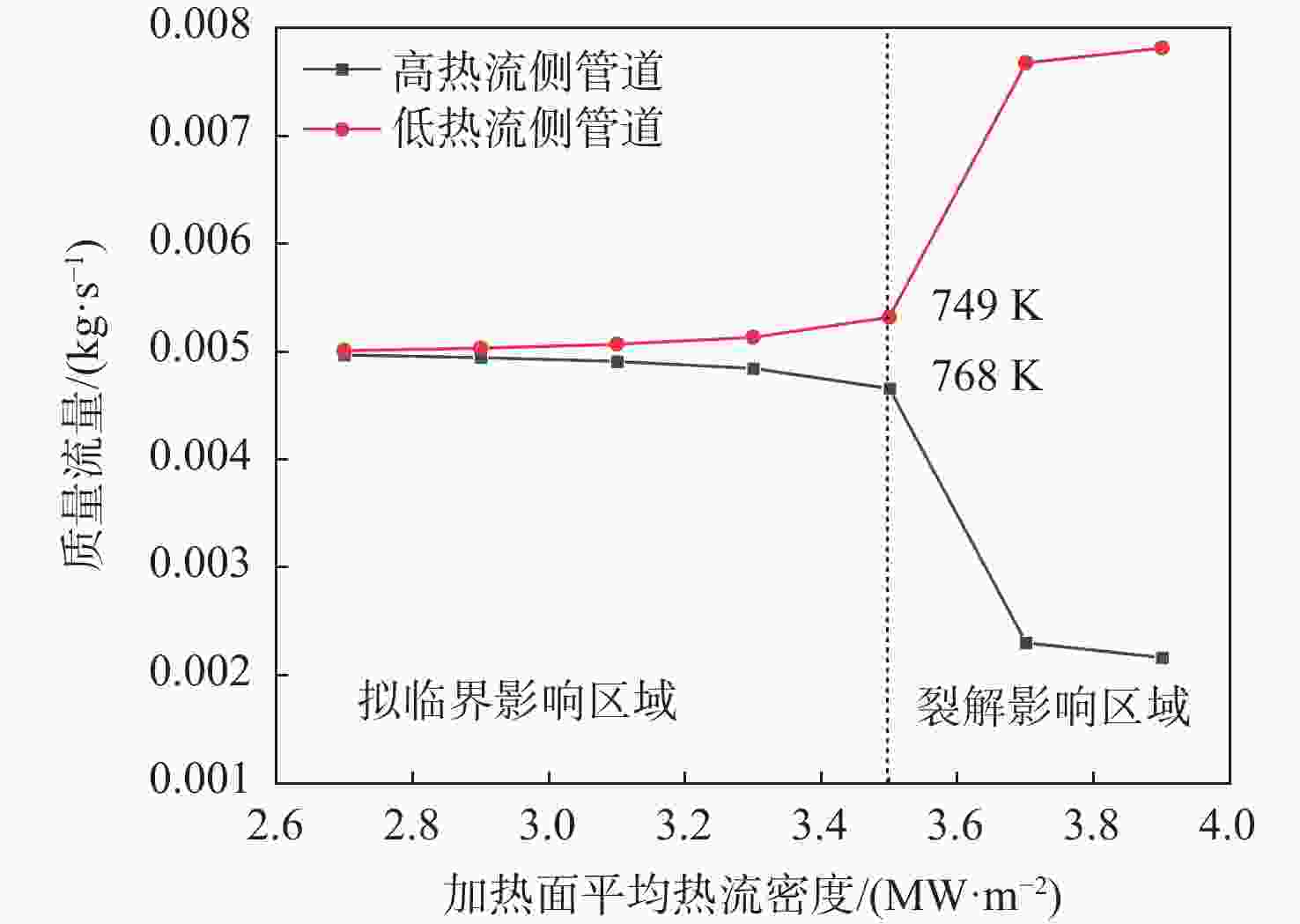
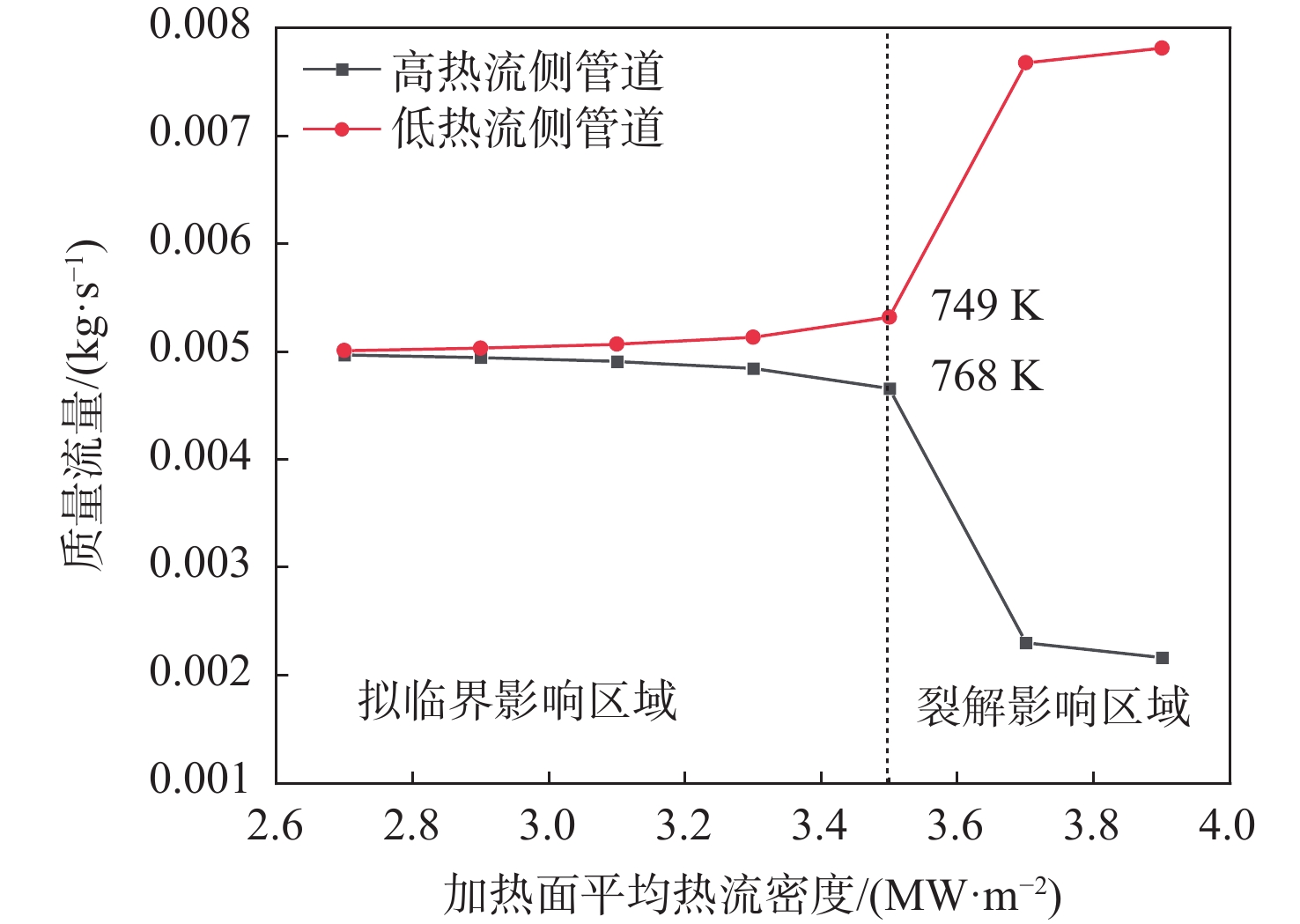
图 16 分支管质量流量随平均热流密度的变化
Figure 16. Variation of mass flow distribution of branch tubes with average heat flux
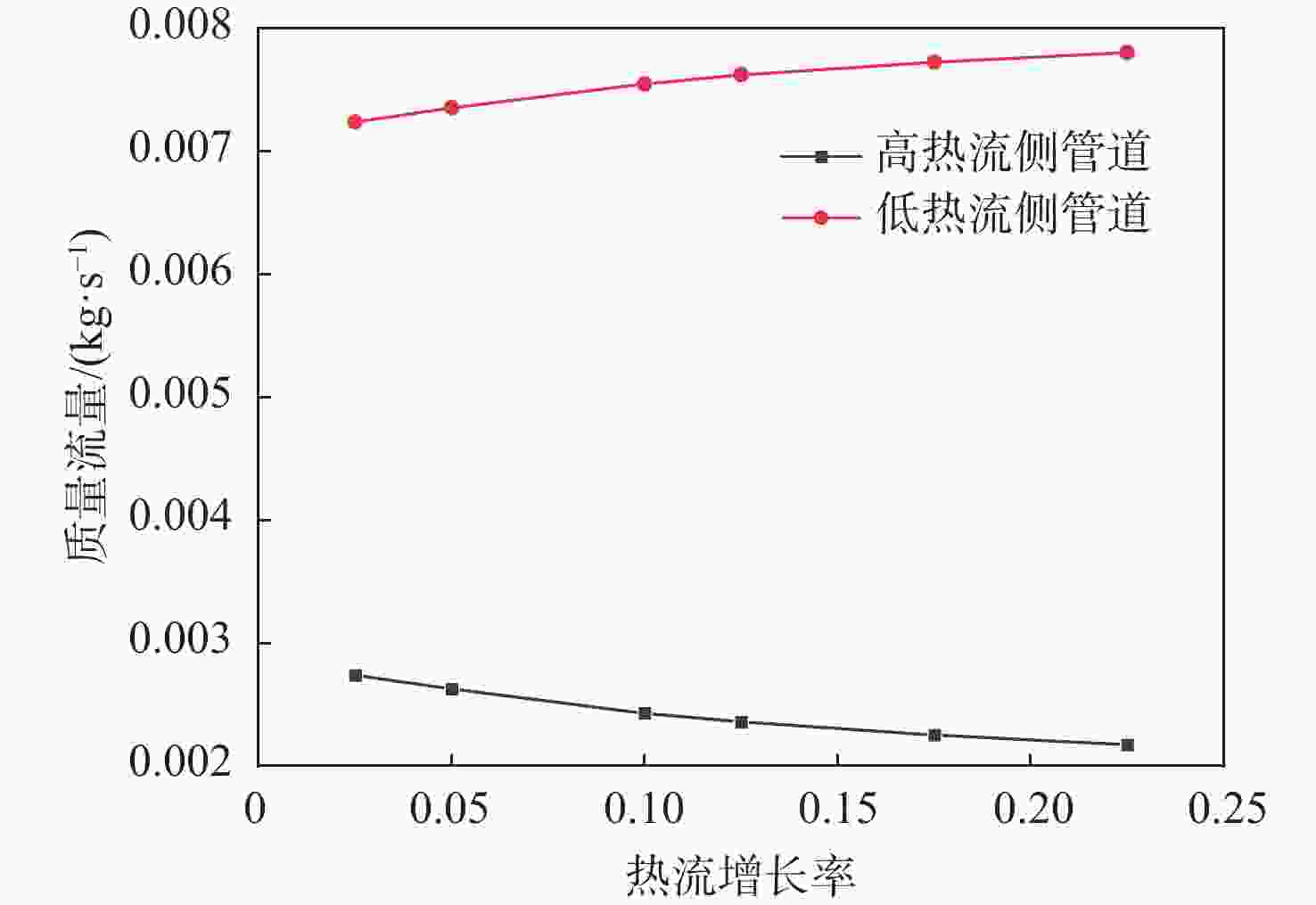
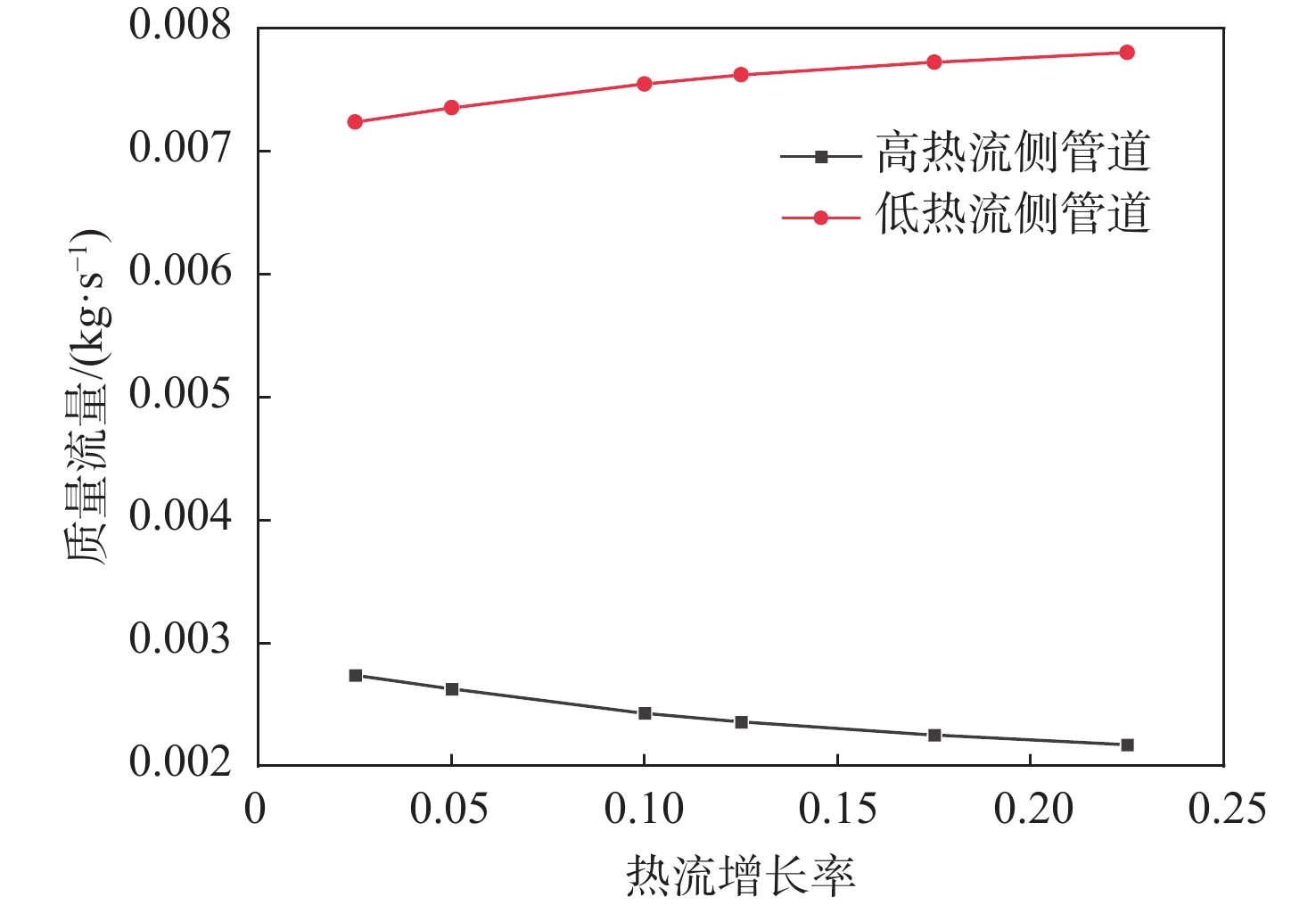
图 17 分支管质量流量随热流增长率的变化
Figure 17. Variation of mass flow rate with heat flux growth rate of branch tubes
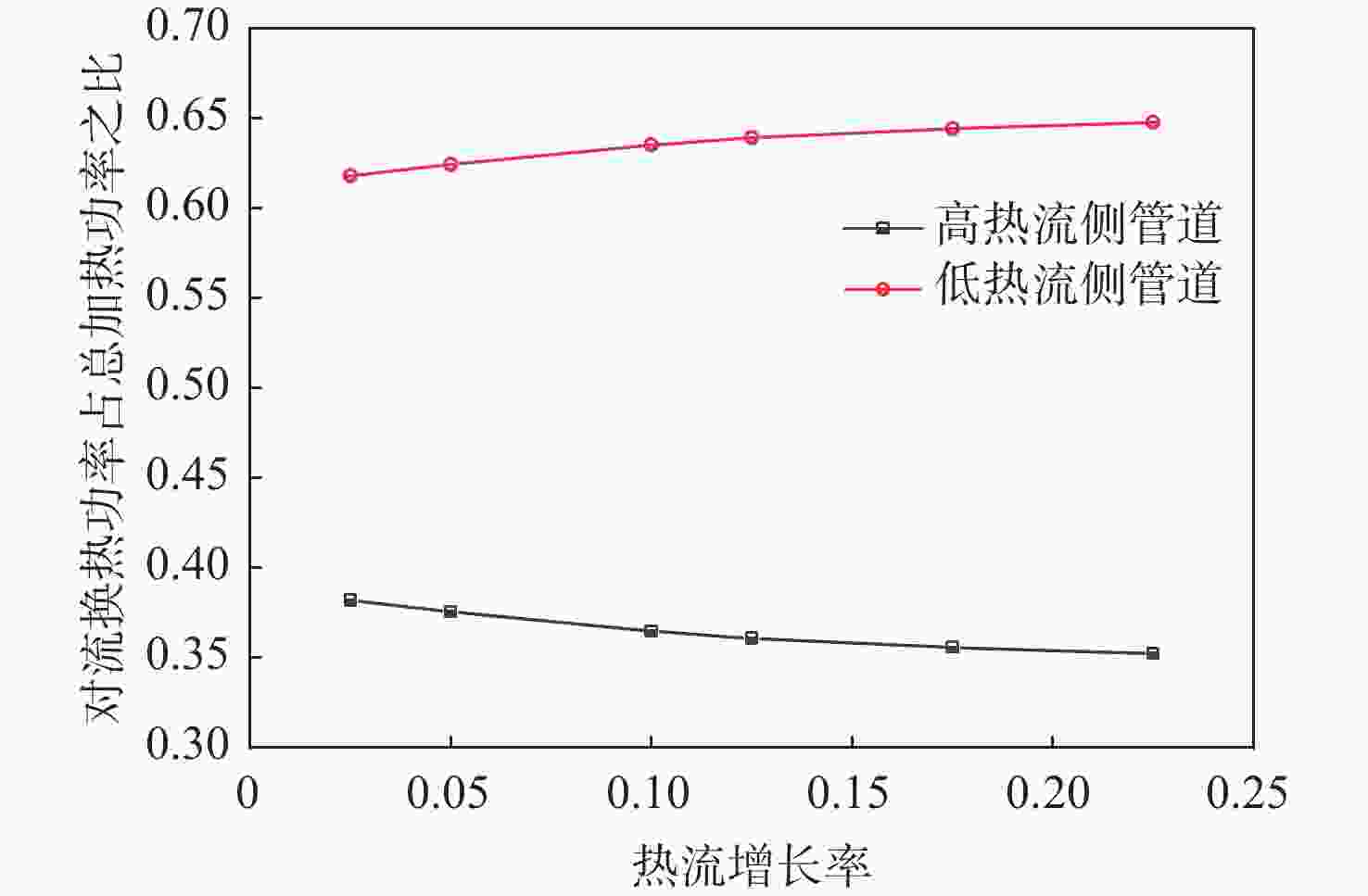
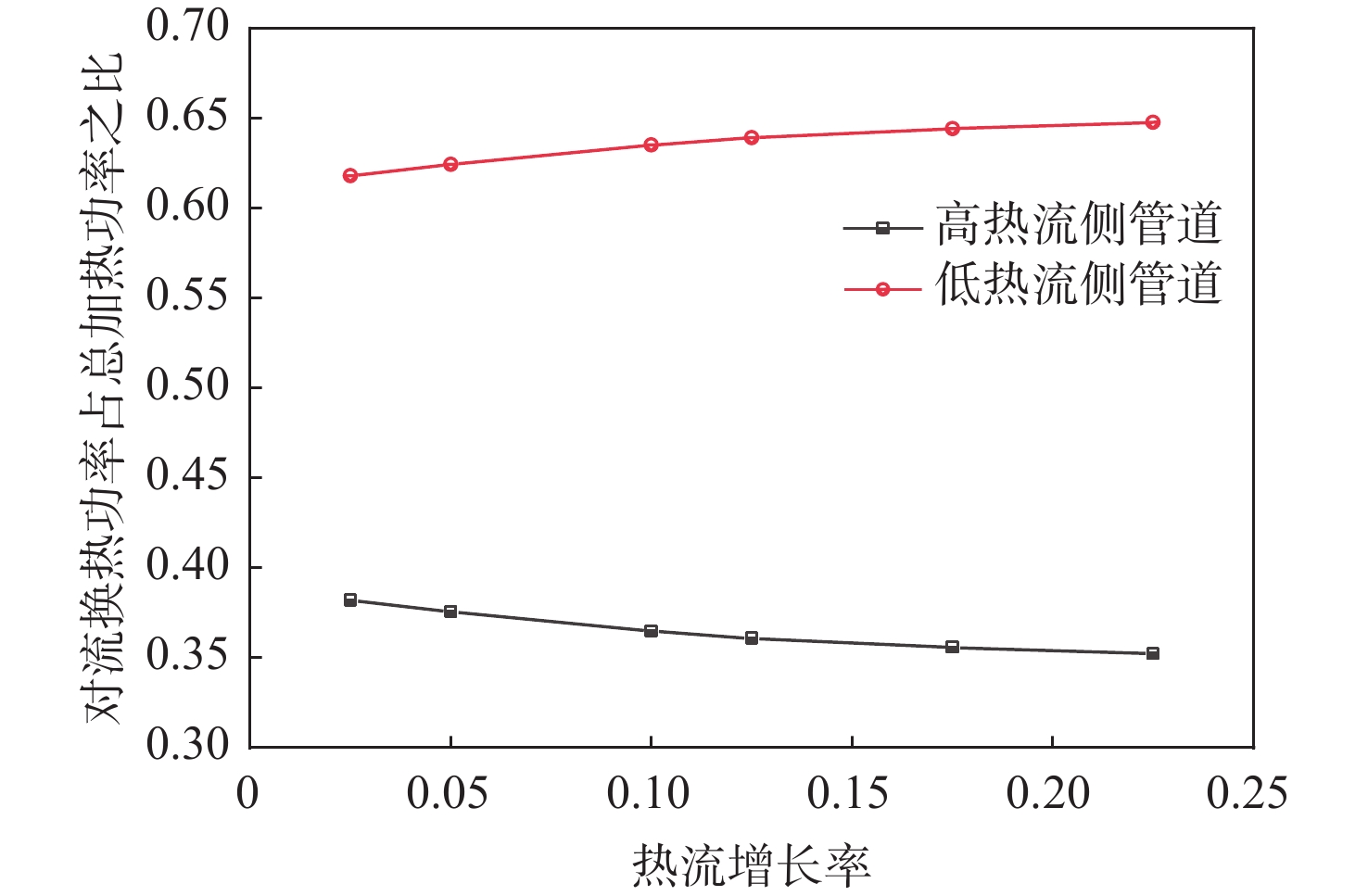
图 18 分支管对流换热功率占总加热功率之比随热流增长率的变化
Figure 18. Variation of the ratio between convection heat transfer power and total heating power with heat flux growth rate of branch tubes
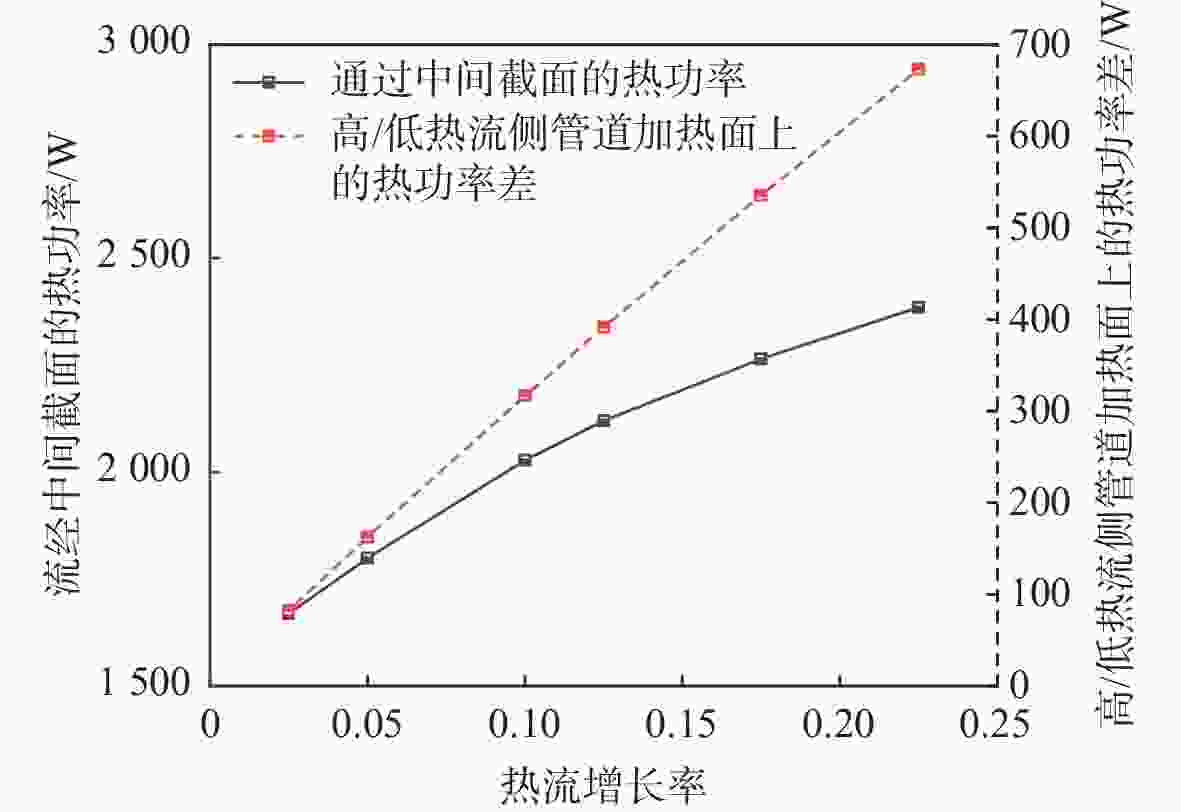
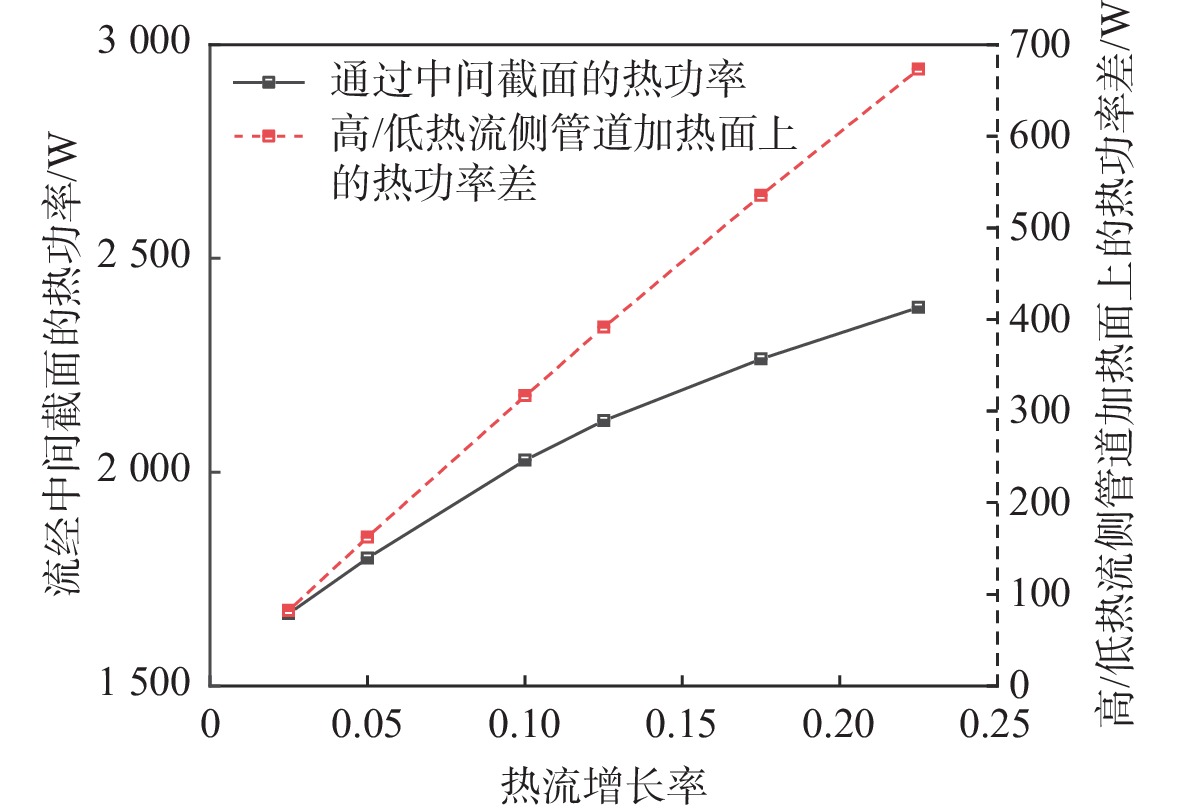
图 19 通过中间截面的热功率及加热面的热功率差随热流增长率的变化
Figure 19. Variation of thermal power passing through the middle section and thermal power difference at heating surface with heat flux growth rate
表 1 边界条件
Table 1. Boundary conditions
工况
组平均热流密度/
(MW·m−2)热流
增长率冷却工质入口
速度/(m·s−1)冷却工质
入口温度/K稳态/
瞬态A 3.7 0.1 1.8 300 瞬态 B 3.7 0.025~0.225 1.8 300 稳态 C 2.7~3.9 0.1 1.8 300 稳态  下载: 导出CSV
表 3 工况组A仿真的物性计算方式
Table 3. Physical property calculation method of group A simulation
工况 裂解 定压比热容 导热系数 黏度 密度 A1 √ 混合物 混合物 混合物 混合物 A2 √ RP-3 混合物 混合物 混合物 A3 √ 混合物 RP-3 混合物 混合物 A4 √ 混合物 混合物 RP-3 混合物 A5 √ 混合物 混合物 混合物 RP-3 A6 × RP-3 RP-3 RP-3 RP-3
下载: 导出CSV
-
[1] 张丽静, 刘东升, 于存贵, 等. 高超声速飞行器[J]. 航空兵器, 2010, 17(2): 13-16.ZHANG L J, LIU D S, YU C G, et al. Hypersonic vehicle[J]. Aero Weaponry, 2010, 17(2): 13-16(in Chinese). [2] 王振国, 梁剑寒, 丁猛, 等. 高超声速飞行器动力系统研究进展[J]. 力学进展, 2009, 39(6): 716-739.WANG Z G, LIANG J H, DING M, et al. A review on hypersonic airbreathing propulsion system[J]. Advances in Mechanics, 2009, 39(6): 716-739(in Chinese). [3] 刘世俭, 刘兴洲. 超燃冲压发动机可贮存碳氢燃料再生主动冷却换热过程分析[J]. 飞航导弹, 2009(3): 48-52.LIU S J, LIU X Z. Analysis of regenerative active cooling heat transfer process of storable hydrocarbon fuel in scramjet[J]. Winged Missiles Journal, 2009(3): 48-52(in Chinese). [4] LIU J L, LI H X, LEI X L, et al. An improved model on flow distributions of supercritical pressure water in parallel heated pipes[J]. Applied Thermal Engineering, 2018, 130: 793-803. [5] BAJURA R A, JONES E H J. Flow distribution manifolds[J]. Journal of Fluids Engineering, 1976, 98(4): 654-665. [6] CAMILLERI R, HOWEY D A, MCCULLOCH M D. Predicting the flow distribution in compact parallel flow heat exchangers[J]. Applied Thermal Engineering, 2015, 90: 551-558. [7] JIANG Y G, XU Y X, ZHANG S L, et al. Parametric study on the distribution of flow rate and heat sink utilization in cooling channels of advanced aero-engines[J]. Energy, 2017, 138: 1056-1068. [8] JIANG Y G, ZHANG S L, FENG Y, et al. A control method for flow rate distribution of cracked hydrocarbon fuel in parallel channels[J]. Applied Thermal Engineering, 2016, 105: 531-536. [9] JIANG Y G, QIN J, CHETEHOUNA K, et al. Parametric study on the hydrocarbon fuel flow rate distribution and cooling effect in non-uniformly heated parallel cooling channels[J]. International Journal of Heat and Mass Transfer, 2018, 126: 267-276. [10] 姜俞光. 热裂解型碳氢燃料并联通道流量分配及偏差抑制研究[D]. 哈尔滨: 哈尔滨工业大学, 2018.JIANG Y G. Investigation of endothermic hydrocarbon fuel flow distribution characteristics and flow deviation control[D]. Harbin: Harbin Institute of Technology, 2018(in Chinese). [11] ZHANG C, YAO Z L, QIN J, et al. Experimental study on measurement and calculation of heat flux in supersonic combustor of scramjet[J]. Journal of Thermal Science, 2015, 24(3): 254-259. [12] CHEN Y, LEI Z L, ZHANG T H, et al. Flow distribution of hydrocarbon fuel in parallel minichannels heat exchanger[J]. AIChE Journal, 2018, 64(7): 2781-2791. [13] MA T, ZHANG P, SHI H N, et al. Prediction of flow maldistribution in printed circuit heat exchanger[J]. International Journal of Heat and Mass Transfer, 2020, 152: 119560. [14] ZHANG W Q, LI A G, GAO R, et al. Effects of geometric structures on flow uniformity and pressure drop in dividing manifold systems with parallel pipe arrays[J]. International Journal of Heat and Mass Transfer, 2018, 127: 870-881. [15] JING T T, HE G Q, QIN F, et al. An innovative self-adaptive method for improving heat sink utilization efficiency of hydrocarbon fuel in regenerative thermal protection system of combined cycle engine[J]. Energy Conversion and Management, 2018, 178: 369-382. [16] CHEN Y, LIU B, LEI Z L, et al. A control method for flow distribution in fuel-cooled plate based on choked flow effect[J]. Applied Thermal Engineering, 2018, 142: 127-137. [17] TAO Z, CHENG Z Y, ZHU J Q, et al. Effect of turbulence models on predicting convective heat transfer to hydrocarbon fuel at supercritical pressure[J]. Chinese Journal of Aeronautics, 2016, 29(5): 1247-1261. [18] LI Y, SUN F, XIE G N, et al. Numerical analysis of supercritical n-decane upward flow and heat transfer characteristics in the buffer layer of a vertical tube[J]. Numerical Heat Transfer, Part A: Applications, 2020, 77(3): 247-265. [19] ZHONG F Q, FAN X J, YU G, et al. Thermal cracking of aviation kerosene for scramjet applications[J]. Science in China Series E: Technological Sciences, 2009, 52(9): 2644-2652. [20] JIANG R P, LIU G Z, ZHANG X W. Thermal cracking of hydrocarbon aviation fuels in regenerative cooling microchannels[J]. Energy & Fuels, 2013, 27(5): 2563-2577. [21] 阮波, 孟华. 裂解吸热反应对乙烷超临界传热的影响[J]. 工程热物理学报, 2012, 33(1): 121-124.RUAN B, MENG H. Effects of endothermic cracking on supercritical heat transfer of ethane[J]. Journal of Engineering Thermophysics, 2012, 33(1): 121-124(in Chinese). [22] 阮波, 孟华. 碳氢燃料裂解吸热反应及超临界传热现象数值模型的构建与验证[J]. 航空学报, 2011, 32(12): 2220-2226.RUAN B, MENG H. Numerical model development and validation for hydrocarbon fuel supercritical heat transfer with endothermic pyrolysis[J]. Acta Aeronautica et Astronautica Sinica, 2011, 32(12): 2220-2226(in Chinese). [23] 徐可可. 航空煤油RP-3超临界压力湍流传热和裂解吸热现象的数值模拟研究[D]. 杭州: 浙江大学, 2017.XU K K. Numerical studies of turbulent heat transfer and endothermic pyrolysis of aviation kerosene RP-3 at supercritical pressures[D]. Hangzhou: Zhejiang University, 2017(in Chinese) . [24] RUAN B, MENG H, YANG V. Simplification of pyrolytic reaction mechanism and turbulent heat transfer of n-decane at supercritical pressures[J]. International Journal of Heat and Mass Transfer, 2014, 69: 455-463. [25] XU K K, MENG H. Modeling and simulation of supercritical-pressure turbulent heat transfer of aviation kerosene with detailed pyrolytic chemical reactions[J]. Energy & Fuels, 2015, 29(7): 4137-4149. [26] YOUNGLOVE B A, ELY J F. Thermophysical properties of fluids. II. Methane, ethane, propane, isobutane, and normal butane[J]. Journal of Physical and Chemical Reference Data, 1987, 16(4): 577-798. [27] HUBER M L. Properties of fluids, the correlation, prediction and estimation[M]. Cambridge: Cambridge University Press, 1996. [28] HUBER M L. NIST thermophysical properties of hydrocarbon mixtures database (SUPERSTRAPP)–Version 3.2[M]. Gaithersburg: National Institute of Standards and Technology, 2007. [29] 程泽源, 朱剑琴. 低裂解度正癸烷物性快速计算方法[J]. 推进技术, 2016, 37(8): 1586-1593.CHENG Z Y, ZHU J Q. Fast calculation method on physical properties in mild cracking of decane[J]. Journal of Propulsion Technology, 2016, 37(8): 1586-1593(in Chinese). [30] 程泽源, 朱剑琴, 金钊. 吸热型碳氢燃料RP-3替代模型研究[J]. 航空动力学报, 2016, 31(2): 391-398.CHENG Z Y, ZHU J Q, JIN Z. Study on surrogate model of endothermic hydrocarbon fuel RP-3[J]. Journal of Aerospace Power, 2016, 31(2): 391-398(in Chinese). [31] LI Z Z, LI Y, ZHANG X W, et al. Coupling of pyrolysis and heat transfer of supercritical hydrocarbon fuel in rectangular minichannels[J]. Chemical Engineering Science, 2022, 247: 116924. [32] ZHU K, XU G Q, TAO Z, et al. Flow frictional resistance characteristics of kerosene RP-3 in horizontal circular tube at supercritical pressure[J]. Experimental Thermal and Fluid Science, 2013, 44: 245-252. -

 下载:
下载:

 点击查看大图
计量
- 文章访问数: 231
- HTML全文浏览量: 110
- PDF下载量: 6
- 被引次数: 0
