





Investigation into characteristics of double-lip cascade boot-shaped reciprocating seals in differential-connection working conditions of hydraulic actuators
-
摘要:
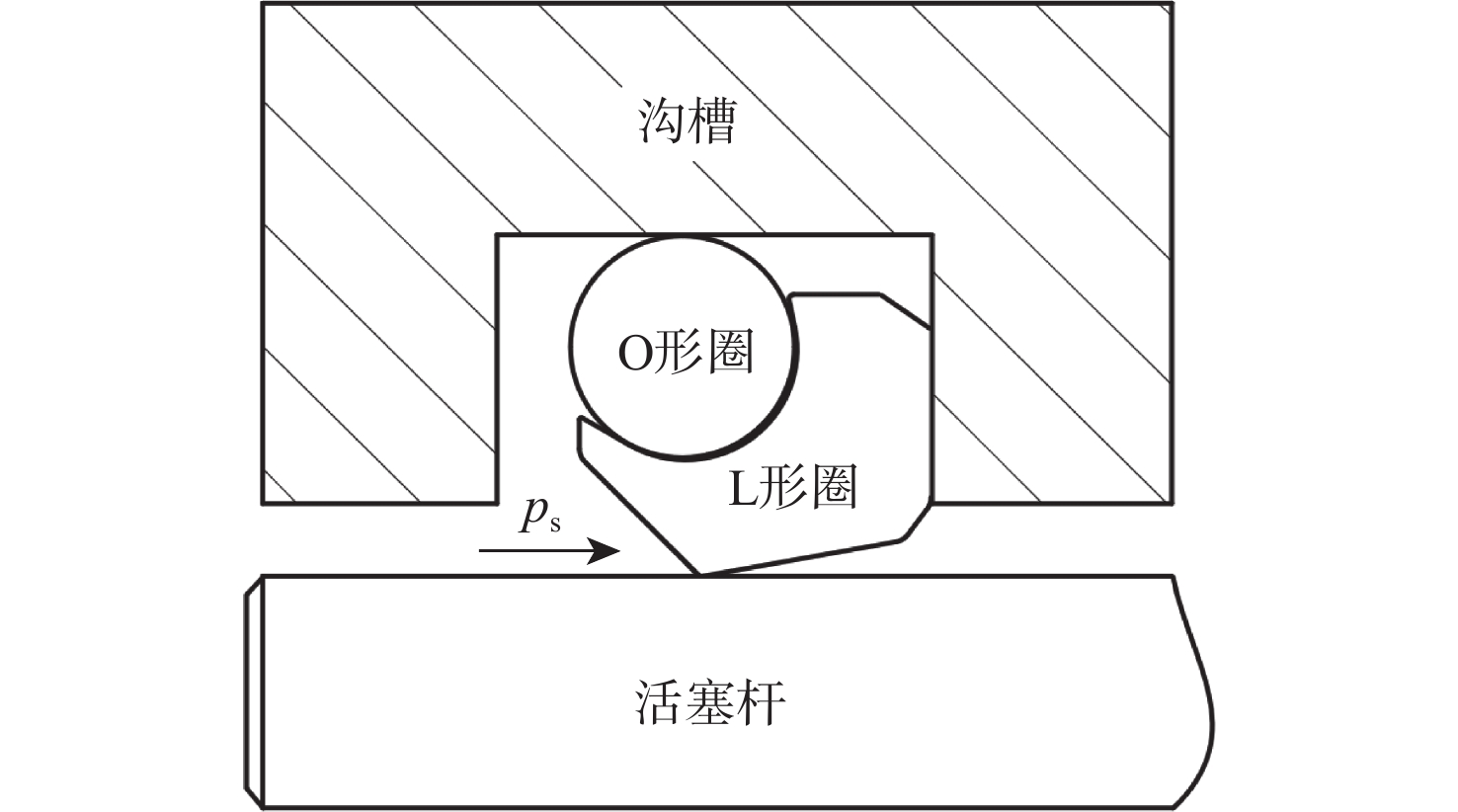
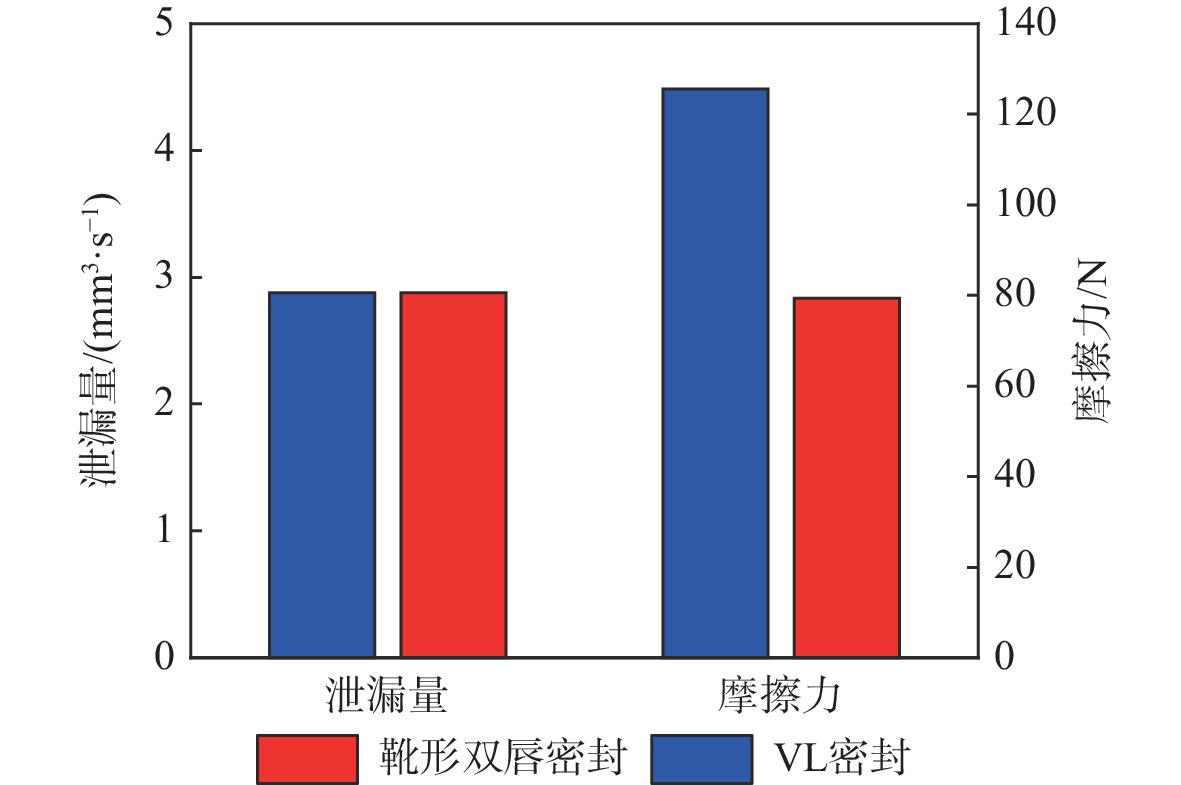
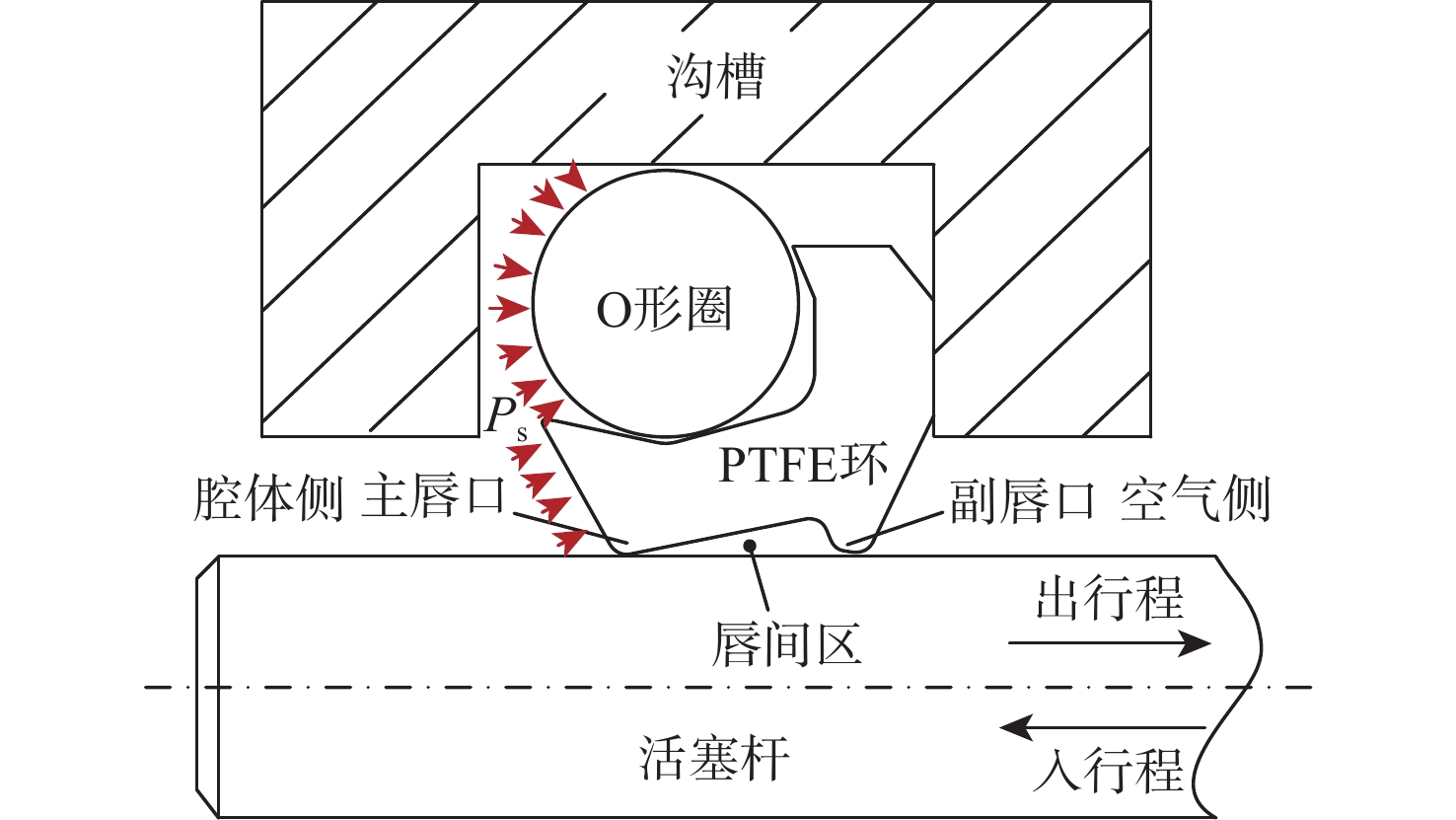
液压作动器差动连接方式使活塞杆处往复密封工况更加恶劣,摩擦力增大,发生倾覆几率大幅度提高。常规单唇口往复密封无法满足高可靠密封要求,以双唇级联靴形往复密封为研究对象,基于软弹流理论,融合有限元软件与数值编程迭代方法,利用流体运输速率守恒准则迭代更新唇间压力,研究差动连接工况下双唇级联靴形往复密封的界面特性,对比双唇级联靴形往复密封与传统VL密封在差动连接工况下的摩擦与泄漏性能。结果表明:双唇级联靴形往复密封的主唇口主要起防止油液泄漏的密封作用,副唇口主要起支撑作用,增强密封结构稳定性;唇间压力有助于减小接触力和摩擦力;差动连接工况条件下,保持相同密封性能(泄漏量),与传统VL密封相比,双唇级联靴形往复密封主唇口的摩擦力下降了36.87%,能够有效减轻唇口磨损,减少差动连接工况中发生倾覆的几率。
Abstract:The differential connection of the hydraulic actuator deteriorates the working conditions of reciprocating seals at the piston rod, increasing the friction, as well as the chance of overturning. The conventional single-lip reciprocating seal can not meet the requirements of high-reliability seal. The double-lip cascade boot-shaped reciprocating seal was taken as the research object in this paper. This study used the fluid transport velocity conservation criterion to iteratively update the inter-lip pressure and investigate the interface characteristics of the double-lip cascade boot-shaped reciprocating seal under differential working conditions. It was based on the soft elastic flow theory and connected the numerical programming iterative method with the finite element software. The performance of the double-lip cascade boot-shaped reciprocating seal were was compared with that of the traditional VL seal in the same differential working condition. According to the findings, the primary lip of the double-lip cascade boot-shaped reciprocating seal primarily serves to seal and stop oil leaks, while the secondary lip primarily supports and strengthens the sealing structure. The inter-lip pressure helps to reduce the contact force and friction. Under the same differential working conditions, compared with that of the traditional VL seal, the friction of the primary lip of the double-lip cascade boot reciprocating seal is reduced by 36.87%, which can effectively reduce the wear of the lip and the chance of overturning in differential working conditions.
-
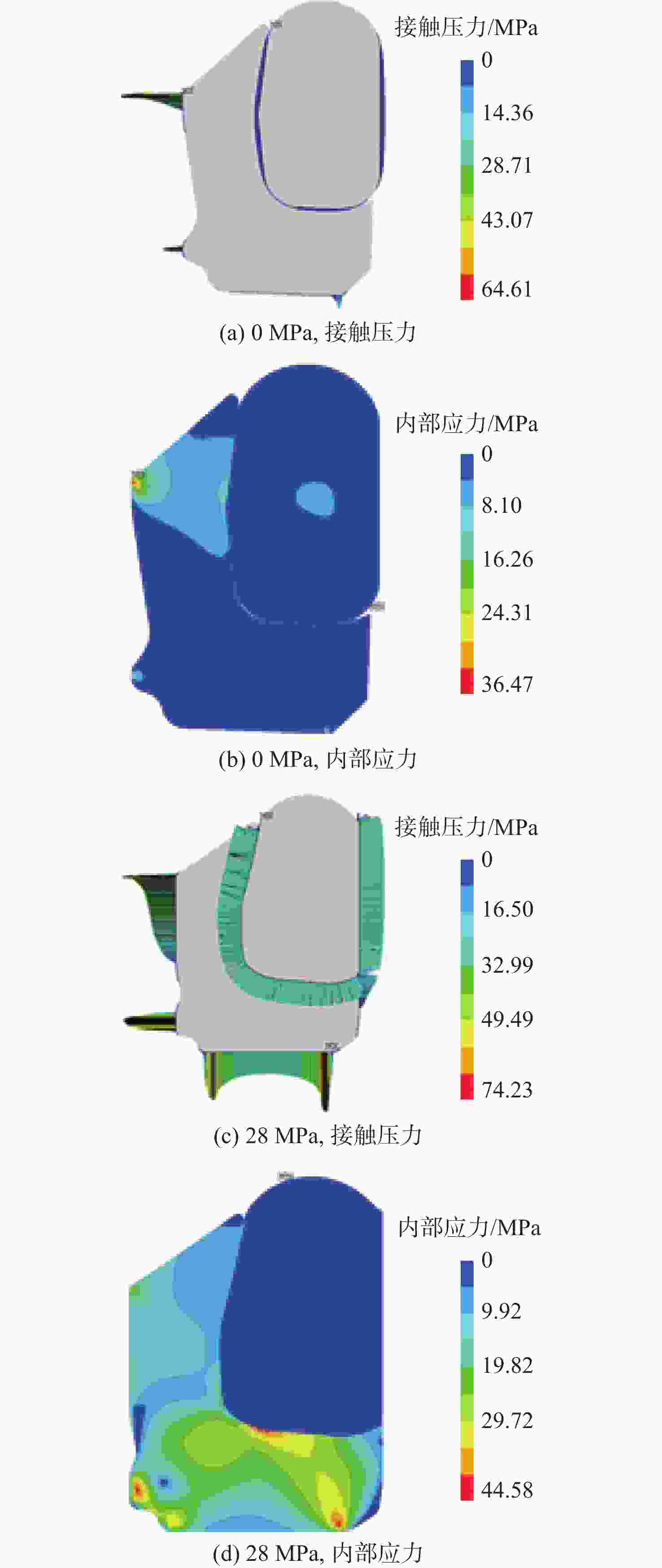
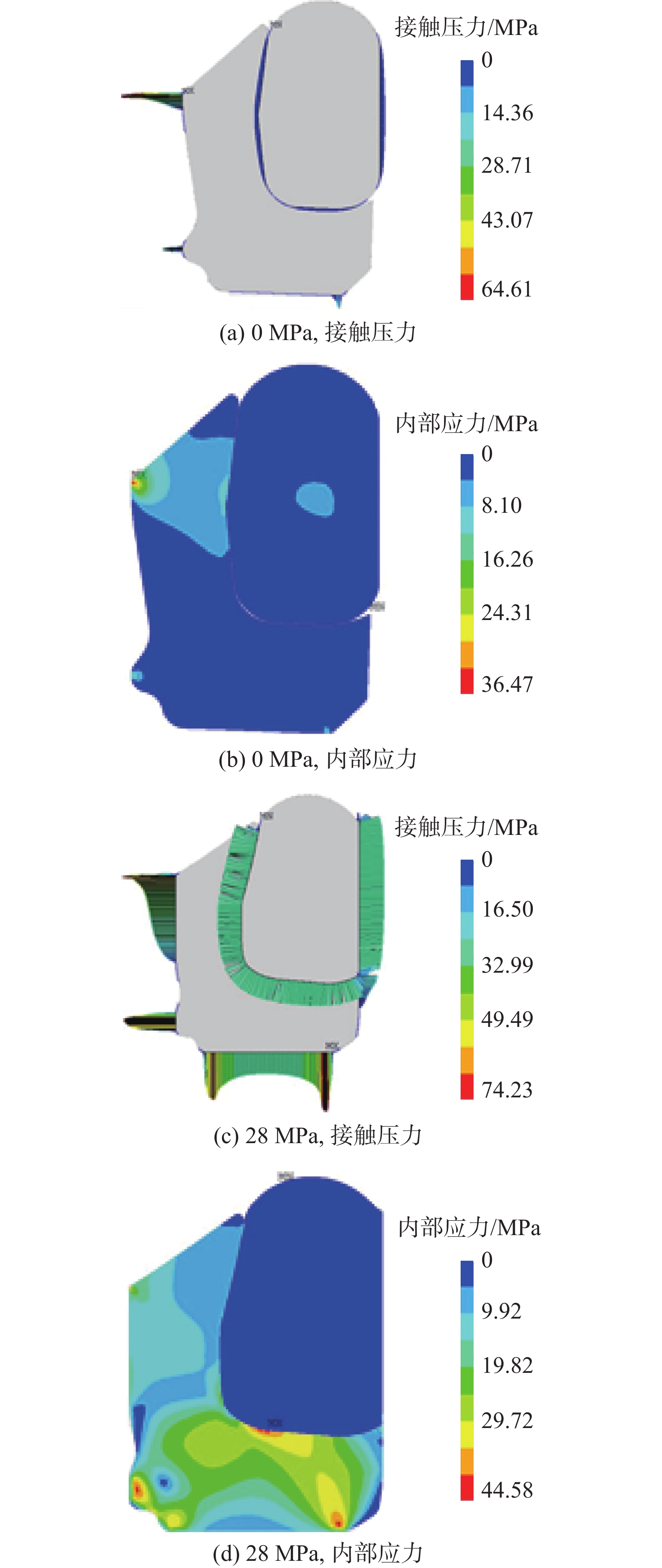
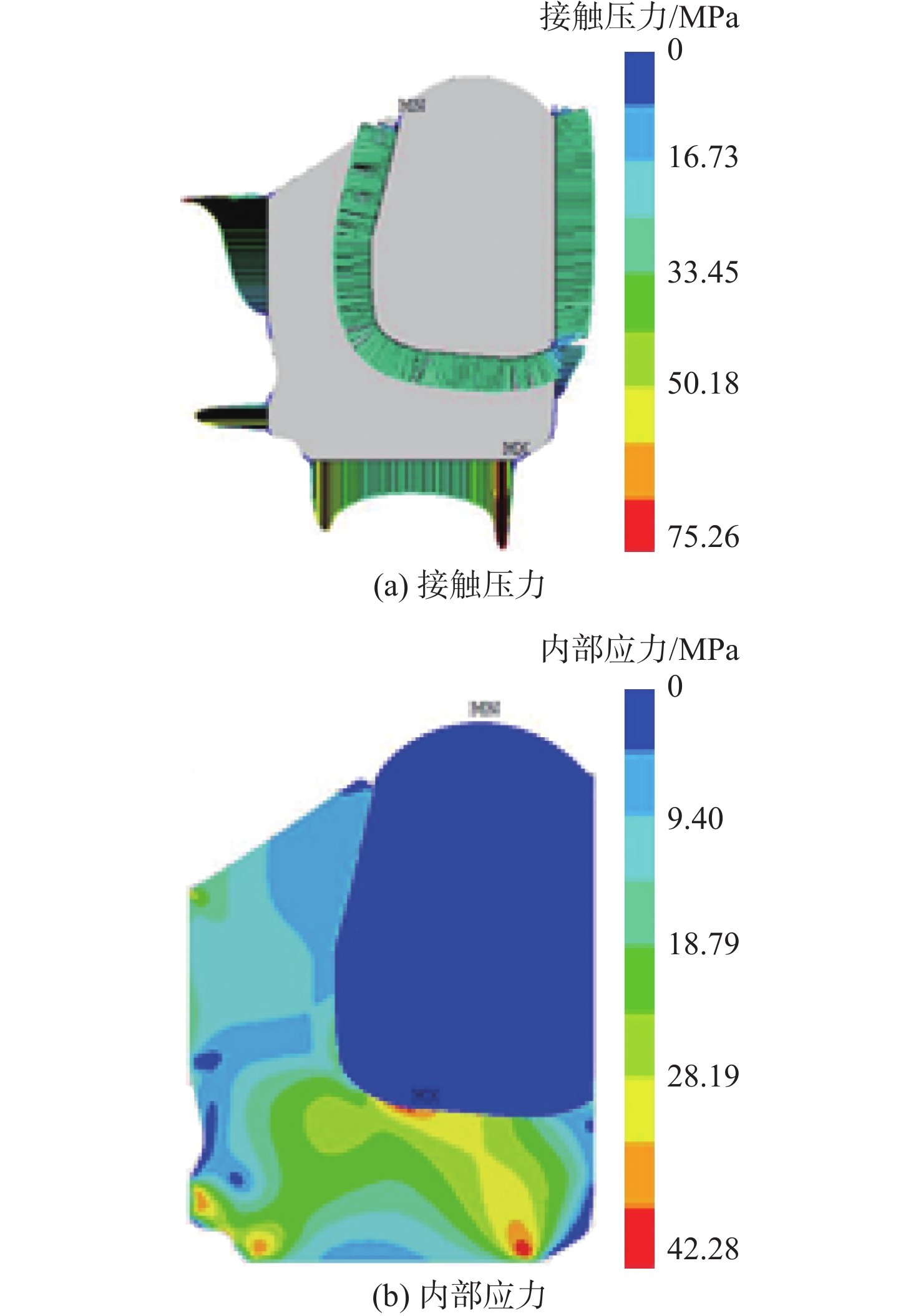
图 5 初始阶段下的接触压力和内部应力分布
Figure 5. Distribution of contact pressure and internal stress in initial stage
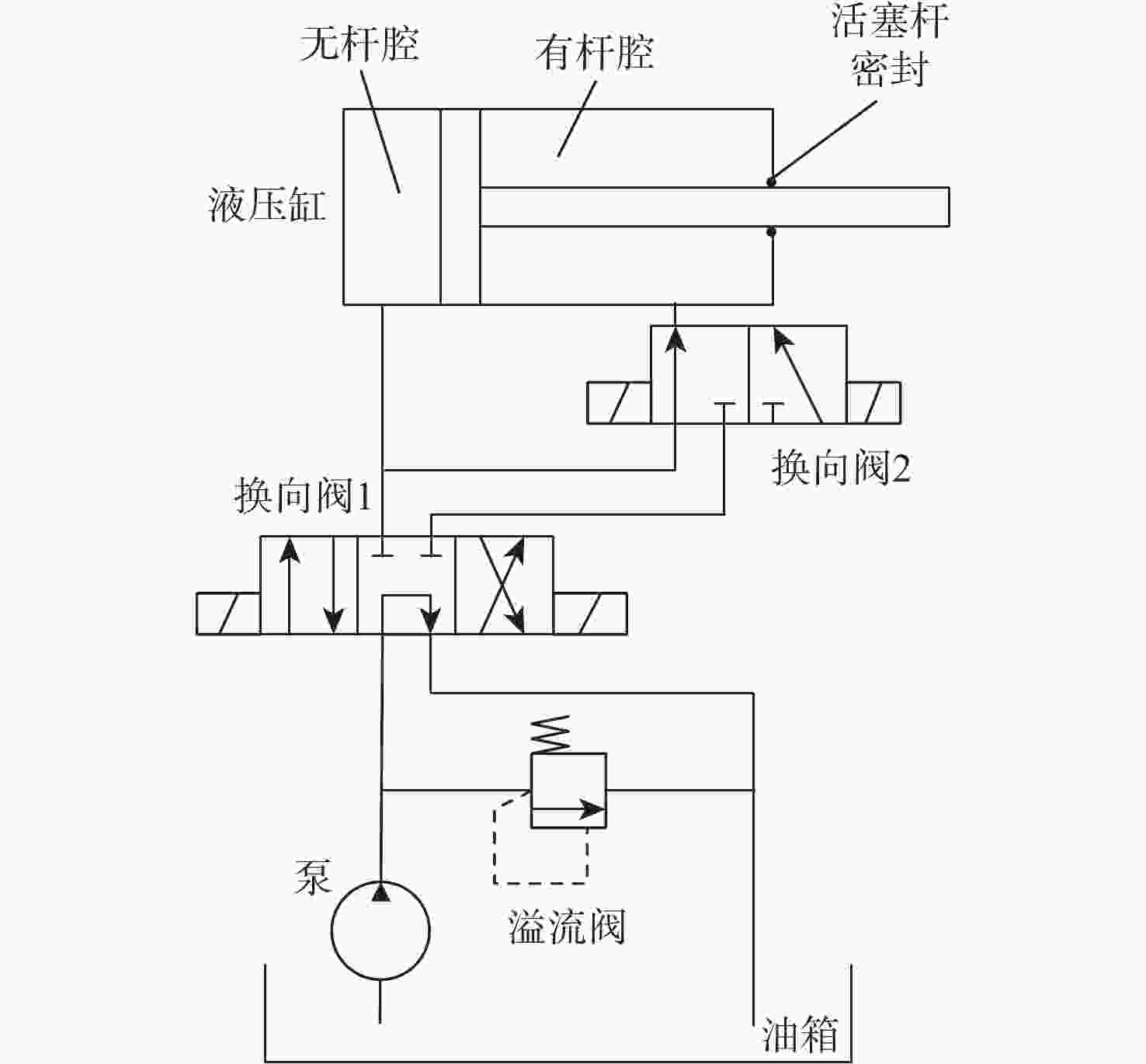
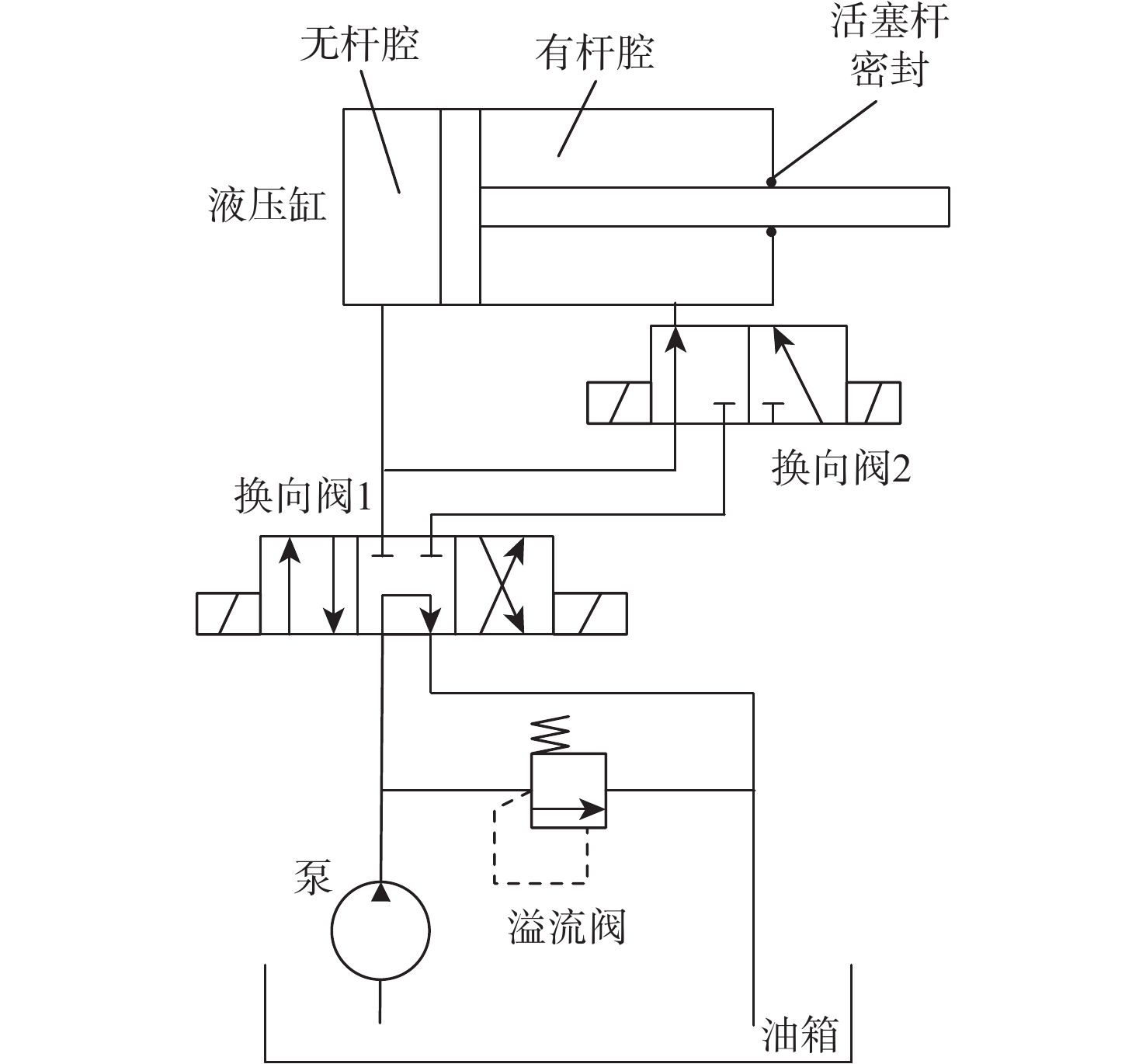
图 7 作动器在不同状态下的液压回路
Figure 7. Hydraulic circuit for cylinder in different working states
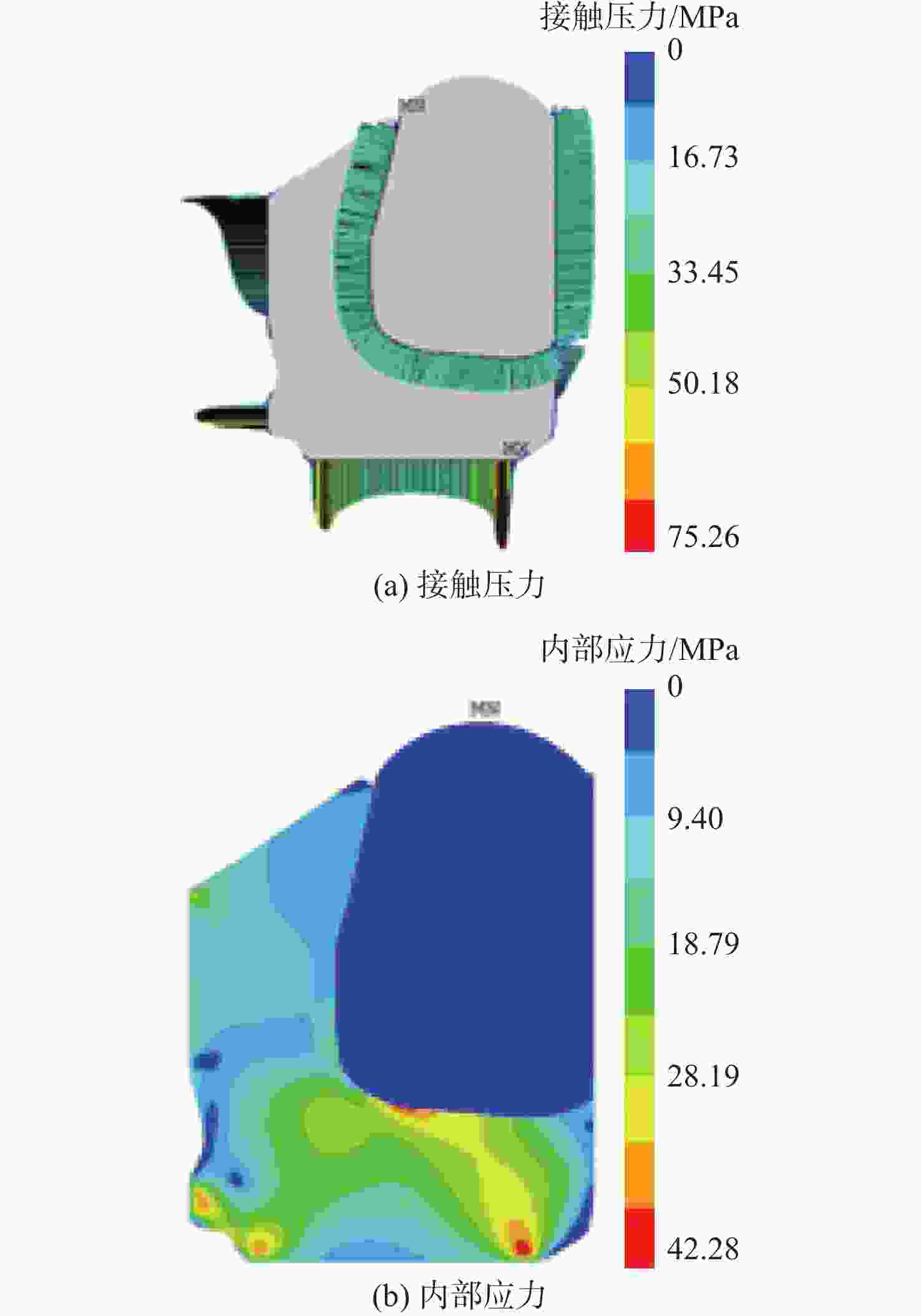
图 8 唇间压力稳定后的接触压力和内部应力分布
Figure 8. Distribution of contact pressure and internal stress after inter-lip pressure is stabilized
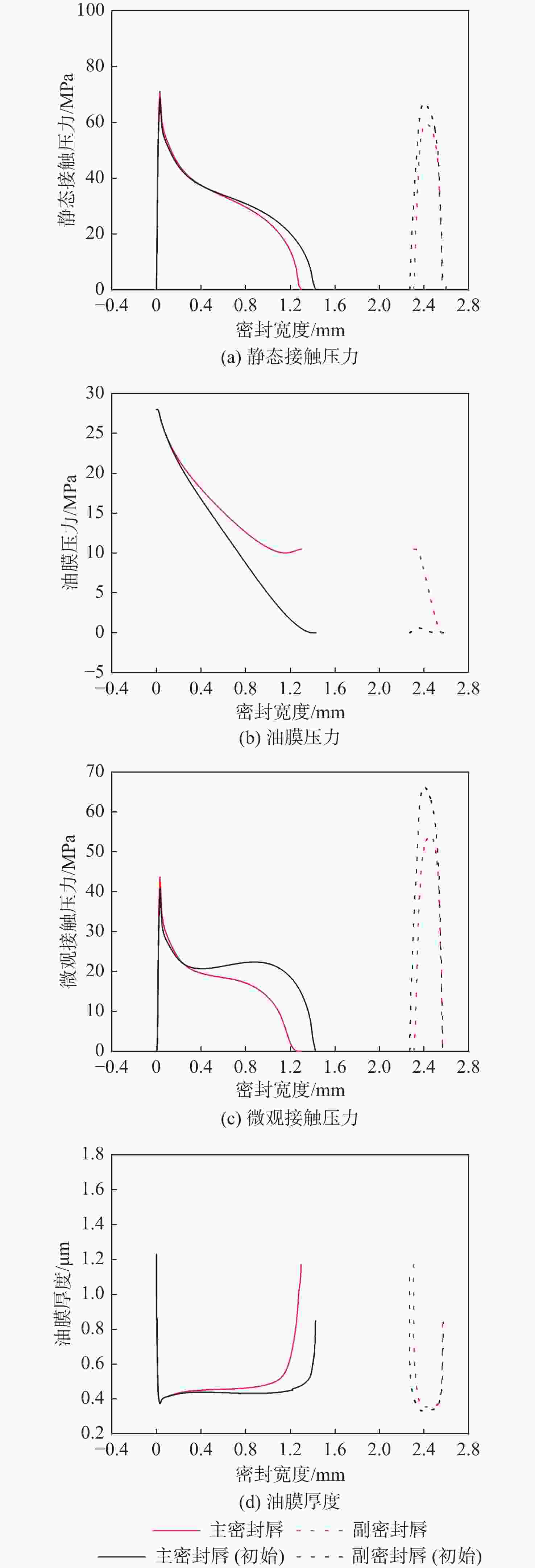
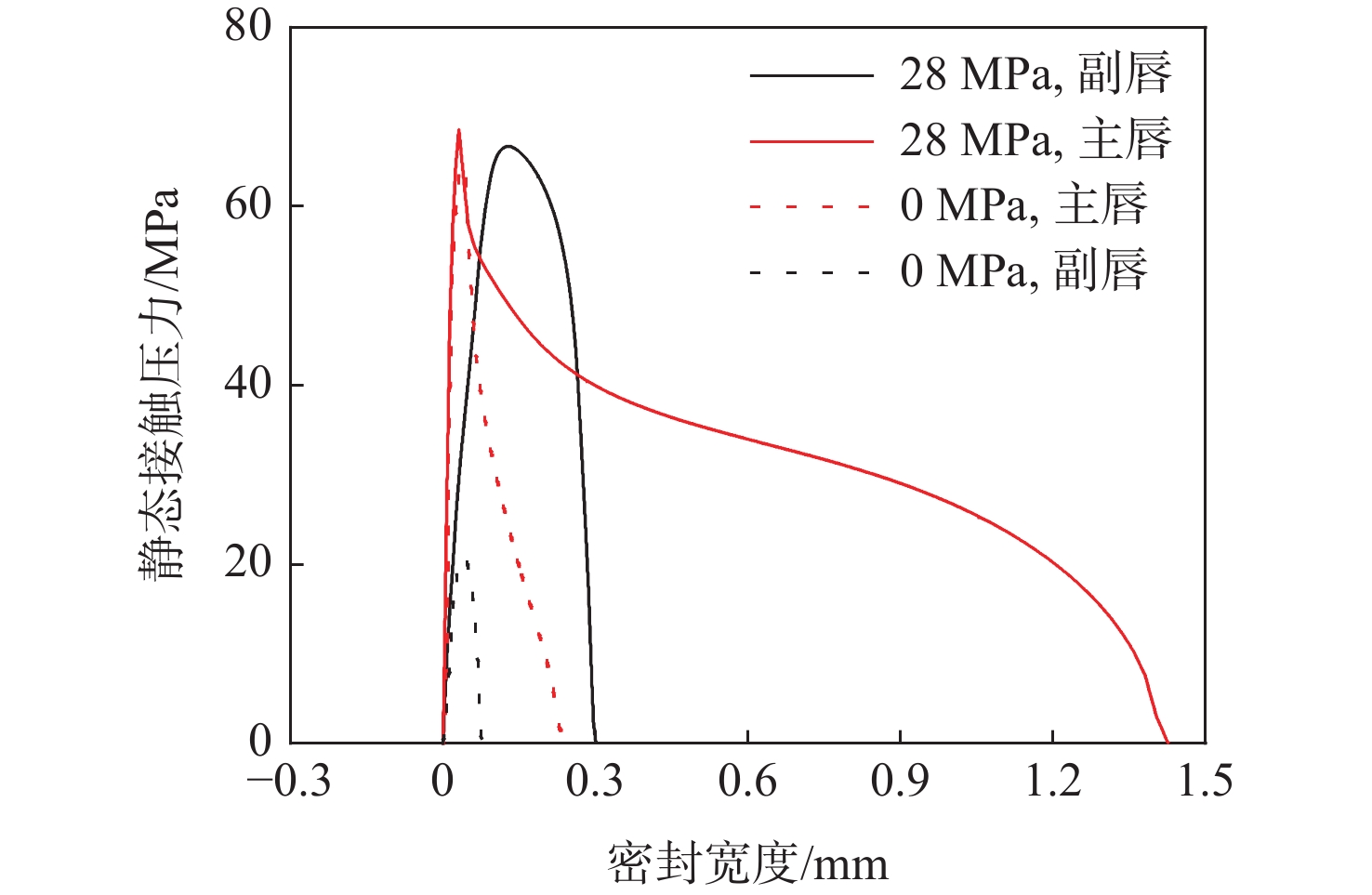
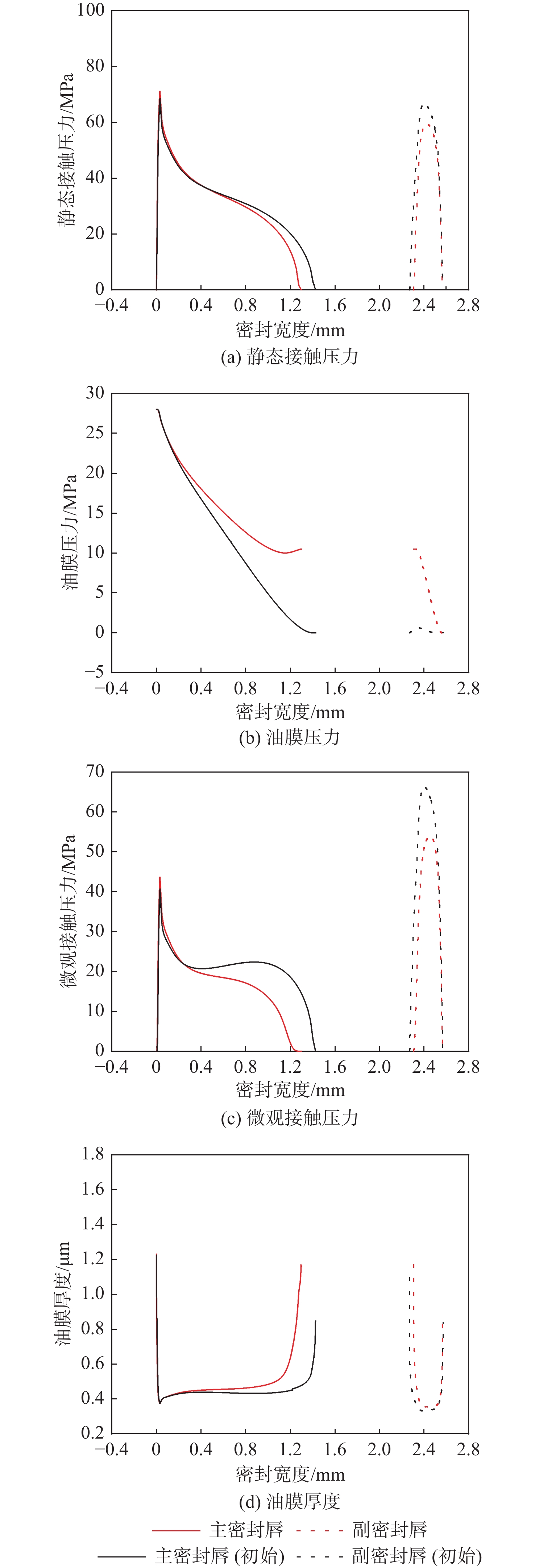
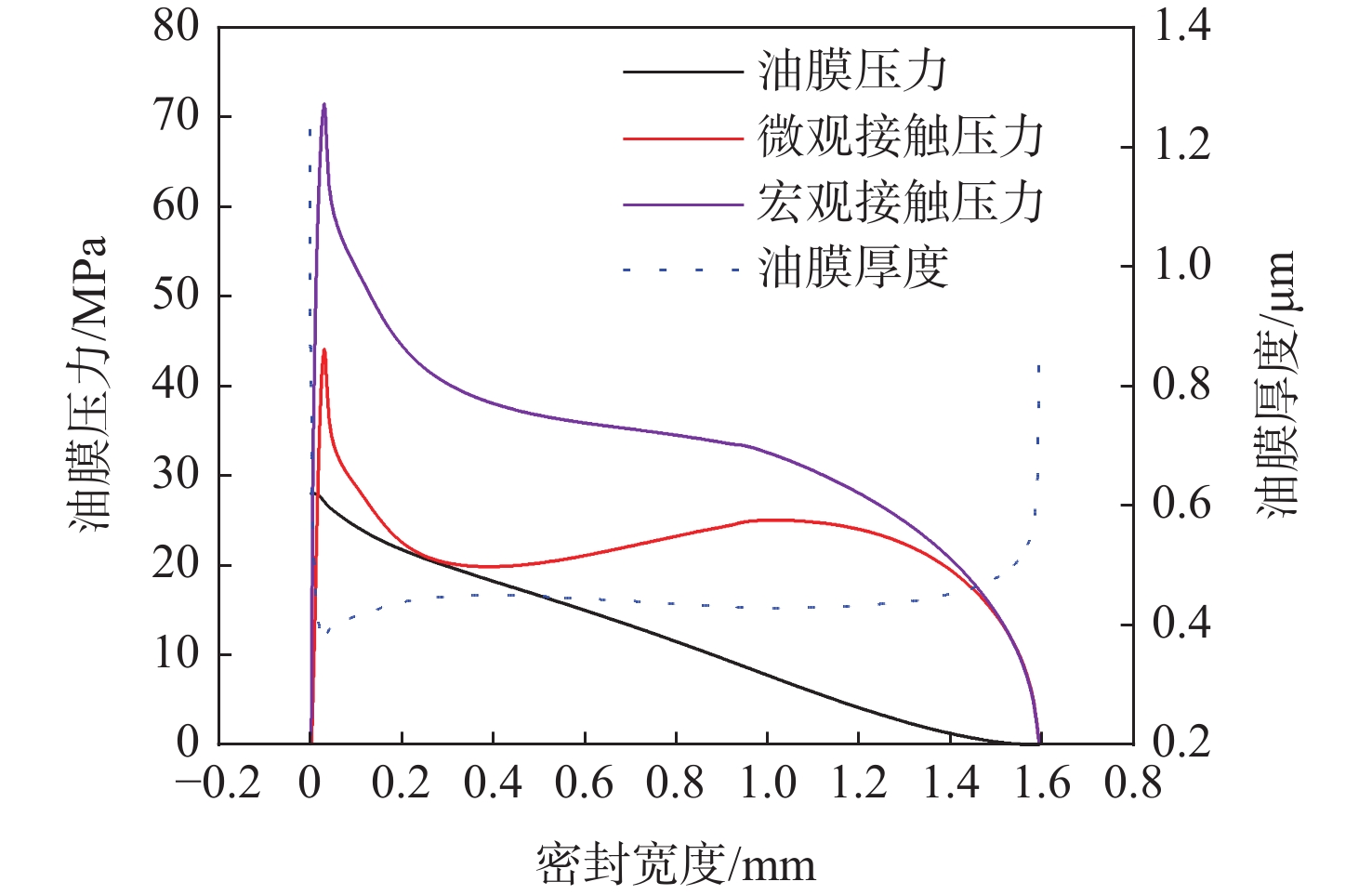
图 9 唇间压力稳定后的双唇密封特性
Figure 9. Characteristics of seal with double lips after inter-lip pressure is stabilized
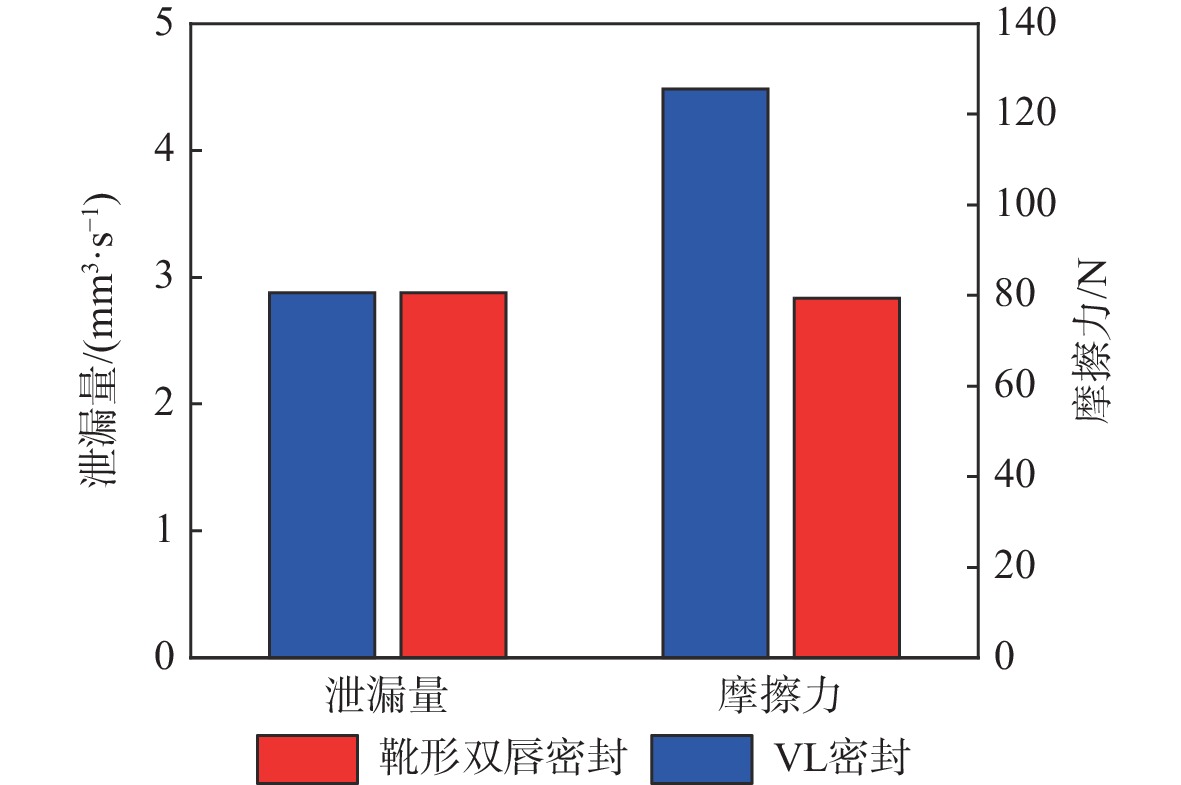
图 12 差动连接工况下VL密封与双唇组合密封的主唇口摩擦与泄漏特性对比
Figure 12. Comparison of friction and leakage characteristics between VL seal and primary lip of combined seal with double lips in differential conditions
表 2 L形圈材料参数
Table 2. Parameters of L-ring material
参数 数值 材料 聚四氟乙烯(Turcon®M30) 泊松比 0.42 弹性模量/MPa 221 摩擦系数(25℃) 0.045  下载: 导出CSV
表 1 O形圈材料参数
Table 1. Parameters of O-ring material
参数 数值 材料 丁腈橡胶(NCT83) 截面直径/mm 2.62 内径/mm 26.64 常温(25℃)邵氏硬度 75 Mooney-Rivlin系数/MPa C10=−0.11, C01=1.38
下载: 导出CSV
表 3 活塞杆和沟槽材料参数
Table 3. Parameters of rod and groove material
参数 数值 材料 合金钢(30CrMnSiA) 活塞杆直径/mm 25.35 弹性模量/MPa 2×10⁵ 衬套底径/mm 31.50
下载: 导出CSV
-
[1] OLSEN R B. Dynamic seals for advanced hydraulic systems[R]. Dallas: Vought Corp, 1981. [2] 马琳. 液压往复密封的摩擦特性分析[J]. 液压与气动, 2021, 45(12): 122-128.MA L. Friction characteristics analysis for hydraulic reciprocating seal[J]. Chinese Hydraulics & Pneumatics, 2021, 45(12): 122-128(in Chinese). [3] PENG C, GUO S R, OUYANG X P, et al. Mixed lubrication modeling of reciprocating seals based on a developed multiple-grid method[J]. Tribology Transactions, 2018, 61(6): 1151-1161. [4] PENG C, OUYANG X, SCHMITZ K, et al. Numerical and experimental study on combined seals with the consideration of stretching effects[J]. Journal of Tribology, 2021, 143(6): 062301. [5] 车恒德. 车恒德R密封及其应用[J]. 机床与液压, 2002, 30(6): 35-38.CHE H D. Chehengde R seal and its application[J]. Machine Tool & Hydraulics, 2002, 30(6): 35-38(in Chinese). [6] YANG B. Elastohydrodynamic model of reciprocating hydraulic rod seals[D]. Atlanta: Georgia Institute of Technology, 2010. [7] YANG B, SALANT R F. A numerical model of a reciprocating rod seal with a secondary lip[J]. Tribology Transactions, 2008, 51(2): 119-127. [8] 彭超. 多工况往复密封跨尺度建模及试验研究[D]. 杭州: 浙江大学;2018: 135-145.PENG C. Trans-dimensional modelling and experimental study for reciprocating seals under multi-working conditions[D]. Hangzhou: Zhejiang University, 2018: 135-145(in Chinese). [9] 张付英, 初宏怡, 贺佘燕. 双唇Y形拉杆密封的密封性能研究[J]润滑与密封, 2021, 46(9): 21-25.ZHANG F Y, CHU H Y, HE S Y. Study on sealing performance of double lip Y-type pull rod seal [J]. Lubrication Engineering, 2021, 46(9): 21-25(in Chinese). [10] PENG C, OUYANG X, SCHMITZ K, et al. Investigation of the tribological performance of reciprocating seals in a wide temperature range[J]. Proceedings of the Institution of Mechanical Engineers, Part J: Journal of Engineering Tribology, 2021, 235(11): 2396-2414. [11] PENG C, OUYANG X P, GONG G F, et al. Investigation into the performance of the VL seal based on the 3D model[C]//Proceedings of the ASME/BATH 2017 Symposium on Fluid Power and Motion Control. New York: ASME, 2017: V001T01A017. [12] HUANG Y L, SALANT R F. Numerical analysis of a hydraulic rod seal: flooded vs. starved conditions[J]. Tribology International, 2015, 92: 577-584. [13] 张付英, 初宏怡, 贺佘燕. 基于田口试验方法的双唇Y形拉杆封参数优化研究[J]. 润滑与密封, 2021, 46(12): 105-111.ZHANG F Y, CHU H Y, HE S Y. Optimization of structural parameters of double lip Y-type pull rod seal based on taguchi test method[J]. Lubrication Engineering, 2021, 46(12): 105-111(in Chinese). [14] CHENG D H, GU L C, SUN Y. Mixed lubrication modeling of multi-lip reciprocating seals based on elastohydrodynamic lubrication theory[J]. Machines, 2022, 10(6): 483. [15] PENG C, MIAO J M, BAUER N, et al. Investigation into the inter-lip characteristics of combined seals with double lips in different working conditions[J]. Tribology International, 2023, 178: 108036. [16] SCHMIDT T, ANDRÉ M, POLL G. A transient 2D-finite-element approach for the simulation of mixed lubrication effects of reciprocating hydraulic rod seals[J]. Tribology International, 2010, 43(10): 1775-1785. [17] PATIR N, CHENG H S. An average flow model for determining effects of three-dimensional roughness on partial hydrodynamic lubrication[J]. Journal of Lubrication Technology, 1978, 100(1): 12-17. [18] MOONEY M. A theory of large elastic deformation[J]. Journal of Applied Physics, 1940, 11(9): 582-592. [19] RIVLIN R S. Large elastic deformations of isotropic materials. IV. Further developments of the general theory[J]. Philosophical Transactions of the Royal Society of London Series A, Mathematical and Physical Sciences, 1948, 241(835): 379-397. [20] MULLER H. Fluid sealing technology: principles and applications[M]. London: Routledge, 2019. -

 下载:
下载:


 点击查看大图
计量
- 文章访问数: 290
- HTML全文浏览量: 93
- PDF下载量: 11
- 被引次数: 0
