





Workspace stability evaluation of multi-engine suspension system based on EWM-TOPSIS
-
摘要:
针对多机悬吊系统工作空间稳定性难以评价的问题,提出一种基于熵权-优劣解距离法(TOPSIS)的稳定性评价方法,建立多维度工作空间来表征工作空间稳定性分布。通过分析系统的运动学和动力学特性,提出位置性能指标、姿态性能指标及拉力均匀性性能指标等影响多机悬吊系统稳定性的指标。采用熵权法(EWM)与层次分析法(AHP)计算各性能指标的复合权重确定各指标的相对重要性,运用TOPSIS对工作空间内各位置点的稳定性能进行计算。以定末端的多机悬吊系统为例仿真计算,评价工作空间位置点的稳定性,并绘制不同稳定性能区间内的多维度工作空间。仿真结果表明:随稳定性能增加,多维度工作空间向中心和上部收缩,表明多机悬吊系统工作空间中间区域和上部区域的稳定性较优。多维度工作空间为多机悬吊系统的构型优化提供了理论基础。
Abstract:In response to the challenge of assessing the stability of a multi-robot suspension system’s workspace, we propose a stability evaluation method based on entropy weight method (EWM) and technique for order preference by similarity to an ideal solution (TOPSIS). Additionally, article establish a multi-dimensional workspace to characterize the distribution of stability within the workspace. Firstly, by analyzing the kinematics and dynamics characteristics of the system, article introduce performance indices for position, attitude, and flexure force uniformity that impact the system’s stability. Secondly, the article employs EWM-AHP to calculate composite weights for each performance index in order to determine their relative importance. Subsequently, TOPSIS is utilized to evaluate the stability performance of each position in the workspace. Finally, simulation computations are performed to identify the static balancing workspace of a fixed-end multi-machine suspension system and evaluate the stability of different positions within this space over various stability performance intervals. The simulation findings show that the multi-dimensional working space decreases toward its center and upper half as stability performance increases, indicating improved overall stability in these areas for the working space of the multi-machine suspension system. This analysis provides a theoretical foundation for optimizing configurations in multi-robot suspension systems.
-
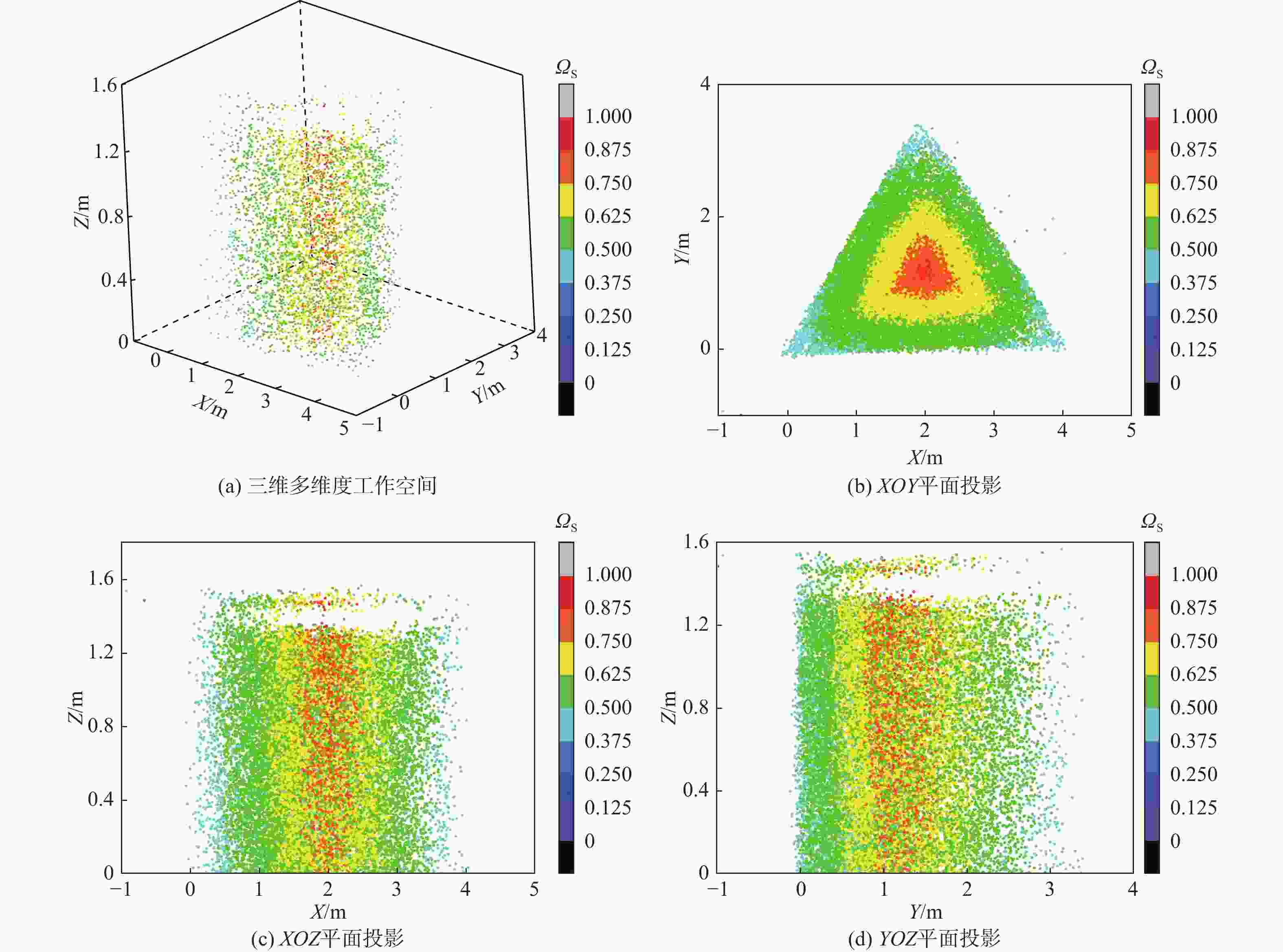
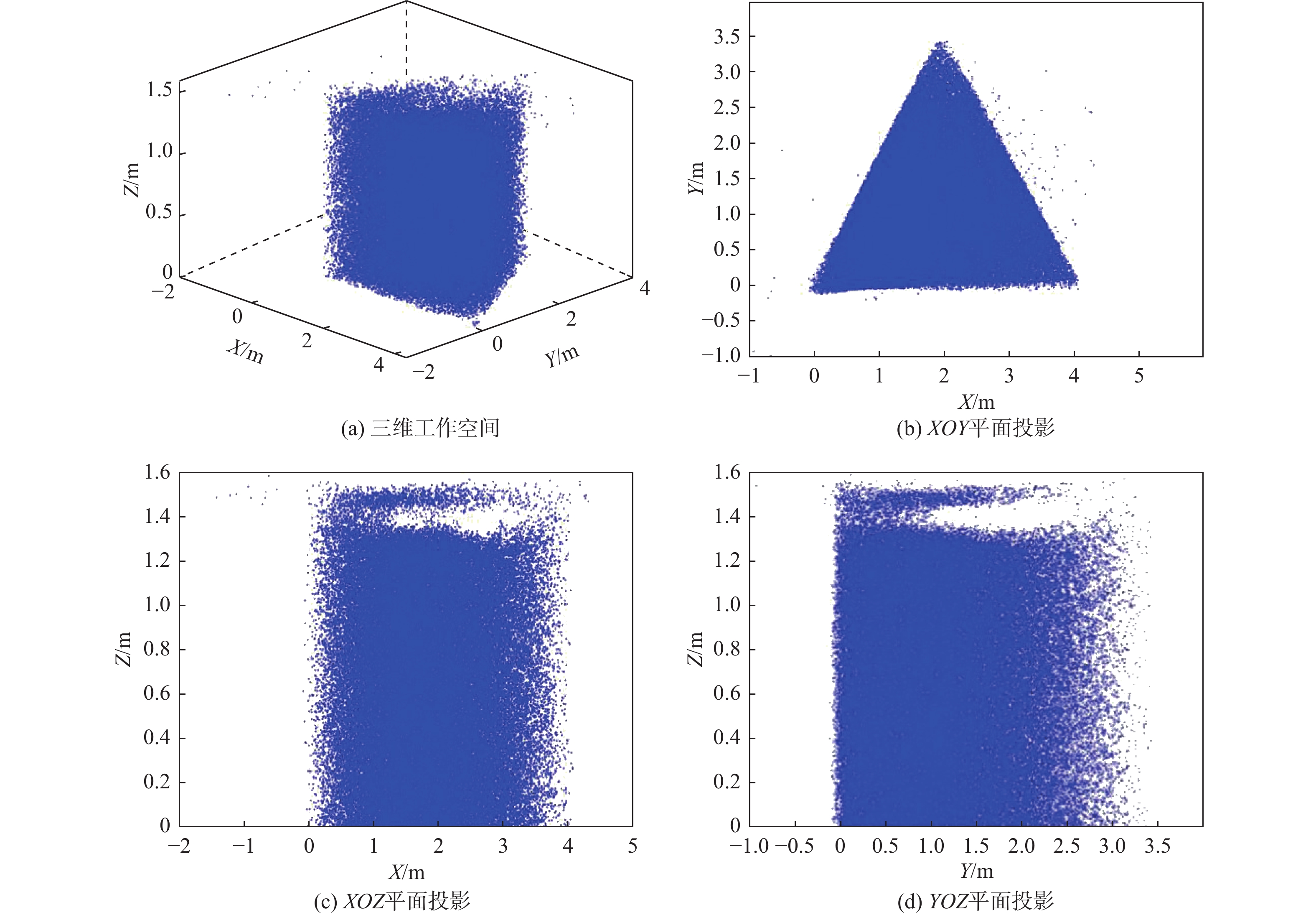
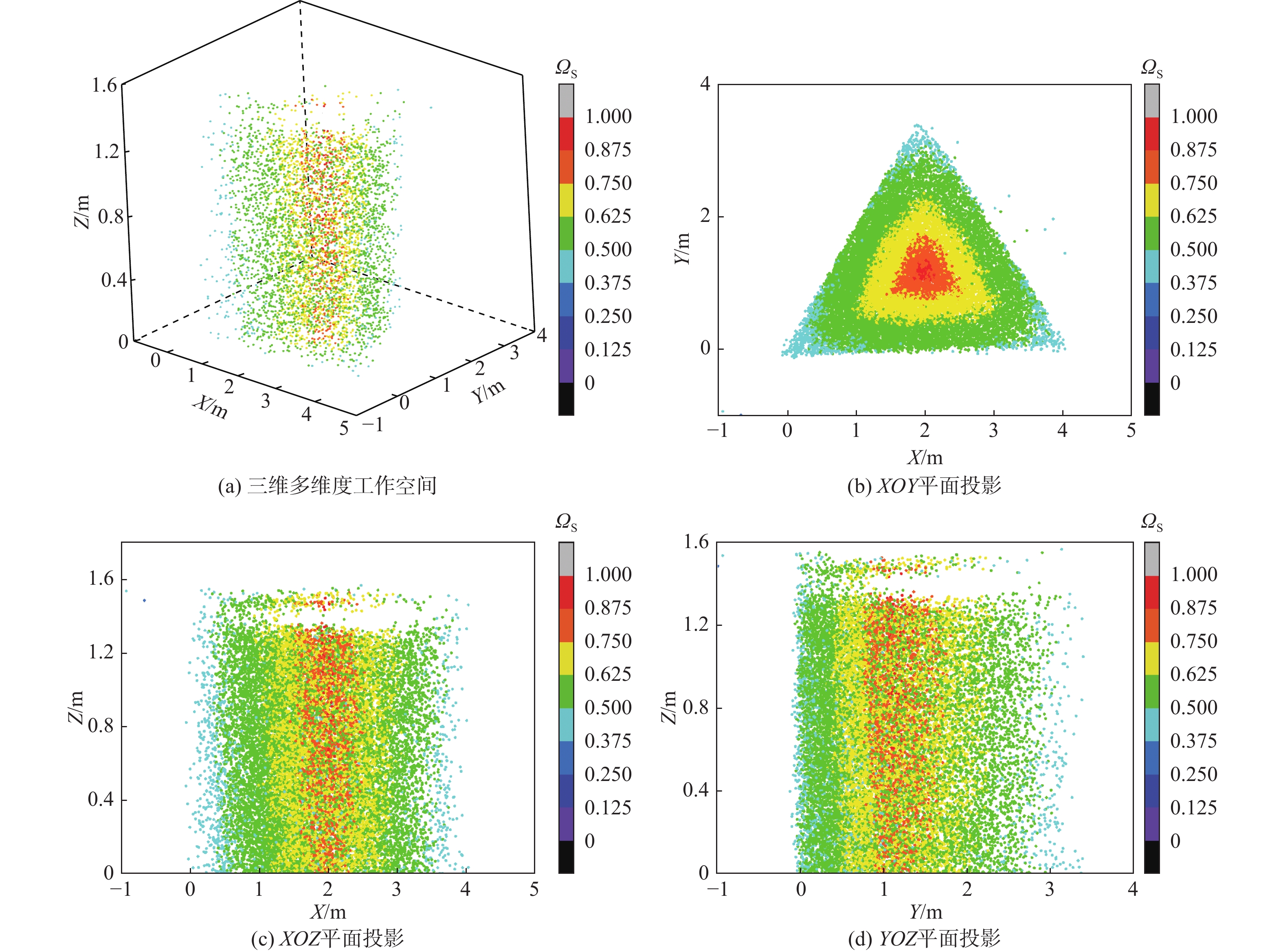
图 6 $ {\mathit{\Omega }}_{\text{S}} $∈[0,1]时的多维度工作空间
Figure 6. Multi-dimensional workspace at $ {\mathit{\Omega }}_{\text{S}} $∈[0,1]
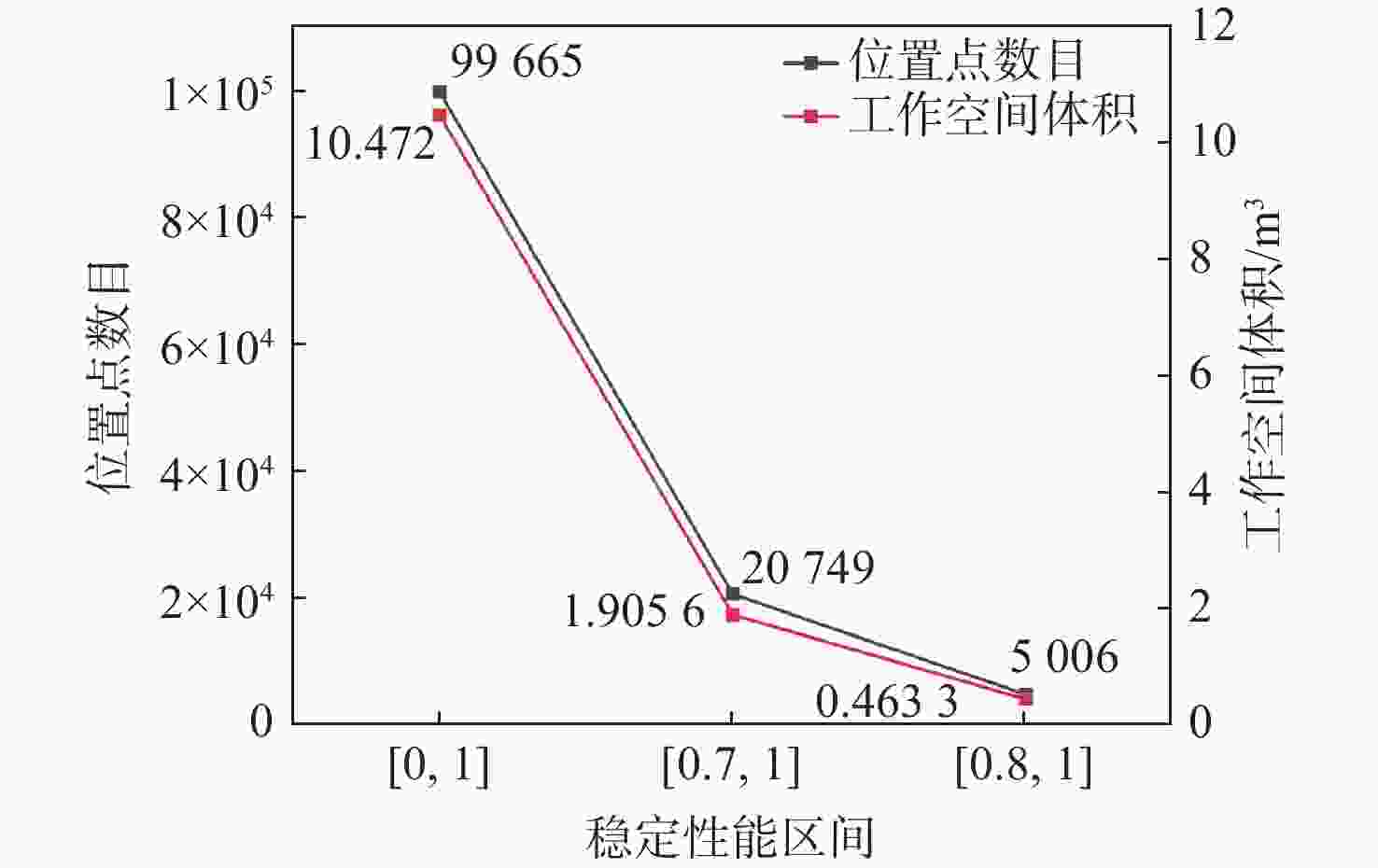
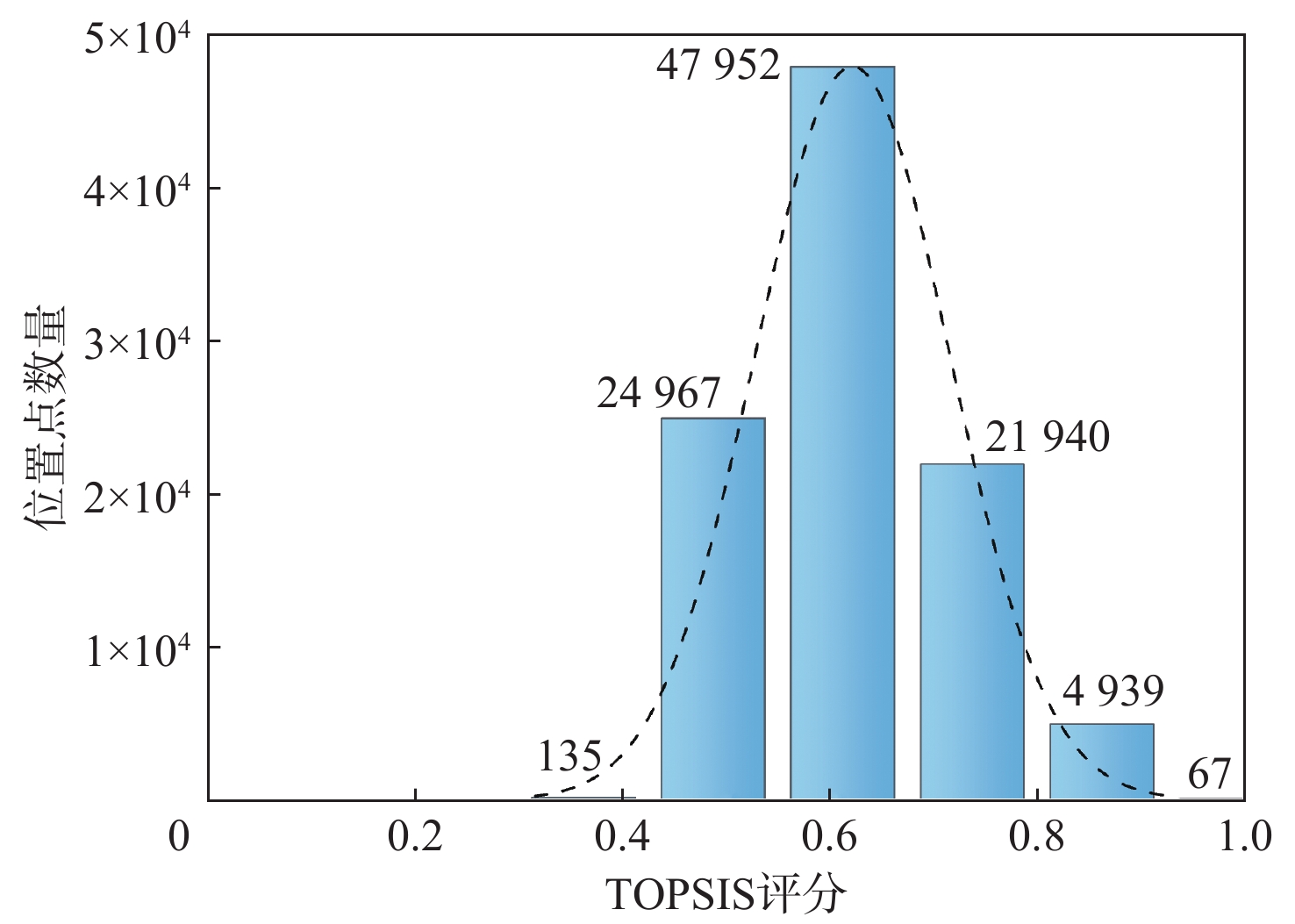
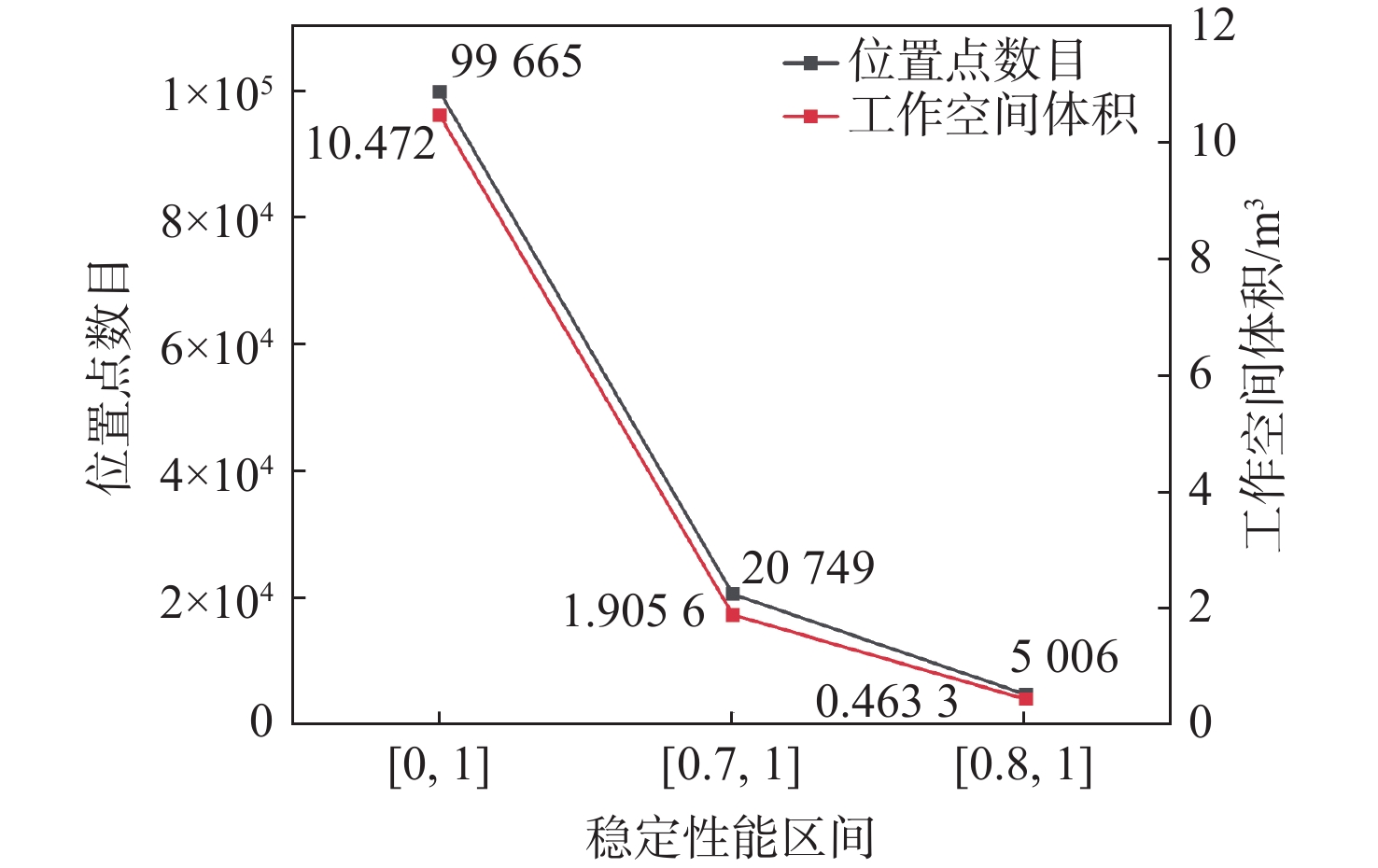
图 7 不同稳定性能区间的多维度工作空间变化
Figure 7. Multi-dimensional workspace changes in different stability performance intervals
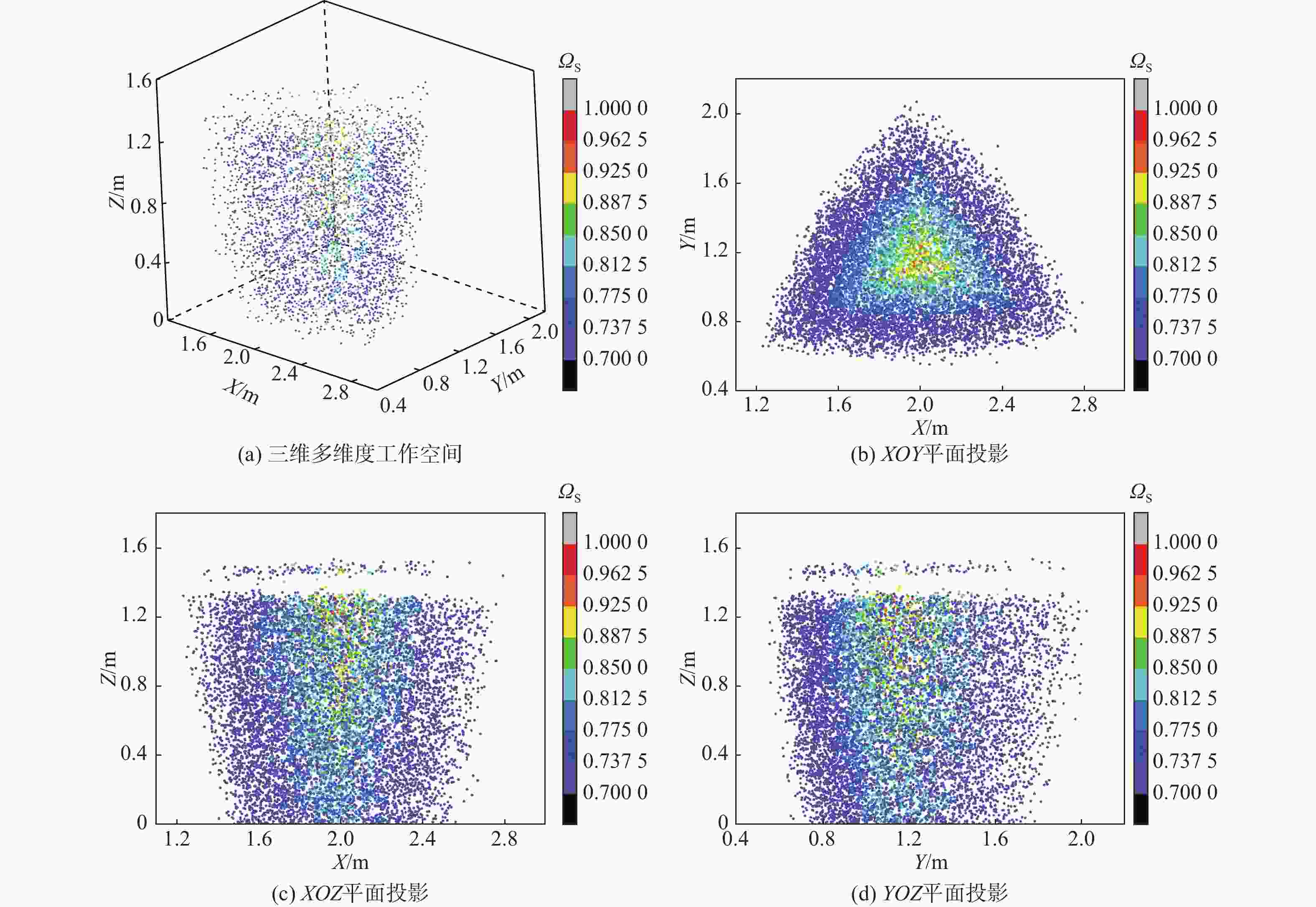
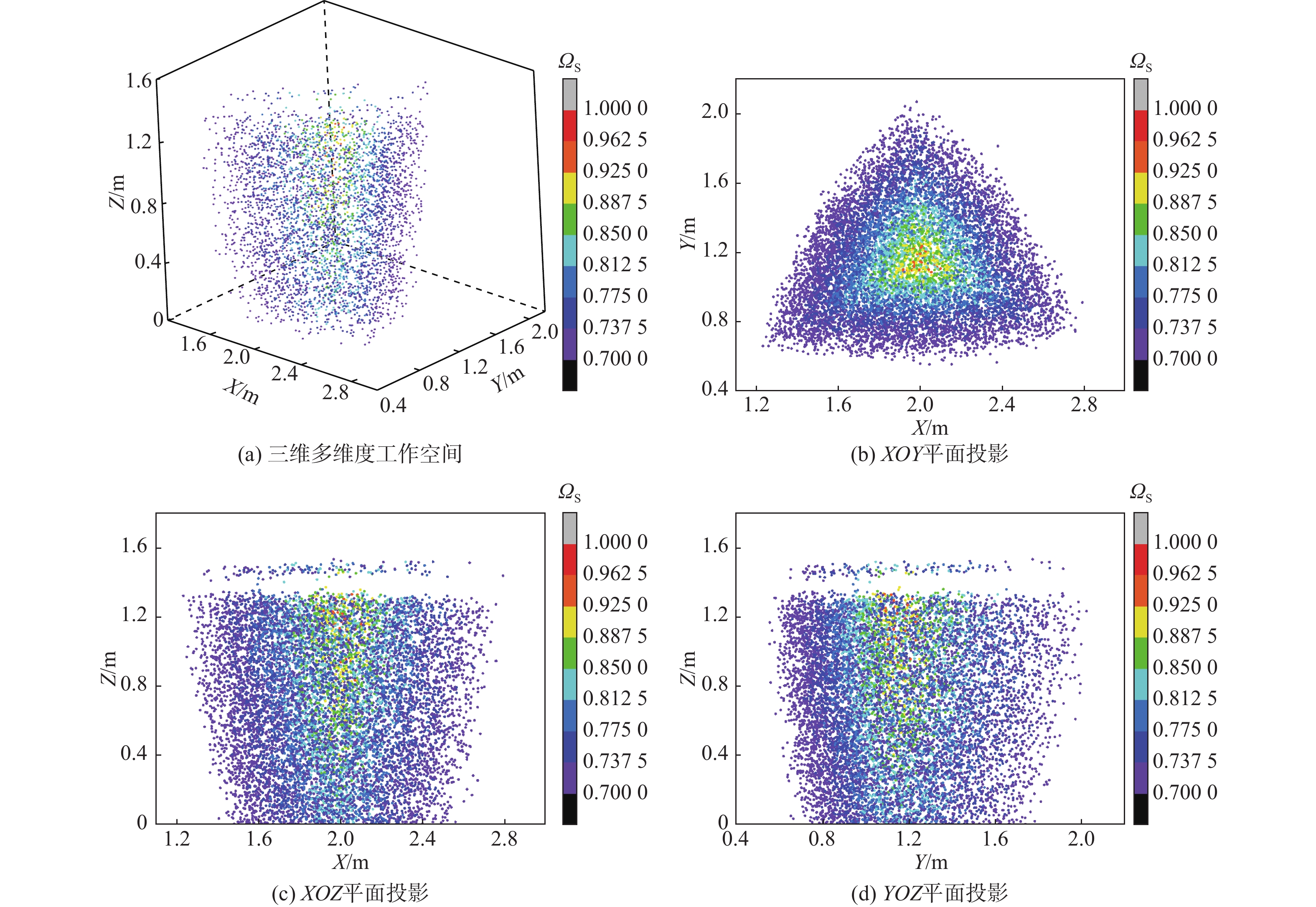
图 8 $ {\mathit{\Omega }}_{\text{S}} $∈[0.7,1]时的多维度工作空间
Figure 8. Multi-dimensional workspace at $ {\mathit{\Omega }}_{\text{S}} $∈[0.7,1]
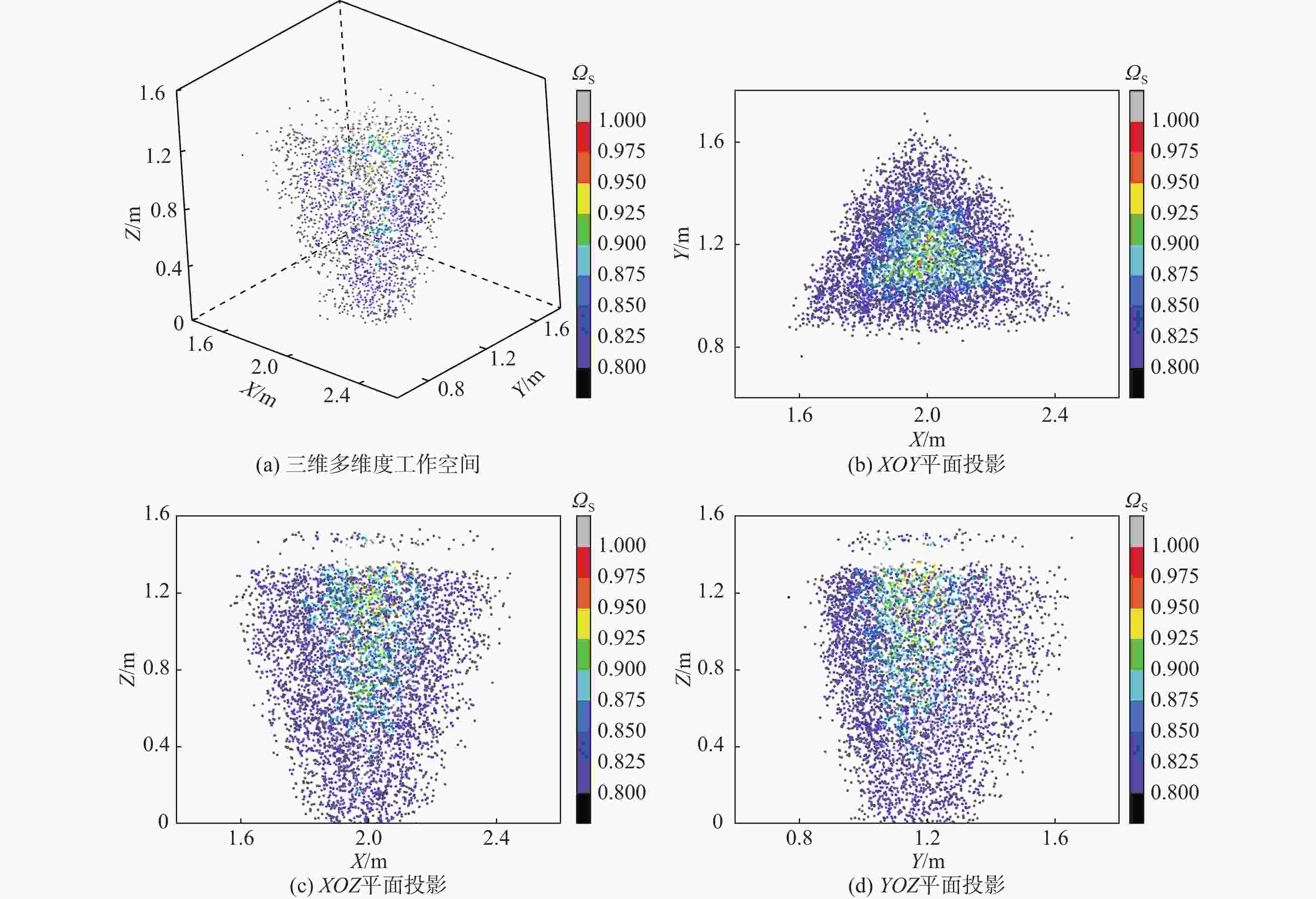
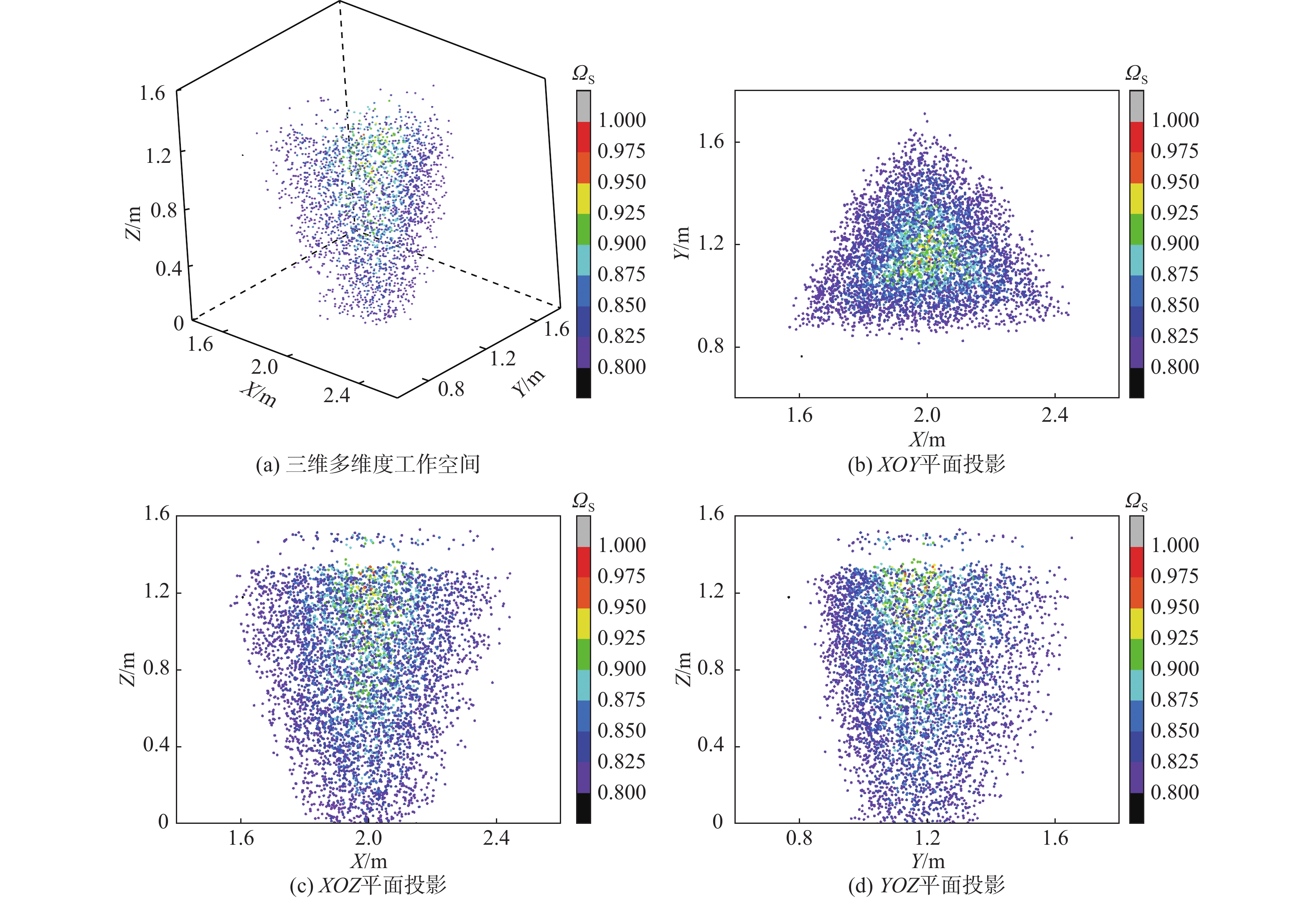
图 9 $ {\mathit{\Omega }}_{\text{S}} $∈[0.8,1]时的多维度工作空间
Figure 9. Multi-dimensional workspace at $ {\mathit{\Omega }}_{\text{S}} $∈[0.8,1]
表 1 性能指标行因素相对于列因素的重要程度得分
Table 1. Score of the importance degree of row factors with respect to column factors for performance index
性能指标 重要程度得分 $ \tau $ $ \sigma $ $ \zeta $ $ \tau $ 1 1/2 3 $ \sigma $ 2 1 4 $ \zeta $ 1/3 1/4 1  下载: 导出CSV
表 2 随机一致性指标
Table 2. Random consistency indicators
矩阵维数 RI 1 0 2 0 3 0.58 4 0.89 5 1.12 6 1.24
下载: 导出CSV
表 3 悬吊机器人模型参数
Table 3. Model parameters of suspended robot
被吊运物
质量Mp/kg索拉力
下限tmin/N索拉力
上限tmax/N绕X轴旋转
姿态角α/rad绕Y轴旋转
姿态角β/rad1#末端
位置b1/m2#末端
位置b2/m3#末端
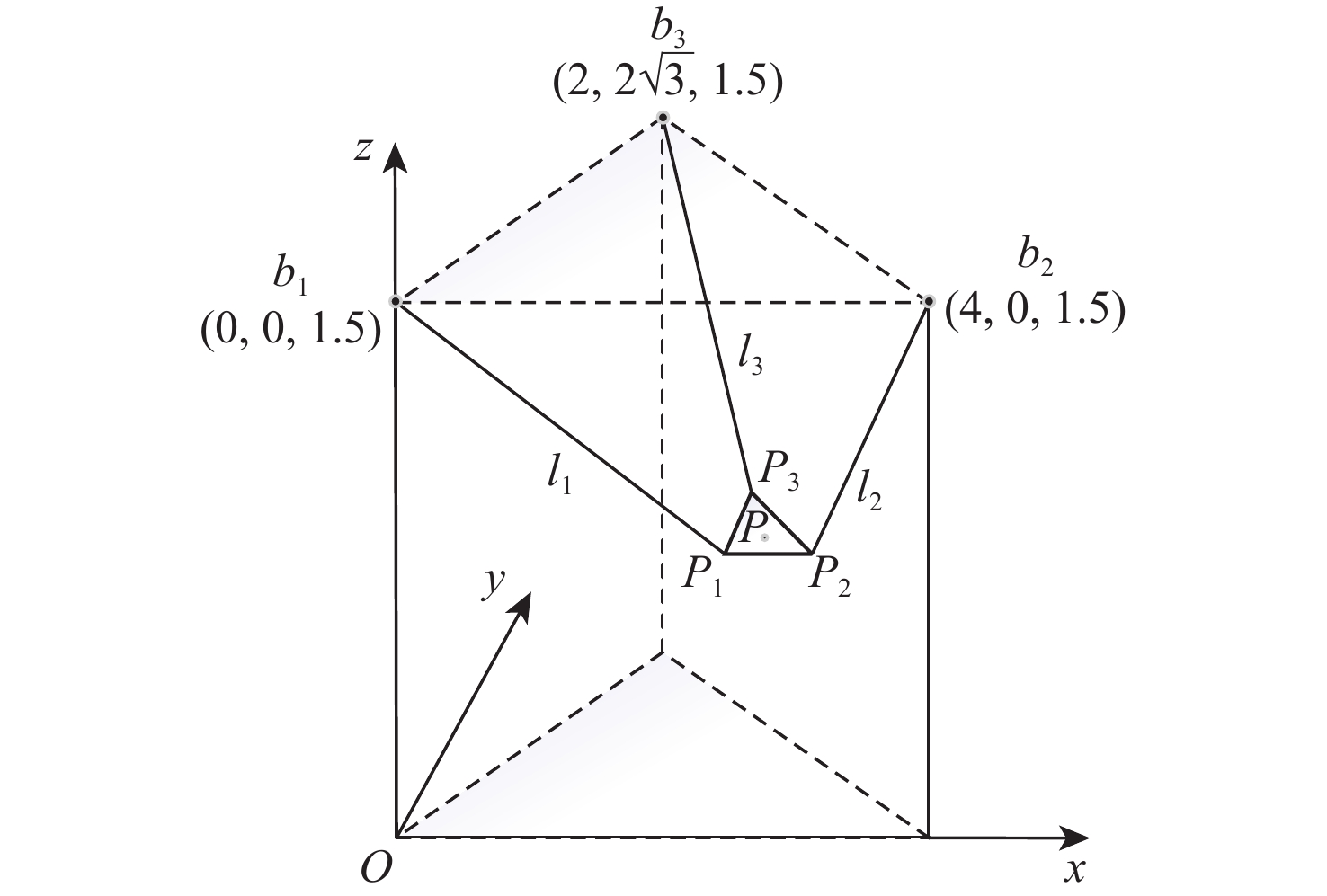
位置b3/m10 0 400 (−π/2,π/2) (−π/2,π/2) (0,0,1.5)T (4,0,1.5)T (2,$ 2 {\sqrt{3}} $,1.5)T
下载: 导出CSV
-
[1] 赵志刚, 滕富军, 石广田, 等. 多机器人联合吊运系统可行域分析与求解[J]. 上海交通大学学报, 2015, 49(8): 1174-1180.Zhao Z G, Teng F J, Shi G T, et al. Analysis and calculation of feasible region of multi-robot combined lifting system[J]. Journal of Shanghai Jiao Tong University, 2015, 49(8): 1174-1180(in Chinese). [2] 苏程, 叶佳楠, 李巍, 等. 欠约束多机协调吊运系统动力学工作空间分析[J]. 上海交通大学学报, 2019, 53(2): 225-231.Su C, Ye J N, Li W, et al. Analysis of dynamic workspace for under-constrained coordinate suspending system with multi-robots[J]. Journal of Shanghai Jiao Tong University, 2019, 53(2): 225-231(in Chinese). [3] 刘鹏, 仇原鹰. 绳牵引摄像机器人的力位混合稳定性评价方法[J]. 西安电子科技大学学报(自然科学版), 2016, 43(1): 87-93.Liu P, Qiu Y Y. Approach with a hybrid force-position property to assessing the stability for camera robots[J]. Journal of Xidian University, 2016, 43(1): 87-93(in Chinese). [4] Behzadipour S, Khajepour A. Stiffness of cable-based parallel manipulators with application to stability analysis[J]. Journal of Mechanical Design, 2006, 128(1): 303-310. [5] Michael N, Fink J, Kumar V. Cooperative manipulation and transportation with aerial robots[J]. Autonomous Robots, 2011, 30(1): 73-86. [6] Bosscher P, Ebert-uphoff I. A stability measure for underconstrained cable-driven robots[C]//Proceedings of the IEEE International Conference on Robotics and Automation. Piscataway: IEEE, 2004: 4943-4949. [7] Vu D S, Alsmadi A. Trajectory planning of a cable-based parallel robot using reinforcement learning and soft actor-critic[J]. WSEAS Transactions on Applied and Theoretical Mechanics, 2020, 15: 165-172. [8] Vu D S, Barnett E, Zaccarin A M, et al. On the design of a three-DOF cable-suspended parallel robot based on a parallelogram arrangement of the cables[C]//Gosselin C, Cardou P, Bruckmann T, et al. Cable-Driven Parallel Robots. Cham: Springer International Publishing, 2018: 319-330. [9] 刘鹏, 乔心州. 大跨度完全约束空间3-DOF柔索驱动并联机器人稳定性灵敏度研究[J]. 清华大学学报(自然科学版), 2022, 62(9): 1548-1558.Liu P, Qiao X Z. Stability sensitivity of a completely restrained 3-DOF cable-driven parallel robot with four long-span cables[J]. Journal of Tsinghua University(Science and Technology), 2022, 62(9): 1548-1558(in Chinese). [10] 刘鹏, 曹现刚, 张旭辉, 等. 4-1型柔索驱动并联机器人稳定性度量及其灵敏度分析[J]. 振动与冲击, 2023, 42(14): 180-188.Liu P, Cao X G, Zhang X H, et al. Stability and sensitivity of a 4-1 type cable-driven parallel robot[J]. Journal of Vibration and Shock, 2023, 42(14): 180-188(in Chinese). [11] Liu P, Qiu Y Y, Su Y. A new hybrid force-position measure approach on the stability for a camera robot[J]. Proceedings of the Institution of Mechanical Engineers, Part C: Journal of Mechanical Engineering Science, 2016, 230(14): 2508-2516. [12] Liu P, Qiu Y Y, Su Y, et al. On the minimum cable tensions for the cable-based parallel robots[J]. Journal of Applied Mathematics, 2014: 350492. [13] 苏程, 卫启哲, 赵志刚, 等. 多机协调吊运系统综合多影响因子的位置稳定性评价方法[J]. 哈尔滨工程大学学报, 2023, 44(3): 481-488.Su C, Wei Q Z, Zhao Z G, et al. Position stability evaluation method for a multi-robot coordinated lifting system based on multi-influence factors[J]. Journal of Harbin Engineering University, 2023, 44(3): 481-488(in Chinese). [14] 董成举, 刘文威, 李小兵, 等. 六轴工业机器人工作空间分析及区域性能研究[J]. 中国测试, 2020, 46(5): 154-160.Dong C J, Liu W W, Li X B, et al. Working space analysis and space division performance research on 6-DOF industrial robot[J]. China Measurement & Testing Technology, 2020, 46(5): 154-160(in Chinese). [15] 李典. 面向任务的并联机构多维度工作空间表示及构型设计研究[D]. 北京: 北京交通大学, 2020.Li D. Research on multi-dimensional workspace representation and task-oriented structural design for parallel mechanisms[D]. Beijing: Beijing Jiaotong University, 2020(in Chinese). [16] 赵嘉浩, 訾斌, 王威, 等. 刚柔复合驱动并联喷涂机器人机构设计与工作空间分析[J]. 机械工程学报, 2023, 59(15): 28-39.Zhao J H, Zi B, Wang W, et al. Mechanical design and workspace analysis of a rigid-flexible hybrid driven parallel spray-painting robot[J]. Journal of Mechanical Engineering, 2023, 59(15): 28-39(in Chinese). [17] 陈瑞娜. 浮动基多机协调吊运系统的运动稳定性分析[D]. 兰州: 兰州交通大学, 2023.Chen R N. Kinematic stability analysis of multi-robot coordinated towing system with floating base[D]. Lanzhou: Lanzhou Jiaotong University, 2023(in Chinese). [18] 夏子立, 景强, 高文博, 等. 基于权重融合法的跨海桥梁部位及部件权重体系分析[J]. 科学技术与工程, 2023, 23(5): 2171-2180.Xia Z L, Jing Q, Gao W B, et al. Weight system analysis of bridge parts and components based on weight fusion method[J]. Science Technology and Engineering, 2023, 23(5): 2171-2180(in Chinese). -

 下载:

计量
- 文章访问数: 977
- HTML全文浏览量: 323
- PDF下载量: 106
- 被引次数: 0
